As the end of 2025 nears, I’ve been reflecting on what this year has meant for ASCA and for all of us as consulting arborists. This has been a year of steady progress, and thanks to the efforts of our members, committees, and Board, also a year where we’ve been able to catch our breath a little. That balance has allowed us to celebrate our accomplishments while preparing thoughtfully for the future. We have done work implementing the Brand Refresh, developed a Marketing Plan, increased Newsletter exposure, and grown the Academy, TPAQ, membership, and RCAs. We have elevated Ethics, kicked off the Diamond Project (60 year ASCA anniversary), and added to a great group of volunteers.
I want to take a moment to acknowledge the many individuals who have dedicated their time and expertise this year, from those serving on committees and working groups, to those who stepped up to teach and share knowledge at the Consulting Academy, a TPAQ course, or the
Annual Conference, to the members who contributed articles and resources to help strengthen our profession. Your work has a ripple effect across the entire organization. Each of you, in your own way, has helped ASCA continue its role as the leader in consulting arboriculture.
I want to take a moment to thank outgoing Board members Jeff Ling and Philip Van Wassenaer for their years of service and commitment to ASCA. Jeff’s calm and steady leadership has been invaluable. He has a way of grounding discussions, keeping us focused, and reminding us of the bigger picture when conversations drift into the weeds. His thoughtful approach has helped guide the Board through some challenging moments, always with grace and respect for every perspective at the table. Philip, on the other hand, has been our “Swiss Army knife,” stepping in wherever needed, contributing across a wide range of topics, and always doing so with excellence. He has a unique ability to bring forward a counterpoint or different perspective that enriches the dialogue and ensures we are not just nodding along but truly thinking through the issues. Together, Jeff and Philip have provided balance, insight, and a tremendous amount of energy. Their contributions have strengthened ASCA in ways that will last well
Continued on Page 2
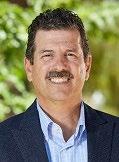
Ron Matranga, RCA #488 ASCA President
2025 BOARD OF DIRECTORS
President
Ron Matranga, RCA #488, Spring Valley, CA
President-Elect
Kay Sicheneder, RCA #668, Attica, MI
Immediate Past President
Jeffrey Ling, RCA #337, Fort Wayne, IN
Secretary/Treasurer
Nick Martin, RCA #552, Algonquin, IL
Directors:
Debra DeMarco, RCA #672, South Miami, FL
Aaron Dickinson, RCA #664, Apple Valley, MN
Christian Hughes, RCA #493, Atlanta, GA
Richard 'Ricky' Peterika, RCA #641, Tampa, FL
Philip van Wassenaer, RCA #678, Ontario, Canada
STAFF
Executive Director
Kristen Philips, MBA, CAE
Associate Director
Lisa Blair, QAS
Credentialing Programming Manager
Amy Giesy, QAS
Director of Meetings
Diane Schafer, CMP, DES
Director of Marketing and Communications
Amie Goscinski
CFO & Director of Finance
Mary Skudzinskas, CPA
Senior Staff Accountant
Barb Signorelli
NEWSLETTER
The Arboricultural Consultant is published four times a year by ASCA. Articles and news items are encouraged and must be submitted six weeks prior to publication.
Editorial Committee Chair
Maryellen Bell, RCA #703
Editorial Review Committee
Steve Lane
Guy Meilleur
John Harris, RCA #468
Julie Collins, RCA #811
Craig Southwell, RCA #592
Kat Cummings, RCA #781
Board Liaison: Jeff Ling, RCA #337
The following antitrust statement has been approved by the president and board of directors of the American Society of Consulting
"Members of the American Society of Consulting Arborists, especially members of the board of directors and Society committees, are reminded
beyond their time on the Board, and I cannot thank them enough for their consistent support of our work, our mission, and the values we uphold as a professional society.
Looking ahead to 2026, there’s much to be excited about. We will continue to expand opportunities for professional development, with fresh topics and perspectives coming into our flagship educational program, the Consulting Academy. Our ‘new’ 11th Edition process and discussions will carry forward, helping us sharpen the standards and tools that shape the way we work. ASCA is positioned to be a continuing leader across all aspects of our profession. We are also planning to continue to refresh and strengthen the ASCA brand, making sure our society continuously reflects the professionalism, credibility, and innovation that each of you bring to the field.
Joining the Board in 2026 will be Monika Buczko and Kyle Offerdahl, and we are thrilled to welcome them into leadership (current Board member Deb DeMarco was re-elected to the Board). Both bring a wealth of experience, fresh perspectives, and the kind of energy that will serve ASCA well in the years ahead. Monika’s thoughtful approach will be a real asset in Board discussions. Kyle brings strong practical experience and a clear vision for the future of consulting arboriculture, along with a collaborative style that will fit seamlessly into our team. Together, they will not only help broaden the Board’s outlook but also support and strengthen next year’s president, Kay Sicheneder, as she leads us forward. I am confident that their voices and contributions will enrich the work of the Board and help ASCA continue building
momentum into 2026 and beyond.
For me personally, ASCA has always been about more than technical standards or professional credentials. It’s about our people, our members, our relationships. This community has given me lifelong friendships, trusted colleagues to lean on, and the confidence to grow my practice in ways I never would have imagined when I first started out. I know many of you share that same sense of connection and support. That’s why I believe ASCA’s greatest strength lies in its members, in your willingness to share knowledge, support one another, and hold our profession to the highest standards.
As we wrap up 2025, I encourage you to take a moment to look back at your own year, not only at the challenges you’ve worked through, but at the successes, large and small, that you’ve achieved. Our work is demanding, and it can be easy to move from one project to the next without pausing to recognize progress. But taking stock is important, and I hope you’ll give yourself credit for the difference you’ve made for your clients, in your communities, and in our profession.
Thank you once again for the privilege of serving as your president. I’m grateful for the opportunity to represent such a dedicated and talented group of professionals. I look forward to what we will accomplish together in 2026 and beyond.
And that is the spirit of ASCA.
Warm regards,
Ron Matranga, RCA #488 ASCA President 2025
Arborists.
Trees and People: Life in Heartwood
By Bill Pramuk, RCA #409
As an arborist, I have always considered the inner wood of trees – heartwood – as dead wood, devoid of life, and of value only for structural support. Any life in there would only be of invaders like decay fungi or borers. The sapwood, the active tissue involved in growth and movement of water and nutrients, so I thought, was virtually sterile except for living tree cells and occasional invaders—bacteria, viruses, fungi and other organisms that cause biotic diseases. Recent research explodes those assumptions, opening a deep, new world of knowledge about bacteria that live inside trees.
A research article appeared in ‘Nature’-August 2025, Wyatt Arnold et al. (I had to subscribe to Nature so I could read the study.): “A diverse and distinct microbiome inside living trees.” It describes recent research showing that “Earth’s largest biomass reservoir, the wood of living trees,” is “a harbour of biodiversity and potential key players in tree health and forest ecosystems.”
The research found that a single tree hosts about one trillion bacteria in its wood with distinct microbial communities inhabiting heartwood and sapwood.
I was aware of established arboricultural science describing tree functions in relation to organisms inhabiting the root zone: the “rhizosphere,” which is the soil zone near the roots and the “rhizoplane,” the surface of the roots. It is interesting enough, how trees have intimate interactions with external microbes in the soil. Then there are the mycorrhizae, where fungi combine with root tissues, forming distinct fungus-root organs that are essential to the uptake of water and minerals and in self-defense from disease. But this internal microbiome is a whole new ball game.
I first became aware of the term “microbiome” perhaps 25 years ago, referring to human gut health. It has become common knowledge, and a common concern, that we need to support the healthful microbes in our digestive systems. So now the question is: What is the significance of the microbiome inside of trees?
The research paper is dense with technical information, statistics, and graphs, beyond my abilities as a practical arborist, but I extracted some points of interest.
The bacteria communities are mostly inherited, not introduced via soil, and they vary by tree species. The tree species in this study included maples, oaks, birches, hickory, beech, Eastern white pine, hemlock, ash, Sassafras, Kalmia (mountain laurel) and Prunus serotina (black cherry). The bacterial communities were found to vary widely by tree species and by location, within the tree.
In the oxygen poor heartwood, is a high abundance from the anaerobic groups, e.g. Clostridia. There is a high abundance on anaerobic groups, e.g. Clostridia, in the oxygen poor heartwood. In contrast sapwood contains “obligate aerobes” like Actinobacteria, those that need oxygen. The bacterial communities in sapwood —collections, mostly of prokaryotic species- bacteria and archaea-- are pretty much the same along the height of the tree from .5 to 10 meters up, where the tree cells are alive, relatively young, and oxygen is available. In contrast, bacterial communities in heartwood seem specialized to the conditions in the wood and the communities vary greatly along the length of the trunk where oxygen is lacking and the wood can be far older than sapwood.
The study was a survey of distinct organisms within wood in over 150 trees of 16 species. Researchers found that the
wood in living trees is colonized by adapted and specialized communities that might play roles in tree health.
The research is still in its early stages and could explore how the internal microbiomes vary across different regions and climates. As the study concludes, “The wood biome is a vast and unexplored reservoir of microbial diversity with potential practical applications in biotech, ecosystem health and sustainable forestry.”
Paraphrasing the paper, studying tree microbiomes might offer new avenues toward understanding the growth, management and conservation of the world’s greatest biomass reservoir, the wood in trees.
ANNUAL PLATINUM & CONFERENCE APP SPONSOR:
ANNUAL BRONZE & CONFERENCE LANYARD SPONSOR:
GENERAL SPONSORS:
CO-SPONSORS:
EXHIBITORS:
Shigo
Texas
The
Voss
The Last of Us: A Call to Action for Edmonton’s Urban Forest
By Steve Lane, BCMA
While teaching a TRAQ course in Edmonton, Alberta this past Spring, I became aware of something that as a selfdescribed “blackbelt tree geek,” made me paradoxically very excited, as well as extraordinarily concerned. Portions of Alberta and British Columbia, Edmonton in particular, are one of the last places on the North American continent that Dutch elm disease has not infiltrated. The reasons for this are many, and beyond the scope of this short article, but the fact remains, these areas were unaffected by the disease.
This fungal infection, spread by beetles and through root grafts, had nearly wiped out American and Red (slippery) elms from the Urban Forests of my Illinois childhood in the 1980s. It was as if I stepped onto the scene of an unreleased “Back to the Future” sequel; an alternate reality where DED had never happened. Students were explaining that nurseries were still growing and selling cultivars of American elms I had never heard of, and these sentries of the Urban Forest were absolutely everywhere. Strange things were indeed afoot in this magical place.
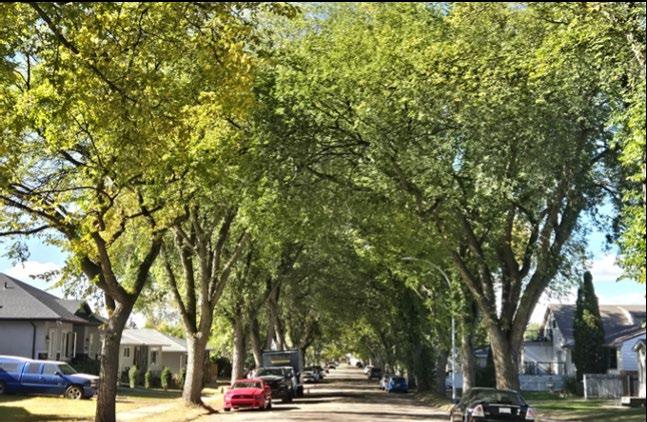
After class each day, I wandered out into the streets with my camera, capturing image after image of a landscape long vanished from the Midwest. The “Elm Cathedral,” once a common sight but now largely absent from our landscapes, was still present in its full glory here. Row after row of these vase-shaped, highly phototropic trees arched overhead to create a majestic vaulted green ceiling as inspiring as the Sistine Chapel. Well, at least to a blackbelt tree geek, anyways. And ash trees as far as the eye could see! In the Midwest, nearly 95% of our ash population has been lost over the past 15 years. Today, spotting one of these onceubiquitous workhorses of the urban forest is rare, where once they numbered in the millions.
If you want to see a living museum of what urban forests looked like in the 1970s and 1980s, head to Edmonton. Walking the streets feels like stepping back in time forty years. Urban forestry tourism, perhaps? You heard it here first. But there is a more somber storyline emerging in E-Town. For not only was Dutch elm disease detected in the region last spring (See This Link), but emerald ash borer has also been discovered relatively close by in Winnipeg, and its arrival in the next few years is nearly certain. Two devastating pests and pathogens-normally separated by decades in time for most of us-are poised to hit Edmonton at nearly the exact same time. For any Urban Forester, this is an unfathomably bad situation.
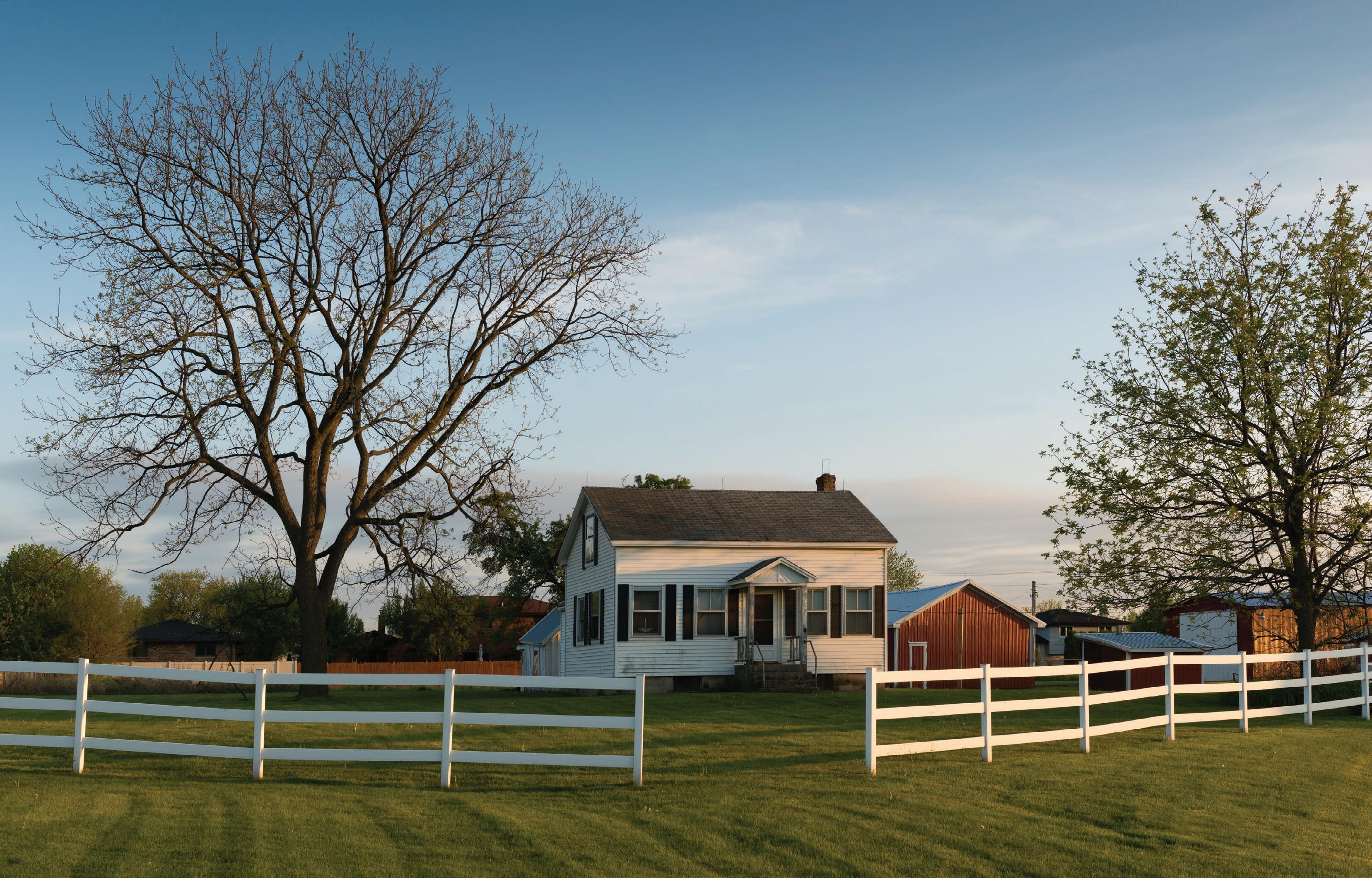
"Elm Cathedral” of mature American Elms, Beverly Heights Neighborhood, Edmonton, AB – 9/26/2025
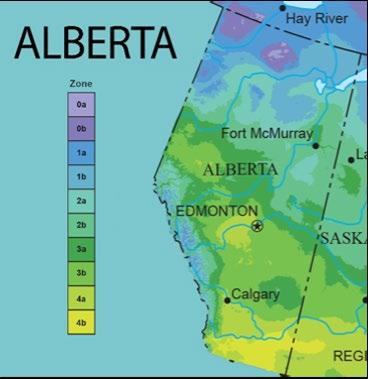
To make matters worse (wait, it gets worse?), because Edmonton lies at about 53° N latitude, just 7 degrees below the arctic circle in Canadian Plant Hardiness Zone 4 (fairly similar to the same USDA Hardiness Zone), their planting palette is extremely limited. According to my students, and backed up by the Edmonton Tree Map, the Urban Forest is approximately 40% ash and elm. But 40% of what? How many trees does Edmonton have? It gets worse. How about 465,000 publicly owned trees, all inventoried and mapped (Map Link Here). Among the largest Urban Forests in North America.
Now imagine being faced with losing 190,000 of those trees in public spaces within the next decade. To make matters worse (wait, it gets worse?), the region’s brutally cold winter temperatures, the list of tree species hardy enough to serve as replacements is shockingly small. The price tag, however, will be shockingly high. If you were having a bad Urban Forestry day before reading this, I hope this brings you some solace that your situation, almost by definition, cannot be this intimidating.
I wrote this article for two reasons. First, as I mentioned earlier: If you’re a tree geek-and its likely you are if you’re still reading-and want to step back in time, visit Edmonton. It’s a vibrant city with great people and a spectacularly rare Urban Forest. But more importantly, my purpose is to draw attention to an impending challenge which will demand substantial resources, innovative thinking, and untamed ingenuity to tackle. If you are looking to make a difference in the world in our chosen profession, Edmonton might be a great place to contribute your time and skills. Consider reaching out to some folks on the ground there and inquiring if you can be part of the solution. Whether through treatment, removal, planning work, nursery growing, or any step in between, there is opportunity to help guide the city’s transition from one massive urban forest to a very different vision of what it will become in the years ahead.
I taught another TRAQ course in Edmonton this past week, took even more pictures, and was inspired to write this. As I pulled into the hotel parking lot after the drive from Edmonton to Calgary, I saw the sun setting over a parking lot populated with young ash and elm trees, a sight I have not seen for a long time. It reminded me that like the sun, the Urban Forest cycles as well. As the sun begins to set on this historic and storied tree population, it will also rise anew in the years to come, as has happened many times before in our Urban Forests. It reminds me that Urban Forestry takes all of us, and this is but one bittersweet chapter in that very long book, and a shining opportunity to write your efforts into the pages of its perpetual history.
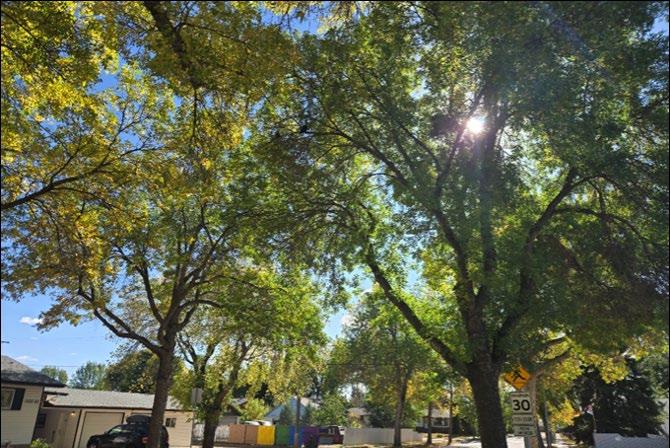
Mature Ash trees, Beverly Neighborhood, Edmonton, AB –9/26/2025. Approximately 40% of Edmonton’s Urban Forest is Ash and Elm
Tree Appraisal: The Four Primary Factors
By Scott Cullen, RCA #348
Introduction
This article is about four traditional primary appraisal factors (Size, Species, Condition, and Location), which have always had two roles. It builds on two earlier articles (Cullen and McNeil 2015, Cullen 2022).
The Guide for Plant Appraisal, 10th Edition1 (CTLA 2020) notes that “...depreciation is the combination three factors” (p. 61), and that “previous editions of the Guide described three depreciation factors: species, condition, and location... [while] this edition presents three categories of depreciation: physical deterioration (condition), functional limitations, and external limitations...” (p. 62). Purcell (2019, 2020) similarly described depreciation factors in the 10th Edition.
This article also refers to earlier editions of the Guide.
9th (CTLA 2000)
8th (CTLA 1992)
7th (Neely 1988)
6th (Neely 1983)
5th (Neely 1979)
4th (Neely 1975)
3rd (Lewis 1970)
2nd (Tilford 1965)
1st (NSTC/NAA 1957)
In fact, the 4th through 9th Editions of the Guide described four—not just three—primary appraisal factors: Size, Species, Condition, and Location. The Manual for Plant Appraisers (CTLA 1986) described the same four “ factors in the determination of value” (p. 16).
Purpose
One of the main purposes of this article is to explain that those four primary appraisal factors always had two roles: physical, observable, factual tree or plant attributes; and depreciation ratings. This article also explains that the 10th Edition retains the four physical observable attributes, even though the depreciation category labels have changed. This article is about the four factors generally, it is not about depreciation.
An additional purpose of this article is adding to the secondary literature that may inform development of the 11th Edition2 .
1The 10th Edition was released in August 2018 (CTLA 2018a, dark green cover). Within months, the first printing was withdrawn to correct formatting, typography, and other errors (CTLA 2018b). A second printing, released in July 2019 (CTLA 2019, light green cover), still contained errors and significant conceptual flaws. In November 2019, some of the 10th Edition worksheets were revealed to be unworkable (Cullen 2019). Revised worksheets (ISA 2020a, 2020b) attempted to correct errors and are included in the 10th Edition Revised (CTLA 2020, light green cover). The Quebec Chapter of the International Society of Arboriculture released a French translation and adaptation, of the 2020 Revised Edition, for the Canadian province of Quebec (SIAQ 2023, advertised with blue cover).
References in this article are to the 10th Edition Revised (2020); however, pagination is generally consistent in the three printings. Anecdotally, in 2025 some tree appraisers continue to use the 9th Edition (CTLA 2000).
2The 4th–10th Editions of the Guide were published by the International Society of Arboriculture—ISA. The 5th–10th Editions were authored by the Council of Tree and Landscape Appraisers— CTLA. In December 2023 ISA, with support from the other CTLA organizations, announced that public comments on the 10th Edition would be accepted throughout 2024, followed by a five year drafting and review process leading to publication of the 11th Edition by 2030 (ISA 2024a, ISA 2024b, Vidich 2024). In May 2025 ISA announced a) the appointment of 13 CTLA comment and content reviewers, and b) an updated schedule (ISA 2025).
Tree Appraisal: The Four Primary Factors continued
What Are Factors?
The 10th Edition does not define the term factor, even though a word search (n=3) finds it used 24 times. The Dictionary of Real Estate Appraisal (Appraisal Institute 2022) defines factor as “1. One of the elements that contributes to a given result.” Merriam-Webster (2025) defines factor as “one [ingredient] that actively contributes to the production of a result.”
As defined, factors are broadly any elements that contribute to an appraisal result, including both a) facts and b) appraiser judgments (e.g., adjustments, assessments, ratings, weightings).
What are results? The 10th Edition describes assignment result as the end product of the appraisal process, “the appraiser’s opinions and conclusions developed for a specific assignment” (p. 7).
Historical Perspective
As explained in the Introduction to this article, earlier editions of the Guide described four primary appraisal factors: Size, Species, Condition, and Location3. This section puts these factors in historical perspective.
As shown in Figure 1, the Guide emphasized the importance of these four factors. The 7th, 8th, and 9th Editions stressed them with a dedicated chapter or section. The 9th Edition stated “...these factors are essential considerations when appraising the value of a plant...” (p. 25).
Guide Dedicated
Edition * Chapter Page Descriptive Emphasis
Fourth 3 four basic factors
Fifth 10 four major factors
Sixth 18 four major factors
Seventh Chapter 3 10 four primary factors
Eighth Section II 13 four primary factors
Ninth Chapter 4 25 four primary factors
* The International Society of Arboriculture ISA recently made the Ninth Edition available digitally through its online store. With ISA permission Russ Carlson, RCA# 354, recently made the First through Eighth Editions available digitally to ASCA members through the ASCA Exchange.
Figure 1. Four appraisal factors emphasized in earlier Guide editions.
Cullen and McNeil (2015)—in a 9th Edition context—explained that the Size, Species, Condition, and Location factors were physical, observable tree or plant attributes considered in all appraisals; and were distinct from the factor ratings applied to Species, Condition, and Location for depreciation in the cost approach. Cullen (2022)—in a 10th Edition context—similarly explained that the four primary factors always had two roles: physical, observable tree or plant attributes, and depreciation ratings; and that the 10th Edition retains the four physical, observable attributes, but replaces Species, Condition, and Location depreciation rating categories with Physical4, Functional Limitations, and External Limitations.
3The 1st, 2nd, and 3rd Editions also described three basic factors to be considered in determining the monetary value of shade and ornamental trees: size, kind (species), and condition. The 4th Edition added location.
4The 10th Ed. adopts the depreciation categories used in “general appraisal practice” (p. 61), but uses the new Physical Deterioration label interchangeably with the traditional Condition label (p. 62).
Tree Appraisal: The Four Primary Factors continued
“…the four primary factors always had two roles: physical, observable tree or plant attributes, and depreciation ratings…”
Approaches to Value
The approaches are important in understanding this historical perspective. An appraisal approach is simply defined as a systematic process for developing an opinion of appraised value or assignment result (Appraisal Institute 2022). The three appraisal approaches rely on different types of data as shown in Figure 2.
Appraisal Approach
Cost
Sales Comparison (Market in 9th Ed.)
Income
Type of Data
Reproduction, Functional Replacement † , or Repair Costs
Sales Prices
Income and Expenses
† Reproduction and Functional Replacement costs are distinguished in the 10th Edition (p. 55 ).
Figure 2. Approaches to value rely on different types of data.
Stone’s (1916) foundational tree appraisal method used what we now understand to be a cost approach. He used the cost of available size nursery trees to develop a cost per sq. in. of trunk cross-sectional area which could be used to estimate the cost of a larger appraised tree. The Felt Formula (e.g. Felt 1929), Felt-Spicer Formula (e.g. Spicer 1953)5, and the 1st through 8th Editions of the Guide all similarly used what we now understand to be a cost approach. The 5th through 8th Editions briefly alluded to income appraisal of orchard crops and market value of timber, but did not describe different approaches to value.
The 9th Edition (p. 20) first recognized three distinct “approaches to value” in tree appraisal: Cost, Income, and Market. The 10th Edition (p. 25) reinforces and expands on the role of the three approaches to value or assignment result: Cost, Income, and Sales Comparison (Market in the 9th).
The Two Roles of the Four Primary Factors
Physical, observable plant attributes. The four primary appraisal factors described in earlier Guide editions (Size, Species, Condition, and Location) are physical attributes or characteristics of appraised trees or other plants. They are observable and factual. They are objective. Tate (1989) succinctly described these “objective variables:”
“There is only one correct tree circumference at 4.5 feet for each tree... The determination of tree species is a precise observation... it is a sugar maple or it is not... The tree is growing in a mall or it is not. It is growing on a street curbside extension or it’s growing in a front yard... the tree has insects or disease or it does not... does or does not have a trunk cavity... a split crotch and so on.”
These four primary appraisal factors were always a consideration in developing an opinion of value. Recall that the 9th Edition described them as essential. The factual and objective attributes and characteristics of the appraised plants accurately observed by the appraiser at the start of the appraisal would not ordinarily change over the course of that appraisal, regardless of the appraisal approach, the method, or the type of data used by the method; and regardless of factor ratings subsequently applied.
5For a more complete history see Cullen and McNeil (2020, Appendix IV).
Tree Appraisal: The Four Primary Factors continued
Factor ratings (depreciation). Stone’s (1916) foundational method adjusted for Species, Condition, and Location to reflect value. From the 4th Edition through the 9th Edition, cost estimates could be adjusted downward for Species, Condition, and Location6 . Based on the physical, observable, and factual Species, Condition, and Location factors, the appraiser could develop factor ratings from 0%–100% (e.g., 8th Ed. p. 34, 9th Ed. pp. 15, 25). The ratings were “relative to a high-quality specimen” (8th Ed. p. 13, 9th Ed. p. 25). The 9th Edition first recognized these adjustments as appraisal depreciation, in the cost approach (p. 21).
In contrast to the observable and factual plant attributes, Tate (1989) described these ratings as “subjective variables.” The 8th Edition (p. 13) and 9th Edition (p. 25) also described the factor ratings as subjective.
The Factors and Their Ratings Are Distinct
The Species, Condition, and Location factors are factual observations. They are data. The appraiser’s percentage ratings of those factors are conclusions. They are not the same thing. Tree and plant appraisers should understand that their factual observations and their conclusions or opinions about those observations are distinct.
The 10th Edition
The preceding Historical Perspective section describes the Guide’s traditional emphasis of four primary appraisal factors (Size, Species, Condition, and Location) which always had two roles.
The 10th Edition uses factor to describe an assortment of appraisal variables. As noted above, a word search (n=3) finds it used 24 times (in its broadest sense, as defined in the Introduction to this article). Cullen (2022) explained, however, that the 10th Edition retains the traditional four primary appraisal factors as physical, observable plant attributes in Chapter 4 – Data Collection, and in the Appraisal Field Data Sheet (p.155).7 See Figure 3. The 10th Edition describes these as quantitative data (p.31).
As explained in the Introduction to this article, the 10th Edition “presents three categories of depreciation: physical deterioration (condition), functional limitations, and external limitations” (p. 62). These replaced the Species, Condition, and Location depreciation factors used in earlier editions. As in earlier editions, in the 10th Edition appraisers can develop depreciation ratings from 0%–100% to be applied to basic cost estimates (p. 64). Detailed treatment of 10th Edition depreciation is beyond the scope of this article.8
6The 1st, 2nd, and 3rd Editions considered kind (species), and condition; the 4th Edition added location.
7The appraiser can also record depreciation rating percentages in the 10th Edition Appraisal Field Data Sheet, but this remains a separate role.
8For simplicity, this article treats size only as an observable physical attribute. Discussion of size as an effective depreciation variable in the 10th Edition, Functional Replacement Method—or earlier Cost of Cure—is beyond the scope of this article.
Tree Appraisal: The Four Primary Factors continued
Summary
This article explains that the 4th through 9th Editions of the Guide described and emphasized four primary appraisal factors: Size, Species, Condition, and Location. Those four primary appraisal factors always had two roles: physical, observable tree or plant attributes (facts, objective variables); and depreciation ratings from 0%–100% (conclusions, subjective variables). Observations and conclusions are not the same thing; they are distinct.
The 10th Edition retains the four physical, observable, factual plant attributes (Size, Species, Condition. and Location); but replaces the three traditional categories of depreciation with Physical Deterioration (Condition), Functional Limitations, and External Limitations. In the 10th Edition, the four physical, observable, factual plant attributes are still essential considerations in every appraisal, even though the cost approach depreciation category labels have changed.
One purpose of this article is adding to the secondary literature that may inform development of the 11th Edition. The 10th Edition lost the traditional emphasis of Size, Species, Condition. and Location as four primary appraisal factors. The 11th Edition developers may consider whether that is merely historical curiosity; or whether restoring the traditional emphasis of four primary appraisal factors would add clarity to the 11th Edition and to appraisal education.
Literature Cited Appraisal Institute. 2022. The Dictionary of Real Estate Appraisal, 7th Ed. Appraisal Institute, Chicago. 394pp.
CTLA (Council of Tree and Landscape Appraisers). 1986. Manual for Plant Appraisers (Supplement to 6th Ed.). CTLA, Washington, DC. 57pp.
CTLA (Council of Tree and Landscape Appraisers). 1992. Guide for Plant Appraisal, 8th Ed. International Society of Arboriculture, Savoy, IL. 103pp.
CTLA (Council of Tree and Landscape Appraisers). 2000. Guide for Plant Appraisal, 9th Ed. International Society of Arboriculture, Champaign, IL. 143pp.
CTLA (Council of Tree & Landscape Appraisers). 2018a. Guide for Plant Appraisal, 10th Edition [first printing]. International Society of Arboriculture, Champaign, IL. 170 pp.
CTLA (Council of Tree & Landscape Appraisers). 2018b. Guide for Plant Appraisal, 10th Edition. Corrigendum, Nov. 27, 2018, International Society of Arboriculture, Champaign, IL.
CTLA (Council of Tree and Landscape Appraisers). 2019. Guide for Plant Appraisal, 10th Ed. (second printing). International Society of Arboriculture, Atlanta, GA. 181pp.
CTLA (Council of Tree & Landscape Appraisers). 2020. Guide for Plant Appraisal, 10th Edition Revised [third printing]. International Society of Arboriculture, Atlanta, GA. 181 pp. Cullen, Scott. 2019. 10th Edition worksheets that don't work. ASCA Exchange Post, Nov. 6, 2019. http://exchange. asca-consultants.org/viewdocument/10th-edition-worksheets-that-dont?CommunityKey=e64f95bf-940f-4ed2-be6f3abbca2b7c10&tab=librarydocuments (accessed September 28, 2023)
Cullen, Scott. 2022. Tree appraisal: Location legacy in the 10th Edition. Arboricultural Consultant 55(1):17-22. Cullen, Scott and Joseph D. McNeil. 2015. Tree appraisal: Would it be missed? Arboricultural Consultant 48(3):3-7. Cullen, Scott and Joe McNeil. 2020. Tree appraisal: Installed unit costs. Arboricultural Consultant 53(3):4-11. Felt, E.P. 1929. Tree appraisal formula. The Shade Tree (1948 reprint 21(12)).
ISA. 2020a. Guide for Plant Appraisal, 10th Edition: Revised Corrigenda. https://wwv.isa-arbor.com/store/productfiles/Gui deforPlantAppraisal10thEditionRevised-2178-GPA_Corrigenda.pdf (accessed Dec. 27, 2020)
ISA. 2020b. Guide for Plant Appraisal, 10th Edition: Revised Forms. ISA Today, Nov. 17, 2020.
ISA. 2024a. Council of Tree and Landscape Appraisers Outlines Path for New Edition of Guide for Plant Appraisal. https:// www.isa-arbor.com/Newsroom/council-of-tree-and-landscape-appraisers-outlines-path-for-new-edition-of-guide-forplant-appraisa l (accessed March 11, 2024)
ISA. 2024b. Public review of the Guide for Plant Appraisal, 10th Edition. Arboricultural Consultant 57(1):11.
ISA. 2025. ISA Today May. Guide for Plant Appraisal Update. https://www.isa-arbor.com/Publications/ISA-Today/Issue/ Article/category/may-2025/guide-for-plant-appraisal-update
Lewis, Clarence E. (Ed.). 1970 Shade Tree Evaluation, Revision II [3rd Edition]. International Shade Tree Conference, Urbana, IL. 44 pp.
NSTC/NAA (National Shade Tree Conference/National Arborist Association). 1957. Shade Tree Evaluation [1st Edition]. National Shade Tree Conference, Columbus, OH, and National Arborist Association, Wooster, OH. Published at Wooster, OH. 14 pp.
Neely, Dan (Ed.). 1975. A Guide to the Professional Evaluation of Landscape Trees, Specimen Shrubs, and Evergreens, Revision III [4th Edition]. International Society of Arboriculture, Champaign, IL. 18 pp.
Neely, Dan (Ed.). 1979. Guide for Establishing Values of Trees and Other Plants, Revision IV [5th Edition]. International Society of Arboriculture, Champaign, IL. 42pp.
Neely, Dan (Ed.). 1983. Guide for Establishing Values of Trees and Other Plants, 6th Edition [Revision V]. International Society of Arboriculture, Champaign, IL. 48 pp.
Neely, Dan (Ed.). 1988. Valuation of Landscape Trees, Shrubs, and Other Plants. A Guide to the Methods and Procedures for Appraising Amenity Plants. , 7th Edition. International Society of Arboriculture, Urbana, IL. 50pp.
Purcell, Lindsey. 2019. Tree Appraisal and the Value of Trees [10th Edition]. Purdue Extension FNR-573-W. 7pp.
Purcell, Lindsey. 2020. An introduction to tree appraisal. Tree Care Industry XXXI(11):82-85 (November).
SIAQ (La Société internationale d'arboriculture Québec inc.). 2023. Guide pour l'évaluation monétaire des végétaux 2023. Traduction en français et adaptation de 10e édition américaine 2020. SIAQ, Laval, QC, Canada.
Spicer Orville W. 1953. Tree values and income tax deductions. Trees Magazine 13(5):8-9.
Stone, George E. 1916. Valuation of shade trees, pp. 255–258. In Shade Trees: Characteristics, Adaptation, Diseases and Care. Bulletin No. 170, Massachusetts Agricultural Experiment Station, Amherst, MA.
Tate, Robert. 1989. ISA tree valuation guide: A critical examination. Journal of Arboriculture 15(6):145-149.
Tilford, Paul E. (Ed.). 1965. Shade Tree Evaluation, Revision I [2nd Edition]. International Shade Tree Conference, Columbus, OH. 29 pp.
Vidich, Jamie. 2024. Council of Tree and Landscape Appraisers outlines path for revision of Guide for Plant Appraisal (press release). Arboricultural Consultant 57(1):10.
Backmatter
Acknowledgments: Thanks to Joe McNeil, RCA# 299—co-author of the cited earlier articles—for his insightful review of a draft of this article.
Scott Cullen, RCA #348, has been involved in various aspects of arboriculture since 1971. He is a full-time consultant in the tri-state metropolitan New York area. He is an ISA Certified Arborist, a CT Licensed Arborist, a NJ Licensed Tree Expert, a RI Licensed Arborist, and also holds the TRAQ credential. Scott is a CT Licensed Real Estate Broker, and earned a master’s degree in real estate development and investment from New York University. He was a member of ISA’s Plant Appraisal and Valuation Committee from its founding circa 2004 through its sunset in 2024, and was ISA’s representative to CTLA from 2011–2014.
Science: How Do We Know What We Know?
By Guy Meilleur
Standing on its dripline with a clipboard or a tablet, we cannot understand the tree. Surfing the internet, we don’t know all there is to know about a tree care practice. Science (literally “knowing”) is the “observation, identification, description, investigation, and explanation of natural phenomena…an activity that requires study and method. Knowledge gained through experience…Scientific means having an exact, objective, factual, systematic, or methodological basis.” Scattered impressions do not form knowledge. There must be a method for us to know what we know.
What’s called “the scientific method” favors controlled experimentation to answer big questions about physical phenomena, like “Why did that apple fall on my head?” Based on Galileo’s experiments rolling different sized balls, Isaac Newton mathematically proved that the same law of gravity governs the movement of apples, the moon, the planets, and all those other lights in the sky. Little did he know that, on that very same moon, astronaut David Scott would confirm that Law by dropping a hammer and a feather. They hit the ground at the same time.
Questions about natural phenomena, like “Can we make big old trees safer and healthier by pruning?” have not been answered with controlled experiments. Too many variables, years, and dollars would be involved. But that question can be answered by systematically pruning, and then methodically observing, describing, and explaining the tree response. Once the results are in, how are they processed so a reader can consider that scientific knowledge? The work must be reviewed by other experts in the field, known as peers.
Peer review can improve the quality of submittals, add credibility, and maintain standards of quality in any profession. Understanding the various ways that peers review different subjects, the standards to which studies and articles are held, and the methods they follow, can provide confidence that what we are reading is reliable, useful, scientific knowledge. Following are some peer review processes that are recognized and utilized in a variety of industries.
Medical peer review can truly be a matter of life or death so, it is considered first. A medical peer review process was detailed in the Practical Ethics of the Physician written by Ishāq ibn 'Alī al-Ruhāwī (854–931). Al-Ruhawi synthesized historical study and practice, drawing from the Greek Hippocrates and the Roman Galen, among many others. That process started with physicians methodically documenting the patient's condition, and every treatment.
The notes were then examined by a local medical council and compared to existing standards of medical care. If the patient died, woe them who fell short of those standards! If the patient was cured, that experience could inform an improvement of those standards. Today, this clinical peer review applies to different disciplines, so there is physician peer review, nursing peer review, etc.
Educational peer review achieves learning objectives, reaching for higher order processes in three domains: knowledge, emotion, and action. Like doctors and nurses working together, these domains must interact for successful outcomes. Educational peer review can be an isolated process with an end product, as in science and medicine. It can also be a collaborative teaching tool that helps students improve through collaboration.
Science: How Do We Know
Professional peer review processes are used in many other professional fields: accounting, law, and engineering. There is technical peer review in more practice-oriented fields like aviation, forest fire management, and arboriculture. As in education, professional peer review can work peer-to-peer. Gear inspections doublecheck equipment reliability and reinforce a safety culture for arborists and their teams. Peer review of practices can improve standards, and validate professional credentials.
Peer reviewed credentialing generally involves some kind of testing. Committees of professionals collaborate on the design of the test, the subjects that it covers, and the degree of difficulty of the material. Certification testing can be done online. Qualifications like TRAQ and TPAQ involve a practical component, so those tests are in person. Tests and processes can be revised over time, after review by a community of subject matter experts (SMEs).
Peer review for publication also requires a community of SMEs with qualifying education and experience, who are able to perform a reasonably impartial review. The reviewer is typically not identified to the author, so the review is “single blind.” Less commonly, if the author is also unknown to the reviewer, the review is “double blind.” Different publications in the arboriculture industry have different peer review processes:
• Tree Care Industry magazine uses in-house SMEs, and members in their editorial committee.
• Journals like Urban Forestry and Urban Greening, Journal of Urban Ecology, Phytopathology, Trees: Structure and Function, and Journal of Environmental Horticulture have single- or double-blind reviews.
• The International Society of Arboriculture (ISA) journal is Arboriculture and Urban Forestry (AUF). It is open source (no paywall) and its searchable archives go back 50 years. If your study is just starting, AUF considers short communications on original investigations with preliminary results, and analysis of procedures, equipment, or management systems that will lead to the improvement of best management practices.
• ISA’s Arborist News used at least three reviewers. Other SMEs were recruited for depth on technical articles, like the Detective Dendro (DD) series. The DD peer review process was single-blind, highly educational for this author, and mostly enjoyable. The rigor often matched or exceeded the review process for some standards, BMPs, and conference proceedings that are called “peer-reviewed”.
• Smaller publications can have excellent editorial control. Reviewers can guide authors to make their work the best it can be. Reviewers and editors alike can also lack the ability to engage the material. There may be bias. When feedback from reviewers is confined to brief opinions without substance, the readers lose.
• The Consultant uses a team of ASCA members and outside SMEs. Content is checked for accuracy, relevance to consulting arborists, and scope. Could the author broaden the view? Or delve deeper into a topic of interest? Authors can grow in new directions and become recognized experts. If you are interested in a topic, why not submit a draft to a publication where it can be improved and approved?
Academic peer review, despite the old saying “Publish or Perish!,” is not a matter of life and death. But tenure–a lifetime appointment with more money, status, and academic freedom–is largely based on publication in academic journals. In 1940, university professors and over 250 schools wrote The Statement of Principles on Academic Freedom and Tenure: “The common good depends upon the free search for truth and its free exposition." This search requires having the author's methods and findings reviewed by academic peers.
As in other professions, editors consult these reviews and decide whether the work should be published. In the academic world, the stakes, and the pressure, are very high. Academic journals primarily serve academics. Citations are gold to authors and to journals. The more references that are cited, the higher the Impact Factor and scientific ranking for a journal. Unfortunately, academic peer review does not guarantee quality in publications:
• In 2019, Duke University agreed to pay $112,500,000.00 to resolve damages from faulty research tied to federal grants.
• The design of an experiment can bias its findings. One study on compost tea factored the $5,000 equipment expense into the cost of one batch of tea. That data did not support the conclusion that compost tea was not cost-effective.
• Narrow expertise in an editor or reviewer can severely limit outcomes. New or unfamiliar ideas may be delayed or fundamentally altered. Novel findings may be overlooked or rejected.
• Flooding the zone of attention with scattered impressions makes verification impossible. Authors might cite a lack of experimental studies, and grasp for extraneous or spurious references, sometimes under pressure from editors. A recent article on pruning, for instance, cited 32 references. Most did not support the claims within. Some contradicted them.
• No source is safe from bias. On the US Forest Service webpage, a banner popped up that said “The Radical Left Democrats shut down the government. This government website will be updated periodically during the funding lapse for mission critical functions…”
Even in .edu or .gov domains, reading only the abstract of a document does not empower us to quote the conclusions with any confidence. Only by examining the contents and the references can we trust the conclusions. Now more than ever, relying on a single source in our search for knowledge can badly mislead us. Cross-referencing multiple sources to form our opinions takes time. But to understand complex and everchanging subjects like mature trees, it’s time well spent.
Despite its potential flaws, peer review is a vital process for any profession. Combining it with other forms of scientific validation, like documenting observations noted over time and protocols derived from analysis of data and experience, can provide rigor and confidence. Wherever we look, caveat lector--let the reader beware! Look carefully, analyze rigorously, and check those references before leaping to conclusions.
ASCA Lands’ End Store
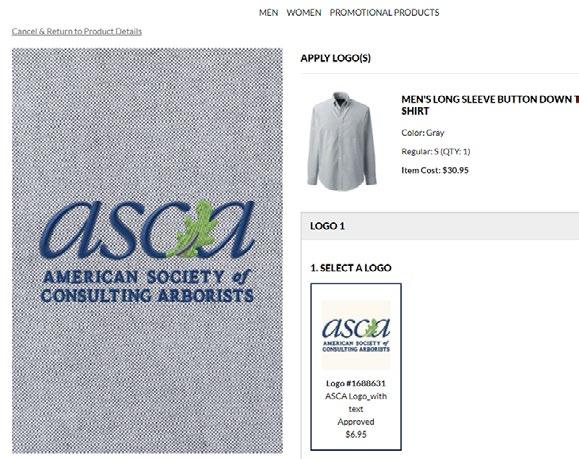
As an exclusive benefit to ASCA members only, ASCA has partnered with Lands’ End so members can now purchase clothing with the ASCA logo. This partnership includes the entire Lands’ End inventory for both men and women, in all sizes and colors, and offering an array of options for logo placement.
Examples:
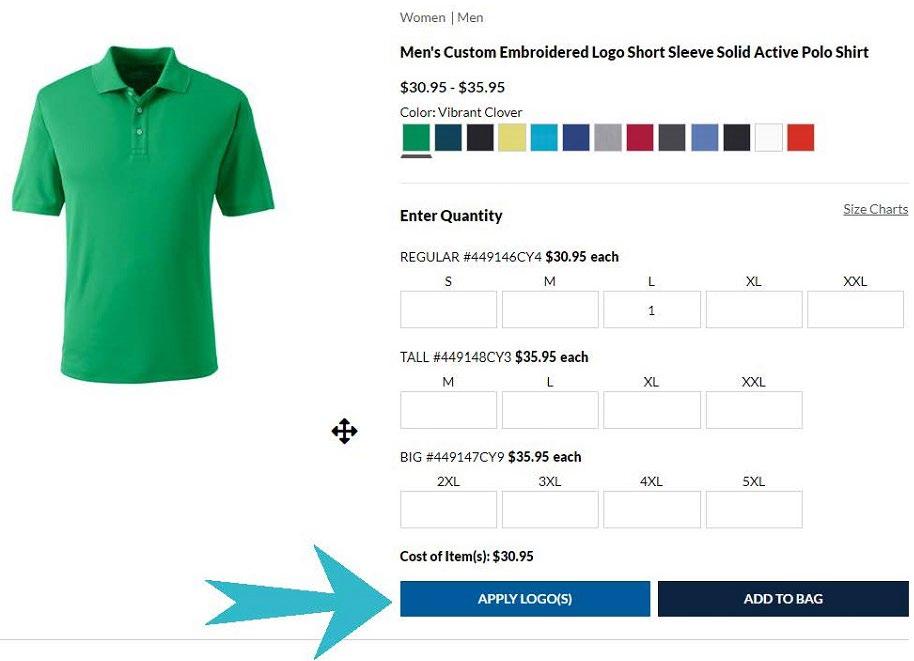
How to Order:
• Visit the ASCA Lands’ End storefront (ASCA Members - Please contact ASCA for the store password)
• Choose the category of clothing that you prefer
• Once you click on the item you are interested in, select the size you would like
• APPLY THE ASCA LOGO and select the logo location
• Add the item(s) to your bag
• Check out or continue shopping
Cultivating Leadership: Kay Sicheneder, RCA #668 on Growth, Guidance, and the Future of ASCA
By Julie Collins
Earlier this year, in Columbus, Ohio, I had the pleasure of attending a Tree & Plant Appraisal Qualification (TPAQ) course co-taught by ASCA’s President-Elect Kay Sicheneder, RCA #668. I found Kay to be an incredibly effective and insightful instructor who helped me gain a greater understanding of the appraisal process. Upon realizing Kay would become our next ASCA President, I felt this would be my opportunity to get to know her better and share with the newsletter readership.
We began with a discussion about how she became a Registered Consulting Arborist® (RCA), a path which took some twists, turns, and time. Although she completed the ASCA Consulting Academy and the post-Academy work in 2004, many years passed before she completed the RCA process. Her past places of employment did not realize the importance of the RCA designation, but her current employer Sav-A-Tree offered their full support. Kay submitted her final reports and completed the RCA process a few years ago.
What are you most excited to do as President?
Although Kay did not plan on becoming President due to her heavy workload, she is excited, and looking forward to focusing on strategic planning, while increasing the board’s responsiveness to member needs. Kay feels fortunate to have the support of the board and her employer Sav-A-Tree, both of whom she is confident will help her be a successful President.
Are you nervous about being the ASCA President?
Kay is a little nervous, although she is “not anticipating any major issues” during her presidency. She believes that the board will continue to manage issues that may come up and feels that “this is the most functional board that I have ever served on.”
During Kay’s past five years of serving, the board worked through COVID, navigated a change in the management company, and implemented numerous functional committees. Kay reflected on the “difficult path” of TPAQ which resulted in the hiring of an outside credentialing consultant. Although Kay is very proud of the resulting “official” TPAQ, she stated that it was a “contentious thing” for many people.
How do you plan to support younger professionals entering the field?
Several times during our conversation, Kay spoke of her aspirations to be more inclusive of all members’ needs and perspectives. Kay wants to be more welcoming to younger arborists and any other green industry professionals showing an interest in ASCA and the RCA process. Together we discussed the potential positive outcomes for tree preservation if ASCA could foster cooperation between landscape architects and consulting arborists.
What inspired you to pursue a career in consulting arboriculture Kay’s dedication to tree preservation is unwavering although trees weren’t part of her initial studies in college. After realizing that she didn’t like the narrow focus of veterinary medicine, she took a job at a tree service. Under the mentorship of Mike Raupp and his arborists, Kay began her career running PHC departments and completed her degree in integrated pest management (IPM). Soon after receiving her degree, Kay began presenting the benefits of IPM to seasoned arborists, the majority of which were not interested in a new way of doing anything, and especially not taking the word of a young, enthusiastic female arborist. Kay knew that
the IPM methods were true, and they worked, so she continued to passionately educate and slowly but surely, successfully converted many arborists throughout Long Island and the Hamptons. Kay recounted that those years and her accomplishments, specifically the reductions in chemical usage, were life changing.
What are the most pressing challenges facing consulting arborists today and how should ASCA address them?
We chatted about global warming and the short average life of trees growing in a changing environment. Kay often works with communities losing mature trees to development and utility line expansions. For instance, Kay recently lobbied for the preservation of a large group of mature trees, slated to be destroyed by proposed utility lines, in a community listed on the national historic registry. Her early involvement in the case resulted in a stop order which led to the community’s ability to legitimately negotiate with the utility company.
We summed up our talk by touching on her excitement to welcome and help new ASCA members feel included. Kay wants to encourage veteran and new members to volunteer on a committee because she believes, “you gain more than you give” by serving with your peers. She hopes that by continuing the current trajectory of promoting the importance of ASCA, all members will benefit and in a greater sense, we will preserve more trees. Most importantly, Kay, as president, wants to ensure that there is general satisfaction among all the members of ASCA, no matter their age, experience, or background.
Book Reviews
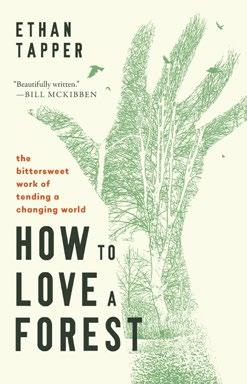
How
to Love a Forest by Ethan
Tapper
Submitted by Julie Collins
I recently attended the Open Canopy Workshop in Louisville, Kentucky which was hosted by the American Bird Conservancy. The two day conference focused on “exploring the ecology, management, and public understanding of eastern woodland ecosystems” and aligned heavily with the revival of deliberate thinning of dense forests and prescribed burns. Author Ethan Tapper, as one stop on his yearlong book tour, provided a youthful and enthusiastic introduction to his work as the headline speaker on the second morning of the conference. I purchased his book, enjoyed reading it, and wanted to share my thoughts.
Ethan Tapper’s How to Love a Forest provides an exploration of man’s relationship with forests and makes a plea for new active management protocols. He writes from his perspective of a working forester and easily reflects on his past while clearly urging his readers to join his most recent revelations for reviving abused forestlands. The campaign is well-intentioned and clearly rooted in deep experience. Personally, I was distracted by the metaphoric prose and found the frilly descriptions of machinery and heavy equipment unnecessary.
I agree with Tapper’s reasons to assist in forest restoration to remove invasive species, poor specimens, and dominant species that reduce biodiversity. However, since I am not familiar with the more intricate forest management techniques, I was confused about his end goal although I believe that it may be evolving like him. At times, the book leans heavily into a philosophical tone, and I would have preferred practical or sciencebased guidance with more concrete examples or data. Tapper’s dual role as both a forester and an advocate for active forest management becomes intertwined and I struggled with the differences between intervention and stewardship in lieu of preservation.
How to Love a Forest is worth reading. Tapper’s experience is undeniable, and his dedication to his work and the ecosystems he serves is admirable. The book may resonate more deeply with professionals in land management, conservation, or general ecology instead of myself as an arborist, with a focus on tree preservation.
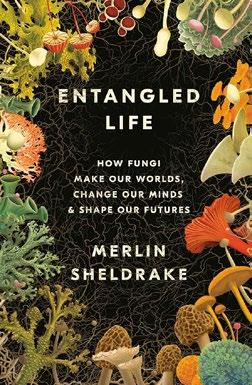
Entangled Life by Merlin Sheldrake
Submitted by Sarah Norris, RCA #848
Entangled Life: How Fungi Make Our Worlds, Change Our Minds & Shape Our Futures by Merlin Sheldrake is a fascinating read that will give a new perspective to your arboriculture practice. The focus of this book is not tree decay fungi, nor is this a book about arboriculture. However, the evolutionary intimacy of plants and fungi cannot be separated, and an entire chapter is dedicated to the “wood wide web.” At a most basic level, the book emphasizes that trees are makers and manufacturers: combining water, carbon dioxide, and sunlight via photosynthesis to make simple sugars and complex carbon-based structural compounds,
cellulose and lignin. Fungi are the unmakers, the decomposers. Fungi have important roles, assisting the first plants on land and playing important roles in forest health as ectomycorrhizal and arbuscular mycorrhizal associations with tree species.
Merlin Sheldrake provides extensive Notes and Bibliography to substantiate the facts in the book. Combined, these sections total 95 pages. Sheldrake explores the fascinating world of fungi beyond the interactions with plants as well. Animal relationships with fungi are also examined. In addition to fungal disease and pathogens, the book describes the Cordyceps fungus and how it manipulates ants to ensure that its spores are effectively spread. The role of fungi in altering human mental states is also described. Other topics include how fungi navigate labyrinths and have been employed by researchers to solve complex problems, the ability of fungi to assist in remediation and break down petroleum and other carbon-based waste products, and historical perspectives, including Victorian era attitudes towards stinkworts, and the importance of bioluminescence of the bitter oyster (Panellus stipitus) in developing the first submarine.
Entangled Life will leave you with a sense of wonder and a new appreciation for what you cannot see and what we have yet to learn about the fungal organisms that are silently shaping the world around us.
The 2026 Ohio Tree Care Conference, sponsored by the Ohio Chapter ISA, features a dynamic lineup of presentations across multiple tracks. Highlights include keynote speaker Dr. Ed Gilman on urban-compatible tree architecture and PPQ, as well as sessions on soil remediation, biomechanics, vegetation management with AI, and tree evaluation practices. Experts from across the arboriculture field such as Josh Behounek, Greg Dahle, and Dr. Mimi Rose share insights on topics ranging from pest control and urban forestry to leadership development. Register today for this premier event.
Nicole Dunbar nicky@fostertreespdx.com Portland, OR
Logan Ediger logan@ediger.org Lakewood, CO
Mark Ellis cinerea.ufs@gmail.com Zephyr, Ontario
Jamie King jking@americanforests.org Salem, VA
Dylan H. Kleine dkleine@bartlett.com Shippensburg, PA
Roy E. Maxey Jr. rmaxey@savatree.com Phoenix, AZ
Bryan McCoy bryanlmccoy@gmail.com Henderson, CO
Matthew Melvin mattcmelvin@gmail.com Orlando, FL
Matthew Puckett matthew.puckett@ coloradosprings.gov
Colorado Springs, CO
Andrew Schlieve andythearborist@gmail.com Madison, WI
John Sheridan jdsheridan7@gmail.com Millersville, MD
Shane Sills ssills541@gmail.com Santa Rose, CA
Jennifer Smith JenniferSmith@ treestateconsulting.com Lecompton, KS
Mark Ware Jr. mware@rainbowecoscience. com Pitman, NJ
Gabriel Whitlock gabe@greencanopy.solutions Canton, NC
New RCAs
Kirstie Ansara, RCA #893
Justin Krobot, RCA #894
Scott Carlson, RCA #895
Peter Fife, RCA #896
Zachary Brown, RCA #897
RCA Embosser and Stamp — Distinguish Yourself
The Registered Consulting Arborist ® (RCA)* status represents ASCA's premier level of membership. Official RCA stamps and embossers are available for purchase—use these items to distinguish your work products.
*You must be an RCA to order RCA products.
Submit Your CEUs!
To maintain your ASCA Membership, you must obtain 30 approved CEUs every two years. The last renewal cycle concluded on September 30, 2024. The new CEU renewal cycle is October 1, 2024 - September 30, 2026. While you are no longer required to upload all of your CEUs to your member portal (unless you are audited), the easiest way to keep track of your CEUs is to enter them into your member profile as you earn them.
Once you have 30 approved CEUs for the current renewal period, additional credits are not required.
Submitting CEUs online is easy:
1. Log in to the ASCA website
2. Click “Manage Profile.”
3. At the top of the page, click the “Enter
Your CEUs Now” icon.
4. Click on ‘Add Entry’ to add your CEUs.
*Be sure you select the correct CEU renewal cycle to apply your credits!
**Do not enter an expiration date!
View step-by-step directions here
Incoming and Outgoing Board Members
Welcoming New Board Members
We are pleased to welcome our newest members to the ASCA Board of Directors, Monika Buczko, RCA #785 and Kyle Offerdahl, RCA #714. Their knowledge, fresh perspectives, and passion for our mission will help guide us into the future, and we look forward to the impact they will make. Additionally, Debra DeMarco, RCA #672 was re-elected as a Director and will be returning for a 3-year term.
Thank You Outgoing Board Members
At the same time, we extend our heartfelt gratitude to our outgoing board members, Jeffrey Ling, RCA #337, and Philip Van Wassenaer, RCA #678, for their many years of dedicated service. Jeff has served on the ASCA Board since 2019, including as Board President in 2024. Philip joined the Board in 2020 and has contributed extensively through his long-time involvement with the Program Planning Committee and his leadership in the reformatting of the CTLA publishing process, among many other important initiatives. Their leadership, vision, and commitment have shaped our organization in countless ways.
Please join us in congratulating our incoming board members and in celebrating the outstanding service of our outgoing board members.
Debra DeMarco, RCA #672 DDM Horticultural Services Inc.
Jeffrey Ling, RCA #337 2019-2025
Philip van Wassenaer, RCA #678 2020-2025
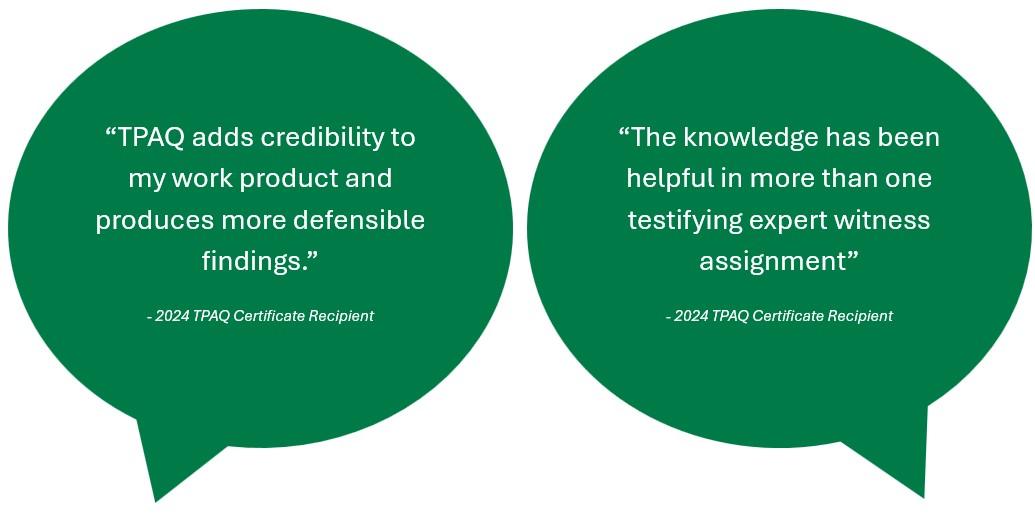
Hear What Others are Saying!
How to Host a TPAQ Course in Your Area:
AQ Course in Your Area:
Hosting a TPAQ course is a win-win: more attendees in your area have a place to obtain industry-validated tree and plant appraisal education, and ASCA provides your organization with all of the tools to make it possible.
ASCA will provide all the necessary course materials, including the approved education curriculum and slides, workbooks for attendees, exams, etc. and the host will provide the classroom space, meals for students, an ASCA approved instructor and per-attendee licensing fee. The full list of host ad ASCA responsibilities can be found here.
About the TPAQ program:
Hosting a TPAQ course is a win-win: more attendees in your area have a place to obtain industry-validated tree and plant appraisal education, and ASCA provides your organization with all of the tools to make it possible.
ASCA will provide all the necessary course materials, including the approved education curriculum and slides, workbooks for attendees, exams, etc. and the host will provide the classroom space, meals for students, an ASCA approved instructor and per-attendee licensing fee. The full list of host and ASCA responsibilities can be found here
The TPAQ curriculum is an introductory training course that will train green industry professionals in the theory and application of current tree and plant appraisal approaches, methods, and techniques to develop and implement an appraisal assignment. The course is for green industry professionals who wish to learn about tree, plant and landscape appraisal.
Who is eligible to attend, and/or earn the TPAQ Certificate?
Hear What Others are Saying!
Effective immediately, anyone can pay for and attend the TPAQ education sessions. However, eligibility requirements are still required for those who wish to sit for the exam and receive the TPAQ certificate. Opening the training to all allows as many people as possible to receive industry-validated appraisal education. Requiring those who wish to hold the TPAQ certificate to meet eligibility requirements ensures that the TPAQ certificate remains a high-level credential. For more details on eligibility requirements and the TPAQ certificate, please visit our website.
If your organization would like to host a TPAQ workshop, contact Amy Giesy, QAS, Credentialing Programming Manager, at agiesy@asca-consultants.org.
Upcoming Courses:
Kentucky ISA Chapter
January 15-16, 2026
Kentucky Community & Technical College System
Philadelphia, PA 19118
Morris Arboretum
March 30-31, 2026
Morris Arboretum & Gardens Welcome Center Philadelphia, PA 19118
Congratulations 2025 TPAQ Recipients
Mauricio Acevedo, RCA #883
Robert Aichele
James Allen, RCA #390
Richie Bamlet
Michael Barnes
Chris Barrneycastle
Kevin Carlson
Jodi Carlson
Luis Casas
Albert Cho
Julie Collins
Thomas Cottrell
Patrick Crooks
Christy Cuba, RCA #502
Mark Czarnota
Thomas Dodge, RCA #584
Craig Faulk
Tiffany Faulstich
Allan Fenner
Peter Fife, RCA #896
Brett Ganas
Michael Garvey, RCA #461
Josh Gevertz
Peter Gollinger
Carleen Gottlieb
Amber Graves Alvares, RCA #808
Uriel Hernandez
Eric Hinzman, RCA #730
Tyler Holladay, RCA #870
Josh Hollinger
Miranda Hutten
Sam Jacobszoon
Matthew Knull
Kirby Koepke
Bret Krieger, RCA #878
Morgan Langer
Elizabeth Lanham
Matt Latham, RCA #859
David Leinbach
Mark Marcilliat
Steve Marshall, RCA #855
John Martin
William Mellott, RCA #837
Jesse Milton
Kevin Mink
Andrew Mink, RCA #803
Lorin Moll
Liliana Morgan
Don Mueller
Katherine Naegele
Pam Nagle, RCA #805
David Nelson, RCA #325
John Noreika
Sarah Norris, RCA #848
Logan Patterson
Andrew Pratt
Andrew Ranney
Jordan Rengo, RCA #873
Matthew Ribarich
Rhett Richardson
Em Roberts
Hannelore Rose, RCA #892
Daniel Shaw, RCA #857
Kaitlyn Shelton
David Shostak
Jennifer Smith
Nicolas St. Sauveur
Scott Stringer, RCA #888
Ryan Suttle, RCA #813
Paul Thompson, RCA #509
Russell Tonning
Leonardo Tuchman, RCA #771
Bryan Waters
Scott Wheeler, RCA #881
Michael Wiekhorst
Brenda Wong
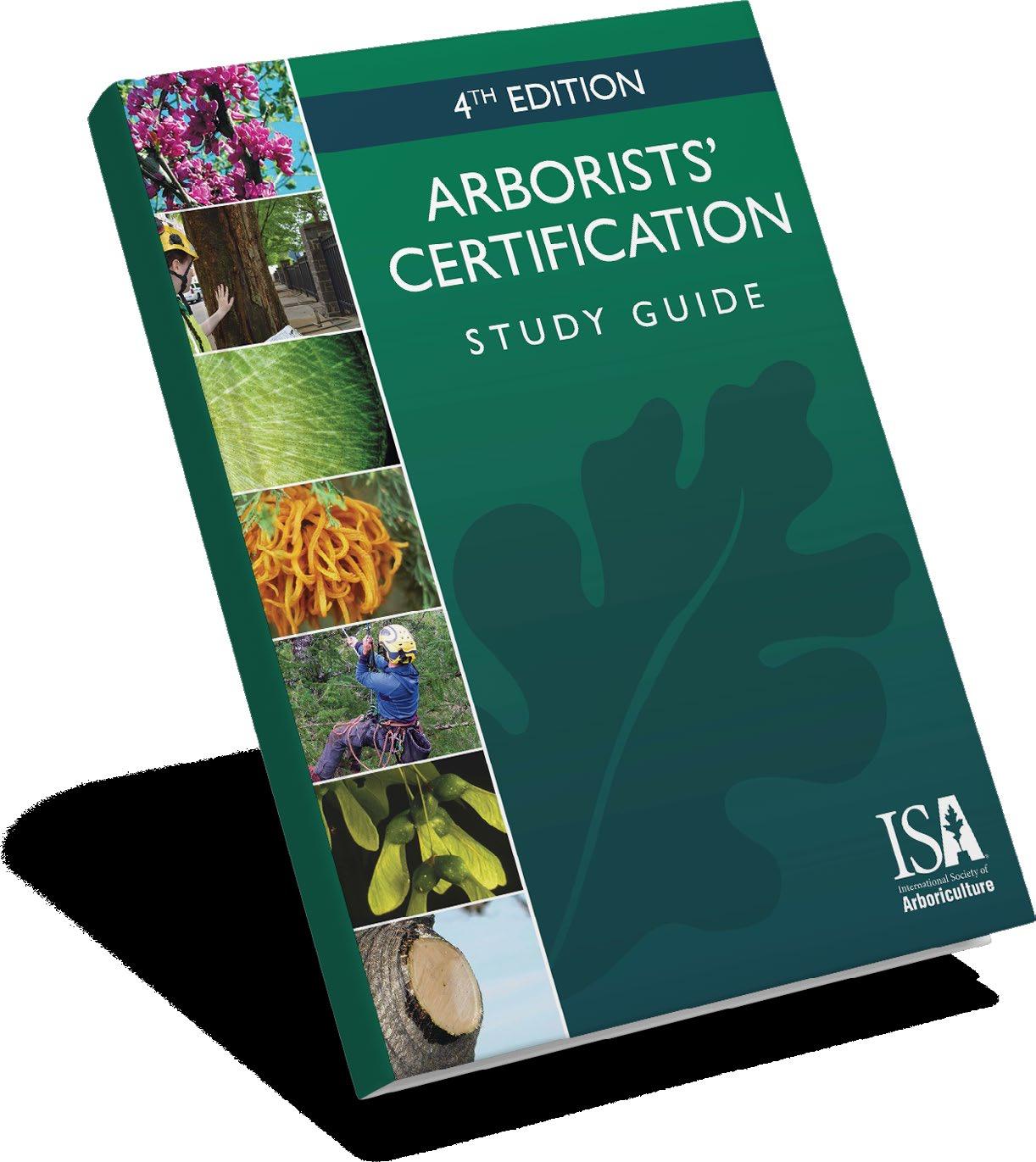
ARBORISTS’ CERTIFICATION STUDY GUIDE, 4TH EDITION
The Arborists’ Certification Study Guide is a must-have resource that provides a strong foundation and reference for all tree care professionals.
This essential text for professionals in the field of arboriculture is now available for purchase.
THE NEW EDITION IS:
• Available in print, digital, and audiobook formats.
• A resource designed to help study for the ISA Certified Arborist® exam.*
• Fully illustrated in color with more than 440 illustrations.
• Equipped with sample test questions, a workbook section, and challenge questions.
• Significantly enhanced in content and design, with illustrations throughout to clarify key concepts.
*Any educational or preparatory material, whether published by ISA or not, should NOT be considered the sole source of information for an ISA certification examination. This publication and the ISA certification program exams are developed through separate processes and entities.
RCA
Spotlight with Lew Bloch, RCA #297, ASCA Honorary
Life Member
Interview conducted by Guy Meilleur
Following my recent review of Lew Bloch’s talk at the 2024 ASCA conference, I traveled to the leafy suburbs of the District of Columbia, to sit down with the man and learn more.
GM: So Lew, where did you start, and how did you become a consulting arborist?
LB: Well, I started at a very early age. I grew up in the St. Louis, Missouri area suburbs and majored in ornamental horticulture, which is basically landscaping, at the University of Missouri. I joined the ROTC (Reserve Officers' Training Corps) during the Korean War. This was during the early 1950s. After graduating, I spent two years in the service, returned to St. Louis, and worked as a salesman for a landscape company for a couple of years. And then, two fraternity brothers and I started a little landscape business. But that was going a little slow, so I left that and moved to Maryland in 1959.
At my first job there, I worked four days and got fired. My next job lasted 16 years, with a major landscape company. I was in charge of the landscaping, and we did a lot of the very large federal buildings in DC and working for big organizations and companies. But I could see that my boss had four daughters growing up, and some sons-in law. I was the old man and the old man is usually the one to go, so I thought I should look around for a new opportunity. Yeah, I was the old man–in 1975!
I had a friend who had a tree company that he started in 1949, and we formed a partnership. I was going to start a landscape division of his tree company. It was a small company, but it had a good market, with some government contracts, some real estate involved. And that went well for a while. I didn't know it at first, but he was 16 years older than me, and his wife was my age. He was spending more time building his wife's business, and he didn't really want to work with our company anymore. So, I was forced to take over the tree department.
That's when I first got into arboriculture; I mainly knew about trees as nursery stock. I hired somebody to run the landscape division, and I ran the tree division. And so, I got into true arboriculture. My partner had taught me a lot, but basically, I learned the tree care business by doing it.
Eventually, my partner and I had a nasty divorce. I finally bought him out, so I wound up owning American Tree Service and Landscape Company. And then I got the notion that I didn't want to do this forever. I had started building a consulting practice, and enjoyed it. Chippers and chainsaws and all were hard enough, but licensing and permits got terribly difficult.
In 1996, I sold the business to The Care of Trees; this was before they became a part of Davey. I hung around, working as an independent contractor to take care of my clients for two years. And I started getting more into consulting. I didn't ever want to retire. I tell people that if I retired, I would either be dead or divorced or both. After separating from the business, I started Bloch Consulting Group, LLC. https://www.lewbloch.com/. I joined ASCA in 1989.
Click to watch the full interview!
GM: Thanks. You anticipated my next question.
LB: I say I joined, but I was admitted. You couldn’t just join. In those days it was a good old boy network sort of thing. You had to submit reports and documents and letters of recommendation. 1989 was also my very first ASCA conference, in Colorado Springs–which was near where I spent my two years in the Army. And I met a lot of nice people and a lot of the old timers. And I have not missed a conference from 1989 to this year. The only missing year was in Covid when we didn't have a conference.
GM: That’s quite a record– 36 straight conferences. So you'll be in San Antonio?
LB: I will be; I'll be a presenter, talking about appraisal with Scott Cullen and Robert Brudenell.
GM: So that's some of your background. I also wanted to ask about your involvement in the industry, some milestones along the way?
LB: Well, in 2012, I was given MAC-ISA’s Lifetime Achievement Award. In 2019, ASCA gave me an Honorary Life Membership. Those are a couple of honorary things I'm proud of. And I've served on committees. I was on the Council of Tree and Landscape Appraisal, back when there were only five members. When I came on board in 1994, that was the very first day we started working on the 9th Edition–which was published in 2000. I stayed on until 2007. After 13 years, I let someone else take over.
GM: Aside from your former partner, were there any other mentors or influences that helped you develop your knowledge and talent?
LB: Yes, all the way through my life; in the nursery business, in the landscaping business, and then ASCA. I didn't have anybody that was like a mentor full time. I just spent a lot of time at the bar. Bull “skipping” with a lot of the old timers. And that's how you pick things up at conferences, not just lectures, but after. I learn a lot just by going to the conferences; it’s valuable.
GM: I like the way that they build networking time into the schedule, so it’s not just one class to another, but you have time to hang out and meet new people.
LB: ASCA has changed quite a bit, too. When I first was admitted in 1989, Jack Siebenthaler was the executive director. And he was a consultant as well as the administrator, so there were some conflicts there. And there was a lot going on, especially with that Treaty Oak that was poisoned in Texas. Remember that?
GM: Oh, yeah. After inspecting that tree, I was impressed with how it was restored. It was looking very nice.
LB: So after Jack came John Dukes, who was not a professional arborist or a certified executive. He was just a guy who liked to run organizations. And Management Solutions took over from him. I had known Beth Palys as the Executive Director of the Landscape Contractors Association. I'm a past president. When they interviewed her, they actually called me for a referral. And now, we have Stringfellow, who are very professional.
GM: Yeah, they're doing a fine job. I think staff is very easy to work with and full of good ideas. So, how is your current business going–busy? How much of it is inventories, appraisals…?
LB: It's up and down. I mean, there's times when I have to work in the evenings to get things done. Then there are days when I don't really have a lot to do. I turn down a lot of stuff. I do what I want when I want, I’m 93. I just take what I'm interested in. I've done over 30 fatality and severe personal injury cases over the years. I also do a lot of residential work. There are some tree companies around here who, when they get the call from the client, it sounds like all they all the client wants is somebody to walk around and look at their trees. They say, call Lew.
RCA Spotlight: Lew Bloch continued
And so it's a win win win. It's a win for the company. They're not wasting their time walking around with a client who is not going to spend a lot of money. It's good for the client because they're getting independent opinions, and it's good for me because I pick up some loose change. So I like doing the residential work.
GM: Me too–it's fulfilling and it's varied. Everything's different and it's low pressure. But I wonder; Do you refer work to companies according to their strengths?
LB: Well, yeah, I do refer work out to some of the locals who are good people. I don't want to get involved in doing inventories. I don't like working for the architects and engineers and builders. I just don’t want to do that kind of work.
GM: Sounds like you're carving out a niche that fits your preferences and your strengths.
LB: I do like working with lawyers. A lot of insurance companies, HOAs, municipalities, residential, I’m okay with that.
GM: What is interesting is the contrary, many arborists totally avoid anything that smells litigious. They avoid lawyers. But you're comfortable in that realm.
LB: I'm very comfortable. Well, when I go to court, sure there’s a little bit of nervous anticipation. But I keep my cool. And I'm comfortable with what I do.
GM: So when you're considering a job, what's the most important thing to do first? What's the most important thing to establish?
LB: The most important thing to establish is–who is my client? Typically not the landowner but a lawyer or insurance company. And then, what's my assignment exactly? Why am I here? What are you asking? If a lawyer calls me – you probably get the same thing – and says “I want to hire somebody to do this Tuesday” and then they rattle off their version of reality. And if I'm not comfortable with their position, I'll tell them.
Another thing I hear from ASCA people so much, via email, telephone, and the listserv is: “I'm having problems getting paid.” Well, I do like to get paid – in advance. You know, there are some lawyers and insurance companies I worked for over the years; for them I'll wait. For others I get a retainer, either before I show up or when I show up they have the check ready.
I have kind of a system where I'll charge them x number of dollars, a lump sum to meet them, get an overview of the case, and see whether I think I can help them, and what their options are.
GM: I find that two hours is comfortable, depending on driving time. I tell them that for two times my hourly rate, I can come out, look at the site, get the facts of the case, and review what they can do and what might or might not work out for them.
LB: It's not unusual for me to look at the site in ten minutes and know. If I think I can help them, I will give them a price to write a report, usually a lump sum. I know about how many hours it's going to take me, and we've agreed about the level of detail. I do a lot of research on my reports, especially in appraisals, I always get citations. I cite literature, cite a book or article, cite a university position.
So it's not just “Lew Bloch says it.” Here's why he says it! I want my report to be as good as possible, and defendable. I want my report to help settle the case. Most of the times I write reports, I never hear the outcome. 90+% don't go to court, but I’m ready when they do.
GM: Do you have a different rate for testimony than you do for a report? A lot of people charge more for testimony.
LB: No, sir. Whether I'm doing research or, or just driving in my car, or on the witness stand, my time is worth the same. I'm still doing okay.
RCA Spotlight: Lew Bloch continued
GM: Why do you think many arborists shy away from consulting, and many consulting arborists shy away from work that might get litigious? What's the obstacle there?
LB: I can't answer what they know, because everybody's different. But in my opinion, it’s lack of experience and a lack of confidence. If you get the experience, you can have the confidence. You have to put your feet in the water, right? And I learn more from my mistakes. If I screw up something, I remember that. But it can be nerve wracking. In a deposition, that's what they're trying to do, to see whether you're going to be rattled in court or not.
GM: Do you have any strategies for maintaining your cool? I know it comes naturally, but, if you feel yourself getting probed and a little off kilter, is there a way to bring yourself back to being cool and calm and collected?
LB: At a deposition I was in, there were three attorneys on the other side, representing three different entities. I was testifying for the plaintiff. One of the attorneys who was a real jerk and the other attorneys realized it. He asked me a question. My attorney client said, “Don't answer that question.” They went back and forth and the opposing attorney said, “In other words, you refuse to answer the question.”
I said, “What are you asking here? I'm going to have to ask my attorney. I'm going to have to get legal advice. We'll have to end this deposition, until I get this information.” That shut him up. The attorney I was working for gave me some clues about what I could answer. So yeah, there's some nerve wracking stuff, but I get good advice and then follow it. I just keep my cool.
I have a court appearance in two weeks. That could be settled. I've had them settle while enroute to testify, or right at the courthouse door.
GM: In most of these cases, are you working for the client before they get legal counsel, or is it more typical that they've already retained a lawyer?
LB: Oh, both. One lady called and says “I have a 150-year-old tree, and my neighbor came over and took off seven limbs. I'm going to sue the SOB.” I said, “Well trespassing is against the law, but number one, I don't know what the damages are.” The client is emotional. But I am not emotional. If they're going to say they're taking legal action, they're going to need a lawyer. Even to just send a letter. Sometimes they need to hire a lawyer and sometimes they don't. I'm just a consultant. I'm not a legal advisor.
GM: It's important to draw the line there. I'm wondering about cases where your report gave the client something to start a conversation with, and they didn't have to retain legal counsel because they settled it.
LB: Oh, that’s happened, I’ve helped them settle. And, many times I've told people bent on suing to just bite their tongue and get over it. I mean, you're talking about paying me for my report, and a lawyer. Going to trial is going to take several years and lots of money. And three things can happen. One, you get everything. Two, you get something. Three, you don't get a thing, right? It's not always about who's right or wrong. It’s who has the best lawyer. And most of the time it's not about the trees. It’s about the money. If they do get thousands of dollars, they’re not going to buy trees. They’re going to Bermuda, right?
GM: Right? Speaking of court cases, you wrote Tree Law Cases in the U.S.A. in 2000, and a second edition in 2007. How was that experience for you?
LB: Oh, terrific. People ask, are you successful? I say well, I have gray hair, and I’m published. So they think I’m smart! Being published helps a lot.
GM: And it's easier than ever being published, these days. Since 2007, what other books have come out describing tree law cases in the USA? Do you think the market is right for somebody to publish an updated edition?
LB: Our ASCA colleague Julan Dunster wrote Trees and the Law in Canada. Barri Bonaparte wrote Understanding Tree Law in California, and Randall Stamen wrote
RCA Spotlight: Lew Bloch continued
California Arboriculture Law. But nothing that I know of for case descriptions in the USA.
Things came out quite well for me with the book. We ran into some difficulties with the ISA contract, so I published it myself. I wholesaled it to ASCA, TCIA, and ISA. Individuals would buy it. The market was not only arborists and insurance companies, but also to associations like the bar association, and the Insurance Claims Association. They are all over the country.
GM: I'm wondering how you got the material for the book. You put out feelers for people to send in information about cases?
LB: I did. I asked arborists, insurance companies and lawyers, and Victor Merullo, who wrote Arboriculture and the Law. He was the guru of tree law at that time. He helped me with my book, as well as other ASCA members who did a lot of cases.
It's not about the law, just the cases. Victor wrote the opening disclaimer that there’s no opining on the judgments, just objectively summarizing and reporting. When I got a submittal, I would rewrite it, usually to make it shorter. Then I sent the revision back for approval before it went in the book. Some submittals were so overly complicated, I was not able to fit them into the book’s nutshell format. As in our reports, brevity is a virtue!
GM: It’s standard language for publishers to say that edits can be made for brevity and clarity. You boiled each case down to just 2 or 3 paragraphs, sticking to the facts. And by giving the case number, you encourage readers to get the whole story. A Supreme Court Justice once spoke to a roomful of lawyers who wanted to know about a case. When asked how many had read the entire judgment, only one or two raised their hand…I see that both editions had the same list of categories, like chapters.
LB: That was an efficient way to break it down. In the back of the book, it lists the different categories. Some cases fit in more than one category, so the same description may be in different chapters. That makes it easy for readers to find, say, negligence or personal injury cases. They can just go to that section.
GM: Since you have a history with landscape companies, I wonder how often they are actually in court and forced to pay damages? This is something I hear from tree guys too often: the specter of liability, that if they work on a risky tree and it fails, they're going to get sued and ruined.
LB: I don't know of any legal cases like that. I know I’ve been involved in conflicts involving tree companies, but not in court. I don't believe that any judgments were registered against my landscape companies. None actually went to court. They find a way to negotiate, instead of going to court. That's always preferable for sure.
GM: I've only heard of one that went to court, in Manhattan. A fatality from a fallen branch with a dogleg defect from substandard cutting. That was a rare case of a contractor found liable. So – aside from the need for a follow up to Tree Law Cases in the USA – after 37 years, how do you see our profession, and our Society today?
LB: Well, I feel good about it all. I think we have a good management team. Not only the professional management team, but our members. The boards and the committees are very, very good. I think we're in the right direction. And I look forward to many, many more ASCA conferences.
RCA Spotlight: Lew Bloch continued
Ad Sizes, Rates and Closing Dates
Classified Ads
Classified ads are a great way to find new employees or announce business opportunities. Payment must accompany copy. Send your classified ads to the ASCA office by email.
Design Services
ASCA offers in-house design services to help you with your ad design needs. Please call ASCA at (443) 640-1084 for rates. Any ads submitted that do not meet the proper size requirements will be reset, and production charges will be incurred at advertiser’s expense.
Publisher Indemnities
Publisher reserves the right to mark “advertisement” on copy that readers might confuse with editorial content, and to refuse copy that offends good taste or takes unfair competitive advantage.
Mechanical Requirements
• Files must be sent via email.
• Acceptable formats are hi-res JPEG and PDF.
General Information
• Advertising rates are effective October 1 through September 30 of the following year.
• Payment is due with signed contract and by final closing date for each issue.
• Signed contract must accompany ad.
• No refunds will be given on advertising payments. If ASCA membership is not renewed, member ad rates will revert to non-member rates.
• When change of copy is not received by final closing date, publisher reserves right to print ad from previous issue. Reserve Your Advertising Space
Guy Meilleur | JP McDonnell, RCA #777 | Dan Shaw, RCA #856
Written By: Deb DeMarco, RCA #672
The newly formed ASCA Historical Task Force has officially begun its work, launching an ambitious effort to document the Society’s rich history in preparation for ASCA’s 60th anniversary in 2027.
At the group’s first planning meeting, members introduced themselves by sharing their ASCA journeys: when they joined ASCA, what inspired their involvement, and how the organization has shaped their professional growth. We are fortunate to have an incredible team with a shared purpose—to
create a verified, comprehensive record of ASCA’s milestones and the individuals who built its legacy.
The Task Force identified several core priorities to guide the project in its initial steps: Developing a detailed timeline of ASCA’s history, drafting legal release documents to secure permissions for recorded materials, and using Otter or similar tools for accurate transcription and archiving of interviews.
The Historical Task Force invites all members—especially those who
have witnessed ASCA’s growth over the decades—to participate. Your stories, documents, and memories are essential to preserving our collective legacy. If you have paper copies of the Consultant, directories, photographs, or other historical materials or recollections to share, please get in touch with ASCA Headquarters or any of the members of the team. Please help us preserve our shared story.
Scott
ASCA Comics
Created by Richard Bloch, son of Lew Bloch, RCA #297
Created by Richard Bloch, son of Lewis Bloch, RCA #297
Created by Richard Bloch, son of Lewis Bloch, RCA #297
Created by Richard Bloch, son of Lewis Bloch, RCA #297
Other ASCA Committees
ANSI ASC A300 Committee
Andrew Mertz, RCA #452, Representative and Chair
Ryan Thomas, RCA #653, Representative Alternate
Guy Meilleur
Timothy Bergquist, RCA #650
Ken Knight, RCA #507
Kyle Offerdahl, RCA #714
Petrus Van Oss
David Huppe, RCA #667
Ron Matranga, RCA #488, Board Liaison
Audit Committee
Nick Martin, RCA #552, Chair
Ricky Peterika, RCA #641
Kay Sicheneder, RCA #668
Ron Matranga, RCA #488, ASCA President
Kristen Philips, CAE, ASCA Executive Director
Consulting Academy Commitee
Ryan Gilmore, RCA #769, Chair
Robert Props, RCA #429
Deanne Ecklund, RCA #647 (NonVoting Faculty)
James Komen, RCA #555 (NonVoting Faculty)
Nathan Schuettpelz, RCA #732
Will Mellott, RCA #837
Jeff Spohn
Andrew Smit, RCA #768
Paul Hahn, RCA #791
Aaron Dickinson, Board Liaison
Editorial Review Commitee
Maryellen Bell, RCA #703 Chair
Steve Lane
Guy Meilleur
John Harris, RCA #468
Julie Collins, RCA #811
Craig Southwell, RCA #592
Kat Cummings, RCA #781
Jeff Ling, RCA #337, Board Liaison
Marketing Committee
Chris Whitman, Chair
Christopher Arend, RCA # 802, Vice Chair
Chris Diffley, RCA #821
Dave Aviram, RCA #682
Dave Vandergriff
David Hunter, RCA #408
Douglas Gordon-Blackwood, RCA #689
Cy Carlberg, RCA #405
Ricky Peterika, RCA #641, Board Liaison
Marketing Committee
Dan Cathcart, RCA #766, Chair
JP McDonnell, RCA #777
Bill Pramuk, RCA #409
Dan Shaw, RCA #857
Ryan Grubb, RCA #776
Angel Cabral
Peter Hart, RCA #863
Angela Anderson, RCA #860
Debra DeMarco, RCA #672, Board Liaison
Nomination and Elections Committee
Jeff Ling, RCA #337, ASCA Immediate Past President and Chair
Cy Carlberg, RCA #405
Patrick Anderson, RCA #475
Eric Hoyer, RCA #482
John Martyn
Debbie Evans, RCA #572
Program Planning Committee
Ron Matranga, RCA #488, ASCA President and Chair
Kay Sicheneder, RCA #668, ASCA President-Elect and Vice Chair
Philip van Wassenaer, RCA #678
Scott Liudahl, RCA #696
William "Bill" Logan
Drew Zwart, RCA #630
Jack Ingram, RCA #727
Scott Baker
Ian Campbell
Dan Cathcart, RCA #766, Membership Committee Liaison
Sustainable Urban Forest Coalition (SUFC)
Klayton Soucy, RCA #849, Chair
Jeff Ling, RCA #337, Board Liaison
TPAQ Advisory Committee
Patrick Anderson, RCA #475, Chair
John Leffingwell, RCA #442, Vice Chair
Mark Webber, RCA #706
Andrew Metz, RCA #452
Jeremy Chancey, RCA #646
Lisa Smith, RCA #464
Chris Hughes, RCA #493, Board Liaison
Kristen Philips, CAE, ASCA Executive Director, Non-Voting
By Chris Whitman, Member of ASCA Marketing Committee
Hopefully you have heard by now that ASCA is making some big changes in the way it supports and promotes its membership. One recent and impactful change has been to improve the way clients find us through Search Engine Optimization (SEO) of ASCA's own webpage. You may ask, what is SEO? SEO is the process of improving the quality and quantity of website traffic to a website or a web page from search engines.
For those who may not be aware of the importance of SEO and building a web presence, take a look at some of these statistics:
1.) 61% of B2B marketers stated that SEO and organic traffic generate more leads than any other marketing initiative.
2.) 75% of people never scroll past the first page of search engines results.
3.) 70% of online marketers say that SEO is better than PPC (Pay-Per-Click Advertising) for generating sales.
source: www.hubspot.com/state-of-marketing
As a result of these improvements, not only will you directly benefit from more traffic to the "Find a Consulting Arborist" web page, but ASCA has also negotiated and secured a deeply discounted member set-up rate from our SEO provider to deliver this same, critical, marketing assistance to
your consulting practice website and/or listing. You now have a direct opportunity to piggyback on ASCA's significant presence to promote your business while customizing your own SEO to fit your specific geographic and service market needs. ASCA's SEO Provider has extended an offer to all members for discounted SEO services tailored just to your needs.
Email ASCA@asca-consultants.org for more information. Use "SEO Offer" in your subject line.
“ASCA has also negotiated and secured a deeply discounted member set-up rate from our SEO provider to deliver this same, critical, marketing assistance to your consulting practice website and/or listing.”
This is also an ideal time to update and personalize your ASCA Profile Information.
Follow these easy steps:
- Go to asca-consultants.org
- Sign into your account
- Click "Profile Home"
- Scroll down to Professional Information and click "edit"
Here, you can customize your profile even further by selecting the services that you provide, such as appraisals, expert witness, etc. as well as selecting the various states in which you do business.
Be sure to take advantage of this offer and make your membership work for you. As author H.
Jackson Brown put it, "Nothing is more expensive than a missed opportunity."
Are You a Registered Consulting Arborist?
Show off your great accomplishment with the RCA Electronic Stamp!
The RCA electronic stamp is a digital image customized for you! You can use this as part of your email signature, on professional documents, on social media, business cards, and on your website. Using your RCA digital stamp will differentiate yourself and showcase your valuable credential.