
BY W. B. Yates
First Fruits Press
Wilmore, KY
c2026
ISBN: 9781648173967
Successful evangelism, or, Life and labors of Rev. E A. Fergerson
Compiled by W.B. Yates
First Fruits Press, ©2025
Digital version at http://place.asburyseminary.edu/firstfruitsheritagematerial/5/
First Fruits Press is a digital imprint of the Asbury Theological Seminary, B.L. Fisher Library. Asbury Theological Seminary is the legal owner of the material previously published by the Pentecostal Publishing Co. and reserves the right to release new editions of this material as well as new material produced by Asbury Theological Seminary. Its publications are available for noncommercial and educational uses, such as research, teaching and private study. First Fruits Press has licensed the digital version of this work under the Creative Commons Attribution Noncommercial 3.0 United States License. To view a copy of this license, visit http://creativecommons.org/licenses/by-nc/3.0/us/.
For all other uses, contact:
First Fruits Press
B.L. Fisher Library
Asbury Theological Seminary
204 N. Lexington Ave. Wilmore, KY 40390
http://place.asburyseminary.edu/firstfruits
Successful evangelism, or, Life and labors of Rev. E.A. Fergerson [electronic resource]/ compiled by W.B. Yates. – Wilmore, Kentucky : First Fruits Press, ©2026.
Reprint. Previously published: Louisville, KY : Pentecostal Publishing Company, [1912?]
1 online resource 240pages; port.) : digital
ISBN: 9781648173967 (uPDF)
ISBN: 9781648173974 (Mobi)
OCLC: 1574785100
1 Fergerson, Edward Allen, 1869-1912 2. Evangelists United States Biography I. Title. II. Successful evangelism. III. Life and labors of Rev. E.A. Fergerson IV. Yates, W. B.
Cover design by Amanda Kessinger

First Fruits Press
Te Academic Open Press of Asbury Teological Seminary 204 N. Lexington Ave., Wilmore, KY 40390 859-858-2236
frst.fruits@asburyseminary.edu asbury.to/frstfruits
Compiled by W. B. Yates.
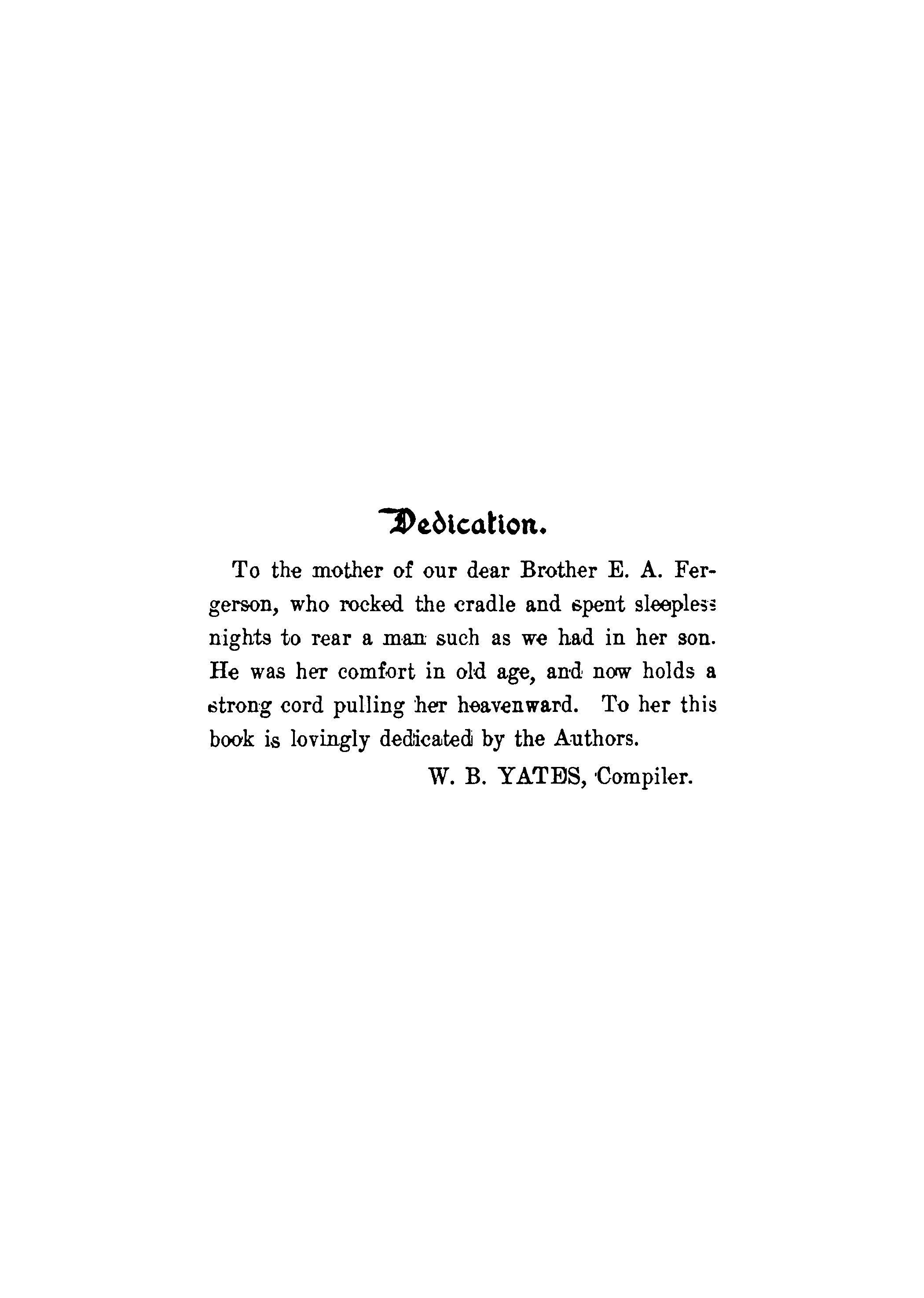
To the mother of our dear Brother E. A. Fergerson, who rocked the cradle and spent sleepless nights to rear a man: such as we had in her son. He was her comfort in old age, and norw holds a strong cord pulling her heavenward. To her this book is lovingly dedicated by the Authors.
W. B. YATES, Compiler.

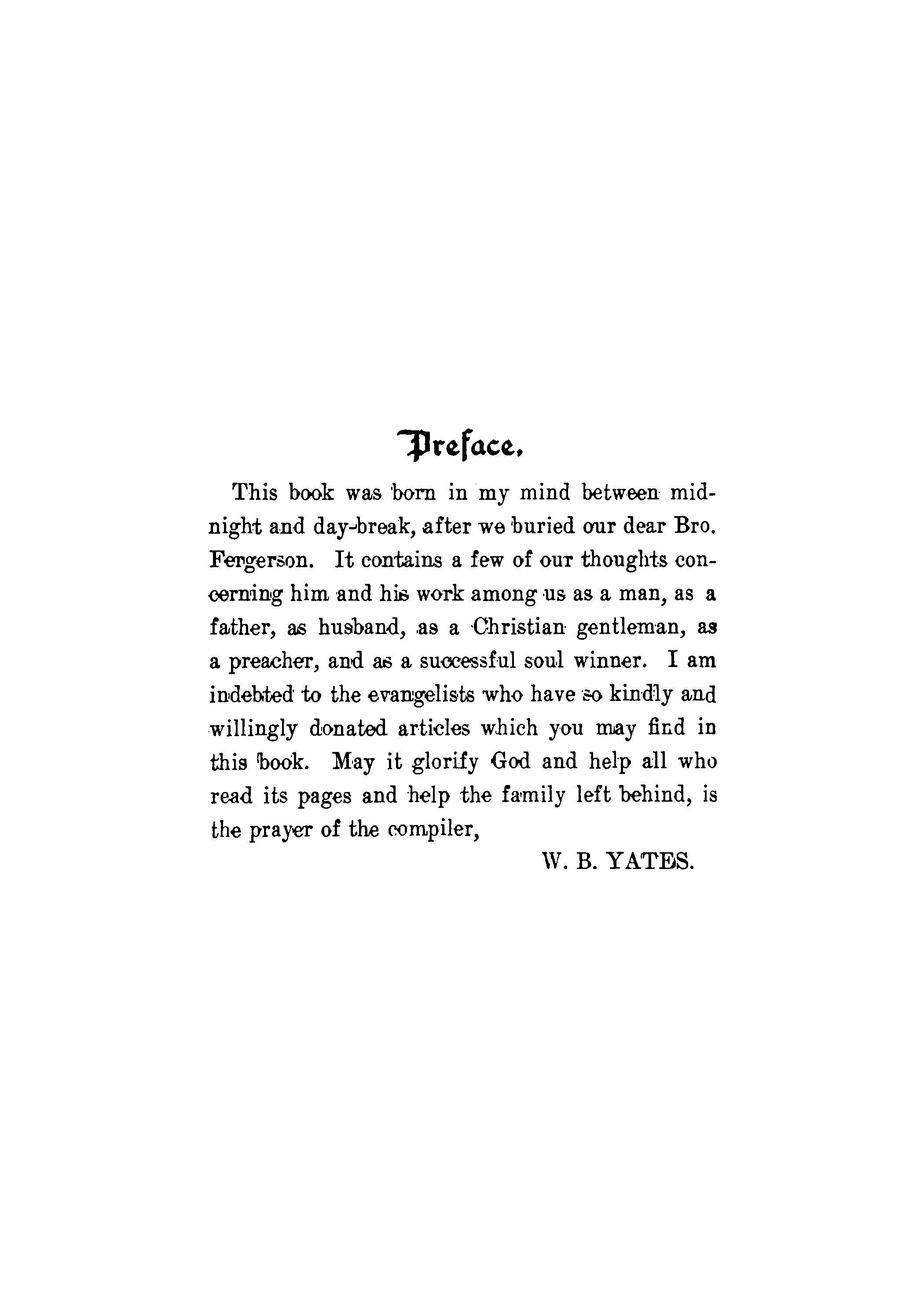
This book was 'born in my mind between midnight and day break, after we buried our dear Bro. Fergerson. It contains a few of OUT thoughts concerning him and his work among us as a man, as a father, as husband, as a Ohristian gentleman, as a preacher, and as a successful soul winner. I am indebted to the evangelists who have 'eo kindly and willingly donated. articles which you may find in this 'book. M'ay it glorify God and help all who read its pages and 'help the family left behind, is the prayer of the compiler,
W. B. YATES.
XVII.
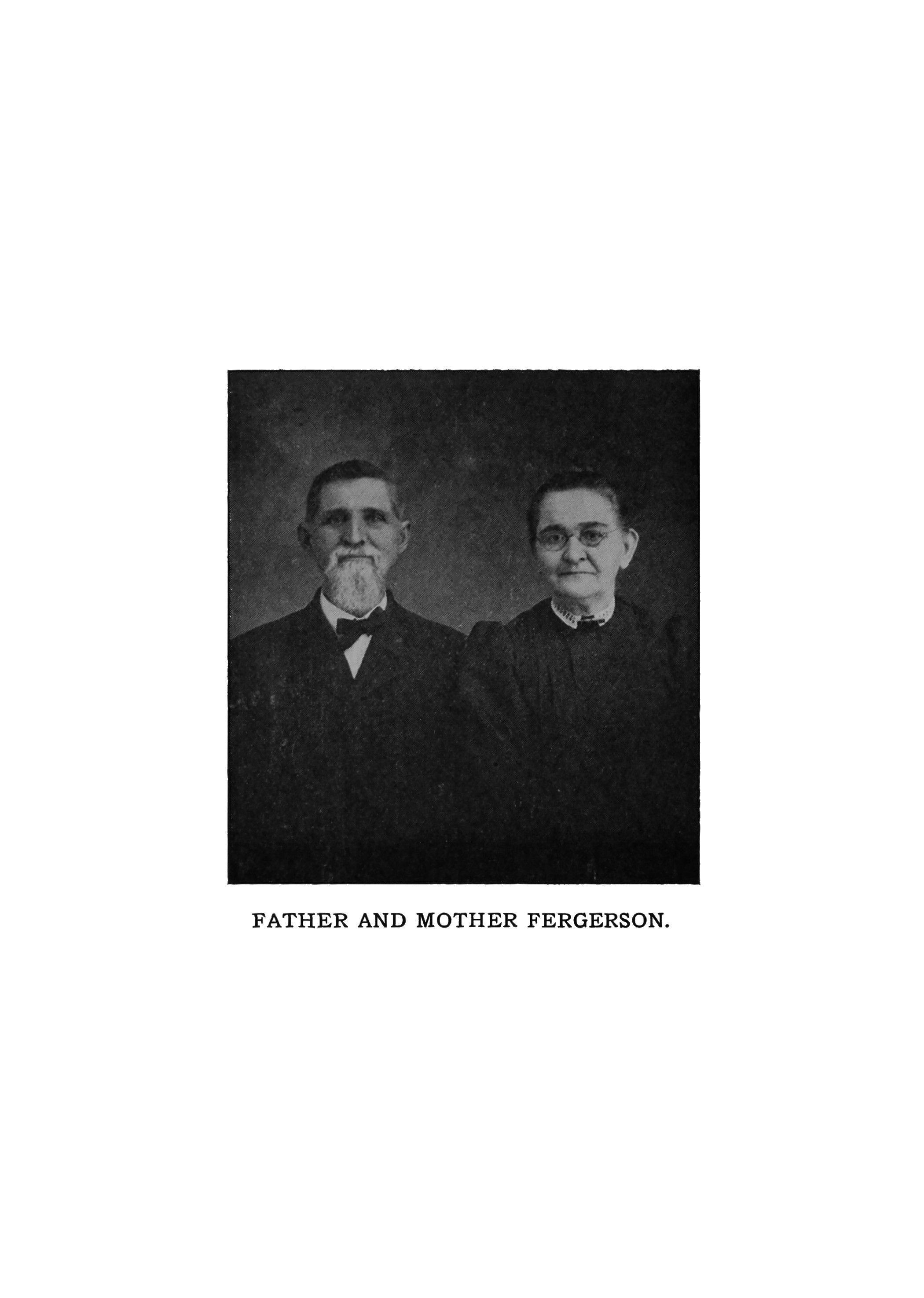
FATHER AND MOTHER FERGERSON.
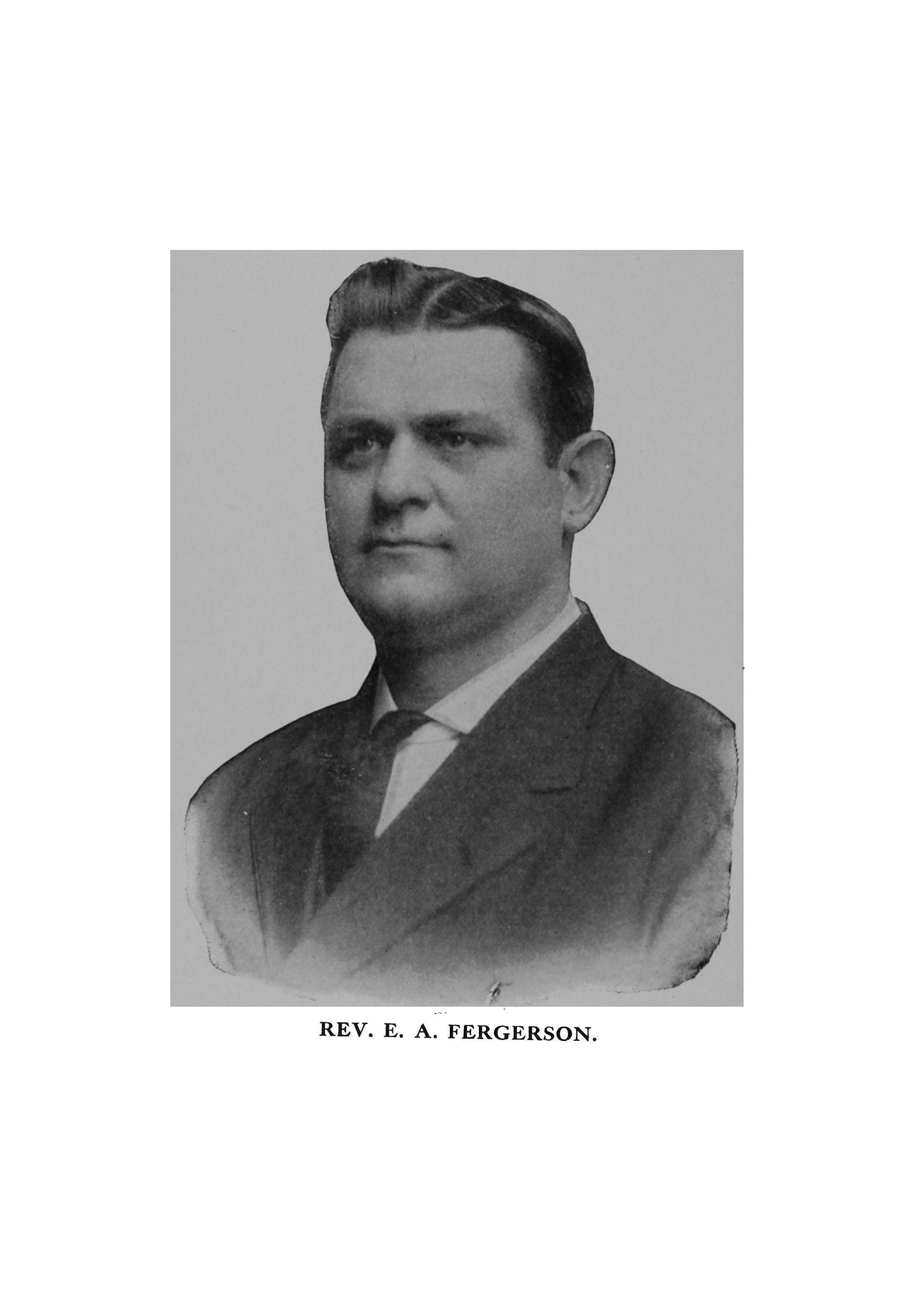
Rev. Edward Allen Fergerson wah horn August 6, 1869, departed this life August 23, 1912. He was born in the country one and one-half miles west of Mt. Vernon, Ill., on his father's farm, where he grew up to the age of 1 "I. His school 'advantages were very limited, only attending the common country district schools, with the exception of part of one winter, he attended school in M t. Vernon, doing chores morning and evenings to pay his board.
When young he was like many boys, full of life and fun and did not always apply himself as studiously to his books as perhaps he might, until nearing the close of one school term, he took a notion to apply himself closely to his studies and see 11
Life and Labors of how near he could come to getting a certificate to teach school, and he did so, the last six weeks of the term, and succeeded in getting a second-grade certificate. In the summer following, he made application for a position in the machine shops, and while waiting for that he hired to a neighbor to work on the farm, and when informed through a cousin of his, that a position could 'be obtained in the shops, he rose early in the morning and went until he found a man to take his place on the farm, paying him a dollara day to complete his contract, though he was working for smaller wages himself. Having a pleasant make-up he went to work in the shops and soon made many warm friend'S and liked his work fine. His first severe sickness was when he was a child about nine or ten years of age; it was a severe attack of double pneumonia, and the doctor Who treated him said, "It's no child's pneumonia but full-gro-wn man's pneumonia; a severe attack from center to circumference of both lungs." He hovered between life and death for more than two weeks and for seventeen nights the light was not blown out in his room. To add to the anxiety of his parents he said to his mother in the early part of this spell of sickness : "Mama,
13
did you see the good man's lamp P" and she answered, "No, I didn't see it." Then he said, "Well, I saw it and it was shining on his 'book and there were not any sins on it against me." Since, it has occurred to our mind many times why God spared his life at that time when it seemed to hang on such a slender chord; God saw the end from the beginning and knew He could use him for the salvation of many precious souls.
He attended a revival meeting at the First M. E. Church, in Mt. Vernon, when he was just a boy, perhaps thirteen or fourteen years of age, and embraced salvation and really seemed to enjoy it, for perhaps a year or more, but as he grew up and mixed and mingled more with the world, he grew careless and indifferent and finally went back into the world.
After working in the machine shops two years or more, he took a notion to run on the railroad; got a position as fireman first, filled that place for a year or so and the shoveling coal was so hard for him, he changed to brakeman on local freight. He was faithful to his task until God called him to the evangelistic field.
He was united in marriage to Miss Gussie Jones,
Life and Labors of daughter of Mrs. J. D. Jones, 'Of Mt. Vernon, Ill., on Oct. 2nd, 1890, which proved to be a happy union of hearts until God called him to his heavenly home.
God's Holy Spirit must have been striving with him in conviction for months before he was saved, as his wife told his mother months before he was saved that he was in trouble; felt he ought to be saved and he felt he" could not be an acceptable Christian and work on Sunday. He felt he could not make a living at any other "work he could get to do, but in the month of February, 1894, when his oldest child Marie was about thirteen months old, they drove out to the old farm one Sunday morning to spend the day, and when they got there his father and his brother Harry were gone to the old 'Salem Church to Sunday school, and then to stay to circuit preaching; so he put his horse in the barn and said to his wife, "I believe I'll go to Salem to church. Would you Gussie?" (He always liked her approval to all he did). She said, "Yes, I would," so she and the baby stayed in the home with Mother Fergerson, as she was detained at home with a sick sister. It being the month of February and knowing how fond he was of baked
Rev. E. A. Eerqerson, 15
ribs, his mother was arranging to have them just done to a turn, to suit his taste, but something seemed to detain them, SO the dinner needed watching to keep it from being overdone. Finally they came, and while mother was busy arranging the dinner, her dear boy rushed into the kitchen, caught her in his arms saying, "Oh, mama, wish you could have been to the church today, for I've got something better than dinner. Oh, mama, I am saved." We leave the reader to infer what followed. Salvation was the theme dwelt on at the dinner table.
His dear brother Harry· was with 1lJ3 then and he had the blessing. A good old neighbor man, and a distant relative by the name of Bullock, better known in our home as ''U nele Ben," came home with them for dinner, and after dinner "Eddie," as we called him, got the Bible and began to read and ask questions, and we all together spent such a delightful afternoon talking 'Of the many mercies and blessings our dear heavenly Father had bestowed upon us. All too soon the time arrived for the children to go. Harry had gone to Mt. Vernon to Sabbath School, at 2 :30 o'clock, and as 'he came home he met Eddie and Gussie going to their
Life and Labors of home. Mother Fergerson hasn't forgotten how she stood on the front steps of the old home waiting and watching for Harry; when he came riding up on his little roan pony, with his right hand: high in the air saying, "Oh, marna, wish you could have seen Brother Eddie and Sister Gussie as I saw them. When I met them brother Eddie was just shouting along the road in the good old-fashioned way and sister Gussie was crying just as hard as she could; hut oh such a shine in her face; they sure were happy."
At "I o'clock that same evening, Father and Mother Fergerson, with their son Harry, went back to old Salem Church to a prayer and praise mooting and as Harry testified in the meeting and told the people what a happy sight he met on the road, and how his dear brother was shouting the praises of God, the power fell on Mother Fergerson and she too, raised a shout. She had much to shout over for what God was doing and going to do with her boys.
From that very time "Ed," as he is more familiarly known these days, had very few idle evenings as he felt from the very first God saved him tt do something and he went at it with a will; he was
Rev. E. A. Fergerson. 17
in a service of some kind almost every evening. He was running on local freight between Mt. Vernon, Ill., and Evansville, Ind., so it gave him his Sundays all at home; in fact, from Saturday afternoon until Monday morning, he was in Mt. Vernon and every alternate night through the week and the other nights in Evansville or Howell, a suburb of Evansville. He soon had cottage prayer meetings going at each end of the road; or he worker. in the mission in Evansville, and out in the COUIltry about his father's home. He led many prayer and praise meetings; people were reclaimed or saved often in his meetings. Sometim€13 he was sent out by the circuit preacher to :fill his appointments, and he went in the strength of Israel's Goo, expecting God to use him and God did not fail him. After reading a good lesson from God's word and commenting on it, he would throw the alta! open and call all church members and any one else who wanted to be saved or sancti:fied to gather quickly around the altar and God always gave him a good altar service.
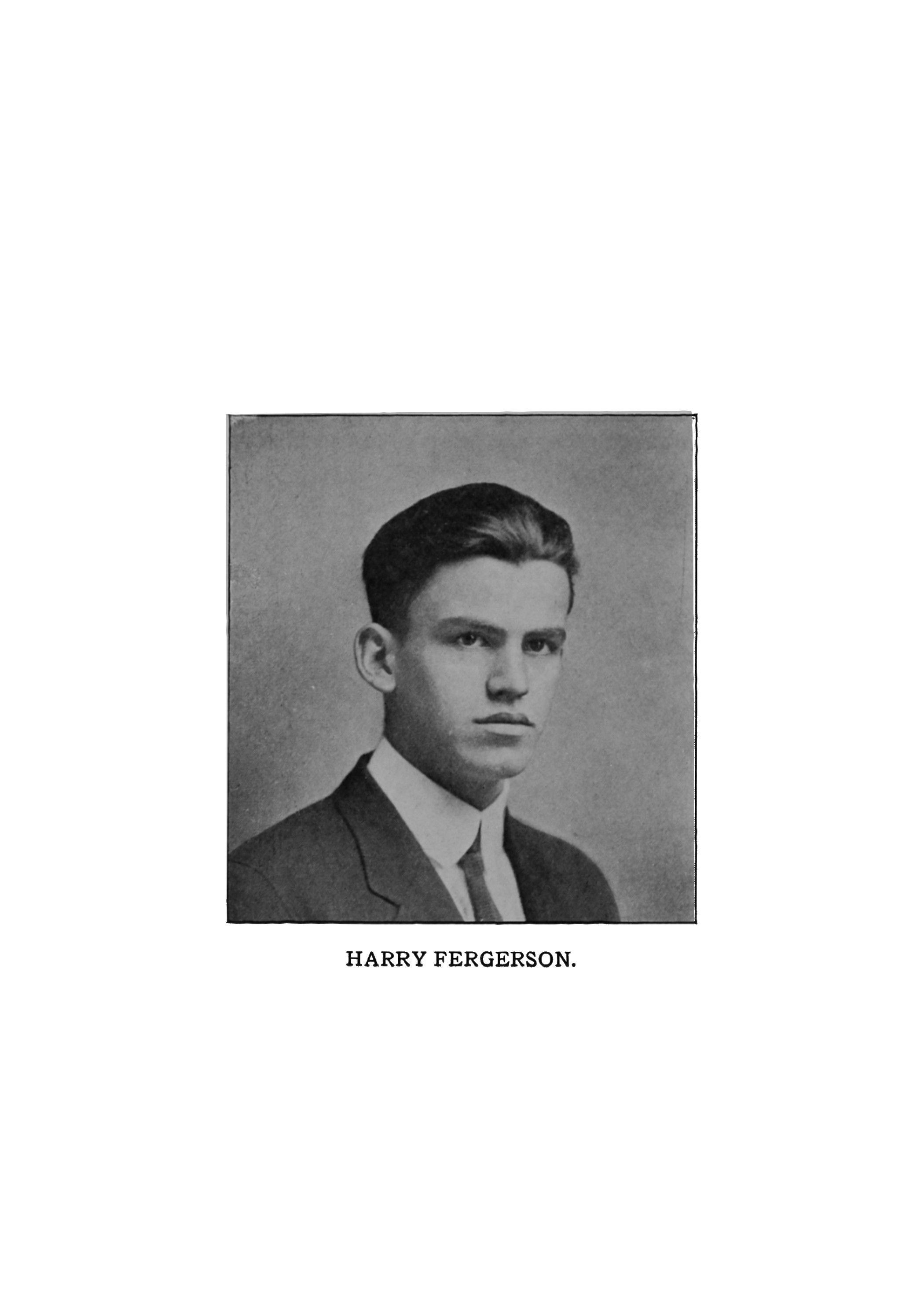
His brother Harry died of enlargement of the heart and was afflicted for four or five years previous to his death. He too, was a very devoted
18
Life and Labors of Christian from 18. child, and when Bros. Smith a.id Niles came to Mt. Vernon and preached holiness, Harry began seeking the experience, and he was so anxious to get the genuine from God he went through several different meetings without getting just what satisfied him. In the year 1893, Sister Bertie Crow held a meeting in a hall in Mt. Vernon, known as Brumbaugh's Hall, in the month of October, andl on the 17th day of the month in the evening service, Harry prayed through and got the satisfying portion. From that time had an experience no one doubted. I'll here quote a small portion of a note he wrote the same night he was sanctified after going out to the country home and going into his mother's room and embracing her in his arms and saying, "Oh, mama, I am sanctified and I never was so happy." Then kissing her good night, went up stairs to his own room and wrote the following: "Thank thee dear Lord for sanctifying me, after going to the altar twenty-one bimes. N ow dear Lord, keep me saved and bless me and help me to point others to the dying Lamb." This note with more to it, was found in his trunk after he went to Heaven, and W813 read by the minister at his funeral; it was sealed in an

THE OLD COUNTRY HOME.
E. A. Fergerson.
envelope and these words written 'On the outside of the envelope: "Don't open until to glory I go, then you can open it." 'I'hds note is put in a frame with the envelope and bangs in his mother's bedroom today. He lived a victorious life and died a triumphant death, begging his mother not to grieve for him. Said he was going to live wdth JeslhS and would be waiting for his dear ones. He shouted the praises of God to almost the last breath ann went to be with God on September 29th, 1894. His parents claimed the experience 'Of holiness, but his mother after seeing his life, after he was sanctified, proved to her she wasn't satisfied with her experience, and as she approached her home from his funeral, the home looked so empty and lonely without Harry in it she said in her heart, "Oh Lord, how can I go into that home and live without Harry." God seemed to answer clearly and say, "If you had the experience Harry had you could live anywhere." Then came the gushing response from the deep of her heart like this, "Oh I.JOrd, I must have it" and from that moment 1>€fore she even got ou� of the vehicle, she began to cry to God in her heart for the experience of entire sanctification and for two weeks she wrestled,
Life and Labors of
Jacob like; her friends rallied round- her and said she must not stay much alone; but how she improved the hours, she had alone with God, no one else knows 'but God. Oh those dark days of dying out to sin and self, to the world, and opinions of people, and being completely crucified with Christ. Oh, how we praise Him Ibecause He can do "exceeding abundantly above what we ask OT think."
The year of 1893 was the first year of the Bonnie camp mooting. L. L. Pickett wac; the leading preacher. Harry's ,body was laid in its last resting place, like his brother Ed's, on Sunday afternoon, before the Bonnie Camp opened on Friday 'following, when the camp closed. L. L. Pickett sent an announcement to Mt. Vernon that he would preach in Brumbaugh's Hall on Monday night. Father and Mother Fergerson were among those who heard him and he preached from the text, "For this is the will of God, even your sanctification,' end that text went through MlOtIh'er Fergerson's heart as she has often expressed it, like a locomotive engine, completely breaking that old stony heart; the hall was crowded and there was no chance for an altar service. Bro. Pickett said, "Let's rise and sing," at the close of his good ser-
Rev. E. A. Fergerson. 23
mon, "and have a good handshake." Father Fergerson in his usual quiet way expected Mother Fergerson to start first, but she failed him that time, and he said to her, ".come on and let's go," but she said, "I can't walk.:" He said, "Oh, yes you can," and took her by the arm and urged her and they started toward the altar where the preachers were, and she says she started and a blank seemed to come over her and the next thing she knew she WaB on her knees in the altar, the preachers and saints all about her trying to instruct and help her.
Bro. J. J. 'Smith said to her, "You want God to sanctify you, don't you?" She sadd, "Yes," and then he said, "'You believe He can do it don't you ?" She said, "Ye8," then he said, "Well, don't you believe He does do it?" and she said, "Yes," and oh how light and beautiful and sweet everything was, and how she seemed to go up a thousand miles in her soul; hO'W clear it was that the blood of Jesus did cleanse and sanctify her soul. She is old and nearing the end of life in this world now, 'but the best of all is the !blood of J esus still cleanseth her soul from all sin now. She was sanctified on Monday 'night, the 15th of October, 1894.
We will now return to the main subject of this little sketch. Ed was saved: in February precedir:g Harry's going to heaven the following 'september, and when Harry left us Ed shouted all aroun-d the house ; seemed like he could hardly stay in the body he was in such a happy frame all the time. He often said, '''God must have done something extra for him; he believed He sanctified him when he saved him."
His mother ,being sanctified: on Monday night (that was his night to be in Howell) so he missed beilThg lin tJhe service, buu his mother went into Mt. Vernon and to Ed's home on Tuesday to be there when Ed got home. Hit; train arrived about three o'clock and when his wife said it was about time for him to come to the house his mother went out to his front gate to watch for him, and here he came with his lunch-bucket in hand in his usual hurried way, and as he neared his home and' looked into his mother's face he said, "What's the matter, mama?" She said, «oi, Ed, the Lord sanctified me last night." He rushed on in the house and said, "Corne on in here and tell me about it." ,She began to try W tell him what she could and he stopped her !by saying,
Rev. E. A. Fergerson. 25
"Is there any meeting tonight?" His mother said, "'Yes, an old lady had meeting .given out for her to lead, Ibut the preachers are all gone." Then he said, "Well, I am going, and get sanctified tonight. I thought I was sanctified but now I don't fuink I am, but I will let God sanctify me tonight." The sister held the services and he and his wife went and the sister made an altar call, and he went forward, because that was what he went for; of course he got the olessing and got such an overwhelming blessing, he did not stop shouting when he came down on the street and started home, but gave one of his good, haPl!Y hallelujahs, to the top of his voice, right on the street in Mt. Vernon, and the night watchman heard him and came running down the street and met him and asked what was the matter. He hollowed again, "Glory to God! I am sanctified:' whereupon the watchman, turned and ran away from him, as fast as he ran to him, as though he was afraid of him. His little wife did not run from him; she was with him and clung to him, for she realized the more salvation he and gibe both got, the higher the tide of happiness rose in their home.
Life and Labors of
If you have noticed in reading these broken fragments, Mother Fergerson and her two sons were all sanctified around the same altar, but Harry was sanctified and safe in heaven before his mother or (brother were sanctified. Mother Fergerson was sanctified on the 15th, Ed on the 16th and Harry on the 17th, all of October, but Harry a year previous to the others.
Will say in conclusion, for the satisfaction of Ed's many good friend:s, it was a misunderstanding about his being unconscious when he arrived home from Waco, Texas, though he was a very sick man and could not talk much; but for two or three mornings he seemed brighter and did talk borne with his dear wife and. mother. He spoke of the long, tiresome journey from Waco, all the way horne, over the railroad, and he with fever; also told how kind Bro. Talbot 'Was to him and 'lH>W the conductor on the sleeper proved to Ibe a roan who had !been saved in one of his meetings, and what an interest he showed in him and gave him all the attention he could, helping him on his train in St. Louis for Mt. Vernon. Also said to his wife and mother, '�If this proves to be typhoid fever I don't want a trained nurse, but I want
Rev. E. A. Ferqerson.
you two, to nurse me, if you can," which they did with the assistance of his sister and her husband; also two of his wife's brothers.
Many kind friends, relatives and neighbors offered to do anything they could for him, for they all loved him. His dear wife gave him every dose of medicine. He was often noticed as she turned from him, to take his thumb and! finger and wipe the tears from his eyes, but invariably as she returned to his bed he smiled in her face.
The last forty-eight hours he lived, his sufferings were intense, Ibut his vocal chords must have been paralyzed, as there was not a sound of any kind escaped! his lips,
With his entire family around his 'bed, with his father, mother, sister and many other dear ones about him, he quietly passed out of the tenement of clay and went sweeping home to glory where J esus, whom he so faithfully served, and many loved ones who had outstripped him, were waiting to welcome him over on the banks of eternal deliverance. Truly it can be said of him, "He has fought the fight; the victory is won and entered into rest."
OHAPr£R II.
MY BIG BROTHER.
BUD ROBINSON.
In the memory of my precious Brother Ed, my big brother, Oh what shan I say? or how shall I say lit? I can't say that he is dead, for he is not, but I will have to say that his precious body is sleeping under the green turf, while his bloodwashed spirit is today in the presence of his glorifled Lord that he loved so well. I have tried to describe him in other days; I have called him a young giant, and a cyclone of fire, and a cyclone of glory, and a holy terror to the devil; these are a few of the many names that I had given him hut none of them seemed! to fit him so well as "Big Brother."
From the first day that we met until he went sweeping through the gates washed in the Mood of the Lamb, we were as warm friends as men can be in this world. We first met in the months of October in 1900, at the little city of Omaha, Ill. 28

I had been there lor several days and on Monday after the first Sunday of the meebing, he arrived .• and came down :1fue aisle of the 'big hardware house while I was preaching, and took his beat just in front of me, hut he did not keep it long until he was up on the floor a shouting as loud as he could whoop, and our hearts ran together like water in the cup. He had a shine on his face, and the glory in his soul, until he could not control himself; he W3t3 simply on fire. That night he preached on hell, and as I had never seen and heard him before, it was to me the Ihottest preaching that I had ever heard in all my life. Hib description of hell was the most awful that I had ever heard, and it broke me up and I almost screamed while he preached and I finally got down on the floor and prayed. while he preached, and it seemed to me God was running thunder and lightning through him in perfect tornadoes. While the saints shouted and prayed the sinners groaned and! wailed and some of them got to almost screaming before he made the altar call; he had no trouble at all in getting sinners to the altar, the only trouble we had was in finding room for the seekers ; we 'had them in droves and some whole families were in
Life and Labors of the altar at the same time. When we had been together for only about half a day we were as well acquainted as if we had Ibeen raised together. We met in the afternoon service and before midnight we were as well acquainted as we were the day he went to live with the Lord. It only takes the sons of God about one minute to get well acquainted with each other.
Our meeting ran a1l week and closed out the next Sunday, and there is no way to describe it; in fact, it can't he put on paper. Sinners were converted, backsliders reclaimed and believers were wholly sanctified and the saints were blessed until they hardly knew whether they were lin Illinois or in heaven.
Brother Jimmie Kesler was in charge of the song service and TIe did great work. I remember that he sang and laughed' and cried at the same time, while the glory rolled, and the devil fled, and: saints leaped for joy. At the close of the meeting we were called hack to hold the meeting in the fall of 1901. We parted in the middle of the street and we both cried as loud as we could y-ell. We met in our next meebing in Chicago, in a great convention that was held by the Rev. Seth
C. Rees in the month of March of 1901. Brother Ed was one 'Of the workers, and Brother Andy Dolbow and John N orberry and Brother F. M. Messenger; in ten days. there were not leE€. than one thousand souls saved. Brother Ed was one of the most successful workers in that great revival; there was nothing that could stand before him when his soul would take fire like the stubble, and he would leap into the air and point men to the Christ and picture a hell of fire and brimstone and outer darkness; the big tears would roll down hie face and he would wipe off the tears with his big hands until I have seen his hands wet with the tears that he shed over the sinners as he preached Christ to them. No man that I ever worked with pictured a more glonious heaven or a more horrible hell, or shed more tears in the same number of years than did my big brother Ed. He has won tens of thousands of precious souls to 'Our blessed Christ.
At the close of the great 'Chicago convention we separated again and I turned my face toward Texas. We saw nothing of each other again until October, when we met at Omaha, Ill. The second meeting was one of the best that we ever held to-
Life and Labors of gether where he and I did all the preaching, or at least we were the called workers. If I am not mistaken Brother Niles came to this meeting and preached once for us, and we also had Bro. Tom Talbot and .many others whose names are in the Book of Life. At this m.eeting Brother Ed did some of the greatest preaching that I ever heard him do up to that time. I think that he improved more in one year than any man that I ever saw. There was one thing that took place in this meeting that I will never forget. Right in the middle of our meeting an-d just at the time that the whole town was stirred, and also the country for miles around, a big show came to the little town and as we had the folks in the grip of the meeting, the devil put up an awful hard fight for the show a's he always does; the devil is a great show man. The first night of the show they gave away a few complimentary tickets and I think that they claimed that they only sold a dozen tickets, while we had at least fifteen hundred people at the holiness meeting, and the altars full. The services ran till almost midnight and the showmen beat their drums and blew horns, and nobody went. They finally dismissed and came to the hig holi-
ness meeting to see what we had going on, and a'S the saints shouted and the sinners prayed and the glory rolled, the show crowd was perfectly amazed. Big Brother Ed warned them of an awful hell until they quaked and 'trembled, and some of their crowd! was at the altar seeking God. The next day we had a very great service at ten in the morning, and as we went down the street to our dinner, they were on the streets with horns and drums, and the showmaster was on a box pleading for a crowd, with the promise that if the people 'Would only come out and give them one trial that night, if they were not well pleased when the show was half over, that they would refund the money. Brother Ed and I stopped and listened to their speech as they plead! for the crowd. 'Brother Ed stood on the street corner and told his experience, how that God had saved and sanctified him and taken him off of the railroad, and put him in the field! as an evangelist to persuade men to flee from hell; he told! the people where we would be that night and told them that they had 'better be there early if they wanted a seat. At night we had in the big hall and on the street together, not less than two thousand, and the show-
Life and Labors of
men sold no tickets at all. Just after dark they lit up and beat their drums and the old horn began a doleful wail and nobody went at all; the showman pulled up and left town and the crowd was outside and could not get into the meeting, said that the 'showman went out of town cursing the meeting and the big preacher at the top of his voice. When dear Brother Ed heard aibout it he got up and shouted and praised God for something that would break up a show. At the close of our meeting there, we went to Indianapolis to hold a meeting lor Dr. Bye in a new brick tabernacle, and Andy Dolbow joined us there and we hail another great revival. Scores of precious souls were beautifully saved and the tide was high and the crowds came by the hundreds and the altars were full at almost every service. We thought that not less than two hundred and fifty were at the altar during the ten days and many of them plunged into the fountain and were made whiter than t�e snow. Many others had their names written in the book of life for the first time in this meeting. Brother Ed preached three nights on the judgment day and the altar would not hold the crowd that was trying to get ready for that great day.
Rev. E. A. Fergerson.
At the close of this meeting we turned' our faces eastward for a big convention in the city of Baltimore, that Brother A. Lee Gray had gotten up just ,before he went to India. We had a great trip from Indianapclis to Baltimore. Brother Eel was one of the finest traveling companions that a fellow ever traveled with. 'We reached Washington, D. ,C., early in the morning and spent the day in Washington; we had a great day of it. We went to the home of .Sister Phoebe Hall and had it nice talk with her. We went to the home of Brother .Ioseph Dempster, the converted Catholic, and €very home we were in Brother Ed would call them to prayers before we left. We spent the day visiting the holiness people and taking in the sightseeing of the city. Brother Ed sung, and cried and prayed all the way from Indianapolis to Baltimore. We got off a number of stations along the way and sung and testified. and Brother Ed would get back on the train with his handkerchief in his hand and wave the people a last good by and leave the town with his big face wet with tears, anJ a shine of glory on his face that the devil could not wipe off or duplicate or imitate.
After a full day in Washington we went on over
88
Life and Labors of to Baltimore and opened the convention; we had a very great time. Oh, so many were beautifully saved. Brother L. L. Pickett led the song service and it was at this convention that I me; Brother Charl€6 Weigele for the first time. lIe preached for us one night and we had one of the times of our lives. He got up on the pulpit and jumped off and ran down to the door and began to call mourners, and he came Iback up the aisle with enough to fill the altar. While he was down the aisle Brother Ed got up on the pulpit and turned around like an old-fashioned pair of winding blades and shouted to the top of his voice Brother Pickett began to sing, "Where the healing waters flow," and Ed spun around on tho top of the pulpit like a top dancing. He finally got down off of the pulpit and went across the big platform hopping on one foot, and! stood on the platform and danced before the hord and sang, "There is joy in my soul; Oh, glory hallelujah 1 Jesus' Blood makes me bold, Oh glory hallelujah I" His preaching in this meeting was with power and in the Holy Ghost, and much people was added to the Lord. His preaching had teeth:in it, and it grappled with the souls of the sinners, and there was

Rev. E. A. Fergerson. 41 fire and juice in it. It is well-nigh impossible for people to resist his messages; he spoke as one having authority and not a13 the scribes, He was called and sent and owned of the Lord, We were out on this trip nearly two months and we often stayed in the same room. He wrote to his wife every day while we were out, only on the Sabbath day, and in our prayers he would pray and weep over his wife and babes like his heart would break, and say, "Oh Lord, .bI€'SIo Gussie and the babies right now," and wipe his big face and start a good song with the joy of heaven lin his soul.
We went from Baltimore to Seaford, Del., and from there we ran over to New York and spent a day in the city, taking in the wonders of New York. That night we took a iboat for Providence, R. 1., and got up there the next morning for breakfast. IBrother John Pennington met us at the boat and after a few hours in the city, we went on to North Abtloooro, Mass., and! held a meeting for Brother Arthur Green. At the close of this battle we ddvided up and Brother Ed went to Haverhill, 'Mass., and I went to Groverdale, Conn. At hhe close of our meetings we met in Boston at
Life and Labors of
the great convention that Brother F. M. Messenger planned, and Brother Rees had charge of. This was one of the greatest conventions that I ever saw in many respects. The tide was high and the devil had to fly to save his hide. At the closing of this great convention Brother Ed turned his face westward to see Gussie and the children, and I boarded the train in BOI3ton lor Cleveland, Miss., and W'€ never met again for several months. Our next meeting was at Florence, AI'a., May 1�02. Brother Ed. was surel:f at his best ; he was a wonder to men and angels, and! I am convinced that he was also a puzzle to the devil: His preaching on sin, hell, the Judgment Day and repentance was the most terrific that I had ever heard up to that time. I 'Will never forget one night he preached on gething the Israelites out of Egypt, and he crossed the Red Sea with them, and on through the wilderness; he went with them and up to the foot of the mountain where the Lord buried' Moses, and then he took them across J ordan and camped in the outskirts of Jericho; when he started around the city of Jericho with the Israelites, )"OU could see them in your mind as plain as if you had been there; he got his ram's horn to blow the walls
Rev. E. A. Fergerson.
down, and he started around the wall and began to blow his horn. He got his .l>ig hand up to his mouth and began to blow and marched around the pulpit blowing the horn; he 'got faster and! faster until he got to running around the pulpit, and the walls began to tumble, the saints began to shout and the whole crowd of Ohristians got to their feet to see the walls fall; and they began to wave their handkerchiefs and scream, and the wall was now down. He grabbed the sword and went to slaying the wicked and putting the sinners to death, but by that time the sinners went to holding to the benches and screaming, until I never saw such a sight in all the days of my life. Plenty of them could not get to the altar, but lay in the straw and groan and prayed and screamed and begged God for mercy, and thank God they got it. They will never forget that night till the day of their death, and then they will just begin to remember it for many of them were saved. that night, and their salvation will date from that time and they will never cease praising (God that he ever sent Brother Ed to Florence, Ala.
In this mooting we had for our yokefellows Brother Will Randolph and wife and Brother Bak-
Life and Labors of
er and! wife, and before the close of the meeting we had Brother JOhn Randolph with US; this me€ting was planned and arranged by Brother L. P. Adams. Brother WiN Randolph was the organist and he sang and played an.d! shouted all at the same time. What a wonderful combination a holy sanctified man is'; he is without doubt a mystery to the devil and! he is not understood by the devil.
I am of the opinion that the devil 'has not understcod Brother Ed in the last twenty years. The devil never knew just what turn that he was going to take on him next. I will never forget one day while we were together that he was sorely tempted of the devil and he sat down and 'sent a poor 'preacher ten dollars; at the same time he sent Brother Sherman at the Vanguard office a money order for $20.00 to take care of one of the little India orphan children. That night his soul WaB on fire for God until men and devils were' not as ibig as grasshoppers in his sight. The devil had no idea in the world that if he made it hard for Brother Ed. that he would give away all that 'he had, and .in that way the devil never knows what to do with a wholly sanctified man ;if the devil suggests to him to keep what he has, he will rise up
and give it all away and if the devil suggests to him to "low 'Up a 'little he will run that much faster and shout that much louder and pray that much longer. The trouble with the sanctified man is, that he never goes to the devil to get good advice; he goes to headquarters and that almost kills the devil.
My next meeting with Brother Ed was at Ihis own home at Mt. Vernon, Ill., in the courthouse. I was wi th him there for a week and stayed in his home and! with him and his family. He wae one of the mast lovely men in hi" home that I ever had the pleasure of visiting; 'he was like King David, he was prince in his own home. I have never seen a man loved in his own home more than was Brother Ed. His little wife almost idolized him and his children loved him with that easy loving love. There would be two or three of them on him at once and when we would sit down to eat, Brother Ed! would start a song and every little fellow would Ibegin to clap his hands and sing to the top of their voices, and their little faces would shine with delight as their father would wait on them and help them to whatever they wanted. His great heart was overflowing with love for his wife
Life and Labors of and babies and! their wants were supplied by his great strong arm and! loving heart. Their home was a home of prayer. I will never forget the 'first night that we had prayers -in his home; he had one child on each knee and one stood 'between his knees and his little wife sat near him, as I read the Holy Scriptures and we went to prayers Brother 1M just laid his arms full of babies down on the floor and at! we prayed 'Brother Ed wept and praised the Lord for full salvation and for the privilege of having us in his home. At the time we felt that we were the gainers and they the losers, for it was a great privilege to 'be in the home of a great man. Brother Ed was truly great; he was no common man for he was God's maTh, he was owned of the Lord. He was called of the Lord and sent of the Lord. He was a great preacher and also a great exhorter and one of the finest altar workers almost in the United Btates. He was one of the greatest soul-winners in the holiness mov,e. He had no superior as a soul-winner, and probably no one was his equal. He had many things in his favor; he was a physical giant and a man of a very fine appearance. He looked like a preacher and he had a preacher's
heart in him. He loved the world in which he lived; he knew men. and loved them; he knew w ha t man needed and had' the remedy. He was nat afraid of the face of man; he spoke as one that 'had authority. He had heard from God and he did not wait to hear from man as to his message. He was a man of fine abili ty; he was a hard student; he was a digger; he studied to apply himself and to fit himself for the great work that God had called him to do,
No young main in the holiness move had made such progress as had Brother Ed. A few years ago he stepped down off the locomotive and turned his back on the railroad and took his Bible and went out to tell men of the great salvation that he had found. After studying for a few years he saw the need of a deeper insight into the word of God and he got him a Greek Testament and before the average hoy would hardly know the Greek alphabet, Brother Ed could read in the Greek as well as some of the other boys could in their EngIish Bibles. He was a man of great faith. Many were Iboth converted and sanctified under his ministry. He was a strong believer in divine healing and in some of our meetings I have seen as many
Life and Labors of as fifty in the altar at a single service for healing, and many of them went away with the touch of the Master ,iIll their bodies. It was wonderful to hear him shout with them when they would get the victory over their diseases.
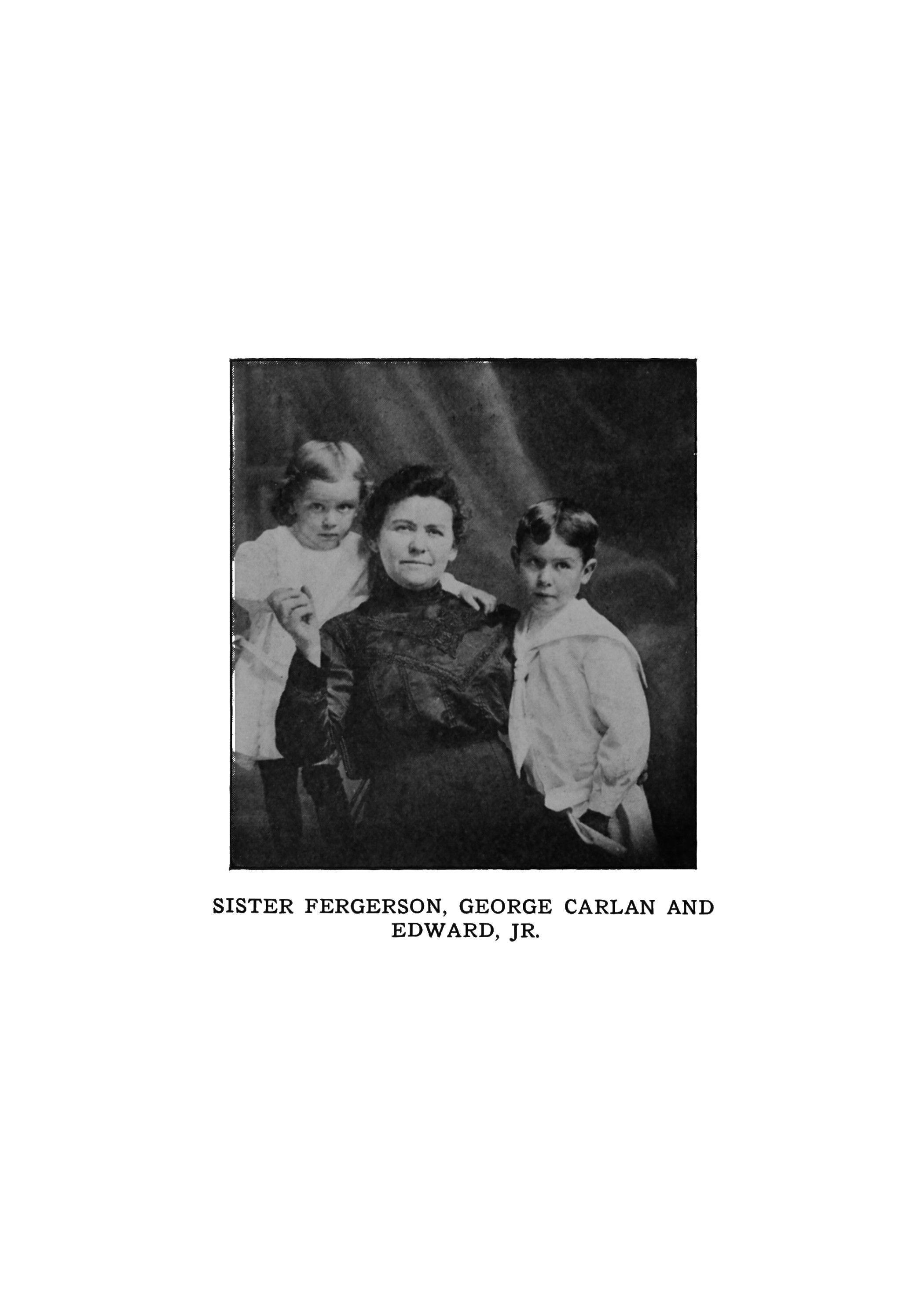
Well, we have lost one of our greatest soul-winners and one of our best generals; his place will stand vacant; we have .no man that can ·fill it; our 10s9 is something tremendous. We have lost a brother, a friend, a companion and a warrior that wenrt to the field to win and he always came back with victory on his banners, We miss him, but what will his wife and. children do without him? None bu t God knows.
"HE BEING DEAD YET .sPEAKETH.'�
DR. McLAUGHLIN.
No death has sent such a shock through the holiness ranks for a score of years. Others older than he have passed away, hut on account of advanced age it Wag expected in the nature of things. But he was young, robust and full of energy. It is very rarely the case that a holiness evangelist dies young. We have known of no other, with the exception of Charles Hartley for more than twentyfive years. As a rule God keeps those who preach holiness to a good old age. He seems usually to need them here more than in heaven. So when the DJeWS came that Brother Fergerson, the strong, hearty evangelist, full of pentecostal fire and steam, like one of the locomotives he so often described, was dead, it sent a shock all through the ranks of holiness throughout the country.
�When God makes an exception to the rule and calls a holiness evangelist in the prime of life, and
Life and Labors of thus gives him early promotion, it means something out of the ordinary. It 'means some place of honorable employment in a higher world. When they are so needed here to fight the battle against sin, their promotion means important positions in the better world.
Brother Fergerson's death speaks to us, or rather as the inspired Apostle says of Abel, '''lIe being dead yet speaketh." Every: man has two kinds of person ali ty-that which he leaves here and that which he takes into eternity with him. Inskip is still telling the church "1 am wholly and forever the Lord's." Whenever one thinks of Cookman we see him on his glonious death bed as he shouted, "'1 am sweeping through the gates washed in the blood! of the Lamb." So while with one personality the sainted: dead are speaking to us here, they are at the same time joining with the other 'Personality, with the songs of the redeemed in heaven. Bro. Fergerson while he joins the songs of the redeemed in heaven is also speaking to us.
I. He is telling his experience of being saved from sin. Multitudes are remembering his experience as they have heard him tell it. How God for
Rev. E. A. Eerqerson,
53
.Jesus' sake pardoned his sins, andJ saved him from his had habits. How he felt the need of being sanctified wholly after he had been gloriously converted. They are hearing him tell again of the prayers of a mother for the salvation of her boy and how gloriously God answered those prayers, as shown in his effective ministry. The multitudes who heard his glowing testimony will never forget it. They can still '300 and! hear him tell it. He is still telling the lost that J�1lS Christ can sa ve them from their sins and make them useful laborers in the Lord's vineyard, as in his own case, II. Bro. Fergerson ie speaking, telling us that the stern doctrines of God's wrath and' punishment of sin are still effective. In these days when men say "'Why do we not Bee the same effects of preaching that we used to see?" And are saying, "h umanity has changed. The age is different. Men are not so easily reached." He is telling ue this is all a mistake. The old-fashioned; doctrines produce the old-fashioned results, The trouble is the gospel is no longer preached! in maDlY pulpits. When has the reader heard a sermon on repentance, or the general J udgment 'Or eternal punishment. Bro. Fergerson preached the old-fashioned,
Life and Labors of unpopular, scriptural doctrine'S of repentance, the judgment and hen 3;IlJdJ he had the old-fashioned success. Many a time he saw multitudes of people run 'and fall at the altar, after his vivid descriptions of hell. He proved to us that human nature has not changed, and the real gospel has the old-time effect. No man among us could so portray the final doom of the impenitent.
III. He is speaking to us and telling us, that it it; possible to make much of our opportunities. He was a self-made man. Gaming out of railroad employment late in life, after the usual time of life for schooling, he set himself to the most difficult task -learning to study. It is a rare sight to see a man buy his-Greek grammar and New Testament and work at it with diligence without the incentive of school or professors, He did' this. He made the most of himself for God by training his mind. He could readl the Greek: Testament with ease and he also became proficient in other branches. He was indeed a self-made man, availing himself of all opportunities for improvement. It is an example for others.
IV. He speaks to us and tells us the time is short. We must get our work done quickly. "What-
soever thy hand findeth to do, do it with thy mlight." How energetic he was! How full of life and vigor. How he counted on a long life in the service of the Master. He was the last one, whom we would have thought would be taken. He wrote us a few weeks before his death hoping we could be with him in a camp meeting in 1915. His voice now tells us ''Boast not thyself of to-morrow, for thou knowest not what a day may 'bring forth." Let us preach and labor all the time ae if it were the last time far us.
V. We believe if he could! speak to us in articulated words today he would say, "It pays to preach holiness, explicitly, d-efinitely and constantly." We believe if any of our holiness preachers who have gone over the 'Other side to join "the great rnajority" could come back, they would' be more in love with holiness than ever. Browning in his Epistle of Karshish speaking of the resurrection of Lazarus says, he came back to earth 'with a passionate love for holiness.
The eternal world makes men specialists in holiness. God! makes it ,a specialty. We will when we come to die. Let us do it more. Will we?
REV. J. L. BRASHER.
"But watch thou in all things, endure afflictions, do the work of an evangelist, make full proof of thy ministry. For I am now ready to be offered and the time of my departure is at hand. I have fought a good fight, I have finished my course, T have kept the faith: Henceforth there is laid up for me a crown of righteousness, which the Lord, the righteous Judge, shall give me at that day: and not to me only, but unto all them also that love his appearing."
2nd Tim. 4 :5-8.
It seems to me perfectly appropniate that these 'apostolic words should :be placed at the head of this chapter, as they are expressive of the life and labors of our brother in whose memory this volume is written. They are also full of consolation to those of us who yet linger on this 'side 'of life'€crowning. In hours of sore bereavement, such as those through which we have just come, many ques56
tions arise which will not down at a wave of the hand. We are not here to attempt the solution of theology, hut the question will certainly arise, why should a man so highly endowed, and 00 very suecessful in his lif.e's work, as Brother Fergerson, be taken away in the midst of manhood's fruitful years, while others who are of no especial help to the world nor to God continue for a long term of years? WhY' was he not allowed to finish his work? Perhaps if we thoroughly understood in what a full and! finished life consisted, we should not be perplexed w-ith such a question. What is a finished life� I� it, that eight decades !have silvered the hair, dimmed the vision, and rest upon the stooped and tottering form until life becomes a burden and the end is longed nor as a sur-cease from further activity? Or, is it to ,be gathered to one's people after all the friends of early days have gone, and one stands all alone like a great old tree, ifiw only survivor 'Of ,tlhe forest? A rom may be full of years and not have !filled full his life. He may have finished! Ihis allotted time 'and not have finished his allotted task. Indeed some very aged people are very empty people. They shall go into eternity with nothing hut withered leaves in
Life and Labors of their unfilled hand's. That awe live in deeds not years, has become so manifest as to need no argument and may well pass for a proverb. On an ancient occasion the question was asked, '�Who is this day willing to consecrate himself unto the Lordi?" The marginal reading is "who will fill his hand?" that is, "who will come with both hands full to devote to the Lord?" Whatsoever was thus devoted, or consecrated to God became most holy and passed out of the possession of the person devoting it in to the possession of the Lord, and he henceforth had absolute property rightseven to life and death. It was ever after to be at the disposal of the Lord himself for his own pecukiar use. Does it not follow then, that if a man thus yield'S himself to God and stays committed, that nothing can thwart God's designs in him, and no one can call him away from the field of action until the Lord, his absolute owner, desires 'to promote him to another sphere of activity? And is it not also true that, the incident of death does not in such case as above, dismiss such an one from service, but virtually promotes one to service of a 'higher order and characier? And does it not further follow that a life thus devoted! to God,
Rev. E. A. Fergerson.
however early closed to its earthly career, is a finished life as really as lif it had passed the allotted "'three score and ten?" I t must be so. This, then, must be the key which unlocks the mystery of such a strange providence. Every life devoted to him shall, whether early or late, come to Him brimming full and perfectly finished. This should comfort all of our hearts and we should lay aside the emblems of mourning and put on those of praise and thanksgiving, that whatever personal sacrifi-ce it may cost us we shall be able to find our 'hilghest happiness in the infinite goodness and wisdorn of the will of God. And, whatever may he our temporal loss, He who attends the sparrow's funeral, will undoubtedly see to it that "all things work together for good," to Us because we also are devoted to Him.
A finished life, then, does not consist in its ,nU1IllOOr of years, but in the quality of its baing. From the divine standpoint a perfect life is made up of the following elements. 11 devoted will� purified. affections and loyal, fervent and apostolic service. Measured by these tests I beli€'V'e our Brother Fergerson left a finished life on record before Him.
F1irst. A Devoted Will. It was no common vision nor common grace that laid! hold of the iron will of a stalwart railroad man and changed him into a living, fiamiug evangel of God. But from his conversion even, like Saul of 'I'arsus, he could truly have said "Henceforth let no man trouble me," and his sanctification, a little later, only intensified his loyalty, so tfuat he might truly add that he WIllS the "Love slave of Jesus IChrist." Whoever knew his will to waver in the conflict through all the years? His will was fixed to obey God, and he went up the shining; way laughing at hard' con dIi tiions, perfectly unmoved in his moral purpose, and echoing the apostle's words, "None 'Of these things move me, neither cou-nt I my life dear unto myself." When the opposition loomed the larger he fought the harder and' seemed of iron mold so undaunted was he. I think neither friend nor foe could ever truthfully accuse him of turning hid hack on the battle line, nor faltering ever at the call of duty. He was ever characterized by a love, constant devotion to the wdll of 000.
Second. We have said that another element in a finished life was to have purified affections. How well do I remember when first I heard him preach,
and how well also I remember his text. It wac) first Tim., 1st chapter and 5th verse, which he freely translated as follows: "N O'W the end of the strict charge, is love out of a pure heart, and a sanctified conscience, and faith that does not. put on. His theme was not one of the sterner kind, but he talked! of a pure heart and conscience, filled with pure love which had faith for its mainspring. How tender he was! How unctions! Oh how his affections had! been purified until he loved God supremely and a lost world enough to wear himself out for it. How he loved his brother evangelists. I never heard him adversely criticise one of them, but only when we were last together he was telling me how he and Brother Yates had !had a good time praying for 100 in their last meeting. He was purified! from the love of the world and fearlessly held up that standard as the experience of regenerated people, to say nothing of those who were sanctified. I think none of us have had occasion to doubt that �is affections had been thoroughly purified and kept so by the blood. Brave, pure hearted brother. Thou dlidst teach us to love purely for that thy heart was pure.
The third element in It finished life is loyal, fer-
Life and Labors of vent apostolic service. Did anyone ever know our brother to be deficient in any of thebe qualities? I think not. Who ever knew him to stint in his efforts to help and save men, or falter before a task because it was hard? When did he fail to contribute his full measure of life and labor in the service of his King? As freely as ever a patriot laid down his life in the service of his country he laid down his life for the Lord whom he loved. He poured himself out for others. His was a loyal service.
Again his was a [eroeni service. When was he half-hearted? When was he faint hearted? When was he lukewarm? lIas anyone ever known him to :be such? No! Again and again! His heart was boiling over with divine warmth. He could stir the heart and enthuse the faith of a whole audience. He never sang of a "love so faint, LSO cold," :but he sang of a love "pure warm, and changeless a living fire."
The fervor of his heart ran like a contagion through a company of people. In this element he was free and abounding.
Nor wad he behind in the quality of apostolic zeal in service. His motto might well have been,
"This one thing I do." His zeal kept him at his Iabors longer than safety allowed, "He was in labors abundant in journeyings oft." He endured "hardness as a good soldier of Jesus Christ." Btudious, diligent, joyful, often hilarious, yet he was ever pressing on to the regions beyond, and eager to reach and save another lost soul. His warnings did not sound hard and unfeeling like the crack of a slave-drivers' whip, hut like the apostle 'he "warned! men wi th tears," There was no inertia in his 'being. His springs of activity seemed to be inexhaustible. .Such were the characteristic elements of his life. Can such a life as the one we have feebly attempted to portray, be other than a full-finished life? Must it not follow that, the day he ceased to live the life of earth he went to his crowning? Must it not have been true that, like the great apostle he caught a vision, even in the delirium of fever, of "a crown of 1ife P" Did he not hear above the shouts of the battlefield which he was hearing the "well done" of his Master? Did he not hear above the farewells of sobbing comrades, and weeping, sorrow laden family, the all hail of many who had found! the Lord under his ministry and passed: to their reward before
Life and Lahars of him'? And, where were Inskip and McDonald, Wood and 'Cookman, Sheridan Baker and S. A.
Keene together wibh a great host of holiness evangelhsta and people, who beyond doubt have never lost interest in, nor been out of touch with the revival of holiness on earth? Surely they were there to greet him and what a royal welcome they must have given him nor was he ill at ease in their company! While we sing CQServan t of Hod well done, Thy glorious warfare is past, The battle's fought, the victory won, And thou art crowned at last."
They greet him with songs such .8A3 are suitable to victors and which, God grant, we shall some day hear a.ruc] sing! Thou Ihast gone to thy crowning at the noontide of me; we shall meet rt!hoo and greet thee whether from the fulness of harvest noon or at the close of summer.
Farewell, brother, for awhile. Thy going bas left a great gap in the lines, and a great yearning in our hearts, but because thou art promoted and crowned, we shall not weep as we say FAREWELL.
J. W. BIGHAM.
Our valued: Brother, E. A. Fergerson, enjoyed the distinction of being a fearless evangelist, impelled by. a conviction that dominated his being. A conviction born from above, responsive to a revelation of Christ in the believing soul, a supernatural impartation of love Infinite filling and constraining his heart. T-his. result upon and throughout the trusting spirit, moving and! firing with the quenchless desire to bless and save humanity, is the basal principle on which the church of 'Christ is built. The gates of hell shall not prevail against it. Such conditioning of man's affectional nature, conforms him to God's will, transforms him by the renewing of his mind and makes him a partaker of the divine nature, and thus walking in the light as He is in the light. he enjoys fellowship with God, and the blood of Christ cleanseth him from all sin. The rugged 6'7
Life and Labors of and impetuous nature of men like Fergerson, unsubdued by power Divine, and! without that '�Charity that suffereth long and is kind, that hopeth all things, endureth all things, and that never faileth, would with the carnal mind unchanged, tend to bondage and subserviency to worldly lusts. Such holy conviction is authoritative, and once begun in the moral nature should be gratefully and most reverently entertained and obeyed. Such a conviction lies at the foundation of right choice, and such choice impels to right action, the right action in exercise or the will, brings the man into right relationship with God, and! such relationship giv€t3 a right character, and such a character continuing=-seoures a right destiny. The value of 'ouch convictions is above rubies, and' can be esteemed only in the light of their fruits, as in the case of St. Paul, whose apostolic character and service, resulted from his obedience to such conviction.
Our distinguished brother not only received personal salvation through his obedience of faith to the Divine conviction in his case, but continuing to obey and! follow the constraining power Divine, he attained, like Paul, to the "stature of
Rev. E. A. Ferqerson. 69 manhood" in Christ. The sanctifying and impowering of the Holy Ghost for service realized by Paul, at Damascus, finds a parallel in the experience of our Fergerson, and gave to the church, and to the world, a ministry whose 'benedictions, like the rain and sunshine, shall continue to the end of the days. Eternity alone will discover the value to men and God's purposes, of the oourageous obedience to his convictions that characterized the life 'and labors of 'E. A. Fergerson.
The hush of death lies 'round hie; grave, His name abides aanong ,the �; Like Christ he died, a world to save, And now he rests at home with God.
Having been requested to write one chapter in �is book, and being associated with Bro. Fergerson more or lese for the past few years, affords me a little ground for the basis of what I have to say at this time, and only in the. Lord. And I pray God's benediction upon it, with the balance of tfue book, as i.t goos out 'On its mission.
I met Bro. Fergerson 'first, on the first nigh t of the camp meeting of the Kansas 'State Holiness Association, in Riverside Park, WiiCllita, Kan., Aug. 1909. His Personality impressed me, for I cQlUM see God's seal OD! his countenance. He had corne to us from some distant oamp, traveling far enough to make him weary, and which would have been sufficient to excuse him from preaching that evening. 'But he took his place on the platform, and when the hour came for preaching, he 70
Rev. E. A. Fergerson.
announced his text from Rom. 6 :23, "The gift of 'God is eternal Life through Jesus Christ our Lord." It was truly an appropriate subject for the beginning of our camp. The Spirit of the Lord came upon him, and personally, I was tremendously moved by even the physical demonstration. The way he walked back and forth on the long platform while presenting the electrifying and most thrilling subject, was of itself a strong stimulator and splendid tonic, and needless to say, it was a great service. His altar call was to the point as well as his preaching, and almost an altar full quickly responded, and several of them soon gave evidence of having received' what he had preached about. What shouting, laughing and praising God. He was IDdJefrutigalble in his labors and so tender-hearted, almost alway", prior to time to preach, weep like a broken hearted parent.
,All through the camp he was greatly used of !God! in gathering many trophies for Je311s. His being at one time a railroad! man, and -th irteen years of IIDr own former life being devoted to telegraphy, 'Very naturally made a tie between us aside fr9ID the one through
Life and Labors ()f
OUT Christian relation through the Blood of Jesus. Noone who ever heard him preach would question hi-a obedience to his Divine Commission, "Preach the Word.' He never shunned to "declare the whole counsel of God," which of course explained his frequent preaching on such subjects as, "Everlasting Punishment," "The Judgment," '''Retrihution,'' and an awful ·hell. How faithful he was in handling these great themes. His voice had! a peculiar carrying power. It was also so penetrating, and at Blackwell, Okla., where I also heard! him, the people could! hear him for nine blocks. Still he did not appear to be exerting himself much, nor straining his voice, which was truly anointed with "the oil of gladness." But he a160 preached continually on the subject of Perfect Love, or Entire Sanctification, as a second definite work of grace subsequent to regeneration.
Heaven alone will reveal the multitude of pure hearts received under his vivid .presentation of this fundamental, doctrine and experience which he himself enjoyed. Not only will I never forget his first sermon at our camp, but the last, which was the last night of the camp one year later, for we had called! him again for 1910. Hie subject
was "The Judgment." When he made the altar call, the long altar was soon TIlled, and we begun to build additional altars out of the seats, until there were six, a total of seven, and as fast as they could be arranged, they were surrounded with seekers, until there were not 1€138 than 200. What crying to 'God. Many of this number were saved, reclaimed and' wholly sanctified. IWe invited him back to our camp for 1911, but he had promised the date to Kearney, Neb. Then the invitation WRSJ extended for his return in 1912. He accepted, intending to bring his wife with him. His tent was nicely furnished, and in readiness, and we fully expected him, and looked for his arrival on each train, but instead, we received the sad telegram announcing the flight of his spotless soul for Glory, Our hearts were sad. There seemed to be a gloom sweep over the camp temporarily and we could scarcely realize it to be true. 'Still we had the common consolation of knowing where he had gone-this was joyful. As this refers particularly to his ministry, I'll briefly speak of his life out of the pulpit, for it � sadly true that profession and possession of those claiming the experience of holiness of heart,
Life and Labors of
do not always blend. This is especially a stumbling block for the unsaved. Only last year I was his co-worker in the Rice County 'Camp, Little River, :Kan., and the Butler County Camp, EI Dorado, Kas, (two of our strongest}, and as we boarded at the same place, conversed with each other so often, prayed together, studied together, and went about much of the time locked. arms together, whistling and singing along our way, it gave me the opportunity of mowing something of this more vital phase of 'his life, namely, "the hidden man of the heart," One of his chief characteristics was cheerftdness. Holy buoyancy was constantly on exhibition, which told of perfect adjustment of heart and freedom from all sin. We loved each other like brothers. rw e kept rup our correspondence until within just a few days prior to his translation. He usually dosed! his letters to me with the words, "Y OUT8 in Holy ·Love."
Truly he possessed what he Iprofea;sed. He enjoyed what he preached. IBy God's grace I shall meet him again for I am on the home-stretch for the same place, but I never dreamed he would outrun me and get there first. His life over this continent has left a holy
Rev. E. A. Fergerson.
aroma which will move people Heavenward. May his mantle fall on some one thoroughly qualified to pick up the work where he leit it and be instrumental in God's hands to complete it, even though through a long line of SUCC€SSOTS until time shall be no more. Doubtless, few, if any, will understand this early transfer of one of God's servants, bub after awhile we shall he permitted to glance back over a fragment of his life, part of it on earth, the balance in heaven, and see it as one, all linked beautifully together, and the Divine plan will be plain-then, we shall understand. God! had a place reserved for him in heaven and no other could fill it. Amen.
OHAlPTER vn.
ECHOEJS FROM: GREEINEVILDE, TENN.
REV. 'LEROY MdWnORTER, D. D.
The blessing of the Lord, i� maketh. rick.Provo 10 ;2,2.
Greeneville is a beautiful little city, located nearly midway between Knoxville and Bristol, on the Southern 'Railroad, in upper East Tennessee. I t is surrounded by fertile valleys and lofty mountains ; and is noted historically as the home of Andrew Johnson, the Tailor President, and also as the place where the heroic Gen. John H. ,Morgan, of 'Confederate fame, was killed' during the gre.rut war between the States. Greeneville is also noted for its beautiful churches, handsome homes and its generous, intelligent, noble hearted people.
Sixteen years ago Dr. B. Carradine, with Prof. RhinE.fua:rl as his singer, came to Greeneville and held our 'first holiness meeting, in which scores were saved and sanctified, A Holiness Hand, consisting of quite a number of the best people, from 16

the different churches of the town, was organized; and from that day to this we have had regularly our annual revival meetings, conducted by our leading holiness evangelists, among whom we are glad to number the late and! lamented E. A. Fergerson, of Mt. Vernon, Ill. He held four of these annual meetings for us, the first in May 1902; the second in May, 1903; the third in June, 1908, and the fourth in September, 1909. He also held a short mid-winter meeting for us which lasted hut a few days. In these meetings many sinners were saved and many souls were sanctified; and scores of people bless the Lord that Bro. Ed ever came this way. He passed through our town last, just a few weeks before his dea th, and a n umber of our Band met him at the depot, To gay that Bro. Fergerson was popular in Oreeneville would be putting it very mildly indeed. As the number of calls received from us indicated, 'he was a special favorite here. The people were simply devoted to him; and no man has ever drawn larger or more enthusiastic crowds. The people loved him dearly and! were delighted to hear him preach and pray, and sing and shout. He enshrined himself especially in
Life and Labors of the affections of the Band, and the interest he manifested in our welfare will never !be forgotten. He organized the East Tennessee Holiness Association in 1902.
Bro. Fergerson was one of God's noble, manly men. He had a fine, faul tless physique, the peer physically of most any man; mentally strong, and spi-ritually a giant among men. He had the courage of his convictions. He was most emphatically a positive character, with but little of the negative element in his make up. Hence, he was always on the aggressive, rather than the defensive, in his 'Christian warfare. He preached as though he had no one to please but the Lord. There was no compromise with sin; and no pandering to the whims of friends or foes, saint or sinner. He was a flame of fire--a fire-brand in the midst of stubble. He poured the red-hot truths of the gospel, in perfect torrent, upon the thousands who flocked to his ministry; and many of them fell in deep conviction and heartfelt eontrition a.t the altar of prayer, "for the blessings of pardon and purity, soon to rise rejoicing in hope of the glory of God.
Bro. Fergerson was far above the average, as' a
preacher; and he was especially adapted to the evangelistic work to which 000 had evidently called him. He was most emphatically a Godcalled, IGod-equipped, and a God-commissioned evangelist, who cried aloud and spared not, giving to sainrt; and sinner their portion in due season. He was a minister that God could trust with his most important message, knowing that it would be faithfully delivered. For while he was gentle as a lamb, he was as courageous as a lion. ·Bro. Fergerson was a unique character. He was in a class by himself. There was no other evangelist like him. Like the noted Sam P. J ones, he stood in his own shoes, wore his own hat, answered to. his own name and preached his own sermons in his awn. way; and no. one could successfully imitate him, "he was 90. different from other preachers. nut 'he was not a "hobby rider." He had no pet scheme to introduce on every occasion, whether opportune or inopportune. Neither was he a latitudinarian, harping on the latest novel, sensational or startling events of the day. But on the other hand, he was most e�'Phatically a Bible preacher, determined to. know nothing save that which clustered around and centered in the
Life and Labors of crucifixion, resurrection, ascension and second coming of the 'Christ of the gospels. Hence, there was an atmosphere from Sinai and! Calvary when and wherever he ,preached. His law messages brought conviction deep, pungent and powerful; and the gospel messages which followed brought salvation full and free to the hungry hearts of believers.
Sanctification was his favorite theme. TIe was in his element and at his best, when he was preaching holiness. A salvation to the uttermost=-from the uttermost sin to the abundant and abounding grace of God-was the fullness that fired his sanctified soul, and set the wheels of his gospel car humming and flying for God. With a clear cut, deep and rich experience, and with the Holy 'Spirit abiding in his heart, and the sword of the Spirit grasped in his hand, he simply reveled in the rolling tide of full salvation as the surging billows of grace and glory swept in great power over the large audiences to which he preached. 'I'here was a rush and a roar, like the torrent of a rapidly rolling river, in some of his earnest heart-searching appeals to sinners, to flee the wrath to come and turn in with the overtures of mercy.
Bro. Fergerson threw his whole soul into whatever he undertook to do. He was in dead earnest about the 'Master's work. There was no half heartedness about anything he did'. Sanctification in 'his case was 'Christianity at its best, n was religion on flying wheels. It was salvation at high-tide. It was spirituality on the higher, holier planes of the divine life. He seemed to be constantly sinking into deeper depths and rising tc higher heights in the divine life.
Bro. Fergerson's life was an exemplification of the truth uttered by the wise man when he said, "Tihe blessing of the Lord, it maketlh rieh ; and he addeth no sorrow therewith." He evidently diad this blessing: and was rich in all the gifts, graces and fruits of the Spirit, He believed with the Lord's faith, hoped with his hope, rejoiced with his joy, was pacified with his peace, loved with his love, lived out of his life, and walked in his light, guided by his eyes, and was afterward received up into glory. He realized that he was a child of the King; and seemed to feast daily upon all the fullness of God-not that infinite fulness that belongs to God alone, but that fulness that God has provided in the gospel of his Son for every child of grace.
Bro. Fergerson was a man of great faith. He expected results when he preached the gospel of Christ; and hence he was eminently successful in winning souls for J esus, His messages carried with them a burning conviction of their truthfulness and great importance. His love for God was supreme; and there seemed to be a fulness of joy in his glad heart all the while, even to the point of overflowing. It WaJS high noon to his sanctified soul all the time, day and night, week in and week out, the year round. His oup was always ful] to the overflowing. It was just as natural for him to 'praise God as it is for water to run down stream when the impediments are all removed', or for the sun to shine when there are no intervening clouds. He had put his hand unreservedly in the Lorn's hand; and Enoch like, he walked! and talked with 'God, until he was not for God took ,him. The Lord led: him safely on, bridging every river that he could' not swim, tunneling every mountain that he could not climb and dotting with beautiful oasis every desert waste over which he called his faithful servant to pass in his triumphant pilgrimage, throu.gh this to the glory world, till at last he said, "It is enough,
Rev. E. A. Fergerson.
85
come up higher; well done thou good and faithful servant, enter thou into the joys of thy Lord."
Bro. Fergerson was a valiant soldier of the cross -a spiritual hero, panoplied with the whole armor of God, from the crown of his head to the sole of his foot: 0!Il his Ihe�d he wore the 'helmet of salvation, over his heart the breastplate of righteousnees, around his loins the girdle of truth, while his feet were shod with the preparation of the gospel of peace. In his hands he carried the shield! of faith and the sword of the Spirit, which he wielded mightily in the victorious battles of life, even to the quenching of the fiery darts of the wicked one, and! to the pulling down of the strongholds of sin and Sa tan in the earth.
Bro. Fergerson was a close student of the word. He certainly did study to show himself approved of God, a workman that needed not to 'be ashamed, properly dividing the word of truth; and giving to saint and sinner their portion in due season He was a fine, clear-cut sermonizer. For a man of his age and opportunities, having entered the ministry with a limited education, he was simply a marvel in his 'know ledge and applieatlon of the truth.
Life and Labors of
He was not a sensational, but a sensible, Biblical preacher. He did not have to resort to sensational subjects, to draw and hold his audiences. There was a sufficiency of the sensational in his manner and style of delivery, even on the most solemn and serious subjects, to both rivet and hold the attention of any audience, to any subject he saw fit to discuss, For he was genial, jovial, joyful, even in "the midst of sympathetic tears, as he pictured the beauties and glories of heaven to the saints, or portrayed the eternal horror of a blighting, blasting, blistering, burning, yawning hell to the finally inpenitent sinner.
Bro. Fergerson's peculiarities were many; but they all seemed to 00 perfectly natural with him. He could not be natural and true to himself without being unnatural and very peculiar to many other people. The fact is he was one of God's peculiar people; and hence had a different way of saying and doing things to almost anyone else. He was that much like Jesus, that he often reversed the common order of things, giving even the expected in an unexpected way, or at an unexpected time, and often with unexpected results. How often people prophesied that he had said
81 or done something that would kill the meeting, to find that he had only added fuel to the flames that would break out in a few moments in greater power, to sweep on to greater victories.
Bro. Fergerson was a powerful preacher. His preaching was usually in the power and demonstration of the Holy Spirit. He generally preached with freedom, often with liberty and sometimes W1 th an unction tha t ga ve to his messages a mel ting, moving po,\\rer upon his audiences, that was wonderful in its effects, But he did not stop with preaching. He prayed and sang and shouted and prophesied in his meetings as if he were living in Canaan everyday in the year, and feasting con tinually on the good things of that goodly land. He and Bro. Yates, who sang for him here, and who has been with us eight years in succession, were truly yoke-fellows and made a whole team. They wor-ked! together like brothers in the gospel harness, It was a great treat to hear them sing and pray and shout together till the fire fell and souls were saved and sanctified under their ministry.
Bro. Fergerson was a great camp mooting preacher. He was princely in his commanding
88
Life and Labors of personality, powerful in his popularity, and all but irresistible in the purity of hit; passion far souls, As a leader of the militant hosts, he simply swept thiI1ioO'S before him like a rushing tornado, a spiritual cyclone or a religious avalanche. His commanding voice filled, chilled and thrilled his hearers, until be moved and swayed his large audience almost at pleasure.
When Bro. Fergerson left the walks of men, a prince in the holiness movement had Iallen=-a man like Saul, head and shoulders above his fellows, bade farewell to his comrades in this holy war, leaving thousands to mourn his departure. But best of all he was God's man-one of God's noble, manly men-a man that God could! trust, and that Hod could 'honor, and that God' will richly reward with an inheritance that is incorruptible, undefiled and' that fadeth not alway, €'ternal in the heavens.
Bro. Fergerson died when it C'OI3It most to die. He died in the -prime of life-in the vigor of manhood's years-e-when he had just well launched out upon the great ocean of life witb an apparently prosperoU'8 voyage ahead. IWith a wife and seven children dependent upon him, oh how much it
89
must have cost him to lay down the armor and give up the work, and pass out into the eternal beyond. But he had made his last run, fought his last battle and, won his last victory on earthand he was not for God had taken him home.
The Lord took Bro. Ed from the engine and promoted him to a similar service in the gospel railroad. Under the orders of the Divine Conductor, he made some fine runs, He swept across the valleys, through the tunnels and over the mountains at great speed, as an experienced spiritual engineer, and always came in on time. On these runs the Holy Spirit generated the steam, faith lifted the valve and his spiritual engine sped along the pathway of righteousness that shined brighter and brighter unto that perfect day, when the old engine whistled! at last for the grand central depot above, and' Bro. Fergerson stepped out, and up to glory, amid the sweet hosannas and loud hallelujahs of welcome, from the angels and loved ones in heaven. The Divine blessings rest upon his loved ones. Amen!
It was twelve yean; ago I had the privilege of meeting our dear Bro. Fergerson, for the first time, in a meeting in Providence, R. I., and have been associated with him more or less ever since. T had heard much about him and was glad to meet him. It was a great blessing to me.
My first impression was, there is a man who belongs to God. The very way he walked on the platform and took charge of meetings impressed me.
Re was used to having things move and he put his whole soul in his work.
He had been much alone with God in prayer and carried a grea t burden.
He had had a special vision of Calvary and lost humanity.
He had a tender spirit, yet a man who woull not compromise. He was a plain preacher b at 90
91
had the unction of the Holy 'Ghost upon him. shall never forget the days spent in the work 01 the Lord with this man of God
One night he preached on the text: "The wicked shall be burned into hell with all the nations that forget God."
It was an awful message, but true. I have heard numbers preach on that text, but never heard anyone equal this.
He first 'Pictured the class of people that were going there. When he was through, I do not think there was anyone in that large audience but who wanted to escape the place he was talking about.
One could almost see them marching down, helpless, hopeless millions, sad and suffering humanity, lost, doomed and damned forever in the lake of fire. The door locked and the key thrown away where it could only be found by the Trinity.
Brother Fergerson gave a description of hell, in Bible language. I never knew the Bible said so much on that one subject. He followed this with some of hie experience on the railroad. Seeing men and women die in the wrecks, begging for some one to pray for them, who died without hope.
Life and Labors of Screaming and crying as they sank into hell. Saints dropped on their knees and began to pray.
Sinners ran to the altar from all over the house. The Holy Ghost was present in such mighty po'wer. That large audience was moved as audiences are seldom moved. I have been in meetings for years, but this is one that stands out above all others.,
'Such meetings, such messages, such men live forever.
His was a short life, but he was a mighty warrior. He stood for God and holiness and preached it by lip and life, until from the last battle-field, Waco, Texas, he heard the voice from heaven, saying, It iI3 enough.
UHe has fought a good flght." "He has kept the faith." He has his crown.
The first time I ever met Brother E. A. Fergersonwas in the Gospel Mission Hall, Evansville, Ind., in 1902. He was conducting some special meetings in the mission. He impressed me as a stalwart, true, courageous soldier of the cross; the more I knew of him the better I loved him, and I never had occasion to change my first impression of him except to increase and intensify my love and esteem for him.
He had many warm friends in Evaneville, some of whom spoke often to me concerning the incidents connected with his early ministry, and how he would cheer them, by his joyous testimonies in their holiness meetings when he had opportunity to look in upon them, after one of his runs on the railroad. 'I'hey were delighted to watch him grow in grace, in knowledge and in ministerial power.
Life and Labors of never had the privilege of being associated with Brother Fergerson in many meetings, but I heard 'him preach enough to know that his preaching was unctions, strong, emphatic, <searching, tender and very edifying.
His prayers and testimonies had the ring and joyous swing of a victor in the battle and in his very walk he had the quickened step of a conqueror.
Hits account of the time he was saved and afterward sanctified, was always intensely interesting, and to me very thrilling, when he was on his way from the service in which he was sanctified and met the policeman who was attracted 'by the unusual demonstration on the street, and the policeman asked, �'What is the matter Ed?" And he replied at the top of his voice (and his voice had considerable tap), "I AM SANar�FIED," was certainly a time of great victory to Brother Ed's soul, and if an angel in heaven should meet him now on the streets of gold in the city of the New Jerusalem, and ask him the reason for his hilarious hallelujahs, he could shout with all the power of a redeemed soul, I AM SANUrTFIED!
If I may he pardoned for a little personal refer-

ence, I remember once when we were in a camp meeting together at Williams Camp <Ground near Ripley, Tenn., and Brother W. B. Yates was leader of song, one day I was preaching and speaking of the fruits of Canaan, it seemed to me that God could cause the fruits of Canaan to grow for us on any kind of an old dead IPOSt of hardship, 01' trial, or apparent discouraging circumstance, and I stepped. up to one of the posta of the camp shed and acted as though I was picking luscious fruit from it, and Brother Fergerson gave a shout and went with a stride across the carpet of straw, threshing the straw around and having a holy jubilee, he said, "Ramsey, if you don't quit you will kill me."
Brother Fergerson was an all around strong man spiritually, mentally and physically; he went into the battle with all his might, his strong confidence was a spiritual tonic to others, his ringing shout was an inspiration to his comrades, but a holy terror to devils.
The last time we saw Bro. Fergerson wac; in August, 1909, one afternoon at Bonnie camp meeting in Illinois; little did we think, that would be the last time that we would see him on earth.
Life ood Labors of
August 24, 1912, I went to the postoffice in Cucamonga, Calif., for the mail, and while in town I stepped over to the drugstore, and while being waited upon I glanced over the Los Angeles Examiner, and my eyes fell on a dispatch from Mt, Vernon, Ill., stating that Rev. E. A. Fergeroon, known all over the United States as the railway evangelist, had died there the day before. Some way I felt sure that the news was true, went home with a heavy heart, I could hardly tell my wife and daughters the 'sad news.
The next Sabbath while gettin.g ready for Sunday school, I remarked that is Bro. Fergerson's first Sunday in heaven, but then the thought came in heaven it iii one eternal Sabbath. Thank God we know where to find Bro. Ed. We know he is in glory, for the last time we saw him he was making rapid strides for the City of Hod. May the God of all grace comfort, cheer, strengthen and keep his faithful wife and precious children. May they be an unbroken family in heaven.
While Brother Fergerson did not leave them much of this world's gOOd6, he left them the legacy of the influence and example of a holy life, the value of which cannot be estimated when compared with temporal things'
Rev. E. A. Fergerson.
The Lord abundantly bless Father and Mother Forgerson ; they have the comfort of knowing that their precious Bon wen.t to heaven in a whirlwind of glorious victory and holy triumph, and had an abundant entrance into the everlasting kingdom of God. Well, glory to J esus forever for the glorious hope of immortality of the coming of the King eternal, with all His saints, the resurrection of the dead and the meeting of the Lord in the air and the glorious privilege of entering with Him into the Holy City, and 'partaking of the marriage .5oupper of the Lamb, of sitting down in the Kingdom with Abraham, Isaac, Jacob, all the patriarchs, prophets, apostles and the redeemed, the holy, the faithful, the true of all ages and nations. ·N ow unto the King eternal, immortal, invisible, the only wise God, be honor and, glory forever and ever. Amen.
ANDREW JOHNSON.
He had not gone far beyond that point which marks the middle milestone on life's allotted journey when the shadow of death's invisible wing fell upon and finished his ministerial career. It seems sad that the sun of hi-s earthly existence was not 'permitted to pursue its course and to cross the distant horizon of hoary age, but while in the und-iminished glow of noonday splendor was suddenly and unexpectedly obscured-to shine no more until the righteous shall shine forth in the coming Kingdom of their Father's glory.
As John Wesley said in funeralizing and eulogizing Dr. Adam Clarke : ('A great tree of the forest has fallen, a great river of the earth has dried up." The same may be said of Bro. Fergerson in his relation to the Holiness movement. Indeed, a great tree in the forest of holiness evangelism has fallen, a great river of evangelistic ac100
tivity has dried up. He will be missed from one end of the country to the other-from the rocky shores of Maine to the golden slopes of the Pacific. Camp meeting and college platform, pulpit and rostrum will ring no more with his trum pettongued and uncompromising voice, yet the chords of memory stretching from his lonely grave in the quiet cemetery to thousands of living hearts and hearthstones will reverberate and re-echo his name and deathless deeds of Christian heroism.
In this fast and feverish age it is difficult for us to pause long enough to 'properly estimate and fully appreciate the sterling character and strong personality who erstwhile moved in our midst and marched to the music and rallied at the "throb of the heavy war drum" in hundreds of religious meetings and revival occasions.
When the meeting was dry, the tide on the ebb and battle seemed to be going against us-
''Where was Fergerson then?
One blast upon his bugle horn 'Were worth a thousand men."
When "Old Ed," well warmed up, ''hit the arena of practical life with an easy ball-bearing
Life and Labors of carriage and with a divine supernaturalness," told his experience, an experience of how God wonderfully and powerfully saved a wicked railroad man and sent him home to his praying mother. How he "came through" under the "Old Constitution," left the meeting house, crossed the corn field, jumped over the fence, ran by the old "ash hop'per" and tumbled into the door of the kitchen where "Mother Fergerson" was getting dinnerand how he greeted her with the new-found joys of free salvation. "Amens" and "hallelujahs" sounded and re-sounded and things were afloat with victory perched on the banner, Then, again, when the large night crowds of sinners gathered, exhibiting much stubbornness and resistance, Bro. Fergerson would step forward €-inging: "A charge to keep, I have a God to Glorify, A never dying soul to save and fit it for the skies." His text would be something like Psa. 9 :17 : "The wicked shall be turned into hell and all the nations that forget God." With tears streaming down his face he painted and pictured all the horrors of hell. He would make the lightnings of doom dance upon the butting crags of damnation,
Rev. E. A. Fergerson. 103
and would pull back the borders of eternity's curtain and let the sinner take a peep at the blue blazes lapping hell's plutonian shores; would harness the steeds of God's wrath to paw the mountains into cinders and to eat the earth into ashes.
By the time he had disposed of the unscriptural dogmas of Russellism, no-hellism, Universalism and Unitarianism and tore away the "refuge of lies" in general and dragged his judgment bound audience through the rattlesnake swamps of eternal despair, he would extend the gospel invitation, open the altar, calling and exhorting sinners to flee from the wrath to come. Whereupon thousands have fallen at the mercy seat and 'Prayed for and found pardon.
'0 what a contrast between this fearless evangel dealing out the Sinaitic thunderous tenors of the law a6 well as the mercy of the gospel and the nice present-day dude with a beautiful little steelribbed, metaphysical essay, sprinkled with rosewater theology, telling his congregation: "If you don't repent (to a certain extent) and be converted (to a certain degree) you will be damned (in a measure)."
While our companion, compatriot, co-laborer
Life and Labors of and friend died comparatively young, yet he sent fear into the ranks of the enemy and joy into the hearts of thousands of Christians in a faithful ministry which lasted nearly twenty years, He had a strong physical constitution. Fortunately, therefore, he was not hampered! and hindered in his strenuous field of labor with a frail, delica te, dwarfed and diseased body. Being of such athletic and herculean built and brown, nothing but the most fatal disease could have terminated his glorious career and caused his much lamented premature death.
Socially he was at par, clean and above reproach. He walked .&0 circumspectly and conducted himself so wisely and prudently that no slanderous tongue of disrepute dared lift a voice against him, He rang the changes on the divorce evil most radically and ever and anon blessed and "blistered" those who, contrary to the law of equal distribution, have a pluralit.y of life .partners.
As a student he made a fine record. He did not have the early advantages of college training, and after his call to the ministry, he did not, like many of us, stop at the tank of a college curriculum to fill the boiler of his mental engine, but
like some of the airline Iast trains he "caught it on the fly." On his evangelistic tours he had & pencil and book in hand, studied Greek and wrote articles and thus achieved a good practical education.
The columns of the Witness and other holiness publications have for the past years contained many strong and helpful articles from his pen. But "what he has written, he has written." Hi6 limp and lifeless fingers will trace no more lines for the press, yet, in the sweet bye and bye, deft and nimble by the celestializing power of the resurrection they will touch sweet music from the harps of gold and grasp the hands of loved ones who will meet him "just inside the Eastern Gate."
REV. J. L. BRA.SHER.
Gone! did you say? Our dear E. A. Fergerson the man with the smiling face and sunbathed heart, the man with laughter, like the song of a brook, and tears whose fountains could be as easily opened as a child's? The man with iron in his blood and honey in his soul. 'Gone! did' you sayf Surely it is a dream. ,Why, it was only yesterday when we took our grips and 'boarded a train for a hundred-mile run, while we talked! like men who had a "charge to keep" and then like cornrades after the 'battle, and then like boys aglee with the light of the sun, and! the freshness of the meadow upon us, and now and then a glimpse through the willows of the dreamy river or sparkling brook where the trout gambols or the perch suns his golden sides.
Little did I dream that I should see him no more until the battle of life would be o'er. Oh!
how we miss him, when now and then, the smoke of the battle lifts and we cannot see his shining helmet or mighty sword on the battle line. Save us, oh Lord from discouragement and somehow fill the ranks where his falling has made such a gap.
But he went on to his promotion like a warrior fresh from the field of victory. He went with the fullness of life's day upon him. He left his armor unstained and his whole record! unspoiled. The tragedy of it is not his going, but our staying.
The aching hearted family, the hundreds-of his camrades still hard pressed in the battle, but we pause long enough to say: "Servant of God, well done, thy glorious warfare passed; The battle's fough t, the victory won, and thou art crowned at last."
Thou art gone up at high noon, but we shall join thee by the eventide. Blood washed, glory crowned brother, farewell and all hail.
ISAAC F. HODGE.
Another one of God's noblemen has fallen. The sudden and shocking news of Brother Ed' Fergerson's departure seems yet but a dream. T cannot think of him as dead, for the ·has only 'been transferred to yet higher and holier associations among the same kind of spinits that so enraptured his holy soul while here.
It was my great pleasure and high privilege to meet him first at Denton, Texas, camp meeting nine years ago. From the first minute of acquaintance with him we fell deeply in love with each other, and ihat affection increased to the day of his death. We were providentially thrown together in several battles after that and they were all victorious ones,
To me his manner of preaching was always in demonstration of the Spirit and of power. His mission and ministry were a constant benediction 108
to those who heard him. HiB message was always given without fear or favors for any, and was 8.'1·
ways accompanied with burning conviction. He was peculiarly and particularly a camp meeting preacher. Ris princely 'Pereonality purified and unctionized by the Holy Ghost swept everything before it. His great and noble looking bodily presence commanded the respect and attention of even his severest critics. HiB piercing and penetrating voice often chilled and thrilled his listeners who sat 'Or stood 'at the remotest distance from him. He could move and sway the .large camp meeting crowds with his mighty meas8lge€- of salvation as few men could do. He always preached expecting men Ito yield to God and was eminently successful in getting people deeply convicted and moved to the altar, and then on through to God after he got them there. He W313 as tender and kind as 'a woman. His spirit was always genial and jovial. His big, hot tears, often flowed so freely as he pictured the beauties of full salvation withering hell.
Naturally he had a very positive disposition, and heaven, or as he sounded the clarion notes of the dangers of a yawning, blistering, blighting,
Life and Labors of and when he was turned to God in the salvation and sanctification of his soul he at once became a flame of fire for 'the Sa viour who redeemed him. Aud thus from the heavy and hardy position of -a railroad man God promoted him to the front rank'S of the holiness movement. May his mantle fall upon some of the ma-ny thousands whom he led Ito Christ during (hiB auspicious career as a preacher.
It was to have been my privilege to be associated with him 'at my home camp art Wichita, Kan., and the one here at Oakland 'City, Ind., immediately following it. But a letter which he dictated brought Us the sad intelligence a week before he rpaSised on to his final reward that he could not be with us at Wichita, Kan. Just a week later, on Fniday, before camp closed on Sabbath, a telegram reached UJS saying ,he was dead. The sensation in the camp W35 exceedingly grievous and sorrowful.
I came by his home at Mt. Vernon, 111., on my way to this camp at Oakland City, Ind., and stopped off between trains to see 'Sister Fergerson 'and 'his seven children. They were so dazed 'and grief stricken that it hae not yet fully dawned on th€'IIl that he has gone not to return. The
111
Lord gives them gracious victory through it all and they are triumphantly resting and trusting in Jesus.
Sister Fergerson told me that he came home from Denton, Ind., and complained much of feeling badly, but thought it was tonsilitis, as his throat was sore. When the time came to go to Waco, Texas, he felt altogether too badly to go, but said he would start, and if he felt no better when !he got ;to St. Louis the would come back, When ihe reached nhere he felt snill worse, but wrote home he would go on and wear it out, as he did not want to disappoint them at Waco. He would get out of bed' at Waco and .preaeh and then go hack to bed. He kept getting worse and on Monday after 'the first Sunday at Wa'co they insisted that he return home. This the did, but tlle tnip was SO long and hard on him that he never recovered from it. He reached home on 'Wednesday looking 60 badly, and feeling worse than he looked. When .the doctor pronounced it typhoid fever he said to his Wlife that die was so strong that he would wear it out, and expressed the greatest confidence that he would. But he was so sick from the first that he could not rise above
Life and Labors of the treacherous grjp of the fastal disease that had already gone too far in its work of destruction. However, he was cheerful to the last and never expressed the least hint but what he would recover. He could only whisper the last few days. His eldest daughter said to him on Thursday morning before he died on Friday at 1 :25 p. m.; "I love you, papa," to which he replied in a gentle whisper and sweet, restful smile: "I believe you do." Soon after he seemed to become unconscious and never rallied. He had a slight hemorrhage on Wednesday before he died on Friday, hut at the last severe ones sapped ihis life blood and strength, and the Christ whom he had so often honored .and exalted took him to be with Himself forevermore.
Sister Fergerson is left with seven children, and her only source of revenue was from his freewill offerings. The two eldest children can help her some, but I am sure if those who knew him and have been blessed by his ministry can send any amount to her from a lesser to a larger 'Sum, it would be greatly appreciated and very thankfully received.
CHAPTER XIII: HIS LAST RUN.
DR. G. A. MCLAUGHLIN.
"Brother E. A. Fergerson ,is dead." To my mind no .more shocking news has been flung abroad by our great holiness press in many issues than the ones containing the above statement. How shocking it all was! The sad information came to us so sudden that we bowed our head and wept tears of genuine lonetiness and sorrow. With tears rolling down our face we tried to formulate a letter of consolation for the sorrowful and bro.kerehearted widow and 'Children left Ito mo-urn a loss greater than we can feel or know. Surely a 'Prince in Israel has left us, and a voice that has been heard from coast to coast and from the frozen North to the 'sunny South is silent on earth. We first met him in 1901 when he was coming into prominence in the holiness movement. Such ser mons! Who that beard him can ever forget him? :We shall never forget how he poured the redhot 113
Life and Labors of truth forth, and how the people flocked to the altar by the hundreds to seek the blessings he said they could get. Brother "Ed" has made his last tr·ip and no doubt he has made Central Station on time and lin good condition. He was faithful to hi" call to the very last. Others would ·have saved uhemselvcs but he could not. TihUB he died in 'the ranks of the "Conquering host." How beautiful to go from labor to reward! Shall we P His sun went down while it was noon, but his reward will be great. How we cherish the days that we pulled together in the gospel harness. Let the holiness people from ocean to ocean rally to the aid of those he has left behind in a substantial way. Let us dose up the 'gap and with steady march move forward with the glad news of full salva tion to the famishing sheep of every fold "'till Jesus comes' bringing our loved ones with Him.
"l'lHE HEMOnSE OP A LOST SOUL.
REV. E. A. FERGERSON.
I am nearing the gates of Death. Shadows full of phantom shapes stare at me on eve.ry side-images of terror rise and beckon me on-deeds of the (past stretch out their bony hands, to shave me into the vortex of a hungry hell, whose flames leap out to meet me at my coming. I am dying. Not unattended. Despair mocks me. Agony tenders Ito my burning and parched lips ,her fiery cup. Remorse feels for conscience to rend it. While regret clutches at the threat of memory.
My guilty soul is swept on billowy blasts of damnation-where the rain of fire and hail of brimstone in an horrible tern-peat roll its black crested waves, Itis.sued with fire. On and on, into the blackness of darkness, forever lost, eternal night.
I am pushing on into the boundless, bottomless, infinite darkness, where satyrs wielding thongs of 115
Life and Labors of forked flames, flit and scream. 'W'here serpents sired in tJhe black dungeon of inky damnation, era w I and ibiss, spurt their venom wi bh blustering feet and swollen tongue 'and press on .into grea ter misery.
The streams I started in life of oaths and lies and gambling, stealing, adultery, Sabbath deseeration, drunkenness-c-all .pour in on me now like 'So .many Mack streams of fire.
Here the outraged Justice of a holy God, lays on her fiery whip, while remorse plies her scorpion thongs, surrounded by grimacing devils, howling fiends gnashing aghast.
I am tormented in thi.s flame-where the fearful and the unbelieving, nhe abominable 'and murderers and whorernongers, and sorcerers and idolaters, ,and all liars 'have t'heir portion in the 'lake which burneth wi th fire and br imstone-e-and drink of the wine of the wrath of God-which is poured out with mixture, where they gnaw their tongue for pain and blaspheme t'he God of heaven.
REv. M. EDWARD BORDERS.
"Pilate saith unto them, What shall I do then with J esus which is called Christ? They all say unto him, Let him be crucified."___.Matt. 27 :22.
This text 'contains a great question and an unepeakably sad answer. It was propounded by a man to whom justice and mercy were strangers, and was answered by a people who were thirsting for the innocent blood of the Christ.
In considening this subject, I wish to call your attention
1. To the historical narrative leading up to the expression of this text A blood-thirsty mob, with staves and swords, led hy a fallen church and a backslidden preacher, found Jesus 'at the midnight hour in the lonely 'solitude of Gethsemane's garden. They ladd violent hands on Him, and led Rim bound and fettered to the Hall of the Sanhedrin to appeaT before the -Iewish authorities. 117
Life and Labors of
He was arraigned first, before the white-headed high priest, Annas, thence into the prese-nce of his son-in-law, Caiaphas, who was the active high priest 'at this time. Hi6 trial at this early hour was irregular and illegal. In spite of the fact that nothing was round against HLm, both Annas arid Caiaphas declared Him guilty of blasphemy. Their action 'Was rapturously ratified by the Jewish 'Sanhedrin. This farce of a trial occurred between 'the hours of one and five o'clock Friday morning. This necessitated a wait from two to three hours before a regular meeting of the Sanhedrin could take place,
During this interval, 'the humble prisoner was brutally mistreated. They spirt in His face, indicating that He was vile, only St to be spit upon, and hardly good enough for that. They slapped Him with open hands, struck Him with clenched fists, and smote Him with rod's until His blessed eyes and face were doubtless bruised, blackened, and bleeding; His hair matted and dripping Mood and spittle; His garments torn and features �'O distorted tihat His own mother would' scarcely have known Him. In this piteous condition, lIe was led like an animal,. with a cord around His
Rev. E. A. Fergerson. 119
neck, from the Sanhedrin Hall to Pilate's Court in Antonia Castle.
The Jews, at this time, had no authority to put anyone to deabh, In order to carry out their dastardly crime, they must get Pilate, the Roman governor, to ratify their action and sign the death warrant, To do this, they must change their charge, so, they arraigned Him before Pilate, charged with treason against the Homan government. This crime was considered the greatest in Roman law. 'Dhe charge was carefully specified as follows:
(1) .Sedi tion, p€rverling the people or stirring up trouble.
(2) Oppceition to Caesar.
(3) Claiming to be "Christ the King, or the anointed King.
There was some truth in all these specifications. Christ was a Revolutionist in: the same sense that proper medicine will revolutionize 'a ,ba·d system. He was opposed to Caesar in proportion to the degree that Caesar was opposed to truth. He W116 King, and admi tied this 'to Pilate; not in a Roman sense, but in a spiritual one; not over Rome, but over the €'Iltire spiritual world; not
120
Life and Labors of over soldiers and arms, citadels and great navies, but over principles and truth. He took a wooden cross for His throne, thorns for His crown, a torn sed bloody mock-robe for Hit; vesture, and, a mockreed for His sceptre.
He became King of kings over an imperishable kingdom, the subjects of which will live when all the pomp, power, glitter and glory of temporal kingdom, have passed away.
The heart of merciless Pilate seems .to have been touched by the friendless, patient, prisoner, and to tlhe surprise and .indignation of these wicked Jews, he returned a verdict of innocence. In spite of his verdict, they still clamored for the Saviour's blood. At ,this juncture, it occurred to Pilate bhat Christ was a Galilean and t'hat Herod Antipas, !f:he governor, was in the city. Pilate, therefore, turned the matter over to Herod as this came und-er the jurisdiction, and ISO Jesus was led from the praetorium, Pilate's judgment-hall, to iihe Court of Herod, the governor of Galilee. This was the same Herod that had murdered John the Baptist, and When he saw Jesus, he became alarmed, thinking it was that fearless prophet arisen from the dead. Herod treated Him as a dheap magician
Rev. E. A. Fergerson. 121 and tried to get Him to give ,a sleight-of-hand performance. He took one of his cast off kingly robes, put it on Jesus, and put a reed in His hand, and the hall of the Court rang with laughter at the joke. He finally sent Him away with the verdict that He was an innocent fanatic.
Tlhey 'led Rim 'tlhe second time before Pilate who was brought again bee 1:0 face with his duty. Hit; slumbering conscience became aroused and warned him of the fearfulness of the crime which 'he was about to commit. His wife, in a paroxygm of dread and fear, came into his presence and entreated him to exonerate Itlhe just man. 'In ifue midst of this battle with himself and with the .Iewish leaders, ,he gave expression to the question in the text, "What shall I do, then, with Jesus, which is called Christ?" Before the sound of his voice had died out in the distance, the multitude gave the awful answer, They all say unto ,him, (Let Him be crucifiedl'''
II. Pilate has m'?ked a question, "What shall I do then with Jesus which is called Christ f" Let me ask a question, "Who is this Jesus who is called the Christ on trial before the J e�h authorities and Pilate r
Life and Labors of
First, let me say-Ull e is the greatest man that ever lived." Socrates, Plato, Aristotle, Newton, Christopher Col umbus, George Washington, Abraham Lincoln, and all other great men of any age sink into insignificance when compared with J€:6US Christ. He is the greatest Reformer, Evangelist, Preacher, Hhysieian, and Philosopher that the world has ever known. He ds the greatest in Philosophy, in Literature, and in Life.
Then again, He is more than a man. He is the God Man. Isaiah saw Him as "The Mighty God," and again when he foresaw His birth, he said. "His name shall be called Emmanuel, or God with us." Paul, in hit; epistle to Titus, called Him "The Great God." When we see Him at the grave of' Lazarus weeping wibh 'those sorrowing sisters, 'Ire see a man with a heart to' love and pity, hut when we hear His voice full of majesty and divine authority, saying, "Lazarus, come forth," and the dead respond to His call, we see the Mighty God. At) a man, He pities the hungry multitude that throng about Him to hear His matchless message ; as a God, He distributes the five loaves and two fJ:P:1·es to feed them. One hllS said, "Socrates died like a philosopher, but J esus Christ died like a God."
Rev. E. A. Fergerson. 123
His body was taken from 'the cross, warm, limp, and lifeless, the body of a man, but on the glad Easter morning, He illumined .the dark enclosure of the grave with his resurrection glory, snapped asunder the bands of death, broke the Roman seal, and stood forth a victor over death, hell, and the grave-the Great God. A great man could pity 'ill! in our fallen condition, but it took the mighty God in the person of Jesus Ohrist to save Uc3.
Let me ask aqain, UlVhat is this Jesus which is called Christ to you fJ
(1) He is your best friend. In my boyhood, I iJ1eard my mother sing, ''What a friend we have in Jesus, all our sins and griefs to bear." You remember He was accused of being a friend to sinners. You have been treating Him as if He were your worst enemy, but the fact is, He is your best friend. He ds the friend that sticketh closer than a brother-yea, closer than a mother, for He hath said, "When your father and mother forsake you, I am still your friend." The poet said, "He is the best friend that sinners ever knew." He loved you when you were unloving and unlovable; He loved you in your rebellion and
Life and Labors of your sins, and as one has said, "He will love you until the gates of he'll dang behind your lost soul."
(2) He is more than a friend. He is your Saviour. "This is a faithful saying, and worthy of all acceptation, that 'Christ J esus came into the world to save sinners." Your mother is your friend; she loves and pities you and yearns to Ihelp you out of your life of sin, Her gray hair, hollow cheeks, bent form, and 3. sacrifice life-long it; a constant reminder of ther unfailing and un'tiring love, brut as much at; she loves you, she cannot save you from one sin; 'her arm is too short to lift you out of this horrible pit. Jesus Chnist not only pities and loves you, but He is able, willing, and ready to save you from the last and least remains of sin.
I'll. You must do something with Christ. He is before you on irial ; uilui: will be your verdict? You can do but one of two things, accept or reject. I repeat, you must do something. Say! what will it be? ,Will you crown Him Lord of All, or with a crown 0 f th 0 rns ? Not to accept is to rej ect ; not to reject is to accept. Did I say you must do something? Yea, more! You are doing something with your Lord now!
Rev. E. A. Fergerson. 125
Pilate did not want to murder Christ. He tried to eva'de iJt in four ways.
(1) By sending Him to Herod, or putting the responsibility on someone else.
(2) By scourging Him. He, doubtless, f.eI t sure that tfu1� brutal beating would satisfy the Jews and thus dispose of the matter,
(3) By giving them their choice between Ihrabbas and Christ. He must have expected that they would release Jesus.
( 4) By washing his hands in a basin of water, thinking that this would wash his guil'ty BOUL
But all ifuese did not release him from this app.alling crime, and he has been pillared in history as the man who crucified Christ, in spite of the fact that he knew and confessed His innocence.
IV. I driuo from this the awfulness of a wrong choice. These Jewish leaders chose against Christ and thirty-eight years later, in identically Hie same place, their blood literally ran in streams through the streets! Many of their chief men were scourged and crucified under the very shadow of the wall where they cried, "Crucify Christ."
Old Annas 'died in disgrace. His palatial home was plundered and ruined; his 'son was beaten
Life and Labors of and dragged through the streets, dying a horrible deahh at the hands of an infuriated mob. Caiaphas lost his high position inside of a year and never rega,ined it. Herod was banished to exile, and. died of a loathsome disease in dishonor and public disgrace. And Pilate? Ath! the great 'Roman governor, Pontius Pilate, what became of him? Did he escape the result of a wro,ng choice? O'h, no! He was soon banished to exile. His remorse became unbearable and he took his own life by precipitating himself from a window in the Castle. 'Iihe Castle stands today as a monument, indicating the place from whence Pilate went to hell.
.Iudas, poo,r blackslidden J udas, chose against Christ and dispatched his soul to hell on the end of a hemp rope. What happened to Jerusalem? Oh Jerusalem! the joy of the whole earth, the city of the great Kling! Since that day, it has been plundered and ruined by ten bloody wars. The very place where Ghrist was tried and condemned is heaped house-top high with wrecka.ge and ruin. Tottering walls, ruined temples, broken arches, and crumbled architecture are all that are left of the city of thoss who slew their Kling.
Rev. E. A. Fergerson. 127
-Wha] became of the Jews as a .nation? Their clock struck twelve. Tlhat day spiritual darkness gathered about them from which they have never emerged. As a nation, God has 'never spoken to them since that time, and I seriously doubt if He ever will speak to them.
Oh! the lives and SOUIB that have been wrecked and ruined as a result of a wrong choice, I knew a man who Ireceived the light on systematic giving God told ihirn to gti ve one-ten th; he refused, began rut tha t very moment to backslide, and became a woeful drunkard. Another, God told to go to the street mooting. He ref u sed , lost his experience, and backslid his whole family. Four years ago, while preaching from the subject, "Christ Knocking at the Door," God spoke to a rich lady in my congregation. She said, "I fe'lt that I must ger righ t ou t of my 'Seat and .go to the altar and to IGod." Oh, how God entreated iller to choose J eSlLS and let Him into her sin-burdened heart. She came very near; yielding, but alas, alas! like thouslands of others, she put it off. She (has 'been dying for two years with a lingering disease, and tonight, while I preach .to you, she is near the end', Oh God, almost too sad to he true! She cannot seem
Life and Labors of
to feel, or find God. Oh ! that wretched thing, a \'Hong choice. I had a schoolmate who sat in the same seat with me, studied out of the same books, recited in the same classes, played tag and ball together at recess and noon; we grew up and started life for ourselves. I chose Christ; he made a wrong choice. He died some time ago, and the last words he ever uttered were, "I'm damned, 1 am going to' hell!" God called a bright Christian young man to preach. He refused-e-chose money making=-succeeded for awhile--£oon woefully backslid and finally paid the penalty of a wrong choice by hanging himself. Ah, my dear friends, if a wrong choice h313 ruined others, will it not ruin you to whom I prea-ch tonight? Some of you have been chasing wrong 30 long that you are two,third damned now. You really talk and act like doomed souls! The mark of damnation is on you. Y O'Ur condition is enough to' make angels shudder. HeB is right under your _pew, and if you should fall dead where you are, you would drop into it! Almighty God, help you to Se€ the crime of choos.ing against Christ!
v. CArist was on trial before Pontius Pilate and tonight He is on trial before y()U� but there
129
is coming a day when this order will be reversed.
(1) A reversion of authority and power Christ will then be on the throne, and both Pilate and you arraigned before Rim. Yes, you must appealr before the bar of eternity, and before the judge from whose decision there can be no appeal. The same Christ whom both Pilate and you have despised; yes, the very one who was mock-robed, thorn-crowned and cross-crucified, but now, blessed be God, has risen and ascended with majesty and power, and has sat down on a throne of ineffable glory amid all the coronation celebrities of that celestial universe! In that day, He will not he hanging on a cruel cross, but sitting on a glittering throne; not holding a mock reed, but waving every sceptre ; not thorn-crowned but diaderned with every honor and glory of the infinite eternal One; not wearing a mock-robe, but clobhed with the dazzling vesture of the Omnipotent God'; not despised and forsaken, hut S'Ufrounded by Tank after rank of shining angels who delight to be His servants and obey His mandates, and myriads and: myriads of .unfal'len beings from millions and millions of unfallen worlds who deEght to pay Him humble homage and worship
Life and Labors of Him, the Redeemer of earth, the idol of Heaven, and' the unrivalled Champion of the universe.
(2) Reversion of question. The question Pi'late asked is, "What shall I do with Christ?" In that great day, when both you and Pilate shall appear before Christ, I believe two questions will be asked.
1. What shall I do without Him? You seem to get along without Him here, but what will you do without Him when the worlds are staggering, stars are falling, the moon is bleeding, the e�ementa are melting with fervent heat, terror stricken sinners are crying, the happy glorified saints are rejoicing, and when you look into the face of Him whose countenance is like lightning? The question then will be, "What wiH you do without Him?"
2. Not what will you do with Him, bwt what will lIe do with you? Say, what will He l({lo with you, Annas, and you, crafty Caiaphas, and you, heartlese Herro, and you, pitiless Pilate, you lawyers an.d doctors, scribes and Pharisees, and Ghristrejecting sinners in this service tonight? What did you do with Him? You lacerated Ria back, spit in His face, led Him bleeding through the
131
streets like an animal, dressed Him in a mockrobe, without mercy and without pity, crowned Him with thorns, spiked His hands and feet to tho CflOS6, pierced His side, broke His heart, and treated Him worse tJhan you would a dog ; but now, "What will He do with you ?" Listen l "Depart ye that are under a curse. Flee from my presence." To where? Into a lake of fire, into a furnace of fire, into a bottomless pit, the smoke of which ascends forever and ever, into outer darkness 'Whose inhabitants gnash their teeth and gnaw their tongues for pain; into the abode of the damned where there is no love to outrage, no mercy to resent, and no Christ to reject and crucify, where the sweet zephyrs of hope ne'er fan the cheek, where the howling storms of God's infuriated displeasure and wrath ,ffimilJ swoop 0IIlJ forever, where the only music LS the 'deep dieath-dirge of the doomed and damned, and the iliow.ling shrieks and screams '()f the lost,
VI. II ell the fruitage of a wrong choice. Let us imagine that after we have been in Heaven a million years, we are allowed to explore the dark domain of Hell. We speed with the rapidity of 'light, which travels 185,000 miles iper second. On
Life arnd Labors of and on we go until, having past all that is blessed and beautiful, we are suddenly adrnost deafened by the sharp shrieks and shrill screams of this lost world. This horrible confusion of cries and wails are like the sound of ten thousand thunder-claps rmultip'lied by as many desolating tornadoes, multiplied again by as many devastating earthquakes. At last, we are there. O! how unutterably awful! And i'f it W313 awful a million years, ago, it is a million times worse now, for there is nothing in Hell to make it better, and everything to make it worse. We begin to explore it, 'guardoo by Omnipotent power. We travel on through this dark domain for a bhousand years, and this is a short time, for time wibl be no factor in eternity. Suddenly, we find .T udas Iseariot, He stjll drags his intestin€t3 and a broken hemp rope. Ah! what are these words that I hear :wrrung from his parched Iips P "I have betrayed innocent blood." This unl! be the cry of every backslider in Hell. He seems to be persecuted by ten thousand devils, for numbers do not count here. They call him a coward, a backslider, and: a two-faced betrayer of the innocent. He .has had: no peace and rest in a11 this million year night. I pity Judas and
Rev. E. A. Fergerson. 133
speak to him and say, "Oh Judas, Judas, what brought you here?" He shrieks his answer, "A wrong choice, I chose money instead of Christ I" He turns and is off through the dark thundering ravines of Hell, screaming as he goes ,cA wrong decision, a wrong choice! I betrayed Him ; I sold Him; I brought Him to open shame in the presence of His enemies; I turned traitor to my best friend; oh, horrors; Oh God! if I could only forget that sad sweet face, that awful deed and that awfUl night! We travel on a few years more and 'We find Pontius Pilate, the great Roman governor of Jerusalem, before whom Christ 'Was tried and finally condemned. 'Pilate seems to be in a delirium of dread and fear, as if haunted by some dreadful deed. He sheds no tears in yonder would, but now he is crying, and! seems to be vainly 'laboring to accomplish something. He is washing his .hands in the billows of damnation; for there will be no water in Hell. He is saying, "If I could only get this blood off my hands, Oh, these accursed hands!" .He is kicked arid cursed by millions of demons and tormented in the hissing, bellowing flame-a, but he seems oblivious to a11 this. He is engaged wi th the blood on his hands, He
Life and Labors of says, "AU thls external torture is nothing cornpared with this 'haunting memory. I say, "Pontius Pilate, what brought you here?" He answers, "A wrong decision. I souqlii to please the multitude, and deliberately chose against the innocent One." The last we see of that poor old man pleasing, moral coward, he is wringing his hands and crying, ((Oh, this blood! Oh, this blood! oi, that horrible decision! Blood! Blood! Blood!
Mounting 'Some lofty pedestal, I lift the trumpet to my lips and ask the question that thunders to the four corners of this lost 'World, "Lost souls, one and all, why are you here? Did not God love you ?" The uni ted answer rolls back, "Yes, "For 'God so loved the world, that He gave His ordy begotten Son, not willing that any should perish !" "Did not Jesus Christ die for you?" Again the united answer, "Y 00, 'In due time 'Christ died for ,the u!IlIgOldlly. He taeted death for every onan." '''Were you ever told 00 this place and warned- to. escape it?" "Yea, a thousand times." "Did God ever call you? Did Christ ever knock at JO'U! heart's door? Did the Spirit ever show you your undone condition, and! tell Y()IU about the precious Ill€ritorious blood, and invite you to it? Did y{)U
Rev. E. A. Fergerson. 135
ever hear the earnest entreaty of a faithful 'Preacher?" "Yes, oh yes!" "WeH, then, oh ye lost souls, why are you here?" Suddenly, like the rumbling sound of a mountain torrent, or the surgin.g crash of ten thousand Niagaras, the answer rolls back from this fire begirt world, {{lVe are here, all of us, as the result of a wrong choice!" Then it seems that all pandemonium takes up this eternal wail, {{A w-rong choice, a wrong choice!"
VI. I close this sermon with this appeal. Two thousand years ago, Pontius Pilate stood! out before the people and asked the question, "What shaH I do with Jesus which is called <Ghrist?" Tlhe J ewe gave the terrible answer, "Let Him be crucified." I stand here tonight as an ambassador for my Lord and propound the 'same great question. l\VJ1a t will your answer be? Oh, in God's name, what will it be? Come llIOW, He is on your hands, and you must answer tonight! You can give but one of two answers and upon your dec isdon depends holiness and happ�noos here and home and Heaven yonder. I present to you Jesus who is the Christ, the greatest man, the lIfighty God, your best friend and only Saviour. You are answering this very moment, "'Ye5, or no."
Life and Labors of
iLet me, as a gospel preacher, and as one that loves your immortal soul, entreat Yo'U with a burdened heart to choose Christ. Fleet-footed time as 'he gallops on at fearful speed cries to you, "Choose Christ," 'The ghastly monster, death, the clatter of whose hoofs can be heard on the stones of time, waving his poisonous sting and pursuing y·on at rapid .pace, warns you to "choose Christ." 'I'he curse and consequence, pain and penalty of a broken law waves flaming sword just above your defenceless head, waiting the command from Infinite Wisdom to cut you down as a cumborer to the grourud, warns you, "Choose Christ." Lost souls writhing in Hell's torment, their fingers dripping infernal fire, point to the cross of Christ, with all the eloquence of their damned lips scream to you, '�C:hoose 'Christ." The Judgment day with its lightning flash, pealing thunders, rocking, reeling worlds, bleeding moon, record book'S, howling demons, crying sinners, shouting saints warn you, "Choose Christ." 'Calvary's cross dripping with redeeming blood, lifting its substitutionary 'Saviour between your lost SOld and the yawning chaem of pitiless, endless Hell, pleads with you to "Oh008'e Christ." Mercy, long rejected and long
137
outraged, with all the melting iPatJhos of her sweet lips, entreats you to "Choose Christ." Bright, Mining angels, as their immortal forms crowd the gilded galleries of the celestial city, turn their radiant faced to Calvary's cleansing fountain, and wi th all the earnestness of their angelic voices, shout to you, "Choose Christ I" Dear ones in glory are bending over the bannered battlements of their Heavenly home and with outstretched hands are 'beckoning to you and saying, (�Come this way. Oh 1 steer for the harbor light!"
Oh ! my dear friends, you 'IDU�t choose! You IlI1IUst choose now! May God help everyone of you 00 say from the bcttom of your heart, "For time and eternity, I noio choose Ohrist !"
<Come soul and find thy rest, No longer be distressed; Come to thy 'SaiVior's breast. 0, don't stay away.
Corne with thy 'load of sin, IOhrist died thy soul to win, N ow He will take thee in; 0, don't stay arway.
Life and Labors of
Time here will soon be past 'Moments are flying fast; Jul1gment will came at last, 0, don't stay 3JWay.
Prayers are ascending now; Angels are bending now; Bobh lWOUJ.ruS are IPlea1d'in;g now, 0, don't stay away.
XVI.
By EvA.NGELIST ANDREW JOHNSON.
All modern works on Mental Philosophy regard the mind as consisting of three parts, namely: The Intellect, the Sensibidities and the Win. 'I'his three-fold or "tri-logical classification,' however, does not mean that the mind, which is an indivisible unit, is composed of separate and' distinct parts like so many organs of the body. It simply means that there are three primary or fundamental forms or modes of mental activity, intellection, feeling and volition. Al1 the various mental acts and products 'Of which a moral intelligent agent is capable, come under one or the other of these three elementary forma.
Logically inferring his existence from the fact of 'his thinking, Des Oarte,. the philosopher, made use of the first of these three divisions in that immortal sentence, cogito ergo sum. I think, there139
Life and Labors of
fore I am. Applying this rule of argument from the effect to the cause, to the other two fundamental formsof jpsychic action, we have: "I feel, therefore I am sentient." "I win, therefore I am volitionally free." I am, I am sentient, I am free.
For centuries the philosophical world recognized only two general faculties �f the mind-the cognitive arntdi conative or the 'kmowing: and doing powers of the soul, the faculty of the sensibilities being omitted. The stoical, indifferent and unfeeling philosopher, being all head and no heart, could not appreciate the emotive faculty which was first emphasized by theology and literature. The will, however, as a great elementary and funds.mental faculty, was never called into question by any philosopher, It was and is the most conspicuous as well as the most important function of the sou1.
The memory, as bhe retentive and recollective phase of the Intellect, may traverse the realms of the past and by the law 'Of association refresh the mind with useful Iacts ; the imagination, as the sublime, poetic and artistic phase of the Intellect, may give concepts of fanciful objects, may paint the rarest pictures in the art galleries of the soul
Rev. E. A. Fergerson.
141
and assign to "airy nothing a habitation and a name;" the sensibilities may flaw forth in strong desires and tender affections, yet with all these no mental act ever stands out full-orbed and finished, ever comes to maturity in the mortal world without the concurrent and culmina ting work of the will. Therefore, in exploring the sacred precincts 'Of individuality it appears that the will, more than all other human faculties, gOO3 further back and deeper down, and partakes more of the Vf!fIy essence of the inner being itself. Hence, it may be properly terme-d the ne plus ultra 'Of personality. As such, the willl ever accentuates and validates al'l our mental acts, giving them their morally, intrinic values. This being the case, all the og,rand achievements recorded in the history of nations and individuals have turned on the pivot of the human will, yea, in all the annals of time everything that has made for the weal or woe of .humani ty, has at some critical moment, hung on the right or wrong choice of the will.
'The will has been well named, the King of humanity. It is indeed, that sovereign power of the soul by which man becomes the conscious author of an intentional act. It is that imperial 'force in
Life and Labors of every individual which eonstibutes him the architect of his own fortune, the arbiter of his own destiny. Created in the image of God, vested with the sovereign power of voli tional freedom, man, as the inspired Psalmist well said: is "fearfully and wonderfully made." 'With the poet of the Avon, one may exclaim: "What a noble piece of work is man! In moving an address how admirable! In apprehension how like an angel, in understanding, how like a God! The <paragon of animals, the companion of saints!"
'This natural power, this native ability means nothing less than responsibility. 'Gad has placed as it were, the die of destiny in every hand, delegating to the individual, through the action and agency of the wild, the power to cast the die and: to cross the Rubicon.
In regard to the different theories and theological views concerning the will, there are two extremes. The pendulum of the dock of dogmatic opinion in the tower house of time slWings from one extreme to another-for each ulterior stroke there is a corresponding rebound. The creedal statements of the hoary confessions of ultra Calvinism, represent the 'Will as :tleing completely paralyzed
143
and utterly impotent relative to moral and spiritual volitions, While the position of Pelagianism is to the exact reverse of this, maintaining that the will is morally and volitionadly free and spiritually eflicacious to the harmonious adjustment of the illdividual to the will of God. The will is nothing with the former system of theology and everything practically with the latter. The truth is somewhere 'between: these two extremes.. And just here is where the doctrine of Arminianism comes in as the happy medium or golden mean. 'Take, for instance, the question o-f regeneration. Calvinism considers it a work of God without the agency of man, while Pelagianism considers it a work of man without the direct influence 00 !God, whereas Arminianism considers it a work of God performed on conditions required of man, and not a work of God without the influence of God. Arminianism recognizes depravity hut sets over against it prevenient grace and conviction, which relieves the embarrassment of the helpless situation in which Calvinism unfortunately :pl'aoos humanity. Among' the inalienable .girts with which every man is endowed by his Creator, is natural, volitional ability. This natural ability of the will is not
Life and Labors of absolutely useless in the plan of salvation as ultra Calvinism asserts, but oultivated.dt culminates into "gracious ability" and co-operates with grace in the smlvation of the soul. God expects the sinner to use what pawen; he has, to do what he can and trust grace to save him. But, if God unconditionally imparts "gracious ability" to some and purposely withholds it from others, and ordy those to whom "gracious ability" is imparted can be saved, then those to whom "gracious ability" is not 'imparted will be IOB-t, not through any fault 01 theirs-s-not through willful rejection or disobedience, but because they were reprobated, refused "gracious ability," that which 'God f.reely and uneonditionatly bestowed upon the elect. 'I'his is certainly an iron-dad, rigid and Ihorrih'le decree, yet it is the natural and logical consequence of denying the free moral agency of man. It is a mystery how such an absurd and unreasonable dogma can be maintained in tfie presence of Scriptures like the following: "Not willing that any should perish, but that an should rome to 'repentance." "The grace of God that bringeth sadvation hath appeared to all men."-"That he by the grace of God should taste death for every
Rev. E. A. Fergerson. 145 man." "Him that cometh unto me, I will in no wise cast out." "Whosoever will, let him take the water of life freely." "iGod is no respecter of persons."
Fatalists are Necessitarians along with ultra Calvinistic divines, deny the free moral agency of man, basing their objections to volitional freedom on the doctrine of motives, the principle of cause and effect and the divine precience, They hold that the thought of the freedom of the will is contrary to cause and effect, motives and foreknowledge. \rlhi'le Freedomists maintain that there is no real oonflict between the idea of moral freedom and the principle of cause and: effect, motive and foreknowledge, but that the real 'conflict is on the other side of the question, between non-freedom and intuition, consciousness, the history of the human race, the distinction between virtue and vice, the distrib-ution of rewards and punishments, the justice, mercy and goodness of God.
Let us carefully consider the objections raised against volitional freedom.
1. The doctrine of motives. It is claimed that the will is necessarily and irresistibly swayed by the strongest motives; 'hence, can not be free.
Life and Labors of
Freedom, on the other hand, has been defined as "the power to choose uncoerced any m-otive given in se'lf consciousness." There is nothing in the motivi ty of the moral agent contrary to the principle of freedom, from the fact that motives are not objective and the cause of our volitional actions, but subjective and the because of our actions. The motive doesn't seize the man; but the man seizes the motive. Tihe will does the acting and the motive is the reason why the will acts. Many conflicting motives may solicit ,the will; hut the will, being the very essence of the man himself, decides which motive it wihl reject and which motive it will receive. A thousand motives may crowd the royal throne chamber of the imperial will, and persuade diis majesty's 'consent, Yet, far back of all these motives, vested in the volitional nature of the sovereign will, is the power or immunity to select or reject anyone of a given. nurnber of motives. :Man, therefore, is the master of motives rather than motives being the master of man. Like a witty minister remarked: "If I find unyself opposed by a surrounding circumstance, I bridle it, saddle it and ride it to the town of industry, hitch it to the post of prosperity and go on
my way rejoicing." The sovereign, imperial will, the mighty mogul of humanity, is greater than any motive. This being true, there is nothing in mere motives to invalida,te the 'f-reedom of the will.
II. Let us advance to another objection brought forward 'by the N ecessitarian SC'hool-the [oreknowledge of God. The argument runs thus, '�God foreknows aill things." If He foreknows all things, then, all thing'S must come to' pass according to the will of man; hence the will of man is not free. There would doubtless be some fOI"Ce in bhis argument if certainty and necessity were synonymous, and' if foreknowledge invariably implied foreordination. But such is not the ease. 'Contingent events are foreknown as contingent events, and nece�ary events are foreknown as neeeS'�a.ry events, [Knowledge being informative, certifies events burt never necessitate; them. While knowledge is in the intellect, causation Js in the will, and it is not the wjll of God that any should perish, bu t tha t all should come to repentance. The weather bureau may foreknow and forecast the coming storm; yet no one thinks of blaming the bureau for the had weather, as the cause or! the aerial currents is in atmospheric conditions, en-
Life and Labors of tirely outsi-de the cognitive realms of the weather prophets. Forekn owl edge, therefore, may be compared to an infallible bureau correctly forecasting the calm and the storms in every human life. with the cause of the climate 'far remote. Knowledge, precierit and omnicient, is grand and glorious, enabling the Deity to look down through the dense mists of futurities and see the end as from the beginning=-one eternal now, How can anyone be so bold and blatant as to attribute all the crimes and cruelties of earth to this divine foreknowledge? Yet this is the inevitable conclusion if foreknowledge is the direct, immediate and absolute cause of all things foreknown. Would it not be infinitely better to have a God not knowing the future, than to have a God 'Who positively and causatively foreknows the future? The divine foreknowledge tends toward the prevention rather than the causation of an: evil event. The -Watchrnan on Zion's walls, foreseeing the sword of destruction, tries to avert the calamity by forewarning the people. 'When a few individuals foresaw the coming of {he J ohnstown flood .instead of using their foreknowledge to the destruction of the inhabitants, it was heroically applied by way of warning in saving them from destruction.
Rev. E. A. Fergerson. 149
H it) only the wicked gambler, the man of greed, who uses his foreknowledge in a baneful \Way. He gambles in futures, using his foresight and keen insight, in making investments detrimental to the welfare of the people. The necessitarian philosophy makes God the greatest gambler in the universe, His foreknowledge causing the souls of the non-elect Ito be laid as mere pawns upon the fatal chessboard of damnation. Such is the case if foreknowledge is inseparably connected with foreordination. The Calvinistic creed would work pretty well if God only foreknew and foreordained the good. But trouble begins to brew, difficulties begin to thicken and the whole 'System begins to collapse when the creedal announcement, "God foreordains whatsoever cometh to pass," is applied to the evil in the world. H foreknowledge essential'ly and unconditionally produces all the good, it must likewise produce all the evil in the universe. Here is where the conscientious 'Cal vinist gets more than he bargains for. ,It can't be taken in broken doses, so 'he must take it all or reject it all. This dilemma demoralizes him and he retreats to the ranks of Auminianism. While the foolish fatalist or the stubborn necessitarian swallows the whole doctrinad dose.
Life and Labors of
Foreknowledge and free agency are not incompatible or irreconcilable terms. If intellect, sensibilities and will can 'Consist in a unitary psychical agent without the least infraction or infringement, surely foreknowledge and free moral agency may agree in the forecasting and execution of a single transaction. Indeed, the lion of divine sovereignty and the lamb of 'free moral agency may lie down together in the fair fields of philosophy, where nothing hurts or destroys in the millennial mountain of Arminianism.
3. Cause and Effect. 'The celebrated argument of Jonathan Edwards known as the dictum necessiiatis is the necessitarian stronghold on the questior.. Briefly stated, it is this: "If the will is able tv put forth a volition, it must act to put forbh this volition, and if it acts to put forth the volition the act is an effect itself and takes aniantecedent cause Ito produce it." This rrrakes each cause in an infinite series the effect of an antecedent cause in tum the cause of another effect. 'I'hese cold, mathematical, arithmetical, abstract ratiocinations of "infinite series" and "endless chains" sacrifice Ithe living man to fhe lifeless machine, and all phrlosopbical as well as political machin€lS are
l.eu. E. A. Fergerson.
"wire-worked" instruments of cruelty and injustice. Let us apply this dictum necessiialis to the will of God and note how it dethrones Deity as much as it dehnamarnizes man. If God! put forth a volition in the beginning, he must have acted to put forth the volition, and the am was an effect which in turn required a preceding cause, and this cause, being an effecl before it became a cause, required a cause to produce it, and so on with an endless adjournment of causes. Hence this, dictum of destruction is as disastrous to deity as to humanity. Plausible as it 'sounds, reasonable as it may seem at first glance, yet, it is only an ingenious piece of sophistry. 'The astute theologian side-tracks in the very statement of his propositions. Mark the expression : "'If the will JYUts forth a volition, it must act to put forth the volition." Herein lies the subtle error-making two acts instead of one act (the volition itself) and the actor (the wiU-the man Himself). The will does not act to put forth the volition, but it acts in putting forth the volition-e-the volition being the one and only act in Irhe whole volitional process, In other words, all that is nece&sary as an antecedent to the volition (the act), is an acting
Life and Labors of originating agent. The will being the first or the uncaused cause in the process, acts, and the act is the volition. Here we have an intelligent personal cause producing the required effect. This does away with the necessity of "impersonal series" and "endless chains" of confusion, and! at the same time meets all the demands of the principle of cause and effect without doing violence to God or man.
'Iihere is nothing, therefore, in the motivity of the moral agent, nothing in the principle of cause and effect contrary to truth of free moral agency, which is in harmony with all law and at variance with none. So, the arguments arrayed against voditional freedom, fall to the ground.
Having devoted some time in refuting the ar�uments of the Xeccssitarians, let us 'briefly survey the arguments offered in direct proof of volitional freedom.
1. Intuition and consciousness. There is always a starting point, a base, a court of final appeal in all branches 0'£ science and! philosophy. The politician runs everything back to the people; the teacher of physical science traces everything to, and draws all his arguments from the data of
Rev. E. A. Fergerson. 153
facts the theologian bases his theories on the Book; and the philosopher makes his first and final appeal to consciousness. For is not true philosophy the mere scientific classification of the states, acts and products of the mind as revealed by consciousness, the self-knowing attribute of the soul? Without the chart and compass of consciousness, therefore, the sh'ip of speculative philosophy would be sadly adr ift-e-Iost on the wild seas of fancy and falsehood, undiscoverable and irrecoverable. With consciousness as the criterion in the philosophical world moral volitional free.(l;am is forever established. Since deep dawn in every human breast is the consciousness of a power to choose or not to choose. Feeling the full force of this intuitive sense of volitional freedom, Dr. Samuel Johnson of England, exclaimed : "I know I'm free and! that settles it." Consciousness crowns freedom and kills ICal vinism.
2. The world at large in all of its commercial enterprises, business relationships and governrnentall dealings, acts on the principle of volitional freedom. If man is not free, the young convert to Christian Science .had it about correct when he said: "There ain't nothing true nohow, what is
Life and Labors of ain't and what ain't ain't too." If there is no integrity in the universal interpretations of the human mind, then all of life is an optical illusion, a medley, a mirage. H we 'believe in humanity, if we can at all count on the common consensus of the universal mind of man, we must admit that universal consciousness attests the fact of volitional freedom. On the other hand the necessitarian theory of non-freedom, makes null and void the universad testimony of mankind. This is nmdoubtedly too great a price to pay for a fond theory.
3. Again, the idea of the non-freedom of the will destroys the distinction bebween virtue and vice. Virtue is ThO longer virbue and vice is no longer vice if the wHI is a non-factor in the mOTa1 affairs of Me. This would take all the moral complexion from the events of life, making them the mere incidental products of the .grinding mill of fate. How different the theory of moral freechm which makes virtue aJ1ld vice the result of the voluntary right and w'l'Ong choice of the free will.
4. Vol itional free(1C1ITI is the only theory which perfectly accords wi th the Iact of the distribution of rewards and punishments at the last day. How
Rev. E. A. Fergerson. 155
can there be merit and demerit without personal accountability, and how can there he moral acoountability without free moral agency? The king's answer to those on the rigili t and those on the Jeft was, "Ye did," and ye "did! it not." Upon the free action of their wills, the former chose and.the latter refused to work for the Master.
5. N on-freedom is at variance with the justice, mercy and goodness of God. How? 'The very essence of all these attributes is the fact that "God is no respecter of persons." "His ways are equal." "He willeth not the death of any." "He 'loved the world and gave his Son to he the propitiation for the sins of the world." I t is just and merciful in God to ,�ive all a fair chance for their lives. 'I'o those who are finally lost he can say, "How often: would JL.hut ye would not." It is the human win in time, and not the divine will, in eternity, that damms the individual, for they that resist shall receive to bhemselves damnation. As the 01d colored man expressed it: '�God is vobing for you, all the time, and the devil is voting against you, all ,the time, and! ,it just depends on which way you cast your vote." This is 'What one migilit term, '(making your calling and election sure."
Life and Labors of Sam Jones expressed it very truly and! tersely when 'he said : "The elect are the whosoever wills, and the non-elects are the whosoever wonts."
Lorenzo Dow 'Sized up the situation and explained ultra-Calvinism as follows:
"If yCIU seek it, you can't find it, if you find it you haven't got it, if you've got it you can't lose it: if you 10's'e it you never 'had It," "You can and you can't, you shan and' you shan't, you will and yQIU won't, you'll be damned' if you do and you'll be damned if you don't." Here is one question that has never been answered by neeessitariam. It is this: "How can God be just, merciful and good, and a t the same time foreordain a part of the human race to hell." There have been dozens 0'£ excuses, palliations, modifications and ameliorations made in reply to this 'question, but no answer ever has or ever can be given.
Taking all these facts and truths and circumstances into consideration, and summing up in one succinct sentence, we would say, "Non-Freedom is Non-sense r
If man i6 free, if he can "do as he pleases" and act according to his own desires, how can God providentially govern the world? How can the
divine wiN and the human will both be free? It must be kept in mind that the volitional freedom and bodily freedom are not identical. It is one thing to make a choice and i,t is quite another thing tobe able to carry out or execute that choice. "'To wil! is present with me, but hO'W to perform that which is good I find not," said the Apostle. He was free to put forth the volition, to make the choice; but found difficulty in executing his choice. One may choose as he pleases but can not always do as he pleases. "Betwixt oup and the lip there's many a slip." Hence, a free moral agent may fully decide to do a certain thing and yet his plan may never materialize, as contingencies may arise and defeat 'his purpose. Back in the sacred precincts of personality and volitionality the individual is Iord and master, intrinsically and constitutionally free. Here, uncoerced' and unrestrained, makes his 'Choice. 'Thus far even the Almighty can not interfere: with him without dehumanizing him. But the complexion of the whole affair is completely changed in the process of developing the subjective execution. While man has the pOlWer, the privilege and the right to make his own decisions, yet the execution of his
158
Life and Labors of decisions may conflict with the rights of others and the divine IgDvernment, in which case contravention is necessary.
Let no one for a moment suppose that this external limi tation of man's powers of performance minifies and reduces his free moral agency until it is of little or no consequence. Although the outward deed may be interfered' with ocr may never be committed' at all, yet the inward act per se is strong enough to attitudenize its author and to be counted a virtue or a sin. 'Jesus 'Ghrist, the greatest phiJowp'her the world ever saw, attached great importance to these subjective, volitional acts of the soul. He did' not wait until the deed was out\vardily committed before .he judged it. He saw it rising in the consciousness, shaping itself in the. desires, forming in the purposes, springing fullorbed in the volitional Ireedorru of the will, and according to its merit or demerit, set it down to the 'credit or discredit of the individual. "Wh060ever is angry with this 'brother without a cause shall be in danger of the judgment." "Whosoever hateth his 'brother is a murderer." "WbOSOE"ieT looketh on a woman to J.Ur3t after her hath committed adultery with her already in his heart."
Rev. E. A. Fergerson. 159
To illustrate how 'God may leave the will free and a.t the 'Same time check man in the execution of 'his deeds, it is only necessary to refer to VIle folilowing Bible incidents': Take the case of Balaarn the prophet. God did not unhinge his will and render him incapable of making the choice to curse Israel. He did not dnterfere with the volitional operations of his free will; bu t wi th the enunciations of his vocal apparatus, muzzling his mouth and turning the CUT5,€ into a blessing. By this simple arrangement of liberty and. Iirnitatiou vIle Lord accomplished two things in one. First, He took the moral temperature of Balaam in permitting diim to make the maledictive choice, and secondly, He protected Israel by interfering, not with the freedom of the will, but with the freedom of speech,
And in the case of Abraham's offering tUp Isaac, the Lord did not :prevent the old patriarch from freely and fully deciding to offer hie; son in sacrifice. Divine interference stayed his hand of execution instead of the volition of the will. Here again God! accomplished two things in one. First; He tested Abraham's Love, by leaving his will free and secondly, He saved Isaac's life by checking
lGO
Life and Labors of
Abraham's bodily freedom. 'This is a plain ,';l"e where the will .may be free and the body not free "If there be first a willing mind it is accepted, body or no body. Lt is said, "Man Pl'Opo;:;ec; but God disposes." Yet, God is .not disposed to make it impossible for man to propose. Shakespeare said, "There is a divinity that shapes our ends, rough-hew them how we will." However, divinity may shape our ends, there is no interference with our volitional rough-hewing, and let every one take heed how he hews, for he must account for the same. "Man deviseth his way, but the Lord directeth Ihis steps." If man were no!' voliticnally free he could not even devise his way. The fact that he does devise his way p'rove� he is free in his will. 'God does not interfere with the stamina of his will but with the steps of his fe:�! _\t; in the case of Cowper when he tried [0 commit suicide and was defeated in Ihis purpose D)" a storm. God did not keep him from deciding to go t» the sea, but after he had freely acted in his wd;,' th s Lord checked him in the execution of tha � der.j�jon. Hence Cowper sang, "God moves in a mysterious way, His wonders to perform,
He plants his footsteps OTh the sea, And rides' upon the storm."
:U()t;€'S, the proper child, the .man of meekness, the jurist of the desert, the penman of the Pentateuoh, if consul ted, would cast his voice in fa vor of volitional fredom. For did not he choose to �ufl'er affliction with the people of God, rather than to enjoy the ipleasures of sin for a season? Did he not call heaven and earth .to record against Israel 'When he set before them life and death, blessing and cursing, and commanded them to choose Me that both they and their seed might live?
And how about Joshua the son of Nun.P Can any one suppose that this "Iron-Duke" of Israel was ultra-Calvinistic 'When he could give expression to words like these, "If it seems evil unto you to serve the Lord your 'God, choose you this day whom ye will serve, whether the gods which your fathers served before the flood, or the goda of the Amorites .irr whose land ye dwell; but as for me and my house we will serve the Lord." The intuitive sense <Yf volitional freedom, which swelled in the breast of the man wlhQ stopped the sun in its course and stayed the moon in 'the valley of
Life and Labors of Ajalon, fairly bristles in the above speech. From the frowning heights of Mt. Carmel we hear another speech from another Freedomist : "Why halt ye between two opinions ; if the Lord be God follow Him, but if Baal be God, then follow him." The people spell-bound, non-plussed and dumfounded, answered him not a word. If these three respective speeches do not app-eal to the principle of free moral agency in man, then to what ,do they appeal P How could anyone, in a direct address, find language that would more clearly and strongly convey the thought of volitional freedom? The issues involved on these occasions were certainly moral .issues and the power averted to was undoubtedly "free-will" power. So here is the ability to exercise free agency in moral matters. There are modified Calvinists who will admit that the sinner has the ,power to exercise his will in all temporal or secular affairs, that he is only impotent in moral volitions, having been paralyzed by the fall. They do not urge or argue the doctrine of motives, foreknowledge or cause and eff-ect, but simply assign the fact of total depravity as a reason for assunning this position. Total depravity, rightly interpreted, does not mean
that one is as bad as he can possibly be, in every possible way; for in that case wicked men could not "wax worse and worse" as the Bible plainly affirms of them. It can only mean that all facultiesare involved and that .there is a total absence of divine life. The sinner, let us say then, is void of divine life, loves darkness rather than light, has a keen appetency for sin rather than a strong desire for holiness, N evertheless and notwithstanding 'he has all the faculties, in body, mind and soul, that the Christian has. 'The Christian has intellect, the sinner likewise has in tellect, the Christian has sensibilities, the sinner also has sensibilities, the Christian having intellect, has a memory, an imagination, a judgment, the sinner having an intellect, has a memory, .an imagination, a judgment. The 'Christian has a will, the sinner also has a will. 'The mind of the Christian can think about 'God, the mind of the sinner can do the same, The sensibilities of the Christian are stirred in contemplation of God, the same is true of the sinner. 'I'he will of the Christian may be exercised! with reference to God. The difference between the Christian and the sinner is this : The soul of the former is united to God,
Life and Labors of the soul of the latter is separated from God. The former has the life of God, the latter is .minus the life of God. The faculties of the Ohristian are employed in the service of the Lord, the faculties of the sinner are employed in the service of the devil. Now, if depravity docs not wholly incapacitate the intellect and the sensibilities of the sinner with reference to moral things, why insist that it wholly incapacitates tihe will with reference to moral things? If the sinner can think and feel, i't WQuh3J be strange indeed! if he could not will. Conviction and prevenient grace freely and unconditionally bestowed ,upon all, the tender pleadings and strivings of the Holy Spirit, sufflciently counteract depravity and arouse the natural and inalienahle faculd'ies of the soul to the extent that whosoever will may come and take the water of life freely. The will must ad, in a volitional and optional sense, before and in order to salvation, instead of after and on account of salvation. 'The will, therefore, is not entirely dormant and dead before regeneration. Jesus represents hims-elf as standing at t'he door and knocking, saying, "If any man will open the door I .wsll come in! to him and sup with him and he with me." If he had waited
Rev. E. A. Fergerson. 165
until JIe was within before he appealed to' the will this would have been regeneration flrst, and volitional ability afterw-ards; 'but he appealed to' the will while yet wi thout, before 'he entered, corrobora tinrg the fact that the will can act and must ad before, and in order to' regeneration. In weeping aver Jerusa:lem did .Iesus say, Haw often would I have gathered! you as a hen gatherebh her chickens runder her wings, but you could not?"
1\0, h�t ye would not. "Behold YDur house is left unt·o you desolate." Did he leave them because they were morally unable and could not choose} Dr 'because they were morally able and would not choose?
The theory of 'tho impotency of the will Dr the negation of free moral agency is the leading tenet of the "Famous Five Points of 'Calvinism." All the other 'four 'hinge on this DIlle. 'The doctrines of irresistible ogra.ce, partial atonement, unconditional election an (11 final perseverance stand Dr fall with the idea of the freedom or non-freedom of the wil'l. It its the keystone of the Calvinistic arch. 'I'he .will, being impotent, is not able to' resist, oonsequcn tly grace must be irresistible, not because grace is so strong but because the will is
Life and Labors of &0 wcalo=-non-resistibility of the will instead of the irresistibleness of grace. Again, the idea of partial atonement gJ:1OlW9 out of the non-freedom of the will. For would it not be nonsense to die for all unless all were privileged to partake IOf the benefits that accrue from such a vicarious death? So, in order to save their system from Universalism, Calvinists must doctor and diminish the atonement to include the elect only, since they do not, like the Arrninians, consider t�e will free to accept or reject the universal atonement. Hence, all hinges on the freedom or non-freedom of the will. As with the other points, therefore, election mmst he conditional if the will is free, and unconditicnal if the will ,is not free. The "Famous Five Points," sifted and simplified, are practically reduced to one point-the non-freedom of the will. 'Out this Calvinistic cord! of nonfreedom and the whole system collapses in to hopeless ruin.
Prof. James, who was one of the most eminent psychologists of Harvard University, in his treatment of the different options of the will, gives the
2. Momentous options,
3. Dead options.
4. Living options.
5. Avoidable options.
G. Foreed options.
There are thousands of trivial decisions made or options passed upon matters oW hieh do not amount to muah either one way or the other. To pick u,p a pin or a pencil or to leave them, for instance, Then there are times when the future welfare of a nation ·ha.ngs on the decision of the hom. 'I'his would be a momentous option. T{) decide whether to he a Moslem 'or a Budhist would be a dead option .to most of 'Us, as there is no concern to be either. But in deciding the question between being a glorious sUCC€SS or a miserable failure the option is a very live one. An avoidable option is where there is a way out, or a bhird line of .procedure opened to the individual when hemmed between two options. A forced; option involver; .two mutual exclusive choices-s-vsink or swim, live or die, survive or perish." It's up to the individual to decide either pro or con, with no neubral ground or other alternatives, ae when he finds himself at the parting of the ways on
Life and Labors of
some great moral question. T·he ter:m, "force of option" in this connection is not opposed to the idea of volitional freedom. The will is only in a "straight betwixt two" with perfect freedom to decide which of the two. If the moral agent, in a "forced option," were compelled to decide one certain way, this would destroy his volitional freedom; but he is at Uberty, as between the two, to determine which he 'Will bake.
Creation, notwibhetanding the fall, gives us moral volitional freedom; government gives us political and religious freedom ; regeneration gives us soul freedom from actual sins--guilt and condemnation; entire sanctification gives lIB soul freedom from carnality, the principle and inbeing of sin ; glorifica tion gi ves us final freedom from all mental infirmities; resurrection gives us bodily freedom, from all physical infirmities and temporal curses, "Stand fast therefore in the liberty wherewith Christ has made you free."
.cHAPTER XVlII.
MO VEi.i\fBNT.
DR.
W. B. ,GODBEY.
God in His condescending .mercy baptized me with the Holy Ghost and! Fire forty-four years ago, fifteen yeare before the movement reached great Dixie LaM, and used: me to pioneer the Sanctification Gospel 'from the Aitlantic Ocean to Mexioo in the different States of the Union, as my Southern nativity had ,given rne birth in that connection of Methodism at that time in Providence of the Divine Leadership which in due time gave me not only the great North but the whole world. From Western Kentucky the movement reached Southern Illinois, when I in my peregrination's preached in Mount Vernon, enjoying the hospitality of a local Methodist preacher, having the ,honor of the paternity ·of our noble, gifted, much lamented and recently glorified brother, E. A. Fergerson, who at that time was a herculean 169
170
Life and Labors of youth fireman on the railroad, and characteristic of his paradoxical proficiency, soon becoming erugiueer, and in the providence of God, my Gospel son, as at that time though unconverted, I took hold 'Of him heroically and claimed him to blow the silver trumpet, not only 'illy contemporary, but as I sanguinely anticipated, a whole generation after I had exchanged it fur my golden harp. "Man proposes, but God disposes." Hard Ior rne to now realize that I am dictating his biography. You must excuse me for apparent paradox, as J would not write this in reference to my beloved son in the gospel if he was still 'by my side on the battle field, lest Satan take advantage }I it for his detrimental inflation. I trow you beard the maxim: nil de moriuis, nisi bonum, "Speak no evil of the dead" (free translation ; literally, nothing concerning the dead except good).
Our brother, the Ajax of th �WVEl\fFNT� the triune feruginous apostolic fJ.,�.:l:Z'-ltjl)'l of Paul, Peter and Apollos. When I preached in his town, lodged! in 'his father's house, became acquainted with him and claimed him for a preacher, I carried with me the Greek Scripbure, as I have used nothing else for the last forty years, and he saw
Rev. E. A. Fergerson. 1 'H
me .reading it as readily and rapidly as he did the English, and though he had no opportunity to prosecute a collegiate education, he heroieally took hold of it and used it to the end of his life, paradoxically by assiduous study, mastering it, the most difficult language in the world, and ,thus reaching the crystal fountain and: living water as it emanates "from the mouth of ·God, and thus becoming a profound exegete of the inspired' truth by which we are saved, sanctified, fed; for it is the bread of heaven andi the water of life, panoplied, and by which we will be judged when we stand before the great White Throne; thus becoming the veritable successor of Paul, the 'princely Theologian and Logician, standing on the Areopagus and confounding his great audience of Greek philosophers, the IDG!?t learned assembly the world has ever seen, meanwhile he revealed to them the unknown God, to whom they had actually erected a temple and blindly worshiping Him, though confessedly unacquainted with Him. Oh, 'What a sensation supervened when Paul certified to them that he knew Him! With equal pertinency we rnay pronounce our brother the successor of Peter, the great exhorter of .the apostolic age, literally veri-
172
Life and Labors of fying Ood!'� definition of His minister. Reb. 1 :7, "A flame of fire."
See 'him standing at Mt, Zion, preaching the in trodmctory Pentecostal sermon, to an audience of one hundred thousand, arrd behold the paradoxical effect of those heavenly thunderbolts and lightning shafts.converting three thousand in the morn�ng and five thousand in the afternoon, to the Christhood of .Iesus, Our brother was also the brilliant successor of A poll os, ,the moot eloquent mall in the apostolic age, therefore, we lovingly, �rate£ully and! at the same time 'With broken .hearts, 'bewailing his removal Irorn our ranks at the very noonday of his brilliant career, place on his brow the triple crown of Pauline Theology, Petrine Exhortation, Appollonian Eloquence.
"Slowly and sadly we lay Ihim down from the field of his fame, fresh and gory; .we carve not a line, we raise not a stone; but leave him alone in .his glory."
In the providence of God he has left seven children. This is our fortune. 'God calls his laborers home, but carries on his work, So you see instead of one Fergerson, 'We Ihave seven, and we .must take care of them iru the interest of His
Rev. E. A. Ferqerson. 173 kingdom. {We must bring them to Cincinnati or some other Holiness College, and educate them tv preach the everlasting ,gD5'pel in the succession of their glorified father, who never enjoyed these O'P.portunitios, but in God's signal providence and mercy, received the extraordinary intellectual enduernent which ,wtilized by the sanctifying grace ,of God, enabled him to' come to the front by his own application, beautifully and triumphantly solving tOO abstruse conundrum which reconciles perpetual sbudy with incessant and efficient labor; verifying the trite unaxim, perseveraniie omnia vincit ,; (perseverance conq uers all things). We must not only take these seven children to God in prayer, but 'We must see them all educated in our Bible Colleges, lest Satan might capture them, despite our pray,era, and we would not 'have the seven preachers. (My arnanensis, Rev. H. L. Burkett, asks, "are they all boys"?) 'The answer is, .no ; "but in Him there is neither male nor fernale." 'Gal. 3 :28.) We have felicitously survived the dark ages which depreciated womanhood and shoved her out of the pulpit. You -see this and many other scriptures (any woman preacher) file indisputable fact revealed in both Testaments that
Life and Labors of sexhood evanesces the moment we are horn from above, and is utterly unknown in both the kingdorn of gmce and glory; but a mere temporality appertaining to probationary life; 'simply in the providence of God, perpetuating the human race on .the earth, and has nothing to do with the gracious economy. Therefore, Brother Fergerson's girls are worth as unuch to us as Ihis boys, and we must hold fast to everyone of the seven and see them all go out 'blowirug the silver trumpet. We have a glorious consolation in the very number seven, which is sacred throughout the Bible in the superlative degree, and most preeminent sense, because it represents Christ throughout the Bible. Three stands for God, Father, ISon and Holy Ghost, and four signifies man, because he is lord of the world, which is represented by the cardinal .points, North, South, East and West. Four plus fi'hree equals seven, and represents Christ who is both man and God. Be sure you all pray night and day, for Sister Fergerson and her seven children. ,ShO'\vers of blessing's on them all and the [ioliness movement girdling the world with salvation and holiness to the Lord, with no leader but Jesus, no Guide but the Holy Ghost, and no Authority but the Precious rw ord.
By ClIAS. A. l\loCoNNELL.
"A choice young ;man, and a goodly: and there was not among the children of Israel a goodlier person than. 'he: from his shoulders and upward he W3,:;' higher than any of the people."
'Thus it was written of one of whom God' had .made choice. Wthile there have been some notable exceptions, among them, probably, the "greatest of all the apostles," Paul, GOld Ihas generally chosen men of commanding presence to do His great 'Works.
Ed Fergerson was a magmficent specimen of manhood. Tall, broad-shouldered and muscular, he was the embodiment of physical power.: He reminded me of one of those great mogul engines he used to drive as a railroad man. When he hitched on, the train moved. His very appearance gave confidence, and in hitj meetings his ,utrain crews" had no doubt of their ability Ito 175
Life and Labors of make the run and arrive at the Grand Station of Victory.
'It seems also to be God's .plan, when He has made a choice of a leader, to try him out in the "back side of bhe desent." So Moses and Paul, How of too have I rejoiced in the upholding grace of our Christ, as I have heard Bro. Fergerson tell of .rsading his Testament in his caboose, surrounded! by uhe ungodly trainmen. He bad his trying out, and a severe one, but he came out shining, victorious and strong. Henceforth he could with faith proclaim, "I can -do all things through Christ which strengtheneth me."
In his youth Bro. Fergerson had no opportunity to acquire a classical education, and indeed, his chosen field of labor in railroading would not demand such. But when G<YdJ called him to take charge of His gospel train, he felt that the best preparation was' none too good for the 'service of his Master. IBy himself took up the study of the ·Greek: language that he Iffi'Lght know the fun force of lthe gospel message as it was originally written, and God gave him a working knowledge of that .tongue, as a reward for his hours of Iaborlous, persevering toil.
Jlev. E. A. Fergerson.
His labor in this direction was characteristic of the spirit of the man. He was not satisfied to "be nothing" for the Lord-s-he w3Jnted Ito be able to strike the blows of a giant. And God gave him the weapons and the strength of a giant.
WheIll Brother Robinson's daughter Ruby was a wee thing, she, with her mother, was attending one of Buddie's meetings. As they were going under the tabernacle, the little thirug said, "Papa, are yoru going to preach today?" "Well, sweetheart," said Bud, "I'm going to Dry." "Papa," said Ruby, "if you try and find! YOIll can't, you .can oorne and' sit down by me."
It was never necessary for Ed Fergerson to "corne and sit dawn;" he could! .preach. 'Time and again when the glory would roll over the crump during the song service or testimony meeting, and Ed would be dancing on the platform, throwing his handkerchief, 01}' making like he would clirrrb one of the poles, when the time came for preaching a solemnity would come upon the man Which would be reflected in a hush over the amdience, as he and they faced! the tremendous issues of the hour. He never forgot that it had been given him as an ambassador in Christ's stead to stand 00-
178
Life and Labors of tween the living and .the dead; that it was his to warn and to ontreat ; to cry "choose ye this day."
Bro. Fergerson was an old-time preacher of the terrors of the law. He believed in the judgment to which all are bound; and he believed' in and warned men of hell fire which would be the inevitable fate of those who neglected this great salvation. Never have I heard from the lips of man more vivid description of the awful state of the 106,t and the damned than that which he gave 'I'here is a manner of preaching the solemn, the awful truth of eternal damnation that will grip nhe hearts of .men and move them to repen tance. There is another way, a tone and a spirit which says, "You are going to hell, wd! I would like to be the one to give you the last shove," that hardens and drives souls a way from .the .mercy seat. A sermon on hell should never be preached with dry €'JrCl3. If one can not suffer in his awn soul over the eternal agonies of the lost, 'he Ihad best not attempt their description. As stern and fearful as was his denunciaion of sin, and graphic hie portrayal of its eternal consequence, Ed Fergerson's face was always bathed in tears as he warned and pleaded 'With men to fl.ee from the wrath to come.
Do you remember his "Lodebar" sermon? I shall never forget it. How clearly we saw the son of Jonathan hidden away and lame in his feet. Then Ed would picture the coming down of tfhe king, searching him out; taking him up into the chnriot and carrying .him to Jerusalem to live with the king and eat at his tllJble.
Then he would testify to the coming of the Great King down to find him at his Lodebar, all lame of his feet, so that he could not walk straight, and! how King Jesus took him up.
And DlOW, and now-r-Ed; fellow soldier, beloved brother, you are indeed in the palace of the King, beholding Him in His beauty, feasting at His table, and, I doubt not, leaning on His breast. You have heard tbe "Well done" and have entered into uhe joy. It may be that it will be His pleasure for yo,u to meet us at the Eastern Gat;rin the Morning.
ROW AND WHERE WE MET.
w. B. YATES.
Sometime in the year 1900, 'while on my way to Iowa to lead tJhe singing in a meeting conducted by Dr. Canadine, I met a man at 'che Union Station in St. Louis, Missouri. I am not quite sure, but I think he was holding a meeting at the time some where in the ci ty. A£, I walked through the great Union: Station to the ticket window, the eyes of that man followed me, and as the ticket was purchased and put away in a sure place, he walked up and slapped me on the shoulder, and said, "Hello, Brother Yates!" I ha'dl never met him before to lIlly certain knowledge, land somewha t surprised, I said, '<Who are you P" and quick as thought be said, "I am a high class detective looking f.or a '3<ong evangelist." "Well," said I, "If I am guilty here am I, but I am not much of a singer, so I presume you will not have a ihard case against me, hut who are you?" "Ah," he 180
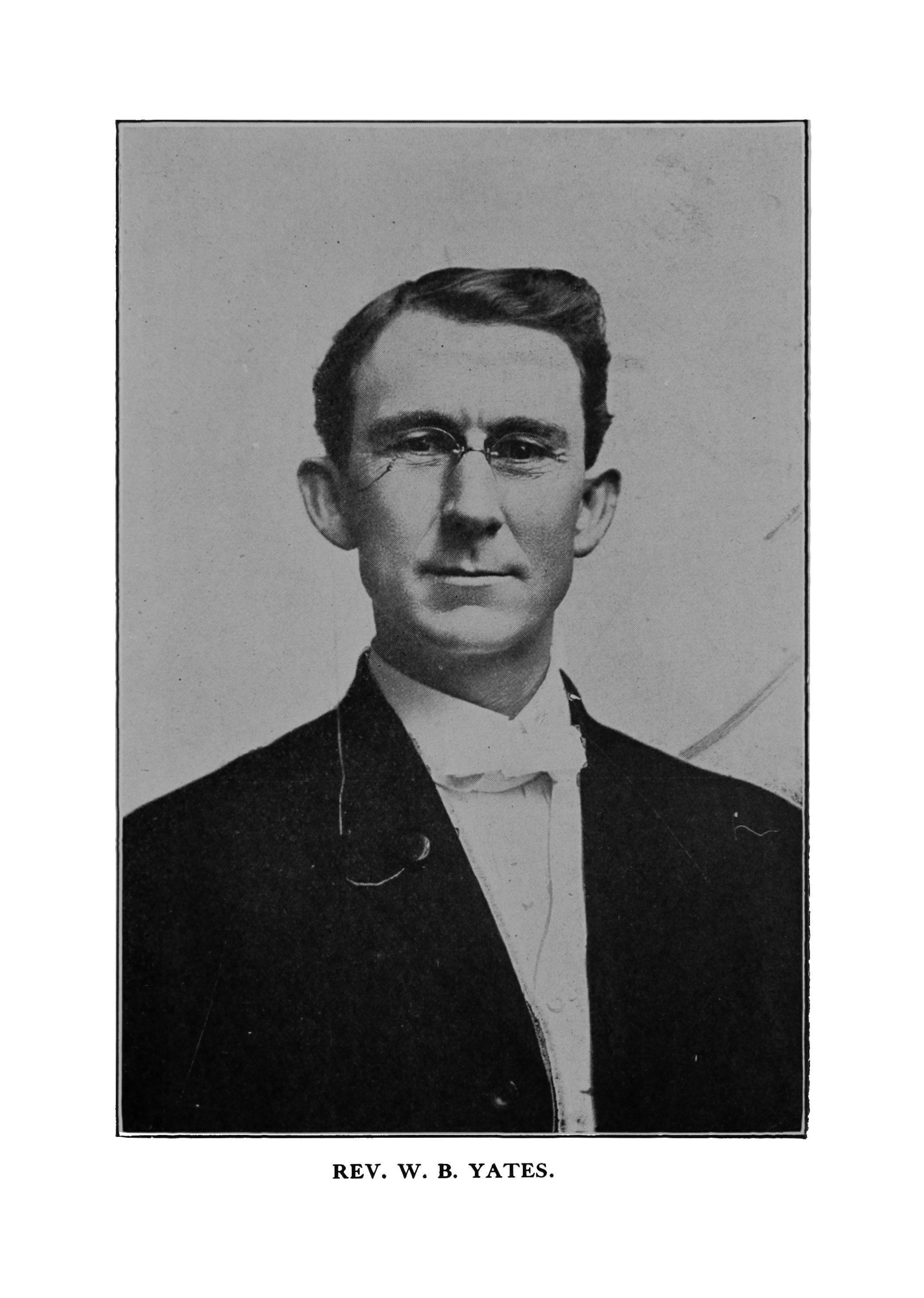
Rev. E. A. Fergerson. 181
said, "I am a railroad man." Then it all dawned upon me, and I put my anms around his big neck for the first time and said aut loud, "It's old Fergerson."
I checked my .grips away and: we 'boarded a Pa.ge avenue car, and went out through the city looking at the sighbs along the way. 'To me it was a great pleasure for many reasons. First, I had S'O long wanted to meet Brother Fergerson, and socond, I was going through the city of St. Louis with a man who knew the city almost as well as I knew the way to the old swimming hole in Mr. LaRue'a ,field when I was a boy. Tlhe time was limited, I must got back and! hoard the Burlington for Iowa.
He looked me straight in the eyes and said, "Bill, old boy, I've been wanting to meet yoo for a long time. IWe rnust arrange some work togcther." In reply I sa id, "Amen, nothing would suit me better." rWe parted at the gate, the long train pulled out, and l�f't my big tender-hearted 'brother in the city, hut I had absorbed €'Jlough of hit; spirit to carry him in.my mind andi heart ever after.
Not long after tbat time I received a letter from him, wanting me to 'help him in a meeting in
182
Life and Labors of Cincinnati, but I could not go. He said some very 'kind things in his letter to which I replied telling him how he had lived' in my heart since we first met in St. Louis. I think it was the year 1902, we had our first revival together in Louisville, Kentucky, at the tabernacle. I had heard hirn .preadh a f.ew times ,before the meeting in Louisville, but this Wah our first work together as leaders in the meeting.
I shall never forget that revival. 'So many fine young people were converted land sanctified in bhe meeting. 'We Bang and preached in the tabernacle, on the streets, at the railroad shops, in the jail, and everywhere people were blessed under his ministry. .From that day until the day he went home to Heaven, we were like brothers. He knew me better than any other living man, and I'm quite sure I 'knew him as well a's any man knew him. We hav'€' worked in churches, and camp meeting sheds, under gospel tents, 'on the streets and everywhere he lifted! his voice like a trumpet, and the people always understood his message. He was not like the man driving the old, poor, lame horse to the rickety hack hollowing as loud as he could yell, "Ra ba sah;" when qUet;-
Rev. E. A. Fergerson. 183
tioned what he had to sell he said, "I am not Bellin.g, I am buying." "Well," said the preacher, "What are you buying ?" He replied, "I am buying rag�, and. bottles, and sacks." The preacher said he remind-ed him of a preacher who tried to preach sanctification without the experience. He would yell and puff and blow thirty minutes, and when he was through some good brother would ask .hirn what he was driving at. When a look of surprise came on the preacher's face and he said quickly, "That's my sermon on sanctification."
I am saying everyone understood dear Brother Fergerson, not only when he preached on Holiness bu t when 'he preached on Hell.
I remember one night during our meeting at \Yay>crooa, Georgia, the tent 'Was 'crowded to ov-erflowing to hear him preach on the Ten Commandments. It was a cool night but the people were hot. Somewhere about the middle of the message he Wa6 telling about preaching the same sermon at other places and GOod \\1a8 pouring His Spirit on the message, and on the people, when a man tried to leave the tent but failed because his strength was gone, and he sank ,bruck into his pew a ol,rid man. It seems this .had been repeated
184
Life and Labors of more than once in his meetings while he was relating these incidents. 'That night there was a commotion near the center of nhe great crowd and pretty soon they carried a woman out more dead than alive. I do not know whether she survived or not. I have seen many people swoon while he pictured a lost soul in Hell. I wish I could write something just half as startling as it was to hear hie messages.
Two years ago next November I met 'him in Boston, MaSB., he was 'helping Bro. John Gould over at Lynn. Our meeting was quite a coincidence. We were going to Fo-rt Fairfield, Maine, to hol,d' a midwinter convention. Knowing he was an Lynn, I sent him a telegram "I would come through on tlhe 6 o'clock train," 'but he had figured out some better connection and .promiscd the audience at Lynn another service, and also promised! them I would be wi bh them that evening. But now he has a jdb on his hands' to find a Iittle man in the great city of Boston. He and Brother 'Gould carne over to the city, went to North station but I was not there. To wait for me to come for my train would make them too late for their service, so tlhey start-ed out for a chase While
Rev. E. A. Fergerson. 185
walking 'Up Main street Ed said, "Here, let's .go up this street, I think we will find him." T1hey had not much more than turned the corner till we stood looking €'ach other in the face. Il e shouted aloud! on the street and praised! God for leading him to the object of his trip to the city. There was no getting off from them, SlO I went with nherrr, We had a glorious service that night. It was at that service where I met Miss Gussie Balch, who .in a short time after became the wife of our Kentucky genius, the gifted, polished Andrew J ohnson.
We left Lynn by night, and after a long trip we rolled into the little snow covered city of Fort Fairfield, Maine. "Ilhe weather was very cold, twenty degrees below zero part of tfhe time, hut the crowds came arrd we ·had a good time. One night there was a group of old men, several in number, with long white beard and white hair. They were v·ery nervous while Ed preached on Hell He said, "They tell me YOoU are cursed with one infidel dub here in the city." He skinned them ana tanned their ,hides and: mad€ wihips out of tllwm, am] literally frazzled the infidel dub. He told them that the infidel 'Was in for Hell, and
Life and Labors of if they would never repent the sooner they got there the better off the city 'Would' be. He offered them a. thousand dollars a piece for every Irish potato they would make that would sprout and grow. "Ilhen ·he paid his. respects to Christian S-cience. He said one objection he had to their doctrine, they were like a guinea pig, it was neither .guinea nor pig. After he had paid the infidels and ridiculed Christian Science, he landed a jaw breaker to Russell ism, paid 'hia respects to the tongues people, and then settled down to the old Bible doctrine of a glorious Heaven for the Christian and a burning Hell for sinners, He said, "If the pulpits 'Were filled with men wlho would preach tlhe Bible all of .this modern nonsense would never have had a place in this Christian nation." I said', "Amen" out loud. The next morning we were going to the postoffio- when we passed several of the old men who were at the hall the night before and heard Brother Fergerson's sermon. A ,"cry old man squared himself on the sidewalk and said, "We11, I thought you would have gone on the other sidle of the street." "Why," said Ed, "Well," sa ild he, "We were those infidels Y{Hl were talking about last night." "Well," said Ed, "I
Rev. E. A. Fergerson. 187
will not let a little thing like that get in my way, if anybody gets on the other side of the street let it 'be you. I'm at home; this is God's country. If I were you I would go to some country where God is not preached, and where no church bells are heard. ,Where no mother ever teaches her little child to lisp the name of Jesus, and have it kneel by her knee and say, 'Now I lay me dawn to sleep ; I pray the Lord my soul to keep,' where there are no Christian !homes, no religious liberty but where, without tfhe Gospel of Jesus they could feed their children to the wild beasts of the forest." He told them they had better repent of their sins and pray God to forgive them for their wickedness and help them to make restitution for the wrongs of 1Jhe past. 'They evidently felt guilty, and one by one they went away a'nd! diid not return during the meeting,
A man witfh a false doctrine had no rest in a small town when E. A. Fergerson unpacked his big trunk and preached about three times on Hell. 'While he was terrible to the man with the false doctrine, he was a great comfort to the man who had or wanted the truhh,
We were holding a meeting in a .little town in,
188
Life and Labors of Tennessee and the fight was on and! the battle was hot. The air was full of smoke. It finally got 80 hot a committee came to see him and told him if he did not let up on that close preaching they would not pay him one dollar. What do you reckon he did? He jumped up and, said, "I have never been scared nor bought. 'I'll preach the truth, and when the meeting is over, I'll have Brother Yates to put me in a goods 'box, nail it up and ship me to Sister Fergerson, C. O. D." He said he wanted to be true to the God who called him from railroading to preach a gospel that made a man pay his debts, love his own wife, pray with his family, live as clean a thousand miles from home in the dark, as he would at home in daylight. The Devil hated him. 'Some men can go to town and stay ten days and never stir the Devil, 'but old splitfoot always got busy about the third day in Fergerson meetings, He was holding a meeting in a big warehouse in Greenville, Tennessee; both sides were busy. One night while he was preaching the outside crowd carrolled a cow and compelled her to go in the house. Ed said she looked about as much at home at; a holiness fighter would in Heaven. He
Rev. E. A. Fergerson. 189
spoke to the old L'OW and told her she was welcome bu t her crowd was ou t in the street. Sometime after that he was holding a meeting in Washington, D. IC. One evening he was telling them how the people of the South all turned out to a meeting like that. '''Why,'' he said, "the cows come to hear me preach in Tennessee." There was no end; to his wit.
He wad coming in home once tired! and worn. Not many in the' coach, hut some were playing cards and some were telling yarns. Ed lifted his eyes toward Heaven and thanked God for salvation and began singing a good camp meeting song. The big tears rushed down his shining face, The card players couldn't stand that, so they left the coach, and! the devil said to Ed, "Now you have run those �people out, and here comes the conductor to put you out," hut he shouted some more and started another song. IBy this time the conductor had him 'by the han-d, with tears in his eyes, and said, "Lord, bless you my brother, I've got that, I'm so glad you are in my train; go ahead and sing and shout as much as you please."
I wish I had! time to tell about all of our meetings together. There were always results in his
190
Life and Labors of meetings. I remember being in 'Cincinnati at the camp meeting one night that was held in a big down town theater. The large building was packed and jammed from the pul-pit to' the doors, He preached from the text, "The wicked shall be turned into hell, and all nations that forget GDd." Such crying and weeping, and wailing are not often heard. At the close of his message sixty-seven came to' the place of prayer and the tide was high. The sightseers were there and one woman fell from the back of a chair upon which she was standing and dislocated her ankle, and was taken to the hospital, and the morning paper said the big railroad evangelist should be 'properly punished for creating such excitement as that. 'Well, YDU know tha t was a nice way to' advertise the meetings, but T see I am saying too much.
I will now speak of our meeting in Arlington, Texas, last May with Brothers J. T. Upchurch and T. B. Talbot. It was a convention. Brother Bud Robinson was there. You know what happened wi th the Cowboy Buddie and Railroad Fergerson at the helm. It was a most glorious revival. We left there Monday morning, took a through train at Dallas for St. Louis. Buddie
Rev. E. A. Fergerson. 191
came 'with us as far as Greenville. We had a great time together. After riding all day and' all night, we reached St. Louis where we held a two weeks' meeting in the Union Gospel Mission for Brother M. B. Gott, This was our last meeting together. It was in many respects a great meeting. Sister Fergerson and the children were with him the first week of the meeting. ,'That a comfort and delight it was to him to have them with him. I do not think the man :has lived or is living 'who loved his family more than he. With a glad sparkle in his eye be would tell me of their extra gifts and graces. After the wife and' children went home we moved to .the Marquette Hotel and roomed together. We read and studied the Bible as I had never done before. He was a hard student of the 'Word and all good literature. He was well posted along many lines and a more companionable brother never lived.
Little did I think that afternoon when we fell in each others' arms and said good-bye, we were dosing our last meeting together on earth. Our engagements together reached into the fall of 1914. Again, I left him standing at the gate at the Union Station where I met him and said goodbye
192
Life and Labors of twelve years ago. We €'ach went our way, but never a week without a letter from him and he one from me. I came to his home town August 14, from Guthrie, Oklahoma, on my way to Bonnie Camp. I called at his home to see .the family. Found them in distress. Sister Fergerson said, "Oh, Brother Yates, Ed is sick, and I am looking for him home. Poor fellow, he is so sick." I spent the night with his father and mother. We had a good season of prayer. Each one calling Ed by name, and praying God bless him and heal his body, if it be His will, 'but there was that uneasy, strange, restless feeling that can not be described. I went back to Ed's home next day; they were looking for him more than ever. I went to the 11 o'clock .train but he did not come. I went back up town, took dinner with my friend', J ohn MoPherson. After dinner we were singing when the telephone rang and I was called. T put the receiver to my ear and said, "Well, what is it?"
And the excited voi,C€ of 'Sister Fergerson said, "Ed has come and is awfully sick" He had missed his train in St. Louis, purchased another ticket and came around the Southern road. I hurried down and found him more dead than alive
He only spoke a few words to me. knew he was a very sick man, yet '1 thought he would feel (better when he rested from his long trip. He had come alone all the way from Waco, Texas. The doctor came and said he had typhoid fever. Oh, ·how that hurt me, that awful word, Typhoid. I wag in its grip nine long weeks ten years ago, but still 1 felt Ed could pull through. I left the next morning, went to the 'Bonnie Camp. We heard from him every day, and was not expecting the end. IBut Friday afternoon a man came with the !I11&SBage, ''He is dead." lMy strength left with my hopes. Without a word we all went to prayer. The once strong giant, now helpless and 'Cola. in death. Brother A. G. Proctor and the write were called upon to conduct the funeral. After the two morning services a t the camp we got in an automobile that had 'been provided, and with Bro. and Sister Garrison, wife, Brother Proctor and myself, we reached 'Mt. Vernon in time. No tongue nor pen can tell the sadness of that hour. I had been jn the house many times, but never before in the presence of cold: death. After a short 'service in the home and the sermon at the First Methodist 'Clhurch, we followed his body to
194
Life and Lahars of the 'Cemetery, where with songs and prayers, and tears and robs, and groans, we laid his remains in the grave and covered' it with beautiful flowers, and turned away, realizing we had buried a good father, a loving, affectionate husband, a mighty man of God, a great preacher of the word, and a friend to all mankind.
We are lonely now, but with our heads above the waves and our hearts anchored in J esus, we will press on till our day's work is done, and kind hands will minister the last sad rights here below, then, ah, then, in that glad morning, when the dead in Christ shall come forth, amid the shouts and hallelujahs of the mighty host of all ages, we shall rise.
Sorrow and sickness, pain and cold death will be no more, thank God. That which I knew and loved in Brother Fergerson here in this world, I will recognize and love forever. Our parting here was sad indeed, but our meeting yonder will outweigh all our shams and sorrows in this world.
I bless God for the privilege of living the life that has no death. I erpeet by the grace of God to join that company spoken of in Isaiah 35 :10, "And the ransomed of the Lord shall return and
Rev. E. A. Fergerson.
19·5
corne to Zion with songs and everlasting joy upon their head's. They shall obtain joy and gladness, and sorrow and sighing shall flea 3!W13Y."
When .the old ship of Zion shall make her last trip I want to be there, I do. With head all uncovered to greet the old ship, I want to be there; don't you? When all the ship's company meet on the strand, I want to be there, I do. With songs on their lips and harps in their hands, I mean to "be there, don't you?
xx.
My precious Brother Ed Fergerson, has fallen at the battle front, and died with the harness on.
What an honorable discharge 'has he. No more noble record has been made in our day. He hugged both rails, flew across the plains, leaped tho rivers, gracefully, made the curves, tunnelled the mountains, made up time, and ran in ahead of the schedule.
W:hat a clean record and what a warrior. What a stiff fight was on when Ed stood up with an open Bible in his hand and scalding tears on his cheek.
When fresh from two hours of closet prayer, Err struck the platform, devils paled, and the foundations of hell were shaken. The devil hated him and all hell dreaded :his colossal strength, and fearless Herculean Iblows. 'He was God's man, God's minister, a flame of fire.
196
197'
In the great battles we fought together he never flinched, he never shirked, he was al ways just a little ahead.
It was just like him to go to Waco when he should have gone to bed. What a rare trait of character in these ease-loving times. ,When others were in slippers and evening gown, he was on the 'battle line with war paint all over his face.
While thousands sit in rocking chairs, or ride on rubber tires, Ed was enduring hardness as a good soldier of J eSIUS Christ.
I loved him like a brother, and he was as true as steel when others were false; while I am heartbroken, and deeply deplore his untimely death, I ioani to die like that. How much better to die too soon, than to outlive ones usefulness. Score" of living preachers would have lived longer, if they had died years ago.
lIy twenty years' experience living in a trunk has prepared me to appreciate in a measure the sacrifices that Brother Ed has made during the past fifteen years.
The last time I met my Precious Brother, he was "in peril among robbers," and I was "in peril among false brethren. Bro. Ed had preached the
198
Life and Lahars of closing sermon, one of the qreatesi I have ever heard. The long altar was lined with seeking souls. Divine 'Power and great Glory was on the camp that last night.
'The Camp Meeting Board had given Ed in cash what he was to have for his services and at midnight he stood on the platform waiting for the train which was to hear him to his home where his wife and seven children 'were anxiously waiting his arrival; suddenly a hand of robbers surrounded him and relieved him of all his money which was to be the bread and butter for his dependent 'family; he was forced to return to the camp and boITOW money for transportation home.
Having had a similar experience myself I knew how to sympathize with him. He took joyfully the spoiling of his goods, and thanked God that he had something that .thieves could not break through and steal.
He it; now rewarded for his sacrifice and 5e1£denial, the long periods of absence from his home and! family, the long, wearisome, expensive journeys, the hard and often unclean beds, the poorly prepared, and often unclean food; the unwelcome receptions, and often poor pay, the in-
Rev. E. A. Fergerson. 199
expressible heart longing for the loved ones at home. The awful agony of soul .travail for the lost; all this and much more he nobly bore and went through like a 'Conqueror.
My Brother was a Bible-preacher. He loved the Book. How many times when announcing some great, but unpalatable truth, he would say, "Brother that is 'Book," or "I am giving you Book." "Again this is more Book" and "the Book will stand when the world is on fire.
Re was one of the most tearful and one of the most fearless preachers I ever knew. His preaching on holiness and hell was simply tremendous.
R15 exper-ience as a railroad man was most thrilling, his preaching on the soon coming of our Lord. was indescribable, He was a '�trong scriptural, Pre-Millennial preacher. - His preaching fed and "helped believers much."
His precious wife and children have our deepest tearful sympathy. Oh that 'God might raise up many such, to publish full Salvation throughout the world.
My first meeting with Bro. Fergerson was at a revival in a little town in Southern Illinois, 'where he and Bro. Bud Robinson were laboring together. The services were held in an old warehouse. I had been in correspondence with him often before our meeting, and had learned to esteem him very highly. He impressed me as being a man of intense earnestness, fully given up to God. His heart beat with love for all humanity, and he preached a terrifi-c gospel. God had saved him from a life of sin, and he yearned for the salvation of others.
As the yean; rolled on and Bro. Fergerson and I became better acquainted, I learned to love him very much. It was my delight to be in a meeting with him, and I had that privilege many times. God seemed to pe-culiarly 'bless his ministry. His sermons went, straight to the heart, brought deep 200
Rev. E. A. Ferqerson. 201 conviction to sinners; and doubtless many hundreds of souls found the Savior under his preaching. .He was a Biblical preacher. He believed in fGod implicitly, and knew from experience that He was able to save from sin. He preached with his whole soul, and! would then sing, exhort, pray and shout as the people came into the kingdom. I was with him at his last meeting before he went to heaven. It was at dear old ,Waco in August, 1912. He 'Came one day late, and was not well when he arrived on the ground. Bro. J. B. Kendall and I urged him to go home, but he felt that he would be better in a few days and fight the disease off. He only preached five times, and while those who knew him best, saw that he was weak and worn, yet God greatly honored his messages. One of his last sermons was on "Breaking the Alabaster Box." As he drew from this subject lessons of love and tenderness, and told us how we should break Alabaster 'boxes, the Holy Ghost came upon the audience with wonderful power. It was a great message from a great heart, We shall all miss him. Powerful in body and big in soul; tender as a child; filled' with kindness and gentleness. The writer was with him in many
202
Life and Labors of battles. His memory to me shall always be sweet.
I dearly loved him
Having heard Brother Fergerson through three meetings that ·he held at the Pentecostal 'Tabernacle in Louisville, Ky., I learned to reverence and esteem him as a great and strong preacher of Bible Holiness. His tremendous earnestness, combined with a strong intellect and large physique, made him a very striking personality. Ria sermons were so simple and interesting that the children delighted to hear him and the mature mind reveled in his fine illustrations and the remarkably forceful manner of presenting them. The sinner could not help wanting to hear him again. He was a wise winner 01 souls=showing the heinousness of sin and the !beauty of holiness. His preaching was in the demonstration of the Holy Ghost, and the large number converted and sanctified under his ministry will look forward to the meeting in the Heavenly Home where there will he no shadows.
Rev. E. A. Fergerson. 203
It was a sweet privilege to have had him in our home. He won the children in his tactful way. And I longed to know his in teresting family that he loved to talk about. This was granted me a year 'before his death. .Seven lovely children and a gentle mother were the pride of Bro. Ed's heart. My prayer is that the Heavenly Father will answer his prayers 'for them "above what he was able to ask or think"
'CHAPTER XXII.
Repeatedly as we go about we 'hear men ask one another, What is your business? In what line of work are you engaged?
It is the rarest occurrence for one of them to reply that they have several occupations, or that they are working for two firms, or that they handle two distinct lines of merchandise. Any such response affirming multiplicity of companies, or numerosity as well as a variety of goods ,handled, would: announce a kind of J ack of all trades, and an occupation far beneath that which is recognized as the strict business life.
The variety store in the village exists as a necessity, and the vast combination emporium in the city, covering a block, is a wonderful convenience to the shopping public in some respects, and sometimes to everybody. But neither of these it) referred to in the attention called to 'business rep-
Rev. E. A. Fergerson.
resentatives of a real solid commercial 'World. When all men are questioned as to the character of their employment, the immediate and' short response is "Shoes," "Dry 1G00ili;," '�Groceries," "Tobacco," «Hardware," etc., etc.
The unbroken rule in the genuine twenty-·four carat business <world is that the agent represents only one line of goods or commodity, and' works for one Firm.
We have asked traveling agents why they did not sell groceries when they were 'getting orders for shoes; and why a man who was standing for "Hardware" would not find it profitable to solicit orders for "Candies." They always smiled at this query, and one of them, knowing my calling, said, "No man can serve two masters," while others took the pains to show how it was far more 'profitable to the firm, the agent, and better for the public that one pursuit should he followed, and not the jumbling-up arrangement we had suggested.
SU{'Jh a question, What is your business P put to all of us in a spiritual sense, and with a life meaning, would bring forth some very remarkable replies.
We 1W0uld! discover that few were devoting them-
Life and Labors of selves to their Maker and Redeemer in the strict business sense of the moral realm; that numbers were trying to represent two Firms, Heaven and the World. Others were peddling all kinds of merchandise. ,And still others had become a kind of Jack of all trades in the character life, and could and would do any kind of thing that might be demanded of them by almost anybody.
I t is certainly well, like the palm tree, to be good for many different excellent things; but it would be a strange tree indeed that would bear at the same time good, indifferent, bad and poisonous fruit.
Our one business as God's servants is to present the Gospel as He ;gave it to us, and to push salvation, and only salvation, all the time and everywhere.
And yet we have only to look around to behold, in what is called God's service, the mixing of business, the half-heartedness and: the unfaithfulness of a perfect multitude of His servants.
Verily, we cannot hehp believing it would pay for us to stick to the one business for which the ISavior founded the Church, and to go at it in the way He has indicated, and take commands and
Rev. E. A. Fergerson.
207
directions entirely from the Heavenly Firm, rather than: try to serve two masters, compromise the truth, adulterate the goods lOad gave us, and' put on the market things He not only never required, but forbade us .to have aught to do with.
Truly the pure Gospel will have greater 'weight with men's consciences, character and lives than the various man-made topics and earth-born subjects which we hear on many platforms and in numerous pulpits today.
.Paul the 'Scholar could have brought to his audiences a vast amount of human knowledge and genuine wisdom, but would not, as he plainly declares to the Corinthians. As for something unspeakably inferior to that, lectures on the earthquake destruction of a city, quartette hymns Bung to love-song melodies and interspersed with secular pieces, pulpit advice how to dance, court and 'IOOrry ; such unutterably contemptable stuff, never entered his single devoted mind, "(One thing I do," he said once; and to the Oorinthians he declared that he came not with wisdom 'of words and excellency of speech, but with the Cross ; "For I determined not to know anything among JOU save Jesus Christ and Him crucified."
This cross, or crucified Christ, meant all that is in the word, salvation. He amplified the meaning and scope of the term with four others in the same message, saying that Christ was made to us "wisdom, righteousness, sanctification and redemption."
This was Paul's business, his one line of goods, so to speak; and the record is that he kept at it, never changed hits stock, never lowered the price by granting shallow repentance and imperfect consecration, and never did business for any other firm than the one which engaged him one day as he was on the road to Damascus.
IIis first question after accepting employment was, "What wilt thou have me to do?" And many years after, as he was about to die and was handing in his last account, he said, "He had fought a good fight, finished his course and hadi kept the faith." He was never sidetracked in all his long service. He did not get switched off from the salvation of the souls of the people by any kind of water application to their bodies. He vowed and declared that he had only 'baptized two or three persons, and no one could prove any snore cases on him.
Rev. E. A. Fergerson. 209
His idea was to get people saved and sanctified, rather than to obtain accessions to the cause, as drsirable as they were; for it is noticeable that on his second missionary tour, the Scripture distinctly states that his object was to confirm and csbablish the churches already formed.
He had IlIO lust for numbers, 'but prayed to the Father of the Lord Jesus ,Ohri£.t that those whom he had already led into the light might be filled with all tho€ fullness of God.
He never trimmed to emit the ignorance, prejudice and authority of the Jews. Peter trimmed in this way because of his fear, and then Paul trimmed Peter for having .trimmed to the 'ceremonial and unspiritual bide of the church. Oh, how he got after him. How this noble, true representative of Ohrist glowed with a righteous indignation over a man 'Who had been baptized with the Holy Gho�t, and had been the leader in that wonderful day at Pentecost, and yet now allowed ,himself to be led captive by 'a set of ceremonialists in the church! An apostle going beck to first principles, returning to the rite of circumcision that had been fulfilled: completely and gloriously ill spiritual lines on the Day of Pentecost! Oh, how
210
Life and Labors of heaven must have thrilled repeatedly at the sight of the incorruptible integrity, the loyalty to truth and to fulfilled truth, and .the magnificent fearlessness of the man, whether he stood before a prominent individual who needed rebuke, a gathering of the .Sanhedrim who were trying him for his life, or a multitude crying out for hi'S immediate death.
The question .then to us of the Christian church ministry is, Are we really in the King's business, and are we making it our one 'Work; or are 'We serving two masters, and peddling goods God never asked us to handle?
'To the question, "Whom do you 'Serve? some in truth would have to say, "1 serve the Board of �te\\'ard.s, the Ladies' Aid Society, the leading members of the church and the Masonic fraternity, I dare not go against their words and wishes. I must please them, or I will be east out of my stewardship, and then who will receive me?
Let the reader carefully re-read the above paMgra,ph, for it i's as true of a large body of preachers as that the Gospel is true and the Day of J udgrnent coming.
To a second question, What do you present to
Rev. E. A. Fergerson.
211
t� people as God's agent and servant, the salvation that Paul spoke of holding up alone; that the disciples sai-d! they would declare, no matter what men did, for they must obey Ood? And 10, the reply from thousands -of pulpits and Sunday schools and camp meetings would be, "Anything but salvation."
One would say that he was discussing political and sociological subjects.
A second confessed to eloquent skyseraping harangues, that he might get in the papers and be called famous.
A third that that he was not trying to get people saved by convicting preaching and persistent altar work, hut was doing his best to be popular with his congregation and 'Conference and be elected bishop, which the Bible says plainly as an office, "is a good thing."
A fourth admitted that he was mainly after accessions.
Being warned' that the way it was done was simply ad-ding other corpses to a church which was already a morgue, the reply war; that it was the rule now 'by which .a pastor's or evangelist's sueC€l3S was gauged, measured, and: declared, and he had to do it.
A fifth said he dealt in and dwelt mainly in his work on .Mother, Home and Heaven.
Told .tbat none of these constituted the salvalion which Christ brought to earth a,s laid down in the Gospel; that we had to possess salvation !before we could get into heaven, and that the love for a mother and home was not a spiritual but IS natural affection which even the unconverted possessed, and which lost men and women doubtless took to hell with them; the ireply was that the people liked that style 'of goods, in preference to full salvation, and his endeavor was to suit and please his patrons and money payers.
A sixth admitted that his principal merchandise consisted of ambiguities, and his main effort in 'his two sermons. 'On Sunday was to miss everybody in the 'audience. "This," he continues, "requires much dexterity and entails harder work than you would imagine, but I manage it by avoiding offensive 'Scriptural terms, skipping the doctrines that seem to trouble the people, and dealing with characters and personages who lived hundreds of years ago, and about whom there is no division of opinion; for instance as to Henry VIII. and Cleopa tra."
Rev. E. A. Fergerson. 213
A seventh confesses that he is not presenting salvation to hit; people, hut ruther a series of addresses and lectures aimed to change the laws of the land.
''But this is not the Bible way to reach the trouble," is the rejoinder to Bro. Seven. "You are working at the branches, while the hope of humanity is not in a'll external lopping off and righting, but Ian internal transformation. "T'he axe is to he laid at the root of the tree." The tree itself must be changed. Make the .tree 'good, and the fruit wiH be good. 'Salvation alters the character of t-he plant. 'Wrong branches will speedily disappear, with all that they stand fOT in evil legislation, wrong business and ungod'ly amusement as soon as .the life is yielded to God and His spirit fills and controls completely the regenerated and sanctified heart. God' does not work from without, in; but from within, out. "Y ou Ulave reversed the Divine order, 'Bro. Seven, land you are not handling the ,goods which the MmilghJty entrusted to you."
And 'Bro. S-even gets very angry and cries out, "Must we let the country go to the dogs !by reason of wrong laws in t-he 'City, State and National government?"
Life and Labors of
And .the reply is, "If you and your church will get your Pentecost (the genuine article), and handle and push the one line of goods which Hod has entrusted to hils people, i. e., salvation. If you show the same zeal in getting men saved as is exhibited now in: :Chautauquas, popular union Gospel services, and other movements, we will soon have ,saved! people in every walk and department of life, while converted and sanctified men in every law-making 'body in the land will speedily alter wrong codes and: enactments, and the land be treated to a sight of salvation-e-God's work-inrstead of reformation, the skin-deep manipulation of men.
Verily if the 'Church, with its splendid manhood and womanhood, talent, treasure land labor, would have pressed real Holy Ghost salvation on the people, and made that their business, instead of lecturing, 'lobbying, speechifying, conventionizing and reforming, we would be hundreds of years nearer the millennium than we are, and they would see themselves, that the .plan of God in redeeming the world is not by reformation, but by salvation; not by legislation, but through the Blood of Christ and the power of the Holy Ghost
Rev. E. A. Fergerson. 215 in the regeneration and: entire sanctification of mankind.
Among the faithful on€S of the ministry in the land who saw, felt, and urged these things upon the people was E. A. Fergerson. :He stood for salvation, and for an uttermost salvation at that. Nothing lass he knew would do for men, and nothing less he would preach.
He lived the life, presented the doctrine, urged the experience, saw victory on a thousand battlefields, and finally died in the harness ,a true and faithful soldier to the last of the Son of God.
Truly one of the stanzas of that wonderful old Methodist hymn was fulfilled in his case:
�'HaJp.py if with my latest breath
I may but gasp His name, Preach Him to all an'd cry in death, Behold! Behold the Lamb!"
'CHAPTER XXlII.
My acquaintance with Rev. E. A. Fergerson was ilimit.ed. He had preached for a number of years and had a reputation far and near as a: powerful camp meeting preacher, and great revivalist, before it war; my privilege .to sit under his ministry. 'I'he first time I remember .to have met with him was at our 'Southern Holiness Convention wme five years ago oat Louisville, Ky. At that convention he preached fOT us at £) o'clock one morning, in the Pen tecostal 'Tabernacle. The place was packed with people and .the spirit of devotion and holy love rested in a remarkable manner upon the congregation. I think no one 'person there will ever forget the sermon.
Brother Fergerson preached a sermon remarkable for scriptural insight, tenderness .and power. His own soul was all aglow with the holy truth he preached. The audience was melted into tears.
216
217
Wave after wave of devotion e nd joy swept over the place. He 'war; unusually quiet in the pulpit but full of joy, while a torrent of well chosen and impressive words flowed 'from his lips with ease, accuracy and unction .that was quite remarkable, It seemed almost impossible that a man who had enjoyed such small educational advantages, and only a few years ago was a wicked sinner in command of a crew of rough men on a freight train, could stand up there in the pulpit and pour forth so beautiful and gracious a fl-ow of gospel truth.
Ed Fergerson was powerfully converted and gloriously sanctified. His call to preach was from God and he was a miracle of transforming and illuminating grace. I can scarcely remember when my own soul has been more refreshed and blest under the preaching of any brother than at the time referred to.
'Two years ago this summer Brother Fergerson and myself werB .the selected preachers to administer the gospel at the 'State Holiness camp meeting at Wichita, Kansas. I shall never forget his preaching there. He preached .with great power, human and divine. He threw his big body, his
218
Life and Labors of shining race, his glad soul, his powerful intellect, his wonderful voice, his €arnest, warm heart, a11 into the work. He preached with hands and feet and lips and eyes, with laughter and tears. He held th€ vast crowds of people that gathered to wait upon his ministry, from text to Amen, wlth a strong, easy grip. He had great natural gifts as a public speaker. His heart overflowed with genuine love for the lost, H is soul knew no fear of man. He did not hesitate to denounce sin, though I never heard' him abuse the sinner. H€ was an earnest and fruitful preacher of full salvation. He could move an audience to tears and laughter, relating his own remarkable experience, and make truly converted people hunger and thirst after righteousness and long for the Caanan into which he had entered. Great companies of people flocked to .the altar under his earnest calls, with tears trickling down his face and mighty pleadings for them to come to repentance, or come O'V€r into full salvation. His illustrations were gathered largely from his own life experience. They were full of wrecked trains, shrieking whistles, clanging bells, breaking trestles, crashing railroad accidents, roaring fur-
Rev. E. A. Fergerson;
219
naces of fire and cries of people for help and mercy. Crushed limbs, mangled bodies, and rough men standing about a crippled or kille-d comrade, or bearing such a one away on a door torn from the side of a OOX car. And they all had point to them. They aroused the audience, 'held the attention, touched the heart and carried powerful conviction, and 'Were forceful reminders of the importance of being always ready for the call that might come at the most unexpected moment.
Brother Fergerson WI8.S a hard student. When he was converted he was a married man with a family and it was too late for him to go to school. He was almost consta.ntly in the evangelistic field, but carried with him a selection of good books and! devoted himself to study. He had '8 tenacious memory and held in his mind what he read. He devoted himself to the study of the Greek language and was soon able to read New 'Testament Greek, which he used to advantage in fhe interpretation of his texts and enforcing the truth of holy writ. For a man of so little experience and advantages in Ii terature, he was a remarkable, aggressive and convincing writer, and had one not known they would have read' his contributions, be-
220
Life and Labors of lieving that they had come from the lpen of a man with large school advantages ana considerable literary polish.
In preaching and testifying he never lowered the standard of a full salvation, but everywhere was faithful and true to the great doctrine or a full deliverance from all the guil,t of sin committed and all the stain of sin inherited.
Lt it; hard to realize that he has gone from us. It would he exceedingly sad if w€ did not foster t,he swee-t hope that we will meet him again on the other side where sickness never comes and separations are ended. iLet us who knew and loved him, be so faithful to his devoted wife weeping in her widowhood, and to the precious' children who looked' to him for support and guidance, that Wlhe'Ilr W€ meet him, it wbll 'be without shame.
Brother 'Fergerson's sudden death powerfully impressed the mind of this writer. I too, have a wife and children, and since he, a man so strong and vigorous, passed away so suddenly and 90 UDexpeotediy, I bave searched my heart and thought with much prayerful longing of those who depend upon me for food and clothing.
I trust tha t the death of our beloved brother
Rev. E. A. Fergerson. 221
will draw those of us who are on the firing line in the great holiness movement, into closer devotion to J esus, into sweeter and more blessed sympathy and communion rwith each other, and that when the battl€ .is fought out to the finish, we all may gather with glad shouts of praise at the feet of the Christ we have tried to proclaim, a gracious Saviour, able to deliver all men from all sin.
REv. E. A. FERGERSON.
"Blessed are the pure in heart: for they shall see God." (M'att. 5 :8.)
"Follow peace with all men, and holiness, without which no man shall see the Lord." (Heb, 12:14.)
The reader will note that the thouglht brought out in these two patlSages of 'Scripture is that of seeing God.
"They shall see Good." Here is blessedness above all other bliss. This is the earnest, consuming desire of every heart. When Philip said to the Master, "Lord, show us the Father, and it sufficeth us," he gave utterance to the prayer which has burned in the hearts of patriarchs and prophets, saints and apostles, in all ages of the world.
This is the irrepressible demand of our intellectual and moral nature; we cannot come to anchor in this universe without him. We drift on 222
Rev. E. A. Fergerson.
the tide of our restless yearnings and painful experiences, un til there comes the vision of thet presence whom the eye never saw, the ear never heard, the hand never felt; that invisible presence named' '''Ood.'' I t was the passionate longing of Moses in the Mount: '�I beseech Thee, show me Thy glory!" It was the breathing of the Psalmist's life: "My soul thirsteth 'for God, yea, for the living 'God; when shall I come and; appear before him?" It was the second vision of Isaiah, when he "saw the Lord sitting upon a throne high and Iifted up, and! his train filled the temple." It was the glory of Ezekiel's rapture; it was the prO'ID.ised bliss of .Simeon, that he should see God's Anointed. It was the peculiar favor bestowed upon the apostlffi-"They beheld his glory, the glory as of the only lbegotten of the Father, full of gTace and truth." It is our blessedness, if we are pure in heart. Purty of heart g.i ves the vision of God.
I would say first, not by the senses, Sight cannot take in the essence of things. The eye takes note of farm and color, 'but not of the inward and spiritual. One cannot see gravitation, as it holds
Life and Labors of the mountains and seas in itt; grasp and as it swings tho planets and spheres through space. You cannot see life. You may behold its manifesta tions throbbing in the insect, beating in the pulses of the bparfOlw, and in the flushed cheek and beaming -eye and bounding step of one you love; but the mystic principle itself you cannot see. You cannot see your friend; JOu may discern his ViSIble form ,and features, but his inner character, the qualities of mind and heart which make him your friend, you cannot see. So you cannot see God by the senses, for the Infinit€ One doe:; not appear in finite form. He has not shape and color, and can be seen only by the spirit. Just as the blind in ,the physical realm cannot behold objects that may surround them, so impurity shuts out the vision of God from the soul. Notice, the pure in heart see God.
The deaf hear not the strains of music or the loud chorus of the sea. The selfish we not the beauty of 'benevolence or -the unchaste the 'beauty of purity; so the heart that is unholy sees not {he Divine. The eternal purity fades from the view of him whose soul loves only the carnal. But to the pure ·the vision is given, and the poorest, the
humblest may rome to this sublimest -knowLedge in the universe-the knowledge of Hod.
This is 'a present inheri banoe : "Shall see God." When the divine Man of Nazareth says, "Blessed ere they that mourn: for they shall :00 comforted.
Blessed are the meek: 'for they shall inherit the earth. Blessed are they Which do hunger and thirst after righteousness: for they shall he filled," he does not mean in the next life merely, but in this; so the pure in heart, by virtue of their purity, come at once to the vision of God.
GOD SEEN IN HIS WORKS.
The pure in heart can see Hod in his works, The whole visible creation around us embodies the thought of 'God, and his autograph is written on the stars and emblazoned in the sun, painted in the blue dome of heaven and seen where diamonds pour from the granite lips of some beautiful waterfall.
Like the old dervish in the Eastern tale, who, after he had rubbed hi-a eyes 'With a fine ointment given him, saw flashing diamonds, brilliant rubies and emeralds, where before he had seen nothing but bare rocks and dull earth, so the pure in
Life and Labors of heart see what other eyes cannot see, and walk through the world' as a home where the Father's portrait hangs even upon the walls, and where upon every stairway and every corridor are the memorials of his tender care.
We see Hod in the person of his dear Son. How he has loved us and washed us in his own precious blood! We see his face everywhere 'We turn; we hear his .tender voice and he never leaves us nor forsakes us. "Behold, I am with you alway, even unto the end of the world."
But there is not only a present 'hut a future realization. There are yet the goal and: crown. There is yet an open vision, the immediate presence of the King in his beauty. The present disclosures are but the pledge and earnest of a bliss to come. We have often longed. for the return of some dear one from the spirit-land, and have sighed, "Oh, for a glimpse of that loved face! Oh, for one word from that sweet, hushed voice! Oh, for that dear one ,to come back and tell us there is a heaven; that there is .the throne of God, the songs of the angels, the tree of life, the redeemed
Rev. E. A. Fergerson.
who 'Walk in w hi te amid the radiance of the Father's glory! But what is that yearning compared with the longing of every believing heart to behold the blessed Savior?
"And ev:my man that hath this hope in him (that is, of seeing Jesu3 as he is) purifies himself even as he is pure:" Not only the present seeing him, but the future beholding him. "Thine eyes shall see the King in his beauty," and what unrningled glory shall be revealed in Ihis person.
(But, there is yet, besides the personal manifestation of the glorified Christ, a revelation of the divine essence of pure, essential Deity. When the heavens were opened to Stephen, he saw Jesus "standing on the right hand of 'God;" and Saint John, describing the 'beautiful city, said, "I saw no temple therein, for the Lord God Almighty and the Lamb are the temple of it." ''The throne of 000 and the Lamb shall be in it." And the name of the city from that day shall be, "The Lord is there." It is distinctly promised that his servants shall see his fare. There shall be such an unveiling of the uncreated God as no man in his 'Unchanged flesh and !blood could see and live. The vision is not of 'bodily sight, yet it does not fall
Life and Labors of short of God in his pure essence. The pure in heart shall see him, not by outward gaze, for angels and seraphs behold the uncreated One; they shall '800 him Less by a gazing at, than by living in him. The vision is by union with his nature.
THE BRIGHTNESS OF HIS GLORY.
To the eyes of his saints, the presence of the Infinite may be exhibited by heavenly tokens and by a manifested glory, but it is the brightness that is dark from excess of light. No eye of sense may ever penetrate it; it is some power of vision higher than sight. The heart shall see him, and this is the most true and perfect light. For, manifold as are the objects and modes of perception, the power of vision is one and indivisible. lit does not originate in the body but in the living spirit; it does not terminate in the bodily organization, but in that spiritual perception. It is hardly more an act than a consciousness, so that the beholding of created and visible things is 'but a mediate and outward consciousness, while the contemplation of the image of the nmcreated God in purity of heart, is an immediate inward sight; a sight more perfect and distinct and true than any
Rev. E. A. Fergerson. 229
outward vision 'by bodily organs; we can 8'00 purity, knowledge, love hut :by participation. The sight which the perfect shall enjoy will all be one perception. The heavenly court, the celestial hierarchy, the holiness of saints, .the glorified manhood of Christ, the vision of God, will be seen with the eye-sight of the Spirit.
Then OUT whole nature shall see God, not in succession, hut in one everlasting act of the pure in heart. Oh, what rapture is this! Deeper and more intense than any visible manifestation to the outward sense; the full, deep overflo.wing bliss of a soul into which the divine nature is pouring itself in a mighty tide of everlasting blessedness!
As an evangelist 'OUT brother was v-ery effective. He dug up his hearers and' stirred their hearts mightily. Few men could move a congregation more really or stir them more deeply, One of his leading themes IWlaIS Ithat 'of the future punishment 'of the wicked. This is a subject on which many ministers are dumb. Not so with Evangelist Fergerson. He 'believed! that God holds the reins of government in his own ihalllds, and that he will surely execute judgment on those who trample on His righteous laws,
The doctrine of hell and tenors of la judgment to come are 'fearfully rool in the Scriptures. If we can not accept the teachings of rthe Bible concerning he1l why need. we believe 'them concerning heaven. J.f the Bible is ,a,n authority in the one case it surely IDIUst be in tJhe other. No hell, no heaven.
Rev. E. A. Fergerson.
There lis a God, just, holy, good, wise, almighty. Heaven and earth 'are fullof His glory. His footprints may Ibe seen on land and sea. His fingermarks in earth and sky. The goad are like Him. They draw their goodness from Him. Heaven is His throne, His horne and will he theirs when they leave this 'World. This is perfectly natural. "Where I am, rbhe:re shall my servants he." As t'bere is a God fWlho is good, so there must be a. place w here He dwells-His home. Then as there are good people, those who 'love, honor and live for Him, it is evident that when they depart this life, when they leavs this 'World, His city, His dwellingplace, will be their eternal !home.
But just as there lis a good and merciful Creator, who upholds ·wn tJhings by the word of His power, so there must be a Devil, an evil power. We know rthere is by his footprints in rehe earth, His evil dnfluenoe can be felt, h�s hateful, hurtful, hellish deeds are clearly seen. 'Satan's handiwork is at; malll1fest ,in the earth es -God's. If fhere he no Devil whence wars, murders, thefts, forgeries, rapes? 'WheIliOO pain, suffering, dearth, anarchy bribery? If there be no devil, whence the wickedness, 1!he devilishness of the world? 'Supposing
Life and Labors of
there be no devil who is it carries on hit; work?
Whence the vast fortunes and their selfish, corrupt use; whence the gamlbling hell, the house of shame, the divorce evil, the saloon and its destructive and damnable evils?
Of course there is a devil. 'His power is 'felt, his influence pervades !the eanth, the very abmosphere is rtJainted with his polluting, miasmic exudations. Burt if there be 'a devil there must be a hell-s-for hell is simply his home. Where he stays is hell. Let him gather about him ,al11 the thieves, harlots, murderers, gamolers, train-wreckers, slanderers, seducers, viilains ; all the drunkards, liquormakers, venders and voters ; all the ihlarers IOf God and holiness, all the enemies of vintue and rightOOUSlIlea9 and let him herd them together, to hate and curse and fight and devour each other forever and there is hell. Whether it he a lake of fire literally I know [tot, but there is a devil l3.ll!di this necessitates ,a hell.
Now my friend and brother, Ed Fergerson, was Q migih by preacher on the faot of and need for a hell. Wrtfu this message he could stir men to the depth of their being. I often heard him on this terrible theme. He felt th3Jt it was a doctrine of
revelation and a l'IeaJi,ty, and being true J1e 'felt that men should he warmed. And his warnings were deli vered with tears. He felt the force of his own message. I have soon him :preach on iJhis subject for ,BIn hour and a half. Much of the time tears were running down 'his OWIlJ cheeks and a ID'ultiJtud-e were weeping and waning before him. Under 'a sermon by him in 'Chicago I saw strong men stretched out upon the floor 'for rtw1enty or perhaps iihir:ty minutes before 'the close 'of his message,
Burt; Ed's labors are €Jlded. His toibing days are over. He TeSts from Ih�s 'labors and his works do follow him. Let us who are llet£t preach inthe fear of Ood and rthe love of men the same gospel under the 'aiW,a:kenring power of which a mmtirtud� 'Was led to God through his ministry. As his sheaves were mamy, let us not goO empty-handed to meet his Judge and ours.
Under the auspices of B. L. Fisher Library, First Fruits Press is an online publishing arm of Asbury Teological Seminary. Te goal is to make academic material freely available to scholars worldwide, and to share rare and valuable resources that would not otherwise be available for research. First Fruits publishes in fve distinct areas: heritage materials, academic books, papers, books, and journals.
In the Journals section, back issues of The Asbury Journal will be digitized and so made available to a global audience. At the same time, we are excited to be working with several faculty members on developing professional, peer-reviewed, online journals that would be made freely available.
Much of this endeavor is made possible by the recent gift of the Kabis III scanner, one of the best available. The scanner can produce more than 2,900 pages an hour and features a special book cradle that is specifcally designed to protect rare and fragile materials. The materials it produces will be available in ebook format, easy to download and search.
First Fruits Press will enable the library to share scholarly resources throughout the world, provide faculty with a platform to share their own work and engage scholars without the difculties often encountered by print publishing. All the material will be freely available for online users, while those who wish to purchase a print copy for their libraries will be able to do so. First Fruits Press is just one way the B. L. Fisher Library is fulflling the global vision of Asbury Theological Seminary to spread scriptural holiness throughout the world.