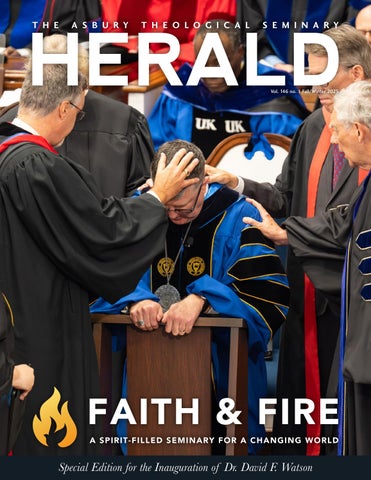
Special Edition for the Inauguration of Dr. David F. Watson
3. Igniting the Future with Faith and Fire
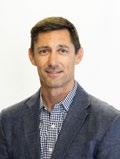
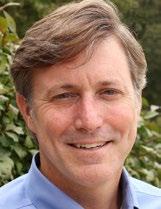
David Gyertson, Ph.D.
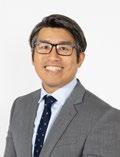
4. Looking Back and Moving Forward in Faith and Fire
Dr. Bill T. Arnold
6. Fanning the Fire of the Spirit
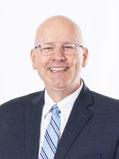
Dr. Luther Jeremiah Oconer
8. To Serve the Present Age, Our Calling to Fulfill
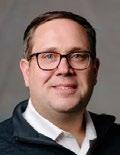
Dr. Thomas McCall
9. Preparation of the Spirit
Dr. A. Sue Russell
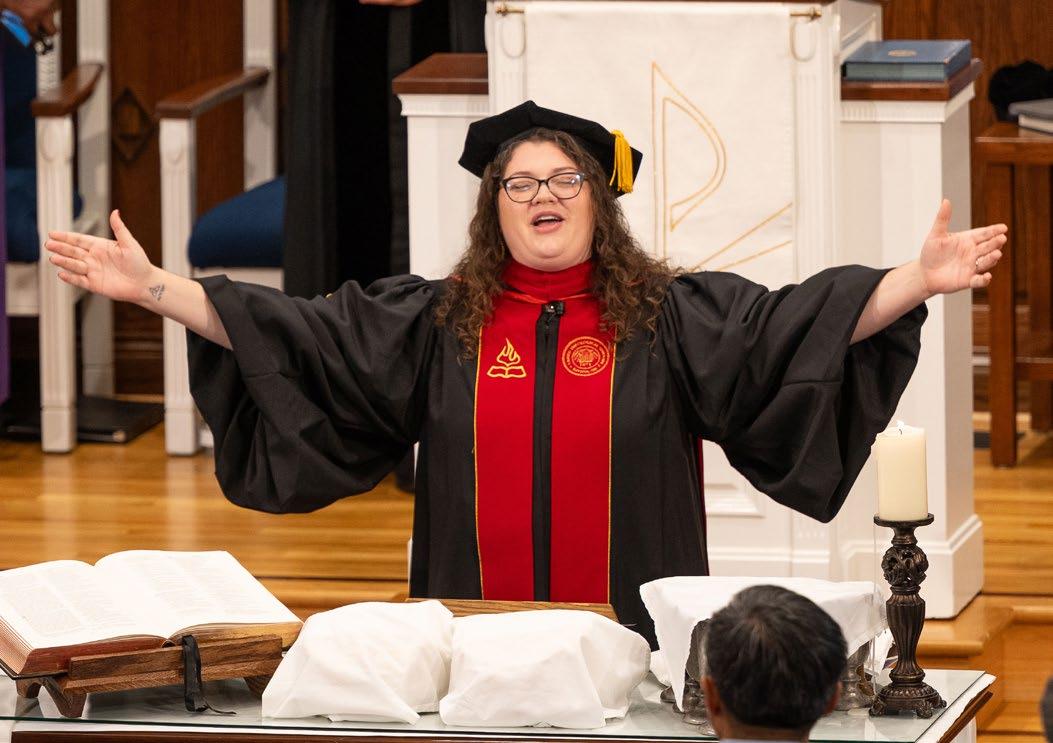
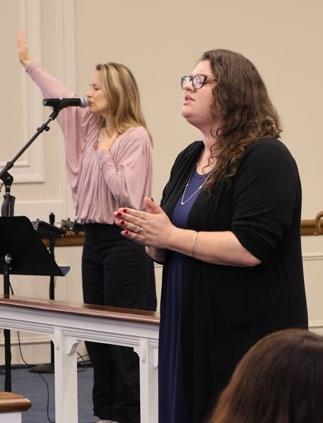
10. An Interview with Rev. Dr. Tesia Mallory, Dean of Chapel
12. Student Highlight: Prasanth Bethu
14. Faith and Fire: The Inauguration of Dr. David F. Watson
16. Alumni Highlight: Dave Janvier
18. How the "One Big Beautiful Bill" Affects Your Giving
21. From the Archives: The Holy Spirit and His Work
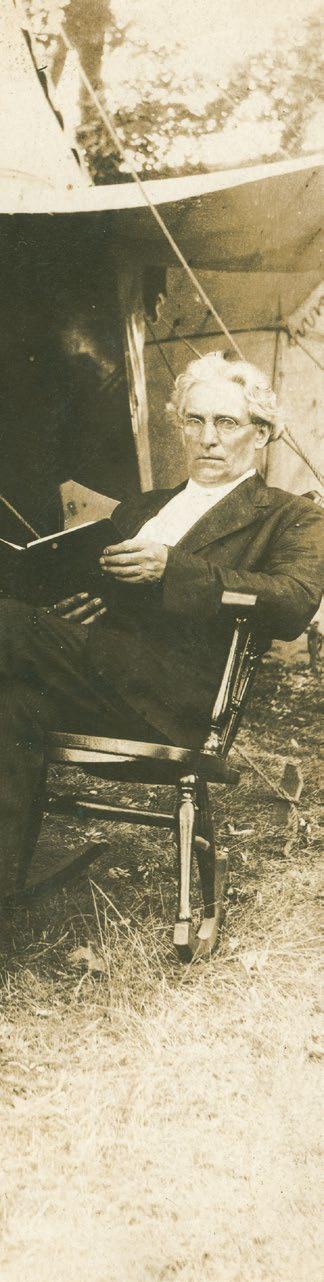
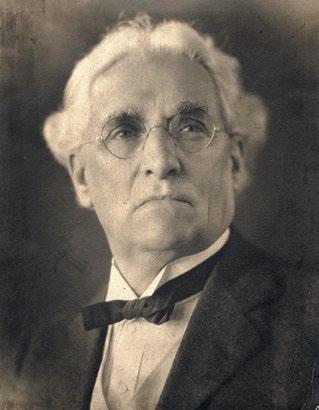
H. C. Morrison, Pentecostal Herald, 1924
24. Faculty Publications
26. News and Events
Cover:
POSTMASTER:
asbury theological seminary Publisher tammy hogan Editor in Chief
gianfranco ramirez Managing Editor
amanda kessinger Graphic Designer
judah robinson Staff Writer
Igniting the Future with Faith and Fire
Words like faith and fire are effective when they represent accurately the reality, as well as the aspirations, of institutions and those who lead them. Asbury Theological Seminary’s history is rich with the demonstrations of both across its 102-year history.
H.C. Morrison stepped out with faith a century ago, believing that the global need for taking the whole Bible to the whole world could be advanced by an independent, Wesleyan-informed “holy fire” committed to Scriptural authority and the sanctifying work of the Holy Spirit. He knew that the time was right for revival energy, ignited by John Wesley’s faith-filled convictions, that could light the Gospel message for generations to come. And in each generation, that sacred calling led us into new dimensions of Spirit-anointed equipping for service that addresses the challenge of the Great Commission, anchored to the transforming and enabling power of the Great Commandment.
In this edition of the Herald, the magazine Dr. Morrison created and originally named the Pentecostal Herald to communicate biblical faith and Holy Spirit fire, we celebrate the inauguration of our ninth president, whom God has called to pick up the torch for preparing a new generation of ecclesial leaders.
During this past year, the campus community, its dedicated stakeholders and prayer warriors, were led by the Board of Trustees to affirm our heritage, celebrate its “ebenezers,” evaluate our readiness to pursue God’s purposes and search for the next President. Our Board dug deep, asking the Lord to “search, know and try us” (Psalm 130:23-24) so we were ready for the Spirit to reveal his planned future for our mission and leadership.
These are difficult days for our world and for orthodox Christian convictions that transform belief into love-driven action. Many seminaries are facing challenges of mission drift, declining enrollments, erosion of and divisions among core constituencies and economic barriers.
However, as in Morrison’s day, the stirrings of the Spirit for a fresh outpouring are evident, reinforcing the need for equipping the next generation who can sow seeds for and nurture a new awakening. While the mandate to uphold missional fidelity in the context of the multiple threats to operational viability perhaps has never been more demanding, Asbury Theological Seminary is ready once again to serve God’s purposes, in God’s way for God’s eternal glory.
We now welcome Dr. David Watson as our ninth President, prepared and called for times just like these. We affirm that our mission is clear, our convictions are unwavering and our determination to fuel the founding vision for faith and fire, anchored to the authority of Scripture and holiness of heart, is firmly rooted. May we “serve the present age, our calling to fulfill; O may it all our powers engage to do our Master’s will” as Charles Wesley writes in “A Charge to Keep I Have.”
David Gyertson, Ph.D.
Distinguished Leader in Residence & Affiliate Professor of Leadership Formation and Renewal; Former Interim President
Looking Back and Moving Forward in Faith and Fire
Dr. Bill T. Arnold
Paul S. Amos Professor of Old Testament Interpretation
This is a critical turning point in the history of Asbury Theological Seminary. Then again, any time an academic institution welcomes a new president is a critical moment. This is my fourth presidential transition since joining the faculty, and I must say, somehow it seems different this time. This transition of leadership comes at a moment when theological education in the US and abroad is experiencing cataclysmic changes, offering a cautionary tale for us. Seminaries and schools of theology all around us are downsizing, reducing programs, or closing entirely. Most are in crisis mode, or are otherwise experiencing an existential moment in which they are reexamining their very raison d'être. Seminaries that are not reconfiguring and preparing themselves to serve a post-Christian society are merely navel-gazing and pining (or whining) for a long-past era of institutional support for their lackluster educational enterprises.
And there seem to be no exceptions to the pain; large historic seminaries and smaller ones, conservative ones or progressive, independent or denomination-affiliated—nearly all are experiencing some kind of existential crisis. If you hear reflected in my words those of Thomas Paine in 1776, “These are the times that try men’s souls,” then yes, when it comes to theological education, we are living in a time that challenges and stretches us to a breaking point.
Asbury Seminary is not immune to these pressures. Long-term sustainability of what we do is a concern, and we are increasingly being forced to ask difficult questions about how to push forward into God’s best future for our mission and ministry.
Methodist Episcopal Church, South, at the time). Beyond their many roles and contributions, they were first and foremost fiery revivalists in the camp meetings and standard-bearers of the holiness message.
Born in this spirit of the revivalism of the camp meetings, Asbury Seminary from its beginning focused on the robust Gospel message of full salvation; that is, as Christians, we are not only delivered from the guilt of sin but also from its power. And not only so, we believe every Christian is called to “entire sanctification in a moment of surrender and faith subsequent to their new birth in Christ,” as our faith statement says. The heart of this theology reclaims the truth of the full Gospel message that Christians can be wholeheartedly in love with God through the sanctifying grace of the Holy Spirit.
Freedom from something and to something—from the power of sin and to the love of god and neighbor.
In times like these, it is well to remember our history as a way of reflecting on the choices before us for the future. In fact, perhaps especially in times like these we must reflect on what makes Asbury Seminary who we are. As we welcome Dr. David Watson to the presidency of our beloved Seminary, and as we support and pray for him and his leadership team, we must ask ourselves, what makes Asbury different, if anything?
The short answer, I believe, is our theology. The Seminary was birthed over 100 years ago in the fervent spirit of the Holiness camp meeting tradition. The first two presidents (H. C. Morrison and J. C. McPheeters) were many things in the Church and society, including in Morrison’s case, a leading champion of orthodoxy in the mainline church (the
Asbury Seminary exists partly (if not mainly) to invite all Christians everywhere to pray with Charles Wesley: “Breathe, O breathe thy loving Spirit into every troubled breast, Let us all in thee inherit, Let us find that second rest; Take away our bent to sinning, Alpha and Omega be, End of Faith, as its beginning, Set our hearts at liberty.” The brothers Wesley taught that God’s grace is sufficient for deliverance from the guilt and power of sin, and that through the ministrations of the Holy Spirit, true freedom is possible. Freedom from something and to something—from the power of sin and to the love of God and neighbor. This is the path toward freedom from our depraved sinful tempers and prideful dispositions, so that our hearts are oriented wholly to God.
Our Seminary has changed quite a lot since those early decades of our first 100 years. In some ways, the school has matured as a rigorous academic center for Wesleyan theology, with two PhD concentrations, a well-published and respected faculty, and scores of graduates who are leaders in their respective denominations. But the moment Asbury fails to embrace, articulate, preach, teach, and live into the revivalistic message of our camp meeting heritage, we will become like all the other failing seminaries who are now downsizing or closing their doors. May this moment of installing a new president reinvigorate us for this hour. May Asbury Seminary always carry the banner—"Salvation to the Uttermost”— into a Church and society desperately in need of a fresh expression of so central a Christian teaching.
fanning the fire of the spirit
Thirteen years ago, I found myself standing beside Dr. David Watson in a church in Ohio during the Light the Fire conference—a title that, in hindsight, feels providential. At the time, David was Dean of United Theological Seminary, and I was just starting my first year as a new professor.
The guest speaker that afternoon was Randy Clark, best known for his worldwide ministry centered on healing and the gifts of the Spirit. As Randy prepared to teach, he walked up to David and quietly asked, “Would it be all right if I do an impartation at the end of my workshop?” Impartation refers to the transfer of spiritual gifts or empowerment from one believer to another, usually through prayer and the laying on of hands.
Without hesitation, David replied, “Sure!” Moments later, he turned to me and said, “Luther, Randy just asked if he can do an impartation.” Then, with a grin, he added, “I don’t even know what impartation is—but hey, he’s Randy Clark; he can do whatever he wants!”
Those words, half-joking but wholly sincere, have stayed with me ever since. Not because David was easily impressed by celebrity preachers (he’s not), but because in that moment he revealed something essential about his leadership: he never stands in the way of the Holy Spirit.
Making Room for the Spirit
That willingness to make room for the Spirit became, in many ways, the defining mark of David’s tenure at United Theological Seminary. At a time when theological education was shrinking nationwide, the Spirit was moving at United.
Evangelical and Charismatic United Methodist students from across the country flocked to Dayton. The classrooms were alive with prayer, worship, and theological reflection that was both rigorous and Spirit-filled.
Under David’s leadership, United grew to become a seminary with a large enrollment within the United Methodist Church, while holding fast to orthodoxy and embracing the vitality of the Spirit. In one of our conversations, David once told me that we were trying to be “an Asbury Seminary in Southwest Ohio.”
None of us could have known that this season was a kind of dress rehearsal for what was to come. Today, David stands not as dean but as President of Asbury Theological Seminary, called to lead an institution into its next chapter of Spirit-led witness.
Faith and Fire
It is fitting, then, that the theme of his inauguration is “Faith and Fire: A Spirit-Filled Seminary for a Changing World.” The guiding text is 2 Timothy 1:6–7: “For this reason I remind you to fan into flame the gift of God, which is in you through the laying on of my hands. For God gave us not a spirit of fear but of power, love, and self-control.”
Paul’s exhortation to Timothy—which is about Timothy receiving impartation from Paul through the laying on of hands—echoes across the centuries, calling every generation of believers to rekindle the flame. For Asbury Seminary, this is not merely a slogan; it is a sacred charge.
It also circles back to that moment years ago with Randy Clark. There’s something poetic in it: an “impartation” in Ohio foreshadowing an era of impartation at Asbury. Then, David yielded to the work of the Spirit. Now, he carries the responsibility to ensure that the flame burns brighter than ever.
The Right Leader for the Right Time
The timing couldn’t be more significant. The global church is undergoing seismic change—cultural upheavals, denominational realignments, and a rising hunger for authentic renewal. At such a moment, Asbury’s calling is clear: to hold together intellectual excellence and Holy Spirit power, orthodoxy and orthopathy, mind and heart, faith and fire.
Dr. Watson embodies that balance. A theologian shaped by Scripture, a scholar of the Word, and a man deeply attuned to the Spirit, he stands at the intersection of Asbury’s heritage and its horizon. His leadership signals continuity with Henry Clay Morrison’s vision—that theological education should produce not just scholars but saints, not just preachers but Spirit-filled witnesses of Jesus Christ.
The Flame of Wesley’s Fire
Not long ago, Christianity Today (September 2024) ran an article titled “‘Wesley Is Fire Now’ and Evangelicals Are Being Strangely Warmed,” reflecting on the surprising resurgence of Wesleyan spirituality among young Christians—seen most vividly in the outpouring at Asbury University. It captured what many have sensed: that the Wesleyan movement— once thought to have been overshadowed by the rise of New Calvinism—is once again being set ablaze by the Holy Spirit.
Holiness. Revival. Mission. Connection. These hallmarks of the Wesleyan faith are lighting up the Church across continents. And in this season, Asbury Theological Seminary once again finds itself at the heart of this renewal. The same Spirit who kindled the fire in John Wesley’s heart is kindling it anew in the lives of Asbury’s students, faculty, staff, and alumni around the world.
In this sacred story, Dr. David Watson’s presidency represents more than an administrative transition—it is a continuation of the Spirit’s long work of revival through Asbury. He is not coming to start a new fire; he is coming to fan the flame that is already burning.
A Seminary for a Changing World
As I reflect on David’s journey—from that conversation about Randy Clark to this historic inauguration—I see the pattern of the Spirit’s quiet orchestration. God has been preparing him for this moment, shaping him to lead a community that dares to believe theology and fire belong together. And if anyone were to ask whether it’s all right to do an impartation at Asbury today, I imagine David would smile again and say, “Hey, it’s the Holy Spirit—He can do whatever He wants!”
Dr. Luther Jeremiah Oconer
Associate Professor of Global Wesleyan Theology
HE IS NOT COMING TO START A NEW FIRE; HE IS COMING TO FAN THE FLAME THAT IS ALREADY BURNING.
To Serve the Present Age, Our Calling to Fulfill
We live in a world that, in many ways, is torn, broken, and confused. People are increasingly pessimistic and indeed in many cases haunted by despair and desperation—and sometimes for good reason. Political and social bonds are fraying. Trusted institutions are eroding and collapsing. In some senses, we are living in a post-truth world—and it is hard to know just who to believe. In some cases, it seems that we are living in a post-hope world as well, and it is hard to know who we can trust.
This is the world in which we live and move and have our being. As disciples of Jesus, it is also the world that we are called to love and to which we are commissioned to give ourselves. And thus it is an incredibly exciting time to be alive and engaged in gospel-centered ministry. As those who belong to Jesus, we want to live fully into our calling.
We are aware that we can do so only if we “keep the faith” (2 Timothy 4:7), only if we remain faithful to the “faith once delivered to the saints” (Jude 3). Thus, we remain committed to historic Christian orthodoxy as it is expressed in the great ecumenical creeds. We gladly affirm the sacred truth that the one God lives the divine life as three persons who are eternally related to one another in self-giving love—we believe that God’s own life “on the inside” is a life of holy love. We confess that we—as human creatures both feeble and frail and also gloriously gifted and called to communion with the Triune God—are now fallen and unable to properly know, serve, or love God apart from a radical act of divine grace. We joyously affirm that God indeed has acted in unfathomable grace—that the eternal Son
of God became the humble Son of Mary, suffered, and died for our sins. We proclaim that the Son who was crucified and buried was raised by God from death and has ascended into heaven. We cling to the hope that he will return in glory to complete the work of redemption. We believe that God continues to work through the church—as broken and battered as it may be, it is the humble means by which God has chosen to work in the world for the transformation of that world. And we celebrate the fact that the blessed Holy Spirit whom Jesus promised to send indeed has come and is now at work in the world and in our own lives.
We are also committed to the distinctives of Protestant and evangelical faith and piety as expressed in the historic confessions of our faith. We believe that God has revealed himself and his will supremely in Christ and reliably in Holy Scripture, and we submit to the divine authority revealed therein. We affirm that we are justified and brought into right relationship with God by faith alone and that the gift of God is received by faith alone. Moreover, we are unabashedly committed to the central truths of our Wesleyan heritage; we believe that God loves the whole world and seeks the salvation of all sinners, and we are bold to believe that God’s grace has the power to sanctify and cleanse God’s people. We believe that we have been entrusted with a deposit of truth, and we believe that this truth has the
power to bring hope into a hopeless world and to change people and communities.
We are committed to these truths. We are committed to living in light of them—and thus to loving God with all our hearts, with all our minds, with all our strength, and to loving our neighbors as ourselves. As a seminary, we are committed to preparing persons who are theologically educated, sanctified, and Spirit-filled. We are committed to the mission of evangelizing and spreading scriptural holiness throughout the world through the love of Jesus Christ, in the power of the Holy Spirit, to the glory of God the Father.
It is because of these commitments that we are so very grateful that God has brought David F. Watson and Asbury Theological Seminary together at this time. We know that he is committed to this robust theological vision. We know that he is equally committed to a life and ministry of holy love that is grounded in that vision. We are confident that he will seek the Holy Spirit and rely upon God’s steadfast and all-sufficient grace. We thank God for divine provision, we pray for divine guidance and protection, and we look to the future with a sense of urgent and hopeful expectancy.
Dr. Thomas McCall
Timothy C. and Julie M. Tennent
Chair of Theology
1
Preparation of the Spirit
“Ali (younger sister), for you to understand how God works among us, we need to show you our special place, the place we go to hear God’s voice when we are getting ready for ministry.” I looked at the Galat1 elders and could not imagine what I had yet to see or experience. For the previous eight years, I had worked under their leadership in completing the Galat New Testament. God had used the Galat Translation Committee to bring revival to the Galat churches and even plant churches in Galat villages that had been hostile to the gospel. People had been healed, others had burned their black magic paraphernalia, and hundreds of Galats had been baptized. I had watched the power of the Holy Spirit work through them but had never been invited to their prayer mountain, their place of preparation.
The next day, I joined about a hundred Galat in various vehicles and began the trip into the mountains to their special place of prayer. After three hours of driving, we began the two-hour hike through the jungle to reach the place of prayer and then made camp for the evening. There was a sense of anticipation as the pastor spoke of the power of the Holy Spirit. After two hours, we prayed, inviting the Spirit to work among us. As prayer ended, one of the Galat elders got up and said, “We are going to see if the Lord will speak to us in a special way tonight.” Then they called up the three Galat who were known to have the gift of speaking in tongues and two who were known for interpretation. The elder prayed, “Lord, if you have a special message for us tonight, our hearts are open.” Two people began speaking in tongues, and one of the interpreters began to interpret.
The first message named several women, instructing them to reconcile with each other. The women came forward and for the next half hour spoke quietly to one another, confessing to one another and forgiving each other. A Galat whispered to me that this group of women were planning a ministry trip, and there had been some division among them. When they had finished, the next message was a general call to repent. A man stood up and walked to the front. He confessed attitudes and wrongdoing toward others and asked forgiveness.
is a pseudonym to protect the continuing work of the church.
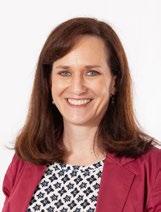
Dr. A. Sue Russell Professor of Mission and Contextual Studies
He was immediately surrounded by the elders and wept as he accepted their forgiveness and reconciliation. For the next three hours, different groups and individuals were reconciled with God and with each other. While I was reflecting on what was happening, the final message of the evening was given: “Now, Sue is going to pray for us.”
I knew I was supposed to pray out loud, but in my heart, I was still asking the question, “How do I know this is of the Holy Spirit?” As I began my prayer, thanking God for the repentance and reconciliation that had occurred that night, the answer to my question came to me: “What is the fruit?”
I realized at that moment that we could know it was truly the power of the Holy Spirit because it produced the fruit of the Spirit—repentance and reconciliation, both personal and corporate. It led to peace, joy, love, and kindness. The Galat preparation for ministry was through purity.
As we think about our theme “Faith and Fire,” it is a reminder that in Scripture, flames not only represent God’s power but also symbolize His presence and His purity. God appeared to Moses in the form of a burning bush, and Moses recognized he was on holy ground. And then the pillar of fire represented God’s presence as He led the people through the wilderness. Isaiah acknowledged his own sinfulness in the presence of God and was purified by fire, a burning coal.
Often we pray for power to see God’s Spirit work in mighty ways, just as I experienced working with the Galat. But power comes in the context of the Spirit’s presence and purity. Power and purity cannot be separated. To experience God’s power, we must allow the flame of His Spirit to shine a light in our lives and illuminate what we need to repent of so we can be reconciled with God and with others.
As we look to this next season, my prayer is that we humbly prepare ourselves in the presence and purity of the Spirit. May we allow God to look deeply into our hearts and, as with Isaiah, let the holy fire of His Spirit touch and cleanse us in order to prepare us for the next chapter in Asbury Seminary’s work in the world.
Galat
Q & A with Tesia Mallory, Dean of Chapel
In July 2025, Asbury Theological Seminary announced Rev. Dr. Tesia Mallory as the new Dean of Chapel. Along with extensive experience and education in chapel ministry and worship, Tesia is passionate about ministering to future pastors and Christian leaders. Judah Robinson, Communications Specialist at Asbury Seminary, sat down with Tesia to delve into her life and ministry journey.
Judah Robinson: Tell us a little bit about your background. When did you feel called to ministry, and how did that lead you to the world of seminary education?
Tesia Mallory: Well, I love the image of my calling starting in my baptism as an infant. I really believe that God placed a call in my life to serve his church at that point. I remember a moment when I was 15 at youth camp, really hearing and responding to a call to ministry, discerning that call. And going to college, I went to
Taylor University for music, specifically with an emphasis in ministry. I graduated, and then I went straight to seminary. I worked in the chapel office as a work-study student, and then I was coordinator of worship, director of worship, dean of chapel, and then faculty. So, for the past 20 years, my primary pastoral formation has been in the seminary chapel.
We were required to go to chapel at the seminary that I attended. That was the first time I started receiving communion every week, and it was deeply formative for me. I came into seminary with a very distinct understanding of what worship was, but seminary helped to educate me and open my mind to see expressions of worship throughout the entire Wesleyan tradition.
Judah: What was your connection to Asbury Seminary? I'm sure that played a role in your getting here.
Tesia: I've been friends with Dr. Jessica LaGrone, the former Dean of Chapel, for quite some time. We have denominational ties, and she invited me to publish my first publication with
her. It was really meaningful for me. Then she invited me to come teach on the Eucharistic liturgy to the chapel interns.
I was teaching on the liturgy, and the response I got from it was awesome. I thought, “Oh my gosh, these are my people.” I did feel like God was calling me this way. I had no idea what that looked like. So, when Jessica felt called to go to the Beeson Center to do the thing that she's really good at doing, which is to teach preaching—she's a tremendous preacher—this opened up, and it was like that calling that got put in my life a couple of years ago came to fruition. I'm grateful for it.
Judah: I love that the friendship aspect was there already. Thinking about being a Dean of Chapel, what are the kinds of opportunities you see there?
Tesia: My role at the seminary is so niche. I look at my job as I'm trying to help pastors, future pastors, and scholars find their identity in Christ and to embolden them to serve Christ in the world and in the church.
So I really look at it as a ministry on behalf of the church. We are shaping leaders, and I talk to people all the time who are going through really significant life things, just like anyone else, but teaching them to hear the voice of God and discern and to know who they are in Christ to move forward.
Judah: You're an ordained elder in the Global Methodist Church, and you talked a little bit about your doctoral program. What did the research look like for that?
Tesia: I have a Doctor of Ministry, and I did all this research on Wesleyan Eucharistic theology, the hymns of Charles Wesley—there's a particular volume called the “Hymns on the Lord's Supper,” and it went through nine editions in the Wesleys’ lifetime. It was that important. So I did all this research in ritual theory, in the Emmaus story, and then I did a project where I basically created a course to teach Wesleyan Eucharistic theology and practice to students and alumni. I'm really passionate about the work of the Holy Spirit in the sacraments because it is a means of grace. It is something that the Spirit uses to empower us to be the body of Christ in the world, and my own personal experience of healing just opened my eyes to the power of God in it. So it's kind of my mission to help the church with Eucharistic Revival.
Judah: You came on after Dr. Watson started as president. You worked together at United Theological Seminary. Can you talk a little about what your partnership with him has been like in ministry and in seminary, and what that looks like transitioning to Asbury Seminary?
Tesia: Dr. Watson has been really influential in my life. What I love about Dr. Watson is that he deeply cares about the spiritual formation
of pastors. We were praying for him when he was interviewing here, and knew that it was what God wanted. I’m grateful for his leadership, and I can't wait for others to benefit from that as well.
Judah: Thinking about being in a new chapter at Asbury Seminary, what’s your vision for your role going into the future?
Tesia: So coming into the chapel, I feel like there's a sense of worship renewal. Not that worship was bad before, but the Lord sometimes does new things. So I think for me, people are recognizing that the Lord's doing a new thing, and I'm very comfortable in those environments of worship renewal.
It's my calling. My calling is worship, worship renewal, worship training. So for me, it feels like a perfect fit to come in and sense what the Spirit is doing. I think it's aligning with what God's doing around the world, but I will say God has been working by the power of the Holy Spirit here before, too.
Judah: This new role was not just a change for you, but for your family. Can you tell us about your family?
Tesia: My husband, his name is Jimmy, he's my high school sweetheart. We were in the same youth group. He's also an ordained elder in the Global Methodist Church, and he studied in the same doctoral cohort that I did. He oversees the writing center at United Theological Seminary, and he was also a pastor when we lived in Dayton. We have two kids, Julian, who's eleven, and Leeland, who is eight. They're very much boys, and I love them. Very creative, very artistic, and very social. They're at Wilmore Elementary, and living in Kalas Village has been such a gift to us.
They had friends within the first five minutes of moving here, which anyone who's a parent knows is your number one priority. It's really been a gift and something that we've been praying for for a long time.
Judah: Is there anything else that you would like to share about that we could know?
Tesia: I'm really passionate about global Christianity. I'm excited to continue to figure out how to integrate our international community into worship, the chapel life, and to integrate more into Kalas Village as well. That's a priority for me.
And I would ask everyone to pray for me. Pray for the chapel office, pray for what we're doing. It's a large operation. It's really beautiful. God is doing a truly remarkable thing at Asbury.
STUDENT HIGHLIGHT
PRASANTH BETHU
Pastor, Krupa Samajam Church, Mangalagiri, India.
Master of Arts in Leadership, Asbury Theological Seminary, 2018.
Current D.Min. Student.
Prasanth Bethu’s faith is both a product of the Lord’s grace and a testament to the faithfulness of a resilient woman who was radically saved in a majority-Hindu context: his grandmother. She heard the gospel from someone traveling through the area on business, and the simple gospel was enough for the Lord to work. “The ministry of the Holy Spirit convinced her totally that Jesus is the only Lord,” Prasanth says. “So, she quit worshipping the idols.”
Prasanth’s father followed his mother’s faith, and after he was married, he and his wife were kicked out of the family and ostracised. Prasanth was only a few days old when they moved to a completely unfamiliar region in India, to a city called Mangalagiri. However, his parents felt the Lord calling them to minister there. Witnessing his family’s suffering and many challenges because of their choice to follow Jesus and pursue ministry, young Prasanth decided definitively that he did not want to be a pastor. Instead, he went to college in the city of Hyderabad to earn a Bachelor’s degree in software engineering.
During his third year of college,
Prasanth visited the city of Tirupati, a major hub for Hindu worship in India. It was in this significant place of idol worship that the Lord called Prasanth to ministry. “I was standing in a place where there was a parade going on, and thousands of people were walking behind this parade and shouting for this god,” Prasanth says. “And there was a real voice in my ears saying, ‘You are saved, you are secured. What about these people?’”
The question echoed in Prasanth’s mind, but he returned to college and completed his studies as normal. He was admitted into graduate school soon after completing his Bachelor’s degree; however, he could not shake the call he felt to ministry. “There was literally pain in my bones all over,” Prasanth says. “You cannot really express what it is. It was some very strange experience I had.”
He visited his parents and told them that he did not want to pursue his planned Master’s degree but instead wanted to get a Master of Divinity (M.Div.) degree. He was worried about their reaction, but they offered their full support. “They said, ‘Well, con-
gratulations, we’ve been praying for this,’” Prasanth says.
Despite still being introverted and disliking speaking in front of others, Prasanth was confident after receiving his M.Div. that he wanted to continue to pursue ministry. His parents arranged for him to marry Anusha, his now wife of almost 10 years, who shared his vision to answer God’s call to ministry. They had been married less than five months by the day Prasanth randomly found himself online searching the top ten theological seminaries in the world. He lingered on Asbury Theological Seminary’s website. “One thing that stopped me at Asbury Seminary is the slogan… the Whole Bible for the Whole World. That drew my attention, so I did not open anything else,” he says.
Though he had no previous intentions to return to school, Prasanth found himself filling out an application for the Master of Arts in Leadership at Asbury Seminary. Much to his surprise, a week later, he received an acceptance email. Without any scholarships or even the finances to take Anusha with him, and after miracu-
There was a real voice in my ears saying, ‘you are saved, you are secured. what about these people?’
lously receiving a visa and fully covered plane tickets, Prasanth was shortly en route to Wilmore, Kentucky.
Prasanth arrived in the U.S. during a harsh January, facing cultural adjustment, language barriers, and financial hardship. He worked for a period as a dishwasher in the dining hall, which became a holy place of prayer as he cried out to God amid his challenges. Eventually, he secured better employment and received much support from the community. His experience overcoming challenges and pursuing his studies profoundly shaped his faith and ministry vision.
Before completing his degree, Prasanth met Jeff Kersey, an alumnus of Asbury Seminary and pastor of Mt. Horeb Church in Lexington, South Carolina, who was seeking applicants for an associate pastor. Even though he was looking for some short-term experience before returning to India, Prasanth accepted the role at Mt. Horeb church. He still did not have much practice in preaching or ministry experience, but the opportunity, along with Jeff’s mentorship, supplied him with vital ministry experience. “I
cannot thank him enough, and I cannot thank God enough because he brought Pastor Jeff into my life,” Prasanth says. “I can definitely say he saw something in me that I couldn’t see… and one day he put me on the pulpit with an Indian accent in this huge auditorium.”
By this point, Anusha had been able to join Prasanth in the United States and she was pregnant with their first daughter. Mt. Horeb had been such an encouraging and supportive community that there was some temptation to stay in the United States. However, with much prayer and counsel from family, they knew that they were called to return to India.
Since doing so, Prasanth has been pastoring at Krupa Samajam Church in Mangalagiri. The church has grown significantly in the past few years. In 2023, the church finished constructing a new building on one acre of land. Prasanth and the leadership hoped the building would be filled in five or more years. At the recent Christmas Eve service, the building was packed and continues to be almost filled since. The Sunday service is facilitated by
approximately 150 volunteers. For this reason, Prasanth is especially grateful for how his Master of Arts in Leadership taught him how to empower and raise up other leaders.
Despite the good fruit, Krupa Samajam Church faces challenges with rapid growth, a changing city environment, and judgment from others in the city. However, Prasanth is confident that Krupa Samajam Church is doing the work to which he and the whole body are called. “A lot of people don’t like us because our church is more than 80 percent first-generation Christians,” he says. “But we are called. Go to the ends of the world and baptize them in the name of the Father, Son, and Holy Spirit, and we are doing it. That’s how the Whole Bible [for] the Whole World can influence many others.”
Asbury Seminary Voices is a collection of alumni, student and faculty stories designed to GLORIFY GOD and inspire YOU! See the full version of these stories and many more at asbury.to/voices
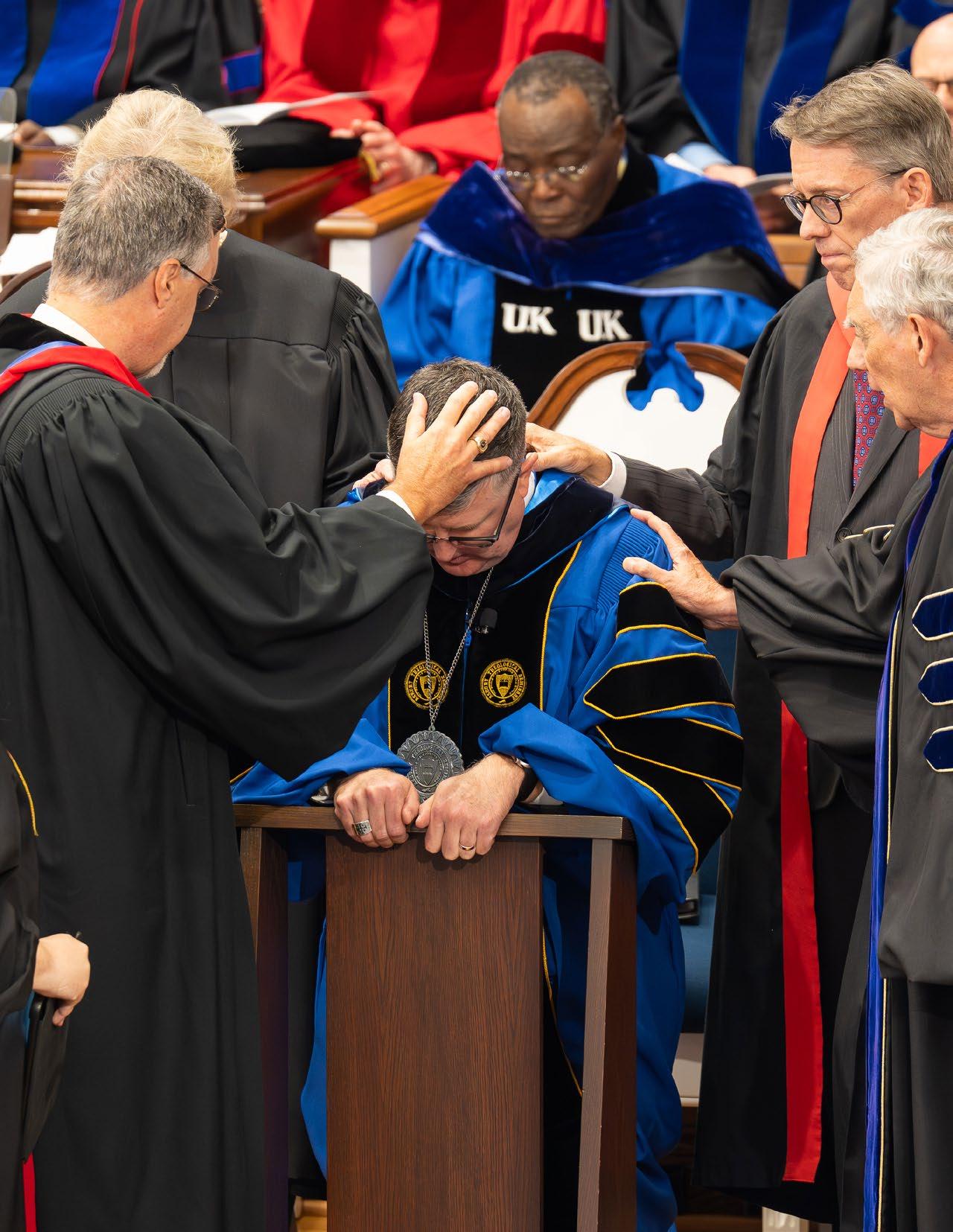
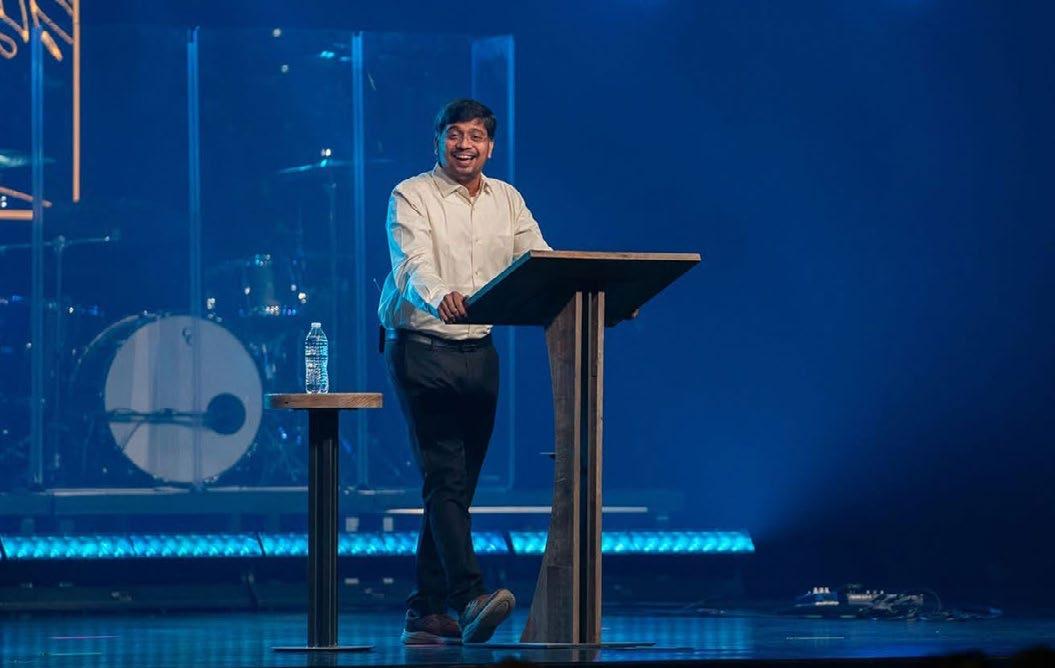
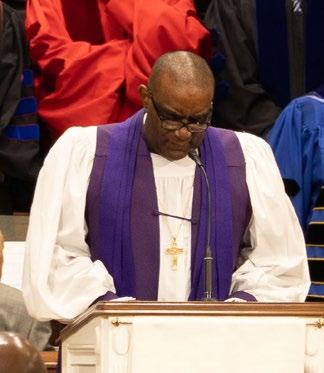
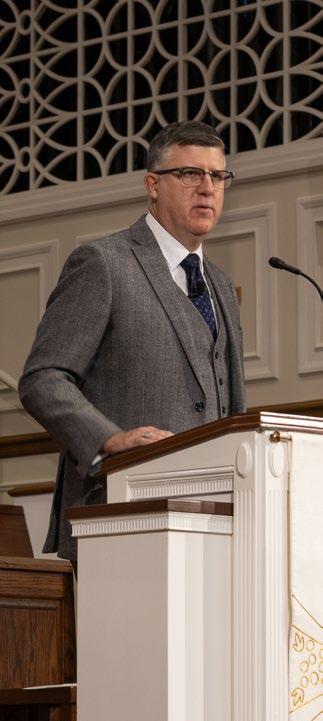
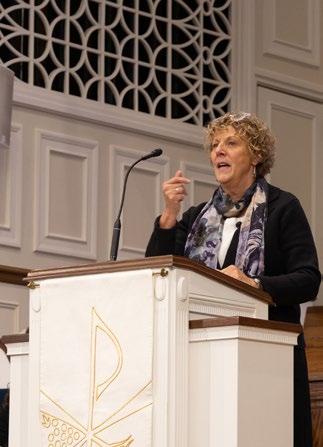
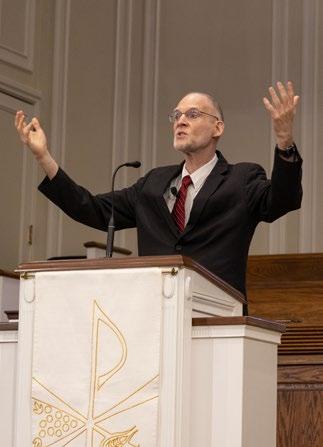
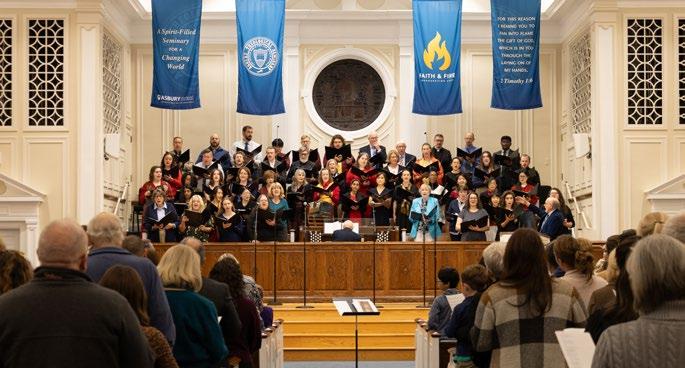
From November 1, 2025, to November 4, 2025, Asbury Theological Seminary celebrated the inauguration of Dr. David F. Watson as the Seminary’s ninth president. The Presidential Inaugurational Committee prayerfully planned an installation service and a four-day program of events commemorating the inauguration, all centered around the theme Faith and Fire: A Spirit-filled Seminary for a Changing World.
Installation Service
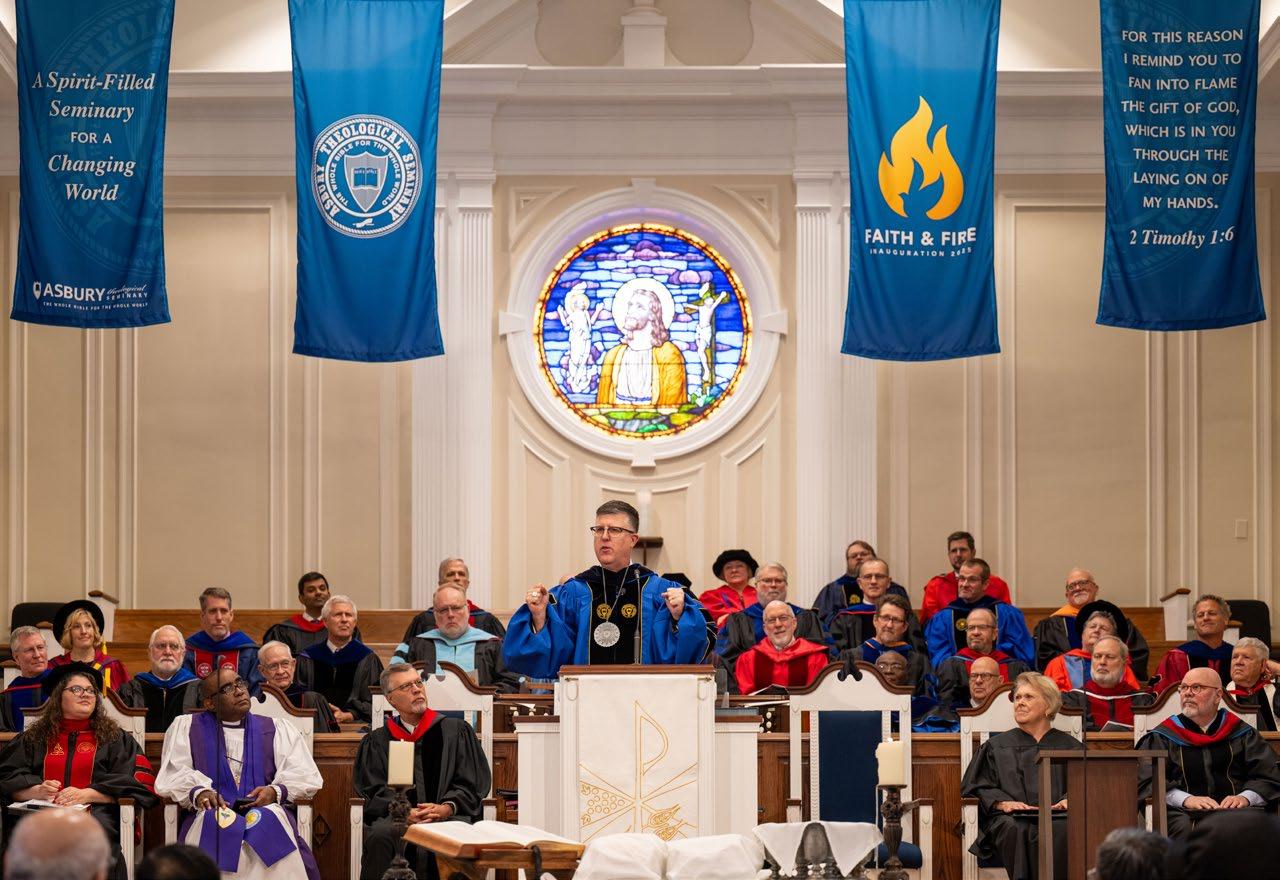
The installation service for Dr. Watson took place at 1:30 p.m. on Saturday, November 1, in Estes Chapel. Numerous supporters and friends of Asbury Seminary attended the ceremony, including members of the Board of Trustees, distinguished delegates from other institutions, faculty, students, staff, alumni, and local community members. The faculty of Asbury Seminary filed in procession and sat on the platform in support
of Dr. Watson. The service included worship led by the Seminary Singers, a litany of mission and legacy, readings from the Bible, and a charge to the new president delivered by Bishop Mark J. Webb of the Global Methodist Church. Mrs. Helen Rhea Stumbo, the Interim Chair of the Board of Trustees, bestowed upon Dr. Watson three symbols that represent the Office of the President at Asbury Seminary:
H.C. Morrison’s New Testament Bible and personal pocket watch, as well as the presidential medallion. In his address, Dr. Watson reaffirmed and elaborated on the Seminary’s mission to prepare men and women who are theologically educated, sanctified, and Spirit-filled. Bishop John Mark Richardson of the Church of God in Christ brought the service to a close with a heartfelt benediction.
Faith and Fire Lecture Series
A three-day lecture series took place from Sunday, November 2, to Tuesday, November 4, elaborating on the theme of the inauguration. Dr. Watson opened the series on Sunday with his message, “The Light and Heat of a Living God.” On Monday, Dr. Cheryl Bridges Johns, Distinguished Professor of Pentecostal Studies at United Theological Seminary, presented her lecture entitled “The Paideia of the Spirit: The Enchantment of Wesleyan Theological Education.” Dr. Craig S. Keener, F. M. and Ada Thompson Professor of Biblical Studies at Asbury Seminary, concluded the series with his message, “Evangelism in the Book of Acts.”
Visit asbury.to/inauguration2025 to learn more and watch full videos of the inauguration events.
A Night of Music and Hymn Singing
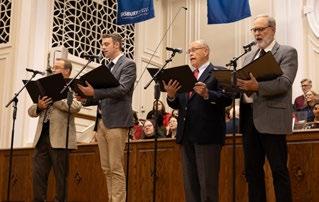
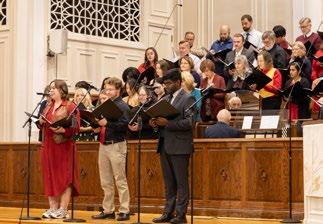
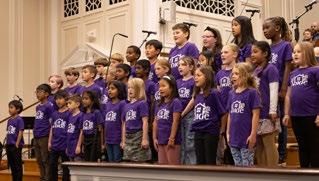
A special Night of Music and Hymn Singing was held on the evening of Monday, November 3. The service featured hymns and worship songs spanning multiple centuries at the direction of Rev. Danny Key. Performances were given by the Seminary Singers, the Kalas Village Kids Choir, and various ensembles. A unique Medley of Hymns was performed by Dr. Albin C. Whitworth, Distinguished Organist in Residence, who also provided musical accompaniment alongside several other instrumentalists.
ALUMNI HIGHLIGHT
DAVE JANVIER
Therapist, Janvier Counseling & Associates, LLC. Founder, SIIMDA Soul Care.
D.Min., Asbury Theological Seminary, 2023.
Dave Janvier, a licensed professional counselor who has worked and researched at the intersection of psychology and spirituality, has found awareness of God’s presence to be crucial throughout his life. “Looking back, I always had a sense of God’s presence,” he says.
However, before he developed an interest in his current field, Dave wasn’t even seriously considering college. A pastor of his Methodist church, who had graduated from Asbury College (now University), and his family took Dave under their wing. “They kept mentoring me… and I think the calling and the sense of God in my life continued to build through that process,” Dave says. “And so I did end up at Asbury College.”
Dave began college as a business major, thinking that God was calling him into the world of finance. Tragically, Dave’s father passed away suddenly during his last year at Asbury College. He moved back home to Wilmington, Delaware, with his family. “That sort
of disrupted my sense of God and call because it seemed like my whole world was turned upside down,” Dave says.
However, from the experience of his dad’s passing, Dave started to wonder how people handle suffering and how one could create spaces for people to heal. He met his wife on a Christian college and career retreat in Rehoboth Beach, Delaware, and got married in 1997. Shortly after, he began working jobs in the business sector. “I totally hated them, and it led to this big period of depression,” Dave says. He began to think that a business career was not for him.
Around that time, he and his wife took a lay counseling program through their church and began counseling people. As opposed to the business jobs, Dave found the counseling nourishing to his soul and stirring passion within him. Additionally, considering his own suffering and trauma from his father’s passing, Dave began to perceive a need within the church that he could help meet. “What is this way that we as a church can be equipped
to really hold space for suffering?” Dave says. “I think at many times in the church, we have a challenge with developing a good, healthy theology of suffering.”
Dave returned to school to study counseling. After getting his degree, Dave jumped into the field. However, the state of Pennsylvania, where he now lived, required him to have a few more course credits before awarding him licensure. Providentially, he discovered a sex therapy certification at the graduate level through the Institute for Sexual Wholeness. “When I was doing the lay counseling program, I saw a lot of issues around sexuality, such as sexual abuse, compulsive sexual behavior, sex addiction, betrayal, trauma, infidelity,” Dave says. “At the time, I didn't feel equipped on how to address those issues.”
The additional certification allowed him to gain the hours needed for Pennsylvania licensure while opening the door to meet a growing mental health and spiritual need in the church. “The need has exploded exponentially with
kids becoming exposed younger and younger to pornographic images on the internet…” Dave says. “Then we see in the news, within a lot of Christian churches, fallen pastors who have gotten caught up in sexual issues.”
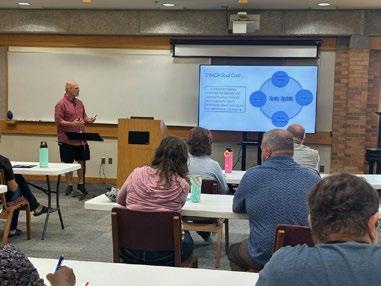
Dave worked for many years as a practicing counselor before he saw an advertisement for the Doctor of Ministry (D.Min.) in Spiritual Direction program at Asbury Seminary. Initially, he wasn’t sure if he was called to do a doctorate, but he eventually called the Seminary to inquire about the program. Before he knew it, Dave was accepted a week before classes began. After 20 years of clinical work and professional research integrating theology and spirituality, the D.Min. program helped Dave put his work into a model and framework. “That was really, really helpful for me to do,” Dave says. “A lot of what I was trying to do is to convey if we're spiritually whole, then we're going to be sexually whole.”
Dave’s research thesis focused on men with sexual issues and their spiri-
The church is called to be the healing presence of god in the world, but what i find is that the workers are few.
tuality. He found a connection between men with sexual issues and a lack of a felt sense of God, as opposed to a mere cognitive sense of God. “Sex addiction is often called an intimacy disorder. ‘I don't know how to do intimacy with people,’ but also that gets projected onto God,” Dave says. “So I invited the guys to do a 12-week intervention. Each week, I presented a topic around sexuality, addiction, and spiritual formation, and also led them through an experience—a spiritual practice that allowed them to have a felt sense to be known by God.”
Dave’s research discovered that the frequency with which the men acted out on their sexual issues decreased substantially as a result of the intervention process. This combination of psychology, neuroscience, theology, and spirituality developed from his D.Min. dissertation led to Dave creating SIIMDA Soul Care, a trauma-informed therapeutic and pastoral healing modality. Dave offers training for individuals to become certified SIIMDA Soul Care ministers to equip
them to bring healing to their churches and communities. He has been asked to speak to groups of pastors and church leaders and is also developing a curriculum to enable them to create spaces for sexual healing and wholeness.
Equipping pastors and Christian leaders marks the next stage of Dave’s vocation. “The church is called to be the healing presence of God in the world, but what I find is that the workers are few,” Dave says. “And so my passion is to be able to equip others to do this kind of work.”
How the One Big Beautiful Bill Affects Your Giving
What Asbury Seminary supporters need to know for 2026 and beyond
In late 2025, Congress passed the One Big Beautiful Bill (OBBB), a far-reaching package of tax-law updates that introduces new opportunities and considerations for charitable giving. Many of these changes take effect in 2026, and while every donor’s situation is unique, several updates may shape how you plan your generosity in the years ahead.
At Asbury Theological Seminary, your giving strengthens a mission that forms women and men to spread scriptural holiness throughout the world. This guide summarizes key changes most relevant to charitable households.
Please consult your own tax or financial advisors to determine how these provisions apply to you.
Key Tax-Law Changes Coming in 2026
1. A New “Giving Floor” for Itemized Deductions
To claim a charitable deduction, your total giving must now exceed 0.5% of your Adjusted Gross Income (AGI).
• Example: With a $200,000 AGI, the first $1,000 of giving is not deductible. Gifts above that amount may be deducted.
2. A 35% Cap on Deduction Value
Beginning in 2026, itemized deductions—including charitable gifts—are limited to a 35% federal income-tax benefit.
For most households, this is only a modest shift.
3. Standard Deduction Amounts Remain Stable
• $15,750 for individuals
• $31,500 for married couples
Additional deductions continue for those over age 65.
4. A New Benefit for Non-Itemizers
Even if you do not itemize, you may now deduct:
• Up to $1,000 in charitable gifts (individuals)
• Up to $2,000 (married couples filing jointly
This does not apply to new gifts to donor-advised funds.
5. Increased State and Local Tax (SALT) Deduction
The SALT deduction expands from $10,000 to $40,000, allowing more households to itemize. Phaseouts begin at $500,000 of income.
6. Higher Estate and Gift Tax Exclusions
The federal estate tax exemption rises to:
• $15 million per person
• $30 million for married couples
Fewer than 1% of U.S. estates will owe federal estate tax under these thresholds.
7. Annual Gift Tax Exclusion
As of 2025, the annual exclusion has risen to $19,000 per recipient, allowing substantial tax-free transfers to children, grandchildren, and loved ones without using your lifetime exemption.
Strategic Opportunities for Charitable Households
1. Give Appreciated Assets
Gifts of long-term appreciated property (stocks, securities, real estate, art, and more) may:
• Avoid capital-gains tax
• Provide a fair-market-value deduction
Even non-itemizers can benefit when giving pre-tax assets rather than cash.
2. Cash Gifts
Cash contributions remain deductible up to 60% of your AGI, with a five-year carry-forward for unused deductions.
3. IRA Qualified Charitable Distributions (QCDs)
Donors age 70½ or older may direct up to $108,000 annually from a traditional IRA to qualified charities—tax-free.
QCDs:
• Count toward Required Minimum Distributions
• Do not increase taxable income
• Cannot be directed to donor-advised funds
4. Donor-Advised Funds
Gifts made from a donor-advised fund are not new charitable contributions, but they remain a meaningful way to support the Seminary. Contact your fund administrator to recommend a grant.
Your support equips students for ministry, strengthens theological scholarship, and fuels our mission of the Whole Bible for the Whole World for generations to come.
If you’d like to explore how these updates relate to your charitable goals, contact the Office of Advancement. We would be honored to help begin that conversation.
FROM THE ARCHIVES:
Pentecostal Herald, 1924
The Holy Spirit and His Work
by H. C. Morrison
The following are sections of an article written by Asbury Theological Seminary’s founding president, H.C. Morrison, in the February 13, 1924, edition of what was then called The Pentecostal Herald. Morrison describes his original founding vision for Asbury Seminary in a two-part response he wrote to a reader's letter inquiring about the new seminary. Asbury Seminary was in its first year, 102 years ago. This is perhaps the earliest description of the entire Seminary and the best one about its first year. The Seminary would have started in September 1923, so by February 1924, it was in what would today be the second semester.
We are fully convinced that one of the greatest needs of our times is a Theological Seminary thoroughly Arminian and strictly Wesleyan in its teachings. In all times, a God-called, Spirit-filled, evangelical ministry is one of the greatest needs of the people. There is greater need just now for the school we propose because there is so much teaching out of harmony with the Scriptures and the fundamental doctrines of Methodism in many of our theological schools. There is a large place and an increasing demand for the school we propose and the class of men who, by the help of God, we propose to send out to preach a pure gospel.
We shall not seek the approval or endorsement of any school, any group of ecclesiastics or anybody else who is friendly, or even akin to friendly, to the destructive criticism. We have unfurled our banner for a whole Bible for the whole world, and the Lord Jesus Christ of the Bible, Old Testament and New, mighty to save to the uttermost. We will make no apologies to, and no concessions to modern skeptics. There are millions on this continent who are hungry for the bread of life; they want
a ministry who believes the Bible and who preach the saving truths of the gospel. There is not the slightest probability of an oversupply of well-trained evangelistic ministers who long to, and know how to win souls to Christ.
With reference to the number of students studying theology. We now have, all told, some 200 students studying theology. Quite a number of these are women, a large percentage of them studying for the mission field. Many of them are young ministers of fine ability and promise of great usefulness. A number of these young men have conference appointments and a large percent are very successful in evangelistic service. We would be very grateful if pastors and committees interested in summer religious work would get in touch with these men, preachers and singers, for work during the vacation period. They are soul winners and know how to catch fish for our Lord. The remuneration they receive will help to defray their expenses while they prosecute their studies.
…but just now my heart is crying out to God for his people for the completion of the Theological Building, four good residences for our professors, and four or five thousand additional books for our Theological Library. With these additions to our plant, we will thank God, get our breath, and press forward for better and larger things in this great work, the central desire and object of which is the salvation of immortal souls. We must have a well-educated, consecrated, cleansed, Spirit-filled ministry with an evangelistic message, men on fire for the salvation of the lost. We ask for the prayers and the help of fifty thousand people who believe the Word of God, and believe in the Son of God, and believe that in his death on the cross, Jesus provided a free and full salvation for all men from all sin. Asking for your prayers, and the prayers of all the people who read these words, I am.
Faithfully your brother, H. C. Morrison.
TWO NEW PODCASTS FROM ASBURY
THEOLOGICAL
SEMINARY
It’s Elementary
A weekly podcast about exploring theological curiosity, where we talk to interesting people and explore topics that come through Asbury Theological Seminary. Hosted by Dr. David Watson and Dr. Jessica LaGrone.
WesWorld
A monthly podcast about all things Wesleyan and beyond. Hosted by Maggie Ulmer, Dr. Scott Kisker, and Dr. David Watson.
Subscribe & Stay Connected. asbury.to/podcasts
Faculty Publications
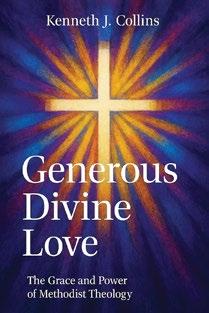
Generous Divine Love:
The Grace and Power of Methodist Theology
KEN COLLINS
Explore the heart of Wesleyan theology through an engaging and accessible narrative that speaks to both heart and mind. This book shares John Wesley’s teachings, where the themes of inclusion, love, and unity take center stage. The generous, even lavish, nature of John Wesley’s practical theology reveals the freedom and outgoing love of the divine Being, who calls forth people to overcome the divisions and tribalism of group life. This gracious call reveals the very universality of the gospel, and has the cumulative effect of praise arising, of a doxological celebration of a God of holy love who is the fount of it all.
Dimensiones de un adorador // Dimensions of a Worshiper
WILMER ESTRADA CARRASQUILLO
The Christian life is not passive, and we must be engaged and active in the work of our salvation. In this work, Dr. Estrada Carrasquillo points to Revelation 11:1 to illustrate how our worship is “measured”—not a quantitative measure but a qualitative measure. In other words, the quality of those who worship. Could this be the reason why Jesus tells the Samaritan woman that the Father is looking for worshippers who worship in spirit and in truth? Estrada Carrasquillo claims that these two qualities point to the worshipper's attitude and to the quality of the worship.
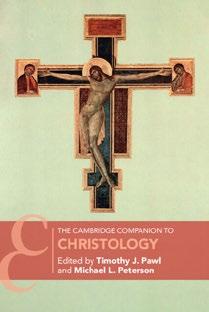
The Cambridge Companion to Christology (Cambridge Companions to Religion)
TIMOTHY J. PAWL (EDITOR), MICHAEL L. PETERSON (EDITOR)
The idea that God became incarnate as a human is a doctrine at the core of historic Christianity. Defined by the Great Councils and Creeds of the Christian church, the study of this doctrine, Christology, has been a focus of inquiry for two millennia. This Companion reflects the most recent paths of inquiry for understanding Christology. Covering Biblical and other sources, it explores the reception of Christology over the course of Christianity’s history, from the early patristic ages to postmodernity, as well as Jewish and Islamic treatments of the Christological claims. Designed for use by students and experts, The Cambridge Companion to Christology also points to the new and dynamic directions in scholarship on this topic.
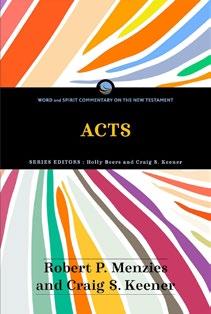
Acts (The Word and Spirit Commentary on the New Testament)
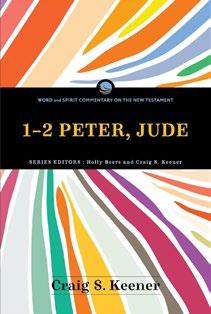
1-2 Peter, Jude (The Word and Spirit Commentary on the New Testament)
CRAIG KEENER
The Word and Spirit Commentary on the New Testament series emphasizes how we listen alongside ancient audiences for the Spirit’s voice in our time and contexts. These commentaries explore how God works in the biblical texts and how Christians can expect God to work today, even if in new or culturally surprising ways.
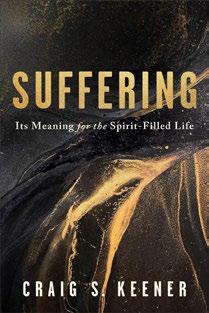
Suffering: Its Meaning for the Spirit-Filled Life
CRAIG KEENER
Suffering is an undeniable aspect of life. In this book, Dr. Craig Keener delves into the perennial question of hardship, offering a biblical understanding of suffering and resilience. Balancing insightful exposition of Scripture with compelling stories of Christians worldwide who have faced trials for their faith, Keener reveals how believers can endure by the power of the Holy Spirit.
Acknowledging the reality of suffering, Keener provides guidance on how to respond to life’s challenges and learn from the experiences of others. Rooted in a charismatic perspective yet broadly applicable, this work offers hope and meaning in the midst of suffering, reminding us of our ultimate hope in the new creation.
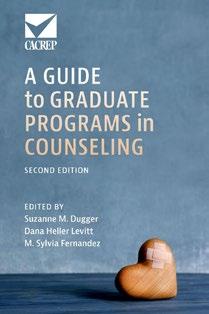
A Guide to Graduate Programs in Counseling, 2nd Edition
JACQUELINE SMITH (SECTION ONE, CHAPTER TWO)
Written for those considering a graduate degree in Counseling, this guide provides a comprehensive overview of the counseling profession that distinguishes it from other mental health services and equips the reader with essential tips and practical tools for selecting a graduate program, navigating the admissions process, succeeding as a graduate student, and launching a career in Counseling.
Dr. Jacqueline Smith co-authored the second chapter with Dr. Suzanne M. Dugger, titled “About the Mental Health Professions,” which details the different kinds of mental health professions and shows where counseling fits in this wider context.
News & Events
The Paul S. and Jean R. Amos Family Foundation Awards $15 Million Gift to Launch New Ph.D. in Theology Program and Endowed Chair
A transformative $15 million gift from the Paul S. and Jean R. Amos Family Foundation will establish Asbury Seminary’s Ph.D. in Theology with a focus on Wesley Studies and fund an Endowed Chair in Wesleyan Theology. The program will prepare global scholars rooted in Scripture and the Wesleyan tradition. President Dr. David F. Watson expressed deep gratitude for the family’s vision, which continues a legacy that began with their support of Asbury Seminary’s Ph.D. in Biblical Studies nearly two decades ago. Recruitment for the inaugural cohort will begin in 2026, with the program launching in fall 2027.
Asbury Theological Seminary Board of Trustees Elects New Chair and Officers, Celebrates the Retirement of Dale Ditto
At its November 2025 meeting, coinciding with President David F. Watson’s inauguration, Asbury Seminary’s Board of Trustees celebrated significant transitions. The board honored Mr. Dale S. Ditto for 15 years of dedicated service, during which he founded the Tom & Fran Ditto Scripture Memorization Scholarship, among other accomplishments. Dr. E. Dale Locke (M.Div., D.Min. ’00) was elected incoming Chair, and Interim Chair Mrs. Helen Rhea Stumbo initiated the “Passing of the Gavel” to Locke, symbolizing the leadership transition. Locke expressed gratitude for those who served before and a renewed commitment to stewarding the Seminary’s mission. In addition, Stumbo was elected as Vice Chair, Rev. Anna Jackson was elected as Secretary for her second term, and Mr. Greg Spillyards was elected as Treasurer.
Dr. David J. Gyertson Appointed Senior Fellow of the Association for Biblical Higher Education
Dr. David J. Gyertson, Affiliate Professor of Leadership Formation and Renewal, Distinguished Leader in Residence and former Interim President of Asbury Seminary, has been appointed a Senior Fellow of the Association for Biblical Higher Education (ABHE). This honor recognizes his decades of distinguished leadership in Christian higher education and enduring service to the ABHE community. As a Senior Fellow, Dr. Gyertson joins a select group of leaders shaping the future of biblical education globally. He will be formally recognized at the ABHE Annual Meeting in February 2026. Asbury Seminary celebrates this well-deserved recognition of a faithful servant whose wisdom and leadership continue to impact the Church and the academy.
Asbury Theological Seminary Welcomes Four New Board of Trustees Members
In September, Asbury Seminary was pleased to welcome Rodney B. Adams, Robin Lim (M.Div.‘23), and Lyndol L. Loyd (M.Div., D.Min ‘00) as new members of the Board of Trustees. Each brings deep experience in ministry and leadership: Adams as Executive Director of Asbury Church in Tulsa, Lim as a professor and business leader with global banking expertise, and Loyd as Lead Pastor of LakeRidge Methodist Church. At the November 2025 meeting, the board unanimously elected alumnus Peter J. Marra (M.A. ’06) as a new trustee starting January 2026. Marra is the Chief Operating Officer at the Colson Center and has over 20 years of experience in organizational strategy and development.
Asbury Theological Seminary Welcomes
Dr. Scott Kisker as Associate Provost
Dr. Scott Kisker joined Asbury Seminary as Associate Provost on September 1, 2025, bringing more than a decade of leadership from United Theological Seminary, where he served as Associate Dean. A respected scholar of Wesleyan history and renewal movements, Dr. Kisker has authored several books on discipleship and community formation. Provost Dr. John Ragsdale praised Kisker’s pastoral heart and academic vision, noting that his leadership embodies Asbury Seminary’s commitment to both scholarship and spiritual vitality. Kisker also pastors McKendree Chapel Global Methodist Church in Ohio. He and his wife, Roberta, have five children. The Seminary warmly welcomes Dr. Kisker as he helps shape the next generation of Wesleyan leaders.
Asbury Theological Seminary Welcomes
Rev. Dr. Tesia Mallory as Dean of Chapel
Asbury Seminary joyfully welcomes Rev. Dr. Tesia Mallory as Dean of Chapel, succeeding Dr. Jessica LaGrone, who now serves as Executive Director of the Beeson Center. An ordained elder in the Global Methodist Church, Dr. Mallory brings rich experience in worship leadership and Wesleyan theology from United Theological Seminary. Colleagues praised her theological depth, pastoral warmth, and creativity in worship. President Dr. David F. Watson called her “one of the most important voices in the Wesleyan movement today.” Dr. Mallory is also a gifted musician and author of several worship resources. She and her husband, Jimmy, have two children.
Asbury Theological Seminary Beeson Center Restructuring and Strategic Realignment
In July, Asbury Seminary’s Executive Leadership Team announced a strategic realignment of the Beeson International Center for Preaching and Leading to enhance global ministry training and innovation. Dr. Jessica LaGrone has been appointed Executive Director, transitioning from her 11 years as Dean of Chapel. The new structure distinguishes between academic and non-academic programs, strengthening collaboration across the Seminary. Dr. LaGrone said she is “honored and energized” to lead this next season, while Provost John Ragsdale emphasized the Church’s need for Spirit-filled leaders who can preach and lead effectively. This restructuring affirms the Seminary’s mission to form transformational leaders for the Church’s future.
Asbury Theological Seminary Announces the Independent Launch of Seedbed
Seedbed, Inc., a publishing and discipleship ministry founded by Asbury Seminary in 2012, has been launched as a fully independent 501(c)(3) organization. The move marks a new chapter for both ministries, affirming their shared mission to “sow for a great awakening.” President Dr. David F. Watson celebrated the decision as a moment of mutual flourishing, while founder J.D. Walt expressed gratitude for Asbury Seminary’s stewardship and ongoing partnership. The Seminary’s Board of Trustees approved the launch unanimously, ensuring continued theological alignment through a Memorandum of Understanding. Like Asbury College (now University) once launched the Seminary, this release empowers Seedbed to carry its Spirit-filled mission into new seasons of Kingdom impact.
“My time at Asbury Seminary helped me to discover who I am in Christ. This prepared me to serve the Church faithfully and continually helps me overcome everyday challenges in ministry.”
Bishop Carolyn Moore
Asbury Seminary M.Div., 1998; Doctor of Ministry, 2018. Church planter, author, speaker, bishop in the GMC