
PURPOSE OF THE PROGRAM OF STUDIES
CREDIT REQUIREMENTS FOR GRADUATION
SERVICE LEARNING AND GRADUATION
REQUIRED COURSES
GLOBAL ADMISSIONS CONTEXT
SAMPLE FOUR YEAR PLAN
PLANNING PAGE
ASB SENIOR YEARS PROGRAM IN GRADES 11 AND 12
THE IB DIPLOMA PROGRAMME
IBO MISSION STATEMENT
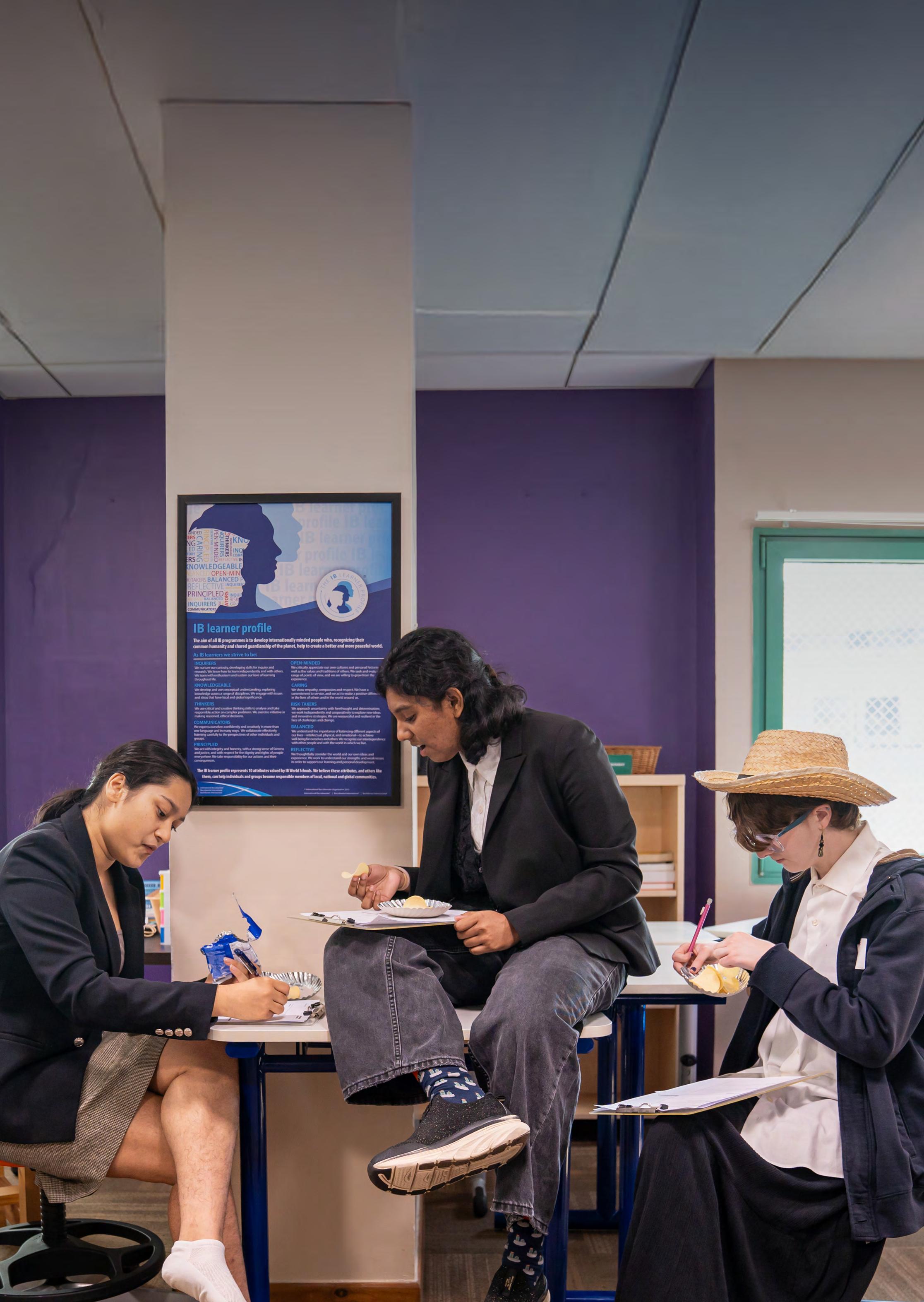
IB LEARNER PROFILE
IB COURSE OFFERINGS
THE DIPLOMA PROGRAM STRUCTURE
CHOOSING THE RIGHT COMBINATION
THE CORE OF THE IB
A CALENDAR OF EVENTS
THE REGISTRATION YEAR (GRADE 10)
GRADE 11
GRADE 12
ASB IB COURSE OFFERINGS
UNIVERSITY ENTRANCE
COURSE SELECTION
ONLINE LEARNING AT ASB
MASTER COURSE LIST
ENGLISH
WORLD LANGUAGES
SOCIAL SCIENCES
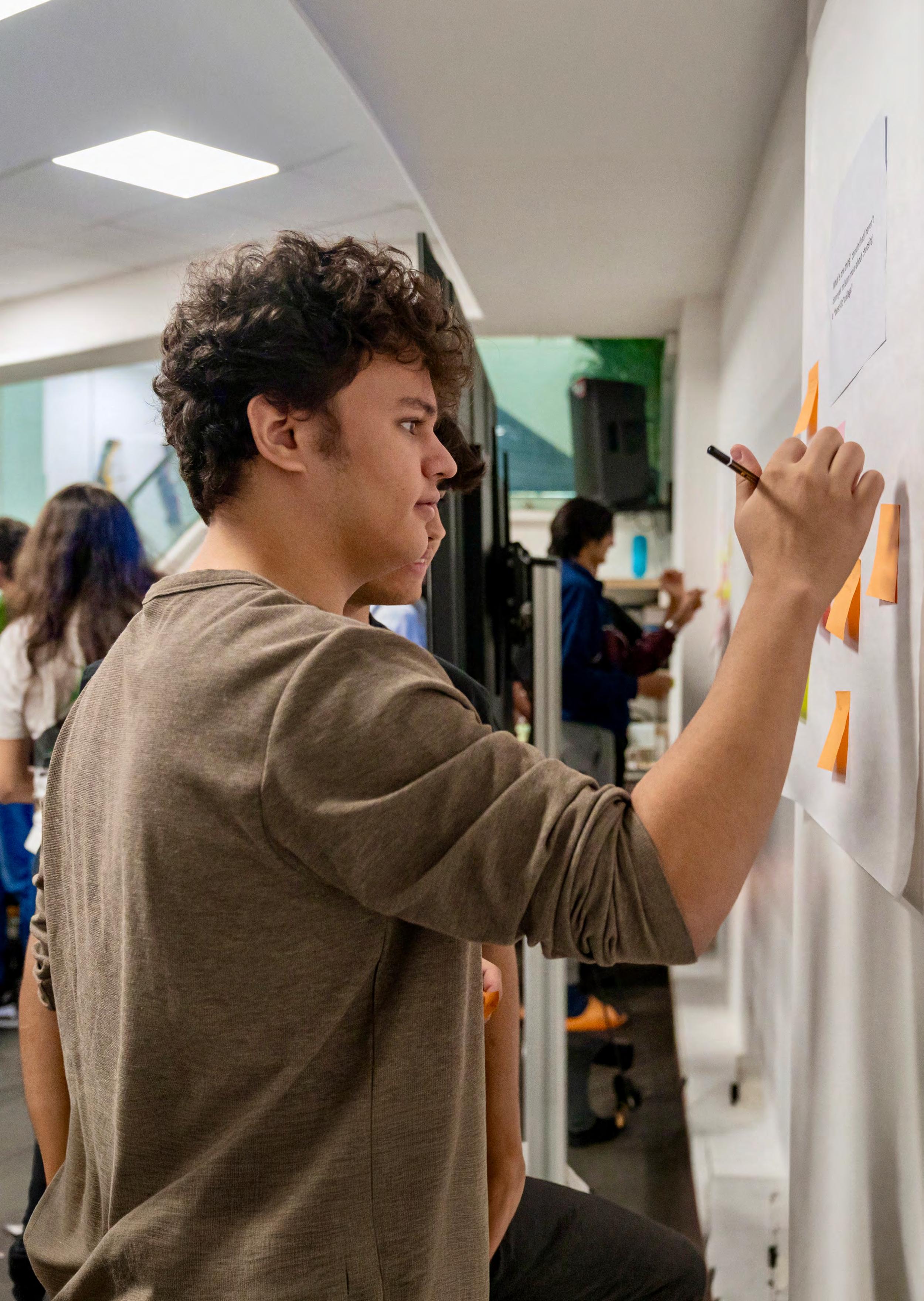
One of the most important decisions students make is the selection of courses for their academic program. Students must consider which courses best meet their abilities, interests, needs, and plans beyond high school. This booklet contains a wealth of information to support students in this process. Course descriptions are provided to familiarize students with the program offered at ASB, along with information to enable them to wisely plan an individualized program of studies that incorporates specific requirements necessary for graduation.
Students should use this booklet to develop their four-year academic plan. Before selecting a course, students should find out as much information about it as possible – its objectives, requirements, prerequisites, and credit value. Students should consider the following questions when choosing their courses:
• What courses are required in each grade?
• Are the courses I have chosen appropriate for my ability and interests?
• Will the courses I have chosen meet the prerequisites for college admissions?
• Have I taken advantage of the breadth of course offerings to explore future career paths?
Courses will be offered based on student interest and enrollment. If a course is canceled due to low enrollment, students and parents will be notified and an alternate course may be chosen.
Students in Grades 9 and 10 must enroll in eight courses each semester. Students in Grades 11 and 12 usually enroll in seven classes each semester.
One credit is given for the successful completion of a one-year course. Half credit is given for the successful completion of a semester course. Credit will be given only for courses taken while students are enrolled in the ninth through twelfth grade levels.
The High School’s Community and Social Responsibility (CSR) program is key to ASB’s mission and core values. It aims at creating sustainable and authentic service-based experiences for students in Grades 9 and 10. The program aims to increase awareness of social and environmental challenges within Mumbai, India, and globally. Students develop the agency, skills, and attitudes needed to create positive change through transformative citizenship and service.
CSR is primarily driven through student-led CSR clubs and individual projects. Three avenues are available to students –they can work as a club leader, volunteer their time to support a club, or, in some cases, engage in an individual CSR project independently.
Active participation in CSR activities is a graduation requirement.
The CAS program is designed to support students in Grades 11 and 12 to engage in various activities alongside their studies. The three strands of CAS, often interwoven with particular activities, are characterized as follows:
• Creativity – arts and other experiences involving creative thinking.
• Activity – physical exertion contributing to a healthy lifestyle.
• Service – an unpaid and voluntary exchange that has a learning benefit for the student.
In order to demonstrate these concepts, students are required to undertake a CAS project. The project challenges students to show initiative, demonstrate perseverance and develop skills such as collaboration, problem-solving, and decision-making.
Active participation in CAS activities is a graduation requirement for the IB Diploma as well as ASB.
English 9
World Languages or English as an Additional Language World History 9 Integrated Science 9
and Health
2 Elective credits English 10
World Languages or English as an Additional Language World History 10 Integrated Science 10 Mathematics
and Health
2 Elective credits
5 Additional Courses (which meet graduation requirements)
Theory of Knowledge and Core Seminar
5 Additional Courses (which meet graduation requirements)
Theory of Knowledge and Core Seminar
Colleges and universities around the world evaluate applicants using different admissions frameworks. While specific requirements vary by country and institution, strong academic performance in a rigorous, well-balanced secondary school program is a central consideration Students are encouraged to pursue coursework that:
• Demonstrates depth and progression in core academic areas
• Aligns with the expectations of their intended destinations and fields of study
• Prepares them for external examinations, national qualifications, or holistic review processes, depending on the country
Typical areas of academic preparation include:
• Language and Literature
• World Languages
• Individuals and Societies
• Social Sciences
• Sciences
• Mathematics
Credit recommendations or subject requirements are interpreted within the context of the school’s curriculum and graduation requirements, and counselors support students in selecting courses that meet the expectations of:
• U.S. universities (holistic review, emphasis on rigor and GPA)
• Canada and Australia (program-specific subject prerequisites)
• UK and Ireland (course alignment and predicted grades tied to intended major)
• Europe and other regions (national or institution-specific academic criteria)/ or we put what the requirements are for receiving an ASB diploma
The table below is designed as a tool to aid you in developing your four-year academic plan. Please reference the sample four-year plan, the course descriptions, and the grade level requirements to complete the table. This table will evolve as you progress throughout high school.
10
history 10 PE/Health 10
English (Group 1)
World Language (Group 2)
Social Studies (Group 3)
Science (Group 4)
Mathematics (Group 5)
Arts/Additional (Group 6)
Theory of Knowledge and Core Seminar (One credit)
Students may opt to take French or Spanish as a world language. Students will be placed in a language class based on experience, placement testing, and/or prerequisites taken at ASB. The world languages faculty will consult with individual students regarding their language placement, and students will require teacher permission for all levels above one or ab initio
Students will embark on an exciting journey into the world of science through the Next Generation Science Standards (NGSS) curriculum, which emphasizes critical thinking, problem-solving, and hands-on learning. Covering an engaging mix of topics from Biology, Chemistry, and Physics, this curriculum provides students with a well-rounded introduction to the fundamental principles of science.
Students will be placed in a mathematics class based on teacher recommendation. All students should consult with their current mathematics teacher to determine the most appropriate course. Movements will take place at the beginning of the semester with the teachers’ recommendations. If a student and parent choose not to follow the teachers’ advice, a conference will be held
with the counselor, teacher, and administration. Students and parents will be notified of the content and the speed at which the content will be delivered. A signed plan will be put in place; after this, all moves are considered final.
All students at ASB pursue an ASB High School Diploma. This curricular option will expose students to the most rigorous courses, providing outstanding preparation for college and university. In general, the coursework (curriculum and assessment) is consistent with an IBDP standard level subject, with the primary difference being that all assessments in an ASB High School Diploma class are marked internally. In contrast, IBDP classes involve substantial external marking. Upon successfully completing all ASB graduation requirements, students will receive an ASB High School Diploma accredited by the Middle States Association of Colleges and Secondary Schools (MSA) and recognized by universities worldwide.
Students may, in addition to the ASB High School Diploma, elect to take the IB Diploma. This is the most challenging course of study and a prerequisite for university entry in certain countries. Students do not need to have always done outstanding work to consider beginning the IB Diploma, but they must be willing to work hard and organize their time effectively. Students should speak to their teachers and the IBDP Coordinator if they have any questions about the appropriateness of the program for them.
Students may elect to study a number of individual IBDP subjects at the higher or standard level as IBDP course candidates. IBDP course candidates take all the external assessments in those subjects and are awarded certificates by the IB. However, an IBDP course candidate is not required to take the balance of subjects necessary for the full IB Diploma. They may elect to submit their Theory of Knowledge, Extended Essay, and CAS for external assessment and recognition, but this is not a requirement. Good IBDP course grades may be used for college credit in many US-based universities.

The International Baccalaureate (IB) Diploma Programme is a rigorous pre-university course of study designed for students between the ages of 16 and 19. It is a broad-based, two-year course that encourages students to be knowledgeable and inquiring but also caring and compassionate. There is a strong emphasis on motivating students to develop intercultural understanding and critical thinking. Ultimately, the IB Diploma Programme leads to a qualification that is widely recognized and respected by the world’s leading universities.
The International Baccalaureate Organization aims to develop inquiring, knowledgeable, and caring young people who help to create a better and more peaceful world through intercultural understanding and respect. To this end, the IBO works with schools, governments, and international organizations to develop challenging programs of international education and rigorous assessment. These programs encourage students across the world to become active, compassionate, and lifelong learners who understand that other people, with their differences, can also be right.
All IB programs aim to develop internationally minded people who, by recognizing their common humanity and shared guardianship of the planet, help to create a better and more peaceful world.
As IB learners, we strive to be:
Inquirers We nurture our curiosity, developing skills for inquiry and research. We know how to learn independently and with others. We learn with enthusiasm and sustain our love of learning throughout life.
Knowledgeable We develop and use conceptual understanding, exploring knowledge across a range of disciplines. We engage with issues and ideas that have local and global significance.
Thinkers We use critical thinking skills to analyze and take responsible action on complex problems. We exercise initiative in making reasoned, ethical decisions.
Communicators We express ourselves confidently and creatively in more than one language and in many ways. We collaborate effectively, listening carefully to the perspectives of other individuals and groups.
Principled We act with integrity and honesty, with a strong sense of fairness and justice and respect for the dignity and rights of people everywhere. We take responsibility for our actions and their consequences.
Open-minded We critically appreciate our own cultures and personal histories, as well as the values and traditions of others. We seek and evaluate a range of points of view, and we are willing to grow from the experience.
Caring We show empathy, compassion and respect. We have a commitment to service, and we act to make a positive difference in the lives of others and in the world around us.
Risk-takers We approach uncertainty with forethought and determination; we work independently and cooperatively to explore new ideas and innovative strategies. We are resourceful and resilient in the face of challenges and change.
Balanced We understand the importance of balancing different aspects of our lives – intellectual, physical, and emotional – to achieve well-being for ourselves and others. We recognize our interdependence with other people and with the world in which we live.
Reflective We thoughtfully consider the world and our own ideas and experience. We work to understand our strengths and weaknesses in order to support our learning and personal development.
GROUP 1 - STUDIES IN LANGUAGE AND LITERATURE
• English A: language and literature SL or HL
• Self-taught Language A: literature SL
GROUP 2 - LANGUAGE ACQUISITION
• French ab initio SL
• French B SL or HL
• Spanish ab initio SL
• Spanish B SL or HL
GROUP 3 - INDIVIDUALS AND SOCIETIES
• Business Management SL or HL
• Economics SL or HL
• Global Politics SL or HL
• History SL or HL
• Psychology SL or HL
GROUP 4 - SCIENCES
• Biology SL or HL
• Chemistry SL or HL
• Computer Science SL or HL
• Physics SL or HL
GROUP 5 - MATHEMATICS
• Mathematics: analysis and approaches SL or HL
• Mathematics: applications and interpretation SL
GROUP 6 - THE ARTS
• Music SL or HL
• Theatre SL or HL
• Visual Arts SL or HL
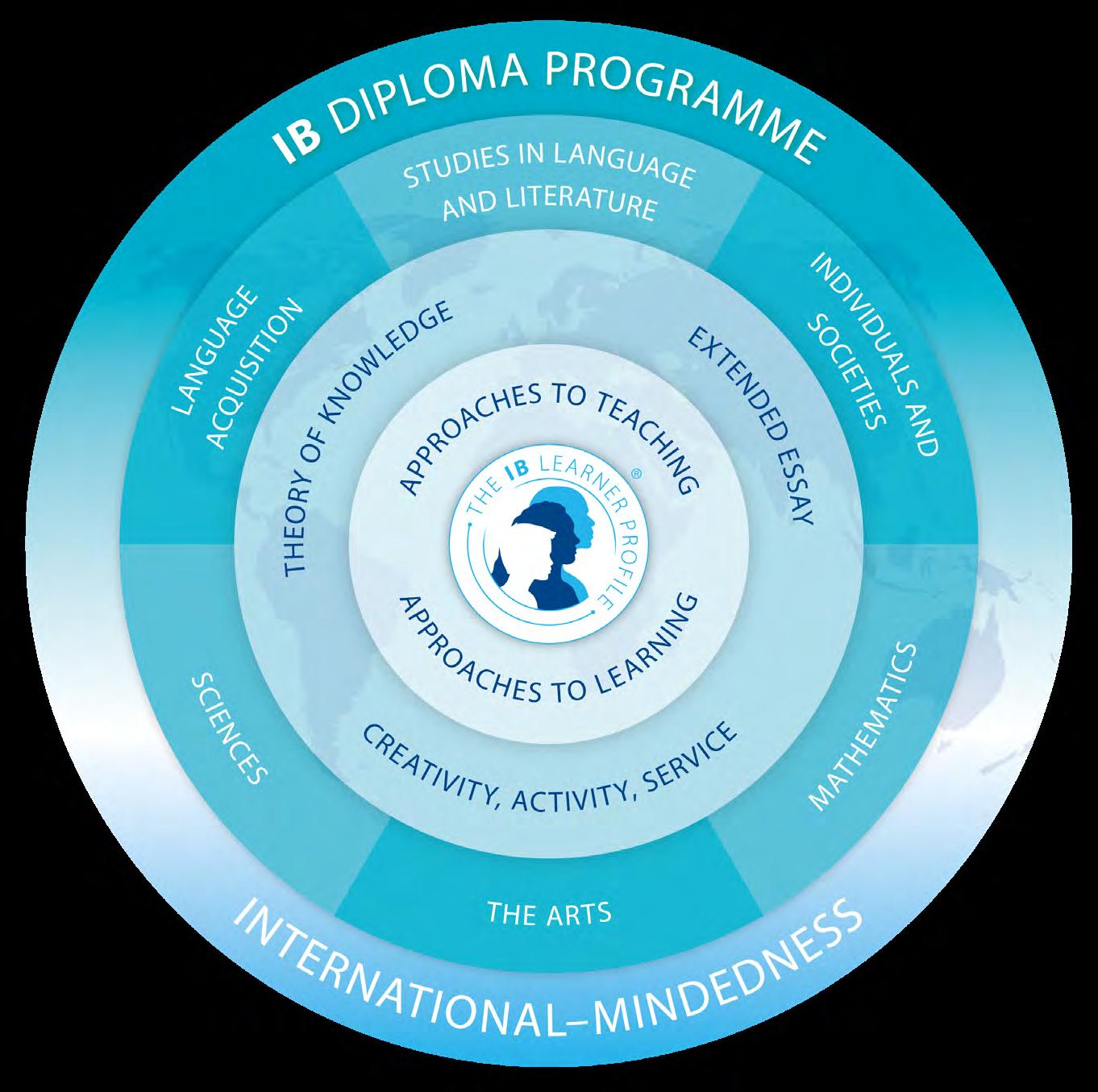
The programme is presented as six academic areas enclosing a central core. It encourages the concurrent study of a broad range of academic areas. Students study: Language and Literature; a foreign language; a humanities or social science subject; an experimental science; mathematics and/or one of the arts. This comprehensive range of subjects makes the Diploma Programme a demanding course of study designed to prepare students effectively for university entrance. In each academic area, students have flexibility in making their choices, which means they can choose subjects that particularly interest them and may wish to study further at university.
Students must choose one subject from each of the six academic areas, although they can choose a second subject from groups 1 to 4 instead of an arts subject. Typically, three subjects (and not more than four) are taken at higher level (HL), and the others are taken at standard level (SL). Subjects at HL are studied in greater depth and breadth than at SL. At both levels, many skills are developed, especially critical thinking and analysis. At the end of the course, students’ achievements are measured using external assessment with some element of coursework assessed by their teachers.
All IB Diploma Programme candidates participate in the three re quirements that make up the programme’s core.
The Theory of Knowledge (TOK) course encourages students to think about the nature of knowledge, to reflect on the learning process in all the subjects they study as part of their Diploma Programme and to make connections across the academic areas.
The Extended Essay is an in-depth study of a focused topic. It allows students to engage in personal research on a topic of the ir choice. It is intended to promote high-level research and writing skills, intellectual discovery, and creativity.
Creativity, Activity, Service (CAS) involves students in experiential learning through various artistic, sporting, physical, and service activities.
In the spring of each year, the IBDP Coordinator provides Grade 10 parents and potential IB Diploma students with IB Diploma Programme information. After discussing the program with their parents, 10th-grade teachers, and IBDP teachers, interested students should determine which courses might be appropriate for them to pursue.
All families are invited to a 1:1 meeting with their Counselor to facilitate their program plans. Placement in certain courses depends on a student’s interest, demonstrated skill, previous experience and teacher recommendations. The IB Diploma Programme at ASB is NOT an elite or selective program. However, students are expected to organize their time effectively and be willing to work hard.
At the time of registration, proficiency levels in Math and World Languages are evaluated for those students interested in the IB Diploma. The Principal, IBDP Coordinator, and Counselor provide advice regarding the suitability of the IB Diploma.
To design a course of study, students should consult the course listings in this handbook. Students’ perceptions of their strengths and interests play a significant role in the selection process.
However, students should take into consideration future study and career plans. Certain selections or omissions from the program may limit study choices in some university systems. Therefore, before planning an IBDP course of study, it is recommended to become familiar with the requirements and expectations of the universities in the country or countries where the student plans to apply.
In making these decisions, students must carefully balance interests and competencies with university entrance requirements or expectations. Teachers in all departments can counsel students on the expectations of HL and SL courses.
GRADE 11
Students begin their IBDP classes in Grade 11, which includes core elements of the program. All students must meet with the CAS Coordinator periodically throughout the year to discuss their CAS program and progress. Students will also be responsible for arranging to meet with their Extended Essay supervisor periodically and adhere to a self-created study plan for the Extende d Essay.
In selecting courses of study, students are encouraged to pursue classes in which they demonstrate passion and/or confidence, with careful attention to post-ASB course of study requirements. As a two-year continuous program, students must be prepared for long-term commitments. Occasionally, students discover that course content and/or demands are not as anticipated and ASB seeks to offer students an adequate period to make any adjustments required. Students have until the first week of September in Grade 11 (four weeks of class exposure) to make any changes to their schedules. After this date, course changes will only be granted in exceptional circumstances.
Students who transfer to ASB may complete their IB Diploma Programme with us provided the courses necessary to complete the program are offered. At times, adjustments to individual programs may be possible. A student planning to transfer to ASB should have the IBDP Coordinator at their present school contact the IBDP Coordinator at ASB as early as possible. Similar arrangements should be made for ASB students who are transferring to another IB World School. While such transfers are possible, there are sometimes challenges in matching the first and second years of the IB Diploma Programme. Though schools will seek to accommodate transfers as much as possible, there may be occasions where such transfers prove difficult or impossible.
Students will complete their IB Diploma Programme in May of the academic year with the external examinations. However, preparation for these exams by no means constitutes the total workload of diploma candidates. The diploma year is a very busy time with oral examinations, internal assessments, TOK essays, Extended Essays, CAS requirements, and university applications. It is essential that students carefully manage their time and avoid taking on too many additional commitments.
There are two periods of practice examinations. These practice examinations are scheduled to provide students familiarity with the exam format and to provide both the teacher and the student with an assessment of the student’s strengths and weaknesses. It is vital students are not absent from school at these times, as there is no opportunity for rescheduling.
IBDP courses in the examination year conclude with the written examination period in May. IB Diploma and Cource candidates are not required to attend class once the IBDP examinations begin. However, teachers are available for consultation throughout the exam period.
Students can access their IBDP grades after the first week of July. Official IBDP transcripts (including legalized copies when required) can be sent directly to universities upon request via the IBDP Coordinator. Transcripts include enrollment level, the grade awarded, the total point score, and completion of the core requirements. IBDP Diplomas and Certificates are sent to ASB in early September and are available for pick-up at this time.
The IBDP uses a 1 – 7 scoring system. Students sitting six examinations can score 42 points plus 3 additional points (through a combination of performance in TOK and on the Extended Essay), making a total of 45 possible diploma points. A total of 24 points usually constitutes the minimum passing condition. However, students must also attain 12 points in their higher level subjects, and 9 points from their standard-level subjects, while successfully completing all three core elements.
The IBDP curriculum consists of six subject groups. Every IB Diploma candidate must take one course from each group
except for the Arts. The sixth subject can be from the Arts or another group (except Mathematics). The following ASB offerings can be used as a reference. All students should consult teachers, the Counselor, and the IBDP Coordinator before making any final choices.
It is important to note that while we do our best to meet the unique needs of every student, we cannot guarantee that every course below can be offered each year. If only a small number of students request a course, it may not be possible. In these cases, counselors will work with families to support their plans.
Course choices, and even decisions regarding the enrollment level of a course (higher or standard level), can determine where and in what subject areas students will be able to pursue in higher education.
It is essential that students and parents carefully review university entrance requirements before selecting the subjects studied within the IBDP program, IB certificate pathway, or the American high school diploma at ASB. Starting early is advisable, especially if specific subjects are required for entry into particular university courses. Both the High School Counselor and the IBDP Coordinator are available to assist with current information on various national university requirements, admissions procedures, and other pertinent materials. They can also help in developing a plan that includes appropriate IBDP subject options or selecting courses within the American high school diploma program to meet university admission criteria. Additionally, the IBO website, www.ibo.org , offers information on the IBDP program and the “university admission” section provides details on the global recognition of the IBDP.
University systems in different parts of the world may have very specific entry requirements, varying from country to country. The following general guidelines are a starting point, but requirements for specific programs can change. Therefore, students must conduct their own research to ensure their IBDP course selections meet their needs. For further assistance, see the secondary counselor.
Please remember that teacher feedback and the student’s grades are the best indicators of a student’s ability level in each subject. They should be the guiding principles when deciding what IBDP subjects to select.
Architecture – usually, no subjects are specified, but occasionally, Mathematics and/or Physics at HL are required. Art or design-based subjects are not always required but may be useful. Some universities will require a portfolio.
Art and Design – art-based subjects generally require Visual Art at HL and/or a portfolio of work.
Economics, Business, or Commerce – it is usually not necessary to take Economics to take these subjects at university.
Engineering – at the most selective universities in the UK and US, Mathematics and Physics at HL are either essential or highly desirable. At most universities in Canada, and the US, Mathematics at SL is acceptable as the minimum entry requirement. Chemistry may also be a requirement. For Chemical Engineering in the UK, Mathematics and Chemistry at HL are essential or highly desirable; Physics may also be required. Australia will generally require Chemistry or Physics as well as Mathematics SL or HL.
Law – no specific subjects are specified, but Language A English may be required.
Medicine – in Australia and the UK, Chemistry at HL plus either Biology or Physics at HL are required (taking Biology is strongly recommended). Some universities will require Mathematics as the 3rd HL subject, but many will accept a nonscience-based academic subject at HL.
Psychology – some courses may require an HL science subject and/or Mathematics SL. It is not usually necessary to take IBDP Psychology to study it at university.
Science – some courses may require more than one HL science subject and/or Mathematics SL.
Applicants to Canada and The Netherlands should note that Mathematics SL may be required for many courses, including the sciences and business/commerce. Students are advised to check with universities about their courses.
Generally, US colleges and universities are less concerned about which subjects you take for the IBDP and pay more attention to how well you do throughout the diploma program. Key exceptions are when applying to highly competitive universities or to study engineering or business. The “top” universities in the US look for students taking the “most rigorous” curriculum. Some Engineering departments will expect you to have taken HL Mathematics and HL Physics or Chemistry. The
most selective business schools also require very strong quantitative skills, so pay close attention to which math course you took and what grades you achieved.
US applicants should note that the list of subjects indicated as ‘Recommended High School Preparation’ in some college guides/ websites is intended only for students following a standard US high school curriculum and does not apply to IBDP students. Students intending to study at Dutch, German, Italian, French, Swiss, or Chinese universities must consult their counselor when selecting IBDP subjects because these countries have special requirements.
The American School of Bombay provides students with a fully accredited educational experience that meets and exceeds the educational standards of the Middle States Association of Colleges and Schools of the United States and the International Baccalaureate Organization. The American School of Bombay offers a series of core curriculum classes that, when planned accordingly by the student, will result in an ASB High School Diploma. ASB also offers accredited IBDP courses to students that, in addition to the ASB High School Diploma, may result in an IB Diploma or IB Certificates. Students at ASB receive instruction from highly qualified teachers in courses consistent with the requirements for college entrance at universities worldwide. However, to meet individual student needs and provide flexibility for students to meet their academic and personal goals, students may pursue other interests. In these instances, a student may choose to take an online course. The American School of Bombay has identified providers and a range of courses with appropriate rigor to satisfy diverse learners’ passions and interests. Students in Grades 10 to 12 may opt to take up to one elective credit each year of high school through these providers. For students to be eligible to enroll in an online course, they need to demonstrate a history of strong ATLs. Students who need frequent monitoring from the online coordinator will require a conference with the Counselor and Administration before taking another online course will be allowed.
The American School of Bombay does not allow the replacement of any core course by an online course and does not allow online courses to fulfill the ASB High School Diploma requirements for core courses. Very few, if any, special cases are permitted and will only be considered after a thorough review by the ASB administrative team. Therefore, ASB offers students the opportunity to enroll in online courses for the following reasons: one elective credit per year, program/ scheduling conflicts, and program/academic enrichment. Students enrolling in an Advanced Placement (AP) Online course through ASB’s partnered providers will be automatically registered by ASB to take the corresponding AP exam through the College Board. Participation in the AP exam is mandatory for students registered through ASB. AP courses offered through ASB provide full academic credit and follow a yearlong schedule. These courses are recorded as Pass/Fail on ASB report cards.
Students may only take online elective courses that ASB does not offer face-to-face or, on occasion, are required due to scheduling conflicts. ASB will incur the cost of up to one online elective credit per student per year. Students will be expected to be able to work independently to complete the expectations of the course.
To earn elective credit toward graduation, these courses must be accredited by an organization approved by the high school. A pass/fail grade will be recorded on the report card, except with courses taken through Global Online Academy, where final grades may be converted to a 1 – 7 grade on their academic transcript.
• Students will include the original transcript from the online program with their college application and/or application to a new school to provide evidence of meeting core requirements.
ASB will incur the cost of an online course in the event that a student does not fit into our current sequence of core courses (ie: a transfer student has completed all the prerequisites for Math HL, but is currently in the 10th Grade; a student earns a
failing grade in a core class and the course is in conflict with their current schedule).
These courses will be classified as independent study and students will be expected to be able to work independently to complete the expectations of the course.
Students may only take online courses that ASB does not offer face-to-face, or courses that exceed the level of our offered courses. ASB will not incur the cost of these online courses.
• To earn elective credit towards graduation, these courses must be accredited by an organization approved by the high school.
• Students may include the original transcript from the online program with their college application and/or application to a new school, where appropriate.
If a student chooses to pursue an online course outside the guidelines indicated above, the school will play no active role. Such courses will not appear on official ASB transcripts. However, students are welcomed and encouraged to include any grades and transcripts from the online provider as part of their university application packets.
IBDP
Fluency with reading and writing in your self-taught language
World Languages Page 25
or teacher recommendation English Page 21
Novice or teacher recommendation Intermediate or teacher recommendation Intermediate Mid or teacher recommendation Intermediate
Intermediate
Course
World History 9
World History 10
IBDP Business Management SL or HL
IBDP Economics SL or HL
IBDP Global Politics SL or HL
IBDP History SL or HL
IBDP Psychology SL or HL
Integrated Science 9
Science 10
Science 11
IBDP Biology SL or HL
IBDP Chemistry SL or HL
IBDP Computer Science SL or HL
IBDP Physics SL or HL
Mathematics Page 41 Course
Integrated Math 2 (Essentials)
Integrated Math
Integrated Math 3 (Essentials)
Integrated Math 3
Mathematics for the Liberal Arts
IBDP Mathematics: applications & interpretation SL
IBDP Mathematics: analysis & approaches SL
IBDP Mathematics: analysis & approaches HL
Math 2 (Essentials) or Integrated Math 2
Math 2
Integrated Math 3 (Essentials) or Integrated Math 3
Integrated Math 3 (Essentials) or Integrated Math 3
Integrated Math 3 or teacher recommendation
9, 10, 11, 12
9, 10, 11, 12
9, 10, 11, 12 9, 10, 11, 12
Prior experience or teacher recommendation
Prior experience or teacher recommendation
None
None
Prior experience of playing an instrument/ vocalist or composing and a foundation in music theory
The study of Theatre in grade 9 and 10 is advantageous
The study of Visual Arts in grade 9 and 10 is advantageous
10, 11, 12
10, 11, 12
Grade 9
English 9
Grade 10
English 10
Grades 11 and 12
English 11
IBDP English A: language and literature (HL or SL)
IBDP Language A: literature school-supported self-taught (SL)
The English Department believes that every student should be able to write, speak, read, and think with clarity and understanding. In addition, students should be exposed to a rich and varied foundation of language and literature. Through the analysis of various texts, students will not only develop their reading comprehension, modes of expression, and critical thinking but will also attain an appreciation for the beauty and power of language and imagination and an understanding of the human spirit.
Reading is the most critical factor in determining a student’s language capacity, significantly improving oral and written communication skills. In addition to developing students’ critical reading skills, the English Department is also committed to the writing process to ensure both best practice and best outcomes in student writing development. Persuasive communication skills will also be harnessed during the course so that students can produce convincing and persuasive arguments and convey them in a scholarly manner.
English 9
Grade: 9
Length: 1 year
Credit: 1
Prerequisite: None
English 9 is designed to introduce students to a wide range of literary and non-literary texts. During the course, students will explore the art of storytelling and appreciate how craft helps to form content in fiction through a wide range of mediums. In addition, students will also explore a range of non-literary genres, such as political cartoons, street art, and advertisements. The course intends to offer students the opportunity to think and write critically about a range of texts, contexts, and genres.
The course seeks to build a foundation for language and literary study by familiarizing students with the characters, plots, and themes–through prose, poetry, and other media–that engage ideas relevant to the adolescent experience, to the global issues present in our world today, as well as to the everyday realities of love, life, and
relationships. In addition to studying the content of these works, the class examines how language and literature bind communities and communicate social and cultural values to a wider audience. The course also discusses the ways in which stories give human beings a means to contemplate the mysteries of fate, loss, grief, and joy.
Grade: 10
Length: 1 year
Credit: 1
Prerequisite: None
English 10 prepares students for study in Grades 11 and 12 by introducing students to the principles and methods of language and literary analysis. The course offers a focused study of close reading across a wide range of texts, which include visual texts such as advertisements, films, poetry, and literature in translation, as well as canonical texts. It will explore the crucial role language plays in communication, reflecting experience and shaping the world, as well as the roles of individuals themselves as producers of language.
Students will engage closely with a range of texts in various media and forms from different periods, styles, and cultures, developing skills in listening, speaking, reading, writing, viewing, and presenting. Students develop skills in interpretation, analysis, and evaluation, developing a sensitivity to the formal and aesthetic qualities of texts and an appreciation of how they contribute to diverse responses and open up multiple meanings.
11 AND 12
Grade: 11
Length: 1 year
Credit: 1
Prerequisite: None
English 11 is a non-IB course aligned with the AERO English Language Arts standards. The course builds on the skills developed in Grades 9 and 10, strengthening students’ ability to read complex texts closely, write with purpose and precision, and communicate ideas effectively. Students deepen their understanding of how language functions across literary and informational texts and how meaning is shaped by context, audience, and authorial choice.
Throughout the course, students engage with a wide range of texts, including novels, drama, poetry, nonfiction, and visual media. Emphasis is placed on critical reading, textual evidence, analytical writing, research skills, and structured discussion. Students examine how texts address enduring human experiences, social issues, and differing perspectives, while developing the ability to analyze arguments, evaluate claims, and synthesize ideas across sources.
English 11 supports the development of independent readers and writers by encouraging thoughtful inquiry, clear reasoning, and purposeful communication. Through sustained reading, writing, speaking, and listening tasks, students build the academic literacy skills necessary for success in senior secondary coursework and beyond.
Grade: 11-12
Length: 2 years
Credit: 1 per year
Prerequisite: None
The Language A: Language and Literature course aims to study the complex and dynamic nature of language, exploring both its practical and aesthetic dimensions. The course will explore the crucial role language plays in communication, reflecting experience and shaping the world, as well as the roles of individuals themselves as producers of language.
Throughout the course, students will explore the various ways in which language choices, text types, literary forms, and contextual elements all affect meaning. Through close analysis of various text types and literary forms, students will consider their own interpretations, as well as the critical perspectives of others, to explore how such positions are shaped by cultural belief systems, and to negotiate meanings for texts.
Individual oral
Prepared oral response on the way that one literary work and one non-literary body of work studied have approached a common global issue.
The paper consists of two non-literary texts, from two different text types, each accompanied by a guiding question. Standard Level students write an analysis of one of these texts, while Higher Level students write separate essays on each of the texts.
Paper 1: Guided textual analysis
The paper consists of two non-literary texts, from two different text types, each accompanied by a guiding question. Standard Level students write an analysis of one of these texts, while Higher Level students write separate essays on each of the texts.
Paper 2: Comparative essay
The paper consists of four general questions. In response to one question, students write a comparative essay based on two literary works studied in the course.
HL essay
Students who study at the Higher Level submit an essay on one non-literary body of work or a literary work studied during the course.
school-supported self-taught (SL)
Grade: 11-12
Length: 2 years
Credit: 1 per year
Prerequisite: Fluency with reading and writing in your self-taught language
The IB encourages students to pursue study in their mother tongue. This means taking their literature course in their mother tongue or first language. The course is offered in more than 40 languages. We make every effort to set up School-Supported Self-Taught Language A courses in the languages our students require. There is an emphasis on internationalism and interculturalism in the IB Diploma; however, a student should also pursue knowledge within his/her own culture.
Students will focus exclusively on literary texts, adopting a variety of approaches to textual criticism. Students explore the nature of literature, the aesthetic function of literary language and textuality, and the relationship between literature and the world.
Internal Assessment
Individual oral
Supported by an extract from one work written originally in the language studied and one from a work studied in translation, students will offer a prepared response of 15 minutes to the following prompt:
“Examine the ways in which the global issue of your choice is presented through the content and form of two of the works that you have studied.”
External Assessment
Paper 1: Guided textual analysis
The paper consists of two passages, from two different literary forms, each accompanied by a question. Students choose one passage and write an analysis of it.
Paper 2: Comparative essay
The paper consists of four general questions. In response to one question, students write a comparative essay based on two works studied in the course.
Grade 9
Novice
Grade 10
IBDP Language ab initio (SL)
IBDP Language B (SL)
IBDP Language B (HL or SL)
Building on the foundations established in middle school, students in Grades 9 and 10 are grouped by proficiency to ensure targeted and effective learning experiences. For Grades 11 and 12, we offer three distinct levels of study designed to cater to varying student interests and provide the appropriate level of rigor. Above, optimal pathways are suggested with arrows. However, our program is flexible, allowing students the opportunity to move between pathways as they grow and develop in their learning journey. All classes are offered in both French and Spanish.
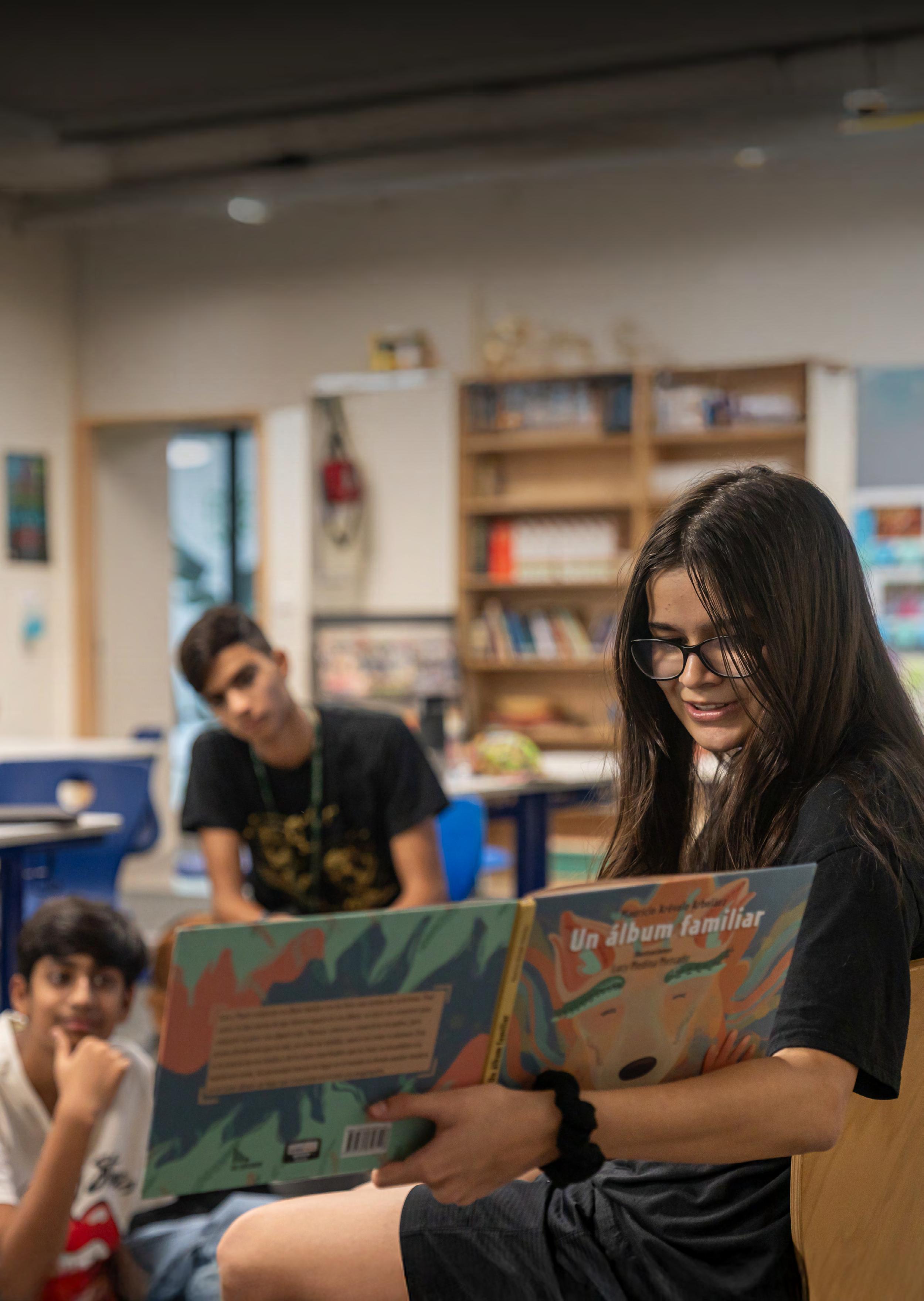
Our World Languages program opens doors to new cultures and perspectives, inviting students to become confident global communicators. We focus on real-world language skills – the kind that enable students to have meaningful conversations, share stories, and connect with people from different cultures.
We’ve thoughtfully designed our multi-year program to give students the time they need to build natural fluency and cultural understanding at their own pace. Each year brings new themes an d cultural experiences while consistently building students’ confidence to express themselves in their chosen language. This approach reflects our belief that language learning should be both practical and enriching – preparing students not just to speak another language but to engage meaningfully with the diverse world around them.
Our proficiency-based World Languages program is guided by the principles of the ACTFL Proficiency Guidelines. The Guidelines describe the development of language proficiency as a continuum with five major levels.
Novice
Grade: 9 or 10
Length: Typically one year
Credit: 1 per year
Prerequisite: None
This year-long course provides students who are relatively new to the language with the necessary skills to comprehend and communicate from the outset in a supportive environment. Interpersonal communication,
which includes listening and speaking, is at the forefront of language learning. At the end of the course, students can interact in straightforward communicative tasks and social situations by using memorized language. They can also respond to simple questions or request information. In addition, writing, reading, and listening are essential skills that help students develop their communicative ability at the novice level. The performance exit target is ACTFL Novice High.
Grade: 9 or 10
Length: Typically two years
Credit: 1 per year
Prerequisite: Novice or teacher recommendation
This multi-year course is for students who have reached at least a Novice High level of performance. It is possible that students performing at the Novice Mid level could be considered for admission with a teacher’s recommendation. With differentiation and new culturally rich thematic units each year, teachers engage and support students in the proficiency-building process.Students at this level successfully engage with various topics, including childhood and teenage issues, leisure activities, cinema, art, media, technology, holidays, health, and the environment. Students will communicate in presentational, interpersonal, and interpretive contexts. They will also engage in reading short literary texts. The performance exit target is ACTFL Intermediate Low.
Grade: 9 or 10
Length: Typically two years
Credit: 1 per year
Prerequisite: Intermediate or teacher recommendation
At the Intermediate mid-level, students develop solid communication skills for everyday situations. They can express personal thoughts and engage in conversations by both asking and answering questions. Students at this level successfully manage common interactions – discussing family life, sharing interests, handling daily tasks, and expressing preferences. They engage with relevant contemporary topics, including cultural identities, traditions, the impact of technology on our future, sustainability, and current events. Most students reach this level of proficiency over two to three years of study. While speaking skills are central to this level, our program integrates writing, listening, and reading activities that reinforce overall communication abilities. This balanced approach ensures students can effectively use their language skills to participate in meaningful discussions about both daily life and the important issues shaping our world today. The performance exit target is ACTFL Intermediate Mid.
Grade: 9 or 10
Length: Typically two years
Credit: 1 per year
Prerequisite: Intermediate Mid or teacher recommendation
Our Intermediate High language courses build upon students’ established communication skills, taking them
to new levels of fluency and understanding. Designed for students who can handle everyday conversations confidently, these courses introduce fresh cultural themes each year while teachers provide personalized support throughout the language journey. While conversation remains central, students also strengthen their reading, listening, and writing skills, ultimately developing the confidence to discuss topics ranging from daily life and personal interests to current events and community issues. They learn to share detailed stories and opinions about past experiences, present situations, and future plans, expressing their thoughts both in speaking and writing. Most students develop these IntermediateHigh communication skills over two to three years of dedicated study, gaining not only language proficiency, but also a deeper understanding of different cultures and perspectives. The performance exit target is ACTFL Intermediate High.
Grade: 9 or 10
Length: Typically two years
Credit: 1 per year
Prerequisite: Intermediate High or teacher recommendation
Our Advanced Level courses are designed for accomplished language learners who can confidently communicate in the past, present, and future through both conversation and writing. Students entering these courses can already engage in meaningful discussions that extend beyond their immediate experiences, tackling topics ranging from current events to community issues. These courses develop well-rounded communication abilities across all areas – speaking, listening, reading, and writing – preparing students to engage sophisticated conversations and academic writing tasks. By the end of these courses, students will be able participate confidently in both casual and formal discussions, express complex ideas in structured, extended paragraphs, and navigate a wide variety of real-world situations. This comprehensive approach ensures students develop the advanced language skills needed for academic success and meaningful cultural engagement. The performance exit target is ACTFL Advanced High.
We offer two world language courses: Language ab initio and Language B. Language ab initio and Language B are language acquisition courses designed to provide students with the necessary skills and intercultural understanding to communicate successfully in an environment where the language being studied is spoken. This process encourages learners to go beyond the confines of the classroom, expanding their awareness of the world and fostering respect for cultural diversity. The two world language courses - Language ab initio and Language B - develop students’ linguistic abilities through developing receptive, productive, and interactive skills.
Students should follow the course best suited to their present and future needs, and that will provide them with an appropriate academic challenge. The degree to which students are already competent in the language and the degree of proficiency they wish to attain by the end of the study period are the most critical factors in identifying the appropriate course.
The most important consideration is that the course should be a challenging educational experience for the student.
Grade: 11-12
Length: 2 years
Credit: 1 per year
Prerequisite: None
Language ab initio is a language acquisition course designed for students with no previous experience in, or very little exposure to, the target language. Language ab initio students develop their receptive, productive, and interactive skills while learning to communicate in the target language in familiar and unfamiliar contexts. Students develop the ability to communicate through the study of language, themes, and texts. There are five prescribed themes: Identities, Experiences, Human ingenuity, Social organization, and Sharing the planet.
Individual oral
Students are shown two images relevant to one (or more) of the themes of the course and the target culture. They must select an image, describe it, and have a follow-up conversation.
Paper 1 (Productive skills)
Two written tasks—each from a choice of three.
Paper 2 (Receptive skills)
Separate sections for listening and reading.
Grade: 10
Length: 1 year
Credit: 1
Prerequisite: Language B (SL) - Intermediate or teacher recomendation
Language B (HL) - Intermediate High or teacher recommendation
Language B is a language acquisition course designed for students with some previous experience of the target language. Students further develop their communication ability by studying language, themes, and texts. There are five prescribed themes: Identities, Experiences, Human Ingenuity, Social Organisation, and Sharing the Planet. Both language B SL and HL students learn to communicate in the target language in familiar and unfamiliar contexts. The distinction between language B SL and HL can be seen in the level of competency the student is expected to develop in receptive, productive, and interactive skills. At HL, the study of two literary works originally written in the target language is required, and students are expected to extend the range and complexity of the language they use and understand in order to communicate.
Individual oral
The stimulus at language B SL is a visual image relevant to one (or more) of the themes of the course. The students describe the image and connect it to the target culture. This is followed by a discussion. The stimulus at language B HL is an excerpt from one of the two literary works studied, followed by questions and general discussion from any other course theme.
Paper 1 (Productive skills)
One writing task from a choice of three, each from a different theme, choosing from a text type listed in the exam instructions.
Paper 2 (Receptive skills)
Separate sections for listening and reading.
9
World History 9
10
10
Grades 11 and 12
IBDP Business Management (HL or SL)
IBDP Economics (HL or SL)
IBDP Global Politics (HL or SL)
IBDP History (HL or SL)
IBDP Psychology (HL or SL)
The Social Sciences Department, through its wide range of course offerings, is committed to engaging students in the critical study of human experience and behavior and the diverse physical, economic and social environments developed by individuals and societies across the globe.
Courses in this department have been designed to prepare students for responsible global citizenship by investigating exciting and relevant content (in disciplines such as economics, geography, history, political science, and psychology) and developing a variety of 21st-century skills.
Grade: 9
Length: 1 year
Credit: 1
Prerequisite: None
World History 9 is a survey course that focuses on change, revolution, and the development of the modern world. Students will examine the Scientific Revolution and Protestant Reformation, the Enlightenment, the American, French, and Industrial Revolutions, and Censorship.
Our year-long goal is to articulate what shapes and alters the status quo. The first semester teaches students how to think historically -analyzing sources, reconciling conflicting viewpoints, and supporting arguments. In the second semester, students are taught to apply that historical thinking to academic writing. This course will set a strong foundation for success in World History 10. and cultures, developing skills in listening, speaking, reading, writing, viewing, and presenting. Students develop skills in interpretation, analysis, and evaluation, developing a sensitivity to the formal and aesthetic
Grade: 10
Length: 1 year
Credit: 1
Prerequisite: None
World History 10 is a survey course that focuses on the major historical events of the 20th century and how they have impacted our world today. Students will investigate the causes, practices, and effects of World War I; the rise of fascism and dictatorship in the world; the causes, practices and effects of World War II; and the origins and development of human rights in the latter half of the twentieth century.
Our year-long goal is to examine how we can use our knowledge of 20th-century history to create a peaceful, better world for future generations. This course stresses using critical thinking skills through discussion, debate, collaboration, evaluative writing and source analysis. Specifically, students will be expected to determine the level to which a source’s origins and purpose can affect its values and limitations for historians. Students are expected to produce formal essays and creative analytical projects throughout the year.
Grade: 11-12
Length: 2 years
Credit: 1 per year
Prerequisite: None
The business management course is designed to meet the current and future needs of students who want to develop their knowledge of business content, concepts and tools to assist with business decision-making. Future employees, business leaders, entrepreneurs or social entrepreneurs need to be confident, creative and compassionate as change agents for business in an increasingly interconnected global marketplace. The business management course is designed to encourage the development of these attributes. Through the exploration of four interdisciplinary concepts—creativity, change, ethics and sustainability—this course empowers students to explore these concepts from a business perspective. Business management focuses on business functions, management processes and decision-making in contemporary contexts of strategic uncertainty.
Students examine how business decisions are influenced by factors that are internal and external to an organization and how these decisions impact upon a range of internal and external stakeholders. Emphasis is placed on strategic decision-making and the operational business functions of human resource management, finance and accounts, marketing, and operations management.
Business Research Project
Students complete an 1,800-word research project about a real issue or problem facing a particular organization using a core conceptual lens (change, sustainability, ethics, or creativity).
Paper 1
Extended response examination based on an 800 - 1000 word case study provided.
Paper 2
Extended response examination with a quantitative focus.
Paper 3 (HL)
Extended response examination focused on a social enterprise.
Grade: 11-12
Length: 2 years
Credit: 1 per year
Prerequisite: None
Economics is an exciting, dynamic subject that allows students to develop an understanding of the complexities and interdependence of economic activities in a rapidly changing world. At the heart of economic theory is the problem of scarcity. Owing to scarcity, choices have to be made. The Economics course, at both SL and HL, uses economic theories, models and key concepts to examine the ways in which these choices are made: at the level of producers and consumers in individual markets (microeconomics); at the level of the government and the national economy (macroeconomics); and at an international level, where countries are becoming increasingly interdependent (the global economy). The course allows students to explore these models, theories and key concepts, and apply them, using empirical data, through the examination of six real-world issues.
Through their own inquiry, students will be able to appreciate both the values and limitations of economic models in explaining real-world economic behavior and outcomes. By focusing on the six real-world issues through the nine key concepts (scarcity, choice, efficiency, equity, economic well-being, sustainability, change, interdependence and intervention), students of the economics course will develop the knowledge, skills, values and attitudes that will encourage them to act responsibly as global citizens.
Portfolio
Three commentaries based on different units of the syllabus (except the introductory unit) and from published extracts from the news media, analyzed using different key concepts.
Paper 1 (Productive Skills)
Extended response paper based on all units of the syllabus.
Paper 2
Data response paper based on all units of the syllabus.
Paper 3 (HL only)
A policy paper. Syllabus content including HL extension material.
Grade: 11-12
Length: 2 years
Credit: 1
Prerequisite: None
The global politics course explores fundamental political concepts such as power, equality, sustainability and peace in a range of contexts. It allows students to develop an understanding of the local, national, international and global dimensions of political activity and processes, as well as to explore political issues affecting their own lives. The course helps students to understand abstract political concepts by grounding them in real-world examples and case studies. It also invites comparison between such examples and case studies to ensure a wider and transnational perspective.
The core units of the course together make up a central unifying theme of “people, power and politics”. The emphasis on “people” reflects the fact that the course explores politics not only at a state level but also explores the function and impact of non-state actors, communities, groups and individuals. The concept of “power” is also emphasized as being particularly crucial to understanding the dynamics, tensions and outcomes of global politics. Throughout the course, issues such as conflict, migration or climate change are explored through an explicitly political lens.
Engagement activity
A written report (2,000 SL and 2,400 HL words maximum) on a political issue explored through engagement and research.
Paper 1
Stimulus-based paper based on a topic from one of the four core units.
Paper 2
Extended response paper based on the four core units.
Paper 3 Global political challenges (HL only) Students will research and prepare case studies and use them to answer broad questions from two different HL extension topics in a 1 ½ hour exam.
Grade: 11-12
Length: 2 years
Credit: 1 per year
Prerequisite: None
The history course is a world history course based on a comparative and multi-perspective approach to history. It involves the study of a variety of types of history, including political, economic, social and cultural, and provides a balance of structure and flexibility.
The course emphasizes the importance of encouraging students to think historically and to develop historical skills as well as gaining factual knowledge. It puts a premium on developing the skills of critical thinking, and on developing an understanding of multiple interpretations of history. In this way, the course involves a challenging and demanding critical exploration of the past. Teachers explicitly teach thinking and research skills such as comprehension, text analysis, and use of primary sources.
There are six key concepts that have particular prominence throughout the course: change, continuity, causation, consequence, significance, and perspectives.
Historical investigation
A historical investigation into a topic of the student’s choice.
Paper 1
Source-based paper based on prescribed subjects.
Paper 2
Extended response paper based on the four core units.
Paper 3 (HL only)
Essay paper based on one of the four regional options.
Grade: 11-12
Length: 2 years
Credit: 1
Prerequisite: None
The psychology course aims to develop students’ psychological literacy through an understanding of psychological concepts, content and contexts, and the theories and models used to explain human behaviour.
Students develop skills in critical and creative thinking, evidence evaluation, and an appreciation of psychology as an evolving and culturally situated discipline.
The course emphasizes conceptual understanding and transfer rather than memorization, enabling students to apply psychological knowledge to real world issues across diverse contexts. Students explore behaviour and cognition using quantitative and qualitative research methods, developing skills in research design, data analysis and ethical evaluation of psychological claims.
All students study four applied contexts: health and well being, human development, human relationships, and learning and cognition through biological, cognitive and sociocultural approaches supported by class practicals. Higher Level students extend their learning through the study of culture, motivation and technology, as well as data analysis and interpretation, deepening conceptual and evaluative understanding.
Students design a research proposal to investigate a psychological topic relevant to a population of interest, using one of the four research methods explored in the class practicals. The focus is on methodological justification, ethical responsibility and application of psychological concepts, rather than conducting the research itself.
Paper 1 (SL/HL)
Integration of concepts, content and contexts
• Section A: Two compulsory short-answer questions from two of the three content areas (biological, cognitive, sociocultural).
• Section B: Two compulsory short-answer questions applying psychological content to unseen situations, each drawn from one of the four contexts.
• Section C: One concept-based extended response question chosen from two options, each from a different context.
Paper 2 (SL/HL)
Applying concepts and content to research contexts
• Section A: Four compulsory questions focusing on the class practicals and research methodology.
• Section B: Evaluation of an unseen research study with reference to two or more psychological concepts.
Paper 3 (HL only)
Data analysis and interpretation
• Four source-based questions requiring analysis and interpretation of quantitative and qualitative research data, focused on one of the HL extensions (culture, motivation or technology).
Integrated Science 9
Science 10
Grades 11 and 12
Integrated Science 11
IBDP Biology (HL or SL)
IBDP Chemistry (HL or SL)
IBDP Computer Science (HL or SL)
IBDP Physics (HL or SL)
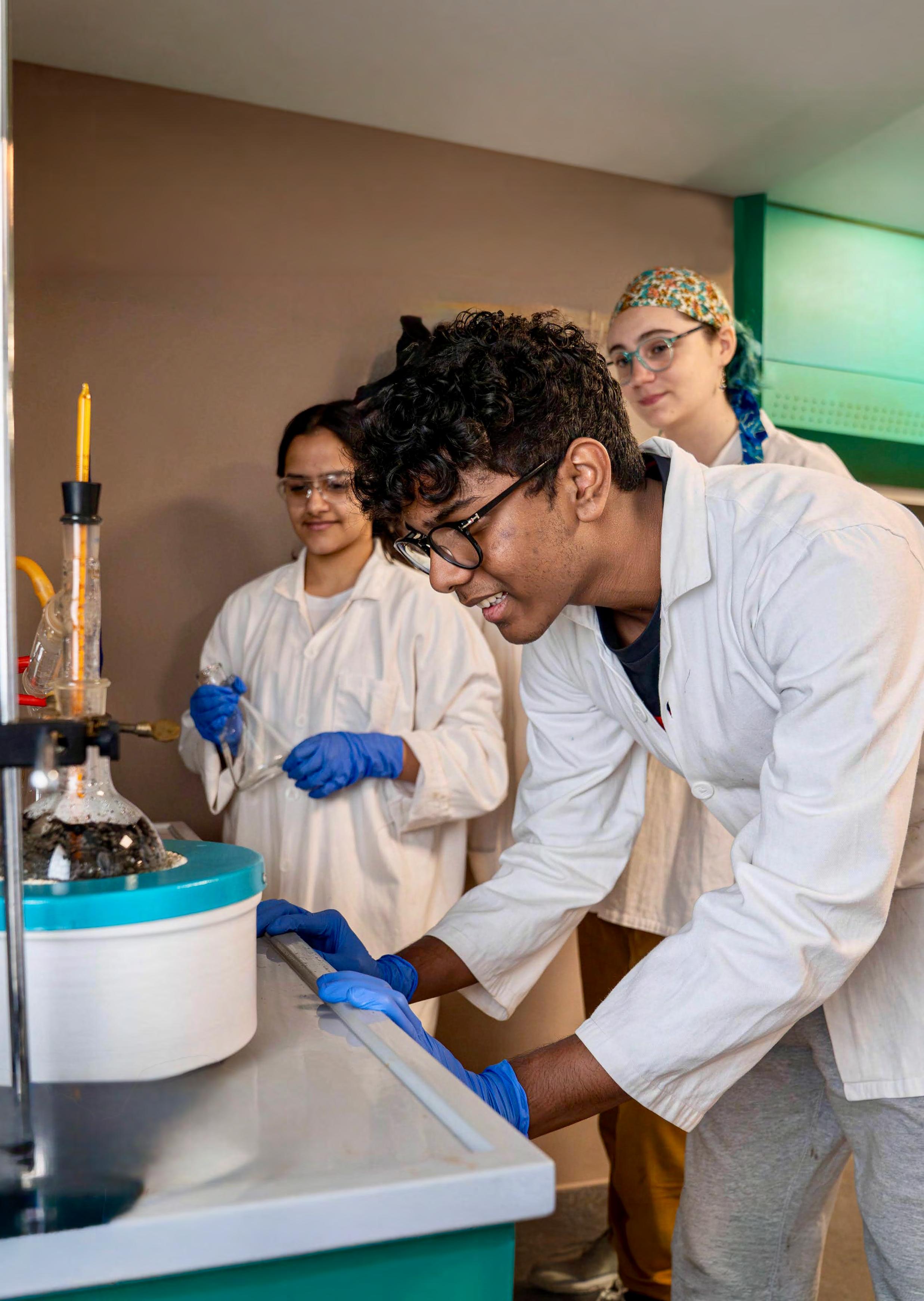
The goal of science education at the American School of Bombay is to create lifelong learners by developing their critical thinking, problem-solving, and decision-making skills to benefit individuals, the community, and the environment. Scientific exploration fosters the spirit of wonder, curiosity, and collaboration by actively engaging students in investigations using a range of techniques and technologies to promote scientific literacy.
The study of science has a basic core of fundamental concepts, skills, and content that provides the framework for students to understand natural phenomena. It is an ongoing process of observing, hypothesizing, control-testing, comparing results, evaluating, and drawing conclusions that may form the basis for new hypotheses. It uses the scientific method to engage in authentic, hands-on inquiry. Science encourages students to take risks and challenge currently held views and values while considering multiple perspectives on issues and decisions.
The study of science acknowledges that scientific progress requires the application of ethical standards. It provides a variety of motivating, developmentally appropriate, student-centered le arning experiences that are relevant to students’ present and future lives. It will be assessed through varied and balanced assessment strategies
Grade: 9
Length: 1 year
Credit: 1
Prerequisite: None
Grade 9 Integrated Science is an NGSS-aligned course that explores how matter and energy govern biological, chemical, and physical systems. Through phenomenonbased units, students investigate ecosystem dynamics, the flow of matter and energy, atomic structure and forces, and chemical reactions in Earth systems. Using real-world case studies, students develop scientific models, analyze data, and design solutions to complex environmental and societal challenges, building a strong foundation across biology and chemistry.
Grade: 10
Length: 1 year
Credit: 1 per year
Prerequisite: None
Integrated Science 10 is an NGSS-aligned course that builds on the concepts and skills developed in Integrated Science 9. Students will engage in phenomenon-driven investigations that integrate physical, life, and Earth sciences. The course explores how energy flows through Earth’s systems and how engineering solutions can meet community energy needs; analyzes forces, collisions, and momentum to improve safety in everyday contexts; and investigates the biological mechanisms behind inheritance, variation, cancer, and evolution. Throughout the course, students develop skills in scientific modeling, data analysis, and evidence-based argumentation while applying concepts of natural selection and population dynamics to understand and mitigate human impacts on ecosystems.
GRADES 11 AND 12
Grade: 11
Length: 1 year
Credit: 1 per year
Prerequisite: None
Integrated Science 11/12 is a year-long, non-IB science course designed to deepen students’ understanding of scientific concepts through real-world application and inquiry-based learning. Grounded in the Next Generation Science Standards (NGSS), the course emphasizes scientific practices, data analysis, and the development of core science ideas across multiple disciplines.
Building on the integrated approach established in Grades 9 and 10, students investigate a broad range of scientific phenomena from the physical, life, Earth, and space sciences. Units include energy and forces, molecular and nuclear processes, thermodynamics in Earth systems, electromagnetic radiation, ecosystems and evolution, chemical reactions, and Earth’s history and the Big Bang.
Throughout the course, students engage in practical, hands-on learning experiences rooted in scientific inquiry. Through experimentation, investigation, modeling, and data analysis, students actively explore scientific questions and develop evidence-based explanations. Integrated Science 11/12 is open to all students in Grades 11 and 12 and provides a pathway for learners to strengthen scientific thinking, problem-solving skills, and confidence in applying science to real-world contexts.
Grade: 11-12
Length: 2 years
Credit: 1 per year
Prerequisite: None
As one of the three natural sciences in the IB Diploma Programme, biology primarily concerns the study of life and living systems. Biologists attempt to make sense of the world through a variety of approaches and techniques, controlled experimentation, and collaboration between scientists. At a time of global introspection on human activities and their impact on the world around us, developing and communicating a clear understanding of the living world has never been of greater importance than it is today.
Through the study of biology, students are empowered to make sense of living systems through unifying themes. By providing opportunities for students to explore conceptual frameworks, they are better able to develop understanding and awareness of the living world around them. This is carried further through a study of interactions at different levels of biological organization, from molecules and cells to ecosystems and the biosphere. Integral to the student experience of the biology course is the learning that takes place through scientific inquiry. With an emphasis on experimental work, teachers provide students with opportunities to ask questions, design experiments, collect and analyze data, collaborate with peers, and reflect, evaluate and communicate their findings.
Biology enables students to engage constructively with topical scientific issues. Students examine scientific knowledge claims in a real-world context, fostering interest and curiosity. By exploring the subject, they develop understandings, skills and techniques that can be applied across their studies and beyond.
Scientific Investigation
The scientific investigation is an open-ended task in which the student gathers and analyzes data in order to answer their own formulated research question.
The outcome of the scientific investigation will be assessed through the form of a written report. The maximum overall word count for the report is 3,000 words
Paper 1
Paper 1A: Multiple-choice questions
Paper 1B: Data-based questions (four questions that are syllabus related, addressing all themes)
Paper 2
Data-based, short-answer questions and extendedresponse questions
Grade: 11-12
Length: 2 years
Credit: 1 per year
Prerequisite: None
As one of the three natural sciences in the IB Diploma Programme, chemistry is primarily concerned with identifying patterns that help to explain matter at the
microscopic level.
This then allows matter’s behavior to be predicted and controlled at a macroscopic level. The subject therefore, emphasizes the development of representative models and explanatory theories, both of which rely heavily on creative but rational thinking.
Chemistry enables students to engage constructively with topical scientific issues. Students examine scientific knowledge claims in a real-world context, fostering interest and curiosity. By exploring the subject, they develop understandings, skills and techniques that can be applied across their studies and beyond.
Integral to the student experience of the chemistry course is the learning that takes place through scientific inquiry, both in the classroom and the laboratory.
Scientific Investigation
The scientific investigation is an open-ended task in which the student gathers and analyzes data in order to answer their own formulated research question.
The outcome of the scientific investigation will be assessed through the form of a written report. The maximum overall word count for the report is 3,000 words
Paper 1
Paper 1A: Multiple-choice questions
Paper 1B: Data-based questions (four questions that are syllabus related, addressing all themes)
Paper 2
Data-based, short-answer questions and extendedresponse questions
Grade: 11-12
Length: 2 years
Credit: 1 per year
Prerequisite: None
The computer science course requires an understanding of the fundamental concepts of computing systems and the ability to apply the computational thinking process to solve problems in the real world. The course also requires students to develop skills in algorithmic thinking and computer programming.
The computer science course is organized into two key
themes: Concepts in computer science and computational thinking and problem-solving. The first focuses on how computing systems work. The latter focuses on how we can use computing systems to solve real-world problems. The course also has a practical dimension, comprising the computational solution (internal assessment) and the collaborative sciences project.
The course can be studied in either the Python or Java programming languages. Programming is required to answer some of the questions on Paper 2. Questions that require programming will have equivalent versions for students to choose from, one in Java and the other in Python, according to the programming language they have studied.
The computational solution
Students develop a computational solution to a real-world problem of their own choosing. The solution should use the concepts, skills, and tools acquired in the course and the computational thinking process.
Paper 1
Questions focused on the four topics in theme A, “Concepts of computer science.” The paper also consists of three questions related to the case study.
Paper 2
Questions for SL and HL focused on the three topics in theme B, “Computational thinking and problem-solving”. Additional questions for HL are focused on OOP and abstract data types. Students can answer questions in either Java or Python.
Grade: 11-12
Length: 2 years
Credit: 1 per year
Prerequisite: None
As one of the three natural sciences in the IB Diploma Programme, physics is concerned with an attempt to understand the natural world, from determining the nature of the atom to finding patterns in the structure of the universe. It is the search for answers from how the universe exploded into life to the nature of time itself. Observations are essential to the very core of the subject. Models are developed to try to understand observations, which can become theories that attempt to explain the
observations. Besides leading to a better understanding of the natural world, physics gives us the ability to alter our environments.
Physics enables students to engage constructively with topical scientific issues. Students examine scientific knowledge claims in a real-world context, fostering interest and curiosity. By exploring the subject, they develop understandings, skills, and techniques that can be applied across their studies and beyond.
Physics is heavily math-based but does not use Calculus. Integral to the student experience of the physics course is the learning that takes place through scientific inquiry, both in the classroom and the laboratory.
Scientific Investigation
The scientific investigation is an open-ended task in which the student gathers and analyzes data in order to answer their own formulated research question.
The outcome of the scientific investigation will be assessed through the form of a written report. The maximum overall word count for the report is 3,000 words
External Assessment
Paper 1
Paper 1A: Multiple-choice questions.
Paper 1B: Data-based questions (four questions that are syllabus-related, addressing all themes).
Paper 2
Data-based, short-answer questions, and extendedresponse questions
9
Integrated Math 2 (Essentials)
Integrated Math 2
Integrated Math 3 (Essentials)
Integrated Math 3
Mathematics for the Liberal Arts
IBDP Mathematics: applications and interpretation (SL)
IBDP Mathematics: analysis and approaches (SL)
IBDP Mathematics: analysis and approaches (HL)
Note: Grade 9 students will predominantly be placed in Integrated Math 2 Essentials or Integrated Math 2. Grade 10 students will predominantly be in Integrated Math 3 Essentials or Integrated Math 3. Optimal pathways are indicated with arrows, but there is a lot of opportunity to move between pathways.
The various levels of math are offered to achieve an optimal match between student learning and teaching pace, as well as to provide sufficient depth and breadth of content in preparation for a wide range of mathematics needed for future university work. The appropriate math class is determined for each student through the use of placement tests, previous mathematics performances and teacher recommendations.
An integrated approach to algebra, geometry, functions, probability, trigonometry and statistics is used throughout the curriculum. To make mathematical content more meaningful to students, problem-solving applications connecting mathematics to the real world and other disciplines are integrated within each course.
To facilitate discovery and analysis, as well as to reinforce the understanding of abstract mathematical concepts, the use of technology (particularly graphing calculators and computer software on graphing, spreadsheets and geometric explorations) is integrated across the mathematics curriculum. Students should provide their own graphing calculator. The TI-Nspire CX (non-CAS model) is required for each high school math course.
The Mathematical Practice Standards apply throughout each course and together with the content standards, prescribe that students experience mathematics as a coherent, useful, and logical subject that makes use of their ability to make sense of problem situations.
Grade: 9
Length: 1 year
Credit: 1
Prerequisite: None
Integrated Math 2 (Essentials) focuses on linear relationships, quadratic functions, probability, advanced geometry, and right-triangle trigonometry. Students in the Essential course will cover the same material as
Mathematics 2, but with somewhat less rigor than in Integrated Math 2.
In Integrated Math 2, students will compare the characteristics of different functions (including linear, absolute value, and quadratic) using the concept of transformations. The need for extending the set of rational numbers arises and real and complex numbers are introduced so that all quadratic equations can be solved. The link between probability and data is explored through conditional probability and counting methods, including their use in making and evaluating decisions. The study of similarity leads to an understanding of righttriangle trigonometry and connects to quadratics through Pythagorean relationships.
Grade: 9
Length: 1 year
Credit: 1
Prerequisite: Math 8
Integrated Math 2 focuses on functions, quadratics, probability, advanced geometry, and right-angled trigonometry.
In Integrated Math 2 students will compare the characteristics of different functions, (including linear, absolute value, and quadratic) using the concept of transformations. The need for extending the set of rational numbers arises and real and complex numbers are introduced so that all quadratic equations can be solved. The link between probability and data is explored through conditional probability and counting methods, including their use in making and evaluating decisions. The study of similarity leads to an understanding of right triangle trigonometry and connects to quadratics through Pythagorean relationships.
Grade: 10
Length: 1 year
Credit: 1
Prerequisite: Integrated Math 2 (Essentials) or Integrated Math 2
Integrated Math 3 (Essentials) focuses on extending algebra and functions (including radicals, rational expressions, polynomial functions, logarithmic functions), coordinate geometry, trigonometry, and statistics. Students in the Essential course will largely cover the same material but with different scope and rigor than in Integrated Math 3.
In Mathematics 3 (Essentials), students build on and strengthen their knowledge of essential algebraic skills. They pull together and apply the accumulation of learning they have from their previous courses, with content grouped into four critical areas, organized into units. They apply methods from probability and statistics to draw inferences and conclusions from data. Students expand their repertoire of functions to include polynomial, rational, and radical functions. They expand their study of right triangle trigonometry to include general triangles. Finally, students bring together all of their experience with functions and geometry to create models and solve contextual problems.
Grade: 10
Length: 1 year
Credit: 1
Prerequisite: Integrated Math 2
Integrated Math 3 focuses on extending algebra and functions (including radical, rational, polynomial, exponential, trigonometric, and logarithmic functions), trigonometry, and statistics.
It is in Mathematics 3 that students pull together and apply the accumulation of learning that they have from their previous courses, with content grouped into four critical areas, organized into units. They apply methods from probability to draw inferences and conclusions from data. Students expand their repertoire of functions to include polynomial, rational, and radical functions. They expand their study of right triangle trigonometry to include general triangles. Finally, students bring together all of their experience with functions and geometry to create models and solve contextual problems.
Grade: 11-12
Length: 1 year
Credit: 1 per year
Prerequisite: None
Mathematics for the Liberal Arts is a year-long, non-IB mathematics course designed for students who wish to strengthen their quantitative reasoning and confidence in applying mathematics to real-world contexts. The course emphasizes understanding, interpretation, and decisionmaking rather than abstract mathematical procedures. Students explore how mathematics is used in everyday life, the social sciences, and the humanities through topics such as quantitative reasoning, data interpretation, probability, statistics, financial mathematics, and mathematical modeling. Learning focuses on making sense of numerical information, evaluating claims supported by data, and applying mathematical thinking to practical situations.
Throughout the course, students engage in hands-on, inquiry-based learning experiences that emphasize problem-solving, discussion, and real-world application. Using authentic scenarios and technology-supported tools, students analyze data, construct evidence-based conclusions, and communicate mathematical ideas clearly.
Mathematics for the Liberal Arts is open to students in Grades 11 and 12 and provides a meaningful pathway for developing lifelong numeracy skills essential for informed citizenship, academic study, and future career pathways.
ASB offers two mathematics courses: Mathematics: applications and interpretation, offered at the standard level, and Mathematics: analysis and approaches, which is available for both standard and higher-level study.
Several factors impact a student’s choice of a course, including the successful completion of prerequisite courses and the desired college major. It is also important to note that some university programs of study in various
countries have minimum mathematics requirements. Students and parents are encouraged to research and discuss this information with the Mathematics Department, the Counselor, and the IBDP Coordinator. Please be aware that the decision to place a student in a particular mathematics course is based on having satisfied the prerequisites of the course and teacher recommendations.
All courses cover the same 5 topics within mathematics, but with varying emphasis. These 5 topics are:
• number and algebra
• functions
• geometry and trigonometry
• statistics and probability
• calculus
These topics, and their relative emphasis, are illustrated below.
Mathematics: applications and interpretation (SL)
Mathematics: analysis and approaches (SL)
Mathematics: analysis and approaches (HL)
The above graph shows the relative emphasis of each topic within the different mathematics courses. As a reminder, an SL class has 150 hours of instruction and an HL class has 240 hours of instruction.
Grade: 11-12
Length: 2 years
Credit: 1 per year
Prerequisite: Integrated Math 3 (Essentials) or Math 3
The Mathematics: applications and interpretation course recognizes the increasing role that mathematics and technology play in a diverse range of fields in a data-rich world. As such, it emphasizes the meaning of mathematics in context by focusing on topics that are often used as applications or in mathematical modeling. To give this understanding a firm base, this course includes topics that are traditionally part of a pre-university mathematics course such as calculus and statistics.
Students are encouraged to solve real-world problems, construct and communicate this mathematically and interpret the conclusions or generalizations. Students should expect to develop strong technology skills, and will be intellectually equipped to appreciate the links between the theoretical and the practical concepts in mathematics. All external assessments involve the use of technology. Students are also encouraged to develop the skills needed to continue their mathematical growth in other learning environments. The internally assessed exploration allows students to develop independence in mathematical learning. Throughout the course students are encouraged to take a considered approach to various mathematical activities and to explore different mathematical ideas.
Internal Assessment
Exploration
A mathematical exploration written by the student based on a topic chosen by them, and it should focus on the mathematics of that particular area.
External Assessment
Paper 1
Compulsory short-response questions based on the syllabus.
Paper 2
Compulsory extended-response questions based on the syllabus.
Grade: 11-12
Length: 2 years
Credit: 1 per year
Prerequisite: Standard Level - Integrated Math 3 or Math 3 (Essentials)
Higher Level - Integrated Math 3 or teacher recommendation
The Mathematics: analysis and approaches course recognizes the need for analytical expertise in a world where innovation is increasingly dependent on a deep understanding of mathematics. The focus is on developing important mathematical concepts in a comprehensible, coherent and rigorous way, achieved by a carefully balanced approach.
Students are encouraged to apply their mathematical knowledge to solve abstract problems as well as those set in a variety of meaningful contexts. Mathematics: analysis and approaches has a strong emphasis on the ability to construct, communicate and justify correct mathematical arguments. Students should expect to develop insight into mathematical form and structure, and should be intellectually equipped to appreciate the links between concepts in different topic areas. Students are also encouraged to develop the skills needed to continue their mathematical growth in other learning environments. The internally assessed exploration allows students to develop independence in mathematical learning. Throughout the course students are encouraged to take a considered approach to various mathematical activities and to explore different mathematical ideas.
Exploration
A mathematical exploration written by the student based on a topic chosen by them, and it should focus on the mathematics of that particular area.
Paper 1
No technology allowed.
Section A: compulsory short-response questions based on the syllabus.
Section B: compulsory extended-response questions based on the syllabus.
Paper 2
Section A: compulsory short-response questions based on the syllabus.
Section B: compulsory extended-response questions based on the syllabus.
Paper 3 (HL only)
Two compulsory extended-response problem-solving questions.
The Arts program focuses on developing students’ ability to create, perform, and respond through a range of artistic disciplines. Through artistic practice, students explore how creative expression is an essential part of the human experience, offering opportunities for imagination and original thinking that extend beyond traditional subject boundaries. As students build technical skills and artistic understanding, they learn how the arts communicate ideas, emotions, and perspectives through purposeful creative choices, bringing both meaning and joy to the learning process.
Arts learning emphasizes growth through practice, feedback, and refinement. Students engage in collaborative and independent creative work that strengthens technique, communication, and critical thinking. Arts courses are open to students in Grades 9 through 12 and include both year-long and semester-long options, depending on the discipline. Because learning is skill-based, students may take some courses across multiple years as their artistic understanding and performance abilities deepen. Courses are developed using the National Core Arts Standards, ensuring a consistent focus on creative process, artistic literacy, and authentic performance and presentation.
Students considering continuing in the arts at the IB Diploma Programme level are encouraged to take the corresponding arts courses in Grades 9 and 10 to develop foundational skills and sustained experience within their chosen discipline.
Grade: 9-12
Length: 1 year
Credit: 1
Prerequisite: Prior experience or teacher recommendation
HS Band is a year-long performance-based ensemble class for high school instrumental musicians with at least two years of playing experience on a woodwind, brass, percussion, or string instrument. Band students are required to participate in two major concerts, at the end of each semester, and a musical service at high school graduation. There may be additional performing opportunities throughout the year.
The class content is designed to improve overall musicianship, both individually and as a group, with a focus on creating, performing, responding, and connecting. Students will develop their instrument playing technique, skills, and musicianship through challenging repertoire. The course also emphasizes the development of students’ knowledge of music theory, music history, music terminology, and general musicality. The class also fosters the development of performance and ensemble skills through a variety of online and in-class activities, including large-ensemble playing, active music listening, improvisation, and composition.
Students will demonstrate acquired knowledge and skills through assignments, in-class demonstrations, recorded submissions, and through level-appropriate repertoire assessments. Band students may audition to participate in the SAISA music festival and the AMIS Asia Area High School Honor Band.
Grade: 9-12
Length: 1 year
Credit: 1
Prerequisite: Prior experience or teacher recommendation
Choir is a year-long, performance-based class designed to refine and further develop students’ vocal technique and ensemble performance skills. Students build healthy singing habits through focused work on breathing, tone production, and vocal control. Music reading skills are strengthened through the use of solfege, and students explore a variety of musical repertoire across styles and traditions.
Learning emphasizes active participation, collaboration, and consistent rehearsal practice. Students develop confidence and musicianship through both in-class and out-of-class performances, which are a required part of the course. Performance requirements include, but are not limited to, four community concerts each year. Additional learning experiences may include recording and reflective
listening activities to support vocal growth and ensemble development. Choir students may audition to participate in the SAISA music festival and the AMIS High School Honor Choir.
Grade: 9-12
Length: 1 semester
Credit: 0.5
Prerequisite: None
Theater is a semester-long course designed to introduce students to a wide range of skills, techniques, and disciplines involved in theater-making. Much of the work is practical, and learning takes place through exploration and hands-on work. Through action and performance-based experiences, students gain a practical understanding of theatrical forms and genres and learn how theater can be used to communicate effectively with diverse audiences.
Considering cultural, historical, and social contexts, students explore performance styles and examine the work of key practitioners, including directors, creators, designers, and performers. Students gain a broad understanding of stage design through a variety of media and explore appropriate technologies, particularly lighting, sound, and multimedia.
Students are involved practically in both devising original work and bringing texts to life on stage. The course includes improvisation, devising, physical theater, script analysis, and performance exploration. Because the course is skill-based, students may take Theater multiple times, allowing them to deepen performance, directorial, and analytical skills while engaging with a range of historical and contemporary theatrical traditions from around the world.
Grade: 9-12
Length: 1 semester
Credit: 0.5
Prerequisite: None
Visual Arts is a semester-long elective course designed for students of all levels of ability and interest. Developed as a series of thematic modules, the course emphasizes how artists explore, express, and communicate ideas, feelings, values, and beliefs.
Each unit follows a creative cycle of investigation, experimentation, creation, reflection, and self-evaluation. Students study artworks from a range of times, cultures, and perspectives, building visual literacy through research, written analysis, and critical response. Students develop technical skills while experimenting with multiple media, including drawing, painting, printmaking, sculpture, design, and emerging media.
Students learn to create original work, articulate artistic intent, revise thoughtfully, and share their work when appropriate. The course balances the importance of the final product with the depth of the creative process. Because the curriculum is modular and skill-based, students may take Visual Arts multiple times across different semesters without repeating content.
Grade: 11-12
Length: 2 years
Credit: 2
Prerequisite: Prior experience of playing an instrument/ vocalist or composing as well as some foundation in music theory
The Diploma Programme music course has been designed to prepare the 21st-century music student for a world in which global musical cultures and industries are rapidly changing.
The course is grounded in the knowledge, skills, and processes associated with the study of music. It offers a strengthened approach to student creativity through practical, informed, and purposeful explorations of diverse musical forms, practices, and contexts. The course also ensures a holistic approach to learning, with the roles of performer, creator, and researcher afforded equal importance in all course components.
The course is ideal for students who:
• are interested in both the practical and theoretical aspects of music-making
• have a strong interest in research, composition, and performance
• respond to a creative approach to composition and performance
• value collaboration
• wish to experience a DP arts course
• plan to study music in university or college.
Experimenting with music
Students submit an experimentation report with evidence of their musical processes in creating and performing in two areas of inquiry in a local and/or global context.
The contemporary music-maker (HL only)
Students submit a continuous multimedia presentation documenting their real-life project.
Exploring music in context
Students select samples of their work for a portfolio submission.
Presenting music
Students submit a collection of works demonstrating engagement with diverse musical material from four areas of inquiry.
Grade: 11-12
Length: 2 years
Credit: 2
Prerequisite: The study of Theater in grade 9 and 10 is advantageous
The IB Diploma Programme theatre course is a multifaceted theatre-making course. It gives students the opportunity to make theatre as creators, designers, directors, and performers. It emphasizes the importance of working both individually and as part of an ensemble. It offers the opportunity to engage actively in the creative process of inquiring, developing, presenting, and evaluating. Students are encouraged to work as inquisitive and imaginative artists, transforming ideas into action and communicating these to an audience.
Theatre students learn to apply research and theory to inform and contextualize their work as they engage with the course through practical, physical practice. They understand that knowledge resides in the body and that research can be conducted physically through both action and practice. In this respect, the theater course encourages students to appreciate that through the processes of researching, creating, preparing, presenting, and critically reflecting on theatre—as participants and spectators—they gain a richer understanding of themselves, their community, and the world.
Through the study of theatre, students strengthen their awareness of their own personal and cultural
perspectives, developing an appreciation for the diversity of theatre practices, processes, and modes of presentation. This enables students to discover and engage with different forms of theatre across time, place, and culture, thereby promoting international-mindedness. Participation in the theatre course develops both theatre and life skills, including confidence, imagination, creativity, and a collaborative mindset.
Production proposal
Students choose a published play text they have not previously studied and formulate a vision for the design and theoretical staging of the entire play text for an audience.
Research presentation
Students deliver and video record an individual research presentation (15 minutes maximum) in which they provide evidence of their academic and practical exploration and learning of a world theatre tradition they have not previously studied.
Collaborative project
Students collaboratively create and perform an original piece of theatre (lasting 7–10 minutes maximum) created from a starting point of their choice. The piece is presented to an audience as a fully-realized production.
Solo theater piece (HL only)
Students research a theatre theorist they have not previously studied, identify an aspect(s) of theory, and create and present a solo theatre piece (lasting 4-7 minutes maximum) that demonstrates the practical application of this theory to a theatre piece for an audience.
Grade: 11-12
Length: 2 years
Credit: 2
Prerequisite: Teacher consultation to determine level. The study of Visual Arts in grade 9 and 10 is advantageous
Visual arts are an integral part of our daily lives. They have social, political, ritual, spiritual, decorative, and functional values. The theories and practices of the visual arts are dynamic and ever-changing, connecting different areas of knowledge and human experience. Visual arts enable us to make sense of the world, to explore our place within it, and to transform our individual and collective
ways of being in and with the world.
In this visual arts course, students learn how to create, communicate, and connect as artists. Students engage in creative practices and processes, working with a variety of art-making forms and creative strategies, and learn art-making as inquiry. Teachers and students can adapt the curriculum to their unique contexts, interests, and passions. Together, they are invited to transform the classroom into a contemporary visual arts studio. This becomes a collaborative, inclusive, creative, and conceptually rich space where students develop their art through personal lines of inquiry guided by artistic intentions.
Students work in the classroom as they would in an art studio. Art-making as inquiry is at the center of the syllabus, and students learn through three core areas: create, connect, and communicate. These are introduced as discrete elements of the course; however, in practice, this division will only occasionally predominate.
Learning art-making as inquiry will mostly involve integrating, creating, connecting, and communicating. This is to allow students to embrace the holistic nature of visual arts practice. However, teachers will at times need to make explicit the division of content and focus on just one of the core areas, to ensure that students have sufficient understanding, skills, and methods to develop their artistic intentions and their artwork.
Resolved artworks (SL only)
This focuses on the student’s ability to create a coherent body of work. Each student submits five resolved artworks to demonstrate their best achievements in communicating their artistic intentions coherently.
The student provides evidence of synthesis of concept and form, and of their competence in resolving artworks. They also write a rationale to articulate their artistic intentions and the choices that informed the making of their coherent body of artworks.
Selected resolved artworks (HL only)
This focuses on the student’s ability to create a coherent body of work selected from their wider production. Each student submits five selected resolved artworks to demonstrate their best achievements in communicating their artistic intentions coherently.
The student provides evidence of synthesis of concept and form, and of their competence in resolving artworks. They also write a rationale to articulate how they realized their artistic intentions through a selection process for the
five resolved artworks, from at least eight of their works. Five artwork texts, through critical analysis, situate each selected resolved artwork in a wider artistic context and in relation to the student’s practice.
Art-making inquiries portfolio
The student selects and organizes visual evidence of their personal investigations, discoveries, and creations, supported by critical reflections, all in a portfolio. They provide curated evidence of their art-making as inquiry in a variety of art-making forms and creative strategies.
The portfolio demonstrates how the student developed and refined their visual language through one or more lines of inquiry, and must explicitly include the inquiry questions or generative statements they worked with.
Connections study (SL only)
This focuses on the student situating one of their resolved artworks in context, chosen from the five they submit for IA. The study presents curated visual and written evidence to demonstrate the connections between the student’s chosen resolved artwork and their own context(s), and between the chosen artwork and at least two artworks by different artists. The connections must be informed by research, and the study must demonstrate an understanding of the cultural significance of the two artworks by different artists.
Artist project (HL only)
This is a stand-alone, HL-only task focused on the student creating and situating in context an artwork that they ideate and realize as part of a project of their choice. The artist project demonstrates through curated evidence how the student’s work was informed by investigations of context, by connections with at least two artworks by different artists, and by dialogues. A short video curated by the student shows where and how the project artwork was realized, communicating with the audience in the chosen context.
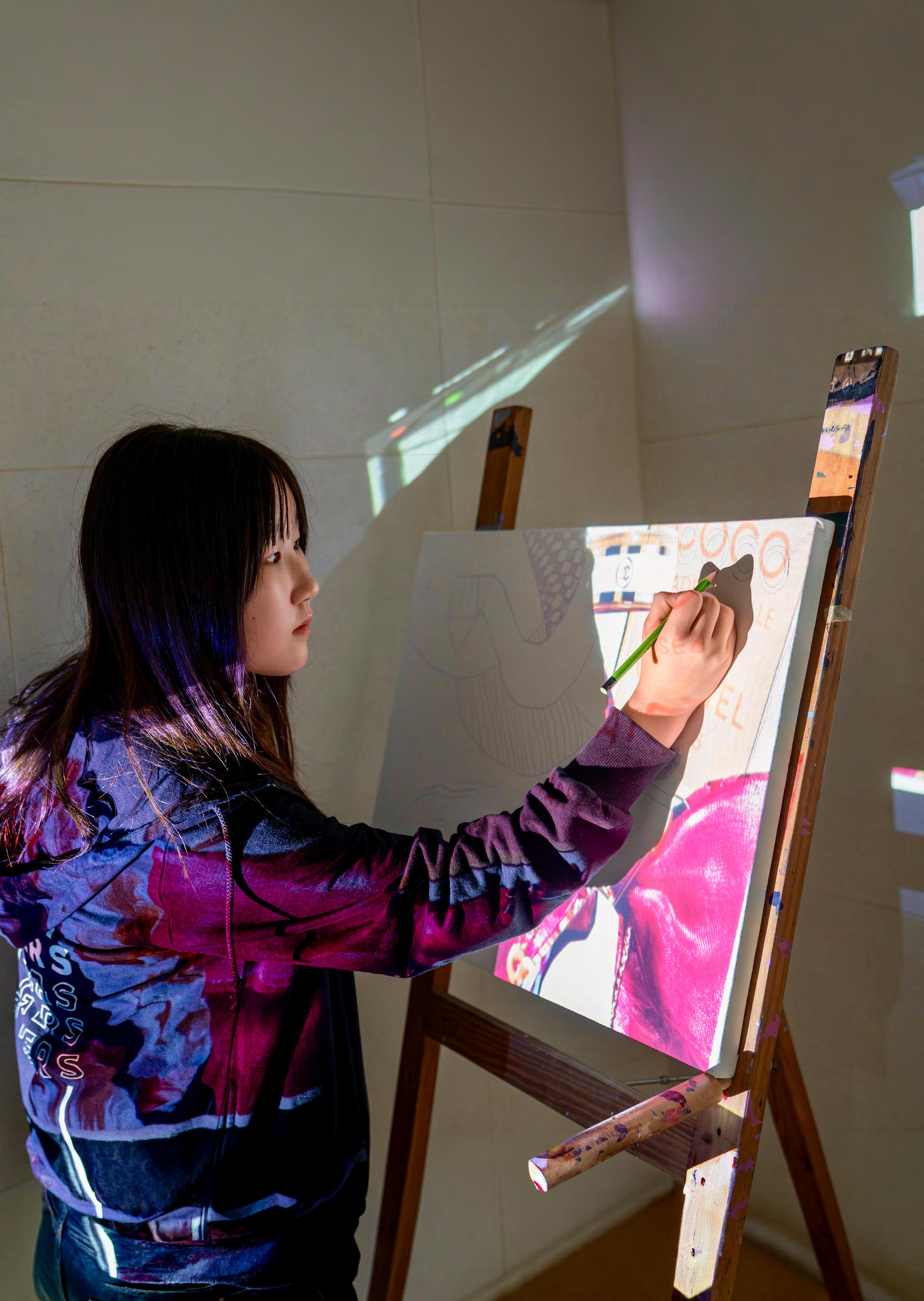
The Design program focuses on understanding how thoughtful design shapes the world around us. Students explore how ideas, systems, and products are created to meet human needs, balancing creativity with function, usability, and responsibility. Through design-based inquiry, students learn to observe problems, research users, generate ideas, and develop solutions that respond to real-world contexts.
Design learning emphasizes process over product. Students engage in iterative cycles of planning, testing, reflection, and refinement as they develop skills in visual communication, collaboration, and critical thinking. All Design courses are semester-long and open to students in Grades 9 through 12. Because learning is skill-based, students may take the same course across multiple years as their thinking, technical ability, and design maturity deepen. Courses are developed using the ISTE Standards for Students, ensuring a consistent focus on creative problem-solving, responsible technology use, and authentic real-world application.
Grade: 9-12
Length: 1 semester
Credit: 0.5 per semester
Prerequisite: None
Cinematic Design focuses on image, sound, and movement to captivate and immerse audiences, moving beyond traditional forms of storytelling. Students explore how visual and audio elements work together to create meaning and emotional impact across a range of formats.
Through storytelling, pacing, and visual design, students consider how film can shape mood, perspective, and audience experience.
Through hands-on projects, students compose and develop experiential moments in time using DSLR cameras, smartphones, studio lighting, and digital tools, including AI-supported technologies. Learning includes exploration of cinematography, editing, and digital effects as students create films that inspire, engage, and communicate ideas with clarity and intention.
Grade: 9-12
Length: 1 semester
Credit: 0.5 per semester
Prerequisite: None
Cinematic Design focuses on image, sound, and movement to captivate and immerse audiences, moving beyond traditional forms of storytelling. Students explore
how visual and audio elements work together to create meaning and emotional impact across a range of formats.
Through storytelling, pacing, and visual design, students consider how film can shape mood, perspective, and audience experience.
Through hands-on projects, students compose and develop experiential moments in time using DSLR cameras, smartphones, studio lighting, and digital tools, including AI-supported technologies. Learning includes exploration of cinematography, editing, and digital effects as students create films that inspire, engage, and communicate ideas with clarity and intention.
Grade: 9-12
Length: 1 semester
Credit: 0.5 per semester
Prerequisite: None
Industrial Design introduces students to the world of product and industrial design, where creativity and function come together to shape the objects used in everyday life. Students explore how purposeful design responds to user needs by considering usability, ergonomics, sustainability, and form while learning to think like professional designers.
Through the design thinking process, students move from research and ideation to prototyping, testing, and refinement. Emphasis is placed on understanding how thoughtful design decisions impact both people and the environment.
Through hands-on making and iteration, students consider how products evolve from ideas into functional solutions.
Learning includes sketching and visualization, computeraided design using industry-standard software, and the creation of physical prototypes with 3D printers and modeling materials. Alongside technical skill development, students examine material choice and manufacturing methods to better understand how products move from concept to reality.
Grade: 9-12
Length: 1 semester
Credit: 0.5 per semester
Prerequisite: None
Urban Design invites students to step into the role of urban designers and explore how buildings and shared spaces shape how people live, move, and connect with one another. Set against the vibrant backdrop of Mumbai, the course examines how design influences social interaction, mobility, sustainability, and access to public space.
Through collaborative design projects, students engage in small-scale urban challenges, including reimagining specific areas of the city or developing building concepts that respond to the needs of future societies while honoring the past. Students consider how thoughtful urban planning can shape community experience and long-term livability.
Learning includes experimentation with industryrelevant tools such as 3D modeling software, VR and AR presentation platforms, reality capture technologies, and physical prototyping methods as students develop spatial awareness, design reasoning, and visual communication skills.
Grade: 9-10
Length: 2 years
Credit: 1 per year
Prerequisite: None
The Physical Education department’s mission statement guides this course: “I will be equipped with the knowledge, understanding, and attitudes that will enable me to maximize my personal wellness.”
Throughout the two-year course, students will participate in a variety of activities focusing on skill development and competency, applying tactics and strategies, demonstrating fitness and training principles, applying rules and etiquette to a variety of games and activities, and demonstrating knowledge and understanding of a wide range of health topics.
This course builds on the fundamental skills learned in middle school. Units may include sport science, sport officiating, aquatics, rock climbing, create-a-sport, invasion sports and tactics, fitness, sport psychology, net/ wall sports and tactics, and striking games. Additionally, students will be able to make choices among various activities within lessons and units as they endeavor to find an interest or passion in physical activity.
Grade: 9-12
Length: 1 year
Credit: 1
Prerequisite: None
The Imperfect Art of Living invites students to explore the interconnected worlds of psychology, literature, philosophy, and well-being. The course examines not only what research and great texts suggest about human flourishing, but also how these ideas can be meaningfully applied in everyday life.
Rather than passively receiving information, students actively test and apply insights through a series of design challenges focused on personal growth and positive social impact. Using design thinking as a framework, students prototype principles in their own lives while strengthening
communication, reflection, and collaboration skills. A central feature of the course is the creation of a psychologically safe learning environment where students engage in thoughtful, candid conversations about identity, purpose, values, and responsibility. Through dialogue, inquiry, and shared reflection, students develop deeper self-awareness while learning how intentional choices can contribute to individual well-being and the well-being of others.
Depending on student enrollment, the course may be offered as a traditional, in-person class or delivered in partnership with an online instructor. All students applying to take an online course must receive approval from their school counselor before registering. As part of the Global Impact Diploma, students collaborate with peers from partner schools worldwide, gaining global perspectives and contributing to a community of learners committed to meaningful change.
To learn more about the Imperfect Art of Living, view this introduction video: https://www.youtube.com/watch?v=ZQcJntAkrcs
Grade: 11-12
Length: 2 years
Credit: 1 per semester
Prerequisite: None
This is a compulsory class for all students in Grades 11 and 12. It is designed to help students succeed in their studies at ASB and beyond. The course is structured around the twin pillars of Theory of Knowledge and the development of Approaches to Learning (ATL). Time is also allocated for students to work with their comprehensive counselors.
The Theory of Knowledge (TOK) course plays a special role by providing students with an opportunity to reflect on the nature, scope, and limitations of knowledge and the process of knowing. In this way, the main focus of TOK is not on students acquiring new knowledge, but on helping them reflect on and put into perspective what they already know. TOK underpins and unites the subjects students
encounter in the rest of their studies. It engages students in explicit reflection on how knowledge is arrived at in different disciplines and areas of knowledge, what these areas have in common, and the differences between them.
Approaches to Learning (ATL) are skills designed to enable students to “learn how to learn.” The development of such skills is frequently identified as a crucial element in preparing students effectively for life beyond school.
Grade: 10-12
Length: 1 semester
Credit: 0.5 per semester
Prerequisite: History of strong ATLs and counselor recommendation
To meet individual student needs and provide flexibility in pursuing academic and personal goals, students may choose to take an online elective course toward their graduation requirements. The American School of Bombay has identified approved providers and curated a wide range of courses that offer appropriate rigor and align with the interests and passions of diverse learners.
Students in Grades 10 through 12 may opt to take up to one elective credit per year through these providers.
Online courses are generally graded on a pass/fail basis. The exception is courses offered through the Global Online Academy (GOA), for which semester grades are reported using the high school grading scale of 1 to 7.
To be eligible to enroll in an online course, students must demonstrate a history of strong Approaches to Learning (ATLs). All students applying to take an online course must receive approval from their school counselor before registering.
Students enrolling in an Advanced Placement (AP) online course through ASB’s partnered providers will be automatically registered by ASB to take the corresponding AP examination through the College Board. Participation in the AP exam is mandatory for students registered through ASB.
Online options are available at this link . (This link is only available internally.)