AWFI NEWSLETTER 24 APRIL 2024 AWFI NEWSLETTER To New York, and Beyond •• ART WORLD FOR ISRAEL'S INTERNATIONAL ROUND-UP •• ISSUE 6 17 JUNE 2024 IN THIS ISSUE ARTIST ALLISON ZUCKERMAN INTRODUCES US TO HER NEW MURAL IN BROOKLYN
3

3
Celebrations of joy, family and tradition, Explorations of form, chaos and otherness, In NYC and around the world...
Levy Gorvy Dayan
NY Times Critic's Pick
7 - 11
Interview with NY Artist Libby Klein
18
Nicole Zisman: Fashion + Mixed-Media on London's Runway
4 Unveiling Allison Zuckerman's Brooklyn Mural
12 - 16
Exhibitions Across Tel Aviv, Europe and Mexico
5 - 6 Curatorial Projects in New York
17 Painted Padlocks for Hostages, on View in London

Levy Gorvy Dayan Gallery’s exhibition, Yves Klein and the Tangible World , is named a New York Times Critic’s Pick by renowned Deborah Solomon, who praises the exhibition for its “zero[ing] in on a fabled part of the artist’s career.” A pioneer of Performance Art and Minimalism and a forerunner of New Realism, Klein’s works focus on representation of the female body while reimagining the world in spiritual terms through use of color, light, and space.
Klein’s work affirms his conviction that art should exude life. Traces of living flesh are imprinted on canvas. “The link between spirit and matter is energy.
The combined mechanism of these elements (fire, water, earth and air) generates our tangible world, which is claimed to be real but is in fact ephemera,” Klein once wrote.
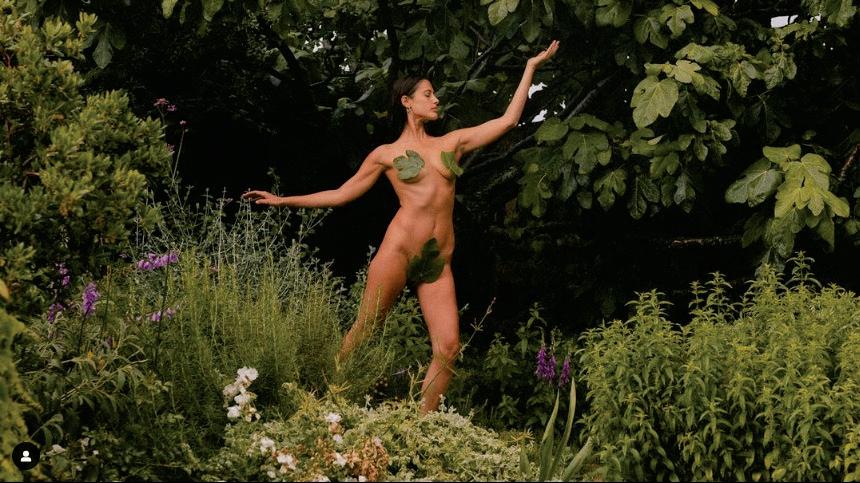
Central to the showcase are Klein’s Anthropometries, created with the help of nude models, which Solomon describes as "visually sumptuous."
The exhibition was on view through May 25 at the New York gallery.
Learn more about the exhibition and Levy Gorvy Dayan Gallery here
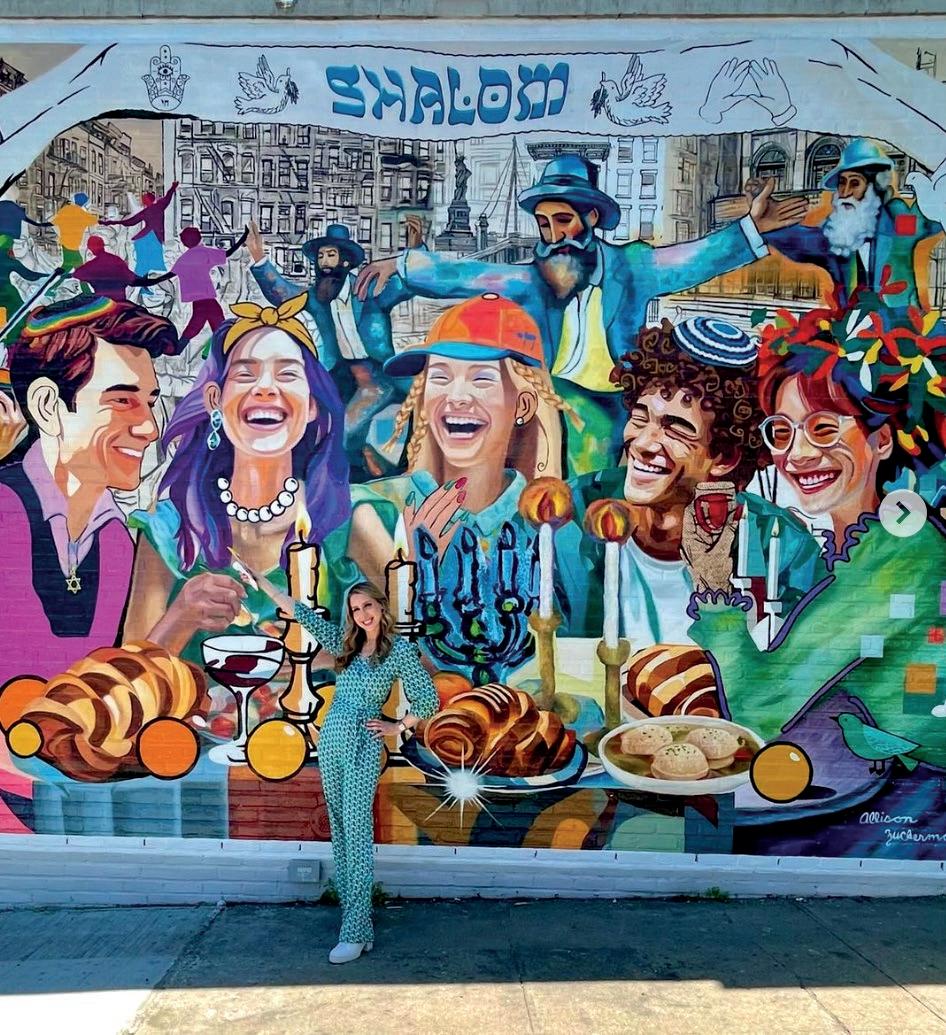
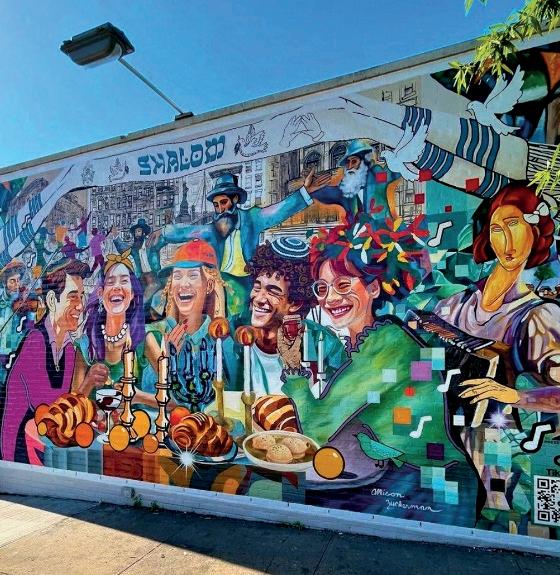
SHALOM, a new mural by Allison Zuckerman, is a celebration of the artist's Jewish heritage. A vibrant, colorful depiction of a traditional Shabbat when families and friends sit together surrounded by love, joy and laughter.
Zuckerman's work captures the essence of togetherness. "The Jewish community is incredibly diverse, but what unites us all is a commitment to spreading our light and sparking joy," said Allison,
in a testament to unity and joy that the Jewish people share.
Zuckerman has been vocal about the rise of anti-semitism in the art community, particularly post October 7.
Visit the mural at 57 Waterbury Street in Brooklyn.
Learn more about Allison Zuckerman’s practice here
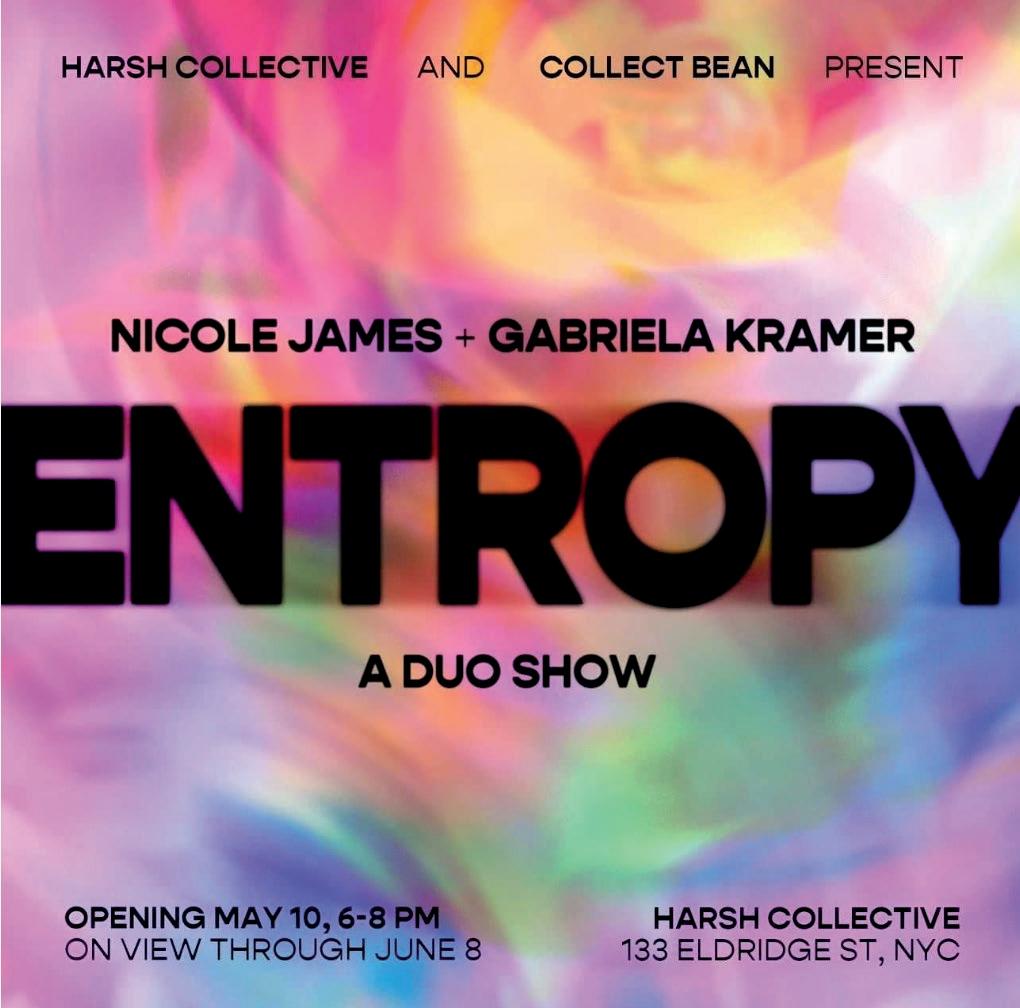
Entropy, presented by Harsh Collective and Collect Bean, is a duo exhibition curated by Marlee Katz Snow, featuring Brooklyn-based artists Nicole James and Gabriela Kramer. The exhibition celebrates the merging of the artists' differing approaches to confronting chaos within their painting practices. The viewer is invited to contemplate the idea of order and spontaneity.
Nicole James' works incorporate meticulous precision, subtly revealing the inevitable traces of unpredictability. Meanwhile, Gabriela Kramer's vibrant and immediate creations transform into a masterfully orchestrated blend of emotions and experiences. Entropy is a visual feast of harmony and discord.
The exhibition ran through June 8 . Press release and archive of the work can be viewed here
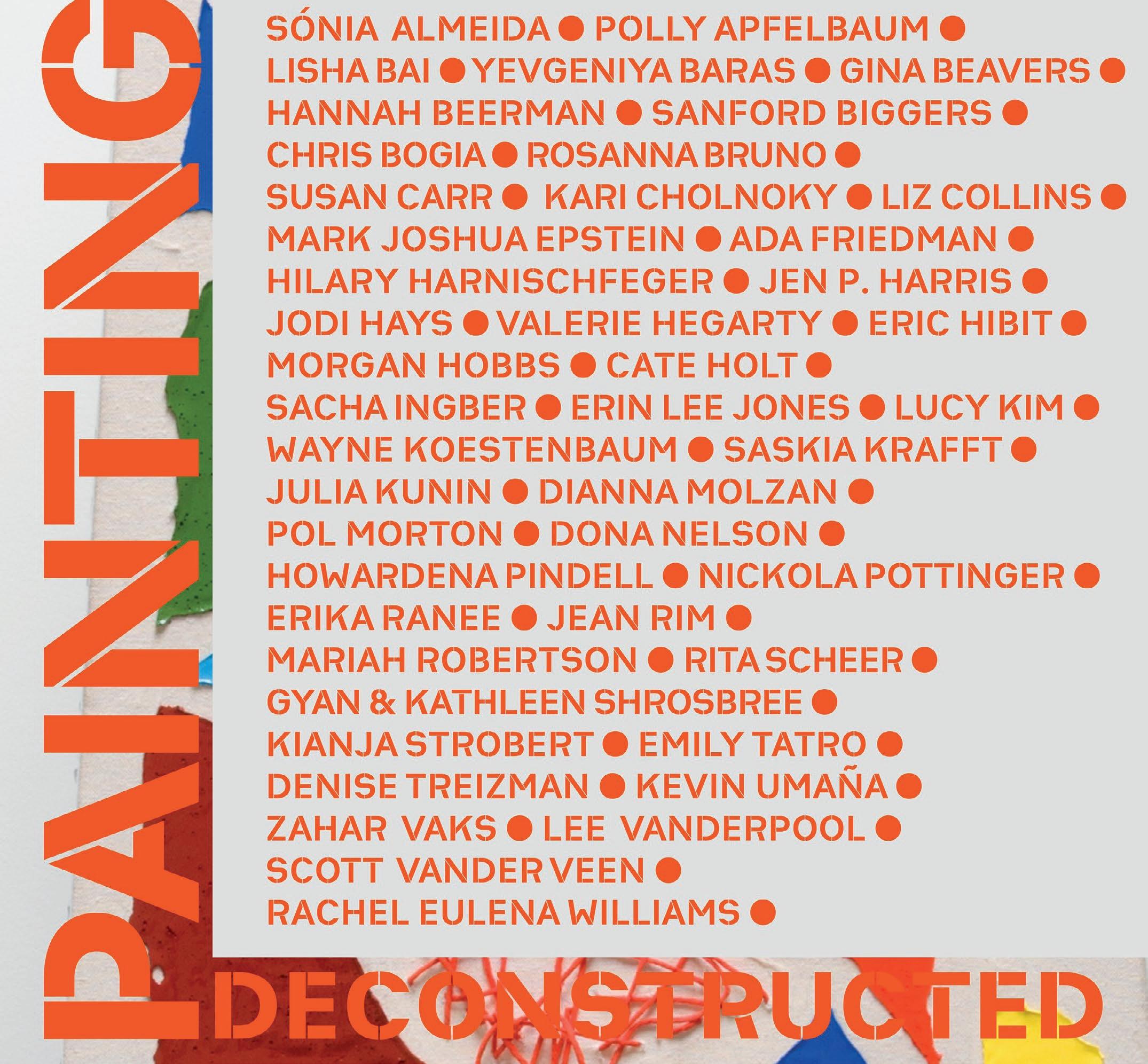
Artist Leeza Meskin’s newest curatorial project, Painting Deconstructed at Ortega y Gasset Projects in NY, features an impressive roster of artists. The works probe into the practice of painting by questioning and restructuring this multifaceted art process. Working across sculpture, photography, ceramics, painting and installation, while employing fiber, paint, ceramics and a range of multimedia processes, the artists examine and challenge traditional painting
conventions. Vital contributions of women, immigrants, LGBTQA and POC artists are of particular focus.
On view in New York until August, 18.
The exhibition was supported by The Andy Warhol Foundation and National Endowment for the Arts. Learn more about the exhibition here.
Learn more about Leeza Meskin’s practice here

Libby Klein’s work is deeply intertwined with her Jewish heritage, drawing from her family’s European roots and the generational inheritance of stories, experiences, moments of joy and pain. It is no wonder that she creates and regenerates narratives for those who, like her, seek grounding within their personal foundations, such as family and home, through her art. When speaking with Libby about her practice and what it has been like for her to be an artist
within the Orthodox Jewish community, you witness a genuine connection between her past and present.
As a mother of five, she strives to be a positive role model for her children. However, her passion for life and her mission to spread love and joy through her art extends beyond her family. She aims to spread light and invite good energy into her home, her community, and her art practice. During our
interview, Libby mentioned that she doesn’t really live in reality most of the time. For me, this translated a bit differently, it’s that the reality is often too heavy and burdensome to carry, so creating our own worlds, especially through art, becomes a means of escape from a polluted world teetering on the brink of chaos.
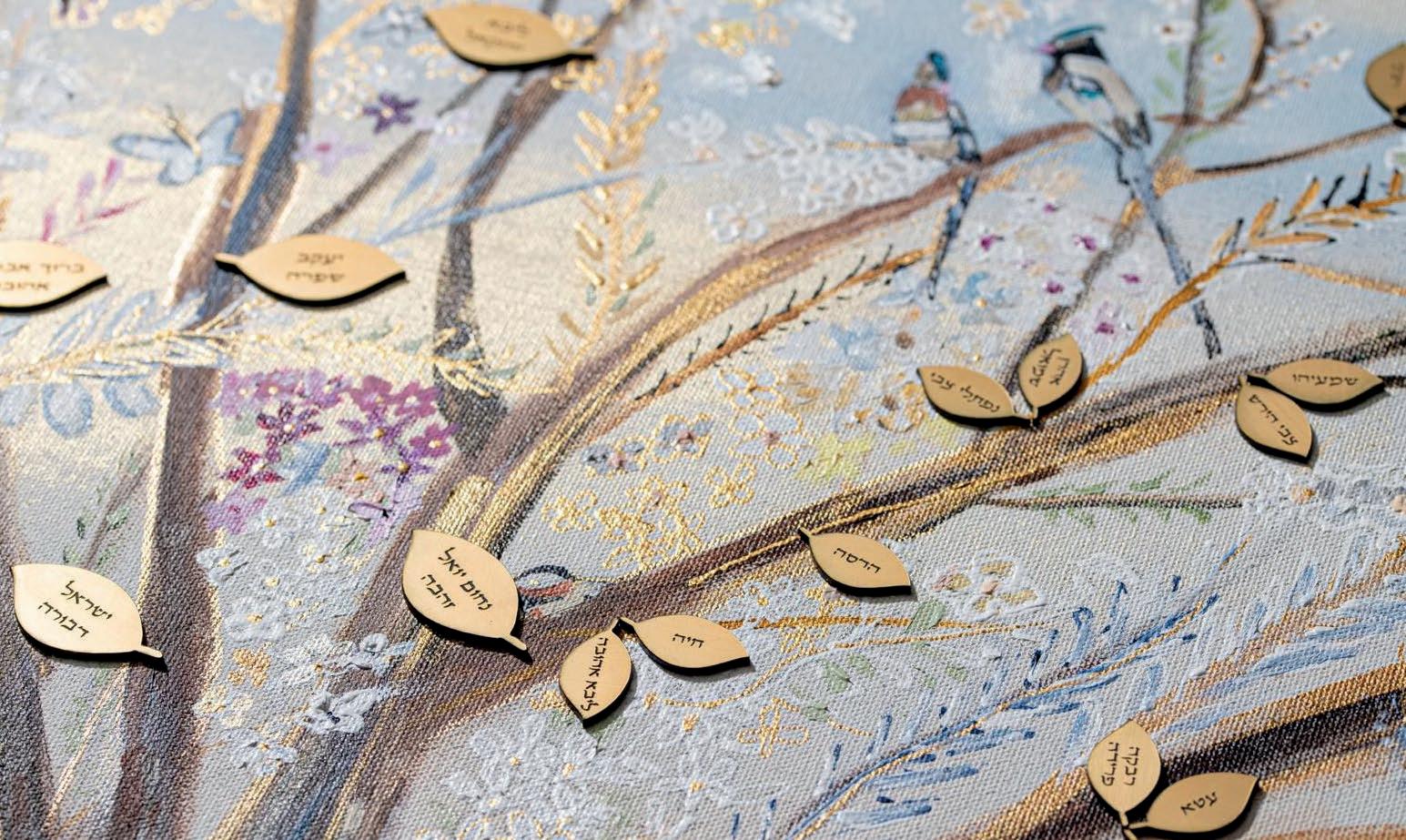
Her paintings are predominantly composed of light colors, often white on white, with gold or shades of blue. They are imbued with symbols of hope, love, and compassion. There is nothing offensive or defensive about her works; they carry no political agenda or statement. For Libby, art is a reflection of what one wishes and hopes for, rather than what might bring us down one day. The texture and fragmentation in her works symbolize both physical and metaphorical spaces, blending historical context with the complexities and layers of the present day. This connection mirrors the depth and nature of our being, highlighting the preservation of our shared existence
within the expansiveness of the universe.
LKE: Can you tell us a little bit about what it's like growing up as an artist in a Jewish Orthodox community?
That's a very good question. I live my life the way I want to live it. People should all choose for themselves since we are all complex beings. I try not to judge the world and those around me, trying to see the positive in people as well as in various circumstances even if it's difficult to do so in that moment. My family lives in Lakewood, an ultra Orthodox community where I also have an art studio in the center of town. I am respected by the people here. My children are part of the community as well, in my studio I host monthly Rosh Chodesh - New Month groups, and all I want to do with my work is project positive vibes. I invite speakers and host events that bring positivity. It is with this attitude that I got to where I am. I am also the kind of person who doesn't really live in reality.

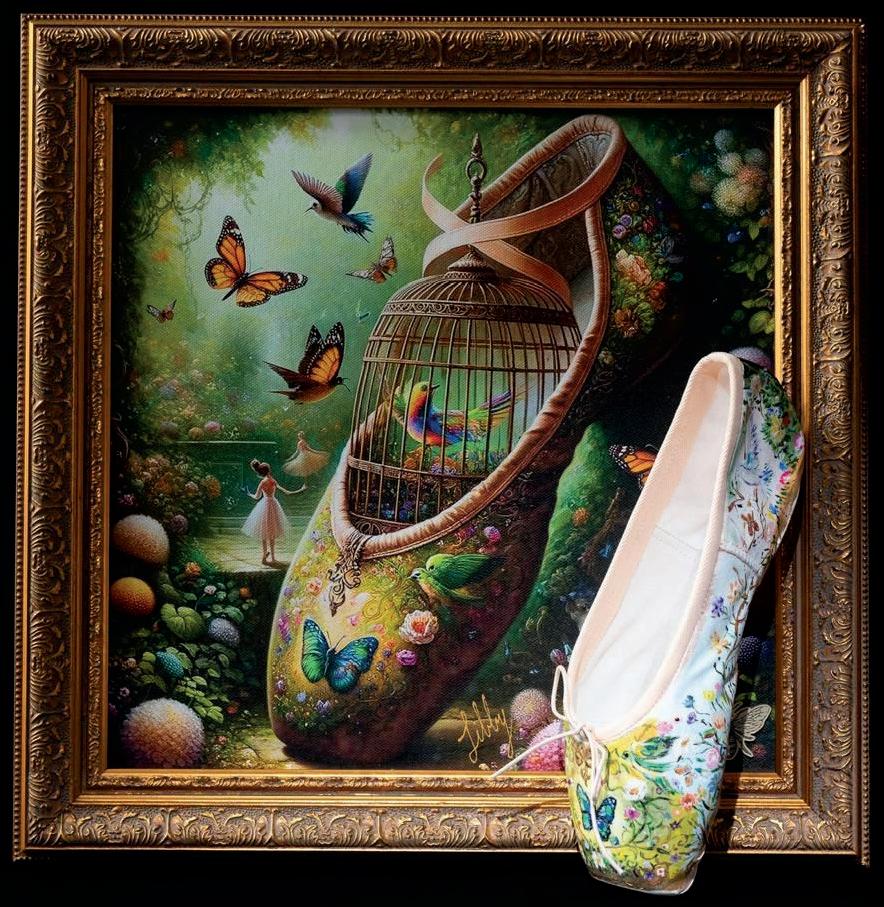
When I was asked to participate in the Youth America Grand Prix’s 25th anniversary celebration this past April, I was thrilled. Growing up I was a dancer too and had a lot of dreams. And somehow, my dreams led me to my current reality. As you know my name is Libby and my branding is all around the “bee.” A bee by nature is too heavy to fly but because it does not know it can't fly it is able to fly. I think as soon as one is aware of their limitations it's hard to get to where one wants to get to. At age 5 I lost my father, I used my abilities and creativity to overcome my pain and loss and that too got me to where I am today. So for me the three most important things which are also part of my brand are: community, legacy and family.
LKE: In previous interviews, you mention your grandmother and how she inspired you, can you share her story with us?

The Reichman’s were and still are an esteemed family who during WWII were very much a part of the Orthodox and the secular world in Europe, even before the war. They were religious but were also exposed to cultural life and education. My grandmother was fearless. After she and her immediate family fled Europe she went back to her hometown using her family’s financial resources to smuggle other Jews out, she saved many lives. She used help from the Spanish Red Cross to pack and ship thousands of food parcels to concentration camps. The family was also able to pressure officials in Franco Spain to issue visas to Jews who were in Budapest. They paid a lot of ransom money to save Jews in concentration camps as well as post war. She and her family even helped Holocaust survivors after fleeing to Tangier, Morocco with her family in the 1950s due to the fall of Austria.
From a young age I wanted to learn from my grandmother, bringing people together, making a difference, shining light into the world. It's a trickling effect. That is the only thing that I believe will make us stronger and help us — to be a light.
LKE: What can you say about the current war between Israel and Hamas?
I am trying to focus on the positive as impossible or hard as it may be. As a mother of five, I don't want my kids to only be scared by the news and worry about what's happening, I don't want them to remember only the horrors during this painful time. I want to re-focus on the positive. I started a tambourine project. We went to a special needs school and created tambourines with the children to show that happy days are coming. For us, we must nurture our community with our individual gifts, leaving a legacy, and creating something for ourselves to share with others, even amidst tragedy. A Lot of what I sell now are family trees, children gifting their parents with something meaningful..
LKE: Do you think of experimenting with other themes or styles in your art practice?
I have been painting my whole life but I only started to sell my art about five years ago. One thing I know I will never change in my practice is the energy that emanates from my work brightening up a room or a house. I have pieces at Carlton Fine Arts, but mostly I work on commission. It's important for me to be in-tune with my clients, their style and preference then I am able to understand what they want. People are fascinating and so I get excited to work with clients from all backgrounds. One thing that's important to me is that the work must produce good
and positive energy. In my process, I do like to switch things up. I use variation of colors, I add gold leaf, recently I have been adding real jewels to my family trees.
LKE: Where do you think art is currently going?
To be honest, when I walk into a museum or a show, I see a lot of art about racism, sexuality, violence. But natural beauty is missing. Why does art always have to be political or represent some agenda? I stay away from politics in my art. We are meant to be closer to nature, the earth, animals, and I think because we are so removed from that, due to technology and social media, we have all these struggles and problems of today. We need to vibrate with the world. But we are so removed from it that it's quite sad.
LKE: What is the last show you went to and what are you currently reading?
I went to the ballet show at the Youth America Grand Prix’s 25th anniversary celebration and was super inspired. There is so much diversity in the world. It's beautiful to see. It is also very hard to raise kids right now. I want to make sure my kids know what it's like to work hard, to succeed, to fail, be patient and ask questions. These girls who train for hours every day, who strive for success and don't waste time, there is so much opportunity so if you channel your energy properly, anyone can succeed. The children at this show were all so talented and they put so much time and effort into their craft and it was inspiring to see. I appreciate life and art but I feel like we are living at a time when people are seek perfectionism, which takes away from the pro process of it all.
LKE: What are your thoughts about AI in the art world?
I am excited for AI. I was recently at a show where there was an artist who uses AI and some artists I knew were against coming, and I couldn't understand why, because in my opinion, I think AI will bring us closer to our emotions, it will bring us closer to our humanity because we will be forced to be more human. AI cannot hold the contradictory aspects of our nature, only we can.
Libby Klein is having an opening in July at the Hamptons Fine Art Fair. Visit https://hamptonsfineartfair.com/ for details.
VIP Opening Reception: Thursday, July 11
Afternoon Session: 2-6PM Evening Session: 6-9:30PM
The Jewish Museum in the old ghetto of Venice, Italy, is hosting I Confini dell’Alterità /The Contours of Otherness, exploring themes and nuance of identity, migration and cultural memory, curated by Elliot-Israelson with Shifting Vision. The exhibition features works of ten artists and runs alongside the Venice Biennale’s theme, “Stranieri ovunque/Foreigners Everywhere,” on notions of foreignness across languages and cultures. The show will be exhibited across three historic locations in the Ghetto: Spazio Ikona, Spazio Lab, and Spazio Azzime.
“Jews are no strangers to the sensation of being different, and to the nuances of identity that comes along with that… identity that's always in flux, in movement,” said Elliot-Israelson regarding the importance and symbolism around the
location of the exhibition. The Ghetto is a “kind of encasement for holding that kind of otherness.”
Jonathan Prince, Amit Berman, and Elisheva Reva will present their works among other artists including Flora Tamnouche, Danny Avidan, Lucas and Tyra Morten, Lihi Turjeman, Deborah Werblud, Laure Prouvost, and Yael Toren.
On view April 21- October 27.
For more information, high-res images, or to schedule interviews with the curators and artists, please contact Andrea Acampa at Opera Laboratori press office (a.acampa@operalaboratori.com).
Read the press release here.
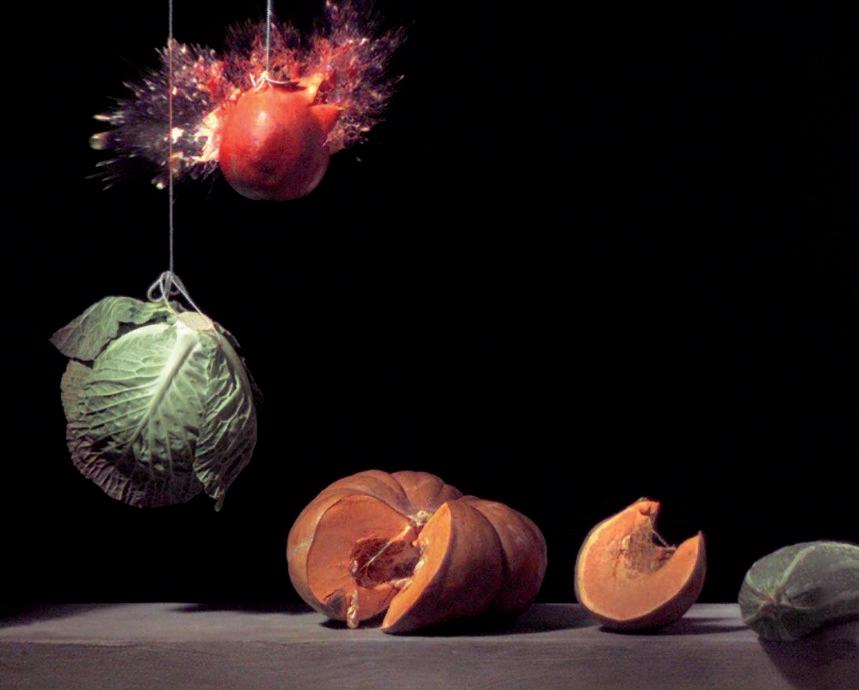
Ori Gersht, a British Israeli video artist and photographer is included in the exhibition, The Beauty of Things: Still Life from 1900 to Today, at Kunsthalle Emden, Germany.
This exhibition explores the evolution of still life from 1900 to today, featuring artists like Arman, Harun Farocki, and Roy Lichtenstein.
Gersht's work focuses on historical references which he uses as metaphors for contemporary life, often concerned with the relationship between history, memory and landscape. His themes
often allude to art history, specifically Dutch still life and vanitas paintings. In many ways, Gersht seems to be a kindred spirit to the old masters. Gersht's video work, "Pomegranate" (2006), captures the beauty of decay and the sorrow of impermanence, blending technical mastery with deep emotion. The exhibition is currently on display at Kunsthalle Emden in Germany.
Learn more about the exhibition here
Learn more about Ori Gershts practice here
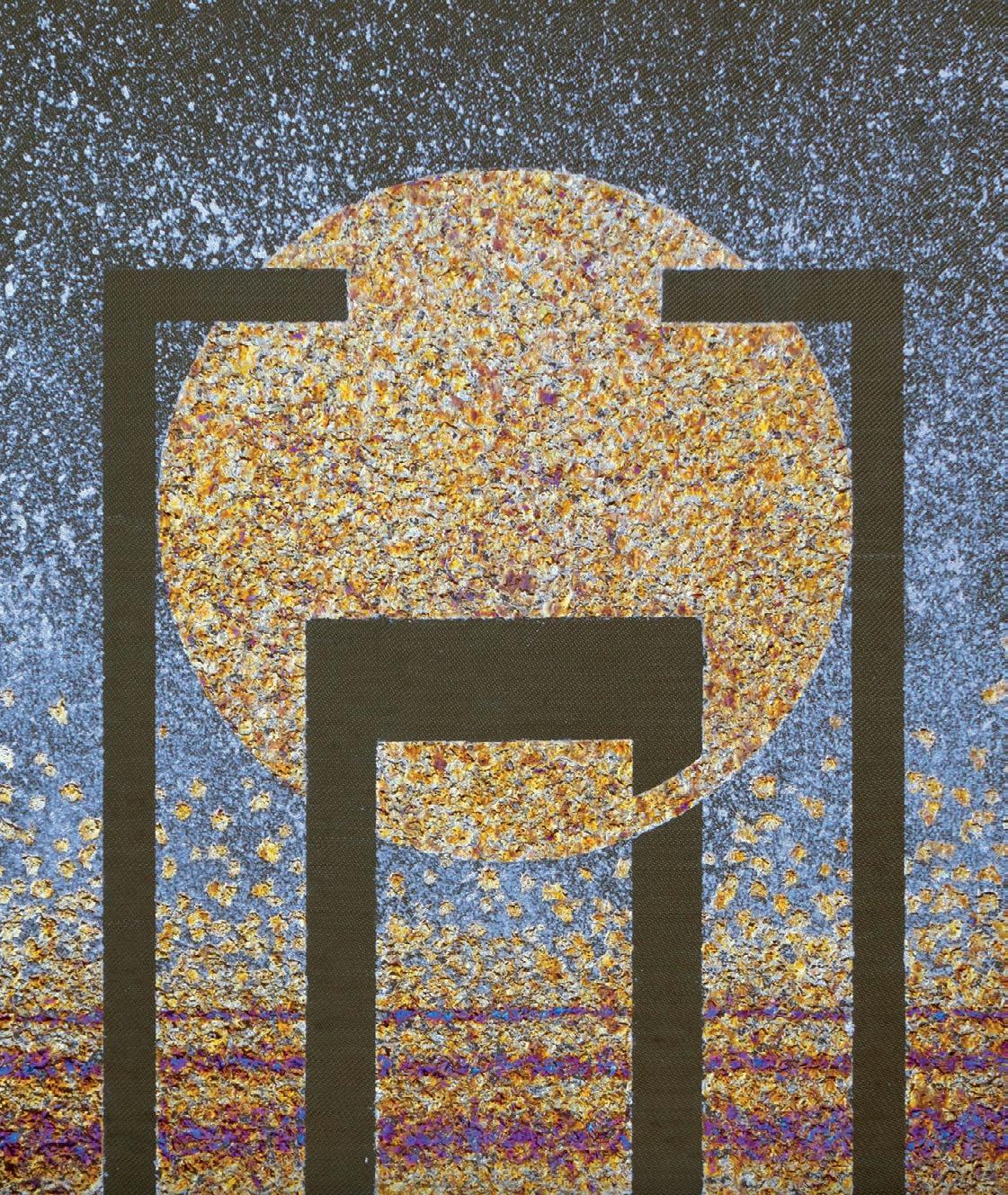
SEFFA KLEIN, MULTIPLE DISPLACEMENT (SUN MACHINE), 2019, BISMUTH METAL WOVEN GLASS, 76.2 X 61 CM
Seffa Klein’s solo exhibition, A Family Constellation, was held at Jérôme Poggi Gallery in Paris through mid-June. Klein, a Phoenix born artist, exhibited paintings, sculptures, and a series of works on paper for her first European exhibition. These are displayed alongside significant pieces by her grandparents Yves Klein and Rotraut, her great-grandparent Marie Raymond, and her great-uncle Günther Uecker, offering visitors a chance to experience an exceptionally rich tapestry of artistic expression across generations.
Organized in collaboration with Yann Perreau (Here is Elsewhere Gallery), the exhibition has garnered additional

support from Diane de Polignac Gallery, Clavé Fine Arts, Standard Associates, and the Thibault Poutrel Collection. The exhibition also features notable contributions including a great piece of writing by Jérôme Sans and a lively article about music by Anne-Cecile Sanchez for Art Basel.
Learn more about the exhibition here.
Learn more about Seffa Klein’s practice here
Read Jerome Sans’ writing here
Read Anne-Cecile Sanchez’s article for Art Basel here.

In the Beginning , a solo exhibition by Ilan Brami, is open at the newly relocated Indie Photography Gallery in Tel Aviv. Curated by Jennifer Bloch, the show explores themes of creation and the Earth's primal state, inspired by the phrase, "the Earth was formless and void."
The exhibition is up from June 6 until July 6 on Hatnufa Street 6, 4th Floor, Tel Aviv.
A gallery talk is scheduled for Friday, June 21, at 12:00, offering a chance for deeper insights into the artists' vision.
Learn more about the exhibition here
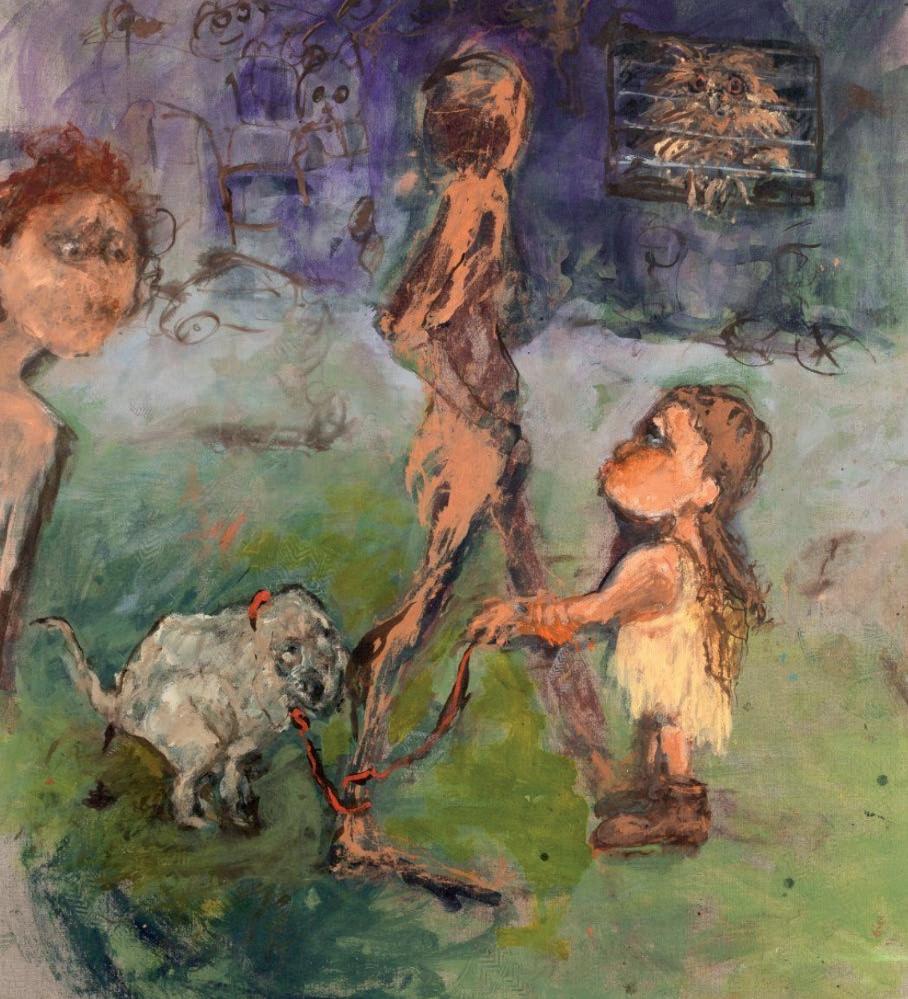

BUDA,
NO SUCH THING AS
Eva Beresin and Paulina Buda’s exhibition, Saccharine Sentiments , taps into the bitterness and delight of language within the structure and meaning in art. Themes of sweetness, ambiguity and emotional complexities like abandonment and disappointment shape our assumptions, particularly through our animalistic senses.
Paolina Wandruszka, curator for the exhibition points out, “John Morreall’s thesis was essential for human development, he believed that emotional behavioral response to cuteness has ensured our survival as humans. His thesis assumes that everything that is small and weak must be sweet in order not to be devoured,” hence the name of the exhibition.
Eva Beresin, known for her vivid depictions of human decay and anthropomorphic creatures, blends physicality with abstraction in her works.
Paulina Buda’s paintings often feature desolate landscapes and fragmented forms, inviting viewers to explore the deeper meanings behind her evocative use of color and texture.
The exhibition was held at Adhesivo Contemporary, MX in May.
Follow Adhesivo Contemporary on Instagram here.
Follow Eva Beresin on Instagram here.
Read the press release here.

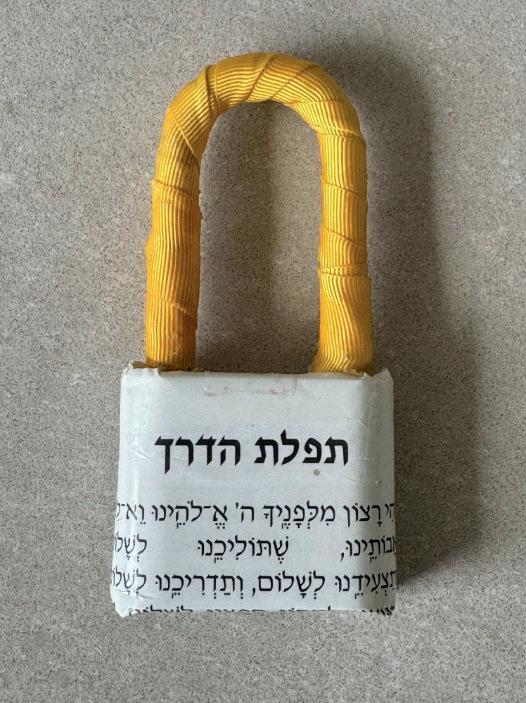

Artist Marcel Knobil’s Lovelock Hostage Bridge JW3 installation in the UK has become a monument in support of the hostages. To display even a deeper love and solidarity with Israel and the Jewish people, on June 5th the Lovelock Art Launch Event presented an exhibition featuring fifty artists who customized padlocks with their own creative vision. This powerful event aimed to support the hostages and their families.
Raymond Simonson, Chief Executive of JW3, says, “JW3 is proud to be hosting Lovelock Art, at a time when we need to continue to remember the hostages. This powerful initiative will continue to use arts and culture to drive important conversations now more than ever.”
The event included a viewing of the padlocks displayed on the Lovelock
Hostage Bridge, an opportunity to meet with many of the artists and speeches, including one from Asi Sharaby, the cousin of Alan Ohel who is captive in Gaza.
Artist Abigail Schama reinstated how, “the incarceration of the innocent hostages and deaths of innocent civilians in Israel and Gaza is a tragedy which disturbs me on a daily basis. I was keen to convey how beautiful and delicate beings are while being cruelly held captive. The padlocks are an imaginative way to provide a platform for artists around the world to show how we feel and simultaneously raise funds for an important charity.”
Visit and share information about the exhibition on social media, along with the project’s link www.LovelockArt.org
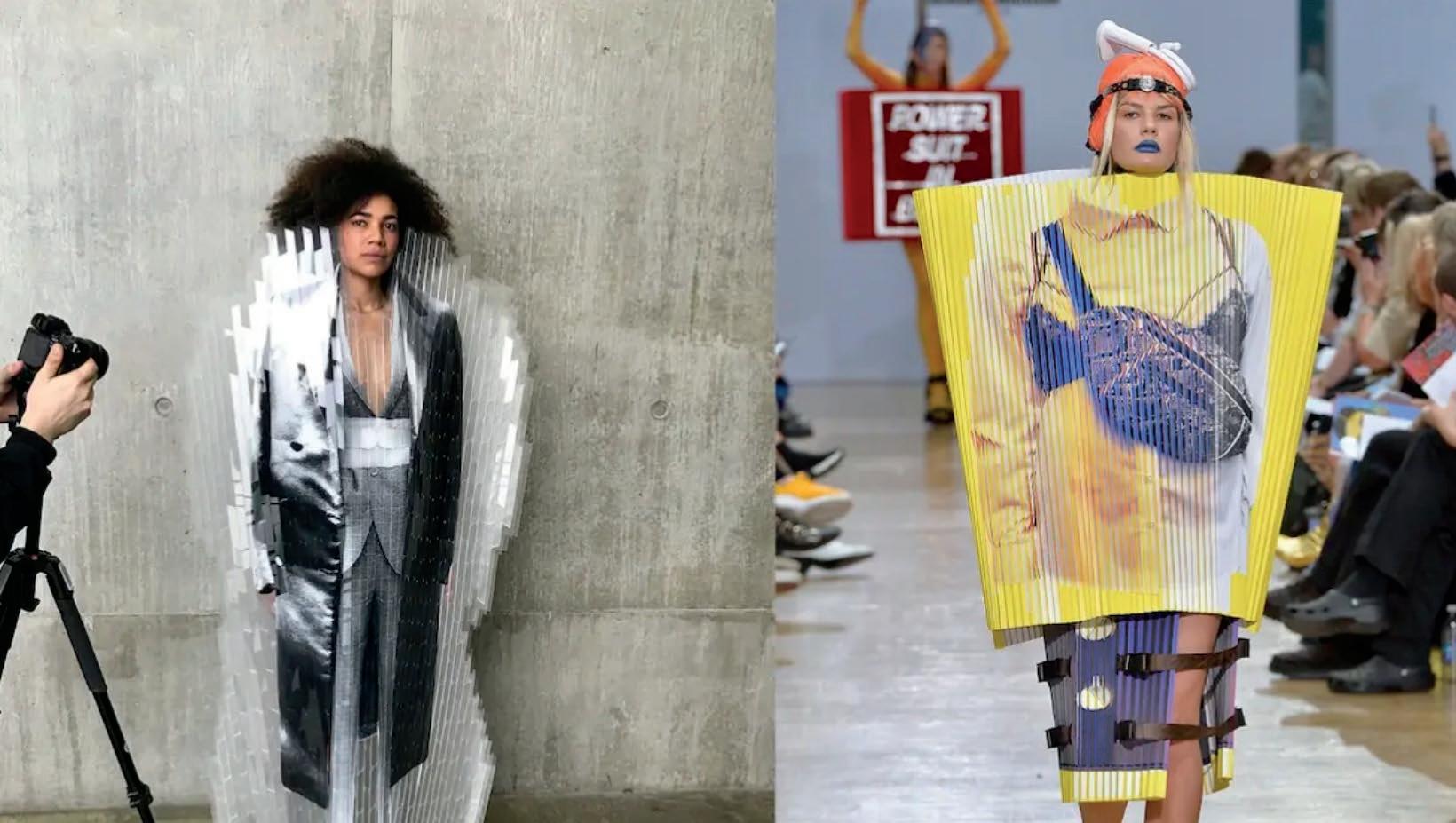
Artist and fashion designer Nicole Zisman was presented by DiscoverLAB at Fashion Week at the Ein Sof Gallery on June 9. Known for her eponymous womenswear label, Zisman celebrates authenticity as modernity and futureglam in the context of her Venezuelan Jewish heritage. Her work intricately blends ethnicity, memory, migration, and mysticism, incorporating JudeoLatin and Hasidic spirituality into bold contemporary designs.
Zisman's approach is marked by a crossdisciplinary use of craft techniques and high-impact visual narratives, reflecting a universal desire for unity and quality human interaction. She addresses the complexity of stratified Jewish identity in the West and the political consequences
of visual assimilation through print and image, while seeking to challenge the notion of a fixed truth that ‘seeing is knowing,' that perception of a body in culture equals the real.
Zisman holds a BA in Fashion Print from Central Saint Martins and has been featured in prominent publications like Vogue Italia and Teen Vogue. Zisman has presented her work in various exhibitions, including her solo exhibition hosted by the Centre for Sustainable Fashion and her large-scale installation at Ein Sof Gallery.
Make an appointment to view info@nicolezisman.com
Learn more about Nicole Zisman here.
If you would like to suggest a feature or contribute an interview or art review to the AWFI Newsletter please email: Artworldforisrael@gmail.com