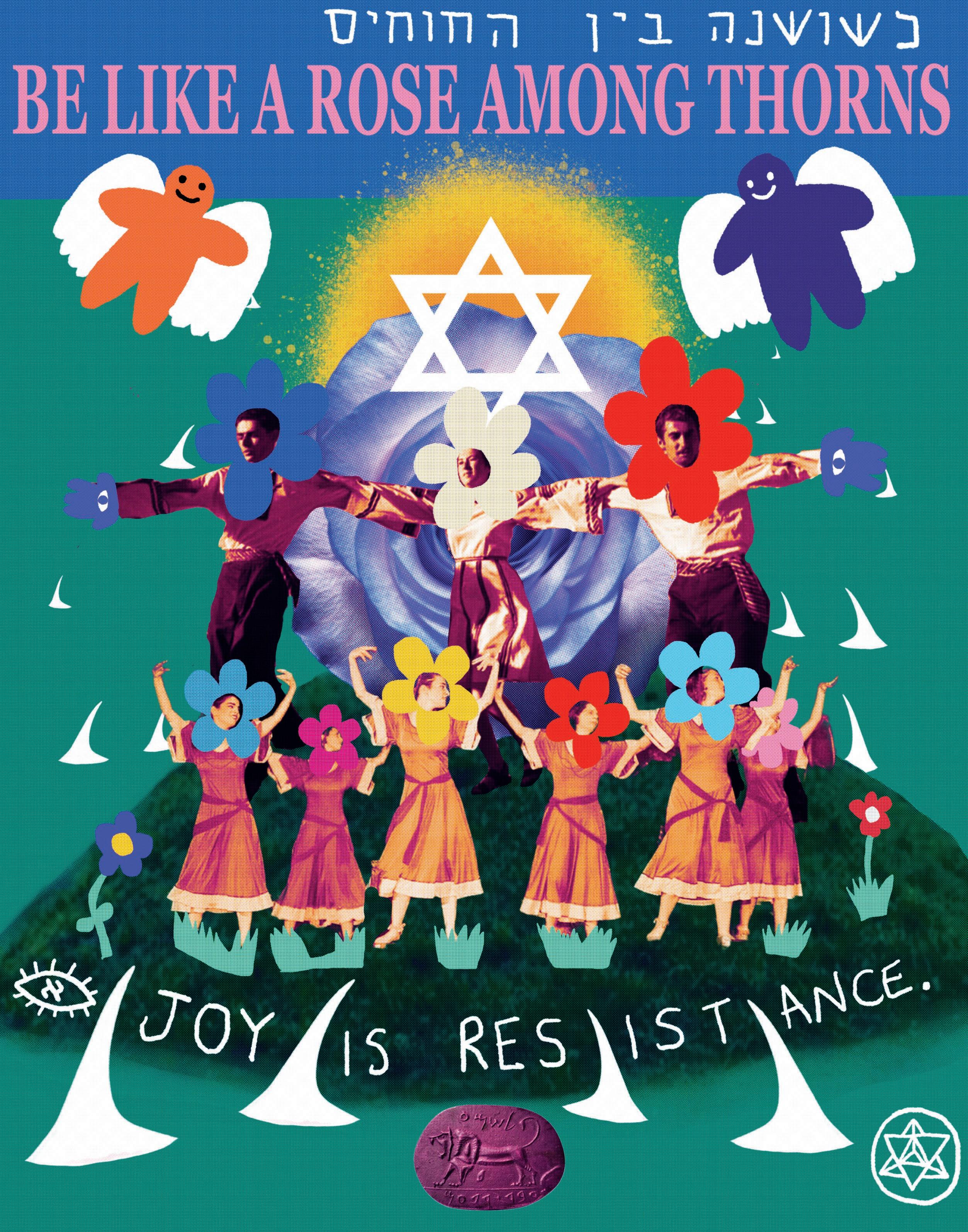
AWFI NEWSLETTER 24 APRIL 2024 AWFI NEWSLETTER •• ART WORLD FOR ISRAEL'S INTERNATIONAL ROUND-UP •• ISSUE 4 15 MAY 2024 EZRA BADERMAN, LIKE A ROSE AMONG THORNS, DIGITAL COLLAGE, 2024
Responsibility
Lesley Bodzy and Katie Commodore present Womanhood 102 at Space 776 in NYC
Leah Kogen Elimeliah Interviews Poet and Art Critic Ilka Scobie
•• • •• AWFI NEWSLETTER 15 MAY 2024 ISSUE 4 2 TABLE OF CONTENTS 3 OPEN STUDIOS
Beach Cultural Council
4 BENEFIT EXHIBITION
5 OPENINGS
Palm
Hosts Open Studios Featuring Israeli Artist Hodaya Louis
Together: NYC Group Show Benefits Jewish National Fund and Israeli Artists
9 YOM
HASHOAH
Holocaust
10 ARTIST FEATURE
Resistance, Joy
Resilience 12 INTERVIEW
for Memory: The Role of Art in
Remembrance
Ezra Baderman on
and
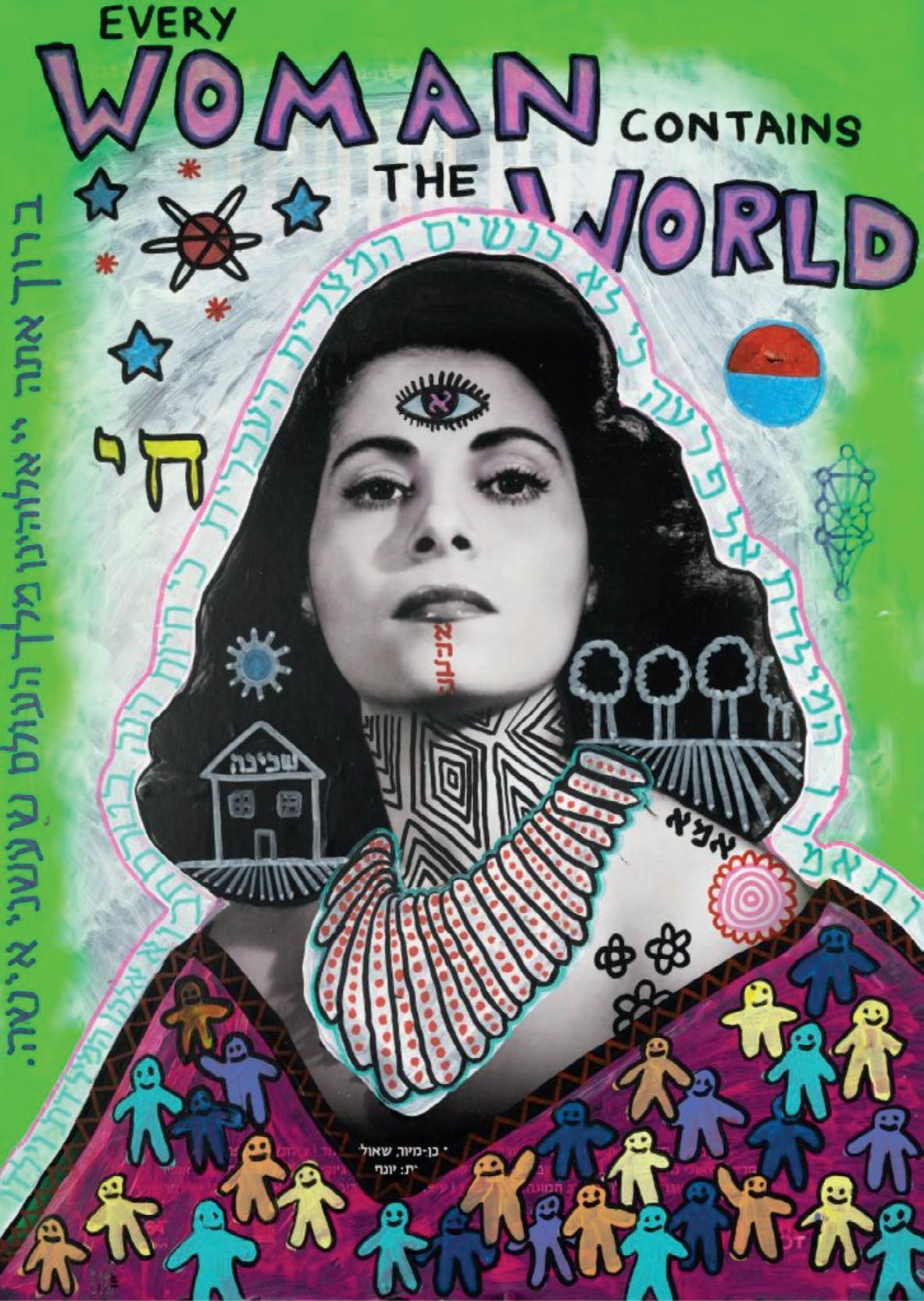
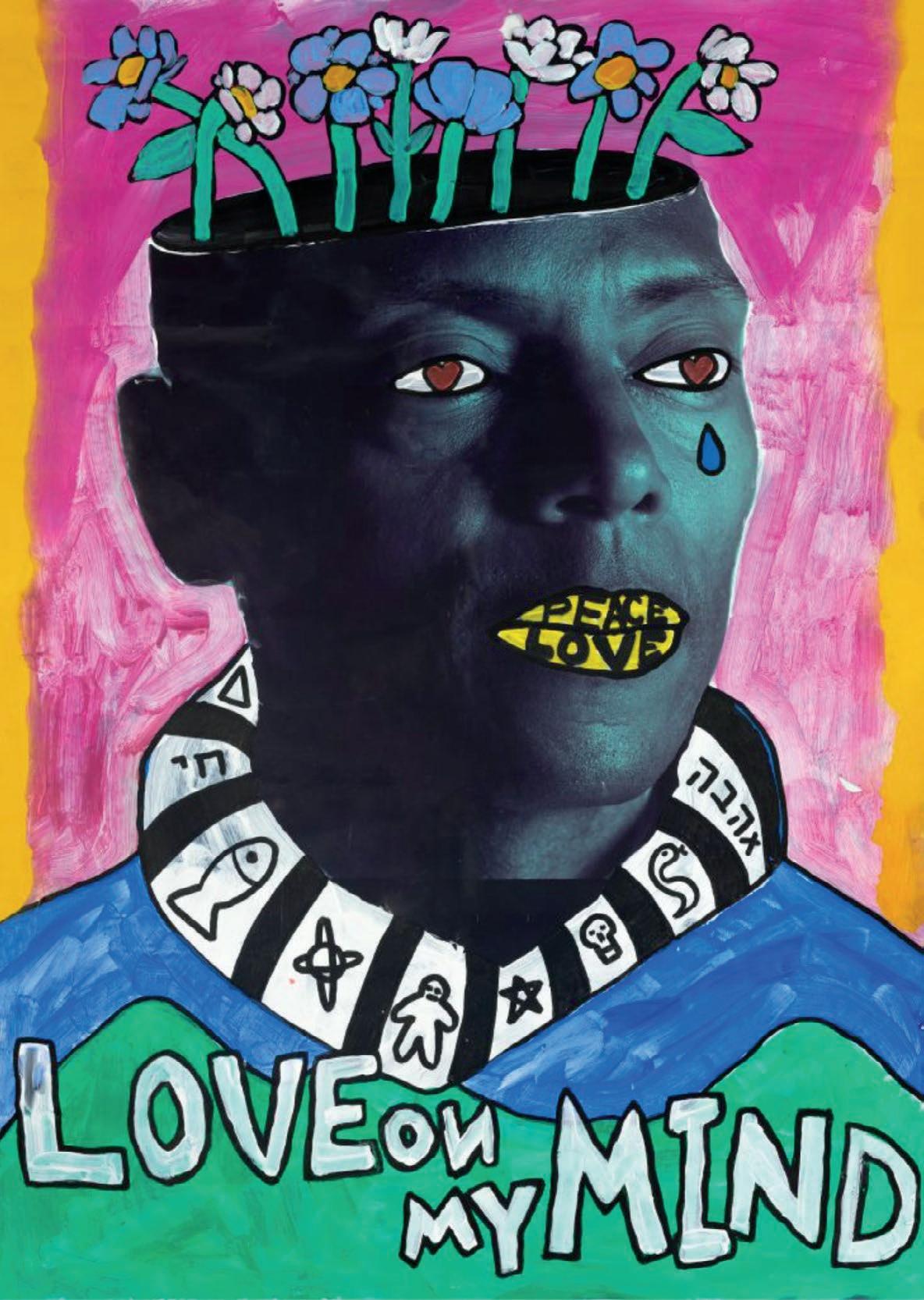
SELECTION FROM EZRA BADERMAN'S POSTER SERIES
The Palm Beach Cultural Council Hosts Open Studios Featuring Israeli Artist Hodaya Louis
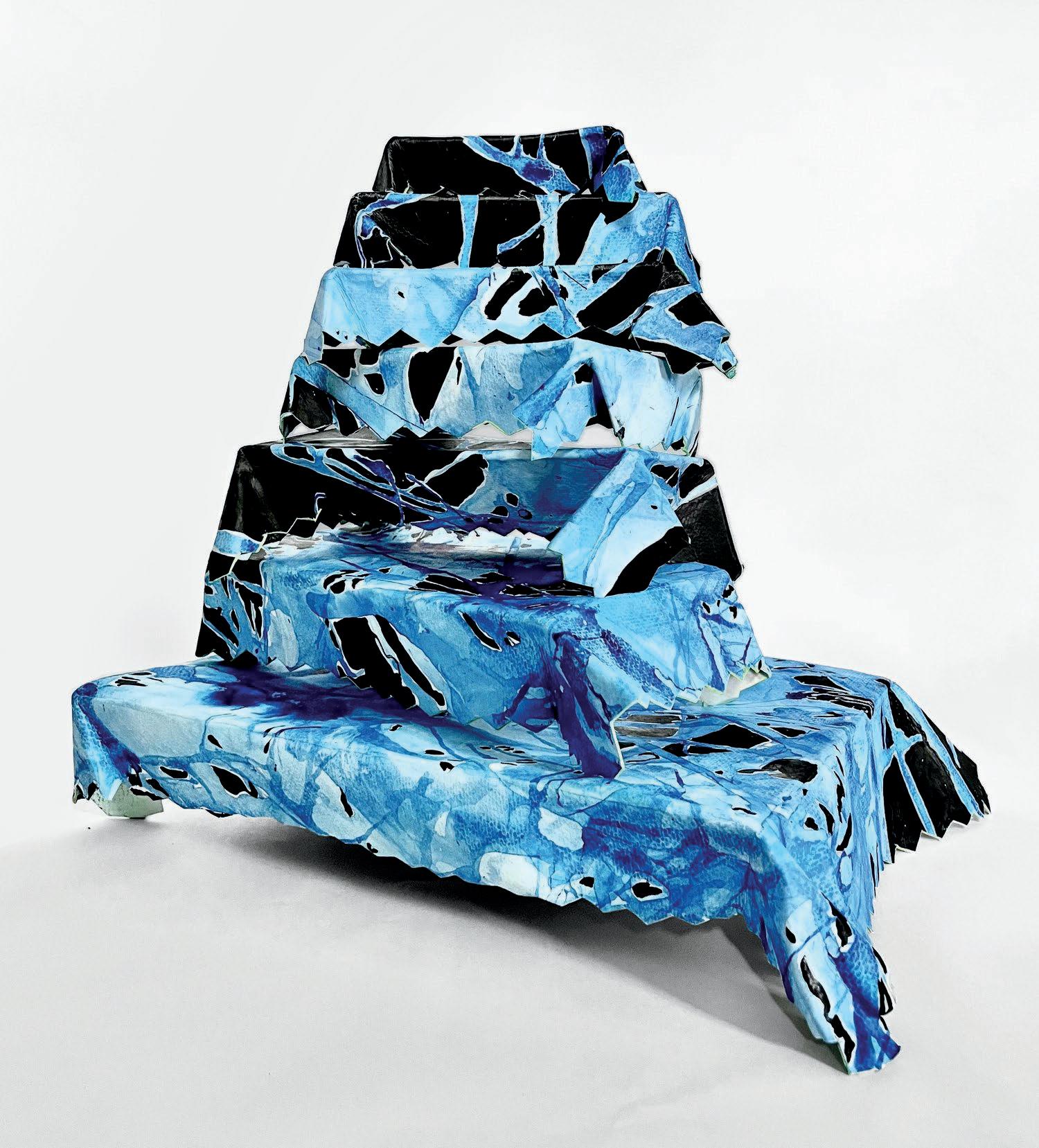
Hodaya Louis, an Israeli-born multidisciplinary artist whose works include sculpture, drawing, and video, is one of ninety artists at The Palm Beach Cultural Council opening of their studios that provides creative professionals with an opportunity to show and sell their work to both the local community and visitors.
Hodaya’s Tablecloths ladder series evokes the narratives of tradition, ritual and community, the importance of food and gathering in the Jewish culture, often a place of deep conversation between generations.
HODAYA LOUIS, #2 (TABLECLOTHS LADDER SERIES), 2023, WATER-SCULPTED PAPER, INK, 16 X 19 X 14 IN.
Details: Sat May 18 and Sun May 19, 12 – 5 pm at the artists’ home studio–16368 93rd Rd N Loxahatchee, FL 33470
Additional details about the The Palm Beaches’ Opening Studios here.
Learn more about Hodaya Louis’ practice here.
•• • •• AWFI NEWSLETTER 15 MAY 2024 ISSUE 4 3 OPEN STUDIOS
· PALM BEACH
Together: NYC Group Show Benefits Jewish National Fund and Israeli Artists

If you are looking for an occasion to purchase Jewish and Israeli art and support a cause, this is your chance!
Lilian and Annette from Stars In The Arts are organizing Together , an exhibition and sale on May 16 in NYC. Art sales will benefit the Jewish National Fund and Israeli artists.
Purchase tickets to the event here.
Learn more about Stars In The Arts here.
•• • •• AWFI NEWSLETTER 15 MAY 2024 ISSUE 4 4 BENEFIT
EXHIBITION · NYC
Can Goddesses Use Their Bodies However They Please?
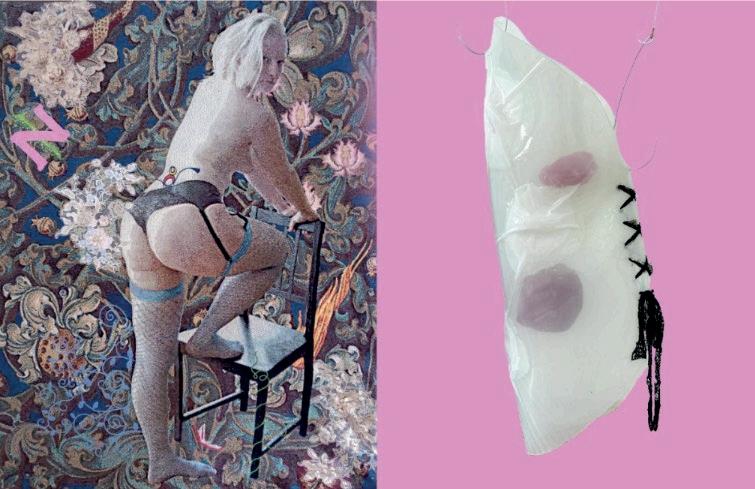
Lesley Bodzy and Katie Commodore present Womanhood 102, a provocative body of work curated by Erica Cross at Space 776 in NYC. The exhibition highlights societal expectations and complexities that women encounter. The artists attempt to dismantle standards by which women adhere to regarding their bodies and sexualiy. In doing so, their works serve as “physical retaliation” against subjugation.
The exhibition will be on view from May 31 to June 8, 2024.
Read the press release here.
Learn more about the exhibition here.
•• • •• AWFI NEWSLETTER 15 MAY 2024 ISSUE 4 5 OPENINGS NYC
LEFT: KATIE COMMODORE, JULIA, WOVEN COTTON WITH EMBROIDERY AND APPLIQUE, 57 1/4" X 49"
RIGHT: LESLEY BODZY, GODDESS, SILICONE, BALLOONS, RESIN, LACE, STRING, 28 X 13 X 5 INCHES
YOM HASHOAH
Responsibility for Memory: The Role of Art in Holocaust Remembrance
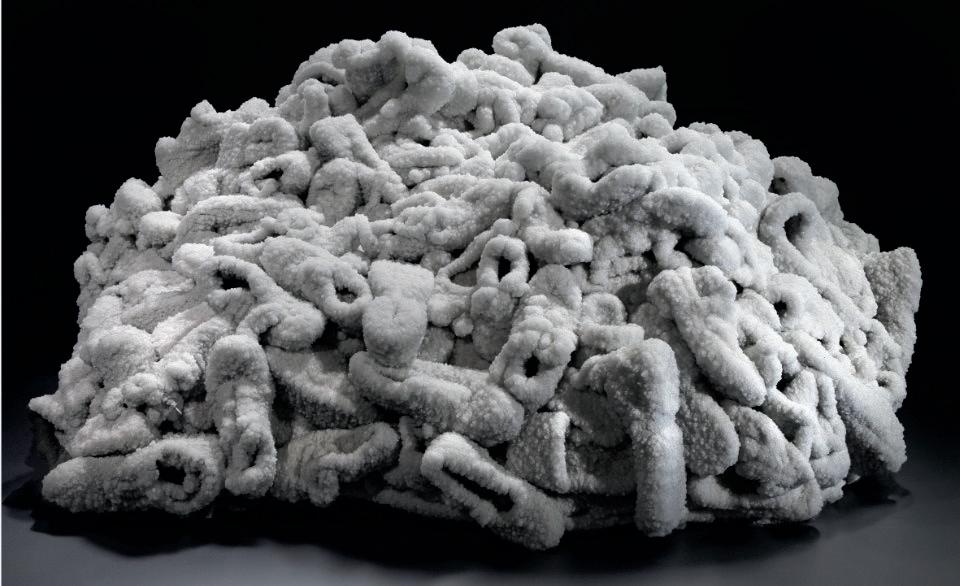
SIGALIT LANDAU'S VICTORY OF MEMORY
The United Nations released a virtual exhibition showcasing three generations of artists, Holocaust victims, survivors or survivor's children, whose work fosters Holocaust rememberance for future generations. The exhibit highlights the importance of transmitting our heritage and history through education and collective memory of the horror of the Shoah.
Above, Sigalit Landau collects hundreds of pairs of shoes and piles them, to form
an island inside a sea of salt. Landau‘s mountain evokes a memorial, an island of remembrance in a sea of death. It beckons the viewer closer, encouraging reflection and meditation. Landau created this work for the opening exhibition at the Museum Center for Persecuted Arts. It was first shown in the German Bundestag in Berlin in 2015.
Visit the exhibition here.
•• • •• AWFI NEWSLETTER 15 MAY 2024 ISSUE 4 6
SIGALIT LANDAU, PHOTO OF THE INSTALLATION VICTORY OF MEMORY – ISLAND OF SHOES, 2015, (SHOES, SALT, 300 × 300 CM). MOCAK MUSEUM OF CONTEMPORARY ART IN KRAKOW.
YOM HASHOAH
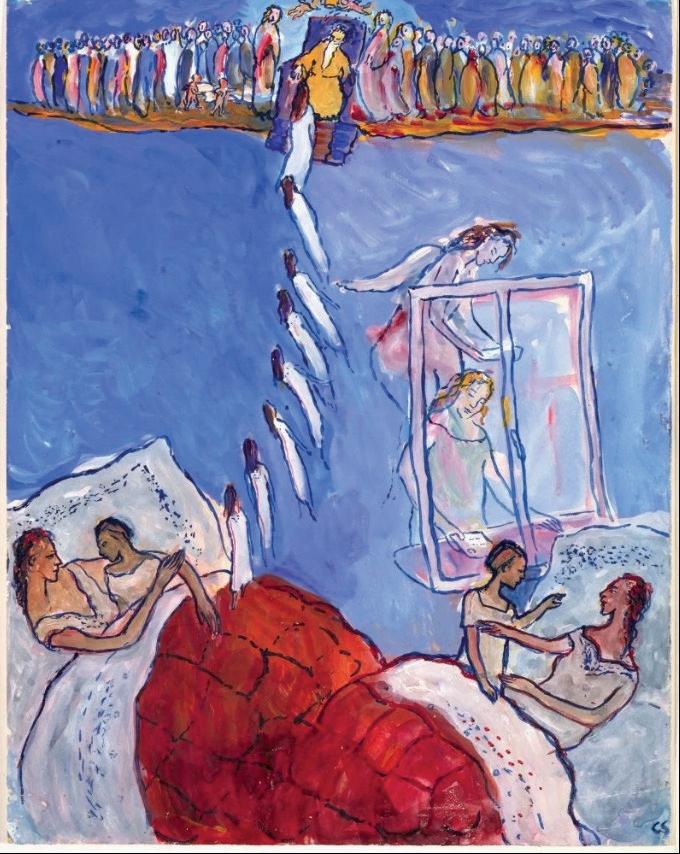
CHARLOTTE SALOMON, GOUACHE FROM LIFE? OR THEATRE? (1940-1942) MUSEUM AMSTERDAM / COLLECTION OF THE JEWISH MUSEUM AMSTERDAM. ©CHARLOTTE SALOMON FOUNDATION
CHARLOTTE SALAMON'S PERSONAL TESTIMONY
Charlotte Salomon’s artworks are a profound testimony of her personal life while she hid in France in the 1940s, before being deported and murdered in Auschwitz. Salomon’s works have been donated to the Jewish Historical Museum in Amsterdam, and have been shown in several exhibitions.
Read Artnet's "‘She Put Everything Into Art’: The Curator of a New Charlotte Salomon Exhibition on How the WWIIEra Artist Painted Through Her Pain"
Read Charlotte Salomon's story on the Yad Vashem website.

ELISABETTA FURCHT: “ALEX, 75. 98 DAYS IN THE HANDS OF HAMAS. JUST LIKE MY FATHER, HIS PARENTS WERE HOLOCAUST SURVIVORS. TODAY, HE CAN’T TESTIFY.”
BRING THEM HOME
Elisabetta Furcht is an Italian artist who since October 7 has been painting one hostage a day and plans to continue doing so until each one of them is back in their home safely. Furcht’s parents are Holocaust survivors.
Alex Dancyg, currently captive in Gaza, was born in Warsaw to parents who like Furcht's, were Holocaust survivors. He immigrated to Israel in 1957 and settled in Kibbutz Nir Oz, working in agriculture and dedicating his life to Holocaust education. He is a devoted father of four and a grandfather to thirteen.
Learn about Elisabetta Furcht here.
Learn about Alex Dancyg here.
•• • •• AWFI NEWSLETTER 15 MAY 2024 ISSUE 4 7
YOM HASHOAH
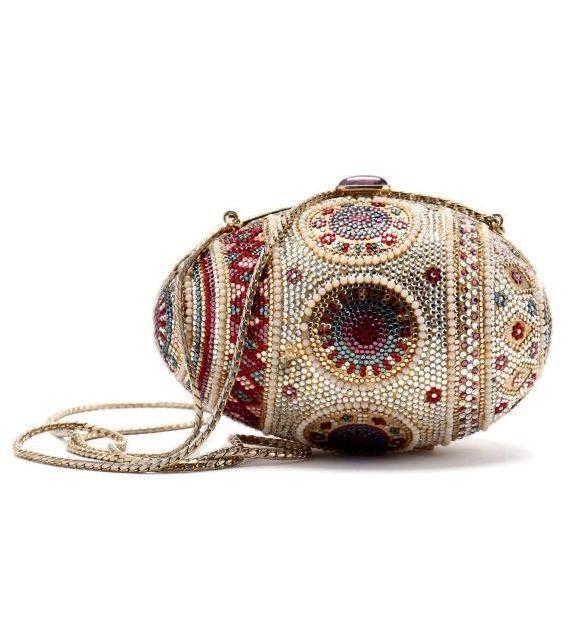
JUDITH LIEBER HANDBAG, 1973, 10 YEARS AFTER LAUNCHING HER NAMESAKE BRAND.
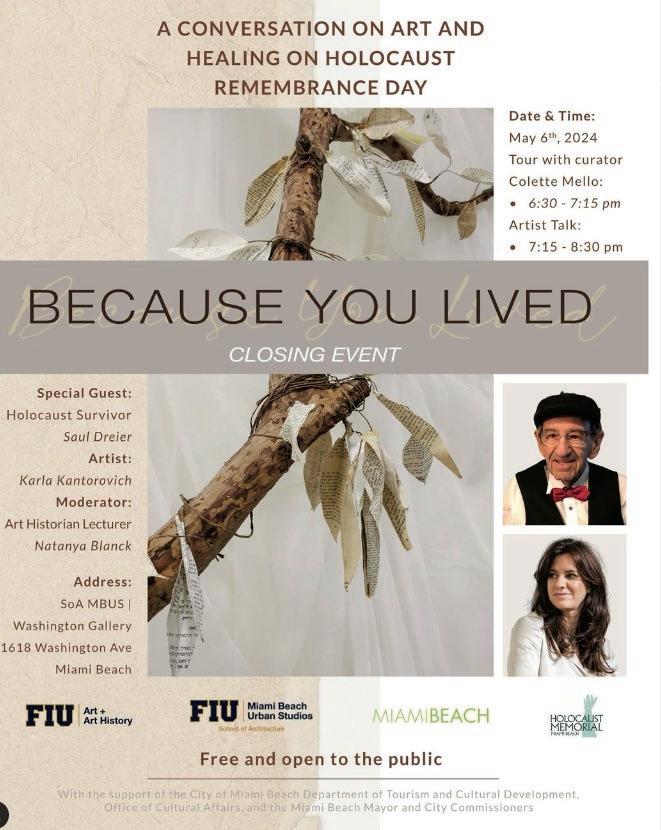
"I DESIGNED HANDBAGS IN MY HEAD TO GET THROUGH THE MISERY." BECAUSE YOU LIVED
The story of Judith Lieber and her famous handbags is one of inspiration and resilience. She sought to create beauty from devastation. Surviving the Holocaust and afterwards living in a Jewish ghetto basement with sixty other Holocaust survivors in Hungary, Judith left for the United States where she continued to create. She launched her famous brand of bags using her experience when she worked at the handbag company Pessl. Tapping into her personal narrative, she went on to create something beautiful, turning her dark past into shimmering light.
Learn about Judith Leiber’s story here.
Karla Kantorovitch’s exhibition Because You Lived, (inspired by her grandmother, the family's sole Holocaust survivor), ended on Yom Hashoah at the School of Architecture, Miami Beach. The show's closing included a conversation between the artist and survivor Saul Dreier, moderated by art historian Natanya Blanck.
Drier learned to play drums in a concentration camp using metal spoons and making a beat so fellow prisoners could sing. At 88, he bought his firstd drum kit and started a Holocaust survivor band. They toured worldwide, and even played at the White House, romoting peace, unity and an end to antisemitism.
Learn about Kantorovitch's practice here.
•• • •• AWFI NEWSLETTER 15 MAY 2024 ISSUE 4 8
YOM HASHOAH

LIVES ELIMINATED, DREAMS ILLUMINATED
Dr. David M. Milch, son of Polish Holocaust survivors Bernard and Lusia Milch, runs the Dr. David M. Milch Foundation, continuing his parents' legacy through philanthropy. The Foundation, along with artist Lauren Bergman and composer Ella Milch-Sheriff, organized Lives Eliminated, Dreams Illuminated (LEDI), a touring exhibition featuring portraits by Bergman based on archival photographs of girls and young women whose lives were taken during the Holocaust.
The show is currently on view at the Holocaust Memorial Museum of Miami Beach. The Foundation provides transportation for students of all ages to visit in support of Holocaust education.
Learn about the exhibition here.

KINDNESS AT VOICES OF THE HOLOCAUST
In commemoration of The Day of Rememberance, Voices of the Holocaust theater company in the UK organized a production of the play, Kindness that took place on May 8. The play is based on Hungarian Holocaust survivor Susan Pollack OBE’s story, who at the age of 13,was transported to Auschwitz-Birkenau.
Voices of The Holocaust’s mission is to ensure that the voices of survivors and victims of the Holocaust are not lost in the post-survivor-era, using theater to continue telling their stories.
Visit Voices of The Holocaust website to learn more about their organization and the play.
Discover More: Read Art During The Holocaust here.
Read Google Arts & Culture section on Art And The Holocaust here.
•• • •• AWFI NEWSLETTER 15 MAY 2024 ISSUE 4 9
LAUREN BERGMAN, ESTHER FREDERIKA POLAK, 36" X 36" OIL ON CRADLED PANEL
Ezra Baderman on Resistance, Joy and Resiliance
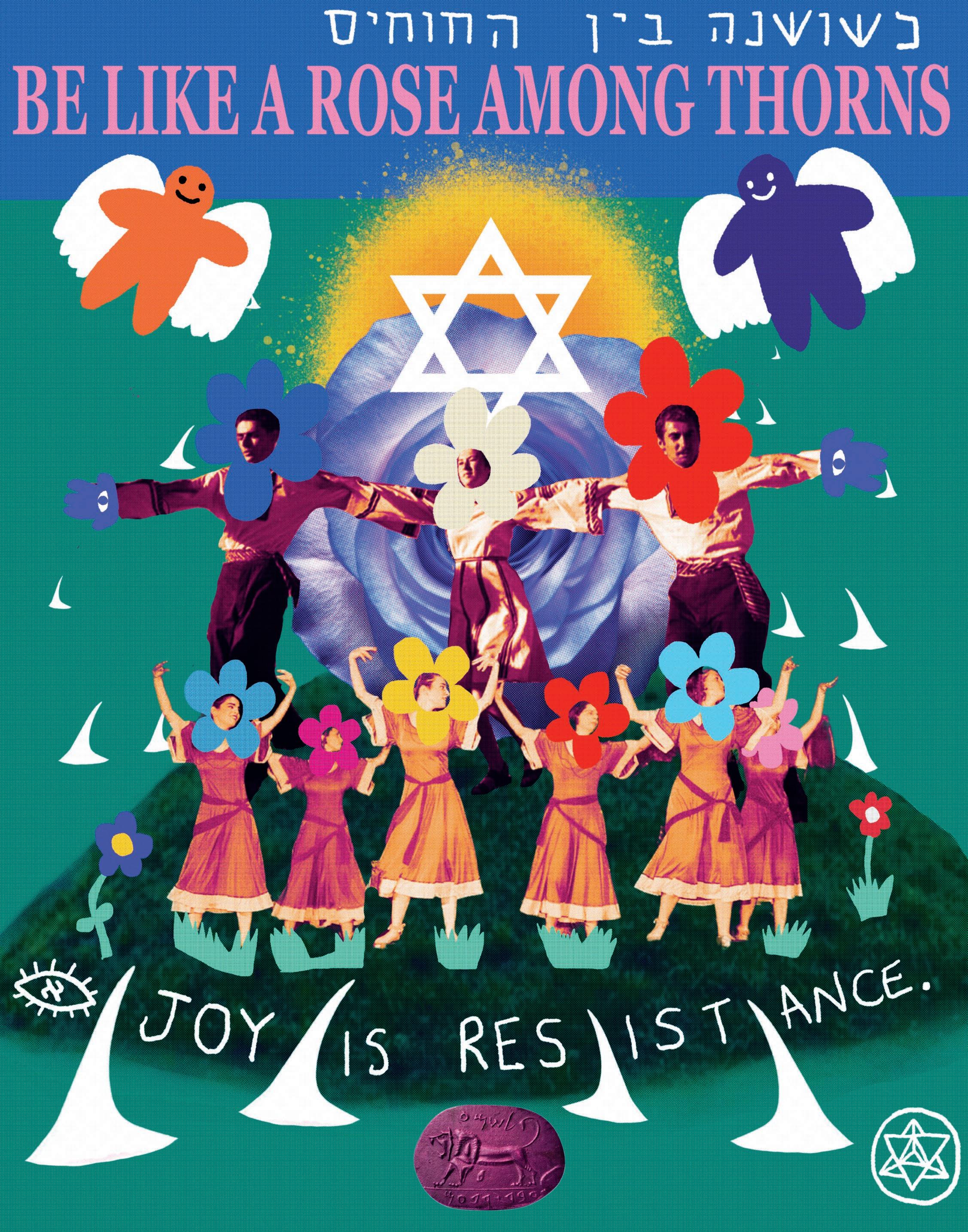
Ezra Baderman's new collage work is a reflection on a metaphor drawn from Shir HaShirim, Song of Songs , “Be like a rose among thorns.” In this ancient poem, King Solomon evokes a symbol for our relationship with the Divine—a rose representing beauty in contrast to it's surrounding menacing thorns.
This metaphor rings true today for the Art World for Israel community. It is a provokation to look deeper for the splendor that persists amidst adversity. Perhaps true beauty, much like the rose, isn't confined to perfection or uniformity. Instead, it exists among the imperfections, revealing itself through “thorns” and trials.
Amidst the current political climate, Israel and the Jewish poeple are often portrayed as the thorny scapegoat for all the world's evil. But for those willing to truly see, there is a beauty that shines through. It's exemplified by the courage and unity of the Jewish people since October 7.
The theme of resilience and beauty also resonated centuries ago in the work of Rabbi Israel ben Moses Najara, who drew inspiration from King Solomon's quote for his song, “Be like a rose among thorns.” In this composition, it is not the people
singing to God but rather God’s ode to His beloved people.
Ezra Baderman is a British-Israeli multi disciplinary artist. His work explores a range of themes, from street life and meme culture, to his Jewish heritage and esoteric knowledge.
His media encompasses collages and more traditional painting techniques, to ultraviolet slime installations and paintings made from plasticine. He draws inspiration from psychedelic imagination, esoteric experiences, and reflections on the state of our society.
He currently lives in Lisbon with his wife Talia, and their children, Akiva and Elisheva.
Read the full post on Baderman's work and listen to the song here.
Learn more about Ezra Baderman’s practice here.
•• • •• AWFI NEWSLETTER 15 MAY 2024 ISSUE 4 10 ARTIST FEATURE
•
ARTIST FEATURE
•• • •• AWFI NEWSLETTER 15 MAY 2024 ISSUE 4 11
EZRA BADERMAN, LIKE A ROSE AMONG THORNS, DIGITAL COLLAGE, 2024

Leah Kogen Elimeliah Interviews Poet and Art Critic Ilka Scobie
I’d describe Ilka Scobie as a free spirited, cosmopolitan, blunt, urban poet. The femme shaper of free verse, born in the 1950’s, an authentic New Yorker, Ilka speaks to the City in her poems, to the neighborhoods, the people, culture, politics, using the senses, luring the reader right to the depths of the cityscape. Around the block and into the interior, we find ourselves corresponding between the inner and the outer layers of our perception and her vision.
LKE: What has it been like for you to grow up and live all your life in NYC as a poet and an art lover?
IS: New York is a wonderful city to grow up in especially if you are interested in culture
and counterculture. Since I was a child I read and wrote poetry and published in my elementary school magazine, it was always part of my life. In 1965 I saw John Giorno perform and it was life altering, he was like Mick Jagger and Bob Dylan but cooler. It was the first time I saw poetry jump off the page, really electrifying. I got really into the beats and those were the poets I grew up on, NYC provided that. I lived across the street from the Brooklyn Museum and took art classes there as a kid drawing Egyptian mummies, Native American art and African fetish objects. Later on, when I was reluctant to go to college I went to SVA because it was easy to get into plus Andy Warhol supposedly lectured there.
•• • •• AWFI NEWSLETTER 15 MAY 2024 ISSUE 4 12 INTERVIEW
INTERVIEW
LKE: You recently co-curated Art Am3 in Soncino, Italy. Can you speak about that a bit?
IS: Yes, the exhibition was held in a 15th century town Soncino, Italy, which is in Lombardia, in the local castle and in a Filanda which is an old silk factory. My husband, Luigi Cazzaniga who is an artist and photographer was born there, and it's where the famous artist Piero Manzoni was born, which is also home to many other artists. They do a town Biennale which has been going on for about three decades. We invited artists from NYC as well as local artists, Alex Katz, Martha Diamond, Rita Barros, Uman, Ugo Rondinone. We got a piece from Piero Manzoni from when he was a student, one from Stafano Badessi that we borrowed, along with other talented artists. During the exhibition we had music and poetry, it was a fun event and is part of the culture of the town.
LKE: You write in one of your poems that you have an “unapologetic nostalgia for NYC, the mature love,” how has that changed and if at all?
IS: As a Jewish native New Yorker who is non-observant and not religious, who doesn't like any kind of organized religion, these last few months have been very trying. Growing up in New York I certainly knew people who hated Jews or would say derogatory things about Jews, but I never felt the prejudice - as a woman more than as a Jew. But this year, everything changed after October 7th. I found the amount of hatred, anger and violence
against Jews, with streets exploding - it’s just not the New York I know, it feels like a different place, another time. Of course, being a paranoid Jew, growing up and hearing about all the atrocities of Nazi Germany, the gulags, you realize how on a dime all this can turn into that. You have people talking about a ceasefire and now they are talking about annihilation of Israel. I have been taking the NYC Subway for almost sixty years and have never seen a swastika on trains until this year, never saw kids chanting death to Israel without even knowing where it is on the map. This is just very sad.
People talk to me about the time I, including many others, protested Vietnam, but back then, we didn't protest out of anger, it was more about peace and love. Now you watch these demonstrations in Columbia University, NYU, City College, and these kids are full of hatred, anger, and violence. The fact that they don't even want to show their faces…it makes you think about what is really going on in America, in NYC, in Jew York City as many people would say.
LKE: Can you speak about the poem, “What to Wear to the Demonstration?”
In the 1980s before AIDS, I was living downtown New York, a great time to live in Soho and was part of a group called Women’s Action Coalition, made up of mostly artists from the area. These were fabulous women, educated, middle to upper class, who often debated about what to wear to a demonstration. And of course, every woman has black clothes,
•• • •• AWFI NEWSLETTER 15 MAY 2024 ISSUE 4 13
INTERVIEW
to wear all black to the demonstrations. These meetings were often contentious because we were fighting about gentrification, real estate, the Mayor, and now even wardrobe, and these mouthy women had a lot to say.
LKE: How long have you been an art critic?
IS: I never went to school for it. I was working on a magazine called Cover with Jeffrey Cyphers Wright as the editor, I was living on West Broadway with Mary Boone on one side and O.K. Harris on the other, galleries surrounding me, going to openings, going to parties and it was kind of natural. I have published in Italian magazines, Marie Claire, La Stampa. In NY I have published in Brooklyn Rail, Art List, London Art List, Whitehot Magazine. With my husband, Luigi, we did profiles on studios of artists like Kiki Smith, Alex Katz, Chuck Close, Terrence Koh, Kara Walker. I was very fortunate to be in such close proximity to such wonderful and generous artists.
LKE: What are you currently reading and what is the last show you have seen?
IS: The last show I have seen was of Sonia Delaunay who started out as a painter and then got really involved in textile and graphic arts and it was a lifetime survey of her work. I also recently visited the Brooklyn Museum and saw the Dean and Alicia Keys Collection of Black Contemporary Art and that was quite energetic and interesting. The other show I saw was Beatrix Potter and her life’s work at the
Morgan Library. I am reading “A Revolver to Carry at Night,” by Monika Sgustova, about Vera, the wife of Vladimir Nabokov and the support she extended to her genius husband.
LKE: In what direction do you think art is currently going in?
IS: If I was clever I would talk about art and AI and the wonders and brilliance of it all. But because I am old fashioned, I do not believe that AI is going to take over the art world. Moving pictures did not takeover the art world. Now of course, AI will certainly be a tool for young people. It might be as natural as picking up a brush or pencil, and I am sure wonderful things will come of it, nothing I have seen yet that has dazzled me. But I do believe that a hand will still continue to be an important tool for an artist. It's as close as we get to spiritual incandescence, even more than a poem, more than music. Just like books will not be obscure, they will always exist and so will visual art, maybe not a premier cultural currency but it will not leave us.
•• • •• AWFI NEWSLETTER 15 MAY 2024 ISSUE 4 14
•
POEMS BY ILKA SCOBIE
What To Wear to the Demonstration
Black, of course.
Honorable black of righteous anger Black, of proletarian elegance. We’ll all be in black, the women who want to change the world and return our world to one of honor.
Black, because it’s basic as cotton T-shirts and jeans or leggings that look like forgotten pants. And if a woman in this city has a closet, within it lies something black.
Black, the smoke of impotent rage spewing forth in sickened skylines, sickened by a decade or republican revisionism. Black, because racism is never exclusive, always an enemy of women and children. Black, to overcome the mourning of those who stumble through the darkness.
Black, to obliterate the greed that threatens the earth, our mother.
Black, sophisticated, stylish, sensual hides the grime of urban life. Garbed in black, we are an army.
Written in 1991, as part of WAC demonstrations
•• • •• AWFI NEWSLETTER 15 MAY 2024 ISSUE 4 15
POEMS
BY ILKA SCOBIE
mother’s day
Being a mother is hard and not Being a mother shard
All women carry infinity
Motherhood
Unearthed in friends lovers
Sisters aunts
The lady in the laundromat Kids and yes, mothers are
Women as creator
Daring to nurture
In a diffident world
Women who love And sometimes rage
Every daughter Speaks the mother tongue
•• • •• AWFI NEWSLETTER 15 MAY 2024 ISSUE 4 16
If you would like to suggest a feature or contribute an interview or art review to the AWFI Newsletter please email: Artworldforisrael@gmail.com
•• • •• AWFI NEWSLETTER 15 MAY 2024 ISSUE 4 17
