
Catalogue 58

Page 1

Katalog 58 2023
Katalog 58 2023 KUNSTHANDLUNG HELMUT H. RUMBLER INHABERIN: PETRA RUMBLER 60313 FRANKFURT AM MAIN · BÖRSENPLATZ 1 TELEFON +49(0)69-291142 drweis@beham35.de · www.helmutrumbler.com VERLOCKUNGEN –––TEMPTATIONS

ALBRECHT ALTDORFER

1

Der Fahnenträger. Um 1516/18

Holzschnitt. 12,1 x 9,5 cm Bartsch 62; Hollstein 87; Winzinger 84/a-b (von d); New Hollstein w.87 Provenienz: C. G. Boerner, Düsseldorf, Neue Lagerliste 36, 1963, Nr. 56

Prachtvoller Frühdruck. Tiefschwarz, scharf und durchsichtig, wie von Winzinger für die ersten Abzüge beschrieben, die Bergkonturen noch völlig intakt, jedoch bereits mit der feinen Lücke in der Einfassung links der Fahne, die hier nahezu unsichtbar mit Tusche retuschiert ist. Vor allen späteren Beschädigungen des Druckstocks.

Mit der vollständigen Einfassungslinie, links mit feinem Papierrändchen darüber hinaus. Tadellos.

Das seltene, an Dürers Fahnenschwinger von 1501 (Kat. Nr. 13) unmittelbar anknüpfende Einzelblatt entstand im Kontext von Altdorfers Holzschnitten für den Triumphzug Maximilians und nimmt motivisch Bezug insbesondere zu der Gruppe der sogenannten Troßholzschnitte, die Winzinger zu den vollkommensten Leistungen des Holzschnitts der Dürerzeit zählte. Der Fahnenträger erscheint wie eine aus dem Troß isolierte und in eine weite Landschaft gestellte Einzelfigur, an der Altdorfer seinen harmonisierten Figurenstil dieser Jahre beispielhaft vorführt.

4
Um 1480 Regensburg 1538

ALBRECHT ALTDORFER

1 The Standard-Bearer. Circa 1516/18

Woodcut. 12.1 x 9.5 cm Bartsch 62; Hollstein 87; Winzinger 84/a-b (of d); New Hollstein w.87 Provenance: C. G. Boerner, Düsseldorf, Neue Lagerliste 36, 1963, no. 56

Splendid early impression. Deep black, razor-sharp, and pellucid, as described by Winziger for the earliest impressions. The contours of the mountains wholly intact, but already with tiny gaps in the framing line to the left of the banner, retouched here imperceptibly with ink. Prior to all later damage to the printing block.

With the full framing line, and with very fine paper margins beyond it on the left. Impeccable.

This rare single sheet, with its direct relationship to Dürer’s Standard-Bearer of 1501 (cat. no. 13), was produced in the context of Altdorfer’s woodcuts for the Triumphal Procession of Maximilian, and relies motivically in particular on the group of so-called Troß-Holzschnitte (Baggage Train woodcuts), which were regarded by Winzinger as among the most consummate achievements in woodcut during the Dürer era. The StandardBearer – who appears to have been separated from the group, and is displayed as a single figure against an expansive landscape – exemplifies the harmonious figural style practiced by Altdorfer during this period.

6
Circa 1480 Regensburg
1538

2 Der Heilige Martin zu Pferd. 1505/07

Holzschnitt. 23,6 x 16,1 cm

Bartsch VII, 179, 18 (Dürer); Hollstein 124/II; Ausst. Kat. >Hans Baldung Grien<, Karlsruhe 1959, Nr. 57/II; Geisberg/Strauss 68/II; Mende 9/II

Wasserzeichen: Pinienzapfen auf Standfuß über kleinem Wappenschild (Briquet 2124, datiert Augsburg 1531-43)

Provenienz: Hessische Privatsammlung

Brillanter Abzug der frühen, noch aus den Gesellenjahren des Künstlers stammenden Komposition. Mit dem Dürer-Monogramm.

Mit ca. 1 cm Papierrand um die Einfassung.

Das Andachtsblatt entstand vermutlich während Dürers zweiter Italienreise, als H. Baldung zusammen mit H. Schäufelein den Meister in Nürnberg vertrat und die Werkstatt weiterführte. Dürer dürfte nach seiner Rückkehr darauf bestanden haben, daß der Holzschnitt wie alle Produkte seiner Werkstatt auch mit seinem Monogramm gekennzeichnet wurde.

9
HANS BALDUNG GRIEN 1484/85 Gmünd (Schwaben) – Straßburg 1545

HANS BALDUNG GRIEN

2 Saint Martin on Horseback. 1505/07

Woodcut. 23.6 x 16.1 cm

Bartsch VII, 179, 18 (Dürer); Hollstein 124/II; exb. cat. Hans Baldung Grien , Karlsruhe 1959, no. 57/II; Geisberg/Strauss 68/II; Mende 9/II

Watermark: pine cone on a pedestal above a small escutcheon (Briquet 2124, dated Augsburg 1531-43)

Provenance: private collection, Hessen

Brilliant impression of the early composition, which dates from the artist’s journeyman years. With the Dürer monogram.

With ca. 1 cm paper margins around the framing line.

This devotional sheet was probably executed during Dürer’s second Italian journey, when H. Baldung filled in for the master in Nuremberg together with H. Schäufelein, maintaining workshop operations during his absence. It seems likely that upon his return, Dürer insisted that the woodcut – like all products of his workshop – should display his monogram.

11
1484/85 Gmünd (Swabia) – Strasbourg 1545

HENDRICK BARY

3 Bettler, auf einen Stock gelehnt. Um 1660

Schornsteinfeger. Um 1660

1640 Gouda 1707

2 Blätter. Radierung. 23,3 x 11,7 cm und 23,1 x 12,7 cm Heinecken, Band III, p. 377 (H. Bary d’après A. Brouwer); Wurzbach 13 und 14; Hollstein 18 und 19

Wasserzeichen: Fünfzackige Schellenkappe

Provenienz: König Friedrich August II. von Sachsen (Lugt 971)

C. G. Boerner, Leipzig, Auktion 184, 1934, Nr. 27 Deutsche Privatsammlung

Die beiden wohl als Gegenstücke konzipierten Genrefiguren in ganz ausgezeichneten frühen Abzügen mit den Versen im Unterrand, den Künstlernamen und Visschers Verlegeradresse, jedoch vor den zahlreichen Kratzern, wie sie der späte Abzug des >Bettlers< im Rijksmuseum (Objectnummer RP-P-BI-646) zeigt bzw. vor der, Holstein noch unbekannt gebliebenen, Löschung des Verses beim >Schornsteinfeger<, belegt durch das Exemplar im Rijksmuseum (Objectnummer RP-P-1885-A-9331).

In den Schattenpartien partiell äußerst effektvoll mit Tusche laviert und daher im Gesamteindruck Brillant, wie im Auktionskatalog der Sammlung König Friedrich August II. von Sachsen 1934 beschrieben. Tadellos.

Von Heinecken noch unter den Arbeiten nach A. Brouwer als Un Paysan déguenellé & un Faiseur de balais 2 p. sans n. de P., aufgeführt, gelten die beiden wohl eher als Bettler und Schornsteinfeger zu benennenden Darstellungen seit Wurzbach als Werke nach H. Barys eigener Erfindung, wobei die karikaturesken Typisierungen durchaus an Vorbilder von P. Quast oder A. van der Venne denken lassen.

Höchst originell nehmen hier jeweils Bild und Text aufeinander Bezug. Sowohl der Bettler, wie der Schornsteinfeger scheinen sich als gesellschaftliche Außenseiter in geradezu selbstreflexisiver Weise direkt an ihre Betrachter zu wenden, um deren Wahrnehmung ihrer Person zu hinterfragen: Wer mich ansieht, will wissen, wer ich bin und was ich trage; Doch Freund, ich bin wie der, der mich ansieht, denn ich kenne mich selbst nicht, wird dem als geheimnisvolle Rückenfigur wiedergegebenen Bettler in den Mund gelegt, während sich der Schornsteinfegerjunge ganz offensiv an die Kinder wendet, die sich vor seiner schmutzigen und zerlumpten Erscheinung fürchten: Man nennt mich einen Kinderschreck, weil ich von Ruß und Rauch lebe: Aber Kinder, wenn ich Schornsteine fege, dann bekommt mein Kamin den besten Zug.

13

HENDRICK BARY 1640 Gouda 1707

3 Beggar Leaning on a Stick. Circa 1660

Chimney Sweep. Circa 1660

Two sheets. Etching. 23.3 x 11.7 cm and 23.1 x 12.7 cm

Heinecken, vol III, p. 377 (H. Bary d’après A. Brouwer); Wurzbach 13 and 14; Hollstein 18 and 19

Watermark: five-pointed foolscap

Provenance: King Friedrich August II of Saxony (Lugt 971)

C. G. Boerner, Leipzig, auction 184, 1934, no. 27 Private collection, Germany

The two genre figures, probably conceived as pendants, in quite excellent early impressions with the verses along the lower margin, the artist’s name, and Visscher’s publisher’s address, but prior to the numerous scratches, as seen in the late exemplar of The Beggar in the Rijksmuseum (object no. RP-P-BI-646), and prior to the deletion of the verses on The Chimney Sweep, still unknown to Holstein, and documented by the exemplar in the Rijksmuseum (object no. RP-P-1885-A-9331). With highly effective ink wash in some shadowed areas, and hence with an overall appearance that was characterized as brilliant in the catalogue when the collection of King Friedrich August II of Saxony was auctioned in 1934. Impeccable.

Still listed by Heinecken among the works after A. Brouwer as Un Paysan déguenellé & un Faiseur de balais 2 p. sans n. de P., the two compositions – which should probably be characterized instead as depicting a beggar and a chimney sweep – have been regarded since Wurzbach as H. Bary’s own inventions, although the caricatured typifications are thoroughly reminiscent of prototypical works by P. Quast and A. van der Venne.

Highly original here is the way in which images and texts refer to one another. As social outsiders, both the beggar and the chimney sweep seem to turn toward the beholder in an almost self-reflexive manner, as though calling our perceptions of them into question. Placed in the mouth of the beggar, depicted as an enigmatic figure from the rear, are the words: Those who gaze upon me want to know who I am and what I’m wearing; but friend, I’m no different from the one who looks at me, for I don’t even know myself, while the chimney sweep turns energetically toward the children who have taken fright at his dirty, ragged appearance: Because I live from soot and smoke, I’m called a bogeyman: but little ones, a chimney draws so much better after I’ve cleaned it!

14

1500 Nürnberg – Frankfurt 1550

4 Die Tage – Die Sieben Planeten mit den Bildern des Tierkreises. 1539

Folge von Titel und 7 Blättern. Kupferstich. Je ca. 4,4 x 2,9 cm Bartsch 113-120; Pauli und Hollstein 115, 116/V; 117/IV; 118/IV; 119/V; 120/III (von IV); 121/I (von III);122/V

Provenienz: G. A. Cardew (Lugt 1134)

H. Marx (Lugt 2816a)

G. Nowell-Usticke

Christie’s, London, Auktion am 28. Juni 1978, Nr. 68 Deutsche Privatsammlung

Die komplette Folge in ganz vortrefflichen Abzügen von schönster Brillanz - printed in a rich, black ink with the strong contrasts allowed through the additional work, wie es im Auktionskatalog der Sammlung Nowell-Ustike heißt.

Ganz im Sinne des im 16. Jahrhunderts weit verbreiteten Sternglaubens sind in dieser Folge die sieben schon in der Antike zu den Planetengottheiten gerechneten Götter Saturn, Jupiter, Mars, Sol, Venus, Merkur und Luna mit den dazugehörigen Tierkreiszeichen vereinigt.

16
HANS SEBALD BEHAM

HANS SEBALD BEHAM

4 The Days – The Seven Planets with Images of the Zodiac. 1539

Series of title page and 7 additional sheets. Engraving. Each ca. 4.4 x.9 cm Bartsch 113-120; Pauli and Hollstein 115, 116/V; 117/IV; 118/IV; 119/V; 120/III (of IV); 121/I (of III); 122/V

Provenance: G. A. Cardew (Lugt 1134)

H. Marx (Lugt 2816a)

G. Nowell-Usticke

Christie’s, London, auction on June 28, 1978, no. 68 Private collection, Germany

The complete series in quite excellent impressions of the greatest brilliance - printed in a rich, black ink with the strong contrasts allowed through the additional work, as we read in the catalogue accompanying the auction of the Nowell-Ustike collection.

In this series, very much in the spirit of the belief in astrology so prevalent in the 16th century, the seven gods Saturn, Jupiter, Mars, Sol, Venus, Mercury, and Luna, regarded as planetary deities already in antiquity, are joined to the corresponding signs of the zodiac.

19
1500 Nuremberg – Frankfurt 1550

NICOLAS BERCHEM

5 Der Dudelsackspieler. 1644-45

Radierung. 17,8 x 24,6 cm

Bartsch 4/I (von II), Dutuit und Hollstein 4/II (von III)

Wasserzeichen: Wappen von Amsterdam

Provenienz: A. Freiherr von Lanna (Lugt 2773)

1620 Haarlem - Amsterdam 1683

H. W. Singer, > Sammlung Lanna Parg…<,Prag 1895, Nr. 7678

H. G. Gutekunst, Stuttgart, Auktion 66, 11.-22. Mai 1909, Nr. 814

H. Marx (Lugt Suppl. 2816a)

P & D Colnaghi, London, Lagernummer c 26713

Prachtexemplar allererster Qualität.

Frühdruck des II. Zustandes, der Dutuit zufolge von noch schönerem Effekt ist als der reine Ätzdruck, von dem er neben dem eigenen nur noch ein weiteres Exemplar in London aufführt. Von kaum zu überbietender Schönheit. Außergewöhnlich reich in der Wirkung, zeigt er die feinsten Möglichkeiten der Ätzkunst vom tiefen Schwarz bis zu den zartesten Übergängen in ihrer höchsten Vollendung.

Entsprechend rühmend beschrieben von H. G. Gutekunst im Auktionskatalog der Sammlung Lanna als von …außergewöhnlicher Qualität…, voll Plattenton, tadellos erhalten und mit sehr breitem Rand, wurde der vorliegende Abzug in der Auktion 1909 für den sensationellen Preis von 1040,-- Mark an Kennedy zugeschlagen.

Rings mit 3-4 cm Rand, von makelloser Frische und Vollkommenheit.

Although the figures in Berchem’s early >The Bagpiper< were inspired by Pieter van Laer’s conception of the Italian peasantry, one sees already in the almost languid grace of the rider’s arm the ornamental elegance Berchem brought to „Italianate" pastoral themes. The transfiguring southern light is the principal subject. The group of rider and bagpiper placed boldly at dead center is etched with stronger contrasts so that it seems almost to float against the paler cloudy forms of the landscape vaporized by the light… (C. S. Ackley)

Die französischen Sammler des 18. Jahrhunderts haben die Kompositionen des jungen Künstlers außerordentlich geschätzt. Während der >Auf dem Esel reitende Mann< mit dem Beinamen >Die Perle< ausgezeichnet wurde, trug der >Dudelsackspieler< das Prädikat >Der Diamant<.

20

NICOLAES BERCHEM

5 The Bagpiper. 1644-45

Etching, 17.8 x 24.6 cm

Bartsch 4/I (of II), Dutuit and Hollstein 4/II (of III)

Watermark: Amsterdam coat of arms

Provenance: A. Freiherr von Lanna (Lugt 2773)

1620 Haarlem - Amsterdam 1683

H. W. Singer, Sammlung Lanna Prag…., Prague 1895, no. 7678

H. G. Gutekunst, Stuttgart, auction 66, May 11-22, 1909, no. 814

H. Marx (Lugt suppl. 2816 a)

P & D Colnaghi, London, inv. no. c 26713

Magnificent specimen of paramount quality.

Early impression from the second state, characterized by Dutuit as even more beautiful than the trial proof of the pure etching, which he references only in London alongside the impression he owned himself. Of virtually unsurpassable beauty. Extraordinarily rich in its effects, this sheet displays the subtlest capacities of the art of etching – ranging from deep black to the most delicate transitions – to the utmost perfection.

Having received the highest praise from H. G. Gutekunst in the auction catalog for the Lanna collection for its extraordinary quality …, and described as having a rich plate tone, as being impeccably observed, and with a very wide border, the present impression was sold to Kennedy at auction in 1909 for the sensational price of 1040 German marks.

Surrounded by margins measuring 3-4 cm, of flawless freshness and perfection.

Although the figures in Berchem’s early The Bagpiper were inspired by Pieter van Laer’s conception of the Italian peasantry, one sees already in the almost languid grace of the rider’s arm the ornamental elegance Berchem brought to "Italianate" pastoral themes. The transfiguring southern light is the principal subject. The group of rider and bagpiper, placed boldly at dead center, is etched with stronger contrasts so that it seems almost to float against the paler cloudy forms of the landscape vaporized by the light… (C. S. Ackley)

French 18th-century collectors greatly prized the compositions of this young artist. While the Man Riding a Donkey has been given the title The Pearl, The Bagpiper was also known as The Diamond

23

6 Joseph verteilt Korn in Ägypten. Vor 1648 ? Nach B. Breenbergh

Radierung. 40,4 x 69,3 cm Hollstein 1/II (von III); Roethlisberger 204, Engravings 2

Wasserzeichen: Bekröntes Straßburger Lilienwappen

Provenienz: P. Mariette 1669 (Lugt 1789 und 1790)

Exzellenter Frühdruck der monumentalen Komposition, vor der späteren Adresse von P. Schenck. Brillant tiefschwarz und, durch den prononcierten Plattenton, von schönstem atmosphärischem Reiz.

Mit 4-5 mm Papierrand um die tonig abgesetzte Plattenkante. Bis auf geringfügige unauffällige Randläsuren in - angesichts der Größe des Blattes - bemerkenswert schöner Erhaltung.

Dank ihrer dramaturgischen Spannung und inszenatorischen Möglichkeiten war die in der Genesis überlieferte Episode der Verteilung des Korns während der sieben Hungerjahre in Ägypten aus der Josephslegende eines der beliebten Sujets der biblischen Historienmalerei des 17. Jahrhunderts. Breenberghs 1644 entstandene Fassung des Themas, ein 1945 in Dresden den Bomben zum Opfer gefallenes Gemälde, gehört zu den einflußreichsten Bildschöpfungen des Künstlers, zu deren Ruhm er selbst durch seine Radierung (Hollstein 30) beigetragen hat. Bisschops gleich große Radierung dürfte, Roethlisberger zufolge, bereits vor 1648 entstanden sein, als der noch junge Künstler möglicherweise zur Werkstatt des Meisters gehörte. Im Unterschied zu Breenbergh, verwendete Bisschop jedoch für seine Radierung nicht zwei, sondern nur eine Kupferplatte und meisterte die damit verbundene technische Herausforderung mit Bravour. Die Bildlegende zitiert in aufschlussreich propagandistischer Gegenüberstellung sowohl das 42. Kapitel der Genesis mit den Sätzen „denn es war auch im Lande Kanaan Hungersnot. Aber Joseph war der Regent im Lande und Verkaufte Getreide allem Volk", als auch eine Sentenz aus J. Lipsius‘ >De una religione Liber< von 1591, derzufolge der Fürst als Bild und Beispiel Gottes auf Erden zu gelten habe, in dessen Händen als höchster Instanz alles Wohl und Leben liege. Joseph wird damit zum Prototyp des guten Herrschers stilisiert, der in weiser Voraussicht während der sieben fetten Jahre genügend Korn gespeichert hat, um es während der mageren Jahre an die darbende Bevölkerung verteilen zu können.

24
JAN DE BISSCHOP 1628 Amsterdam – Den Haag 1671

JAN DE BISSCHOP

6 Joseph Distributing Grain in Egypt. Before 1648?

After B. Breenbergh

Etching. 40.4 x 69.3 cm

Hollstein 1/II (of III); Roethlisberger 204, Engravings 2

Watermark: crowned Strasbourg lily

Provenance: P. Mariette 1669 (Lugt 1789 and 1790)

1628 Amsterdam – The Hague 1671

Excellent early impression of the monumental composition, before the later address of P. Schenck. With vivid deep blacks and with superb atmospheric charm by virtue of its accentuated plate tone.

With 4-5 mm margins around the tonally distinct platemark. Considering the size of the sheet, in a remarkably beautiful state of preservation apart from minor, inconspicuous blemishes along the edges.

Thanks to its dramaturgical tension and scenic possibilities, the episode from the Legend of Joseph that tells of the distribution of grain during the seven years of famine in Egypt (transmitted in Genesis) was a popular subject for biblical history painting during the 17th century. Breenbergh’s version, a painting dated 1644 which fell victim to the bombing of Dresden in 1945, is among his most influential pictorial inventions, and the artist himself contributed to its celebrity through his own etched version (Hollstein 30). According to Roethlisberger, Bisschop’s etching – which has the same dimensions – may have been executed even before 1648, when the young artist still belonged to the master’s workshop. Unlike Breenbergh, Bisschop used only a single copper plate for his etching, brilliantly mastering the commensurately greater technical challenge.

In revealingly propagandistic juxtaposition, the caption cites Genesis 42: "For the famine was in the land of Canaan. And Joseph was the governor over the land, and he it was that sold grain to all the people of the land," as well as an aphorism from J. Lipsius’s De una religione Liber of 1591, according to which the sovereign is regarded as an image and example of God on earth, and bears responsibility, as the highest authority, for welfare and life. Joseph is stylized as the prototype of the good ruler, who has the wisdom and foresight to store sufficient grain for distribution among the starving people during times of famine.

29

GIULIO BONASONE

7 Pomona und Pan. Um 1560 Nach G. Romano

Kupferstich (und Radierung?). 27,7 x 22,6 cm

Bartsch 170; Massari 121/I (von II); Ausst. Kat. >Giulio Romano pinxit et delineavit<, Rom 1993, Nr. 63/I (von II)

Wasserzeichen: Wappenschild mit Leiter (ähnlich Briquet 5929, datiert Fabriano 1559)

Provenienz: R. Fischer (Lugt 2205) Kunsthandlung Helmut H. Rumbler, Katalog 4, 1973, Nr. 34 Süddeutsche Privatsammlung

Außergewöhnlich schöner und vollkommener Frühdruck. Besonders im Himmel mit zahlreichen feinen Wischspuren, die später rasch verschwinden. Vor der späteren Überarbeitung und der Abänderung des Namens ‚I. Bonasonio f.‘ in I. Bonasio f.‘.

Mit Rändchen um die Einfassungslinie und teilweise noch rauhem Plattenrand.

Das Exemplar der Sammlung Fischer, dessen Kollektion wichtiger italienischer Graphik, insbesondere auch von Blättern von Bonasone, Lugt speziell erwähnt.

Die Komposition darf zweifellos zu den reifsten Radierungen Bonasones gerechnet werden. Gelegentlich sogar als eigene Bilderfindung des Künstlers angesehen, geht sie jedoch vermutlich auf eine heute verlorene Vorlage von G. Romano zurück. Massari verweist in diesem Zusammenhang auf enge stilistische Parallelen zur Ausstattung der Camera delle Aqulie im Palazzo del Te.

30
Tätig in Bologna und Rom 1531 - 1574

GIULIO BONASONE

7 Pomona and Pan. Circa 1560

After G. Romano

Active in Bologna and Rome 1531 - 1574

Engraving (and etching?). 27.7 x 22.6 cm Bartsch 170; Massari 121/I (of II); exb. cat. Giulio Romano pinxit et delineavit , Rome 1993, no. 63/I (of II)

Watermark: shield with ladder (similar to Briquet 5929, dated Fabriano 1559)

Provenance: R. Fischer (Lugt 2205)

Kunsthandlung Helmut H. Rumbler, Catalogue 4, 1973, no. 34 Private collection, southwestern Germany

Extraordinarily lovely, perfect early impression. With numerous fine wipe marks, especially in the sky, which however disappeared soon afterwards. Before subsequent reworking and the modification of the name "I. Bonasonio f." as "I. Bonasio f."

With fine margins around the framing line and a partially still inky platemark.

The impression from the Fischer collection, whose important Italian prints, in particular by Bonasone, are mentioned specifically by Lugt.

Indisputably, this composition is among Bonasone’s most mature etchings. Occasionally regarded as the artist’s own pictorial invention, it was probably based on a now lost work by G. Romano. In this connection, Massari refers to conspicuous stylistic parallels with the decorations of the Camera delle Aquile in the Palazzo del Te.

33

SIR MUIRHEAD BONE

8 The Art Gallery. 1901

Radierung und Kaltnadel. 12,1 x 27,5

Cambell Dodgson 107 Wasserzeichen. VAN GELDER ZONEN

1876 Glasgow – Oxford 1953

Provenienz: Kunsthandlung Helmut H. Rumbler, Katalog 13, 1982, Nr. 132 Deutsche Privatsammlung

Effektvoll in Sepia gedruckter Abzug der 1901 von T. & R. Annan & Sons auf cremefarbigem Bütten gedruckten Auflage von etwa 90 Exemplaren. Die Kaltnadelarbeiten wunderbar gratig zeichnend, der Plattenton sorgsam gewischt, so daß sich der Eindruck einer gleichsam von flutendem Licht erfüllten, geradezu südländisch anmutender Piazza vermittelt.

Signiert in Bleistift unten rechts.

Unbeschnittenes Exemplar (Papiermaß: 33,5 x 45,0 cm). Noch mit den originalen Büttenrändern an zwei Seiten. Im unteren Rand mit Bleistift bezeichnet: C.D.107 / The Art Gallery, Glasgow Exhibition / A5253H.

Eine der gesamthaft 10 Radierungen, die Bone anläßlich der Glasgow International Exhibition 1901 im Auftrag von J. C. Annan schuf, um auf der auf der Ausstellung präsentierten Druckpresse von T. & R. Annan & Sons gedruckt zu werden.

The Art Gallery ist vielleicht die prominenteste Komposition der Exhibition Etchings. Mit geradezu vibrierender Lebendigkeit hat Bone hier das lebhafte Treiben flanierender Besucher auf dem Ausstellungsgelände im Kelvingrove Park eingefangen. Obwohl titelgebend, figuriert die neue Art Gallery nur angeschnitten ganz rechts im Bild, davor das Monument Queen Victorias, hinter dem das von einer mächtigen Kuppel überwölbte ephemere Hauptgebäude der Ausstellung, der Eastern Palace, gleich einer orientalischen Fantasie aufscheint.

The importance of Bone as an etcher lies in his architectural bent, which gave a solidity and emphasis on structure to the British school and stood as something of reaction against the sketchiness of Haden, desirable as Haden’s simplificatios were at the time. (K.

34

SIR MUIRHEAD BONE

8 The Art Gallery. 1901

Etching and drypoint. 12.1 x 27.5

Cambell Dodgson 107

Watermark: VAN GELDER ZONEN

876 Glasgow – Oxford 1953

Provenance: Kunsthandlung Helmut H. Rumbler, Catalog 13, 1982, no. 132 Private collection, Germany

Highly effective impression printed in sepia on cream-colored laid paper in an edition of approximately 90 exemplars by T. & R. Annan & Sons in 1901. The drypoint work marvelously burry, the plate tone carefully wiped, conveying the impression of an almost Mediterranean piazza that seems to be flooded with light.

Signed in pencil, lower right. Untrimmed exemplar (sheet dimensions: 33.5 x 45.0 cm). Still with the original deckle edges on two sides of the sheet. Labeled in pencil along the lower edge: C.D.107 / The Art Gallery, Glasgow Exhibition / A5253H.

One of altogether ten etchings executed by Bone on the occasion of the Glasgow International Exhibition of 1901, and commissioned by J. C. Annan in order to be printed on the printing press of T. & R. Annan & Sons, which was featured in the exhibition.

The Art Gallery is perhaps the most prominent composition among the Exhibition Etchings With an almost vibratory liveliness, Bone has captured the bustling activity of strolling visitors on the exhibition grounds in Kelvingrove Park. Despite being the source of the work’s title, the art gallery is visible, truncated, only at the image’s extreme right, with the Monument to Queen Victoria in front and the massive cupola of the Eastern Palace, the ephemeral domed main building of the exhibition, looming up like an oriental fantasy.

The importance of Bone as an etcher lies in his architectural bent, which gave a solidity and emphasis on structure to the British school and stood as something of reaction against the sketchiness of Haden, desirable as Haden’s simplifications were at the time. (K. M. Guichard)

36

BARTHOLOMEUS BREENBERGH

9 Die Frau mit dem Kind bei den Ruinen des Kolosseums. 1640

Radierung. 9,0 x 15,5 cm

Bartsch, Dutuit und Hollstein 21

Wasserzeichen: Gegenmarke ‚PD‘

Proveninez: unbekannte Sammlung ‚S im Kreis‘ (nicht bei Lugt)

Ausgezeichneter Abzug des seltenen, mit äußerster Delikatesse radierten Blattes von ganz besonderem atmosphärischem Reiz. Das nur schwach geätzte hauchzarte Lineament, mit dem Breenberg die am weitesten entfernten Landschaftselemente nur schemenhaft andeutete, gleichsam gefiltert durch einen Schleier aus Licht und Atmosphäre, noch deutlich zeichnend, wie von Bartsch für diese Komposition speziell gewünscht: Il faut avoir cette estampe bonne d‘épreuve; car dans les dernières le lointain y est si délicatement gravé qu’il n’es presque pas aperçu

Zumeist auf der Plattenkante geschnitten, gelegentlich mit hauchfeinem Rändchen darüber hinaus bzw. unten minimal knapp, jedoch mit der vollen Darstellung. Bis auf geringfügige Fleckchen in sehr schöner, unberührter Erhaltung.

Für den aus Deventer stammenden Künstler müssen die baulichen Überreste antiker Monumente als auch die durchsonnte Atmosphäre südländischer Gefilde ein geradezu überwältigendes Erlebnis gewesen sein, als er 1620 nach Rom kam, um einige Jahre in der Ewigen Stadt zu bleiben. Nicht die Topographie, nicht die antike Ruine als solche, sondern ihr speziell pittoreskes Potential scheint Breenbergh regelrecht in Bann gezogen zu haben, sowohl unmittelbar vor Ort, wo er mit Feder und Tusche unterwegs war, als auch in späteren Jahren, als er sich in Amsterdam niedergelassen hatte und dort zur Radiernadel griff, um sozusagen in der Amalgamierung beider Elemente poetische Pastoralen zu imaginieren - gleichsam duftig dahingehauchte Traumbilder eines bukolischen Arkadiens.

Bartsch galten Breenberghs mit extrem feiner Nadel radierte Blätter als un des principeaux ornements des collections les plus choisies; on les recherche avec avidité, et bonnes épreuves en sont très rares.

39
Um 1598 Deventer – Amsterdam 1659

9 Woman with Child at the Ruins of the Colosseum. 1640

Etching. 9.0 x 15.5 cm

Bartsch, Dutuit und Hollstein 21

Watermark: Countermark "PD"

Provenance: unknown collection "S in a circle" (not in Lugt)

Excellent impression of this rare sheet, etched with extreme delicacy, with its very special atmospheric charm. The weakly etched, gossamer-fine contours, through which Breenbergh indicates the more distant elements of the landscape only hazily, as though filtered through a veil of light and atmosphere, still distinctly perceptible, as deemed especially desirable by Bartsch for this composition: Il faut avoir cette estampe bonne d‘épreuve; car dans les dernières le lointain y est si délicatement gravé qu’il n’es presque pas aper çu.

For the most part cut down to the platemark, and in places with extremely fine margins beyond it, quite minimally below, but with the complete composition. In a quite lovely, pristine state of preservation apart from slight spotting.

Upon his arrival in Rome in 1620, where he remained for a number of years, the structural remains of classical monuments of the Eternal City, along with the sundrenched atmosphere of southern climes, must have made an almost overwhelming impression on this artist, a native of Deventer. Not the topography itself, not the antique ruins as such, but instead their special picturesque potential seems to have cast a powerful spell on Breenbergh, whether in Italy, where he roamed, armed with pen and ink, or in later years, after he had settled in Amsterdam and taken up the etching needle to conceive his poetic pastorals by amalgamating the two elements – airy dream images of a bucolic Arcadia that could almost have been breathed into existence.

Bartsch regarded Breenbergh’s scene, executed with an extremely fine needle, to be un des principeaux ornements des collections les plus choisies; on les recherche avec avidité, et bonnes épreuves en sont très rares.

41
BREENBERGH Circa 1598 Deventer – Amsterdam 1659
BARTHOLOMEUS

GIOVANNI BENEDETTO CASTIGLIONE

10 Die Auferweckung des Lazarus. Um 1647-51

Radierung. 22,8 x 31,3 cm

1616 Genua – Mantua 1665

Bartsch 6; Bellini 59/II (von IV); Percy E. 22; T.I.B. Bd. 46 Commentary 006. S2 (von S4) Wasserzeichen: Lilie im Kreis unter einer Krone (ähnlich Heawood 1633)

Die in ihrer Lichtregie an Rembrandt orientierte Komposition in einem ganz ausgezeichneten, frühen Abzug mit den markant zeichnenden Oxidationsflecken oben rechts am Rand. Noch mit den gut sichtbaren Kratzern auf der Brust Christi und oberhalb seines Kopfes und dem dichten Gespinst aus feinen Wischkritzeln vor allem in der rechten oberen Ecke, die so wichtig sind für die Beleuchtungsdramaturgie und atmosphärische Wirkung und der Komposition.

Der früheste erreichbare Zustand, nachdem der I. Etat – vor den Ätzflecken und vor den Kratzern auf der Brust und oberhalb des Kopfes Christi – von Bellini zunächst (1982) nur erschlossen, aber nicht verifiziert werden konnte und die beiden 1985 (T.I.B.) von ihm als Belege angeführten Exemplare in Amsterdam und Bremen einer genauen Prüfung nicht standhalten.

Auf der Plattenkante geschnitten bzw. mit hauchfeinem Rändchen darüber hinaus. Eine sorgsam geglättete Vertikalfalte rechts kaum wahrnehmbar.

Die >Auferweckung des Lazarus< gilt, verglichen mit den ebenfalls dem Rembrandesquem Chiaroscuro verpflichteten religiösen Kompositionen der späten 1640er Jahre wie der >Grablegung durch Tobit< oder der >Auffindung der Leichen der Heiligen Petrus und Paulus< als die vielleicht reifste: The light effects are even more complex, and more meaningful, in The Raising of Lazarus The smoking torch of the group of bystanders is vastly outshone by the glory emanating from Christ, but the most effective light is the faintest – the dim aura that glows around the outstretched hands of Lazarus as life starts to suffuse his cold body.

42

GIOVANNI BENEDETTO CASTIGLIONE

10 The Raising of Lazarus. Circa 1647-51

Etching. 22.8 x 31.3 cm

Bartsch 6; Bellini 59/II (of IV); Percy E. 22; T.I.B. vol. 46 commentary 006. S2 (of S4) Watermark: lily in a circle beneath a crown (similar to Heawood 1633)

This composition, its lighting oriented toward Rembrandt, in an absolutely excellent early impression with strikingly visible oxidization spotting along the upper right edge. Still with the conspicuous scratches on Christ’s chest and above his head, and the dense web of fine wipe marks in the upper right corner in particular, so important for the overall lighting dramaturgy and atmospheric effects.

The earliest attainable state, given that the 1st state – prior to the etching spots and the scratches on Christ’s chest and above his head – was only inferred by Bellini (1982), but never actually verified, and both of the exemplars proffered by him in 1985 (T.I.B.), in Amsterdam and Bremen, could not withstand more precise examination.

Cut down to the platemark or with very fine margins beyond it. A carefully smoothed vertical fold mark on the right is barely perceptible.

When compared with religious compositions from the late 1640s such as the Tobit Burying the Dead and the Finding the Bodies of Saints Peter and Paul, also indebted to Rembrandtesque chiaroscuro, the Raising of Lazarus is perhaps the most mature: The light effects are even more complex, and more meaningful, in The Raising of Lazarus. The smoking torch of the group of bystanders is vastly outshone by the glory emanating from Christ, but the most effective light is the faintest – the dim aura that glows around the outstretched hands of Lazarus as life starts to suffuse his cold body. (T. J. Standring and M. Clayton)

44
1616 Genoa – Mantua 1665

JEAN-BAPTISTE-CAMILLE COROT

11 Souvenir d‘Italie. Um 1863

Radierung. 31,6 x 23,7 cm

Delteil und Melot 5/II (von IV); Bailly-Herzberg 38

Provenienz: Kunsthandlung Helmut H. Rumbler, Katalog 6, 1975, Nr. 22 Frankfurter Privatsammlung

Superber, fein ausbalancierter Frühdruck der ersten Ausgabe durch A. Cadart und F. Chevaliers für die Société des Aqua-fortistes, die das Blatt in der 8. Lieferung der Eaux-Fortes Modernes vom 1. April 1863 publizierte. Vor dem späteren Kratzer, der von der großen Wolke ausgehend bis zum Hügel links der Kuppel reicht. Vor den späteren Neuauflagen mit der gelöschten Schrift.

Geradezu gratig zeichnend im kraftvoll skizzierten Lineament der vordersten Bildebene und duftig zart in der nur leicht geätzten Berg- und Architekturkontur des Hintergrundes, wobei sich der Plattenton, ausgehend von der ganz rein gewischten Partie über dem Horizont, fast unmerklich zu den Rändern hin intensiviert und so der Komposition eine wunderbare Tiefendimension verleiht.

Vollrandig (Blattmaß: 48,7 x 34,9 cm) ,mit dem Trockenstempel von Cadart & Chevalier editeurs. Makellos.

Selten so schön.

47
1796 Paris – Ville d’Avray 1875

JEAN-BAPTISTE-CAMILLE COROT

11 Souvenir d’Italie. Circa 1863

Etching. 31.6 x 23.7 cm

Delteil and Melot 5/II (of IV); Bailly-Herzberg 38

Provenance: Kunsthandlung Helmut H. Rumbler, Catalog 6, 1975, no. 22 Private collection, Frankfurt

Superb, finely balanced early impression of the first edition by A. Cadart and F. Chevaliers for the Société des Aqua-fortistes, which published the sheet as part of the 8th installment of Eaux-Fortes Modernes on April 1, 1863. Prior to the later scratch extending from the large cloud and continuing to the hill to the left of the dome. Prior to subsequent editions with the deleted inscription.

Almost burry in the powerfully sketched lineaments of the foremost image level, and gossamer fine in the lightly etched contours of the mountain and the architecture of the background, and with the plate tone, starting from the purely white area above the horizon, gaining in intensity toward the margins, albeit barely noticeably, endowing the composition with a marvelous dimension of depth.

With the full margins (sheet dimensions: 48.7 x 34.9 cm), and the dry stamp of Cadart & Chevalier editeurs. Flawless.

Rarely so lovely.

48
1796 Paris – Ville d’Avray 1875

JEAN-BAPTISTE-CAMILLE COROT

12 Saltarelle. 1858

1796 Paris – Ville d’Avray 1875

Cliché-verre. 22,9 x 16,9 cm (Darstellung); 56,8 x 35,7 cm (Blattgröße)

Delteil und Melot 75/I (von II)

Provenienz: H. J. C. Dutilleux (Lugt 2914)

A. Bouasse-Lebel

H. Gilhofer & H. Ranschburg, Luzern, Auktion am 8. und 9. Juni 1926, Nr. 124, Abb. Tafel XII

F. Somary (Lugt 4384)

Sotheby’s, London, Auktion am 23. April 1974, Nr. 21

R. E. Lewis, San Raffael, Catalogue October 1978, Nr. 9 Kunsthandlung Helmut H. Rumbler Katalog 31, 1995, Nr. 80 Deutsche Privatsammlung

Einer der von Delteil bereits 1910 mit très rare beschriebenen allerersten Abzüge, die der in Arras lebende Fotograf Charles Desavary für seinen Freund Corot in einer nur ganz kleinen Zahl auf papier salé hergestellt hatte. Vor den späteren Flecken unter dem ‚R‘ des Namens Corot und den zwei senkrechten Kritzern zwischen den Beinen des Tänzers und dem Namen des Künstlers.

Besonders qualifiziert durch seine Herkunft aus der berühmten Sammlung von H. J. Dutilleux. Im Haus dieses Freundes, der in Arras eine Lithographische Anstalt betrieb, hatte Corot 1853 die Bekanntschaft mit L. Grandguillaume, einem Zeichenprofessor aus Arras und dem Landschaftsfotografen A. Cuvelier gemacht. Die beiden hatten kurz zuvor gemeinsam das Cliché-verre-Verfahren für sich neu entwickelt und nun ihren neunen Bekannten sogleich mit der neuen photomechanischen Technik vertraut gemacht. Dutilleux scheint speziell die Saltarelle besonders geschätzt zu haben, denn er besaß neben dem hier vorliegenden Exemplar zwei weitere, die er mit seinem Blindstempel versah (British Museum und Collection André Jammes, Paris). Delteil kannte seinerzeit nur das Exemplar der Sammlung A. Robaut, Dutilleuxs Neffen.

Von größter Seltenheit.

Tanzende Paare beleben verschiedentlich Corots gemalte italienische Landschaften. Das Paar der hier vorliegenden Komposition läßt er, wie der Titel besagt, den Saltarello tanzen, einen erstmals in Italien im 14. Jahrhundert nachweisbaren schwungvollen Tanz, der als Römischer Nationaltanz gilt. Jeweils nur von einem Paar alleine getanzt, wobei der Mann üblicherweise die Guitarre spielt, während die Frau den Takt mit dem Tambourin schlägt oder die Schürze hebt, zeichnet er sich durch immer rascher werdende hüpfende Tanzschritte und leidenschaftliche Bewegungsmuster aus, fast als wolle er an altrömische Bacchustänze annüpfen. Und so verwundert es nicht, daß Corots Komposition eine geradezu bacchantisch arkadische Stimmung suggeriert: all is in motion, the forms as well as the active gesture of Corot’s stroke. (E. Glassman / M. F. Symmes)

50

JEAN-BAPTISTE-CAMILLE COROT

Saltarelle. 1858

1796 Paris – Ville d’Avray 1875

Cliché-verre. 22.9 x 16.9 cm (composition); 56.8 x 35.7 cm (sheet)

Delteil and Melot 75/I (of II)

Provenance: H. J. C. Dutilleux (Lugt 2914)

A. Bouasse-Lebel

H. Gilhofer & H. Ranschburg, Lucerne, auction on June 8-9, 1926, no. 124, pl. XII

F. Somary (Lugt 4384)

Sotheby’s, London, auction on April 23, 1974, no. 21

R. E. Lewis, San Raffael, catalog, October 1978, no. 9 Kunsthandlung Helmut H. Rumbler, Catalog 31, 1995, no. 80 Private collection, Germany

One of the very earliest impressions, characterized by Delteil in 1910 as très rare, and produced by the photographer Charles Desavary, a resident of Arras, for his friend Corot in a very small number on papier salé. Prior to the later spotting under the "r" of Corot’s name, and the two vertical scratches between the legs of the dancers and the artist’s name.

Especially well qualified through its origins in the celebrated collection of H. J. Dutilleux. In 1853, when visiting the home of his friend Dutilleux, who operated a lithography studio in Arras, Corot became acquainted with L. Grandguillaume, a drawing instructor from Arras, and the landscape photographer A. Cuvelier. Not long before, these two men had joined forces to inaugurate cliché-verre printing, and were eager to familiarize their new acquaintance with the novel photomechanical technique. Dutilleux seems to have prized the Saltarelle highly: alongside the present exemplar, he owned two additional impressions, which he furnished with his own blind stamp (British Museum and André Jammes Collection, Paris). Delteil was familiar with only one exemplar, then found in the collection of A. Robaut, Dutilleux’s nephew.

Of the greatest rarity.

A number of Corot’s painted Italian landscapes are enlivened by dancing couples. As the title suggests, the pair depicted in this composition are dancing a saltarello, a dance based on leaping movements that is traceable back to 14th-century Italy, and was regarded as the Roman national dance. Performed by a single couple at a time, with the man usually playing the guitar while the woman keeps the beat with a tambourine or raises her apron, the dance is characterized by increasingly rapid leaping steps and passionate movements, almost as though seeking to revive the Bacchic dances of ancient Rome. It hardly seems surprising, then, that Corot’s composition is suggestive of an almost Bacchantic or Arcadian mood: All is in motion, the forms as well as the active gesture of Corot’s stroke. (E. Glassman / M. F. Symmes).

53
12

ALBRECHT DÜRER

13 Der Standartenträger. Um 1501

1471 Nürnberg 1528

Kupferstich. 11,4 x 7,0 cm Bartsch 87; Meder 92/a (von c); Dodgson 27; Schoch-Mende-Scherbaum 31 Provenienz: Deutsche Privatsammlung

Superber Frühdruck. Tiefschwarz und ganz rein, vor den späteren Wischspuren in der Luft, wie von Meder speziell für die a-Variante erwähnt.

Auf der Plattenkante geschnitten bzw. mit hauchfeinem Rändchen darüber hinaus. Tadellos.

Die Komposition steht im Zusammenhang mit Dürers Ringen um die idealen Proportionen der menschlichen Gestalt: Although it was with the >Adam and Eve< of 1504 that Dürer chose to demonstrate the new mastery of human figure which he had acquired through studies of human proportion, the influence of his theoretical drawings is also evident in several earlier works. The >St George< from the Paumgärtner Altarpiece, the Moorish king in the Uffizi, and the >Standard Bearer< all incorporate the classical ‘contrapposto’ attitude which Dürer had acquired by studying copies of the >Apollo Belvedere<. Of these the >Standard Bearer<, because of his close fitting costume and strictly frontal pose, most closely resembles the actual proportion drawings. In contrast to the statuesque immobility of his early constructed nudes, however, this figure is strikingly informal and suggestive of movement. This is partly the result of the billowing flag and colorful costume, but it derives mainly from the more relaxed stance with the head turned in the direction of the bearing leg, while the eyes take a lively glance at the observer. (Ausst. Kat. >Dürer in America…<, Washington 1971)

54

ALBRECHT DÜRER

13 The Standard-Bearer. Circa 1501

Engraving. 11.4 x 7 cm

1471 Nuremberg 1528

Bartsch 87; Meder 92/a (of c); Dodgson 27; Schoch-Mende-Scherbaum 31 Provenance: private collection, Germany

Superb early impression.

Deep black and quite pure, prior to the later wipe marks in the sky, as described by Meder specifically for the A variant.

Cut down to the platemark or with extremely fine margins beyond it. Impeccable.

The composition is related to Dürer’s struggle with the ideal proportions of the human figure: Although it was with the Adam and Eve of 1504 that Dürer chose to demonstrate the new mastery of human figure which he had acquired through studies of human proportion, the influence of his theoretical drawings is also evident in several earlier works. The St George from the Paumgärtner Altarpiece, the Moorish king in the Uffizi, and the Standard Bearer all incorporate the classical ‘contraposto’ attitude which Dürer had acquired by studying copies of the Apollo Belvedere. Of these the Standard Bearer, because of his close fitting costume and strictly frontal pose, most closely resembles the actual proportion drawings. In contrast to the statuesque immobility of his early constructed nudes, however, this figure is strikingly informal and suggestive of movement. This is partly the result of the billowing flag and colorful costume, but it derives mainly from the more relaxed stance with the head turned in the direction of the bearing leg, while the eyes take a lively glance at the observer. (exb. cat. Dürer in America…, Washington 1971)

56

CORNELIS DUSART

14 Das trunkene Paar. 1685

Radierung. 13,2 x 10,8 cm

Bartsch, Dutuit und Hollstein 7

Wasserzeichen: Bekröntes Wappen

Provenienz: F. Rumpf (Lugt 2161)

H. G. Gutekunst, Stuttgart, Auktion 65, 1908, Nr. 508

Dr. Ernst von Gussmann

C. G. Boerner, Leipzig, Auktion 191, 1936, Nr. 103 Deutsche Privatsammlung

1660 Haarlem 1704

Das von Hollstein namentlich aufgeführte Exemplar, das bereits in der Auktion der Sammlung Fritz Rumpf bei H. G. Gutekunst 1908 unter der Nummer 508 als Prachtvoller früher Abdruck mit sehr breitem Rand beschrieben wurde

Die nahezu gratig zeichnenden Kreuzlagen in den Schattenpartien, die kräftigen Polierspuren im oberen Bildteil und der von Hollstein speziell für die ersten Abzüge erwähnte, noch deutlich sichtbare Ätzfleck am unteren Rand sind sämtich unverkennbare Charakteristika für einen Frühdruck.

Makellos frisch in der Erhaltung.

The figures in Cornelis Dusart’s Drunken Couple seem to have danced right out of the artist’s etching Village Fair which dates also from 1685… Dusart’s drunken couple does not represent comic theatrical roles that comment on human behavior, nor does this couple appear to have a moralizing meaning. There is no didactic inscription on the print, and there are no prominent objects that would invite an emblematic interpretation. Dusart’s conception of hearty drinking may have more to do with the importance and success of brewing as a lucrative commercial industry in Haarlem, Dusart’s hometown. Brewing was extolled in several seventeenth-century poems and city histories that praised Haarlem, and that helped to make Haarlem beer famous throughout the Netherlands. Seen in this light, indulgence in beer was a celebration of the city’s most important industry.

The sketchy quality of the etched line, rather than the precise, belabored effects of an engraving, were appropriate to Dusart’s scene. He captured the spirit and spontaneity of the light-hearted moment, using figural types popularized by earlier artists, yet he remains uncommitted to the clearly allegorical and moralizing meanings that were common in sixteenth and early seventeenth centuries.

59

CORNELIS DUSART

14

The Drunken Couple. 1685

Etching. 13.2 x 10.8 cm

Bartsch, Dutuit and Hollstein 7

Watermark: crowned escutcheon

Provenance: F. Rumpf (Lugt 2161)

H. G. Gutekunst, Stuttgart, auction 65, 1908, no. 508

Dr. Ernst von Gussmann

C. G. Boerner, Leipzig, auction 191, 1936, no. 103 Private collection, Germany

1660 Haarlem 1704

The exemplar, listed specifically by Hollstein, sold at auction as no. 508 by H. G. Gutekunst in 1908 as part of the Fritz Rumpf Collection as no. 508, and described in the catalog as a splendid early impression with very wide margins.

The almost burry cross hatching in the shadowed areas, the vigorous polishing marks in the upper part of the composition, and the etching spot, mentioned by Hollstein specifically for the first impressions, still clearly visible along the lower edge: all are unmistakable characteristics of the early impressions.

In a flawlessly fresh state of preservation.

The figures in Cornelis Dusart’s Drunken Couple seem to have danced right out of the artist’s etching Village Fair which dates also from 1685… Dusart’s drunken couple does not represent comic theatrical roles that comment on human behavior, nor does this couple appear to have a moralizing meaning. There is no didactic inscription on the print, and there are no prominent objects that would invite an emblematic interpretation. Dusart’s conception of hearty drinking may have more to do with the importance and success of brewing as a lucrative commercial industry in Haarlem, Dusart’s hometown. Brewing was extolled in several seventeenth-century poems and city histories that praised Haarlem, and that helped to make Haarlem beer famous throughout the Netherlands. Seen in this light, indulgence in beer was a celebration of the city’s most important industry.

The sketchy quality of the etched line, rather than the precise, belabored effects of an engraving, were appropriate to Dusart’s scene. He captured the spirit and spontaneity of the light-hearted moment, using figural types popularized by earlier artists, yet he remains uncommitted to the clearly allegorical and moralizing meanings that were common in sixteenth and early seventeenth centuries. (L. A. Stone-Ferrier)

60

ANGELO FALCONETTO

15 Landschaft mit Juda und Thamar. Um 1556/60 Nach H. Cock nach M. Cock

Radierung. 12,7 x 19,3 cm

Um 1507 Rovereto (?) - Verona 1567

Nagler Monogrammisten I, Nr. 543,2, fehlt bei Riggs pag. 274, unter Nr. 39 Provenienz: Nicht identifizierte Sammlung (Lugt 2930)

C. Ritter von Zepharovich (Lugt 2675)

C. J. Wawra, Wien, Auktion am 7. und 8. April 1902, Nr. 291

C. G. Boerner, Neue Lagerliste 36, 1963, Nr. 197

Richard Jung (Lugt 3791)

Galerie Bassenge, Berlin, Auktion 58, 1991, Nr. 5288

Kunsthandlung Helmut H. Rumbler, Katalog 28, 1992, Nr. 16 Deutsche Privatsammlung

Hochinteressantes Zeugnis der frühe Rezeption Niederländischer Landschaftsgraphik des 16. Jahrhunderts in Italien.

Das unbezeichnet gebliebene kleine Blatt, das H. Cocks >Landschaft mit Juda und Thamar< (Hollstein 9) mit geringfügigen Abwandlungen im Gegensinn wiederholt, wurde erstmals von Nagler mit dem in Verona tätigen Angelo Falconetto in Verbindung gebracht. Er gilt heute neben A. del Moro als einer der ersten Künstler, die sich in Verona in der Technik der Radierung versuchten. Im Unterschied zu einer zweiten, skizzenhafteren, sozusagen italienisierten Version (Nagler Monogrammisten I, Nr. 543/1), in der Falconetto die ihm aus Cocks Radierung bekannte Komposition in ein annähernd quadratisches Format übersetzte, bleibt die vorliegende Radierung auch hinsichtlich des Radierduktus ganz der Vorlage verpflichtet – ähnlich wie Falconettos 1556 datierte Kopie nach Cocks >Landschaft mit Tobias und dem Engel< (British Museum, Museums Number 1924,1213.7), einem anderen Blatt der in Antwerpen publizierten Folge, in der Hieronymus Zeichnungen seines Bruders Matthis verarbeitetet hatte.

Überhaupt scheint Verona, wo sich gegen die Mitte des Jahrhunderts unter den führenden Sammlern der Stadt eine Vorliebe für Niederländische Landschaftsmalerei ausgebildet hatte, ein besonders fruchtbares Umfeld auch für die Rezeption niederländischer Landschaftsgraphik gewesen zu sein. So ist es nicht verwunderlich, wenn auch bei A. del Moro (eigentlich Giovanni Battista d’Angelo), dem zweiten führenden Maler der Stadt, der zur Radiernadel griff, Bezüge auf Cocks Werk anklingen. Die seit Oberhuber ihm und nicht mehr Cock selbst zugeschriebene Landschaft mit Moses und den Gesetzestafeln (Hollstein 10) ist, was die Szenerie angeht, eine ziemlich getreue, wenn auch gegenseitige Wiedergabe von Cocks Landschaft mit Abrahams Opfer (Hollstein 1).

It was arguably in their depictions of landscape that these printmakers went the furthest in synthesizing the various traditions to which they were exposed. The etching medium became a rich arena for experimentation, especially for Falconetto, allowing him to produce a remarkable array of views that combine different influences…His landscapes appropriate widely and disparately: they range from direct copies of Hieronymus Cock’s etchings to looser pastiches that incorporate elements from diverse sources. (C. Jenkins)

Von großer Seltenheit, wie schon Nagler eigens betonte.

62

15 Landscape with Juda and Thamar. Circa 1556/60

After H. Cock after M. Cock

Etching. 12.7 x 19.3 cm

Nagler Monogrammisten I, no. 543.2, absent from Riggs p. 274, under no. 39 Provenance: unidentified collection (Lugt 2930)

C. Ritter von Zepharovich (Lugt 2675)

C. J. Wawra, Vienna, auction on April 7-8, 1902, no. 291

C. G. Boerner, Neue Lagerliste 36, 1963, no. 197 Richard Jung (Lugt 3791)

Galerie Bassenge, Berlin, auction 58, 1991, no. 5288

Kunsthandlung Helmut H. Rumbler, Catalog 28, 1992, no. 16 Private collection, Germany

Highly interesting testimony of the early reception of Netherlandish landscape prints in 16th-century Italy.

Nagler was the first to associate this small unmarked sheet – which recapitulates H. Cock’s Landscape with Juda and Thamar (Hollstein 9) reversed to left to right and with minimal alterations – with Angelo Falconetto, who was active in Verona. Alongside A. del Moro, Falconetto is today regarded as one of the first artists in Verona to explore etching technique. In contrast to a second, sketchier, so to speak Italianized version (Nagler Monogrammisten I, no. 543/1), where Falconetto translates this composition (familiar to him from Cock’s etching) into a nearly square format, the present version remains wholly indebted to its model with regard to the etching style as well – not unlike Falconetto’s copy after Cock’s Landscape with Tobias and the Angel (British Museum, Museum Number 1924,1213.7), dated 1556, another sheet from the series published in Antwerp, in which Hieronymus reworks drawings from the hand of his brother Matthis.

On the whole, Verona – where a fondness for Netherlandish landscape painting seems to have blossomed around midcentury among the town’s leading collectors –seems to have been an especially fruitful milieu for the reception of Netherlandish landscape prints as well. It hardly seems surprising, then, that allusions to Cock’s work resonate as well in the etchings of A. del Moro (actually Giovanni Battista d’Angelo), Verona’s second leading painter. With regard to the scenic backdrop, the Landscape with Moses Bearing the Tablets of the Law – attributed since Oberhuber to del Moro rather than to Cock himself (Hollstein 10) – is a fairly faithful (albeit reversed left to right) recapitulation of Cock’s Landscape with the Sacrifice of Abraham (Hollstein 1).

It was arguably in their depictions of landscape that these printmakers went the furthest in synthesizing the various traditions to which they were exposed. The etching medium became a rich arena for experimentation, especially for Falconetto, allowing him to produce a remarkable array of views that combine different influences…His landscapes appropriate widely and disparately: they range from direct copies of Hieronymus Cock’s etchings to looser pastiches that incorporate elements from diverse sources. (C. Jenkins)

Of the greatest rarity, as expressly emphasized already by Nagler.

65
ANGELO FALCONETTO Circa 1507 Rovereto (?) – Verona 1567

CLAUDE GELLÉE

Genannt

16 La Danse sous les arbres. Um 1637

Radierung. 13,4 x 19,4 cm

Robert-Dumesnil 10/II (von IV); Blum 35/II (von IV); Russell 28/IV (von V); Mannocci 19/IVA (von VII)

Wasserzeichen: Kreuz auf Dreiberg im Kreis unter dem Buchstaben ‚A‘ (Mannocci Wz 11)

Provenienz: Charles Chauncey

Nathaniel Chauncey

Dr. Chauncy s sale 1790 (nicht bei Lugt) Colnaghi, London, Lagernummer ‚c.13168‘

Herrlich stimmungsvoller, malerischer Abzug, von kaum zu überbietender Qualität. Rußig tiefschwarz und nahe zu opak in den dichten Schattenpartien. Andererseits hauchzart in den nur leicht geätzten Strukturen des Hintergrundes bzw. den nicht vollständig auspolierten Strichlagen im Himmel, die hier noch sehr markant zeichnen und damit die intendierte luzide Stimmung der Komposition auf das Glücklichste unterstützen.

Vor dem Kritzer durch den obersten Vogel, vor allen späteren Überarbeitungen.

Auf Papier mit dem Wasserzeichen >Kreuz auf Dreiberg im Kreis unter dem Buchstaben ‚A‘<, von Mannocci speziell für Abzüge der A-Variante des IV. Etats erwähnt, bei dem die Plattenecken abgerundet sind.

Mit feinem Rändchen um die Einfassung. In makellos frischer Erhaltung. Strahlend schön.

The theme, figures dancing in a countryside, was a favorite of Claude’s, and he rendered it three times in etching and more frequently in his drawings and paintings. In some of his works, the theme was evidently more specific than in others. In all however, the dancers express a joie de vivre which is at once in harmony with, and a celebration of, the natural world. (H. D. Russell)

66
LE LORRAIN 1600 Chamagne (Lothringen) – Rom 1682

16 La Danse sous les arbres. Circa 1637

Etching. 13.4 x 19.4 cm

Robert-Dumesnil 10/II (of IV); Blum 35/II (of IV); Russell 28/IV (of V); Mannocci 19/ IVA (of VII)

Watermark: cross on three hills in a circle under the letter "A" (Mannocci Wz 11)

Provenance: Charles Chauncey Nathaniel Chauncey

Dr. Chauncy’s sale of 1790 (not in Lugt) Colnaghi, London, stock number "c.13168"

Marvelously atmospheric, painterly impression, of virtually unsurpassable quality. Sooty deep black and nearly opaque in the dense shadowed areas. At the same time, gossamer fine in the lightly etched background structures and the not entirely polished hatching lines in the sky, which are still distinct, hence reinforcing the intended of atmosphere in a most fortunate way.

Prior to the scratch through the uppermost bird, and in particular prior to subsequent reworking.

Printed on paper with the watermark "Cross on three hills in a circle under the letter ‘A,’" mentioned specifically by Mannocci for the A variants of the 4th state, where the corners of the plate have been rounded.

With fine margins around the framing line. In an immaculately fresh state of preservation. Dazzlingly beautiful.

The theme, figures dancing in a countryside, was a favorite of Claude’s, and he rendered it three times in etching and more frequently in his drawings and paintings. In some of his works, the theme was evidently more specific than in others. In all however, the dancers express a joie de vivre which is at once in harmony with, and a celebration of, the natural world. (H. D. Russell)

68
CLAUDE GELLÉE Called LE LORRAIN 1600 Chamagne (Lorraine) – Rome 1682

JACQUES DE GHEYN III

17 Vreedsamich Paer – Friedvolles Paar. Um 1618

Nach J. de Gheyn II

Radierung. 20,5 x 15,1 cm

1596 Leiden – Utrecht 1641

Hollstein (J. de Gheyn II) 97/II; T.I.B. 53 Supplement p. 209, Nr. 020 S2; New Hollstein 21/II

Wasserzeichen: Siebenzackige Schellenkappe

Ausgezeichneter, tiefschwarzer Abzug der seltenen, auf einem Entwurf des älteren de Gheyn basierenden Komposition eines im Gebet vereinten, gottesfürchtigen alten Paares als Sinnbild ehelicher Eintracht.

Wenn auch motivisch verwand mit Darstellungen des Tischgebetes etwa von Pieter Feddes von Haarlingen (Hollstein 19), geht es hier weniger um die Danksagung für das tägliche Brot als vielmehr um das Dankgebet für die überreiche Ernte eines gottgefälligen Lebens zweier in ehelicher Gemeinschaft friedlich vereinter Herzen, worauf der Vers des Unterrandes explizit abhebt:

Seht, wie Einigkeit zwei Herzen verbindet mit Glück, Ruhe und Frieden, so wie es Gott gefällt

Filedt Kok und Leesberg konnten nur zwei Probedrucke vor dem Vers in den öffentlichen Sammlungen in Amsterdam und Wien nachweisen.

Auf der Plattenkante geschnitten. Makellos.

71

JACQUES DE GHEYN III

17 Vreedsamich Paer – The Pious Old Couple. Circa 1618 After J. de Gheyn II

Etching. 20.5 x 15.1 cm

1596 Leiden – Utrecht 1641

Hollstein (J. de Gheyn II) 97/II; T.I.B. 53 Supplement p. 209, no. 020 S2; New Hollstein 21/II

Watermark: seven-pointed foolscap

Excellent, deep black impression of the rare composition, based on a drawing by de Gheyn the Elder depicting an elderly, God-fearing couple as an emblem of marital harmony.

Also related motivically to depictions of families saying grace, for example by Pieter Feddes of Haarlingen (Hollstein 19), it is less a question here of giving thanks for one’s daily bread then of a prayer of gratitude for the abundant harvest of a godly life by two hearts that are joined amicably in conjugal fellowship, as emphasized explicitly by the verse along the lower margin:

See how accord joins two hearts together, With joy, peace, and tranquility, in a way pleasing to God

Filedt Kok and Leesberg were able to trace only two impressions prior to the verse, in public collections in Amsterdam and Vienna.

Cut down to the platemark. Impeccable.

72

HENDRICK GOLTZIUS

18 Bildnis des Hans Bol. Um 1593

Kupferstich. 26,2 x 18,1 cm

1558 Mühlbracht – Haarlem 1617

Bartsch 161, 10; Hollstein 177/I (von II); Strauß 316/I (von II); T.I.B. 3 commentary pag. 173, Nr. 161 S1 (von S2); New Hollstein 209/I (von II)

Brillanter Frühdruck von kaum zu überbietender Prägnanz und Schönheit. Vor der späteren Adresse von H. Hondius.

Mit bis zu 7 mm breiten Papierrändern um die unverpresst bewahrte Plattenkante. Bis auf geringfügige Reste einer ehemaligen Montage in einem Sammelband verso, in sehr schöner Erhaltung.

Das bereits von C. van Mander in seinem 1604 publizierten Het Schilder-Boeck als seer wel ghelijckende, en uytnemende wel ghedaen [sehr ähnlich und ausgezeichnet gemacht] gerühmte Portrait in der Art eines Epitaphs entstand vermutlich unmittelbar als Reaktion auf den Tod Hans Bols am 20. November 1593 als Freundschaftsgabe für Frans Boels, den Stiefsohn des Verstorbenen, wie der sechszeilige Vers verkündet:

Franciscus, betrachte das kunstvolle Bildnis deines Stiefvaters, mehr noch bestaune seine Tugend und sein treffliches Leben. Bewundere die Malerhand, durch die das blühende Tempetal und der liebliche Hain des Alkinoos der Malerei gleichkommt. Dies widmet dir mit dankbarem Herzen Goltzius , empfange du es als Pfand der Freundschaft mit fröhlichem Sinn und freudiger Hand.

Das Künstlerbildnis besticht in der Tat durch seine außerordentliche Meisterschaft: Devoid of the display of technical power that makes the large portrait of Coornhert such a spectacular piece, Bol’s likeness, despite its much more modest proportions, nevertheless reveals a seemingly infinite wealth of means of graphic expression. Parallel straight and concentric hatching and cross-hatching for the areas in shadow, short strokes and dots in the intermediate tones - it all adds up to a uniquely lifelike portrait with utterly convincing chiaroscuro. (M.

74

HENDRICK GOLTZIUS

Portrait of Hans Bol. Circa 1593

Engraving. 26.2 x 18.1 cm

1558 Mühlbracht – Haarlem 1617

Bartsch 161, 10; Hollstein 177/I (of II); Strauß 316/I (of II); T.I.B. 3 commentary p. 173, no. 161 S1 (of S2); New Hollstein 209/I (of II)

Brilliant early impression of virtually unsurpassable crispness and beauty. Prior to the later address of H. Hondius.

With paper margins measuring up to 7 mm around the platemark, which remains completely unpressed. In a quite beautiful state of preservation apart from residues of a former mounting in a collector’s volume on the verso.

This portrait, praised already by C. van Mander in his Het Schilder-Boeck (1604) as seer wel ghelijckende, en uytnemende wel ghedaen [a good likeness, and excellently made], takes the form of an epitaph of sorts; it was probably executed in direct response to the death of Hans Bol on November 20, 1593, and as a gift of friendship for Frans Boel, the stepson of the deceased artist, as announced in the six-line verse:

Franciscus, behold this artful image of your stepfather, And marvel even more at the virtuousness of his excellent life. Admire his painter’s hand, whose brush has done justice to the blossoming Veil of Tempe And the lovely Garden of Alcinous. This portrait is dedicated to you by Goltzius with a grateful heart, Receive it as a pledge of friendship with a cheerful disposition and a joyful hand.

This artist portrait captivates the viewer through its extraordinary mastery: Devoid of the display of technical power that makes the large portrait of Coornhert such a spectacular piece, Bol’s likeness, despite its much more modest proportions, nevertheless reveals a seemingly infinite wealth of means of graphic expression. Parallel straight and concentric hatching and cross-hatching for the areas in shadow, short strokes and dots in the intermediate tones - it all adds up to a uniquely lifelike portrait with utterly convincing chiaroscuro. (M. Schapelhouman)

77
18

HENDRICK GOLTZIUS

19 Die Landschaft mit dem Bauernhaus. 1597-1600

1558 Mühlbracht – Haarlem 1617

Holzschnitt, weiß gehöht. 11,6 x 14,5 cm Bartsch 244; Hirschmann und Hollstein 380/I (von II); Bialler 51/I (von II); The New Hollstein 309/Ia (von II)

Provenienz: Max Egon Fürst zu Fürstenberg (Lugt 995)

Einer der höchst seltenen, weiß gehöhten Abzüge auf blauem Papier. Bereits mit kleinen Ausbrüchen in der rechten Einfassung, sowie mit vereinzelten Wurmlöchern links - kaum auszumachen im lediglich dort etwas trockener gedruckten Lineament. Vor der späteren Chiaroscuro-Version von zwei Druckstöcken.

Mit schönem 3 mm Papierrand um die Einfassung. In perfekter Erhaltung: Das blaue Papier herrlich farbfrisch, die Weißhöhungen ohne jede Oxidation und das Druckrelief gänzlich unverpresst.

Die Darstellung gehört zu einer nur selten komplett auffindbaren Folge von >Vier kleinen Landschaften<, die kunstgeschichtlich am Anfang der Etablierung von Landschaftsdarstellungen als unabhängiges Genre stehen… a self-sufficient series, with no apparent iconographic intent other than the representation of various types of landscapes... The Landscape with a Farmhouse is often described as being more typically Dutch countryside – the dunes, the haystack, stork, etc. - than the other prints of the series, and reflects an interest in the surrounding countryside… However the Landscape with a Farmhouse is still very closely tied to Venetian models… from the circle of Domenico Campagnola and to Goltzius other woodcuts, in terms of both composition and graphic technique. The ground is organized in wave-like swells that provide corridors into the distance, and long hatching lines define most of the elements of the composition. Even the farmhouse itself can be related to similar buildings in the illustrations to Bucolia en Georgica. (N. Bialler)

79

HENDRICK GOLTZIUS 1558 Mühlbracht – Haarlem 1617

19 Landscape with Farmhouse. 1597-1600

Woodcut, heightened with white. 11.6 x 14.5 cm Bartsch 244; Hirschmann and Hollstein 380/I (of II); Bialler 51/I (of II); The New Hollstein 309/Ia (of II)

Provenance: Max Egon, Prince of Fürstenberg (Lugt 995)

One of the extremely rare impressions on blue paper with white highlighting. Already with small breaks in the right-hand side of the framing line, and with isolated wormholes on the left – barely noticeable in one lineament, the only one to be printed somewhat more drily. Prior to the later chiaroscuro employing two printing blocks.

With lovely 3 mm paper margins around the framing line. In a perfect state of preservation: the blue paper marvelously fresh in tone, the white highlights unoxidized, and the relief of the printed surface completely unpressed.

This composition is part of the series, rarely encountered in its complete form, of Four Small Landscapes, familiar to art historians as marking the inception of landscape as an independent genre… a self-sufficient series, with no apparent iconographic intent other than the representation of various types of landscapes... The Landscape with a Farmhouse is often described as being more typically Dutch countryside – the dunes, the haystack, stork, etc. - than the other prints of the series, and reflects an interest in the surrounding countryside… However the Landscape with a Farmhouse is still very closely tied to Venetian models… from the circle of Domenico Campagnola and to Goltzius other woodcuts, in terms of both composition and graphic technique. The ground is organized in wave-like swells that provide corridors into the distance, and long hatching lines define most of the elements of the composition. Even the farmhouse itself can be related to similar buildings in the illustrations to Bucolia en Georgica. (N. Bialler)

80

WERKSTATT

20 Das Eiserne Zeitalter. 1589

Nach H. Goltzius

Kupferstich. 17,5 x 25,2 cm

Bartsch III, 104,36; Hollstein (after H. Goltzius) 15; New Hollstein (Prints after Inventions by Goltzius) 537/I (von II)

Wasserzeichen: Fleur de Lis über einem Fisch

Provenienz: König Friedrich August II. von Sachsen (Lugt 971)

Prachtvoller Frühdruck vor der späteren zweiten Nummer 6 rechts unten. Von schönster Brillanz und Klarheit.

Mit bis zu 5 mm Papierrand um die Plattenkante. Schwache Mittelfalte und rückseitig Reste alter Falze, sonst unberührt.

Die Komposition gehört zu den ersten, 1589 noch in der Werkstatt des Meisters unter seiner Aufsicht entstandenen Blättern zu den Metamorphosen des Ovid, dem wohl ambitioniertesten Illustrationszyklus des Künstlers, der gleichwohl Fragment geblieben ist. Nach der Rückkehr aus Italien scheint Goltzius die bis dahin gezeichneten 52 Entwürfe nicht weiter ergänzt zu haben.

Im ersten Buch der Metamorphosen beschreibt Ovid das letzte der vier Weltzeitalter als scham- und treulos, beherrscht von Betrug, List und roher Gewalt. Geradezu martialisch ist der Auftritt des Kriegsgottes, den Goltzius entsprechend auf dem Schlachtfeld der Welt inszeniert, nachdem die Gerechtigkeit in der Gestalt der Justitia die Flucht in die Wolken angetreten hat. Astraea, die jungfräuliche Göttin der Unschuld und Reinheit läßt er, wie von Ovid beschrieben, resigniert abtreten von dieser nun mordbluttriefenden Erde.

Der lateinische Vers im Unterrand kommentiert: Von hier an kreischte mit irrem Verstand Gradivus [d. i. Mars] und die Raserei vertrieb den Frieden aus der ganzen Welt. Dann strebte die der Länder überdrüssige Astraea zu den Sternen, es verschwand die Liebe zur Wahrheit und mit der Scham auch die Treue.

82

20 The Age of Iron. 1589

Engraving. 17.5 x 25.2 cm

Bartsch III, 104.36; Hollstein (after H. Goltzius) 15; New Hollstein (Prints after Inventions by Goltzius) 537/I (of II)

Watermark: fleur-de-lis above a fish

Provenance: King Friedrich August II of Saxony (Lugt 971)

Splendid early impression prior to the later second number "6" on the lower right. Of the loveliest brilliancy and clarity.

With paper margins measuring up to 5 mm around the platemark. Faint central fold and remnants of old hinges on the verso, otherwise pristine.

The composition is among the earliest sheets devoted to the Metamorphoses of Ovid produced in 1589, still in the master’s workshop and under his supervision. The artist’s most ambitions cycle of illustrations, which nonetheless remains a fragment. Following his return from Italy, Goltzius does not seem to have made any additions to the 52 designs he had created up to that point.

In the first book of the Metamorphoses, Ovid characterizes the last of the Four Ages as devoid of shame or faith, and ruled by deceit, cunning, and brute force. The god of war, who Goltzius fittingly stages bestriding the battlefield of the world, is emphatically martial in appearance. Righteousness, personified as Justitia, has fled into the clouds. Goltzius shows Astraea, the virginal goddess of innocence and purity, retreating resignedly from this fallen world, drenched now in the blood of murder, just as described by Ovid.

The Latin verse along the lower edge provides the following commentary: Howling hereafter was the deranged mind of Gradivus [i.e. Mars] While fury drove peace from the world. Weary of the nations, Astraea sought the stars, The love of truth vanished, while loyalty disappeared together with shame.

85

HENDRICK GOUDT

21 Jupiter und Merkur bei Philemon und Baucis. 1612 Nach A. Elsheimer

Kupferstich. 16,3 x 22,0 cm

Dutuit 5; Weizäcker 18; Hollstein 6/II

Provenienz: P. F. Basan, 1757 (Lugt 221)

Abdruck von kaum zu überbietender Brillanz. Geradezu samtig tiefschwarz, so daß die dichten, parallel geführten Kreuzlagen ein Höchstmaß an Chiaroscuro-Effekten erzielen, wie sie eigentlich der erst 30 Jahre später entwickelten Schabkunst-Technik eigen sind. Zugleich von schönster Transparenz und Klarheit, die selbst in den dichtesten Schattenpartien noch die plastischen Dimensionen der einzelnen Gegenstände in einzigartiger Weise erfahrbar werden lassen.

Rings mit Rand, auf der Plattenkante geschnitten; tadellos frisch.

Goudt lebte seit 1607 im Haushalt Elsheimers in Rom und dürfte dort miterlebt haben, wie sein Freund das selten dargestellte Sujet der Bewirtung Jupiters und Merkurs durch Philemon und Baucis auf die kleine Kupfertafel malte, die sich heute in Dresden, Staatliche Kunstsammlungen, Gemäldegalerie befindet. Die von Ovid (Methamorphosen VIII, 518-724) überlieferte Begebenheit schildert Elsheimer ganz adäquat als köstliche Genreszene, in der die sozusagen incognito, als Schutz suchende Wanderer, in der ärmlichen Hütte von Philemon und Bauzis eingekehrten Götter als solche kaum zu erkennen sind, so, wie sie sich leger am Tisch des alten Paares niedergelassen haben. Allein das Licht der Öllampe scheint erhellen zu wollen, wer sich hier bewirten läßt, um beim Abschied die Behausung der Beiden zum Dank in einen Tempel zu verwandeln.

Nach Elsheimers Tod 1610 brachte Goudt das kleine Gemälde zusammen mit anderen Werken des Freundes mit nach Utrecht, wo sie sie sich noch in seinem Besitz befand, als er das effektvolle Nachtstück 1612 kongenial auf die Kupferplatte übertrug.

86
Um 1580 Den Haag (?) – Utrecht 1648

21 Jupiter and Mercury in the House of Philemon and Baucis. 1612

After A. Elsheimer

Engraving. 16.3 x 22.0 cm

Dutuit 5; Weizäcker 18; Hollstein 6/II

Provenance: P. F. Basan, 1757 (Lugt 221)

An impression of almost unsurpassable brilliance. Velvety deep black, so that the dense, parallel hatching lines achieve extreme chiaroscuro effects that are characteristic of mezzotint technique – which was however inaugurated only 30 years later. Simultaneously of the loveliest transparency and clarity, so that the sculptural dimension of the individual objects become palpable in the most singular way, even in the densest shadowed areas.

With a continuous border; cut down to the platemark; impeccably fresh.

Beginning in 1607, Goudt resided in Elsheimer’s home in Rome, and may well have observed his friend painting the rarely depicted subject of Philemon and Baucis offering hospitality to Jupiter and Mercury on a small copper panel, a work preserved today in the Old Masters Picture Gallery of the Staatliche Kunstsammlungen in Dresden. With consummate skill, Elsheimer depicts the narrative, transmitted by Ovid (Metamorphoses VIII, 518-724), as an exquisite genre scene: traveling incognito, the two gods seek out shelter in the humble cottage of Philemon and Baucis – seated casually at the elderly couple’s table, their divinity is virtually indiscernible. Only the light of the oil lamp seems to suggest the identities of the guests, who will express their gratitude when departing by transforming the modest home of their hosts into a temple.

After Elsheimer’s death in 1610, Goudt brought the little painting to Utrecht, together with other works by his friend, where it remained in his possession until 1612, when he transferred the composition onto a copper plate quite brilliantly as a highly effective nocturne.

88

FRANCISCO DE GOYA

22 Nohubo remedio.

Es gab keine Hilfe. 1797/98

Radierung und Aquatinta. 21,5 x 15,1 cm

Delteil 61/I (von II); Harris 59/III.1 (von III.12)

Blatt 24 der Folge >Los Caprichos<

1746 Fuendetodos – Bordeaux 1828

Sehr schöner Abzug der ersten Ausgabe (1799), der einzigen zu Lebzeiten des Künstlers. Wie stets auf wenig geleimtem Bütten.

Mit 2,6 – 5,6 cm breiten Papierrändern.

Die zentrale Gestalt, eine Gestalt auf dem Rücken eines Esels, ist hell aus dem feinkörnigen Aquatinta-Grau ausgespart, in dem eine Menge von Antreibern, Zuschauern und Mitläufern sich tarnt, darunter zwei Gendarmen mit Katzenphysiognomien… Lafuente Ferrari hat die Wirklichkeitsnähe der Radierung durch den Hinweis auf einen Bericht des französischen Physikers Arago bekräftigt:>Während meines Aufenthaltes in Valencia 1807 mußte sich das Santo Oficio mit einer vorgeblichen Hexe befassen. Man ließ sie durch die Stadtviertel ziehen, rücklings auf einen Esel gesetzt, dem Schwanz des Tieres zugewandt, Ihr Oberkörper war bis zum Gürtel entblößt…

91

FRANCISCO DE GOYA

22 Nohubo remedio.

Nothing Could Be Done about It 1797/98

Etching and aquatint. 21.5 x 15.1 cm

Delteil 61/I (of II); Harris 59/III.1 (of III.12)

Sheet 24 from the series Los Caprichos

1746 Fuendetodos – Bordeaux 1828

Very beautiful impression from the first edition (1799), the only one produced during the artist’s lifetime. As always, on lightly sized laid paper.

With paper margins measuring between 2.6 and 5.6 cm.

The central figure, shown seated on a donkey, remains pale, excluded from the fine-grained aquatint gray zone within which a throng of instigators, spectators, and hangers-on are camouflaged, among them two gendarmes displaying feline physiognomies… Lafuente Ferrari emphasizes the realism of this etching by referring to a report by the French physicist Arago: "During my stay in Valencia in 1807, the Santo Oficio was obliged to deal with a supposed witch. She was led through the city, seated backwards on a donkey, facing the creature’s tail, her upper body exposed all the way to her belt…" (A. E. Pérez Sánchez)

92

SIR FRANCIS SEYMOUR HADEN

23 Out of Study Window. Um 1859

Radierung. 10,7 x 26,0 cm Burty 11; Harrington 18; Schneiderman 17/V

Wasserzeichen: VI

Prachtvoller, von A. Delâtre gedruckter Abzug aus den 1865/66 in Paris und London publizierten Études à L’eau-Forte. Noch mit reichem Grat, namentlich bei der für die Publikation hinzugefügten Signatur rechts unten. Schneiderman zufolge wurde die auf ursprünglich 250 Exemplare geplante Auflage nach den ersten 180 eingestellt, nachdem insbesondere die Kaldnadelarbeiten begannen Schwächen zu zeigen.

Wie üblich auf dünnem Büttenpapier, das gelegentlich im Bereich der Plattenkante minimal angebrochen erscheint. Mit bis zu 2 cm Papierrand. Rückseitig in den Ecken noch mit den Resten der ehemaligen Montierung auf einer Unterlage. Sonst unberührt.

Out of Study Window, vielleicht eine der eindrucksvollsten Wolkenstudien des Künstlers, entstand 1859, im Rahmen der ersten intensiven Arbeitsphase Hadens als Radierer. Obwohl er sich die Technik bereits während seiner Italienreise 1844 autodidaktisch erworben hatte, sollte es bis 1857 dauern bis der Künstler, möglicherweise auf Anregung seines Schwagers J. McNeill Whistler, erneut gelegentlich zur Radiernadel griff.

Der Ausblick aus dem Atelierfenster des Künstlers im von den Eltern ererbten Haus in 62 Sloane Street in Chelsea geht in Richtung des Londoner Vorortes Bropton: Des nuages blancs ou gris, tout gonflés des pluies tièdes d’avril, roulent dans le ciel traverse par quelques bandes horizontals d’un ton plus fort. C’est l’etude de ce ciel, d’un effet si puissant de formes et sit éclatant de lumière, qui a été le prétexte de cette planchet, l’une des plus belles de l’oeuvre, l’une de celles qui évoquent le souvenir de Rembrandt. (P.

94
1818
London – Bramdean 1910

Out of Study Window. Circa 1859

Etching. 10.7 x 26.0 cm Burty 11; Harrington 18; Schneiderman 17/V Watermark: VI

Splendid impression, printed by A. Delâtre, from the Études à L’eau-Forte, published in Paris and London in 1865/66. Still with rich burr, specifically in the signature found on the lower right, added for publication. According to Schneiderman, the originally planned edition of 250 impressions remained incomplete: printing ceased after no. 180, when the drypoint work in particular began to display weaknesses.

As usual on thin laid paper, which appears minimally chipped in places near the platemark. With paper margins measuring up to 2 cm. With the remains of a former mounting on a support still visible at the corners on the reverse. Otherwise pristine.

Out of Study Window, perhaps one of the most impressive cloud studies by this artist, was produced in 1859 in the context of Haden’s first intensive phase of work as an etcher. Although he taught himself etching technique already during his Italian journey of 1844, he would take up the etching needle again only occasionally beginning in 1857, possibly at the suggestion of his brother-in-law J. McNeill Whistler.

The view from a window of the artist’s studio – located in the house at 62 Sloane Street in Chelsea that Haden had inherited from his parents – looks out toward the London suburb of Bropton: Des nuages blancs ou gris, tout gonflés des pluies tièdes d’avril, roulent dans le ciel traverse par quelques bandes horizontals d’un ton plus fort. C’est l’etude de ce ciel, d’un effet si puissant de formes et sit éclatant de lumière, qui a été le prétexte de cette planchet, l’une des plus belles de l’oeuvre, l’une de celles qui évoquent le souvenir de Rembrandt. (P. Burty)

97
23
SIR FRANCIS SEYMOUR HADEN 1818 London – Bramdean 1910

WENZEL HOLLAR

24 Der Waldrand. 1649 Nach J. van Artois

1607 Prag – London 1677

Radierung und Kaltnadel. 15,6 x 21,7 cm Parthey und Pennington 1207/I (von III); New Hollstein 998/I (von III) Provenienz: Deutsche Privatsammlung

Brillanter, herrlich kontrastreicher Frühdruck. Vor der Löschung des Datums und der späteren Adresse von C. Galle bzw. vor deren Löschung.

Mit feinem Rändchen um die Plattenkante. Bis auf rückseitige Reste alter Falze, unberührt.

Eine der gesamthaft nur sieben Landschaftsradierungen, die Hollar in Antwerpen nach Vorlagen von J. van Artois geschaffen hat. Sie entstanden im Zeitraum von 16481650 in loser Folge und wurden successive von P. van Avont publiziert, der sich in seinem Verlag vornehmlich auf Landschaften spezialisiert hatte.

Die Landschaftsmalerei war auch das Spezialgebiet von J. van Artois. Insbesondere mit Waldlandschaften hatte er sich einen Namen weit über seine Heimatstadt Brüssel hinaus gemacht. Auch wenn Naturstudien auf Streifzügen ins Umland von Brüssel ihm manche Inspiration geboten haben mögen, so sind seine Landschaften doch stets streng komponiert - so auch im vorliegenden Fall: Ausgehend von einem tief verschatteten schmalen Vordergrundstreifen entwickelt sich die stimmungsvolle Ideallandschaft jenseits eines Gewässers über einen von der Sonne beschienenen hügeligen Mittelgrund, der durch einen Waldsaum effektvoll begrenzt wird, bis hin zu einer Bergkette am fernen Horizont rechts.

98

WENZEL HOLLAR

24 The Edge of the Wood. 1649 After J. van Artois

1607 Prague – London 1677

Etching and drypoint. 15.6 x 21.7 cm Parthey and Pennington 1207/I (of III); New Hollstein 998/I (of III) Provenance: private collection, Germany

Brilliant early impression, marvelously rich in contrasts. Prior to the deletion of the date, and of the later address of C. Galle.

With fine margins around the platemark. Pristine apart from the residues of old hinges on the reverse.

One of altogether only seven landscape etchings executed by Hollar in Antwerp based on designs by J. van Artois. These were produced in a loose sequence in the years 16481650, and were published successively by P. van Avont, who specialized in landscape.

Landscape painting was also a specialty of J. van Artois. He made a name for himself far beyond his hometown of Brussels, in particular for his forest landscapes. Although nature studies executed during forays into the surroundings of Brussels may have provided him with inspiration, his landscapes are always stringently composed – as in the present case: beginning from a narrow strip of deeply shadowed turf in the extreme foreground, this atmospheric ideal landscape extends across a body of water and a hilly middle ground that is bathed in sunlight and quite effectively delimited by the edge of the forest, and continues all the way to a mountain range set on the distant horizon.

100

WENZEL HOLLAR

25 Gestreifter Muff mit Pelzboa. 1645

Radierung. 7,3 x 11,2 cm

Parthey und Pennington 1947/II; New Hollstein 794/II

Provenienz: Dr. B. Petzold (Lugt 2025)

J. F. Linck (Lugt 1685)

Deutsche Privatsammlung

1607 Prag – London 1677

Eines der köstlichen Muff-Stilleben des Künstlers, die als justly the best loved and admired of all Hollar’s prints gelten, they constitute his most original contribution to the history of printmaking (R. T. Godfrey).

Brillanter, herrlich tiefschwarz gedruckter Abzug von der verkleinerten Platte, wodurch Hollar den Fokus noch stärker auf das feine Pelzwerk richtete. Von schönster Transparenz und Klarheit, so daß die unterschiedliche Textur und Stofflichkeit der verschiedenen für den Muff und die Boa verarbeiteten Pelze fast haptische Präsenz gewinnt. Die höchst delikaten, unglaublich dicht geführten Liniensysteme, mit denen Hollar hier arbeitete, erlaubten nur ganz wenige voll befriedigende Abzüge, wie hier vorliegend.

Mit 7 mm Rand um die Plattenkante bzw. auf der Plattenkante. Bis auf Reste alter Falze auf der Rückseite, unberührt.

Hollars virtuose Darstellungen von Pelzmuffen, die er zu kunstvollen Stillleben arrangierte, gehören zu seinen berühmtesten Werken. They… are still extraordinary for the almost fetishistic delight expressed in them, which gives them an isolated position in seventeenth-century etching. (A. Grifffith und G. Kesnerová)

103

WENZEL HOLLAR

25 Striped Muff and Boa. 1645

Etching. 7.3 x 11.2 cm

Parthey and Pennington 1947/II; New Hollstein 794/II

Provenance: Dr. B. Petzold (Lugt 2025) J. F. Linck (Lugt 1685) Private collection, Germany

1607 Prague – London 1677

One of Hollar’s exquisite muff still lifes, regarded as justly the best loved and admired of all Hollar’s prints, and said to constitute his most original contribution to the history of printmaking (R. T. Godfrey)

Brilliant, marvelously deep black impression from the reduced plate, through which Hollar directed the focus even more emphatically toward the fine texture of the fur. Of the loveliest transparency and clarity, so that the contrasting textures and the materiality of the various furs, fashioned into muffs and a boa, acquire a powerfully haptic presence. The extremely delicate, incredibly dense system of lines with which Hollar works here permitted only a very small number of satisfactory impressions –including the present one.

With 7 mm margins around the platemark or the edge of the plate. Pristine apart from residues of old hinges on the reverse.

Hollar’s virtuoso depictions of fur muffs, which he arranged artfully into still lifes, are among his most celebrated works. They… are still extraordinary for the almost fetishistic delight expressed in them, which gives them an isolated position in seventeenth-century etching. (A.

104

WILLEM HONDIUS

26 Bildnis des Wilhelm von Nassau-LaLecq. 1628

Nach E. van der Maes

Kupferstich. 42,3 x 29,1 cm

Block und Hollstein 64

Wasserzeichen: Bekröntes Wappen (?)

Provenienz: F. Kalle (Lugt 1021)

1597 Den Haag – (?) 1652 oder 1658

F. A. C. Prestel, Frankfurt am Main, Auktion am 22. November 1875 ff., Nr. 497

F. von Hagens (Lugt 1052a)

C. G. Boerner, Leipzig, Auktion CLII, 1927, Nr. 353 Deutsche Privatsammlung

Prachtvoller Abzug von schönster Brillanz und Klarheit, der dem jungen Edelmann eine unvergleichliche Präsenz verleiht bis hin zum feinen Flaum seines Kinnbartes, der sich effektvoll abhebt als dunkle Härchen vom Weiß der Halskrause oder als blonde Stoppeln auf der beschatteten linken Seite des Kinns.

Entsprechend lobend beschrieben bereits im Auktionskatalog der Sammlung Kalle bei

F. A. C. Prestel 1875 als Superbe épreuve, un pli d’impression vers le milieu d’en basse. Diese sorgsam rückseitig ein Stück weit hinterlegt.

Das von W. Hondius nach einem heute verschollenen Gemälde von E. van der Maes gestochene Bildnis Wilhelms von Nassau-LaLecq wurde im väterlichen Verlag von Hendrik Hondius 1628 publiziert, ein Jahr nachdem der legitimierte Sohn des Prinzen Mauriz von Oranien aus der Beziehung mit seiner Mätresse Margaretha van Mechelen bei der Belagerung von Grol am 18. August 1627, seinem 26. Geburtstag, von einer Kugel am Kopf tödlich getroffen worden war.

106

WILLEM HONDIUS

26 Portrait of William of Nassau-LaLecq. 1628

After E. van der Maes

Engraving. 42.3 x 29.1 cm

Block and Hollstein 64

Watermark: crowned escutcheon (?)

Provenance: F. Kalle (Lugt 1021)

1597 The Hague– (?) 1652 or 1658

F. A. C. Prestel, Frankfurt am Main, auction on November 22, 1875 ff., no. 497

F. von Hagens (Lugt 1052a)

C. G. Boerner, Leipzig, auction CLII, 1927, no. 353 Private collection, Germany

Splendid impression of the loveliest brilliancy and clarity, which endows the young nobleman with an incomparable presence, including the fine down of his goatee, whose delicate, dark hairs contrast effectively with the white of the ruff, or instead as blonde stubble on the shadowed left side of the chin.

This impression received an appropriately laudatory description in the auction catalogue for the Kalle collection at F. A. C. Prestel in 1875 as a superbe épreuve, un pli d’impression vers le milieu d’en basse. This crease has been carefully reinforced along part of its length.

This portrait of William of Nassau-LaLecq, engraved by W. Hondius after a now lost painting by E. van der Maes, was published by the engraver’s father Hendrik Hondius in 1628, just one year after the legitimated son of Prince Maurice of Orange, the fruit of his relationship with his mistress Margaretha van Mechelen, received a fatal bullet to the head during the Siege of Groenlo on August 18, 1627, his 26th birthday.

108

PIETER PIETERSZ. LASTMAN

27 Judah und Tamar. Um 1620

Radierung. 21,5 x 17,5 cm

1583 Amsterdam 1633

Bartsch und Rovinski (Elèves de Rembrandt) 74; Hollstein 1/II; Hollstein (Johannes van Noort) 3

Ganz ausgezeichneter bis hin zu den nur zart geätzten Linien des Schleiers, mit dem Tamar das Gesicht vor ihrem Schwiegervater verbirgt, herrlich klar zeichnender Abzug. Kaum schöner vorkommend und wie immer leicht verätzt in den tiefsten Schattenpartien.

Rings auf der Plattenkante, bzw. den Einfassungslinie geschnitten. Tadellos frisch. Die mit Lastmans Monogramm ‚PL inv.‘ bezeichnete Komposition gilt gemeinhin als eine von nur drei eigenhändigen Radierungen des von Vondel in einem Preisgedicht als ‚Apelles seiner Zeit‘ titulierten Künstlers, nachdem sich die von Kolloff und van der Kellen vorgeschlagene Zuschreibung an Jan van Noort nicht hat durchsetzten können. Sie basiert auf einem Gemälde Lastmans, das E. Laarsen in Oud Holland, 72, 1957 aus New Yorker Privatbesitz publiziert hat. Dargestellt ist die bei Mose I.14-18 geschilderte Szene, in der Judah von seiner als Hure verkleideten Schwiegertochter Tamar verführt wird. Das Bild ist ein einprägsames Beispiel für Lastmans Art, Biblische Historie als Abbild menschlichen Tuns und Verhaltens zu schildern: Stab und Ring, die für den Liebesdienst geforderten Pfänder, hält Tamar ganz unauffällig in linker und rechter Hand, und der Hurenschleier – ebenfalls ein Accessoire der Historie – ist kaum noch sichtbar. Nicht so sehr eine biblische Geschichte, sondern vielmehr allgemein die Verführung eines Mannes durch eine Frau wird gezeigt. (K. Renger)

110

PIETER PIETERSZ. LASTMAN

27 Judah and Tamar. Circa 1620

Etching. 21.5 x 17.5 cm

1583 Amsterdam 1633

Bartsch and Rovinski (Elèves de Rembrandt) 74; Hollstein 1/II; Hollstein (Johannes van Noort) 3

Quite excellent, down to the delicately etched lines of the veil with which Tamar shields her face from her father-in-law; an impression of marvelous clarity. Rarely more beautiful, and as usual, slightly over-etched in the deepest shadowed areas.

Cut down to the platemark, or down to the framing line. Impeccably fresh.

This composition, which bears Lastman’s monogram "PL inv.," is generally regarded as one of only three etchings from the hand of an artist dubbed by Vondel in a panegyric as the "Apelles of his time" – after an attribution to Jan van Noort, proposed by Kolloff and van der Kellen, failed to establish itself. It is based on a painting by Lastman that was published by E. Laarsen in Oud Holland 72 (1957), when it was in a private collection in New York. Depicted is the scene from Genesis 38 where Judah is seduced by his daughter-in-law Tamar, who has disguised herself as a prostitute. This image is a striking example of Lastman’s approach to depicting biblical stories as reflections of human behavior. Tamar holds the staff and ring, pledges for her sexual favors, inconspicuously in her left and right hands, while the prostitute’s veil – a narrative accessory of equal importance – is barely visible. The viewer is presented less with a biblical story then a universal image of the seduction of a man by a woman. (K. Renger)

113

JAN LIEVENS

1607 Leiden – Amsterdam 1674

28 Brustbild eines alten bärtigen Mannes im Profil nach rechts. Um 1630-31

Radierung. 16,0 x 14,4 cm

Bartsch 23 und Dutuit 23/II (von III); Rovinski 23/III; Hollstein 41/III

Wasserzeichen: Bekröntes Lilienwappen

Provenienz: Doublette der Ermitage St. Petersburg (Lugt 2681a, 5184 und 5185) C. G. Boerner, Leipzig, Auktion CLXVII, 1930, aus Nr. 637 Deutsche Privatsammlung

Eine der sieben Tronjen, die Lievens noch in seinen letzten Leidener Jahren zu einer kleinen Folge zusammenstellte. Der bärtige Alte erscheint in nicht weniger als vier dieser Blätter, mal mehr oder weniger orientalisch kostümiert (Hollstein 35 und 39), mal in einem einfachen, mit groben Stichen genähten Mantel (Hollstein 40), mal, wie im vorliegenden Fall, in einer weiten Kutte oder in eine Wolldecke gehüllt, die er sich lose um die Schultern gelegt hat.

Lievens‘ technique combines close hatching to articulate textures of fur, fabric, and hair with sharply drawn contours and delicate stippling to trace the planes and wrinkles of each rugged face. He clearly took delight in defining heads and costume details with wiry, curving strokes of the needle. Backgrounds are summarily indicated, focusing all attention on the figure, as if sketched from life. (S. S. Dickey)

Herrlich kontrastreicher Abzug. Mit der Adresse von F. van Wijngaerde. Das von Hollstein speziell erwähnte Exemplar aus der Ermitage St. Petersburg.

Mit feinem Papierrand um die tonig abgesetzte Plattenkante. Tadellos.

115

28 Bust of an Old Bearded Man in Profile, Facing Right. Circa 1630-31

Etching. 16.0 x 14.4 cm

Bartsch 23 and Dutuit 23/II (of III); Rovinski 23/III; Hollstein 41/III

Watermark: crowned escutcheon with lilies

Provenance: duplicate from the Hermitage in St. Petersburg (Lugt 2681a, 5184 and 5185) C. G. Boerner, Leipzig, auction CLXVII, 1930, from no. 637 Private collection, Germany

One of the seven tronies which Lievens assembled into a small series during his final years in Leiden. The elderly bearded man appears in no less than four of these sheets, where he is given more or less Oriental costumes (Hollstein 35 und 39), in some wearing a simple coat with coarse stitching (Hollstein 40), in others, as in the present image, wrapped in a capacious cloak or woolen blanket that hangs loosely around his shoulders.

Lievens’ technique combines close hatching to articulate textures of fur, fabric, and hair with sharply drawn contours and delicate stippling to trace the planes and wrinkles of each rugged face. He clearly took delight in defining heads and costume details with wiry, curving strokes of the needle. Backgrounds are summarily indicated, focusing all attention on the figure, as if sketched from life. (S. S. Dickey)

Marvelous impression, rich in contrasts. With the address of F. van Wijngaerde. The exemplar from the Hermitage in St. Petersburg, specifically mentioned by Hollstein.

With fine paper margins around the still inky platemark. Impeccable.

116
1674
JAN LIEVENS 1607 Leiden – Amsterdam

LEOPOLD LÖWENSTAM

29 Hide and Seek. 1891

Nach Sir L. Alma-Tadema

Radierung. 45,3 x 28,5 cm

Vgl. Swanson (1990) Nr. 209, opus CLXVIII, 1876 Provenienz: Fürsten zu Liechtenstein

Exquisiter Abzug auf hauchdünnem China-Papier.

Einer der seltenen artists proofs. Mit den Bleistift-Signaturen von Löwenstam und AlmaTadema im breiten Unterrand rechts und links der Remarque mit einer Ansicht von Alma-Tademas Haus in St. John’s Wood, London.

Mit dem Blindstempel der Printsellers Association (Lugt 2051), versehen mit dem Monogramm ‚LA‘. Montiert an den bis zu 7 cm breiten Rändern des China-Papiers auf kräftigem Velinpapier mit der handschriftlichen Erwerbungsnotitz für die Sammlung der Fürsten zu Liechtenstein: ‚Erworb 29/8 1903‘.

Löwenstam war wie Alma-Tadema von Geburt Niederländer. Nach seinem Studium an der Koninklijke Academie voor Beeldende Kunst in Amsterdam war er zunächst zur Gründung einer Radierschule nach Stockholm berufen worden, übersiedelte jedoch bereits 1873 nach London. Bald schon sollte er hier zu Alma-Tademas bevorzugtem Graphiker avancieren, wenn es um die Vervielfältigung seiner Bildschöpfungen aus der antiken Welt ging. Löwenstams Radierungen, die in enger Zusammenarbeit mit Alma-Tadema entstanden, konnten, dem Urteil eines zeitgenössischen Kritikers zufolge, einem Vergleich mit photomechanischen Reproduktionen durchaus standhalten, deren sich Alma-Tadema ebenfalls bediente, um seine Kunst publik zu machen: The results are so different, however that it is not possible to say that one is better than the other; but the comparison is most interesting between the translation of the artist-etcher and the mechanical reproduction of the camera. Difference of taste will cause a difference in appreciation. People who want "the picture, the whole picture and nothing than the picture" will choose the mechanical reproduction, which is certainly most admirably made; but the etching will be the choice of those who prefer that a reproduction should be rather a suggestion in the spirit of the artist than a facsimile of the work of art. (>The Art Magazin<, 1893, p. XII)

Die 1891 von Thomas McLean in London publizierte Radierung Löwenstams basiert auf einer Komposition, die Alma-Tadema bereits 1876 noch während eines seiner ihn immer wieder inspirierenden Romaufenthalte begonnen, aber erst in London fertiggestellt hatte - im gleichen Jahr, in dem der Künstler ‚Associate of the Royal Academy‘ geworden war. Das Gemälde befindet sich heute im Salar Jung Museum Hyderabad.

118
1842 Amsterdam – Woodcroft bei London 1898

LEOPOLD LÖWENSTAM

29 Hide and Seek. 1891

After Sir L. Alma-Tadema

Etching. 45.3 x 28.5 cm

1842 Amsterdam – Woodcroft near London 1898

Cf. Swanson (1990) no. 209, opus CLXVIII, 1876 Provenance: The Princes of Liechtenstein

Exquisite impression on gossamer thin Chinese paper.

One of the rare artist’s proofs. With a signature in pencil by Löwenstam and AlmaTadema set within the wide lower border, and positioned to the right and left respectively of a vignette with a view of Alma-Tadema’s house in St. John’s Wood in London.

With the blind stamp of the Printsellers Association (Lugt 2051), and with the monogram "LA." Mounted along the margins of the Chinese paper, measuring up to 7 cm, on thick wove paper, with the handwritten acquisition notation for the collection of the Princes of Liechtenstein: "Erworb 29/8 1903."

Like Alma-Tadema, Löwenstam was Dutch by birth. After studies at the Koninklijke Academie voor Beeldende Kunst in Amsterdam, he was initially called to Stockholm to establish a school of etching, but settled in London as early as 1873. Before long, he would acquire the status of Alma-Tadema’s preferred print artist when it came to reproducing his pictorial creations depicting the ancient world. In the judgment of one contemporary critic, Löwenstam’s etchings, produced in close collaboration with AlmaTadema, easily survived comparison with photomechanical modes of reproduction, also used by Alma-Tadema in order to disseminate his works to wider public: … The results are so different, however that it is not possible to say that one is better than the other; but the comparison is most interesting between the translation of the artist-etcher and the mechanical reproduction of the camera. Difference of taste will cause a difference in appreciation. People who want "the picture, the whole picture and nothing than the picture" will choose the mechanical reproduction, which is certainly most admirably made; but the etching will be the choice of those who prefer that a reproduction should be rather a suggestion in the spirit of the artist than a facsimile of the work of art. (The Art Magazine, 1893, p. XII)

Löwenstam’s etching, published in 1891 by Thomas McLean in London, is based on a composition begun by Alma-Tadema already in 1876, during one of his always inspiring visits to Rome, but completed only after his return to London – the same year he became an "Associate of the Royal Academy." The painting is preserved today in the Salar Jung Museum in Hyderabad.

120

30 Louis-Auguste de Bourbon, duc du Maine, colonel des Suisses et Grisons. 1677

Kupferstich. 47,6 x 35,6 cm Nagler 44; Robert-Dumesnil 47; Firmin-Didot 1481

Wasserzeichen: Doppeladler

Provenienz: H. A. von Derschau (Lugt 2510)

Kupferstichkabinett der Staatlichen Museen Berlin mit Tilgungsstempel (Lugt 1606 und 2398)

P. Davidsohn (Lugt 654)

C. G. Boerner, Leipzig, Auktion CXXX, 1920, Nr. 1262

Caroline Mathews (nicht bei Lugt)

Eines der anmutigsten Kinderbildnisse des Künstlers, das bereits Firmin-Didot mit dem Attribut ‚très rare‘ bezeichnete.

Vortrefflicher, kontrastreicher Abzug von schönster Brillanz.

Mit ca. 1 cm Papierrand um die Plattenkante. 1-2 kleine Braunfleckchen, die in den dichten Kreuzlagen der tiefen Schattenpartien kaum in Erscheinung treten. Sonst tadellos und unberührt.

Das reizende Kinderportrait des sieben-jährigen Louis-Auguste de Bourbon (16701736), des legitimierten Sohnes von Louis XIV. und der Madame de Montespan, basiert auf einer heute verlorenen Vorlage, die Masson ‚ad vivum‘ selbst gemalt hatte, wie die Künstleradresse ausdrücklich vermerkt.

Zusammen mit Nanteuil und Edelinck bildet Masson, der 1679 in die Akademie aufgenommen wurde, das große Dreigestirn der französischen Portraitkünstler in der 2. Hälfte des 17. Jahrhunderts. Geradezu legendär ist die Delikatesse seiner fein differenzierten Taillen, mit deren Hilfe es der Künstler virtuos verstand, die je eigene Stofflichkeit diverser Materialien zu charakterisieren. Poliertes Metall, duftig transparente Spitzen oder kunstvoll ondulierte Haare gewinnen auch in dem hier vorliegenden Bildnis des Herzogs von Maine, eine fast haptische Qualität.

123
ANTOINE MASSON 1636 Louvry – Paris 1700

ANTOINE MASSON

30 Louis-Auguste de Bourbon, duc du Maine, colonel des Suisses et Grisons. 1677

Engraving, 47.6 x 35.6 cm Nagler 44; Robert-Dumesnil 47; Firmin-Didot 1481 Watermark: Double eagle

Provenance: H. A. von Derschau (Lugt 2510)

Kupferstichkabinett, Staatliche Museen in Berlin with deaccession stamp (Lugt 1606 and 2398)

P. Davidsohn (Lugt 654)

C. G. Boerner, Leipzig, auction CXXX, 1920, no. 1262 Caroline Mathews (not in Lugt)

One of the most charming likenesses of a child by this artist, already characterized by Firmin-Didot as "très rare."

Excellent, richly contrasting impression of the most marvelous brilliance.

With ca. 1 cm paper margins around the platemark. Barely visible are 1-2 small brown stains in the dense hatching of the deeply shadowed areas. Otherwise flawless and pristine.

The subject of this endearing child portrait is the seven-year-old Louis-Auguste de Bourbon (1670-1736), the legitimized son of Louis XIV and Madame de Montespan, and is based on a now lost model painted by Masson himself "ad vivum," as the artist’s address explicitly mentions.

Together with Nanteuil and Edelinck, Masson – whose membership to the Academy was approved in 1679 – formed the great triumvirate of great late 17th century French portrait artists. Almost legendary is the delicacy of his finely differentiated ‘swelling grooves,’ which allowed him to achieve virtuosity in characterizing the visual qualities of the most diverse materials. In the present portrait as well, polished metal, gossamerfine transparent lace, and artfully undulating hair succeed in endowing the features of the Duc du Maine with almost haptic qualities.

124
1636 Louvry – Paris 1700

JACOB MATHAM 1571 Haarlem 1631

31 Die wechselseitige Liebe – Eros und Antheos. Um 1588 Nach H. Goltzius

Kupferstich. 29,9 x 20,9 cm Bartsch 283; Hollstein (after Goltzius) 271; Hollstein 242; New Hollstein (Attributed prints) 353/I (von II); New Hollstein (Prints after Inventions by Goltzius) 646/I (von II)

Wasserzeichen: Straßburger Lilienwappen (The New Hollstein. The Muller Dynasty, Part II Apendix Catalogue of Watermaks 8a)

Provenienz: Veste Coburg (Lugt 485) J. H. Jurriaanse (Lugt 1403b)

Brillanter Frühdruck, vor der späteren Nummer 6 im Unterrand rechts. Bis auf geringfügige Leimreste bzw. Reste alter Falze entlang der Papierränder verso, in ausgezeichneter Erhaltung.

Das in wechselseitiger Liebe sprichwörtlich für einander entflammte Paar gehört in den Zusammenhang einer von Goltzius 1588 konzipierten Serie von acht allegorischen Blättern zu den verschiedene Wirkmächten, die für das menschliche Leben bestimmend sind.

Die Erkenntnis, daß Liebe zwingend der Gegenliebe bedarf um zu wachsen und fruchtbar zu werden, soll Aphrodite einst dazu bewogen haben ihrem mit Ares gezeugten Sohn Eros, der alleine nicht recht gedeihen wollte, einen Bruder namens Anteros zu schenken, gleichsam als Konterpart. Denn erst die Erwiderung der begehrenden Liebe läßt wahre Harmonie entstehen, die Goltzius im Kuss seines stürmischen Liebespaares exemplarisch vor Augen führt.

126

JACOB MATHAM 1571 Haarlem 1631

31 Requited Love – Eros and Anteros. Circa 1588

After H. Goltzius

Engraving. 29.9 x 20.9 cm

Bartsch 283; Hollstein (after Goltzius) 271; Hollstein 242; New Hollstein (Attributed prints) 353/I (of II); New Hollstein (Prints after Inventions by Goltzius) 646/I (of II)

Watermark: Strasbourg coat of arms with lilies (The New Hollstein: The Muller Dynasty, Part II, appendix, catalog of watermarks 8a)

Provenance: Veste Coburg (Lugt 485)

J. H. Jurriaanse (Lugt 1403b)

Brilliant early impression, prior to the later number "6" near the right-hand lower edge. In an excellent state of preservation apart from minimal glue residues and an old hinge along the edge of the paper, verso.

This couple, enflamed with mutual passion, and hence emblematic of requited love, belongs in the context of a series of eight allegorical sheets conceived by Goltzius in 1588, and designed to illustrate the various forces that define human existence.

Realizing that he could not thrive in isolation, and recognizing that love urgently requires reciprocation to grow and flourish, Aphrodite supposedly gave her son Eros (conceived with Ares) a brother named Anteros, as a counterpart of sorts. For only the return of desiring love allows genuine harmony to emerge, visualized here by Goltzius in the kiss of these tempestuous ‘lovers.’

129

32 Der Quacksalber. 1785

Radierung und Kaltnadel. 33,0 x 40,5 cm Nagler 8; Le Blanc 9; Knab 40; Garas 1974, pag. 259; Ausst. Kat. >Franz Anton Maulbertsch und sein schwäbischer Umkreis<, Langenargen 1996, pag. 262, 263, Nr. A7 Provenienz: C. G. Boerner, Düsseldorf, Neue Lagerliste 39, 1964, Nr. 216 Deutsche Privatsammlung

Eines der beiden berühmten Genreblätter des Künstlers in einem herrlich kontrastreichen, fast gratig zeichnenden Abzug von schönster Brillanz.

Mit ca. 4 cm breiten Papierrändern um die Plattenkante. Bis auf einen kurzen, sorgsam geschlossenen Einriß oben, weit außerhalb der Darstellung, in ganz ausgezeichneter Erhaltung.

Maulbertsch publizierte seinen 1785 datierten >Quacksalber< zusammen mit einem Gegenstück, dem >Guckkastenmann< im Verlag von Franz Xaver Stöckel in Wien, der das Blatt unter dem Titel >Der Marktschreyer< in der Wiener Zeitung vom 1. Oktober desselben Jahres erstmals annoncierte. Vorbereitet war die marktgängige Komposition in einem kleinen, ganz in der niederländischen Tradition stehenden Tafelbild (Städische Kunstsammlungen, Augsburg), mit dem sich der Künstler offensichtlich einen neuen Sammlerkreis erschließen wollte.

Schaustellerszenen erfreuten sich bereits seit mehr als einem Jahrhundert großer Beliebtheit unter bürgerlichen Kunstfreunden und Sammlern. Bezugnehmend auf diese Tradition entfaltet Maulbertsch hier seine reiche Gabe zu erzählen, schöpft da humorvoll aus dem Vollen (F. M. Haberditzl): Ein ganzer Trupp von Quacksalbern hat Einzug gehalten in eine kleine Stadt und über Holzfässern seine improvisierte Bühne aufgeschlagen, um seinem einträglichen Geschäft mit der Leichtgläubigkeit nachzugehen. Während ein tanzender Possenreißer noch unter dem demonstrativ neben einem Äskulabstab zur Schau gestellten Diplom eifrig die Werbetrommel rührt für allerlei Quacksalberei und Scharlatanerie, hat ein Dentist bereits Hand angelegt an einen ersten Patienten. Ein vermeintlich seriöser Arzt preist unverfroren seine wundertätigen Pülverchen und Tinkturen an, die auch schon begierige Abnehmer finden. Allein ein Hanswurst hat Not, der Begehrlichkeit, die seine als Gürtel getragenen Würste beim Publikum erwecken, durch die Flucht auf eine Leiter zu entkommen.

Fast scheint es, als wolle Maulbertsch selbst gleichsam augenzwinkernd in das Spiel mit falschen Diplomen einsteigen. Auf einem zweiten Diplom, das mit seinem großen Siegel über die Tischkante des Zahlmeisters oder besser Kassierers der Truppe hängt, beschwert nur von einem Tinkturfläschchen, steht in Spiegelschrift schwer zu entziffern: ‚Erster Versuch im Etszen von Anton Maulpersch in Wien‘. Die heutige Forschung geht gleichwohl davon aus, daß mehr als die Hälfte der nur zwölf gesicherten Radierungen des Künstlers bereits vor 1785 entstand.

130
FRANZ ANTON MAULBERTSCH 1724 Langenargen – Wien 1796

FRANZ ANTON MAULBERTSCH 1724 Langenargen – Vienna 1796

32 The Quacksalver. 1785

Etching and drypoint. 33.0 x 40.5 cm

Nagler 8; Le Blanc 9; Knab 40; Garas 1974, p. 259; exb. cat. Franz Anton Maulbertsch und sein schwäbischer Umkreis , Langenargen 1996, pp. 262, 263, no. A7

Provenance: C. G. Boerner, Düsseldorf, Neue Lagerliste 39, 1964, no. 216 Private collection, Germany

One of the two celebrated genre sheets by this artist in a marvelous impression of the loveliest brilliancy, rich in contrasts and almost burry.

With ca. 4 cm paper margins around the platemark. In a quite excellent state of preservation apart from a short, carefully repaired tear above, at a considerable distance from the composition.

Maulbertsch had his Quacksalver, dated 1785, published together with its pendant, the Peep Show Man, by Franz Xaver Stöckel in Vienna, who first announced the sheet under the title Der Marktschreyer (The Barker) in the Wiener Zeitung on October 1 of the same year. The highly saleable composition was preceded by a preparatory work, a small panel painting very much in the Dutch tradition (Städische Kunstsammlungen, Augsburg), through which the artist evidently sought to open up a new circle of collectors.

For more than a century already, fairground scenes had enjoyed great favor among bourgeois art lovers and collectors. Alluding to this tradition, Maulbertsch developed his abundant gifts for narration here to create a humorous scene from sheer excess (F. M. Haberditzl): an entire troop of quacks has moved into a small town, setting up an improvised stage on wooden barrels in order to pursue their lucrative occupation with the gullible locals. While a dancing buffoon – visible near him is a staff of Aesculapius and a prominently displayed diploma – drums up business for every variety of quackery and charlatanism, a dentist has already laid his hands on his first patient. A putatively serious physician brazenly extols his miracle-working powders and tinctures, and has already found eager purchasers. Only a tom fool finds it necessary to flee up a ladder in order to escape the covetousness awakened in the throng by his sausages, which he wears as a belt.

One almost gets the impression that Maulbertsch himself tries to get in on the act of fake diplomas, albeit with a wink. Only an ink bottle holds down a second diploma, with its large seal, which hangs downward from the edge of the table used by the paymaster (or perhaps cashier would be more accurate), and displays an inscription in mirror writing that is difficult to decipher: "First attempt at etching by Anton Maulpersch in Vienna." Current research nonetheless assumes that more than half of the only 12 of the artist’s securely attributed etchings were produced before 1785.

135

33 The Amstel. 1910

Radierung und Kaltnadel. 9,8 x 17,8 cm Hardie 81/II

Eine der schon von Hardie besonders geschätzten Kompositionen unter den während der ersten Hollandreise des Künstlers entstandenen Radierungen: There is freshness and self-expression in all the best plates of this series... In all of these one finds a harmonious, restful vision of spaciousness and wide levels, with all "the fascination that attends on the translation of keenly observed Nature into finely wrought Art". (M. Hardie)

Prachtvoller, durch seinen prononcierten Plattenton herrlich atmosphärischer Frühdruck außerhalb der Auflage von 40 nummerierten Exemplaren. Wohl einer der ersten Abzüge nach der Entfernung des L-förmigen Kratzers links unten und mit den noch ganz frischen, d.h. mit reichem Grat zeichnenden, Kaltnadelarbeiten, mit denen McBey vornehmlich die Binsen am Ufer der Amstel effektvoll akzentuierte. Der Unique Trial proof, vor diesen Arbeiten, befindet sich in der Boston Pubic Library. Vom Künstler mit Feder und Tinte signiert und betitelt The Amstel im breiten Unterrand des alten Büttenpapiers, das der Künstler eigens für seine selbst gedruckten Abzüge sammelte.

McBey zählt zusammen mit D. Y. Cameron und M. Bone zu den sogenannten big three untern den Britischen Radiermeistern der jüngeren Generation des Etching Revival. Seit 1902 hatte er sich in seiner Freizeit autodidaktisch die Technik des Radierens erworben. Im Juli 1910 war die Zeit reif, um seinen Dienst als Bankangestellter zu quittieren und, gleichsam auf den Spuren Rembrandts, nach Holland zu reisen, dessen Radierungen er bis dato nur aus E. Michels Rembradt. His Life, His Works, And His Time kannte, das F. Wedmore 1894 erstmals in englischer Übersetzung herausgegeben hatte. „No man who is instinctively an etcher," Sir Frederick Wedmore once wrote, "can keep himself for ever absent from the great flat land that inspired Rembrandt." No man was ever more instinctively an etcher than McBey, and the result of his visit to the land of low-lying distances, and big skies, of canals and mills, was the Dutch Set of twenty-one plates. The influence of Rembrandt is, of course, apparent, for the young etcher who visits Holland without paying homage to the greatest master, would be unworthy to continue the high traditions of his craft… It was a right influence, for, after all, much of Rembrandt’s style has passed into the etcher’s language, just as Shakespeare and the Bible have passed into the everyday language of a writer. And McBey’s natural temperament as an etcher -a very different thing from skill of craftsmanship- kept him from mere imitation.

(M.

136
1883

33 The Amstel. 1910

Etching and drypoint. 9.8 x 17.8 cm

One of the etchings, prized in particular already by Hardie, produced by the artist during his first trip to the Netherlands: There is freshness and self-expression in all the best plates of this series... In all of these one finds a harmonious, restful vision of spaciousness and wide levels, with all "the fascination that attends on the translation of keenly observed Nature into finely wrought Art." (M. Hardie)

Splendid early impression, with a marvelous atmosphere produced by the pronounced plate tone, from the edition of 40 numbered exemplars. Probably one of the first impressions. After the removal of the L-shaped scratch, lower left, and with the still quite fresh drypoint work, which is to say still with the rich burr through which McBey effectively accentuates, in particular, the bulrushes on the banks of the Amstel. The unique trial proof, prior to the edition, is preserved in the Boston Public Library. Signed by the artist in pen and ink and titled The Amstel in the wide lower margin of the old laid paper, which the artist collected, especially for the exemplars he printed himself.

Together with D. Y. Cameron and M. Bone, McBey is one of the so-called ‘big three’ among British master etchers from the younger generation of the etching revival. He taught himself etching technique in his free time beginning in 1902. By July of 1910, he was ready to quit his job as a bank employee and travel to the Netherlands in search, so to speak, of the traces of Rembrandt, whose etchings he knew at that time only from E. Michel’s Rembrandt: His Life, His Works, and His Time, published in an English translation for the first time in 1894 by F. Wedmore. ‘No man who is instinctively an etcher,’ Sir Frederick Wedmore once wrote, ‘can keep himself for ever absent from the great flat land that inspired Rembrandt.’ No man was ever more instinctively an etcher than McBey, and the result of his visit to the land of low-lying distances, and big skies, of canals and mills, was the Dutch Set of twenty-one plates. The influence of Rembrandt is, of course, apparent, for the young etcher who visits Holland without paying homage to the greatest master, would be unworthy to continue the high traditions of his craft… It was a right influence, for, after all, much of Rembrandt’s style has passed into the etcher’s language, just as Shakespeare and the Bible have passed into the everyday language of a writer. And McBey’s natural temperament as an etcher - a very different thing from skill of craftsmanship - kept him from mere imitation. (M.

139
1883 Newburgh – Tanger 1959

MONOGRAMMIST C B

Tätig in Augsburg (?) 1524-1531

CHRISTOFFEL BOCKSTORFFER (?) Um 1480 Memmingen – Colmar vor 1553

34 Zwei Friese:

Kinder als Landsknechte verkleidet und eine Dame mit Verehrer im Narrenkostüm

E in Falkner mit seiner Dame zu Pferd mit zwei Paaren sowie einer Marketenderin mit drei Landsknechten. 1531

2 Blätter. Eisenradierung. 5,0 x 19,9 cm und 4,9 x 19,8 cm Bartsch 4 und 5; Nagler Monogrammisten Bd. 1, Nr. 2317.4 und 5/II; Hollstein 6/II und 7/II

Wasserzeichen: Caducaeus

Provenienz: Baron H. A. von Derschau (Lugt 2510)

Kupferstichkabinett, Berlin (Lugt 1606 und 4957)

Amsler & Ruthardt, Berlin, Auktion XXXII, 1886, aus Nr. 425 Christopher Mendez, London, Catalogue 42, October 1979, Nr. 7 Deutsche Privatsammlung

Die beiden köstlichen Gegenstücke aus der Inkunabelzeit der Radierung in ganz ausgezeichneten Abzügen, jeweils mit der Nummer 10 der Ausgabe durch D. Funk. Abzüge vor dieser Nummer sind von allergrößter Seltenheit und konnten von uns nur im British Museum, London und im Metropolitan Museum, New York nachgewiesen werden. Selbst G. Pauli konnte 1908 für die Illustration in seiner Publikation zu den Inkunabeln der Deutschen und Niederländischen Radierung nur auf das Berliner Exemplar mit der Nummer zurückgreifen.

Jeweils mit ca. 1 cm breitem Papierrand um die tonig abgesetzte Plattenkante. Tadellos.

Der Monogrammist C B scheint gegen 1530 in die Augsburger Hopferwerkstatt eingetreten zu sein und verwendete seither deren Werkstatt-Signet, die nicht von Ungefähr dem Augsburger Pinienzapfen ähnelnde Hopfendolde, in Ergänzung seines Monogramms. G. Pauli würdigte ihn speziell als denjenigen, der es verstand, die neue Technik mit reicher Phantasie zu beseelen. Der Qualität nach stehen seine oft launigen und frisch entworfenen Blätter in der gesamten Produktion der Hopferschule am höchsten.

Versuche, den Monogrammisten C B etwa mit dem aus Memmingen stammenden und überwiegend am Oberrhein tätigen Christoffel Bockstorffer oder auch mit Conrad Bauer aus Augsburg zu identifizieren, wurden zuletzt von T. Günther als haltlos zurückgewiesen.

140

MONOGRAMMIST C B

active in Augsburg (?) 1524-1531

CHRISTOFFEL BOCKSTORFFER (?) circa 1480 Memmingen – Colmar before 1553

34 Two Friezes:

Children Dressed as Lansquenets and a Lady with an Admirer Wearing a Jester’s Costume

A Falconer with His Lady on Horseback with Two Couples, a Sutler, and Three Lansquenets. 1531

Two sheets. Iron etching. 5.0 x 19.9 cm and 4.9 x 19.8 cm Bartsch 4 and 5; Nagler Monogrammisten vol. 1, no. 2317.4 and 5/II; Hollstein 6/II and 7/II

Watermark: caduceus

Provenance: Baron H. A. von Derschau (Lugt 2510) Kupferstichkabinett, Berlin (Lugt 1606 and 4957) Amsler & Ruthardt, Berlin, auction XXXII, 1886, from no. 425 Christopher Mendez, London, catalog 42, October 1979, no. 7 Private collection, Germany

The two exquisite pendants from the incunabulum era of etching in quite excellent impressions, each with the number "10" of the edition by D. Funk. Impressions predating this number are of the greatest rarity; we were able to trace them only to the British Museum in London and the Metropolitan Museum in New York. Even G. Pauli in 1908 had recourse only to the exemplar with number in Berlin to illustrate his Inkunabeln der Deutschen und Niederländischen Radierung

Each with ca. 1 cm paper margins around the inky, distinct platemark. Impeccable.

The Monogrammist C B seems to have entered the Hopfer workshop in Augsburg around 1530, and henceforth used its workshop signet, the hop cone – which, not coincidentally, resembles the Augsburg pine cone – to supplement his monogram. G. Pauli recognized him specifically as an artist capable of enlivening the new technique with a rich sense of fantasy. With regard to quality, his often whimsical sheets, designed with such freshness, are the highpoint among the total production of the Hopfer school.

Attempts to identify the Monogrammist C B with, for example, Christoffel Bockstorffer, a native of Memmingen who was mainly active in the Upper Rhine region, or with Conrad Bauer from Augsburg, have been rejected as untenable, most recently by T. Günther.

142

JOHN HAMILTON MORTIMER

35 Pastorale. 1778

Radierung. Je ca. 30,0 x 19,9 cm bzw. 29,5 x 19,7 cm Aus Nagler 4; aus Le Blanc 9-24; Sunderland 140.4

1740 Eastbourne – London 1779

In seiner bukolischen Stimmung vielleicht das poetischste Blatt unter den gesamthaft 15 eigenhändigen Radierungen der Folge, die Mortimer unter dem Datum des 18. Dezember 1778 mit einer Widmung an Reynolds, den Präsidenten der Royal Academy, publizierte. Erst im November desselben Jahres war er zum assoziierten Mitglied der Royal Academy gewählt worden. Die Pastorale dürfte wie auch die übrigen vier allegorischen Kompositionen der Folge, dem Geschmack Reynolds perfekt entsprochen haben, wie Sunderland vermutete. Mortimers Vorzeichnung, die deutlich seine intensive Schulung an Guercino verrät, befindet sich heute im British Museum, London.

Prachtvoller, kontrastreicher Abzug.

Auf der Plattenkante geschnitten, gelegentlich minimal knapp innerhalb derselben bzw. mit hauchfeinem Rändchen darüber hinaus. Bis auf vier winzige Stecknadellöcher im Randbereich, tadellos.

145

JOHN HAMILTON MORTIMER

35 Pastorale. 1778

Etching. Each ca. 30.0 x 19.9 cm and. 29.5 x 19.7 cm

From Nagler 4; from Le Blanc 9-24; Sunderland 140.4

1740 Eastbourne – London 1779

With its bucolic atmosphere, perhaps the most poetic sheet among the altogether 15 etchings from Mortimer’s own hand, which he published with the date December 18, 1778 with a dedication to Reynolds, then president of the Royal Academy. Only in November of the same year was Mortimer elected an associate member of the Academy. The Pastorale, like the other four allegorical compositions in the series, may well have perfectly suited Reynold’s tastes, as Sunderland assumed. Mortimer’s preparatory drawing, which betrays his intensive study of Guercino, is preserved in the British Museum in London.

Splendid, richly contrasting impression.

Cut down to the platemark and occasionally slightly within it or with extremely fine margins beyond it. Impeccable apart from four tiny pinholes near the edges.

146

JAN VAN OSSENBEECK

36 Zwei rastende Esel. Um 1650

Radierung. 7,5 x 10,0 cm Bartsch 4; Bartsch Supplement und Hollstein 4/I (von II)

Superber Frühdruck des seltenen kleinen Tierstücks, vor dem Namen des Künstlers links unten im Plattenrand.

Geradezu gartig in der Wirkung namentlich in den tiefen Schattenpartien rechts des stehenden Esels und unter seinem linken Vorderlauf, die der Künstler, einem bis anhin unbeschrieben gebliebenen, mit Feder überarbeiten Probedruck im British Museum (Museum number 1855,0714.23) zufolge, sofort überarbeitet hat, nachdem der erste reine Ätzdruck ihn ganz offensichtlich hier und da nicht recht befriedigt hatte. Hinzugefügt wurden unter anderem auch die vertikalen und die horizontalen Linien, die die Komposition links und unten begrenzen.

Generell scheint der Komposition mit dem nicht auspolierten Ätzfleck in der rechten unteren Ecke ein noch durchaus experimentell anmutender Charakter eigen zu sein, was darauf hindeuten mag, daß die Radierung noch während Ossenbeecks Aufenthalt in Rom entstanden sein könnte, wo der aus Rotterdam stammende Künstler seit 1644 seine künstlerische Prägung empfing. Auch wenn P. van der Laer schon 1639 in die Heimat zurückgekehrt war, sollten dessen Genrebilder aus dem einfachen Römischen Volksleben so richtungweisend werden für Ossenbeecks weiteres künstlerisches Schaffen, daß er Rom sozusagen mit sich nahm, wie Houbraken es formulierte, als er die Ewige Stadt wieder verließ, um sich schließlich in Wien zu etablieren. Genrehaftes findet sich denn auch in der vorliegenden Komposition. Die beiden rastenden Esel, die zunächst das Augenmerk ganz auf sich ziehen, gehören zu einer Eselherde, die, angetrieben durch ihren berittenen Eseltreiber, bereits weitergezogen ist.

Mit bis zu 8 mm Papierrand um die tonig abgesetzte Plattenkante. Tadellos.

Von großer Seltenheit, zumal in dieser Schönheit, wie schon Bartsch bemerkte: Les estampes de Jean van Ossenbeeck sont difficiles à trouver, les bonnes épreuves en sont même rares.

149
Um 1624 Rotterdam – Wien 1674

JAN VAN

36 Two Donkeys Resting. Circa 1650

Etching. 7.5 x 10.0 cm

Bartsch 4; Bartsch Supplement and Hollstein 4/I (of II)

Superb early impression of the rare, diminutive animal composition, prior to the name of the artist on the left below the edge of the plate.

Almost burry in effect, specifically in the deep shadowed areas to the right of the standing donkey and beneath its left foreleg, which the artist – according to a hitherto undescribed proof, revised with pen and ink, and now in the British Museum (Museum no. 1855,0714.23) – immediately reworked after realizing, evidently, that in certain passages, the first pure etching did not meet with his satisfaction. Added, among other things, were the vertical and horizontal lines which delimit the composition on the left and below.

In general, the composition – with an etching spot in the lower right-hand corner that has not been polished out – seems to display an emphatically experimental character, which suggests that this etching was produced when Ossenbeeck was still in Rome, where the Rotterdam native had absorbed formative influences beginning in 1644. And although P. van der Laer had returned to his homeland as early as 1639, his genre paintings featuring everyday Romans would become so trendsetting for Ossenbeeck’s subsequent artistic production that he "took Rome with him," as Houbraken expresses it, when he left the Eternal City before ultimately establishing himself in Vienna. Genre-like stylistic elements are detectable in the present composition as well. The two resting donkeys, initially the primary focus of attention, belong to a larger herd that has already continued on its way, urged on by a mounted donkey driver.

With paper margins measuring up to 8 mm around the inky, distinct platemark. Impeccable.

Of the greatest rarity, especially so lovely, as already remarked by Bartsch: Les estampes de Jean van Ossenbeeck sont difficiles à trouver, les bonnes épreuves en sont même rares.

150
Circa 1624 Rotterdam – Vienna 1674
OSSENBEECK

ADRIAEN VAN OSTADE

37 Das Frühstück. Um 1647-52

Radierung und Kaltnadel. 21,9 x 26,1 cm

Davidsohn 50/VIII (von XI); Godefroy und Hollstein 50/VIII (von XII)

Wasserzeichen: Initialen ‚PD‘ Laurentius Wz. 27

Provenienz: Sotheby’s, London, Auktion am 29.-30. Juni 1987, lot 221 Süddeutsche Privatsammlung

Exzellenter Abzug.

1610 Haarlem 1685

Kraftvoll tiefschwarz, mit dem ganzen Reichtum der fein differenzierten, durch den delikaten Plattenton noch zusätzlich fein modulierten Tonvaleurs, so daß sich die atmosphärische Wirkung der Komposition voll entfalten kann.

Der seltene VIII. Etat, mit der schrägen Strichlage zwischen den Füßen der Bank, auf der die Frau sitzt, jedoch noch vor den feinen Arbeiten in den Schatten.

Mit 6 mm Papierrändchen um die markant eingeprägte Plattenkante.

Die detailreiche Schilderung eines bäuerlichen Haushaltes gilt als das absolute Hauptblatt des Künstlers, das vermutlich im Zusammenhang eines heute verlorenen Gemäldes entstand. Entgegen Godefroys Datierung um 1664 ordnete Schnackenburg die Radierung der Periode 1647-1652 zu.

The Breakfast is one of Ostade’s very finest etchings, marking the apogee of his carreer… Impressions showing clearly all the work in the background are rare. (S. W. Pelletier)

152

ADRIAEN VAN OSTADE

37 The Breakfast. Circa 1647-52

Etching and drypoint. 21.9 x 26.1 cm

Davidsohn 50/VIII (of XI); Godefroy and Hollstein 50/VIII (of XII)

Watermark: Initials "PD" Laurentius wm. 27

Provenance: Sotheby’s, London, auction of June 29-30, 1987, lot 221 Private collection, southern Germany

Excellent impression.

1610 Haarlem 1685

Vigorous deep-black, with the full wealth of differentiated tonal values, additionally modulated by the delicate plate tone, and hence allowing the composition’s atmospheric effect to find complete expression.

The rare 8th state, with the hatchings below the bench where the woman is seated, but prior to the fine lines in the shadows.

With 6 mm margins beyond the deeply imprinted platemark.

This detailed depiction of a peasant household is regarded as the chef d’oeuvre among Ostade’s print works, and was probably executed in connection with a now lost painting. In contrast to Godefroy’s dating of circa 1664, Schnackenburg assigned the etching to the period 1647-1652.

The Breakfast is one of Ostade’s very finest etchings, marking the apogee of his career… Impressions showing clearly all the work in the background are rare. (S. W. Pelletier)

155

38 Der Morgen. 1797

Nach C. Gellée, Le Lorrain

Radierung und Aquatinta. 37,2 x 46,6 cm Nagler 2; U. Dörner, Verlagsverzeichnis der Chalcographischen Gesellschaft 9 in: Ausst. Kat. Die Chalcographische Gesellschaft Dessau , Dessau 1996, Nr. 9 Provenienz: Die Fürsten zu Liechtenstein

Effektvoll in Braun geruckter Abzug des 1797 im Verlag der Chalcographischen Gesellschaft in Dessau publizierten Einzelblattes, von ganz speziellem luminaristischem Reiz.

Mit ca. 8 mm Rand um die Plattenkante. Jeweils an den Ecken montiert auf die Sammlungsunterlage der Fürsten zu Liechtenstein. Makellos frisch.

Ostermeyer, über dessen genaue Lebensumstände so gut wie nichts bekannt ist, schuf in den Jahren 1797 bis 1799 gesamthaft sieben Blätter für die Chalcographische Gesellschaft – bis auf ein Schabkunstblatt, sämtlich Aquatintaradierungen nach unterschiedlichen Vorlagen. Der Morgen entstand nach einem Gemälde von Claude Gellée gen. Le Lorrain, das sich früher in der Kurfürstlichen Galerie in München befand und heute unter dem Title Idyllische Landschaft bei untergehender Sonne in den Bayerischen Staatsgemäldesammlungen, München verwahrt wird. Ostermeyer arbeitete vermutlich nach einer Umzeichnung des Gemäldes, die M. J. Wagenbauer von München nach Dessau geliefert hatte. Der in Dessau für die Komposition gewählte Titel belegt, wie sehr solche Benennungen Ergebnis individueller Einfühlung in die von Lorrain geschaffenen subtilen Lichtstimmungen und deren freier Interpretation waren und sind.

156 OSTERMEYER Um 1770 – 1830

38 Morning. 1797

After C. Gellée, Le Lorrain

Etching and aquatint. 37.2 x 46.6 cm Nagler 2; U. Dörner, "Verlagsverzeichnis der Chalcographischen Gesellschaft," in exb. cat. Die Chalcographische Gesellschaft Dessau , Dessau 1996, no. 9 Provenance: The Princes of Liechtenstein

An impression, quite effectively shifted toward brownish tonalities, of the single sheet, published in 1797 by the Chalcographische Gesellschaft in Dessau; of a quite special luminous charm.

With ca. 8 mm margins around the platemark. Mounted at the corners to the collecting support of the Princes of Liechtenstein. Immaculately fresh.

During the years from 1797 until 1799, Ostermeyer – concerning whose life circumstances we have very little precise information – produced altogether seven sheets for the Chalcographische Gesellschaft – apart from a single mezzotint, all of them aquatint etchings after a variety of originals. Morning is based on a painting by Claude Gellée, called Le Lorrain, that was formerly in the Kurfürstliche Galerie in Munich, and hangs today in the Bayerische Staatsgemäldesammlungen in Munich under the title Idyllic Landscape with Setting Sun. Presumably, Ostermeyer worked from a drawing based on the painting which M. J. Wagenbauer delivered to Dessau from Munich. The title chosen for the composition in Dessau illustrates the extent to which such names were and are the results of the individual’s empathic response to the subtle luminous atmospheres created by Lorrain and their free interpretation.

159
Circa 1770 – 1830
OSTERMEYER

REMBRANDT HARMENSZOON VAN RIJN

39 Die Flucht nach Ägypten.

Übergang über einen Bach. 1654

Radierung, Kupferstich und Kaltnadel. 9,1 x 14,1 cm Bartsch, Rovinski 55; Seidlitz 55/I (von II); White-Boon 55; Hind 276/I (von II); Biörklund-Barnard 54-D; New Hollstein 277

Wasserzeichen: Sieben Provinzen (Hinterding Variante C-a-a)

Provenienz: Privatsammlung, Rheinland

Sehr schöner Abzug mit noch feinem Grat in den Kaltnadelarbeiten. Die Fehlätzungen noch deutlich sichtbar, wie auch der Glitsch über Marias linker Wange, wie von WhiteBoon für die frühesten Abzüge beschrieben. Vor dem späteren Kratzer über den Knien Mariens.

Mit 2 mm Rand um die Plattenkante.

Das ikonographisch von Rembrandt neu eingeführte Sujet gehört mit fünf weiteren, ebenfalls 1654 entstandenen Kompositionen (B. 45, 47, 60, 63 und 64) zu einer lose zusammenhängenden Reihe von Blättern zur Kindheitsgeschichte Jesu. Of all six prints in this series, this is perhaps the one that was most worked with engraving techniques other than etching. On the left of the ass, for example, the vegetation is executed in drypoint, and burr can also be seen in other places, but the most striking is the background, which has been darkened by means of a systematic mesh of burin lines. Rembrandt may have done this in order to camouflage the false biting that occurred in numerous places in the background when the etched lines were bitten; it is still particularly visible in the uncovered upper right corner. The same unintended greyish effect is also noticeable along the bottom margin under the ass behind Joseph. (E. Hinterding)

161
Leiden – Amsterdam
1606
1669

REMBRANDT HARMENSZOON VAN RIJN 1606

39 The Flight into Egypt.

Crossing a Brook. 1654w

Etching, engraving, and drypoint. 9.1 x 14.1 cm

Bartsch, Rovinski 55; Seidlitz 55/I (of II); White-Boon 55; Hind 276/I (of II); BiörklundBarnard 54-D; New Hollstein 277

Watermark: Seven Provinces (Hinterding variant C-a-a)

Provenance: private collection, the Rhineland

Very lovely impression, still with the fine burr in the drypoint work. The faulty etching still clearly visible, for example the scratch across the Virgin’s left cheek, as described by White-Boon for the earliest impressions. Before the later scratches above the Virgin’s knee.

With 2 mm margins around the platemark.

Along with five further compositions (B. 45, 47, 60, 63, and 64), also dating from 1654, this image – whose iconography was first introduced by Rembrandt – is one of a loosely related series of sheets devoted to the childhood of Christ. Of all six prints in this series, this is perhaps the one that was most worked with engraving techniques other than etching. On the left of the ass, for example, the vegetation is executed in drypoint, and burr can also be seen in other places, but the most striking is the background, which has been darkened by means of a systematic mesh of burin lines. Rembrandt may have done this in order to camouflage the false biting that occurred in numerous places in the background when the etched lines were bitten; it is still particularly visible in the uncovered upper right corner. The same unintended greyish effect is also noticeable along the bottom margin under the ass behind Joseph. (E. Hinterding)

162
– Amsterdam
Leiden
1669

REMBRANDT HARMENSZOON VAN RIJN

40 Der Heilige Hieronymus in italienischer Landschaft. Um 1653

Radierung und Kaltnadel. 25,9 x 21,0 cm Bartsch 104; Rovinski, Seidlitz und White-Boon 104/II; Hind 267/II; Biörklund-Barnard 53-3/II; New Hollstein 275/II

Wasserzeichen: Fünfzackige Schellenkappe (Variante F.b.b., Hinterding vol. II, pag. 122 und 278; Abb. vol. III, pag. 210)

Großartige, mit dem strahlenden Glanz mittäglicher Beleuchtung durchflutete Komposition, die bereits von Bartsch als morceau rare bezeichnet wurde.

Ausgezeichneter Abzug mit eindrucksvollem Grat namentlich an den Kaltnadelarbeiten in der Mähne des Löwen sowie im Gebüsch links neben ihm. Noch mit dem hauchfein sichtbaren Netz horizontaler Wischspuren in den großen vom Künstler unbehandelt gebliebenen Partien des Himmels und des Vordergrundes, die für die atmosphärische Wirkung des Blattes so wichtig sind.

Mit hauchfeinem Rändchen. Rückseitig verschiedene Reste alter Falze, sonst in sehr schöner Erhaltung.

Die Person des Heiligen Hieronymus scheint Rembrandt in besonderem Maße fasziniert zu haben. Allein sieben Radierungen widmete er der Gestalt des Kirchenvaters. Die erste entstand 1629 (B. 106). Die vorliegende Fassung des Themas ist die letzte, größte und berühmteste: This last Jerome is a contented old man, totally absorbed in his reading. Although the broad-brimmed hat he wears was probably intended as a reference to the saint’s cardinal’s hat. It looks more like a bucolic sun hat. In one respect – the depiction of the lion – the >St Jerome in an Italian Landscape< is more successful than the >St Jerome beside a pollard willow<. Here Rembrandt renders a truly convincing predator, alert and surveying the hilly landscape. This landscape reflects Rembrandt’s love of sixteenth-century Venetian art, and for it he probably drew on an engraving by Cornelis Cort after Titian, while the buildings in the background are very similar to those in an engraving by Giulio and Domenico Campagnola. (Marijn Schapelhouman)

164
Leiden – Amsterdam
1606
1669

REMBRANDT HARMENSZOON VAN RIJN

40 St. Jerome in an Italian Landscape. Circa 1653

1606 Leiden – Amsterdam 1669

Etching and drypoint. 25.9 x 21.0 cm Bartsch 104; Rovinski, Seidlitz, and White-Boon 104/II; Hind 267/II; Biörklund-Barnard 53-3/II; New Hollstein 275/II

Watermark: five-pointed foolscap (variant F.b.b., Hinterding vol. II, pp. 122 and 278; fig. vol. III, p. 210)

Magnificent composition, flooded with the radiant glow of midday sunlight, and referred to already by Bartsch as a morceau rare

Excellent impression with the striking burr, specifically in the drypoint work of the lion’s mane, as well as in the vegetation to its right. Still with the gossamer-fine, visible network of horizontal wipe marks in the expansive areas of the sky left untreated by the artist, and in the foreground, so important for the sheet’s atmospheric impact.

With very fine margins. Various residues of old hinges on the reverse, otherwise in a quite beautiful state of preservation.

The personality of St. Jerome seems to have been a special source of fascination for Rembrandt, who devoted altogether seven etchings to the Church Father, the first dating from 1629 (B. 106). The present version is the final one, as well as the greatest and most celebrated: This last Jerome is a contented old man, totally absorbed in his reading. Although the broad-brimmed hat he wears was probably intended as a reference to the saint’s cardinal’s hat, it looks more like a bucolic sun hat. In one respect – the depiction of the lion – the St Jerome in an Italian Landscape is more successful than the St Jerome beside a pollard willow. Here Rembrandt renders a truly convincing predator, alert and surveying the hilly landscape. This landscape reflects Rembrandt’s love of sixteenth-century Venetian art, and for it he probably drew on an engraving by Cornelis Cort after Titian, while the buildings in the background are very similar to those in an engraving by Giulio and Domenico Campagnola. (Marijn Schapelhouman)

167

REMBRANDT HARMENSZOON VAN RIJN 1606 Leiden – Amsterdam 1669

41 Rembrandts Mutter mit schwarzem Schleier. Um 1631

Radierung. 14,8 x 13,0 cm

Bartsch 343/I (von II); Rovinski, Seidlitz 343/II (von IV); White-Boon 343/II (von III); Hind 52/II (von IV); Biörklund-Barnard 31-8/II (von III); New Hollstein 91/II (von III)

Provenienz: A. Hubert (Lugt 130)

H. J. Thomas (Lugt 1378)

Hôtel Drouot, Paris, Auktion am 22. Juni 1951, Nr. 76

Dr. A. W. Blum (Lugt 79b)

Sotheby’s, New York, Auktion am 27. Februar 1988, Nr. 1262

Kunsthandlung Helmut H. Rumbler, Katalog 23, 1988, Nr. 65

Privatsammlung, Rheinland

Exemplar von überragender Qualität.

Imponierend belegt durch seine Herkunft, u.a. aus den berühmten Sammlungen A. Hubert, versteigert 1909 in Paris (Lugt: Vente sensationelle... à cause de la qualité extraordinaire... Les estampes de Rembrandt obtinrent les plus hautes enchères) und H. J. Thomas, versteigert 1951, ebenfalls in Paris (Lugt: Très belle réunion d’un qualité telle qu’on n’en avait pas vue depuis longetemps à Paris...)

Wie für die Darstellung besonders erwünscht, der Hintergrund rein und ohne Fehler. Der Druck selbst samtig-tiefschwarz, fast gratig, wobei das feingewobene Liniengespinst eine optimal ausgewogene Transparenz aufweist.

Wohl das eindrucksvollste der zahlreichen Portraits der Mutter.

Rembrandt’s father died in 1630, so it is tempting to see the woman as being his widow dressed in mourning. In the seventeenth century, however, black veils were all-purpose luxury accessories worn by brides at their weddings and by fair-skinned women avoiding the summer sun. Black veils appear to have been coming into fashion as mourning dress among noble women, but they had not yet acquired that connotation among the broader public. In this portrait the black veil’s primary function may be to contrast with and enframe the gray tonality of her delicately etched facial features. Its contour also draws our attention to her heavy-lidded eyes. The luxurious quality of her clothing is matched by that of the carved chair with its tasseled velvet cushion. (T. E. Rassieur)

169

REMBRANDT HARMENSZOON VAN RIJN 1606 Leiden – Amsterdam 1669

41 Rembrandt’s Mother with a Black Veil. Circa 1631

Etching. 14.8 x 13.0 cm

Bartsch 343/I (of II); Rovinski, Seidlitz 343/II (of IV); White-Boon 343/II (of III); Hind 52/II (of IV); Biörklund-Barnard 31-8/II (of III); New Hollstein 91/II (of III)

Provenance: A. Hubert (Lugt 130)

H. J. Thomas (Lugt 1378)

Hôtel Drouot, Paris, auction on June 22, 1951, no. 76

Dr. A. W. Blum (Lugt 79b)

Sotheby’s, New York, auction on February 27, 1988, no. 1262

Kunsthandlung Helmut H. Rumbler, Catalog 23, 1988, no. 65 Private collection, Rhineland

An exemplar of outstanding quality.

With an impressive provenance, including its former presence in the celebrated collection of A. Hubert (auctioned in Paris in 1909: Lugt: Vente sensationelle... à cause de la qualité extraordinaire... Les estampes de Rembrandt obtinrent les plus hautes enchères) and H. J. Thomas; auctioned in 1951, also in Paris (Lugt: Très belle réunion d’un qualité telle qu’on n’en avait pas vue depuis longetemps à Paris...)

The background pure and without defects, an aspect particularly desirable for this composition. Printed in a velvety deep-black, almost burry, with the finely woven web of lines displaying an optimally balanced transparency.

Arguably the most touching among the numerous portraits of the artist’s mother.

Rembrandt’s father died in 1630, so it is tempting to see the woman as being his widow dressed in mourning. In the seventeenth century, however, black veils were all-purpose luxury accessories worn by brides at their weddings and by fair-skinned women avoiding the summer sun. Black veils appear to have been coming into fashion as mourning dress among noble women, but they had not yet acquired that connotation among the broader public. In this portrait the black veil’s primary function may be to contrast with and enframe the gray tonality of her delicately etched facial features. Its contour also draws our attention to her heavy-lidded eyes. The luxurious quality of her clothing is matched by that of the carved chair with its tasseled velvet cushion. (T. E. Rassieur)

170

BERNHARD RODE 1725 Berlin 1797

42 Selbstportrait. Um 1768

Nach F. Reclam

Radierung. 17,2 x 12,4 cm Nagler Bd. 15, pag. 25; Jacobs 232 Provenienz: Fürsten zu Liechtenstein

Das mit sozusagen nervös strichelnder Nadel gezeichnete Selbstbildnis des Künstlers in einem ausgezeichneten Abzug, der in seinem Nuancenreichtum die intendierten unterschiedlichen Oberflächenstrukturen des als in Stein gemeißelt gedachten Portraits überzeugend erfahrbar werden läßt.

Mit bis zu 2.8 cm breitem Papierrand um die noch rauh zeichnende Plattenkante. An den Ecken punktuell montiert auf die Sammlungsunterlage der Fürsten zu Liechtenstein. Tadelos.

Das einfühlsame Portrait entstand nach einer Zeichnung seines Berliner Künstlerfreundes F. Reclam, der, wie Rode selbst bei A. Pesne eine Ausbildung als Portraitmaler erfahren hatte, vermutlich ausschließlich für den privaten Gebrauch. Es sollte, wie auch sein Pendant, das Bildnis seiner Frau Sophie, nur im Bekannten- und Freundeskreis sozusagen als Gedenkblatt verschenkt werden. Eine eigentliche Auflage hat es daher wohl nie gegeben.

Selten.

173

BERNHARD RODE 1725 Berlin 1797

42 Self-Portrait. Circa 1768 After

F. Reclam

Etching. 17.2 x 12.4 cm

Nagler Bd. 15, p. 25; Jacobs 232

Provenance: The Princes of Liechtenstein

The artist’s self-portrait, executed with a seemingly nervously dotting etching needle, in an excellent impression whose wealth of nuances renders the varied surface structures of the image – which is designed to give the impression of being chiseled into stone –perceptible in a convincing way.

With paper margins measuring up to 2.8 cm around the still inky platemark. Mounted pointwise at the corners to the collector’s support of the Princes of Liechtenstein. Impeccable.

This sensitive portrait is based on a drawing by Rode’s Berlin artist-friend F. Reclam, who had trained as a portraitist – like Rode himself – with A. Pesne, and was presumably executed exclusively for private use. Like its pendant, a portrait of his wife Sophie, it was intended as a sort of commemorative sheet to be distributed to a small circle of friends and acquaintances. It is therefore unlikely that a genuine edition was ever issued.

Rare.

175

43 Der Narr – Es ist zum Lachen. 1595-1600

Nach H. G. Goltzius

Kupferstich. 25,3 x 17,5 cm

Bartsch 103; Hollstein (after H. Goltzius) 388; Hollstein 123/I (von III); New Hollstein (Prints after Invenzions by Goltzius) 728/I (von III)

Wasserzeichen: Wappen von Baden-Hochberg (Briquet 1075, datiert Utrecht 1593-1601)

‚Tis om te lachen‘ (‚Es ist zum Lachen‘) scheint der Narr uns, die er da mit schalkhaftem Blick fixiert, unmittelbar zurufen zu wollen, gleichsam als Motto, als Aufforderung zur humorvollen, mitunter auch selbstironischen Weltsicht. Schließlich unterliegt auch er selbst dem derben Spott seiner Marotte, dem wie ein Kind im Arm gehaltenen Narrenszepter und stellt sich ihm, wie sein fast überlang erscheinender Zeigefinger besagen will, mit Humor.

Ganz ausgezeichneter, kontrastreicher Frühdruck vor der späteren Verlegeradresse von Pieter van den Berge und den zweizeiligen Versen in Niederländisch, Deutsch und Französisch.

Mit dem vollen Unterrand, bzw. mit hauchfeinem Rändchen um die Einfassung.

176
JAN SAENREDAM um 1565 Zaandam – Assendelft 1607

43 The Fool – It’s To Laugh. 1595-1600

After H. Goltzius

Engraving. 25.3 x 17.5 cm

Bartsch 103; Hollstein (after H. Goltzius) 388; Hollstein 123/I (of III); New Hollstein (Prints after Inventions by Goltzius) 728/I (of III)

Watermark: Arms of Baden-Hochberg (Briquet 1075, dated Utrecht 1593-1601)

"Tis om te lachen" ("It’s to laugh") – the jester, who fixes us with his mischievous gaze, seems almost to be pronouncing these very words, whether as a motto of sorts or as an admonition to the viewer to embrace his own self-ironic worldview. In the end, he falls victim to his own coarse mockery, inflicted by his marotte, the fool’s scepter he holds in his arms like a child, confronting it, as his almost elongated index finger seems to signify, in the spirit of comedy.

Quite excellent, richly contrasting early impression prior to the later publisher’s address of Pieter van den Berge and prior to the two-line verse in Dutch, German, and French.

With the full lower border and with extremely fine margins around the framing line.

178
1565 Zaandam – Assendelft 1607
JAN SAENREDAM Circa

44 72 Figuren von der Decke der Sixtinischen Kapelle. Um 1550 / um 1563-65

Nach Michelangelo Buonarroti

Folge von 72 (von 73) Blättern. Kupferstich. Je ca. 14,3-14,5 x 10,1-10,6 cm

Bartsch XV, p. 426, Nrn. 28-98; Passavant VI, pag. 149; T.I.B. 31, pp. 180-215, Nrn. 28-98a; Bellini 22/I (von II); 23; 24-29/I (von II); 30; 31-34/I (von II); 35; 36-40/I (von II); 41; 42-53/I (von II); 54; 55-58/I (von II); 59-60; 61-95/I (von II); Barnes 36

Provenienz: Fürsten zu Liechtenstein

Eine der frühesten Graphikfolgen zu Michelangelos Deckenfresken der Sixtinischen Kapelle.

Homogener, bis auf das Titelblatt, vollständiger Set prachtvoller Abzüge mit der ursprünglichen Nummerierung 2-73 jeweils rechts unten, d.h. vor der später zumeist erfolgten Abänderung der Nummern. Sämtlich noch mit den delikaten Wischspuren als Kennzeichen der allerersten Abzüge. Darüber hinaus von ganz speziellem Reiz durch den häufig prononciert eingesetzten Plattenton, der insbesondere bei den vor einem neutralen Hintergrund platzierten 20 Figuren der Ignudi seinen atmosphärischen Reiz voll entfalten kann.

Zumeist mit der voll sichtbaren Einfassung und feinem Rändchen darüber hinaus, bzw. unten häufiger auf der Plattenkante geschnitten. In Gruppen von jeweils 12 Blättern an den Ecken montiert auf einem von gesamthaft sechs Untersatzbögen der Sammlung der Fürsten zu Liechtenstein. Mit Ausnahme einer sorgsam wieder angefügten rechten unteren Ecke bei Blatt 29, und abgesehen von minimalsten Papierverlusten in den äußersten Eckbereichen (Blätter 4, 7, 21, 43, 54 und 65) und einem kurzen Einrißchen bei Blatt 11 durchgängig in ganz ausgezeichneter Erhaltung.

So vollständig von großer Seltenheit.

Michelangelos Decke der Sixtinischen Kapelle scheint nach ihrer Fertigstellung 1512 bis um die Jahrhundertmitte nur gelegentlich in der Graphik rezipiert worden zu sein - und das auch nur in Form von Einzelblättern, die sich auf einzelne Figuren oder Szenen konzentrierten. Erst mit der Fertigstellung des Jüngsten Gerichts 1541 mag, so vermutet Barnes, das Interesse für die frühere Schöpfung des Meisters in der Päpstlichen Privatkapelle gewachsen sein. Aus einem Briefwechsel Giovanni Battista Scultoris mit Antonio Perrenot de Granvelle von 1547 wissen wir von einer Folge von Zeichnungen, die der Vater Adamos nach Michelangelos Kompositionen in der Sixtinischen Kapelle für den französischen Kardinal anzufertigen hatte, wobei Scultori nicht nach den Originalen arbeitete, sondern Zeichnungen von M. Venusti kopierte, wie er seinem Auftraggeber berichtete. Auch Adamo Scultori dürfte die Sixtina nicht aus eigener Anschauung gekannt haben, zumal er in seiner Folge Kompositionen wiedergab, die bereits 1535 durch Michelangelo selbst wieder zerstört worden waren (Blätter 68-71). Es steht zu vermuten, daß er ebenfalls nach Zeichnungen, möglicherweise denen seines Vaters arbeitete, die mitunter zu identifizieren sind mit einer Gruppe von Zeichnungen im Royal Collection Trust, als er seine Folge der Ignudi, Sibillen und Propheten, sowie verschiedener Figurengruppen schuf. Bellini vermutete aufgrund der Form des Monogramms eine Entstehung um 1563-65, wohingegen Barnes zuletzt für eine Datierung bereits um 1550 plädierte.

181
ADAMO SCULTORI Um 1530 Mantua – Rom 1587

ADAMO

44 Seventy-Two Figures from the Ceiling of the Sistine Chapel. Circa 1550 / circa 1563-65 After

Series of 72 (of 73) sheets. Engraving. Each ca. 14.3-14.5 x 10.1-10.6 cm Bartsch XV, p. 426, nos. 28-98; Passavant VI, p. 149; T.I.B. 31, pp. 180-215, nos. 28-98a; Bellini 22/I (of II); 23; 24-29/I (of II); 30; 31-34/I (of II); 35; 36-40/I (of II); 41; 42-53/I (of II); 54; 55-58/I (of II); 59-60; 61-95/I (of II); Barnes 36 Provenance: The Princes of Liechtenstein

One of the earliest series of prints based on Michelangelo’s frescoes on the ceiling of the Sistine Chapel.

Homogenous set of splendid impressions, complete with the exception of the title page, with the original numbering (2-73) on each sheet on the lower right, which is to say before most of the numbers were changed later on. Without exception displaying the delicate wipe marks characteristic of the very first impressions. Beyond this, featuring a very special attractiveness through the frequently pronounced use of plate tone, whose atmospheric charm achieves its full effect in particular with the 20 figures of ignudi, set against neutral backgrounds.

For the most part cut down to the fully visible framing line or with fine margins around it; trimmed down to the platemark more frequently below. Mounted at the corners in groups of 12 sheets to altogether six paper supports from the collection of the Princes of Liechtenstein. In a uniformly excellent state of preservation with the exception of a carefully reattached lower right corner on sheet 29, and apart from minimal paper losses in the areas of the extreme corners (sheets 4, 7, 21, 43, 54, and 65), and a short tear on sheet 11.

Such complete sets are of the greatest rarity.

Following its completion in 1512, Michelangelo’s Sistine Chapel ceiling seems to have been translated into print form only sporadically up until mid-century – and then only in the form of single sheets focusing on individual figures or scenes. Barnes believed that increasing interest in the master’s earlier creation in the pope’s private chapel saw an increase only following the completion of the Last Judgment in 1541. From an exchange of letters between Giovanni Battista Scultori and Antonio Perrenot de Granvelle in 1547, we know of a series of drawings prepared for the French cardinal by Adamo’s father after Michelangelo’s compositions in the Sistine Chapel, although Scultori worked not according to the originals, but instead copied drawings by M. Venusti, as he informs his client. Nor can Adamo Scultori have known the chapel’s paintings at first hand, particularly since his series reproduces compositions that had been destroyed by Michelangelo already in 1535 (sheets 68-71). It seems likely that when he produced his series of ignudi, sybils, prophets, and various figural groups, he also worked from drawings (possibly those of his father), which may in some cases be identical with a group of drawings now in the Royal Collection Trust. Based on the shape of the monogram, Bellini dates the production of the series to circa 1563-65, while more recently, Barnes argued for an earlier dating of circa 1550.

185
SCULTORI Circa 1530 Mantua – Rome 1587

1857 Stourbridge - Ditchling 1945

45 Moonrise, Ramsgate. 1904

Mezzotint 25,5 x 32,8 cm

Hardie 121

Eines der abgeklärtesten Originalschabkunstblätter der neuesten Zeit (H. W. Singer).

Superber Abdruck der Luxusedition auf chine collé, der die feinsten tonalen Möglichkeiten der Schabkunsttechnik in ihrer höchsten Vollendung präsentiert. Von schönster Brillanz sowohl in den samtigen Schwärzen als auch den hellen Lichten des Mondes und der Laternen des Ramsgate East Cliff, die effektvolle Reflexe bilden im bewegten Wasser und auf dem nassen Sand des Strandes.

Vom Künstler in Bleistift voll signiert.

Unbeschnitten (Papiermaß:34,3 x 51,6 cm) und unberührt.

Short gilt als einer der wichtigsten Erneuerer der Schabkunsttechnik im England des späten 19. Jahrhunderts: In a long series of original works..., his subtle renderings of Nature’s moods in every aspect of storm or calm, have been the outcome of rarest accomplishment and the most absolute sincerity, coupled with an element of poetry which moulds and recreates "nearer to the heart’s desire" the transient and fleeting effect which Nature presents. In the whole past history of mezzotint there are no such direct transcripts of Nature to be found, no landscapes of such suggestiveness and loving truthfulness, as…Moonrise Ramsgate… (M. Hardie)

190
SIR FRANK SHORT

45 Moonrise, Ramsgate. 1904

Mezzotint 25.5 x 32.8 cm

Hardie 121

1857 Stourbridge - Ditchling 1945

Among the most tranquil original mezzotint sheets of recent times (H. W. Singer).

Superb impression from the luxury edition on chine collé, exemplifying the finest tonal potentialities of mezzotint technique, brought to the highest perfection. Of the loveliest brilliance in the velvety blacks as well as in the bright light of the moon and the lanterns of Ramsgate East Cliff, which form highly effective reflections in the moving water and on the wet sand of the shore.

Fully signed in pencil by the artist.

Untrimmed (paper dimensions: 34.3 x 51.6 cm) and pristine.

Short is regarded as one of the most important innovators of mezzotint technique in late 19th century England: In a long series of original works..., his subtle renderings of Nature’s moods in every aspect of storm or calm, have been the outcome of rarest accomplishment and the most absolute sincerity, coupled with an element of poetry which moulds and recreates "nearer to the heart’s desire" the transient and fleeting effect which Nature presents. In the whole past history of mezzotint there are no such direct transcripts of Nature to be found, no landscapes of such suggestiveness and loving truthfulness, as…Moonrise Ramsgate (M. Hardie)

192

46 Christus und die zwölf Apostel. 1545-1548

Folge von 13 Blättern. Kupferstich. 19,4-19,8 x 8,5-9,0 cm

Nagler 3; Passavant 6-18; Renier 3-14, 50; Hollstein 9/III, 10/II, 11/II (von III), 12/II, 13/ II (von III), 14-18, 19/II (von III), 20/II (von III), 21

Wasserzeichen: Krüglein bzw. Hohe Krone bzw. Kleines Wappen

Provenienz: P. Mariette 1660 (Lugt 1790) [H. 16 und 17 ]

F. Gawet 1825 (Lugt 1069) [H. 10-21]

Doublette des Rijksprentenkabinet, Amsterdam (Lugt 789a) [H. 9] Deutsche Privatsammlung

Die bereits von Vasari 1568 besonders lobend erwähnten dreizehn Blätter der Folge >Christus mit den 12 Aposteln< in einem kompletten Set ganz ausgezeichneter bis brillant tiefschwarzer früher Abzüge. Ohne die, trotz ihres markant abweichenden Formats (17,0 x 8,0 cm), von D. de Hoop Scheffer und G. S. Keyes erstmals und möglicherweise irrtümlich als 14. Blatt der Folge zugeordnete, nicht signierte Komposition mit der Darstellung eines vor einer Nische stehenden Apostels mit einem Buch in der Hand, die sowohl Passavant als auch Renier noch als nicht zugehörig angesehen und separat katalogisiert hatten.

Mit den Nummern bzw. vor den gelegentlichen späteren Überarbeitungen und Korrekturen der Nummerierung, H. 21 wie immer ohne Nummer. Zumeist auf der Plattenkante geschnitten, gelegentlich minimal knapp oder mit hauchfeinem Rändchen. Tadellos in der Erhaltung.

Die nicht zuletzt dank der als Hintergründe gewählten phantasievollen Ruinenarchitekturen und raffinierten Beleuchtungseffekte besonders eindrucksvolle Apostelfolge entstand nach eigenen Entwürfen des Künstlers über einen Zeitraum von immerhin mindestens drei Jahren, wie die Datierungen 1545, 1547 und 1548 auf einigen der Blätter belegen. Der stolze Namenszusatz LEOD:[IENSIS], also der Hinweis auf seine Vaterstadt Lüttich, im Impressum mag als Hinweis darauf zu deuten sein, dass sich der Künstler zum Zeitpunkt der Publikation nicht in Lüttich aufhielt.

Viel ist spekuliert worden über eine mögliche Italienreise von Lambert Suavius, der zunächst durch seinen Schwager und Lehrmeister Lambert Lombard mit den aktuellen Strömungen der italienischen Kunst bekannt gemacht worden sein soll, nachdem dieser von seinem Romaufenthalt 1537/38 nach Lüttich zurückgekehrt war. Der für 1539 belegte Erwerb einer Diamantnadel durch Suavius spricht dafür, daß er sich zu diesem Zeitpunkt bereits als Kupferstecher in Lüttich betätigte, auch wenn er erst 1544 erstmals einen seiner mit großem Raffinement gestochenen Kupferstiche datiert hat>Die Auferweckung des Lazarus< (H. 2), die bereits so vieles den Stichen Raimondis verdankt. Im gleichen Jahr gründete er einen Hausstand in Lüttich und war spätestens 1541 dort als Kupferstecher etabliert als er in die örtliche Goldschmiedezunft aufgenommen wurde. Gleichwohl scheint er spätestens in den 1550er Jahren Lüttich verlassen zu haben, um in Antwerpen und schließlich in Frankfurt tätig zu werden. Möglicherweise hat sich Suavius zuvor jedoch noch selbst auf den Weg nach Italien gemacht. Und es erscheint nicht unmöglich, daß die Blätter der Apostelfolge sozusagen peu à peu auf dieser Reise fernab der Heimat entstanden. Ihr eigentümlich luminaristischer Reiz mag Vasari bewogen haben diese Blätter neben der >Erweckung des Lazarus< namentlich zu nennen, denn auch hier begeisterte ihn speziell das Licht che dà addosso ad alcune figure, perché è fatto con bella e capricciosa inventione

195
(ZUTMAN)
1510 Lüttich – Frankfurt 1574/76
LAMBERT SUAVIUS
Um

46 Christ and the Twelve Apostles. 1545-1548

Series of 13 sheets. Engraving. 19.4-19.8 x 8.5-9 cm

Nagler 3; Passavant 6-18; Renier 3-14, 50; Hollstein 9/III, 10/II, 11/II (of III), 12/II, 13/II (of III), 14-18, 19/II (of III), 20/II (of III), 21

Watermark: small jug or high crown or small escutcheon

Provenance: P. Mariette 1660 (Lugt 1790) [H. 16 and 17]

F. Gawet 1825 (Lugt 1069) [H. 10-21]

Duplicate from the Rijksprentenkabinet, Amsterdam (Lugt 789a) [H. 9]

Private collection, Germany

The complete series, consisting of 13 sheets, of the Christ with the Twelve Apostles, which received special praise by Vasari as early as 1568, in a set of quite excellent or even brilliant deep-black early impressions. Without the unsigned composition depicting an apostle standing in a niche with a book in his hand, a sheet that, despite its strikingly deviating format (17.0 x 8.0 cm), was characterized for the first time by D. de Hoop Scheffer and G. S. Keyes as the 14th sheet of the series, possibly erroneously, which both Passavant and Renier, however, regarded as unrelated to the set, and which they catalogued separately.

With the numbers and prior to the occasionally later reworkings and corrections to the numbering; H. 21, as always, without a number. For the most part cut down to the platemark, at times slightly within it or with extremely fine margins beyond it. In an impeccable state of preservation.

The apostles series – so striking by virtue of the fantastic architectural ruins chosen as a backdrop, and the sophisticated lighting effects – was produced after the artist’s own designs over a period of at least three years, as indicated by the dates on some individual sheets, namely 1545, 1547, and 1548. The proud name supplement LEOD:[IENSIS], a reference to his hometown of Liège, found in the imprint, is interpretable as suggesting that the artist did not reside in that town at the time of publication.

There has been much speculation about a possible journey to Italy by Lambert Suavius, who is said to have become familiar with various contemporary tendencies in Italian art through his brother-in-law and teacher Lambert Lombard following the latter’s return to Liège after a period spent in Rome in 1537/38. Suavius’s well-documented purchase of a diamond needle in 1539 suggests that he was already active as engraver in Liège at that time – although it was only in 1544 that he dated one of his engravings, executed with enormous sophistication, namely the Raising of Lazarus (H. 2), which already owes a great deal to the engravings of Raimondi. That same year, he established a household in Liège, and had become established there as an engraver at the latest in 1541, when he was accepted into the local goldsmiths’ guild. Nonetheless, he seems to have left Liège at the latest during the 1550s, becoming active in Antwerp and subsequently in Frankfurt. But it remains possible that prior to this, Suavius did in fact find his way to Italy. Nor does it appear implausible that the sheets of the apostles series was executed peu à peu bit during this journey, so far from his homeland. Their peculiar luminarist charm may have induced Vasari to mention the sheets specifically alongside The Raising of Lazarus, for here as well, he was particularly enthusiastic about the light, che dà addosso ad alcune figure, perché è fatto con bella e capricciosa inventione.

199
LAMBERT SUAVIUS (ZUTMAN) Circa 1510 Liège – Frankfurt 1574/76

GIOVANNI DOMENICO TIEPOLO

47 Die Flucht nach Ägypten –

1727 Venedig 1804

Die Heilige Familie mit einem Bettler und dessen Sohn. Um 1750

Radierung. 19,0 x 10,3 cm de Vesme 30; Rizzi 57; Succi 39

Provenienz: Kunsthandlung Helmut H. Rumbler, Katalog 13, 1982, Nr. 95 Privatsammlung, Frankfurt am Main

Das seltene Einzelblatt in einem prachtvollen, tiefschwarzen Abdruck.

Mit Rändchen um die Plattenkante. Makellos.

Entstanden noch vor der Abreise Tiepolos mit seinem Vater nach Würzburg, kann >Die Heilige Familie mit dem Bettler und dessen Sohn< als erste eigenständige Auseinandersetzung Giandomenicos mit dem Sujet der Flucht nach Ägypten gelten, das er in seiner 1753 in Würzburg publizierten Folge >Idee Pittoresche sopra La Fugga in Egitto di Giesu, Maria e Giuseppe< so überaus ideenreich variieren sollte.

Im Unterschied zum Querformat dieser Folge, das dem episodenhaft erzählerischen Charakter der einzelnen Szenen besonders entgegenkam, sind die Figuren der vorliegenden Komposition im schmalen, an ein Altarblatt erinnernden Hochformat geschickt hinter- bzw. übereinander angeordnet, wobei das mit Maria auf dem Esel über eine Anhöhe reitende Jesuskind nicht nur inhaltlich ganz im Zentrum steht. Durch seine gestisch, wie mimisch intensive Zuwendung zu den als Repoussoirs ins Bild führenden Figuren des Bettlers und seines Sohnes zieht es auch den Betrachter ganz in seinen Bann. Maria und Joseph scheinen demgegenüber wie gefesselt von einem außerhalb des Bildes sich ihnen darbietenden Geschehens oder Gesichts. Und auch der Hund des Bettlers bleibt völlig unberührt von der innigen Begegnung seines Herren mit dem Jesuskind. Seine quirlige Aufmerksamkeit ist ganz gefesselt von etwas, das sich im Dunkel einer Höhlung verbirgt, die sich zwischen den beiden Bettlern im Vordergrund und der Heiligen Familie auftut - ein liebevoll beobachtetes Detail von besonders anekdotischem Reiz.

200

GIOVANNI DOMENICO TIEPOLO

47 The Flight into Egypt –The Holy Family with a Beggar and His Son. Circa 1750

Etching. 19.0 x 10.3 cm de Vesme 30; Rizzi 57; Succi 39

Provenance: Kunsthandlung Helmut H. Rumbler, Catalog 13, 1982, no. 95 Private collection, Frankfurt am Main

The rare single sheet in a splendid, deep black impression. With margins around the platemark. Impeccable.

1727 Venice 1804

Executed before Tiepolo departed for Würzburg with his father, The Holy Family with the Beggar and His Son is regarded as Giandomenico’s first independent confrontation with the subject of the Flight into Egypt, which he would subject to such an abundance of varied ideas in the series Idee Pittoresche sopra La Fugga in Egitto di Giesu, Maria e Giuseppe, published in Würzburg in 1753.

In contradistinction to the horizontal format of the series as a whole, particularly well-suited to accommodating the episodic and narrative character of the individual scenes, the figures of the present composition have been arranged skillfully behind and above one another in a narrow vertical format that is reminiscent of an altarpiece, with the infant Jesus riding a donkey across an elevation together with Mary occupying the central position both thematically and compositionally. Through his attentiveness, expressed through gesture and facial expression, to the figures of the beggar and his son, repoussoir figures that serve to guide the viewer into the image, the Christ child fully captivates the viewer as well. In contrast, Mary and Joseph seem quite preoccupied with some event or individual that is located outside of the picture space. Meanwhile, the beggar’s dog remains completely unaffected by the heartfelt encounter between his master and the Christ child. His lively interest is occupied by some creature or object he has discovered in the dark hollow that gapes open between the two figures in the foreground and the Holy Family –- a lovingly observed detail of particular anecdotal charm.

202

48 Die kleine Halbinsel. Um 1640/50

Radierung. 9,2 x 13,6 cm

Bartsch 4; Dutuit und Hollstein 4/II

Provenienz: Earl of Spencer, Althorp [ohne Stempel ] (vgl. Lugt 5130-5132)

Eine der gesamthaft nur sieben Landschaftsradierungen des Künstlers, die bereits Dutuit als très rares et très recherchées bezeichnete.

Ausgezeichneter, herrlich kontrastreicher Abzug des II. Zustandes, mit den Horizontalen im Himmel, den bis zur unteren Einfassung verlängerten Reflexen des Großen Baumes im Wasser, mit der Nummer ‚2‘ links oben sowie mit dem ‚f‘ hinter dem Künstlermonogramm. C. Schuckmann konnte den Bartsch noch unbekannt gebliebenen

I. Etat nur in den beiden Exemplaren in Amsterdam und Paris nachweisen.

Mit feinem Rändchen um die Einfassung. In makelloser Erhaltung.

Bartsch zufolge manifestiert sich in der hier vorliegenden Radierung Vliegers Nähe zu

A. Waterloo besonders deutlich: C’est la même légèrté dans le feuillé, les mêmes coups de burin dans les troncs et branches

205
(?) – Weesp 1653
SIMON DE VLIEGER Um 1601 Rotterdam

Etching. 9.2 x 13.6 cm Bartsch 4; Dutuit and Hollstein 4/II

Provenance: Earl of Spencer, Althorp [without stamp)] (cf. Lugt 5130-5132)

One of altogether only seven landscape etchings by this artist, referred to already by Dutuit as très rares et très recherchées

Excellent, richly contrasting impression from the 2nd state, with the horizontals in the sky, and the reflections of the large tree in the water, which extend to the lower border, with the number "2" above left, as well as the "f" behind the artist’s monogram. C. Schuckmann was able to document the 1st state, still unknown to Bartsch, only in two exemplars in Amsterdam and Paris.

With fine margins around the framing line. In an impeccable state of preservation.

Manifested with special clarity in the present etching, according to Bartsch, is Vlieger’s proximity to A. Waterloo: C’est la même légèrté dans le feuillé, les mêmes coups de burin dans les troncs et branches

206
(?) – Weesp 1653 48 The
Circa
SIMON DE VLIEGER Circa 1601 Rotterdam
Small Peninsula.
1640/50

49 Der Heilige Hieronymus in der Grotte. 1631 Nach Rembrandt

Radierung und Kupferstich. 36,3 x 28,7 cm

Rovinski und Hollstein 13/I (von II); Ausst. Kat. >Rembrandt & van Vliet<, Amsterdam

1996, Nr. 3

Wasserzeichen: Monogramm 4HP (Hinterding, >Appendix: Catalogue of Watermarks in Prints by Jan van Vliet<, 12 A.a, fig. 3a

Provenienz: E. Galichon (Lugt 1058)

Un très-beau Morceau en hauteur, très-fini, lumineux & d’un grand effect… (M. Gersaint)

Exquisiter Frühdruck des seltenen ersten Etats. Vor der späteren Adresse ‚Danckerts ecu.‘. Tiefschwarz und gratig.

Gedruckt auf Papier mit dem Wasserzeichen ‚Monogramm 4HP‘, wie von Hinterding speziell für die ersten Abzüge erwähnt. Auf der Plattenkante geschnitten. Eine ganz schwache Diagonalfalte links kaum wahrnehmbar, sonst in sehr schöner, unberührter Erhaltung.

Eine der ersten Radierungen des Leidener Künstlers nach einem heute verlorenen Gemälde von Rembrandt. 1631 datiert, entstand das Blatt, zu einem Zeitpunkt, als Rembrandt bereits nach Amsterdam übersiedelt war. Das mit höchster Finesse radierte Blatt war dank seiner dezidiert malerischen Qualitäten bestens geeignet, mit den besten Reproduktionsstichen zu wetteifern, mit denen etwa Rubens seine Kompositionen einem breiten Publikum bekannt machte. Rembrandt mag ähnliches im Sinn gehabt haben als er in den Jahren 1631-34 van Vliet insgesamt zwölf seiner frühen Gemälde in das druckgraphische Medium übertragen ließ.

208
VLIET Um 1600/1610 Leiden 1668 (?)
JAN GILLISZ VAN

JAN GILLISZ VAN VLIET circa 1600/1610 – Leiden 1668 (?)

49 Saint Jerome Kneeling in Prayer. 1631

After Rembrandt

Etching and engraving, 36.3 x 28.7 cm

Rovinski and Hollstein 13/I (of II); exh. cat. Rembrandt & van Vliet , Amsterdam 1996, no. 3

Watermark: monogram 4HP (Hinterding, "Appendix: Catalogue of Watermarks in Prints by Jan van Vliet," 12 A.a, fig. 3a

Provenance: E. Galichon (Lugt 1058)

Un très-beau Morceau en hauteur, très-fini, lumineux & d’un grand effect… (M. Gersaint)

Exquisite early impression of the rare 1st state. Prior to the later address "Danckerts ecu." Deep black and burry.

Printed on paper with the watermark "monogram 4HP," as mentioned by Hinterding specifically for the early exemplars. Cut down to the platemark. A very faint diagonal fold on the left is barely perceptible, otherwise in a beautiful, pristine state of preservation.

Among the first etchings by this Leiden artist after a lost painting by Rembrandt. Dated 1631, this print was produced after Rembrandt’s move to Amsterdam. Thanks to its emphatically painterly qualities, this work, etched with the greatest finesse, was ideally suited to competing with the best reproductive engravings, through which artists such as Rubens sought to gain the attention of a broader public. Rembrandt may have had something similar in mind in the years 1631-34, when he had van Vliet translate altogether 12 of his early paintings into print media.

211

50 Brustbildnis eines bärtigen Mannes mit Mantel und Kappe. 1634 Nach Rembrandt

Radierung. 22,4 x 18,6 cm Bartsch 23; Rovinski und Hollstein 23/I (von II)

Superber Früchdruck von schönster Brillanz und besonders reizvoll atmosphärischer Wirkung durch die delikaten Wischkritzel im Hintergrund.

Vor der späteren Verkleinerung der Platte. C. Schuckmann konnte gesamthaft nur 5 Exemplare des I. Etats in den öffentlichen Sammlungen von Amsterdam, Brüsssel, Haarlem, Paris und Rotterdam nachweisen.

Mit bis zu 1 cm breitem Rand um die partiell noch rauh zeichnende Plattenkante. An zwei Seiten montiert auf einer alten Sammlungsunterlage. In ganz ausgezeichneter Erhaltung.

Eine der sechs Tronjen, die J. van Vliet nach Vorlagen seines Freundes Rembrandt radierte, als dieser bereits nach Amsterdam übersiedelt war. Das Brustbildnis eines bärtigen Mannes mit Mantel und Kappe basiert auf einem um 1630 entstandenen ungleich größeren Gemälde Rembrandts (24,0 x 20,3 cm), das sich heute in der Sammlung Bader, Agnes Etherington Art Centre, Queen’s University, Ontario befindet. There are some other differences between the painting and the print, apart from the change of scale. Van Vliet has given the side of the head on which the light falls a vertical ‘S’ pattern that is entirely absent in the original. In the deep wrinkles on the dark side of the face, the structures are not quite the same as in the painting. Also, the left ear of the man in Vliet’s print has almost disappeared under his hair, which is dark rather than grey-white of the painting. In its blackness the hair hardly stands out against the cross-hatching on the left, intended to suggest the curve of the head. As in the Bust of a Laughing Man in a Gorget the artist has tried to convert the rough brushwork of the painting into a detailed play of delicate lines. All these differences between the painting can be explained by Van Vliet’s tendency to tidy up… (C. Schuckmann und M. Royalton-Kisch)

213

JAN GILLISZ VAN

50 Half-Length Portrait of a Bearded Man with Cloak and Cap. 1634 After Rembrandt

Etching. 22.4 x 18.6 cm

Bartsch 23; Rovinski and Hollstein 23/I (of II)

Superb early impression of the most beautiful brilliance and with an especially attractive atmospheric effect through the delicate wipe marks in the background.

Prior to the later reduction of the plate. C. Schuckmann was able to document only altogether 5 exemplars of the 1st state in public collections in Amsterdam, Brussels, Haarlem, Paris, and Rotterdam.

With margins measuring up to 1 cm around the still partially inky platemark. Mounted on two sides to an old collection support. In a quite excellent state of preservation.

One of the six tronies etched by J. van Vliet after originals by his friend Rembrandt, when the latter had already resettled in Amsterdam. The Half-Length Portrait of a Bearded Man with Cloak and Cap is based on a slightly larger (24.0 x 20.3 cm) painting by Rembrandt, that dates from circa 1630 and is found today in the Bader Collection in the Agnes Etherington Art Centre at Queen’s University in Ontario. There are some other differences between the painting and the print, apart from the change of scale. Van Vliet has given the side of the head on which the light falls a vertical ‘S’ pattern that is entirely absent in the original. In the deep wrinkles on the dark side of the face, the structures are not quite the same as in the painting. Also, the left ear of the man in Vliet’s print has almost disappeared under his hair, which is dark rather than grey-white of the painting. In its blackness the hair hardly stands out against the cross-hatching on the left, intended to suggest the curve of the head. As in the Bust of a Laughing Man in a Gorget, the artist has tried to convert the rough brushwork of the painting into a detailed play of delicate lines. All these differences between the painting can be explained by Van Vliet’s tendency to tidy up… (C. Schuckmann and M. Royalton-Kisch)

214
VLIET Circa 1600/10 Leiden 1668 (?)

NICOLAUS WILBORN

51 Blattornament. 1535

Kupferstich. 7,7 x 27,6 cm

Tätig in Münster (?) und Nürnberg 1531-1563

Fehlt bei Bartsch; Passavant IV, pag. 141, Nr. 28; Nagler Monogrammisten Bd. 4, pag. 790, Nr. 2574.14

Provenienz: Württemberg (Lugt 2606)

König Friedrich August II. von Sachsen (Lugt 971)

Herrlich kontrastreicher Abzug des außerordentlich seltenen Ornamentblattes, das Bartsch noch unbekannt geblieben war als er gesamthaft nur 18 Blätter des für ihn noch anonymen Monogrammmisten N W zusammenstellte.

Seine Identität verrät ein erstmals durch Passavant verzeichneter Kupferstich mit dem Entwurf zu einer Dolchscheide mit Adam und Eva im Kupferstichkabinett Dresden. Kopien von seiner Hand nach Aldegrevers Portraitstichen der Münsteraner Wiedertäufer van Leyden und Knipperdolling als auch der Umstand, daß er seinem Monogramm gelegentlich ein M hinzufügte ließen Passavant vermuten, der Künstler stamme aus Münster in Westfalen. Als Wilborn jedoch 1533 das Bürgerrecht in Nürnberg erwarb, wurde als Herkunftsort des Kupferstechers Lübeck angegeben. Unser 1535 datiertes Ornamentblatt dürfte vermutlich bereits an seinem neuen fränkischen Wirkungsort entstanden sein.

Wir konnten bislang kein Exemplar in öffentlichen Sammlungen nachweisen.

Von allergrößter Seltenheit.

216

NICOLAUS WILBORN active in Münster (?) and Nuremberg 1531-1563

51 Ornamental Panel of Foliage. 1535

Engraving. 7.7 x 27.6 cm

Absent from Bartsch; Passavant IV, p. 141, no. 28; Nagler Monogrammisten vol. 4, p. 790, no. 2574.14

Provenance: Württemberg (Lugt 2606) King Friedrich August II of Saxony (Lugt 971)

Marvelous, richly contrasting impression of the extraordinarily rare ornamental sheet, still unknown to Bartsch when he compiled the altogether 18 sheets for the Monogrammist NW, then still an anonymous figure.

Wilborn’s identity was first revealed through an engraving, registered by Passavant, with a design for a dagger sheath with Adam and Eve in the Kupferstichkabinett in Dresden. Copies from his hand based on Aldegrever’s portrait engravings of the Münster Anabaptists van Leyden and Knipperdolling, along with the circumstance that he occasionally added an "M" to his monogram, led Passavant to surmise that the artist was from Münster in Westphalia. But when Wilborn acquired citizenship in Nuremberg in 1533, his place of origin was registered as Lübeck. Our ornamental sheet, dated 1535, was presumably produced in his new Franconian place of residence.

To date, we have been unable to document any exemplar in a public collection. Of the greatest possible rarity.

219

52 Die vier Stufen des menschlichen Alters. 1770

Radierung. 15,5 x 22,5 cm

Nagler 5; Nagler Monogrammisten Bd. 2, 828/II Wasserzeichen: Bekrönte Wappenkartusche mit Rauten im 2.und 3. Quadranten, darunter die Buchstaben D M

Eine der gesamthaft nur sieben von Nagler verzeichneten eigenhändigen Radierungen des süddeutschen Künstlers.

In losem Reigen gleichsam, oder vielmehr in einem geradezu dynamischen Wirbel hat Wink hier seine vom süddeutschen Rokoko beschwingten allegorischen Figurengruppen der vier Lebensalter um ein zentrales Monument versammelt: übermütig spielende Kinder, ein jugendliches, elegantes Paar, eine Gruppe von disputierenden Gelehrten und schließlich zwei alte Greise am Rande einer bereits geöffneten Gruft. Es ist ein immer wieder neu beginnender Kreislauf von Werden und Vergehen als innerweltliches Kontinuum, dem auch die Natur im Rhythmus der Jahreszeiten unterworfen ist, wie die üppig wuchernde oder absterbende Vegetation hinter dem Postament sinnfällig vor Augen führt. Allein im Hintergrund erscheint, sozusagen als Gegenwelt, die Vision eines vergangenen oder wieder zu erringenden Paradieses oder Elysiums in Gestalt des goldenen Zeitalters, eines immerwährenden Frühlings, auf den nicht von ungefähr der Jüngling seine Gefährtin zu verweisen scheint.

Wink steht nach seiner 1769 erfolgten Ernennung zum kurfürstlichen Hofmaler in München zu Beginn der 1770er Jahre auf dem Zenit seines künstlerischen Schaffens und wurde von F. Cuvillié d. J. zusammen mit anderen in München ansässigen Künstlern herangezogen für die Neuausgabe der Ecôle de l‘Architecture Bavaroise seines Vaters, die er verschiedentlich zu ergänzen gedachte. Die vier Stufen des Menschliche Alters erschien im zweiten Band als Tafel 9 einer der mit T bezeichneten Folge von figürlichen Darstellungen verschiedener Künstler.

Prachtvoller Abzug des seltenen Blattes, fast gratig zeichnend namentlich dort, wo sich das geradezu nervös strichelnde Lineament zu nahezu opak schwarzen Akzenten verdichtet und zugleich duftig leicht im absichtsvoll schwächer geätzten ‚visionären‘ Hintergrund.

Wie üblich mit der Künstleradresse Chr. Winck in. et sc. 1770 links unten neben dem Monogramm CW sowie mit der Nummer 9 und dem Kaiserlichen Druckprivileg C.P.S.M. links oben und den Buchstaben C.P.R. und T rechts oben. Den ersten Etat, bezeichnet nur mit dem Monogramm des Künstlers, konnten wir nur in einem einzigen Exemplar in der Albertina, Wien nachweisen.

Breitrandiges Exemplar (Blattmaß: 25,7 x 32,9 cm). Bis auf wenige blasse Braunfleckchen, meist außerhalb der Darstellung, in ganz ausgezeichneter Erhaltung.

220

52 The Four Stages of Human Age. 1770

Etching. 15.5 x 22.5 cm Nagler 5; Nagler Monogrammisten vol. 2, 828/II Watermark: crowned heraldic cartouche with lozenges in the second and third quadrants, with the letters D and M

One of only seven etchings registered by Nagler from the hand of this southern German artist.

In a kind of loose array, or perhaps an almost energetic vortex, Wink has assembled his allegorical groups of figures emblematizing the Four Stages of Life, inspired by the Rococo art of southern Germany, around a central monument: high-spirited children at play; an elegant couple; a group of disputatious savants; and finally two elderly man positioned at the edge of an yawning grave. Pictured here is the perpetually renewed cycle of becoming and passing away as a this-worldly continuum, one that is also subservient to nature and the rhythm of the seasons, as emblematized by the luxuriantly rampant or withered vegetation behind the pedestal. Appearing only in the background, so to speak as a parallel realm, is an added element: a lost (or potentially regained) Paradise or Elysium in the form of a Golden Age, a perpetual springtime, toward which the youth – hardly by chance – gestures for the benefit of his companion.

In the 1770s, following an appointment as the electoral court painter in Munich in 1769, Wink stood at the zenith of his creative career, when he was recruited by F. Cuvilliés the Younger, together with other Munich-based artists, for the new edition of the Ecôle de l‘Architecture Bavaroise, published by Cuvillié Senior, and supplemented now by his son in various ways. The Four Stages of Human Age appeared in the 2nd volume as Pl. 9 of a series of figural compositions by various artists labeled with the letter T.

A splendid impression of the rare sheet, almost burry, specifically where the almost nervously dotted lineaments are densified to form almost opaque black accents, and at the same time gossamer-fine in the deliberately weakly etched ‘visionary’ background. As usual with the artist’s address "Chr. Winck in. et sc. 1770" on the lower left alongside the monogram "CW", and with the number "9" and the imperial printing privilege "C.P.S.M." on the upper left and the letters "C.P.R." and "T" on the upper right. We have been able to document the 1st state, identified only through the artist’s monogram, in a single exemplar in the Albertina in Vienna.

An exemplar with wide margins (sheet dimensions: 25.7 x 32.9 cm). In a quite excellent state of preservation apart from a few pale brown spots, most of them outside of the composition.

222

GEORG ANDREAS WOLFGANG

53 Vogeljäger mit Hunden. 1661

Nach J. H. Schönfeld

1631

Chemnitz – Augsburg 1716

Radierung und Kupferstich. 27,5 x 20,9 cm Aus Nagler 46; Krapf 85; Ausst. Kat >Johann Heinrich Schönfeld<, Ulm 1967, Nr. 217; Pée NS 15

Provenienz: Amédée Faure (Lugt 115)

Prachtvoller früher Abzug mit noch partiell rauh zeichnender Plattenkante.

Breitrandiges Exemplar. Tadellos.

G. A. Wolfgang gehört zu den profiliertesten Stechern nach Werken von J. H. Schönfeld, der sich nach seinem zwölfjährigen Italienaufenthalt 1651/52 in Augsburg niedergelassen hatte. Mit kleinformatigen Gemälden aus dem Soldaten-, Hirten- und Jagdgenre scheint er hier anfänglich versucht zu haben, sich einen Markt zu erschließen. Sechs davon hat Wolfgang 1661 in einer Folge unter dem Titel >VARIAE CAPRYC< in Augsburg publiziert, darunter die vorliegende Komposition mit dem großen gegabelten Baum, wie ihn Schönfeld gerne in den Jahren um 1654 verwendete. Schönfelds Original hat sich nicht erhalten.

225

GEORG ANDREAS WOLFGANG

53 Bird Hunters with Dogs. 1661 After J. H. Schönfeld

Etching and engraving. 27.5 x 20.9 cm

From Nagler 46; Krapf 85; exh. cat. Johann Heinrich Schönfeld, Ulm 1967, no. 217; Pée NS 15

Provenance: Amédée Faure (Lugt 115)

Splendid early impression, still with a partially inky platemark.

Displaying wide margins. Pristine.

G. A. Wolfgang was one of the most prolific engravers who worked after models by J. H. Schönfeld, who settled in Augsburg in 1651/52 following a twelve-year stay in Italy. Initially, Schönfeld seems to have sought access to the market by producing smallscale genre paintings depicting soldiers, shepherds, and hunters. In 1661, Wolfgang published a series of six such works in Augsburg under the title "VARIAE CAPRYC," among them the present composition, with the large forked tree of the kind Schönfeld was fond of using in the years around 1654. Schönfeld’s original has not survived.

227
1631 Chemnitz – Augsburg 1716

54 DIDO and Æ NEAS. 1785/87

Nach T. Jones und J. H. Mortimer

Radierung und Kupferstich. 45,7 x 56,5 cm Nagler (Mortimer) 19/II; de Vesme -Calabi 2513/V Provenienz: Fürsten zu Liechtenstein

Brillanter Abzug.

Mit feinem Papierrändchen um die Plattenkante, bzw. auf derselben geschnitten. An den Rändern punktuell montiert auf der Sammlungsunterlage der Fürsten zu Liechtenstein.

Eines der letzten Werke des früh verstorbenen W. Woollett, der hier, wie schon 1773 (de Vesme-Calabi 2520) und 1776 (der Vesme-Calabi 1385) noch einmal gemeinsam mit F. Bartolozzi zusammenarbeitete. Während Bartolozzi wieder nur die Figuren stach, zeichnete Woollett für die Landschaft verantwortlich. Ein ähnlich arbeitsteiliges Verfahren kennzeichnete auch die von Katharina II. erworbene Vorlage. Die dramatische Landschaftskomposition ist ein Werk von T. Jones, der mit seinen seit 1784 in der Royal Academy ausgestellten Gemälden großen Erfolg bei der zeitgenössischen Kunstkritik hatte. Für die mythologische Staffage hatte er, wie so häufig, J. H. Mortimer herangezogen.

Woollett hinterließ die fast vollendete Platte seiner Frau Elizabeth, die das mit einer Widmung an Katharina II. versehende Blatt 1787 erstmals publizierte.

228
WILLIAM WOOLLETT 1735 Maidstone – London 1785 FRANCENSCO BARTOLOZZI 1728 Florenz – Lissabon 1815

54 DIDO and ÆNEAS. 1785/87

After T. Jones and J. H. Mortimer

Etching and engraving. 45.7 x 56.5 cm Nagler (Mortimer) 19/II; de Vesme-Calabi 2513/V

Provenance: The Princes of Liechtenstein

Brilliant impression.

With fine paper margins around the platemark or cut down to it. Mounted pointwise along the edges to the collecting support of the Princes of Liechtenstein.

One of the last works by the prematurely deceased W. Woollett, who collaborated here again – as he had done already in 1773 (de Vesme-Calabi 2520) and 1776 (de VesmeCalabi 1385) – with F. Bartolozzi. While Bartolozzi once again executed the figures, Woollett was responsible for the landscape elements. A similar division of labor characterized the original upon which this print is based, a work acquired by Catherine II. The dramatic landscape composition is the work of T. Jones, who enjoyed pronounced success with contemporary critics when exhibiting his paintings at the Royal Academy beginning in 1784. As so often, he drew upon the talents of J. H. Mortimer for the mythological staffage.

Woollett bequeathed the plate, then nearly complete, to his wife Elizabeth, who published the sheet for the first time in 1787, furnished now with a dedication to Catherine II.

230
WILLIAM WOOLLETT 1735 Maidstone – London 1785 FRANCENSCO BARTOLOZZI 1728 Florence – Lisbon 1815

THOMAS WYCK

55 Die Spinnerin und der Angler. Um 1665

Um 1616 Beverwijk – Haarlem 1677

Radierung. 11,4 x 11,9 cm Bartsch 18; Weigel und Dutuit 18/II, Hollstein 18/III (von IV)

Herrlich kontrastreicher, klarer Abzug von schönster Brillanz. Mit den noch deutlich zeichnenden, nur ganz schwach geätzten Wolken im Himmel, die Plattenecken gleichwohl bereits gerundet.

Der von Weigel beschriebene erste Etat, vor dem Monogramm des Künstlers, konnte bis anhin ebenso wenig verifiziert werden, wie der von J. de Scheemaker erwähnte letzte Zustand, nach der Überarbeitung der Platte.

Noch mit den alten Heftungslöchern links im bis zu 6,5 cm breiten Papierrand.

Obwohl Houbraken eine Italienreise Wycks überliefert, gilt ein Aufenthalt des Künstlers südlich der Alpen heute als keineswegs gesichert, auch wenn der überwiegende Teil seines nur 25 Blätter umfassenden druckgraphischen Werkes mediterrane Architekturen oder südländische Genreszenen in der Art van der Laers zeigen. J. de Scheemaker hat sogar gerade im Hinblick auf die Gruppe der Radierungen mit Architekturdarstellungen explizit vermutet, sie seien gegen Mitte der 1660er Jahre entstanden, als sich der Künstler in England aufhielt.

Thomas Wyck’s etched Italian views reveal not only his interest in recording the strong southern light that rakes the scene and illuminates even the shadows but also his desire to impose a firm, rectilinear order on the scene. In this self-conscious striving to impose a lucid architectural organization on subjects drawn from daily life, Wyck resembles his Haarlem contemporary Corneis Bega in his later works. He also shares with Bega a certain tendency toward two-dimensionality and collapsible space, as in the etching shown here, in which the far buildings tend to fuse with those of the middle ground. The square format that Wyck favored in a few etchings is well suited to his stringently formal organization. (C. S. Ackley)

233

THOMAS WYCK

55 Spinner and Fisherman. Circa 1665

Etching. 11.4 x 11.9 cm

Circa 1616 Beverwijk – Haarlem 1677

Bartsch 18; Weigel and Dutuit 18/II, Hollstein 18/III (of IV)

Marvelous, richly contrasting, clear impression of the loveliest brilliance. With the still clearly delineated, quite faintly etched clouds in the sky, and with the edges of the plate already rounded.

To date, it has not been possible to verify the 1st state described by Weigel, prior to the artist’s monogram, and the same is true of the final state, mentioned by J. de Scheemaker, subsequent to the reworking of the plate.

Still with the old stitching holes on the left within the paper margin; with margins measuring up to 6.5 cm.

Although Houbraken claims that Wyck traveled to Italy, a sojourn by this artist south of the Alps is by no means certain, notwithstanding the fact that the greater portion of his print oeuvre, comprising just 25 sheets, is devoted to Mediterranean architecture or southern genre scenes in the style of van der Laers. With reference to the group of etchings featuring architectural scenes, J. de Scheemaker is confident in assuming they were produced around the mid-1660s, when the artist was staying in England.

Thomas Wyck’s etched Italian views reveal not only his interest in recording the strong southern light that rakes the scene and illuminates even the shadows, but also his desire to impose a firm, rectilinear order on the scene. In this self-conscious striving to impose a lucid architectural organization on subjects drawn from daily life, Wyck resembles his Haarlem contemporary Corneis Bega in his later works. He also shares with Bega a certain tendency toward two-dimensionality and collapsible space, as in the etching shown here, in which the far buildings tend to fuse with those of the middle ground. The square format that Wyck favored in a few etchings is well suited to his stringently formal organization. (C. S. Ackley)

234

CONTE ANTONIO MARIA ZANETTI 1680 Venedig 1767

56 Der Wettstreit zwischen Apoll und Marsyas. 1724

Nach F. Parmigianino

Clair-obscur-Holzschnitt von vier Blöcken. 21,6 x 14,5 cm Bartsch XII, pag. 173, Nr. 33; T.I.B. 48, pag. 298, Nr. 33

Prachtexemplar, in der reizvollen Farbkombination von hellem Ocker, zwei unterschiedlichen Olivtönen und Schwarz. Die nicht bedruckten Partien des unverbraucht frischen Papiers treten dabei besonders effektvoll gleichsam als Weißhöhungen in Erscheinung.

Mit feinem Rändchen um die Einfassungslinie, darüber hinaus noch in der originalen Montage auf dem Albumblatt, wie von Zanetti publiziert. Makellos und vor allem hinsichtlich der Farben von unverfälscht frischer Brillanz.

Die Komposition entstand nach einer Zeichnung Parmigianinos, die vermutlich bereits Ugo da Carpi für seinen gleichnamigen Clair-obscur-Holzschnitt (Bartsch XII pag. 123, Nr. 24) als Vorlage gedient hatte. Sie gehörte möglicherweise zu den Blättern, die Antonio da Trento aus der Florentiner Werkstatt des Meisters entwendet und die T. Howard, 2nd Earl of Arundel (1586-1646) während seiner Italienreise 1612-1613/14 erworben hatte. Zanetti, den seine Grand Tour 1720 von Paris aus kommend nach London führte, übernahm sie dort zusammen mit einer Gruppe von 130 Zeichnungen von Parmigianino, die für ihn zu einem unerschöpflichen Quell der Inspiration werden sollten. Sie regten ihn an, sich intensiv mit den italienischen Chiaroscuro-Holzschnitten des 16. Jahrhunderts zu beschäftigen und die Technik für seine eigenen Kompositionen glanzvoll neu zu beleben.

Mit der vorliegenden Ausführung trat Zanetti bewußt in einen Wettstreit mit der 200 Jahre älteren Version da Carpis. Nicht ohne Absicht widmete er gerade diesen Farbholzschnitt dem eminent wichtigen Sammler und Kenner Pierre Crozat, der vermutlich selbst ein Exemplar da Carpis in seinen umfassenden Sammlungen besaß und somit in der Lage war, die beiden Fassungen direkt zu vergleichen. Zanettis Clair-obscur-Holzschnitt unterscheidet sich nicht nur durch die exzeptionelle Farbkombination. Bei Zanetti erscheinen die Figuren von Apoll und Marsyas dank einer besseren Durchzeichnung der Körper auch schlanker und beweglicher, zumal bei Apoll beide Beine sichtbar gemacht sind. Der Bildraum ist luftig und durch die Strukturierung der Standfläche und den hellen Himmel in seiner Tiefe erfahrbar. Die in der Tonplatte ausgesparten sprenkeligen Lichter und die wie hingetupften Schatten verleihen Zanettis Darstellung eine Lebendigkeit der Oberfläche, die den Sehgewohnheiten des 18. Jahrhunderts entspricht, Ugo da Carpis Darstellung aber notwendigerweise abgehen muß. (D. Graf)

236

CONTE ANTONIO MARIA ZANETTI

56 Apollo and Marsyas. 1724 After F. Parmigianino

Chiaroscuro woodcut from four blocks. 21.6 x 14.5 cm Bartsch XII, p. 173, no. 33; T.I.B. 48, p. 298, no. 33

1680 Venice 1767

Splendid impression in the appealing color scheme of light ocher and two contrasting shades of olive and black respectively. The unprinted areas of pristine paper function with great effectiveness as white highlighting.

With fine margins beyond the borderline. Still in the original mounting on the album sheet as published by Zanetti. In impeccable condition, especially with regard to the colors, with their fresh, undiminished luminosity.

The composition may have been executed after a drawing by Parmigianino, used already 200 years earlier by Ugo da Carpi as a model for a chiaroscuro woodcut (Bartsch XII p. 123, no. 24). It may have belonged to the group of drawings purloined by Antonio da Trento from the master’s studio and subsequently acquired by T. Howard, 2nd Earl of Arundel (1586-1646), during his travels in Italy in 1612-1613. Zanetti – who visited London on his ‘Grand Tour’ in 1720 – acquired the drawing as part of a collection of 130 drawings by Parmigianino. They served as a stimulus to his attempt to revive the technique of the Italian chiaroscuro woodcut, and served as an inexhaustible source of artistic inspiration.

In Apollo and Marsyas, Zanetti competes self-confidently with Ugo da Carpi’s earlier version. It can hardly be accidental that he dedicated the print to the eminent collector and connoisseur Pierre Crozat, whose collection may well have included an impression of da Carpi’s print , allowing him to compare the two directly.

Zanetti’s chiaroscuro woodcuts are not distinctive solely by virtue of their exceptional color combinations. With Zanetti, the figures of Apollo and Marsyas appear slimmer and more animated thanks to the improved drawing of the bodies, particularly of the Apollo, both of whose legs are now visible. The pictorial space is airy, and has now acquired greater depth through the structuring of the standing space and the pale sky. The mottled, bright areas which result from blank areas on the tone plate endow Zanetti’s depiction with a lifelike surface that corresponds to the visual habits of the 18th century, but which of necessity departs from Ugo da Carpi’s version.

238
240 INDEX
Michael Weis
ins Englische: Ian Pepper Sir L. Alma-Tadema ➞ 29 A. Altdorfer 1 J. van Artois ➞ 24 H. Baldung Grien 2 F. Bartolozzi 54 H. Bary 3 H. S. Beham 4 N. Berchem 5 J. de Bisschop 6 C. Bockstorffer (?) 34 G. Bonasone 7 Sir M. Bone 8 B. Breenbergh 9 B. Breenbergh ➞ 6 G. B. Castiglione 10 H. Cock ➞ 15 M. Cock ➞ 15 J.-B.-C. Corot 11, 12 A. Dürer 13 C. Dusart 14 A. Elsheimer ➞ 21 A. Falconetto 15 C. Gellée, gen. Le Lorrain 16 J. de Gheyn II ➞ 17 J. de Gheyn III 17 H. Goltzius 18 , 19 H. Goltzius ➞ 20, 31, 43 H. Goltzius Werkstatt 20 H. Goudt 21 F. de Goya 22 Sir F. S. Haden 23 W. Hollar 24 , 25 W. Hondius 26 T. Jones ➞ 54 P. P. Lastman 27 J. Lievens 28 L. Löwenstam 29 E. van der Maes ➞ 26 A. Masson 30 J. Matham 31 F. A. Maulbertsch 32 J. McBey 33 Michelangelo ➞ 44 Monogrammist C B 34 J. H. Mortimer 35 J. H. Mortimer ➞ 54 J. van Ossenbeeck 36 A. van Ostade 37 Ostermeyer 3 8 F. Parmigianino ➞ 56 F. Reclam ➞ 42 Rembrandt 39 -41 Rembrandt ➞ 50 B. Rode 42 G. Romano ➞ 7 J. Saenredam 43 J. H. Schönfeld ➞ 53 A. Scultori 44 Sir F. Short 45 L. Suavius 46 G. D. Tiepolo 47 S. de Vlieger 48 J. G. van Vliet 49, 50 N. Wilborn 51 J. T. C. Wink 52 G. A. Wolfgang 53 W. Woollett 54 T. Wyck 55 Conte A. M. Zanetti 56
Katalogbearbeitung:
Übersetzungen

VERKAUFSBEDINGUNGEN

Die Echtheit aller Graphikblätter wird ohne Einschränkung garantiert.

Rückgaberecht bei Nachweis von Mängeln gegenüber Katalogangaben.

Die Preise verstehen sich in Euro und sind Nettopreise. Bei Zahlung in fremder Währung gilt der uns auf dem Konto gutgeschriebene Euro-Betrag als geleistete Zahlung.

(Bankkonto bei der Frankfurter Volksbank e.G., Börsenstraße 1, D-60313 Frankfurt am Main, BLZ 501 900 00, Konto 144100)

EU-Standardüberweisung:

IBAN: DE85 5019 0000 0000 1441 00, BIC (SWIFT): FFVBDEFF

Der Galerie unbekannte Kunden bitten wir um Referenzangaben.

Ansichtssendungen werden gerne ausgeführt, müssen jedoch 3 Tage nach Erhalt zurückgeschickt werden. Festbestellungen haben Priorität. Versand auf Kosten und Gefahr des Bestellers. Versicherung zu seinen Lasten.

Alle Waren bleiben bis zur vollständigen Bezahlung unser Eigentum (§449 BGB).

Erfüllungsort und ausschließlicher Gerichtsstand ist Frankfurt am Main.

CONDITIONS OF SALE

The authenticity of all items is unconditionally guaranteed. If any print is found to be inaccurately described it will be taken back.

The prices are payable in Euro and are net. If payment is made in foreign currency, only the amount in Euro is current, which is credited to our account at:

Frankfurter Volksbank eG, Börsenstraße 1, D 60313 Frankfurt am Main, BLZ 501 900 00, account no. 144100

(IBAN: DE85 5019 0000 0000 1441 00, BIC (SWIFT): FFVBDEFF)

Foreign clients are requested to remit payment net of bank charges.

Items will be sent on approval to institutions or clients known to us, but must be returned within 3 days of receipt. Firm orders will take precedence. The client is liable for all costs and risks of shipping, including transit insurance.

Title is reserved until complete payment of good (§449 Civil Code of Germany).

If any dispute arises, the Court in Frankfurt is competent for both parties.

International Fine Print Dealers Association

H. H. RUMBLER

Turn static files into dynamic content formats.
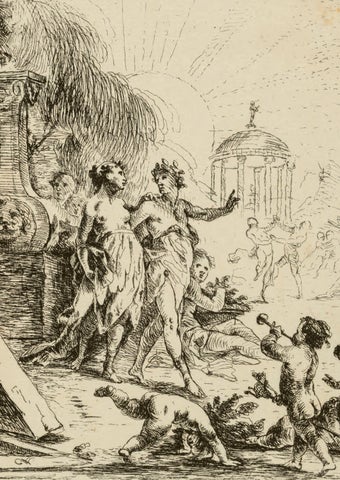
Create a flipbook