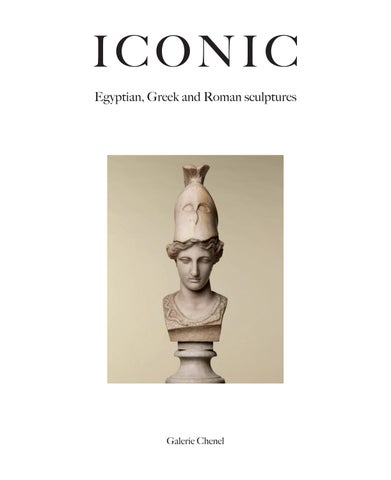
Unequivocally iconic, these ancient works belong to a timeless dimension. Born of another time, they continue to live before our eyes like foundational images whose grace has remained intact.
Each figure embodies the purest of lines, the most balanced of shapes, the classical ideal taken to its zenith. The bodies become symbols, the faces archetypes and the very matter seems inhabited by eternity.
Athena, helmet nobly donned, carries herself with a sovereign majesty, an emblem of strength and divine wisdom. Hermes, son of Zeus, with orderly curls and delicate features, seems about to confide his extraordinary destiny to us. Venus’ legs, with the softness of a barely sketched movement, reveal all the sensuality of an idealised body. Enveloped in an ample, imperial drapery, our bronze Juno embodies the dignity of ancient goddesses while the Kore, whose elegance is perfectly controlled, demands admiration.
Our sculptures move through time with different presences, some radiant, others more discreet, but all inhabited by the same harmony. An icon is not born only from evidence, but also from the gaze laid upon it, from the memory it awakens and from the time it continues to navigate.
HEAD OF APHRODITE
ROMAN, 1 ST - 2 ND CENTURY AD
MARBLE
HEIGHT: 15 CM.
WIDTH: 9 CM.
PROVENANCE:
DEPTH: 12.5 CM.
FROM THE FRENCH COLLECTION OF HENRI GRAILLOT (1868–1949), NICE.
PASSED DOWN BY SUCCESSION UNTIL THE PRESENT.
This majestic head represents Aphrodite, goddess of love.
The goddess seems to be twisting slightly to face the beholder. Her perfectly oval face embodies the beauty she deifies. Nothing disrupts its harmony: not her serene forehead, an exact isosceles triangle, not her brow ridges, assuredly and appealingly formed, and not her nose, which we suppose to be elegant, despite the affronts of time. Her almond shaped eyes, rimmed with thick, firmly incised eyelids, cast an imperious gaze, that of a goddess who knows that none can escape her power. Her impassive, sovereign expression is heightened by a closed yet sensual mouth, the full lower lip of which sits above a chin so delicate it was lost to the centuries. There is a delicate transition from the full shapes of her cheeks to the shape of her neck, through exquisitely
subtle modelling. Her cheek bones stretch slightly towards her ears while the dimples beneath her nose and at the corner of her mouth truly bring her face to life. It thus strikes a perfect balance between idealised beauty and a lifelike rendering of human anatomy. The perfection of her lovely face contrasts strongly with her animated, complex hair. Divided by a centre parting, her hair flows in regular, etched waves from her forehead to her temples, where they partly conceal her carefully sculpted ears. On either side, a small lock escapes, spilling onto her cheeks, a charming detail that makes our Aphrodite appear less severe. The deity is crowned by an elaborate hairstyle. The sophisticated, even luxurious, rosette knot accentuates the sculpture’s verticality and heightens its nobility. Two locks are pulled into it from her forehead, passing over the headband she
is wearing. It holds back the rest of Aphrodite’s hair, girding it in a play of texture and weight that distracts from the marble and gives the illusion that her hair is truly gripped by the adornment. A low chignon at the back of her head completes the structure of her hair and balances the whole look.This freestanding marble statue exhibits remarkable sculptural qualities. Although it is a reduced model, the firmness of its execution and the attention to detail are nothing less than striking, similarly to those of large scale statuary. Moreover, the contrast between the smooth, polished marble of the goddess’ flesh and the animated surface of her hair, in which the shiniest of the marble’s crystals resemble as many gems, attests to the artist’s technical mastery. The sculptor’s light, steady chiselling marvellously shaped the textures and contours of this celestial face. It bears the marks of centuries spent underground, such as the concretions that are still visible today. The nose and chin attest to its material history. Apart from its aesthetic qualities, this work is also an archaeological relic, a historical testament to a lost civilisation.
The absolute beauty and sumptuous hairstyle of this figure are two attributes that enable us to identify Aphrodite, as praised by the poet: “Muse, sing again of the works of the blonde Aphrodite, goddess of Cyprus: it is she who makes tender desires bloom in the breasts of the gods, who subjects to her laws mortals, the birds, light dwellers of the air, all the monsters, both those of the continent and those
of the sea; it is she, the gentle Aphrodite, crowned with flowers, it is she who causes to bend under her works all those who breathe”1 . As the goddess of love, she charms by her grace and inspires desire, but here, her beauty is haughty and imperious. She is Celestial Aphrodite, born from the waves and mother of desire, daughter of Uranus and Thalassa, according to Hesiod’s Theogony, the oldest of the Olympians and, accordingly, she occupied a unique position in the pantheon. Per the principle of interpretatio graeca, the Romans assimilated her with Venus, who shared the same attributes and functions. Venus, however, held a singular position in Rome: as the protector of Aeneas and the founder of the Latium, she became the protector of the gens Julia, then, under Augustus, the tutelary deity of the imperial dynasty.
As the embodiment of the ideal woman, Aphrodite inspired poets and artists throughout antiquity, giving rise to countless works, including one of the most famous sculptures in antiquity: Praxiteles’ Aphrodite of Cnidus. Its absolute beauty made it a major source of inspiration for all representations of the deity, including our head, which adopts the harmonious facial proportions and the wavy locks over the forehead of the Kaufmann head (ill. 1). However, her characteristic hairstyle did not come from Praxiteles, but from a widely disseminated statuary type, that of the Capitoline Aphrodite, a head of which can be admired at the Santa Barbara Museum of Art (ill. 2). 1 Homeric Hymn to Aphrodite, translated from the French, for the purposes of this text, by K. Manson.
Ill. 1. Head of Aphrodite known as the Kaufmann head, Greek, 100 BC, Thasian marble, H.: 34 cm. Musée du Louvre Lens, Lens, inv. no.: MND 2027.
Ill. 2. Head of Aphrodite, Roman, 2nd century AD, marble, H.: 29.2 cm. Santa Barbara Museum of Art, Santa Barbara, inv. no. 1978.4.9.
There is another remarkable version at the British Museum (ill. 3). The hairstyle also adorns Lely’s Venus (ill. 4), preserved at the same museum. The chignon at the back can be compared to that of a Cyrenean head preserved at the Louvre (ill. 5).
Ill. 3. Aphrodite of the Capitoline Aphrodite type, Roman, AD 100–150, H.: 223.5 cm. British Museum, London, inv. no. 1834,0301.1.
Ill. 4. Venus surprised at her bath known as “Lely’s Venus”, Roman, 2nd century AD, marble, H.: 120 cm. British Museum, London, inv. no. 1963.10-29.1.
Ill. 5. Head of a woman, Roman, Cyrene, AD 100–150, marble, H.: 31.5 cm. Musée du Louvre, Paris, inv. no. 1558.
This work was able to appeal to a demanding, expert gaze, as it was part of the collection of Henri Graillot (1868–1949). A graduate of the prestigious École Normale Supérieure and a teacher with the highest of qualifications, he turned to art history, joined the French School in Rome and participated in archaeological digs in Italy. Recognised for his in depth knowledge of Roman antiquity, he was named Director of the French Institute of Florence from 1918 to 1938. The work remained within the same family, passed down by succession, until the present.
ARTEMIS FRAGMENT
ROMAN, 1 ST - 2 ND CENTURY AD
MARBLE
HEIGHT: 26 CM.
WIDTH: 16.5 CM.
DEPTH: 11.5 CM.
PROVENANCE: IN THE PRIVATE COLLECTION OF ANNIE PARTOUCHE FROM THE 1970S.
This sculpture, remarkable for its technical execution and its aesthetic qualities, represents Artemis of the golden arrows, goddess of the hunt. Only part of the torso and legs of the figure remains, yet this work wonderfully embodies the energy and vitality of Artemis. The sculpture is broken at the legs, just above the knees, and there is a hint, on the left, of a patella. The deity is depicted in motion, captured mid stride. Her left leg is thrust forward, lifting the fabric of her tunic. Unlike a simple contrapposto in which the right leg would be static and supporting the weight of the body, here, it is extended backward and contracts powerfully. The presence of the body, the canon chosen and the harmony of the proportions reflect, to the fullest extent, the youth and ideal beauty of an immortal. This composition radiates an impression of athletic energy, further accentuated by the treatment of the
clothing. It is divided into three parts: a belt, knotted at the left side, an undulating, vertical drapery with deep folds and a lighter tunic with delicate folds. By comparing it to other representations, we may suppose that the belt and the drapery actually make up the same himation or woollen mantle. Draped above the kidneys to almost beneath the breasts, it would pass over the shoulder before again being cinched at the waist. It would thus be draped freely over the hips and below the waist. The tunic is a light, short chiton, uncommon in representations of women. In ancient Greece, while women and men did wear the same garment, the chiton, a folded tunic, the length made it possible to distinguish the men’s version from the women’s: the former was short while the latter was long. The choice of such a garment makes it possible to state with certainty that this is the goddess Artemis: the short outfit,
which indicates her calling as the goddess of the hunt, is one of her attributes.
When representing the deity’s clothing, the sculptor showcased the full range of their technical skill. The woollen cloth making up the himation forms powerful, turbulent folds. The sinuous ridges catch the light and deepen shadows, animating the surface of the marble. The sculpture is very elaborate here, particularly the diamond shaped piece at the centre and the vigorous treatment of the fabric. The linen chiton unfurls more softly and clings to the body in thin, delicate folds, some of which are barely etched. The way in which it moulds to her legs and billows out behind them heightens the illusion of movement and evokes the speed of the striding goddess. Upon viewing the kinetic, pleated fabric, the diversity of textures, the subtlety with which the fabrics are rendered and their relative weights, we can only be awestruck by the talent of the creator behind this work, who was so skilfully able to divert our focus from the weight of the marble. This work, which is mostly fragmentary, was carved from white marble, upon which time wrought an elegant golden patina. There is the remnant of a mortice that attests to a historical restoration, which would thus have connected the top of the torso with our fragment. By spreading through the stone, the oxidation of the iron rod has coloured the marble purple in several areas. That confirms that a soft marble was used, as does the quality of the carving. Traces of tools can be seen on the back of the left leg, the discreet mark of a prop lingers on the right leg. We may suppose
that it supported the goddess’ arm, bow or perhaps her quiver, or that the goddess was accompanied by a stag or a greyhound. At the back, the sculpture was carefully sculpted in the upper part, but the lower part seems to have been treated differently, which could indicate that the statue was leaning against a rock or destined for a wall niche, or that the original drapery was destroyed.
Artemis was the goddess of the moon, childbirth and the hunt, the daughter of Zeus and Leto and the twin sister of Apollo. Here, she is depicted in her guise as goddess of the hunt, as attested by her energetic attitude and her short garment. In the hymn that the poet Callimachus dedicated to her, she, herself, asked her father Zeus for “a fringed tunic that will go no further than my knees, so as not to hinder me”, as well as for sovereignty over the mountains and wild beasts. Armed with a golden bow from the Cyclopes and a pack of hounds from Pan, the goddess would happily roam the mountains and forests to “run down the horde of ferocious monsters”. She was fearsome and pitilessly punished those who offended her, such as the insolent Niobe, whose children she massacred, and the presumptuous Actaeon, whom she turned into a stag and caused to be devoured by his own dogs. Likewise, she punished Agamemnon, who, in an attack of hubris, claimed to be a better hunter than her. She thus immobilised the Greek fleet that was preparing to leave for Troy and demanded that the king sacrifice his daughter, Iphigenia. She saved the latter from her pyre and named her
priestess of her sanctuary in Tauris. The tragic myth inspired numerous poets, ancient and modern alike, including Euripides, Racine and Goethe. Artemis was assimilated by the Romans with Diana Trivia, the triple goddess of the hunt, the moon and the underworld, a wild, celestial and chthonic goddess. These unique features made her a choice subject for artists throughout antiquity. She was often represented as a huntress goddess. The most famous example is the Diana of Versailles preserved at the Louvre (ill. 1), who is clothed in the same garments as our figure, as is the Artemis at the Vatican (ill. 2).
Ill. 1. Diana of Versailles, Roman, AD 120–150, marble, H.: 200 cm. Musée du Louvre, Paris, inv. no. MR 152.
Ill. 2. Statue of Artemis, Roman, 2nd–3rd century AD after a Greek original, marble. Gallery of the Candelabra, Vatican Museums, Rome, inv. no. 2460.0.0.
However, the different treatment of the chiton and the himation is more reminiscent of the statue at the British Museum (ill. 3), or that at the Metropolitan Museum of Art (ill. 4), while the striding motion is similar to that of the Artemis Colonna at the Altes Museum (ill. 5). Our fragment also resembles a bust preserved at the Museo Gregoriano Profano (ill. 6).
Ill. 3. Statue of Artemis, Roman, 1st century AD, marble, H.: 185 cm. British Museum, London, inv. no. 1805,0703.12.
Ill. 4. Statue of Artemis and a deer, Greek, 1st century BC–1st century AD, bronze, H.: 92.1 cm. Metropolitan Museum of Art, New York, inv. no. L.2007.63a, b.
Ill. 5. Statue of Artemis known as the “Artemis Colonna”, Roman, 1st-3rd century AD after a Greek original from the 4th century BC, marble, H.: 186 cm. Altes Museum, Berlin, inv. no. Sk 59.
Ill. 6. Torso of Artemis, Roman, 1st-2nd century AD, marble, H.: 27 cm. Museo Gregoriano Profano, Vatican Museums, Rome, inv. no. 17051.
This work, acquired in the 1970s, remained in the private collection of Annie Partouche and Marcel Grunspan, famous Parisian antiquaries based in Rue Royale, until the present.
HEAD OF A SATYR
ROMAN, CIRCA 2 ND CENTURY AD
MARBLE
HEIGHT: 15.5 CM.
WIDTH: 11.5 CM.
DEPTH: 11.5 CM.
PROVENANCE:
IN THE COLLECTION OF THE POET, JOURNALIST AND NOVELIST ANATOLE FRANCE (1844–1924), PARIS AND TOURS.
THEN PASSED DOWN TO HIS GRANDSON, LUCIEN ANATOLE ERNEST JEAN PSICHARI (1908–1995).
THEN IN A PRIVATE COLLECTION, SOUTH OF FRANCE, ACQUIRED FROM THE FORMER.
This magnificent, remarkably wrought marble head represents a young satyr. His round, youthful face is framed by thick, curly hair, some unruly locks of which fall across his forehead and spill over his ears. Divided into two parts, the hairstyle of our young satyr is particularly delicately fashioned. The first part, which is more voluminous, is formed by a wreath of curls that frames the top of his head and extends to the nape of his neck, while the second, flatter part comprises the crown of his head, marking a delineation through the band he is wearing, which holds back his locks. At the back, the locks of hair are longer and well preserved. Each
one is meticulously separated, creating an effect of movement and fluidity that adds to the realism of the work. On either side of his face is a fine, pointy, hollowed out ear, typical of satyrs. Despite a few erosions, his facial features are extremely fine. His almond shaped eyes are downcast, while his eyelids are thin and lie beneath subtle brow ridges, imbuing our satyr’s expression with a certain softness. His cheekbones are accentuated and his full, salient cheeks convey his youth. His right cheek is adorned with a sculpted lock of hair. Part of our satyr’s nose is missing, while his delicate mouth features full, slightly parted lips.
Our satyr displays a rather even brown patina, denoting the age of the piece, and, through the slight traces of erosion, emanates a mysterious aura. The care with which the face and hair were shaped and the quality of the marble attest to the mastery of the sculptor and the prestige of this small, sculpted fragment.
Ill. 1. Resting satyr, Roman, after a Greek original attributed to Praxiteles, ca. AD 130, marble, H.: 170.5 cm. Capitoline Museums, inv. no. MC0739.
In Graeco-Roman mythology, satyrs (or fauns for the Latins) were part human, part animal creatures and the companions of Dionysus/Bacchus. They symbolised the wilderness, fertility, music, wine and celebrations. Iconographically, they are often depicted as young, graceful and mischievous. They can be recognised by their pointy ears, thick, wild hair and, sometimes, small horns. The type our head belongs to seems to be that of the resting satyr (anapauomenos), a model made famous by the sculptor Praxiteles in the 4th century BC, from which the Romans widely drew inspiration. The resting satyr preserved within the Capitoline Museums is the most famous example (ill. 1). It exhibits several characteristics on display in our head: unruly locks, a mass of curls, pointed ears and a downcast gaze.
Dated to the 2nd century AD, the sculpture was probably part of a decorative statue meant to adorn a Roman villa, garden or space linked to Dionysian worship or imagery. The heads of satyrs were commonly used as decoration for private residences during the imperial period.
Several comparisons make it possible to precisely situate our piece. There are very similar sculptures in prestigious international institutions, such as the Roman head of a resting satyr, dated to AD 120–160, at the British Museum (ill. 2), or another at the Vatican Museums (ill. 3), which features a few restorations. Two other fragments of sculpture that are particularly akin to ours in the shaping of the eyes and the straight positions of the heads, can also be cited. The first is at the J. Paul Getty Museum, dated to AD 130–180 (ill. 4), and the other is at the
Ill. 2. Head of a young satyr (resting satyr type), Roman, AD 120–160, marble, H.: 45.5 cm. British Museum, London, inv. no. 1824,0201.6.
Ill. 3. Head of a resting satyr, Roman, end of the Antonine period, ca. AD 170, marble, H.: 26 cm. Museo Gregoriano Profano, Vatican Museums, inv. no. MV.10292.0.0.
Ill. 4. Head of a satyr (resting satyr type), Roman, AD 130–180, marble, H.: 42 cm. The J. Paul Getty Museum, Villa Collection, Malibu, inv. no. 73.AA.138.
Museo Nazionale Romano – Magazzini (ill. 5), with quiet same dimensions.
Ill. 5. Head of a satyr, Roman, middle of the 2nd century AD, marble, H.: 20 cm. Museo Nazionale Romano - Magazzini, inv. no. 382987.
The history of our young satyr is just as interesting. It was part of the collection of the famous poet, journalist and novelist Anatole France (1844–1924 – ill. 6), author of The Crime of Sylvestre Bonnard and The Red Lily. Elected to the Académie Française in 1896 and awarded the Nobel Prize for Literature in 1921, he was also one of the major figures and political activists of the Third Republic, defending Dreyfus and holding views close to those of the socialist and humanist circles. Anatole France was a “neoclassicist” and had a deep love for Graeco-Roman antiquity and the Italian Renaissance, which he used as settings or references in several of his works.
In some of them, he used characters and ancient settings as a way to reflect on the shift between the pagan and Christian worlds, particularly when he mentioned Greece or Rome in the lead up to the Christian era. The biography written by Léon Carias contains photographs of Anatole France in his study, surrounded by artworks. Our marble head can be seen “in the library, at La Béchellerie (1917)” (ill. 7).
Following his death, the little sculpture was passed down to his grandson, Lucien Psichari (1908–1995), a French journalist and man of letters (ill. 8). It then entered a private collection in the south of France.
costume party,
Publication:
- Léon Carias, Anatole France, Les Éditions Rieder, 1931, 162 p.
Ill. 6. Portrait of Anatole France (1844–1924).
Ill. 7. Léon Carias, Anatole France, Les Éditions Rieder, 1931, 162 p.
Ill. 8. Lucien Psichari at the feet of Anatole France and Emma Laprévotte at a
La Béchellerie, ca. 1921/1922.
TORSO OF APOLLO
ROMAN, 1 ST - 2 ND CENTURY AD
MARBLE
HEIGHT: 61 CM.
WIDTH: 30 CM.
PROVENANCE:
SOLD BY SOTHEBY’S LONDON, 1 ST JULY 1969, LOT 108.
DEPTH: 22 CM.
PURCHASED BY J. EISENBERG AT THE ABOVEMENTIONED SALE.
ACQUIRED BY THE FORT WAYNE MUSEUM OF ART IN 1971.
DEACCESSIONED BY THE FORT WAYNE MUSEUM OF ART IN 1996.
SOLD BY SOTHEBY’S NEW YORK ON 17 DECEMBER 1996, LOT 61. THEN IN THE COLLECTION OF ROBERT NOAKES.
Sculpted from a magnificent white marble, this Roman torso represents a partly nude, muscled young man. Two wavy locks of hair lie over his right collarbone while a chlamys rests upon his left shoulder. The short mantle, typically worn in ancient Greece, covers the back of our young man and envelops his upper legs. The folds, which are very accurately fashioned, are deeply carved and flow down his back, covering his buttocks and wrapping around his hips while leaving his genitals uncovered. There is a dynamic opposition between the arched folds that follow the curves of his body and the vertical folds that run down his legs. The
fabric closely hugs the shapes of his body, creating a kind of textural rhythm and hinting at the position of his legs underneath. One is straight, the other bent. Although his arms are now missing, their positions can partly be guessed. The right arm, most likely slightly raised, must have been performing some kind of action – perhaps holding an attribute – while his left arm, more relaxed, seems to have rested along his flank. The quality with which his muscles were represented truly makes this bust stand out. His pectorals are prominent and well defined while a central vertical line, running from his neck to his navel, follows the axis of the body and accentuates
the young man’s athletic physique. His abdominals are finely sculpted and converge towards a delicately carved navel. His obliques, which are very distinct, descend diagonally towards his groin, adding to the sensuality of the body. This torso thus evokes the ideal of male beauty as defined by Greek classical tradition and as reinterpreted by Roman sculptors. As for his posture, he exhibits a classic contrapposto: the weight of his body was probably resting on his straight right leg (now missing), while the other leg would have been relaxed, resulting in the natural twist of his torso. On the right side of the drapery, two visible hollows lead us to believe that the statue could have included a support element – possibly a tree trunk or a decorative structure – frequently used in Graeco-Roman statuary to stabilise figures that used contrapposto.
By its formal and stylistic characteristics, this torso is in line with traditional imperial Roman statuary from the 1st or 2nd century AD. The lack of preserved attributes makes it difficult to precisely identify the figure. However, several iconographic clues – the draping of the chlamys, the youthfulness of the body, the elegance of the contrapposto and the softness of the sculpting – point to it being a representation of Apollo or Dionysus, who were both frequently depicted as young, beardless men with lithe, idealised bodies, sometimes simply clothed in a chlamys and adorned with now missing attributes (lyre, thyrsus, ivy wreath, etc.). The fine grained, slightly shiny marble exhibits a brown patina that attests to the passing of time.
The depiction of the drapery and the torso is reminiscent of a few noteworthy Graeco-Roman sculptures such as the group of Dionysus and a satyr, preserved at Burdur Archaeological Museum in Turkey, dated to between AD 160 and 180 (ill. 1), and that preserved at the Archaeological Museum of Tripoli (ill. 2).
Ill. 1. Statue group of Dionysus and a satyr, Roman, AD 160–180, marble, H.: 262 cm. Burdur Archaeological Museum, Turkey, inv. no. 530.152.95.
Ill. 2. Statue of Dionysus with a satyr, Roman, marble, Archaeological Museum of Tripoli, Libya, inv. no. 1107831.
The sensual representation of the body, the wavy locks of hair and the god’s posture, with his slightly tilted hips, are all commonalities. Another Dionysian figure, from the Albani collection, displays similar characteristics (ill. 3). Turning to Apollo types, again, several points invite comparison: the slight contrapposto, the elegance of the torso and the accuracy of the depiction of the muscular groups recall some representations of Apollo such as that preserved at the Capitoline Museums (ill. 4) and the Roman copies of Apollo Citharoedus, particularly
that of the British Museum (ill. 5–6). These statues share the same pursuit of idealisation, combining classical balance with grace.
3. Statue of Dionysus, Roman, 3rd century AD, marble, H.: 164 cm. Albani collection, Rome, Italy, inv. no. 757.
Ill. 4. Statue of Apollo, Greek, 2nd century BC, marble, H.: 229 cm. Capitoline Museums, Rome, inv. no. 628.
Ill. 5. Apollo Citharoedus, Roman, AD 175–200, marble, H.: 110 cm. Museo del Prado, Madrid, inv. no. E000155.
Ill. 6. Apollo Citharoedus, Roman copy of a Hellenistic original from ca. 200–150 BC, marble, H.: 228 cm. British Museum, London, inv. no. 1861,0725.1.
Nevertheless, the joint of the right shoulder on our torso, which is slightly lowered, indicates that the arm was probably not raised above the head, as in the representations listed above. It must have been
in an intermediate position, perhaps reaching ahead or up a little, but without any excessive tension. The most striking parallel thus remains the statue of Apollo discovered at the Roman theatre in Carthage and currently preserved at the National Bardo Museum (ill. 7) in Tunis. It portrays a Pythian Apollo, portrayed in his function of oracular god and vanquisher of the serpent Python in Delphi. The shaping of the anatomy, the depiction of the drapery and, above all, the general posture of our figure suggest that our sculpture could be an Apollo type in line with that iconographic tradition. Finally, the Apollo at the Hermitage Museum (ill. 8) is another relevant reference. Its frontal position, masterful contrapposto, the elegance of the drapery clinging to his left flank and the presence of a support element that seems to prolong the drapery confirm its place in the iconographic tradition.
Ill. 7. Statue of Apollo from ancient Carthage, Roman, 2nd century AD, marble. National Bardo Museum, Tunis, Tunisia.
Ill. 8. Apollo, Roman, 2nd century AD, marble, H.: 172 cm. Hermitage Museum, Saint Petersburg, inv. no. GR-1747.
Ill.
Our sculpture is from the collection of Jérôme Martin Eisenberg, a famous antiquary and scholar and the owner of the Royal Athena Galleries in New York. Working in the 1950s, Eisenberg distinguished himself as both a trader and the editor in chief of Minerva, the archaeology magazine. He was also a founding member of the International Association of Dealers in Ancient Art (IADAA), playing a central role in disseminating and providing expertise on classical antiquities. The piece was sold at Sotheby’s London on 1 July 1969 as lot 108 and the catalogue corresponding to the sale was entitled “Catalogue of Egyptian, Western Asiatic, Greek, Etruscan and Roman Antiquities, also Islamic Pottery and Metalwork” (ill. 9).
Ill. 9. Sotheby’s London catalogue, 1 July 1969, “Egyptian, Western Asiatic, Greek, Etruscan and Roman Antiquities, also Islamic Pottery and Metalwork” – lot 108.
Our magnificent torso was then acquired by Fort Wayne Museum of Art, Indiana, and subsequently sold at Sotheby’s New York on 17 December 1996 as lot 61 (ill. 10). It then joined the private collection of
Robert Noakes, a renowned designer whose career spanned five decades. He was the founder of Robert Noakes Design in Toronto and played a key role in the development of contemporary design in Canada and across the globe. His interest in ancient art was apparent in his distinct aesthetic sensitivity and his deep commitment to classical artistic heritage.
Ill. 10. Sotheby’s New York sale catalogue, 17 December 1996, “Antiquities” – lot 61.
ACROTERION REPRESENTING A BEARDED MAN
ROMAN, 1 ST HALF OF THE 3 RD CENTURY AD
MARBLE
HEIGHT: 24.5 CM.
WIDTH: 26 CM.
DEPTH: 6 CM.
PROVENANCE:
IN THE PRIVATE COLLECTION OF GUSTAVE CLÉMENT-SIMON (1833–1909), IN HIS RESIDENCE OF CHÂTEAU DE BACH, NAVES (CORRÈZE).
THEN, PASSED DOWN TO HIS SON, FRÉDÉRIC CLÉMENT-SIMON (1873–1934), AMBASSADOR, AUTHOR AND HEIR OF THE CHÂTEAU DE BACH.
IN THE FRENCH PRIVATE COLLECTION OF GEORGES COUTURON, WHO BOUGHT THE CHÂTEAU ALONG WITH ALL ITS COLLECTIONS IN 1938. THEN, PASSED DOWN AS AN HEIRLOOM UNTIL 2025.
Our work is a sculpted marble fragment, meticulously wrought in high relief. It is trapezoidal in shape, its front face sculpted while the back was left empty and even. It is an acroterion representing a bearded man with an exaggerated expression. His face, displayed in a three quarter view, is crowned with thick hair, animated by deeply incised locks that seem to blow to the left as though buffeted by the wind. To the left of his hair, a smooth, vertical strip and a sharp bend mark a parting line, typical of sarcophagus corners. Over his forehead, a few reed stalks are discreetly intermingled with the man’s hair. His face, both solemn and serene, is sculpted with remarkable precision. A wrinkle etched above the bridge of his nose underlines the age of our man and forms a slightly drooping brow.
His thin, delicate eyelids and almond shaped eyes follow the movement of his eyebrows. In the inner corners of his eyes, the marble was hollowed with a chisel to make his gaze seem more lifelike. His irises are represented by fine incisions, while his pupils are carved. Our man’s gaze is cast towards the sky in a dramatic attitude. His full cheeks and high cheekbones contrast with the circles beneath his eyes. His nose is straight, with round, hollowed out nostrils, accentuated by slight circular incisions. Under his nose, a tidy moustache and chiselled beard prolong his hair. His beard, especially, is showcased through regular, wave shaped motifs, while his moustache elegantly frames his upper lip. His lips are slightly parted and his mouth hollowed out.
Our fragment is sculpted from particularly elegant grey white marble that catches the light and has a perfectly polished surface. There are chips and traces of wear in some places, linked to its architectural function. On the left side of the forehead of our man, there are some traces of erosion, as well as a slight brown patina, which confirm its authenticity.
This fragment is from the right corner of a sarcophagus lid. In Roman funerary sculpture, it was common to adorn corners with majestic heads, the symbolic guardians of the monument. The effigies could represent cosmic deities such as Helios, Selene and Dionysus, local personifications of the forces of nature such as river gods, or grimacing faces such as our fragment, which served an apotropaic function. From the reign of Trajan (in
the beginning of the 2nd century AD), inhumation progressively replaced cremation, which led to the expansion of relief sarcophagi. Rome then became a major production centre, attracting Greek sculptors and specialist workshops that disseminated their models throughout the Empire. In the 3rd century, demand intensified both among the urban elites and in the provinces and decoration also became more dramatic and animated, reflecting a growing taste for expressive figures. The iconography of our head is in line with that tradition. The reeds intermingled with his hair, a lifelike detail, would seem to indicate that our figure is a river deity. In Greek mythology, river gods or Potamoi were minor deities, the personifications of waterways. They were the sons of the Titans Oceanus and Tethys and the brothers of the Oceanids. The representations, placed at the corners of lids, symbolised the eternal cycle of life and death and accompanied the deceased person on their way to the underworld.
Ill. 1. Sarcophagus, Roman, AD 200–220, marble, H.: 62 cm; H. of lid: 11 cm. British Museum, London, inv. no. 1805,0703.144.
Many institutions across the globe house sarcophagi from the 3rd century AD. With such examples as models, we can picture what the complete sarcophagus our fragment belonged to
would have looked like. The British Museum’s collection thus includes a remarkable example (ill. 1). The Louvre also owns two sculpted sarcophagi of very high quality, one adorned with the faces of Helios and Selene (ill. 2) and the other with two heads of Dionysus (ill. 3). In the J. Paul Getty Museum, the lid of a Roman sarcophagus dating from AD 225 still illustrates that form of decoration (ill. 4). Finally, a fragment very similar to our piece is preserved within the Vatican Museums (ill. 5).
Our work is from the private collection of Gustave Clément-Simon (1833–1909), (ill. 6), a magistrate and savant, who had it installed in his estate, Château de Bach, in Naves (ill. 7). It then passed to his son, Frédéric Clément-Simon (ill. 8), an ambassador and author, before joining the collection of Georges Couturon (ill. 9), the new owner of the château and buyer of all its collections, in 1938. It remained within his line until 2025. That prestigious provenance illustrates the history of French art collecting in the 19th and 20th centuries.
Ill. 2. Sarcophagus, Roman, 2nd quarter of the 3rd century AD, marble, H.: 95 cm, H. of lid: 32 cm. Musée du Louvre, Paris, inv. no. N 555.
Ill. 3. Sarcophagus, Roman, 2nd quarter of the 3rd century AD, marble, H.: 97 cm, H. of lid: 29 cm. Musée du Louvre, Paris, inv. no. N 540.
Ill. 4. Sarcophagus lid, Roman, AD 225, marble, H.: 21.5 cm. J. Paul Getty Museum, inv. no. 73.AA.99.
Ill. 5. Corner fragment of a sarcophagus lid, Roman, 3rd century AD, marble, H.: 57.5 cm. Museo Gregoriano Profano, Vatican, inv. no. 4926.
Ill. 6. Portrait of Gustave Clément-Simon (1833–1909) by Alexandre Bertin.
Ill. 7. Château de Bach, Naves, Corrèze.
Ill. 8. Portrait of Frédéric Clément-Simon (1873–1934).
Ill. 9. Portrait of Georges Couturon (1886–1945).
GRAVE STELE REPRESENTING A NUDE YOUNG MAN
ATTICA, GREECE, 4 TH CENTURY BC
MARBLE
HEIGHT: 125 CM.
WIDTH: 52 CM.
DEPTH: 16 CM.
PROVENANCE:
IN THE PRIVATE COLLECTION OF PEPYS COCKERELL, ESQ., LONDON. THEN IN THE BRUMMER GALLERY COLLECTION, PARIS AND NEW YORK, ACQUIRED
FROM THE FORMER IN 1926.
TRANSMITTED TO ELLA BACHÉ BRUMMER IN 1964.
SOLD AT AUCTION BY THE KOLLER GALLERY AND SPINK & SON, “THE ERNEST BRUMMER COLLECTION, PART II”, 16–19 OCTOBER 1979, LOT 618.
ACQUIRED BY THE MERRIN GALLERY AT THE ABOVEMENTIONED SALE.
IN A PRIVATE COLLECTION FROM JUNE 1981.
This marble grave stele with an Attic pediment displays a static narrative scene in which a young man takes up most of the space, standing on what seems to be uneven ground. While the rough ground suggests that the scene is set outside, the background is void of clues on the environmental
context, making the central figure the sole focus. The young man is presented completely nude. His round, youthful face charms the beholder, particularly through his gaze, which seems fixated on what is in front of him. Thin eyelids form hoods over his eyes, lending them extra depth,
and his eyebrows, which are barely visible on the boy’s small forehead, follow their curves. Judging by his harmonious features, his nose would, in all likelihood, have been short and straight, as indicated by its sides, which flow from the lines of his brows. His full, sealed lips form a subtle smile, which is accentuated by the boy’s full cheeks, giving him a reserved expression. His luminous face is framed by long hair, which is coiled in curls and big, loose ringlets that become tighter along the lengths. His hair is held back by a band and falls down his back, which is that of an ephebus. His youth is particularly evident in the treatment given to his anatomy. His shoulders, although bulging with muscles, are narrow and his torso, rhythmed by the relief of his abdominals and pectorals, is that of a young man. He is leaning on his right leg, right foot set flat on the ground, while his left leg is flexed, casting his waist in high relief. Only the toes and part of the sole of his left foot are touching the ground. By the weighting and chiasmus of the body, the sculptural type this stele belongs to is that of Polykleitos. Although the young man is entirely nude, in his right hand, he is holding a bird with folded wings, perhaps a dove, while his left hand once held an attribute that is now fragmentary. The bird seems to be drawing the interest of a dog, who is sitting calmly on its hind legs, muzzle and mouth pointed towards it. The dog’s lowered ears and two raised forelegs evoke a certain domesticity and docility. The marble used for this sculpture came from
Mount Pentelicus, a quarry located to the north east of Athens and massively exploited during antiquity. The marble was particularly prized for its purity and the fineness of its grain, which enabled sculptors to shape details with extreme accuracy. Naturally a dazzling white, it was a choice material for both Attic grave stelai and the grand monuments of the classical period such as those of the Acropolis. Over time, due to climatic conditions, Pentelic marble develops a characteristic, slightly golden patina, which softens the surface of the marble and imbues works with a particular visual warmth. On this sculpture, that transformation is obvious: the patina has taken on ochre hues, a testament to both the age of the work and its prolonged exposure to the elements.
1. Plaster cast of the grave stele of Alxenor of Naxos, Beotia, 490 BC, marble, National Archaeological Museum, Athens., inv. no. 39.
Ill. 2. Grave stele of a young girl, “Melisto”, Attic, 350–320 BC, marble. Harvard Art Museums, inv. no. 1961.86.
The iconography of this young man with a dog and a bird dates back to the 4th century BC. The trivial, almost everyday scene is typical of funerary representations of children and young adults. Originally, however, such iconography concerned older deceased men, wearing beards and holding
Ill.
staffs, who were playing with their dogs, frequently catching their attention with insects rather than birds (ill. 1). Although it could also be featured on ceramics and votive reliefs, the game between a dog and a young boy was most often represented on grave stelai. The playful scene and attributes that could accompany the action are codes signifying the youth of the person represented and the insouciance and delicacy that precede adulthood. Those representations, which were most frequently of young boys, although they sometimes featured young girls (ill. 2), necessarily included a dog and a bird. The other attributes, however, could vary from stele to stele. Thus, while the youngest deceased children hold dolls (ill. 2), those closest to adulthood seem to bear more virile attributes such as aryballoi or strigils (ill. 3).
The attribute once held in the young man’s left hand would have told us more about his identity, or at least his age when he died. However, his heroic nudity, admittedly appropriate for the dead, could also be that of a boy old enough to frequent
the gymnasium. He could also, hypothetically, have been holding an aryballos or a strigil in his fragmentary hand, like the athlete depicted on a stele preserved at the Louvre (ill. 4). This Attic grave stele is in line with a morphology that reached its height in the 4th century BC, forming, with its pediment surmounted by three acroteria, a kind of naiskos. Previously, grave stelai were framed only by a crown shaped moulding bearing the name of the deceased. The morphology, style and workmanship of this stele thus date it to the 4th century BC, similarly to the Rhodian grave stele (ill. 3) that it closely resembles.
This relief is most likely from the collection of the architect, archaeologist and collector Charles Robert Cockerell (1788–1863), who undertook a grand study tour around the Mediterranean at the beginning of the 19th century. He distinguished himself through his contributions to identifying the temples of Apollo in Bassae and Aphaia in Aegina. The fragments of the frieze of the former are currently at the British Museum, while most of the architectural decoration of the latter is preserved at the Glyptothek in Munich. Between 1810 and 1817, together with a scientific team, he travelled through continental Greece, the Greek islands and Asia Minor and it is very likely that he returned with artworks for his private collection. Several works from Greece, undoubtedly part of that collection, were mentioned in the catalogue for the Burlington Fine Arts Club’s exhibition of ancient Greek art, held in London in 1904. They
Ill. 3. Grave stele, Rhodes, 400–350 BC, Pentelic marble, Musée du Louvre, inv. no. Ma 807.
Ill. 4. Grave stele of an athlete, Athens, 360-350 BC, marble, Musée du Louvre, inv. no. Ma 3114.
had been leant by a Mrs Frederick Pepys Cockerell, probably the widow of Charles Robert Cockerell’s son. In March 1926 (ill. 5), the Brummer Gallery bought the Attic grave stele from a Cockerell family member, probably Charles Robert Cockerell’s grandson, Lieutenant Colonel Frederick William Pepys Cockerell (1876–1932), as per Volume II of the sales catalogue for the auction of the Ernest Brummer collection (ill. 6).
Ill. 5. Brummer Gallery inventory sheet, March 1926 – inv. no. P2595, The Brummer Gallery Records, digital archives given to the Metropolitan Museum of Art (NY) in 2016.
The Brummer Gallery, which specialised in ancient sculpture, Mediterranean antiques and mediaeval art, was one of the most prestigious art galleries of the 20th century. Founded in Paris by Joseph Brummer (1883–1947) and his brothers Imre (1889–1928) and Ernest (1891–1964) in 1905, it opened a branch in New York a little before the First World War. The gallery distinguished itself by its meticulous acquisitions policy, based mostly on private ownership, and prestigious clientele, which included the Metropolitan Museum of Art, John D. Rockefeller and Henry Walters. The stele was then
put up for sale in New York in 1949, though, at that time, it was not sold (ill. 7). Following the death of Ernest Brummer in 1964, his collection, which included the Attic grave stele, passed to his wife, Ella Baché Brummer, before being sold at auction in Zurich via the Koller Gallery and Spink & Son in 1979. On that occasion, the Merrin Gallery in New York, founded by Edward Merrin in 1963 and specialising in antiquities, acquired it before parting with it in 1981. Then, our stele entered a private collection in which it remained until 2025.
Ill. 6. Volume II of the sales catalogue for the auction of the Ernest Brummer collection, held at the Dolder Grand (hotel) in Zurich on 16–19 October 1979, p. 212.
Ill. 7. Parke-Bernet Galleries, Classical and medieval stone sculptures. Part III of the Art Collection Belonging to the Estate of the late Joseph Brummer, 8–9 June 1949, no. 483.
CINERARY URN
ROMAN, 1 ST CENTURY BC - 1 ST CENTURY AD
MARBLE
HEIGHT: 54.5 CM.
WIDTH: 50 CM.
DEPTH: 36.5 CM.
PROVENANCE:
IN THE COLLECTION OF ATTILIO SIMONETTI, ROME, BEFORE 1925.
ACQUIRED FROM THE FORMER BY JOSEPH AND ERNEST BRUMMER (1883–1947 AND 1891–1964 RESPECTIVELY), PARIS AND NEW YORK, ON 5 NOVEMBER 1925.
IN THE PRIVATE COLLECTION OF GEORGE G. BOOTH, AMERICAN PRESS BARON, ACQUIRED FROM THE FORMER ON 15 MARCH 1926.
IN THE COLLECTION OF THE CRANBROOK ACADEMY OF ART, BLOOMFIELD HILLS, MICHIGAN, FROM 1926 TO 1972 (INV. NO. 1926.5).
SOLD AT SOTHEBY’S PARKE-BERNET, NEW YORK, THE CRANBROOK COLLECT ION, 2–5 MAY 1972, LOT 338.
This superb, ovoid, lidded urn is sculpted from fine grained marble and is in a very good state of preservation. The sculpted decoration, mainly ornamental, that adorns the urn gives a general impression of measure, technical mastery and balance. That sense of balance resides in the mirror effect between the lid and the body of the urn, which meld together to form ovoid shaped contours, while the decorative elements resonate harmoniously. The contours of the lid converge towards a large knob
in the shape of a pine cone. The lid is exquisitely decorated with a series of large, radiating gadroons, the thinnest ends of which point towards the top of the urn. The lip, in relief and decorated with an egg and dart motif, is attached to two lateral handles with volutes and coils animated by stylised plant and floral motifs. Under the lip, the body of the urn is divided into two parts. The first comprises two horizontal ornamental levels, one rhythmed with short incisions that form rectangles and the other
with a frieze of motifs resembling intertwining plant scrolls. These tendril-like motifs, which are punctuated with small, carved circles and bordered by horizontal strips, are in the middle of the composition and add to the overall dynamism of the sculpted decoration. Similarly to the lid, the decoration on the lower part of the body is made up of a series of bordered gadroons, which point, in this instance, towards the short, circular foot of the urn.
The urn does not bear the epitaph of the deceased, which was undoubtedly made separately and placed in close proximity. Given the care and precision with which this object was crafted, we may suppose that the deceased person for whom it was made enjoyed a relatively high social status. The material of funerary urns varied depending on the position occupied by the deceased within society. While gold was used for the urns of emperors, those of other members of society were made from silver, bronze, marble, ceramic, glass or lead depending on their means. The delicacy of the sculpted decoration also contributes to the refinement of this cinerary urn. Some urns are plain, while others exhibit a sculpted decoration, which can be abstract, as is the case here. The urns preserved at the Museo Gregoriano Profano (ill. 1), the Museo Pio Clementino (ill. 2) and the Louvre (ill. 3) display similar gadroons, also bordered, arranged symmetrically and divided by a horizontal, ornamental band. Some urns display figurative decoration, such as the urn of Novia Clara (ill. 4). From the Roman Republic,
cremation was a more common funerary practice than inhumation and columbaria (ill. 5), structures with wall niches for urns, proliferated, often serving whole communities. Cinerary urns could also be placed on individual funerary altars.
Ill. 1. Cinerary urn, Roman, 1st century BC, marble, H.: 42 cm. Museo Gregoriano Profano, Vatican, inv. no. 10548.
Ill. 2. Cinerary urn, Roman, 1st century AD, marble, H.: 46 cm. Museo Pio Clementino, Vatican, inv. no. MV 2489.0.0.
Ill. 3. Urn with lid, Roman, 1st century AD, marble, H.: 55 cm. Musée du Louvre, Paris, inv. no. Ma 5217.
Ill. 4. Cinerary urn with lid, inscribed with the name of Novia Clara, Roman, 1st century AD, marble, H.: 52 cm.
The Walters Art Museum, Baltimore, inv. no. 23.180.
Ill. 5. Vigna Codini columbaria, Rome, built between the Augustan and Tiberian periods (early 1st century AD).
Roman cinerary urns perpetuated the tradition of Etruscan and Greek urns, inheriting the structural codes that governed those earlier productions such as egg and dart motifs and pine cones, which adorn our object. The pine cone is in no way an oddity in the funerary context in which it occurs here. From the end of the Republic and in the early days
of the Roman Empire, cinerary urns were often surmounted by pine cones, which is also the case of an urn from the Via Appia (ill. 6). Pine cones are eminently linked to cremation. Their general shape is similar to that of a flame and, in practical terms, they were used to kindle fires, further clarifying the analogy. More broadly speaking, pine cones are closely associated with death. As well as appearing in the iconography featured on urns, they could also be used to decorate funerary objects such as cippi (columns or stelae that were used as markers).
While we know of many examples of urns with gadroons and urns with pine cone adorned lids, the combination of both decorative features seems unique. We may, then, suppose that this crowning pine cone from the Roman period was not part of the original lid, but was added later. The refinement of the decoration and the light, ochre grey patina attest to the age of our superb example.
This urn is from the collection of Attilio Simonetti (1843–1925), a Roman painter and collector who founded the Galleria Simonetti (ill. 7) in 1880. Our cinerary urn was purchased in 1925 by Joseph
(1883–1947 – ill. 8) and Ernest Brummer (1891–1964 – ill. 9), two of the founders of the famous Brummer Gallery in New York (ill. 10). The urn was not at the Brummer Gallery for long, as it was sold, on 15 March 1926, to the American press baron George Gough Booth (1864–1949 – ill. 11), who founded the Cranbrook Community, an educational complex made up of several establishments including an art academy and a museum, at the beginning of the 20th century. The urn was listed in the art collection of the Cranbrook complex before being sold at an auction held by Sotheby’s in May 1972. A large part of the collection had to be sold that year due to a financial crisis affecting the Cranbrook Community as a whole.
8.
personal digital records given to the Metropolitan Museum of Art in New York in 2016. Ill. 9. Ernest Brummer in Egypt, personal digital records given to the Metropolitan Museum of Art New York in 1980.
Ill. 6. Octagonal cinerary urn, 1st century BC, discovered along Via Appia, Rome.
Ill. 7. Attilio Simonetti (1843–1925).
Ill.
Joseph Brummer, ca. 1925,
Ill. 10. Brummer Gallery inventory sheet, 5 November 1925, inv. no. P2330, from The Brummer Gallery Records, digital archives given to the Metropolitan Museum of Art in New York in 2016.
Ill. 11. George Gough Booth, ca. 1910–1920.
YOUNG DIONYSUS
ROMAN, 1 ST - 2 ND CENTURY AD
MARBLE
HEIGHT: 62 CM.
WIDTH: 26.5 CM.
PROVENANCE:
DEPTH: 16 CM.
FORMER COLLECTION OF THE ANTIQUE DEALER EMMANUEL SEGREDAKIS (1890–1948), PARIS, IN 1921.
PARISIAN PRIVATE COLLECTION OF VICTOR ÉMILE GABRIEL CHEVALLIER (1889–1969) AND HIS WIFE MARGUERITE JEANNE VEREL (1887–1962).
COLLECTION OF MR X FROM 1969, THEN HANDED DOWN TWICE BEFORE REACHING THE LAST OWNER.
This elegant sculpture represents a slim, naked young man crowned with a wreath of ivy leaves and berries. His hair is long and wavy, crafted with a chisel and falling over his shoulders. A flat chisel and roundel were used to create recesses and plays of light and add details, highlighting the hair and showcasing the sculptor’s technical mastery. Only two locks of hair remain, but two marks on his shoulder blades may be ancient remains of the hair that once fell down his back. His gaze is cast downwards and his lips parted in a delicate smile. His understated muscles, etched with faint lines, lend the sculpture a supple appearance, which is
combined with an impression of movement conveyed by the contrapposto position. In that position, the weight of the body rests on one leg while the other is bent and the shoulders are angled in the opposite direction, creating an S-shaped twisting motion. The abdomen, tilted forwards slightly, adds to Dionysus’ youthful appearance. The line of his spine leads down to subtly shaped buttocks divided by a deep and realistic central line. This sculpture displays an ancient beige patina, attesting both to the passing of time and to the uniqueness of the work.
The body of our statue reflects an ephebic aesthetic.
That political programme was developed in the 4th century BC, in the time of Lycurgus. It laid out a process enabling young Athenian men, the epheboi, to become citizens capable of defending their city and thus symbolised the transition to adulthood. In sculpture, epheboi were traditionally represented nude, emphasising their youth and showcasing their muscles. Iconographically, the characteristics of this sculpture would seem to identify its subject as a young Dionysus, god of the vine, ecstasy and theatre. He was the son of Zeus and Semele, a mortal princess, and was saved by his father after his pregnant mother was killed by Hera. Zeus retrieved him and sewed him into his own thigh until his birth. Ivy, or kissòs in Greek, is one of the god’s attributes along with the vine. The plant had the property of countering the effects of inebriation. According to Plutarch in Quaestiones Convivales, the plant “lessened the suffering caused by wine, the coolness of the ivy quenching the fire of drunkenness”. Dionysus is thus frequently depicted wearing an ivy crown. He is often sculpted either young, slender and with long hair or older, bearded and corpulent. The first typology is that of beardless Dionysus, which first appeared in Greece in the 4th century BC. The second is more typically Roman. The cult of Dionysus intensified in the Roman period, from the middle of the 1st century, when it sparked the interest of political figures such as Mark Antony, so much so that he styled himself the “new Dionysus”.
The Romans were deeply inspired by the Greeks, both stylistically and iconographically. Statues, particularly from the 1st and 2nd centuries AD, attest to that influence. Our young Dionysus, for instance, is stylistically greatly reminiscent of works by the artist Praxiteles, a Greek sculptor from the 4th century BC, who refined and exaggerated contrapposto, the pose created by Polykleitos, with a more accentuated tilt of the hips. He also developed a new type of representation: the young men he sculpted were no longer athletic and muscled, the embodiment of idealised beauty, but had more feminine features, curving lines and hair that was either long or partially gathered. One such example is the Apollo Sauroktonos (ill. 1), whose emphatically tilted hips and slim, languid body are reminiscent of our sculpture. The Roman sculpture of a teenage Bacchus found in the Roman villa of Chiragan (ill. 2) also has much in common with our sculpture. Inspired by the works of Praxiteles, it displays supple muscles and an androgynous face. Some other more ancient sculptures could also have influenced the sculptor of our Dionysus, such as that preserved in Berlin and dating from the
Ill. 1. Apollo Sauroktonos, Roman, AD 25–50, Parian marble, H.: 167 cm. Musée du Louvre, Paris, inv. no. MR 78.
second half of the 1st century BC (ill. 3). The Roman representations of Dionysus very often featured a support – tree trunk, pillar, colonnette, thyrsus – on which the young man leant.
Ill. 2. Bacchus, Roman, 3rd-4th century AD, marble, H.: 49 cm. Musée Saint Raymond, Toulouse, inv. no. Ra 134-Ra 137.
Ill. 3. Dionysus, Roman, second half of the 1st century BC, marble, H.: 72 cm. Staatliche Museen, Berlin, inv. no. SK 85.
There is such an example at the Louvre, in which Dionysus, hips tilted, is resting against a tree trunk (ill. 4), and another at the Centrale Montemartini museum in Rome (ill. 5). Thus, although there is no trace of a support in our sculpture, we may legitimately imagine that there could previously have been one. That idea is further supported by the posture of our Dionysus, whose hips are tilted to such an extent the sculpture could have needed a counterweight, which a support would have provided.
The Hellenistic statues of gods, originally intended for sanctuaries, were diverted from their initial function when they were copied by the Romans. Roman sculptures were more for display and were used to decorate Roman villas. It is thus possible that the purpose of our sculpture was to adorn a
domus. There was a symbolic reason for displaying statues of Bacchus in villas, as the god symbolised celebration and pleasure, but there was also a cautionary intention, reminding the beholder to choose moderation over excess. In this way, the Romans broke away from Greek austerity to show a smiling god, who was conventionally represented with his thiasus, made up of his satyrs and maenads, creating a happy, festive, light hearted atmosphere.
Ill. 4. Dionysos, Roman, AD 100–150, marble, H.: 197 cm. Musée du Louvre, Paris, no. inv. MR 107.
Ill. 5. Dionysus, Roman, 1st-2nd century AD, marble. Centrale Montemartini, Rome, inv. no. MC 1132
This Dionysus was with the antique dealer Emmanuel Segredakis (1890-1948) in 1921, as indicated on the back of a photograph (identical to the one in our possession) from the Vermeule archives conserved at the United States Embassy in Rome. The work then became part of the large Parisian collection of Victor Émile Gabriel Chevallier (1889–1969) and Marguerite Jeanne Vérel (1887–1962 - ill. 6), probably purchased from the dealer Segredakis. As per an inventory and photographs (ill. 7 and 8), the couple owned no fewer than 240 works. They were passionate about ancient art and collected and owned Roman, Egyptian and
Greek works. As they had no descendants, they passed their collection to a family with whom they were friends, who preserved it for three generations. In an inventory, this young Dionysus was described as being from the Hellenistic Greek period, from the school of Praxiteles, a mistake that has the merit of highlighting the strong stylistic influence of that period and artist. The inventory also made it possible to determine the date when the works were purchased. They were all acquired no later than 1969, the year Mr Chevallier died.
Ill. 6. Victor Émile Gabriel Chevallier and his wife Marguerite Jeanne Vérel.
Ill. 7. Photograph from the inventory of Victor Émile Gabriel Chevallier and Marguerite Jeanne Vérel’s collection.
Ill. 8. Extract of the handwritten inventory Mr Chevallier drew up of his collection of antiquities.
HEAD OF APHRODITE
ROMAN, 1 ST - 2 ND CENTURY AD
MARBLE
HEIGHT: 34.5 CM.
WIDTH: 16.5 CM.
DEPTH: 22 CM.
PROVENANCE:
FROM THE COLLECTION OF THE SCULPTOR FRANCESCO POZZI ( CA. 1790–1844), FLORENCE.
ACQUIRED IN FLORENCE IN 1844 FROM PIETRO BECUCCI VICHIARO, 187 VIA MAGGIO, BY THE ANCESTORS OF THE BELGIAN OWNERS.
IN BELGIUM FROM THE 1860S, AS ATTESTED BY AN INVENTORY DRAWN UP THAT YEAR THAT INCLUDED A DESCRIPTION OF THE SCULPTURE. PASSED DOWN WITHIN THAT SAME BELGIAN FAMILY UNTIL THE PRESENT.
Our magnificent female figure, represents the goddess Aphrodite. The angle of her head, slightly turned to the left, and her expression give her a gentle, contemplative air. Her smoothly modelled face is round and harmonious. She has a wide forehead, discreet brow ridges and almond shaped eyes with delicately defined eyelids and no irises or pupils. The lips of her small, full mouth are slightly parted, which adds to the figure’s serene, reserved expression. Above each full cheek is an unusual, sculpted detail: a lock of hair in low relief, shaped like a crescent. Her thick, carefully arranged hair is composed of deeply incised wavy locks, pulled back and gathered in a low chignon. Her hair appears to puff out at the sides, forming a voluminous mass that partly covers her ears. Two locks fall along her neck and brush the top of her chest. At the top of her head, a topknot in the shape of a bow structures the mass of hair.The alternation between supple locks and more compact sections creates a subtle play of light and shadow that animates the surface. Her long, cylindrical neck flares out towards the base of the bust, suggesting that this head likely came from a larger statue. That hypothesis is also supported by a tenon at the base of the neck, which would have fit into a bust or a body.
Our magnificent piece is sculpted from coarse grained marble. The sculptor’s work reveals a remarkable technical mastery, particularly in the very soft polish of the face, which contrasts with the more vigorously wrought hair, marked by the sculptor’s tool. The surface displays an ivory white patina, resulting from the natural alteration of the marble over the centuries. The nose had previously been restored, but that restoration has now been removed. Such interventions are common in ancient sculptures, as noses are particularly vulnerable to impacts and alterations. There is also a small piece of metal in the chignon, attesting to a later restoration.
Our figure is a representation of Aphrodite, goddess of love and beauty, who occupied a central place in the Greek pantheon. According to ancient tradition, recounted by Hesiod, she was born from sea foam after Uranus’ genitals were cast into the water, which explains her strong connection with the sea. Other sources, including Homer, present her as the daughter of Zeus and Dione. As the goddess of desire, seduction and fertility, Aphrodite used her power on gods and mortals alike. She is associated with famous myths, which tell of her romantic entanglement with Ares, her marriage to Hephaestus and her decisive role in the judgement of Paris, the event that sparked the Trojan War, among other subjects. Those tales have profoundly influenced her iconography, which oscillates between an image of idealised modesty and a strong assertion of sensuality, making Aphrodite one of the
most represented female models of antiquity. The iconography of our sculpture is fully in line with the tradition of classical and Hellenistic Greek models. Firstly, this head can be compared to the Aphrodite of Cnidus type (ill. 1) attributed to Praxiteles. It, too, reflects a female canon founded on grace, balanced proportions and a distinctly reserved expression.
Ill. 1. Statue of the Aphrodite of Cnidus type, Roman, 31 BC– AD 476 after a Greek bronze original from the 4th century BC created by Praxiteles, marble, H.: 240 cm. Museo Pio Clementino, Vatican, inv. no. 812.
Ill. 2. Head of an Aphrodite of Cnidus, Roman, AD 50 after a Greek bronze original from the 4th century BC created by Praxiteles, marble, H.: 33.5 cm. Staatliche Museen, Berlin, inv. no. SK 40.
There are many known examples of the Aphrodite of Cnidus, particularly a Roman head preserved at the Staatliche Museen (ill. 2). The model evolved significantly with the Medici Aphrodite (ill. 3), which was probably created in Athens and was based on a Greek bronze original of the Aphrodite of Cnidus type. The Medici type is distinguished by the exaggeration of the gesture of modesty – the goddess concealing her sex and her chest – leading to the creation of the Venus pudica type. Although the body of our sculpture is no longer preserved, her expression and the idealised treatment of her features
suggest an evident affiliation with the type. Long preserved in the Villa Medici, it is highly probable the Medici Aphrodite was known to Botticelli and inspired his Birth of Venus. It then became one of the most copied ancient models, before sinking into partial oblivion in the 19th century.
Ill. 3. Medici Aphrodite, Greek, 50 BC after a Greek bronze original of the Aphrodite of Cnidus type created by Praxiteles, marble, H.: 153 cm. Uffizi Gallery, Florence, inv. no. 224.
Ill. 4. Capitoline Aphrodite, Greek, 2nd century BC, marble, H.: 193 cm. Capitoline Museums, Rome.
Ill. 5. Capitoline Aphrodite, Roman, AD 100–150, marble, H.: 223 cm. British Museum, London, inv. no. 1834,0301.1.
Ill. 6. The Three Graces, Roman, 2nd century AD after a marble original from the 1st quarter of the 2nd century BC, marble, H.: 123 cm. Musée du Louvre, Paris, inv. no. MR 211.
Our work can also be compared to the Capitoline Aphrodite (ill. 4 and 5), another variant of the Aphrodite of Cnidus, considered one of the most sophisticated Roman variants of the Venus pudica. Finally, by its exquisite execution, the attention to
detail visible in the treatment of the hair and the delicacy of the modelling, this sculpture is also reminiscent of the group of The Three Graces (ill. 6).
Our delicate piece is from the collection of the Florentine sculptor Francesco Pozzi (ca. 1790–1844), who worked in Florence at the beginning of the 19th century. Born in Portoferraio, Elba, in 1790, he established himself in Florence from a very young age, entering the Accademia di Belle Arti di Firenze in 1806 and quickly being recognised for his talent. In 1812, he won a competition with a statue of Dante Alighieri, then went to Rome in around 1816 to perfect his art under Antonio Canova and Bertel Thorvaldsen, two major figures of neoclassicism. He then worked for the Grand Dukes of Tuscany, several great Florentine families, Roman patrons and foreign nobles, some of whom were English and Polish. Our sculpture was then purchased in Florence in 1844 from Pietro Becucci, a master alabaster sculptor established at 187 Via Maggio, as attested by the handwritten Belgian family inventory dated 1860. The document specified that the work was reputedly from the Pozzi collection. It also mentioned that Mr Migliorini, Director of Antiquities at the Uffizi Gallery, considered the bust contemporary with the Medici Venus and the group of The Three Graces from Siena, while the sculptor Luigi Pampaloni praised “the admirable beauty of the eyes, the mouth, the neck and the hair”. Our sculpture remained within the same Belgian family until the present.
FRAGMENT OF VENUS
ROMAN, CIRCA 1 ST CENTURY AD
MARBLE
HEIGHT: 56 CM.
WIDTH: 21 CM.
DEPTH: 16 CM.
PROVENANCE:
IN THE COLLECTION OF DON MARCELLO MASSARENTI (1817–1905),
PALAZZO RUSTICUCCI-ACCORAMBONI, ROME, ACQUIRED BEFORE 1897.
THEN IN THE COLLECTION OF HENRY WALTERS (1848–1931), NEW YORK AND BALTIMORE, ACQUIRED FROM THE FORMER IN 1902.
BEQUEATHED TO THE WALTERS ART GALLERY, BALTIMORE (ACC. NO. 23.47).
PROPERTY OF THE WALTERS ART GALLERY, SOLD FOR THE BENEFIT OF THE ACQUISITIONS FUND.
SOLD BY ANTIQUITIES, SOTHEBY’S, NEW YORK, 12–13 DECEMBER 1991, LOT 65.
WITH AXEL VERVOORDT N.V., GRAVENWEZEL, BELGIUM, 2002.
THEN IN THE ONZEA-GOVAERTS COLLECTION, BELGIUM.
This statue fragment, preserved from the waist to the knees, exhibits a high degree of skill, both in the softness of the modelled form and in the subtle rendering of the shapes of the body. It represents the lower part of a nude female body, with a particular emphasis on the curves of the hips, precisely highlighting the suppleness and sensuality of the female body. The abdominal area is very finely rendered, the slightly convex stomach presenting
progressive, lifelike transitions between the various shapes forming it. A distinct shadow on the right flank discreetly accentuates its roundness, while the navel, only half visible, harmoniously melds with the whole. The hips, although delicate, appear full and shapely, conveying the youth and femininity of the model. The two curves that connect the hips and thighs appear strikingly soft, while the slight twist of the pelvis to the right, which reflects Polykleitos’
famous contrapposto, lends the figure a dynamic balance. Contrapposto is an artistic convention whereby the weight of the body rests on a single leg while the other leg is bent, creating a twist of the hips. A brownish mark to the side of the left hip attests to a former point of contact: that of the forearm concealing the genitals. The pubic area is depicted with great modesty, its shapes being full and smooth, without superfluous anatomical precision, in line with the aesthetic of idealised nudity in classical tradition. The advanced right leg presents a slightly bent knee that is sketching a forward movement, while the straight left leg provides stability. The curves of the thighs are precisely underlined, adding to the impression of supple, sensual flesh. Under the left knee, there is an irregularly shaped fragment, which could be the remains of some drapery or a structural element that is now missing. On the posterior side, the rendering of the back subtly hints at the spine, which is prolonged to the lumber vertebrae, underlining the elegance of the silhouette. The back of our statue is angled forwards slightly. A rectangular cut was made over the buttocks, attesting to a later procedure. It could correspond to a wall fixing system or, perhaps, to the removal of some of the material, as the reuse of decoration was a proven occurrence, particularly during the Renaissance. However, the lower part of the buttocks is intact and sculpted with care, the shapes being full, round and evocative of a distinct sensuality.
tell the material story of our sculpture. Its brown patina, the quality of the original polish of the marble, its quality of execution and the sensuality it emanates all attest to the sculptor’s mastery.
Several signs of erosion on the left thigh and flank
This sculpture, which dates from the 1st century AD, follows the tradition of Roman reproductions of Hellenistic Greek originals, in the style of Praxiteles. It adopts the aesthetic canons developed by the latter in the 4th century BC. The plastic characteristics of the work – full shapes, the suppleness of the flesh, contrapposto, its sensuality – are directly inspired by models such as the Aphrodite of Cnidus, the prototype of the ancient female nude, and the Capitoline Aphrodite, which is a more ample, solemn version of the formula. The posture represented in our sculpture, with the tilt of the hips and forward-leaning bust, lends Venus’ silhouette a soft momentum, accentuating her natural grace. The remnant of drapery visible on the side of the thigh attests to the presence of fabric that probably highlighted her lower body, without, however, concealing the subject’s nudity. The pubic area, unveiled and fully visible, is in line with the iconography of Aphrodite, in which nudity is not merely erotic, but conveys a divine symbolism of beauty. That “controlled” unveiling corresponds to a display pose, which refers back to the formula Praxiteles created for the Aphrodite of Cnidus and was perpetuated in Roman imperial variants such as the Capitoline Aphrodite. In the Roman world of the 1st century AD, representations of Venus abounded in public and private spheres. That
massive dissemination went beyond a simple taste for eroticism, denoting a political and religious logic. Venus was the patron goddess of the gens Julia, the imperial dynasty of Augustus, who claimed to be of mythical descent, tracing his lineage to Aeneas, the son of the goddess. The sculptures were thus part of a visual strategy to glorify Greek heritage, all while affirming the refinement of Roman power.
Ill. 1. Statue of Aphrodite, Roman, 1st century AD, marble, H.: 152 cm. Antiquities Museum, Cyrene, Libya, inv. no. 14.292.
Ill. 2. Statue of the Capitoline Aphrodite, Roman, AD 100–150, marble, H.: 223 cm. British Museum, London, inv. no. 1834,0301.1.
Ill. 3. Statue of the Capitoline Aphrodite, Roman, 1st century AD, after a Greek original by Cephisodotus the Younger from the 1st quarter of the 3rd century BC, marble, H.: 190 cm. Musée du Louvre, Paris, inv. no. MR 375.
Our sculpture fits into a large corpus of representations of Aphrodite/Venus, widely disseminated throughout the world of imperial Rome. Among the most significant examples are several works preserved in the great collections of prestigious museums such as the Cyrene Antiquity Museum in Libya (ill. 1), the British Museum (ill. 2) and the Louvre (ill. 3 and 4), which houses two life sized sculptures of the Capitoline Aphrodite after the bronze Greek original. Another fragment that
has similarities with our sculpture can be found in the Museum of Fine Arts in Boston (ill. 5).
Capitoline
Ill. 5. Torso of Aphrodite, Roman, 2nd century AD, marble, H.: 137 cm. Museum of Fine Arts (MFA), Boston, inv. no. 99.350.
This work is from the ancient collection of Don Marcello Massarenti (1817–1905), an eminent collector of Roman antiquities in the second half of the 19th century. Massarenti was a Vatican official who was close to Pope Pius IX and gathered an impressive collection of antiquities and Old Masters within Palazzo Accoramboni. Our work was among that collection prior to 1897, as per two catalogues published in 1894 (ill. 6) and 1897 (ill. 7).
The Massarenti collection (ill. 8) offered a broad panorama of ancient art and was representative of
Ill. 4. Statue of the
Aphrodite, Roman, 2nd century AD, after a Greek original by Cephisodotus, marble, H.: 195 cm. Musée du Louvre, Paris, inv. no. MR 377.
pontifical Rome’s passion for antiquities. In 1902, it was acquired in its entirety by the American businessman and patron Henry Walters (1848-1931) (ill. 9).
Ill. 6. Catalogue of Pictures, Marbles, Bronzes, Antiquities, &c., &c., Palazzo Accoramboni, Rome, 1894, p. 181, no. 36.
Ill. 7. E. van Esbroeck, Catalogue du musée de peinture, sculpture et archéologie au Palais Accoramboni, Vol. Il, Rome, 1897, p. 148, no. 36.
As Eve D’Ambra Bartman underlined in The New Galleries of Ancient Art at the Walters Art Museum (AJA, 2004), the collection represented a true “time capsule of art collecting in Rome at the end of the 19th century”. Its acquisition was, in her words, “the most consequential decision” of Henry Walters’ career as a collector, laying the foundations for what would become one of the largest collections of ancient art in the United States. At his death, Henry Walters left his collection, the building meant to house it, and a maintenance fund to the city of Baltimore, “for the benefit of the public.” On 3 November 1934, the Walters Art Gallery (ill. 10) was inaugurated as a public institution, with our sculpture among its collections.
Ill. 9. Portrait of Henry Walters.
Ill. 10. The Walters Art Museum.
Ill. 8. The Venus in the Massarenti collection.
Later, the museum would be renamed the Walters Art Museum. The sculpture was then removed from the public collections and sold at a Sotheby’s sale in 1991. In 2002, it was acquired by the Belgian gallerist and designer Axel Vervoordt (ill. 11), before joining the Onzea Govaerts private collection in Belgium. From the 1970s, Joris Onzea and Suzanne Govaerts (ill. 12), heir to the Fort family business behind the chain of CASA furniture shops, gathered an eclectic collection deeply marked by the aesthetic of Axel Vervoordt. Together, they shaped a contemporary Kunstkammer in which ancient art was exhibited next to contemporary creations, Asian and African objects and European furniture.
Publications:
- Catalogue of Pictures, Marbles, Bronzes, Antiquities, &c., &c., Palazzo Accoramboni, Rome, 1894, p. 181, no. 36.
- E. van Esbroeck, Catalogue du musée de peinture, sculpture et archéologie au Palais Accoramboni, Vol. Il, Rome, 1897, p. 148, no. 36.
Ill. 11. Portrait of Axel Vervoordt.
Ill. 12. Portrait of Joris Onzea and Suzanne Govaerts.
PEPLOPHOROS KORE
ROMAN, CIRCA 2 ND CENTURY AD
MARBLE
HEIGHT: 110 CM.
WIDTH: 38 CM.
DEPTH: 25.5 CM.
PROVENANCE:
IN A EUROPEAN PRIVATE COLLECTION FROM THE 17 TH OR 18 TH CENTURY, JUDGING BY THE RESTORATION TECHNIQUES.
THEN IN AN ENGLISH PRIVATE COLLECTION, CEYLON HOUSE, 10 ST ANDREWS ROAD, BEDFORD, BEDFORDSHIRE. THE SCULPTURE WAS ON DISPLAY IN THE GARDEN BEFORE 1955. PASSED DOWN BY SUCCESSION UNTIL THE END OF 2024.
This elegant statue represents an idealised female figure belonging to the iconographic type of the kore, a Greek term meaning “young girl”. She is depicted standing, from a frontal perspective, her bearing elegant. Her shoulders, straight and symmetrical, accentuate the hieratic impression made by the figure, although it is offset by the position of her legs. Her right leg is straight and bears the weight of her body, while the left is bent and slightly out to the side, giving the statue a very slight impression of movement.
The figure is wearing a peplos, a traditional female garment made of wool and widely worn in Greece between the archaic period and the 5th century BC.
It was made up of a large piece of rectangular fabric, folded vertically and fastened at the shoulders with clasps (fibulae), which can be seen here. The fabric forms a long, cylindrical dress that falls to the feet, while the upper part is folded outwards along the upper edge, creating a large overfold called apoptygma, visible over the chest. A belt cinched around the waist shapes the silhouette and causes a slight bulge of fabric in the upper part. The treatment of the bust particularly emphasises the concentric folds of the drapery, which clings to the figure’s chest without ever explicitly highlighting her anatomy. That reserve in the representation of the female body is typical of korai, for whom modesty
and dignity were fundamental qualities. Her arms, now largely fragmentary, were originally covered by the drapery and held along her sides. Her left arm, preserved to the elbow, still has fabric motifs, with mandorla shaped openings all the way down. This garment, probably a chiton, a long tunic, formed the innermost layer of clothing and was generally made of a light, refined fabric. The position of the left arm indicates, however, that one or even both forearms were extended outwards. This is common in representations of korai, often depicted as bearers of offerings and holding a fruit, flower or ritual object for the deity. One of the most remarkable aspects of this sculpture is the treatment of the drapery, which is ornately sculpted. On either side of the body, the panels of the garment fall in wide lengths of fabric, arranged in cascades of deeply carved, fluted folds. On the right side of our kore, there is a clasp attaching the fabric, thus creating different levels of falling folds, all sculpted in a very lifelike manner. On her other side, a single length of fabric, fastened at her shoulder, goes down her back and up at her side, forming an opening for her arm. These superposed layers of fabric create a subtle play of light and shadow, lending the sculpture a strong material presence. The lower part of the peplos exhibits a different type of fold. Long, vertical and practically tubular, these folds follow the movement of the left leg, to which they cling perfectly. The fabric falls to her feet, completely covering her right foot, while the toes of her left foot emerge from the drapery. That detail accentuates the illusion of movement. Although the back of the sculpture is less elaborate
than the front, it was still carefully sculpted, revealing the aesthetic and technical intentions of the sculptor. That hierarchical treatment is typical of ancient sculpture: the front exhibits the most sophisticated aesthetic aspects, while the back is plainer. Unlike some ancient works for which the back is barely etched, that of this statue is complete, indicating that it was made to be viewed from several angles, or at least placed in an open space. The peplos covers the figure’s back entirely, forming a large, continuous surface that is animated by ample, regular, vertical folds. These descend almost uninterruptedly from her shoulder blades to her feet, giving a strong impression of verticality and stability. The folds are less deeply carved than on the front, but their regular, parallel aspect contributes to the silhouette’s hieratic appearance, characteristic of the peplophoros (literally, peplos wearing figure). In the upper part, the fabric falls from the shoulders in large, slightly rounded folds, showing the thickness of the woollen garment. The overfold of the peplos, which is visible at the back, is marked by a slightly curved horizontal line, separating the upper part from the skirt. That boundary line is subtly treated: the sculptor softened the transition between both areas through a slight overlap of fabric, avoiding an excessively stark break. On either side, the panels of fabric fall more thickly, suggesting lateral overfolds. In the lower part of the back, the folds become narrower, tubular and deeply incised, reflecting those on the front. Their arrangement also follows the slight movement of the left leg, which is perceptible from the back by a discreet asymmetry in the rhythm of the folds. That
subtle differentiation breaks the strict symmetry and contributes to the illusion of a body that is moving under the drapery. There is also a slightly hollowed out rectangular shape over her buttocks, probably linked to a modern intervention carried out to attach the sculpture to a wall. This technical detail is a precious clue as to its material history and the way it was displayed in the 17th or 18th century.
Korai make up one of the main types of archaic and classical Greek statuary, developed in the 7th century BC and widely disseminated until the 5th century BC. They are generally interpreted as votive figures offered to deities or as grave markers. Their symbolic function prevails over any individualisation: they embody the values of youth, beauty, modesty and piety. The stereotyped figure is depicted standing, distinctly frontal, following a rigorous and balanced composition. The shoulders, perfectly horizontal and symmetrical, reinforce the statue’s hieratic aspect. That impression is, however, tempered by the position of the legs: the straight right leg bears the weight of the body while the left leg is bent and slightly out to the side. That discreet tilt of the hips introduces a slight dynamism to her posture that breaks the strict archaic rigidity, heralding the pursuit of balance and a more natural posture that characterised classical sculpture.
While the iconographic type of the kore is Greek in origin, this work ties in with archaistic Roman sculpture. From the end of the Republic and during the first centuries of the Empire, Roman
artists showed a distinct taste for reprising and reinterpreting ancient Greek models. Those sculptures, known as “archaistic”, are not mere copies: they associate the formal schemes inherited from archaic Greek art – frontality, apparent immobility and concealed anatomy – with a more supple, complex and ornamental treatment of the drapery typical of imperial Roman sculpture. Our kore is perfectly aligned with that movement. Although we do not know of any perfectly identical Roman examples, the horizontal edge of the overfold and the arrangement of the folds around the bent leg suggest a Greek original dating to the middle of the 5th century BC, similar to two sculptures of Demeter, of the Boboli type (ill. 1 and 2).
Ill. 1. Statue of Demeter, Boboli type, Roman, 2nd century AD after a Greek original from the 5 th–4th century BC, marble. Boboli Gardens, Florence.
Ill. 2. Statue of Demeter, Boboli type, Roman, 2nd century AD, marble, H.: 248 cm. National Archaeological Museum, Florence.
It is especially comparable to the type known as peplophoros, attested by several similar examples preserved in Oxford (ill. 3), at the Galleria Borghese in Rome (ill. 4), at the National Roman Museum (ill. 5) and in the Vatican (ill. 6). These works attest
to the wide dissemination and lasting success of the model in Roman workshops, particularly between the Julio Claudian period and Hadrian’s time. By its subtle blend of archaic rigour and formal refinement, this sculpture perfectly illustrates the way in which Roman artists were able to take up the forms of ancient Greek art, not only as a homage, but also as a reinvented plastic language, adapted to the tastes and expectations of their time.
Ill. 3. Statue of woman wearing peplos (Peplophoros), Roman, 2nd century AD after a Greek original dated to 470–460 BC, marble, H.: 163 cm. Ashmolean Museum, Oxford, inv. no. AN1917.66.
Ill. 4. Peplophoros, Roman, 1st century AD, marble, H.: 172 cm. Galleria Borghese, Rome, inv. no. CCXVI.
Ill. 5. Peplophoros, Roman, 2nd century AD after a Greek original from ca. 470–460 BC, marble, H.: 156 cm. Palazzo Massimo alle Terme, Rome, inv. no. 8577.
Ill. 6. Headless statuette of a peplophoros, Roman, 2nd century AD, marble. Vatican Museums, inv. no. MV.3225.0.0.
Originally, korai and peplophoroi were essentially relegated to cult spaces: they were intended for sanctuaries and temples, where they had a votive or honorific function directly linked to divine worship. Later, in the Roman world, particularly towards the end of the Republic and then during the Empire, they progressively exited the sole religious context to also enter the private sphere. The Roman elites appropriated these statuary types, using them to adorn their villas, gardens and peristyles – similarly to Hadrian’s Villa in Tivoli (ill. 7), where many archaistic sculptures attest to that distinct taste for ancient Greek art. It thus features korai in the form of caryatids. While the kore typology was essentially preserved, it underwent formal and contextual adaptations.
The symbolic weight of the divine figure remained, but was transposed into private settings, where it became a vector of cultural prestige, scholarly piety and admiration for Greek antiquity. The phenomenon was part of a veritable “cult of antiquity”, particularly dear to the Romans, and truly had its heyday during the reign of Hadrian, the quintessential philhellenic emperor. Our statue is a remarkable example of that archaistic production,
Ill. 7. Caryatids at Hadrian’s Villa in Tivoli.
accurately illustrating the balance between loyalty to ancient canons and Roman sensibilities.
Our superb kore is carved from an elegant, fine grained, homogeneous white marble, allowing for a precise, nuanced treatment of the surface. The grey veins that are naturally present in the marble were accounted for by the sculptor and integrated into the composition. The delicate bronze patina that now covers the statue is the result of a slow, natural alteration, a testament to the effect of time on our spectacular kore. That patina softens the transitions between the folds and attenuates the sharp edges, creating a wonderful visual softness. From a technical standpoint, the sculpture attests to a remarkable mastery of marble carving and confirms that it was very carefully produced, most likely by a Roman workshop that fully mastered Greek models and their plastic codes.
The old restorations – now removed – as well as the mortice on the back of our kore tell us that it was part of a European private collection in the 17th or 18th century, as that period was marked by a pronounced interest in ancient art and the constitution of ancient sculpture cabinets and galleries. The sculpture then joined an English private collection and was preserved at Ceylon House, 10 St Andrews Road, Bedford, Bedfordshire, where it was displayed in the garden. The property, which belonged to Annie Francis, widow of Clifford R. Francis, was sold with the sculptures in the garden in 1955, then remained in the same family until 2024, passed down by descent.
HEAD OF HERMES OF THE ANDROS-FARNESE TYPE
ROMAN, 2 ND CENTURY AD
MARBLE
HEIGHT: 38 CM.
WIDTH: 21.5 CM.
DEPTH: 25 CM.
PROVENANCE:
IN A EUROPEAN PRIVATE COLLECTION FROM THE 18 TH OR 19 TH CENTURY, JUDGING BY THE RESTORATION TECHNIQUES.
THEN IN A PRIVATE COLLECTION, AT A STORAGE SITE IN NEW YORK IN 1950.
IN THE SAME AMERICAN PRIVATE COLLECTION UNTIL ITS SALE AT SOTHE BY’S NEW YORK IN JANUARY 2015 AS LOT 291.
This magnificent Roman head from the 2nd century
AD represents a young Hermes. It was probably based on a Greek original from the 4th century BC attributed to an emulator of Praxiteles, one of the greatest sculptors in antiquity, who preferred, above all, to represent male and divine adolescence. The young god is portrayed with short hair and deeply carved, irregular curls. Some short locks fall over his forehead in an orderly fashion, while
others brush his ears without concealing them. His forehead is rounded and crossed by a horizontal furrow that reproduces the forehead structure specific to Praxiteles and his school. That specificity can also be found on a statue currently preserved at the Archaeological Museum of Olympia, which represents Hermes carrying the child Dionysus (ill. 1). Our figure exhibits very pronounced brow ridges, particularly at his temples and over his eyelids.
Ill. 1. Hermes of Olympia attributed to Praxiteles, 4th century BC, Parian marble, H.: 212 cm. Archaeological Museum of Olympia.
The hooded quality of the latter seems to soften the transition between brow and eyelid. These high relief features create a shadowed area that makes his gaze appear downcast, in accordance with the slight inclination of his face, despite the fact the pupils were not incised. The lines of his brows are prolonged by the sides of his nose, which is straight – despite a discreet bump – and mostly complete, only the tip being fragmentary. His full, supple lips are parted, while his chin, flat and compact, softens the triangular shape of his face. His neck is visible, extending from beneath his defined jaw. The Roman sculptor who created this work was able to impress a carnal materiality upon the divine face and imbue it with a sensual grace, combining both refinement and vigour. His hair, particularly elaborate, is imposingly voluminous. It showcases the considerable talent of the artist, as it was shaped lock by lock, each one differentiated from the others. Within the locks, the strands are individually incised. The locks form twirling spirals, in such a way his hair appears to be moving, and partly cover his ears. Over his forehead, five parallel
curved locks form a kind of fork, while a curly lock in the opposite direction forms a pincer motif, well known in Roman art, particularly in portraits of Augustus. That artfully messy hair effect was not, however, a novelty specific to the Romans, as it appears in several examples of Greek statues. On the top of the head, there is a cowlick formed by locks twisting around a central point, attesting to the sculptor’s observation skills and excellent command of naturalism. Some locks are also cut out, demonstrating the sculptor’s masterful use of a chisel.
The stylistic characteristics of this head recall the art of the Greek sculptor from the 4th century BC, Praxiteles. His beauty canons strayed from the heroic ideal to establish an aesthetic founded on softness, elegance and natural harmony. The faces he depicted have a delicate, balanced oval shape and supple contours, with no underlying tension. The forehead is generally low and smooth, enhancing the serenity of the expression. The heavily lidded, almond shaped eyes of his faces are animated by profound, slightly melancholic gazes, sometimes imbued with reverie. The mouth, with full, delicately parted lips, adds to the impression of moderate sensuality. These characteristics combine to portray a beauty that, while idealised, is intimately human, in which the divine draws close to the material, making Praxiteles one of the greatest sculptors of grace and emotion in Greek art. Our head thus adopts the codes of harmony and idealisation of the face unique to that sculptor.
Hermes’ parted lips thus suggest an action, perhaps a murmur, while his gentle, distant gaze allows a hint of emotion to shine through.
Ill. 2. Farnese Hermes, Roman, 1st century AD, after an original by Praxiteles, marble, H.: 201 cm. British Museum, London, inv. no. 1864,1021.1.
Although it is devoid of attributes, our head can be identified as that of Hermes and, more precisely, as a psychopomp figure of Hermes. His discreet almost secretive expression and the downward cast of his gaze correspond to representations of the god accompanying the souls of the dead. Hermes, or Mercury for the Romans, was the son of Zeus and the nymph Maia and had multiple functions: the messenger of the gods of Olympus, the protector of roads and travellers, the god of trade and thieves and the guide of the deceased journeying to the afterlife. In his role of guide, when he conveyed the shades of mortals towards the Styx before they were ferried across by Charon, he is known as a “psychopomp”. In such representations, he appears calm and attentive, wearing a travel cloak thrown over his shoulder. Recognisable by his winged sandals, petasos and caduceus, Hermes is often represented in motion,
the symbol of swiftness. As an ambivalent and subtle figure, simultaneously the god of exchanges, trickery and invention, he held an important place in ancient mythology, inspiring artists by his youthful beauty and his role as intermediary between the divine and human worlds.
The iconography of this head is known to us through several Roman copies, divided into different types according to the original Greek tradition. Regarding psychopomp Hermes, there are two main types. The head under study falls under the Andros Farnese type, which originated with a model by the school of Praxiteles. The type is represented by the statue of Hermes preserved at the British Museum (ill. 2), from the prestigious Farnese collection, by the Hermes discovered in the agora of Andros in the 1950s (ill. 3) and by the Museo Pio Clementino’s example, once identified as Antinous (ill. 4).
Ill. 3. Hermes of Andros, Roman, 1st century BC - 1st century AD, after an original by Praxiteles of 360 AD,, marble, H.: 219 cm. , Archaeological Museum of Andros. Ill. 4. Hermes of the Andros Farnese type, Roman copy from the time of Hadrian (1st half of the 2nd century AD), after a bronze Greek original from the 4th century BC, marble, H.: 195 cm. Museo Pio Clementino, Rome, inv. no. MV.907.0.0.
Although fragmentary, those three works have enough elements that it is possible to imagine the god’s general demeanour: a nude body, a simple chlamys thrown over the left shoulder and twined around the arm, the right hand resting upon the hip and a sinuously weighted body. The god was certainly holding a caduceus in his left hand and wearing winged sandals. The second known type stems from a model by the school of Lysippus, but does not correspond to the style of our head, similarly to the Atalante Hermes and the Hermes of Aegium (ill. 5).
Ill. 5. Hermes of Aegium, Roman, 1st century BC-1st century AD, after an original by Lysippus, marble, H.: 171 cm. National Archaeological Museum, Athens, inv. no. 241.
Our sublime head, sculpted from Greek marble, distinguishes itself first by its prodigious technical quality. The sculptor perfectly commanded their medium: the modelling is remarkably fine, each shape transitions softly into the next and the surface, exceptionally pure, reveals the suppleness of the sculpted marble. The even, nuanced patina, a delicate bronze in colour, further heightens the impression of harmony and attests to the object’s long history.
Our head is in a remarkable state of preservation, apart for the slight cracks in the veins of the marble on the neck. In fact, it is probably one of the loveliest examples of the Andros Farnese type. Its rareness on the art market, as well as its quality – museum worthy – make it a truly exceptional work.
There is a lead seal – or at least, the remnants of one – subtly affixed to top of the head, concealed between voluminous locks of hair. The seal indicates that the work was probably part of a European collection in the 18th or 19th century. Lead seals were affixed to certain ancient statues in accordance with collection management and regulation practices in force in Europe from the 18th century. They mainly served to identify works, mark their belonging to an institution or prestigious collection and attest to their recording or official recognition. In some contexts, seals also contributed to regulating the circulation and trade of antiquities. After all trace of it had been lost and it had gone unidentified for a long time, our head was deposited in a vast art collection in the 1950s, then reappeared on the market in January 2015 at a Sotheby’s sale, where it was presented as a head of Antinous – the deified favourite of the Emperor Hadrian, around whom the latter centred a cult in the wake of his death. One of the reasons for which it was not identified as a head of Hermes is that the head was separated from the body at some ancient date.
STATUE REPRESENTING JUNO
ROMAN, 1 ST CENTURY AD
BRONZE
HEIGHT: 56 CM.
WIDTH: 46 CM.
PROVENANCE:
IN A FRENCH PRIVATE COLLECTION FROM THE 1940S OR 1950S.
DEPTH: 24 CM.
THEN IN THE PARISIAN PRIVATE COLLECTION OF MR G. L. SINCE 1990S.
Our splendid bronze sculpture depicts the goddess Juno, a major figure in the Roman pantheon, worshipped as the queen of the gods and the protector of Rome. Dating from the 1st century AD, it epitomises the height of Roman art and ties in with the great Roman statuary of the imperial period, drawing from both classical Greek art and the religious values specific to Rome.
The goddess is depicted standing, hips slightly canted in a subtle balance that breaks with strict frontality. The weight of her body seems to rest mainly on one leg, while the position of the other, more relaxed, creates a slight shift of the hips, lending the figure the illusion of a living, measured
stability. That attitude, inherited from classical Greek statuary, was frequently adopted in Roman art to express dignity and authority, as is the case here with Juno’s very measured, almost solemn pose.
Juno’s body is enveloped in a large, complex drapery consisting of a long tunic called a stola and a thick mantle in the Greek style, a palla, which she is wearing over the top, thrown over her shoulder and wrapped around her waist. The stola, a traditional female garment made of wool, was worn cinched at the waist and generally had long sleeves, although that is not the case here. The palla resembled a big, quadrangular shawl, which was worn freely draped and unfastened. The treatment of the drapery
constitutes one of the work’s most remarkable stylistic features. The folds are arranged according to a clear, hierarchical structure: wide vertical sections alternate with thinner, deeply incised folds, creating a masterful visual rhythm, as well as a subtle play of light and shadow. That arrangement of the drapery is reminiscent of the Greek statues of the end of the classical period, particularly those of clothed divine figures, in which the fabric played a structural rather than decorative role. However, the density and thickness of the fabrics reflect a more Roman aesthetic, with monumentality and solemnity prevailing over the idealised airiness of Greek models. Here, the treatment of the fabric reveals a remarkable command over matter: the fabrics seem both heavy and supple, hugging the contours of the goddess’ body without ever directly exposing them. That stylistic choice is perfect for representing Juno, a sovereign and protective deity whose iconography traditionally emphasised her dignity and reserve. At the front, the drapery is arranged in diagonal and vertical folds that converge towards her belt, accentuating the structure of her torso and the verticality of her figure. It is thus easy to recognise the stola, fastened at Juno’s shoulders by fibulae. Its fabric forms an overfold at the chest with the belt placed beneath it. The garment falls quite low, to her feet, only the right of which has been preserved. It is shod in a delicate sandal with leather strips that go from each side of her foot and meet between her two first toes. The wide folds of her palla are visually different from those of the stola by their strict verticality, as well as the thickness of
the material. The drapery covers her left shoulder, falls down our goddess’ back, comes up at her right hip and enfolds her lower body before draping over her left forearm, hanging down on either side. Her arms contribute significantly to the dynamic of the composition. One is lifted and outstretched in a gesture of majesty while the other, lowered and folded, must have held an attribute that is now missing, perhaps a sceptre as a symbol of her divine authority or a patera. Her hands, both indexes of which are missing, are firmly and plainly modelled, the expressiveness of her gestures prevailing over decorativeness. At the back, the mantle falls in large, continuous swathes, accentuating the monumentality of Juno’s silhouette. The contrast between the complexity of the drapery at the front and the fluidity of that at the back attests to an entirely three dimensional conception of the sculpture, which was intended to be viewed from several angles. Finally, the articulation of the arms and legs shows remarkable technical skill. Through them, the sculptor was able to give an impression of movement and life.
This masterful, large scale work illustrates the majesty and power of the queen of the gods, often associated with marriage and the protection of women. Juno held a central place in Roman mythology. She was the wife of Jupiter and one of the Capitoline triad alongside Jupiter and Minerva, embodying supreme female authority. She protected legitimate marriage, fertility and women and also watched over the civic community and the
prosperity of the Roman state. Although she was assimilated with the Greek goddess Hera, Juno had a specifically Roman identity, closely linked to the notion of matrona and the continuity of family lines. She presided over the major stages of women’s lives, from their birth to their matrimonial union, and was invoked both in public ceremonies and in the private sphere.
The rareness of large scale ancient bronzes gives this sculpture a particular importance. In antiquity, bronze was a precious material, often recovered and remelted, particularly from the end of the Roman Empire. As a result, only a few large bronze statues have endured through the centuries. Made through the complex technique of lost wax casting, this work illustrates the high level of expertise achieved by Roman workshops, capable of producing large scale sculptures that were solid, elegant and expressive. Lost wax bronze casting, based on Greek techniques, consisted in first creating a wax model, which was often very detailed, sometimes created around a clay core for large statues. That model was then covered in several layers of clay to form a mould, then heated to melt and evacuate the wax, leaving a hollow mould in the exact shape of the wax model. Molten bronze, an alloy consisting primarily of copper and tin, was then poured into the still hot mould. Once the metal had cooled, the mould was broken to reveal a unique work that still required finishing touches such as polishing, the correction of any defects and, sometimes, the addition of inlays. The technique enabled Roman
artisans to obtain solid, highly realistic, hollow sculptures that were particularly suitable for monumental statuary and portraits.
A few metal patches can be seen on the surface of our Juno, the most visible being that on her abdomen, hexagonal in shape and inserted into the bronze to fill a gap. It even constitutes an amusing detail: a slight hollow at her navel, although the latter is naturally invisible, as it is covered by the fabric of her clothing. The patch exhibits visible details in the form of folds in the fabric and the lab analyses we ordered showed that the back of it displays traces of corrosion identical to those on the bronze surface. The restoration is thus undoubtedly ancient, as that technique has been documented in other examples of large scale, ancient bronze statues. The practice consists in creating a space around the area to be restored by drilling halfway into the wall of the statue and pouring molten metal into the hole. Furthermore, as is rather common in lost wax casting, some parts of our Juno were cast separately and soldered onto the main piece, particularly the bent left arm and the head, which is now missing.
The bronze surface is covered with many concretions and an ancient patina, with green, brown and sometimes bluish hues, resulting from the slow, natural oxidation of the metal over the centuries. That patina, now highly valued, represents a tangible testament to the age and authenticity of the work. It also reveals the quality of the alloy and the technical mastery of the ancient
artisans. The concretions recall the singular fate of ancient sculptures, often altered by time and successively buried and reused. The plastic qualities of our superb Juno, coupled with the abovementioned technical qualities, enable us to say the work is a high quality production, probably from an experienced workshop that was able to combine Greek heritage, Roman traditions and the symbolic requirements linked to the depiction of a major deity. While there is no known large scale bronze representation of the deity, there are a few examples of marble statues that portray Juno in the same authoritative posture, particularly the Farnese Juno preserved at the Museo archeologico nazionale di Napoli (ill. 1) and the “Juno of Smyrna” preserved at the Château de Versailles (ill. 2).
Ill. 1. Statue of Juno, of the “Ephesus–Vienna” type, known as the Farnese Juno, Roman, 1st century AD after a Greek original from the 4th century BC, marble, H.: 224 cm. Farnese collection, Museo archeologico nazionale di Napoli, inv. no. 6027.
Ill. 2. Statue of Juno known as the “Juno of Smyrna”, Roman, 2nd century AD, marble, H.: 210 cm. Musée national des châteaux de Versailles et de Trianon, Versailles, inv. no. MR 250.
Ill. 3. Portrait of Agrippina the Younger discovered in the theatre of Herculaneum, Roman, AD 37, bronze, H.: 195 cm. Museo archeologico nazionale di Napoli, inv. no. 5612.
Stylistically, the bronze portrait of Agrippina the Younger from Herculaneum (ill. 3) strongly resembles our Juno and constitutes a comparable example of large scale bronze statuary. However, a multitude of bronze statuettes in Juno’s image are preserved in various museums worldwide ill. 4–7) and attest to the popularity of the goddess, particularly in the home, where such works were displayed as votive objects.
Ill. 4. Statuette representing Juno, Gallo-Roman, bronze, H.: 16.9 cm. Musée Rolin, Autun, inv. no. B310.
Ill. 5. Statuette representing Juno, Roman, imperial period, bronze, H.: 17.2 cm. Bibliothèque nationale de France, Paris, inv. no. bronze.50.
Ill. 6. Statuette representing Juno, Roman, 1st-2nd century AD, bronze, H.: 12.6 cm. Bibliothèque nationale de France, Paris, inv. no. bronze.49.
Ill. 7. Statuette of a goddess, probably Ceres or Juno, Roman, circa AD 50–75, bronze, H.: 32 cm. The J. Paul Getty Museum, Los Angeles, inv. no. 84.AB.670.
Our sculpture was probably intended for a sacred space such as a temple or sanctuary, or a public place of high symbolic value, and would have been used to worship the goddess and perform religious rites. It illustrates the fundamental role of divine images in Roman religion, in which the material presence of the gods contributed to the balance between the mortal and divine worlds. Presently, this work constitutes an exceptional testament to the art and culture of imperial Rome.
Our magnificent bronze is from a French private collection, amassed between the 1940s and 1950s. That provenance attests to the persisting interest in ancient art in the 20th century. Our sculpture was then added to the Parisian private collection of Mr G. L. in 2004, where it remained until 2024. Through his ownership of the work, he joined the ranks of the discerning collectors who preceded him.
HELMETED ATHENA
ROMAN, 1 ST - 2 ND CENTURY AD
MARBLE
18 TH CENTURY RESTORATIONS, INCLUDING THE CREST, THE BUST AND THE PEDESTAL
HEIGHT: 77 CM.
WIDTH: 21.5 CM.
DEPTH: 29 CM.
PROVENANCE:
IN A EUROPEAN COLLECTION IN THE 18 TH CENTURY, JUDGING BY THE RESTORATION TECHNIQUES.
THEN IN THE PRIVATE COLLECTION OF THE FRENCH PAINTER ALBERT ZAVARO, FROM HIS ESTATE AND ACQUIRED IN THE 1970S OR 1980S.
This impressive marble head represents the Greek goddess Athena, identifiable by her helmet, the emblematic attribute of the warrior deity and protector of Athens. Represented frontally, with a downcast gaze, Athena adopts a solemn attitude, which emphasises her majestic, distant demeanour. Her face is very finely sculpted. Her almond shaped eyes lie under distinct, finely incised eyelids, in turn dominated by prominent brow ridges, which give the goddess an extremely intense gaze. Her straight, slightly pointed nose lends her an air of strength and resolve. Her slightly hollowed cheeks
contrast with the full lips of her small mouth, which are delicately outlined and slightly parted. Her round, full chin is accentuated by a soft line starting at her jaw and defining the oval shape of her face. That line, rounded and delicately sculpted, seems to evoke the wisdom, gentleness and power of Athena. Her ears are very precisely sculpted, although they are partly concealed by her wavy hair, which frames her face and is gathered at the back of her head in a low queue that falls along the nape of her neck. Her hair is thick and carefully wrought: the locks, crafted with a chisel, are deeply carved and individualised,
giving an effect of relief and movement. As a finishing touch, a Corinthian style helmet, which the goddess is wearing tipped upward on the top of her head, sinks delicately into her hair, creating an impression of depth. The helmet has a particularly detailed crest and two almond shaped openings for the eyes, while the nose guard is sculpted in slight relief. The lateral leather lappets also show meticulous detail, reflecting the curve and volume of Athena’s hair. Such helmets originated in the Greek city of Corinth in the 7th century BC and rapidly became an essential part of Greek soldiers’ equipment. Extremely durable due to the bronze from which they were made, they attested to the technical advancements made in metal casting in ancient Greece. Over time, the Corinthian helmet became one of the emblematic attributes of warrior deities such as Ares and, as in our example, Athena. The severity and smoothness of the helmet contrast with the delicate features of the goddess’ face and the dynamism of her hair, lending the sculpture a strong sense of presence and a unique solemnity, characteristic of representations of one of the most popular goddesses of the Greek and then Roman pantheons. Finally, her neck, thick and powerful, further adds to the impression of solidity and stability that the figure emanates. The upper part of her torso is adorned with the aegis – Athena’s characteristic garment, a goatskin cuirass bordered with snakes. Here, one snake can be seen on either side of the bust, joining to form an oval. Athena’s head and neck were fitted onto the cuirass. The ancient head was originally made to be fitted onto a
body, the entirety of which would have been larger than life.
The quality of the marble, fine grained, associated with the delicacy of the polish and its brown patina, makes this work rather exceptional. The sculptor’s choice of such marble as a medium enabled them to precisely render shapes and details, showcasing their considerable technical skill, particularly in their treatment of the surfaces. Some later restorations can, however, be noted, particularly for the crest of the helmet, both lateral lappets among the hair covering the ears and a more discreet intervention for the low queue. The bust and pedestal that support the head are also later restorations. Despite these interventions, the sculpture still has an undeniably iconic force. The image is immediately recognisable and emblematic of ancient art, inspiring numerous painters and sculptors from the Renaissance until the present. While there are many representations of Athena, reflecting the importance of her cult in antiquity, very few models achieve such a level of quality and preservation. Most comparable examples are currently preserved in the collections of museums. This one, however, is altogether exceptional, both in its dimensions and in its state of preservation.
Athena, or Minerva for the Romans, was the goddess of wisdom and military strategy, known for her valour. She was undoubtedly the most resourceful of the Olympian gods. From her very birth, her destiny as a warrior was evident. She
was the daughter of Zeus and the Oceanid Metis. It was predicted that one of Zeus’ sons would seize his throne, so the god tricked Metis, who was pregnant with Athena, into turning herself into a fly and swallowed her. A few months later, beset by a terrible headache, he demanded that Hephaestus, the god of the forge, split open his skull to relieve his pain. Athena then leapt from her father’s head, fully armed, helmeted and uttering a war cry. As an adult, she took part in the storied Trojan War and became the protector of many heroes including Diomedes, Ulysses and Telemachus. Her divine functions made her the tutelary deity of Athens, the city that bears her name. After having led the Greek cities to victory against Persian invaders in 490 and 480 BC, Athens experienced an unprecedented cultural boom. The city then honoured its virgin goddess with countless statues and festivals and, naturally, dedicated the main temple of its Acropolis to her: the Parthenon, the name of which is derived from Athena’s epithet parthenos (“virgin”).
From an iconographic perspective, Athena is generally represented armed, helmeted and wearing the aegis. The goddess’ popularity and importance in Greek and then Roman mythology are reflected in the myriad of representations created first by Greek artists and then taken up and disseminated by Roman sculptors. Several iconographic types developed in this manner, illustrating Athena’s different facets. The most famous type is that of Athena Parthenos, in which the goddess appears peaceful, while still bearing her warrior’s attributes. An example of that iconography is the statue known as the Varvakeion Athena (ill. 1).
Our sculpture more closely resembles the Athena with cista type, currently at the Louvre (ill. 2).
Discovered in Selino, Crete, the sculpture is a marble statue in the round dating from the 2nd century AD. The goddess is represented wearing a peplos, crowned with a Corinthian helmet and holding a cista (or basket), from which the snake Erichthonius emerges. It is possible the work is a replica of the statue of Athena Hephaistia sculpted
Ill. 1. Athena Parthenos, known as the Varvakeion Athena, Roman, 3rd century AD, marble, H.: 104 cm. National Archaeological Museum, Athens, inv. no. 129.
Ill. 2. Athena with cista, Roman, 2nd century AD, marble, H.: 140 cm. Musée du Louvre, Paris, inv. no. MNB 2031.
by Alcamenes for the temple of Hephaestus in Athens in the 5th century BC.
Ill. 3. Athena of Velletri, Roman, 1st century AD after a Greek original from the 4th century BC, marble, H.: 305 cm. Musée du Louvre, Paris, inv. no. MR 281.
Ill. 4. Bust of Athena, Velletri type, Roman, 1st-2nd century AD after a Greek original from the 4th century BC, marble, H.: 79 cm. Altes Museum, Berlin, inv. no. Sk 79.
However, our sculpture is also similar to the Athena of Velletri model, known through several Roman copies derived from a classical Greek original dated to 430 BC. The type also associates an idealised, youthful face with a downcast gaze and Corinthian helmet tilted upwards on the top of the head. The most complete model of the Velletri type is the monumental statue discovered in Velletri and now preserved at the Louvre (ill. 3). More than 3 metres high, the work makes it possible to imagine the scale of the Greek original, which must have been about 3.50 metres high and which was classified as a colossal statue. The sculpture is the main reference by which the Velletri type is defined. However, other examples can be given, such as the bust of Athena at the Altes Museum in Berlin (ill. 4) and the bust preserved at the Glyptothek in Munich (ill. 5), which follow the same iconographic
scheme. Further examples are the head of Athena at the British Museum (ill. 6), which illustrates the dissemination and lasting popularity of the type in the Roman world, and the head of Athena preserved at the Antikenmuseum Basel (ill. 7). The latter, sculpted from Thasian marble and dating back to the Roman Empire, is described as the smaller copy of an Athenian bronze statue, crafted in about 430 BC. The quality of the sculpting, the gentleness of the face and the harmonious integration of the Corinthian helmet with the general contour of the head are very much in line with our sculpture.
Ill. 5. Bust of Athena, Velletri type, Roman, 2nd century AD after a Greek original from the 4th century BC, marble. Glyptothek, Munich.
Ill. 6. Head of Athena, Velletri type, Roman, 1st century AD after a Greek original from the 4th century BC, marble, H.: 73 cm. British Museum, London, inv. no. 1805,0703.242.
Ill. 7. Head of Athena, Velletri type, Roman, 2nd century AD after a Greek original from the 4th century BC, Thasian marble, H.: 55 cm. Antikenmuseum Basel, inv. no. Lu 231.
Our work is from the private collection of the French painter Albert Zavaro (1925–2022). Born in Constantinople, he worked as a fine arts professor in France. From the 1950s and 1960s, he showed a keen interest in archaeology and the arts of antiquity. Alongside his wife, he accumulated, over several decades – from the fifties or sixties until the beginning of the 2000s – a vast collection of antiques. His affinity for antiquity stemmed from the teachings of Maurice Brianchon (1899–1979), who played a decisive role in guiding his artistic vision and choices as a collector. The work, probably acquired by Albert Zavaro in the 1970s or 1980s, is from his estate. Photographic documents attest to the sculpture’s presence in his private collection (ill. 8).
Ill. 8. Photographs of Albert Zavaro’s home (1925–2022).
HEIGHT: 86 CM.
TORSO OF AN EMPEROR
ROMAN, 1 ST CENTURY AD
MARBLE
WIDTH: 64 CM.
DEPTH: 38 CM.
PROVENANCE: IN A EUROPEAN COLLECTION FROM THE 18 TH CENTURY, JUDGING BY THE RESTORATION TECHNIQUES.
ACQUIRED BY THE MERRIN GALLERY, NEW YORK, IN 1989.
THEN SOLD AT CHRISTIE’S NEW YORK ON 9 DECEMBER 2008 AS LOT 150.
SUBSEQUENTLY, IN A PRIVATE COLLECTION UNTIL 2025.
This splendid sculpture represents an athletic male torso with a particularly realistic, detailed anatomy. Through the pectorals, abdominal muscles and slight twist of the pelvis, the sculptor sought to express an idealised form of realism. The muscles of our torso are well formed, especially the pectorals, which are particularly prominent. The collarbones, too, are very distinctly carved. The abdominal line is harmoniously suggested, while the muscles of the lower stomach, particularly the obliques and the muscles of the groin, are deeply incised. The discreet navel is also deeply carved.
Looking at the work from the side, the artist even managed to depict the different ribs through a very subtle play of hollows. The back also looks athletic: the muscles can easily be discerned and the deeply carved spine also attests to a powerful physique. The left shoulder – the only one remaining – is particularly muscled, practically square, while the arm attached to it has a developed biceps. The forearm is covered with a thick, folded drapery, which falls elegantly over the left hip of our male figure. One wide, arched panel also falls along his arm. At the back, the fabric covers the lower back and buttocks and
would probably have been held by the right arm, now missing. The slightly canted hips we see on our torso are characteristic of representations of this type. The left leg was bent with the heel lifted off the ground, giving the statue an impression of depth, while the weight of the body rested on the right leg, thus causing a tilt of the hips. That tilt of the hips, known as contrapposto, is then compensated by an opposite inclination of the shoulders, with the torso forming an ‘S’. The pose brings all the muscles of the abdomen and back into sharp relief.
Ill. 1. Statue of a draped man (possibly an emperor), Roman, 1st century AD, marble. Millesgården Museum, Lidingö, Stockholm.
Ill. 2. Torso of a statue wearing a hip mantle, Roman, 1st century AD, marble, H.: 143.5 cm. North Carolina Museum of Art, Raleigh, inv. no. 86.4.
Polykleitos and the other sculptors of his time sought the perfect anatomical balance by creating a composition governed by straight lines that echoed each other: the line of the pelvis reflects that of the shoulders, the thoracic arch echoes the curve of the groin, the width of the pectorals is equal to the distance separating them from the navel and the size of the head is reproduced seven times within the body to achieve the ideal size. Our torso includes
all of these expertly calculated considerations. This Roman male torso is, consequently, an eloquent example of the way in which Roman art was able to appropriate and transform Greek aesthetic canons to serve its own ideology. Through the precise treatment of the model’s anatomy and drapery, this work illustrates a vision of the male body as a bearer of values: strength, beauty, authority… As is often the case in Roman art, the purpose of this torso was to represent ideal male beauty: a young, athletic, flawless body. It could depict a heroic or divine figure, a deified emperor or an athlete. There are many examples of representations of men with athletic physiques, their muscles particularly accentuated through the depiction of their naked torsos and their lower bodies enveloped in large pieces of folded fabric draped over their arms (ill. 1–6).
Ill. 3. Statue of an imperial prince from the Julio Claudian family, Roman, AD 14–68, marble, H.: 120 cm. Musée archéologique de Saintes, inv. no. 1949.453A.
Ill. 4. Statue of a man (perhaps a prince or an emperor), Roman, 1st half of the 1st century AD, marble, H.: 156 cm. Musée du Louvre, Paris, inv. no. Ma 1699.
Ill. 5. Statue of Marcus Claudius Marcellus or of Nero Claudius Drusus, Roman, 1st century AD, marble. Museo archeologico nazionale di Napoli, inv. no. 8044.
Ill. 6. Statue of a man, Roman, 2nd half of the 1st century AD, marble, H.: 189 cm. Musée du Louvre, Paris, inv. no. Ma 924.
The exquisitely wrought drapery contrasts with the nudity of the torso. Its purposes are both aesthetic and symbolic: it suggests the dignity – even the sanctity – of the figure. In Roman iconography, such a mantle (a himation or paludamentum) was often associated with men of high rank, gods or emperors. Fragmentary comparative examples, while they cannot be formally identified, are often described as “probably a prince or an emperor” by museums.
The admirable work of the artisan who created our torso mainly resides in the rendering of the muscles, very much in relief while still subtle, and in the drapery. The thickness of the drapery is conveyed by the absolute plethora of folds, which are more or less deeply carved. Attesting to keen observation skills, these folds catch the light and create a masterfully executed play of shadow and light. An elegant golden patina on the surface of the marble adds a finishing touch, a privileged testament to the passing of time.
The work was acquired by the Merrin Gallery in New York in 1989, before being put up for sale at Christie’s in December 2008 (ill. 7), again in New York. It was purchased by a private collector, in whose possession it remained until 2025.
Ill. 7. Christie’s New York catalogue, 9 December 2008.
HERM REPRESENTING SILENUS
HELLENISTIC, 1 ST CENTURY BC - 1 ST CENTURY AD
MARBLE
18 TH CENTURY RESTORATIONS INCLUDING LEFT SHOULDER AND BASE
HEIGHT: 120 CM.
WIDTH: 32.5 CM.
PROVENANCE:
IN A EUROPEAN COLLECTION FROM THE 18 TH - 19 TH CENTURY, JUDGING BY THE RESTORATION TECHNIQUES.
DEPTH: 26 CM.
IN A FRENCH PRIVATE COLLECTION IN THE BEAUNE REGION FOR SEVERAL DECADES. SOLD AT THE AUCTION HOUSE IN BEAUNE IN NOVEMBER 2025.
This rare sculpture represents Silenus, an old male figure who was part of Dionysus’ retinue. His head, tilted forwards slightly, is turned to the right. His face displays features that are purposefully accentuated and grotesque, in keeping with the iconographic tradition of sileni. His forehead is partially covered with a thick headband, one of the figure’s characteristic accessory. Thin hair is visible on the top of his head. His very prominent brow ridges dominate a forehead animated by tense furrows, one of which forms the start of his
nose, contributing to his tense facial expression. His deep-set, elongated eyes are heavily lidded and have no pupils. His short, wide nose fits with his grotesque physiognomy, while his small, thin lipped mouth is slightly open. It is partly concealed by a long, thick, carefully wrought moustache that mingles with a full beard made up of wavy locks and falling to his torso. The alternating treatment of convex and concave shapes imbues the piece with an impression of mass, matter and movement. The bust, solid and sturdy in its modelling, is clothed
in a short himation cinched at the waist by a dual tightening system: one part, which is invisible, makes the fabric appear to bulge out while the other, visible and finely sculpted, visually structures the composition. The system creates two levels of drapery, both of which fall in large, supple, regular folds, revealing the attention the sculptor paid to representing the fabrics and accessories. His broad shoulders are partly covered by a lighter chiton, the top of which can be seen where the arms would have been. A second piece of fabric is thrown over his left shoulder, falls fluidly down his back and wraps around his right hip. The particularly masterful rendering of the different garments makes them appear supple and as though in motion. From the waist, the figure turns into a smooth, tapered, quadrangular pillar, which replaces the legs. The pillar rests upon a simple, moulded base, ensuring the stability of the sculpture. The stark transition between human body and architectural element underlines the hybrid dimension of the work, cementing both its function as a boundary marker and its symbolic and religious significance. Where it meets the pillar, the drapery conceals a facetious detail: the god’s sex protrudes slightly. That detail is not inconsistent with the subject represented, as Silenus was associated with Dionysian pleasures, including those of the carnal variety.
The work is sculpted from a velvety, fine grained marble. Its surface displays a soft patina with warm, slightly ochre tones, a result of both the passing of time and its preservation conditions. The use of a
chisel, clearly perceptible in the treatment of the beard and the deep folds of the clothing, produced a sculptural work of great quality. Some cracks show that the head was broken in two places and then mended, perhaps following an impact causing both fragments to detach. One part is situated at the front to the left, going from the top of the head, and the other at the back. The left shoulder and arm, restored in the 18th century with marble very similar to the original, meld harmoniously with the rest of the composition, as does the base of the pillar. Slight traces of the passing of time – superficial erosions and thin cracks – contribute to the charm and authenticity of the sculpture without marring its formal visibility.
This Roman sculpture representing a sleeping Silenus in the form of a herm is fully in line with Dionysian iconographic traditions. Silenus, sometimes known as Papposilenus, was a rustic deity associated with forests, drunkenness and vinification in Greek mythology. As the faithful companion and adoptive father of Dionysus, he was closely linked to satyrs and often considered the oldest and wisest among them. Ancient sources ascribed a profoundly ambivalent nature to him. On one hand, Silenus was viewed as a drunk old man who greatly enjoyed Bacchic pleasures and debauchery, while, on the other, he was said to possess a profound wisdom and prophetic powers. That contradiction was essential to his personality and explains the figure’s lasting popularity in antiquity. Depending on the source, Silenus’ parents were said to be Hermes and Gaia or the pastoral god Pan. He was generally represented
in Graeco-Roman mythology as a balding, old man with a rotund body, a prominent paunch, a snub nose and a thick beard. His exaggerated features contribute to his grotesque nature. The god made an appearance in several major mythological tales. In the Gigantomachy, he fought the Giants alongside Dionysus. Another famous episode is that of Silenus and King Midas. Pausanias, in his Description of Greece, also mentioned the existence of a temple dedicated to Silenus in Elis, where Methe, the personification of drunkenness, offered him a cup of wine. In Athens, a stone on the Acropolis was associated with Silenus and, according to the myth, marked the place where he rested while waiting for Dionysus. The fact this sculpture is combined with a pillar grants the figure a particular symbolic significance. Inherited from the archaic Greek tradition of herms, that typology links the representation with a protective, apotropaic function. Originally, herms were placed at crossroads, in entrances or in other transitional spaces, where they played both religious and symbolic roles.
Our sculpture can be traced back to a period between the 1st century BC and the 1st century AD, placing it at a critical time in Mediterranean artistic production, marked by the transition between Hellenistic heritage and its assimilation by the Roman world. At that time, the Roman elites, raised on Greek culture, showed a pronounced fascination for figures associated with paideia, or education. Such sculptures could be found in private spaces such as gardens, peristyles and triclinia, or banquet halls. While the representations of sileni abounded in the
Greek and Roman worlds, the specific type to which our sculpture belongs is extremely rare and only four examples, including ours, are known and currently displayed in prestigious museums.
Two particularly similar works may serve as key comparison points: the example preserved in the Museum of the Ancient Agora in Athens, which is in a remarkable state of preservation (ill. 1) and the one in Villa Albani, which dates back to no later than the 1st century AD (ill. 2), and that of. To those can be added a sculpture the whereabouts of which is currently unknown, illustrated in Salomon Reinach’s work in 1928, when it was preserved in Naples (ill. 3).
The engraving reproduced by Reinach is extremely interesting, as it makes it possible to picture the complete appearance of the iconographic type: the folded left arm held a tubular object generally interpreted as a pedum while the right hand, held out in front of him in a lower position, held a cup.
A small mantle, thrown over his left shoulder, fell down his back and wrapped around his forearm, a sartorial detail that is identical in our sculpture,
Ill. 1. Herm representing a silenus, Roman, 1st-2nd century AD, marble. Museum of the Ancient Agora, Athens, inv. no. S 2363.
century BC1st century AD, marble, H.: 107 cm. Villa Albani, Rome, inv. no. 406.
Ill. 3. Salomon Reinach, Répertoire de la statuaire grecque et romaine, Vol. 2, Paris, 1928, p. 525.
despite some elements being lost. There is another work comparable to our Silenus preserved at the Archaeological Museum in Istanbul (ill. 4). Additionally, although it presents some iconographic differences, a marble statue of Priapus, dating from around 100 BC and preserved at the Archaeological Museum in Delos, has some formal similarities (ill. 5). It attests to the dissemination of divine figures associated with fertility, drunkenness and protection from the end of the Hellenistic period.
Ill. 4. Pillar fragment of a silenus, Roman, 1st century BC-1st century AD. Archaeological Museum, Istanbul, inv. no. 122.724. Ill. 5. Herm representing Priapus, Greek, 100 BC, marble. Archaeological Museum, Delos, inv. no. A350.
There is also a remarkable herm from the Hellenistic period, dating from the 1st century BC, preserved at the Louvre (ill. 6), while the persistence of Silenus’ iconography in Roman architectural decoration is illustrated by a stand dated to the 1st or 2nd century AD and also preserved among the collections of the Louvre (ill. 7).
Ill. 6. Pillar of a silenus, Greek, Hellenistic, 1st century BC, marble, H.: 6.7 cm. Musée du Louvre, Paris, inv. no. MNB 1115. Ill. 7. Stand in the shape of a silenus, Roman, 1st-2nd century AD, marble, H.: 86 cm. Musée du Louvre, Paris, inv. no. Cp 6476.
The modern history of this sculpture can be retraced through its state of preservation and restorations. The techniques used – particularly for the restorations of the left shoulder and arm, in marble very similar to the original, as well as the quadrangular base – are typical of the 18th and 19th centuries, when European collectors were keenly interested in ancient sculptures. That indicates that the work was part of a European collection at that time. Later, the sculpture was added to a French private collection in the Beaune region, where it remained for several decades.
CINERARY URN
ROMAN, 1 ST - 2 ND CENTURY AD
MARBLE
18 TH CENTURY RESTORATIONS INCLUDING THE BASE AND PART OF THE LID
HEIGHT: 35.5 CM.
WIDTH: 46.5 CM.
DEPTH: 26 CM.
PROVENANCE:
IN THE PRIVATE COLLECTION OF THE HOPE FAMILY, ACQUIRED BY THOMAS HOPE BEFORE 1804. EXHIBITED AT HIS RESIDENCES IN DUCHESS STREET, LONDON (1804), THEN DEEPDENE, DORKING (1808).
PASSED DOWN TO LORD FRANCIS PELHAM CLINTON HOPE, 8 TH DUKE OF NEWCASTLE-UNDER-LYNE, IN 1884.
SOLD AT AUCTION BY CHRISTIE, MANSON & WOODS, LONDON, ON 23 JULY 1917, AS LOT 193.
ACQUIRED BY EDGAR VINCENT D’ABERNON, 1 ST VISCOUNT D’ABERNON, AT THE ABOVEMENTIONED SALE.
SOLD BY THE FORMER, ALONG WITH HIS COLLECTION, AT CHRISTIE’S ON 26 AND 27 JUNE 1929 AS LOT 236.
ACQUIRED BY JEAN MIKAS, COLLECTOR AND ANTIQUARY, PROBABLY AT THE PREVIOUS SALE.
SOLD AT THE BRUMMER GALLERY, NEW YORK, ON 2 JULY 1929.
IN THE PRIVATE COLLECTION OF W. S. LUDINGTON, COLLECTOR, ARTIST AND FOUNDING MEMBER OF THE SANTA BARBARA MUSEUM OF ART, ACQUIRED FROM THE FORMER ON 30 APRIL 1930.
THEN BEQUEATHED TO THE SANTA BARBARA MUSEUM OF ART.
SOLD BY THE MUSEUM AT SOTHEBY’S, NEW YORK, ANTIQUITIES, ON 14 J UNE 2000 AS LOT 105.
THEN SOLD AT CHRISTIE’S, NEW YORK, ANTIQUITIES, ON 8 JUNE 2004 AS LOT 59.
This semi-cylindrical cinerary urn exhibits rich, exquisite decoration sculpted with a chisel. The base of the urn features a fluted frieze engraved with egg motifs, as well as four dolphins sculpted in high relief, arranged in pairs that face each other at the angles. On the body of the urn, there is a festoon of fruits, flowers and foliage, depicted with naturalistic precision, which spans the entire urn. It is held up by rams’ horns and attached with ribbons known as taenia. These ribbons fall along the body of the urn, forming a delicate loop. Two knots also stand out from the rams’ horns, to attach the festoon, but their function is mainly decorative. The festoon depicted on the main face features four birds pecking at fruits, arranged symmetrically. Some shapes and drawings are engraved in the marble, creating different levels of representation and highlighting the sculptor’s technical skill. On this face is also a rectangular tabula, on which there is a Latin inscription in capital letters: “D.M. DEMETRIO FILIO DVLCISSIMO QVI VIKIT ANNIS VIII”, which means: “To Demetrius, the gentlest of sons, who lived eight years”. This cartouche is accentuated by the festoon that surrounds it, making it the main feature of the urn. On the back are other motifs. There are symmetrical representations of birds and bees enjoying fruits and knots that stand out from the festoon, following the example of the main face and underlining the sculptor’s pursuit of harmony. Across from each other are also an oenochoe on the left side and a gorgoneion on the right. The head of Medusa is depicted at the centre of a shield, recalling the
legend whereby the Gorgon’s head was affixed to Athena’s shield following her decapitation by Perseus. The upper part of the urn features a frieze sculpted with petal and wave motifs. The cinerarium originally included a lid depicting a scene of one of the Labours of Hercules, which is now missing. The base and tabula were restored in the 18th century, most likely by the famous Italian printmaker and architect Giovanni Battista Piranesi (1720–1778). Particularly well known for his representations of Roman antiquities, including his series of engravings such as Le Antichità Romane and Vedute di Roma, Piranesi’s work was carried out against a backdrop of antique restoration, often carried out by artisans and contemporary restorers, when the trend of the “Grand Tour” was at its height.
Roman cinerary urns were used to preserve the ashes of the dead. According to the inscription on the tabula, this urn housed the ashes of Demetrius, a child who died before his time, at the age of eight. His parents had this urn made in his honour. Urns were most frequently placed within the niches, or loculi, of columbaria, vast, richly decorated underground spaces that were often commissioned by rich Roman patricians. From the republican period, in the 1st and 2nd centuries AD and particularly during the reign of Augustus, the dominant practice was that of cremation, to the detriment of inhumation. Cremation consists in reducing the deceased to ashes, which are most often preserved in urns, while inhumation means burying the bodies of the dead, which, in that time, often rested in sarcophagi.
There were hundreds of columbaria around Rome, including that of Pomponius Hylas. The growing interest in the practice was due to the lower cost of the technique, as well as the decisions made by Emperor Augustus, who, faced with an ever increasing population, developed a construction policy by reforming Rome’s archaic laws on inhumation. That period was thus marked by a rise in the production of cinerary urns and a break with Greek funerary decoration. Although the Greeks were the first to adopt the practice of cremation in the 5th century BC, they preserved the ashes of the dead in terracotta vases, decorated or painted with mythological scenes.
The iconography of our urn is mostly symbolic. Its decoration is richly sculpted – meticulous, detailed and elaborate. At the end of the 1st century AD, urns were decorated in the Augustan style, which drew on a repertory of plant, animal and ornamental
motifs and included some mythological subjects. It also featured both festoons of fruits and wreaths, the origin of which dates back to the Hellenistic period, starting in the 3rd century BC. The first traces of the motifs can be found in Asia Minor, in Pergamon, with an example on one of the façades of the temple of Demeter (ill. 1). However, the Romans went on to refine the festoon by adding a profusion of naturalistic and ornamental elements and motifs, as could be observed on public buildings during the Augustan period (ill. 2). Festoons evoke festivities and sacrificial rites, symbolising purification and offerings to the gods. Held aloft by the heads of rams, sacrificial animals, they were a motif common to many urns in the republican period, such as those preserved at the British Museum (ill. 3) and the Vatican (ill. 4). Plant motifs such as flowers, fruits and leaves symbolise prosperity and fertility. A very close link thus becomes apparent between sacrificial rites and nature. The motifs were intended to please the gods and are thus emblematic of Roman funerary iconography.
Ill. 3. Burial chest, Roman, AD 69–79, marble, H.: 25.20 cm. British Museum, London, inv. no. 1772,0301.9.
Ill. 4. Cinerary urn of C. Pupillius Rufus, Roman, 2nd half of the 1st century AD, marble, H.: 57 cm. Museo Gregoriano Profano, Vatican, inv. no. MV.10584.0.0.
The head of Medusa represented on our urn has an apotropaic function. As the guardian of the border
Ill. 1. Trabeation frieze of the façade in antis of the temple of Demeter, Greek, 302–263 BC, marble, Pergamon, Turkey.
Ill. 2. Ara Pacis, Roman, 1st century BC, marble, Museo dell’Ara Pacis, Rome, Italy.
between the worlds of the dead and the living, she protected the ashes of the deceased. The motif also featured on other kinds of funerary paraphernalia such as sarcophagi – on that of the Walters Art Museum, it occupies a central place (ill. 5). The purpose of that iconography was, thus, to enable the deceased to pass safely to the afterlife. To that end, many rites were associated with funerary practices, for example, celebrations such as the Parentalia and Rosalia, during which urns were covered in flowers and libations.
Ill. 5. Sarcophagus with Victories, Roman, ca. AD 210, marble, H.: 115.6 cm. Walters Art Museum, Baltimore, inv. no. 23.36.
Ill. 6. Sir William Beechey, Thomas Hope, 1798, oil on canvas, H.: 222 cm. National Portrait Gallery, NPG 4574.
This cinerary urn was acquired by Thomas Hope (1769–1831 – ill. 6), a wealthy Anglo Dutch collector. It was purchased before 1804, probably during his Grand Tour, a long, initiatory journey, particularly in Italy, whereby those who undertook it rediscovered the Roman antiquities that so
fascinated the European nobles of the 18th and 19th centuries. While travelling, he began to amass his private collection, which included our urn, as well as the famous Hope diamond. Following its purchase, the urn was exhibited in his residences, first in the Statue Gallery of his house in Duchess Street in London (ill. 7), then in his home in Deepdene in Dorking, where it stood in the Theatre of Arts, a room built specifically to house his ancient works (ill. 8 and 9).
Ill. 7. Illustration of the Statue Gallery, Duchess Street, London, ca. 1804, as published in Household Furniture and Interior Decoration Executed from Designs by Thomas Hope, 1807 (our urn is no. 81).
Ill. 8. Thomas Hope’s residence in Deepdene, Dorking. Ill. 9. Penry Williams, Theatre of the Arts, 1826, watercolour, as published in Illustrations of the Deepdene, Seat of T. Hope Esqre., 1825–26, by John Britton, London Borough of Lambeth, Archives Department (our urn is the second from the right, in the first row).
Lord Francis Pelham Clinton Hope, 8th Duke of Newcastle (1866–1914 – ill. 10), his great grandson, inherited both his collection and his estates in 1884. The collection was then passed to Lily Hammersley, Duchess of Marlborough, whose nephew, Winston Churchill, regularly visited her at the property in Deepdene. However, due to financial difficulties, the collection was dispersed in 1917. Our urn was sold at Christie, Manson & Woods, in London on 24 July 1917 in the sale entitled “Ancient Greek and Roman sculpture and vases, being a portion of the Hope heirlooms”, as lot 193 (ill. 11).
Ill. 11. Sales catalogue extract, Christie, Manson & Woods, London, 24 July 1917, “Ancient Greek and Roman sculpture and vases, being a portion of the Hope heirlooms”, lot 193.
Ill. 12. Sales catalogue extract, Christie’s, 26–27 June 1929, “Catalogue of old French furniture, objects of art and porcelain, the property of Viscount D’Abernon”, lot 236.
It was bought by Lord Edgar Vincent D’Abernon, a former member of the British Parliament. He then sold it, in a sale that included most of his collection, at Christie, Manson & Woods, in June 1929 (ill. 12). The antiquary and collector Jean Mikas probably
purchased the work at the same sale to resell it a few days later, on 2 July 1929, to the Brummer Gallery in New York (ill. 13 and 14). It remained there for nearly a year, until Wright Saltus Ludington, a collector, artist and one of the founding members of the Santa Barbara Museum of Art, purchased it (ill. 15). He then bequeathed it, along with much of his private collection, to that very museum (ill. 16). After it had been exhibited at the museum for several decades, it was put up for sale at Sotheby’s in New York on 14 June 2000 and then again at Christie’s in New York on 8 June 2004.
Ill. 14. Extract of the Brummer Gallery’s sales inventories.
Ill. 15. Extract of the Brummer Gallery’s invoice for the urn, in the name of Wright Saltus Ludington, dated 30 April 1930.
Ill. 10. Photograph of Lord Francis Pelham–Clinton–Hope, 8th Duke of Newcastle.
Ill. 13. Photograph of the front of the Brummer Gallery in New York.
Ill. 16. Photograph of Wright Saltus Ludington at the Santa Barbara Museum of Art.
STATUE OF A WOMAN
ROMAN, 2 ND CENTURY AD
MARBLE
HEIGHT: 160 CM.
WIDTH: 60 CM.
PROVENANCE:
DEPTH: 28 C M.
FROM THE COLLECTION OF DON MARCELLO MASSARENTI (1817–1905), PALAZZO RUSTICUCCI-ACCORAMBONI, ROME, 1894.
PURCHASED BY HENRY WALTERS (1848–1931), BALTIMORE, IN 1902.
BEQUEATHED TO THE WALTERS ART MUSEUM IN 1931.
SOLD AT SOTHEBY’S, “ANTIQUITIES AND ISLAMIC ARTS” SALE, NEW YOR K, 12–13 DECEMBER 1991, LOT 109.
IN A PRIVATE COLLECTION IN NEW YORK AFTER 1991.
This magnificent sculpture of a woman captivates the beholder with its masterful, sensual drapery. The work represents a life sized woman who majestically faces the beholder. Her right hip, which is higher than the left, reveals that all the weight of her body rests on her right leg while the left leg is free. Her left leg, animated by some vital momentum, resists gravity and is visible under the garment where the knee advances. The contrapposto thus obtained introduces a definite energy to the composition and creates a distinctly sensual tilt of the figure’s hips. Contrapposto was a stylistic
invention that made its appearance in Greek statuary at the beginning of the 5th century BC and marked the shift from archaic art to the Severe style. It subsequently pervaded all of Graeco-Roman artistic creation. By stamping the body with a twist, contrapposto breathed life into marble and offered an answer to the quest for imitative illusion that had driven Western art since ancient times. That answer is encapsulated in this appealing, delicate body, which the striking drapery both hides and conceals to an equal degree. The woman thus represented is wearing several garments. Her
innermost layer is a thin chiton, the basic garment worn in Greek civilisation, which falls to her feet, as was appropriate for women. Its fastening system is visible on her shoulder: a series of precisely sculpted buttons that join the front and back of the tunic. The V shaped folds created by those fastenings are meticulously depicted. It is impossible not to be entranced by the rendering of the folds along the neckline of the chiton, which fall in a strikingly lifelike manner and suggest the suppleness of the fabric to such an extent they distract from the weight of the marble. The fabric emphasises the woman’s breasts and clings to her stomach, the shape of which can be glimpsed through the garment, which unfurls in rounded folds lower down. Over her chiton, our woman is wearing a himation or mantle made of a draped fabric and worn as a shawl. Here, it goes from her left shoulder, passes between her breasts, wraps around her back and twines around her left hip before falling upon her right leg. The movement of the mantle, in two parallel lines that reflect each other, visually divides the statue and guides the gaze of the beholder. The drapery of the chiton finally opens out at the woman’s feet, which are hidden by shoes classified as calcei, closed shoes that reached the lower shins. The contrast between the folds of the tunic and those of the mantle animates the sculpture and provides a fascinating visual display. The vestiges of the arms suggest that the right arm was extended downwards while the left was folded back on itself as though being brought in front of her stomach. This work was made to be viewed from the front, as attested by its treatment, which
adopts a frontal perspective. The back is thus plainly etched and exhibits more incomplete shapes. The sculpture is finished off with a restored rectangular base.
The marble chosen for this sculpture displays a remarkable brilliance. Its fine grain and mineralogical composition give it a particular shine, further enhanced by its high quality polish. Through their work, the sculptor was able to take the natural raw material, dominate it and enhance it. Light thus plays on the surface of the stone, enlivening the clothing and fascinating the beholder. The traces of dowels and the mortices that appear in the arms and neck attest to the previous state of the sculpture, which is now headless and without arms. The number “18” and the inscription “Accoramboni” (the sculpture’s number in the catalogue of the eponymous collection) can be read on the base. It seems that the statue was de restored between entering the Massarenti collection and being exhibited at the Walters Art Gallery, as, in the catalogue of the Massarenti collection, published in 1897, it was described as having arms, a head, a face and a sceptre, while the catalogue of the 1947 exhibition explicitly stated that the arms and head were missing.
It is thus difficult to establish a precise iconography for this work, as the attributes that would make it possible to identify the figure represented are most frequently placed in the hands and on the head, with the exception of Hercules’ lion skin and Bacchus’
leopard skin. While the statue was described as a muse in the 1894 and 1897 catalogues, the designations of the works of Marcello Massarenti’s collection could be whimsical. Nevertheless, a sculpture representing the muse Clio, currently preserved in Berlin, displays draped clothing that is exactly identical to that of our figure (ill. 1).
Ill. 1. Statue of a woman, identified as the muse Clio, Roman, end of the 3rd century BC–beginning of the 2nd century BC after a Greek original from about 200 BC, marble, H.: 142 cm. Staatliche Museen zu Berlin, Antikensammlung, inv. no. Sk 591.
Ill. 2. Aphrodite leaning against a pillar, Roman, AD 25–50 after a Greek original from the 5 th century BC, marble, H.: 149 cm. Musée du Louvre, Paris, inv. no. MR 298.
Ill. 3. Woman with a himation, Roman, Cyrene, ca. AD 150 after the Greek model of the Small Herculaneum Woman from the 4th quarter of the 4th century BC, marble, H: 169 cm. Musée du Louvre, Paris, inv. no. MN 1536.
Without the head and attributes, we can only hypothesise that our sculpture represents a muse. The drapery sculpted in our work and the sensuality with which it clings to and reveals the woman’s stomach also recall the leaning Aphrodite sculptural type, which depicts the goddess leaning against a pillar, an example of which is currently preserved at the Louvre (ill. 2). The latter is, however,
characterised by a tilt of the hips distinctly more exaggerated, which forms, together with the line of the shoulders, an accentuated contrapposto. That displayed in our statue is much more moderate. This work makes it possible to gauge how important the representation of the different garments was in Graeco-Roman statuary. That representation also enabled the sculptor to exercise all of their technical skill. The peplos, chiton, himation and chlamys offered sculptors the opportunity to showcase their virtuosity, as demonstrated by a statue preserved at the Louvre (ill. 3). However, the movement of the mantle is more reminiscent of statues such as that at the Musée d’art et d’histoire in Geneva (ill. 4) and the Musée des Beaux Arts de Lyon (ill. 5), which both present the same parallel draperies wrapping around the shoulder and the hip. Another example is the work at the Metropolitan Museum of Art (ill. 6), which is very similar to our sculpture.
Ill. 4. Statue of a woman, Roman, 1st-2nd century AD after a Greek original from the 5 th century BC, marble, Musée d’art et d’histoire, Geneva, inv. no. 08943.
Ill. 5. Draped woman, Gallo-Roman, 2nd century AD, marble, H: 89.7 cm. Musée des Beaux Arts de Lyon, inv. no. E 38.
Ill. 6. Statue of a woman, Roman, 1st-2nd century AD after a Greek original from the 2nd century BC, marble, H: 165.1 cm. Metropolitan Museum of Art, New York, inv. no. 03.12.10a.
This work’s journey through several collections attests to its uniqueness. It was first acquired by Marcello Massarenti (1817–1905) for his collection of antiquities. He held the title of Papal Almoner and travelled through an Italy that was then mid reconfiguration. The unification of Italy led to the disappearance of religious communities and the departure of many Italian aristocrats, as well as a massive arrival of works on the art market. Marcello Massarenti thus gradually amassed an impressive collection that he exhibited at Palazzo Accoramboni, in the heart of Rome and at the gates of the Vatican. Two catalogues were published on the collection in 1894 and 1897 (ill. 7).
It was then the highlight of a remarkable sale in 1902. Henry Walters (1848–1931 – ill. 8), philanthropist, art collector and member of the leadership team of the Metropolitan Museum of Art, purchased the entire collection of paintings, sculptures and artefacts –around 1,700 pieces – for over a million dollars. He continuously added to it over the years. Following his death in 1931, the collection was bequeathed to the city of Baltimore for the establishment of a museum, whose collection of antiquities remains
one of the most remarkable in the United States. In 1947, when the Walters Art Gallery, now known as the Walters Art Museum (ill. 9), held an exhibition on early Christian and Byzantine art, it included our work in the accompanying catalogue (ill. 10). It was then sold at Sotheby’s (ill. 11) in New York in 1991 and was in a private collection in New York until the present.
philanthropist.
Ill. 10. Sotheby’s, Antiquities and Islamic Arts sale, New York, 12–13 December 1991.
Ill. 11. Early Christian and Byzantine Art, an exhibition held at the Baltimore Museum of Art, 25 April–22 June 1947, Baltimore, John D. Lucas, 1947.
Ill. 7. Catalogue du musée de peinture, sculpture et archéologie au Palais Accoramboni, Vol. II, Rome, 1897.
Ill. 8. Henry Walters, collector, patron and
Ill. 9. Walters Art Museum, Baltimore, United States of America.
- Catalogue du musée de peinture, sculpture et archéologie au Palais Accoramboni, Vol. II, Rome, 1897, no. 18 p. 144.
- Early Christian and Byzantine Art, an exhibition held at the Baltimore Museum of Art, 25 Avril–22 June 1947, Baltimore, John D. Lucas, 1947, no. 24, p. 26.
HEAD OF A MAENAD
ROMAN, 1ST CENTURY AD
MARBLE
HEIGHT: 26.5 CM.
WIDTH: 19 CM.
DEPTH: 27 CM.
PROVENANCE:
ON THE EUROPEAN ART MARKET FROM THE 1910S.
ACQUIRED BY CARLOS CRUZ MONTT (1879–1955), SANTIAGO, CHILE.
INHERITED BY HIS SON ALBERTO CRUZ EYZAGUIRRE (1910–1968), SANTIAGO, CHILE.
INHERITED FROM THE FORMER BY HIS SON, CARLOS ALBERTO CRUZ CLARO (1939–2022).
SOLD AS PART OF THE “CARLOS ALBERTO CRUZ” COLLECTION, GALERÍA JORGE CARROZA, CHILE, 26 JULY 2025, LOT 143.
This marble head of a woman, slightly angled to the right, most likely represents a maenad or a nymph. Her idealised face is characterised by full, harmonious lines: a wide forehead, slightly pronounced brow ridges, thin eyelids and large eyes without incised irises. The young woman’s cheeks are full and delicately accentuated, emphasising her youth. Her mouth is small, while her lips, now fragmentary, are parted and full, contributing to her gentle, smiling expression. Her nose and part of her rounded chin are missing. Her hair is one of this sculpted head’s most remarkable features, both in its complexity and in its
realism. The sculptor paid particular attention to the treatment of the locks, deeply incised and individually wrought; some having been shaped with a chisel to give a greater effect of depth. All the wavy locks are pulled back into a voluminous chignon, which gives the composition a visual vibrancy heightened by the plays of light and shadow created by the striae of hair. The young woman’s hairstyle is also structured by a ribbon that encircles her head twice and crosses under her chignon. The accessory, intended to hold her hair in place, plays a key decorative role by purposefully disrupting the wavy continuity of her hair. The first
loop of the ribbon emphasises the volume at the front of the coiffure, creating a subtle contrast between the fuller part and the flatter part just before the chignon. At the back, two short, wavy locks fall onto her nape, adding an additional lifelike touch. The hairstyle does not hide the woman’s ears, which are small and delicately sculpted, highlighting the roundness of her face and accentuating her youthful appearance. The whole piece thus exudes a fresh, gentle aura, typical of idealised representations of women. This head was originally part of a whole statue, probably in full scale.
The work is sculpted from fine grained marble. It was carefully wrought and some areas of the face –the cheeks and forehead – received an additional polish. The surface displays a warm, nuanced, ancient patina, with ochre and golden brown tones. The patina, resulting from the natural ageing of the marble and from prolonged exposure to different environments, lends the piece a visual depth while enhancing the shapes and delicate modelling of the face.
Our sculpture can be identified as a maenad or a nymph, as the smiling, animated expression of the female figure’s face indicates a connection to the natural world or Dionysus’ retinue. Maenads, Dionysus’ companions, embodied vitality, freedom and inebriation in Graeco-Roman iconography. They were often represented in motion, dancing or in a trance. Nymphs, secondary deities linked to springs, forests and mountains, shared with
maenads a youthful, graceful, vivacious iconography, characterised by a beauty that was idealised but not hieratic. This head is completely in line with the iconographic tradition of nymphs and maenads. The woman’s gentle, youthful, slightly smiling expression, associated with the abundance and vigour of her hair, evokes a jovial, carefree vision typical of those figures.
Inspired by classical and Hellenistic Greek models, they enjoyed a lasting success in the Roman period, when they were widely disseminated as decorative sculptures and reliefs, as well as in the domestic arts.
Many comparative works corroborate that stylistic affiliation. Our head particularly resembles the type known as The Invitation to the Dance (ill. 1), a Roman copy of a Hellenistic original from the 2nd century BC, attested by coins from Cyzicus in Asia Minor and by many copies preserved worldwide. It is a modern recreation of an ancient motif made from plaster casts of ancient fragments and currently preserved at Sapienza University in Rome. Our sculpture very likely belonged to a similarly composed group.
Ill. 1. The Invitation to the Dance, Roman, 1st-2nd century AD after a Greek original from the 2nd century BC, marble. Sapienza University, Rome, inv. no. 60.1206.
Another example serving as a comparison is the group of a nymph struggling to escape from a satyr, a Roman work from the 2nd century AD preserved at the British Museum (ill. 2). The soft modelling and the expressive, animated treatment of the hair are the same. That treatment of the hair, in particular, is a motif that has been widely disseminated in the collections of prestigious museums such as those of the National Roman Museum (ill. 3).
Ill. 2. Nymph struggling to escape from a satyr, Roman, 2nd century AD after a Greek original from the 2nd century BC, marble, H.: 75 cm. British Museum, London, inv. no. 1805,0703.2.
Ill. 3. Nymph struggling to escape from a satyr, Roman, 2nd century AD after a Greek original from the 2nd century BC, marble, H.: 112 cm. National Roman Museum, inv. no. 80005.
Ill. 4. Head of a maenad, Roman, AD 80–120, marble, H: 21.50 cm. British Museum, London, inv. no. 1861,1127.125.
Ill. 5. Relief with a maenad, Roman, 27 BC–AD 14, Roman copy of a Greek original attributed to Callimachus, marble, H.: 143 cm. Metropolitan Museum of Art, New York, inv. no. 35.11.3.
Several heads of maenads preserved in major museums can also be compared to our sculpture, such as the British Museum’s smiling head of a maenad, also depicted wearing a ribbon in her hair (ill. 4), and the remarkable relief representing a dancing maenad preserved at the Metropolitan Museum of Art and dating from between 27 BC and AD 14 (ill. 5). Finally, the hair of our maenad shows formal similarities with some representations of Aphrodite preserved at the British Museum and the Louvre (ill. 6 and 7), particularly the treatment of the hairstyle and the detail of a ribbon crossed under the chignon.
Ill. 6. Statue of Venus, Roman, 1st-2nd century AD, marble, H.: 106 cm. British Museum, London, inv. no. 1805,0703.16.
Ill. 7. Head of Aphrodite of Cnidus, Roman, 2nd century AD, marble, H.: 32.5 cm. Musée du Louvre, Paris, inv. no. N 813.
However, the expressions of those figures are more neutral and solemn, as opposed to the cheerful, animated mien specific to nymphs and maenads.
The work was documented on the European art market in the 1910s, a time in which many ancient sculptures were added to private collections around the world. It was then acquired by Carlos Cruz Montt (1879–1955), a major figure in the
intellectual and artistic life of Chile at the beginning of the 20th century. Several works from his collection are currently at the British Museum, notably pre Colombian ceramics. Our head was then passed down to his son Alberto Cruz Eyzaguirre (1910–1968), then to his grandson Carlos Alberto Cruz Claro (1939–2022) within the same family, attesting to a continuous, careful preservation spanning over a century (ill. 8 and 9).
Ill. 9. Alberto Cruz Claro (1939–2022).
Ill. 8. Our maenad in the residence of Alberto Cruz Claro in 1978 and 1990’s.
FRAGMENT OF A SARCOPHAGUS
ROMAN, 2 ND - 3 RD CENTURY AD
MARBLE
HEIGHT: 63 CM.
WIDTH: 91 CM.
PROVENANCE:
DEPTH: 13 CM.
IN THE PRIVATE COLLECTION OF THE ITALIAN SCULPTOR VINCENZO CONSANI (1818–1888), FLORENCE, ACQUIRED IN ROME IN THE 1860S.
THEN IN THE FRENCH COLLECTION OF THE FAMOUS DOCTOR SAMUEL POZZI AT THE END OF THE 19 TH CENTURY.
SOLD AT GALERIE GEORGES PETIT, PARIS, “COLLECTION S. POZZI: ART ANTIQUE”, 25–26 JUNE 1919, LOT 365.
IN JEAN MIKAS’ COLLECTION IN PARIS, ACQUIRED IN THE 1930S. THEN, PASSED DOWN TO HIS NEPHEW, GEORGE KRIMITSAS, BY SUCCESSION.
SOLD AT CHRISTIE’S NEW YORK, AS PER THE “ANTIQUITIES” SALES, ON 11 DECEMBER 2003, LOT 231.
Sculpted in high relief in the manner of a frieze, this figurative fragment represents several moving characters. It was executed with a high degree of precision, in such a way that the first figure from the left can be identified as a satyr through its attributes. Standing with his left leg in front of the right, in a stance that is both elegant and proud, he is holding
in his left hand a flute, which he is playing. His head is turned towards his instrument, while his right hand is raised and held in the same direction. His curly hair was sculpted with a chisel and his eye remains visible, despite the worn condition of the rest of his face. Nude and youthful, the satyr can also be identified through the animal skin draped
over his left shoulder, which falls down his torso and clearly stands out from the background. His abdominals are prominent, his navel carved, his sex apparent and his thighs muscled. At his feet is a little cupid, also moving, heading towards the right. He is corpulent, in a stooped position, and laying his arm on a finely sculpted lion, the ferocious head of which was carefully depicted. The fur of our lion was sculpted with a chisel. The corners of its eyes are hollowed and folds can be glimpsed on its face, which, together with its open mouth, indicate that it is roaring. Its forelegs are extended towards the right. The sculptor sought to experiment with depth through a play of superposed planes in high and low relief: the lion’s right paw, in high relief, completes the left paw, in low relief, thus creating an effect of depth. Another figure making up the scene is a bearded silenus, hunched over like an old man and wearing a himation, a sleeveless mantle worn by men and women that could be wrapped or draped around the body in various ways. He is moving towards the right while turning his head towards the satyr. In his right hand, he is holding a thyrsus, a staff entwined in leaves, the attribute of the god Dionysus and the bacchantes. The drapery, wrought with care, stops at his calf and exhibits a play of folds animated by shadows and light. His foot is shod with a laced sandal. Although the figure of the silenus is represented in profile like the cupid and the lion, it still offers glimpses of features of his left profile, particularly the fold of his himation, visible against the background. The silenus is moving towards an elegant maenad, also
moving, represented in the act of twisting around. The maenad’s head is turned to the left, towards the satyr, while the rest of her body and her arm face the other way. A partially visible fragment of her hand is still holding a hand drum, indicating her role in the scene. Her curly hair falls behind her while framing her face, which displays a slight smile. Her body is turned to the right. Her right leg is revealed by her ample chiton, which is cinched at her waist. From her waist flutters a veil, which billows up to form a velificatio around her face, in line with how maenads are typically represented. Her posture, both flexible and as light as air, suggests a move that could be that of a dance, an impression that is further strengthened by the fluidity of the fabric and the flexed position of her leg. On the ground between her feet is a theatre mask representing a satyr, with pointed ears and hollowed out eyes. Finally, the last character of the composition is another young satyr. His face is in profile, ears pointed and jaw prominent. Shown from the back in a three quarter view, his body is muscled and his back slightly hunched but powerful. His buttocks, round and well shaped, are surmounted with a small tail. The upper part of his right thigh remains visible, as does his right foot, set on the ground. Further back is his left leg and part of an animal skin, which is draped over his left shoulder. Under our last figure is a goat, while, on the right, there are fragments of a tail, probably belonging to a panther or lioness.
Our whole relief is particularly well preserved, despite the few missing elements and visible traces
of erosion. The ancient patina is brownish and quite even. The sculptor had a very defined plastic sense. They were highly detail oriented, conservative with their chisel and used superposed planes to give the effect of depth.
By its shape, the nature of the composition and the figures represented therein, our fragment unambiguously belongs to the typology of sarcophagi depicting the Dionysian procession.
The joint presence of the music playing satyr, the dancing maenad, the silenus, the lion, the cupid and the theatre mask, the emblem of the theatrical, Bacchic world, confirms that this frieze belongs to the Dionysian universe.
At the turn of the 2nd century AD, under the reign of Trajan (53–117), there was a major shift in Roman funerary practices. Inhumation gradually replaced cremation, leading to an unprecedented increase in the production of relief sarcophagi. The shift, first perceptible in Rome, denoted a new way of thinking about the body and remembering the deceased. From the first decades of the 2nd century, sarcophagi became objects of prestige, reserved for the elites, who chose to be buried in sculpted coffins, which were, in turn, housed within funerary monuments. Roman workshops thus created sarcophagi and lids that were sculpted on three sides, as the back was set against the wall of a mausoleum. That schema differed from Greek and Anatolian models. Rome developed the art of the continuous frieze, in which characters followed one another in a rhythmic motion reminiscent of the theatrical stage. Among
the favoured themes were Dionysian subjects, along with heroic or military scenes reserved for high dignitaries. Bacchic processions, inherited from Hellenistic models, were particularly popular in Roman funerary sculpture due to their multiple layers of symbolism. They signified the celebration of nature, the exaltation of pleasure and the promise of regeneration. The first Dionysian representations appeared in around AD 120–130, during the reign of Hadrian, in compositions in which the god himself was often absent, but evoked by his retinue.
From the Antonine period (in around AD 150–220), Dionysus took centre stage, especially in the famous compositions of the “Indian triumph” and “Discovery of Ariadne”. Our fragment, by its style, the quality of its relief and the figures represented, is completely in line with that funerary art.
Close parallels can be drawn between our fragment and several major works preserved in great public collections, confirming that it is one of the Roman works of the 2nd and 3rd centuries AD, probably from the end of the Severan period. The Severan dynasty reigned between AD 193 and 235, during the High Roman Empire. A first comparison can
Ill. 1. Sarcophagus fragment, Roman, 2nd century AD, 150–160, marble, H.: 43 cm. Musée du Louvre, Paris, inv. no. MND 1356.
be made with a sarcophagus fragment preserved at the Louvre (ill. 1), which represents a Bacchic procession. It has the same plastic qualities: deep relief work, a supple rendering of shapes and the continuous rhythm of the frieze. A second example, more complex in its composition, can be found within the Vatican Museums (ill. 2).
2. Sarcophagus façade with Dionysian thiasus, Roman, 2nd century, AD 170–180,
It features a dancing maenad whose movement is almost identical to that of the maenad in our fragment, as well as a lion, an animal emblematic of the Dionysian procession. The closest example is the sarcophagus fragment of the “Indian triumph” preserved at the Museo Gregoriano Profano in Rome (ill. 3), dated to about AD 190. The work illustrates the myth of the “Indian triumph of Dionysus”, in which the god, having reached adulthood, left to conquer India at the head of an army of men and women bearing not weapons, but thyrsi and hand drums, instruments for festivities and celebrations. Inspired by the tales of Alexander the Great’s campaigns, the theme symbolises the victory of civilisation over barbarism and, more broadly, that of life and the mind over chaos. Our fragment reflects several elements characteristic
of that iconography: the silenus and satyr adopt similar postures, while the billowing draperies of the maenads and the way they hold their hand drums underline the stylistic kinship. The presence of the lion behind the silenus, the goat in front of the satyr and the panther tail, here represented in its entirety, further emphasise their proximity.
Ill. 4. Sarcophagus representing the Indian triumph, Roman, 1st half of the 3rd century, H.: 117 cm. Musée Lugdunum, Lyon, inv. no. 2001.0.305.
Another sarcophagus, almost intact, preserved at the Lugdunum Museum in Lyon (ill. 4), offers a finalised version of the same theme in the beginning
Ill.
marble, H.: 61.5 cm. Vatican Museums, inv. no. MV.1053.0.0.
Ill. 3. Sarcophagus, Roman, circa AD 190, marble, H.: 92 cm. Museo Gregoriano Profano, Vatican.
of the 3rd century. Finally, a last example dating from AD 210–220, remarkable by the fineness of its sculpture, is currently preserved at the J. Paul Getty Museum (ill. 5).
Roman, AD 210–220, marble, H.: 60 cm.
Paul Getty Museum, inv. no. 83.AA.275.
Our superb fragment of a Roman sarcophagus is from the collection of the Italian sculptor Vincenzo Consani (1818–1888), a native of Lucca and a major figure of Florentine neoclassicism (ill. 6). Consani was a pupil of Luigi Pampaloni. He taught at the Academy of Fine Arts in Florence and actively participated in public life, joining the Tuscan battalion as a volunteer in 1848. He was an esteemed artist, who sculpted the famous “Vittoria” (1867), currently preserved at the Pitti Palace. The fragment was likely acquired in Rome in 1860.
The work then entered the collection of Dr Samuel Pozzi (1846–1918 - ill. 7), a Parisian doctor and collector. Pozzi was the founder of modern gynaecology, as well as a prominent figure in the intellectual and artistic world of his time. Following his death, his collection was disseminated and sold at Galerie Georges Petit on 27 June 1919 (ill. 8).
Ill. 8. Sales catalogue “Collection S. Pozzi : Art Antique”, Galerie Georges Petit, June 1919, lot 365.
The catalogue mentions a “sarcophagus fragment from Nicopolis (Epirus)”. The mention of Nicopolis is consistent with the first archaeological discoveries made in that region in 1805. The traveller William Martin Leake visited the site on 24 June 1805 and, later, published a plan drawn by the architect
Ill. 5. Sarcophagus,
J.
Ill. 6. Giuseppe Bezzuoli, Portrait of Vincenzo Consani, 1845, oil painting.
Ill. 7. John Singer Sargent, Portrait of Samuel Pozzi, 1881.
Thomas Leverton Donaldson, which identified several ancient monuments. In the 1930s, the fragment was acquired by Jean Mikas, an antiquary of Greek descent who lived in Paris, before passing, by succession, to his nephew, George Krimitsas. It was finally sold at Christie’s in New York (Antiquities, 11 December 2003, lot 231). The sales catalogue (ill. 9) indicates that another part of the same sarcophagus – corresponding to the right part of our fragment – is preserved at the National Museum in Krakow.
That fragment was illustrated in Friedrich Matz’s work (ill. 10), which indicates that it was purchased in Rome in 1830 by the art trader Ignazio Vescovali on behalf of Count Arthur Potocki, whose collection was housed in the estate of Krzeszowice near Krakow. The second piece shows the sacrifice of a cockerel performed by an old woman, iconography that appears in other Dionysiac sarcophagi from the middle of the 2nd century AD (ill. 11 and 12).
Publication:
- F. Matz, “Die Dionysischen Sarkophage”, Berlin, 1969, Pl. 186, Fig. 77.
Ill. 9. Christie’s "Antiquities" , sales catalogue, 11 December 2003, New York, lot 231.
Ill. 10. F. Matz, Die Dionysischen Sarkophage, Berlin, 1969, Pl. 186, Fig. 77.
Ill. 11. Dionysiac sarcophagus, Roman, Antonine period, middle of the 2nd century AD, marble, H.: 58 cm. Arachne ID 1178968.
Ill. 12. Dionysiac sarcophagus, Roman, Antonine period, end of the 2nd century AD, marble, H.: 71 cm. Vatican Museums, Palazzo Belvedere.
TORSO OF A MAN
ROMAN, 1 ST - 2 ND CENTURY AD
MARBLE
HEIGHT: 58 CM.
WIDTH: 37 CM.
PROVENANCE:
IN A EUROPEAN COLLECTION FROM THE 17 TH - 18 TH CENTURY, JUDGING BY THE RESTORATION TECHNIQUES.
DEPTH: 29 CM.
IN THE COLLECTION OF THE AMERICAN ACTOR WILLIAM “BILLY” HAINES AND HIS PARTNER JIMMIE SHIELDS, BRENTWOOD, LOS ANGELES, THEN IN A PRIVATE COLLECTION, PURCHASED WITH THE HOUSE AND GROUNDS IN 1974.
Sculpted from white marble, this sublime Roman torso embodies the aesthetic ideal espoused in antiquity, offering the athletic representation of a man with perfectly balanced proportions. The sculptor paid particular attention to realism and to the rendering of the flesh, the surface of which is practically palpable. The left shoulder, the only one preserved, stands out through its powerful yet delicate moulding, its muscles having been rendered with great finesse. This well defined shoulder creates a fluid transition with the ribcage, which is imposingly broad. The prominent pectorals are firmly defined and separated by a vertical line
that runs down the body to the carved navel. The abdominal muscles are arranged through a rigorous sequence of horizontal and vertical lines, a direct reference to the classical canon of Greek antiquity. This highly accurate visual grid accentuates the vivacity of the body and further idealises the model, all while maintaining a certain anatomical realism. The iliac bones are particularly distinct, forming a ‘V’ and further contributing to the athletic appearance of our torso. The back displays full curves and supple transitions between the muscles and hips. The buttocks, rounded and firm, attest to a keen observation of the body in tension. A lateral hollow
on the right buttock indicates the contraction of the muscle, a lifelike detail that reveals the sculptor’s mastery. The position of our torso, with the model’s hips canted up to his right, indicate that the sculpture follows the fundamental principle of contrapposto, inherited from Greek sculpture in the 5th century BC. The asymmetrical distribution of the weight of the body causes a subtle twist of the pelvis, giving the whole body a posture of animated ease wherein it forms an ‘S’.
The fine grained white marble used for this sculpture exhibits a subtle ochre patina, a sign of its age. There are a few traces of erosion, which show that it was exposed to the air, but these in no way alter the quality of the work. Carved directly from a block, the torso showcases the artist’s exceptional technical mastery and detailed knowledge of human anatomy and proportions, apparent in the muscles, shadows and shapes, which are rendered with remarkable accuracy. There is evidence of ancient interventions on the left shoulder, the neck and the pelvis. The shoulder bears the trace of an assembly system, accompanied by a light peripheral polish; a lighter polish is visible on the neck and under the buttocks, probably to facilitate the addition of a head and limbs. The work was, in fact, restored and completed by various elements in the 17th–18th century (ill. 1), as was often the case for artworks discovered during that period, when there was a distinct taste for restored ancient sculptures. Today, no modern elements have been preserved, giving the work a particularly precious material authenticity.
Our sculpture is completely in line with classical iconography, founded on an idealised representation of the human body that celebrated strength, beauty and physical mastery. This type of torso traditionally evokes athletes, certain gods and heroic figures from mythology. In the absence of specific attributes, it is plausible that this could be the representation of an athlete. Adopting the proportional canons established by Polykleitos, the work directly draws on the heritage of classical Greek art, the models of which established the principles for a balanced, harmonious representation of the body and its shapes. It displays the anatomical precision and subtle contrapposto characteristic of sculptures inspired by Polykleitos. By its sculpting and shapes, the torso is particularly similar to the Diadoumenos (ill. 2) and Doryphoros (ill. 3), two of Polykleitos’ emblematic creations. The Diadoumenos distinguishes itself by softer shapes, while the Doryphoros exhibits firmer muscles, without ever falling into exaggeration. Our work dates to the 1st and 2nd centuries AD. In that period, sculptures adorned public spaces such as temples, fora and
Ill. 1. Photograph of the sculpture in the garden of William Haines and Jimmie Shields’ old home.
even private villas and were intended to honour mythological and real figures.
Ill. 2. The Farnese Diadoumenos, Roman, 1st century AD after a Greek original from the 5 th century BC, marble, H.: 149 cm. British Museum, London, inv. no. 1864,1021.4.
Ill. 3. Doryphoros, Roman after a Greek original by Polykleitos, 79 BC, marble, H.: 2 m. Museo archeologico nazionale di Napoli.
Sculptures were symbols of power and perfection, meant to inspire and to celebrate human and divine greatness. Our piece can be compared to the torso of a Doryphoros preserved at the Louvre (ill. 4), the torso of a man – probably Heracles – at the Banca Nazionale del Lavoro (ill. 5) and the sculpture of a fighter also preserved at the Louvre, which displays many stylistic similarities (ill. 6).
Ill. 4. Male torso of a Doryphoros, Roman, end of the 1st century BC-beginning of the 1st century AD, marble, H.: 94 cm. Musée du Louvre, Paris, inv. no. Gy 0865.
Ill. 5. Torso of a man (probably Heracles), Roman, 1st-2nd century AD, marble, H.: 105 cm. Banca Nazionale del Lavoro, Via del Corso, inv. no. 28638.
6. Statue of a fighter, Roman, 2nd century AD, marble, H.: 186 cm. Musée du Louvre, Paris, inv. no. MR 96.
The history of our sculpture is also remarkable. It belonged to the American actor William “Billy” Haines (1900–1973) and his partner Jimmie Shields (1905–1974 – ill. 7). Haines, who starred in silent films and the very first talking films, became one of the most influential decorators and designers of the Hollywood elite. Living openly with Shields in very conservative times, his refusal to publicly deny their relationship spelled the end of his acting career. The couple founded an interior design and antique negotiation business that would define the “Hollywood Regency” style. They were keen collectors who furnished their interiors with a blend of English furniture, Chinese curios and antiques. Our sculpture, exhibited in their garden in Brentwood, Los Angeles (ill. 1), was displayed with restorations from the 17th–18th century. It then passed into a private collection, having been acquired along with the property in 1974.
7. Portrait of William “Billy” Haines (1900–1973) and his partner Jimmie Shields (1905–1974).
Ill.
Ill.
ARCHAISTIC HEAD OF A GIRL
ROMAN, 1 ST CENTURY BC - 1 ST CENTURY AD
MARBLE
HEIGHT: 15 CM.
WIDTH: 13.5 CM.
PROVENANCE:
DEPTH: 13.5 CM.
SOLD BY SOTHEBY’S LONDON “ANTIQUITIES”, 9 DECEMBER 1974 – LOT 1 81.
PURCHASED BY DELPLACE, THEN JOINED A BELGIAN PRIVATE COLLECTION AND WAS PASSED DOWN WITHIN THE SAME FAMILY UNTIL 2025.
Sculpted from marble, this head of a young girl is striking in its marvellous execution, which perfectly manages to capture the very essence of youth. All that is left of this work is a head, that of a young girl, whose oval shaped face is gracefully tilted, gaze downcast. Her smooth, serene forehead surmounts perfectly sculpted brow ridges and a nose the elegance of which remains intact, despite the fact it is chipped. Her eyes, rimmed with salient eyelids, are almond shaped and cast a mysterious gaze. The lower part of her face confronts that perfect geometry, as it is more lifelike and thus all the more charming. Above her rounded chin, a thin, delicate mouth forms a pout, or perhaps a sweet smile. The
mischievous dimple that creases her left cheek would seem to support the latter hypothesis. The delicate, light modelling of the flesh breathes life into the marble and its fresh appearance wonderfully conveys the youth of the model. Depending on the angle, the young girl appears sulky or impish, mocking or angelic, thereby embodying the multiple facets of adolescence. Yet, the crowning achievement of this puella is her hair. Girded with a herringbone ribbon, it falls upon her forehead in regular ringlets, forming little bouquets of curls on either side of her face and concealing her ears. Her hair is gathered at the back of her head and tied in a refined knot.
Sculpting this hairstyle enabled the sculptor to
exercise the full range of their technical skill by using effect after effect. On the top of her head, the hair is simply engraved with crisscrossing locks, then it is sculpted in slight waves framing her face and, finally, a chisel was used to form the deepest curls. At the top of her forehead, one lock has escaped her ribbon, genuinely appearing to be compressed by it, which attests to the talent of the sculptor, who was able to imbue the marble with the suppleness of hair. The hectic appearance of the hair, its vigorous treatment and the resulting play of light and shadow frame the face and enhance its plastic beauty. The sculpting of the marble, the brilliance of the contrasts and the delicacy of the expression reveal the exceptional mastery of the artist who created this work. Past centuries have left their mark on the face of this eternal young girl. Some chips thus attest to that material history. Its burial left a web of maculae on the white surface of the marble – the wrinkles of this puella, who slumbered underground for over a millennium and is now awake before our eyes. That patina further enriches the perception of our work and imbues it with a distinct melancholy, which resonates with her enigmatic gaze.
Cult object, familial portrait, object of private devotion or deity, the precise function of such a sculpture is difficult to gauge, defies categorical interpretation and seems to escape us, all the more so as that sculpture is fragmentary. Its middling dimensions suggest a domestic work. More interesting still is its archaistic treatment. The rendering of the hair is inspired by Greek statuary
from the archaic period of the 6th century BC, especially the back of the head with its etched locks, identical to that of a bust currently preserved at the Altes Museum (ill. 1) and that of another from the Cavendish collection in Chatsworth (ill. 2).
England.
Her smile recalls that of the korai, joyful works created to please the gods, which the ancients called agalmata. Yet, our head is far from being the slavish copy of a work from the 6th century BC – the sculptor was able to combine Roman tastes with that archaic inspiration. The use of a chisel for the most deeply carved curls, the animation of the face, its great expressiveness and the not quite frontal
Ill. 1. Archaistic head of a woman, Roman, AD 41–54, marble, H.: 29 cm. Altes Museum, Berlin, inv. no. Sk 604.
Ill. 2. Archaistic bust of a woman, Roman, marble, H.: 56.1 cm. Cavendish collection, Chatsworth House, Derbyshire,
aspect all attest to its hybrid nature. The archaistic style was a common practice among Roman sculptors, “very popular in the art of the imperial period until the end of the 2nd century” and “above all as an ornamental art, yet without needing to be stripped of all religiosity” . The subtle expression of our head makes it unique in the limited corpus of heads of young girls. That preserved at the Louvre (ill. 3) is far more morose, while that of the British Museum (ill. 4) is unequivocally smiling.
Ill. 3. Statue of a young girl, Roman, 25 BC–AD 25, marble, H.: 144 cm. Musée du Louvre, Paris, inv. no. MR 203.
Ill. 4. Portrait bust of a young girl, Roman, AD 210–230, marble, H.: 69 cm. British Museum, London, inv. no. 1879,0712.13.
The hairstyle in our sculpture is almost identical to that in one of the most famous portraits of ancient Rome (ill. 5), with a single exception: the hair is held back by a metallic hairnet, not a ribbon. Astonishingly, the direction of the face, the twist of the neck and even the half smile almost immediately conjure up the memory of The Smiling Angel (ill. 6) of Reims cathedral, which demonstrates how
ancient sculpture remained a model for the artists of subsequent centuries.
Ill. 5. Woman with wax tablets and stylus, Roman, AD 55–79, Pompeii, fresco on gesso, H.: 37 cm.
Museo archeologico nazionale di Napoli, inv. no. 9084.
Ill. 6. The Smiling Angel, ca. 1240, Reims, limestone, Reims cathedral.
This work was part of an Anglo Saxon private collection until it was sold at Sotheby’s London in 1974 (ill. 7.1 and 7.2). Purchased by Delplace, it then joined a Belgian private collection and was passed down within the same family until 2025.
Ill. 7.1. Sotheby’s catalogue, sale of Monday 9 December 1974, London.
Ill. 7.2 Sotheby’s catalogue, sale of Monday 9 December 1974, London, lot 181, p. 109.
HEIGHT: 9 CM.
PANTHER TRAPEZOPHORE
ROMAN, 1 ST - 2 ND CENTURY AD
ORIENTAL ALABASTER
WIDTH: 6 CM.
DEPTH: 9 CM.
PROVENANCE: IN THE FRENCH COLLECTION OF THE COLLECTOR EUGÈNE MUTIAUX (1846–1925).
THEN TRANSMITTED TO COLONEL WILD BY SUCCESSION. HIS COLLECTION WAS SOLD AT THE HÔTEL DROUOT, ON 9 MAY 1952 AS LOT 94.
THEN IN THE PARISIAN COLLECTION OF THE TRADER NICOLAS LANDAU (1887–1979), ACQUIRED AT THE PREVIOUS SALE.
WITH THE GALERIE KUGEL, PARIS, FOR THE EXHIBITION “HOMMAGE À NICOLAS LANDAU”, FROM 13 SEPTEMBER–10 NOVEMBER 2006.
This remarkable trapezophore fragment, crafted from Oriental alabaster, represents a panther with an open mouth. The upper part consists of a marble cube – a tenon – indicating that its primary purpose was to serve as a furniture detail and that it was meant to be assembled. Under the tenon is a panther, only the head and neck of which remain. The neck, broken before the shoulder, forms a rounded, almost perfect quarter circle and projects the panther’s face forwards in a harmonious movement. Its ears stick
out to the side to make room for the marble tenon. The full shapes of the very pronounced brow ridges resonate with those of the subtly modelled cheek bones and contribute to the striking intensity of the panther’s gaze. That intensity is further heightened by the detailed sculpture of the eyeballs, which cast the eyes in shadow and add to their expressiveness. Tensed muscles animate both the cheek bones and the bridge of the nose, vigorously modelled in a way that showcases the sculptor’s considerable skill.
The sculptor paid particular attention to the deeply carved muzzle, which is raised to reveal the animal’s mouth. The aligned, regular teeth are revealed in an astonishing, quasi human smile. The corners of the lips are pulled back in a way that emphasises the tension of the contracted, fearsome jaw, while the rounded chin lends balance to the piece. It is impossible to be anything less than awestruck by the force emanating from this uniquely stylised work, which oscillates between naturalistic detail and an almost anthropomorphic rendering of the animal’s ears, smile and frontality. This detail, sculpted in the round, is carved from polychrome Oriental alabaster, with which the sculptor was able to suggest the nose leather and whiskers without even representing them. Coloured stone was particularly precious and prized as such due to its rareness. By and large, the sandy, honey coloured tones of this piece of alabaster, with a polish that hints at the animal’s powerful muscles, subtly echo its mottled coat. A similar play of colours can be found in a trapezophore made from Pavonazzetto marble preserved at the Michael C. Carlos Museum in Atlanta (ill. 1).
While this fragment once had a practical function – a ‘trapezophore’ is a table support – the quality of the sculpture recalls that these furniture details were also privileged mediums for the aesthetic expression of their owners. The way Cicero wrote about them in his correspondence, in the same way as he did statues and paintings, is an eloquent testament to the importance the sculptures held in aristocratic Roman interiors. The display function
of trapezophores was important, as they illustrated the taste and wealth of their commissioners.
Their ornateness was in keeping with the luxury the Roman elites displayed within their domus. A number of trapezophores display a zoomorphic iconography, appreciated during both the Republic and the Empire. Horses, goats, lions and sphinxes were popular, leading to multiple versions of depictions. Panthers were also featured in that production. The absolute ferocity emanating from our panther can be interpreted as an apotropaic motif intended to scare off evil forces. Panthers were also associated with Bacchus, as, according to the ancients, the god shared his taste for wine and sensuality with the animals. Panthers are thus ubiquitous in Bacchic scenes, accompanied by maenads, or even just as a skin adorning the god himself. While panthers were rather frequently represented in trapezophores, the refined treatment of our panther is distinctly unique in comparison to the trapezophore from the Townley collection, now preserved at the British Museum (ill. 2), that sold by Christie’s in 2024 (ill. 3), the Roman trapezophore at the Metropolitan
Ill. 1. Table leg in the form of a lion head, Roman, 1st century AD, Pavonazzetto marble, Michael C. Carlos Museum, Atlanta, inv.no. 1988.004.002.
Museum of Art (ill. 4) and that preserved in the Department of Coins, Medals and Antiques at the Bibliothèque Nationale de France (ill. 5), all more literal and naturalistic in their representation. Our sculpture is also different by the straight base of the neck, similar to those of the rock crystal lion heads preserved at the Musée de Cluny (ill. 6).
Ill. 2. Trapezophore, Roman, ca. 1st-2nd century AD, marble. British Museum, London, inv. no.: 1805,0703.454.
Ill. 3. Trapezophore, Roman, ca. 1st-2nd century AD, marble. Christie’s sale, 2024.
Ill. 4. Leg of a table with a tiger’s head, Roman, 1st-2nd century AD, marble. Metropolitan Museum of Art, New York, inv. no. 23.160.83.
Ill. 5. Trapezophore with a panther’s head, Roman, 1st-2nd century AD, marble. Department of Coins, Medals and Antiques, Bibliothèque Nationale de France, Paris, inv. no. 57.69.
Ill. 6. Lion heads, Roman, 4th-5 th century AD, rock crystal, Musée de Cluny, Paris, inv. no. Cl 615 and Cl 616.
The prestigious provenance of this work attests to its qualities, which have seduced art lovers for centuries. Eugène Mutiaux (1846–1925), the
godfather of Marcel Proust, was thus the first known owner. He was a collector of impeccable taste, better known for his collection of Eastern and Far Eastern art, some works of which were bequeathed to the Louvre, although he also appreciated ancient statuary, as attested by this fragment. In 1952, the Mutiaux collection, which had passed through the hands of Colonel Wild, was dispersed at a sale held at the Hôtel Drouot (ill. 7). Our sculpture was then purchased by Nicolas Landau (1887–1979 – ill. 8), an influential collector who brought curios such as this one back into the spotlight. Room 609 of the Louvre thus bears his name. In 2006, the Galerie Kugel and Alex Vervoordt showcased the collection of he who was known as “the Prince of Antiquaries” at the exhibition “Hommage à Nicolas Landau” (13 September–10 November 2006 – ill. 9).
Ill. 9. “Hommage à Nicolas Landau”, exhibition (13 September–10 November 2026), Galerie Kugel.
Ill. 7. “Ancienne collection Mutiaux, sixième vente, Objet d’art de haute curiosité”, Hôtel Drouot, 9 May 1952, lot 94.
Ill. 8. Nicolas Landau, collector.
RELIEF REPRESENTING A DANCER
ROMAN, 1 ST - 2 ND CENTURY AD
MARBLE
RESTORATION WORK ON THE RIGHT THIGH
HEIGHT: 39.5 CM.
WIDTH: 17.5 CM.
DEPTH: 9 CM.
PROVENANCE:
IN A EUROPEAN COLLECTION FROM THE 18 TH CENTURY, JUDGING BY THE RESTORATION TECHNIQUES.
IN A FRENCH PRIVATE COLLECTION, BURGUNDY BOUGHT IN THE 1990’S.
This elegantly sculpted white marble fragment represents a draped female figure. Her graceful posture and the carefully wrought folds of her garment evoke the movement of a dance or a gentle stroll. Her chiton (tunic) delicately clings to the shapes of her body while falling along her legs in deep, undulating folds, conveying a strong impression of movement and texture. Her slightly bent and advanced left leg heightens the impression that she is strolling or dancing, a typical way of representing mythological or allegorical female
figures in Graeco-Roman culture. The back of the fragment is unworked, which indicates that the statue was not sculpted in the round, but was part of a bas relief, intended to be viewed from the front.
The fact the figure is set on a smooth base confirms that it once decorated an architectural or funerary monument. It was possibly part of a frieze adorning a public monument, sanctuary or some rich dwelling. The whole relief could have had a votive or commemorative function. The general attitude of the figure, the refinement of the sculptural work
and the suppleness of the shapes are reminiscent of the representations of muses and bacchantes in imperial Roman art, often inspired by Hellenistic models. There is thus a striking analogy with a bas relief preserved at the Archaeological Museum of Piraeus in Athens (ill. 1), in which similar female figures – draped, in motion, heads tilted or turned – occupy the space with grace and rhythm. There are other quite similar examples at the Louvre and in Rome (ill. 2–3).
Ill. 1. Relief representing three nymphs in procession behind a woman, Greek, Archaeological Museum of Piraeus, Athens.
Ill. 2. Relief representing a dance scene, known as “The Borghese Dancers”, Roman, 2nd quarter of the 2nd century AD, marble, H.: 73 cm. Musée du Louvre, Paris, inv. no. Ma 1612.
Another bas-relief fragment that is probably from the same relief as our work was sold at auction at Sotheby’s London in 2017, finally selling for £82,000 before charges (or about €120,000 charges included - ill. 4). The stylistic similarity between both fragments, in the craftsmanship, the quality of the marble and the postures of the figures,
suggests a common origin and confirms the artistic importance of this sculptural ensemble. This type of representation, which combines movement, bodily harmony and textile richness, perfectly illustrates the Roman aesthetic inspired by the classical Greek ideal.
This fragment of a relief, with its delicate patina, is a precious testament to ancient sculptors’ skill in conveying movement, elegance and symbolism through idealised female figures.
Ill. 3. Relief representing maenads, Roman, neo Attic, after models by Callimachus (end of the 5th century BC), marble. Museo di scultura antica Giovanni Barracco, Rome, inv. no. MB124.
Ill. 4. Fragment of a relief representing a dancer, marble, H.: 47 cm. Sotheby’s sale, “Ancient Marbles: Classical Sculpture and Antiquities”, 12 June 2017, lot 14.
Words by
Alexandra Baltas - Rose-Aimée Tixier
Gladys & Ollivier Chenel
Photography by Adrien Chenel
Assistant photographer Vincent Lootens
Backstage photography by Theophile Chenel
Printed by Burlet Graphics
With the participation of Vincent Martagex, Kirsten Manson, Camille Gras, Eloïse Bidaux and Guillaume de Beauregard
Special thanks to Florent Heintz
No part of this publication may be transmitted in any form or by any means, electronic or mechanical, including photocopy, recording or any storage or retrieval system, without prior permission from the copyright holders and publishers.