
sonorities
The News Magazine of the University of Illinois School of Music
Published for the alumni and friends of the School of Music at the University of Illinois at Urbana-Champaign.
The School of Music is a unit of the College of Fine + Applied Arts and has been an accredited institutional member of the National Association of Schools of Music since 1933.
Edward Feser, Dean of the College of Fine + Applied Arts
Kathleen Harleman, Acting Dean
Jeffrey Magee, Director of the School of Music
Emily Wuchner, Editor
Aaron Godwin, Contributing Writer
Michael Siletti, Copy Editor
Design and Layout by Studio 2D
Cover Photo by Darrell Hoemann Photography
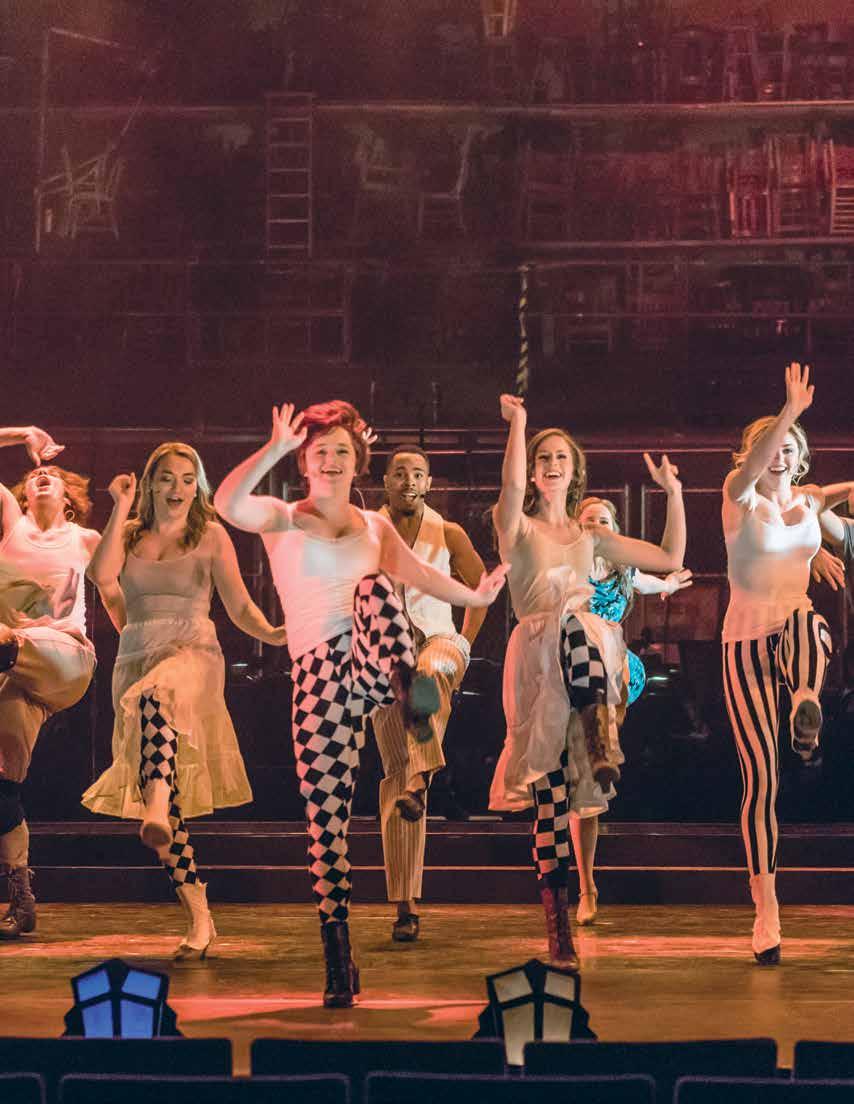
Front Cover: Members of the Lyric Theatre @ Illinois program perform in Cole Porter’s musical Kiss Me Kate during Spring 2016.
UI School of Music on the Internet: www.music.illinois.edu
Share your good news! Send photos and submissions to: music-sonorities@illinois.edu
campus news
From the Director
This magazine remains a vital way for us to stay in touch with nearly 10,000 alumni and friends of the University of Illinois School of Music. In it, you’ll find compelling stories that tend to be overshadowed by our state budget impasse. And yet, while we have been deeply affected by budget reductions, this issue vividly shows that we’re not just surviving but thriving.
Jeffrey Magee Professor and Director
Our opera program—now newly dubbed Lyric Theatre—exemplifies our ability to thrive in challenging times. The term Lyric Theatre captures the varieties of sung theater our students will confront in the wider world. In this issue you will learn about the program and its unique focus on cultivating the singing actor for the 21stcentury stage—told from the point of view of a student who has had a role, onstage or off, in every production.
We also include a feature on a lesser known but no less robust component of School activity: improvisation. Here we emphasize that improvisation is not, and should not, be confined to the jazz program. In fact, it is a vital aspect of contemporary musicianship. Schools of Music and their curricula are built on the authority of western musical notation, which represents a significant though relatively small slice of the global variety of musical idioms and practices. What happens when students must perform without the aid of notation, or with minimal visual aids? Several of our faculty members weigh in, giving us a glimpse of how improvisation informs their work.
You’ll also meet new faculty members in two other core areas of the School: Donna Gallo and Eli Fieldsteel. Gallo joins the music education division, another area that has been entirely rebuilt in the past three years and launched the new year with a renovated curriculum. Fieldsteel joins the composition-theory division and will serve as the director of the Experimental Music Studios, the pioneering hub of new music founded in 1958 and led by Scott Wyatt for the past 41 years.
I want take this opportunity to thank Emily Wuchner, who has served as co-editor then sole editor of this magazine’s past five issues while finishing her PhD in musicology. Emily—now Dr. Wuchner—recently began a full-time appointment as Thesis Coordinator in the Graduate College, so this is her last Sonorities issue. Emily has been an efficient, diplomatic, and trusted collaborator and we’ll miss her in this role.
As for me, I look forward to returning full time to the faculty next year after five years as the School’s director. Serving as director has been a rewarding adventure, and while we’ve accomplished much, there is more to be done. Please join me in working to ensure that our important work continues as we take the School to ever greater heights.
SoM Renovations Complete
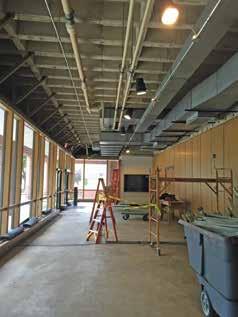
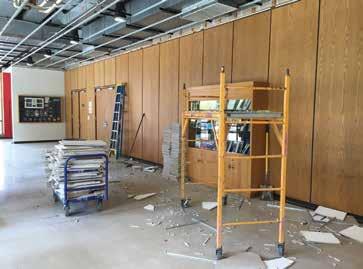
When students began classes in Fall 2015, the sounds of saws, drills, and hammers accompanied performances in studios and in practice rooms and teachers lecturing in classrooms. Now, after nearly a year of construction, the cosmetic, life-safety, and technological renovations in the Music Building are complete—and the changes have improved the look and function of the facility.
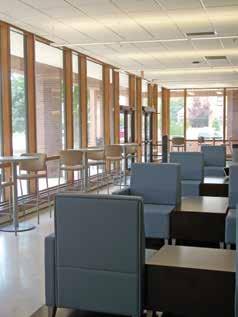
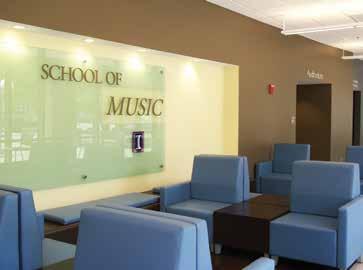
The building had been virtually untouched since its construction in 1972, and crews began work on the project during Summer 2015. The most significant changes include revamping the south lobby with signage, tables, and chairs; creating a reception area near the north lobby (pictured below); renovating the Music Building Auditorium; upgrading the technology in the auditorium, classrooms, and computer labs; and upgrading safety elements (especially sprinklers, fire alarms, and fire doors).
The cost of the renovations was about $3 million and was funded by the College of Fine + Applied Arts and the University.
—Emily Wuchner, editor
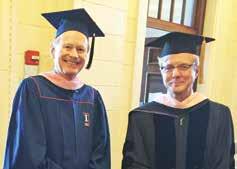
Scott Wyatt and Steve Everett just before processing at the School of Music’s 2016 Convocation, where Everett, introduced by his former teacher Wyatt, delivered the keynote address.
Colwell’s Music Education Tests
Collection
While on faculty at the University of Illinois, Richard Colwell, professor emeritus of music education, began studying musical aptitude and achievement tests to better understand the competence of high school students. His vast collection of tests—which fills at least six file cabinets—is being inventoried, cataloged, and relocated from the Music Education Annex to the Oak Street Library Facility. Colwell reflects on his work in an essay, published on the new School of Music Website: music.illinois.edu/.
Emily Wuchner
Emily Wuchner
Jeffrey Magee
campus news
Faculty Earn National Recognition

Professor Gabriel Solis (Musicology) was one of five UIUC faculty members to receive a National Endowment for the Humanities (NEH) Fellowship. The grant will enable Solis to continue work on his book, The Black Pacific: Music, Race, and Indigeneity in Australia and Papua New Guinea, which, Solis explains, “considers the ongoing history of musical alliances and affiliations between indigenous artists and activists in Australia and Papua New Guinea, and their counterparts in the African Diaspora.”

Associate Professor Linda Moorhouse (Bands) was elected to the National Bands Association (NBA) Academy of Winds and Percussion Arts (AWAPA) award during the NBA General Membership meeting at the 2015 Midwest Clinic. This award, presented in 2016, was established for the purpose of recognizing those individuals who have made truly significant and outstanding contributions to furthering the excellence of bands and of band music. The silver AWAPA figure is designed to be the Oscar of the band world.
Assistant Professor Carlos Carrillo (CompositionTheory) was one of 10 composers to receive a 2015–2016 Copland House Residency Award, allowing him the opportunity to work for six weeks at Aaron Copland’s home in Cortlandt Manor, NY. There, Carrillo focused on completing his opera, which is based on a well-known Puerto Rican play, La pasión según Antígona Pérez. This is Carrillo’s second time at Copland House as in 1998 he was one of the first recipients of the award.
—Compiled by Emily Wuchner, editor
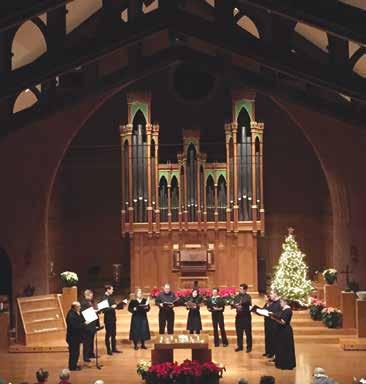
New Chamber Choir “Echoes” Music from the Past
The School of Music’s newly-formed chamber choir—ecco— is comprised primarily of graduate students and faculty at the School of Music, and is led by Director of Choral Activities Andrew Megill. The group’s name is a pun on the Latin word for “behold” and the English word “echo.” The ensemble focuses on Renaissance music, though it also performs Baroque and twentieth-century works. This past season, ecco performed Josquin and Schütz motets, a cycle of Monteverdi madrigals, and Hindemith’s Six Chansons. In January 2017, the group will sing an Evensong featuring works by Tallis and Byrd at Emmanuel Memorial Episcopal Church. The opportunity to make high-level music with colleagues is very important to the singers. Mark Dirksen, of Buzard Pipe Organ Builders, said “joining the group has been both musically and personally fulfilling,” and Andrea Solya, clinical assistant professor, said, “when we sit down to sing, we all leave our lives behind and serve the music itself...It is rather magical.”
—Allegra Martin, graduate student in choral conducting
Courtesy of Allegra Martin
The newly formed chamber choral ensemble, ecco.
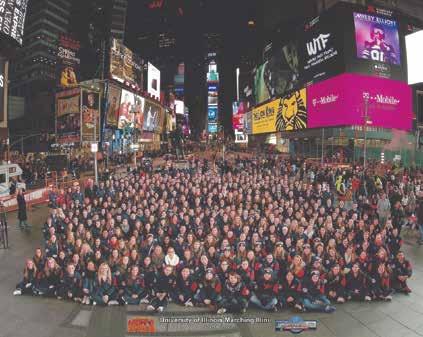
The March to Macy’s
The Marching Illini make their Herald Square debut at the 2015 Thanksgiving parade
By Rose Craig
Craig, an undergraduate in music education and piano pedagogy, was a drum major for the Marching Illini and received the 2015 Bob Hope Band Scholarship Award, given by the Bob and Dolores Hope Charitable Foundation to an outstanding band member participating in the Macy’s Thanksgiving Day Parade.
Throughout my four years in the Marching Illini, I was constantly amazed by the passion and drive demonstrated by the ensemble during each performance, rehearsal, and gathering. During my junior and senior years, I had the incredible opportunity to serve as a drum major for the Marching Illini and our trip to New York was truly the cherry on top of an amazing four years. The “March to Macy’s” during the 2015 season included an increased number of performances in preparation for the multi-million-person crowd in New York City as well as heightened focus in rehearsals as we learned our short but exciting routine for Herald Square. During our time in New York City, members of the Marching Illini had the opportunity to explore the city, see musicals, eat delicious food, and fit in a final rehearsal before the big parade. Our wake-up call on the morning of the parade was 2:30 a.m. and we tiredly but excitedly reported to the empty Herald Square for our dress rehearsal. Soon it was time to line up with the enormous balloons, floats, and entertainment. The Marching Illini occupied one of the prime spots: in front of Santa Claus at the end of the parade! The parade flew by! Between familiar University of Illinois songs and our parade tune, “An American Christmas,” the Marching Illini was able to “meet the crowd” and truly show what the organization is all about—representing and supporting the University of Illinois while having an amazing time. Our performance in Herald Square was full of energy and excitement—the band erupted in high fives, hugs, and selfies once we left the performance area, creating a truly unforgettable moment.
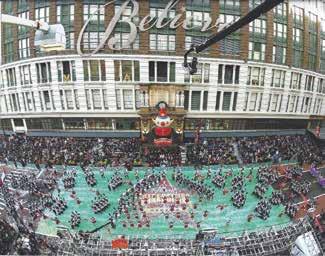
If you missed the MI’s performance (or want to watch it again), check out the Marching Illini on YouTube!
Rose Craig (right and below)
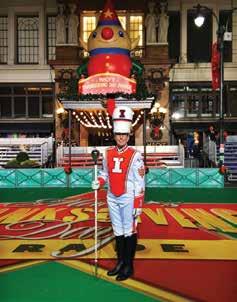
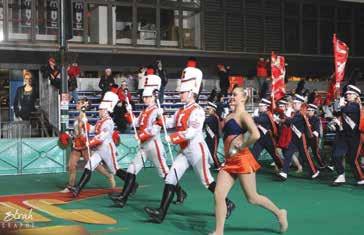
Courtesy of Rose Craig
Courtesy of Rose Craig
Courtesy of Barry Houser
campus news
Gibson Releases Recording, Gives Back to SoM
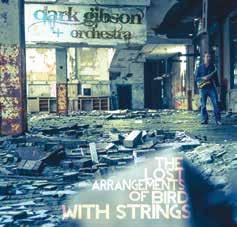
As a child, Clark Gibson (DMA ’15) loved listening to Charlie Parker recordings. It was Bird’s virtuosity and finesse that inspired Gibson to pick up the saxophone. It seemed only natural, then, that he would gravitate toward Parker when choosing a dissertation topic.
Gibson’s dissertation focuses on a unique collection of live and studio recordings Parker commissioned and performed with a group of strings between 1949 and 1952. But upon contacting a publishing company to acquire the arrangements, Gibson learned of another, lesser-known set of arrangements by writers including Gerry Mulligan, Mercer Ellington, George Russell, and Jimmy Carroll. Though they were written for Parker around 1950, most were never performed. Gibson acquired the sheet music and quickly began making plans to perform and record the tunes.
Inspired by Gibson’s enthusiasm, UI alums and SoM supporters Mike and Pamela Van Blaricum generously funded the CD’s production. The entire album was recorded in one day in the Music Auditorium and features the musical talents of UI students, faculty, and alumni. The album was released and distributed internationally through Blujazz Records. Gibson pledged to give all proceeds earned from the recording—which so far amounts to more than $700—back to the School of Music. The CD has been favorably reviewed in DownBeat and several other national jazz publications.
“Projects like this are right in line with the mission of a Division 1 research institution and I was very fortunate to have attended the U of I under such great leadership that facilitated the creation of this project,” Gibson said. “The quality of this entire project, from the music
and production to the artwork and liner notes (which were created by UI alum Peter Kenagy) are a true testament to the creative minds that are a part of the University of Illinois family. I am grateful to be a part of that family.”
—Emily Wuchner, editor
LGBTQ Studies & Music Education III Symposium
In May, the School of Music hosted the LGBTQ Studies & Music Education III symposium. This symposium was the third in a series and showcased scholars from the UK and North America who are examining how LGBTQ issues operate within music education in terms of research, curriculum, teacher preparation, and the musical lives and careers of LGBTQ music students and teachers. Among the studies shared were inquiries into the perspectives and experiences of transgender musicians and music educators, music ensembles within the LGBTQ community, masculinity and choral singing, and homophobia in schools and student mental health. A special issue of the Bulletin of the Council of Research in Music Education will feature select papers from this conference.
—Louis Bergonzi, Daniel J. Perrino chair in music education, professor of conducting and music education
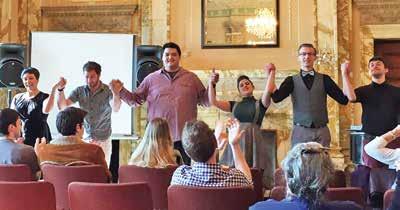
auto-ethnographic, arts-based research study, “Finding Voice Through Repertoire Sung By LGBTQ Characters Depicted in Musical Theater.”
Clark Gibson’s album, Bird With Strings: The Lost Arrangements
Clark Gibson
Chris Cayari (MME ’09, PhD ’16) pictured third from left, presented an
Louis Bergonzi
celebrating giving
A Million-Dollar Year!
Thanks to the generous support of our alumni and donors, the School of Music received $1,083,882 in new gifts for the 2016 fiscal year. This is up from $676,167 in 2015 and $481,281 in 2014. It is exciting to note that our donations came from graduates throughout the University of Illinois as well as those from our community of ensembles and other music programs.
A Special Legacy
Many seats and studios in historic Smith Memorial Hall feature the names of our generous donors or those they have chosen to honor. Each of these donations supports the Smith Music Legacy Scholarship Project, which provides critical scholarship funds to our music students.
Seats and practice or faculty studios are still available for naming opportunities. Contact David Allen at 217-333-6453 or allend@illinois.edu for more information or to have a Smith Music Legacy Scholarship Project packet sent to you.
College of Business graduate Alan Lev (’82) recently supported the Smith Music Legacy Scholarship Project by naming our group piano studio to honor the memory of his uncle Michael Masser, who graduated from the University of Illinois College of LAS in 1963. During his career, Masser composed and produced some of America’s most popular music; his body of works is too vast to include here. Many of his greatest hits were performed by famous artists, including George Benson, Natalie Cole, Neil Diamond, Whitney Houston, Gladys Knight
David Allen Associate Director of Development
and the Pips, Diana Ross, Barbara Streisand, and Dionne Warwick. The lyrics to one of his most famous songs, “The Greatest Love of All,” are featured on the new door plate in Smith Memorial Hall.
University Celebrates Sesquicentennial
In celebration of the University of Illinois’s 2017 Sesquicentennial, the School of Music is commissioning a piece for choir and band. Richard Powers, professor emeritus of English at the University of Illinois, will compile the text based on writings by distinguished, award-winning Illinois alumni. Esteemed choral conductor and composer Dominick DiOrio, who is a faculty member at Indiana University, will write the music. The premiere is scheduled to be performed in Urbana during the spring of 2018. Thanks to generous financial support from Lynd Corley (BM ’59, MME ’61), our student ensembles will have the opportunity to perform this important new work in Chicago and New York City.
student and donor spotlight
With the Susan Starrett Scholarship, I have been able to follow many of my aspirations as a student and performer. Some of the highlights of my first year as a violin performance major include studying with my professor and meeting so many new people and talented musicians. As well as this, I have thoroughly enjoyed my time as a part of the University ensembles and chamber ensembles. One of my favorite memories so far was my final concert in the UISO last year when we performed the oratorio August 4, 1964 by Steven Stucky.
—Daniel Ostrow, undergraduate in violin performance
celebrating giving
Bringing the World to Champaign-Urbana
The Center for World Music Prepares for an Exciting Season
The Robert E. Brown Center for World Music has recently established itself as a leading presenter of international music and performance spanning folkloric traditions to contemporary, cross-cultural world music projects on the UI campus. With a generous financial gift from Bruno and Wanda Nettl in 2014, and additional support from campus grants and partner programs, the Center offered and co-sponsored 25 engagements in 2015–16. Concerts for campus and community members, along with workshops and classroom engagements for both university and K–12 students, drew nearly 3,000 attendees total.
The 2015–16 academic year featured a return visit by the Tuvan ensemble Alash, and first-time appearances by the Georgian choir Anchiskhati, taiko artist Kenny Endo, and the Taiwanese music and dance group A Moving Sound. The Center co-sponsored the West African Drum and Dance Festival— Midwest Mandeng 2015, the Indian dance and percussion ensemble Pradhanica, a Japanese Tsugaru-jamisen performance featuring Sato Michiyoshi, and separate koto performances by Anne Prescott and graduate students Hilary Brady Morris and Jessica Hajek. These projects could not have been possible without the support of the Russian, East European, and Eurasian Center, the Center for Advanced Study/MillerComm 2016, the Spurlock Museum, the Center for East Asian and Pacific Studies, Japan House, and the Asian American Cultural Center.
In Fall 2016, the Center welcomes Gregory Beyer and his chamber berimbau ensemble Projeto Arcomusical, which is presented with support from the Lorado Taft Lectureship on Art funding. A four-week gamelan residency will take place at Martin Luther King, Jr. Elementary School, made possible by an Urbana Arts Grant.
With the goal of continuing a high level of the Center’s programming, the Bruno Nettl World Cultures Performance Fund is being established in Fall 2016. If you would like to support the Center’s programming, please contact David Allen, associate director of development for the School of Music at allend@illinois.edu or by phone at 217-333-6453.
—Jason Finkelman, program coordinator for the Robert E. Brown Center for World Music and director of global arts performance initiatives at KCPA
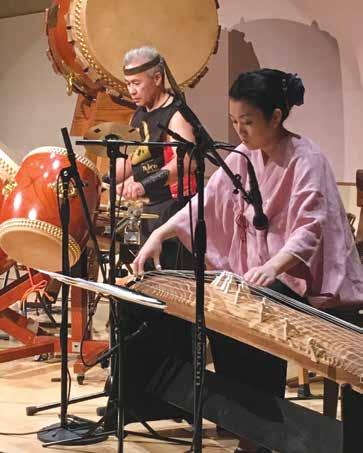
Kenny Endo, taiko artist
Jason Finkelman
Courtesy of Jon Hollis
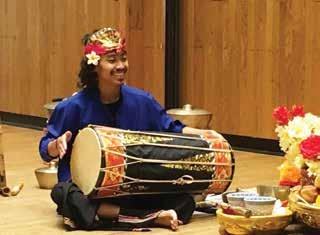
Graduate student Putu Hiranmayena participates in the gamelan ensemble concert.
Lyric Theatre Moves into the Future
By embracing opera and musical theater, exploring collaborations and new music, and practicing a new curriculum, the Lyric Theatre @ Illinois program is preparing students to move into the future
By Aaron Godwin, graduate student in vocal performance and literature
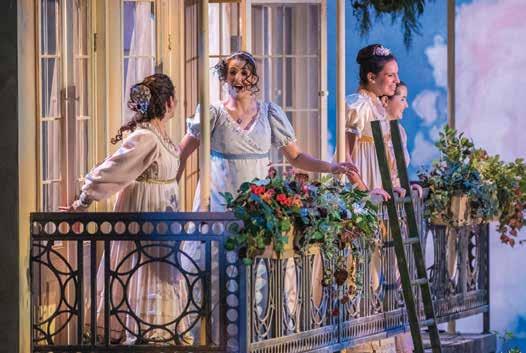
Since my arrival in Champaign-Urbana in 2014, I have assumed the role of an over-zealous security guard, an Italian migrant worker, an aging notary, a philandering Frenchman, a storybook hero with a soft spot for barn animals, a Shakespearean war hero in New Orleans, and a high school student who gets his big break when he appears as Princess Leia in his school play. The best part is that I don’t do any of it alone. All of this is part of the adventure that is Lyric Theatre @ Illinois (LTI).
Who We Are
LTI is a comprehensive program embracing a broad continuum of opera and musical theatre to reflect the artistic demands of the 21st-century musical stage, on which performers must exhibit the highest standards of singing, acting, and movement. With many top-tier opera companies and
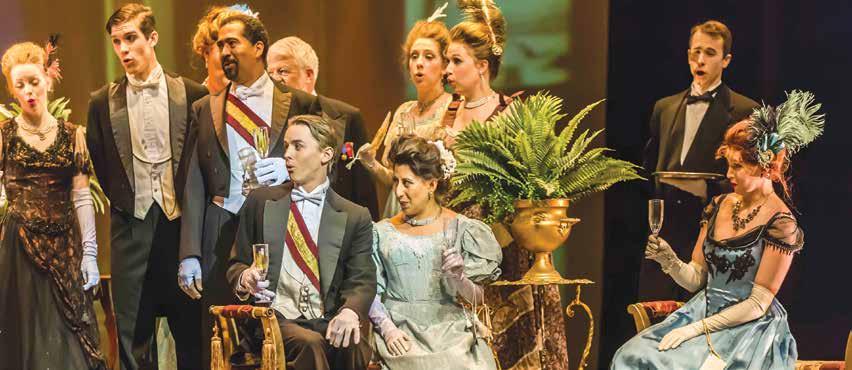
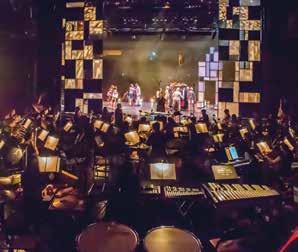
2015: The Merry Widow Darrell Hoemann Photography
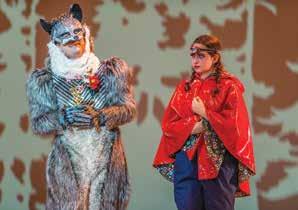
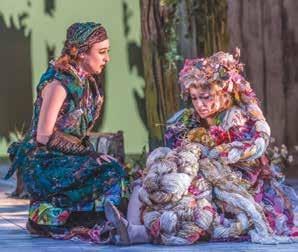
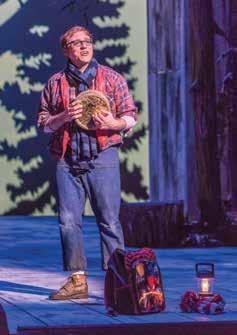
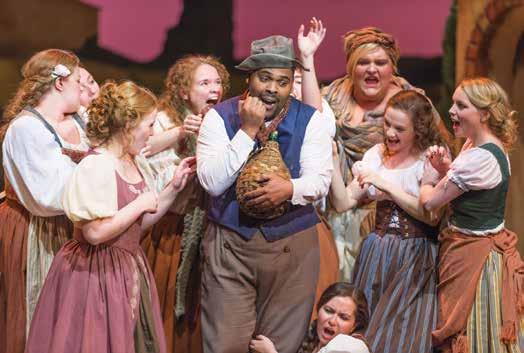
orchestras programming selections from the American musical theatre canon alongside standard operatic repertoire, and with the introduction of live streaming operas in high definition to cinemas across the globe, LTI recognizes the necessity of holistic training to properly prepare its students to enter into the professional singing industry. In order to accomplish this seemingly tall order, LTI not only continues to draw on the rich traditions and resources of the School of Music, but also explores new avenues for teaching and learning through its commitment to staging high caliber, entertaining mainstage productions, developing new works, soliciting the involvement of industry professionals, and developing a new curriculum.
As is appropriate in an educational setting, the most important aspect of this story is the response to the new LTI venture by its most critical element: the students. “What I love most about LTI is the emphasis it has placed on integration into our education,” Margaret Blackburn (BM ’16) said. “In the last two years, I’ve become so much more confident in performing on stage because I feel I really have the tools to give a compelling performance. Through my experience and training in acting both as Rapunzel in Into the Woods and as Tytania in Midsummer, as well as working in a master class with Isabel Leonard, the education that LTI has provided for me in acting and dance as well as vocal performance has been priceless.”
What We Do
Perhaps most exciting about my experiences with LTI is the long list of notable people I have had the chance to either observe or work with directly. From watching Bill Burden, Isabel Leonard, and Renée Fleming give master classes to my colleagues, to working directly with conductors Eric Weimer (Lyric Opera of Chicago), Raphael Schluesselberg (Theater an der Wien), and Claire Levacher (Paris Conservatory), and directors Jessi D. Hill and Christopher Gillett, my time here has been full of learning not just from
2014: L’elisir d’amore
2015: Into the Woods
Aaron Godwin as Jack in Into the Woods.
Margaret Blackburn (right) as Rapunzel in Into the Woods
Darrell Hoemann Photography
Darrell Hoemann Photography
Darrell Hoemann Photography
Darrell Hoemann Photography
the world-class faculty of the School of Music, but also directly from working industry professionals. This aspect of LTI is one that is not easily outdone. What makes LTI truly unique is the commitment Julie Gunn, director of lyric theatre studies, and Nathan Gunn, general director, have for providing a high level of education to LTI students.
“What I love most about LTI is the emphasis it has placed on integration into our education.”
—margaret blackburn (bm ’16)
Yet another consummate aspect of LTI is its commitment to being a leader in the development of new works. In just two years, LTI has been host to three world-premiere workshops, each more exciting than the last. In Spring 2016, we hosted Gene Scheer and Billy Van Horn for a workshop of their piece in development, Polly Peachum, culminating in a semi-staged performance for the community. This past season, LTI presented Jeremy Gill’s miniature and powerful opera Letters from Quebec to Providence in the Rain. The Illinois Modern Ensemble and American Opera Projects collaborated with LTI on this 20-minute drama about jealousy, insanity, murder, and revenge in the orchestral world premiere of this new work. On a more epic scale, Lyric Theatre welcomed industry professionals from as far away as Karachi, Pakistan, for the workshop of Bhutto, Mohammed Hanif and Mohammed Fairouz’s opera about the grandest of Pakistani families. Nathan Gunn sings the role of Zulfikar Bhutto both here at Illinois and at the world premiere in Pittsburgh in 2018. An inimitable feature of LTI is the opportunity to partner with major companies such as Pittsburgh Opera and Beth Morrison Projects, along with the partnership of the School of Music and the Krannert Center for the Performing Arts, to be at the forefront of new works for the modern lyric stage.
One of the many industry professionals we have hosted in the last two years included Christopher Gillet. Chris has made an international career
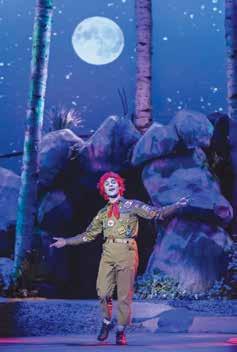
2015: Béatrice et Bénédict
2016: Kiss Me Kate
2016: A Midsummer Night’s Dream
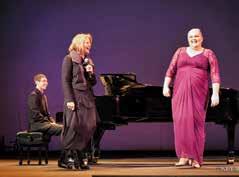
Students participated in a master class with opera superstar, Renée Flemming
Darrell Hoemann
Photography
Darrell Hoemann Photography
Natalie Fiol
Poppea
November 10–13, 2016
Madeline Sayet, director Music by Claudio Monteverdi Libretto by Giovanni Francesco Busenello
Love and obsession. Deception and decadence. And an unrelenting quest for power, whatever the cost. Imagine if today all roads led to Rome, where the goddesses of Virtue, Wealth, and Love fight for power. Seductively rich imagery coupled with Monteverdi’s ravishing score lure the audience into this glamorous world of greed, lust, betrayal, and beauty.
Viva Verdi!
February 23–26, 2017
Donald Schleicher, conductor Kyle A. Thomas, director UI Symphony Orchestra and the UI Oratorio Society
When Giuseppe Verdi died in 1901, Italy wept as one nation. Almost a quarter of a million people took to the streets, marching to “Va, Pensiero” from Nabucco—better known as the Chorus of Hebrew Slaves—sung by a massed choir under the baton of celebrated maestro Arturo Toscanini. Lyric Theatre @ Illinois continues its celebration of Italy with a tribute to Verdi, with robust choruses, soaring solo voices, and thrilling orchestration to express victory and defeat, love and longing, joy and despair.
The Light in the Piazza
April 27–30, 2017
Dawn Harris, director
Julie Jordan Gunn and Michael Tilley, musical directors
Book by Craig Lucas
Music by Adam Guettel
Based on the novella by Elizabeth Spencer
1950s Tuscany provides the setting for this Tony Award-winning story of love and hope, fears and expectations. Well-heeled Margaret Johnson is touring the Italian countryside with her daughter, Clara, a beautiful, surprisingly childish young woman. In a chance encounter charged with coincidence and fate, an intense romance is sparked between Clara and Fabrizio Naccarelli, a handsome Florentine. As The Light in the Piazza unfolds, Margaret is forced to reconsider not only Clara’s future, but her own dreams as well. The rich and romantic musical score by Adam Guettel—who happens to be the son of composer Mary Rodgers and the grandson of Broadway legend Richard Rodgers—creates moments of simple magic as “The story wraps itself around your heart” (Chicago Sun-Times).
performing Flute in Britten’s A Midsummer Night’s Dream. He joined us for our production of the same opera in his first time in the director’s chair. He recalls, “I think it’s a great credit to Lyric Theatre that they helped me enormously to grow in my new role [as director] while giving me the tools to help my cast grow too. The facilities at the Krannert Center are second to none, the musical, design, production and technical team eager, professional and, best of all, good-humored. I was struck by the strong sense of camaraderie and mutual respect and support within the students, of the intent of everyone to do their very best for the show as much as for themselves.” And though I may be biased, I am inclined to agree.
Of course I would be remiss if I did not pause to acknowledge the faculty, staff, and students of both the Level 21 program and Krannert Center for their priceless contributions in infrastructure, design, management, and marketing to LTI.
What Comes Next
To round out these exciting opportunities, the LTI faculty has been diligently developing a new curriculum for students to pursue within the School of Music and, as of the end of the Spring 2016 term, it has been approved by the SoM faculty and will be reviewed by the University for approval. The new degree, a Bachelor of Musical Arts in Lyric Theatre Studies, will build upon the existing excellence in vocal and performance instruction through a curriculum that emphasizes creativity, flexibility, and wellness. This degree is designed for the student who intends to pursue a performance career in sung theatre and will provide them coursework in music, theatre, and dance, administered by the School of Music, and housed within the walls of the world class Krannert Center and all its collaborative possibilities. Through this program, LTI continues its commitment to operatic repertoire through instruction in languages, vocal health, and rigorous musical training, a new investment in musical theatre through storytelling, acting, and dance, and a fostering of creativity among the realm of new works through instruction in composition and design. Overall, the new curriculum is immersive, dynamic, multifaceted, and forward-thinking.
Led by a faculty comprised of intelligent and accomplished individuals, LTI is poised to provide the very best in education to the next generation of leaders in opera and musical theatre. Sarah Wigley Johnson, clinical assistant professor, sees LTI as the definition of progression. “We
are fostering dynamic, diversified performers, musicians, and artists and that is an incredibly exciting thing to be a part of,” Wigley Johnson said. “My goal for each student is to feel empowered by fusing high-level musicianship and technical prowess with imagination and inspired exploration.” Johnson began teaching at the SoM in Fall 2014 along with her team teacher, Clinical Assistant Professor Michael Tilley. Together they teach the Lyric Theatre Studio course, a practicum emphasizing diversified training through a varied repertoire each semester. Tilley sees LTI as a unique program, exemplified by the new, option-rich curriculum, which is designed to nurture performers through their individual responses to text, situations, and obstacles. “Breaking training down to the basic elements encourages students to be accountable for the choices they make, on and off stage, holding the promise of stage artistry that is both secure and unpredictable, creating a living stage where transformation is the new normal,” Tilley said.
“We are fostering dynamic, diversified performers, musicians, and artists and that is an incredibly exciting thing to be a part of.”
—Sarah Wigley Johnson
A new program and curriculum often presents challenges, especially in a strained economy and in a state without an operating budget. Thankfully, in part to the insightful and passionate leadership of Julie and Nathan Gunn, the support of the School of Music administration, and through contributions from our supporters, LTI is flourishing and thus plans for a bright future are being devised, beginning with the matriculation of the first class in Fall 2018. “Thankfully, talent is not confined by socio-economic status,” Julie Gunn said. “We are excited and hopeful about creating a diverse program of students and hope that Illini alumni will consider supporting these students who exhibit immense talent but come from financially restrictive backgrounds.”
The UI School of Music has always been at the forefront of innovation in music education. In keeping with the rich traditions of our School, LTI is poised to become the leader of education in opera and musical theatre performance studies, a standard by which other programs across the nation will seek to replicate. And somehow someone thought I should have the chance to be a part of it. Lucky me!
Events Calendar
Stay connected with all School of Music concerts and events! Visit our new website at www.music.illinois.edu/ for an up-todate list of recitals, ensemble concerts, lectures, and Lyric Theatre productions.
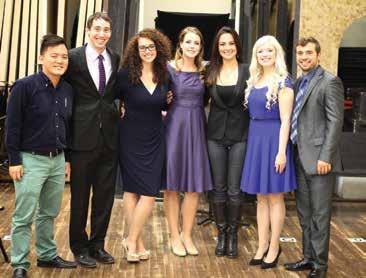
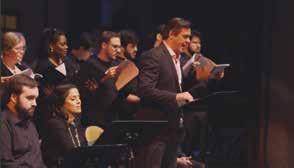
Students participated in a master class with renowned singer, Isabel Leonard.
2016: Bhutto
Elizabeth Hoard
Beth Morrison Projects
Improvise Illinois
From gibberish language dialogues to serious disciplines, the impact of improvisation on performance and education is important to students and faculty at UI
Compiled by Emily Wuchner, editor
The UI School of Music is home to a variety of seemingly disparate ensembles and programs. But one characteristic they share in some way is participating in the art of improvisation through performance or scholarship. Whether it be through navigating a jazz chart, realizing figured bass, acting out a recitative in gibberish, participating in a calland-response dialogue, or critically thinking about the role improvisation plays in performance and interpretation—students across the SoM are challenged to explore their creativity and intellect when tapping into this ever-present skill. Faculty members throughout the SoM were contacted to provide insight into the role that improvisation plays in their teaching and creative activities. What follows is a glimpse of how instructors incorporate improvisation into the daily life of the SoM.
ORGAN/HARPSICHORD: Charlotte Mattax Moersch, professor
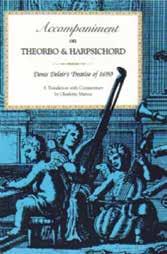
Not unlike the jazz pianist, who improvises from a jazz chord chart, today’s harpsichordists and organists improvise accompaniments to a figured bass. In the Baroque and early Classical periods, composers used numbers and symbols to indicate chord tones above a bass line. In the basso continuo course offered by the organ/ harpsichord division, students learn to decipher these figures, and then practice how to go from simple chords above the bass to improvising melodies and adding ornaments to their realizations. They then apply these skills to chamber music performance in Concerto Urbano, UI’s period instrument group, learning about different styles of accompaniment in repertoire ranging from 17th-century Baroque opera to the music of J. S. Bach.
JAZZ: Chip McNeill, professor
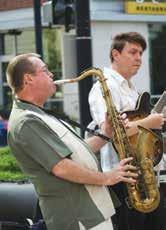
At UI, I was brought in specifically to begin degrees at the BM, MM, and DMA levels in jazz performance. Obviously, jazz improvisation is at the core of these degree programs and our curriculum at the BM, MM, and DMA levels. Starting in the audition process and continuing into the applied lessons, jazz ensembles, and actual jazz improvisation courses (at the undergraduate and graduate levels), improvisation plays a key role in understanding the historical perspective of jazz from past to present and the direction jazz will take in the future. The process of improvising is a hands-on activity done in addition to the historical research and repertoire knowledge and understanding. Most of the improvisation courses we offer are repertoire-based and focus on the American songbook repertoire as a starting point for listening and beginning to have a deeper understanding
Courtesy of Charlotte Mattax Moersch
Courtesy of Chip McNeill
of what is meant and involved in improvisation. This repertoire includes vocal and instrumental and their interactions with regard to the history of jazz. Also, jazz improvisation as it relates to theater, dance, and music forms is very important to our students and to the future of jazz improvisation as a viable economic stream. Applied lessons in our program are heavily infused with improvising along with instrumental or vocal training. Again, most applied improvising is repertoire-based and attempts to use repertoire (recordings and transcriptions) to analyze how the pantheon of jazz improvisers have approached certain repertoire, styles, etc.
PIANO PEDAGOGY:
Christos Tsitsaros, professor
Improvisation has played a key role in modern American music education, particularly in the area of piano pedagogy. Pioneer 20th-century piano educators, such as Raymond Burrows, Frances Clark, and Robert Pace stressed the importance of incorporating improvisational activities as a means of learning and reinforcing new concepts, and achieving “total musicianship.” Their ideas stemmed from developmental learning theories and language acquisition. Piano pedagogy and other interrelated courses, such as advanced piano skills and jazz improvisation, have traditionally explored the full range of benefits reaped from improvisational skills in teaching young students and adults in private and group settings. The ability to improvise is also at the base of a comprehensive and flexible musical background that will eventually support the modern college student’s future professional career.
MUSICOLOGY: Bruno Nettl, professor emeritus
The School of Music, with support from many campus units, hosted a major conference on improvisation in April 2004. The organizing committee was William Kinderman, Gabriel Solis, and myself. About half of the conference was devoted to scholarly research papers on improvisation in many of the world’s cultures, largely by visiting scholars (including well-known alumni A. J. Racy, Stephen Slawek, Christopher Waterman, and Stephen Blum), distinguished visitors including pianist Robert Levin and music education scholar Patricia Shehan Campbell, plus local faculty. There were also workshops on such subjects
as jazz by Chip McNeill, music improvisation in dance classes by John Toenjes (Dance Dept.), and a demonstration of the Sal-Mar instrument, an improvising machine invented by former professor Salvatore Martirano. The conference included concerts of Persian and Arabic music. The papers of the conference were published in a book, Musical Improvisation: Art, Education and Society, edited by Solis and myself.
COMPOSITION-THEORY: Erik Lund, professor
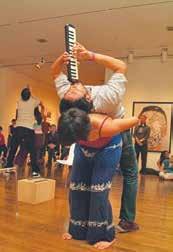
Students participate in a
COLAB is an interdisciplinary, collaborative workshop of musicians and dancers, fusing improvisation and composition, co-taught by myself (compositiontheory, performance) and Kirstie Simson (dance). We began offering COLAB in Fall 2010 and have continued for the past six years, with about 15 participants each semester. The workshop offers a unique format where analogies between the disciplines are creatively explored. Some students come to COLAB with considerable background in improvisation, but for many it is all very new. It has proven to be an eye/ ear opening experience for all, with many students electing to return for repeat sessions. COLAB has presented site-specific concerts at venues including the Krannert Art Museum, Temple Buell Hall, MTD bus station, Lincoln Square Mall, Champaign Library, Champaign-Urbana Independent Media Center, and local restaurants. Participants go on to include improvisation and interdisciplinary collaboration in their performance careers, and some have moved on to teaching positions where they are sharing the practice with their own students.
WORLD MUSIC: Jason Finkelman, director, global arts performance initiatives
Improvisation is central to my practice of developing cross-cultural ensembles that collectively draw upon ambient electronics, avant jazz, progressive rock, and
COLAB performance
Courtesy of Erik Lund
folkloric music of the world. My interest in this area led to an opportunity to invite percussionist Adam Rudolph, on behalf of the Robert E. Brown Center for World Music, to present Go: Organic Orchestra, his system of techniques and compositional strategies for conducted improvisation. Rudolph introduced his concepts on cyclical rhythm, note matrices, and hand gestures, all of which were applied in a residency-concluding performance by an eclectic chamber ensemble featuring student, faculty, and community musicians of varying levels and disciplines. While completely opposite of freely improvising collectively in a group, this rewarding experience with directive improvisation indicated that both practices provide new musical sonorities by combining unique instrumentation, along with the personalities and backgrounds of the participating musicians.
PERCUSSION:
Ricardo Flores, associate professor
I use improvisation in my teaching and performance on a regular basis. As a percussionist, I perform on drum set and Latin percussion as well as other types of percussion instruments with various musical groups playing myriad styles from classical and jazz to tango, Cuban, Brazilian, free improvisation and everything in between. These ensembles include not only other instrumentalists but in some circumstances, dancers and vocalists, as well. The ability to improvise makes a percussionist and any musician much more versatile and marketable in today’s competitive music scene. This is why students in the percussion studio are encouraged to learn to use this important skill when studying privately with me on drum set and Latin percussion. Solo improvisation is also utilized in the UI Steel Band/World Percussion Ensemble.
LYRIC THEATRE:
Michael Tilley, clinical assistant
professor
We allow our students in Lyric studio many opportunities to discover their creativity in free play. From somatic exploration and pantomime, to the creation of gibberish language dialogues (complete with gibberish interpreters!), to solo arias based on a line of text, to improvised mini-operas based on a scenario or set of characters, we
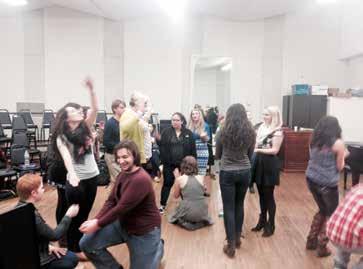
repeatedly experience the greatest joy for any educator: watching students uncover personal resources they had no idea even existed. One of my favorite memories from the past year was a particular scene, in which a student had been given a character who was fanatically devoted to her dog. As the other characters tried to distract her and pursue their own dramatic agendas she finally took center stage and delivered an emphatic mini-aria about her dog which revealed a free vocal and physical power which electrified the room, surprising all of us, and especially herself. Such experiences are vital to the real work of sung theatre. By finding their authentic voice, performers allow the audience to connect with and see themselves reflected in the story taking place on the stage, hopefully leaving the performance with a deeper connection to our common humanity.
JAZZ:
Larry Gray, associate professor
It could perhaps be said that there are two kinds of musicians—interpreters and improvisers—but I like to think that most all of us are some combination thereof. The improviser actually probably needs at least as much dedicated, regular preparation as the interpreter. As a performer, virtually everything I do is informed by improvisation, and much of it is literally improvised, although there are also situations with little if any, other, than in nuance. In teaching, my task is how and when to integrate improvisation since there is so much core musical
Lyric Theatre students participate in an improvisation game.
Courtesy of Michael Tilley
and technical training students need. In the improvising musician’s game, the ear is the primary player, and this includes all the core elements of music, such as melody, rhythm, and harmony, but it also includes an intuitive, organic kind of understanding of style, along with a deeper kind of hearing that is impossible to either explain or analyze outside its natural context in practice. So, for me in teaching, improvisation needs to be a consistent part of the process from the first lessons with a student. It’s not something to be put off until the fourth semester or such. By then, so to speak, it’s too late. (Of course, it’s never too late!)
BLACK CHORUS:
Ollie Watts Davis, professor
The task of inspiring and performing beautiful music is a privilege that allows me to share my lived and learned experience. I use every resource to connect with aspiring young artists and appreciative audiences including the rich tradition of improvisation. I utilize this “in the moment” teaching and performance tool to activate the learning and performance space by heightening the atmosphere with great expectation and anticipation. In the studio and on stage, I create a musical conversation for the moment in response to the perceived needs of the student(s) and audience. As conductor of the music of Black Americans, I preserve the essence of the original creative process and promote integrity and authenticity in performance. To that end, an observer will witness me teach “by ear” using the practice of communal call and response, engage a “co-singer” to “co-sign” and
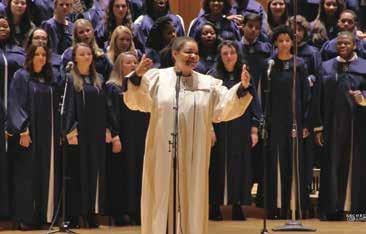
inspire the principal soloist with short vocal commentary, direct a series of repetitions and modulations, and in performance, bridge all gaps in the performance space by inviting the audience to join the chorus as vital contributors to the musical experience.
MUSICOLOGY: Gabriel Solis, professor
I have been an improvising musician since I was young, playing both jazz and early music—indeed, as an undergraduate I spent days playing recorder, which I pursued largely because I liked the sense of creative challenge from working out ornamentation in notated chamber music; and I spent nights at blues and jazz jam sessions, which gave me the compelling experience of improvising solos with a rhythm section. I have written about musical improvisation, presented at major international conferences on it in Canada and Japan, and teach a course on improvisation for graduate students. My most recent publication is an article titled “From Jazz Pedagogy to Improvisation Pedagogy: Solving the Problem of Genre in Beginning Improvisation Training.” My experience with students is that there is often a sense that improvisation training is for specialists, and amounts to the cultivation of genre-specific proficiencies. That’s fair—improvised musics are serious disciplines and playing one of them well requires intensive work. But there are so many lessons that grow from making new music in the moment (“in the act of performance,” as Bruno Nettl says) that it seems critical to incorporate the process into students’ education regardless of their particular specialization. I think the easiest way to get a student to really understand how harmony works is to get them to improvise melodies over simple chord progressions. To get them to hear counterpoint, play lines over a ground bass. To get them to play sympathetically with an accompanist or chamber ensemble, improvise simple parts together with clear guidelines. I’m a believer, for sure. As much as I have a deep respect for the discipline of interpretive performance, in the era of critical design thinking and “maker culture” in which we live, I think it’s a shame for students to finish a college degree without learning to design and make their own music, too.
Ollie Watts Davis leads the Black Chorus in concert.
Courtesy of Ollie Watts Davis
new faculty faculty news

Eli Fieldsteel (Composition-Theory) was appointed assistant professor and will serve as the new director of the Experimental Music Studios. He earned a BA from Brown University, a MM from the University of North Texas, and a DMA from the University of Texas at Austin. He recently served as assistant professor of music theory and composition at Ball State University, where he taught courses in composition, computer music, acoustics, and human-computer interface design. Fieldsteel was the recipient of the 2014 James E. Croft Grant for Young and Emerging Wind Band Composers, first prize in the 2012 ASCAP/SEAMUS Student Commission Competition, and has received awards and recognition from organizations including the Bandmasters Academic Society of Japan and the Frank Ticheli Competition. His music has been performed nationally and internationally by ensembles such as the Dallas Wind Symphony, the University of North Texas Symphony Orchestra, the Kawagoe Sohwa Wind Ensemble of Tokyo, and the University of North Carolina at Chapel Hill Wind Ensemble. His music is published by Lovebird Music, and has been recorded on the SEAMUS and Aerocade Music record labels.

Donna J. Gallo (Music Education) was appointed assistant professor. She completed her PhD in music education at Northwestern University, earned a MME from Silver Lake College, and a BME from Indiana University. She completed two years of coursework at the Zoltán Kodály Pedagogical Institute of Music in Kesckemét, Hungary where she was awarded the International Kodály Society Scholarship. Most recently, she served as an assistant professor of music education at Westminster Choir College where she taught undergraduate and graduate courses and coordinated the summer Kodály Certification program. Prior to joining the faculty at Westminster, Gallo served as adjunct faculty at Northwestern University and Silver Lake College, where she taught graduate research methods, and she taught Kodály Level III at DePaul University. Her public school career includes eight years of K–6 general/choral music in Fairfax County, VA and in Simsbury, CT.


Richard Deja and Steven Wilson (Musicology) were appointed visiting lecturers in musicology for the 2016–17 academic year. They will teach a variety of classes, including undergraduate courses for music majors and non-majors, and graduate-level seminars. Deja completed his PhD in musicology from UIUC in 2016 and has previously served as a visiting assistant professor at Earlham College (IN) and authored and instructed an online course for Rutgers Arts Online. He conducted doctoral fieldwork under the auspices of a Fulbright-Hays Doctoral Dissertation Research Abroad fellowship and studied the Zulu language in South Africa with a Fulbright-Hays Group Project Abroad fellowship. Wilson graduated with his PhD in musicology from UIUC in 2014. He has previously served as visiting professor at Mount Mercy University (IA) and Cornell College (IA). He has presented his research at the Midwest Chapter of the American Musicological Society conferences.
faculty updates
Chester Alwes (Emeritus, Choral Music and Music Education) published the second volume of his History of Western Choral Music (Oxford University Press), which culminates 12 years of work.

Janet Revell Barrett (Music Education) published chapters in the Oxford Handbook of Social Justice in Music Education (Oxford, 2015) and Teaching General Music: Approaches, Issues, and Viewpoints (Oxford, 2015). She addressed 30 years of research issues in the Bulletin of the Council for Research in Music Education as a keynote for the CIC Music Education conference, “Back to the Future: Music Education Scholarship in the 21st Century” at Northwestern University. In March, she presented a research study, “An ecological view of music teachers’ curricular agency” with graduate student Tim Caskin at the NAfME Music Research and Teacher Education conference in Atlanta, as well as a session on mixed methods research. She is collaborating with the Wisconsin Comprehensive Musicianship through Performance committee on curricular, instructional, and assessment initiatives for the professional development of music teachers. She also continues her work as editor of the Bulletin

Christina Bashford (Musicology) was appointed associate director for graduate studies in the School of Music in August 2015, and has also been made a visiting research fellow at the University of Huddersfield (UK). Spring 2016 saw the publication of her co-edited volume of essays The Idea of Art Music in a Commercial World, 1800–1930 (Boydell Press), to which she also contributed a chapter.
She was part of the panel presentation “Johnnies, Tommies, and Sammies: Music and Transnational Identities” at the 2015 American Musicological Society conference in Louisville, along with Gayle Magee, William Brooks (MM ’71, DMA ’76), Justin Vickers (BM ’96, DMA ’11), and Laurie Matheson (DMA ’98); the panel was repeated at the Newberry Library, Chicago (May 2016). She also read a paper at the Music in Ireland: 1916 and Beyond conference in Dublin (April 2016).

Louis Bergonzi (Music Education) offered clinics at 12 schools in Illinois, and others in California, Iowa, and Seoul, South Korea where he conducted the Korean International Music Educators National Honor Festival Orchestra. He was also guest conductor of the Indiana High School All-State, and the Iowa Middle School All State Orchestra, among others. Alfred Music will publish his arrangement of Brahms’s Academic Festival Overture for middle school string/symphonic orchestra. As a researcher, he co-authored, “Demographics of Tenure-Stream Music Faculty in Canadian Post-Secondary Institutions” for Canadian Journal of Music His chapter, “Gender and sexual diversity challenges (for) socially just music education” appeared in The Oxford Handbook of Social Justice and Music Education. With Bridget Sweet, he presented their work on teaching adolescent voice change by including the perspectives of pop/rock transgender singers and songwriters at three conferences: IL Music Education Conference, International Society for Music Education (Glasgow), and at LGBTQ Studies & Music Education III.

Zack Browning (Composition-Theory) was guest composer at Mondi Sonori Festival (Trento, Italy) and lectured at Broward College (FL), Emory University (GA), Florida Atlantic University, West Chester University (PA), UI Department of Agriculture and Biological Engineering, and Mathematics, Science & Technology Education (MSTE). Silent Crackdown, commissioned by Pin-Hua Chen (DMA ’16) was premiered at North American Saxophone Alliance (Texas Tech University) and then the Singapore Saxophone Symposium. Decade of the Dragon was premiered and recorded by NakedEye Ensemble for Starkland Records and A/B Duo recorded Sol Moon Rocker for Aerocade Music. Additional performances were in Beijing, The Hague, Seoul, Audiograft Festival (Oxford, UK), Royal Northern College of Music Chamber Music Festival (Manchester, UK), Ball State University New Music Festival (IN), Bravo! Festival (Vail, CO), Brevard Music Festival, Interlochen Music Festival, Lake George Music Festival, and the University of Tennessee Contemporary Music Festival. Browning continues to direct the Salvatore Martirano Memorial Composition Award.

Donna Buchanan (Musicology) delivered presentations at the 2015 Society for Ethnomusicology meeting, an international conference on the “Heritage of Death” at Stockholm University, and an international conference on Macedonian studies in Chicago. She also gave an invited colloquium address at the University of Chicago and a pre-concert lecture on Bartók’s ethnomusicological activities in conjunction with the Jupiter Quartet’s performance of the composer’s string quartets. Her article “Beyond Nation? A Thrice-Told Tale from Bulgaria’s Post-
—compiled by Emily Wuchner, associate editor
milestones and awards
Faculty Promotions
Linda Moorhouse to associate professor (with tenure)
Donald Schleicher to professor
Rochelle Sennet to associate professor
Staff Promotions
Jancie Philippus to public engagement coordinator
Retirements
Guy Garnett
Cynthia Haymon-Coleman Awards
Jonathan Keeble, Campus Award for Excellence in Undergraduate Teaching
Gabriel Solis, College of Fine and Applied Arts Faculty Award for Excellence in Research
Lori Melchi, assistant to the director, College of Fine and Applied Arts Distinguished Staff Award
socialist Soundstage,” appeared in the Anthropology of East Europe Review during the fall. In June, she conducted field research in Sofia, Bulgaria, where she also participated in “Beyond the Borders,” the 10th Joint Meeting of Bulgarian and North American Scholars, as a member of the North American delegation. In January, Buchanan was awarded an Illinois International faculty research travel grant to conduct research in Bulgaria’s Armenian diaspora communities.
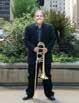
Elliot Chasanov (Brass) served on the international jury of the Concours de Trombone held at the Montreal Conservatory in Quebec, Canada in April 2016. The Elliot Chasanov Brass Series, 19
faculty news
containing arrangements by Chasanov and published by Metropolis Music in Belgium, is now available through US sheet music retailers. His works are also published by Cherry Classics of Vancouver, British Columbia. Chasanov has been invited to serve as an educational consultant to EK Blessing Brass Instruments and a design consultant to Greenhoe Trombones, now being manufactured by Schilke Music in Chicago.
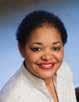
Ollie Watts Davis (Voice) presented I’m a Stranger Here Myself, in conjunction with the exhibit “With Firmness in the Right: Lincoln and the Jews” at the Abraham Lincoln Presidential Museum. She appeared as guest conductor and artist with John Hersey High School at Carnegie Hall (NY). She gave a recital at Gordon College (MA) and is featured on the film The Caged Bird: The Life and Music of Florence B. Price, supported by the Arkansas Humanities Council, Department of Arkansas Heritage, and University of Arkansas. She is featured on the West Virginia Public Broadcasting’s series “Inside Appalachia: 4 Women’s Journey to the Top,” and was the 2016 recipient of the Charles E. Walton Award from the Vivian G. Harsh Society of Chicago. She led Black Chorus in performances in campus and in the televised 36th Annual State of Wisconsin Tribute & Ceremony honoring Dr. Martin Luther King, Jr.

Julie Gunn (Lyric Theatre and Accompanying) helped with the formation of a new degree and major—the BMA in Lyric Theatre Studies—which aims to provide undergraduate students an exciting blend of courses from different performing disciplines. She oversaw three world premieres, as a co-producer or as a conductor: Variations on a Summer’s Day (Harold Meltzer), Letters from Quebec to Providence in the Rain (Jeremy Gill),
and the first act of Bhutto (Mohammed Fairouz). Other highlights included serving as the music director of two new operas (The Brothers Grimm and The Bremen Town Musicians) this summer in Haliburton, Ontario, new collaborations with the Solera Quartet (University of Notre Dame), recitals with her principal collaborator, Nathan Gunn, and concerts with him and Mandy Patinkin this summer.

Ricardo Herrera (Voice) was invited as guest soloist for the White House Historical Association’s conference “Italy in the White House: A Conversation on Historical Perspectives.” He premiered The Letter by Robert Chumbley with Sinfonia da Camera at the Krannert Center. He was the bass soloist in Handel’s Messiah with Sinfonia, as well as in Schubert’s Mass in E-flat. He performed fundraising concerts to benefit the St. Patrick’s Youth Orchestra and Promise Healthcare in Champaign-Urbana. He was a guest soloist in the memorial concert honoring Maestro Daniel Ferro at the Juilliard School. In April 2016, he sang Beethoven’s Ninth Symphony with the El Paso Symphony Orchestra (TX) and in Summer 2016, he directed Mozart’s Don Giovanni with the Franco-American Vocal Academy in Salzburg, Austria.

Jonathan Keeble (Woodwinds) became the School of Music’s second faculty member to be awarded the Campus Award for Excellence in Undergraduate Teaching. He continued as artist faculty at Aria International, and at Madeline Island Chamber Music performing and teaching alongside musicians from the Juilliard School, St. Louis Symphony, and the Cleveland Institute, in addition to adjudicating at the Seattle Area Music Festival. In August, he was one of two featured master class clinicians at the National Flute Association Convention in Washington, DC. Other activities
include appearances as the featured guest artist at the Raleigh Area Flute Association with harpist Ann Yeung, and the Upper Midwest Flute Association, and in master classes at locales including the University of Michigan, Northwestern University, Seoul National University, and Yonsei University. With colleagues from the University of Illinois Wind Division, he concertized and taught throughout the greater Seoul, South Korea metropolitan area.

Herbert Kellman (Emeritus, Musicology) gave the keynote address, “Artifacts and Sounds: Towards an Understanding of the Alamire Manuscripts,” at the International Conference Petrus Alamire: New Perspectives on Polyphony held in Antwerp, Belgium in August 2015. He also chaired a conference session and read a paper on “Philippe Bouton and the Chigi Codex.” In April 2016, he was invited to attend celebrations of the 25th anniversary of the establishment of the Alamire Foundation at the University of Leuven (Belgium), where he was honored for his fundamental work on Renaissance music manuscripts of the Low Countries, and named Senior Research Fellow of the Foundation. In January and May 2016, he received musicologists from the University of Leuven for collaborative research in the UIUC School of Music’s Renaissance Archives.
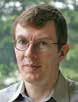
William Kinderman’s (Musicology) activities ranged across disciplines and national boundaries. His book Beethoven appeared in Chinese translation. During Fall 2015, he co-taught a CAS seminar on “The Weimar Republic: Music, Literature, Politics”; his study “Exploring the ‘Temple of Initiation’ on Thomas Mann’s Magic Mountain: Wagnerian Affinities and ‘Politically Suspect’ Music” appears in Monatshefte, a journal of Germanic studies. Kinderman co-edited the volume Beethoven and the Congress
faculty news

Gayle Magee (Musicology) completed three articles and three book chapters on contemporary film music and Canadian songs from the First World War. In 2016, she presented her research at conferences in Chicago, Toronto, and Leeds. With colleagues William Brooks (MM ’71, DMA ’76) and Christina Bashford, and alumni Laurie Matheson (DMA ’98) and Justin Vickers (BM ’96, DMA ’11), she contributed to an extensive research presentation/performance on the music of World War I at the AMS National Convention in Louisville (November 2015), and at the Newberry Library in Chicago (May 2016). Magee serves as the PI and Project Director for the NEHfunded publication series Music in the United States of America (MUSA), and as editor for the journal American Music

Jeffrey Magee (Musicology, Administration) spoke at the President’s Forum at the national meeting of the College Music Society in Indianapolis, moderated a panel discussion of issues facing music schools at the National Association of Schools of Music in St. Louis, gave a keynote address at a musical theater conference at the University of Sheffield, England, delivered an invited paper at Arizona State University’s inaugural musicology colloquium, and served as an external evaluator of UCLA’s proposal to create the new Herb Alpert School of Music.

Charlotte Mattax Moersch (Organ/Harpsichord) performed solo harpsichord recitals in Dallas, as well as chamber and orchestral concerts on organ and harpsichord for the 109th season of the Bach Choir of Bethlehem, PA, where she also performed Bach harpsichord concerti with the Paul Taylor Dance Company of New York. She was the featured harpsi-
chordist at the American Guild of Organists Southwest Convention, and at the spring concert of Seicento, the Boulder-based Baroque ensemble. At the University of Illinois, she directed her period instrument group Concerto Urbano in The Muses Delight, with Baroque dances choreographed by UI Professor Philip Johnston.
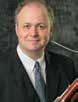
Timothy McGovern (Woodwinds) began the 2015–16 school year with a week-long trip to Seoul, Korea with the UI faculty quintet. This trip included concerts, master classes, and private lessons at the major universities in Seoul. He performed as principal bassoon with the Chicago Festival Orchestra at the Chicago Allstate Arena on in 2016. Soloists included Renée Fleming and Andrea Bocelli. The Prairie Winds Woodwind Quintet presented a master class and performance at Northwestern University in April 2016. Other activities included performing as principal bassoon of the Illinois Symphony Orchestra, adjudicating, conducting woodwind sectionals at Ravinia for youth orchestras, teaching at two ISYM sessions, and teaching and performing at the Madeline Island Music Camp on Madeline Island, WI. He performed Dana Wilson’s “Avatar” bassoon concerto with the UI Wind Symphony and the Weber Bassoon Concerto with the UI Philharmonia.
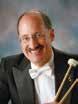
William Moersch (Percussion) has commissioned much of the now-standard repertoire for marimba over the past thirty-six years, from composers including seven recipients of the Pulitzer Prize in Music. In recognition of this contribution, he was invited to author the chapter “Marimba Revolution: Mallet Instruments, Repertoire, and Technique in the Twentyfirst Century” for The Cambridge Companion to Percussion, edited by Russell Hartenberger and published by Cambridge
University Press. Moersch’s latest commissions have resulted in new works for solo marimba by Marc Mellits and Baljinder Sekhon, and for percussion ensemble by Alejandro Viñao. His upcoming projects include recording Luciano Berio’s Naturale with Rudolf Haken and concerto appearances with Sinfonia da Camera and the Champaign-Urbana Symphony Orchestra.
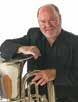
Mark Moore (Brass) attended the International Tuba Euphonium Conference held in Knoxville, TN. He served as one of the judges for the Arnold Jacobs Orchestral Competition.

Bruno Nettl (Emeritus, Musicology) gave two invited lectures: “Revisiting Unanswered Questions: Reflections on 65 Years of Studying Ethnomusicology,” the keynote lecture for the meeting of the Society for Ethnomusicology’s Southern Plains Chapter at the University of North Texas in April 2016; and “Writing the Meat-and-Potatoes Book: Musical Ethnography” at the conference Narrative Soundings, at the University of Illinois in May 2016. Among his publications of the last year are two articles, “What Are the Great Discoveries of Your Field? Informal Comments on the Contributions of Ethnomusicology” in Musikološki Zbornik (Ljubljana); and a contribution to the symposium “Reflections on Two Classic Works on their Fiftieth Anniversary.” Nettl’s book Encounters in Ethnomusicology: a Memoir (published in 2002) was published in Chinese (translated by Boyu Zhang) by the Central Conservatory of Music Press, Beijing.

Susan Parisi (Research Scholar in Musicology) participated in the International Conference Petrus Alamire: New Perspectives on Polyphony in Antwerp,
Belgium at the end of August 2015 and the Annual Meeting of the American Musicological Society in Louisville in November. She returned to Belgium in April 2016 and carried out research in the Royal Library on papal protocol that considers processions and liturgical services in the north Italian city of Mantua in the early seventeenth century.
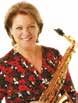
Debra Richtmeyer (Woodwinds) performed the American premiere of Indian Hedgehog for saxophone and electronics by Stephen Andrew Taylor at the North American Saxophone Alliance Biennial National Conference held in Lubbock, TX in March 2016. She was a featured guest artist for recitals and master classes at the University of Georgia in September 2015; “Saxophone Day Atlanta” in Atlanta, GA in September 2015; Georgia State University in September 2015; “Kent State Saxophone Day” at Kent State University (OH) in November 2015; and the “Rocky Mountain Saxophone Summit” at Colorado State University in March 2016. She served as principal saxophonist with the Champaign-Urbana Symphony Orchestra and principal saxophonist with Peninsula Festival Orchestra (WI).

Bernhard Scully (Woodwinds) performed in more than 100 events with the Canadian Brass, including in Germany, Austria, Switzerland, Italy, Poland, Latvia, and Turkey, as well as throughout North America. Highlights included being guest artists at the Oregon Bach Festival, Schleswig-Holstein Music Festival, Menuhin Festival, Dolimiti Festival Brass, Texas Music Educators Association, World International Band Convention, Conn-Selmer Institute, Oregon Bach Festival, Festival of Sound, and the NAMM Convention. The Canadian Brass were featured soloists in front of ensembles including the New York Philharmonic, Hawaii Symphony, Hamilton
Philharmonic, and the Puellae Orantes Girls Choir of Poland. The newly-released Canadian Brass CD, Perfect Landing , dominated the Billboard Charts. He travelled with the UIUC Faculty Wind Quintet to Seoul, South Korea to participate in the ISCM Festival. He was on faculty at the Kendall Betts Horn Camp, and performed as a soloist at numerous venues across the US, including the ChampaignUrbana Symphony in Schumann’s “Konzerstucke.” He was elected vice president and artistic director of Cormont Music and the Kendall Betts Horn Camp in Ogontz, NH.
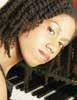
Rochelle Sennet (Piano) was an invited lecturerrecitalist at the 2015 College Music Society National Conference in Indianapolis, where she presented “The Piano Sonatas of James Lee III: Trends in African American Classical Music.” In April 2016, she was the featured piano soloist for the premiere of James Lee III’s Concerto for Piano and Winds, which took place at the Murphy Fine Arts Center on the campus of Morgan State University (MD). She also performed a solo and chamber recital with violinist Igor Kalnin at Glinka State Conservatory in Nizhny Novgorod, Russia in 2016, where she gave the Russian premiere of the solo piece Four Dances for Boris by American composer Jeffrey Mumford. During the summer, she was an invited solo and collaborative pianist at the Yachats Music Festival in Oregon.
Michael Silvers’s (Musicology) article “Birdsong and a Song about a Bird: Popular Music and the Mediation of Traditional Ecological Knowledge in Northeastern Brazil,” published in Ethnomusicology in Fall 2015, was awarded an honorable mention for the IPRH Prize for Research in the Humanities and his review of a Portuguese music encyclopedia was published in Ethnomusicology in
Winter 2016. His interactive soundscape installation, “Dry Signals: Soundscapes in Ceará¡, Brazil,” appeared at SEM Sounding Board, a sound exhibit hosted at a gallery in Austin (TX), in conjunction with the Society for Ethnomusicology national meeting. He was nominated co-chair of the Ecomusicology Special Interest Group of the SEM. In Spring 2016, he presented a paper on Brazilian castrato Paulo Abel do Nascimento at the Unit for Criticism Faculty Fellows Symposium. He is a 2015 ACLS Faculty Fellow and a 2015–17 Junior Fellow of the Unit for Criticism and Interpretive Theory.

Gabriel Solis (Musicology) was the recipient of a fellowship from the National Endowment for the Humanities in Spring 2016. On the fellowship, which runs until August 2017, he will be writing his third book, The Black Pacific, which is based on the past 10 years of research in Australia and Papua New Guinea.
Joel Spencer (Jazz) performed with jazz pianist Lee Musiker at the Jazz Showcase in Chicago, the Jim Pugh Quintet featuring jazz saxophonist Tim Ries, and jazz saxophonist Charles McPherson with pianist Chip Stephens and bassist Larry Gray. Engagements of note also included a performance with the SSG Trio (Chip Stephens and Larry Gray) for the UI School of Music reception at the 2016 IMEA Conference and a feature performance with the Joan Hickey Trio at the First Night Music Festival in Evanston, IL. Spencer conducted master class presentations on “Jazz Drumming Coordination and Vocabulary” for the UI Percussion Division, served as an jazz ensemble coach at Illinois Summer Youth Music, and appeared as a Guest Clinician at the New Trier HS Jazz Festival in Winnetka, IL. During Summer 2016, he took part in a recording session dedicated to the late Frank Sinatra Jr., under the direc-
faculty news
tion of Chicago jazz saxophonist and arranger Mike Smith and featured vocalist Kurt Elling.
Sylvia Stone’s (Voice) vocal program Scuola Italia Summer Program for Young Opera Singers is in its 13th year. This vocal arts program provides vocal training and coaching of Italian operatic repertoire with an international faculty, including a specialist for singing Italian recitatives and a daily intensive Italian language course. Students from Spain, Colombia, Nigeria, and the US participated in the program held at Castello Brancaleoni in Piobbico, Teatro Zuccari Sant’ Angelo and Peglio Museo. In July, she presented a large master class of 13 singers at the BRG Salzburg, Austria during the Salzburg Festspiele.
Bridget Sweet (Music Education) published the book Growing Musicians: Teaching Music in Middle School and Beyond (Oxford, 2016). She copresented research at the International Society for Music Education World Conference (Glasgow, UK): “Perceptions of identity as a female vocal musician” and “Adolescent voice change: Enriching the conversation with transgender perspectives” (with Louis Bergonzi). This paper was also presented at the third Symposium on LGBT Studies and Music Education, where she additionally co-presented “Where Are They Now?: A Follow-Up Inquiry With a Gay and a Lesbian Former Preservice Music Teacher.” She presented “Understanding singing experiences of adolescent female choristers: Implications for the choral music education curriculum” at the Music Research and Teacher Education National Conference (Atlanta, GA) and “The adolescent female changing voice” at the MS/JH National Conference
for Choral Music (Denton, TX). Her article “Choral Journal and the adolescent female changing voice” appeared in Choral Journal. She conducted the 2016 Piedmont Invitational Children’s Choir Festival (Raleigh, NC).
Sever Tipei (CompositionTheory) was appointed NCSA faculty affiliate and granted computer time on Innovative Systems Laboratory to work on a Computer Music project involving graph theory, complex dynamic systems, and information theory. He also received computer access and an Extreme Science and Engineering Discovery Environment (XSEDE) grant, providing technical and programing assistance, from the San Diego Supercomputer Center to work on the same project. Tipei delivered a talk titled “Composition as an Evolving Entity” at the workshop on Computer Music and Acoustic Technology. His music, produced with software developed at the Computer Music Project (DISSCO), was performed in Spain, Taiwan, Romania, and in the US at the University of Mary Washington (VA), Digital Art and Music Festival, Lexington, KY, and UIUC. He demonstrated DISSCO at George Mason University (VA) and American University (DC). During the spring semester, Tipei conducted a UIUC Research Initiative Project devoted to DISSCO.

Christos Tsitsaros (Piano Pedagogy) was commissioned by the Music Teachers National Association to write a trio for oboe, B-flat clarinet, and piano. He completed his piece Fantasy in July 2016. In April 2016, he gave master classes, lecture presentations, and performed his own works for the Indianapolis Piano Teachers Association in conjunction with the University of Indianapolis during a
two-day seminar centered on his pedagogical ideas and original piano works.
Scott Wyatt (Emeritus, Composition-Theory) fully retired from the UI School of Music at the end of May 2016. He remains a consultant to the Experimental Music Studios. During this past academic year, he designed and taught the new audio recording techniques course and designed/installed a new recording control room in support of this new course. His compositions were performed at the University of South Carolina, the University of Chicago, the University of Toronto, and at Georgia Southern University during the 2016 Society for Electroacoustic Music in the United States (SEAMUS) conference.
Ann Yeung (Harp) is immediate past president of the American Harp Society, Inc., having overseen a transformative restructuring including modernizing election procedures, journal production, bylaw revisions, budget processes, regional alignments, and the organization’s mission statement. As the Aletheia Duo with flutist Jonathan Keeble , she gave the world premiere of Richard Prior’s Call of the Sirens at the USA International Harp Competition. She was an invited panelist and performer at the 2016 AHS National Conference and featured on the Tribute Concert to the renowned musician-pedagogue Susann McDonald with other distinguished colleagues. In June, she conducted the world premiere of Julia Kay Jamieson’s Kitties! for multiple harps with improvisation, commissioned for the Illinois Summer Harp Class. Other activities included master classes at the University of Michigan and Michigan State University, 2015 Greater Chicago AHS Auditions and Evaluations, and hosting two interactive residencies for students as part of the Aletheia Duo Entrepreneurship Series.
1950–59
Barbara Ann Garvey Jackson’s (BM ’50) desktop publishing company, specializing in music by historic women composers, is in its 35th year and recently added its 100th title. Recent titles include piano music by Florence Price, the first black woman to have a symphony performed by a major American orchestra (Chicago Symphony, 1933).
1960–1969
Gerald D. Buckler (MS ’63) has been retired from Illinois Schools for 23 years and lives in Pontiac, IL, where he continues to sing and play the piano as a volunteer at OSF Saint James Hospital and his church.
J Lynd Corley (BM ’59, MME ’61) was named a Music Teachers National Association Foundation Fellow for distinguished service to the music teaching profession and awarded membership in the MTNA Legacy Society for making a commitment to the future of MTNA through a planned gift.
Jon R. Haddon (BME ’67) spent nearly 40 years as an ordained rabbi and cantor, and has recently taken up the violin. He now plays in a children’s orchestra with children the age of his grandchildren, but loves the experience.
Bill Skidmore (BM ’63, MM ’66) retired as professor emeritus from West Virginia University after 51 years of teaching and performing. He previously taught at the University of Maryland, and played four seasons with the Baltimore Symphony Orchestra. During his career, he sat in with the National Symphony Orchestra for its first concerts at the John F. Kennedy Center, performed chamber music and solo recitals in the eastern United States, and continues to perform with his wife,
Dorothy (BM ’62, MM ’66), as the Monongahela Trio.
Jon Washburn (BME ’65) completed his 45th season as artistic and executive director (also founder and conductor) of the Canadian professional choir: Vancouver Chamber Choir. In this time, the ensemble has commissioned and premiered more than 300 new works and recorded 36 CDs, with a special emphasis on contemporary Canadian composers. He is an active composer, arranger, and editor, and publishes in two eponymous choral series with G. Schirmer and Walton Music.
1970–1979
Thompson Brandt (MS ’79) wrote a fulllength musical tribute The Influence of Don R. Marcouiller (Bookstand Publications). Marcouiller served as director of the marching band and assistant director of bands at the University of Wisconsin before accepting the position of director of bands at Drake University (IA), where he led his ensembles to national prominence from 1956 to1987.
Thornton Cline (MS ‘77) published his seventh book, The Amazing Magical Musical Plants, which was co-authored with bestselling children’s writer Crystal Bowman. His book The Amazing Incredible Shrinking Piano was nominated on the first ballot for a Grammy Award in 2015 for Best Children’s Album (spoken word) and his book The Amazing Incredible Shrinking Violin was an Amazon bestselling book in 2015. He has had been nominated twice in a row for Songwriter of the Year by the Tennessee Songwriters Association for his hit song “Love is The Reason,” recorded by Engelbert Humperdinck and Gloria Gaynor. He has had more than 800 of his original songs published and over 150 of them recorded by major and independent recording artists. His most recent song, “Catch a Snowflake,” recorded by Nashville artist Matt Newton, has been a worldwide holiday hit.
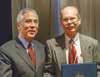
Dale Cockrell (BM ’71, MM ’73, PhD ’78) is a professor emeritus of musicology at Vanderbilt University and was appointed as a research associate at the University of the Free State (South Africa).
David Frank (BS ’77) was the sole organizer and principal clarinet for World Doctors Orchestra performances in June 2015 at Benaroya Hall (Seattle), and the Chan Centre (Vancouver). He also performed with the World Doctors Orchestra in Bangkok, Thailand in February 2016, as principal clarinet for Rimsky-Korsakov’s Scheherazade
Eric F. Halfvarson (BMUS ’74, MM ’76) sang in Verdi’s Il Grande Inquisitor, in July, in San Lorenzo de el Escorial.

Kimm Hollis (MM ’75) retired after 41 years of service at Hanover College (IN) and is professor of music and artist-in-residence emeritus. He is coauthor of the Indiana State School Music Association’s “Required Piano Solo List Manual.”. He has been named a “Distinguished Hoosier” by former Indiana governor Mitch Daniels. He was piano concerto soloist 14 times with the Hanover College-Madison Area Orchestra.
James Ketch (MME ’76) has begun his 40th year as professor of music (trumpet) and director of jazz studies at the University of North Carolina at Chapel Hill. He serves as associate director of Swing Central Jazz for the Savannah Music Festival and is on the faculty at the Aebersold Summer Jazz Workshop. He has recorded three CDs for Summit Records.

John Kula (MM ’71) is the music minister and organist at Divine Word Chapel in Techny, IL. He conducts the Glenview Senior Chorus
alumni news
and the Highland Park Senior Chorus. He has published more than 40 piano chamber music arrangements online and performs with the Gold Coast Trio.
Lisa J. Lehmberg (BM ’78, MME ’80) is co-author of the new book Music for Life: Music Participation and Quality of Life of Senior Citizens (Oxford University Press). She is associate professor/coordinator of music education and is an innovative teaching fellow at the University of Massachusetts Amherst.
Dean Loy (BS ’70, MS ’71) plays trumpet in the orchestra of First Free Evangelical Church of Rockford, in the Kishwaukee Valley Concert Band during the school year, in the Rockford Concert Band during the summer, and teaches wind instrument lessons at a local music store.
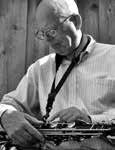
Bill Overton (BS ’77, MS ’78) spent 20 years in New York playing with musicians including Vince Giordano’s Nighthawks, Doc Cheatham, Mickey Roker, Mel Torme, and Margaret Whiting while teaching at William Paterson University (NJ), the Brooklyn Conservatory of Music, the Aebersold Summer Jazz Clinics, as well as in public schools. After moving to Libertyville, IL in 1998, he was band director at Oak Grove School for 17 years while performing with the Chicago Jazz Orchestra, McCoy Tyner, Ahmad Jamal, Kurt Elling, at Ravinia with Michael Feinstein, Bernadette Peters, Tony Bennett and Lady Gaga, Seth MacFarlane, “Too Hot to Handel,” and many others as well as leading his own groups at Andy’s Jazz Club, 27 Live and the Jazz Showcase. His first recording as a leader, The Sun Will Shine, was released last year.
Michael Pettersen (BA ’74) is the coauthor of a newly published biography Rhythm Is My Beat: Jazz Guitar Great Freddie Green and the Count Basie Sound.
Mike Venn (BME ’77, PhD ’90) had two original jazz compositions performed: icky, sticky MUD! was performed by the Sheboygan South High School jazz band under the direction of Wade Heinen, and Inna Mood was performed by the Generations Jazz Band under the direction of Jeff Schieble.
1980–1989

Daniel Adams (DMA ’85) wrote three compositions that premiered in the beginning of 2016. Vertices for woodwind ensemble received its premiere in January as the featured commissioned work on the Effortless Clarinet/Saxophone Ensemble Recital hosted by Richard Nunemaker Studios at the University of St. Thomas (TX). Refractive Variants for alto flute and guitar received its premiere in March at the Guitar and its Friends Music Festival at Otterbein University (OH). Refractive Variants was performed by the EOS DUO and Adams gave a lecture about the piece to the Otterbein composition students. Tim Justus performed the premiere of Coalescence Two for trumpet solo in the March 17 concert of the College Music Society South Central Chapter Conference held at Midwestern State University (TX).
Elizabeth C. Axford (BA ’82) published Music Apps for Musicians and Music Teachers (2015), her fifth music reference book with Rowman & Littlefield Publishers since 1997. The book includes a companion website and daily blog. She continues to teach piano, voice, and music theory through her private studio in Del Mar, CA, as well as produce music teaching materials through her publishing company, Piano Press. Axford has placed many recorded tracks in TV, film, and new media projects since 2007. Since 2011, she has facilitated art and music classes for the University of Phoenix online.
Phil Bohlman (PhD ’84) serves as the Ludwig Rosenberger Distinguished Service Professor at the University of Chicago. He received a 2016 Grammy Award nomination (Best Classical Compendium) for the double album When Dreams Fall Apart (Cedille Records), recorded by the New Budapest Orpheum Society, for which he is the Artistic Director. He also received the 2015 Bruno Nettl Prize from the Society for Ethnomusicology for the edited volume The Cambridge History of World Music
Jeffery L. Briggs (DMA ’84) had a world premiere of a new orchestral piece (Two Poems of Hyam Plutzik) in Miami’s New World Symphony Center in July 2016. A reporter from the Palm Beach ArtsPaper wrote: “Briggs’s music is beautifully crafted, colorfully orchestrated and highly atmospheric ... it sounds something like a 21st-century update of Debussy’s La Mer...” The Pathetique from Briggs’s (New) Beethoven Quartets was played at the Martha’s Vineyard Chamber Music Festival by the award-winning Amernet Quartet in August 2016.

James Crowley (BM, ’86) was commissioned by the guitar/contrabass duo Dez Cordas to compose “Pilgrimage,” which serves as the title track on their latest Summit Records CD. The Museum of Modern Art recently presented the New York premiere of his “Circle in the Round,” performed by the New Juilliard Ensemble. His wind ensemble fanfare “Silver Soundings” was commissioned by and premiered at the University of Wisconsin-Parkside, where he was recently promoted to professor of music.
Victoria Covington (MM ’71, EdD ’81), is professor emerita of piano at Baldwin Wallace University (OH). She published her memoir, From Where I Sit. She resides in Greenville, SC, where she mentors piano students, and audits history and religion classes.
Michael Denham (MM ’84) has served for 20 years as director of music ministries at the National Presbyterian Church in Washington, DC, where he leads a vibrant program, including the acclaimed “Music at National” concert series. Prior to his tenure in the nation’s capital, he served on the music faculties of Lamar University (TX), the University of Texas at Arlington, and the University of North Texas.
Steve Griggs (BM ’83) won the Chamber Music America/ASCAP Adventurous Programming Award in the Jazz Ensemble category for the second time. Griggs premiered two new programs of music and stories in 2015 and continued performing two older programs as part of his portfolio Songs of Unsung Seattle Listen to Seattle was commissioned through a 4Culture Historic Site-Specific Grant. Sound in Stone was commissioned through a City of Seattle, Office of Arts & Culture CityArtist grant. Panama Hotel Jazz was commissioned through a 4Culture Historic Site-Specific Grant and is presented every second Saturday of the month at the Panama Hotel with support from a National Park Service Japanese Confinement Sites grant and Earshot Jazz. Griggs also wrote an article for Seattle Weekly about the 50th anniversary of John Coltrane’s performance and recording in Seattle.
Kelley Harness’s (PhD ’96) article “‘Nata à maneggi & essercizii grandi’: Archduchess Maria Magdalena and Equestrian Entertainments in Florence, 1608–1625” was published in La liberazione di Ruggiero dall’isola d’Alcina: Räume und Inszenierungen in Francesca Caccinis Ballettoper (Florenz, 1625) (Chronos, 2015). She is associate professor of musicology at the University of Minnesota.
Janet E Jones (BS ’82, MA ’84) has been chosen as a quarterfinalist for a 2017 Music Educator Grammy Award. She currently teaches music in Tinley Park District #140 and accompanies solo/ensemble students for contests. She serves as the director of
music for Plainfield UCC Church, where she directs the adult choir, children’s choir, Praise Band, and Chancel Concert band.
Laurence Marks (MME ’86) retired from the position of director of bands at the University of North Carolina at Charlotte.

Charles Norman Mason (DMA ’82) was recently awarded a provost grant to compose a new opera involving issues of isolation. Among the awards he has received are the 2006 Rome Prize, a Dale Warland Commission Prize, an American Composers Orchestra “Playing it Unsafe” prize and the FETA Cellotronics audience favorite prize, and was an invited guest composer for the Visiones Sonoras 2015 festival in Mexico. His music has been performed throughout the world including the Foro Internacional de Música Nueva, Quirinale in Rome, the Aspen Summer Music Festival, and Nuova Musica Consonante. His music has been featured several times on Performance Today on NPR. Currently Mason is chair of the theory/composition department and professor of composition at the Frost School of Music, University of Miami. He is married to composer Dorothy Hindman.
Mark Mosley (BS ’78, MS ’80) and Sarah Good Mosley (BS ’80) both found new careers in information technology after teaching music for several years in the Chicago suburbs. They also celebrated the first anniversary of the Windy City Winds, a community concert band in Chicago which they co-founded. The band’s 2016–2017 concert season features four orchestral transcriptions by the late Director of Bands Emeritus Mark Hindsley.
A. Dennis Sparger (DMA ’81) recently completed his 30th year as conductor of the Bach Society of Saint Louis. A million dollar endowment campaign was undertaken to both honor his service and provide for ongoing recognition, and the Board of Directors formally designated
“The A. Dennis Sparger Music Director and Conductor Chair.” In 2013 he was awarded the Lifetime Achievement in the Arts award from the University of MissouriSt. Louis. Sparger was recognized as one of the 50 Outstanding Graduate Alumni of Eastern Illinois University, where he received his MA degree. This past January, the Bach Society was presented with the Excellence in the Arts award by the Arts & Education Council of Greater St. Louis, the first chorus to receive this award.
1990–1999
Jeff Bialeschki (BS ’94, MME ’97) conducted public school choirs in Streamwood, IL for nine years and led extended performance tours to San Antonio, Nashville, and Washington, DC. In 2005, he earned his second master’s degree in counseling and human services and in 2015, earned his national board certification for counseling. He works as a school counselor at St. Charles East High School in St. Charles, IL and also co-directs the high school’s spring musical, accompanies student music performances, and composes choral music for school and church choirs.

Michael Edward Edgerton (DMA ’94) is associate professor at the Guangxi Arts University (China). His compositions have received recognition from the 2016 5th China-ASEAN Composition Competition; Kompositionspreis, Landeshauptstadt Stuttgart; Composition Contest, Netherlands Radio Choir; 5th Dutilleux Composition Competition; 31st Festival Synthese Bourges; MacDowell Club; Friends and Enemies of New Music; Midwest Composers Symposium; National Federation of Music Clubs; and the Michigan State Univ-Orchestral Composition Contest. His music is recorded on Modern Choral Masterpieces; Raven, Le Corbeau; Alles—Außer—Gewöhnlich; Electronic
alumni news
Voices; and has been documented in a film titled Stimmig—10 Vokalexkursionen He was recognized in the Marquis Who’s Who in the World, 2015 & 2016, and is discussed in numerous publications. He is published in scholarly journals and has two books available: The 21st-Century Voice (Rowman & Littlefield) and Music Within the Continuum (Lambert).
Barry Hearn (MM ’97) was appointed principal trombonist of the Dallas Symphony, replacing the legendary John Kitzman, who held the position since 1972. Prior to this new appointment, he served as a member of the trombone section of the National Symphony Orchestra in Washington, DC and as a member of the United States Army Band and United States Army Field Band.
Jeffrey Hepker (BA ’98) has been composing music for film and television projects in Los Angeles for nearly 15 years. Noteworthy credits include bonus content music for all Harry Potter films and Mad Max: Fury Road, promotional spots for Inception, Thor, and Iron Man, as well as major contributions to production music libraries in L.A. and London.
Camilla Hoitenga (Sytsma) (DMA ’97) and pianist/electronics player Taavi Kerikmäe enjoyed a month-long residency in the studios of CMMAS in Morelia, Mexico, launching a project of original and new music for flute and the modular Serge synthesizer which belonged to fellow UI alumnus Michael Manion (MM '83; 1952–2012). Apart from the music of Manion, the duo presents their own version of Karlheinz Stockhausen’s spatialized POLES, originally written for the EXPO in Osaka in 1970. With other repertoire, she played festivals in Sweden, Lithuanian, Aspen, Ojai, Brazil, and Paris. Her ongoing collaboration with Kaija Saariaho included a new recording, shared residencies at universities, and featured piccolo and bass flute parts in the opera Only the Sound Remains, staged by Peter Sellars in Amsterdam (March 2016).
Laurie Matheson (DMA ’98) was appointed director of the University of Illinois Press. Since arriving at the Press in 1996 she has served as editor-in-chief, acquisitions editor, and marketing copy writer, among other roles. She continues as the music acquisitions editor, with recent best book awards from the Society for American Music (for The Creolization of American Culture: William Sidney Mount and the Roots of Blackface Minstrelsy by Christopher Smith) and the Society for Ethnomusicology (for Hawaiian Music in Motion: Mariners, Missionaries, and Minstrels by J. Revell Carr). Matheson recently appeared as a singer and pianist in a session at the American Musicological Society with presenters Gayle Magee , Christina Bashford, William Brooks (MM ’71, DMA ’76), and Justin Vickers (BMUS ’96, DMA ’11). The session, “Johnies, Tommies, and Sammies: Transnational Music Identities,” concerned music as a lens into wartime debates of 1915 from Canadian, British, and American perspectives.
Lezlee A. Masson (BS ’94) has been promoted to a higher position at the Pentagon and has continued her career as a military musician in the Air Force.
Dustin Seifert (MME ’98) was named music educator of the year by the New Mexico Music Educators Association. In 2014, he received the distinguished music educator alumni award for outstanding service to music education from the University of Akron (OH). He is the chair of the department of music and director of bands at Eastern New Mexico University.
2000–2009
Amanda (Sylvester) Allen (BME ’02, MME ’06) leads the Monticello Middle School Band program. Allen was awarded
the 2016 Magna Cum Laude Award from Women Band Directors International. This is a national award recognizing small sized, middle school concert bands of musical excellence. The Monticello Middle School eighth-grade band was featured as a showcase ensemble at the ILMEA Convention in 2015 and Jazz Ensemble in 2012. The MMS concert bands have also performed several times at the University of Illinois SuperState Band Festival. Bands at Monticello Middle School have also been honored with the “Best of Day” award from IESA at organizational contest on numerous occasions.
Kyong Mee Choi’s (DMA ’06) Rippled Pond for piano, violin, and cello was performed at the CCC Club Nights at the Constellation in August. Her bass flute and electronic piece, Freed, was performed at the National Flute Association Convention in San Diego in August.
Chris Combest (DMA ’09) accepted a visiting position at Middle Tennessee State University, where he will teach applied tuba and music theory, and perform with the faculty brass quintet. Prior to this appointment, Combest was principal tuba with the Louisville Orchestra and held teaching positions at the University of Texas at San Antonio, Indiana University Southeast, and Southern Illinois University Carbondale. He currently plays principal tuba with the Wintergreen Music Festival (VA), is a board member for the Leonard Falcone International Euphonium-Tuba Competition, and also serves as the competitions chair for the International TubaEuphonium Association.
Jennifer Conrad-Proulx (MM ’05) was selected as one of 14 national recipients of the Joan Frey Boytim Awards for Independent Teachers through the National Association of Teachers of Singing. This fellowship was offered to one voice teacher from each of the 14 NATS regions to attend the 2016 national conference in Chicago. It is designed to recognize and support independent teachers who do not hold
full or part-time teaching positions in a college or university.

Teun Fetz (DMA ’03), was associate professor of music and director of percussion studies at Eastern Oregon University from 2004–2015. In Fall 2015, he began teaching at San Juan College (NM), where he serves as director of instrumental music and assistant professor of music. He teaches several classes and conducts orchestra, band, and jazz bands. He plays percussion with the San Juan Symphony in Durango, CO and Farmington, NM; and plays drum set with many local groups.
Jennifer Gartley (DMA ’06) helped create the inaugural Great Artists Series, which took place in Spring 2016 at Washington University in St. Louis. It featured some of the best artists of the present time in a recital format. She led all aspects of this new venture, and the series hit subscription ticket sale goals six months in advance of its debut.
Robin Giebelhausen (BME ’00) is an assistant professor of music education at the University of New Mexico. She graduated from Michigan State University with a PhD in music education in 2015. Her dissertation focused on the composing experiences of three female graduate composition majors. Her dissertation included a podcast, an alternative format document meant to allow the voices of the participants and their music to be more fully represented.

Karin Hendricks (PhD ’09) is assistant professor of music education at Boston University, and has been named co-director of undergraduate studies for the BU school of music.
Charles Lynch (MM ’02, DMA ’09) completed his first year as Harp Specialist for the Mesa (AZ) Public Schools Harp Program. He directs the largest public
school harp program in the country. The MPS Harp Program included 117 harp students across eight junior high schools and six high schools last year, and will be expanding to a ninth junior high during the 2016–2017 academic year. His students received numerous local and state accolades and performed in various school ensembles, district harp ensembles, and Arizona Regional and All-State festivals.

Dan Masterson (DMA ’00) is beginning his second year as president of the Kansas Music Teachers Association. He is co-chair of the music department at Bethany College (KS).

Owen Rockwell (BM ’00, MM ’01) graduated with a DMA in percussion performance and pedagogy in 2015 from the University of Southern Mississippi. In Fall 2016 he became the first-ever director of music for the department of dance at Belhaven University (MS), where he serves as specialty instructor of music and dance. In that capacity, he performs music for modern dance classes, manages a staff of eight dance-musicians, directs the BU percussion ensemble, and teaches courses. He also teaches applied percussion at Jackson State University (MS) as an adjunct instructor and performs as section percussionist with the Mississippi and Meridian (MS) Symphony Orchestras. He received a 2015–2016 Mississippi Arts Commission Performing Artist Fellowship and his jazz trio, the Vibe Doctors, released their selftitled, full-length album in September 2015 to enthusiastic reviews.

Richard Robert Rossi (DMA ’08) won the 2015 IL-ACDA Choral Composition Contest with his setting of O Sacrum Convivium, which is now published with Santa Barbara Music Publishing in their “Distinctive Music for the Advanced
Choir.” Most recently, he published a collection of service music settings with the Calvin Institute of Sacred Music (GIA Publ.) entitled Psalms of Praise. Additionally, Rossi published several new compositions with Colla Voce, including two Shakespeare settings from a commission entitled Spring and Winter and his setting of Christina Rossetti’s text “Love Came Down at Christmas,” scored for SATB choir, harp, and string orchestra. Colla Voce also named Rossi as composer of the month in September 2013. His compositions are featured throughout the country in choral reading sessions including most recently his setting of “Sigh No More Ladies,” in July 2016 at the CA-ACDA with Jonathan Talberg’s session entitled “Poetry and Music, Finding Our Collective Voice.”
Eric Somers-Urrea (BM ’11) has been touring the US as drummer and percussionist with the band Marina City.

Kenneth Steinsultz (DMA ’04) led the University of Evansville (IN) wind ensemble in a performance for the College Band Directors National Association, North Central conference in Feb. 2016. While on tour, the UE Wind Ensemble performed at the Ray and Joan Kroc Salvation Army Center in Quincy, IL and United Township High School in East Moline, IL. Steinsultz was an assistant band director at the University of Illinois from 1993–2008. Since 2008, he has served as director of bands at UE.
Jennifer Swanson (BM ’06) is a masterslevel music therapist. She is currently developing a private practice, notably beginning a songwriting group for LGBTQ adolescents and working as music therapist for a unique collaboration with the Philadelphia Orchestra and Temple University to provide group music therapy at a Philadelphia homeless shelter. She was also recently elected to the position of vice president-elect of conference planning for
29 winter 2017
alumni news
the Mid-Atlantic Region of the American Music Therapy Association.

Daniel Teadt (BM ’98, MM ’00) was awarded a Berkman Grant from Carnegie Mellon University to record Benjamin Boyle’s complete English songs. He completed world premiere recordings of Daron Hagen’s Songs Of Experience and Kile Smith’s In This Blue Room.

Colleen Potter Thorburn (BM ’06) performed with the Philadelphia Orchestra as substitute second harp. In 2016 as the Apple Orange Pair (featuring Emily Boyer, horn), she had a residency at the Avaloch Farm Music Institute, was part of the inaugural Summerfest contemporary music festival at the Hartt School, and performed at the International Horn Symposium.
Joshua Zink (MM ’08) has accepted a faculty position at Middle Tennessee State University beginning in Fall 2016. He previously served on the faculty at Doane University (NE). An experienced performer on stage, in concert, and in recitals, his performance history includes operatic roles with Opera New Jersey, Dayton Opera, Nashville Opera, Opera Omaha, Pine Mountain Music Festival, and Opera America’s “Exploring American Voices.” He has sung with various orchestras in the US.
2010–2016
Chanah Ambuter (MM ’15) continues to develop her harp studio, and has recently played for clients including the Detroit Institute of Art’s 2015 Gala, as the solo harpist for the Metropolitan Detroit Chorale, the Grosse Ile Boar’s Head Festival cantata (a medieval musical performed once every four years with a cast of over 600), and for multiple cantatas including The Weaver by Ken Medema (featur-
ing the composer himself), and over 50 private events.
Joshua Billingsley (MM ’16) began performing full time with the Ringling Bros. Circus, traveling 48 weeks out of the year nationwide alongside UI alumnus, Andre Acevedo (DMA ’14).

James Blachly (MM ’13) has been named the 12th music director of the Johnstown Symphony Orchestra (PA). He also serves as music director of the Experiential Orchestra in New York City, coartistic director of The Dream Unfinished, and music director of Geneva Light Opera. Elizabeth Buckley (DMA ’10) lives in the Seattle area, where she teaches private voice lessons, leads fundraising events for local charities, and is raising three children. Her solo album, Must the Winter Come so Soon? is available on iTunes & Amazon.
Christopher Cayari (MME ’09, PhD ’16) was appointed assistant professor of music education at Purdue University.
Hannah Chan-Hartley (PhD ’14) is managing editor and musicologist at the Toronto Symphony Orchestra, in Toronto, Canada. For the TSO’s 2015/16 concert season, she developed and created a series of eight “visual listening guides” that were published in the TSO’s program books, of which she is editor. The listening guides were featured in the UK-based design periodical, Creative Review , for their innovative and visually engaging design. The guides have since garnered attention and demand worldwide from musicians, music educators, and orchestras, to graphic designers and innovation and design agencies. A second series of guides will be published for the TSO’s 16/17 concert season.
Benjamin Charles (MM ’11) was appointed visiting assistant professor of percussion at Tarleton State University (TX). Xiaoke Cheng (MM ’11) earned a PhD from Florida State University and serves on the piano faculty at the University of the Incarnate Word (TX).
Melody Chua (BA ’16) was one of 10 UI students to win a 2016 Fulbright Student Award.

Cristin Colvin (MM ’14) co-founded and serves as vice president of a new opera company in Denver, the Denver Opera Collective. Assisting President Marlena Moore, she started the company to offer local, summer performance opportunities for Denver classical singers who are beyond the academic stage of their careers and to provide further diversity to the cultural scene of the exponentially growing metro area. The DOC successfully completed their first summer festival with four performances, two of which included the Colorado Chamber Orchestra in a run of Handel’s Acis and Galatea. In addition to creating the website, social media presence, and marketing for the company, Colvin appeared as Damon in the production of Acis.
Jeff Dare (BME ’06, MME ’16) started work at Edison Middle School in Champaign and is collaborating with UI faculty members Adam Kruse and Bridget Sweet to provide one-on-one connections between undergraduate music education majors and middle school musicians.
Melissa Davis (DMA ’13) became chair of the music department at Tyndale University College and Seminary in Toronto in 2015. That year she was also a featured guest artist with the Thunder Bay Symphony Orchestra (Ontario) at their holiday pops concert. In Feb. 2016 she was a featured guest artist with the Canadian Sinfonietta in their “Songs of North America” concert.
Ellen Denham (DMA ’16) accepted a position as lecturer of music in voice at Georgia College and State University beginning Fall 2016. She also performed in The House of Blue Lights, a multi-media, original theatre work devised by No Exit Performance in Indianapolis.
Brandon Eldredge (MM ’14) holds a conducting internship at the Bonn Opera House (Germany).
Alexis Evers (BM ’14) recently received her MM degree in flute performance from the University of Oregon. She will be performing in her first season as third flute/ piccolo with the Rogue Valley Symphony Orchestra (OR) this fall, and will continue to perform as second flute/piccolo with the Eugene Concert Orchestra (OR). This past summer, she was a Performer’s Showcase Artist for the Oregon Bach Festival Composers Symposium, as well as a performer with the University of Oregon Flute Studio at the National Flute Association Convention in an event featuring the pedagogical works of French composer Sophie Dufeutrelle.
Gonzalo Farias (MM ’16) was appointed as the 2016–17 Baltimore Symphony conducting fellow. He also served as a 2016 conducting fellow at the Cabrillo Music Festival and was an invited participant at the Jarvi Academy in Estonia.
Michael John Foster (DMA ’13) performs regularly and founded a consulting firm called The EA Group, which is dedicated to helping artists generate an audience for themselves and discover the entrepreneurial skills required in today’s market.
Karen Gallant (BM ’13) completed her MM degree at the University of Texas at Austin and won the 2014 UT Austin Concerto Competition. She is currently director of operations at Austin Classical Guitar, an arts non-profit dedicated to enriching the lives of others through music.
Nathan Giem (MM, ’16) was appointed concertmaster of the Hungarian Radio Orchestra, Budapest.
The Ginger & Spice harp duo Molly O’Roark (MM ’15) and Ann McLaughlin (MM ’14, DMA ’16) premiered a 90-minute self-titled debut show in October 2015. The duo guest lectured with the Physics Department in February 2016. Most recently the duo performed at the American Harp Society, Inc. National Conference in Atlanta, GA in July 2016.
Joyce Griggs (DMA ’12) was appointed interim chief academic officer and dean at the Cleveland Institute of Music in June 2016. Griggs, formerly the associate director of the UI School of Music, began at CIM in August 2015 as the associate dean. In addition, Naxos released Griggs’s recordings of Percy Grainger’s Music for Saxophones in December 2015. The recording includes solo and chamber ensemble works that Grainger orchestrated for saxophone(s). Griggs edited the manuscripts and the music is now available for publication through RBC Publications Inc.
J. Michael Holmes (MM ’06, DMA ’12) has been appointed as the head of woodwinds at Roosevelt University (IL), where he is also artist-teacher of saxophone. He was also appointed director of marketing for the North American Saxophone Alliance. During the 2015–16 season, he performed as principal saxophonist multiple times with both the Chicago Symphony Orchestra and Hong Kong Philharmonic Orchestra.
Elizabeth Jaxon (BM ’16) was appointed competition director of the Dutch Harp Festival. She joined the Harp Column production team, which produces a bimonthly magazine for harpists in addition to maintaining an active news site and a music PDF shop. Performing as part of the show “The New Mozart Effect,” she
recently completed a tour of Dutch universities, exposing students to recent research about how music affects cognition.
Julia Kay Jamieson (MM ’02) gave a solo concert in San Francisco in April featuring her own arrangements and compositions. She also gave a “Fearless Improv” workshop for harpists in the area. This summer, her work “Kitties!” for harp ensemble premiered at the Illinois Summer Harp Class. She also gave an improvisation workshop for the group. She was a co-conductor for the Youth Harp Ensemble at the American Harp Society’s national conference in Atlanta, and the concert included two of her compositions. She was a featured performer and presenter at the Canadian International Summer Harp Institute. She gave workshops on “Storytelling With Your Harp” and “Creative Harping: Playing From a Lead Sheet.” CISHI’s faculty concert included many of her compositions and arrangements. She serves on the Board of Directors for the American Harp Society and is chair of the Music Education Auditions Committee. She is principal harpist of the Cleveland Chamber Symphony.
Rebecca Johnson (DMA ’10) is in her tenth year teaching flute at Eastern Illinois University. She is currently serving as the secretary of the National Flute Association and was an invited performer at its 2016 convention in San Diego.

Aaron Kaplan (BM, BME ’11, MM ’13) joined the conducting faculty at the Music Institute of Chicago, where he conducts the youth orchestra. He is assistant director of the Chicago Suzuki Institute. In Summer 2016, he participated in the International Conducting Workshop and Festival in Sofia, Bulgaria and con-
31 winter 2017
ducted the New Symphony Orchestra of Bulgaria. He has been music director and conductor for nine musical theater productions this season ranging from community to professional theatres, and he finished his third year as orchestra director at Glenbrook North and Glenbrook South High Schools (IL).
Rachel Klug (BME ’16) received the Lex and Sheila Young Music Education Award upon graduation in 2016. This award is given to an outstanding undergraduate music education major chosen by faculty recommendation to the music education division, based on scholarship and potential teaching ability.
Chee-Kang Koh (MME ’03, EdD ’11) is in his second year as head of Music and Performing Arts at the Singapore International School (Hong Kong). He served as senior specialist (music) with the Singapore Education Ministry and as adjunct faculty at SIM University prior to his current appointment. He was appointed as conductor of the Hong Kong Wind Symphony in 2015 and was invited to guest conduct the Hong Kong Youth Symphonic Band for its annual concert this year. He serves as guest reviewer for the International Journal of Music Education and was a nominee for the 2014 International Society for Music Education Board Election. In recognition of his outstanding contribution to the Singapore civil service, he was conferred the National Day Award–the Commendation Medal in 2016.
Matthew Leese (DMA ’12) was appointed director of choirs at the Monadnock Waldorf High School (NH) in Fall 2016. He continues to perform as a core member of the medieval quartet, LIBER, and Kansas City professional choir, SPIRE. He is artistic director of the Monadnock Chorus, music director of the Chamber Singers of Keene, conductor-in-residence of Voices of the Bay in St. Andrews (New Brunswick),
artist-in-residence with the Boston City Singers, and as curator of the Sumner Knight Chapel Series for the Keene Music Festival.
Nick Loafman (BME ’06, MME ’15) was appointed band director at Wilton High School in Wilton, CT.
Evangelia Pagones (BME ’16) teaches 4th–8th grade orchestra students at Churchville Middle School in Elmhurst Community Unit District 205.
Tomeka Reid (DMA ’16), a jazz cellist, received high praise from The New York Times as “one of the great energies of the past year in jazz.” She appeared on two recordings in 2015.

Juri Seo (DMA ’13) is one of the nine composers to receive a Guggenheim Fellowship for the year 2016–2017. The fellowship will support one year dedicated exclusively to composing, freeing her from other duties. She will spend the year composing a piano concerto for the Princeton University Orchestra and a set of piano etudes for pianist Steven Beck. She is assistant professor of composition at Princeton University.
Bethany Stiles (DMA ’14) accepted a tenure-track position as assistant professor of voice at Campbellsville University (KY). She will be teaching applied voice and will direct the concert chorus.
Elizabeth N. Sullivan (DMA ’14) was appointed assistant professor of oboe at the University of North Carolina at Charlotte.

Joseph Svendsen (MME ’12) completed his DMA in choral conducting at Texas Tech University and was appointed assistant professor of music and assistant director of choral studies at the University of Nevada, Las Vegas.
Daniel Wendelken (MM ’14) played on the National Broadway Tour of Elf: The Musical in Winter 2014 and the National Broadway Tour of A Christmas Story in 2015. He is the band director at Léman Manhattan Preparatory School (NY) where he freelances with his band Disband, and continues to do recordings for video games with composers in L.A.
Anson Woodin (MM ’16) placed second in the national music theater competition at the National Association for Teachers of Singing (NATS) national conference in Chicago.
Ka-Wai Yu (DMA ’11) was appointed assistant professor of music at Dixie State University (UT), where he now teaches cello and directs the chamber music program. He is also the principal cellist for the Southwest Symphony Orchestra in St. George, UT. He previously taught at Eastern Illinois University and Indiana Wesleyan University. His recent performances include solo appearances with Chamber Orchestra Kremlin, Jacksonville Symphony Society (IL), and St. Mary’s University Chamber Orchestra (MN). This past summer, he was conductor of the Junior Strings at the Hong Kong Youth Music Camp.

Aaron Ziegel (PhD ’11) serves as an assistant professor of music history at Towson University (MD) and has published a chapter on the compositional idiom of American operas from the 1910s in the book In Search of the Great American Opera (Waxmann Verlag, 2016). His most recent article, on composer Arthur Nevin’s service as an army camp song leader during World War I, appeared in the journal American Music. This research has also been presented at the College Music Society’s 2016 National Conference in Santa Fe and at the Spring 2016 meeting of the American Musicological Society’s Capital Chapter in Washington, DC.
Mana Azimi, an undergraduate student in harp, participated in the American Harp Society Conference in Atlanta, performing with the honors ensemble in the opening concert and in a master class with harpist Naoko Yoshino.
Ryan Beauchamp, a graduate student in viola, joined the faculty at Millikin Universtiy in September 2015, where he is an adjunct instructor for the school of music preparatory department. In August 2016, he accepted the position of assistant coordinator for chamber music at the Illinois Music Academy. He continues to maintain an active teaching schedule between the Champaign-Urbana and Decatur areas.
Jingyu Cai, a graduate student in harp, performed Scottish Fantasy with the Eastman Philharmonia.
Sydney Campen, an undergraduate student in harp, played with groups including Sinfonia da Camera, the Danville Symphony Orchestra, the Kankakee Valley Symphony Orchestra, and the Peoria Symphony Orchestra. She was a finalist for the Anne Adams Awards and became the advertising manager for the World Harp Congress Review.
David Catalano, an undergraduate student in voice, took first place at the National Association for Teachers of Singing national student auditions in the Upper College/Independent Studio Men category at the NATS national conference in Chicago.
Moye Chen, a graduate student in piano, placed third in the Sydney International Piano Competition, won a $20,000 (Australian) award, and earned major European concert dates.
Mickey Chien, a graduate student in piano, won first prize at the 2016 Kankakee concerto competition, and he was also invited to perform Rachmaninov’s Piano Concerto No. 2 with the Kankakee Symphony Orchestra. He won first prize in the 2016 Bradshaw and Buono International Piano Competition and was invited to perform in Carnegie Hall. In addition, he completed a Taiwnaese composer project recital with Pei-I Wang at Northern Illinois University, Millikin University, the University of Illinois at Springfield, and Illinois Central College. He was hired as an accompanist at Bradley University.
Filippo Ciabatti, a graduate student in conducting, was appointed to the faculty of Dartmouth College, where he will serve as music director and conductor of the Dartmouth Symphony Orchestra.
2016 Competition Winners
Eighteenth Annual 21st Century Piano Commission Award
Dong Ryul Lee (piano)
Han Ah Choi (piano)
Hanqian Zhu (composer)
Theodore Presser Undergraduate Music Award
Nicholas Yamamoto
Theodore Presser Graduate Music Award
William Pearson
Clara Rolland Piano Award
Simon Tiffin
Honorable Mention: John Bitoy and Rebecca Panitch
Krannert Center Debut Artist Award
Jae Eun Jenny Shin (flute)
Runner-up: Jiyeon Choi (clarinet)
University of Illinois Symphony Orchestra Competition
Alex Malaimare (violin)
Yujin Na (piano)
Rebecca Wilson (soprano)
First Alternate: Chia-Ying Chan (piano)
Second Alternate: Han Cheol Kang (piano)
Paul Rolland Violin Award
Graduate Division: Mary Catherine Cox
Undergraduate Division: Eliana Park
Honorable Mention: Rebin Ali
Tania Arazi Coambs, a graduate student in voice, was a four-time winner of the American Prize Competition; winner of the Chicago Music Theater Award, where she performed with the orchestra at the Chicago Symphony Orchestra Hall; and winner of the Friedrich & Virginia Schorr Memorial Award for Art Song. Her production of Aaron Copland’s The Tender Land at Indiana University of Pennsylvania won second place for opera production and third for opera stage direction.
Peng Du, a graduate student in piano, attended the Piano Texas International Academy and Festival, where she participated in master classes led by Tamás Ungár, Christopher Elton, and Davide Cabassi. In July she participated in Montecito International Music Festival as a young artist and participated in master classes led by Daniel Shapiro, Thomas Lymenstull,