
the new normal is not normal

By Jan Erkert, Professor and Head
As I reflect on the constant chaos bombarding us during this extraordinary year, I recall moving within a haunting installation called The Garden of Exile. Designed by the architect Daniel Libeskind, the garden sits outside the Jewish Museum in Berlin and is designed to give the present-day visitor a kinesthetic experience that might elicit the disorientation the Jews of Berlin experienced during the Holocaust. Fortynine concrete pillars are laid out in a 7-meter by 7-meter square. The pillars are narrowly
spaced so you can only walk through the grid of pillars alone. What you don’t know and can’t see is that the ground below is not level. The slanting ground creates a constant state of unsteadiness as you stumble from one pillar to the next. At the top of each pillar, high above and purposefully out of reach, are olive trees— a symbol of hope. The experience is deeply unsettling as your body can’t find the familiar that we have all come to call normal.
but much more potently, it is a practice that interrupts the very idea that there is such a thing as normal. As dancers reach, twist, and roll in tandem with gravity, space, and the unique weights within their own bodies, there is a realization that normal is a figment of the imagination . . . each and every moment requires a unique response to the ever present now. This practice—physically, mentally, spiritually—was extraordinarily useful this year as we confronted the multiple crises.
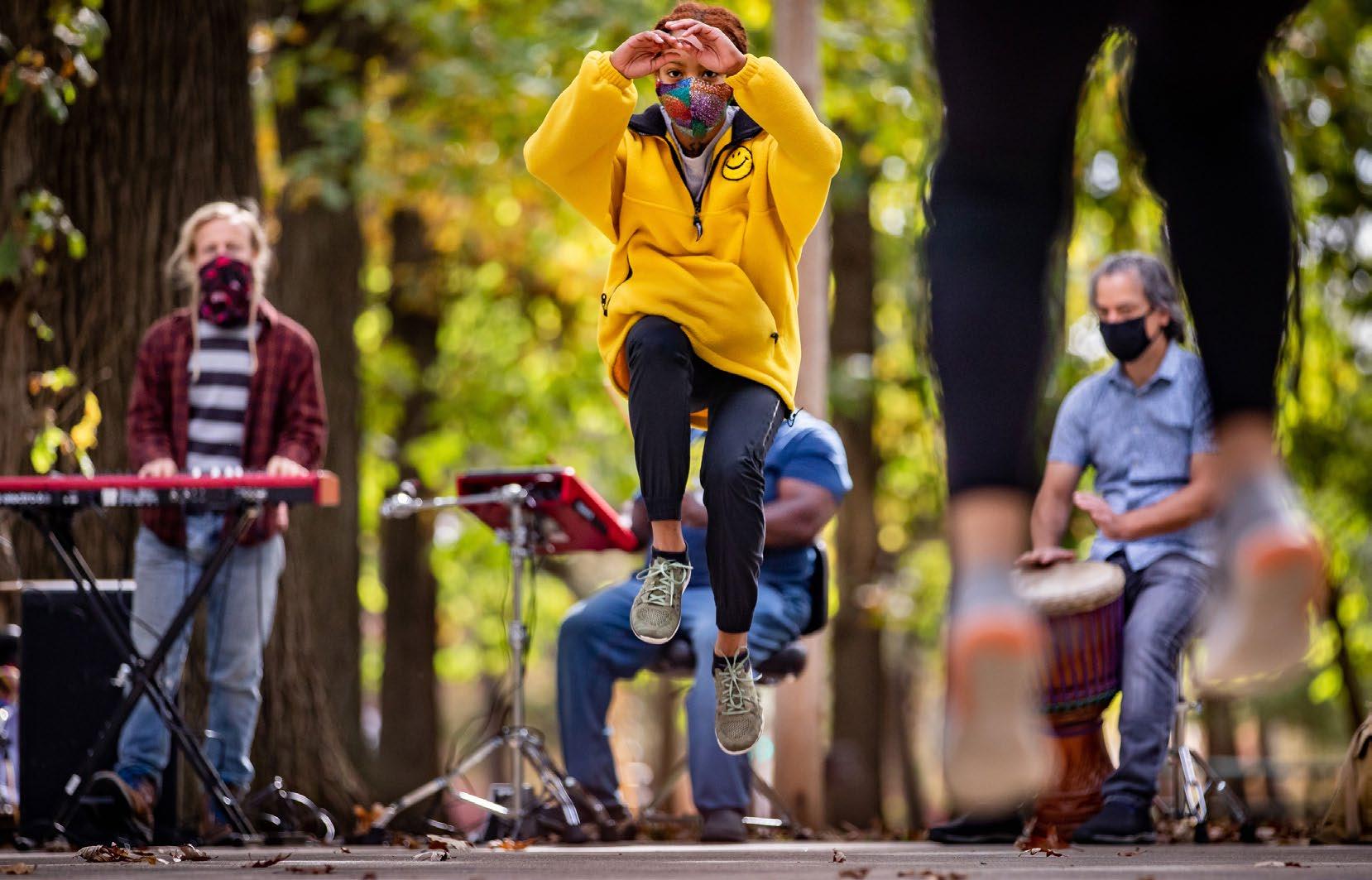
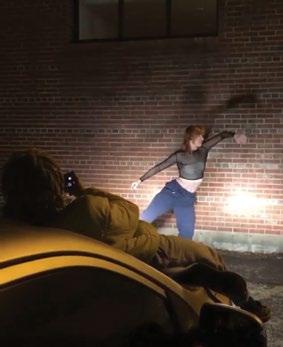
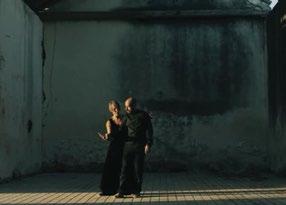
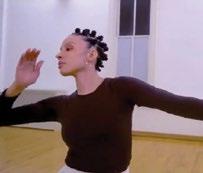
We danced around the stately oak trees of the Illini Grove, which provided a symbol of stasis we could not accomplish for ourselves this year. We were determined to make dances and dance, so we embraced technology, not as a substitute for the ephemeral liveness of dance, but as a new, vibrant creative medium. Throughout this year’s Pivot, you will see photos from the outpouring of screendances and special media that was designed for stage productions. We danced live for small audiences while we streamed our work to thousands—realizing we could reach our families, alums, and new communities who, too, were isolated and alone this year.
Having no normal, no stasis, no rest, even if perceived, takes its toll. Our student board and newly formed Black Advocacy Team sculpted opportunities to recharge, offering random acts of kindness in the shape of small gifts, or creating Do It For Me Fridays as an opportunity to unwind.
This year set everyone off balance. Our cells were being attacked by an unknown predator, our democracy was withering from an unprecedented embrace of lies, and black and brown bodies were being assaulted again and again, once again.
Dance artists intentionally practice being off balance . . . we fall, reach, and scramble as we hurtle our bodies through space. This practice might appear to be a simple skill of dancing,
As we plan for next year, I wonder how we might scale the cement surfaces of those pillars and reach the olive trees, making hope something that feels normal again.
Jacob Henss (MFA ’22), Jordan Brookins (BFA ’22), and Abby Chin (MFA ’23) in Roxane D’Orleans Juste’s Delivrance
looking back
By Catherine MacMaster (MFA ’22)
Throughout human history, dancing has been a mechanism for coping with the unknown, and therefore dancers are truly adept. Did this make 2020–21 an easy year for dancers? No. But it did not stop us. We have danced outside, trained and choreographed in masks and with social distance, adapted projects to film, and taken necessary time to rest and recover. As individuals and as a community, our perseverance assures me that we have not lost more than we have gained. We have tended deeply to the root of our craft: stepping just beyond what is known and dancing there.
By Jordyn Gibson (BFA ’23)
The grit and determination it takes to continue your growth and development in dance is something that cannot possibly be measured. As someone who is involved in many aspects of the dance department, I saw what it takes to keep us going. While I worked through my own moments of Zoom fatigue and burnout, I was still responsible for being a leader and an advocate. Finding the balance between doing my best in my classes and putting forth my best effort in extracurriculars pushed me to mature in newer ways than before. As we continue to start thinking about the world post COVID, a major takeaway will be to not underestimate how strong-willed and resilient we truly are.
moving forward
By Jan Erkert, Professor and Head
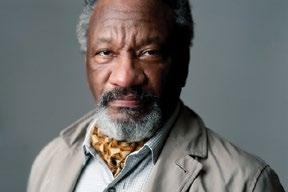
This year we are excited to participate in an in-depth, exciting collaboration with Krannert Center for the Performing Arts as we host the extraordinary artist Donald Byrd (pictured right) and his company Spectrum Dance Theatre. Byrd is renowned for his work as a citizen artist. Thanks to a Miller Grant, Donald Byrd and his company
member Vincent Michael Lopez will be in residence in the fall, setting the spectacular dance Love on our students, which will be performed in November Dance. Spectrum Dance Theatre will also be featured at KCPA as a Marquee presentation in spring 2022. Dance/USA Fellow and Bessie Awardee Professor Tere O’Connor will
premiere a new work, Future Cake, for our students in February Dance. Silas Riener, a former dancer with Merce Cunningham and a longtime dancer for O’Connor, will be in residence in the fall to rehearse the new work. As we look out into the theater, we look forward to seeing your eyes and feeling the warmth of your applause.
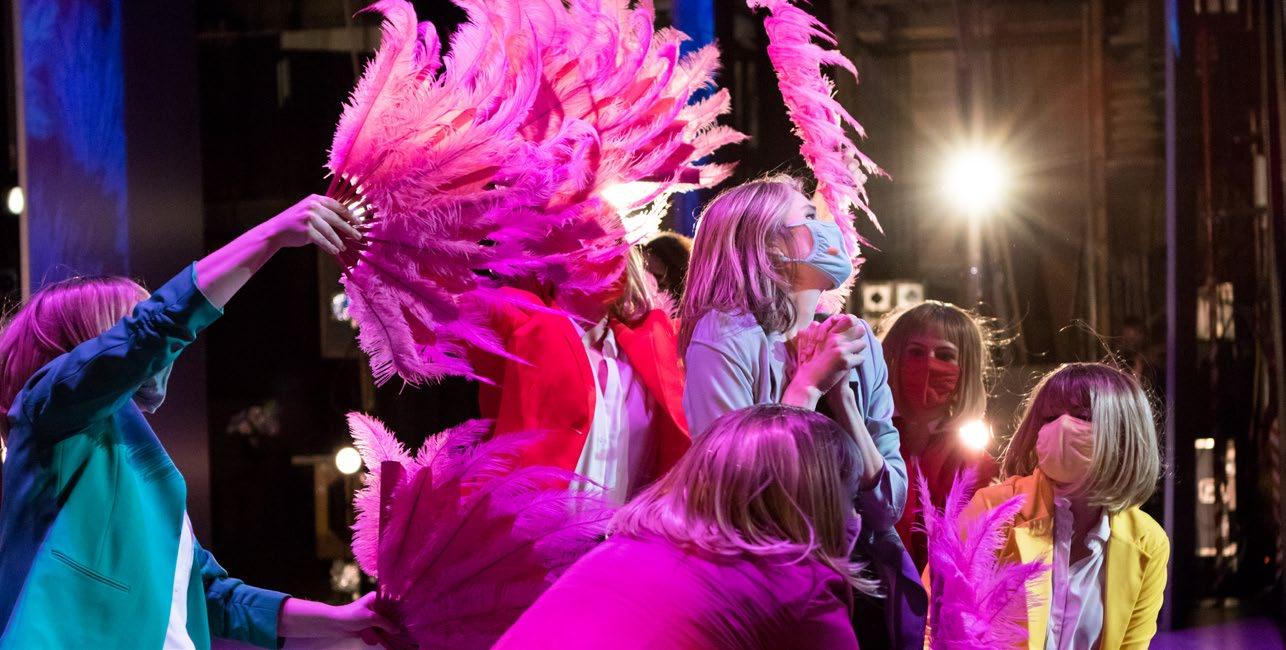
I’m Ally choreography by Rachel Rizzuto (MFA ’21)
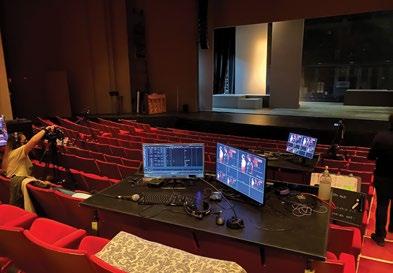
collaborations/ livestreaming
By John Boesche, Media Designer, Illinois Theatre
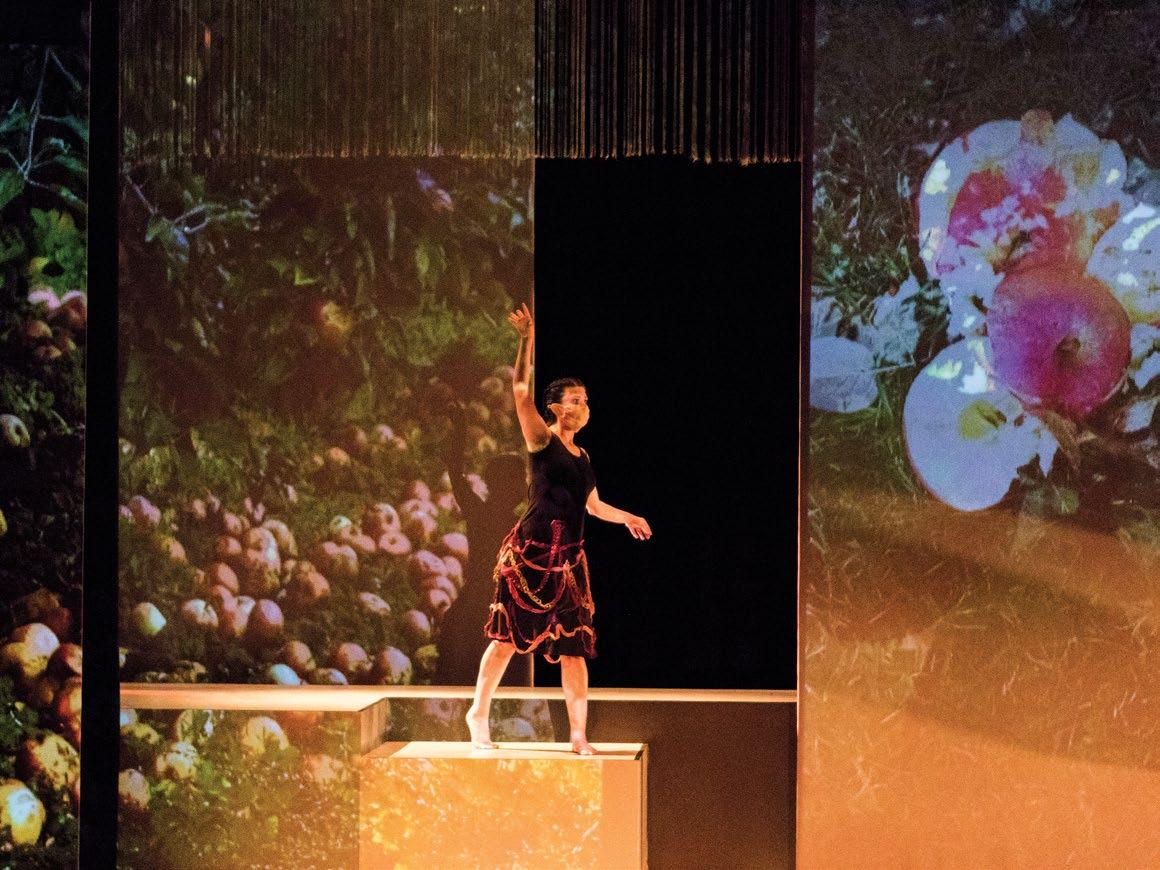
Dance and media have a long and rich history together, particularly here at Dance at Illinois Media has joined the design disciplines of costume, lighting, and sound as an element in the choreographer’s toolbox as they created an aesthetic frame for their movement work. The 2020–21 season brought these collaborations more to the forefront as we sought to bring a rich visual setting to the stage in a socially distanced, “no touch” production process. Of the eight original choreographic works in the November Dance and March Dance productions, seven had projected scenery and effects.
The aesthetic challenge was to create a distinct look and character for every piece that reflected each choreographer’s unique style and vision. Happily, all of these dancemakers brought their own very specific research, references, and in some cases their own photo and video works, to the collaborative conversations.
Annie Morgan (BFA ’23) in Kayt MacMaster and Sarah Mininsohn’s Herd Tale
screendances flatlands dance film festival : a year of reflection–looking into the future
By Laura Chiaramonte, Curator and Director, Flatlands Dance Film Festival
Flatlands Dance Film Festival believes in the continued support of artists and the vital social impact dance has across the world. The festival will continue to expand the role of dance in our community by presenting dance films that focus on how choreography and film intertwine.
As we move forward, we aim to focus on programming that builds educational platforms, providing an environment where dialogue is encouraged between filmmakers, students, and community members. The festival looks toward a racially just and socially equitable environment. We will focus on accessibility through our programming to help provide a diverse landscape of films, including ethnicity, race, ability, age, gender, experience level, economic status, geography, dance forms, film techniques, and more. Flatlands Dance Film Festival looks forward to our continued growth and remembers that the moving image reflects the very nature of motion itself, the meeting point of filmmaking and dance.
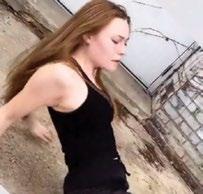
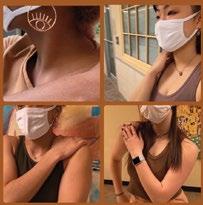
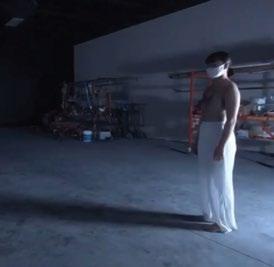
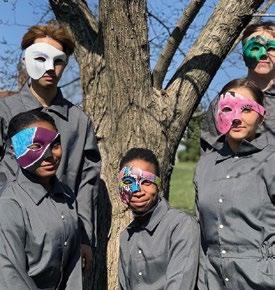
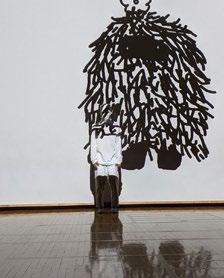
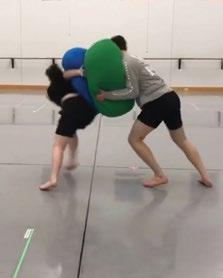
Photos of various screendances from Senior Concerts and Flatlands Dance Film Festival