MALTA BIENNALE’26
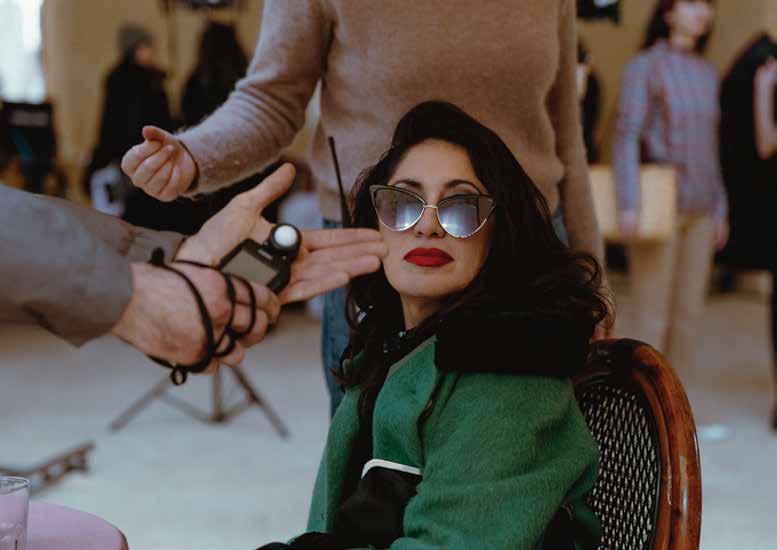
The Guerrilla Girls joined the list of internationally acclaimed artists
SPAZJU KREATTIV
Malta’s National Centre for Creativity in the heart of Valletta

MALTA BIENNALE’26
The Guerrilla Girls joined the list of internationally acclaimed artists
SPAZJU KREATTIV
Malta’s National Centre for Creativity in the heart of Valletta
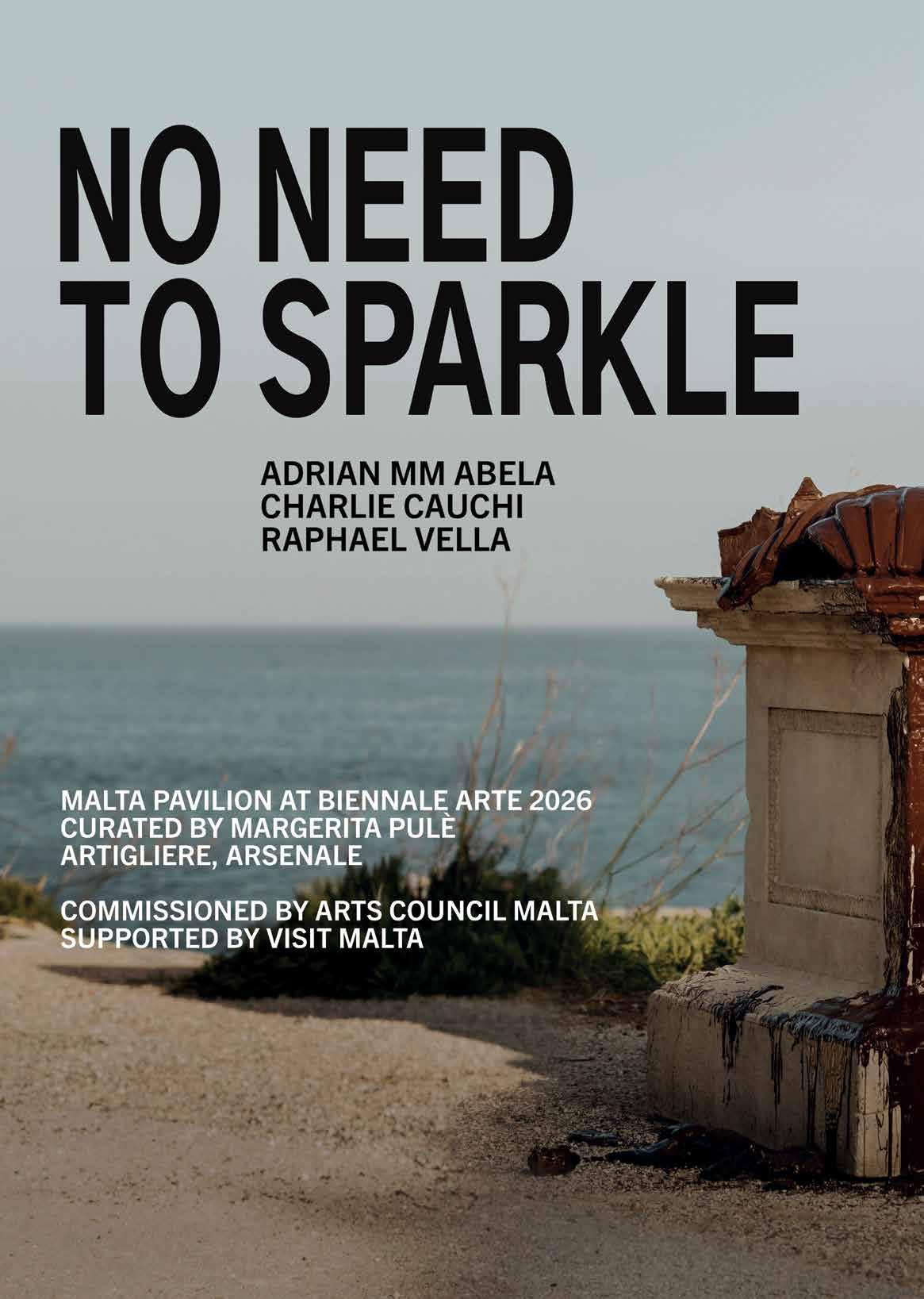
How to Doubt Well.
Erica Giusta interviews curator Margerita Pulè and artists Adrian MM Abela, Charlie Cauchi, and Raphael Vella on Malta’s Venice Biennale 2026 Pavilion - an agora of doubt amid permacrisis.
From AI Melita’s ambiguous declarations and protest-poster bales to chocolate Gladiators blurring heritage and film sets, discover “doubting well” as antidote to cynicism, echoing Koyo Kouoh’s In Minor Keys
Commissioned by Arts Council Malta (9 May–22 Nov 2026).
>> Read full interview on page 11.
2026
Tracing the story behind its iconic building
Venice Biennale 2026
My excitement for La Biennale di Venezia’s opening surges, as always, with the unorthodox and unexpected - fueled by who’s here and who’s gone.
Who shakes things up? Who leaves echoes? Palpably absent: Late curator’s shadow; South Africa’s empty pavilion after pulling Gabrielle Goliath’s censored work on gender violence and epistemic injustice. Boldly present: Russia’s return post-absconding artists and what surprises? Fresh debuts: Congo’s first, Simba Moto! Seize the Fire! at Scuola Grande di San Marco; Nauru’s boundary-pushing entry.
>> Read the full feature by Dr. Joanna Delia, page 28
Venice 2026


HIGHLIGHTS INSIDE THIS ISSUE…
NO NEED TO SPARKLE. EXPERIMENTS IN LOVE AND REVOLUTION - AND HOW TO DOUBT WELL. Erica Giusta in conversation with curator Margerita Pulè and artists Charlie Cauchi, Raphael Vella, and Adrian Abela on the Malta Pavilion at the 61st Esposizione Internazionale d’Arte della Biennale di Venezia… Doubting well - as antidote to permacrisis - shapes a pavilion of immersive doubts on identity, protest, and nationhood, weaving ancient agora vibes with AI Melita, protest-poster bales, and chocolate Gladiators amid Koyo Kouoh’s “In Minor Keys.”
Editor
Lily Agius
Graphic Design
Nicholas Cutajar
Sales & Enquiries
info@artpaper.press
Website www.artpaper.press
Instagram / Facebook artpaper.press
BEJN / IN-BETWEEN: MALTA’S FIRST NATIONAL PAVILION AT GWANGJU BIENNALE 2026. Malta debuts at the 16th Gwangju Biennale (5 Sep–15 Nov) with Norbert Francis Attard, PONKS, and Michael Quinton’s collaborative installations at Horangassy - blending Maltese festas with Korean Obangsaek, participatory Rope Temple poetry, VR portals, and soundscapes to probe overlaps in identity, crisis, and exchange. Commissioned by Arts Council Malta.
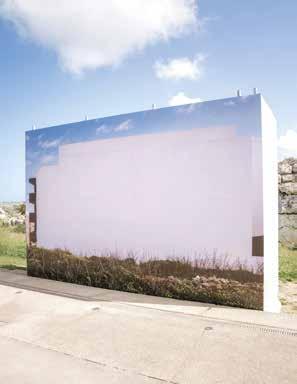
BLANK. Therese Debono’s 2026 Malta Biennale Falcon co-winner probes urban erasures via stark party-wall photos at Ggantija Temples. In this Q&A, she unpacks absence’s emotional pull, research on Malta’s ruptures, and the prize’s push for layered landscape inquiries.
24

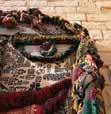
OMENAA MENSAH ON REDEFINING: POLISHGHANAIAN TEXTILE NARRATIVES – BEST PAVILION, MALTA BIENNALE 2026. OmenaArt Foundation’s Falcon-winning pavilion at Birgu’s Old Armoury weaves Polish-Ghanaian heritage via Ernestina Mansa Doku, Eliza Proszczyk, and Marta Nadolle, curated by Natalia Bradbury. Q&A on funding residencies, audience ubuntu resonance, and Malta’s node in cross-cultural futures.
26
28
CONCETTA MODICA ON “FRAGMENTS OF THE SKY OF MALTA: THE JOURNEY OF A TOMATO SEPAL TO BECOME A STAR” Falcon co-winner turns tomato sepals into “sky pieces” dialoguing with Malta’s ancient sites. Q&A probes emotional craft, Sepal Liturgy ritual at Ggantija, and the prize affirming territory-rooted art’s global resonance.
Artists & Curators: Adrian MM Abela · Sam Alekksandra
Sara Alberani · Norbert Francis Attard · Toni Attard
Natalia Bradbury · Charlie Cauchi · Therese Debono
Ernestina Mansa Doku · Gabriel Goliath · Koyo Kouoh
Marta Nadolle · Margerita Pulè · Eliza Proszczuk
Michael Quinton · Raphael Vella · Julien Vinet
Sponsors: AP Valletta · Arts Council Malta · BAS Malta
Iniala Hotel Malta · JoinwellFXB · Lily Agius Gallery
Malta Biennale 2026 · Malta Tourism Authority
Marvin Gauci · OmenaArt Foundation · People & Skin
Teatru Manoel · R Gallery · Spazju Kreattiv · Zfin Malta
Writers & Contributors: Brian Grech · Daniel Garzia
Joanna Delia · Erica Giusta · Kat Maj · Mehdi Ben Temessek
Omenaa Mensah · Sam Vassallo
CURATOR NATALIA BRADBURY AND ARTISTS ERNESTINA MANSA DOKU, MARTA NADOLLE, ELIZA PROSZCZUK ON REDEFINING: POLISHGHANAIAN TEXTILE NARRATIVES – FALCON BEST PAVILION WINNER Natalia Bradbury curates OmenaArt’s Falcon-winning pavilion at Birgu’s Old Armoury, uniting Ghana’s Ernestina Mansa Doku with Poles Marta Nadolle and Eliza Proszczuk. Q&A spans 1960s archives, residencies at Kids Haven, siteresponsive masks and curtains, and Malta as Global South-North bridge.
THE NEW AND THE ABSENT. Dr Joanna Delia dissects Venice Biennale 2026’s curatorial voids - like Koyo Kouoh’s passing and empty South African pavilion - amid protest calls from Pussy Riot and ANGA, plus debuts by Congo and Nauru. In this feature, she explores dissent’s utopian tensions, nationalism’s silences, and global erasures shaping art’s unorthodox pulse.
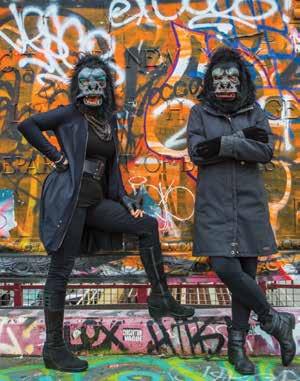
The Guerrilla Girls joined the list of internationally acclaimed artists taking part in the Malta Biennale. Like Maurizio Cattelan, the Guerrilla Girls are considered among the world’s leading contemporary artists.
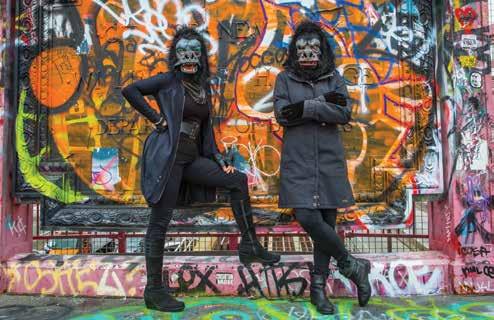
The Guerrilla Girls are an anonymous collective of artists and activists committed to feminism; their work directly addresses injustice whilst advocating for equal rights. Whenever they appear in public, the members of the group don masks to conceal their identity. The Guerrilla Girls have undertaken hundreds of projects which span a wide range of formats: from posters and banners to performances and video. Their work has been presented on major international platforms, exhibitions and institutions including the Venice Biennale, São Paulo, Amsterdam, and Art Basel Hong Kong amongst others. Their work was also presented in the publication Guerrilla Girls: The Art of Behaving Badly, which was listed among the best
art books published in 2020, by The New York Times. The Guerrilla Girls first emerged on the international art scene in 1985, in response to and in protest of an exhibition held at the MoMA, the Museum of Modern Art in New York, where only 13 out of 169 participating artists were women.
Malta Biennale 2026 runs until 29 May 2026. The Malta Biennale is organised by Heritage Malta in partnership with Arts Council Malta, Visit Malta, the Valletta Cultural Agency and Public Broadcasting Services. The Malta Biennale is also being held in full collaboration with the Ministry for Culture, Lands and Local Government, the Ministry for Foreign Affairs and Tourism, and the Ministry for Gozo and Planning
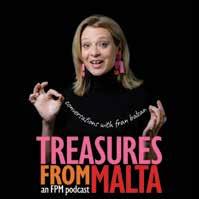
Treasures from Malta’ is a podcast series produced by Fondazzjoni Patrimonju Malti (FPM). Hosted and presented by Francesca Balzan, an art historian and artist with a long connection with FPM, each podcast episode consists of indepth conversations with living ‘treasures’ such as artists, historians, art collectors, performers and arts practitioners with some Malta connection. You can listen to all the episodes by finding them on the podcast section of the Patrimonju website (www. patrimonju.org/fpm-podcasts) where you will also find links and images referred to during these episodes. Also ‘Titles to Talkies’ can be purchased online via: https://bdlbooks.com/product/titles-to-talkies/
itles to Talkies, researched and written by Charlie Cauchi, is Fondazzjoni Patrimonju Malti’s latest publication; a book which dives into the largely neglected early history of cinema culture and industry in Malta, tracing its development from the turn of the nineteenth century until the outbreak of the Second World War.
The book was officially launched on Wednesday 18th February at Spazju Kreattiv and is now available for purchase from the VP Gallery in Valletta and from most major bookshops around the island.
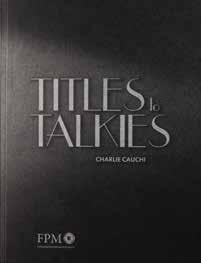
Drawing on extensive archival research, Cauchi reconstructs how film became embedded within Maltese cultural life, set against the backdrop of a society negotiating identity, modernity, colonial rule, and technological change. Through newspapers, visual material, trade journals, and official correspondence, the narrative reveals the vibrancy and tension of a nation in formation.
Richly illustrated and contextualised within European – especially Italian and British – and American film history, this publication offers an indispensable foundation for scholars, practitioners, and anyone interested in Malta’s cinematic heritage. More than a historical survey, it is a call to preserve fragile film legacies and to re-examine how moving images have shaped, and indeed continue to shape, the Maltese cultural imagination.

ERICA GIUSTA is Director of Innovation at architecture firm AP Valletta. She read for an MA in Architecture, and has a Post-Graduate Master from the Sole24Ore Business School in Milan. She contributes regularly to academic journals and international architecture magazines such as A10 New European Architecture and Il Giornale dell’Architettura.

No Need to Sparkle; Experiments in Love and Revolution. - And in how to doubt well.
Giusta in conversation with the team behind the Malta Pavilion at the 61st Esposizione Internazionale
d’Arte della Biennale di Venezia.
Venice 2026
The ability to doubt has shaped the foundations of European societies and their cultural identities for millennia. The act of doubting evolved from a provocative tool for dialogue in 5th-century BC Athens, into a methodical path to certainty in Cartesian Europe, from the 17th century onwards. In the current context of extreme polarisation of ideas and beliefs, re-discovering how to doubt in a meaningful and informed way feels like an antidote to the so-called ‘permacrisis’: a prolonged, seemingly endless period of overlapping instabilities, disruptions, and insecurities from cascading events at both global and local level, such as pandemic emergencies, wars, and unprecedented political scandals. Despite its inherent insularity, Malta has not been spared its share of all of the above, leaving its citizens grappling with potential viable remedies.
When meeting with Margerita Pulè, the curator of ‘No Need to Sparkle’, and exhibiting artists Charlie Cauchi, Raphael Vella and Adrian Abela, their awareness of such permacrises formed the background to our conversation about their work and about their approach based on what they define as ‘doubting well’. “The process was not linear, the artists were not given a brief to respond to; quite the opposite. It was always a conversation between us all, around ideas of doubt, identity, positioning, and personal experience”, says Margerita when explaining how the pavilion came together. “It has been an exercise in doubting well, in understanding doubt as something not necessarily negative nor cynical, but positively critical of our time. This is a pavilion about our time, with
many layers – not one which can be easily summarised in an elevator pitch.” she continues, “We are not trying to suggest solutions, our approach is not artivistic either. We raise doubts instead and offer different perspectives”.
In this respect, ‘No Need to Sparkle’ is serendipitously aligned with the theme of the main exhibition, titled ‘In Minor Keys’ and curated by Cameroonian-Swiss artistic director Koyo Kouoh. In a statement written just weeks before prematurely passing away in May 2025, she used the following words to describe her approach: “The minor key, in music, alludes both to the structure of a song and to its emotional effects. It is a rich idea, so rich that it quickly overflows its technical definition and spills with metaphor. It summons moods, the blues, the call-andresponse, the morna, the second line, the lament, the allegory, the whisper. The minor keys refuse orchestral bombast and goose-step military marches and come alive in the quiet tones, the lower frequencies, the hums, the consolations of poetry, all portals of improvisation to the elsewhere and the otherwise. The minor keys ask for listening that calls on the emotions and sustains them in return. The minor keys are also the small islands, worlds amid oceans with distinct and endlessly rich ecosystems, social lives that are articulated, for better and worse, within much larger political forms and ecological stakes. Here, the evocation of the key and the island extends to an archipelago of oases: gardens, courtyards, compounds, lofts, dance floors – the other worlds that artists make, the intimate and convivial universes that refresh and sustain even in terrible times; indeed, especially in terrible times.”
“The process was not linear, the artists were not given a brief to respond to, quite the opposite. It was always a conversation between us all, around ideas of doubt, identity, positioning, and personal experience.”
‘No Need to Sparkle’ reflects this enchantment in the face of cynicism about what art can do and presents three scenarios belonging to the same world but adopting different languages, raising different doubts, acknowledging that different voices and viewpoints can peacefully coexist.
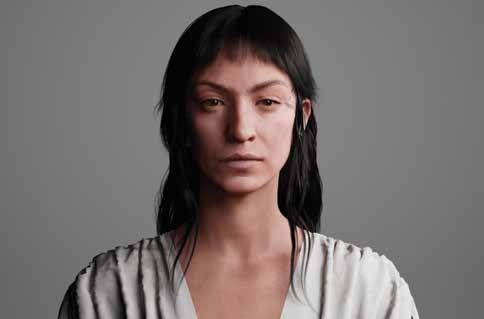
In ‘Declaration of Dependence’ Adrian MM Abela combines gaming and LLM technology to shape Melita, a female figure interacting with the audience on a large screen strategically placed on the main axis of the pavilion. “Melita, as a symbol of Malta, was always represented
in the technology of the time, hence the use of digital technology to represent her today. Her declaration of dependence represents all of us, as we embody constructs imposed by our contexts and depending on our background” Adrian explains. This ancient female figure, historically used with ulterior motives by political powers, often in nationalistic contexts, purposely remains ambiguous in message and tone: Melita proclaims a different 3 minute-long declaration each time that a visitor steps on the carpet in front of her, presenting a vast series of permutations based on Adrian’s conversations with AI systems such as
Claude and ChatGPT, on how the past can influence the future, indeterminate but already existing, while questioning symbols of nationhood, independence and economic systems. A set of drawings purposely concealed behind a curtain, on the side of the video installation, elaborate further on notions of symbolism and nationalism. “You need a bit of curiosity and willingness to interact with another human to discover this collection of drawings, you will need to follow a clue found in the text on the wall and ask the usher to show you”, explains Adrian, in a playful tone. “There is no intention to preach,” he
adds, “just a call to action: amongst the infinite possible futures and the endless iterations of the same stories, what do we decide to believe? Why?” the artist inquiries. The pavilion demands its audience to make choices all the time. Which screen will you focus on? Which story will you engage with? And which one will you believe? Each installation requires a deliberate choice.
In this spirit, ‘Praying for a Revolution That Will Never Come’, the dual-channel stop-motion animation composed of thousands of images by Raphael Vella, forces the viewer to choose one of the
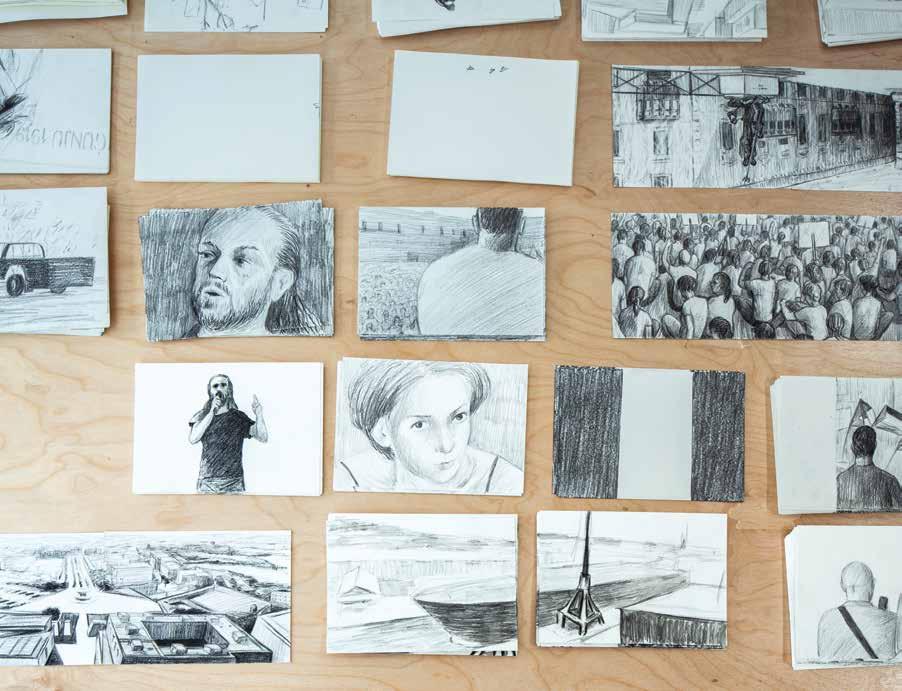
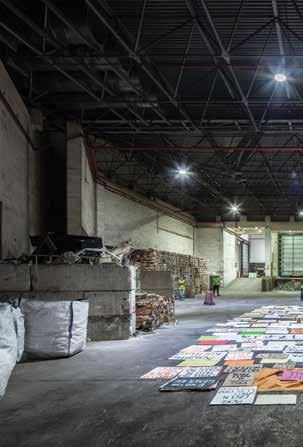
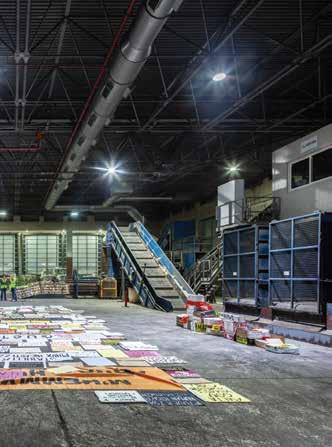
two gigantic screens creating a semienclosed patio within the pavilion. The installation spans over a century of Maltese protest history, starting with a representation of the Sette Giugno riots (1919), as a first recognised moment of revolt of the Maltese population as an entity united by some sort of national spirit, and concluding with the most recent protests demanding justice for the journalist Daphne Caruana Galizia, brutally murdered in 2017, and with the position of Malta vis-à-vis global phenomena. Scenes from the numerous marches organised by various entities over the years in defence of women’s rights, protests against the excessive development of speculative real estate on the islands and other scenes from significant moments of collective dissent are also included, retracing the development of the Country from British colony to independent European nation. “One hundred years after Sette
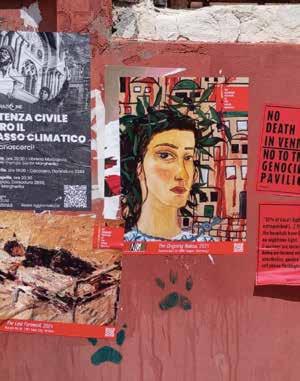
Giugno, where are we? What have we achieved? How solid or fragile are our democratic values?” Raphael asks, adding that the two screens are purposely extra-large and positioned at an angle in order to make the work feel immersive, drawing the viewers to question their political ideas, their position with respect to key topics such as colonialism, while reminding us that democratic achievements are rarely permanent. A 350 kg bale of discarded posters from the protests depicted by Raphael sits within the space as a sculptural piece suggesting that values and ideas will never go to waste and will never be completely discarder but will always transform into something else.
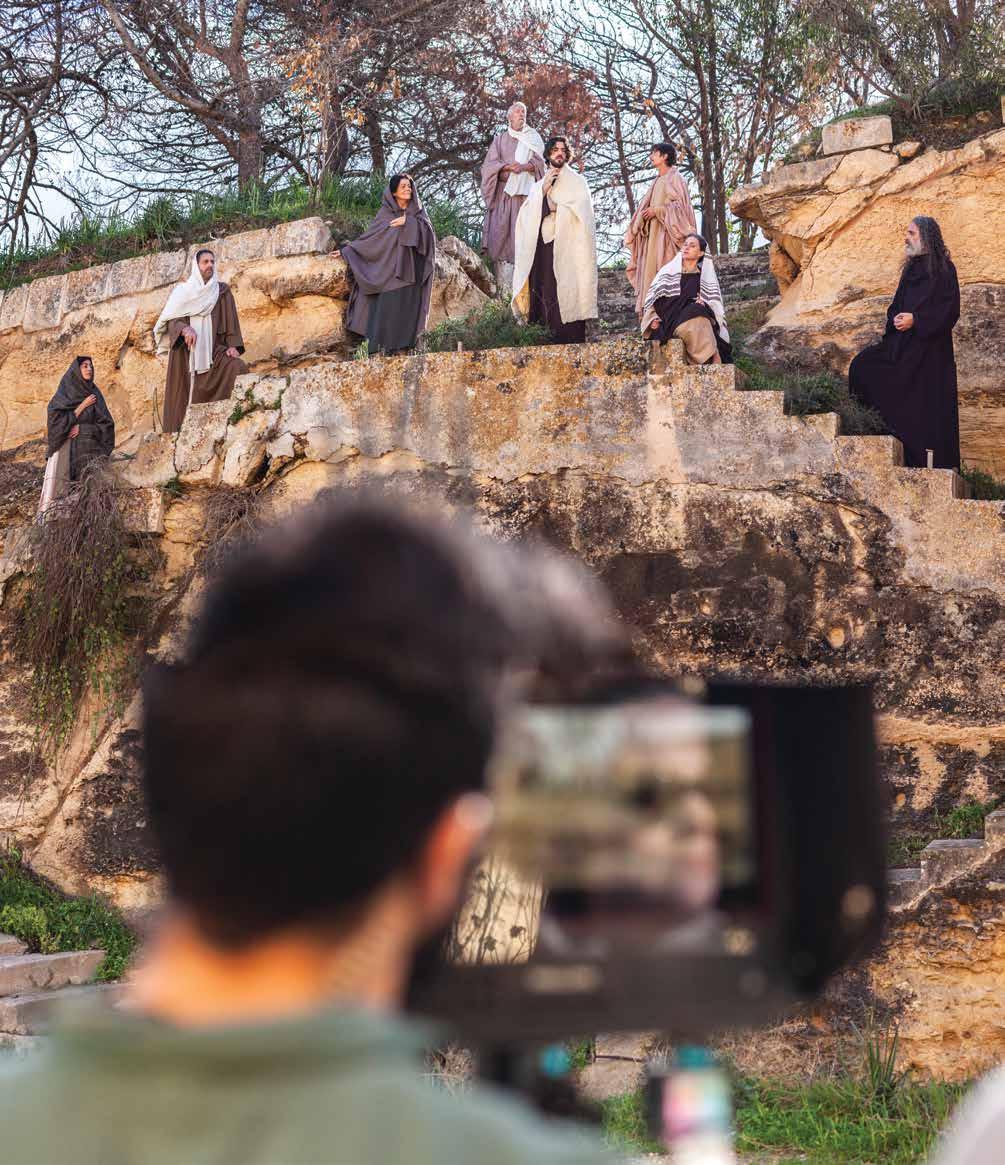
On the other side of the pavilion, on an equally large screen, ‘Dolce’, a film by Charlie Cauchi, tackles similar questions in a surreal, playful and at times sardonic tone. Referencing
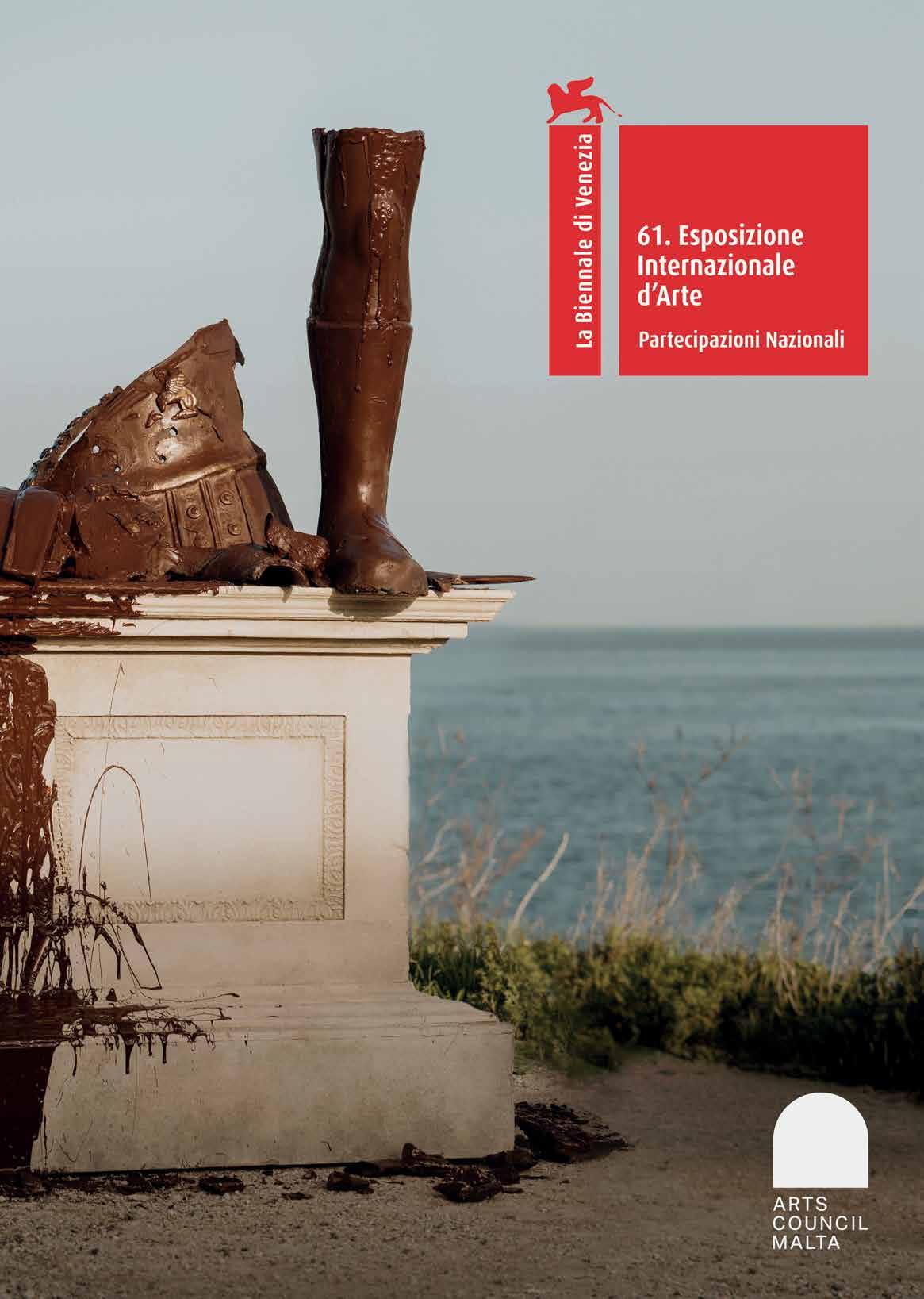
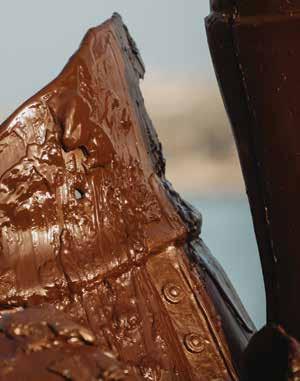
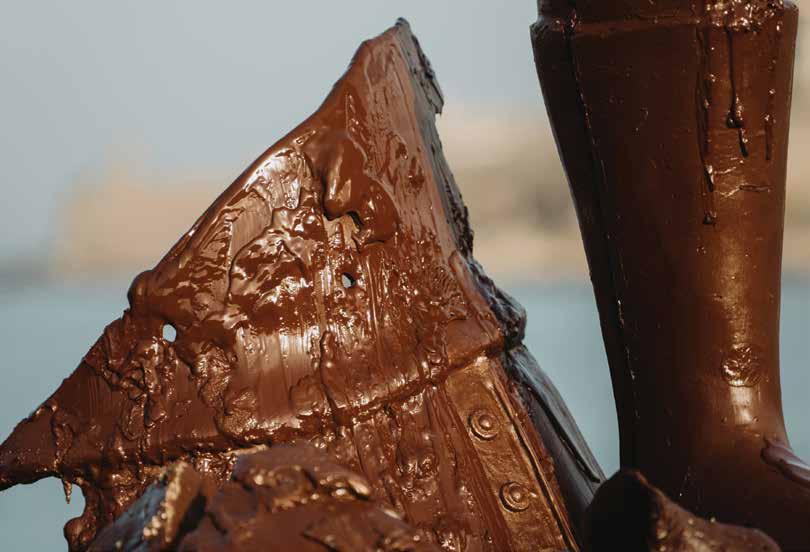
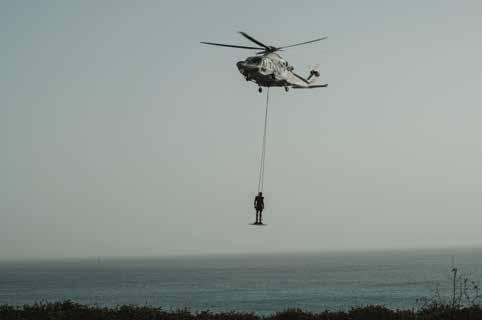
the iconic opening scene of Federico Fellini’s ‘La Dolce Vita’, and inspired by the life-size chocolate statue of Russell Crowe as Maximus in ‘Gladiator’, made by Maltese chocolatier Tiziano Cassar in 2023, the installation comments on themes of national identity. “Malta, as a film set, rarely plays itself, it tends to be used to depict other locations, and we adapt to it. Our identity changes according to the narrative imposed on us, on the role we are asked to play” says Charlie, using the film industry as a metaphor. For ‘Gladiator’, one of the most popular films filmed on the island, corners of ancient Rome were re-created within the ruins of historical military structures such Fort Ricasoli. During the filming, across the Grand Harbour from Valletta, one could clearly see the profile of the reconstruction of a third of the Colosseum, in what seemed like a permanently hallucinated landscape. The opening scene of ‘Dolce’ presents
‘No Need to Sparkle’ reflects this enchantment in the face of cynicism about what art can do and presents three scenarios belonging to the same world but adopting different languages, raising different doubts, acknowledging that different voices and viewpoints can peacefully coexist.
this same degree of surrealism, portraying a gigantic chocolate Gladiator being flown over our actual heritage, dangling from a helicopter. The boundary between what is just a film set and what is real heritage becomes blurry, and the audience is encouraged to question this almost farcical representation of Maltese identity.
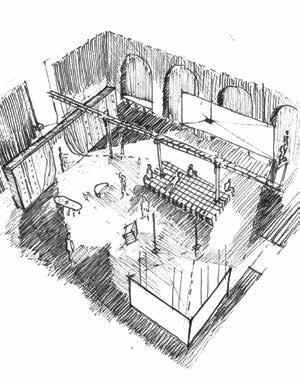
“These works adopt different media in different ways but eventually read like one texture” adds Margerita, who emphasises how the spatial negotiations skilfully coordinated by architect Mark Sullivan, co-founder of SON Architecture, were key to the successful outcome. Imagined like an agora, the public assembly area in ancient Greek city-states, the centre of the pavilion is populated by modular seats which can be easily interlocked or moved around and serve whichever purpose the visitors will wish the pavilion to fulfil: a restful break engaging with the video installations, or the ideal set-up for a moment of debate and collective reckoning. Once again, ‘No Need to Sparkle’ demands its audience to make a choice.
The Malta Pavilion at the 61st International Art Exhibition – La Biennale di Venezia 2026 is commissioned by Arts Council Malta.
Adrian MM Abela, Charlie Cauchi and Raphael Vella represent Malta at the 61st International Art Exhibition – La Biennale di Venezia 2026 taking place from the 9th of May until the 22nd of November 2026. The Malta Pavilion, titled No Need To Sparkle is curated by Margerita Pulè, with architects SON Architecture. Tamara Burr is Project Manager, while Kathrine Maj is responsible for Outreach & Partnerships. Visual identity is by Alexandra Pace, and Alessia Caruana is responsible for Social Media. Producers are Unfinished Art Space with R Gallery.
The Malta Pavilion would like to thank all those who have provided support and collaboration, in particular our commissioner, Arts Council Malta.
Our Gold Sponsors are Alpha Rental Ltd, Attard Holdings, Bank of Valletta, Frendo Advisory, Grands Suites, Malta Enterprise, People and Skin, Visit Malta, and Zampa Partners.
Silver Sponsors are Form, MIB Insurance Brokers, MySchool, Stilla, and Strawberry Fields Our Cultural Partners are the Office of the Deputy Prime Minister and Ministry for Foreign Affairs and Tourism, the Embassy of France in Malta, Francis Sultana, and Hamrun Local Council.
Thank you to our Production Partners Media Station and Primavera, Design Partners Camilleri Paris Mode, Jade Interiors, and JoinwellFxb, and collaborators Aerial Malta, DAMS Design and Manufacturing Studio, Envi Innovations Ltd, Godwins Garage, onepercent, Palazzo Parisio, Supper Club, WasteServ, 360 Pictures Ltd.
Thank you to Private Patrons Michael Bonello, Mark Camilleri, Joanna Delia, David Gauci, Sandro Raniolo and Christine Pillsbury.
And thanks to Alpha Medical Ltd, Armed Forces of Malta, General Cleaners, Khiron Security, Public Broadcasting Services Ltd - Archives Department, Rosa Kwir, Scan Malta, University of Malta.

/ JoinwellFxb at the Venice Biennale
Venice 2026
JoinwellFxb’s design and craftsmanship are this year present at La Biennale di Venezia, contributing an essential component to the Malta Pavilion, situated between the installations of artists Adrian MM Abela, Charlie Cauchi and Raphael Vella, titled No Need to Sparkle, and commissioned by Arts Council Malta.
The bespoke furniture is realised through a collaboration between Maltese furniture maker JoinwellFxb and SON Architecture Studio, represented by Mark Sullivan, Mark Peregin, Julian Vassallo, Mark Caruana and Mattea Platania.
The outcome of the collaboration is a modular furniture system that can function as a stool, bench or bed, while also maintaining presence as a sculptural object, uniting architectural thinking with artisanal production.
The design pays material homage to its Maltese origins through formal references to the island’s ubiquitous limestone blocks. The seating, upholstered in burlap made from jute fibres, reflects a humble and frugal choice of material. Conceptually, inspiration is taken from the ancient Greek agora, inviting visitors to pause, reflect and congregate. The balance

between volume and modesty reflects a broader sensitivity to sustainability, both in material choices and in the resourcefulness of the design. Both the formal and conceptual decisions made by the designers respond to the Pavilion’s curatorial framework, grounded in Aristotle’s notion of ‘doubting well’, not as a state of paralysis, but as a mode of attentive, empathetic questioning that allows for multiple, coexisting perspectives.






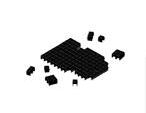


The keystone of the furniture design is its modularity. Individual units can be arranged, combined or separated, allowing the furniture to adapt to different social configurations. Whether accommodating a solitary visitor seeking rest or a group gathering in discussion, the pieces remain versatile. The flexibility of the design instils a democratic quality, allowing the exhibition space to evolve according to those present and to those participating momentarily.
JoinwellFxb’s contribution to the Venice Biennale reflects its place within Malta’s tradition of skilled craftsmanship, while also marking a new chapter shaped through the merger of Joinwell and FXB. Founded in 1947 by the Galea brothers, Joinwell grew from repairing war damaged apertures into a leader in retail and imported furniture, while FXB, with a history of more than 125 years, developed a strong focus on manufacturing and contract work.
Today, this combined structure allows JoinwellFxb to operate across a broader spectrum, extending beyond furniture into areas such as kitchens, bathrooms and related systems, while also refining its internal processes through shared spaces, consolidated production and investment in technology. Alongside this, there is an increasing attention to sustainability, with a focus on more
responsible material use and longer term environmental considerations.
The company’s trajectory reflects an ongoing process of adaptation, balancing its local roots with a forward looking approach under the leadership of Sebastian de Giorgio.
Adrian MM Abela, Charlie Cauchi and Raphael Vella represent Malta at the 61st International Art Exhibition, La Biennale di Venezia 2026 taking place from the 9th of May to 22nd of November 2026, with previews on the 6th, 7th, 8th May 2026. The pavilion is curated by Margerita Pulè, with architects SON Architecture Studio, project management by Tamara Burr, outreach and partnerships by Kathrine Maj, and visual identity by Alexandra Pace. The Malta Pavilion is commissioned by Arts Council Malta and produced by Unfi nished Foundation, along with co-producer R Gallery.

DANIEL GARZIA
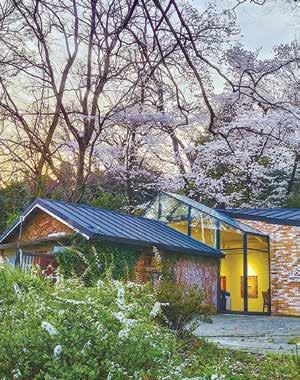
Spazju Kreattiv - Malta’s National Centre for Creativity - occupies St James Cavalier in Valletta, blending 16th-century fortifications with contemporary vitality. Transformed in 2000, it serves as a vital hub where heritage meets innovation, connecting artists with communities through diverse programmes.
Spazju Kreattiv pulses with a distinctly modern energy, within the fortified embrace of St James Cavalier, where the bastion walls have witnessed centuries of history. Here, in the heart of Valletta, past and present meet in quiet dialogue, an enduring conversation between heritage and imagination. Since its transformation in 2000, this 16th-century fortification has evolved into Malta’s National Centre for Creativity, not merely as a venue, but as a living, breathing bridge between artists and the community they inspire.
Step just beyond the threshold, and the atmosphere shifts. The outside world softens, replaced by a weave of creative possibility. Sunlight spills through the Atrium, an architectural statement by Richard England, casting natural, moving light patterns across stone and steel. It is a space that feels both grounded and ethereal, where sound carries with clarity and every footstep echoes with anticipation. Even in stillness, the building speaks.
Spazju Kreattiv thrives on movement, of ideas, of people, of perspectives. The galleries host visual art that challenges perception and invites reflection, offering artists the freedom to shape space according to their vision. These art spaces are not static containers but fluid environments that are constantly reimagined. Installations rise and
dissolve, colours shift, narratives unfold, each exhibition a temporary world waiting to be explored.
Performances become personal, where the boundary between artist and audience blurs. Whether through experimental theatre, contemporary dance, or spoken word, these rooms and studios cultivate connection. Here, art is not observed from a distance; it is felt, shared, and experienced collectively.
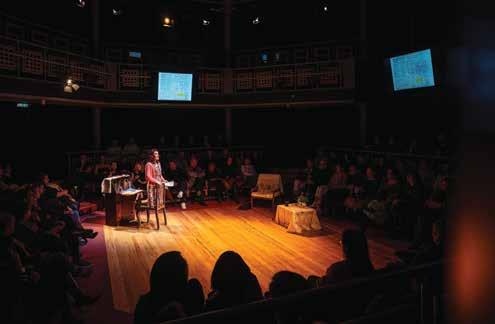
The theatre’s immersive design draws audiences into deeper engagement.
Every performance becomes a journey inward, a moment suspended in time where stories are not just told but lived. It is in these moments that Spazju Kreattiv’s role becomes most apparent,
not simply as a presenter of art, but as a mediator between expression and understanding.
Yet perhaps one of the most distinctive features is its arthouse cinema, a rare gem within Malta’s artistic landscape. In contrast to mainstream screens, this space curates films that provoke thought and stir dialogue. It champions voices that might otherwise go unheard, nurturing a culture of open expression and cinematic exploration. Here, film is not just entertainment; it is conversation.
At its core, Spazju Kreattiv is guided by its ethos: The Heart of Creativity. This is reflected not only in what it presents, but in how it engages. Through
programmes like ZiguZajg, it opens its doors to younger audiences, inviting children and families into a world of colour, curiosity, and creative discovery. These experiences plant seeds as small moments of wonder that may grow into lifelong relationships with the arts.
The Artist-in-Residency programme extends this dialogue beyond Malta’s shores, welcoming international creators to immerse themselves in the island’s cultural fabric. In doing so, it fosters exchange between disciplines, between cultures, between ways of seeing. Artists arrive with ideas and leave having transformed them, shaped in part by the community they encounter.
And that is where Spazju Kreattiv’s true essence lies. It is not defined solely by its architecture, its programmes, or even its art, but by its ability to connect. It stands as a conduit between artist and audience, tradition and innovation, solitude and shared experience. It invites curiosity, rewards openness, and thrives on participation.
To enter Spazju Kreattiv both as an artist or as part of the audience is to engage. To linger is to discover. And to return is to realise that creativity here is not confined to walls, it flows outward, into the city, into the community, and into the lives it quietly transforms.
For more information visit spazjukreattiv.org.
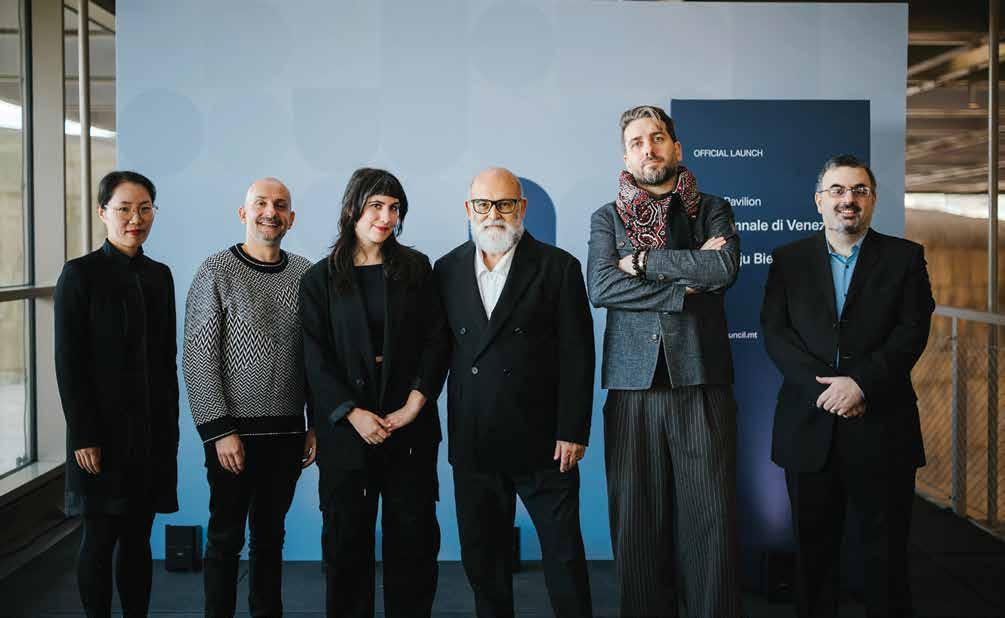
alta will present its first national pavilion at the 16th Gwangju Biennale in 2026 with Bejn / in-between, a multidisciplinary project bringing together Norbert Francis Attard, PONKS (Sam Alekksandra and Julien Vinet), and sound artist Michael Quinton. The pavilion is managed by Toni Attard, with Yeoul Son acting as Malta–Korea liaison, and XR development led by Mark Anthony Sammut (Infinita).
This marks a significant step for Malta’s contemporary art scene. Commissioned by Arts Council Malta, it places Maltese artists within one of Asia’s most established biennales while opening a working relationship between Malta and South Korea that extends beyond the exhibition itself.
The 16th Gwangju Biennale, titled You must change your life, takes its name from the final line of Rainer Maria Rilke’s poem Archaic Torso of Apollo. Led by Artistic Director Ho Tzu Nyen, together with curators Che Kyongfa, Park Gahee, and Brian Kuan Wood, the Biennale will take place from 5th September to 15th November 2026.
The edition focuses on the transformative power of art in response to the multiple crises and urgencies of our time.
“Bejn / in-between centres on the idea of the space between things. It looks at where identities, histories, and places meet, overlap, and sometimes conflict. Rather than treating separation and unity as opposites, the project approaches them as conditions that shape each other. The pavilion builds a shared ground between Malta and
“Bejn
/ in-between centres on the idea of the space between things. It looks at where identities, histories, and places meet, overlap, and sometimes conflict. Rather than treating separation and unity as opposites, the project approaches them as conditions that shape each other.”
Gwangju through installation, sound, poetry, and live exchange,” the team behind the pavilion writes.
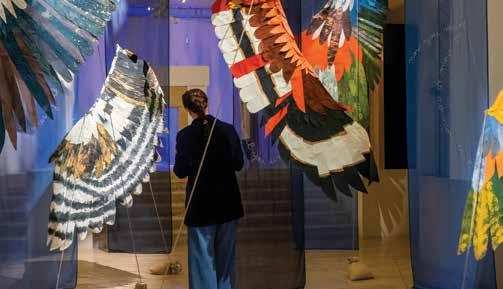
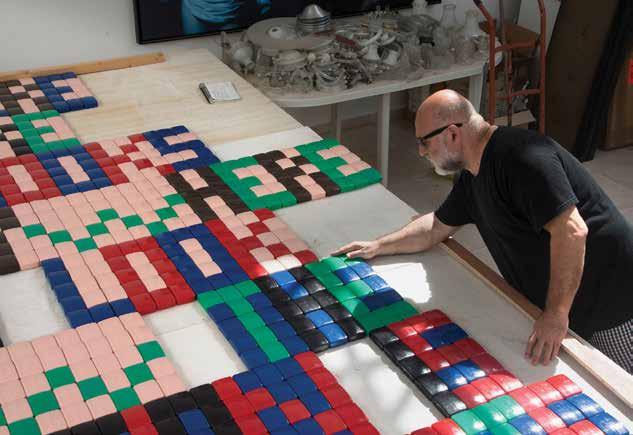
The exhibition unfolds across three connected environments at Horangassy. In the Art Polygon, Norbert Francis Attard presents a spatial intervention drawing from both Maltese and Korean visual languages. References to the Maltese ‘festa’ sit alongside the Korean colour system Obangsaek. Through tension, colour, and reflection, the work looks at balance, conflict, and collective memory, while responding to the urgency of the current global polycrisis.
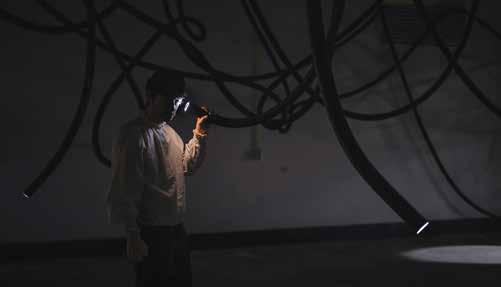
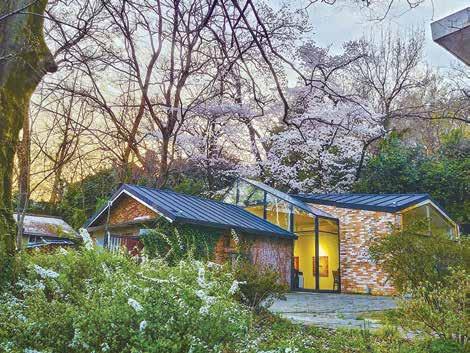
In the Glass Polygon, PONKS present Rope Temple, a large-scale participatory installation built as a temporary site of ritual. Hundreds of ropes form a central
structure. The space is enveloped in a living anthology of Maltese and Korean writing. Here, poetry is treated as something shared and built collectively rather than presented as a finished object, creating the largest collaboration between poets of both countries. An anthology gathers these contributions into a physical form that visitors can take with them.
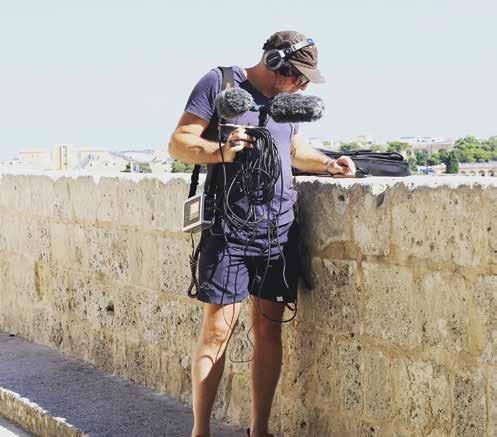
The Base Polygon extends the project into sound and digital space. Michael Quinton’s soundscape draws on recordings from both countries, creating an environment that moves between presence and abstraction. Alongside this, a VR-based portal developed by Infinita enables performances and interventions to move between the two locations. Taken together, the pavilion
functions as a system rather than a single work. It moves between physical installation, sound, and live connection, focusing on exchange, participation, and process.
As Malta’s first participation in the Gwangju Biennale, Bejn / in-between reflects a wider shift towards more collaborative and outward-facing practices. It introduces Maltese work to new audiences while creating a framework for continued dialogue between two distinct contexts.
At its core, the project suggests that meaning does not sit in fixed positions but emerges in the space between them.
Malta Pavilion at
is commissioned by Arts Council Malta. Supported by the Ministry for Foreign Affairs and Tourism of Malta, Visit Malta, Cultural Diplomacy Fund.

Interview / Malta Biennale 2026 / Falcon Award
Venice 2026
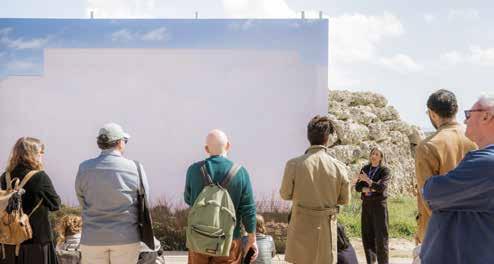
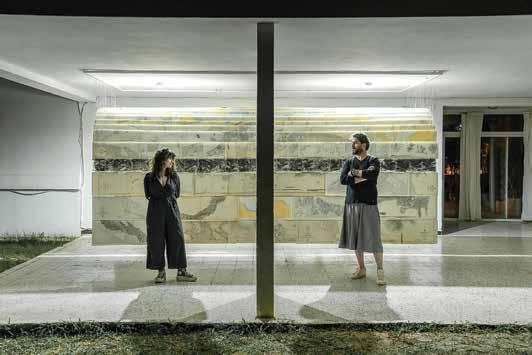
Therese Debono’s Blank, the 2026 Malta Biennale Falcon co-winner, probes Malta’s urban erasures through stark party-wall photos at Ggantija Temples. In this Q&A, she unpacks the emotional pull of absence, research shaping the work, and the prize’s impact on her lecturing and landscape inquiries.
Your large-scale photo of blank party walls at Ggantija Temples highlights urban erasure. How did photographing these “silent yet violent” absences feel emotionally, and what sparked this focus on Malta’s disappearing structures?
Photographing these spaces never feels neutral. There is always a quiet discomfort that is not dramatic, but persistent. The sites appear empty, but they are not. There is a tension in standing in front of something that has been removed, covered, or erased, and yet still feels present. What sparked Blank was this growing awareness of Malta changing too quickly. Buildings disappearing, facades replaced, histories reduced into these anonymous white surfaces. At some point I realised I was no longer interested in what was being built, but in what was being lost. The party walls became an index. They are silent, but they hold evidence. Calling them “violent” is not about spectacle but rather about recognising that erasure can be subtle, slow, and normalised. That is where the unease comes from.
Juxtaposing modern blank walls with prehistoric Ggantija creates a striking dialogue. What research into Maltese urban change or personal connections shaped Blank and how does it reveal traces of what has been removed?
Placing these blank walls in dialogue with Ggantija wasn’t accidental. Ggantija represents permanence, deep time, and continuity. The party walls represent rupture; a break in that continuity. My research draws both from observing Malta’s rapid urban transformation
and from thinking through concepts of place and placelessness, particularly how environments lose their identity when they are stripped of memory and context. There is also a personal layer. I grew up in spaces that had texture, detail, and history. Returning to the same areas now, I find surfaces that are erased, neutralised, almost resistant to meaning. Blank emerges from that contrast. What interests me is not documenting what was there, but revealing the trace of its absence. The work asks the viewer to confront what is no longer visible, but still somehow felt.
What does this prize mean for your practice as an MCAST lecturer and photographer, and how might it open new doors for exploring Malta’s layered landscapes?
The prize is important, but not as validation. It is more as alignment. It signals that this line of inquiry, which is quiet and not immediately obvious, is being recognised. As a lecturer, it reinforces the importance of pushing students beyond surfacelevel imagemaking and towards work that questions, unsettles, and holds conceptual weight. In terms of practice, it opens space. Space to scale the work, to bring it into new contexts, and to continue investigating Malta’s landscapes not just as physical sites, but as carriers of memory, tension, and erasure. If anything, it strengthens my commitment to staying with this. Not rushing to resolve but allowing the work to remain open, layered, and slightly uncomfortable while also leading into new lines of inquiry that extend from it.
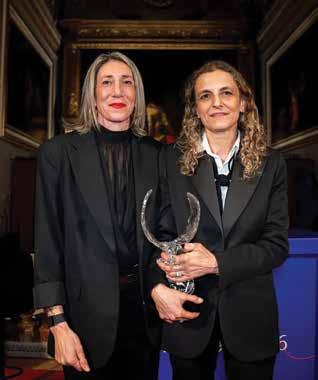
Concetta Modica’s Falcon co-winner transforms tomato sepals into sculptural stars, distributed across Malta Biennale sites. In this Q&A, she details the emotional craft of “pieces of sky,” the Tomato Sepal Liturgy ritual, and the award’s affirmation of place-rooted art’s global resonance.
The work distributes sculptural “pieces of sky” across historic museums tied to Malta’s archaeology. What emotional process did creating these evoke, and how do they invite Biennale visitors to rethink overlooked natural elements in cultural heritage spaces?
The work is titled “Fragments of the Sky of Malta: The Journey of a Tomato Sepal to Become a Star”. It’s a project I’ve been developing for years. Rosa Martínez chose it when inviting me to the Malta Biennale; through our conversations, the idea of nine new “pieces of sky”, each marked with dates from Malta’s history meaningful to me, took shape.
I select dates that aren’t spectacular but shifted culture or mentality: the discovery of a love letter hidden in a rifle barrel, or the moment the Inquisition’s bell was removed from the Inquisitor’s Palace.
For me, it’s fascinating when contemporary artworks dialogue with storied historical sites. One piece, in an archaeological museum, hung beside a believed 3,000-yearold navigation map using stars as points. The two truly conversed. I was thrilled with Rosa’s decision to install one sky per Biennale venue, it gained strength, like a map tracing trajectories.
You presented a Tomato Sepal Liturgy, described as collective prayer, at Ggantija Archaeological Park in Xaghra. Could you tell us more about this ritual and accompanying elements?
The collective prayer isn’t performance but true secular prayer, inviting people to join us. I’ve reflected on modern prayer’s role; for me, art is a kind of religion. One sculpture, Madonna of the Sepals, engages the sacred, territory, and earth. The sepal’s journey to star becomes knowledge, a spiritual “know thyself.”
Ours is non-confessional, tied to Ggantija’s temples: an act of listening, mapping inner and collective geographies where imagination, places, and people converge.
What does winning the Falcon Award mean personally, and how has it shifted your view of Maltese art’s global potential?
Even before the award, the Biennale invitation, bolstered by strong curatorship and Rosa Martínez, gave me confidence and international context. Winning was deeply emotional: recognition not just of my work, but of territoryrooted research resonating globally.
It reinforces that Maltese art, tied to its history, can dialogue internationally and enrich wider conversations.
Interview / Malta Biennale 2026 / Best Pavilion
Omenaa Mensah’s OmenaArt Foundation pavilion at Birgu’s Old Armoury weaves Polish and Ghanaian textile traditions into a monumental dialogue on heritage, identity, and ubuntu. Featuring Ernestina Mansa Doku, Eliza Proszczuk, and Marta Nadolle - curated by Natalia Bradbury - this Falconwinning project bridges cultures through residency-born installations.
What inspired you to back this PolishGhanaian project for Malta Biennale 2026, especially funding the residencies and largescale textile works during the open call?
My commitment to this project is deeply personal.
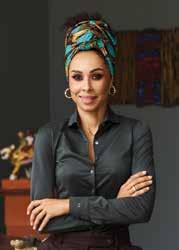
As someone shaped by both Polish and Ghanaian heritage (my mother being Polish and my father Ghanaian), I have always felt a profound responsibility to build meaningful bridges between these two cultures. Through the work of the OmenaArt Foundation, which I founded as a womenled initiative, and Omenaa Foundation, we have been actively engaged in Africa for over a decade, supporting and empowering artistic development.
What inspired me was the fact that textile art, particularly in Poland and Malta, carries a strong feminine lineage. It is a medium historically associated with women’s narratives, craftsmanship, and storytelling.
Supporting artists such as Ernestina Mansa Doku, a graduate of the Kwame Nkrumah University of Science and Technology in Kumasi and a recipient of our Artis Arundo scholarship in 2024, is both a privilege and a natural extension of our mission. We are incredibly proud to witness her rapid artistic growth and increasing international recognition.
We are also very honoured to work with Polish artists Eliza Proszczuk and Marta Nadolle, each bringing to the project their unique, compelling, research-driven practices that explore materiality, identity, and the social dimensions of textile and visual culture. Creating a space where these voices can meet, exchange, and evolve together is at the core of what we do, ensuring that the dialogue is not centred around a single narrative but unfolds through a plurality of perspectives and experiences.
Funding residencies and large-scale textile works was therefore a deliberate decision. Residencies provide artists with the essential time, space, and context to create sitespecific works that respond authentically to place. For us, it was important not only to support production but to enable a deeper artistic dialogue rooted in lived experience and cultural exchange.
The Falcon Award validates your curatorial gamble on an unprecedented Polish-Ghanaian-Maltese textile dialogue - did anything surprise you about how Biennale audiences engaged with these works,
and how has the win reshaped OmenaArt’s approach to future cross-cultural commissions?
The success of this project has been profoundly meaningful for all of us, not only as a validation of the idea itself, but as a testament to the extraordinary collective effort behind it. It is the result of the dedication of an exceptional curator, Natalia Bradbury - who is also the Executive Director of the OmenaArt Foundation and Phenomenaa Galleryand a committed team, both in Poland and in Malta, who worked tirelessly for months, attending to every detail with precision and care. Above all, it is thanks to the artists we chose to trust. Their vision, sensitivity, and the final outcome of their work exceeded even our most ambitious expectations.
I was genuinely and positively surprised by the depth of audience engagement. What resonated most strongly was how a very specific narrative - the PolishGhanaian relationship in the 1960scould evolve into a universal message aligned with the philosophy of ubuntu: “I am because we are.” While rooted in African thought, this idea feels more relevant than ever on a global scale today.
The success of this project has reaffirmed our belief that crosscultural dialogue is not only meaningful but essential. It has encouraged us to continue exploring intersections between these worlds - something that
is both deeply connected to my identity and increasingly significant within the global art landscape. In particular, the growing visibility of African art in Europe, including Poland, reflects an important cultural shift that we are proud to actively contribute to.
We are continuing this momentum with upcoming initiatives. On 17 April, we opened the annual TOP CHARITY Art exhibition at the Orangery of King Jan III’s Palace in Wilanów. This exhibition is a powerful example of cross-cultural dialogue: featuring a monumental work by Ibrahim Mahama (ranked number one in ArtReview’s 2025 Power 100) presented within a historic Polish Baroque royal setting. Alongside him, we are showcasing leading figures of the contemporary African and diasporic art scene, including Amoako Boafo and Rita Mawuena Benissan.
In dialogue with these artists, we are also presenting works by legendary Magdalena Abakanowicz, whose monumental works transformed Polish and global perceptions of textile art, as well as Ewa Juszkiewicz, one of Poland’s most important contemporary artists. This year marks the 5th anniversary of the TOP CHARITY initiative, and we are also expanding our activities through the development of the Phenomenaa Gallery, dedicated to African and nonEuropean art in Poland. The response so far has been exceptionally strong, confirming that this direction is both
timely and necessary.
What are the next steps for sustaining this Polish-GhanaianMaltese collaboration, and how does OmenaArt envision Malta’s role in future art exchanges? Looking ahead, we are focused on strengthening long-term structures that enable sustained and meaningful collaboration. Our residencies and exhibitions in Malta are all part of a broader, evolving initiative: Luginsland of Art. At the heart of this project is the 19th-century Villa Luginsland, which we are currently revitalising into a dynamic space for artistic exchange.
It was within this historic setting that the Space & Time exhibition took place in 2024, bringing together Polish and Maltese artists. Our residency programmes continue to grow, with Polish artists coming to Malta each year to engage with its cultural landscape, architecture, and local artistic community, including collaborations with artists such as Victor Agius and Justin Falzon. These experiences are designed not as isolated initiatives, but as part of a wider ecosystem.
Equally important is how Malta connects with our activities in other regions. We are developing projects in Ghana, such as the Kids Haven Sport & Art Complex - an innovative multidisciplinary centre initiated by the OmenaArt Foundation in collaboration with curator Azu
Nwagbogu - as well as expanding our initiatives in Poland. We intend to create strong, organic links between these geographies, ensuring that Malta becomes an integral node within this network.
Through this approach, we also want to actively support and promote Maltese artists internationally by integrating them into exhibitions, residencies, and collections across our platforms. Malta, with its unique position between continents, holds symbolic value for us—as a natural point of connection through which we can continue to build meaningful cultural bridges between Europe and Africa.
Redefining. Polish-Ghanaian Textile Narratives
Thematic Pavilion of the OmenaArt Foundation, Malta Biennale 2026 (11 March – 29 May 2026)
Venue: Old Armoury of the Knights of Malta, Birgu, Malta
Artists: Ernestina Mansa Doku, Marta Nadolle, Eliza Proszczuk
Curator: Natalia Bradbury
Organisers: OmenaArt Foundation, LuginsLand of Art
Partners: Embassy of the Republic of Poland in Valletta, Central Museum of Textiles in Łódz, Phenomenaa Gallery, Apart, Luce&Light, LOT Polish Airlines
Interview / Malta Biennale 2026 / Best Pavilion
Venice 2026
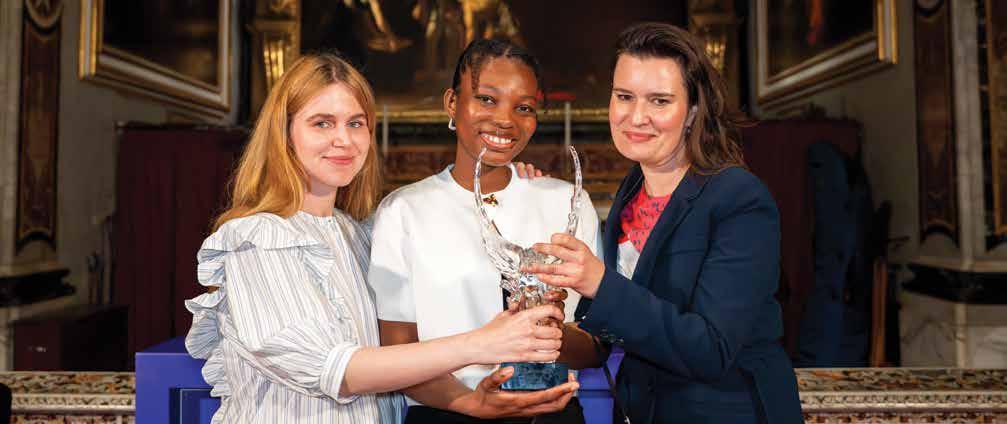
Curator Natalia Bradbury leads this Falcon-winning pavilion at Birgu’s Old Armoury, uniting Ghanaian Ernestina Mansa Doku with Polish artists Eliza Proszczuk and Marta Nadolle.
Backed by Omenaa Mensah’s OmenaArt Foundation, the project reimagines 1960s cultural exchanges through monumental textiles, affirming Malta’s role as Europe-Africa bridge.

How did you blend Polish and Ghanaian textiles into one story—what key archive finds or residencies helped, and how did you manage tight Biennale deadlines in Malta’s historic venues?
The project is rooted in a historical moment, the Polish-Ghanaian relationship of the 1960s and its artistic representations. References such as the exhibition One Man Does Not Rule a Nation at TRAFO Center for Contemporary Art, by Janek Simon and Max Cegielski, revisited Alina Slesinska’s work in Ghana and the broader history of Cold War-era cultural exchange
between Poland and postcolonial Africa, pointing to a largely overlooked history of transnational artistic connections.
However, our focus was not on reconstructing that history, but on translating it into contemporary, lived experiences. The collaboration began in Ghana, during workshops at Kids Haven School, and continued in Malta, where the artists worked together intensively for two months.
The timeline was demanding, especially within the constraints of historic Biennale spaces, but the project was carried by strong belief, commitment, and trust between the artists and me.
As the Best Pavilion among 27 entries (with Cattelan headlining), how does “Redefining” show Malta as a bridge for Global South-North talks in the UNESCO-backed Biennale?
Malta plays a crucial role in this project. From the beginning, we recognised it as a conceptual and geographical bridge between Europe and Africa.
The artists spent two months there, developing the works in direct response to the site. The island’s layered history— its architecture, its position between continents—resonates with the themes of the exhibition.
For OmenaArt Foundation, Malta is also an ongoing space of activity. Since 2023, through Luginsland of Art, we have been developing an artistic centre and organising residencies for Polish artists. This continuity makes Malta a natural platform for building dialogue between the Global South and North.
What did winning the Falcon Award mean to you personally, and how has it shaped your curatorial approach for future projects?
This project is part of my long-term work and research within OmenaArt Foundation, whose mission is to build dialogue between Europe and Africa through art. I believed in this concept deeply, as well as in the artists, who were fully committed to the project from the beginning. The work of Ernestina Mansa Doku, Marta Nadolle, and Eliza Proszczuk, as well as the entire team, was essential.
For me, this recognition confirms something I strongly believe in—that projects created with full commitment, trust, and shared responsibility resonate more. I always see success as something collective, something that belongs to everyone involved. In that sense, this approach is also very close to the philosophy of Ubuntu—“I am because we are.”
How did your Accra Cultural Week residency collaboration translate into Biennale-scale installations— what material challenges arose when scaling workshop experiments into monumental Biennale forms within Malta’s architectural frames?
EMD: The Accra Cultural Week collaboration served as a starting point for the production of works towards the Biennale. It also was an opportunity to connect with the kids at Kids Haven School, a programme run by the Omenaa Foundation, as well as meet the Polish artists Marta and Eliza, whom I worked with towards the exhibition. The workshop helped me explore and experiment with ideas related to Ghanaian textile traditions, with the Adinkra symbols serving as a starting point. Even though the project didn’t fully materialise into the final outcomes seen at the Biennale, it served as an opportunity to exchange and share ideas with the kids.
Upon arrival in Malta for the production of works towards the Biennale, an inperson visit to the Old Armoury, Birgu, further questioned the ideas, thoughts, and perspectives towards the project.
The multi-layered history of the Armoury—serving as a place for keeping weapons, a school, a hospital, etc.— sparked my thoughts on the effects history has on a place, people, and even our identities. This led to a restructuring
of the ideas and references that shaped my project, thereby leading to new research and thoughts inspired by the space in Malta.
Thus, the challenge posed to me was the ability to reinvent my ideas and thoughts to better express my view on the general Biennale theme—the theme that governed the pavilion—as well as references which linked my Ghanaian history with the thought patterns Malta presented, which is one of a multilayered structure of history, rather than linear.
Redefining transforms fabric into geopolitical memory. Which personal or familial textile narratives informed your contributions, and how did the winning pavilion’s physical installation at The Armory in Birgu activate these stories for Biennale audiences?
MN: I observe what’s happening in my country, but also around the world—I see how deeply divided people are, fueling loneliness, fear, and hostility toward those who differ from us. In this project, I wanted to highlight the value of community and just how much we need it.
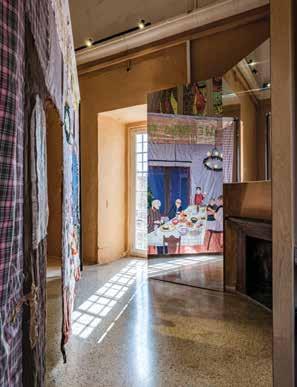
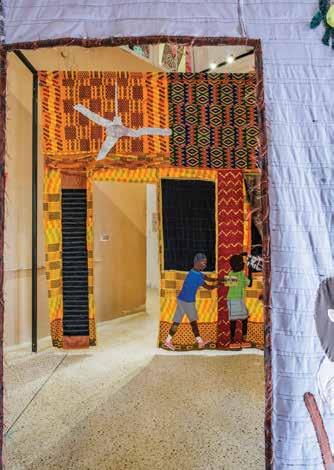
Within the curtains of the installation I created, there are two groups. One is my family, whom I couldn’t meet over the holidays and whom I missed deeply. The other is the children I worked with
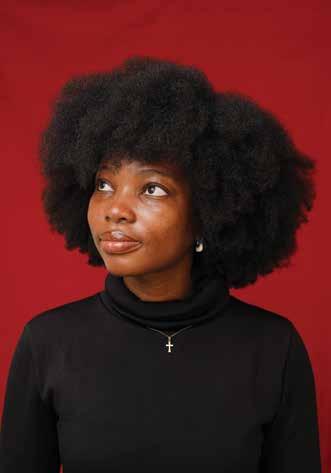
in Ghana—they set a beautiful example of cooperation, mutual support, and coexistence.
I crafted houses and double-sided curtains with doorways and windows, inviting viewers to enter, walk between them, and become part of the scene. This was essential to me. Architecture served as a major formal inspiration— its multisensory nature means we don’t merely look at it but inhabit it, experiencing its structure. I wanted the viewer, upon entering the installation, to become part of the work—and thus part of the community.
With each of you bringing distinct techniques to the pavilion, how did your individual approaches— Ernestina’s organic materials, Marta’s relational tensions, your memory work—come together to create one unified Polish-Ghanaian voice that won Best Pavilion?
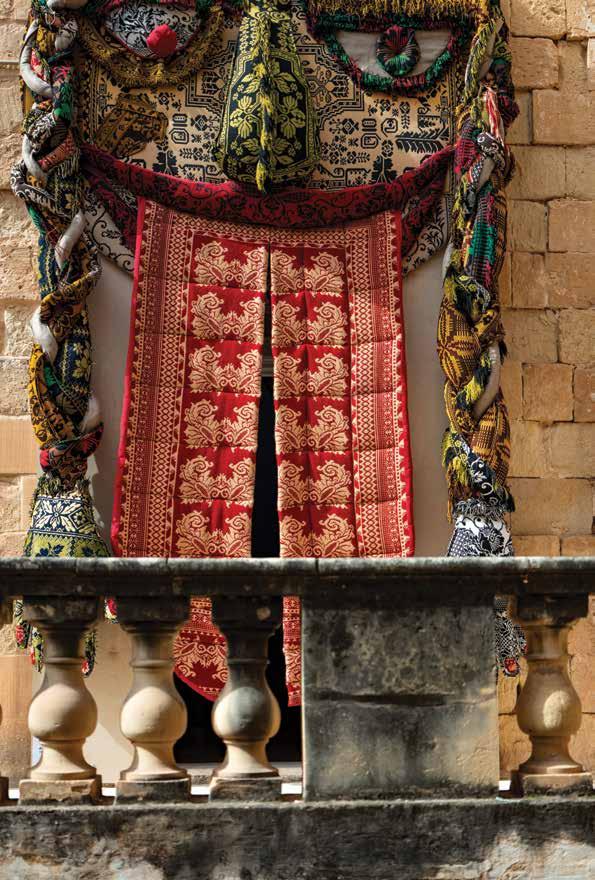
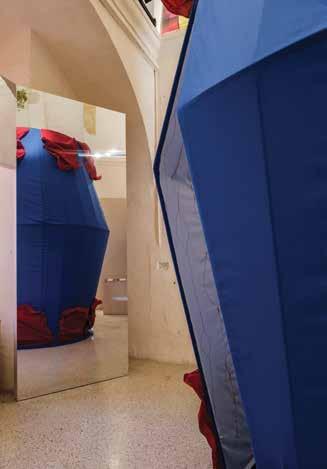
EP: My work was designed to shape the experience of the entire pavilion and invite visitors into the exhibition’s world from the very first encounter. Placed on the façade of the former armoury in Birgu, it changes the building’s character, integrates the space, and lends a friendly, interactive dimension.
I approach my work as a totem—a mask that serves as a portal and connector between worlds. African, Ghanaian, and European (including Slavic) cultural
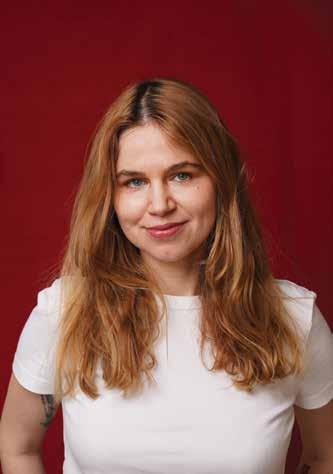
traditions converge within it. At the same time, the mask closes off what is old and sends good wishes to all visitors. Anyone who passes through becomes part of our world—together with Ernestina and Marta, we form a single organism that unifies and enhances perception of the entire exhibition. One could say you must symbolically allow yourself to be “swallowed” by this wide mouth and join the ritual to be with us.
The mask also functions as a “good demon,” warding off negative and unwelcome forces, while its color, texture, and form bring lightness, playfulness, and ritual—connecting history with contemporary experience. I drew inspiration from Malta’s Carnival, too. I had the pleasure of witnessing enormous platforms with giant, fullbody masks parading down Valletta’s main street—colorful, loud, and almost as grand as Baroque churches. These two worlds nearly danced together.
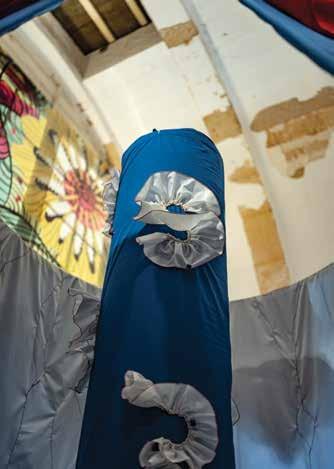
The materials are deliberate and meaningful: woolen rugs, mostly handwoven on traditional looms, once warming walls or serving as bedcovers in homes across north-eastern Poland. Now forgotten, they resonate on Birgu’s former armoury façade. Placing this woolen textile there adds layers of meaning amid current social and political shifts, forging a dialogue between the site’s history and the exhibition’s contemporary narrative.
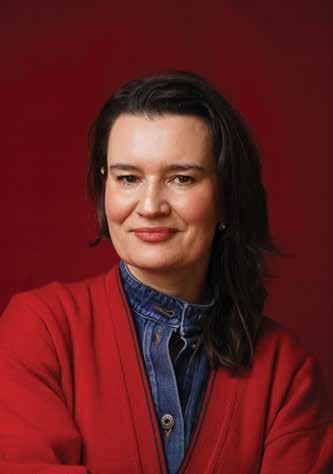
Feature /New Pavilions / Venice Biennale 2026
DR JOANNA DELIA
The unorthodox forces shaping Venice Biennale 2026from curatorial voids and protest interventions to debut pavilions probing global erasures.
When the most beautiful human-made city on earth welcomes the world’s artists and art lovers for a preview of the current state of the known universe - translated and transcribed into the million unique languages of their expression - I feel close to experiencing utopia. My excitement for the opening of La Biennale di Venezia is driven by too many heights to list, but as usual, it’s heightened by the presence or absence of the unorthodox and unexpected. This year, expectations tower over anything past. The last two years have pulled every rug from under us. Perhaps the voids and silences in this edition will be the strongest ambassadors of the “Biennale of Dissent.”
Possibly this year’s most palpable absence is that of the late curator Koyo Kouoh, who passed away unexpectedly, but whose vision will be faithfully carried through by other members of the team she selected.
There’s also the absence of Italian artists in the main pavilion. In a time when Italian nationalism is at its height in decades, this speaks volumes.
JOANNA DELIA is a medical doctor who specialises in cosmetic medicine. She is also a cultural consumer and art collector who tirelessly supports local contemporary art and culture.

On the other hand, the official Russian selection is palpably present. The artists of the Russian Pavilion from the last Biennale had decided to abscond, and one wonders what surprise awaits us this time.
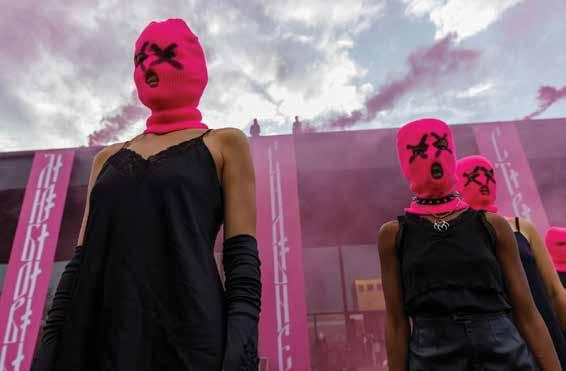
Biennale grounds on May 6, 7, and 8. We do not require any additional support. Please let us know whether this version of the Biennale has room for what it claims to invite. Sincerely, Pussy Riot.”
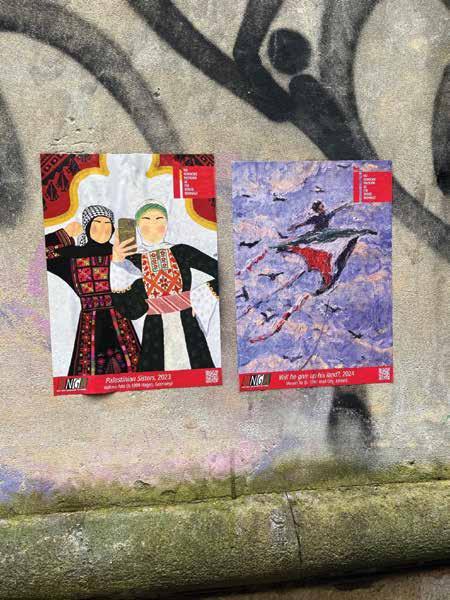
Pussy Riot, the remarkable Russian feminist punk protest art collective, wrote a letter to the president of the Biennale: “Accommodating official state representation while curating ‘dissent’ risks turning the latter into a performative gesture and virtuesignaling rather than a position. Still, if you are serious about welcoming artists who do not align with state narratives, we are ready to take you at your word. If you would like to support dissent, we will be there. You claim to care about censorship; Pussy Riot is so censored in Russia that we were deemed ‘an extremist organisation’ - simply visiting our website or liking images of our art is criminalised. We request access to the
At time of print, there’s no mention of a reply in the media. I have all my digits crossed for an intervention during the Biennale preview.
The Art Not Genocide Alliance (ANGA), which has collected signatures from 197 participating artists this year through the hard work of artists and curators, has announced a “No Genocide Pavilion.” Performative protests are expected, condemning the Biennale’s allowance of Israel’s participation.
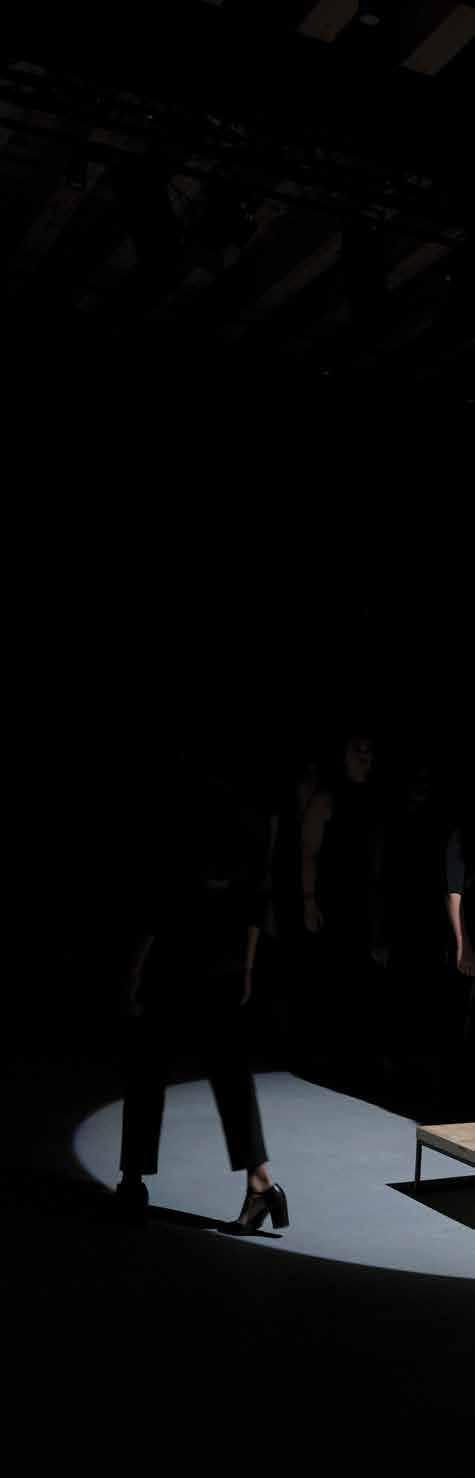
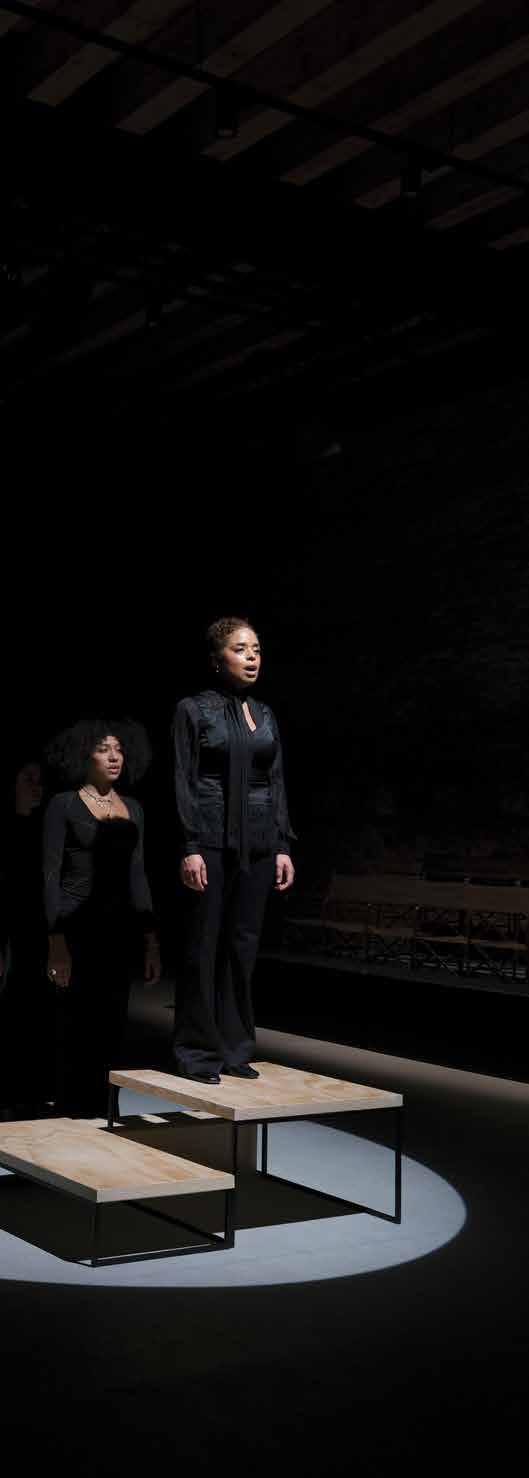
The South African Pavilion will remain empty after the controversial censorship of Gabriel Goliath’s work, which related to the ongoing genocide and was deemed too political by the Gabrielle Goliath, Elegyfor two ancestors 2024, performance, Sale d’Armi, Arsenale, Venice.
Venice 2026
Minister of Culture - despite South Africa being one of the first countries to table charges against the Israeli state for crimes against humanity. Goliath’s work, an ongoing performance called Elegy relating to the systemic elimination of groups of people including women in Africa, was then invited to show at Chiesa di Sant’Antonin.
I was present when Malta had its first permanent presence at La Biennale in 2017, and it is always a replay of that feeling to experience new countries taking up a pavilion for the first time. The Democratic Republic of Congo is debuting with Simba Moto! (Seize the Fire!) at Scuola Grande di San Marco.
Another intriguing addition is the first Nauru National Pavilion. I caught up with one of the participating artists, Stefano Cagol, who was recently in Malta for the Malta Biennale, for his thoughts:
“The Pavilion of the Republic of Nauru at the 2026 Venice Biennale exceeds the boundaries of an island: it engages with a global condition. Nauru, participating for the first time, is not only a new presence: it is a manifestation of what is missing, what is being lost. In this sense,
This year, expectations tower over anything past. The last two years have pulled every rug from under us. Perhaps the voids and silences in this edition will be the strongest ambassadors of the “Biennale of Dissent.”
it fully embodies the tension between the new and the absent.
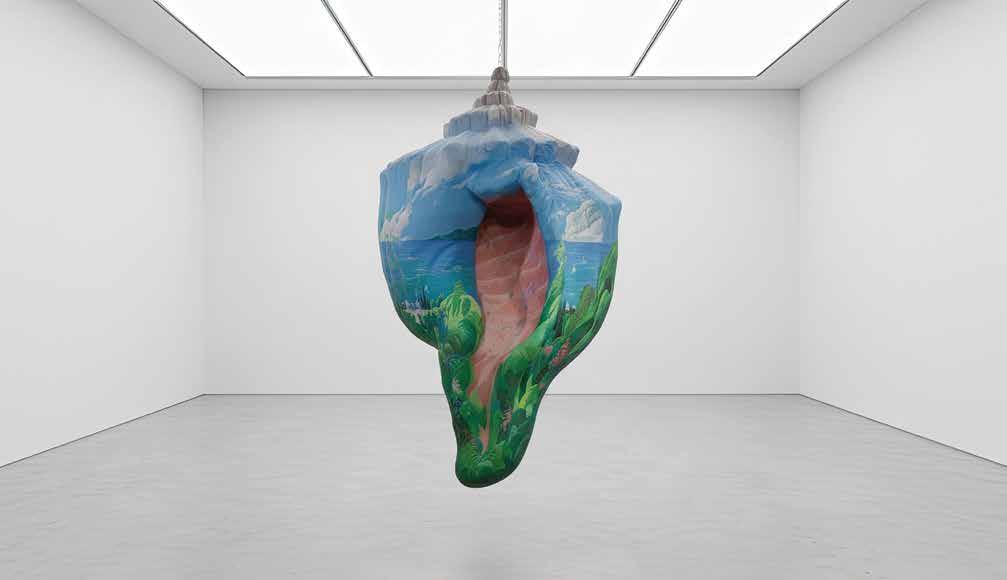
In my work, We Are All Nauru, I seek resonance against distance: what happens on that island inevitably concerns the entire world. Nauru becomes a point of condensation, where extractivism, climate crisis, and vulnerability emerge as shared conditions.
My perspective unfolds within this ambiguous space: between appearance and disappearance, responsibility and denial. Far from representing a place, I recognise a condition that pervades all of us. The video work I present is a round-the-world.
In an art system that continues to produce new presences, this pavilion also works through absence, erosion, and limit. It is here, for me, that a critical space opens: where the new cannot be separated from what is no longer there.” —Stefano Cagol, Nauru Pavilion participating artist.