The Malta Pavilion: Experiments in Love and Revolution
Tracing the story behind its iconic building
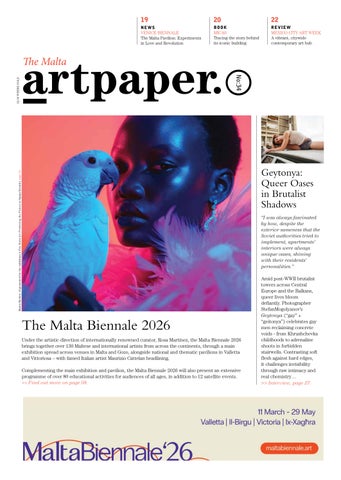
The Malta Biennale 2026
Under the artistic direction of internationally renowned curator, Rosa Martínez, the Malta Biennale 2026 brings together over 130 Maltese and international artists from across the continents, through a main exhibition spread across venues in Malta and Gozo, alongside national and thematic pavilions in Valletta and Vittoriosa – with famed Italian artist Maurizio Cattelan headlining.
Complementing the main exhibition and pavilion, the Malta Biennale 2026 will also present an extensive programme of over 80 educational activities for audiences of all ages, in addition to 12 satellite events.
>> Find out more on page 08.
REVIEW
Geytonya: Queer Oases in Brutalist Shadows
“I was always fascinated by how, despite the exterior sameness that the Soviet authorities tried to implement, apartments’ interiors were always unique oases, shining with their residents’ personalities.”
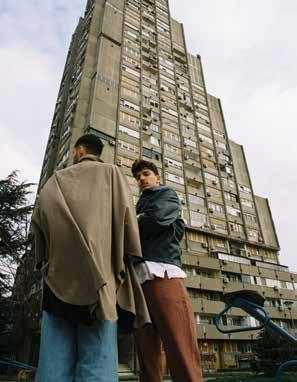
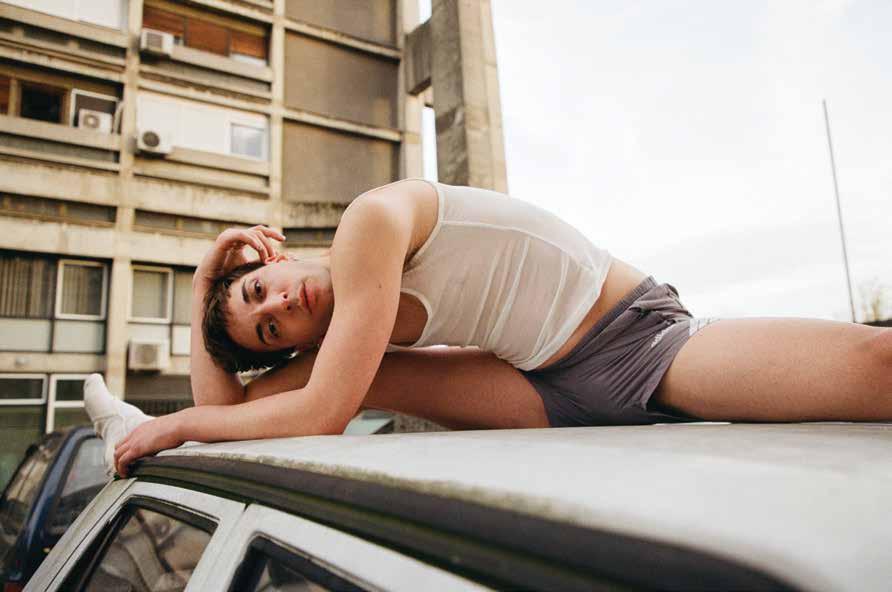
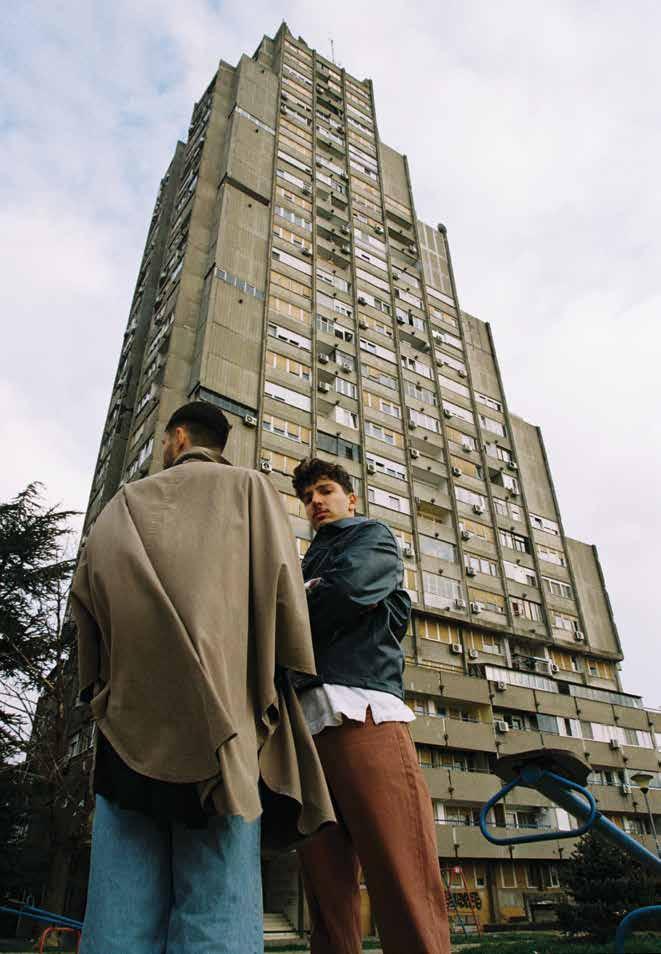
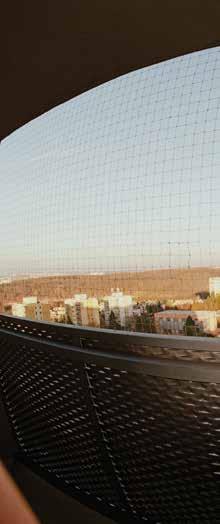
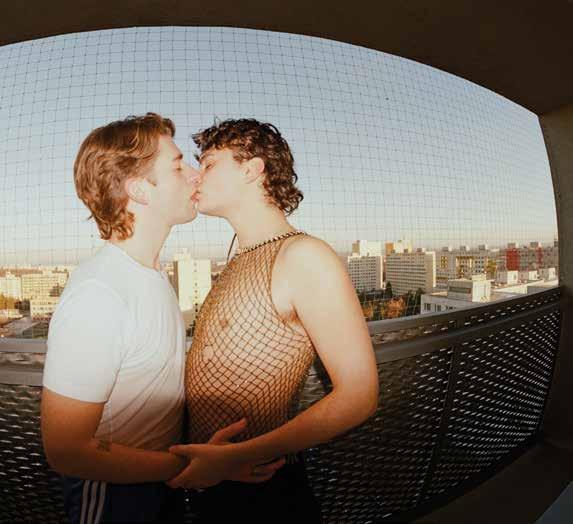
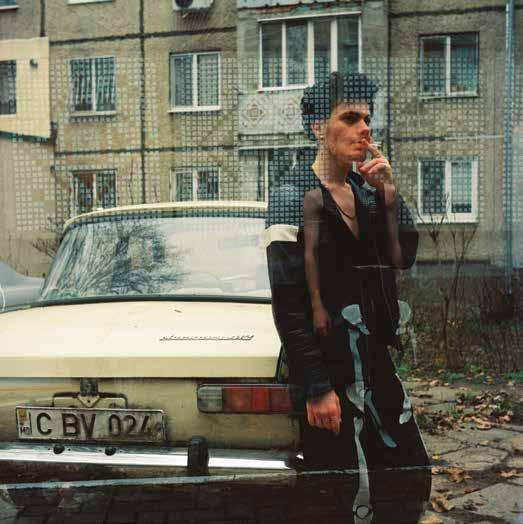
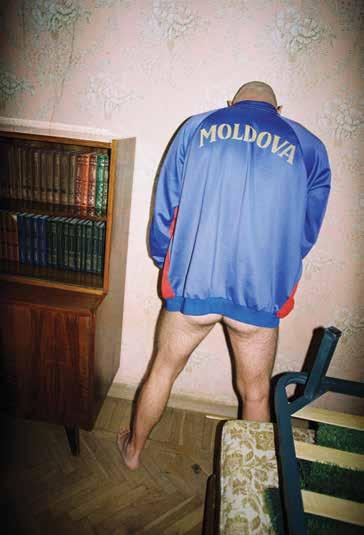
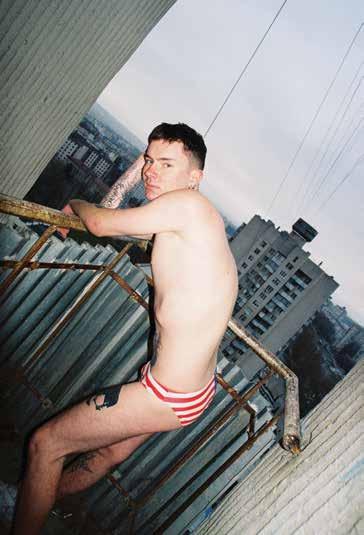
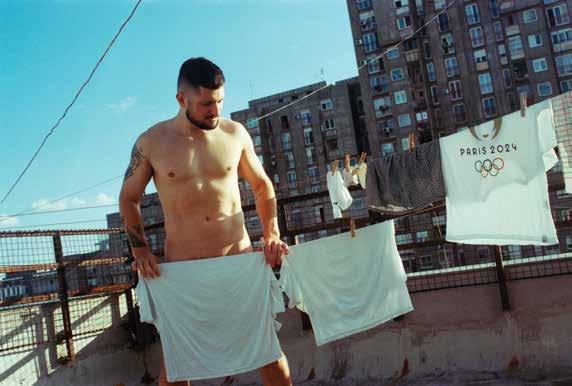
Amid post-WWII brutalist towers across Central Europe and the Balkans, queer lives bloom defiantly. Photographer StefanMogolyanov’s Geytonya (“gay” + “geitonya”) celebrates gay men reclaiming concrete voids - from Khrushchevka childhoods to adrenaline shoots in forbidden stairwells. Contrasting soft flesh against hard edges, it challenges invisibility through raw intimacy and real chemistry…
>> Interview, page 27.
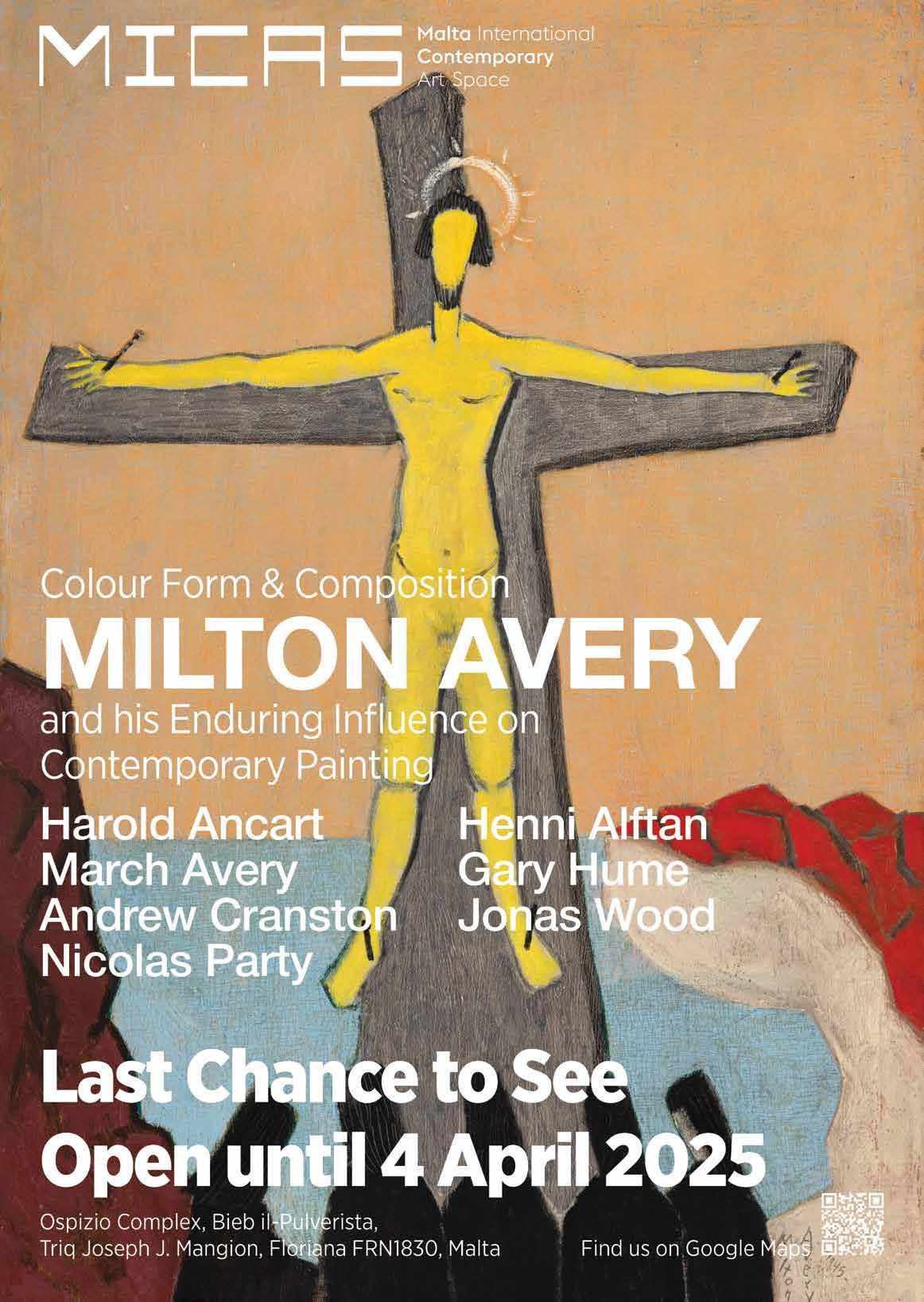
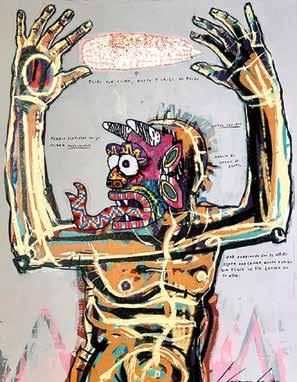
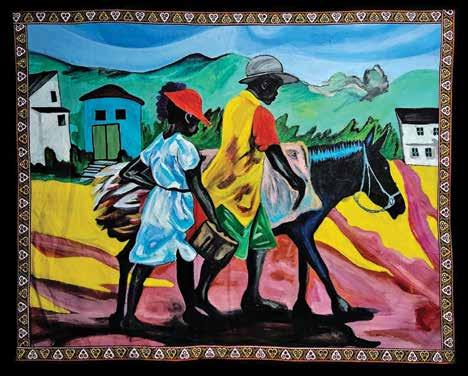
Yellow Christ, 1945, Oil on canvas, 137 x 56.4 cm, Milton Avery Trust
March - June 2026
Editor Lily Agius
Graphic Design
Nicholas Cutajar
Sales & Enquiries info@artpaper.press
Website www.artpaper.press
Instagram / Facebook artpaper.press
HIGHLIGHTS INSIDE THIS ISSUE…
MAURIZIO CATTELAN TO HEADLINE MALTA
BIENNALE 2026. An international contemporary art platform uniting over 130 Maltese and international artists across 11 Heritage Malta venues, curated by Rosa Martínez and anchored by groundbreaking works spanning Valletta, Vittoriosa, Xaghra, and Victoria.
CELEBRATING 25 YEARS OF SPAZJU KREATTIV:
An Art Collection Initiative commissioning four distinguished artists to present new works from 9 April to 17 May, marking a milestone of reflection and growth with installations responding to Spazju Kreattiv’s pivotal journey as a dynamic cultural stakeholder.
GROUND 99. Malta Biennale 2026 satellite event in Senglea with artists Margret Eicher, Luis CarreraMaul, Duška Maleševic, Rachelle & Aaron Bezzina, and Gabriel D. Doucet Donida in installations, performance, and video confronting ecology, identity, and fragility.
A FEW RULES FOR PREDICTING THE FUTURE. An exhibition drawing from Octavia E. Butler’s 2000 essay, uniting international artists in speculative propositions that trace futurity’s contours through interdependence, transformation, and imaginationrefusing fixed endpoints amid crisis and upheaval.
REDEFINING. POLISH-GHANAIAN TEXTILE NARRATIVES. OmenaArt Foundation’s thematic pavilion at Malta Biennale 2026, featuring large-scale textile installations exploring historical bonds, shared emotions, and Ubuntu philosophy between Poland and Ghana.
19
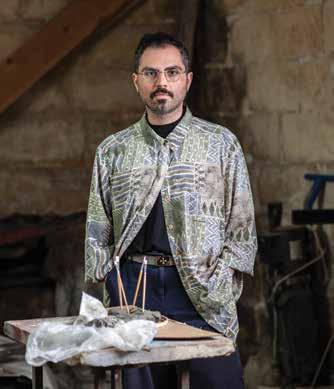
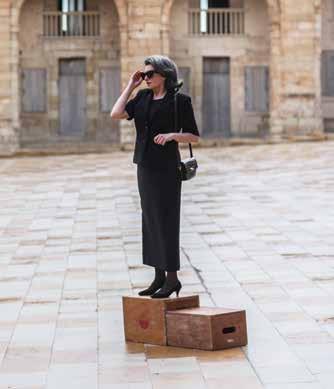
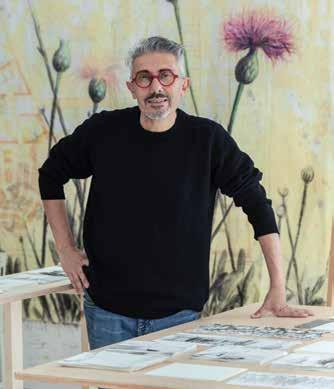
NO NEED TO SPARKLE; EXPERIMENTS IN LOVE AND REVOLUTION. Malta Pavilion at the 61st Venice Biennale with newly commissioned multimedia installations by Adrian MM Abela, Charlie Cauchi, and Raphael Vella - curated by Margerita Pulè - exploring protest history, mythology, identity, and ‘doubting well’ amid fractured realities.
20
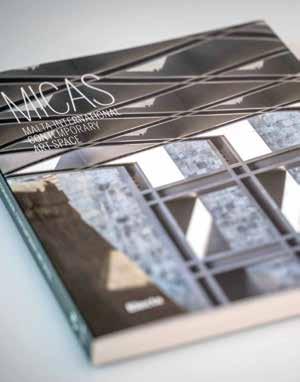
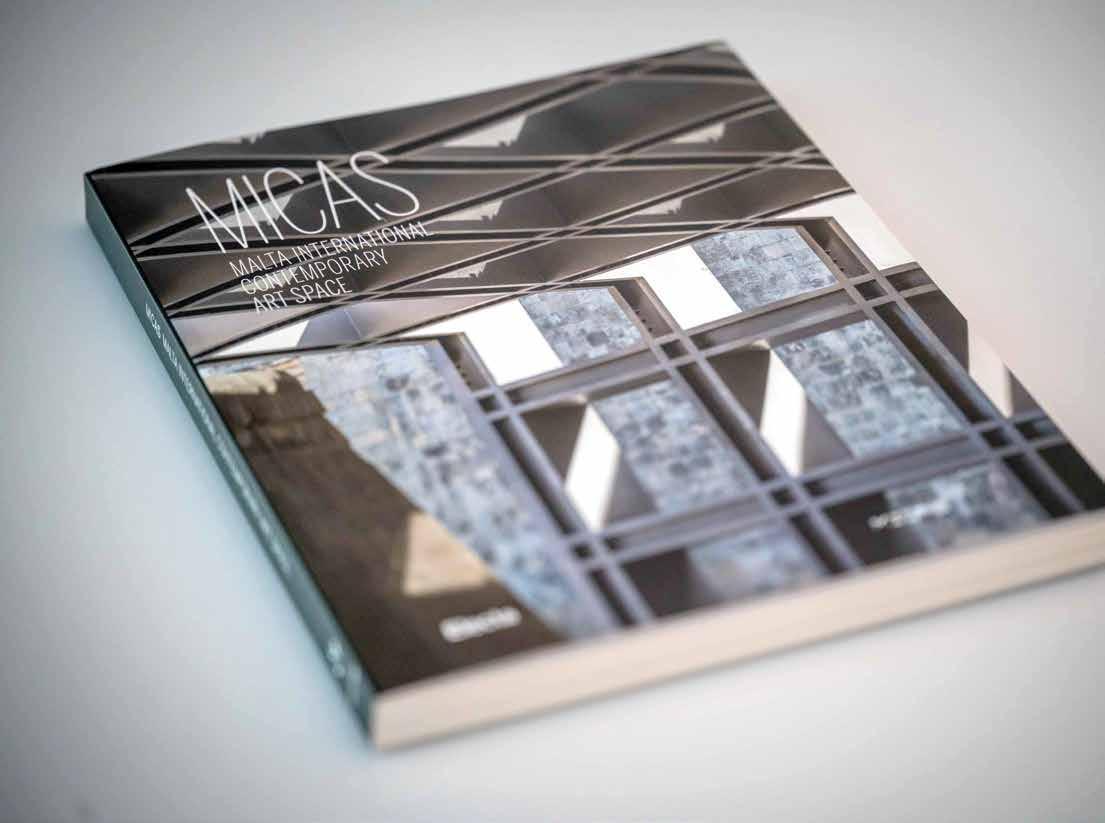
MICAS: Definitive volume published by Electa and edited by Marco Mulazzani, tracing the architecture, vision, and hybrid development of Malta’s newest cultural destination - from adaptive reuse and curatorial practice to education, public engagement, and ecological stewardship of the Floriana site.
22
MEXICO CITY ART WEEK 2026. Held February 4–8 and anchored by the 22nd Zona Maco art fair, this global creative hub showcased 200+ international galleries across contemporary art, design, and modern worksfeaturing Zona Maco Sur, Arte Moderno, FORMA, Unique Design X, plus city-wide events at Museo Tamayo and beyond, blending local heritage with artisanal trends.
27
GEYTONYA: QUEER OASES IN CONCRETE ANTHILLS. Photo series and interview by Stefan Mogolyanov fusing “gay” + “geitonya” (neighborhood), celebrating queer men reclaiming post-WWII brutalist housing - Khrushchevkas, Novi Beograd, Ceausescu projects - as vibrant stages for identity, intimacy, and visibility against architecture designed for sameness.
Artists: Adrian mm Abela · Eric Attard · Aaron Bezzina · Rachelle Bezzina · Christopher Buttigieg · Stefano Cagol · Luis Carrera-Maul · Charlie Cauchi · Claudia Chaseling Gabriel D. Doucet Donida · Jessica DeMers · Margret Eicher · Shanice Farrugia · May Franzen · Hallgrímur Helgason · Wioletta Kulewska · Sarah Lüdemann (Beauham) Duška Maleševic · Destil Markovic · Almagul Menlibayeva · Tracy Moffatt · Nathan Portelli · Joana Simaes · Kika Sroka-Miller · Martina Vassallo · Raphael Vella
Emma Weller · Maria Wrona Galleries & Spaces: Christine X Art Gallery · Lily Agius Gallery · Marie Gallery5 · MICAS · R Gallery · Spazju Kreattiv · Studio 87
The Victor Pasmore Gallery · Valletta Contemporary Writers & Contributors: Joanna Delia · Maria Galea · Erica Giusta · Stefan Mogolyanov · Christine Xuereb
News /Malta Biennale 2026
March - June 2026
MAURIZIO CATTELAN TO HEADLINE MALTA BIENNALE 2026
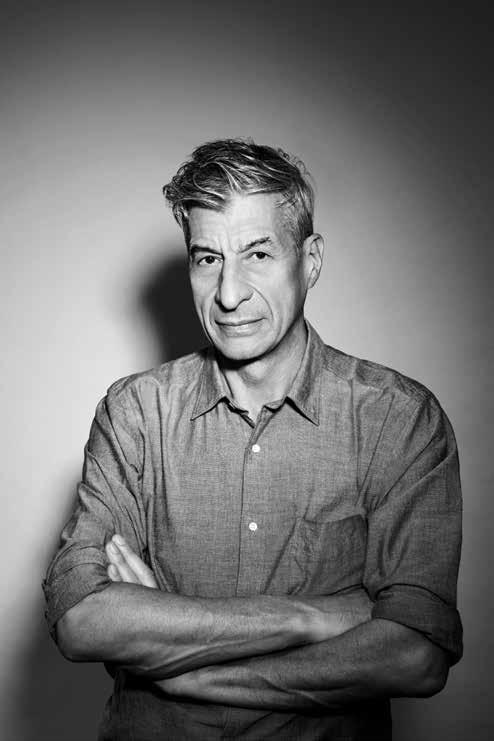
Famed Italian artist, Maurizio Cattelan will be headlining the Malta Biennale 2026, which will open to the public on 14 March, following a threeday preview from 11-13 March and an official opening on 10 March.
Known for his satirical and provocative practice, Cattelan rose to international prominence through works such as America (2016) and Comedian (2019), projects that sparked global debate and established him as a leading figure in contemporary art. Cattelan is one of eight artists invited to participate in this second edition of the contemporary art platform which will unfold across 11 impressive venues managed by Heritage Malta, spanning four main localities: Valletta and Vittoriosa in Malta, as well as Xaghra and Victoria in Gozo.
Under the artistic direction of internationally renowned curator, Rosa Martínez, the Malta Biennale 2026 will bring together over 130 Maltese and international artists from across the continents, through a main exhibition spread across venues in Malta and Gozo, alongside national and thematic pavilions in Valletta and Vittoriosa. Complementing the main exhibition and pavilion offering, the Malta Biennale 2026 will also present an extensive programme of over 80 educational activities for audiences of all ages, in addition to 12 satellite events.
The Malta Biennale 2026 is held under the distinguished patronage of Her Excellency the President of Malta Myriam Spiteri Debono. The Minister for Culture, Lands and Local Government, Owen Bonnici, said that, “More than 3,200 applications from 122 different countries were submitted to the Malta Biennale 2026, out of which, 40 projects were selected, including works by 8 by Maltese artists. These projects will form part of the exhibition to be held between March and May in Heritage Malta sites.”
Minister Bonnici also stated that the Biennale will build on the solid foundations of the first edition; strengthening the Government’s commitment to contemporary art and its support for Maltese artists. He maintained that such initiatives enable space for dialogue and reflection on the main challenges faced by humanity in today’s world, while simultaneously offering a unique opportunity to
tourists visiting our country to enjoy a distinct cultural experience. During a press conference held at MUZA, Mario Cutajar, President of the Malta Biennale and Chairman of Heritage Malta, explained that “between March and May, more than 130 artists from 43 countries will transform these islands into an international centre of artistic innovation and creativity. Eleven Heritage Malta sites will host works
inspired by our rich heritage, creating a dialogue between past and present – a unique experience that has placed Malta on the global cultural calendar and established it as a leading destination during the Malta Biennale”.
Details relating to the Malta national pavilion to be held at MUZA – the ‘home’ of the Malta Biennale – were also announced. Following a public call issued last year three artists were selected to participate in the pavilion: Victor Agius, Roderick Camilleri, and Gulja Holland. Two additional artists –Vince Briffa and Pierre Portelli – were invited to take part in the project. The Malta pavilion is curated by Dr Katya Micallef, Principal Curator at MUZA. For its second edition, the Malta Biennale 2026 is set to present a significantly expanded programme, featuring a total 27 pavilions. Eight of these are national pavilions – Malta, Poland, Spain, Finland, Armenia, China, Serbia, and France –alongside 19 thematic pavilions. These include notable collaborations with other international biennales such as the Gwangju Biennale in South Korea and the Çanakkale Biennial Initiative (CABANIN). Having almost doubled in number since its inaugural edition, the 2026 Biennale also proudly announces a pioneering pavilion organised by the Correctional Services Agency, showcasing artworks created by its residents. This important addition underscores the Biennale’s commitment to broadening cultural participation and amplifying diverse creative voices.
The Malta Biennale is organised by Heritage Malta in partnership with Arts Council Malta and Visit Malta and in collaboration with the Ministry for Culture, Lands and Local Government, the Ministry for Foreign Affairs and Tourism, and the Ministry for Gozo and Planning.
“More than 3,200 applications from 122 different countries were submitted to the Malta Biennale 2026, out of which, 40 projects were selected, including works by 8 by Maltese artists”
Maurizio Cattelan. Photo by Alberto Zanetti
TTitles to Talkies
itles to Talkies, researched and written by Charlie Cauchi, is Fondazzjoni Patrimonju Malti’s latest publication; a book which dives into the largely neglected early history of cinema culture and industry in Malta, tracing its development from the turn of the nineteenth century until the outbreak of the Second World War.
The book was officially launched on Wednesday 18th February at Spazju Kreattiv and is now available for purchase from the VP Gallery in Valletta and from most major bookshops around the island.
Drawing on extensive archival research, Cauchi reconstructs how film became embedded within Maltese cultural life, set against the backdrop of a society negotiating identity, modernity, colonial rule, and technological change. Through newspapers, visual material, trade journals, and official correspondence, the narrative reveals the vibrancy and tension of a nation in formation.
Richly illustrated and contextualised within European – especially Italian and British – and American film history, this publication offers an indispensable foundation for scholars, practitioners, and anyone interested in Malta’s cinematic heritage. More than a historical survey, it is a call to preserve fragile film legacies and to re-examine how moving images have shaped, and indeed continue to shape, the Maltese cultural imagination.
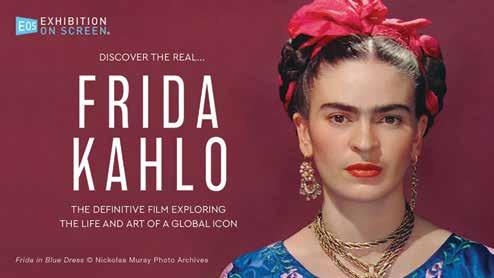
EEXHIBITION ON SCREEN
Frida Kahlo
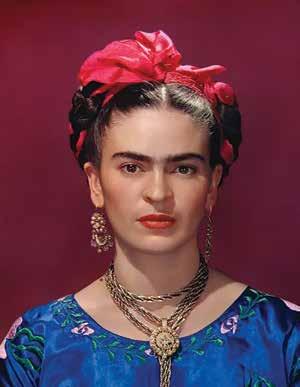
veryone knows her face but who was the woman behind the bright colours, the big brows and the floral crowns? Frida Kahlo is a phenomenon. She is arguably the world’s favourite female artist and beloved by young and old.
By popular demand, Exhibition on Screen’s award-winning film, first
released during covid-19 to a restricted audience, will be back in cinemas from May 2026, screening a journey through the life of this true icon, discovering her art, and uncovering the true story of her rebellious, passionate and turbulent life.
22 May & 10 June Cinema, Spazju Kreattiv www.spazjukreattiv.org
March - June 2026
Celebrating 25 Years of Spazju Kreattiv: Nurturing Legacy Through Art - Art Collection Initiative (Paul Scerri)
As Spazju Kreattiv marks its 25th anniversary, the organisation enters a renewed phase of reflection and growth. To celebrate this milestone, four distinguished artists - each a leading voice within the contemporary arts sector and instrumental to Spazju Kreattiv’s development as a dynamic cultural stakeholder - have been commissioned to present new work, from 9th April17th May, that responds to this pivotal moment.
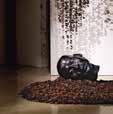
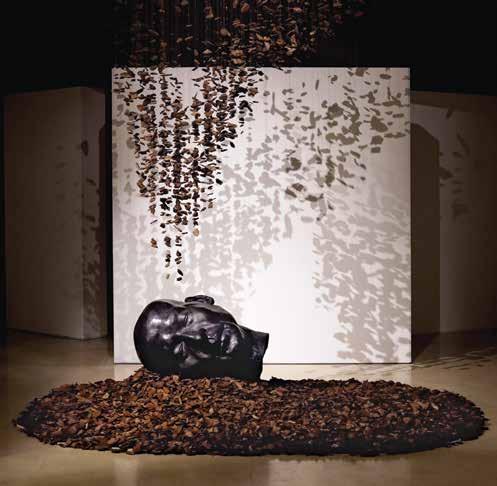
Among these commissions is a new installation by Paul Scerri, whose title draws from a poem by Carmel Attard. In the line, “But the next verse, who knows what it will be?”, Attard evokes the openendedness of what lies ahead - whether marked by sorrow or joy, gravity or laughter, perhaps even a final utterance. This sense of uncertainty becomes the conceptual core of Scerri’s work, framing the installation as a meditation on possibility, fragility, and becoming.
Suspended overhead are hundreds of fragments of tree bark or mulch, delicately hung at varying lengths. Below them rests a large ceramic head with closed eyes - a contemplative presence suggesting dreaming, introspection, and latent thought. The installation evokes a space of incubation and quiet tension, recalling, metaphorically, Descartes’ notion of the pineal gland as the meeting point of body and soul. The hovering fragments resemble unrealised ideas: full of promise yet subject to erosion and time. At once provisional and fertile, the mulch carries a dual symbolism. Though it may disintegrate, it also nourishes. Should it reach the soil, it transforms into humus, enriching the ground and enabling new growth - an apt reflection on renewal at this significant juncture in Spazju Kreattiv’s journey.
March - June 2026 News / Exhibtions
BRIEF AND NEVER ENDING
Malta Biennale 2026 Earns UNESCO Patronage
The Malta Biennale 2026 has secured UNESCO patronage, following endorsement from Her Excellency the President of Malta, lauding its promotion of intercultural dialogue through art. Organised by Heritage Malta, this second edition - building on the 2024 launch’s international acclaim - features Artistic Director Rosa Martínez and over 130 artists from 40+ countries. Their works will span an international exhibition and 27 national/thematic pavilions across 11 Heritage Malta sites in Valletta, Birgu, Xaghra, and Gozo’s Citadel, from midMarch to late May.
The official opening is March 10 at Valletta’s Sacra Infermeria (Mediterranean Conference Centre). Heritage Malta Chairman Mario Cutajar emphasised the Biennale’s unique fusion of contemporary art with Malta’s heritage, fostering dialogue between past and present on global themes. Partnered with Arts Council Malta, Visit Malta, Valletta Cultural Agency, and Public Broadcasting Services, it positions Malta as a top art destination. The Malta Biennale is also being held in full collaboration with the Ministry for Culture, Lands and Local Government, the Ministry for Foreign Affairs and Tourism.
Visit www.maltabiennale.art
Brief and Never Ending brings together a group of Maltese and international artists to explore the passing of time through material, practice and the intimate rhythms of lived experience. Curated by Emma Weller and presented at Christine X Art Gallery in Sliema from 1–23 May 2026, the exhibition features works by Emma Weller, Hallgrímur Helgason, Jessica DeMers, Joana Simaes, Kika Sroka-Miller, Maria Wrona, Martina Vassallo, May Franzen, Nathan Portelli, Shanice Farrugia and Eric Attard.
The exhibition evolved from the first edition of LateNightPrompts, an online creative project and international networking platform for artists. For this edition, the participating artists were invited to respond to the prompt The Passing of Time, resulting in a diverse body of work that culminates in this exhibition.
Across the show, time is approached through multiple lenses: as something measured, as a force that alters matter through exposure and duration, and as a deeply subjective experience shaped by memory and identity. Some artworks engage with repetition and constraint, others observe gradual transformation, while several reflect on the desire to preserve time or regain control over it. Certain works raise questions of visibility and transition, while others reflect on loss associated with time’s passing.
Spanning brutalist minimalism, abstraction, urban and figurative practices, the exhibition reflects the plurality of ways in which time can be encountered and interpreted. Bringing together artists from Malta, Iceland, the USA, Portugal, Poland, Germany and the UK, Brief and Never Ending bridges international contemporary art scenes and presents time as both fleeting and continuous…brief and never ending.
Dormiveglia Fresco
Paintings by Wioletta Kulewska Akyel
Dormiveglia, describes a suspended state in which one is neither fully asleep nor entirely awake. In this exhibition, Wioletta Kulweska Akyel presents fresco paintings created between 2023 and 2026, in which the artist reimagines the ancient technique of fresco within a contemporary context. Fresco is born within a fleeting moment, where each brushstroke is unchangeable, sealing a singular moment of creation. The process demands discipline and technical mastery, all while the plaster is still wet. Painting from memory and the subconscious, Kulewska Akyel’s works carry an earthy, tactile sensibility. Drawing on her travels and lived experiences, she weaves spiritual motifs and dreamlike symbols into compositions that feel both intimate and culturally layered. Dormiveglia invites the viewer to reflect on the act of painting itself, the courage to risk, the grace of imperfection, and the enduring quality of a moment made permanent. Curated by Justine Balzan Demajo, the exhibition seeks to revive this demanding discipline while gently challenging the status quo of contemporary art
Sponsored by People and Skin, Halmann Vella Ltd and Demajo Wines and Spirits, open from 6 March until 27 March at Studio 87, Valletta.
Malta Biennale 2026 President Mario Cutajar
March - June 2026
GROUND 99
Satellite Event of the Malta Biennale 2026
Ground 99 launches in Senglea (L-Isla) as a new platform for multidisciplinary installation, video, and performance art, responding directly to the Malta Biennale’s call to clean, clear, cut. Set within the historic urban fabric of the Three Cities, the project brings together international and Malta-based artists to address the environmental, ethical, and aesthetic noise shaping contemporary life.
Conceived as a space for discernment rather than spectacle, Ground 99 invites audiences to slow down and engage
with works that confront globalisation, ecology, gender, identity, and the politics of visibility. Across installation, endurance performance, and rotating video programmes, images and gestures become tools for re-imagining how we inhabit an increasingly fragile world.
The exhibition unfolds across interconnected zones. Jacquard tapestries by Margret Eicher weave pop-culture imagery through historical technique, questioning cultural memory and mediated realities, while sculptural paintings by Luis Carrera-Maul recreate climate change on porcelain and canvas. Newly commissioned works by Duška Maleševic and the duo Rachelle
& Aaron Bezzina further activate the space through light, material, and spatial intervention.
At the core of the programme is Dramaturgy of Desire, a 72-hour-perweek endurance performance by Gabriel D. Doucet Donida that examines intimacy, vulnerability, and the pressures of perpetual visibility. Complementing this is a rotating video programme featuring works by Nina E. Schönefeld, Stefano Cagol, Tracey Moffatt, Bjørn Melhus, and Almagul Menlibayeva, addressing environmental and geopolitical realities through poetic, critical, and often unsettling narratives.
Together, the works at Ground 99 reflect on the contradictions of contemporary life - acknowledging both its unsettling beauty and its accumulated damagewhile opening space to imagine how we might live otherwise.
Ground 99 takes place at 99 F. Azzopardi, Senglea (L-Isla), Malta, from 12 March to 16 May 2026. Opening weekend runs 12 - 14 March, 4 - 8pm, with the exhibition open Thursday to Saturday, 4 - 8pm thereafter. More information at www. ground99.com and @artground99.
axis_ announces the opening of a new contemporary art space in Malta
axis_ is a new contemporary art space launching in April 2026 in Attard, marking the introduction of a focused platform for contemporary artistic discourse within Malta’s expanding cultural landscape.
axis_ emerges from a shared intention to create a contemporary art space capable of contributing meaningfully to current artistic discourse. Conceived through a collaboration between its managerial and artistic teams, axis_ is structured around a dual model that balances operational continuity with a clearly articulated artistic vision. The gallery is co-founded by Mario Cassar, Maria McKenna and
Marie Cassar, with artistic direction led by Founding Artistic Director Elyse Tonna. This structure allows the space to develop with strategic stability while maintaining conceptual coherence.
Located in The Butler’s House beside Villa Bologna, the gallery occupies a building historically defined by adjacency and function. Once a space structured by hierarchy and support, the building now becomes a place for critical reflection and artistic development. Its adaptation into a contemporary art space signals a shift in how the site is inhabited and activated.
The name axis_ reflects the overarching gallery’s conceptual direction. An
axis suggests alignment, relation and intersection, a structure through which positions become legible in relation to one another. The underscore signals continuation and openness, indicating an evolving framework rather than a closed identity. axis_ situates Malta as a point of intersection. Geographically central within the Mediterranean and historically shaped by multiple linguistic and colonial influences, the context offers a productive vantage point from which to consider questions of belonging, continuity and exchange.
The inaugural exhibition, Nothing is Clear, sets the tone for the programme. Conceived as a reflection on
contemporary socio-political conditions shaped through multiple, intersecting positions, the exhibition brings together Maltese and Malta-based artists whose practices engage with continuity, ambiguity and the persistence of structural forces across time. Curated by Elyse Tonna, the exhibition opens on 10 April 2026. It will also form part of the Malta Biennale 2026 as a satellite event.
Follow axis_ on social media and check out more updates on www.axis.mt
Imagining Change: On A Few Rules for Predicting the Future
Can we predict the future in an era defined by volatility and accelerated change?
The exhibition A Few Rules for Predicting the Future at Spazju Kreattiv approaches this question through imaginative possibility. Rather than attempting to forecast what lies ahead, the collective show proposes a vision of futurity grounded in interdependence and care, situated at the threshold between lived reality and speculative thought.
The conceptual backbone draws from the writings of Octavia E. Butler, whose Afrofuturist thinking framed change not as disruption, but as an inevitable and generative condition of life. Her essay A Few Rules for Predicting the Future, written a quarter-century ago, feels strikingly prescient today. Butler understood time as elastic and history as recursive; her ideas resonate powerfully in a moment when political, ecological, and social systems appear simultaneously fragile and mutable.
Building on Butler’s thinking, curator Maren Richter proposes to look into a future that is neither mastered nor universal but inherently plural. Shaped by Richter’s approach, the exhibition aims to adopt a stance of curiosity. Without offering a roadmap for one single future, she invites audiences into a shared space of exploration - implying that we are all still learning and that imagining or building other futures requires not just critique, but practice, and collective effort. The notion of rehearsing, testing,
recalibrating, and remaining open to revision permeate the project, as the participating artists generate meaning from the gaps, blind spots, and fractures of the present. Working from within conditions of collapse, the artworks treat the present itself as already speculative shaped by forces such as war, colonialism, capitalism, extraction, and surveillance that have rendered linear progress untenable.
Across the exhibition, futurity consequently emerges not as a distant horizon but as something embedded in the artists lived experience: in memory (Sophia Bulgakova, Ukraine) and insomnia (Firas Shehadeh, Palestine), in play (Nyamakop, South Africa), in care and violence (Simona Andrioletti, Italy), and in infrastructures both visible and hidden (One Belt.Many Roads). Rather than resolving contradictions, the exhibition holds space for tension (Ponks Collective, Malta) and for dystopian imaginaries that open onto new forms of agency (Gabi Dao, Canada). Futures are articulated obliquely through acts of listening, remembering, mourning, hacking, storytelling, and reconfiguration. The projects in the exhibition come into being less as singular statements than as constellations: interlinked, relational, and shaped by the artists’ distinct geopolitical, cultural, and technological contexts. Forms appear provisional, as if caught mid-transformation, blurring the boundary between documentation and prophecy. Sound and light animate the exhibition with subtle rhythms, giving the impression of a space that is breathing alive, responsive, and in motion.
Throughout the exhibition, inspiration also comes from game structures and systems, inviting visitors to explore patterns of power, bias, and consequence as they move from passive spectators to active participants, navigating environments that reflect their own realities. These game-like frameworks serve as both tools of critique and ways of showing how choice, control, and limitations operate in constructed worlds that feel strangely familiar.
Taken together, the works in A Few Rules for Predicting the Future propose futurity as an ongoing negotiation rather than a destination. Rejecting the fantasy of prediction, the exhibition foregrounds
practices that attend to the present as a site of struggle, imagination, and responsibility. In doing so, it insists that the future is something continually shaped through how we remember, relate, resist, and reimagine together, and from within uncertainty.
This project is commissioned by Spazju Kreattiv and supported by the Embassy of the Netherlands in Malta and Federal Ministry of Housing, Arts, Culture, Media and Sport, Republic of Austria. It will be exhibited at Spazju A from Friday 13 March to Sunday 10 May 2026.
Artists: Firas Shehadeh / Palestine. Gabi Dao / Canada. Nyamakop / South Africa. Ponks Collective / Malta. Simona Andrioletti / Italy. Sophia Bulgakova / Ukraine. Grammar of Urgencies in collaboration with Agung Kurniawan / Indonesia, Almagul Menlibayeva / Kazakhstan, Behzad Khosravi Noori / Iran, Pakistan, Berhanu Ashagrie Deribew / Ethiopia, Hatem Bourial / Tunisia, transparadiso (Paul Rajakovics, Barbara Holub) / Austria, Yara Mekawei / Egypt and Klaus Schafler / Austria.
For more information visit www. spazjukreattiv.org
Sophia Bulgakova, Спомини [Spomyny], 2024
Maren Richter, AI generated
Simona Andrioletti, Italy, Sorry Mom, 2022
News / Exhibitions / Christine X Gallery + Marie Gallery5
March - June 2026
ENTRY DENIED
Entry Denied confronts the illusion of unrestricted mobility in the global art world by revealing how borders and visa regimes shape who is seen and who is excluded. Curated by Christine Xuereb as a satellite event of the Malta Biennale 2026, the exhibition brings together artists whose practices respond to experiences of visa refusal, transforming absence and exclusion into acts of artistic and political resistance.
The global art world prides itself on interconnectedness, mobility, and exchange, but it’s undeniable that a stark contradiction persists, with many artists being systematically denied the freedom to travel and participate in international cultural platforms duetovisa restrictions. For these individuals, mobility is not a luxury but a lifeline to visibility, dialogue, and professional survival. Yet, behind closed consulate doors, the decisiontogrant or reject entry becomes a powerful gatekeeping mechanism, one that determinesnot only who gets to be seen, but also who is allowed to belong.
Entry Denied is an exhibition that confronts this silent crisis. A satellite event of the Malta Biennale 2026, it brings together a group of contemporary artists whose practices have been shaped by being disrupted, redefined, or galvanized by experiences of visarefusal and cross-border exclusion. The project challenges the romanticised ideal of the “global artist” by exposing the bureaucratic, racialized, and economic realities that underpin international cultural participation. Through artworks and documentary practices, the exhibition gives formto theintangible: the rejection letters, silent disappointments, and deferred dreams. These works donot only document exclusion; they actively resist it through their form of artivism. They transform personal administrative loss into aesthetic and political agency, forcing audiences to reckon with the broader questions of who is granted access, who gets to speak, and who remains unseen. Entry Denied reimagines the exhibition space as a border zone, one in which absence becomes as powerful as presence.
The space will be filled with artworks accompanied by stories of the artists who could not attend due to denied entry. This show will include a video documentary of the participating artists, directed by Christopher Buttigieg, aswell as newspaper
articles which document visa rejections in the art world andbeyond, each contribution serves as both an artwork and a testimony. Malta, with its complex history as both a gateway and a barrier between continents, offers a poignant context for this project. The Biennale becomes not only a site for showcasing art, but also a stage for interrogating the very conditions that make such showcasing possible or impossible. In this way, Entry Denied is more than an exhibition. It is an act of institutional reflection and a call to action. By foregrounding African artists whose participation in the global art world is routinely obstructed, namely Alexander Tadesse, Bright Tetteh Ackwerh, Dan Girma and Dereje Shiferaw, this project insists on a simple truth: creativity knows no borders, even when borders are enforced. Through collective witnessing and radical empathy, Entry Denied invites audiences to imagine a cultural future no longer defined by exclusion, but by justice, reciprocity, and shared belonging.
Entry Denied show remains open from 12th March to 9th April at Christine X Art Gallery, 53 Tigne Street, c/w Hughes Hallet street, Sliema, Malta, Monday to Saturday 10am to 1pm and 4-7pm. For more information, please contact Christine at info@christinexart.com or Whatsapp +356 9984 4653.
I TOOK THE ROCK WITH ME
A solo exhibition by
Neal Camilleri
This exhibition explores what we carry when we leave a place behind - not just objects and memories, but weight, texture, and the subtle emotional shapes that endure within us.
This new body of work encompasses ceramic sculpture and painting on canvas. It builds on Camilleri’s previous investigation of childhood in Malta but, after living in London for 9 years, also considers how one’s home can remain within as an invisible force. The rock becomes a symbol of home, identity, and everything shaped by time.
Camilleri works with fragments and memories, connecting one to another to reflect his inner emotions through surface and colour. His work expresses a sense of holding on and contains an outlook that acknowledges both permanence and fragility. Some works are grounded and heavy, seemingly immovable, while others feel suspended or incomplete, reflecting the permanence and changeability of identity.
The exhibition maps the inner landscape of an artist who has left home, but has never truly let go. In his own words: “Malta is the rock that inevitably came with me. Not as something I chose to carry, but as something that is deeply part of who I am.”
Until 3 April 2026 at Marie Gallery 5, Tigne, Sliema www.mariegallery5.com
I Took The Rock With Me
PolluxNEW
Pure, compact and efficient accent lighting
Focused on the essentials, without compromising on light quality: This is the character of the Pollux New spotlights, which offer an exceptionally good price-performance ratio. In-house developed and produced drivers and LED modules ensure excellent efficiency. The deliberate limitation to two compact sizes and seven fixed light distributions allows for clear and easy planning of the spotlight family. Interchangeable Spherolit optics are equally impressive in spotlights and wallwashers, thanks to their precise, uniform light distribution. The proven ERCO Transadapter connects Pollux New with ERCO track and enables digital connectivity via DALI or Bluetooth Casambi for seamless integration into smart control systems.
90A, Salvu Psalia Street, Birkirkara, BKR 9073, Malta
info@lds.com.mt
+356 2419 6843
www.lds.com.mt
March - June 2026 News / Malta Biennale 2026 / The OmenaArt Foundation
Art as a Bridge Between Cultures
OmenaArt Foundation and LuginsLand of Art’s Thematic Pavilion at the Malta Biennale 2026
The OmenaArt Foundation and LuginsLand of Art will once again be situated at the intersection of cultures and contemporary artistic practices. In 2026, the Foundation returns to the Malta Biennale, with a thematic pavilion titled Redefining. Polish-Ghanaian Textile Narratives.
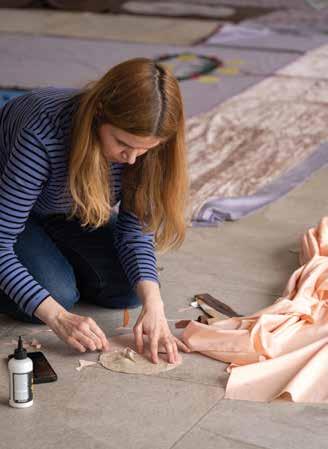
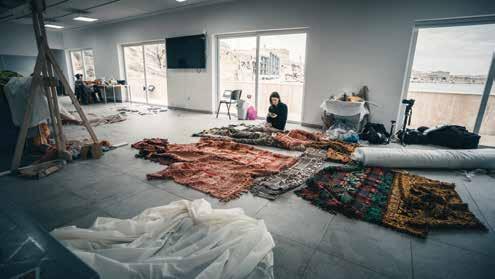
Curated by Natalia Bradbury, the exhibition features large-scale textile installations by Marta Nadolle, Eliza Proszczuk, and Ernestina Mansa Doku, created during their artistic residency in Malta. Coming from Poland and Ghana, the artists intertwine the historical narratives of both countries, drawing on weaving traditions and local heritage. Their collaboration began during Accra Cultural Week 2025 in Ghana, where alongside local artists Moses Adjei, Cornelius Annor, and Raphael Adjetey Adjei Mayne, they led children’s workshops exploring the textile heritage of Poland and Ghana at Kids Haven School, built by the Omenaa Foundation.
“Our exhibition explores the theme of historical bonds and solidarity between Poland and Ghana. Through the artists’ works, we want to show that despite
distance and differing experiences, we are united by shared emotions and values,” says Bradbury, curator of Redefining. Polish-Ghanaian Textile Narratives. “Ernestina Mansa Doku brings an organic approach to material and nature; Eliza Proszczuk contributes a reflection on memory, emancipation, and the body; while Marta Nadolle offers a perspective on interpersonal relationships and tensions between the public and the private. The juxtaposition of these three practices creates works that operate through both personal narrative and the universal language of contemporary art.”
Running from 11 March to 29 May 2026, the OmenaArt Foundation’s thematic pavilion will reference the philosophy of Ubuntu “I am because we are” emphasising interdependence, community, and mutual respect, linking the collaboration to Polish-Ghanaian relations dating back to the 1960s. The exhibition will include a premiere sound installation performed live at the opening by Mariusz Szypura (b. 1972) - a composer and audiovisual artist working at the intersection of music and contemporary art. His large-scale installations include in:human (CCA Ujazdowski Castle, Warsaw) and êkhos (Unsound Festival, Lincoln Center, New York).
The thematic pavilion is organised by the OmenaArt Foundation, dedicated to fostering relationships and promoting artists from Central Europe and West Africa.
In 2025, the Foundation presented its African art collection at the TOP CHARITY Art exhibition at the Orangery of the Wilanów Palace and supported the creation of a monumental work by Ibrahim Mahama, exhibited at Zachcta National Gallery of Art. The OmenaArt Foundation works closely with Phenomenaa Gallery in Warsaw, strengthening the presence of African and non-European artists on the Polish art market.
“In recent years, African art has secured a significant position on the global art scene. Works by artists such as Amoako Boafo and Julie Mehretu achieve recordbreaking prices at auctions and are presented in leading cultural institutions.
In 2025, ArtReview magazine named the Ghanaian artist Ibrahim Mahama the most influential figure in contemporary art. That is why I am proud that through the activities of my Foundations, we
support artists from this continent - investing in art and education, including through the construction of the innovative Kids Haven Sport & Art Complex in Ghana, and promoting their work on international platforms,” says Omenaa Mensah, CEO of the OmenaArt Foundation.
“I am especially delighted that our exhibition, presented during the Malta Biennale 2026, will highlight how powerful and inspiring intercultural dialogue can be, between Poland and Ghana, Europe and Africa - in the extraordinary setting of a Mediterranean island,” Mensah adds.
The exhibition explores intercultural relationships across past, present, and future, while interpreting the central theme of Malta Biennale 2026 - CLEAN | CLEAR | CUT - referring to ideas of repair, connection, and purification. Through its presence at this global artistic platform, the OmenaArt Foundation strengthens intercultural dialogue and promotes the rich textile traditions of Poland and Ghana.
Redefining. Polish-Ghanaian Textile Narratives
Thematic Pavilion of the OmenaArt Foundation, Malta Biennale 2026 (11 March – 29 May 2026)
Venue: Old Armoury of the Knights of Malta, Birgu, Malta
Artists: Ernestina Mansa Doku, Marta Nadolle, Eliza Proszczuk
Curator: Natalia Bradbury
Organisers: OmenaArt Foundation, LuginsLand of Art
Partners: Embassy of the Republic of Poland in Valletta, Central Museum of Textiles in Łódz, Phenomenaa Gallery, Apart, Luce&Light, LOT Polish Airlines
Omenaa Mensah, CEO of OmenaArt Foundation
March - June 2026
ARTS COUNCIL MALTA ANNOUNCES REPRESENTATION FOR THE PAVILION OF MALTA AT THE 61ST INTERNATIONAL ART EXHIBITION - LA
BIENNALE DI VENEZIA
No Need to Sparkle; Experiments in Love and Revolution Malta Pavilion, Arsenale,Venice | 9 May - 22 November 2026
Arts Council Malta is pleased to announce that artists Adrian MM Abela, Charlie Cauchi and Raphael Vella shall be representing Malta at the prestigious 61st International Art Exhibition – La Biennale di Venezia, with curation by Margerita Pulè. The group show, entitled No Need to Sparkle; Experiments in Love and Revolution, marks Malta’s 5th participation in the International Art Exhibition of La Biennale di Venezia (9 May to 22 November 2026).
No Need to Sparkle, the title of which is taken from Virginia Woolf’s influential essay, A Room of One’s Own, will feature newly commissioned artwork from each artist, built upon a wide range of historical and conceptual material. Themes explored include protest history, prehistoric mythology, identity, and the film industry, placing myths, stories and contemporary media side by side to explore how we understand reality. Each artist will present a screenbased and multimedia installation, leading visitors into uncertain terrain, and coalescing into a space of question, reflection, and illusion.
Incorporating elements including largescale sculpture, hand-drawn pieces, live action film and stop-motion animation, the works will transport audiences into layered fictions, shifting narratives and melting storylines, provoking deeper reflection on truth, perception and belief systems – themes that align with the contemporary preoccupations of Maltese society.
In an era of fractured realities, continuous news streams, rising temperatures and shifting world orders, the search for ‘truth’ can feel futile, leaving us cynical and unable to act. No Need to Sparkle responds to present-day realities by embracing the concept of ‘doubting well’ – a reminder that doubt can be an active force, and proposing it not as paralysis, but as a vital act of resistance.
The Malta Pavilion in 2026 is commissioned by Arts Council Malta, under the auspices of Malta’s Ministry for the National Heritage, the Arts and Local Government. The Pavilion is being project led by the Internationalisation team at Arts Council Malta, headed by Dr Romina Delia.
The 61st International Art Exhibition of La Biennale di Venezia shall mark Arts Council Malta’s 5th participation with its own National Pavilion since 2017, when Malta re-entered the Art Biennale with Homo Melitensis: An incomplete history in 19 chapters exhibition. Arts Council Malta also commissioned Malta’s participation in the 2019, 2022 and 2024 editions, with Maleth / Haven / Port - Heterotopias of Evocation, Diplomazija Astuta and I WILL FOLLOW THE SHIP, respectively.
Speaking at the local press launch, Dr Luke Dalli, Executive Chairman at Arts Council Malta, stated that Malta’s participation in the International Art Exhibition of La Biennale di Venezia reflects a strong commitment by Arts Council Malta to supporting artistic excellence and strengthening Malta’s cultural presence on a global scale.
Owen Bonnici, Minister for Culture, Lands and Local Government stated that Malta’s participation at the prestigious International Art Exhibition of La Biennale di Venezia reflects Maltese artists’ high standing and their growing presence on the global stage. He reiterated the Malta government commitment to further invest in culture,
and the arts, to support local artists internationally. Dr Bonnici said that the government is ensuring that culture, and the arts are closer to the peoplea process which he described as the democratization of these sectors.
Pavilion Curator, Margerita Pulè said that the Pavilion is proposed as an antidote to our extreme and fragmented times, allowing a space for resistance through reflection, dialogue and strangeness.
ARTS COUNCIL MALTA, under the auspices of the Ministry of National Heritage, The Arts and Local Government, has been entrusted to act as the Commissioner and the Contracting Authority of the Pavilion of Malta at the 61st International Art Exhibition of La Biennale di Venezia. Arts Council Malta is the national agency for development and investment in the cultural and creative sectors. Its central task is that of effectively funding, supporting and promoting the cultural and creative sectors in Malta.
www.artscouncilmalta.org
From left to right: Adrian MM Abela, Charlie Cauchi and Raphael Vella. Photos by Julian Vassallo
March - June 2026 Feature /Book / MICAS
MICAS, BEYOND THE BASTIONS
A new publication and an exhibition delve into the history of the project and its context.
What does respecting the genius loci mean? How does one define genius loci in the first place? Amidst the current crisis of what we thought were fundamental and unquestionable European values, such as authenticity or ethical rigour, outlining what constitutes the
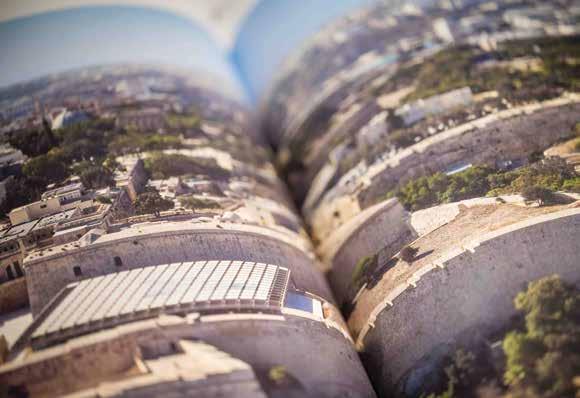
genius loci (the spirit of a place), presents itself as a challenging task – one which most architects have to manage recurrently and, increasingly more often, quite reluctantly too. In this regard, the project of Florencebased architecture firm Ipostudio together with the Restoration and Preservation Department for the new Malta International Contemporary Art Space (MICAS) comes to rescue with
its respectful yet daring approach to the fortified landscape of Floriana.
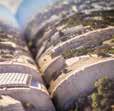
Thanks to a deep, layered and original appreciation of the 17th century bastions and of the Ospizio complex, the architects successfully shaped the vision of the newly founded cultural institution, repurposing the historical structures without inhibitions. The project for the new museum allows
visitors to move freely within the space, embracing its complex layering and at times almost paradoxical atmosphere: carefully restored stones that were once serving military purposes are now the unusual backdrop to contemporary art pieces, protected by an imposing new roofing structure reminiscent of complex machines but simple in its modularity.
Photos by Roberto Bonomo
ERICA GIUSTA
ERICA GIUSTA is Director of Innovation at architecture firm AP Valletta. She read for an MA in Architecture, and has a Post-Graduate Master from the Sole24Ore Business School in Milan. She contributes regularly to academic journals and international architecture magazines such as A10 New European Architecture and Il Giornale dell’Architettura.
Carefully restored stones that were once serving military purposes are now the unusual backdrop to contemporary art pieces, protected by an imposing new roofing structure reminiscent of complex machines but simple in its modularity.
The design of the contemporary additions emphasises the monumentality of the existing structures while allowing curators, artists and visitors alike to be playful within them: exploring them, observing them from uncommon perspectives, occasionally disregarding them in favour of a large-scale artwork or the cocooning atmosphere generated by one of those omnipresent open white cubes hosting visual art exhibitions. In all instances, the project works.
In his role as curator of the ongoing exhibition “MICAS. Beyond the Bastions” and contributor to the publication by the same name, Konrad Buhagiar traced the centuries-long history of architectural transformation focusing on how the convergence of past and present creates a dialogue between preservation and innovation, memory and reinvention, in line with the Italian school of thought of the so-called restauro critico, which defines restoration as the critical, methodological moment in which the work of art or architecture is recognized in its physical consistency, its dual aesthetic and historical polarity, with the aim of injecting new life into it and therefore projecting it into the future.
“An institution that reenergised the historic land on which it stands, a place once used for military defence, that is now a space for artistic encounter.”
MICAS Executive Chairperson Phyllis Muscat
This approach to architectural interventions in historical environments has positively influenced more than one generation of professionals in the field and enabled what the MICAS vice-chairperson Dr Georgina Portelli defined as ‘a case study in contemporary practice where Maltese heritage was engaged without nostalgia, and how architecture, curatorship, ecology, and place came together to form Malta’s home for international contemporary art’. At the event marking the MICAS book earlier in February, she added that ‘the essays and visual material brought together reflect MICAS’s development as a hybrid institution. The museum is not only a destination for exhibitions, but a platform for artistic production, education, and public engagement”. On the same occasion, MICAS Executive Chairperson Phyllis Muscat spoke about the publication as a testament to the transformative power of architecture and to the resolve to build “an institution that re-energised the historic land on which it stands, a place once used for military defence, that is now a space for artistic encounter.”
Published by Italian specialists in visual arts Electa, and edited by the architect and author Marco Mulazzani, the book carries a considered account of the museum as both an architectural transformation and an institutional proposition: a contemporary art space shaped by place, history, and public ambition. Similarly, the exhibition presents a comprehensive narrative of the design, restoration, and construction processes adopted in the recent phase of transformation, combining different media and providing an insight into the rich archival material which informed the project and into the approach which made it a best practice for conserving and enhancing its genius loci – spirit of the place and exceptional source of authenticity.
MICAS. Beyond the Bastions will be open until June 2026. The galleries are open from Tuesday to Sunday 10am to 6pm, with free entrance every Sunday and a free tour of the exhibitions on offer at 11am.
Review / Mexico City Art Week 2026
March - June 2026
DR JOANNA DELIA
CDMX ART WEEK 2026: Incubator for Culture War Victors
MEXICO CITY ART WEEK 2026 PROVED A VITAL ANTIDOTE TO EUROPE’S STALE FAIRS - ACCESSIBLE, HUMAN, AND BRIMMING WITH RAW LATIN ENERGY. AMID CULTURE WARS, THIS SPRAWLING CREATIVE HUB CHAMPIONED BOLD DECOLONIAL DIALOGUE, MAKING IT THE INCUBATOR OUR POST-COLONIAL ARTISTS DESPERATELY NEED.
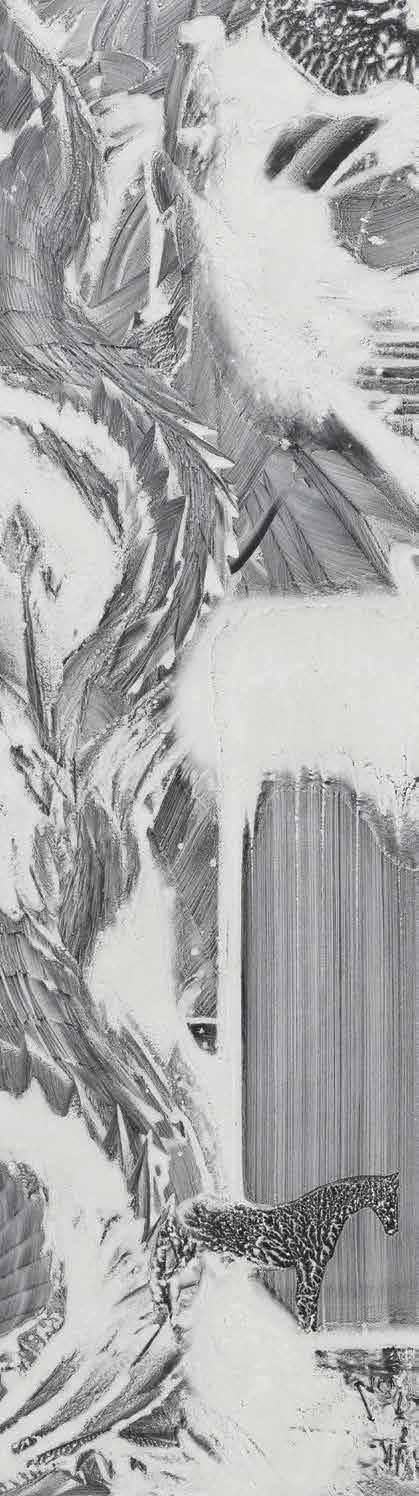
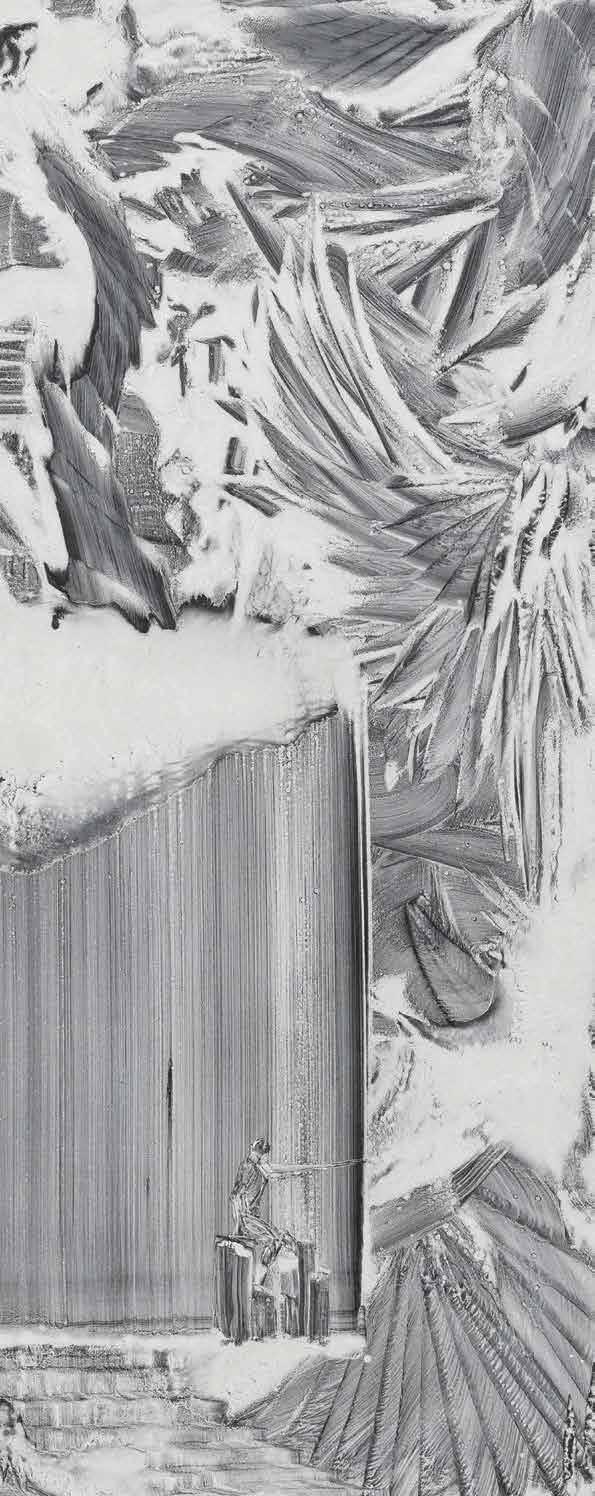
César Rangel Ramos, Backwater between wings and snakes , 2025. Quartz and vegetal binder on black acrylic plate, on ledge
Oscar Murillo, El pozo de agua, Kurimanzutto, Mexico City, 2026. Courtesy of the artist and kurimanzutto.
JOANNA DELIA is a medical doctor who specialises in cosmetic medicine. She is also a cultural consumer and art collector who tirelessly supports local contemporary art and culture.
We are in the midst of a culture war. Social change - which is more needed than everis driven by these cultural battles, I believe.
This was my third visit to the Art Week of the Americas, or Mexico City Art Week. It has become a necessary annual pilgrimage for many reasons.
I had heard that the art world was fed up with glitzy, restrictive European fairs - with their exclusive guest lists, VIP/VVIP/ VVVIP tiers, pre-pre-pre openings… with the jet-set party crowd attending merely to be seen, walking the fair corridors champagne in hand, laughing at ever-more sensationalist, tongue-in-cheek commercial art that dispensed with concept, sneered at politics, and prioritised ever-lamer, brainless parties year by year.
Other fairs seem to have dedicated more square metreage to parking for fancy cars ferrying investment buyers, until the recipe became so stale and unexciting that the art market suffered - and everything was blamed except the obvious reasons above.
I had heard that the art world was fed up with glitzy, restrictive European fairs - with their exclusive guest lists, VIP/VVIP/VVVIP tiers, pre-pre-pre openings… with the jet-set party crowd attending merely to be seen.
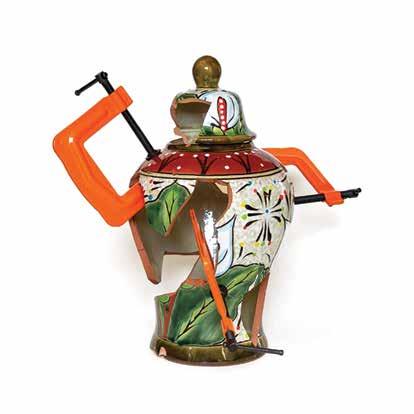
Vanitas (Alcatraces), 2025 Cerámica esmaltada y prensas metálicas
Review / Mexico City Art Week 2026
March - June 2026
Local artists, from legendary to barely known, opened their homes and studios, guiding visitors enthusiastically through their work - eager to exchange thoughts, knowledge, fears, hopes, and dreams.
I was told that in Mexico City, most of the hundreds of artists showing simply showed art: venues accessible, visitors mostly art lovers, networking genuine, performances powerful and human. They did not disappoint.
The three main fairs - set in sprawling locationscomprised Zonamaco (the upmarket classic art fair with big-name international galleries alongside upand-coming ones curated by Manuela Moscoso), Feria Material (mostly emerging artists shown by edgy contemporary galleries, this year in a new and fantastic location), and Salon Acme (set in a decadent hacienda and mostly artist-based).
At the same time, dozens of local galleries and popup spaces opened new shows - as varied as can be - their doors flung wide, artists present, gallerists as hospitable as you would expect in a city oozing Latin culture.
Local artists, from legendary to barely known, opened their homes and studios, guiding visitors enthusiastically through their work - eager to exchange thoughts, knowledge, fears, hopes, and dreams.
Conversations amidst works in every imaginable medium and material ranged from a passionate desire to re-discover ancient knowledge systems and preHispanic civilisations, notions of independence and revolution, social change, dismissal of Western cultural superiority, analysis of colonial issues, and spiritualpolitical conundrums, to imminent contemporary concerns. The Latin spirit is emotionally transparent, immediately reactive, and always ready to discuss with an open mind. Salon Acme’s entrance bore a larger-than-life message: Todo pasa - all will passacknowledging the present while offering hope.
Many international artists present seemed to step into this mindset. The offerings were interesting, refreshing, and challenging.
The week for me was a marathon across this huge, sprawling city - my itinerary carefully planned - visiting galleries a kilometre or so apart, opening after opening. I listened to concept after concept, idea after idea, motivation after motivation: excited-to-subversive, fidgety explanations from artists and gallerists behind the work. Dizzying diversity. Bold themes. Senses
wonderfully overwhelmed. Mind racing - computing, learning, drawing closer to understanding, pushing the boundaries of what is humanly possible in the realms of thought.
The private galleries - often in modernist, brutalist, or colonial haciendas - were wonders in themselves: through a small door in a busy street, vast spaces with large courtyards and urban gardens opened up. I have
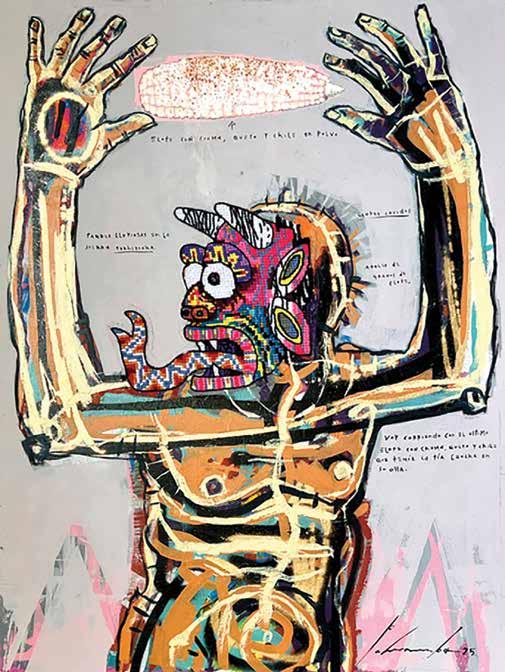
Ángel Pahuamba, Con sal y limón y chile, Acrylic, oil, enamel, and embroidery on Acrilan on fabric
not even started mentioning the national institutions - majestic locations in parks and castles, exhibits at Diego Rivera’s Anahuacalli where works dialogue with the largest collections.
The exhibits were uncluttered and well lit, well planned out. The works were given space to breathe - to be seen, experienced, and inspire. There was no pressure.
Gallerists were friendly and promoted each other. New gallerists were celebrated and recommended.
From the last (regrettable) show at legendary MAIA Contemporary, to the first at eponymous Georgina Pounds gallery showing Vanessa Raw, to one of my favourite artist-spotter and boldest galleries - Andrea Maffioli from Copperfield London showing Sophie Jung - to my favourite new discovery, Andres Henao with Sala de Espera at
Material, I was treated to an all-round feast.
My dream is to see work by Malta-based artists in dialogue with all the above. Our identity and post-colonial obsessed artists need to be part of this inspiring world. We have so much to contribute and learn, and I hope a gallery takes up an artist (or more) there next year. This is as a large incubator for change as I have ever witnessed. Judging by the world’s reaction to left-leaning, uncompromising artists like Bad Bunny - who coincidentally reigned on the world stage right in the middle of Art Week - we have a good prediction of who is winning the culture war.
Installation view. Enrique López Llamas, I Am The Resurrection And I Am The Life, Salón ACME, 2026. Hand painted acrylic on plastic polymer. Photo by Alum Gálvez. Courtesy of LLANO.
New work by resident artist Sol Golden Sato
Interview / Photography / Stefan Mogolyanov
March - June 2026
Geytonya: Queer Oases in Concrete Anthills
In the shadow of post-WWII brutalist towers - those gray, boxy monuments to rapid urbanisation across Central Europe, the Balkans, and beyond - queer lives have quietly bloomed. Photographer Stefan Mogolyanov fuses “gay” with “geitonya” (neighborhood) to name Geytonya, a poignant photo series celebrating gay men who reclaim these faceless spaces as stages for identity and intimacy. Drawing from his own Khrushchevka childhood, where pop icons blasted from hidden speakers amid Soviet sameness, he asks: What vibrant worlds do queer kids build in architecture designed to erase them? In this interview, he reveals how adrenaline-fueled shoots in forbidden stairwells, real-couple chemistry, and contrasts between soft flesh and hard concrete challenge queer visibility, turning antagonists into allies.
“Geytonya” plays on the words “gay” and “geitonya” (neighbourhood). How does this linguistic fusion reflect the emotional or political core of the project?
Central Europe and the Balkans are known for the high-paced urbanisation in the post-WWII period. The rural-tourban migration has made the cities rapidly change their “face”, going gray, concrete, edgy and box-like. Whether
it’s the Mediterranean modernism of Athens, Istanbul’s mass-apartment projects or the functionalist and brutalist architecture of the socialist countries, people have been attempted to be deprived of personality and colour for the sake of practicality and relative comfort.
I spent a significant portion of my childhood in a khrushchevka. Those
were USSR’s low-cost, panel buildings, designed during the leadership of Nikita Khrushchev and named after him. I was always fascinated by how, despite the exterior sameness that the Soviet authorities have tried to implement, apartments’ interior was always a unique oasis, shining of their residents’ personalities.
As a gay kid, I adored the pop icons and
would always want a new CD as gift instead of toys and other things children like. I had my loudspeakers that I would spend hours sitting by, listening to the finest voices of the post-Soviet pop scene. Remembering this made me wonder: what kind of worlds have gay kids living in gray, faceless buildings created for themselves?
Geytonya is a dedication to growing
Interview
/
March - June 2026
Photography / Stefan Mogolyanov
“Geytonya is a dedication to growing up in spaces that actively try to erase one’s identity and breed sameness…”
up in spaces that actively try to erase one’s identity and breed sameness, and, nevertheless, being able to cultivate and embrace these identities despite the external limitations.
How did you navigate the tension between visibility and vulnerability while photographing your subjects? I try to let the subjects connect with the idea and the surroundings on their own terms.
All of Geytonya’s participants have grown up seeing the gloominess and industriality that the post-WWII mass housing has brought. Whether it’s Novi Beograd or Ceausescu’s dystopian projects, it runs in subjects’ blood, as the generational heritage and through their own experience.
When planning a photoshoot, I ask my models to prepare clothes that play on the contrast between the brutal and the soft, the feminine and the masculine, and those that feel authentic to themselves. For me, it’s important to create the visual conflict but also stay true to who each Geytonya individual is.
When we’re on the spot, I ask the subject to interact with the surroundings, to own the space.
One of the hardest tasks during the shoots is to get inside the buildings, but, when we end up doing it (and sometimes get kicked out), it brings a lot of healthy adrenaline, very beneficial for the participant opening for the camera in a way that’s raw and urgent.
In what ways does this project challenge or expand traditional representations of queer communities in photography?
In the spaces where Geytonya is shot, the mere idea of being gay is traditionally blurred or unspoken of. It’s like - everything exists there: birthdays, weddings, funerals, fights, reconciliations, pets, life’s milestones. Everthing but LGBTQ+ community.
When these mass-housing projects were built, the topic of queer people was a taboo. It existed, at best, somewhere in a gray zone, and, at worst, like in Soviet Union, was outlawed.
In big cities, in the very centre, exactly where this kind of architecture was not present, some venues for queer people could be found, but not there, in the box-like neighbourhoods.
Now, as being accepted for who you are has become more of a reality for
our generation, I thought it would be a great opportunity to finally celebrate the visibility in the places that have traditionally erased the queer presence.
Did you approach the work as an insider, an observer, or something in between – and how did that position shape the images?
In general, for passion projects, such as this one, I believe that the so-called “vibe” is of immediate importance. If I feel that the model “gets” what I am doing, that’s basically all I need to know that the shoot will lead to a positive outcome.
During the shoots, I like to listen to subjects’ stories - and, as it nearly always turns out - they are very willing to share. For example, with one of my models we shot inside the first building in Moldova with two-storey apartments, and the architect of this building was his grandfather. That felt special.
As said earlier, I grew up with those “human anthills” being all around me - so that makes me an insider, but during the shoots, my models all share different insights and interact with the surroundings differently, and thus my task is to show them through my lens preserving their authentic voice.
Can you describe a moment during the making of this project that shifted your understanding of the community you were photographing?
I kind of adopted the faith in “photography God”, which means that any photograph, any model, any location that is meant to happen, will happen. It’s a way to cope with rejections, lastminute shifts and on-the-spot situations.
The photoshoot that led me to Geytonya and deeply changed my perspective of my own visual language was the one I did in Belgrade a year ago, with a beautiful couple Filip and Nikola.
It taught me two things. First: when your original planned location is unavailable for any reason, keep searching, chances are you’ll find something even more exciting. We were originally aiming to shoot in a Yugoslav-styled AirBnB, but the owners did not welcome the idea. So I got us permits to shoot inside the train of Josip Broz Tito, Yugoslavia’s founding leader. Now, that was a truly wild location to shoot a gay couple in: wild in the best sense of this word.
But what this photoshoot truly taught me is that a real chemistry between subjects is just irresitable, and makes
photographs bloom in a way staging doesn’t. And Nikola and Filip have crazy chemistry. Camera sees when it’s forced, camera sees when it’s real. From that point on, I decided: for Geytonya, if it’s a couple, it’s only a real-life couple.
What role does intimacy play in your visual language - and how do you build trust quickly enough for it to appear authentically?
I view every shoot for Geytonya as intimate. Intimacy doesn’t have to include nudity, it’s always an option, never a must.
If I feel a genuine interest and initial trust from a model, everything can be built upon that. That’s all that’s required along with being a queer man or a queer person chanelling masculine energy.
And, on the contrary, if the vibe is off from the beginning, if I feel that a person approaches my work judgmentally or condescendingly, if they don’t believe in Geytonya in the way I do, I just don’t continue engaging.
When it comes to nudity, there are many people who are eager to fully undress in front of the camera. To celebrate their body, their queerness, their aliveness or just cause “why not”. Nudity put in the
Interview / Photography / Stefan
Mogolyanov
March - June 2026
context of semi-private spaces like the staircases of the residential buildings brings a level of excitement of doing something rebellious for the sake of being rebellious and a statement of the body being imperfect, having signs of years that went by (in a form of anything: from tattoos to stretchmarks) and yet, being very much alive - all similarly to Geytonya locations.
How does architecture or urban space function in the series? Is the neighborhood a backdrop, a character, or a silent witness?
If my characters are protagonists, then the architecture is an antagonist. Both bloom off the contrast, both are crucial to move the story forward. So, just like the humans, urban spaces are main characters, challenging the participants to interact with them on their own terms.
If this book was experienced without captions or context, what emotional journey would you hope the viewer takes?
I’d hope, first and foremost, that the viewer feels something. If my work doesn’t leave them indifferent; if things don’t quite make sense on the surface but somehow give the inner satisfation of the two puzzles that have aligned; if what they see raises questions, makes them want to look at the next page, wonder what’s going here and then be like, “Aha…”, that’s all that that matters to me.
In my art in general, I am not aiming to offer any final resolutions, I want to take my audience on the road together with me, to see things, to feel things, processed through their own inner lens.
Queer guys, strict geometrical spaces, what does this mean? I want my audience to find a reflection of themselves in Geytonya.
What conversations do you hope “Geytonya” sparks within queer communities – and what conversations do you hope it provokes outside them?
I hope that queer viewers, whether they have had their upbringing in similar
spaces, or have only witnessed them as outsiders, take a look back at everything that have seemed gloomigly mundane in their personal history and realise how, it fact, those rituals and repetitions have bred that uniqueness that makes them who they are, or how they have preserved that something special in spite of the surroundings.
And I hope that people from outside the LGBTQ+ community just once again
do a mental check that invisibility and erasure can never be attempted to be made a solution again.
Follow Stefan Mogolyanov, previously known as Stefan Levchenko, via his instagram page and website: instagram.com/small_dreamcatcher smalldreamcatcher.com
“In the spaces where Geytonya is shot, the mere idea of being gay is traditionally blurred or unspoken of...”
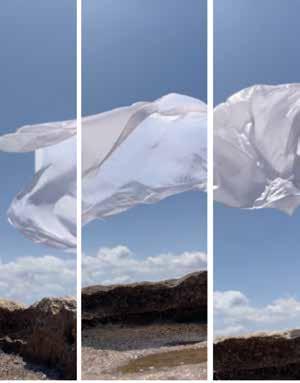
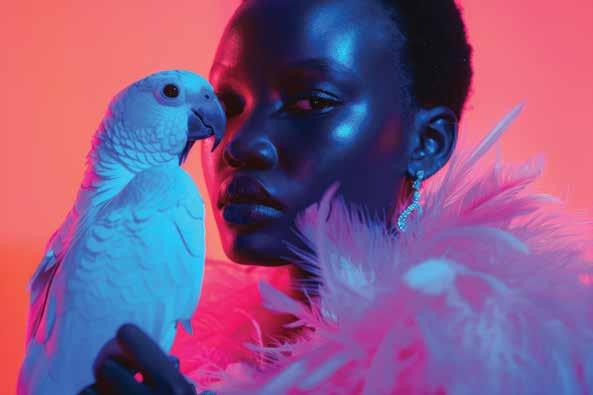
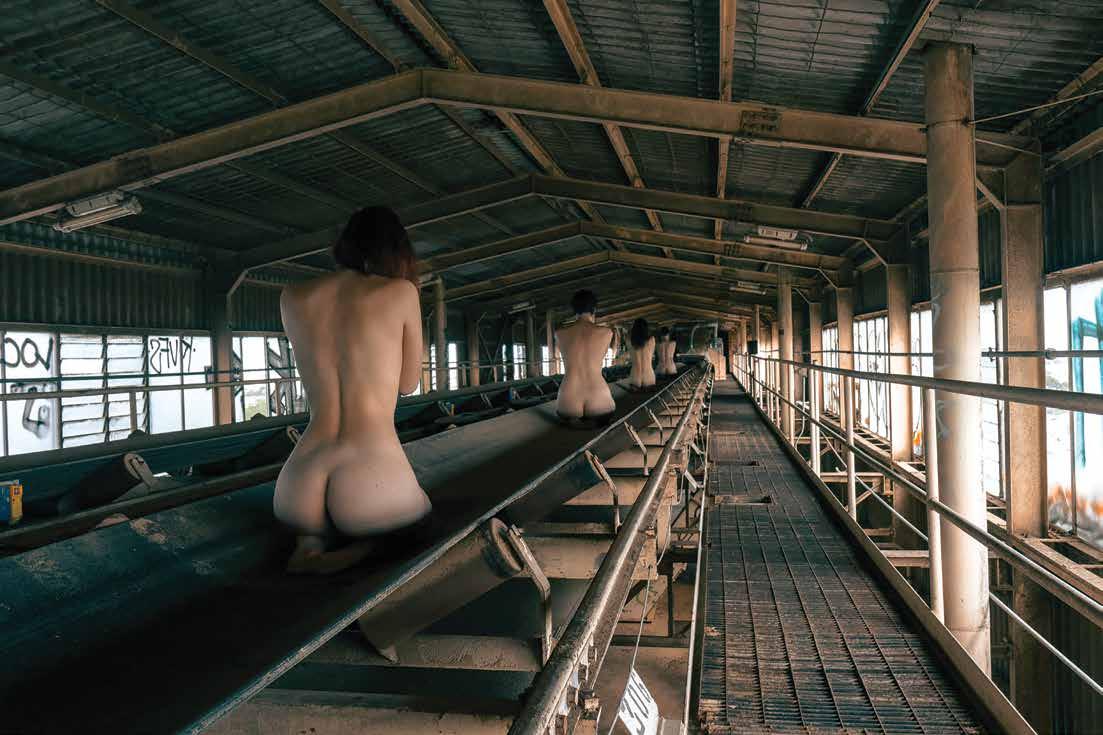
SAĦĦARA | COMMODIFIED | 2023 | PHOTOGRAPH PRINTED ON HAHNEMÜHLE PHOTO RAG | 150 X 100CM