

GOODWINS
KITCHENS, BEDROOMS & BATHROOMS
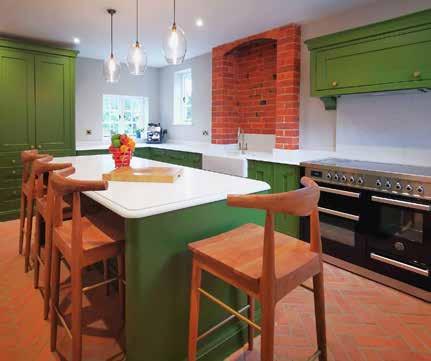



DESIGN, SUPPLY AND INSTALLATION OF KITCHENS, BEDROOMS AND BATHROOMS
BASED IN WIRKSWORTH, GOODWINS ARE A TEAM OF KITCHEN, BEDROOM AND BATHROOM CONTRACTORS THAT MANAGE YOUR PROJECT FROM START TO FINISH. GET IN TOUCH TODAY. OUR VALUES
• WE TAKE GREAT PRIDE IN WHAT WE OFFER AT GOODWINS, AS WE’RE ABLE TO HELP YOU CUSTOMISE YOUR HOME EXACTLY HOW YOU WANT IT.
• WE’LL ALWAYS TAKE THE NECESSARY TIME TO TRULY UNDERSTAND YOUR VISION TO ENSURE THAT WE’RE OFFERING YOU EXCEPTIONAL SERVICE AT ALL TIMES.
• USING THE LATEST 3D DESIGN SOFTWARE, WE’RE ABLE TO PROVIDE YOU WITH BESPOKE PLANS THAT GIVE AN ACCURATE IMPRESSION OF HOW YOUR ROOM WILL LOOK.
• MOST IMPORTANTLY, WE’LL ALSO PUT FORWARD MULTIPLE OPTIONS AND IDEAS TO HELP YOU DECIDE ON A FINAL LOOK.


TIMES
TUESDAY -FRIDAY : 09:00 - 17:00 SATURDAY : 09:00 - 16:00
SUNDAY - MONDAY : CLOSED OPENING


Hello Readers,
IT’S COMING HOME!!!
Well, I’m not sure it is but we live in hope, whilst we all become armchair managers and critics! Still, it is usually a nice thing for us all to have the same common agenda for a few weeks. Although, I’m not sure this one is going to be as popular as previous World Cups, based on the ticket sales and the times of the games for those of us watching at home. I wonder how many of your colleagues, family members or friends are trying not to find out the result until they can watch the game on catch up at a more reasonable hour?! The last time we did that at Voice HQ was when Traitors was on…..ooooh, the hullaballoo over who is watching it in real time and the ‘hurry up’ calls for those of us watching it on catch up! Anyway, I can’t see that being a problem for us with the World Cup, as we have two rugby fans, one who doesn’t like sport and me who can’t stand to watch anything for more than 8 minutes at a time now I’ve entered my Peri-Menopausal stage of life – oh the days when I used to be able to concentrate!! So, it looks like Liam is going to be venting to himself on this one!!
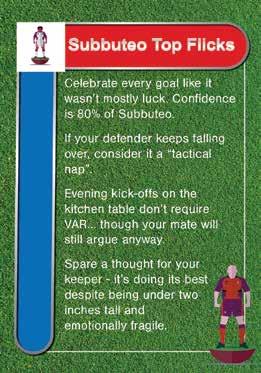
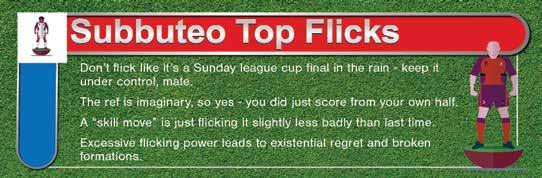
He is especially pleased with the front covers this month as it took him back to his childhood days of Subbuteo and Shoot! magazines. I’ve put a fiver on with my friends that he’ll have purchased a Subbuteo board and all the players before the year is out….still, a cheaper mid-life crisis than most I suppose! Although, I remember my brother having a Subbuteo board when I was a kid but it was only to be kept in his room because it took up too much room elsewhere. Mind you, my brother wouldn’t have wanted it in the open because sure as eggs is eggs, I would have done something to the players, apparently #eyeroll. I’m not that convinced I would have done anything if I’m honest, it all seemed pretty boring to me – that said, if it would have annoyed him……..hmmmm!
Happy Reading,
Emily x





































THE FOOTBALL WORLD CUP 2026: WHERE DRAMA MEETS DELIGHT
Every four years (and occasionally when FIFA’s calendar needs a bit of reshuffling and a strong cup of tea), the world collectively remembers that nothing quite unites humanity like 22 people chasing a ball and billions of people insisting they could “definitely do better up front”.
The 2026 Football World Cup arrives with all the usual ingredients: hope, heartbreak, tactical debates in pub corners, and at least one nation suddenly becoming experts in “expected goals” after watching a single YouTube video.
2026 World Cup promises to be the biggest yet, both in scale and in snacks consumed per match. With 48 teams, an extra 16 on 2022, fans are preparing for a tournament where the group stages alone feel like a full-blown saga. There are early favourites, dark horses, and at least one team that will be described as “technically very good, but a bit chaotic defensively” — a phrase that usually translates to fireworks at both ends.
The expanded format has also introduced a new kind of global diplomacy: nations bonding over shared frustration at a 3am kick-off, questionable refereeing decisions, and the universal truth that penalties are just emotional warfare in slow motion.
On the pitch, the football is expected to be fast, furious, and occasionally baffling. One minute a perfectly drilled counterattack slices through a defence like a hot knife through butter; the next, a striker skies the ball into orbit, prompting millions of viewers to instinctively look up as if they might actually see it.
Off the pitch, the World Cup remains a masterclass in collective behaviour. Entire countries will temporarily restructure their daily routines around kick-off times. Productivity will dip. Tea consumption will rise. And at least one uncle somewhere will loudly declare that “we should’ve brought him on earlier” regardless of which teams are playing.
The 2026 tournament also brings with it the usual parade of breakout stars. A previously unknown winger will suddenly become the most talked-about person on the planet after one dazzling run. A goalkeeper will achieve cult status for saving a penalty with what can only be described as pure instinct and a mild lack of coordination. And a striker will inevitably go on a scoring streak that defies physics, logic, and anyone who forgot to pick him in their fantasy football team.
But beyond the stats, the tactics, and the endless punditry, the World Cup is still gloriously simple. It’s about hope. It’s about shouting at a television like it owes you money. It’s about strangers hugging in the street because a ball crossed a line.

And in 2026, once again, the world will stop — not because it has to, but because football, at its best, is impossible to ignore.
















THE PROMISE, BY DAMON GALGUT
The Promise is the Booker Prize winning story of a wealthy white South African family trapped between the dubious morals of the apartheid era and the need to change – and what that struggle does to them as people. It moves from big issues to the daily personal details of family life, sibling rivalry, overbearing in-laws.
It starts at the funeral of matriarch Ma, who promised a small shack and a bit of land on their vast estate to her personal black servant, Salome. It’s a promise denied after her death and never kept, but it comes to define the Swartz family.
Over the four-decade course of the book, the family - never less than dysfunctional –splinters. The younger members despise the old ways and make their own futures. But they also change and this is one of the great strengths of the book – the way it shows how humans develop – for good and bad. Heroes can become lost too and the underdog can triumph.
It may sound a serious book and it is, but there’s a good deal of wry humour, considerable depth and a great understanding of how complex we human beings are. A thought-provoking read but worth the effort.



CUSTOMERS’ OWN CAR PARK OR RING FOR FREE HOME SELECTION SERVICE
WE SPECIALISE IN
Supply & Install of Real Wood & Laminate Floorings
Supply & Install of Karndean Floorings
Supply & Install of Sisal & Natural Floorings
Supply & Install Coretec and Quick-Step Flooring
WE OFFER
• Guaranteed Workmanship
•
• All Installations Are Carried Out By Our Own Employed Fitters
•
Disposal of Old Carpet & Floorings, if required
• Moving & Replacement of Furniture
• Trimming of Doors
• Insurance Work Undertaken & Insurance Quotes
43/47 High Street, Clay Cross, Chesterfield S45 9DX Tel: 01246 863148





OPENING TIMES Mon, Tues, Thurs & Fri: 9am to 5pm Wed: 9am to 12pm & Sat: 9am to 4pm



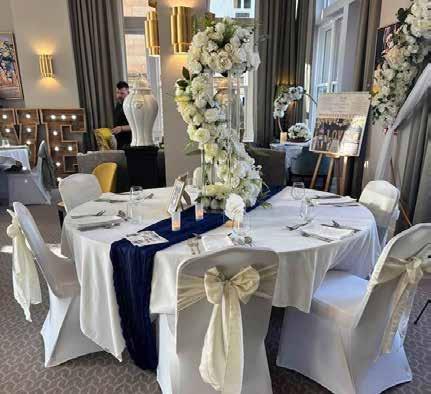
THE ORANGERY Wedding
At the Orangery at St Elphin’s Park, we believe your wedding should be as unique as your love story. Every element of your celebration can be tailored to reflect your vision, ensuring a truly personal and unforgettable experience. We specialise in intimate, bespoke weddings, allowing you to cherish this special time with your closest family and friends - without any stress.
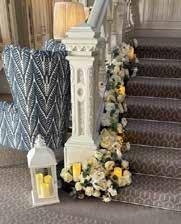
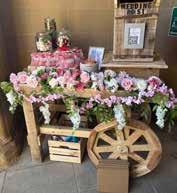


All prices include room hire, use of the grounds & stairwell
Exclusive use of restaurant costs: £500 for full day 12pm-9pm • £250 for half day hire 12pm - 4pm Catering for all budgets - Buffets from £18.95pp and set menus from £35pp

Get in touch with us today to discuss your bespoke wedding.



















D e r w e n t D e r w e n t
The Old Church, 31 Not tingham Road Ripley, Derbyshire, DE5 3AS
Opening Times
Monday-Saturday 9:30- 4:30
The Old Bank, 1 Radcliffe Road West Bridgford, Not tingham, NG2 5FF
Opening Times
Thursday-Saturday 9:30- 4:30













LAST MINUTE OFFERS NOW



STUNNING HOLIDAY COTTAGE IN WARKWORTH, NORTHUMBERLAND
Treat yourself to a luxury break at the 4* Gold Award winning Little Red Hen House. An elegant and cosy holiday home just a 7 minute drive from award-winning and dog-friendly Warkworth beach.
✽ 2 spacious en-suite bedrooms
✽ A fully enclosed garden
✽ 2 small to medium dogs welcome (3 upon request)
✽ Fully equipped kitchen, including an American style fridge freezer



✽ Perfect for exploring the stunning Northumbrian Heritage Coastline
✽ Close to a range of dog friendly pubs, cafes & restaurants in stunning Warkworth
✽ We have fast fibre Wi-Fi and smart TV’s


MUSEUM
BOOKS ARE FANTASTIC, WHO KNEW?
The people of Mesopotamia and the Egyptians knew because they were the first people to develop the method of communication we call writing. Between 5000 and 3000 BC the Sumerian people of Southern Mesopotamia developed a form of writing known as cuneiform. (Mesopotamia covers the areas we now know as eastern Syria, southeastern Turkey, and most of Iraq).
Cuneiform was a method of using simple marks pressed into clay tablets, or carved into sandstone as an administrate accounting tool, to keep records or issue instructions.
During a similar period, the Egyptians created their own style of communication, hieroglyphics. Hieroglyphics enabled them to create a pictorial record of life in Egypt. Many examples were discovered when the tombs of long dead pharaohs were opened.
King Den ruled the First Dynasty of Egypt, in his tomb small labels, made of hippopotamus ivory were found. These labels were made by scratching marks into the ivory then rubbing on a black resin to create a contrast. They consisted of pictures depicting events during the King’s reign, building projects, hunting trips, as well as successful battles.
Markings were often etched in clay tablets or carved into stone, but the Egyptians also began to use papyrus. They layered, pounded and dried the pith of the papyrus plant to create a thick paper like material with a smooth surface. The papyrus plant grew all around the Nile Delta area which meant they had an endless supply. Using long papyrus scrolls they created an effective way of storing information that could be rolled and stored neatly without causing the papyrus to crack.
Some years ago, I listened to a radio 4 programme, A History of the World in 100 Objects (now available of BBC sounds). The thing that struck me most from listening was how much of our ‘culture and civilisation’
came from Mesopotamia. The development of writing in all forms has had a huge impact on civilisation.
The earliest books, as we know them, were handwritten, often for the church and only for those wealthy enough to afford such treasures. In 1439 a man called Johannes Gutenberg invented the printing press, this technology quickly spread throughout Germany and across Europe.
William Caxton worked in Bruge alongside Colard Mansion, known as the first printer of a book with copper engravings. Caxton printed several English works. In 1476 he moved to Westminster where he became recognised as the first printer in England.
The idea of a ‘library’ is an ancient one for all the early clay tablets, the cuneiform scripts, the papyrus scrolls and hieroglyphics were archived. Due to better, more economical printing techniques, libraries, as we know them, began to spring up around the country. They were often subsidised by philanthropists and businessmen who wanted to help educate those who couldn’t afford books.
In the past, research involved spending hours laboriously looking up information only available at a Central Lending Library. Everything changed with the arrival of computers and the internet. Though it’s hard to imagine life without libraries, they are constantly in danger of closure, from either lack of use or a lack of funding. Hopefully, books will survive for there is nothing as comforting as the feel, and smell of a book.
Joyce Janes on behalf of Bakewell Old House Museum
DURING 2026 THE MUSEUM IS OPEN 7 DAYS A WEEK, 11AM TO 4PM


















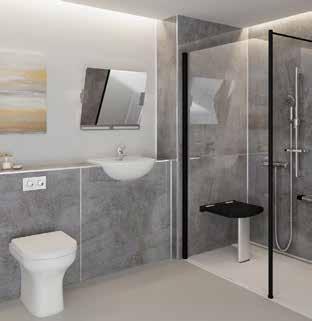
Stylish Bathrooms for Independent Living
Living Well Bathrooms by AHM Installations specialises in creating safe, stylish and practical bathrooms designed to support comfort, independence and everyday wellbeing. With more than 26 years of experience, the family-run company has earned a strong reputation for delivering high-quality accessible bathroom solutions tailored to each customer’s needs.
Whether considering a walk-in shower, walk-in bath or fully accessible wet room, the experienced team provides expert guidance from consultation through to installation. Every bathroom is designed to combine functionality with modern style, ensuring safety features never compromise on appearance.
From low-level access showers and slip-resistant flooring to grab rails, shower seating and bespoke layouts, each installation is carefully planned to improve confidence, convenience and peace of mind. Living Well Bathrooms by AHM Installations understands the importance of creating spaces that are both practical and visually appealing.
Customers can also benefit from free home surveys, noobligation quotations and personalised design visuals, helping them choose the right solution for their lifestyle and budget. Backed by professional workmanship and excellent customer care, Living Well Bathrooms by AHM Installations continues to help homeowners create bathrooms that are safer, more comfortable and built for the future.




Pitcherwits® are crossword puzzles where some of the clues are in pictures. Sound easy? It’s not called “Pit-your-wits” for nothing! The mixture of cryptic and picture clues, combined with Professor Rebus’ unique sense of humour, will keep you entertained for hours.
Across
7 What a peculiar spare weapon! (5)
8 Former deed is precise (5)
9 Forerunner of the repeat (2-3)
11 Old counter’s strange, picturesque secret is out (5)
Down
2 Change later, and change again! (5)
3 Bounced out to say, “Wait!” (5)
10 I’ve an odd notion it’s innocent (5)
11 Silence can be quite unnerving (5)
Across 1 Holdall, afar off for your fifty cents’ worth (4,1,6)

5 It gets longer once nested by proxy (7)

12 Still expecting work at tables (7)

13 Man who clumsily overshot September night-shiner (7,4)

Down
Final distance that can be done on an elastic house? (4,7)
Dish for mutants to root out? (5,6)


It could be raised, if yob were to be reformed (7)
Putting forward the medication, with force (7)
Casting off, 8 Bantu, 9 Deserted, 14 Wilt, 15 Peen.
Abraded, 10 Tit, 11 Oneness, 12 Ems, 13 Grows up, 16 Eat, 17 Esp, 18 Flattened.


Ear,









Windows, doors, conservatories & orangeries.
Replacement heritage timber windows to DDDC specifications.
Misted glass replacement. Over 25 years experience.

Are you sitting comfortably? Then I’ll begin.
Who remembers the radio programme “Listen with Mother”—a 1950s favourite presented by a team of “aunties” and “uncles”—sharing stories, songs and nursery rhymes for mothers and children?
I also loved “Watch with Mother” on 1960s television, with programmes such as Andy Pandy, The Flowerpot Men, Trumpton and The Woodentops. Though aimed at pre-schoolers, it captivated older children—and plenty of adults too. Did anyone else think Andy Pandy was a girl?

Another favourite was “Blue Peter”. Many will remember Valerie Singleton, John Noakes and Peter Purves, along with their pets: Shep, Petra, Fred (or Freda) the tortoise, and Jason the Siamese cat. Most people have a standout moment too - perhaps the baby






elephant or the Advent crown. And then there was Play School, with its “through the round window” opening and toys like Humpty, Jemima, Poppy, Big Ted and Little Ted.

We hold these names and songs close. Those early programmes grew up with us—and the memories often stay with us into old age.
Janet
Janet and Paul Barrass are All Around the Shire. Find us on or email: oldfield512@btinternet.com for more information.

• Professional clean & maintenance of chimney & fireplaces
• Bird nest removal
• Installation of chimney bird guards
• Complete installation of log burners, stoves and fires







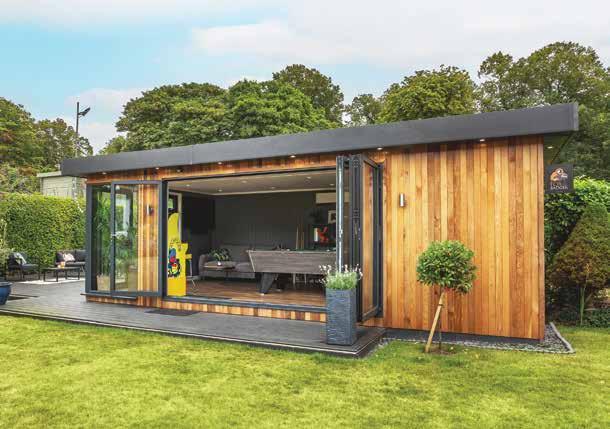
Studio Range from £12,500
CREATE YOUR OWN PERFECT SPACE
Over 20 years in business 10 year manufacturer’s guarantee Manufactured in Derbyshire, UK
• Fully Lined & Insulated Garden Rooms from £12,500
• Includes foundations, full installation, flooring, internal painting, and double sockets
• Free expert design - see your dream garden room in 3D
• Free site survey or video consultation
• Planning permission rarely required
• Use all year round for work or extra family space
• Bespoke builds from £14,400
Visit our outdoor show site open 7 days a week with over 40 buildings on display





SUDOKU #71
This is a sudoku
1 square grid
81 cells
9 3x3 blocks
1 simple rule:
Use all the numbers
1-9, with no duplicates allowed, in any row, column, or block.

These puzzles are devised by the brilliant Professor Rebus. For more of his puzzles visit www.pitcherwits.co.uk



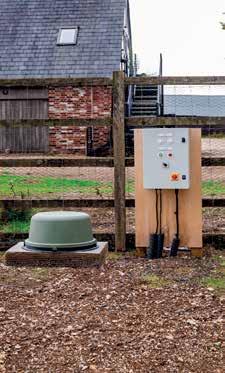
Replacing an ageing septic tank?
Navigating strict planning or environmental consents?
Concerned about nutrient neutrality rules?
Haigh Environmental is your trusted partner for off-mains wastewater treatment solutions.


From design to installation, our package treatment plants help you:
Stay compliant with planning and environmental regulations
Protect the environment
Secure






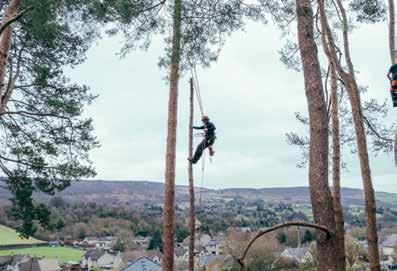



• Paving • Patios • Fencing
• Garden maintenance/clearance
• Garden makeover • Tree cutting
• Hedge trimming • Soft landscaping
• Lawn care
OAP DISCOUNTS OFFERED GIVE US A CALL
UNBANDED SCAFFOLD BOARDS
NEW 3.9 METRES 3.9m x 225mm x 38mm
Ideal for various projects including:
Decking
Shelves
Man cave
Planters
Tables
Fencing
Raised beds
Rustic furniture


We’re into Chelsea Chop territory. Chelsea, because it’s around the time of the Chelsea flower show late May/mid-June – and chop because it’s what you can do to a good number of clump forming perennials to make them bush out and produce more flowers.
It’s not a rule – lots of gardeners don’t go there; but there are advantages and disadvantages – and you can split the difference and cut some stems and leave others on the same plant. It’s a good method for the likes of rudbekia, helenium and salvia – all bushy perennials but not for the likes of peonies or poppies which produce blooms on a single stem.
The chopped plants will flower later and produce smaller flowers, but more of them. It will stop them getting leggy and being prone to rain and wind damage as they grow and they won’t need staking to keep them upright. Or you can just do the front growth of a clump – about a third of the stem just above a leaf nodeand leave the rest to grow, so you get shorter and more flowers and taller and more elegant on the same plant.
While we’re talking about producing more growth, this is the time to pinch out the growing tips of fuchsia to help them bush out and give more flowers later.
Deadhead repeat roses to encourage new growth, leave single flowering roses to produce hips later in the year.
SUMMERTIME STARLINGS AROUND THE PEAK
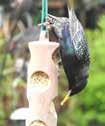
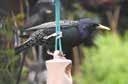
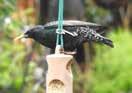
When the recently-fledged juvenile Starlings arrive in summer they cause plenty of confusion and largely because they look so different to the adult birds. However, at garden feeders and the like any confusion is soon allayed by the parent birds noisily feeding their offspring against a rising cacophony of sound. Drawn to mealworms and dried calci worms especially, but also to suet bars and suet dumplings, there can often seen to be thirty or more Starlings at the feeders. With populations in long-term decline these sorts of numbers are welcome and encouraging. Indeed, once quite common bird species have experienced dramatic and worrying population declines, and many are still going down. The Starlings have been through a sharp fall in numbers but may hopefully be on the way up again, and certainly the flocks in my wildlife garden suggest this may be so. As so often the case, the cause of the problems mixes habitat loss and degradation, intensive farming, climate change, and especially down in the lowlands, increasing urban sprawl. There is also the modern almost clinical tidiness of buildings which removes potential nesting sites for birds like Starlings, Swallows, and House Sparrows.
So, the Starling is a bird which has gone from being abundant or super-abundant, to one where its fortunes waned over recent decades, but may be picking up again. Readers will be aware of the wintering populations which in part are visitors from Continental Europe and as far away as Russia, and which give us the tremendous ‘murmurations’ at roost sites like Stony Middleton. However, it is our breeding birds that have really suffered and, in their case, the loss of nesting opportunities in older buildings and sites like tree-holes certainly had a bad impact. The site loss was compounded by climate change (summertime droughts) and the growing impacts of twentieth-century moorland management with extensive drainage of formerly wet moors and bogs. Drying the moors and bogs caused dramatic declines in available food in summer, particularly damaging for newly-fledged youngsters. These birds would descend on the upland moors in frenzied flocks as they love to feed on masses of emerging craneflies which are especially abundant on damp moors and cotton-grass bogs. But with moors drained and dried, the cranefly larvae (gardeners’ ‘leatherjackets’!) were gone. Synchronised hatching of adult craneflies in May and June, meant good times for Starlings, and for other birds like Red Grouse, and on lower-lying wet pastures, Rooks, Carrion Crows, and
wading birds such as Common Snipe. Dried-out moors and pastures cause declines in all these.
But we can do our bit to help. Despite current advice to not feed garden birds during summer so as to avoid spreading nasty diseases, my own view is that this is not the best solution. So, be clinically clean with food dispensers, avoid the use of a summertime bird-table which may encourage bugs to fester and spread, but provide hanging feeders like mealworm holders, spiked apples, and suet bars. So many birds are losing habitat, especially with current planning guidance to ‘build, build, build’, on greenspaces, Green Belts, and National Parks, that they need our help. Well, Starlings, both adults and juveniles arrived in abundance in my wildlife garden, and I am doing my bit, and the Starlings are feasting (see videos on social media below).






Professor Ian D. Rotherham, researcher, writer, broadcaster on wildlife and environmental issues is contactable on ianonthewildside@ukeconet.org. Follow his website www.ukeconet.org, blog www.ianswalkonthewildside.wordpress.com/ & Twitter @IanThewildside Bluesky @ianthewildside.bsky.social

We work in Ashford in the Water, Bakewell, Baslow, Chelmorton, Cressbrook, Flagg, Great Longstone, Little Longstone, Litton, Monyash over Haddon & all surrounding areas

Highly Experienced
Boiler Breakdowns
Boiler Servicing
Radiators & Pipes
Tanks & Cylinders
Toilets & Taps
Leaks & Bursts
Showers
Clearing Blockages
Pipework Replacement
Gas Safe Certified