ArTISAN SPIrIT is a quarterly publication by Artisan Spirit Media. www.artisanspiritmag.com facebook.com/ArtisanSpiritMagazine ArtisanSpiritM General Inquiries (509) 944-5919 Advertising (509) 991-8112 PO Box 31494, Spokane, WA 99223
While ArTISAN SPIrIT makes every effort to ensure accuracy in our content, the information is deemed reliable but not
At
ArTISAN
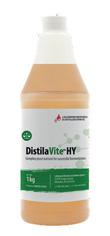
DistilaViteTM HY
From survival to performance: rethinking yeast nutrition for grain‑based spirits.
Grain fermentations place unique nutritional demands on yeast. DistilaVite HY delivers targeted amino acid availability through specific proteolytic activity, supporting stronger, faster, and more consistent fermentations across corn, rye, wheat, and other grain mashes.
Developed through extensive research and distillery trials, DistilaVite HY helps distillers unlock higher ethanol yields and a reliable congener profile, batch after batch. Order with SCOTTLABS
Addition of Distila Yeasts
Addition of DistilaVite HY, immediately after adding the yeast, to optimize nutrition.
THANK YOu TO ALL Our SPONSOrS.
The American Spirits Exchange is a national importer and distributor serving the alcoholic beverage industry (spirits, wine, and beer). We provide domestic and international companies with access and support to the U.S. market. Regardless of your size — from micro, craft distiller to publicly traded multinational — our focus fuels your growth. Our flagship Foundations™ program provides companies with access to the U.S. market. We handle your business-to-business functions from start to finish: permitting, brand approvals, purchase order processing, invoicing, and compliance.
Every element of Cage and Sons equipment is designed and crafted to provide you with the very best distilling experience at an affordable rate because we know that bottom line matters, but so does function. At Cage and Sons, adequate is never an option, and we continue to develop and design new high functioning, cutting-edge distillation systems that enhance the distillation industry. Cage and Sons works every day to bring you the very best distillation systems for the very best value.
For nearly 50 years, CF Napa Brand Design has set the standard for alcohol beverage branding. Led by Owner & Creative Principal David Schuemann for the past 22 years, we focus on translating brand ethos visually, never using a one size fits all approach for projects. The result is a bespoke solution rooted in strategy and, most importantly, a design that sells.
CF Napa’s expertise lies in the intricacies of our process — from project conception to conclusion, our team brings a strategic yet thoughtful eye to every detail. We understand the market and target audiences on a global stage. We balance listening with leading to execute a design that the client loves, and the consumer buys again and again.
The Distilled Spirits Council of the United States (DISCUS) is the leading voice and advocate for distilled spirits in the United States. Representing producers and marketers of distilled spirits, DISCUS advocates on legislative, regulatory, and public affairs issues impacting the distilled spirits sector at the local, state, federal, and international levels; promotes the distilled spirits sector, raising awareness and opening markets in the United States and around the globe; and encourages responsible and moderate consumption of distilled spirits as part of a healthy adult lifestyle based on evidence-based research and policy. DISCUS also powers Spirits United, a grassroots platform for the distilled spirits industry. Spirits United is comprised of a community of advocates united with a common goal: to ensure adult consumers can enjoy distilled spirits where they want, how they want, and when they want. Learn more at distilledspirits.org and spiritsunited.org.
Haskell is a diversified Architecture, Engineering, and Construction (AEC) firm with the resources to serve our clients across more than a dozen unique markets. Our worldwide team offers an unmatched depth of expertise, leveraging 2,600 subject matter experts across more than 20 design disciplines. With a dedicated beer, wine, and spirits team, Haskell provides integrated solutions for clients, specializing in sustainable facility design and complex manufacturing systems. Our team brings years of industry experience to breweries, wineries, and distilleries of all sizes. Whether it’s a turn-key can line, engineering expertise for a winery, or the design of a distillery, our team will work alongside you to determine the right solution.
Learn more at www.Haskell.com.
Our mission at Artisan Spirit Magazine is to share and celebrate the art and science of artisan craft distilling. We are humbled by the support of our sponsors. With their help, we can further our common goals of supporting creativity, innovation, and integrity within the industry we all love so much.
We’ve been in this industry for over 100 years, during which time we’ve learned a thing or two about what makes a great barrel to age great spirits. Our R&D team and account managers have hundreds of barrels currently in experimentation. Partnering with distillers, we think outside the box to develop new products that push your vision forward. Our Mission: To craft world-class oak barrels and other cooperage products so our employees, customers, and communities flourish.
With an impressive legacy spanning over 30 years in the printing and label domain, Jack Vogel stands as a respected authority in the Spirits industry. For the past 23 years, he has been a steadfast and trusted advisor, contributing significantly to the evolution of label standards and practices. Jack's journey includes leadership roles at top label printers within the Spirits sector. Having transitioned into an independent consultant, he continues to channel his wealth of knowledge towards empowering brands to achieve excellence. As an original founding sponsor and advisor to organizations such as American Distilling Institute, American Craft Spirits Association, and Artisan Spirit, Jack has played a pivotal role in shaping industry standards. At the core of Jack's professional philosophy is the belief in industry education as a catalyst for stability and growth. By imparting knowledge and insights, he contributes to the overall advancement of the spirits label landscape.
Lallemand Biofuels & Distilled Spirits is the industry leader in supplying fermentation products and value-added services to the distilled spirits industry. We specialize in the research, development, production, and marketing of yeast and yeast nutrients as well as a solid belief in education of the distilled spirits industry.
A vital part of the alcohol production process, fermentation products from Lallemand Biofuels & Distilled Spirits have been designed and selected to create value by tailoring objective solutions to distillery needs.
Moonshine University is located in Louisville, Kentucky on the Beverage Campus with its sister company, Flavorman. Moonshine University offers a variety of classes for enthusiasts, entrepreneurs, industry professionals, and those seeking careers in the distilling industry. Our distillery was designed as part of our classroom, and all classes incorporate hands-on learning and sensory evaluation in order to provide a complete and comprehensive education. In addition to its knowledgeable instructors, Moonshine University hosts a range of renowned industry experts for specialized instruction and training.
For more than 40 years, Phoenix Packaging has worked to realize each client’s unique vision to best represent their story through their unique branding imagery. We provide our clients with options from around the world in a variety of materials such as glass, ceramic, plastics, paper, aluminum, and more. We help to coordinate everything from bottle design, manufacturing, decoration, and logistics. Our goal is to produce your packaging vision to help you achieve success.
Responsibility.org is a national not-for-profit that aims to eliminate drunk driving and work with others to end all impaired driving, eliminate underage drinking, and empower adults to make a lifetime of responsible alcohol choices. Responsibility.org is funded by the following distillers: Bacardi USA, Inc.; Brown-Forman; Campari Group; Constellation Brands; DIAGEO; Edrington, Hotaling & Co.; MastJägermeister US, Inc.; Moët Hennessy USA; Ole Smoky, LLC; Pernod Ricard USA; Suntory Global Spirits; and William Grant & Sons. For more than 33 years, Responsibility.org has transformed countless lives through programs that bring individuals, families, and communities together to inspire a lifetime of responsible alcohol choices. To learn more, please visit www.Responsibility.org.
Since 2013, Statesville Contract Distilling has been producing award-winning, quality spirits at scale and doing it sustainably. Combining the artistry of distilling with cuttingedge technology and unparalleled customer service, we offer a diverse range of standard and custom new fill whiskeys, extensive aged barrel inventory, warehouse barrel storage, private label production, and co-packing for more than 150 brands globally. Partner with us to create spirits you can't get anywhere else, that you'll be proud to call your own. To learn more about our proven track record, visit statesvillecontractdistilling.com or call us at (704) 798-3447.
For over 60 years Tapi USA has produced cork stoppers and a wide variety of bottle closures. Familyowned and operated since its inception, our company continues to develop new products and enter new markets. Tapi USA is proud to support the growth of the artisan distillery industry and is honored to be the Bottle Closure Sponsor for Artisan Spirit Magazine.
Total Wine & More is the country’s largest independent retailer of fine wine, beer, and spirits. Our strength is our people. We have over 5,000 associates, who must demonstrate comprehensive beverage knowledge before they are invited to join our team. After coming on board, all of our team members undergo an extensive initial training program. We believe that an educated consumer is our best customer. We want to demystify the buying experience for our customers so they will feel confident in choosing the bottle that is perfect for them. Total Wine & More works closely with community and business leaders in each market it operates to support local causes and charitable efforts.
BeNeFACTOr SPONSOrS
Nestled on the rolling hills of Southern Indiana, Starlight Distillery is a seventh-generation, family-owned distillery where family traditions and innovation meet in every bottle. Operated by the Huber family, whose farming roots date back to 1843 on the families estate, the distillery embodies a true farm-to-glass philosophy — growing, milling, fermenting, distilling, aging, and bottling its spirits on the family estate. With over 850 acres of farmland, Starlight crafts award-winning bourbon, rye, gin and brandy using estategrown grains and fruits with time-honored techniques refined throughout the seven generations. From heirloom grains to world-class maturation, every release reflects a commitment to authenticity, patience, and craftsmanship. At Starlight Distillery, tradition isn’t a trend — it’s a legacy poured into every glass.
A LeTTer FrOm THe eDITOr:
The United States turns 250 this year. There will be fireworks, there will be speeches, there will be — if the spirits industry has anything to say about it — some very good products to toast with.
It's a birthday worth celebrating, but that doesn’t mean it’s without stress. This issue arrives at a moment when the industry is navigating some genuinely rough terrain: tariffs continuing to create uncertainty on both ends of the import/export equation, domestic supplier sales down, export volumes falling, and a cultural conversation about drinking that seems determined to make things more complicated than they need to be. Lisa Laird of Laird & Company, America's oldest distillery, put it plainly in our Three Trends feature: “It’s been a tough one this year. Tough for everyone.”
But here's what I keep coming back to as I read through these pages: This industry has always done its best work under pressure.
In this issue, we spend time with the distillers reviving the three-chamber still, a pre-Prohibition relic that all but disappeared for a century. Iron City in Pittsburgh, Three Howls in Washington State, Neeley Family in Kentucky: Each one took on a complicated, steam-hungry, labor-intensive piece of equipment because they believed it made something worth the trouble. None of them had a playbook. They figured it out, often by calling each other. Matt Strickland let Royce Neeley come watch a run before Neeley had even received his own still. “Coca-Cola doesn’t normally let Pepsi come hang out,” Neeley noted. The craft distilling industry is not Coca-Cola.
We also spend time in northern Minnesota with Michael Swanson of Far North Spirits, who has spent years making the case that grain variety shapes a whiskey’s character as specifically as terroir shapes a wine. His research — real, published, peer-reviewed research — won first place at DISCUS's Innovation Showcase this past spring.
On the organizational side, NABCA joins these pages for the first time, offering a window into the world of control states and counties, 18 of them, representing nearly 23% of U.S. distilled spirits sales. I was able to attend their conference in May and I’m only sorry I hadn't attended their conference sooner.
250 years in, the American spirits story is still being written. It may not be a smooth journey right now, but conviction is this industry's most durable ingredient.
Happy summer, drink well, and if you happen to be at ADI in Miami Beach — come say hello. I’ll be the one sweating through a linen shirt and pretending it’s fine.
Hold fast, friends.
Brian Christensen
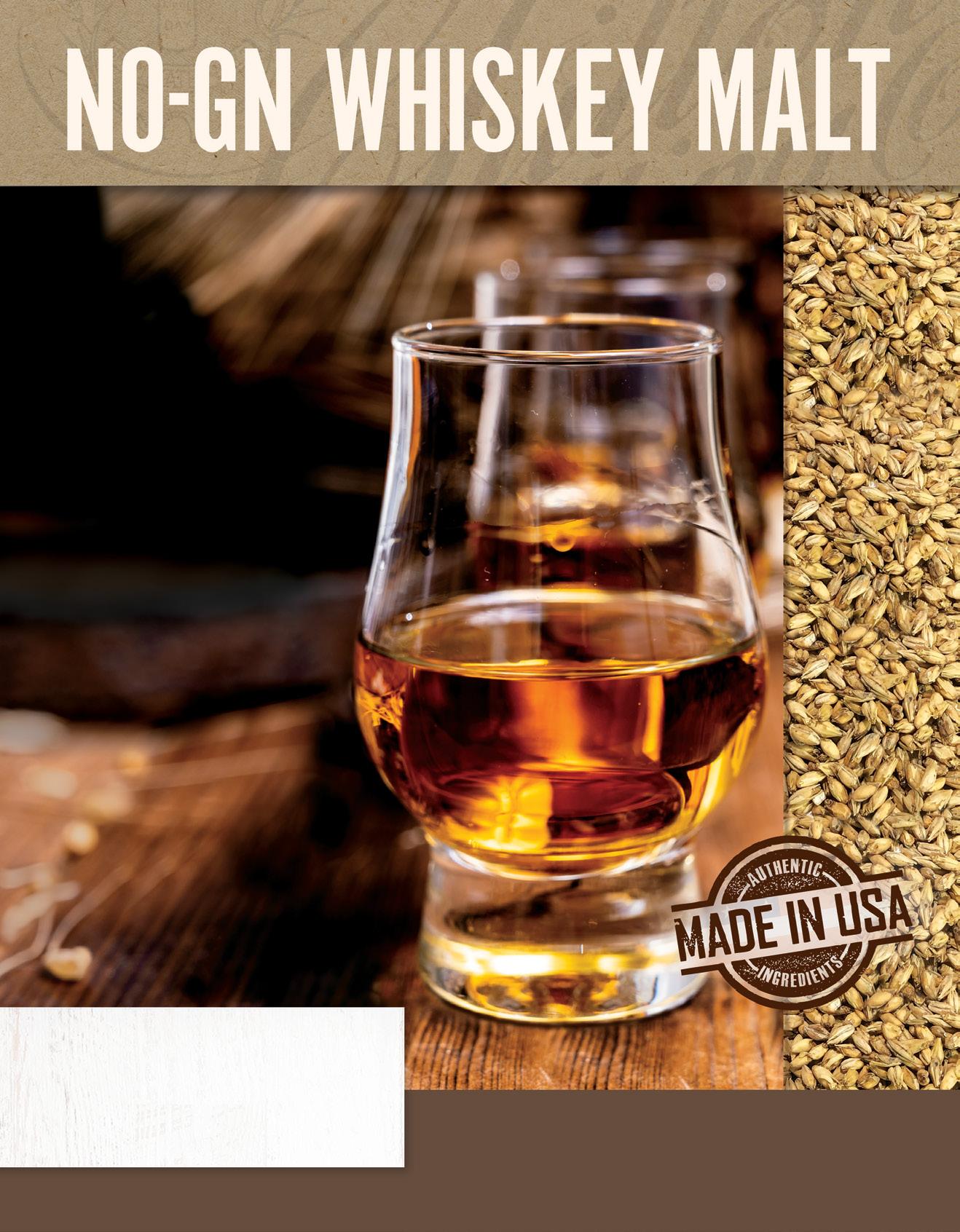
No-GN barley, assuring low levels of Ethyl Carbamate
Designed for all-malt whiskeys
Sweet & bready, with notes of honey
Available in whole kernel and flour
The organizations that advocate for and support the craft distilling industry have never had more on their plates. In this issue's Association & Guild Update, we hear from five groups doing exactly that. DISCUS breaks down the current state of tariffs and what's actually at stake for U.S. spirits exports. ACSA shares the launch of its new Certified Craft Seal and a leadership transition. ADI is gearing up for its annual conference in Miami Beach this August. Women of the Vine & Spirits continues its yearround work on equity, education, and safety through the 86 Harassment initiative. And we're pleased to welcome a new voice to these pages: The National Alcohol Beverage Control Association (NABCA) joins us for the first time with an introduction to the work they do on behalf of the control states that represent nearly a quarter of all distilled spirits sales in the country. These are the people working in the spaces between the still and the shelf
Brian Christensen Editor, Artisan Spirit Magazine
QUARTERLY GuILD & INDuSTrYREPORTS
AMERICAN CRAFT SPIRITS ASSOCIATION
It’s been a busy spring, and 2026 is shaping up to be a transformational year for American Craft Spirits Association (ACSA).
Craft Brand Membership Expansion
In 2026, more producers are working with contract manufacturers, building brands without owning a still, and finding new paths to market. ACSA's membership has evolved to reflect that reality, expanding voting rights to include craft brands alongside craft distillers. At a time when many small distilleries are struggling to get by, the craft spirits community is strongest when more voices have a seat at the table.
ACSA Annual Convention
ACSA’s 13th Annual Convention & Expo came together over three days in April in Sacramento introducing a reimagined focus on today’s most pressing challenges with a new distribution workshop, expanded salon programming, a retailer roundtable featuring off-premise buyers, and a TTB Bootcamp focused on audit preparation.
Certified Craft Seal Launch
During the convention, ACSA launched the Certified Craft Seal, a TTB-approved certification mark more than two years in the making. The seal is eligible for use on bottle labels, stickers, point-of-sale materials, and digital channels, and is designed to help consumers identify spirits made by independent U.S. craft distilleries. The development of the seal was led by Colin Spoelman, longtime ACSA board member and co-founder and distiller at Kings County Distillery, who brought hands-on experience from helping create and steward the Empire Rye trademark and logo.
Competition Results
ACSA honored the medalists from its 12th Annual American Craft Spirits Competition and Sixth Annual Craft Spirits Packaging Awards. Best in Show in the spirits competition went to Moonshine University/Distilled Spirits Epicenter's Completely Custom Whiskey, a Pedro Ximénez Sherry (PX)-finished release out of Kentucky. The packaging competition saw its first-ever tie for Best in Show, with Trevethan Distillery and Larrikin Bourbon Co. sharing top honors. The competition
Learn more about ACSA's Certified Craft Seal
Read ACSA's Spirits Competition Results
also introduced two new recognitions: the Eco-Award, which went to Whistling Andy Distillery for a recyclable paperboard bottle, and the Top Packaging Partner designation, awarded to Stranger & Stranger.
Leadership Transition
Following over a decade of leadership at the helm of ACSA, Margie A.S. Lehrman retired from her role as CEO on May 1. Emily Pennington officially stepped into the CEO role, joined by a newly elected Board led by President Tom Bard of The Bard Distillery,
Vice President Phil Steger of Brother Justus Whiskey Co., and Secretary/Treasurer Mark Shilling of Maverick Distilling.
Legislative Fly-In
The road ahead focuses on market access reform and building out the programming and advocacy work that members have made clear they need most. ACSA will be hosting its annual Legislative Fly-In in Washington, D.C. The Fly-In is complimentary to all ACSA members who want to help educate Congress on issues facing our small business manufacturing sector. This is your opportunity to speak directly with lawmakers and regulators on the impact of distributor consolidation,
AMERICAN DISTILLING INSTITUTE
Summer 2026 has brought fresh momentum across the craft spirits community, and we’re excited to share what’s ahead for the ADI community.
First and foremost: We can’t wait to welcome you to the 2026 ADI Craft Spirits Conference & Vendor Expo, presented by Clarendon Flavors, in Miami Beach, Florida, August 18–19, at the Miami Beach Convention Center. This year’s gathering will bring together distillers, suppliers, and educators for two packed days of learning, practical insight, and the conversations that keep our industry moving forward — from production and compliance to sales, branding, and innovation.
We’re especially thrilled to announce our
2026 keynote speaker: Steven Grasse of Tamworth Distilling & Mercantile, an entrepreneur and author whose work spans some of the most distinctive modern spirits brands and a deep commitment to creative thinking in beverage alcohol.
As in past years, the conference will also include focused Spirits Summits (gin and rum) hands-on workshops, and an Expo floor designed to connect you with equipment, services, and solutions that can make an immediate difference back home. Whether you’re launching your first products or refining a mature operation, ADI is committed to providing resources that help you build sustainably and competitively. Registration is open now,
DISTILLED SPIRITS COUNCIL OF THE UNITED STATES
Here’s What’s Happening With Spirits Tariffs
Though U.S. spirits are not facing tariffs in key markets as of now, retaliatory actions for U.S. tariffs continue to cause uncertainty and declines in exports. Particularly, the removal of U.S. spirits products from provincial shelves in Canada in March 2025 caused U.S. spirits exports to Canada to fall 70 percent year-over-year, from $203 million between
March and December in 2024 to $60 million during the same period in 2025.
Broader trade disputes could quickly bring targeted tariffs against U.S. spirits back into focus. Following the February 2026 Supreme Court decision striking down tariffs under IEEPA, the administration imposed a temporary 10 percent tariff on imports, including spirits, through July 24, 2026, and is pursuing
tax reduction for small distillers, and burdensome regulation that wasn’t created with craft distillers in mind.
Registration is now open and no experience is necessary. We will provide a full briefing and get you up to speed on issues that can change our economic landscape. You simply need the desire and dedication to tell our stories.
so start making plans today.
If you can’t make it to the conference this year, become a member of ADI to stay in the loop about upcoming webinars, workshops, and events. We recently revamped our membership structure so there’s an affordable option for every member of the craft spirits community, from aspiring young distillers and startup brands to seasoned distillers who’ve been running a still for decades. Head to distilling.com for all the details.
Thank you for the work you do to push quality, transparency, and originality forward in craft spirits. We look forward to seeing you in Miami Beach this August.
Cheers,
a separate process to reinstate similar tariffs after that date. Certain imports from Canada and Mexico, including tequila and Canadian whisky, are exempt. However, the tariff applies to other “distinctive products” that cannot be produced in the U.S., such as Scotch whisky and cognac, which are essential to the U.S. hospitality sector.
In the EU, tariff uncertainty persists following two suspensions of a proposed 30 percent tariff on American spirits, now delayed until August 6, 2026. This follows an earlier, unimplemented threat of a 50 percent tariff
Emily Pennington CEO, American Craft Spirits Association
Erik Owens
President, American Distilling Institute
Learn more about ACSA's Board of Directors
on American whiskeys. In addition, a separate suspension of tariffs tied to a long-running aircraft dispute is set to expire in July, leaving the outlook for U.S.-EU-UK spirits trade uncertain.
Amid these challenges, DISCUS supports the administration’s goals of strengthening U.S. manufacturing, jobs, and exports. The distilled spirits industry generates more than $250 billion in annual economic activity, supports 1.7 million jobs, and sourced 2.73 billion pounds of grain from U.S. farmers in 2024. However, growth is slowing: In 2025, domestic supplier sales declined by 2.2 percent and exports fell by 3.8percent.
To restore growth, DISCUS advocates for a return to zero-for-zero tariffs with key trading partners, particularly the EU and UK — a framework that helped increase U.S. spirits exports from $478 million in 2000 to $2.37 billion in 2025. Today, 81 percent of exports go to countries with reciprocal zero-for-zero tariffs. DISCUS also urges implementation of agreements with Argentina, Malaysia, Indonesia, and Ecuador, and pursuit of similar outcomes in high-tariff markets such as India, Brazil, and Vietnam.
Ensuring fair and reciprocal market access is critical to supporting U.S. spirits producers, driving manufacturing growth, boosting
exports, and sustaining jobs across agriculture, production, hospitality and retail.
The Trend That’s In: Responsibility! Responsibility begins with each of us — individually and collectively, wherever we may be. We serve as leaders and ambassadors of alcohol responsibility in our workplaces, within our families, and throughout our communities. As parents, we have a duty to engage in open, ongoing conversations with our children to help keep them safe and alcohol-free as they grow and mature. We also share a collective right to travel safely on our nation’s roads, free from the dangers posed by impaired driving. When we choose to consume alcohol, we have a responsibility to do so in a manner that prioritizes our own well-being and the safety of those around us.
In my role at Responsibility.org, I am deeply committed to advancing these principles and encourage you to join me in this effort. This commitment is especially important during the summer months when school is out, travel increases, and social gatherings are more frequent — but it remains relevant yearround. Alcohol responsibility is not simply a message we share; It is a standard we uphold through consistent action.
I encourage you to embed responsibility
JAMES B. BEAM INSTITUTE FOR KENTUCKY SPIRITS
Conference Recap
It was another incredible year for the annual Beam Institute Industry Conference. This year’s event hosted 1,264 attendees from 15 countries for three days of technical research and networking. Over 200 technical papers were presented, and the quality of the content continues to build year over year. Key topics discussed included technical aspects of production, procurement, finance, branding, tourism and research. A huge thank you to Ilka Balk, the conference organizing team, and the global technical experts who volunteered their time to make this event a success. This event wouldn’t have been possible without the support from the Kentucky Distillers’
Association, Crafted, Suntory Global Spirits, and many others. Following a record setting 2026 event, plans are already underway for next year’s conference. Please join us in Lexington, Kentucky on March 15-17, 2027, for the 8th annual Beam Institute Industry Conference!
Harmonie Bettenhausen named editor of MBAA Technical Quarterly
Congratulations to Dr. Harmonie Bettenhausen on her selection as the next editor for the Technical Quarterly of the Master Brewers Association of the Americas. Dr. Bettenhausen has over 20 years of experience in academic and applied brewing experience,
into your organization’s culture and daily practices. Responsibility.org offers an eLearning platform, Responsibility Works, which provides foundational alcohol education designed to empower individuals to serve as ambassadors of responsible behavior both in the workplace and beyond.
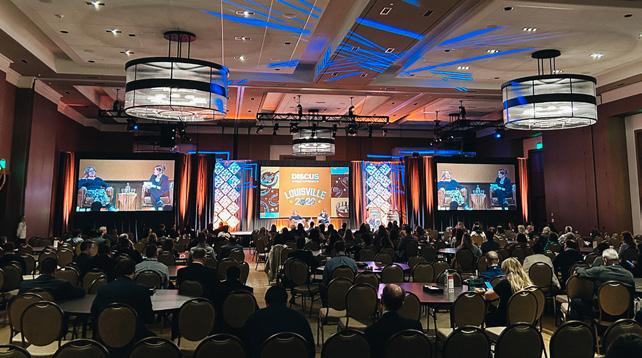
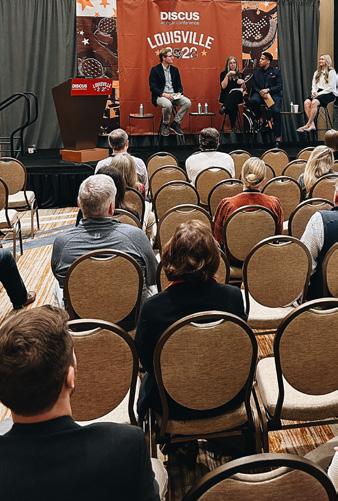
7th DISCUS Annual Conference: That’s a Wrap!
This year’s conference welcomed more than 500 attendees, including large and small producers, industry partners, and colleagues from across all three tiers. Throughout the event, participants engaged in meaningful discussions, fostered collaboration, and shared valuable insights on how we can move forward together strengthening our collective resilience and advancing meaningful progress.
We look forward to welcoming you back for the 2027 DISCUS Conference in Washington, D.C., taking place March 15–17, 2027.
Chris R. Swonger President & CEO, Distilled Spirits Council
of the United States
and she strives to translate the latest technical research into practice with each edition of the MBAA Technical Quarterly.
The Latest from our Research Team
> Beam Institute researchers measured how quickly new make spirits travel through solid oak. Measurements spanned almost two years, where monthly liquid flows were tracked. The flow of water and ethanol were tracked for high and low entry proof, liquid contacting the wood, vapor contacting wood, and through staves with different grain orientations.
Scott, T. E.; Gollihue, J.; Sama, M. P.; Shaffer, M.; Berron, B. J., The transport of new make spirits through American white oak. Journal of the Institute of Brewing 2026, 132 (1).
> The University of Kentucky’s beef cattle program has an extensive track record of research on feeding distillers grain to cattle. In this study, they specifically evaluate the interaction of fescue hay and whole stillage during digestion.
Ajayi, H. J.; Davis, B. E.; Lehmkuhler, J. W.; Harmon, D. L.; Jiang, Y.; Trotta, R. J., Whole stillage inclusion level influences in vitro fiber digestibility and ruminal fermentation of tall fescue hay. Journal of Animal Science 2025, 103, skaf006.
> Dr. Harmonie Bettenhausen’s research emphasizes the importance of metabolomic data in crops for brewing and
distilling. She recently was lead author of a chapter describing the use of high-throughput metabolomics as a critical link between genetic and practically-observable characteristics of plants. Additionally, she co-authored a peer-reviewed study which correlated aerial imagery of winter barley fields to malt quality.
Bettenhausen, H. M.; Niroula, D.; Joshi, J., Applied Metabolomics for Studying Plant-specialized Metabolites in Plant Health, Human Health, and Food Quality. In HighThroughput Plant Metabolomics, CABI GB: 2025; pp 1-17.
NATIONAL ALCOHOL BEVERAGE CONTROL ASSOCIATION
The National Alcohol Beverage Control Association (NABCA) appreciates the invitation to participate in Artisan Spirit Magazine’s Association and Guild Update section of the publication. As this is the first time NABCA appears in the publication, a general introduction seems appropriate so readers can understand the organization.
Who is NABCA?
Celebrating 89 years, NABCA is a non-advocacy trade association that represents control systems throughout the country. A control system is a government agency that takes ownership of some aspect of beverage alcohol wholesale and/or retail. There are 18 control systems in America, 17 of which are states and one county in Maryland, that exist throughout America. There are also some jurisdictions in Minnesota, Alaska, and South Dakota, that have municipally owned stores. These jurisdictions represent almost 23% of the total distilled spirit sales nationwide. In addition to government agencies, NABCA’s members include beverage alcohol manufacturers of varying sizes, other industry associations, legal firms, public health organizations, alcohol enforcement groups, retailers, and more. With headquarters outside of
DC, its members also include international organizations and businesses involved in the alcohol industry.
NABCA’s mission is to support alcohol control systems by providing resources, compiling research, and fostering relationships to address policy for the responsible sale and consumption of alcohol.
To accomplish this, various departments within the organization monitor and share important legislative, policy, news, and data updates. Some of the information NABCA shares is open to non-members. Additionally, NABCA supports its control system members by providing award dollars which they use to implement alcohol awareness campaigns and prevention education initiatives within their communities. NABCA also has informative articles on its website addressing artificial intelligence and how industry suppliers use it.
Networking and Engaging with Partners NABCA organizes three annual events, one of which is open to all businesses operating
Loeb, A.; Sabadin, F.; Perry, A.; Bettenhausen, H.; Brown‐Guedira, G.; Smith, J.; Howell, K.; Walling, J.; Uhlmann, H.; Brooks, W., Temporal genetic relationships between growth, development, and malting quality in winter barley (Hordeum vulgare) using aerial imagery. The Plant Phenome Journal 2026, 9 (1), e70056.
Brad J. Berron James B. Beam Institute for Kentucky Spirits, Chemical and Materials Engineering, University of Kentucky, Lexington, Kentucky
in the beverage alcohol space — the Annual Legal Symposium on Beverage Alcohol Law and Regulation. Two other events are members only and include the annual conference and administrators conference. Panelists and presenters at these events address current events, trends, and issues impacting many areas of beverage alcohol such as: change management, warehouse topics, alcohol law enforcement, and other relevant matters. Gatherings such as these also foster valuable networking opportunities.
NABCA participates in partner events too. While not possible to list all of them, past and future events involving NABCA staff include VIBE, DISCUS Annual Conference, Minnesota Municipal Beverage Association Annual Conference, CADCA, Beverage Alcohol Retailer’s Association Conference, National Liquor Law Enforcement Association Annual Conference, American Craft Spirits Conference, and others.
Curious about NABCA?
Find out more by visiting nabca.org.
Margaret “Maggie” Barchine, APR Director, Communications National Alcohol Beverage Control Association
Read more from NABCA about AI in the beverage alcohol marketplace
Learn more about NABCA's events
WOMEN OF THE VINE & SPIRITS
Committed to Our Mission, 365 Days a Year
At Women of the Vine & Spirits (WOTVS), the leading global membership organization of women and men dedicated to empowering and advancing women in the alcohol and alternative beverage industry, progress is driven by purpose and sustained through year-round commitment. WOTVS was founded to champion women in the workplace, not as a symbolic gesture, but as a business imperative.
The organization closed out a strong Q1 with a dynamic celebration of Women’s History Month. Throughout March WOTVS hosted a robust series of live chats spotlighting women across the industry, creating space for meaningful dialogue around leadership, business development and innovation, career advancement, and the evolving landscape of beverage alcohol. This included the launch of a new series, Pouring into the Future, The Women Who Shaped our Industry, featuring women with 20-plus years of industry experience. Paying homage to the industry they have helped foster and transform, the series taps into the minds of women changemakers on their reflections and visions for the future of our industry.
While Women’s History Month serves as a powerful moment of reflection and recognition, it also underscores The organization’s broader mission is to create a lasting impact 365 days a year through programming, mentorship, and community engagement that supports women and their male allies at every stage of their careers. WOTVS serves as a global connector and catalyst across all tiers of the alcohol and alternative beverage industry from emerging brands to multigenerational corporations, and from production and operations to sales, marketing, finance, legal, and executive leadership.
Women of the Vine & Spirits continues to unite the industry through its robust Live Chat calendar, featuring expert voices and industry leaders who share valuable insights, current data, and
response to industry trends and challenges, supporting both personal and professional growth of all our members.
WOTVS is rooted in education, connection, and action to move beyond conversation and toward real, substantial impact.
WOTVS Foundation — Apply for Scholarships Today
The Women of the Vine & Spirits Foundation continues to expand access to continuing education and professional development across the global beverage alcohol community. Since its inception in 2017, the foundation has awarded more than $1 million in scholarships supporting individuals as they pursue opportunities for growth and advancement.
Applications for the upcoming scholarship cycle are open, welcoming candidates from around the world who are committed to building meaningful careers within the industry. Applications are due June 30, 2026.
Through the continued support of its donors, the foundation remains dedicated to investing in the next generation of women leaders.
Interested in supporting this mission? The WOTVS Foundation is calling on the industry for donations to support their 2026 scholarship recipients.
Free Training & Resources on the Prevention of Sexual Violence in Hospitality
Creating a safer, more inclusive industry remains central to WOTVS’s mission. Through its 86 Harassment™ initiative, the
organization continues to provide free, industry-specific training and resources aimed at preventing sexual harassment and violence in hospitality and beverage alcohol environments.
With offerings that include expert-led training sessions, a 24/7 confidential hotline and chat service in both English and Spanish, and an extensive resource library, 86 Harassment equips individuals and organizations with the tools needed to foster respectful, accountable workplace cultures.
Enroll in a WSET Course to Continue Your Education
Education remains a cornerstone of our organization’s impact. As an Approved Program Provider (APP) for the Wine & Spirit Education Trust® (WSET), Women of the Vine & Spirits offers fully online courses and exams for WSET Levels 1–2 Awards in Beer, Spirits, and Wine. As a national online provider, WOTVS welcomes students from across the U.S. who are seeking to advance their careers within the trade.
Globally recognized as the international standard in wine, beer, and spirits education, WSET qualifications serve professionals at every stage from those new to the industry to seasoned experts and passionate enthusiasts. Enrollment is open to women and men in the U.S., including both WOTVS members and non-members.
Deborah Brenner Founder and CEO, Women of the Vine & Spirits
IS YOUR GUILD OR ASSOCIATION MISSING?
Don’t miss out on this opportunity to reach a national audience of distillers and suppliers! Share your latest victories, recruit supporters, request suggestions to solve your latest challenges, and inspire fellow groups. Email brian@artisanspiritmag.com to get involved!
Learn more about 86 Harassment
Learn more about WSET with WOTVS
Learn more about the WOTVS Foundation
Learn more about
DOWN BuT NOT OuT
KEEP THRIVING IN A DOWN
MARKET
It’s no secret that sales in the alcohol beverage industry are down — Just Drinks1 estimates that sales dollars were down 2.8 percent in 2025.
While sales may be down, this is not a time to panic. This is a time for self-reflection and re-evaluation to create a new path forward for your brand. Here are some strategies to focus on — and strategies to avoid — to help stage your brand for success during trying times.
WHAT TO FOCUS ON:
OFFER A MORE PERSONALIZED EXPERIENCE.
Make your customers feel special. If you have a physical location with a tasting experience, make sure that all your materials feel personal. For your tasting menu, consider pre-cut, professionally printed cards with your logo and luxury touches like gold foil or embossing. You can run these through your office printer and customize with your customer’s name. It’s an affordable way to instantly elevate an experience. Offering a welcome taste or a sneak peek of a new product that isn’t on the menu are simple ways to make someone feel like a VIP. If you don’t have a physical location, make sure that your product shipments feel like an exciting unboxing
experience. Simply adding a beautifully printed card or a hand-written note from the distiller goes a long way in connecting with your customers.
OFFER UPGRADES AND SPECIALTY ITEMS.
Keep your core products and experiences at an attainable price point but also create opportunities for your customers to upgrade. This could be a tasting of a broader range of products, a voucher for a private distillery tour, or limited-edition items that can be added to a shipment.
RE-FOCUS YOUR POSITIONING.
Now is a great time to take a critical look at your brand positioning. Is it optimized to connect with your target customer? Are you consistent with your messaging across your website, social media, email marketing, and in person communications? If you have a customer database, consider sending out a survey to gauge how people are perceiving your brand. This can be eye-opening and either confirm you are on the right path or provide guidance on how your positioning needs to shift.
While sales may be down, this is not a time to panic.
Now is the time to strategize, re-center your brand, and focus on fostering connections with your customer.
EVALUATE YOUR PORTFOLIO.
Do you have too many products? Or maybe a gap in your portfolio? Now is the time to evaluate sales across your lineup and consider cutting products that aren’t performing. Compare your offerings to your competitors and listen to customer feedback — it can help you identify a potentially profitable product that might be missing from your portfolio.
WHAT TO AVOID: BLANKET DISCOUNTS.
While general discounts can lead to a temporary bump in sales, they can also train customers to hold off on purchases until the next sale comes around. Instead, consider setting a spending minimum and rewarding customers with a discount or free shipping once they hit that minimum. If you set the minimum to just above your average order value, it’s also a great way to naturally nudge your average order price higher.
UNWARRANTED PRICE INCREASES.
According to the U.S. Bureau of Labor Statistics,2 the Consumer Price Index went up 3.3 percent between March 2025 and 2026. Every consumer and business is feeling the pressure, and while raising your prices may be necessary, it’s important to not go up too high, too quickly. Customers are much more understanding about price increases when they feel like they are getting something in return — whether that’s an improvement in product quality, more premium packaging, or a more elevated experience overall. If customers feel like your price increases aren’t justified, you risk losing them for good.
MARKETING FREEZE.
During tough economic times, it can be tempting to pull back on marketing spending — especially since it often takes time and patience to see a return and the ROI isn’t always easy to track. But marketing is critical to keeping your brand top of mind when customers are ready to make a purchasing decision. Cutting corners on marketing in the short term could end up costing you real revenue down the road.
2 https://www.bls.gov/cpi
DOWNGRADING YOUR PACKAGING.
Downgrading your packaging puts you at a competitive disadvantage and can signal to customers that the quality of what’s inside the bottle has gone down. Exceptional packaging encourages trial of your brand over others in the marketplace, reinforces the quality of your product in the consumer’s mind, and assists recall of your brand when they are ready to buy again.
Now is the time to strategize, re-center your brand, and focus on fostering connections with your customer. If you can do this effectively, you will weather the storm of economic uncertainty and come out the other side with even more loyal customers.
David Schuemann is the owner and creative director of CF Napa Brand Design. Visit www.cfnapa.com or call (707) 265-1891 for more info.
At Independent Stave Company, we’ve always believed that the best distillers deserve the best partners. Since 1912, we’ve proudly partnered with the world’s finest distillers united by shared values of quality, consistency, and creativity. We’re committed to what matters most to you, and building strong partnerships is one of our greatest strengths.
SOURS, DAISIES, AND FIXES, OH MY!
PFROM SAILORS’ GROG TO MARGARITAS, THE ENDURING LEGACY OF COCKTAIL SIMPLICITY
Written by CAITLIN BARTLEMAY /// Illustrations by WILDER CHRISTENSEN
“A rum by any other name, would it taste as sweet”
— SHAKESPEARE at a bar… probably.
roducers are keenly aware of the cultural and chemical journey spirits take before they land in a bottle, but there is an entire universe of equally rich stories and traditions built around their ultimate voyage in a glass: Cocktails, the final frontier. Sours, daisies, and fixes are the root of so many classic cocktails. While we enjoy the embrace of summer revelry and their balanced quench, shall we do so knowing a bit more about the history we are also taking part in?
SOURS
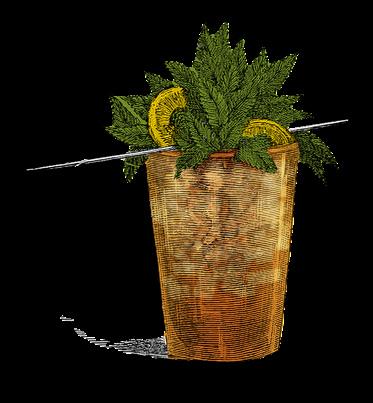
Likely invented by scurvy-avoidant British sailors, the rum sour was born of necessity with rum storing much better than beer or wine. As the alcohol ration of choice, it was mixed with limes to avoid scurvy and became a more palatable drink — grog.
If Carl Linneus had continued organizing the world once he finished with plants and animals, he would have certainly come to the conclusion that sours are a phylum of their own, with the word “riff” substituting in for the more classic notation of “genus and species.” Sours began to slowly encompass all manner of spirits as drinking culture expanded and their three simple ingredients — spirit, citrus, and sweetener — became increasingly available. Springing from grog and the tradition of punches, the daiquiri leads the charge as a popular sour. Traveling across the pond we see their first mention in written form at Mart Ackermann’s Saloon in Toronto in 1850, and six years later they appear in Jerry Thomas’ The Bartenders Guide, not as a rum daiquiri, but instead as a gin or brandy sour. More commonly known as a gimlet and a brandy sidecar, names with histories of their own just like the daiquiri, their popularity and heritage are not to be denied.
Soon to follow is the whiskey sour, mentioned in Wisconsin’s Waukesha Plain Dealer in 1870. While it may be the first written mention, its popularity is asserted by how it is spoken of as illustrated in the Atlanta Daily Constitution, “When American meets American, then comes the whiskey sour.”
THE FIX IS IN
Sometimes things don’t have to be broken to need a ‘fix.’ First seen in print in 1841 as a gin fix, its description of gin, lemon, and sugar, may sound similar but served with a splash of soda over a mound of ice and garnished with fruit makes it a treat all its own. As a category we don’t see it called out much in modern cocktailing as the sours have proven more dominant, but they quietly remain on menus around the world providing needed refreshment.
PLUCKING PETALS
For those of you unlucky enough to have never spent time with royalty, a daisy is a cocktail made with gin, orange liqueur, lemon juice, and a splash of soda water. Even though its first appearance in written history is in an 1866 novel Gay Life in New York, or Fast Men and Grass Widows by Henry Llewellyn Williams, there is a recipe dating to 1876 in Jerry Thomas’s How to Mix Drinks. While the gin daisy is a classic for good reason, drinkers today are likely more familiar with a younger and more noteworthy family member: the margarita. Its beginnings center around the 30’s and 40’s though its true origins are a mystery as it seems many people may have come to this cocktail’s delicious and inevitable conclusion independently.
In recent history we see less of the family names of these prominent cocktails, and more creativity that blends them all together in increasingly delectable ways. Whether it’s a cosmopolitan, bramble, sidecar, or gimlet, with every sip you join generations of drinkers in celebration of delicious simplicity.
Caitlin Bartlemay is the master distiller at Clear Creek Distillery. Armed with 14 years of industry experience and a food science degree from Oregon State, she is devoted to educating the world on why the story and quality of the spirits in your glass are worth celebrating.
Built for the Future
At Independent Stave Company, sustainability is not just a priority, it’s a responsibility we proudly carry.
As a vertically integrated company using 100% of the log, we ensure traceability from forest to barrel. Our American and French oak barrels are crafted from sustainably managed forests through certified programs including SFI and PEFC.
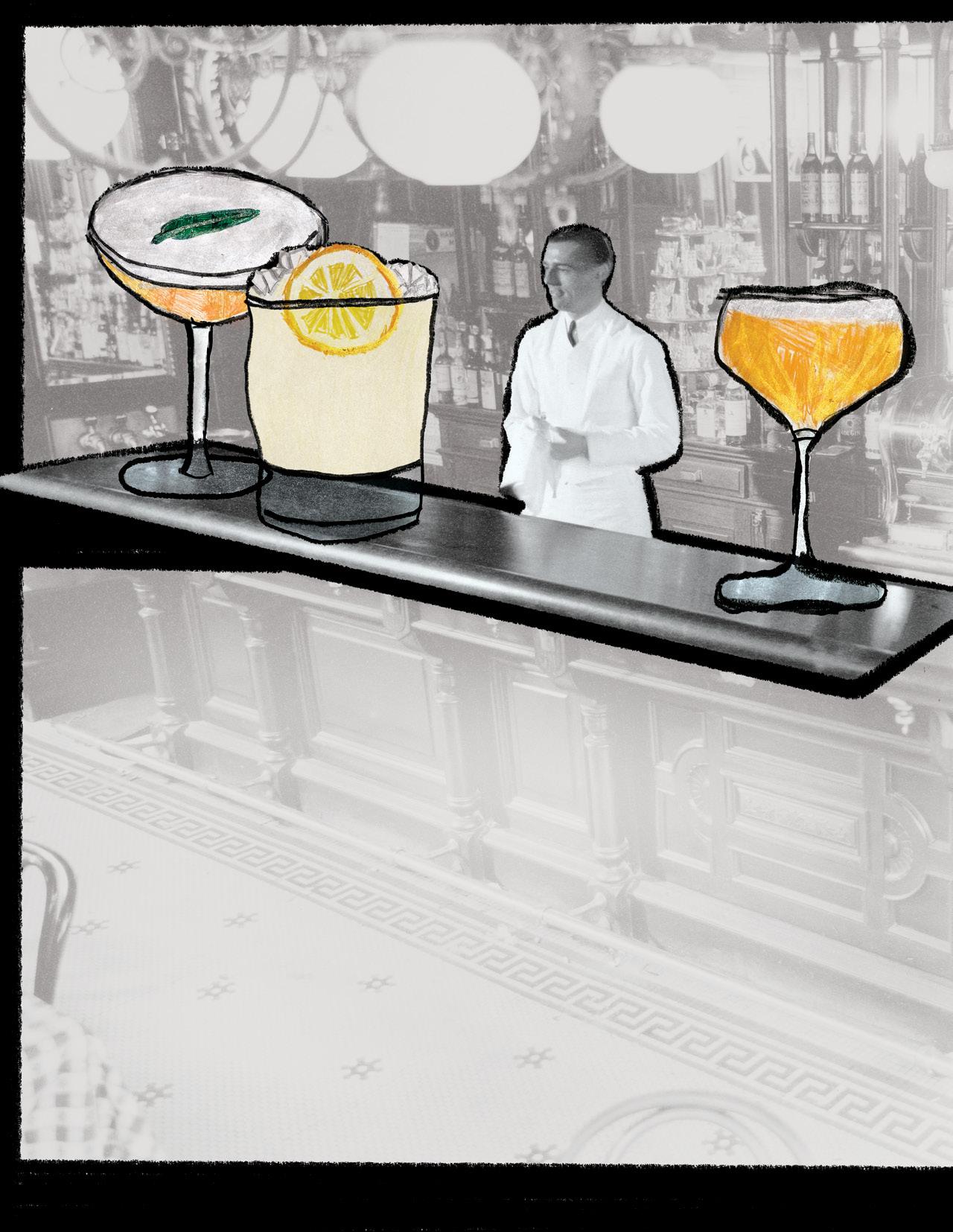
Background image: Billy's Bar, 56th Street and First Avenue, Berenice Abbott, The New York Public Library, public domain.
Written by TOm WOODS and COreY DAY
A THe SKY WAS FALLING
THe SKY WAS FALLING
As we warned in the Winter 2025 issue, Automatic Renewal Laws (ARL, i.e., laws governing business models that include a recurring subscription) are becoming more stringent. As a result of California’s most recent amendments to its ARL, litigation seeking to enforce those laws has seen a precipitous uptick.
Why Distillery Clubs and Membership Programs Face More Risk Than Ever From “Technical Compliance” to Class Action Exposure
For years, California’s ARL was something for distilleries to keep in mind if they offered a club or recurring payment program, but rarely the thing keeping owners up at night. That calculus is changing because over the past year ARL compliance has moved from a background issue to a frontline litigation risk. Businesses offering subscriptions, particularly those aimed at consumers, are now facing a wave of private class action lawsuits and aggressive government enforcement with settlements regularly landing in the seven-figure range.
While government enforcement has focused on big multistate players, private class actions appear to be focused on lower hanging fruit. This shift is not theoretical. It is driven by three converging developments: (1) a refined playbook by class action attorneys, (2) increasing enforcement by California prosecutors, and (3) the statutory amendments that significantly expand what counts as an ARL violation beginning July 1, 2025, previously covered in this column.
The ARL itself does not provide a standalone private right of action. That briefly slowed private enforcement after a 2020 appellate decision held that consumers could not sue directly under the statute. Plaintiffs adapted quickly.
Rather than suing under the ARL, private plaintiffs now use alleged ARL violations as the predicate for claims under California’s Unfair Competition Law, Consumers Legal Remedies Act, and False Advertising Law. The theory is straightforward: They allege a consumer was enrolled in a subscription without legally sufficient disclosures or consent, and as a result every charge collected is an “unlawful” business practice and an economic injury. That framing has proven effective.
By late 2025, plaintiffs’ firms were filing clusters of nearly identical class actions against consumer brands alleging buried or non-existent disclosures, and obtuse non-compliant cancellation flows. These cases focus less on whether a business intended to mislead consumers and more on whether the subscription mechanics can survive a screenshot-by-screenshot teardown in court. That, we contend, is the goal. These claims are not meant to go to trial, but rather to be expensive enough to be settled before trial.
For distilleries, this matters because their clubs are, at their core, subscription contracts with recurring charges — often layered on top of marketing language about perks, discounts, and exclusivity. Those are precisely the programs plaintiffs’ lawyers have been attacking.
Government Enforcement Raises the Stakes
At the same time private litigation has resurged, California prosecutors have doubled down on ARL enforcement through the California Automatic Renewal Task Force (“CART”), a multi-county coalition of district attorneys that has been active for nearly a decade.
What has changed is the scale.
Recent CART settlements — including multi-million-dollar resolutions with national subscription businesses — signal a willingness to pursue large penalties, restitution, and injunctive relief based on what might once have been characterized as “user interface issues.” These cases routinely cite failures to obtain affirmative consent, inadequate acknowledgment emails, and cancellation processes that require too many steps or too much persistence.
The wine industry has already felt this pressure. In a prior enforcement action, prosecutors targeted wine club programs that allegedly charged monthly fees or shipped pre-selected bottles without clearly and conspicuously disclosing renewal terms or providing easy online cancellation. The public message from regulators was unambiguous: If alcohol clubs charge customers on an automatically renewing basis, they must comply with the ARL.
Why the 2025 Amendments Matter
Against this enforcement backdrop, California enacted Assembly Bill 2863, which took effect July 1, 2025. On paper, the amendments read like a tightening of existing rules. In practice, they materially expand exposure.
The updated law formalizes concepts that enforcement agencies and plaintiffs had already been pushing toward — express affirmative consent, true clickto-cancel functionality, same-medium cancellation, mandatory reminders, and a prohibition on material misrepresentations that extend well beyond renewal mechanics themselves.
For distilleries the last point is especially important. The amended statute does not just regulate how you disclose renewal terms; It reaches claims about the underlying product or service. That means marketing statements about club benefits, bottle selection, discounts, guarantees, or exclusivity can now be folded into an ARL-based enforcement theory if they are allegedly misleading or incomplete.
In other words, the compliance question is no longer just “Is our cancellation link easy to find?” It is whether the entire enrollment experience including copy, layout, consent flow, confirmations, follow-up communications, and opt-out processes can withstand scrutiny from regulators and class action lawyers who know exactly where to look.
Why Distilleries Should Pay Attention Now
Distillery clubs are attractive for good reasons. They create predictable revenue, deepen customer relationships, and smooth out seasonal swings. Those same features, however, make them ripe targets for automatic-renewal claims if the compliance details are not handled carefully. Something many distilleries learned when recurring payment laws were first enforced against alcohol producers several years ago.
What has changed is the risk profile. The combination of expanded statutory duties, aggressive government enforcement, and an updated class-action playbook means that small missteps can now scale quickly into significant liability.
DISCLAIMER : This article is intended to be a source of general information, not an opinion or legal advice on any specific situation and does not create an attorney-client relationship with our readers.
Tom Woods is a Partner with the law firm Stoel Rives LLP where he is a commercial dispute and consumer practices litigator. He can be reached at tawoods@stoel.com or (916) 319-4748.
Corey Day is an alcohol beverage attorney and litigator at Stoel Rives LLP and can be reached via email at corey.day@stoel.com or by phone at (916) 319-4670
With four U.S. modern cooperages and a company owned stave mill network, our robust and responsive infrastructure is built for flexibility and resilience so you can count on us today and for generations to come.
Schizosaccharomyces Pombe
FERMENTATION’S FUNKY COUSIN
Picture a traditional Jamaican rum distillery: The air thick from the heat of the Caribbean sun, but filled with aromas of pineapple, banana, and other tropical fruits. Those aromas that are coming off the fermenters are not the clean and efficient ones you would expect from modern distillation: They are strong, pungent, and funky scents that fill the air with a tropical feel that gives the rum such a distinctive characteristic. At the center of this aromatic complexity lies pombe
Saccharomyces cerevisiae is synonymous with fermentation and the production of alcohol all over the world, and rightly so, as practically all the alcohol that is consumed in the world is made by these humble little fungi. But today, I want to talk about a distant cousin to the S. cerevisiae, a fungus known as Schizosaccharomyces pombe or pombe for short. Pombe is most widely known as the “secret sauce” that gives high ester rum its funky flavors.
History
The story of pombe does not begin in the Caribbean. The name itself is derived from the Swahili word for “beer.” In East Africa, they would produce a fermented beer from millet, and in 1893, German scientist Paul Lindner would be the first to isolate this yeast from that millet beer. This is how pombe got its name, but long before it was scientifically discovered, pombe was likely hitching a ride on sugarcane across the Atlantic. That is how we think a yeast derived in East Africa made its way to the sugarhouses of the Caribbean. We don’t know for sure where its true origin lies, but this is our best educated guess.
Written by Kevin Kawa
But why does pombe do so well in the sugar and rum production houses of Jamaica? Well, that has to do with the biology of pombe. See, pombe is a fission yeast whereas its cousin S. cerevisiae reproduces by budding. Fission takes longer to reproduce than budding, so pombe was slower to grow and build large numbers, but slower reproduction meant pombe could outlast the faster-growing cousins. This is where the dunder pit comes into play, and why pombe was able to thrive in that environment so well.
A dunder pit is a traditional Jamaican rum distilling process where dunder (stillage) is stored and allowed to mature, sometimes for years. Dunder pits were closely guarded at the distillery because they were considered to be the secret sauce of traditional rum production. Often used interchangeably, but not the same, are muck pits and dunder pits. Without getting too far into the weeds, dunder was from the stillage whereas muck typically came from the leftover yeast from fermentation. Simply put both dunder and muck pits, created an environment for the pombe to grow. Dunder and/or muck were important parts of producing high-ester rums, and it was important to maintain those high flavors because they were imported to European countries. In order to avoid the high import tax, high-ester rums were mixed with weaker and cheaper European spirits to produce more bulk-flavored spirit. Therefore, the rums needed to squeeze out as much flavor as they could because they would end up being diluted. Essentially Jamaican rum was being used as a flavor concentrate, so they were incentivized to make as much flavor as they could. To do this, dunder and/or muck containing the pombe, were added to new molasses washes to increase the acidity and create new and bold flavors.
So why is pombe not more popular today? Well, industrialization took over rum production as new and more efficient methods were developed. Pombe is slow compared to S. cerevisiae and focusing on yield and tank turnover, meant that pombe was forced out. Along with column stills coming into use, how quickly spirit could be produced became the main focus, not how much flavor could be maximized. However, that does not mean pombe was completely forgotten. There are still producers, specifically in Jamaica, keeping the tradition alive, and there has been a bit of a resurgence in high-ester rums, so more distillers are looking to incorporate pombe into their production.
Rum Production
What makes pombe so unique is its ability to biotransform organic acids and higher alcohols into the fruity ester characteristics that are associated with high-ester rums. Pombe is really good at converting organic acids and surviving in low pH environments. Hence, why it did so well in the dunder and muck pits. It would tolerate the lower pHs that other yeasts could not handle while thriving on converting those organic acids into esters. This means as any bacteria in the dunder would produce lactic, acetic, or butyric acid, the pombe would transform those acids creating esters out of them. While other yeasts would have “given up” under those stressful fermentation conditions, pombe continues to work, slowly but surely.
Some considerations when using pombe: First, it is a slow fermenter. Be prepared for it to take 7-10-plus days before it fully consumes all of the sugar in a wash. Secondly, pombe needs proper nutrition. Using a high-quality, complex nutrient with high nitrogen as well as yeast vitamins and minerals can help ensure a healthy pombe population and fermentation. Also, pombe needs something to biotransform to really produce all the funky esters. If you have a really clean wash with hardly any organic acids being produced, there is not much that the pombe can transform into esters.
The Future
While pombe has traditionally been used in the production of high-ester rums, in the ongoing pursuit of flavor, pombe can be a very useful tool in any distiller’s toolbelt. If you are looking to differentiate, or try something new, pombe has a lot of benefits. It has more osmotic, pH, and temperature tolerances than its S. cerevisiae cousins. It is a great biotransformer to produce esters. Additionally, pombe does not have to be used on its own and could be co-inoculated with other yeast strains giving the distiller the benefits of each of the strains. You could start with a pombe to transform some of the organic acids and higher alcohols into ester flavors, and then inoculate with a house S. cerevisiae strain to come in and clean up the rest of the sugar and finish the fermentation quickly
There is a wide-open playing field of what pombe could do in other spirits. From malt and bourbon to tequila and brandy, pombe could be a flavorful ingredient to bring out all sorts of new and flavor-forward spirits.
Pombe’s rich tradition in rum production gives it a history that is well entrenched and ripe for a revival. Schizosaccharomyces pombe is at the start of a new renaissance of flavor, and while rum can certainly benefit from it, every spirit could look to this funky fungi to help bring out bold and unique flavors that can help differentiate a brand. The door is open to a lot of experimentation, only the future knows what we will see coming out next.
Kevin Kawa is a Technical Applications Manager at AB Biotek and focuses on distilled spirits. He has his bachelor's in chemistry from the University of Nebraska and he has his Masters in Brewing and Distilling from Heriot-Watt University. He started his career as a production brewer and then moved on and worked as a production distiller before finally finding his way into technical applications. He has a passion for helping professionals and enthusiasts alike on all things fermentation. He is happy to discuss yeast, nutrition, and how to craft a flavorful spirit before it heads to the still.
Illustrations: (left to right) Microscope droit grand modèle, Jules Blanadet and E. Pérot from La photographie appliquée aux recherches micrographiques (1866) by Albert Moitessier, public domain. Schizosaccharomyces Pombe, from Fermentation Organisms; A Laboratory Handbook (1903) by Albert Klöcker public domain. Microscope binoculaire stéréoscopique, E. Salle, from La photographie appliquée aux recherches micrographiques (1866) by Albert Moitessier, public domain.
our commitment
Excellence in Every Barrel
At Independent Stave Company, quality isn’t a checkpoint it’s a mindset.
From forest to barrel, we invest in craftsmanship at every stage, combining the expertise of our cooperage teams with industry leading quality systems, including ISO 9001, ISO 22000, and ISO 14001.
WILD BY DESIGN
THE LIVING TRADITION OF PALM WINES, PULQUE, AND OTHER DRINKS THAT FERMENT THEMSELVES AT THE SOURCE
WRITTEN BY HARRY HALLER
Some of of humanity’s oldest drinks require almost no human labour: fresh palm wines, agave’s pulque, coyol wine, and the bertam palm’s flower nectar. Mother Nature does all the work. You just go and collect it.
In West and Central Africa, raffia and oil palms will serve anyone with a cut and a container. A tapper nicks the stalk, ties on a bucket or hollowed-out calabash, and the sap begins fermenting as it drips — no mash tun, no boiler, no packaged yeast. Early pours are cloudy, lightly sweet and gently sour; best sipped within hours. The operating model is brutally simple: cut, collect, pour.
Across the Indian Ocean, coconut palms keep the same low-tech contract. In South India it’s called kallu, in Sri Lanka toddy, in Indonesia tuak. The ‘process’ is a bruise to the flower stalk, a hung pot, and patience. Shops pour quickly for the obvious reason: The drink is made on the spot and served as-is. No brewery kit required — just a tree doing the work while you find a seat.
S ome of of humanity’s oldest drinks require almost no human labour.
Mother Nature does all the work.
You just go and collect it.
Palmyra — the big fan-palm — provides a sturdier palm wine with more grain and earth in the flavour. From the date clan comes legmi, a North African morning staple with a clean, slightly tangy profile. The gear list fits in a pocket: knife, a short length of tube or leaf funnel, and a collecting vessel. Everything else — sugar, yeast, and temperature — belongs to the plant and the weather.
Down in the brackish seams of Southeast Asia, the nipa palm feeds tuba into jars through simple bamboo tubes. Fresh tuba reads as citrusy, bready, and faintly sparkling. Sugar-palm wine (Arenga pinnata) starts friendly with a firmer bite by nightfall; fishtail palm (kithul) in Sri Lanka is notably smooth — rounded enough that a second glass feels inevitable. In parts of Oceania, sago palms oblige with a mild, honest wine if you have patience and a clean container. Different species, same rule: no malting, no boiling, no pumps or plates — just cut, collect, pour. Head to agave country and the plant keeps the vat under its own ribs. Carve a bowl into the heart and a mature agave weeps aguamiel — often up to a litre a day — which ferments on contact.
That becomes pulque, a silky, faintly sour-sweet, tangy and very much alive. There’s no hops boiled or stainless steel in sight; Native microbes set the pace.
Central America contributes coyol wine from the coyol palm. You tap the trunk, collect the sap, and let the yeasts already living on the tree and in the air take over. Folklore has its stories; the method stays the same: tap, drip, ferment, drink — no stills, no filters, no laboratory.
Wild yeasts DO THE labor
Then there is the showpiece for pure “nature does the work” the bertam palm. Its flowers exude nectar that ferments on the plant itself. No pots, no pipes — just blossoms running a tiny brewery without supervision. Treeshrews visit nightly and somehow keep their footing.
Humans can and do taste it when they find it. Volumes are small; the lesson is large: Fermentation doesn’t require us, and often barely tolerates us.
They are volatile, seasonal, and stubbornly local because the best part is the living part — the wild fizz, the shifting flavour, the sense that it’s still becoming itself. You can note the strength, often two to six percent ABV, with plenty of variation, but a better measure is how quickly a courtyard fills with talk. These are social liquids, made with a knife and a bucket, best enjoyed at the source.
Civilisation later tamed that volatility with pasteurisation, stabilisers, and lorries so the drinks could travel. The logistics worked; the immediacy didn’t. You can bottle alcohol, but you can’t bottle ‘freshly alive.’
Without our ancient ancestors that were willing to taste what we’d call rotten — fizzy sap, overripe fruit, nectar on the turn — we might never have found alcohol. They must have found it: not in copper and steam, but in a drip from a cut stalk, a flower on its own timetable, and that whiff of fruit a day past its prime. They tasted and when they didn’t keel over, tried again. So raise a gourd to nature for doing all the work, and to the first tasters who found alcohol by trying what those of us in the modern world would throw away.
Harry Haller is a consultant for the food and beverage industry. His main focus is on innovative ways to produce and use alcohol and the development of high-end milk chocolate recipes.
ROLL CALL!
FRESH PALM WINES:
- Raffia
- Oil
- Coconut
- Palmyra
- Date
- Sugar
- Fishtail
- Nipa
- Sago
THE plant provides sugar
OTHER SPONTANEOUS BEVERAGES:
- Pulque — From wounded agave
- Coyol wine — Ferments as it flows from a Central American Palm
- Bertram flower nectar — Brews itself mid-air
Your job IS TO show up WITH A vessel
our commitment
Innovation by Design
We design and produce bespoke barrels, pushing the boundaries of tradition with our extensive oak expertise.
Our R&D and sensory teams collaborate with distillers, offering tailored support and technical insights.
In-house engineers bring these innovations to life, delivering custom solutions.
Written by MICHAEL BILELLO
American Whiskey 250 A TOAST TO THE NATION
atn 2026, the United States begins the celebration of its 250th anniversary. Two and a half centuries after the signing of the Declaration of Independence, Americans are reflecting not only on our founding ideals, but on the traditions, industries, and craftsmanship that have helped define the character of the nation. Few products embody that story more fully than American whiskey.
American whiskey is more than a spirit. It is agriculture, ingenuity, rebellion, migration, manufacturing, and community. It is the story of farmers who turned surplus grain into value, of pioneers who carried copper stills westward, of families who passed down recipes and techniques across generations. It is, quite literally, America’s native spirit.
From the earliest days of the Republic, whiskey played a central role in economic life. In the late 18th century, grain farmers, particularly in frontier regions, distilled whiskey because it was easier to transport and trade than raw grain.
Whiskey was currency. It was commerce. It was community. And yes, it was controversial enough to spark one of the young nation’s first major political tests: the Whiskey Rebellion. That episode underscored a foundational American tension between federal authority and individual enterprise — one that continues to shape policy debates today. Over time, American whiskey evolved alongside the nation. Kentucky and Tennessee became synonymous with bourbon and Tennessee whiskey. Pennsylvania and Maryland developed rye traditions. In the 20th century, Prohibition nearly extinguished the industry, shuttering distilleries and scattering generations of expertise. Yet even then, American whiskey endured. After repeal, distillers rebuilt. In the decades that followed, they modernized, expanded, and refined their craft.
The last twenty years have marked a renaissance. Consumers rediscovered the authenticity and craftsmanship of American whiskey. Distilleries invested in new facilities and revived historic brands. Small craft producers emerged alongside established names. Tourism flourished. What was once considered a legacy category became one of the most dynamic segments of the global spirits industry.
In a time when the nation reflects on its past and looks toward its future, American whiskey offers a uniquely American lesson: Patience pays.
As America celebrates 250 years of independence, visiting an American distillery is one of the most tangible ways to connect with that history.
Distilleries are living museums of American industry. When you step inside a rickhouse and smell aging barrels stacked floor to ceiling, you are witnessing patience as a business model. When you watch grain being milled, mashed, fermented, and distilled, you are seeing the alchemy that transforms American agriculture into a globally respected product. When you meet the people behind the process — distillers, coopers, tour guides, warehouse teams — you see the pride that defines American craftsmanship.
The American Whiskey Trail brings this story to life from east to west. From historic sites in Virginia to the rolling hills of Kentucky and Tennessee, from Indiana’s industrial heritage to Colorado’s high-altitude innovation and Utah’s mountain distilleries, the Trail reflects the breadth and diversity of American whiskey. It connects visitors to the distilleries that anchor local economies and celebrate regional character. It invites Americans and international guests to explore the places where heritage meets innovation.
Celebrating America’s 250th anniversary is about more than fireworks and parades. It is about reconnecting with the industries that shaped our identity. American whiskey is rooted in rural communities, but it also fuels urban revitalization. It supports farmers who grow corn, rye, wheat, and barley. It sustains cooperages that craft barrels from American oak. It employs truck drivers, warehouse workers, hospitality staff, and exporters. It drives tourism in towns large and small.
When visitors travel the American Whiskey Trail, they are not only tasting a product, they are participating in an economic ecosystem that spans from grain to glass. They are supporting family-owned businesses and multinational brands alike. They are seeing firsthand how tradition adapts to modern expectations of sustainability, transparency, and innovation.
American whiskey also represents resilience. The industry has weathered wars, economic downturns, Prohibition, shifting consumer tastes, and global trade tensions. It has adjusted production cycles to match demand, invested for the long term, and protected standards of identity that ensure authenticity and quality. American whiskey is defined by rules that safeguard what goes into the bottle and how it is made. That commitment to integrity mirrors the broader American commitment to the rule of law and the value of standards.
In a time when the nation reflects on its past and looks toward its future, American whiskey offers a uniquely American lesson: Patience pays. Barrels laid down today will not be ready for years. Investments in infrastructure and innovation may not bear fruit immediately. But long-term vision is part of the American story. So is optimism.
As global markets evolve, American whiskey is increasingly an ambassador for the United States abroad. It carries with it a
reputation for quality, heritage, and craftsmanship. It reflects the diversity of American regions and the creativity of American producers. It tells the story of a country that values both tradition and reinvention.
The 250th anniversary of the United States is an opportunity to rediscover that story. Visit a distillery. Walk through a rickhouse. Listen to the history. Taste the product. Talk to the people. Follow the American Whiskey Trail and see how a spirit born in the early days of the Republic continues to evolve in its third century.
American whiskey is not simply something we drink. It is something we make. It is something we built. It is something we preserved through challenge and renewed through innovation.
As America marks 250 years, raise a glass not only to independence, but to the farmers, distillers, coopers, and communities who have carried this craft forward. Celebrate the places where history is distilled every day. In doing so, we honor not just a product, but the enduring spirit of America itself.
Michael Bilello is president and CEO of the American Whiskey Association. Visit www.american-whiskey.org for more information.
our commitment
Evolving with You
For 113 years the Boswell family has led Independent Stave Company with a steadfast commitment to the spirits industry.
As a family-owned business, we value long-term thinking, multi-generational relationships, and the trust we’ve earned from the world’s finest distillers. We’re not just a supplier we’re a partner committed to your success.
Brad Boswell CEO & 4th Generation Cooper
Tasting Minnesota
Far North Puts the Grain into Grain to Glass
The first thing I ask Michael Swanson is what his official title is. It’s standard procedure so nothing gets screwed up in print. He confirms his official title is co-owner of Far North Spirits in Hallock, Minnesota. Then he continued, “You can call me co-owner and whiskey farmer.” This quick two-word addendum delivers bushels of insight regarding his view on distillation. It’s also justified. Swanson is a preeminent industry advocate for the power of grain and the distinctive influence it imparts on the finished product, leading the current conversations about ingredients to uncharted places. Most of these discussions converge on the presence of terroir in whiskey. Swanson’s work essentially uses the terroir chatter as the trailhead for deeper exploration. What he’s discovered is exciting for the rye whiskey enthusiast right now. In the long-term, it could be beneficial to the entire industry.
Different Rye From the Ground Up
Hazlet. Oklon. Rosen.
This isn’t the opening day starting outfield for the Minnesota Twins or the fourth line for the Minnesota Wild. These are different types of rye, and Far North features them (along with a fourth named Musketeer) as part of their Single Varietal Rye Whiskey series. Each expression breaks down rye whiskey on a granular level, demonstrating how specific kinds of rye can influence different characteristics. It’s a process not unlike what goes on with wine, where specific grapes drive discussions about composition.
This, apart from making a wide range of intriguing ryes, is a key component behind the project organically lifting the agricultural element of whiskey to a more prominent place. It also initiates dialogue about the importance of the grain on a level that pushes past building relationships with purveyors. According to Swanson, this may occasionally lead to uncomfortable situations for some professionals.
“Some distillers may not realize that you can doom whiskey to mediocrity based on the grains sourced,” Swanson said. “When they realize it, they may have an ‘Oh, shit’ moment.”
“Some distillers may not realize that you can doom whiskey to mediocrity based on the grains sourced. When they realize it, they may have an ‘Oh, shit’ moment.”
— MICHAEL SWANSON
Science Meets Substance
Swanson’s efforts in promoting rye varietals spring from his own background as a fourth-generation farmer. Grain is in his blood as much as it is under his fingernails. It’s also on his property — Far North is one of a handful of distilleries using estate-grown grains. Since Swanson knows a thing or two about grain-growing, he applied this acumen toward academic pursuits to further amplify the scientific merits behind paring down whiskey to its original source material. In 2021, Swanson published The Rye Study, a paper crafted in partnership with the University of Minnesota with support from the Minnesota Department of Agriculture.
The paper is the cumulation of a yearslong research effort that ultimately defines the influence rye varietals have on a whiskey’s aroma and flavor. The fruits of the research instantly forge a connection between the liquid and the land. This was deliberate from the jump: The Rye Study’s opening sentence is “Drinking is an agricultural act.”
Swanson admits to thinking the report would send shockwaves of intrigue throughout the industry too powerful for the heavyweights to ignore. “I was expecting a call from all the big players in the industry after the study was published,” he said. “I figured if we did all this research, they would have reached out. They didn’t.”
As the collective chatter about terroir in spirits continues to grow both nationally and internationally, Swanson’s excellent work into the study of rye varietals has become far too loud to ignore, and some prominent groups are taking notice. Swanson notes MGP has been in contact with him to learn more about his research. In March, DISCUS awarded Far North Spirits first place in their annual Innovation Showcase Competition at the organization’s annual conference in Louisville. “Winning the Innovation Showcase was huge because it serves as a proof of concept,” Swanson said. “Being recognized on a national level also confirms this concept isn’t just important in the craft sector.”
“Regionality is absolutely possible... Where we’re at in Minnesota, the effects of cold weather aging produces a distinct style compared to other regions.”
— MICHAEL SWANSON
What Does This All Mean, Then?
Far North’s deep dive into rye varietals, coupled with The Rye Study, provides ample groundwork to support more robust conversations about terroir in spirits. Not everyone is ready to engage, and Swanson admits some key industry players (that shan’t be named in these pages) still deny terroir’s existence in spirits. Still, it does feel the amount of naysayers among people that care about such nerdy precepts are shrinking with each passing year. If this is indeed the case, it may be time to theorize how to shape the crux of these conversations.
Swanson suggests part of the process may start with the way distilleries discuss the distilling process itself, starting with the way grains are grown and striking a better balance between the influence of the grains and the barrels. He also notes the framework of these discussions can draw inspiration from the wine world, even if the industry is wont to bust some chops along the way.
“We use wine language extensively,” he said. “But when we use this language when we talk to winemakers, they like to say things like, ‘What took you so long? We’ve known about this stuff for more than 300 years.’”
Since distilling is rapidly catching up to winemaking in this regard, the time may be now to intensify the dialogue around terroir, specifically, the impact certain grains from specific places imparts on a distillate. It won’t be quite a one-to-one analogue — barrel provenance must enter the whiskey chat at one point — but it’s close enough to draw some similarities.
For Swanson and Far North, the biggest similarity between wine and whiskey stems from emphasizing a sense of place. “Regionality is absolutely possible,” he said. “Midwest whiskey absolutely exists. Where we’re at in Minnesota, the effects of cold weather aging produces a distinct style compared to other regions.”
“Trying to make Kentucky bourbon outside of Kentucky is a fool’s errand.”
— MICHAEL SWANSON
The effects arguably impact Far North’s grains more than anything else, just like heat influences Texas bourbon production or elevation guides Colorado whiskey. They are the northernmost distillery in the contiguous U.S., sitting some 32 miles from the U.S.-Canadian border. In Swanson’s view, it’s only natural to highlight these influences when making region-specific juice. “Trying to make Kentucky bourbon outside of Kentucky is a fool’s errand,” he noted. He also sees the opportunity to use regionality as a means to explore the minutiae of an area.
“There is a lot to explore in smaller spaces to build that sense of place,” he said. “Wine explores those small places all the time. There’s no reason why whiskey can’t explore these smaller places either.”
This all ultimately points to terroir’s existence in whiskey. But should we call it terroir? That’s up for debate. Swanson has advocated for a different term than terroir for whiskey; the trouble is he doesn’t know what the replacement term would be. Part of this may be due to linguistics. “Terroir is a French term, and we don’t really have an English equivalent for it,” Swanson lamented. “The English language can be abhorrent sometimes.”
Whatever the term ends up being, it’s harder than ever to ignore the reason why we may need a term in the first place. Thanks to the work of Swanson at Far North, it may be getting just as hard to turn a blind eye to how much grain and specific grain types can shape a bottle’s character.
Far North Spirits is located in Hallock, Minnesota. For more information visit www.farnorthspirits.com.
Three-Chamber Distilling Spreads Across America Three-Chamber Distilling Spreads Across America
“ If I could do it all over again, I wouldn't even have our pot still. I would actually have just a really large chamber still and be done with it.”
do,” he said. “I felt like the three-chamber When a run was complete, they would vent it. His boiler was capable of providing that alongside his existing operations, but when he tried to mash and run the pot still alongside the three-chamber, everything slowed to a crawl.
— MATT STRICKLAND Iron City Distilling,
Pittsburgh, Pennsylvania
“We got an engineer involved and we all started doing the math and we were
“
Our chamber still distillate tastes better at a younger age than our pot still distillate does.”
— MATT STRICKLAND Iron City Distilling, Pittsburgh, Pennsylvania
like, this thing requires at least twice as much steam,” Strickland said. “It's not Vendome’s fault, they didn't know any better. I suspect it probably takes about two and a half million BTU to run ours.”
Luckily, Iron City’s sister company next door, the sizable Pittsburgh Brewing Company, had two high-pressure boilers and the distillery was able to pipe steam over. “It was not cheap, but as soon as we did that we were good,” he said.
It’s an expensive still to run, not just from a utility perspective, but also from a labor standpoint. The still consists of four 200-gallon chambers, or a total of 800 gallons between the three chambers and pre-heater, operating on roughly one-hour cycle times. Running two shifts, Strickland says they’re able to distill, drain, transfer, and recharge the still 10 to 12 cycles per day. The heads will last from about 60 to 75 seconds, hearts for six to ten minutes, and then tails for 20 to 25 minutes.
He sees most of the ethanol pulled out in the top (third) chamber, then replenishes the volume in the middle (second) chamber with spent tails from the thumper, which starts the run freshly charged with tails at around 35 percent ABV and has very little alcohol left after a run, but “tons of acids and large amounts of oils.” That heady mix of feints and once-distilled mash gets worked over twice more in the middle chamber and in the slightly pressurized bottom (first) chamber before being discarded.
He makes the heads cut based on sensory cues, while he aims for as close as he can get to 58 percent ABV for the tails cut. Even with a handheld electronic alcohol meter, it’s easy to miss the cut. “I’ve actually told my guys, if you see it at 58.3 (percent ABV), just go ahead and cut it, because by the time you turn the valve and cut it to a different tank, it's already at 57. If they have to even go to the bathroom, they'd have to get somebody to come over and watch the still for them because everything happens so quickly.”
Iron City runs the same recipe on their 1,500-gallon pot still and the three-chamber, switching back and forth every two months
between bourbon and rye. The rye is a recipe based on local history, a 50/50 combination of raw rye and malted rye. There’s no specialty malt, but Strickland describes it as “a very heady mix of floral notes and dark malty chocolate notes.” He adds he’s also tasted the bourbon at about a year old, and said it was like no other bourbon he’s ever had.
He says fatty acids and esters get pushed into the hearts fraction resulting in cool floral notes along with rich, darker tones, which makes for interesting taste right off the still. “Our chamber still distillate tastes better at a younger age than our pot still distillate does,” he noted. “It’s really funky and weird right off the still. And you kind of taste it and you're like, oh my God, what have I done? But I have been very fortunate to taste some pre-Prohibition whiskey that has not oxidized and has held up unbelievably well, and I feel like we're on the right track.”
Strickland not only commissioned the second three-chamber still in the US in modern history, but his assistance and advocacy helped to influence other distillers to take the leap.
At Three Howls Distillery in Battle Ground in southern Washington State, Brandon Rush is using a three-chamber still to further his pursuit of intense, full-bodied spirits.
“I love over-the-top, robust, unapologetic spirits, just intense things that are intriguing,” he said. “I love wild funky rums, and I love malt. I think that the American single malt whiskey movement has so much potential, especially with like the rich heritage of breweries in the United States and how creative we are with malt bills. I just feel like there's endless possibility there.”
He originally considered buying a double-retort still, going as far as having one designed, but turned towards the three-chamber after some discussions, some beers, and some more discussions with Strickland, who he met at the Siebel Institute’s distilling program.
“After talking to Matt, I'm like, this actually makes way more sense. It has a little more elegance and refinement, but even more time on tail waters and time under pressure and all the interactions. And I like the idea that it would be a little bit challenging to operate and hopefully more rewarding based on the final product.”
Because Leopold and Strickland chose Vendome for their stills, Rush decided to order from Stilldragon to do something different. He added automation to help with labor and consistency.
“Everything is fully automated. You can go manual, but I like the idea of just being able to punch stuff in and then I know that it's duplicatable,” he said. Rush also added steam jacketing to his retort so he can preheat it with tails and keep it primed when vapor starts to come over.
“I love the idea of using feints, tails, to just make the profiles even more intense,” he said. He also added a dephlegmator on the top of his retort so that he can hold back flow. Producing a really clean, light spirit isn’t exactly the point of a three-chamber still, but he wanted the flexibility in case he needs to clean up the distillate a little more or needs more reflux to reach a target ABV in one pass.
“The juice coming off it right now is the most aromatic, intense, like nothing else I've ever experienced — floral, acidy, intense. And I'm really excited to see what that does after aging for a long time.”
He’s experimenting with barrel-entry proofs in the 60 to 64 percent ABV range, the proof he’s getting right off the still, as well as diluting some of it down to 100 proof to go into the barrel.
“I don't want to just say I know what the best end result is going to be because you have to wait so much time to figure that out,” Rush said. “I want to have both and maybe they become separate releases or maybe they get blended into one flagship product.”
“ The juice coming off it right now is the most aromatic, intense, like nothing else I've ever experienced — floral, acidy, intense.”
— BRANDON RUSH Three Howls Distillery, Battle Ground, Washington
He changed up the sizing on his three-chamber still compared to Strickland’s, with four 300-gallon chambers, plus a 150-gallon retort. Instead of a shell-and-tube design, he has a three-inch, “incredibly long” copper coil in the preheater, made with the same quarter-inch thick copper as the rest of the still, to create more surface area to encourage more reactions in the still.
Rush included a spirit safe of solid brass with three 600-gallon collection vessels, for no reason other than it's “aesthetically cool.” He’s also able to pump directly back up from the tails collection vessel to charge the retort. He’s been running his three-chamber still for only a few months. He had to sit on it for about a year because his boiler “just couldn’t hang” with the demand of the three-chamber.
“It’s a wild amount of steam,” he said. He got a new boiler and addressed some additional issues with his water system and the overall plant, finally getting the new still running in late 2025. He’s been running 100 percent molasses rum on it so far, and it’s been exactly what he hoped for, something in the range of Foursquare Rum Distillery’s three-chamber rum.
“The minerality is incredible. Off the still it’s like we expect from a Foursquare offering,” he said. “I’ve been there and checked it out, but I don't know what their new distillate tastes like, but it's what I imagine it tastes like.”
He’s also looking forward to using the three-chamber on American single malt whiskey and putting it in used rum barrels.
“Right now, we have three-chamber rums sitting in madeira barrels, and the idea is we dump that and then we can put American single malt in those barrels. I love the idea of malt spirit ending up in ex-rum barrels just because of the intensity of those flavors that exist in rum.”
Perhaps even more than Strickland, he preferred the distillate fresh off the still or very young, especially given three-chamber spirits’ reputation for needing a long aging period. “I’ll probably do something with the two-year distillate just to be
weird, because I like it well enough that I would actually drink the stuff coming directly off the still,” Rush said. “It’s insane, but I love it. But I'm also the dude who loves high-ester rums and those kind of things because they're interesting. I'm not trying to blow up my palate. I just love huge robust multifaceted flavor profiles.”
He’s also looking far out on the horizon as he salts away barrels to build flavor and complexity for future generations. “I would like to create rum that ages for 10 to 20 years,” he said. “That's the stuff that I'm interested in — big, massive things — and I just think there's still not a lot of that represented in the US.”
Royce Neeley at Neeley Family Distillery in Sparta, Kentucky, has a passion for making old-style whiskey, based on his family’s distilling history — legal and otherwise — that goes back to the early 1700s, as well as a love of old-school methods. He uses open-top fermentation in cypress tanks, non-chill filtration, cultures his own wild yeast from the mountains in eastern Kentucky once a year, and adores pot distillation.
“Everything that I do is based around the pot still. I love the texture, the viscosity of the body that you can get off pot still,” he said. “Like when people say, ‘This tastes mature but has a grain-forward profile.’ That's exactly what I'm going for. That's like the nicest thing you can say to me.”
“I want the grain quality to come over,” he continued. “I want the water quality to shine through. I want you to be able to taste the fruity esters of my yeast strain even as it matures.” And he believes a three-chamber still is the best way to achieve that.
His approach is rooted in a love of the whiskies these once-common methods use to create.
“I’ve always loved the profile of pre-Prohibition whiskeys.,” he said. “I just like the way that old whiskey tastes, so I try to make mine as close to the old way as possible.”
One of the biggest changes Neeley made to his still is the inclusion of internal drops to allow the mash after a distillation
to fall straight down into the next chamber, rather than through a U-shaped pipe out the side of the chamber.
“They're incredibly labor intensive. You have to be with it the entire time,” he said. It’s also expensive. “So the longer that it takes to just drop a chamber, it's more money that you're paying throughout the year to just have somebody stand there to wait for it to drop.”
The Neeley three-chamber still has a secondary stage that can serve as either a doubler or a thumper, depending on how it’s set. He can change the valve setup from one to the other at the flip of a switch.
“I’ve got it set up to where I can condense it on the top and and inject steam into it and heat it up and double, like they do off of a column still,” he said, adding, “I love a thump keg, so I have it set up as a thumper as well. He also had it fabricated with a manway door on the doubler/ thumper so he can clean it out, or put fruit inside and make eau de vie.
“I do a lot of different proprietary charges on my thumper on my pot stills,” he said “We do, for instance, a sweet mash-thumped rye whiskey, and I wanted to be able to do that (on the chamber still). And to do it, you need to be able to get inside and clean it out each time.”
Neeley had his built with a worm tub for a condenser, rather than a shell-andtube condenser, in keeping with the way his three 600-gallon pot stills are designed, and he can pump the charge that’s left over in the thumper back into the still. His goal was to create “the best Swiss Army knife three-chamber (still) that I could.” He also had his built with pneumatic valves to run more safely and efficiently.
“I love the aspect of having to climb up, but once you start to run it and the ‘new’ wears off, climbing in that thing 18 times a day is dangerous and definitely tiresome.” Instead he built a control panel so that he can hit a toggle switch to air-open or shut a valve.
It still requires someone to be there doing it, but they have to physically climb up to open or shut a valve. “I’ve never
“ You really don't get the chance to be the first in Kentucky at anything, and I'm really fortunate to be able to set up what I hope to be a Kentucky-style three-chamber.”
believed in computers being able to distill. It takes a distiller,” he noted. “However, making it as easy on a distiller as possible is a great thing.”
Like other three-chamber users, Neeley had to upgrade their steam capacity to meet the high demand of the new still. Visiting Strickland, who wished for twice the steam power he had available at the time, showed Neeley how undersized his own steam system was prompting him to add a second boiler that’s dedicated to the three chamber still.
“He saved me a lot of time and money there,” Neeley said.
In addition, the still was taller than their existing building, so they had to build a tower around it. He decided that was an opportunity to highlight the chamber still as a showpiece, putting the tower on the front of the distillery facing the highway, and making the whole front out of glass, while adding plenty of lights to the tower.
“At night I'll leave the lights on it and when you drive down the road, you'll be able to see that still,” he said. “I’m going to try to keep it lit up all the time, as long as I'm selling enough whiskey to pay the light bills.”
He emphasized that his focus was to make certain operations safer or quicker, while still embracing the belief that the best whiskies are made using inherently inefficient processes. However, with changes
— ROYCE NEELEY Neeley
such as the internal chamber drops, the team at Vendome told him he might be able to get two additional distillation cycles in each day, without having to change the actual distillation process.
“The best whiskeys are made the hard way. My stuff was not focused on trying to run it faster or get more yield,” he said.
While Strickland was able to tap into the roots of a Pennsylvania-style rye, Neeley has no information on a Kentucky-style three-chamber whiskey, but he’s excited to strike out in a new direction. “You really don't get the chance to be the first in Kentucky at anything, and I'm really fortunate to be able to set up what I hope to be a Kentucky-style three-chamber,” Neeley said. “I’m more terrified and excited about this than anything I've done in distilling.”
He’s set up to make between a barrel to a barrel and a half per day on the three-chamber still, with plans to put up some 25-gallon barrels along with the primary 53-gallons. The still will see single malt whiskey, bourbon, and rye whiskies, potentially released as pure three-chamber spirit while also used as a blending component.
“I’m gonna try to mess around with some apple brandy as well on that still, and possibly, depending on how it goes, maybe an agave spirit,” he said.
Neeley visited Leopold Bros. while the three-chamber was running, and has seen runs on Foursquare and Iron City
Kentucky
stills. The openness of other distillers with regard to how they run their stills, the difficulties they faced, and the things they changed or would change has been a remarkable part of the journey. As each iteration of the three-chamber still comes out, distillers have tweaked it, updated it, and personalized it to their own operation.
“I can't speak enough about the craft distilling industry in general, not only in Kentucky but across the country,” he said. “You just meet good guys that help you out, and that's why I try to pay it forward anytime I can as well when anybody calls me, because Matt Strickland did not have to let me come up there that day and see all that. It's invaluable experience he gave me for free. Not everybody's gonna open their distillery up like that. Coca-Cola doesn't normally let Pepsi come hang out.”
Gabe Toth, M.Sc. is an accomplished distiller, brewer, and industry writer focusing on the beer and spirits worlds. With a background in journalism, he has written books on floor malting and fermented food, as well as numerous articles for Artisan Spirit, The New Brewer, Brewer and Distiller International, and several other publications. He holds brewing and distilling certificates from the IBD and a master’s from the Rochester Institute of Technology, where his graduate studies centered on supply chain localization and sustainability. When not working, he can be found gardening, messing around in the kitchen, or enjoying the mountains. He can be reached at gabetoth@hotmail.com.
Family Distillery, Sparta,
“HHEMP
HEMP
ave you tried turning it off and on again?” is the default response of IT help desks everywhere — a half-joke, half-truth that somehow solves a remarkable number of problems. The phrase captures a broader pattern in federal cannabis regulation: a system that has been patched, rebooted, and patched again.
Marijuana, also known as weed, cannabis, the devil’s lettuce, or hashish — and often grouped with hemp — has steadily worked its way into the American mainstream. What was once a symbol of counterculture is now a commonplace feature, sold in dispensaries throughout the country. But while popular acceptance has grown, the legal framework governing cannabis has not evolved as neatly. Instead, it has been patched together through piecemeal legislation, shifting enforcement priorities, and regulatory improvisation.
The result is a fragmented system in which chemically identical products are treated as contraband or consumer goods depending on biological details indiscernible to the untrained eye. Nowhere is this more apparent than in the rise, and potential collapse, of the intoxicating hemp industry, which operates in the gray area between marijuana prohibition and legalization. Congress now appears poised to intervene once again, leaving states, businesses, and consumers to navigate the consequences of yet another federal policy shift.
THE WAR ON DRUGS
In 1970, the Controlled Substances Act (CSA) was enacted, creating for the first time a unified framework for federal controlled substance regulation and repealing all pre-existing federal substance control laws.1 Under this “War on Drugs” era legislation, marijuana was deemed a Schedule I substance, meaning it was illegal for manufacture, distribution, and possession. Some marijuana-related offenses were subject to multi-million-dollar
fines or punishable by up to life in prison.
In the years that followed, the CSA’s treatment of marijuana and the subsequent
began to pass laws that decriminalized the possession of marijuana, legalized the sale and possession of marijuana for medicinal purposes, or created regulatory frameworks for a recreational marijuana marketplace.
1 U.S. Congress. (1970). Comprehensive Drug Abuse Prevention and Control Act of 1970 Pub. L. No. 91-513, 84 Stat. 1236.
2 American Civil Liberties Union. (2013). The war on marijuana in Black and White: Billions of dollars wasted on racially biased arrests. https://www. aclu.org/files/assets/061413-mj-report-rfs-rel4.pdf (finding that a Black per son is 3.73 times more likely to be arrested for marijuana possession despite similar usage rates between Black and White individuals in America).
3 Oregon was the first state to decriminalize marijuana in 1973, downgrad ing it to a lesser traffic offense. 1973 Or. Laws Ch. 680. Beginning in 1996, California became the first state to legalize the possession and sale for medicinal usage. Cal. Health & Safety Code §11362.5 (approved via ballot measure, Proposition 215).
where the same products were illegal federally and legal at the state level. To remedy this incongruence, the Department of Justice (DOJ) issued a memorandum, stating that due to the department’s limited resources, it would likely not enforce federal marijuana laws in states that had legalized “marijuana in some form and that has also implemented strong and effective regulatory and enforcement systems.”4 While this truce between state and federal enforcement was reversed through a 2018 Sessions memorandum,5 arrest rates for marijuana-related offenses began to fall beginning in 2019.6
4 Generally referred to as the “Cole Memo”. United States Department of Justice. (2013, August 29). Memorandum for all United States attorneys: Guidance regarding marijuana enforcement.
5 Sessions, J. (2018, January 4). Marijuana enforcement [Memorandum]. U.S. Department of Justice. https://www.justice.gov/archives/opa/press-release/ file/1022196/dl? ( instructing U.S. Attorneys to “follow the well-established principles that govern all federal prosecutions”).
6 Attorney General William Barr, during his confirmation hearing in 2019 stated verbally: “low-level marijuana enforcement is a waste of resources.” Reuters. (2019, January 15). Barr says he won’t go after marijuana companies in legal states. https:// www.reuters.com/article/world/us-politics/us-attorney-general-nominee-will-not-target-law-abiding-marijuana-businesses-idUSKCN1P92JO/
WHILE POPULAR ACCEPTANCE
HAS GROWN, THE LEGAL FRAMEWORK GOVERNING CANNABIS HAS NOT EVOLVED AS NEATLY.
THE OPENING OF THE FLOODGATE
Around the same time, the Agriculture Improvement Act of 2018 — aka the 2018 Farm Bill — passed out of Congress. Within its 530 pages was a new definition and a note that gave rise to a brand new $28 billion industry.7 While most of the Farm Bill focuses on farmer subsidies and food assistance, special “hemp language” was championed by Kentucky Sen. Mitch McConnell, with the intent of helping tobacco farmers pivot in the face of plummeting demand.8 Instead of growing and selling tobacco, tobacco farmers could instead sell industrial hemp in the form of lotions, textiles, and tinctures.
The result: Cannabis sativa L., the plant commonly regarded as marijuana, was now a federally legal product if the plant had a very low amount of a certain chemical (delta-9 tetrahydrocannabinol or THC) that occurs naturally in the plant and produces intoxicating effects.9 Further, the law prohibited states from limiting the transport or shipment of such products through the state, effectively
7 Akowicz, W. (2025, November 13). $28 billion hemp industry faces extinction with government reopening. Forbes. https://www.forbes.com/sites/ willyakowicz/2025/11/13/28-billion-hemp-industry-faces-extinction-with-government-re-opening/
8 Sen. Mitch McConnell pushes hemp legalization in farm bill. (2018, June 13). Louisville Public Media https://www.lpm.org/news/2018-06-13/sen-mitchmcconnell-pushes-hemp-legalization-in-farm-bill
9 7 U.S.C. § 1639o. Defining “hemp” to mean the plant “Cannabis sativa L. and any part of that plant, including the seeds thereof and all derivatives, extracts, cannabinoids, isomers, acids, salts, and slats of isomers, whether growing or not, with a delta-9 tetrahydrocannabinol [(THC)] concentration of not
capping states’ ability to limit interstate commerce (largely via online purchases).10
Although the law limited the amount of intoxicating compounds allowed in the raw plant, companies found ways to extract them from the plant or to chemically transform non-intoxicating compounds into intoxicating ones after extraction. This extracted concentrate could then be placed in ingestible and combustible products and marketed for recreational sale. The problem was that, in its infancy, the field was completely unregulated; These products could look like gummy bears and could be legally marketed to and purchased by minors.
As states caught wind of the situation, they began to implement their own regulatory frameworks. These regulations included potency caps, age gates for purchase, testing requirements for ingredients and cannabinoids, labeling requirements, limitations on marketing and shelving, and licensing schemes. Some states banned the products altogether, others integrated it into their existing recreational marijuana dispensaries, and some created a new marketplace where sales could occur in certain on- or off-premises retail establishments.
Regardless of the states’ efforts to regulate, Sen. McConnell, concerned by the unintended consequences of the intoxicating hemp industry, sought to close the “loophole,” his intent being to preserve non-intoxicating CBD and industrial hemp products.11 What
Ultimately, his efforts proved successful when the amendment passed Congress, entangled with public pressure to reopen the federal government after the longest shutdown in U.S. history.12
In November 2025, the federal government was reopened with a bill13 that carried an expanded definition for “hemp.” The new definition excluded from the scope of federally legal hemp any “final hemp-derived cannabinoid product” that contains more than 0.4 milligrams of THC per container. The effect was a functional ban on nearly any intoxicating hemp product. Opponents to the ban argued that this 0.4 milligram limit was so restrictive that it would even serve to ban non-intoxicating CBD products.14
BUT IT DOESN’T END THERE
In December 2025, President Trump issued an Executive Order that called on the Attorney General to reschedule marijuana from a Schedule I substance to a Schedule III substance under the CSA.15 Moving marijuana from Schedule I (no accepted medical use, high abuse potential) to Schedule III (accepted medical use, moderate-to-low dependence risk) would open up banking opportunities and designate it as having an acceptable medical use.
10 7 U.S.C. § 1639o note. Prohibiting a state or Indian tribe from interfering with the “transportation or shipment of hemp or hemp products” (as defined in statute and subject to USDA oversight) through the state or tribal domain.
11 McConnell, M. (2025, November 10). Press release [Press release]. United States Senate. https://www.mcconnell.senate.gov/public/index.cfm/pressreleases?ID=9BC0F429-AEAA-4DF4-B5DA-38FFC1E72CA4.
12 Trump signs bill ending longest government shutdown in U.S. history. (2025, November 12). Politico. https://www.politico.com/live-updates/2025/11/12/ congress/trump-signs-bill-ending-longest-government-shutdown-in-us-history-00650189
13 Public Law No. 119-37. (2025).
MOVING MARIJUANA FROM SCHEDULE I TO SCHEDULE III WOULD OPEN UP BANKING OPPORTUNITIES AND DESIGNATE IT AS HAVING AN ACCEPTABLE MEDICAL USE.
15 The White House. (2025, December). Increasing medical marijuana and cannabidiol research. https://www.whitehouse.gov/presidential-actions/2025/12/increasing-medical-marijuana-and-cannabidiol-research/ followed was not the clean reboot Sen. McConnell likely intended.
14 U.S. Congress. (2025). House Bill 5371 (119th Cong.). https://www.congress.gov/bill/119th-congress/house-bill/5371/text (Final hemp-derived cannabinoid products that contain greater than 0.4 milligrams combined total per container (i.e., the innermost packaging in direct contact with a final hemp-derived cannabinoid product for retail sale) of total THC and other cannabinoids with similar effects.)
This directive was motivated by the RFK-led “Make America Healthy Again” (MAHA) initiative for holistic alternatives to pharmaceuticals, such as non-intoxicating CBD products. Specifically, the Executive Order called for an update to the “definition of final hemp-derived cannabinoid products,” suggesting that a re-evaluation of the hemp ban language would be necessary in order to allow for the manufacture and sale of non-intoxicating CBD products.16
WHERE THINGS STAND
In the wake of the looming hemp ban and the Executive Order calling for a re-evaluation of the ban language, the hemp industry has been seeking certainty from Congress. The two most probable options are legislation that creates a regulated marketplace for low-dose intoxicating hemp products or a postponement of the November 12 effective date attached to the ban language. However, amid major funding hurdles, international conflicts, and funding deadlines, hemp regulation does not appear to be at the top of Congress’s agenda. For now, Congress appears content to let the system run. As it stands today, if Congress takes no further action, almost all intoxicating hemp products will be reclassified as cannabis on November 12, 2026. The question then turns to whether the DOJ will enforce marijuana violations, particularly in light of: (1) its pending status change following President Trump’s Executive Order; and (2) the size of state-based medical and cannabis marketplaces across the country.17, 18 Assuming that federal enforcement
remains at its current status of virtual nil, the question is then how will states adapt.
As mentioned earlier, many states established their own regulatory frameworks governing the manufacture and retail sale of hemp products. In some cases, this included allowing for the retail sale of such products in liquor stores, grocery stores, and bars. Depending on the specific wording used in these regulations, after November 12, these states may have a framework that allows for the retail sale of cannabis products in these retail establishments.
For example, marijuana is legal for medical use, but illegal for recreational use in Alabama. In 2025, the State of Alabama passed a law that regulated hemp sales, allowing for the sale of certain hemp products in hemp “dispensaries,” pharmacies, and grocery stores.19 All items remaining constant, this law would remain in effect after November 12 and essentially result in the creation of a recreational marketplace for marijuana in Alabama. However, as a Schedule I substance, the federal risk and banking obstacles that plague the marijuana industry would persist.
CONCLUSION
For more than half a century, federal regulation of the Cannabis sativa L. plant has oscillated between prohibition, selective enforcement, and partial legalization. Each intervention has functioned less like a software update and more like a workaround: solving one problem while introducing several others. The intoxicating hemp market is the most recent, and perhaps most consequential, example of this cycle.
16 The White House. (2025, December). Increasing medical marijuana and cannabidiol research. https:// www.whitehouse.gov/presidential-actions/2025/12/increasing-medical-marijuana-and-cannabidiol-research/
17 In 2025, recreational cannabis brought in $23.9 Billion and Medical cannabis sales were at approximately $7.6 billion totaling $31.5 billion in 2025 alone. Cannabis Science and Technology. (2025). 2025 state of the cannabis industry: Sales, trends, and forecasts. https://www.cannabissciencetech.com/view/2025state-of-the-cannabis-industry-sales-trends-and-forecasts.
18 It is also estimated that the cannabis industry generates approximately $236 million in state tax revenues. Post Independent. (2025). 2025 marijuana sales generated over $236M in tax-fee revenue. https://www. postindependent.com/news/2025-marijuana-sales-generated-over-236m-in-tax-fee-revenue/
FOR MORE THAN HALF A CENTURY, FEDERAL REGULATION OF THE CANNABIS SATIVA L. PLANT HAS OSCILLATED BETWEEN PROHIBITION, SELECTIVE ENFORCEMENT, AND PARTIAL LEGALIZATION.
line approaching, Congress ap pears ready to power the system down. If the hemp ban takes effect as written, intoxicating hemp prod ucts will revert to their pre-Farm Bill status as cannabis, without the benefit of being absorbed into a coherent federal marijuana framework. The likely result is not clarity, but further fragmentation with states authorizing recreational cannabis sales in grocery stores, businesses losing banking access overnight, and regulators scrambling to reinterpret statutes.
At the same time, the executive branch is attempting to move marijuana forward — rescheduling it under the CSA and acknowledging its accepted medical use — while the hemp ban pulls in the opposite direction. These competing federal signals reflect a broader challenge: Cannabis policy that has developed through a series of independent actions rather than a unified regulatory vision. Durable reform will likely require Congress to address the underlying framework directly, rather than through successive adjustments to definitions and schedules.
Turning it off and on again may work for a frozen laptop, but complex regulatory systems benefit from deliberate design. Until Congress confronts the issue directly, each reset risks compounding the fragmentation already underway.
Mary Clarke is an attorney at GrayRobinson, where she advises clients on federal and state regulatory and compliance matters affecting the alcohol beverage industry and emerging products, including hemp-derived cannabinoids, as part of the firm’s nationally recognized Alcohol Law, Food Law, and Cannabis Law Teams. Based in Washington, D.C., Clarke previously served as assistant general counsel for the Wine and Spirits Wholesalers of America and as committee counsel to the Maryland House of Delegates, where she advised lawmakers on alcohol, cannabis, and commercial law. She can be reached at mary.clarke@gray-robinson.com.
SPIRITED JOURNEY
A TIMELINE CELEBRATING AMERICA’S SPIRITS
A NOTE FROM CHRIS SWONGER
President & CEO, Distilled Spirits Council of the United States
For nearly 250 years, distillers have helped shape American communities. From early taverns and farm distilleries to the small, independent operations thriving today, spirits have always reflected local ingenuity and resilience.
As the nation approaches its 250th anniversary, DISCUS launched “Spirit Forward: Toasting 250 Years of American Craftsmanship” to recognize that history and to look to the future of our great industry. This campaign is about honoring craftsmanship, celebrating innovation and reminding people that distilling has always been part of America’s creative and entrepreneurial backbone.
I hope this campaign is used both as a celebration and an opportunity: to share your own stories, to engage your audiences in new ways and to help shape what the next chapter of American distilling looks like.
Raise a glass and let’s celebrate 250 years of freedom, and great whiskey, and gin, and vodka, and…
FIRST BAR IN AMERICA
Samuel Cole’s Boston establishment marked the birth of the colonial tavern, which quickly became essential enough for Massachusetts to require every town to maintain one. Far more than drinking houses, taverns served as community hubs offering food, lodging, and entertainment, while doubling as vital civic spaces for meetings, courts and lively public debate.
1775
TUN TAVERN Birthplace of the Marine Corps
On November 10, the Second Continental Congress passed a resolution at Tun Tavern in Philadelphia creating two battalions of Marines. Before the Marines, Tun Tavern was used to recruit soldiers for earlier military units, including naval forces and local militias.
The Old Tun Tavern, Philadelphia, artist unknown, National Archives, public domain.
1791 THE WHISKEY REBELLION IGNITES
The U.S. government introduced the Whiskey Tax of 1791, which led to the Whiskey Rebellion. Protests ignited angry mobs who tarred and feathered federal revenue officials. Many distillers migrated to Kentucky and Tennessee, where federal authority was weaker and corn was plentiful.
1797
GEORGE WASHINGTON, DISTILLERIN-CHIEF
1789 FIRST FEDERAL TAX ON IMPORTED SPIRITS
The first U.S. Congress passed the nation’s earliest tariff law, which included duties on imported spirits to raise revenue after the Revolutionary War.
Ten years after his presidency, Washington began construction on his distillery at Mount Vernon at the suggestion of his Scottish farm manager James Anderson. Washington recorded in his weekly farm journal that carpenters began “hewing the timber for the still house.” By 1799, the distillery was producing 11,000 gallons of whiskey, making it the largest distillery in colonial America.
1778 GRAND FEDERAL PROCESSION
Where Unity & Spirits Flowed
On July 4, Philadelphia celebrated the Constitution’s ratification with a three-mile parade of thousands. A massive feast followed, where abundant American-made spirits and patriotic toasts turned rum, whiskey, beer, and cider into symbols of the new republic’s unity and pride.
1806
HOT OFF THE PRESS
“Cocktail” Defined for the First Time
On May 13, the word “cocktail” was first defined in print by a NY newspaper: “Cocktail is a stimulating liquor, composed of spirits of any kind, sugar, water and bitters.”
1862 FIRST COCKTAIL BOOK PUBLISHED
Jerry Thomas, a bartender, showman, and self-proclaimed “Jupiter Olympus of the bar” published the first cocktail book: Jerry Thomas' Bartenders Guide: How To Mix Drinks cataloging what had long been an oral tradition. It served as a roadmap as the cocktail renaissance came into full bloom in the early 2000’s and remains a bible to contemporary bartenders.
1897
BOTTLED-IN-BOND ACT PASSED TO PROTECT SPIRITS QUALITY
The federal government passed the Bottledin-Bond Act of 1897 as the first major federal consumer-protection law in U.S. spirits history, establishing a standard of quality and authenticity of American distilled spirits. This act was championed by the then Treasury Secretary John G. Carlisle and a lobby of distillers headed by the now famous Edmund Haynes Taylor Jr.
Famous whiskey insurrection in Pennsylvania, artist unknown, The New York Public Library, public domain.
Hon. John G. Carlisle, artist unknown, from The History of Kentucky (1895 edition) by Z. F. Smith, public domain. E. H. Taylor, Jr., artist unknown, from The History of Kentucky (Centennial Edition, 1892) by Z. F. Smith, public domain.
Jr.
1906
THE PURE FOOD AND DRUG ACT
Preserving the Integrity of America’s Spirits
The Pure Food and Drug Act of 1906 protected consumers by banning adulterated spirits and requiring truthful labeling, laying the foundation for modern standards of identity in American whiskey and other distilled spirits.
1933 REPEAL AT LAST!
On December 5, the ratification of the 21st Amendment ended over a decade of bootlegging and speakeasies, jump-starting the revival of America’s distilling industry. The “Noble Experiment,” as supporters called it, sparked the rise of cocktails — mixers and sugar masking the bite of bathtub gin — and ultimately led to stricter regulation of the alcohol industry.
1909
TAFT DECISION OF 1909
Defining the True Spirit of American Whiskey
This landmark decision by President William Howard Taft created the first official federal definitions for “Straight Whiskey” and “Blended Whiskey” in the U.S. The Pure Food and Drug Act required honest labeling but didn’t define whiskey. Taft stepped in to create clear federal definitions that protected consumers and the integrity of American whiskey.
1920 AMERICA GOES DRY
Prohibition Begins
On January 16, teetotalers got their way with the official beginning of Prohibition in the U.S. The 18th Amendment and the Volstead Act went into effect, making the manufacture, sale, and transportation of alcoholic beverages illegal nationwide and ushering in a transformative and turbulent era in American spirits history. Six distilleries were granted rare federal permits to continue making tightly controlled “medicinal” whiskey, while the rest of America’s stills ran dry.
1933
FEDERAL ALCOHOL CONTROL ADMINISTRATION
The New Rules of Repeal
President Franklin D. Roosevelt created the Federal Alcohol Control Administration (FACA) in December 1933 as an emergency agency to regulate the newly re-legalized alcohol industry after Prohibition. Established through the National Industrial Recovery Act, it became the federal government’s first effort to bring order and oversight to the chaotic post-repeal marketplace.
SPIRITS INDUSTRY ESTABLISHES LANDMARK ADVERTISING CODE
In the wake of Prohibition repeal, distilled spirits industry leaders recognized the need to rebuild public trust and adopted the first code of responsible conduct, as a voluntary commitment to responsible advertising. This early code laid the foundation for what later became the DISCUS Code of Responsible Practices, which still guides spirits advertising and marketing today.
Printed pledge card of the National Christian Temperance Union, The New York Public Library, public domain.
1935
FEDERAL ALCOHOL ADMINISTRATION ACT
The Law That Rebuilt America’s Alcohol System
The FAA Act, one of the most important and enduring pieces of post-repeal alcohol legislation in the U.S., created the permanent federal framework for regulating the alcohol industry, replacing the temporary emergency measures Roosevelt had used immediately after Prohibition ended.
1934
TIKI CULTURE IS BORN
Entrepreneurial adventurer, Donn Beach, returned from travels in the Caribbean and South Pacific obsessed with the mystique of the tropics. He poured that energy into opening Don the Beachcomber in Hollywood, California. The bar ignited the tiki movement, pairing an exotic decor of bamboo furniture and thatched roofs with secret recipes for rum-driven elaborately garnished cocktails like the Zombie and Mai Tai that remain icons of American cocktail culture.
1938
THE MINT JULEP IS OFF TO THE RACES
The Mint Julep is as closely associated with the Kentucky Derby as horses and feathered headwear. It’s been served at Churchill Downs every first Saturday in May since 1887, but it only became the Derby’s official drink in 1938. The legacy of the cocktail — muddled mint, simple syrup and Kentucky bourbon over crushed ice — goes back further than the Constitution.
1948 FROM RUNNIN’ ‘SHINE TO RACING LAPS
Prohibition gave way to a lot of new things in this country, including stock car racing. With no law-men to outrun, former bootleggers and their souped-up rides took to racing one another. This continued to grow culminating with the foundation of NASCAR on February 21.
1964
CONGRESSIONAL RESOLUTION PROTECTS BOURBON’S AMERICAN HERITAGE
Congress passed S. Con. Res. 19, formally recognizing bourbon whiskey as a distinctive product of the United States and laying the groundwork for its protected status and enduring place in America’s cultural and historical heritage.
Don the Beachcomber menu (1963), The New York Public Library, public domain.
Mint Julep, from The Bartenders Guide (1862) by Jerry Thomas, public domain.
Bootlegger's Moonshine Truck with Bullet Damage, photograph by Amanda Joy Christensen.
A UNIFIED VOICE FOR THE SPIRITS INDUSTRY EMERGES
Three organizations — the Bourbon Institute, the Distilled Spirits Institute and the Licensed Beverage Industries, Inc. — merged to form the Distilled Spirits Council of the United States.
1991 DISTILLERS LEAD THE CHARGE ON RESPONSIBILITY
Distillers, vintners, and brewers created The Century Council, a national not-forprofit organization dedicated to reducing drunk driving and underage drinking. The organization, now called Responsibility.org, has worked with like-minded organizations to transform countless lives through educational programs that bring individuals, families, and communities together with the belief that everyone has a seat at the table of responsibility.
1994
1996
SPIRITS ON TV
A Historic Turning Point for Distillers
On November 7, DISCUS ended the 48-year voluntary ban on radio and television advertising, updating its “Code of Good Practice” to include broadcast media, a milestone that advanced equal treatment for spirits and marked a new era of opportunity for the industry.
1997
TARIFF-FREE ERA BEGINS FOR TRANSATLANTIC SPIRITS
The U.S. and EU implemented the “zero-for-zero” agreement, eliminating tariffs on almost all distilled spirits. This move opened the U.S. market to imported spirits duty-free and did the same for U.S. spirits entering Europe, triggering a massive expansion in transatlantic spirits trade.
1999
SHHHH…..THE SPEAKEASY BURSTS BACK ON THE SCENE
NAFTA ESTABLISHES DUTY-FREE TRADE ACROSS NORTH AMERICA
NAFTA eliminated tariffs on trilateral spirits trade and marked the first time the U.S., Canada, and Mexico mutually recognized each other’s signature spirits as “distinctive products.” This locked in legal protection for bourbon and Tennessee whiskey, Canadian whisky, tequila and mezcal across all three countries, strengthening their geographic identity, preventing imitation and laying the groundwork for modern North American spirits trade.
On December 31, Sasha Petraske quietly sparked a seismic shift in American bar culture when he opened Milk & Honey on Manhattan’s Lower East Side, a speakeasy-style bar defined by its unmarked door, classic cocktails, dimly lit elegance and old-world manners. Today, speakeasy-style bars inspired by Petraske’s vision can be found around the world, from Paris to Queenstown and Helsinki to Malaysia.
2007
BOURBON HERITAGE MONTH BECOMES A NATIONAL CELEBRATION
On August 2, the U.S. Senate passed a resolution introduced by Kentucky Senator Jim Bunning designating September as National Bourbon Heritage Month, celebrating the uniquely American history of the spirit.
2007
U.S. SPIRITS EXPORTS BREAK THE $1 BILLION BARRIER
U.S. spirits exports surpassed $1 billion for the first time, driven by rising international demand for American whiskeys, opening of several new export markets through multiple new bilateral free trade agreements and the increasing premiumization of U.S.
2007 THE GREEN FAIRY FLIES AGAIN
The TTB ends the 1912 ban on absinthe allowing both the importation and production of absinthe with 10ppm or less thujone.
Distillers Rise to the Moment
In the face of a national emergency, hundreds of distillers nationwide quickly transformed their operations to produce hand sanitizer for first responders, hospitals and their communities, helping to ease the shortage triggered by the pandemic.
2007
A HISTORIC TOAST
Washington’s Distillery Fires Up the Stills
George Washington’s distillery triumphantly reopened to the public, bringing one of America’s earliest whiskey-making sites back to life. Funded by a $2.1 million grant from the Distilled Spirits Council, the ambitious reconstruction drew on extensive archaeological research to ensure that the historic replica could once again produce spirits exactly as it was done in the 18th century.
2020 DISTILLERS TOAST TO PERMANENT FEDERAL EXCISE TAX RELIEF
On December 27, President Trump signed the Craft Beverage Modernization and Tax Reform Act of 2019, delivering a historic policy win that made permanent federal excise tax relief for distillers, helping spirits producers of all sizes reinvest in equipment, jobs, and innovation.
George Washington, William Winstanley, Smithsonian American Art Museum, public domain. Mount Vernon, the seat of the late President Washington, artist unknown, New York Public Library, public domain.
The sylph of the forest, the song of the fairy butterfly, John Brandard, New York Public Library, public domain.
Distiller applying a label to a bottle of hand sanitizer, photo courtesy of Karl Neubauer, Hollerhorn Distilling, Naples, New York.
2022
U.S. SPIRITS REACH HISTORIC MARKET SHARE MILESTONE
Reaching a historic milestone, U.S. spirits revenues claimed the top share of the total U.S. beverage alcohol market in 2022. This achievement reflected years of momentum fueled by consumer demand for premium spirits, innovation, and a sustained push to expand market access for spirits.
2025
AMERICAN ALCOHOL BANNED FROM ONTARIO, CANADA
Due to ongoing trade and diplomatic disputes, the Liquor Control Board of Ontario banned the sale of any alcohol produced in the U.S. indefinitely leaving many American distilleries, wineries, and breweries without their largest customer.
2022
EXPORTS SURGE PAST $2 BILLION AFTER TARIFF SUSPENSION
U.S. spirits exports hit a record $2 billion in 2022, driven by the rebound of exports in key international markets following the suspension of EU and UK retaliatory tariffs imposed during two unrelated trade disputes.
2024
AMERICAN SINGLE MALT OFFICIALLY RECOGNIZED BY THE TTB
After years of lobbying and hard work by the American Single Malt Whiskey Commission, on December 18 the TTB established a standard of identity for American Single Malt Whisky.
SOME TARIFFS WALKED BACK TO MOVE TOWARDS REESTABLISHING ZERO-FOR-ZERO SPIRITS TRADE WITH THE UK
President Trump and King Charles III met on April 28 to discuss trade among other things. The fruits of this meeting were a pledge to roll back some tariffs on alcohol related goods in order to promote the sale of Kentucky bourbon barrels to the UK for Scotch production as well as the sale of Scotch whisky to the U.S.
Shaking Hands and a Gnarled Tree Trunk, Catskill, New York, Frederic Edwin Church, Cooper Hewitt, Smithsonian Design Museum, public domain.
How many barrels of spirit does a craft distillery hold? 50? 100? 500? Andrew Wiehebrink of Independent Stave Company oversees between two and three thousand barrels stored all over the world in ISC’s experimental barrel program.
“It’s a big program,” he said understatedly.
Wiehebrink is ISC’s Director of Research & Innovation, an area the company asked him to develop when they hired him 10 years ago. Wiehebrink says ISC had a small experimental program back in the 90s with less than 100 barrels, but the program was paused until Wiehebrink arrived.
“When I came on, we made a strong push to get more barrels out there and that’s just continued,” he said. The experimental barrel program focuses on spirit maturation and flavoring with Wiehebrink and his team providing sensory analysis and the company’s global laboratories running in-depth chemical analysis on the spirits from those experiments. Some experiments are used to create new products and improve coopering methods.
“At the beginning of the year, we set some goals and see what knowledge gaps we need to fill,” he said. Once they have that defined, they figure out which distilleries or locations in their customer base would best fit a particular experiment. Wiehebrink then calls the distillery to offer the barrels. The program is free for participants, but distilleries do have
Between a Barrel and a Hard Place
to draw from the barrels at regular intervals, take notes, send in samples, and other such tasks depending on the experiment.
“Obviously, there’s information we want to get from that experiment, but we hope the customer we ask to participate, we hope they get something beneficial out of it too,” he said.
He says other experiments are designed to help distilleries troubleshoot barrel aging issues or try new ideas.
“Sometimes we’ll have a customer call and ask a question and, it happens quite often, we don’t know,” he admitted. “We’ve never tried that before. If the distillery is willing to accept some barrels, we’ll turn it into an experiment.”
He says they also separate the experiments into two types: Some are finishing experiments that last from a few months up to a year,
Inside the research operation behind Independent Stave Company's barrel innovations
Written by Carrie Dow
others are new-fill experiments where they put new make into barrels for a minimum of four years. Many of these experiments have
Photos provided by Independent Stave Company
“A lot of the innovations we market today were a thought that occurred four years ago.” — ANDREW WIEHEBRINK
led to innovations and new products for the company.
“A lot of the innovations we market today were a thought that occurred four years ago,” he said.
For over 100 years, Independent Stave has been the go-to cooperage for wine and spirit producers, making products from American white oak from forest to barrel. While oak charring processes and cooperage techniques have been around for centuries, ISC has been helping US distillers perfect the barrel aging process since the 1950s.
“We had a hand in getting the standardized char level in place,” he said of the barrel charring categories from light to heavy — Char 1-4. He also mentioned they have an experiment that’s been running for eight years with whiskey in a barrel without char or toasting, just raw wood.
“It doesn’t taste very good,” he noted. “The charring step is absolutely crucial for making sure that oak barrel is loaded with those yummy flavors. It is one of the most, if not the most important part of coopering, getting that char layer correct.”
Which leads to a question, why are barrels made from oak? What about other woods?
“It’s not the only wood you can use,” he explained. “For us, what makes oak special is
that we have a lot of it in the US. Very easy to get and sustainable to harvest. It’s a relatively clean wood in the sense that it doesn’t have a lot of oil and resin in it. That keeps the off flavors down to a minimum, if not nothing.”
He says that white oak is not only strong, but also pliable and holds liquid. Other woods are difficult to bend into staves, and most will leak, even red oak, white oak’s cousin.
“White oak checks all those boxes,” he added.
And while most people in the US focus on barrel aging whiskey, Wiehebrink notes the global variety of spirits that benefit from time spent in oak barrels.
“I think people forget that tequila spends a lot of time in oak,” he said. “Rum in Barbados, they use a lot of oak. Some spirits like cachaça or pisco can also use oak. It’s kind of a work horse in that you can put just about anything in it, and it will impart those really great flavors that we see in whiskeys.”
Along with barrel research, Wiehebrink also works to develop new products like oak alternatives through an ISC umbrella company called Oak Solutions Group.
“I work closely with that group to develop and test new products,” he said. “They produce toasted chips and toasted tank staves. They are very popular and useful.” He says these oak alternatives became popular about 10 years ago when there wasn’t as much aged whiskey in the market, however, people at the time were skeptical.
“I think, consumers in particular, thought that was cheating a little bit,” he noted. “But as with anything, consumers get educated and they learn about it and they get more accepted.” He says oak alternatives are particularly useful for producers trying to diversify their products.
“There’s a lot of distillers out there that use it for creating different products from one liquid stream,” he said, helping distillers get more out of their spirit runs. “It’s a quick and effective method for doing that.”
Wiehebrink wants distillers to know that if you partner with ISC for your barrels, he and his team are available to help you.
“[Oak is] kind of a work horse in that you can put just about anything in it, and it will impart those really great flavors that we see in whiskeys.”
— ANDREW WIEHEBRINK
“We’re always happy to help distillers with any questions they have concerning aged product,” he explains. “We have a lot of analytical capabilities. We have a full-service lab in California that can look at it on a deeper level and see what’s going on. We’re always happy to help our partners troubleshoot.”
He says getting in touch is easy too.
“I have a direct contact on our website, ISCbarrels.com,” he said. “You click on the button that says ‘ask an expert.’ Those questions come directly to me.”
He adds that many distillers believe that ISC has large order minimums putting them out of reach for smaller businesses. Not true.
“We’ll sell one barrel at a time and we’re happy to do that,” he explained. “No minimum quantity. All barrels are built to order.”
Wiehebrink also works with distilleries to develop barrels to whatever specifications they want. An example is Chattanooga Whiskey in Tennessee. He says they spent
“I work with all our customers directly including those guys,” he said. “They were totally open to trying something different than the industry standard, which is just plain Char 3, Char 4.”
“There are a lot of cool options out there when it comes to ordering a barrel,” he continued. “Char 4 is a great barrel, but it’s not the only one we make. It’s the most popular and the most well-known, but we’re eager to help.”
He adds that the research center can also help with barrel selection for distilleries just starting out to achieve the flavor profiles they want for their products. And the best way to find flavor profiles is to sample the results of ISC’s research.
“We’ve got over 2000 bottles in our whiskey library in Lebanon, Kentucky,” he said. “We’re eager to share all that whiskey and that information. Our R&D services come at zero cost for anyone buying barrels from us.”
A whiskey library with 2000 bottles? Can the public visit this library?
“Nope!” he said with a laugh. “Not open to the public. It’s only for our customers.”
Independent Stave Company's Research Center is located in Lebanon, Kentucky. For more information visit www.iscbarrels.com/expertise or call (270) 692-4674.
How Today’s Market Conditions Could Save You Thousands
WRITTEN BY AARON LINDEN
DO NOT LET THIS INSURANCE OPPORTUNITY DRY UP
Most Grandiose Greetings to you, Dearest Reader,
Today I am celebrating with much revelry! It is not just due to the grandeur that I try to greet every day with, but something I have been waiting to see for quite some time. A quick background, if I may…
In the Insuranceverse there are only two seasons. One is the “hard market” and the other is the “soft market.” Generally, these seasons rotate in a 3-to-5-year cycle. During the hard market season we experience many difficulties, such as tighter underwriting restrictions, reduced appetite in the marketplace equaling less carrier options, carriers pulling out of certain markets/states altogether or at least making it impossible to work with them in those areas, and most importantly, rates!
These are rates that equal increased premiums year over year.
Conversely to that ickiest of icky seasons, we have the soft market. This is the market that makes mere mortal insurance agents quiver, and insureds dance in the streets. In a soft market we see much more realistic underwriting criteria including broadening appetites to accommodate more risk, more carriers entering or reentering markets in more areas, coverage “give-backs” that had disappeared over the last several years, and best of all, glorious rate reductions meaning lower premium charges. Huzzah!
This, my friends, is why I am celebrating. However, I seem to be celebrating as a party of one. Nobody on the carrier side will come out and directly say
All it would take is one large scale weather event... and these soft market rates could dry up quicker than a drop of angel’s share in a hot July rickhouse.
it. In fact, I had several responses that were along the lines of, “I don’t want to say anything or offer an opinion that could be taken as the stance of the company.”
So, I will come out and say it. We are moving into a softening market! You heard it here first.
You may be asking, “InsuranceMan, why won’t anyone just come out and say it? Why do mere mortal insurance agents quake at the sound of the words?” I am glad you asked.
There are many reasons behind this interesting state of affairs. One, carriers don’t want to openly admit a soft market cycle is taking place. Rather, they like to slow-drip it out there with no fanfare so that there is not a rush to market with midterm quotes. Also, they are somewhat dipping their proverbial toe in the new market water. Keep rates higher while you can and all.
As for the regular agents, many of them do not like a softening market due to the fact that when premiums go down, so do commissions. Same amount of work for less pay in essence. It is backward thinking.
Agents really should be rejoicing alongside me. Less commissions, sure, but more opportunity and easier underwriting could result in more policies leading to more commissions. A lot of agents have this myopic view of the soft market. And remember when I said the normal cycle is 3-to-5 years? Well, this hard market has been plaguing us for seven years! It is the longest hard market I have been through in the last 25 years! So yeah, I am celebrating some relief.
Now you’re asking, “OK, so how does this actually work and what does it mean to me?” Another fantastic question, my friend. How it works is, carriers file rates around midyear based on predicatory and historical factors from the year(s) before. This is usually done several months in advance of the upcoming year since the filing process is quite lengthy.
Basically, they hedged their bets that rates could be reduced based on their combined loss ratios.
“What in the great googly-moogly is a ‘combined loss ratio?’” Dearest Reader, you ask the most intelligent questions. When you distill it down (see what I did there), a combined loss ratio means are you making money or losing money. The formula, in its most simplistic form, looks like this:
Combined Ratio = Losses + Expenses Earned Premium
If the combined loss ratio is less than even, or 100 percent, carriers are making money and that can trigger the soft market cycle. If it is 100 percent or higher, carriers are losing money and that will usher in a hard market.
“OK, I get it. So, is this good for the insurance consumer?” Again, brilliant question. Yes, in the grand scheme and at the 30,00foot’ view of the Insuranceverse, this is fantastic news. I have been seeing rates over the last few months that have stayed flat to last year, but in many cases, rates have improved so well that premiums have come down and are several thousand less than they were a year ago. That, my friends, is the soft market parading back in — but take heed!
As the overseer of the Insuranceverse, I keep a weather-eye on all things. Much like I am the one willing to state the soft market truth, there is something else that no one is talking about that could make it all-fornaught, something else that no one is discussing that needs to be pulled from the shadows and exposed to the light of truth.
Have you paid attention to what is happening, or not happening, hydrologically throughout a vast swath of the U.S.? If you answered “no,” I would encourage you to do so. According to National Oceanic and Atmospheric Administrations, there are roughly 27 states that either have persisting drought or drought development likely.
I don’t want to be “David Downer” here, or put anything out to manifest into the universe, but I will say this, with extremely dry conditions and the expectation it will not get much better for a variety of reasons, all it would take is one large scale weather event — you know what I am hinting at here — and these soft market rates could dry up quicker than a drop of angel’s share in a hot July rickhouse.
All of this to say, regardless of when your insurance renewal is (unless it just happened in the last month or so and your rates already went down) you should look at re-marketing your insurance coverage right now! Even if you are with an Excess and Surplus (E&S) lines carrier and subject to a 25 percent Minimum Earned Premium (MEP) plus taxes and fees, the rates have been coming in so much lower that you may be able to switch, eat the 25 percent MEP plus fees, and still save money.
If we were to have an event, dollars-to-donuts rates will increase, maybe not immediately, but they will inevitably. Why not jump on the soft market rate train now and save where you can while you can. Then, if rates do take a jump, you may still be below where you
were, or worst case, back to even with where you were.
I know, I said that the carriers did not want to talk about this and open the flood gates (see what I did again) on mid-term quotes, but as your protector of all things insurance, I am telling you that this is exactly what you should do. Get in on this now before the rates and opportunity dry up (I know, I just had to get one more).
Until next time, dearest reader …
Stay Vigilant, Aaron Linden
a.k.a. Insurance Man
Aaron Linden is a professional purveyor of insurance policy products proposed to protect people proactively against perceived perilous perils and pitfalls, primarily. He has been in the insurance industry for 23 years, has specialized in craft spirits insurance for the last 15 years, and literally wrote the book (ok, the insurance forms) on spirits coverage for many insurance carriers. For more information email aaron@latitudeins.com or call (307) 752-5961.
In the world of engineering — and beyond — there is a principle known as KISS, which is a wonderful acronym that stands for “keep it simple, stupid.”
B u ILD YO ur DISTILL erY WITH A KISS
I
n the world of engineering — and beyond — there is a principle known as KISS, which is a wonderful acronym that stands for “keep it simple, stupid.”
KISS was first noted and discussed in the
1960s by US Navy aeronautical engineer Kelly Johnson. The core concept that Johnson purported with his principle is that complex systems, machinery, and the designs of them should be kept as simple as possible.
In the real world, what this looks like is designing equipment that could be serviced in the field by a person with basic knowledge using typical hand tools. This principle yields fantastic results for the Navy and the world of engineering. When applied correctly this not only reduces the cost of designing and manufacturing equipment, but also can reduce operational and maintenance costs. The beauty of KISS is not just that it is a valuable concept, but its clever name has helped its adoption in many fields.
There are many different ways to design your distillery, and most of those approaches will result in a facility that is both functional and productive at pumping out quality spirits. There are also about a million different ways to over complicate and over-engineer a distillery with complex piping controls automation and other equipment. While a certain level of piping and controls are absolutely necessary for the equipment to function, the amount of complexity that is truly necessary versus over-engineering is a fine line to walk, and can get out of hand quickly. For this article we are going to walk through a pair of real world situations of the KISS principle being applied and also at it being woefully ignored. This will include cost difference estimates.
For our real world examples we are going to take a look at two different distilleries that were built to make bourbon on continuous column stills. The design, engineering, and construction costs of building a distillery can be astronomical and can vary massively from one to another. For this comparison we are looking at two distilleries that are very similar in size, scope, and output of the distillery. These distilleries were also built at the same time. It is important to note that complex systems are often engineered with the intent to reduce operational costs and increase efficiencies. One distillery chosen for this comparison was heavily engineered, complex, and had many people involved. We will compare it against a more simplistic and analog distillery that has the same size equipment. We will simply call these facilities Distillery A and Distillery B.
The development of Distillery A spent several years in the works from the design and engineering standpoint to completion. It was designed to not only be fully automated, but
could be controlled and monitored remotely. The distillery was also designed to be as energy efficient as possible. Everything was hard-piped with motorized control valves, including steam cooling to hot water, and cold water to beer, mash and even stillage handling. The engineering firm who put together the designs for the plant focused heavily on the goal of complete automation, efficiency, and energy recapture — even including reduced water usage. The engineering alone on this plant took several months and countless meetings. The owners of this distillery had to hold these meetings with equipment vendors, the architectural design team, and several consultants. The result of this extensive engineering design phase was a lengthy piping and controls plan.
When the time came to install the equipment, the general contractor voiced concerns that the piping seemed over-engineered and excessively costly. While these concerns were considered by the owners, the immense investment of time and money into the engineering plan led them to continue on.
At long last the equipment and piping was installed, and before even turning it all on the first time they had already spent millions of dollars. When they finally turned everything on, they had to do some costly repairs on a handful of the control valves and sensors, but after that everything worked as designed — efficiently and with little labor input.
Distillery B had similar equipment to Distillery A, but its design was simple and minimalistic. The engineer had the goal to get the facility up and running quickly, knowing that a simpler design would be faster to get online but also require more labor. Due to the simpler design the engineering, construction, and installation of equipment all happened relatively quickly. In fact, Distillery B became operational in less than half the time of Distillery A. It is critical to note that Distillery B’s overall cost was less than half that of Distillery A, saving millions of dollars. When it came time to fire up the stills at Distillery B, it had its own challenges, such as the lack of automation requiring more physical input from skilled laborers to operate it.
In the long term Distillery B will always have a higher labor cost annually. While Distillery A can operate with less labor both in cost and skill, the opportunity cost for this savings has an immense recapture window. I would argue that Distillery B took the better route to open their business. Distillery A cost way more in money and time to build, and when problems arise with automation it requires an expensive expert to troubleshoot and repair things. The fact that Distillery B got up and running far sooner than Distillery A made the simplicity worth it, the business was operational and generating cash flow much sooner. It will likely take Distillery A several years to recoup the cost savings of their more complex systems.
The stark differences of these two examples make for very different distilleries to work in, but they both make great whiskey. Here is an actual breakdown of the costs of these two builds. These distilleries were both built at the same time and have the same size distilling equipment.
DISTILLERY
A DISTILLERY B
Process engineering and design of the production side of the plant
Piping installation with controls, valves and automation
$96,000.00
$31,000.00
$465,000.00 $178,000.00
Timeline to design and complete engineering of the plant 9 months 3 months Timeline from equipment
There are about a million ways to over complicate and over-engineer a distillery, and that complexity can get out of hand quickly.
Here are the three big takeaways I found in comparing these distilleries.
1) When designing a distillery, it is essential to have someone on your team with extensive real world experience who can help you weigh the pros and cons and associated costs of each aspect of design and operational planning. This can help you decide whether or not something is necessary in the plant.
2)
Assumptions that are made early in the design phase can be exceedingly expensive and be a hindrance when the plant becomes operational. It is better to fully vet an idea versus making an assumption.
3)
Automation can be a fantastic tool when it works well and a huge pain when it fails. If automation is going to be a big part of your distillery design, bring in great people to design that automation.
Designing and building a distillery can be a fun and rewarding challenge. When considering the design of a facility, it will benefit you to regularly ask the question: Am I keeping it simple? When this principle is applied appropriately, it can help guide in building the best facility possible and will hopefully save you a bit of money too.
When Kris Bohm, of Distillery Now Consulting, is not helping folks design and start up distilleries, you can find him riding bikes and telling lame dad jokes.
Assessing the industry’s health through a trio of distilleries
Written by Rich Manning
THREE TRENDS
The United States turns 250 this year. It’s a time of celebration, partially because the calendar dictates it to be one. The spirits industry has been in more festive moods than now, but there are still pops of happiness to be found here and there. As the country hurtles toward both a significant milestone and a wildly uncertain future, those pops resonate with heightened significance.
In this edition of Three Trends, we highlight some of these victories, whether they’re a kick-ass bottle celebrating history, new potential avenues of spirits education, or reveling in the true purpose behind drinking in the first place. We’d be remiss if we fully ignored the crappy corners currently causing chaos. They’re still here, and they suck. Still, the bad makes the good feel so much better.
“ It’s been a tough one this year... It definitely has hit harder for the smaller brands than the big guys.”
— LISA LAIRD-DUNN President of Laird & Company
LAIRD & COMPANY
Colts Neck Township, New Jersey
There’s not a distillery more appropriately suited to celebrate the country’s 250th birthday than Laird’s and their historic Applejack brandy. They have the receipts to back up this claim. George Washington was such a fan, he inquired about the recipe, and Laird family member Moses Laird served as Washington’s guide during the Battle of Monmouth in 1778. Laird’s is marking the anniversary with a special bottle of succinct purpose.
“We’re releasing a very limited 13-year-old brandy; 13 years to represent the 13
original colonies,” explained Laird’s president Lisa LairdDunn. “It’s also at 56 percent ABV to represent the 56 signers of the Declaration of Independence. We wanted the bottle to have real meaning and not be just something we slapped a ‘250 years’ label on.”
The bottle’s shelf talker speaks volumes, but the joy surrounding this liquid celebration is also tempered by industry melancholy. “It’s been a tough one this year. Tough for everyone,” Laird stated. “It definitely has hit harder for the smaller brands than the big guys.”
Laird feels the year will remain a difficult one, and brands need to remain resilient and figure out ways to weather the storm of issues like the economy and continued tariff fallout. She also sees attitudes toward drinking and health as an ongoing issue that must be quelled. While January’s dietary guidelines softened concerns about neo-Prohibitionists scoring an unfortunate victory, other potential pain points exist — points made potentially more painful due to misinformation. “The younger generations are more health conscious, and they also think smoking marijuana is a healthier option than drinking,” Laird stated. “But, this is not true. There’s not enough research out there, and some studies are a little frightening because they are misinterpreting the results.”
She notes that while the new dietary guidelines slows the teetotaling chatter to a certain extent, ongoing campaigns by groups like the World Health Organization (WHO) contribute to alcohol’s demonization. While these campaigns aim to promote health, they’re also incomplete strategies. “Obviously, drinking too much is unhealthy, but drinking in moderation can be an important part of socialization,” she said. “And socialization can be an important part of maintaining good mental health.”
CAZCANES
Amatitán, Jalisco, Mexico
Tequila has been semi-impervious to the industry downturn. Cazcanes’ growth indicates this trend, nearly doubling the distillery’s size in recent months. The expanded space allows them to bring in a few new tools, most notably a hybrid copper column/pot still from Brazil. “We haven’t used it yet, but we’re excited to use it because it gives us additional flexibility,” said Cazcanes co-owner and Chief Innovation Officer John Paul Fortanti. “We like experimentation, so being able to have something like a hybrid still is a cool tool for us to have.”
Cazcanes’ focus on R&D also carries an educational bent. They’re currently working on freeze-drying agave samples, a process that would allow consumers at events to taste the plant and have a direct point of reference to the brand’s flavor profile. “Most people don’t know what agave actually tastes like, even though they’ll say things like ‘it tastes like agave’,” Fortanti says. “These samples can help people further understand the difference between an agave-forward flavor profile and drinking something that’s more like agave-flavored vodka.”
Additionally, Cazcanes is creating an online tool that will allow consumers to enter their bottle’s batch number and receive intricate production data, including the agave’s harvest location and metrics on barrel type and age. Fortanti sees this type of enhanced education as a means to push back against Mexico Consejo Regulador del Tequila (CRT) and their reputation for not always being forthright in the promotion of craft and additive-free tequilas. While this aligns with Cazcanes’ own philosophies on transparency and not cutting corners on production, he also feels it dovetails with the way the modern consumer approaches alcohol. “People want to drink better, especially now when disposable income is strained due to the economy,” he said. “Ultimately, this information will be a benefit for the consumer, particularly as they continue to look for that information so they can stay away from anything artificial.”
“ People want to drink better, especially now when disposable income is strained due to the economy.”
— JOHN PAUL FORTANTI
Co-owner
and Chief Innovation Officer of Cazcanes
STILL AUSTIN
Austin, Texas
The year 2026 has been quite kind to Still Austin so far. The distillery is up 30 percent in sales from a year ago, and they’re also seeing an uptick in visitor traffic. Part of their success lay in the quality of their core offerings and special releases like their Blue Corn Bourbon and Cigar Blend, but it also may have to do with their focus on creating a sense of place. “People expect anything in Austin to give them a unique experience,” explained co-founder and CEO Chris Seals. “We don’t take the fact our whiskey is from Austin lightly. In fact, that gives us the opportunity to flex, because it allows us to share with consumers who we are — not just as a distillery, but as people.”
“ We know Gen Z is drinking less and are less social in person because they’re connecting digitally. But, that doesn’t mean they don’t want to have fun and have meaningful connections.”
— CHRIS SEALS
Co-founder and CEO of Still Austin
Good performance can sometimes lead to good problems. In Still Austin’s case, demand is outpacing supply due to steadily growing interest in their critically acclaimed spirits. It’s an issue they’re gradually correcting, but they’re doing so in a way that stays true to the brand’s ethos of community building instead of chasing the latest trends. According to Sales, this mindset is paramount to retaining steady business through the industry’s current quagmire. “I think the industry sometimes forgets that people drink for fun and for celebration,” he said. “There’s too much focus on brands trying to catch the current winds on their sales instead of giving people what they want. If you want to have that element of entertainment and connection with your fans, you won’t go where the winds are currently blowing.”
Sales sees the biggest gusts emanating from the industry’s current focus on the
next generation of drinkers. He’s particularly concerned how some parts of the industry react to their drinking and behavioral tendencies. “We tend to overfocus on something as a problem instead of looking at unmet needs,” Sales stated. “We know Gen Z is drinking less and are less social in person because they’re connecting digitally. But, that doesn’t mean they don’t want to have fun and have meaningful connections. We need to figure out how we can best meet them where they’re at. Every problem like this is truly an opportunity for our industry.”
Rich Manning is a freelance food and drink writer based in Fountain Valley, CA. He lives about 15 minutes south of Disneyland, but he hasn’t gone there in ages — he’d rather visit the nearby breweries and distilleries instead. You can check out some of his other written hackery by visiting richmanning.pressfolios.com. He can be reached at richmanning72@gmail.com.
WHAT CRAFT DISTILLERS NEED TO KNOW ABOUT UNFAIR TRADE PRACTICE LAWS
WRITTEN BY GILLIAN GARRETT
As an alcohol regulatory attorney, the first thing I routinely hear when answering a call from an unknown number is the sound of anxiety. After a quick intake of breath comes a rushed monologue from a panicked business owner staring at a notice from a regulatory agency. Apparently, the company has violated a law, must immediately cease and desist the law-breaking activity, and must reply in writing within a matter of days. Often, the caller doesn’t understand where a legal line was crossed. Was it not okay to provide glassware featuring their cool new logo to new on-premise accounts? How did giving away samples of an experimental small batch trigger legal action? What the heck is going on?
Ah, yes, another beverage alcohol business caught in the sticky web of unfair trade practice laws — and not because they were unaware that such regulations existed. They just didn’t understand how complex laws, written in the foreign language of legalese, applied in real-world, day-today operations. And, perhaps, they didn’t have the time or budget to run every marketing and sales decision by an attorney. Which brings me to the purpose of this article: to demystify unfair trade practice laws for craft distillers and those doing business with them. While the focus here is on the set of federal laws, I’ll touch on the interplay with state laws as well.
What kind of activities do unfair trade practice laws encompass?
At their core, these regulations are designed to prevent alcohol producers from exerting too much influence over retailers and to ensure a fair and competitive marketplace. In other words, to keep the playing field even. The laws do this by prohibiting four categories of business practices: exclusive retail outlet, tied house, commercial bribery, and consignment sales. If those terms are unfamiliar, here’s a quick primer:
Exclusive outlet rules mean a supplier can’t require a retailer to carry its products instead of its competitors. They also forbid agreements requiring retailers to make future alcohol purchases.
Tied house restrictions are broader (and often trickier for businesses to navigate). They make it illegal to give “things of value” to retailers to influence purchasing decisions. This could include providing signage, bar equipment, or branded items, sponsoring events, extending credit, and numerous other practices that are often par for the course in other industries.
Commercial bribery covers more explicit inducements that essentially amount to paying for services or placement (whether through cash payments, sales incentives, or other benefits).
Consignment sales rules require wholesalers and retailers to take ownership of the product (and the associated risk) and they limit circumstances under which producers can accept alcohol returns. A distillery can’t say, “you can just pay us post-sale” or “we’ll take back whatever doesn’t sell.”
Taken together, the reach of these laws is long and deep, extending beyond obvious sales practices. They affect everything from who can own alcohol businesses to how those businesses sell their products — and even how they communicate with trade partners.
When and why were the laws enacted?
Unfair trade practice laws reflect the historical circumstances that existed when they were drafted, which is why peculiar terminology like “tied house” is still in use. Before Prohibition, a few large breweries controlled networks of saloons — the original “tied houses.” These bars were “tied to” an alcohol maker by varying degrees of financial obligation. Producers frequently owned them or provided incentives to them in exchange for a commitment to selling the producers’ alcohol exclusively. Incentives included money, bar fixtures, and even construction of the bars themselves.
Tied house saloons were excellent and aggressive marketers. Some offered free lunches or glassware, stayed open all around the clock, and dropped alcohol prices below cost in price wars with competitors. Independent — that is, “untied” — bars often struggled to stay afloat without the benefit of the producer-funded promotions consumers found so appealing. Not surprisingly, such promotions also increased alcohol consumption.
Hoping to appease a public increasingly worried about alcoholism, poverty, and crime, politicians blamed tied houses for the growing societal malaise. They characterized producers as absentee owners who didn’t know or care about the community and were solely motivated by profit. Congress passed the Federal Alcohol Administration Act in 1935, only two years after the end of Prohibition, when the focus was still on preventing the reemergence of tied houses. That foundational law primarily addresses unfair trade practices — and remains substantially unchanged today.
Who do unfair trade practice laws apply to?
Nearly every business in the alcohol industry, even for transactions that occur entirely within a single state. All federal permittees and bondholders must comply, including distillers, brewers, wine producers, rectifiers, blenders, importers, wholesalers, bottlers, and warehousers. Federal unfair trade practice laws regulate industry members’ communications with retailers, whether they interact “directly, indirectly, or through an affiliate.” Retail alcohol businesses need to understand the limitations the laws put on their suppliers. Of the four categories outlined above, however, only consignment and bribery laws directly apply to retailers.
Are the laws actively enforced?
Absolutely, at both the federal and state levels. For smaller operations like craft distilleries, however, enforcement activity is far more likely to come from reactive, complaint-driven investigations.
How hard is it to “win” when accused of a violation? What’s the adjudication process like?
What are the potential consequences of violating the laws?
The first thing to know is that receiving an agency’s request for documents or violation notice is the first step in what is often a lengthy resolution process. In other words, the doors to your business will not close tomorrow! Under federal law, penalties may include monetary payments (similar to fines), permit suspensions, and permit revocations. The Alcohol and Tobacco Tax and Trade Bureau (TTB) enforces rules against retailers by cooperating with the Department of Justice to file enforcement actions in federal district court, seeking fines of up to $1,000 per offense, and ordering alcohol businesses to refrain from engaging in certain activity. Additional state law penalties vary from state to state.
In commercial bribery cases, penalties for individuals involved include fines and jail time.
The TTB also cooperates with state alcohol agencies. Many states’ unfair trade practice laws — including their exclusive retail outlet and tied house laws — apply directly to retailers in addition to other categories of alcohol businesses.
Industry members’ ability to “win” and defend themselves from agencies’ enforcement actions varies depending on their individual situations — the availability of viable defenses and the severity of the alleged misconduct. To minimize risk, industry members should consult an alcohol attorney right away if they receive either a request for information or a notice of violation from an alcohol agency.
How do state laws come into play? Do they mostly align with federal regulations, or are they a separate beast?
All 50 states also have unfair trade practice laws. While many mirror the federal laws, there are also crucial differences. In many instances of overlap, for instance, state laws are stricter, such as California’s stricter rules for retailers’ returns of spirits.
State alcohol laws can evolve quickly in response to trends and public sentiment; It isn’t uncommon for California to introduce a dozen or more new regulations in a single year. (When a producer-client tells me their dream is to see their bottle on bar shelves nationwide, I gently inform them that operating in 50 states is akin to operating in 50 of the most heavily alcohol-regulated countries in the world. Not undoable, but not likely for all but the most successful brands.) Navigating state and federal laws can be tedious and frustrating.
Many enforcement actions begin not with intentional misconduct, but with businesses misunderstanding how complex regulations affect real-world, day-to-day operations.
What specific unfair trade practices are regulators most focused on in 2026?
The TTB has warned businesses that it’s cracking down on the following:
> Paying money or other things of value to retailers in exchange for display or shelf space — commonly called slotting fees
> Furnishing promotional items in exchange for preferential display space, even where the specific promotional items are allowed by regulatory exceptions
> Using third party marketing companies to provide legally prohibited things of value to retailers indirectly that (1) are not allowed by the regulatory exceptions, or (2) result in a violation of one of the other tied house practices
> Providing unlawful marketing support in the forms of items or services
> Paying retailers for events, such as tastings, that never took place, sometimes called swiping because they appear as credit card charges for sales representatives
> Paying for entertainment at retail venues
> Offering sponsorship agreements tied to product placement or exclusivity
> Altering invoices to conceal inducement payments
> Engaging in consignment sales under the pretense of brokerage agreements
How does the March indictment of former employees of Southern Glazer’s fit in?
On March 3, 2026, a grand jury indicted five former senior employees of Southern Glazer’s Wine & Spirits. The TTB has accused them of conspiracy to commit bribery, falsification of records, and related charges. Notably, all the indicted individuals were responsible for selling spirits in addition to wine, particularly to chain store retailers. That case1 involves claims for violations of federal commercial bribery laws. One former Albertsons wine buyer and two former employees of a wine supplier have already pled guilty to receiving and giving bribes. Recent developments show the scope of the TTB’s allegations is growing, however, and may soon impact spirits producers and additional retailers.
So far, the TTB’s public statements about claims stemming from that case have related to claims against former employees only, not the alcohol businesses themselves. We also have not seen any action from California’s Alcoholic Beverage Control (ABC), even though the alleged misconduct was illegal under California’s tied house laws. Industry observers are still waiting for those other shoes to drop.
Gillian Garrett is an alcohol regulatory attorney based in the San Francisco Bay Area who advises and represents clients across all three tiers of the industry. She is the author of Distilling Alcohol Law: Federal & California Unfair Trade Practices (2026), the first legal reference guide designed to help businesses more easily understand and navigate the complex array of unfair trade practice laws. You can reach her at gillian@gilliangarrettlaw.com.
How to choose the whiskey and spirits events for your brand
WHERE to POUR, WHERE to PASS WHERE to POUR, WHERE to PASS
Despite social media and other avenues available to get the word out about your fine spirits, one still needs to do the old tried and true method of liquor-to-lips promotion of your distilled libations. You can do in-store tastings, which if booked during times of high foot traffic have the immediate benefit of sales right then and there, or perhaps during the busy Happy Hour at a bar in a high-end business district to expose your brand to an affluent clientele.
However, there is a bigger pool of consumers and industry folks that you can tap into — spirit exhibitions, festivals, and shows.
UNITED STATES REGIONAL EVENTS
UNITED STATES REGIONAL EVENTS
The Spirits of Maryland
Hosted by the Maryland Distillers Guild (January 2026)
Oregon Distilled (TOAST)
Hosted by the Oregon Distillers Guild (February 2026)
Whiskey Wonderland
Tales on Tour
Hosted by Tales of the Cocktail in different locations throughout the year (Chicago, Dallas, and Los Angeles have passed but Washington DC is in September and Miami in October)
The Bourbon Classic
Hosted by The Bourbon Review Magazine in Louisville, Kentucky the last weekend of February
Galena Whiskey Weekend
Hosted by the Blaum Bros. Distillery and a local retailer on the first weekend in March in Galena, Illinois
NOLA Bourbon Festival
Held annually in March in The Big Easy
Big Smoke Florida Meets Whiskyfest
Hosted by Cigar Aficionado and Whisky Advocate in Ft. Lauderdale, Florida (Next date TBD)
PDX Cocktail Week
Annual event that caters to bartenders with seminars, classes, and cocktails in Portland, Oregon (2026 TBD)
Ohio Distillers Guild Whiskey Festival
Usually 2-3 throughout the year hosted by the ODG in different parts of the state
BBQ & Barrel
Put on by the City of Owensboro, Kentucky, with a number of western Kentucky distilleries (Last held May 2026)
WhiskyX
Whisky and music event held throughout the year in various cities (Dallas, Austin, Houston, Boston, New York City, Los Angeles, and San Francisco)
Whiskey Washback
Series of whisky events held throughout the year in various cities such as Atlanta, Austin, Chicago, Dallas, Los Angeles, New York, and Washington DC
Distill America
Held in Madison, Wisconsin, annually in May featuring big and small spirit brands made by U.S. producers
Bar Convent Brooklyn
Large American sister event to Bar Convent Berlin held at the Industry City complex in Brooklyn, catering to the trade, specifically bartenders (June 9-10, 2026)
Tales of the Cocktail
Longtime bartender and cocktail event with seminars during the day and spirited events at night held annually in New Orleans every July
Kentucky Bourbon Festival
Large three-day celebration of Kentucky bourbon held in Bardstown, Kentucky, with an annual attendance of 7000+ people (September 10-13, 2026)
Whiskey Showcase
New whiskey event taking place in Denver, Colorado in September
Michigan Craft Distillers Festival Sponsored by the Michigan Distillers Guild
The San Diego Spirits Festival
Long running spirits festival happening in September with a competition in August
Bourbon On The Banks
Large outdoor whiskey festival in Frankfort, Kentucky (October 3, 2026)
Chicago Indie Spirits Expo
Geared for the trade, though consumers are welcome as well,exclusive to independently owned spirit producers from around the world (September)
Nashville Whiskey Fest
Annual consumer-led event (October)
Whiskyfest NYC
High-end and pricey granddaddy of American whisky events hosted by Whisky Advocate Magazine (November)
Whiskey in the Winter Medium-size event typically held the first weekend of December in St. Louis (Last hosted December 2024)
There are some caveats: Be sure to research these events before you leap into any of them by answering the following questions first...
How big is attendance?
If it is less than 250 attendees, unless it is an audience of food and beverage managers or retailers, then you might want to skip it.
How many other vendors are pouring?
A larger number of vendors would be beneficial to your purposes since this would draw in more spirit drinkers, thus a greater possibility of cross promoting your brand. Note, smaller events or longer event times can lead to intoxicated attendees.
For example, an event I attended in Chicago had 15 booths, however, the event was four hours long, so people just kept drinking instead of visiting booths and talking to brands.
How much does it cost and what do you get for your dollars?
EVENTS & CONFERENCES
Spirit events can range from $100-15,000.00 per booth! Typically, these fees include a six foot table, tablecloth (cloth or plastic), dump bucket, and water (pitcher or bottles). Ask if they have backup sampling cups and buckets of ice, as well as a small garbage can.
Can you legally bring in your own bottles?
Some markets have regulations that require the event to purchase your spirits from local distributors, which could end up coming out of your pocket. Some events ask that you ship it directly to the venue, but shipping can have a whole bunch of headaches attached to it. The bottles can get lost or broken in transit, and even stolen by sticky-fingered dock workers (happened to me more than once), and you won’t know until the day of the event. Another issue is that in addition to the shipping cost, the venue may charge you handling fees, even for bringing your own product from the dock to your booth, a distance of maybe 100 yards. In my experience, it is always best to bring it in and take it out yourself where allowed. Keep in mind that many states require you to have distribution in that market for you to legally sample, no matter the event, so double-check if that is the case. NOTE: Avoid giving away bottles to attendees, since it can be illegal in most states for them to walk out of a venue with product that is not inside a closed, taped up shipping box. Not only can you be charged and fined, so can the event.
Most importantly, what audience do I want to reach by exhibiting at these events?
While most events are consumer facing, there are plenty of events directed at very specific parts of the industry such as distributors, retailers, country clubs, and bartenders. What is your marketing need at that moment? Your finances are limited, so use them wisely by putting your brand in front of the types of people you need to reach in a market that you can support.
Martin C. Duffy has nearly 40 years’ experience in the drink industry. Mr. Duffy was a bartender for 12 years, served as a Sr. Master of Whisky for DIAGEO for 14 years, and co-produced the Chicago Independent Spirits Expo for eight years. He has served as a tasting judge for ACSA, The Bartender Spirits Awards, The American Heritage Whiskey Awards, and The San Francisco International Spirits Competition and is a Keeper of the Quaich. For the past 12 years, he has represented Glencairn Crystal as their North American Brand Representative.
American Distilling Institute Conference (ADI)
Held annually in different cities (August 2026 — Miami, Florida)
World Whisky Awards Louisville, Kentucky (Entry deadlines vary each year)
World Whisky Awards London, UK (Entry deadlines vary each year)
San Francisco International Spirits Competition Next happening in 2027
Keepers of the Quaich Annual Induction Scotland (Annually in spring and fall)
Masters of Whisky Certification
US and Scotland (Annually in spring and fall)
Topshelf Awards Ceremony of the San Francisco International Spirits Competition Awards presentation (November 7-8, 2026 in San Francisco)
The World Distilled Spirits Conference Edinburgh, Scotland
IF THe WIND WILL NOT SerVe, TAKe TO THe OArS
A Playbook for Craft Distillers in a Down Cycle
“If the wind will not serve, take to the oars.”
– Latin Proverb
The numbers are sobering. Statistics from the TTB show that a quarter of U.S. Distilled Spirits Plants (DSPs) have closed in the past 12 months. That figure doesn’t fully capture the quiet exits such as operators winding down inventory before surrendering licenses, or those still technically open but no longer economically viable. American spirits have always been a business of cycles — periods of exuberant growth followed by sharp corrections — but even by those standards, this moment feels particularly unforgiving.
And yet, this is not an obituary for the category. It is a call to action.
While macro conditions — rising interest rates, distributor consolidation, shifting consumer preferences, and inventory overhang
— are largely outside your control, what happens inside your distillery is well within your purview. Across dozens of conversations with distillers around the country, a set of common strategies has emerged. Not silver bullets, but practical, hard-won strategies for navigating a tougher landscape.
If the wind isn’t at your back, it’s time to row like hell.
Define and Commit to Your Route to Market
One of the most consistent failure patterns in craft distilling is strategic diffusion: trying to be everything to everyone. These include items like some self-distribution here, a few distributor markets there, some private label
Written by Jason Barrett
work on the side, a tasting room that’s open when you can staff it. The results are predictable — burnout, inconsistent execution, and no meaningful traction anywhere.
In today’s environment, focus is not optional. It is existential.
Whether your best path is private label production, direct-to-consumer (DTC), self-distribution, or a tightly managed distributor footprint, the imperative is the same: pick your lane and commit to it. That means aligning your production planning, staffing, marketing, and capital allocation around that choice.
For many distillers, the most underleveraged asset remains the tasting room. Few business models in beverage alcohol can match the margin profile of producing a
Distillers who are navigating this period successfully tend to have clear, written plans with defined priorities, timelines, and accountability.
spirit in the back of the building and selling it across the bar the same day. It is not just a revenue channel; It is a brand engine, a customer acquisition tool, and a testing ground for innovation.
Similarly, geographic focus matters. Expanding into multiple states without sufficient pull-through is one of the fastest ways to destroy margin and brand equity. Winning your home state — deeply and profitably — is often a prerequisite to sustainable expansion.
Obsess Over Return on Investment
Growth for its own sake is no longer a viable strategy. Every dollar deployed whether in barrels, packaging, sales personnel, or marketing, must be evaluated through the lens of return on investment (ROI).
This requires discipline. It means asking uncomfortable questions:
> Which SKUs are actually contributing to profitability?
> Which accounts generate repeat, profitable business versus one-time placements?
> Which marketing activities produce measurable lift versus “feel good” visibility?
In a capital-intensive industry like distilling, the lag between investment and return can be long. That makes it even more critical to prioritize initiatives with clear, defensible economics. A new product launch should not just be exciting; It should put money back in your pocket, more money than you invested to make it happen. But to do that you need to know those costs. A market expansion should not just be aspirational, it should be supported by data and a realistic path to velocity.
Know Your Numbers Cold
In these tough economic times, it is more critical than ever that DSP and brand owners can answer basic financial questions about their own business in real time. What is your fully loaded cost per bottle? Your contribution margin by SKU? Your cash conversion cycle? Your burn rate?
In a forgiving market, you might get away with approximation. In a contraction, imprecision is fatal.
Knowing your numbers is not about building elaborate spreadsheets; It is about developing operational awareness. It allows you to make faster, better decisions like when to reorder materials, when to slow production, when to push a particular product, and when to pull back.
Just as importantly, it builds credibility with lenders, investors, and partners. In an environment where capital is more selective, the operators who can clearly articulate their economics have a distinct advantage.
Wake Up Each Day Like Survival Depends on It Because It Does
There is a mindset shift required in a downturn. The casual optimism that characterized the boom years must give way to a more disciplined, almost combative posture.
Becoming a “lean, mean fighting machine” is not about cutting corners. It is about eliminating waste and sharpening execution. That may mean renegotiating supplier contracts, optimizing production runs, cross-training staff, or rethinking your product portfolio. If you do not feel a sense of urgency about your business, you are either exceptionally well-capitalized or not paying attention.
Remember: Cash Flow Is King
Profitability matters, but cash flow is what keeps the lights on.
This distinction is especially important in distilling, where inventory can tie up capital for years. A business can appear profitable on paper while quietly running out of cash due to inventory buildup, slow receivables, or poorly timed capital expenditures.
Managing cash flow means:
> Tightening receivables and staying on top of collections
> Being deliberate about inventory levels and production timing
> Aligning payment terms with your actual cash cycle
It also means resisting the temptation to chase growth that consumes cash faster than it generates it. In this environment, liquidity is not just a metric; It is a strategic asset.
Make a Plan and Execute Relentlessly
Hope is not a strategy. Neither is vague intention. Distillers who are navigating this period successfully tend to have clear, written plans with defined priorities, timelines, and accountability. Whether it is increasing tasting room traffic, improving gross margin, or rationalizing SKUs, the objective is specific and progress is tracked.
Execution is where most plans fail. It is easy to outline a strategy. It is much harder to follow through consistently. That requires discipline, detailed communication, and a willingness to make adjustments based on what the data tells you.
Engage Your Team and Your Community
A distillery is not just a production facility; It is a collection of people — employees, customers, suppliers, and local supporters.
In difficult times, transparency and engagement matter more than ever. Your team should understand the challenges the business faces and how their work contributes to navigating them. Empowered employees are more likely to identify efficiencies, improve customer experience, and advocate for the brand.
Likewise, your community can be a powerful ally. Local customers, retailers, and partners often want to support independent producers, but they need to be given a reason and a way to do so. Events, collaborations, and storytelling are not just marketing tactics; They are mechanisms for building resilience.
Don’t Forget to Enjoy the Work
This may seem out of place in a discussion about survival, but it is not trivial.
Distilling is hard work — physically, financially, and emotionally. The pressure of
a downturn can strip away the joy that drew many into the industry in the first place. Yet that sense of craft, creativity, and connection is part of what differentiates independent producers. Finding ways to preserve that, whether through experimentation, team culture, or customer interaction, is not just good for morale; It is good for the business.
Count Your Blessings
Perspective matters. Even in a challenging environment, there is much to be grateful for like the ability to create something tangible, the relationships built with customers and peers, and the role distilleries play in their communities. Gratitude does not solve operational problems, but it can provide the resilience needed to face them.
Adapt or Die, But Also, Grow
There is a hard truth at the center of all of this: you cannot cut your way to success indefinitely. Cost discipline is necessary, but it is not sufficient. At some point, the path forward requires growth — smarter, more focused, and more profitable growth.
That might come from deepening your presence in your core market, expanding high-margin channels like DTC, developing products that better align with current consumer preferences, or building strategic partnerships. The specifics will vary, but the principle holds: Survival is the baseline; sustainable growth is the objective.
Just like rowing a boat, running a small business is brutal, backbreaking work. It demands endurance, coordination, and a willingness to keep moving even when progress feels slow. However, it also offers something the wind does not: control.
The craft spirits industry is not disappearing. It is evolving. The distillers who will define its next chapter are not necessarily the largest or the most well-funded, but the most disciplined, the most focused, and the most adaptable.
If the wind will not serve, take to the oars. What was true 4000 years ago, is true today.
Jason Barrett, former Founder and Master Distiller of Black Button Distilling, is a distilling industry consultant. Learn more at www.linkedin.com/in/jbarrett37.
A RETURN TO THE MOTHERLAND
DISCUS RETURNS TO LOUISVILLE FOR 2026
One of the best things about a properly made spirit is the sense of place it evokes. It was fitting, then, that the annual Distilled Spirits Council (DISCUS) conference returned to Louisville on March 3-5. It was the first time they held the fete there since 2020, and in a year marked by unjust tariffs, crummy economics, and a grave sense of unease, coming to bourbon country and getting a much needed Kentucky hug from the organization and advocacy group felt pretty darn cathartic.
For DISCUS, returning to Louisville was a long time coming, but it was also quite meaningful. Part of the reason why is rather obvious — Kentucky is bourbon country, after all — but its presence as American distilling’s epicenter also made it a tremendous place to highlight unity within the industry.
“There’s a distinct sense of pride and authenticity [in Louisville],” said DISCUS Chief of Staff Sarah Fitzmaurice. “It’s a place where legacy brands and emerging distillers coexist, and where the spirit of collaboration runs as deep as the barrels aging just beyond the city limits. Holding our conference in Louisville reinforced why this city remains such an essential home for our industry.”
DIFFERENT, BUT SIMILAR
When DISCUS was last in Louisville in 2020, the industry was riding high. Everyone seemed to be growing. Portfolios were expanding. Investors had no hesitation about infusing projects with cash. Then COVID happened and knocked the industry off its axis, causing distillers everywhere to embrace the word “pivot.”
The 2026 return to Louisville was a bit different from an industry viewpoint. Unlike 2020, the challenges were quite visible: shifting consumer habits; tariffs; genuine fears about what’s happening in the world. These very topics were addressed through DISCUS’ discussion panels on both the main stage and in smaller breakout sessions, and they could have easily backslid into a cavalcade of doom and gloom. Instead, these topics were approached with a more positive outlook which reiterated community.
“From DISCUS’ perspective, the overarching takeaway from this year’s conference was a sense of measured realism paired with optimism and a shared resolve that the industry will navigate these headwinds together,” explained DISCUS President and CEO Chris Swonger. “The industry is clearly operating in a more complex and challenging moment than in years past, but what stood out most was the unified commitment to resilience, collaboration, and long-term thinking.”
Realism and candor did indeed take the place of pessimism in these sessions, with a few pointed barbs here and there. Bill Samuels of Makers Mark, for instance, didn’t exactly hide his feelings for the current administration during a panel discussion with fellow trailblazers Chris Morris of Brown Forman and Alex Castle of Augusta Distillery. Keeping it real was the conference’s most crucial element, because it further entrenched the notion the industry is in this fight as a community, just as it’s always been. “The conference reaffirmed the value of coming together,” said Swonger. “The high level of engagement, the quality of dialogue, and the willingness to share perspectives, even amid uncertainty, underscored the industry’s unity and maturity.”
PUSHING FORWARD AND RETURNING TO ROOTS
Despite the industry’s troubles, it still knows how to move forward, as DISCUS’ Innovation Showcase proved. This year’s winners demonstrated just how much the boundaries of innovation continue to be pushed. Far North Spirits took best in show for exploring the impact single grain varietals can have on a rye’s profile. Runner-up Wheyward Spirit demonstrated the versatility and sustainable properties of making whey-based spirits. Rounding out the trio of winners was Proof 8 and their seamless integration of digital tools and distillery management.
“Taken together, these winners show that the future of the industry isn’t defined by a single trend, but by a willingness to innovate across the entire ecosystem,” Fitzmaurice said. “They balance respect for tradition with bold experimentation, proving that progress can honor the past while preparing the industry for long-term relevance, resilience, and growth.”
At the same time, the collection of discussion panels featured several talks about what the industry’s future may look like. For instance, the session “Clicks, Taps, and Pours: AI’s Role in the Spirits Marketplace” dove into the transformative power of tech in distilling operations and marketing, while the session “Beyond the Hemp Loophole: Federal and State Action in 2026” addressed what regulatory battles the industry may face in the months ahead.
According to Fitzmaurice, the panels were a raging success. “This year’s program delivered some of the strongest and most highly rated content we’ve ever had at a DISCUS conference,” she said. “In fact, one of the most common pieces of feedback we received was that there were too many compelling breakout sessions happening at the same time, making it difficult for attendees to choose. That’s a good problem to have, and it speaks directly to both the relevance and quality of the content.”
One notable difference from this year’s conference to the previous years was the lack of spirits-focused exhibitors. Periphery services like suppliers, compliance experts, and service providers occupied the bulk of the booths. This may have come across as a reflection of the industry’s struggles at first glance. However, Fitzmaurice points out the exhibitor list represented a return to the exhibitor floor’s primary purpose.
“The primary audience for the DISCUS conference is spirits brands and producers themselves,” she said. “Because of that, the trade show floor has never been designed to be heavily spirits-brand focused. Instead, exhibitors are typically companies looking to engage directly with that producer audience.”
This doesn’t mean there weren’t opportunities to try new and emerging spirit brands. They were simply presented to DISCUS attendees a little differently than they had been.
“In years past, DISCUS has occasionally incorporated a spirits tasting component onto the trade show floor, which can create the impression of greater brand representation,” said Fitzmaurice. “This year, we made a deliberate decision to shift that experience. Rather than hosting tastings in the exhibitor area, we incorporated a brand tasting experience at our opening reception off-site at the Louisville Thoroughbred Society.”
COMING HOME
The 2027 DISCUS conference will return to the organization’s headquarters in Washington DC March 15-17. It’s a quick comeback to the nation’s capital, as the city hosted the DISCUS conference in 2025. It’s also one that makes a ton of sense. The one-two punch of a topsy-turvy economy and archaic policies particularly stings, and there’s no better salve than to gather together in the shadow of Capitol Hill. “Against the backdrop of economic uncertainty, including the effects of tariffs, trade disruptions, and other global pressures, being in DC takes on even greater significance,” Fitzmaurice said. “These challenges underscore why policy engagement matters and why a unified industry voice is essential.
The return to DC also is also a bit pragmatic. “While the setting may shift every few years, coming back to our home base grounds the conference on purpose,” Fitzmaurice said. “It reminds us why the work matters, and ensures that even amid economic headwinds, the industry remains proactive, engaged, and forward-looking.”
Of course, we won’t know what 2027 has in store for the industry until we arrive there. What is known, however, is that DISCUS will continue to go to bat for this industry in the meantime. Hopefully, next year’s conference will have some positive things to share regarding their important work.
For more information visit www.distilledspirits.org.
When Craft Starts to Work Against the People Who Love It
Written by James Warren, Ph.D. /// Photography by Amanda Joy Christensen
The Distiller’s Burden
Most people don’t end up in the distilling industry by accident.
They come into it on purpose drawn by the same set of promises that have defined craft for decades. The work is tangible. The outcomes are real. You can point to something at the end of the day and say, I made that. There is autonomy, creativity, and a sense that what you’re doing actually matters. For a long time, that is enough. More than enough, actually. But over time, something shifts.
Not all at once. Not dramatically. The work does not suddenly become unbearable, it just feels heavier than it used to. The same decisions and responsibilities that once felt engaging begin to feel constant. What is difficult about this shift is that it does not look like a problem from the outside. In many cases, it looks like commitment because the distillery is running with product going out. The
team is holding things together, but underneath something is changing how the work is experienced.
Craft distilling is built on a set of conditions that are easy to celebrate and hard to sustain: Small teams, high ownership, hands-on production, and tight feedback between effort and outcome create an environment that is both rewarding and demanding. These are the conditions that draw people into the work, but they are also the conditions that remove distance between the individual and the system. While that closeness is part of the appeal, it is also where the strain begins to accumulate.
In my doctoral research examining burnout across the craft beverage industry, I surveyed 262 professionals working in breweries and distilleries across the United States using the Maslach Burnout Inventory. The findings suggest that burnout in this industry is both
measurable and structural, shaped less by individual resilience and more by the conditions surrounding the work.
At the same time, the results revealed something that complicates the narrative. While many respondents reported elevated levels of exhaustion and cynicism, professional efficacy remained comparatively strong. In practical terms, people still believe they are good at what they do. They continue to take pride in their work and feel capable of solving problems, producing quality products, and contributing meaningfully to their organizations. Let’s take a closer look at the results.
More than 60 percent of respondents held a bachelor’s degree or higher, well above the national average, while earning less on average than similarly educated workers. Once again, people are not here by accident, nor for the high salaries or extrinsic rewards. They are here because they care about the work and want to be a part of the community.
The system does not break because people are not trying. It holds because they continue to push through.
That combination — high exhaustion alongside strong professional efficacy — helps explain why strain in distilling often goes unrecognized. The system does not break because people are not trying. It holds because they continue to push through. What is important about these findings is not just that burnout exists, but how it presents in this type of work. In many industries, burnout leads to visible disengagement: Performance drops, effort declines, and individuals begin to detach from the work itself. In craft beverage production, the pattern looks different. People often remain highly engaged even as exhaustion increases. They continue to show up, continue to solve problems, and continue to carry responsibility.
From the outside, the system appears stable because output is maintained, but internally, more effort is required to produce the same results. Tasks that once felt intuitive require more deliberate focus. Small inefficiencies begin to compound, not because people are less capable, but because they are operating with less available mental and physical capacity.
This distinction matters in distilling, where performance depends less on effort and more on judgment. The work depends on the ability to notice small changes, respond to subtle signals, and make decisions in real time with incomplete information. When capacity is reduced
even slightly, those abilities begin to erode. From an operational standpoint, this rarely shows up as failure. It shows up as drift — narrowed attention, decisions becoming more reactive, and precision softening over time. This pattern aligns closely with what burnout research describes as a separation between effort and recovery where individuals continue to perform at a high level, but with decreasing available capacity behind that performance. This is where the issue becomes visible, not as burnout, but as how the work actually gets done.
The work depends on the ability to notice small changes, respond to subtle signals, and make decisions in real time with incomplete information
A typical example is in how production cycles stack over time. A distillery moves from fermentation into a run, from a run into barreling, from barreling into preparation for the next cycle. On paper, each stage is manageable. In practice, they overlap in ways that compress time and attention. A fermentation that needs monitoring coincides with a run that requires active decision-making. A maintenance issue emerges mid-process. A scheduling adjustment has to be made for the next batch. None of these are unusual. Together, they create a working environment where attention is continuously divided.
Under those conditions, the goal often shifts from optimizing the process to simply keeping it moving. Decisions are made to maintain flow rather than refine outcomes. The system continues to function, but with less intentionality behind each step. This is where the distinction between effort and sustainability becomes important. The issue is not that the work is too difficult, but that it is being done in a way that requires constant intensity without sufficient recovery or structural support.
A different approach is to look at where the system is quietly depending on constant effort to hold together. In some cases, that shows up in production pacing. If every week feels like a push, the issue may not be effort. It may be that the schedule never truly resets. Creating even brief periods where the system is allowed to run lighter can restore clarity in ways that continuous production cannot. In other cases, it appears in decision load. Distilling requires a constant stream of small, judgment-based calls. When everything is treated as a real-time decision,
attention becomes fragmented. Standardizing the routine parts of the process — not to remove craft, but to protect it — can free up focus for the moments that actually require it.
It can also be seen in how responsibility concentrates. In many operations, the same individual becomes the point of convergence for troubleshooting, quality decisions, and production oversight. Over time, that concentration becomes a bottleneck, not just for workflow, but for cognitive capacity. Distributing that responsibility, even imperfectly, can reduce strain in ways that are not immediately visible but are felt over time.
Craft has always been about intention... Extending that same intention to the people behind the process is not a departure from craft. It is a continuation of it.
None of these changes are dramatic. But they begin to shift the system away from relying on sustained intensity and toward something more stable.
Craft distilling asks for a high level of engagement and provides relatively few built-in mechanisms for recovery. Production cycles come in waves, but the system rarely fully resets between them. Financial pressure reinforces the need to keep moving. Small teams mean that stepping away often shifts the burden onto someone else. The result is a system that depends on sustained effort without always supporting sustained capacity.
Craft has always been about intention — about doing things deliberately,
with attention to detail and respect for the process. Extending that same intention to the people behind the process is not a departure from craft. It is a continuation of it. The challenge for the industry is not to abandon what makes craft meaningful. It is to build systems where that meaning does not come at the cost of the people carrying it. If craft is defined by care, then the question is not whether people care enough. It is whether the systems they are working within allow that care to last.
James Warren, Ph.D. is a distiller, brewer, and researcher who has spent more than a decade and a half working in craft beverage production and brewery leadership roles. His research examines burnout and organizational sustainability in the craft brewing industry. He writes about craft culture, industry changes, and the people who make the industry possible.
Step inside a distillery and you feel it immediately: The warmth radiating from the still, the hiss of steam, the quiet hum of energy being transformed into something remarkable. Heat is everywhere. It cooks mash, drives distillation, and sanitizes equipment. It’s also one of the largest operating expenses most distilleries carry.
What’s less visible — and far more costly — is how much of that heat slips away unused.
Every day, significant amounts of energy that distillers have already paid for exit the process unnoticed: Rejected through condensers, lost during fermentation, carried away in hot stillage, or bled off through boiler inefficiencies. It’s energy that’s purchased, generated, and then discarded.
ARE YOU PAYING TWICE FOR THE SAME HEAT?
WRITTEN BY PHIL MORGAN
SMARTER HEAT, STRONGER MARGINS
EVERY DAY, SIGNIFICANT AMOUNTS OF ENERGY THAT DISTILLERS HAVE ALREADY PAID FOR EXIT THE PROCESS UNNOTICED.
For years, this loss was simply accepted as the price of doing business. Boilers were sized generously, steam demand was assumed, and utilities became a fixed line on the balance sheet. But that assumption is beginning to crack. Rising energy prices, tighter margins, and increased pressure to operate more efficiently are forcing a new conversation — one that starts not with generating more heat, but with recapturing the heat already on hand.
What if your distillery could reuse the energy already moving through its process rather than constantly producing more?
That question sits at the heart of a rapidly emerging solution in food, beverage, and now spirits production: High-temperature heat pumps. These systems capture lowgrade waste heat — such as warm condenser water — and upgrade it into high-value thermal energy that can be redeployed elsewhere in the operation.
Until recently, that idea remained largely theoretical for distillers. Traditional heat pumps were constrained to relatively low temperatures, limiting their usefulness in steam-intensive processes. Today the technology has caught up. Modern high-temperature heat pumps can operate in the 120°C to 180°C range: Temperatures that matter in real-world distillery applications, from mash heating and reboilers to hot water and clean-in-place systems.
Just as important, efficiency has improved dramatically. Contemporary systems can deliver two to three units of heat for every unit of electricity consumed — a performance commonly expressed as the Coefficient of Performance (COP), which reflects how effectively a system upgrades and reuses existing heat rather than generating it from scratch. In practical terms, that means lower fuel usage, reduced boiler load, and greater energy cost stability over time.
Across Europe and other global markets, high-temperature heat pumps are already operating at an industrial scale. Distilleries and food producers are using them to
generate process heat, supplement or replace boilers, and in some cases even produce steam for district heating networks. As an example: One project in Boston uses river water as a heat source to generate steam for a citywide system — something that would have sounded far-fetched just a few years ago. The common thread in these projects isn’t sustainability marketing, it’s cost reduction.
For most distillers, this isn’t about ripping out existing systems or eliminating boilers overnight. The opportunity lies in understanding how heat moves through the facility and identifying where that energy can be reused before it disappears.
THE OPPORTUNITY
LIES IN UNDERSTANDING HOW HEAT MOVES THROUGH THE FACILITY AND IDENTIFYING WHERE THAT ENERGY CAN BE REUSED BEFORE IT DISAPPEARS.
Condenser heat can often be captured and upgraded for mash heating or hot water production. Thermal energy leaving the process with stillage can be recovered before discharge. High-temperature heat pumps can be layered into existing setups. They work alongside boilers, mechanical vapor recompression systems, and conventional heat exchangers to reduce fuel demand without disrupting core operations.
In many cases, the goal isn’t elimination — it’s optimization. Making the boiler work less can be just as valuable as replacing it entirely.
Ultimately, the conversation comes down to payback. And the answer depends on familiar variables: energy prices, operating hours, available waste heat streams, and the complexity of integration.
becomes more standardized, capital costs continue to fall — putting these systems within reach of mid-sized producers, not just large industrial facilities.
High-temperature heat pumps are not drop-in solutions. Successful implementation requires a clear understanding of the distillery’s process, a careful mapping of heat sources and demands, and thoughtful system integration. But that complexity is also where the value lies. Distilleries willing to examine their energy flows often discover efficiencies that extend far beyond a single piece of equipment. Heat recovery becomes not just an upgrade, but a framework for smarter, more resilient operations.
The distilling industry has always found ways to balance tradition with innovation. New fermentation strategies, improved controls, and evolving barrel programs haven’t replaced craft — they’ve refined it. Energy is the next frontier.
As heat recovery technologies mature, they are likely to follow the same path as automation: beginning as a niche advantage before becoming a standard element of modern distillery design. Early adopters won’t just lower operating costs; they’ll position themselves for long-term resilience in a changing energy landscape.
In distilling, the lowest-cost energy will always be the energy you’ve already purchased. The real opportunity isn’t just making better spirits — it’s making them more efficiently, where every recovered BTU goes straight back to the bottom line.
The next time you watch steam rise from your still, it’s worth asking a simple question: How much of that energy are you paying for twice?
THE LOWEST-COST ENERGY WILL ALWAYS BE THE ENERGY YOU’VE ALREADY PURCHASED.
Under the right conditions, the potential savings can be compelling. Reduced fuel consumption delivers immediate operational savings. Electrification can offer protection against fuel price volatility. In some regions, incentives and utility programs further improve project returns. Meanwhile, as the technology
Phil Morgan is a strategic industry advisor and subject matter expert in distillation and process systems, specializing in energy optimization, heat recovery, and advanced distillation technologies. He collaborates with producers across the beer, wine, and spirits industry to design efficient, scalable processing systems that reduce operating costs while maintaining product quality. Phil is a member of the Beer, Wine & Spirits team at The Haskell Company. For more information email Phillip.morgan@haskell.com or call (646) 662-7580.
Emerging technologies are moving stillage upcycling from laboratory research to commercial reality.
WRITTEN BY BRAD J. BERRON
Commercialization of Novel Stillage Coproducts
Distillers have long seen the possibilities of the carbon and nutrient rich streams of stillage leaving their facility. Fuel ethanol facilities continue to leverage economies of scale to create high value products, but North American beverage producers have yet to capitalize on coproduct streams aside from drying distillers grains at immense cost and energy. Just five years ago, there was a smattering of stillage technologies that had been vetted at the lab scale, and pilot scale trials were seriously lacking. Today, many stillage upcycling technologies are operating on a pilot or commercial scale. Here, I will review the strategies that are gaining the most traction across the country.
Converting Stillage to Energy
Conversion of whole stillage into energy is the most dominant category of new technologies deployed by the beverage alcohol industry. Anaerobic digestion (AD) facilities are at various stages of deployment across Kentucky and Tennessee by 3 Rivers and Grissan. When asked about the benefits of AD for distilling, 3 Rivers Energy Partners CEO John Rivers stated, “Large-scale anaerobic digestion gives distilleries a far more reliable outlet for stillage, one that produces energy instead of consuming it. Right now, we have AD facilities at two
of the largest distilleries in the country, and rather than them relying on the traditional dry distillers grains (DDG) pathway, which requires significant energy to dry and move material, we are able to convert their stillage into renewable natural gas
The organic and inorganic components of beverage alcohol stillage are being upcycled into a diverse range of coproducts.
that can directly displace fossil fuel use, while keeping nutrients in circulation through digestate as a soil additive.” Companies are becoming much more adept at managing historical AD challenges, including permitting, odor, and residual materials known as digestate.
Beyond AD, SoMax BioEnergy of Alpharetta, Georgia, built a hydrothermal carbonization system to generate bio-carbon products from organic waste. The principle product is a renewably-sourced, low-ash biocoal energy source. The residual minerals from this process are sold as a nutrient-rich fertilizer. This system has been vetted at the pilot scale for whole stillage and is being deployed to process municipal waste for the entire town of Phoenixville, Pennsylvania. While not presently deployed in distilling, the large-scale deployment in Phoenixville serves to de-risk the process for distillers considering this technology.
Converting Stillage to Food
Animal and human food coproducts are also getting the attention of beverage alcohol producers. The most notable example is the recent partnership between Meridian Biotech and Buffalo Trace Distillery on a $40 million state-of-the-art facility in Frankfort, Kentucky. Meridian Biotech has developed proprietary technology, creating a more sustainable approach converting these by-products from stillage to alternative proteins and multifunctional ingredients for the pet food, aquaculture, and fertilizer industries. Stillage will be piped directly from Buffalo Trace to Meridian Biotech. “By reimagining distillery stillage as a resource rather than a byproduct,
we’re pioneering new pathways in biotechnology that have the potential to transform the spirits industry,” said Brandon Corace, president of Meridian Biotech.
While Meridian is converting whole stillage to feed fish, Scotland’s MiAlgae is building a fish-free process to produce omega-3’s from pot ale, because the surging demand for Omega 3’s is driving unsustainable fishing practices. The MiAlgea team is upcycling coproducts to tackle sustainability issues with distilling and fishing using their novel algae production process. Following preliminary success with their demonstration unit delivering non-fish omega-3 products, they are expanding their Grangemouth, UK, facility to handle over 36 million liters of pot ale coproducts a year. Between Meridian Biotech and MiAlgea, the distilled spirits industry could deliver unexpected relief to stressed aquaculture systems through two completely different paths.
Several companies are using the larvae of black soldier flies to process and upgrade stillage into high protein animal food. Both Enviroflight and Fluker have presented data from their pilot operations at the annual James B. Beam Institute Industry Conference. The larvae of black soldier flies consume the stillage while growing. Once they grow nice and plump, they are sold as high-value chicken feed. The bonus coproduct of this process is that the “insect poop,” known as frass, can be sold as an organic fertilizer. They have tested many incubator formats in their pilot studies, and I’m eager to see this one go full scale with the right distillery partner.
stillage and processing it into two headliner products and several other coproducts. Their facility primarily creates an artificial sweetener known as xylose and a high-performance activated carbon product. While distillers are most familiar with the relatively inexpensive activated carbon grades used for beverage manufacturing, the BioProducts grade of activated carbon is reportedly suitable for battery, solar cell, and fuel cell applications. They also can dial in their system to create a burnable biocoal product for energy applications.
There are many other players in the space focusing on drying, water management, and water treatment. The drier you can get your grains, the longer the shelf stability. Each technology has merits, and companies are still exploring how they can fit into the broader picture of grain drying. We may not see these technologies in the news, but they will absolutely play a role in increasing the value of our coproducts.
The Big Picture
FOR FURTHER INFORMATION:
www.3riversenergy.com
www.grissan.com
www.somaxhtc.com
Bioproducts LLC is focusing on an unexpected portfolio of products from whole stillage. I had the pleasure of visiting their Louisville facility in 2023, where they are taking in truckloads of whole
www.meridianbiotech.com
www.mialgae.com
www.darlingii.com/enviroflight
www.flukerfarms.com
www.bioproductsllc.com
We’ve been feeding stillage to cattle and swine for generations and applying stillage for beneficial crop use for about as long. It’s incredible to see technology companies modifying these materials to make the most of the carbon-rich organic components for fuel or a variety of value-added food products. As a common thread, many of these same groups are also turning residual minerals into nutrient-rich fertilizers. We are starting to see the promise of stillage upcycling, and we haven’t even discussed the dozens of mind-bending technologies currently in development in university research labs. We are closer than ever to productive partnerships that balance the needs of the distiller with coproduct opportunities. From what I can see today, we’re on the cusp of something incredible for distilling.
Brad J. Berron is research director at the James B. Beam Institute for Kentucky Spirits, University of Kentucky, in Lexington, Kentucky. For more information, visit beaminstitute.ca.uky.edu.
who?!
Distilling Down the Sips of Nootropics
Written by Liz Rhoades, M.S., Dipl. Dist.
It’s a wild world out there, with numerous marketed drinks with all their pageantry and promises. Everything from energy drinks, to juices, to slimming your tum in 30 days, and, heck, just plain water in a cute pack. Oh, wait, and RTDs — Ready to Drink alcoholic beverages, that is. Well, sure, there is a lot of good in (some) of them, and listen, I can’t diss a multitude! Demystifying the myriad of favorable sips, can be daunting, but could also be rewarding — especially when exploring nootropics! So, first, let’s get into some imbibing (metaphorically, that is) to satiate your mind.
In a nutshell, a nootropic is designed to enhance cognitive function — meaning, a sip can bump your brain. These “smart drugs” have been found to help with alertness, a downing or calming effect, for memory, and overall cognitive health.2 The brain is like a toolkit, and a nootropic can help you find your hammer, or wrench, or whatever to be used as a helper. Let’s get into the weeds about this a little bit and see what lurks around.
First, let’s kick-up the party here with some caffeine! Yes, caffeine is a favorite nootropic found in coffee (which, excuse me…SIP). While caffeine increases your alertness, improves your attention, and reduces your reaction times, it also assists the Brain-Derived Neurotropic Factor (BDNF). This nootropic plays an important role with assisting for learning and memory with BNDF as the helper.9 The giddy-up and go factor is sublime for the morning ritual, and 40-300 mg/ day is recommended, with a 400 mg cap per the FDA.11
While caffeine is highly beloved and celebrated by every Starbucks, there is another compound that is more regulated, nicotine. While the FDA does not recommend nicotine use, in small doses, this naturally occurring chemical boosts alertness, attention, and motor functions.12 Which, I am sure, is why some people turn to — as Otis Redding declared, cigarettes and coffee.
Another nootropic that is closely associated with caffeine is L-Theanine. It can often be found in energy drinks, where it provides a boost to alertness. L-Theanine is also linked to increases in creativity. A more natural supplement, this non-protein amino acid is found in tea leaves (predominately in green) and linked to an umami flavor profile.10 This nootropic nutraceutical supports increased focus, which can be linked to intricate tasks.4 In addition to creativity, L-Theanine can be beneficial by elevating levels of γ-aminobutyric acid (GABA), which is noted to support a calming effect.10
Next, are the slightly tabooed compounds of Cannabidiols, or CBD. CBD can be consumed in numerous ways — inhaled, absorbed, edibles, and imbibed. While CBD is an active compound in marijuana, it’s also quite prevalent in hemp, making it legally available in most US states. Furthermore, due to its hemp derivation, terpenes can be present, resulting in grassy, earthy, herbal, and nutty flavor profiles, and perhaps even a slight bitterness. CBD is also known to boost memory and help with anxiety. This is seen to be due to the reduction and regulation of the stress response associated with anxiety and fear.6, 13 Since CBD is known to help regulate stress, these compounds can have a positive impact on memory.7
Camellia Thea Lk., artist unknown, from Köhler's Medizinal-Pflanzen, Volume II (1887) by Hermann Adolph Köhler et al., public domain.
Tea plant (Camellia Thea)
Going further down the rabbit-hole, are another calming group of compounds, Humulus lupulus — aka Hops.
Sipping into a crisp IPA might provide a sense of relief — “ahh.” Yes, beloved hops, which are found predominately in ales and lagers, have been researched to understand their calming effect, like that of CBD. Similarly, there is research to H. lupulus provides a reduction in stress — hence that “ahh” effect! Also, one might buzz about the other exciting factors found in this beloved compound — aroma and taste. Citrus, fruitiness, spice, earthy, and of course, bitterness are all factors in the compound. Specifically Matured Hop Bitter Acids (MHBA), have shown improvement of cognitive health. These MHBA, with other compounds,contribute to stimulating the vagus nerve and increase norepinephrine secretion in the brain, resulting in the improvement of cognitive function and reducing symptoms of depression.5
Quenching your palate further, would be shrooms! Mushrooms have been on the rise, not only in a delectable plate of risotto, but as tonics, teas, elixirs, and even, again, coffee. However, nootropic mushrooms are not to be confused with psilocybin mushrooms which are hallucinogenic, these nootropic buds can be added to sips in a multitude of ways. Grinding some into a morning coffee could be helpful with a dose of cordyceps. These
nootropics are touted to boost energy.
Sipping into another nootropic, lion’s mane (Hericium erinaceus), can assist with overall cognitive health. Bioactive polysaccharide compounds, predominately β-glucans, have shown to have immunomodulatory and neuroprotective effects. Terpenoids, such as hericenones and erinacines, have also been shown to stimulate nerve growth factor synthesis, promoting neuronal growth and repair.3
In addition to the cognitive benefits, as a mushroom, they absorb flavors quite easily and can provide a meaty and umami profile to your drink, which could supply a certain depth into a cocktail. Perhaps after an intense day at the office, you’re looking to kick off your shoes and relax.
A reishi aperitif could do the trick. The woody, earthy, and very bitter flavor profile of this mushroom is noted to provide stress-relief and have a calming effect. In addition, it could be a night-cap, as it could aid in a good night’s sleep.8
Sampling the numerous amounts of beverages out there is a hefty gulp, indeed. Hopefully, these little sips of knowledge (wait, was that a throw-back?!) were helpful to digest.
From caffeine to cordyceps, these nootropics can potentially be added to beverages offering new opportunities for producers to stand out among the crowd. It should be said here that nootropic beverages should be consumed in moderation or with a dosage in mind.
Note — Because nootropics can affect different people in different ways, it is best to consult a physician before adding any supplement to your diet. Not all nootropics are discussed here.
Liz Rhoades M.S., Dipl. Dist. is founder and principal of Delta Tonics (sister company of Spirit Safe Consulting), where she is focused on creating favorable beverages, such as non-alcoholic spirits, nootropics, adaptogens, and nutraceuticals. And, of course, she also loves to pen about all of that, now and then.
Hops (Humulus lupulus)
Humulus lupulus, Annin & Smith, from American Medical Botany, Volume III (1820) by Jacob Bigelow, public domain.
Lion’s mane (Hericium erinaceus)
Hydnum erinaceus from Illustrations of Japanese Fungi by Seiichi Kawamura, public domain.
erinaceus): A Neuroprotective Fungus with Antioxidant, AntiInflammatory, and Antimicrobial Potential-A Narrative Review. Nutrients. 2025 Apr 9;17(8):1307. doi: 10.3390/nu17081307. PMID: 40284172; PMCID: PMC12030463.
(4) Dougherty, Patrick. “Best Nootropics for Creativity & Creative Flow in 2026,” Apr 06, 26; https://www.mindlabpro.com/blogs/ nootropics/nootropics-creativity.
(5) Fukuda T, Ohnuma T, Obara K, Kondo S, Arai H, Ano Y. Supplementation with Matured Hop Bitter Acids Improves Cognitive Performance and Mood State in Healthy Older Adults with Subjective Cognitive Decline. J Alzheimers Dis. 2020;76(1):387-398. doi: 10.3233/JAD-200229. PMID: 32474473; PMCID: PMC7369117.
(6) Henson JD, Vitetta L, Quezada M, Hall S. Enhancing Endocannabinoid Control of Stress with Cannabidiol. J Clin Med. 2021 Dec 14;10(24):5852. doi: 10.3390/jcm10245852. PMID: 34945148; PMCID: PMC8704602.
(7) Janine Hotz, Bernhard Fehlmann, Andreas Papassotiropoulos, Dominique JF. de Quervain, Nathalie S. Schicktanz, Cannabidiol enhances verbal episodic memory in healthy young participants: A randomized clinical trial, Journal of Psychiatric Research,Volume 143, 2021, Pages 327-333, ISSN 0022-3956, https://doi. org/10.1016/j.jpsychires.2021.09.007.
(8) Li K, Liu W, Wu C, Wang L, Huang Y, Li Y, Zheng H, Shang Y, Zhang L, Chen Z. The anti-fatigue and sleep-aiding effects vary significantly among different recipes containing Ganoderma lucidum extracts. Heliyon. 2024 May 8;10(10):e30907. doi: 10.1016/j. heliyon. 2024.e30907. PMID: 38770283; PMCID: PMC11103526.
(9) Lao-Peregrín C, Ballesteros JJ, Fernández M, Zamora-Moratalla A, Saavedra A, Gómez Lázaro M, Pérez-Navarro E, Burks D, Martín ED. Caffeine-mediated BDNF release regulates long-term synaptic plasticity through activation of IRS2 signaling. Addict Biol. 2017 Nov;22(6):1706-1718. doi: 10.1111/adb.12433. Epub 2016 Jul 25. PMID: 27457910; PMCID: PMC5697621, https://pmc.ncbi.nlm. nih.gov/articles/PMC5697621/
(10) Roderick Dashwood, Francesco Visioli, l-theanine: From tea leaf to trending supplement — does the science match the hype for brain health and relaxation?, Nutrition Research, Volume 134, 2025, Pages 39-48, ISSN 0271-5317, https://doi.org/10.1016/j. nutres.2024.12.008. (https://www.sciencedirect.com/science/ article/pii/S0271531724001684)
(11) U.S. Food and Drug Administration, “Spilling the Beans: How Much Caffeine is Too Much?”, 08/28/2024, https://www.fda.gov/consumers/consumer-updates/ spilling-beans-how-much-caffeine-too-much
(13) Wright M, Di Ciano P, Brands B. Use of Cannabidiol for the Treatment of Anxiety: A Short Synthesis of Pre-Clinical and Clinical Evidence. Cannabis Cannabinoid Res. 2020 Sep 2;5(3):191-196. doi: 10.1089/can.2019.0052. PMID: 32923656; PMCID: PMC7480724.
ADVENTURES IN Flavor Profiling
WRITTEN BY GARY SPEDDING, PH.D.
Eight years ago, Dr. Don Livermore produced a Canadian whisky flavor wheel. Its three segments covered the fermentation/yeast associated key notes, the
raw material grain source flavor origins and descriptors, and major notes associated with wood on final whisky flavor profiles.1
In 2023 Livermore then presented a review on blending Canadian whiskies (1). Many of the flavor attributes he covered pertain to other whiskies, and an adaptation of the wood and grain flavor wheel was prepared by this author. Since today’s flavor wheels can
wp-content/uploads/Whisky-WheelDr-DonLivermore. pdf
ethereal/pungent green/bruised apple musty melon florist shop
figures: Figure 1, the grain and whiskies flavor wheel, and Figure 2, the wood flavor contributions wheel.
While the two flavor wheels shown are largely based on the Livermore Canadian whisky wheel, several other consulted papers are noted with respect to how raw cereals impacts overall flavor, along with notes on the use of alternatives to oak wood for fully impactful or nuanced final maturation-flavor profiling adventures. This includes the use of many different Brazilian woods for cachaça production, some already seeing use in the production of a few whiskey brands (more on this below). The caveat, of course, is that the
peatynutty Scotchwhisky seeinguse today Tequila see text for details varied flavors varied woods Cachaça
Cask, aging & finishing
Key flavor attributes contributed to whiskies from casks, aging conditions, and finishing processes noted here.
FINISH
rules and laws stipulating how various world whiskies must be made need to be adhered to (only new oak for the primary maturation of bourbon for example). While whisk(e)y is the focus here, many distillers are promoting secondary maturation steps including different woods these days, and many other spirits are matured in different woods and under a variety of conditions such as barrel size, toasting and charring levels, and using barrels emptied of prior liquid contents. All factors impact final spirit flavor profiles.
– Cask, aging, and finishing categories.
– Chemical components or spirit/barrel use types.
– Common flavor descriptors.
baking spices maple syrup brown sugar Rum
toffee
fruitiness
pears fruity sweetness Brandy/Cognac
caramel cognac
Back to cereals and grains for now. Figure 1 on classic grain flavor contributions in whiskeys covers 13 of what are considered positive flavor attributes (depending upon concentrations, and interactions with other components and sensitivity of detection by individuals) and one serious flaw — that of the earthy, musty aroma of geosmin. These off flavors arise from one or a combination of microbially tainted grains, seasonal algae blooms in the water, and even from spoiled barrels. While much has been written on this topic, an early paper provides a nice introduction to the subject matter for any distiller facing this flavor taint issue in their whiskies (2).
As to the positive compounds noted in
Livermore, D. Blending Canadian Whisky – A review. Journal of Distilling . Vol 2. No 1; pp. 48-56. DOI: 10.61855/JDS0201.04.
Jeleń, H. H.; Majcher, M.; Zawirska-Wojtasiak, R.; Wiewiórowska, M.; sowicz, E. Determination of Geosmin, 2-Methylisoborneol, and a Musty-Earthy Odor in Wheat Grain by SPME-GC-MS, Profiling Volatiles, Journal of Agricultural and Food Chemistry 2003, 51 (24), 7079–7085. DOI: 10.1021/jf030228g.
Agu, R.; Bringhurst, T.; Brosnan, J. Production of Grain Whisky and Ethanol from Wheat, Maize and Other Cereals. Journal of the Institute of . DOI: 10.1002/j.2050-0416.2006.tb00737.x.
Guo, S.; Wang, D.; Li, Y.; Li, J.; Du, J. Comparison of Aroma Profiles of Whiskeys Fermented from Different Grain Ingredients. Foods 2024, 13
Espitia-López, V.L.; Malpica-Sánchez, F.P.; Escalona-Buendía, H.B.; VerdeCalvo, J.R. Innovation and Development in Whisky Production Around the , 124. DOI: 10.3390/beverages10040124.
Zhang, Q.; Wang, D.; Liu, X.; Li, Y.; Sun, J.; Meng, N.; Ji, Z.; Lan, Y.; Cao, X.; Sun, B.; et al. Flavor characteristics and formation mechanisms Food Res Int 2025, 203, 115901. DOI:
Courregelongue, M.; Pons, A. The aroma of toasted oak wood ( Quercus petraea ): from sensory analysis to molecular characterisation. OENO One 2024, 58. DOI: 10.20870/oeno-one.2024.58.4.7883.
8) Buche, G.; Colas, C.; Fougère, L.; Destandau, E. Oak Species Quercus robur L. and Quercus petraea Liebl. Identification Based on UHPLC-HRMS/ MS Molecular Networks. Metabolites 2021, 11 (10). DOI: 10.3390/ metabo11100684.
9) Courregelongue, M.; Albertin, W.; Prida, A.; Pons, A. Molecular characterization of toasted oak wood (Quercus petraea) volatilome by untargeted GCxGC-ToFMS analysis. Applied Food Research 2025, 5 (2), 101078. DOI: 10.1016/j.afres.2025.101078.
10) Phillips, A. Various types of wood used in the whisky industry. MSc. 2024 Thesis. University of Wales Trinity Saint David. DOI: 10.82227/repository. uwtsd.ac.uk. 00003146.
11) Luo, M.; Cui, D.; Li, J.; Zhou, P.; Duan, C.; Lan, Y.; Wu, G. Factors in Modulating the Potential Aromas of Oak Whisky Barrels: Origin, Toasting, and Charring. Foods 2023, 12 (23). DOI: 10.3390/foods12234266.
12) Reep, J.; Morrisset, D.; Martin, S.; Hadden, R. M. Assessing the extent of charring and its impact on the whisky ageing process. Food Physics 2025, 2, 100055. DOI: 10.1016/j.foodp.2025.100055.
13) Bortoletto, A. M.; Alcarde, A. R. Congeners in sugar cane spirits aged in casks of different woods. Food Chemistry 2013, 139 (1), 695–701. DOI: 10.1016/j.foodchem.2012.12.053.
14) Bortoletto, A.; Alcarde, A. Predominant maturation-related congeners in cachaça (Brazilian sugar cane spirit) aged in casks of tropical woods. Worldwide Distilled Spirits Conference, 2014. DOI: 10.13140/2.1.2538.4960.
15) Santiago, W.; Cardoso, M.; Nelson, D. Cachaça stored in casks newly constructed of oak (Quercus sp.), amburana (Amburana cearensis), jatoba (Hymenaeae carbouril), balsam (Myroxylon peruiferum) and peroba (Paratecoma peroba): alcohol content, phenol composition, colour intensity and dry extract: Cachaça aged in wood casks and glass containers. Journal of the Institute of Brewing 2017, 123. DOI: 10.1002/jib.414.
16) Bortoletto, A.; Silvello, G.; Alcarde, A. Good Manufacturing Practices, Hazard Analysis and Critical Control Point plan proposal for distilleries of cachaça. Scientia Agricola 2018, 75, 432–443. DOI: 10.1590/1678-992x-2017-0040.
Guimarães, B. P.; Neves, L. E. P.; Guimarães, M.; Ghesti, G. F. Evaluation of maturation congeners in beer aged with Brazilian woods. J. Brewing (1) pp.1-7. DOI: 10.5897/JBD2019.0053.
Santos, W. A.; Bonfim, G. B. R.; Jesus, J. S.; Fonseca, R. F. S.; da Conceição, M. F. B.; Sousa, L. S.; Soares, S. A. R.; Mendes, B. A.; Anjos, J. P.; Dala-Paula, B. M.; et al. Influence of Jackfruit Wood Barrels and Chips During Aging on the Quality and Phenolic Compounds of Cachaça. Foods (10). DOI: 10.3390/foods14101812.
Souza, T. F. C.; Melo Miranda, B.; Colivet Briceno, J. C.; Gómez-Estaca, J.; Alves da Silva, F. The Science of Aging: Understanding Phenolic and Flavor Compounds and Their Influence on Alcoholic Beverages Aged with Alternative Woods. Foods 2025, 14 (15). DOI: 10.3390/foods14152739.
Reitenbach, A. F.; Lorenzi, A. S.; Catibe, N. P.; Tormena, R. P. I.; Santos, D.; Broch, A. C.; Silveira, E. A.; Carmo, T. S.; Suarez, P. A. Z.; Ghesti, G. F. Optimizing the Flavor Profile of Brazilian Spirits: Torrefaction Modeling of Native Woods for Cachaça Maturation. Molecules 2026, 31 (4). DOI: 10.3390/molecules31040633.
Briceno, J. C. C.; Rabelo, P. N.; Belo, L.; Mendes, D.; Caliari, M.; Silva, F.; Morgado, C.; Oliveira, T. F. d. Kinetics of volatile aromatic compound production during the aging of cachaça in different types of wood. Food Science 2025, 45. DOI: 10.5327/fst.00455.
Figure 1, their origins may include the use of peat (Scottish whiskies for example), and, as also noted in Figure 2, the incredible complexity of the Maillard reaction. It’s a topic covered in Artisan Spirit a few years back (AS, Issues 18 and 19, 2017, and The Grain Life article by Glick in Issue 19). The replacement of corn (maize) by wheat in the Scottish whisky industry and details of the processing of this grain (as well as millet and sorghum) was covered in 2006 (3). A recent and more comprehensive discussion details how different fermented grains produce different aroma profiles of globally produced whiskeys, from (4) such as fruity, floral, and grainy aromas provided by esters and terpenes. See the work of Zhang et al, with regards to this topic (6).
In the case of Highland barley whiskies, it is noted as expressing cocoa aromatics related to several compounds and to leathery and mushroom aroma qualities from sorghum produced whiskies (4). The volatiles include some or similar components to those listed in the Livermore-derived grain wheel (1, Figure 1) and several other components. Interestingly, there is a growing awareness of terpenes in whisky flavor, and not just in the realm of gins anymore. Furthermore, the work of Guo et al, highlighted differences in flavors for barley, wheat, sorghum and Highland barley whiskies (4).
On to aspects of wood-related maturation flavor contributions. The aroma contributions of toasted oak wood (Quercus petraea) are described as fresh wood, fresh green, sweet, roasted, spicy and smoky qualities, pencil and cedar odor, and fresh menthol along with tealeaf odor from volatile compounds so profiled (7).
A description of different oak species (Q. robur and Q. petraea) with some cooperage notes are available in the literature (8). Plus, further flavoring, cooperage conditions have also been outlined recently (9). Sadly, little
has been published on distilled spirits maturation and cooperages today are zealously guarding many details. Most literature covers wines extensively, though many extensions can be drawn from the wine literature on this topic. An interesting Masters project report might be worth reading because it covers diverse types of wood as used in the whisky industry and includes three figures of this author’s own creation (10). The latter thesis paper includes a description of the process, the conclusions of wood experiments, and the sensory evaluation of extracted volatiles. Moreover, the potential aromas from the use of toasted and charred oak whisky barrels have also been detailed by Luo et al., (11) and Reep et al., (12). The work by Luo, et al., covers the furans, furanones (see Figure 1) and furfurals (Figure 2) associated with Maillard chemistry, i.e., the toasty, nutty, cocoa, and burnt notes associated with some barrel aged spirits and how they vary in different woods and with different toasting and charring conditions. Volatile phenols (guaiacols, eugenol — see Figure 1), phenolic aldehydes, and whiskey lactones also noted in detail (11). The work by Reep et al., covers fruitier (apple, apricot, banana, grape), floral/sweet (roses, honey), and the green, waxy, fatty, and buttery notes identified in whiskies as aged in their study (12).
The works noted above by EspitiaLópez et al., and Zhang et al., (5,6) cover the entire spirits production process, from raw materials through aging with respect to the flavor profiles and flavor origins in spirits, especially in whisky, (6) and including sulfur chemistry (see DMS origins in Figure 1). As a sidenote, (5) there is research showing that bourbon and rye whiskies matured in newly charred casks had increases in aromas such as vanilla, cinnamon, alcohol, and wood over aging times. (See Figure 2.) Unaged whiskies showed more yeasty, bready, vegetal, and hay-like
Resinous (Resinoso) Pine (Pinheiro) Vanilla (Baunilha) Spices (Especiarias)
and herbal aromatics. See Espitia-López et al, (5) and more below on the wood chemistry and flavor.
As for flavor from oak alternatives, a wide range of tropical woods like Brazilian woods are worthy of consideration for unique flavor profiles in an ever more competitive spirits world. Figure 3 presents details for the 14 woods used to age cachaça. Extended details on these woods, including species names and flavor profiles, are presented elsewhere (13-20). Other key works on the topic (including from personal communications) from Andre Alcarde and Aline Bortoletto are listed below (see 13,14,16).
Woods, like Peroba (Paratecoma peroba), that confer sweet, floral, and spicy notes with
Key flavor attributes contributed to Cachaça from Brazilian tropical woods noted here. Several of these woods may have potential applications in the maturation of whiskies and other spirits.
Black pepper (Pimenta preta) Peppermint(Hortelã-pimenta)
Mint candy(Docede menta)
Vanilla (Baunilha)
Coconut (Coco)
Caramel (Caramelo)
Astringency (Adstringéncia)
Sweetness (Doçura)
Vanilla (Baunilha)
Almond (Amêndoa)
Sweet spice (Tempero doce)
Coconut (Coco)
Dried Fruits(FrutasSecas)
Cinnamon(Canela)
Cloves(Cravo)
Fruit (Notasfrutados)
Subtle wood notes (Sutisde madeira)
hints of honey, vanilla, and balanced wood character to cachaça, brandies, and other spirits are mentioned by Sousa et al., (19). The paper by Reitenbach et al., (20) represents an up-to-the-minute discussion on six woods including five Brazilian woods (Amburana, Balsam, Oak, Jaqueira, Ipê and Jequitibá, while noting oak is the standard wood traditionally used for spirit maturation). The discussion includes toasting, maturation, and extractives and how to apply predictive modelling in order to achieve targeted sensory
profiles.( See Figure 3 for respective flavor details.) Bringing this section to a close is a paper by Briceno et al. (21). This work adds details on the 20 main volatile aromatics of cachaça aged in several types of wood (Amburana, Chestnut, Balsam, and Oak) over time following the changes in concentrations, the rises and falls during the maturation process. Such details provide more information on volatiles and their flavor descriptors for future cachaça wood flavor wheels and maps.
Gary Spedding, Ph.D. is a brewing, distilling, and sensory analytical chemist, and owner of Brewing and Distilling Analytical Services, LLC in Lexington, KY.
FIGURE 3
Open, fair trade in distilled spirits among the United States, Canada, and Mexico has delivered real gains for American producers and the communities that rely on them. Since tariffs were eliminated on distilled spirits under the North American Free Trade Agreement in 1994, which continued under the United States-Mexico-Canada Agreement (USMCA) in 2020, U.S. spirits exports to our two North American partners climbed 1,550 percent, rising from $22 million to $362 million in 2024.
Over the past three decades, the U.S. spirits sector has become increasingly reliant on exports to fuel growth; Today, three out of every seven bottles of American whiskey produced are exported. In fact, U.S. global spirits exports have more than quintupled since 2000, reaching $2.37 billion in 2025.
Duty-free spirits trade has strengthened U.S. exports, jobs, and consumer choice across North America.
Written by Christine LoCascio
Keep North American Spirits Trade Free, Fair, & Flowing
Unfortunately, recent trade tensions have specifically impacted the free flow of spirits with Canada.
Since 1994, the U.S. and Canada enjoyed duty free trade on distilled spirits, which helped power investment in U.S. distilleries and supply chains, as well as to the agricultural, manufacturing, packaging, and transportation industries that keep the industry moving. However, in March 2025 Canadian provinces banned the sale of U.S. spirits, causing U.S. spirits
exports to Canada to fall 70 percent year-over-year, from $203 million between March and December in 2024 to $60 million during the same period in 2025.
Designing and crafting exceptional spirits from ground to glass
Keeping the North American market open for distilled spirits trade strengthens the broader U.S. hospitality industry. When there is reliable duty-free treatment, producers can scale production and broaden portfolios. This supports jobs not only in manufacturing but across restaurants, bars, hotels, retail, and tourism, which depends on a vibrant and competitive beverage alcohol marketplace. Consumers also benefit when our North American partners trade on a reciprocal basis that preserves choice, especially for our respective distinct spirits categories such as Canadian whisky, Mexican tequila and mezcal, and American bourbon and whiskey, all of which are protected under USMCA.
Designing and crafting exceptional spirits from ground to glass
CONSULTATION SERVICES
● Expertise in recipe development, distillation techniques, and sensory analysis
● Designing efficient, scalable production facilities tailored to your needs
● Implementing best practices in workflow optimization and safety
● Overseeing project timeline, budgets, and construction phases
● Barrel selection and maturation strategies for optimal flavor profiles
● Guidance on blending, finishing and quality control for premium products
When the United States, Canada, and Mexico commit to duty-free trade in spirits, American exports rise and the U.S. hospitality ecosystem that showcases our diverse category of brands thrives.
The lesson is straightforward: When the United States, Canada, and Mexico commit to duty-free trade in spirits, American exports rise and the U.S. hospitality ecosystem that showcases our diverse category of brands thrives. We should protect and strengthen the trade framework that has enabled this growth by renewing USMCA keeping North American spirits trade free, fair, and flowing.
Christine LoCascio is Chief of Policy, Strategy, and Membership at the Distilled Spirits Council of the United States.
JOHNNY JEFFERY FOOD CHEMIST CONSULTANT
● Expertise in recipe development, distillation techniques, and sensory analysis
● Designing efficient, scalable production facilities tailored to your needs
● Implementing best practices in workflow optimization and safety
● Overseeing project timeline, budgets, and construction phases
● Barrel selection and maturation strategies for optimal flavor profiles
● Guidance on blending, finishing and quality control for premium products
Dear Readers
April 2026 has been a busy con ference season for the alcohol in dustry. Which means many dis tillers, myself included, have been ripped away from our beloved stills and forced to talk to people. The inconvenience of it all! As any one who knows me will confirm, I quite like going to conferences. It’s always a good time getting to rub elbows with other veterans of the industry while learning about what’s new in the wider distilling world. Distillers also always know the best bars.
Efficient at What?
Efficient at What?
There is however one aspect of confer ences that irks me. It’s been a part of nearly every conference I have attended. Even if it is not explicitly stated on the schedule, it is almost certain to show up in one form or another. What I am referring to is the inevitable debate about efficien cy. Whether it shows up in the form of a presentation, or simply a meeting of minds around a barroom billiards table: It seems that whenever a group of distillers come together the topic of efficiency must be discussed. I must admit, I always dread it.
I do not wish to disparage any of the many excellent speakers I have seen give amazing talks on the topic of efficiency. I myself have attended at least a dozen such talks over the years and have always been able to glean some actionable information from them.
Nor do I want it to seem that my aversion to talking about effi ciency means that I am some horribly inefficient distiller that would gladly waste half a million pounds of grain in the quest to produce one measly barrel of whiskey. I genuinely believe that the pursuit of efficiency is a worthy goal in one’s own distillery. In fact, I think there are probably few worthier goals for a distiller to have. Where my aversion to talking about efficiency comes from is the fact that I think most distillers are confused about what constitutes efficiency, and more importantly, who gets to decide it.
Traditionally efficiency is defined as the ratio between total input to a process and the amount of total useful output. Pretty simple concept, right? Well, it turns out maybe not so much. The key word in that definition is useful. That means that if a process produces something useless, it should not be considered efficient. Let’s say that over the course of my life I have wrecked every car I have ever gotten into. Therefore, you could say that I am 100% efficient at wrecking cars and should probably just walk to work. At first glance that sounds like a terribly inefficient metric. Unless of course my job is to be a car crash tester in which case: It’s great.1
1 In this scenario I walk to work.
Distiller’s Rant on Proof Gallons, Useful Output, and Missing the Point
Distiller’s Rant on Proof Gallons, Useful Output, and Missing the Point
that they are also the ultimate determiners of efficiency. More importantly it also means that different products have different efficiency metrics because no two products share an identical set of consumers. There may be a large amount of overlap on some products but, as the old saying goes, one man’s trash can be another man’s treasure. You wouldn’t want a consumer to judge a bourbon by the same metrics as an Islay whisky no more than you would want them to judge it by the same metrics as their car’s engine oil.4
2 Or not.
3 I am not googling to check.
4 I know some still do. Sigh.
Wr i tt en by Reade A Huddleston,MSc.
Let’s jump back to the convention talks of efficiency and why I dread them so much. These presentations or conversations are often focused on the use of some method or technique for squeezing ever more proof gallons out of whatever input the distiller is using. On the surface this seems like a noble endeavor, but it comes with a subtext. One that many distillers interpret as, “there is a right way and a wrong way to do this.” Which is flawed thinking. The only thing that distillers should be thinking when learning new methods is, “will the results of this increase the useful output of my distillery and my products.”
I cannot tell you the number of distillers I have had come to me and say, “I am worried we’re not being efficient compared to X, Y, and Z.” The truth of the matter is, they probably aren’t — and they should probably work on it. But also comparing efficiencies is not always apples to apples and it is important to understand that different products have different efficiencies. There are plenty of methods and techniques distillers can utilize to increase proof gallon yield. Just look at the fuel ethanol industry if you need some inspiration. However, chasing after more proof gallons collected or some other metric from another producer doesn’t guarantee efficiency. Often, what makes distillers in the beverage alcohol industry successful is identifying what constitutes useful output to their consumers and then focusing on that. There is no right way or wrong way to make spirits, and some of the best spirits I have ever tasted have been produced in ways that I would describe as horribly inefficient. What matters is: does it taste good? Once that question has been answered we can begin working backwards from there and find methods to increase your efficiency without sacrificing what consumers love about your products.
This has been my efficiency rant. Thanks for reading. Please direct all hate mail to our editors so they can write a rebuttal rant in the next issue.
Reade A. Huddleston, MBA & MSc. in Brewing and Distilling, is the Director of Distillation and Spirits for Monster Brewing Company and an industry consultant based in Tampa, Florida. He is fascinated with all things drinkable and is always searching for strange and forgotten aspects of beverage production. If you would like to contact him about this, or anything else, please email him at ReadeHuddleston@gmail.com.
hen in the course of human enterprise it becomes necessary for craft bourbon makers to dissolve the commercial bonds which have connected them to a legacy commercial system designed for the advantage of the few, a decent respect to the opinions of the marketplace requires that they declare the causes which impel them to this separation.”
We hold these truths to be self-evident: That all American bourbon makers are created equal; that they are endowed with certain unalienable rights; that among these are the right to innovate, the right to change consumer perceptions of value and quality, and the right to place the meaningful uniqueness of the product taste experience above considerations of legacy, legends, and traditions.
To secure these rights, regulatory systems and commercial frameworks are instituted across the marketplace, deriving their just powers from fairness and transparency. Whenever any system becomes destructive of these ends, it is the right of innovators to reform or replace it.
The history of the present bourbon marketplace is a history of three interconnected systems of constraints and inequities, all having a legal — but not craft-friendly — bias toward protecting existing traditions, brands, and mindsets.
The existing commercial system presents a triplet of challenges. It begins with a handful of companies that control roughly 75 percent of brand volume. This is followed by a small number of distribution companies that control about 75 percent of volume. Lastly, it includes a system of retail chains and control states that also control approximately 75 percent of volume.
This triple concentration of challenges has resulted in a marketplace of rules, regulations, traditions, and pre-existing beliefs regarding marketing spend, field support, and regulatory barriers that together make it nearly impossible for independent distilleries to survive and thrive.
As an example, they have perpetuated a business model in which “barrel age” is weaponized against the entrepreneur — where years of barrel aging demand extraordinary capital reserves or expensive credit, making participation dependent not on talent or taste, but on financial might.
They have fostered a retail and on-premise structure that enables existing entities, with multiple brands and high volume, to maintain a nearly insurmountable advantage over craft bourbon makers with only a few offerings and small but growing volume. This advantage is so strong that it overwhelms even those craft producers with more consumer-appealing offerings, as they rarely, if ever, have the opportunity to tell their story with sufficient amplification to be heard.
In every stage of these oppressions, craft distillers have petitioned for relief in the most humble terms. Our petitions have been ignored, as further consolidation of brands, distribution, and shelf space continues.
Therefore, we the representatives of craft bourbon distilleries, appealing to the spirit of free enterprise and the discerning judgment of consumers, solemnly publish and declare that we are, and of right ought to be, free and independent innovators. While we follow the laws as they are in force, we are absolved from following existing protocols, traditions, business models, and mindsets.
We declare a new age for bourbon: One driven by American ingenuity and invention rather than imitation, by authenticity rather than advertising volume, by the next generation of brands rather than minor line extensions, and, most importantly, by the delivery of original and more meaningful American bourbon experiences.
Furthermore, we will embrace new-to-the-world business innovations that make on-premise partnerships profitable and collaborative, with a focus on growing the overall category rather than merely trading market share. We shall champion technologies and practices that reduce unnecessary capital burdens, while enabling new and better taste experiences, as evidenced by blind taste test results versus products costing twice as much from legacy distilleries.
Above all, we affirm that meaningful uniqueness in the spirit itself — its aroma, its taste, and its mouthfeel — shall be the true differentiator in the marketplace. No longer shall “same old” define the category. Distinction, creativity, and genuine flavor differences shall prevail.
And for the support of this Declaration, with firm reliance on the power of innovation and today’s consumer preference for new experiences over dusty legends, we mutually pledge to one another our creativity, our resilience, and our sacred honor as independent craft bourbon makers.
Doug Hall is the co-founder and CEO of Brain Brew Custom WHISKeY, WoodCraft Bourbon Blender Franchising and founder/chairman of the Eureka! Ranch. He has spent 40+ years creating and commercializing innovations for companies such as Nike, Walt Disney, Diageo and over the past 22 years The Macallan of Scotland.
OPEN ACCESS
and available to the entire distilling community. Read all peer-reviewed articles online now.
SIGN UP TODAY for access to the digital version of the publication visit journaldistilling.com
Peer-reviewed, original scientific papers
• Reporting significant research
• Technical reports
• Applicable analytical techniques and methods
• Reviews
Scientific and technical disciplines applied to the distilling of high-quality, potable alcoholic beverages
• Biology/microbiology
• Chemistry/biochemistry
• Molecular biology
• Physics and engineering
International board members, contributors, and audience
• Universities and colleges
• Research institutes and industrial laboratories
• Distilleries
• Raw materials producers
• Allied industries supporting the testing and quality control functions of distilling operations
SPECIAL THANKS TO THE SPONSORS MAKING THIS POSSIBLE