Biosimilars & Arthritis

a better world for people living with arthritis today and a world without arthritis tomorrow.
Arthritis affects so many people in countless ways and at all stages of life. The experience of pain, stiffness and fatigue are all too real –as is the disruption it causes to lives.
At Arthritis Ireland, we understand what it’s like to live with this chronic condition. Everything we do is with a view to supporting people living with arthritis – to having a positive effect on your quality of life.
That includes investing in research, as well as advocating on your behalf with policy-makers and politicians.
This publication is just one aspect of our work. We understand how important it is to be able to access trustworthy information about your health from a reliable source. That is why we work with healthcare professionals and other experts in producing these materials.

There are lots of other supports also available to you, including our:
• Award-winning self-management programme ‘Living Well with Arthritis’.
• Helpline for practical information and emotional support.
• Website and online communication channels.
• Regular information events and podcasts.
• Volunteer-led local activities around the country.
If arthritis is affecting your life or the life of someone you love, call or connect with us online.
Working together we can help build that better world for people living with arthritis today and a world without arthritis tomorrow.
Most people with arthritis will take some kind of medication to help reduce pain and keep their disease under control.
It is important that you feel in control of your medication, and part of this is understanding the types of drugs that might be used to treat your condition and how they work.
This booklet is designed to provide information for people about biosimilar medicines. If you have any questions about your treatment always speak to your doctor, rheumatology nurse specialist or pharmacist.
In the past 20 years there have been great advances in the treatment of inflammatory conditions such as arthritis, giving new hope to everyone with the disease.
Biological medicines (or ‘biologics’) are medical treatments that contain an active substance made by a living organism.
This means they are made using a biological, living source; for example, human tissue such as immune cells. Other examples of biological substances include hormones, such as insulin, and enzymes also naturally produced in the human body.
Biological medicines are developed using biotechnology techniques (which will be explained later). In comparison, ‘regular’ or conventional medicines (for example, aspirin) are made by essentially adding specific chemicals together to produce the final medicine (i.e. ‘chemical recipes’).
Biological medicines in arthritis work by blocking the activity of important chemicals or cells that cause joint swelling and other symptoms of inflammatory disease.

Because biological medicines are complex molecules, their production process is more complicated than that for conventional medicines. This means they are more expensive to produce, and they are usually only used when conventional treatments have failed.
When they were first introduced, biological medicines provided innovative new treatment options for serious illnesses such as rheumatoid arthritis and cancer; and allowed people to be treated where no effective therapies were previously available.
When a new biological medicine is approved for use, the manufacturer has exclusivity for this medicine. This means that no other pharmaceutical company can make a biosimilar equivalent until the period of exclusivity ends. Generally, these patents last for at least 10 years.
Biotechnology is the manipulation of living organisms or their components to produce numerous useful products like pest-resistant crops, new bacterial strains or novel medicines.
Biotechnology is often associated with the production of medicines, where the genes of a living organism are manipulated so that they produce therapeutic (healing) proteins.

A biosimilar medicine is a highly similar, but not identical, copy of a biologic medicine. A biosimilar contains a version of an active substance of a biologic medicine, which is referred to as the ‘reference medicine’ or ‘originator medicine’.
Biosimilar medicines are carefully developed to be highly similar to a biological medicine which has already been approved for use, once the original product’s patent (trademark) has expired.
A biosimilar medicine is not an exact copy of its biologic counterpart because of the complex production process needed for these medicines. Like the reference medicine, a biosimilar medicine has a degree of natural variability (change) due to the biological nature of its ingredients. Furthermore, each brand of biological medicine is made differently.
However, when approved for use in people by the European Medicines Agency (EMA), any differences between a biosimilar medicine and its reference medicine will have been shown not to affect safety or effectiveness.
Biosimilars are similar... but not identical to the original medicine.
This means that, in order to be licensed for use in people, a biosimilar medicine has to show that it is as safe and works as well as the original medicine. All medicines, whether chemical or biological, have to be regulated for safety and approved before being made available to people.
The first ever biosimilar medicine was licensed in 2006, and since then close to 70 biosimilar products have been authorised by the European Medicines Agency.
While biosimilars have been used to treat cancer for many years, their use for people with inflammatory conditions like arthritis is relatively new in Ireland. However, this is changing as there is increasing availability of biosimilars for arthritis patients in Ireland.
The best sources of current, trustworthy information about biosimilars and biologics are the websites of the European Medicines Agency (www.ema.europa.eu), the Health Products Regulatory Authority (HPRA) (www. hpra.ie) and Arthritis Ireland (www.arthritisireland.ie).
Are biosimilar medicines the same as generic medicines?
No. Generics are small-molecule drugs made from synthesised chemicals that can be easily replicated, whereas biosimilars of advanced biologic medicines are much larger, complex molecules derived from living cells. The active substance in a generic medicine is an exact copy of the active substance in the original chemical medicine. As noted above, it is not possible to make an exact copy of the active substance in a reference biological medicine.
In Ireland, biosimilar medicines are approved for use by the European Commission (after being evaluated by the EMA) or the HPRA. The HSE decides whether the State should pay for new treatments, following an assessment by the National Centre for Pharmacoeconomics (NCPE).
A separate part of the HSE, the Medicines Management Programme (MMP), reviewed all products containing the biologic medicines adalimumab and etanercept. Based on this review, it recommends a number of bestvalue biological (BVB) medicines for patients who are prescribed either of these two treatments.
These best-value biologics (or biosimilars) are provided to the HSE at a much lower cost than the reference medicines. The cost savings that result from this help the HSE to provide medicines to patients at a better price and ensure efficiencies for the health service.
At the time of going to print (April 2023) the following medicines listed are the MMP’s recommended BVB medicines for adalimumab and etanercept.
• Adalimumab: Amgevita, Yuflyma, Idacio, Imraldi, Hulio hyrimoz
• Etanercept: Benepali, Erelzi
The HSE may identify additional BVB medicines in future. Details of these will be published on the HSE and Arthritis Ireland websites.
If you are starting treatment on adalimumab or etanercept, you will be prescribed one of the BVB medicines.
If you are currently on a non-BVB medicine, your consultant or a member of their team may discuss with you the possibility of switching to a BVB medicine. If you are asked to switch, you should raise any questions you might have with your clinical team. Having a clear and open discussion can help to inform you better about your treatment. Changing your medicine in this way should not change your treatment results.
There are other biosimilars approved for use by the European Commission or the HPRA, however these drugs are not currently included in the list of best-value biological medicines.
These other biosimilars include the following:
• Infliximab (originator drug trade name Remicade).
The biosimilar versions include Inflectra and Remsima.
• Rituximab (originator drug trade name MabThera).
The biosimilar versions are Blitzima, Ritemvia, Rixathon, Riximyo, Ruxience and Truxima.
The following points might be useful in considering questions to ask your clinical team and yourself about switching to a biosimilar:
• What might I expect from a biosimilar treatment?
• Does the treatment work with my lifestyle?
• Will it be hard for me to get time off work to go to an infusion clinic regularly?
• Am I afraid of giving myself a needle?
• What do I need to think about if I am travelling?
• Do I need a special ‘travel letter’? How do I keep biosimilars safe while I travel?
• Are there any special considerations if I have other health issues, or if I am pregnant or want to become pregnant?
Do I need to know the brand name of my medicine?
Yes, you need to know the brand name of your medicine. Even though an originator biologic and its biosimilar counterpart will share the same active substance and have the same generic name (e.g. adalimumab or etanercept), the medicines are not identical. This means that if you experience side effects, you can report these for the correct medicine.
How are biosimilars administrated?
Generally, biosimilars need to be given by infusion (intravenous or IV) in a hospital which may take several hours, or self-injected, using a needle and syringe or pen. This means, they are administered in the same way as biologic therapies.

Will biosimilars work for me?
As with all treatments, different people react differently. For some, the reaction time is rapid, and symptoms begin to subside within days, while for others it can take weeks or even months. Some people will find themselves almost symptom-free, but for others biosimilars may not work.
Biologics/biosimilars are designed to calm the immune system, which can make it harder for you to fight infections. That means that when you are on a biosimilar it is important to take precautions to avoid infections, so make sure you have received the recommended vaccinations and that you see your dentist to avoid cavities and gum disease.
If you suspect that you have a side effect, report it to your doctor, pharmacist or nurse. You can report side effects directly to the Health Products Regulatory Authority via www.hpra.ie.
Reporting of side effects helps authorities to continuously monitor the safety of medicines in the wider population. All treatments will be accompanied by a patient information leaflet that you should familiarise yourself with.
If you are travelling by plane, you may need a ‘travel letter’ to confirm that you need to take the medication (and any syringes) with you onboard. You may also need to arrange to have your treatment properly stored and administered at your destination.
Biosimilars are as safe, effective and as good as biologic therapies. Patients who switch are expected to have the same response as if they had stayed on a biologic and the administration methods are exactly the same.
Additionally, any money saved through switching will be reinvested and fund innovative treatments and/ or improvements in pathways of care. This will ensure that the rheumatology community benefits from the switch to biosimilar treatment as better treatments are researched and developed.

Checklist of things you should do when on biologics/ biosimilars:
• Take your medications as directed.
• Do blood work as requested by your doctor.
• Discuss any vaccines you might need with your doctor.
• Consult your doctor about any planned surgery.
• Make an appointment before the renewal date of your medication.
• Always carry a list of all your medications.
• Carry all your doctors’ names and contact information (general practitioner and specialist).
• Fill the medical information emergency file on your mobile phone.
• Store your medications as directed. Keep your medications out of reach of children.
• If required, ensure you have a proper travel letter when you are travelling with your medication.
The introduction of biosimilar medicines offers the opportunity to reduce the cost of the innovative biologic therapies that help so many people with serious illnesses.
The high cost of biologic medicines means many people around the world cannot access them.
In Ireland, the Health Service Executive has decided that the cost-saving potential of biosimilars will allow for more treatment with new medicines – helping to get the best possible value for the Government’s medicines budget without impacting on patient safety.
Health services in developed countries around the world are experiencing the same demographic and funding pressures as the system in Ireland and have the same opportunities for cost saving through increased uptake of biosimilar medicines.
Visit www.arthritisireland.ie or call the Arthritis Ireland helpline on 01 661 8188 or 0818 252 846 for more information. You can also email helpline@arthritisireland.ie.
A patient information leaflet accompanies all treatments and patients are encouraged to familiarise themselves with it. If you are receiving treatment in a hospital setting via infusion, provision should be made to provide you with the information leaflet, should you request it.

Not everyone knows about arthritis. About the pain, the frustration. Not everyone can see past the invisibility of arthritis.
Not everyone knows that arthritis affects all types of people. That it does not discriminate. It affects young and old, indifferent to gender and race, people from every type of background. Arthritis affects the human condition.
With your help we can change this. With your support we can build a better world for people living with arthritis today, and a world without arthritis tomorrow
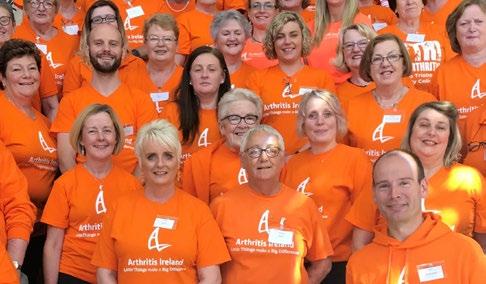
With your help we aim to:
• Help anyone looking to understand their arthritis
• Support anyone living with arthritis to live well, and to live as full and active a life as possible
• Advocate for improved and accessible services
• Ensure that arthritis is diagnosed as early as possible
• Invest in research to find a cure for arthritis
But we can’t do it without you, without your help. As a friend of Arthritis Ireland you can change the balance. As a friend of Arthritis Ireland you will be part of a strong and vibrant community.
You can help win the fight against arthritis –for as little as €10 per month.
If you would like to sign-up to hear from us with news and updates about arthritis research, courses, events, campaigns and fundraising please send your contact details to info@arthritisireland.ie
€10 per month
Yes, I would like to help manage the pain of arthritis. Monthly payment of €10 (€120 per annum). Monthly payments by direct debit only. See reverse for details.
Personal Details
Name
Address:
Telephone:
Email:
Date of birth
Do you have arthritis? Yes No
If Yes, what kind of arthritis?
Credit Card (Once off annual payment of €120)
Amount per annum:
Card No
Signature Date
Cheques & Postal Orders
Payable to Arthritis Ireland
By signing this mandate form you (A) authorise Arthritis Ireland to send instructions to your bank to debit your account and (B) your bank to debit your account in accordance with the instructions from Arthritis Ireland. As part of your rights, you are entitled to a refund from your bank under the terms and conditions of your agreement with your bank. A refund must be claimed within 8 weeks starting from the date on which your account was debited. Your rights are explained in a statement that you can obtain from your bank.
Please complete all marked fields
Debtor Name
Debtor Address City / County
Debtor A/C Number IBAN
Debtor Bank ID Code BIC
Type of Payment
Signature(s*)
Date of Signature*
Amount of Direct Debit * €
Date of First Payment* Recurrent One off
* Arthritis Ireland will debit your account for the amount indicated above from the first day of each month until further notice.
Creditor Name: Arthritis Ireland Creditor ID: IE90SDD360028
Creditor Address: 1 Clanwilliam Sq, Grand Canal Quay, D 2 Unique Reference No. (URM) For Office Use Only
Note; If you are a PAYE taxpayer or are self-employed, gifts of €250 in one year (€21 per month) is worth an extra 44.9% to Arthritis Ireland at no additional cost to you.
Arthritis Ireland 1 Clanwilliam Square Grand Canal Quay Dublin 2
D02 DH77
Tel: 01 661 8188
Helpline: LoCall 0818 252 846
RCN: 20011123; CHY: 6297; CRO: 7893
Published April 2023