Arthritis Ireland is the national charity in Ireland for people living with arthritis. We seek to ensure that every person living with arthritis in Ireland is supported to live a full and active life, having access to appropriate health services and treatments. We work to ensure an enhanced quality of life for people living with arthritis, minimising the devastating effects that arthritis can have on lives.
What we do
At Arthritis Ireland we recognise the central role that empowering people to self-manage with a chronic condition, such as arthritis, plays in enabling them to live well with their disease. We provide a range of supports and services, including our helpline (0818 252 846), STEPS programme, self-management and physical activity programmes as well as a full suite of resources including booklets, podcasts, webinars, blogs and recorded interviews.
Visit www.arthritisireland.ie to learn more and to explore up-to-date, reliable information about arthritis and related conditions.
“I found Arthritis Ireland to be a great source of information about my condition and it helps to realise that you are not alone.”
“I was only 31 when diagnosed, and no one I knew had arthritis - friends or family - so I felt lonely and out of my depth as I didn’t know much about the condition. I think Arthritis Ireland is a fabulous charity, and I feel it has really helped me with understanding my condition and pointing me in the right direction for support.”
Introduction
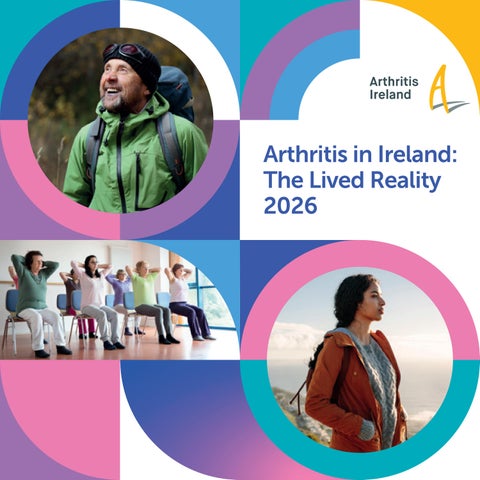
We are delighted to present the findings of our recent survey, Arthritis in Ireland: The Lived Reality 2026. Arthritis affects more than one million people across Ireland, yet no two experiences are the same. The daily realities, from managing pain and fatigue to navigating work, family life, and social activities, vary widely from person to person. Truly understanding those experiences is essential if we want to improve the services, treatments, and supports available to our community.
To build that understanding, Arthritis Ireland undertook this survey which focuses on what it’s really like to live with arthritis and related conditions in Ireland today.
By sharing experiences, the survey helps us to develop a clearer, more accurate picture of:
• Receiving a diagnosis and the journey to that diagnosis.
• The treatments, medications, and supports that people have tried and how beneficial they are.
• The services people have accessed, including those offered by Arthritis Ireland.
• The impact arthritis has on work, relationships, mental health, and overall wellbeing.
We want to thank each person that participated in this survey and for taking the time to do so. We know that many people in our community who live with arthritis and related conditions share the same ambition and vision that we do; a better world for people living with arthritis today and a world without arthritis tomorrow. We also extend our heartfelt thanks to those who co-developed the survey for their generosity in sharing their experiences and insights.
Over 1,400 people contributed to this survey, a clear reflection of how strongly the arthritis community wants their realities to be heard. The survey demonstrates that there are clear challenges for those who live with arthritis and related conditions. Their interest reflects a strong collective desire to contribute to change. People want to share information that can improve understanding, shape better services, and ultimately enhance the quality of life for everyone affected by arthritis.
This report is the result of a collective effort, one that underscores a community committed, not only to navigating arthritis today, but to driving meaningful progress for tomorrow.
Gráinne O’Leary Chief Executive
Professor Ursula Fearon Chairperson
Executive Summary
Arthritis is one of the most significant health challenges facing Ireland today, affecting over one million people, or roughly one in five adults. It is the leading cause of disability in the country and has far-reaching impacts that extend well beyond joint pain. People living with arthritis experience challenges across nearly every aspect of life; health, work, relationships, financial stability, and emotional wellbeing.
In February 2026, Arthritis Ireland conducted a nationwide survey to understand the realities of living with arthritis and related conditions. Over 1,400 adults responded, providing a comprehensive snapshot of current experiences across diagnosis, treatment, healthcare access, symptom management, and use of Arthritis Ireland supports. This report presents those findings, highlights patterns across different conditions, and identifies the most urgent areas for action.
The data reveals deep disparities between those with stable disease and those with poor health. Younger respondents, those with multiple diagnoses, and people with conditions such as fibromyalgia, psoriatic arthritis (PsA) and axial spondyloarthritis (axSpA) face greater health challenges, more frequent flares, and more severe impacts on functioning and quality of life. Delayed diagnosis and poor communication with healthcare providers emerged as strong contributors to poor outcomes.
Despite these challenges, engagement with Arthritis Ireland remains strong, and users overwhelmingly find the organisation’s services helpful. The findings will inform future services, advocacy, and strategic planning to improve life with arthritis in Ireland.
“Arthritis appears to be shrugged off as just one of those age related things, which drives me insane.”
“My relationships are heavily impacted. It’s a cruel disease that many don’t understand.”
Methodology
This report is based on the findings of a national online survey conducted by Arthritis Ireland in February 2026. The questionnaire was distributed directly to Arthritis Ireland subscribers via email and promoted through the organisation’s social media platforms, enabling wide reach across the arthritis community.
The survey was open to adults aged 18 or older living in the Republic of Ireland who had received a diagnosis of arthritis or a related rheumatic or musculoskeletal condition. More than 1,400 individuals took part, providing rich insights into their diagnostic journeys, treatment experiences, daily life challenges, employment impacts, relationships, social participation, and their engagement with Arthritis Ireland services.
Throughout this report, the term “arthritis” is used in its broader sense, capturing the full spectrum of rheumatic and musculoskeletal diseases (RMDs). This includes both clinically distinct diagnoses — such as rheumatoid arthritis (RA), osteoarthritis (OA), axial spondyloarthritis (axSpA), and psoriatic arthritis (PsA) — and overlapping or related conditions often managed within the same healthcare pathways. Due to the small number of respondents within some disease groups, we were unable to make firm conclusions or comment specifically on these conditions.
The respondent group is not a perfectly representative sample of all people in Ireland living with arthritis, and certain patterns should be interpreted within this context. Notably, 85% of respondents were female, reflecting a substantial gender imbalance. While this may partially reflect known higher prevalence of certain RMDs among women, it also suggests that women were much more likely to engage with and complete the survey. Responses were received from all 26 counties, ensuring national geographic coverage.
Together, these factors contribute to a highly engaged and diverse dataset that offers valuable insight into the lived experience of arthritis across Ireland, while also highlighting important demographic patterns that shape the interpretation of results.
Respondents reported a wide range of arthritis and related conditions.
• Osteoarthritis (OA): 669 (47%)
• Rheumatoid arthritis (RA): 455 (32%)
• Psoriatic arthritis (PsA): 287 (20%)
• Fibromyalgia: 236 (17%)
• Axial spondyloarthritis (axSpA): 134 (9%)
• Osteoporosis: 149 (11%)
• Raynaud’s: 85 (6%)
• Sjögren’s disease: 49 (3%)
• Gout: 42 (3%)
• Lupus: 39 (3%)
• Polymyalgia rheumatica (PMR): 26 (2%)
• Ehlers Danlos syndromes: 18 (1%)
• Juvenile idiopathic arthritis (JIA): 15 (1%)
• Vasculitis: 15 (1%)
• Scleroderma: 14 (1%)
• Down syndrome associated arthritis (DA): 1 (0%)
• Other: 111 (8%)
Most respondents report having more than one diagnosis. Multimorbidity is especially common among people with:
• Fibromyalgia
• Osteoporosis
• axSpA
• Raynaud’s
These overlapping conditions contribute to more complex symptom profiles and care needs.
The survey captured a broad cross-section of adults living with arthritis and related conditions across Ireland, though the age profile of respondents leaned more towards older age-groups. Only a small proportion of participants were under the age of 30, while nearly half were aged 60 or older.
• 2% of respondents were aged 18–29
• 13% were aged 30–45
• 37% were aged 46–60
• 47% were aged 60+
This distribution reflects both the increased prevalence of many rheumatic and musculoskeletal conditions with age and the likelihood that older individuals may be more inclined to engage with patient organisations, support services, or health-related surveys. Nevertheless, the presence of respondents across all adult age groups highlights the broad impact of arthritis on people at different life stages — from younger adults in the early stages of their careers to older adults managing long-term conditions.
Key Findings
Health Outcomes & Demographics
Living with arthritis is not a uniform experience. The survey reveals distinct differences in age, diagnosis patterns, and symptom impacts between groups reporting good versus poor health. Contrary to common assumptions, poor health is not concentrated among older adults; in fact, those who rate their health the poorest tend to be younger. This suggests significant unmet needs among adults in midlife who are balancing symptoms with employment and family responsibilities. Additionally, those with poorer health tend to live with more than one diagnosed condition, often in complex combinations that significantly disrupt daily life.
Key findings include:
• Respondents reporting poor health tend to be younger: just 29% of them are aged over 60. In contrast, 52% of those aged over 60 report fair to excellent health, showing that older respondents are more likely to report better health than younger ones.
• Individuals with poor health have more conditions (1.95 on average vs. 1.59).
• Conditions disproportionately associated with poor health include PsA (27%), fibromyalgia (31%), Raynaud’s, and Ehlers-Danlos syndromes.
• Across all groups, stiffness and morning mobility are widespread issues with joint pain (59%) and fatigue (44%) representing the most significant daily challenges for respondents.
“I have
had rheumatoid arthritis for 32 years and during that time I have seen many improvements in drug treatments. Unfortunately there have been few improvements in financial and practical supports on the ground for anybody who attempts to continue working.”
Delays in Diagnosis & Specialist Access
Timely diagnosis is critical in managing arthritis, particularly inflammatory conditions where early treatment prevents long-term damage. The survey highlights stark differences in diagnostic pathways. People reporting poor health were far more likely to have experienced delays at multiple stages — including the initial diagnosis and first rheumatology appointment. These delays appear to strongly correlate with worse health overall, suggesting that systemic barriers to early intervention continue to cause avoidable harm.
Key findings include:
• 43% of poor health respondents waited over a year for an initial diagnosis compared to 32% of those with fair or excellent health.
• Poor health respondents were also nearly twice as likely to wait over a year for their first rheumatology appointment.
• People diagnosed within six months were far more likely to report better current health.
• Notably, wait times for follow-up rheumatology appointments did not correlate with flare frequency.
Flares, Communication & Disease Management
The survey shows a strong relationship between communication quality and disease outcomes. Individuals who reported poor communication with their healthcare team — particularly lack of goal setting, shared decisionmaking (SDM), and understanding of targets such as remission — also experienced more frequent and recent flares. Flares themselves were strongly associated with poorer emotional wellbeing, reduced physical activity, and significant work disruption.
Key findings include:
• Those who did not discuss treatment targets with clinicians were far more likely to have had a recent flare.
• Awareness of shared decision-making (SDM) was lowest among people who had flared in the past week.
• People who recently flared tried more management strategies, but were less likely to exercise, the intervention most closely linked to better health.
• Recent flares significantly increased the likelihood of being unable to work, being on sick leave, or retiring early.
Condition-Specific Impacts
Different conditions affect people’s lives in profoundly different ways. While all forms of arthritis can be painful and limiting, some conditions — particularly fibromyalgia and axSpA — have disproportionate impacts on energy, physical activity, and mental wellbeing. Others, such as OA and Raynaud’s, tend to create lower overall impact despite being common. These findings underline the importance of tailored support and condition-specific service development.
Key findings include:
• Fibromyalgia and axSpA have the highest overall impact on daily life and ability to participate in activities.
• For some conditions, the number of respondents was too low to draw significant conclusions.
• 43% of people with fibromyalgia experienced a flare in the previous seven days — significantly higher than other groups.
• Rheumatoid arthritis (RA) presents as the most stable condition, with the highest proportion reporting no flare for at least six months.
• Raynaud’s and osteoporosis have the lowest impact on daily life.
“As I’m working - I pay for all my appointmentsconsultant, GP, physio, bloods checked regularly. Podiatry, orthotics, drugs payment scheme, health insurance etc. - find it all draining- should get some support!”
Medication Patterns
Medication is central to arthritis management, but the survey reveals significant differences in medication use across conditions and health statuses. People reporting poor health use a wider range of medications — including higher rates of analgesics, anti-inflammatories, disease-modifying anti-rheumatic drugs (DMARDs), and “other” medications such as antidepressants or antiseizure drugs — suggesting both greater clinical complexity and potentially insufficient disease control. Those without recent flares rely more heavily on DMARDs, which may reflect better management of inflammatory disease.
Key findings include:
• People in poor or fair health take significantly more medications, across every category.
• Individuals without a flare in the past month are more likely to use DMARDs, indicating better disease control.
• Respondents living with PsA use the highest number of medication classes; those with OA use the lowest.
Impact on Work, Finance & Daily Life
The survey shows a strong relationship between arthritis and the profound and often underestimated impact on people’s ability to work, maintain financial stability, and engage in social or daily activities. The survey highlights a clear association between flare frequency, poorer overall health, and job disruption. Financial strain is common, particularly among those aged 46-60 with just 32% saying they were managing comfortably. The condition’s emotional and social impacts are equally striking with many reporting reduced social participation, affected relationships, challenges to mental wellbeing and difficulty sleeping.
Key findings include:
• 39% of people with a recent flare report job status being affected (vs. 25% of others).
• Adults aged 46-60 and those in poor health are disproportionately likely to be financially struggling.
• Fibromyalgia and poor health scores correlate strongly with reduced quality of life and more disrupted relationships.
• Social life impacts are greatest among those recently flaring, those in poor health, and those with fibromyalgia.
Engagement with Arthritis Ireland
Respondents show strong engagement with Arthritis Ireland’s services, especially among those with highimpact conditions. Satisfaction levels are high across all services, and the survey reflects a strong level of trust and appreciation within the arthritis community. These findings highlight the important role Arthritis Ireland plays in supporting individuals with arthritis and the need to continue expanding and refining services.
Key findings include:
• RA, fibromyalgia and axSpA respondents are more likely to use Arthritis Ireland’s services.
• Respondents with OA are least likely to engage with Arthritis Ireland’s services, presenting an opportunity to provide more meaningful engagement with this cohort.
• All services are rated ‘very helpful’ or ‘quite helpful’ by most respondents who have used services.
• Respondents who used Arthritis Ireland resources were more likely to understand shared decision making (32% vs. 28%) and discuss treatment targets (42% vs. 31%).
“I found Arthritis Ireland very informed and helpful. Monthly bulletin is great and keeps me in the loop.”
If arthritis is affecting your life or the life of someone you love please call or connect with us: Helpline: 0818 252 846 (Monday-Friday 10am-4pm) helpline@arthritisireland.ie
Arthritis in Ireland: The Lived Reality 2026
1,411
of respondents were female. people in Ireland live with arthritis or a related condition. 1 in 5 85%
2% of respondents were aged 18 – 29
13% were aged 30 – 45
37% were aged 46 – 60
47% were aged 60+
Respondents reported a wide range of arthritis and related conditions.
• Osteoarthritis (OA): 669 (47%)
• Rheumatoid arthritis (RA): 455 (32%)
• Psoriatic arthritis (PsA): 287 (20%)
• Fibromyalgia: 236 (17%)
• Ankylosing Spondylitis (AxSpA/AS): 134 (9%)
• Osteoporosis: 149 (11%)
• Raynaud’s: 85 (6%)
• Sjögren’s disease: 49 (3%)
• Other: 111 (8%) respondents completed the survey.
• Gout: 42 (3%)
• Lupus: 39 (3%)
• Polymyalgia rheumatica (PMR): 26 (2%)
• Ehlers-Danlos syndromes: 18 (1%)
• Juvenile idiopathic arthritis (JIA): 15 (1%)
• Vasculitis: 15 (1%)
• Scleroderma: 14 (1%)
• Down syndrome associated arthritis (DA): 1 (0%)
43%
23%
of respondents in poor health waited over one year for a diagnosis compared with 32% in fair or excellent health.
of those in poor health were twice as likely to face a one year wait for a rheumatology appointment than those in fair or excellent health (12%).
Respondents who used Arthritis Ireland resources were more likely to understand shared decision making (32% vs 28%) and discuss treatment targets (42% vs 31%).
Those who hadn’t discussed treatment targets were significantly more likely to report a recent flare.
74% vs 48%
56%
struggle to stay physically active; exercise is far more common among those in fair to excellent health (73%) than those in poor health (46%), who also report more flares.
39%
say arthritis has strained their romantic relationships, and 21% reported difficulty with intimacy.
51%
of respondents struggle with their mental health.
70%
of respondents have difficulty sleeping due to their condition.
Recent flares increase the risk of job disruption (39% vs. 25%) and long-term sick leave or early retirement.
39% vs 25%
Pain (59%) & fatigue (44%)
are the most significant daily challenges for respondents.
Diagnostic Landscape
The diagnostic landscape revealed by the survey underscores just how varied and complex the journey to an arthritis or related condition diagnosis can be. OA emerges as the most common diagnosis among respondents (47%), followed by RA (32%), PsA (20%), and fibromyalgia (17%). Most respondents report living with multiple conditions, with comorbidities particularly prevalent among those with fibromyalgia, axSpA and Raynaud’s. This clustering of conditions contributes to more complex symptom profiles and greater challenges in day-to-day management.
Timeliness of diagnosis varies significantly across conditions. Delays are common, with 29% of those with PsA waiting more than six years for a diagnosis, and significant numbers of those with axSpA or fibromyalgia waiting more than three years. Those reporting poorer health are more likely to have experienced longer diagnosis delays and extended waits for their first rheumatology appointment, highlighting inequities in access and outcomes.
Multimorbidity — the presence of more than one diagnosis — is another defining feature of the diagnostic landscape. Many respondents live with overlapping conditions. These combinations frequently create more complex symptom profiles and can make diagnosis and care coordination even more challenging. The high rates of multimorbidity highlight the need for an integrated approach to rheumatology and musculoskeletal care, ensuring that no component of a person’s health is treated in isolation.
Comorbidities and Healthcare Use
The presence of comorbidities plays a major role in shaping people’s day-to-day reality with arthritis. Comorbid conditions such as depression, anxiety, and high blood pressure are especially prevalent among those with fibromyalgia, OA and PsA. 62% of respondents with PsA also report psoriasis, reinforcing the systemic nature of this disease.
Healthcare utilisation reflects this complexity. People with Raynaud’s, osteoporosis, and fibromyalgia see the greatest number of healthcare professionals, while orthopaedic referrals are common among OA and osteoporosis patients. Pain management services play a significant role for those with fibromyalgia, with over one in five attending specialist pain clinics in the past six months.
These figures point to the need for truly multidisciplinary care models that address not only joint health but also the broader system-wide effects of arthritis and its comorbidities.
Medication Use and Treatment Patterns
Medication remains a cornerstone of arthritis management, yet the survey reveals striking differences in how medication is used across different conditions and levels of disease severity. Almost all respondents have taken analgesics, and substantial proportions have used non-steroidal anti-inflammatory drugs (NSAIDs), steroids, and both conventional and biologic DMARDs. Those living with PsA rely on the highest number of different medication classes, while OA patients use the fewest.
Health status strongly correlates with medication burden. Those reporting poor or fair health use significantly more medications of all classes –particularly non-specialised or “other” drugs – than those in better health. Interestingly, respondents who remain flare-free for longer periods tend to have simpler treatment plans, suggesting that stability does not necessarily depend on medication volume.
Respondents who have remained flare-free for at least a month are more likely to have used DMARDs than those who have not (47% vs 40%).
Given the variety of symptoms and impact of different conditions, it is not possible to establish with certainty if specific medications are more effective in minimising the likelihood of flares.
“Thankfully for the last 2 years my RA is well controlled. I had 4 years previous where life was difficult. By having a voice and eventually being heard by the medical team, my life is now so much better.”
Condition Stability and Flare Patterns
The survey findings make clear that flare activity is a defining feature of life with arthritis. Flares — periods of increased pain, fatigue, stiffness, and reduced function — are both common and highly disruptive. 66% of respondents experienced a flare in the past month, and more than 30% had done so in the previous week alone. Respondents with fibromyalgia, in particular, report high flare frequency, with 43% experiencing a flare in the previous week.
RA stands out for relative stability; those with rheumatoid arthritis are the most likely to report being flare-free for six months or more. Experiences of shared decision-making (SDM) and discussions about treatment goals are strongly associated with better disease stability; those who have not had these conversations are far more likely to experience recent flares.
Building on these findings, individuals who experienced a flare in the past month reported trying a wider range of strategies to manage their condition than those who had not flared — yet exercise and physical activity were the notable exception. This may reflect the difficulty of maintaining or initiating exercise during periods of heightened pain, fatigue or sensitivity, despite its well established long-term benefits.
Conversely, respondents who had remained flare-free for the past year were the most likely to feel they had their condition under control. This sense of stability and confidence was markedly lower among those reporting poor health, who were least likely to describe their condition as well managed. Together, these patterns underscore a broader insight: flare frequency and perceived control over one’s condition are closely intertwined, highlighting the importance of proactive support, accessible self-management strategies and strong clinical partnerships.
Health Status and Inequality
Self-perceived health status varies considerably across conditions. Poor health is reported more often by respondents with PsA (27% reporting poor health vs. 19% reporting fair to excellent health) and by those with fibromyalgia (31% vs. 13%), followed by those with Raynaud’s and Ehlers–Danlos syndromes. This group tends to be younger, has more comorbidities, and experiences significantly longer wait times for diagnosis and specialist care. Those with fair to excellent health are more likely to have OA and fewer conditions.
Anxiety and depression are closely linked with poor health, affecting 43% of those who rate their health as “poor”. These respondents are also more likely to experience severe fatigue, reduced energy, and overall higher symptom burden.
What emerges is a picture of working-age adults struggling with high disease burden while also managing employment, family responsibilities, and financial pressures. Specifically, only 29% of the poor-health group are over age 60, compared to 52% in the fair-to-excellent category. Fatigue, reduced energy, and severe symptoms were significantly more common in this group, further compounding these challenges.
There is a clear link between poor health and extended wait times. Respondents who reported poor health were more likely to wait over a year for a formal diagnosis (43%) than those who reported fair or excellent health (32%) and twice as likely to experience a one-year delay between referral and their first rheumatology appointment (23% vs. 12%). These findings suggest that those who need the most support often face the steepest barriers — delays that may worsen symptoms and lead to preventable long-term impacts.
Medication volume also correlated strongly with poorer perceived health, with these respondents taking more medications across all categories. This creates a cycle where delayed care leads to poorer health, which leads to more complex management needs — highlighting the importance of addressing systemic inequalities in access to diagnosis, treatment, and support.
“I can no longer have a dog as I’m unable to physically care for it.”
Work, Finances, and Social Impact
Arthritis profoundly affects respondents’ working lives, financial stability, and social participation. Respondents who have experienced a recent flare are substantially more likely to be unable to work, are on long-term sick leave, or retired due to their condition. Overall, 12% retired early and 9% are unable to work due to arthritis or related conditions.
Among respondents with anxiety or depression, 6% are on long-term sick leave and 20% are unable to work. Overall, arthritis affects the employment status of nearly half (49%) of those living with anxiety or depression. Patterns of strain differ by health status: individuals in better health identify physical symptoms such as pain, stiffness and mobility as their primary challenge, while those in poorer health emphasise emotional, social (lack of understanding by others and loneliness) and financial impacts.
The impact of flares extends heavily into professional life. Respondents with recent flares are significantly more likely to have their job status affected (39% vs. 25%) and face higher rates of long-term sick leave or disability-related retirement.
Notably, respondents in better health were more likely to have private insurance and access to GP visit cards, suggesting that socioeconomic factors shape not only healthcare access but also long-term health outcomes.
Together, these insights emphasise the pressing need for workplace support, financial protections, and broader awareness of arthritis as a condition that affects every aspect of life.
Daily Life Impact and Self-Management
Across all conditions, respondents consistently identified joint pain, fatigue and stiffness as the most persistent barriers to managing everyday life. These symptoms cut across disease types and remain central to the challenges people face in sustaining routines, maintaining independence and engaging in meaningful activities.
Daily function is most severely affected among people with fibromyalgia and axSpA, with fibromyalgia exerting the broadest impact across all measured activities.
Despite trying a wide range of strategies to manage their condition, individuals with poorer health are less likely to engage in exercise or physical activity — even though activity levels correlate strongly with better overall health outcomes.
The survey findings point to a strong connection between levels of physical activity and the extent to which respondents feel their condition affects their daily lives. Across multiple disease areas those who reported that their condition does not have a significant impact on their life were consistently more likely to engage in exercise and physical activity.
This pattern is clearly illustrated in respondents with OA. Among those who felt their condition did not have a major impact on their daily life, 71% engaged in exercise or physical activity. This contrasts sharply with the 52% who said OA does significantly affect them. Those who stay physically active tend to feel a lower arthritis burden, potentially creating a knock-on effect that helps them maintain activity
and reduces the risk of further disease progression. A similar pattern appears among individuals with axSpA. Of those who reported minimal impact on their life, 80% were physically active, compared with 52% of respondents who said axSpA significantly affects them. This reinforces the broader trend that perceived disease impact and engagement in physical activity are closely linked.
Sleep quality also emerges as a key factor associated with disease impact, with 70% of respondents reporting difficulty sleeping due to their condition.
Additionally, personal relationships are deeply impacted with 39% stating that arthritis has affected their relationship with a spouse or partner and 21% reported difficulty with intimacy.
These findings highlight a broader narrative: when people face greater disease-related burden — whether pain, limited mobility, fatigue, or disrupted sleep — they struggle to stay physically active and are far more likely to experience a lower quality of daily life. Conversely, those who remain active and maintain better sleep tend to perceive their condition as less disruptive.
Together, these insights underscore the importance of supporting people with arthritis and related conditions to access appropriate physical activity options and sleep support strategies, both of which may contribute to improved overall wellbeing.
When asked what it means to have their condition “under control,” respondents’ priorities focused less on symptom elimination and more on the ability to live well: being able to participate in usual activities (67%), regaining quality of life (62%), and having more energy (61%) were the most valued indicators of stability. Notably, fewer than one third equated control with reducing or avoiding medication, suggesting that most people view effective management not simply as a clinical milestone but as a return to function, energy and participation in daily life.
Building on this, the data also reveals that the impact of specific conditions varies considerably. Respondents with fibromyalgia reported significantly greater difficulty performing daily activities over the past six months compared with those with other conditions, reflecting the broad and often fluctuating symptom burden associated with the condition. Similarly, individuals living with Raynaud’s disease and axSpA reported higher levels of activity limitation than those with other types of arthritis.
These patterns highlight how certain conditions can intensify the physical, functional and emotional challenges people face, and reinforce the need for tailored support strategies that address the unique barriers experienced within each condition group.
“I found Arthritis Ireland extremely helpful when I had flare ups. I joined a local aqua club last year and before joining I had lots of immobilising flare ups but, thankfully, I’m pain free nearly a year now. The aqua has really helped me. Thank you.”
Engagement with Arthritis Ireland
Engagement with Arthritis Ireland varies by condition. Those living with RA, fibromyalgia, and axSpA are the most active users of resources and self-management programmes, while those with OA engage the least. People who have engaged with Arthritis Ireland’s services consistently describe them as helpful. Even more encouraging, the majority of respondents said they are highly likely to recommend Arthritis Ireland to a family member or friend living with arthritis or a related condition.
A lack of engagement among some respondents highlights an opportunity for Arthritis Ireland to better understand their needs and develop more tailored offerings to reach this audience effectively, indicating a potential gap in awareness or accessibility and highlighting the need for the organisation to further examine these barriers and explore strategies to better meet the needs of its community.
The survey results reveal a complex picture of respondents’ financial engagement with Arthritis Ireland — 48% of participants who hadn’t donated to Arthritis Ireland reported that they were not in a financial position to do so, underscoring the economic pressures many people living with arthritis may face. A further 25% of respondents who reported that they had not donated, indicated that this was because they were unaware of the organisation’s fundraising options, highlighting a potential gap in communication and visibility around existing opportunities to contribute.
Among those who had donated, motivations were strongly values driven. Respondents cited a desire to support research and innovation, contribute to the strengthening of services, and help raise awareness of arthritis as key reasons for their financial support. This suggests that when individuals are informed and able, they are motivated by a belief in the organisation’s mission and its potential to improve the lives of people affected by arthritis.
Key Recommendations Improve Diagnosis Pathways and Reduce Delays
Ireland must prioritise shorter pathways from symptom onset to diagnosis, particularly for inflammatory diseases where early intervention is crucial. Investment in specialist staffing, triage systems, and streamlined referral pathways will reduce the long-term burden on individuals and the healthcare system.
Strengthen Patient–Clinician Communication
Positive communication, collaborative goal-setting, and shared decision-making enhance patient outcomes. Healthcare teams should continue working with patients to establish clear goals that strengthen engagement and support effective disease management.
Expand Targeted Support for High Impact Conditions
People with fibromyalgia, PsA and axSpA need greater condition-specific support. Expanding tailored programmes, peer networks and specialist content will address their unique challenges and reduce the heavy toll these conditions take on daily life.
Increase Access to Arthritis Appropriate Physical Activity
Exercise remains the strongest predictor of better health. Ireland needs more accessible, affordable, and condition sensitive exercise options. Partnerships with physiotherapists, community organisations and health services can help scale these supports nationally.
Address Employment and Financial Vulnerabilities
With arthritis significantly limiting work for many people, employers require greater awareness and guidance on accommodations. Policy changes supporting flexible work, protected sick leave, and financial supports would substantially improve economic security for people living with arthritis.
Build on the Strong Performance of Existing Services
Arthritis Ireland’s helpline, STEPS programme, self-management programmes and resources are valued and effective. Continued investment will ensure the organisation remains a trusted, indispensable support system.
Strengthen Awareness of Arthritis Ireland Services and Fundraising
Many non-donors simply did not know how to support Arthritis Ireland. Clearer communication around impact, fundraising options, and how donations are used would strengthen community investment and sustain long-term support.
Glossary of Terms
Analgesics
Medications used to relieve pain but do not reduce inflammation or alter disease progression. This group includes, paracetamol, codeine, aspirin, ibuprofen and opioids.
Arthritis
A broad term for conditions that cause pain, inflammation, or damage in the joints. It includes both inflammatory diseases (like rheumatoid arthritis) and degenerative conditions (like osteoarthritis).
AxSpA
A type of inflammatory arthritis affecting the spine and sacroiliac joints. It can cause chronic back pain, stiffness (especially in the morning), and reduced flexibility. Ankylosing spondylitis (AS) is its more advanced form.
DMARDs (Disease Modifying Anti-rheumatic Drugs)
Medications that slow or alter the progression of inflammatory arthritis rather than simply treating symptoms.
• Conventional DMARDs
Well established, non biologic treatments such as: methotrexate, hydroxychloroquine and sulfasalazine.
• Biologic DMARDs
Targeted therapies made from biological molecules. Common examples include adalimumab, etanercept and golimumab.
• Targeted Synthetic DMARDs (tsDMARDs / JAK Inhibitors)
Oral medications that block specific enzymes involved in inflammation. Examples include tofacitinib, upadacitinib and baricitinib.
Ehlers–Danlos Syndromes (EDS)
A group of genetic connective tissue disorders that can cause highly flexible joints, fragile skin, chronic pain, and frequent joint dislocations.
Fibromyalgia
A chronic condition characterised by widespread pain, fatigue, sleep disturbances, and heightened sensitivity to touch. Flares can cause sudden increases in symptoms.
Flare (or Flare up)
A temporary but significant worsening of symptoms such as pain, fatigue, stiffness, or swelling. Flares may last days, weeks, or longer.
Juvenile Idiopathic Arthritis (JIA)
Arthritis diagnosed in children under 16, causing joint pain, swelling, and stiffness. Symptoms vary depending on subtype.
Lupus (Systemic Lupus Erythematosus, SLE)
An autoimmune disease that can affect skin, joints, kidneys, blood vessels, and organs. Symptoms include fatigue, joint pain, rashes, and sensitivity to sunlight.
Multimorbidity
Having two or more chronic health conditions at the same time, which can complicate treatment and increase symptom burden.
Non Steroidal Anti-Inflammatory Drugs (NSAIDs)
Medications that reduce pain and inflammation. Common examples include diclofenac, etoricoxib and naproxen.
Osteoarthritis (OA)
A degenerative joint disease where the protective cartilage gradually wears away, leading to pain, stiffness, and reduced mobility. It is the most common form of arthritis.
Osteoporosis
A condition where bones become fragile and more prone to fractures due to low bone density.
Polymyalgia Rheumatica (PMR)
An inflammatory condition causing severe pain and stiffness in the shoulders, hips, and neck — often worse in the morning.
Psoriatic arthritis (PsA)
An inflammatory arthritis associated with psoriasis. It can cause joint pain, swelling, stiffness, and fatigue, as well as changes in nails and tendons.
Raynaud’s
A circulation disorder where fingers and toes temporarily change colour (white, blue, red) in response to cold or stress due to narrowing of blood vessels.
Rheumatoid arthritis (RA)
An autoimmune inflammatory condition where the immune system attacks the joints, causing pain, swelling, stiffness, and potential long term joint damage. RA often affects both sides of the body symmetrically.
Scleroderma
A rare autoimmune condition characterised by thickening and hardening of the skin and, in some cases, internal organs.
Shared Decision Making (SDM)
A collaborative approach where clinicians and patients discuss goals, treatment options, and preferences to make informed decisions together.
Sjögren’s Disease
An autoimmune condition that affects moisture producing glands, leading to dry eyes, dry mouth, fatigue, and joint pain.
Steroids (Corticosteroids)
Medications that rapidly reduce inflammation. These can be given as Tablets (e.g. prednisolone) or injections into a joint or muscle.
Vasculitis
To read the complete list of survey questions, please scan the QR code
A group of disorders where inflammation of blood vessels restricts blood flow, potentially affecting skin, nerves, and organs.
At Arthritis Ireland, our vision is a better world for people living with arthritis today and a world without arthritis tomorrow.
Scan the QR code to donate to Arthritis Ireland.
Anyone looking for support can contact the Arthritis Ireland helpline on 0818 252 846 For more information visit arthritisireland.ie