Ficha técnica / Project team
Curadoria / Curation: Edson Cardoso
Produção internacional / International production: Helena Cardoso
Produção local / Local production: Débora Alves Gaby Queloni
Assessoria de Imprensa / Press Office: Rafael Lucena
Design / Layout: Sami Luoto
02 O Registro do Olhar: uma celebração da fotografia contemporânea
03 The Record of the Gaze: A Celebration of Contemporary Photography
04 Ficha técnica / Project team
05
Table of Contents / Índice
Alexandra Ramos
Alexandre Cerqueira Monteiro
Ana Letícia Mariotto Domingues
Ana Paula Tomachewski
Andre Carvalho Figueiredo
Angel Marks
Bruno Guerchon
Bruno Spadoni
Caio Negreiros
Carla Sabra
Duca Celidônio Teixeira
Eliane
Estefane Silva
Ezer Berdugo
Flor Azul
Geremias Soares
Germán Garibay
Guy Veloso
Heifara Nascimento
Isabella Koscheck
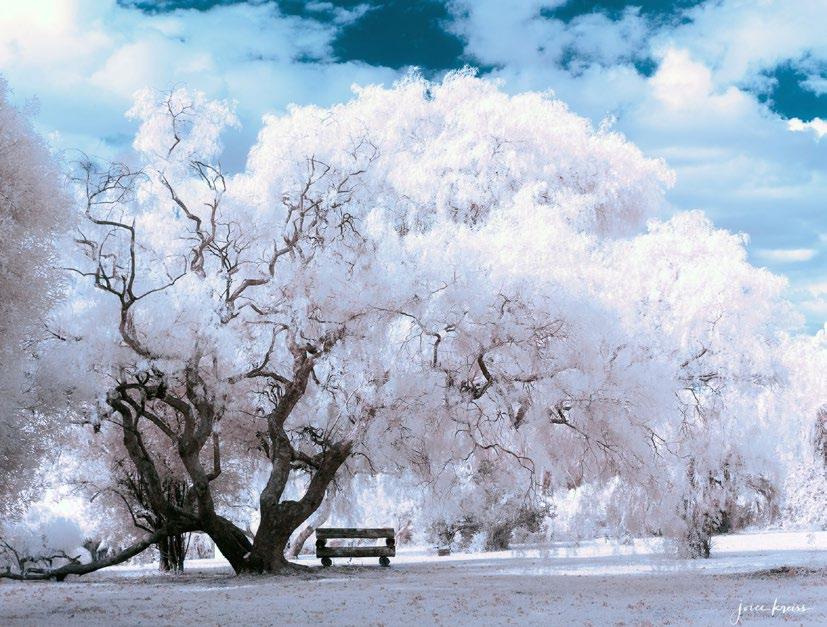
Joice Kreiss
Julia Motta
Lena Trindade
Lucas Calvo
Lucas Santana
Luciana Barberino
Luciana Evrard
Lupi Grinberg
Marcio Balbo
Marcio Menasce
Marco Antonio Sá
Marcos Moreno
Maria Helena Ramalho
Maria Letícia Cânovas Borges
Maria Regina S. Antunes
Marta Azevedo
Mayra Biajante
Milagros Goñi
Néia Faria
Noelia Brito
Paloma Sumar
Paulo Eberlein
Pedro Franca
Rafael Martins
Rao Godinho
Rodrigo Fontanari
Ronaldo Andrade
Saulo Augusto Jr
Sérgio Giron
Thiago Kropf
Ticiana Landeiro
Tommaso Rada
tr3ze
Vania Marques
Ricardo Pacheco Zenitepolarr
Ale Ramos @aleramos.photos alexandragramos@me.com
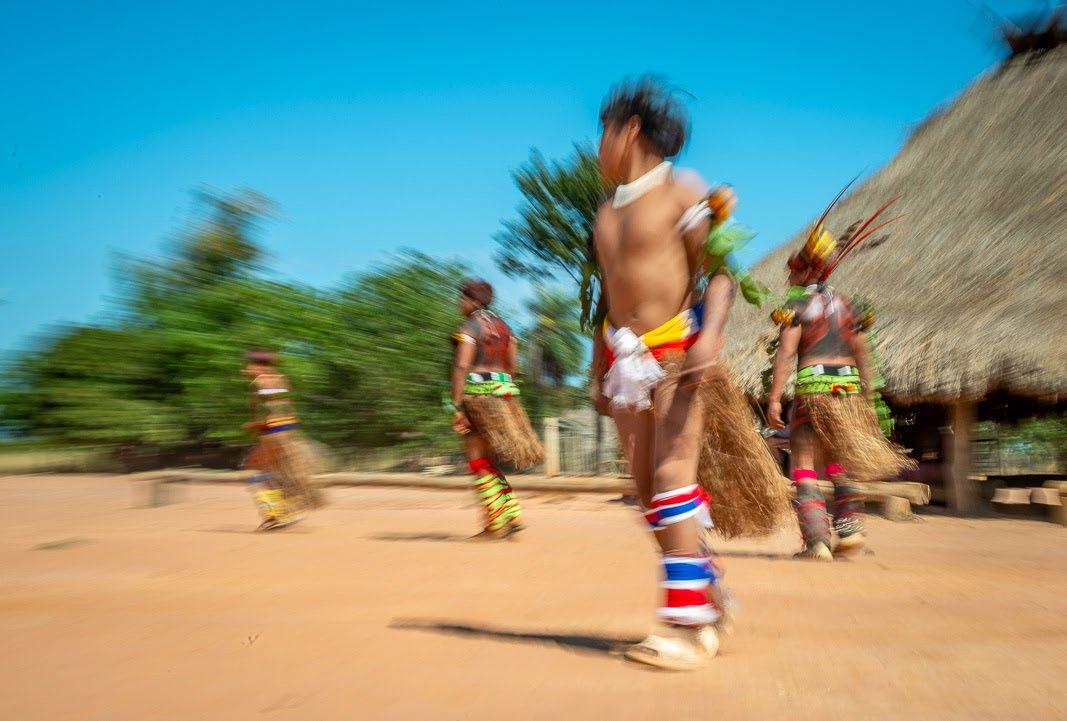
Alexandra Ramos é de Itaperuna - RJ, Brasil. Empresária e fotógrafa com um olhar antropológico que está sempre em busca de conhecer uma nova etnia e trazer, em forma de imagem e recordações, o melhor de cada povo. O que começou como um hobby se tornou uma bússola, guiando-a a cantos remotos do mundo onde captura a beleza e a identidade de diferentes comunidades étnicas. Com algumas participações em exposições coletivas no Brasil e no exterior, encontra sua satisfação ao se encontrar e fotografar povos culturalmente distintos. Fotografar é uma forma de preservar memórias e contar histórias sem palavras, um exercício que lhe traz alegria e realização.
Alexandra Ramos is from Itaperuna-RJ, Brazil. An entrepreneur and photographer with an anthropological perspective, she is always seeking to learn about new ethnicities and capture, through images and emories, the best of each people. What began as a hobby has become a compass, guiding her to remote corners of the world where she captures the beauty and identity of different ethnic communities. With some participation in group exhibitions in Brazil and abroad, she finds satisfaction in meeting and photographing culturally distinct peoples. Photography is a way to preserve memories and tell stories without words, an exercise that brings her joy and fulfillment.
Devaneios Alto Xingu, aldeia Ywalapiti, MT -Brasil
Alexandre Cerqueira Monteiro
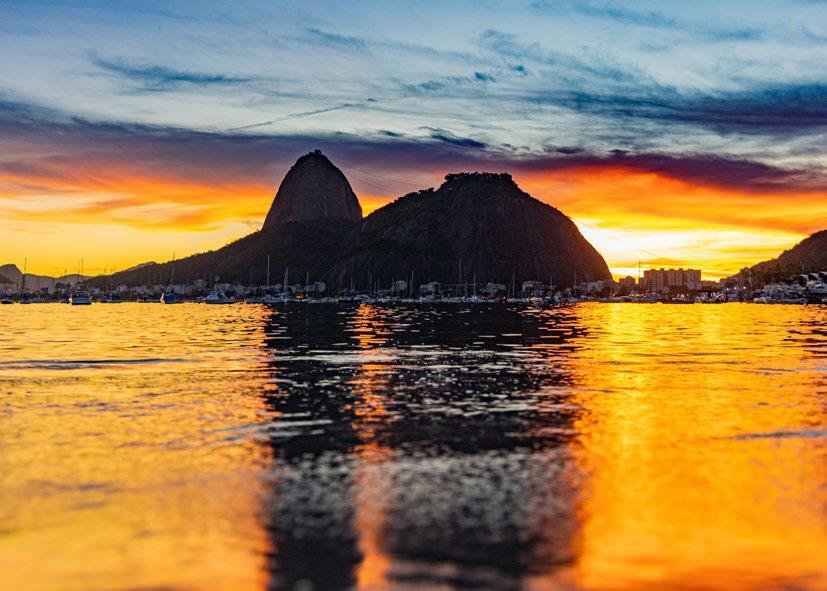
Fotógrafo desde 2019, a fotografia apareceu na vida de Alexandre meio sem querer. Um amigo pediu para que ele trouxesse uma câmera em uma viagem que fez aos EUA. Mas a câmera que Alexandre recebeu no hotel era uma câmera profissional, lançamento da Canon na época. Mas precisava usar a câmera para testar que tudo estava perfeito. Ao montar a câmera e testá-la, um novo mundo se abriu na frente de seus olhos. As fotos realizadas foram elogiadas por pessoas próximas. Mas não só isso... Ele se sentiu diferente, o impacto emocional de registrar o cotidiano da cidade onde estava o mudou para sempre. Paixão arrebatadora à primeira vista. Ao chegar de volta ao Brasil, entregou o equipamento e comprou imediatamente sua primeira máquina. E então não parou mais de fotografar. Ama fotografar paisagens, considera não apenas uma grande terapia, como também uma mágica ao recortar um momento para marcar uma história. Servidor Público formado em Administração de Empresas e com 3 pós-graduações, ao se aposentar, o que ocorrerá em breve, dedicar-se-á totalmente ao que ama.
A photographer since 2019, photography came into Alexandre's life somewhat unexpectedly. A friend asked him to bring back a camera from a trip to the USA. But the camera Alexandre received at the hotel was a professional camera, a Canon release at the time. He needed to use the camera to test that everything was perfect. While assembling and testing the camera, a new world opened up before his eyes. The photos he took were praised by people close to him. But not only that... He felt different; the emotional impact of capturing the daily life of the city where he was changed him forever. It was love at first sight. Upon returning to Brazil, he returned the equipment and immediately bought his first camera. And then he never stopped photographing. He loves photographing landscapes, considering it not only great therapy but also magic, capturing a moment to mark a story. A public employee with a degree in Business Administration and three postgraduate degrees, upon retirement, which will happen soon, he will dedicate himself entirely to what he loves.
Enseada de Fogo e o Pão de Açucaŗ
Ana Mariotto https://anamariotto.myportfolio.com @anadmngss
Ana Mariotto nasceu no interior de São Paulo e, ainda que distante do mar, cresceu imersa em imagens da natureza. Desde a infância, foi através de documentários — assistidos repetidamente em fitas cassete — que começou a construir seu olhar sobre o mundo natural. Muito cedo, soube que seu caminho seria o oceano. Aos 17 anos, mudou-se sozinha para Santos, litoral de São Paulo, onde estudou Biologia Marinha e aprofundou sua relação com o ambiente subaquático por meio do mergulho. Foi apenas em 2020, durante o silêncio imposto pela pandemia, que encontrou um novo ponto de convergência: a fotografia. A partir desse momento, passou a unir ciência e sensibilidade, transformando imagem em ferramenta de conservação. Seu trabalho nasce do encontro entre o olhar e a vida selvagem — um convite à contemplação, à conexão e ao reconhecimento daquilo que muitas vezes passa despercebido. Hoje, viaja pelo mundo em busca de histórias que só existem quando alguém aprende a ver.
“Só preservamos o que conhecemos — e a fotografia existe para nos ensinar a ver.”
Ana Mariotto was born in the countryside of São Paulo and, although far from the ocean, grew up mmersed in images of nature. From an early age, it was through documentaries — watched repeatedly on cassette tapes — that she began to shape her perception of the natural world. Very early on, she knew her path would lead her to the ocean. At 17, she moved alone to Santos, on the coast of São Paulo, where she studied Marine Biology and deepened her relationship with the underwater environment through diving. It was only in 2020, during the silence imposed by the pandemic, that she found a new point of convergence: photography. From that moment on, she began to merge science and sensitivity, transforming imagery into a tool for conservation. Her work emerges from the encounter between observation and wildlife — an invitation to contemplation, connection, and recognition of what often goes unnoticed. Today, she travels the world in search of stories that only exist once someone learns how to see.
“We only preserve what we know — and photography exists to teach us how to see.”
Ana Paula Tomachewski
Sou formada e pós-graduada em áreas fora das artes e atuei por anos como economista, até iniciar um processo profundo de autoconhecimento que me levou à reinvenção profissional. Próxima dos 50 anos, encontrei na fotografia um caminho de expressão e propósito. Sempre fascinada pelo ato de fotografar, iniciei minha formação na área e hoje desenvolvo meu trabalho como fotógrafa, traduzindo em imagens sensibilidade, olhar atento e narrativa visual.
I have a degree and postgraduate qualification in fields outside the arts and worked for years as an economist until I began a profound process of self-discovery that led me to professional reinvention. Approaching 50, I found in photography a path of expression and purpose. Always fascinated by the act of photographing, I began my training in the field and today I develop my work as a photographer, translating sensitivity, keen observation, and visual narrative into images.
André Carvalho Figueirêdo (Deco Figueiredo)
@deco.figueiredo_fotografias
Meu nome é André Carvalho Figueiredo, mas na fotografia assino como Deco Figueiredo (@deco.figueiredo_ fotografias). Minha trajetória teve início em 2013, em Salvador, ao lado de colegas que compartilhavam o desejo de registrar as belezas soteropolitanas. O que começou como um lazer despretensioso evoluiu para uma busca profunda por bem-estar e equilíbrio mental. Ao percorrer cenários que vão da densidade da Amazônia à luz vibrante do Vale do São Francisco e a vastidão do Litoral Baiano, descobri que fotografar é, acima de tudo, um processo fisiológico e emocional: a endorfina que percorre o corpo diante de um bom clique traz uma sensação de plenitude inigualável. Hoje, minhas lentes buscam não apenas documentar lugares, mas traduzir a paz e a vitalidade que encontro em cada novo horizonte.
My name is André Carvalho Figueiredo, but in the world of photography, I go by Deco Figueiredo (@deco. figueiredo_fotografias). My journey began in 2013 in Salvador, Bahia, alongside colleagues who shared a passion for capturing the city’s unique beauty. What started as a simple hobby evolved into a deep quest for well-being and mental balance. Exploring landscapes ranging from the dense Amazon rainforest to the vibrant light of the São Francisco Valley and the vast Bahian coastline, I discovered that photography is, above all, a physiological and emotional process. The rush of endorphins that comes with the perfect shot brings an unparalleled sense of fulfillment. Today, my lenses seek not only to document places but to translate the peace and vitality I find in every new horizon.
Angel Marks
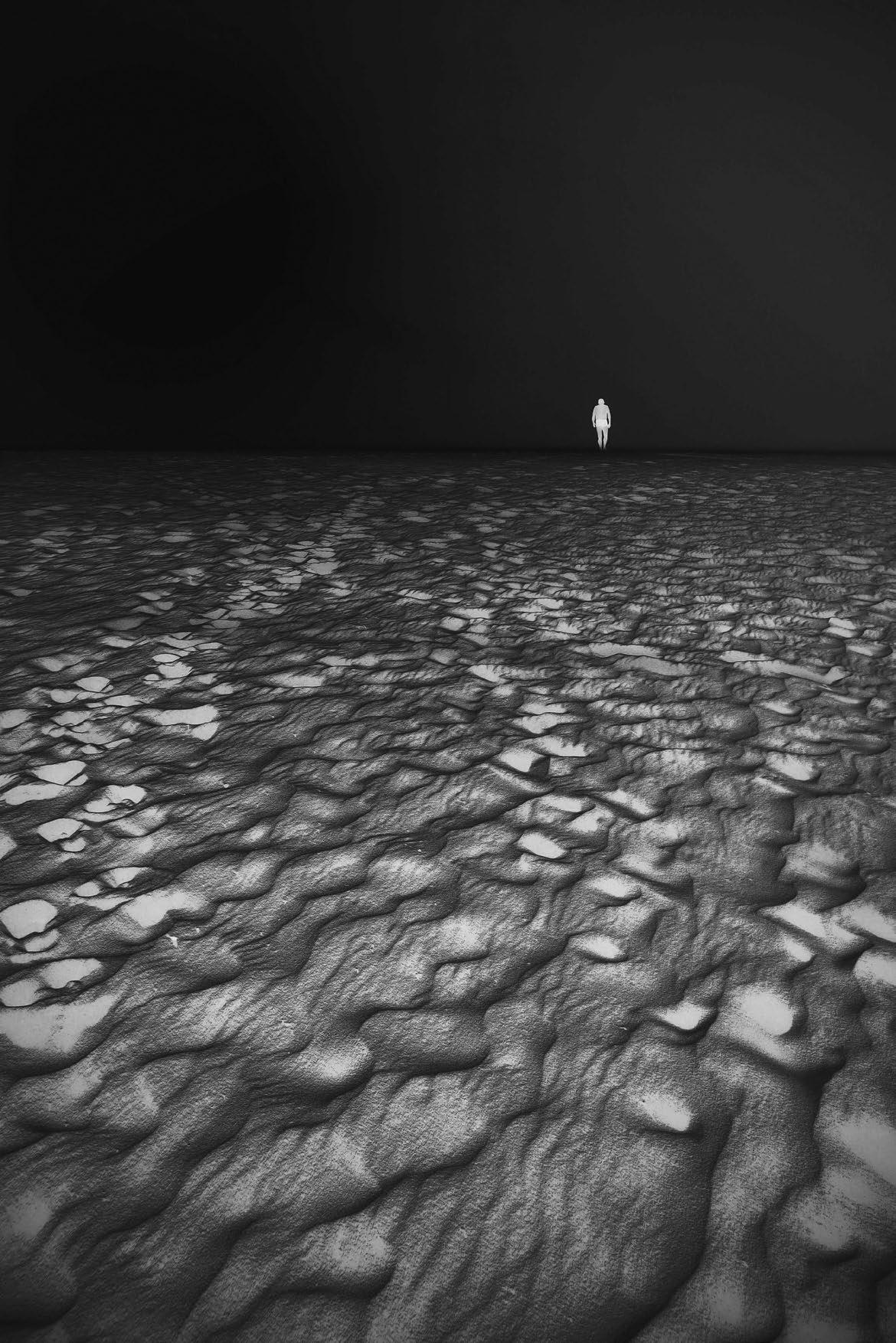
Angel Marks (Brasil, 1964) é fotógrafa e artista visual radicada em São Paulo. É formada em Administração de Empresas e desenvolveu sua formação em Fotografia e História da Arte na Escola Panamericana de Arte e Design. Sua prática investiga a fotografia como campo perceptivo, explorando silêncio, duração e suspensão do tempo. A partir da redução formal, as imagens ampliam a presença e instauram um ritmo desacelerado de contemplação. Na obra apresentada, o horizonte surge como um limiar entre presença e silêncio. A escala reduzida da figura humana dissolve referências e convida o espectador a vivenciar o espaço, mais do que simplesmente observá-lo. Em diálogo com investigações contemporâneas sobre percepção e duração, sua obra propõe imagens habitáveis. É autora das séries O Fim Começa Azul e O Intervalo, esta última desdobrada em um livro de artista. Sua obra tem sido apresentada no Brasil e no exterior, incluindo a I Bienal de Papel e Fotografia no Enokojima Art Center (Osaka, Japão); a AVA Gallery (Varkaus, Finlândia); a projeção no 15º Festival de Fotografia de Tiradentes; e a seleção no Prêmio Portfólio FotoDoc 2025/2026, na categoria ensaio.
Angel Marks (1964) is a photographer and visual artist based in São Paulo, Brazil. She holds a degree in Business Administration and completed her education in Photography and Art History at Escola Panamericana de Arte e Design. Her practice investigates photography as a perceptual field, exploring silence, duration, and suspended time. Through formal reduction, her images expand presence and establish a slowed rhythm of contemplation. In the presented work, the horizon emerges as a threshold between presence and silence. The reduced scale of the human figure dissolves references and invites the viewer to experience the space, rather than merely observe it. In dialogue with contemporary investigations of perception and duration, her work proposes inhabitable images. She is the author of the series The End Begins Blue and The Interval, the latter later unfolding into an artist`s book. Her work has been presented in Brazil and internationally, including the 1st Biennial of Paper & Photography at Enokojima Art Center (Osaka, Japan); AVA Gallery (Varkaus, Finland); the screening at the 15th Tiradentes Photography Festival; and selection for the FotoDoc Portfolio Award 2025/2026, in the Essay category.
Bruno Guerchon brunoguerchon.com instagram: @brunoguerchon.art
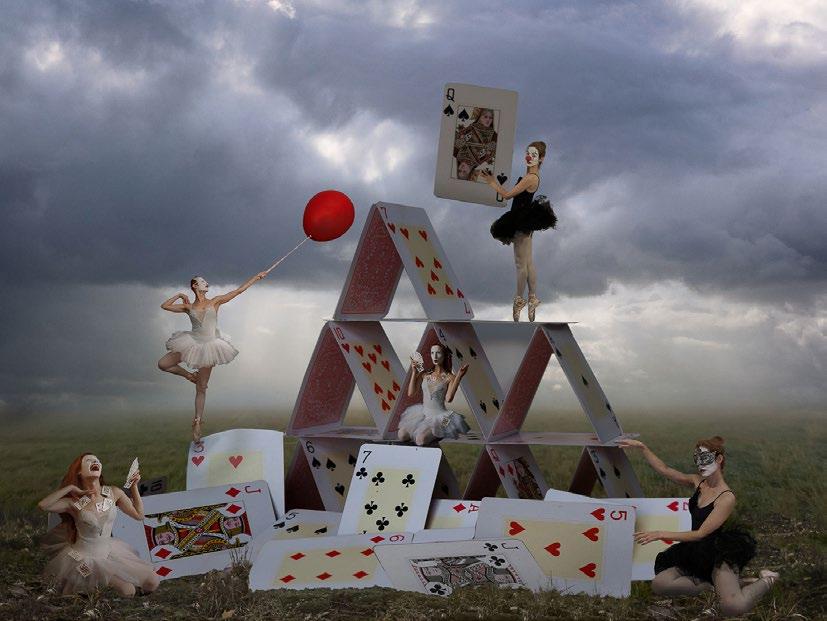
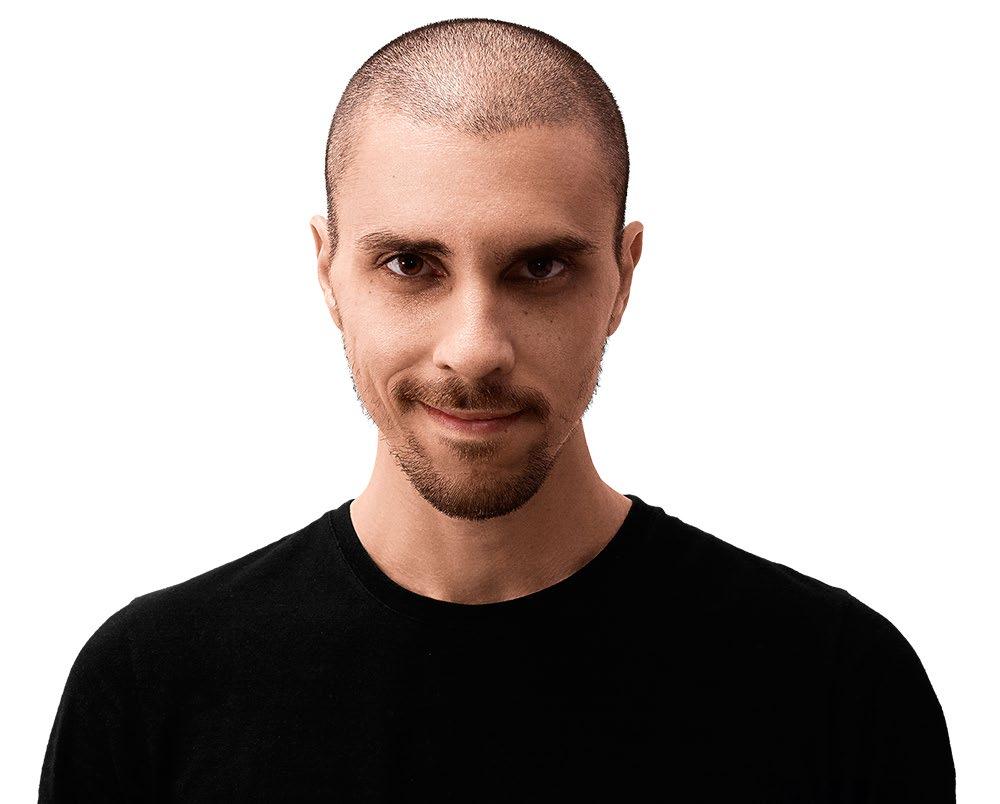
Desenhista nato, autodidata, graduado em ciência da computação. Desde 2018, atua profissionalmente como artista visual, tendo se especializado em fotografia cênica. Como fotógrafo, além de contribuir com terceiros, também produz imagens em projetos próprios, principalmente nos gêneros fauna, flora, humano, paisagem e abstrato. Para ele, o gênero humano em particular é o mais reflexivo e potencialmente o mais transformador; porque retrata a vida humana como assunto principal na imagem, com suas circunstâncias, emoções aflitivas, vulnerabilidade e sofrimento; explícitos e implícitos. É, assim, o vínculo que mais nos aproxima da obra, desafia nossas crenças, valores e paradigmas, e abre um portal para contemplação e autorreflexão.
Natural-born drawing artist, self-taught, graduated in computer science. Since 2018, has been working professionally as a visual artist, specializing in scenic photography. As a photographer, in addition to contributing to third-party projects, also creates images for personal projects, mainly in the genres of fauna, flora, human, landscape, and abstract. To him, the human genre in particular is the most reflective and potentially the most transformative; because it portrays human life as the main subject in the image, with its circumstances, afflictive emotions, vulnerability, and suffering — both explicit and implicit. It is, therefore, the bond that brings us closest to the work, challenges our beliefs, values, and paradigms, and opens a portal to contemplation and self-reflection.
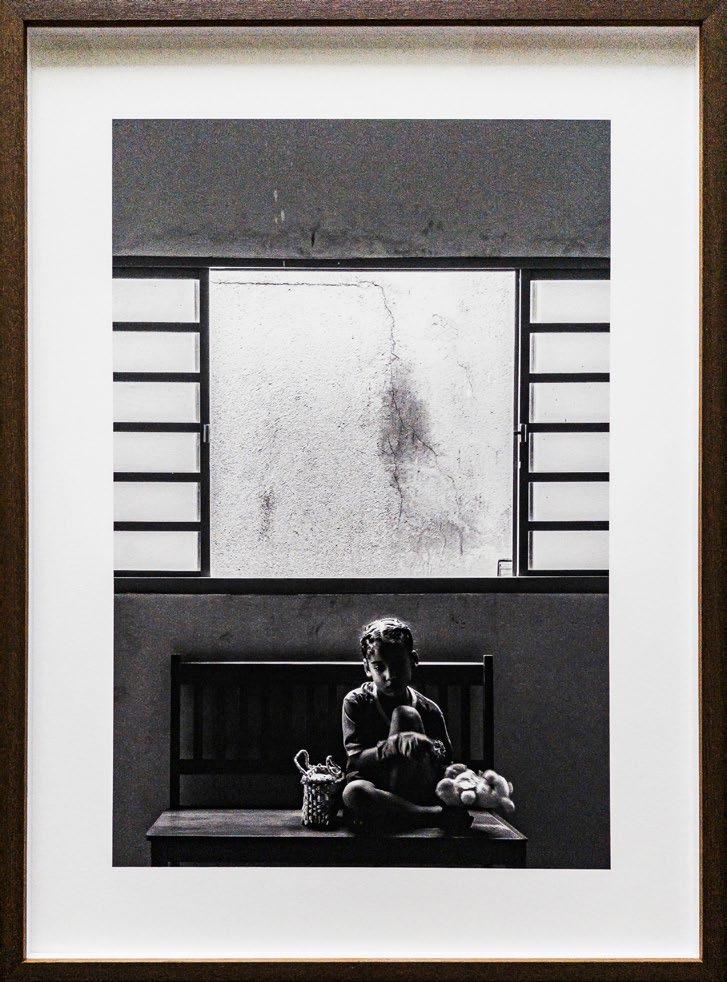
Meu Mundo Concreto (My Concrete World)
53 × 39 cm
impressão giclée com tinta de pigmento mineral em substrato museológico giclée print with mineral pigment ink on museum substrate
Bruno Spadoni bspadonis@gmail.com
Instagram: @bs_spadoni www.brunospadoniphotography.com
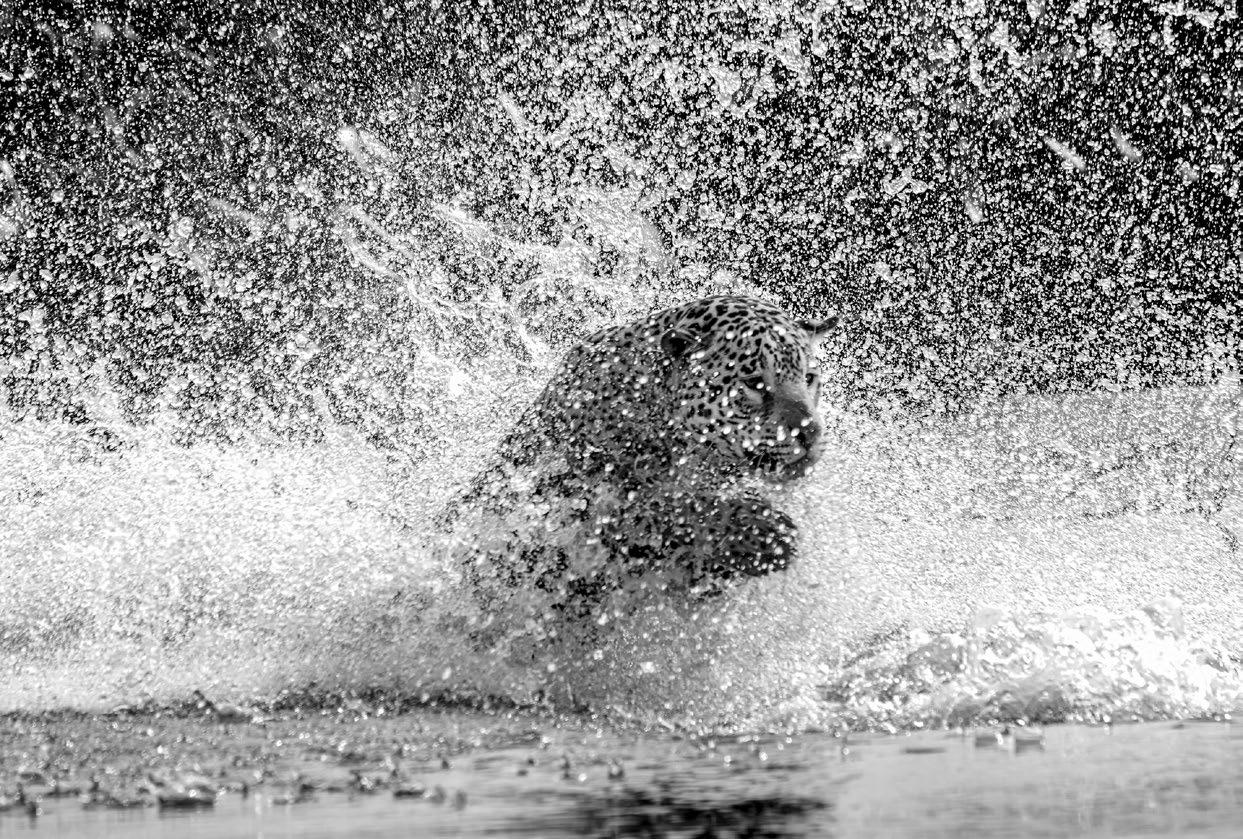
Bruno Spadoni é fotógrafo de paisagens e fine art baseado no Brasil, com reconhecimento internacional. Seu trabalho explora a relação entre luz, tempo e memória, revelando a força silenciosa da natureza por meio de composições minimalistas e narrativas visuais em preto e branco. É múltiplo vencedor do New York Photography Awards (2025), além de premiado pelo reFocus Awards. Já expôs na França, Itália, Inglaterra, Finlândia e Brasil. Suas séries investigam a grandiosidade natural sob uma abordagem contemplativa e autoral.
Bruno Spadoni is a Brazilian landscape and fine art photographer with international recognition. His work explores the relationship between light, time, and memory, revealing the silent strength of nature through minimalist compositions and powerful black-and-white visual narratives. He is a multiple Gold Winner at the New York Photography Awards (2025) and has been recognized by the reFocus Awards. His work has been exhibited in France, Italy, England, Finland, and Brazil. His series investigate the grandeur of nature through a contemplative and authorial approach.
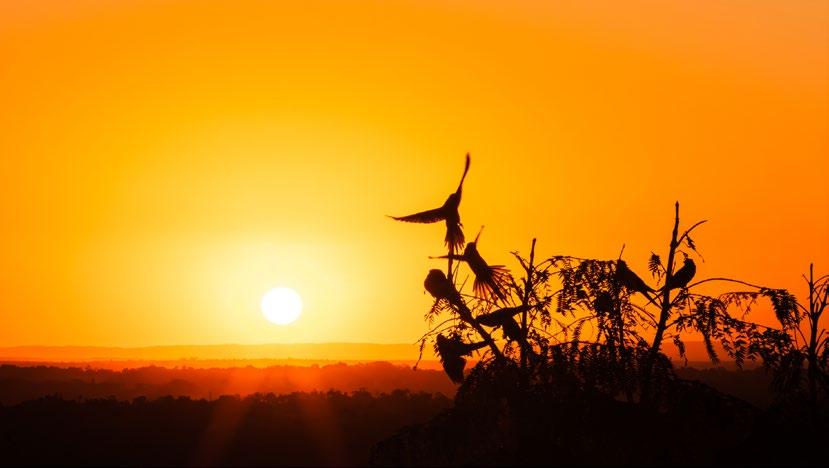
ÊXTASE DO ENTARDECER
Resiliência Silenciosa: Entre Árvores e Periquitos
Ano: 2025
Fine Art Pigment Print
Canson Matte Cotton 395gsm – 100% algodão
Dimensão: 40 x 50 cm
Edição: 5
International exhibitions: Brazil, Japan and Finland
Série:
Caio Negreiros
Caio Negreiros é poeta, fotógrafo e Procurador do Município de Teresina, construindo uma trajetória que une palavra, imagem e serviço público. Como escritor, publicou os livros A decadência das horas, Portal do Hades, Sobras do dia, Poemas insidiosos e Refeição do Tempo – poemas e prosas minimalistas. Na fotografia, seu trabalho integrou exposições como “Refeição do Tempo” (Sesc Cajuína, Teresina), a coletiva “O Registro do Olhar” na AVA Galleria Rio e o AVA Art Festival 2025 em Osaka, Japão. Entre sombras, reflexos e detalhes, constrói uma narrativa visual que dialoga com a mesma inquietação presente em seus poemas.
Caio Negreiros is a poet, photographer, and Public Attorney for the Municipality of Teresina, building a trajectory that weaves together words, images, and public service. As a writer, he has published the books A decadência das horas, Portal do Hades, Sobras do dia, Poemas insidiosos, and Refeição do Tempo – poemas e prosas minimalistas.
In photography, his work has been featured in exhibitions such as Refeição do Tempo (Sesc Cajuína, Teresina), the group show O Registro do Olhar at AVA Galleria Rio, and the AVA Art Festival 2025 in Osaka, Japan.Among shadows, reflections, and fine details, he builds a visual narrative that echoes the same restlessness and sensitivity present in his poems.
Carla Sabra
@carlasabra_fotografia www.carlasabra.com
Carla Sabra nasceu em São Paulo, Brasil, e carrega no olhar o traço sensível de quem transforma o mundo em imagem. É bacharel em Fotografia pelo Senac, engenheira civil formada pela Escola de Engenharia Mauá e pós-graduada em Marketing pela ESPM — uma trajetória que revela sua habilidade em transitar entre a técnica e a criação.
A paixão pela fotografia nasceu como um chamado silencioso, e foi no bacharelado que ela aprofundou sua escuta visual: aprendeu a olhar com mais delicadeza, a perceber o invisível, a criar narrativas com luz e sombra.
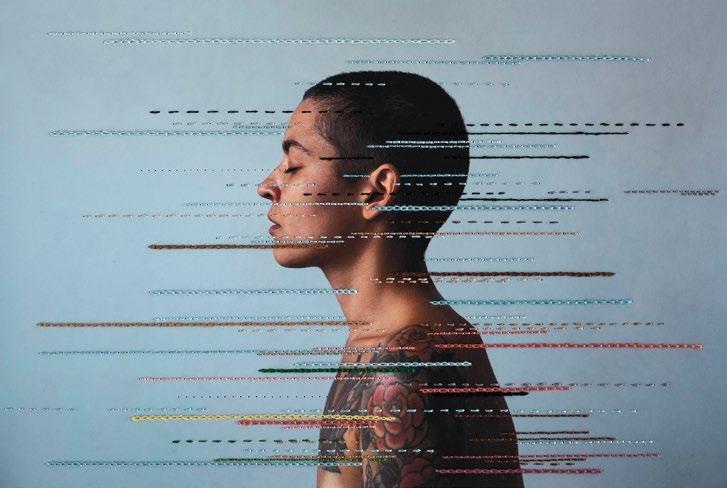
A arte sempre pulsou em sua vida — moldada pelas mãos e pelo tempo. Cerâmica, tapeçaria, patchwork, bordados: suas criações manuais, feitas ponto a ponto, foram se entrelaçando com a fotografia até que o fio e a imagem se tornassem uma só linguagem. Assim, Carla borda com luz e costura histórias com alma.
Carla Sabra was born in São Paulo, Brazil, and carries in her gaze the sensitive mark of someone who transforms the world into images. She holds a Bachelor’s degree in Photography from Senac, a degree in Civil Engineering from Escola de Engenharia Mauá and a postgraduate degree in Marketing from ESPM — a path that reveals her ability to move seamlessly between technique and creation. Her passion for photography emerged as a quiet calling, and it was during her undergraduate studies that she deepened her visual listening: she learned to look with greater delicacy, to perceive the invisible, and to create narratives through light and shadow.
Art has always pulsed through her life — shaped by hands and time. Ceramics, tapestry, patchwork, embroidery: her handmade creations, crafted stitch by stitch, gradually intertwined with photography until thread and image became a single language. Thus, Carla embroiders with light and stitches stories with soul.
Suporte: Impressão a jato de tinta com pigmento mineral sobre papel Hahnemühle Photo Luster 260g.
Técnica: Bordado à mão com técnica pintura de agulha
Duca Celidônio Teixeira
Duca Celidônio Teixeira - @duca_ct ducact.myportfolio.com
Crescida em Campinas, aos 21 embriagada pelas músicas dos Novos baianos, Caymmi, João Gilberto e toda tropicália, segui para Bahia descobrir os encantos da Costa do cacau onde desenvolvi meu primeiro projeto audiovisual na Itacaré dos anos 90. Após um grande período entre África e Europa, volto ao Brasil em 2024 com um olhar cheio de saudades e de amor pelo meu povo e minha terra.
Growing up in Campinas, at 21 drunk on the songs of Novos Bahians, Caymmi, João Gilberto and all tropicália, I went to Bahia to discover the charms of the Cocoa Coast where I developed my first audiovisual project at Itacaré in the 1990s. After a long period between Africa and Europe, I return to Brazil in 2024 with a look full of nostalgia and love for my people and my land.
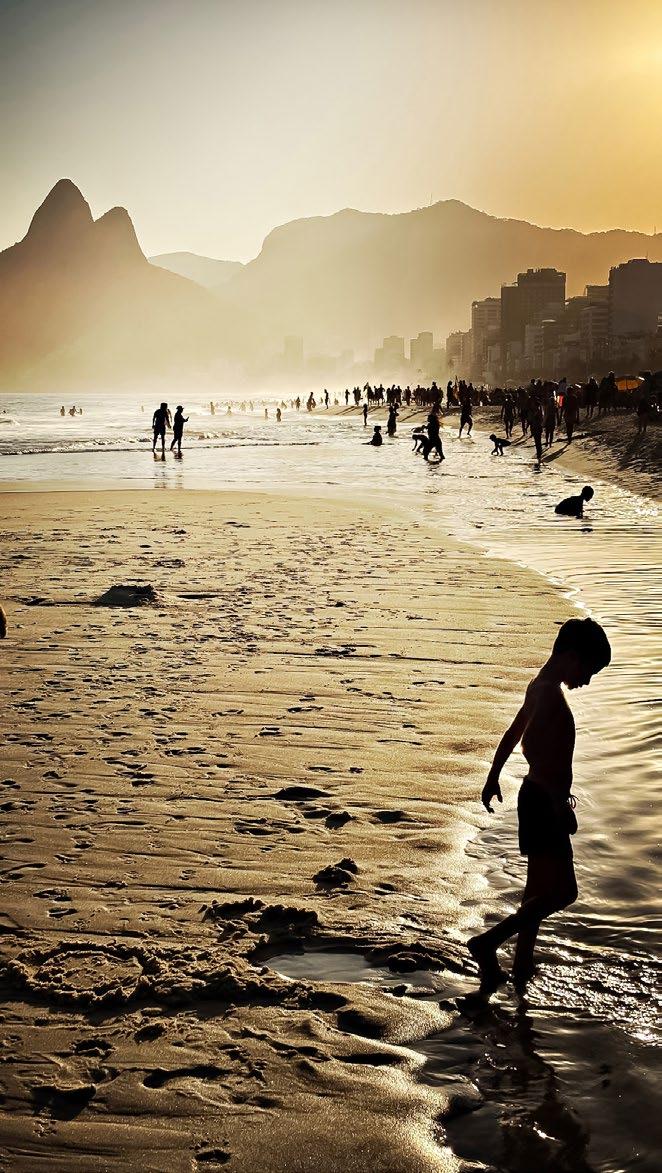
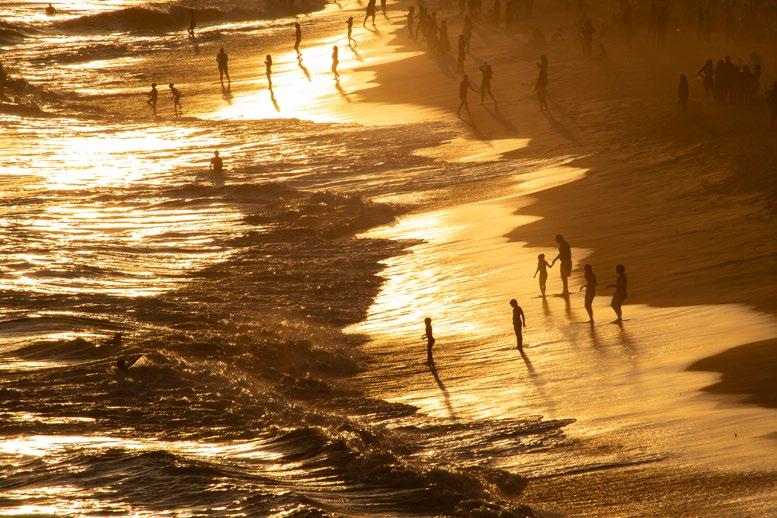
Os meninos dourados
No inverno carioca, Ipanema se transforma. Com a maré cheia, a água avança sobre a areia e cria pequenas piscinas naturais que se tornam território de brincadeira para as crianças. Os Meninos Dourados registra um desses finais de tarde, quando o pôr do sol envolve a praia em uma luz quente e difusa. Aqui, o oceano assume um papel secundário: é a margem que importa. A fotografia destaca o corpo em movimento, o gesto simples e a relação íntima entre infância, paisagem e tempo suspenso. A luz dourada não apenas ilumina a cena, mas imprime memória, transformando o instante cotidiano em imagem sensível e duradoura.
During Rio de Janeiro’s winter, Ipanema undergoes a subtle transformation. With the high tide, the water advances over the sand, forming small natural pools that become spaces of play for children. Os Meninos Dourados captures one of these late afternoons, when the setting sun bathes the beach in a warm, diffuse light. Here, the ocean recedes into the background; it is the shoreline that matters. The photograph emphasizes the body in motion, simple gestures, and the intimate relationship between childhood, landscape, and suspended time. The golden light does more than illuminate the scene — it inscribes memory, transforming an everyday moment into a lasting, sensitive image.
Os meninos dourados / Golden Boys
60 x 90 cm
Photo / Edição: 1 Julho / July 2025, Ipanema
Eliane Torino
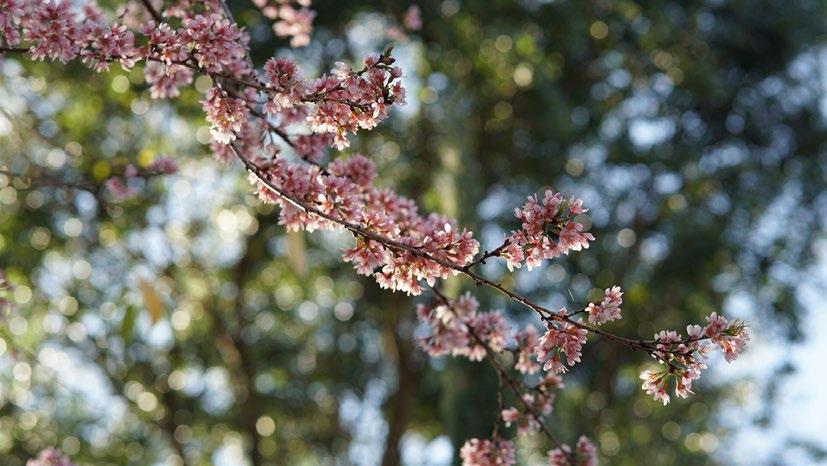
No jardim que a rodeia, Eliane encontrou sua ligação mais profunda com o Japão. A cada primavera, a cerejeira floresce diante de seu olhar, lembrando que a beleza é breve e que cada instante merece ser vivido e guardado. Suas fotografias não mostram apenas flores: revelam o delicado intervalo entre o nascer e o cair das pétalas, traduzindo em imagens a filosofia japonesa que vê poesia na impermanência. O jardim se transforma, então, em cenário de contemplação, onde até o vento que move os galhos parece escrever haicais invisíveis. Para Eliane, fotografar não é apenas registrar, mas celebrar um ritual íntimo com a natureza. É sua forma de dialogar com o Oriente, de transformar simplicidade em arte e de eternizar aquilo que o tempo insiste em levar. Assim, a cada estação, o jardim de Eliane floresce como um pedaço do Japão e sua arte mantém viva a beleza que habita o instante.
In the garden that surrounds her, Eliane discovered her deepest connection to Japan. Every spring, the cherry tree blooms before her eyes, reminding her that beauty is fleeting and that every moment deserves to be lived and remembered. Her photographs capture more than flowers: they reveal the delicate interval between the rise and fall of petals, translating into images the Japanese philosophy that finds poetry in impermanence. The garden becomes a place of contemplation, where even the wind moving the branches seems to write invisible haikus. For Eliane, photographing is not just recording — it is celebrating an intimate ritual with nature. It is her way of conversing with the East, of transforming simplicity into art, and of preserving what time insists on taking away.Thus, with each season, Eliane’s garden blooms like a small piece of Japan, and her art keeps alive the beauty that lives within the moment
Estefane Silva
Na produção de Estefane Silva, o retrato deixa de ser mera representação para tornar-se campo de relação. Seu trabalho opera no intervalo entre visível e sensível, onde a imagem funciona como superfície de encontro e tensão. Natural de Caruaru, Pernambuco, a artista constrói uma prática que articula fotografia e literatura como gestos complementares de absorção, interpretação e inscrição do humano.
Ao investigar memória, identidade e pertencimento, sua obra desloca o espectador da observação passiva para uma experiência de implicação. Há, em suas imagens, uma ética do olhar que privilegia a presença e a vulnerabilidade como forças estruturantes da narrativa visual.
Em sua elaboração, uma pulsação subterrânea reorganiza a matéria em fluxo e suspensão. Cada composição instaura-se como acontecimento liminar, onde o tangível cede espaço ao que ainda se anuncia.
Selecionada na categoria Imagem Destacada do FOTODOC 2026, Estefane afirma-se como voz emergente na fotografia contemporânea brasileira. Com poemas publicados em antologias e livro autoral previsto para 2026, sua pesquisa atravessa linguagens, consolidando uma poética que tensiona documento e subjetividade. Sua participação na exposição itinerante O Registro do Olhar V, com circulação no Brasil, Finlândia e Japão, amplia o alcance internacional de uma obra que entende a imagem como experiência de travessia.
In Estefane Silva’s practice, portraiture ceases to be mere representation and becomes a field of relationships. Her work operates within the space between the visible and the sensorial, where the image functions as a surface of encounter and tension. Born in Caruaru, Pernambuco, the artist develops a practice that articulates photography and literature as complementary gestures of absorption, interpretation, and inscription of the human experience.
By investigating memory, identity, and belonging, her work shifts the viewer from passive observation toward an experience of involvement. Within her images, there is an ethics of looking that privileges presence and vulnerability as structuring forces of the visual narrative.
A subterranean pulse runs through her work, reorganizing matter into states of flow and suspension. Each composition establishes itself as a liminal event, where the tangible yields to what is yet to emerge. Selected for the Featured Image category at FOTODOC 2026, Estefane asserts herself as an emerging voice in contemporary Brazilian photography. With poems published in anthologies and an authorial book scheduled for release in 2026, her research traverses languages, consolidating a poetics that stretches the boundaries between document and subjectivity. Her participation in the traveling exhibition O Registro do Olhar V, presented in Brazil, Finland, and Japan, expands the international reach of a body of work that understands the image as an experience of crossing.
Ezer Berdugo
Ezer Berdugo é um fotógrafo franco-marroquino criado no Brasil, cujo trabalho transita entre o fotojornalismo, a fotografia editorial e a fotografia artística. Sua prática é inteiramente construída através da fotografia analógica, utilizada como uma forma de preservar a transparência e a honestidade do momento fotografado. Sua fotografia não busca recriar ou encenar situações, mas aceitar o acaso, a imperfeição e a realidade do instante. Dentro desse processo, o artista procura interferir o mínimo possível ao clicar, permitindo que a imagem aconteça de forma mais humana e espontânea. Através de viagens, encontros e diferentes territórios, seu trabalho explora temas ligados à identidade, memória, natureza e presença humana.
Ezer Berdugo is a French-Moroccan photographer raised in Brazil whose work moves between photojournalism, editorial photography, and artistic photography. His practice is entirely based on analog photography, used as a way of preserving the transparency and honesty of the photographed moment. His photography does not seek to recreate or stage situations, but rather to embrace chance, imperfection, and the reality of the instant. Within this process, the artist aims to interfere as little as possible when taking the picture, allowing the image to emerge in a more human and spontaneous way. Through travel, encounters, and different territories, his work explores themes related to identity, memory, nature, and human presence.
Flor Azul
O Olhar Antropológico da Luz
Nascida e criada no Rio de Janeiro, Flor Azul é uma fotógrafa documental, street photographer e artista contemporânea que carrega em seu trabalho a síntese de uma dupla formação acadêmica. Graduada em Antropologia pela PUC-RJ e em Fotografia e Imagem pela Universidade Cândido Mendes, ela desenvolve um olhar único, que funde a investigação social com a poesia visual. Sua prática artística parte de uma crença central: a de que nossa percepção da realidade é “programada” pelos códigos e estruturas sociais que nos moldam. Flor se propõe a desconstruir essa programação. Com sua câmera, ela atua como uma etnógrafa do cotidiano, “desprogramando a realidade” para revelar narrativas ocultas e convidar a novas formas de ver. O instrumento principal dessa investigação é o jogo entre luz e sombra. Mais do que elementos técnicos, são para ela personagens fundamentais que moldam, revelam e escondem histórias. Seu foco reside na relação entre o indivíduo e a natureza, capturando momentos efêmeros onde essa conexão, muitas vezes sutil ou negligenciada no ambiente urbano, se manifesta com força poética. Ativa no cenário das artes visuais, Flor Azul já participou de diversas exposições coletivas, tanto no Rio de Janeiro quanto em outros estados e no exterior, consolidando um trabalho que é, antes de tudo, um convite à reflexão sensível sobre nosso lugar no mundo.
The Anthropological Gaze of Light
Born and raised in Rio de Janeiro, Flor Azul is a documentary photographer, street photographer, and contemporary artist whose work embodies a dual academic background. A graduate in Anthropology from PUC-RJ and in Photography and Image from Universidade Cândido Mendes, she develops a unique perspective that fuses social investigation with visual poetry. Her artistic practice stems from a central belief: that our perception of reality is "programmed" by the social codes and structures that shape us. Flor aims to deconstruct this programming. With her camera, she acts as an ethnographer of everyday life, "deprogramming reality" to reveal hidden narratives and invite new ways of seeing. The main instrument of this investigation is the interplay between light and shadow. More than technical elements, they are fundamental characters that shape, reveal, and conceal stories. Her focus lies in the relationship between the individual and nature, capturing ephemeral moments where this connection, often subtle or neglected in the urban environment, manifests itself with poetic force. Active in the visual arts scene, Flor Azul has participated in numerous group exhibitions, both in Rio de Janeiro and in other states and abroad, consolidating a body of work that is, above all, an invitation to sensitive reflection on our place in the world.
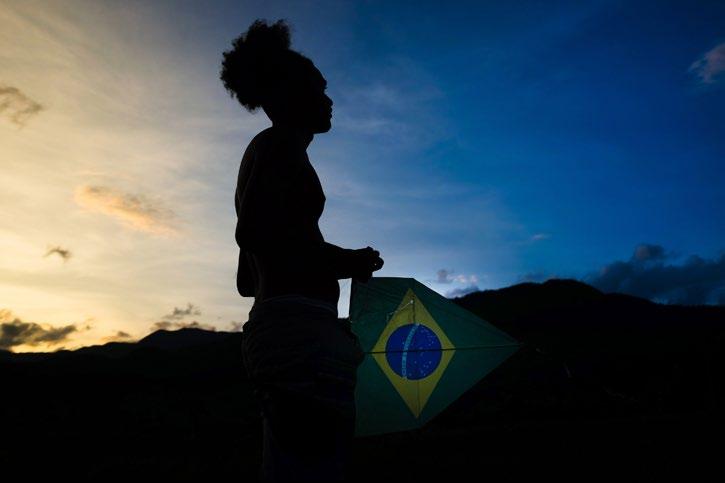
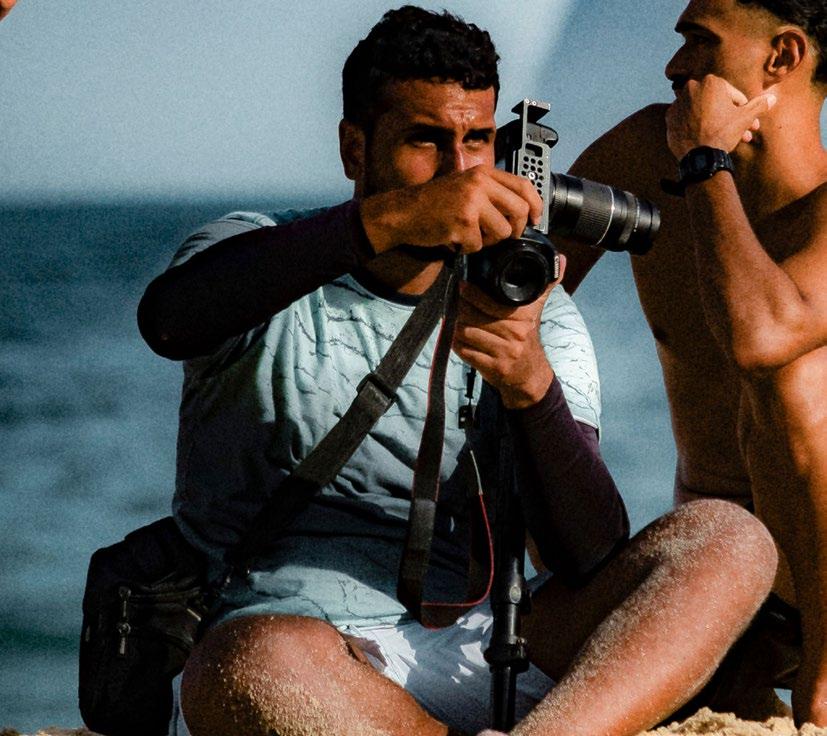
Gere Soares Fotografia
( Geremias de Azevedo Soares ) Geremias.soares27@gmail.com @instagram: @gere.soares_photographer https://geresoaresfotografia.myportfolio.com
My name is Geremias Soares, I'm from Espírito Santo, I started in photography in 2019, and what brought me to this world was my admiration for nature. I've always enjoyed hiking, observing, and escaping the hustle and bustle of everyday life, whether climbing a mountain or observing the stars, and why not, capturing those moments... That's where this desire was born, and from there I discovered a new world. Photography took me to places I never imagined I would see, and with each experience, I always returned home with new learning and a new perspective on seeing the world... I first ventured into landscapes, then into astrophotography and storm photography, always challenging myself to go further. Over time, the dream of actually making a living from photography grew bigger, and I specialized in other niches, including, in 2024, sports photography, in which I rediscovered myself and evolved a lot. And in this niche, I seek not only to capture the movement, but also the nuances of emotions and the athlete's connection to the place they are in.
Meu nome é Geremias Soares, sou do Espírito Santo, iniciei na fotografia em 2019, e o que me trouxe a esse mundo foi a minha admiração pela natureza, sempre gostei de fazer trilhas, de observar e fugir da agitação do cotidiano, seja subindo uma montanha, ou observando as estrelas, e porque não, registrando esses momentos... Foi ai que nasceu essa vontade e a partir disso conheci um novo mundo, a fotografia me levou para lugares que eu jamais imaginava conhecer, e a cada vivência, sempre voltava para casa com um aprendizado novo, e uma nova perspectiva de ver o mundo... Me aventurei primeiramente nas paisagens, logo em seguida na astrofotografia e nas fotografias de tempestades, sempre me desafiando a ir mais além. Com o passar do tempo, o sonho de viver de fato da fotografia foi ficando maior, e me especializei em outros nichos, dentre eles, em 2024, a fotografia esportiva, no qual me redescobri e evolui muito. E nesse nicho não procuro não só capturar o movimento, mas também as nuances das emoções e a conexão do atleta com o lugar que ele está.
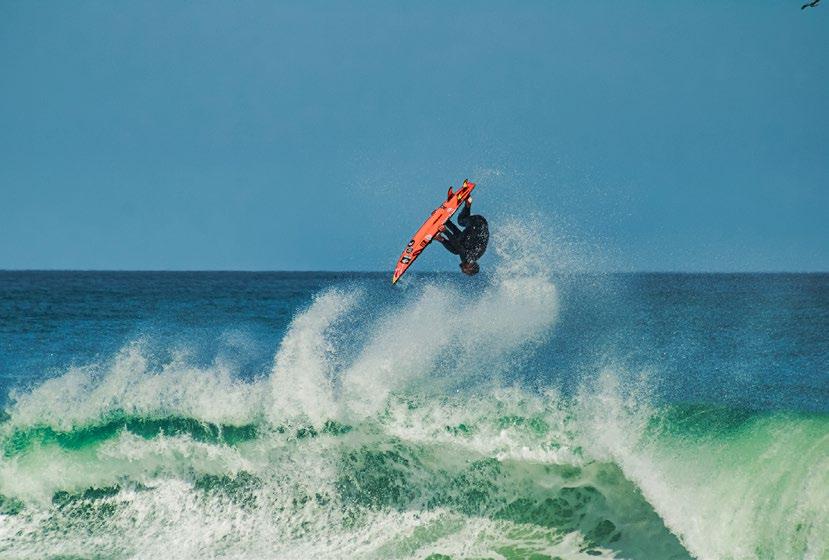
Germán Garibay
Fotografia Urbana e Natural
Sou Germán Garibay, fotógrafo mexicano com 10 anos de carreira dedicada à fotografia de rua e retratos. Destaco-me por capturas espontâneas que revelam interações humanas autênticas no dia a dia das cidades como São Paulo, Brasília, Rio de Janeiro, Cidade do México e Londres, além de Delhi, Jaipur, Agra e Varanasi na Índia. Meu olhar transforma o efêmero urbano em narrativas visuais profundas, fundindo documentação e poesia, e estende-se à exuberância da Mata Atlântica e natureza brasileira. Participei de três exposições coletivas no México e uma virtual no Brasil, além de prêmios como Fotógrafo do Ano 2020 pelo Pictas CollectiveVero Internacional, finalista no Paraty em Foco e Brasil Photo Show, e inclusão entre os 100 melhores nos 35 Awards. Meu trabalho é ideal para apreciadores da fotografia artística, designers, decoradores de interiores, arquitetos, reportagens, sites e publicidade.
German Garibay
Urban & Natural Photography
I am Germán Garibay, a Mexican photographer with 10 years dedicated to street photography and portraits. I excel in spontaneous captures revealing authentic human interactions in the daily life of cities like São Paulo, Brasília, Rio de Janeiro, Mexico City, and London, as well as Delhi, Jaipur, Agra, and Varanasi in India. My gaze transforms the urban ephemeral into profound visual narratives, blending documentation and poetry, extending to the exuberance of the Atlantic Forest and Brazilian nature. I participated in three collective exhibitions in Mexico and one virtual in Brazil, plus awards such as Photographer of the Year 2020 by Pictas CollectiveVero International, finalist at Paraty em Foco and Brasil Photo Show, and inclusion among the top 100 in the 35 Awards. My work is ideal for photography art enthusiasts, designers, interior decorators, architects, reporting sites, and advertising.
Lena Trindade
Na Zona Sul do Rio de Janeiro, metrópole conhecida internacionalmente, existe um Jardim que além de bonito e tranquilo guarda as mais belas representações da Avifauna da nossa rica Mata Atlântica, bioma no qual se insere a cidade maravilhosa :
O JARDIM BOTÂNICO !
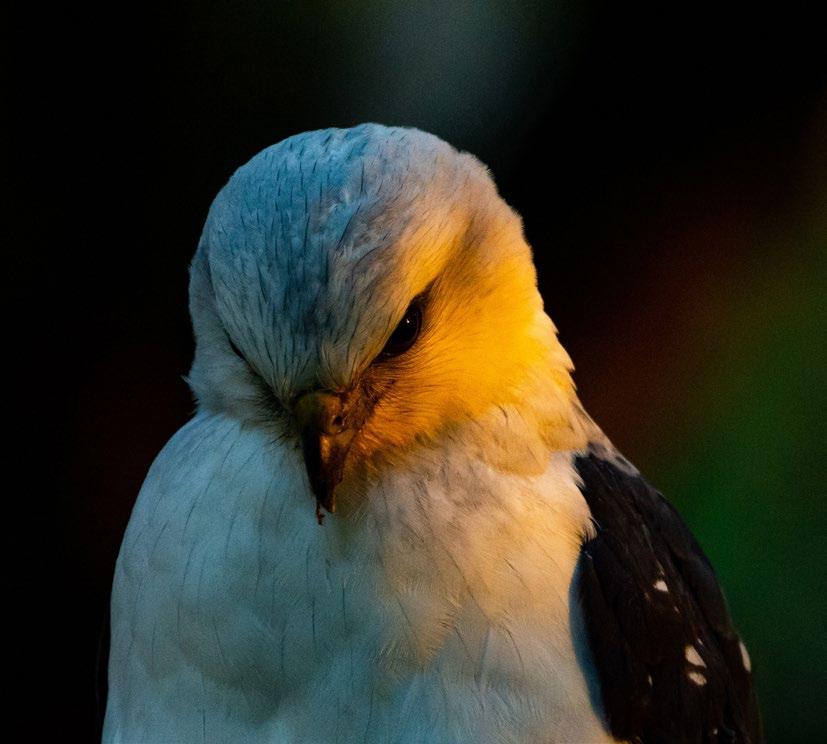
Lá o visitante atravessa um portal e pode ver com facilidade aves como a Saíra-sete-cores, a Saracura, o Gavião-branco-pequeno, o Tucano-de-preto, o beija-flor-preto-e-branco e muitas outras preciosidades. As aves dessa Exposição – JARDIM ENCANTADO- fazem parte de um trabalho de vários anos que resultou inclusive num livro - Guia das Aves do Jardim Botânico do Rio de Janeiro - (indo pra terceira edição em 2026). Sou fotógrafa de Natureza e das manifestações artísticas e culturais brasileiras. No segmento Artesanato desenvolvo amplo trabalho (Exposições e catálogos) e como fotógrafa do IRI (Instituto Renato Imbroisi) viajei por todos os países da CPLP (países da língua portuguesa) documentando Oficinas desenvolvidas pelo designer Renato Imbroisi, expondo inclusive em São Tomé e Príncipe.
LENA TRINDADE is a nature photographer specializing in Brazilian birds, while maintaining a keen eye for the landscapes that make up Brazil's diverse biomes: the Cerrado, Caatinga, Atlantic Forest, Restinga, and Amazon. She also has a deep interest in folk traditions and our rich artisanal heritage. She regularly holds exhibitions at CRAB (Brazilian Handicraft Reference Center), the Rio de Janeiro Botanical Garden, BNDES, and other venues, and collaborates with various newspapers and magazines (O Globo, Senac Environmental Magazine, among others). She has published several books and catalogs."
Gavião-pombo-branco-pequeno / Amadonastur lancernulatus
Parque da Cidade/ Rio de Janeiro/Brasil
Lucas Calvo @lucascalvo.foto https://lucasmcalvo.myportfolio.com
Lucas Calvo é fotógrafo nascido e criado em Nova Friburgo (RJ), que desde 2019 explora diferentes possibilidades da fotografia, transitando entre a documentação íntima e a contemplação do mundo ao redor. Sua produção visual nasce da memória e da relação com os lugares que habita, numa busca por traduzir em imagens a experiência subjetiva do tempo e do pertencimento. Entre trilhas, montanhas e paisagens, suas fotografias se tornam espelhos da relação entre sujeito e lugar — onde beleza, afeto e inquietação se entrelaçam.
Lucas Calvo is a photographer born and raised in Nova Friburgo (RJ), who since 2019 has been exploring different possibilities of photography, moving between intimate documentation and the contemplation of the surrounding world. His visual production stems from memory and the relationship with the places he inhabits, in a quest to translate into images the subjective experience of time and belonging. Amidst trails, mountains, and landscapes, his photographs become mirrors of the relationship between subject and place — where beauty, affection, and restlessness intertwine.
Lucas Santana gilsantan13@gmail.com @instagram @santanalucas13 https://lucassantanafoto.myportfolio.com/work
Lucas Santana é um fotógrafo paraense cuja identidade visual foi forjada sob o céu do Japão. Iniciou sua trajetória em 2020, encontrando na contemplação e na astrofotografia de paisagem sua principal forma de expressão. Em 2021, alcançou reconhecimento internacional ao vencer a categoria “Livre” do 55º Concurso Fotográfico da Canon Japão, tendo sua obra exposta nas prestigiadas Canon Galleries de Ginza (Tóquio) e Osaka.
De volta às origens, Lucas agora volta suas lentes para o norte do Brasil com o projeto “Astro-Amazônia”. O trabalho busca criar um diálogo visual inédito entre a magnitude do cosmos e as paisagens icônicas da Amazônia, revelando uma floresta sob luzes raramente vistas.
Lucas Santana is a photographer from Pará whose visual identity was forged beneath the skies of Japan. He began his journey in 2020, discovering his primary form of expression through contemplation and landscape astrophotography. In 2021, he achieved international recognition by winning the "Open" category of the 55th Canon Japan Photo Contest, leading to his work being exhibited at the prestigious Canon Galleries in Ginza (Tokyo) and Osaka.
Now returning to his roots, Lucas turns his lens toward Northern Brazil with his project "Astro-Amazônia." The work seeks to create an unprecedented visual dialogue between the magnitude of the cosmos and the iconic landscapes of the Amazon, revealing the rainforest under lights rarely seen.
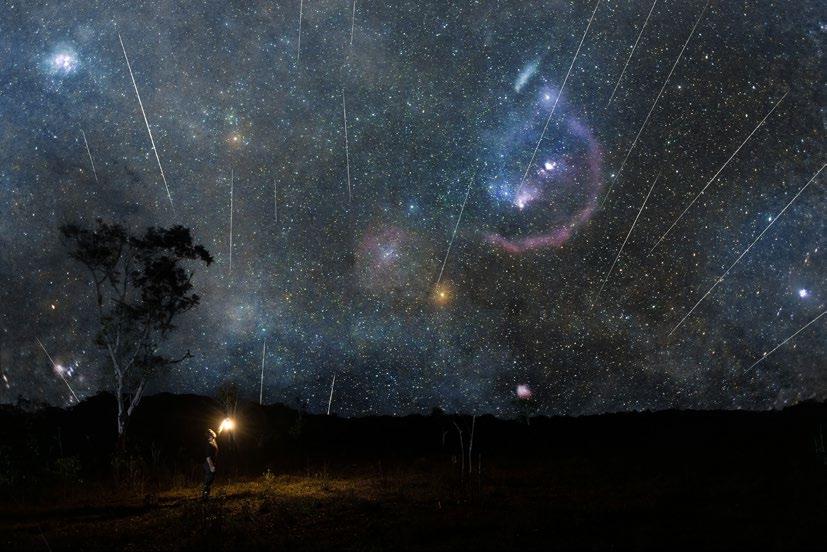
Chuva de meteoros geminídeas de 2023 em Santa Luzia no Pará. The 2023 Geminids over Santa Luzia, Pará.
Luciana Barberino
@lucianabarberino
Luciana Barberino é do Rio de Janeiro
Formada em Letras. Atua no mercado Imobiliário e carrega na fotografia uma expressão artística intuitiva e sensível. Seu olhar se volta para aquilo que muitas vezes passa despercebido: os contrastes da cidade, as pausas invisíveis, os diferentes tempos que coexistem no mesmo espaço. O que começou como impulso instintivo tornou-se linguagem. Sua fotografia nasce do impacto do “fotão” que interrompe o fluxo comum e provoca reflexão. Com participações em exposições e trabalhos autorais que dialogam com questões sociais, Luciana utiliza a imagem como instrumento de observação crítica e poética. Fotografar, para ela, é tensionar o tempo, revelar camadas e propor perguntas silenciosas sobre desigualdade, presença e pertencimento.
Luciana Barberino is from Rio de Janeiro, Brazil. She holds a degree in Languages and works professionally in the real estate sector, while carrying in photography an intuitive and sensitive artistic expression. Her gaze turns to what often goes unnoticed: the contrasts of the city, invisible pauses, and the different rhythms that coexist within the same space. What began as an instinctive impulse has become a language. Her photography emerges from impact — from the striking image that interrupts the ordinary flow and provokes reflection. With participation in exhibitions and authorial works that engage with social issues, Luciana uses imagery as a tool for critical and poetic observation. For her, photographing is about tensioning time, revealing layers, and proposing silent questions about inequality, presence, and belonging.
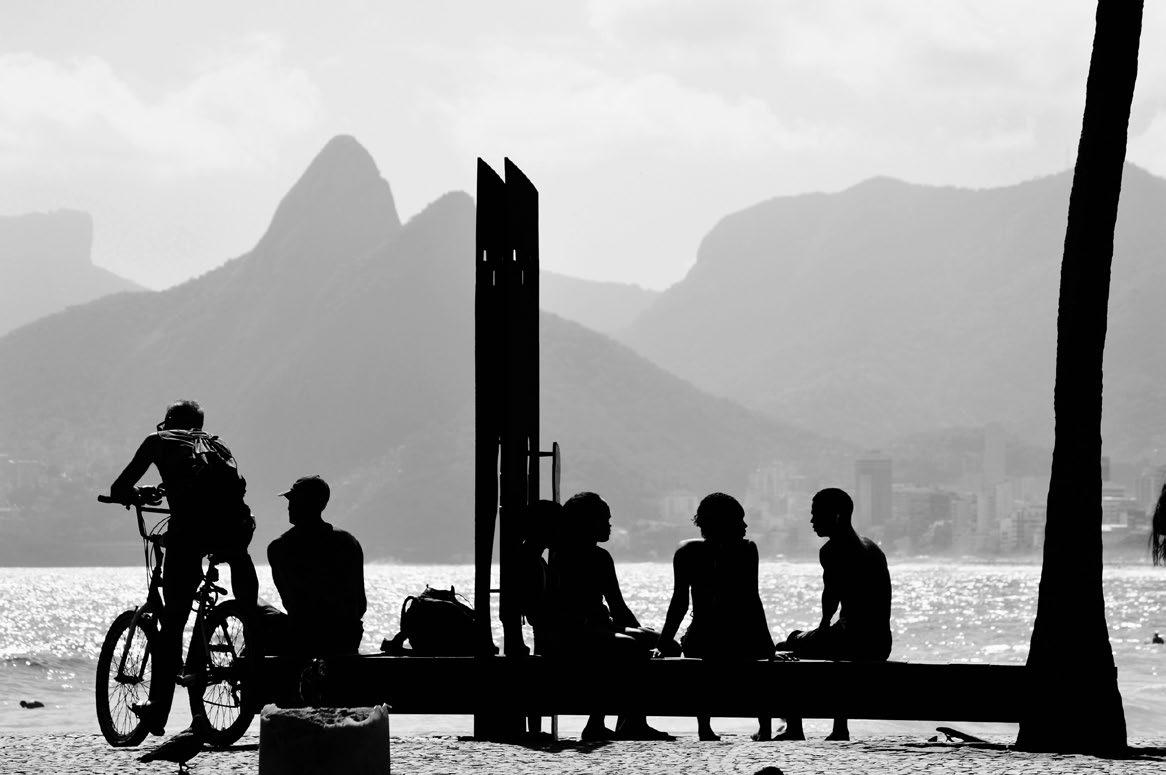
Silhuetas do agora Na moldura do sol, somos todos iguais. Sombras em busca de um fôlego em um dia de soll. Arpoador, Ipanema, Rio de Janeiro, 2025
Luciana Evrard
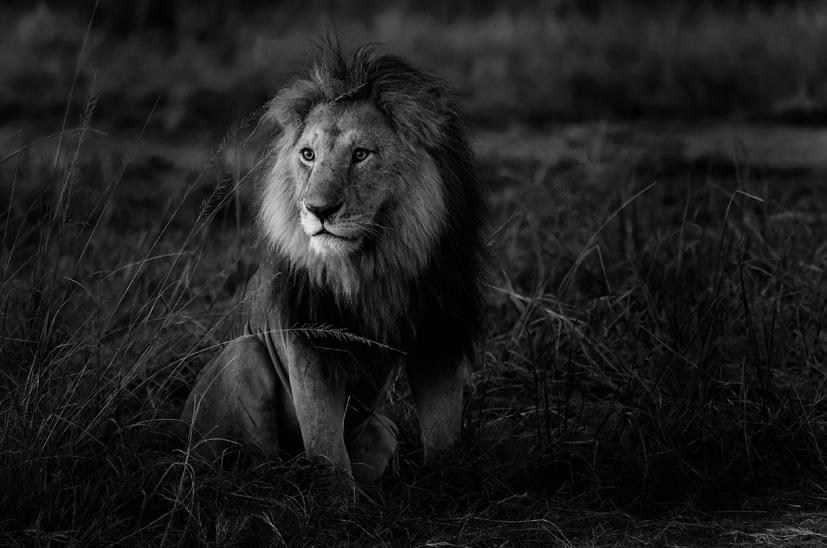
Luciana Evrard é uma fotógrafa movida pela paixão e por um profundo respeito pela natureza. Sua prática artística nasce da contemplação — um estado de presença onde paisagens e vida selvagem deixam de ser apenas temas e tornam-se experiências de conexão íntima. Fotografar, para Luciana, é um ato meditativo. A lente não é apenas instrumento técnico, mas extensão do seu olhar atento e sensível. Sua obra transcende o registro documental: é um exercício de escuta visual, onde cada imagem é desenhada pacientemente com a luz natural. Nesta série, a artista revela a grandiosidade e a poesia da biodiversidade brasileira, conduzindo o espectador a um estado de silêncio e admiração. Seu trabalho afirma que o sublime se manifesta tanto na potência indomável.
Luciana Evrard is a photographer driven by passion and a profound respect for nature. Her artistic practice is born from contemplation — a state of presence in which landscapes and wildlife cease to be mere subjects and become experiences of intimate connection. For Luciana, photography is a meditative act. The lens is not merely a technical instrument, but an extension of her attentive and sensitive gaze. Her work transcends documentary record; it is an exercise in visual listening, where each image is patiently drawn with natural light. In this series, the artist reveals the grandeur and poetry of Brazilian biodiversity, inviting the viewer into a space of silence and admiration. Her work affirms that the sublime resides both in the untamed strength of wild animals and in the serenity of a landscape at rest.
"Luiz Paulo "Lupi" Grinberg
Luiz Paulo “Lupi” Grinberg é fotógrafo brasileiro cuja produção transita entre retrato, fotografia documental, natureza e vida selvagem. Seu trabalho nasce da curiosidade, da observação e do interesse por pessoas, culturas, paisagens e experiências autênticas. Ao longo dos últimos anos, realizou expedições fotográficas por diferentes regiões do Brasil, África, Ásia, Europa e América do Sul, desenvolvendo uma linguagem visual marcada pela atenção à luz, à presença e aos momentos espontâneos. Sua fotografia busca menos explicar o mundo e mais convidar à contemplação e à descoberta. Paralelamente ao trabalho de campo, mantém uma prática contínua de estudo da fotografia, da história da arte e dos grandes mestres da imagem, buscando compreender e aprimorar tanto os aspectos técnicos quanto os artísticos do processo fotográfico. Desde 2023, sua obra vem recebendo reconhecimento em concursos internacionais, acumulando mais de 1.600 aceitações e mais de 170 premiações. Seu trabalho também integrou exposições coletivas realizadas no Brasil e no exterior, incluindo mostras em São Paulo, Rio de Janeiro, Finlândia, Romênia e Japão. Para Lupi, fotografar é uma forma de estar presente, explorar o desconhecido e transformar experiências vividas em imagens capazes de despertar conexão, beleza e significado."
I am a Brazilian fine art photographer whose work moves between documentary observation and poetic interpretation. My images emerge from encounters with nature, wildlife, and people in regions such as Africa, Asia, South America, and Northern Europe, where I explore light, form, and behavior with technical rigor and a contemplative gaze. Brazil occupies a central place in this journey, serving as a constant source of inspiration through its landscapes, extraordinarily rich ecosystems, and cultural diversity. Alongside photographs created in the field and during my travels, I maintain an ongoing exploration of studio portraiture, investigating human expression and symbolic constructions that dialogue with my wildlife work. My trajectory includes recognitions and numerous awards in international salons and competitions, and my photography seeks to offer, in each image, a pause in the flow of time, combining technical precision with aesthetic sensitivity.
Márcio Balbo
Márcio Balbo é fotógrafo viajante desde que descobriu sua vocação para explorar lugares. O foco de seus registros é marcantemente brasileiro. Não é apenas um viajante de destinos porque seu espírito inquieto percorre territórios desconhecidos, principalmente aqueles ocultos dentro de si. Viaja para compreender o Brasil, não apenas para visitá-lo. Seu viés é sensível, poético, e extrapola o comumente paisagístico. Com um trabalho longevo que mescla humano e natural, converge para o que imaginamos ser brasilidade. E isto se estende além da estética, pois sua fotografia, além de sentimento, revela também fragmentos do tempo. Essencialmente, seu olhar nos convida a uma reflexão interior.
Márcio Balbo has been a traveling photographer since discovering his calling to explore places. The focus of his work is distinctly Brazilian. He is not merely a traveler of destinations, for his restless spirit journeys through unknown territories — especially those hidden within himself. He travels to understand Brazil, not simply to visit it. His perspective is sensitive and poetic, going beyond the merely scenic. With a long-standing body of work that blends the human and the natural, he converges toward what we imagine to be Brazilianness. And this extends beyond aesthetics, for his photography — beyond emotion — also reveals fragments of time. At its core, his gaze invites us into an inner reflection.
Marcio Menasce
( Marcio Corrêa Menasce ) www.marciomenasce.com @instagram: marcio.menasce marciomenasce@gmail.com
Marcio Menasce é mestre em artes visuais pela Escola de Belas Artes da Universidade Federal do Rio de Janeiro EBA/UFRJ, formado em jornalismo e pós-graduado em fotografia e imagem pelo IUPERJ Cândido Mendes. Como artista, participou de diversas exposições coletivas. Entre elas, as mostras "A Construção do MAR e a Pequena África", no Museu de Arte do Rio de Janeiro (MAR), em 2023; e "Del Bravo al Plata", no Fotomuseo Cuatro Caminos, na Cidade do México (DF), México, em 2009. Em 2021, Menasce lançou seu primeiro fotolivro: "Em Concha". O trabalho foi patrocinado pela Secretaria Municipal de Cultura do Rio de Janeiro, com recursos da Lei Aldir Blanc. Em 2019, o ensaio fotográfico "Em Concha" recebeu menção honrosa no prêmio Poy Latam, categoria Futuro das Cidades.
Marcio Menasce holds a master's degree in visual arts from the School of Fine Arts of the Federal University of Rio de Janeiro (EBA/UFRJ), a degree in journalism, and a postgraduate degree in photography and image from IUPERJ Cândido Mendes. As an artist, he has participated in several group exhibitions, including "A construção do MAR e a Pequena África" at the Rio de Janeiro Art Museum (MAR) in 2023; and "Del Bravo al Plata" at the Fotomuseo Cuatro Caminos in Mexico City (DF), Mexico, in 2009. In 2021, Menasce launched his first photobook: "Em Concha". The work was sponsored by the city administration of Rio de Janeiro, with resources from the Aldir Blanc Law. In 2019, the photographic essay "Em Concha" received an honorable mention in the Poy Latam award, Future of Cities category.
Marco Antonio Sá
www.marcoantoniosa.com.br www.flickr.com/photos/marcoantoniosa http://marcoantoniosa.wordpress.com https://marcoantoniosa.myportfolio.com https://www.youtube.com/c/MarcoAntonioSá
Marco Antonio Sá: Fotógrafo há mais de 30 anos, voltado para a pesquisa e documentação fotográfica da cultura e da religiosidade popular brasileiras. Mestre e doutor em Ciência da Religião pela PUC/SP
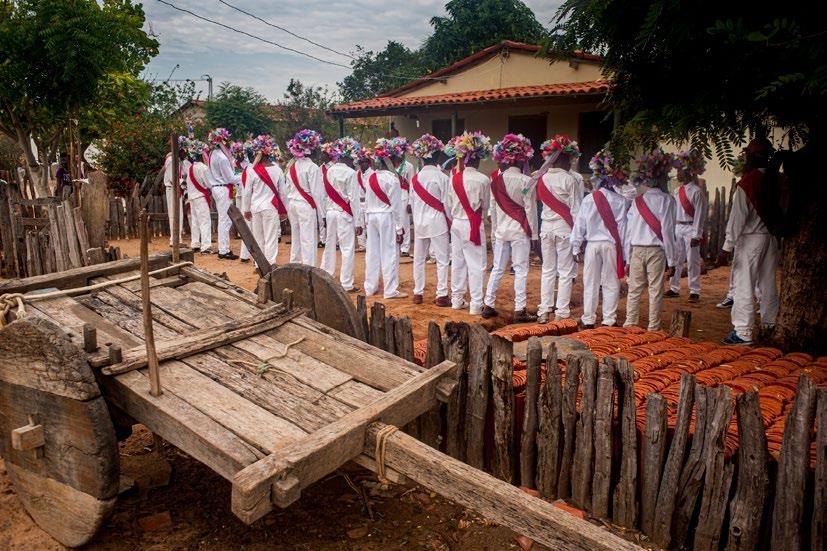
A foto aqui apresentada é resultado desse trabalho de campo e mostra uma marujada numa visita a uma casa durante a festa de N. Sra. do Rosário na comunidade quilombola do Mangal do Barro Vermelho , município de Sitio do Mato – BA em 2016
A marujada é uma variação das Congadas ou Reinados, que existe principalmente em comunidade e cidades do litoral ou que ficam nas margens de rios como é o caso dessa, na beira do Rio São Francisco
A visita às casas é parte da liturgia dessas festas que surgiram com os africanos do Congo e Angola durante o período da escravidão, mas que tiveram contato com o Cristianismo 15 anos antes da chegada de Cabral ao Brasil.
A mistura dos saberes africanos com os da religiosidade popular portuguesa fez nascer um tipo de cristianismo africanizado onde os santos, principalmente os de origem africana, passaram a ser considerados como ancestrais.
A devoção a N. Sra. do Rosário é um dos mais interessantes fatos dessa fusão de conhecimentos e crenças. A partir da criação de um novo mito fundador sobre uma imagem de N. Sra. que surgiu nas águas (Kalunga) e acompanhou os negros num cortejo, essa devoção fez dessa santa o orago da maioria das Irmandades de Homens Negros aqui no Brasil. Esse mito fundador não faz parte da hagiografia oficial da Igreja Católica e só existe entre os Congadeiros e Reinadeiros, especialmente de Minas Gerais.
Marcos Moreno
marcosmoreno10084@gmail.com www.marcosfernandocostamoreno.46graus.com instagram: @marcosfcmoreno vero: @marcosfcmoreno
Natural de Arapongas, Paraná, Brasil, Marcos graduou-se em Engenharia e Economia, profissões que exerce atualmente no norte do estado. Como entusiasta da fotografia, encontrou nas paisagens uma forma de apreciar o belo e um alívio para as pressões do cotidiano. Iniciou sua jornada fotográfica em 2015, originalmente com o intuito de registrar momentos familiares. No entanto, o interesse evoluiu para a captura de paisagens naturais e urbanas. Devido à formação acadêmica, desenvolveu um perfil técnico que o direcionou para a fotografia de longa exposição, técnica que exige um raciocínio preciso sobre a imagem desejada, o tempo de exposição e a escolha dos filtros adequados. Ao compreender que a captura e a edição possuem pesos equivalentes na criação de uma imagem, a experiência se estende ao processo de pós-produção, onde é resgatado a emoção vivida no exato momento da captura.
Originally from Arapongas, Paraná, Brazil, Marcos graduated in Engineering and Economics, professions he currently practices in the north of the state. As a photography enthusiast, he found in landscapes a way to appreciate beauty and a break from the pressures of daily life. He began his photographic journey in 2015, originally with the intention of recording family moments. However, his interest evolved to capturing natural and urban landscapes. Due to his academic background, he developed a technical profile that directed him towards long exposure photography, a technique that requires precise judgment about the desired image, exposure time, and the choice of appropriate filters. Understanding that capture and editing have equivalent weight in the creation of an image, his experience extends to the post-production process, where the vivid emotion of the exact moment of capture is recovered.
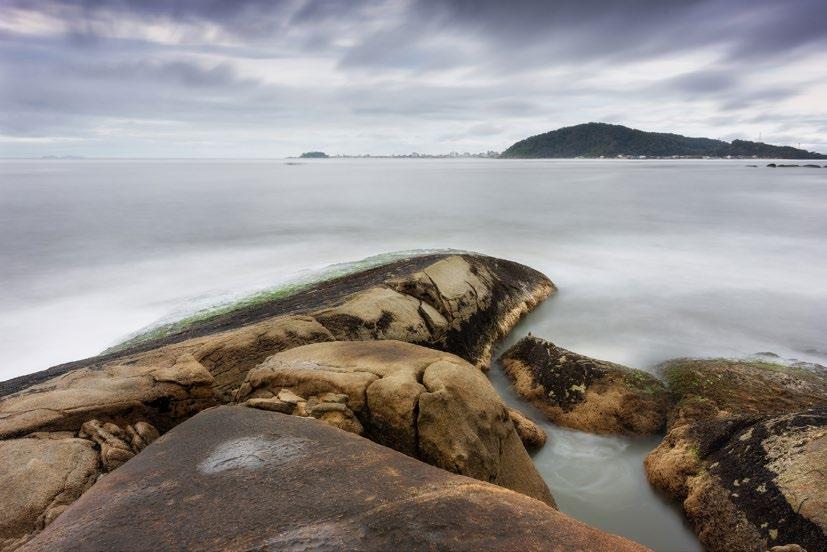
A fotografia foi uma longa exposição tirada em uma praia na cidade de Matinhos, Paraná, Brasil. The photograph was a long exposure taken on a beach in the city of Matinhos, Paraná, Brazil.
Maria de Minas
( Maria Helena da Silva Ramalho ) @mariademinas.fotografia mhelena.ramalho@gmail.com @instagram Mariademinas.fotografia www.mariademinas.com.br
Maria de Minas é fotógrafa brasileira e artista visual cuja pesquisa investiga as relações entre território, identidade e pertencimento. Sua produção transita entre fotografia documental e experimentações híbridas, articulando natureza, cultura e memória por meio de sobreposições que tensionam e aproximam retrato e paisagem.
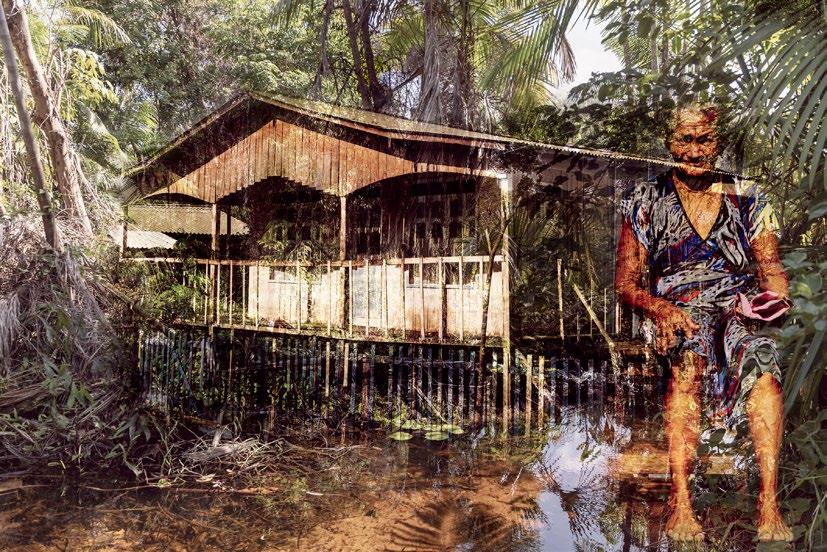
Profundamente conectada às águas e às comunidades ribeirinhas, desenvolve no Marajó um corpo de trabalho em que figura e território se interpenetram. Casas sobre palafitas, manguezais, quintais alagados e gestos cotidianos entrelaçam-se aos rostos dos moradores, configurando uma narrativa visual que dissolve as fronteiras entre corpo e espaço. A casa emerge como extensão do ser, e a sobreposição afirma-se como linguagem autoral, revelando vínculos estruturais entre sujeito e lugar.
Maria de Minas is a Brazilian photographer and visual artist whose research explores the relationships between territory, identity, and belonging. Her practice moves between documentary photography and hybrid experimentation, articulating nature, culture, and memory through layered compositions that both tension and merge portrait and landscape. Deeply connected to water and riverside communities, she develops in Marajó a body of work in which figure and territory interpenetrate. Stilt houses, mangroves, flooded backyards, and everyday gestures intertwine with the faces of local residents, forming a visual narrative that dissolves the boundaries between body and space. The house emerges as an extension of being, and layering asserts itself as an authorial language, revealing structural bonds between subject and place.
Where Time Comes to Rest
Maria Letícia Cânovas ( Maria Letícia Cânovas Borges ) Instagram: @mariacanovasfoto marialeticicaarte@gmail.com
Maria Letícia Cânovas tem a fotografia como ferramenta para a materialização do olhar sobre a relação entre ser humana e a natureza. Sua obra nasce dessa percepção de que a vida é uma teia de interdependências, onde matéria, tempo e existência se atravessam continuamente. Ao explorar formas, texturas e camadas do mundo vivo, a artista cria imagens que revelam o invisível - silêncios, ritmos e mistérios que compõem nossa própria condição no planeta. Sua pesquisa visual materializa uma conversa consigo mesma, com o céu, a terra, o mar e todos os seres vivos e não vivos do universo. É um convite a perceber o mundo com mais presença, sensibilidade e profundidade.
Maria Letícia Cânovas uses photography as a mean of materializing her gaze on the relationship between human being and nature. Her work emerges from the understanding that life is a web of interdependencies, where matter, time, and existence continuously intertwine. Through the exploration of forms, textures, and layers of the living world, Maria Letícia creates images that reveal the invisible - silences, rhythms, and mysteries that shape our condition on the planet. Her visual research unfolds as an ongoing dialogue with herself, the sky, the earth, the sea, and with all living and non-living existence in the universe. It is an invitation to experience the world with greater presence, sensitivity, and depth.
Miração
50 x 40 cm
MR Antunes
Instagram: @mariaregi_a
Olá! Sou Maria Regina, uma carioca do Rio de Janeiro que encontrou na fotografia uma nova forma de ver e sentir o mundo. Integrando o grupo 60+, redescobri essa paixão durante a pandemia de Covid. Através de desafios semanais propostos pelo fotografo @daniloschellmann, a fotografia se tornou uma válvula de escape criativa e uma deliciosa terapia contra o isolamento. Desde então, meu fiel companheiro é o celular. Com ele, busco um olhar diferenciado em cada clique, capturando a beleza nos detalhes do dia a dia. Acredito que o mais importante não é o equipamento, mas sim a sensibilidade e o olhar capaz de transformar o cotidiano em arte. Seja nas belezas naturais da nossa cidade, no dinamismo do trabalhador urbano ou nas cores vibrantes da natureza, cada imagem que compartilho é um pedacinho de como vejo e sinto o mundo. Minha filosofia é simples e direta: olhei, gostei, cliquei! Para conhecer melhor meu trabalho e acompanhar meu olhar, siga-me no Instagram: @mariaregi_a
Hello! I'm Maria Regina, a "carioca" from Rio de Janeiro who found a new way to see and feel the world through photography. As a member of the 60+ group, I rediscovered this passion during the Covid pandemic. Thanks to weekly challenges proposed by photographer @daniloschellman, photography became a creative escape and a delightful therapy against isolation. Since then, my faithful companion has been my cell phone. With it, I seek a unique perspective in every click, capturing the beauty in the details of everyday life. I believe that the most important thing isn't the equipment, but rather the sensitivity and the eye capable of transforming the ordinary into art. Whether it's in the natural beauty of our city, the dynamism of the urban worker, or the vibrant colors of nature, every image I share is a piece of how I see and feel the world. My philosophy is simple and direct: I saw it, I liked it, I clicked it! To learn more about my work and follow my perspective, follow me on Instagram: @mariaregi_a
Marta Azevedo
Marta Azevedo, nasceu e cresceu no Rio Janeiro Fez alguns básicos de fotografia e em 2003 deu início ao projeto Rostos Pretos/ Black Faces. Em 2004, se casou com um artista plástico americano e se mudou para os Estados Unidos, onde morou até 2013. Em 2005 montou um home studio e reiniciou o projeto Rostos Pretos/Black Faces), um projeto sobre os afro descendentes americanos, brasileiros, e africanos residentes nos EstadosUnidos.
Em 2015, começou a segunda edição do Black Faces, desta vez com personalidades da música, teatro, televisão, política. Toni Garrido, Pretinho da Serrinha, Serjão Loroza, Flavia Oliveira , Mart’nalia, a atriz Ruth de Sousa , entre outros, fazem parte dos fotografados.
Marta Azevedo was born and raised in Rio Janeiro, Brazil, When she turned 18, her parents gave her a camera as a gift. She then decided to take some basic photography courses. Years later, she began to take photography more seriously.
In 2003 she started the project Black Faces, influenced by her experience in the neighborhoods of Rio. In 2004, she married an american artist and moved to the United States, where she lived until 2013. In 2005 set up a studio at home and continued the project on the african descendants. Once a year she went to Rio de Janeiro to visit her family and friends and photograph the black Brazilians. In 2013, she moved back to Brazil.
Mayra Biajante www.mayrabiajante.com
Instagram: @mayrabiajante
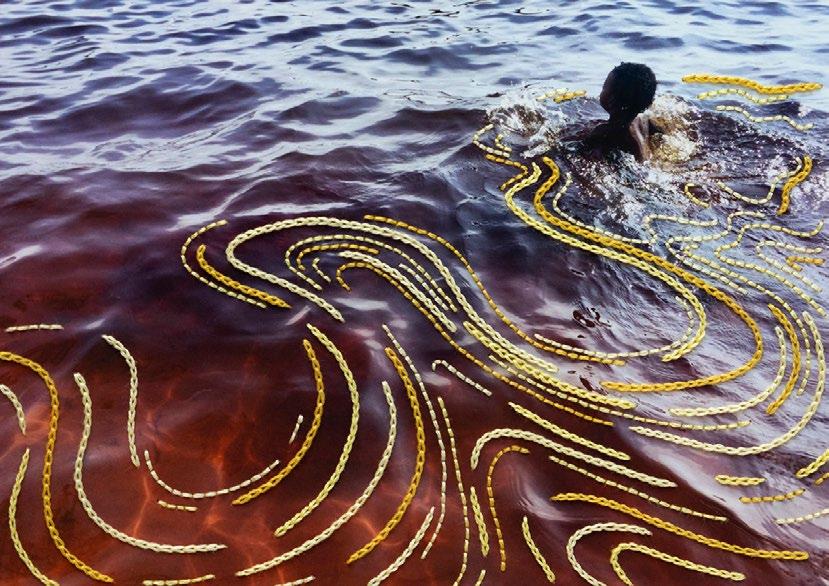
Mayra Biajante (Itapevi - Brazil) is photographer and textile artist, she develops her work in the area of authorial photography and in the intervention of her images with embroidery. Her object of interest is to explore the poetry that exists in commonplaces, in the beauty of everyday life. She observes the distances traveled, paths and borders. She also investigates personal spaces and their relationship with those who inhabit them. Graduated from ETEC São Paulo, she participated in exhibitions, conferences, festivals and workshops in several countries.
Mayra Biajante (Itapevi - Brasil) é fotógrafa e artista têxtil, desenvolve seu trabalho na área da fotografia autoral e na intervenção de suas imagens com bordados. Seu objeto de interesse é explorar a poesia que existe nos lugares-comuns, na beleza do cotidiano. Ela observa as distâncias percorridas, caminhos e fronteiras. Também investiga os espaços pessoais e sua relação com quem os habita. Formada pela ETEC São Paulo, participou de exposições, congressos, festivais e workshops em diversos países.
“Praia de rio” (tiragem 9/10) / “River Beach” (edition 9/10) 20 x 30 cm Fotografia digital impressa em papel algodão Hahnemühle Photo Rag 295g, com intervenção de bordado a mão Digital photograph printed on Hahnemühle Photo Rag 295g cotton paper, with hand-embroidered 2025
Milagros Goñi
A fotografia como expressão de sentimentos, experiências e momentos vividos — fotografo o que sinto, o que sou. Com esse olhar, a fotógrafa argentina Milagros Goni vem se destacando por meio de um trabalho consistente, conquistando reconhecimento nacional e internacional em diversos concursos e exposições. Foi duas vezes finalista do Paraty em Foco, recebeu três Medalhas de Ouro no Salão Nacional de Arte Fotográfica de Londrina, além de medalhas de Ouro, Prata e Bronze concedidas pela FIAP, e inúmeras menções honrosas ao redor do mundo. Guiada por um olhar intuitivo, moldado por sua bagagem cultural, encontra nos objetos, formas, cores e lugares a possibilidade de transformar e ressignificar a realidade por meio da fotografia.
Durante o processo criativo de construção, ela abraça inconscientemente novos caminhos guiados por suas emoções, esculpindo e traduzindo mensagens. Por meio de códigos e símbolos universais, cada observador encontra parte de si na interpretação da imagem, transformando-a em uma nova obra, um novo sentimento. Essa leitura torna o diálogo entre a artista e o espectador ainda mais rico, tornando-se o maior combustível para continuar seu processo criativo e ir ainda mais longe.
Photography as an expression of feelings, experiences, and lived moments — I photograph what I feel, what I am. With this perspective, Argentine photographer Milagros Goni has been standing out through her consistent body of work, gaining both national and international recognition in several competitions and exhibitions. She was twice a finalist at Paraty em Foco, received three Gold Medals at the Salão Nacional de Arte Fotográfica de Londrina, as well as Gold, Silver, and Bronze medals awarded by FIAP, in addition to numerous honorable mentions around the world. Guided by an intuitive gaze, shaped by her cultural background, she finds in objects, forms, colors, and places the possibility of transforming and re-signifying reality through photography.
During the creative process of construction, she unconsciously embraces new directions guided by her emotions, sculpting and translating messages. Through universal codes and symbols, each viewer finds part of themselves in the interpretation of the image, transforming it into a new work, a new feeling. This reading makes the dialogue between the artist and the viewer even richer, becoming the greatest fuel to continue her creative process and go even further.
Néia Faria
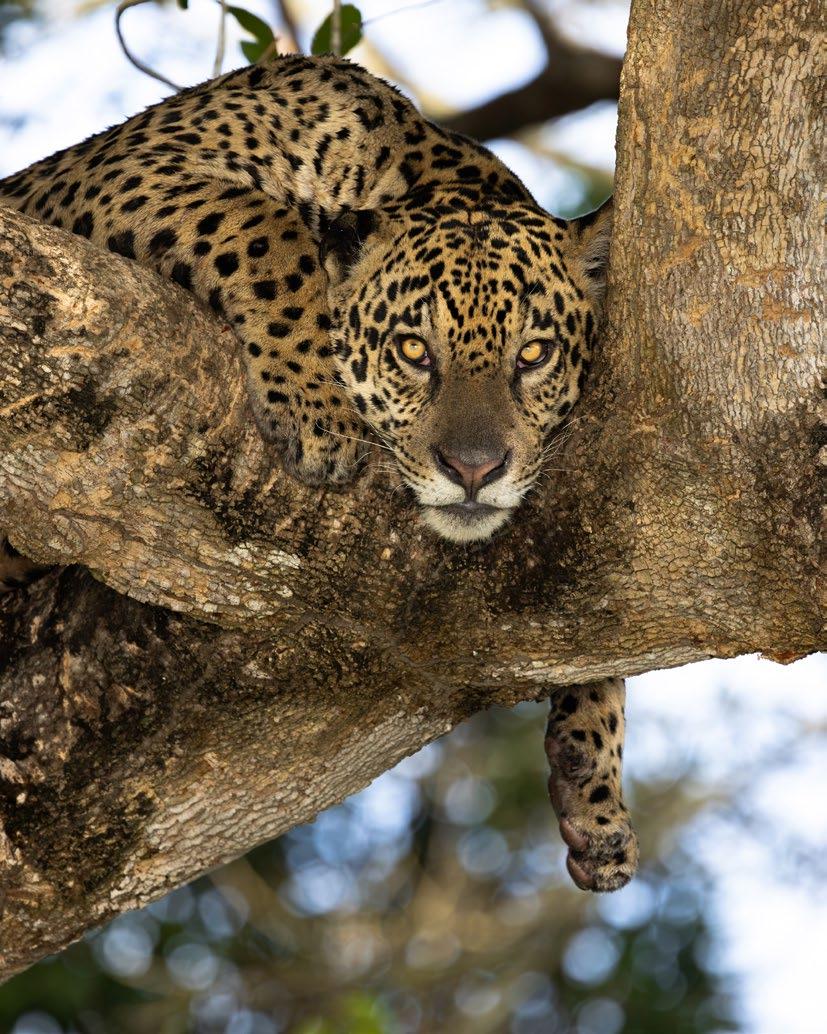
"Formada em Arquitetura pela Faculdade de Belas Artes de São Paulo, Néia Faria traz consigo uma trajetória dedicada a arquitetura, sempre com um olhar sensível voltado à arte, à estética e a valorização dos detalhes. Sua vivência profissional esteve desde o início entrelaçada ao universo visual e foi justamente esse olhar apurado que despertou, há muitos anos, sua paixão pela fotografia. Desde então, vem se dedicando a aprimorar essa arte por meio de cursos, workshops e expedições fotográficas desenvolvendo um trabalho pautado pela sensibilidade, técnica e amor pelo que faz. Hoje, com maturidade e experiência, decidiu transformar a fotografia em sua atividade principal. A foto é da última expedição ao Pantanal do Mato Grosso onde explorou a fotografia da biodiversidade local."
"A graduate in Architecture from the Faculty of Fine Arts of São Paulo, Néia Faria has a career dedicated to architecture, always with a sensitive eye focused on art, aesthetics, and the appreciation of details. Her professional experience has been intertwined with the visual universe from the beginning, and it was precisely this keen eye that sparked her passion for photography many years ago. Since then, she has dedicated herself to refining this art through courses, workshops, and photographic expeditions, developing work guided by sensitivity, technique, and love for what she does. Today, with maturity and experience, she has decided to make photography her main activity. The photo is from her last expedition to the Pantanal in Mato Grosso, where she explored the photography of local biodiversity."
Noelia Brito
Noelia Brito é fotógrafa com formação pela Casa Amarela Eusélio Oliveira (UFC), pela Escola Pernambucana de Fotografia e pela VivaRua Foto, Arte e Cultura. Aprimorou seus conhecimentos por meio de cursos, mentorias e workshops com grandes nomes da Fotografia internacional, a exemplo de Claudio Edinger, Walter Firmo, Thales Trigo, Roberto Cecato, dentre outros. Participou de exposições coletivas, em Pernambuco, Rio de Janeiro e São Paulo. Em 2023, teve ensaios e fotos únicas pré-selecionados pelo Paraty Em Foco, tendo sido premiada com a 5ª (2023) e 7ª (2024) colocações no Concurso Wiki Loves Cultura Popular e com menção honrosa no Concurso Wiki Loves Monuments (2023). Integra os coletivos Fotógrafas em Pernambuco (Recife) e Fotoclube de Mulheres (Salvador)
Noelia Brito is a photographer trained at Casa Amarela Eusélio Oliveira (UFC), Escola Pernambucana de Fotografia, and VivaRua Foto, Arte e Cultura. She has further refined her skills through courses, mentorships, and workshops with renowned international figures in photography, such as Claudio Edinger, Walter Firmo, Thales Trigo, and Roberto Cecato, among others.
She has participated in group exhibitions in Pernambuco, Rio de Janeiro, and São Paulo. In 2023, her photo essays and individual images were pre-selected by Paraty em Foco. She was awarded 5th place (2023) and 7th place (2024) in the Wiki Loves Cultura Popular contest, as well as an honorable mention in the Wiki Loves Monuments contest (2023).
She is a member of the collectives Fotógrafas em Pernambuco (Recife) and Fotoclube de Mulheres (Salvador).
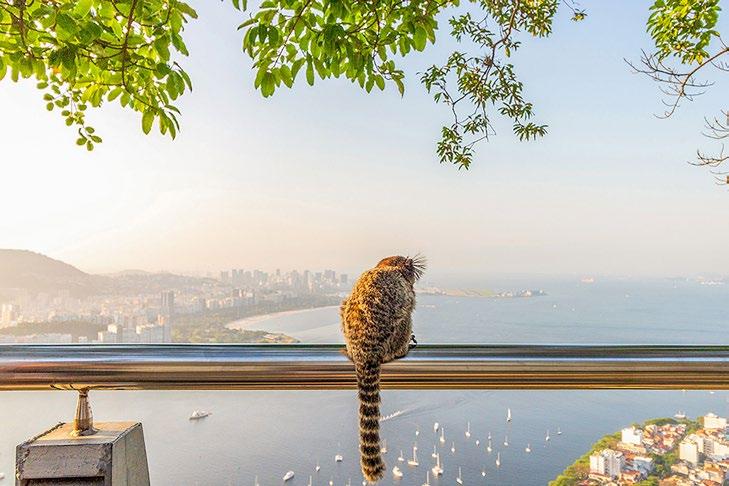
“Marmoset Monkey on Sugarloaf Mountain”
Paloma Sumar
“Mico Sagui no Pão de Açúcar”
O registro apresenta um sagui, pequeno primata típico da fauna brasileira, fotografado no icônico Pão de Açúcar, cartão-postal do Rio de Janeiro. Mais do que um simples retrato da vida selvagem, esta imagem revela a convivência entre natureza e cidade, característica marcante do Rio, onde a Mata Atlântica se entrelaça com a vida urbana. O sagui, curioso e ágil, observa atento o movimento ao redor, trazendo à cena uma mistura de delicadeza e vitalidade. A fotografia convida o espectador a refletir sobre a importância da preservação desses animais, que encontram nos morros cariocas um refúgio em meio à metrópole. Ao mesmo tempo, nos lembra da beleza dos encontros inesperados que a natureza proporciona quando nos dispomos a olhar com atenção. Essa fotografia foi a vencedora do prêmio de melhor obra na Exposição Euro Arts na Gallery SPT em Portugal, novembro de 2022. A fotografia recorda que a vida silvestre ainda resiste e compartilha conosco a cidade.
"Selva
de Pedra"
Entre a pedra e o mar infinito, um olhar curioso. Entre turistas e cabos de aço o sagui encontra seu espaço. Mas, o olhar ainda carrega a pergunta: Aqui ainda é a minha casa, meu abrigo e o meu lar? E Até quando haverá florestas, frutos e abrigo?
O pequeno guardião da Mata Atlântica, lembrando que a natureza ainda respira no coração do Rio.
The image shows a marmoset monkey, a small primate typical of Brazilian fauna, photographed on the iconic Sugarloaf Mountain, a postcard image of Rio de Janeiro. More than a simple portrait of wildlife, this image reveals the coexistence between nature and city, a striking characteristic of Rio, where the Atlantic Forest intertwines with urban life. The curious and agile marmoset attentively observes the movement around it, bringing to the scene a mixture of delicacy and vitality. The photograph invites the viewer to reflect on the importance of preserving these animals, which find refuge in the hills of Rio de Janeiro amidst the metropolis. At the same time, it reminds us of the beauty of the unexpected encounters that nature provides when we are willing to look attentively. This photograph won the award for best work at the Euro Arts Exhibition at the SPT Gallery in Portugal, November 2022. The photograph reminds us that wildlife still resists and shares the city with us.
"Stone Jungle"
Between the stone and the infinite sea, a curious gaze. Between tourists and steel cables, the marmoset finds its space. But the gaze still carries the question: Is this still my home, my shelter, and my haven? And how long will there be forests, fruits, and shelter?
The little guardian of the Atlantic Forest, reminding us that nature still breathes in the heart of Rio.
Local: Morro do Pão de Açúcar, Urca - Rio de Janeiro, Brasil 2019
Location: Sugarloaf Mountain, Urca - Rio de Janeiro, Brazil 2019
Mico Sagui no Pão de Açúcar
Marmoset Monkey on Sugarloaf Mountain
Paulo Eberlein
@eberlein.foto
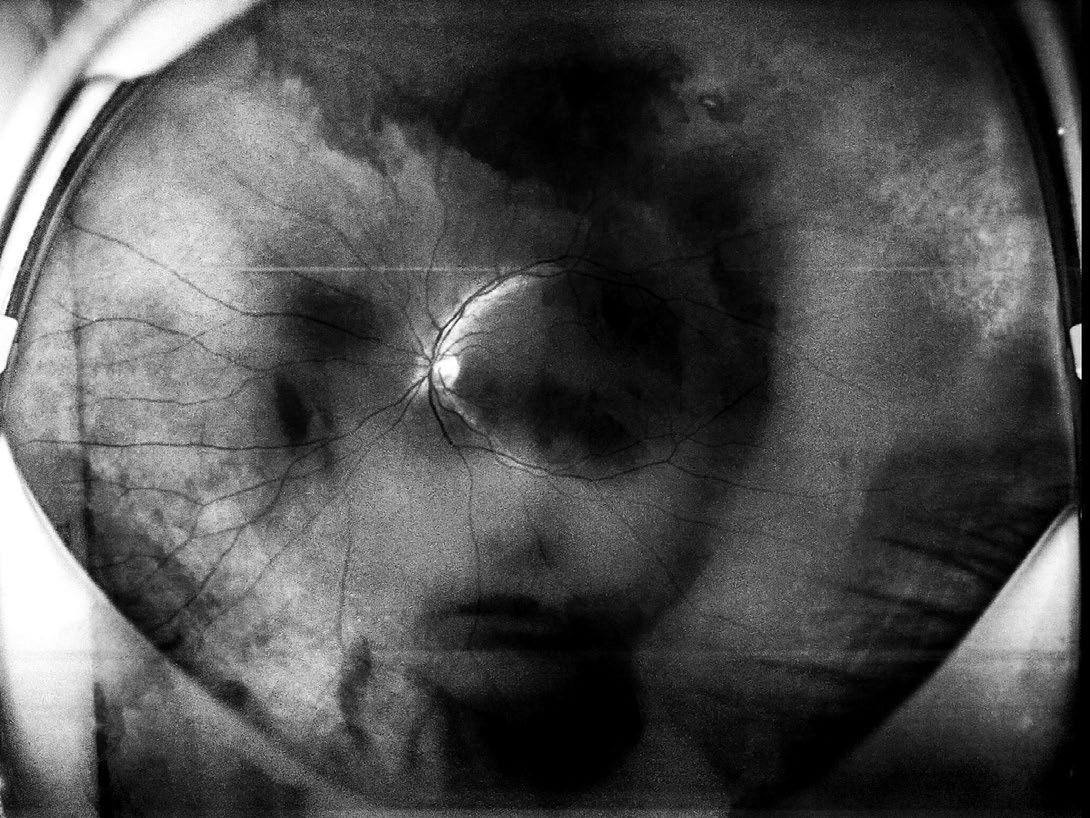
O fotógrafo paulistano Paulo Eberlein constrói uma trajetória autoral que investiga o sentido das imagens e propõe uma reflexão sensível sobre o significado do olhar. Seu ensaio Retinografias nasce de uma lesão súbita na retina que trouxe a possibilidade real da perda da visão, experiência que o levou a transformar fragilidade em investigação poética que aproxima ciência, emoção e espiritualidade. Iniciou sua trajetória na fotografia no início dos anos 2000 após estudar na Focus Escola de Fotografia, em São Paulo, concluindo graduação (2021) e pós-graduação em Fotografia (2025). Em 2025 recebeu a Medalha de Ouro no Salão Nacional de Arte Fotográfica do Foto Clube de Londrina pelo ensaio Retinografias. Realizou exposições individuais nas mostras Motirô (2024) e Quilombos RasTREando nossas origens (2024). Em 2023 venceu o Mobile Photo Festival (categoria Arte 1), com exposição no MIS- SP.
The Brazilian photographer Paulo Eberlein, based in São Paulo, has developed an authorial trajectory that investigates the meaning of images and proposes a sensitive reflection on the significance of seeing. His series Retinografias emerged from a sudden retinal injury that brought the real possibility of vision loss— an experience that led him to transform fragility into a poetic inquiry, bringing together science, emotion, and spirituality. He began his journey in photography in the early 2000s after studying at Focus Escola de Fotografia in São Paulo, completing his undergraduate degree (2021) and a postgraduate degree in Photography (2025). In 2025, he was awarded the Gold Medal at the Salão Nacional de Arte Fotográfica of the Foto Clube de Londrina for the series Retinografias. He has held solo exhibitions in Motirô (2024) and Quilombos RasTREando nossas origens (2024). In 2023, he won the Mobile Photo Festival (Arte 1 category), with an exhibition at MIS-SP.
Pedro França
www.pedrofranca.art
Apesar de a fotografia possuir uma natureza documental, Pedro França busca verbos abstratos que direcionam a experiência ao percurso corrido pela mente do espectador já que "não é meu objetivo fotografar o mundo tal qual ele se apresenta". Fotógrafo há oito anos, opta por organizar seus trabalhos autorais em séries fotográficas nas quais frases formam textos completos. A física e a metafísica entrelaçam-se em suas obras, sua criação é intuitiva. Atualmente, desenvolve uma série baseada em elementos naturais de lugares que lhe revelam o mundo sensorial: "Não saio de casa com um motivo exato previamente definido, apenas escuto o que esse lugar me diz em silêncio." As obras "Geo-metria" e "Chamado", integram essa série, ainda sem título.
Although photography possesses a documentary nature, Pedro França seeks abstract verbs that guide the experience toward the journey undertaken by the viewer’s mind, since “it is not my goal to photograph the world as it presents itself.” A photographer for eight years, he chooses to organize his personal work into photographic series in which individual phrases come together to form complete texts. Physics and metaphysics intertwine in his work, and his creative process is intuitive. Currently, he is developing a series based on natural elements found in places that reveal to him a sensory dimension of the world: “I do not leave home with a specific purpose already defined; I simply listen to what a place tells me in silence.” The works Geo-metria (2025) and Chamado (2025) are part of this still-untitled series.
Rafael Martins
O registro do olhar
Não sei explicar exatamente o que vejo, apenas o que sinto. Minha câmera é apenas o instrumento do que acontece quando algo me atravessa: uma luz diferente, um enquadramento curioso ou até algo simples que me prende sem que eu saiba por quê. Existem fotografias que eu amo e ninguém entende, assim como existem imagens que todos amam e eu não sei explicar o motivo. O olhar não acontece apenas com os olhos, ele acontece com a alma. Essas são minhas contribuições para o projeto Registro do Olhar. Feche os olhos por um instante e permita sentir cada detalhe, mesmo aquilo que você não consegue explicar
I can’t fully explain what I see, only what I feel. My camera is merely the instrument of what happens when something moves through me, a different light, a curious frame, or even something simple that holds me without me knowing why. There are photographs I love that no one understands, just as there are images everyone loves and I cannot explain why. Seeing does not happen only with the eyes, it happens with the soul. These are my contributions to the project “Registro do Olhar.” Close your eyes for a moment and allow yourself to feel every detail, even what you cannot explain.
Rao Godinho
@raogodinho
Nascido em Belém, começou cedo seu interesse por fotografia. Aquela inquietação de ver além do olhar trouxe em 2011 o início da carreira, futuramente com exposições e prêmios nacionais e internacionais. Desde a multipremiada “Carambela”, selecionada para um salão em Nova York (2011), a dedicação aumentou, assim como a abrangência, expondo no Brasil, Portugal, EUA, Grécia e Itália,e publicações na revista alemã VIB. Em 2014 se tornou parceiro do SlowFood Internacional. Diana, uma amiga, fala das fotos: Vejo uma singela grandeza nas tuas fotos. Te faz parecer mais humano. Tainá Marajoara completa: São fotografias de perceptos e afectos. É um banho de vida e Amazônia. Estão dimensionadas em tempo e espaço interior. Fernando Oliveira, professor PhD, diz: Imagenscarregadas de significado, que são um contributo para a Cultura Visual contemporânea. Após fotografar o grupo El CuartetoDel Amor (Uruguai), recebeu o maior elogio da vida: As melhores fotos da história do grupo! Obrigado, GÊNIO DA ALMA!
Born in Belém (Amazon), he began early his interest in photography. The unsettling about seeing beyond the look brought, in 2011, the beginning of his career, with national and international awards and exhibitions right after.Since the multiawarded“Carambela” (2011), selected for a Salon in New York (2013), the dedication increased, as the coverage, with exhibitions in Brazil, Italy (2015), Portugal (2018), Greece and USA (2024) and publications in the German magazine VIB.In2014, started a partnertshipSlow Food International. Diana, a friend, about the pictures: I see a humble greatness in your images. Makes you look more human. Tainá Marajoaracompletes:those are pictures of percepts and affects. It’s a bath of life and Amazon. They’re dimensioned in interior space and time. Fernando Oliveira, professorPhD: Images loaded of meaning, they’re a contribute to contemporary Visual Culture. After shooting the street musicians group from Uruguay, “El Cuarteto del Amor”, had the greatestcumplimentin life: “thank you, GENIUS OF THE SOUL”
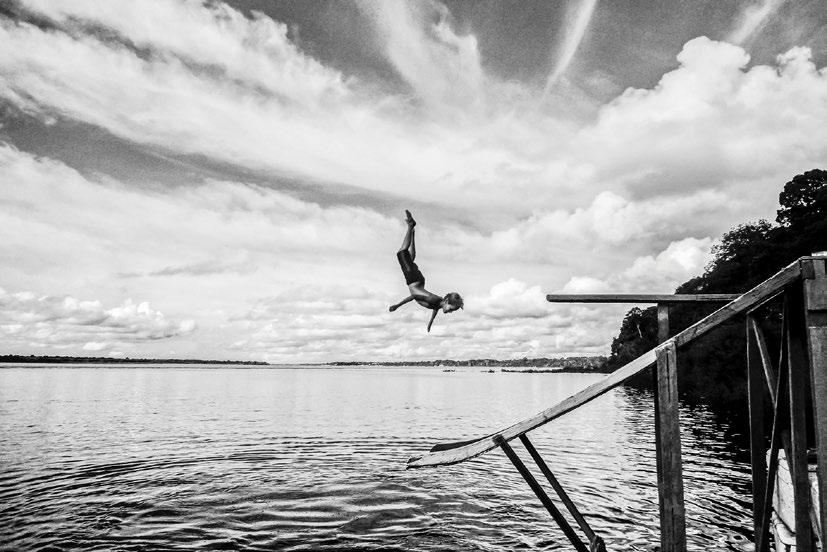
Humanamazônia - Carambelap
Rodrigo Fontanari
A obra de Rodrigo Fontanari estabelece um diálogo crítico entre a efemeridade do digital e a permanência tátil da prata sobre o filme. Fotógrafo e pesquisador visual radicado em São Paulo, Rodrigo encontra na geometria das sombras e no isolamento dos corpos a matéria-prima para uma investigação profunda sobre a condição urbana contemporânea. Sua prática não se apressa; ao contrário, ela se submete ao rigor da revelação manual, onde o tempo da química e a precisão do laboratório ditam um ritmo de produção que confronta a saturação visual dos nossos tempos.
Ao explorar o alto contraste e a incidência da luz dura característica das metrópoles, o artista consegue a proeza de extrair silêncio do caos. Suas composições transitam com fluidez entre o registro documental e a abstração formal, transformando fachadas, frestas e transeuntes em elementos de uma narrativa visual que prioriza a materialidade da imagem. Em cada fotograma, Rodrigo reafirma a fotografia como um campo de resistência, onde o grão do filme e o controle da luz se tornam ferramentas fundamentais para revelar a beleza austera e solitária escondida nas estruturas de concreto.
Ronaldo Andrade
Nascido em Florianópolis SC / From Florianópolis, SC @ronaldoandradephotos
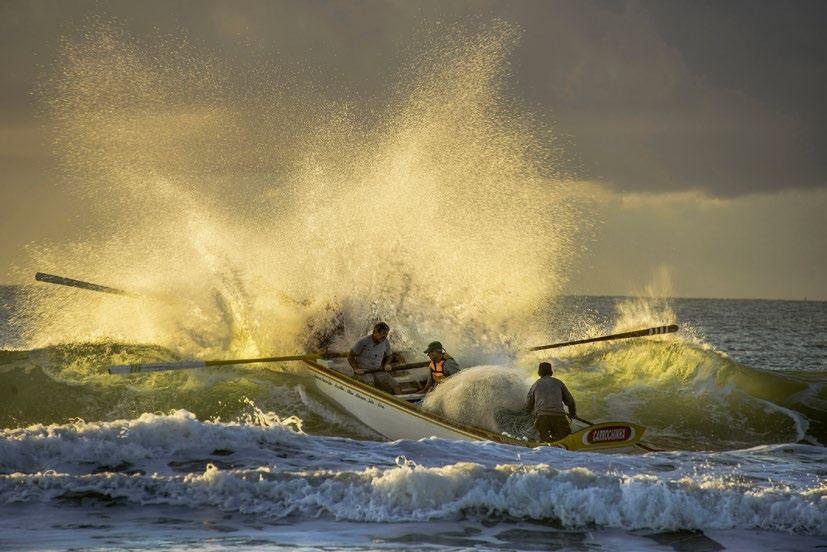
Outono, temporada da pesca,a expectativa é grande. Ao pôr a canoa na água,o pescador desafia o mar sedutor, viril e poderoso.
Ao alvorecer, Netuno de braços abertos, aguarda, envolvente , e desejante, que o homem ceda, abandone o medo, e aceite o desafio.
Inquieto e forte o mar espera a entrega. Em seu leito, afaga aquele que madruga, num abraço, envolvente , quase carinhoso e cúmplice. Se realiza a Arrebentação.
Breaking of the waves
Autumn. Fishing season. Expectations are high. As the fisherman puts his boat in the water, he challenges the seductive, virile and powerful sea.
At dawn, Neptune, with inviting, enticing open arms, calls the man to surrender, to abandon his fears and accept his challenge.
Restless and strong, the sea awaits. From its bed, it caresses the early riser in an embrace that is almost affectionate and complicit. That’s the breaking of the waves.
Saulo Augusto Jr
@SauloAugustojr
Saulo Augusto Jr é cientista social, estudante de Antropologia e atua há mais de duas décadas com transformação social, em projetos no Brasil e no exterior. Hoje, reside em São Paulo, onde coordena as estratégias territoriais da Polvo Lab, e desenvolve uma fotografia documental independente, construída a partir de observações e interações sociais com realidades marcadas por profundas transformações e pelo enfrentamento das desigualdades nos interiores do Brasil e da América do Sul. Em 2025, foi finalista do FOTO BRASIL e FOTODOC, dois dos mais relevantes festivais de fotografia documental no país.
Saulo Augusto Jr is a social scientist and Anthropology student who has worked for more than two decades in social transformation projects in Brazil and abroad. He currently lives in São Paulo, where he leads territorial strategies at Polvo Lab, while also developing an independent documentary photography practice shaped by social observation and interaction with realities marked by profound change and the fight against inequality across the interior regions of Brazil and South America. In 2025, he was a finalist at FOTO BRASIL and FOTODOC, two of the country’s most important documentary photography festivals.
Meritocracia Paulistana
A Faria Lima é a meca da chamada “meritocracia paulistana”, território onde muitos tentam se diferenciar e apontar o palco dos supostos vencedores. Mas, enquanto as luzes se voltam para quem performa, nas sombras passa despercebido o trabalho real, aquele que sustenta a cidade, mas raramente é visto ou reconhecido.
Faria Lima is the mecca of so-called “São Paulo meritocracy, ”a territory where many try to stand out and point to the stage of the supposed winners. But while the spotlight turns to those who perform, real labor goes unnoticed in the shadows, the kind of work that sustains the city, yet is rarely seen or acknowledged.
Sérgio Giron https://www.instagram.com/sergio_giron_photos/
Sérgio Giron é fotografo a 20 anos. Gaúcho radicado em Florianópolis desde os anos 80. Jornalista, Especialista em linguagem cinematográfica e Mestre em análise de discurso.
Em seu trabalho busca temas ligados ao ser humano com foco em comunidades e grupos geralmente invisibilizados. Giron acredita que a força da imagem contribui para diminuir às distâncias entre as pessoas e eliminar preconceitos. “O poder da emoção que a imagem provoca é universal, traz empatia, ajudando a construção de sociedades mais justas e igualitárias”.
A fotografia de retratos é um encontro onde fotógrafo, fotografado e espectador podem se transformar.
Sérgio Giron has been a photographer for 20 years. Gaucho living in Florianópolis since the 80s. Journalist, Specialist in cinematographic language and Master in discourse analysis.
In his work he seeks themes related to human beings with a focus on communities and groups that are generally invisible. Giron believes that the strength of the image helps to reduce distances between people and eliminate prejudices. “The power of emotion that the image provokes is universal, it brings empathy, helping to build more just and egalitarian societies.”
Portrait photography is an encounter where photographer, subject and spectator can transform themselves.
A morada de seu Estevão A luta pela dignidade no sertão brasileiro
Thiago Kropf
Thiago Kropf iniciou sua carreira no universo da música por volta de 2008, trabalhando com artistas da cena brasileira e internacional em estúdios e shows. Paralelamente ao seu interesse pela música, desenvolveu um perfil interdisciplinar, transitando também pela fotografia e filosofia. Segundo ele, foi a filosofia que despertou seu olhar: 'Quando eu saía de casa com alguma reflexão na cabeça, pensar sobre aquilo me fazia observar as coisas de uma maneira diferente, e a partir daí, resolvi fotografar aquilo que agora eu reparava'. Foi assim que começou a dar seus primeiros cliques e a flanar pelo Rio, contemplando e capturando o cotidiano do carioca enquadrado nas paisagens naturais e na mistura com a cidade. 'O maravilhamento, ou thauma, como queira, nos coloca numa disposição, numa espécie de abertura para o real; fotografar é tentar capturar esse espanto'.
Thiago Kropf began his career in the music world around 2008, working with artists from the Brazilian and international scene in studios and shows. Alongside his interest in music, he developed an interdisciplinary profile, also exploring photography and philosophy. According to him, it was philosophy that awakened his gaze: 'When I left home with some thoughts in my head, thinking about it made me observe things in a different way, and from there, I decided to photograph what I was now noticing.'That's how he started taking his first clicks and wandering through Rio, contemplating and capturing the daily life of the Carioca (Rio de Janeiro resident) framed within natural landscapes and it’s mix with the city. 'The Wonder, or thauma, as you prefer, puts us in a disposition, a kind of openness to reality; photographing is trying to capture that astonishment.
Praiade São Conrado
Ticiana Landeiro
Ticiana Castro Garcia Landeiro Fichman ticianalandeiro@gmail.com @instagram @ticianalandeiro www.ticianalandeiro.com
Ticiana Landeiro é uma fotógrafa baiana com formação em Artes Visuais pelo Instituto de Criatividade, Artes e Novas Tecnologias (Lisboa) e em Fotografia Contemporânea pelo Atelier de Lisboa. Seu trabalho documental "Rabo de Peixe", sobre a comunidade pesqueira açoriana homônima, foi publicado pela revista Time Out de Lisboa. Já o ensaio "Mulheres Intendentes", que retrata mulheres imigrantes empreendedoras na capital portuguesa, foi exposto na Casa Intendente, em Lisboa. De volta à sua terra natal, Salvador –BA, Ticiana voltou seu olhar para a potência da cultura afro-baiana, investigando através da fotografia as expressões de ancestralidade, resistência e pertencimento que atravessam o cotidiano do povo negro. Seus ensaios buscam dar visibilidade a corpos, rituais, ofícios e territórios que sustentam a identidade cultural de Salvador, reconhecendo neles uma força que, paradoxalmente, a distância geográfica ajudou a enxergar com mais nitidez. Com uma prática que transita entre o documental e o poético, Ticiana constrói narrativas visuais comprometidas com a memória, a representatividade feminina e a valorização das histórias que resistem nas margens. Ticiana tem participação confirmada na I Bienal de Papel e Fotografia, no Enokojima Art Center, em Osaka, Japão, em setembro de 2026.
Ticiana Landeiro is a photographer from Bahia with a degree in Visual Arts from the Institute of Creativity, Arts and New Technologies (Lisbon) and in Contemporary Photography from the Atelier de Lisboa. Her documentary project "Rabo de Peixe," centered on the Azorean fishing community of the same name, was published by Time Out Lisbon. Meanwhile, her photo essay "Mulheres Intendentes," which portrays immigrant women entrepreneurs in the Portuguese capital, was exhibited at Casa Intendente in Lisbon. Returning to her roots in Salvador, Brazil, Ticiana has turned her lens toward the power of Afro-Bahian culture, investigating through photography the expressions of ancestry, resistance, and belonging. Her work seeks to provide visibility to the bodies, rituals, crafts, and territories that sustain Salvador’s cultural identity, recognizing in them a strength that—paradoxically—geographical distance helped her see more clearly. With a practice that moves between the documentary and the poetic, Ticiana builds visual narratives committed to memory, female representation, and the valorization of stories that resist at the margins. Ticiana is confirmed to participate in the I Biennial of Paper and Photography at the Enokojima Art Center in Osaka, Japan, in September 2026.
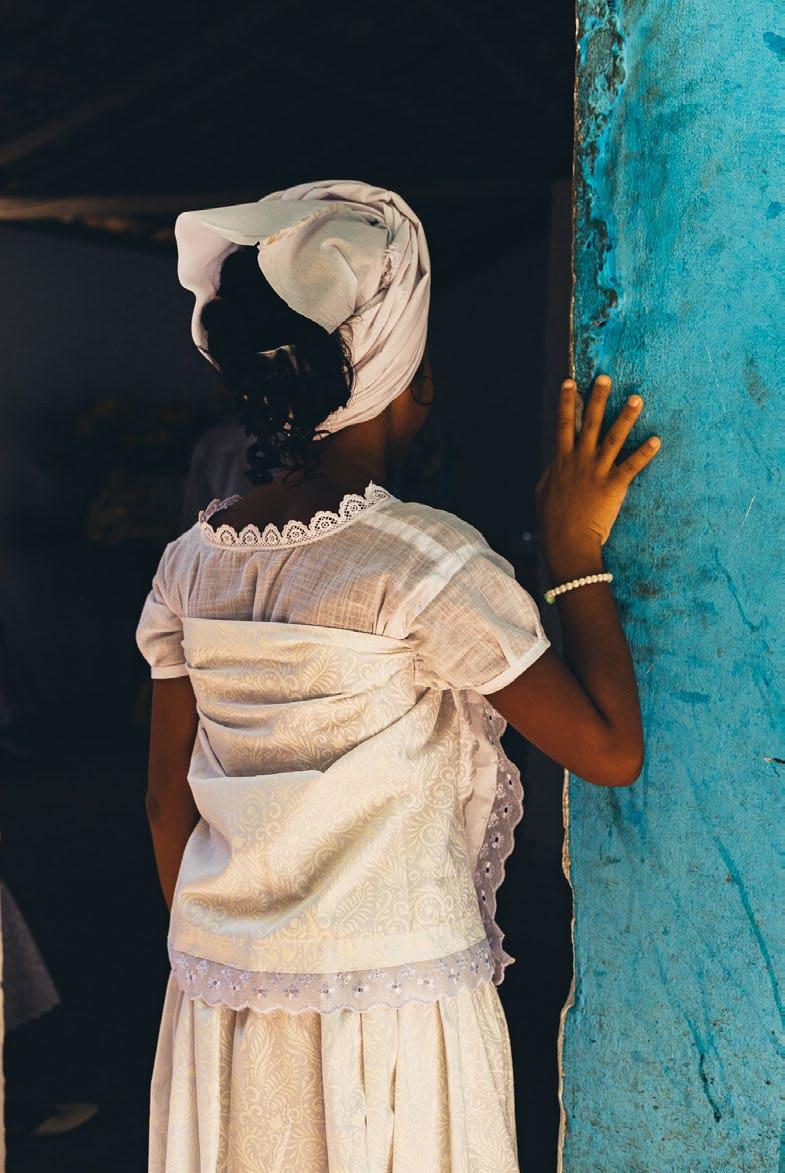
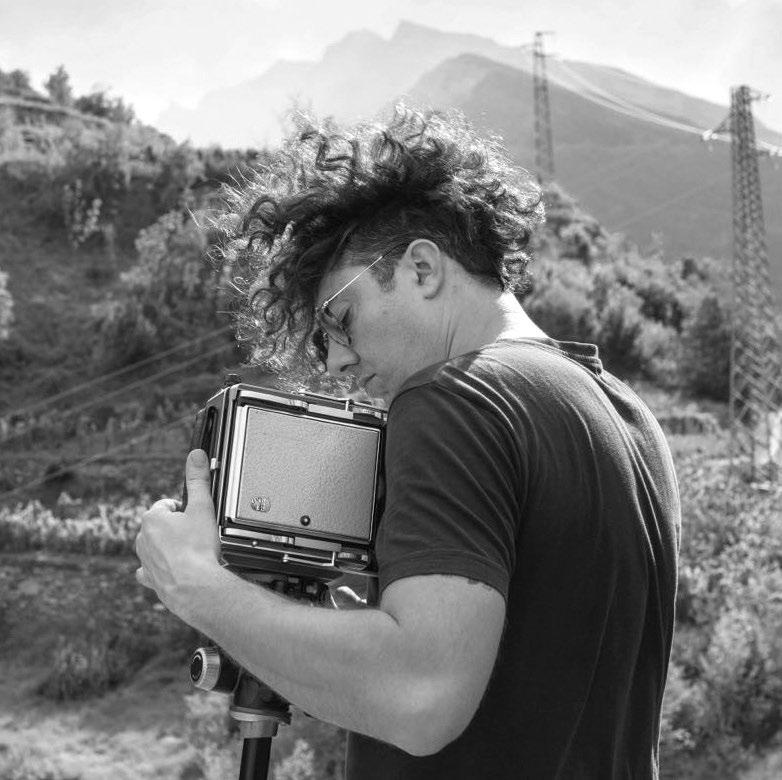
Tommaso Rada
Instagram: @tommasorada tommasorada@tommasorada.com www.radatommaso.com Skype tommasorada
Tommaso Rada is an Italian documentary photographer who has been living and working in São Paulo since 2016. Over the years, Tommaso has collaborated with several photojournalism agencies such as GammaRapho in Paris, EchoPhoto Agency in Milan, and 4SeePhoto in Lisbon. He is part of the cooperative Inland His photographic projects have received various awards and grants, including the PDN Photo Annual Awards, Sony World Photography Awards, Estação Imagem – Photojournalism Award, Urbanautica Institute Awards, APAD Backyard Storytelling Grant, and VSCO Artist Initiative. Tommaso’s essays have been exhibited at international photography festivals such as GuatePhoto (Guatemala), Kolga Tbilisi Photo Festival (Georgia), Verzasca Photo Festival (Switzerland), Encontros da Imagem (Portugal), CineEast (Luxembourg), Incadaqués International Photo Festival (Spain), Belfast Photo Festival (UK), Ragusa Foto Festival (Italy), Gibellina Photoroad Festival (Italy), and Phest – International Festival of Photography and Art in Monopoli (Italy).
Tommaso Rada é um fotógrafo documental Italiano que desde 2016 vive e trabalha em São Paulo. Nos anos, Tommaso colaborou com diversas agencias de fotojornalismo como Gamma-Rapho de Paris, EchoPhoto Agency de Milão e 4SeePhoto de Lisboa. Tommaso integra a cooperativa fotográfica Inland. Os seus projetos fotográficos ganharam diferentes prémios e bolsas como PDN Photo Annual Awards, Sony world Photography Awards, Estação Imagem - Premio de Fotojornalismo, Urbanautica Institute Awards, APAD Backyard Storytelling Grant e VSCO Artist Initiative. Os ensaios do Tommaso fizeram parte de exposições em festivais de fotografias internacionais como GuatePhoto (Guatemala), Kolga Tblisi Photo Festival (Georgia), Verzasca Photo Festival (Swissa), Encontros da Imagem (Portugal), CineEast (Luxemburgo), Incadaques International Photo Festival (Espanha), Belfast Photo Festival (UK), Ragusa Foto Festival (Italia), Gibellina Photoroad Festival (Italia) e Phest - Festival Internazionale di Fotografia e Arte Monopoli (Italia).
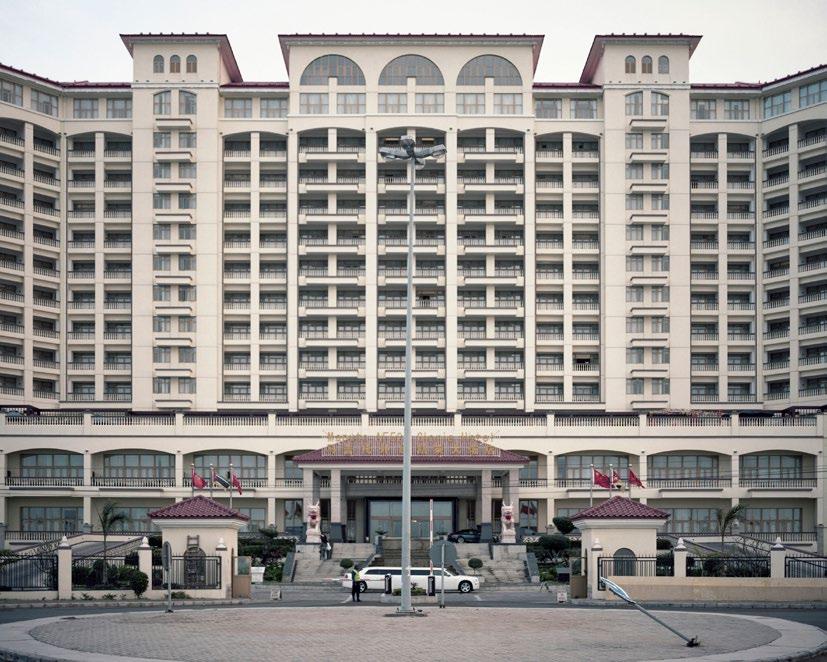
tr3ze
( Eduardo Ferreira )
Nascido no Rio de Janeiro, Brasil. Formado em engenharia de software. tr3ze iniciou na fotografia em 2025, com um mochilão pelo Brasil. Buscava, inicialmente, conhecer o país de seu passaporte. Depois, aprender a amá-lo. Apreciador da fotografia e das palavras, busca contar histórias populares e originais. Histórias de resistência ao tempo e aos preconceitos. Histórias que despertam orgulho de ser brasileiro. Com um olhar otimista sobre o Brasil, tr3ze narra essas histórias pelas lentes de uma Canon.
Born in Rio de Janeiro, Brazil. Graduated in Software Engineering. tr3ze began his photography journey in 2025, during a backpacking trip across Brazil. At first, he sought to get to know the country of his passport. Later, to learn to love it. An admirer of photography and words, he aims to tell popular and original stories. Stories of resistance against time and prejudice. Stories that awaken pride in being Brazilian. With an optimistic view on Brazil, tr3ze tells these stories through the lenses of a Canon.
Mangrove Forest, Marajó Island, Pará, Brazil, 2025
Vânia Marques
( Vânia de Lourdes Marques ) vanialmarques@gmail.com @instagram: @fotosbyvaniamarques galeriadesign.art/perfil/vania-de-lourdes-marques
Vânia Marques nasceu e viveu até a adolescência em Cordisburgo, Minas Gerais, região central do Brasil. O cenário rural, dominado por montanhas, despertou sua curiosidade. Sonhava em ver além das montanhas: novas cidades, o mar, outra gente, outras formas de viver. O desejo de conhecer o mundo nunca lhe abandonou, mesmo depois de viver em diversas cidades e viajar pelo mundo. Ter trabalhado com sustentabilidade lhe conferiu um olhar sensível tanto para a natureza, quanto para o ambiente urbano. Seu foco é a fotografia de paisagens e natureza, urbana e documental, que busca traduzir a beleza do planeta, o valor da vida natural, os impactos causados pelo homem e os desafios da vida em sociedade. Já participou de várias exposições e teve trabalhos reconhecidos em certames especializados. A fotografia é uma forma de deixar sua marca, compartilhando seu olhar encantado, esperançoso e humano com o mundo.
Vânia Marques was born and lived until adolescence in Cordisburgo, Minas Gerais, in the central region of Brazil. The rural landscape, dominated by mountains, sparked her curiosity. She dreamed of seeing beyond the mountains: new cities, the sea, other people, other ways of living. The desire to know the world never left her, even after living in various cities and traveling the world. Working with sustainability gave her a sensitive perspective on both nature and the urban environment. Her focus is on landscape and nature photography, both urban and documentary, which seeks to translate the beauty of the planet, the value of natural life, the impacts caused by humans, and the challenges of life in society. She has participated in several exhibitions and had her work recognized in specialized competitions. Photography is a way for her to leave her mark, sharing her enchanted, hopeful, and human perspective with the world.
Zenitepolar
( Ricardo Pacheco Araujo ) contact@zenitepolar.com @instagram @zenitepolar zenitepolar.com
Ricardo Pacheco (zenitepolar) é fotógrafo desde 2013, professor de história e advogado especialista em bioética. Sua prática investiga territórios, vestígios e ausências, utilizando o silêncio visual para revelar marcas do habitus e da ocupação humana. Através de séries de longo prazo, seu olhar explora as tensões e os desusos da terra, priorizando a autonomia da imagem. O trabalho opera como um exercício de percepção sobre o que persiste e o que foi silenciado, reduzindo interferências narrativas. Esta abordagem reflete um espaço de permanência voltado à preservação da memória e da investigação social.
Ricardo Pacheco (zenitepolar) has been a photographer since 2013, a history teacher, and a lawyer specializing in bioethics. His practice investigates territories, traces, and absences, using visual silence to reveal marks of habitus and human occupation. Through long-term series, his gaze explores the tensions and the disuse of the land, prioritizing the autonomy of the image. The work operates as an exercise in perception of what persists and what has been silenced, reducing narrative interferences. This approach reflects a space of permanence dedicated to the preservation of memory and social investigation.