CHAIRS ANATOMY
The W. Löffler Collection
Mercredi 4 mars 2026 – 15h
7 rond-point des Champs-Élysées Marcel Dassault
75008 Paris
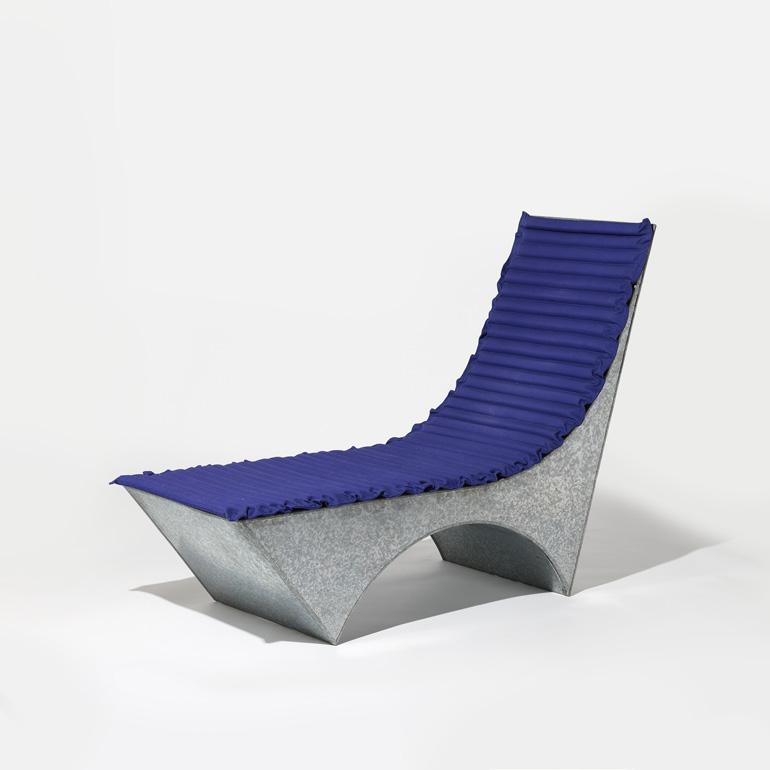
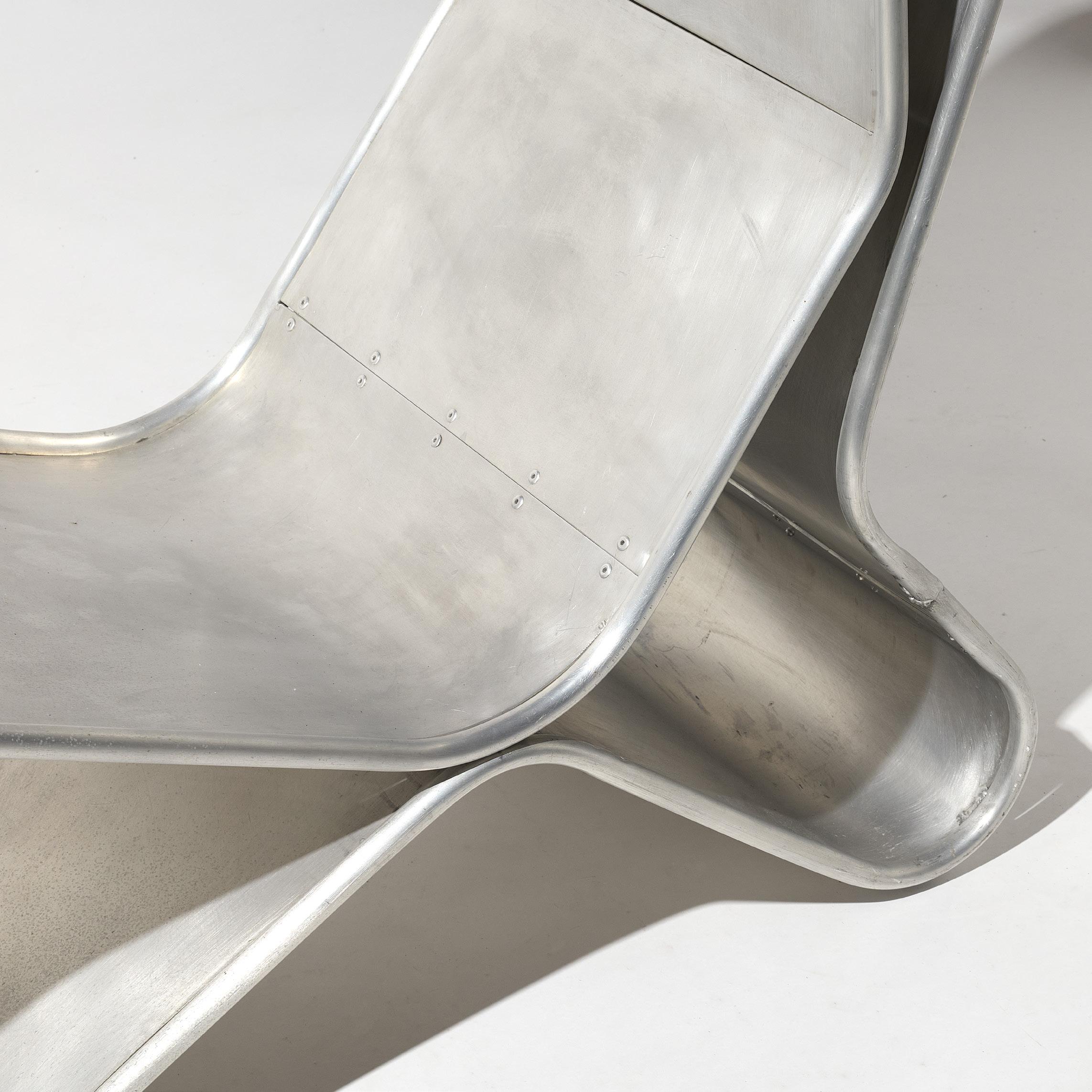
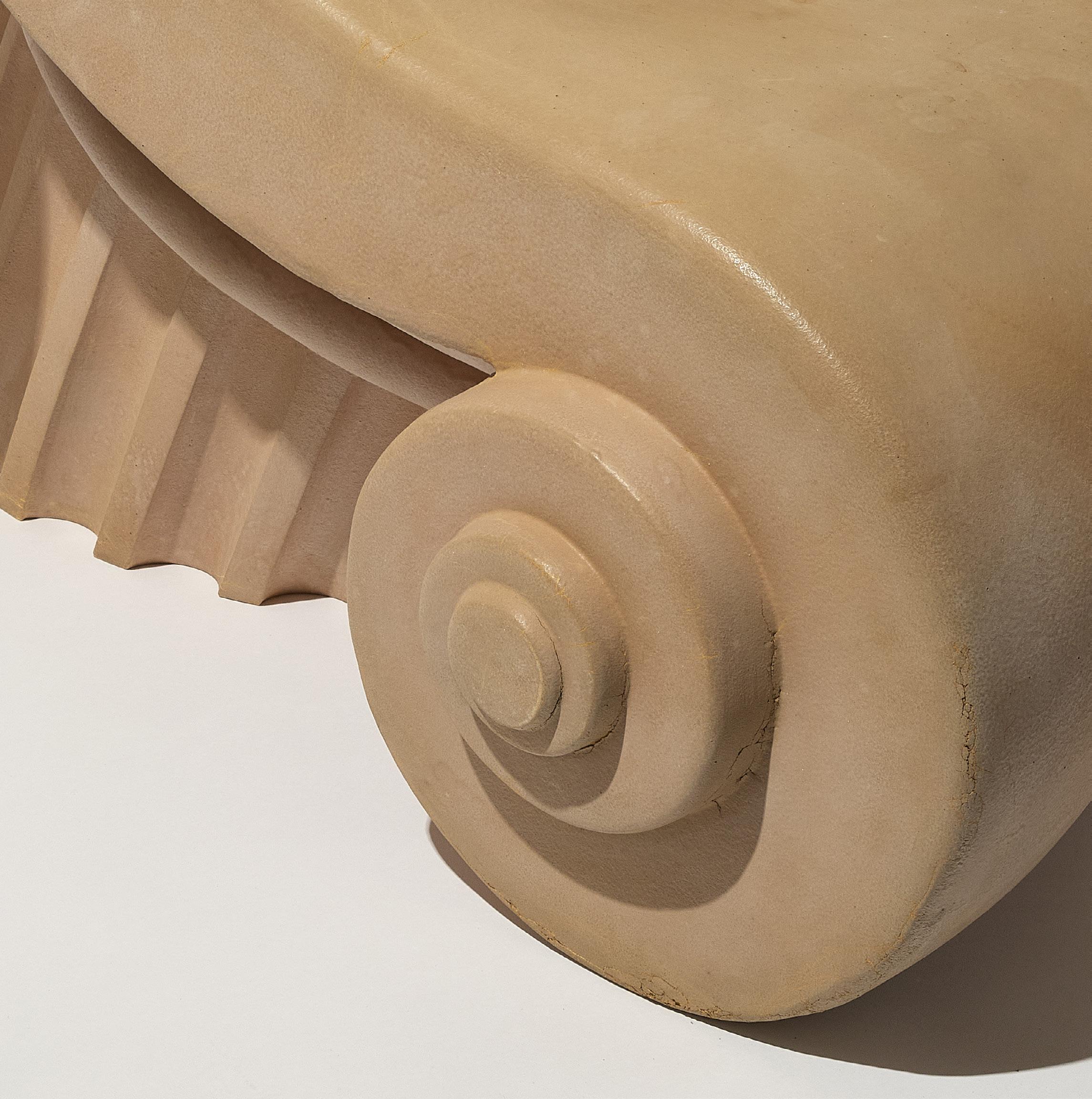
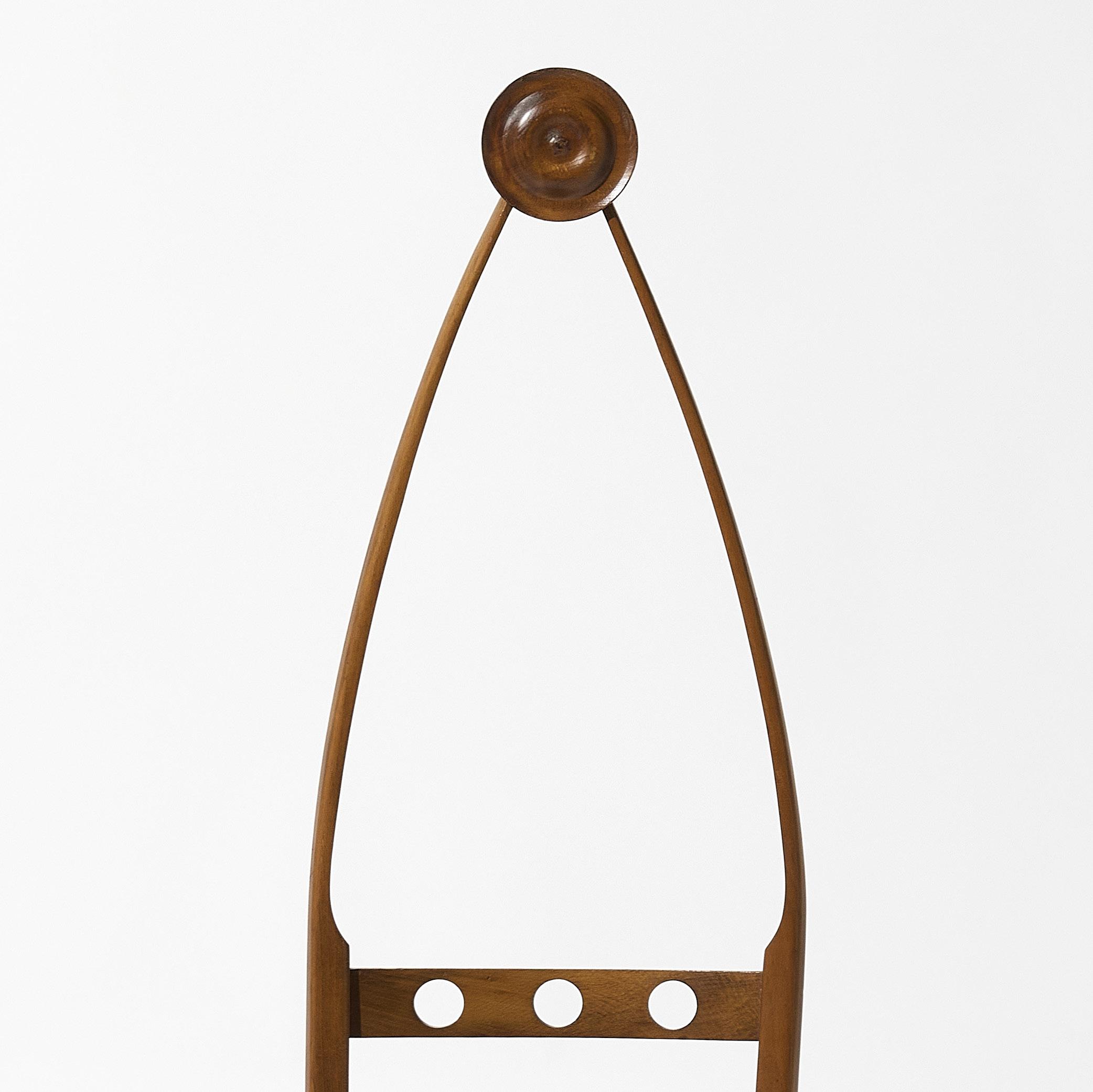
(Détail) Lot n°139, Tom Dixon, Prototype de chaise longue « Unikat Liege » – 1993 p.50
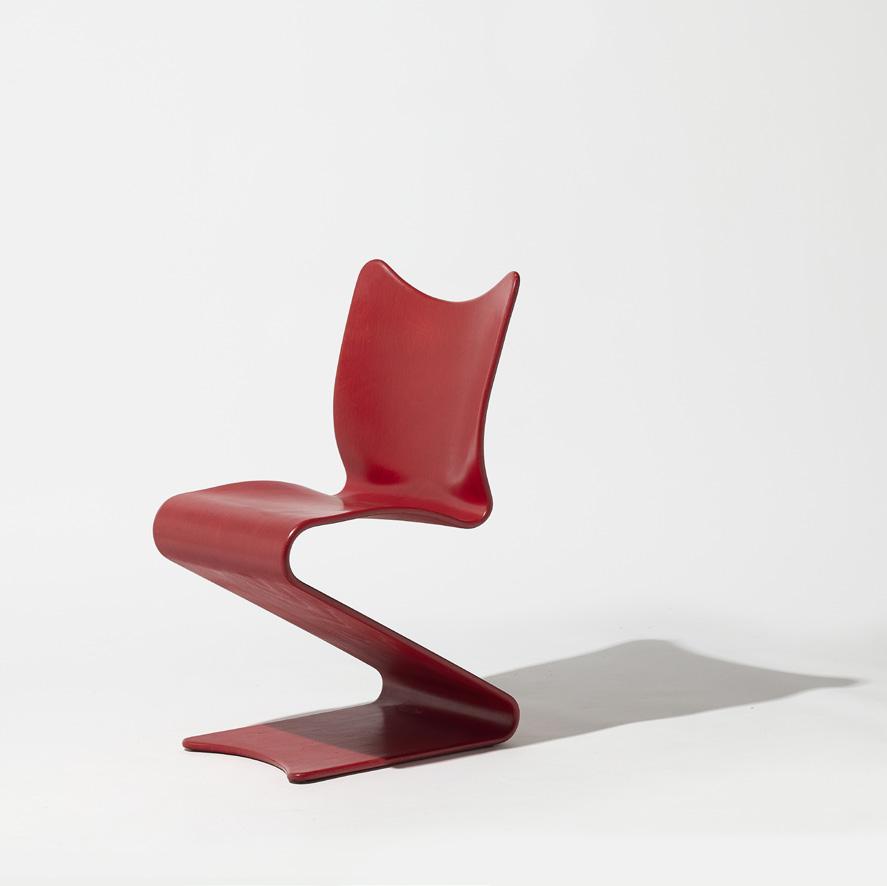
Mercredi 4 mars 2026 – 15h
7 rond-point des Champs-Élysées Marcel Dassault
75008 Paris
Mercredi 4 mars 2026 – 15h
7 rond-point des Champs-Élysées Marcel Dassault
75008 Paris
vente n°6524



Téléphone pendant l’exposition
Tél. : +33 (0)1 42 99 20 42
Vendredi 27 février 11h – 18h
Samedi 28 février 11h – 18h
Lundi 2 mars 11h – 18h
Mardi 3 mars 11h – 18h
Couverture
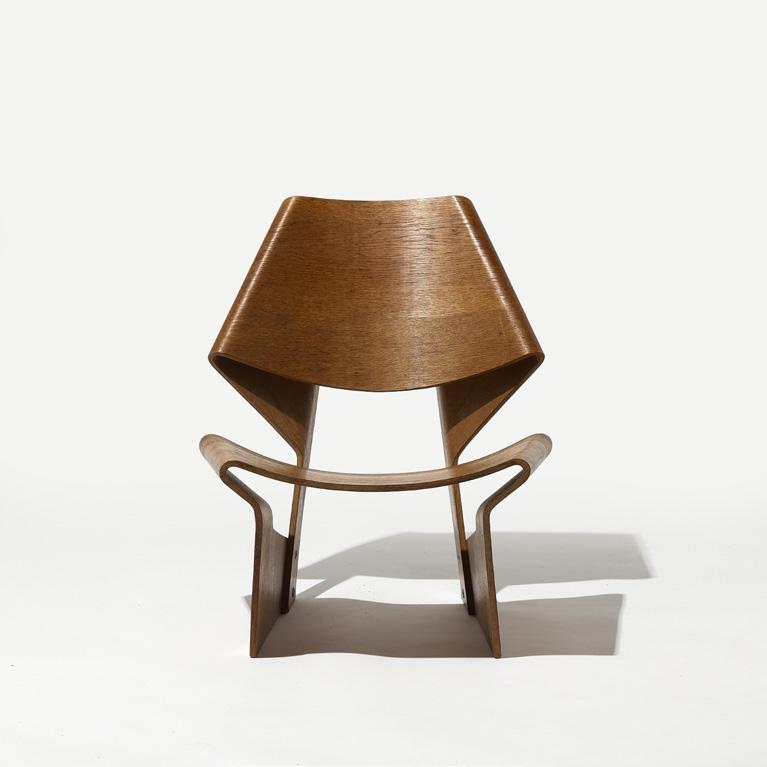
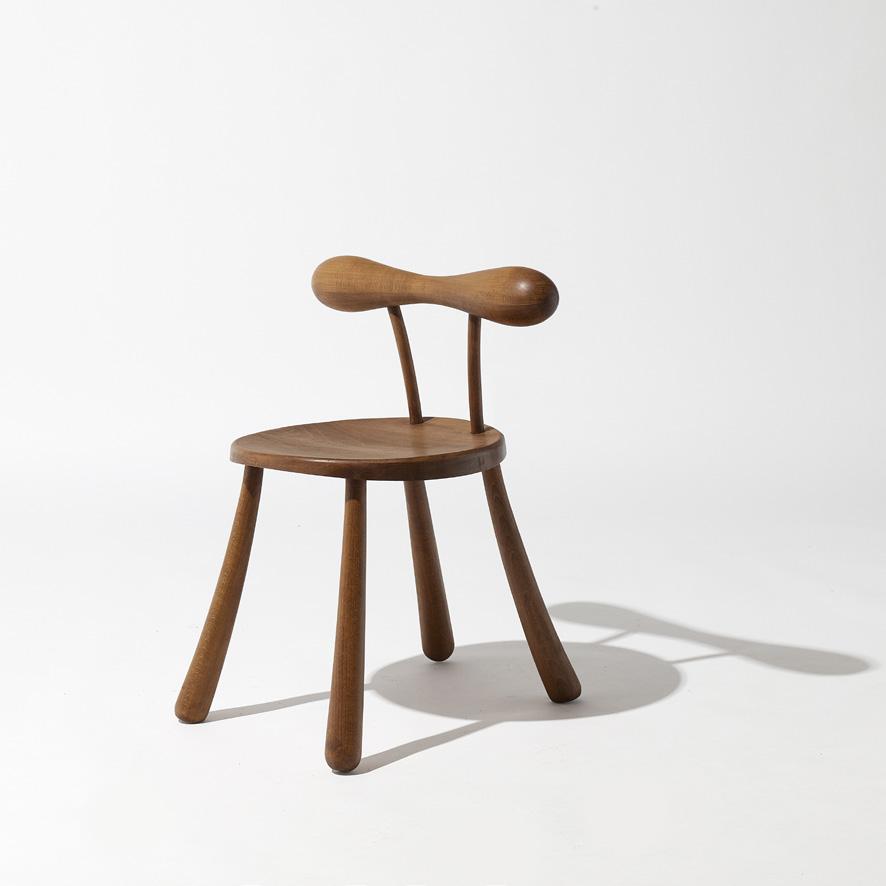
Lot n°51 - Grete JALK
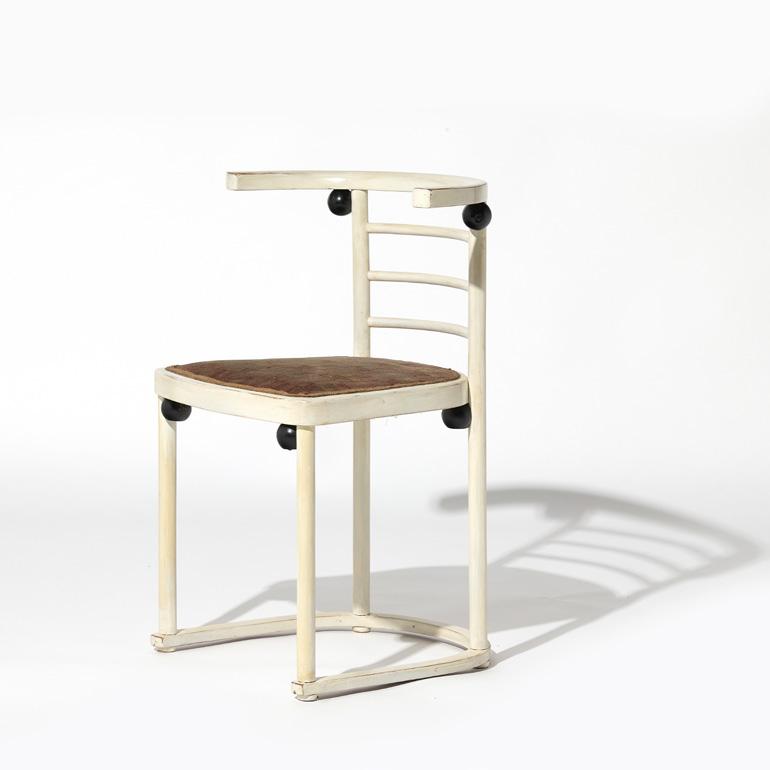
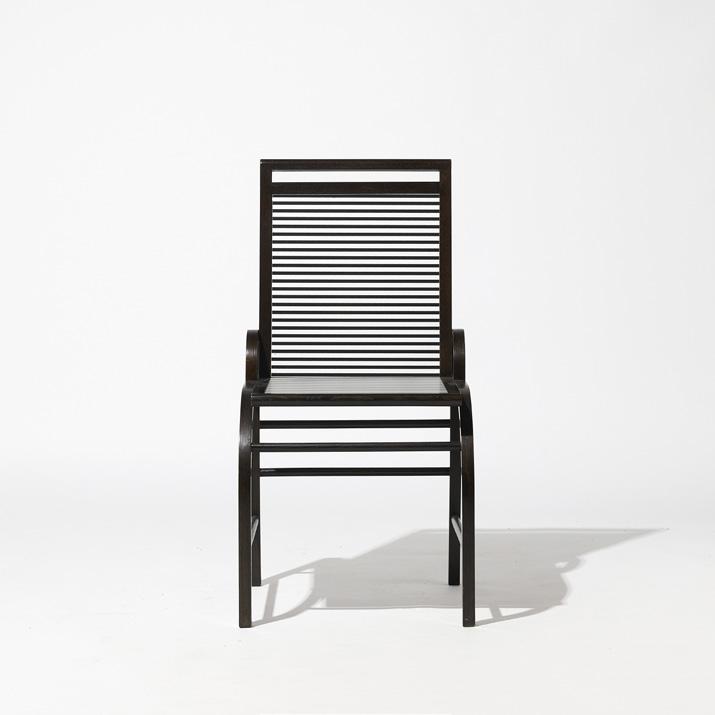
Lot n°116 - Josef HOFFMANN
Lot n°121 - Tom DIXON
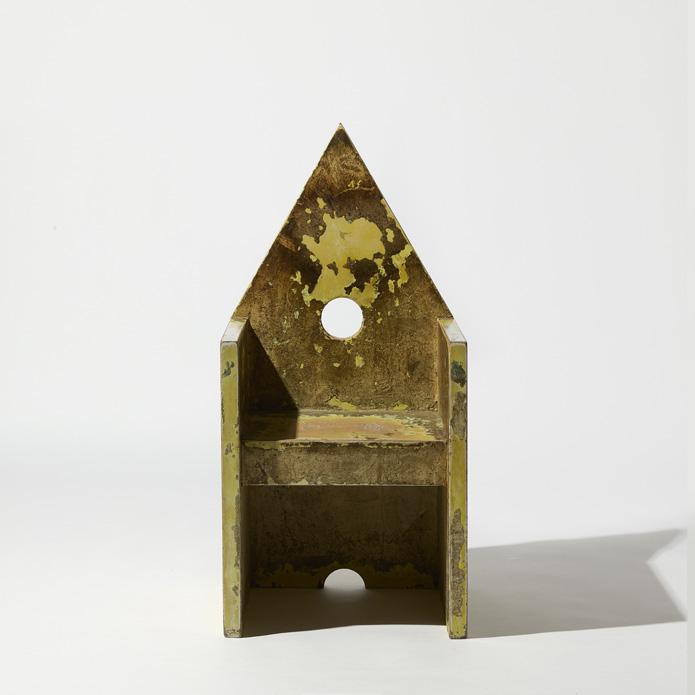
Lot n°154 - Lanfranco BENVENUTI
Mercredi 4 mars 2026 – 15h
Commissaires-priseur Arnaud Oliveux
Directrice Département Design
Sabrina Dolla
Tél : +33 (0)1 42 99 16 40 sdolla@artcurial.com
Spécialiste
Edouard Liron
Tél. : +33 (0)1 42 99 20 37 eliron@artcurial.com
Administratrice senior Anne-Claire Drauge
Tél. : +33 (0)1 42 99 20 42 adrauge@artcurial.com
Administrateur
Alexis Chantelot
Tél. : +33 (0)1 42 99 16 24 achantelot@artcurial.com
Directrice Artcurial Allemagne
Miriam Krohne
Tél. : +49 89 1891 3987 mkrohne@artcurial.com
Assistante Artcurial Allemagne
Anna Rudakova
Tél. : +49 89 1891 3987 arudakova@artcurial.com
Descriptifs complets des lots à la fin du catalogue
Photos et informations complémentaires sur le catalogue en ligne www.artcurial.com
Comptabilité acheteurs
Tél. : +33 (0)1 42 99 20 71 salesaccount@artcurial.com
Comptabilité vendeurs
Tél. : +33 (0)1 42 99 17 00 salesaccount@artcurial.com
Transport et douane
Lou Dupont
Tél. : +33 (0)1 42 99 20 77 ldupont@artcurial.com
Ordres d’achat, enchères par téléphone
Kristina Vrzests
Tél. : +33 (0)1 42 99 20 51 bids@artcurial.com
Photographe
Stéphane Briolant
Graphiste
Romane Marliot
Assistez en direct aux ventes aux enchères d’Artcurial et enchérissez comme si vous y étiez, c’est ce que vous offre le service Artcurial Live Bid.
Pour s’inscrire: www.artcurial.com
Vous avez également la possibilité d’enchérir en direct pendant la vente via les plateformes Drouot Live et Invaluable.
AALTO Alvar - 43, 119, 137
AALTO Alvar & KORHONEN Otto - 111
AARNIO Eero - 153
AUDOUX Adrien & MINET Frida - 88
ARAD Ron - 128
BAN Shigeru - 53
BÆKMARK Jørgen - 65
BARRAY Jean-Paul & MOLTZER Kim - 149
BENVENUTI Lanfranco - 154
BILL Max & GUGELOT Hans - 151
BLEY Thomas - 41
BOERI Cini - 158
BOUROULLEC Ronan & Erwan - 44
BORSANI Osvaldo - 90
BREUER Marcel - 7, 45, 125, 140
BREUHAUS DE GROOT Fritz August - 113
BRUNU Mario - 93
CAMPANA Humberto & Fernando - 92
CASTIGLIONI Achille & Pier Giacomo - 79
CEROLI Mario - 31
CHRISTIANSEN Hans - 114
COLOMBO Joe - 40, 105
CORAY Hans - 36
DAUMILLER Rainer - 5
DEGANELLO Paolo - 32, 127
DITZEL Nanna - 99
DIXON Tom - 121, 139
DUDOUYT Charles - 97
EAMES Charles & RAY - 49
EIERMANN Egon - 124
FABIANI Max - 16
FABRICIUS Preben & KASTHOLM Jørgen - 148
FEURE Georges de (dans le goût de) - 24
FORNASETTI Piero - 13
FRANK Beat - 107
FRANK Josef - 130
GEHRY Franck - 3
GENEBA Éditeur - 122
GRUB Ludwig - 20
HOFFMANN Josef - 10, 14, 21, 73, 75, 116, 135
HOSCH Paul - 134
HØVELSKOV Jørgen - 62
HUBER Patriz - 25, 77
IOSA GHINI Massimo - 69
JACOBSEN Arne - 91
JOHANSSON Torsten - 98
JOHNSON Albin - 78
JALK Grete - 51
KAWAKUBO Rei - 144
KING Perry & MIRANDA Santiago - 59
KJÆRHOLM Poul - 117, 150
KOHN Jacob & Josef - 74
KRISTIANSSON Östen - 147
KURAMATA Shiro - 160
LASSEN Morgens - 132
MAC COBB Paul (dans le goût de) - 66
MAGISTRETTI Vico - 27
MAJORELLE Louis - 15
MARISCAL Javier - 29
MALLET-STEVENS Robert - 35
MENDINI Alessandro - 57
MENZEL Erich - 4
MIES VAN DER ROHE Ludwig - 46, 126
MOLLINO Carlo - 95
MORRISON Jasper - 23
MOURGUE Olivier - 94
MULLER Jacob - 131
NELSON George - 104
NEWSON Marc - 109
NIEMEYER Oscar - 120
NOUVEL Jean - 52
OERLEY Robert - 115
PANTON Verner - 6, 101, 103, 106, 138
PASQUIER Nathalie du - 145
PAULIN Pierre - 100
PESCE Gaetano - 34, 70
PIECK Han - 136
POZZI & VERGA Éditeur - 12
PRUTSCHER Otto - 11
RAMS Dietier - 129, 155
RASTAD Rolf & RELLING Adolf - 64
RIEMERSCHMID Richard - 9, 83, 87
SARACINO Titti & DE LUCCHI Giovanni - 118
SCHNECK Adolf G. - 71, 82
SELLDORF Herbert & RIS Günter Ferdinand - 81
SERAFINI Luigi - 28
SERRURIER-BOVY Gustave - 2
SIEBRASSE Christoph R. - 146
SOTTSASS Ettore - 58, 76
SOWDEN George - 54, 55
STARCK Philippe - 47, 80
STUDIO 65 - 156
SUMMERS Gerald - 110
TAPIOVAARA Ilmari - 61
THERN Richard - 102
THONET - 8
THONET Frères - 86
TOKUJIN Yoshioka - 159
TRAVAIL ANGLAIS - 84
TRAVAIL ALLEMAND - 72
TRAVAIL ANONYME - 19, 42, 48
TRAVAIL AUTRICHIEN - 133
TRAVAIL ANGLAIS – 141, 142
TRAVAIL DE STYLE ART NOUVEAU - 112
TRAVAIL EUROPÉEN – 1, 85, 89
TRAVAIL FRANÇAIS - 18, 39, 108
TROOST Paul Ludwig - 33
TURA Aldo - 26
UNGERS Oswald Matheus - 56
VOLLMER Hans - 17
VOLPE Antonio - 63
WAGNER Otto - 38
WANDERS Marcel - 157
WEGNER Hans J. - 30, 67, 123
WILSON Bob – 22
WITZEMANN Herta-Maria - 68
WYBURD Leonard - 143
YANAGI Sori - 96
YOUNG Michael - 60
ZANINI Marco - 152
ZANUSO Marco - 50
ZSCHOCKE Christoph - 37
En tant que fabricant de mobilier, Werner Löffler s’est penché pendant plus de 40 ans, en collaboration avec des spécialistes de différents domaines et instituts ainsi qu’avec des utilisateurs, sur les souhaits et les exigences liés à l’aménagement contemporain, et plus particulièrement au siège, notamment dans le but d’optimiser ses propres modèles. L’exploration des objets qui nous entourent au quotidien a éveillé chez Werner Löffler une passion de collectionneur, qui l’a conduit au fil des années à constituer une collection privée unique et probablement la plus grande au monde consacrée aux sièges.
Les sièges font partie, depuis les premières grandes civilisations de l’Égypte ancienne et de la Mésopotamie, des éléments d’équipement les plus fondamentaux. À partir de la Renaissance, la chaise s’est imposée comme un meuble largement répandu. C’est surtout
à l’époque baroque et rococo que le siège est devenu un support de représentation, marqué par une sculpture riche, des dorures et des textiles précieux.
À la fin du XIXe siècle, il a connu une transformation fondamentale, étroitement liée à l’industrialisation, à l’apparition de nouveaux matériaux et à l’évolution des modes de vie et de l’habitat. Le développement de la technique du bois courbé, largement marqué par Michael Thonet, a constitué une étape décisive vers la production en série et vers un nouveau langage formel pensé de manière constructive. La fonctionnalité, le respect du matériau et l’économie sont alors passés de plus en plus au premier plan.
Au début du XXe siècle, les sièges ont été compris comme une unité esthétique de la structure et de la surface. Jusqu’au milieu du XXe siècle, ils sont devenus des objets centraux du design moderne, dans lesquels se rejoignaient les
connaissances ergonomiques, le progrès technique et la clarté formelle. Les créations de cette période marquent encore aujourd’hui la conception de l’habitat contemporain et sont considérées comme des jalons majeurs de l’histoire du design.
Aujourd’hui, la collection de Werner Löffler comprend plusieurs milliers d’objets inventoriés et restaurés avec soin dont une première sélection est présentée ici, de manière fidèle à l’original. Outre de nombreux prototypes, projets et pièces singulières, elle compte des objets uniques que l’on ne trouve nulle part ailleurs comme le fauteuil de repos de Patriz Huber réalisé pour la Große Haus Glückert à Mathildenhöhe à Darmstad en deux exemplaires, l’ensemble de prototypes de Verner Panton ou les recherches de Tom Dixon.
Sa collection s’affirme comme un témoignage fiable des époques, des technologies et du goût dominant. Elle couvre environ 250 ans et
rend ainsi perceptible une histoire culturelle, technologique et sociologique de l’assise. Découvrir, préserver les objets de l’oubli et faire dialoguer des icônes célèbres du siège avec des chaises encore non attribuées correspondent à l’idée fondatrice de Werner Löffler. Dans leur contexte, les sièges transmettent une authenticité et une expressivité qui s’articulent à travers le matériau, le mode de fabrication et la construction. La collection était donc moins une chambre forte figée qu’un lieu d’échange et de confrontation intensive avec l’histoire.
« Il est rare qu’un siège porte vraiment une personne. La plupart du temps, les quelques centimètres carrés de la surface d’assise restent immobiles, dans une patience silencieuse, comme dans l’attente tranquille de pouvoir à nouveau servir un jour. »
– Werner Löffler
As a furniture manufacturer, Werner Löffler has spent more than 40 years working with specialists from various fields and institutes, as well as with users, to identify the wishes and requirements associated with contemporary interior design, particularly in relation to seating, with the aim of optimizing his own models. Exploring the objects that surround us in everyday life awakened Werner Löffler’s passion for collecting, which over the years has led him to build up a unique private collection of chairs, probably the largest in the world.
Since the earliest civilizations of ancient Egypt and Mesopotamia, chairs have been among the most fundamental pieces of furniture. From the Renaissance onwards, chairs became widely used. It was during the Baroque and Rococo periods that chairs became a symbol of status, featuring rich carvings, gilding, and precious fabrics.
At the end of the 19th century, it underwent a fundamental transformation, closely linked to industrialization, the emergence of new materials, and changes in lifestyles and housing. The development of bentwood technology, largely influenced by Michael Thonet, was a decisive step towards mass production and a new, constructively designed formal language. Functionality, respect for materials, and economy increasingly came to the fore.
At the beginning of the 20th century, chairs were understood as an aesthetic unity of structure and surface. By the middle of the 20th century, they had become central objects of modern design, combining ergonomic knowledge, technical progress, and formal clarity. The creations of this period still influence contemporary interior design today and are considered major milestones in the history of design.
Today, Werner Löffler’s collection comprises several thousand carefully cataloged and restored objects, a selection of which is presented here, faithful to the originals. In addition to numerous prototypes, projects, and unique pieces, it includes one-of-a-kind objects that cannot be found anywhere else, such as Patriz Huber’s reclining chair, two copies of which were made for the Große Haus Glückert in Mathildenhöhe, Darmstadt, Verner Panton’s set of prototypes, and Tom Dixon’s research.
His collection stands as a reliable testimony to the eras, technologies, and prevailing tastes of its time. It spans approximately 250 years, bringing to life the cultural, technological, and sociological history of seating. Discovering and preserving objects from oblivion and creating a dialogue between famous icons of seating and chairs that have not yet been
attributed corresponds to Werner Löffler’s founding idea. In their context, the chairs convey an authenticity and expressiveness that is articulated through the material, the manufacturing method, and the construction. The collection was therefore less a static vault than a place of exchange and intensive confrontation with history.
“It is rare for a chair to truly carry a person. Most of the time, the few square centimetres of the seat remain motionless, in silent patience, as if quietly waiting to be of service again one day.”
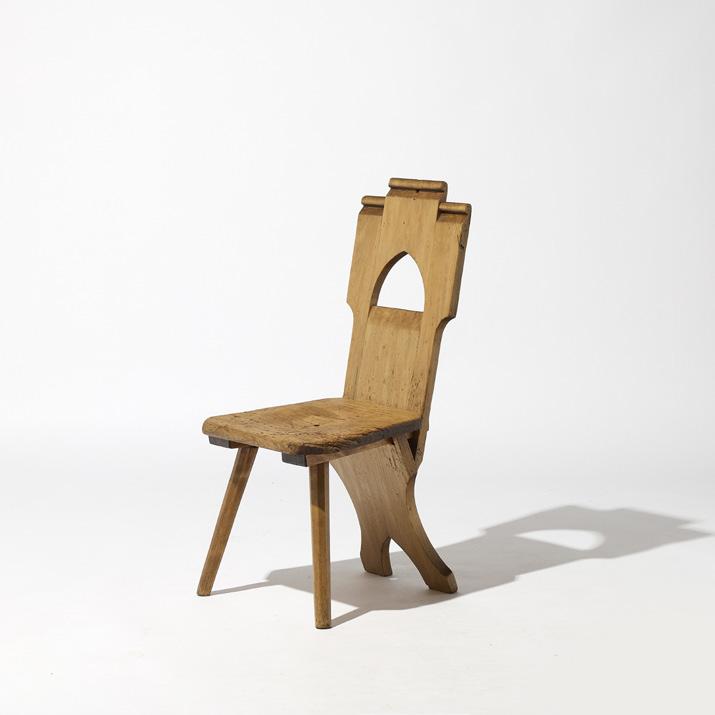
Chaise rustique – Milieu du XIXe
Structure en aulne massif
95 × 43 × 51 cm
400 - 600 €
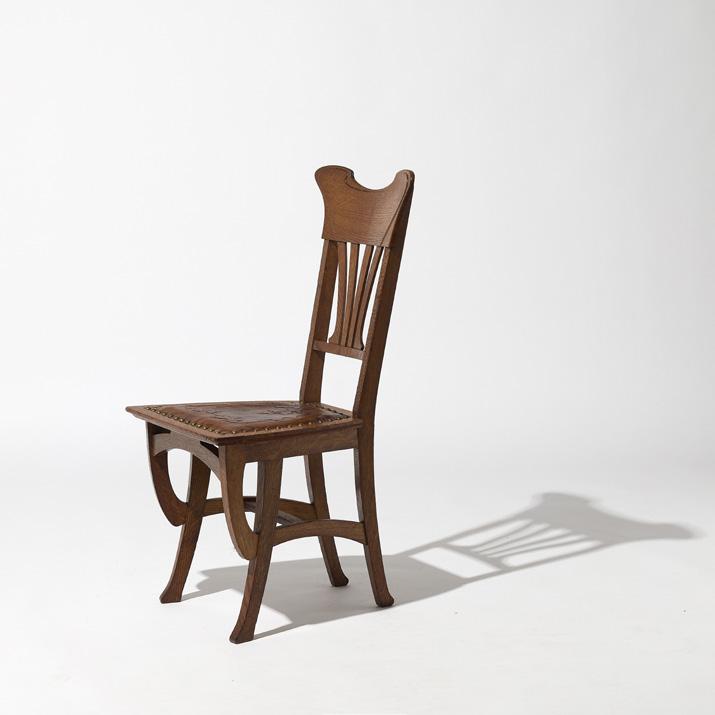
1858-1910
Chaise – circa 1899
Structure en chêne massif, assise recouverte de cuir gaufré à décor floral
96 × 47,5 × 53 cm
800 - 1 200 €
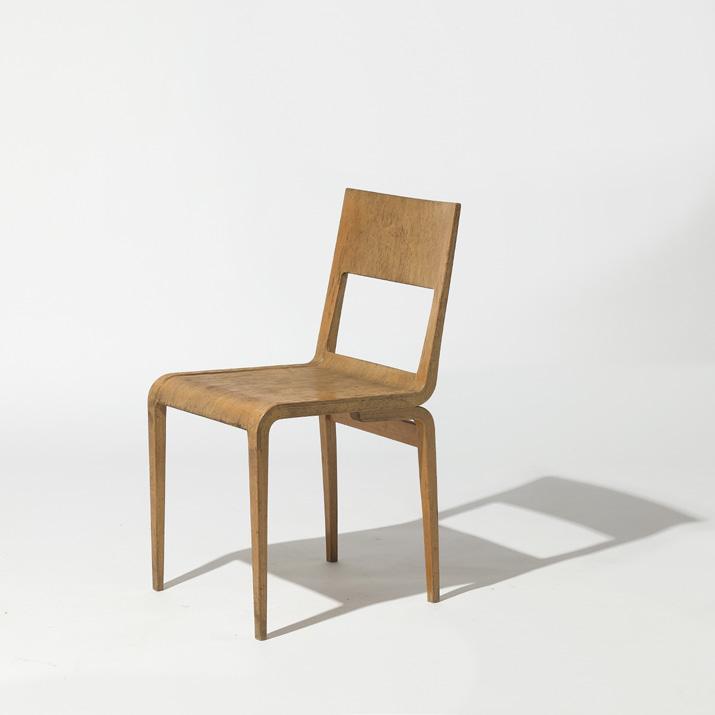
Erich MENZEL
1909-1959
Chaise « Menzelstuhl » – circa 1950
Hêtre contreplaqué courbé VEB Deutsche Werkstätten Hellerau éditeur
79 × 42,5 × 50 cm
600 - 800 €
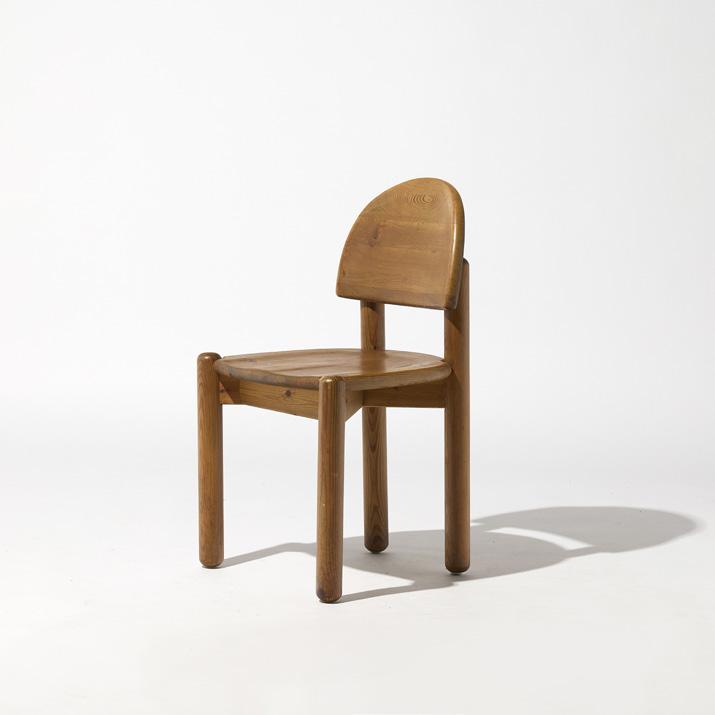
Né en 1939
Chaise – circa 1970
Structure et assise en pin massif, patin en PVC Hirtshals Savværk éditeur
83 × 48 × 47 cm
300 - 500 €
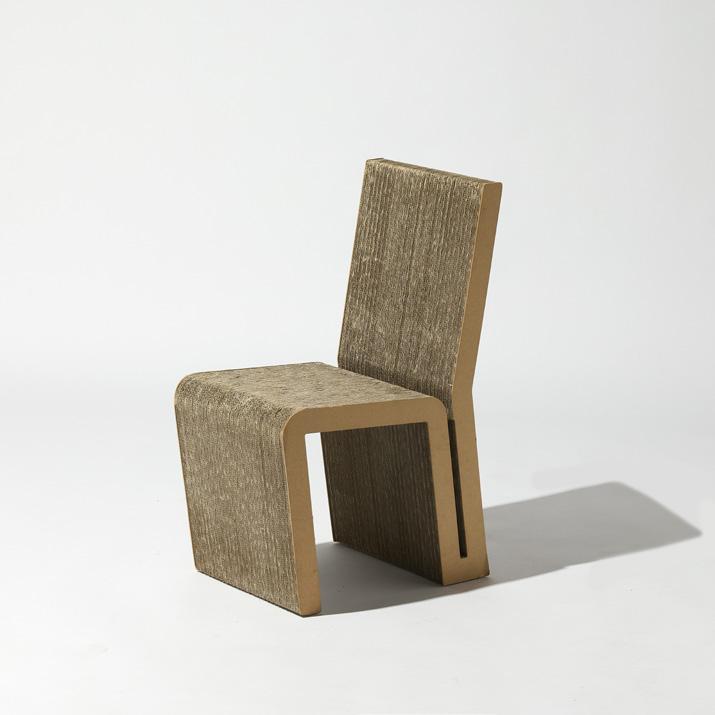
3
Franck GEHRY
1929-2025
Chaise issue de la série « Easy Edges » 1972
Structure en carton et carton ondulé Vitra éditeur
83 × 38,5 × 53,5 cm
600 - 800 €
6
Verner PANTON
1926-1998
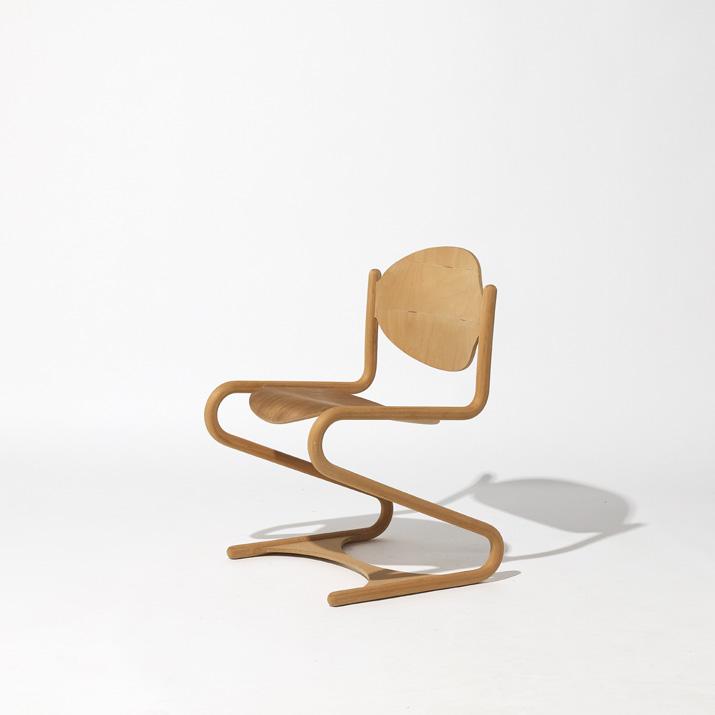
Chaise prototype modèle « S-Chair » – circa 1950
Structure en hêtre et contreplaqué de hêtre
August Sommer geformtes Holz GmbH & Co.
KG éditeur
73 × 50 × 53,5 cm
3 000 - 5 000 €
Marcel BREUER
1902-1981
Chaise longue « Isokon » – circa 1935
Bouleau lamellé-collé cintré et moulé
Isokon éditeur
Étiquette de l’éditeur sur la traverse
77 × 132,5 × 62 cm
12 000 - 15 000 €
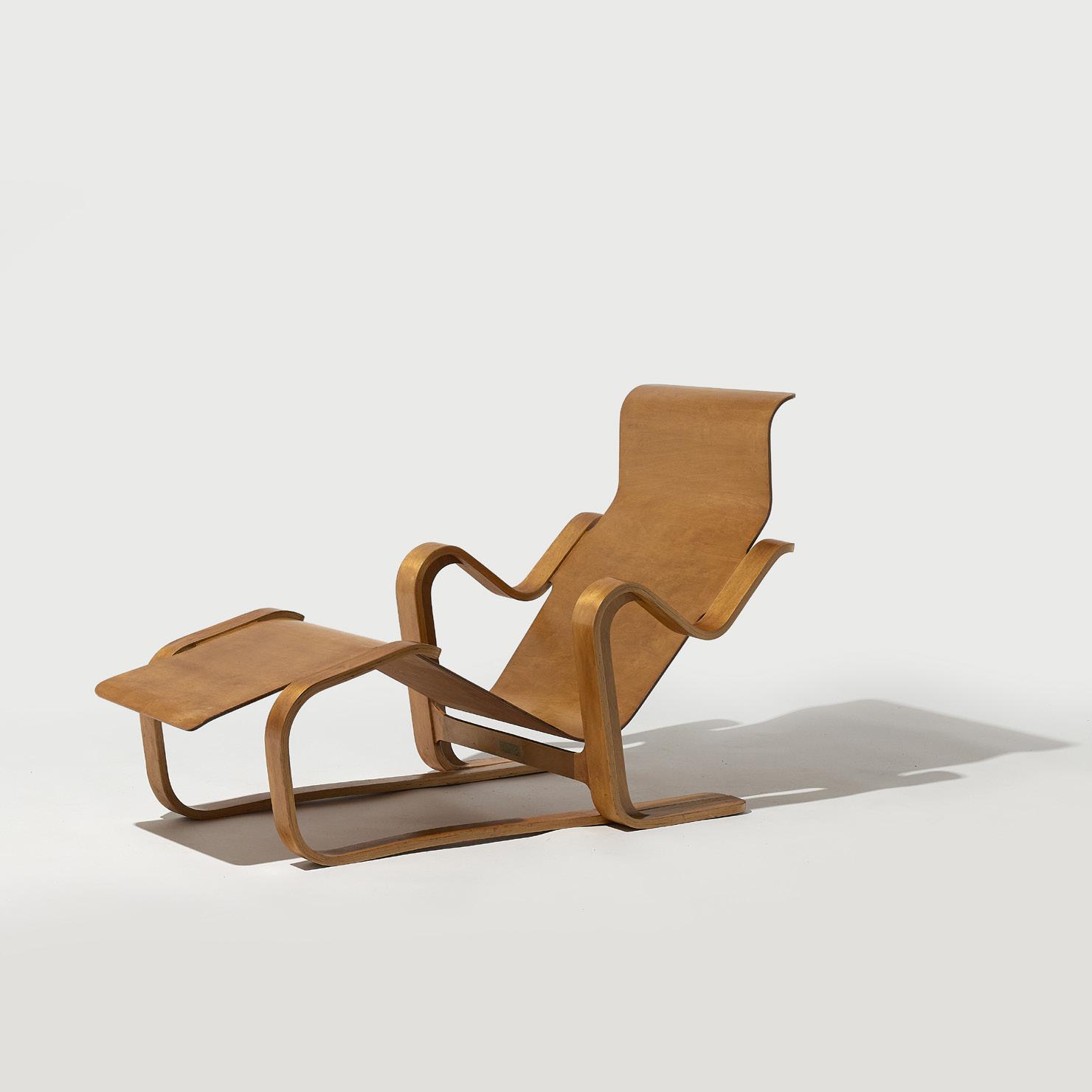
Jack Pritchard (1899–1992) a joué un rôle central dans l’introduction du contreplaqué comme matériau innovant dans la conception de meubles. En 1929, Pritchard, qui a déjà une expérience professionnelle auprès de la société Venesta, un important fournisseur de contreplaqué implanté en Estonie, en Lettonie et en Finlande fonde avec Well Coates à Londres, la société Isokon, spécialisée dans le mobilier et l’architecture moderne. La société a entretenu des liens étroits avec les figures fondatrices du Bauhaus comme Walter Gropius, László Moholy-Nagy ou Marcel Breuer qui ont collaboré avec
Pritchard, faisant d’Isokon un lien crucial entre le Bauhaus allemand et le design britannique. Marcel Breuer est arrivé en Angleterre en 1935 comme designer en chef des meubles Isokon. Il a apporté les techniques du Bauhaus en matière de contreplaqué courbé et d’acier tubulaire, parfaitement adaptées à la fabrication de meubles légers et élégants. L’exemple présenté ici porte le logo du fabricant Isokon et a été produit en Angleterre vers 1935–1936. Il s’agit d’un témoignage authentique de l’alliance du design moderne et de la tradition internationale du Bauhaus.
Jack Pritchard (1899–1992) played a central role in introducing plywood as an innovative material in furniture design. In 1929, Pritchard, who already had professional experience with Venesta, a major plywood supplier based in Estonia, Latvia, and Finland, founded Isokon with Well Coates in London, specializing in modern furniture and architecture. The company maintained close ties with founding figures of the Bauhaus such as Walter Gropius, László Moholy-Nagy, and Marcel Breuer, who collaborated with Pritchard,
making Isokon a crucial link between the German Bauhaus and British design. Marcel Breuer arrived in England in 1935 as chief designer of Isokon furniture. He brought Bauhaus techniques in curved plywood and tubular steel, which were perfectly suited to the manufacture of light and elegant furniture. The example shown here bears the Isokon manufacturer’s logo and was produced in England around 1935–1936. It is an authentic testament to the alliance of modern design and the international Bauhaus tradition.
8
THONET
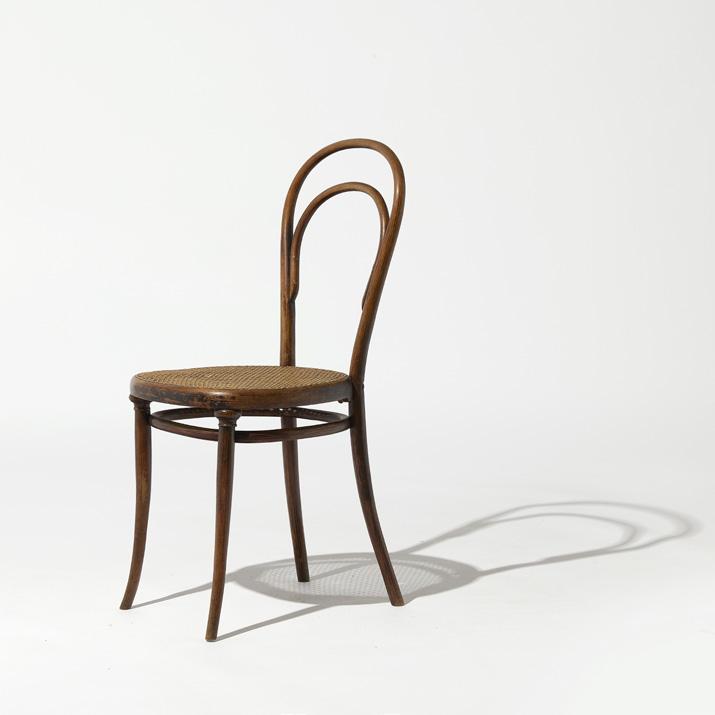
Chaise n° 8 – modèle créé circa 1865
Structure en hêtre courbé, assise cannée
Thonet éditeur
Étiquette de l’éditeur au revers
93 × 41 × 56 cm
800 - 1 200 €
Richard RIEMERSCHMID
1868-1957
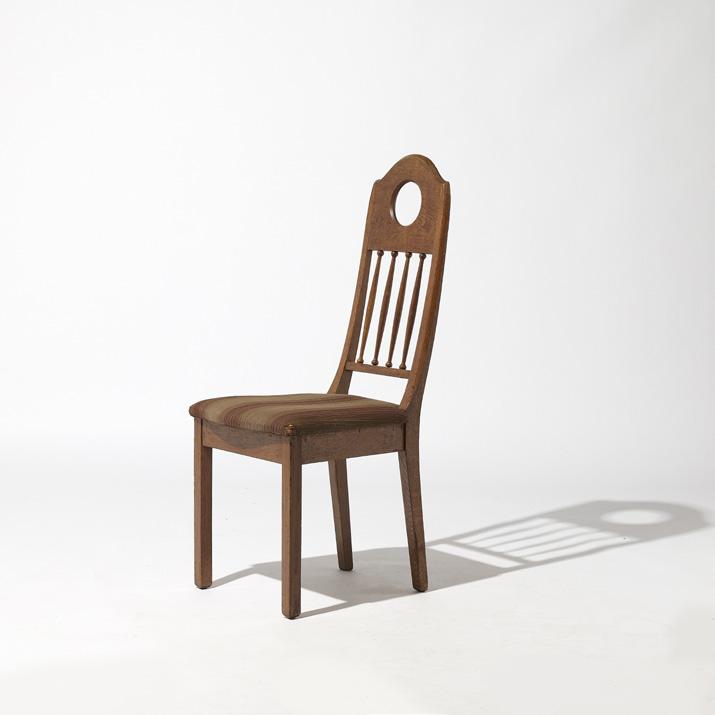
Chaise mod. 306.6 – 1907
Structure en chêne massif, assise recouverte de tissu
Deutsche Werkstätten fabricant
110,5 × 44 × 59 cm
600 - 800 €
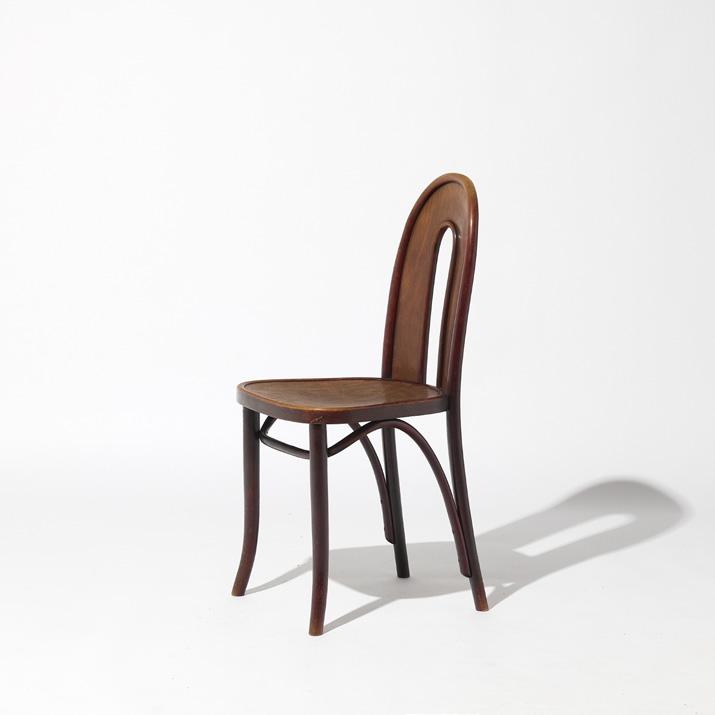
Otto PRUTSCHER
1880-1949
Chaise – circa 1910
Structure en hêtre courbé, assise et dossier en hêtre moulé
Thonet éditeur
Étiquette et cachet de l’éditeur au revers
92 × 40,5 × 49 cm
600 - 800 €
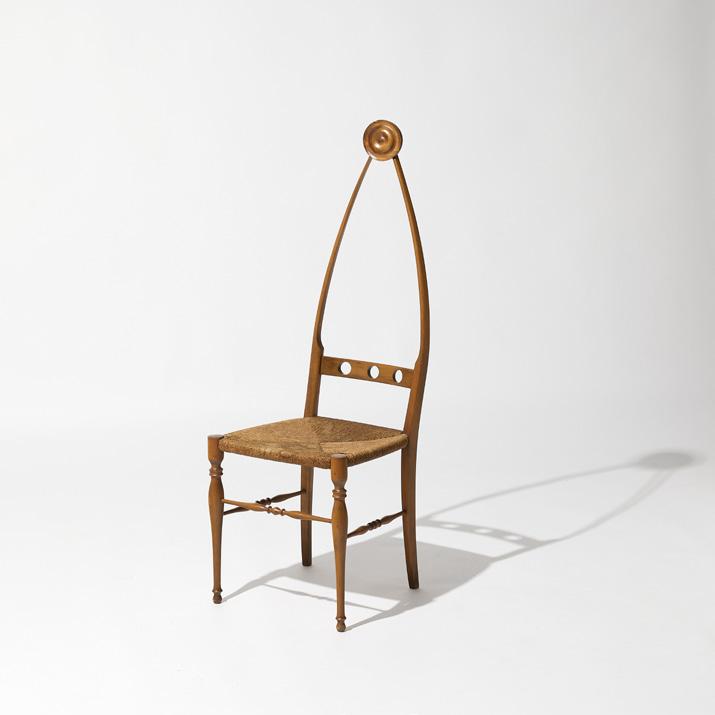
Chaise – 1950
Structure en hêtre massif, assise recouverte de corde tressée
Pozzi & Verga éditeur
124 × 42,5 × 47 cm
800 - 1 200 €
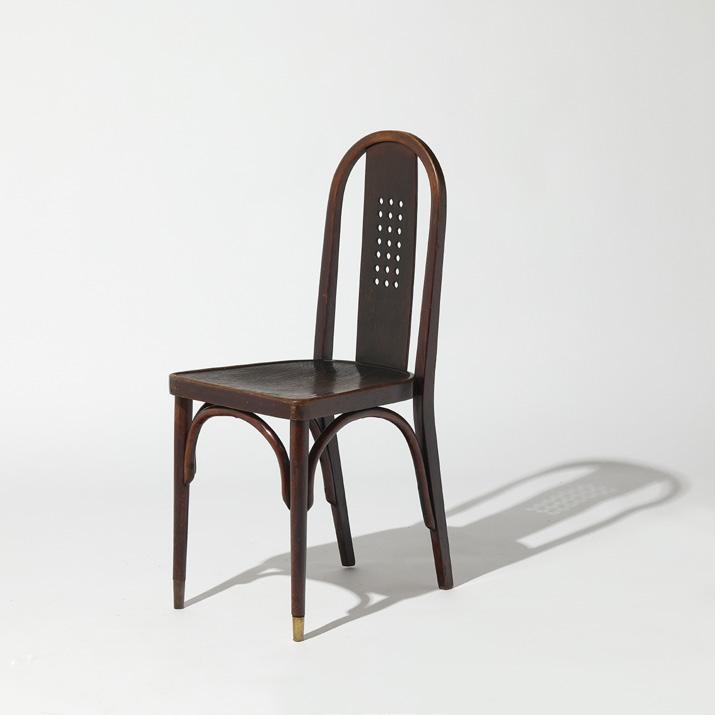
Josef HOFFMANN
1870-1956
Chaise mod. « 369/1 L4 »
Modèle créé en 1907
Structure en hêtre massif courbé et teinté, assise et dossier en hêtre contreplaqué, moulé, perforé et teinté, sabot en laiton
Jacob & Josef Kohn éditeur
Cachet de l’éditeur au revers
89 × 38,5 × 45 cm
1 200 - 1 500 €
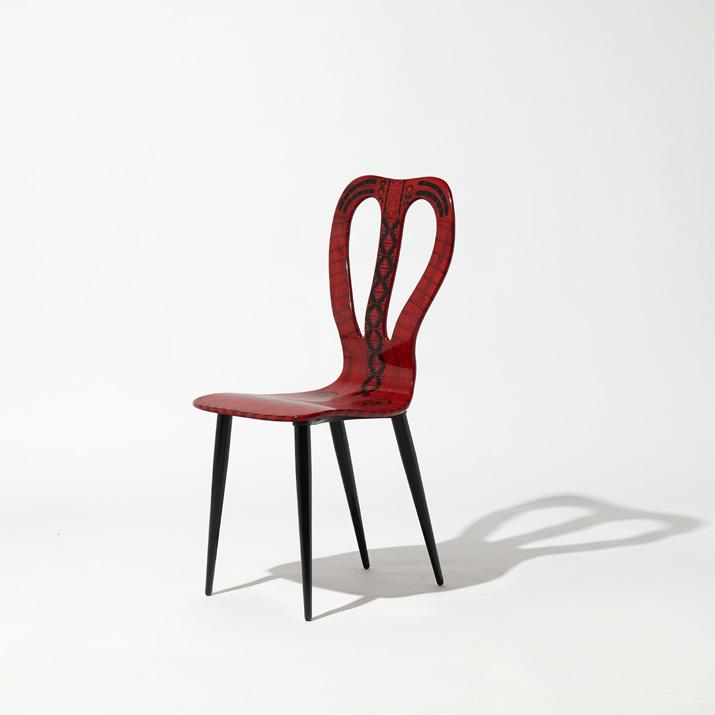
Piero FORNASETTI
1913-1988
Chaise « Lyre » – modèle créé en 1951
Piètement en bois massif laqué noir, assise en contreplaqué courbé laqué rouge et sérigraphié
Fornasetti éditeur
Étiquette de l’éditeur sous l’assise
94 × 41 × 53,5 cm
1 200 - 1 500 €
1870-1956
Chaise mod. 371 dite « Siebenkugelstuhl »
Circa 1906
Structure en hêtre teinté, assise en cuir
Jacob & Josef Kohn éditeur
Cachet de l’éditeur au revers
110 × 41 × 42 cm
12 000 - 15 000 €
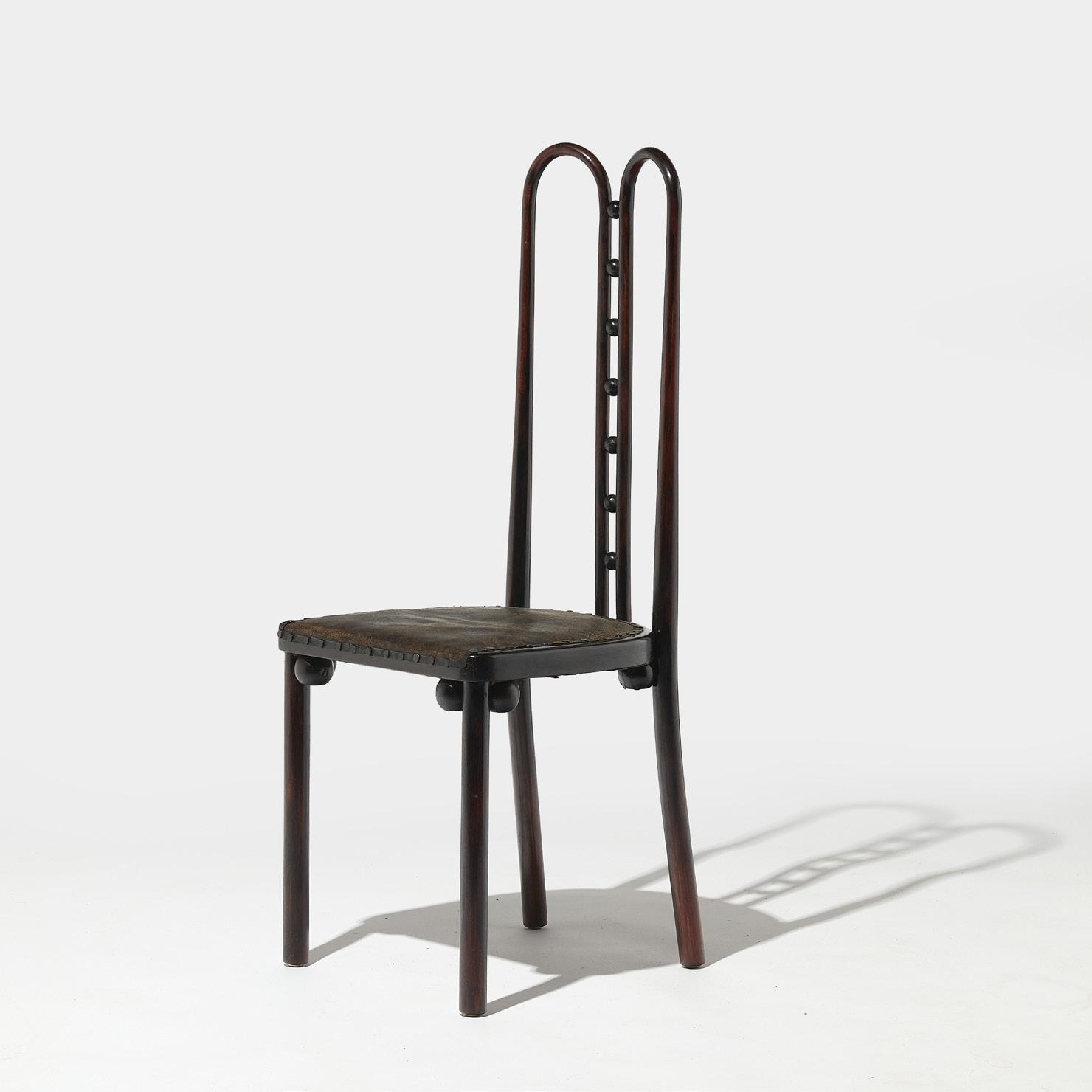
Josef Hoffmann (1870–1956) est une figure majeure de l’histoire de l’art et du design moderne. Architecte et designer autrichien, il est l’un des fondateurs de la Sécession viennoise en 1897, mouvement qui cherche à rompre avec les styles historiques pour créer un art adapté à son époque. Hoffmann défend l’idée d’un art total, où architecture, mobilier et objets décoratifs forment un ensemble cohérent et harmonieux. En 1903, il cofonde les Wiener Werkstätte (Ateliers viennois), qui jouent un rôle essentiel dans le développement du design moderne. Ces ateliers valorisent l’artisanat de haute qualité et l’unité entre esthétique et fonctionnalité. Hoffmann y conçoit des meubles aux formes géométriques simples, caractérisés par des lignes droites, des structures claires et une ornementation réduite. Hoffmann collabore aussi avec des éditeurs industriels capables de
diffuser ses modèles à plus grande échelle, notamment la firme Jacob & Josef Kohn, grands fabricants austrohongrois de mobilier en bois courbé, concurrent direct de Thonet.
La rare Siebenkugelstuhl (chaise à sept boules ou seven balls chair), conçue en 1906, incarne ainsi la modernité viennoise : sobriété, précision, et fusion entre art et design. Les sept sphères en bois qui structurent le dossier deviennent un motif emblématique : élément décoratif réduit à une forme géométrique pure. Elle illustre un moment clé du design moderne : le dialogue entre création artistique et industrie rendu possible par la rencontre entre la rigueur géométrique de Hoffmann et les capacités techniques de son éditeur.
Josef Hoffmann (1870–1956) is a major figure in the history of modern art and design. An Austrian architect and designer, he was one of the founders of the Vienna Secession in 1897, a movement that sought to break with historical styles in order to create art that was appropriate for its time. Hoffmann championed the idea of total art, in which architecture, furniture, and decorative objects formed a coherent and harmonious whole.
In 1903, he co-founded the Wiener Werkstätte (Vienna Workshops), which played an essential role in the development of modern design. These workshops promoted high-quality craftsmanship and unity between aesthetics and functionality. Hoffmann designed furniture with simple geometric shapes characterized by straight lines, clear structures, and minimal ornamentation.
Hoffmann also collaborated with industrial publishers capable of distributing his designs on a larger scale, notably Jacob & Josef Kohn, a major Austro-Hungarian manufacturer of bentwood furniture and a direct competitor of Thonet.
The rare Siebenkugelstuhl (seven balls chair), designed in 1906, embodies Viennese modernity: sobriety, precision, and a fusion of art and design. The seven wooden spheres that form the backrest became an iconic motif: a decorative element reduced to a pure geometric form. It illustrates a key moment in modern design: the dialogue between artistic creation and industry made possible by the encounter between Hoffmann’s geometric rigor and the technical capabilities of his manufacturer.
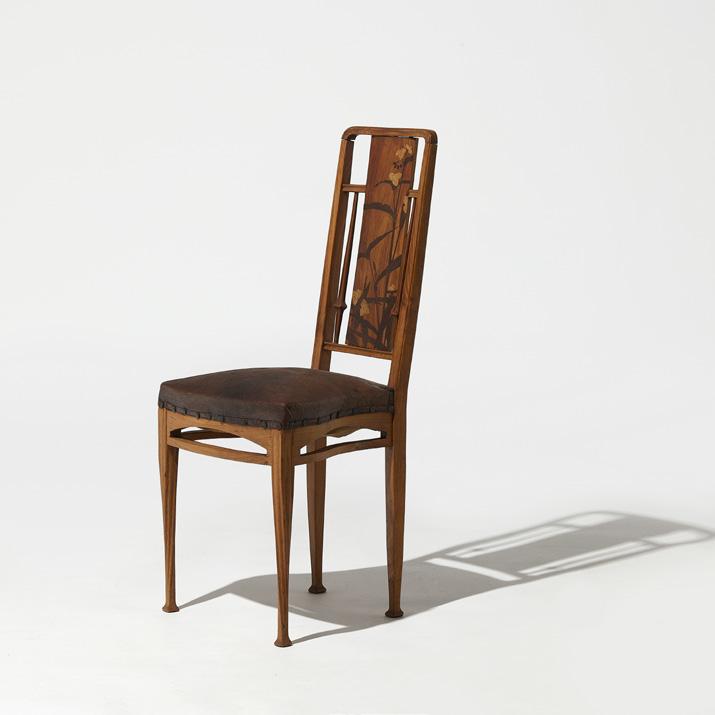
1859-1926
Chaise – 1900
Structure en platane massif, marqueterie de chêne immergé et platane sur fond de bois de rose, assise recouverte de cuir
98 × 40,5 × 40 cm
600 - 800 €
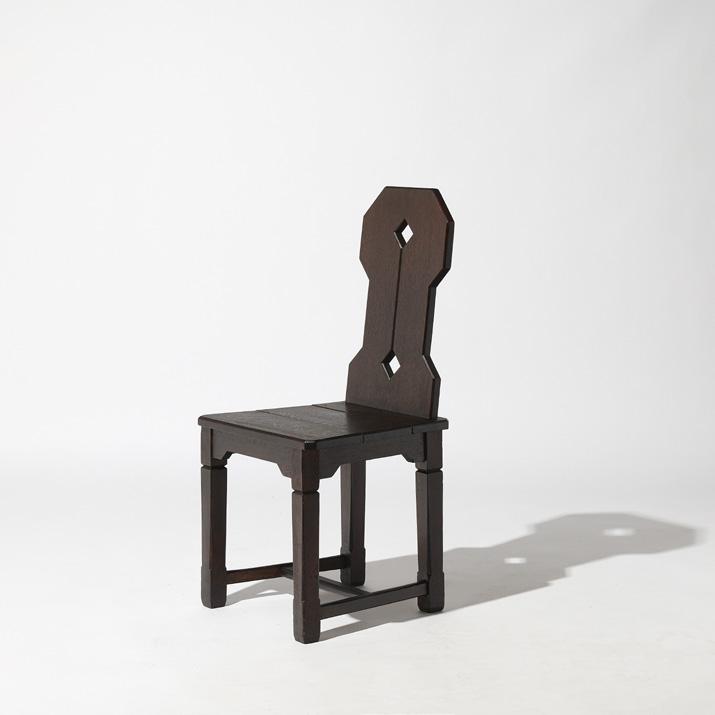
18
Chaise rustique – circa 1910
Structure en chêne massif
103 × 49 × 50 cm
500 - 700 €
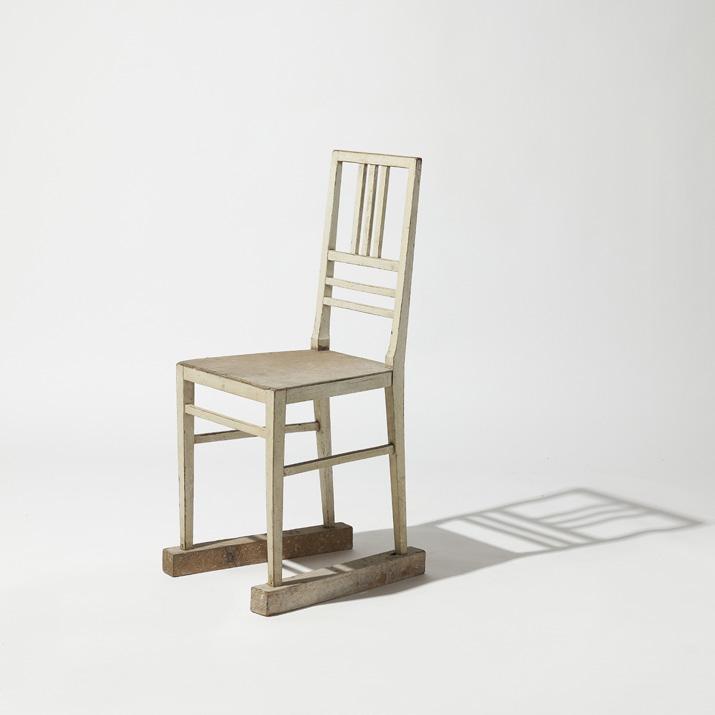
Max FABIANI
1865-1962
Chaise traîneau – 1910
Structure en hêtre massif, assise en contreplaqué de hêtre, piètement en pin massif
98,5 × 42 × 50 cm
600 - 800 €
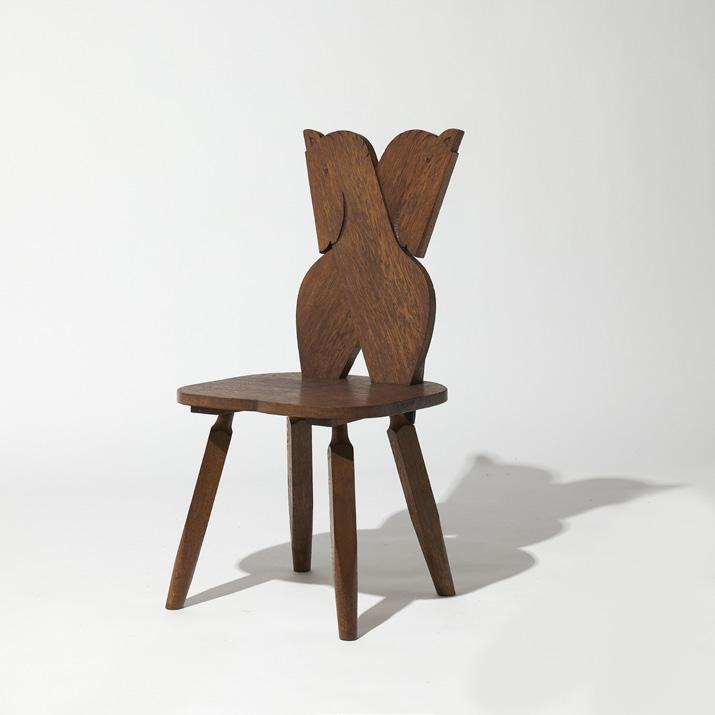
Chaise – circa 1930
Chêne massif
98 × 53 × 50 cm
400 - 600 €
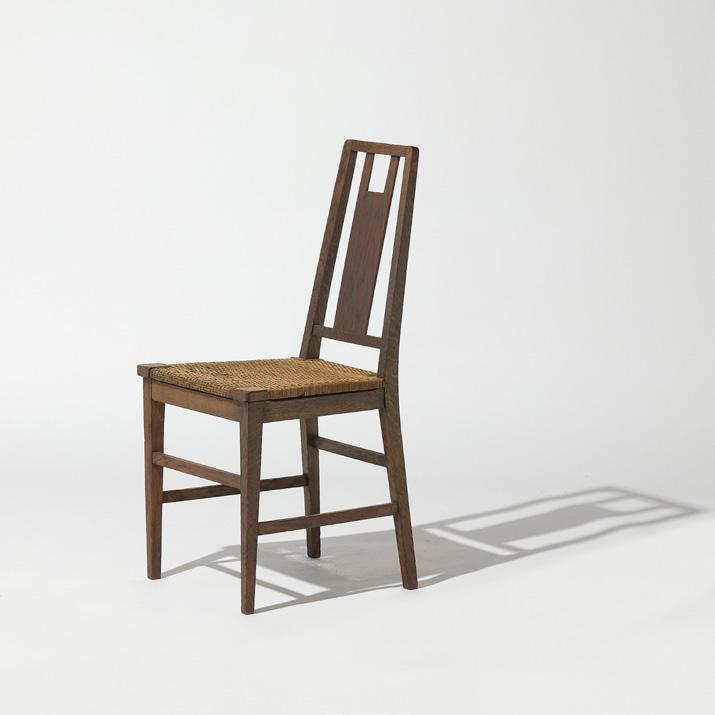
1879-1946
Chaise – circa 1902
Structure en chêne massif, dossier en placage de chêne, assise en cannage de rotin
Prag-Rudniker éditeur
90,5 × 43 × 46,6 cm
800 - 1 200 €
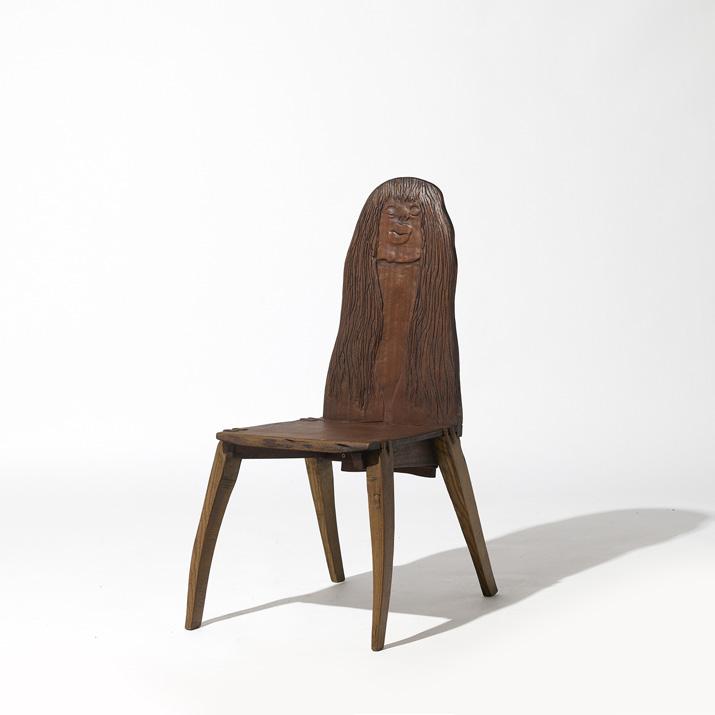
1930-2007
Chaise – circa 1980
Assise et dossier en sipo massif, pieds en frêne
100 × 41 × 63 cm
500 - 700 €
21
Josef HOFFMANN (attribué à)
1870-1956
Chaise – circa 1905
Structure en hêtre massif laqué, dossier en hêtre contreplaqué laqué, assise recouverte de tissu
83 × 46 × 40 cm
2 000 - 3 000 €
22
Bob WILSON
1941-2025
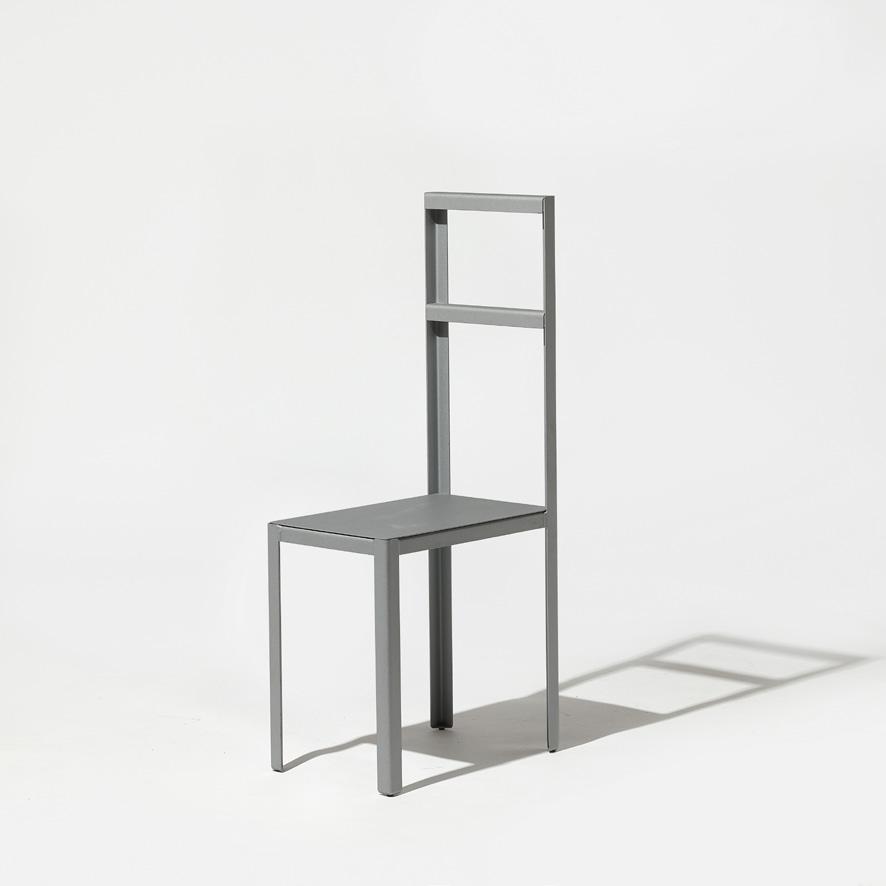
Chaise « Hamletmaschine » – 1987
Structure en cornière soudée et assise en tôle d’acier laqué argent mat
XO éditeur
Marqué «R. WILSON XO» sous l’assise
98 × 29 × 44 cm
1 200 - 1 500 €
23
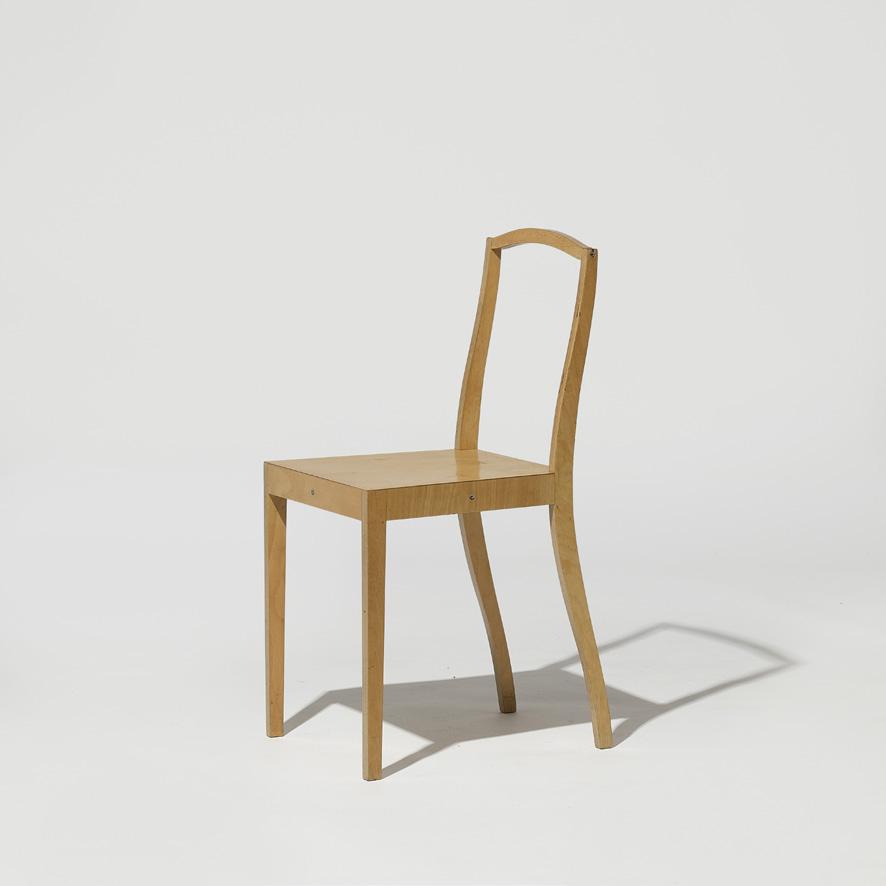
Jasper MORRISON
Né en 1959
Chaise « Plywood » – 1988
Contreplaqué de bouleau
Vitra éditeur
Étiquette de l’éditeur au revers
84,5 × 39 × 47 cm
800 - 1 200 €
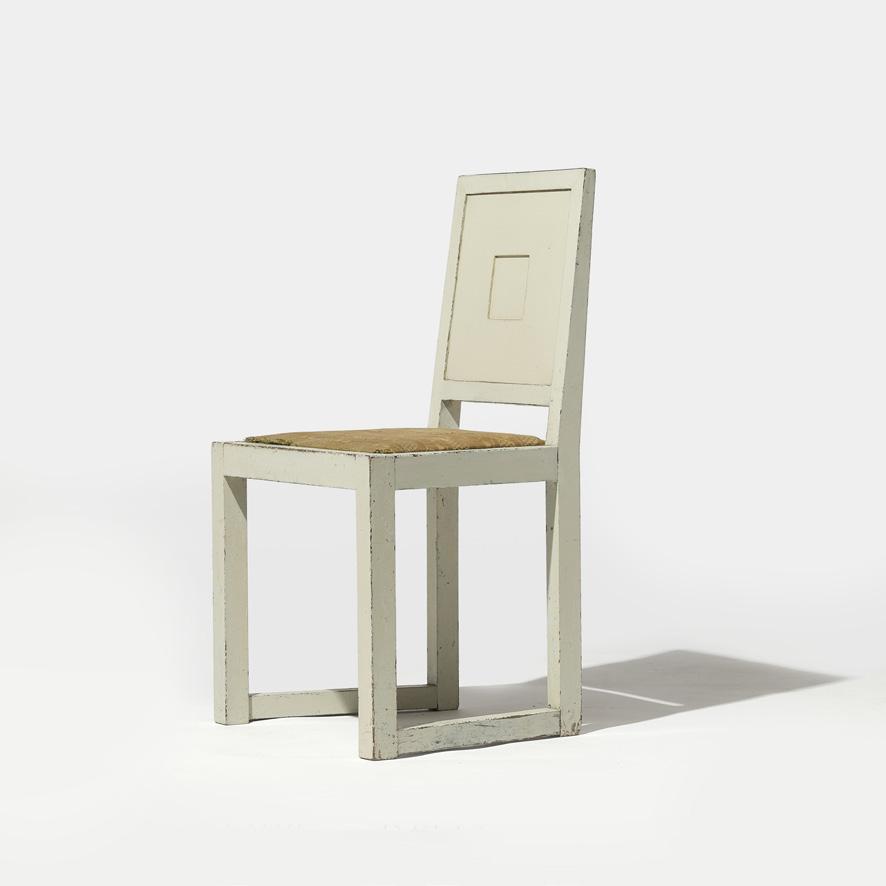
24
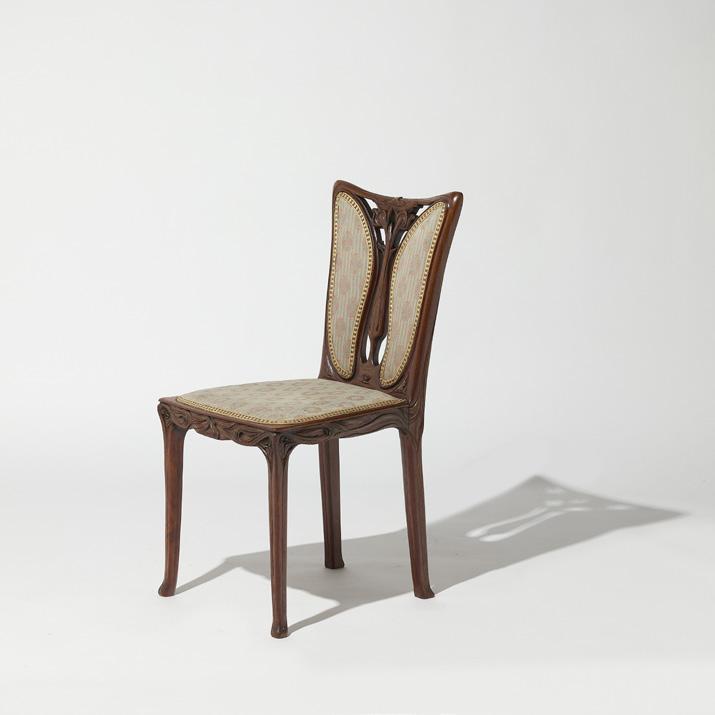
Georges de FEURE (dans le goût de)
Chaise – circa 1900
Structure en noyer, assise et dossier recouverts de tissu
88 × 42 × 51 cm
1 200 - 1 500 €
25
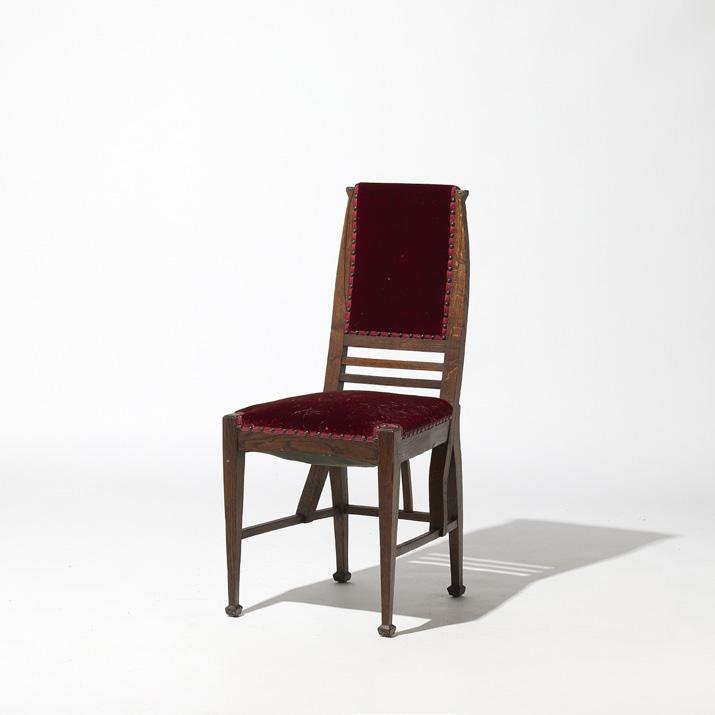
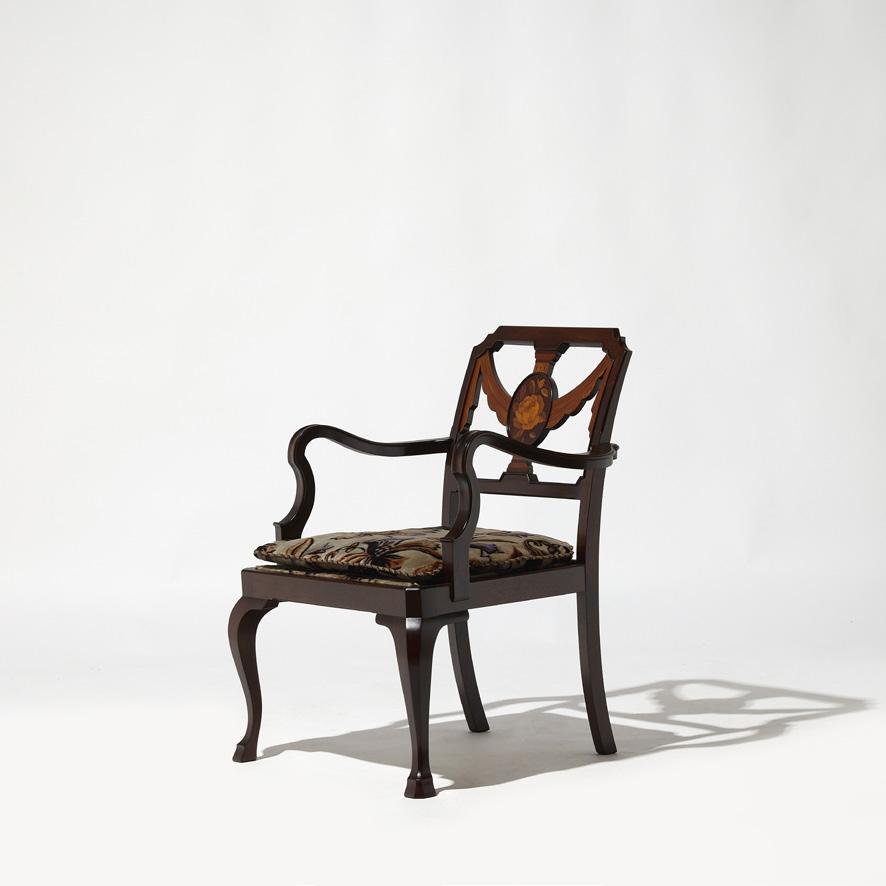
Patriz HUBER
1878-1902
Chaise – circa 1901-1902
Structure en chêne massif, assise et dossier recouverts de velours rouge Möbelfabrik und Möbelhandlung
J. Glückert fabricant
100 × 44 × 52 cm
600 - 800 €
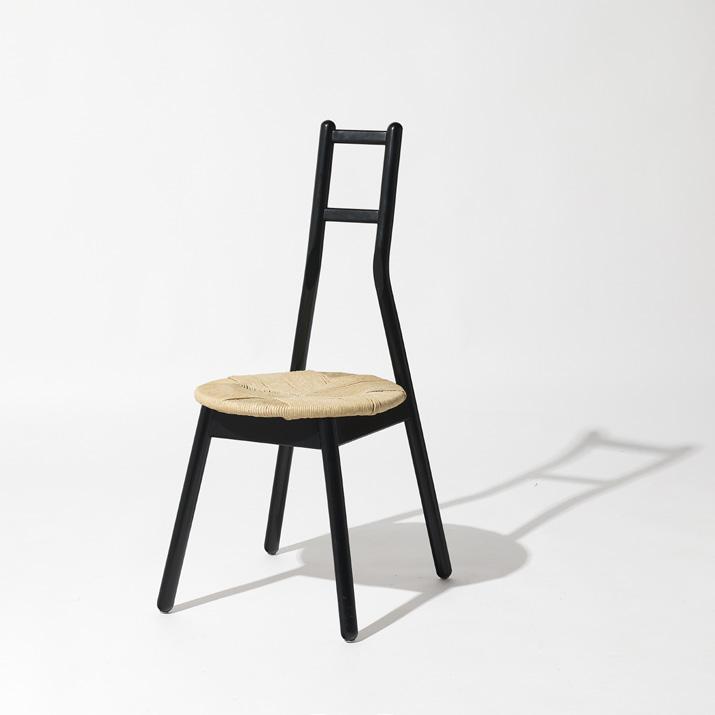
27
Vico MAGISTRETTI
1920-2006
Chaise modèle « Faun » – 1981
Structure en hêtre laqué noir, assise en papier tissé
Rosenthal éditeur
Titré, signé et marque de l’éditeur sur une traverse
100 × 47 × 53 cm
400 - 600 €
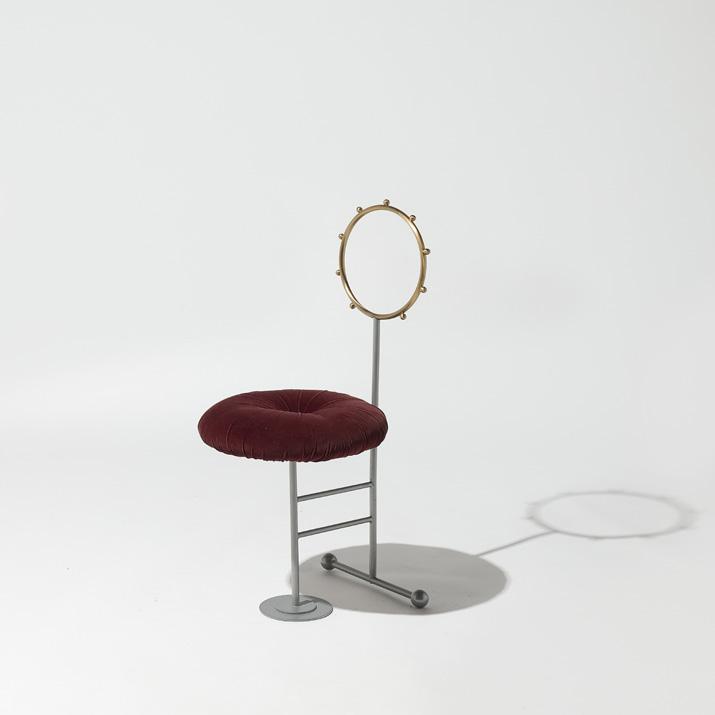
28
Luigi SERAFINI
Né en 1949
Chaise modèle « Santa » – 1990
Structure en tube d’acier laqué gris et doré, assise recouverte de velours rose
Sawaya & Moroni éditeur
97 × 42 × 51 cm
800 - 1 200 €
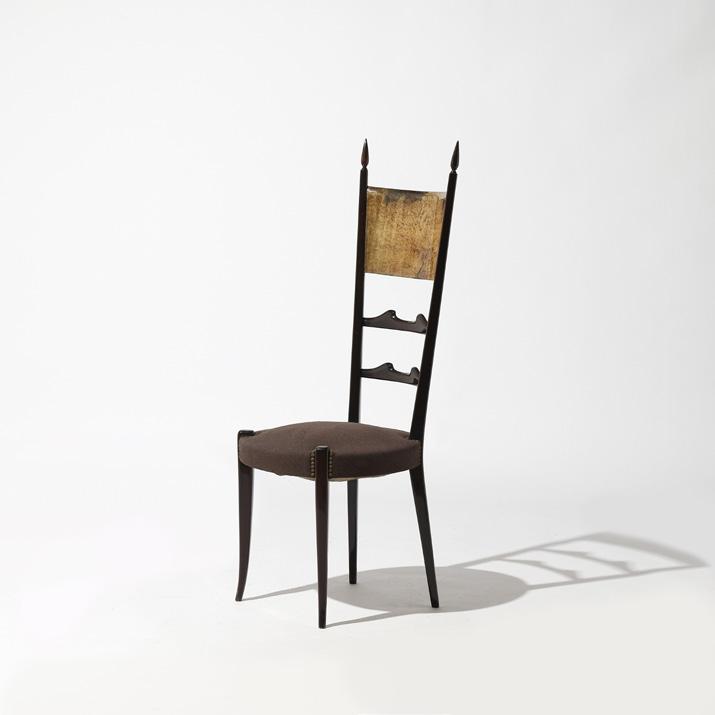
26
Aldo TURA
1909-1963
Chaise – circa 1960
Structure en hêtre laqué, dossier recouvert de parchemin, assise recouverte de laine
120 × 40 × 50 cm
600 - 800 €
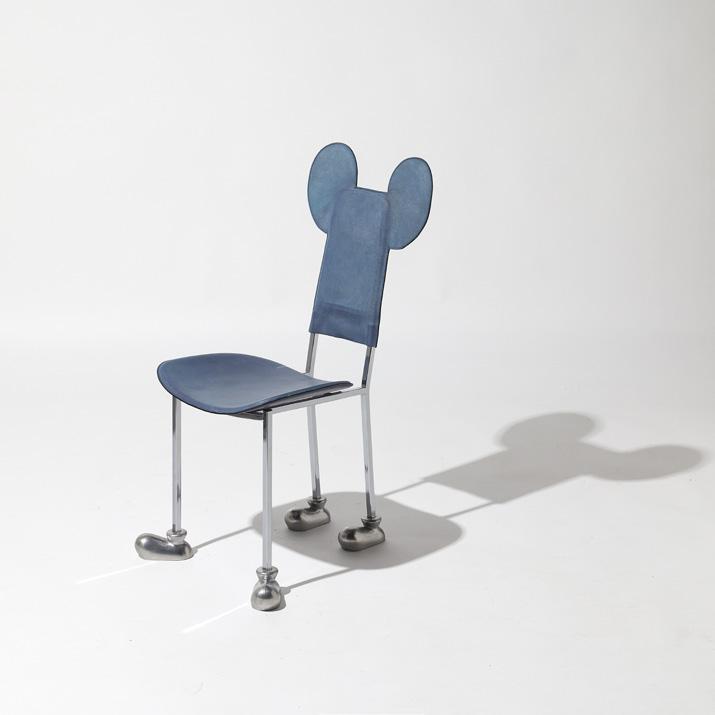
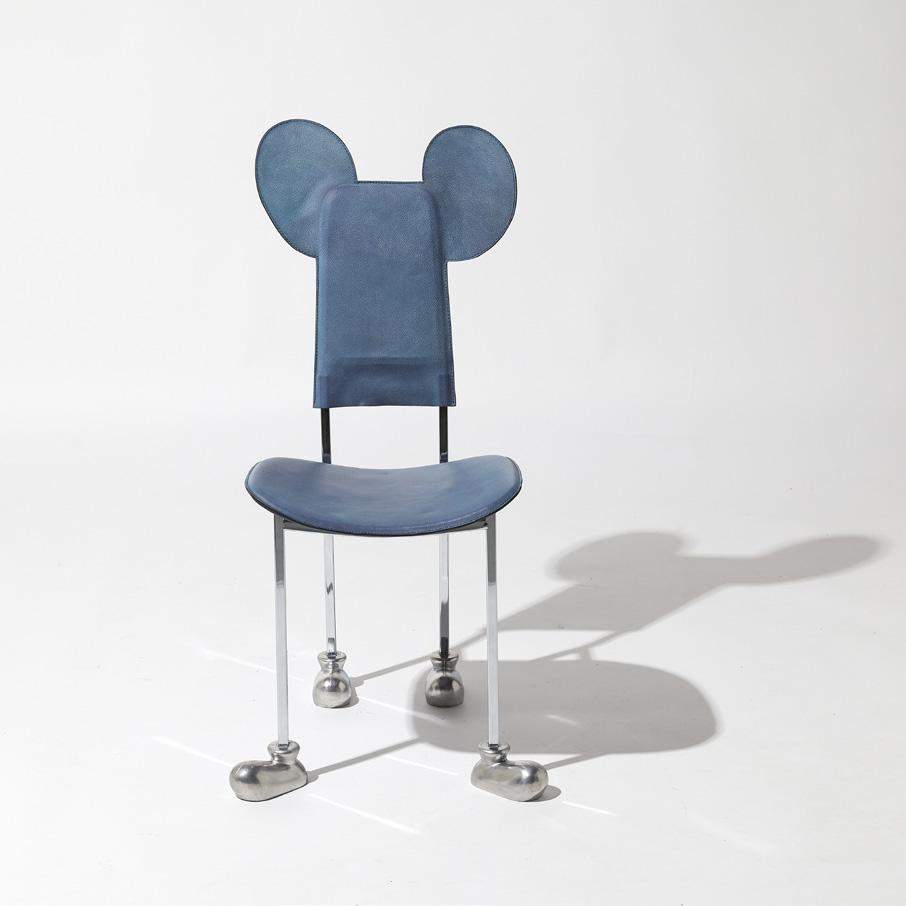
29
Javier MARISCAL
Né en 1950
Chaise modèle « Garriris » – 1987
Structure en acier chromé, pieds en fonte d’aluminium, assise et dossier en similicuir bleu
Akaba éditeur
97 × 43 × 53 cm
800 - 1 200 €
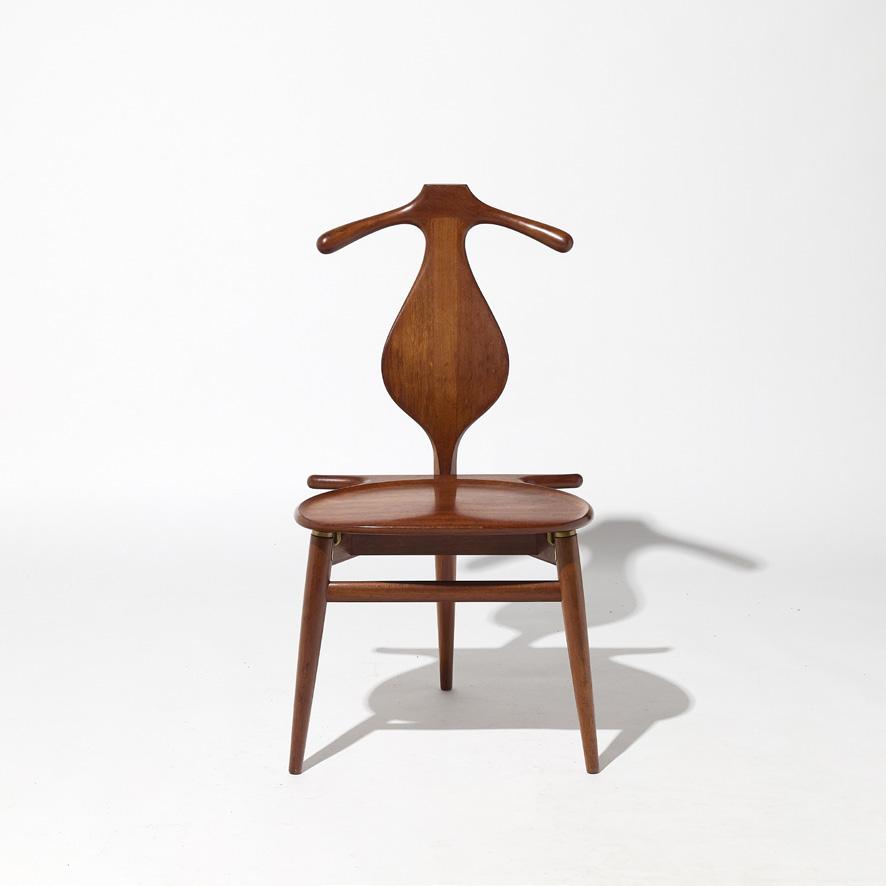
30
Hans J. WEGNER
1914-2007
Chaise « Valet Chair »
Modèle JH-540 – 1953
Structure en teck massif, laiton
Johannes Hansen Møbelsnedkeri A/S éditeur
Cachet de l’éditeur au revers de la pièce
94 × 49 × 50 cm
6 000 - 8 000 €
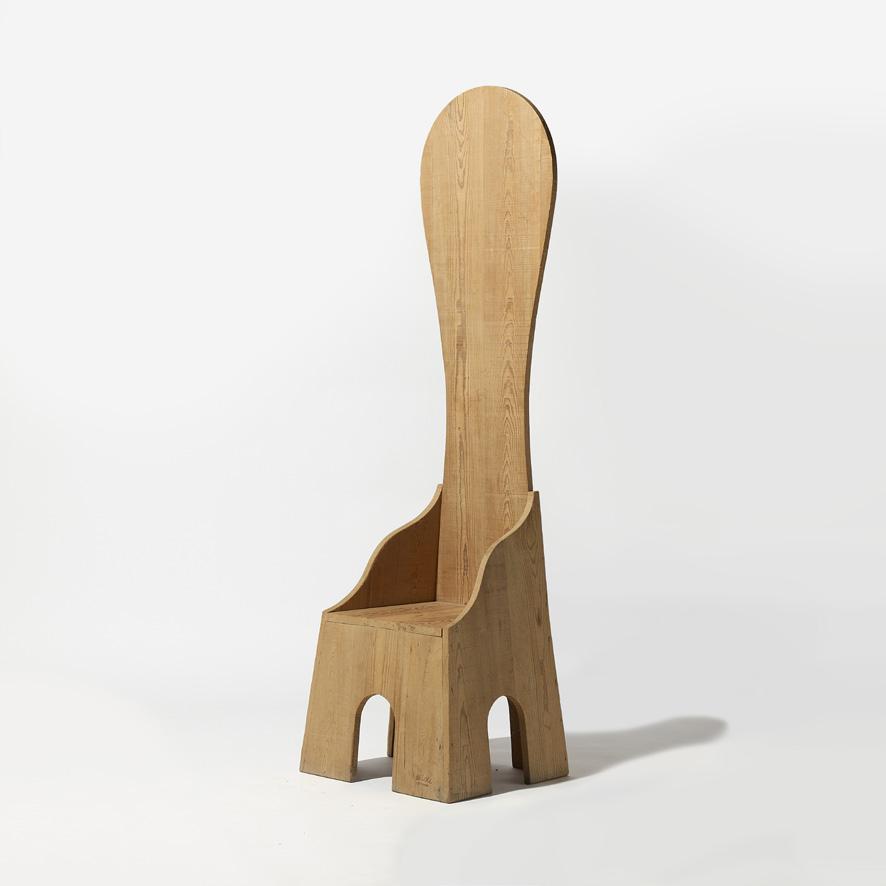
31
Mario CEROLI
Né en 1938
Chaise haute de la série
« Mobili nella Valle » – 1972
Structure en pin massif
Poltronova éditeur
Cachet-signature et cachet de l’éditeur sur le pied droit
191 × 57,5 × 49,5 cm
1 200 - 1 500 €
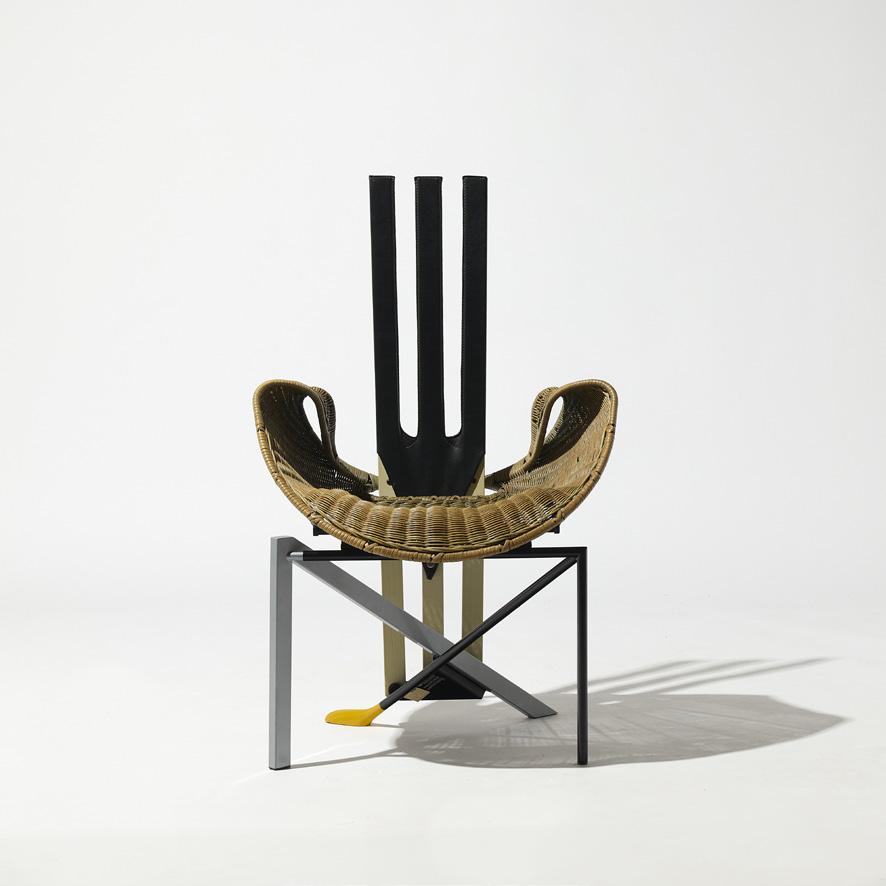
32
Paolo DEGANELLO
Né en 1940
Chaise « Documenta » – 1987
Piétement en aluminium partiellement
laqué, assise en cannage d’osier teinté vert, dossier en plastique partiellement recouvert de cuir
Vitra éditeur
Étiquette de l’éditeur au revers
103,5 × 64 × 54 cm
800 - 1 200 €
Paul Ludwig TROOST 1878-1934
Fauteuil – 1924
Structure en noyer massif, placage de loupe de noyer, hêtre et alisier
83 × 64,5 × 63,5 cm
1 200 - 1 500 €
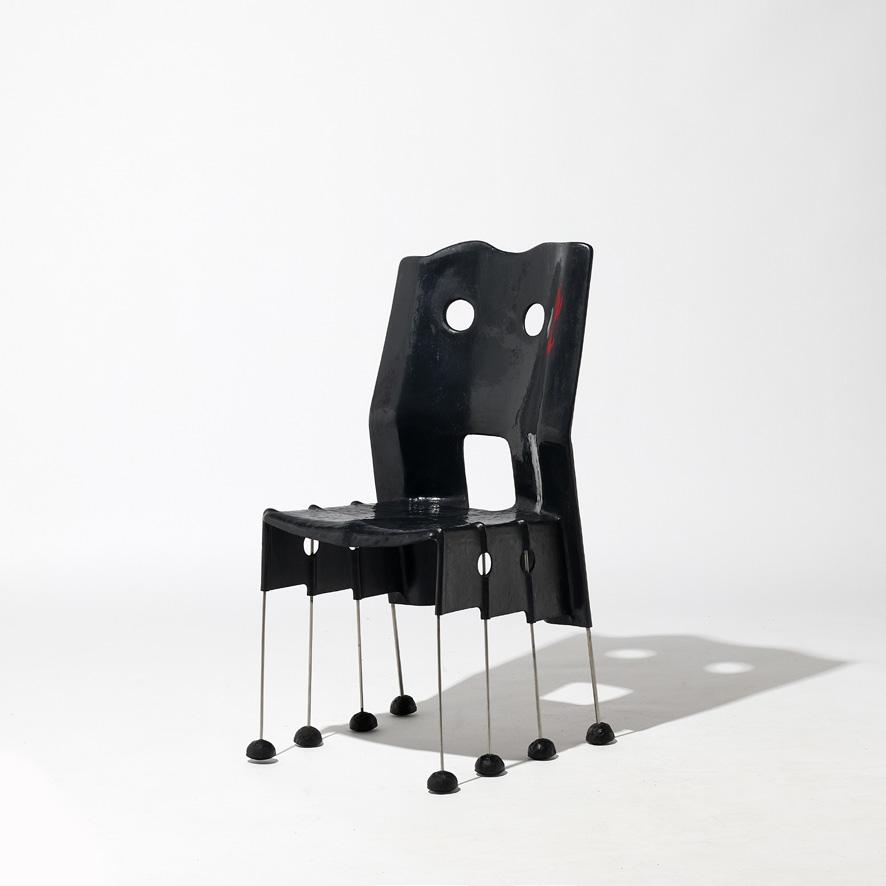
34
Gaetano PESCE 1939-2024
Chaise « Green Street » – circa 1984
Structure en résine polyester et fibre de verre laqué noir et rouge, tige d’acier et patins en résine
Vitra éditeur
96 × 48 × 53,5 cm
3 000 - 5 000 €
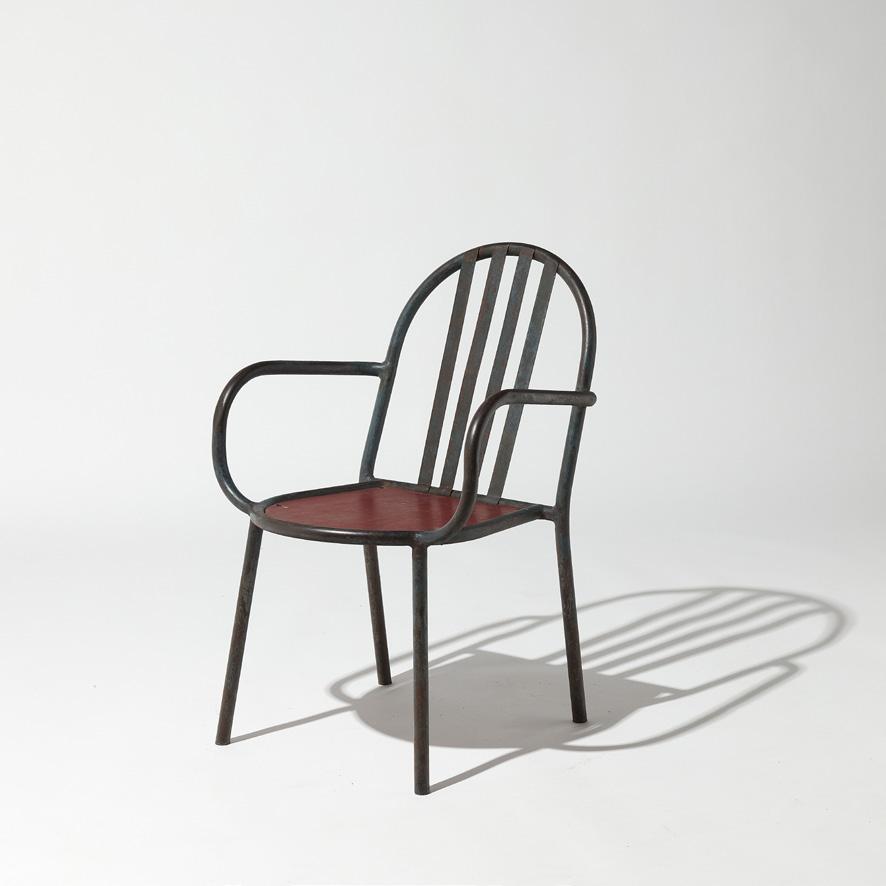
35
Robert MALLET-STEVENS 1886-1945
Chaise en acier
Modèle créé circa 1928
Structure en acier tubulaire, assise en contreplaqué
Tubor éditeur
82 × 56 × 64 cm
1 200 - 1 500 €
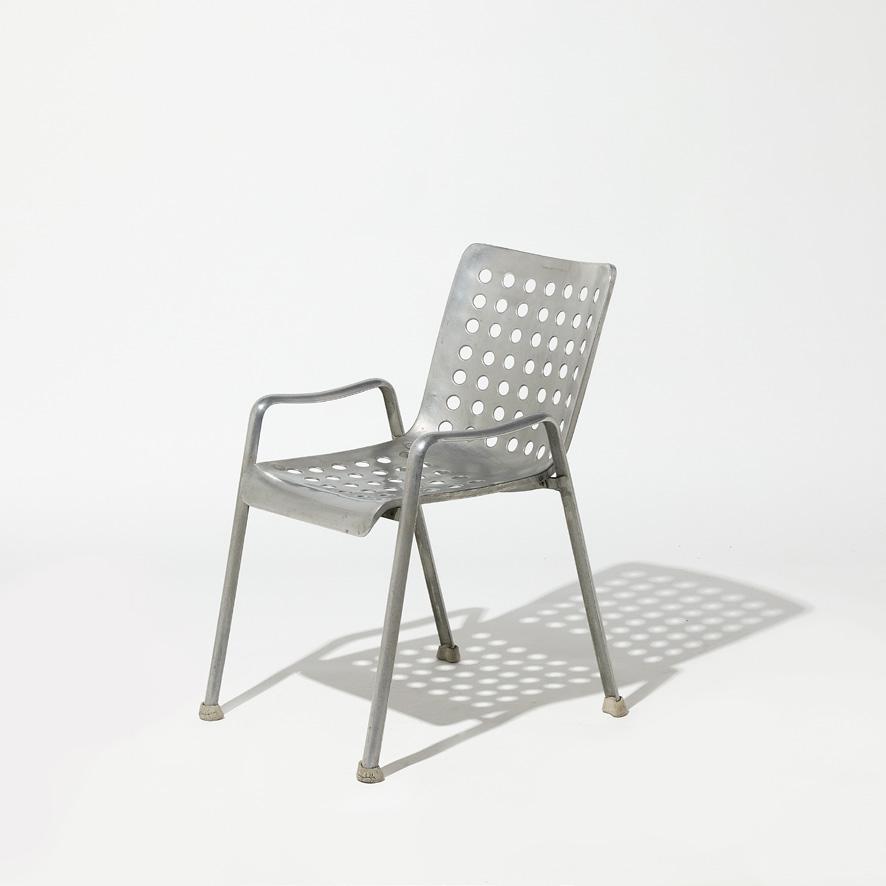
Hans CORAY
1906-1991
Chaise « Landi » – 1938
Structure en aluminium, assise et dossier en aluminium plié et perforé, patins en plastique
Metallwarenfabrik Waedenswil éditeur
Marqué «METALLWARENFABRIK WAEDENSWIL» sur le dossier
77 × 49 × 63,5 cm
1 200 - 1 500 €
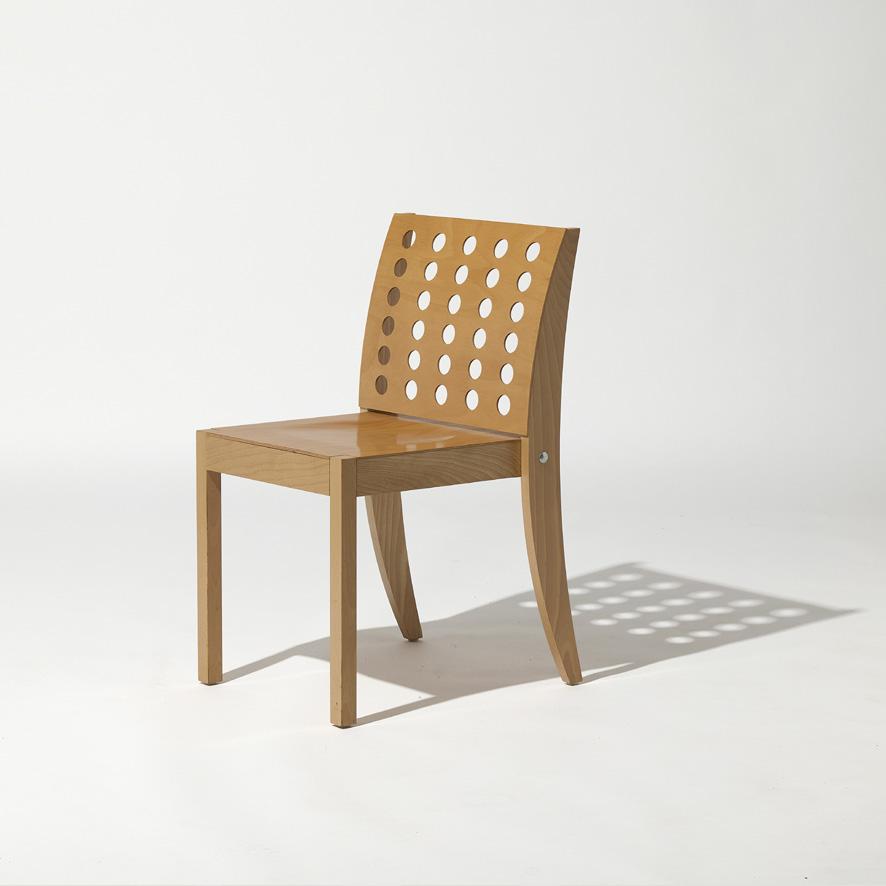
Né en 1959
Chaise mod. S 471 – circa 1992
Structure en hêtre massif, assise et dossier en hêtre contreplaqué
Thonet éditeur
Étiquette et cachet de l’éditeur «THONET 94» au revers
81 × 47 × 51 cm
500 - 700 €
38
Otto WAGNER
1841-1918
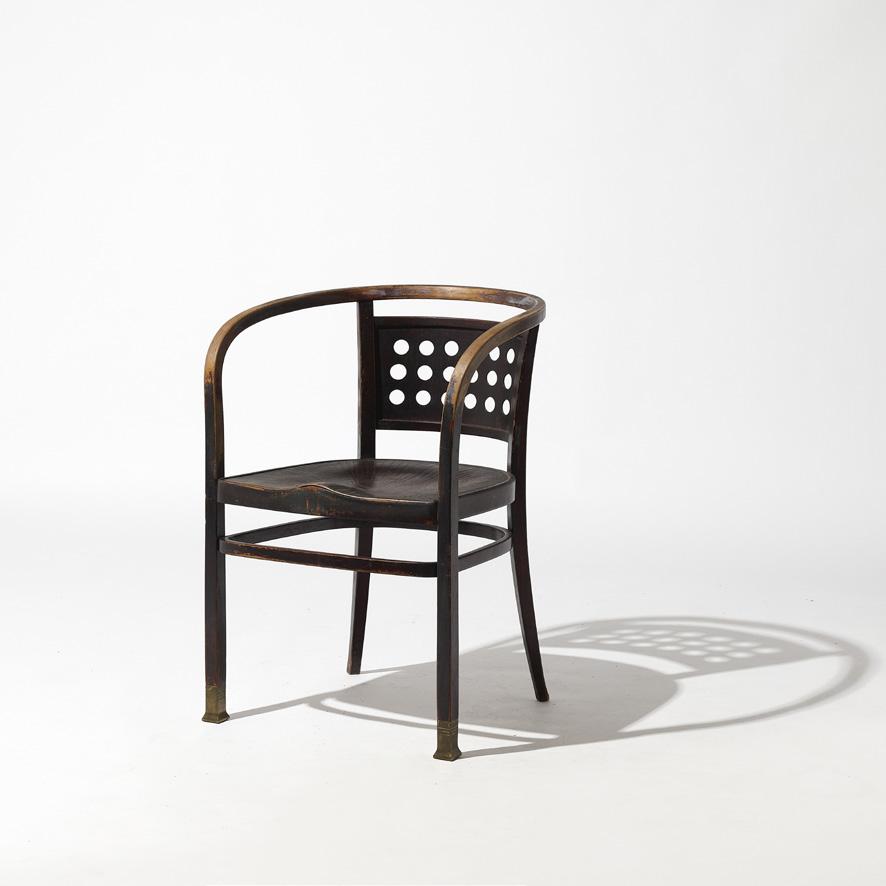
Fauteuil No. 721 – circa 1905
Structure en hêtre courbé et teinté, assise en hêtre moulé et teinté, sabots en laiton
Jacob & Josef Kohn éditeur
Cachet de l’éditeur au revers
80 × 57,5 × 56 cm
800 - 1 200 €
40
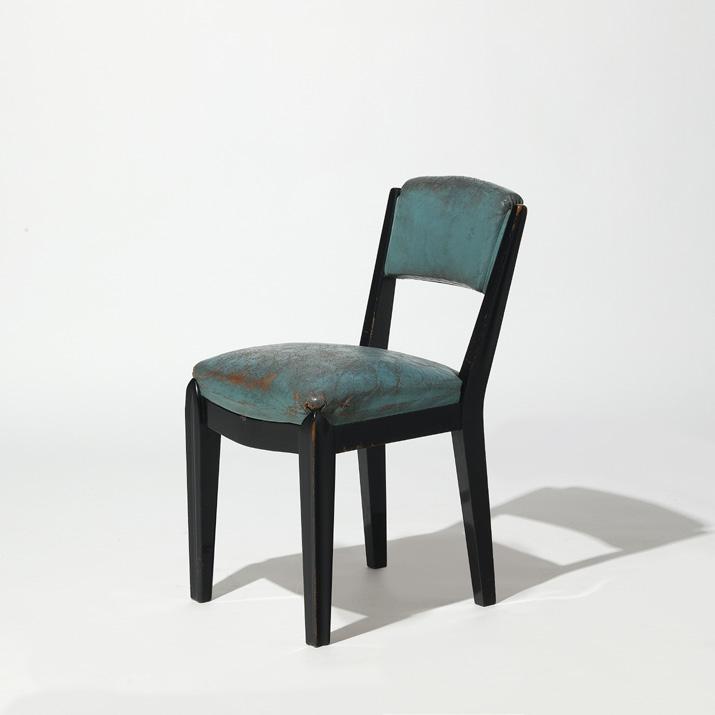
Chaise – circa 1930
Structure en hêtre massif laqué, assise et dossier recouverts de cuir bleu
79 × 40 × 51 cm
400 - 600 €
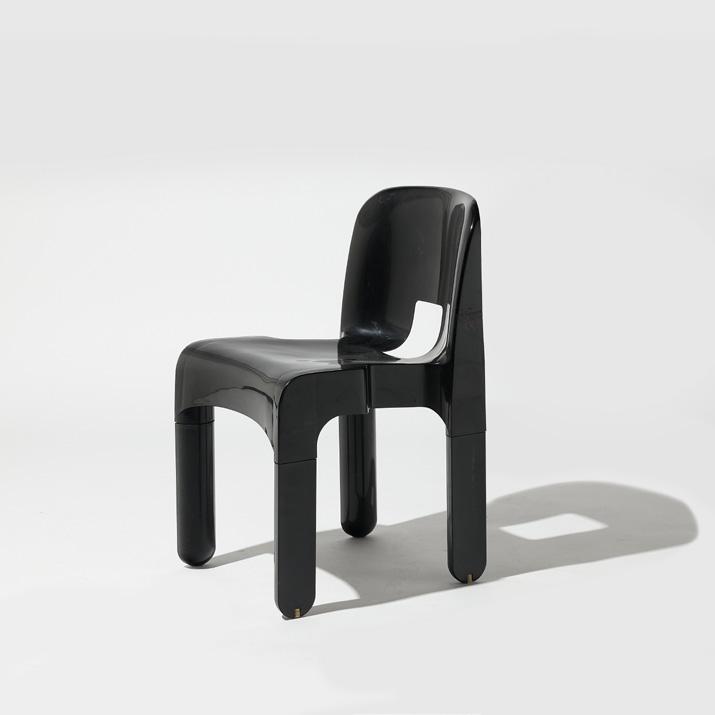
Joe COLOMBO
1930-1971
Chaise « Universale » mod. 4867
Modèle créé en 1965
Structure en Polypropylène, patins en caoutchouc
Kartell éditeur
Cachet de l’éditeur au revers
71 × 42,5 × 50 cm
150 - 200 €
42
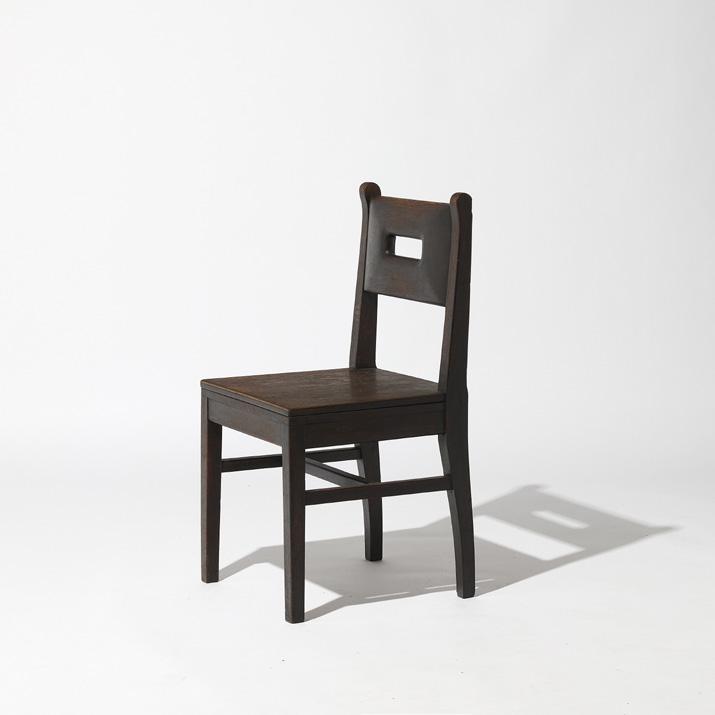
TRAVAIL ANONYME
Chaise – circa 1920
Structure en chêne, assise en contreplaqué de chêne
91 × 44 × 47 cm
600 - 800 €
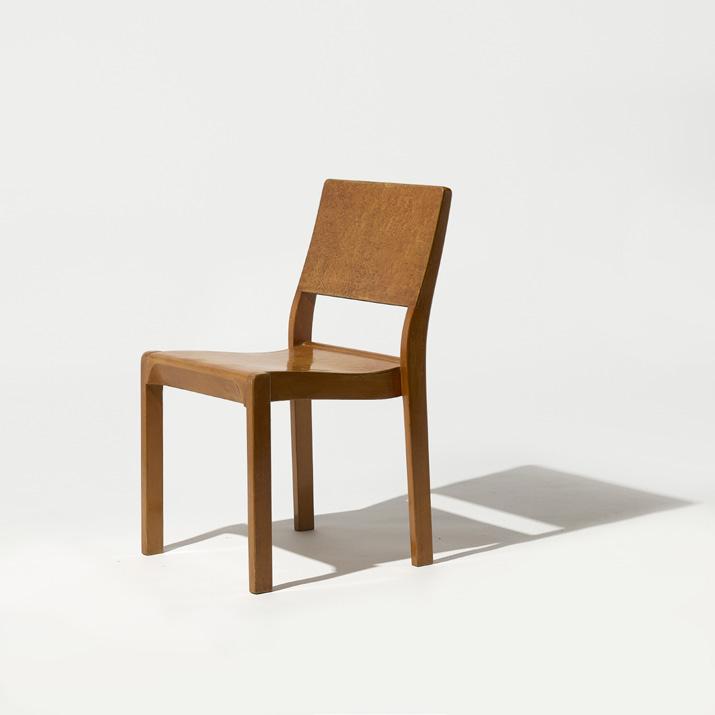
43
Alvar AALTO
1898-1976
Chaise modèle 611 – 1929
Structure en contreplaqué de bouleau et bouleau madré
Finmar éditeur
Plaque de l’éditeur et tampon sous l’assise
79 × 49 × 50 cm
300 - 500 €
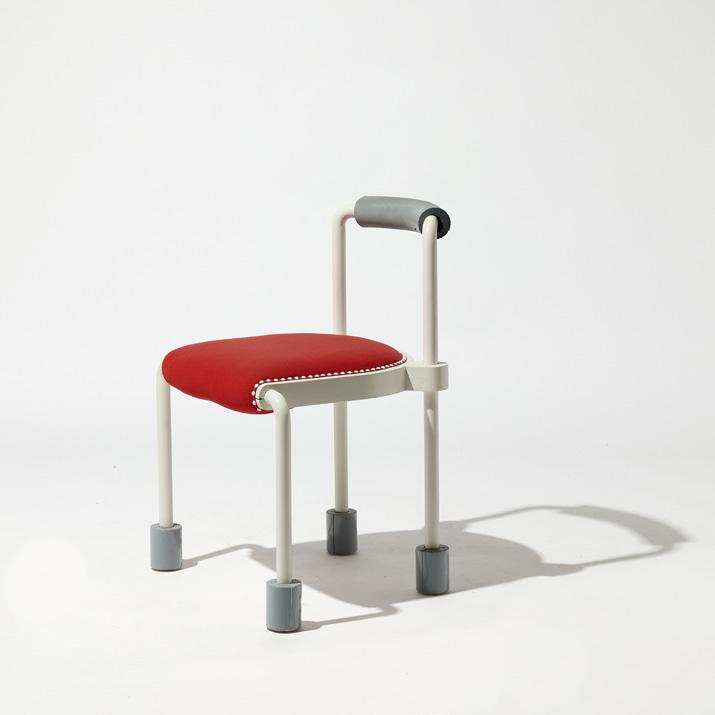
41
Thomas BLEY
Né en 1954
Chaise – 1982
Structure en tube d’acier laqué blanc, pieds en hêtre laqué gris, assise recouverte de velours rouge, dossier en mousse
Titrée «Der Zweite aus der ersten serie» et signée sous l’assise par le designer
79 × 56 × 54 cm
800 - 1 200 €
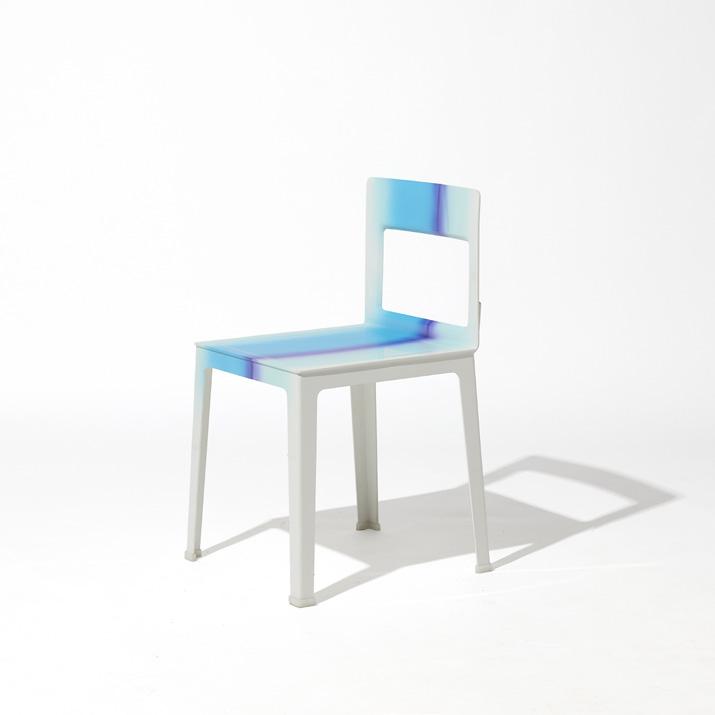
44
Ronan et Erwan BOUROULLEC
Nés en 1971 et 1976
Chaise « Hole » – 2000
Structure en aluminium moulé laqué Cappellini éditeur
Étiquette de l’éditeur sous la base
77,5 × 42 × 49 cm
800 - 1 200 €
45
Marcel BREUER 1902-1981
Chaise Stylclair modèle No. 301-18 1932
Structure en fonte d’aluminium (duralium), assise et dossier en contreplaqué de hêtre laqué noir
Stylclair éditeur
Étiquette de l’éditeur sur la traverse et marqué 301 - 18
76 × 41 × 43 cm
3 000 - 5 000 €
1886-1969
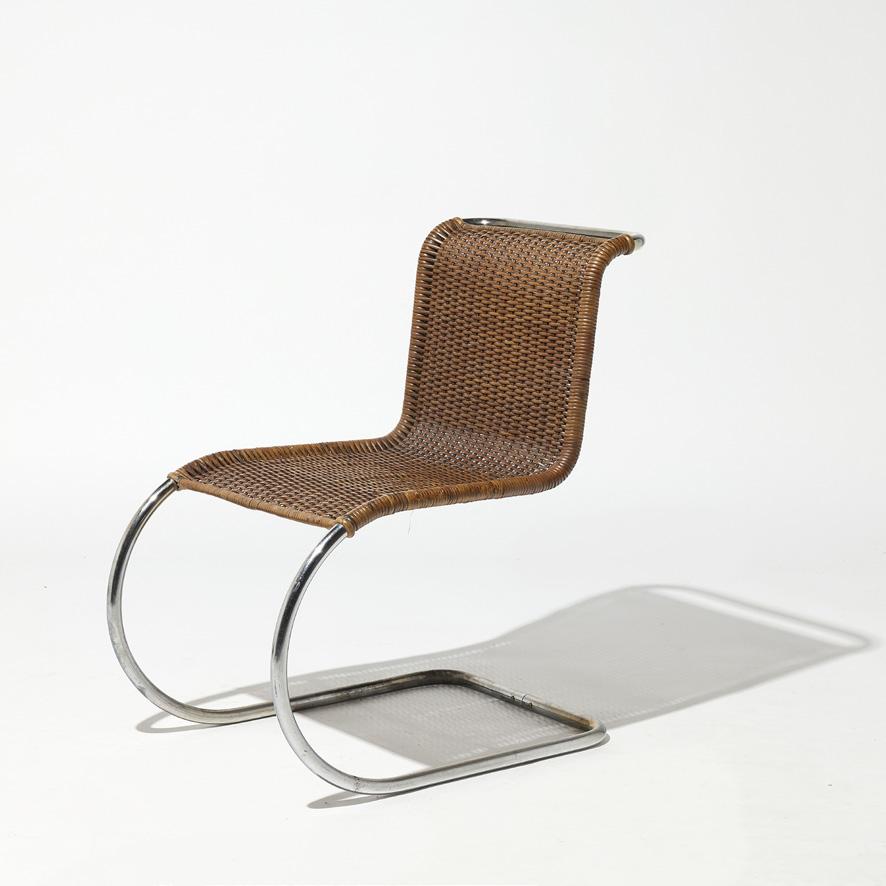
Chaise mod. MR 10/3 – circa 1927
Structure en acier tubulaire chromé, assise et dossier en cannage de rotin Metallgewerbe Josef Müller Editeur
79 × 45 × 75 cm
4 000 - 6 000 €
47
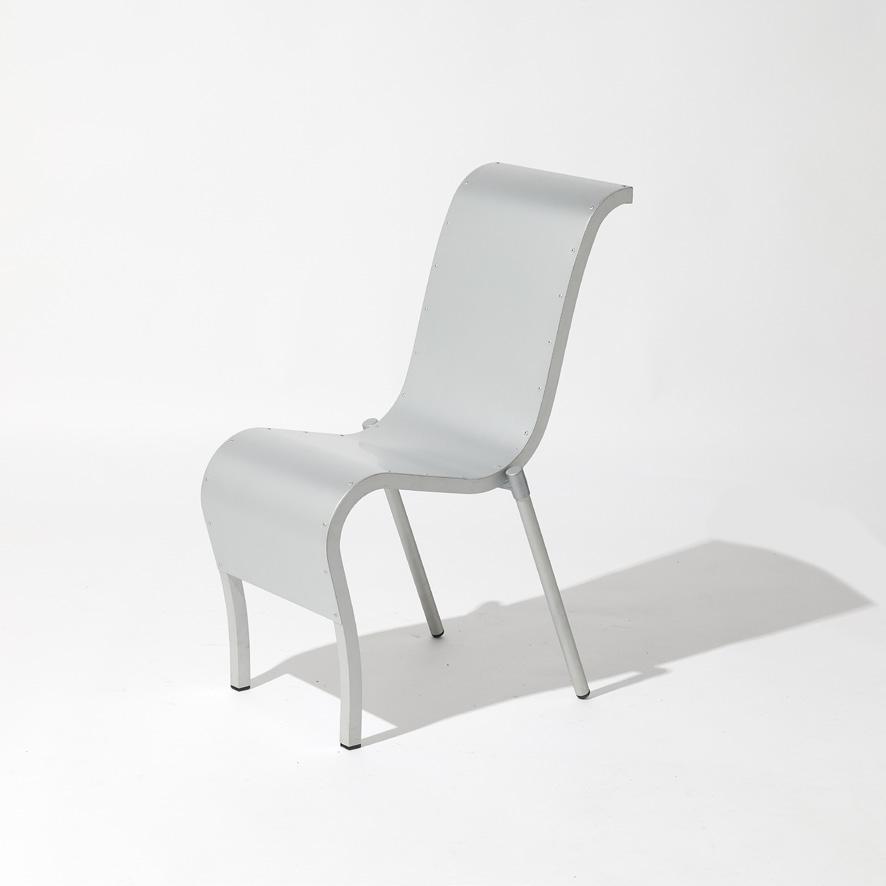
Philippe STARCK Né en 1949
Chaise Romantica – 1987
Structure en aluminium, assise et dossier composés d’une feuille d’aluminium riveté
Driade éditeur
89 × 36 × 63 cm
800 - 1 200 €
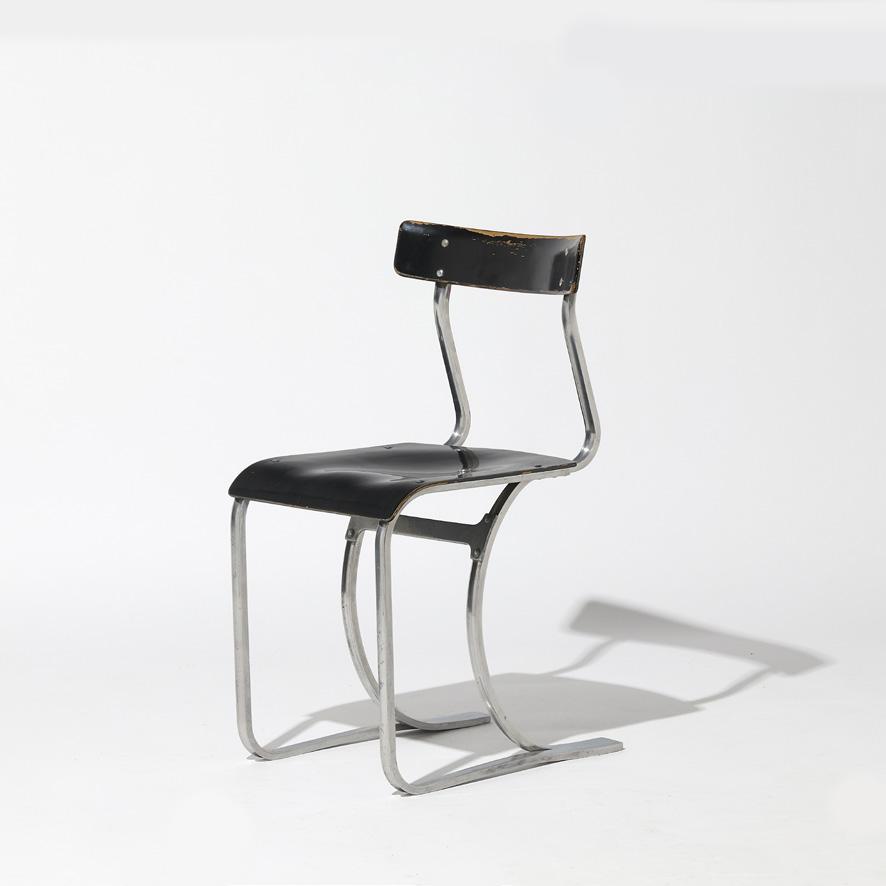
48
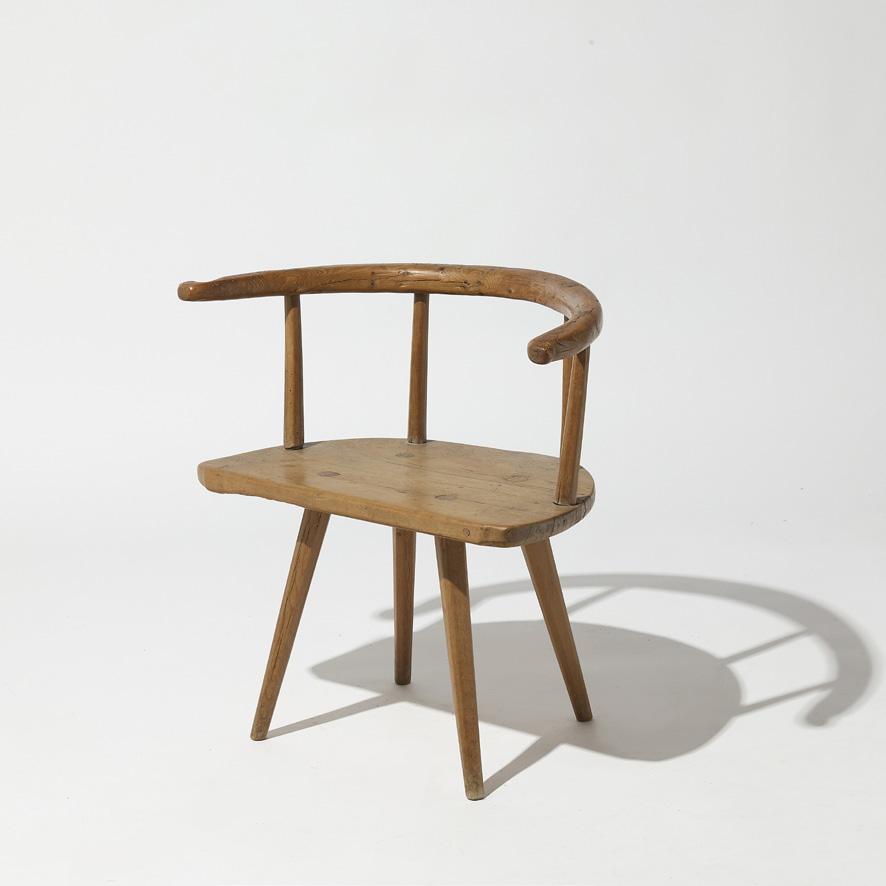
TRAVAIL ANONYME
Chaise – circa 1850
Structure en hêtre massif, placage de pin sylvestre sur le dossier
63,5 × 67,5 × 38 cm
500 - 700 €
49
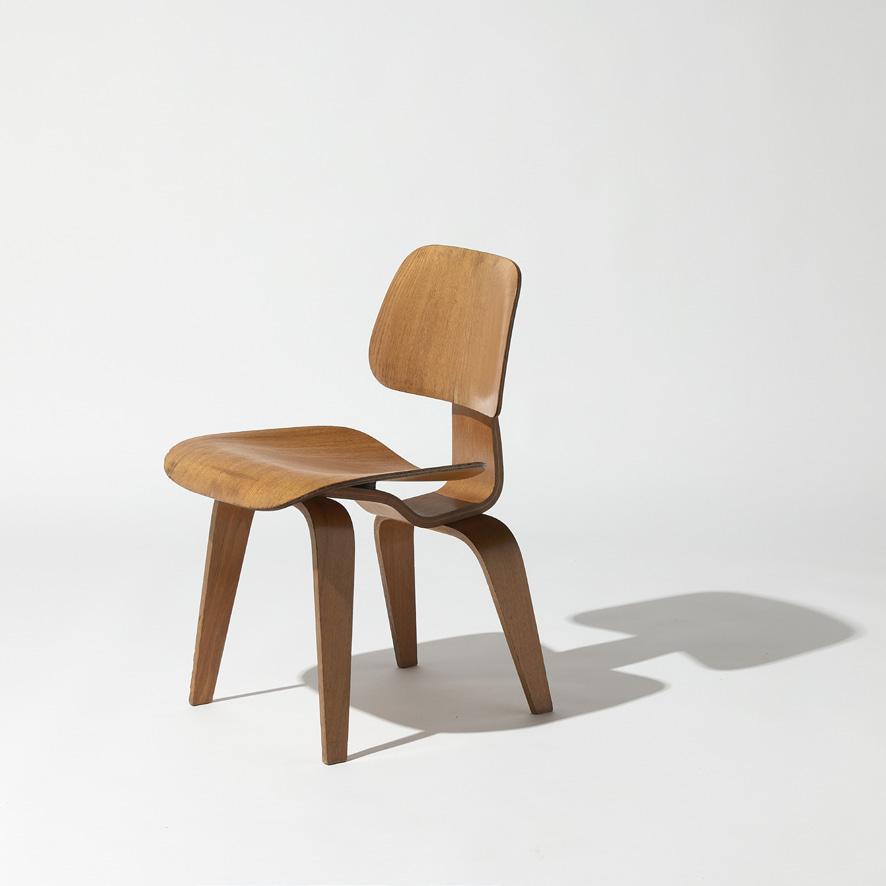
Charles & Ray EAMES
1907-1978 & 1912-1988
Chaise « DCW » – modèle créé en 1945, le nôtre circa 1946
Structure en frêne contreplaqué moulé, caoutchouc
Evans éditeur
Étiquette de l’éditeur au revers
74 × 49 × 54 cm
800 - 1 200 €
50
Marco ZANUSO 1916-2001
Chaise « Abbraccio » – 1989
Structure en hêtre massif
Néotù éditeur
69 × 55 × 47 cm
1 000 - 1 500 €
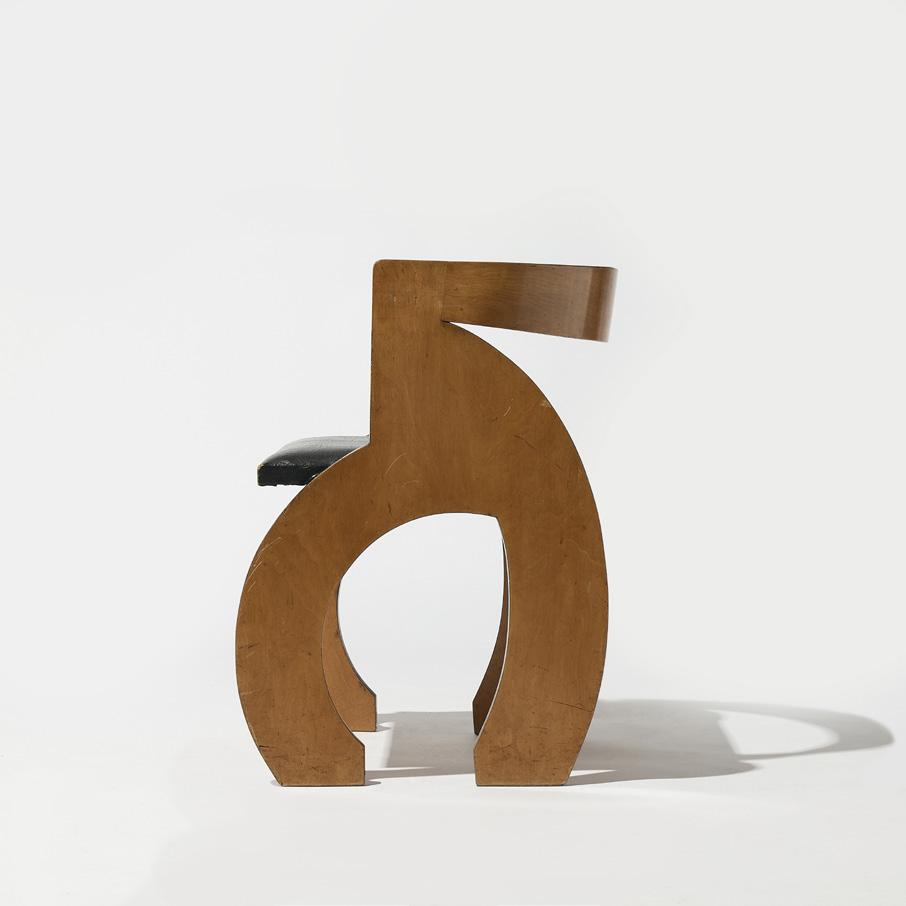
Grete JALK
1920-2006
Chauffeuse dite « GJ chair » modèle
300/1 – 1963
Structure en hêtre moulé, contreplaqué de teck, laiton et acier
Poul Jeppesen Møbelfabrik éditeur
74 × 62 × 67 cm
15 000 - 25 000 €
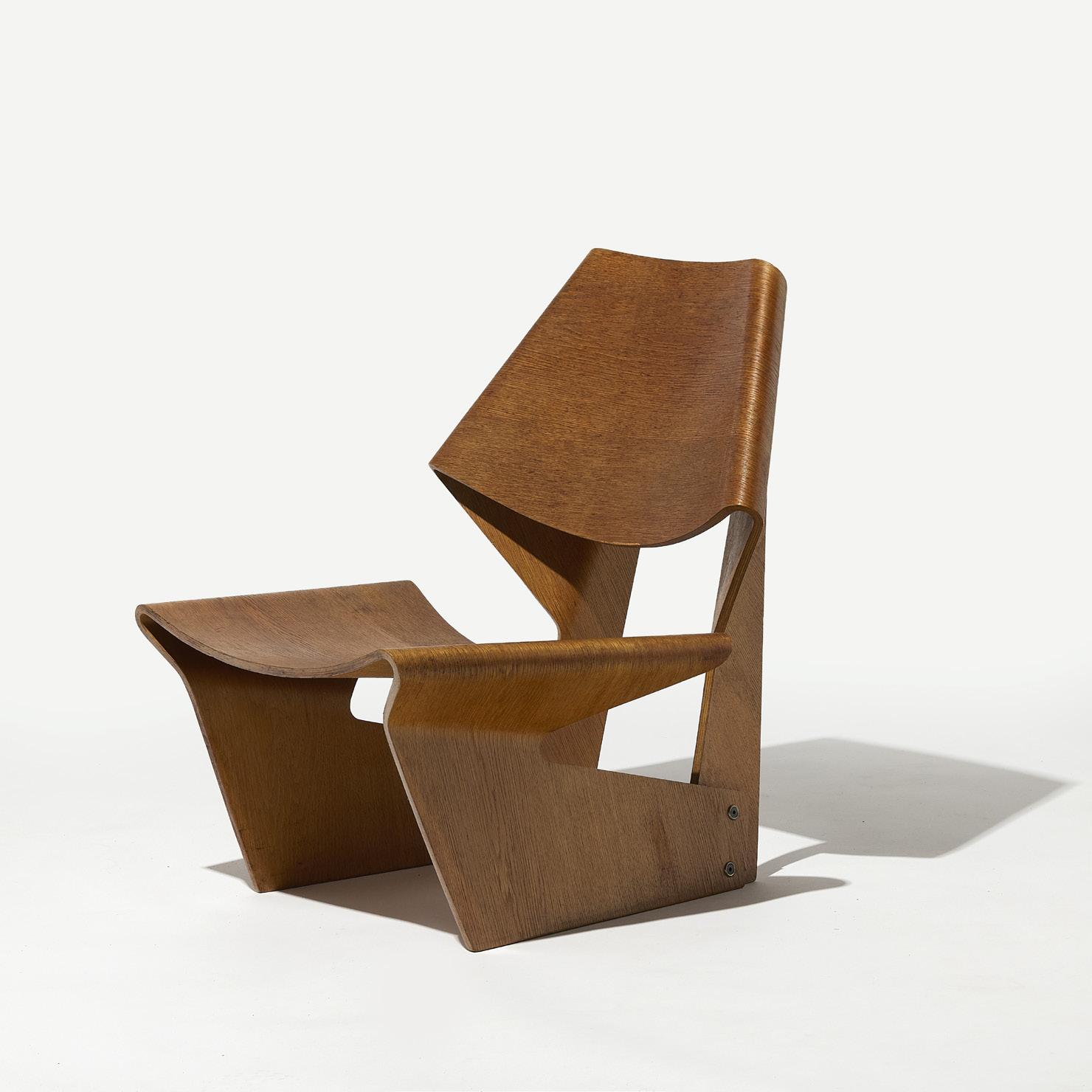
Grete Jalk naît en 1920 à Copenhague, au Danemark. Elle se forme d’abord à l’École des arts et métiers pour femmes, avant d’intégrer l’Académie royale des beaux-arts de Copenhague, où elle étudie le design de mobilier sous la direction du célèbre designer Kaare Klint.
L’un de ses premiers projets en tant que designer indépendante a été la création en 1947 d’un ensemble de meubles pour un « repaire de femmes indépendantes ».
Après plusieurs réalisations avec l’éditeur Poul Jeppensen, Grete Jalk présente en 1963 cette chaise constituée de deux morceaux assemblés obtenus au moyen d’un complexe processus de formage du contreplaqué. Ce superbe exemplaire provenant de la famille Jalk est un témoignage historique du design scandinave et du travail du contreplaqué au service d’un répertoire formel résolument moderne.
Grete Jalk was born in 1920 in Copenhagen, Denmark. She first trained at the School of Arts and Crafts for Women, before joining the Royal Academy of Fine Arts in Copenhagen, where she studied furniture design under the guidance of renowned designer Kaare Klint.
One of her first projects as an independent designer was the creation in 1947 of a set of furniture for a “haven for independent women.”
After several projects with the publisher Poul Jeppensen, Grete Jalk presented this chair in 1963, consisting of two pieces assembled using a complex plywood forming process. This superb example from the Jalk family is a historical testament to Scandinavian design and the use of plywood in the service of a resolutely modern formal repertoire.
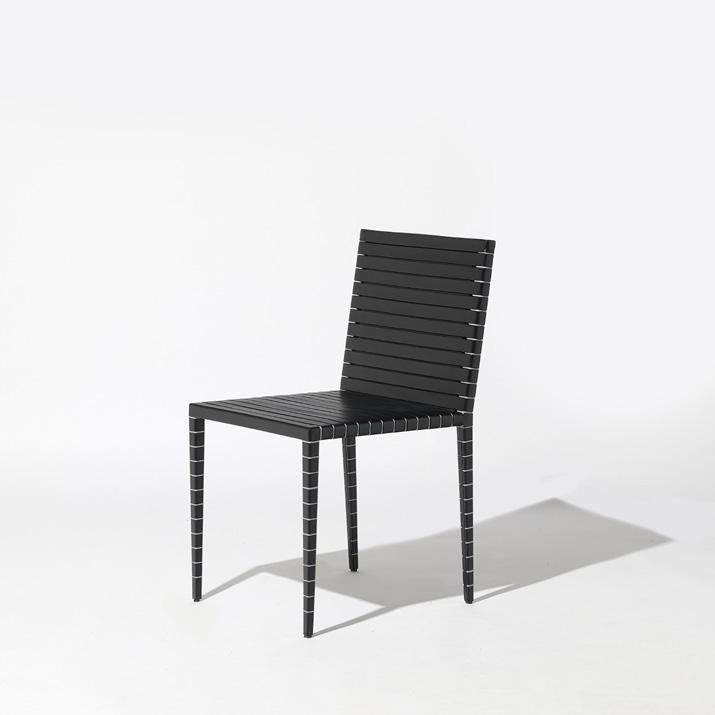
52
Jean NOUVEL
Né en 1945
Chaise « MM » – modèle créé en 2003
Structure en fonte d’aluminium, garniture en lanières de cuir
Matteo Grassi éditeur
Étiquette de l’éditeur au revers
83 × 46 × 52 cm
600 - 800 €
55
George SOWDEN
Né en 1942
Chaise « Liverpool » – 1986
Structure en frêne massif teinté et stratifié
Memphis éditeur
90 × 45 × 49,5 cm
800 - 1 200 €
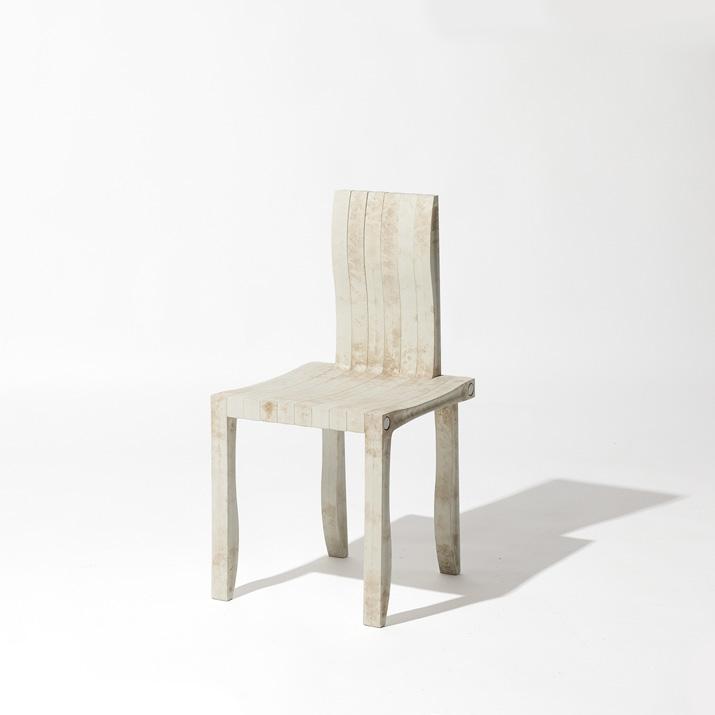
53
Né en 1957
Chaise « 10 Unit System » – 2009
Structure en composite bois plastique teinté blanc, tiges filetés
Artek éditeur
Marque de l’éditeur sur les capuchons
83 × 40 × 44 cm
500 - 700 €
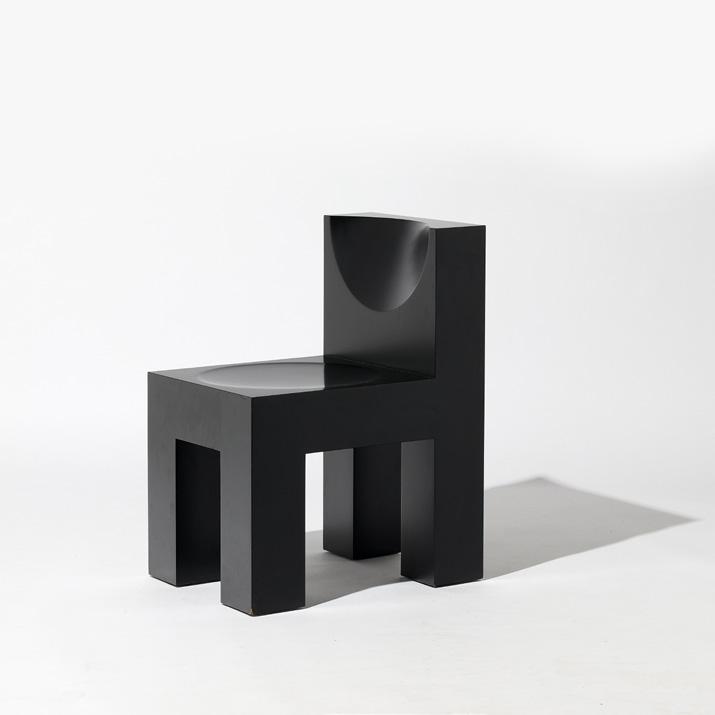
56
Oswald Matheus UNGERS
1926-2007
Chaise « X1 » – 1989
Structure en MDF recouverte de stratifié noir, une roulette sous chaque pied
Draenert éditeur
76 × 44 × 57 cm
1 500 - 1 800 €
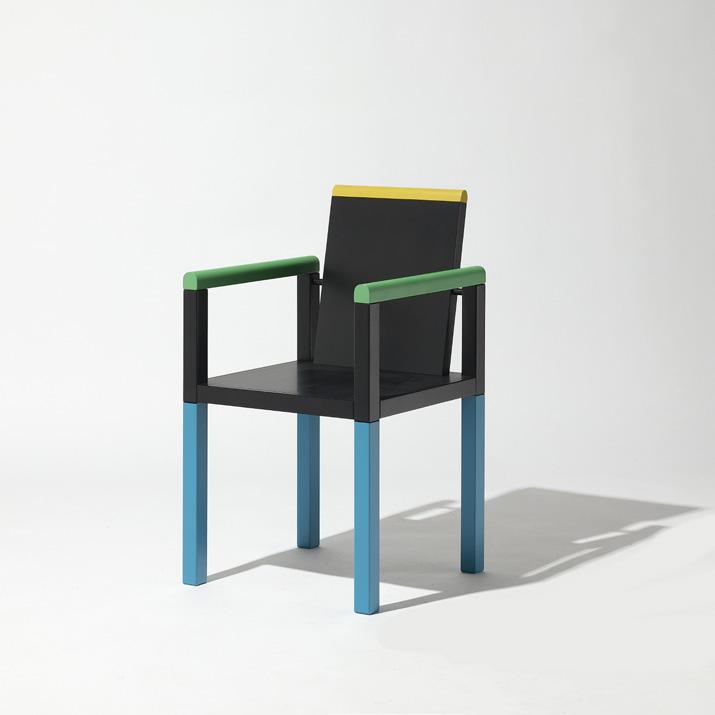
54
George SOWDEN
Né en 1942
Fauteuil « Palace » – 1983
Pin massif laqué
Memphis éditeur
87 × 49 × 46,5 cm
600 - 800 €
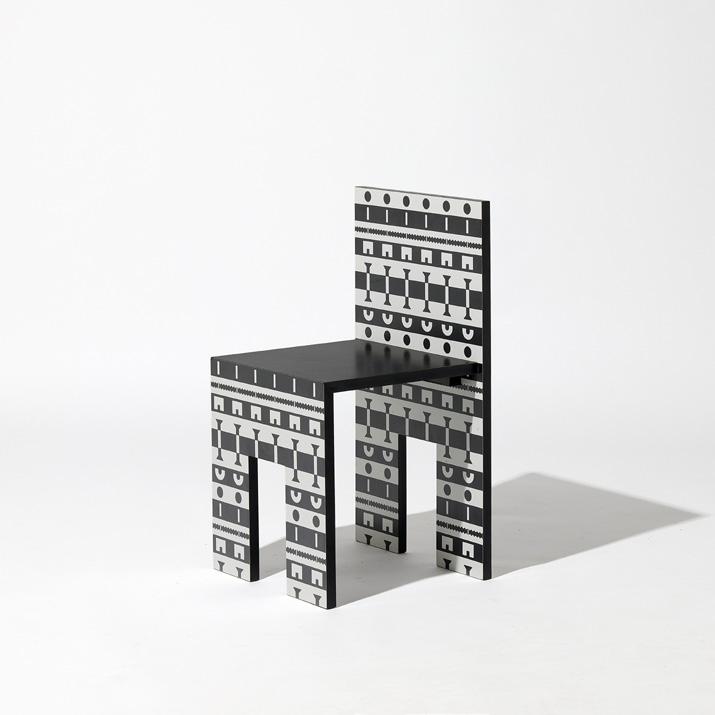
57
Alessandro MENDINI
1931-2019
Chaise « Ollo » – 1988
Structure recouverte de stratifié imprimé à décor noir et blanc
Memphis éditeur
74 × 41 × 38,5 cm
1 000 - 1 500 €
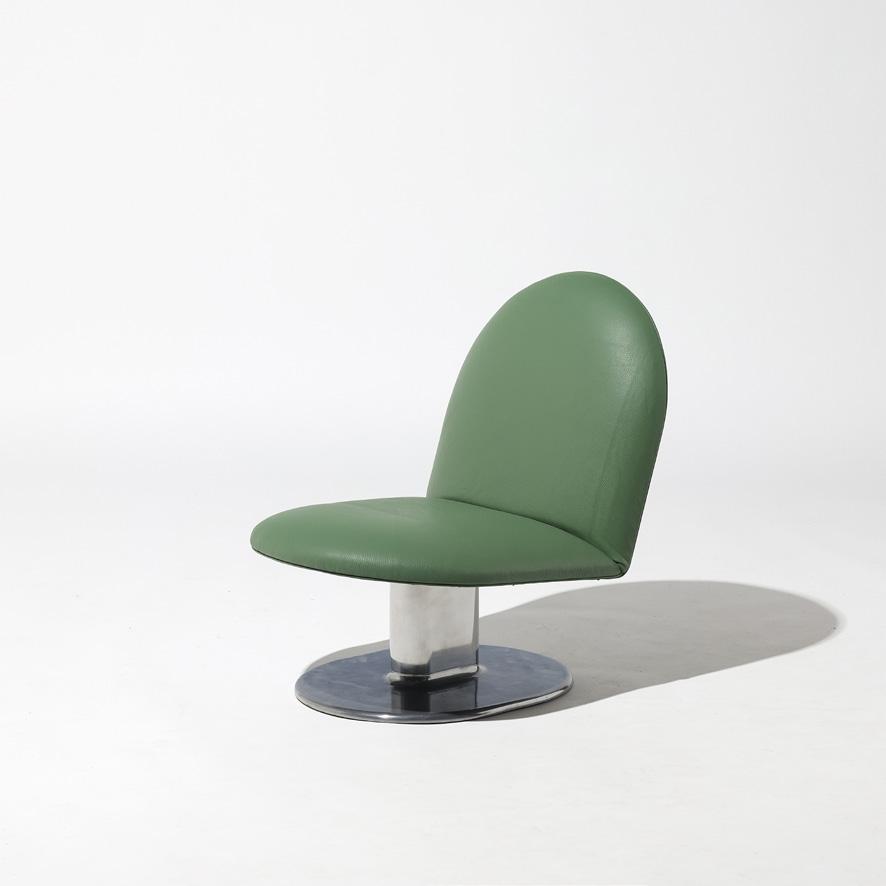
58
Ettore SOTTSASS
1917-2007
Chauffeuse modèle « Harlow » – 1971
Pied en fonte d’aluminium, assise et dossier recouverts de similicuir vert Poltronova éditeur
Cachet de l’éditeur sous le piètement
63 × 46,5 × 64 cm
1 500 - 1 800 €
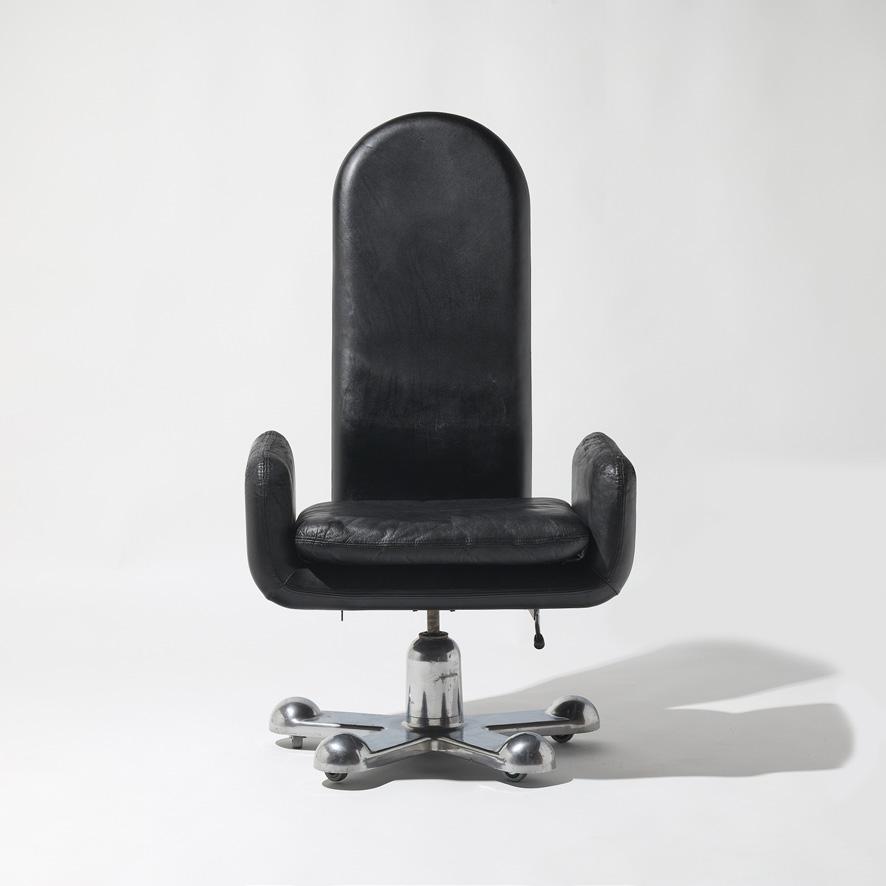
59
Perry KING & Santiago MIRANDA
1938-2020 & Né en 1947
Fauteuil direction – circa 1970
Piètement en acier chromé, assise et dossier recouverts de simili cuir noir
Planula éditeur
Hauteur réglable
123 × 71 × 64 cm
1 200 - 1 500 €
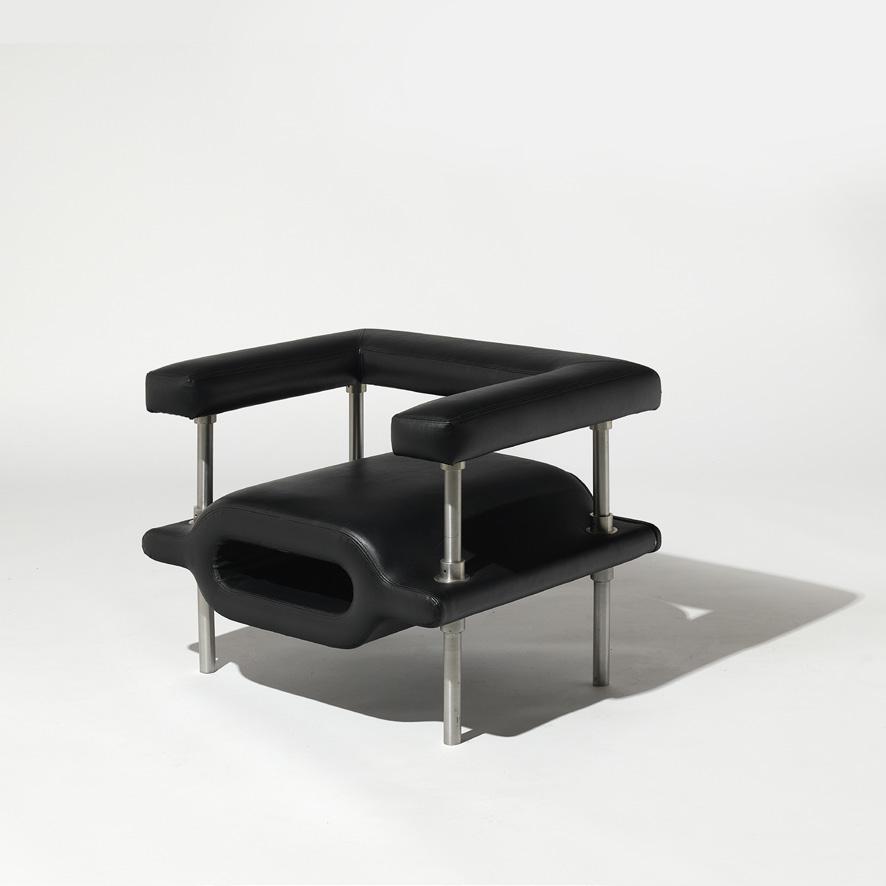
60
Michael YOUNG Né en 1966
Fauteuil « Magazine » – 1994
Pieds en aluminium, assise et dossier recouverts de similicuir noir
E&Y éditeur
66 × 81 × 64 cm
1 800 - 2 500 €
61
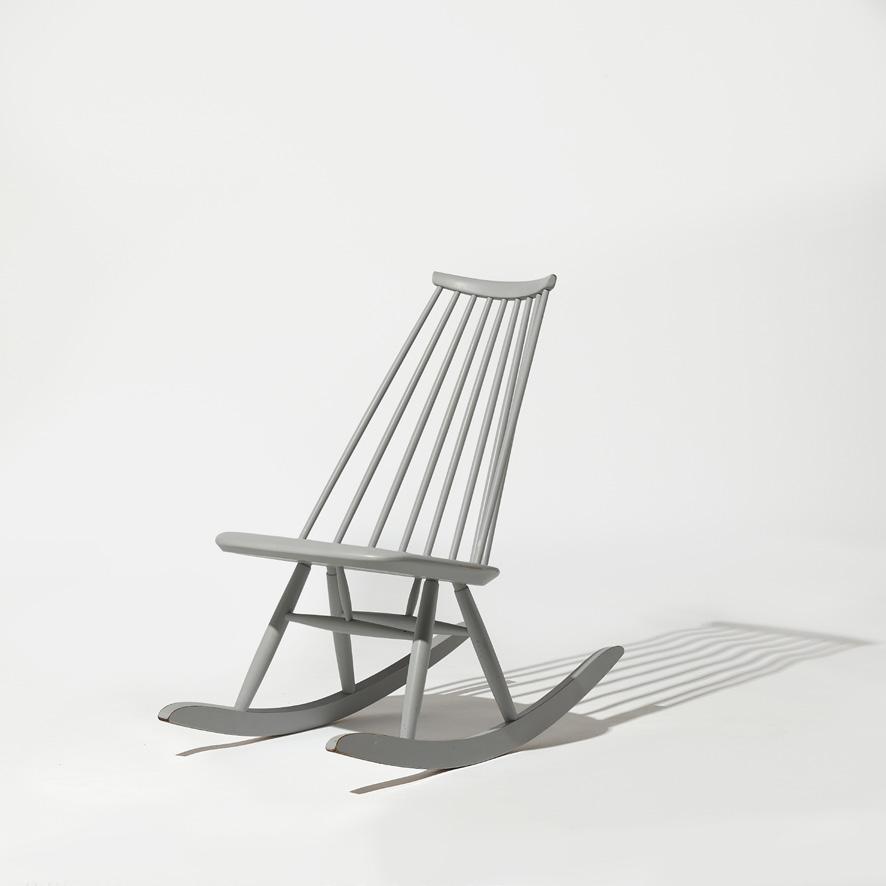
Ilmari TAPIOVAARA 1914-1999
Fauteuil à bascule modèle 2505 dit « Mademoiselle » – modèle créé en 1956
Structure en hêtre laqué gris
Asko éditeur
90 × 49,5 × 90 cm
500 - 700 €
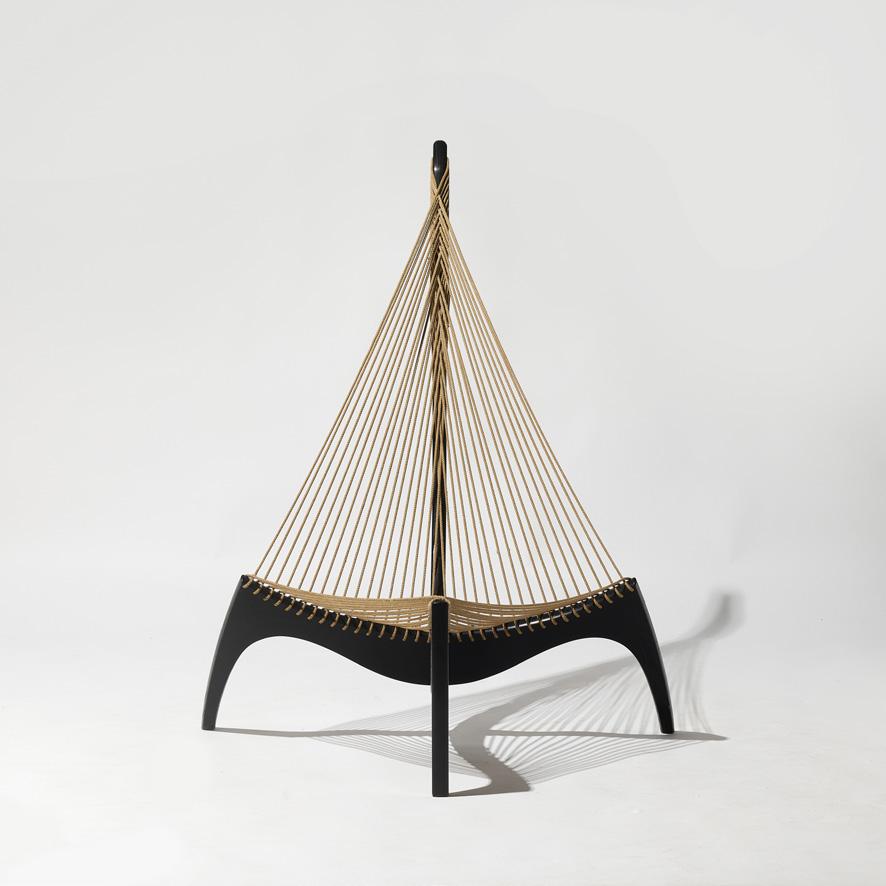
62
Jørgen HØVELSKOV 1935-2005
Fauteuil « Harp Chair » – 1968
Structure en frêne teinté, assise et dossier en corde de jute Christensen & Larsen Moebelhandverk éditeur
132 × 105 × 107 cm
1 500 - 2 000 €
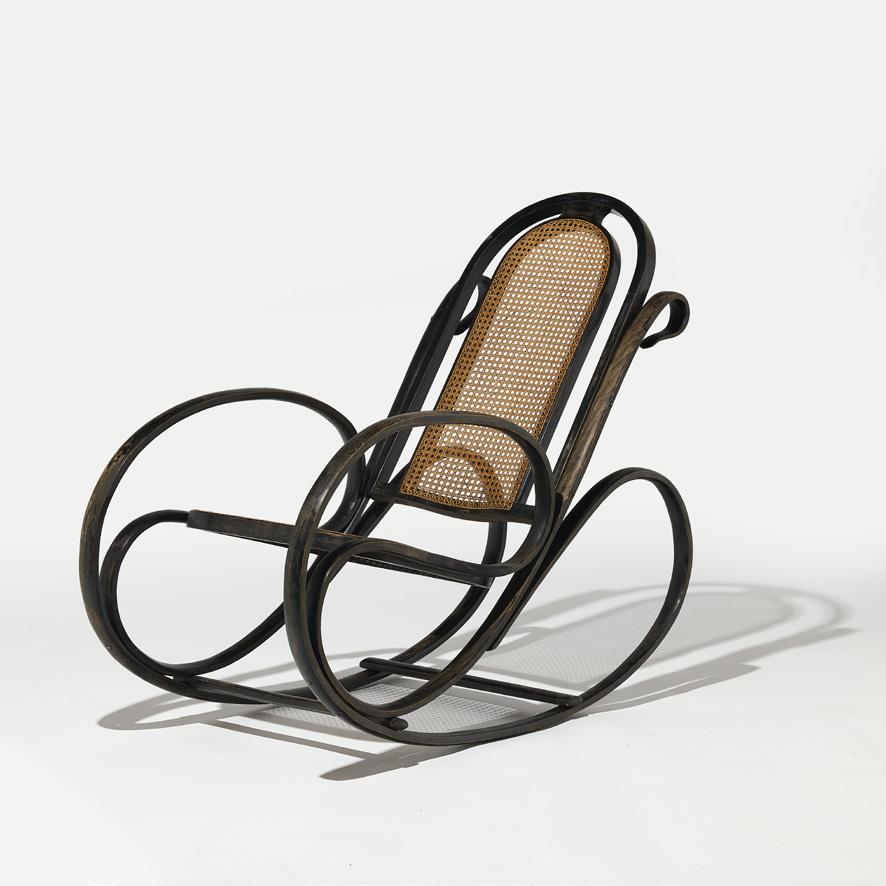
63
Antonio VOLPE
Chaise longue mod. 269 « Dondolo » 1939
Hêtre courbé et teinté, assise et dossier cannés
Sautto et Liberale éditeur
100 × 54 × 116 cm
1 200 - 1 500 €
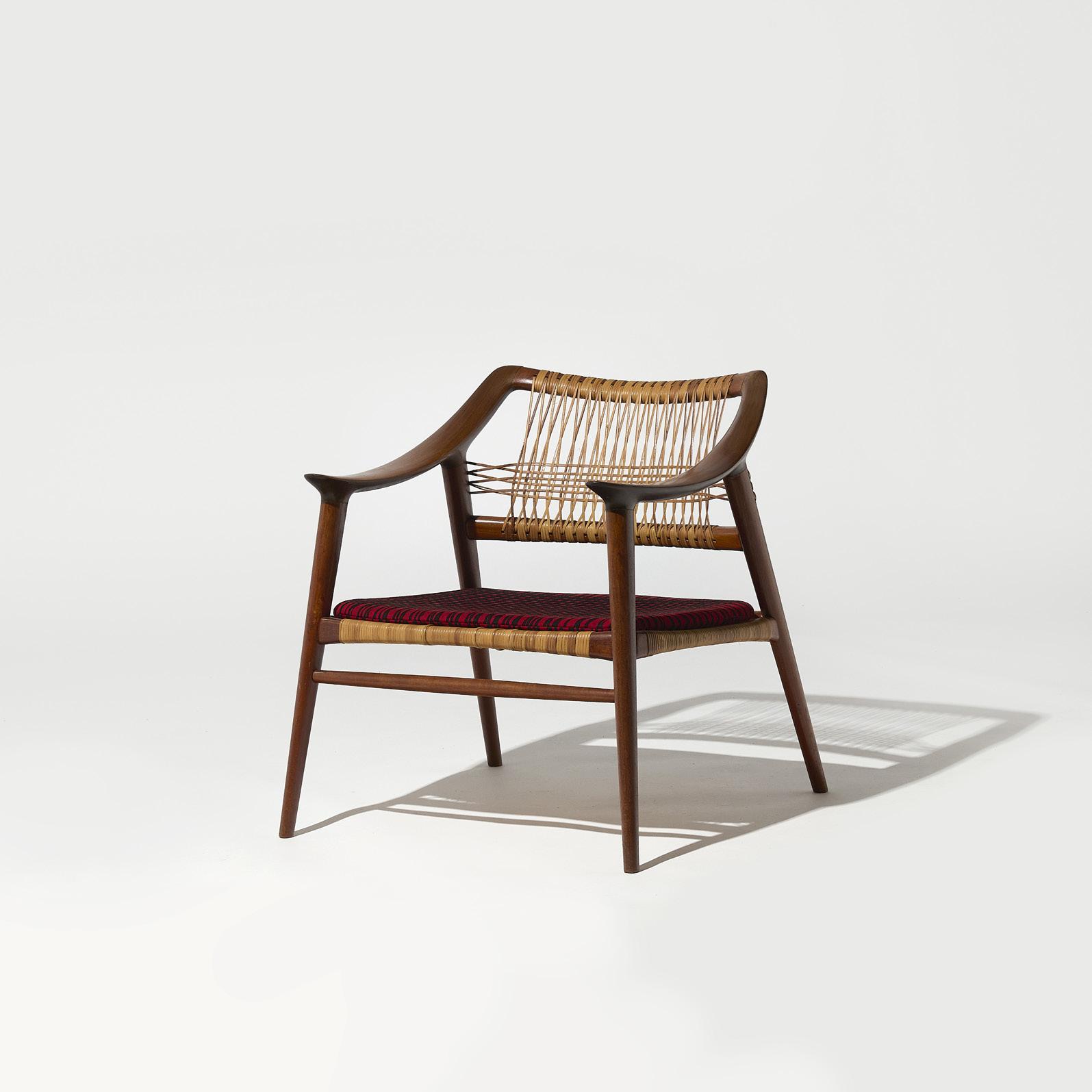
1916-1995 & 1913-2006
Fauteuil modèle « Bambi » – 1954
Structure en teck, assise et dossier en cannage de rotin
Coussin d’origine en laine
Gustav Bahus Eftf. A.S. éditeur
69 × 65 × 61 cm
1 800 - 2 500 €
65
Jørgen BÆKMARK
1929-2021
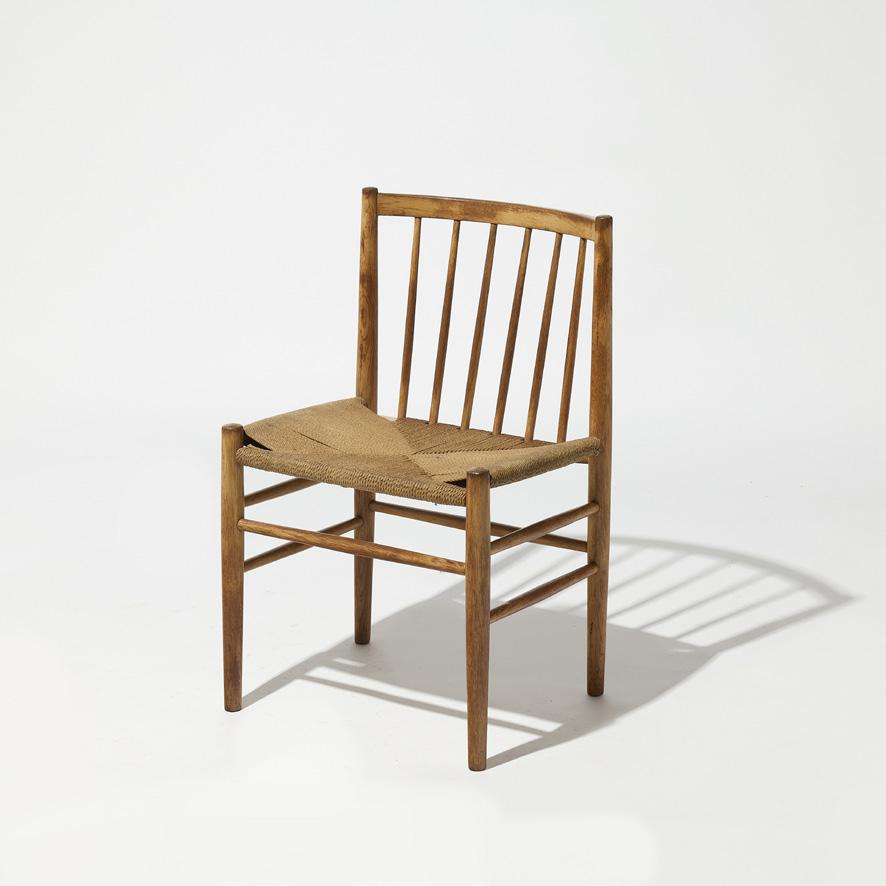
Chaise modèle « J80 » – circa 1950
Structure en chêne massif, assise en cordage tressé
F.D.B. Møbler éditeur
79 × 50 × 48,5 cm
800 - 1 200 €
66
Paul MC COBB (dans le goût de) 1917-1969
Chaise – circa 1950
Structure en hêtre teinté, assise recouverte de tissu
85 × 48,5 × 53 cm
800 - 1 200 €
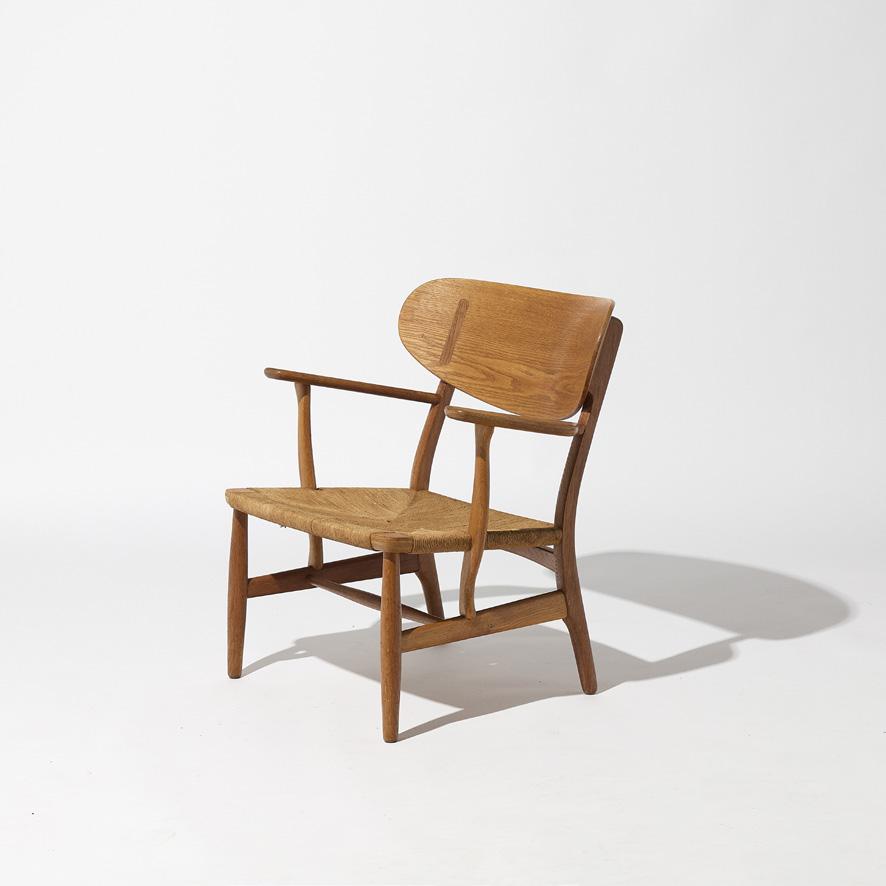
67
Hans J. WEGNER
1914-2007
Fauteuil mod. CH22 – 1950
Structure en chêne massif, assise en paille tressée
Carl Hansen & Søn Møbelfabrik A/S éditeur
72 × 70 × 65 cm
1 200 - 1 500 €
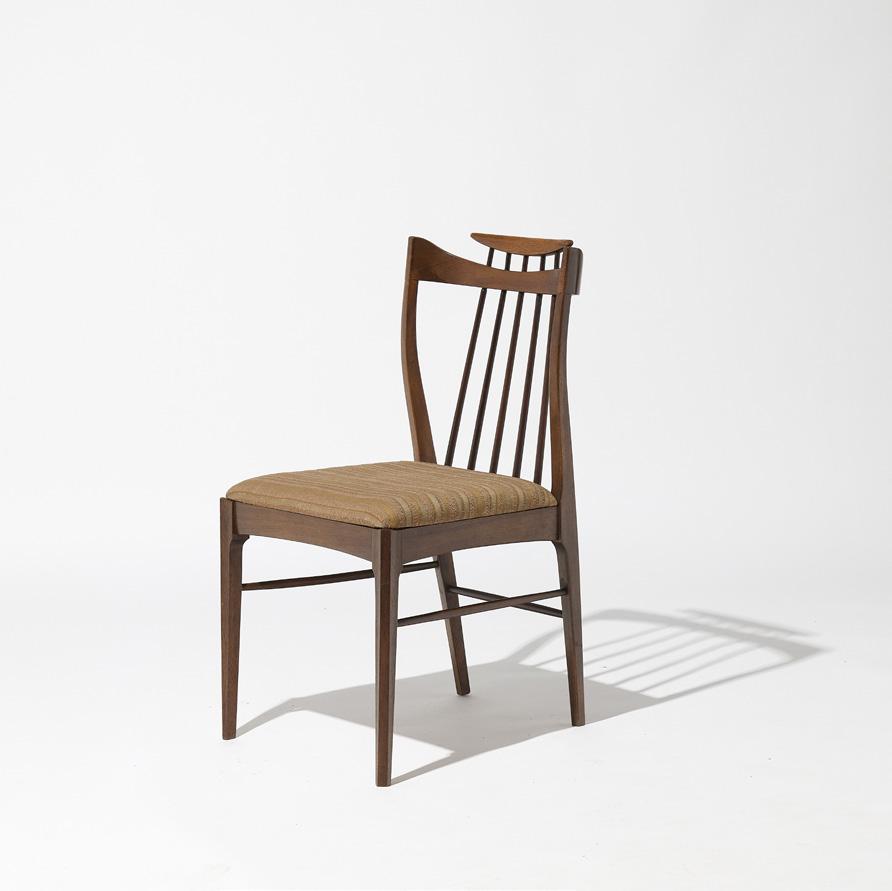
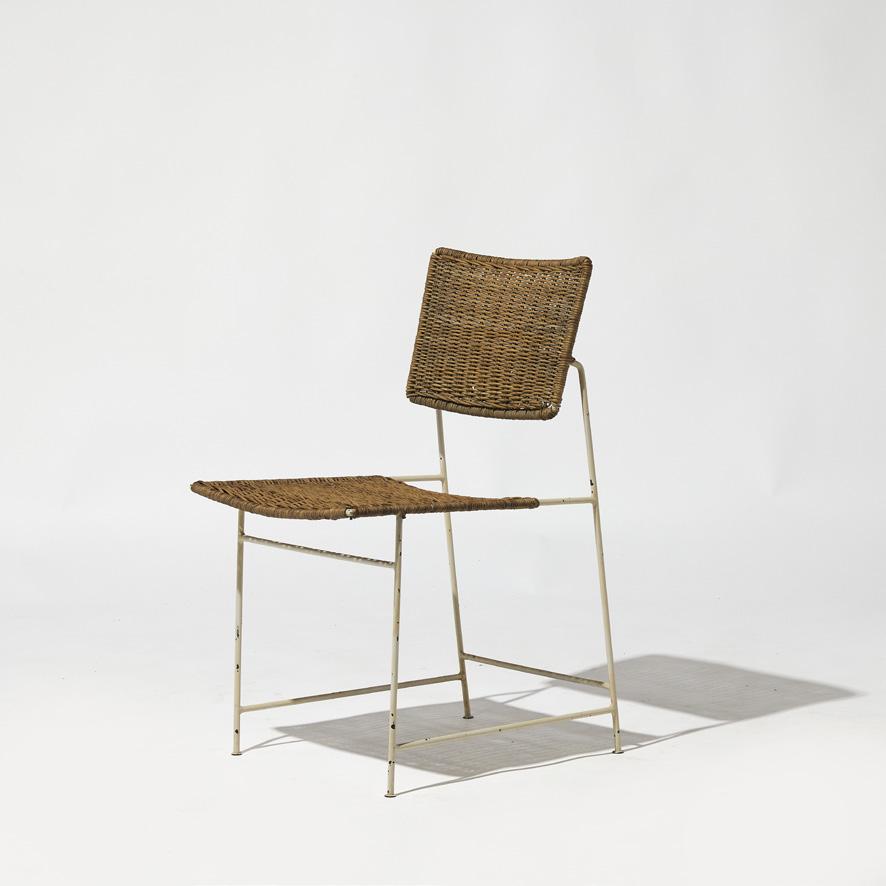
Herta-Maria WITZEMANN 1918-1999
Chaise mod. SW 88 – 1954
Structure en métal tubulaire laqué blanc, assise et dossier en rotin
Wilde + Spieth éditeur
80 × 44 × 51 cm
500 - 700 €
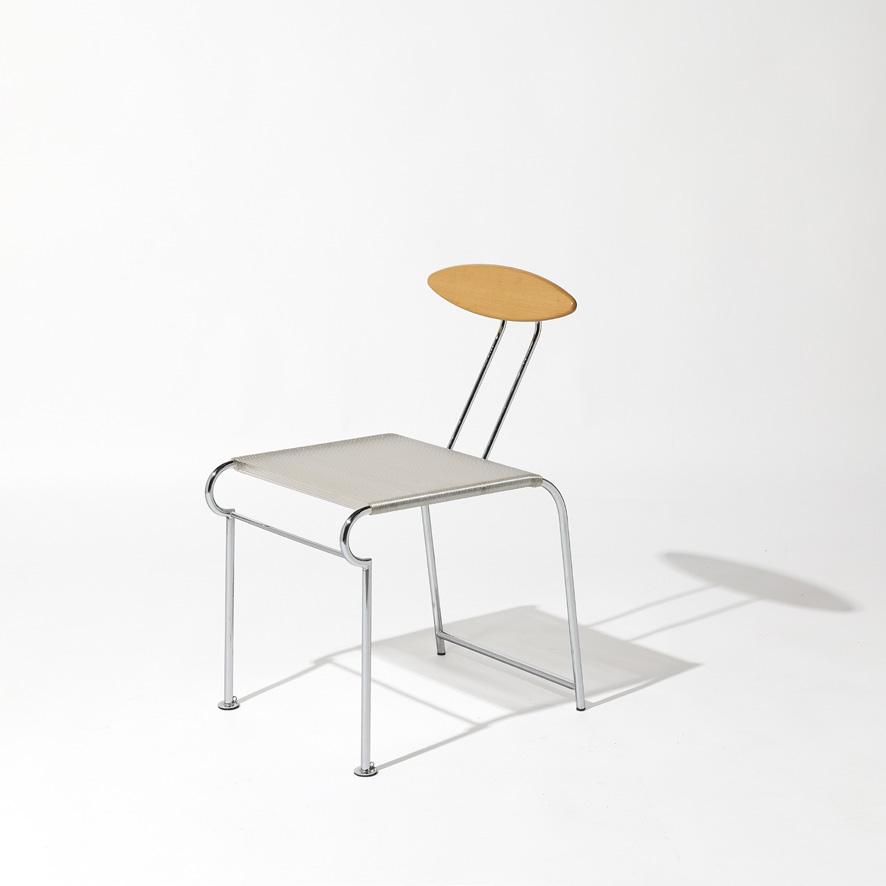
69
Massimo IOSA GHINI
Né en 1959
Chaise « Velox » – 1987
Structure en acier tubulaire chromé, dossier en frêne massif, assise en tressage de PVC
Moroso éditeur
81 × 44 × 53,5 cm
300 - 500 €
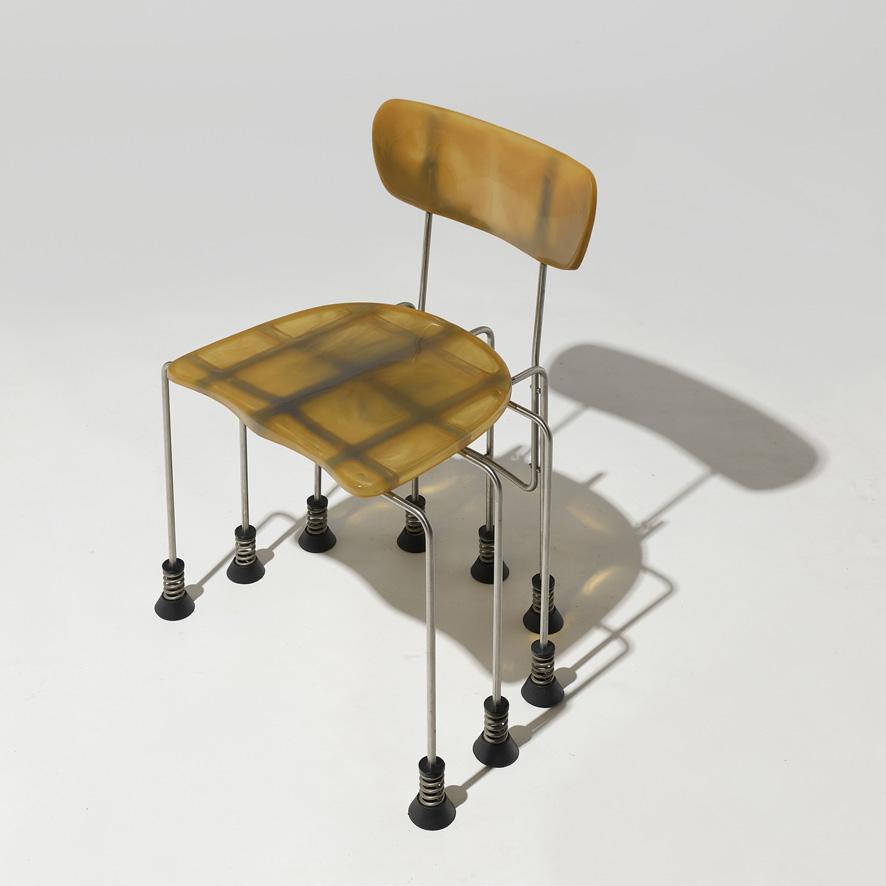
70
Gaetano PESCE 1939-2024
Chaise mod.543 « Broadway » – 1993
Structure en acier tubulaire chromé, asisse et dossier en résine, patins en PVC
Bernini éditeur
Marque de l’éditeur et numérotée 0080 / 1000 au revers
75,5 × 52 × 42 cm
600 - 800 €
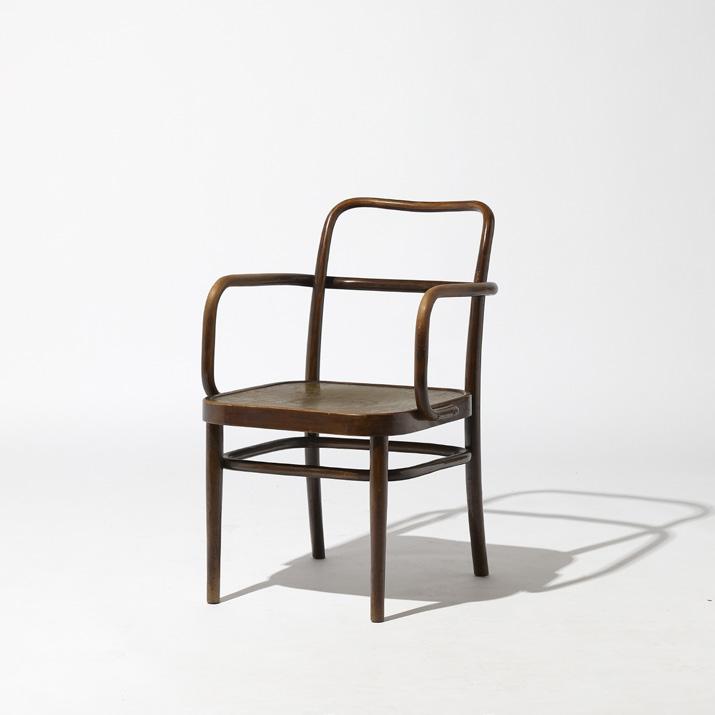
71
Adolf G. SCHNECK
1883-1971
Chaise mod. A 64 F – circa 1930
Structure en hêtre courbé, assise en hêtre moulé
Thonet éditeur
Étiquette et cachet de l’éditeur
79 × 52 × 63 cm
800 - 1 200 €
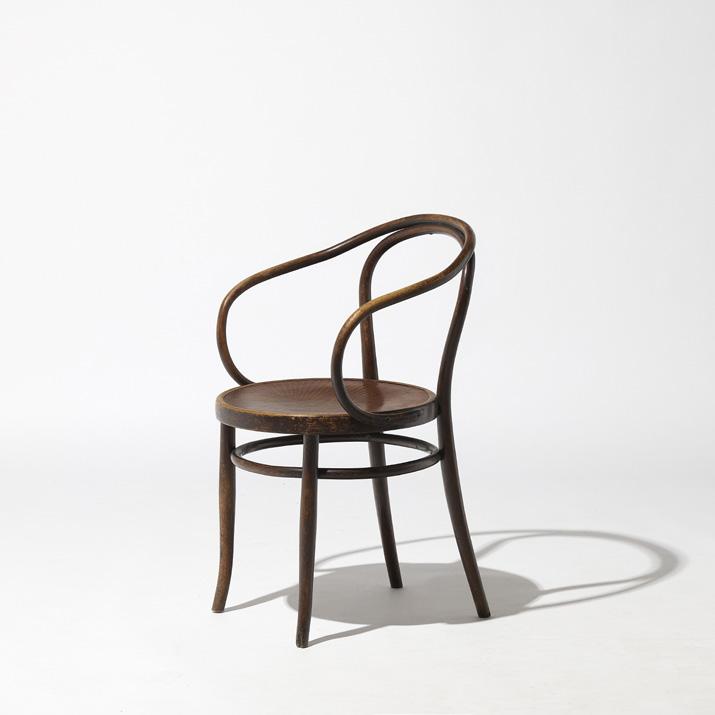
74
Jacob & Josef KOHN
1867-1917
Chaise mod. 712 – circa 1904
Structure en hêtre courbé, assise en hêtre moulé
Étiquette de l’éditeur au revers
81 × 53,5 × 51 cm
400 - 600 €
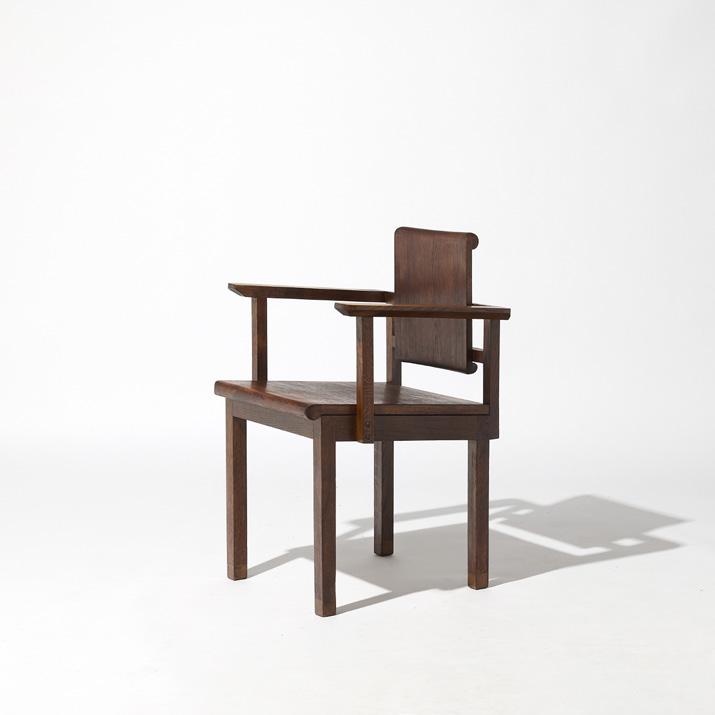
Fauteuil – circa 1930
Structure en chêne, assise et dossier en contreplaqué de chêne
Assise et dossier réglables
84 × 58 × 52 cm
600 - 800 €
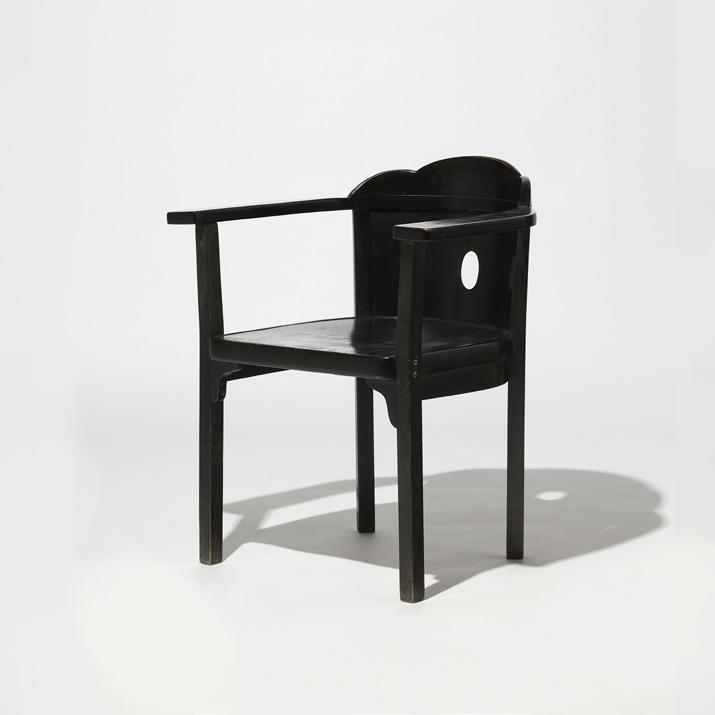
73
Josef HOFFMANN
1870-1956
Chaise N. 826 – modèle créé en 1915
Structure en hêtre teinté
Jacob & Josef Kohn éditeur
82 × 69 × 57 cm
1 200 - 1 500 €
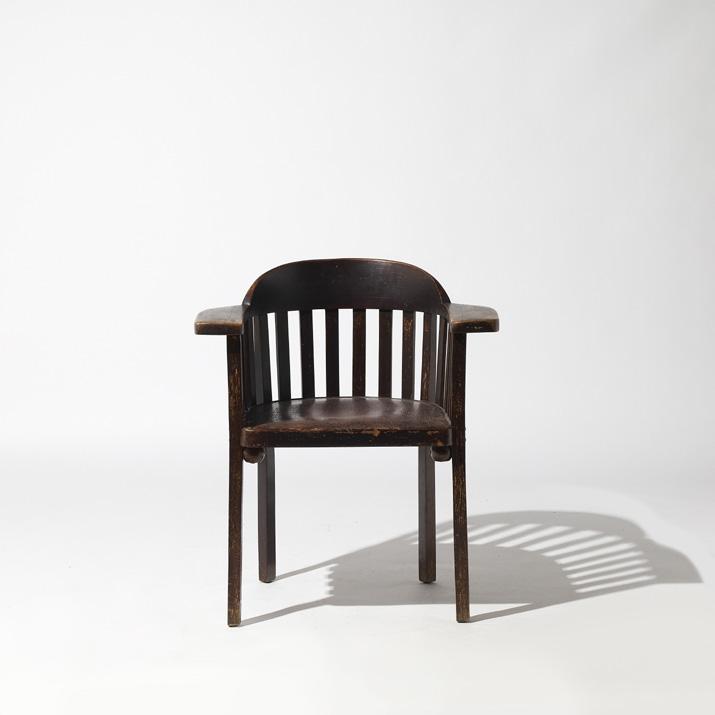
75
Josef HOFFMANN
1870-1956
Fauteuil mod. 701/2F – 1914
Structure en hêtre massif, assise en contreplaqué de hêtre
Jacob & Josef Kohn éditeur
Cachet de l’éditeur sous l’assise
82,5 × 71 × 57 cm
600 - 800 €
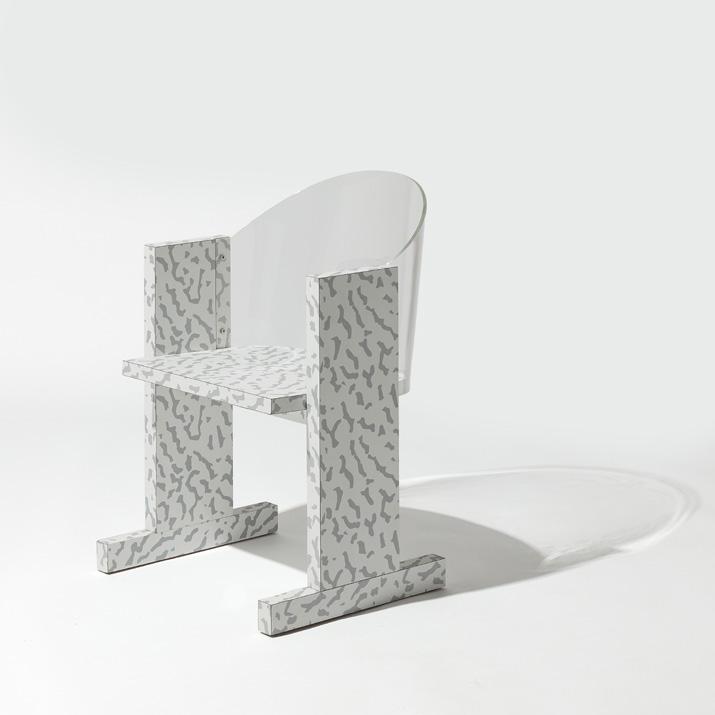
76
Ettore SOTTSASS
1917-2007
Chaise « Teodora » – 1986
Structure en MDF recouvert de stratifié « Craquelé » à motifs gris sur fond blanc dessiné par Nathalie du Pasquier en 1983
Dossier en acrylique moulé
Vitra éditeur
82 × 56 × 56 cm
1 500 - 2 000 €
Patriz HUBER
1878-1902
Fauteuil de repos – 1901
Structure en noyer et placage de noyer, assise et dossier recouverts de velours vert
Réalisé par Heinrich Julius Glückert
80 × 79 × 108 cm
On y joint un menu original conçu par Paul Bürck pour l’exposition historique
« Ein Dokument Deutscher Kunst » de 1901
10 000 - 15 000 €
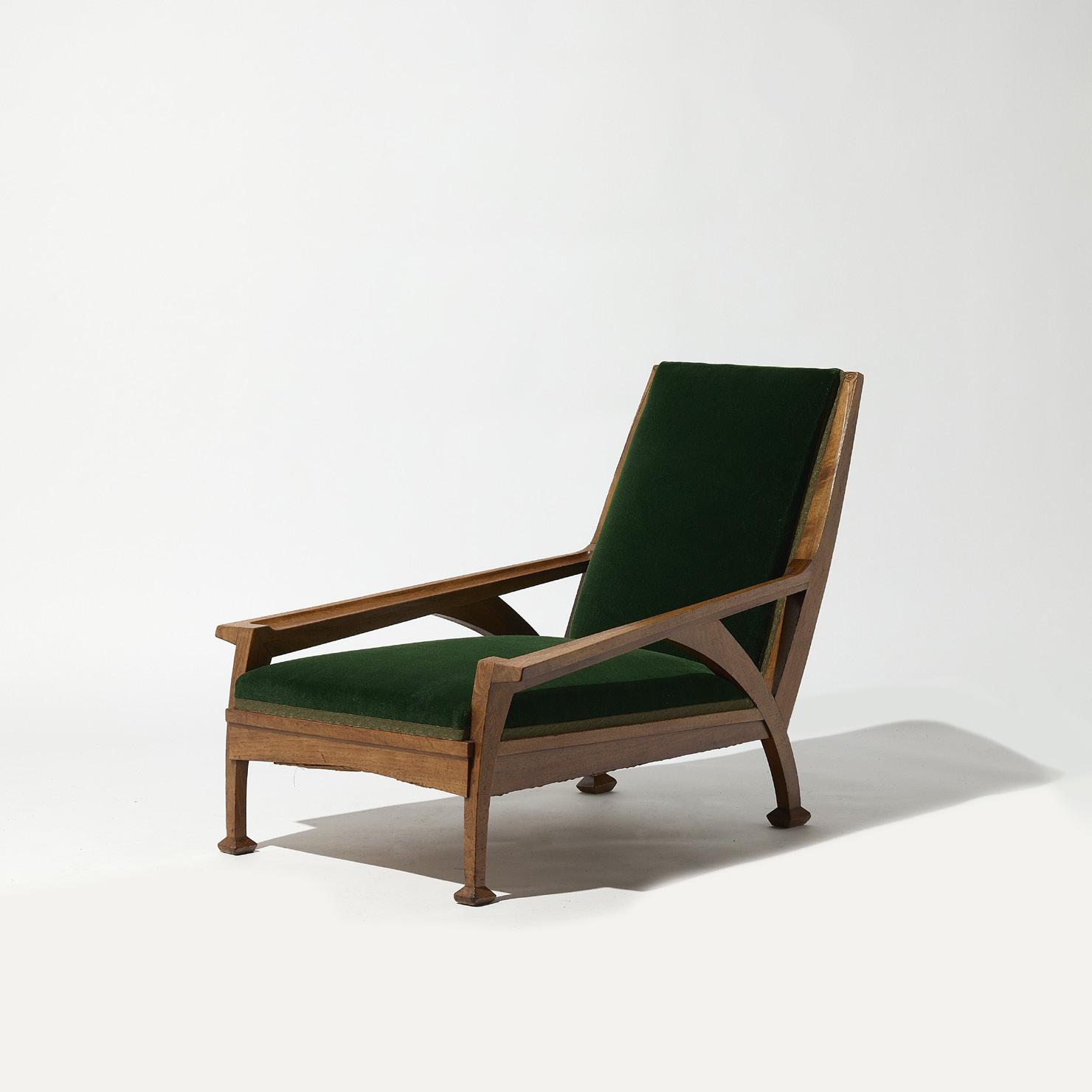
Patriz Huber (1878–1902) était un artiste, architecte d’intérieur et designer allemand, membre de la colonie d’artistes de Darmstadt à Mathildenhöhe, où il participa activement au développement du Jugendstil. Il réalisa des intérieurs, du mobilier et des objets d’art appliqué avant de s’installer à Berlin, où il collabora notamment avec Henry van de Velde. La carrière de cet artiste prometteur fut tragiquement interrompue par son suicide à l’âge de 24 ans, à la suite d’une histoire d’amour malheureuse.
Le fauteuil présenté ici faisait partie d’une paire et a été conçu spécialement pour l’atelier du peintre Paul Bürck, situé dans la Große Haus Glückert, au sein de la
colonie d’artistes de Mathildenhöhe à Darmstadt, à l’occasion de la première exposition « Ein Dokument Deutscher Kunst » en 1901. La fabrication de cette pièce a été assurée par Julius Glückert, dont l’atelier de meubles se distinguait par ses créations décoratives dans le style Jugendstil.
Aujourd’hui classée au patrimoine mondial de l’UNESCO, la Große Haus est non seulement un exemple remarquable de l’architecture Jugendstil, mais aussi un centre historique d’expérimentation en matière de mobilier et de design d’intérieur au début du XXe siècle. Ce fauteuil de repos constitue un témoignage unique des débuts du Jugendstil allemand.
Patriz Huber (1878–1902) was a German artist, interior designer, and designer, and a member of the Darmstadt artists’ colony at Mathildenhöhe, where he played an active role in the development of Jugendstil. He designed interiors, furniture, and applied art objects before moving to Berlin, where he collaborated with Henry van de Velde, among others. The promising artist’s career was tragically cut short by his suicide at the age of 24, following an unhappy love affair.
The armchair shown here was part of a pair and was designed especially for the studio of painter Paul Bürck, located in the Große Haus Glückert, within the
Mathildenhöhe artists’ colony in Darmstadt, for the first “Ein Dokument Deutscher Kunst” exhibition in 1901. The piece was manufactured by Julius Glückert, whose furniture workshop was renowned for its decorative creations in the Jugendstil style. Now a UNESCO World Heritage Site, the Große Haus is not only a remarkable example of Jugendstil architecture, but also a historic center of experimentation in furniture and interior design in the early 20th century. This lounge chair is a unique testimony to the beginnings of German Jugendstil.
78
Albin JOHNSON
1887-1964
Tabouret « Kan-O-Seat » – 1935
Assise en érable, poignée en frêne, assise en contreplaqué de hêtre
Stafford éditeur
Cachet de l’éditeur, titré et daté au revers
H. max. : 88,5 cm
200 - 300 €
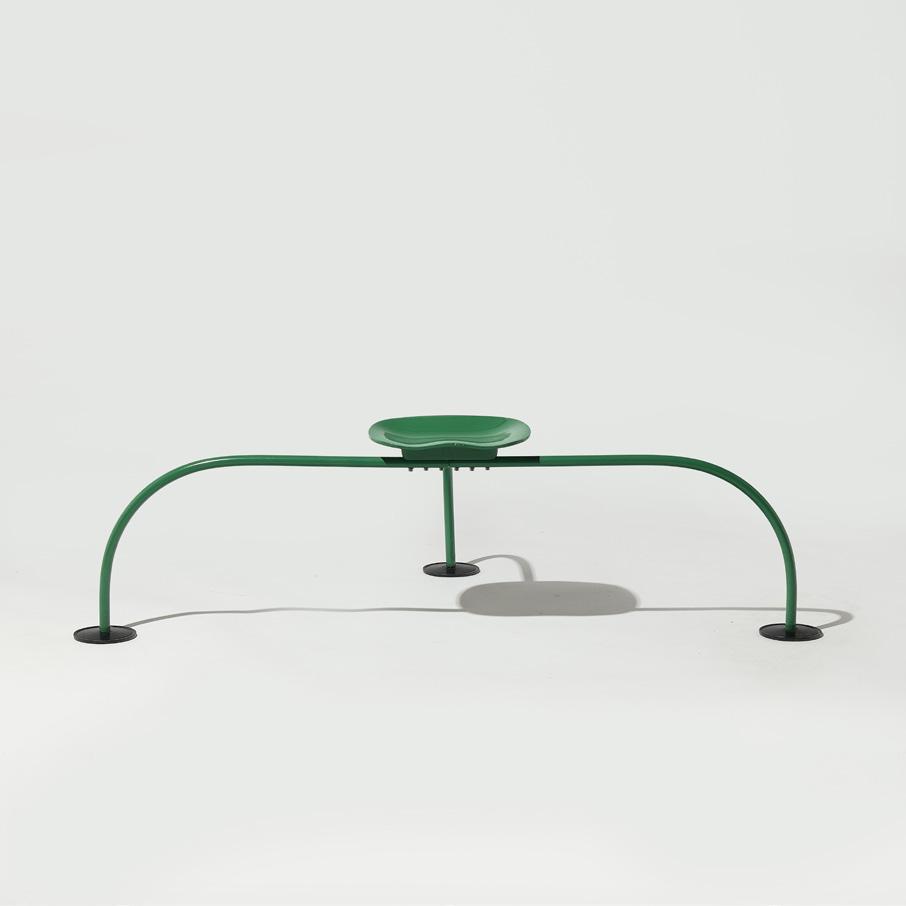
79
Achille & Pier Giacomo CASTIGLIONI
1898-1976 & 1926-2003
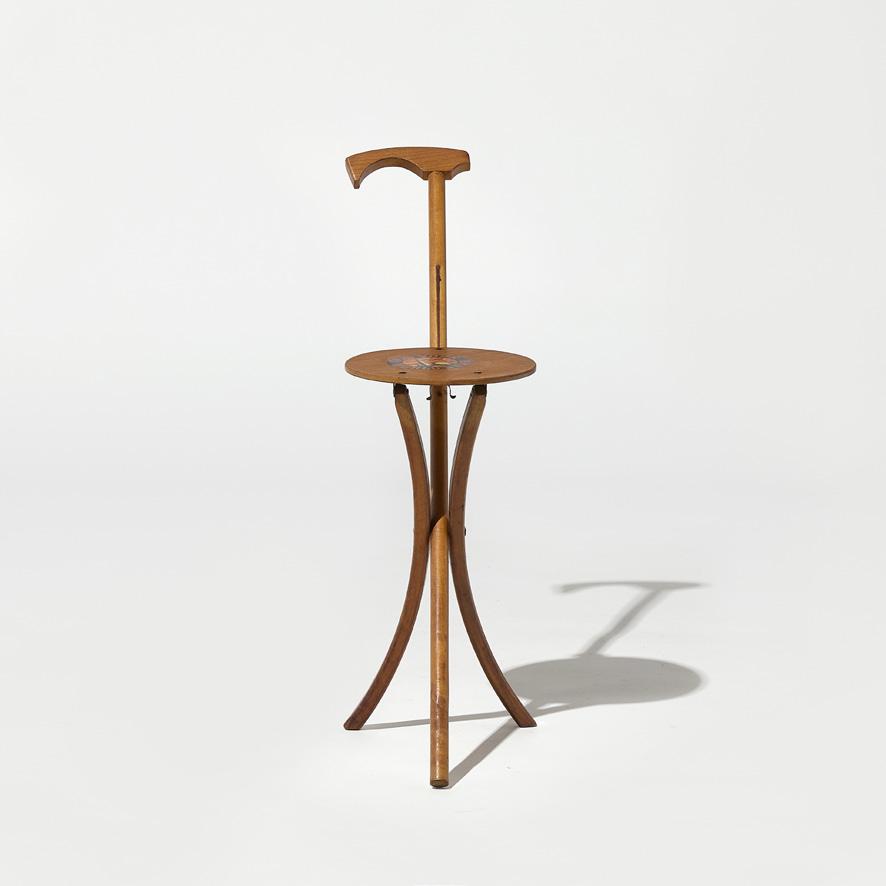
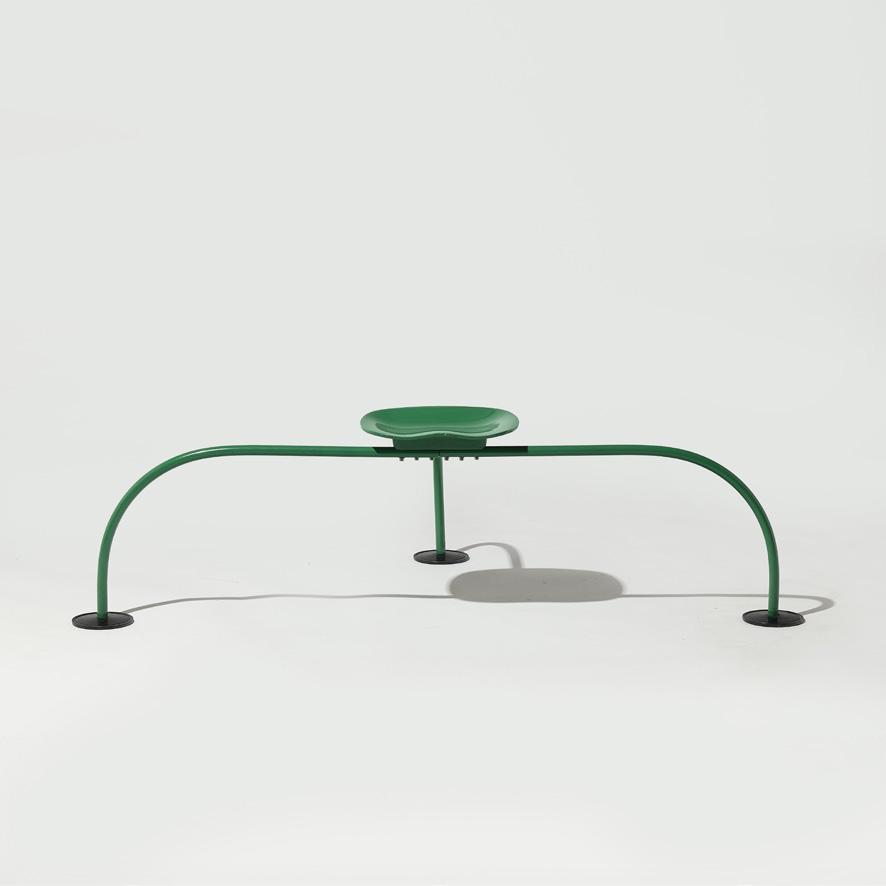
Tabouret « Allunaggio » – 1966
Structure en acier tubulaire laqué vert, assise en fonte d’aluminium, patins en PVC
Zanotta éditeur
42,5 × 153 × 76 cm
800 - 1 200 €
80
Philippe STARCK
Né en 1949
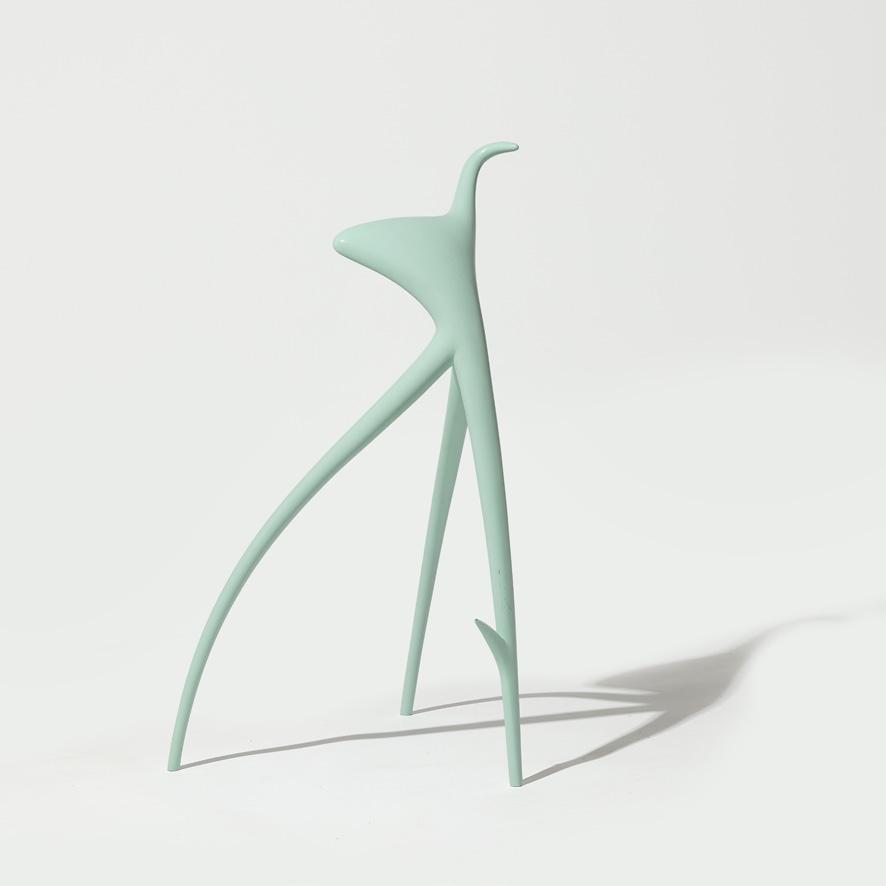
W.W. Stool – modèle créé en 1990
Aluminium moulé laqué vert menthe
Vitra éditeur
Cachet-signature « Starck » au revers d’un pied
97 × 49 × 52 cm
3 000 - 5 000 €
Herbert SELLDORF & Günter Ferdinand RIS 1929-2012 & 1928-2005
Fauteuil Sunball – 1969
Structure en fibre de verre laqué jaune, métal, méthacrylate, tablette orientable en PVC, coussins recouverts de tissu marron
Rosenthal éditeur
148 × 172 × 146 cm
5 000 - 7 000 €
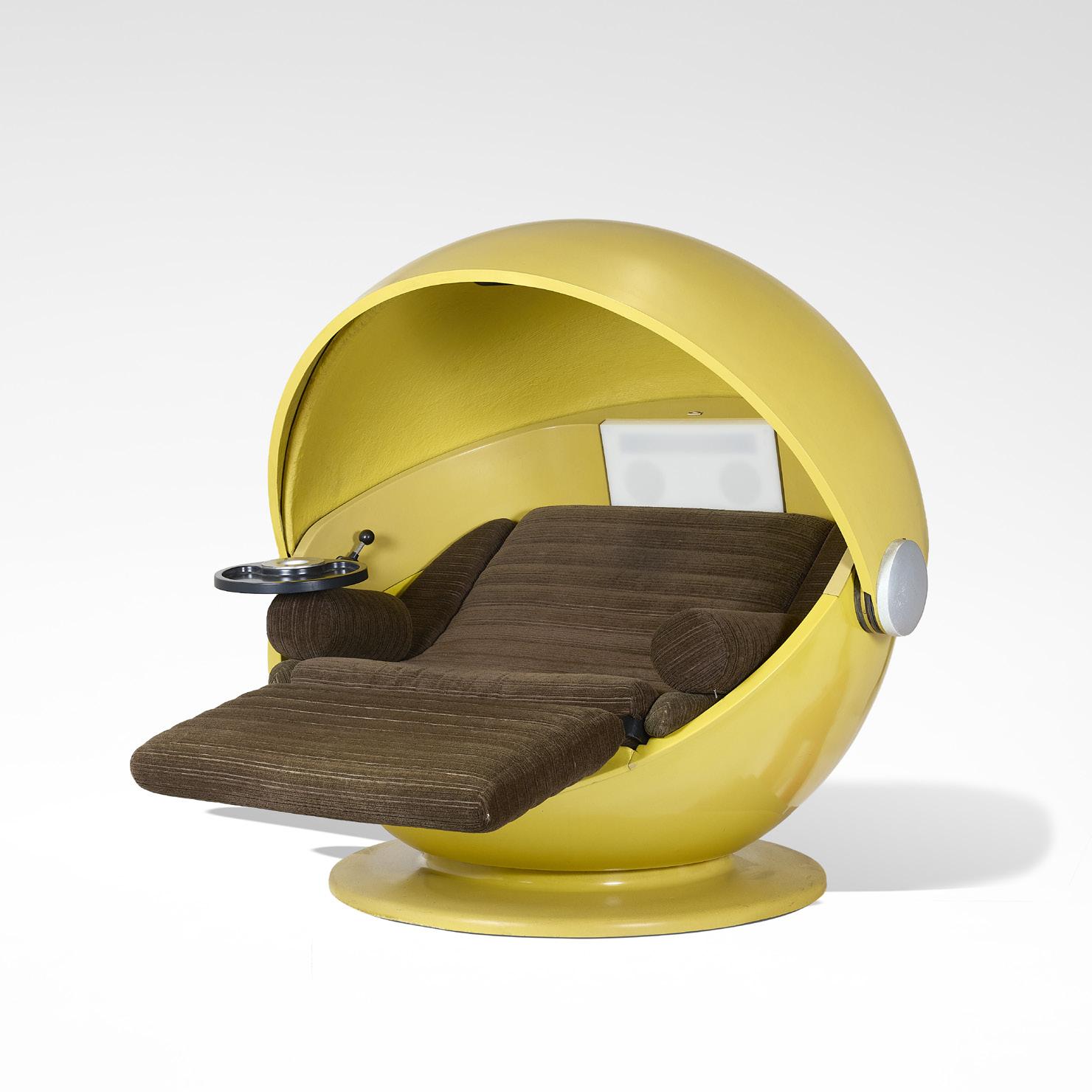
Conçu en 1969 par Günter Ferdinand Ris et Herbert Selldorf pour Rosenthal AG, le Sunball s’inscrit avec une remarquable acuité dans le contexte culturel et technologique de la fin des années 1960. Cette décennie, profondément marquée par la conquête spatiale — dont l’aboutissement symbolique fut les missions lunaires de 1969 — nourrit un imaginaire collectif résolument tourné vers l’avenir. Par sa configuration enveloppante et sa structure rotative refermable, le Sunball incarne l’esthétique dite « Space Age » qui domine le design international à la fin des années 60 et début des années 70. Réalisé en plastique renforcé de fibre de verre, associé à l’aluminium
et à des textiles de qualité, il témoigne de l’essor décisif des matériaux synthétiques dans le mobilier expérimental de cette période, où la recherche technique se conjugue à une ambition sculpturale.
Sa production, limitée à environ cinquante exemplaires et concentrée sur une période particulièrement brève — quatre à cinq années seulement, au tournant des années 1960 et 1970 — contribue aujourd’hui à son statut d’icône rare. Le Sunball se présente ainsi non seulement comme un meuble, mais comme un véritable manifeste du design visionnaire de 1969, à la croisée de l’innovation industrielle et d’une utopie formelle pleinement assumée.
Designed in 1969 by Günter Ferdinand Ris and Herbert Selldorf for Rosenthal AG, the Sunball fits remarkably well into the cultural and technological context of the late 1960s. This decade, profoundly marked by the space race—whose symbolic culmination was the lunar missions of 1969—nurtured a collective imagination resolutely turned towards the future. With its enveloping configuration and rotating, closable structure, the Sunball embodies the “Space Age” aesthetic that dominated international design in the late 1960s and early 1970s.
Made of fibreglass-reinforced plastic, combined with aluminium and high-quality
textiles, it reflects the decisive rise of synthetic materials in the experimental furniture of this period, where technical research was combined with sculptural ambition.
Its production, limited to around fifty pieces and concentrated over a particularly short period—only four to five years at the turn of the 1960s and 1970s—contributes to its status today as a rare icon. The Sunball is thus not only a piece of furniture, but a true manifesto of the visionary design of 1969, at the crossroads of industrial innovation and a fully embraced formal utopia.
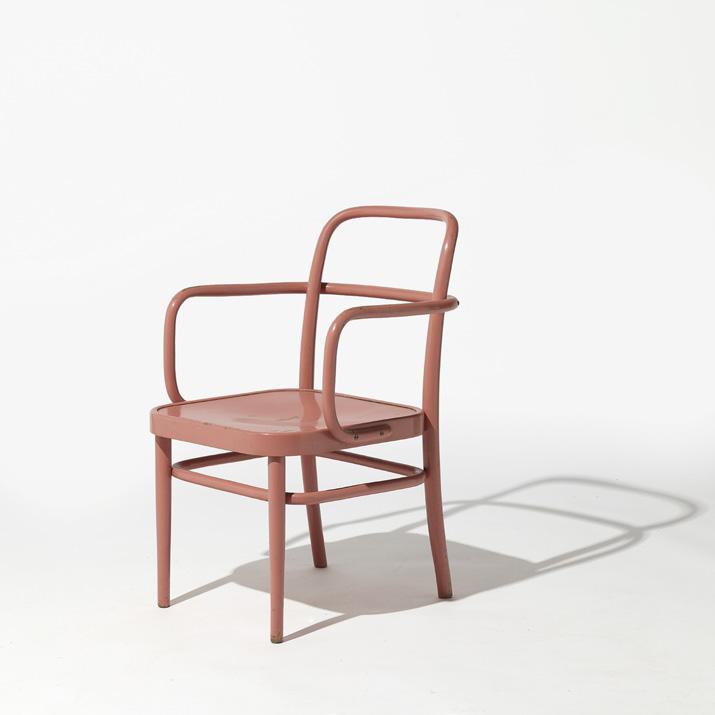
82
Adolf G. SCHNECK
1883-1971
Chaise mod. A64F – 1927
Structure en hêtre massif laqué, assise en hêtre contreplaqué laqué
80 × 53 × 59,5 cm
800 - 1 200 €
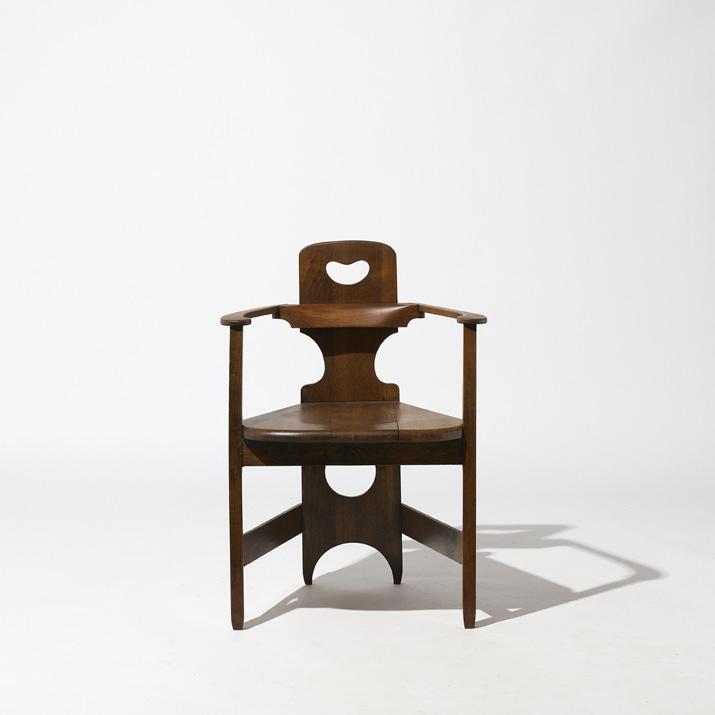
83
Richard RIEMERSCHMID
1868-1957
Fauteuil – circa 1900
Structure en hêtre massif
J. Fleischhauer´s Söhne Nürnberg éditeur
85 × 60 × 50,5 cm
800 - 1 200 €
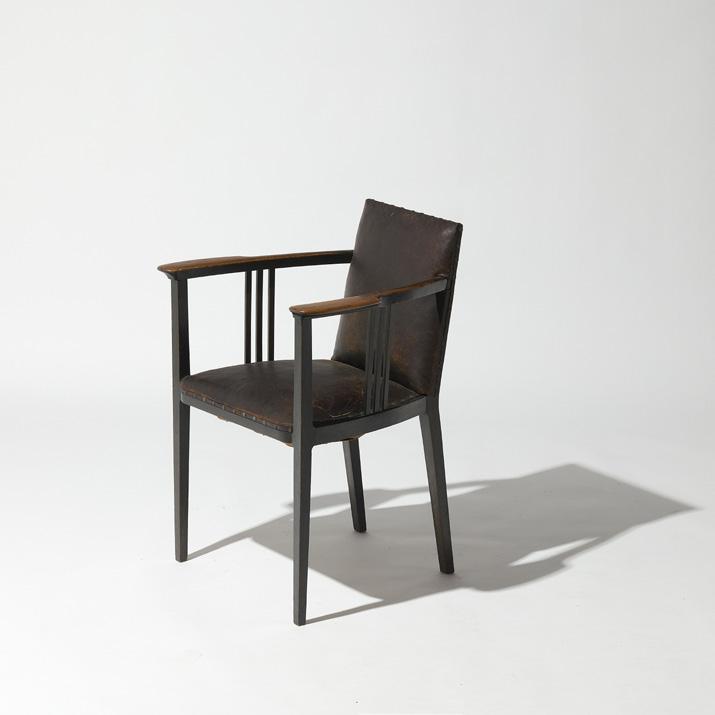
85
TRAVAIL EUROPÉEN
Chaise – circa 1910
Structure en frêne massif teinté, assise et dossier recouverts de cuir
86 × 63 × 55 cm
600 - 800 €
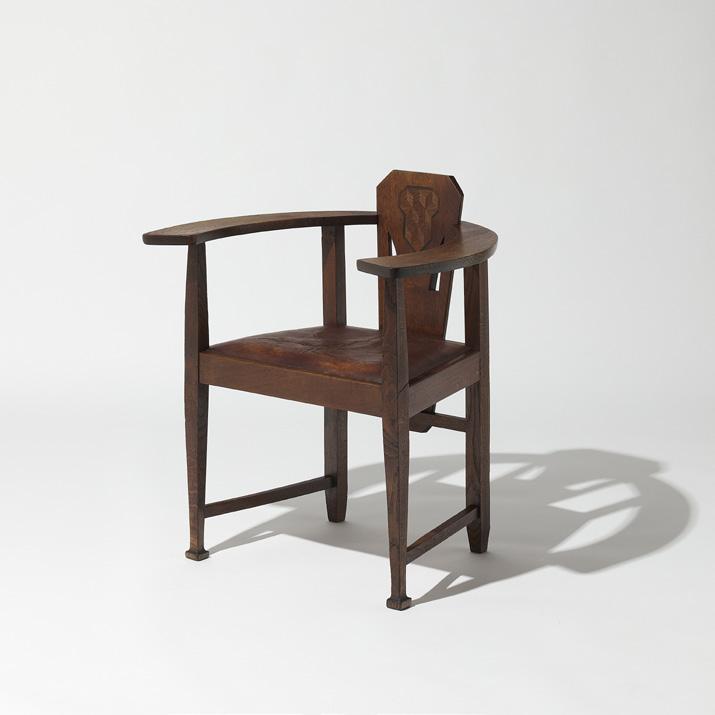
84
TRAVAIL ANGLAIS
Chaise – circa 1910
Structure en chêne, dossier à décor de marqueterie, assise recouverte de cuir
82 × 70 × 61 cm
600 - 800 €
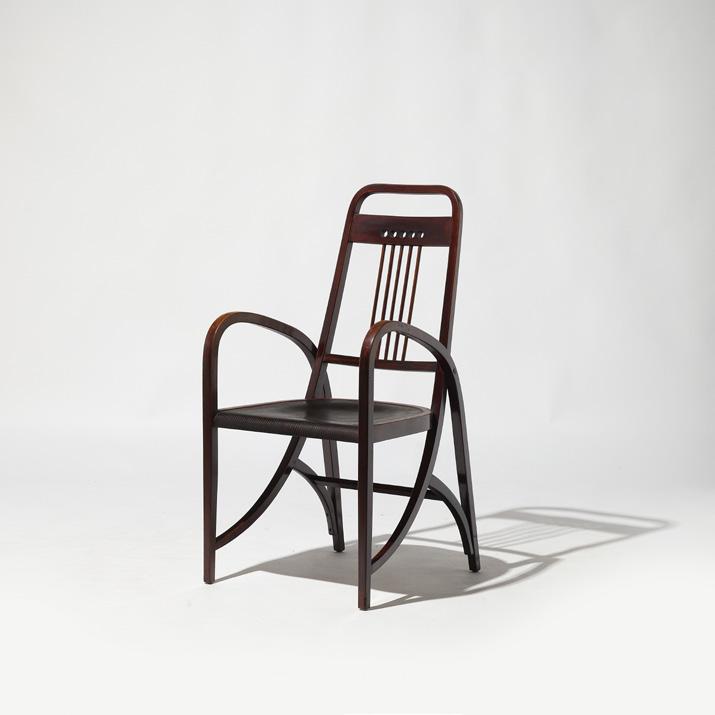
86
THONET FRÈRES
Fauteuil mod. 511 – circa 1905
Structure en hêtre teinté, assise en contreplaqué de hêtre Thonet éditeur
Étiquette et estampille de l’éditeur au revers de l’assise
106 × 53 × 60 cm
1 000 - 1 500 €
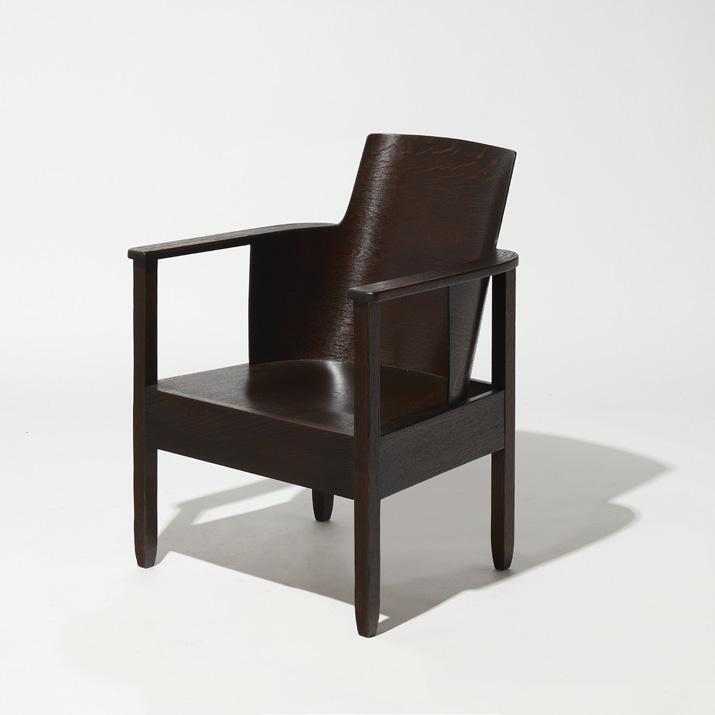
87
Richard RIEMERSCHMID
1868-1957
Fauteuil modèle 745 1D – circa 1930
Structure en chêne, dossier en contreplaqué de hêtre
Soennecken éditeur
Cachet de l’éditeur au revers de la traverse et étiquette sous l’assise 84 × 64 × 63 cm
600 - 800 €
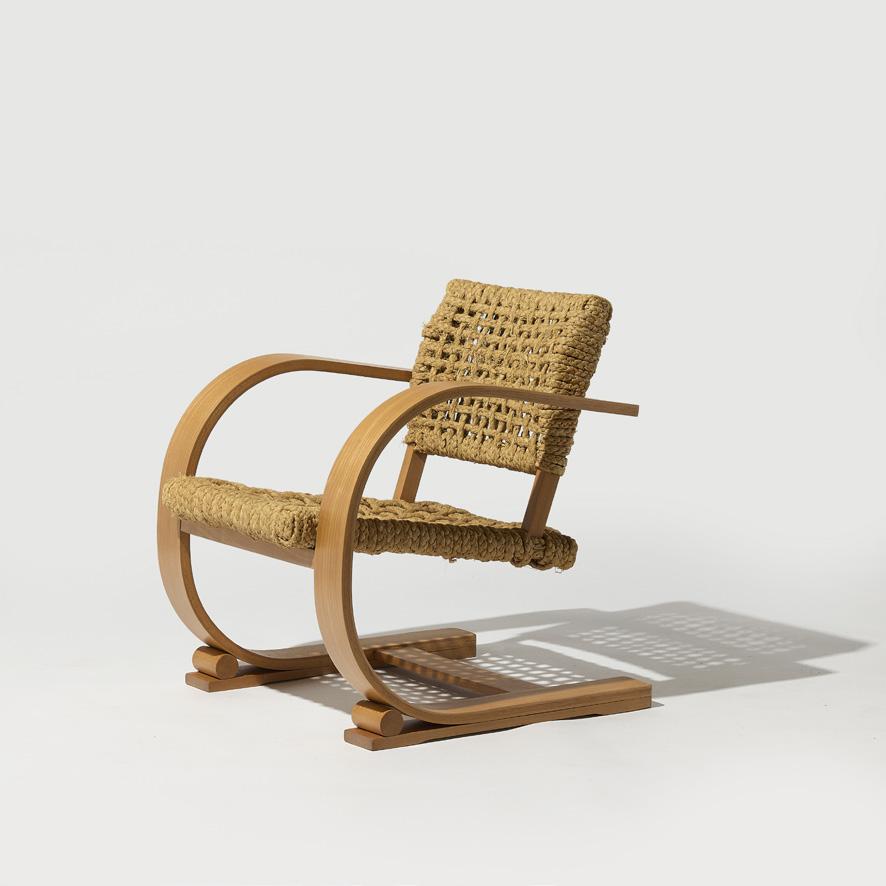
Adrien AUDOUX & Frida MINET
1904-1979 & 1906-1997
Fauteuil – circa 1950
Structure en hêtre massif et lamellécollé et courbé, assise et dossier en chanvre tressé
Vibo éditeur
75 × 64 × 68 cm
1 200 - 1 500 €
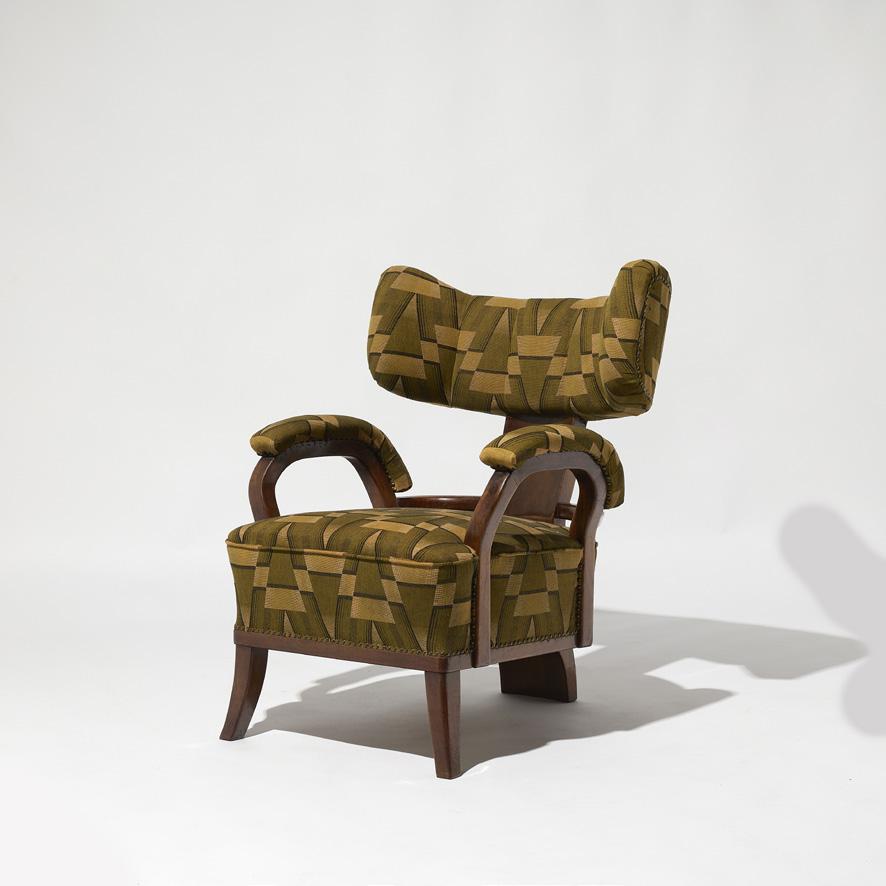
Fauteuil – circa 1930
Structure en noyer, assise et dossier recouverts de tissu à motifs géométriques
94 × 74 × 84 cm
800 - 1 200 €
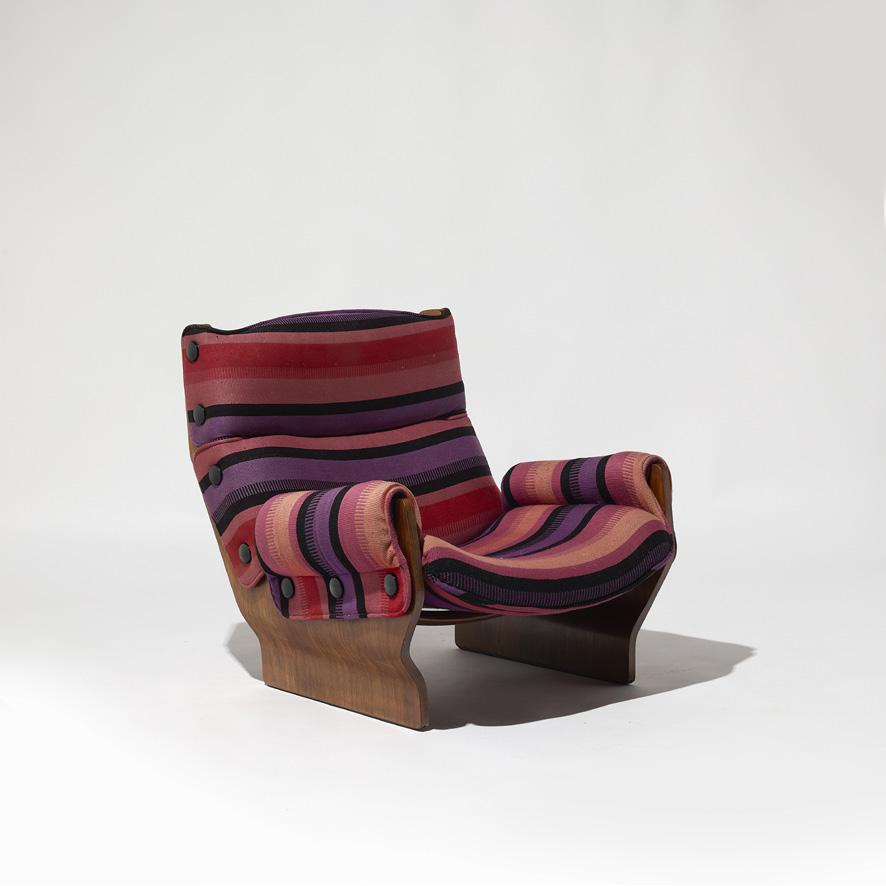
Osvaldo BORSANI
1911-1985
Fauteuil modèle P110 « Canada » – 1965
Structure en contreplaqué moulé courbé recouvert de placage d’amazakoué, assise recouverte de coton tissé, bouton en PVC
Tecno éditeur
90 × 83 × 81 cm
1 000 - 1 500 €
91
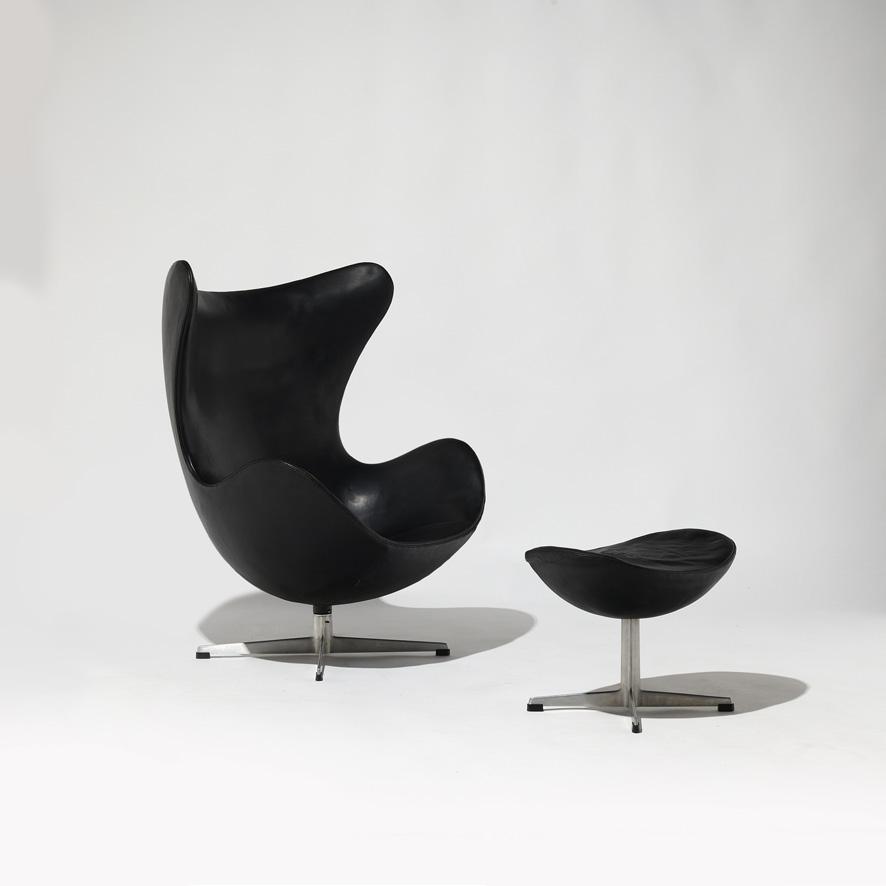
Arne JACOBSEN
1902-1971
Fauteuil mod. 3316 dit « Egg Chair »
Circa 1957
Piètement en fonte d’aluminium, coque recouverte de cuir noir, Fritz Hansen éditeur
Étiquette de l’éditeur sous l’ottoman
Fauteuil : 105 × 85 × 68 cm
Ottoman : 40 × 55 × 40 cm
5 000 - 7 000 €
92
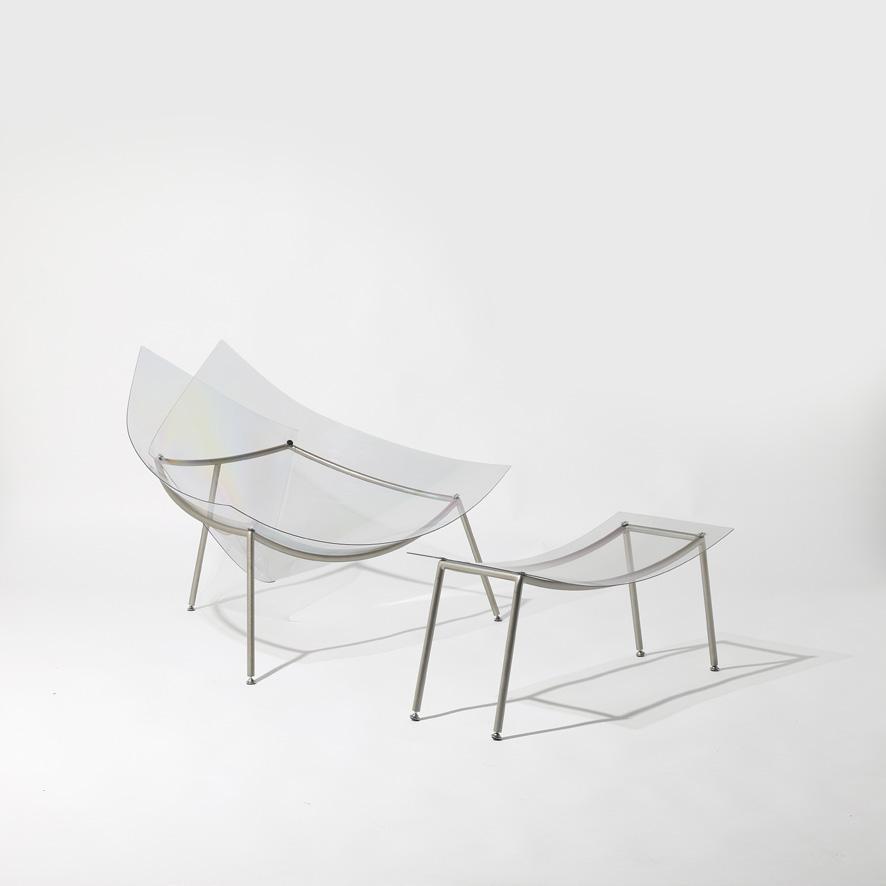
Humberto & Fernando CAMPANA
Né en 1953 & 1961-2022
Fauteuil « Cone » et son ottoman – 1998
Structure en métal tubulaire gris époxy, assise en polycarbonate plié
Edra éditeur
Fauteuil : 78 × 106 × 84 cm
Ottoman : 36,5 × 80,5 × 35 cm
1 200 - 1 500 €
93
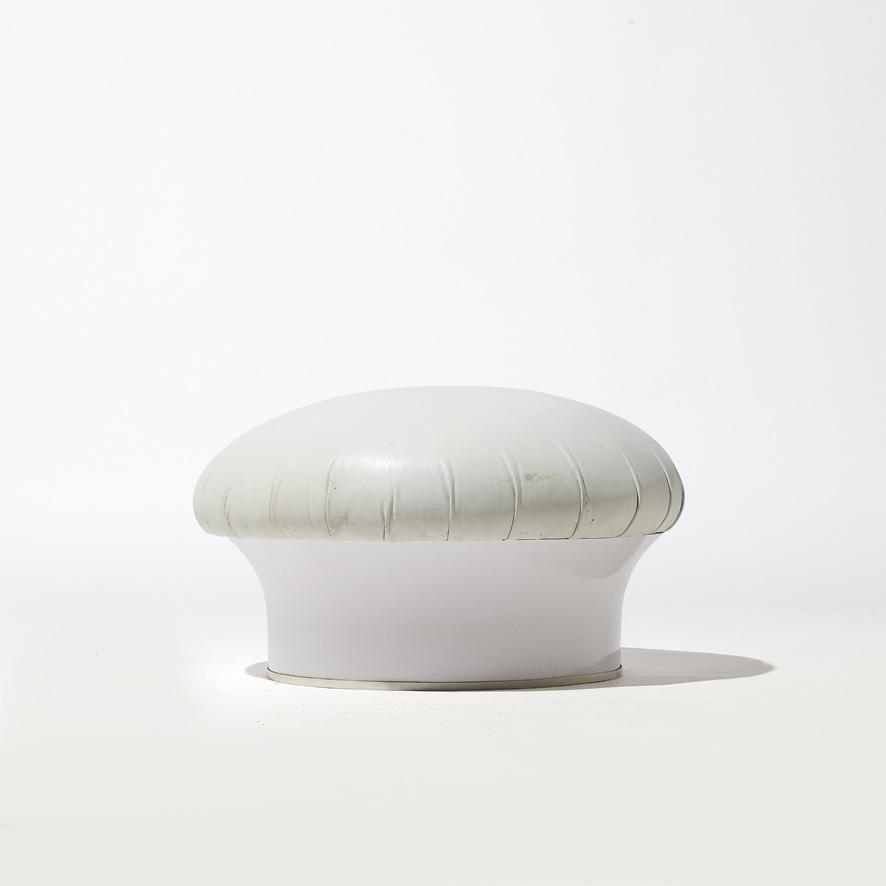
Mario BRUNU
Né en 1927
Ottoman « Rodica » – 1968
Structure en fibre de verre, assise recouverte de cuir blanc
Comfort éditeur
40 × 64 × 64 cm
600 - 800 €
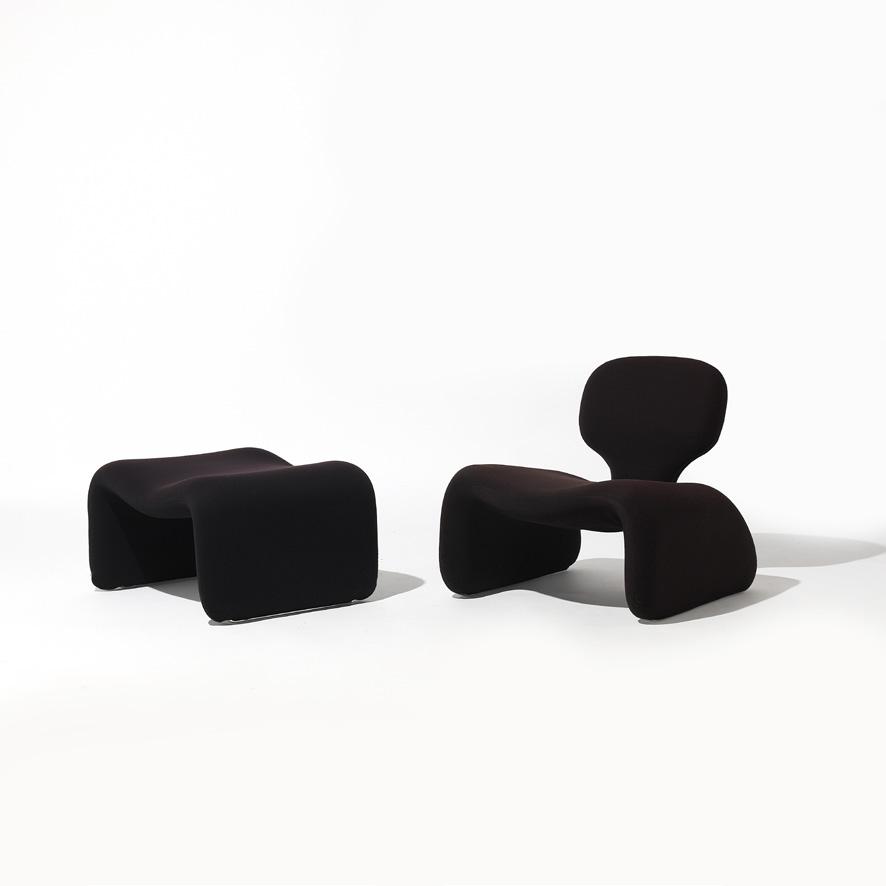
Né en 1939
Chauffeuse et ottoman « Djinn » – 1965
Structure en acier tubulaire et mousse recouverte de tissu noir, patins en acier
Airborne éditeur
Chauffeuse : 67 × 65 × 76 cm
Ottoman : 39 × 67 × 58 cm
800 - 1 200 €
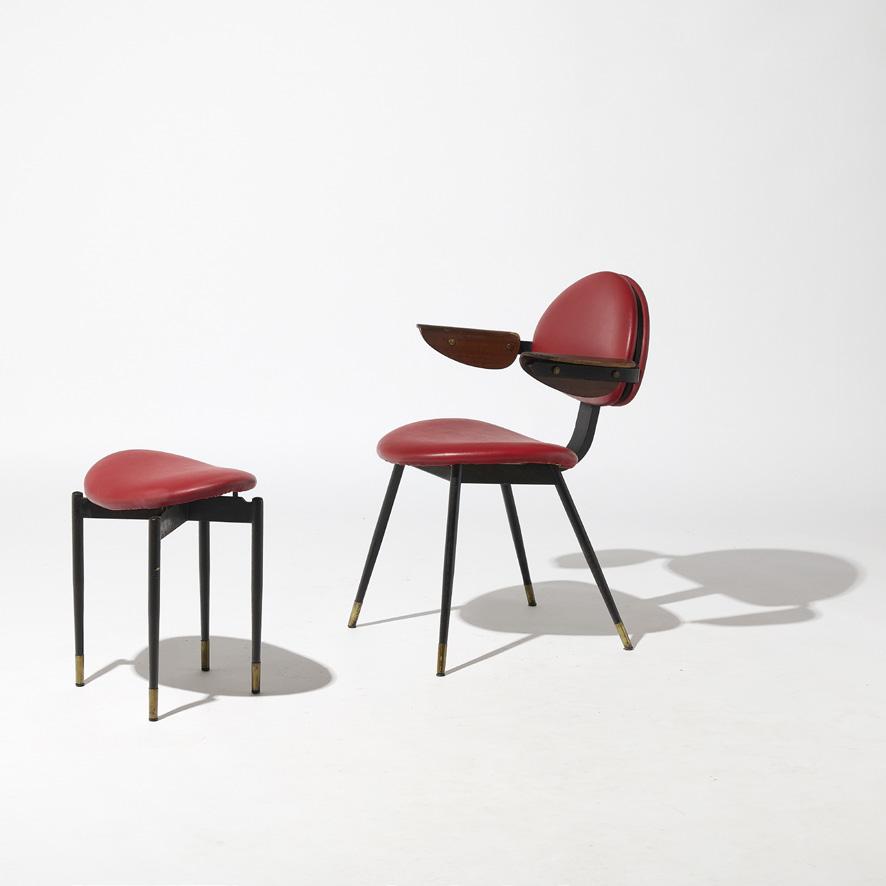
Carlo MOLLINO
1905-1973
Fauteuil et ottoman « Lutario » – 1959
Structure en acier laqué noir, sabots en laiton, assise et dossier recouverts de similicuir rouge, accotoirs en contreplaqué de noyer
Doro éditeur
Cachet de l’éditeur au dos et étiquette «SC International» au revers
Fauteuil : 76 × 61 × 56 cm
Ottoman : 45 × 42 × 28 cm
4 500 - 6 000 €
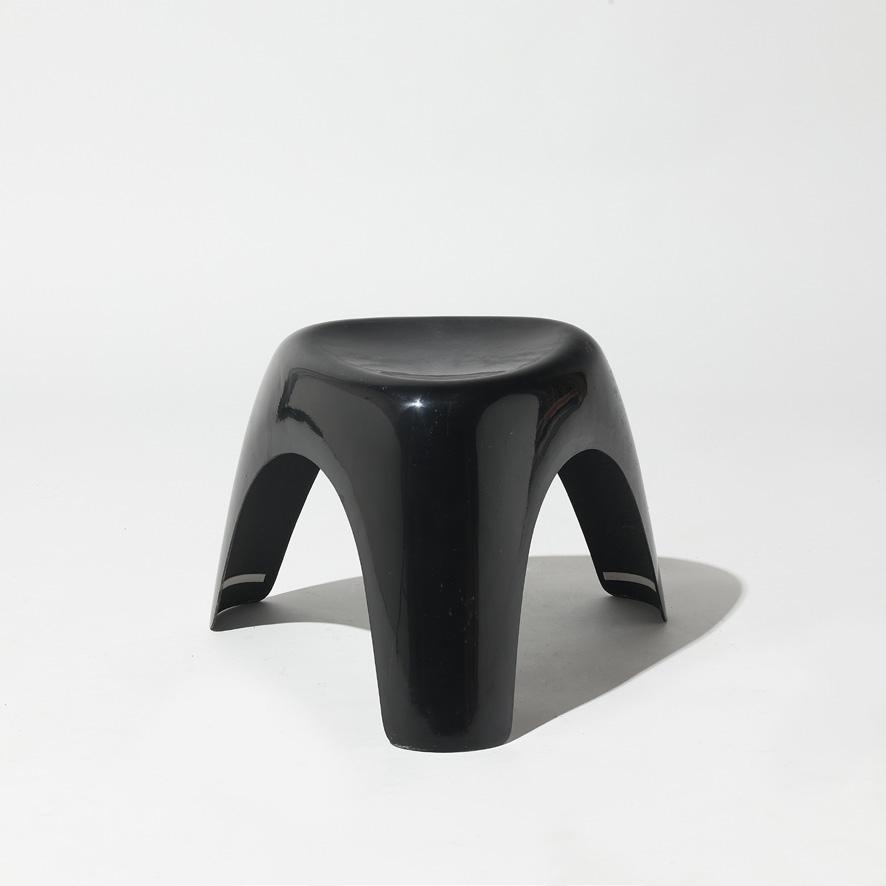
96
Sori YANAGI
1915-2011
Tabouret « Éléphant » – 1954
Fibre de verre
Kotobuki éditeur
38 × 53 × 45,5 cm
800 - 1 200 €
97
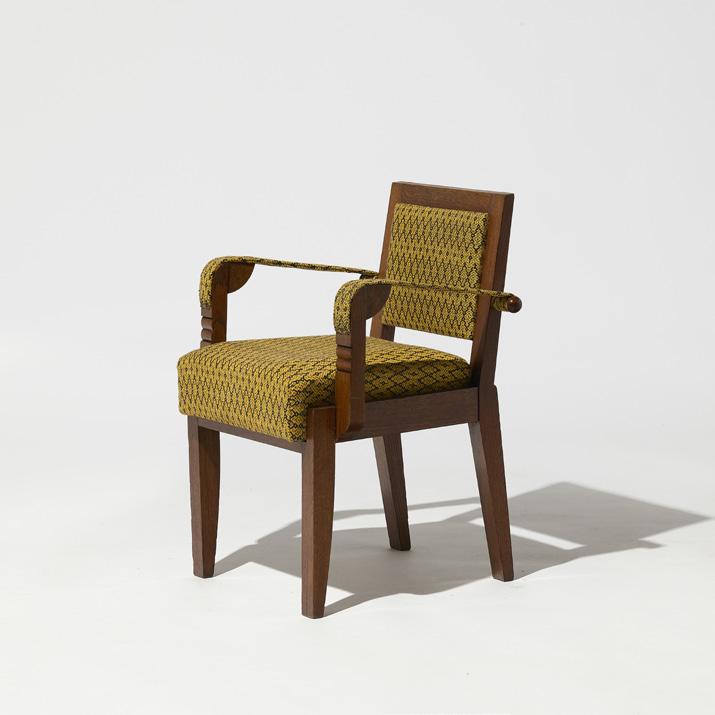
Charles DUDOUYT
1885-1946
Fauteuil – circa 1930
Structure en chêne massif, assise, dossier et accotoirs recouverts de tissu
La Gentilhommière éditeur
78 × 56,5 × 54 cm
800 - 1 200 €
100
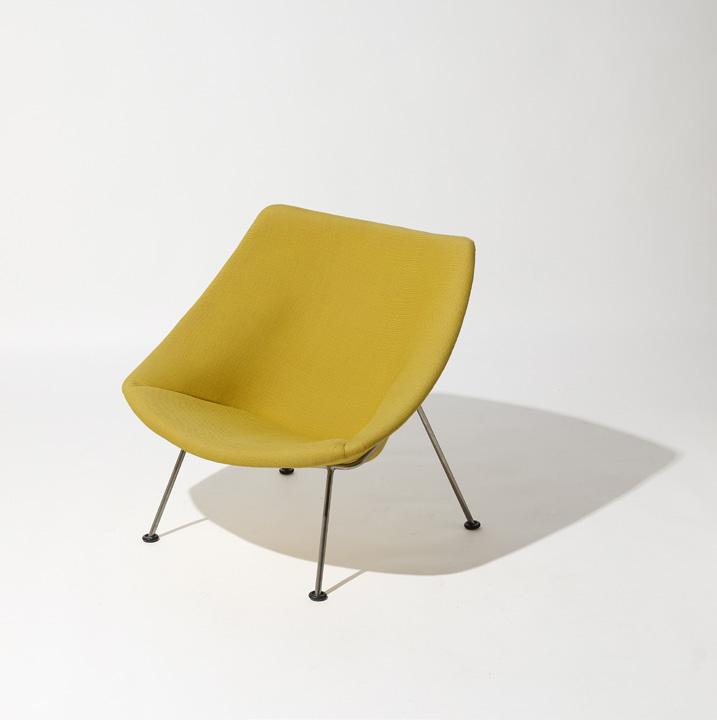
Pierre PAULIN
1927-2009
Fauteuil F157 dit « Oyster »
Modèle créé en 1957
Structure en acier tubulaire nickelé, patins en pvc, assise recouverte de tissu de laine jaune
Artifort éditeur
79 × 79 × 70 cm
800 - 1 200 €
Torsten JOHANSSON
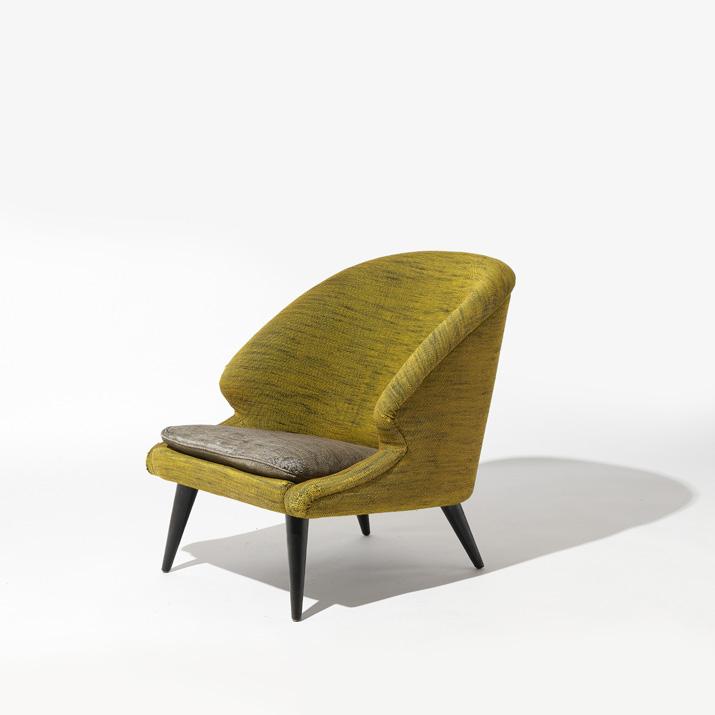
1917-1996
Fauteuil mod. 220 – circa 1955
Structure recouverte de tissu, pieds en acajou
Vatne Lenestolsfabrikk éditeur
76 × 71 × 84 cm
4 000 - 6 000 €
101
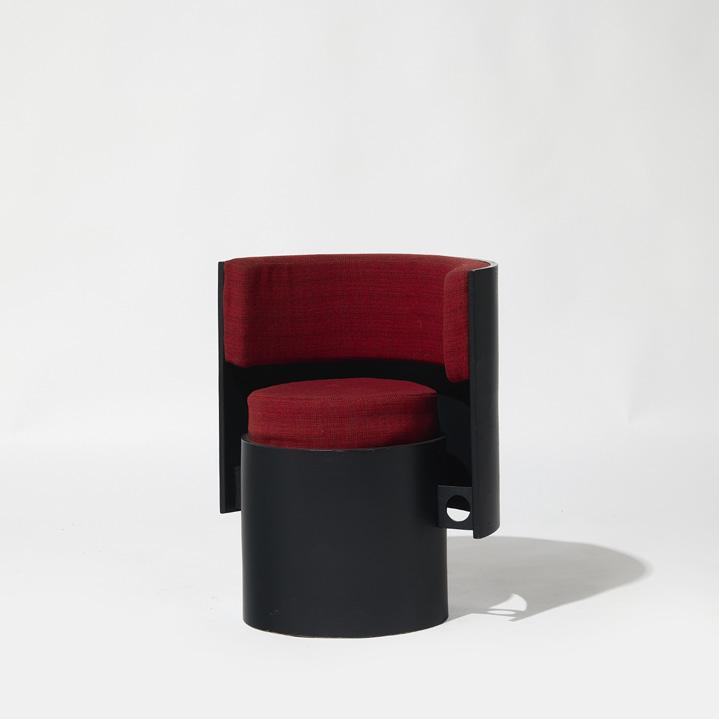
Verner PANTON
1926-1998
Fauteuil prototype – circa 1960
Structure en stratifié courbé laqué noir, assise et dossier recouverts de tissu rouge
August Sommer «Geformtes Holz» éditeur
68 × 58 × 46 cm
1 800 - 2 500 €
99
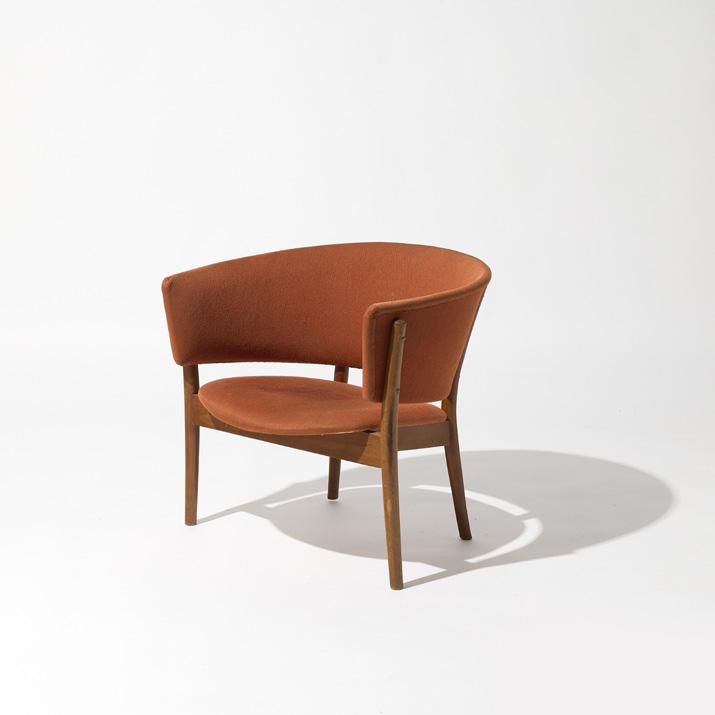
Nanna DITZEL
1923-2005
Fauteuil mod. ND 83 – 1952
Structure en hêtre massif, assise et dossier recouverts de tissu ocre
Søren Willadsen éditeur
66 × 67 × 60 cm
2 000 - 3 000 €
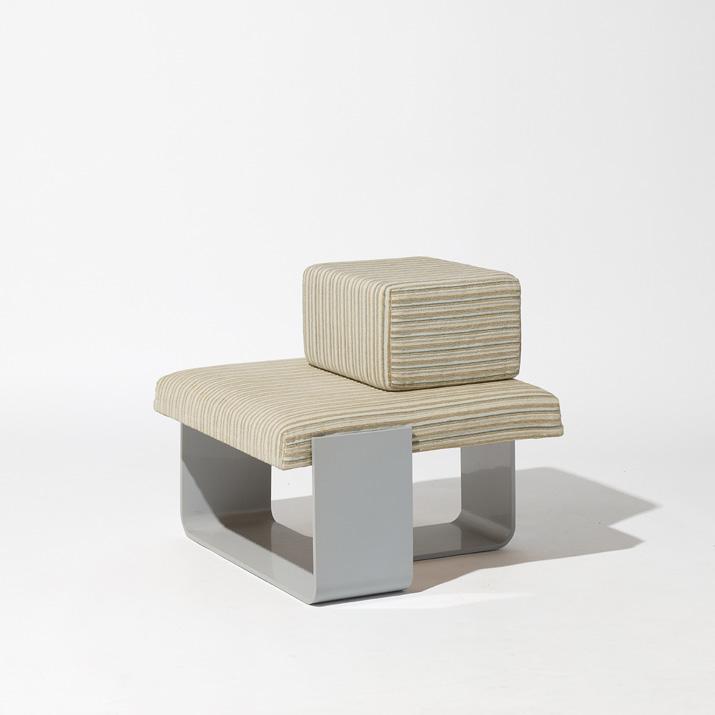
102
Richard THERN
Né en 1921
Chauffeuse – circa 1970
Piètement en PVC gris, assise et coussin de dossier recouverts de tissu
Muthesius-Hochschule Kiel éditeur
Marquée «N 3 Unten» au revers de l’assise
56 × 62 × 61 cm
600 - 800 €
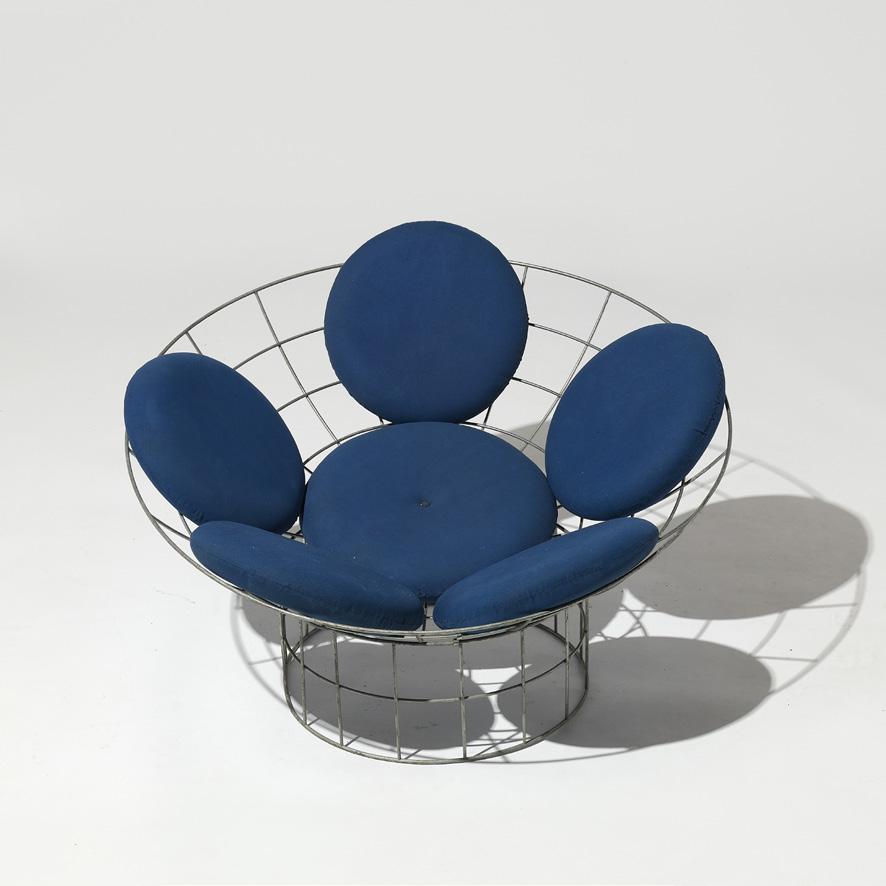
Verner PANTON
1926-1998
Fauteuil « Adjustable Peacock » modèle
T 5 – 1960
Structure en acier galvanisé, coussin recouverts de tissu bleu Plus Linje éditeur
59 × 97 × 97 cm
1 200 - 1 500 €
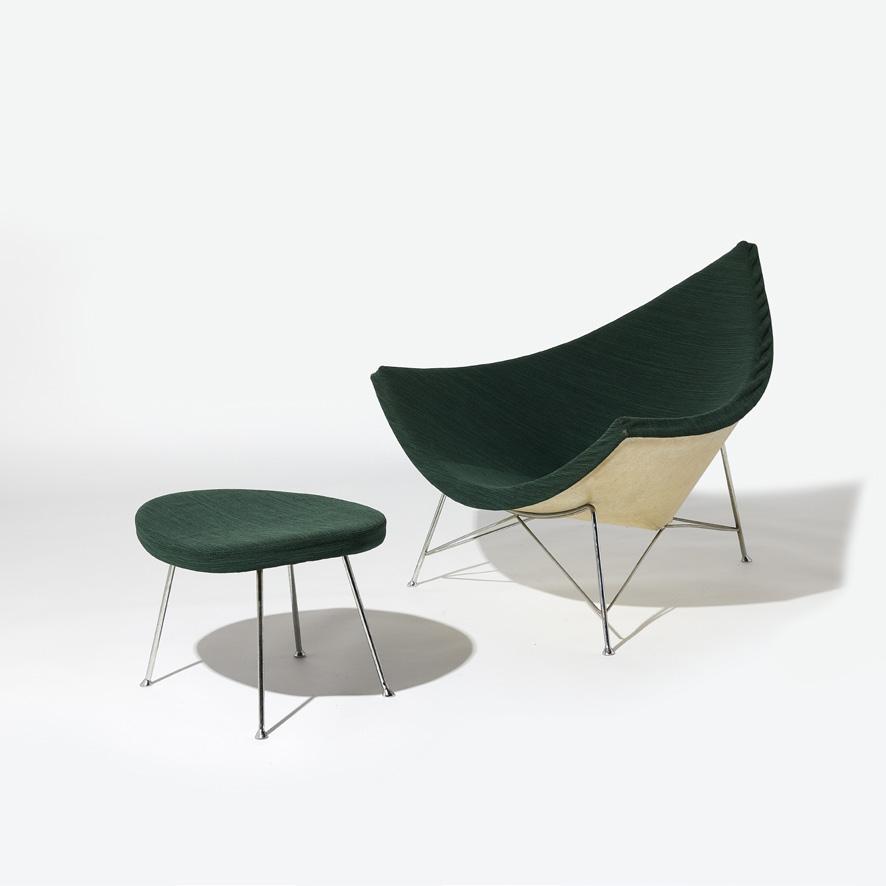
George NELSON
1908-1986
Fauteuil « Coconut » et son ottoman Modèle créé en 1955, le nôtre circa 1960
Structure en acier tubulaire chromé, coque en fibre de verre moulée recouverte de tissu vert Herman Miller furniture Co. éditeur Étiquette de l’éditeur au revers de l’assise du fauteuil
Fauteuil : 80 × 100 × 88 cm
Ottoman : 40 × 58 × 59 cm
3 000 - 4 000 €
105
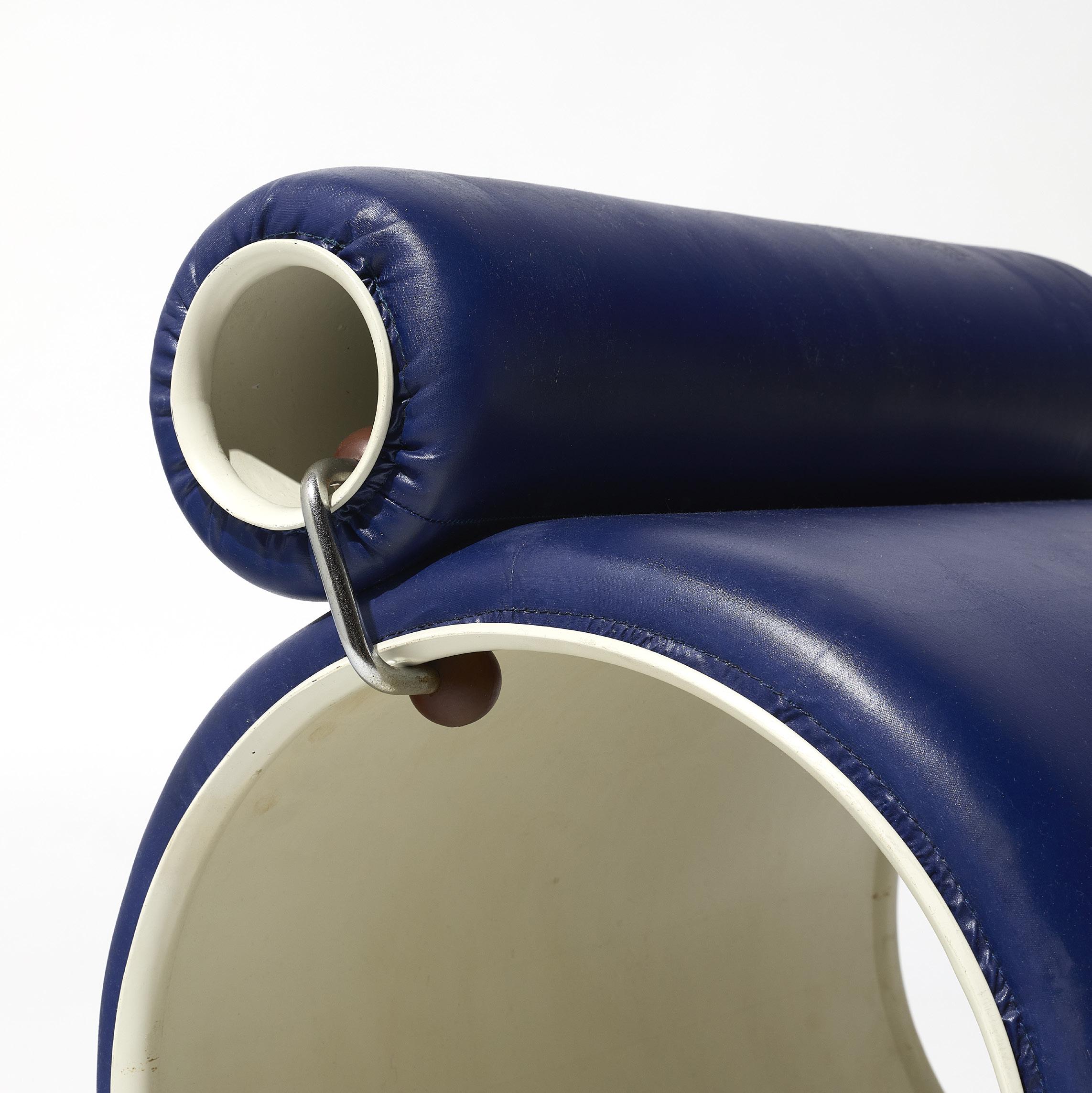
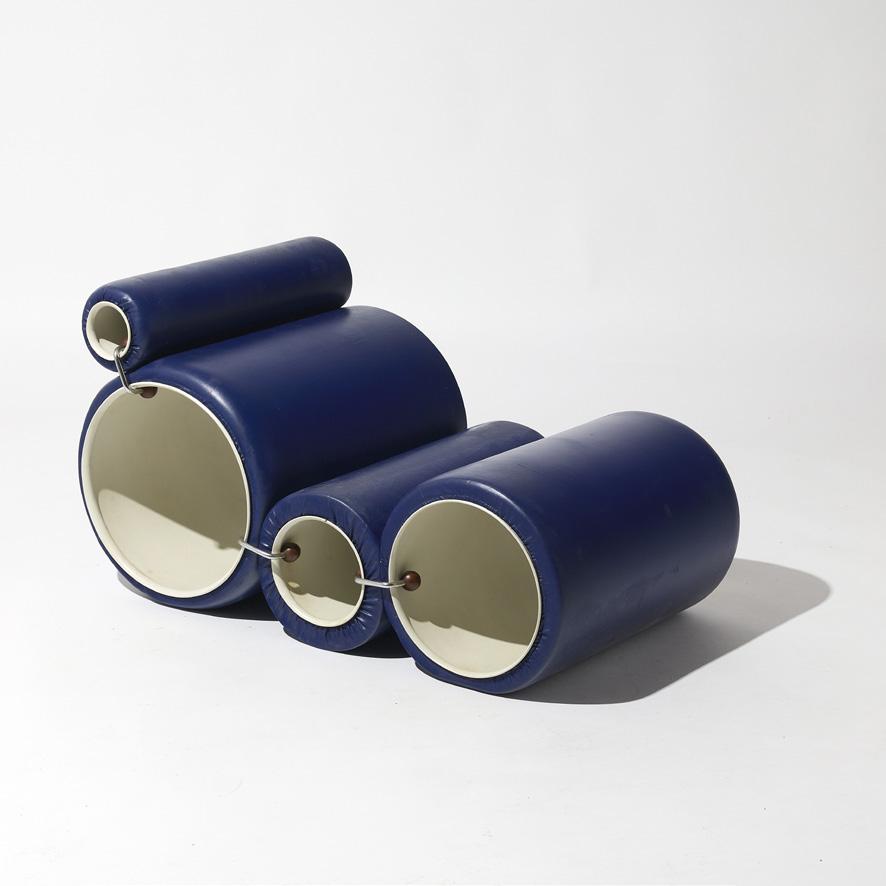
Joe COLOMBO 1930-1971
Chaise longue « Tube » – 1969
Structure en pvc blanc, assise recouverte de simili cuir bleu, éléments de fixation en acier chromé et caoutchouc
Flexform éditeur
57 × 66 × 105 cm
4 000 - 6 000 €
Verner PANTON
1926-1998
Chaise prototype « Shogum »
mod. EJ 12 – circa 1993
Structure en hêtre contreplaqué courbé, anneaux en acier, garniture en mousse August Sommer éditeur
69 × 59 × 49 cm
3 000 - 5 000 €
Né en 1949
Fauteuil « composé de quatre parties » n. 8 – 1994
Structure en contreplaqué de bouleau courbé Atelier Vorsprung éditeur
90 × 78 × 78 cm
1 200 - 1 500 €
Chaise – circa 1920-1930
Structure en chêne massif, assise et dossier contreplaqué de chêne
80 × 58 × 53,5 cm
500 - 700 €
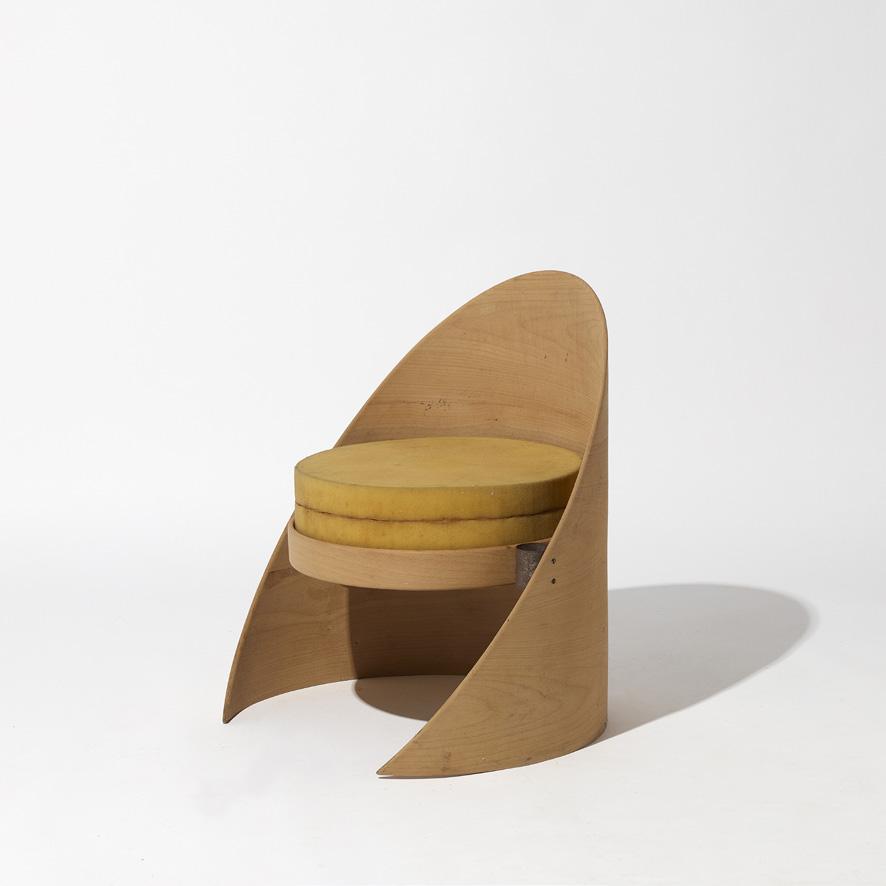
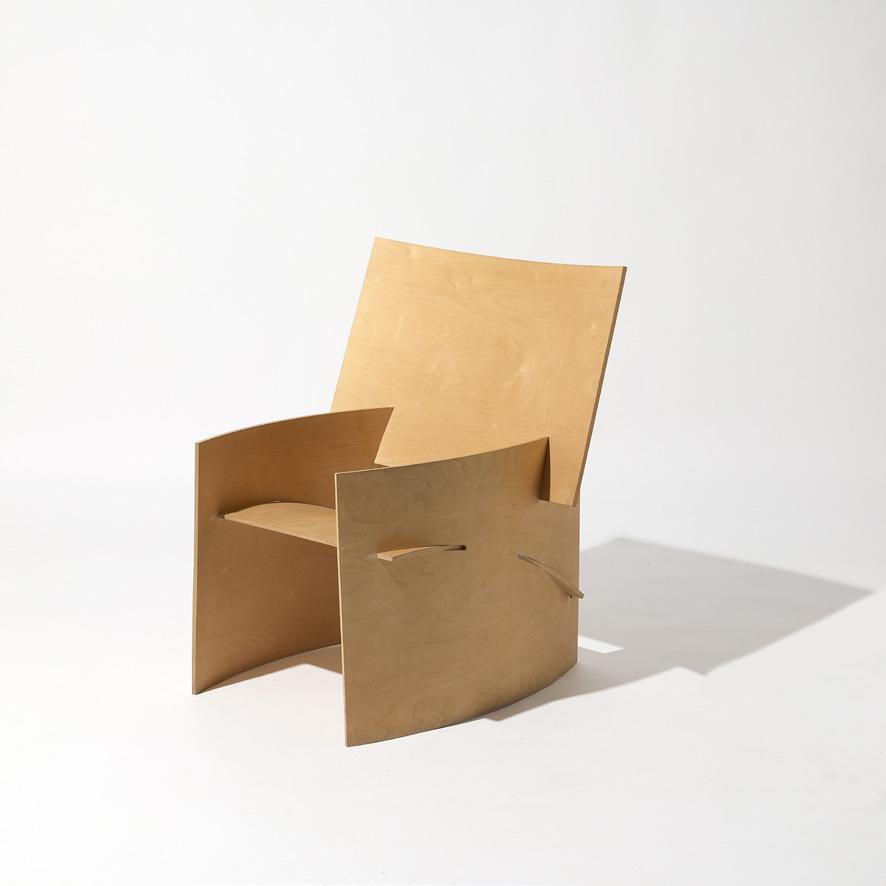
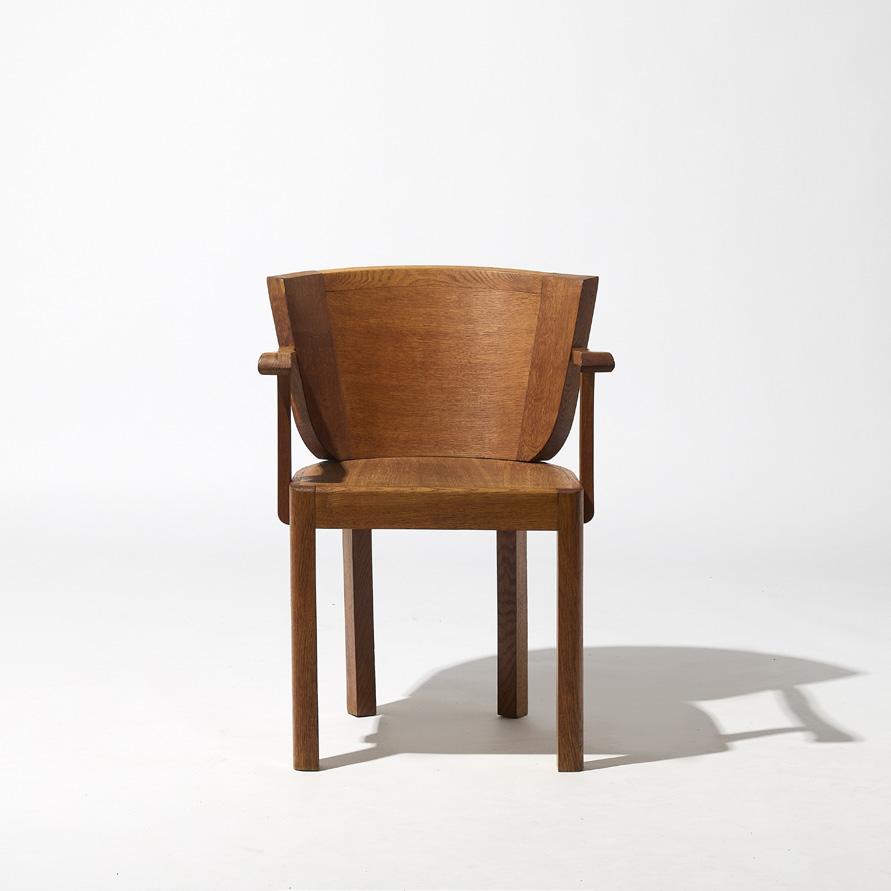
109
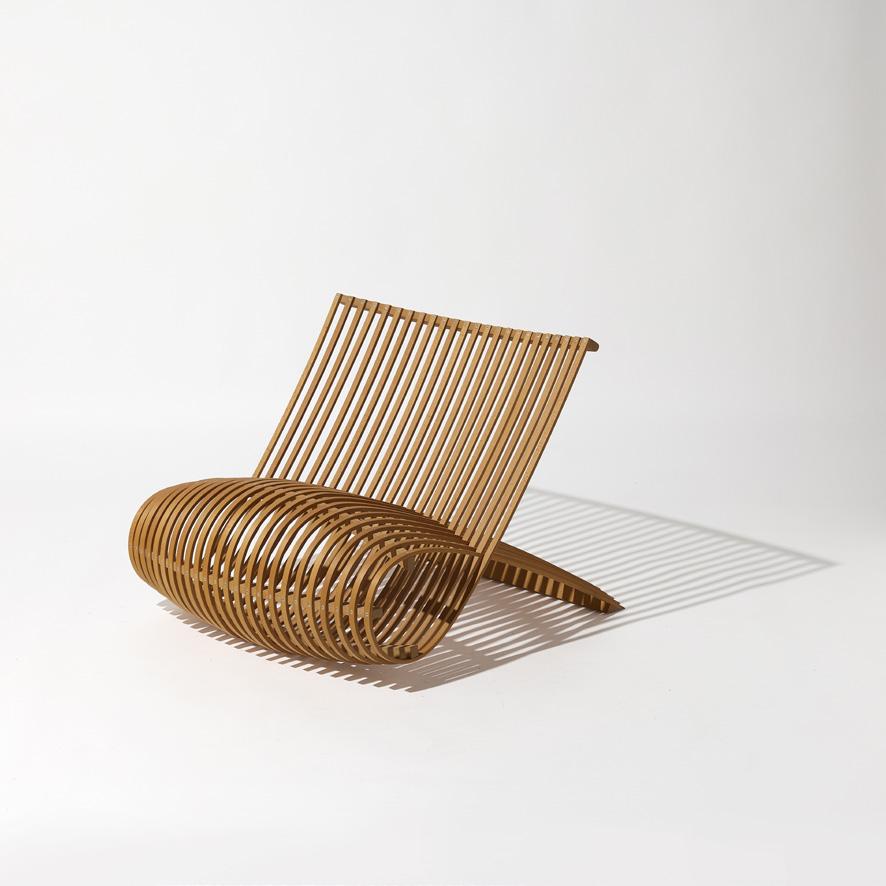
Marc NEWSON
Né en 1963
Fauteuil « Wooden Chair » – 1988
Structure en hêtre massif courbé
Cappellini éditeur
Autocollant de l’éditeur
69 × 82 × 96 cm
2 000 - 3 000 €
110
Gerald SUMMERS
1899-1967
Chaise « CB Dining chair » – circa 1936
Structure en contreplaqué de bouleau, tranche laquée noir, assise en toile cirée
Makers of Simple Furniture Ltd. éditeur
66,5 × 43,5 × 46 cm
5 000 - 7 000 €
111
Alvar AALTO & Otto KORHONEN
1898-1976 & 1894-1935
Fauteuil « Kakkonen » n° 2
Modèle créé en 1930
Structure en bouleau massif et contreplaqué de bouleau
Finmar éditeur
Plaque de l’éditeur sous l’assise
69 × 52 × 57 cm
1 500 - 2 000 €
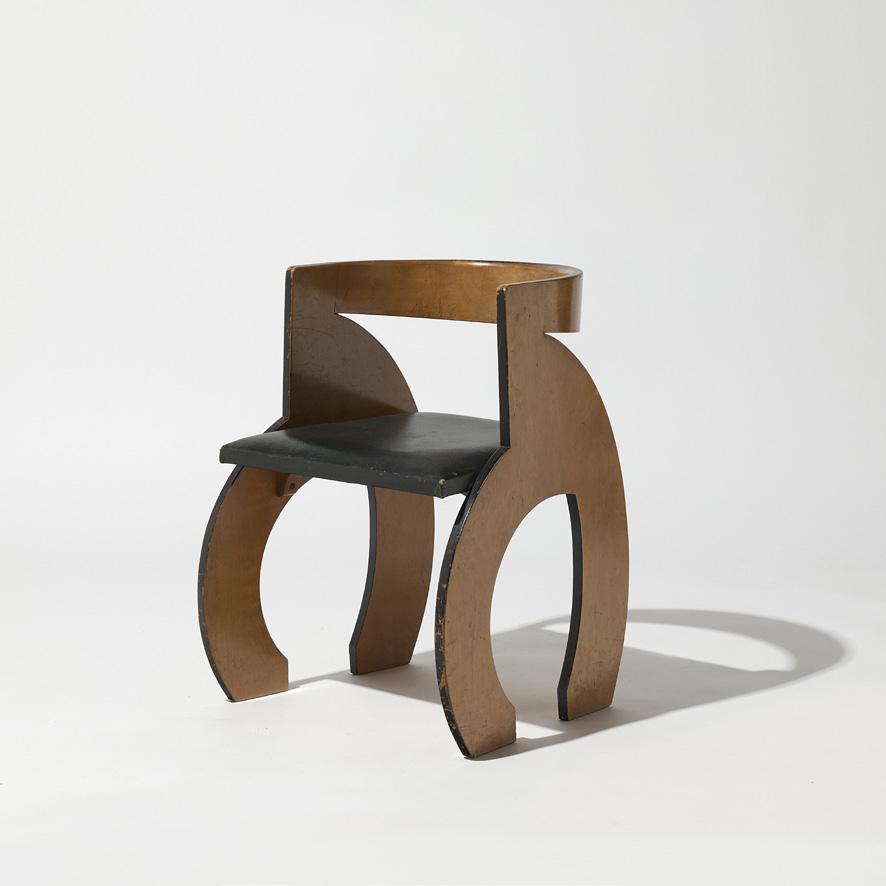
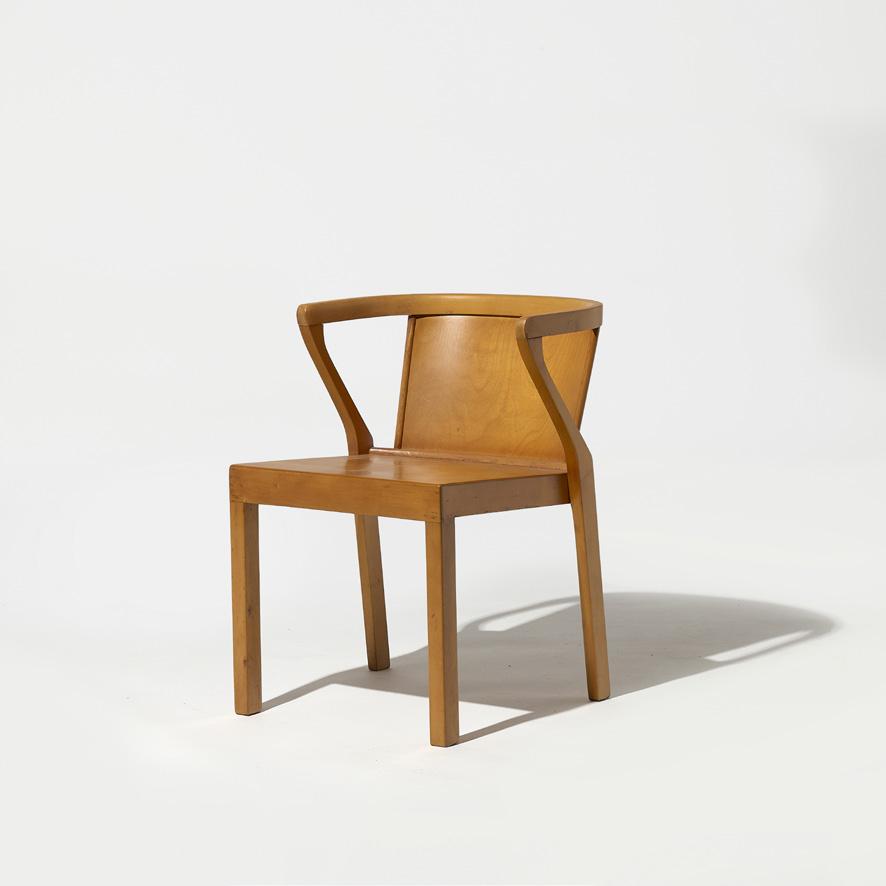
Fauteuil – circa 1910
Structure en chêne massif, assise recouverte de tissu à décor floral
82,5 × 54 × 54 cm
600 - 800 €
Fritz August BREUHAUS DE GROOT
1883-1960
Fauteuil – circa 1925
Structure en noyer massif vernis rouge et or à la gomme laque, coussin recouvert de velours à décor floral
66 × 60,5 × 49 cm
2 000 - 3 000 €
Hans CHRISTIANSEN
1866-1945
Chaise modèle No. 20 – circa 1910
Hêtre massif laqué blanc
73 × 64 × 58 cm
1 500 - 1 800 €
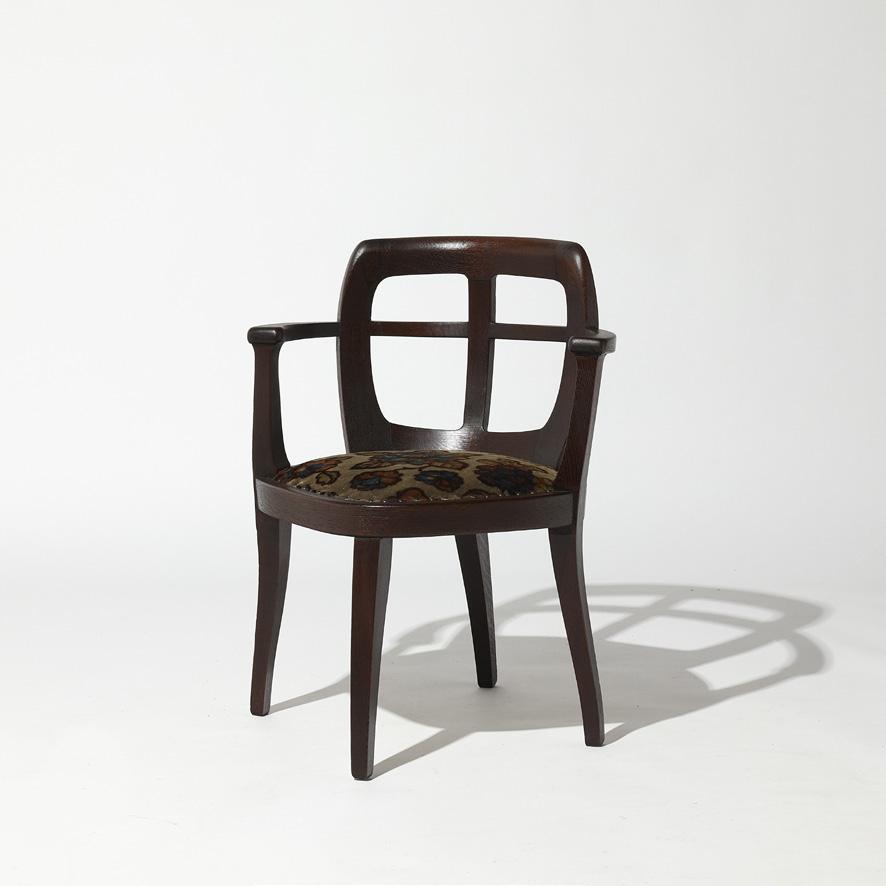
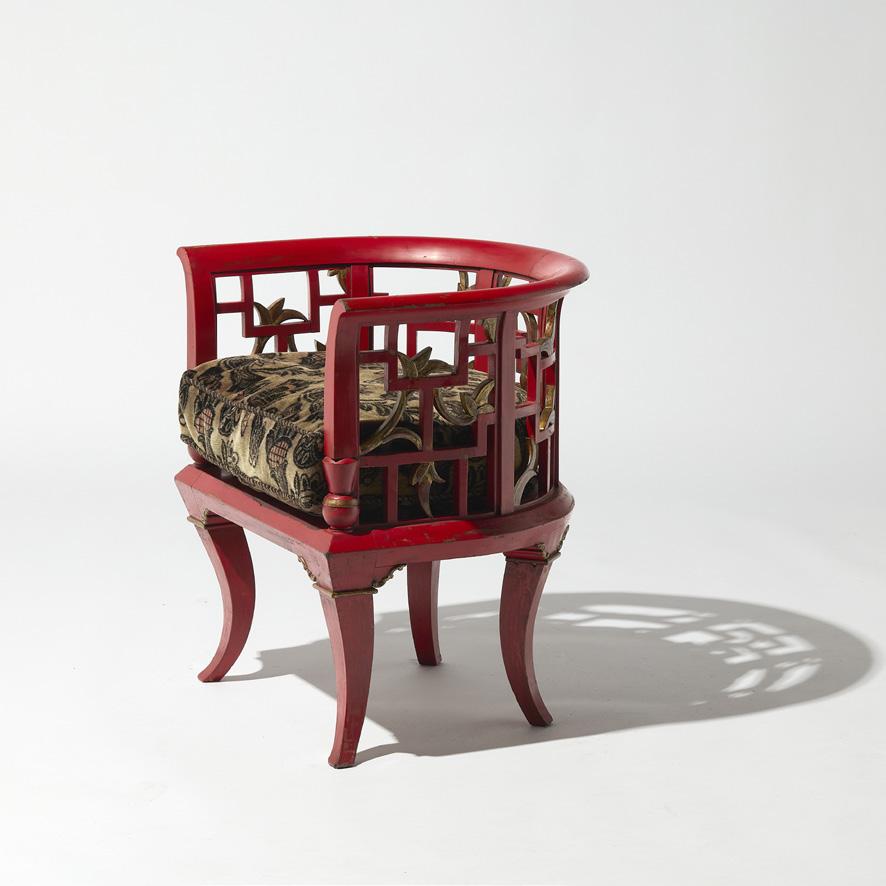
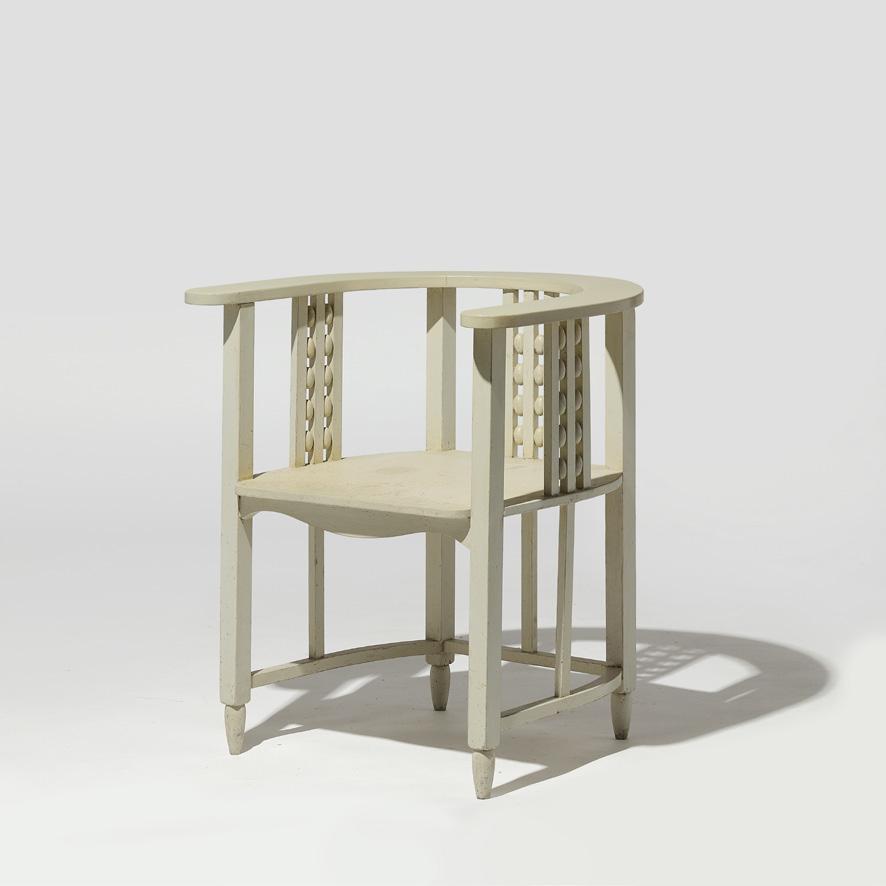
1876-1945
Fauteuil « Urbani Keller » – 1932
Structure en pin noirci
74 × 69 × 51 cm
On y joint un ensemble de 4 cartes postales et documents encadrés figurant le modèle dans l’auberge Urbani Keller
1 500 - 1 800 €
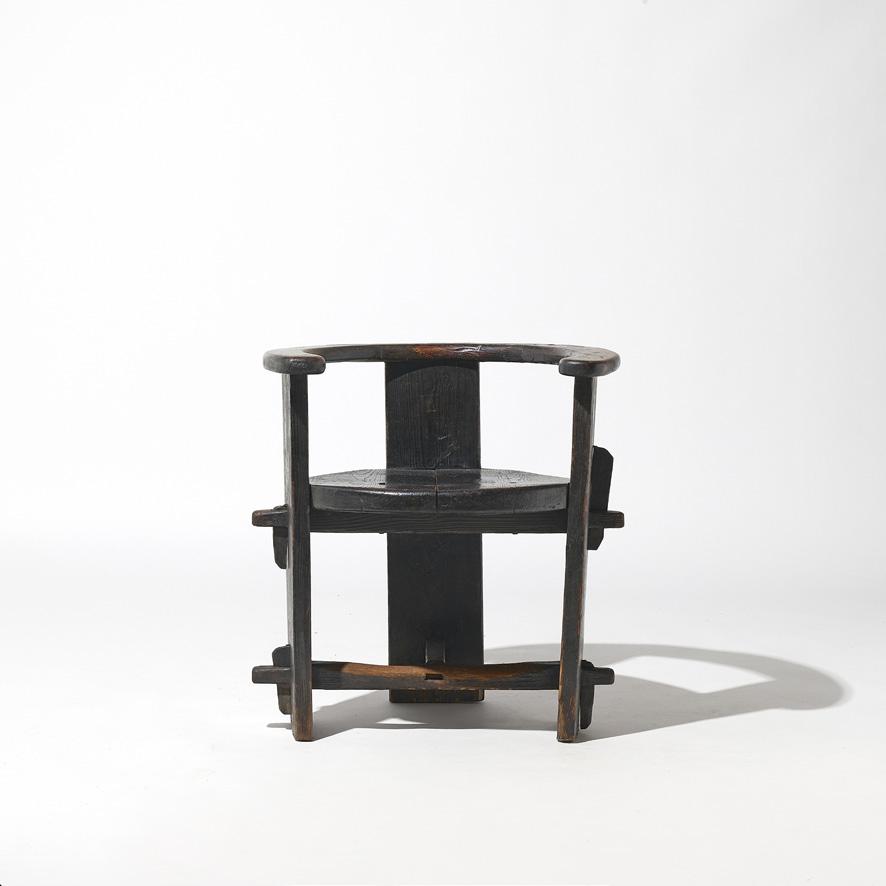
1870-1956
Chaise 728 – circa 1905
Structure en hêtre massif laqué blanc et noir, assise recouverte de velours rose à décor géométrique du Wiener Werkstätten
Jacob & Josef Kohn éditeur
Tampon de l’éditeur sur la traverse sous l’assise
76 × 54 × 45 cm
1 500 - 1 800 €
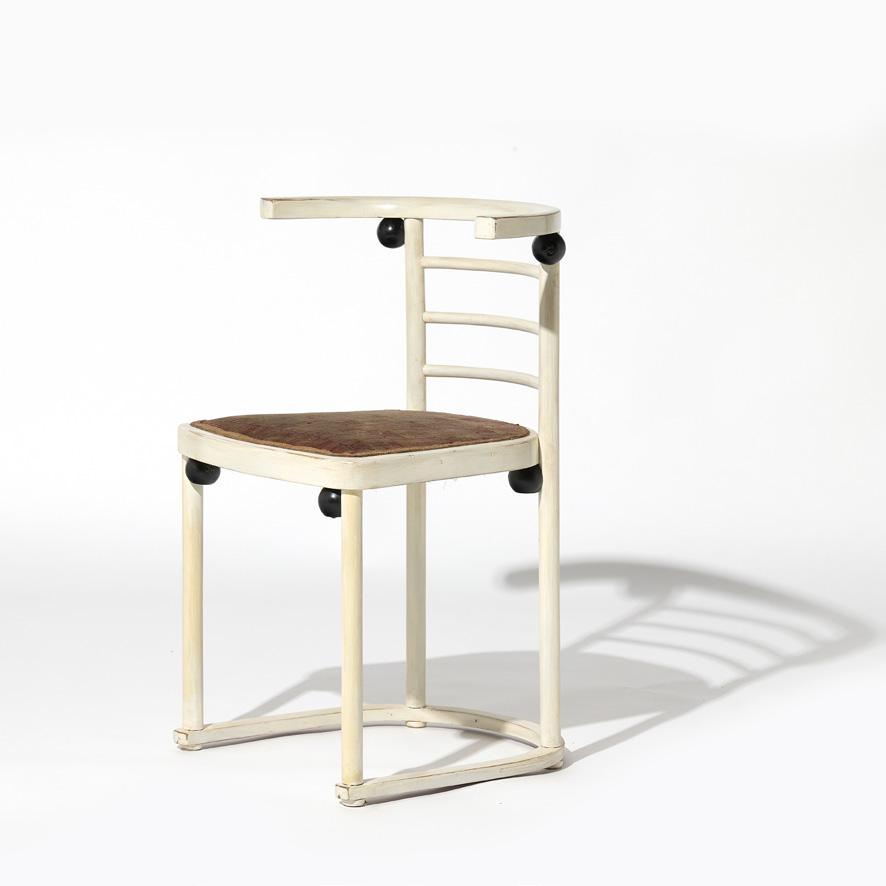
1929-1980
Chaise « PK 11 » – 1957
Structure en acier, assise recouverte de cuir camel, dossier en frêne laminé courbé, patins en plastique, E. Kold Christensen éditeur
65 × 63 × 46 cm
1 500 - 2 000 €
Titti SARACINO & Giovanni DE LUCCHI
Née en 1976 & Né en 1962
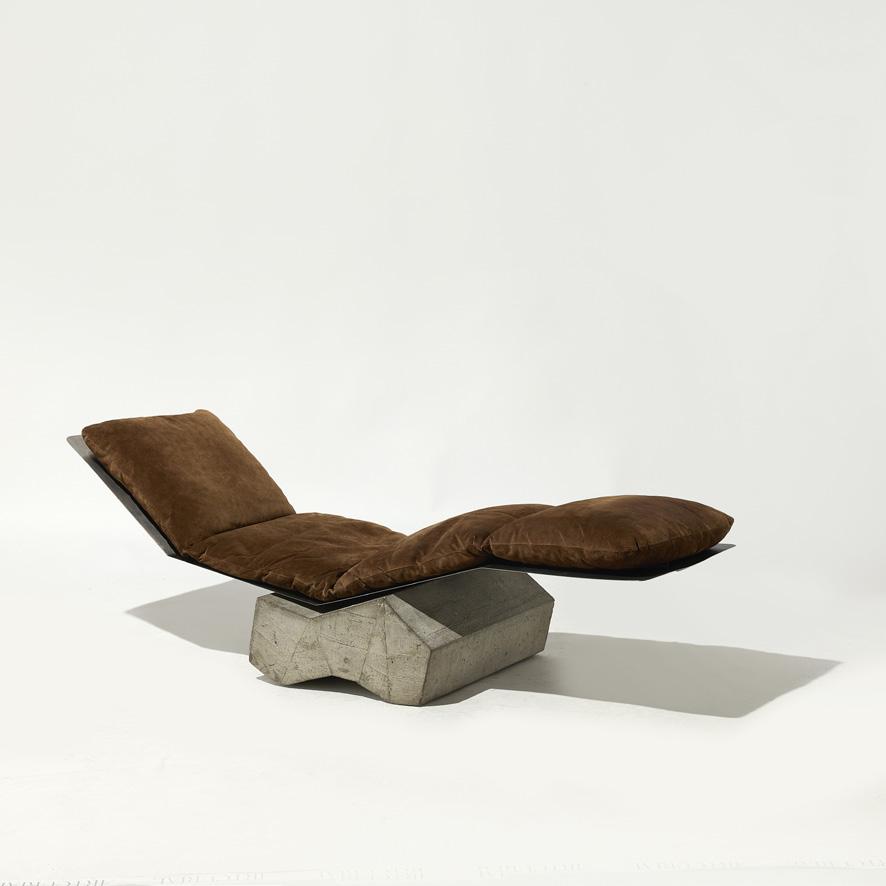
Chaise longue « Diapason » – 1973
Base en béton, assise en acier plié, coussin en daim Elleduemila éditeur
57 × 170 × 57 cm
1 800 - 2 500 €
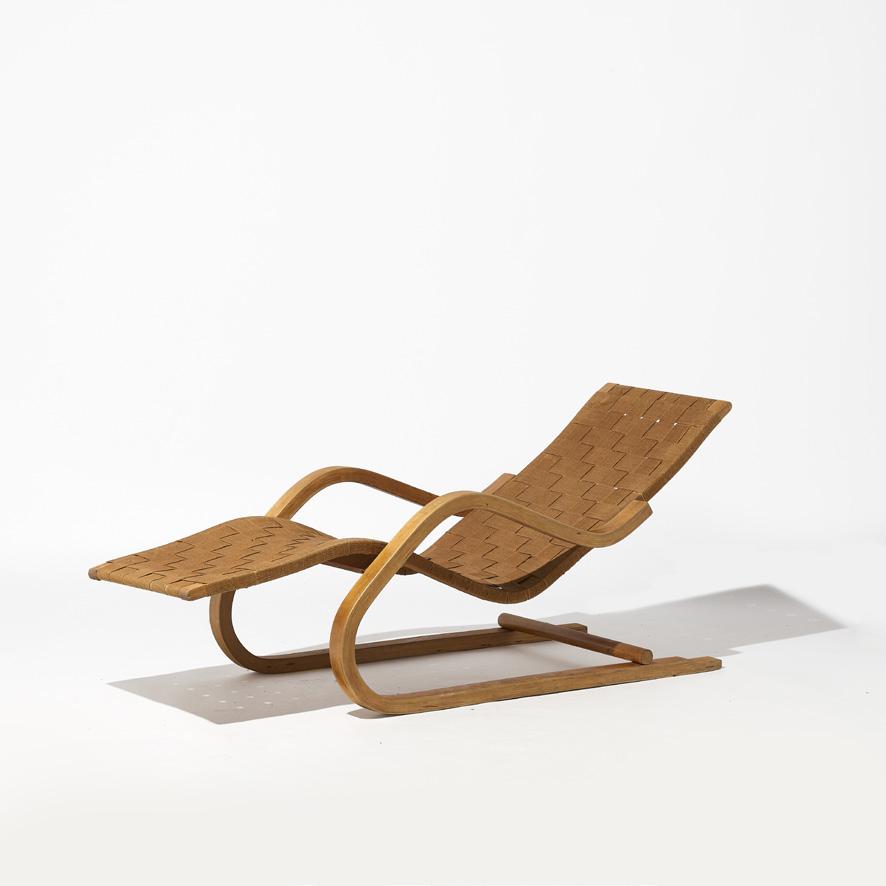
Alvar AALTO
1898-1976
Chaise longue modèle 39 – 1937
Structure en bouleau lamellé collé, bouleau massif, assise garnie de sangles de lin tressées
Production O.Y. Huonekalu-ja Rakennustyötehdas A.B
Artek éditeur
71 × 61,5 × 170 cm
3 000 - 5 000 €
120
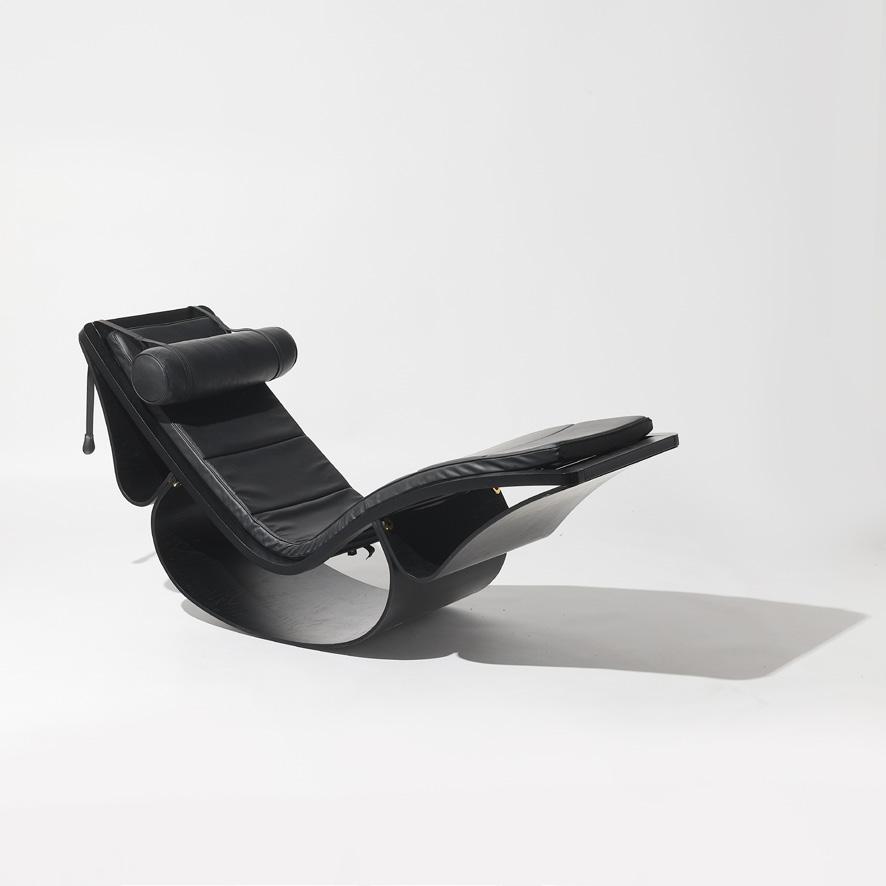
Oscar NIEMEYER
1907-2012
Chaise longue « Rio »
Modèle créé en 1978
Structure en contreplaqué de frêne courbé teinté noir, éléments de fixation en laiton, assise et têtière recouverts de cuir noir
Fasem International éditeur
95 × 56 × 166 cm
3 000 - 5 000 €
Tom DIXON
Né en 1959
Chaise longue « Liege » – 1990
Structure en tôle d’acier galvanisé riveté, assise recouverte d’un rembourrage couvert de tissu bleu-mauve
Tom Dixon Studio éditeur
Un des trois exemplaires réalisés
115 × 60,5 × 158 cm
4 000 - 6 000 €
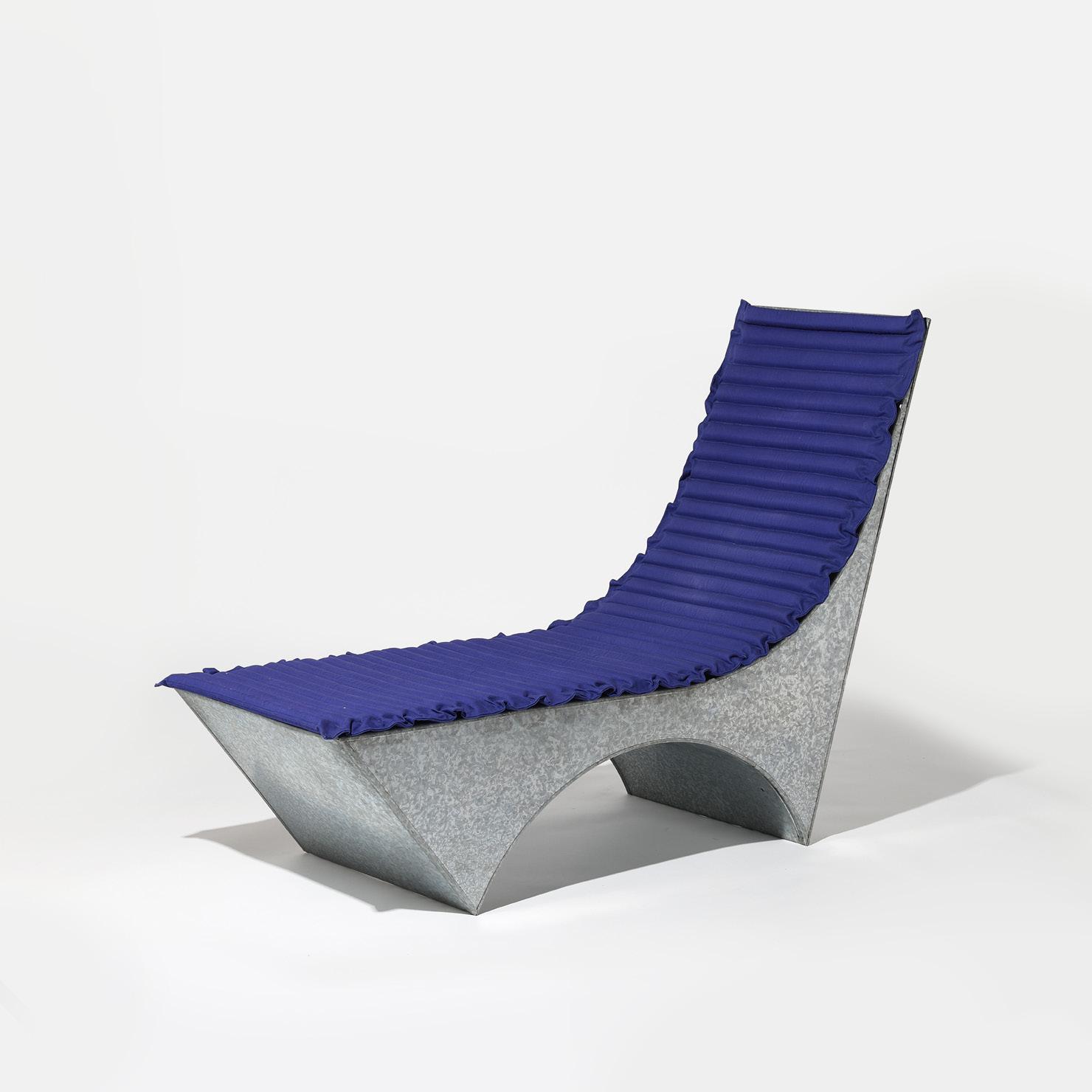
Cet exemplaire fait partie d’un des trois prototype réalisés et vendus par la galerie Artificial à Nuremberg ; l’un se trouve dans la collection de la Pinakothek der Moderne à Munich et le troisième est en main privée. Ce rare prototype a fait partie des recherches ayant conduit à la production de la « Bird Chair » éditée en série par Cappellini.
This piece is one of three prototypes produced and sold by the Artificial gallery in Nuremberg; one is in the collection of the Pinakothek der Moderne in Munich and the third is in private hands. This rare prototype was part of the research that led to the production of the “Bird Chair” mass-produced by Cappellini.
Fauteuil empilable – circa 1935
Structure en hêtre massif peint, assise et dossier en hêtre contreplaqué peint
Geneba éditeur
88 × 72,5 × 73 cm
600 - 800 €
1914-2007
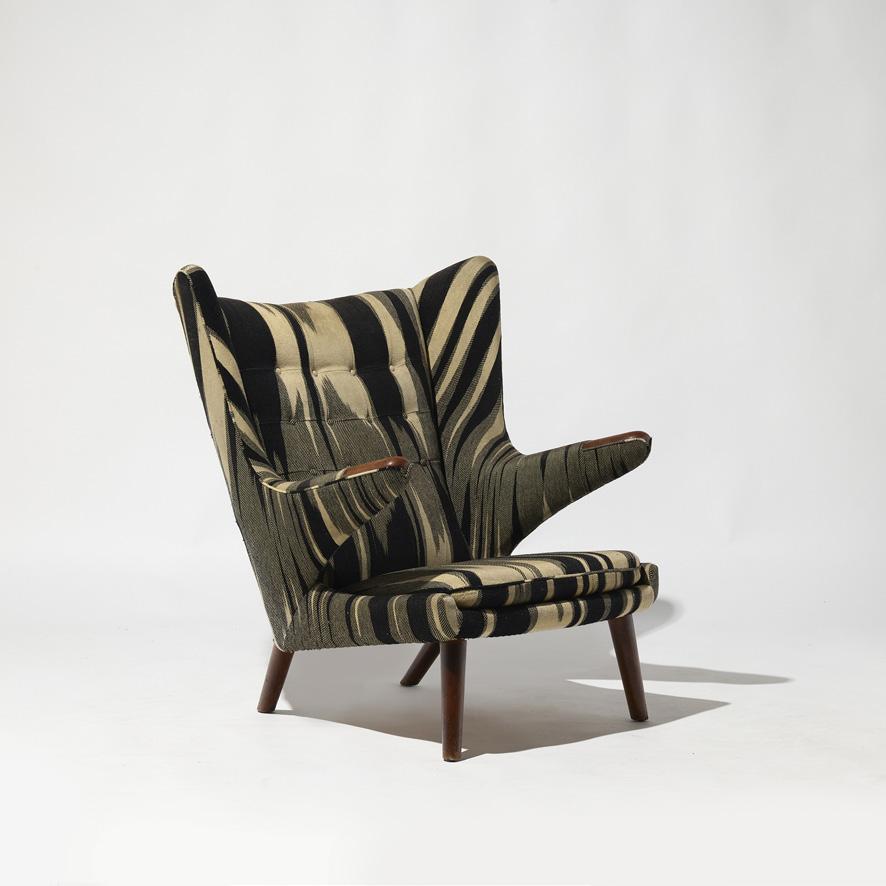
Fauteuil mod. Bamestol AP 19 dit « The Teddy Bear Chair » – circa 1951
Structure recouverte de tissu en laine
Unika Væv d'origine, piètement et accotoirs en chêne
A.P. Stolen éditeur
99 × 90 × 85 cm
8 000 - 12 000 €
Egon EIERMANN
1904-1970
Fauteuil mod. SE 122 A – 1958
Structure en frêne massif, sangles en cuir, assise et dossier recouverts de tissu gris, accoudoirs recouvert de cuir noir
Wilde+Spieth éditeur
Plaque sous l’assise
75 × 59 × 71 cm
1 200 - 1 500 €
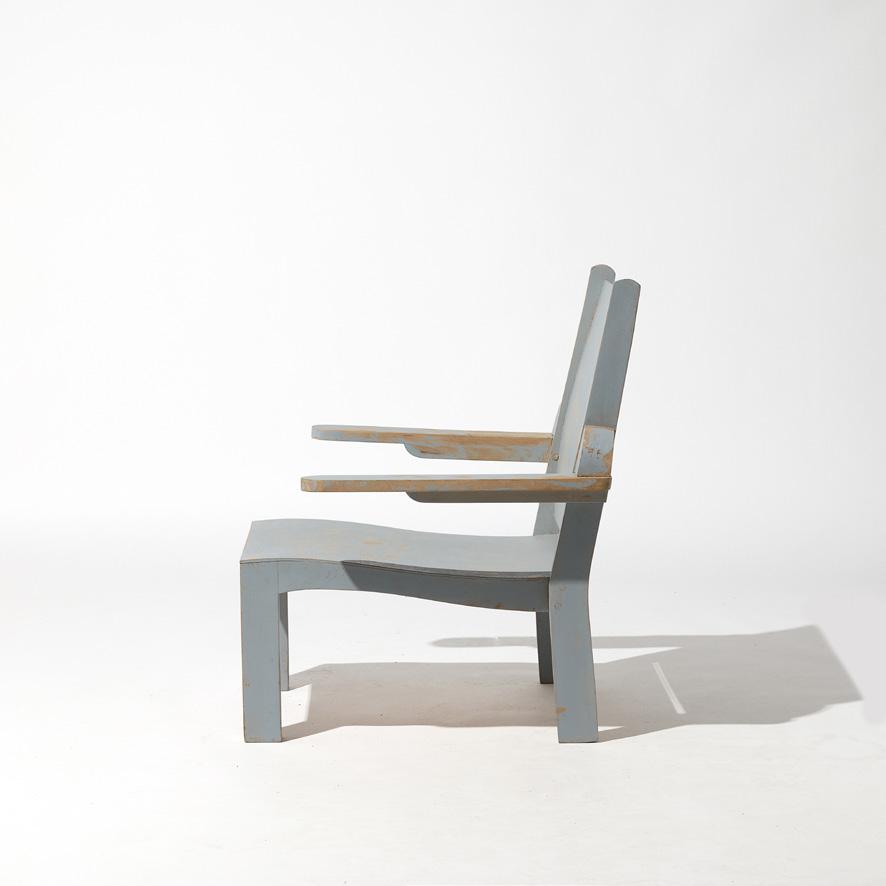
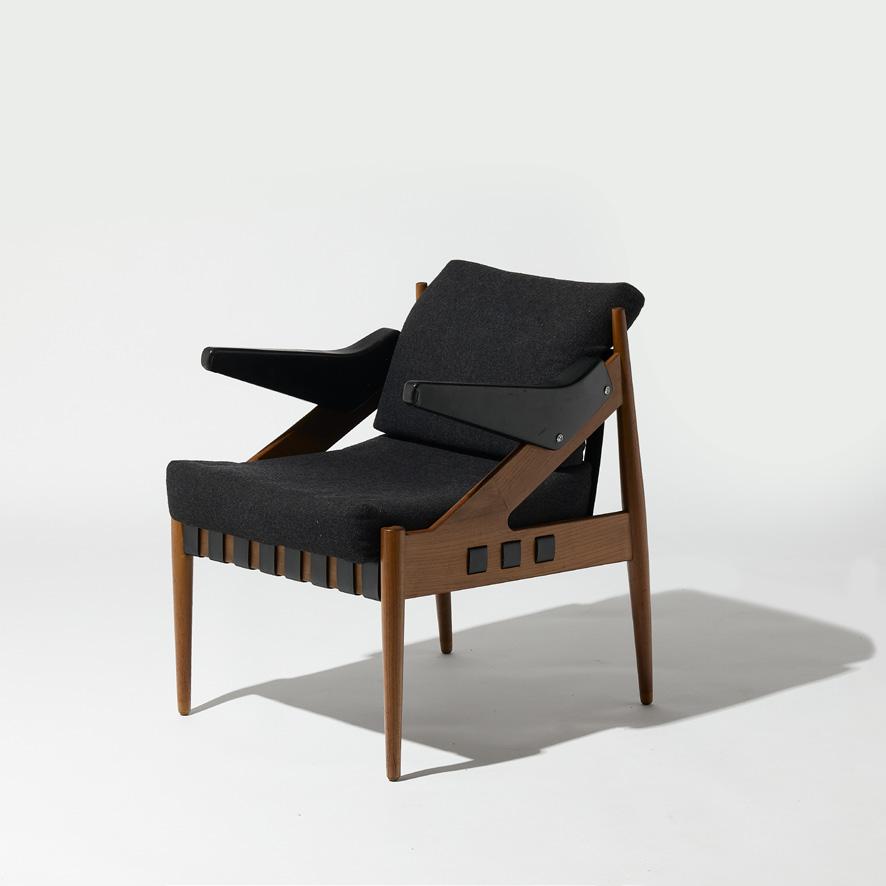
Marcel BREUER
1902-1981
Chaise « Lattenstuhl ti 1a »
Circa 1922
Structure en cerisier massif, tissu d’origine
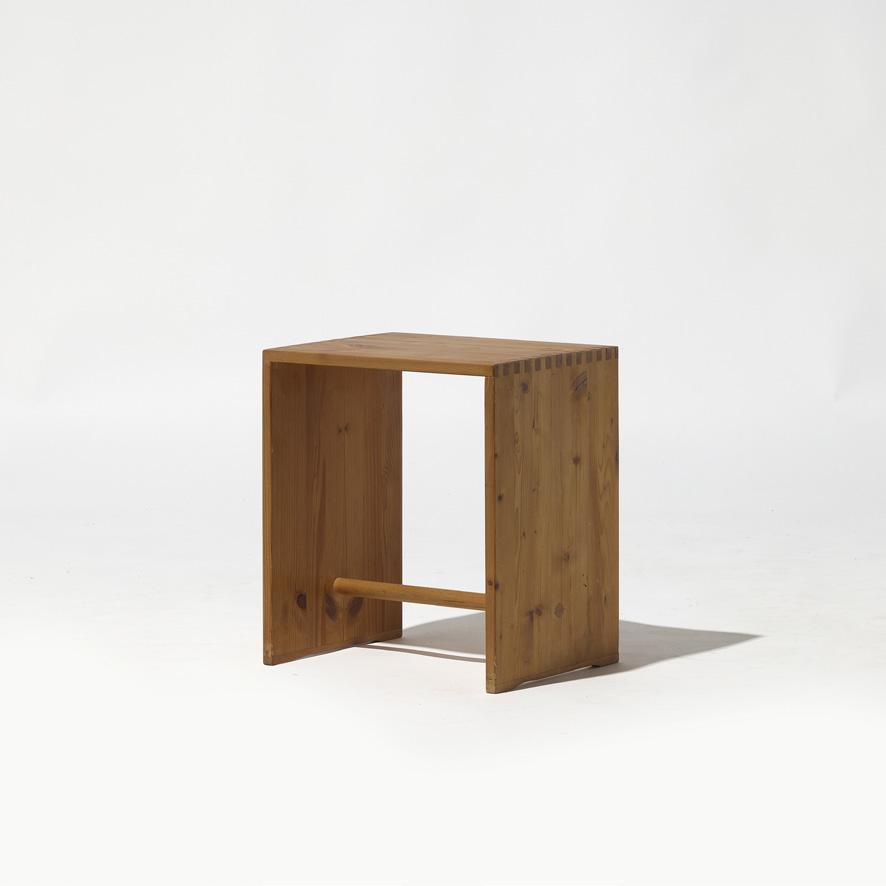
95,5 × 56 × 58 cm
20 000 - 30 000 €
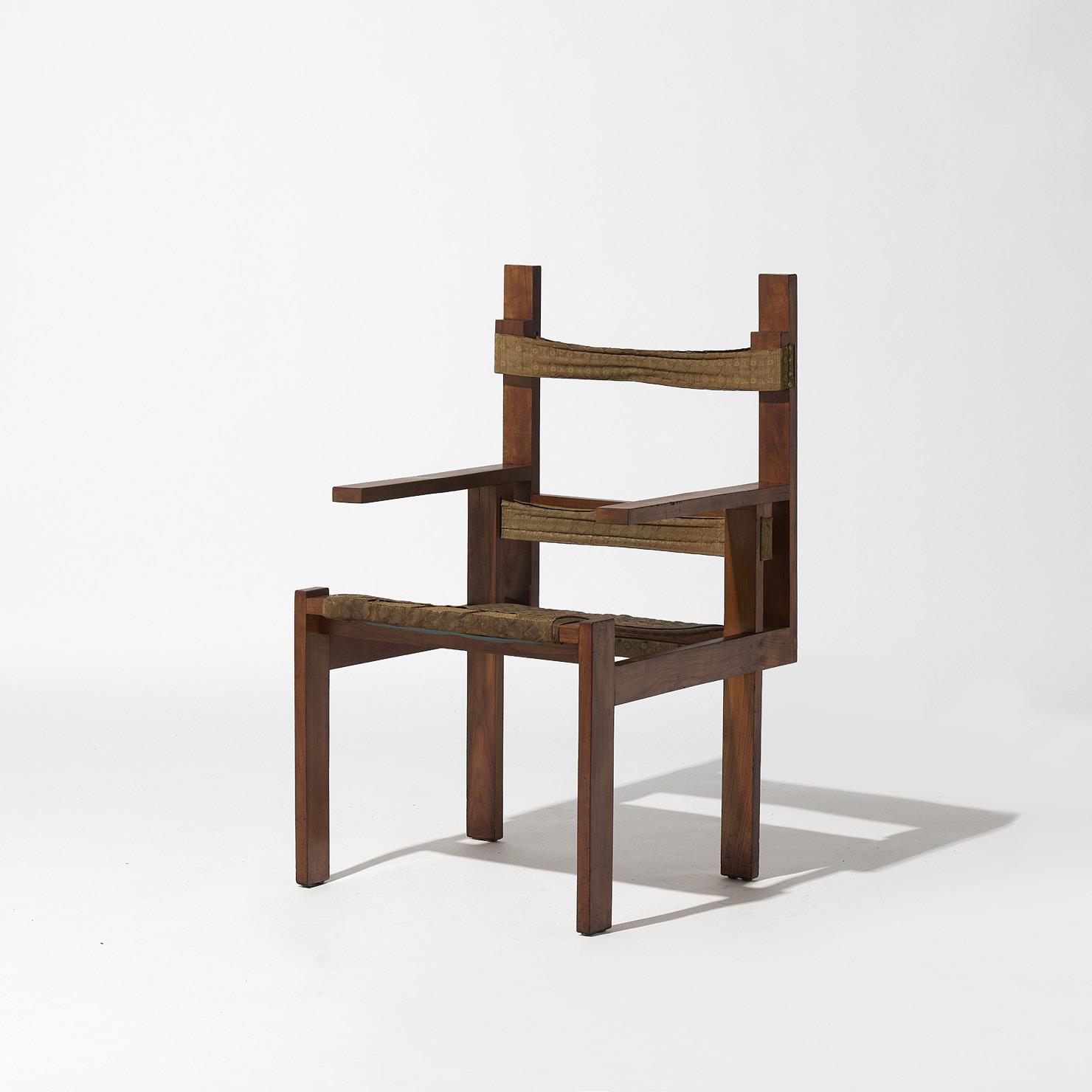
La chaise à lattes de Marcel Breuer, créée vers 1922–1924 pendant sa période Bauhaus, illustre ses premières expériences de mobilier fonctionnel, industriel et modulable avant ses célèbres créations en acier tubulaire. Fabriquée en lattes de cerisier avec une sellerie en textile soutenue par des sangles en lin, elle reflète les principes du Bauhaus : honnêteté des matériaux, clarté constructive, reproductibilité industrielle et « la forme suit la fonction ». Cette pièce montre la transition du mobilier artisanal au modernisme industriel et témoigne de l’influence des tendances
constructives et artistiques de l’époque. Sa composition presque architecturale reflète la proximité de Breuer avec les tendances constructives de l’époque — par exemple, les compositions de Piet Mondrian, l’architecture de Gerrit Rietveld, ou les œuvres sculpturales de Georges Vantongerloo. Préservé avec son textile d’origine et ses sangles en lin, cet exemplaire, l’un des 26 modèles répertoriés par les Archives d’État de Thuringe, offre un témoignage rare et précieux de cette période du Bauhaus.
Marcel Breuer’s slatted chair, created around 1922–1924 during his Bauhaus period, illustrates his early experiments with functional, industrial, and modular furniture before his famous tubular steel designs. Made of cherry wood slats with textile upholstery supported by linen straps, it reflects the principles of the Bauhaus: honesty of materials, clarity of construction, industrial reproducibility, and “form follows function.” This piece shows the transition from handcrafted furniture to industrial
modernism and reflects the influence of the constructive and artistic trends of the time. Its almost architectural composition reflects Breuer’s proximity to the constructive trends of the time— for example, the compositions of Piet Mondrian, the architecture of Gerrit Rietveld, or the sculptural works of Georges Vantongerloo. Preserved with its original fabric and linen straps, this example, one of 26 models listed by the Thuringian State Archives, offers a rare and valuable testimony to this period of the Bauhaus.
1886-1969
Fauteuil modèle « MR 70/9 »
Modèle créé en 1930, le nôtre entre 1930 et 1939
Structure en acier chromé, élastiques en caoutchouc, assise et dossier recouverts de cuir capitonné noir
Bamberg Metallwerkstätten ou Josef Müller Metallgewerbe éditeur 81 × 76 × 84,5 cm
8 000 - 12 000 €
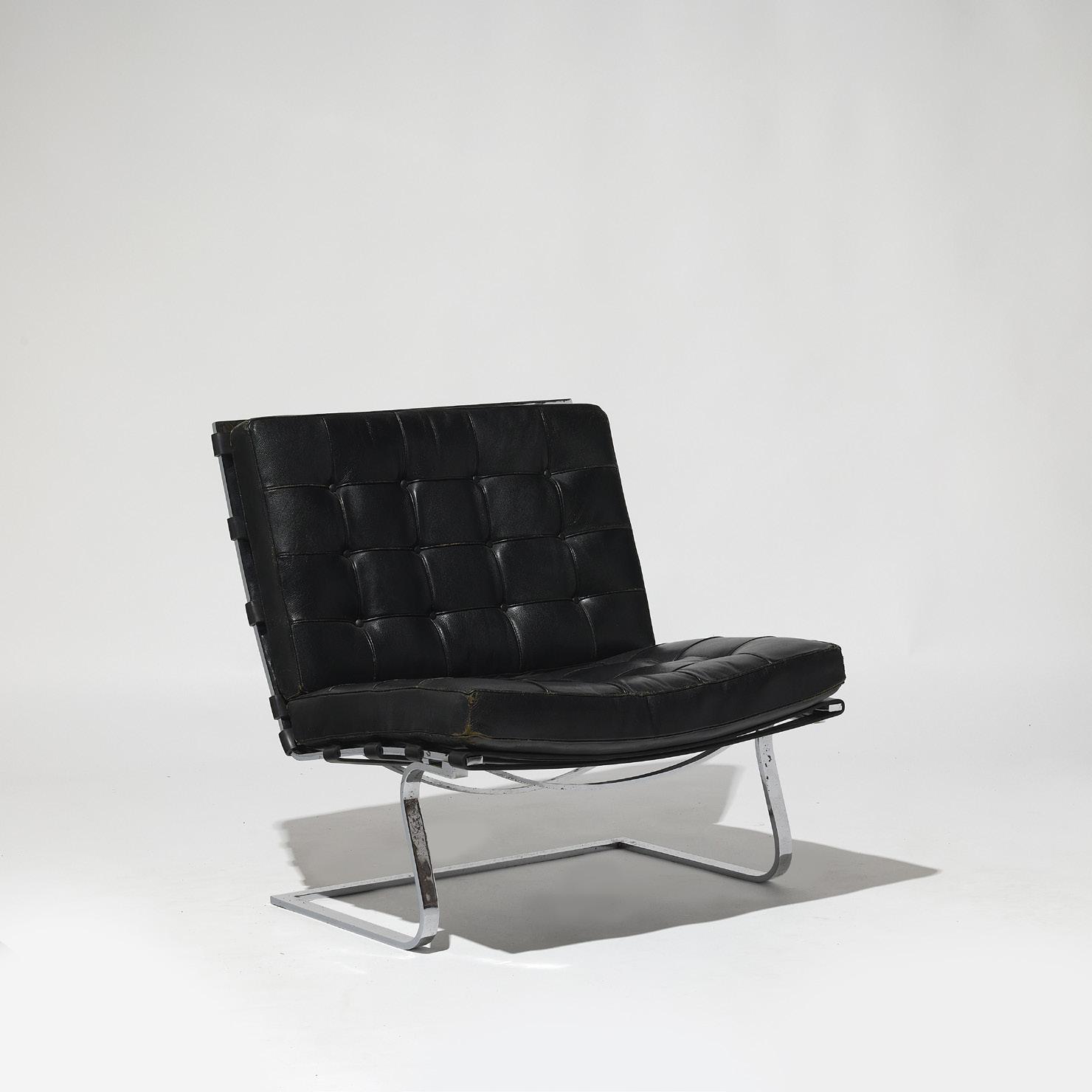
Ce fauteuil « Tugendhat » (modèle MR 60/4) de Ludwig Mies van der Rohe faisait partie d’un aménagement intérieur conçu pour la Farbenfabrik Wolfen, alors rattachée au groupe IG Farben, à proximité du Bauhaus Dessau. Le modèle a été breveté par Mies van der Rohe le 5 novembre 1930. Les sangles en caoutchouc d’origine reposent sur un brevet déposé en novembre 1930 par sa collaboratrice et partenaire Lilly Reich. Cette chronologie inscrit le fauteuil dans la continuité immédiate du célèbre
fauteuil « Barcelona », présenté au Pavillon allemand de l’Exposition internationale de 1929 à Barcelone.
Compte tenu de sa provenance, il n’est pas exclu que l’exemplaire proposé soit un prototype réalisé par la société Bamberg Metallwerkstätten — avant sa faillite — ou par son successeur Josef Müller Metallgewerbe. Il peut être daté entre 1929 et 1939, ce qui en fait une pièce historique remarquable, conservant ses sangles et sa sellerie d’origine dans un superbe état de conservation.
This “Tugendhat” armchair (model MR 60/4) by Ludwig Mies van der Rohe was part of an interior design project for Farbenfabrik Wolfen, then part of the IG Farben group, near the Bauhaus Dessau.
The model was patented by Mies van der Rohe on 5 November 1930. The original rubber straps are based on a patent filed in November 1930 by his collaborator and partner Lilly Reich. This chronology places the chair in the immediate continuity of the famous “Barcelona” chair,
presented at the German Pavilion at the 1929 International Exhibition in Barcelona. Given its provenance, it is possible that the piece on offer is a prototype made by Bamberg Metallwerkstätten—before its bankruptcy—or by its successor, Josef Müller Metallgewerbe. It can be dated between 1929 and 1939, making it a remarkable historical piece, with its original straps and upholstery in superb condition.
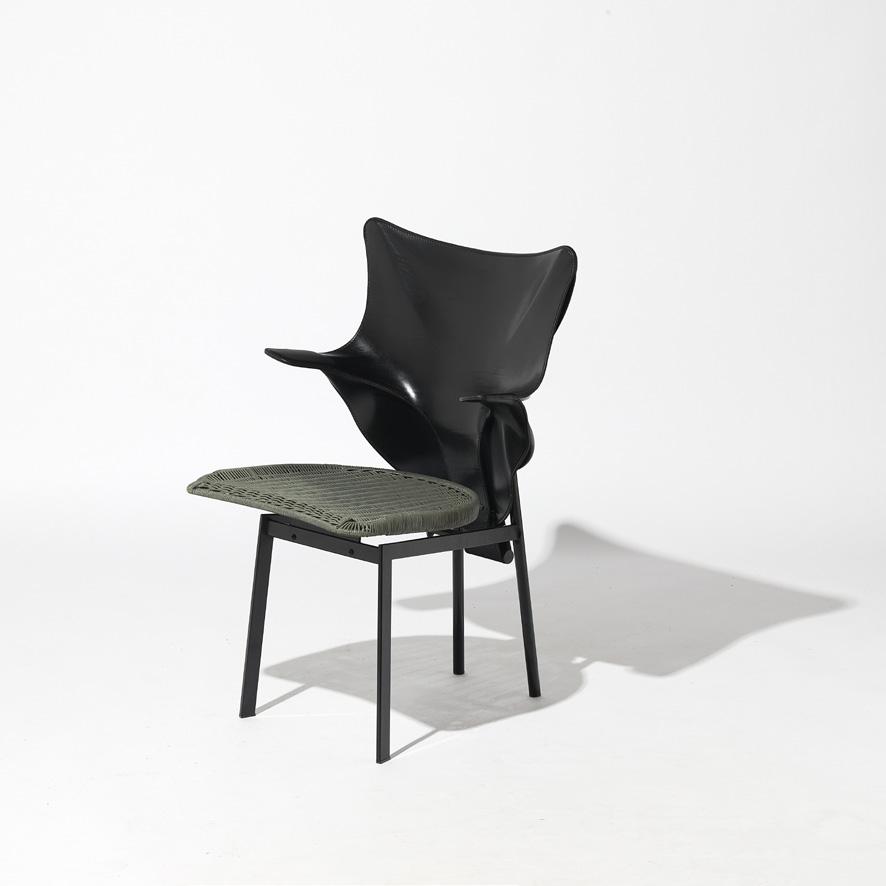
Né en 1940
Chaise « Re » – 1991
Structure en acier tubulaire laqué noir, dossier et accoudoirs recouverts de cuir noir, assise en cannage de rotin laqué gris
Zanotta éditeur
89 × 58 × 56 cm
500 - 700 €
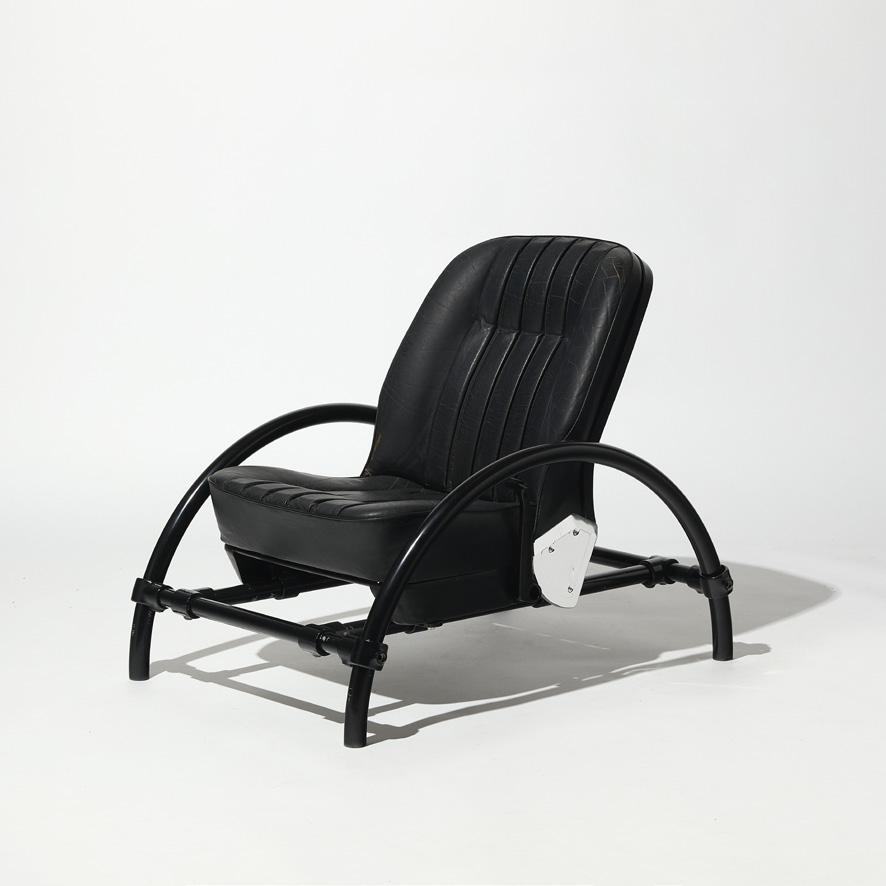
Ron ARAD
Né en 1951
Fauteuil « Rover » – 1981
Structure tubulaire en acier laqué noir, siège Rover en similicuir
One Off Ltd. éditeur
81 × 67 × 90 cm
3 000 - 5 000 €
129
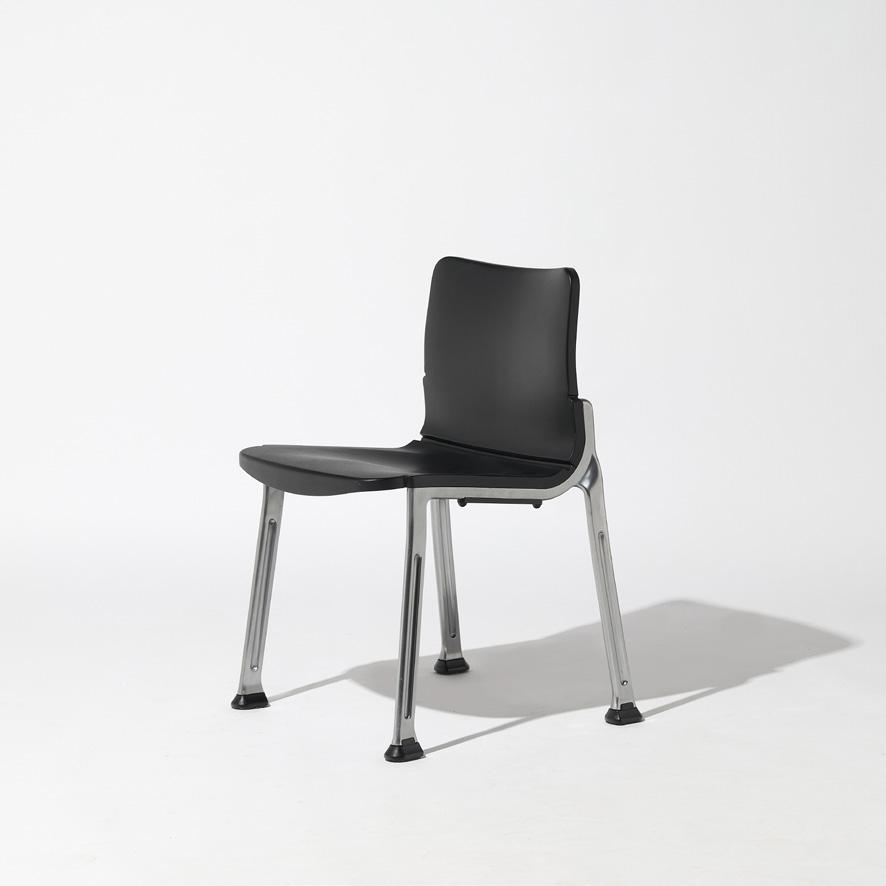
Dieter RAMS
Né en 1932
Chaise mod. 622 – modèle créé 1962
Structure en fonte d’aluminium, assise et dossier en polyéthylène teinté noir
Vitsoe éditeur
Cachet de l’éditeur au revers de l’assise
76 × 45,5 × 50 cm
600 - 800 €
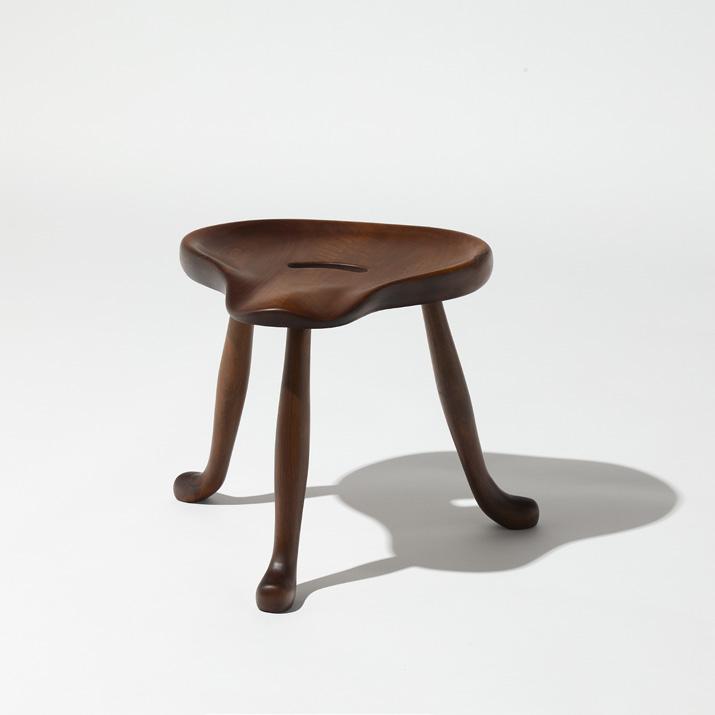
130
Josef FRANK
1885-1967
Tabouret S117 – circa 1934
Noyer massif
House & Garden éditeur
37,5 × 48 × 43 cm
1 500 - 1 800 €
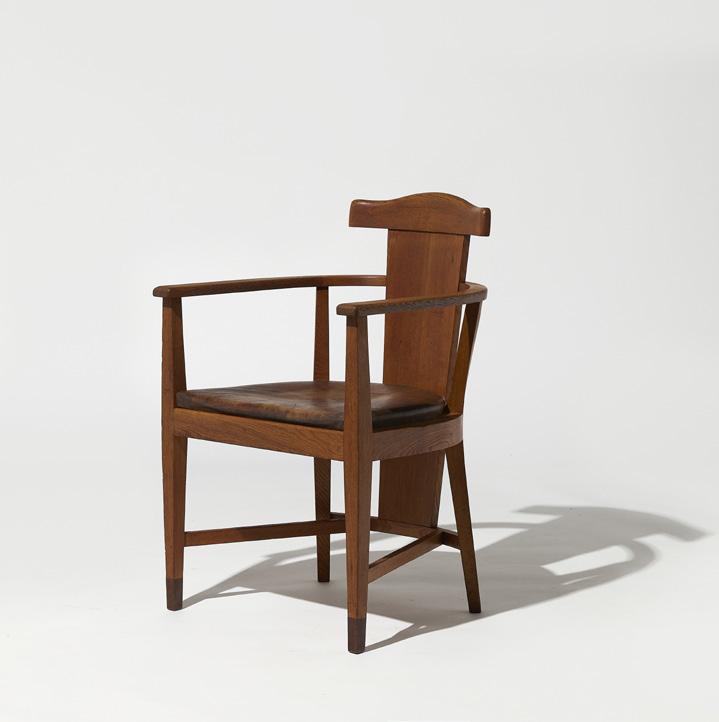
133
Fauteuil – circa 1910
Structure en frêne massif, assise recouverte de cuir
89 × 62 × 50 cm
600 - 800 €
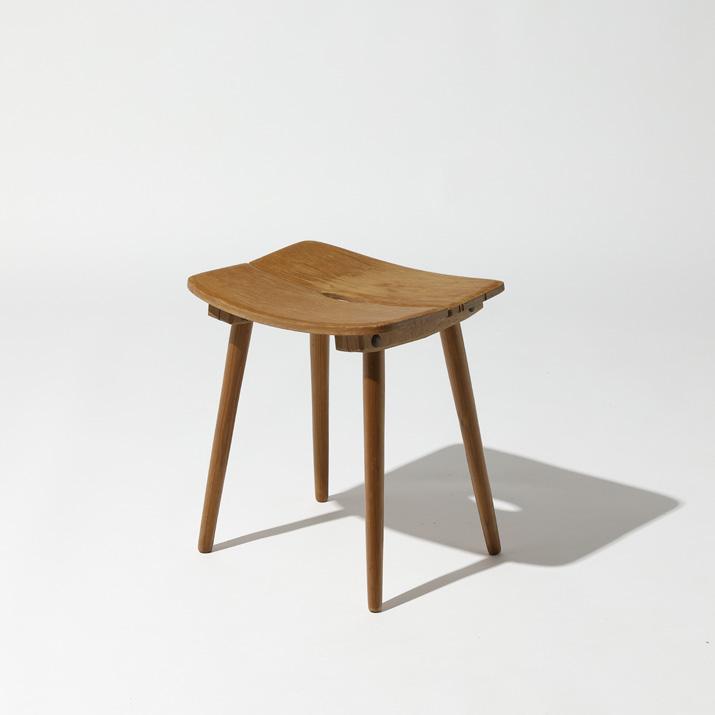
1905-1998
Tabouret – 1944
Structure en hêtre, visserie en acier Werkgenossenschaft Wohnhilfe Editeur
44 × 42 × 34,5 cm
400 - 600 €
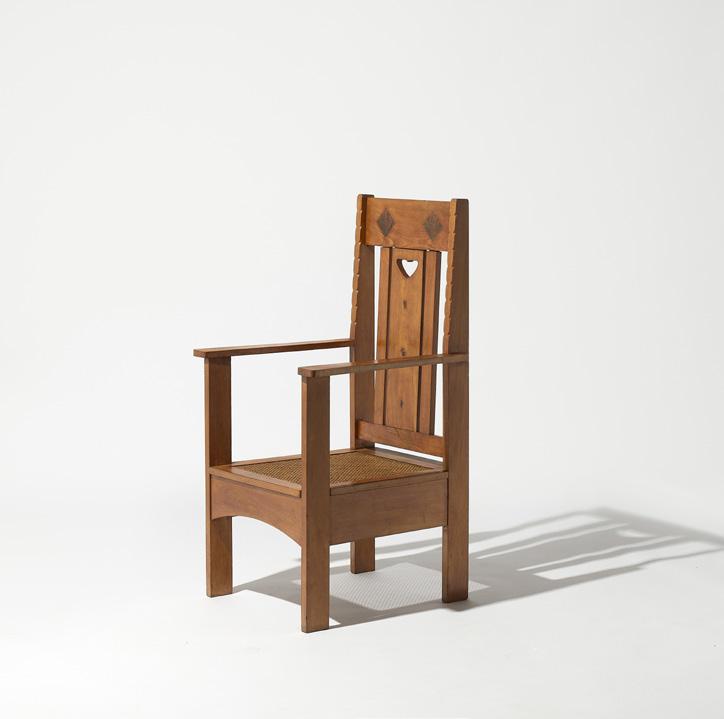
à)
1886-1975
Fauteuil – circa 1912
Structure en hêtre massif à décor floral sur le dossier, assise en cannage
Lachenmeier éditeur
120 × 65 × 61 cm
800 - 1 200 €
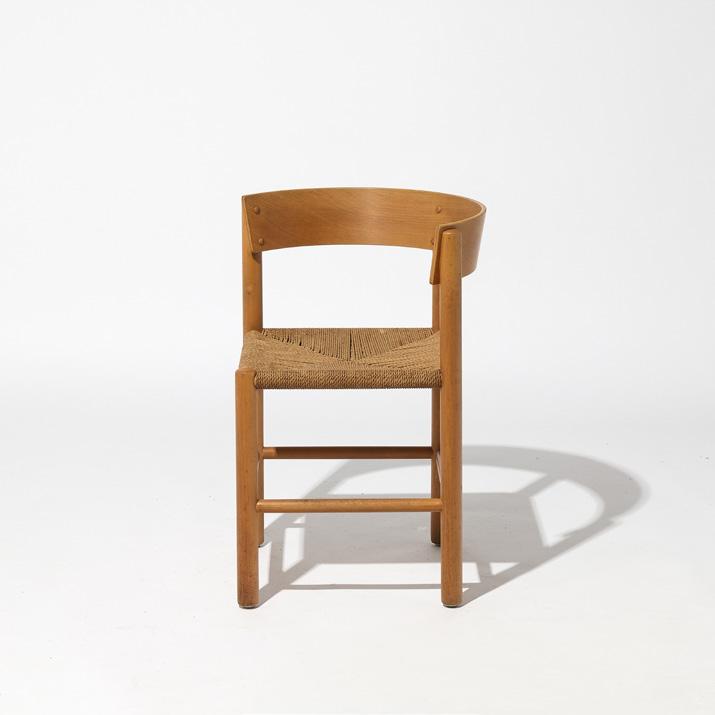
1901-1987
Chaise mod. 4216 – circa 1964
Structure en hêtre massif, dossier en hêtre contreplaqué, assise en ficelle de papier
Fritz Hansen éditeur
Étiquette de l’éditeur au revers
73 × 57 × 57 cm
500 - 700 €
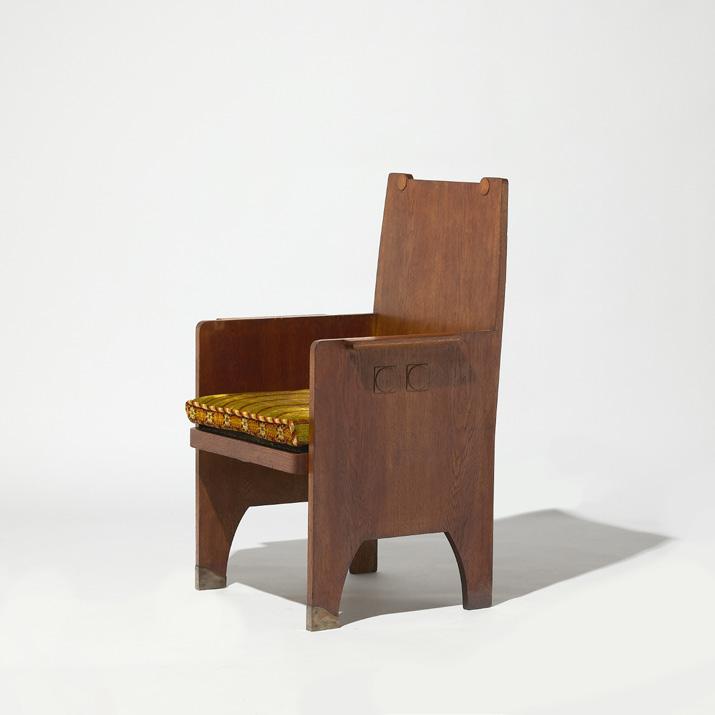
135
Josef HOFFMANN
1870-1956
Fauteuil – circa 1900
Structure en chêne massif, éléments en laiton, coussin en tissu
Portois & Fix Editeur
Cachet de l’éditeur au revers
103,5 × 64,5 × 55 cm
4 000 - 6 000 €
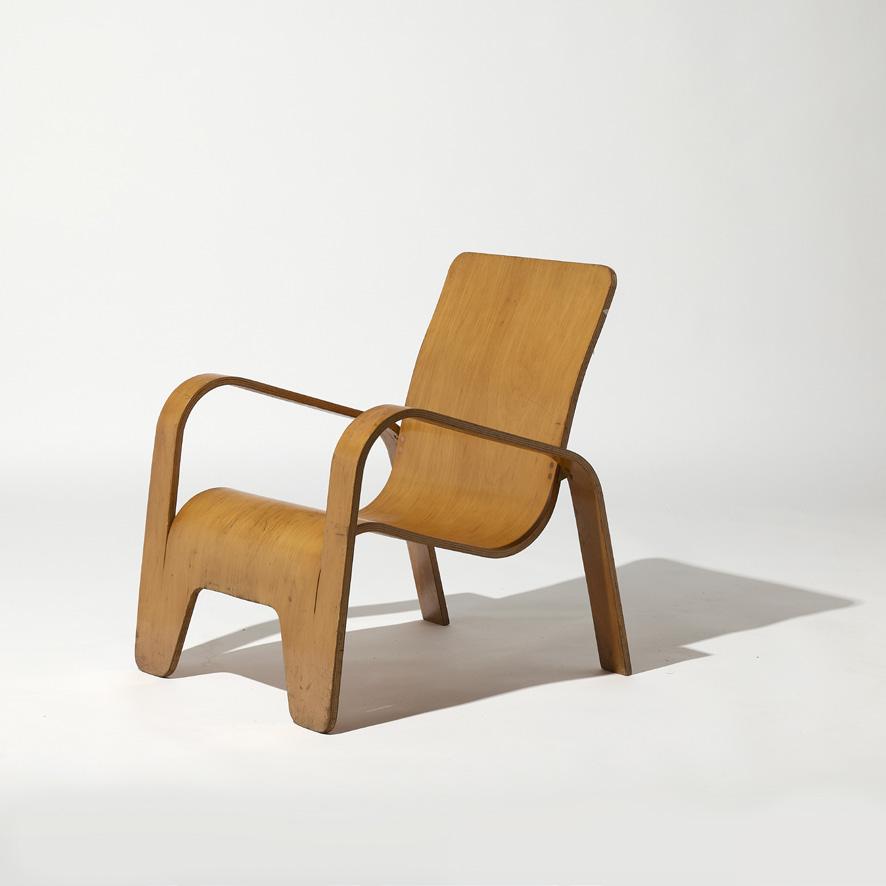
Han PIECK
1923-2010
Fauteuil « Lawo 1 »
Modèle créé circa 1945
Contreplaqué de bouleau courbé, éléments de fixation en cuivre Lawo Ommen éditeur
Numéroté 1031 sous l’assise
78 × 66 × 70 cm
1 800 - 2 500 €
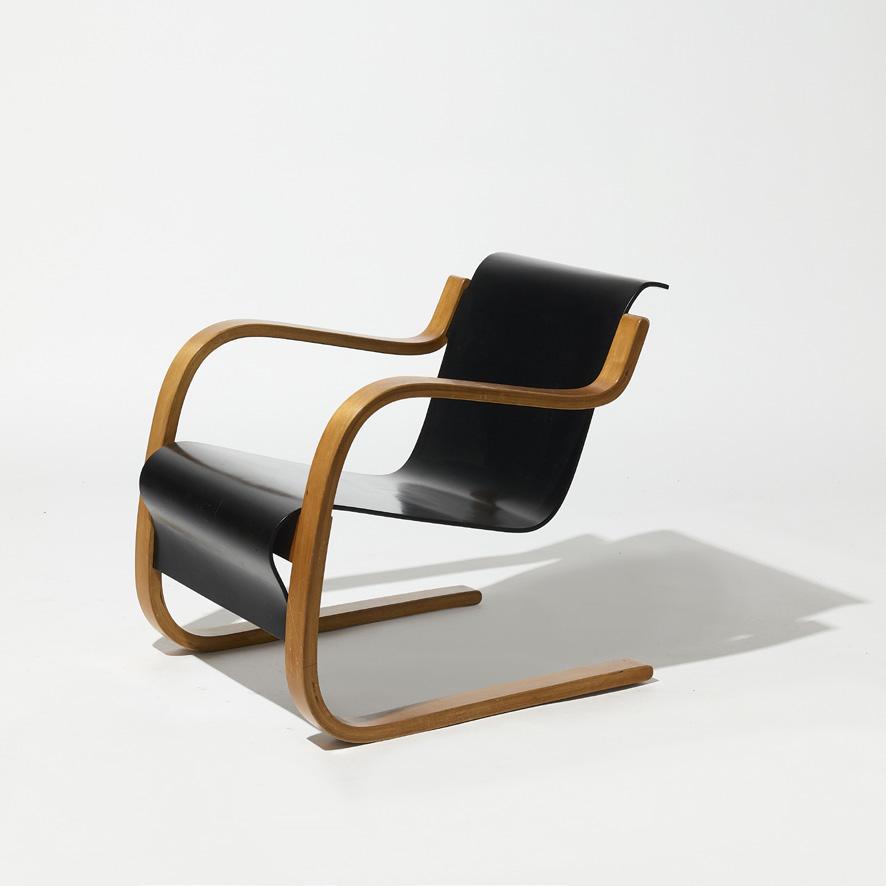
1898-1976
Fauteuil mod. 31 – circa 1931
Structure en bouleau, assise en contreplaqué moulé teinté noir
Finmar Editeur
Plaque de l’éditeur sous l’assise
65 × 60,5 × 74,5 cm
4 000 - 6 000 €
1926-1998
Chaise mod. 275
Modèle créé en 1956
Structure en contreplaqué moulé laqué
August Sommer éditeur
81 × 40,5 × 51 cm
2 000 - 3 000 €
Tom DIXON
Né en 1959
Prototype de chaise longue « Unikat Liege » – 1993
Structure en aluminium et plaques d’aluminium rivetées
Tom Dixon Studio éditeur
Signé «Dixon» et daté «93» au marqueur sous l’assise
Pièce unique
98 × 50 × 148 cm
6 000 - 8 000 €
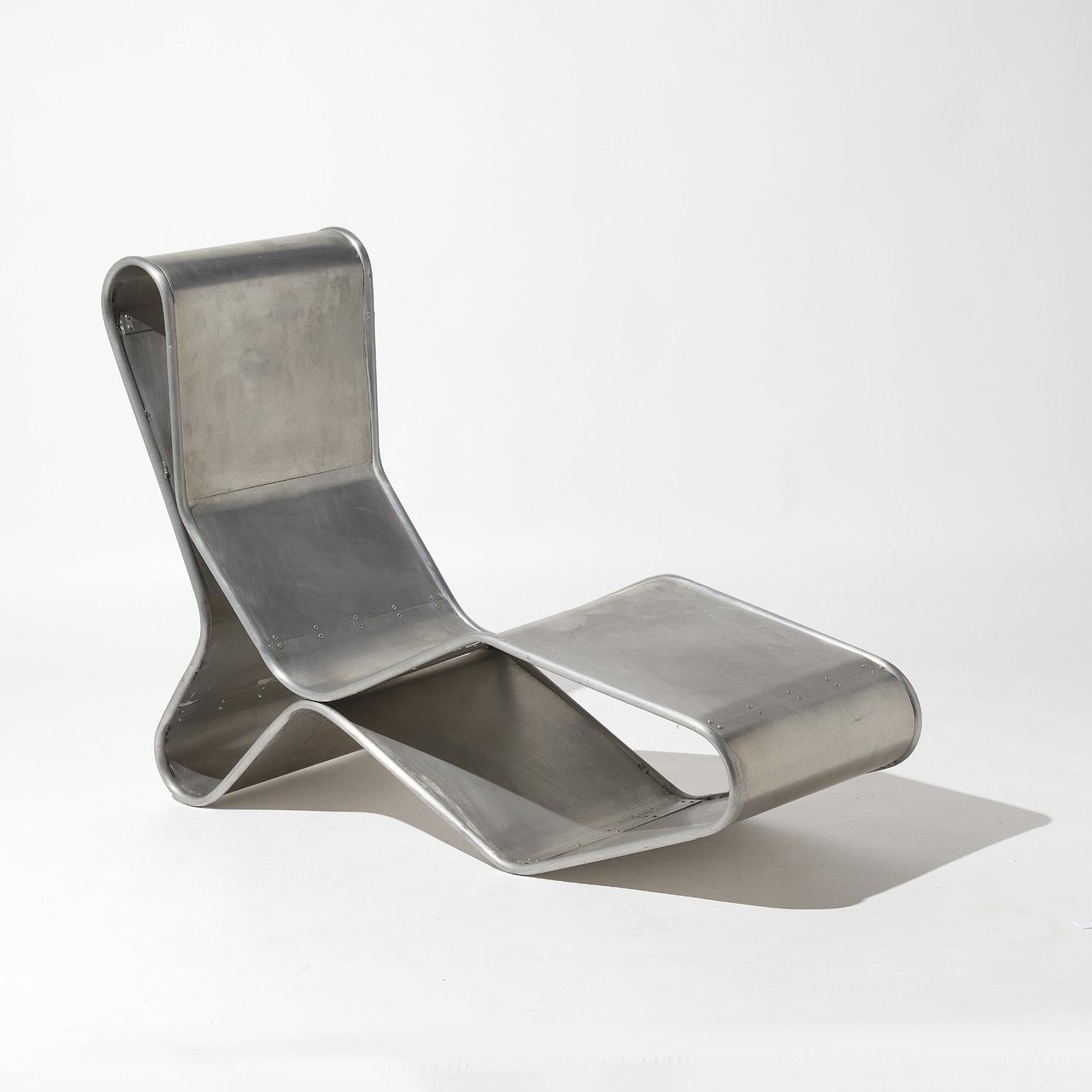
Tom Dixon, designer britannique né en 1959, s’est imposé par ses créations novatrices de mobilier, de luminaires et d’objets contemporains. Autodidacte, il explore dès les années 1980 de nouveaux matériaux tels que la résine, l’aluminium ou le métal poli, développant un langage formel à la fois sculptural et industriel. Fondateur de sa marque éponyme, il incarne, aux côtés de Ron Arad et Marc Newson, l’effervescence de la scène londonienne des années 1980–1990.
À la suite du succès de son exposition « In the Swim. Eine Ausstellung kreativen Designs der British European Design Group », présentée à Bremerhaven en Allemagne, il est invité à exposer à la galerie Artificial à Nuremberg. Cette invitation était conditionnée à la présentation de pièces inédites, parmi lesquelles figure l’exemplaire présenté ici. Celui-ci s’inscrit pleinement dans ses recherches formelles autour du travail du métal, tantôt en acier, cuivre ou zinc.
Tom Dixon, a British designer born in 1959, has made a name for himself with his innovative designs for furniture, lighting and contemporary objects. Self-taught, he began exploring new materials such as resin, aluminium and polished metal in the 1980s, developing a formal language that is both sculptural and industrial. Founder of his eponymous brand, he embodies, alongside Ron Arad and Marc Newson, the effervescence of the London scene in the 1980s and 1990s.
Following the success of his exhibition “In the Swim. Eine Ausstellung kreativen Designs der British European Design Group” in Bremerhaven, Germany, he was invited to exhibit at the Artificial Gallery in Nuremberg. This invitation was conditional on the presentation of new pieces, including the one discussed here. This piece is fully in line with his formal research into working with metal, whether steel, copper or zinc.
Marcel BREUER
1902-1981
Chaise longue et ottoman mod. B 25
Modèle créé circa 1928
Structure en acier tubulaire chromé assise et dossier en cannage de rotin, accotoir en hêtre teinté
Thonet éditeur
Chaise longue : 106 × 100 × 88 cm
Ottoman : 34 × 54 × 50 cm
15 000 - 20 000 €
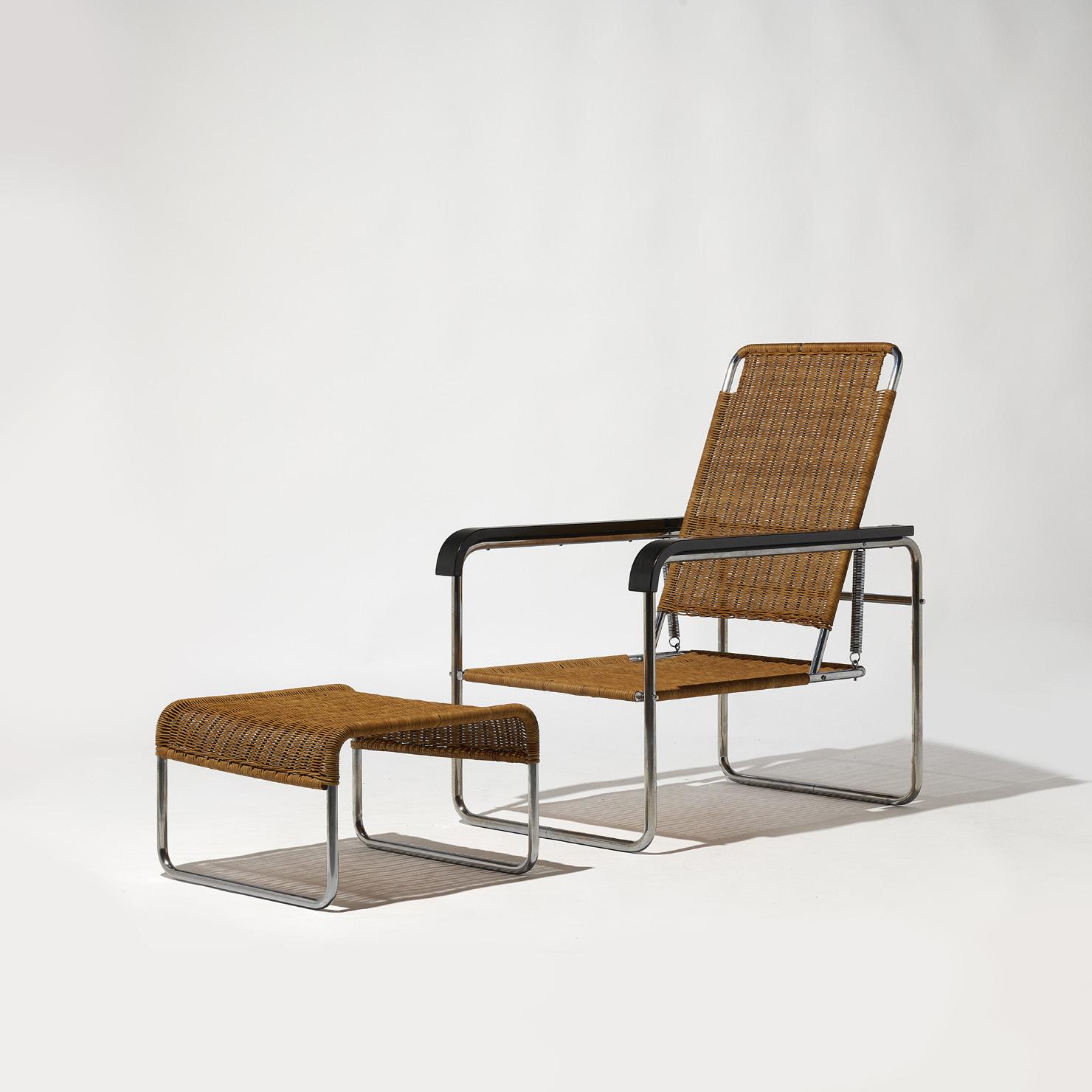
Conçue en 1928–1929 par Marcel Breuer pour Thonet, la chaise B 25 compte parmi les premiers exemples majeurs de son usage novateur de l’acier tubulaire. Issue de ses recherches menées au Bauhaus, elle reflète l’influence du constructivisme et du De Stijl, ainsi que sa volonté d’associer matériaux industriels et artisanat. Produite brièvement par
Thonet et présentée à l’Exposition universelle de Paris en 1930, elle se distingue par sa structure légère en acier tubulaire, son assise et dossier en cannage et ses accoudoirs en bois. Rare aujourd’hui, la B 25 constitue une étape clé dans l’histoire du design moderne et marque l’entrée de Thonet dans l’ère du mobilier industriel.
Designed in 1928–1929 by Marcel Breuer for Thonet, the B 25 chair is one of the first major examples of his innovative use of tubular steel. The result of his research at the Bauhaus, it reflects the influence of Constructivism and De Stijl, as well as his desire to combine industrial materials and craftsmanship. Produced
briefly by Thonet and presented at the 1930 Paris World’s Fair, it is distinguished by its lightweight tubular steel frame, cane seat and backrest, and wooden armrests. Rare today, the B 25 is a key milestone in the history of modern design and marks Thonet’s entry into the era of industrial furniture.
Fauteuil – circa 1900
Chêne massif
105,5 × 73 × 47 cm
500 - 700 €
Fauteuil – circa 1900
Structure en chêne, décor de plaques de métal
90 × 66 × 44,5 cm
800 - 1 200 €
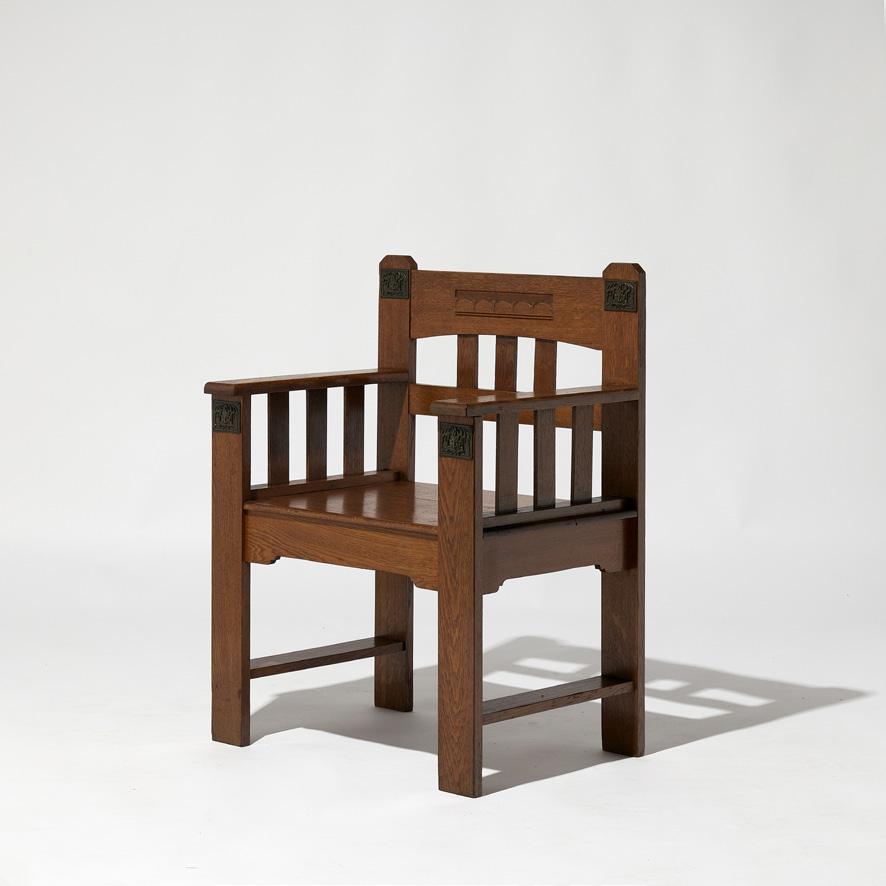
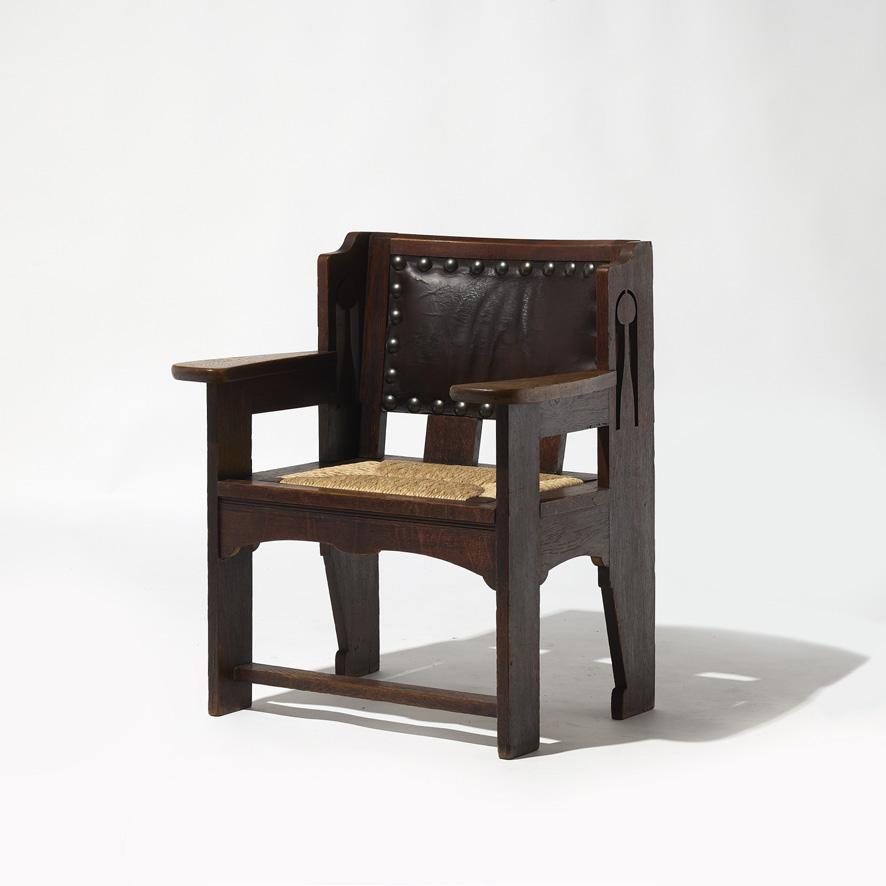
Leonard WYBURD
1865-1958
Fauteuil « Ethelbert-Chair »
Circa 1898
Structure en chêne, assise paillée, dossier recouvert de cuir clouté Liberty & Co éditeur
88 × 74,5 × 61 cm
1 800 - 2 500 €
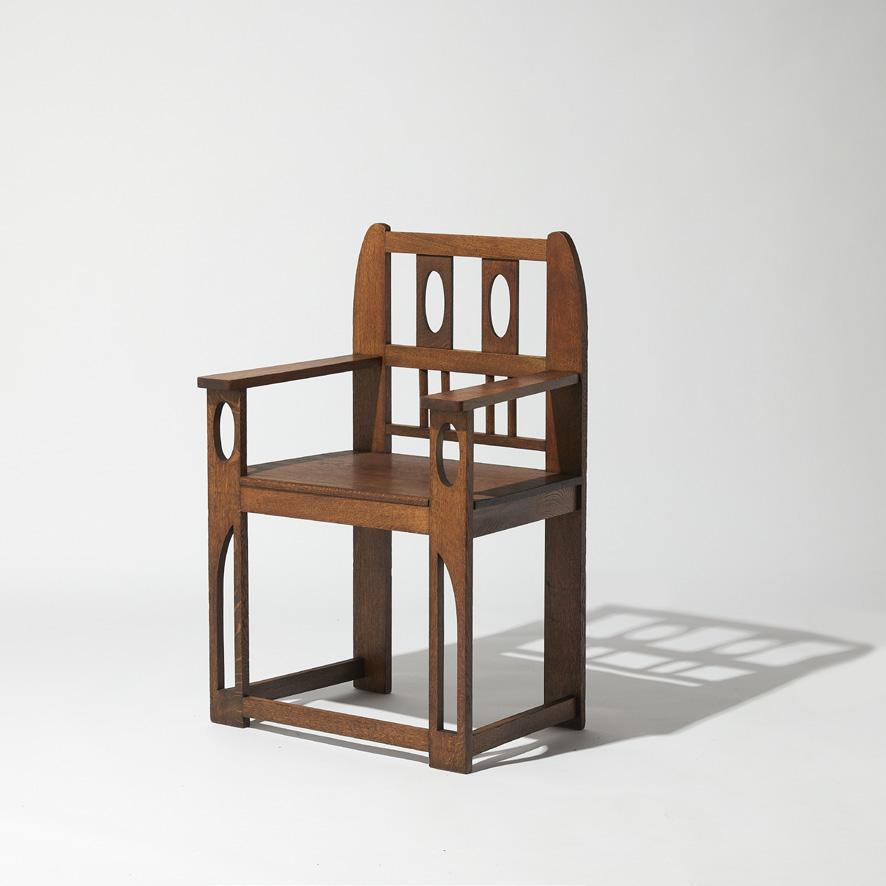
144
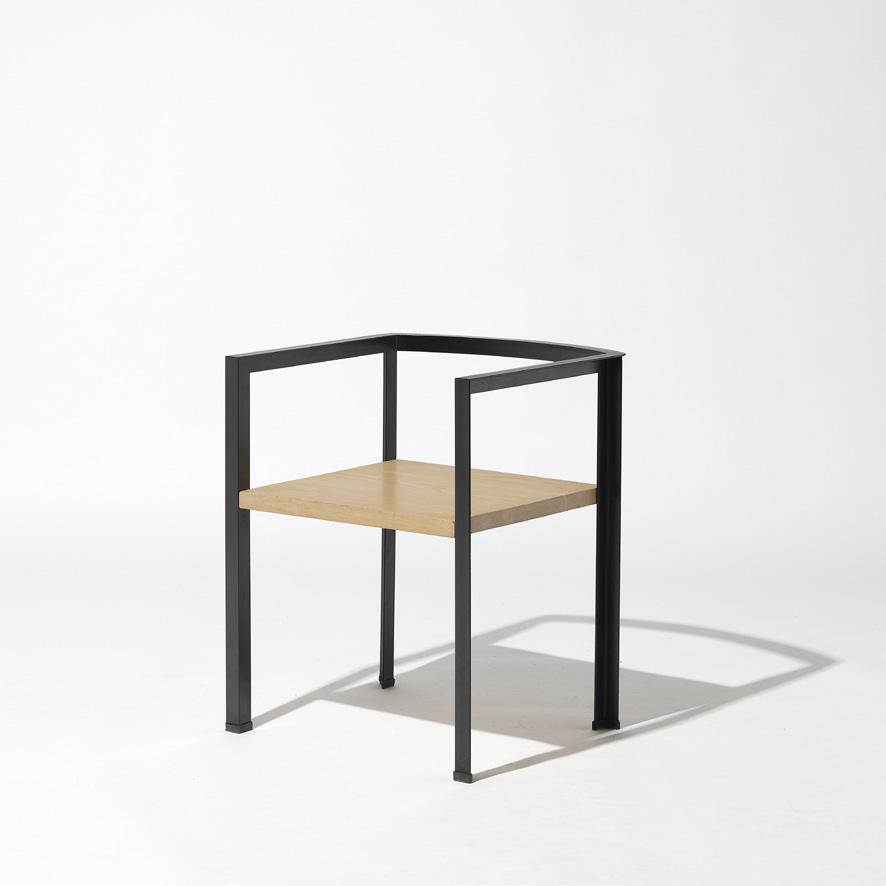
Rei KAWAKUBO
Née en 1942
Chaise « Nr.9 » – 1986
Structure en cornière d’acier laqué noir, assise en chêne Pallucco éditeur
65 × 52 × 52 cm
4 000 - 6 000 €
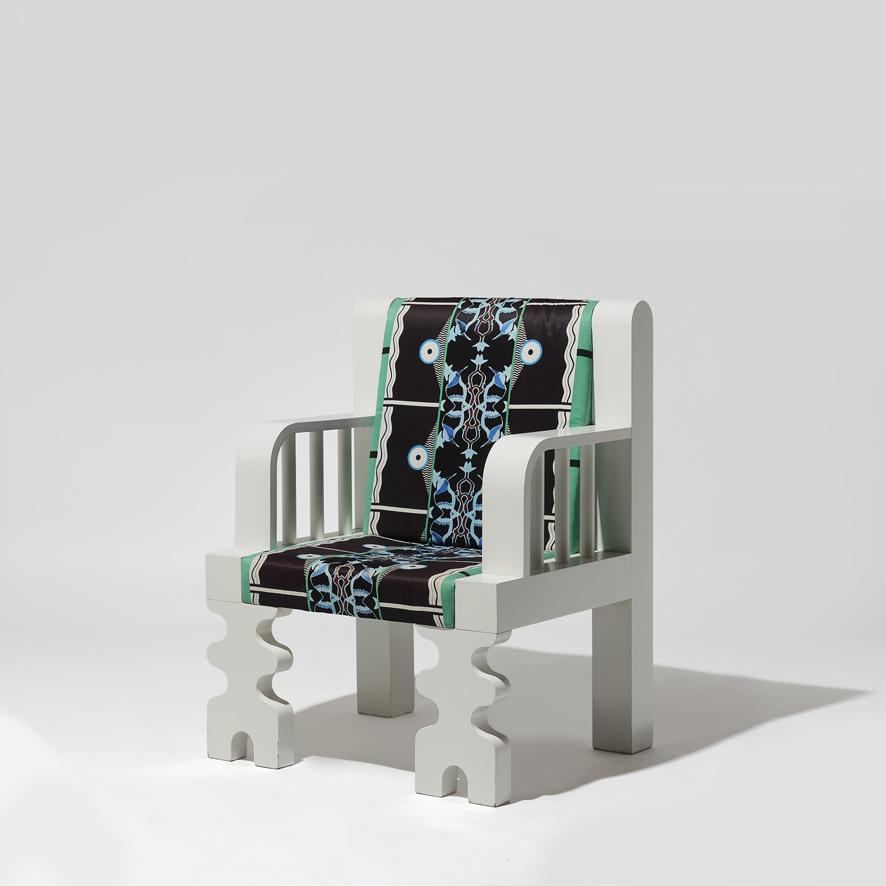
Née en 1957
Chaise « Denise » – 1987
Structure en pin laqué, assise et dossier recouverts de tissu sérigraphié
100 × 74,5 × 65 cm
2 500 - 3 000 €
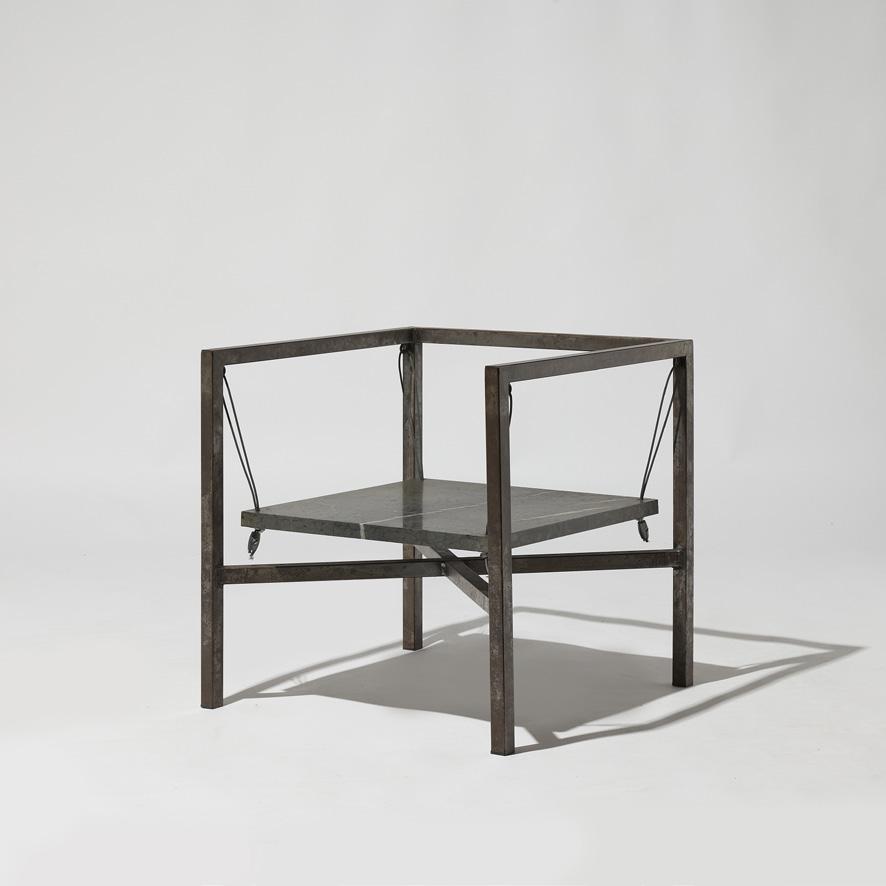
Né en 1944
Chaise « Sensillon »
Modèle créé circa 1988
Structure en acier, assise en marbre, câble métallique
66 × 65 × 65 cm
Un des quatre exemplaires produits dans cette version.
1 800 - 2 500 €
147
Östen KRISTIANSSON
1927-2003
Fauteuil mod. 204 – 1954
Structure en chêne massif, assise et dossier en cuir
Luxus éditeur
Étiquette de l’éditeur sur le pied gauche
78 × 52 × 70,5 cm
1 500 - 1 800 €
Preben FABRICIUS & Jørgen KASTHOLM
1932-1984 & 1931-2007
Fauteuil mod. FK-710 « Skater » – 1968
Structure en acier chromé, assise et dossier recouverts de cuir crème
Ivan Schleter éditeur
68 × 65 × 73 cm
5 000 - 7 000 €
149
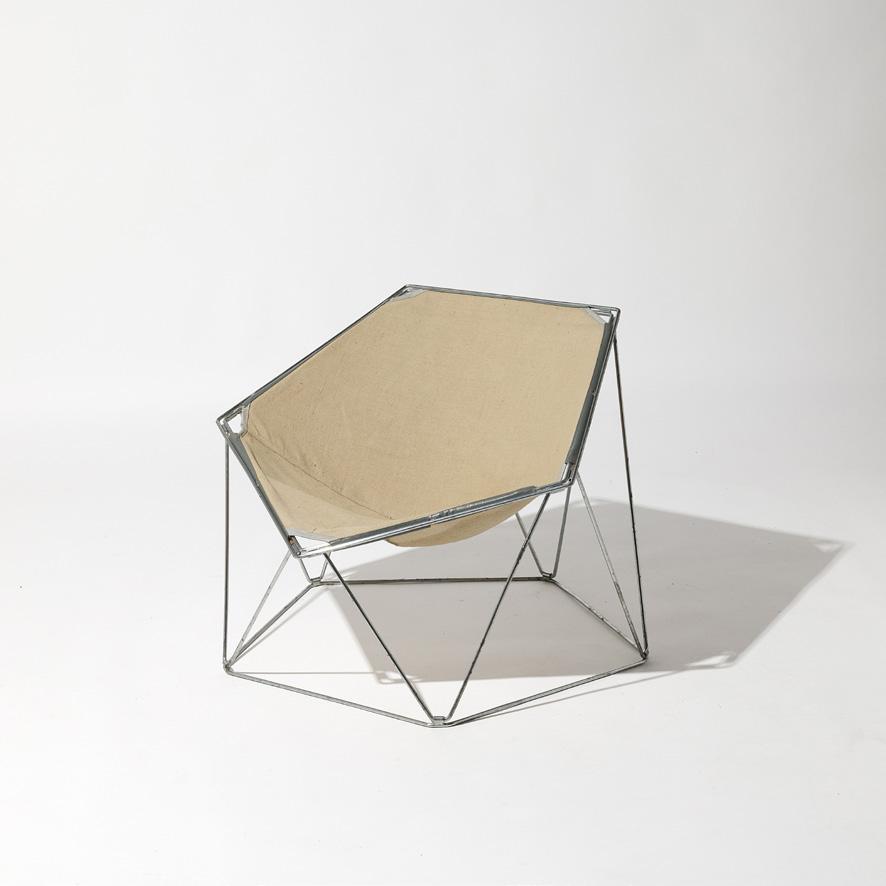
Jean-Paul BARRAY & Kim MOLTZER
1930-2012 & Né en 1938
Chaise modèle « Penta » – 1968
Structure en inox, assise et dossier en toile de lin tendue
Bofinger éditeur
68 × 87 × 75 cm
800 - 1 200 €
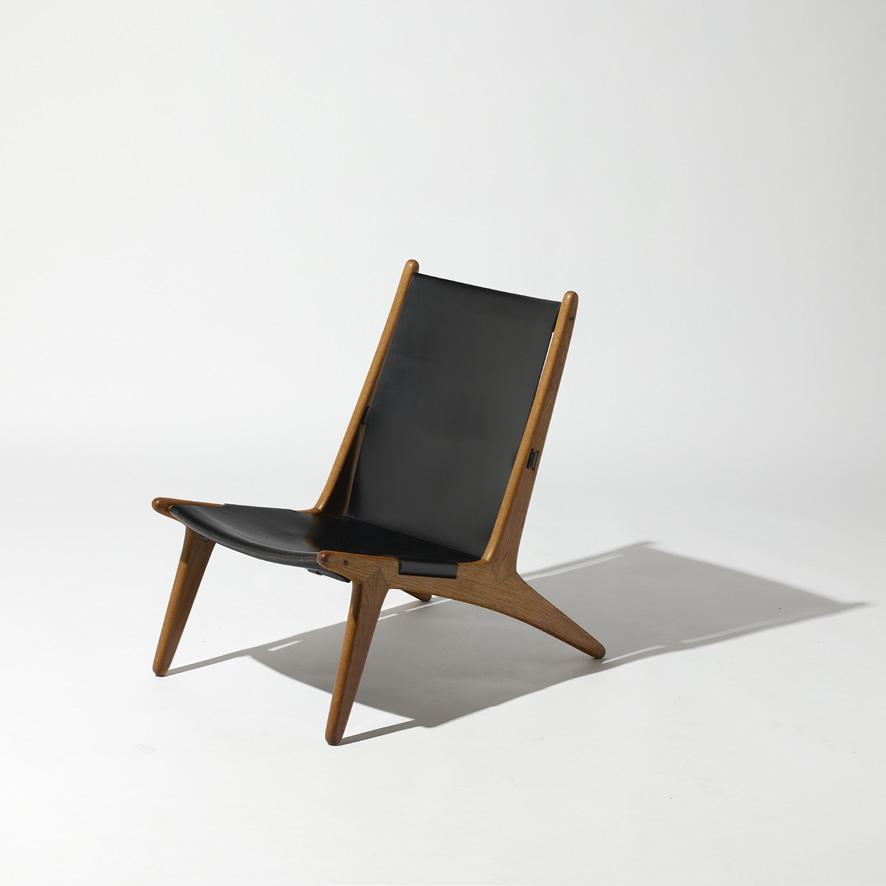
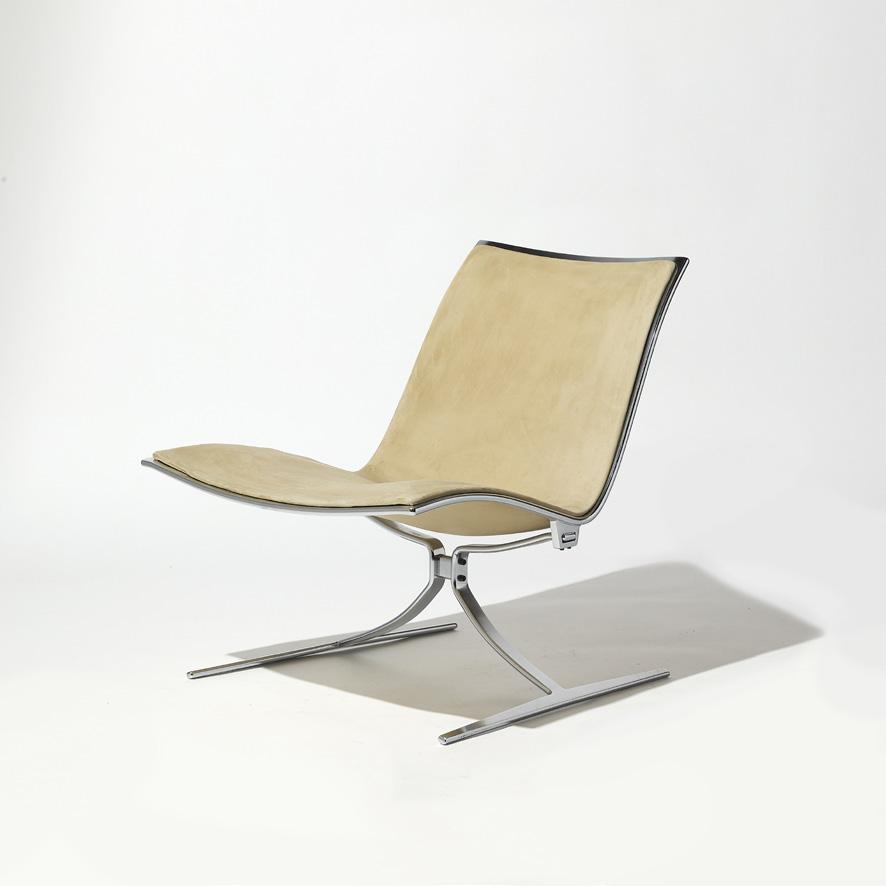
Poul KJÆRHOLM
1929-1980
Chauffeuse « Element chair »
mod. PK25 – 1951
Structure en acier chromé, assise et dossier en drisse tendue
E. Kold Christensen éditeur
75 × 69 × 74 cm
10 000 - 12 000 €
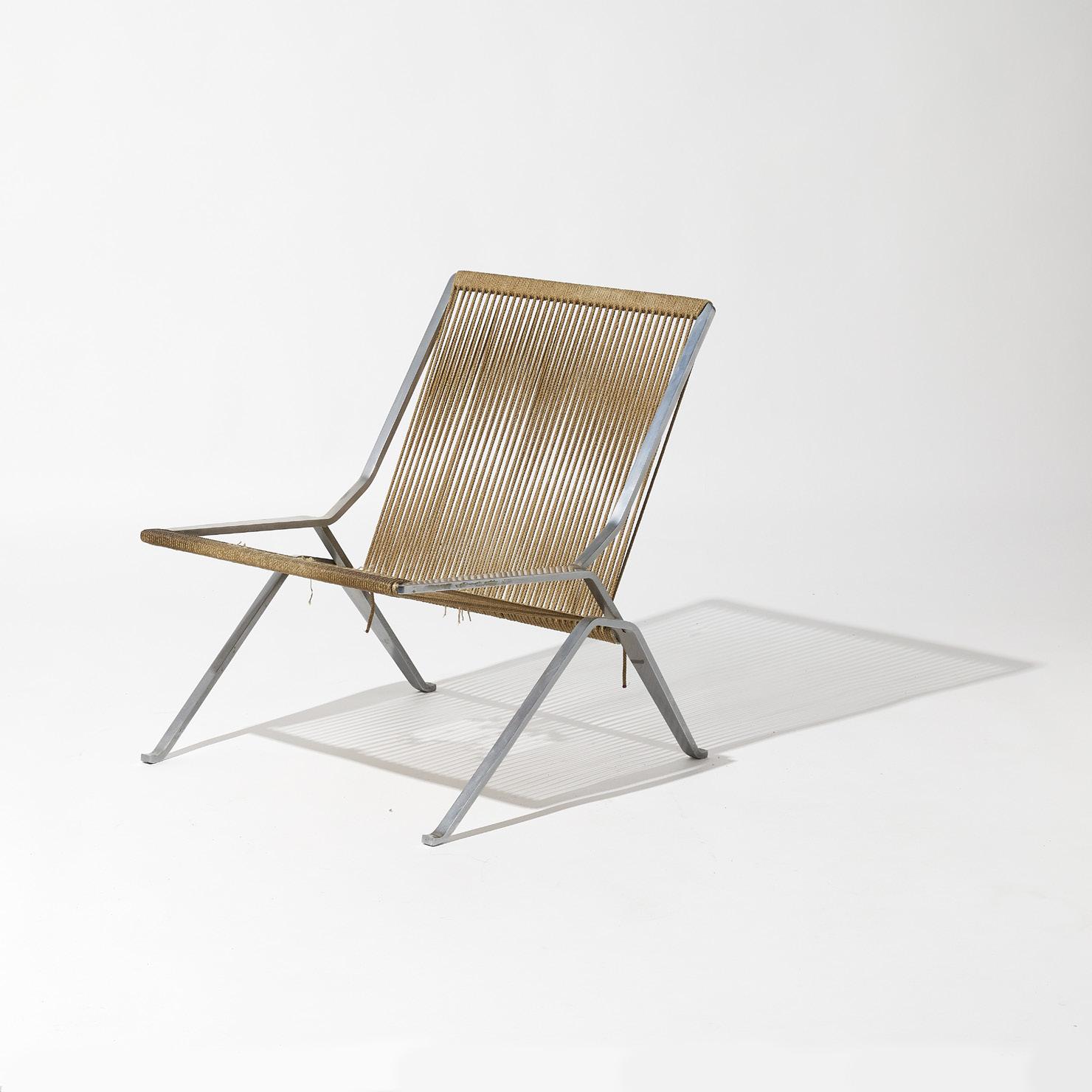
Le modèle PK25, conçu par Poul Kjærholm en 1951, est l’une des premières œuvres marquantes du designer danois et faisait partie de son projet de fin d’études à l’École des Arts et Métiers de Copenhague. Cette chaise longue illustre déjà parfaitement son approche novatrice : associer la rigueur industrielle de l’acier à la chaleur et à la souplesse des matériaux naturels.
La structure est réalisée à partir d’un unique élément d’acier courbé formant un cadre continu, à la fois léger visuellement et extrêmement résistant. L’assise et le dossier sont constitués d’un tissage en corde
de drapeau (flag line), enroulée à la main sur la structure métallique. Ce tressage précis crée une surface souple et ergonomique qui épouse le corps, tout en offrant une grande transparence visuelle.
Avec la PK25, Kjærholm démontre déjà son intérêt pour l’honnêteté constructive : la structure est clairement visible, sans éléments décoratifs superflus. Produite par Ejvind Kold Christensen à partir du milieu des années 1950, la PK25 est aujourd’hui considérée comme une pièce iconique du design scandinave.
The PK25 model, designed by Poul Kjærholm in 1951, is one of the Danish designer’s first notable works and was part of his final project at the Copenhagen School of Arts and Crafts. This chaise longue perfectly illustrates his innovative approach: combining the industrial rigour of steel with the warmth and flexibility of natural materials.
The structure is made from a single piece of curved steel forming a continuous frame that is both visually light and extremely strong. The seat and backrest are made of flag line
rope, hand-wound onto the metal structure. This precise weaving creates a flexible and ergonomic surface that moulds to the body, while offering great visual transparency.
With the PK25, Kjærholm already demonstrated his interest in constructive honesty: the structure is clearly visible, without superfluous decorative elements. Produced by Ejvind Kold Christensen from the mid-1950s onwards, the PK25 is now considered an iconic piece of Scandinavian design.
151
Max BILL & Hans GUGELOT
1908-1994 & 1920-1965
Tabouret « Ulmer Hocker » – 1954
Assise et pieds en pin, travée et patins en hêtre
45 × 40 × 29,5 cm
1 800 - 2 500 €
152
Marco ZANINI
Né en 1954
Fauteuil « Roma » – modèle créé en 1986
Fibre de verre moulée et laquée vert iridescent Memphis éditeur
89 × 98 × 86 cm
1 800 - 2 500 €
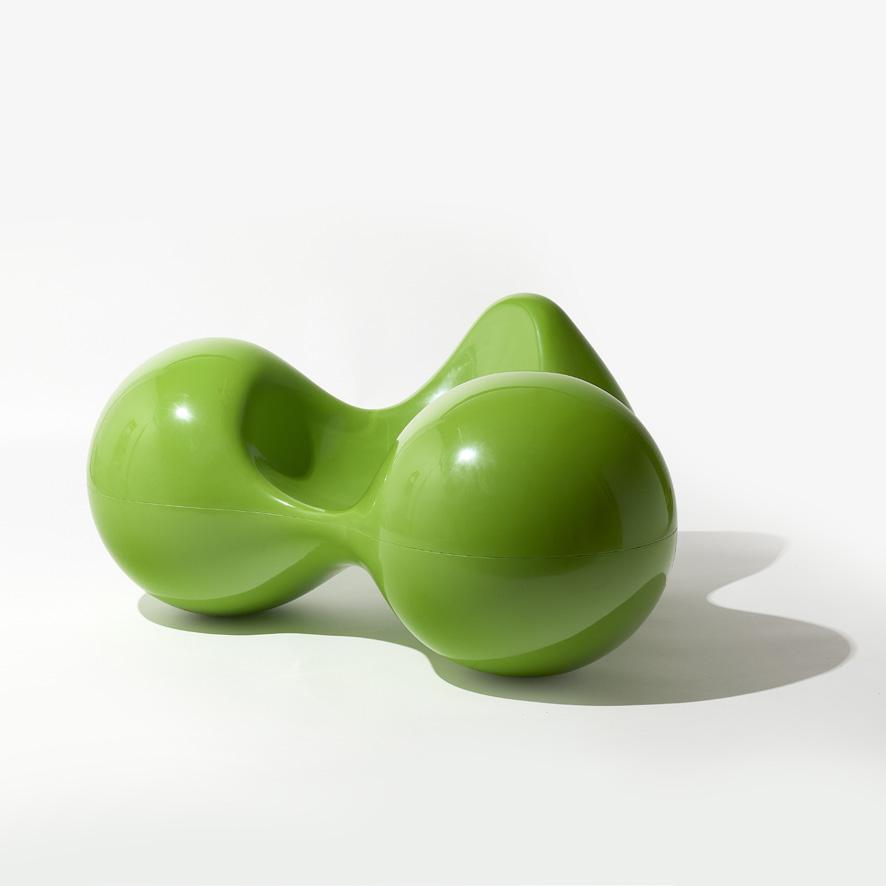
153
Eero AARNIO
Né en 1932
Chaise modèle « Tomato Chair » – 1971
Structure en fibre de verre renforcée verte Adelta éditeur
67 × 140 × 110 cm
800 - 1 200 €
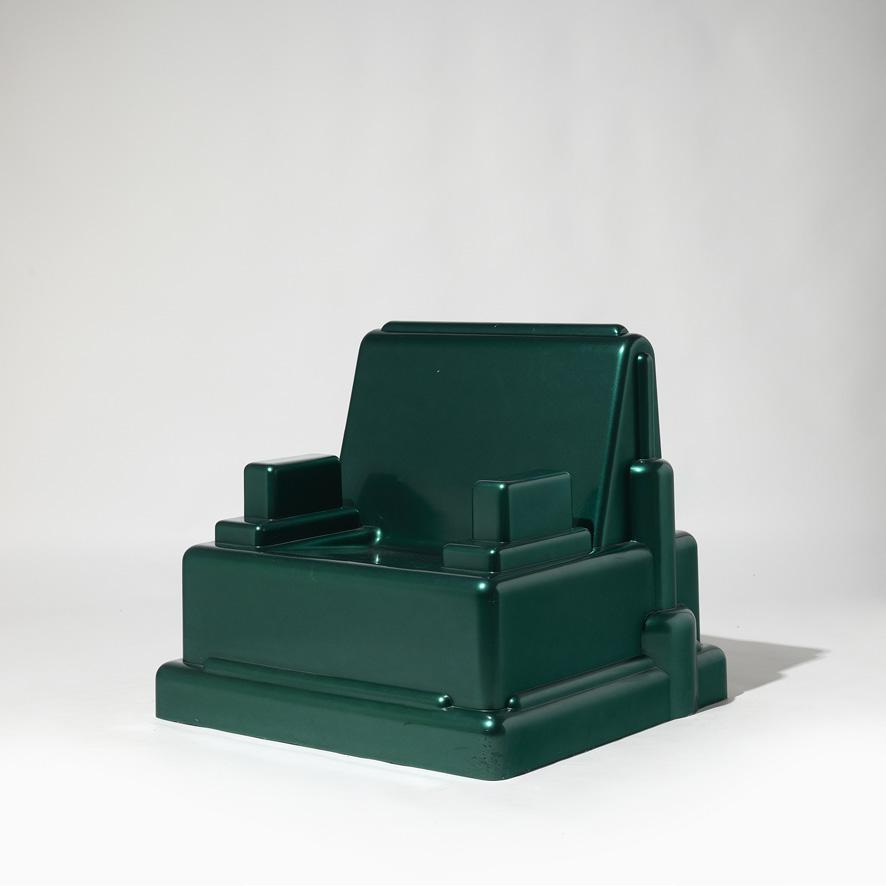
154
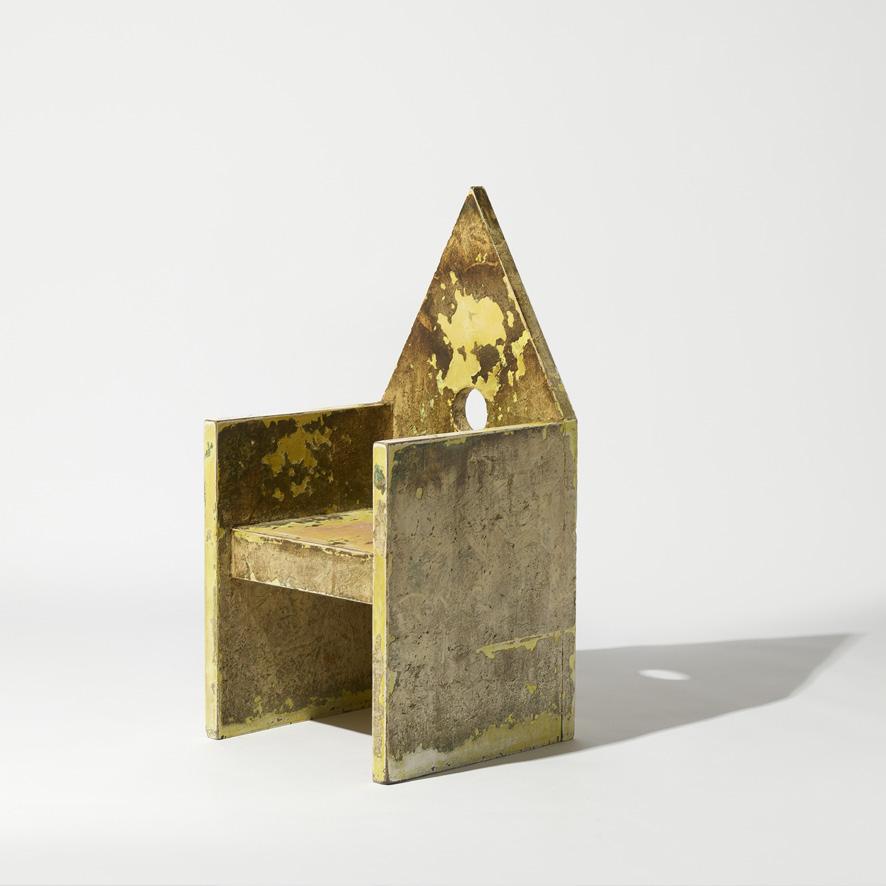
Lanfranco BENVENUTI
1937-1989
Fauteuil « Vescovina papale »
Circa 1985
Structure en osb partiellement laquée
Meccani éditeur
111 × 53 × 53 cm
600 - 800 €
155
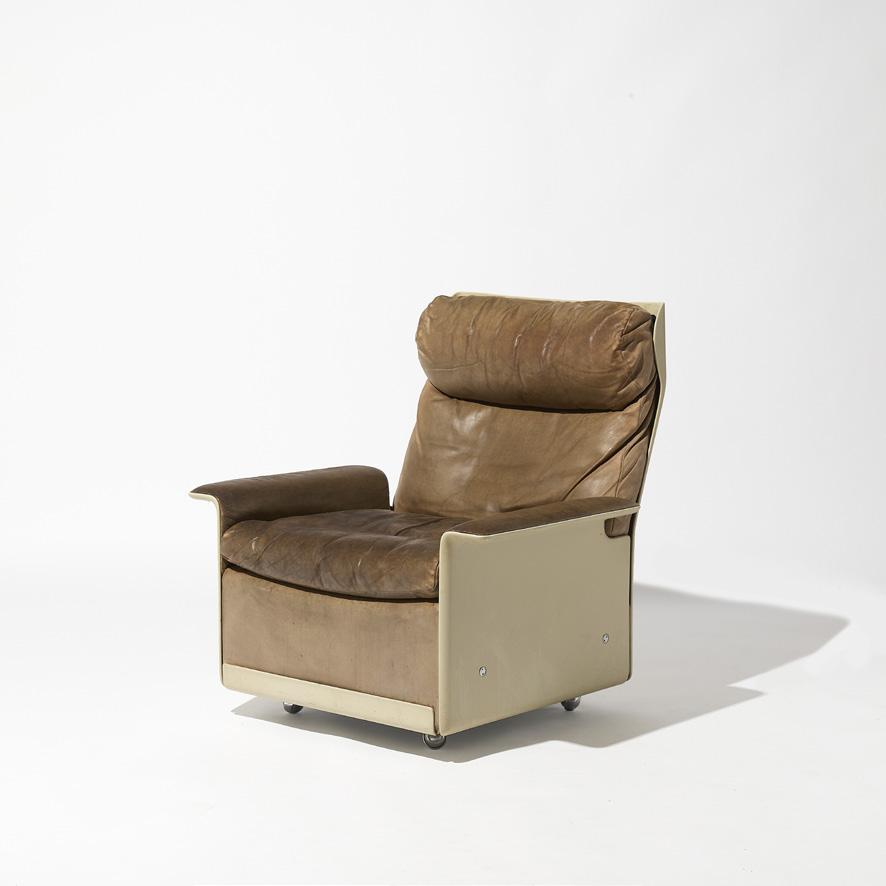
Dieter RAMS
Né en 1932
Fauteuil mod. 620 – modèle créé circa 1962
Structure en fibre de verre moulée, assise et dossier en cuir, roulettes
Vitsoe éditeur
89 × 86 × 80 cm
800 - 1 200 €
156
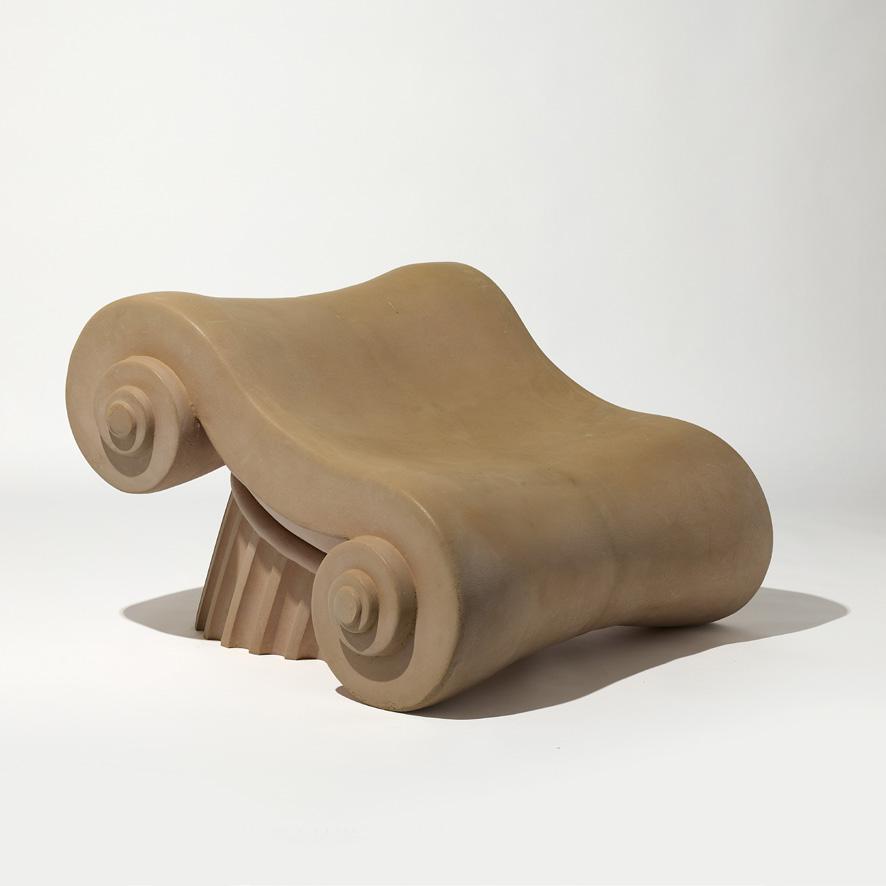
STUDIO 65
1965-1976
Fauteuil « Capitello » – modèle créé en 1971, le nôtre de 1986
Polyuréthane expansé Guflex recouvert de peinture Guflac
Gufram éditeur
Cachet de l’éditeur, numéroté «28/500» et daté 86 sous la base
82 × 120 × 174 cm
3 000 - 5 000 €
Marcel WANDERS
Né en 1963
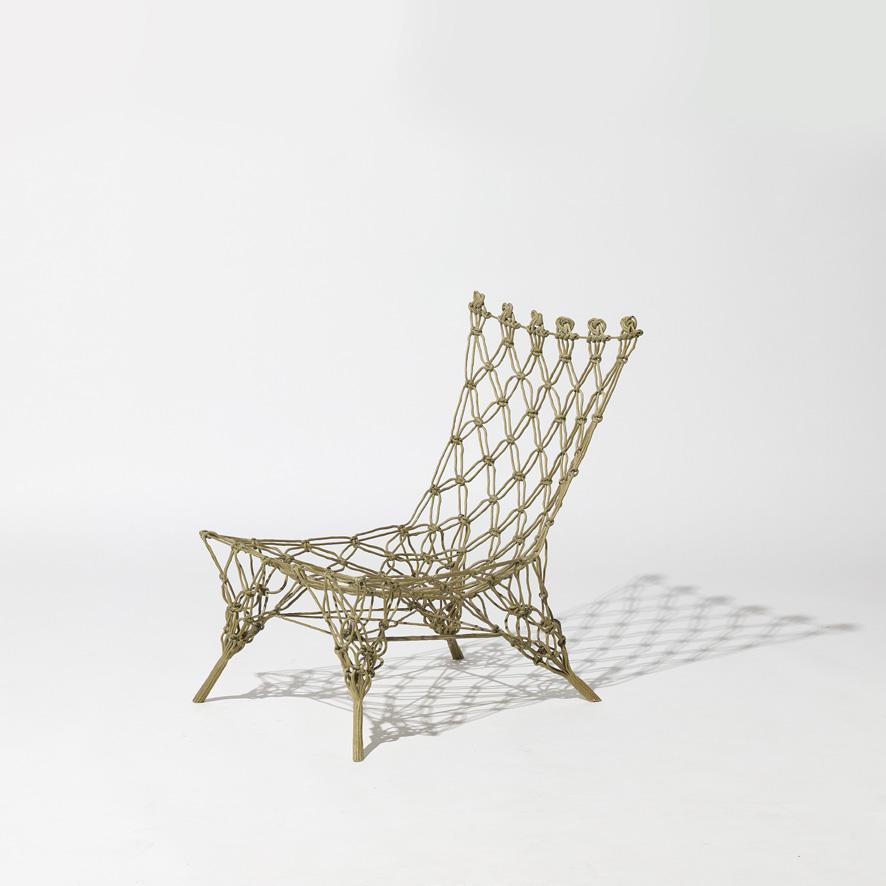
Chaise modèle « Knotted Chair »
1996
Structure en fibre de carbone et textile Cappellini éditeur
72 × 50 × 65 cm
2 000 - 3 000 €
158
Cini BOERI
1924-2020
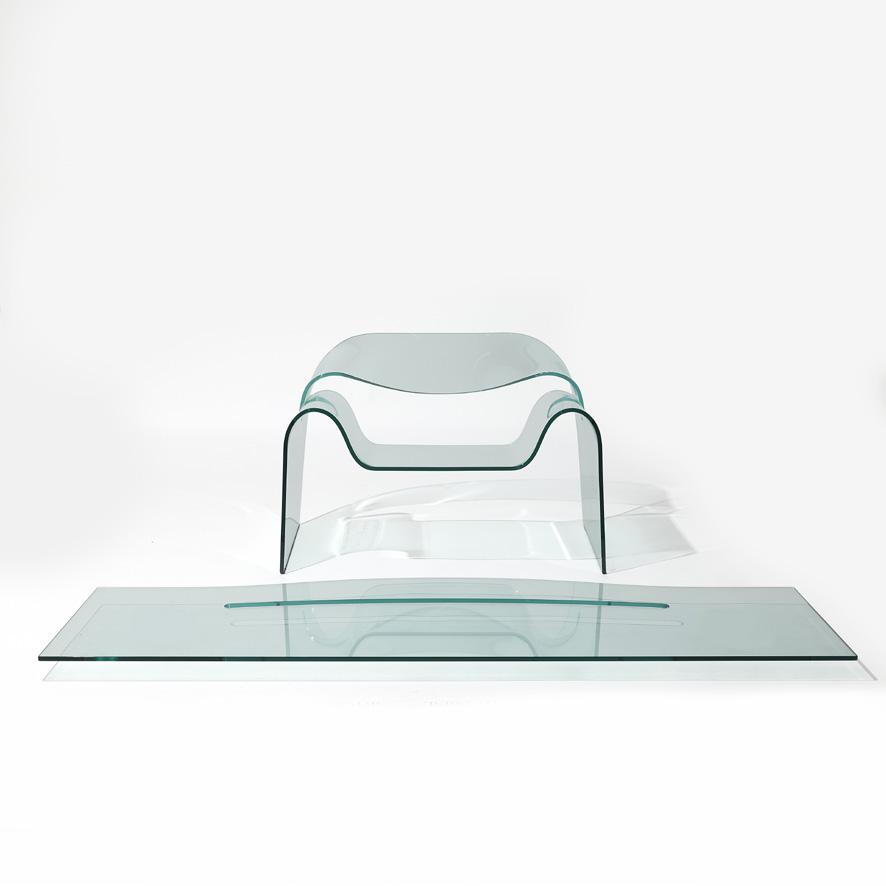
Fauteuil « Ghost » – 1987
Structure en verre moulé
Fiam éditeur
Étiquette de l’éditeur sur un pied
62 × 94 × 77 cm
On y joint une plaque originale en verre du modèle, non thermoformée :
192 × 73,5 × 1 cm
1 200 - 1 500 €
159
Yoshioka TOKUJIN
Né en 1967
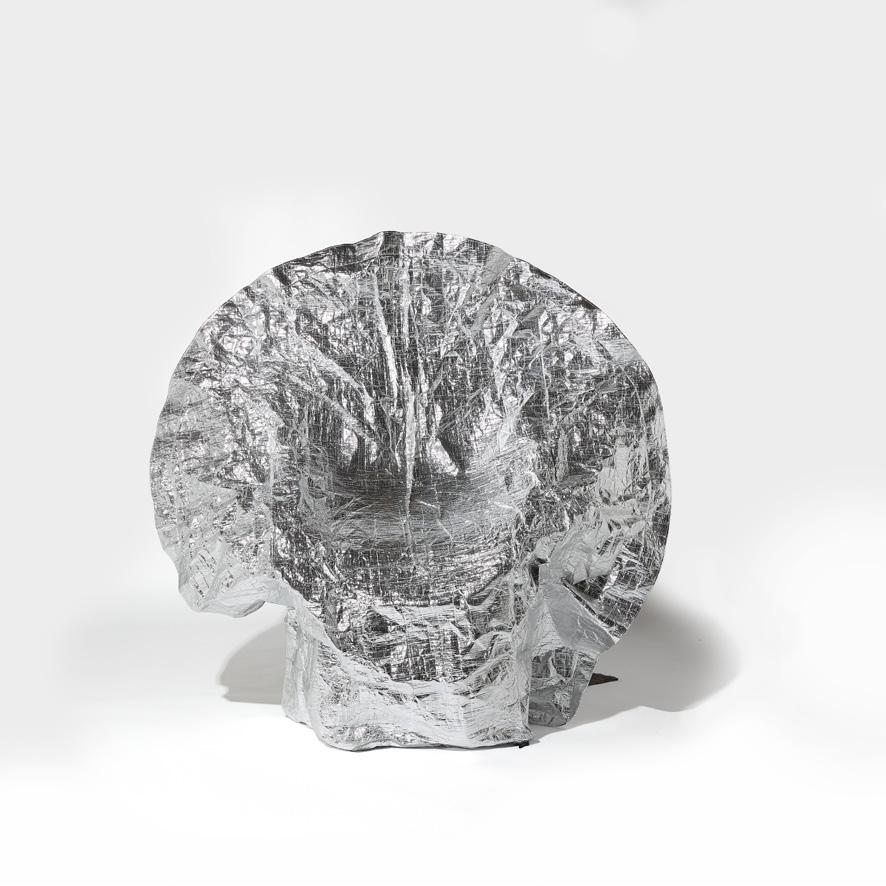
Chaise Memory – 2010
Structure en acier tubulaire laqué noir et assise en pvc recouvert d’un revêtement en aluminium et coton Moroso éditeur
Marque de l’éditeur sur les fermetures éclair
148 × 148 × 74 cm
800 - 1 200 €
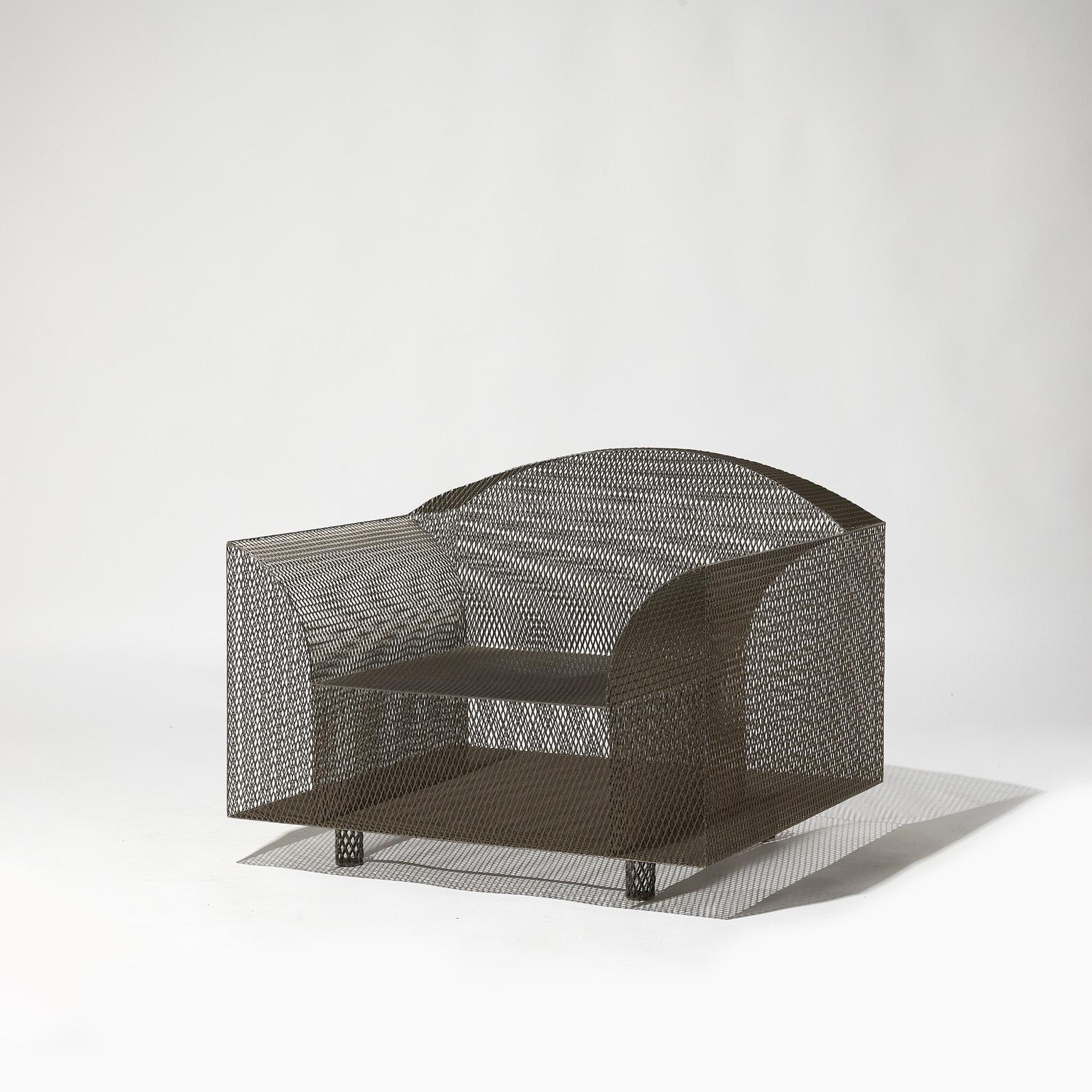
Shiro KURAMATA
1934-1991
Fauteuil « How High the Moon »
Modèle créé en 1986
Résille d’acier déployé et nickelé
Vitra éditeur
72 × 93,5 × 81 cm
6 000 - 8 000 €
Chaise rustique – Milieu du XIXe
A solid alderwood rustic chair mid-19th century
37.40 × 16.93 × 20.08 in.
Chaise – circa 1899
Bibliographie :
Roberta Waddell, The Art nouveau style in jewelry, metalwork, glass, ceramics, textiles, architecture and furniture, Editions Dover, New York, 1977, p. 175
An oakwood and embossed leather chair by Gustave Serrurier-Bovy - circa 1899
37.80 × 18.70 × 20.90 in.
Chaise issue de la série « Easy Edges »
1972
Bibliographie :
Volker Albus, Thomas Bley et Max Borka, Modern furniture : 150 years of design = Meubles modernes : 150 ans de design = Moderne Möbel : 150 Jahre Design, Editions H. F. Ullmann, Postdam, 2012, 25111506/081
Cornel Windlin et Rolf Fehlbaum, Projekt Vitra, Birkhäuser, Bâle, 2008, p. 168 - 169
A cardboard and wavy cardboard chair by Franck Gehry for Vitra - 1972 32.70 × 15.20 × 21.10 in
Chaise « Menzelstuhl » – circa 1950
Exposition : Bavarian State Ministry of Finance, Regional Development and Homeland, Points of Seating – What Is a Good Chair? Private, Public, Institutional, Février 2016
Bibliographie :
T. Schriefers, I am a chair, Éditions Löffler Collection, Reichenschwand, 2018, p. 240
A curved plywood beech “Menzelstuhl” chair by Erich Menzel for VEB Deutsche Werkstätten Hellerau - circa 1950 31.10 × 16.73 × 19.69 in.
Chaise – circa 1970
A pinewood chair by Rainer Daumiller for Hirtshals Savværk - circa 1970 32.70 × 18.90 × 18.50 in
Chaise prototype modèle « S-Chair » – circa 1950
A beechwood and plywood beech “S-chair” prototype chair by Verner Panton for August Sommer geformtes Holz GmbH & Co. KG - circa 1950
28.70 × 19.70 × 21.10 in
Chaise longue « Isokon » – circa 1935
Exposition : Kurienhaus Köln, Layers, 2012 Ahlen, Kunstmuseum Ahlen, I Am Chair, 2018
Neuwied, Roentgen Museum, Schichten. Möbeldesign vom Klassizismus bis zur Moderne, 2018
Bibliographie :
T. Schriefers, I am a chair, Éditions Löffler Collection, Reichenschwand, 2018
George Nelson, Chairs, Acanthus Press, États Unis, 1994, p. 64
Charlotte et Peter Fiell, Modern Chairs, Taschen, 1994, p. 56
Charlotte et Peter Fiell, Icons Chairs, Taschen,2001, p. 38, 39
A glued and laminated, curved and molded birchwood “Isokon” loungechair by Marcel Breuer for Isokon - circa 1935 30.31 × 52.17 × 24.41 in.
Chaise n° 8 – modèle créé circa 1865
Bibliographie :
T. Schriefers, I am a chair, Éditions Löffler Collection, Reichenschwand, 2018, p. 50
Catherine McDermott, Design Museum:Contemporary Design, Carlton Books Ltd, Londres, 2008, p. 116, pour un modèle similaire
Charles D. Gandy et Susan ZimmermannStidham, Contemporary classics: Furniture of the masters, McGraw-Hill, 1981, p. 17, pour un modèle similaire Werner Möller, Ein Stuhl macht Geschichte, Prestel, Allemagne, 1992, p. 11
Aaron Betsky, Philippe Garner et Paola Antonelli, Sitting on the edge: modernist design from the collection of Michael & Gabrielle Boyd, San Francisco Museum of Modern Art/Rizzoli, San Francisco, 1998, p. 28
Charlotte et Peter Fiell, Modern chairs, Taschen, 1994, p. 36
A curved beechwood chair with cane seat mod. n° 8 by Thonet - circa 1865 36.60 × 16.10 × 22 in.
Chaise mod. 306.6 – 1907
Historique : La pièce a été fabriquée par les Deutsche Werkstätten à Hellerau et faisait partie du mobilier d’une des maisons modèle.
Bibliographie :
Winfried Nerdinger, Richard Riemerschmid : Vom Jugendstil zum Werkbund, Editions Prestel, Munich, 1982, Il s’agit de la variante n° 218.10, p. 228-229
A solid oakwood and fabric chair, mod. 306.6 by Richard Riemerschmid for Deutsche Werkstätten - 1907 43.50 × 17.30 × 23.20 in.
Chaise modèle « 369/1 L4 »
Modèle créé en 1907
Bibliographie :
Giovanni Renzi, Il mobile moderno ; Gebrüder Thonet Vienna. Josef & Jacob Kohn, Editions Silvana, Cinisello Balsamo, 2008, p. 204 - 205
Charlotte et Peter Fiell, 1000 Chairs, Taschen, 2017, p.118, modèle comparable.
Charlotte et Peter Fiell, Icons Chairs, Taschen,2001, p.78, modèle comparable.
A curved, perforated and tinted beechwood and brass mod. “369/1 L4” chair by Josef Hoffmann - model created in 1907 35 × 15.20 × 17.70 in.
Chaise – circa 1910
A curved beechwood and molded beechwood chair by Otto Prutscher for Thonet circa 1910
36.20 × 15.90 × 19.30 in.
Chaise – 1950
A beechwood and woven rope chair by Pozzi & Verga - 1950
48.82 × 16.73 × 18.50 in.
13
Chaise « Lyre » – modèle créé en 1951
A black lacquered wood, red lacquered and screen-printed curved plywood “Lyre” chair by Piero Fornasetti for Fornasetti Model created in 1951 37 × 16.10 × 21.10 in.
14
Josef HOFFMANN
Chaise mod. 371 dite « Siebenkugelstuhl » – circa 1906
Provenance : Collection particulière, Autriche
Exposition :
Ahlen, Kunstmuseum Ahlen, I Am Chair, du 18 février au 1er mai 2018
Bibliographie : Charlotte et Peter Fiell, Modern chairs, Taschen, 1994, p. 46
A tinted beechwood and leather “Sevenballs” model 371 chair by Josef Hoffmann for Jacob & Josef Kohn - circa 1906 43.30 × 16.10 × 16.50 in.
Louis
Chaise – 1900
Bibliographie :
Olaf Thormann et Thomas Rudi, DeepSeated: The Secret Art of Upholstery, Arnoldsche Art, 2023, p. 94
A plane tree wood, tulipwood marquetry of submerged oak and plane tree on a rosewood background and leather chair by Louis Majorelle - 1900
38.58 × 15.94 × 15.75 in.
Chaise traîneau – 1910
Exposition : I Am Chair, Ahlen, Kunstmuseum Ahlen, 2018
Max Fabiani. Architekt der Monarchie, Architekturzentrum Wien, 2015
Bibliographie :
T. Schriefers, I am a chair, Éditions Löffler Collection, Reichenschwand, 2018, p. 66
A beech, plywood beech, and pinewood chair by Max Fabiani - 1910
38.78 × 16.54 × 19.69 in.
Chaise – circa 1902
Bibliographie :
Eva B. Ottillinger, Korbmöbel, Editions Residenz, Allemagne, 1990, p. 107
An oakwood, oakwood veneer and rattan chair by Hans Vollmer for Prag-Rudniker circa 1902
35.63 × 16.93 × 18.35 in.
Chaise rustique – circa 1910
A french oakwood chair - circa 1910
40.60 × 19.30 × 19.70 in.
19
TRAVAIL ANONYME
Chaise – circa 1930
An oakwood chair - circa 1930
38.58 × 20.87 × 19.69 in.
Chaise – circa 1980
A solid sippo seat and backrest and ash wood legs chair by Ludwig Grub circa 1980
39.37 × 16.14 × 24.80 in.
21
Josef HOFFMANN (attribué à)
Chaise – circa 1905
Bibliographie : Christian Witt-Dorring, Josef Hoffmann Interiors 1902-1913, Prestel Neue Galerie, New York, 2006, p. 161, 191, 193, 194, pour un modèle comparable. Christoph Thun-Hohenstein, Josef Hoffmann 1870-1956 : Progress Through Beauty; The Guide to His Œuvre, Birkhauser, 2021
A lacquered beechwood and lacquered plywood beech chair attributed to Josef Hoffmann - circa 1905 32.70 × 18.10 × 15.70 in.
22
Bob WILSON
Chaise « Hamletmaschine » – 1987
A welded iron angle, matte silver lacquered steel sheet “Hamletmaschine” chair by Bob Wilson for Édition XO - 1987 38.60 × 11.40 × 17.30 in.
23
Jasper MORRISON
Chaise « Plywood » – 1988
A plywood birch chair by Jasper Morrison for Vitra - 1988, 33.30 × 15.40 × 18.50 in.
24
Georges de FEURE (dans le goût de)
Chaise – circa 1900
Bibliographie : Olaf Thormann et Thomas Rudi, DeepSeated: The Secret Art of Upholstery, Arnoldsche Art, 2023, p. 95
A walnut and fabric chair (in the manner of) Georges de Feure - circa 1900 34.60 × 16.50 × 20.10 in.
25
Patriz HUBER
Chaise – circa 1901-1902
Provenance : Collection Darmstadt, Institut Mathildenhöhe, Städtische Kunstsammlung, Inventaire n° 1980 KH
Bibliographie : Darmstädter Katalog, Institut Mathildenhöhe Darmstadt, 1990, p. 112
An oakwood and red velvet chair by Patriz Huber manufactured by Möbelfabrik und Möbelhandlung J. Glückert - circa 1901–1902, 39.40 × 17.30 × 20.50 in
Aldo TURA
Chaise – circa 1960
A lacquered beech frame, parchment backrest and wool covered seat Chair by Aldo Tura - circa 1960
47.20 × 15.70 × 19.70 in.
27
Vico
Chaise modèle « Faun » – 1981
Exposition : Gropius, Bauhaus und Rosenthal in Amberg, Stadtmuseum Amberg, du 7 octobre 2018 au 1er décembre 2019
A black lacquered beechwood and woven paper “Faun” chair by Vico Magistretti for Rosenthal - 1981
39.40 × 18.50 × 20.90 in.
28
Chaise modèle « Santa » – 1990
A grey and gold lacquered tubular steel and pink velvet “Santa” chair by Luigi Serafini for Sawaya & Moroni - 1990
38.19 × 16.54 × 20.08 in.
29
Chaise modèle « Garriris » – 1987
A chrome-plated steel, aluminium and blue faux leather “Garriris” chair by Javier Mariscal for Akaba - 1987 38.20 × 16.90 × 20.90 in.
30
Hans J. WEGNER
Chaise « Valet Chair »
Modèle JH-540 – 1953
Bibliographie :
Charles D. Gandy et Susan ZimmermannStidham, Contemporary classics: Furniture of the masters, McGraw-Hill, 1981, p. 124 - 125
Charlotte et Peter Fiell, 1000 Chairs, Taschen, 2017, p.300
Noritsugu Oda, Danish Chairs, Korinsha press, 1999, p. 116
A teak and brass “Valet” mod. JH-540 chair by Hans J. Wegner for Johannes Hansen Møbelsnedkeri A/S - 1953 37.01 × 19.29 × 19.69 in.
Chaise haute de la série « Mobili nella Valle » – 1972
Exposition :
Bavarian State Ministry of Finance, Regional Development and Homeland, Points of Seating – What Is a Good Chair? Private, Public, Institutional, February 2016
Ahlen, Kunstmuseum Ahlen, I Am Chair, 2018
Bibliographie :
T. Schriefers, I am a chair, Éditions Löffler Collection, Reichenschwand, 2018, p. 89
A pinewood “Mobili nella Valle” high chair by Mario Ceroli for Poltronova 75.20 × 22.64 × 19.49 in.
Chaise « Documenta » – 1987
Bibliographie :
Mel Byars, The best tables, chairs, lights, Editions RotoVision, Hove, 2001, p. 214
Giuliana Gramigna et Paola Biondi, Il design in Italia dell’arredamento domestico : 473 progetti degli ultimi cinquant’anni, U. Allemnadi, Turin, 1999, p. 176
T. Schriefers, I am a chair, Éditions Löffler Collection, Reichenschwand, 2018, p. 189
A partially lacquered aluminium, green tinted wickerwork, plastic and leather “Documenta” chair Paolo Deganello for Vitra - 1987
40.75 × 25.20 × 21.26 in.
Fauteuil – 1924
Provenance : Paquebot Colombus ou Europa
A walnutwood and walnut, beech, and service tree burl veneer armchair by Paul Ludwig Troost - 1924 32.68 × 25.39 × 25 in.
34
Chaise « Green Street » – circa 1984
Provenance : Galerie Artificial, Nuremberg
A black and red lacquered polyester resin and fiberglass, steel rod and resin “Green Street” chair by Gaetano Pesce for Vitra - circa 1984
37.80 × 18.90 × 21.10 in.
Chaise en acier
Modèle créé circa 1928
Exposition : Ahlen, Kunstmuseum Ahlen, I Am Chair, du 18 février au 1er mai 2018
Bibliographie :
« Art et Décoration. Revue mensuelle d’art moderne », mars 1933, couverture Charlotte et Peter Fiell, 1000 Chairs, Taschen, 2017, p.181
Dorothy Spencer, Total Design Objects by Architects, Chronicle Books, San Francisco,1991, p.92
A tubular steel and plywood chair by Robert Mallet-Stevens for Tubor 32.28 × 22.05 × 25.20 in.
Chaise « Landi » – 1938
Bibliographie :
T. Schriefers, I am a chair, Éditions Löffler Collection, Reichenschwand, 2018, p. 324
Peter Fiell, Charlotte Fiell, Modern Furniture Classics, Editions Thames & Hudson, Paris, 1991, p. 95
Catalogue d’exposition «Die gute Form SWB, veranstaltet vom Schweizerischen Werkbund», Editions Kunstgewerbemuseum Zürich, Zurich, 1954
Clement Meadmore, The modern chair. classic designs, Editions Dover, Mineola, 1997
Catherine McDermott, Design Museum:Contemporary Design, Carlton Books Ltd, Londres, 2008, p. 128
George Nelson, Chairs, Acanthus Press, États Unis, 1994, p. 139
Charlotte et Peter Fiell, Modern chairs, Taschen, 1994, p. 61
An aluminium, folded and perforated aluminium “Landi” chair by Hans Coray for Metallwarenfabrik Waedenswil - 1938
30.30 × 19.30 × 25 in.
Chaise mod. S 471 – circa 1992
A beechwood and plywood beech mod. S 471 chair by Christoph Zschocke for Thonet circa 1992
31.89 × 18.50 × 20.08 in.
38
Otto WAGNER
Fauteuil No. 721 – circa 1905
Bibliographie :
Aaron Betsky, Philippe Garner et Paola Antonelli, Sitting on the edge: modernist design from the collection of Michael & Gabrielle Boyd, San Francisco Museum of Modern Art/Rizzoli, San Francisco, 1998, p. 38
A curved, molded and tinted beechwood and brass “Nr. 721” armchair by Otto Wagner for Jacob & Josef Kohn - circa 1905 31.50 × 22.60 × 22 in.
39
Chaise – circa 1930
A french lacquered beechwood and blue leather chair - circa 1930
31.10 × 15.75 × 20.08 in.
40
Chaise « Universale » mod. 4867
Modèle créé en 1965
Bibliographie :
Giuliana Gramigna et Paola Biondi, Il design in Italia dell’arredamento domestico : 473 progetti degli ultimi cinquant’anni, U. Allemandi, Turin, 1999, p. 152
Charlotte et Peter Fiell, Modern chairs, Taschen, 1994, p. 94
A polypropylene and rubber “Universale” mod. 4867 by Joe Colombo for Kartellmodel created in 1965 27.95 × 16.73 × 19.69 in.
41
Thomas BLEY
Chaise – 1982
Bibliographie :
Thomas Hauffe « Fantasie und Härte » (AnabasVerlag)
A white lacquered steel tube, grey lacquered beechwood and red velvet chair by Thomas Bley - 1982
31.10 × 22 × 21.30 in.
42
Chaise – circa 1920
An oak and plywood oak chair - circa 1920 35.83 × 17.32 × 18.50 in.
Chaise modèle 611 – 1929
Exposition : Neuwied, Roentgen Museum, Schichten. Möbeldesign vom Klassizismus bis zur Moderne, 2018
Bibliographie :
Eva Ottillinger et Ulrike Scholda, Alvar Aalto. Möbel. Die Sammlung Kossdorff, Editions Museen des Mobiliendepots, Viennes, 2002, p. 5, 28
A burl birch and plywood birch mod.611 chair by Alvar Aalto for Finmar - 1929 31.10 × 19.29 × 19.69 in.
44
Ronan & Erwan BOUROULLEC
Chaise « Hole » – 2000
Bibliographie :
T. Schriefers, I am a chair, Éditions Löffler Collection, Reichenschwand, 2018, p. 325
R. et E. Bouroullec, Ronan and Erwan Bouroullec, Éditions Phaidon, Londres 2003 p. 151
A lacquered molded aluminium “Hole” chair by Ronan and Erwan Bouroullec for Cappellini - 2000
30.50 × 16.50 × 19.30 in.
45
Marcel BREUER
Chaise Stylclair modèle No. 301-18 1932
Bibliographie :
Brochure Stylclair, non daté, non paginé, modèle similaire reproduit sous la référence 301 Charlotte et Peter Fiell, 1000 Chairs, Taschen, 2017, p.166.
A cast aluminium (duralium) and black lacquered plywood beech “Modell Nr. 30118” chair by Marcel Breuer for Stylclair 1932 29.90 × 16.10 × 16.90 in.
Chaise mod. MR 10/3 – circa 1927
Bibliographie : Christiane et Haus Lange et Allison
Plath-Moseley, Ludwig Mies van der Rohe & Lilly Reich : [exposition Lange House, Krefeld, march 4-Mai 13, 2007] : furniture and interiors, Editions Hatje Cantz, Ostfildern, 2006, p. 42 T. Schriefers, I am a chair, Éditions Löffler Collection, Reichenschwand, 2018, p. 254
Werner Möller, Ein Stuhl macht Geschichte, Prestel, Allemagne, 1992, p. 27, pour un modèle comparable
A tubular chrome-plated steel and rattan mod. MR 10/3 chair by Ludwig Mies van der Rohe for Metallgewerbe Josef Müller circa 1927
31.10 × 17.70 × 29.50 in.
Chaise Romantica – 1987
Bibliographie :
Simone Philippi, «Starck», Taschen, Paris, 1996, p. 165
An aluminium and riveted aluminium sheet “Romantica” chair by Philippe Starck for Driade - 1987 35 × 14.20 × 24.80 in.
48
Chaise – circa 1850
A solid beech frame, Scots pine veneer on the backrest anonymous armchair circa 1850 25 × 26.60 × 15 in.
49
Charles & Ray EAMES
Chaise « DCW » – modèle créé en 1945, le nôtre circa 1946
Exposition : Kurienhaus Köln, Layers, 2012
Bibliographie : John Neuhart, Marilyn Neuhart; Eames, The Work of the Office of Charles and Ray Eames, Ernst & Sohn, Berlin, 1989, pp. 58, 59, 72, 73
T. Schriefers, I am a chair, Éditions Löffler Collection, Reichenschwand, 2018, p. 242
A molded plywood ash tree and rubber “DCW” chair by Charles & Ray Eames for Evans - circa 1946
29.10 × 19.30 × 21.30 in.
Chaise « Abbraccio » – 1989
Bibliographie :
Nally Bellati, Le nouveau design italien, Editions Pierre Therrail, Paris, 1991, p. 170 - 171
Eric Germain et Chloé BraunsteinKriegel, Les Années Staudenmeyer. 25 ans de design en France, Norma édition, Paris, 2009, p. 501
A beech “Abbraccio” chair by Marco Zanuso for Néotù - 1989 27.20 × 21.70 × 18.50 in.
Chauffeuse dite « GJ chair » modèle
300/1 – 1963
Provenance :
Artifical Gallery, Nuremberg
Exposition : Kurienhaus Köln, Layers, 2012 Bavarian State Ministry of Finance, Regional Development and Homeland, Points of Seating – What Is a Good Chair? Private, Public, Institutional February 2016 Ahlen, Kunstmuseum Ahlen, I Am a Chair, 2018
Bibliographie :
T. Schriefers, I am a chair, Éditions Löffler Collection, Reichenschwand, 2018, p. 206
Noritsugu Oda, Danish Chairs, Korinsha press, 1999, p. 159
A Molded beech wood frame, chestnut plywood, brass and steel “GJ chair” mod. 300/1 loungechair by Grete Jalk for Poul Jeppesen Møbelfabrik - 1963
29.10 × 24.40 × 26.40 in.
Chaise « MM » – modèle créé en 2003
A cast aluminium, leather strap “MM” chair by Jean Nouvel for Matteo Grassi 2003
32.70 × 18.10 × 20.50 in.
Bibliographie :
Once Upon a Chair: Furniture Beyond the Icon, Gestalten, 2009, p. 10
A white tinted wood-plastic composite and threaded rods “10 Unit System” chair Shigeru Ban for Artek - 2009 32.70 × 15.70 × 17.30 in.
Fauteuil « Palace » – 1983
Bibliographie :
Judith Gura, Postmodern Design Complete, Editions Thames et Hudson, Londres, 2017, p. 248-249
Catalogue « Memphis Milano », p. 52
Barbara Radice, Memphis, Electa, Milano, 1984, p. 140
A lacquered pinewood “Palace” armchair by George Sowden for Memphis - 1983
34.30 × 19.30 × 18.30 in.
55
Chaise « Liverpool » – 1986
Bibliographie :
Catalogue Memphis Milano Giuliana Gramigna, « Repertorio del Design Italiano : 1950-2000 », Umberto Allemandi & C., Turin, 2003, p. 364
A tinted and laminated ash tree wood “Liverpool” chair by George Sowden for Memphis - 1986
35.40 × 17.70 × 19.50 in.
56
Oswald Matheus UNGERS
Chaise « X1 » – 1989
A black laminate MDF “X1” chair by Oswald Mathias Ungers for Draenert - 1989
29.90 × 17.30 × 22.40 in.
57
Alessandro MENDINI
Chaise « Ollo » – 1988
A black and white laminate “Ollo” chair by Alessandro Mendini for Memphis - 1988
29.10 × 16.10 × 15.20 in.
58
Ettore SOTTSASS
Chauffeuse modèle « Harlow » – 1971
An aluminium casting and green faux leather “Harlow” chauffeuse by Ettore Sottsass for Poltronova - 1971 24.80 × 18.31 × 25.20 in.
59
Perry KING & Santiago MIRANDA
Fauteuil direction – circa 1970
A chrome-plated steel and black faux leather executive chair by Perry King & Santiago Miranda for Planula - circa 1970 48.43 × 27.95 × 25.20 in.
60
Michael Young
Fauteuil « Magazine » – 1994
An aluminium and faux leather “Magazine” armchair by Michael Young for E&Y - 1994 26 × 31.90 × 25.20 in.
61
Fauteuil à bascule modèle 2505 dit « Mademoiselle » – modèle créé en 1956
A grey lacquered beechwood rocking chair, mod 2505 “Mademoiselle” by Ilmari Tapiovaara for Asko - model created in 1956
35.40 × 19.50 × 35.40 in.
62
Fauteuil « Harp Chair » – 1968
Bibliographie : Charlotte et Peter Fiell, 1000 Chairs, Taschen, 2017, p.309 Noritsugu Oda, Danish Chairs, Korinsha press, 1999, p. 178
A tinted ash tree wood and jute rope “Harp Chair” armchair by Jørgen Høvelskov for Christensen & Larsen Moebelhandverk - 1968
51.97 × 41.34 × 42.13 in.
Antonio VOLPE
Chaise longue mod. 269 « Dondolo »
1939
Bibliographie :
Georges Candilis, Meubles en Bois courbé, Karl Krämer Verglag Stuttgart + Zürich, 1980, p.124
A tinted and curved beechwood and cane mod.269 “Dondolo” by Antonio Volpe for Sautto et Liberale - 1939
39.40 × 21.30 × 45.70 in.
64
Rolf RASTAD & Adolf RELLING
Fauteuil modèle « Bambi » – 1954
A teak and rattan cane “Bambi” armchair with original wool cushion by Rolf Rastad and Adolf Relling for Gustav Bahus Eftf. A.S. - 1954
27.20 × 25.60 × 24 in.
65
Jørgen Bækmark
Chaise modèle « J80 » – circa 1950
An oakwood and woven rope “J80” chair by Jørgen Bækmark for F.D.B. Møbler circa 1950
31.10 × 19.70 × 19.10 in.
66
Paul MC COBB (dans le goût de)
Chaise - circa 1950
A stained beech by Paul McCobb circa 1950
33.50 × 19.10 × 20.90 in.
67
Hans J. WEGNER
Fauteuil mod. CH22 – 1950
An oakwood and woven straw mod. CH22 armchair by Hans J. Wegner for Carl Hansen & Søn Møbelfabrik A/S - 1950
28.35 × 27.56 × 25.59 in.
Chaise mod. SW 88 – 1954
Bibliographie :
Thomas Schriefers, I am a chair, Éditions Löffler Collection, Reichenschwand, 2018, p. 255
A white lacquered tubular metal and rattan mod. SW 88 chair by Herta-Maria Witzemann for Wilde + Spieth - 1954
31.50 × 17.32 × 20.08 in.
Chaise « Velox » – 1987
Bibliographie : Nally Bellati, Le nouveau design italien, éditions Pierre Terrail, Paris, 1991, p. 76
A tubular chrome-plated steel, ash tree wood and woven PVC “Velox aus Kollektion Dinamic” chair Massimo Iosa Ghini for Moroso - 1987
31.90 × 17.30 × 21.10 in.
Chaise mod.543 « Broadway » – 1993
An iron string, resina and PVC 543 Broadway chair by Gaetano Pesce for Bernini - 1993
29.72 × 20.47 × 16.54 in.
Chaise mod. A 64 F – circa 1930
Bibliographie : Christopher Wilk, Thonet : 150 years of furniture, Editions Woodbury, New York, 1980, p. 110
A curved beechwood and molded beechwood mod. A 64 F chair by Adolf G. Schneck for Thonet - circa 1930
31.10 × 20.47 × 24.80 in.
Fauteuil – circa 1930
A german oak and oak plywood structure armchair - circa 1930
33.07 × 22.83 × 20.47 in.
73
Josef HOFFMANN
Chaise N. 826 – modèle créé en 1915
A tinted beechwood chair by Josef Hoffmann for Jacob & Josef Kohn model created in 1915
32.28 × 27.17 × 22.44 in.
74
Jacob & Josef KOHN
Chaise mod. 712 – circa 1904
Bibliographie : Charlotte et Peter Fiell, Icons Chairs, Taschen,2001, p.149.
A curved beechwood and molded beechwood mod. 712 chair by Jacob & Josef Kohn circa 1904
31.89 × 21.06 × 20.08 in.
Fauteuil mod. 701/2F – 1914
Bibliographie :
Mark-Austrian Museum of applied arts Vienna, Josef Hoffmann Design, Prestel Neue Galerie, Vienna, p.44.
A beechwood and plywood beech armchair, mod. 701/2F by Josef Hoffmann for Jacob & Josef Kohn - 1914 32.50 × 28 × 22.40 in.
76
Ettore SOTTSASS
Chaise « Teodora » – 1986
An MDF structure with “Craquelé” greypatterned on white laminate, and moulded acrylic back “Teodora” chair by Ettore Sottsass for Vitra - 1986 32.30 × 22 × 22 in.
Fauteuil de repos – 1901
Bibliographie : T. Schriefers, I am a chair, Éditions Löffler Collection, Reichenschwand, 2018, p. 110
A walnut, walnut veneer and green velvet recliner by Patriz Huber manufactured by Heinrich Julius Glückert - 1901 31.50 × 31.10 × 42.52 in.
Tabouret « Kan-O-Seat » – 1935
Exposition :
Ahlen, Kunstmuseum Ahlen, Brisante Träume. Die Kunst der Weltausstellungen, du 13 octobre 2018 au 10 février 2019
Bibliographie :
T. Schriefers, I am a chair, Éditions Löffler Collection, Reichenschwand, 2018, p. 151 pour des modèles similaires
A maple, ash and beech “Kan-O-Seat” stool by Albin Johnson for Stafford 1935
H. max.: 34.80 in.
79
Achille & Pier Giacomo CASTIGLIONI
Tabouret « Allunaggio » – 1966
Bibliographie :
T. Schriefers, I am a chair, Éditions Löffler Collection, Reichenschwand, 2018, p. 183
Charlotte et Peter Fiell, Modern chairs, Taschen, 1994, p. 82
A green lacquered tubular steel and cast aluminium “Allunaggio” stool by Achille and Pier Giacomo Castiglioni, for Zanotta - 1966
16.70 × 60.20 × 29.90 in.
80
W.W. Stool – modèle créé en 1990
Bibliographie :
Musée des arts appliqués de Munich, A century of design, insights, outlook on a Museum of Tomorrow, Arnoldsche, Munich, 1997, p. 192-193
Catherine McDermott, Design Museum:Contemporary Design, Carlton Books Ltd, Londres, 2008, p. 148
A mint green lacquered molded aluminium “W.W. Stool” by Philippe Starck for Vitra - 1990
38.20 × 19.30 × 20.50 in.
81
Herbert SELLDORF & Günter Ferdinand RIS
Fauteuil Sunball – 1969
Exposition : Ahlen, Kunstmuseum Ahlen, I Am Chair, 2018
Amberg, Stadtmuseum Amberg, Gropius, Bauhaus und Rosenthal in Amberg, 2019
Bibliographie :
T. Schriefers, I am a chair, Éditions Löffler Collection, Reichenschwand, 2018, p. 130
A yellow lacquered fiberglass, metal, methacrylate and PVC Sunball armchair with brown fabric pillows, by Herbert Selldorf & Günter Ferdinand Ris for Rosenthal - 1969
58.27 × 67.72 × 57.48 in.
Adolf G. SCHNECK
Chaise mod. A64F – 1927
A lacquered beechwood, plywood lacquered beech mod. A64F chair by Adolf G. Schneck - 1927
31.50 × 20.87 × 23.43 in.
Fauteuil – circa 1900
Bibliographie : Winfried Nerdinger, Richard Riemerschmid : Vom Jugendstil zum Werkbund, Editions Prestel, Munich, 1982, p. 154
Charlotte et Peter Fiell, Modern chairs, Taschen, 1994, p. 41
Petra Krutisch, Richard Riemerschmid. Möbelgeschichten, Germanisches Nationalmuseum Abt. Verlag, Allemagne, 2018, p. 19
Charlotte et Peter Fiell, 1000 Chairs, Taschen, 2017, p.94, modèle comparable.
A solid beechwood armchair by Richard Riemerschmid for J. Fleischhauer´s Söhne Nürnberg - circa 1900
33.50 × 23.60 × 19.90 in.
Chaise – circa 1910
An english oakwood, marquetry and leather chair - circa 1910
32.28 × 27.56 × 24.02 in.
Chaise – circa 1910
A tinted ash tree wood and leather chair by Henri Van de Velde - circa 1910 33.86 × 24.80 × 21.65 in.
Fauteuil mod. 511 – circa 1905
Bibliographie :
Giovanni Renzi, Il mobile moderno ; Gebrüder Thonet Vienna. Josef & Jacob Kohn, Editions Silvana, Cinisello Balsamo, 2008, p. 122-125
A tinted beechwood and plywood beech mod.511 armchair by Thonet Frères for Thonet - circa 1905
41.70 × 20.90 × 23.60 in.
Fauteuil modèle 745 1D – circa 1930
An oak and plywood beech mod. 745 1D armchair Richard Riemerschmid for Soennecken - circa 1930
33.07 × 25.20 × 24.80 in.
Fauteuil – circa 1950
Bibliographie : Décor et aménagement de la maison, Éditions Le Décor d’Aujourd’hui, 1952, modèle similaire p. 335
A glued laminated, curved beechwood and woven hemp armchair Adrien Audoux & Frida Minet for Vibo - circa 1950 29.50 × 25.20 × 26.80 in.
Fauteuil – circa 1930
Exposition : Grassi Museum für Angewandte Kunst, Besessen. Die geheime Kunst des Polsterns, du 24 novembre 2022 à 26 mars 2023
Bibliographie : T. Schriefers, I am a chair, Éditions Löffler Collection, Reichenschwand, 2018, p. 276
Olaf Thormann et Thomas Rudi, DeepSeated: The Secret Art of Upholstery, Arnoldsche Art, 2023, p. 140
An european walnutwood and fabric covered in geometric motifs armchair Circa 1930
37.01 × 29.13 × 33.07 in.
Fauteuil modèle P110 « Canada » – 1965
Bibliographie :
Giuliana Gramigna et Paola Biondi, Il design in Italia dell’arredamento domestico : 473 progetti degli ultimi cinquant’anni, U. Allemandi, Turin, 1999, p. 87
A molded, curved plywood amazakoué veneer and woven cotton mod. P110 “Canada” armchair by Osvaldo Borsani for Tecno - 1965 35.43 × 32.68 × 31.89 in.
Arne JACOBSEN
Fauteuil mod. 3316 dit « Egg Chair »
Circa 1957
Bibliographie :
Carsten Thau, Kjeld Vindum, Jacobsen, Danish Artchitectural Press, Copenhague, 2001, pp. 471, 472 Musée des arts appliqués de Munich, A century of design, insights, outlook on a Museum of Tomorrow, Arnoldsche, Munich, 1997, p. 148 - 149, pour le modèle dans une couleur différente Noritsugu Oda, Danish Chairs, Korinsha press, 1999, p. 60
An aluminium and black leather “Egg Chair” armchair, mod. 3316 by Arne Jacobsen for Fritz Hansen - circa 1957
Armchair: 41.30 × 33.50 × 26.80 in. Ottoman: 15.70 × 21.70 × 15.70 in.
Fauteuil « Cone » et son ottoman – 1998
Bibliographie :
Paola Antonelli, Objects Of Design from the Museum of Modern Art, The Museum of Modern Art, New York, 2003, p. 184 Giuliana Gramigna, Repertorio del Design Italiano : 1950-2000, Umberto Allemandi & C., Turin, 2003, p. 551
A grey epoxy tubular metal and bent polycarbonate “Cone” armchair and it’s ottoman by Humberto & Fernando Campana for Edra - 1998
Armchair: 30.70 × 41.70 × 33.10 in. Ottoman: 14.40 × 31.70 × 13.80 in.
Mario BRUNU
Ottoman « Rodica » – 1968
A fiberglass and white leather “Rodica” ottoman by Mario Brunu for Comfort - 1968 15.70 × 25.20 × 25.20 in.
Chauffeuse et ottoman « Djinn » – 1965
Bibliographie : Pierre Deligny, Airborne, Les modernistes, Paris, 2012, p. 71, 74, 75 Charlotte et Peter Fiell, Icons Chairs, Taschen,2001, p.111
A tubular steel, foam and steel “Djinn” lounge chair and it’s ottoman by Olivier Mourgue for Airborne - 1965
Lounge chair: 26.40 × 25.60 × 29.90 in Ottoman: 15.40 × 26.40 × 22.80 in
Fauteuil et ottoman « Lutario » – 1959
Bibliographie : Fulvio et Napoleone Ferrari, The furniture of Carlo Mollino, Editions Phaidon, Londres, 2011, pp. 153, 154, 155
A black lacquered steel, brass, faux leather and plywood walnut “Lutario” chair and it’s ottoman by Carlo Mollino for Doro - 1959
Armchair: 29.92 × 24.02 × 22.05 in. Ottoman: 17.72 × 16.54 × 11.02 in.
Bibliographie :
T. Schriefers, I am a chair, Éditions Löffler Collection, Reichenschwand, 2018, p. 163
A fiberglass “Éléphant” stool by Sori Yanagi for Kotobuki - 1954 14.96 x 20.86 x 17.91 in.
Fauteuil – circa 1930
An oakwood armchair by Charles Dudouyt for La Gentilhommière - circa 1930
30.71 × 22.24 × 21.26 in.
Fauteuil mod. 220 – circa 1955
A yellow and grey fabric mod. 220 armchair with mahoganywood legs by Torsten Johansson for Vatne Lenestolsfabrikk - circa 1955
29.92 × 27.95 × 33.07 in.
Fauteuil mod. ND 83 – 1952
Bibliographie : Noritsugu Oda, Danish Chairs, Editions Chronicle books, San Francisco, 1999, p. 164
A beechwood mod. ND 83 by Nanna Ditzel for Søren Willadsen - 1952 26 × 26.40 × 23.60 in.
Fauteuil F157 dit « Oyster »
Modèle créé en 1957
Bibliographie : Nadine Descendre, Pierre Paulin : l’homme et l’œuvre, Albin Michel, Paris, 2014, modèle reproduit p. 132, 133
A nickel-plated tubular steel, PVC feet and yellow wool fabric F157 “Oyster” armchair by Pierre Paulin for Artifort 1957 31.10 × 31.10 × 27.50 in.
Fauteuil prototype – circa 1960
A curved black lacquered laminate and red fabric prototype armchair by Verner Panton for August Sommer “Geformtes Holz” - circa 1960 26.77 × 22.83 × 18.11 in.
Chauffeuse – circa 1970
A grey PVC chauffeuse by Richard Thern for Muthesius-Hochschule Kiel circa 1970 22.05 × 24.41 × 24.02 in.
Fauteuil « Adjustable Peacock » modèle T 5 – 1960
Bibliographie : Mathias Remmele, Verner Panton, The collected works, Vitra Design Museum, Weil am Rhein, p. 246
A galvanised steel and blue fabric “Adjustable Peacock” mod. T 5 armchair by Verner Panton for Plus Linje circa 1960
23.20 × 38.20 × 38.20 in.
Fauteuil « Coconut » et son ottoman Modèle créé en 1955, le nôtre circa 1960
A tubular chrome-plated steel, molded fiberglass and green fabric “Coconut” armchair and it’s ottoman by George Nelson for Herman Miller furniture Co. Armchair: 31.50 × 39.37 × 34.65 in. Ottoman: 15.75 × 22.84 × 23.23 in.
Chaise longue « Tube » – 1969
Exposition :
Into the Space Age, Hessian State Museum, Darmstadt, 2023
Bibliographie :
Ignazia Favata et Vittorio Fagone, Joe Colombo and Italian Design of the Sixties, Editions Thames et Hudson, Londres, 1988, p. 82-83
Musée des arts appliqués de Munich, A century of design, insights, outlook on a Museum of Tomorrow, Arnoldsche, Munich, 1997, p. 170 -171, pour le modèle dans une couleur différente
A white PVC and blue faux leather “Tube” chaise longue by Joe Colombo for Flexform 1969 22.40 × 26 × 41.30 in.
Chaise prototype « Shogum » mod. EJ 12 – circa 1993
A curved beech plywood, iron rings and foam chair prototype by Verner Panton for August Sommer - circa 1993 27.17 × 23.23 × 19.29 in.
Fauteuil « composé de quatre parties » n. 8 – 1994
Exposition : Kurienhaus Köln, Layers, 2012
Bibliographie :
Arthur Rüegg, Schweizer Möbel und Interieurs im 20. Jahrhundert, Editions Basel, Berlin, 2002, p. 286
Benedikt Loderer, « Das beharrliche Suchen des Beat Frank », dans Hochpartere : revue d’architecture et de design, cahier 4, Nr. 8, 1995, p. 18, 23
A bent plywood birch armchair n. 8 by Beat Frank for Atelier Vorsprung - 1994 35.40 × 30.70 × 30.70 in.
Chaise – circa 1920-1930
A french oakwood and plywood oak chair circa 1920-1930
31.50 × 22.80 × 21.10 in.
Fauteuil « Wooden Chair » – 1988
Bibliographie :
C. Lloyd Morgan, Marc Newson, Éditions Skira/Rizzoli, 2003, p. 172-173
A. Rawsthorn, Marc Newson, Éditions Booth-Clibborn, Londres 1999, p. 32 à 35
A curved beechwood “Wooden Chair” armchair by Marc Newson for Cappellini - 1988 27.20 × 32.30 × 37.80 in.
Chaise « CB Dining chair » – circa 1936
Provenance : Collection du Dr. Heinz Kossdorff, Vienne
Exposition : Hofmobiliendepot, Vienne, Alvar Aalto: Möbel, du 18 janvier - 21 avril 2002
Bibliographie :
Eva Ottillinger, Ulrike Scholda, Alvar Aalto: Möbel : die Sammlung Kossdorff, Editions Furniture Museum Vienna, Vienne, 2002, p. 69
A laminated, black lacquered plywood birch and oilcloth “CB Dining chair” by Gerald Summers for Makers of Simple Furniture Ltd. - circa 1936 26.20 × 17.10 × 18.10 in.
Aalto & Otto KORHONEN
Fauteuil « Kakkonen » n° 2 Modèle créé en 1930
Provenance :
Collection du Dr. Heinz Kossdorff, Vienne
Bibliographie :
Eva Ottillinger et Ulrike Scholda, Alvar Aalto. Möbel. Die Sammlung Kossdorff, Editions Museen des Mobiliendepots, Viennes, 2002, p. 5
A birchwood and plywood birch “Kakkonen” n°2 chair by Alvar Aalto & Otto Korhonen for Finmar 27.17 × 20.47 × 22.44 in.
Fauteuil – circa 1910
An Art Nouveau oakwood armchair with floral motifs - circa 1910
32.48 × 21.26 × 21.26 in.
August
Fauteuil – circa 1925
Bibliographie : Alexander Koch, Innendekoration: mein Heim, mein Stolz ; die gesamte Wohnungskunst in Bild und Wort, 32e année, 1921, p. 199
A red varnished walnutwood and shellac gold armchair, with velvet pillows by Fritz August Breuhaus de Groot circa 1925 25.98 × 23.82 × 19.29 in.
Chaise modèle No. 20 – circa 1910
Bibliographie : Arthur Mehlstäubler, Gartenmöbel des Jugendstils: Künstlermodelle für Beissbarth & Hoffmann, MannheimRheinau, Editions Braun Verlag, 1996, p. 93
A white lacquered beechwood mod. No.20 chair by Hans Christiansen - circa 1910 28.70 × 19.70 × 21.10 in
Fauteuil « Urbani Keller » – 1932
Provenance : Auberge Urbani Keller, Vienne, Autriche
A blackened pinewood “Urbani Keller” armchair by Robert Oerley - 1932 29.13 × 27.17 × 20.08 in.
Chaise 728 – circa 1905
Bibliographie : Christoph Thun-Hohenstein, Josef Hoffmann 1870-1956 : Progress Through Beauty; The Guide to His Œuvre, Birkhauser, 2021, p.116
A black and white lacquered beechwood and pink velvet 728 chair by Josef Hoffmann for Jacob & Josef Kohn circa 1905 29.92 × 21.26 × 17.72 in.
Chaise « PK 11 » – 1957
Provenance : Galerie Artificial, Nuremberg
Bibliographie :
Michael A. Sheridan, The Furniture of Poul Kjærholm: Catalogue Raisonne, Gregory R. Miller and Co, New York, 2007, pp. 100, 101, 102, 103
A steel, camel leather, curved laminated ash tree wood and plastic “PK 11” chair by Poul Kjaerholm for E. Kold Christensen - 1957
25.60 × 24.80 × 18.10 in.
Titti SARACINO & Giovanni DE LUCCHI
Chaise longue « Diapason » – 1973
Exposition :
Leipzig, Grassi Museum für Angewandte Kunst, Besessen. Die geheime Kunst des Polsterns, du 24 novembre 2022 au 26 mars 2023
Bibliographie :
Olaf Thormann et Thomas Rudi, DeepSeated: The Secret Art of Upholstery, Arnoldsche Art, 2023, p. 211
A concrete, folded steel “Diapason” loungechair with suede cushion by Titti Saracino & Giovanni De Lucchi for Elleduemila - 1973 22.40 × 66.90 × 22.40 in.
Chaise longue modèle 39 – 1937
Provenance : Collection du Dr. Heinz Kossdorff, Vienne
Bibliographie :
T. Schriefers, I am a chair, Éditions Löffler Collection, Reichenschwand, 2018, p.234-235
A glued laminated birchwood, birchwood and braided webbing mod.39 loungechair, by Alvar Aalto for Artek - 1937 27.95 × 24.21 × 66.93 in.
Chaise longue « Rio »
Model created in 1978
A curved, black tinted plywood ash tree, brass and black leather “Rio” loungechair Oscar Niemeyer for Fasem International - 1978
37.40 × 22.05 × 65.35 in.
Chaise longue « Liege » – 1990
Provenance :
Galerie Artificial, Nuremberg
A riveted galvanized steel sheet and blue fabric upholstery “Liege” loungechair by Tom Dixon for Tom Dixon Studio - 1990
45.28 × 23.82 × 62.20 in.
Fauteuil empilable – circa 1935
A painted beechwood and painted plywood beech stackable armchair by Geneba circa 1935
34.65 × 28.54 × 28.74 in.
Fauteuil mod. Bamestol AP 19 dit « The Teddy Bear Chair » – circa 1951
Bibliographie :
T. Schriefers, I am a chair, Éditions Löffler Collection, Reichenschwand, 2018, p. 278
Olaf Thormann et Thomas Rudi, DeepSeated: The Secret Art of Upholstery, Arnoldsche Art, 2023, p. 189
An oakwood and original Unika Væv wool “The Teddy Bear Chair” armchair, model Bamestol AP 19 by Hans J. Wegner for A.P. Stolen - circa 1951
39 × 35.40 × 33.50 in.
Fauteuil mod. SE 122 A – 1958
An ash tree wood, leather webbing and black leather, armchair with grey fabric pillows by Egon Eiermann for Wilde+Spieth 1958
29.53 × 23.23 × 27.95 in.
Chaise « Lattenstuhl ti 1a » – circa 1922
Bibliographie : Walter Gropius, Neuer Arbeiten der Bauhaus Werkstätten, Editions Albert Langen Verlag, Munich, 1925, p. 29
A solid cherrywood with original fabric “Lattenstuhl ti 1a” chair by Marcel Breuer - 1924
37.60 × 22 × 22.80 in
Fauteuil modèle « MR 70/9 »
Modèle créé en 1930, le nôtre entre 1930 et 1939
Provenance : Farbenfabrik Wolfau, Allemagne Collection privée, Zurich
Bibliographie : Christiane et Haus Lange et Allison Plath-Moseley, Ludwig Mies van der Rohe & Lilly Reich : [exposition Lange House, Krefeld, march 4-Mai 13, 2007] : furniture and interiors, Editions Hatje Cantz, Ostfildern, 2006, pp. 66, 69, 74, 75 T. Schriefers, I am a chair, Éditions Löffler Collection, Reichenschwand, 2018, p. 292 et 314-315
Olaf Thormann et Thomas Rudi, DeepSeated: The Secret Art of Upholstery, Arnoldsche Art, 2023, p. 106
Charlotte et Peter Fiell, Icons Chairs, Taschen, 2001, p. 175
A chrome-plated steel, rubber and black tufted leather “MR 70/9” armchair by Ludwig Mies van der Rohe for Bamberg Metallwerkstätten or Josef Müller
Metallgewerbe - circa 1935
31.90 × 29.90 × 33.30 in.
Chaise « Re » – 1991
A black lacquered tubular steel, leather and grey lacquered rattan weaving “Re” chair by Paola Deganello for Zanotta 1991
35.04 × 22.83 × 22.05 in.
Fauteuil « Rover » – 1981
Provenance : Artificial Galerie, Nuremberg
Exposition : Grassi Museum für Angewandte Kunst, Besessen. Die geheime Kunst des Polsterns, du 24 novembre 2022 à 26 mars 2023
Bibliographie :
Charlotte et Peter Fiell, Modern chairs, Taschen, 1994, p. 116
A lacquered tubular steel and faux leather “Rover” seat armchair by Ron Arad for One Off Ltd. - 1981 31.90 × 26.40 × 35.40 in.
Chaise mod. 622 – modèle créé 1962
A cast aluminium, black-dyed polyethylene “mod. 622” chair by Dieter Rams for Vitsoe - 1962 29.90 × 17.90 × 19.70 in.
Tabouret S117 – circa 1934
Bibliographie :
T. Schriefers, I am a chair, Éditions Löffler Collection, Reichenschwand, 2018, p. 163
Aaron Betsky, Philippe Garner et Paola Antonelli, Sitting on the edge: modernist design from the collection of Michael & Gabrielle Boyd, San Francisco Museum of Modern Art/Rizzoli, San Francisco, 1998, p.92
A walnut S117 stool by Josef Frank for House & Garden - circa 1934 14.80 × 18.90 × 16.90 in.
Tabouret – 1944
Bibliographie :
T. Schriefers, I am a chair, Éditions Löffler Collection, Reichenschwand, 2018, p. 162
Arthur Rüegg, Swiss furniture and interiors in the 20th century, Editions Birkhäuser Verlag, Bâle, 2002, p. 358, 359
A beechwood and steel screws stool by Jacob Muller for Werkgenossenschaft Wohnhilfe - 1944
17.32 × 16.54 × 13.58 in.
Chaise mod. 4216 – circa 1964
A beechwood, plywood beech and paper string mod.4216 chair by Mogens Lassen for Fritz Hansen - circa 1964
28.70 × 22.40 × 22.40 in
Fauteuil – circa 1910
An austrian solid ashtree armchair Circa 1910
35.04 × 24.41 × 19.69 in.
à)
Fauteuil – circa 1912
A beechwood and canned armchair with floral motifs, attributed to Paul Hosch for Lachenmeier - circa 1912
47.24 × 25.59 × 24.02 in.
Fauteuil – circa 1900
A oakwood and brass armchair by Josef Hoffmann for Portois & Fix - circa 1900
40.75 × 25.39 × 21.65 in.
Fauteuil « Lawo 1 »
Modèle créé circa 1945
Exposition : Kurienhaus Köln, Layers, 2012
Bibliographie : Otakar Máčel, Sander Woertman et Charlotte van Wijk, Chairs, the Delft collection, Editions 010 Publishers, Rotterdam, 2008, p. 230
A bent plywood birch and copper “Lawo 1” armchair by Han Pieck for Lawo Ommen circa 1945
30.70 × 26 × 27.60 in.
Fauteuil mod. 31 – circa 1931
Provenance : Collection du Dr. Heinz Kossdorff, Vienne
Exposition : Exemplaire présenté à la « Nordic Building Exhibition » à Helsinki en 1932 Neuwied, Roentgen Museum, Schichten. Möbeldesign vom Klassizismus bis zur Moderne du 17.06. à 04.11.2018
Bibliographie :
Eva Ottillinger et Ulrike Scholda, Alvar Aalto. Möbel. Die Sammlung Kossdorff, Editions Museen des Mobiliendepots, Viennes, 2002, p. 5, 36
A birchwood and molded, tinted plywood mod.31 armchair by Alvar Aalto for Finmar - circa 1931
25.59 × 23.82 × 29.33 in.
Chaise mod. 275
Modèle créé en 1956
Bibliographie :
T. Schriefers, I am a chair, Éditions Löffler Collection, Reichenschwand, 2018, p. 246-248 pour des modèles similaires
Mathias Remmele, Verner Panton, The collected works, Vitra Design Museum, Weil am Rhein, pp. 76, 77, 249,
A lacquered molded plywood mod.275 chair by Verner Panton for August Sommer Model created in 1956
31.90 × 15.90 × 20.10 in.
Prototype de chaise longue « Unikat Liege » – 1993
Provenance : Galerie Artificial, Nuremberg, Allemagne
Bibliographie :
T. Schriefers, I am a chair, Éditions Löffler Collection, Reichenschwand, 2018, p. 111 et p. 328
Tom Dixon, Dixionary, illuminations; Revelations and Post-Rationalizations from a Chaotic Mind, Londres, 2013, p 97
An aluminium “Unikat Liege” prototype loungechair by Tom Dixon for Tom Dixon Studio - 1993
38.60 × 19.70 × 58.30 in.
Marcel BREUER
Chaise longue et ottoman mod. B 25
Modèle créé circa 1928
A tubular and chrome-plated steel, cane and tinted beechwood mod. B 25 loungechair and it’s ottoman by Marcel Breuer for Thonet - circa 1928 Lounge chair: 41.73 × 39.37 × 34.65 in. Ottoman: 13.39 × 21.26 × 19.69 in.
141
TRAVAIL ANGLAIS
Fauteuil – circa 1900
An english solid oak armchair circa 1900 41.54 × 28.74 × 18.50 in.
142
TRAVAIL ANGLAIS
Fauteuil - circa 1900
An english oakwood and metal plated armchair - circa 1900 35.43 × 25.98 × 17.52 in.
143
Leonard WYBURD
Fauteuil « Ethelbert-Chair » Circa 1898
Bibliographie :
Daryl Bennett, Liberty’s Furniture 1875-1915. The Birth of Modern Interior Design, Editions Antique Collectors’ Club, Woodbridge, 2012, pp. 174, 175
An oakwood, straw and studded leather “Ethelbert-Chair” by Leonard Wyburd for Liberty & Co - circa 1898 34.60 × 29.30 × 24 in.
144
Rei KAWAKUBO
Chaise « Nr.9 » – 1986
A black lacquered steel and oakwood mod. “Nr.9” chair by Rei Kawakubo for Pallucco - 1986
25.60 × 20.50 × 20.50 in.
Chaise « Denise » – 1987
Bibliographie :
Giuliana Gramigna et Paola Biondi, Il design in Italia dell’arredamento domestico : 473 progetti degli ultimi cinquant’anni, U. Allemnadi, Turin, 1999, p. 196
Constance Rubini, Memphis plastic field, éditions Norma, Paris, 2019, p. 79
A lacquered and painted pinewood “Denise” chair by Nathalie du Pasquier - 1987 39.37 × 29.33 × 25.59 in.
Chaise « Sensillon »
Modèle créé circa 1988
A steel, marble and metal cable “Sensillon” chair by Christoph R. Siebrasse 25.98 × 25.59 × 25.59 in.
Fauteuil mod. 204 – 1954
Bibliographie :
Dan Gordan, Svenska stolar. Och deras formgivare 1899-2001, Editions Byggförlaget, Stockholm, 2005, p. 150
An oakwood and leather mod.204 armchair by Östen Kristiansson for Luxus - 1954 30.70 × 20.50 × 27.80 in.
Fauteuil mod. FK-710 « Skater » – 1968
A chrome-plated steel, cream leather “Skater” armchair, model FK-710 by Preben Fabricius & Jørgen Kastholm for Ivan Schlechter or Alfred Kill - 1968 26.80 × 25.60 × 28.70 in.
Chaise modèle « Penta » – 1968
A stainless steel and linen “Penta” chair by Jean-Paul Barray & Kim Moltzer for Bofinger - 1968
26.77 × 34.25 × 29.53 in.
Chauffeuse « Element chair » mod. PK25 – 1951
Bibliographie :
Michael A. Sheridan, The Furniture of Poul Kjærholm: Catalogue Raisonne, Gregory R. Miller and Co, New York, 2007, pp. 20, 21, 22, 23
A chrome-plated steel and tensioned cord, “Element chair” loungechair, mod. PK 25 by Poul Kjaerholm for E. Kold Christensen - 1951 29.50 × 27.20 × 29.10 in.
Tabouret « Ulmer Hocker » – 1954
Provenance : Ancienne collection Inge Aicher-Scholl et Otl Aicher
A pinewood and beechwood “Ulmer Hocker” stool by Max Bill & Hans Gugelot - 1954 17.70 × 15.70 × 11.60 in.
152
Fauteuil « Roma » – modèle créé en 1986
Exposition : Ahlen, Kunstmuseum Ahlen, I Am Chair, du 18 février au 1er mai 2018
Bibliographie :
Catalogue « Memphis Milano », 1986 Bavarian State Ministry of Finance, Regional Development and Homeland, Points of Seating – What Is a Good Chair? Private, Public, Institutional, February 2016
T. Schriefers, I am a chair, Éditions Löffler Collection, Reichenschwand, 2018, p. 89
An iridescent green lacquered molded fiberglass “Roma” armchair by Marco Zanini for Memphis - 1986 35 × 38.60 × 33.90 in.
153
Chaise modèle « Tomato Chair » – 1971
A reinforced green fiberglass “Tomato Chair” chair by Eero Aarnio for Adelta - 1971 26.38 × 55.12 × 43.31 in.
Fauteuil « Vescovina papale » Circa 1985
A partially lacquered OSB “Vescovina papale” armchair by Lanfranco Benvenuti for Meccani - circa 1985 43.70 × 20.90 × 20.90 in.
Fauteuil mod. 620 – modèle créé circa 1962
Bibliographie :
Bernd Polster, German design for modern living : the classics, Editions Dumont, Cologne, 2008
A molded fiberglass, aluminium and leather “mod. 620” armchair by Dieter Rams for Vitsoe - circa 1962 35 × 33.90 × 31.50 in.
Fauteuil « Capitello » – modèle créé en 1971, le nôtre de 1986
Bibliographie :
Peter Fiell, Charlotte Fiell, Modern Furniture Classics, Editions Thames & Hudson, Paris, 1991, p. 156
A Guflex expanded polyurethane covered with Guflac paint “Capitello” armchair by Studio 65 for Gufram - 1986 32.30 × 47.20 × 68.50 in.
Chaise modèle « Knotted Chair » 1996
Bibliographie :
Aaron Betsky, Philippe Garner et Paola Antonelli, Sitting on the edge: modernist design from the collection of Michael & Gabrielle Boyd, San Francisco Museum of Modern Art/Rizzoli, San Francisco, 1998, p. 32
A carbon fiber and textile “Knotted” chair by Marcel Wanders for Cappellini 1996
28.30 × 19.70 × 25.60 in.
Fauteuil « Ghost » – 1987
Exposition :
T. Schriefers, I am a chair, Éditions Löffler Collection, Reichenschwand, 2018, p. 304
A molded glass “Ghost” armchair by Cini Boeri for Fiam - 1987 24.4 × 37.0 × 30.3 in.
Attached glass plate :
75.59 × 28.94 × 0.39 in.
Chaise Memory – 2010
A black lacquered tubular steel, PVC, aluminium and cotton Memory chair by Yoshioka Tokujin for Moroso - 2010
58.27 × 58.27 × 29.13 in.
Fauteuil « How High the Moon » Modèle créé en 1986
Bibliographie :
T. Schriefers, I am a chair, Éditions Löffler Collection, Reichenschwand, 2018, p. 322-323
Musée des arts appliqués de Munich, A century of design, insights, outlook on a Museum of Tomorrow, Arnoldsche, Munich, 1997, p. 183
Charlotte et Peter Fiell, Modern chairs, Taschen, 1994, p. 122
A nickel-plated expanded steel “How High the Moon” armchair by Shiro Kuramata for Vitra - 1991
28.30 × 36.80 × 31.90 in.
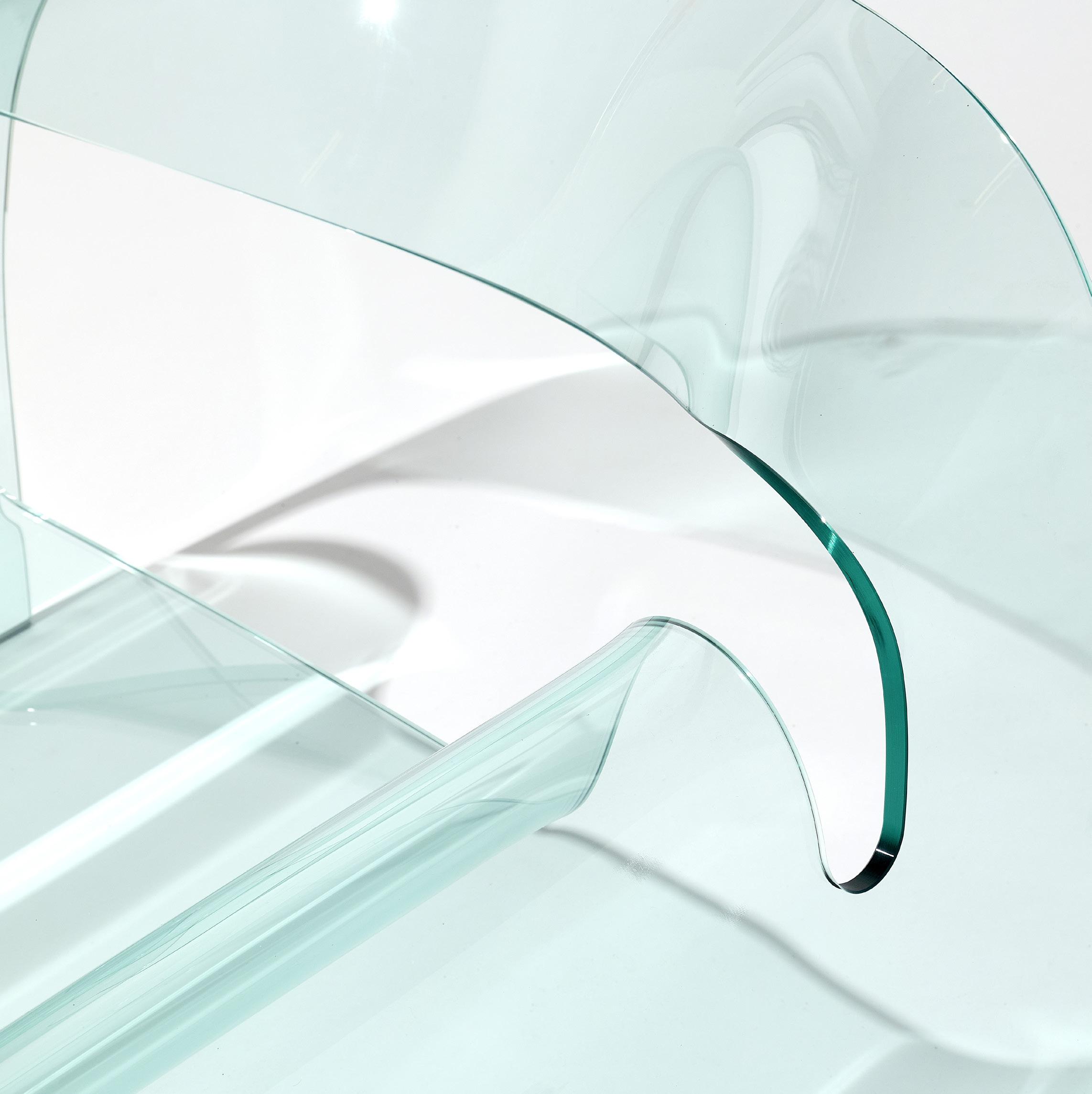
Antoine-Jean GROS, baron GROS (Paris, 1771 - Meudon, 1835)
Le général Bonaparte au pont d'Arcole Crayon noir, estompe et rehauts de blanc 22 × 16 cm
Provenance :
Probablement offert par Antoine-Jean Gros au peintre Vincenzo Camuccini ; Collection du peintre Vincenzo Camuccini (1771-1844) ; Puis par descendance à son arrière-arrière-petit-fils ; Collection particulière, Rome
Estimation : 200 000 – 300 000 €
Vente aux enchères : Mercredi 25 mars 2026 - 14h30
7 rond-point des Champs-Élysées Marcel Dassault 75008 Paris
Contact : Matthieu Fournier +33 (0)1 42 99 20 26 mfournier@artcurial.com
www.artcurial.com
François-Xavier LALANNE (1927-2008) « Mouton de pierre », modèle créé vers 1979, le nôtre exécuté en 1991 Vendu 390 600 €
Clôture du catalogue : Fin mars 2026
Vente aux enchères : Jeudi 21 mai 2026 - 14h30
7 rond-point des Champs-Élysées Marcel Dassault
75008 Paris
Contact : Sabrina Dolla sdolla@artcurial.com +33 (0)1 42 99 16 40 www.artcurial.com
Clôture du catalogue : Mai 2026 CÉSAR (1921-1998) La Grande Rambaud - 1989 Vendu 367 360 €
Vente aux enchères : Mardi 7 juillet 2026 - 17h
Hôtel Hermitage Monte-Carlo Square Beaumarchais 98000 Monaco





HERMÈS - 2019
Sac Kelly Sellier 25 Commande spéciale Vendu 55 104 €





Clôture du catalogue : Début juin 2026
Vente aux enchères : Mercredi 8 juillet 2026 - 11h
Hôtel Hermitage Monte-Carlo Square Beaumarchais 98000 Monaco
Contact : Lucile Best +33 (0)1 58 56 38 13 lbest@artcurial.com www.artcurial.com
Artcurial SAS est un opérateur de ventes volontaires de meubles aux enchères publiques régie par les articles L 321-4 et suivant du Code de commerce. En cette qualité Artcurial SAS agit comme mandataire du vendeur qui contracte avec l’acquéreur. Les rapports entre Artcurial SAS et l’acquéreur sont soumis aux présentes conditions générales d’achat qui pourront être amendées par des avis écrits ou oraux avant la vente et qui seront mentionnés au procès-verbal de vente.
En tant qu’opérateur de ventes volontaires, ARTCURIAL SAS est assujetti aux obligations listées aux articles L.561-2 14° et suivants du Code Monétaire et Financier relatifs à la lutte contre le blanchiment d’argent et le financement du terrorisme.
a) Les acquéreurs potentiels sont invités à examiner les biens pouvant les intéresser avant la vente aux enchères, et notamment pendant les expositions. Artcurial SAS se tient à la disposition des acquéreurs potentiels pour leur fournir des rapports sur l’état des lots.
b) Les descriptions des lots résultant du catalogue, des rapports, des étiquettes et des indications ou annonces verbales ne sont que l’expression par Artcurial SAS de sa perception du lot, mais ne sauraient constituer la preuve d’un fait.
c) Les indications données par Artcurial SAS sur l’existence d’une restauration, d’un accident ou d’un incident affectant le lot, sont exprimées pour faciliter son inspection par l’acquéreur potentiel et restent soumises à son appréciation personnelle ou à celle de son expert.
L’absence d’indication d’une restauration d’un accident ou d’un incident dans le catalogue, les rapports, les étiquettes ou verbalement, n’implique nullement qu’un bien soit exempt de tout défaut présent, passé ou réparé. Inversement la mention de quelques défauts n’implique pas l’absence de tout autres défauts.
d) Les estimations sont fournies à titre purement indicatif et elles ne peuvent être considérées comme impliquant la certitude que le bien sera vendu au prix estimé ou même à l’intérieur de la fourchette d’estimations. Les estimations ne sauraient constituer une quelconque garantie.
Les estimations peuvent être fournies en plusieurs monnaies ; les conversions peuvent à cette occasion être arrondies différemment des arrondissements légaux.
e) Les biens d’occasion (tout ce qui n’est pas neuf) ne bénéficient pas de la garantie légale de conformité conformément à l’article L 217-2 du Code de la consommation.
a) En vue d’une bonne organisation des ventes, les acquéreurs potentiels sont invités à se faire connaître auprès d’Artcurial SAS, avant la vente, afin de permettre l’enregistrement de leurs données personnelles. Artcurial SAS se réserve le droit de demander à tout acquéreur potentiel de justifier de son identité ainsi que de ses références bancaires et d’effectuer un déposit. Artcurial SAS se réserve d’interdire l’accès à la salle de vente de tout acquéreur potentiel pour justes motifs. Une enchère est acceptée au regard des informations transmises par l'encherisseur avant la vente. En conséquence, aucune modification du nom de l'adjudicataire ne pourra intervenir après la vente.
b) Toute personne qui se porte enchérisseur s’engage à régler personnellement et immédiatement le prix d’adjudication augmenté des frais à la charge de l’acquéreur et de tous impôts ou taxes qui pourraient être exigibles.Tout enchérisseur est censé agir pour son propre compte sauf dénonciation préalable de sa qualité de mandataire pour le compte d’un tiers, acceptée par Artcurial SAS.
c) Le mode normal pour enchérir consiste à être présent dans la salle de vente. Toutefois Artcurial SAS pourra accepter gracieusement de recevoir des enchères par téléphone d’un acquéreur potentiel qui se sera manifesté avant la vente. Artcurial SAS ne pourra engager sa responsabilité notamment si la liaison téléphonique n’est pas établie, est établie tardivement, ou en cas d’erreur ou d’omissions relatives à la réception des enchères par téléphone. À toutes fins utiles, Artcurial SAS se réserve le droit d’enregistrer les communications téléphoniques durant la vente. Les enregistrements seront conservés jusqu’au règlement du prix, sauf contestation.
d) Artcurial SAS pourra accepter gracieusement d’exécuter des ordres d’enchérir qui lui auront été transmis avant la vente, pour lesquels elle se réserve le droit de demander un déposit de garantie et qu’elle aura acceptés. Si le lot n’est pas adjugé à cet enchérisseur, le déposit de garantie sera renvoyé sous 72h. Si Artcurial SAS reçoit plusieurs ordres pour des montants d’enchères identiques, c’est l’ordre le plus ancien qui sera préféré. Artcurial SAS ne pourra engager sa responsabilité notamment en cas d’erreur ou d’omission d’exécution de l’ordre écrit.
e) Dans l’hypothèse où un prix de réserve aurait été stipulé par le vendeur, Artcurial SAS se réserve le droit de porter des enchères pour le compte du vendeur jusqu’à ce que le prix de réserve soit atteint.En revanche le vendeur n’est pas autorisé à porter lui-même des enchères directement ou par le biais d’un mandataire.Le prix de réserve ne pourra pas dépasser l’estimation basse figurant dans le catalogue ou modifié publiquement avant la vente.
f) Artcurial SAS dirigera la vente de façon discrétionnaire, en veillant à la liberté des enchères et à l’égalité entre l’ensemble des enchérisseurs, tout en respectant les usages établis.Artcurial SAS se réserve de refuser toute enchère, d’organiser les enchères de la façon la plus appropriée, de déplacer certains lots lors de la vente, de retirer tout lot de la vente, de réunir ou de séparer des lots.En cas de contestation Artcurial SAS se réserve de désigner l’adjudicataire, de poursuivre la vente ou de l’annuler, ou encore de remettre le lot en vente.
g) Sous réserve de la décision de la personne dirigeant la vente pour Artcurial SAS, l’adjudicataire sera la personne qui aura porté l’enchère la plus élevée pourvu qu’elle soit égale ou supérieure au prix de réserve, éventuellement stipulé. Le coup de marteau matérialisera la fin des enchères et le prononcé du mot « adjugé » ou tout autre équivalent entraînera la formation du contrat de vente entre le vendeur et le dernier enchérisseur retenu. L’adjudicataire ne pourra obtenir la livraison du lot qu’après règlement de l’intégralité du prix. en cas de remise d’un chèque ordinaire, seul l’encaissement du chèque vaudra règlement. Artcurial SAS se réserve le droit de ne délivrer le lot qu’après encaissement du chèque. Le lot non adjugé pourra être vendu après la vente dans les conditions de la loi sous réserve que son prix soit d’au moins 1.500 euros.
h) Pour faciliter les calculs des acquéreurs potentiels, Artcurial SAS pourra être conduit à utiliser à titre indicatif un système de conversion de devises. Néanmoins les enchères ne pourront être portées en devises, et les erreurs de conversion ne pourront engager la responsabilité de Artcurial SAS.
a) En sus du prix de l’adjudication, l’adjudicataire (acheteur) devra acquitter par lot et par tranche dégressive les commissions et taxes suivantes:
1) Lots en provenance de l’UE:
• De 1 à 850 000 euros: 27 % + TVA au taux en vigueur.
• De 850 001 à 6 000 000 euros: 21 % + TVA au taux en vigueur.
• Au-delà de 6 000 001 euros: 14,5 % + TVA au taux en vigueur.
2) Lots en provenance hors UE : (indiqués par un m): Œuvres d’art, antiquités et biens de collection: L’adjudication sera portée hors taxe. A cette adjudication sera ajoutée une TVA au taux réduit de 5,5% qui pourra être rétrocédée à l’adjudicataire sur présentation d'un justificatif d’exportation hors UE ou à l’adjudicataire UE justifiant d’un numéro de TVA intracommunautaire et d’un document prouvant la livraison dans son état membre. Les commissions et taxes indiquées au paragraphe 1) ci-dessus demeurent identiques.
3) Lots en provenance hors UE (indiqués par un m) Bijoux et Montres, Vins et Spiritueux, Multiples: Aux commissions et taxes indiquées au paragraphe 1) ci-dessus, il conviendra d’ajouter des frais liés à l’importation correspondant à 20% du prix d’adjudication.
4) Des frais additionnels seront facturés aux adjudicataires ayant enchérit en ligne par le biais de plateformes Internet autres qu’ARTCURIAL LIVE.
5) La TVA sur commissions et les frais liés à l’importation pourront être rétrocédés à l’adjudicataire sur présentation des justificatifs d’exportation hors UE.L’adjudicataire UE justifiant d’un n° de TVA Intracommunautaire et d’un document prouvant la livraison dans son état membre pourra obtenir le remboursement de la TVA sur commissions.
Le paiement du lot aura lieu au comptant, pour l’intégralité du prix, des frais et taxes, même en cas de nécessité d’obtention d’une licence d’exportation. L’adjudicataire pourra s’acquitter par les moyens suivants : - En espèces : jusqu’à 1 000 euros frais et taxes compris pour les ressortissants français et les personnes agissant pour le compte d’une entreprise, 15 000 euros frais et taxe compris pour les ressortissants étrangers sur présentation de leurs papiers d’identité ; - Par chèque bancaire tiré sur une banque française sur présentation d’une pièce d’identité et, pour toute personne morale, d’un extrait KBis daté de moins de 3 mois (les chèques tirés sur une banque étrangère ne sont pas acceptés);
- Par virement bancaire ;
- Par carte de crédit : VISA, MASTERCARD ou AMEX (en cas de règlement par carte American Express, une commission supplémentaire de 1,85 % correspondant aux frais d’encaissement sera perçue).
6) La répartition entre prix d’adjudication et commissions peut-être modifiée par convention particulière entre le vendeur et Artcurial sans conséquence pour l’adjudicataire.
b) Artcurial SAS sera autorisé à reproduire sur le procès-verbal de vente et sur le bordereau d’adjudication les renseignements qu’aura fournis l’adjudicataire avant la vente. Toute fausse indication engagera la responsabilité de l’adjudicataire. Dans l’hypothèse où l’adjudicataire ne se sera pas fait enregistrer avant la vente, il devra communiquer les renseignements nécessaires dès l’adjudication du lot prononcée. Toute personne s’étant fait enregistrer auprès de Artcurial SAS dispose d’un droit d’accès et de rectification aux données nominatives fournies à Artcurial SAS dans les conditions de la Loi du 6 juillet 1978.
c) Il appartiendra à l’adjudicataire de faire assurer le lot dès l’adjudication. Il ne pourra recourir contre Artcurial SAS, dans l’hypothèse où par suite du vol, de la perte ou de la dégradation de son lot, après l’adjudication, l’indemnisation qu’il recevra de l’assureur de Artcurial SAS serait avérée insuffisante.
d) Le lot ne sera délivré à l’acquéreur qu’après paiement intégral du prix, des frais et des taxes. En cas de règlement par chèque, le lot ne sera délivré qu’après encaissement définitif du chèque, soit 8 jours ouvrables à compter du dépôt du chèque. A compter du lundi suivant le 90e jour après la vente, le lot acheté réglé ou non réglé restant dans l’entrepôt, fera l’objet d’une facturation de 50€ HT par semaine et par lot, toute semaine commencée étant due dans son intégralité au titre des frais d’entreposage et d’assurance.À défaut de paiement par l’adjudicataire, après mise en demeure restée infructueuse, le bien est remis en vente à la demande du vendeur sur folle enchère de l’adjudicataire défaillant ; si le vendeur ne formule pas cette demande dans un délai de trois mois à compter de l’adjudication, la vente est résolue de plein droit, sans préjudice de dommages intérêts dus par l’adjudicataire défaillant. En outre, Artcurial SAS se réserve de réclamer à l’adjudicataire défaillant, à son choix : - Des intérêts au taux légal majoré de cinq points, - Le remboursement des coûts supplémentaires engendrés par sa défaillance, - Le paiement de la différence entre le prix d’adjudication initial et le prix d’adjudication sur folle enchère s’il est inférieur, ainsi que les coûts générés par les nouvelles enchères.
Artcurial SAS se réserve également de procéder à toute compensation avec des sommes dues à l’adjudicataire défaillant. Artcurial SAS se réserve d’exclure de ses ventes futures, tout adjudicataire qui aura été défaillant ou qui n’aura pas respecté les présentes conditions générales d’achat.
e) Sous réserve de dispositions spécifiques à la présente vente, les achats qui n’auront pas été retirés dans les sept jours de la vente (samedi, dimanche et jours fériés compris), pourront être transportés dans un lieu de conservation aux frais de l’adjudicataire défaillant qui devra régler le coût correspondant pour pouvoir retirer le lot, en sus du prix, des frais et des taxes.
f) L’acquéreur pourra se faire délivrer à sa demande un certificat de vente qui lui sera facturé la somme de 60 euros TTC.
En cas de contestation Artcurial SAS se réserve de désigner l’adjudicataire, de poursuivre la vente ou de l’annuler, ou encore de remettre le lot en vente.
a) Dans l’hypothèse où deux personnes auront porté des enchères identiques par la voix, le geste, ou par téléphone et réclament en même temps le bénéfice de l’adjudication après le coup de marteau, le bien sera immédiatement remis en vente au prix proposé par les derniers enchérisseurs, et tout le public présent pourra porter de nouvelles enchères.
b) Pour faciliter la présentation des biens lors de ventes, Artcurial SAS pourra utiliser des moyens vidéos. en cas d’erreur de manipulation pouvant conduire pendant la vente à présenter un bien différent de celui sur lequel les enchères sont portées, Artcurial SAS ne pourra engager sa responsabilité, et sera seul juge de la nécessité de recommencer les enchères.
L’état français dispose d’un droit de préemption des œuvres vendues conformément aux textes en vigueur.
L’exercice de ce droit intervient immédiatement après le coup de marteau, le représentant de l’état manifestant alors la volonté de ce dernier de se substituer au dernier enchérisseur, et devant confirmer la préemption dans les 15 jours.
Artcurial SAS ne pourra être tenu pour responsable des conditions de la préemption par l’état français.
Artcurial SAS est propriétaire du droit de reproduction de son catalogue. Toute reproduction de celui-ci est interdite et constitue une contrefaçon à son préjudice.
En outre Artcurial SAS dispose d’une dérogation lui permettant de reproduire dans son catalogue les œuvres mises en vente, alors même que le droit de reproduction ne serait pas tombé dans le domaine public.
Toute reproduction du catalogue de Artcurial SAS peut donc constituer une reproduction illicite d’une œuvre exposant son auteur à des poursuites en contrefaçon par le titulaire des droits sur l’œuvre. La vente d’une œuvre n’emporte pas au profit de son propriétaire le droit de reproduction et de présentation de l’œuvre.
La réglementation internationale du 3 mars 1973, dite Convention de Washington a pour effet la protection de specimens et d’espèces dits menacés d’extinction. Les termes de son application diffèrent d’un pays à l’autre. Il appartient à tout acheteur de vérifier, avant d’enchérir, la législation appliquée dans son pays à ce sujet. Tout lot contenant un élément en ivoire, en palissandre…quelle que soit sa date d’exécution ou son certificat d’origine, ne pourra être importé aux Etats-Unis, au regard de la législation qui y est appliquée. Il est indiqué par un (s).
L’acquéreur sera lui-même chargé de faire assurer ses acquisitions, et Artcurial SAS décline toute responsabilité quant aux dommages que l’objet pourrait encourir, et ceci dès l’adjudication prononcée. Toutes les formalités et transports restent à la charge exclusive de l’acquéreur.
Les dispositions des présentes conditions générales d’achat sont indépendantes les unes des autres. La nullité de quelque disposition ne saurait entraîner l’inapplicabilité des autres.
Conformément à la loi, il est précisé que toutes les actions en responsabilité civile engagées à l’occasion des prisées et des ventes volontaires et judiciaires de meuble aux enchères publiques se prescrivent par cinq ans à compter de l’adjudication ou de la prisée.La loi française seule régit les présentes conditions générales d’achat. Toute contestation relative à leur existence, leur validité, leur opposabilité à tout enchérisseur et acquéreur, et à leur exécution sera tranchée par le tribunal judiciaire compétent du ressort de Paris (France).
Le Conseil des Ventes Volontaires, 19 avenue de l’Opéra – 75001 Paris peut recevoir des réclamations en ligne (www.conseildesventes.fr, rubrique « Réclamations en ligne »).
PROTECTION DES BIENS CULTURELS
Artcurial SAS participe à la protection des biens culturels et met tout en œuvre, dans la mesure de ses moyens, pour s’assurer de la provenance des lots mis en vente dans ce catalogue.
Artcurial SAS is an operator of voluntary auction sales regulated by the law articles L321-4 and following of the Code de Commerce. In such capacity Artcurial SAS acts as the agent of the seller who contracts with the buyer. The relationships between Artcurial SAS and the buyer are subject to the present general conditions of purchase which can be modified by saleroom notices or oral indications before the sale, which will be recorded in the official sale record.
As a voluntary auction sales operator, ARTCURIAL SAS is subject to the obligations listed in articles L.561-2 14° and seq. of the French Monetary and Financial Code relating to the Anti Money Laundering regulation.
a) The prospective buyers are invited to examine any goods in which they may be interested, before the auction takes place, and notably during the exhibitions. Artcurial SAS is at disposal of the prospective buyers to provide them with reports about the conditions of lots.
b) Description of the lots resulting from the catalogue, the reports, the labels and the verbal statements or announcements are only the expression by Artcurial SAS of their perception of the lot, but cannot constitute the proof of a fact.
c) The statements by made Artcurial SAS about any restoration, mishap or harm arisen concerning the lot are only made to facilitate the inspection thereof by the prospective buyer and remain subject to his own or to his expert’s appreciation. The absence of statements Artcurial SAS by relating to a restoration, mishap or harm, whether made in the catalogue, condition reports, on labels or orally, does not imply that the item is exempt from any current, past or repaired defect. Inversely, the indication of any defect whatsoever does not imply the absence of any other defects.
d) Estimates are provided for guidance only and cannot be considered as implying the certainty that the item will be sold for the estimated price or even within the bracket of estimates.
Estimates cannot constitute any warranty assurance whatsoever.
The estimations can be provided in several currencies ; the conversions may, in this case or, be rounded off differently than the legal rounding
e) Second-hand goods (anything that is not new) do not benefit from the legal guarantee of conformity in accordance with article L 217-2 of the Consumer Code.
a) In order to assure the proper organisation of the sales, prospective buyers are invited to make themselves known to Artcurial SAS before the sale, so as to have their personal identity data recorded.
Artcurial SAS reserves the right to ask any prospective buyer to justify his identity as well as his bank references and to request a deposit.
Artcurial SAS reserves the right to refuse admission to the auction sales premises to any prospective buyer for legitimate reasons. A bid is accepted on the basis of the information provided by the bidder prior to the sale. Consequently, the name of the winning bidder cannot be changed after the sale.
b) Any person who is a bidder undertakes to pay personally and immediately the hammer price increased by the costs to be born by the buyer and any and all taxes or fees/expenses which could be due. Any bidder is deemed acting on his own behalf except when prior notification, accepted by Artcurial SAS, is given that he acts as an agent on behalf of a third party.
c) The usual way to bid consists in attending the sale on the premises. However, Artcurial SAS may graciously accept to receive some bids by telephone from a prospective buyer who has expressed such a request before the sale. Artcurial SAS will bear no liability / responsibility whatsoever, notably if the telephone contact is not made, or if it is made too late, or in case of mistakes or omissions relating to the reception of the telephone. For variety of purposes, Artcurial SAS reserves its right to record all the telephone communications during the auction. Such records shall be kept until the complete payment of the auction price, except claims.
d) Artcurial SAS may accept to execute orders to bid which will have been submitted before the sale and by Artcurial SAS which have been deemed acceptable. Artcurial SAS is entitled to request a deposit which will be refunded within 48hours after the sale if the lot id not sold to this buyer.
Should Artcurial SAS receive several instructions to bid for the same amounts, it is the instruction to bid first received which will be given preference.
Artcurial SAS will bear no liability/responsibility in case of mistakes or omission of performance of the written order.
e) In the event where a reserve price has been stipulated by the seller, Artcurial SAS reserves the right to bid on behalf of the seller until the reserve price is reached. The seller will not be admitted to bid himself directly or through an agent. The reserve price may not be higher than the low estimate for the lot printed in or publicly modified before the sale.
f) Artcurial SAS will conduct auction sales at their discretion, ensuring freedom auction and equality among all bidders, in accordance with established practices.
Artcurial SAS reserves the right to refuse any bid, to organise the bidding in such manner as may be the most appropriate, to move some lots in the course of the sale, to withdraw any lot in the course of the sale, to combine or to divide some lots in the course of the sale. In case of challenge or dispute, Artcurial SAS reserves the right to designate the successful bidder, to continue the bidding or to cancel it, or to put the lot back up for bidding.
g) Subject to the decision of the person conducting the bidding for Artcurial SAS, the successful bidder will be the bidder would will have made the highest bid provided the final bid is equal to or higher than the reserve price if such a reserve price has been stipulated.
The hammer stroke will mark the acceptance of the highest bid and the pronouncing of the word “adjugé” or any equivalent will amount to the conclusion of the purchase contract between the seller and the last bidder taken in consideration.
No lot will be delivered to the buyer until full payment has been made.In case of payment by an ordinary draft/check, payment will be deemed made only when the check will have been cashed.
The lot not auctioned may be sold after the sale in accordance with the law, provided that its price is at least 1,500 euros.
h) So as to facilitate the price calculation for prospective buyers, a currency converter may be operated by Artcurial SAS as guidance. Nevertheless, the bidding cannot be made in foreign currency and Artcurial SAS will not be liable for errors of conversion.
a) In addition of the lot’s hammer price, the buyer must pay the different stages of following costs and fees/taxes:
1) Lots from the EU:
• From 1 to 850,000 euros: 27 % + current VAT.
From 850,001 to 6,000,000 euros: 21 % + current VAT.
Over 6,000,001 euros: 14,5 % + current VAT.
2) Lots from outside the EU : (identified by an m). Works of art, Antiques and Collectors’items The hammer price will be VAT excluded to which should be added 5.5% VAT. Upon request, this VAT will be refunded to the purchaser on presentation of written proof of exportation outside the EU or to the EU purchaser who will submit his intracommunity VAT number and a proof of shipment of his purchase to his EU country home address. Commissions and taxes indicated in section 3.1) remain the same.
3) Lots from outside the EU (identified by an m): Jewelry and Watches, Wines and Spirits, Multiples In addition to the commissions and taxes specified in paragraph 1) above, an additional import VAT will be charged (20% of the hammer price).
4) Additional fees will be charged to bidders who bid online via Internet platforms other than ARTCURIAL LIVE.
5) VAT on commissions and importation expenses can be retroceded to the purchaser on presentation of written proof of exportation outside the EU.
An EU purchaser who will submit their intracommunity VAT number and a proof of shipment of their purchase to their EU country home address will be refunded of VAT on buyer’s premium.The payment of the lot will be made cash, for the whole of the price, costs and taxes, even when an export licence is required. The purchaser will be authorized to pay by the following means :
- In cash : up to 1 000 euros, costs and taxes included, for French citizens and people acting on behalf of a company, up to 15 000 euros, costs and taxes included, for foreign citizens on presentation of their identity papers ;
- By cheque drawn on a French bank on presentation of identity papers and for any company, a KBis dated less than 3 months (cheques drawn on a foreign bank are not accepted);
- By bank transfer;
- By credit card : VISA, MASTERCARD or AMEX (in case of payment by AMEX, a 1,85 % additional commission corresponding to cashing costs will be collected).
6)The distribution between the lot's hammer price and cost and fees can be modified by particular agreement between the seller and Artcurial SAS without consequence for the buyer.
b) Artcurial SAS will be authorized to reproduce in the official sale record and on the bid summary the information that the buyer will have provided before the sale. The buyer will be responsible for any false information given. Should the buyer have neglected to give his personal information before the sale, he will have to give the necessary information as soon as the sale of the lot has taken place.
Any person having been recorded by Artcurial SAS has a right of access and of rectification to the nominative data provided to Artcurial SAS pursuant to the provisions of Law of the 6 July 1978.
c) The lot must to be insured by the buyer immediately after the purchase. The buyer will have no recourse against Artcurial SAS, in the event where, due to a theft, a loss or a deterioration of his lot after the purchase, the compensation he will receive from the insurer of Artcurial SAS would prove insufficient.
d) The lot will be delivered to the buyer only after the entire payment of the price, costs and taxes. If payment is made by cheque, the lot will be delivered after cashing, eight working days after the cheque deposit. If the buyer has not settled his invoice yet or has not collected his purchase, a fee of 50€+VAT per lot, per week (each week is due in full) covering the costs of insurance and storage will be charged to the buyer, starting on the first Monday following the 90th day after the sale. Should the buyer fail to pay the amount due, and after notice to pay has been given by Artcurial SAS to the buyer without success, at the seller’s request, the lot is re-offered for sale, under the French procedure known as “procédure de folle enchère”. If the seller does not make this request within three months from the date of the sale, the sale will be automatically cancelled, without prejudice to any damages owed by the defaulting buyer.
In addition, Artcurial SAS reserves the right to claim against the defaulting buyer, at their option :
- interest at the legal rate increased by five points,
- the reimbursement of additional costs generated by the buyer’s default,
- the payment of the difference between the initial hammer price and the price of sale after “procédure de folle enchère” if it is inferior as well as the costs generated by the new auction.
Artcurial SAS also reserves the right to set off any amount Artcurial SAS may owe the defaulting buyer with the amounts to be paid by the defaulting buyer.
Artcurial SAS reserves the right to exclude from any future auction, any bidder who has been a defaulting buyer or who has not fulfilled these general conditions of purchase.
e) With reservation regarding the specific provisions of this sale, for items purchased which are not collected within seven days from after the sale (Saturdays, Sundays and public holidays included), Artcurial SAS will be authorized to move them into a storage place at the defaulting buyer’s expense, and to release them to same after payment of corresponding costs, in addition to the price, costs and taxes.
f) The buyer can obtain upon request a certificate of sale which will be invoiced € 60.
In case of dispute, Artcurial SAS reserves the right to designate the successful bidder, to continue the sale or to cancel it or to put the lot up for sale.
a) In case two bidders have bidden vocally, by mean of gesture or by telephone for the same amount and both claim title to the lot, after the bidding the lot, will immediately be offered again for sale at the previous last bid, and all those attending will be entitled to bid again.
b) So as to facilitate the presentation of the items during the sales, Artcurial SAS will be able to use video technology. Should any error occur in operation of such, which may lead to show an item during the bidding which is not the one on which the bids have been made, Artcurial SAS shall bear no liability/responsibility whatsoever, and will have sole discretion to decide whether or not the bidding will take place again.
The French state in entitled to use a right of pre-emption on works of art, pursuant to the rules of law in force.
The use of this right comes immediately after the hammer stroke, the representative of the French state expressing then the intention of the State to substitute for the last bidder, provided he confirms the pre-emption decision within fifteen days.
Artcurial SAS will not bear any liability/ responsibility for the conditions of the pre-emption by the French State.
The copyright in any and all parts of the catalogue is the property of Artcurial SAS. Any reproduction thereof is forbidden and will be considered as counterfeiting to their detriment.
Furthermore, Artcurial SAS benefits from a legal exception allowing them to reproduce the lots for auction sale in their catalogue, even though the copyright protection on an item has not lapsed.
Any reproduction of Artcurial SAS catalogue may therefore constitute an illegal reproduction of a work which may lead its perpetrator to be prosecuted for counterfeiting by the holder of copyright on the work.The sale of a work of art does not transfer to its buyer any reproduction or representation rights thereof.
The International regulation dated March 3rd 1973, protects endangered species and specimen. Each country has its own lawmaking about it. Any potential buyer must check before bidding, if he is entitled to import this lot within his country of residence. Any lot which includes one element in ivory, rosewood…cannot be imported in the United States as its legislation bans its trade whatever its dating may be. It is indicated by a (s).
The buyer has to insure its purchase, and Artcurial SAS assumes no liability for any damage items which may occur after the sale. All transportation arrangements are the sole responsibility of the buyer.
The clauses of these general conditions of purchase are independant from each other. Should a clause whatsoever be found null and void, the others shall remain valid and applicable.
In accordance with the law, it is added that all actions in public liability instituted on the occasion of valuation and of voluntary and court-ordered auction sales are barred at the end of five years from the hammer price or valuation.
These Conditions of purchase are governed by French law exclusively. Any dispute relating to their existence, their validity and their binding effect on any bidder or buyer shall be submitted to the exclusive jurisdiction of the Courts of France. The Conseil des Ventes Volontaires, 19 avenue de l’Opéra – 75001 Paris can receive online claims (www.conseildesventes.fr, section “Online claims”).
Artcurial SAS applies a policy to prevent the sale of looted or stolen cultural property.
Directrice du pôle,
Vice-présidente : Isaure de Viel Castel
Art Contemporain Africain
Spécialiste :
Margot Denis-Lutard, 16 44
Art-Déco / Design
Directrice :
Sabrina Dolla, 16 40
Spécialiste :
Edouard Liron, 20 37
Administratrice senior :
Anne-Claire Drauge, 20 42
Administrateur junior : Alexis Chantelot
Expert :
Justine Despretz
Consultants :
Design Italien :
Design Scandinave : Aldric Speer
Bandes Dessinées
Expert : Éric Leroy
Administrateur junior : Alexandre Dalle
Estampes & Multiples
Directrice : Karine Castagna
Administrateur - catalogueur :
Florent Sinnah, 16 54
Administrateur junior :
Alexandre Dalle
Recherche et certificat :
Jessica Cavalero
Louise Eber
Impressionniste & Moderne
Directeur : Bruno Jaubert
Spécialiste :
Florent Wanecq
Administratrice - catalogueur :
Élodie Landais, 20 84
Administratrice junior :
Alexandra Michel
Recherche et certificat :
Jessica Cavalero,
Louise Eber
Post-War & Contemporain
Directeur : Hugues Sébilleau
Spécialiste : Sophie Cariguel
Catalogueur :
Beatrice Fantuzzi, 20 34
Administratrice :
Marine Oriente
Recherche et certificat :
Jessica Cavalero
Louise Eber
Urban Art
Directeur : Arnaud Oliveux
Administrateur - catalogueur: Florent Sinnah, 16 54
Administrateur junior : Alexandre Dalle
Twenty One Contemporary
Directeur : Arnaud Oliveux
Spécialistes :
Karine Castagna
Margot Denis-Lutard
Administrateur - catalogueur : Florent Sinnah, 16 54
Recherche et certificat :
Jessica Cavalero
Louise Eber
Expositions culturelles & ventes privées
Chef de projet : Vanessa Favre, 16 13
Archéologie & Arts d’Orient
Spécialiste : Lamia Içame, 20 75
Administratrice junior : Alice Derouet
Expert Art de l’Islam : Romain Pingannaud
Art d’Asie
Expert : Qinghua Yin
Administratrice : Shenying Chen, 20 32
Livres & Manuscrits
Directeur : Frédéric Harnisch, 16 49
Administratrice : Émeline Duprat, 16 58
Maîtres anciens & du XIXe siècle :
Tableaux, dessins, sculptures, cadres anciens et de collection
Vice-président : Matthieu Fournier, 20 26
Catalogueur : Blanche Llaurens
Spécialiste : Matthias Ambroselli
Administratrice sénior : Margaux Amiot, 20 07
Administratrice :
Léa Pailler, 20 07
Mobilier & Objets d’Art
Directeur : Filippo Passadore Clerc assistant : Barthélémy Kaniuk
Administratrice : Charlotte Norton, 20 68
Expert céramiques : Cyrille Froissart
Experts orfèvrerie : S.A.S. Déchaut-Stetten & associés,
Marie de Noblet
Senior advisor – Spécialiste senior orfèvrerie : Thierry de Lachaise
Orientalisme
Directeur : Olivier Berman, 20 67
Spécialiste junior : Florence Conan, 16 15
Souvenirs Historiques & Armes Anciennes
Expert armes :
Arnaud de Gouvion Saint-Cyr
Contact : Maxence Miglioretti, 20 02
Numismatique / Philatélie / Objets de curiosités & Histoire naturelle
Expert numismatique : Cabinet Bourgey
Contact : Juliette Leroy-Prost, 17 10
Automobiles de Collection
Président : Matthieu Lamoure
Vice-président : Pierre Novikoff
Spécialiste sénior : Antoine Mahé, 20 62
Responsable des relations clients Motorcars : Anne-Claire Mandine, 20 73
Responsable des opérations et de l’administration : Sandra Fournet +33 (0)1 58 56 38 14
Administratrice junior : Anne-Laure Frances
Consultant : Frédéric Stoesser motorcars@artcurial.com
Automobilia
Aéronautique, Marine
Président : Matthieu Lamoure
Responsable : Sophie Peyrache, 20 41
Horlogerie de Collection
Directeur : Romain Marsot
Expert : Geoffroy Ader Administratrice junior : Charlotte Christien, 16 51
Joaillerie
Directrice : Valérie Goyer
Spécialiste junior : Antoinette Rousseau
Catalogueur : Pauline Hodée
Administratrice junior : Janelle Beau, 20 52
Mode & Accessoires de luxe
Responsable : Lucile Best
Catalogueur : Victoire Debreil
Administratrice junior: Anaël El Hani, +33 (0)1 58 56 38 12
Stylomania
Contact : Juliette Leroy-Prost, 17 10
Vins fins & Spiritueux
Expert : Laurie Matheson
Spécialiste : Marie Calzada, 20 24
Administratrice junior : Alice Derouet
Consultant : Luc Dabadie vins@artcurial.com
Vice-président :
Stéphane Aubert
Chargés d'inventaires,
Commissaires-priseurs : Juliette Leroy-Prost, 17 10
Maxence Miglioretti, 20 02
Elisa Borsik, 20 18
Administrateurs : Thomas Loiseaux, 16 55
Charline Monjanel, 20 33
Consultante : Catherine Heim
Directrice des partenariats : Marine de Miollis
Senior advisor : Anne Giscard d’Estaing
Stéphane Aubert
Elisa Borsik
Francis Briest
Matthieu Fournier
Juliette Leroy-Prost
Anne-Claire Mandine
Maxence Miglioretti
Arnaud Oliveux
Hervé Poulain
Florent Wanecq
7, rond-point des Champs-Élysées Marcel Dassault 75008 Paris T. +33 (0)1 42 99 20 20 contact@artcurial.com www.artcurial.com
SAS au capital de 1 797 000 € Agrément n° 2001-005
Cannes - Alpes-Maritimes
Représentante : Eléonore Dauzet
+33 (0)6 65 26 03 39 edauzet@artcurial.com
Montpellier
Geneviève Salasc de Cambiaire
+33 (0)6 09 78 31 45 gsalasc@artcurial.com
Région Aquitaine
Directrice : Julie Valade jvalade@artcurial.com
Région Rhône-Alpes
Représentant : François David +33 (0)6 95 48 92 75 fdavid@artcurial.com
Strasbourg
Frédéric Gasser
+33 (0)6 88 26 97 09 fgasser@artcurial.com
Artcurial Toulouse
Jean-Louis Vedovato
Commissaire-priseur : Jean-Louis Vedovato
Clerc principal : Valérie Vedovato
8, rue Fermat – 31000 Toulouse
+33 (0)5 62 88 65 66 v.vedovato@artcurialtoulouse.com
comme suit : initiale(s) du prénom et nom @artcurial.com, par exemple : Anne-Laure Guérin: alguerin@artcurial.com
Les numéros de téléphone des collaborateurs d’Artcurial
International senior advisor : Martin Guesnet, 20 31
Allemagne
Directrice : Miriam Krohne
Assistante : Anna Rudakova
Galeriestrasse 2b 80539 Munich
+49 89 1891 3987
Belgique
Directrice : Vinciane de Traux
Fine Art Business Developer: Simon van Oostende
Office ManagerPartnerships & Events: Magali Giunta 5, avenue Franklin Roosevelt 1050 Bruxelles +32 2 644 98 44
Chine
Consultante : Jiayi Li 798 Art District, No 4 Jiuxianqiao Lu Chaoyang District
Beijing 100015
+86 137 01 37 58 11 lijiayi7@gmail.com
Italie
Directrice : Emilie Volka
Assistante : Eleonora Ballista
Corso Venezia, 22 20121 Milano +39 02 49 76 36 49
Artcurial Maroc
Directeur : Olivier Berman
Directrice administrative : Soraya Abid
Administratrices junior : Widad Outmghart
Résidence AsmarAvenue Mohammed VI
Rue El Adarissa - Hivernage
40020 Marrakech
+212 524 20 78 20
Artcurial Monaco
Directrice : Olga de Marzio Assistante administrative : Joëlle Iseli
Monte-Carlo Palace
3/9 boulevard des Moulins 98000 Monaco
+377 97 77 51 99
ARTCURIAL BEURRET BAILLY WIDMER
Bâle
Schwarzwaldallee 171 4058 Bâle
+41 61 312 32 00 info@bbw-auktionen.com
Saint-Gall
Unterstrasse 11 9001 Saint-Gall
+41 71 227 68 68 info@galeriewidmer.com
Zurich
Kirchgasse 33
8001 Zurich
+41 43 343 90 33 info@bbw-auktionen.com
Nicolas Orlowski
Matthieu Lamoure
Joséphine Dubois
Stéphane Aubert
Matthieu Fournier
Bruno Jaubert
Isaure de Viel Castel
Directeurs associés :
Stéphane Aubert
Olivier Berman
Sabrina Dolla
Matthieu Fournier
Bruno Jaubert
Matthieu Lamoure
Arnaud Oliveux
Hugues Sébilleau
Julie Valade
Vinciane de Traux
Conseiller scientifique et culturel :
Serge Lemoine
Commissaire-priseur, Co-fondateur : Francis Briest
Président directeur général : Nicolas Orlowski
Directrice générale adjointe : Joséphine Dubois
Président d’honneur : Hervé Poulain
Conseil d’administration : Francis Briest
Olivier Costa de Beauregard
Héléna Dassault
Thierry Dassault
Carole Fiquémont
Aurélie Habert
Nicolas Orlowski
Hervé Poulain
JOHN TAYLOR
Président directeur général : Nicolas Orlowski
John Taylor Corporate, Europa Résidence, Place des Moulins, 98000 Monaco contact@john-taylor.com www.john-taylor.fr
ARQANA
Artcurial Deauville 32, avenue Hocquart de Turtot 14800 Deauville
+33 (0)2 31 81 81 00 info@arqana.com www.arqana.com
Directrice générale adjointe, administration et finances : Joséphine Dubois
Assistante : Emmanuelle Roncola
Responsable service juridique clients : Léonor Augier
Ordres d’achat, enchères par téléphone
Directrice : Kristina Vrzests, 20 51
Adjointe de la Directrice :
Marie Auvard
Administratrice : Maëlle Touminet
Administrateur junior : Théo-Paul Boulanger bids@artcurial.com
Comptabilité des ventes
Responsable : Nathalie Higueret
Comptable des ventes confirmée : Audrey Couturier
Comptables : Chloé Catherine
Mathilde Desforges
Jessica Sellahannadi Yugyeong Shon 20 71 ou 17 00
Gestionnaire de dossier : Melanie Joly
Transport et douane
Assistantes spécialisées : Lou Dupont, Inès Tekirdaglioglu shipping@artcurial.com
Logistique et gestion des stocks
Directeur : Éric Pourchot
Responsables de stock : Lionel Lavergne
Joël Laviolette
Vincent Mauriol
Lal Sellahanadi
Adjoint : Clovis Cano
Coordinatrices logistique: Victoire de Latour
Magasiniers : Denis Chevallier
Adrien da Costa
Isaac Dalle
Floriane Joffre
Brayan Monteiro
Jason Tilot
Marketing
Directrice : Lorraine Calemard, 20 87
Chefs de projet :
Domitilla Corti, 01 42 25 64 38
Ariane Gilain, 16 52
Daphné Perret, 16 23
Responsable Studio Graphique: Aline Meier, 20 88
Graphiste : Rose de La Chapelle, 20 10
Graphiste junior : Romane Marliot, 01 42 25 93 83
Responsable CRM : Alexandra Cosson
Chargée CRM :
Géraldine de Mortemart, 20 43
Analyste CRM junior : Colombine Santarelli
Relations Extérieures
Directrice : Anne-Laure Guérin, 20 86
Attachée de presse : Deborah Bensaid, 20 76
Community Manager : Maria Franco Baqueiro, 20 82
Comptabilité générale
Responsable :
Sandra Margueritat Lefevre
Comptables : Romane Herson
Jodie Hoang
Arméli Itoua
Aïcha Manet
Assistante de gestion : Solène Sapience
Responsable administrative des ressources humaines : Isabelle Chênais, 20 27
Assistante : Amandine Le Monnier 20 79
Bureau d’accueil
Responsable accueil, Clerc Live et PV : Denis Le Rue
Mizlie Bellevue
Théa Fayolle
Marie Peyroche
Services généraux
Responsable : Denis Le Rue
Service photographique des catalogues : Fanny Adler
Stéphanie Toussaint
Régisseur : Mehdi Bouchekout
Chairs Anatomy
Vente n°6524
Mercredi 4 mars 2026 – 15h
Paris — 7, rond-point des Champs-Élysées Marcel Dassault
Ordre d’achat / Absentee bid
Ligne téléphonique / Telephone (Pour tout lot dont l’estimation est supérieure à 500 euros For lots estimated from € 500 onwards)
Téléphone pendant la vente / Phone at the time of the sale:
Nom / Name : Prénom / First name : Société / Compagny : Adresse / Address :
Téléphone / Phone : Fax : Email :
Lot Description du lot / Lot description
Les ordres d'achat et les demandes d'enchères téléphoniques doivent impérativement nous parvenir au moins 24 heures avant la vente. Le service d'enchères téléphoniques est proposé pour les lots dont l’estimation basse est supérieure à 500€.
To allow time for processing, absentee bids and requests for telephone bidding should be received at least 24 hours before the sale begins. Telephone bidding is a service provided by Artcurial for lots with a low estimate above 500€.
À renvoyer / Please mail to :
Artcurial SAS 7 rond-point des Champs-Élysées Marcel Dassault - 75008 Paris Fax : +33 (0)1 42 99 20 60 bids@artcurial.com
Merci de bien vouloir joindre à ce formulaire une copie de votre pièce d’identité (passeport ou carte nationale d’identité), si vous enchérissez pour le compte d’une société, merci de joindre un extrait KBIS de moins de 3 mois. Could you please provide a copy of your id or passport?
If you bid on behalf of a company, could you please provide an act of incorporation?
Après avoir pris connaissance des conditions de vente décrites dans le catalogue, je déclare les accepter et vous prie d’acquérir pour mon compte personnel aux limites indiquées en euros, les lots que j’ai désignés ci-dessous. (les limites ne comprenant pas les frais légaux).
I have read the conditions of sale printed in this catalogue and agree to abide by them. I grant your permission to purchase on my behalf the following items within the limits indicated in euros. (These limits do not include buyer’s premium and taxes).
Date et signature obligatoire / Required dated signature