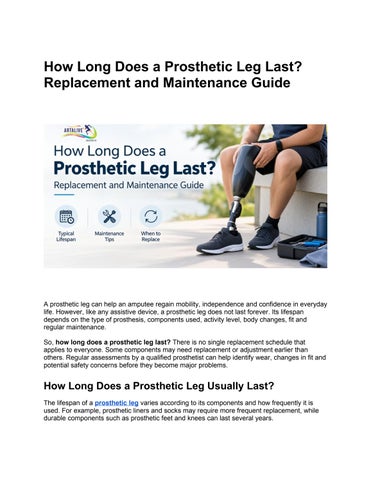
How Long Does a Prosthetic Leg Last? Replacement and Maintenance Guide
A prosthetic leg can help an amputee regain mobility, independence and confidence in everyday life. However, like any assistive device, a prosthetic leg does not last forever. Its lifespan depends on the type of prosthesis, components used, activity level, body changes, fit and regular maintenance. So, how long does a prosthetic leg last? There is no single replacement schedule that applies to everyone. Some components may need replacement or adjustment earlier than others. Regular assessments by a qualified prosthetist can help identify wear, changes in fit and potential safety concerns before they become major problems.
How Long Does a Prosthetic Leg Usually Last? The lifespan of a prosthetic leg varies according to its components and how frequently it is used. For example, prosthetic liners and socks may require more frequent replacement, while durable components such as prosthetic feet and knees can last several years.
The Amputee Coalition's 2025 guide notes that prosthetic socks commonly have a general lifespan of around 12 months, while prosthetic feet and knees may have a general lifespan of about five years, although replacement can be required sooner depending on wear, activity and component failure. The prosthetic socket is another important consideration. Changes in residual-limb size, weight or tissue shape can affect the socket fit even when the prosthetic components themselves remain functional. This means that a prosthetic leg may not need to be completely replaced every time one component wears out. In some cases, individual parts can be adjusted, repaired or replaced.
What Factors Affect Prosthetic Leg Lifespan? Several factors can influence how long an artificial leg remains comfortable and functional.
1. Activity Level A person who walks extensively, exercises regularly or participates in sports may place greater demands on prosthetic components than someone with a lower activity level. Higher activity can increase wear on the foot, knee, socket, liner and suspension system.
2. Changes in Body Weight Weight gain or weight loss can change the shape and volume of the residual limb. This may affect the fit of the prosthetic socket. A poor-fitting socket can cause pressure, rubbing, discomfort and skin problems. Clinical guidance also notes that significant weight changes can alter prosthetic fit.
3. Residual-Limb Changes The residual limb can continue to change after amputation. Swelling may decrease, tissues can change and muscle development may alter limb shape. As a result, a socket that was comfortable initially may eventually require adjustment or replacement.
4. Type and Quality of Components A prosthetic leg in Malaysia can be designed using different feet, knees, liners, suspension systems and other components. The appropriate combination depends on individual mobility goals and clinical requirements. Advanced options such as microprocessor knees or specialised prosthetic feet may require professional servicing and component reviews.
Signs Your Prosthetic Leg May Need Replacement You should speak with your prosthetist if you notice changes such as: ● ● ● ● ● ● ● ● ● ● ●
Persistent discomfort while wearing the prosthesis Repeated skin irritation or pressure areas A loose or unstable socket Excessive movement inside the socket Cracked or damaged components Unusual clicking or noise Difficulty walking compared with previously A worn or stretched liner Changes in suspension Increased effort required to walk Significant changes in residual-limb size or body weight
A prosthetic limb service may recommend an adjustment, repair, component replacement or a completely new prosthesis depending on the problem. Clinical guidance recommends regular prosthetic reviews because wear and damage can affect safety and function. One NHS prosthetic service advises annual checks of prosthetic legs, with earlier assessment when wear or other concerns are identified.
How to Maintain a Prosthetic Leg Good maintenance can help protect your prosthetic leg and support comfortable use.
Clean the Socket Regularly The socket comes into close contact with the residual limb and should be cleaned regularly. NHS guidance recommends cleaning the socket with soap and warm water. Allow the socket to dry properly before use.
Care for Liners and Socks Prosthetic liners should be cleaned according to the manufacturer's instructions. Prosthetic socks should be changed regularly and kept clean and dry. Avoid wearing damaged, stretched or excessively worn socks because wrinkles and poor fit can contribute to rubbing and pressure.
Check Your Residual Limb Daily Inspect your skin for redness, blisters, pressure marks, cracks or wounds. Leeds Teaching Hospitals recommends checking the residual limb daily for signs of chafing, pressure points and skin problems. If you notice persistent irritation or an open wound, seek professional advice.
Do Not Attempt Mechanical Repairs Yourself Avoid loosening screws, modifying the socket or attempting to repair mechanical components yourself. Professional assessment is important because incorrect adjustments can affect the safety and function of the prosthesis.
When Should You Replace a Prosthetic Leg? There is no universal replacement date for every prosthetic leg. Replacement depends on component wear, fit, activity level, residual-limb changes and individual needs. Sometimes only a liner, foot, knee, socket or suspension component needs replacing. In other situations, a completely new prosthesis may be appropriate. Regular appointments with a qualified prosthetist can help determine whether your current artificial leg still meets your mobility and comfort requirements.
Professional Prosthetic and Orthotic Care in Malaysia Choosing the right prosthetic provider is an important part of long-term prosthetic care. Artalive Sdn Bhd provides prosthetic and orthotic services designed around individual mobility needs, including assessment, fitting, adjustments and ongoing support. If you are exploring other prosthetic solutions, you can also learn more about upper-limb prosthetics, including prosthetic hand and arm options. For people searching for a prosthetic leg in Malaysia, prosthetic leg clinic Malaysia, artificial leg Malaysia, below-knee prosthetic Malaysia, above-knee prosthetic Malaysia, or prosthetic limb Malaysia, professional assessment can help identify an appropriate solution based on individual requirements.
Frequently Asked Questions 1. How many years does a prosthetic leg last? There is no fixed lifespan for an entire prosthetic leg. Different components wear at different rates. Activity level, component type, maintenance, fit and changes in the residual limb can all affect replacement needs.
2. How do I know if my prosthetic leg needs replacement? Persistent discomfort, poor socket fit, skin problems, damaged components, unusual noises, reduced stability or difficulty walking may indicate that your prosthesis needs assessment. A prosthetist can determine whether adjustment, repair or replacement is appropriate.
3. Can proper maintenance make a prosthetic leg last longer?
Regular cleaning, appropriate storage, daily skin checks, care of liners and socks, and scheduled professional reviews can help maintain the condition and function of a prosthesis. However, normal component wear will eventually require servicing or replacement.