AFO for Stroke Patients: Improving Balance,
Gait & Mobility
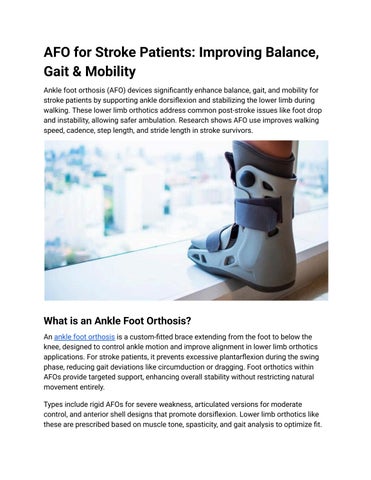
Ankle foot orthosis (AFO) devices significantly enhance balance, gait, and mobility for stroke patients by supporting ankle dorsiflexion and stabilizing the lower limb during walking. These lower limb orthotics address common post-stroke issues like foot drop and instability, allowing safer ambulation. Research shows AFO use improves walking speed, cadence, step length, and stride length in stroke survivors.
What is an Ankle Foot Orthosis?
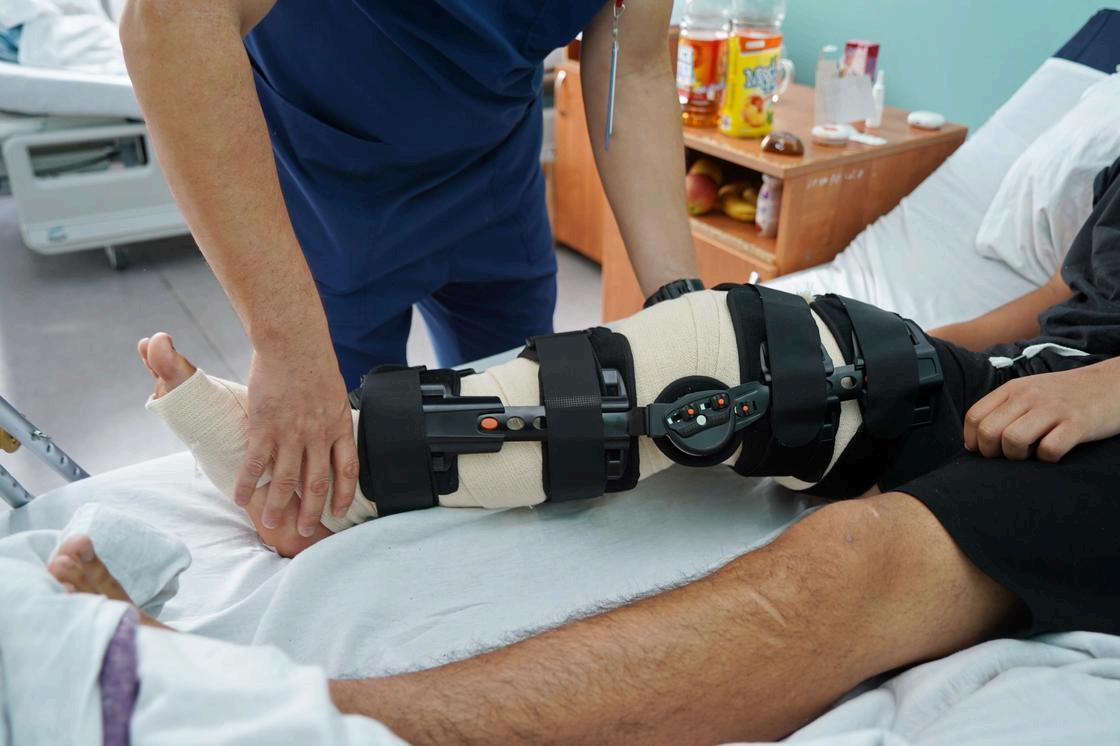
An ankle foot orthosis is a custom-fitted brace extending from the foot to below the knee, designed to control ankle motion and improve alignment in lower limb orthotics applications. For stroke patients, it prevents excessive plantarflexion during the swing phase, reducing gait deviations like circumduction or dragging. Foot orthotics within AFOs provide targeted support, enhancing overall stability without restricting natural movement entirely.
Types include rigid AFOs for severe weakness, articulated versions for moderate control, and anterior shell designs that promote dorsiflexion. Lower limb orthotics like these are prescribed based on muscle tone, spasticity, and gait analysis to optimize fit.
Proper customization, such as adjusting trim lines or adding padding, ensures comfort for daily use.
Stroke Challenges and AFO Solutions
Stroke often causes hemiplegia, leading to weak dorsiflexors, foot drop, and unstable gait patterns. Without intervention, patients face increased fall risk, reduced independence, and secondary issues like joint deformities. Ankle foot orthosis counters this by holding the ankle in neutral, improving knee and hip kinematics during stance and swing phases.
Studies confirm AFOs boost Functional Ambulation Category (FAC) scores, reflecting better real-world mobility They also enhance Timed Up and Go (TUG) test performance, vital for balance assessment. Combined with physiotherapy, these orthosis tools promote neuroplasticity, fostering long-term motor gains.
Key Benefits for Balance and Gait
AFOs improve walking speed and cadence, key metrics for stroke rehabilitation. Step and stride lengths increase, creating a more symmetrical gait and reducing energy
expenditure. Balance enhancements occur through better ankle sagittal plane angles at initial contact and knee angles at toe-off.
For mobility, patients report walking longer distances with less fatigue. Lower limb orthotics like AFOs preserve joint alignment, preventing contractures and pain. Meta-analyses highlight consistent gains in gait stability, especially for those with dorsiflexion impairment.
● Enhanced stability reduces fall risk during community ambulation.
● Improved proprioception aids balance training outcomes.
● Custom foot orthotics minimize pressure sores in sensory-impaired limbs.
Integrating AFO with Rehabilitation
Prescribe ankle foot orthosis after thorough assessment of muscle strength and gait biomechanics. Pair with balance exercises for amplified effects on lower limb function. Ongoing tuning, like shank-to-vertical angle adjustments, refines performance.
Therapists train patients on donning, skin checks, and gait retraining with the orthosis. Regular follow-ups ensure adaptations as recovery progresses. Facilities specializing in lower limb orthotics, such as those offering custom solutions, maximize outcomes—consider expert providers like Artalivewhich is certified prosthetics& orthotics centre in malaysia for personalized fittings
Practical Tips for Stroke Patients
Start with short wear times, building tolerance to avoid discomfort. Clean the device daily and inspect for wear, especially in active users. Combine AFO use with strength training targeting tibialis anterior muscles.
Monitor progress via gait speed tests or FAC scores. For spastic cases, dynamic AFOs offer flexibility over rigid foot orthotics. Consult orthotists for upgrades as mobility improves.
FAQs
1.What conditions in stroke patients benefit most from ankle foot orthosis?
Ankle foot orthosis excels for foot drop, dorsiflexor weakness, and swing-phase plantarflexion, common in hemiplegic stroke gait.
2.How long does it take to see improvements with AFO?
Many notice gait stability gains immediately upon fitting, with sustained mobility enhancements over weeks when paired with therapy.
3.Are there different types of lower limb orthotics for stroke?
Yes, options range from rigid AFOs for stability to articulated or anterior designs for controlled motion, tailored to spasticity levels.