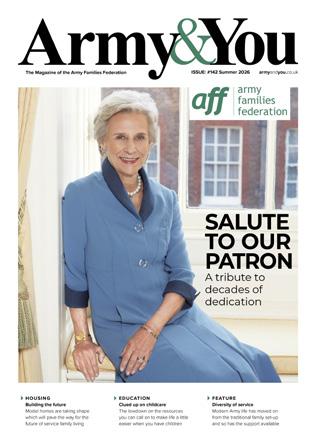
The Magazine of the Army Families Federation


























BY ALISON GROVER, COMMUNICATIONS MANAGER

While AFF has traditionally supported partners and spouses of those serving, in recent times we have expanded our reach to include those in the military community who aren’t in what might be thought of as a traditional family set-up.
In this edition we are turning the focus on the more ‘hidden’ voices in the Army community including those in long-term relationships, female serving personnel, single and dual serving soldiers and those from a non-UK background.
Our feature on pages 16 to 18 explores this further and looks at what has changed to support the needs of today’s diverse community of serving personnel.
More than a quarter of the respondents to the latest AFCAS survey are in a long-term relationship, so it will be welcome news that many military allowances have recently been extended to this group. We go into more detail on page 11.
On the housing front, we provide a round-up of the overseas pilot, which has brought benefits for service families, allowing unmarried partners and their eligible family members to accompany service personnel on certain overseas assignments (page 38).

In Building the future on page 41, we look at the new-build military homes being planned – we hope that later in the year you will be able to view the plans online, including floor plans and images, and then share your feedback, which will help refine the designs before they are used more widely.
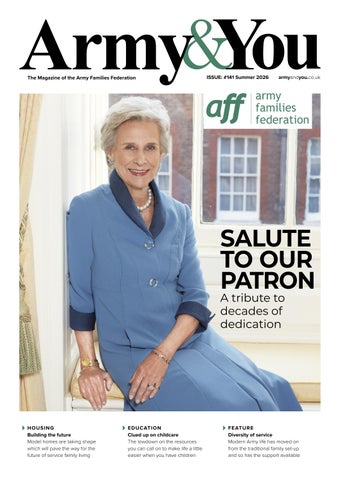
We are also celebrating our Patron The Duchess of Gloucester’s milestone birthday and her more than three decades of service to AFF (page 21). We explore how AFF was created more than 40 years ago with an interview with our founder Lady Kitson (page 43). Her advice still rings true today: “What was the problem, what practical solution could be found? Work out how to get there one step at a time.”
Do drop us a line to let us know how we can improve your magazine and include more of what is relevant and interesting to you. You can do so by emailing your thoughts to editor@aff.org.uk
Enjoy the issue.
We’ve changed the way Army&You is distributed so you’ll now need to sign up to continue receiving (or request to receive) a free copy direct to your door, which can be done by scanning the QR code above or visiting armyandyou.co.uk
Doing so will ensure that you don’t miss out and enter you into a prize draw for a chance to win a pair of AirPods.
If you’re constantly on the move, don’t worry –you’ll be able to pick up a copy of the magazine at a multitude of military hubs, be it the mess, welfare centre or medical waiting room.
A look at today’s diverse serving population and what has changed to support them
Thanks to our Patron
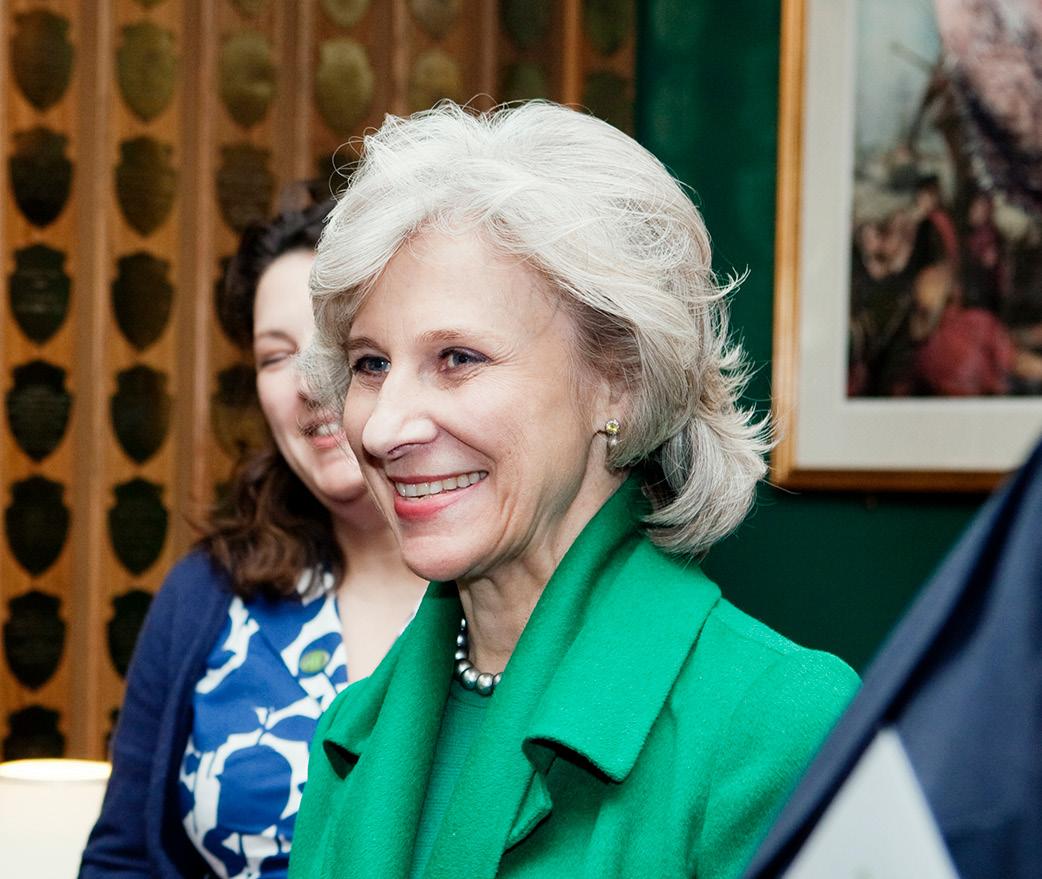
Paying tribute to HRH The Duchess of Gloucester on her 80th birthday
Thirty years of support
How the Army Welfare Service has been there for soldiers, their families and the wider Armed Forces community
25 Gen up on education and childcare
The answers to frequently asked questions on Service Pupil Premium and Wrap Around Childcare 30 Connection for non-UK communities
Help is at hand for military spouses and partners who have moved to the UK
32 Have a say on immigration
Take the chance to make your voice heard by completing our non-UK survey
Soldiering on
The story of a servicewomen who goes into battle – with her own body
the future
The detail behind the new military homes being built for today’s service families
Perseverance pays off
interview with the founder of the Federation of Army Wives, Lady Kitson
you need to know about Home to Duty Travel and Get You
up to date with the latest news, what’s happening at AFF
and what’s new online
Are you looking for a Boarding School? Let Claire Calder guide you.


Providing FREE and impartial advice to HM Forces and FCDO families
With her personal experience as a boarding school parent and as a Forces wife, Claire understands the unique challenges military families face. She offers a fully personalised advisory service - from your first phone call to the moment your child begins their boarding school journey.
Placement at the right UK boarding school
Advice on Forces and FCDO discounts
Support with private tutoring and revision courses





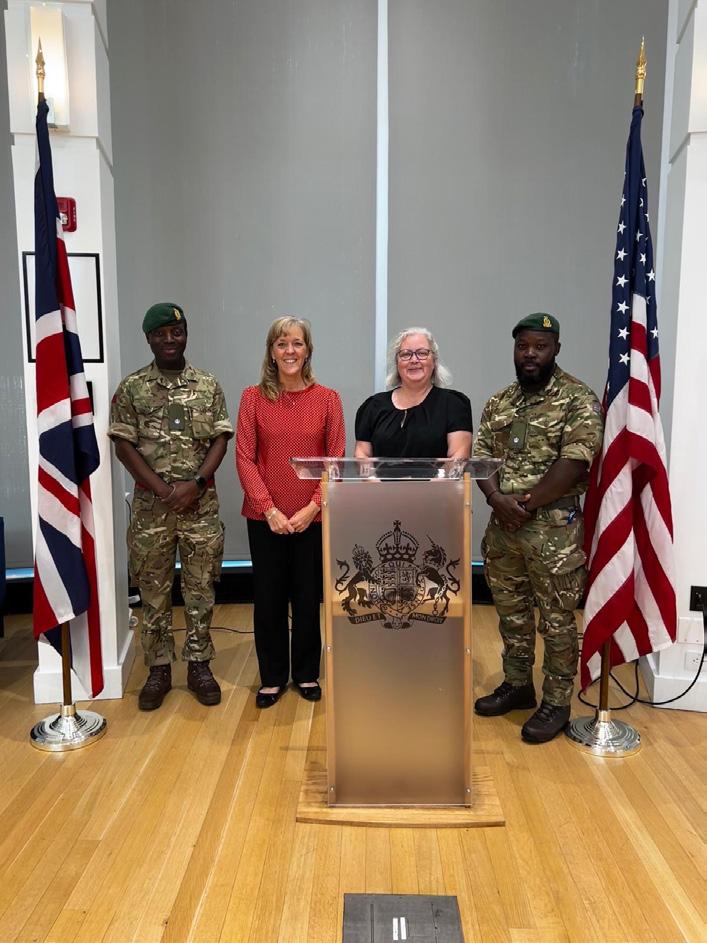
AFF is here to support you throughout your Army journey, from beginning to end. We represent the whole Army family, Regular or Reserve, whether you are single or married, in a longterm relationship, a single parent or a dual-serving family.
Last year, nearly 7,000 of you came to us with your questions and concerns. We also travelled across the UK and overseas, meeting serving personnel and their families face to face.
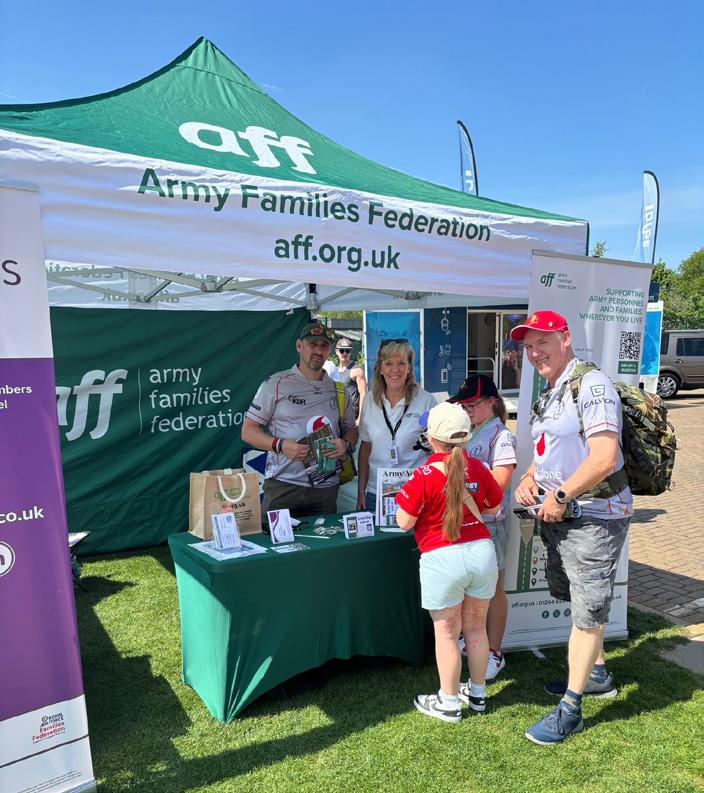
Over the past year, we have strengthened our links with Army Sport and established an AFF presence at major service sporting events, helping us reach a wider audience. So far this year, we have attended the Army v Navy rugby match at Twickenham and the Army v RAF match in Gloucester. Further afield, we travelled to
Washington DC and Germany to speak with families and the chain of command. We also hosted an immigration clinic in Larkhill and visited Plymouth, Scotland, and NATO Headquarters in Brussels and Brunssum in the Netherlands, among many other locations.
Please keep an eye out for us and let us know what is working, or not working for you, your family, and others within the Army community.
We also want to hear about any issues you are experiencing at your current location.
If you would like us to deliver a specific brief, please contact us and visit the events page on our website to see where we will be next, whether in person or virtually.
You may have an issue, question or concern, you might be frustrated with current policies or just want to share your experience to help others – if you are part of the Army family we are here to provide independent and confidential advice and support.
There’s no need to wait to see us out and about - our enquiries team are ready to take your calls, emails and website portal questions, they will then triage your enquiry and either send the information directly, or, for more complex enquiries, they will put you in touch with our dedicated specialist teams. A
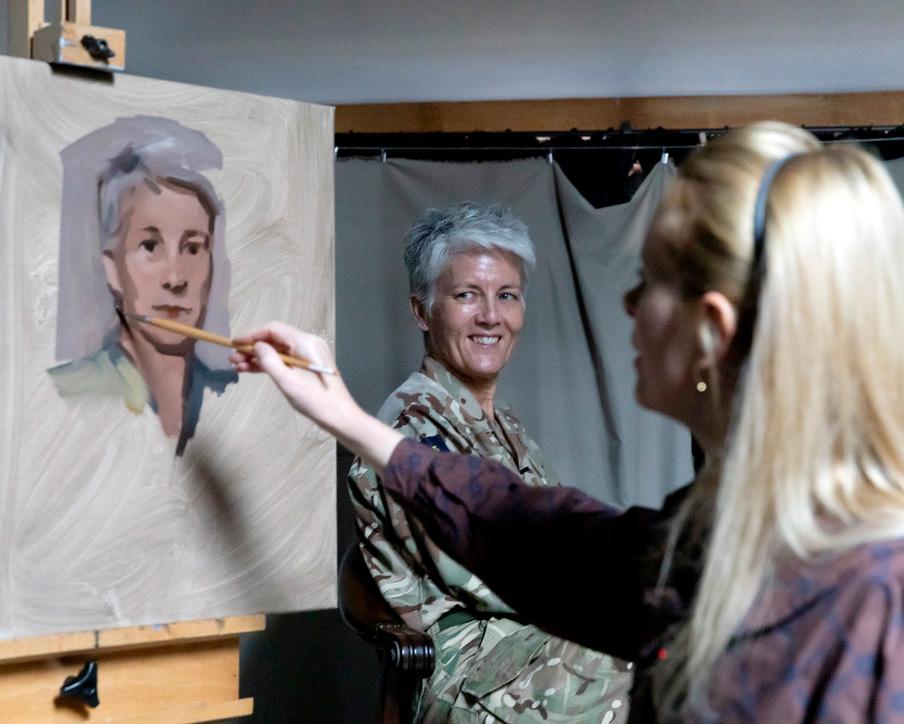
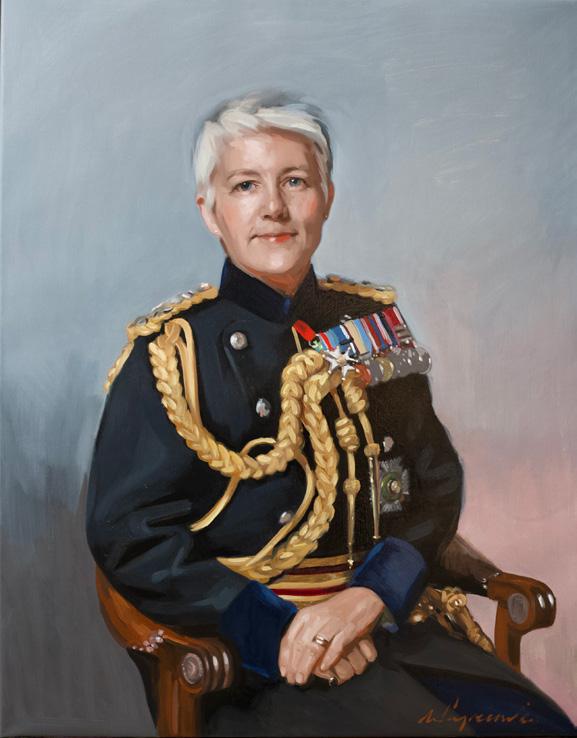
A PORTRAIT of the Army’s highest ranking woman was displayed among paintings of other highprofile figures in an art exhibition celebrating women’s achievements.
General Dame Sharon Nesmith, the Vice Chief of the Defence Staff, served in Germany, the Balkans and Iraq and went on to become the first woman to command a Brigade.
empowering women in leadership roles.
The Empowering Her show featured women like Nazanin Zaghari-Ratcliffe, who was detained in an Iranian jail for six years and Zoe Stratford, the Red Roses Captain who led the team to victory in the Women’s Rugby World Cup. Space scientist, educator and TV presenter Dame Dr Maggie Aderin-Pocock was another.
Gen Dame Sharon began her Army career in 1992 when she was commissioned into the Royal Corps of Signals. Her portrait was commissioned by the Royal Military Academy Sandhurst, which said it stood as a symbol of perseverance, breaking barriers and
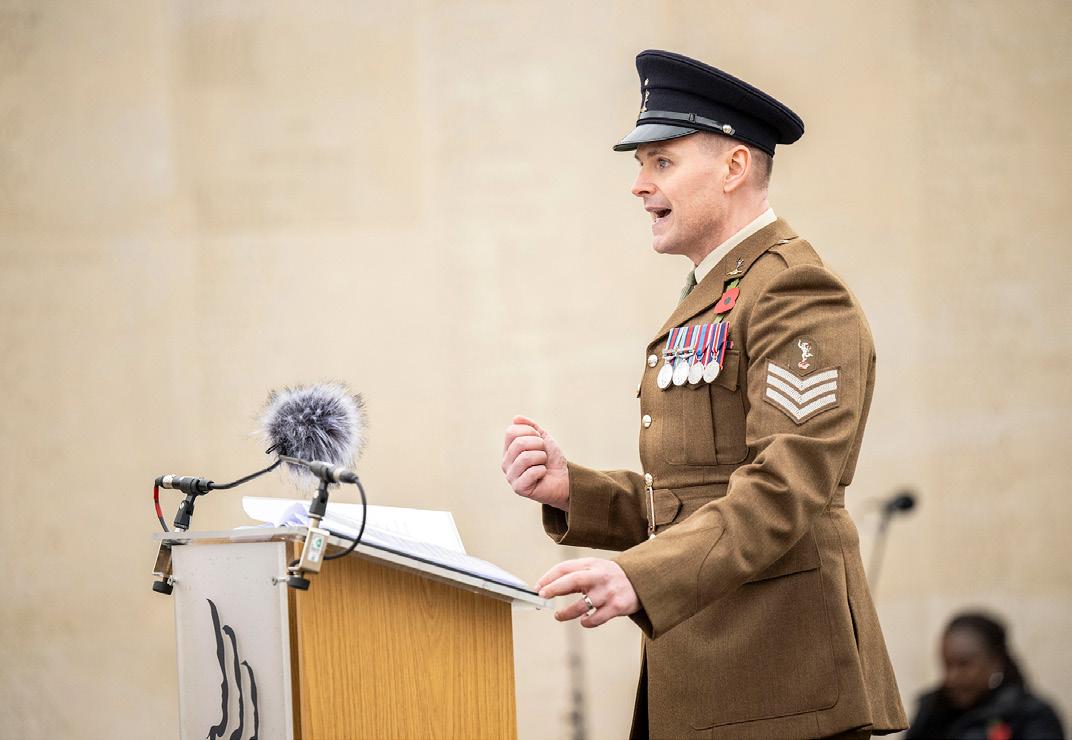
WHEN SGT Lee Wright stood in front of crowds to perform a poem in remembrance of a friend killed in action in Afghanistan, it marked a personal transformation.
During his first session in the Talent in the Ranks programme run by the National Memorial Arboretum he struggled to make eye contact when reading his poetry aloud.
He was one of the first to take part in the Royal British Legion-funded scheme, which started three years ago. But now he’s a veteran of several public performances. And after seeing the positive effect - and the creative confidence that grew in him - his wife Laura has joined in.
She told Army&You he had always written poetry and spoken word pieces but never had a platform for them. He joined Talent in the Ranks just to see if anyone was interested.
colleagues who was killed in action. He’s also submitted pieces for Poets’ Corner in Westminster Abbey.
Laura said the workshop sessions felt safe and welcoming. “It’s just such a nice environment where you’re able to get together with like-minded people, to be able to vocalise your experiences,” she said.
Not having to explain to people who can understand and empathise, and sharing support from others, gives a feeling of community – and the confidence to be creative.
“It’s an opportunity to have that space but then to do something with it.”
Lee, a Sergeant in the Royal Signals, is now involved in music production, which is something he wants to do outside the Army.
Talent in the Ranks is a free eight-week programme offering members of the Forces community the opportunity to work with a
The exhibition, held in London during the spring, was by portrait painter Caroline de Peyrecave, a member of the Society of Women Artists. She said: “For years I’ve noticed how women’s achievements are softened, sidelined, or quietly absorbed into the background.
“Even for famous women, like the ones celebrated in the show, their role is often narrowed down to what they have achieved on the world stage – but as a woman, they are all holding down family, societal expectations, physical challenges, personal insecurities and ordinary life quietly and repeatedly.”
It led to him performing one of his poems, written while he was in Afghanistan, in front of the Princess of Wales on Armistice Day. The work commemorated one of his

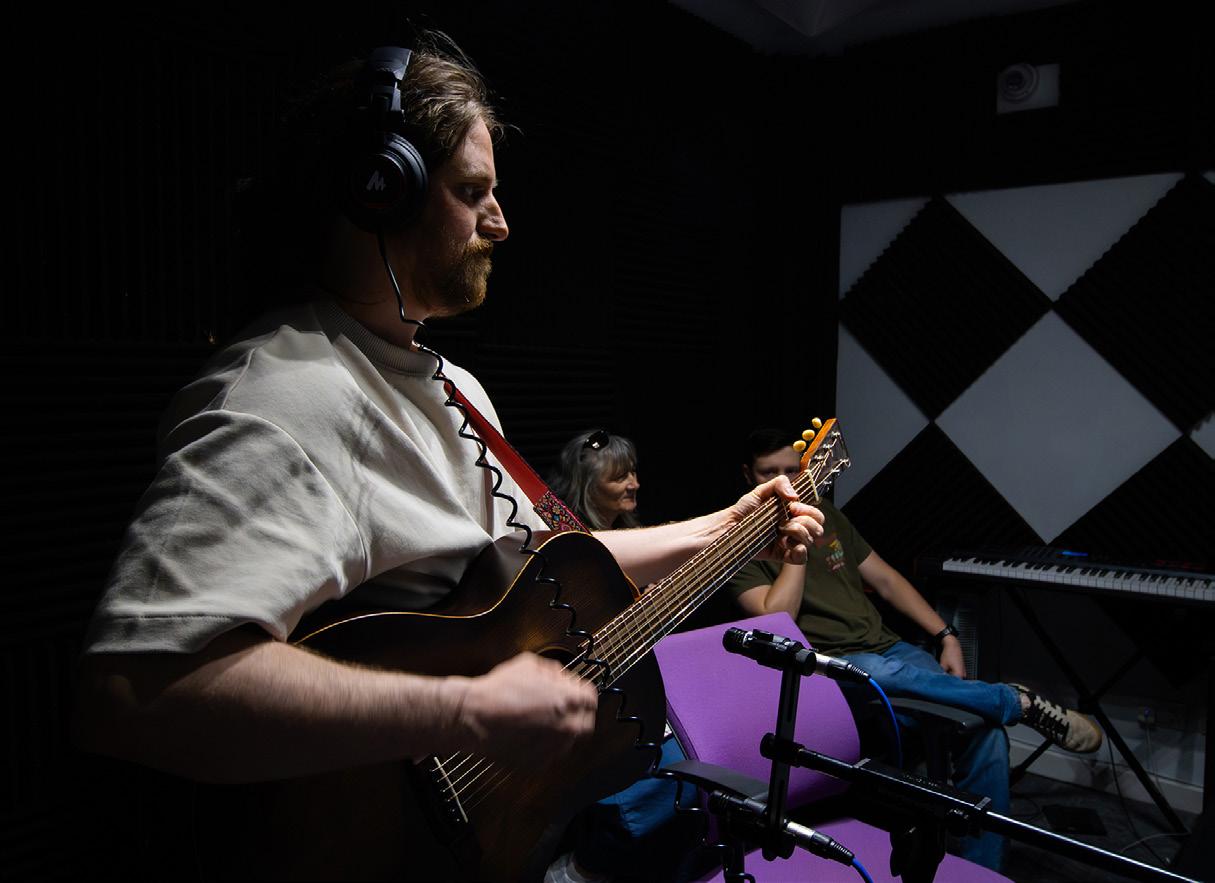
poet-in-residence, a writer and Black Voices’ Grosvenor Road Studios to develop their skills.
“The idea is that they use their experience to write original material,” explained Rachel Smith, Head of Learning and Participation at of the National Memorial Arboretum. “They’ve got stories to tell and sometimes the best way is through music and poetry – and there are some hard stories.”
They can write poetry, songs and spoken word pieces, rehearse them and record them professionally.
There are also live performances at the arboretum during the autumn, including Remembrance Sunday and Armistice Day.
If you’re interested in joining a course, email rasmith@ thenma.org.uk with some information about yourself and why you’d like to be involved.
THIS YEAR marks the 25th anniversary of the National Memorial Arboretum.
The 150-acre site in Staffordshire is home to 420 memorials commemorating those who have served.
As well as Remembrance events, it runs workshops, school activities and courses.
Visitors can enjoy exhibitions, guided tours, daily talks, outdoor trails and creative art workshops. In December there’s an illuminated trail. Find out more at thenma.org.uk
Remain (ILR), also known as settlement, is the right to live and work permanently in the UK, free from restrictions associated with immigration control.
Currently non-British personnel must serve four years before they are eligible for settlement on discharge. If they are medically discharged before then, they are not eligible. Families must spend five years with continuous leave on a route to settlement before they are eligible.
The Government has proposed a new ‘earned settlement’ model, under which the standard qualifying period for immigrants to receive settlement will increase from five to 10 years. The proposals state that there are no plans to increase the qualifying period for either serving personnel or their families.
The Government ran a consultation on the proposals earlier this year. One of the questions was whether there
should be a shorter route to settlement for serving personnel.
AFF ran a survey to ask your views on this and received more than 1,400 responses – 68 per cent of you said serving personnel should have a shorter route to settlement. We worked with the Royal British Legion to submit a paper on the issue, which has been included in the Home Affairs Committee report.
The proposals are currently in the post-consultation policy development stage. The Government originally aimed to begin a phased implementation from April, though the final policy may not be announced until the autumn.
An amendment to the English language rules, requiring a higher standard of English, was announced in March 2026 for certain routes and will take effect in April 2027. But Appendix HM Armed Forces is not part of the current changes.
Solent Mind has expanded its support for families of serving military personnel, with a new wellbeing service for British Army and Royal Air Force families.
Military Minds is funded by the Armed Forces Covenant
Fund Trust and helps families navigate the challenges of service life by providing access to mental health support when needed. It offers a safe and supportive space to talk to staff who share experience of military life, free resources to help manage mental health and wellbeing, and signposting to local services and groups.
“Frequent moving, stress around deployment, loneliness - there’s a lot to contend with when you’re living with a partner, child or parent in the British Army or Royal Air Force,” said Robynne Batley-Mallett, Mental Health Navigator for Military Minds.
Armed Forces Covenant Fund Trust CEO Anna Wright added: “It’s through partnerships like this - with charities which also service the civilian population and have connective tissue like the wider national Mind network - that we can really establish the garden of support that needs to grow up around Forces partners.”
For more information email militaryminds@solentmind. org.uk or call 0303 003 4239. solentmind.org.uk/supportfor-you/our-services/militaryminds
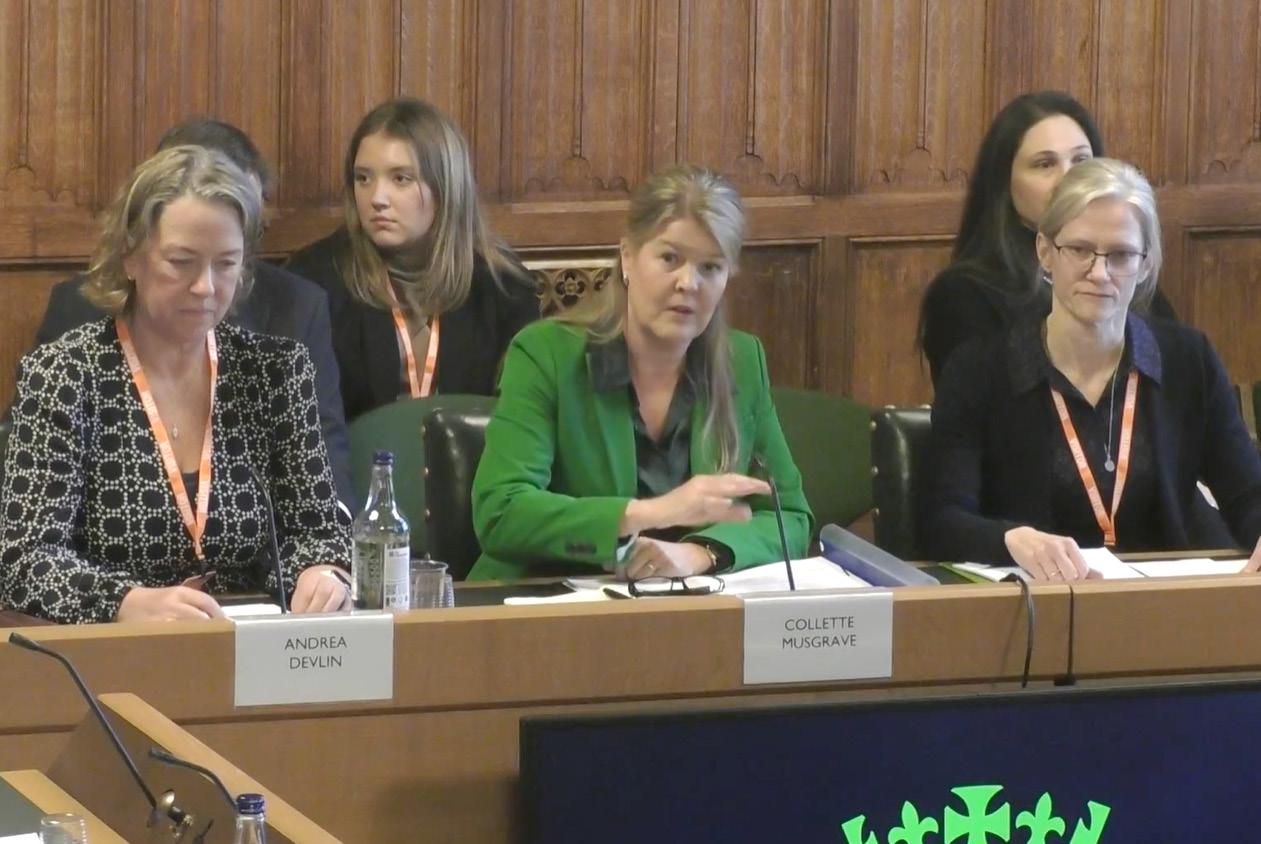
AFF HAS told MPs the Armed Forces Covenant can work better to support the lives of military families.
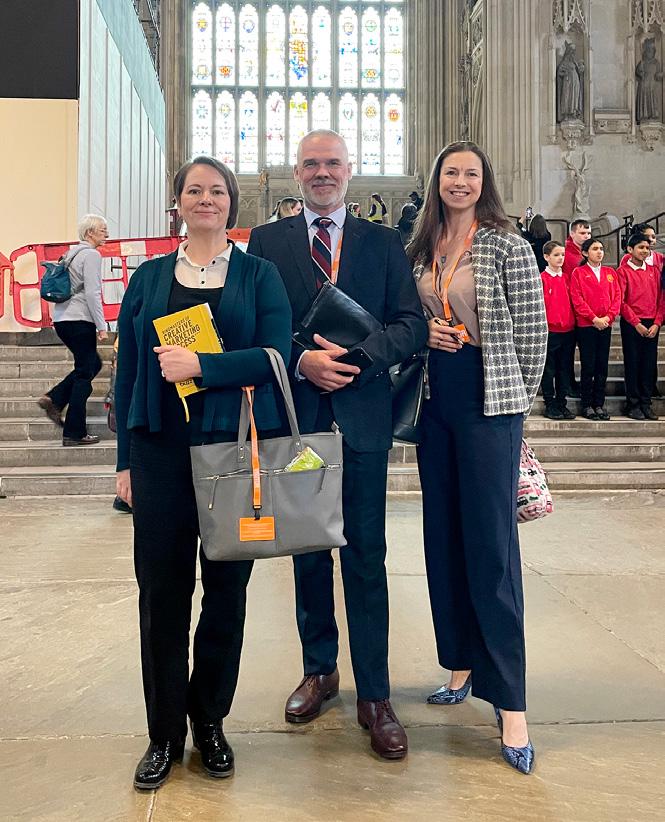
Chief Executive Collette Musgrave joined the Naval and RAF Families Federations to give evidence to a Select Committee on the Armed Forces Bill.
The Bill extends the Armed Forces Covenant to all Government departments and the devolved administrations. It also covers new policies in areas like employment and welfare.
Collette said: “AFF has always worked hard to ensure that the voice of soldiers and their families is heard by those making the decisions about our lives.
“It was important that MPs heard how the Armed Forces Covenant can work better to support the serving
community, as it comes into law later this year.”
The Armed Forces Bill also includes a new Defence Housing Service.
At a separate evidence session to a Select Committee on the service, AFF Housing Specialist Cat Calder said: “When it comes to SFA, a house is a home. We need more communication and empathy for our families.”
With colleagues from the NFF and RAFFF, she presented the views of more than 6,000 people from Service families, gathered in a Future of Defence Housing questionnaire run by the three Federations in 2025.
Cat highlighted continuing concerns from families about the declining standard of SFA, poor repairs and inconsistent communication.
The introduction of the proposed service offers
an opportunity to address long-standing challenges, but AFF stressed that meaningful improvement will depend on consistent delivery, stronger accountability and a genuine understanding of the experience of service families.
THREE VIDEOS have been created to help Armed Forces serving personnel and families who are preparing for an overseas posting.
Those in the early stages of considering going on assignment overseas are encouraged to think about areas like partner employment and children’s education, as well as removals, cars and pets.
AFF Head of Policy Rachel Smith said: “Finding the right information at the right time for every family member when considering an overseas assignment can be a challenge.
“We hope the videos produced by the Families Federations, as part of the Valuing Forces Families Overseas programme, empower serving personnel and their families to make confident and informed choices about what’s right for them.”
The videos have been produced by the Naval Families Federation as part of the Valuing Forces Families Overseas project (VFFO) run in partnership by AFF, the NFF and the RAFFF.
VFFO is a series of projects funded by the Armed Forces Covenant Fund Trust. You can find the videos on the NFF YouTube channel.
THE ARMY Families Federation has joined forces with the Naval and RAF Families Federations on a project to raise awareness among military families of the Armed Forces Covenant.
The Covenant Awareness Programme is being funded with a £370,000 grant from MOD’s Armed Forces Families Fund, run by the Armed Forces Covenant Fund Trust.
AFF Head of Policy Rachel Smith said: “We have frequent enquiries about accessing the Armed Forces Covenant from serving personnel and families, the bereaved, organisations that support them and Government departments.
“People tell us that the information they receive is often confusing and complex, and they need our expertise to be able to access the support and guidance they need.”
She said the grant would enable the creation of tailored resources and support to enable a greater understanding of the Covenant and what it can do for the Forces community.
AFF HAS continued to support the Army Sport Control Board and recently went along to two Inter Service rugby games to spread the word about our work to a wider audience.
We set up our stand at the Army v Navy game at Twickenham and Army v RAF
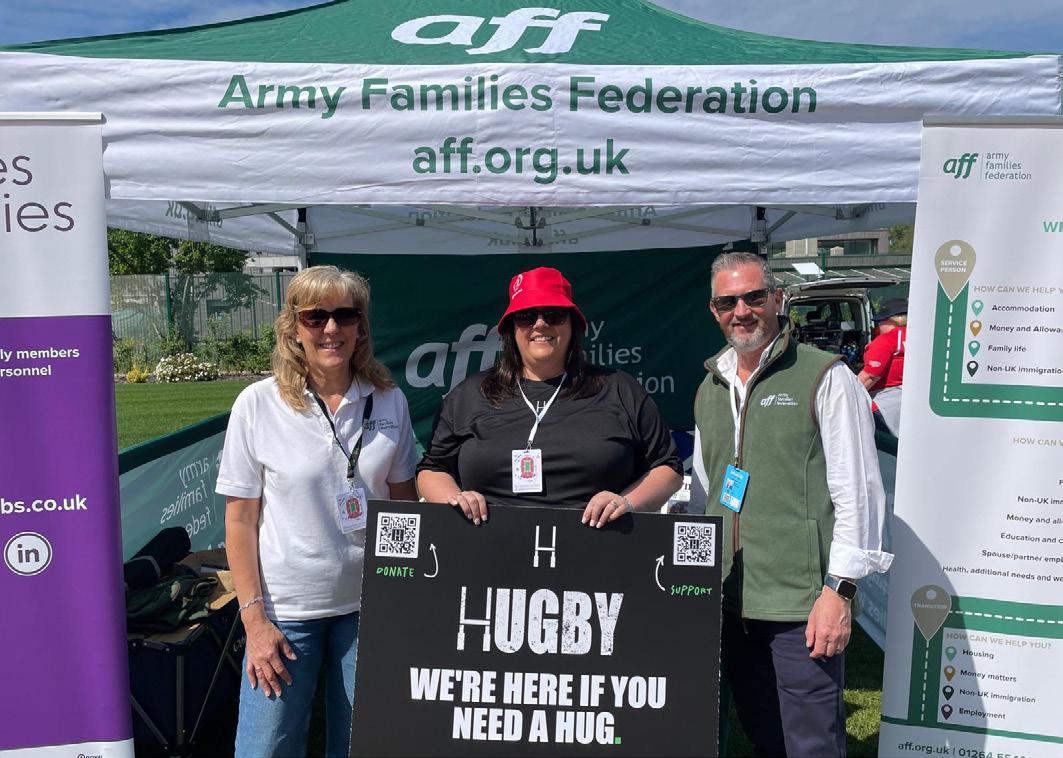
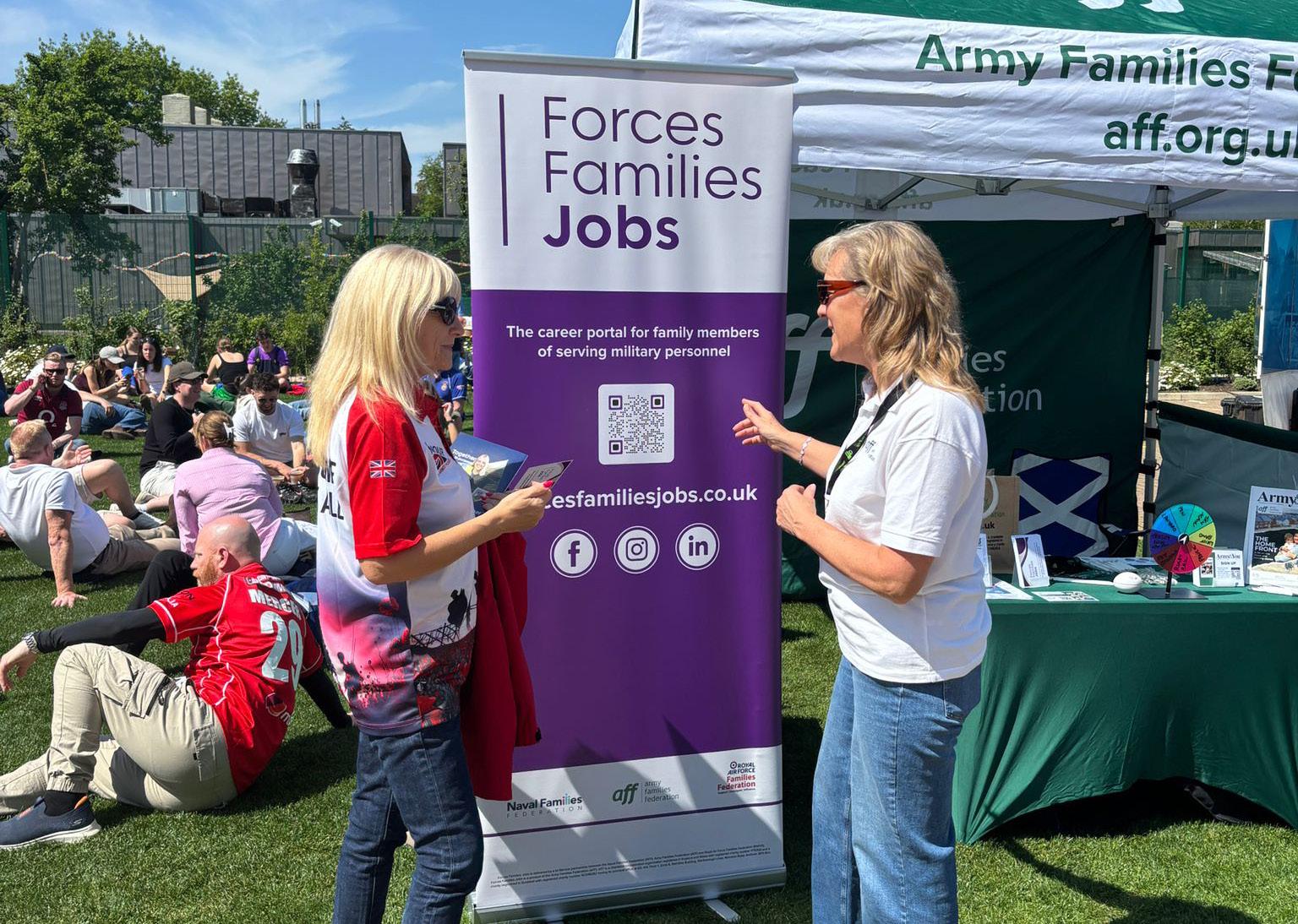


game in Gloucester in May.
In Twickenham commentator and TV presenter for the match, JJ Chalmers, stopped for a chat. He said: “There’s no rivalry like that between the services. When I was in the Marines I saw how it forges pride and healthy competition. Sport brings military personnel together, which is especially important if you’re deployed, and far from family and friends.”
On the day we also met then Armed Forces Minister Alistair Carns who praised AFF’s input into the recent Defence Housing Strategy. It was great to meet so many families, organisations and other charities at the games, including the Hugby team from LooseHeadz, a rugby mental health charity. We found out about the support Betknowmore provides on gambling addiction and spoke to Healing Military Minds who support the mental health of serving personnel and veterans.
You can catch us next at The Rundle Cup polo match in Tidworth on July 11 – we hope to see you there!
A NEW advisory team has been set up to offer guidance to unit HRs, service personnel and families on Continuity of Education Allowance.
It’s part of the Pay and Allowance Casework and Complaints Cell (PACCC) and can help with complex cases.
The aim is to ensure accurate interpretation of policies and consistent guidance when it comes to
making decisions on CEA. You should still approach your unit HR first for all pay and allowances queries, including CEA but if needed, the team can be emailed at: DBSAFVS-MilOps-PACCCCEAAdvice@mod.gov.uk
Make sure you provide your number, rank, name, unit and enough detail when you make an enquiry so the team can give you accurate advice.
MOD users can find more information on Defence Connect.

THE RANGE of allowances open to soldiers in established long-term relationships has expanded to bring them more into line with colleagues who are married or in civil partnerships.
The changes, introduced on 1 May, are expected to affect around 20,000 personnel. Claims are managed by unit HRs and soldiers should make sure their longterm relationship status is registered on JPA.
The allowances are
Disturbance Expense, Duty Travel, Get You Home, Home to Duty, HM Forces Railcards, Longer Separation Allowance, MOD passport provisions, Movement and Storage of Personal Effects and Subsistence.
There’s more information about the changes on Defnet and Defence Connect.
At Salute, we deploy and manage some of the world’s most advanced data centres — the critical infrastructure behind the digital world. As our business continues to grow globally, we’re looking for the next generation of data centre professionals to join us.
No matter your military background, we can help you transition your skills into a rewarding civilian career.
With Salute, you’ll find:
A truly international and fast-paced working environment
Clear career progression in a rapidly expanding industry
Structured technical and personal development training
Strong peer-level support from people who understand the transition from military to civilian life
Opportunities to travel and work alongside world-class teams

If you’re mission-focused, adaptable, and ready for your next challenge, a career in data centres could be your next step.
salute.com/careers
EDUCATION & CHILDCARE
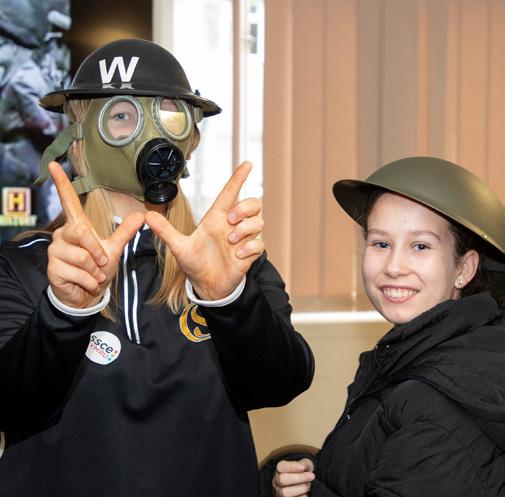
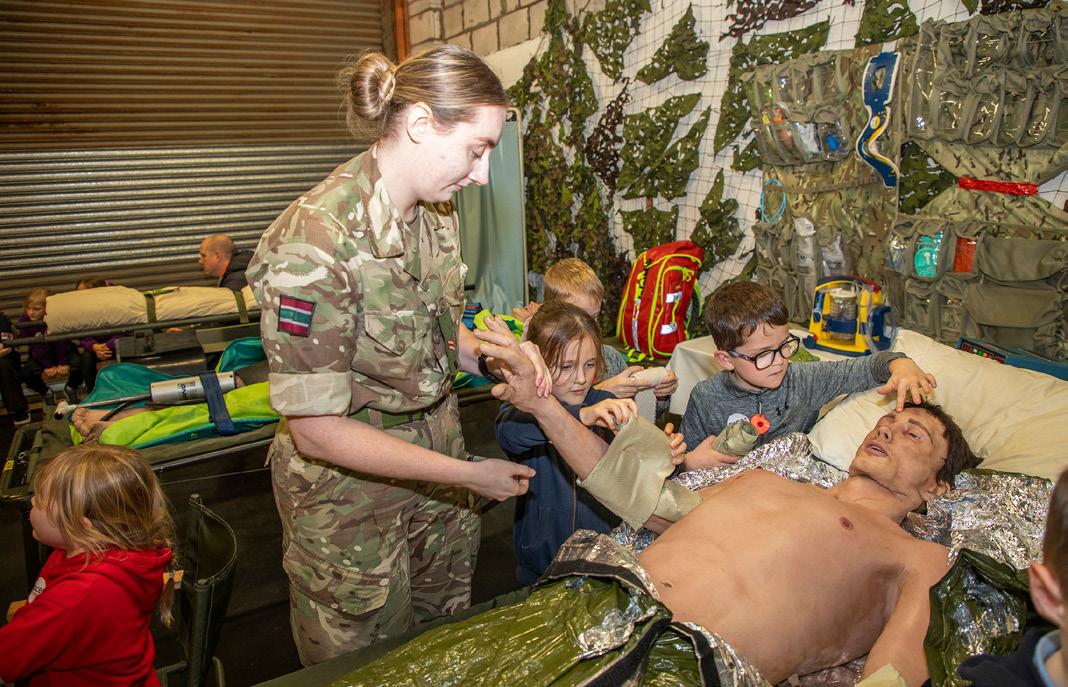
SSCE CYMRU hit the road last winter, hosting five Armed Forces Festivals at military bases across Wales, including three Reserve units in Cardiff, Haverfordwest and Flintshire, along with RAF Valley in Anglesey and the Infantry Battle School in Brecon.
A total of 348 service children and 35 of their peers from 45 schools in 19 local authorities gathered together, transforming each venue into a buzzing hub of connection, creativity and pride.
The festivals were all about bringing Armed Forcesconnected children and young people together in a space where their experiences were understood and celebrated.
Pupils took part in hands-on workshops which explored history, health and wellbeing, creative arts and teambuilding challenges. One service child said: “I loved the workshops because they all involved teamwork. I made a friend.”
When asked what their favourite workshop was,
another said: “Medical/CPR because they taught us how to save someone’s life.”
A teacher described a fantastic and inspiring day for pupils. “The activities were engaging, the performances motivated the pupils, and the whole atmosphere made them feel included and valued.”
The sessions were supported by Never Such Innocence, World War Wales, Character Education & Life Skills (CELS), Forces Fitness, VC Gallery, Veterans for Dogs, Oriel Môn, the Royal Welch Fusiliers Museum and engagement teams from the Army and RAF.
Visit sscecymru.co.uk to find out more and see what the team was up to during Month of the Military Child in April.

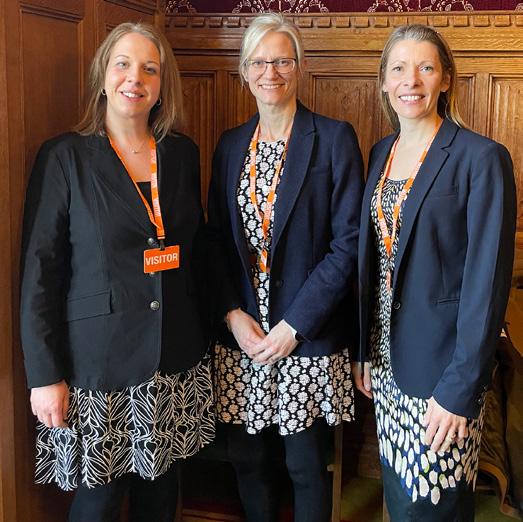
AFF EDUCATION and Childcare Specialist Anna Hutchinson joined other service charities and families at a round table event hosted by Calvin Bailey MP, Alex Baker MP and Minister Georgia Gould. They talked about the proposed SEND reform plan for schools in England and how provisions for military children with SEND pose a greater challenge for families with frequent relocations.
The white paper was published in February and aims to bring about changes to England’s school system, with a focus on raising standards and creating more consistency across the country.
Special Educational Needs and Disabilities reform is a central part of these proposals. The intention is to simplify the current system, including introducing Individual Support Plans. Under the plan most children would receive targeted layers of support within mainstream settings, while Education, Health and Care Plans (EHCPs) would remain for those with the most complex needs.
The Government’s consultation about the proposed changes closed in May and AFF submitted a response highlighting the need for consideration of Army families and their high levels of mobility, along with a request for better consistency in the delivery of support.
ELIGIBLE MILITARY families in
Scotland, Wales and Northern Ireland will soon be able to access the same Governmentfunded childcare hours as those in England.
The measure was announced during the then Defence Secretary’s visit to Dreghorn Barracks in Edinburgh in March.
It means eligible working UK Armed Forces families in the devolved nations will be able to claim early years childcare costs for children from nine months old.
AFF has consistently highlighted the childcare funding disparity faced by Army serving personnel and their families across the UK.
The MOD said the changes would be rolled out from September to give time for families to explore suitable childcare.
● Regular and FTRS (FC) service personnel.
● Families living in Scotland, Wales or Northern Ireland.
● Children aged nine months to two years (up to four in Northern Ireland).
● Both parents must be working in paid employment.
More information is available at aff.org.uk
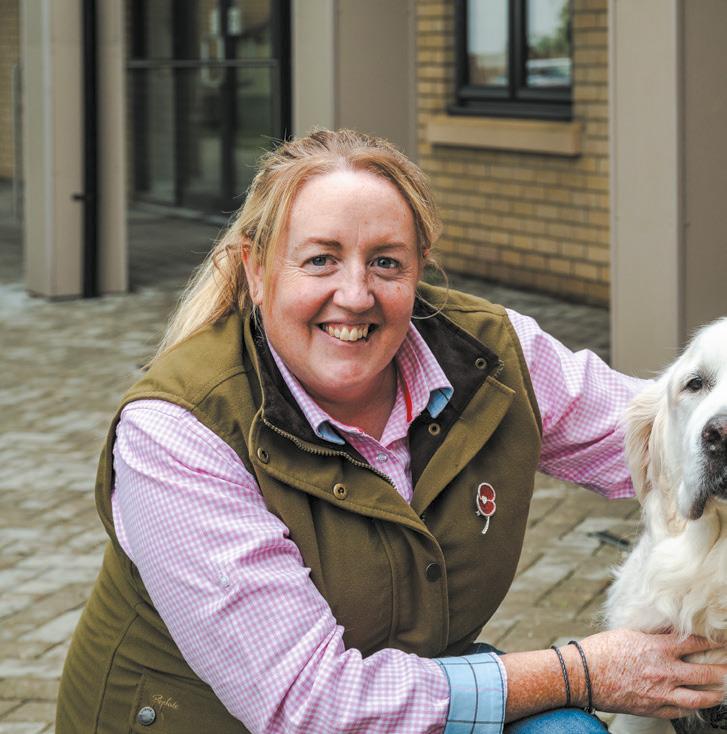
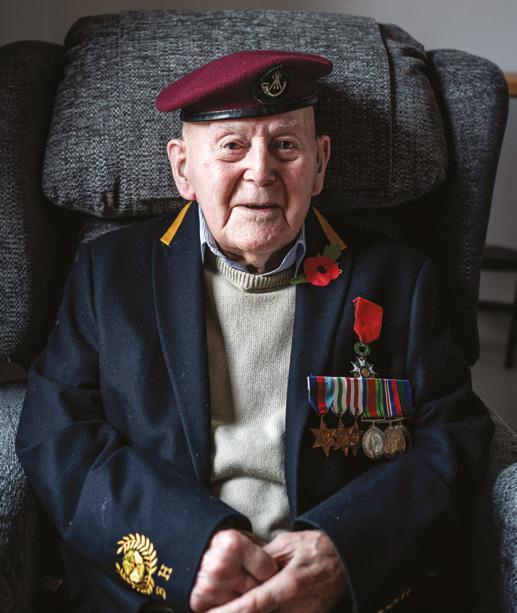

Family comes first, and having a Will in place provides invaluable peace of mind for you and your family.
Many ABF supporters feel an enormous sense of pride in leaving a lasting legacy for those who have served their country.
We are the Army’s national charity. Since 1944 we have been here to support soldiers, former soldiers and their families in times of need.
With no government funding, we rely on the gifts we receive from Wills to support more than a third of our work.

Scan here for further information on our free Will-making services
armybenevolentfund.org/gifts-in-wills Alternatively please contact Emma Hamilton, Gifts in Wills Manager, on 020 7901 8909 or ehamilton@armybenevolentfund.org

THE DEFENCE Housing Strategy Review Team, which included AFF Housing Specialist Cat Calder, recommended a dedicated review of Single Living Accommodation (SLA) and overseas housing.
Through our work at the Army Families Federation (AFF), we highlighted to the Ministry of Defence the unique challenges faced by service personnel living in both SLA and overseas settings. This recommendation was accepted by the Defence Secretary when the strategy was published in November 2025.
The SLA and Overseas Accommodation Review is now underway. Commissioned by the former Minister for Veterans and People, this independent review aims to improve housing for single and unaccompanied service personnel, strengthening quality of life and operational capability.
It builds on the Defence Housing Strategy and focuses on raising standards, improving living conditions and ensuring value for money.
Phase one is exploring key issues such as building condition, design, estate management, funding and future needs for UK-based SLA.
Evidence is being gathered through focus groups, site visits and engagement with personnel of all ranks.
The Families Federations are represented on the panel by the RAFFF. Findings will be
reported in the summer. Phase two will run to the end of the year and extend the work to overseas SLA and SFA.
THE THREE Families Federations joined colleagues from the Defence Housing Service to visit the Loss of Entitlement Team in RAF Honington.
It gave us an overview of how the team works and the chance to speak directly to team members.
AFF Housing Specialist Cat Calder said: “It was a valuable opportunity to meet members of the team, better understand how they work, and begin building stronger collaborative relationships to help support families through the process as they leave Service Family Accommodation.”
MORE THAN £500,000 is being invested to expand
the Victim Witness Care Unit (VWCU) to support around 100 additional cases each year.
Specialist Violence Against Women and Girls (VAWG) teams at Catterick Garrison and HM Naval Base Devonport are also planned to prevent unacceptable behaviour and sexual violence in the Armed Forces.
The investment will create five permanent new posts within the unit, including victim liaison officers.
The VWCU provides independent support to victims and witnesses of serious crime and operates independently from military chains of command.
FUNDING FROM the Army Central Fund is being used to grow a scheme that helps Army spouses and partners into careers on the land.
Rural Weeks for Army Spouses offers a taste of different sectors with visits to farms and gardens, presentations by industry experts and advice on suitable courses.
It’s run by HighGround and is a response to the Armed Forces Continuous Attitude Survey, which found that the career challenges faced by spouses are a significant factor influencing Army retention.
The charity already operates a similar programme for ex-military personnel and Reservists, helping them to find new opportunities in areas like food production, forestry and landscaping.
Chief Executive Jamie Crisp said: “We have seen how transformational our Rural Weeks can be for serving
members of the Armed Forces and are very excited to bring the same opportunity to spouses and partners.”
The grant is also backing HighGround’s horticultural therapy programme at Defence Medical Rehabilitation Centre Stanford Hall, where it provides psychological and physical therapeutic benefits.
Find out more at highground-uk.org
Commander and Chief of Staff, British Forces Cyprus Polly Miller-Perkins CBE became the first Armed Forces Commissioner in April.
The former Air Commodore, whose 30-year RAF career included deployments to Kosovo and Afghanistan, is a military spouse. She served as a logistics specialist before promotion to senior leadership roles, many of them tri-service. She is expected to be in post until a permanent appointment is made through an open competition at a later stage.
The Armed Forces Commissioner will be able to look at individual concerns and launch investigations into issues that have a material impact on service personnel and their families.
She will provide independent and impartial oversight of the service complaints process previously undertaken by the Service Complaints Ombudsman. afcommissioner.org.uk
AFF’s support extends not just to family members but to the service person as well. Jill Misson meets the personnel who may sometimes go unnoticed…
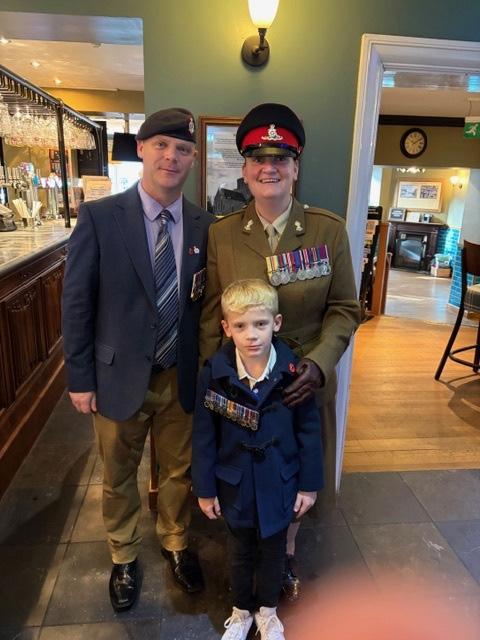
ALTHOUGH an Army household might still consist of a male soldier with his wife and children, that is not always the case.
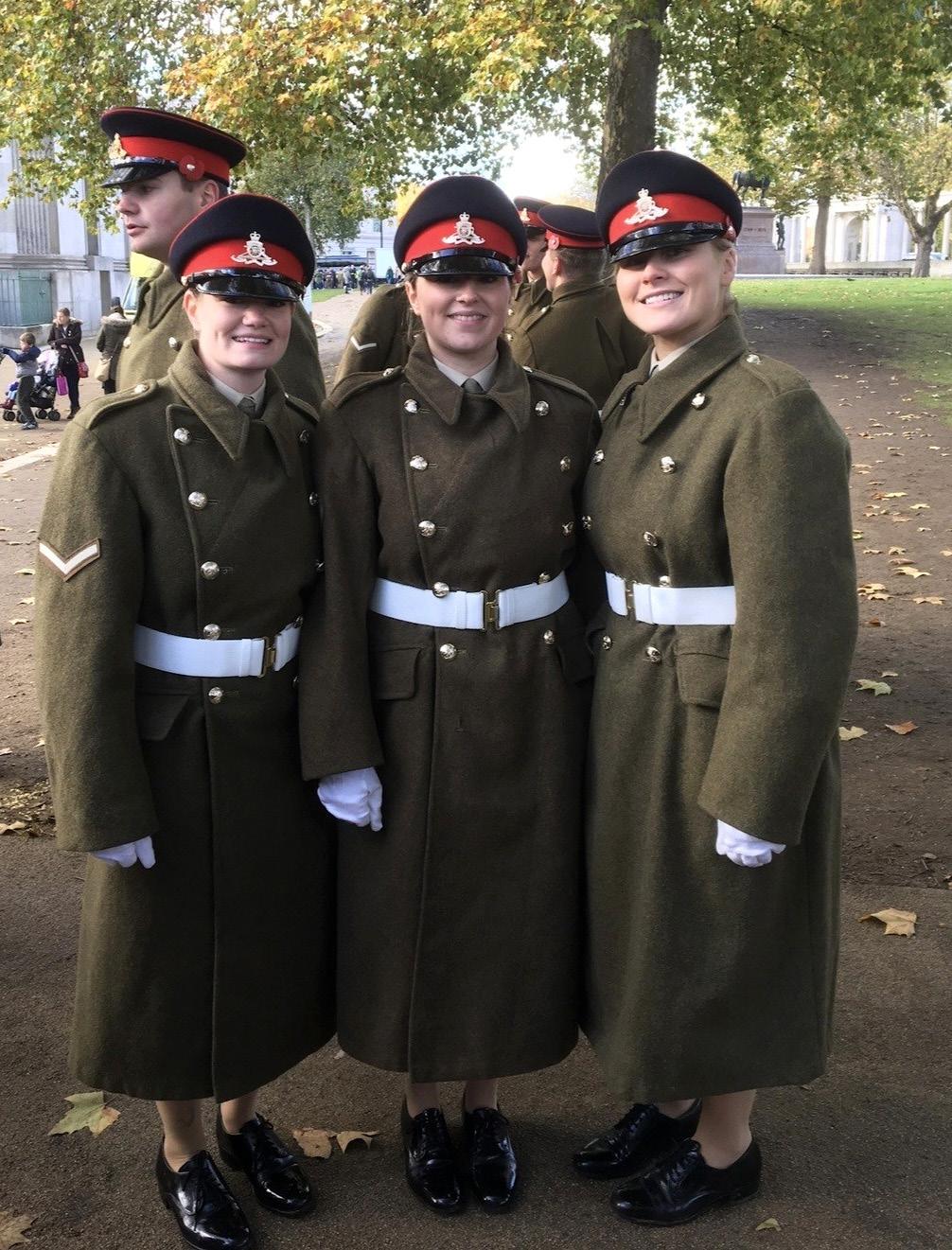
In reality, there is much more diversity within today’s serving population, including servicewomen, dual-serving couples, single serving parents, and people in long-term relationships. Other minority groups who may be overlooked include Reservists and soldiers from non-UK backgrounds.
“As part of our business objectives for the future we are aiming to enhance and extend our engagement by focusing on harder to reach groups,” says AFF Communications Manager Alison Grover. In recent years the charity has
broadened its support to include the service person to bring it in line with the RAF and Naval Families Federations.
In the latest AFCAS survey 47 per cent of the 9,360 respondents were married and 27 per cent in long-term relationships. Historically, there was no eligibility for unmarried couples to live in Service Family Accommodation (SFA), But serving personnel in a registered established longterm relationship (LTRE) are now able to apply for available surplus housing in the UK, with further entitlement in some
areas during pilots which have now been completed.
“Unsurprisingly these pilots were welcomed by the LTRE cohort as it gave them access to subsidised accommodation,” says AFF Housing Specialist Cat Calder. “The overseas pilot has been extended to March 2027, but the current issue is that there is no protection for these families returning to the UK and access to SFA is being looked at on a case-by-case basis.”
The MOD is planning to introduce an interim rental scheme to support eligible families to rent privately where SFA is unavailable at their duty
station. This will help couples in long-term relationships as well as parents with non-resident children.
Planning is key
In dual-serving Army families it takes careful planning to manage both careers. One spouse or civil partner is designated as PStat Cat 1s and acts as the licensee for SFA. They can be allocated a family home at their duty station or at a midway point if the couple are stationed within 100 miles of each other.
If a nanny or au pair is needed for childcare to enable both to fulfil their military duties,
they can apply for an SFA with a spare bedroom. Simone Redfern and her husband Alec, who were both serving until his medical discharge, live with their son Arthur.
They have had positive experiences on the whole. She says: “We used the shared maternity leave which allowed me to go back to work at four months and knowing our baby was at home with his dad and not with a childminder made the transition so much easier.”
One of the few challenges they faced was when Simone was posted and Alec stayed in the family home as the main carer.
She explains: “His unit at first found it very strange that Arthur wasn’t in a quarter with me and questioned why, which was a bit archaic for modern parenting.”
Realising that they would struggle to maintain two demanding jobs that could deploy, Alec applied for a period of restricted separation. Simone says: “We have seen lots of changes over recent years which have been fantastic for dual-serving families including Flexible Service and the Wraparound Childcare Scheme.”
Women remain a minority group in the Army, although 11 per cent of serving personnel are female and there is now a
servicewoman at every rank for the first time in history. On International Women’s Day in March, General Sir Roly Walker, Chief of the General Staff, said: “This is a significant milestone – achieved without fanfare, but with profound significance –and one that would not have been possible without the quiet professionalism, determination and commitment to service shown by generations of women.”
“His unit at first found it very strange that Arthur wasn’t in a quarter with me and questioned why, which was a bit archaic for modern parenting.”
Lt Col Samantha Dodge feels the Army has changed beyond recognition in the 26 years she has served and that more is now being done to consider the needs of servicewomen.
“There are simple things like being able to wear your hair in different styles as opposed to tied back in a bun and being allowed to wear make-up, but also policy changes such as the introduction of Flexible
Service which allows all service personnel to adjust their working hours to accommodate caring responsibilities.
“The Army’s maternity, paternity, and shared parental leave packages are outstanding. There has also been transformational change in organisational culture and behaviour that prioritises inclusive teams which has significantly benefitted servicewomen. There is still work to do but we are absolutely on the right trajectory.”
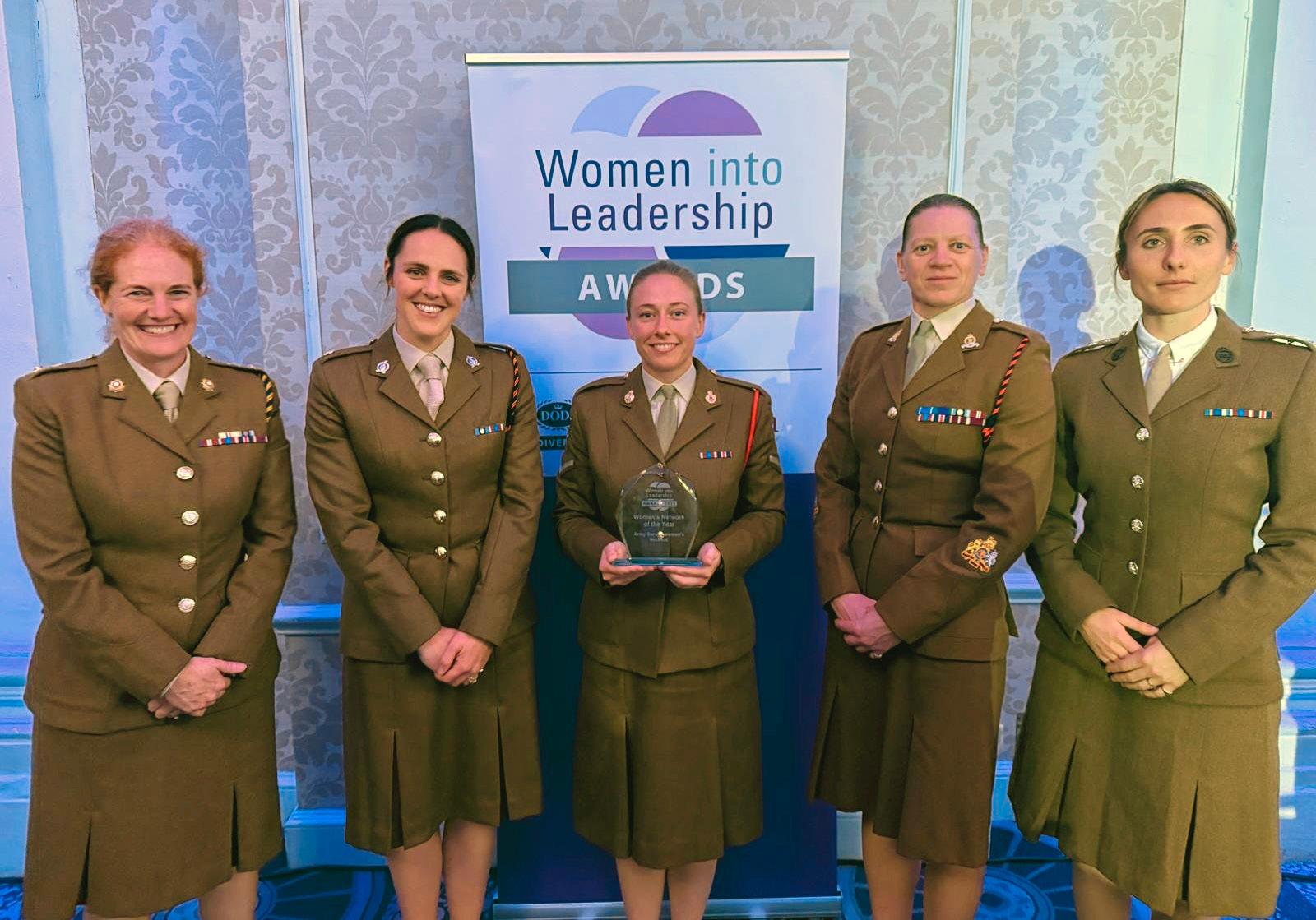
Sam is Co-Chair of the Army Servicewomen’s Network (ASN) which provides informal support outside of the chain of command, through social media and webinars alongside events and an annual conference.
She says: “It is important to have a safe space to ask questions and share ideas and the ASN provides a forum for servicewomen to discuss work and careers, but also to
share concerns about personal relationships and domestic issues as these can have an impact on our professional lives.”
In future, Sam is keen to see more consideration for equipment and technology that accommodates servicewomen and better support for women’s health including menopause.
The MOD publishes The Servicewoman’s Health Handbook which features advice for female serving personnel, but it is also intended to inform commanders, line managers and colleagues of any gender. It includes information on menstruation, contraception, pregnancy and menopause.
It might surprise you to know that Reservists make up 24 per cent of the Army with 25,770 currently serving. They have a variety of civilian careers and are required to complete 27 days a year.
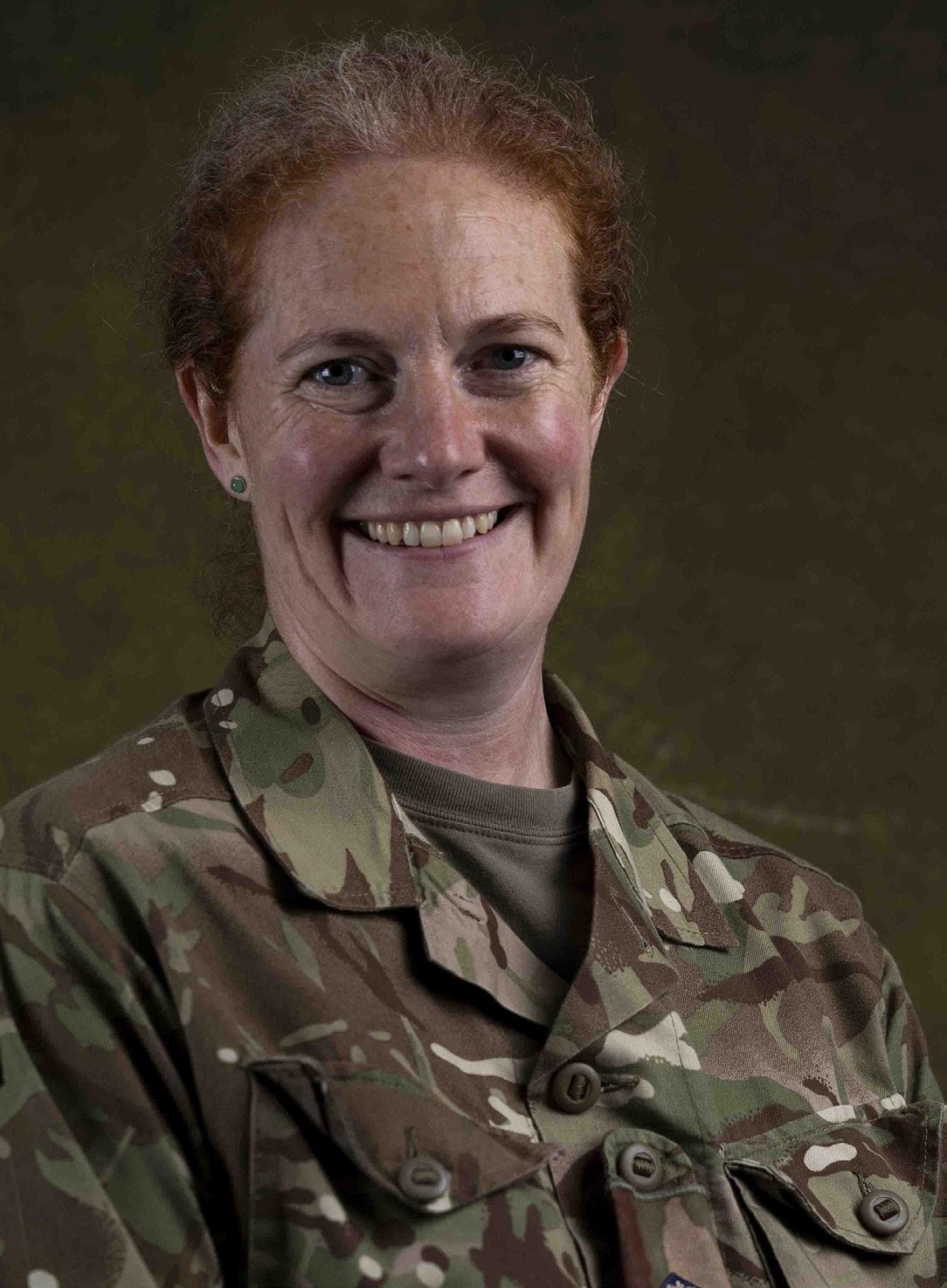
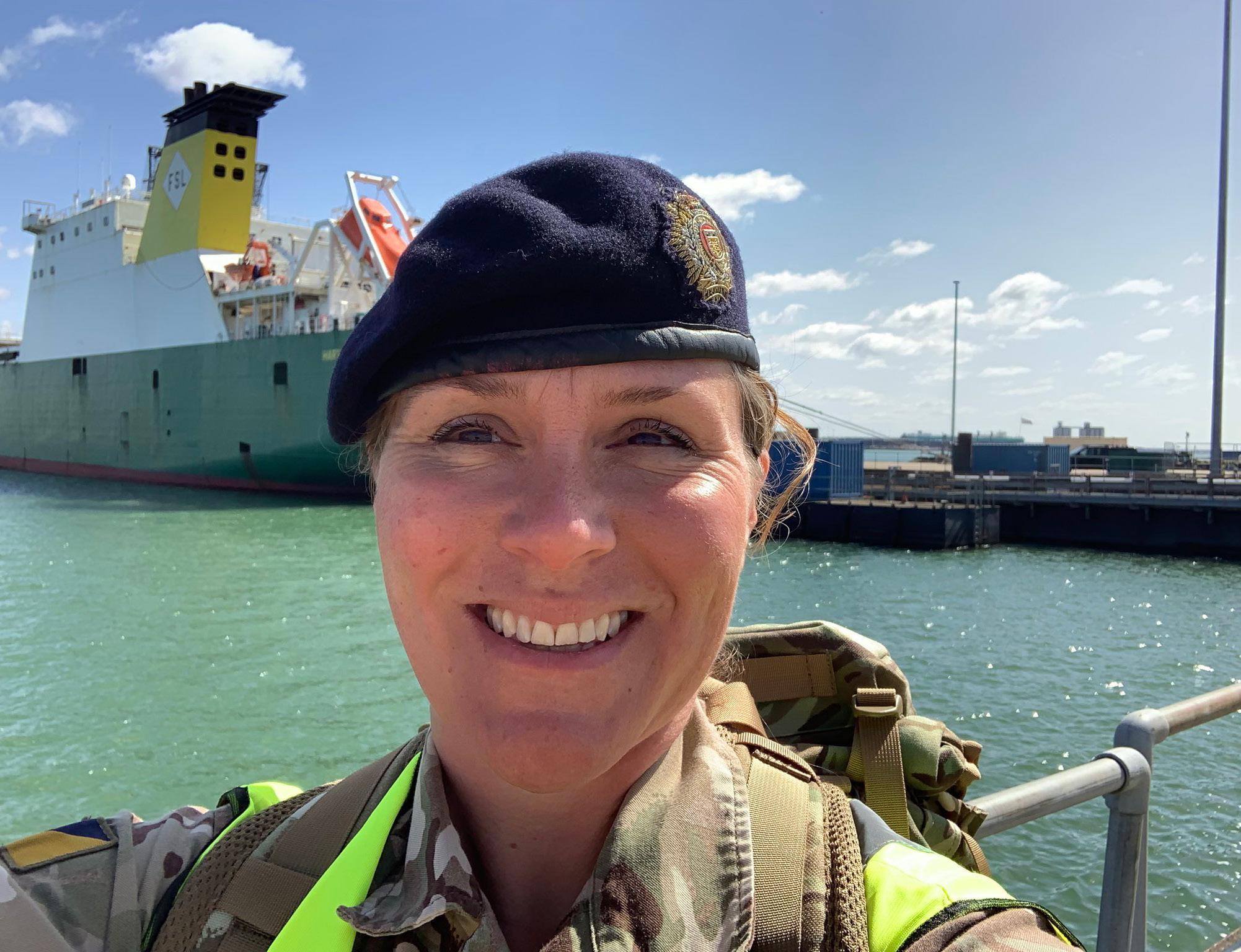
Lt Col Georgina Symonds transitioned from a Regular to a Reservist in 2019. She is the current lead for the Chief of the General Staff’s Briefing Team and her role is to ensure that senior leaders hear the Reserve voice.
Georgie says: “The largest challenge a Reservist will experience compared to Regular personnel is time, and getting support from their civilian employers and families to complete Reserve activity.
“I manage my own consultancy which enables me to balance both careers and my family commitments. At times it can be challenging but I am proud of serving my country and it is important for me to be able to help others and develop soldiers.”
Veteran Mark Hill launched The Reservist magazine because he felt there was a clear need for a publication for this community to reflect their lived experience of service.
Mark says: “I think many Reservists do feel a strong sense of pride, purpose and belonging, but there is always more that can be done to reinforce inclusion.
“Reservists make a vital contribution to defence, and they should feel fully recognised as an integral part of the Armed Forces.
“My hope is that The Reservist will continue to inform, encourage and connect Reservists, while also supporting the wider defence agenda by giving greater visibility to Reserve service.”
Moving from Regular service into the Reserves can be a significant change, and not everyone fully understands what remains available to them. Mark explains: “There can be a sense of not always knowing where to turn, what applies to them, or what they are still eligible for. That is why
clear communication, better signposting and practical information matter, not just from the chain of command, but also through trusted channels that help people navigate the system with confidence.”
You can access the magazine on the Defence Gateway, or it is available to read free online.
For serving personnel from a non-UK background there are specific challenges when managing their careers and life outside of their native country. The language barrier is often the first hurdle. But AFF Foreign & Commonwealth Specialist Katherine Houlston is contacted about a range of issues, including understanding visa requirements under Armed Forces rules, extra costs of visas both to enter and remain, and difficulties proving rights to be able to use NHS services or access further education.
The NRPF Network website explains rights to spouses with no recourse to public funds.
Non-UK spouses can find it difficult to get their qualifications recognised for employment. The careers platform Forces Families Jobs is a great place to start looking for work with a jobs board, training opportunities, and links to organisations who can offer support.
Family members can always reach out to AFF by phone or email, but the team is also on hand to support the serving person. Alison Grover says: “Our evidence shows that the number of service personnel contacting us has remained steady over the past three years at just under half of our total enquiries.”
Whatever is worrying you, AFF’s specialists provide a signposting service to help you find the right person to speak to. A

You deserve a space where you can feel understood, supported and connected.
Our free online monthly family meet-ups give you the chance to meet other ex-military families who understand your experiences. Bring a cuppa, have a chat with our friendly team, and discover the support available to you and your loved ones.
To join the next online family meet-up on Wednesday 8 July and to find out more visit: helpforheroes.org.uk/familymeetups

World-class day and boarding education for girls and boys in the heart of Cornwall.
Top 10% nationally for A-Level value added success.
HM Forces families pay only 10% of our boarding fee in addition to CEA.
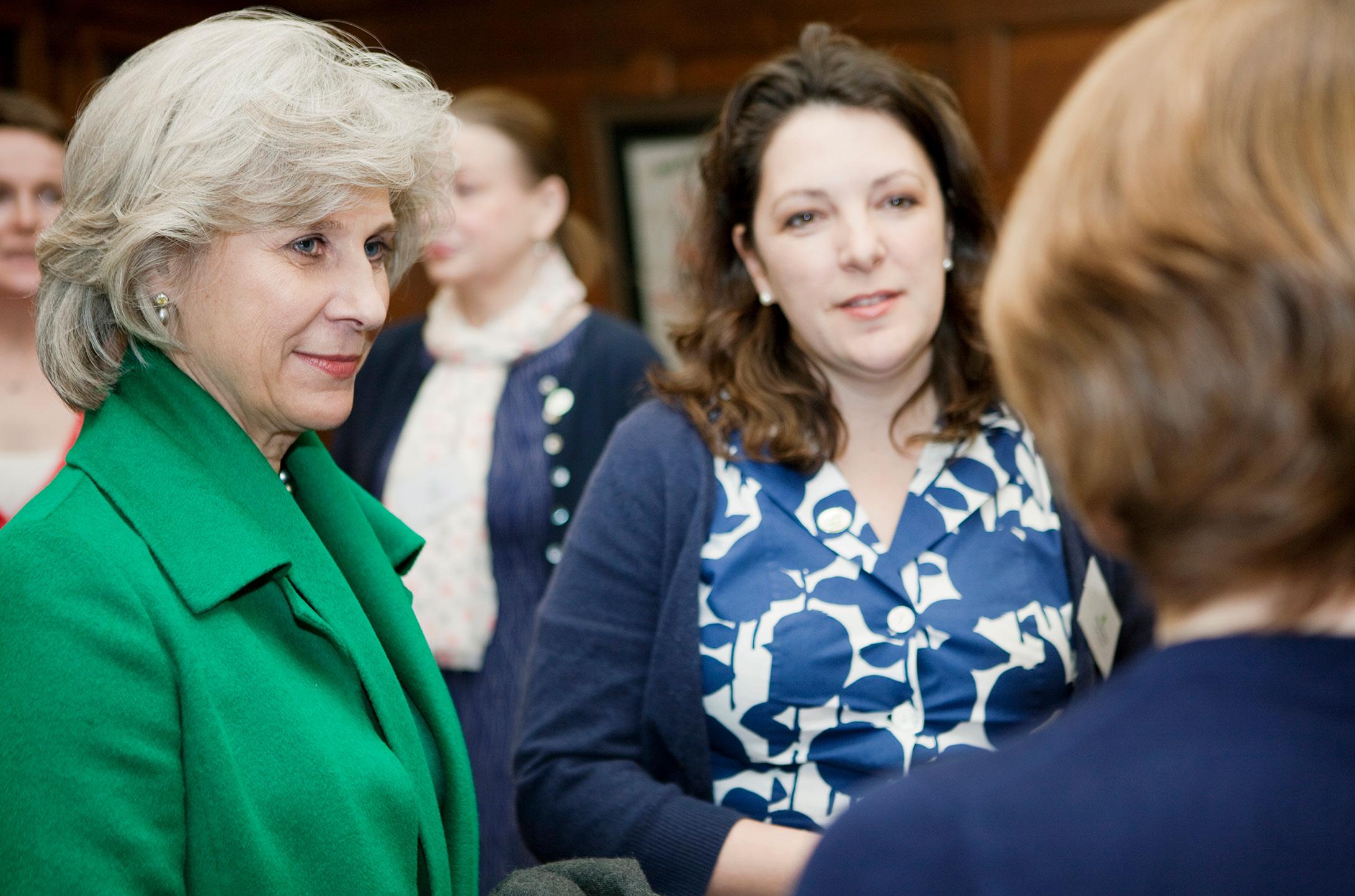
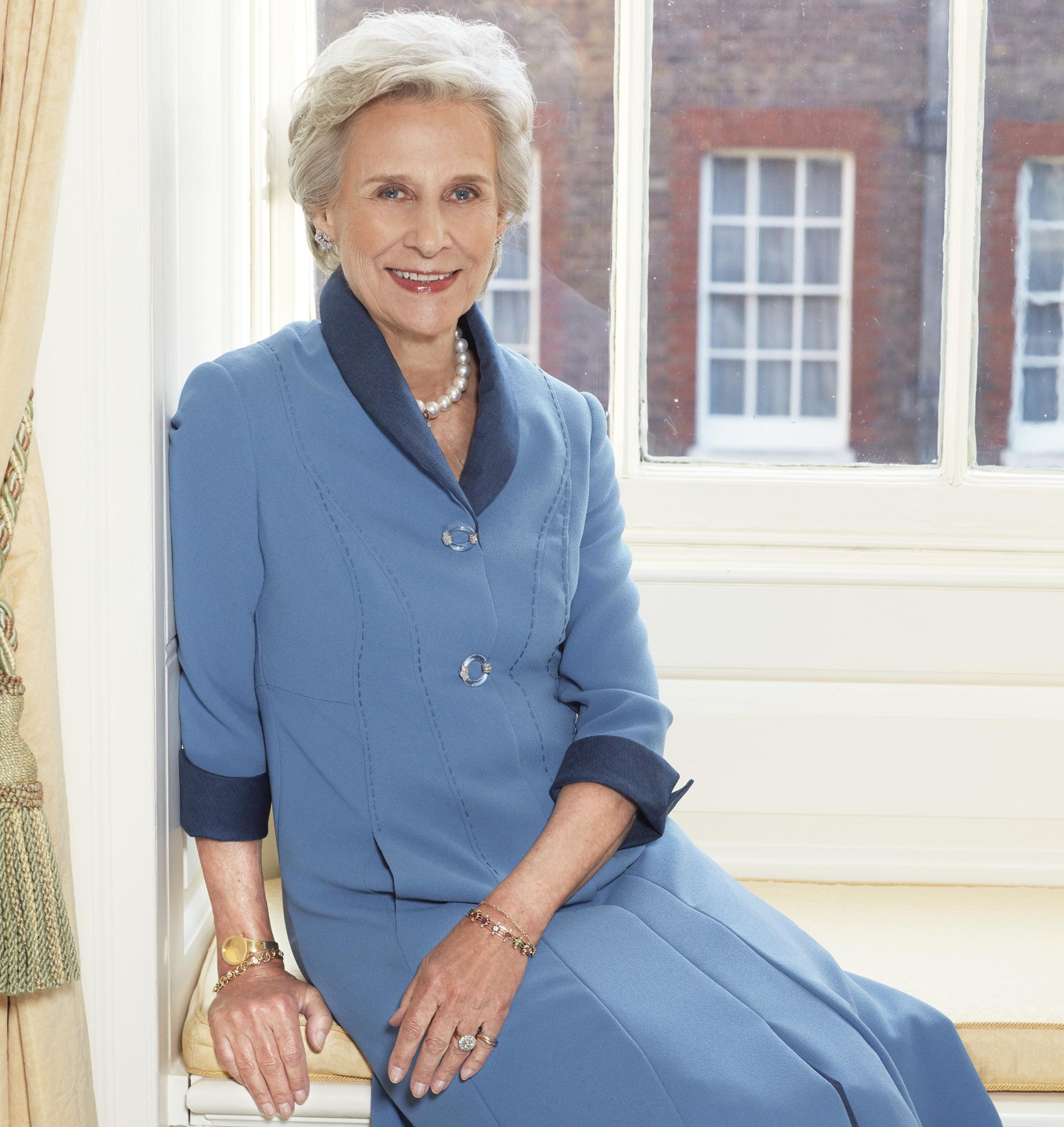
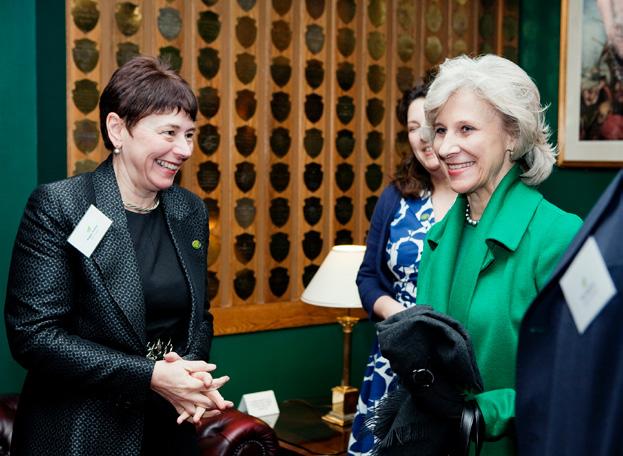
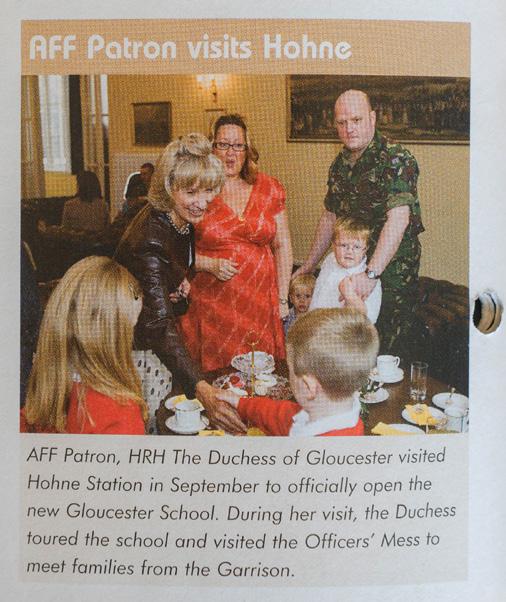
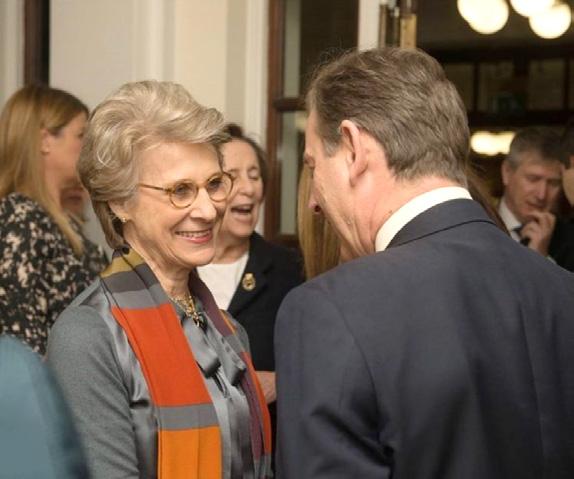
HRH The Duchess of Gloucester, Patron of the Army Families Federation (AFF), marks a milestone this June as she celebrates her 80th birthday.
Her Royal Highness’s enduring commitment to the welfare of Army families, which spans more than three decades, is reflected in personal experience: The Duchess’s son served as an Army officer, giving her first-hand insight into the demands and sacrifices that service life entails.
Over the years, The Duchess has seen the nature of Army family life evolve significantly. Where once large communities were based overseas, particularly in Germany, support often came in the form of local, in-person gatherings such as coffee mornings. These provided vital opportunities for connection and shared understanding.
Modern Army families live with a unique rhythm of frequent moves and regular separations, against which they are managing all aspects of family life such as employment, continuity of healthcare, finding schools and childcare. It is precisely this need that AFF exists to meet, offering guidance, advocacy and practical assistance to those navigating military life.
Today, with most families based in the UK, many more partners working and a rise
in dual serving families, AFF has adapted its approach. Digital platforms now play a central role, with social media, webinars and online presentations ensuring that support remains accessible, timely and relevant.
This year marks 30 years since the Federation of Army Wives became the Army Families Federation. During that time The Duchess of Gloucester has continued to champion our work with quiet dedication. Her Royal Highness’s support underscores the importance of recognising the vital role Army families play - and ensuring they receive the understanding and assistance they deserve.
The Duchess maintains a long-standing portfolio of military appointments across the United Kingdom and the Commonwealth. In 2023, His Majesty The King appointed The Duchess as Colonel-in-Chief of the Adjutant General’s Corps. Her Royal Highness is also Deputy Colonel-in-Chief of the newly formed Royal Army Medical Service, Royal Colonel of the 7th Battalion The Rifles and Colonelin-Chief of the Royal Bermuda Regiment.
AFF Chief Executive Collette Musgrave said: “We would like to wish The Duchess a very happy 80th birthday. We are very grateful to have Her Royal Highness’s continued support of our work with serving personnel and families.” A

Take your career in a new direction at the
Times Higher Education 2025
As you prepare for life after the forces, talk to us about HNCs, HNDs, top-up degrees, and flexible undergraduate or postgraduate study with online and on campus options available.
Most of our courses are eligible for ELC funding — speak with your education or resettlement officer to find out what support you can access.
Come to our next open day to explore your options, discover our courses and campus, learn how to apply, and get all your questions answered.

Matthew was a Lance Corporal combat medic in the Royal Army Medical Corps, where he served for six years.
‘I’m looking forward to working on projects independently and with other students in the hope of publishing them, and all being well, I aim to set up my own game studio. Teesside focuses on getting developers employed through connections to industry.’
Book your place at our next open day tees.ac.uk/opendays
The Army Welfare Service (AWS) marks its 30th anniversary this year - three decades of dedicated support to soldiers, their families and the wider Armed Forces community in the UK and overseas.
In that time, AWS has grown into an organisation that unites specialist welfare, community support and business support, bringing together civil servants and Adjutant General’s Corps (AGC) personnel under one mission: delivering exceptional welfare support to the Army family.
The AWS has its origins in the Families Housing and Welfare Service (FHWS), established in 1977 within the AGC. The first male SNCOs joined FHWS in 1993, and the service became the AWS on 1 April 1996.
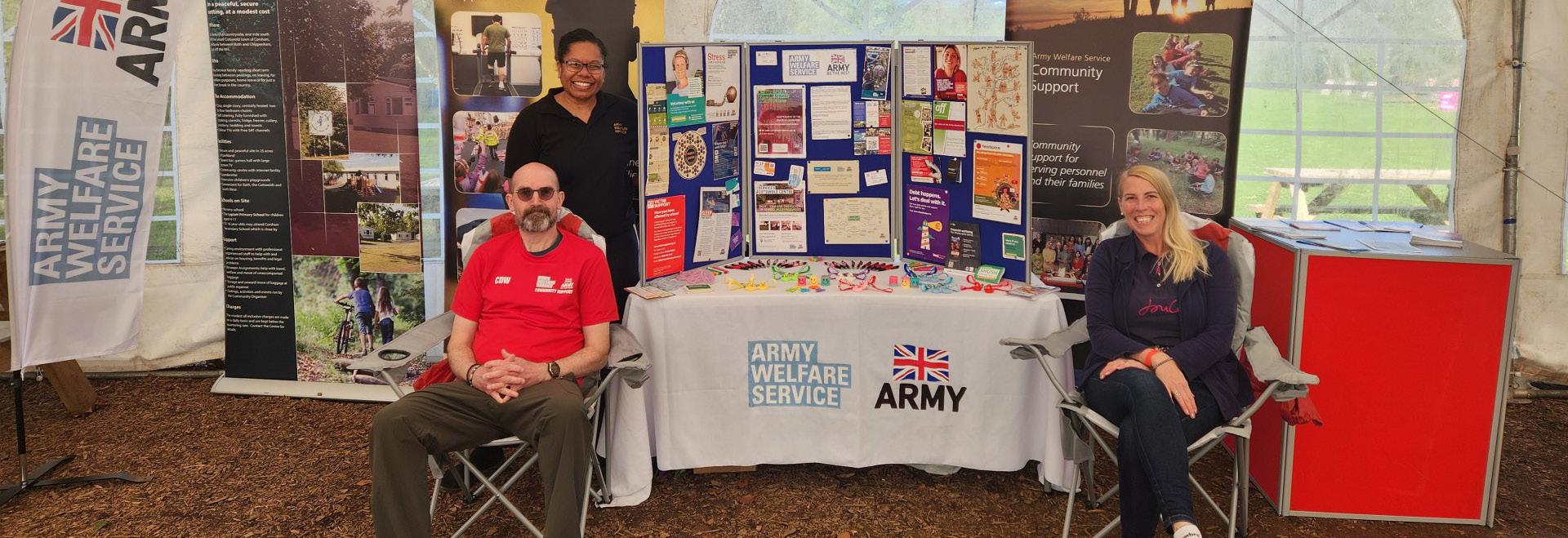
Throughout 2026 AWS teams worldwide will mark this milestone through community focused initiatives. Celebrations began in April with the Southwest Community Support families’ day in Bristol, which highlighted the central role play, youth and community work have in supporting families.
In May, specialist welfare teams took part in the Triple Crown Challenge at Worthy Down, Winchester, the Adjutant General’s Corps’ annual military skills competition.
AWS aims to also deliver the AWS 30 Wellbeing Challenge to mark the anniversary, encouraging participants to explore ‘30 ways to support your wellbeing’ including a 30-km hike on the Fife Coastal Route.
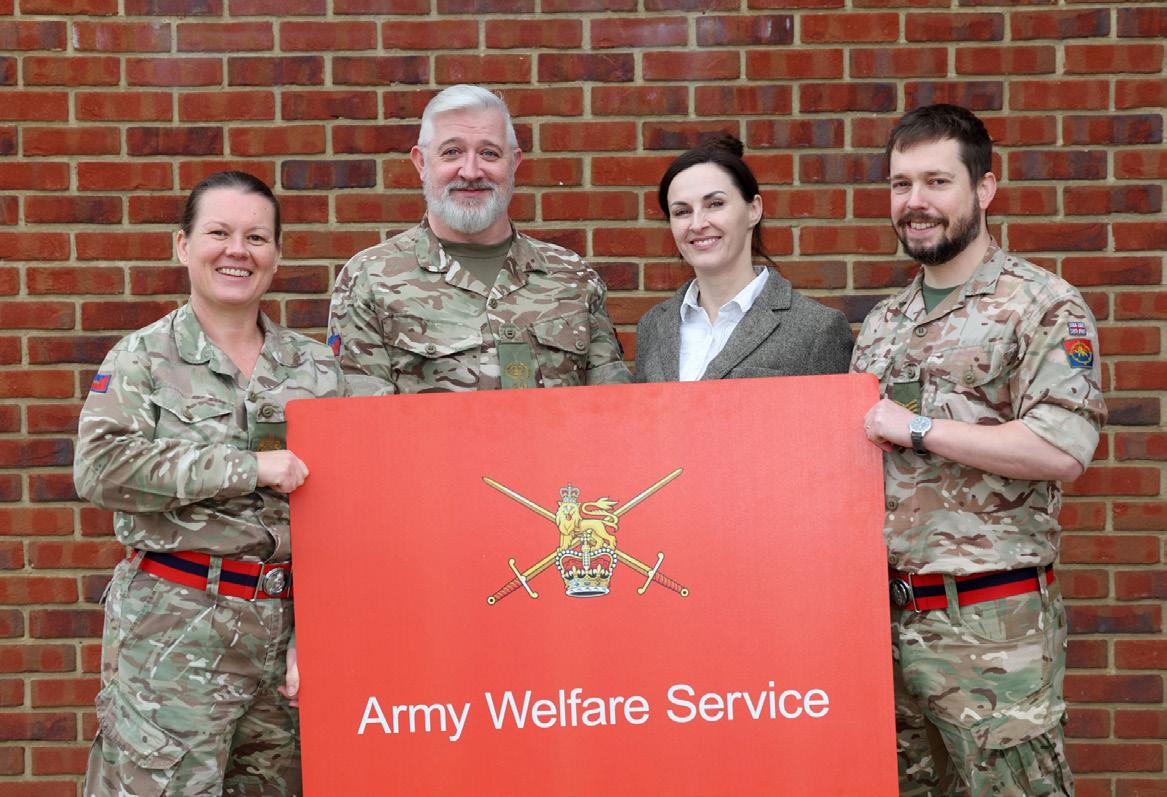
AWS also attended Armed Forces Day events and will represent the organisation at the AGC Remembrance Day at the National Arboretum, where a commemorative plaque will be unveiled. The year will conclude with a formal dinner celebrating three decades of service and the people who have shaped AWS during that time.
If you feel you need welfare support you should complete an AWS specialist welfare referral form via army.mod.uk/ support-and-training/welfare/ army-welfare-service/ A



In the Armed Forces you plan for every possibility. But what happens if illness or injury means you or your family need unexpected care?
Lady Grover is there when you need her, helping to cover care costs, so you can stay prepared whatever life throws your way. From just £65 per year.


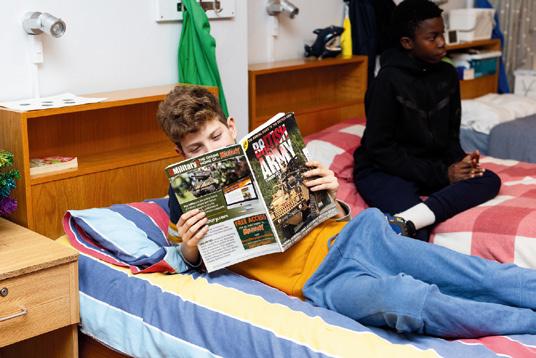




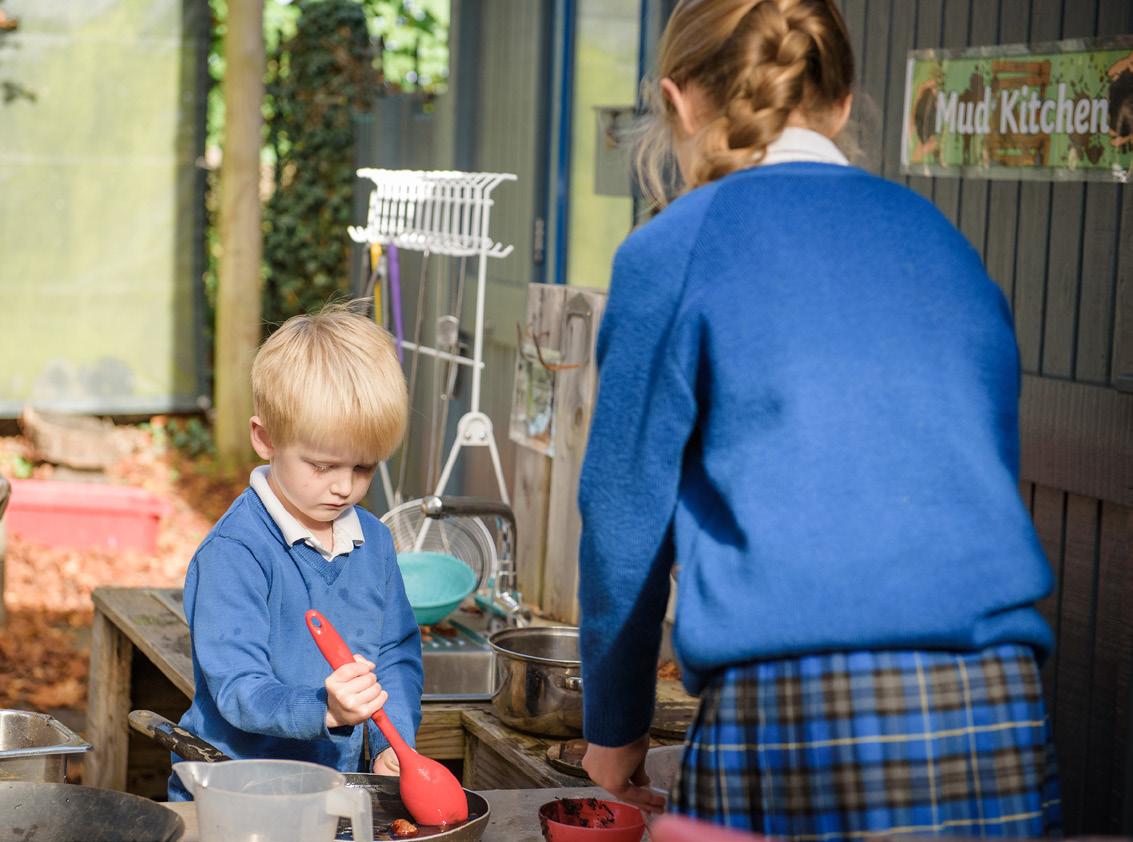
We frequently hear from families wanting to know what support is available to service children when their circumstances are a bit outside the norm. So we’ve put together some FAQs and answers on Service Pupil Premium (SPP) and the MOD’s Wrap Around Childcare offer (WAC).
State schools, academies and free schools in England can get SPP funding for children from service families in reception through to Year 11. This funding helps schools provide extra support that service children might need. It’s paid to the schools and they determine how it’s spent so it isn’t specifically allocated to an individual child. Full details about SPP can be found on gov.uk by searching ‘Service Pupil Premium’.
Wrap Around Childcare helps eligible UK Armed Forces families with the cost of before and after-school childcare for school-aged children. Serving personnel can claim back up to 20 hours a week of childcare costs during term time. Full details are available on Discover My Benefits.
MY PARTNER IS IN THE FULL TIME RESERVE SERVICE. CAN WE USE WAC TO PAY FOR AFTER-SCHOOL CLUB?
If your partner is serving in the Armed Forces on FTRS, either on full commitment, limited commitment or home commitment, and you meet all the other requirements, then yes, you can claim WAC to help with childcare costs.
I AM A SINGLE SERVICE PARENT AND SHARE CARE OF MY CHILD. CAN I CLAIM WAC FOR BREAKFAST CLUB ON THE DAYS THEY ARE WITH ME?
To qualify, your child must normally live with the serving parent at least half of the time and they should have parental responsibility. The only exceptions to this rule are when separation is due to service reasons (such as deployment or training) or when the serving person is on unaccompanied overseas postings.
I AM A RESERVIST. DOES MY CHILD QUALIFY FOR SPP?
Children may be eligible if the parent is FTRS on full commitment, or if the parent previously served as a Regular and the child has already been recorded as a service child at school, in which case they can continue to receive SPP for up to six years after the serving person left the Army.
MY HUSBAND IS IN THE ARMY BUT IS LEAVING THIS YEAR.
WILL MY CHILDREN STILL BE ELIGIBLE FOR SPP?
Yes, provided the child has already been recorded as a service child on a school census. Once the parent is no longer serving then any children would remain eligible for SPP for up to six years after the parent leaves the Armed Forces.
WE ARE MOVING FROM ENGLAND TO ANOTHER PART OF THE UK. WILL MY CHILD STILL BE ELIGIBLE FOR SPP?
SPP is only available in England. If you move within England, your child will remain eligibile to receive it as long as the criteria are met. If you move to Scotland, Wales or Northern Ireland, SPP will no longer apply, although those nations have their own arrangements to support service children and information about these can be found at aff.org.uk. A




Meet leading UK boarding schools and receive free help & advice from our education consultants


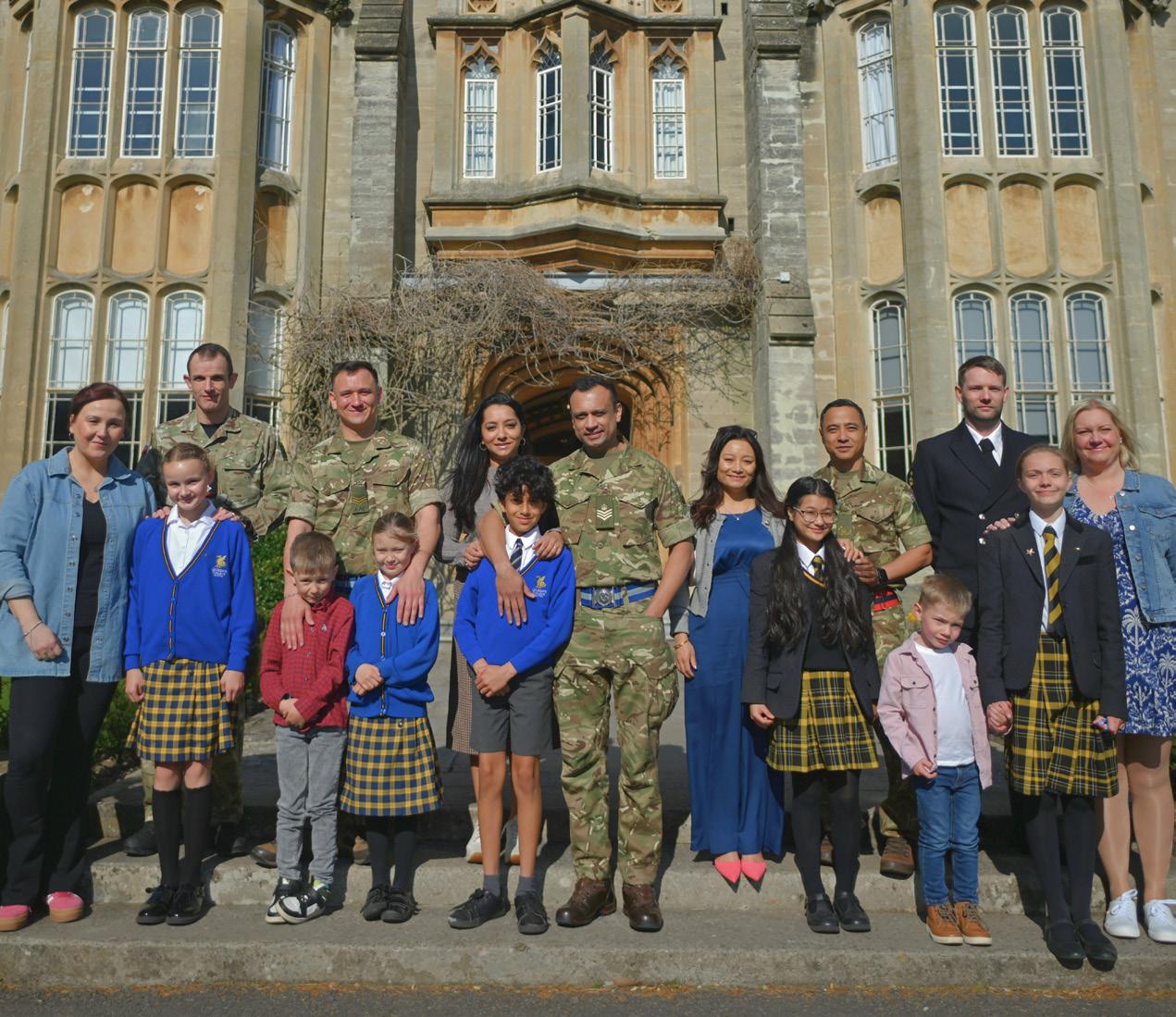



Military life often requires partners and spouses to think differently about work, income and long-term ambitions.
Frequent moves, overseas postings, changing family demands and the realities of a mobile lifestyle can make traditional career paths difficult to sustain - something X-Forces Enterprise (XFE) understands only too well.
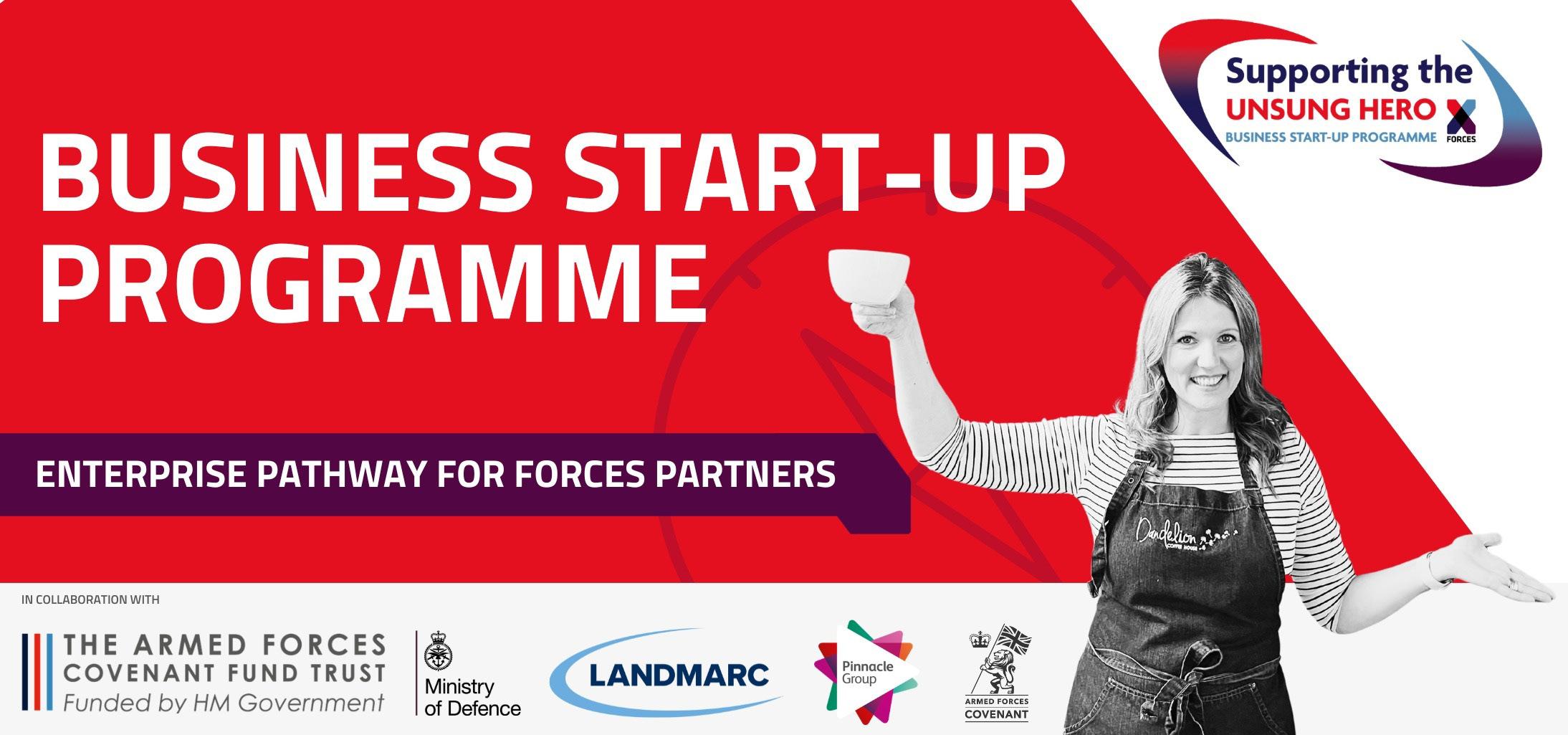
Through its project, Supporting the Unsung Hero (SUH), it has delivered one of the largest programmes of enterprise support for military partners and spouses, helping individuals in the UK, overseas and across mobile Armed Forces life to explore flexible and realistic ways to generate income and build confidence.
For some, that may mean developing a small or micro-business that fits around family life and postings. For others, it may be a portfolio career, freelance offer, consultancy, side hustle or a longer-term business ambition that grows over time.
What matters most is that people are able to make informed decisions about what is right for them.
Supporting the Unsung Hero provides practical tools, tailored training, regular contact and ongoing support to help military partners and spouses navigate their options with greater confidence.
Taking a first step into self-employment or business can feel daunting, particularly when life already brings uncertainty. That is why provision is designed not
just to inform, but to support individuals throughout the process with guidance, mentoring and a trusted community around them.
To date, SUH has supported hundreds of partners and spouses to have a better understanding of their opportunities, shape their ideas and move forward in a way that works for their circumstances. Whether someone is looking to create a limited supplementary income, test an idea, or work towards a bigger long-term goal, the team is here to help.
“The course gave me far more than information. It gave me confidence. I now feel much clearer about the decisions I need to make and I do not feel like I am figuring it out alone. I felt supported
and that has made such a difference in helping me think about what the right next step looks like for me, when the time is right.”
Sarah Davies, February 2026
“An invaluable course to give you the confidence and skills needed to turn your business idea into a viable proposition. Delivered in an accessible but informative personal way, no death by pre-recorded content! Support continues after the course too if you wish.”
February 2026 delegate
You can register for a programme or arrange a one-to-one call with a member of the team to find out more, whether you are at the very start of your thinking, already working on an idea, or simply want to understand what might be possible. A
x-forces.com/supporting-the-unsunghero/
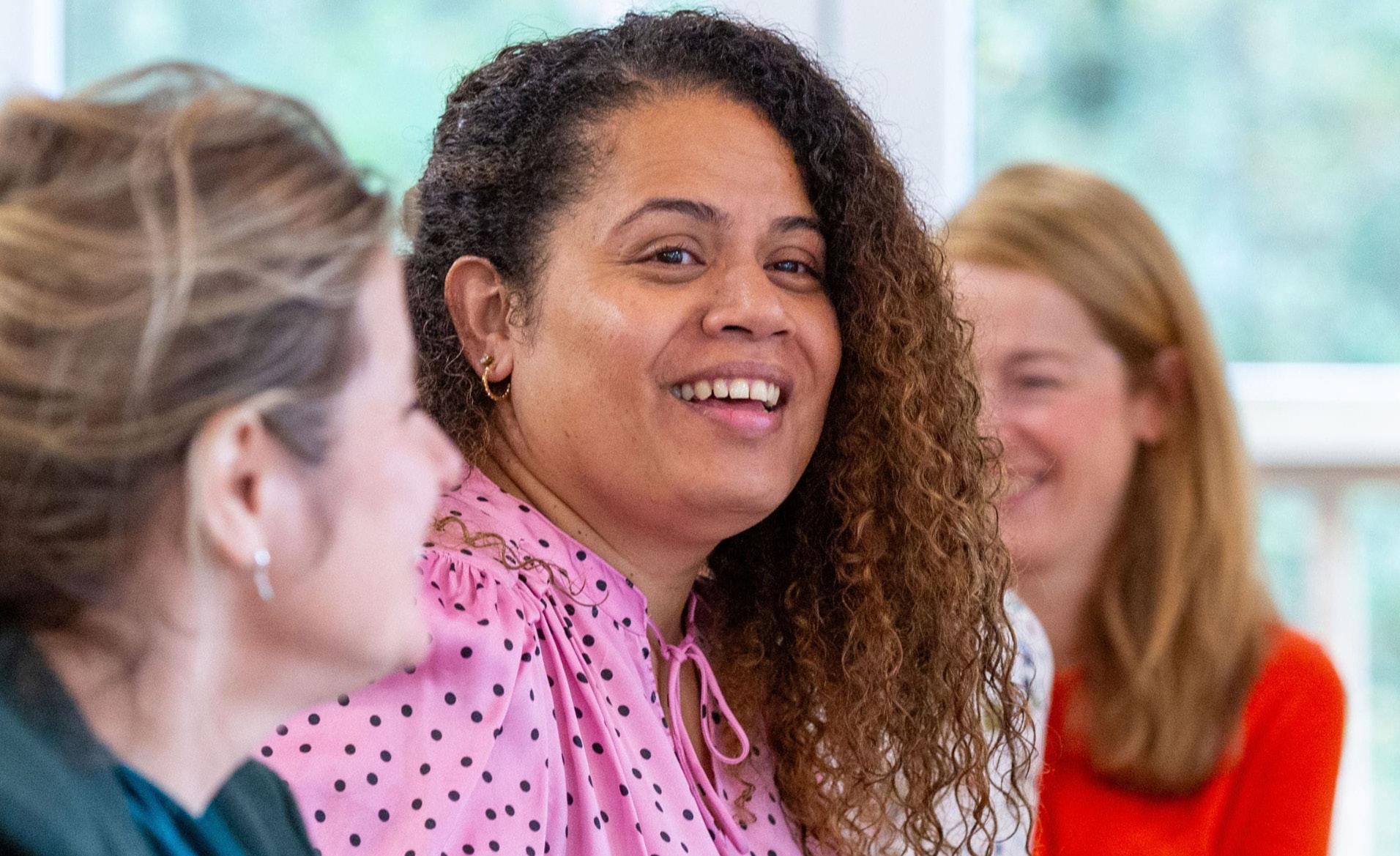
Moving to the UK for the first time can be one of the most challenging transitions for military spouses and partners. Settling into a new country, unfamiliar employment systems, lack of recognition for hard-won qualifications and the pressure to rebuild a career can feel overwhelming.
But help is at hand! By providing dedicated support and removing financial barriers, these programmes are helping non-UK families build confidence, access meaningful employment in the UK and feel more connected within their communities.

The Forces Employment Charity’s Families team provides free, personalised support to help nonUK families overcome barriers, offering tailored guidance, access to training and practical advice.
When Reva, a Gurkha spouse, moved from Brunei to the UK, she struggled to secure interviews and wasn’t sure how to effectively present her skills.
Feeling discouraged and unfamiliar with the UK employment landscape, she registered with the charity for support. She worked with her employment advisor, Sarah, to tailor her CV, explore new opportunities and access free IT and cyber training through the charity’s TechVets service.
Gradually, Reva regained her confidence and began to recognise her strengths. She now works at the charity as a Families Employment Advisor. She says: “I want other spouses to know they can build careers that move with them, and that they’re never
alone in the process. The support I received changed my life.” forcesemployment.org.uk
Many non-UK partners arrive in the UK with valuable qualifications and experience, but face challenges as the high cost of recognising overseas qualifications alone can equal several weeks’ salary from their home country placing career progression out of reach.
The Recruit for Spouses (RFS) F&C programme tackles these challenges by funding statements of comparability and offering tailored, one-to-one employability support.
Participants receive personalised guidance including CV support, interview preparation and access to workshops and employment opportunities. Programme delivery is supported by the Army Benevolent Fund and The Army Central Fund.
Since launching in October 2024,
the programme has supported more than 190 individuals. Upon completion, many have gained successful recognition for their qualifications and have secured careers with reputable employers across the UK.
recruitforspouses.co.uk/foreigncommonwealth
Lifeworks Families supports spouses and partners through both face-to-face and remote employability programmes.
Their residential courses offer a four-day experience while the online courses provide a flexible alternative for those balancing school runs, appointments and family life.
The course sees strong engagement from non-UK families and focuses on building confidence, understanding personal strengths and creating positive change.
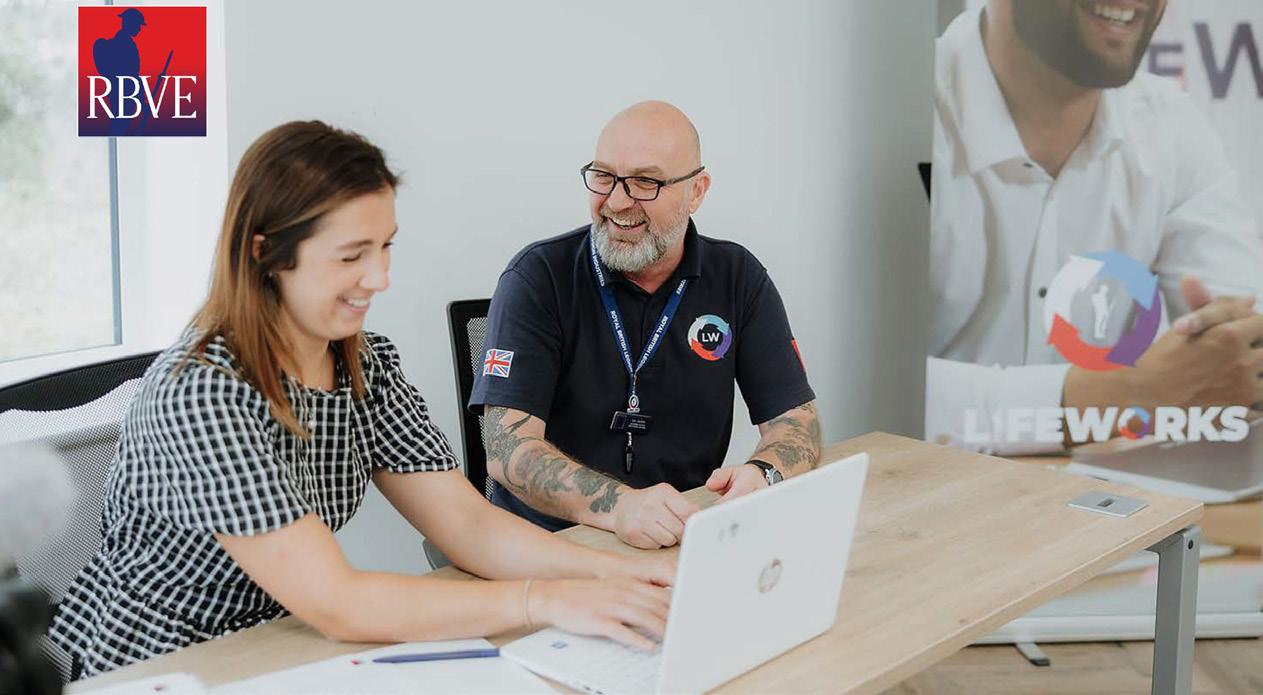
Practical sessions cover job search strategies (including how to access the hidden job market) alongside tailored CV development rooted in each delegate’s life experience, skills and goals. The final day includes mock interviews with industry volunteers who provide constructive, confidencebuilding feedback.
Every participant receives 12 months of one-to-one employment support from their tutor, and Lifeworks consistently achieves around an 80 per cent success


rate of delegates moving into employment or full-time training.
Following the course, a spouse from New Zealand successfully interviewed for two jobs and was able to choose the one that best suited her.
“Our tutor really took the time to answer our questions and explained everything really clearly. The course made me feel more confident in doing CVs and job interviews,” she said. wearelifeworks.org.uk/how-wehelp/lifeworks-families/
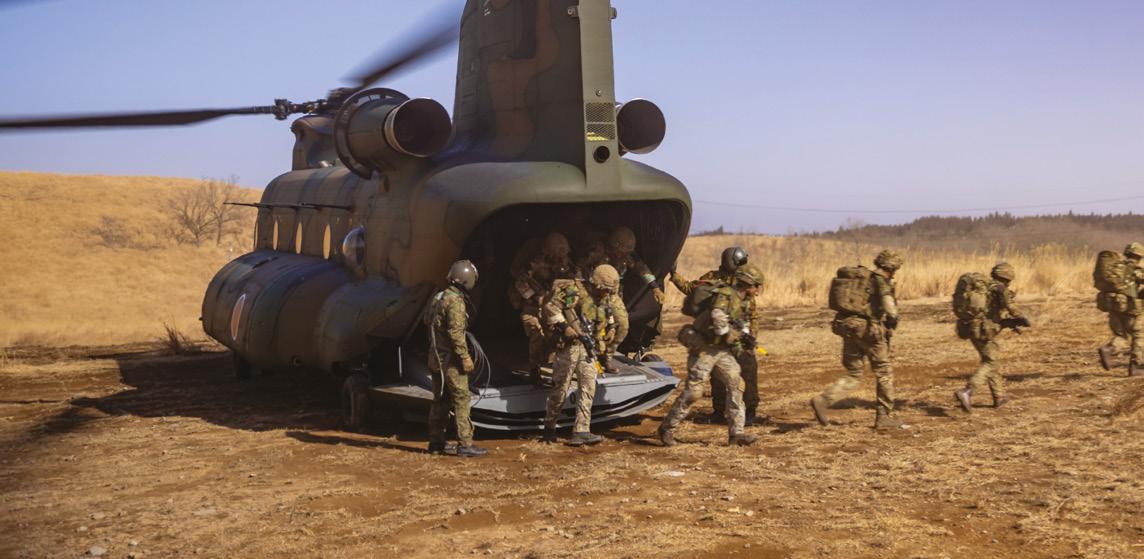

The three Families Federations are seeking to understand how easy it is for non-UK serving personnel and their families to access clear and reliable information about immigration and visas.
This survey builds on research carried out in 2024, which provided valuable insights into which groups found it easier or more difficult to obtain the information they needed, as well as the barriers they experienced.
Launched in May, the current survey will













help the Families Federations, the chain of command across all three Services, and other organisations identify what is working well and where improvements are needed.
The survey is open to non-UK serving personnel, veterans and any family member who is non-British by birth
The survey closes on 10 July. You can take part at: surveymonkey.com/r/NonUK_Questionnaire. Alternatively, scan the QR code to take part.






















BY KATHERINE HOULSTON, AFF FOREIGN & COMMONWEALTH SPECIALIST
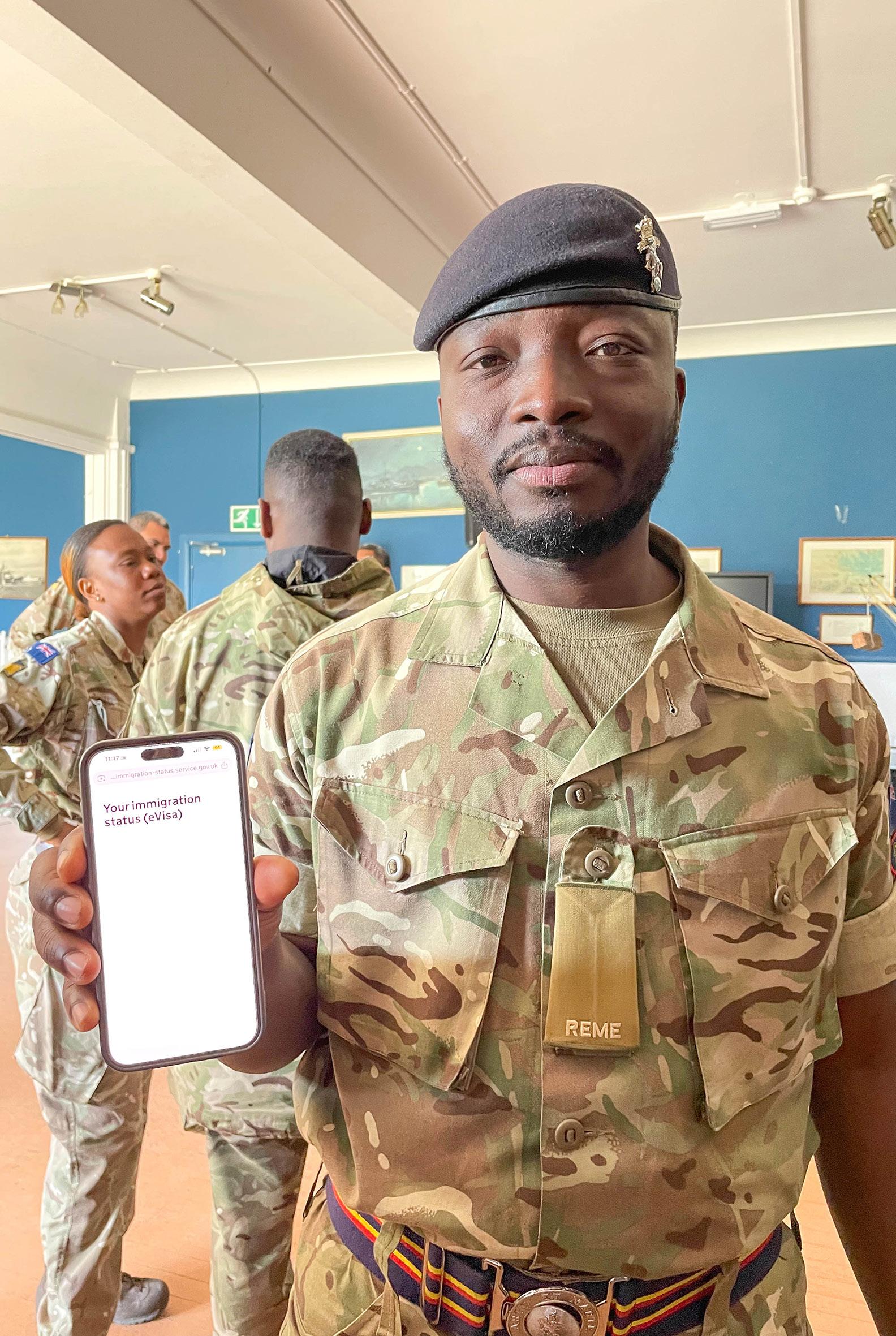
We are really pleased to announce that following months of campaigning and advocacy work, all serving personnel are now able to create a UK Visas and Immigration (UKVI) account and access an eVisa*.
The Home Office introduced electronic visas (eVisas) during 2024, phasing out physical biometric residence permits. The vast majority of people in the UK who don’t hold UK nationality now have to provide a ‘share code’ generated through their UKVI account if they want to prove their rights in the UK. These rights include the right to enter the UK, to work, rent a home, drive, open a bank account, use the NHS and so on.
Serving personnel have quite a unique status in the UK – they are exempt from immigration control and so different rules apply. Up until March 2026 they were still being given an old style vignette to prove their exemption. This was stuck into their passports on enlistment. Although written guidance
said this vignette could be used to evidence rights in the UK, many government agencies and employers were unaware of this and were reluctant to accept it.
AFF was receiving increasing numbers of enquiries from serving personnel struggling to prove their immigration status. They were being questioned by immigration officers at the border after returning from leave or an official visit. Some reported being detained for hours while the relevant checks were undertaken. They were also unable to get second jobs because they couldn’t provide a share code to prove they could work.
AFF was also contacted by serving personnel unable to take the Life in UK test, get a driving licence, or apply for a mortgage. On transition, serving personnel were unable to line up a job in advance of discharge or apply for a private rental.
As the enquiries increased this issue became a priority for the Foreign & Commonwealth
team. It was raised at every relevant meeting during 2025, from the COBSEO non-UK cluster to MOD/Home Office meetings and Armed Forces Covenant meetings. Every new enquiry was logged and became part of the evidence base. A brief was then written and sent to interested parties. It became a priority for the Home Office to resolve this issue.
A step-by-step guide can be found by searching ‘eVisa’ at aff.org.uk but please get in touch with us at fcsupport@
aff.org.uk if you are having problems.
WILL EVISAS RESOLVE ALL PROBLEMS PROVING RIGHTS IN THE UK?
Hopefully, but we need you to tell us! We will be monitoring the rollout, particularly in relation to personnel on transition who need to prove their right to work before they are granted their settled status. If you, or someone you know, is struggling to line up a job in advance of discharge because of their status, then please get in touch with us.
* The official term is a ‘digital record of exemption’ as serving personnel don’t have visas.
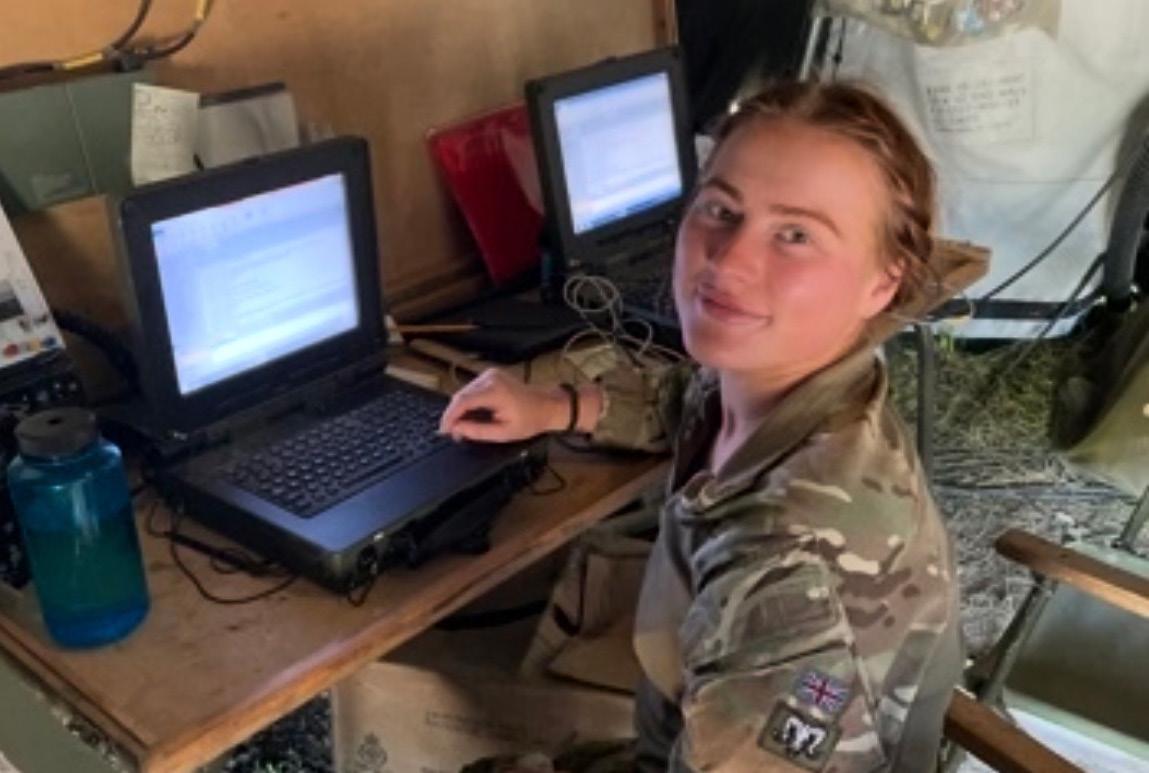
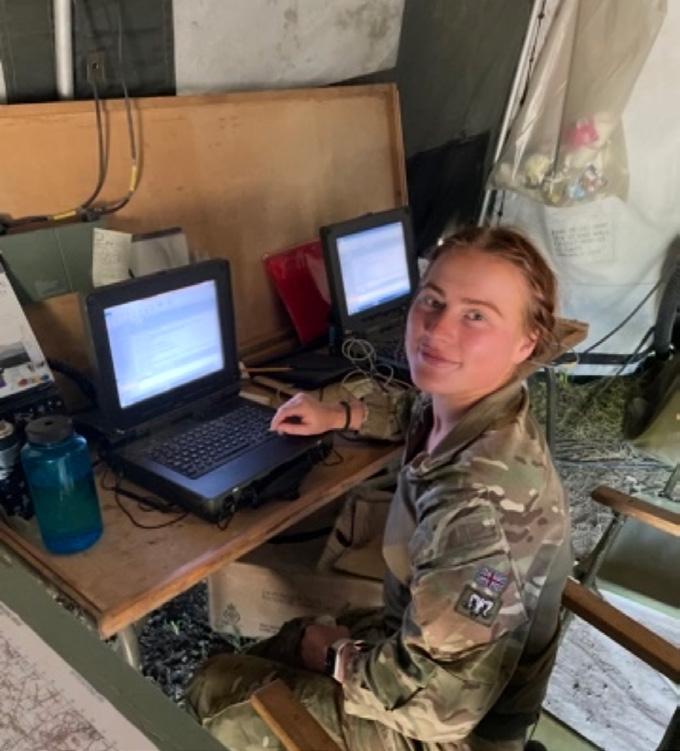
Annie Robertson goes into battle on a regular basis - and it’s against her body.
She is one of the estimated 1.5 million women in the UK living with endometriosis, a condition that’s had a huge impact on her life and career.
The 31-year-old, who serves with the Royal Artillery in Plymouth, has suffered numerous miscarriages and been through six surgeries - three in the space of a year - as well as a dozen general anaesthetics for other procedures. And like many women, she struggled for years to get a diagnosis.
She joined the Army 11 years ago, determined to enjoy it and make something of her life. She started noticing symptoms a couple of years later. “I knew something wasn’t right but I thought I could push on through,” she said.
It was only when a friend who had endometriosis recognised the symptoms that she realised they couldn’t be ignored.
But the struggle for a diagnosis had only just started. She was told it could be irritable bowel syndrome. One suggestion was to go on the pill, or that she could have a sexually transmitted infection.
Annie was urged to keep a stress diary in case that was the cause. “But I was in my early 20s, I didn’t have anything to be stressed about apart from the symptoms.”
She felt belittled by the whole experience.
The symptoms were having a serious impact. “One or two weeks of the month I’d be floored and I wouldn’t even be able to do up my uniform,” she explained.
“If I was on exercise while on my period I would be panicking about whether I could get enough painkillers.”
She loves sport and did her best not to let her condition stop her from taking part in Army sports, playing hockey and being part of the tug of war team for the Royal Artillery. She discovered a love of squash and won competitions.
But she missed out on some great career and sporting opportunities, often because she was undergoing treatment, having surgery or recovering. She started to worry that she was being seen as a problem, but at the same time, “I think it has made me a bit tougher, having to put up with nasty comments.”
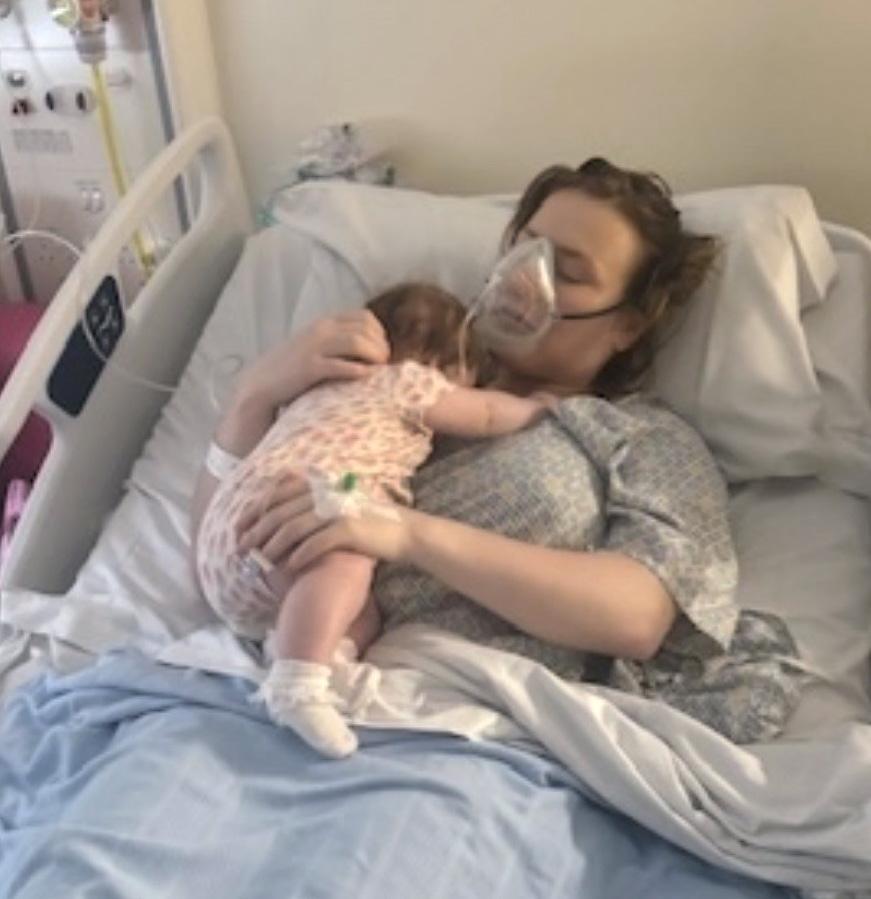
Eventually Annie discovered she was suffering from three conditions – adenomyosis, endometriosis and polycystic ovary syndrome.
Her partner Michael, a sergeant in the same regiment, has been with her through much of it – sometimes missing out on his own career opportunities.
“He’s been really supportive,” she said. “He does get a bit upset because he gets it in the neck from me when I’m feeling poorly. He’s had to put up with a lot.
“He didn’t deploy to Australia last year.
I know that was probably gutting for him and he missed out on Norway the year before. It has definitely affected him, and he doesn’t like seeing me in pain.”
In 2018 Annie suffered a ruptured ovarian cyst that put her in hospital over Christmas. She had emergency surgery on New Year’s Day. It was a year in which she suffered three miscarriages and several surgeries – and finally, a diagnosis of endometriosis. Then the Covid pandemic hit and when she was finally able to see a specialist, she found herself waiting in a long queue.
In 2022 she underwent surgery narrowly avoiding having a stoma bag fitted. And in 2023 she suffered another miscarriage before falling pregnant with Elsie.
To add to the family’s worries Elsie suffered sepsis when she was nine months and she’s still fighting serious infections. But she is a ray of sunshine for the couple. “She’s so happy and so clever,” said Annie. “She never lets illness get in the way.”
She’d like to try for another baby but if doesn’t happen, “I think I’d rather cut my losses and have a hysterectomy.”
But she stressed: “It’s not a cure and would not help me as my endometriosis is so widespread.”
More recently she’s had support from a GP with personal experience of adenomyosis and a hysterectomy. But her experience has been that such empathy and understanding are rare. “Sometimes I feel I can’t live like this. I don’t know how it’s not broken me.”

Her experience and the difficult decisions she’s had to make as a result of her condition have prompted her to offer support to other servicewomen.
She’s been offered an opportunity to work with Endometriosis UK and hopes to encourage the Army to be part of the Endometriosis Friendly Employer Scheme. She’s contacted MPs and received a reply from The King after she wrote to him highlighting the issue.
“It’s had such a negative impact on my life and career and it’s so important women’s stories are heard, especially in a male dominant environment,” she said.
Annie also wants to offer a listening ear and support for others in the Army who are suffering – she can be reached on MODNET. A
Cells like those found in the lining of the uterus grow in other areas – most often in the pelvis, ovaries, fallopian tube and the outside of the uterus.
Tissue can appear attached to other organs, the bowels and the bladder. As the woman’s body goes through its monthly cycle the cells behave in the same way as those inside the uterus, but it results in internal bleeding which causes inflammation and scar tissue.
Pain is one of the most common symptoms. Other symptoms include heavy periods, diarrhoea, constipation, blood in urine, extreme tiredness, fainting and frequent infections like thrush.
In adenomyosis the uterus lining starts growing into the muscle in the wall of the uterus. Polycystic ovary syndrome (PCOS) involves irregular periods, enlarged ovaries and high levels of male hormones.
Endometriosis UK has a range of resources to provide information and help for women with the condition, from local support groups, an online community to a helpline and a symptom checker.
endometriosis-uk.org
BY KAREN ROSS, AFF HEALTH & ADDITIONAL NEEDS SPECIALIST
AFF is seeing a steady increase in relationship breakdown cases. And several have involved some form of domestic abuse, whether it’s physical or sexual, threatening, controlling or coercive behaviour, economic, psychological or emotional abuse.
Research from the National Centre for Domestic Violence suggests domestic abuse incidents increase by 26 per cent when the England team plays.
So, in light of the World Cup this summer, we explore some of the specific support out there for those in the Armed Forces community who are, or who have experienced, domestic abuse.
It’s defined as any single incident, course of conduct or pattern of abusive behaviour between individuals aged 16 or over who are personally connected to each other as a result of being, or having been, intimate partners or family members, regardless of gender or sexuality.
The MOD has published JSP 913, a whole Force policy on domestic abuse, which states
clearly that domestic abuse will not be tolerated, that the MOD will continue to promote a culture where it has no place and where those impacted will be effectively supported.
The Army has a specific Domestic Abuse Awareness Champion, currently Maj Gen AJ Smith. It also has a Domestic Abuse Working Group (ADAWG) on which AFF is represented and can raise awareness of the issues that victims and survivors are experiencing. This group feeds back to the MOD Domestic Abuse Working Group (DAWG) of which AFF is also a part.
The Army Welfare Service (AWS) plays a vital role in supporting individuals affected by domestic abuse. Following a recent impact analysis, it has partnered with SafeLives to develop specialist training for unit welfare teams, AWS staff and other pastoral support, strengthening responses for both survivors and alleged perpetrators.
Alongside this, AWS is collaborating on a behaviour change programme and a national directory of support services. With a new online self-referral form, accessing confidential support from AWS has never been easier, so help is only a click away. Please contact the AWS Intake

and Assessment team or call 07813 019490 for more information.
There is also a specific webpage on gov.ukDomestic abuse: guidance and support for the Armed Forces community. This site hosts a video titled Domestic Abuse and MOD Support.
The Discover My Benefits Families Hub also has links to domestic abuse support under the ‘safeguarding’ section.
The Army engages drama group Narrative Alchemy to perform the play Beyond The Warzone to units. We encourage you to contact your local welfare team to see when they are hosting this. Adult family members are encouraged to attend.
North-east Hampshire
Domestic Abuse Military and Civilian Police Support Group meets quarterly for military and civilian police and wider support services to share best practice and work together to ensure that all military families experiencing domestic abuse feel able to access the help and support they need.
Aurora New Dawn uses advocacy, a dedicated helpline service and recovery group work to provide specialist, independent practical and emotional support to victims of domestic abuse, sexual violence and stalking.
Support is available to victims who are serving in the Army,
Navy or RAF, or family members who are victims where the perpetrator is serving. There’s a helpline for support and advice on 0333 0912 527.
SSAFA’s Stepping Stone Home provides safe, female only supported housing for women and children from the Armed Forces community who are experiencing domestic abuse and/or homelessness. The charity also has a domestic abuse outreach service providing confidential support. ssafa.org.uk
The Armed Forces Covenant Fund Trust and Police and Crime Commissioner-funded Rushmoor Citizens Advice Nepali Domestic Abuse Project provides free and confidential support to Nepalese victims of domestic abuse, for serving Gurkhas,
veterans and their families worldwide.
Project RISE, delivered by Independent Domestic Abuse Services (IDAS) and funded by the Armed Forces Covenant Fund Trust, provides specialist trauma-informed support for the Armed Forces community in North Yorkshire. idas.org.uk
ManKind Initiative is a national charity that provides support for male victims of domestic abuse and domestic violence. Its helpline is staffed by trained people who give practical information and emotional support to male victims, their families, colleagues and friends.
It regularly receives calls from male victims of domestic abuse in the Armed Forces - currently serving, ex-servicemen and civilian staff. It also has a military-specific ACORN
recovery programme for male survivors and can deliver free training to the Armed Forces. Email ACORN@mankind.org. uk for details of this. Mankind. org.uk
Safe & Supported Scotland is a new initiative by Scottish Women’s Aid and Victim Support Scotland, which will build on the successes of the Free from Fear programmes in England and will benefit Armed Forces personnel.
They will be able to access specialist domestic abuse training, including topics such as tech and economic abuse. Direct support to victimsurvivors is also provided. More information about all of the support available can be found at aff.org.uk under Family Life. You can also contact healthsupport@aff. org.uk A
If you’re from a Foreign & Commonwealth family, AFF can provide one-to-one, free and confidential immigration advice and support, which is offered in any location in the UK or overseas. Contact fcsupport@aff.org.uk.


The overseas long-term relationship housing pilot has brought significant benefits for service families, allowing unmarried partners and their eligible family members to accompany service personnel on certain overseas assignments.
And the good news is that it will continue until 31 March 2027, extending it by a year.
Families have consistently highlighted the positive effect this has had on wellbeing and family life. But while the extension is welcome, areas of uncertainty remain around returning to the UK.
The policy applies in several locations including Cyprus, the Falkland Islands and Canada (BATUS).
One service person described having their partner overseas as having had a “huge impact on my welfare and mental wellbeing”.
One partner said: “When we got the news about Cyprus I was apprehensive because it’s a massive move and to move the children, also with schooling. After a lot of research and briefs, now we’re all really excited to be going, it’s an adventure.”
However, despite the extension, preserved rights have not been extended for families returning to the UK after March 2026. This means there is no guaranteed entitlement to SFA on return to the UK, and accommodation will be considered in line with current UK LTRE policy and surplus SFA availability.
The MOD has acknowledged that returning to the UK from overseas can be particularly complex. The circumstances of families returning from pilot locations will be considered on a case-by-case basis.
This includes continued entitlement

to return allowances, such as travel and removals, and the opportunity to be considered for surplus SFA in line with policy and availability.
While this provides some reassurance, many of you have expressed concern that this lacks the certainty needed for long-term planning.
For families preparing to move overseas, the lack of clarity about what happens on return is a key concern. One partner described feeling excited about an overseas move but worried about coming back to the UK due to the absence of a guaranteed accommodation policy, noting that this uncertainty was “the part that worries us most.”
While the pilot represents progress, families continue to report a perception
that marriage remains the default route to security and priority within the system.
Long-term partners report feeling disadvantaged in areas such as prioritisation on JPA, despite committed relationships of many years. This has been compounded by the lack of information to families over the last two years since the pause of the Modernised Accommodation Offer.
Until a permanent policy is agreed, families considering or already using the pilot are encouraged to:
● Plan for UK accommodation early, even if a return date is not yet confirmed.
● Complete the e1132 and ensure that you state in the comment box that you are returning to the UK from the overseas long-term relationship pilot.
● Contact the policy team
We welcome the extension of the pilot but continue to press for improvements to give families in long-term relationships confidence to volunteer for overseas assignments without potential disadvantage.
We are calling on the MOD to:
■ Introduce preserved rights for families returning to the UK.
■ Publish a clear and consistent return process to enable families to plan ahead.
■ Ensure long-term partners are treated fairly, regardless of marital status.
■ Move towards a permanent policy that reflects modern military families.
We will continue to share families’ experiences and advocate for policies that support all Army families.
to seek early advice on current accommodation policy arrangements PeopleAccomPolFuture AndOvrseas@mod.gov.uk or the Accommodation Support Cell people-accom-asc@mod.gov.uk (0800 368 7406).
● If moving to another overseas location, recognise that there is no automatic transfer to another pilot location and that partners and family members may have to return to the UK.
The extension of the pilot reflects its success and its positive impact on family wellbeing.
The MOD has said it remains committed to widening access to family accommodation and is continuing work on longer-term solutions, initially in the UK, for families whose needs cannot be met through the existing SFA model. Updates will be shared once we have further information. A
HomeHub is the new online platform designed to support families living in UK military homes.
It provides a simpler, quicker way to raise and track repairs, manage appointments and access key information about your home, all without needing to call the Pinnacle National Service Centre.
HomeHub is now available to all serving personnel and their families across the UK living in SFA where homes are maintained by DIO’s maintenance providers, Amey and VIVO.
Via HomeHub you can raise maintenance repair requests and book appointments (where applicable)
● Track the progress of any repairs
● Review outstanding repairs and manage upcoming appointments
● Submit a complaint or compliment
● Update your contact details
● View move-in and move-out documentation
If you believe your repair is an emergency where there is a risk of injury or damage to property, you should call the Pinnacle National Service Centre on 0800 031 8628 and select the repairs option.
You need to register for HomeHub and for that you need a government One Login account and your e1132 application number. There’s more information on the HomeHub page on the Defence Homes website to help you locate this.
You can create a One Login account via gov.uk. You’ll then be asked to verify your identity. See gov.uk/using-your-gov-uk-one-login
If multiple members of your household want access, each person will need their own One Login account and should register using their personal details.
HomeHub gives Army families more control and flexibility, making it easier to manage repairs and appointments from home or while on the go, with support from the National Service Centre still available when needed.
For further guidance on using HomeHub, including FAQs and how-to video guides, you can visit the Defence Homes or Pinnacle websites.
defencehomes.mod.gov.uk/homehub-information/ pinnacleservicefamilies.co.uk/homehub/















The MOD is taking an important step towards improving SFA for families across the UK. The aim is simple: to provide modern, comfortable homes that better meet the needs of today’s service families.
One of the first steps in this journey is the development of eight new ‘model homes’ in Bulford.
These homes will help shape how future service housing is designed and delivered nationwide, and families will have an important role in that process. Your views will be crucial to ensuring that future new-build homes are the best they can be for military families.
The plans for these new homes sit within the MOD’s Defence Housing Strategy, published in November 2025. This strategy focuses on replacing older housing with new builds that are safer, more comfortable and better suited to modern family life.
Feedback from service families has played a key role in shaping these designs. More than 6,300 of you shared your views through the Families Federations survey in 2025, highlighting issues such as layout, fittings and how homes work for day-to-day living.
These concerns have been carefully considered, and the new designs aim to reflect what you said really matters; from usable space and storage (including access to the loft) to accessibility, reduced energy bills and practical layouts.
The first phase of this programme is being planned at Sling Road, Bulford, around 300 metres north of the main Bulford Camp area. The location was chosen because it is well placed for local facilities and transport, and offers space to trial the new designs.
BY CAT CALDER, AFF HOUSING SPECIALIST

The development will include eight homes grouped together in a small close, which will be a mix of detached and semi-detached houses which will have between two to four bedrooms and one two-bedroom flat.
This range reflects the different sizes and needs of service families. As a small pilot project, these homes will allow the MOD to test designs and construction methods before rolling them out more widely.
The homes are being designed to support everyday family life. They aim to make good use of space, natural light and flexibility, so families can adapt rooms to suit their needs.
The two-bedroom flat may suit smaller families or individuals, with a practical and efficient layout.
The two-bedroom houses offer more living space and a garden, while the three and four-bedroom houses are designed for larger families, with flexible rooms that can be used to suit the family.
In all homes, designs include modern kitchens, energy-efficient heating and improved storage. The mix of house types is also intended to help create a friendly, community feel while still giving families privacy.
Once the work progresses to the next stage, you will be able to:
● View the plans online, including floor
plans and images.
● Share feedback, which will help refine the designs before they are used more widely.
● Visit the model homes, subject to approval, once they are built. If you are local to the area you will be able to see the layouts in person and share your feedback.
All comments will be carefully considered, helping to improve future homes for service families across the country.
DIO is currently refining floorplans as part of wider work on the development of the estate. AFF will share updates when we can, including any opportunities to get involved.
This project is an important first step in delivering better quality service housing nationwide. What is learned in Bulford, including family feedback, will help shape thousands of future homes, supporting service families wherever they are based. By working together, the MOD and service families can help create homes that truly support family life and the unique challenges of service living. Your views are crucial to ensuring that future builds are the best possible options for future military family homes, so please do have your say. A
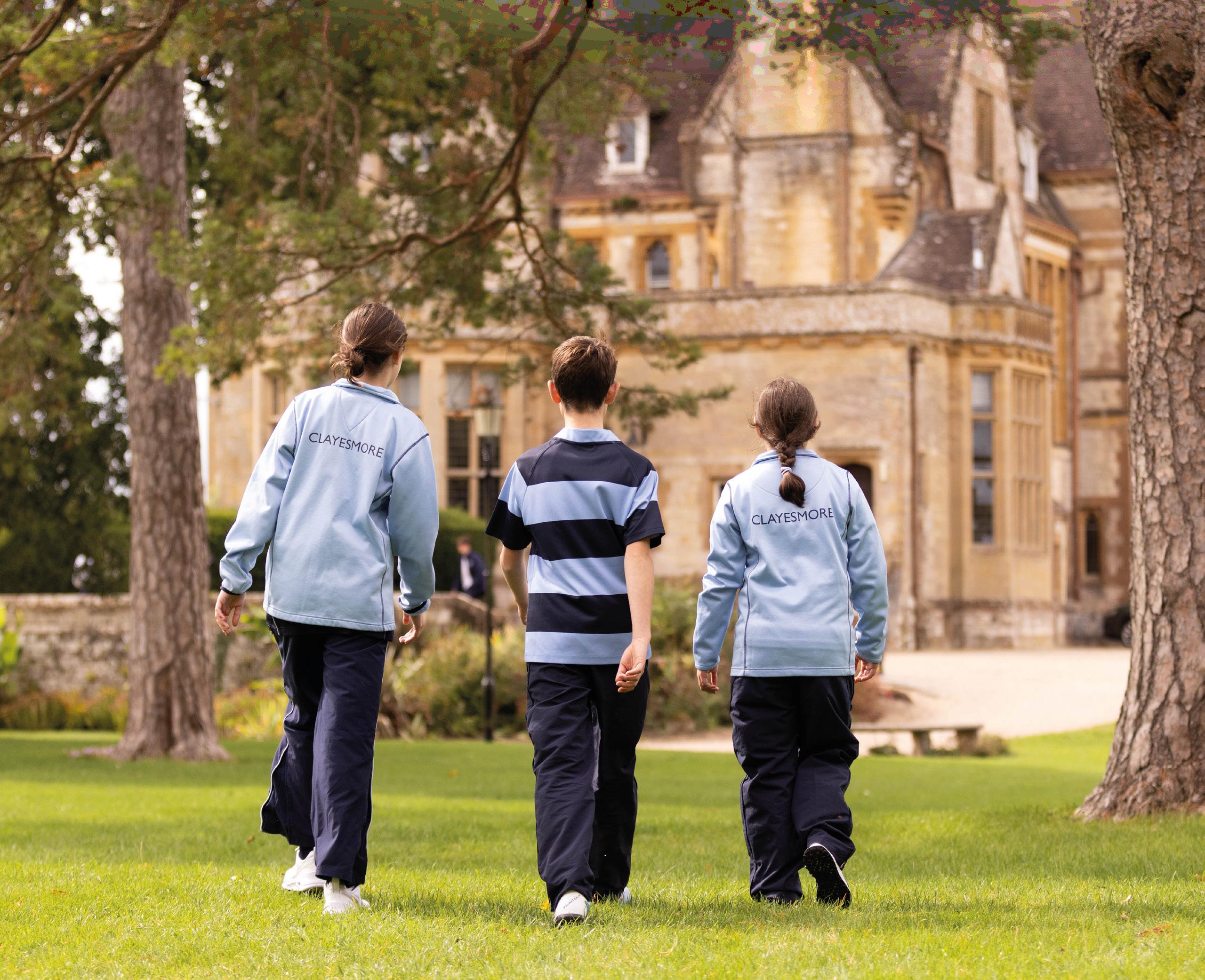


Army spouse Alison Baverstock talks to Lady Elizabeth Kitson about founding the Federation of Army Wives Clubs (now AFF*) and why the organisation was needed…
ELIZABETH Kitson married at 23 and immediately headed for Cyprus where her husband Frank was with the Rifle Brigade.
When she was 27, he became Commanding Officer of the newly formed Royal Green Jackets Regiment in Tidworth and within two weeks the regiment went on a threemonth posting to Cyprus. It left Elizabeth with two small children, about 300 wives and a young Families Officer, with many problems and little support.
Many of the wives - it was almost 100 per cent female partners back then - were young and were singleparenting far from the support of their families, which made their lives both difficult and lonely.
Elizabeth became increasingly concerned about the situation, visiting them at home, revamping the wives’ club, and trying to help sort out problems.
On the regiment’s return, she had three thoughts. Firstly, that she needed specialist training to help more effectively, so she enrolled on a Families Study course at Bristol University.
The second was to have a more effective method of looking after families, and so her husband appointed a more experienced Families Officer.
The third was to set up a supporting structure for wives, particularly when their husbands were away.
The last drew some
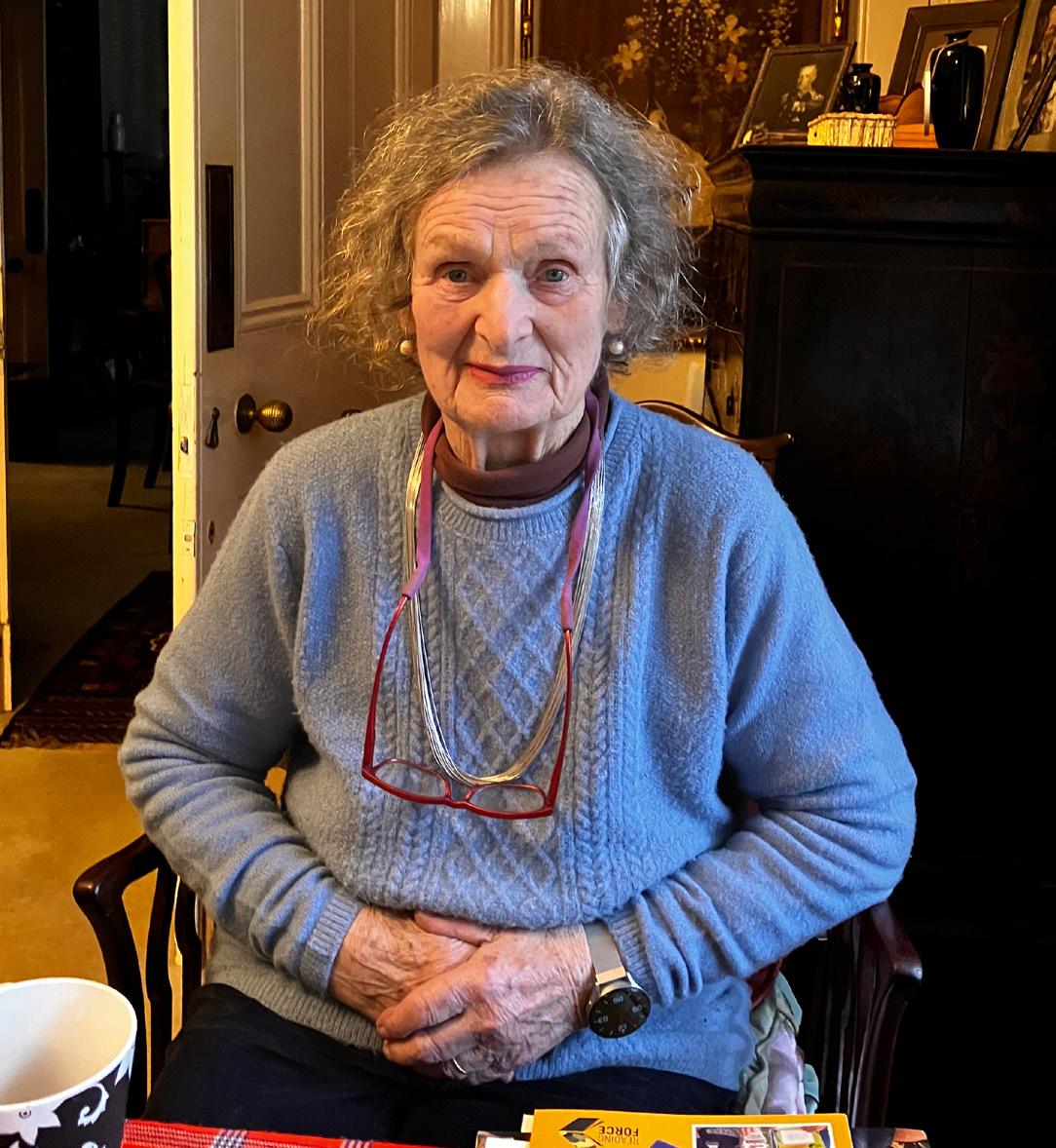
encouragement, but also both indifference and active hostility. Commanding officers routinely claimed no central organisation was needed because “they looked after their own.”
Equipped with first-hand evidence that the problems she had identified were universal across the military, including within the units of those most against, she persevered.
An initial meeting to consider what such an organisation might look like was organised at Bagshot Park, with the Army selecting the audience and sending out the invitations. The emphasis was on practical issues. Elizabeth believed much could be achieved by wives’ input, it need not be expensive and it would make for happy families.
Lady Kitson
Early ambitions were the provision of information and support for crisis points, like cot death and bereavement.
A magazine was seen as crucial, which could include key information and be distributed widely. They found a publisher of military magazines who was happy to manage the content, advertising and production if he could leave the distribution to the Army, and Neighbours magazine was born, now Army&You
The Federation was formed in the early 1980s and began appointing leads in areas of particular concern – housing, health, birth, childcare, relationships. Confidentiality was vital, and Elizabeth’s reflection that “no wife or husband was going to confess
to marital difficulties because it would impact on their husband’s career” still feels spot on.
was key
She was insistent that while the Federation should be run by the wives themselves, and cover all aspects of Army life, it should work with the Army in collaboration, and never as a militant agitator. She was determined to secure its charitable status because this meant it could not be disbanded.
She was Chair of the Federation for the first four years and the first President when her husband retired as Commander in Chief of UK Forces. Publicity was gained through coverage in the military press, and she even gave an interview on Woman’s Hour.
Elizabeth said: “None of it could have been achieved without the outstanding work of so many wonderful wives and the support of many men who saw the benefits.”
The issues Elizabeth identified were swiftly acknowledged as relevant across the military, as similar organisations were set up for RAF and Naval partners.
Alison Baverstock is the founder of Reading Force, a charity that links military families through shared reading readingforce.org.uk
Elizabeth insists she relied primarily on her instincts: “What was the problem, what practical solution could be found? Work out how to get there one step at a time.” She is a remarkable woman. A *The Federation became AFF in 1996.

The Ministry of Defence offers two main commuting allowances — Home to Duty Travel (HTD) and Get You Home (GYH) — which provide financial support for Service personnel who commute to work or who live away from their main home. Each allowance supports different circumstances.
HTD offers financial assistance towards the cost of daily travel between a service person’s residence and their duty station.
● You may claim up to 50 miles per single journey for daily commuting.
● If working remotely and travelling in only on certain days, you may claim up to 250 miles per single journey, provided this is supported by a remote working authority.
● A personal contribution is deducted at source, with the rate depending on whether the residence is privately owned or MOD provided.
● Claims can be made for commuting by push bike, but not by escooter.
GYH Travel helps reduce the impact of separation for service personnel living in single accommodation at their duty station during the working week.
● Available to those living in Single Living Accommodation (SLA) and travelling to a qualifying residence during stand-down periods.
● You cannot claim GYH Travel if you are receiving Longer Separation Allowance (LSA).
● A qualifying residence must be more than 50 miles from the duty station.
● The allowance is mileage based, paid monthly in arrears, covering the cost of two return journeys per month.
This is an opt-in benefit for unaccompanied Service personnel serving in specified European countries.
● It supports up to 24 return journeys

per calendar year between an overseas duty station and a UK residence.
● Travel is self funded, with reimbursement claimed retrospectively, subject to local command approval for each journey.
● To be eligible, personnel must serve unaccompanied, live in service accommodation and not receive any other UK return travel entitlements.
For full details, refer to JSP 752, Chapter 7 or speak to your unit HR advisor. A
A soldier’s pay consists of three elements - core pay, trade supplement placement (TSP) and X-factor, all of which are pensionable. TSP is reviewed every five years.
The 2026 review for trade supplements only affects soldiers, both Regular and Reserve, who are on the main pay tables. It does not affect officers’ pay or those paid from a bespoke pay spine (for example pilots, MPGS and allied health professionals).
Having recently completed the latest review, there has been an increase in job evaluation scores across the Army from 2021. This acknowledges the higher levels of knowledge, skills and experience of the Army. The outcome of the review means 15 trades moving up a placement, with 49 remaining on their current placement. No trades are moving down.
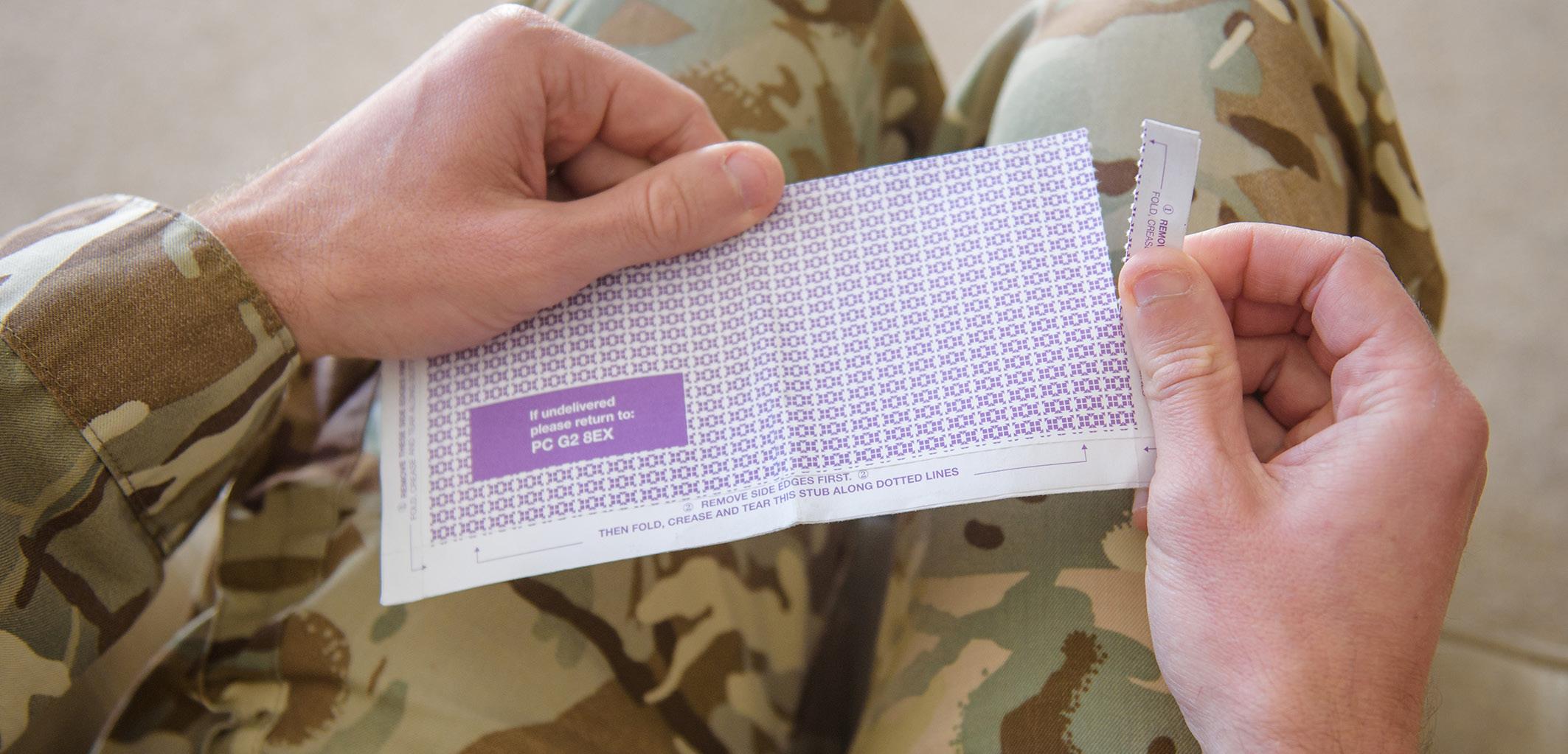
Any uplift in an element of pay, especially when linked to other pay awards or annual pay increments will have an impact on a soldier’s income tax. With any uplift in pay soldiers should check gov.uk/income-tax-rates to see how this affects their income tax liability. This will be slightly different in Scotland
where income tax bands are different. Families with an entitlement to any UK government benefits such as Universal Credit or child benefit should review their eligibility at gov.uk/reportbenefits-change-circumstances. More information and a soldier’s guide can be found on Defence Connect. A



We’re
Contact Forcesline.
We’re open 09:00–17:00 Monday to Thursday, and 09:00–16:00 on Friday

BY ESTHER THOMAS, AFF OVERSEAS MANAGER
Moving overseas is challenging for anyone, but for blended families — households combining partners, with a mix of children and sometimes co-parenting with ex-partners, the experience can be more difficult to navigate.
With these family structures becoming more common, and the introduction of the overseas housing pilot for those in long-term relationships, the number of queries into AFF’s overseas team has been rising.
The adventure of an assignment overseas can be rewarding, but the added layers of relationships, legal considerations and emotional dynamics often amplify the stress of relocation. It’s important that blended families prepare for them carefully and understand their entitlements and support from the MOD.
Custody arrangements and legal permissions are often the greatest hurdle and are considered a civil matter by the MOD.
● Shared custody complications: If children currently split time between households, relocation may require renegotiating legally binding agreements and gaining new court orders.
● Travel consent requirements: Many countries require written consent from all legal guardians before a child can relocate or even travel internationally. This is especially relevant for those travelling with children who have different surnames.

● Differing legal systems: What counts as parental rights, stepparent rights, or guardianship can vary dramatically across borders and some countries may not recognise foreign custody orders.
Relocation is expensive, and blended families often encounter additional costs which are not currently supported by MOD allowances, such as legal fees for updating custody agreements and higher travel costs for child visitations between countries.
Families should research what is and isn’t covered as there are clear definitions of a child, immediate family or close family in policy relating to entitlement to MOD allowances and support.
Blended families often depend on carefully balanced routine relationship arrangements which may be harder to maintain when overseas. This is due to different time zones, schedules, and reduced inperson interaction, which can strain relationships.
Distance can also disrupt regular faceto-face contact with extended family and video calls may not feel like enough. If one biological parent or siblings remain in the home country, children may feel guilty for leaving them.
It can be helpful for families to develop new routines - scheduled calls and annual trips using Get You Home Overseas allowance to maintain those ties. Also look to use welfare and contact houses so parents in the UK can visit children overseas. The tri-service contact house directory is available at aff.org.uk/advice/housing/temporaryhousing/
While the considerations may be slightly more complex and challenging, with thoughtful planning, open communication, and emotional awareness, blended families can not only navigate these challenges but can grow stronger through the shared experience.
As ever, the key to a successful overseas move is to invest time into building a new sense of identity for all family members in the new community through hobbies, clubs, volunteering and work opportunities, and to allow space for each person’s emotional experience, especially during the first few months. A
Armed Forces pension schemes are complex. But there’s no need for you to become an expert. Simply join the Forces pension Society and let our Pensions Consultants guide you through your career and into resettlement, with expertise tailored to your personal circumstances.
You may be surprised to learn how much you can influence what you’ll receive when you leave. You’ll be faced with numerous choices as your career progresses and you’ll need to be aware of changes in taxation, pros and cons of added pension, commutation, and even choosing the best time to leave. All of these choices will impact on your pension income.
AFPS15 is among the best pension schemes in the public sector. Because it’s government backed, there’s no need for any concern about share price fluctuations. Your pension grows every year you’re in service and it could become your biggest asset. At today’s values, a pension of £20k requires a pension pot of more than £400k – considerably more than the average UK pension pot size for over 50’s.
Navigate your pension route with us as early in your career as possible and build your pension value right up to the point you leave. Your membership fee gives you access to our expert Pensions Consultants. Job done.
As an independent, not-for-profit organisation, our membership subscriptions help to fund our support for the Veterans’ Community, our Roadshows and Webinars, our attendance at CTP Employment Fairs, plus our vigilance in challenging governments whenever we spot unfairness or injustice in the system.
And importantly, we provide the whole military community with a voice that counts, on the representative bodies for Armed Forces and Public Sector Pensions.
Visit: forcespensionsociety.org/join-now/ Annual membership for you and your spouse/partner is just £47. You will have exclusive access to our Forces Pensions Consultants, our informative Members’ Webinars and you’ll receive our bi-annual enewsletters and our magazine, Pennant.
You’ll also have access to our wide range of membership benefits from discounts on new cars to insurances, including our latest range of travel policies.



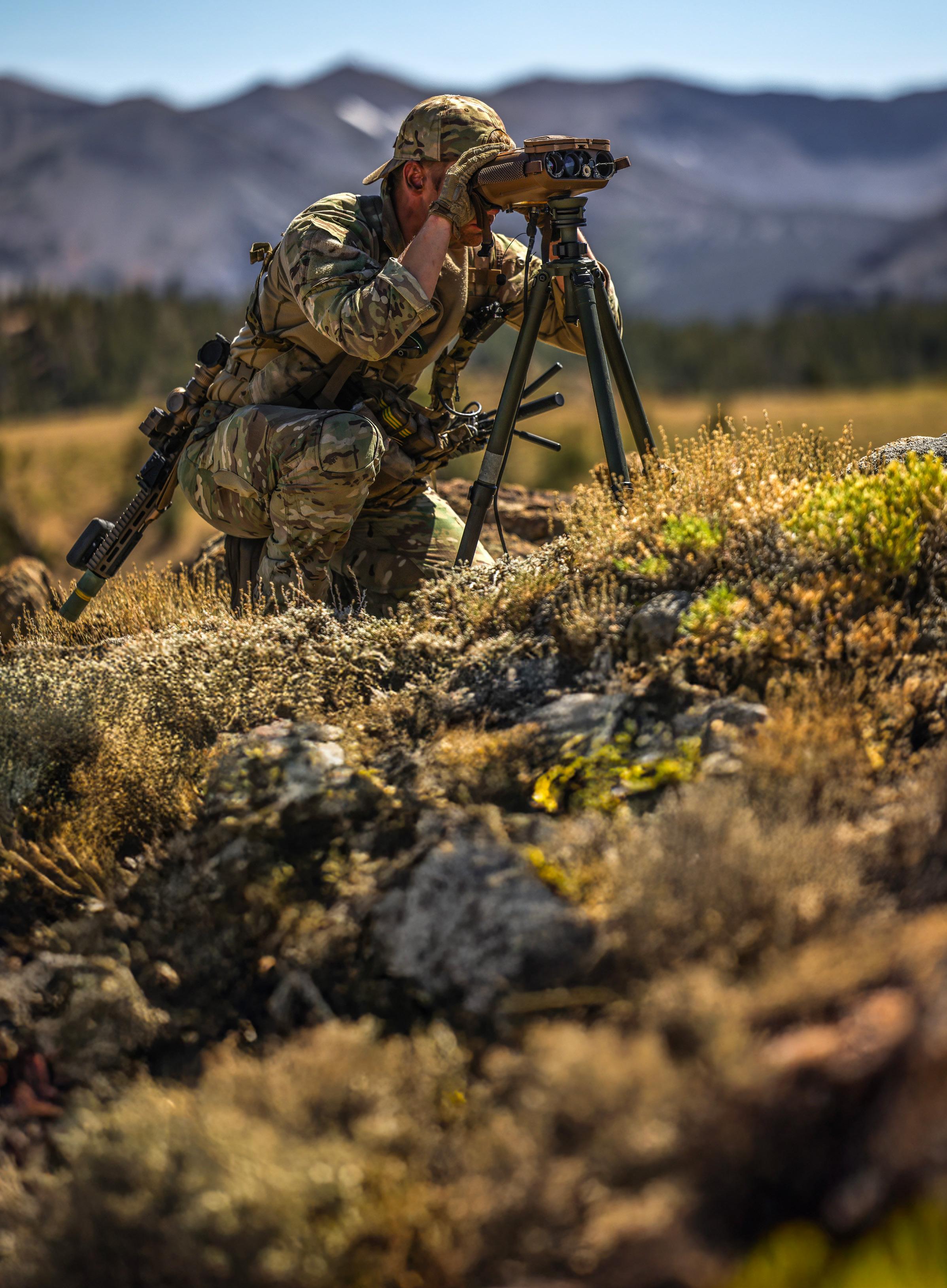

“I wish I’d known I could add to my pension!”

IT’S something we hear time and again from service personnel. Yet many are still unaware that one of the valuable benefits available through the Armed Forces Pension Scheme 2015 (AFPS 15) is the option to boost their future pension by purchasing Added Pension.
Understanding this benefit earlier in your career could make a significant difference to your financial future. So how is it done?
You can start the process by contacting Veterans UK directly by submitting an AFPS Form 6 to request a quote and understand how your pension can be improved.
In advance of submitting an AFPS Form 6, there is an Added Pension calculator available on gov.uk which you can use to get an idea of the Added Pension you can buy and what it will cost. This illustrator does not replace the requirement to submit an AFPS Form 6 to Veterans UK to request a formal quote.
You can add funds by either paying a one-off lump sum into your AFPS 15 pension fund, or by having a regular deduction applied to your salary. Both are tax efficient in that a one-off lump sum payment should be declared on your tax return and your tax liability would reduce as a result.
Monthly deductions are taken from your pay before tax is calculated and deducted and therefore your own contribution attracts no tax charge at all (there is no tax refund and no requirement to declare this on your tax return). Please note, if you opt for a regular deduction to your pension, it will only be for the current financial year. You will need to renew this each financial year (by submitting AFPS Form 6) if you would like to continue contributing.
When you complete the AFPS Form 6 application for a quote, simply tick the appropriate box that suits your aspirations:
● To obtain an indication of how much additional pension you might receive based on a monthly deduction from salary.
● To obtain an indication of how much additional pension you might receive based on a one-off lump sum payment.
Alternatively, you can ‘turn the quote around’ and ask what a specific pension increase would cost you (for example, if you wanted an additional £1,000 of pension in retirement, what would that cost and if you wanted to do this, you would use the option: I want to purchase Added Pension of £1,000 (for example) and I wish to know how much it will cost me as a monthly deduction or as a lump sum amount.
Veterans UK will reply to your initial submission with a pension quote. If you are happy and wish to pursue the purchase, you complete AFPS Form 6a (included with the quote) to do this.
In terms of benefits, all pension investment is tax-efficient. This is because you can claim back the tax you paid on any lump sum payment you make. Alternatively, if you opt for monthly deduction from salary, the pension payment is made before the tax liability is calculated, meaning that the pension payment is made, and you are then taxed only on what is left.
In terms of ‘value for money’, we recommend that you take financial advice regarding pension investment to decide if investing into the Armed Forces scheme would provide a more favourable outcome than other pension schemes.
On gov.uk there is a useful booklet – AFPS 15 Added Pension Explained –which provides some further information which you may wish to refer to.
If you are a member of the Forces Pension Society and have a pensionrelated question, contact us via ‘Submit a Question’ in the members area of the website. If you are not a member but would like to learn more about us, visit www.forcespensionsociety.org
AT Benenden School, “passing the taste test” means far more than serving food that students enjoy, although that is certainly essential. It reflects a whole-school commitment to nutrition, wellbeing and educating young people about the journey from field to fork.
Food at Benenden is designed to nourish busy, ambitious students whose days are filled with academic study and co-curricular activities. Our catering team works closely with pastoral and medical staff to ensure menus are balanced, varied and responsive to the needs of teenage girls. Fresh, seasonal and locally-sourced ingredients are a priority, with an emphasis on lean proteins, wholegrains and plentiful fruit and vegetables. Just as importantly, mealtimes are unhurried opportunities to connect and refuel within our boarding community.
A distinctive element of Benenden’s approach is the Soil to Supper initiative, part of Benenden’s innovative curriculum
Afor which the School was awarded a significant strength in its 2025 ISI Inspection report. This hands-on course gives students practical experience of growing, harvesting and preparing their own produce. In understanding soil health and sustainable cultivation and then seeing how ingredients are transformed in the kitchen, pupils gain a deeper appreciation of nutrition and environmental responsibility.
The impact is powerful. Students who have nurtured crops themselves are more adventurous in their food choices and more conscious of reducing waste. They learn that good nutrition is not about restriction, but about balance, knowledge and enjoyment.
For Benenden families, including those serving in the Armed Forces, this holistic approach offers reassurance. Girls leave not only with excellent academic results, but with the confidence and understanding to make informed, healthy choices for life.
benenden.school
T Cothill, we believe that good food is at the heart of a great education. What children eat doesn’t just fill them up, it fuels how they think, feel and learn. That’s why we take food seriously and serve it with a generous helping of creativity and care.

Our dedicated Catering Team, led by the ever-inventive Head Chef Rob, is passionate about providing nutritious, well-balanced meals that support physical health, spark energy and sharpen focus. From boosting brainpower to encouraging positive behaviour and emotional wellbeing, every plate is part of a bigger picture.
But it’s not just about what’s on the menu, it’s about how it’s served. Mealtimes at Cothill are an experience in themselves: a time to recharge, connect and enjoy.

Children sit at tables with friends and teachers, practising conversation, sharing stories and learning the simple joys of eating together.
The food itself is fresh, varied, and fun: themed lunches, celebratory feasts, familystyle dining and the legendary ‘V-Badge Tea’, eagerly awaited at the end of each term. For our boarders, the day starts with a hearty breakfast and ends with a comforting supper snack, with homemade treats and fresh fruit available throughout the day to keep energy levels steady.
At every stage, the Cothill approach to food reflects our wider values: Family, Foundations, Future. Whether it’s trying a new dish, chatting over lunch or celebrating another culture’s cuisine, food is part of what brings our school community together, one delicious bite at a time.
cothill.org.uk
AT Clayesmore School, food is far more than a daily necessity; it is a central part of community life and a defining feature of the boarding experience. Renowned for its exceptional catering and muchloved team teas, Clayesmore has built a reputation for providing plentiful, nutritious meals that pupils genuinely enjoy. Walk into the dining hall and you will quickly sense the enthusiasm –students regularly talk about the food, and mealtimes are a highlight of the day.
The culinary offering is designed to bring people together. Whether it’s a relaxed hog roast on the lawn or the buzz of a shared meal after a busy school day, food creates moments of connection between students and staff across every department. The catering team plays a vital role in this, constantly engaging with pupils and responding to their suggestions. This collaborative approach ensures menus remain varied, exciting and tailored to a discerning and appreciative community.
Quality and variety are at the heart of everything served. The salad bar, for example, goes far beyond the expected, offering colourful and creative dishes such as tabbouleh, caprese and vibrant slaws. There is a clear emphasis on balanced nutrition without compromising on flavour, ensuring every pupil can find something they love while maintaining a healthy diet.

as nutrition, food science and hospitality.
Importantly, Clayesmore also offers pupils the opportunity to actively engage with food beyond the dining hall. In the classroom, GCSE Food Preparation and Nutrition lessons explore cooking at a deeper level, helping students understand the science behind what they create – from caramelisation to the Maillard reaction and gelatinisation. This knowledge not only improves their practical skills but also opens pathways to future careers in fields such
Through the LEX programme, pupils can further develop their culinary abilities, taking on more ambitious projects such as bread-making and hand-rolled pasta. These experiences build confidence, independence and life skills that extend well beyond school.
At Clayesmore, food nourishes both body and community, making it an integral part of a warm, supportive and secure boarding environment.
clayesmore.com
AT a vibrant state boarding school like Gordon’s, mealtimes are anything but routine. With more than 1,000 students and staff to cater for – representing tastes and traditions from around the world – the challenge is big. The result? A dynamic, modern food offering that’s as diverse as the community it serves.
The catering team delivers three freshly prepared meals a day, with choice at its core. From hearty, hot dishes and globally inspired specials to plantbased options, pasta bars, fresh salads, soups and lighter bites, there’s always something to suit every appetite and palate. Menus are carefully balanced to support energy, focus and wellbeing, while also encouraging students to try new flavours and broaden their tastes.
Freshness is key. Much of the food is prepared in-house, using quality ingredients to create meals that are both nourishing and satisfying. Dietary needs are taken seriously, with clear allergen labelling across all dishes and dedicated options for vegetarian, vegan, halal and gluten-free diets – ensuring every student can eat confidently and safely.
What really sets catering at Gordon’s apart is how it evolves. Student feedback plays a central role, with a food committee and Student Governors helping to shape menus. Their influence is clear – favourites like Caesar salad and sticky toffee pudding have made a comeback, and even a student-created chicken recipe has earned a place on the menu.
Standards are equally impressive
behind the scenes. A five-star Food Hygiene Rating reflects the team’s commitment to excellence in cleanliness, safety and food preparation, giving reassurance to students, staff and parents alike.
Dining itself is a highlight of the day. The Dining Hall is a lively, welcoming space where the school community comes together, strengthening connections over good food. For boarders, these shared meals are an important part of daily life, complemented by the ability to prepare snacks in house kitchens – from quick toast breaks to relaxed Sunday pancake mornings. Students are also encouraged to prepare food from their different cultures for their peers.
Inter-House events reflect the passion for cooking by students with a rustle up (come up with a dish from given ingredients); baking and ginger-bread house decorating and Sixth Form students learn how to cook on a budget for university.
There’s plenty of creativity on the menu in the Dining Hall, too. Themed food days bring global cuisines to life with decorations, fun facts and a real sense of occasion, while seasonal celebrations – from Halloween to Christmas – add extra flair (and often a few costumes from the catering team too).
Beyond daily dining, the catering department supports the full rhythm of school life. From fuelling sports fixtures and academic events to hosting formal dinners, performances and celebrations,
the team delivers everything from elegant fine dining to casual café favourites and hearty breakfasts.
Importantly, this expertise extends well beyond term time. The school’s facilities are in use for much of the year, supporting residential lettings, summer schools and a wide range of external programmes. The catering team plays a key role in these, providing high-quality, flexible food offers for visiting groups – whether that’s large-scale dining, graband-go options or tailored menus for specific needs.
gordons.school

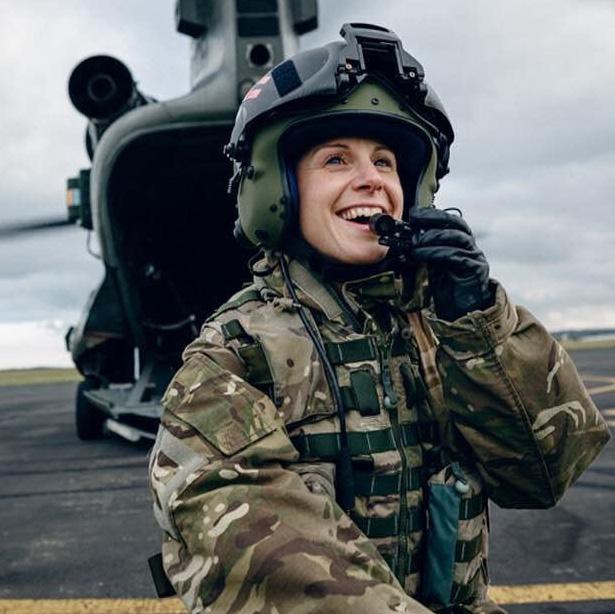






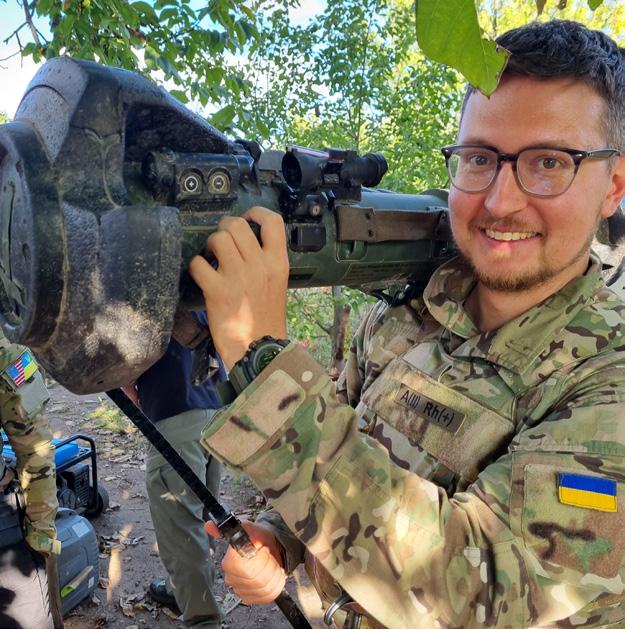

Are you ready to swear allegiance...
...to a magazine for armed forces veterans by an armed forces veteran? Report to civvymagazine.co.uk or scan the QR code below to get a copy of Issue #1 delivered direct to your door.

civvymagazine.co.uk | facebook.com/civvymagazineuk | linkedin.com/company/civvymagazine | X.com/civvymagazine


KIMICHI School is a small, mixed, music-specialist school in Birmingham for pupils aged 9 to 18.
Music is woven through the life of the school: every pupil learns at least one instrument and ensemble work is a normal, joyful part of the week. That sense of belonging, individuality and creative purpose is what makes Kimichi distinctive.
Boarding builds on that same ethos. It is designed as a small-scale, highly supervised and deeply pastoral experience for pupils aged 11 to 16 – a place where routines feel calm, adults know children well and families can feel reassured that care and learning go hand in hand.
Why should families choose Kimichi boarding?
• A small-school feel where pupils are treated as individuals and no one is lost in the crowd.
• A boarding environment shaped by warmth, safety, order and genuine welcome. Each child benefits from the luxury of either a single or twin room.
• A distinctive music-rich ethos that supports future musicians while

building confidence, wellbeing and soft skills for every child.
• Strong pastoral care, clear routines and a culture where young people are encouraged to ask for help early.
• An urban boarding experience in a vibrant, diverse city where culture, transport and real-world independence are part of daily life.
With our more affordable fees of £28,000 per annum (excluding VAT) for full time boarding and weekly boarding available, now is the perfect time to enrol your child for September.
kimichischool.co.uk

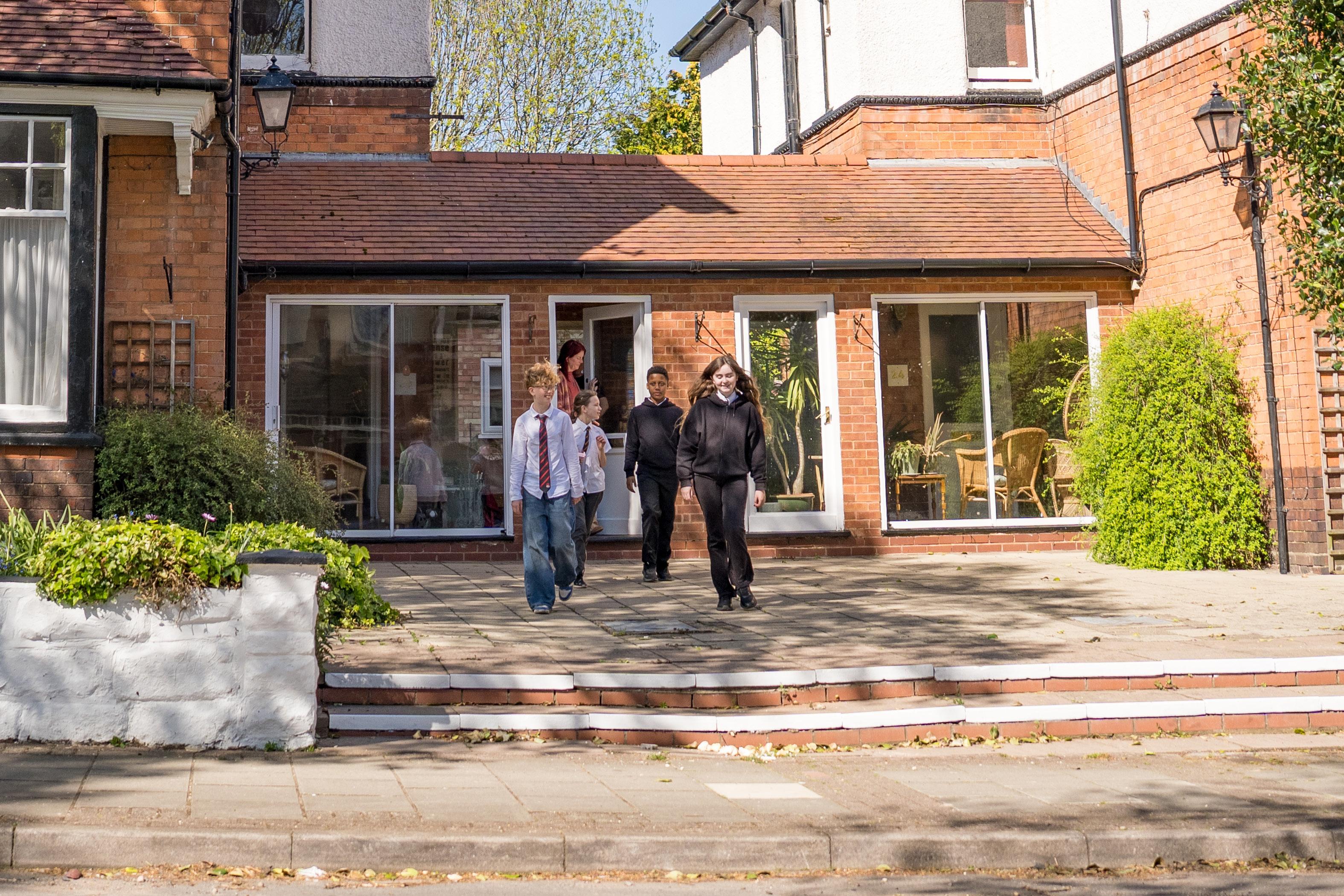
O P E N F O R S E P T E M
P E N F O R S E P T E M R E G E S T R A T I O
R E G E S T R A T I O
O P E N F O R S E P T E R E G E S T R A T
o rg e t t h e b l a z e r s a n d t h e
Fo rg e t t h e b l a z e r s a n d
Fo rg e
Fo rg e t t h e b l a z e r s a n d t h
L a t i n m o tto s , K i m i c h i i s
L a t i n m o tto s , K i m
L a t i n m o tto s , K i m i c h
o a rd i n g f o r t h e rea l wo r
b o a rd i n g f o r t h e rea
b o a rd i n g f o r t h e rea l w
- a f f o rd a b l e , m u s i c
- a f f o rd a b l e , m u s i c - f i l l e d
a n d a h o m e i n
- a f f o rd a b l e , m u s i c - f i
a n d a h o m e i n
B i r m i n g h a m ; a c i t y
a n d a h o m e i n
B i r m i n g h a m ; a
re g e n e r a t i n g f a s te r t h a n
re g e n e r a t i n g f a s te
B i r m i n g h a m ; a c i t
a l m o s t a n y w h e re i n t h e
re g e n e r a t i n g f a s te r t
U K .
a l m o s t a n y w h e re i n
a l m o s t a n y w h e re U K .
D i f f e re n t , p ro u d l y
U K .
A f f o r d a b l e f e e s - l e s s V A T
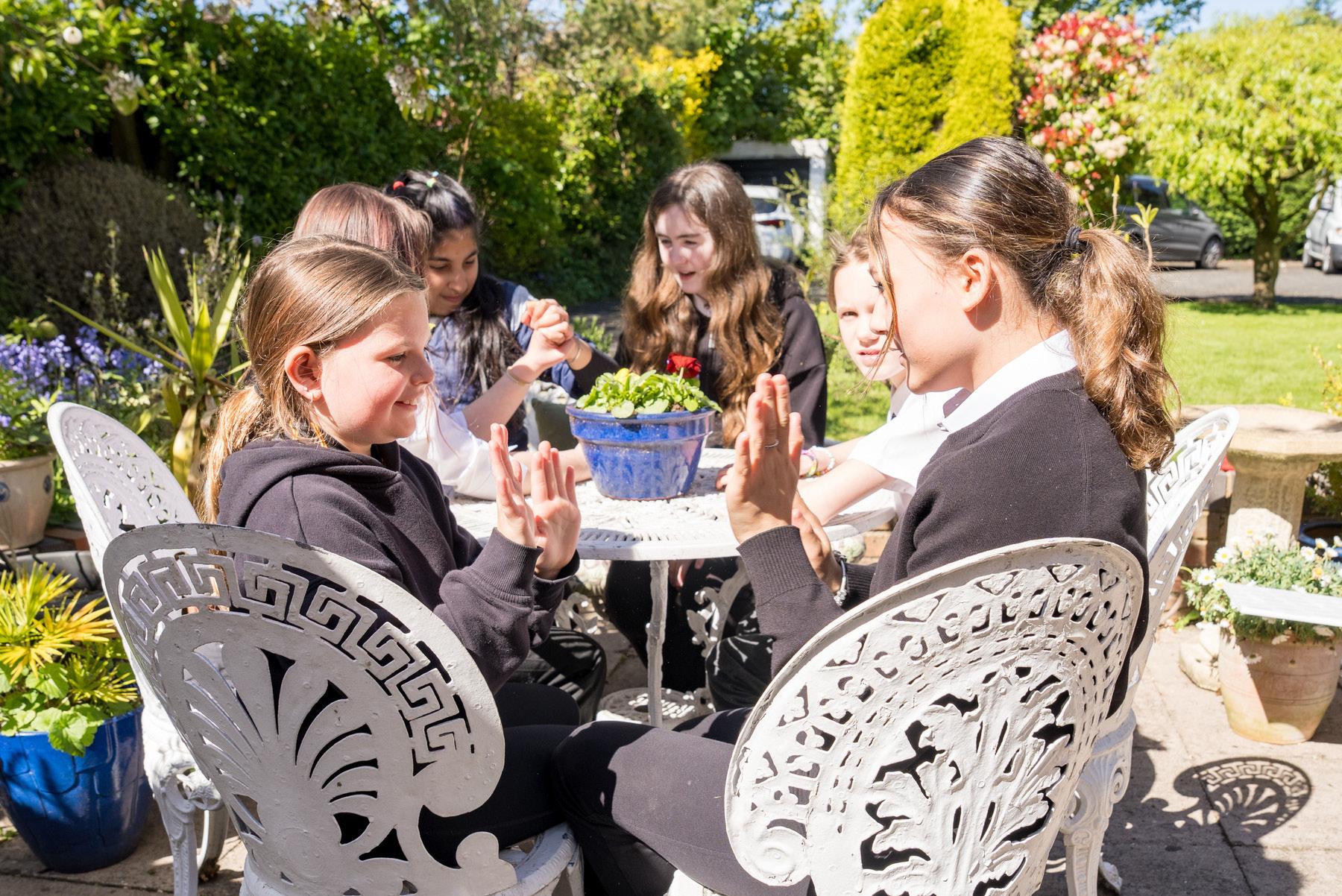
D i f f e re n t , p ro u d l y
A f f o r d a b l e f e e s - l e s s V A T
A f f o r d a b l e f e e s - l e s s V A T

W e e k l y a n d f u l l - t i m e b o a r d i n g
A f f o r d a b l e f e e s - l e s s V A T

W e e k l y a n d f u l l - t i m e b o a r d i n g
W e e k l y a n d f u l l - t i m e b o a r d i n g
W e e k l y a n d f u l l - t i m e b o a r d i n g
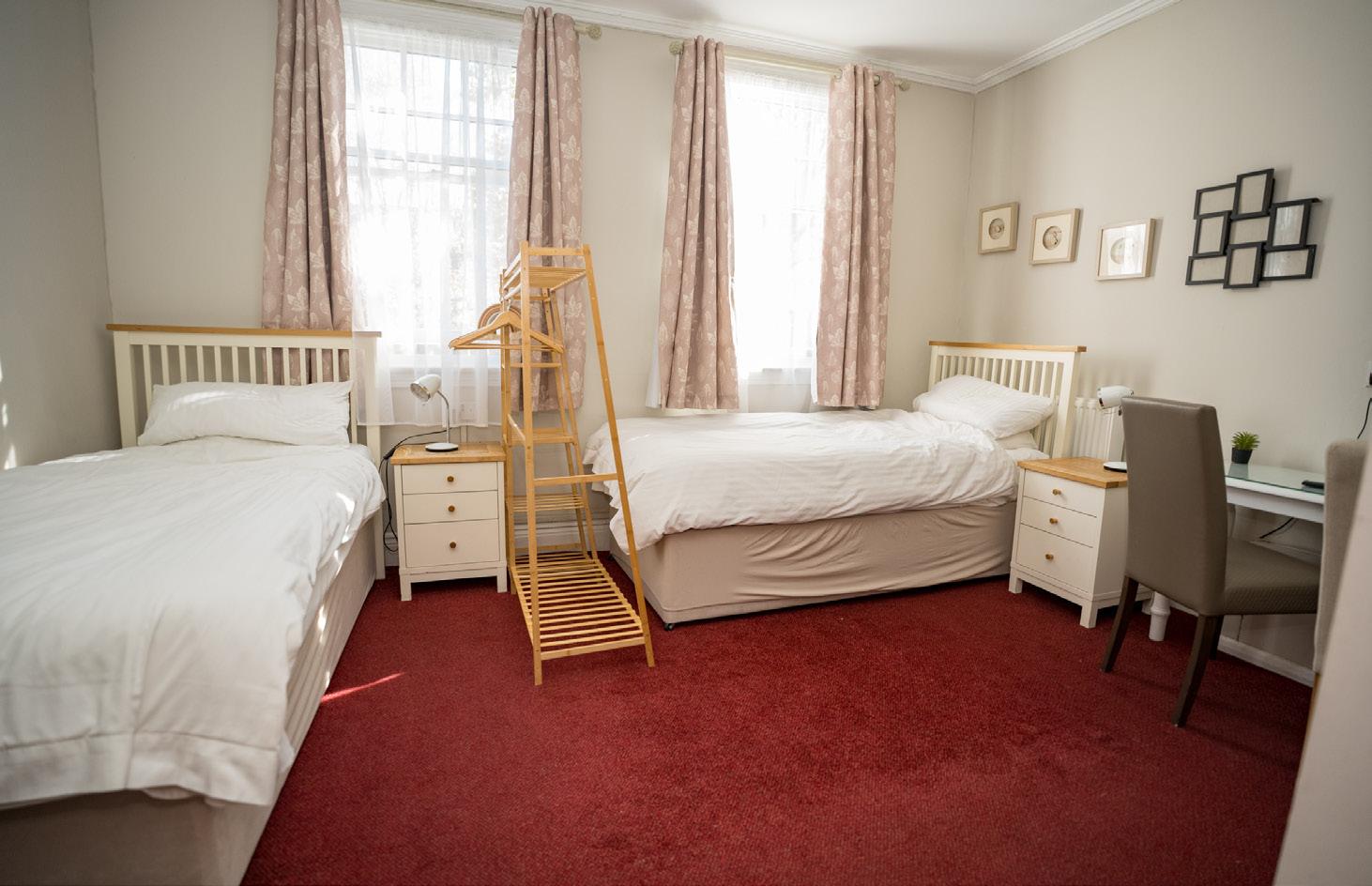
U S
D i f f e re n t , p ro u d l y U S
P h o n e N u m b e r P h n e N u m b e r
W e b s i t e 0 1 2 1 6 7 9 5 2 9
N u r t u r i n g , r o o t e d , t r a n s f o r m a t i v e w w w k i m i c h i s c h o o l c o u k
N u r t u r i n g , r o o t e d , t r a n s f o r m a t i v e
s i
N u r t u r i n g , r o o t e d , t r a n s f o r m a t i v e w w w k i m i c h i s c h
w w w k i m i c h i s c h o o l c
W e b s i t e
u k W e b s i t e 0 1 2 1 6 7 9 5 2 9 8
N u r t u r i n g , r o o t e d , t r a n s f o r m a t i v e w w w k i m i c h i s c h o o l c o u k
Some of the key issues you asked us for advice on between January and March 2026
We are a dual-serving couple. Can you advise us on our housing options for our forthcoming postings?
I have sole responsibility for my child, who is currently being cared for by my mother in our home country. What is the process for bringing them to the UK to live with me?
As a single serving parent, how do I register my child with a GP?
My partner and I have separated. Are they still eligible to claim Wrap Around Childcare for our child?
I am due to be medically discharged. What will happen to my CEA once I leave service?
As the non-serving partner, what do I need to consider during a divorce?
I am the spouse of a reservist. When will I be eligible to apply for Indefinite Leave to Remain?
TOP 3 Foreign & Commonwealth issues concerned:
Visas to enter the UK Citizenship Visa extension/ switching
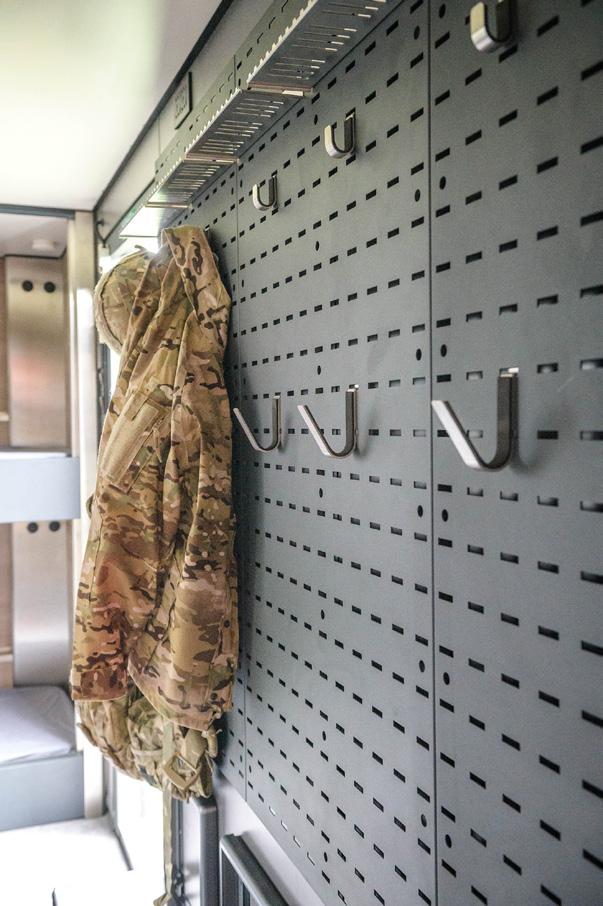
of enquiries came from the ex-spouse/partner of a serving person
issues for serving personnel were:
Housing allocation/entitlement
Military allowances
Continuity of Education Allowance (CEA)
Housing repairs/maintenance
Custody
issues for spouses/partners were:
Housing repairs/maintenance
Housing allocation/entitlement
Job seeking/employment - overseas
Postings
Job seeking/employment - UK
of enquiries came from the spouse/partner of a serving person 25% of enquiries came from welfare support teams 4% of enquiries came from a serving person 44% 4%
Get in touch: If you have any questions or issues, get in touch at contact@aff.org.uk




The Ship’s Cat by Katie Scorah is an illustrated rhyming picture book that follows an ‘unlucky’ black cat called Bella and encourages children to never judge people by their looks or skin colour.
The author says: “The idea for The Ship’s Cat came about through my own fascination with the different superstitions surrounding black cats, particularly why they are
Military spouse Tendai Nthakomwa recently published a children’s journal for children aged four to 10, which stems from an idea she had when her two daughters were growing up.
It’s suitable for all military children wherever they may be to help them stay connected and express their feelings when their loved one is away.
The journal has prompts which give children something to focus on during periods of separation. It is available on Amazon and comes in both hardcover and paperback.
Three lucky readers have the chance to win a paperback copy of My Deployment Buddy
overlooked at rescue centres and so on.
“I discovered that, in maritime terms, black cats were seen as bringing good luck rather than bad. I liked the idea of a story which encouraged readers not to judge others on appearance, and to show that all different kinds of people can be friends.”
A lucky Army&You reader could win a copy of The Ship’s Cat, worth £7.99.
Replenish is an electrolyte and vitamin solution designed specifically for the needs - and tastes - of women suffering from pregnancy sickness.
It was created by Army spouses Laura Milward and Laura Moore and inspired by Laura’s experience with hyperemesis gravidarum, which is a severe form of the condition.
The sachets offer electrolytes and vitamins, including folic acid, in a 28ml liquid format that’s easy to take when nausea strikes. And there’s no strong taste or smell.
One Army&You reader has the chance to try a week’s supply of Replenish.
For more information, visit replenishelectrolytes.com and for 15 per cent off your first order use the code ARMY15

Moray is one of Scotland’s most captivating regions - where dramatic coastlines, golden beaches and mountain landscapes meet centuries of rich history and vibrant local culture.
The second edition of Moray Speyside: A Travel Guide offers a fresh, accessible way to explore this diverse area, with expanded listings, updated travel tips and new highlights.


The guide takes readers from the fishing villages of the coastal Laich to historic inland towns. Follow the River Spey through whisky country to the foot of the Cairngorms, showcasing castles, distilleries and hidden gems along the way. Visitors can expect practical advice on water sports, wildlife tours, festivals, local walks, and family-friendly activities, plus insider tips on award-winning ice cream spots.
Written by Iona Grant, a military wife who grew up near Kinloss, the guide is ideal for independent travellers, families and cultural explorers. For more information: igb-publishing.yolasite.com
Three readers can each win a copy of the guide, worth £10.99.
How to enter: Click the giveaways tab at armyandyou.co.uk and follow the links. One entry per household per giveaway. Closing date for entries is 31 July 2026 unless otherwise stated. See page three for competition rules. Your information will not be used for marketing purposes. Winners’ names and T&Cs are published on the Army&You website.

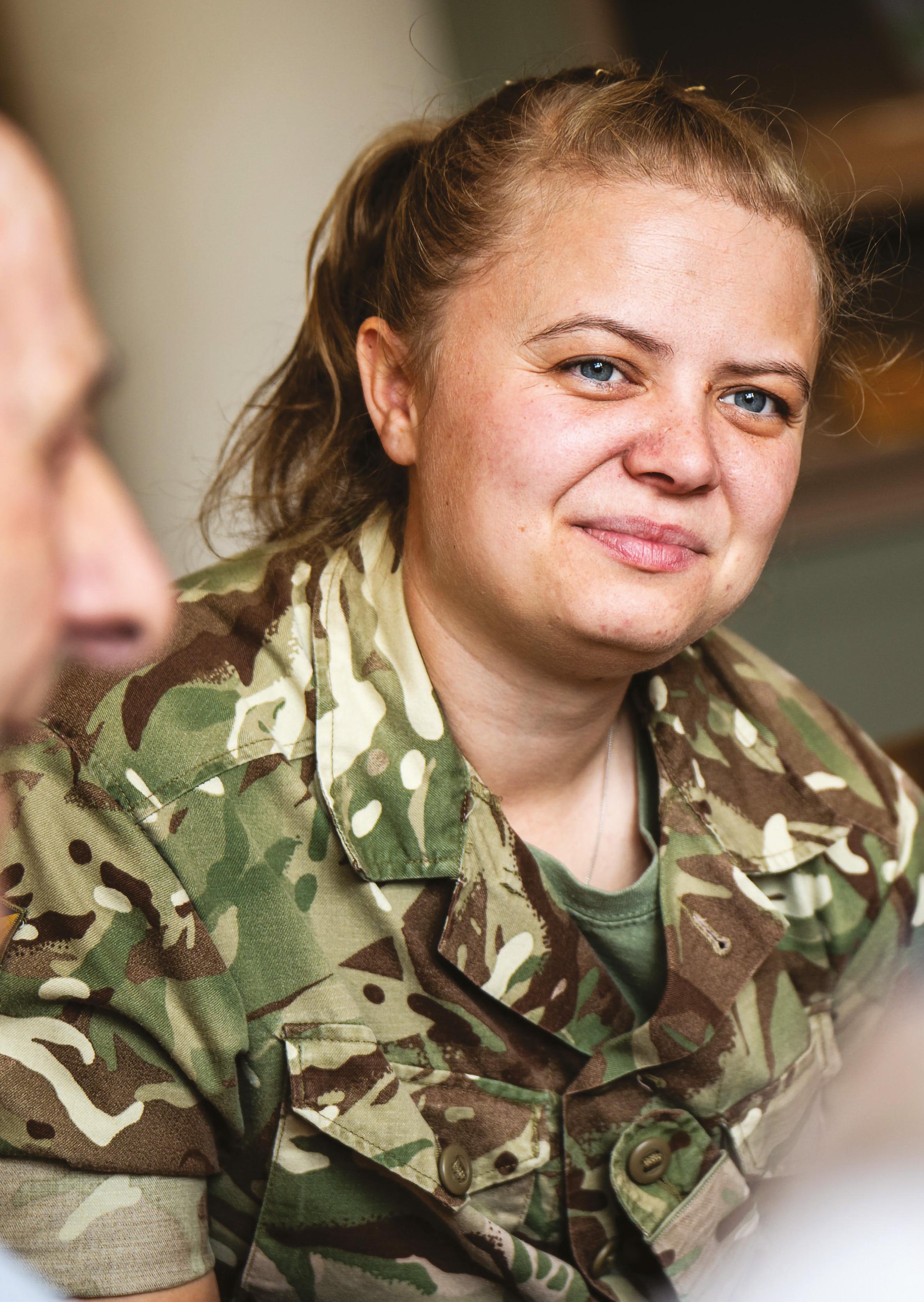
Sarah,
How long have you been an Army family?
13 years - it’s been quite a journey with seven postings under our belts so far.
How long have you been in the Falklands?
Six months, and we’re here for a two-year posting.
What’s your quarter like?
We live in a four-bedroom bungalow. It’s a great spot because it’s within walking distance of both the school and work, which makes the daily routine much easier.
Are there any employment/ training opportunities?
There are a few different paths you can take. Many people here work within the Civil Service, the MOD or at the school.
Some spouses even find unique roles as penguin wardens or in tourism. I’m currently working in a gift shop, which has been a lovely way to get involved.
Tell us about the schools and childcare
The school is such a lovely place. It’s very small, but the teaching is exceptional because they can really tailor everything to each individual child. There isn’t a nursery on camp, so some families use the one in Stanley.
For secondary school, most families use CEA and board in the UK, but there is the option

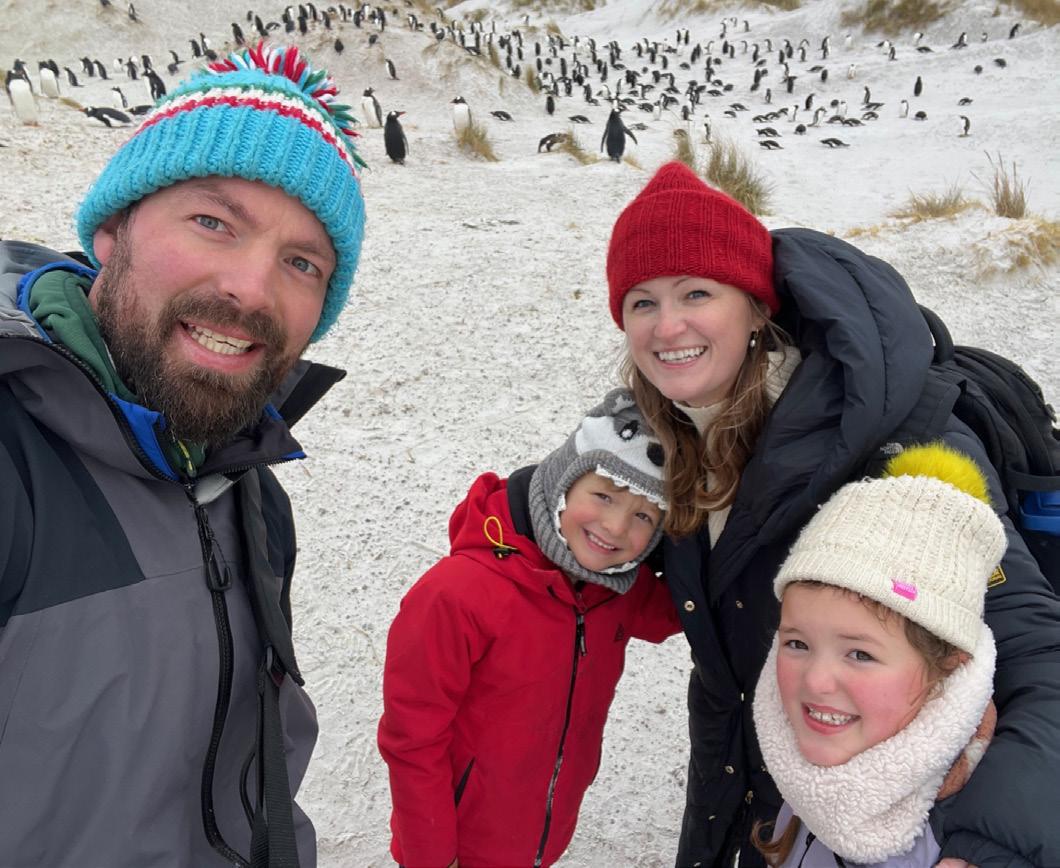
Where do Army families get together and who supports you?
It’s a small, close-knit community where everyone looks after each other. We have a monthly families’ night in the Mess and usually head there for Sunday dinner too. There’s also a families’ centre where parents with young children meet. We often get together at the beach to go bodyboarding with the dolphins — it’s a really special way to spend time together.
How do you find the cost of living out there?
Food is more expensive and the selection is a bit smaller than in the UK since most things are shipped from South America. Luckily, military families have access to a small

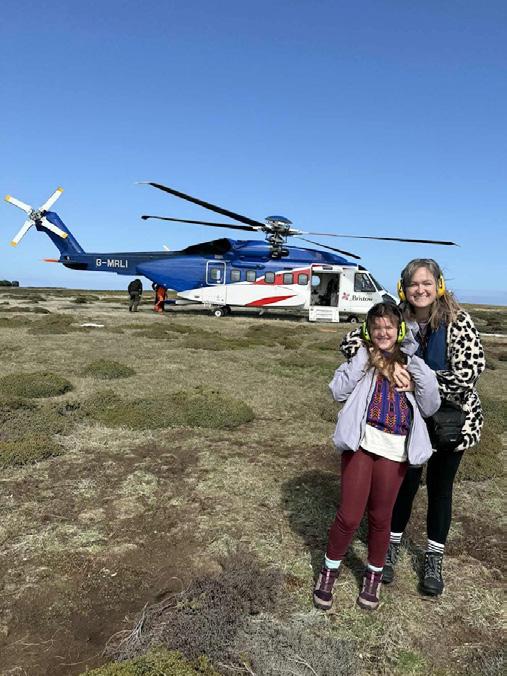

selection of fresh fruit and vegetables flown in from the UK.
What are the best and worst things about living there?
It’s been an amazing experience for our family. Life is much slower here — it feels a bit like stepping back into the 1970s (in a good way!). The children have so much freedom to go out and play.
We’ve had some amazing days out off-roading to see the penguins, taking helicopters to the islands, and seeing elephant seals or swimming with dolphins.
The biggest downside is being so far from home. We only have internet inside the house, and I do really miss being able to buy fresh berries at the supermarket all year round. A
Army & You and Reading Force Book Club, have fun sharing books!

Reading Force Book Club members snuggle up to review Our Dreams by Fatima Ordinola for Army&You
I liked this book so much. The pictures were really lovely. The book is about animals going to sleep, and I liked seeing them all snuggled up. My best part was the big fold-out page because it had all the animals and it was so pretty. I think other children would like it because the animals are cute and the pictures are fun to look at.

If your children would like to review books for the A&Y Book Club, email hattie@ readingforce.org.uk with their names and ages
Reading Force gives service families the opportunity to read a book together and talk about it, whether they’re all at home or on a video call if they’re separated. Children aged up to 10 receive a free book and a scrapbook they can fill with their thoughts, drawings, photographs and letters. Teenagers receive a book and a journal. Families say it’s a good way to stay close, connected, and to keep communicating. Best of all, it’s fun!


You can take part via your children’s school, HIVE, or register online at readingforce.org.uk
Our Dreams is a really pretty book. There aren’t lots of words which means I can read it to Mum and Dad or they can read it to me! I loved the bright pictures, which were big and beautiful. We looked at the different animals and saw how they all liked to snuggle together, and I like to snuggle too! Mum saw the caterpillar in the book and we found the butterfly at the end. I would take this book into school to share with my teachers and friends. It gets five stars because the big pages at the end are so cool!
This book is beautifully written with stunning pictures to grip the child’s interest. We read it through once, and I noticed the butterflies at the end, so we started again and noticed the caterpillar. Caleb loved searching for the caterpillar on each page and seeing and describing the cocoon and how the butterfly emerges. It’s like two stories in one, all the animals sleeping and the dreams they could be having, and then the single caterpillar turning into a butterfly and being with (what we guessed) was its mum. It’s a beautiful book.
Enter our giveaway to win a copy of Our Dreams and a Reading Force scrapbook. See armyandyou.co.uk for entry rules. Already read it? Tell us your thoughts @ArmyandYou



‘Students thrive and make excellent progress because of the genuine and nurturing relationships they have with boarding staff’. OFSTED BOARDING INSPECTION REPORT 2024
BESPOKE RESIDENTIAL BOARDING HOUSE FOR YEAR 7 STUDENTS

NON-SELECTIVE LOWER SCHOOL PRIORITY PLACES FOR FORCES CEA ACCEPTED

BY ROBYNNE BATLEY-MALLETT
I grew up as a military daughter. I always said I’d never marry into the military as I’d seen what it could be like - the absence, stress at home, the constant not knowing.
I was determined to build a different life, but then I met my husband, and now I’m a military wife.
During my childhood, my dad wasn’t always present and then suddenly he was home, but he was only really home physically. At the same time, my mum carried a lot of stress raising two children effectively as a solo parent.
When I met my husband, I didn’t want to sign up for that life again. I knew how it felt as a daughter and I was frightened of being alone.
But we fell in love, and we’ve been together eight years and married for four. We also have a child now. I’ve been lucky in many ways. For example, we haven’t yet had to navigate a full deployment while parenting. But military life has its pressures.
One of those pressures is the unspoken expectation that his job comes first. However, I have a job too as well as my own identity, ambitions and responsibilities. Sometimes it’s hard to find the compromise when you both care
Your thoughts. Your views. Your mission.
Got an opinion that needs airing? A story you want to share? Or a blog ready for deployment?
This is your chance to sound off. Whether it’s sharp analysis, service humour or something that’s been bugging you — we want to hear it.
Fall in, write in and let your voice be heard.
Send all submissions to: editor@aff.org.uk

There’s still a mentality in military communities of “just get on with it.” And we are strong, but strength doesn’t mean you don’t need support.
deeply about your careers and communication can become strained, especially when you’re
both juggling so much.
Military life can change in an instant too, which is difficult to deal with. Plans get cancelled, holidays get postponed and you book things hoping they’ll happen.
There’s still a mentality in military communities of “just get on with it.” And we are strong, but strength doesn’t mean you don’t need support.
Before I married my husband, I didn’t feel like I could access certain services because I wasn’t a wife. I didn’t know what I was entitled to and, if I was struggling, I felt like I had to go through him to find help, which I felt comfortable enough to do.
I’m now a mental health navigator at Military Minds, who recognise that you’re not on your own. When you speak to someone with experience of being a military daughter or spouse, there’s an understanding. You don’t have to explain, they just get it.
It’s also about recognising that people can end up in dark places. I’ve worked in recovery services too, supporting people with alcohol and drug challenges.
I understand how quickly things can spiral when someone feels alone and I’ve seen how, with the right support and training, people can rebuild their lives.
Turn to page 9 to read more about Military Minds A
BY AMY FLANAGAN
In 2022, an unexpected opportunity arrived, a lastminute posting to Sennelager, and although moving abroad wasn’t part of our long-term plan, we didn’t hesitate.
That decision, however, came with its share of sacrifices. I was working as a mortgage adviser, a role I loved and one that provided a significant portion of our household income, often more than my husband’s.
Unfortunately, due to regulatory restrictions, continuing in my role overseas wasn’t an option. Walking away from my career was daunting, and financially, it was a blow. With less than two months to prepare, the pace of life accelerated. Alongside the usual moving logistics came
BY VICTORIA COOK
My husband is a musician in the Band of the Welsh Guards and has served for the last 25 years, 20 of those in London.
I had a great but demanding job before we had children. After my boys were born, I knew I had to change jobs so I could be at home with them. The cost of childcare in London is sky high and, like many people, I’d only be working to pay our childcare fees.
After giving up work, I joked with another military wife that I would look after her baby so she could go back to work. Eleven years later, I am a fully qualified childminder and I’ve looked after at least 100 military children.
I’m proud of looking after and
the added complexity of COVID restrictions still in place across Germany, organising pet vaccinations, and untangling car finance agreements that couldn’t be transferred abroad. It was overwhelming, but somehow we made it work.
Once in Germany, I discovered that employment opportunities for spouses were limited but I was fortunate to secure a position as a chief clerk in one of the local units.
While it didn’t replace my previous income, the combination of this role and the Local Overseas Allowance (LOA) helped ease the transition.
Overall, the rewards of an overseas posting far outweighed the challenges. We spent nearly three years there, which were filled with
travel, new experiences, and an improved quality of life.
Europe was on our doorstep, and we embraced it.
Returning to the UK, however, brought fresh challenges. With the loss of LOA and no job, the pressure to secure employment was intense.
Eventually, I decided to build my own mortgage advising business. I had no roadmap and plenty of doubts, but I also discovered a network of support.
From CV workshops to free training courses and online communities, the guidance and encouragement I found were invaluable. Social media groups became a lifeline, places where shared experiences and advice reminded me I wasn’t alone.
If there’s one piece of advice I would offer to anyone considering self-employment, it’s to prepare. Having savings in place and a back-up plan can make all the difference.
Now, over a year into running my own business, I wouldn’t go back. While selfemployment comes with its own uncertainties, the lack of a guaranteed income being the main one, the flexibility it offers is invaluable.
Being able to manage my own schedule and adapt to the transient nature of military life has given me a sense of control I hadn’t experienced before.
What began as an unexpected posting turned into a journey of reinvention. A

working with military children and families. As I’m from the same community, I understand their needs, how hard it can be when partners are away, and they haven’t got the support of family members close by.
I am a constant presence for the children and I can offer
support when they don’t always understand why a parent might not be around, or Mummy is upset because Daddy has gone away.
There are a lot of nurseries and childcare providers out there, but not many understand what support a military family might need. One example is when the serving person rings to say: “I can’t get home, can you keep my little one until I can get to you?”
All my staff are and have always been other military partners, giving them the opportunity to work and still be around for their own children. I feel I am empowering them to
earn their own money, which allows their confidence to grow.
In October I had the opportunity to take over an old nursery building and expand my business. The space is amazing and the children love it. I now have space for more children which means I have employed more military spouses and my home is my home again!
There are lots of military childminders out there doing an amazing job, providing support and care to families in our community.
So if you have ever thought about becoming a childminder, why not take the leap? A
CONTRIBUTIONS
If you’ve got a story to tell about Army life, then let us know, email: editor@aff.org.uk
SUBSCRIPTIONS
Subscribe for FREE via armyandyou.co.uk – you can unsubscribe at any time via the same link or by emailing unsubscribe@aff.org.uk. If you need to change your details, email: update@aff.org.uk
DELIVERY
If you would like to be removed from our mailing list email unsubscribe@aff.org.uk or visit armyandyou.co.uk, where you’ll find our privacy policy and T&Cs.
PUBLISHER
Army&You is published by TylerBale Communications on behalf of the Army Families Federation.
Editorial content © AFF. Not to be reproduced without permission.

AFF
Army Families Federation is a charitable incorporated organisation registered in England and Wales with registered charity number 1176393 and a charity registered in Scotland with registered charity number SC048282.
Principal office: IDL 414, Floor 1, Zone 6, Ramillies Building, Marlborough Lines, Monxton Road, Andover SP11 8HJ.
COMPETITIONS
To enter, visit armyandyou.co.uk
Full terms & conditions and closing dates are available on the website, click the giveaways tab at armyandyou. co.uk and follow the links.
ADVERTISEMENTS
Interested in advertising in Army&You?
Contact TylerBale Communications. Email: info@tylerbale.co.uk Web: ayads.co.uk Tel: 01252 714870






AFF Housing housingsupport@aff.org.uk
Money & Allowances * moneysupport@aff.org.uk
Foreign & Commonwealth fcsupport@aff.org.uk
Education & Childcare educationsupport@aff.org.uk
Health & Additional needs healthsupport@aff.org.uk
Employment & Training employment@aff.org.uk
Devolved Nations contact@aff.org.uk
England contact@aff.org.uk
Overseas overseassupport@aff.org.uk
Editor
editor@aff.org.uk 01264 554004
To contact AFF HQ, report as follows: 01264 554004 (Option 1 – Enquiry Team) Monday–Thursday 8.30am–5pm Friday 8.30am–1pm contact@aff.org.uk
HQ Location: AFF, IDL 414, Floor 1, Zone 6, Ramillies Building, Marlborough Lines, Monxton Road, Andover, SP11 8HJ
Alternatively, you can open an online channel by visiting aff.org.uk/contact, or scan the QR code above for quick access.

we want your feedback, good or bad. Email your thoughts to editor@aff.org.uk