Hospitality leader chooses Armstrong Fluid Technology to improve guest comfort and reduce energy costs
Director of Engineering at the premier hotel reports dramatic, system-level HVAC optimization

Hospitality leader chooses Armstrong Fluid Technology to improve guest comfort and reduce energy costs
Director of Engineering at the premier hotel reports dramatic, system-level HVAC optimization
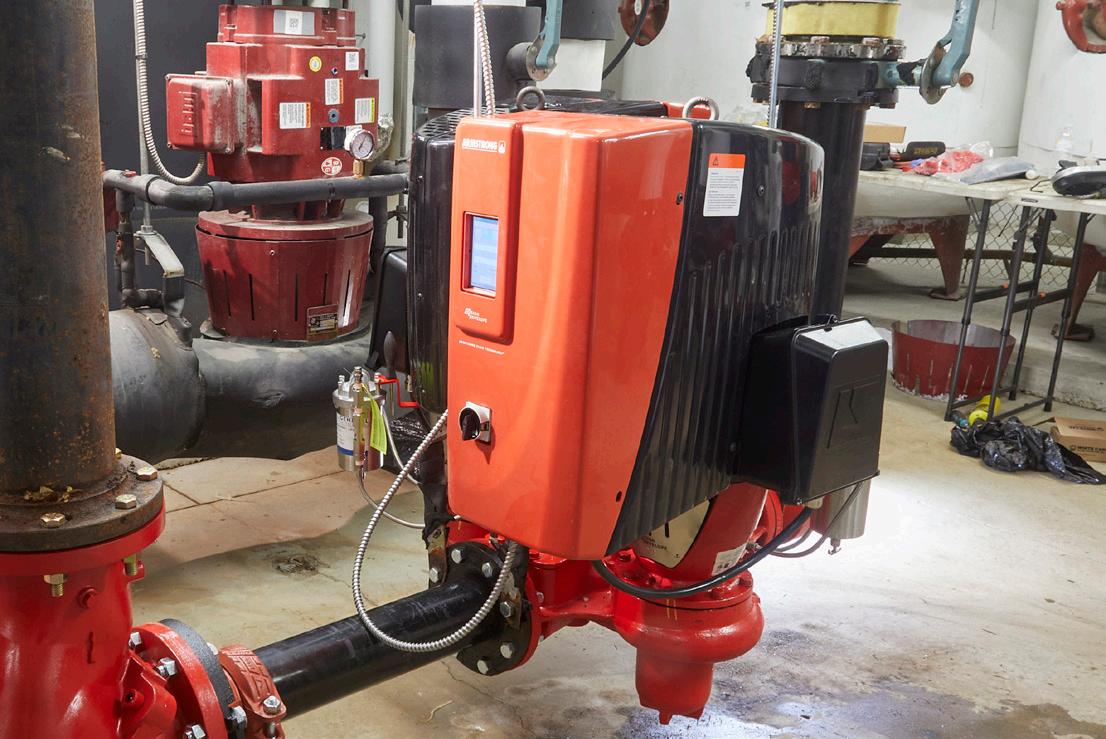
• Replaced a legacy pump (2 × 25 hp) with Armstrong’s Design Envelope Tango pumps (2 × 15 hp), enabling a true apples-toapples field comparison under identical system conditions.
• Conducted a 12 week evaluation in which the pumps were alternated weekly, ensuring accurate, load matched performance verification rather than relying on projected savings.
• Delivered dramatic efficiency results, including 23,000 kWh saved, 70% lower power consumption, and a 3.74-ton CO2 reduction over 12 weeks, verified through energy bills.
• Systemwide analytics via Armstrong’s Envelope Core and Advisor improved comfort and oversight, enabling faster temperature stabilization and early issue detection.
• Performance Envelope based control logic ensured the system operated within its optimal hydraulic range, allowing the hotel to meet cooling demand during peak conditions.
At the Toronto-area premier hotel, a structured head-to-head pump comparison delivered quantifiable evidence that intelligent system design can outperform legacy configurations, even when existing equipment is less than 10 years old. The 209-room premier hotel connected to Markham District Energy in 2017 and officially opened its doors for business in 2018. District energy can be efficient, but only if buildings stay within their heat-exchange requirements. If they do not exchange heat correctly, it may result in financial penalties and discomfort for hotel guests.
The hotel’s chilled water system consisted of two 25 hp Variable Frequency Drive (VFD) pumps operating in duty/standby configuration, which from a specification standpoint, seemed reasonable and serviceable. Yet peak load performance presented a different story to its facilities engineering staff.
During hot weather events, the system struggled to maintain temperature stability, and Building Automation System (BAS) visibility was limited to snapshots rather than trend-based diagnostics.
The hotel’s Director of Engineering, Kirsty Fox, recalled that she and her team had significant concerns about the existing system, despite it being in service for less than a decade, and that it was impacting their revenue per available room (REVPAR).
“We would have hot days where the system just couldn’t keep up,” Fox recalled. “You could feel it throughout the building.”
Guest complaints increased. Associates noticed rising temperatures. And while the BAS provided basic monitoring, it offered little historical insight into performance patterns or inefficiencies.
“Comfort directly impacts our REVPAR,” Fox explained. “When guests aren’t comfortable, it shows up instantly in compensation, negative reviews, and revenue impact. So, efficiency alone isn’t enough; the building has to perform.”
Fox invited experts from Armstrong Fluid Technology into the pump room to help assess the existing system and determine what improvements, if any, were even possible. “Honestly, I was skeptical,” she said. “Our equipment was relatively new, and we’re on district energy. I wasn’t expecting dramatic improvements.”
Fox’s objective was not speculative efficiency; it was performance verification under real load.
This methodology minimized seasonal variability and produced a direct operational comparison, a true apples-to-apples evaluation.
Rather than relying on projected savings, the team implemented a structured field evaluation:
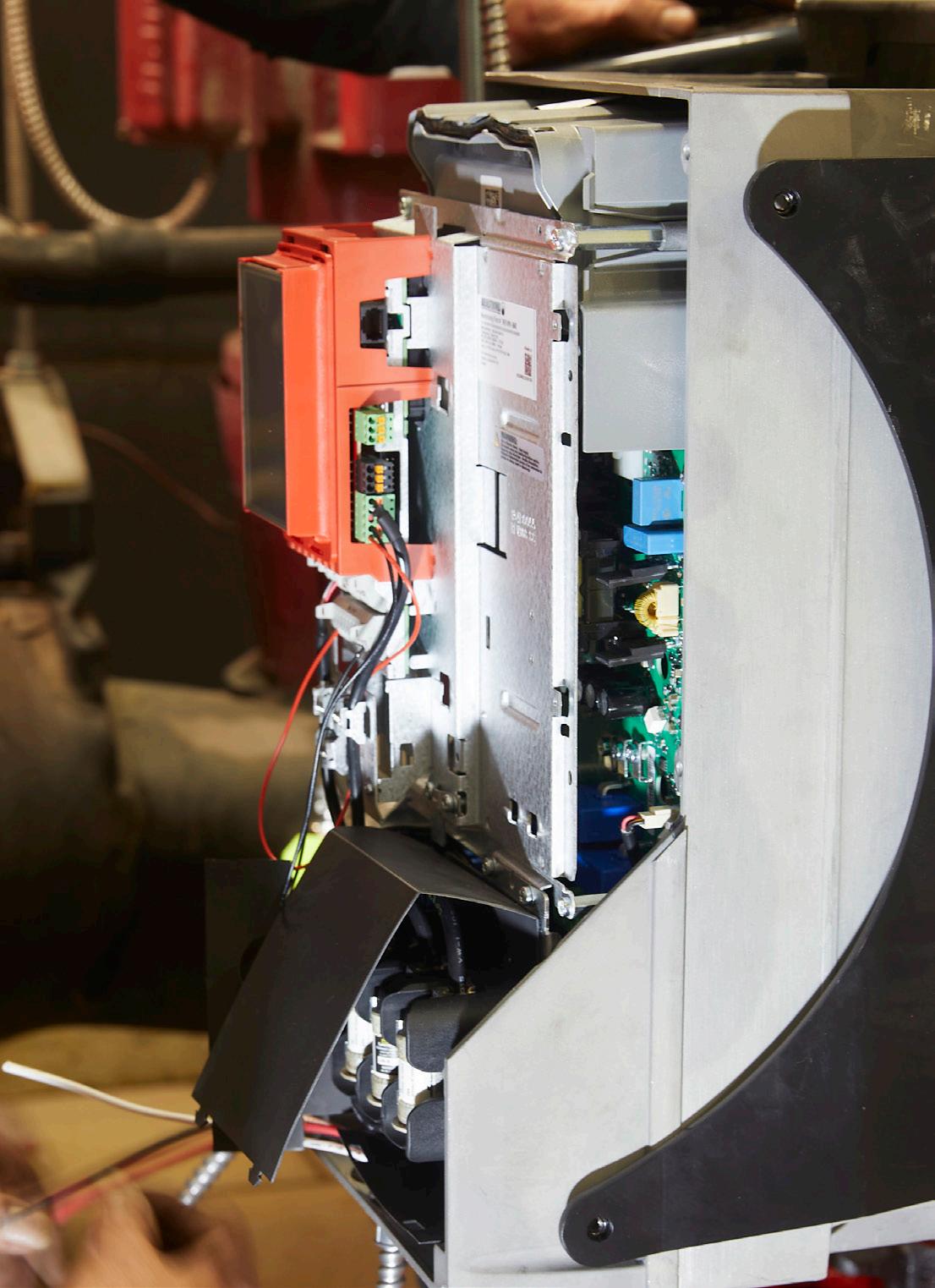
• Replace the original pump system with wall-mounted drives and a remote pressure sensor (2 × 25 hp, 50 hp installed) with Design Envelope Tango pumps (2 × 15 hp, 30 hp installed), utilizing Tango technology and parallel sensorless control.
• Alternate the pumps weekly for 12 weeks.
• Maintain the existing piping and system conditions.
• Measure energy consumption and performance under identical load profiles.
Over just 12 weeks, the Armstrong pump delivered:
23,000 kWh in energy savings
3.74 tons of CO2 reduction
70% reduction in power consumption compared to the legacy pump
94% redundancy with intelligent controls and smoother operation
Even the accounting department noticed the drop in energy bills. For Fox, the results proved that properly sized, intelligently controlled equipment could outperform larger legacy systems.
Beyond energy savings, system operations were fundamentally improved to respond to real-world load variation. By continuously operating within its validated Performance Envelope, the pumps delivered stable flow and pressure across a wide range of conditions, eliminating the temperature swings that had previously affected guest comfort during peak demand.
And perhaps most importantly, the Design Envelope Tango pumps stabilized temperatures faster than the legacy unit. “Our old system couldn’t keep up on hot days,” Fox said. “Within minutes of switching to the Armstrong pump, temperatures stabilized.”
The new pumps also improved chilled-water Delta T, allowing the hotel to extract more effective cooling from the district energy system. Better Delta T reduces monthly district cooling charges and supports the plant’s own efficiency by returning warmer water for heat exchange.
This demonstrated a core advantage of Performance Envelope based control: rather than forcing equipment to chase a single operating point, the system adapts smoothly across many acceptable operating conditions, delivering both comfort and efficiency without oversizing or excess energy use.
This suggests that right-sized pumps operating within optimal hydraulic envelopes can outperform oversized VFD-driven units operating inefficiently off-curve.
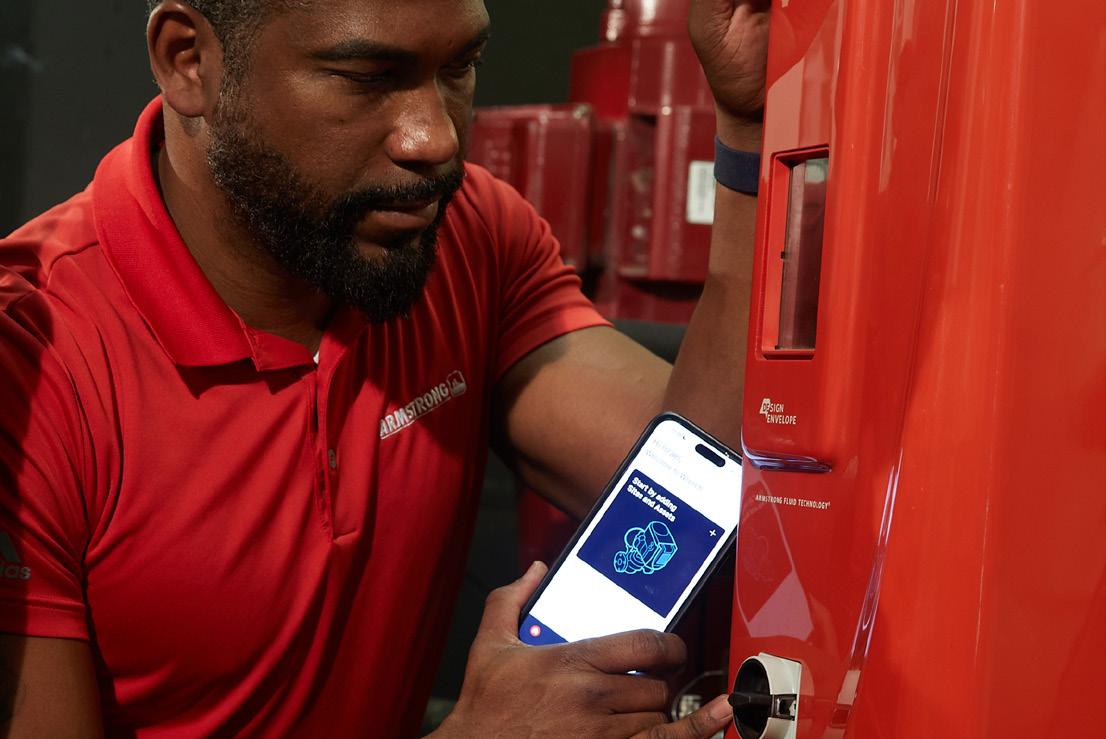
Yet the transformation didn’t stop at energy savings. With Armstrong’s Envelope Core and Envelope Advisor platform, Fox gained real-time visibility into system performance.
“Having real-time performance data available on my phone was a game-changer. If something isn’t right, I receive an alert immediately. That level of visibility gives you real peace of mind.”
— Kirsty Fox, Director of
Engineering
Envelope Core provided the application interface that allowed the team to access, view, and leverage the real-time data collected by Envelope Advisor.
“Envelope Advisor doesn’t just look at individual equipment; it looks at the entire system,” Fox explained. Shortly after installation, Envelope Advisor detected declining domestic hot water performance and alerted the team before a recirculation pump failure occurred, demonstrating its value in predictive maintenance. Envelope Advisor gathers data from all points within the building’s existing BAS, not just Armstrong equipment, providing a comprehensive view of system performance.
This delivered impressive results that impressed not only the hotel’s facilities team but also its ownership. Among the findings were that two 15 hp pumps delivered superior performance without piping modification, that right-sizing pumps was essential, and that embedded controls, combined with Envelope Core, extended optimization beyond pumping alone. The project also revealed that even in systems without on-site generation, distribution optimization can drive significant, measurable savings.
Armed with this validation, the ownership group approved expanded pump upgrades across additional heating and glycol systems. The facilities team is now planning broader system upgrades, extending the benefits of optimized pumping and data-driven oversight across additional mechanical systems.
Improving the system with smaller, right-sized equipment is expected to improve energy savings and comfort simultaneously, while also introducing real-time analytics that help reduce operational risk. “It hasn’t just improved our system,” Fox reflected. “It has elevated our entire operation.”
“Armstrong didn’t just make our equipment more efficient. They gave us visibility, control, and the ability to prevent issues before they impact our guests.”
— Kirsty Fox, Director of Engineering