CRITICAL INFRASTRUCTURE SERIES
When a BESS Container Explodes, the Walls Become the Weapon 3mm shipping container steel vs. hydrogen deflagration. The math doesn’t work.
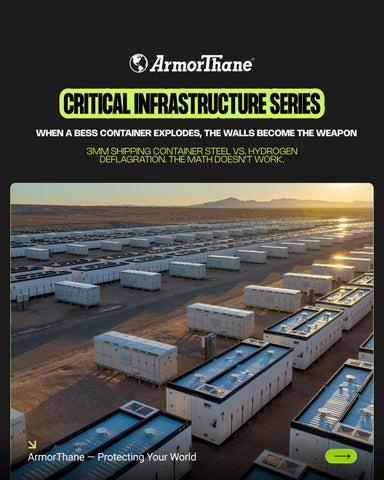
When a BESS Container Explodes, the Walls Become the Weapon 3mm shipping container steel vs. hydrogen deflagration. The math doesn’t work.
01 — Cell failure triggers electrolyte vaporization
02 — Hydrogen + CO + hydrocarbons fill the enclosure
03 — Flammable gas concentration reaches ignition threshold
04 — Deflagration. Several bar overpressure in milliseconds.
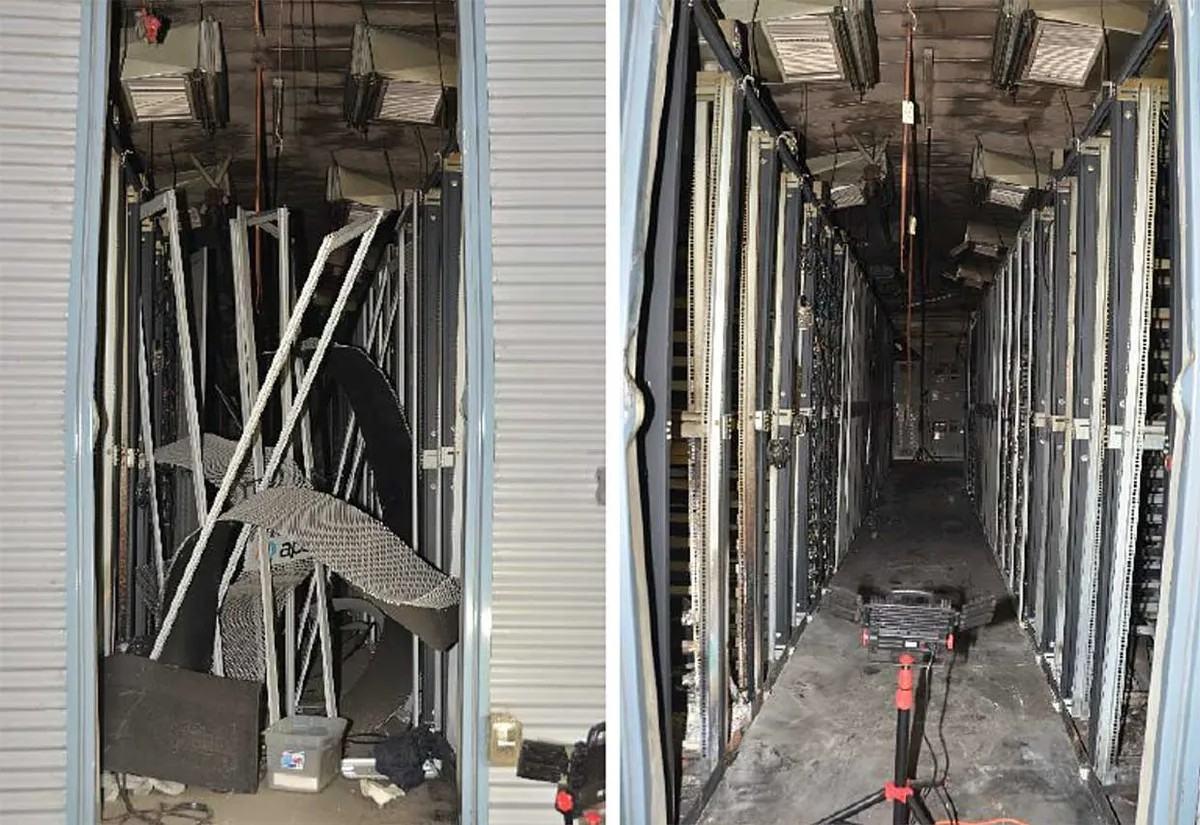
05 — 3mm steel walls rupture. Fragments become projectiles.
Ref: NFPA 855, EPRI BESS Failure Database

The system had fire suppression. It had smoke detection. What it didn’t have was deflagration venting — or any structural hardening. When gas ignited, the walls became the weapon.

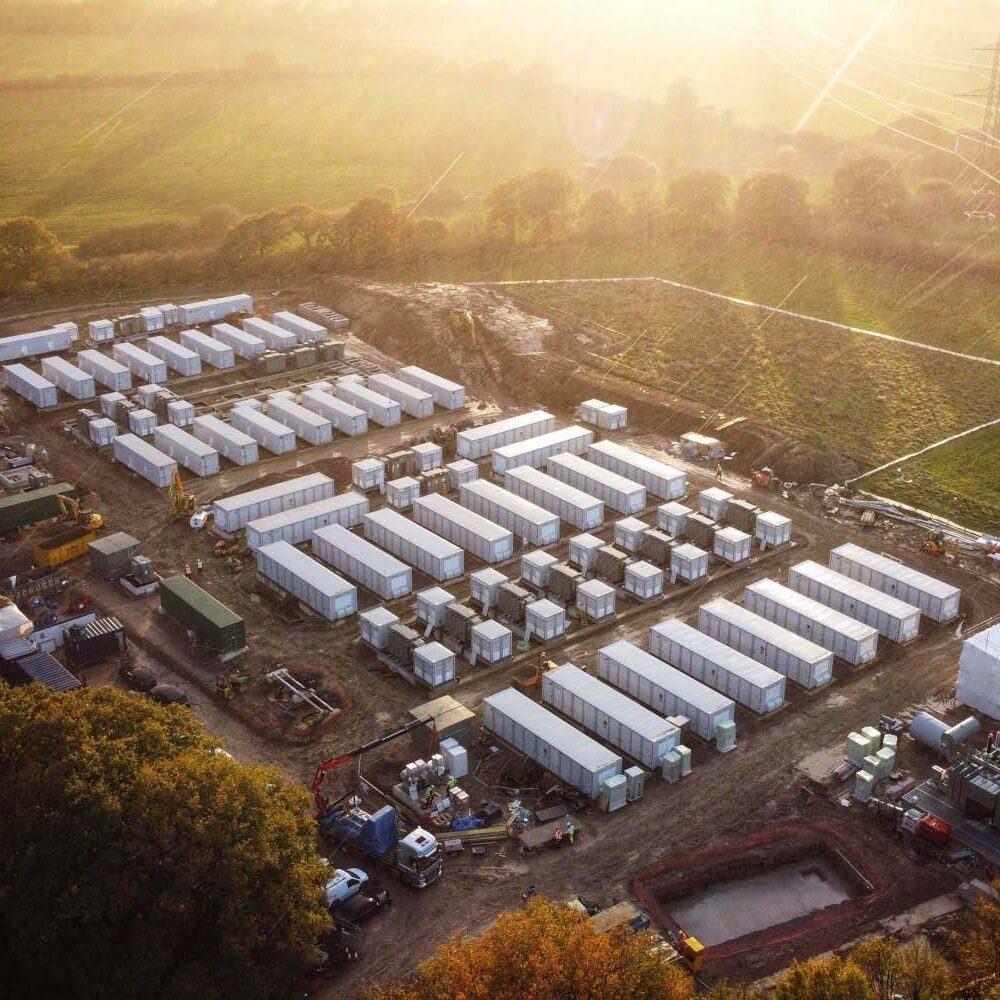
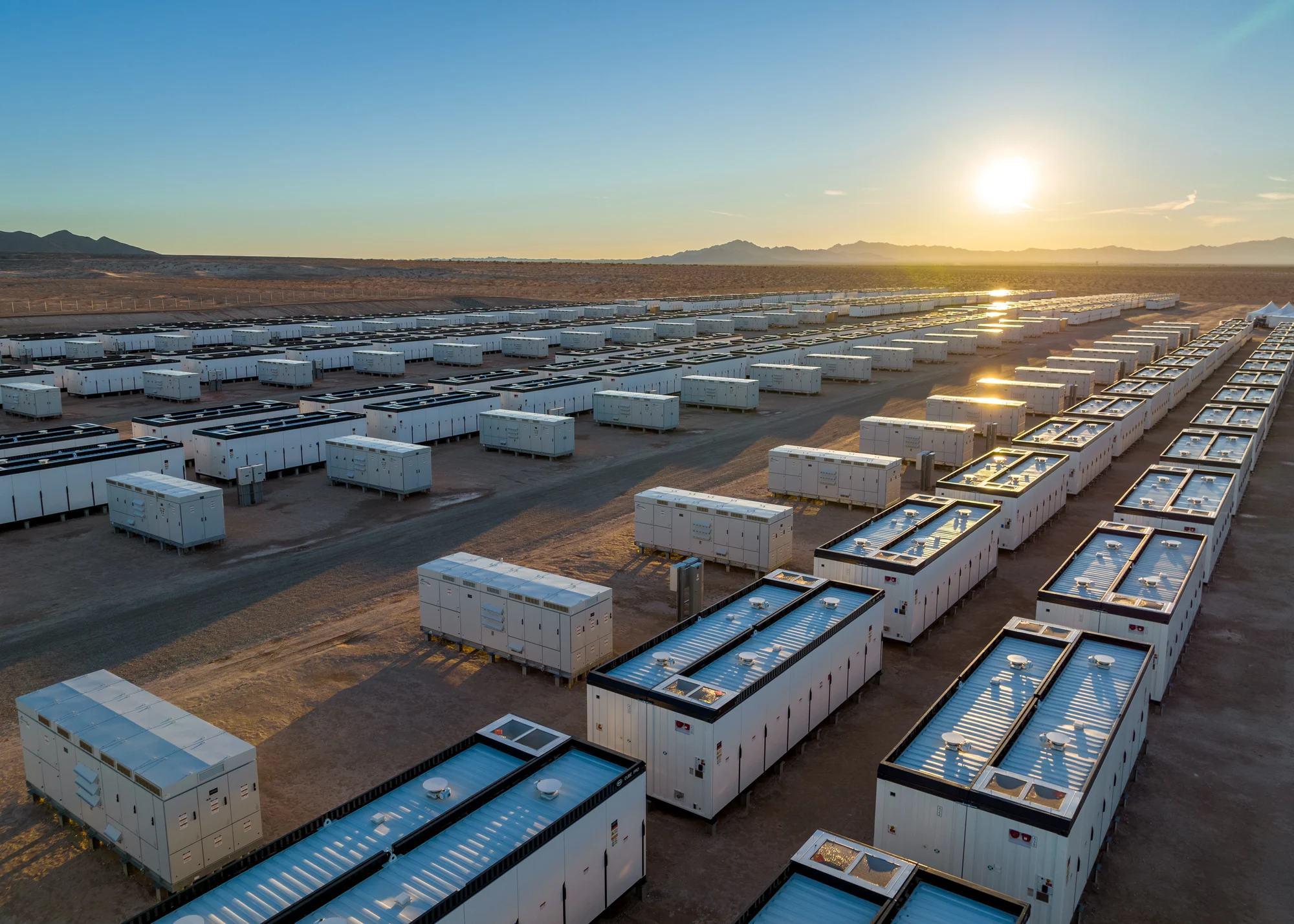
4 — Firefighters injured 2.16 MWh — System size
0 — Structural blast hardening on container walls
SHOCK WAVE SPLITTING — Phase-separated microstructure breaks blast into a two-wave system, dissipating energy in the transition
IRREVERSIBLE DENSIFICATION — Hard domains absorb energy through hydrogen bond reorganization under shock loading
ELASTIC CONTAINMENT — 400–800%+ elongation. The membrane stretches and contains fragmentation through pressure and rebound phases. A material that gets tougher the harder you hit it.
91%
Shock wave attenuation
30+
Large-scale BESS failures with polyurea-coated steel panels in a recent 4-year period (EPRI)
6mm
Minimum polyurea thickness for substantial deformation reduction
7,100 PSI Tensile strength ArmorThane UltraBlast
$25B
Projected BESS thermal management market by 2036 (IDTechEx)
1 day
Retrofit a 20-ft BESS container interior, 2-person crew
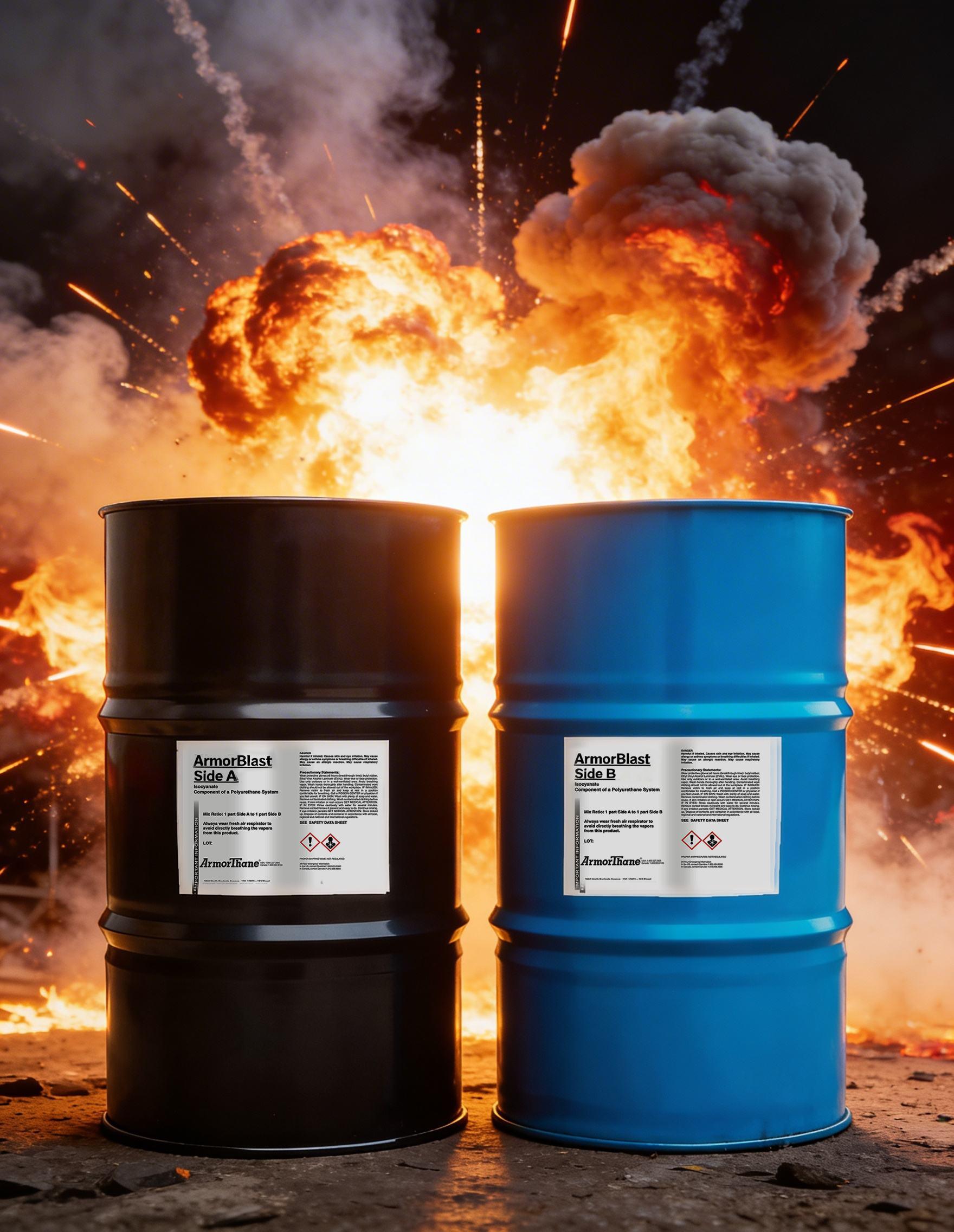
ArmorBlast
Use case
Utility-scale deployments, remote sites, multi-container programs
Tensile strength
400%+ elongation • HighLine equipment compatible
Thickness
6–8mm interior application
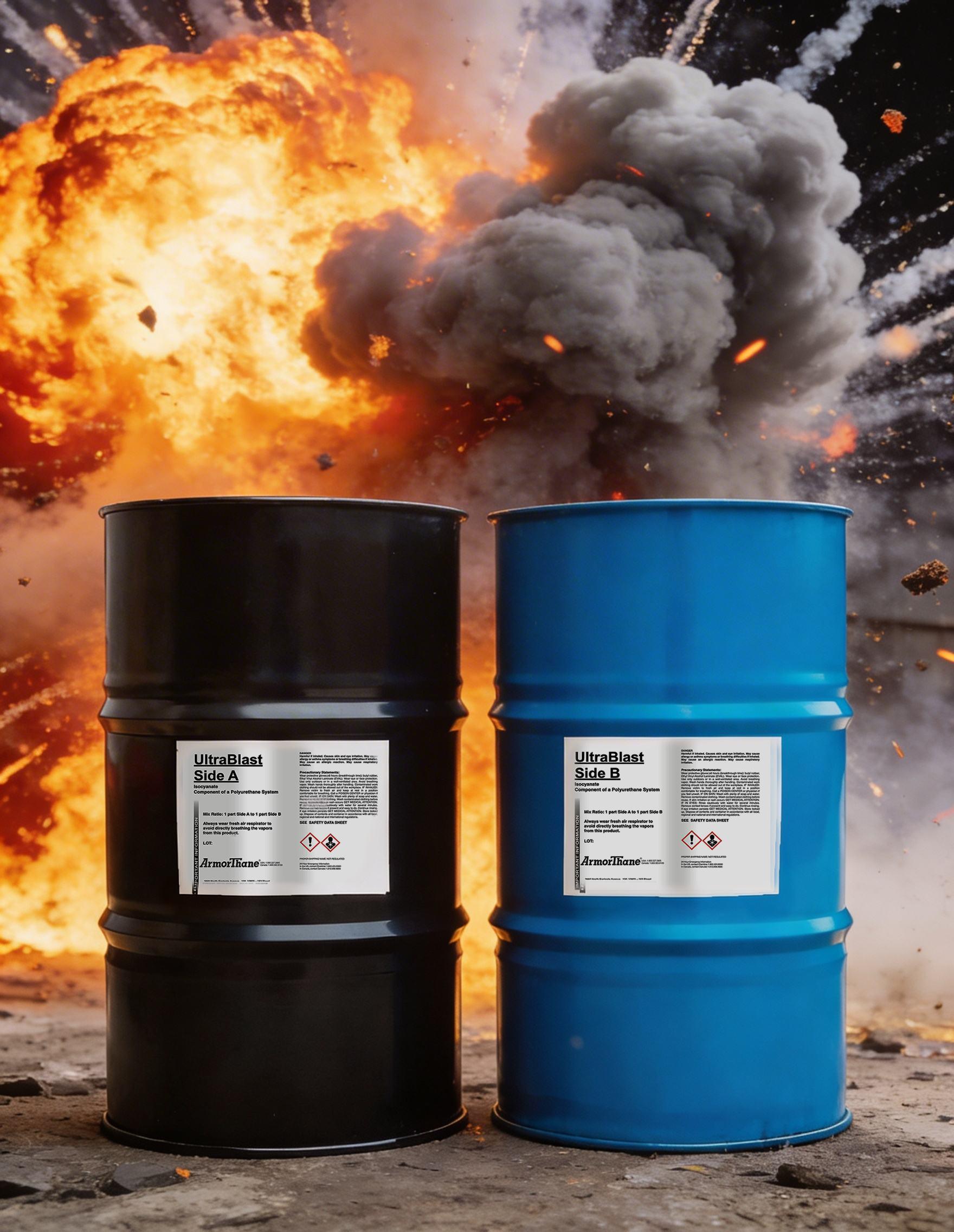
Use case
High-density BESS (>2 MWh), near occupied areas
Tensile strength
7,100 PSI tensile • University explosion lab verified
Thickness
8–10mm interior walls and ceiling
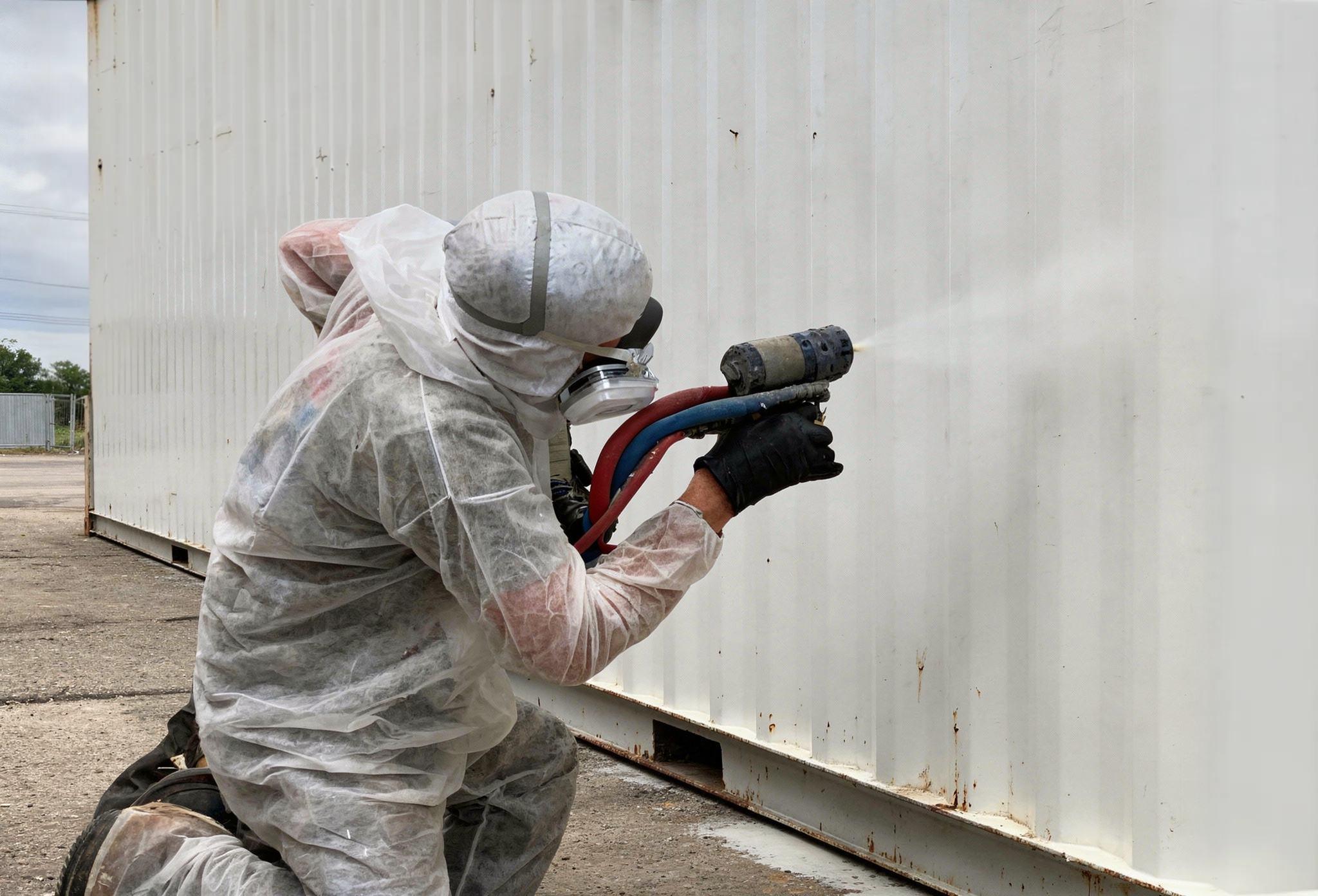
100% solids • Zero VOC • Bonds to steel, concrete, masonry • Gel time: seconds
20-ft container: 1 day, 2-person crew. 40-ft container: 1–2 days depending on internal obstruction.
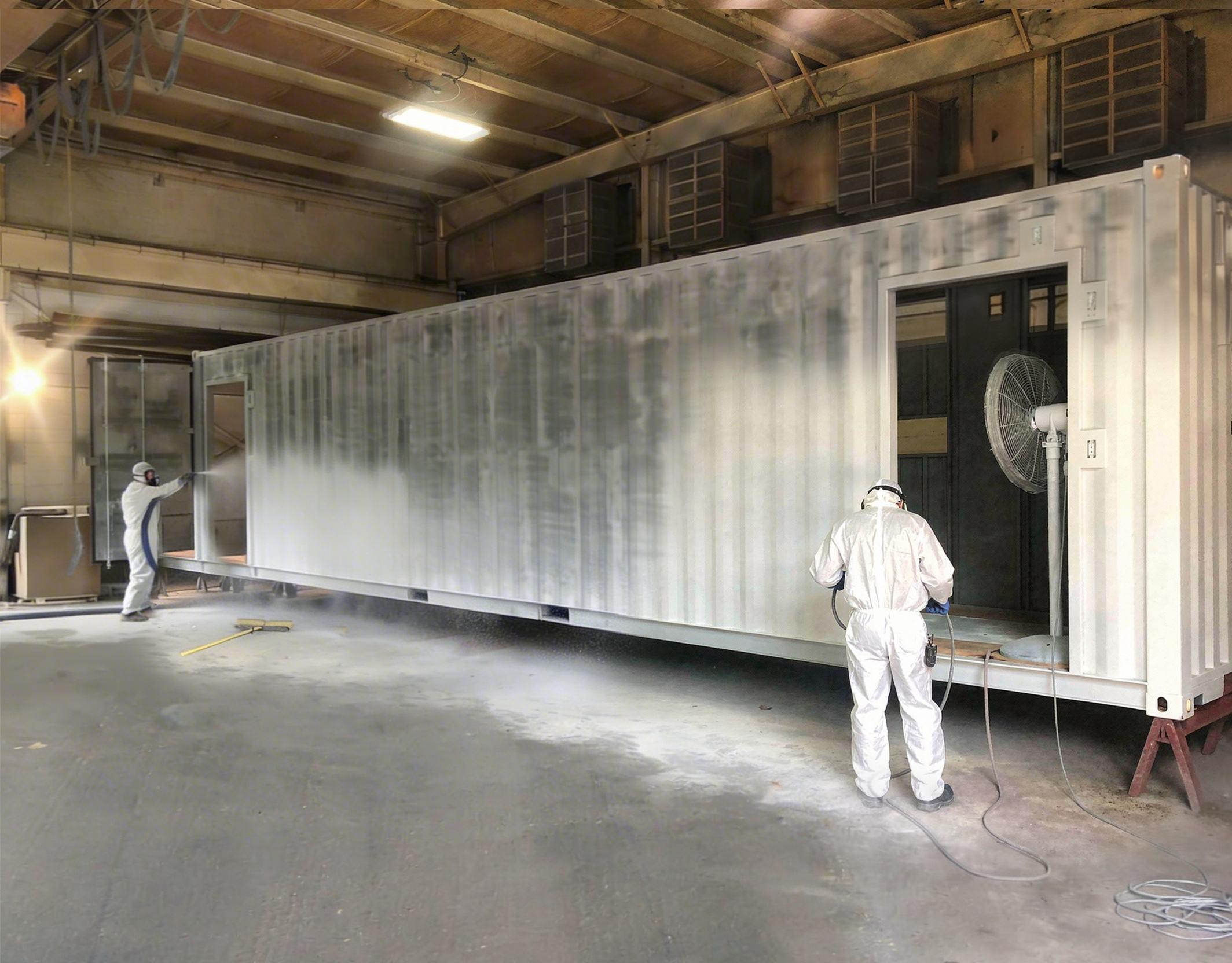
PREP — Remove or protect battery racks. Mechanical abrade interior steel to SSPC-SP 6 surface profile.
MASK — Protect electrical penetrations, vent panels, sensors, HVAC ducts, and cable runs.
APPLY — Spray UltraBlast or ArmorBlast at spec thickness (6–10mm). Gel time: seconds. Full cure: hours.
COMMISSION — Inspect coating integrity, verify thickness, reinstall battery systems. Back online.