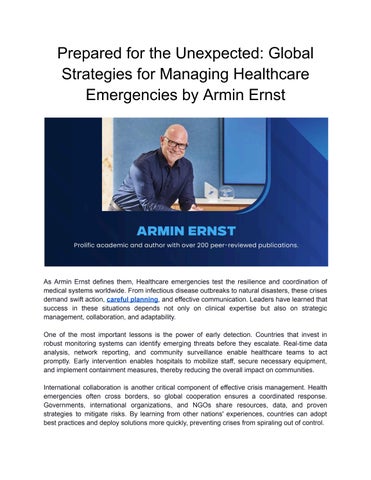
Prepared for the Unexpected: Global Strategies for Managing Healthcare Emergencies by Armin Ernst
As Armin Ernst defines them, Healthcare emergencies test the resilience and coordination of medical systems worldwide. From infectious disease outbreaks to natural disasters, these crises demand swift action, careful planning, and effective communication. Leaders have learned that success in these situations depends not only on clinical expertise but also on strategic management, collaboration, and adaptability. One of the most important lessons is the power of early detection. Countries that invest in robust monitoring systems can identify emerging threats before they escalate. Real-time data analysis, network reporting, and community surveillance enable healthcare teams to act promptly. Early intervention enables hospitals to mobilize staff, secure necessary equipment, and implement containment measures, thereby reducing the overall impact on communities. International collaboration is another critical component of effective crisis management. Health emergencies often cross borders, so global cooperation ensures a coordinated response. Governments, international organizations, and NGOs share resources, data, and proven strategies to mitigate risks. By learning from other nations' experiences, countries can adopt best practices and deploy solutions more quickly, preventing crises from spiraling out of control.