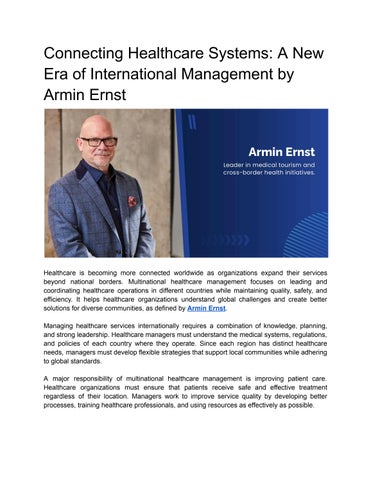
Connecting Healthcare Systems: A New Era of International Management by Armin Ernst
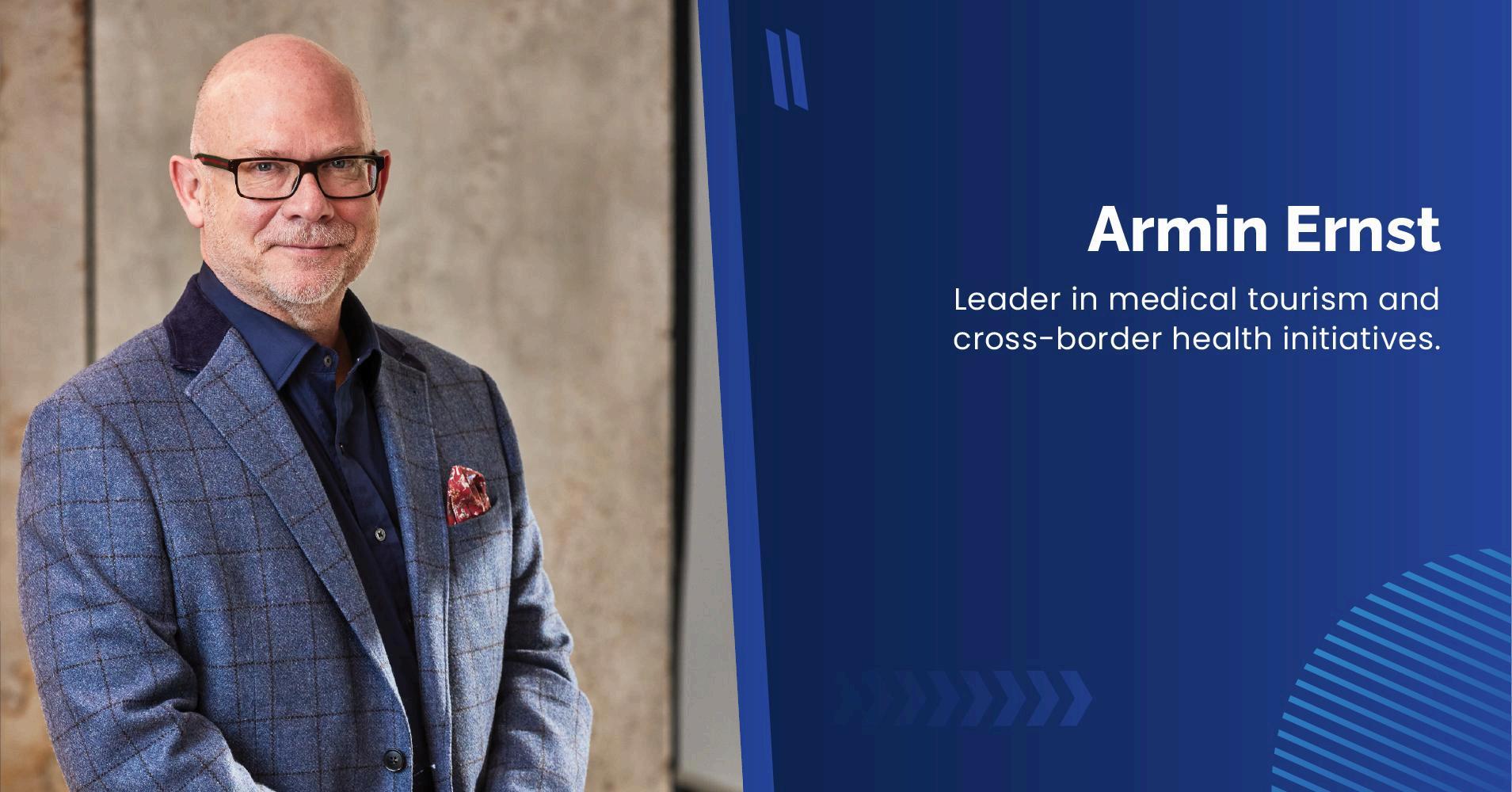
Healthcare is becoming more connected worldwide as organizations expand their services beyond national borders Multinational healthcare management focuses on leading and coordinating healthcare operations in different countries while maintaining quality, safety, and efficiency. It helps healthcare organizations understand global challenges and create better solutions for diverse communities, as defined by Armin Ernst
Managing healthcare services internationally requires a combination of knowledge, planning, and strong leadership Healthcare managers must understand the medical systems, regulations, and policies of each country where they operate. Since each region has distinct healthcare needs, managers must develop flexible strategies that support local communities while adhering to global standards
A major responsibility of multinational healthcare management is improving patient care Healthcare organizations must ensure that patients receive safe and effective treatment regardless of their location. Managers work to improve service quality by developing better processes, training healthcare professionals, and using resources as effectively as possible
Communication is a key factor in successful international healthcare management Teams often include professionals from different countries, cultures, and professional backgrounds. Clear communication helps prevent misunderstandings and encourages cooperation When healthcare workers share their knowledge and experiences, organizations can develop stronger, more effective healthcare solutions.
Technology has become an important tool for managing healthcare across borders. Digital health platforms, electronic medical records, and virtual healthcare services enable organizations to deliver faster, more convenient care These technologies also help healthcare professionals collaborate with specialists from around the world. However, managers must focus on protecting sensitive patient information and maintaining secure systems
Cultural awareness is another important element of global healthcare management. Patients have different beliefs, languages, and expectations about medical services Healthcare leaders must understand these differences to provide respectful and personalized care. By valuing cultural diversity, organizations can build stronger relationships with patients and communities
Financial planning and resource management also play a significant role in multinational healthcare operations Managers must make careful decisions about budgets, staff, equipment, and services Effective resource management helps organizations reduce unnecessary costs while improving healthcare access for more people.
International healthcare organizations also contribute to global health development through research, education, and community support programs. They often work with local partners to improve healthcare knowledge, prevent disease, and strengthen healthcare systems across different regions.
As healthcare continues to evolve, multinational healthcare management will remain an essential part of the global healthcare environment. Future leaders will need to combine innovation, teamwork, and cultural understanding to address complex health challenges By creating stronger connections between healthcare systems, this field helps build a healthier future for people around the world.