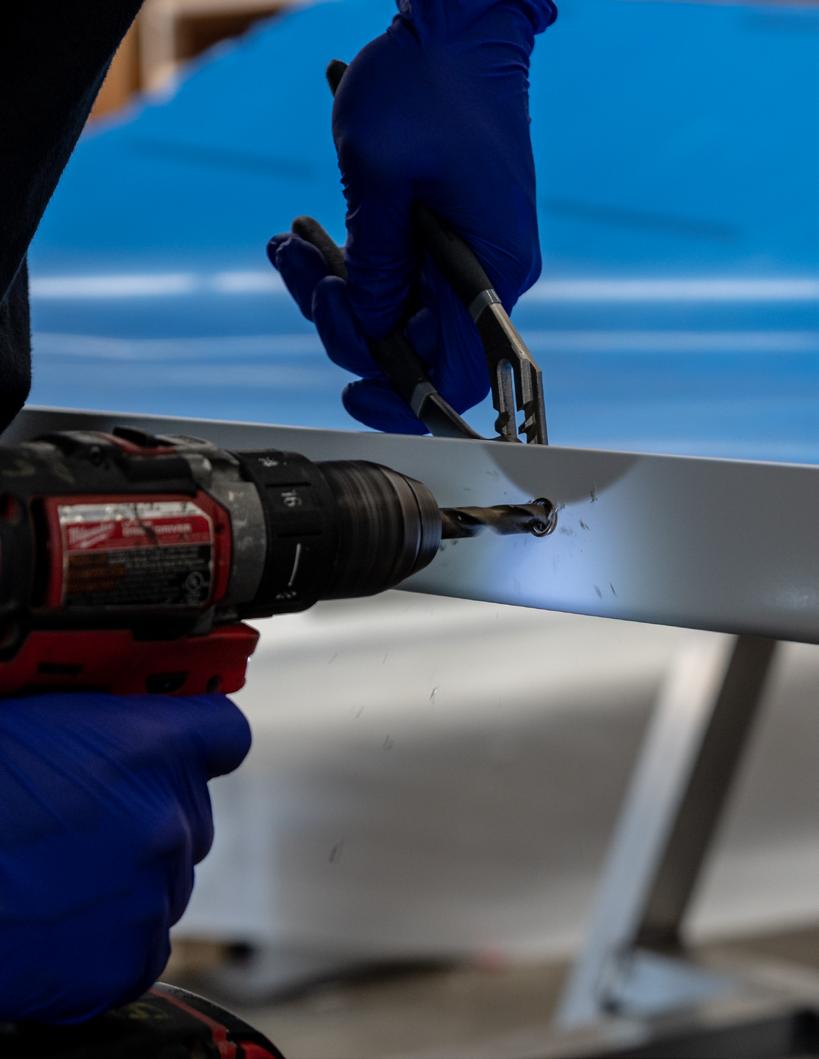

WHYBUYAMERICA/BUY AMERICANMATTERSNOW
Federal domestic-preference requirements are reshaping how architects and designers evaluate products for public and infrastructure work, from airport terminals and transit hubs to civic institutions and higher education campuses. These regulations influence not only which materials can be used, but when and how products are specified, documented, and procured.
For design teams, the opportunity is twofold: protect project funding by getting compliance right, and leverage partners who can translate complex rules into clear paths from concept to installation. Arktura positions itself as that partner, helping specifiers align bold design intent with Buy America/Buy American (BAA/BABAA) requirements without compromising aesthetics.
THEESSENTIALS:
BuyAmericanActvs.Buy America,BuildAmericaAct
Buy American Act (BAA)
• Applies to direct federal procurement—the federal government purchasing for its own use (e.g., federal buildings, certain agency facilities).
• Requires many end products to be manufactured in the U.S., with at least 65% domestic component cost, rising to 75% by 2029 for many categories
• Treats “iron or steel” end products differently than other manufactured items.
Buy America / Build America, Buy America Act (BABAA)
• Applies broadly to infrastructure projects that receive federal financial assistance, across multiple agencies and programs.
• Sets specific requirements for iron and steel products, construction materials, and manufactured products, often with a 55%+ domestic content threshold for manufactured items and “all manufacturing in the U.S.” for many construction materials.
• Requires each product to be classified in only one category— iron/steel, construction material, or manufactured product— based on how it arrives at the jobsite.
“Made in America” (FTC context)
• A marketing claim governed by the Federal Trade Commission, not a project funding standard for infrastructure.
• Requires all or virtually all of the content and processing to be U.S.-based but does not determine eligibility for BAA/BABAA funding.
Domestic content percentage
• For BAA, this is typically the percentage of component cost that is mined, produced, or manufactured in the U.S., with thresholds such as 65% rising to 75%.
Domestic-preference language often sounds similar, but the underlying rules differ in important ways.
Understanding the distinctions early in design helps avoid rework during submittals or construction.
• For BABAA manufactured products, a 55%+ domestic content level is common, while many construction materials and iron/ steel products require all manufacturing processes to occur in the U.S.
Waivers
• Waivers exist in theory (e.g., public interest, non-availability, unreasonable cost), but for most Buy America/BABAA programs they are difficult to secure and not product-level tools.
• AA-funded work is a notable outlier where overall-project waivers (like Type III waivers for 60%+ domestic content at the facility level) are commonly used, even though the underlying standard is very strict.
For specifiers, the practical takeaway is that project funding source and agency drive which rule set applies—and those definitions are more nuanced than a simple “U.S.-made” label. ■


HOWSPECIFIERSCAN DERISKCOMPLIANCE
1.
Confirm if the project is subject to BAA/BABAA
• Ask directly: Is the project receiving federal funding, and under which program or agency (e.g., DOT, FAA, FTA, EPA, Amtrak)?
Request written requirements: Specs, owner standards, or funding documents often state whether BAA or BABAA applies and may include thresholds or waiver language.
3.
Engage manufacturers early on to discuss requirements.
Some products can achieve compliance with targeted changes in sourcing or fabrication—something you can collaborate with a key fabrication partner on. Common examples include:
• Switching raw materials where required by specific agencies
• Swapping subcomponents with USmade components.
These adjustments can affect pricing and lead time, which is why discussing Buy America/Buy American status during schematic design or early DD is more efficient than troubleshooting at submittals. ■
Design teams do not need to be tradelaw experts, but they do benefit from a simple framework for decision-making.
The following steps help integrate compliance thinking into the normal rhythm of design and documentation.
2.
Identify
which product category you are specifying
Every architectural product used on a BABAA project needs to be classified into one of three buckets:
Iron and steel products
Articles where iron/steel exceeds 50% of component cost and all manufacturing (from initial melting through coating) must occur in the U.S. in many BABAA contexts.
Construction materials
Single-material items like aluminum, plastic/polymer-based products, glass, lumber, engineered wood, or drywall, where all manufacturing processes occur domestically.
Manufactured products
• Articles created by combining or processing multiple materials into a product with new properties and performance.
• Many integrated ceiling and wall systems, acoustic modules, and illuminated solutions fall into this category, often requiring 55% or more domestic component cost and U.S. manufacturing of the final product.
Accurate categorization is typically handled by manufacturers and their compliance teams, but specifiers benefit from understanding these distinctions when evaluating alternates or substitutions.
AGENCY NUANCES:
Why One “Compliant” Product May Behave Differently by Program
For specifiers working across transportation, aviation, and environmental projects, this is where partnering with a manufacturer deeply versed in agency-specific nuances becomes critical.
A few key differences between BABAA agencies include:
FAA projects
• Often require steel and manufactured goods to be produced in the U.S. with the requirement of 100% domestic content, making waivers—especially “Type III” waivers for overall project domestic content— common at the building level.
• Type III waivers allow for a 60% threshold of domestic content.
• Domestic content is often evaluated across the entire project, allowing lower-content components to be offset by others with higher domestic percentages.
Highway and transit agencies (e.g., FHWA, FTA)
• Some require both domestic raw materials and domestic manufacturing for a component to be considered “domestic,” especially for steel, and may require 100% domestic cost of components.
• Iron and steel elements often must be domestically produced from initial smelting through coating.
FRA and others
• May align closely with BABAA in principle but treat specific product types differently in practice.
Even when the core statute is BABAA, individual agencies often layer on their own interpretations and thresholds.
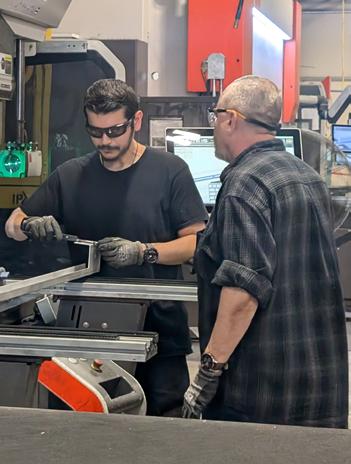
For the design team, the implication is straightforward: the same architectural components can be comfortably compliant on one funding stream and require configuration changes or attachment modifications on another. This is where structured guidance from the manufacturer—rather than a generic “yes/no” claim—keeps documentation defensible. ■
COMPLIANT SYSTEMS
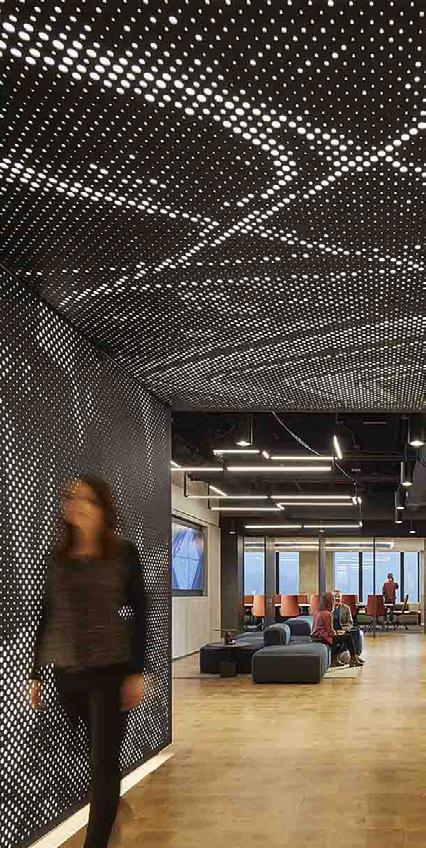
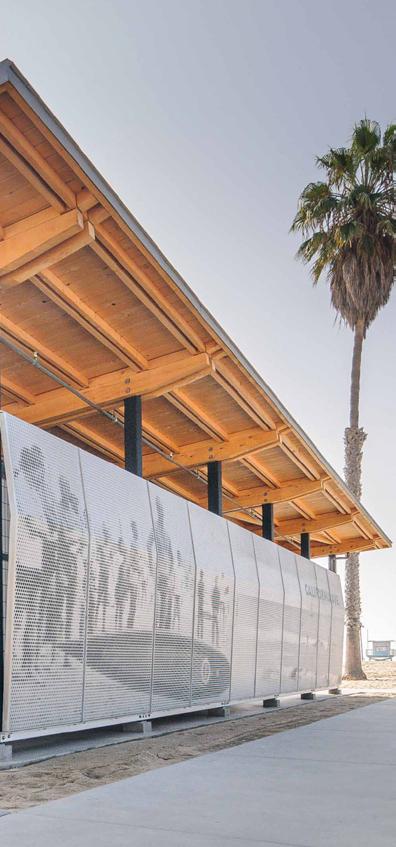
Graphic Perf® Solutions
Graphic Perf® Solutions
Interior & Exterior*
Interior & Exterior
*For more information, see Product Matrix
HOW ARKTURA SUPPORTS BAA/BABAA‑DRIVEN
PROJECTS AGENCY
Arktura approaches domesticpreference projects as a design and engineering problem to solve together rather than a simple compliance checkbox.
The goal is to preserve design ambition while aligning with project funding requirements in a way that is transparent, documented, and buildable.
1. Product-level classifications and content analysis
2. Early-spec guidance and alternative solutions
3. Documentation and owner-facing support
Integrating Compliance Into the Design Workflow
During programming and concept
During schematic design and DD
During CD and specifications
During submittals and construction
1.
Product-level classifications and content analysis
Arktura maintains detailed internal processes that:
• Classifies core product families—such as acoustic baffle systems, modular acoustic geometries, linear lighting, ceiling and wall panel kits, and integrated backlighting—into the correct regulatory category for typical scenarios.
• Tracks domestic content percentages by cost of components and identifies when standard configurations already exceed thresholds used in BAA/BABAA and agency-specific rules.
• Flags if any components may require domestic alternatives or design tweaks for stricter agencies like FTA or FHWA.
This internal rigor enables Arktura to respond quickly to projectspecific compliance questions without burdening design teams with the underlying calculations.
2.
Early-spec guidance and alternative solutions
On projects where domestic requirements drive design decisions, Arktura can:
• Recommend product families whose standard configurations already satisfy common BAA/BABAA thresholds for manufactured products.
• Identify product configurations, where targeted changes— such as alternative material sourcing or design changes—allow products to meet the applicable domestic content rules. By engaging Arktura early, specifiers can align system selection, aesthetic direction, and compliance strategy in parallel, rather than revisiting core design decisions late in the process.
3.
Documentation and owner-facing support
Compliant projects live or die on documentation. Arktura supports the process by:
• Providing manufacturer self-certification letters confirming domestic content and categorization, tailored to project requirements.
• Supplying data needed by general contractors to complete agency-specific domestic content worksheets, such as those used on FAA-funded projects.
This documentation focus helps specifiers build confidence with owners and authorities that design vision and funding requirements are both fully respected.
HOW ARKTURA SUPPORTS BAA/ BABAA‑DRIVEN PROJECTS AGENCY
Integrating Compliance Into the Design Workflow
To keep compliance from becoming a last-minute constraint, specifiers can embed a few simple habits into their project workflow.
During programming and concept
• Confirm whether the project is federally funded and, if so, under which agency or program.
• Note early in the Basis of Design narrative that ceiling, wall, and acoustic systems will be selected with BAA/BABAA compatibility in mind.
During schematic design and DD
• Engage Arktura to identify candidate product families that align with the project’s aesthetic direction and probable domestic content requirements.
• Clarify whether any spaces—such as concourses, ticketing halls, lobbies, or public interfaces—are more strictly governed due to specific funding sources, and coordinate product choices accordingly.
During CD and specifications
• Call out compliance expectations in Division 09 and related sections, referencing the relevant act (BAA/BABAA) and any agency-specific thresholds as provided by the owner or construction manager.
• Coordinate with Arktura on product notes that reflect whether a standard or ESR configuration is required for the project, so bidding contractors understand expectations.
During submittals and construction
• Request Arktura’s compliance documentation early in the submittal phase to keep reviews streamlined.
• Use Arktura’s guidance when evaluating substitutions, ensuring alternates maintain both design intent and domestic content alignment.
By treating domestic content as a design parameter—like acoustics, daylighting, BAA/BABAA considerations become part of the creative brief rather than a constraint. ■
COMPLIANT SYSTEMS
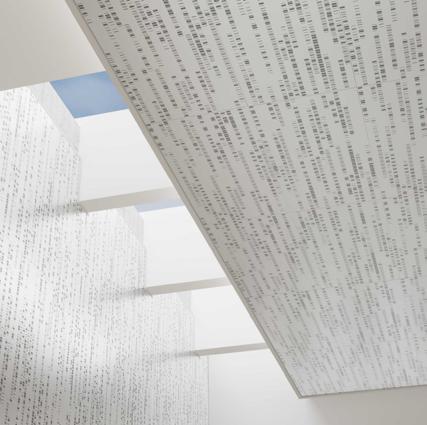
Particle®
WHY ARKTURA IS A STRATEGIC PARTNER FOR BAA/BABAA PROJECTS
For design teams, the ideal compliance partner does more than supply products—they help navigate the space where design ambition, fabrication reality, and regulatory frameworks meet.
Arktura’s approach reflects this mindset.
→ Deep category expertise
Arktura has developed extensive guidance around how its acoustic systems, ceiling and wall panels, integrated lighting elements, and specialty solutions interact with BAA/BABAA rules and major federal agencies.
→ Design-first, compliance-forward
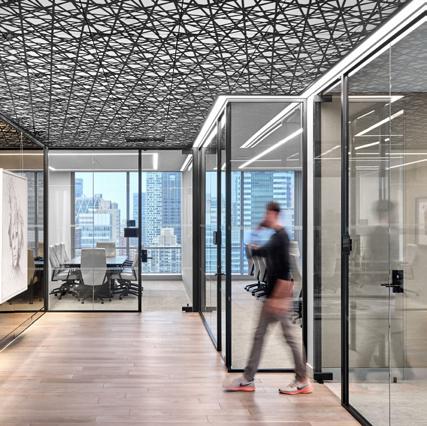
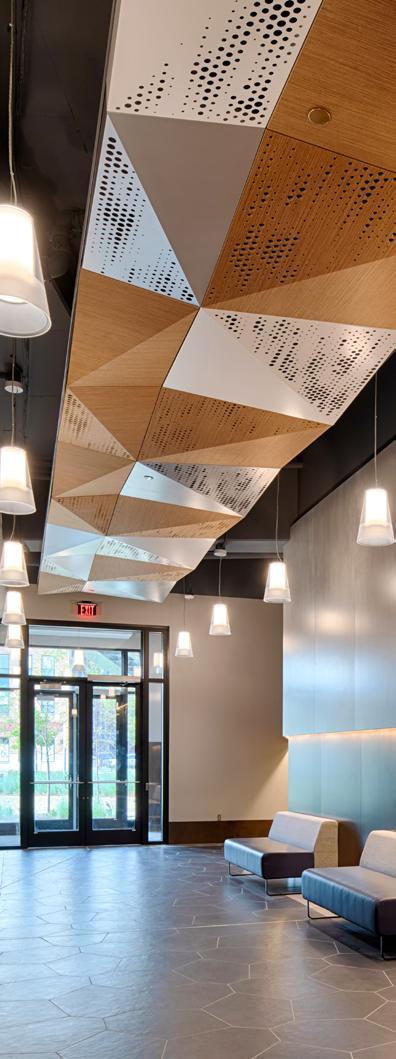
Systems are evaluated not only on their technical compliance pathways but also on their ability to preserve patterning, depth, light play, and spatial experience central to the design narrative.
→ Configurability and resourcefulness
Many families offer configurable pathways—from standard offerings that already satisfy common thresholds, to variations that can be tuned for more demanding agency interpretations— without forcing the design team back to a blank page.
→ Transparent documentation culture
Arktura’s emphasis on clear, domestic content documentation supports architects, contractors, and owners through funding and review.
For architects and designers tasked with delivering expressive, high-performance environments within the evolving landscape of domestic-preference rules, Arktura is a key collaborator—helping ensure that the ceilings, walls, and acoustic elements envisioned on day one are the same ones that get built, funded, and approved.