INTRODUCTION
Arkansas hospitals are proud to provide quality, efficient healthcare for communities throughout our state. Hospitals stand ready tocarefor everyone, with our doors open to all – 24 hours aday, seven days a week, 365days ayear. In 2024,Arkansas hospitals cared for more than 360,000 patients admitted1 for care and more than 6.7million outpatient visits1 in an effort tokeep our state healthy, strong, and vibrant. This record of serviceis – and always will be – our most valuable contribution tothe state.
Throughout our state, hospitals strengthenthe infrastructure of local communities.Arkansas residents rely on their local hospitals and health systems to:
Provide high-quality, efficient healthcare;
Readily respond with care for community members throughout their lifetimes, whenever illness or injury strikes;
Serve as safeharbors during and after emergencies and disasters;
Provide an optimal setting for bringing new life into the world;
Provide comfort at the end of life;
Educate people about preventing and managing diseases, while promoting practices that support health and well-being;
Attract new healthcare services, businesses, and industries to our communities – resources which are essential for future growth.
Recognized much less often are the contributions hospitals maketo local economies and to the stateeconomy.As major employers and primary purchasers of goods and services,Arkansas hospitals arecritical toour financial vitality.Also, by providing quality careto keepArkansas healthy, hospitals ensure a healthy, productive workforcethat keeps our state moving forward.
Statewide Economic Impact:
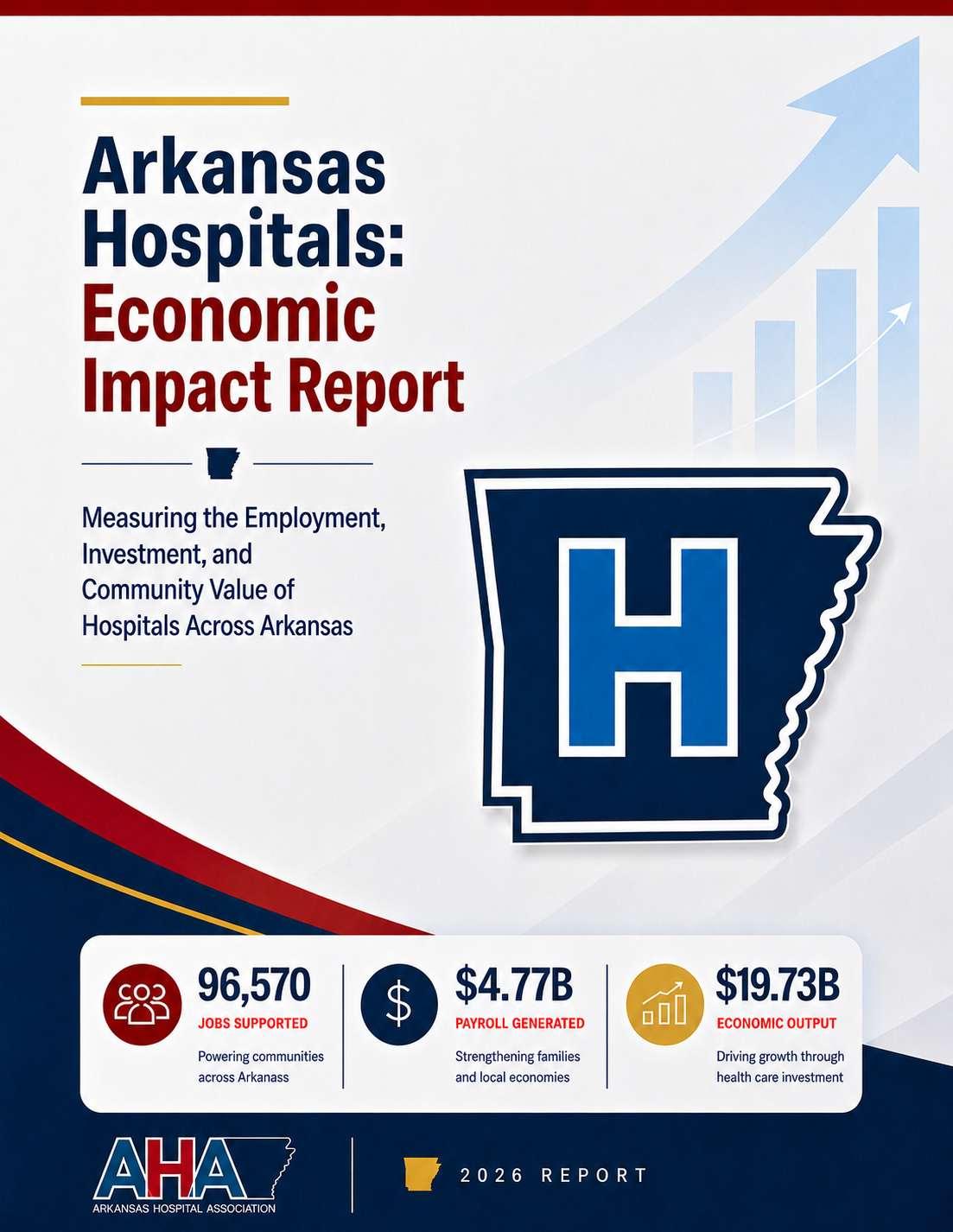
Total Jobs Impact: 96,570
Hospital-SpecificEconomic Impact
THE ECONOMICANCHOR
In 2024, the estimated total annual economic impact ofArkansas Hospitals was $19,732,827,000.
PROVIDING WELL-PAID, CONSISTENT EMPLOYMENT
Arkansas hospitals employ 48,630 individuals, with a total payroll of $4,768,254,000. Hospitalpay expenditures serve as an important economic stimulus, creating and supporting jobs throughout the stateand in local economies.
Dollars earned by employees ofArkansas hospitals and spent on groceries, clothing, mortgage payments, rent, etc., generate approximately $8,668,194,000 in economic activity and create an additional 47,940 jobs in the state’s economy.
STIMULATING THE LOCAL ECONOMYWITH PURCHASES OF GOODSAND SERVICES
Arkansas hospitals spend approximately $5,585,504,000 per year on the goods and services they need to provide healthcare – including things like medical supplies, electricity for buildings, and food for patients. Funds spent tobuy goods and services flow from the hospitals to vendors and businesses, creating a ripple throughout the economy.
Dollars spent byArkansas hospitals generate approximately $10,153,884,000 for the state’s economy.
IMPROVING INFRASTRUCTURE FORALLARKANSAS RESIDENTS
In 2024,Arkansas hospitals spent $500,989,000 on buildings and equipment.
Capital spending byArkansas hospitals generates approximately $910,747,000 for the state’s economy each year.
STATEWIDE ECONOMIC IMPACT
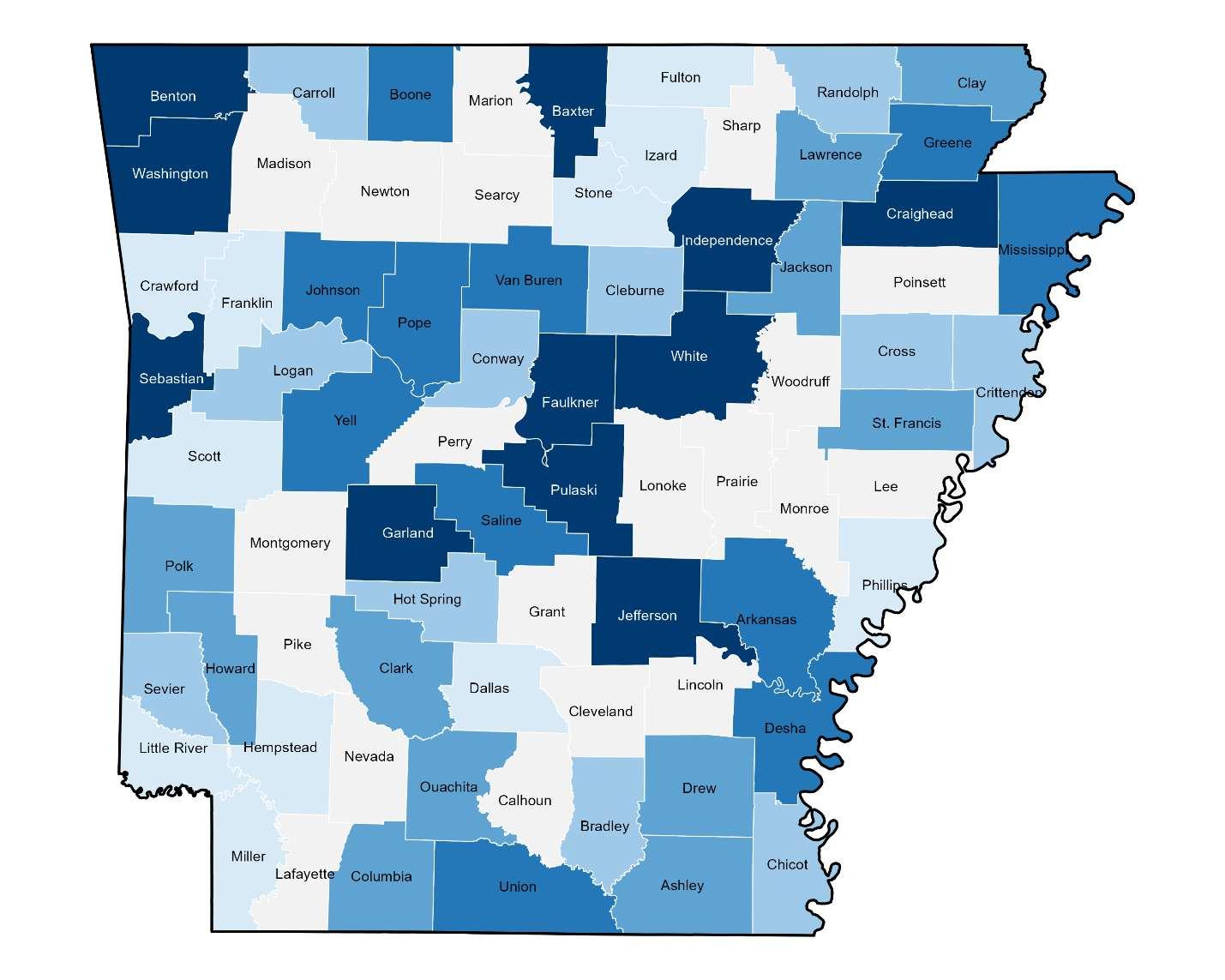
FIGURE 1: Economic Impact by County,Arkansas 2026
The map below illustrates the county-level impact associated withArkansas hospitals across the state. Hospitals support local economies through direct employment, payroll, purchasing, and the ripple effects of healthcare-related spending, making them important economic anchors in communities large and small.
NoHospital
$0-$32.4M
$32.5M–$51.8M
$51.9M–$68.7M $68.8M–$399.8M $399.9M–$7.2B
Differences across counties reflect variations inhospital size, service capacity, and regional referral patterns. Counties anchored by larger hospitals or regional medical centers often showgreater total impact, while smaller and rural hospitals remainessential contributors to local jobs, economic stability, and community vitality. The map demonstrates that the economic importance of hospitals reachesevery part ofArkansas.
BEYOND ECONOMIC IMPACT:THE COMMUNITYVALUE OFARKANSAS HOSPITALS
HOSPITAL UTILIZATION
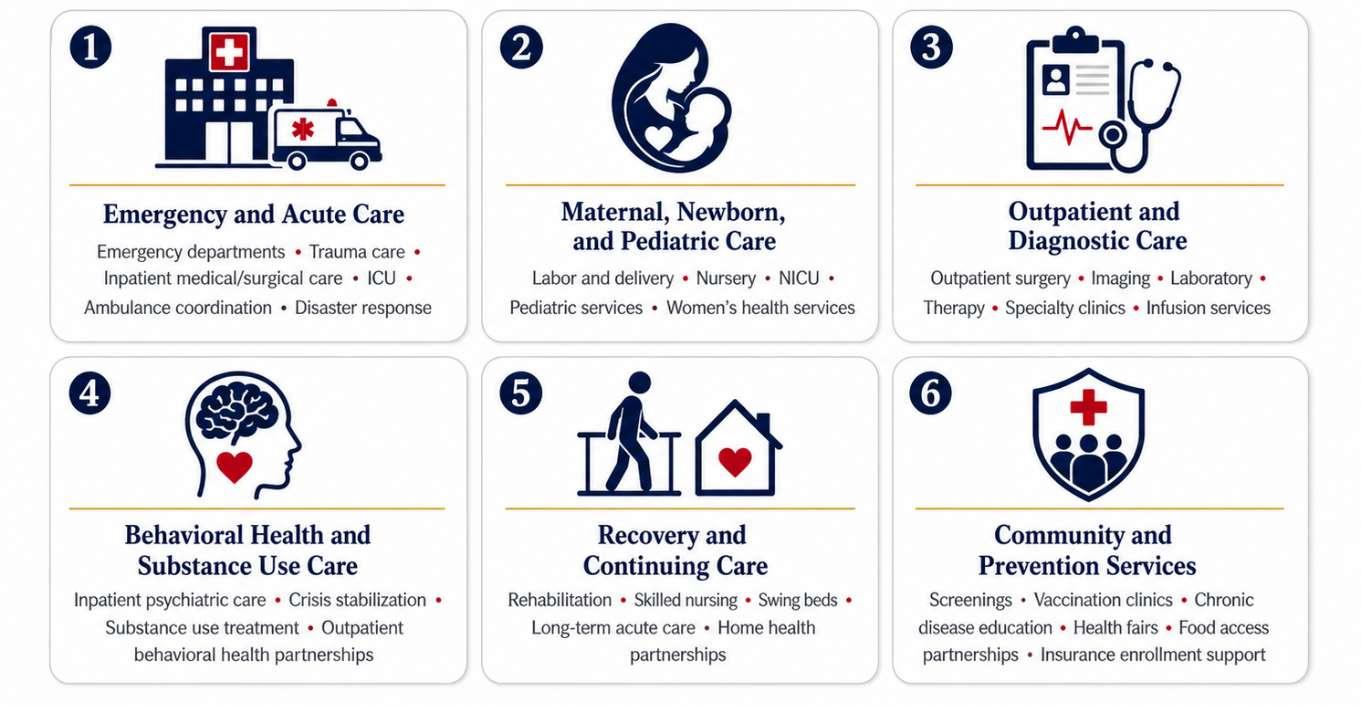
Arkansas hospitals generate significant economic activity, but their value to communities extends beyond jobs, payroll, and business spending. Hospitals provide the essential infrastructure that allows Arkansans to access emergency care, inpatient treatment, outpatient services, diagnostic testing, surgery, labor and delivery, rehabilitation, behavioral healthcare, and other services close to home.The scale of care delivered by hospitals reflects theircentral role in the health and stability of communities across the state. Eachyear, hospitals serve patients through millions of inpatient, outpatient, emergency, diagnostic, surgical, and maternal health encounters.
HOSPITALSAS COMMUNITYINFRASTRUCTURE
DIFFERENT HOSPITALS, DIFFERENT COMMUNITYROLES
CriticalAccess Hospitals
Arkansas has 30 hospitals designated by the federal government as critical access hospital (CAH)2. These hospitals provide essential local access to emergency andinpatient care in rural areas, often serving as one of the largest employers and healthcare access points in their area.
Rural Emergency Hospital
Arkansas has five hospitals that have transitioned to rural emergency hospitals (REHs). REHs provide emergency care, observation services, and selected outpatient services to communities, but forego inpatient services due tofinancial pressures. Whilethe REH model has been shown to preserve a local emergency access point in our ruralArkansas communities, the transition highlights the growing financial strain on rural hospitals.The loss of inpatient capacity means patients who need admission must be transferred elsewhere, increasing travel times, adding pressureto regional referral hospitals, and reducing the level of care available close tohome.
Rural PPS Hospitals
Arkansas has 42 hospitals that participatein the Inpatient Perspective Payment System with 48 hospitals participating inthe Outpatient Perspective Payment System. Prospective Payment System (PPS) hospitalsare acute carehospitals that provide a broad range of inpatient, outpatient, surgical, diagnostic, emergency, and specialty services. PPS hospitals are paid under standardized Medicare payment systems that account for factors such as diagnosis, severity, service type, wage index, and hospitalcharacteristics.
Specialty Hospitals
Specialty hospitals provide focused services for patients whose needs require dedicated clinical expertise, specialized staffing, and tailored care environments.Arkansas has 42 hospitals that provide specialty services to their communities.This group includes 15 psychiatric hospitals, 11 rehabilitation hospitals, seven long-term acute care hospitals, twochildren’s hospitals, and seven hospitals that provide other specialty services such as women’s health, emergency department only, and surgical care2
Teaching and Training Hospitals
These hospitals support workforce development by training physicians, nurses, allied health professionals, and future healthcare leaders.Arkansas has one academic medical center as well as numerous residency program and health professional training sites across the state2 .
SERVICE LOSSESANDREDUCEDACCESS
Arkansas hospitals are operating in an increasingly fragile financial environment, and the loss of services is already impacting the state. Recent examples include the loss of inpatient services in five rural emergency hospitals, the loss of Levi Hospital, the financial hardships affecting Ouachita County Medical Center, Baptist Health Medical Center – Fort Smith reducing hospital services, and Unity Health – Jacksonville closing its emergency department and transitioning to a psychiatric hospital. In asmallrural state, these losses createlonger travel times, reducedaccess points, and greater pressureon neighboring hospitals toabsorbdisplaced patients.
LOWEST COMMERCIALREIMBURSEMENT
Arkansas hospitals face some of the lowest commercial reimbursement rates in the country.According tothe December 2024 RAND report, commercial payers inArkansas reimbursedhospitals at approximately 164% of Medicare rates, the lowest rate inthe nation.Arkansas is approximately 27 percentage points below the next-lowest surrounding state and about 70 percentage points below the average of its eight surrounding states3. Theselow rates make it difficultfor hospitals to retain existing services, invest in workforce, or expand care capacity.
DECLININGACCESS TO DELIVERYSERVICES
Access to hospital-based delivery services continue to decline inArkansas. In 2026, two additional hospitals have discontinued delivery services. Leaving only 31 hospitals statewide todeliver babies.As a result, 51 counties lack local delivery services, causing many expecting mothers to traveloutside theirhome county for care4. This increases travel time, complicates access for high-risk pregnancies, and placesadditional demand on the remaining hospitals.
LOOMING FEDERALPOLICYIMPACTS
The One Big BeautifulBillAct of 2025 (HR-1) creates additional uncertainty for Arkansas hospitals by placing Medicaid coverage, 340B eligibility, and uncompensated care exposure at risk. If coverage losses increase the number of uninsured patients, hospitals will be expected to provide more care without reliable payment.At the same time, reductions in Medicaid volume or hospital DSH percentages couldthreaten 340B eligibility for some hospitals, weakening a key resource usedto support access, pharmacy services, and carefor vulnerable patients.
CONCLUSION
Hospitals are major contributors toArkansas residents’quality of life and play a key role in keeping communities healthy and vibrant. Drivers of both theirlocal and state economies, Arkansas hospitals keepfamilies healthy and secure by providing necessary healthcare services.
The dataand information contained in this reportprovide strong evidence that the economic benefit of our hospitals to the local and state economies is substantial.To sustain job growth and safeguard the health ofArkansas families, the state must prioritize attracting high-quality healthcare providers and expanding access to services.
We urge our state legislators, members of Congress, and community leaders torecognize the vital role hospitals play in driving local economies, and to enact policies that strengthen healthcare acrossArkansas.
REFERENCES
1. American HospitalAssociation. (2025, November). 2024 AHA Annual Survey.
2. Arkansas Department of Health. (2026, February 3). Hospital provider list [Excel spreadsheet] https://healthy.arkansas.gov/wp-content/uploads/Hospital-Provider-List2.23.2026.xlsx.
3. Whaley, C. M., Briscombe, B., Kerber, R., O’Neill, B., & Kofner,A. (2024). Prices paidto hospitals by private health plans: Findings from round 5.1 of an employer-led transparency initiative. RANDCorporation. https://www.rand.org/pubs/research_reports/RRA1144-2v2.html
4. Arkansas HospitalAssociation. (2026). Delivery services. AHA Data Hub. https://arkhospitals.shinyapps.io/AHADataHub/.
CONTACT INFORMATION
Any questions or comments regarding the information in the 2026 Economic Impact Report can be directed to Donald McCormick (dmccormick@arkhospitals.org).