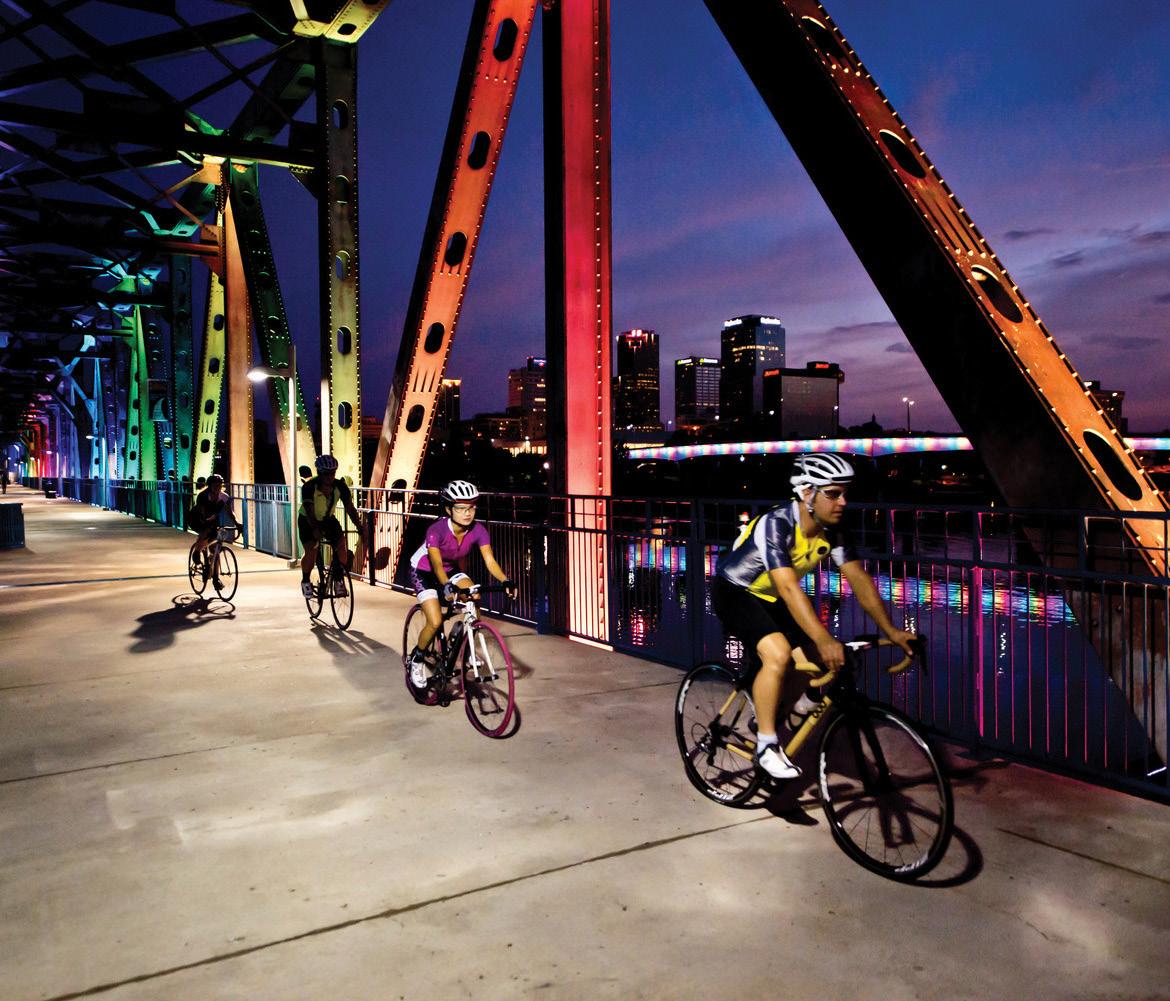
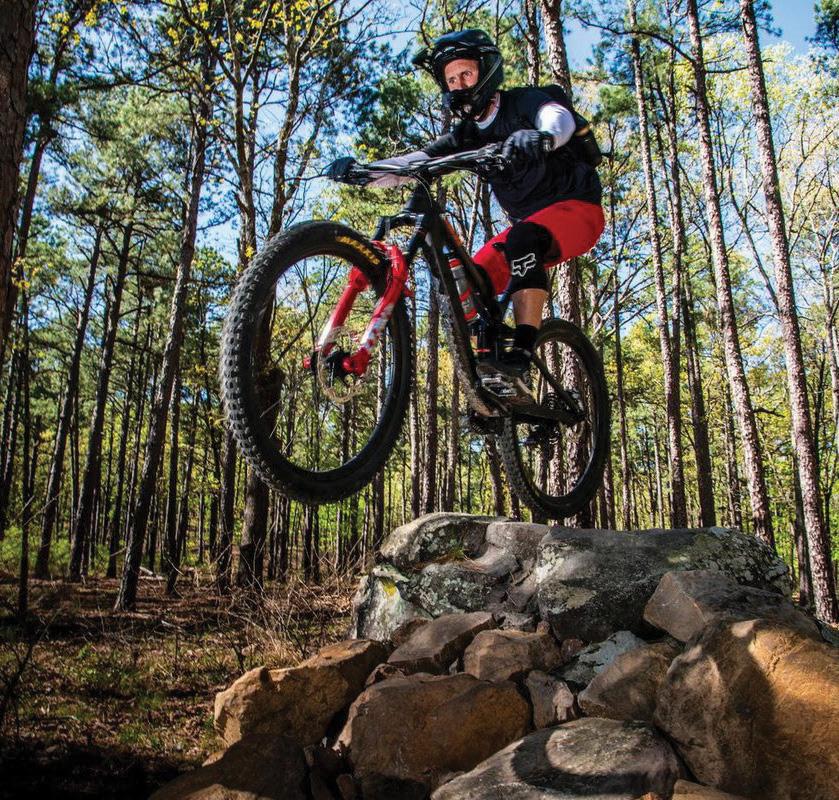
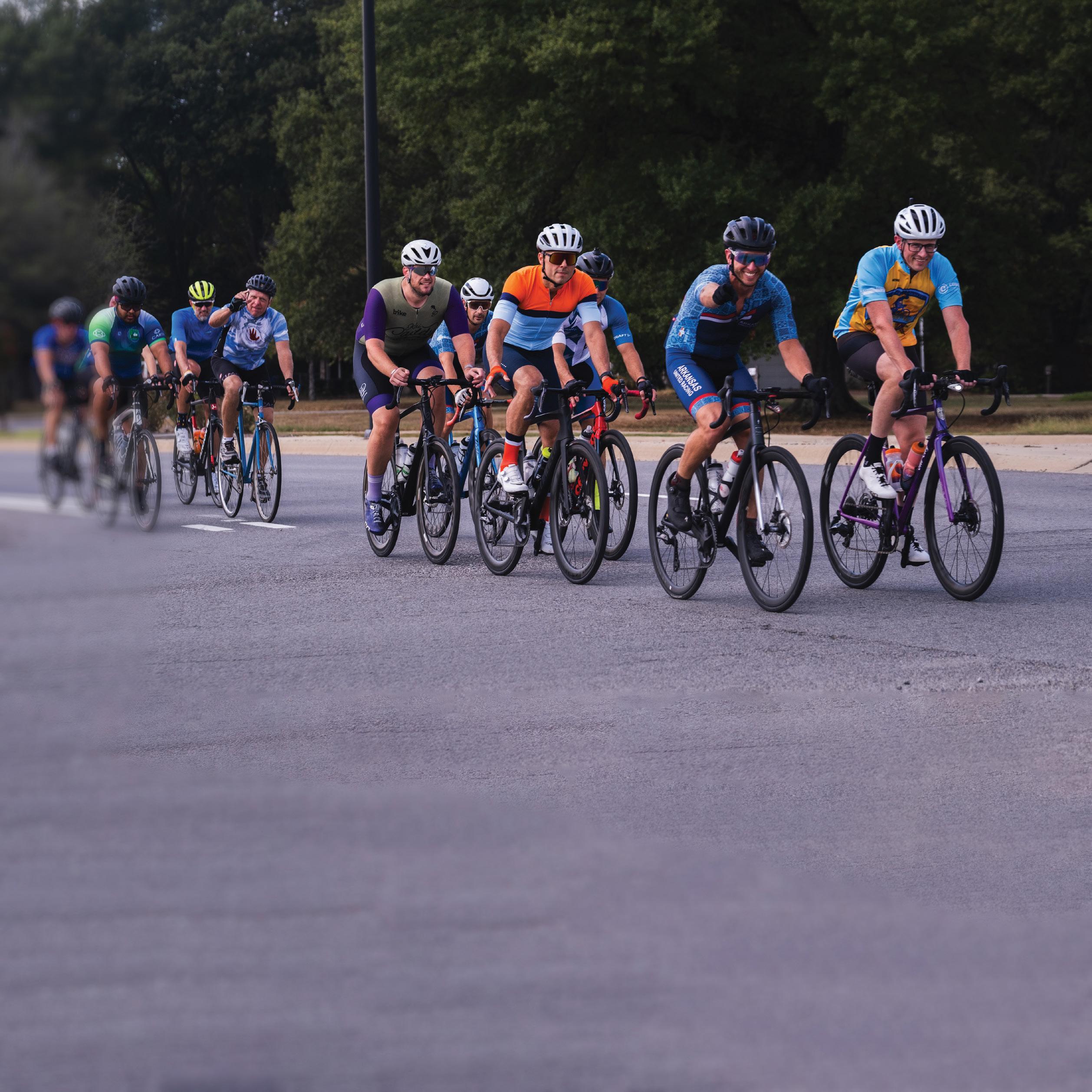
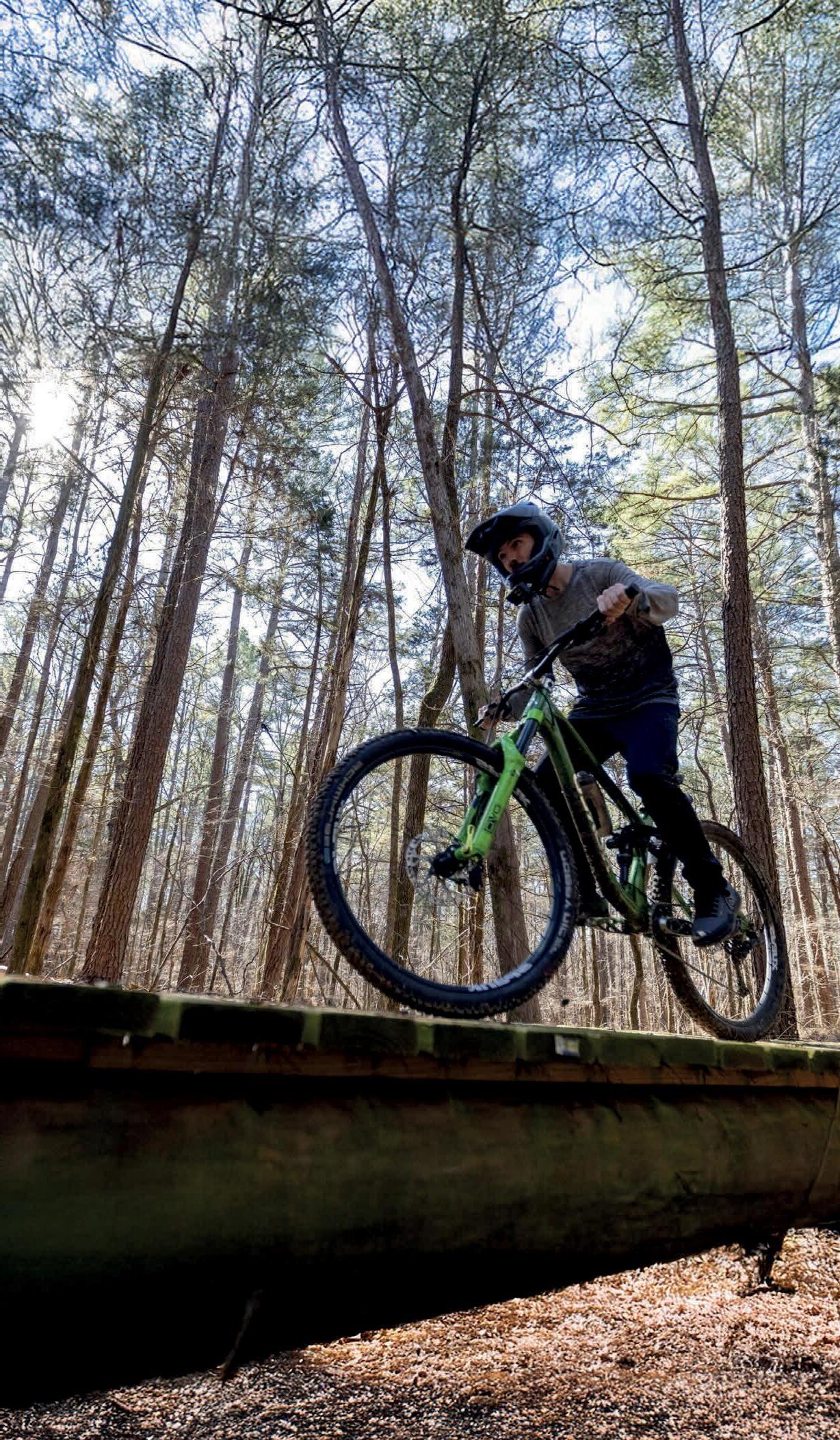
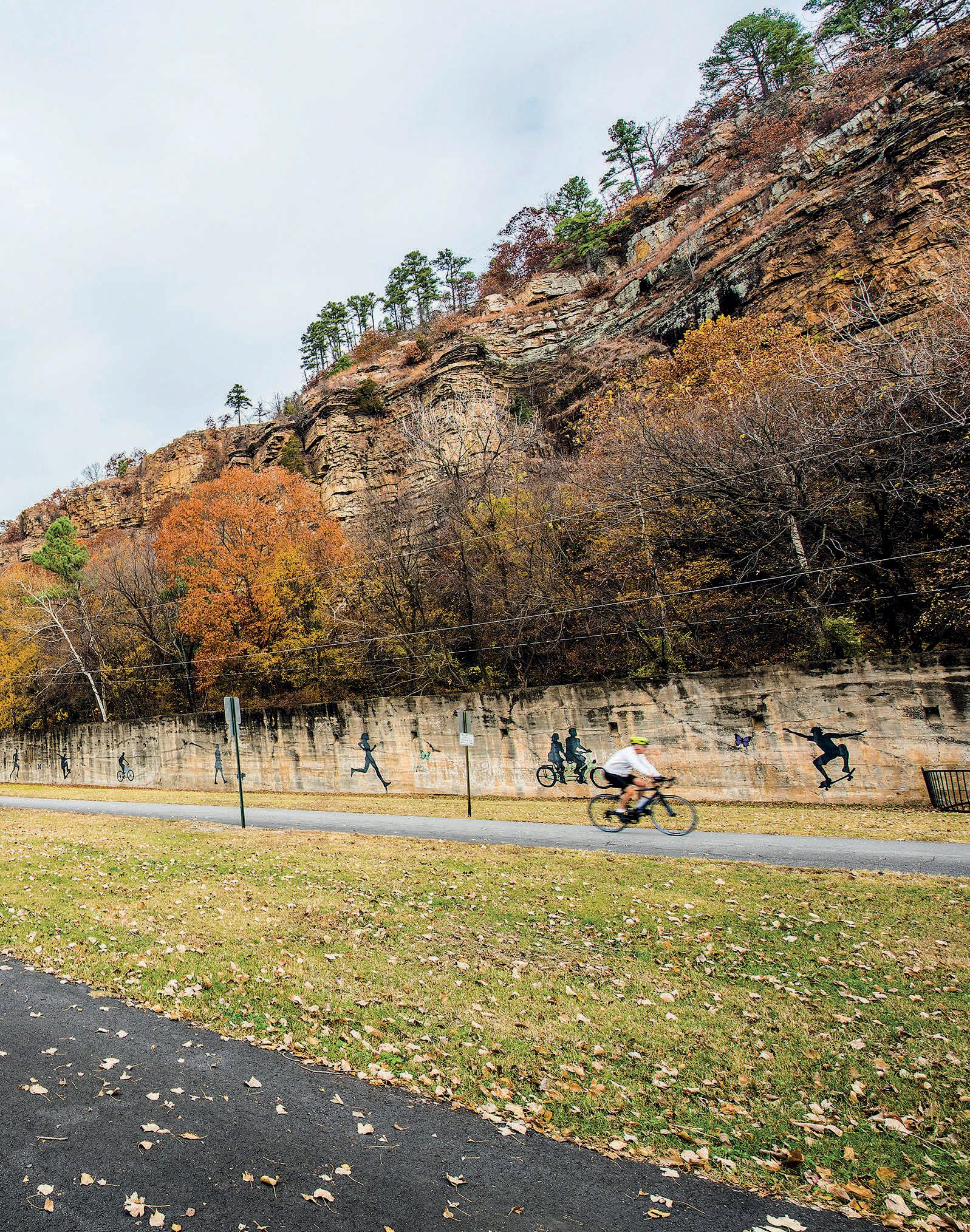
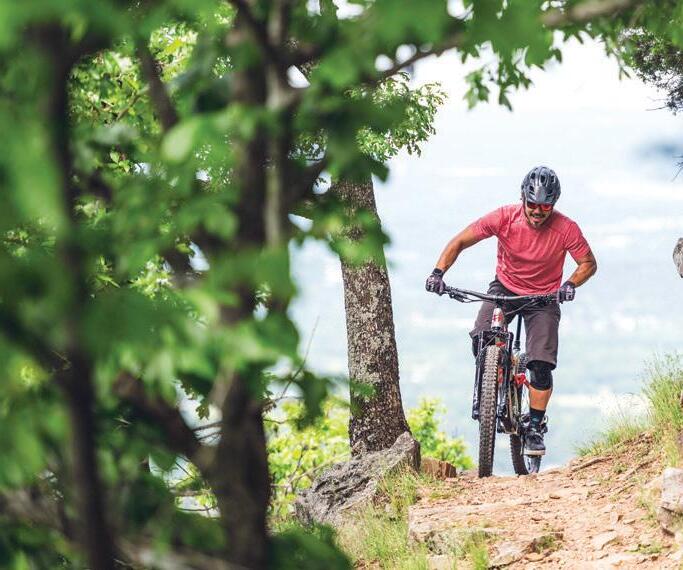
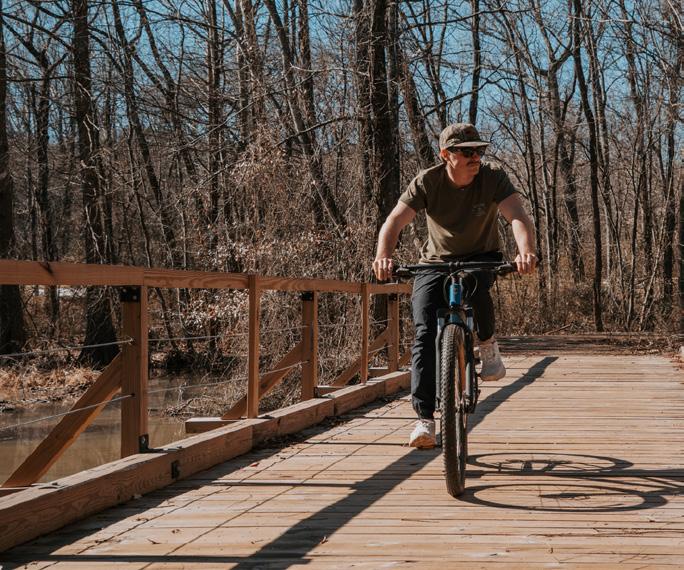
Natural State Crits end, Mena Bike Park construction begins, Mojo gets new owners and Northwoods announces an expansion.
12
BENTONVILLE IS HOME
Lauren Pickman didn’t know what to expect when moving to Bentonville, what she found was pride in being an Arkansan.
16
MORE THAN A BIKE SHOP
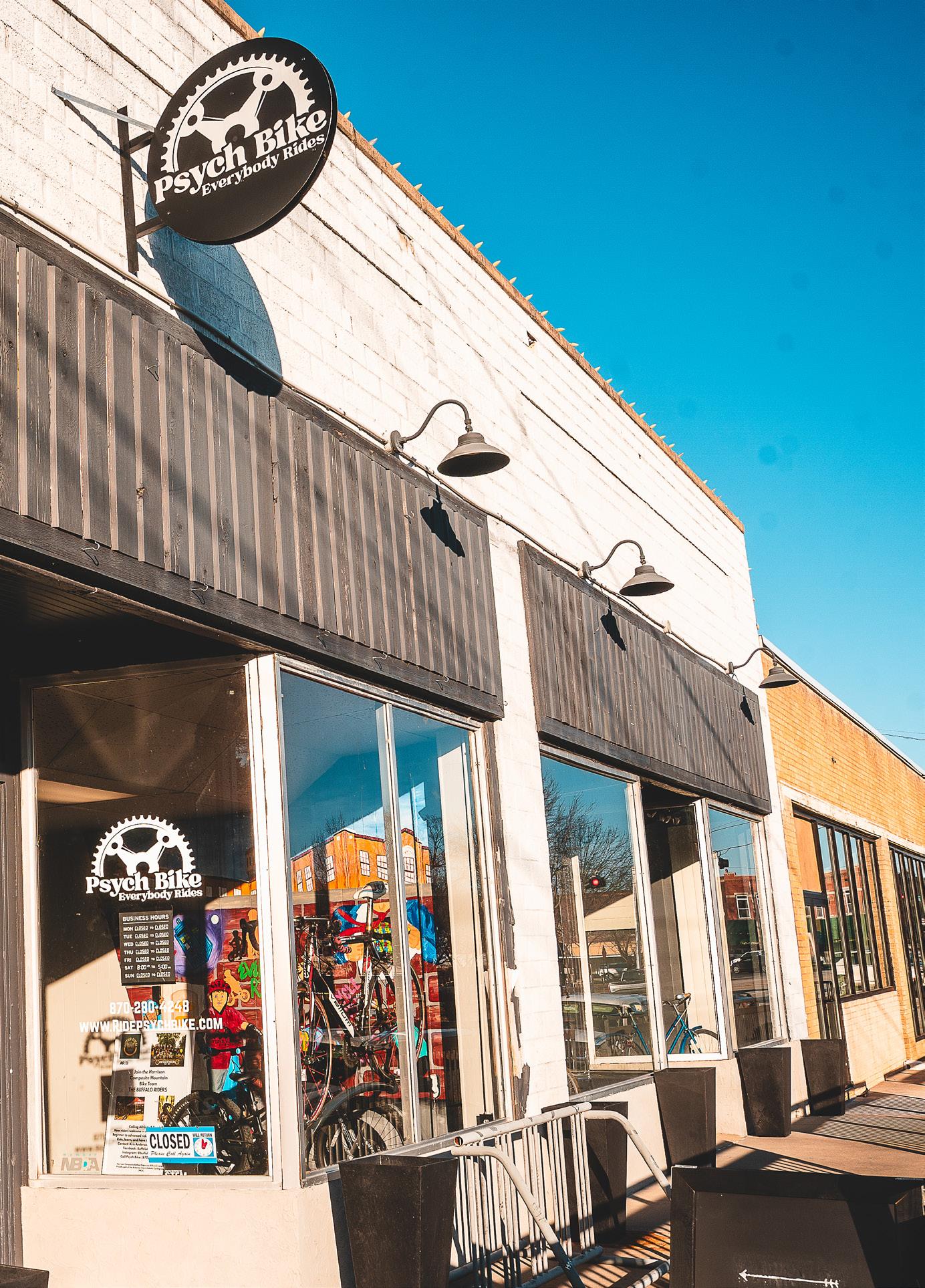
Kris Anderson is coaching mental fitness and building a community at Psych Bike in Harrison.
22
THE GRAVELER GOES EAST
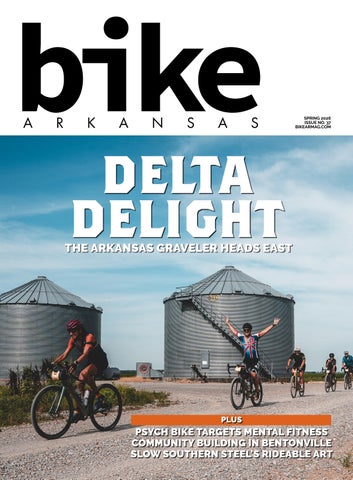
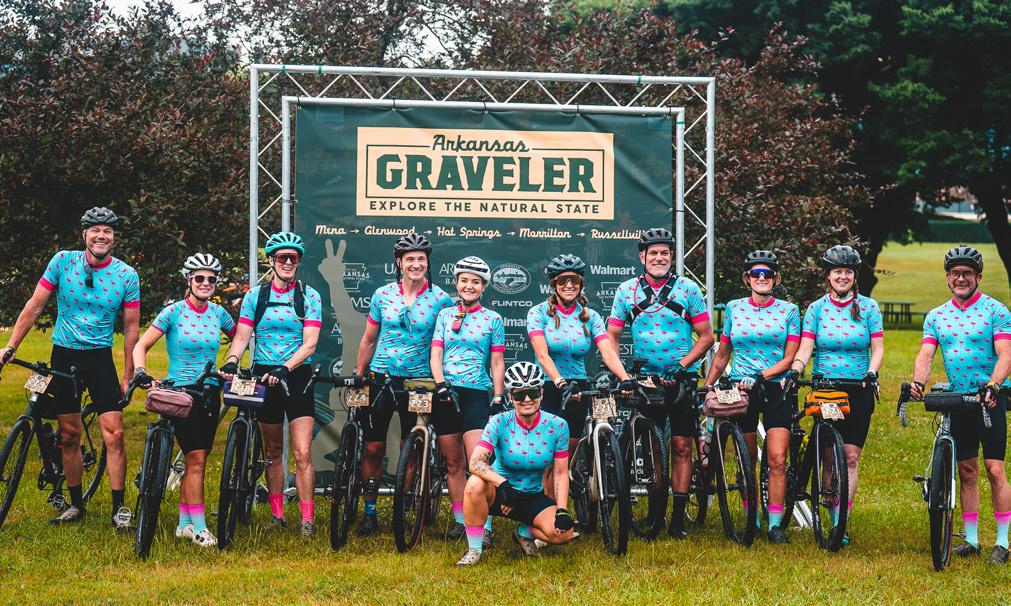
The 2026 edition of the Arkansas Graveler heads into the historic Delta region. By Michael Spivey
28
SLOW SOUTHERN STEEL
Jesse Turner is building beautiful steel bikes and bike accessories from a small shop in Fayetteville. By Bryce Ward
ON THE COVER
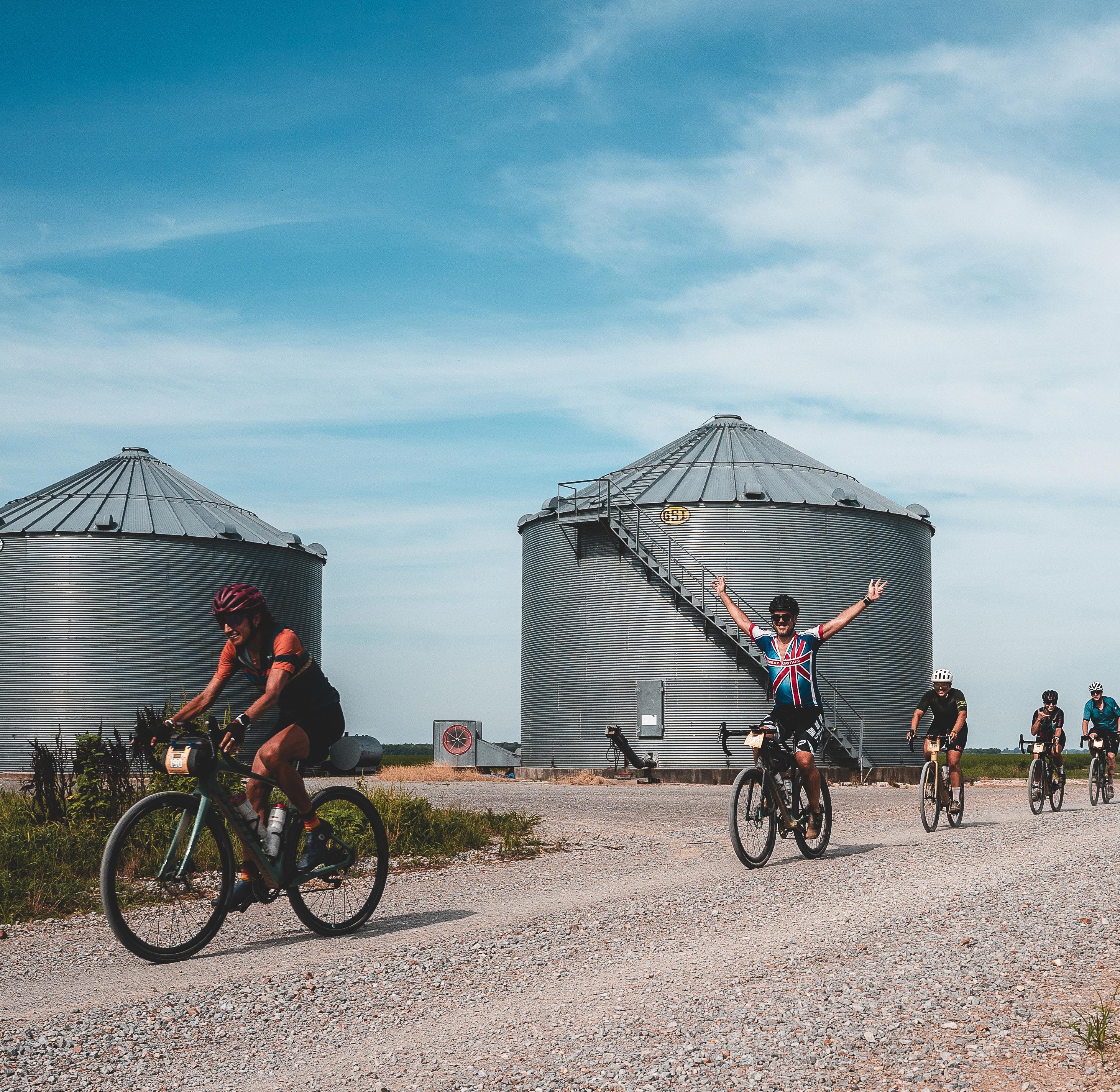
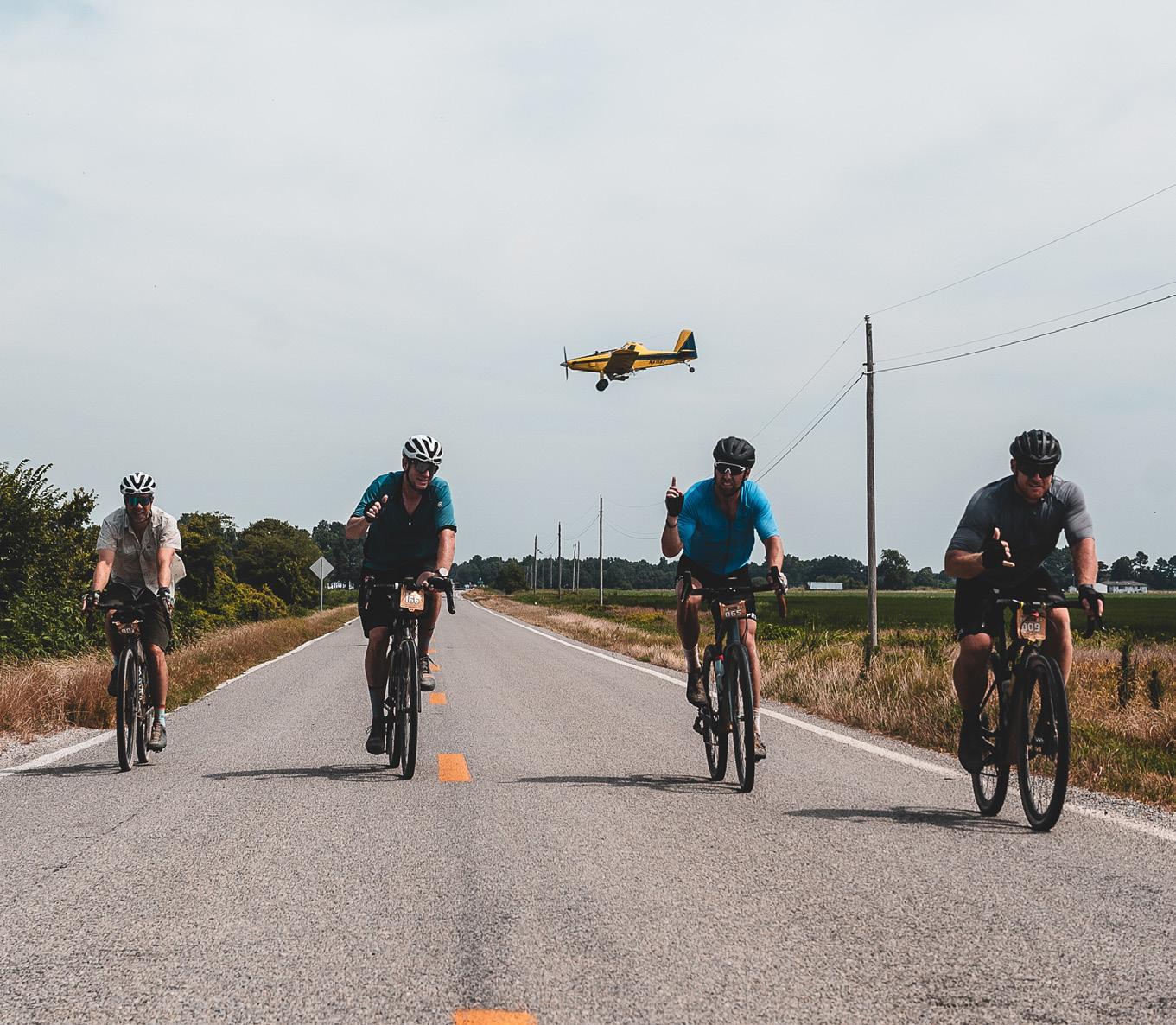
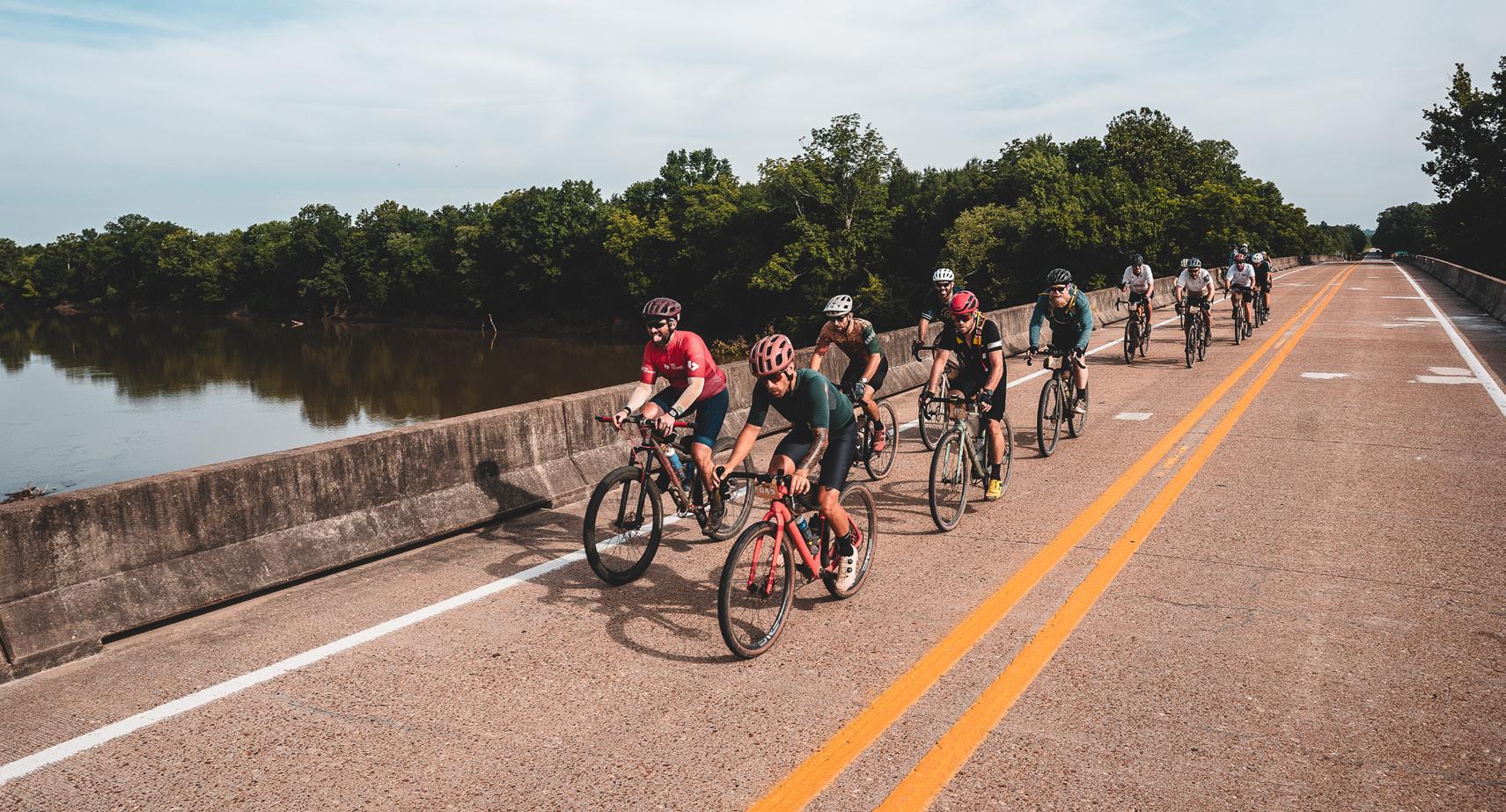
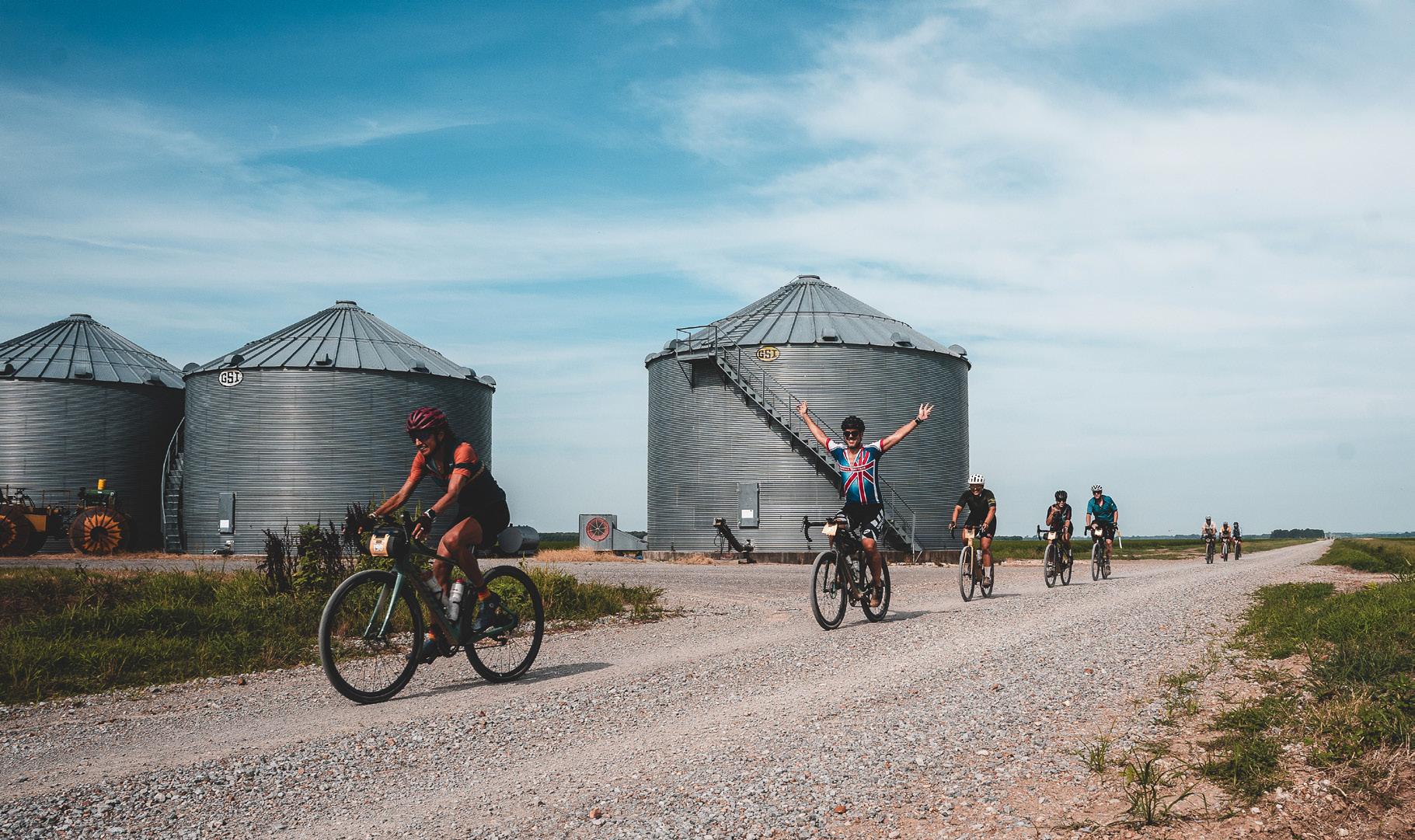
Riders pass through farmland during the 2024 Arkansas Graveler. This year’s edition will feature lots more of this terrain in the Arkansas Delta. Photo by Kai Caddy
SARAH RICHARDSON Digital Ad Coordinator/Customer Service
ROLAND R. GLADDEN Advertising Traffic Manager
KATIE HASSELL Art Director/Digital Content Manager
ROBERT CURFMAN IT Director
CHARLOTTE KEY Accounting
ANITRA HICKMAN Circulation Director
BRYCE WARD is a competitive road cyclist based in Fayetteville and the Northwest Arkansas General Manager of local paper shredding company, Rock Solid Shredding.
LAUREN PICKMAN is a co-founder and director of the Rule of Three bike race in Bentonville and co-founder of the Women of OZ NWA, a women’s nonprofit MTB club aimed at getting more women on bikes. In addition, she’s been working with Velocity NWA’s initiative to cut emissions while boosting fitness and mental health by encouraging alternate modes of transportation with Ride to Work Wednesdays pop-up events.
MICHAEL SPIVEY is President and CEO of Ozark Foundation, a non profit based in Bentonville with a mission to position the state as a premier outdoor destination and to lower barriers to entry to outdoor recreation. Ozark Foundation produces 20 events annually including the Arkansas Graveler.
LOTS TO EXPLORE
NEW OPPORTUNITIES ABOUND THIS SPRING.
Spring in The Natural State means it’s time to spend as much time outdoors as possible to soak up all this beauty Arkansas has to offer.
There is no shortage of opportunity to soak up that beauty via two wheels. As you’ll see in our events section, the calendar is absolutely packed this year. It’s time to start planning what events you want to tackle this year and get to training.
Speaking of training, in this issue we take a closer look at this year’s Arkansas Graveler route. The annual gravel party has tackled the Ozarks and the Ouachitas, and this year it’s all about the Delta. It’s also moved to the fall, giving you plenty of time to prepare for the miles.
We also stopped by to see Jesse Turner at Slow Southern Steel in Fayetteville. Jesse is cranking out beautiful, fully custom, hand-made steel bikes and accessories from his small shop. The bikes hold up to some rigorous terrain, too, with riders having won divisions of DOOM and the Tour Divide atop Slow Southern Steel rigs.
We also found a bit of a hidden gem in Harrison’s Psych Bike — a shop putting mental health and community first in a town that’s putting some serious investment into cycling seemingly completely under the radar.
You’ll also find a wonderful first-person account from Rule of Three and Women of OZ co-founder Lauren Pickman on what it means to be a part of the cycling community in Bentonville and how the city continues to exceed her expectations.
As always, we hope that you find a little inspiration in these pages to get out and explore our state via the bicycle. Enjoy the spring!
Kai Caddy
KNOW THE PERFECT PLACE THAT COULD USE A SIDEWALK, OR MAYBE A TRAIL THAT NEEDS SOME TLC?
Your ideas may qualify for funding through the Transportation Alternatives Program (TAP) or the Recreational Trails Program (RTP). Visit our website to learn more about these grant programs administered by the Arkansas Department of Transportation.
ELIGIBLE EXAMPLES INCLUDE, BUT ARE NOT LIMITED TO:
• Sidewalk improvements
• Recreational trails
• Shared-use paths
• Motorized trail development & rehabilitation
APPLICATION CYCLE IS OPEN FROM FEBRUARY 2 TO APRIL 30, 2026
LocalPrograms@ardot.gov TAP ardot.gov/tap RTP ardot.gov/rtp
Local Programs Division (479) 360-7161
›RACE NEWS
NATURAL STATE CRIT SERIES WON’T RETURN IN 2026
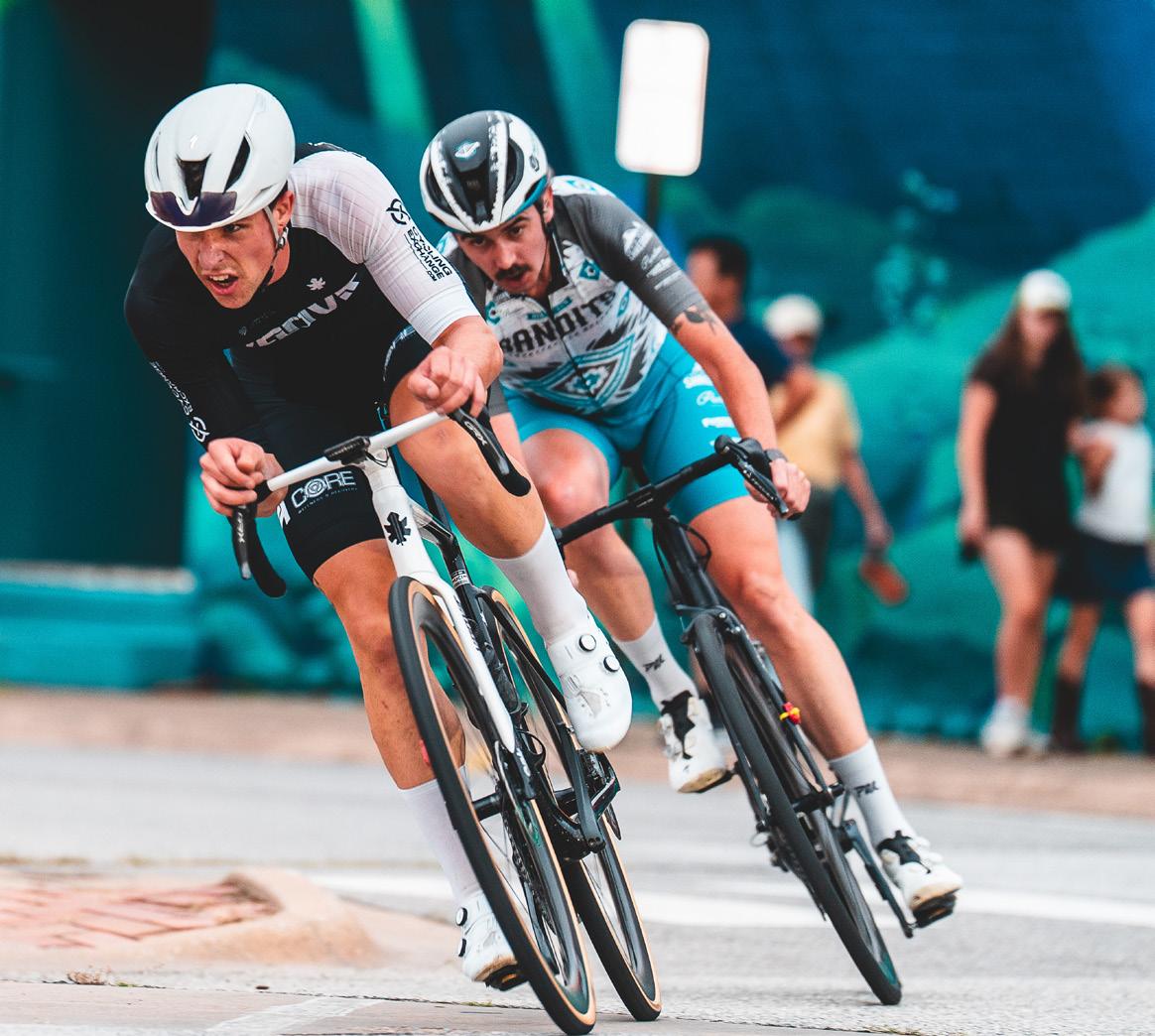
The Downtown Springdale Alliance announced in January that the Natural State Criterium Series will not be held in 2026.
Since its launch in 2021, the mid-week professional and amateur cycling event has grown into a signature summer experience in downtown Springdale. Over five years, the series attracted athletes and spectators from across the region and a very lucrative prize purse for a mid-week criterium race.
According to a news release, the decision was made based on financial factors and the rising costs required to continue producing a safe, high-quality downtown sporting event at the level the community has come to expect.
“We are very proud to have hosted the Natural State Criterium Series in Springdale and to have seen it grow into one of the largest mid-week criterium races in the region,” said Paxton Roberts, executive director of the Downtown Springdale Alliance. “This event has showcased our downtown, our local businesses, and our community in a very positive way.”
›TRAIL NEWS
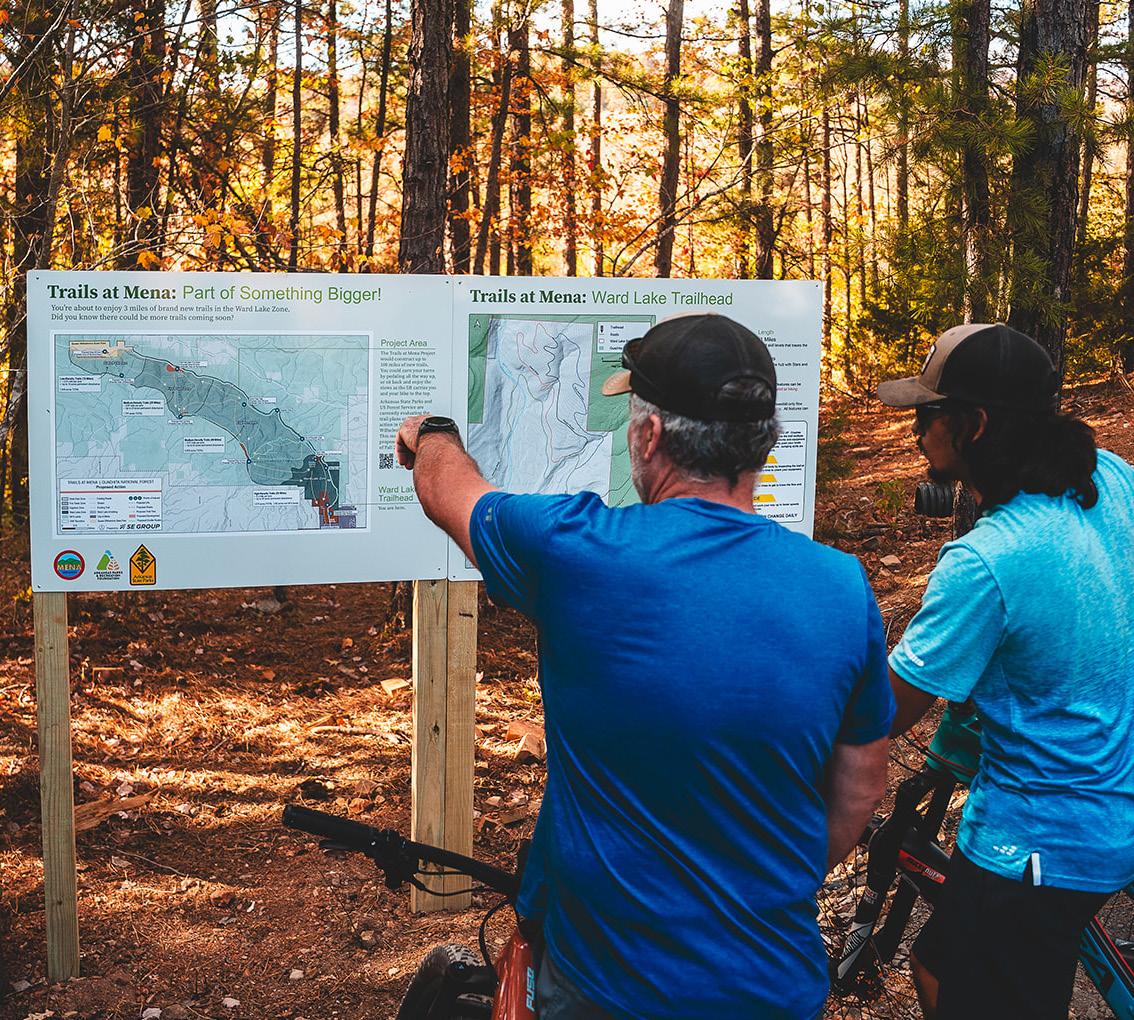
CONSTRUCTION BEGINS ON MENA BIKE PARK
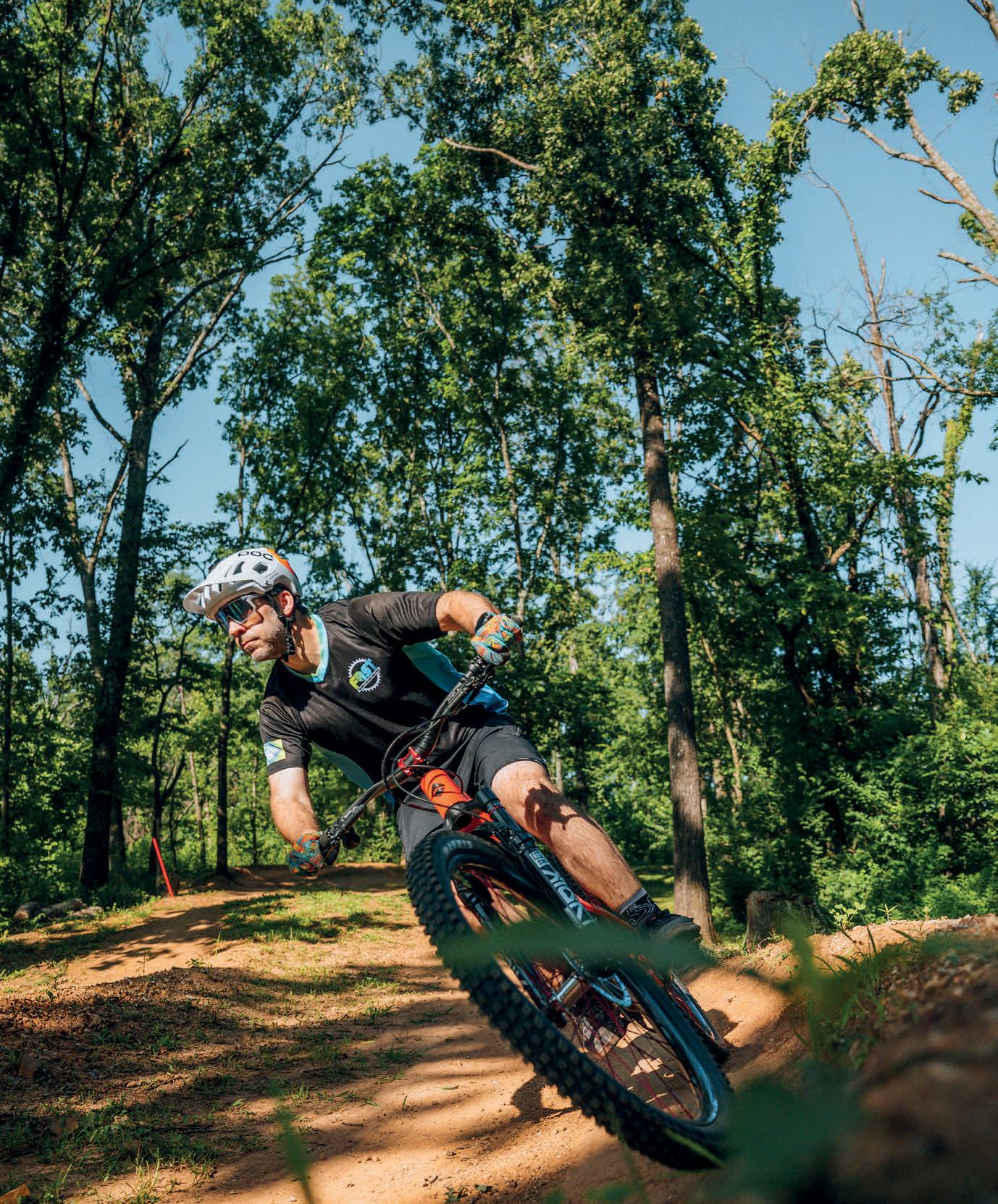
Phase one construction of the lift-served Trails at Mena park began in January.
The park will connect trails at Ward Lake to Round Top Mountain near Queen Wilhelmina State Park. The project is led by Arkansas State Parks, KINCO Constructors is the construction manager, and collaborators include the city of Mena, the US Forest Service and Queen Wilhelmina State Park.
The lift system will be more than a mile long, and the system is expected to be delivered this summer. Phase one will consist of more than 20 miles of trails and encompass about 13 acres, and should be complete by 2028. The trails will consist of beginner-friendly flow trails, advanced jump lines and hiking trails.
This first phase of construction will cost approximately $48 million. The money is coming from State Parks conservation revenues, capital improvement funds and Arkansas Natural and Cultural Resources Council grants, with some initial private funding through the Parks and Recreation foundation.
The Ward Lake Trails opened in 2024 and are temporarily closed while the trail system is expanded. Riders are encouraged to use the recently upgraded trails at Queen Wilhelmina while the construction is ongoing.
KAI CADDY
›SHOP NEWS
ANZALONE FAMILY TAKES OVER MOJO
After a decade under its previous ownership, Bentonville’s Mojo Bike Shop has been sold to Holly and Randall Anzalone.
David Neal, who acquired Mojo in the early 2010s, helped grow Mojo alongside Bentonville’s rise as a nationally recognized cycling destination. When it came time to step away, Neal was intentional about who would carry Mojo forward.
“The decision wasn’t about selling a business,” Neal said. “It was about finding the right people. The Anzalone family shares the same passion for cycling and the same people-first values that Mojo was built on.”
Holly and Randall Anzalone bring deep roots in cycling culture, with strong ties to youth development, racing and grassroots riding communities.
“We see Mojo as something to care for, not reinvent,” Holly Anzalone said. “Our focus is honoring what’s been built and ensuring Mojo remains a place where everyone feels welcome on a bike.”
Mojo Bike Shop will continue operating under the same name, with the same team and community-driven spirit that riders have trusted for years.
NORTHWOODS TRAILS ANNOUNCES EXPANSION
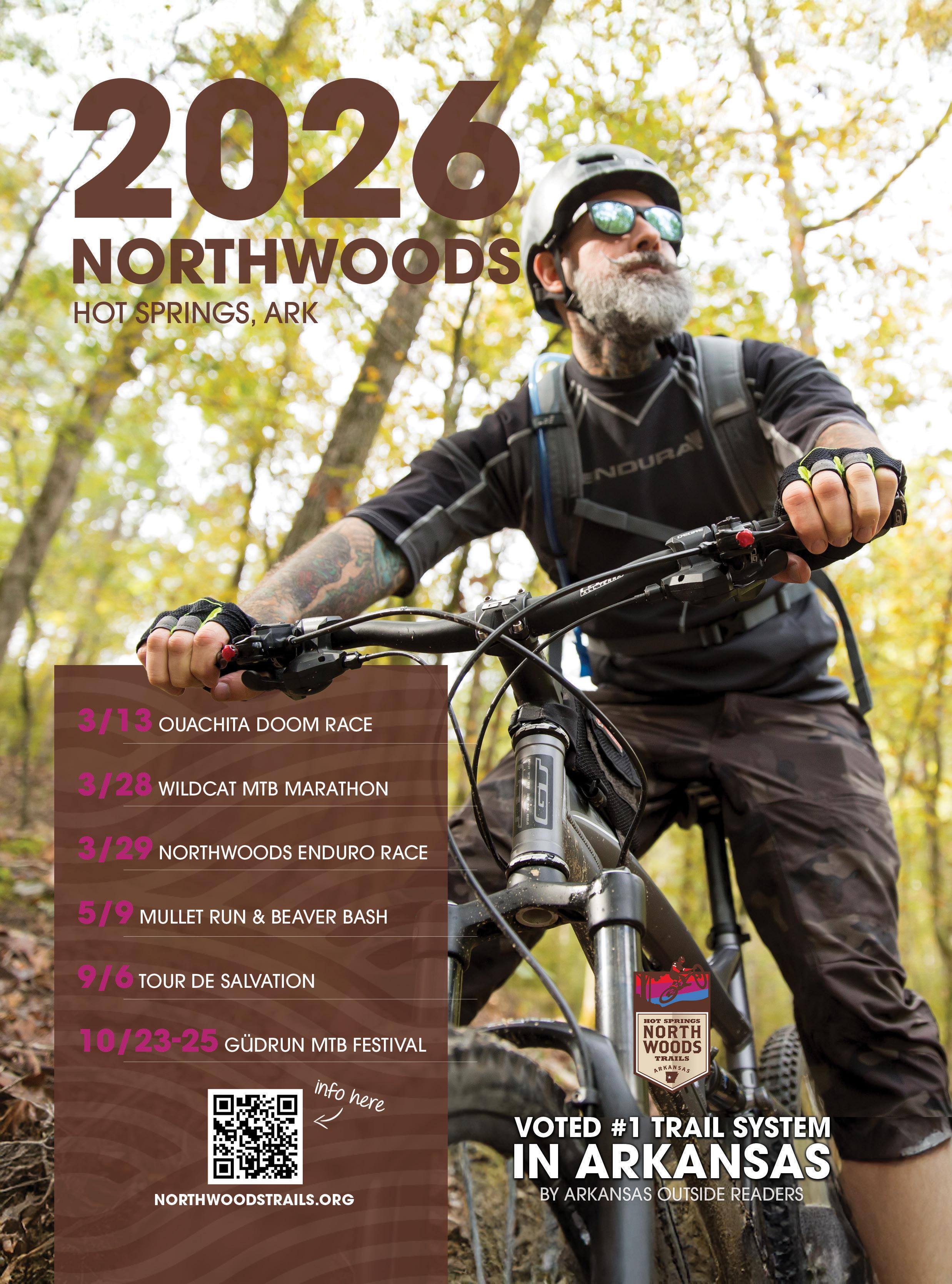
A $350,000 grant from the Oaklawn Foundation will allow Hot Springs’ nationally recognized Northwoods Trails System to expand.
“We are beyond grateful and excited for the Oaklawn Foundation grant award and what it will allow us to accomplish within an already amazing amenity for our community and visitors,” Northwoods Trails coordinator Traci Berry said. “We are stoked for the community ownership this has the potential of creating.”
Berry said the grant would fund four projects, including the expansion of the trail system around Sanderson Lake, the last of the three lakes on the 2,000-acre city property to have trails developed around it. The grant will also allow the upper two lakes on the property to be opened to limited non-motorized water activity. A kayak rental kiosk for water recreation use will also be added along with a redesign and re-print of all trail signage, with the addition of water trail signage.
“The Oaklawn Foundation is proud to support the Northwoods Trails expansion, an investment that strengthens our community’s access to outdoor recreation and promotes healthy living for young and old, improving the quality of life for the residents of Garland County,” Briana Moore, chair of the Oaklawn Foundation Board, said.
Affordable Trail solutions will handle the trail building. The expansion will add nearly eight miles of trails, bringing the network to 40 total miles of trails. The plan also includes another mile of double-track that will be open to mountain biking, hiking and trail running.
Berry said the project around Sanderson Lake includes two miles of green trail on the west side of the lake and four miles of blue trail to the northeast and east side of the lake, as well as 550 linear feet of wider UTV trail for staff and emergency services to access the east side of the Sanderson Dam from Snakehead Drive.
RIGHT AT HOME
BENTONVILLE PROVIDES AN UNEXPECTED WELCOME.
BY LAUREN PICKMAN
The first time my kids rode their bikes to school in Bentonville, I knew something in my life had shifted. Not just geographically – but fundamentally. I stood at the end of the driveway watching them pedal away, backpacks bouncing, confident and carefree. As a girl raised in New Jersey who spent half her life in California, this wasn’t a moment I ever expected to experience in Arkansas. And yet, here we were – home.
Ten years later, I say it without hesitation: I’m proud to be an Arkansan.
We arrived in Bentonville in 2018, originally for work, after moving Allied Cycle Works from Little Rock. At the time, I couldn’t have predicted how deeply this place would shape my family, my career, and my sense of purpose. What I’ve come to learn is that Bentonville has a quiet way of welcoming you in — through trails instead of traffic, neighbors instead of noise, and a community that shows up again and again.
My two boys grew up here on bikes. From those first rides to school — kindergarten and second grade — to now disappearing down singletrack straight
from our front door, they’ve been given a childhood rooted in independence, movement and trust. They’re thriving in school, grounded in their community, and learning early that joy doesn’t have to be complicated.
People often describe Bentonville as a small town with big-city amenities, and that’s true. But what makes it special is how seamlessly those amenities weave into daily life. Excellent schools. World-class museums that are free and accessible. A brand-new forward-thinking medical institution. A town compact enough that nearly everything is 10 minutes away — by car or by bike.
It’s a place where kids can safely ride into town for a $1 ice cream cone and then head straight to some of the best mountain biking in the country. That kind of access –to nature, culture and connection – is rare. And it doesn’t go unnoticed.
To me, Bentonville feels designed — intentionally or not — for people to live healthier, happier lives. As a five-year cancer survivor, I feel that deeply. This town supported my healing in ways both visible and subtle: movement built into
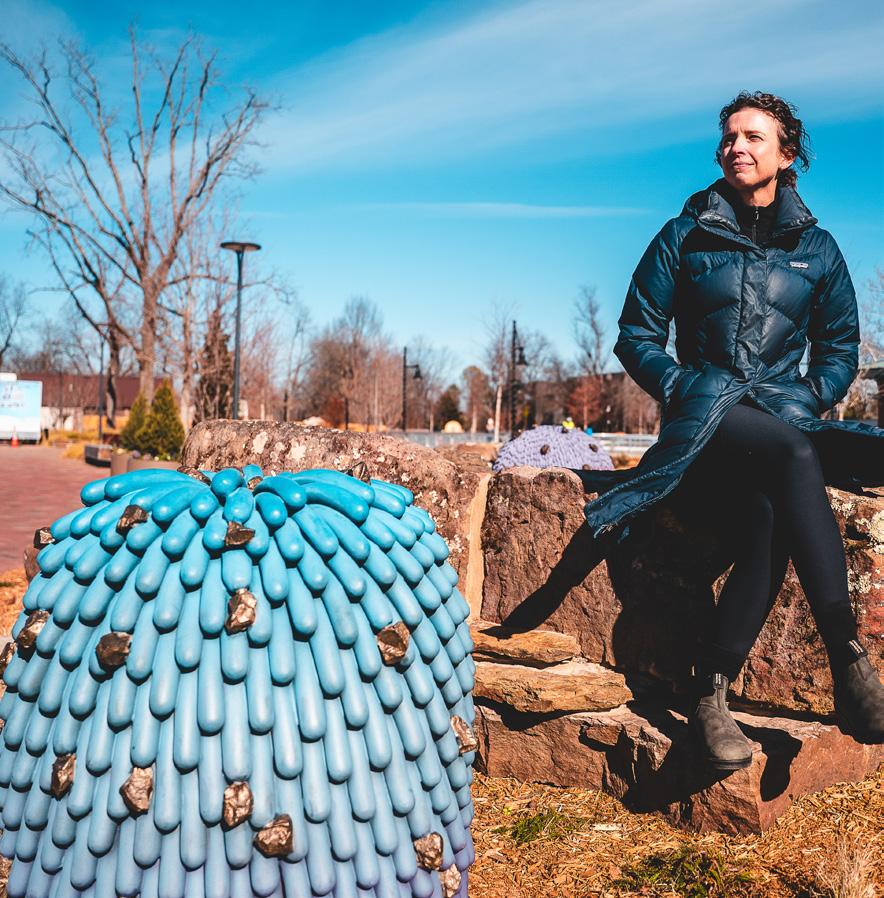
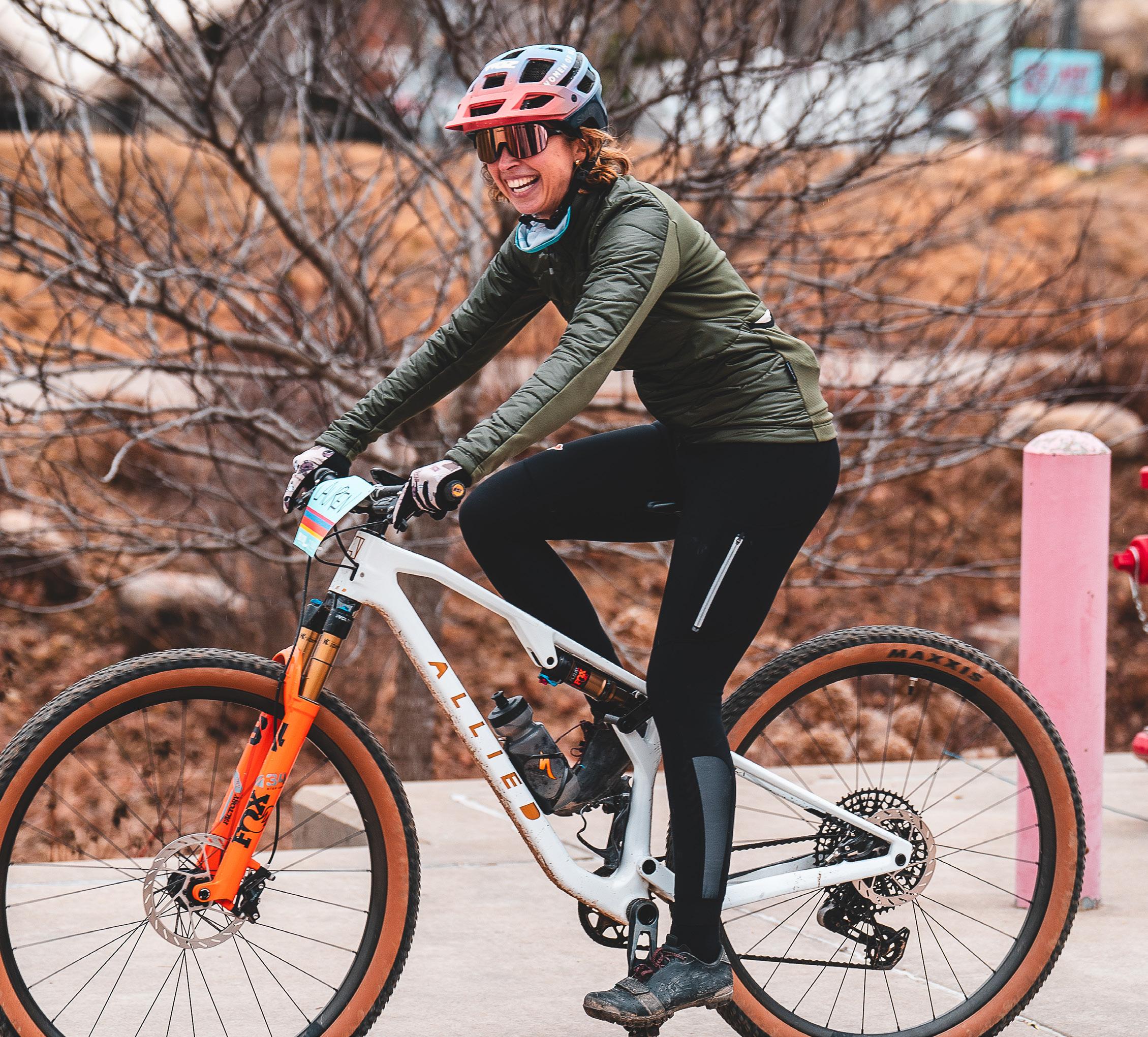
Lauren Pickman loves the community in Bentonville.
KAI
CADDY
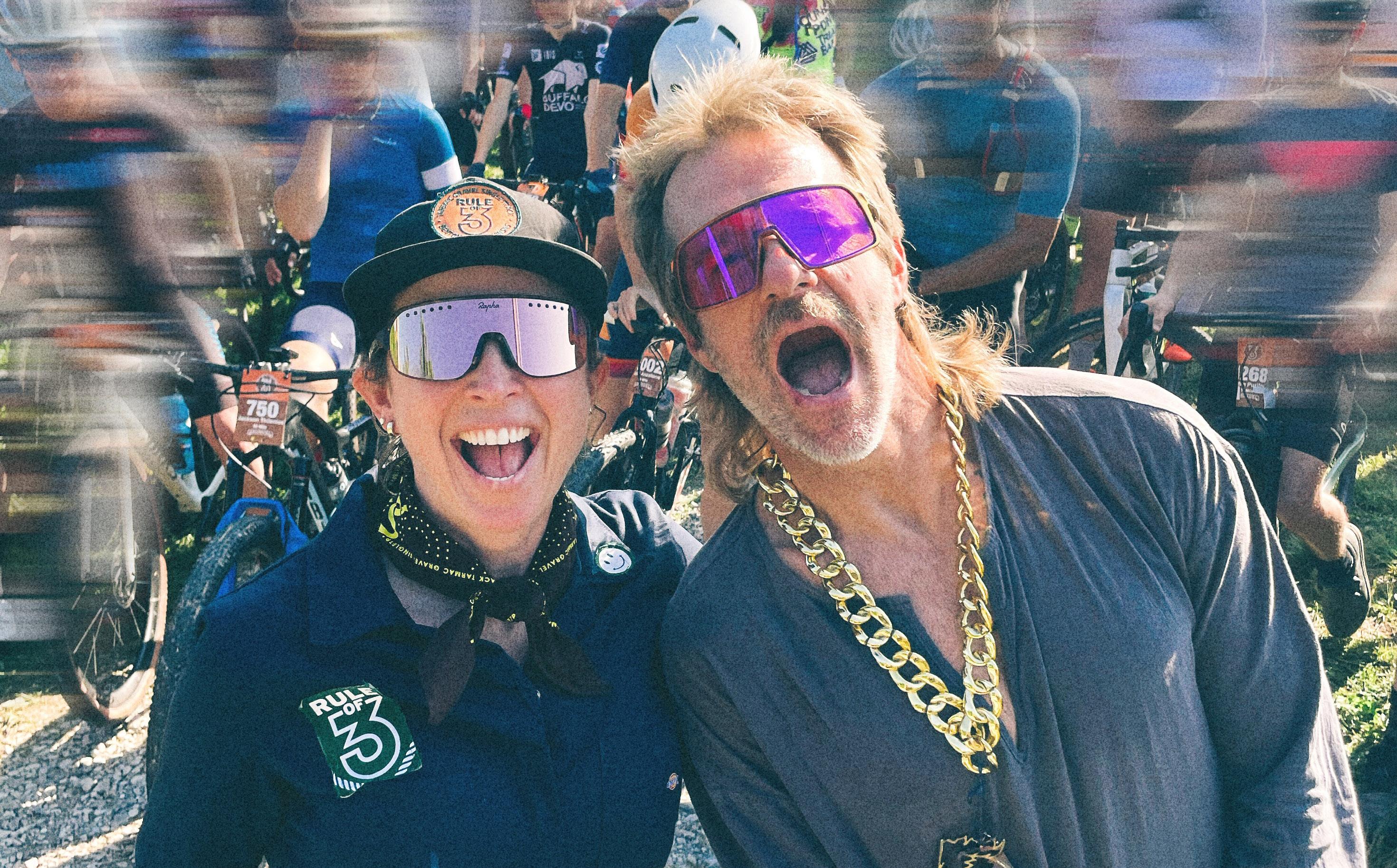
daily life, neighbors who check in, trails that offer both challenge and peace. Bentonville isn’t just where I live — it’s where I plan to stay. Over the years, my professional life has grown alongside this community. I’m a co-founder of Women of OZ, a women’s mountain bike club built on inclusivity and connection, and Rule of Three, an epic cycling race that blends tarmac, gravel and singletrack into one unforgettable experience. My friend Andy Chasteen and I run this event together along with two other events. But the one event in particular captures the heart of Bentonville better than anything else we do.
It’s called The Rule of $3.99.
What started as a simple January group ride — originally called The Rule of Free — was meant to bring people together in the dead of winter. Ride bikes. Push a little. Laugh a lot. End with food and drinks. Participants even
received guaranteed entry into Rule of Three before registration opened to the public.
After the first year, we noticed that if the weather dipped below freezing, attendance plummeted — but we had a huge waitlist. So we tried an experiment. Our second year we charged a registration fee, then refunded riders on event day — minus the $3.99 processing fee required by BikeReg. If you didn’t show up then, we’d donate every dollar to a great non profit here in town.
We posted the idea on Instagram, and a friend casually suggested something simple: What if everyone just donated their reg fee instead of taking the refund?
We didn’t push it. We didn’t promote it. But the community took it and ran.
That year, riders donated over $8,000 to Pedal It Forward. The next year, $12,000. Last year, $16,000.
“I’m a co-founder of Women of OZ, a women’s mountain bike club built on inclusivity and connection.”
Andy and I didn’t create that generosity. Bentonville did.
Those funds go directly back into the community — to people who need a bike to get to work, to a doctor’s appointment, or simply to experience the freedom and dignity that comes with reliable transportation. It’s not flashy. It’s deeply human. And it’s everything I’ve come to love about this town.
What began as a “free” ride became a reflection of who we are when we show up for one another. A reminder that kindness doesn’t have to be grand to be powerful. On any given morning in Bentonville, you’ll see it: kids pedaling to school, neighbors heading to work, riders disappearing into the trees. It’s not just movement — it’s a shared rhythm. And once you feel it, it’s hard to imagine living any other way.
What began as a “free” ride became a reflection of who we are when we show up for one another.
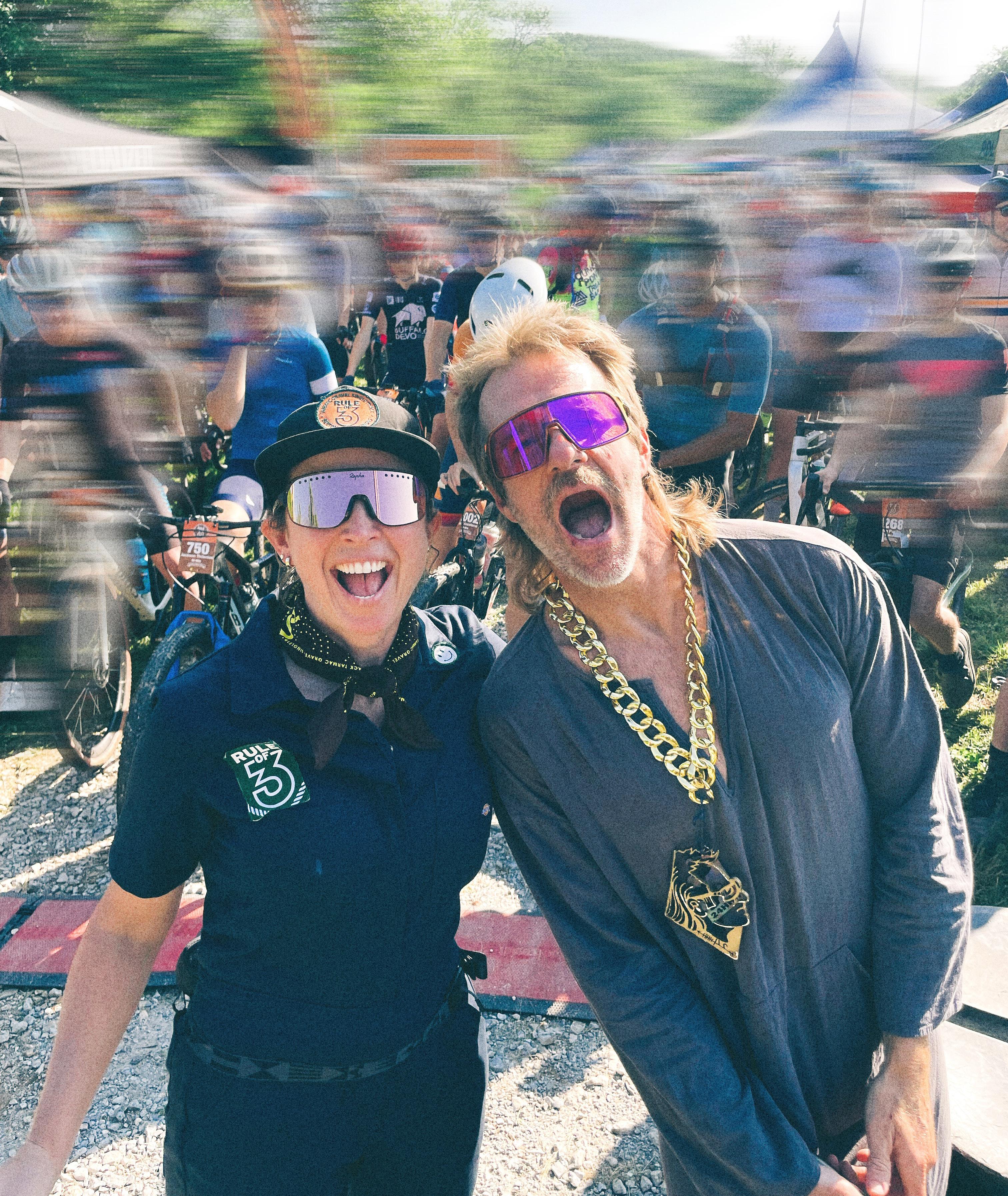
Pickman and Andy Chasteen celebrating at a Rule of Three ride .
COURTESY LAUREN PICKMAN, RULE OF THREE
GIVING CYCLING HEART IN HARRISON
KRIS ANDERSON’S
PSYCH BIKE
FOCUSES ON MENTAL HEALTH AND COMMUNITY.
BY KAI CADDY
HOW DID PSYCH BIKE START?
Psych Bike started by doing therapy outside — walking around on the trails doing that. And then it turned into doing it on bikes with three or four people. I’ve always had this dream of getting to work and ride a bike at the same time. It kind of picked up a little bit of traction. This was something we just did on the side, but when we went into private practice, we just full-on incorporated it. Psych Bike got its start that way. It turned into people asking, “Do you have a bike?” And then it turned into, “can you work on my bike?” Then it was, “I need a bike.” So then the bike shop started.
HOW IS THE MENTAL FITNESS TRAINING YOU OFFER DIFFERENT FROM TRADITIONAL THERAPY?
There’s this thing where when you do therapy like this (face-to-face) it’s like you’re being interrogated. When you do therapy shoulder to shoulder, when you do it with an activity, it’s just different, people talk differently. It’s a different kind of thing. When you’re doing this (face-to-face), it can get pretty intimidating. But when you’re doing shoulder to shoulder and you’re on a bike or you’re walking down a trail, it’s a completely different experience. And being outside, it just changes everything.
WHAT CHANGED THE CYCLING CULTURE IN HARRISON?
We needed trails. So basically we were going to Ponca, we were going to Eureka Springs. We were going to Branson, and we would do weekend trips with folks. We would go to Bentonville, and we’d get an Airbnb. We’d just ride and talk. No one was coming here to ride. They were coming here to go to Howler. They were coming here to go to the Buffalo Outdoor Center and coming here to go to Horseshoe Canyon Ranch, coming here to
go to Bentonville. And they’d come through, “Oh you’re the closest shop,” they’d stop and then they’d go. But nobody was staying here. That’s when talking about building trails in Harrison came about.
HOW DID THE NICA TEAM, THE BUFFALO RIDERS, COME ABOUT?
Part of getting funding for the trails was having a NICA team. They were looking for somebody to start the team. Chris Coleman
KAI CADDY
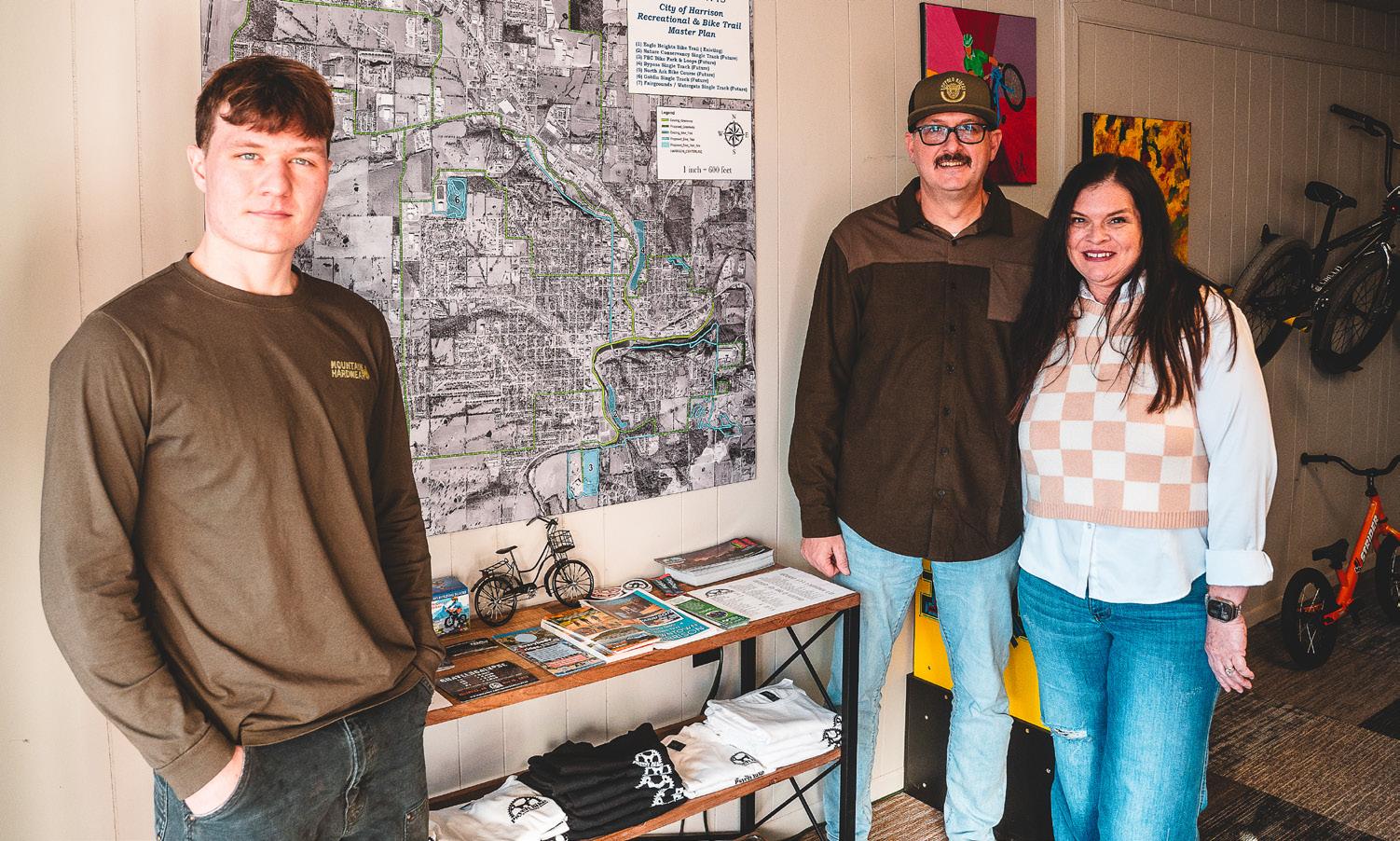
Psych Bike sits just off the square in downtown Harrison.
Psych Bike’s showroom will expand when the shop moves to a new space next door.
The Psych Bike team from
is mechanic Brantley Ray and owners Kris Anderson and Roni Combs.
and Chris Ross invited me to come to a HEART (Harrison Exercise, Adventure, and Recreational Trail Committee) community meeting to talk about this. They knew about the bike shop. They knew about the BMX team, and they were like, “Would you be interested in doing this?”
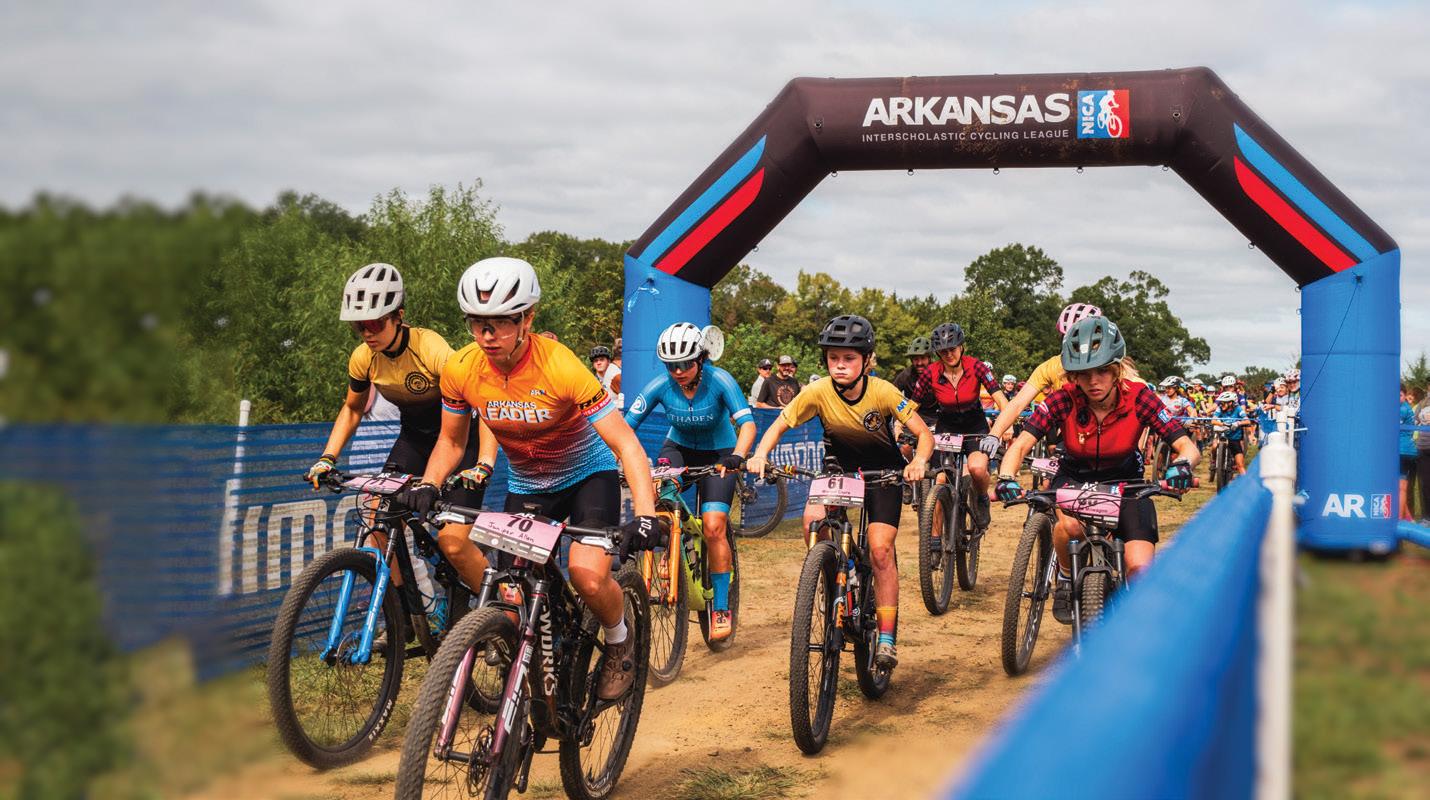
I don’t even think they got the whole question out before I was like, “yes.” I had a conversation with my wife and she was OK with dedicating time and resources to something like this. So, in 2023, I was the one who said, “Let’s shoot for 2024.” And literally two months later, we had a NICA team. We had
“When a NICA race comes to Harrison, that’s 800 to 1,000 kids plus their families. That’s a huge economic impact for this little city. We sold out almost all of the hotel rooms.”
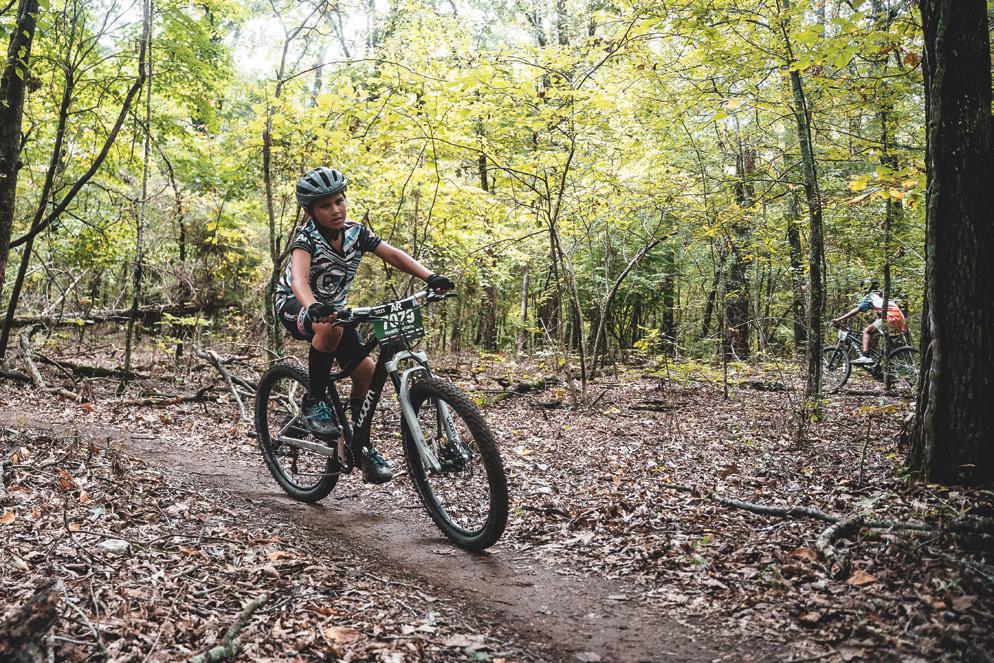
sponsors, we had a logo. Within two months, we had a dang NICA team. We had a tryit-out day and a bunch of kids showed up. I think we had around 10 NICA students for the first year. We had the time trial here that first year, it was an overwhelming success. One of the things I’m proud to say when it comes to NICA is the way that our community showed up to volunteer — they had to turn away volunteers at our NICA event. The city was so behind it. There were people that showed up to volunteer that had nothing to do with us, had nothing to do with the team. They just saw the thing to volunteer
left
KAI CADDY
COURTESY
PSYCH BIKE
and came to help.
When a NICA race comes to Harrison, that’s 800 to 1,000 kids plus their families. That’s a huge economic impact for this little city. We sold out almost all of the hotel rooms. It’s not the same when NICA goes to Fayetteville. But if you come into a small community like this, it makes a difference..
WHAT ROLE DOES THE SHOP PLAY WITH THE TEAM?
When Terry Coddington was talking to me about NICA, he called it youth development on two wheels, that was all he had to say. He wasn’t talking about winning races. He was talking about youth development, about being good human beings. He said you don’t need coaches that can ride bikes. You need coaches that are good human beings. So I was hooked from moment one. The bike shop is very much a part of the NICA team. It’s kind of a central hub. It’s a recruiting place. It’s a place where they come to meet. It’s exactly what we want it to be.
“When Terry Coddington was talking to me about NICA, he called it youth development on two wheels, that was all he had to say. He wasn’t talking about winning races. He was talking about youth development, about being good human beings. . ”
You can kind of tell I don’t separate the bike shop and the team, because they’re very connected. We are a composite team, so we’re totally at the whim of our sponsors. I don’t really have to hit the road and ask for sponsorships. We have the same sponsors from the first year. They re-up every year. And I have new people that have reached out.
WHAT’S YOUR GOAL WITH THE SHOP?
I’m an old BMX guy. I grew up in Pine Bluff. There was a guy in Pine Bluff, his name’s Tony Carew, and he’s the bike guy in Pine Bluff. For any Gen Xer or my age, everybody knows Tony Carew. And he built a BMX track in his yard. Pine Bluff had a pretty hot skateboarding and BMX scene in the ’80s. We had a
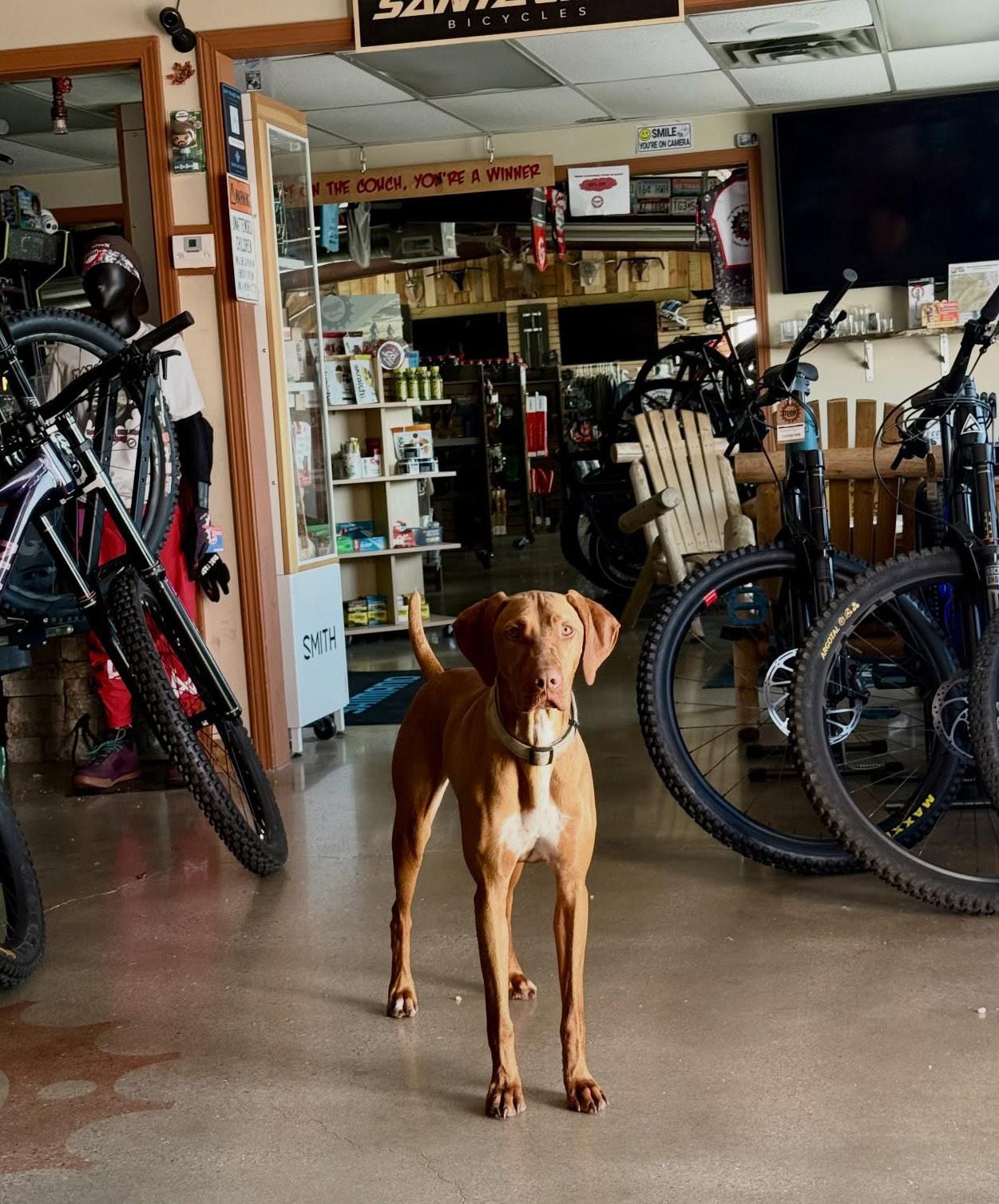
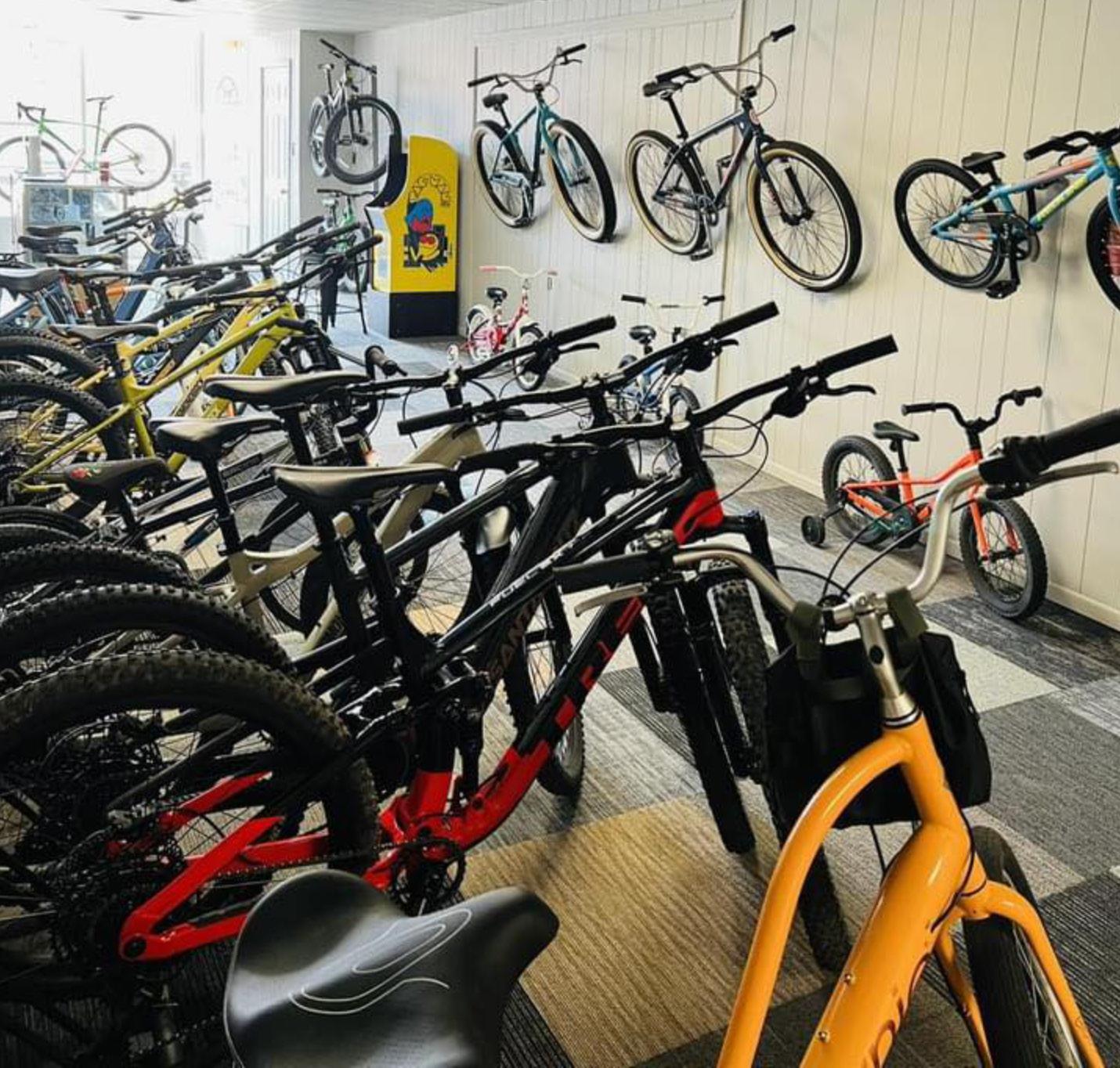
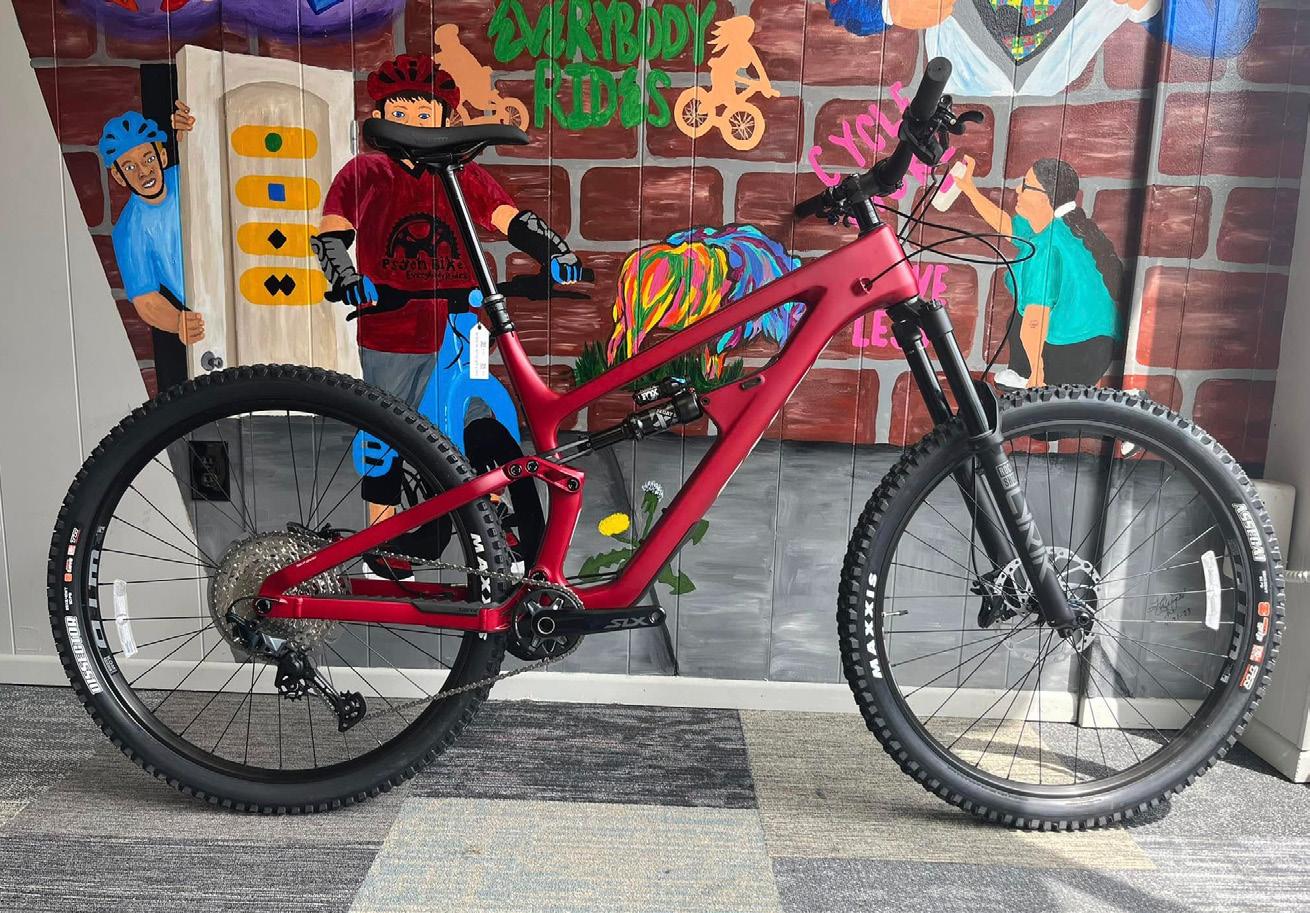
Psych Bike carries a wide range of mountain bikes.
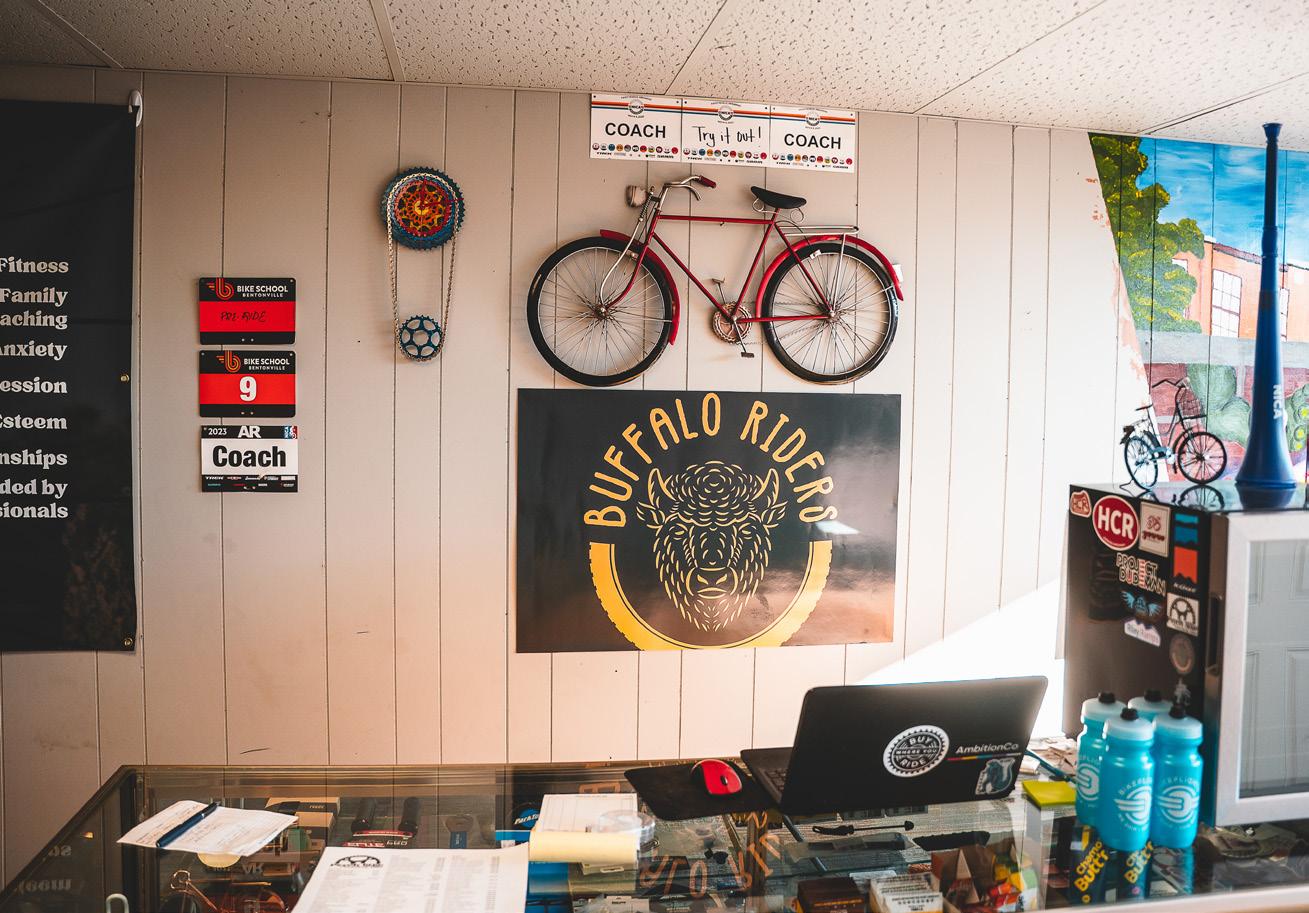
Anderson and Combs coach the NICA team and memorabilia is found throughout the store.
bike shop in town and it was called Skate and Surf Connection. It was a place where we hung out — where we drooled over the stuff that was in the shop. They would put on competitions and races. So there was a nice culture in Pine Bluff when I was a kid.
So, with Psych Bike, I try to make the bike shop like that for the riders in town. I try to make it a safe space, try to make a place where they can hang out. That’s why we’re getting a bigger spot because there’s just no room in that one we’re in right now.
“We do a little three-mile rides. It’s about attracting people to cycling that didn’t do it before. These are people getting on bikes for the first time and mostly a lot of kids .”
WHAT’S THE HARRISON CYCLING COMMUNITY LIKE NOW?
The cycling community has grown. We’re not really catering to the established riders. They’ll bring their bikes in for service, most definitely. But our little community group rides, that’s not even a warm-up for the experienced riders. We do a little three-mile ride on the weekends. It’s about attracting people to cycling that didn’t do it before. These are people getting on bikes for the first time and mostly a lot of kids.
There’s a crossover into hunting and fishing with e-bikes because they used them for hunting. They’re quieter than a four-wheeler. We got to set up at this outdoor expo and I showed up at this thing with a bunch of camo Handup gear, and folks loved it. But those e-bikes for hunting are a big crossover. I sell a lot of e-bikes to hunters.
The e-bikes are very controversial. But they’re also a crossover for connecting people to get on bikes.
WHAT’S THE FUTURE OF PSYCH BIKE HOLD?
The future is next door — more space. When I get the Buffalo Riders in here for a clinic, you see how cramped it is. The future is these trails. The trail building is on autopilot. We just step back and just let it happen. So the future is now focusing on the mental fitness portion of this bike shop and trying to get as many people involved, practicing mental fitness. Gratitude, for example, is a skill we learn. One of the mental fitness skills that we teach is learning to practice gratitude, and it’s finding something that you’re grateful for every day.
›TOP GEAR
Warm up to the Ride
As spring arrives and more outdoor time awaits, we asked several riders what gear they’re excited about taking out on the roads and trails this year.
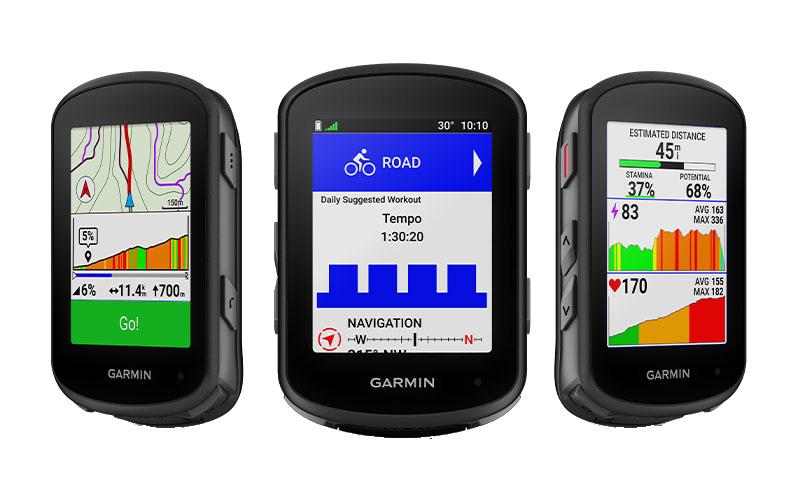
GARMIN EDGE 540
Garmin’s newest compact cycling computer is packed with features, including a slew of ways to keep you and your bike safe. Hazard alerts, reported by fellow cyclists, can keep you aware of stray dogs or giant potholes. You also have the ability to have the computer alert your phone if your bike moves while you’re in the coffee shop refueling. The Edge 540 is available at most local shops and garmin.com.
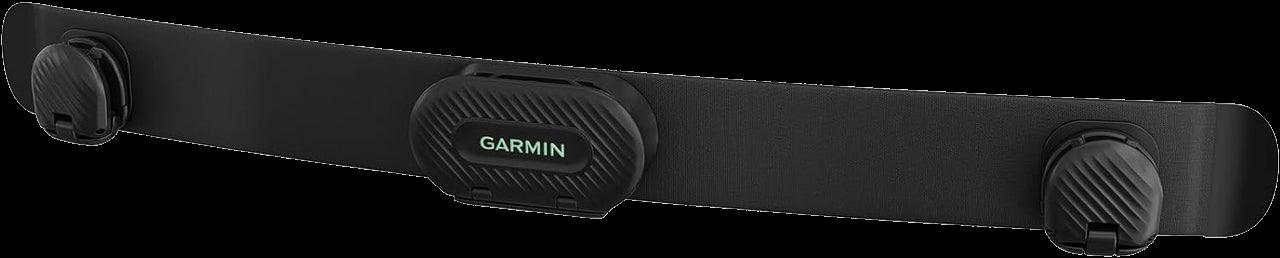
GARMIN HRM-FIT
Garmin’s heart rate monitor designed specifically for women clips onto sports bras so there’s no more fighting with a full strap. Did you forget your bike computer at home? No worries, this monitor stores some workout data if your device is out of range. Most local shops will have Garmin products, or shop online at garmin.com.
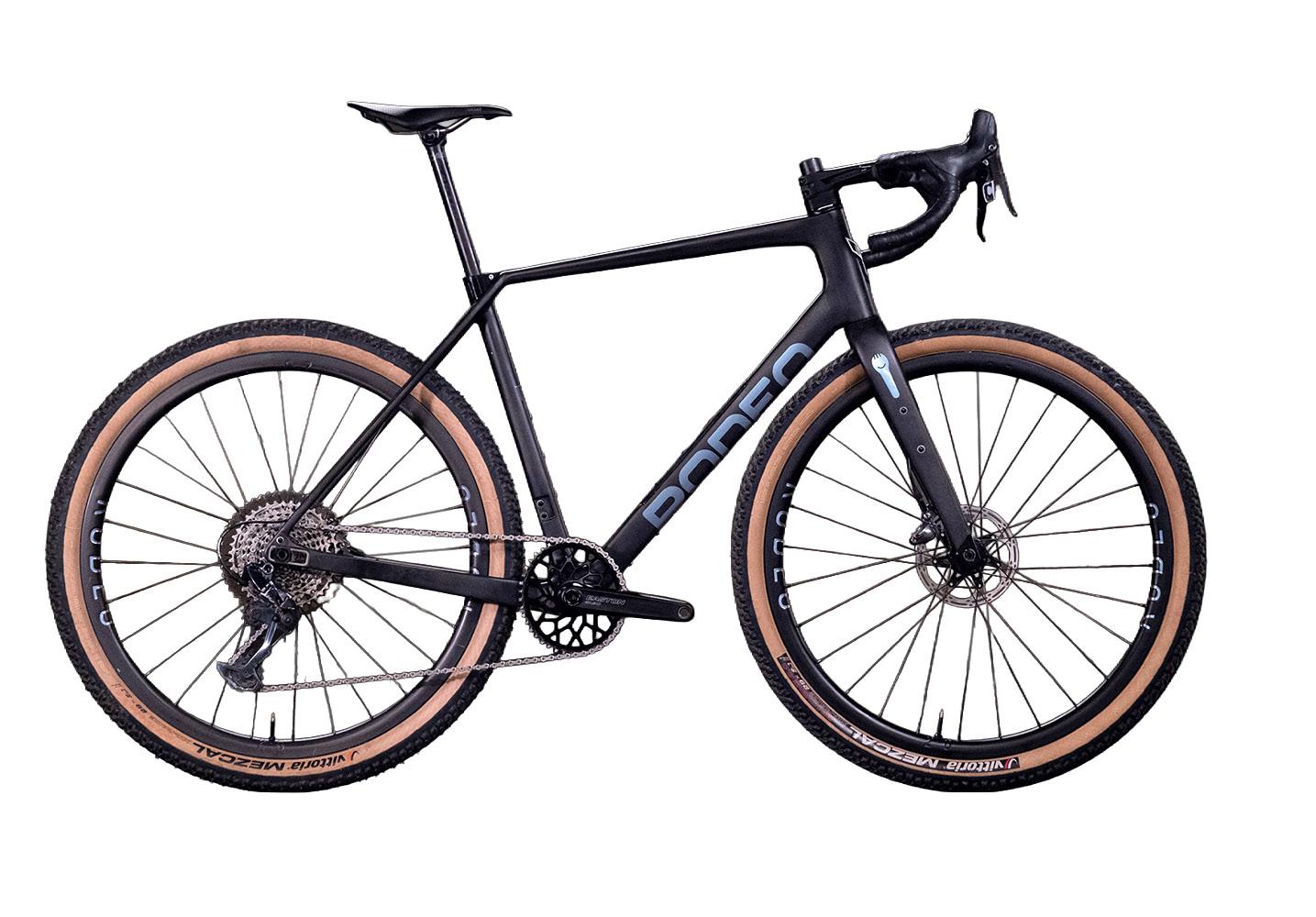
RODEO LABS
TRAILDONKEY 4.0
This bike is home at a fast gravel race or on your next epic bikepacking adventure. Heck, throw some skinny tires on it and you can even hold your own in a road group ride. Rodeo Labs offers four standard build kits or a frameset for full custom builds. You can spec yours out at rodeo-labs.com.
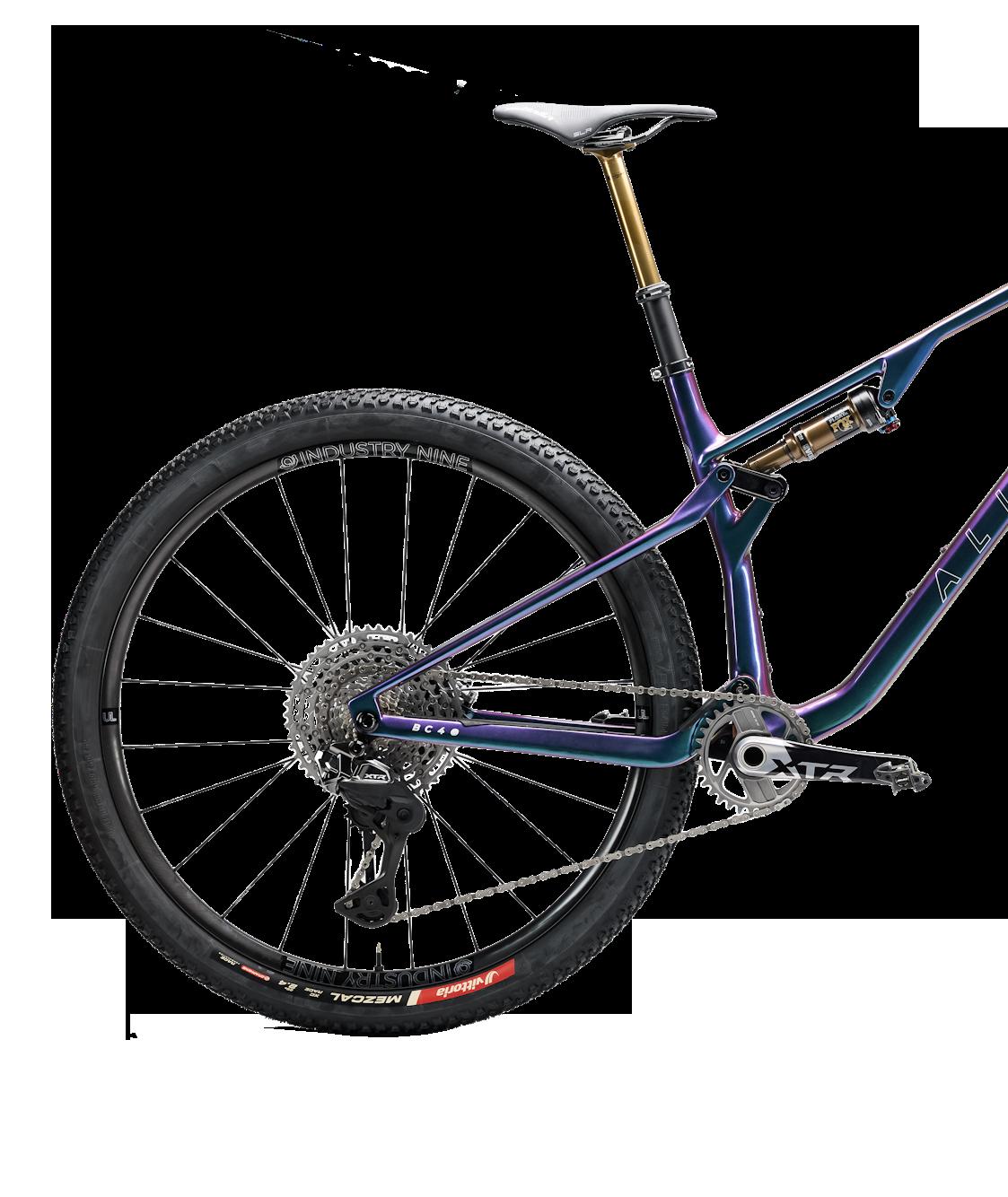
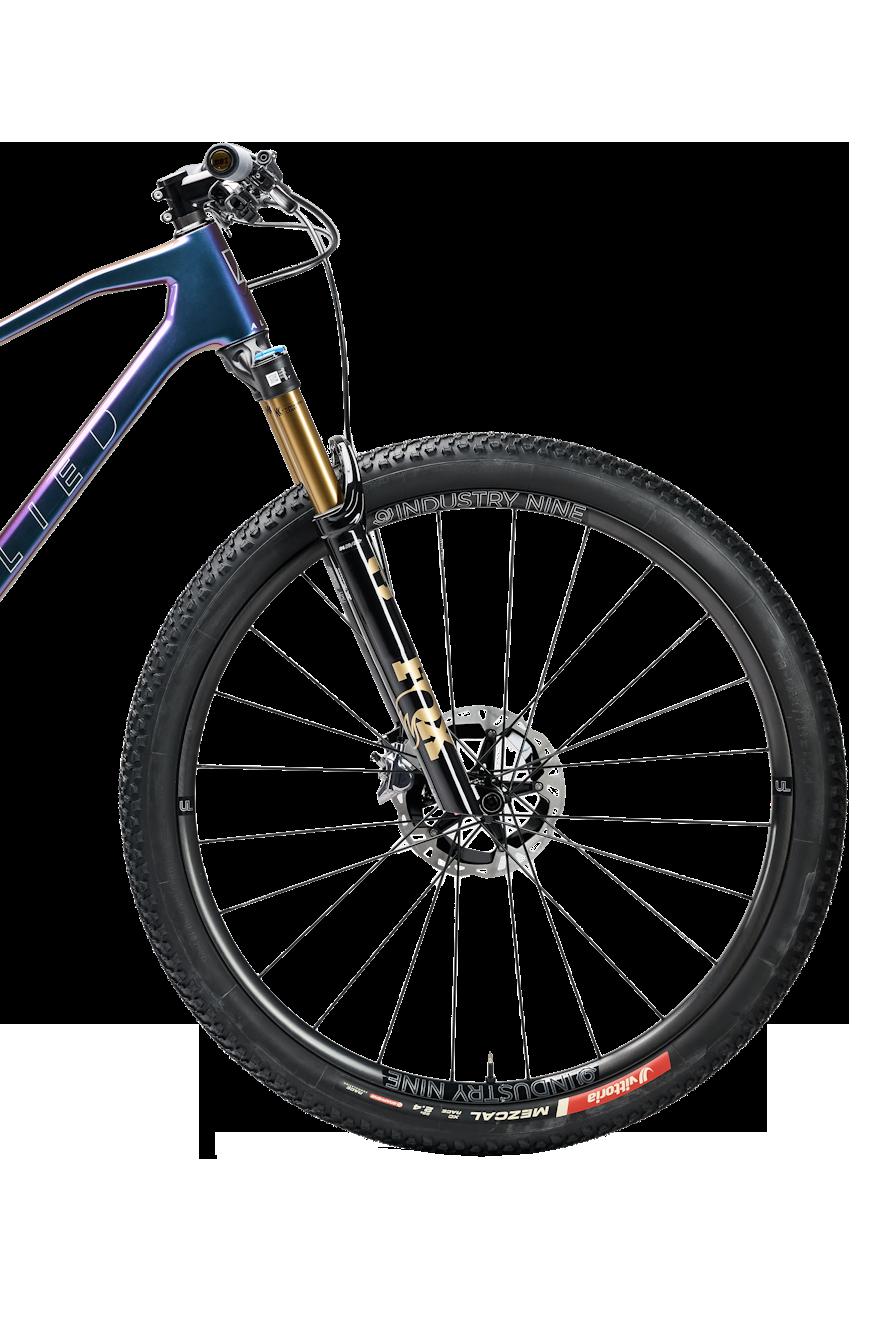
ALLIED BC-40
Kate Courtney piloted the Allied BC-40 cross country mountain bike to a women’s course record at the Leadville Trail 100 last year. It’s been raced at world cups and even ultra-endurance events and it was born in Northwest Arkansas. It’s available in five builds and two framesets. If you ask nicely, the folks at Allied in Rogers may even let you watch your bike be painted. Available at alliedcycleworks.com.
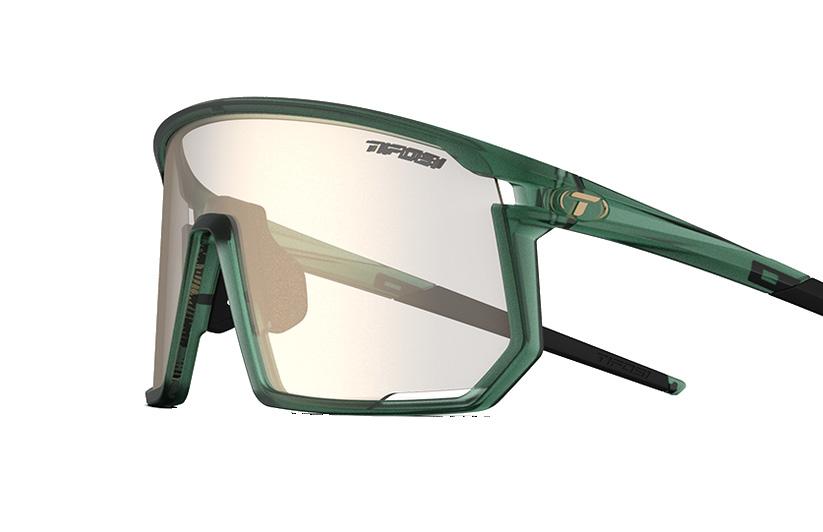
TIFOSI MOAB GLASSES
Photochromatic sunglasses have improved over the years, and these from Tifosi pack in a lot of features and are budget-friendly. These frames weigh just 31 grams. Tifosi’s Fototec lenses adjust with the light, making them an excellent choice for the ever-changing light of a spring ride. The lenses are also shatterproof, protecting you from debris. Ask your local shop or visit tifosioptics.com.
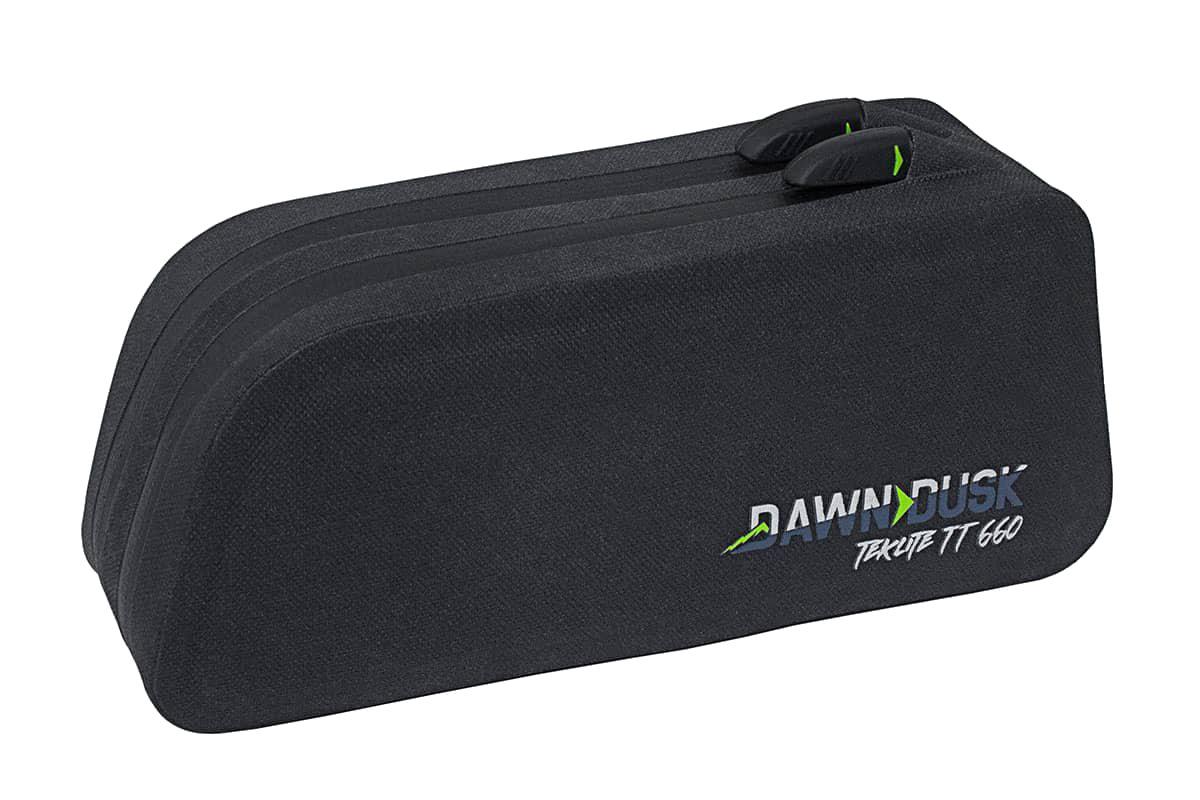
DAWN TO DUSK TEKLITE TT 660
This top tube bag has a fleece-lined, padded slot for your phone and 660 cubic centimeters of space for your essentials and snacks. You can bolt it to your top tube or use the included straps. It even has zipper garages to protect the zippers from dirt and grime. Find it at dawntodusk.bike.
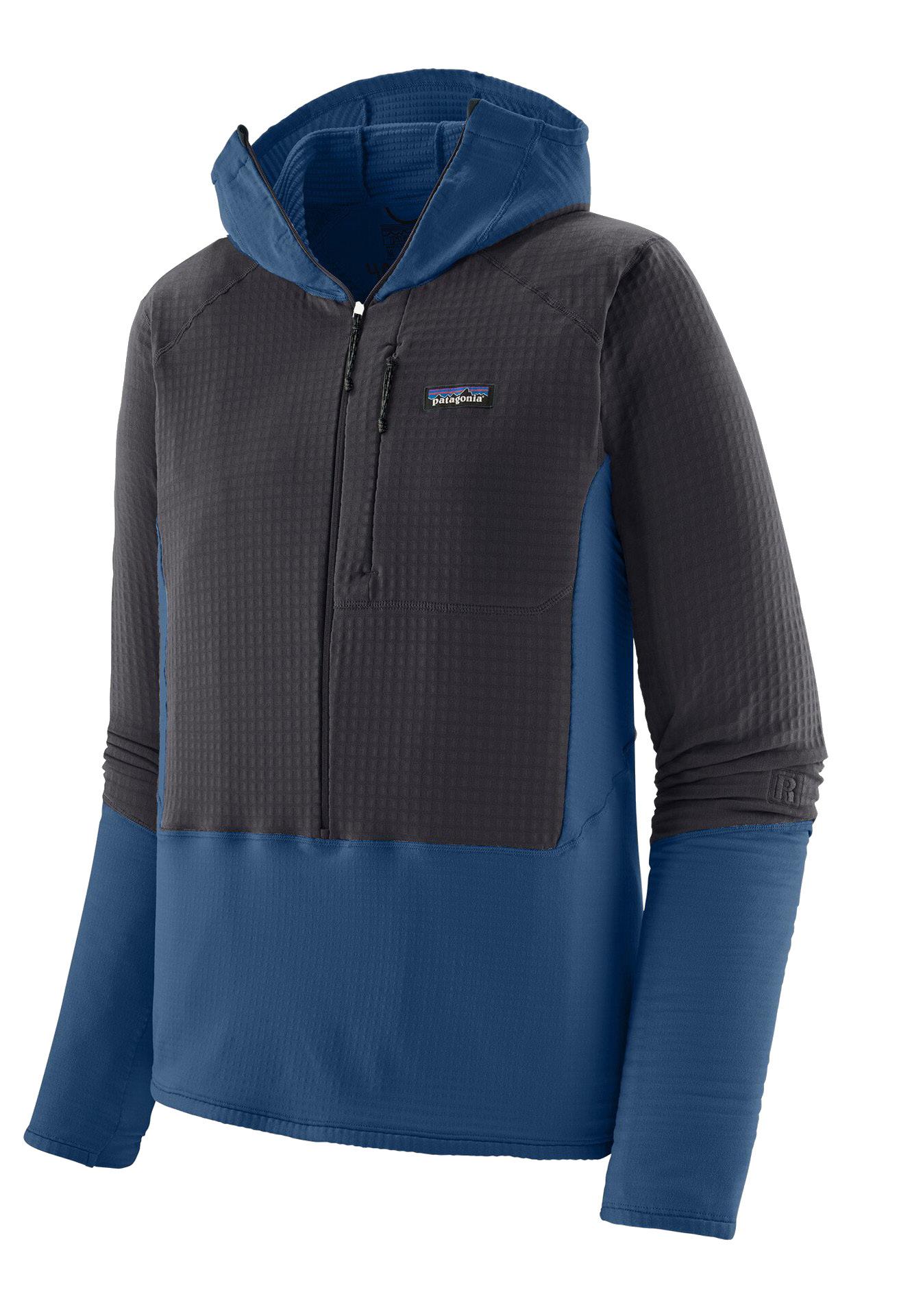
PATAGONIA R1 FLEECE PULLOVER HOODY
While spring means warmer days, it’s not summertime yet, there are still cool starts and ends to days. That’s where this hoody comes into play. A great piece to layer, it’s extra long so you won’t feel a draft on your lower back. And if the temps really dip, the hood zips up to cover your mouth, providing a little extra warmth. Find it online at patagonia.com.
THIS YEAR’S EDITION FEATURES THE MOST APPROACHABLE ROUTES YET.
BY
GRAVELER GOES DELTA THE
MICHAEL SPIVEY PHOTOGRAPHY BY KAI CADDY
This year’s Arkansas Graveler trades in the hills of the Ozarks and Ouachitas for the flat lands of the Delta.
GRAVELER
YEAR THREE: DELTA BLUES EDITION
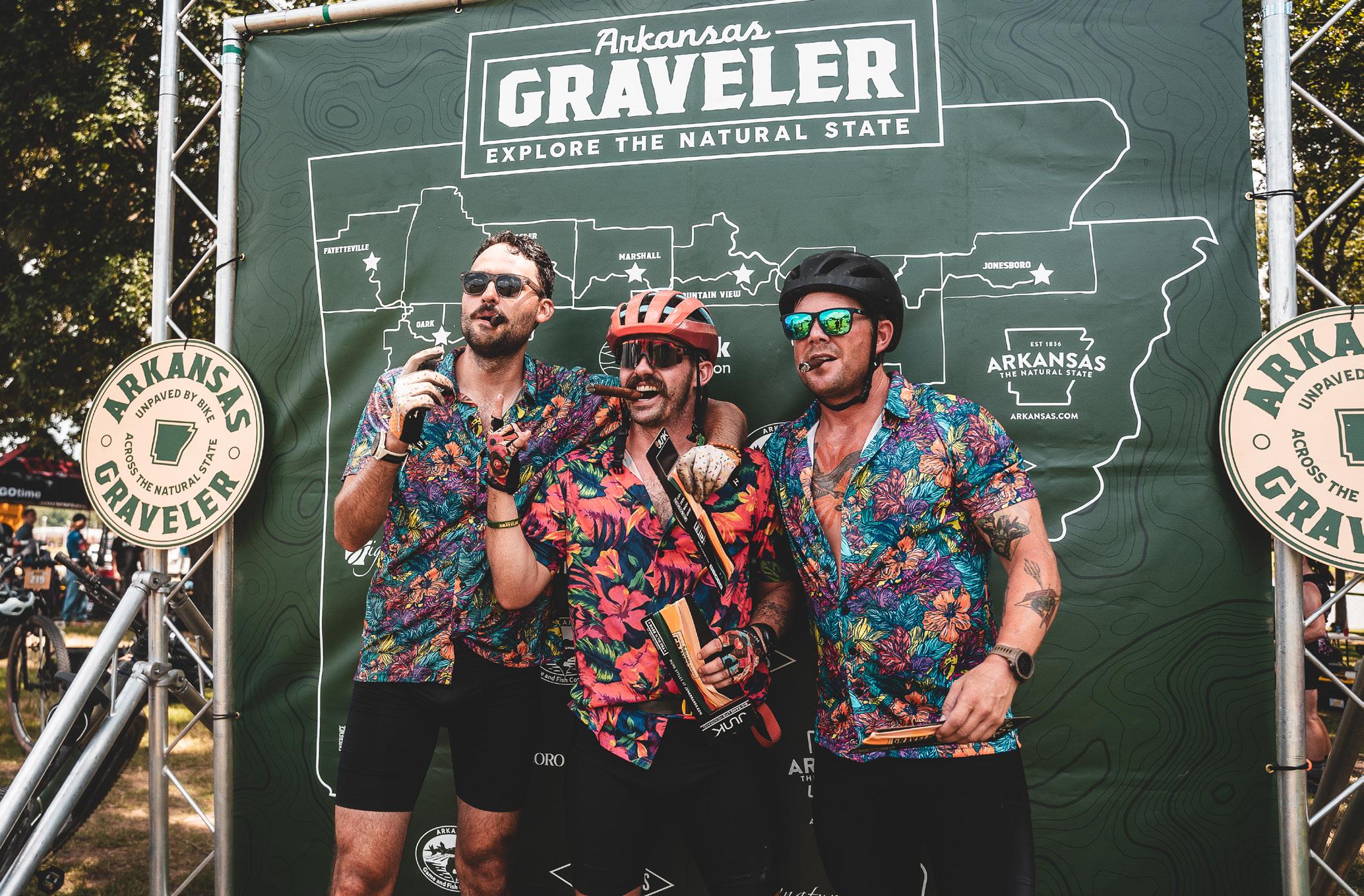
In October of this year, the Graveler heads to the storied Arkansas Delta — home to Johnny Cash, Levon Helm, Sonny Boy Williamson and generations of musicians who shaped American sound. It’s a land of the richest farmland in the world, legendary duck hunting, deep history and deeper soul.
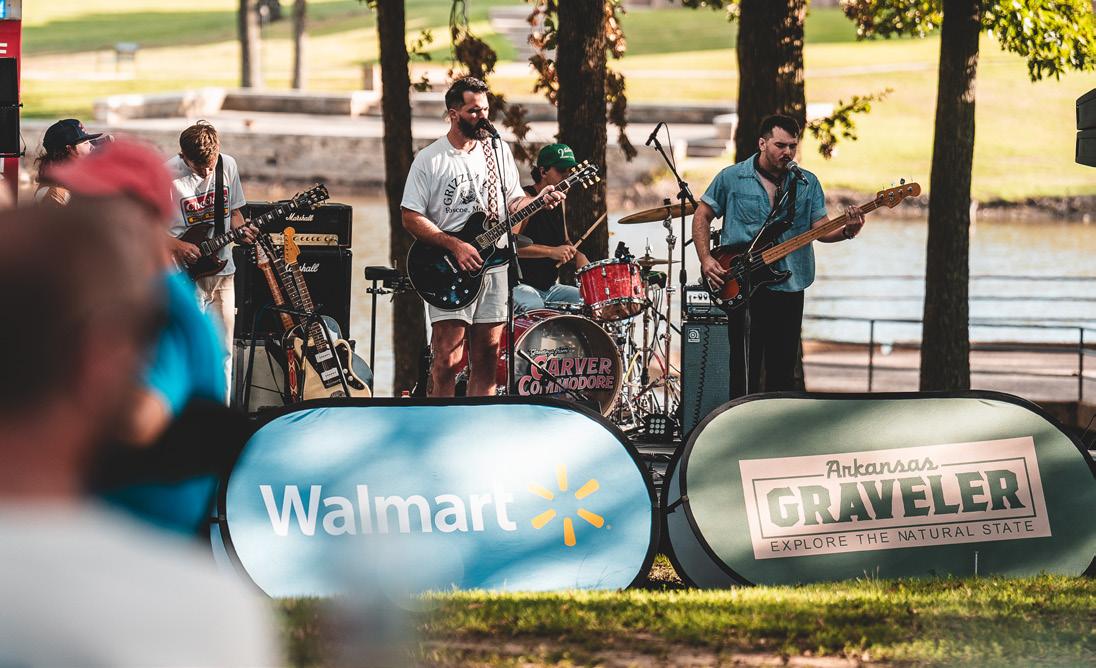
Gravelers will trade long climbs of the Ozark and Ouachita mountains for the wide-open flatlands of the Delta. Here, every mile carries a song, every meal tells a story and every day draws riders deeper into the heart of the South. The Delta Blues Edition is more than a multiday gravel ride — it’s a cultural journey blending amazing gravel roads, music, food and community into a powerful tribute to the Delta’s enduring spirit.
THE ORIGIN STORY
When we first conceptualized the Arkansas Graveler, our goal was simple but ambitious: to create the most unique and hospitable gravel ride in North America by fully capturing the spirit that defined gravel riding at its roots. We wanted to showcase the best of Arkansas — the quirky and the gritty — while taking participants to places in The Natural State few have ever experienced by bike.
Just as important, we wanted to take Gravelers back to a simpler time, when hard days’ work was rewarded with good food, hearty laughter and family celebration. With that in mind, we designed the Graveler as a blend of an old-fashioned Sunday social and summer camp, pairing unforgettable riding with off-bike experiences like archery, skeet shooting, fishing and nightly entertainment — all within an intimate, family-like setting. So, how do we keep this annual event fresh and unique? Year one explored the rugged Ozarks. Year two wound through the Ouachitas. By year three, there was only one place left to go. East.
There’s no ride more social than the Graveler.
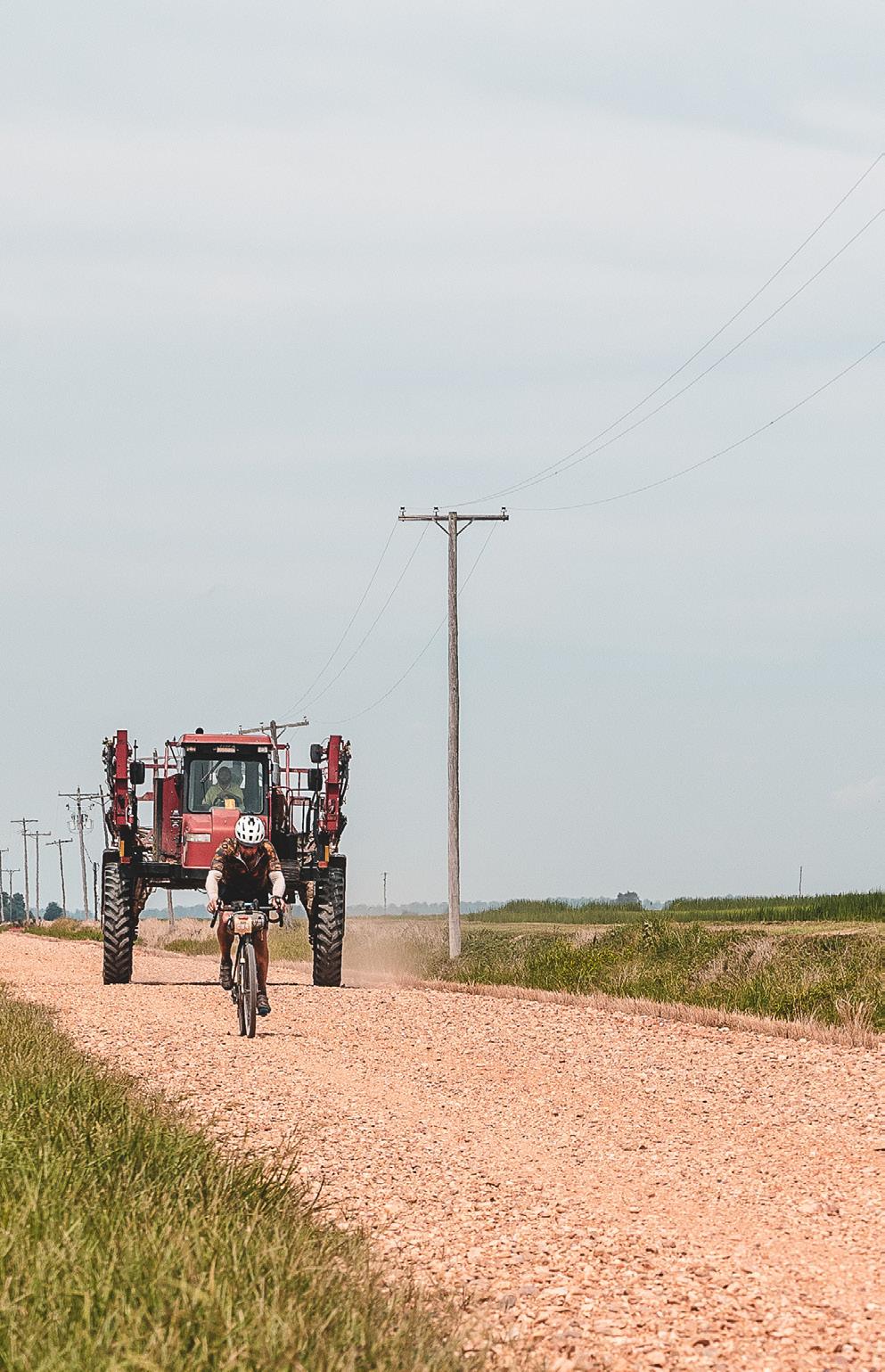
Riders may encounter a crop duster or two in the Delta.
A GENTLE RIDING EXPERIENCE
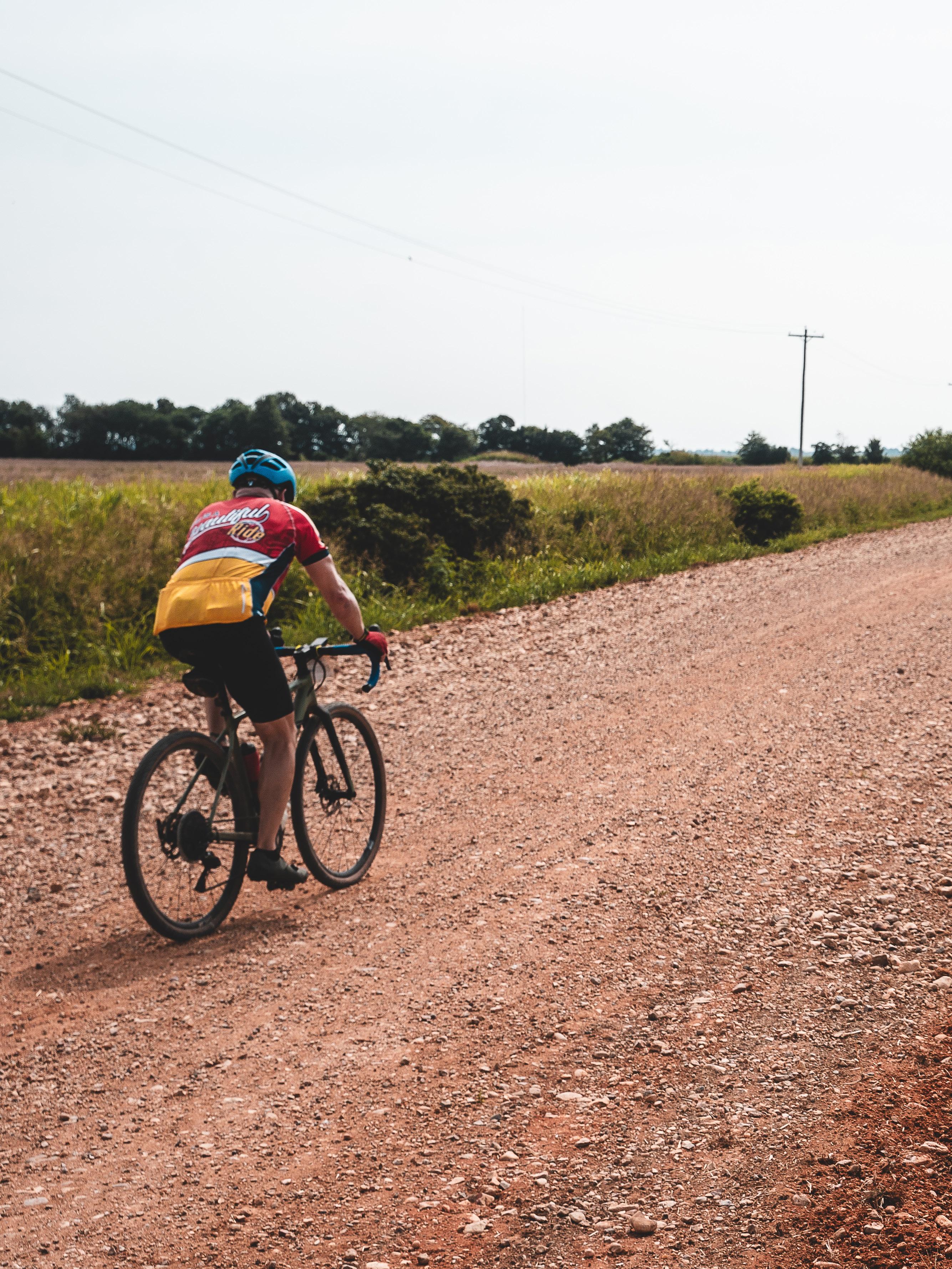
The Delta’s geography offers the most approachable riding the Arkansas Graveler has ever featured. Gravel roads stretch endlessly through fertile farmland along the Mississippi River, creating welcoming terrain for riders of all abilities.
Over five days, the route delivers remarkable variety. Beginning in Jonesboro, the home of the Arkansas State Red Wolves, riders will traverse levee systems with publicly accessible gravel maintenance roads along the St. Francis and Mississippi Rivers. The course includes sections of the TransAmerica Trail, the Delta Heritage Trail — America’s newest rail-to-trail development — and the Crowley’s Ridge Gravel Trail.
Crowley’s Ridge is one of Arkansas’s six distinct geological regions — a narrow band of rolling hills rising 250 to 550 feet above the surrounding Delta. The trail follows the ridge from Missouri to
This year’s Graveler route will cross the White and Arkansas Rivers.
Marianna before continuing south through the St. Francis National Forest to historic downtown Helena. Along the way, riders pass seven state parks, one national forest and 18 Delta towns.
Formed from wind-blown loess soil, Crowley’s Ridge bears the marks of centuries of wagons, farming and conflict. In places, 30-foot dirt walls are held together by the roots of native tulip trees — found in Arkansas only along this ridge.
Railroads once fueled the Delta’s growth, and their legacy now fuels new gravel opportunities. The Delta Heritage Trail State Park repurposes 85 miles of abandoned Union Pacific railway, connecting Lexa to historic Arkansas City while crossing both the White and Arkansas rivers on massive railroad bridges. Riding these elevated spans across wide, remote waterways will be a highlight of the week.
WHERE THE RIDING ENDS, THE FUN BEGINS
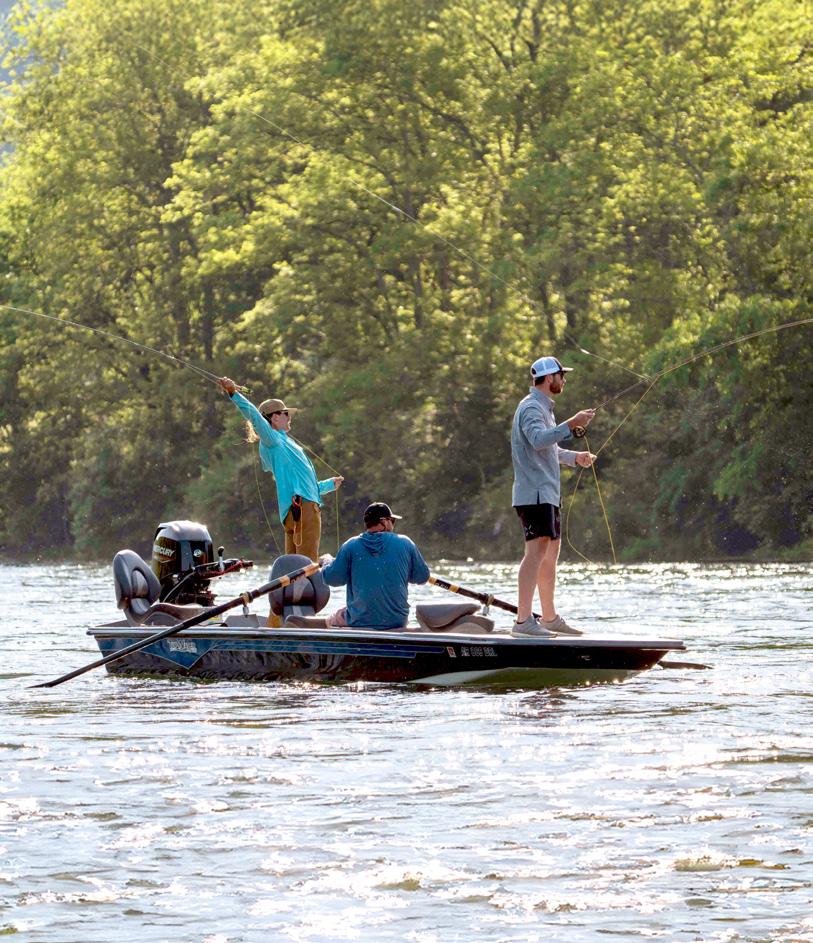
While the Delta is rich in gravel roads, the Arkansas Graveler experience goes far beyond the ride. Each afternoon, daily competitions begin when the pedaling stops. From skeet shooting and fly-fishing to duck-call contests in Stuttgart, the undisputed Duck Hunting Capital of the World, Gravelers can expect uniquely Arkansas experiences that feel less like an event and more like childhood summer camp — only this time, everyone arrives on a gravel bike.
Off-bike activities are available after each day’s ride.
DELTA HERITAGE DEFINES EACH DAY
The Arkansas Delta occupies a unique place in American history and landscape. It played a key role in the nation’s westward expansion during the early 19th century, a legacy still visible along the route, including Louisiana Purchase State Park, the National Historic Landmark marking the original survey point of the 1803 Louisiana Purchase. The Delta’s remoteness also defines its character. Gravelers will move through quiet backroads, bottomland forests and hardwood river corridors teaming with wildlife — from migratory waterfowl, alligators and white-tailed deer to cypress, oak and tupelo stands. Within these habitats, the legendary ivory-billed woodpecker has long been rumored to survive, and while sightings remain rare and debated, the possibility adds to the region’s enduring sense of mystery. Birders, bring your binoculars!
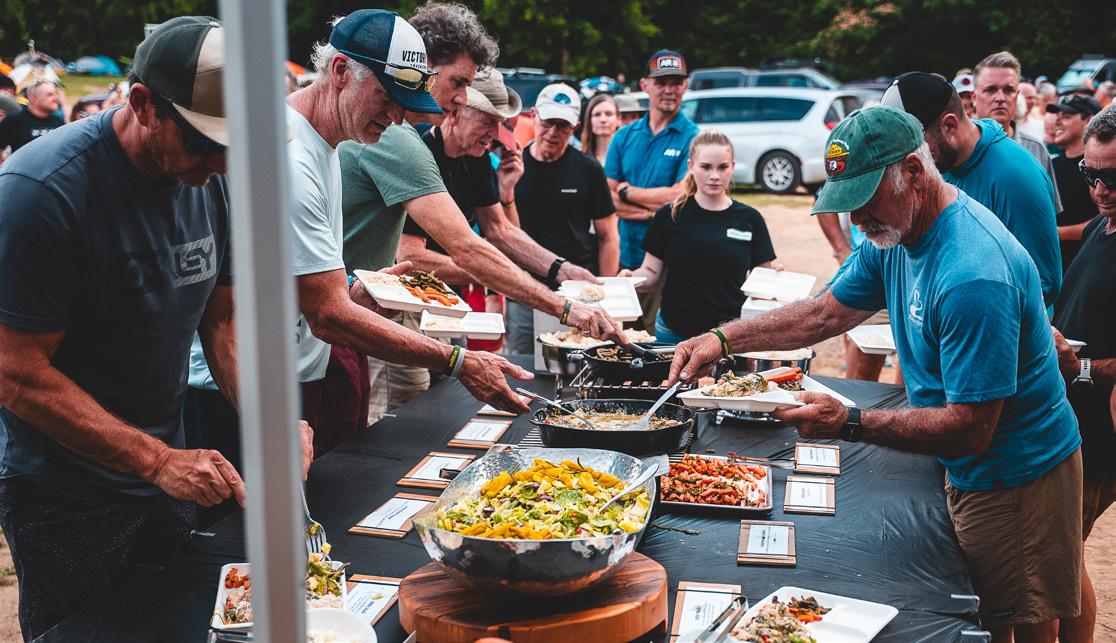
Agriculture has anchored the Delta’s economy for more than two centuries, shaping both culture and cuisine. Daily meals will reflect that heritage, featuring Delta-raised fried catfish, slow-smoked barbecue, duck gumbo and other staples born from the region’s fertile soil. And music is never far away. Influenced by riverboat workers, railroad laborers and country churches, Delta blues emerged as a powerful voice of everyday life in the late 19th and early 20th centuries. That legacy will be heard throughout the week — on the route, in overnight towns and during an unforgettable evening at the King Biscuit Blues Festival in Helena, one of the nation’s premier celebrations of blues music.
Agriculture will be ever-present on riders minds as they pass through plenty of farm land.
A FITTING FINALE
The final leg leads Gravelers deep into the Delta on the Delta Heritage Trail to historic Arkansas City. After crossing the finish line for the final time, Gravelers will celebrate as the town transforms into a lively block party filled with live music, street dancing and good cheer — a fitting finale to the Arkansas Graveler — Delta Blues Edition.
Registration opens March 3. This isn’t just a gravel ride — it’s a slow roll through living history. From levee roads to blues stages, from fried catfish to forgotten railways, the Arkansas Graveler — Delta Blues Edition is where gravel meets gospel, pedals meet poetry,and the gritty soul of the South still rides on dirt.
Additional details are available at arkansasgraveler.com. The Arkansas Graveler is a production of Ozark Foundation.
At the finish riders will snap photos with new friends, enjoy the show and feast like kings and queens.
FUNCTIONAL
ART FUNCTIONAL
JESSE TURNER IS BUILDING BEAUTIFUL RIDES AT SLOW SOUTHERN STEEL.
BY BRYCE WARD PHOTOGRAPHY BY KAI CADDY
The typical high-end bike purchase goes something like this: You go online or walk into a bike shop and choose from a limited selection of frame sizes, typically between five to seven on average; the bike you purchase comes equipped with a host of standardized components (stem and handlebars, pedals and crankset, saddle and wheels), most — if not all of which — you will immediately or gradually replace to improve fit or gain a marginal advantage; at some point, you hire a professional bike fitter to optimize your position on the bike, which will likely result in yet another fit-related purchase.
This is not the most efficient or cost-effective way to purchase a premium bike, but it is the most efficient and cost-effective way to produce one, and so this process has long been the norm in the cycling industry. If you’ve been in the game for a while, you may try purchasing a frameset on its own so you can hand-select each component from the outset, but this approach usually ends up costing more in the long run, requires quite a bit of research and specialized knowledge, and unless you know how to assemble a bike from a hodgepodge of parts, will likely result in you hiring a mechanic to complete the build. At this point, even if you’re willing to take on the challenge, it’s worth considering a different approach altogether.
For many cyclists, purchasing a mass-produced bike makes the most practical and financial sense; if you are content with stock components in the short term and a standard frame size in the long term, it is the most straightforward and cost-effective solution. But if you’re a cyclist who prioritizes performance, spends a considerable amount of time in the saddle, and plans on investing a fair bit of money into your next bike, then a custom-made alternative makes a lot of sense.
A custom bike may seem like an unfeasible purchase at first, but if you compare it to the standard approaches of purchasing a high-end bike, it can be just as cost-effective, if not more so. It also has distinct advantages over a mass-produced bike: It is made specifically for your body, riding demands and personal preferences, and it gives you an opportunity to ride a bike that is a direct expression of your personality — a bike that suits you perfectly from the moment you receive it.
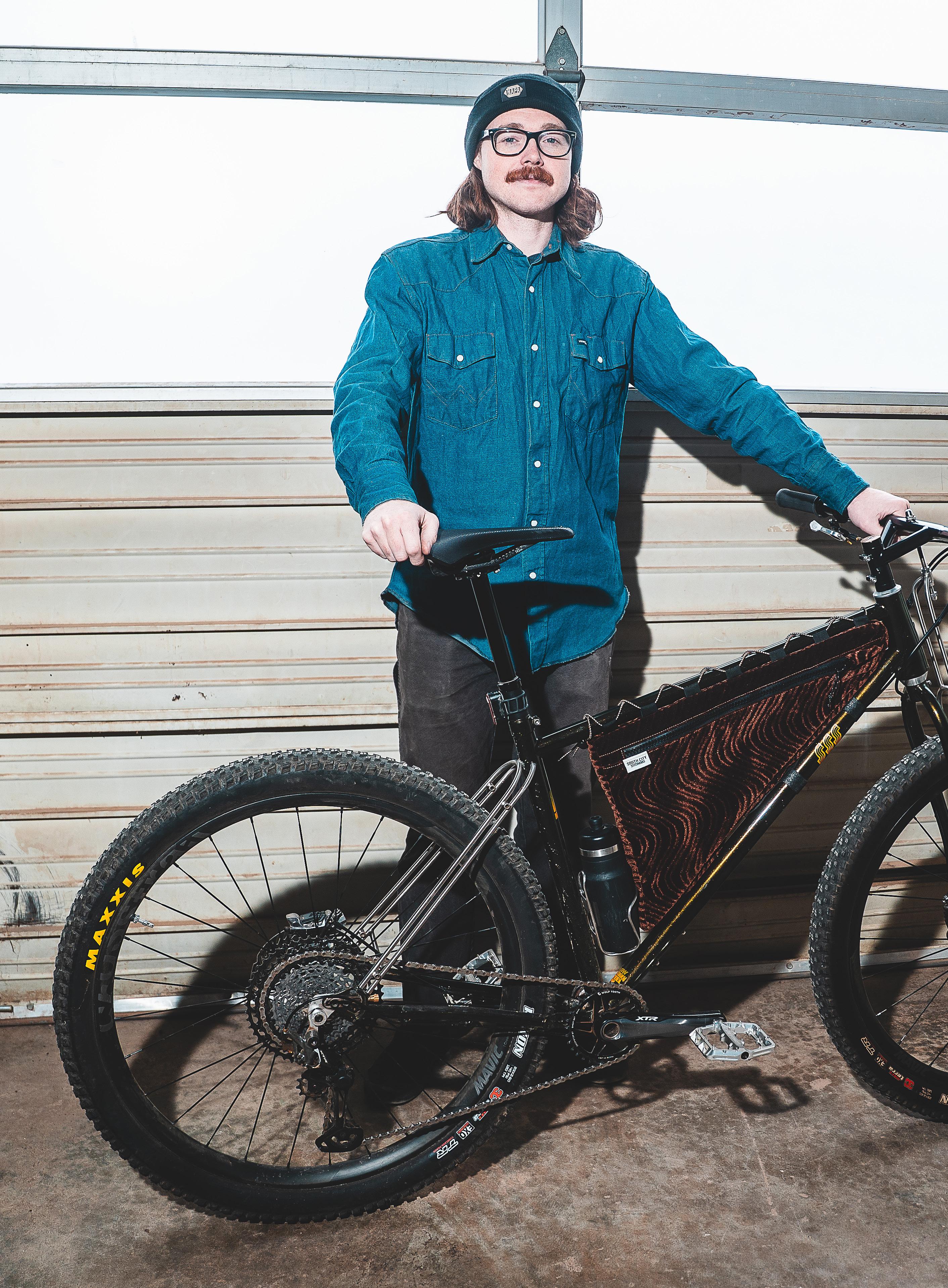
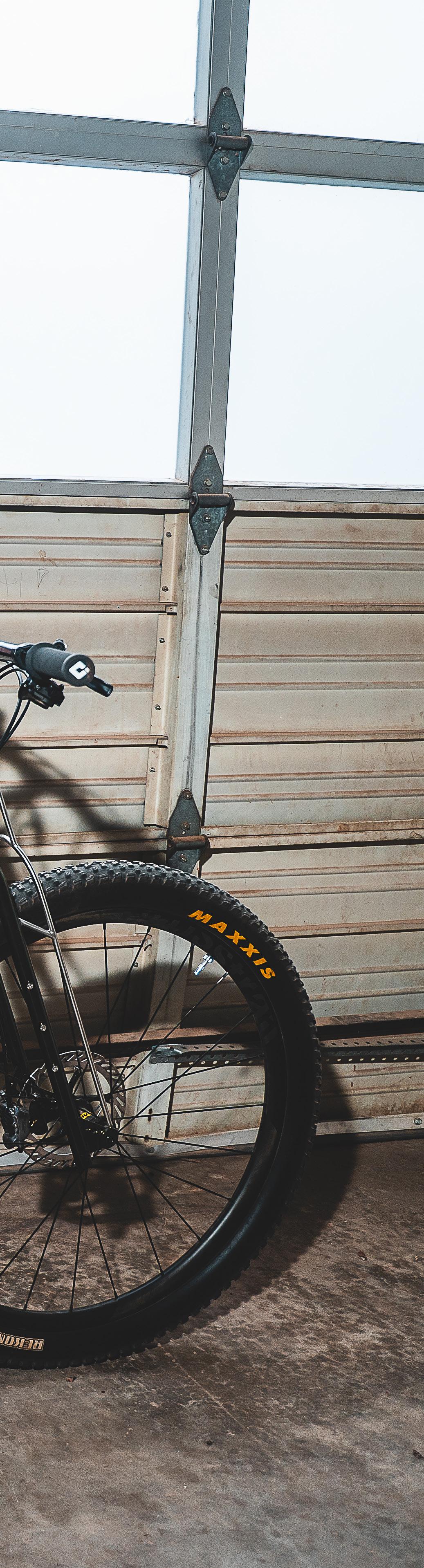
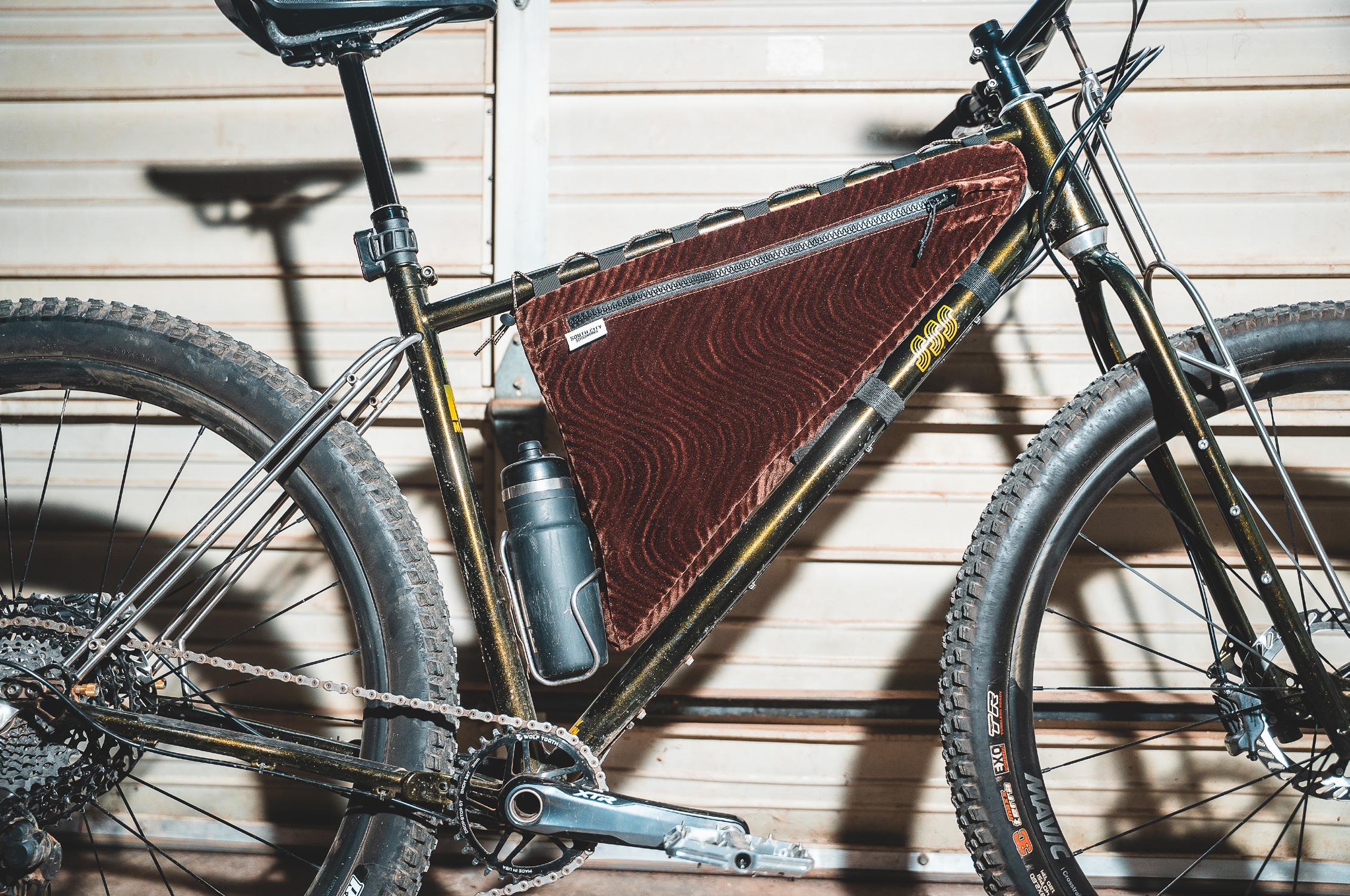
Turner with a recent creation that placed third in the Builder’s Choice category at last year’s Made Bike Show.
The trouble with purchasing a custom bike is finding someone who will make it for you. Fortunately for cyclists here in Arkansas, there is a frame builder based in Fayetteville who provides this very service, and he’s utilizing a material that has become overshadowed in an industry crowded with carbon fiber and aluminum alloy.
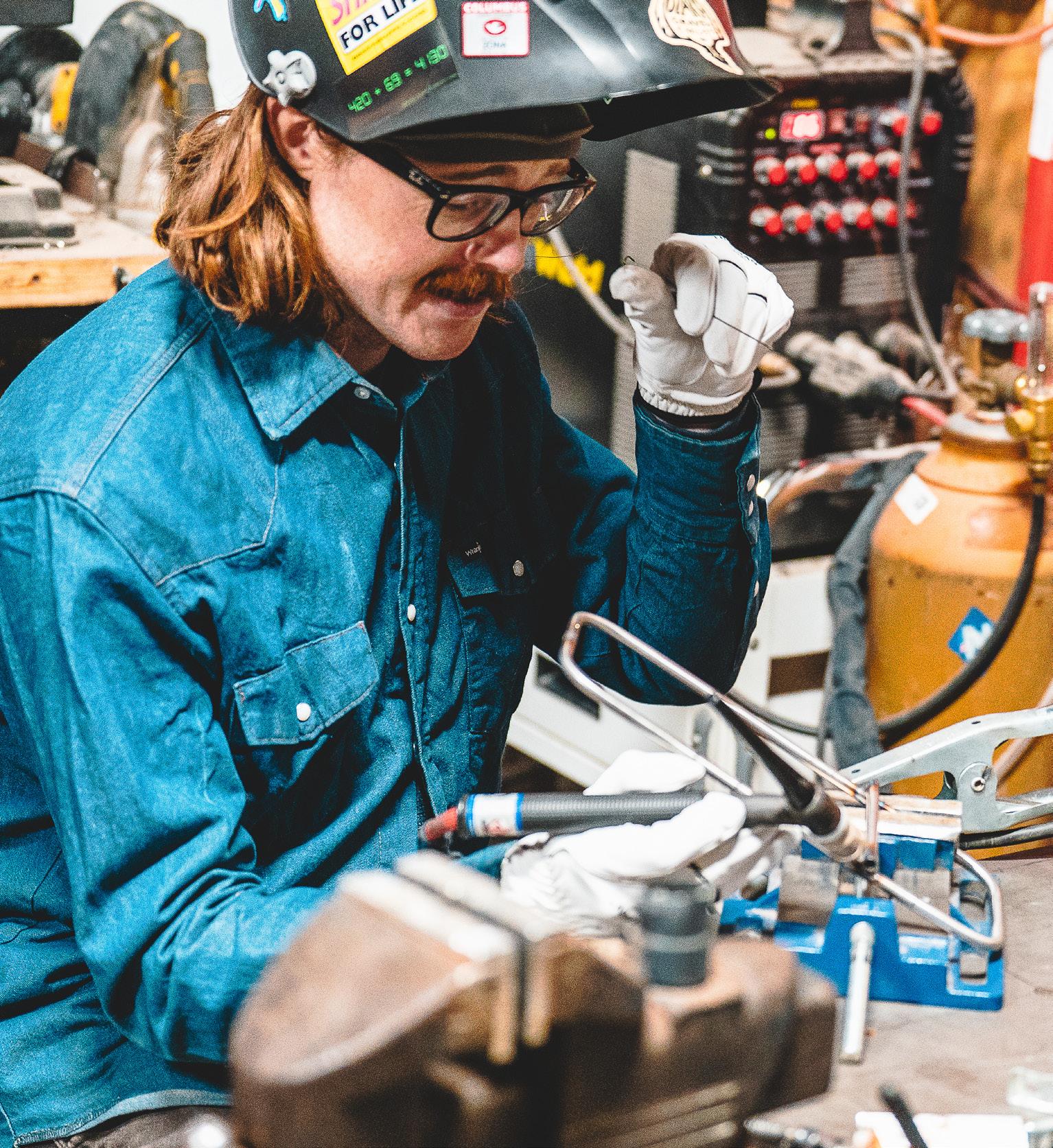
Jesse Turner, the owner and craftsman of Slow Southern Steel (SSS), has been hand-building custom steel frames and orchestrating bike builds since 2021, when he first embarked on the creation of a gravel bike for personal use. Before this decisive moment, he spent four years at the University of Arkansas earning a degree in sculpture, an experience he draws from to this day. After graduating in 2016, he spent his next four years working as a bike mechanic, providing him with ample opportunity to hone his mechanical understanding of bikes, tinker with builds, and gain inspiration from the numerous high-end bikes that passed through the shop stands. But when a global pandemic entered the scene, the uncertainty of the future acted as an impetus for Turner to move toward a career more in line with his aspirations as an artist and craftsman. In 2020, he left behind his life as a bike
mechanic and enrolled in welding school. Upon completion, he spent the next three years working as a welder and fabricator, contributing to local projects such as a dragon-themed staircase rail, columns shaped like an airplane wing, and a storefront bike rack. It was during this period that he began experimenting with frame-building, an idea that had laid dormant in his mind long before he strapped on a welding helmet. The surge in online information about frame-building during the era of social distancing aligned well with Turner’s timeline, and he took full advantage of the newly available resources.
After finishing his first bike in 2022, a process that took him about six months to complete, friends and local riders started asking for custom-made bikes of their own. This interest in his work, combined with the fact that welding and fabrication work was drying up around this time, was sufficient reason for Turner to take a leap of faith toward a once dormant dream. And so, in 2023, Slow Southern Steel — a name inspired by the title of a heavy metal documentary – became official.
Don’t let the first word in this company name mislead you. Each of Turner’s bikes are designed and crafted with performance
A custom bike may seem like an unfeasible purchase at first, but if you compare it to the standard approaches of purchasing a highend bike, it can be just as costeffective, if not more so.
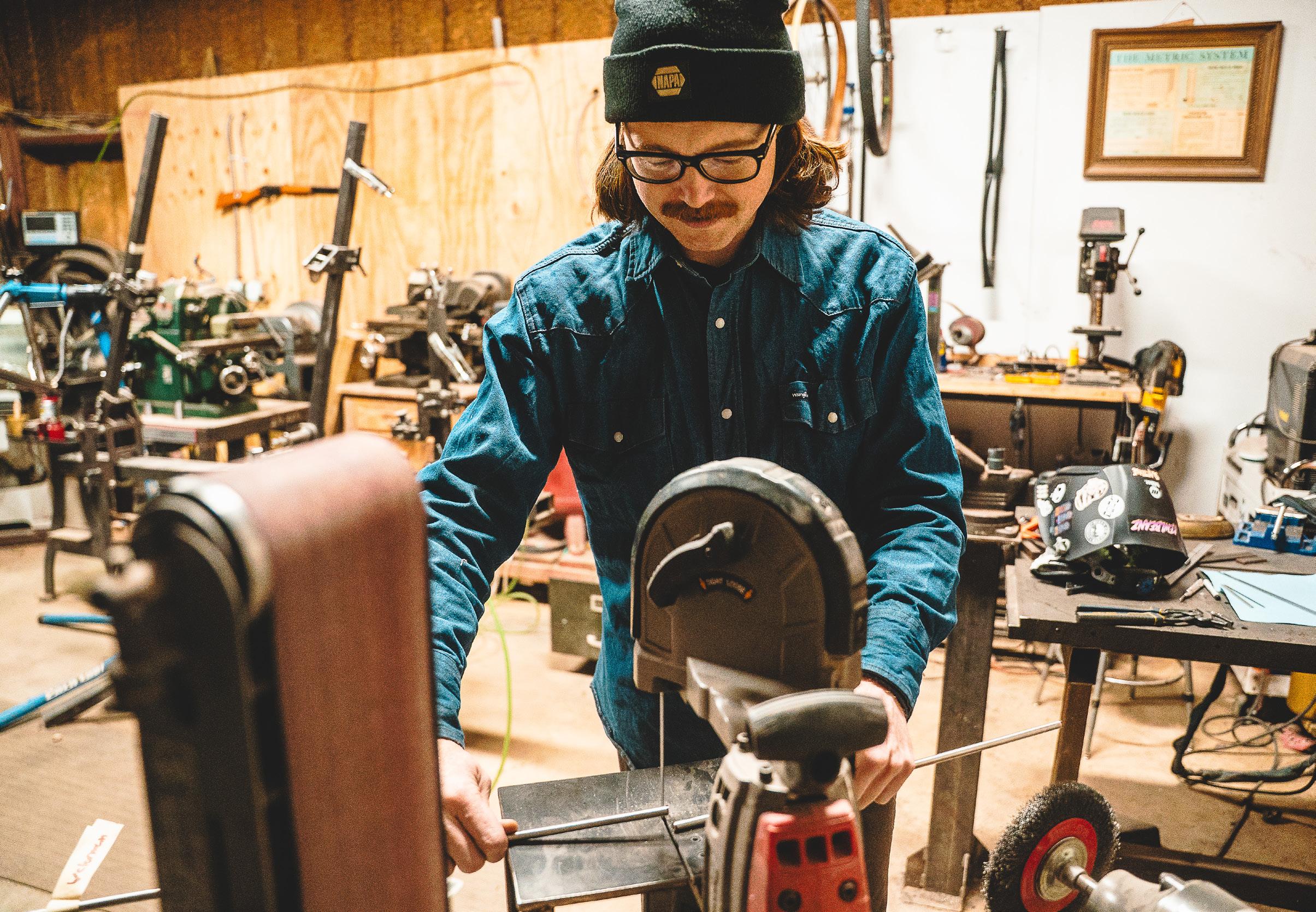
Turner, who holds a degree in sculpture, went to welding school in 2020.
top of mind. Steel is often overlooked in the performance cycling world for being a heavier material that is not as stiff as aluminum or carbon alternatives, but this is not inherently true. The quality of a steel frame depends entirely on how it’s made, who makes it, and the components that complement it.
While the weight of steel is limited by structural integrity more so than aluminum or carbon, it can still be made light enough for most performance use cases, especially when paired with premium carbon components. To give you an example, Turner completed a disc-brake road bike that weighs in at 18 pounds, wheels included, which is only three pounds heavier than the UCI’s weight limit for professional races. In other words, for any cyclist beneath the world-tour level, steel is a plenty capable medium for competition.
And regarding stiffness – which is an important consideration for efficient power transfer while pedaling, confident cornering at high speeds, and race-deciding sprints –steel can meet or exceed that of aluminum or carbon with the right design approach. Steel is inherently stiffer than aluminum, which relies on much larger tube diameters
to achieve the same level of stiffness, and it can be just as stiff if not stiffer than carbon, albeit at the cost of added weight.
Turner chose steel as his preferred medium for a few key reasons: it’s an easy form to work with by hand, it’s widely available, and it’s more affordable than aluminum. These characteristics of steel enable Turner to be creative and intentional with his builds while keeping the price point attainable and practical for his customers. Plus, there’s something to be said for the welded steel aesthetic.
SSS bikes have garnered a lot of attention in the gravel and bikepacking community, where long, grueling hours in the saddle require a bike that is as comfortable as it is capable. By taking an individualized approach, Turner can create a level of harmony between a bike and its rider that proves advantageous in the midst of extremely long efforts, as Andrew Onermaa and Natalie Peet, two accomplished ultra-endurance cyclists, have recently demonstrated. Andrew won the 2025 Tour Divide single-speed category (a 15-day effort) and Natalie won the 2025 Doom women’s category (a two-day effort) aboard custom SSS bikes.
Turner offers three styles of frames as a starting point for most of his custom builds: the Sweet Leaf for gravel riding, the Warhorn for mountain biking, and the RFTC (“ride fast, take chances”) for road riding. The process of creating a SSS bike can be broken down into seven steps:
1. The prospective customer reaches out and explains what they are looking for in their new bike. Turner provides as much or as little guidance as needed, including advice for components.
2. After back-and-forth conversation, Turner creates a cost estimate based on the build requirements. If the prospective customer decides to move forward, they put down a deposit and get added to the queue.
3. Turner creates a CAD design based on the customer’s measurements and requests. This is a collaborative process until both sides are satisfied with the design.
4. After the CAD design is finalized, Turner orders the necessary materials and components to execute the build.
5. The frame-building process begins. On average, it takes Turner around 40 hours to create a frame from scratch.
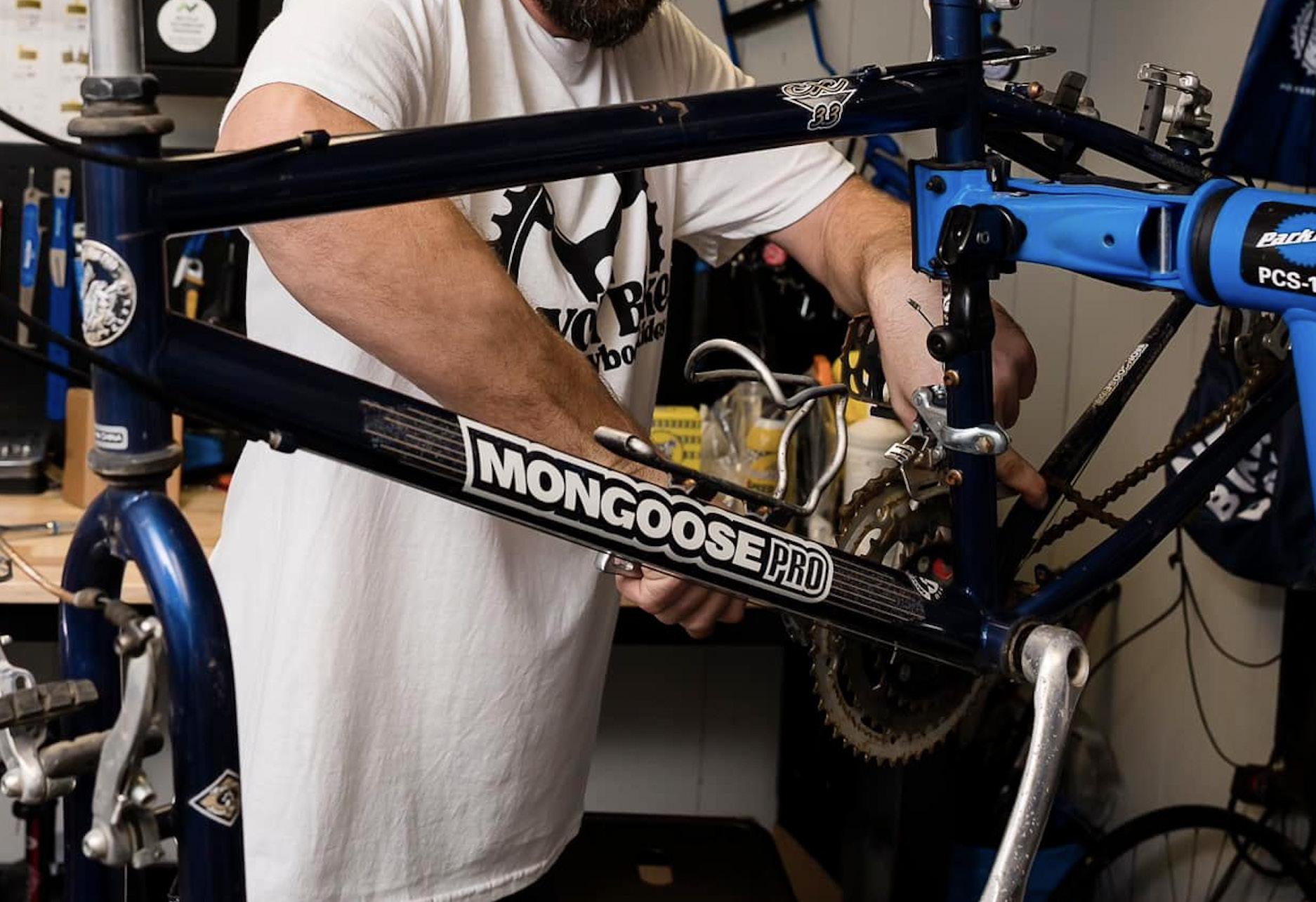
Turner’s primary work is with steel, but he’s starting to dabble with titanium.
6. When the frame is complete, Turner sends it off for a professional paint job. The customer has practically endless color options to choose from.
7. After the paint is complete and all the components have arrived, Turner assembles the bike himself and prepares it for use. Most customers opt for local pick-up because even if they aren’t local to Northwest Arkansas, a new bike is a great excuse to visit the area and ride.
From initial contact to final delivery, the creation of a SSS bike takes an average of two months to complete. The result is nothing short of functional art.
The creative aspect of frame-building especially appealed to Turner when he was first getting started, but the work became monotonous. As time passed, what he now finds most rewarding about his work is seeing the finished product and hearing from happy customers. At the end of the day, he’s in the business of creating great ride experiences. Being his own boss is another rewarding aspect for Turner, but the business side of SSS is often the most challenging part of his work. Frame-building is not the most lucrative line of trade, but it has advantages
that can’t be measured in dollars, especially for a cyclist at heart.
Aside from creating frames and orchestrating builds, Turner also creates custom components such as steel forks and does steel repair work. One day, he would like to offer more custom parts and services, even outside the scope of cycling, but for now his focus remains on frames.
One of his first projects of 2026 will stray from the norm of his previous builds: a rare 32-inch sized mountain bike frame, designed for bikepacking, and made not of steel, but titanium. As with all artists, the desire to experiment and push one’s boundaries is difficult to ignore but necessary for creative health. As Turner observed in regard to the bike industry, “frame builders are where new ideas happen.”
If you are interested in having a custom-made SSS bike of your own, the best place to start is by visiting the Slow Southern Steel website (www.sss.bike) and filling out the contact form. You can also check out the SSS Instagram page (sss.bike) to browse some of Turner’s previous builds. If there is a bike you can imagine, Turner can probably build it.
As with all artists, the desire to experiment and push one’s boundaries is difficult to ignore but necessary for creative health.
The finished product ready for the trail.
Part of the Pack ›STARTING LINE
All across The Natural State, there are clubs, classes and cycling groups more than willing to have new members join and learn. From road warriors to kings and queens of the mountain, opportunities abound to explore the exciting world of cycling, but we’ve listed a few here to make it a little easier.
For The Taco Lovers SPRINGDALE BIKE CLUB
A group of cyclists from all over Northwest Arkansas that hosts regular group rides of all types, including their popular Taco Tuesday rides that start at 7 p.m. from Shiloh Square in Springdale and end at Mr. Taco Loco downtown. facebook.com/groups/springdalebikeclub
Trail Lovers OZARK OFF ROAD CYCLISTS
Ozark Off Road Cyclists advocates for, builds and maintains soft-surface trails in the Ozarks. The organization believes that trails should be accessible to a wide range of users and that a collaborative approach is necessary to ensure that everyone’s needs are met. The OORC also has four additional branches (Carroll County, Borderline, Frontier, River Valley). oorc.org
Wheeling and Dealing ARKANSAS BICYCLE SWAP
A Facebook group comprised of nearly 12,000 members for buying and selling bikes and bike gear. Shoppers can find everything from department store Huffys to the latest carbon super bike and everything in between. Also a great way to clear out room in your garage for more new bike gear. facebook.com/ groups/367686573388868
BMXers CABOT BMX
Year-round BMX riding and racing at the Cabot BMX track. The group holds practices on Mondays and practices and races on Thursdays and Saturdays starting at 6 p.m. at 250 Champions Drive. facebook.com/cabotbmxtrack
›UPCOMING EVENTS
Mark Your Calendar
Mark your calendar and gather your gear, because there’s always another ride or race to participate in The Natural State. We’ve listed and organized all of the cycling events throughout Arkansas and no matter your level of experience, you’re sure to find a ride that fits your skills and preferences.
THE RULE OF $3.99
Feb. 28
$42.10
Bentonville ( n n n Gravel)
A Rule of Three-style ride with route options of 30 and 55 miles. Registration will include an opportunity for early registration for the Rule of Three on May 16. Courses will be unmarked and encompass tarmac, gravel and singletrack. Visit ruleofthree.bike for more information.
REDEMPTION ENDURO
March 1
$15-$100
Eureka Springs ( n n n MTB)
The second race of the Southern Enduro Tour’s 2026 season at the Great Passion Play trails. The race will feature up to six stages. There is also a “just ride” category for riders who want the enduro experience without the pressure of being timed. Visit southernendurotour.com for more information.
WILDCAT MARATHON
March 28
$60-$80
Hot Springs ( n n n MTB)
A one-day marathon mountain bike race held in conjunction with the third stop on the Southern Enduro Tour. The course map will be released to racers a week before the event, but riders can expect around 50 miles of singletrack combining Cedar Glades and the Northwoods Trails. There will also be a “Mildcat” half-marathon of around 25 miles. Visit southernendurotour.com for more information.
NORTHWOODS ENDURO
March 29
$15-$100
Hot Springs ( n n n MTB)
The fourth leg of the 2026 Southern
Enduro Tour. The race will feature up to seven stages and a “just ride” category for riders wanting to experience the course without looking to race. Visit southernendurotour.com for more information.
NWA SPRING CLASSIC
March 29
$35-$70
Prairie Grove ( n n n Road)
Annual USA Cycling sanctioned road race that kicks off the racing season in Arkansas. Juniors race a 13-mile lap, while adults race a 24-mile lap. The number of laps differ based on experience level. Visit nwaspringclassic.com for more information.
SCAN HERE TO SEE ALL UPCOMING EVENTS.
NICA DISCOVERY
April 6-May 11
$75
Cabot ( n MTB)
This program is aimed at children ages 7-11 who are new to cycling. Sessions are every Monday at 6 p.m. from April 6-May 11. Each session is composed of opener activities, skills activities, games and a wrap-up. Each session builds on skills learned in the previous session. For New Friends, the sessions consist of riding and playing in a park-like setting and are not trail dependent. Students will ride within that open space rather than out on trails, staying close to restroom facilities and support. Register at bikereg.com/nica-discovery-cabotar.
US PRO CUP
March 18-22
$33.20-$91.78
Fayetteville ( n n MTB)
Early-season high caliber UCI cross country mountain bike racing at Centennial Park. The nation’s best racers will participate in two days of Olympic-style cross country racing and one day of short track racing. Visit uscupmtb.com for more information.
MILE ZERO
April 10-12
$0-$159.99
Helena-West Helena
( n n n Gravel and Road)
The event formerly known as the Delta Grind has been rebranded for 2026. The event is a celebration of the Arkansas Delta’s landscape. On Saturday, there will be gravel and road rides, a mile, 5K, half-marathon and full marathon running options, and food and music (tickets are available just for hospitality and music for those not wanting to ride or run). On Friday and Sunday, there will be free casual group rides and runs available. There will even be a free guided birding activity via bike or hike and a canoe paddling adventure for $74.99. Visit studiodriftar. org/events for more information.
HAZEL VALLEY RALLY
April 11
$60 Fayetteville ( n n n Gravel)
Annual grassroots gravel ride starting and finishing at the Hazel Valley Ranch outside of Fayetteville. Routes take on some classic Washington County gravel roads. Registration opens Jan. 14. Visit ruleofthree.bike for more information.
SPRING RIVER RAMBLER
April 11
$10-$45
Hardy ( n n n Gravel)
A new gravel event featuring routes of
18 and 32 miles along the Spring River and four age-based kids races. Any bike is welcome for the kids races, as they are meant as an opportunity to get kids involved in the sport. Register at bikereg. com/spring-river-rambler.
IRON MOUNTAIN XC
April 12
$20-$45
Caddo Valley ( n n n MTB)
The first race in the Arkansas Mountain Bike Championship Series contested on the legendary trail system of Iron Mountain located on DeGray Lake. This is a USA Cycling-sanctioned race and there are categories for all ages and levels. Chip timing, event T-shirt, post-race food and beverages and awards are included. More information is available at ironmountainxc.com.
DOUBLE BARREL GRAVEL
April 18
$15
Bentonville ( n n n Gravel)
The ultimate gravel bash starts and finishes from the Benton County Quail Barn and turns 10 this year. Phat Tire Bike Shop and the Quail Barn invite every gravel lover to experience NWA’s finest gravel roads. Courses include a 15-mile leisure cruise, 31-mile mid-distance ride and a 70-mile epic route. All day at the barn will be live music and supervised skeet shooting and Ice-cold beer, and a jambalaya and crawfish boil will cap the
DOOM
March 13
$125
Ouachita National Forest ( n n Gravel)
The venerable ultra-endurance bikepacking race heads south for 2026 and into the Ouachita Mountains for the first time. The Doom route will be 354 miles with 34,000 feet of climbing and 100 miles of singletrack. Two shorter routes are on offer as well: The High Watch is 198 miles, 16,000 feet of climbing and 35 miles of singletrack; and the LOViT or Leave iT is 109 miles, 9,000 feet of climbing and 35 miles of singletrack. Visit ozarkgravelcyclists.com/doombikepacking for more.
evening. Register at bikereg.com/doublebarrel-gravel-ride
HIGHLANDS GRAVEL CLASSIC
April 25
Cost TBA
Goshen ( n n Gravel)
One of two American qualifying races for the UCI Gravel World Championships. The race features two courses; both courses are 95 percent gravel. The long course is the qualifier for younger riders and the shorter course is the qualifier for the older age categories. Visit highlandsgravelclassic.com for more information.
COWABUNGA GRAVEL
May 2
$75
Viola ( n n n Gravel)
Gravel ride around some beautiful North-Central Arkansas farmland. Terrain is surprisingly varied and engaging with route options of 17, 30 or 50 miles. Registration includes a custom T-shirt, custom finishers award and post race meal. More information at syllamoevents. com/cowabunga.
THE OLD POST CHALLENGE
May 3
Cost TBA
Russellville ( n n n MTB)
Part of the Arkansas Mountain Bike Championship Series. Cross country racing held at Old Post Park in Russellville. Visit ambcs.com for more information.
LEATHERWOOD GRAVITY CHALLENGE
May 3
$75-$150
Eureka Springs ( n n n MTB)
This downhill race will be an adrenalinepumping mix of technical trails, fast descents and an exclusive race-day-only stage that will challenge even the most seasoned riders. The race will feature five stages, riders will race two laps of each stage; Limited camp spots are available at Lake Leatherwood. Visit thegravityfeed. com for more information.
BIKE CITY FONDO
May 9
Cost TBA
Fayetteville
( n n n Gravel and Road)
This event has options for everyone: — iconic road riding, amazing gravel routes
remind you why this region is so special. All proceeds from this event directly support the Trail Team of North Central Arkansas, a local nonprofit dedicated to building, maintaining and advocating for sustainable trails throughout NorthCentral Arkansas. Visit bikereg.com/ gravelocalypse to register.
SCAN FOR MORE BIKE EVENTS
RULE OF THREE
May 16 TBA
Bentonville
( n n n Gravel)
Annual event that has grown to be one of Arkansas’s largest. Routes of 50 and 100 miles encompass tarmac, singletrack and gravel roads in Benton County. Registration opens Feb. 2. Visit ruleofthree.bike for more info.
KAI CADDY
›
Spring Has Sprung
Bike Arkansas readers contribute some spring snapshots.
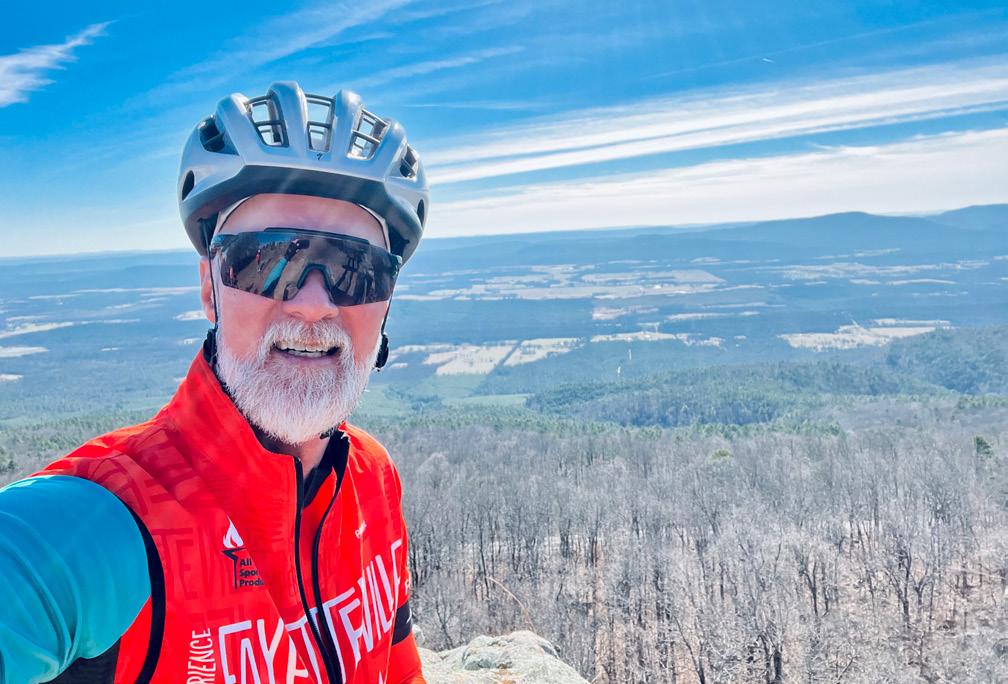
(Above) Steve Probst, president of the Fayetteville Wheelmen, takes a selfie atop Mount Magazine.
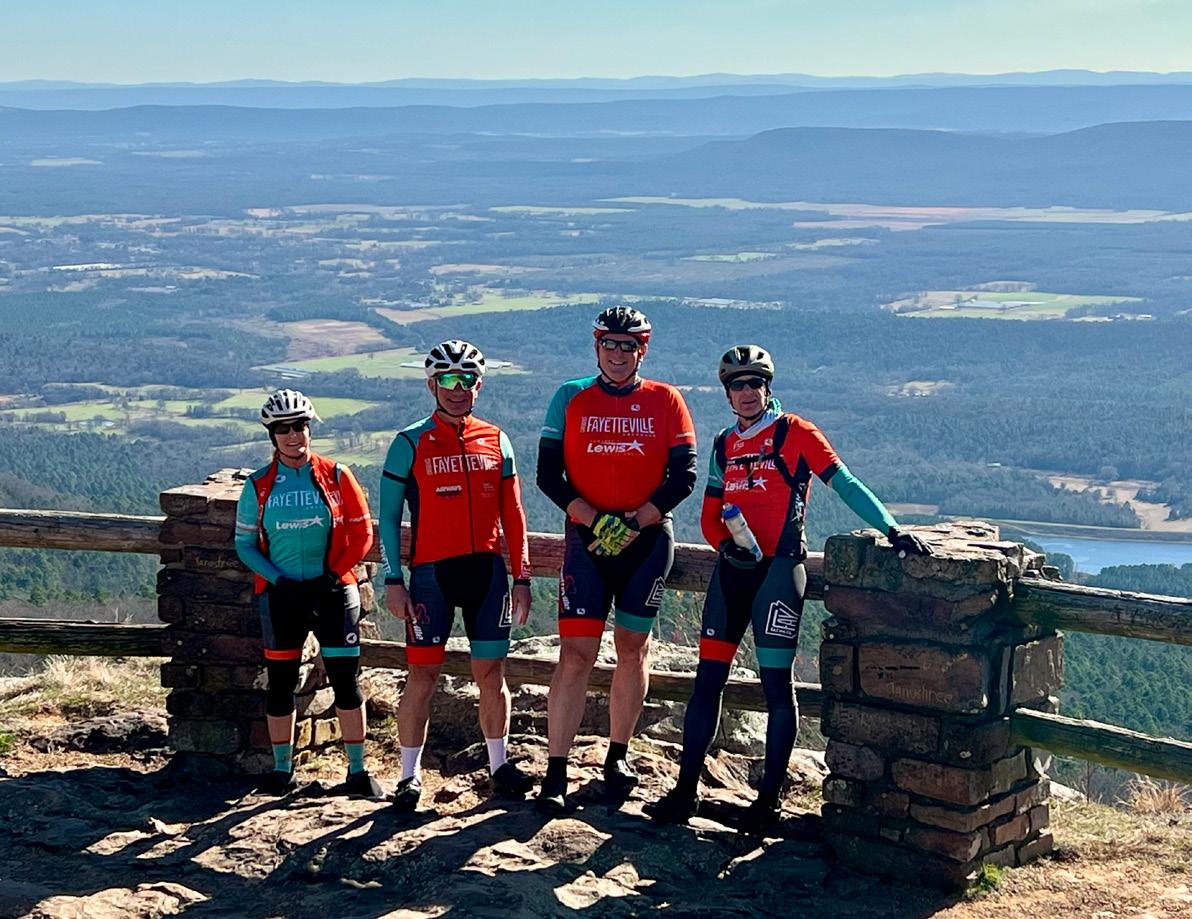
(Left) Fayetteville Wheelmen members Dori Hornbaker, Paul Komarek, Bob Brown and Robert Porter stop at an overlook on Mount Magazine during a Paris-Havana-Paris ride.
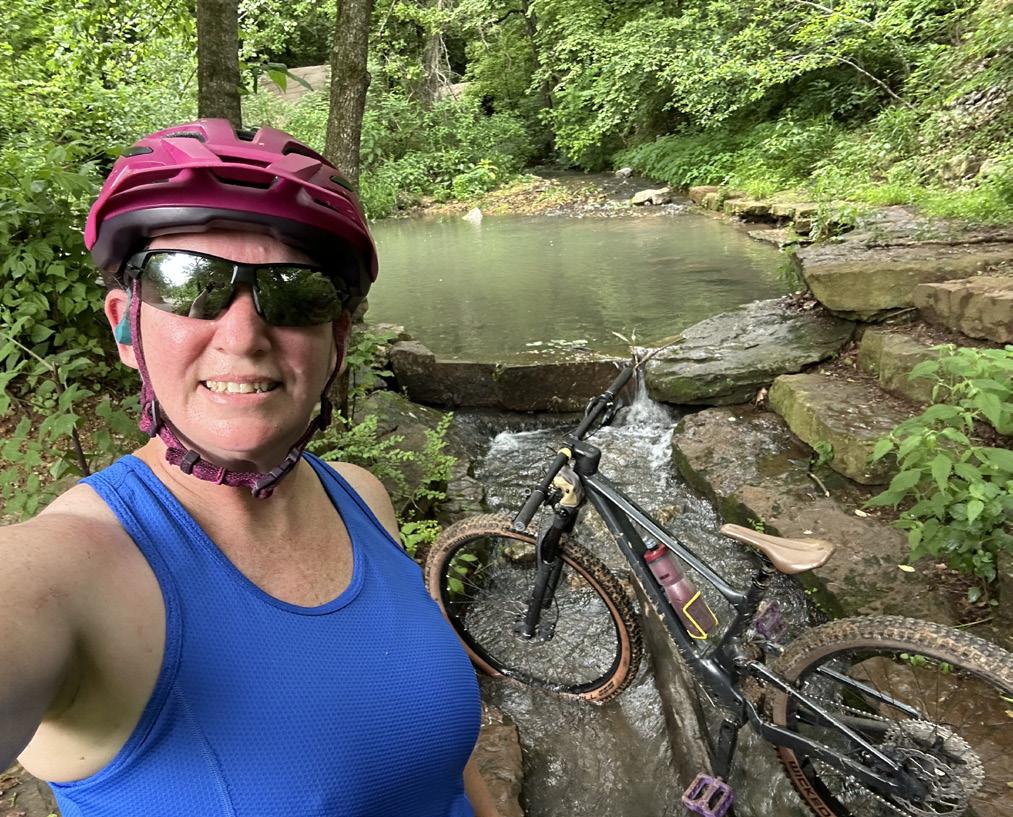
(Above) Jules Kirschman takes an opportunity rinse herself and her bike off at a creek at Horeshoe Canyon Ranch.
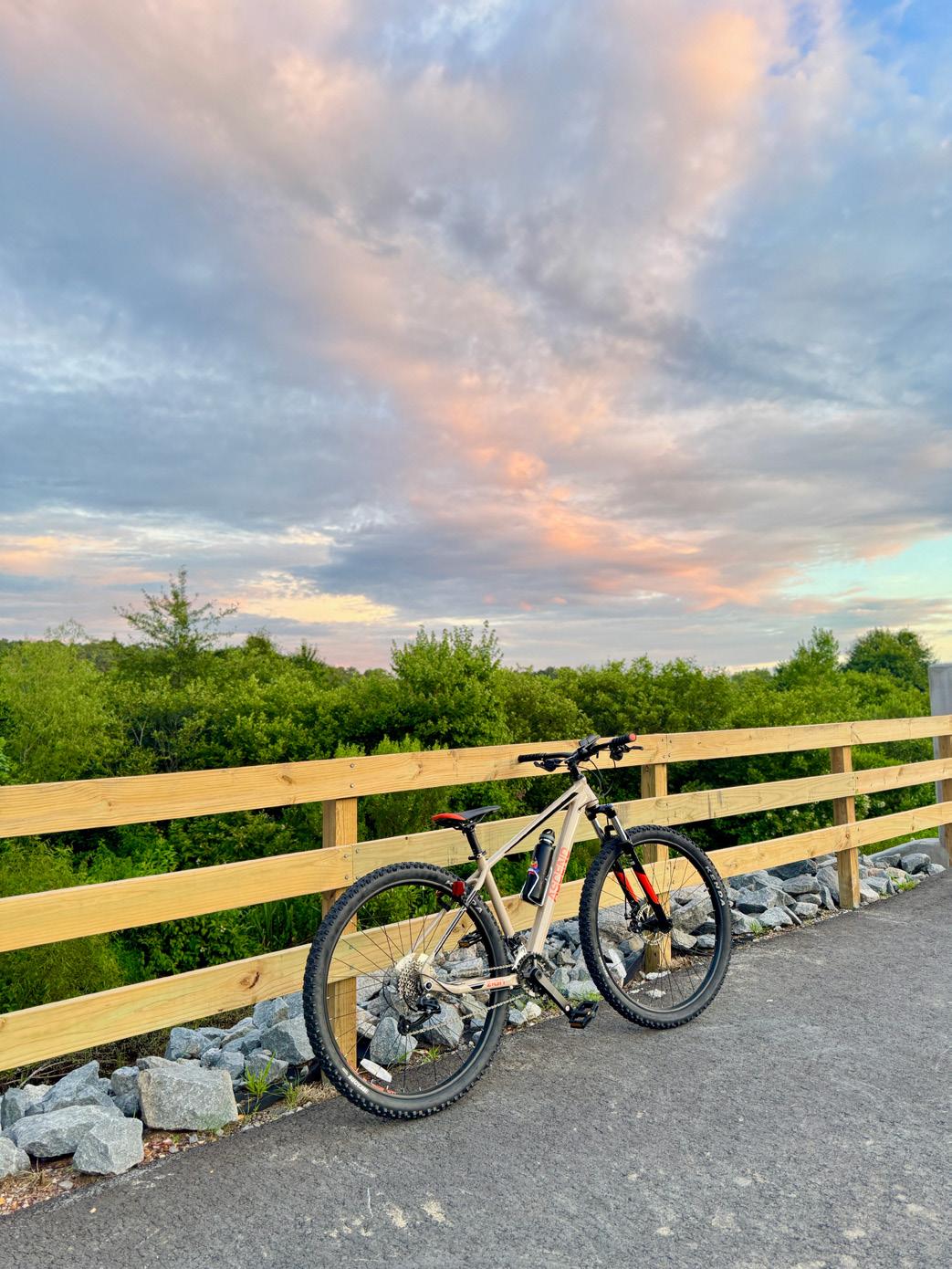
(Left) Reed Boroughs captured this sunset along the Southwest Trail.