What a Difference a Decade Makes: Has the Rural Landscape in Arkansas Changed? By
J. Cliff McKinney II
The Best Decision I Never Expected to Make: Finding purpose, building a life, and practicing law in rural Arkansas By Meagan Davis 24
Bowen Law: Momentum, Mission, and Service Across Arkansas By Felisha Weaver
26
The University of Arkansas School of Law: Purpose, Preparation, and Impact By Tammy W. Tucker 30
A New Chapter for Legal Aid in Arkansas By Abby Brenneman 34
Voices from the Field: Rural Practice in Arkansas
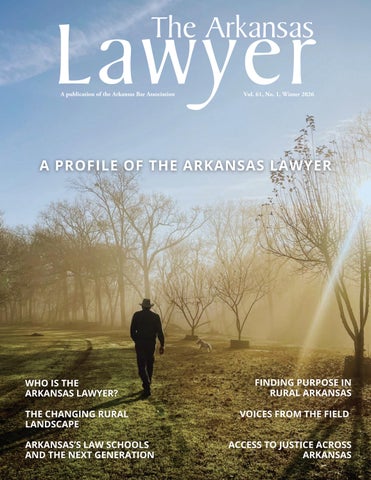
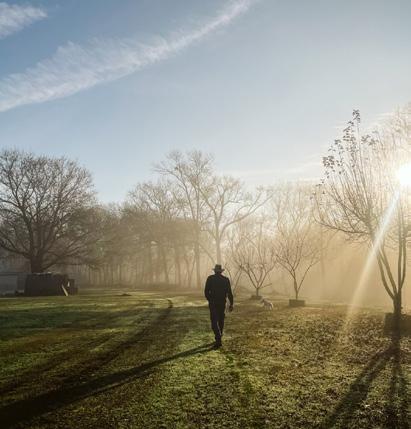
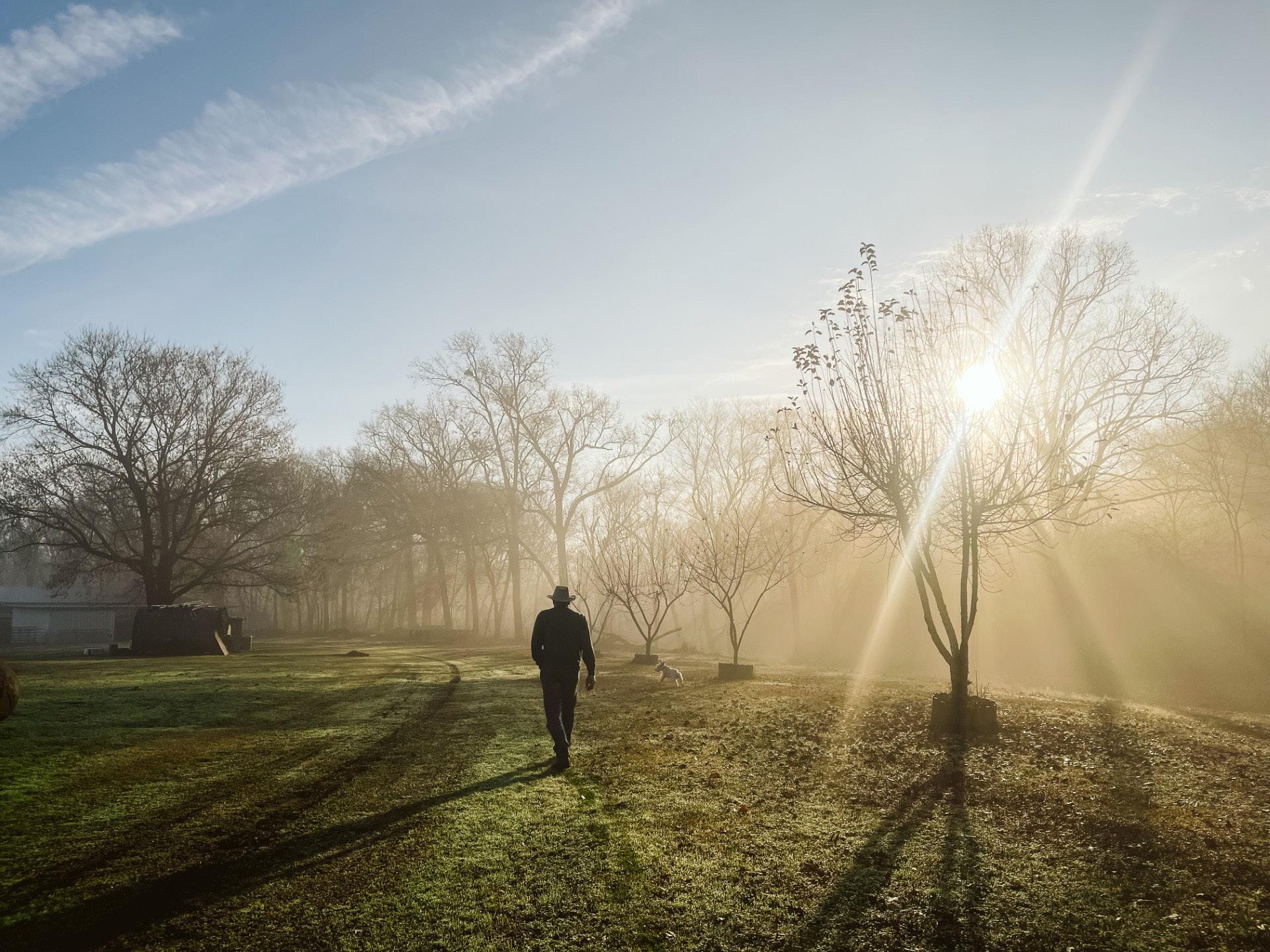
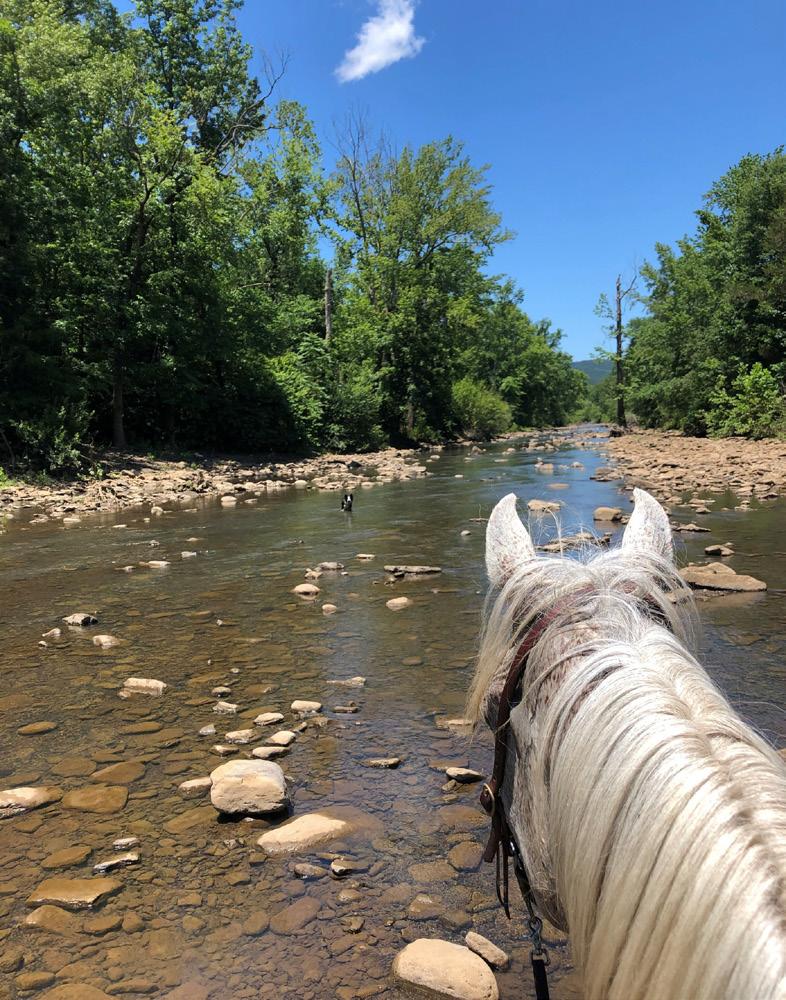
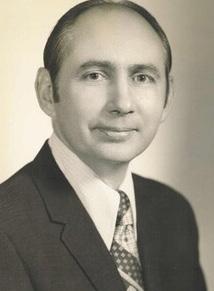
Cover photo by Meagan Davis of her father, Danny Davis, at his home in Hatfield, Arkansas. Meagan’s artwork appears throughout this issue, along with her story about returning home to practice law.
The Arkansas Lawyer (USPS 546-040) is published quarterly by the Arkansas Bar Association. Periodicals postage paid at Little Rock, Arkansas. POSTMASTER: send address changes to The Arkansas Lawyer, 1401 W. Capitol Ave., Suite 170, Little Rock, Arkansas 72201. Subscription price to nonmembers of the Arkansas Bar Association $35.00 per year. Any opinion expressed herein is that of the author, and not necessarily that of the Arkansas Bar Association or The Arkansas Lawyer. Contributions to The Arkansas Lawyer are welcome and should be sent to Anna Hubbard, Editor, ahubbard@arkbar. com. All inquiries regarding advertising should be sent to Editor, The Arkansas Lawyer, at the above address. Copyright 2026, Arkansas Bar Association. All rights reserved.
Continued on Page 2
Advertise in the next issue of The Arkansas Lawyer magazine
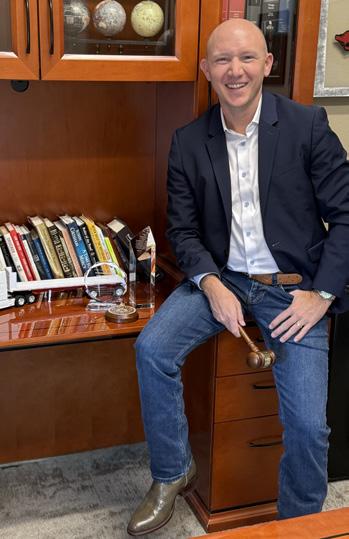
President: Jamie Jones Walsworth; President-Elect: Representative Carol Dalby; Immediate Past President: Kristin L. Pawlik President-Elect Designee: Tim Cullen; Secretary: Glen Hoggard; Treasurer: Marc P. Martinez Parliamentarian: Brent J. Eubanks; YLS Chair: Samuel W. Mason
Trustees:
District A1: Elizabeth Esparza, Samuel W. Mason, William M. Prettyman, Lindsey C. Vechik
District A2-A3: Payton C. Bentley, Kelsey Boggan, Evelyn E. Brooks, Jason M. Hatfield, Michelle Rene’ Jaskolski, Sarah C. Jewell, George Rozzell, Russell B. Winburn
District A4: Kelsey K. Bardwell, Craig L. Cook, Brinkley B. Cook-Campbell, Dusti Standridge
District B: Brooke Blackwell, Randall L. Bynum, Mark Kelly Cameron, Thomas M. Carpenter, Bob Edwards, John A. Ellis, Bobby Forrest, Joseph Gates, Michael K. Goswami, Steven P. Harrelson, Michael M. Harrison, Jim Jackson, Anton L. Janik, Jr., Victoria Leigh, Skye Martin, Kathleen M. McDonald, J. Cliff McKinney II, Jeremy M. McNabb, Molly M. McNulty, Meredith S. Moore, Andrew Norwood, John Ogles, Casey Rockwell, Lauren Spencer, Aaron L. Squyres, Caitlin C. Stepina, Danyelle J. Walker, Patrick D. Wilson
District C5: William A. Arnold, Joe A. Denton, John T. Henderson, Brett D. Watson
District C6: Bryce Cook, Paul N. Ford, Jeffrey W. Puryear, Paul D. Waddell
District C7: Kandice A. Bell, Robert G. Bridewell, Sterling T. Chaney, Ledly Jennings
District C8: Meagan E. Davis, Amy Freedman, John S. Stobaugh, Joshua R. Thane
Ex-officio Members: Judge Craig Hannah, Judge Chaney W. Taylor, Vicki S. Vasser, Dean Cynthia Nance, Dean Colin Crawford, Glen Hoggard, Eddie H. Walker, Jr., Karen K. Hutchins
NW Winter Conference Brings Probate & Trust and Elder Law to Fayetteville
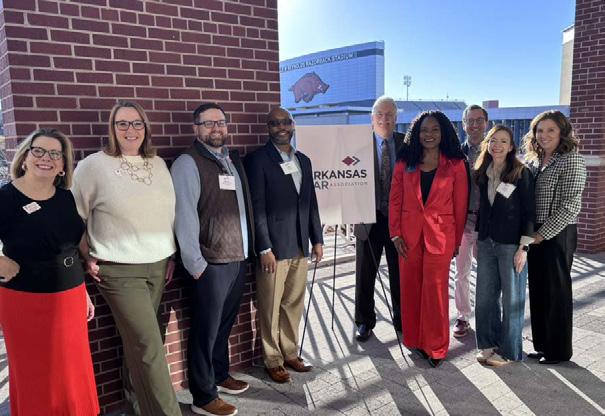
The Arkansas Bar Association’s NW Winter Conference: Probate & Trust and Elder Law drew a full house at the Janelle Y. Hembree Alumni House – Boyer Hall, University of Arkansas, Fayetteville. Thank you to our planners and speakers for the time, expertise, and leadership that shaped this year’s program, and to the many attorneys who joined us. Special thanks to the planning committee and faculty for their efforts in delivering a strong program.
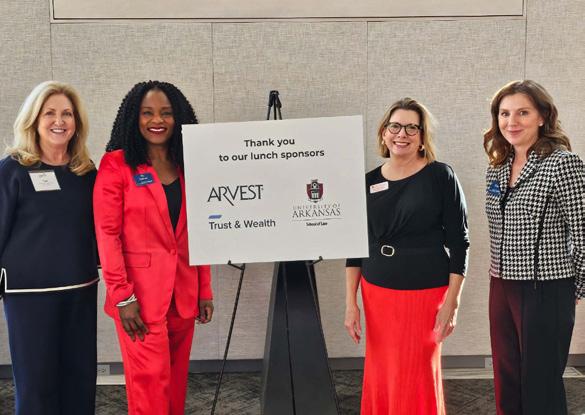
We also extend our sincere appreciation to our generous sponsors: Lunch Co-Sponsors: Arvest Wealth Management and the University of Arkansas School of Law, Fayetteville; Breakfast & Beverages Sponsor: Big Rock Legacy Law Group; Our sincere thanks go to the University of Arkansas Planned Giving team for not only providing the event space, but also for their partnership and support in helping make this conference a success. Special thanks to Nate Looney and ArkBar Past President Tony Hilliard for their collaboration and leadership.
Planning Committee: Brady Brown, Rose Law Firm; Caleb Hollinger, Friday, Eldredge & Clark LLP; Laura Dyer Johnson, Rose Law Firm; Jason Files, Pinnacle Legacy Law; Steven McClelland, McClelland Law Firm, P.A.; Leon Jones, Jr., Big Rock Legacy Law Group Attorneys & Counselors, PLC.
Left to right: Susie Nicholson, Erin Feller, Steven McClelland, Leon Jones, Tony Hilliard, Iffy Ibekwe, Nate Looney, Laura Johnson, and Krisi Sutton-Hall
Left to right: Tabitha Lipscomb, Iffy Ibekwe, Susie Nicholson and Krisi Sutton-Hall
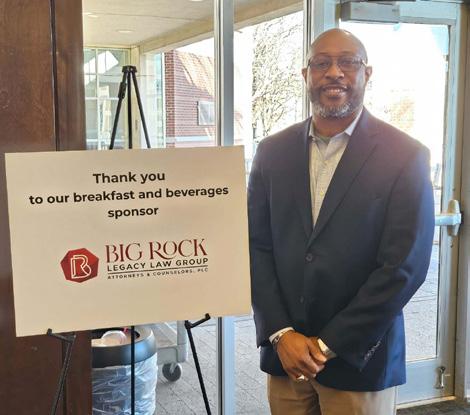
Leon Jones, Big Rock Legacy Law Group Attorneys & Counselors, PLC
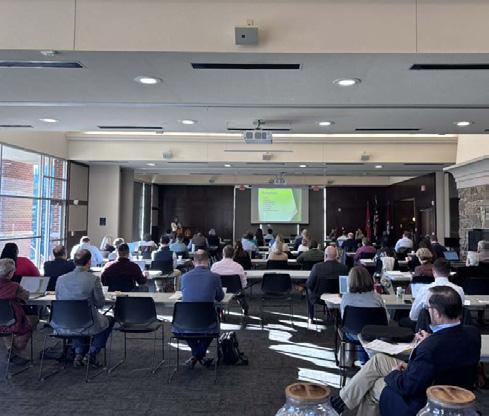
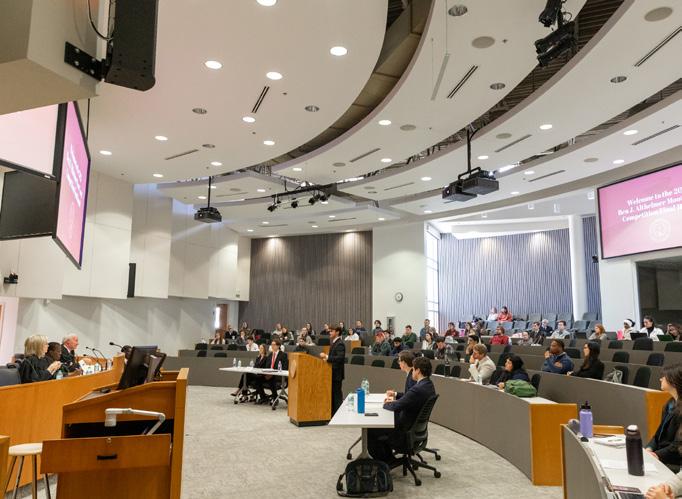
Full house at the Janelle Y. Hembree Alumni House – Boyer Hall, University of Arkansas, Fayetteville
Oyez! Oyez!
Accolades
Jerry M. Hunter was recently honored with the Richard S. Arnold Award for Distinguished Service by the Eighth Circuit Bar Association. Harry Truman Moore and Brad Broadaway were recognized for their longtime service to the bar at the Greene County Bar Association’s annual fish fry.
Appointments
Rose Law Firm announced that Tyler Mlakar has been appointed to a three-year term on the Arkansas Continuing Legal Education Board by the Arkansas Supreme Court. He will represent the Third Congressional District.
Word About Town
James, House, Swann & Downing, P.A. announced that Will James has been named Partner and Isabella Schmidt-Pestka has joined the firm as an Associate. Kutak Rock announced the following Arkansas-based attorneys have been elected to the partnership: Matthew C. Boch, Alexander T. Jones, McKenzie L. Raub, Maggie Rushing McGill and William J. Swartzwelder. Quattlebaum, Grooms & Tull PLLC announced that Thomas H. Wyatt has been named a managing member of the firm and C. Ryan O’Quinn has been named a member. Both attorneys practice in the firm’s Little Rock office. The partners of Wright Lindsey Jennings have elected four attorneys into partnership: Eli Bauer, Collins Hickman, Jennifer Smith and Zach Trail. ArkBar YLS Chair Sam Mason has recently been named a partner at the Oliver Law Firm in Rogers.
Send your oyez to ahubbard@arkbar.com
ARKANSAS BAR ASSOCIATON
1 2 8 T H A N N U A L M E E T I N G
LAWYERS ADVANCING JUSTICE & SERVING COMMUNITY
2026 JOINT MEETING WITH THE ARKANSAS JUDICIAL COUNCIL
SER VICE STARS,STRIPES,AND
FEATURED PRESENTERS
OAKLAWN RESORT HOT SPRINGS J U N E
DAVID BEASLEY, NOBEL PEACE PRIZE RECIPIENT FOR WORLD FOOD PROGRAMME AND FORMER
GOVERNOR OF SOUTH CAROLINA
GILBERT KING, WRITER, PRODUCER, AND HOST OF BONE VALLEY, PULITZER PRIZE AUTHOR
CASEY MOCK, SENIOR POLICY ADVISOR FOR THE ANXIOUS GENERATION
JUDGE ANTHONY PORCELLI, U S MAGISTRATE JUDGE, MIDDLE DISTRICT OF FLORIDA
Service, connection, and the conversations that bring Arkansas lawyers together
Recently, I received a direct message through social media from someone seeking legal guidance. While I was mindful of my ethical obligations in responding, the moment reminded me that, for many members of the public, the lawyer they “know” is the one they encounter in these informal spaces. You may be the only lawyer some people know firsthand. As members of the legal profession, we have an obligation to our communities, not only to educate when appropriate, but also to model respect for the rule of law and reinforce public trust in our legal institutions. The late Justice Ruth Bader Ginsburg once said that “lawyers are the foot soldiers of our Constitution.” That sense of service has connected our profession from the founding of our nation to today.
This issue of The Arkansas Lawyer explores who we are as a profession across Arkansas. That conversation continues through our Book Club Podcast and at Annual Meeting, where lawyers and judges come together.
Why Service Matters
Service is a responsibility we carry every day, in courtrooms, conference rooms, classrooms, and communities. When we act with integrity, elevate civility, and protect access to justice, we strengthen not only our Bar, but the justice system itself.
To honor the service Arkansas lawyers provide to our communities, Judge Brent Eubanks and I recently announced the Arkansas Bar Association Service Award. This award will recognize lawyers whose commitment, leadership, and dedication reflect the very best of our profession. Please help me identify those deserving of recognition by sharing their names and stories of service.
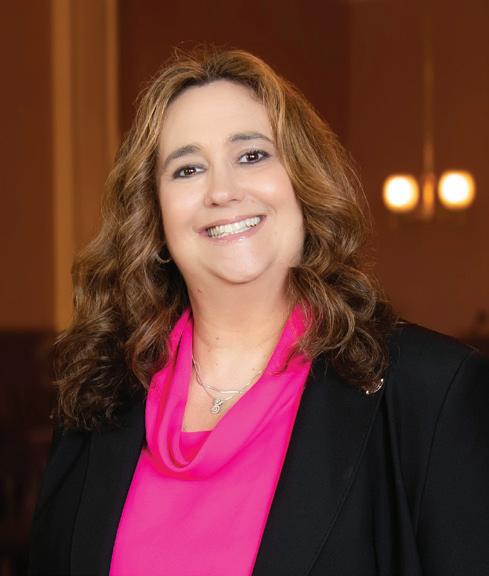
Jamie Jones Walsworth is the President of the Arkansas Bar Association. She is a partner at Friday, Eldredge & Clark, LLP in Little Rock.
Annual Meeting: Stars, Stripes & Service
It is fitting that the theme of this year’s Annual Meeting is Stars, Stripes & Service. The 2026 Annual Meeting will be held jointly with the Arkansas Judicial Conference, bringing together lawyers and judges from every corner of the state. This joint meeting offers a rare and unique opportunity to bring lawyers and judges together outside the courtroom through CLE roundtables, social events, and informal connection.
During the meeting, five respected members of our profession will take the Welcome Stage to reflect on what service means in their own lives and careers. We will also hear from David Beasley, former Governor of South Carolina and former Executive Director of the Nobel Prizewinning United Nations World Food Programme, who will speak about the challenges facing our profession, and our humanity, and how service can help guide us forward.
Conversations That Lead Us Forward
Service is also reflected in the conversations we begin and how we carry them forward together. Our Book Club Podcast launches important discussions that continue at Annual Meeting. In a four-part series on The Devil in the Grove by Gilbert King, panelists explore themes of racism, service, and wrongful convictions, and their relevance to practicing law in Arkansas. The discussion is led by Bill Waddell and includes Judge Joyce Williams Warren, Abby Brenneman, and Jonathan Warren. That conversation will continue when Mr. King joins us on the plenary stage.
We will also examine the impact of technology on our lives and our profession through discussion of The Anxious
Generation by Jonathan Haidt. I will be joined by Natalie Ghidotti and Jennifer Donaldson for this conversation, which will continue at Annual Meeting with a plenary discussion led by Casey Monk, Public Policy Director for The Anxious Generation.
Arkansas JLAP will present ethicsapproved programming focused on well-being and professionalism, along with live demonstrations of how lawyers can incorporate well-being into daily practice.
This year’s Annual Meeting will also feature Gallup CliftonStrengths leadership sessions, one of the most highly anticipated components of the program. These sessions are designed to help lawyers and judges better understand their leadership strengths, improve communication, and grow individually and within their firms, courts, and teams. Because participants must complete the CliftonStrengths assessment in advance, early registration is essential. Attendees should plan to register at least four weeks before the meeting to allow time for their results to be evaluated and incorporated into the leadership sessions. Firms, courts, and groups are encouraged to attend together to maximize the value of this experience.
Serving Together
At Annual Meeting, we will come together to connect, reflect, and serve, through meaningful conversations, roundtables with judges, firm and court gatherings, and opportunities to strengthen civility and community across our profession. Please join the ArkBar Association and Annual Meeting Chairs Judge Joe Volpe and Judge Shawn Johnson June 10–12, 2026, at Oaklawn Resort in Hot Springs. I hope you will be part of this meaningful and memorable experience.
Upcoming Events
March
Connect with Public Service Academy participants at the reception the evening before the second session.
Board of Trustees District A Reception and Quarterly Meeting
Reception hosted by District A the evening before the quarterly Board meeting. Reception open to all attorneys. April
DoubleTree Suites
The Lodge at Mount
Growing the Profession Through Involvement
This issue of The Arkansas Lawyer takes a look at the profession across our great state and reminds us that no matter where we practice, connection, mentorship, and involvement play an important role in shaping our careers.
One of the goals of the Young Lawyers Section is to help build those connections across Arkansas. Whether you practice in a larger city or a smaller community, YLS events provide opportunities to meet colleagues, share experiences, and strengthen the profession statewide.
We’re looking forward to our upcoming District C YLS Mixer, which will be held on Thursday, February 26, from 5:00–7:00 p.m. at The Eagle Bourbon & Wine Lounge in Texarkana, Arkansas. This will be a great opportunity for young lawyers in the
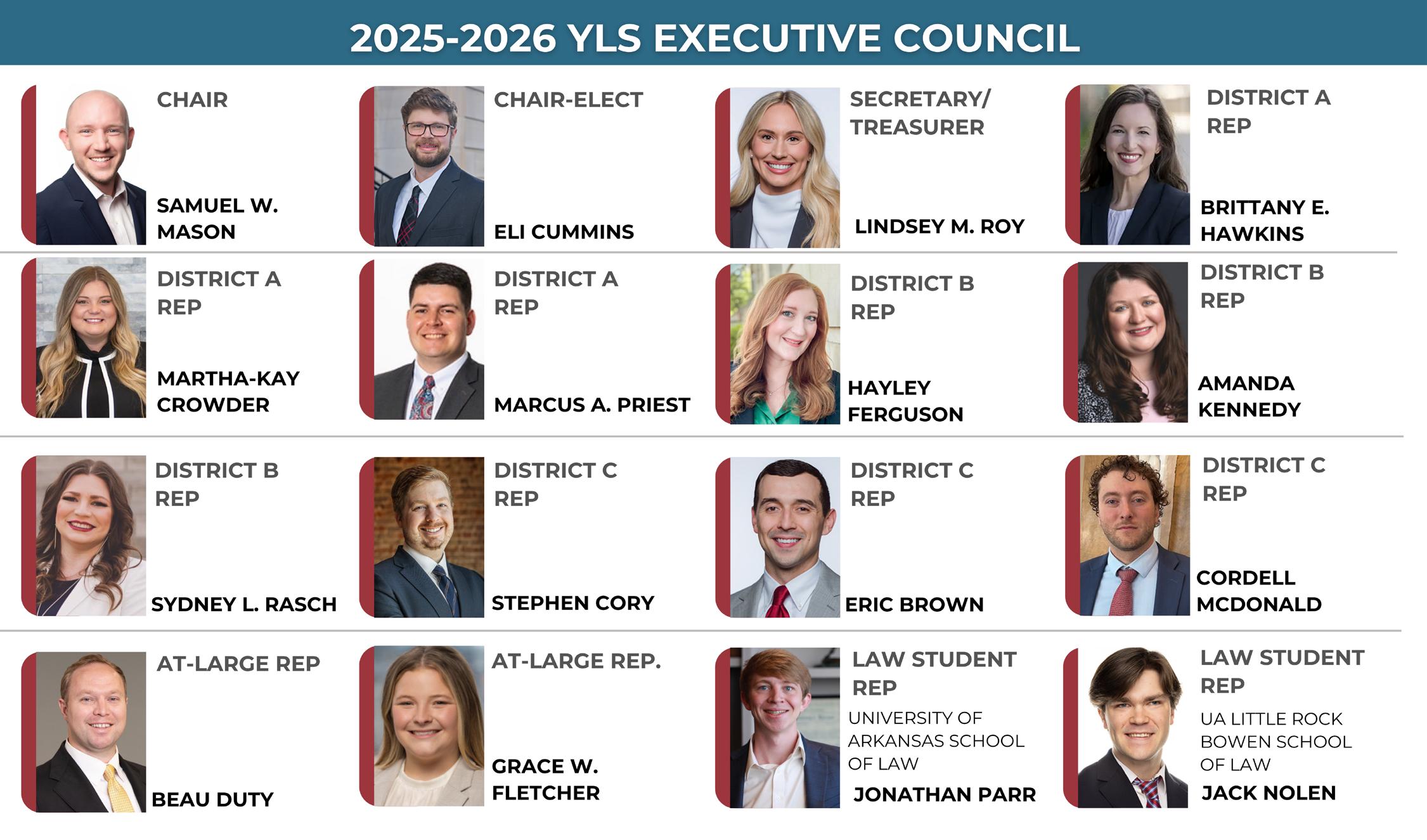
region, and anyone nearby, to connect in a relaxed setting. Thank you to our District C representatives, Lindsey Roy, Eric Brown, Cordell McDonald, and Stephen Cory, for hosting and helping make this event possible.
We’re also looking ahead to the Arkansas Bar Association Annual Meeting in June, which will take place under the theme “Stars, Stripes & Service.” The YLS Reception will be held on Thursday evening, June 11, and our YLS Annual Meeting will also take place during the conference, where we will elect our new officers. We hope many of you will plan to join us as we come together to celebrate service, connection, and community within the profession. The stronger our organization is, the better our skills become and the more people we can serve.
Samuel W. Mason is the Chair of the Young Lawyers Section. Sam is a trial attorney and partner at the Oliver Law Firm in Rogers.
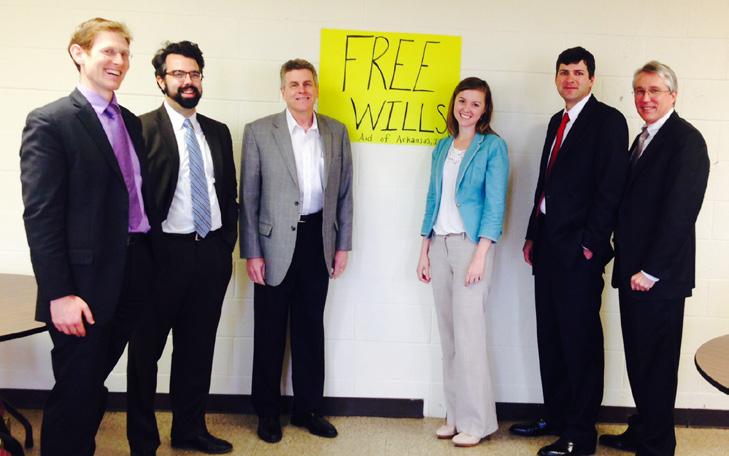
Service remains a core part of the Young Lawyers Section’s mission. We plan to set the date soon for our spring Wills for Heroes service project, and we’ll share more details in the coming weeks. We’re also looking for volunteers to help update the 18 & Life to Go Handbook, an important public education resource. If you’re interested in helping with either effort, please reach out.
Thank you to everyone who continues to stay involved with YLS and support our programs. We look forward to seeing many of you at upcoming events and continuing to build strong connections across the state. Be sure to put the Arkansas Bar Association’s Annual Meeting in your calendar right now because it will be one you do not want to miss! ■
By Tory H. Lewis
A Profile of the Arkansas Lawyer
Tory H. Lewis is a Senior Attorney at Taylor & Taylor Law Firm, P.A.
Who is the average Arkansas lawyer? Where do they live? Where are they from? What type of practice do they have?
Since 2019, the American Bar Association has reported annually on the profile of the American lawyer by compiling data from the ABA National Lawyer Population Survey and analyzing that data for “trends about lawyers, judges and law students.”1 But what about the Arkansas lawyer? When we look at the data specific to our state, what trends do we see?
Number and Distribution of Arkansas Lawyers
The total number of resident active lawyers in Arkansas grew by almost 20% between 2012 and 2018 to over 7,000 total lawyers.2 That number dipped slightly in 2019 and 2020 but has stayed steady the last few years at 6,808, or 2.22 lawyers per 1,000 residents.3 Unfortunately, Arkansas’s lawyer population, like that of other professionals, is not distributed evenly throughout the state. Over 40% of the state’s lawyers practice in Pulaski County, although only 13 percent of the state’s population lives there.4 Pulaski County is exemplary of a larger problem statewide: Arkansas’s 10 most populous counties are home to 53% of the state’s population and 80% of its lawyers.5 In contrast, Arkansas’s 25 most rural counties are home to about 9% of the state’s population but less than 3% of its lawyers.6 Arkansas lawyers are concentrated in the more populated counties in the state, despite the need for legal representation in rural counties.
Wages
It is possible that the financial advantage of working in a larger legal market plays into the location equation. It should come as no surprise that the average wages for Arkansas lawyers are higher in metropolitan counties than in rural counties. In 2018, attorneys in Pine Bluff or Hot Springs on average earned about $73,000 per year.7 A lawyer in Little Rock, on the other hand, earned $96,500 per year.8 Fortunately, wages seem to be on the rise across the board.
As of 2022, lawyers in both Hot Springs and Little Rock were earning about $10,000 more per year than they earned in 2018.9 Also, there is a great disparity nationally between the wages of private sector attorneys and public sector attorneys, although that wage gap is smaller in rural states like Arkansas where law firm salaries are not as high as they are in larger markets.10 Graduates from Arkansas law schools who go into private practice are most likely to join a firm with fewer than 11 practicing attorneys.11
Demographics of Arkansas Lawyers Gender
The American Bar Foundation published a statistical report on the U.S. Legal Profession in 2005. At that time, over 75% percent of practicing lawyers in Arkansas were men, and less than 25% were women.12 In 2005, the average male lawyer was 53 years old; the average female lawyer was 44 years old.13 This likely reflects the significant increase in the number of women who have joined the legal profession in the last 50 years. In 1970, only 9% of law students in the U.S. were women.14 Today, 56% of students in ABA-accredited law schools are women.15 Arkansas is slightly behind that national average. The Fall 2025 entering class at Bowen School of Law was almost evenly split between men and women.16
Unfortunately, lower retention rates of female lawyers have muted the effects of their high law school enrollment rate. A 2018 diversity survey of the 500 top law firms in the country revealed that only 29% of new equity partners were women, and only 28% of lateral partners hired were women.17 That same survey polled men and women in those firms who had been practicing law for at least 15 years and determined that the women lawyers were much less satisfied in their careers than their male counterparts.18
"[I]t behooves us to take a pulse on our profession, look at the trends in the data, and note what we see. Do we have cause for concern, for celebration, or both? If it is both, let us celebrate those things that make us proud of our profession and find solutions to the issues that concern us. If not us, who will?"
Race
Much like gender diversity, racial diversity of the legal profession has improved overall in recent years. However, numbers in this area are still lagging. In 2020, racial minorities made up over 28% of Arkansas’s total population.19 Yet, racial minorities represented just 23% of 2024 graduates of the University of Arkansas School of Law and 14% of 2024 graduates of the UALR William H. Bowen School of Law.20
Retention issues also pose a challenge for minorities in the profession. Nationally, minorities constitute about 20% of all law school graduates; yet “they make up fewer than 7 percent of law firm partners and 9 percent of general counsels of large corporations.”21 While both women and minorities are entering the profession at a higher rate, for a variety of reasons, they are not experiencing the same rate of success in the profession as their white, male counterparts.
Age
The legal profession skews older than most occupations in the U.S., according to the U.S. Bureau of Labor Statistics.22 Nationally, the median age of attorneys is 46 years old.23 Arkansas has been slightly higher than that, with an average age of 50 years old.24 In 2005, over 50% of practicing Arkansas lawyers were between the ages of 45 and 64, and 13% of practicing lawyers were 65 and older.25
Type of Practice
Data from the two Arkansas law schools indicate that about 28% of law school graduates will begin their legal careers in a small firm with fewer than 11 attorneys.26 Very few will be solo practitioners out the gate. Only three graduates from the 2024 graduating classes of both institutions chose to begin their legal careers as solo practitioners. In total, 52 percent of the law schools’ 2024
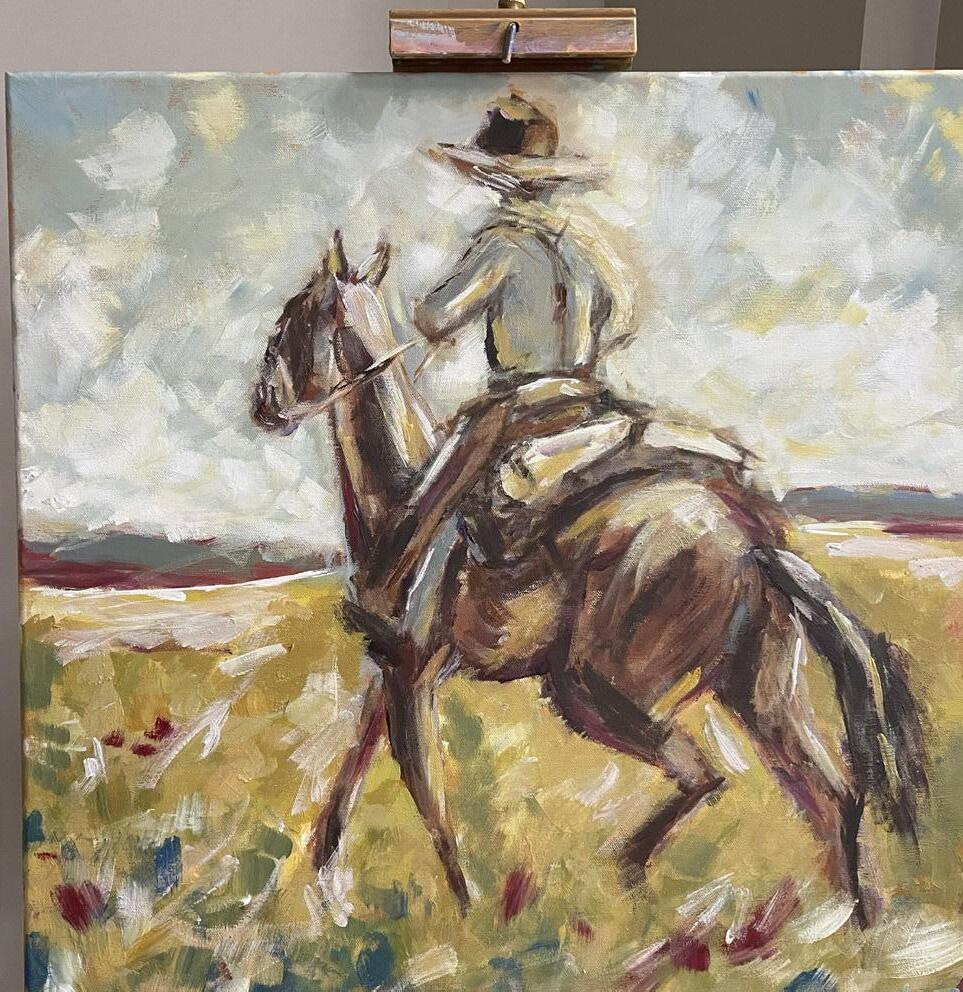
Original painting by Meagan Davis.
graduates began in private practice, about 12% began in private industry, and another 28% worked in government or the public interest sector.27
Contrast this with employment data for the profession as a whole. In 2005, 77% of Arkansas lawyers worked in private practice.28 And 63% of those lawyers were solo practitioners.29 While young lawyers may prefer to work with other attorneys at the onset of their careers, in time they often leave their firms to open their own shop. This is consistent with data showing that in 2005 only 38% of private practice lawyers under 40 in Arkansas were solo practitioners, whereas 58% of private practice lawyers over 40 were solo practitioners.30 With experience comes confidence; as lawyers gain experience, they are more likely to set out on their own.
Conclusion
The information in this article is meant to give readers a glimpse at the typical Arkansas lawyer. But the information is by no means complete; it is only a glimpse. This article has not touched on every issue that makes up the profile of an Arkansas lawyer. Moreover, there is absolutely nothing “typical” about the members of our profession. Although we can extrapolate logical conclusions from the statistical data, our experiences, skills, and personalities make us unique in ways that data cannot capture. Nonetheless, it behooves us to take a pulse on our profession, look at the trends in the data, and note what we see. Do we have cause for concern, for celebration, or both? If it is both, let us celebrate those things that make us proud of our profession and find solutions to the issues that concern us. If not us, who will?
Endnotes:
1. ABA Profile of the Legal Profession 2024, American Bar Association (2024), available at https://www.americanbar.org/ news/profile-legal-profession/.
2. ABA Profile of the Legal Profession 2022 92, American Bar Association (2022), available at https://www.americanbar. org/content/dam/aba/administrative/ news/2022/07/profile-report-2022.pdf.
3. “Demographics,” ABA Profile of the Legal Profession 2024, American Bar
Association (2024), available at https:// www.americanbar.org/news/profile-legalprofession/demographics/.
4. Lisa R. Pruitt, J. Cliff McKinney, & Bart Calhoun, Justice in The Hinterlands: Arkansas as a Case Study of the Rural Lawyer Shortage and Evidence-Based Solutions to Alleviate It, 37 U. Ark. Little Rock L. Rev. 537, 618 (2015), available at: https://lawrepository. ualr.edu/lawreview/vol37/iss4/3.
5. Id. at 619.
6. Id.
7. ABA Profile of the Legal Profession 2019 71, American Bar Association (2019), available at https://www.americanbar. org/content/dam/aba/administrative/ news/2019/08/potlp-2019.pdf.
8. Id. at 71.
9. ABA Profile of the Legal Profession 2023, American Bar Association (2023), available at https://www.americanbar. org/content/dam/aba/administrative/ news/2023/potlp-2023.pdf. The most recent data indicates that wages in Pine Bluff have also gone up. See “Wages,” Profile of the Legal Profession 2024, American Bar Association, available at https:// www.americanbar.org/news/profile-legalprofession/wages/ (wages for lawyers in Pine Bluff for 2023 were $87,130).
10. See id.
11. UALR Bowen School of Law ABA Employment Summary for 2024 Graduates, American Bar Association (2025), available at https://ualr.edu/law/wp-content/ uploads/sites/236/2025/04/2024-SummaryReport-for-the-Website.pdf.
12. Clara N. Carson & Jeyoon Park, The 2005 Lawyer Statistical Report: The U.S. Legal Profession in 2005 29, American Bar Foundation (2012), available at https://www.americanbarfoundation.org/ wp-content/uploads/2023/05/2005_lawyer_ statistical_report.pdf.
13. Id.
14. ABA Profile of the Legal Profession 2024: Women in the Legal Profession, American Bar Association, available at https:// www.americanbar.org/news/profile-legalprofession/women/.
15. Id.
16. Entering Class Profile, UALR William H. Bowen School of Law, available at https://ualr.edu/law/admissions/rankings/ entering-class-profile/.
17. Roberta D. Liebenberg & Stephanie A. Scharf, Walking Out the Door: The Facts, Figures and Future of Experienced Women Lawyers in Private Practice 1, American Bar Association (2019), available at https:// www.americanbar.org/content/dam/aba/ administrative/women/2020-and-earlier/ walkoutdoor_online_042320.pdf.
18. Id. at 5–6.
19. Racial and Ethnic Diversity by State: 2010 Census and 2020 Census, U.S. Dept. of Commerce (2021), available at https://www. census.gov/library/visualizations/interactive/ racial-and-ethnic-diversity-in-the-unitedstates-2010-and-2020-census.html.
20. University of Arkansas School of Law – 2024 Standard 509 Information, American Bar Association, available at https://law.uark.edu/_documents/509/ UAlaw-ABA509-20241024.pdf; UALR William H. Bowen School of Law – 2024 Standard 509 Information, American Bar Association, available at https://ualr.edu/ law/wp-content/uploads/sites/236/2025/03/ Std509InfoReport_2024.pdf.
21. Deborah L. Rhode, Law is the Least Diverse Profession in the Nation. And Lawyers Aren’t Doing Enough to Change That, The Washington Post (May 27, 2015), available at https://www.washingtonpost.com/ posteverything/wp/2015/05/27/law-is-theleast-diverse-profession-in-the-nation-andlawyers-arent-doing-enough-to-change-that/.
22. Profile of the Legal Profession 2024: Demographics, American Bar Association, available at https://www.americanbar.org/ news/profile-legal-profession/demographics/. 23. Id.
24. Carson & Park, supra n.12.
25. Id.
26. UALR Bowen School of Law ABA Employment Summary, supra n.11; University of Arkansas School of Law ABA Employment Summary for 2024 Graduates, American Bar Association, available at https://law.uark.edu/_documents/509/ EmploymentOutcomes2024.pdf.
27. Id.
28. Carson & Park, supra n.12.
29. Id.
30. Id.
What a Difference a Decade Makes: Has the Rural Landscape in Arkansas Changed?
By J. Cliff McKinney II
Introduction1
In 2015, Lisa Pruitt, Bart Calhoun, and I published an article in the University of Arkansas at Little Rock Law Review titled “Justice in the Hinterlands: Arkansas as a Case Study of the Rural Lawyer Shortage and Evidence-Based Solutions to Alleviate It.”2 That article provided an extensive review of the declining number of attorneys living and working in rural areas. Since then, efforts have been made to increase the number of attorneys in rural counties, including the University of Arkansas at Little Rock’s Rural Practice Incubator Project. So, have the numbers changed in the last 10 years? Has the shortage of rural attorneys improved or worsened? This article will explore these questions by examining the latest data and trends. While the 2015 article remains highly relevant today, it is interesting to see how the situation has evolved.
The 10 Least Populous
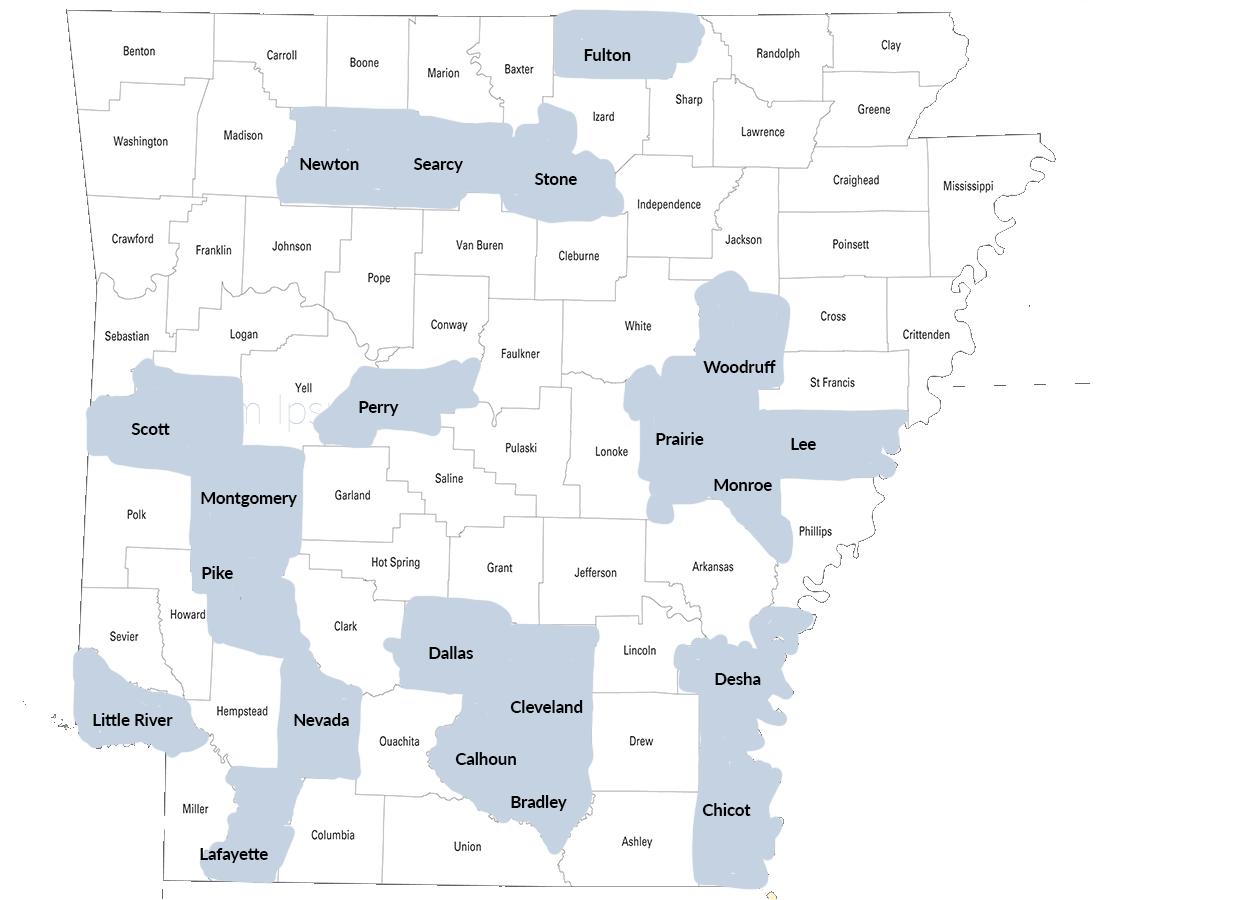
The 2015 article was based in part on information available from the 2010 U.S. Census. The 2020 U.S. Census data is now available. In 2015, the state had a population of 2,915,918, and the 10 least populous counties in Arkansas were: Calhoun (5,368), Woodruff (7,260), Lafayette (7,645), Dallas (8,116), Monroe (8,149), Searcy (8,195), Newton (8,330), Cleveland (8,689), Prairie (8,715), and Nevada (8,997). As of the 2020 census, the state now has a population of 3,011,524 (+3.28%), and the 10 least populous counties are: Calhoun (4,740; -11.70%), Woodruff (6,268; -13.66%), Lafayette (6,306; -17.51%), Dallas (6,478; -20.18%), Monroe (6,797; -16.59%), Newton (7,226; -13.25%), Cleveland (7,551; -13.10%), Searcy (7,832;-4.43%), Prairie (8,283; -4.96%), and Nevada (8,315; -7.58%). Searcy County was the only county to change places in the list, but its overall population still declined. In total, the 10 least populous counties lost 9,668 people, or a 12.17% decrease.
About the Author
J. Cliff McKinney II is a Managing Member at Quattlebaum, Groom & Tull PLLC
In 2015, Arkansas had 5,953 attorneys with a ratio of 2.04 attorneys per capita. Today, Arkansas has 6,808 attorneys with a ratio of 2.26 attorneys per capita. Here is the breakdown of the 10 least populous counties:3
Map of the 21 Arkansas counties examined in this analysis, highlighting rural areas where attorney turnover trends were reviewed.
"The next decade can either bring resilience or retrenchment. The difference will be how—and whether— we choose to act."
I will confess that when I began writing this update, I assumed the problem would be worse today than it was in 2015. Thankfully, though, the reality is somewhat better than expected. Only one of these counties lost attorneys (Woodruff, which lost four attorneys). Three counties broke even, and five counties saw increases, most notably Cleveland County, which went from zero to three. Since all 10 counties experienced a decline in overall population, the per capita number of attorneys increased in every county except Woodruff. The total number of attorneys increased from 59 in 2015 to 69 in 2025, a 16.9% increase. This is remarkable considering that these counties decreased in population by approximately the same percentage.
Another issue is the average age of attorneys. The average bar year4 would need to improve by at least 10 years to maintain the status quo, as 10 years have passed since the 2015 research was conducted. This is where there is some bad news. Only Lafayette, Cleveland (by default of having zero attorneys previously), and Nevada had average ages of attorneys improve. A positive point, however, is that four of the counties have added attorneys licensed since 2015: Lafayette, Dallas, and Prairie each added two recent graduates, and Nevada added three recent graduates, resulting in a total of nine attorneys licensed since 2015 moving to these small counties. Nearly 14% of the 68 attorneys in these counties were licensed after the article was published in 2015.
The Next 10 (or 11)
The following 10 counties in terms of population in 2015 were: Montgomery (9,487), Lee (10,424), Perry (10,455), Scott (11,233), Pike (11,291), Bradley (11,508), Chicot (11,800), Fulton (12,245), Stone (12,394), and Desha (13,008). As of 2020, the following 10 least populous counties are now: Montgomery (8,480; -10.61%), Lee (8,597; -17.53%), Scott (9,834; -12.45%), Perry (10,023; -4.13%), Pike (10,162; -10.00%), Chicot (10,212; -13.46%), Bradley (10,542; -8.39%), Desha (11,395; -12.4%), Little River (12,022; -8.72%), and Fulton (12,071; -1.42%). Stone County (12,352 as of 2020; -0.34%) has moved to #21 with Little River (13,171 in 2015) falling from #21 to #19. Here is how these 11 counties stand:
"A decade after sounding the alarm in the 2015 article, the updated data offer both reassurance and renewed concern. Yes, more attorneys are serving Arkansas’s smallest counties, and yes, new lawyers are planting roots in rural soil. However, many counties remain deeply vulnerable, relying on aging attorneys and still facing economic headwinds."
Of this block of counties, the total number of attorneys stayed the same. Four counties lost attorneys, a worse result than the 10 least populous counties. One county broke even, and six increased in number of attorneys. As with the 10 smallest counties, all experienced a loss of population, which contributed to the improved per capita number of attorneys; however, four counties saw a decrease in their per capita numbers. The standout is Desha County, which suffered a 41.18% decline in attorneys (-7). Since Desha County’s population declined by 12.4%, this resulted in a significant decrease in the per capita number ratio. Interestingly, however, Desha County is now home to three attorneys who have been licensed since the 2015 article, indicating that new attorneys are moving in. Neighboring Chicot County, though, gained five attorneys, an increase of 41.67%, almost matching the losses in Desha County. Notably, Chicot County has gained four additional attorneys since the 2015 article. This represents improvement with seven new attorneys moving to Chicot County and Desha County. Overall, these 11 counties added 19 attorneys licensed since the 2015 article, which is a positive sign that there is greater interest in living in rural counties.
In terms of the average age of the attorneys in these counties, Montgomery County and Bradley County experienced a decline, with the average bar year in Montgomery County decreasing from 1992 to 1984, and the average bar year in Bradley County decreasing from 1978 to 1972. As previously noted, a county’s average bar year would need to increase by 10 years to keep pace with the passage of time since the 2015 article. Only Scott, Chicot, Desha, Little River, and Fulton managed to improve the average bar year by more than 10 years. Six counties failed to keep up, indicating that the aging of attorneys is worsening overall.
Retirees Going Rural?
Another angle worth examining is attorney turnover in these 21 rural counties. Although the raw data gathered intentionally does not include attorney names, it does list bar admission years. For purposes of this analysis, I assumed that attorneys with the same admission year in both 2015 and 2025 are the same individual. For example, Calhoun County had two attorneys in 2015—admitted in 1975 and 2001—and still reports two attorneys with those same admission years today. I therefore assume these are the same two individuals. With that framework, here is the observed turnover:
• Little River County: Lost 1970, 1984, 2009; Gained 2015 (two attorneys), 2016, 2020 (two attorneys), 2022 (Net +3)
There is some reason for optimism here because several rural counties have attracted attorneys who were admitted to the bar after 2015. That trend suggests at least some renewed interest in rural practice. However, the results also raise a red flag. Assuming a typical bar admission age of 25, any attorney admitted before 1985 is now likely over the retirement age of 65. Notably, 12 of the “new” additions across these counties have bar years predating 1985, indicating that they may be retirees. While retirees can make meaningful contributions to rural legal services, their presence does not help the long-term outlook.
Beyond the numbers themselves, the turnover data reveal critical regional trends. Counties like Desha and Woodruff suffered substantial net losses, raising serious concerns about the sustainability of local legal services. Desha County, for instance, lost 10 attorneys and gained only three, all of whom were licensed after 2015.
This suggests that an entire generation of attorneys has aged out without being replaced in a meaningful way. On the other hand, some counties, such as Chicot, Nevada, and Cleveland, experienced modest net gains or demographic refreshes, indicating pockets of resilience. The overall picture, though, is fragmented. Turnover is uneven, and gains in one county do little to offset severe attrition in others.
An Economic Impact?
When considering the rural lawyer shortage, it is also essential to examine broader economic trends that influence whether rural counties are attractive for attorneys. Poverty rates and median household incomes often closely correlate with a rural community’s ability to support attorneys and sustain viable legal practices. A review of updated census data from 2015 to 2022 provides insights into this problem. Across the 21 counties re-examined in this article, there have generally been modest improvements in economic conditions. Nearly every county experienced growth in median household income from 2015 to 2022 (the most recent economic data), with notable increases in counties such as Perry (from $43,020 to $56,640), Cleveland (from $44,123 to $55,533), and Newton (from $33,679 to $47,996). Despite these encouraging signs, however, median household incomes remain significantly lower than statewide averages.
Similarly, poverty rates have generally declined in these counties, though often marginally. Woodruff County, for instance, reduced its poverty rate from 25.8% in 2015 to 22.6% in 2022. Newton County improved from 24.2% to 19.4%, and Monroe County saw a meaningful drop from 30.9% to 24.9%. Still, some counties saw poverty rates remain extremely high. For instance, Lee County’s poverty rate remains above 35%, essentially unchanged, and Desha County’s poverty rate has significantly increased, rising from 21.2% in 2015 to 27.9% in 2022.
Interestingly, the data reveal a mixed correlation between improved economic conditions and the attorney population. Some counties with significant economic improvements, such as Cleveland and Nevada, have also experienced growth
in the number of attorneys, suggesting a relationship between economic health and attorney retention or attraction. On the other hand, counties such as Desha, where poverty has notably increased, experienced substantial attorney losses, underscoring that deteriorating economic conditions negatively impact lawyer retention.
One key finding is that while several counties have simultaneously experienced growth in attorney numbers and economic improvement (e.g., Cleveland, Dallas, and Prairie), economic gains alone do not consistently translate into increased lawyer populations. For example, Perry County experienced significant income growth, yet it saw a decrease in the number of attorneys practicing there. Conversely, Chicot County, despite maintaining relatively high poverty rates, managed to add new attorneys. This suggests that other factors may also influence attorneys’ decisions to practice in rural areas.
The persistence of high poverty rates in several counties and relatively low median incomes across the board means that challenges remain for rural Arkansas. Although the overall economic picture is more favorable today than in 2015, the modest nature of these improvements suggests that attracting and retaining younger attorneys in rural Arkansas will likely continue to require concerted support, potentially through loan repayment programs, economic development initiatives, and enhanced practice management resources.
Conclusion
A decade after sounding the alarm in the 2015 article, the updated data offer both reassurance and renewed concern. Yes, more attorneys are serving Arkansas’s smallest counties, and yes, new lawyers are planting roots in rural soil. However, many counties remain deeply vulnerable, relying on aging attorneys and still facing economic headwinds.
The strategies proposed in the 2015 article remain not only relevant but are critical to reversing the trend. Programs like the University of Arkansas at Little Rock Rural Practice Incubator, along with targeted incentives, economic development efforts, and recruitment, are among the best tools available to address the problem.
From intake to invoice, all in a single tab
Rural Arkansas deserves a sustainable legal infrastructure. The next decade can either bring resilience or retrenchment. The difference will be how—and whether—we choose to act.
Endnotes:
1. I am grateful to our firm’s summer law clerk, Arin M. Soileau, for assistance in the research for this article.
2. Lisa R. Pruitt et. al., Justice in the Hinterlands: Arkansas as a Case Study of the Rural Lawyer Shortage and Evidence-Based Solutions to Alleviate It, 37 U. Ark. Little Rock L. Rev. 573 (2015).
3. Note: I determined the number of attorneys in each county using the address the attorneys have on file with the Arkansas Judiciary. Of course, some of these attorneys may be nonpracticing or sitting as judges. Conversely, there could be additional attorneys practicing in these counties who have their bar dues invoice sent to a different county.
4. The Arkansas Judiciary tracks the year that an attorney is first admitted in the state, which is referred to as the bar year.
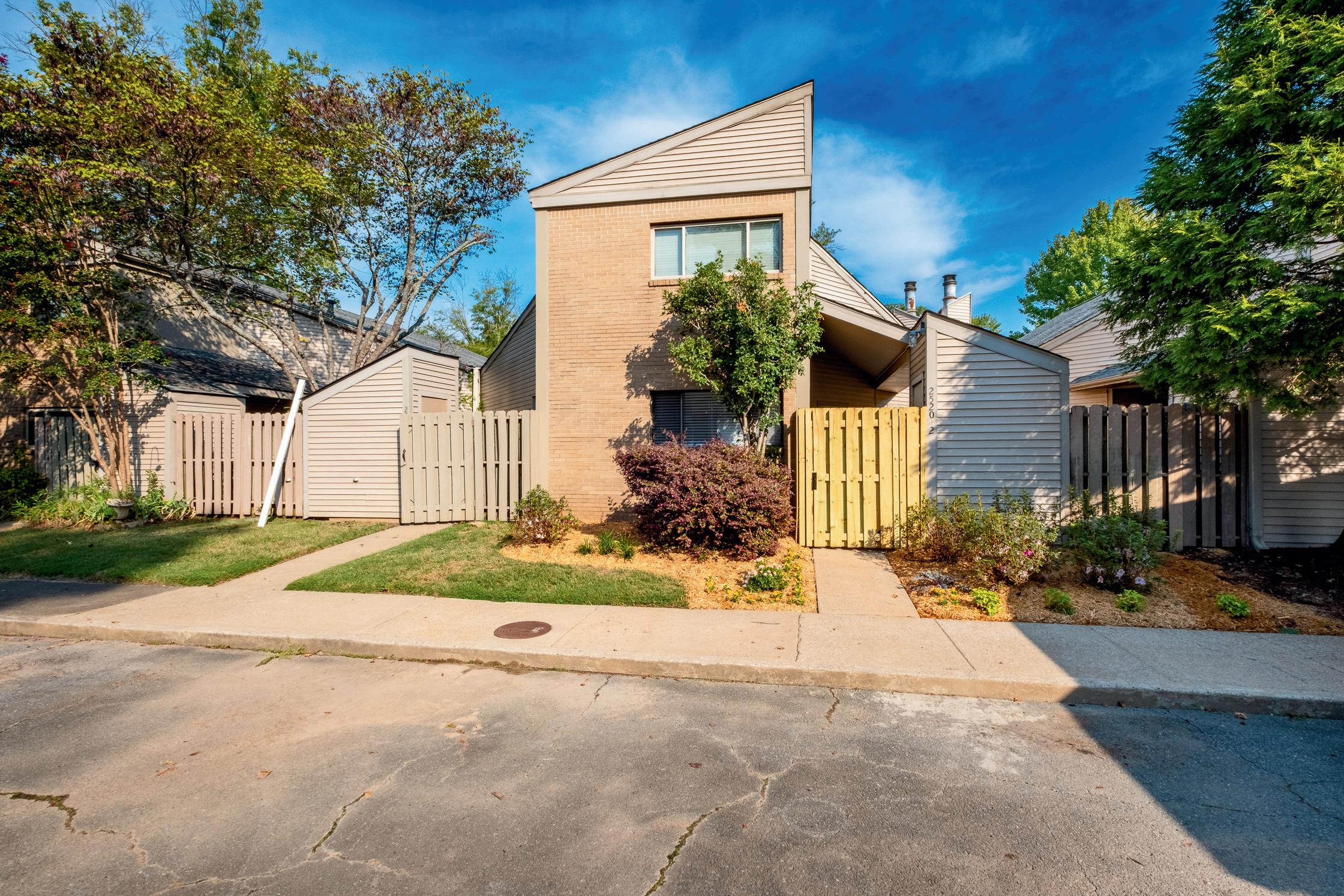
Convenience and easy living meet with this updated 2 Bed / 2 Bath, gated, Round River Condo on the Arkansas River. With the Arkansas River Trail & Rebsamen Golf Course next door, restaurants and downtown 5 minutes away, a private courtyard, tranquil waterside views, a covered patio, 2 stocked ponds, and a pool with a clubhouse, fun and relaxation await. $249,000. Call John Selva 501.993.5442
2520 Riverfront Drive, Little Rock
The Best Decision I Never Expected to Make
Finding purpose, building a life, and practicing law in rural Arkansas.
By Meagan Davis
About the Author
Meagan Davis is a partner at Maddox & Davis, PLLC in Mena, Arkansas. She is passionate about rural legal practice and community service.
In 2016, one year out of law school, I told my boss I would never move home to practice law. It was the kind of bold declaration you make in your 20s, fueled by a mix of youthful ego, ambition, and a narrow idea of what “success” should look like on paper. At that point in my career, I envisioned a path as a law clerk, far from the courtroom and client calls, immersed in research and writing. I didn’t want to return home to divorce high school classmates and run into them at the local gas station restaurant. So, when Justice Robin F. Wynne encouraged me to return to my hometown and build a law practice, I smiled politely and quickly dismissed the idea.
Justice Wynne spent most of his legal career practicing in Fordyce, Arkansas. He spoke often, and with affection, about his community and the people he served. After becoming a judge, and later a justice on the Arkansas Supreme Court, he shared how much he missed daily client interactions, the human connection that defined his early career. He told stories of clients who paid him in coins or goats, the memorable and sometimes unusual cases he enjoyed handling, and the people he supported through difficult times. Although he poured his heart into his work, he was also a master at maintaining work-life balance, cherishing time with his family and coaching his son’s little league teams.
Justice Wynne showed me that you could maintain your kindness, your integrity, and your values—and still rise to a position of great responsibility. He modeled a legal career rooted in service, community, and principle. One of the most enduring examples of this came in the form of his friendship with a janitor named Henry. They met while Justice Wynne was working late at the Court of Appeals. As Henry cleaned, they talked. Years later, the friendship remained. Once a month, while working for Justice Wynne, we would pick up groceries and deliver them to Henry’s home. We sat and visited, prayed together, and checked in. That was simply who Justice Wynne was.
Seven years and three jobs later, his advice still echoed in the back of my mind. A lot changes between the ages of 25 and 32. Somewhere along the way, my priorities shifted. My focus had been on climbing the ladder, building a resume for the next phase of my career. My work wasn’t a passion or a deep desire; it was the thing I did because I was supposed to. Work hard. Move to
the next rung of the ladder. In my early thirties, I began to wonder if another life was possible as an attorney—living at a slower pace, working in a job connected to purpose and community.
When my now-husband, Chase, and I reconnected as adults, we found ourselves in a long-distance relationship; he was in Texarkana, and I was in Little Rock. We had known each other for most of our lives and remained tied to our hometown. As we started envisioning a future together, the question of where to live naturally arose. During one of those conversations, Chase reminded me that, prior to choosing a career, I talked about wanting to move home someday to be closer to family. I had nearly forgotten that version of myself, before the societal idea of what a successful career looked like got in my way. But he remembered, and more than that, he believed it could work.
Even though I had always loved visiting my hometown, the idea of living there again and the reality of practicing law in a rural area was daunting. I still pictured small town law practice as awkward restaurant run-ins. Nevertheless, with Chase’s support and the encouragement of friends and family, I started planning, meeting with local leaders, exploring opportunities, and thinking seriously about how to make a life and career in Polk County. That process ultimately led me to Representative John Maddox and his father, the late David Maddox, who welcomed me into their family law firm in Mena. I still marvel at how lucky I was to connect with such wonderful people to help me build a career in a place I swore I’d never practice law.
David Maddox, like Justice Wynne, possessed a servant’s heart. After he passed away, story after story emerged: free legal work, help beyond what was required, and in one case, even a client who left with a car instead of a bill. I consider myself incredibly fortunate to have known him and to have been mentored by him. Though our time together was brief, his guidance left a lasting impact on me personally and professionally. His legacy continues to shape our law
"In small towns, every effort counts. There is no anonymity in service here; what you give resonates throughout the community, just as much as what you choose to withhold. The impact one person can have is oversized and tangible. Every effort, no matter how small, shapes the community we live in and the future we build for those who come after us. And in the legal community, the effort in rural areas is desperately needed."
practice, where we remain committed to accessible, compassionate service. John Maddox, like his father, exemplifies these values through work and leadership in our community.
Practicing law in a rural area is not without its challenges. Unlike my specialized roles in the past, rural law requires wearing many hats, handling a wide range of legal issues, managing employees, and balancing client needs across diverse circumstances. General practice requires you to adapt constantly. You are counselor, negotiator, problem-solver, bill collector, and sometimes make-shift therapist. This versatility is demanding but rewarding, and it has deepened my appreciation for the impact one person can make in a rural area.
As a college student, I couldn’t understand why my dad, a recentlyretired bridge builder, planted such a large garden each year. In the 15 years since then, his garden has continued to grow, and now that I’m home I see why. Nearly every familiar face I come across in the summer tells me how grateful they are that he brought them a bushel of corn, or a five-gallon bucket of tomatoes, or a mess of green beans. He doesn’t garden for himself; he gardens to give.
In his early 30s, my father started a construction company and, shortly thereafter, moved his family home to live next door to his mother. I will always be deeply thankful for his decision that gave us a joyful childhood in the country, though recently I’ve come to understand the sacrifices it demanded. Living in a remote area meant long drives to job sites, adding 3-4 hours to an already grueling 10-hour workday. Until the day he retired, he was in the trenches with his crew, and to this day I’ve never known anyone to work harder.
When I was given the opportunity to have ownership in this law firm, it’s not a decision I took lightly. I had seen the stress, grit, and dedication it took to be a successful entrepreneur. Like the decision to move home, I knew the decision to own a business would not be without sacrifice.
Photo by Meagan Davis of her father, Danny Davis, at his home in Hatfield, Arkansas.
Research from the USDA highlights that family connections and the desire to raise children in a familiar and supportive environment are among the strongest reasons people return to rural communities. The research also indicated that those who move back often make significant professional sacrifices or find creative ways to secure employment. My father and I fall neatly into those statistics.
Henry David Thoreau once said, “The cost of a thing is the amount of … life which is required to be exchanged for it, immediately or in the long run.” Moving back to a rural area may have a cost upfront, but living, working, and raising a family here has returned that investment many times over—an impact I hope extends well beyond myself.
Individuals returning home often bring essential skills, education, and leadership to rural communities facing population decline and labor shortages. Returnees frequently assume roles as professionals, entrepreneurs, and community leaders. These individuals can leverage existing connections to foster collective action and positive social change, helping to build a vibrant community and ecosystem rooted in shared history and new ideas. My sister described it as a sling shot; get out of the community for a while, gain knowledge, skills, and experience, develop a network, then bring it home.
In the decade I spent in Little Rock, I was fortunate to serve alongside dedicated individuals in organizations such as the Junior League of Little Rock, the Judges and Lawyers Assistance Program, the Bowen Young Alumni, and the ACANSA Art Festival. The mentorship and the collaborative spirit of these groups helped shape my leadership skills and deepened my commitment to community service, gifts I am grateful to bring back and apply.
In small towns, every effort counts. There is no anonymity in service here; what you give resonates throughout the community, just as much as what you choose to withhold. The impact one person can have is oversized and tangible. Every effort, no matter how small, shapes the community we live in and the future we build for those who come after us. And in the legal community, the effort in rural areas is desperately needed.
Arkansas has the lowest per capita number of attorneys in the country, just 2.01 per 1,000 residents. Over half practice in three counties, Pulaski, Benton, or Washington, leaving many rural areas with less than one private practice attorney per 1,000 residents. The access gap hits rural Arkansans hardest. While statewide attorney-to-population ratios vary depending on data source and whether figures include only private-practice attorneys or all licensed, active lawyers, Arkansas consistently ranks among the lowest states nationally in attorneys per capita.
In Polk County, that figure ranges between 1.01 and 1.5 private practice lawyers per 1,000 residents. In neighboring Montgomery County, it is fewer than 0.5. Legal aid services are similarly limited. In Polk County, just 5.1 to 10 cases are handled per 1,000 eligible residents. In Montgomery County, that number is even lower.
Meanwhile, legal need is high: Polk County sees 40 to 50 civil, domestic relations, and juvenile filings per 1,000 residents. In Montgomery County, that number rises to between 70 and 80. Without a new generation stepping in, these gaps will only continue to grow. Even where some rural counties have seen modest increases in attorney numbers in recent years, those gains have not always translated into meaningful improvements in access to justice — particularly for lowincome residents and communities without sustainable private practice options.
A 2015 study examining the availability of legal services in rural Arkansas illustrates the depth of the problem. While the study is now dated, even at that time the data showed a worsening trend. The number of private practice attorneys in Arkansas’s most rural counties declined by as much as 25% from 2010 to 2014, and approximately one-quarter of the remaining rural attorneys were over the age of 65. Based on my experience, I suspect these numbers have continued to decline.
Factors like rural poverty and geographic isolation only exacerbate this issue. The most rural areas of Arkansas are also the most impoverished. A 2023 report indicated that over 50% of the households in Polk
County were struggling to meet basic needs. The county is home to a little less than 8,000 households. Of those, 1,386 live below the Federal Poverty Level and 2,591 live below the ALICE Threshold, meaning they earn more than the Federal Poverty Level but less than the basic cost of living for the county.1
If a resident of Polk County can’t obtain an attorney in Mena, they likely must travel a significant distance to hire one, often nearly 100 miles. This is not only inconvenient, but also financially challenging. The additional cost of driving time only adds to legal fees, which are already typically at a higher rate than local attorneys. These issues are multifaceted and interconnected, often going unresolved because legal help is scarce or nonexistent in many rural communities. Another facet is lack of trust in out-of-town attorneys.
In rural practice, you know your clients. They are your neighbors, your child’s teachers, your former classmates. That connection fosters trust, and that trust is sacred. In a small community, there is a strong desire to establish a meaningful relationship while doing business. Clients want to meet face to face and get to know you. Most of my clients ask questions like who my dad is or where I went to high school, until we find commonality and mutual acquaintances. While many rural residents lack access to justice for financial reasons, others simply aren’t going to trust an attorney they know nothing about. Since returning home, I’ve made house calls down muddy backroads to visit homebound clients. I’ve taken on cases knowing clients couldn’t pay right away, sometimes because we grew up together, sometimes because I simply believed them when they said they’d pay as soon as they could. I’ve grieved with families during probate. I’ve been a shoulder to cry on in the middle of divorces. I’ve celebrated with clients when adoptions were finalized. I’ve helped protect family farms. And perhaps most memorably, I once followed a literal treasure map left in a will to find gold coins hidden in a wall.
While I acknowledge that these actions are not all unique to rural law practice, I would argue that there are certain distinctions. Rural practice is
not transactional, it’s personal. And because of that, I can’t help but care. My client’s problems become my problems. It’s a very different experience from my earlier legal work, where I was often advising corporations, public agencies, or institutional clients. I enjoyed that work and the problem-solving it required, but it wasn’t personal. There was no face, no name, no story associated with each filing; it was simply work. Here, the work I do has an immediate impact that is deeply felt, not just by me, but by the clients who might not otherwise have access to legal help.
I’ve been incredibly fortunate to have mentors like Justice Wynne, David Maddox, and my father, Danny Davis, leaders who modeled compassion, humility, and a deep sense of duty, who showed me that success and service are not mutually exclusive, and that it’s possible to lead with both integrity and heart. Throughout my career, I’ve been lucky to repeatedly work with and for people who valued balance and family, who understood that the measure of a life welllived includes time spent with the people we love and the communities we call home. Those lessons stayed with me and shaped the kind of life and practice I ultimately chose to build.
So, to those reading this, whether you are a young attorney unsure where to begin or a seasoned professional seeking renewed purpose, I encourage you to consider rural practice. It is not without sacrifice, but it offers profound meaning. It offers belonging. It offers a chance to serve not just clients, but neighbors, friends, and the places that shaped you.
If you’ve ever wondered what this path looks like in real life, I invite you to visit me in Mena. I would be glad to share what it means to practice rural law and why it just might be the best decision you never expected to make.
Justice Wynne once told me, “You have too much personality to sit quietly in an office.” At the time, I thought he meant I belonged in court. Now, I understand what he truly meant. I don’t just belong outside the office. I belong here. In this place. Among these neighbors. Serving this community.
He was right all along.
References
1. Coming Home: Why Some Return to Rural Communities and Some Do Not, and What Difference It Makes, (U.S. Dep’t of Agric., Econ. Research Serv. webinar, 2015).
2. John Cromartie, Claudia von Reichert & Ryan Arthun, Factors Affecting Former Residents’ Returning to Rural Communities, U.S. Dep’t Of Argic., Econ. Research Serv., Econ. Research Rep. No. 185 (2015).
3. United for ALICE, Arkansas County Reports, https://www.unitedforalice.org/ county-reports/arkansas#7/34.760/-92.131 (last visited July 8, 2025).
4. Chanley S. Painter, Exploring the Problem of Self-Represented Litigants in Arkansas Civil Courts, Ark. Access to Just. Comm’n & Clinton Sch. of Pub. Serv. (2011), available at https://arkansasjustice.org/ wp-content/uploads/2017/04/CapstoneReport-AAJC-Final-1.pdf.
5. Nigel Halliday, Bridging the Map: The Geography of Legal Need and Aid in Arkansas, Ark. Access to Just. Comm’n (2017), available at https://arkansasjustice.
6. John Cromartie, Christiane von Reichert & Ryan Arthun, Why Some Return Home to Rural America and Why It Matters, U.S. Dep’t Of Argic., Econ. Research Serv., (July 6, 2015), available at https://www. ers.usda.gov/amber-waves/2015/july/whysome-return-home-to-rural-america-andwhy-it-matters.
Endnote:
1. ALICE is an acronym for Asset Limited, Income Constrained, Employed.
Bowen Law: Momentum, Mission, and Service Across Arkansas
By Felisha Weaver Director of Communications & Public Relations
UA Little Rock William H. Bowen School of Law
At the UA Little Rock William H. Bowen School of Law, momentum is building. Applications are rising, bar passage rates are increasing, and students are arriving with stronger academic credentials and a clear sense of purpose. Behind that momentum is a long-standing mission: to expand access to justice, uphold professionalism, and prepare students for lives of service across Arkansas and beyond.
Bowen Law attracts students who bring more than ambition. They bring conviction. Many arrive with a deep commitment to public service, a desire to improve access to justice, or a vision for how the law can strengthen the communities they call home. Here, that drive is met with opportunity. Through personal mentorship, real legal experience, and strong connections to Arkansas’s legal system, students are challenged and supported from day one. What follows is a journey of growth— academic, professional, and personal.
“We strive to educate students to be thoughtful, ethical professionals who serve the public good,” said Colin Crawford, dean of the law school. “Their impact begins here, but it doesn’t end here. It follows them into every courtroom, boardroom, or community they serve.”
A Student Body That Reflects Mission and Motivation
This fall, Bowen Law welcomed one of its most academically accomplished and missionaligned classes in recent history. The incoming Class of 2028 arrived with a median LSAT of 153, a notable increase from the previous year. Seventy-seven percent are Arkansas residents, and nearly one-third are the first in their families to attend college. Their backgrounds include military service, professional careers, and recent undergraduate achievement, all united by a shared goal: to use their legal education to serve and lead.
Members of this entering class come from more than 60 undergraduate institutions, reflecting a broad academic foundation and regional reach. Most earned their degrees at Arkansas colleges and universities, including the University of Arkansas, University of Central Arkansas, UA Little Rock, and Arkansas Tech. Others arrived from schools in Texas, Louisiana, Mississippi, Oklahoma, and as far away as Colorado and Oregon. These pathways demonstrate both Bowen’s local impact and its growing visibility throughout the region.
They join a community that is serious about both academics and impact. With more than 400 J.D. candidates enrolled, including full-time, part-time, and students pursuing one of six concurrent degree programs, Bowen Law remains committed to meeting students where they are. The inperson part-time evening program continues to serve students who might otherwise be unable to attend law school. These include working professionals, caregivers, and community leaders who bring valuable perspectives into the classroom. Many commute from outside central Arkansas, bringing regional knowledge and realworld experience into the classroom. Their presence strengthens Bowen’s student body and deepens the law school’s connection to communities across the state.
Expanding Access, Building Pathways
At Bowen Law, access to justice isn’t a slogan — it’s a core pillar that guides how the school recruits students, shapes legal education, supports alumni, and serves Arkansas communities. Through formal pathway agreements with colleges and universities across Arkansas, the law school offers motivated undergraduates a defined route to admission. These partnerships guarantee entry for qualified students who meet academic and character requirements,
helping to widen access to legal education throughout the state. The Legal Education Advancement Program (LEAP), a summer initiative for high-potential applicants, provides further support through performance-based evaluation and continued academic guidance.
Bowen’s commitment to access continues beyond admissions, shaping the opportunities students have to engage with underserved communities. Through handson experiences like the Delta Divorce Clinic and externships with organizations such as the Arkansas Municipal League, many Bowen students engage directly with the legal needs of rural Arkansans. These early experiences help students understand both the barriers to justice and the critical role lawyers play in addressing them.
For alumni who want to serve where they’re most needed, the Bowen Rural Practice Incubator Project offers an 18-month launchpad to build small or solo practices in high-need counties. With training, mentoring, and resources, participants deliver pro bono services in communities where few attorneys remain. It’s one way Bowen transforms its access mission into measurable impact, preparing lawyers to serve not just clients, but entire communities. Editor’s Note: Matthew Willard, the clinic’s most recent graduate, is featured in “Voices from the Field” on page 35
Legal education at Bowen Law is different by design. From the first year, students are immersed in a curriculum that emphasizes research, writing, legal analysis, and professional responsibility. A key distinction: Bowen’s two-semester writing sequence— Research, Writing & Analysis I and II—is taught by full-time, tenure-track faculty. This approach reflects the law school’s belief that legal writing is the foundation of legal education. While many institutions assign this instruction to adjunct or non-tenure-
track faculty, Bowen ensures that students receive consistent, rigorous feedback from scholar-teachers who are deeply invested in their development. Recognized among the nation’s best by U.S. News & World Report, Bowen’s writing program remains a cornerstone of its hands-on approach to preparing practice-ready lawyers.
In their second year, students complete Bowen’s Lawyering Skills sequence, where they develop essential litigation and advocacy skills such as interviewing, negotiation, legal document drafting, and trial preparation. These courses are taught by experienced attorneys and judges, helping bridge the gap between classroom learning and courtroom readiness.
Bowen’s six legal clinics enable students to represent low-income clients in areas such as family law, business innovation, and veterans’ advocacy under close faculty supervision. The Public Service Externship Program places students with judges, prosecutors, public defenders, public-interest groups, and government agencies across the state, while competitive internships provide additional hands-on experience.
Students further develop their advocacy skills through competitive programs such as moot court and mock trial. Recently, the Bowen mock trial team placed second at the national MLK Civil Rights Competition hosted by UC Davis, defeating nationally ranked teams from Texas A&M and the University of Virginia. These experiences sharpen legal skills while building confidence and professionalism for real-world practice.
Outcomes That Reflect Impact and Preparation
Graduates of Bowen Law leave with more than a diploma. They graduate with handson training, strong professional networks, and a clear sense of direction. Ten months after graduation, a super-majority of the Class of 2024 were employed across a wide range of legal and professional roles. Several others chose to pursue advanced degrees, including LL.M. programs, intentionally delaying entry into the workforce.
Of those employed, 52.6 percent joined private law firms, with most entering small and mid-sized practices. Another 23.7 percent accepted positions in government, 9.6 percent in public interest roles, 7.9 percent in business and industry, and 1.8 percent in education. Members of that class
also secured five judicial clerkships, including three at the federal level. These outcomes highlight the breadth of career paths pursued by Bowen alumni and reflect the school’s strong focus on practical preparation.
Career destinations remain largely local, reinforcing Bowen’s role in supporting the state’s legal system. More than 75 percent of 2024 graduates chose to stay in Arkansas, with others accepting positions in Missouri, Texas, and across the South, Mountain West, and Mid-Atlantic. One graduate accepted a role overseas.
Bowen’s Office of Career Services plays an essential role in student outcomes. Through individualized advising, mock interviews, job search support, and employer outreach, the office helps students identify and pursue career paths that align with their values and goals. The team also coordinates on-campus recruitment, connecting students with meaningful professional opportunities. These outcomes are supported by focused
career services, strong bar preparation, and a curriculum designed to meet the evolving needs of the legal profession. Bowen’s bar passage rate continues to rise. In July 2023, Bowen’s first-time pass rate increased to 79 percent, an 11-point gain from the previous year and above the statewide average. That progress continued in July 2025, when Bowen’s first-time pass rate climbed to 83 percent (based on the July administration, the national benchmark for first-time takers), matching the rate for UA Fayetteville and again surpassing the state average. This momentum reflects strategic academic support, faculty engagement, and a student body committed to mastering the law in service of real-world impact.
Graduates of Bowen Law continue to distinguish themselves in courtrooms, statehouses, and boardrooms across Arkansas and beyond. Four of the seven justices on the Arkansas Supreme Court are Bowen Law alumni. Many others serve in senior roles in government, the military, private practice, and nonprofit leadership. From rural courthouses to federal agencies, Bowen graduates are known for their professionalism and preparation.
Leading with Integrity
Bowen’s story is one of upward momentum and unwavering mission. As the legal landscape shifts, the school adapts—but its values remain constant. The result is a community where students from diverse paths come together with a shared goal: to use the law in service of others, and to lead with skill, empathy, and resolve.
As Bowen Law continues to grow in reach and reputation, its mission remains rooted in values that have shaped generations of graduates. The school exists to prepare lawyers who lead with integrity, serve with compassion, and practice with purpose. From the first day of classes to the first day in court, Bowen students are challenged to think critically, act ethically, and stay connected to the communities they serve.
“Our mission is simple but deeply felt,” said Dean Crawford. “We are here to develop professionals who are prepared to lead and committed to serving others. When our students succeed, communities thrive.”
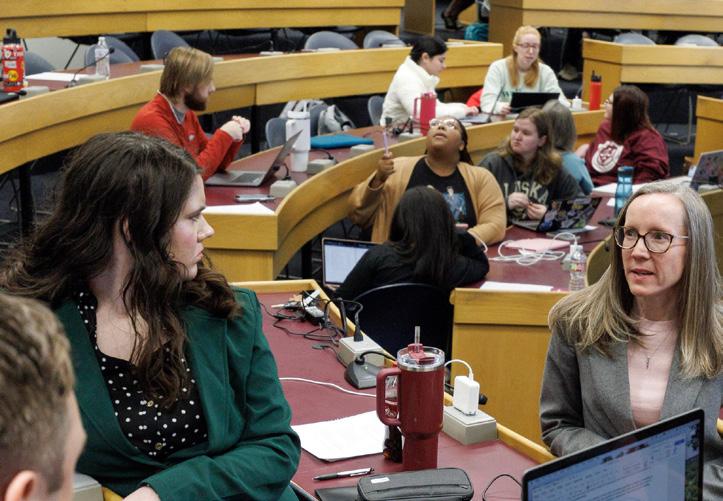
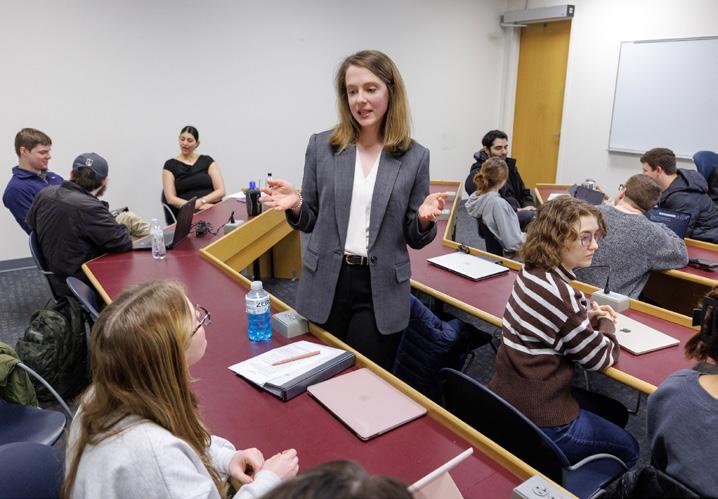
Bowen Law students engage in collaborative classroom discussion.
The University of Arkansas School of Law: Purpose, Preparation, and Impact
By Tammy W. Tucker Director of Communications & Marketing University of Arkansas School of Law
A Student Community Shaped by Purpose
Law schools across the United States play a pivotal role in preparing students for entry into the legal profession. Beyond academics, these institutions are charged with instilling the professional values that guide students throughout their careers. The University of Arkansas School of Law exemplifies this mission.
From its formative years, including the leadership of Dr. Robert Leflar and the historic admission of the Six Pioneers, the school has produced many distinguished leaders of the bench, the bar, public service, and the business sector. It remains an institution where students flourish while mastering the law—a place shaped by over a century of influential research, excellent teaching, leadership, and the steadfast commitment to access to justice. As the school grew and evolved, the student body has followed suit.
Since graduating its first class of 10 students in 1927, the School of Law has matriculated more than 120 college graduates annually. In fall 2025, UA Law welcomed an incoming first-year class of 135 students, an increase from 123 the previous year. While Arkansans comprise 74% of the class, this cohort hails from 11 states and 39 undergraduate universities. With ages ranging from 20 to 53, the class includes first-generation law students as well as those continuing a multi-generational family legacy in the legal profession.
In the fall, the School of Law’s LL.M. Program in Agricultural and Food Law enrolled 46 candidates from 15 states and the nations of Colombia and Ghana.
The LL.M. student body is comprised of experienced government and corporate attorneys, law professors, and advocates, alongside recent law graduates. To accommodate these professionals, most of the cohort participate as part-time distance learners.
Founded more than 40 years ago, the LL.M. program was the first of its kind. Today, it continues to lead the nation in this vital area of law, connecting lawyers to our food system, from farm to table. The School of Law also houses the nationallyacclaimed Indigenous Food and Agriculture Initiative.
The School of Law has observed a significant increase in application volume, a trend driven by economic shifts, renewed interest in the legal profession, and the current political climate. The applicant pool has become increasingly competitive, characterized by higher LSAT scores and grade-point averages. Many applicants view law school as a strategic pathway for career pivots or for advancing social and sustainability causes. Tracy Deffebaugh, assistant dean of Admissions, notes that these are national trends distinctly mirrored among prospective Arkansas law students.
Learning, Service, and Community Impact
Service to the community is a foundational tenet of the legal profession at the School of Law. Students gain live practice while meaningfully impacting underserved communities through pro bono work, public service, live client clinics and externships, and community engagement. The students’ deep commitment is reflected by their public
service, such as volunteering at numerous free legal clinics, often partnering with Legal Aid of Arkansas, the Benton County Help Desk, Arkansas Free Legal Answers, and low-income tax clinics, to assist with family law and landlord/tenant issues. Each fall, students participate in National Pro Bono Week, serving the community through legal clinics, providing basic needs, and civic education outreach to elementary students.
The Pro Bono and Community Engagement Program recognizes students for substantial service and provides them with robust volunteer opportunities. The Class of 2025 contributed nearly 2,000 hours of pro bono service, volunteering in diverse settings ranging from veterans and record-sealing clinics to estate planning and small business initiatives. Additionally, the Delta Initiative fosters connections between the School of Law and Arkansas Delta communities. The high schoolers are introduced to possible legal careers, and the law students are introduced to local judges, lawyers and the possibilities/opportunities of rural legal practice, working in conjunction with them to seal records.
The school’s commitment to service is also reflected in its robust Legal Clinic that was established in 1975 with then-professor Hillary Rodham Clinton serving as one of the first directors. Becoming a central pillar of the curriculum, the clinic provides students with live skills training while offering essential services to Northwest Arkansas. Students are eager to gain this experience. Today, clinical offerings encompass civil litigation and advocacy, criminal practice, human trafficking, immigration, and community and rural enterprise development.
Practice, Careers, and Outcomes
Many students are also active in the School of Law’s Board of Advocates program moot court teams, which consistently maintain a reputation for high-level competitiveness. In the 202425 academic year, the team competing in the American Bar Association National Appellate Advocacy Competition achieved significant success: they were named one of four national quarterfinalists, won “Best Brief,” and produced the ninth-ranked oralist in the nation. Additionally, the Board of Advocates Moot Court Team secured third place overall and fourth place for “Best Brief” in the Burton D. Wechsler National First Amendment Moot Court Competition.
The law school is proud to boast more than 20 student organizations, including the Student Bar Association, the Rural Law Association, the Immigration Law Society, and the First Generation Law Students Association. Students further advance the school’s scholarly mission through participation in the flagship publications: the Arkansas Law Review and the Journal of Food Law & Policy, the nation’s first student-edited, specialized journal devoted to food law and policy issues.
The community of nearly 400 students reflects a genuine commitment to shared well-being. The Law Student Wellness Society ensures that mental and physical health remain priorities. Through “Wellness Wednesdays,” the society offers stressreduction programming that includes therapy dog visits, yoga, mindfulness activities, games, music, and nutritional support to help students maintain holistic balance throughout the academic year.
Further support is offered through an embedded counselor and the Counselor’s Closet, which provides students with professional clothing, food and toiletries.
From the students’ first year until their graduation, the School of Law emphasizes professional development. Potential career connections are established through the annual career expo, on-campus interviews, and clerkships, with more than 100 externship placements facilitated annually. Consequently, many students secure post-graduate employment well before commencement.
“We maintain an exceptional placement rate of 95% for students seeking employment post-graduation,” reports Lisa-Marie Norris, director of Career Services. While graduates secure positions across a spectrum of legal environments, the majority join boutique and small law firms (1–10 attorneys). Geographically, 80% of graduates choose to practice in Arkansas, with Missouri and Texas tied as the second most popular destinations.
Beyond traditional firms, Law Hogs secure roles in government, business, public interest organizations and judicial clerkships. Those remaining in the thriving Northwest Arkansas region frequently leverage opportunities with Fortune 500 companies, including Walmart, Tyson Foods, and J.B. Hunt. The Class of 2024 demonstrated this breadth of placement, with five graduates joining large national firms of more than 500 attorneys. Seventyfour percent of 2024 graduates went to typical “lawyer jobs” where a Juris Doctor was required, Norris said. In 2024, three students took a judicial clerkship, and eight students accepted public interest jobs.
Rural Service and Leadership Beyond Graduation
While many students are drawn to the opportunities in Northwest Arkansas, others are driven to serve in rural communities. To support this calling and to address the critical need for legal representation in underserved areas, the School of Law established the Community and Rural Enterprise Development Clinic in January 2025. Students in the CRED Clinic represent small businesses, nonprofits, cooperatives, and small municipalities throughout Arkansas.
Wherever their careers take them, Law Hogs carry forward the school’s deep commitment to service, demonstrated in the accomplishments of alumni. Notable leaders include former U.S. Ambassador to Gambia George Haley, former U.S. Senator Mark Pryor, and notable representation in the judiciary. Alumni are also represented as leaders in industry and government, including Karen Roberts, former general counsel for Walmart, Inc., and public servants such as former U.S. Secretary of Transportation Rodney Slater. Additionally, the school has educated a long line of Arkansas governors, including Sid McMath, Francis Cherry, David Pryor, Jim Guy Tucker, Mike Beebe, and Asa Hutchinson. The University of Arkansas School of Law takes pride in having shaped a distinguished roster of public servants, judges, and industry leaders. From advocates serving underrepresented communities to influential leaders on the national stage, graduates have consistently translated their education into impactful careers.
Left: Law students participating in the Delta Initiative helped 73 individuals seal criminal records and engaged with students, courts, and civil rights history across the region. Middle: Dean Cynthia Nance treated law students who performed the most pro bono hours to “Desserts with the Dean." Right: Each spring law students participate in the Ben J. Altheimer Moot Court Competition at the School of Law.
At Public Notice Agency, we have one important mission: place all legal notices for firms like yours, saving you money and time while ensuring accuracy. Our team uses innovative technology to place your notices in qualified newspapers. We confirm scheduled publication, manage accounting, and provide you with proofs along with one invoice. INTERESTED? EMAIL US! INFO@PUBLICNOTICEAGENCY.COM OR BY PHONE (501) 823-9002
Landex Research, Inc
Attorney Disciplinary Actions
Attorney Disciplinary Summaries: Final actions from October 1, 2025 –December 31, 2025, by the Committee on Professional Conduct. Summaries prepared by the Office of Professional Conduct (OPC). Full text documents are available online at https://www.arcourts. gov/professional-conduct/opinions. [The “Model” Rules of Professional Conduct are for conduct prior to May 1, 2005. The “Arkansas” Rules are in effect from May 1, 2005.]
MARTIN, JONATHAN PHILLIP, of North Little Rock, AR, ABN: 2006034, in Committee Case No. CPC-2025-014, on a referral from U.S. District Judge Brian Miller, by Findings and Order filed October 20, 2025, was ordered to serve 12 months on PROBATION, wherein Martin will be under attorney supervision until October 20, 2026, for violations of AR Rules 1.16(c), 1.16(d), and 3.4(c). Martin abandoned his client without justification and failed to timely respond to the Court’s Order to Show Cause.
REPRIMAND:
SHOWALTER, HUGH BROCK, of Rogers, AR, ABN: 2001061, in Committee Case No. CPC-2025-024, on a complaint by Aaron Widzinski, by Findings and Order filed December 16, 2025, was REPRIMANDED, assessed a fine of $1,000.00, assessed costs of $150.00, and ordered to pay restitution of $2,250.00, for violations of AR Rules 1.15(b) (2) and 8.4(c). Showalter failed to keep unearned fees in his trust account and then retained and converted those funds.
CAUTION:
BRANCH, TABATHA SHEREE, of Conway, AR, ABN: 2002155, in Committee Case No. CPC-2025-005, on a referral from the Arkansas Court of Appeals, by Findings and Order filed November 6, 2025, was CAUTIONED, and assessed costs of $150.00, for violations of AR Rules 1.3, 3.2, and 8.4(d). Branch failed to timely file her client’s brief and failed to take corrective action for eight months subsequent to the missed deadline. ■
A New Chapter for Legal Aid in Arkansas
By Abby Brenneman
Since 2002, two organizations, the Center for Arkansas Legal Services (CALS) and Legal Aid of Arkansas (Legal Aid), have delivered civil legal assistance to Arkansans who cannot afford a private attorney. Margaret (pseudonym) is one example of the thousands of Arkansans whose lives have been stabilized because of this work.
After her husband died, Margaret fell behind on their mortgage. She was on the deed but not on the note, and the mortgage company refused to speak with her. With no savings to hire an attorney, she feared losing her home entirely. A legal aid attorney helped her assert her rights as a successor in interest, and the mortgage company finally responded. Margaret was added to the account and enrolled in a repayment plan, saving her home.
The impact of legal aid went far beyond Margaret. Without assistance, a foreclosure could have wiped out her greatest financial asset, forced her to rely on social services, reduced the value of surrounding homes, and even left her property vacant or vulnerable to out-of-state investors, all consequences affecting the broader community. Situations like hers demonstrate a truth that has been borne out by research: every $1 invested in civil legal aid yields an average $7 in local economic benefit.1
About the Author
Abby Brenneman is the Executive Director of the Arkansas Access to Justice Commission and Foundation.*
Moreover, what if Margaret had to face a foreclosure or eviction pro se? Cases involving self-represented litigants place additional burdens on courts, requiring extra hearings, continuances, and staff time, while judges and opposing counsel must navigate the ethical minefield that communication with pro se litigants can often be. These constraints slow proceedings and divert attention from the merits of the case.2 Legal aid prevented these inefficiencies by addressing the issue early, streamlining communication, and ensuring the matter was resolved fairly before reaching the court. Legal aid protects not only individual clients and communities but also the integrity and efficiency of the justice system itself. These examples demonstrate that legal aid is essential legal infrastructure, an infrastructure that is now undergoing significant change.
January 1, 2026, marks the beginning of a major transformation in how legal services are delivered statewide. In 2024, representatives from Legal Aid, CALS, the Access to Justice Foundation, the Access to Justice Commission, and other stakeholders conducted a months-long evaluation of Arkansas’s legal aid delivery system. The primary outcome: Legal Aid of Arkansas will become the sole provider of LSC-funded legal services statewide.3
This is not the first time Arkansas has restructured its civil legal aid system. In 2002, state planning efforts led to the consolidation of six legacy legal services
From left: CALS Board President Sheila Campbell speaking at the Pulaski County Courthouse, in 1989; Don Hollingsworth; Judge Wendell Griffen
programs into CALS and Legal Aid.
Before the first legal aid organization opened its doors, indigent Arkansans relied almost entirely on private attorneys willing to volunteer their time. That began to change in 1965 with the creation of the Legal Aid Bureau of Pulaski County. Over time, regional programs across the state, including Jackson County Legal Services Project, East Arkansas Legal Services, and Ozark Legal Services, emerged. These programs later merged into what became CALS and Legal Aid, which together served all 75 counties for more than two decades.
Despite decades of progress, legal aid remains significantly underfunded. Nationally, only about 8% of low-income households receive enough civil legal help to fully address their legal problems.4 In Arkansas, roughly half of applicants are turned away due to resource shortages.
To stretch limited funding and ensure maximum impact, legal aid organizations maintain strict case acceptance guidelines. For example, both CALS and Legal Aid have long limited acceptance of divorce cases to primarily those involving domestic violence or child abuse. With potential federal funding cuts on the horizon and demand continuing to grow, efficient service delivery is more important than ever.
The new single-entity structure offers several advantages, such as a single
administrative infrastructure, a centralized intake system, unified technology and data tracking, greater consistency in services statewide, fewer referral errors, less confusion for courts, partners, and the private bar, and stronger potential for collaboration across the justice system.
But, it’s not without its challenges. CALS and Legal Aid each receive certain grants that are fixed in amount and not tied to the size of their service areas. Those grants will not increase simply because Legal Aid’s service area is expanding statewide. While this funding loss does not outweigh the substantial benefits of consolidation, it is nonetheless a considerable reduction in resources.
There is also a human dimension to this transition. In October, during the annual kickoff of Access to Justice Month, the Center for Arkansas Legal Services was awarded the inaugural Don Hollingsworth Legacy Award. Don Hollingsworth began as the Executive Director of CALS in 1978 and served for 18 years, among many other contributions. He was, by all accounts, a tireless champion for access to justice, both in Arkansas and nationally, strengthening private bar support for legal aid and standing firm against threats to federal funding for the Legal Services Corporation. The award was created to honor Don’s lifelong dedication to equal justice and to recognize
Take
a pro bono case.1
One of the most direct ways to make an impact is to help a client who otherwise would face the legal system alone. Most cases can be completed in less than three hours. Legal Aid of Arkansas provides case opportunities (in housing, domestic, economic, consumer, and Veterans justice) as well as the support, mentorship, and malpractice coverage to ensure pro bono success. Sign up for pro bono opportunities at aa2j. org/takeacase, or explore available opportunities on-line at aa2j.org/ paladin.
Engage through Society 6.1. Society 6.1 offers a structured, statewide way for attorneys to meet the professional responsibility goals reflected in ARPC 6.1 while staying connected to peers committed to meeting their 6.1 responsibilities. Membership is open to attorneys who donate $500 directly to Legal Aid and/or through the Access to Justice Foundation, and prior year pro bono service hours, or a combination of both. Society 6.1 also creates leadership and volunteer opportunities, strengthening the connection between the private bar and civil legal aid across Arkansas. For Pulaski County attorneys, Society 6.1 has taken the place of VOCALS. If you have questions, please contact Sherry Thompson at sthompson@ arlegalaid.org. You can donate through the Legal Aid of Arkansas website at arlegalaid.org or the Access to Justice website, at arkansasjustice. org.
continuted on next page
How Attorneys Can Help Close the Civil Justice Gap (cont.)
CALS and its predecessor organizations for over half a century of work defending the legal rights of low-income Arkansans and pursuing systemic solutions to balance the scales of justice.
Get involved with the Access to Justice Commission.
The Arkansas Access to Justice Commission, established by the Arkansas Supreme Court in 2003, works to expand access to justice in civil cases through research, policy development, court access initiatives, and pro bono engagement. Attorneys interested in statewide systems improvement can contact abby@ arkansasjustice.org to learn about current working group opportunities.
Join Free Legal Answers (FLA) FLA is a great way for government attorneys to meet their pro bono obligations. The Commission’s FLA program is a secure online platform that allows low- and moderate-income Arkansans to submit civil legal questions and receive personalized answers from licensed attorneys—no appointments, no travel, no cost, and malpractice insurance is provided. Learn more at ar.freelegalanswers.org.
1. Sidebar content on pro bono opportunities and Society 6.1 was contributed by Dr. Sherry Thompson, Director of Development for Legal Aid of Arkansas.
Volunteers and legal aid staff pose for a photo at a Wills clinic, circa 2014
The collective impact of the people of CALS on the lives of Arkansans is immeasurable. Many former CALS staff will continue on at Legal Aid, but some will not. The name “CALS,” which once stood for Central Arkansas Legal Services and later for the Center for Arkansas Legal Services, will no longer exist, but CALS staff, including individuals who devoted decades of their lives to civil legal aid, left contributions that endure in the communities they served, the clients whose lives they changed, and the attorneys they mentored. But, honoring that legacy means more than remembering the past; it means continuing the work.
The bar has always been an essential partner in this work through pro bono service, outreach, training support, and advocacy for sustainable funding. As Arkansas enters this new chapter, continued engagement from the private bar will be essential to ensure that the humblest among us is peer to the most affluent when seeking justice.
In addition to directly representing clients and participating at clinics, it is vital that we have the bar’s support to promote understanding of civil legal aid’s role in upholding the rule of law. We encourage bar members to serve on advisory committees, task forces, or the Access to Justice and Legal Aid boards, and to make financial contributions as they are able.
Although much is changing, what will remain the same is Legal Aid’s mission. Presenting as the 6th largest law firm in the state, Legal Aid anticipates serving over 17,000 primary clients in 2026, focusing on access to safe and affordable housing, consumer rights, economic justice, and protection from domestic violence. Twelve offices will be strategically located throughout the state. Attorneys and advocates will continue serving clients in their communities. And individuals like Margaret will still receive the help they need, help that avoids unnecessary defaults and delays, spares judges and opposing counsel from ethical constraints inherent in pro se litigation, and ensures that cases
are resolved on their merits rather than by procedural missteps or by default. In this way, legal aid does more than serve individual clients: it promotes efficiency, fairness, and public confidence in the justice system itself, preventing small legal problems from escalating into larger economic and social costs for families and communities. Wherefore, I pray that Arkansas’s broader legal community continues to join in the ongoing struggle for equal access to justice.
Endnotes:
*The author thanks Lee Richardson, Executive Director of Legal Aid of Arkansas, for helpful editorial suggestions that improved this article.
1. Legal Services Corp., The Economic Case for Civil Legal Aid: A Systematic Review of Economic Impact Studies (2025), available at https://www.lsc.gov/our-impact/economicimpact; see Arkansas Access to Justice Commission and University of Arkansas Clinton School of Public Service, Justice Measured: An Assessment of the Economic Impact of Civil Legal Aid in Arkansas (2014), available at https://arkansasjustice. org/wp-content/uploads/2017/04/ AR-Economic-Impact-Study-2014_ combined-1.pdf.
2. See Arkansas Access to Justice Commission and Clinton School of Public Service, Exploring the Problem of Self-Represented Litigants in Arkansas Civil Courts (2011), available at https://arkansasjustice.org/wp-content/ uploads/2017/04/Capstone-Report-AAJCFinal-1.pdf.
3. LSC, the Legal Services Corporation, was established by the LSC Act, signed into law by President Richard Nixon in 1974, to fund civil legal aid. LSC has enjoyed strong bipartisan support for decades.
4. Legal Services Corp., The Justice Gap: The Unmet Civil Legal Needs of LowIncome Americans (2022), available at https://www.lsc.gov/initiatives/justicegap-research#:~:text=The%20Justice%20 Gap%20Over%20Time,-The%20 Latest%20Justice&text=LSC’s%20 latest%20justice%20gap%20 report,problem%20in%20the%20 previous%20year.
Preferred IOLTA Banks support justice for all Interest earned on IOLTA accounts funds legal aid Learn more at arkansasjustice.org/IOLTA.
Gray Dellinger Melbourne . Practicing since 1969
What originally drew you to practicing law in a rural area?
That’s a good question. I didn’t really have any ambition to be a lawyer. I graduated with a degree in accounting from UALR, and I hated it. So I thought, this isn’t going to do for me forever. I decided to go to law school.
When I got out, I didn’t have a job. I was reclassified as 1A because Vietnam was going strong. No one would hire me because I was getting ready to serve. I had studied for the bar with John Fred Forrester, who later became a federal magistrate. One evening, we were at a hotel bar where several lawyers were visiting. A lawyer from Batesville named John Norman Harkey walked in.
He asked who I was and what I did. I told him I was looking for a job. He said, “I know where you can go right now.” That night, we drove to Batesville. The next morning, we drove to Melbourne to meet an older lawyer, W.E. Billingsley, who was wanting to retire but didn’t want to quit practicing altogether. He looked me over and said, “Well, I’ll take him.” I’ve been there ever since. I went into the Army for basic training, and when I came back, I still had my office there.
Voices from the Field: Rural Practice in Arkansas
Practicing lawyers and future attorneys reflect on service, community, and the future of rural law.
Rural practice in Arkansas is often discussed in terms of data — attorney shortages, access-to-justice gaps, and demographic trends. But behind those numbers are real lawyers, real communities, and real decisions about where and how to serve.
We asked practicing attorneys and law students to reflect on their experiences and aspirations related to rural practice. Their responses reveal not only the challenges facing rural communities, but also the deep sense of purpose that draws lawyers to serve there.
Photo credit: Tyler Mlakar
How does practicing in a rural community shape your relationship with clients and the community?
In a rural community, you know everybody, and they know you. I’ve represented people who were not popular. In recent years, I’ve represented people charged with serious offenses. Some people in the community get upset about representing “those types of people.” I remind them that it’s how I make a living, and that everyone is entitled to representation.
It was a great place to raise a family. I have three children, a lawyer, a doctor, and a schoolteacher. The rural community helped shape our family life wonderfully.
If we had a jury trial, I knew nearly everyone on the jury. That gave me perspective about what my client was facing. I felt comfortable. When I tried a case in a larger city, I didn’t know anyone — judges, clerks, bailiffs — and it felt different. In a small town, you’re surrounded by people you know.
I’ve had a simple life, really, to be honest. But it’s a good one, because I’m comfortable.
What do you find most challenging — and most rewarding — about rural practice?
The rewarding part is that when you do well, nearly everybody in the community knows it. You get immediate feedback. You’re helping people you know. If you do a good job, it’s more rewarding because you’ve
helped not only a client but a friend.
The most challenging part is not stepping on people’s toes. In a small town, everybody has connections. I’ve represented someone without realizing how closely related they were to someone else involved.
Looking back, I appreciate rural practice more than I did when I was young. It’s comfortable and rewarding. People appreciate what you do for them, and they’re not just strangers.
Looking ahead, what gives you hope or concern about the future of rural practice in Arkansas?
My hope is that good young lawyers are coming into rural practice. The ones I know are good people. There’s a camaraderie and personal courtesy in rural practice because you’ll see each other again and again.
Some worry it will die out. I don’t think it will. There’s always a need for a local attorney. You won’t get rich in a rural area, but you can make a decent living and have a rewarding life.
I didn’t understand this when I was young, but every case is important. It should be one of the most important cases to you, even if it’s not the biggest fee. To the person you’re representing, it is everything. I’ve learned to listen more, to be attentive, and to understand that this case matters deeply to them.
"The challenge is juggling a wide array of legal needs with limited resources. The reward is seeing the impact affordable legal services has on individuals who previously lacked access to help."
Matthew Willard
Calico Rock . Opened Practice August 2025
What types of matters make up most of your day-to-day work?
My day-to-day work includes family law, probate, estate planning, contracts, and civil actions.
What drew you to building a practice in your community?
I was drawn to building a practice in my community after learning how severely underserved rural Arkansas is. I witnessed the need firsthand while volunteering with rural legal clinics in law school. I decided then that my goal would be to open a practice in a rural area.
My wife and I moved back to her hometown of Calico Rock a couple of years after graduating, and I decided it was the perfect time to pursue that goal.
How does the size or nature of your community shape your work?
Calico Rock is a small, close-knit community. Legal work here is extremely personal. Many of my clients are people my family knows well. In a small town, everybody knows everybody. I am
constantly working to learn and improve, knowing that my work directly affects people I see regularly — at basketball games, the grocery store, or church.
Trust means doing the work carefully and consistently. These relationships are not just transactional.
What is most challenging — and most rewarding?
The challenge is juggling a wide array of legal needs with limited resources. The reward is seeing the impact affordable legal services has on individuals who previously lacked access to help.
What gives you hope or concern about the future?
There is growing awareness of the need for legal assistance in rural Arkansas. The concern is that without support, there is little incentive for attorneys to move to rural areas to practice.
What kinds of programs are most helpful?
For me, the Rural Practice Incubator Program at Bowen law school was essential. It provided resources and mentorship that gave me the confidence needed to pursue starting my rural solo practice.
The Next Generation
For many law students, rural practice is not an abstract policy concern, it is personal.
Shaped by upbringing, mentorship, agriculture, and firsthand awareness of unmet needs, these future attorneys reflect on why rural communities matter to them and how they hope to serve.
Kathryn Totty (3L –University of Arkansas School of Law)
My interest in rural practice is shaped by my experiences growing up in southwest Arkansas and the people who first encouraged me to consider a legal career. Growing up, law was never presented to me as a realistic career path. In school, STEM fields, while undeniably important, often felt like the only viable option. I did not grow up knowing attorneys or seeing the legal profession modeled in my community. That changed in college, when rural attorneys—the people who chose to stay, serve their communities, and invest in the next generation—took a chance on me and made law school feel like a real possibility. Their willingness to talk with me, mentor me, and take my interest seriously changed the trajectory of my life.
That experience is why rural practice matters to me. Rural attorneys do far more
City Rock Bluff overlooking the White River in Calico Rock. Photo credit: Dylan Hamby.
“Attorneys
in rural communities may mean the difference between a successful generational farm transition and the loss of farmland.”
than represent clients. They shape the future of their communities by showing young people what is possible, serving not only as advocates in the courtroom but also as mentors, leaders, and trusted community figures. Children from rural Arkansas can become lawyers and have meaningful impact. They do not need to be born into a legal family or grow up surrounded by professionals to succeed. When rural practitioners choose to mentor, stay visible, and engage, they create pathways that did not previously exist. To me, rural practice is not only about closing gaps in access to justice; it is about ensuring that the next generation knows those doors are open and that their communities are worth coming back to.
Mary Eichenberger (3L – University of Arkansas School of Law)
As a native Arkansan, I have an inherent interest in areas of law that impact rural communities. My experience growing up on a cow-calf operation and in a small town in the River Valley prompted me to pursue a career in law where I can advocate for Arkansas farmers and ranchers. While the focus of my legal education has remained rooted in agricultural law, I believe the issues faced by the agricultural community often correlate to issues that deeply impact rural communities. Issues like farm succession planning, land use disputes, natural resource development, and state and federal agency regulatory action will generate impacts that will be experienced far beyond the farm gates.
The agricultural industry is often the backbone of many rural communities meaning the loss of farmland or decrease in farm production has a much greater impact. Thus, attorneys who commit to practicing in rural communities may mean the difference between a successful generational farm transition and a situation where farmland is lost or a young farmer is forced
to leave a rural community for opportunities elsewhere. I am motivated to center my legal service around rural communities in an effort to support the men and women of agriculture who continue to provide food, fiber, and shelter for the world. By providing greater access to legal services in rural communities, attorneys have the opportunity to ensure farmers can keep farming in rural areas.
Brendan Spaulding (3L – University of Arkansas School of Law)
I am interested in practicing in rural Arkansas to serve my community. Currently, rural Arkansas is facing a crisis of attorneys not being in rural areas. While many counties, if you look at licenses by county, may show a decent ratio of attorneys to population, the reality is much worse. Many licensed attorneys in these counties are either no longer practicing, retired, moved, or have a government job, therefore leaving a hole for private practitioners.
Currently, in southeast Arkansas, there is a need for private practitioners. Many people have to go to Little Rock, sometimes Conway or farther, to get an attorney for criminal defense or a divorce. I believe this to be a tragedy that people have to travel hours away to find an attorney for legal services when, just a decade ago, there were plenty of attorneys to handle their needs. I see myself coming out of law school working in private practice to help address these needs of the community.
A future need I see also is the need for public servants. Currently, southeast Arkansas has plenty of people who fill positions in the public defender, prosecutor, or judge seats. However, when looking at the number of new attorneys coming into this area, there is a clear sign that not enough are returning to southeast Arkansas. I see that in my lifetime there will not be enough attorneys in southeast Arkansas, and likely other rural
Original painting by Meagan Davis
areas of the state, for these roles to be filled. I think it will then draw resources from the larger population areas to ensure that courts can happen. I would like to help play a part, if necessary, in helping to ensure that our courts continue to run.
Emma Mitchell (2L – University of Arkansas School of Law)
Practicing rural law means representing not just clients, but friends, neighbors, and community members. Many times, rural attorneys are called on to represent individuals they have known their entire lives. Because rural areas of the state can be legal deserts, these attorneys wear many hats. They must balance a heavy caseload while also maintaining relationships with their clients. Rural practice requires trust, compassion, legal
knowledge in a variety of practice areas, and a deep commitment to community.
My passion for rural practice was formed long before law school, inspired by watching Gray Dellinger model these responsibilities (see Gray Dellinger’s story on page 34). To me, Gray is the epitome of a rural attorney. Throughout Northcentral Arkansas, he is well known not only for his ability to achieve successful outcomes for his clients, but for the compassion and dignity he displays to every person who walks through his office doors. For over 50 years, Gray has created a lasting impact on his clients and his community. He treats every person who walks through the door of his office as if they are the most important person he will see that day –offering his time and respect no matter the circumstances they are facing. Beyond his legal practice, Gray is a pillar of his community. He is always willing to lend his knowledge and resources to support future generations. Watching Gray’s example has instilled in me a passion for
bridging the gap in access to justice in rural Arkansas.
Closing
Rural practice in Arkansas cannot be reduced to statistics alone. It is shaped by relationships, mentorship, community trust, and a willingness to serve where the need is greatest. From lawyers who have built careers spanning decades in small towns to students preparing to return home and invest in the communities that shaped them, these voices reveal both challenge and hope. The future of rural practice will depend not only on awareness of the need, but on the continued commitment of attorneys who choose to step into that work, thoughtfully, deliberately, and with a deep sense of responsibility to the people they serve.
P.O. Box 7297, Little Rock, Arkansas 72217 www.arkansasbarfoundation.com
MeMorIals and honorarIa
The Arkansas Bar Foundation acknowledges with grateful appreciation the receipt of the following memorial, honoraria and scholarship contributions received during the period October 15, 2025 through January 31, 2026.
In MeMory of JaMes B. (JIM) BlaIr
Judge Raymond Abramson
In MeMory of Charles frIerson III
Nancy and Judge John N. Fogleman (ret.)
In MeMory of Mark haMpton
B. Jeffery Pence
In MeMory of luther “lu” hardIn
Judge Raymond Abramson
In MeMory of Bo hawk
B. Jeffery Pence
In MeMory of saM hIlBurn
Patti and Charlie Coleman
Don A. Eilbott
Nancy and Judge John N. Fogleman (ret.)
In MeMory of John herMann Ivester
A. Wyck Nisbet, Jr.
In MeMory of Judge John langston
Nancy and Judge John N. Fogleman (ret.)
In MeMory of alvIn laser
B. Jeffery Pence
In MeMory of ted MCnulty, sr.
Catherine and Dan Young
In MeMory of Judge wIllIaM overton
Judge James M. Moody
In MeMory of thoMas B. pryor
Susan and Judge Ben Barry
In MeMory of Judge floyd rogers
Judge Robert T. Dawson
Mark Moll
In MeMory of JaMes van dover
Patti and Charlie Coleman
Judge Robert T. Dawson
Judge James M. Moody
Hayden and Gordon Rather
J. Baxter Sharp III
In MeMory of JaMes e. west
Judge Robert T. Dawson
In MeMory of Judge BIlly roy wIlson
Judge Raymond Abramson
Jean and Dan Carter
Judge Robert T. Dawson
Don A. Eilbott
Judge D.P. Marshall, Jr.
Judge James M. Moody
Judge Dick Moore
B. Jeffery Pence
Hayden and Gordon Rather
Charles D. “Chuck” Roscopf
J. Baxter Sharp III
Mike Spades, Jr.
honorarIa
wrIght, lIndsey & JennIngs
In honor of the fIrM’s 125th annIversary
Rose Law Firm
sCholarshIp ContrIButIons
BrIan MaCMIllan sCholarshIp fund
Catherine Mauro
Col. wIllIaM a. MartIn
sCholarshIp fund
Mary Lou Martin
the MCkInley faMIly sCholarshIp fund
Jeffrey and Lester McKinley
ann dIxon pyle sCholarshIp fund
Sherry P. Bartley
Ronald D. Harrison
Rick Pruitt
Dianna and Dr. Hoyte R. Pyle, Jr.
donatIons to the arkansas Bar foundatIon
Carol Circo
Earl “Buddy” Chadick
Mary Kay and Robert Jones
Gwendolyn Rucker
ARKANSAS BAR FOUNDATION ANNUAL FELLOWS’ DINNER
FRIDAY, APRIL 24, 2026 NEXT LEVEL EVENTS
LITTLE ROCK
2026 ANNUAL AWARDS WILL BE PRESENTED INVITATIONS WITH DETAILS FORTHCOMING
The Arkansas Bar Foundation congratulates all Arkansas law school student recipients of the Foundation-administered endowed scholarships for the 2025-2026 year. We are grateful to all donors who make these scholarships possible.
Thank You!
James Burton Blair of Fayetteville died on December 3, 2025, at the age of 90. Mr. Blair graduated from the University of Arkansas and the University of Arkansas School of Law. He began his legal career in Springdale and became a founding partner of Blair, Cypert, Waters and Roy. In 1979, he was appointed general counsel for Tyson Foods, serving in that role for 21 years. He also served on the Arkansas Board of Higher Education and the University of Arkansas Board of Trustees, including two years as chair.
Sidney Parker Davis, Jr. of Fayetteville died on February 6, 2026, at the age of 94. Mr. Davis was valedictorian of his graduating classes at Henderson State University and the University of Arkansas School of Law, where he wrote the top paper in his class. After serving in the United States Army during the Korean War, he began a legal career in Fayetteville that spanned more than 50 years, practicing primarily in insurance defense and medical malpractice. He was inducted into the American College of Trial Lawyers and was named Outstanding Lawyer of the Year by the Arkansas Bar Association. Mr. Davis also taught Insurance Law at the University of Arkansas School of Law for 19 years and established an endowed chair in support of legal education.
Philip Hicky II of Forrest City died on February 2, 2025, at the age of 83. Mr. Hicky graduated from the University of Arkansas School of Law and was admitted to the Arkansas Bar in 1966. He practiced for more than 50 years, beginning with E.J. Butler and later forming Phil Hicky Ltd. His practice focused on civil litigation,
business transactions, agricultural law, probate, and estate planning. He served for many years on the Arkansas Supreme Court Committee on Rules of Civil Procedure and was active in the St. Francis County Bar.
Sam Hilburn of North Little Rock died on January 12, 2026, at the age of 83. Mr. Hilburn earned his bachelor’s degree from the University of Arkansas and his Juris Doctor from the University of Arkansas at Little Rock School of Law in 1970. He was a founding partner of Hilburn and Harper, Ltd., where he practiced from 1971 until his passing. He also served as City Attorney for North Little Rock from 1971 to 1974 and was appointed Municipal Judge of the North Little Rock Municipal Court in 1998. In 2006, he was appointed to the University of Arkansas Board of Trustees.
Alvin Laser, formerly of Arkansas, died on January 5, 2026, at the age of 80. Mr. Laser was a respected defense attorney who practiced law in Arkansas for many years and was known for his dedication to clients and colleagues. He was a veteran of the United States Air Force.
William F. Smith of Russellville died on December 13, 2025, at the age of 85. Mr. Smith earned his Juris Doctor from the University of Arkansas School of Law, where he served on the Editorial Board of the Arkansas Law Review. Beginning in 1970, he practiced law in Russellville for more than five decades and was a member of the Arkansas Bar Association and the Pope County Bar Association. He also served as city attorney for Hector. He was a member of the U.S. Army Reserves for seven years.
James Richard “Jimmy” Van Dover of Little Rock died on November 17, 2025, at the age of 88. Mr. Van Dover graduated from the University of Arkansas School of Law in 1964 and began practice with the Daggett Law Firm in Marianna. His career spanned more than 50 years, primarily with Daggett, Daggett & Van Dover, and later with Wright, Lindsey & Jennings. He served on the Arkansas Board of Law Examiners and as an Arkansas Special Supreme Court Justice. He was commissioned as a second lieutenant in the United States Army and served in Germany.
James Edwin West of Fort Smith died on January 3, 2026, at the age of 97. Mr. West served as President of the Arkansas Bar Association in 1973, the year the Arkansas Bar Center in Little Rock was completed and dedicated. He graduated second in his class from the University of Arkansas School of Law in 1952 and began his legal career as a law clerk to U.S. District Judge John E. Miller. He later served as managing partner of Daily, West, Core, Coffman & Canfield in Fort Smith. His practice focused primarily on oil and gas law, and he was a charter member and former chair of the Natural Resources Law Section, as well as a frequent presenter at the annual Institute in Hot Springs. In 1994, he was honored with the Institute’s Distinguished Service Award. Mr. West also served as President of the Sebastian County Bar Association and was widely respected for his leadership, mentorship, and longstanding service to the profession. He was a veteran of the United States Marine Corps.
These memorials are drawn from information published in members’ obituaries.