Daily Wildcat | Trekking into the New Year Print Edition | January 2026
Voted Best Debit Card. Get FREE Checking and one of our exclusive, contactless University of Arizona®️ Debit Card designs issued instantly at our branch conveniently located near campus at Speedway and Country Club. No monthly fees. No minimum balance. Mobile and online banking. Sign up online or visit HughesFCU.org/Wildcats. Proud supporter of the University of Arizona® and home to the Official Arizona Athletics Debit Card.
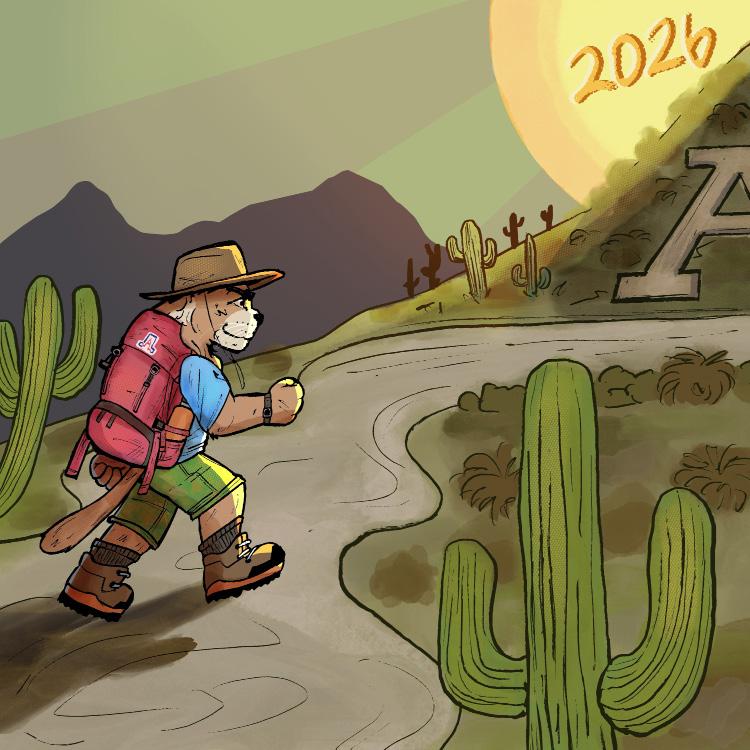
TREKKING INTO THE NEW YEAR | VOLUME
Editor-in-Chief
Emma LaPointe editor@dailywildcat.com
Managing Editor
Ruby Wray editor@dailywildcat.com
News Editors
Jasmine Creighton
Ian Stash news@dailywildcat.com
Opinions Editors
Sarah Arellano
Zaina Jasser opinion@dailywildcat.com
Sports Editors
Ava Widener Will Shenot sports@dailywildcat.com
Arts & Life Editor
Kate Eid
Valeria Moreno arts@dailywildcat.com
Photo/Multimedia
Editors
Mason Kumet
Josie Shivers photo@dailywildcat.com
Copy Chiefs
Ari Keating
Olivia Volland copy@dailywildcat.com
Comics Editor
Amara Williams amarawilliams26@arizona. edu
Social Media Coordinators
Nandini Manepalli
Michael Smith socials@dailywildcat.com
Training Coordinator
Dylann Sweeney
Designers
Emma LaPointe
Ruby Wray
Kasey Leftwich
Amara Williams
Mason Kumet
Campus Pantry supports UA amidst cuts to SNAP benefits
Campus Pantry continues to support UA students, faculty and staff by providing nutritious foods
As the holiday season commenced, many people went home to spend time with family and friends. This year, however, more individuals and families across Arizona experienced increased levels of food insecurity.
This can be attributed to last year’s congressional budget cuts to the Supplemental Nutrition Assistance Program. SNAP is a federally funded program that provides low-income families with food benefits and supplements grocery budgets to include healthy and nutritious foods.
The U.S. Department of Agriculture sent out a memo in November 2025 that outlined that “due to the limited availability of federal funding and orders from two federal courts, the Food and Nutrition Service (FNS) is reducing SNAP maximum allotments to 50 percent of the eligible household’s current allotment for November 2025.”
SNAP benefits were cut in half, meaning many families and individuals would have to turn to other resources to obtain groceries and food. The memo also stated that regional and state agencies were required to take immediate action to comply with the reduction.
In addition to SNAP cuts, the Supplemental Nutrition Assistance Program Education funding was completely eliminated nationwide in September of 2025. SNAP-Ed provided nutritional education
to schools and other community sites across all 15 counties in Arizona.
SNAP-Ed also taught community members how to cook healthy meals and make their SNAP dollars last by partnering with both state and local organizations.
Without funding from the U.S. Congress and the USDA, “there will be fewer staff available to deliver these programs and no SNAP-Ed funds to support associated costs, such as travel, materials or site-based activities,” University of Arizona Cooperative Extension said.
Even amidst cuts to federal programs like SNAP and SNAP-Ed, school-wide programs like the University of Arizona’s Campus Pantry continue to support those impacted by food insecurity within the UA community.
UA Campus Pantry provides free supplemental groceries to staff, faculty and students to combat food insecurity on campus. Pete McGraw, Campus Pantry’s senior coordinator of basic needs, explained that 40% of students, faculty and staff struggle with food insecurity.
Campus Pantry began when a graduate student noticed that students did not have adequate access to nutritious foods and groceries. Originally, students collected and distributed donations. Today, Campus Pantry is located in the Student Union Memorial Center and open every day during the school week, providing access to food.
“We understand the negative impact that food insecurity can have on academics and we are hoping to support students and take one less thing off of their mind so they can focus on school by providing free access to groceries,” McGraw said.
The pantry averages about 80 volunteers per semester. Students take on the responsibility of ordering groceries,
coordinating food drives and maintaining partnerships with organizations in the Tucson community.
“We are very proud to be student-led and student-run,” McGraw said. “They are really passionate about helping their community and helping other students mitigate factors that impact their studies negatively.”
McGraw highlighted that the Pantry is open to anyone with a CatCard, regardless of need.
“Another issue we run into is stigma,” McGraw said. “We are never gonna measure your needs against others’ or explain or justify why you are here.”
With recent cuts to SNAP, Campus Pantry has seen increased levels of anxi -
ety and stress from people who use the resource.
“SNAP is a major concern for a lot of people, and we have seen an uptick in visits here as a result, and that is something we expect to continue,” McGraw said.
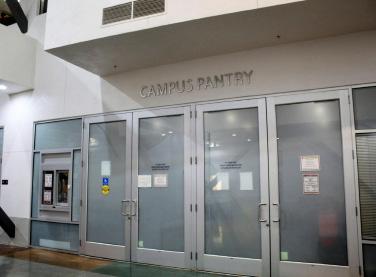
Students can provide support by volunteering but also by spreading the word about Campus Pantry and the services they offer daily. Campus Pantry is located on the first floor of the student union near the CatCard office. Hours of operation can be found on their social media and website.
MALIA HIRASA
The Daily Wildcat
JOSIE SHIVERS | THE DAILY WILDCAT THE CAMPUS PANTRY, LOCATED under the student union on Level 1 at the University of Arizona campus on Jan. 15.
No. 17 Arizona football comes up short against SMU in Holiday Bowl
MICHAEL SMITH Daily Wildcat
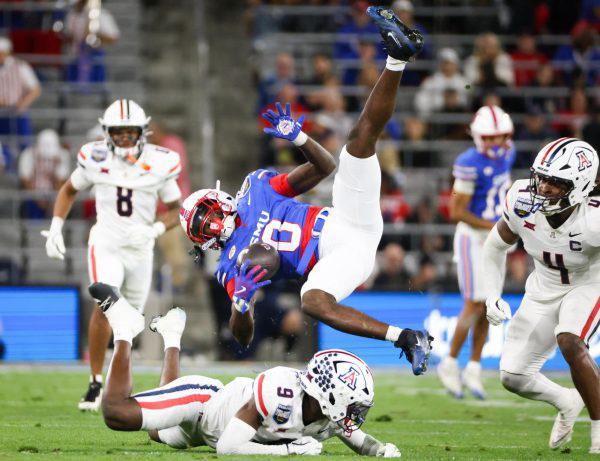
SAN DIEGO – On Friday, Jan. 2, the No. 17 University of Arizona football team (9-4, 6-3 in Big 12) fell to Southern Methodist University (9-4, 6-2 in ACC) 24-19 in the Trust & Will Holiday Bowl at Snapdragon Stadium. Despite a miraculous second-half comeback, the shorthanded Wildcats failed to secure their 10th win of the season.
News broke less than an hour before kickoff that AP All-American third team cornerback Treydan Stukes, junior safety Genesis Smith and redshirt junior safety Dalton Johnson opted out of the 46th Holiday Bowl, leaving the Arizona secondary extremely thin for Friday night’s duel.
“Three weeks ago, we had some of our players tell us that they were not going to play in this football game. Those are family decisions, and we respect that. We love those guys. Those guys have made an incredible impact on our program this season and for all the years they’ve been here at the University of Arizona. I want to be respectful of that for them and their families. It also gave some of our younger players a chance to get highlevel, meaningful reps against a very good opponent,” Arizona head coach Brent Brennan said after the loss.
Offense
AP first team All-Big 12 quarterback Noah Fifita threw for 265 yards, slinging 3 touchdowns and one interception that was tipped at the line, all while going 28-for-43 and running for a game-high 73 yards on 13 carries. The redshirt junior achieved 3,000 total passing yards this season and broke the program record for most passing touchdowns in a single season.
“We didn’t finish how we wanted to, but I love this team. This is probably the most fun I’ve had playing football,” Fifita said postgame.
The season-long explosive Arizona offense was shut down all throughout the first half, only entering into SMU
territory twice. Early in the first quarter, offensive lineman and team captain Ty Buchanan suffered an injury and did not return to the game, a big loss for the Wildcats, already facing a steep climb to victory while shorthanded.
“I love Ty, and I think I can speak for the entire offensive line group and their selflessness […] he’s continuing to choose to play for us, everything he does, fighting through injuries, barely practicing, just trying to get to games to play for us and protect me. I owe my life to my offensive line and Ty Buchanan,” Fifita said about his fellow team captain.
Late in the second quarter, the Wildcats kept their offense on the field on fourth and two from the SMU 35-yard line. Fifita dropped back but was un-
able to connect to freshman receiver Gio Richardson and turned the ball over on downs.
However, on the second drive of the second half, Arizona took control from their own 4-yard line and capped off the 15-play, 96-yard drive with a 28-yard touchdown pass from Fifita to Javin ‘Nunu’ Whatley to put the Wildcats on the board late in the third quarter.
The ensuing drive, Arizona would turn the ball over again on downs; however, the Wildcats would respond with a 10play 66-yard drive after Fifita found a wide open Tre Spivey in the endzone to cut the deficit in half.
Brennan decided to go for two following the 2 touchdowns but failed to convert, leaving points up on the board
that would haunt the Wildcats the rest of the game.
“Yes, I would have done the same thing. At the time that I went for two, we were down a lot, right? I was like, ‘If we can go for two, we can reduce the possession we need to be to tie it.’ Part of that was a conversation we were having on the headset, how I felt about it at the moment and then also some of the analytics conversation,” Brennan said on whether he would go for two again on both possessions.
Arizona refused to go down without a fight and closed out a 12-play 75-yard drive in just over 2 minutes after Fifita launched a rocket to tight-
CONTINUED ON PAGE 6
CHARLIE RAMIEREZ | DAILY WILDCAT
CHRIS HUNTER SITS ON the field after a failed third down attempt against SMU at Snapdragon Stadium in San Diego on Jan. 2.
STUDENT NEWS
CONTINUED FROM PAGE 5
end Cameron Barmore for a 15yard touchdown to cut the Mustangs’ lead to a one-possession game.
Defense
On the second play of the game, SMU quarterback Kevin Jennings rifled one to receiver Jordan Hudson off a flea-flicker, catching the Wildcat defense off guard for an 80-yard completion and putting the Mustangs down on the Arizona 1-yard line. Running back T.J. Harden punched in the first score of the game off the longest passing play in Holiday Bowl history.
Towards the end of the first quarter, the Mustangs constantly at -
tacked the weakened Arizona secondary, completing multiple passes for at least 20-yards on the drive. Harden would punch in another rushing touchdown to go up 14-0 after a pass interference call on Arizona redshirt junior defensive back Devin Dunn on third-and-nine, slotting SMU at the 3-yard line and a fresh set of downs.
SMU would keep their foot on the gas, pushing the lead to 21-0 after a 16play, 94-yard drive that lasted almost 7 minutes to open the second quarter. On the next drive, SMU were threatening in the red zone once again, but redshirt sophomore defensive back Gavin Hunter nearly picked off Jennings in the end zone, forcing the Mustangs to settle for a field goal to go up 24-0 at the halftime
break.
In the last eight games, Arizona did not allow 200 passing yards, yet by the end of the first half, the Wildcats allowed 248.
Following a rough first half, the Wildcat defense came out of the locker room with a different sense of energy. On the first SMU drive of the half, defensive back Michael Dansby picked off Jennings on the Arizona 4-yard line, snatching the lob pass from Hudson.
The number one defense in turnover margin in the nation came to fruition yet again on the very next Mustangs’ drive. Jennings rolled right, escaping pressure, then backpeddled and threw the ball up in the air with five Wildcats swarming and bobbling the ball until
outside linebacker Riley Wilson came down with the interception.
Halfway through the final quarter, Jennings dropped back, looked right and fired a missile right at Wilson yet again, marking the redshirt senior’s second interception of the night and Jennings’ third turnover of the game, giving the Wildcats a sense of hope.
“Schematically, nothing changed. It was just more of our mentality and sticking to our fundamentals. Coach Gonzales, [defensive coordinator] just really emphasized better tackling and obviously us forcing turnovers to get our offense an opportunity to put some points up,” Wilson said about the adjustments the defense made at halftime.
Arizona shut out SMU in the second half and held the Mustangs to just 64 yards of total offense, securing its third consecutive shutout after halftime. The Wildcat defense, led by Gonzales, allowed 19.3 points per game this season, which is the lowest since 1998.
“Red line — that’s what this program is built on, and coach Brennan and this whole staff have done a great job of establishing that foundation. For us, that is what we rely on. Coming into halftime, this staff is just implementing that ‘red line, red line, red line.’ Obviously, it didn’t end the way we wanted, but you got to see this part, and the foundation of this team is just amazing,” Wilson said on the importance of playing hard and finishing the game out strong.
Looking Ahead
As the season comes to an end for the Wildcats, Brennan and the coaching staff will look to rebuild the roster for ‘Team 123.’ Whether that is through the January transfer window, which opened on Friday, welcoming the new freshman recruits joining the team early or developing the returnees to take that next step.
“Now we have work to do. How do we build on this season? We’re going to dive into the transfer portal. We’re going to attack recruiting. We’re going to attack developing the next group, Team 123, with the great players coming back, the young players we’re in the process of developing, and the exciting players we’re going to add over the next month,” Brennan said post-game.
MASON KUMET | DAILY WILDCAT
AYDEN GARNES SENDS AN SMU player airborne in the Holiday Bowl at Snapdragon Stadium in San Diego on Jan. 2.
OPINIONS
Our campus safety is being neglected
When the car accident that took the lives of three University of Arizona students happened on the night of Oct. 2025, community members already knew how dangerous the intersection was. Countless instances, as many recalled, of close calls. Situations where pedestrians were almost hit by cars. These ordeals illuminated a glaring, systemic failure in how safety is managed on and around our campus.
The tragedy of October 30 only became a fatal incident because certain safety features were absent. This was a preventable loss. Unfortunately, that’s not the only instance of a dangerous situation happening at that intersection. According to KVOA News, a similar car accident occurred on October 10 which prompted a UAlert and the road to be shut down. Students often cite the location as one where the most accidents happen. As noted by a student interviewed by 13 News, students are hit by cars and hospitalized by crossing the intersection.
After the incident occurred, many town halls were hosted to discuss the matter. While it was great that attention was finally being brought to the situation, the full process of putting up street signs and stop lights wouldn’t be complete until next year. Sure, the enlarged signs and bright lights would help, but who knows what else can happen at that intersection between now and the time the repairs are complete? Even as officials claim that plans for the intersection to have a stoplight were already in discussion, it only took a tragic incident to accelerate it.
Despite all this, the underlying issue of trust in the university’s and city officials’ response remains a serious concern for the community. In both the city’s slow reaction to a physical danger and the confusing response to a potential threat on campus, a pattern emerges: officials seem reactive rather than proactive, and the communication surrounding the incidents is often
incomplete or delayed. This lack of swift, clear action leaves residents and students alike feeling vulnerable, wondering why preventative measures weren’t already in place or why it takes a moment of crisis to conduct a coherent response plan.
Even with sightings on campus, students are unsure whether or not to trust the information they receive. On Dec. 3, 2025, an unknown person was spotted walking near campus with what appeared to be a weapon, but it is unclear. Students on social media said that the person was spotted walking around Greek Row (between first and second Street) with the same attire. Eventually, the University of Arizona Police Department posted on Instagram that there was no individual
threat to campus. Even if there was no supposed threat, parts of the campus community were sent into lockdown and certain events were cancelled for the evening. For example, in an email sent to students in the Spanish as a Heritage Language Program, Lillian Gorman, the director of the program, cancelled that evening’s Club Bilingue due to a “potential campus shutdown”. Although it may seem that the campus would utilize safety protocol to protect students, matters were taken into consideration by staff on campus, and not the higher ups. This course of action may seem suitable, but it potentially leads to confusion and chaos among students.
Regardless of whether or not the inci-
dent happened on campus, information that circled around social media seemed to be pointing out different narratives. Situations like this can result in confusion and fear, which is something that we continue to experience on campus. It’s sad to say that this is not the only time this has happened, as a student’s constant fear of safety isn’t being taken into account by officials.
The university and the city cannot wait for the next tragedy to occur before addressing these known dangers. Students want to see change immediately. It shouldn’t take claiming of lives and trivializing the safety of students to address safety issues.
FELIX HERNANDEZ
THE DAILY WILDCAT
ISABEL VIDRIO Daily Wildcat
IDEAS in Mind helps autistic students get engineering internships
The Sonoran Center for Excellence in Disabilities program remains successful despite facing challenges
The Daily Wildcat
Terry Matsunaga noticed his autistic son was having difficulties securing a job after graduating from the University of Arizona. It wasn’t due to a lack of talent, but a lack of social skills. “Sometimes he tries and before he even gets an interview, they hang up on him on the phone,” Matsunaga said. Matsunaga, a professor of neurosurgery and biomedical engineering at the U of A, realized that other college students on the Autism spectrum would face similar problems after graduation — and that there was something he could do to help. He contacted David Hahn, dean of the College of Engineering, and Wendy Parent-Johnson, former director of the Sonoran Center for Excellence in Disabilities, about the idea. Both were receptive, and in 2020 the three of them founded what would become Internships Designed with Engineering Autistic Students in Mind
In 2023, the IDEAS in Mind program began accepting students. Three years later, it has helped dozens of autistic students find internships at engineering companies — and is likely to continue for the foreseeable future despite a recent shift in the political climate.
The IDEAS in Mind program offers support and vocational training to autistic students who want to secure internships at engineering companies. Though most applicants are engineering majors, a major in engineering is not required. Before fall 2025, students took a weekly Career Development class, but last semester’s cohort met twice a month for a workshop. Students can also have one-on-one
consultations with Tyler Le Peau, a student support coordinator from the ENGAGED program, which provides services for underrepresented engineering students.
“They’ve done really cool workshops to kind of prepare us for what workplace environments are like […] and I think it’s a really wonderful asset, because not a lot of programs, I feel like, do that,”
Shaddai Demerath-Shanti, a junior and part of the fall 2025 IDEAS in Mind cohort, said. “At least in my
NATALIE BENTON | DAILY WILDCAT
at engineering companies
BENJAMIN DEPUE
CAMPUS INITATIVES
“At least in my experience, I haven’t had a program that has focused on, ‘Okay, this is what your life after college is going to look like.’ So that was really cool,” he said.
Other students take a more practical view. “The largest value in it, I would say, is getting your resume reviewed and getting to speak with people in-industry to see whether or not there are any changes you can make,” Duncan Yuen said, also in the Fall 2025 cohort. “Because oftentimes if you’re applying to places, if they decline you, they’re not going to tell you why exactly that they did so.”
IDEAS in Mind also works with the companies involved, providing inclusive leadership and hiring training for those that want it. “I actually pretty much cold-called everybody,” said Matsunaga, who formerly served as the principal investigator. Most of the engineering companies he contacted never replied, but he was able to find interested parties at
Raytheon and Texas Instruments who agreed to participate in the IDEAS in Mind program.
This dual-pronged approach is what makes the program special, according to Loretta Alvarez, the Transition Program Manager at the Sonoran Center for Excellence in Disabilities and one of IDEAS in Mind’s direct contacts to corporations. “It’s not just up to the students to adjust and change everything about them to fit into this box, and it’s not just up to the companies to provide everything despite not knowing even where to start,” Alvarez said. “It’s meeting both of them where they’re at and trying to address the needs from there.”
IDEAS in Mind is also open to ideas from unexpected places. In the spring of 2025, the program hosted an improv class. According to Le Peau, a peer mentor suggested it could help the students build up their social skills. She contacted a professor from the English department who hosts improv workshops as a hobby to make it happen. “And it really
led to me understanding how to be more flexible in the moment myself,” Le Peau said, “and also just helping students who might benefit from that type of exercise.”
After the political winds shifted in the fall of last year, staff and faculty at IDEAS in Mind worried that companies might withdraw, especially those with US government defense contracts. “We would get calls from their legal departments, saying ‘we can’t hire this year because of the changing environment,’”
Matsunaga said, but he added that they eventually returned to the program.
“When they figure out what a lot of these things meant, they start to understand what they could do and what they couldn’t do.”
Jason Cunningham, a junior from the spring 2025 cohort, is cautiously optimistic about the future of IDEAS in Mind. “There may be restrictions on what this program can and can’t do.”
Cunningham believes that autistic students might have more or fewer options depending on the fluctuating political situation. “So I’m not worried about the program’s survivability as a whole,” Cunningham said. “Just am I at the right time at the right place?”
Others are more worried; one student who had initially agreed to an interview
for this article ended up declining after discussing it with their parents. And one of the first things that Demerath-Shanti asked on joining the program was whether and how it would be affected by recent events. “And I definitely worry about that, and I feel concerned for the program for myself, for the other students,” Demerath-Shanti said, “but I think it’s one of those small acts of resistance, in a way, to just keep going despite the political climate.”
That sentiment is echoed by the organizers of IDEAS in Mind. “You know, our program is actually funded by an NSF grant, and so we were unsure about our funding moving forward, but so far that has not ended up being the barrier that we thought it would be,” Alvarez said.
“Someone’s got to be consistent about it […] and it might as well be me.” Matsunga said.
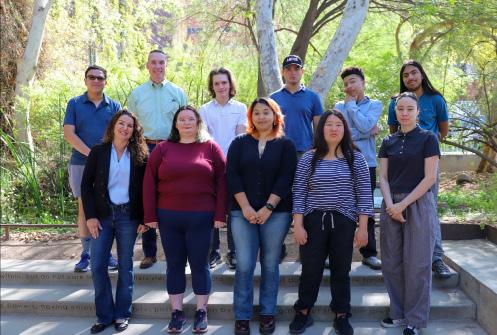
Courtesy of the College of Engineeriung
A CLASS PHOTO OF the spring 2025 IDEAS in Mind cohort
STUDENT LIFE
UA student detained by ICE, speaks out on treatment
IAN STASH Daily Wildcat
On Oct. 21, 2025, Yassine Halhoul, a University of Arizona international student from Morocco, was detained by Homeland Security Investigations before spending a month in Immigration Customs Enforcement detention.
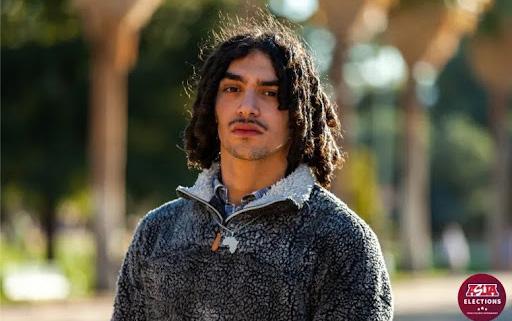
Halhoul, 21, studied aerospace engineering. He has a fiancée in Tucson and strongly believes in cultural diversity and accessibility for groups like low income or LGBTQ+ students. Halhoul was involved in numerous aspects of campus life, including running as a candidate for Associated Students of the University of Arizona student body president in 2023. He was due to graduate in the spring of 2025 but failed to meet certain requirements to do so. Halhoul decided to take classes at the UA for an additional semester in order to complete his degree beyond his expected date of graduation.
The F-1 student visa that he used to enter the United States was still valid until June 2026, as he would be maintaining his required student status. He also never violated the provision restricting him to University-offered employment, working as a resident assistant, a research assistant, a sports supervisor with Campus Recreation and more.
However, the Department of Homeland Security has proposed changes to the F-1 duration that could pose challenges for their holders. According to Halhoul, it was a clerical issue that made him a target for ICE in light of mass raids across the country.
Halhoul spoke with the Copper Courier about his experience, explaining he was woken up early in the morning when several HSI agents showed up at his house and
told him to come with them to sort out a simple issue with his visa. To his surprise, he was then placed in handcuffs and dragged into a car.
Halhoul was originally transported to ICE’s Central Arizona Florence Correctional Center to be detained, about 60 miles from campus. He spent 3 days there, finally being able to talk to his mother after the first day.
Halhoul was amazed by the number of people waiting to be processed or transported and waiting on plastic beds, according to Halhoul. He stayed in an area with several dozen other detainees resting on a number of packed bunk beds.
Halhoul was then transported to the controversial Eloy Detention Center, a private prison near Casa Grade,
Arizona, which Halhoul found even worse than Florence.
Halhoul stated that the first meal of the day — a white cereal and bread — was served at 4 a.m., during which detainees were woken and had to walk to another building for breakfast. There was only one jug of coffee for the entire facility to share and lunch and dinner were devoid of any protein, with the dinner just being soup and a ball of butter and difficult commissary access to better food. Halhoul lost 10 pounds while in detention.
Guards also set the air conditioning at very low temperatures at night to interfere with sleep and disrupt detainees’ attempts to cover the vents. Detainees also had to report to their cells six times a day to be counted,
which frequently interrupted their daily activities. Halhoul passed his time doing things like reading and playing basketball.
After a GoFundMe raised the necessary funds to get a $10,000 bond on Nov. 13 and a further $8,500 for his legal expenses, Halhoul finally returned to Tucson, brandishing an ankle monitor.
Halhoul stated that he believed this to be part of an effort to scare immigrants away from coming to the United States — documented and undocumented alike. He also stated the importance for other international students to be aware of their rights and vowed to make a stand against the treatment of immigrants in detention facilities.
SCHOOL OPINIONSSPIRIT
The gender pain gap in medicine is a scientific failure
EMMA MCDONOUGH
The Daily Wildcat
Women do not experience less pain than men — they are simply treated that way. Across emergency rooms, clinics, medical schools and research labs, women’s pain is consistently underestimated, undertreated or dismissed outright. That isn’t a coincidence — it’s a scientific failure rooted in decades of maledominated research. Biased clinical training and institutional neglect have profound consequences on women’s health.
The data is unambiguous. In one analysis by the National Library of Medicine of 21,851 emergency
department records, women were less likely to receive pain medication than men, even when reporting the same level of pain.
In similar research from the National Library of Medicine and the National Institutes of Health, datasets showed that nurses were 10% less likely to record women’s pain scores than men and women — on average — spent 30 minutes longer in the emergency room before receiving care.
Additional research from the Proceedings of the National Academy on Sciences displayed this gender bias. When researchers presented clinicians with identical male and female patient charts, the clinicians consistently judged female pain as less severe. These findings confirm what countless women already
know about their medical experiences: their pain is viewed as less real, less urgent and less treatable.
The bias is not confined to the emergency room. In gynecological care — where women’s pain and perspectives should be taken most seriously — treatment is shockingly inadequate. According to the NIH, only 30% of physicians offer anesthesia for intrauterine device insertion, despite 70% of women reporting moderate to severe pain with the insertion of this birth control device. Nearly 40% of clinics provide no pain relief at all, offering instead what can only be described as patronizing advice: “relax.”
Meanwhile, Emergency Medical Services show the same pattern. The NIH revealed that EMS providers administer opioids significantly less often to women and disproportionately undertreat Hispanic and Native American women, in particular.
Leslie Farland, an epidemiologist and biostatistician at the University of Arizona’s Mel & Enid Zuckerman College of Public Health, studies how medical failures compound over time. “Historically, women’s health research has taken a back seat, so there’s still a lot we don’t know or don’t understand related to women’s pain because we haven’t invested in studying it,” Farland said. This lack of scientific investment has real implications for women who are suffering.
For women with endometriosis, a painful condition in which cells similar to the uterine lining grow outside of the uterus, Farland noted that there is an average 7-year delay between symptoms onset and diagnosis. “This delay means that women live for many years with their symptoms, which are most commonly pain-related and without treatment these symptoms can get worse,” Farland said.
Endometriosis is simply a condition that is undervalued by medicine and science. Despite its wide effect on the female population, there’s hardly any research on pain management or medications to help treat it. In fact, the only solution given by doctors is birth control
— and many women experience severe side effects from hormonal birth control.
And that education is part of the problem. Farland recalled hearing that medical students receive just one lecture on endometriosis — a condition that impacts one in 10 women. If pain conditions that primarily impact biologically female individuals are nearly absent from the curriculum, it’s no wonder physicians fail to recognize or treat them.
Women are not just left in pain, they are left without answers — science still isn’t built for them. Preclinical research on pain is overwhelmingly concluded from studies that only use male subjects. Then clinicians turn around and use that knowledge to treat women.
This is how women end up in clinics where their pain is misattributed to anxiety, stress or hormones.
“There’s a long-standing idea that because we endure childbirth we’re meant to endure pain,” Dr. Elizabeth Comen, breast oncologist expert and graduate of Harvard Medical School, said in Harvard Medicine magazine. These biases are not from individual bad doctors — they are baked into the infrastructure that shapes medical education.
Medicine prides itself on evidencebased practices. But when the evidence itself has excluded women for generations, the result is predictable: women receive worse care. It’s not because their pain is unusual or mental but because the medical system they face is unscientific.
The gender pain gap in medicine is a research and curriculum failure, but it’s also a preventable failure. The medical community needs to place a higher emphasis on prioritizing their female patients’ pain.
Pain treatment must be provided adequately and impartially — anything less is simply unethical. Science has failed women. How long will clinicians continue to accept that failure?
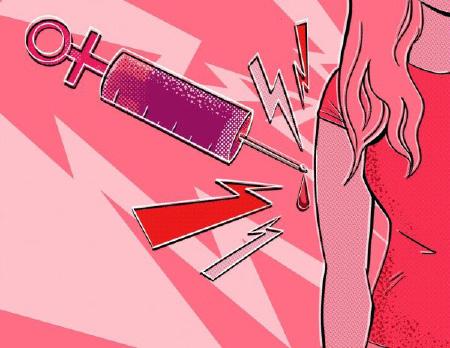
ILLUSTRATION BY SELA MARGALIT | THE DAILY WILDCAT BIASED CLINICAL TRAINING AND clinical training and institutional neglect have profound consequences on women’s health.
SPORTS
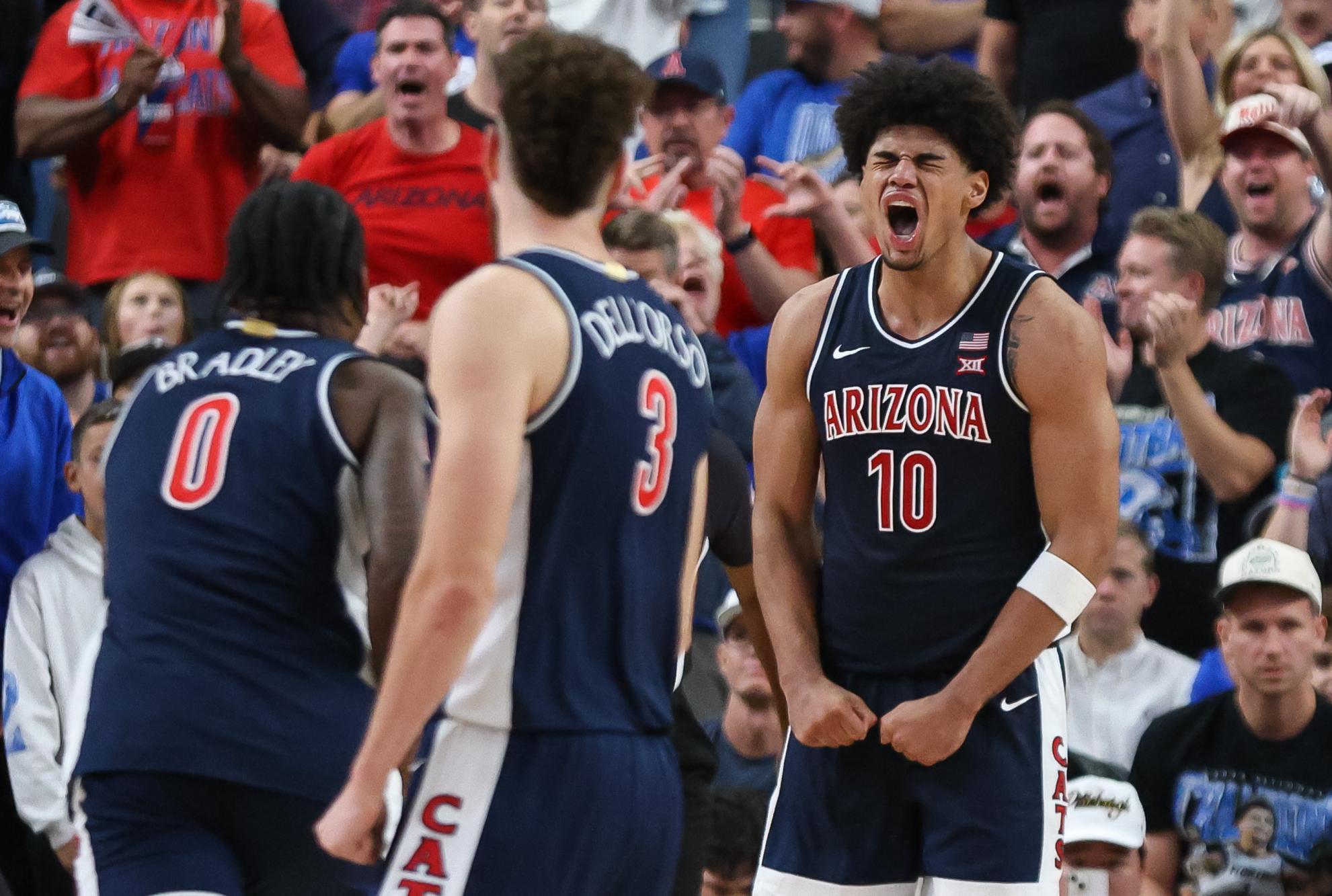
No. 1 Arizona men’s basketball mid-season recap
AVA WIDENER Sports Editor
The University of Arizona men’s basketball team is having an incredible, record-breaking season so far. Arizona currently holds a perfect record of 17-0, 4-0 in Big 12 conference play. This winning streak ties for the second longest season-opening streak at the start of the season in program history. The last time the Wildcats had this phenomenal start was back in the 2013-2014 season when they started 21-0.
The Wildcats are one of four teams that remain undefeated this season. The remaining teams include the University of Nebraska-Lincoln, Vanderbilt University and Miami University of Ohio. Iowa State University and the University of Michigan recently lost, which snapped their perfect records.
Arizona has been holding the No. 1 spot in the AP polls for 6 consecutive weeks. This team is coming close to breaking the record for the longest No. 1 streak in program history. During the 2013-2014 season, they dominated at the top of the AP polls for 8 weeks. The last time Arizona was ranked No. 1 in the polls was in December 2023 where they led for 2 weeks.
Not only are the Wildcats making significant program milestones, but they are also setting AP poll milestones. They are the first team in the history of the AP poll to defeat five ranked opponents within their first nine games of a season.
The team has a strong foundation under the leadership of head coach Tommy Lloyd. Lloyd is in his fifth season as head coach for the Wildcats. Lloyd reached a big milestone becoming the fastest Arizona coach to reach 125 wins. He has created a strong team by recruiting star freshmen such as Koa Peat and Brayden Burries, along with returning players like Jaden Bradley who create a solid foundation. Arizona has showcased its great,
young talent this season. Peat has been a front-runner reaching double-figures in 14 times of the team’s 16 games. In his collegiate debut against the University of Florida, Peat made an unforgettable entrance collecting 30 points, seven rebounds and five assists. Peat’s ability to dominate the inside with scoring and defend multiple positions, along with his power and versatility make him a great addition to the team.
Another freshman that has been essential to Arizona’s success is Burries. He has the second highest scoring average per game at 14.1 with Bradley tailing him with 13.5. Burries tallied 28 points against both the University of Alabama and Kansas State University. Burries
is a two-way player who makes smart and effective decisions that translate to points.
Though there are a lot of standout freshmen, Arizona’s returning players bring maturity and experience to the team. Like Peat, Bradley recorded his season high against Florida, collecting 27 points. Bradley is an efficient scorer and can use his strength and physicality to dominate on defense. He is a reliable player who is always able to get the job done for the Wildcats.
Standing tall at 7-foot-2 with a 7-foot5 wingspan, junior center Motiejus Krivas utilizes his strength and height to his advantage. Krivas collected 14 rebounds against the University of Con -
necticut and Alabama, which are tied for his season high. He uses his size to dominate in the paint and is a strong offensive rebounder generating many second-chance points for Arizona. Krivas is also essential in protecting the rim on defense for the Wildcats. Looking forward
The Wildcats will return home to McKale Center on Wednesday, Jan. 21, to take on the University of Cincinnati at 7 p.m. MST. With just 13 games remaining before the Big 12 Championship, Arizona must remain dominant to defend its No. 1 spot.
CHARLIE RAMIREZ | THE DAILY WILDCAT
KOA PEAT CELEBRATES BACK to back dunks against The University of Florida in T-Mobile Arena in Las Vegas on Nov. 3
Old Town Artisans: A historic Tucson location housing local businesses
Old Town Artisans contains local shops and restaurants located on the historic site of El Presidio San Agustín Del Tucson.
Old Town Artisans is a combination of Tucson’s best traits — rich history and strong community. Located downtown on the site of El Presidio San Agustín del Tucson at 201 N. Court Ave., there’s a selection of local shops and restaurants. Their proximity makes this location convenient for anybody enjoying a day downtown.
El Presidio San Agustín del Tucson was built in 1775 as a fort by
the Spanish military. The building that houses the Old Town Artisans’ shops was constructed in 1850 with adobe walls and ceilings made of saguaro ribs. Today, the original construction and wallpaper can still be seen while browsing each shop.
Art House Centro
Art House Centro opened in 2013 and occupies many of the rooms at Old Town Artisans. This shop has an import room, beer and wine shop, furniture, jewelry, lamps, pottery, plants and more. Featuring over 100 local artists, the shop, along with its historic location, makes it the perfect place to find gifts
that represent Tucson.
“We have over 100 local artists so when we first opened, we would go out seeking artists,” Mark Benko, the owner of Art House Centro, said. “Now we have a reputation that we’ve been here for almost over 12 years. A lot of artists find us now and the things that we purchase outright from companies, we just go out and see what we think is going to work here.”
Benko used to manage the shop that was there before Art House Centro, but when they went out of business, he partnered with the restaurant owner, Jo Schneider, to reopen the store under Art
House Centro.
Along with the unique selection of items, customers can also visit Shadow.
“Art House Centro, home of Shadow the shop dog,” Benko said. “We have a lot of people that come in just to see him.” Shadow freely roams the store while customers are browsing, boosting the overall shopping experience and providing the ideal place to not only shop, but also visit a cute dog.
According to Benko, a lot of people visit the restaurant and don’t know that there are also shops located in the area. With the extensive selection of items like jewelry, books, clothing, food, plants and the wide selection of original art and prints, this shop has something for everyone, making it a worthwhile stop while exploring the city.
Also in the area and connected to Art House Centro is La Zia Native Arts, Crow’s Nest, Old Paint Records and Church Ink Tattoo Parlor, where walk-ins are welcome. La Zia Native Arts specializes in selling handmade local Southwest Native American art and merchandise.
Crow’s Nest
Crow’s Nest is an eclectic shop filled with anything a shopper could think of.
“This is Crow’s Nest. It’s mainly vintage and found objects. A lot of secondhand stuff. It’s one of a kind, maybe not one of a kind, but when it’s here, it’s here. There’s no backroom of stock for items,” Mary Pat Sullivan, one of six workers at Crow’s Nest, said.
MIA PAYETTE
The Daily Wildcat
SCHOOL SPIRIT LOCAL LIFE
CONTINUED FROM PAGE 13
Sullivan teaches at Tucson Preparatory School during the week, but volunteers at Crow’s Nest on the weekends. According to Sullivan, working at the shop on Saturdays is a great diversion from working with high schoolers.
“The community down here is, everybody works their jobs, but they’re really friendly. They’re smart, they’re witty, the customers are happy when they come in, so the whole thing is just a really nice environment. It’s beautiful. People’s goodness comes out when they come in here,” Sullivan said.
In terms of acquiring the selection of items: “We yard sale, estate sale, thrift sale, people give us things, we have stuff in our houses. We have a lot of stuff in our houses. Some of us more than others,” Sullivan said.
“It’s not a museum, but it almost is because there’s so much history in here from many different eras, so when people come in of different ages they reminisce about their grandparents, or their aunties and uncles, others are seeing things for the very first time that others of us have seen for a very long time, like an eggbeater. Have you ever heard of an eggbeater? […] So, there are tools from the kitchen, tools from the art world, just wonderful things,” Sullivan said.
Old Paint Records
Owned by Kevin Mayfield and Lana Rebel, Old Paint Records opened in January 2014 as a part of the shop that occupied the space before Crow’s Nest, until they eventually moved into their own space. “It’s been kind of cool because we’ve been able to grow slowly instead of having to put out a bunch of money all up front and it was kind of ideal actually,” Rebel said. According to Rebel, it’s a really special spot and she loves the energy and vibes of Old Town Artisans and the buildings.
The couple met when Rebel was living in Portland and she convinced Mayfield to move to Tucson, where they began working around the com -
plex, before opening their record shop. She has been collecting records forever and they wanted to represent the uncommon and rarer selection that they felt other record stores in Tucson didn’t have.
“With the records we have a few distributors that we like to go through, because of their selection we like to try to find harder to find genres and more interesting music than just the top 40 stuff, so we have fun sourcing those records a lot,” Rebel said.
“We sell a lot of records, but then we also sell a lot of fun stuff too. T-shirts, we screen print our own shirts, hats and stuff and then just various things. We get a lot of tourist traffic so we try to have some stuff that they could bring home, but we like to make it fun, not just like some
dumb souvenir shop. We try to source some fun stuff,” Rebel said.
According to Rebel, the area used to be homes and when it was turned into Old Town Artisans, they originally sold a lot more Native American items. “They would have people making crafts in the courtyard and they would have dances. They did that for a while, actually even while we were here there was Aztec dancing and stuff, but the guy who kind of coordinated that stuff no longer has a shop here so, he’s not doing that anymore, it was cool though,” Rebel said.
After checking out the treasures at each shop and working up an appetite, shoppers can eat at Ceres or Jojo’s. Ceres is a take-out or to-go restaurant serving fresh handmade pasta, sandwiches and rotating
flavors of gelato. Ceres is also the sister store of Noodies.
Jojo’s is open later from 4-9 p.m., Tuesday-Saturday. The restaurant used to go by La Cocina, but now goes by Jojo’s, after owner Jo Schneider. Jojo’s also serves as a venue for local musicians to perform while the restaurant is open.
Old Town Artisans is the perfect place for tourists, Tucsonans and students and staff at the University of Arizona to visit. There’s a good selection of local food and shops containing gifts to represent their time in Tucson, or even decorate their spaces, as well as a tattoo parlor, where they can permanently decorate their bodies.
MIA PAYETTE | THE DAILY WILDCAT
A WINDOW ON THE outside of La Zia Native Arts showcases pottery and a mural on North Meyer Ave on Dec. 6.
OPINIONS
Scarves and spaghetti straps: Iran is changing the narrative of Muslim women
ZAINA JASSER
The Daily Wildcat
I wear shorts and strappy tops in public. I adorn sundresses, hair gems, low necklines and short skirts. I am myself. But I am ashamed. Often. Ignore the misinformation and misinterpretations, the religion I call my home does not shame nor control a woman’s body. Islam is not a judgmental ancient nor a governmental lawbook. And to every man and woman who has tried to surveil me otherwise, may Iran’s powerhouse of femininity and revolt show the condemnation and grotesqueness of suggesting gendered control in my Islam. Shame is simply social control.
Social modesty has been a core part of Islamic and West Asian culture for decades. Since the Iranian revolution in 1979, clothing has since become hyperpoliticized.
Iran passed a bill in 2023, “Hijab and Chastity,” which mandates women to wear the traditional hijab with clothing up to their wrists and ankles in public, considering otherwise “nudity.” Interestingly, the use of the word “hijab” in the Quran means a barrier or veil and does not explicitly refer to the face-oriented head covering seen today. In fact, the Quran explicitly advises instead that “the believing men […] should cast down their glances” and then that “the believing women should cast down their glances.” But that’s not what’s happening.
The hijab is not a specific article of clothing — it is an action of modesty to suggest self-respect and protection from undeserving eyes or thoughts.
In the Western world, the greatest social marker of Islam is the concealment of the body and hair. Women traditionally wear the hijab to cover the hair and loose-fitting clothing to conceal the body’s shape. It’s not a form of repression or social obedience. It’s a respect for God’s beauty in creation,
emphasizing self-expression, character and empowerment through bodily modesty. It is a recognition of identity, a reverence for the essence and brevity of being. Muslim women are truly empowered by this choice.
Growing up in the United States, I’ve received confused glances and questions by my choice not to wear the hijab. My family adopted the ideology of self-guided faith, rooted in intention and honest belief. The enforcement of a hijab seemed to neglect the God-respecting autonomy of a Muslim woman. The choice must be hers, they expressed. The Quran does not demand modesty, just as it does not demand belief. The woman who wears her hijab is as free as she who chooses not to. It is a choice,
not repression.
Still, Iran has so wrenchingly revealed the consequences of control through clothing: revolt, uprising, disrespect of faith and even death. The brave and inspiring revolt of this year will forever be a turning point for Muslim women and all of Islam in the future. Islam is not defined by our clothing nor by our obedience towards man. The women of Iran have begun their narrative against the sheepish silk veil, which hides the brawly beauty of the Iranian woman.
Girls are taught from a young age to practice modesty and be aware of men’s temptations. Men don’t often bear the same constant responsibility of social respect and modesty among their gaze,
words and clothing. Still, it seems men get the excuse while women ingest the shame and policing. What a kind message we teach our children, that the clothing on your back matters more than the words in your mouth or the gaze of your eyes. It is not a fault of Islam. It’s decades — centuries — of authoritarian shame to control a woman from religious upheaval.
The other side of the coin prevails: to judge, mock or ban the hijab is an equally grotesque point of control that again violates a girl’s dignity. Austria recently banned hijabs for girls under 14 in some schools. They claim they
CONTINUED ON PAGE 16
GRIFFIN RILEY | THE DAILY WILDCAT
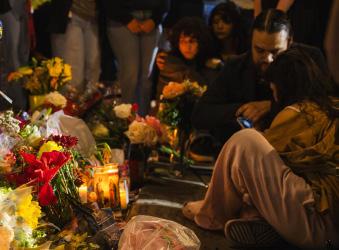
MUSLIM WOMEN PRAYING AT the Christchurch vigil at the University of Arizona on Mar. 20, 2019.
OPINIONS
STUDENTS WRITE MESSAGES TO the victims of New Zealand’s Christchurch shooting on Mar. 20, 2019. The vigil was organized by the Muslim
Arizona.
CONTINUED FROM PAGE 15
want to protect the freedom and equality of women. Though a noble attainment, violating dignity is not a means to, well, not violate dignity. Austria is promoting autonomy by revoking autonomy. Does that make sense?
Men and women have approached me at the mosque countless times, asking me where my hijab is, to keep out of the men’s section (I was thirsty and only they had water) or why I was praying in the same room as the men (even though this is a normal, common practice). Some men avoid
your eyes at all costs, while others stare with their mouths dropped open.
This is fearful and shame-based modesty and does not reflect a chosen modesty — it instead pushes it further away. For, sadly, it’s easy for a man to hide his eyes and his thoughts but a woman cannot hide her body. This is not an adequate excuse for Islamic social reform.
I’ve seen it myself. Childhood friends grow up policed by trusted authority to cover up. And once they move out and discover the freedom and lack of judgment from the Western world, they give up Islam. They choose irreligiosity, immodesty or even immorality over social
control. How can you blame them? A pressure cooker is bound to erupt. Islam is one of the most beautiful ethical systems of individual guidance. I revere its implications of honor in sincerity, intention and integrity. I am lucky to have grown up in a household where my choice was above guidelines. But not everyone views Islam this way. Still, it stings a bit in a sourly oppressive and powerless way to be told by a Muslim outside of my family that I should cover up, or rather be gawked at by other Muslim men.
Never be quick to assume the woman in the hijab is oppressed, just as we may never assume she who does not wear
|
one is faithfully undirected. Islam is plagued by a social disease, where social workings — shame, punishment and authority — are used to demand religiosity rather than invite and nurture the heart of Islam.
The Muslim woman’s autonomy is one of the greatest losses of the 20th and 21st centuries. And it’s not just Iran, Sudan and Iraq; it’s the United States, Europe, Canada and Australia. The social implications of the hijab can haunt the technically free. So, Muslim women worldwide stand eager and wishful as the Iranian bravehearts take back their hair.
GRIFFIN RILEY
THE DAILY WILDCAT
Student Association and the Univeristy Religious Council at the University of
A recap of the new Student Culture and Engagement Hub transition
JASMINE CREIGHTON
The Daily Wildcat
The University of Arizona restructured its Cultural Resource Centers during the fall 2025 semester, consolidating the seven separate centers into one Student Culture and Engagement Hub.
The consolidation of the centers was announced in late May 2025 with the creation of Campus Community Connections, a new unit in the Office of the Provost. While some changes were implemented over the summer, students and faculty began to notice their effects during the fall semester as leadership shifts and renaming of spaces took place.
New Leadership
The consolidation brought African American Student Affairs, Asian Pacific American Student Affairs, the Disability Cultural Center, the LGBTQ+2S Resource Center, and the Guerrero Student Center under shared leadership while maintaining the center’s physical spaces on campus. Native American Student Affairs was moved into the Office of Native American Initiatives instead of the Student Culture and Engagement Hub.
The co directors of the hub, Kenneth Importante and Dominique Calza were announced in a public statement in the summer. The new leadership effectively led to the termination of the existing directors for each of the cultural centers.
Renaming of Student Spaces
On Oct. 10, 2025, Campus Community Connections announced the renaming of three centers.
According to the announcement, the process was student-led and included “anonymous online surveys, in-person meetings, and social media naming contests” in order to “honor the spirit of each student space while continuing
our commitment to belonging, support, and empowerment for all students”.
The new names include the MLK Dream Student Space, the Lotus Lounge Student Space and the Omnes Disability Student Space.
The former LGBTQ+2S center remains without a permanent name and the space is currently referred to as Student Union Memorial Center Room 404.
“SUMC 404 Student Space staff and their affiliated student council are currently engaging in an intentional process to rename their space.” Importante and Calza said in the announcement. Student Response
Since the beginning of the consolidation process and the fall semester, many students have expressed concern that the change diluted the support of each center and a reduction in student decision making.
Several student groups have criticized the administration for what they say is a lack of communication and support during the transition.
“We weren’t informed until the day the directors were laid off that they were being laid off, and all this is is political party and political gang, and we the students, are the ones that suffer,” Fransisco Burke, a student part of the Women and Gender
Student Space and co director of Feminists Organized to Resist, Create and Empower said.
Burke explained the consolidation and changes made to the centers have made many students feel ostracized and “snuffed out”.
“It does feel like that sense of them trying to erase us is there, unfortunately; however, we still find joy, because joy is radical, and that is the ultimate protest against them trying to get rid of us.”
JASMINE CREIGHTON | THE DAILY WILDCAT A
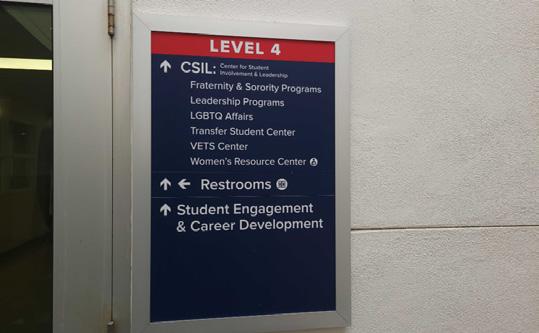
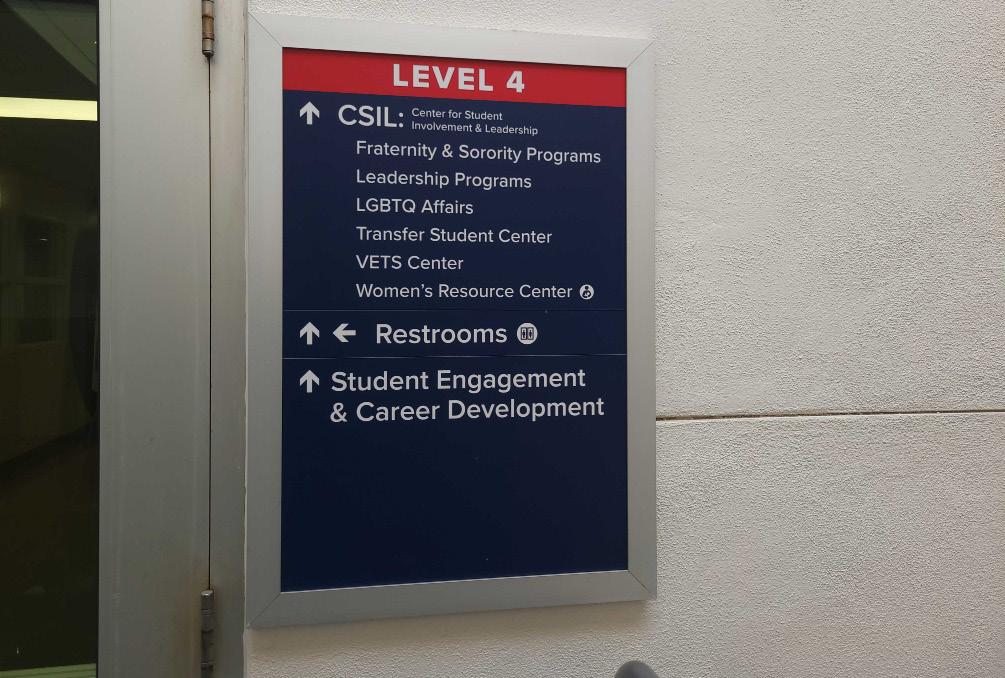
wall of the Student Union Memorial Center on level 4 depicts the former names of Cultural Resource Centers at the University of Arizona on Jan. 16.
Explore the cosmos with Steward Observatory’s public evening lecture series
Steward Observatory’s public evening lecture series makes astronomy accessible to the public
potential methods and the complications involved in searching for habitats with extraterrestrial life on other planets.
For over 100 years, Steward Observatory has been offering public lectures on topics related to astronomy, offering explanations and insight into complicated concepts in a way that anyone, regardless of any scientific background, can understand and appreciate.
The lecture series follows the school year, so far with 5 lectures in the fall semester and 3 in the spring semester scheduled. Dates for the lectures can be found on the observatory’s website, and each lecture starts at 7:30 p.m. in Steward Observatory Room N210. When the weather is good enough, attendees are invited to view the telescope after the meeting adjourns.
“We really make it an effort to motivate and explain the science without using the jargon and the calculus that we do it with,” Thomas Flemin, professor of practice and associate astronomer at the department of astronomy, said.
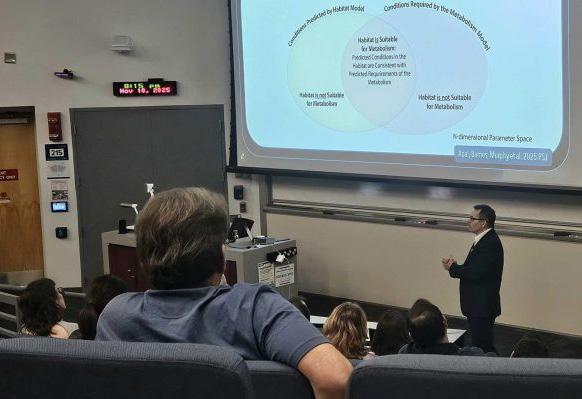
The most recent lecture occurred on Nov. 10, performed by Daniel Apai, professor of astronomy and planetary sciences. 71 attendees gathered in person, with another 15 attending over Zoom, to watch Apai explain
“I think it’s really exciting to meet people who come out and discuss topics like this. I always enjoy the questions that I get, it’s always fun,” Apai said.
The topic of the chosen lectures showcases the diversity of astronomy as a subject matter. Back when the world was supposedly ending in 2012, they hosted a lecture on the Mayan calendar and the Mayan’s views on astronomy.
Recently, author and journalist David Baron lectured on his nonfiction book
“The Martians,” examining the Martian craze at the turn of the millennium. Even mainstream news outlets were reporting the discovery of alien life on the red planet.
While Fleming explained he has gotten talent from as far away as Cambridge and Guatemala, his budget is limited, and he is mainly relying on the kindness of others to volunteer their time.
“I’m hoping that my colleagues can share their enthusiasm for the science of astronomy and that [the public] takes away from us a little bit of wonder,” Fleming said.
Fleming traces the start of the public evening lecture series back to Andrew Douglass, founder of Steward Observatory. Douglass was the principal observer at Lowell Observatory in Flagstaff from 1894 to 1901. His service came to an end when Douglass doubted claims by the observatory’s owner, Percival Lowell, who had become convinced that a Martian civilization had built canals on Mars. Douglass arrived in Tucson in
1906, where he would establish Steward Observatory, found the science of dendrochronology and UA’s Laboratory of Tree-Ring Research.
Before the telescope had even been officially dedicated, Douglass invited members of the public to the first public evening on Sept. 28, 1922, where they could look through the telescope.
The tradition started by Douglass has continued 103 years later, only taking breaks during World War II and the COVID-19 pandemic. During the pandemic, the lectures were moved virtually to Zoom. When they moved back
to in-person lectures, it was decided to keep Zoom as an option. Fleming noted that the lectures have attracted a loyal following from an astronomy club in Kansas City, Missouri.
For anyone who may be sad they missed an interesting subject, recordings of previous lectures going back over a decade are available to watch online.
AIDEN WILLIAMS | THE DAILY WILDCAT
DR. DANIEL APAI GIVING his lecture “The Modern Search for Potential Habitats of Extraterrestrial Life in the Solar System and Beyond” at Steward Observatory on November 10
AIDEN WILLIAMS
The Daily Wildcat
No. 1 Arizona men’s basketball defeat rivals ASU
HAZIEL RICHARDSON
The Daily Wildcat
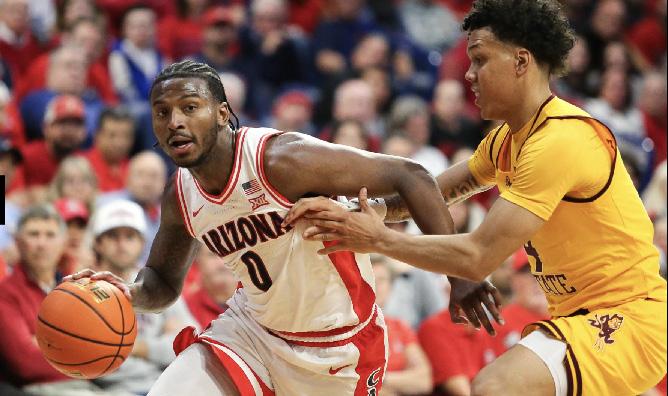
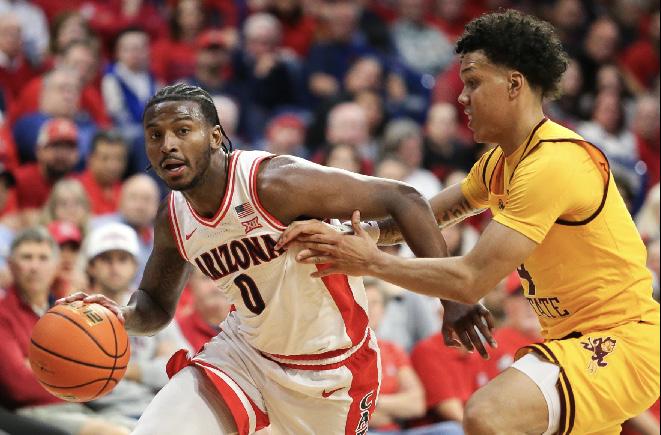
The University of Arizona men’s basketball team improved to 17-0 as they defeated their rivals ASU 89-82 (10-8, 1-4 in Big 12) in a close match on Wednesday, Jan. 14 in McKale Center. This victory continued the Wildcats’ undefeated streak, but it was an even sweeter victory as it was against their rivals.
Key players
The Wildcats were led by another great scoring performance from Koa Peat, as he scored 24 points in the game overall. He collected 16 points in the second half alone along with 10 rebounds and three assists. Tobe Awaka also had a great night, getting a career high of 25 points and five rebounds. ASU had some standout performances as well. As they kept the game close, there were dominant players who showed how much fight they had. Senior guard Maurice Odum ended the
night with 23 points, seven assists and one rebound.
So how did we end up with our final score? And what were the key moments in the game? The game immediately started off chippy, with both teams being very physical before and after the whistle. Arizona freshman guard Brayden Burries and ASU’s grad student forward Allen Mukeba received double technical fouls. In the first half, the Wildcats went back into the locker room down by 1 point. They weren’t causing as many turnovers as ASU, having turned the ball
over just once. They were also shooting significantly more 3-pointers, as ASU made four 3-pointers in the half, including one by junior guard Bryce Ford with about 30 seconds remaining until halftime. With the first half looking like it was going to be close throughout, the Wildcats were going to have to fight for this one until the very end.
The second half remained more of the same, as both teams were going back and forth turning over the ball frequently. No matter what Arizona tried to do, ASU wouldn’t go away, including hitting a 3-pointer with 56 seconds left to cut the lead to 3 points. Senior guard Jaden Bradley hit a mid-range jumper with 27 seconds left in the game followed by a pair of free throws from Awaka that finally gave Arizona the win.
Arizona once again showed its composure in a tense rivalry matchup, relying on timely plays and balanced contributions to close out the win. Despite ASU’s late push, the Wildcats executed another victory to remain unbeaten at 17-0. More than just a rivalry victory, the win highlighted Arizona’s resilience and ability to win tough Big 12 battles.
“I mean, I think it helps us a lot, you know, to get a gritty win like that against a really good team, a really well-coached team. You know, it’s not going to always be easy, so to have a game like that, I think that’s really going to help us come along,” Peat said post-game, regarding how this win helped Arizona in Big 12.
Looking forward
The Wildcats will head on the road to face the University of Central Florida in the Addition Financial Arena in Orlando, Florida on Saturday, Jan. 17 at 4 p.m. The game will be available on ESPN for Wildcat fans to watch at home.
MASON KUMET | THE DAILY WILDCAT
JADEN BRADLEY DRIVES TO the basket against ASU in McKale Center on Jan. 14.
MULTIMEDIA
Miami wins Fiesta Bowl Thriller
MULTIMEDIA DESK
The Daily Wildcat
Miami and Ole Miss battled until the final second in the 2026 Fiesta Bowl with Miami earning a chance to win the National Championship at their home stadium, a first in college football. Both teams combined for 857 yards of offense with only one interception and no failed fourth downs. Carson Beck threw for 268 yards and two touchdowns, including a rushing TD late in the fourth to ultimately put Miami on top.
Miami showed the college football world they were for real after many said they didn’t even belong in the playoff. The Hurricanes defeated Texas A&M, Ohio State and Ole Miss before pushing undefeated Indiana to the limit. With Indiana winning their semifinal against Oregon by 34, fans thought they would make quick work of the Carson Beck led Hurricanes . Indiana prevailed in a 27-21 fight that saw a 10 seed advance to the national Championship in just the second year of the 12 team playoff.
MASON KUMET| THE DAILY WILDCAT
MIAMI RUNS OUT ONTO the field before the Fiesta Bowl in State Farm Stadium in Glendale, Ariz. on Jan. 8. CONTINUED ON PAGE 21
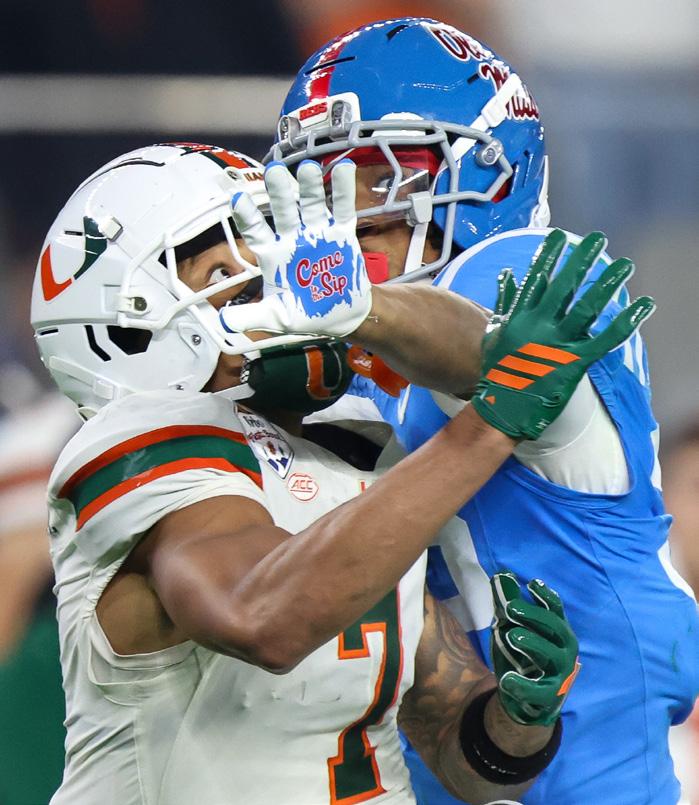
CHARLIE RAMIREZ | THE DAILY WILDCAT CJ DANIELS (7) ATTEMPTS to catch a heavily contested pass against Ole Miss in State Farm Stadium during the Fiesta Bowl in Glendale, Ariz. on Jan. 8.
CHARLIE RAMIREZ | THE DAILY WILDCAT CARSON BECK SCORES THE game winning touchdown against Ole Miss in State Farm Stadium in Glendale, Ariz. on Jan. 8.
MULTIMEDIA
CONTINUED FROM PAGE 20
MASON KUMET | THET DAILY WILDAT
TRINIDAD CHAMBLISS GETS COMFORTED by a teammate after losing the Fiesta Bowl to Miami in State Farm Stadium in Glendale, Ariz. on Jan. 8.
MASON KUMET | THE DAILY WILDCAT
THE FINAL PLAY OF the 2026 Fiesta Bowl is broken up in the end zone to send Miami to the National Championship in State Farm Stadium in Glendale, Ariz. on Jan. 8.
MASON KUMET | THE DAILY WILDCAT
A MIAMI CHEERLEADER LAYS in the confetti after the Fiesta Bowl against Ole Miss in State Farm Stadium in Glendale, Ariz. on Jan. 8.
MASON KUMET| THE DAILY WILDCAT KAPENA GUSHIKEN CELEBRATES AN interception against Miami in the Fiesta Bowl in State Farm Stadium in Glendale, Ariz. on Jan. 8.
COMICS CORNER
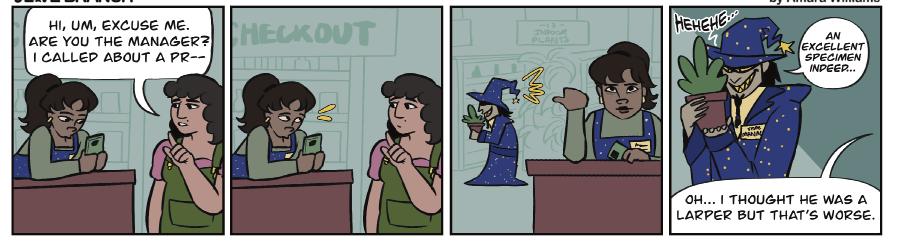
OLIVE BRANCH
With every print edition of the Daily Wildcat came another print edition to add to my collection, where I could look back at how the comics page has evolved since my freshman year. Making these comic strips has been one of my proudest feats, which is why I’m excited to introduce myself as the newest Comics Editor! It is a great honor to continue the legacy of the comics desk and work with the talented artists that make the magic happen.
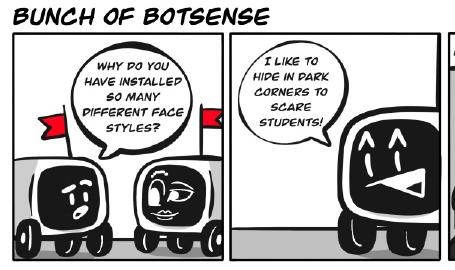
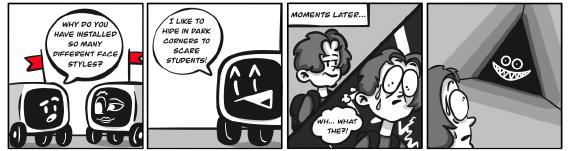
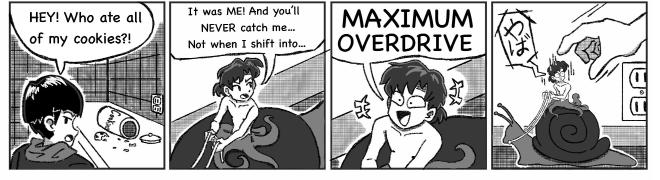
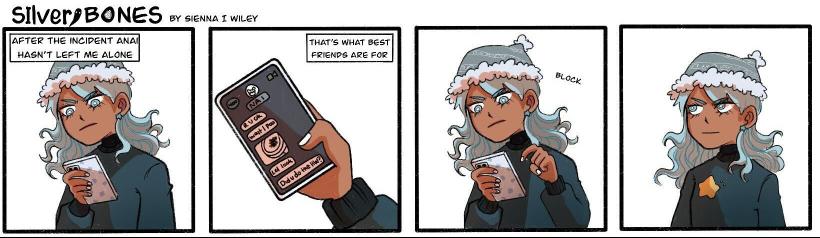
Come sit down and enjoy the latest installments of “Olive Branch” by yours truly, “Bunch of Botsense” by Roberto Bours, “Lifeguard Off Duty” by Tristan Gegantoca and “Silver Bones” by Sienna Wiley. Not caught up to speed on these stories and want to read more? You can visit the comics page on our website at wildcat.arizona. edu!
Whether you’ve been a loyal follower of the Daily Wildcat comics, or this happens to be your first time flipping over to our little corner, I hope our fantastical little stories can at least put a smile on your face. Thanks for reading, and Bear Down!