



Exclusive Arizona WildcatsTM Debit Cards.
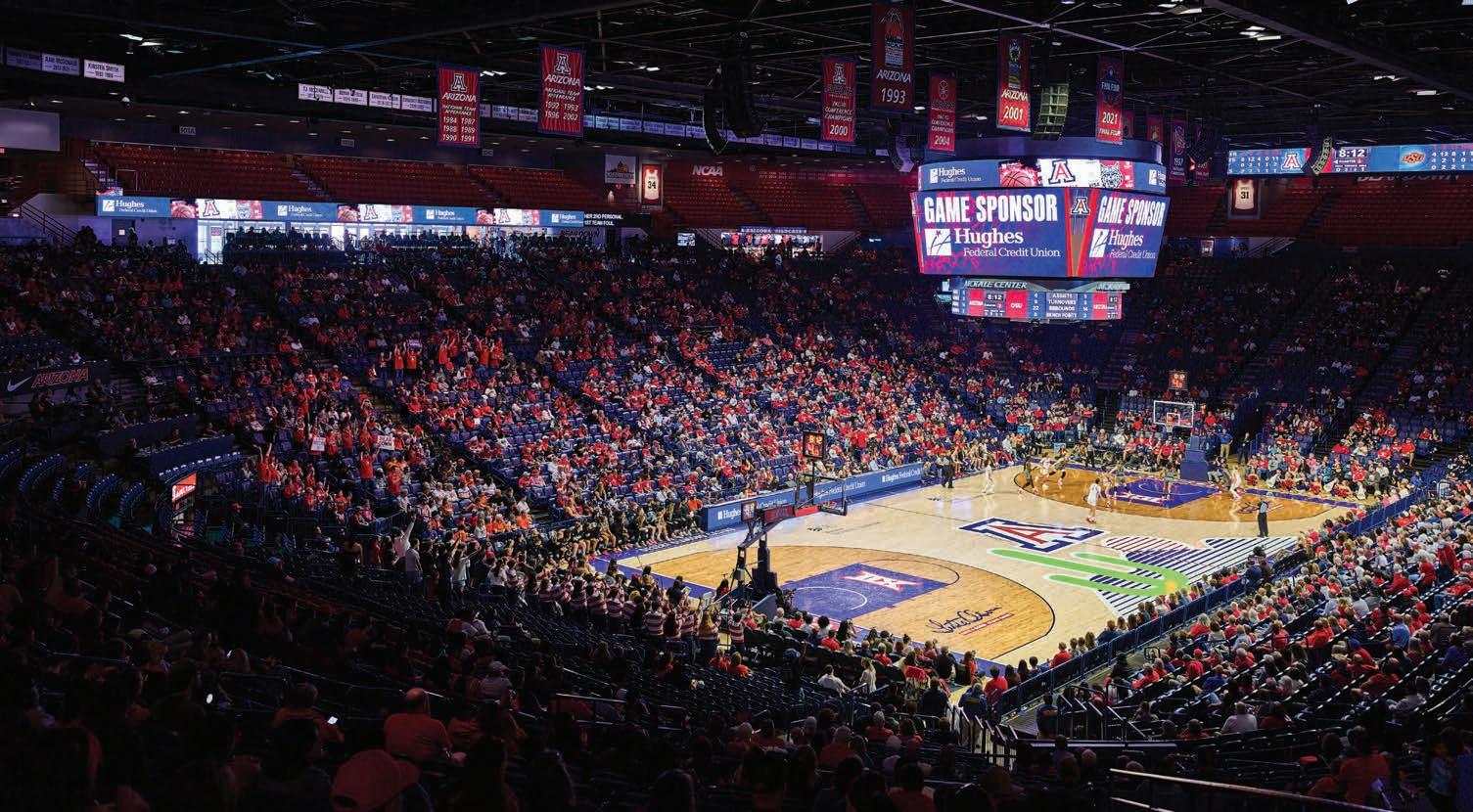
From one hometown favorite to another, congratulations to Coach Tommy Lloyd and Arizona ® Men’s Basketball. Your superfans at Hughes Federal Credit Union are always excited to cheer for you on the road towards victory. Bear Down® !
You can be a superfan too with one of our exclusive University of Arizona® Debit Cards. Choose from several designs, including our basketball design in honor of both the Men’s and Women’s teams. Show your Wildcat spirit with every purchase. Get yours today.
Hughes is a proud supporter of the University of Arizona and the Title Sponsor of Arizona Women’s Athletics for more than 18 years.


Editor-in-Chief
Emma LaPointe editor@dailywildcat.com
Managing Editor
Ruby Wray editor@dailywildcat.com
News Editors
Jasmine Creighton Ian Stash news@dailywildcat.com
Opinions Editors
Sarah Arellano
Zaina Jasser opinion@dailywildcat.com
Magazine Editor & Training Coordinator Dylann Sweeney
Sports Editors Ava Widener Will Shenot
sports@dailywildcat.com
Arts & Life Editor
Kate Eid Valeria Moreno arts@dailywildcat.com
Photo/Multimedia Editors
Mason Kumet
Josie Shivers photo@dailywildcat.com
Copy Chiefs
Ari Keating
Olivia Volland copy@dailywildcat.com
Comics Editor Amara Williams amarawilliams26@arizona.edu
Social Media Coordinators
Nandini Manepalli Michael Smith socials@dailywildcat.com
Designers
Emma LaPointe
Ruby Wray
Kasey Leftwich
Amara Williams
Josie Shivers
Mason Kumet




Campus organizations like Univeristy of Arizona Survivor Support Services, Counseling and Psychological Services and the new Ripple Advocacy club continue to advocate for survivors of sexual violence
As the stigma around speaking out about sexual violence grows, University of Arizona Survivors Support Services continues to advocate for students, faculty and staff who are survivors of sexual violence, assault and trauma.
Survivor Support Services offers a network of resources to provide safety, validation and confidentiality to survivors. Through numerous community partnerships, the organization connects individuals with counseling options, court representation and police and medical involvement if requested.
The organization is committed to making sure survivors feel safe whether this be at home, on campus or at work and assists survivors in filing no contact orders and safety planning.
“We are here to represent the survivor in whatever they need,” Jess Glass Walsh, the lead advocate at UA Survivor Support Services, said.
Survivor Support works as an avenue for individuals to seek resources to help them through traumatic experiences without question or doubt, differing from other reporting systems.
“When engaging in reporting systems, it’s not a matter of not believing them,” Walsh said. “It’s that sometimes folks have to be neutral and it’s a different relationship.”
According to Walsh, when subjected to trauma, memories cannot be recalled in the same way. This causes survivors to often have trouble remembering exactly
what happened during traumatic instances as the brain’s form of protection.
Dealing with trauma often leads to higher levels of stress, preventing people from being able to complete day-today tasks. Walsh highlighted that this is especially true while balancing trauma as a student.
“We often see folks impacted academically and we do our very best to normalize that because it can be very isolating that you cannot perform in the way you could before,” Walsh said. “I think a huge impact on our survivors is loneliness and isolation.”
Relationships and friendships can also be impacted by the weight of trauma survivors’ experience. Walsh emphasized the importance of first disclosures and that survivors are more likely to seek out resources after having a positive first experience sharing their trauma.
In cooperation with UA Counseling and Psychological Services, Survivor Support
is able to provide access to long- term resources and therapy for students, faculty and staff experiencing trauma through ongoing counseling sessions over the entire semester.
“The purpose of therapy is to be flexible and provide a lot of choice, control and stability for people,” Emily Viola, a trauma specialist with Survivor Support Services and CAPS, said.
“I really like to leave it up to people to decide where they want to start and where they want to go,” Viola said. “Students can decide how long they want to work with me and if they feel one session is enough, that’s awesome.”
Survivor Support also works with the Ripple Advocacy club, a student organization providing a safe space for survivors to talk with other people who have experienced trauma and can relate to their struggles.
“These are spaces where student survivors can come together and
understand each other just on the basis of ‘we’ve all been through it,’” Walsh said.
Ripple Advocacy is in its first year of operation and is a free and confidential service for survivors on campus. The club works to connect survivors with professional resources and other survivors as well as fundraise to support survivors in difficult financial situations.
“We’re just a community on campus who’s ready to serve and equip the needs of survivors of interpersonal violence with the professional support that they need,” Kiki Vandenbrook, one of the founders of the Ripple Advocacy Club, said. “It’s focused on outreach, creating a safer environment on campus and also fundraising for survivors to cover any costs that they might have.”
Ripple Advocacy encourages survivors to disclose their experience with peers who can offer support, which may feel easier than reaching out to professionals. Ripple Advocacy equips club members with resources to then connect their peers to professional guidance.
“It’s more about giving people a choice to use our resources,” Vandenbrook said. “I just don’t want people to feel like they are alone and it’s building a community to destigmatize survivorship and create awareness about what’s available.”
The Ripple Advocacy club encourages students to join the organization and continue to support survivors through upcoming fundraisers. More resources and information about UA Survivor Support Services can be found on their website.
ADDISON BAHR
While many students think of yoga as simply stretching or exercise, research and student experiences suggest the practice may offer powerful mental health benefits, from reducing stress and anxiety to improving focus and emotional resilience. For University of Arizona sophomore Andrea Gutierrez-Ramos, yoga started as a recommendation from her psychiatrist.
“My psychiatrist actually recommended that I start doing yoga to practice mindfulness,” Gutierrez-Ramos said. “The biggest change I noticed was that it helped me calm down my anxiety.”
Yoga, a practice with spiritual and philosophical roots that dates back thousands of years, has become progressively popular on the UA campus. More than 38 million Americans practice yoga, often with goals in mind such as improved flexibility, balance and strength. But many practitioners quickly discover that yoga’s impact goes far beyond physical health.
For Gutierrez-Ramos, the biggest difference has been the way yoga prepares her mentally for the day.
“I practice yoga usually in the morning and it’s helped me set my day for success,” Gutierrez-Ramos said. “It helps me center myself and ground my emotions and just take a deep breath before the day starts.”
Yoga’s combination of physical movement and controlled breathing plays a key role in its psychological benefits. Even though yoga movements are typically slow and deliberate, they still activate the body and increase heart rate which triggers the release of moodboosting brain chemicals like dopamine, serotonin and norepinephrine.
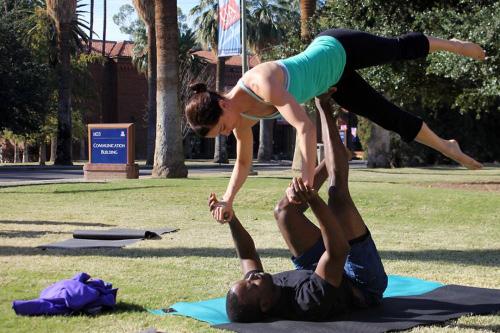
These chemical changes can help improve mood and emotional regulation, which is one reason researchers have begun studying yoga as a potential tool for managing mental health disorders such as depression, ADHD, anxiety and more.
“I think it’s definitely a lot heavier in mental benefits than it is in physical,” GutierrezRamos said. “Mentally it helps you center yourself and pace your thoughts for the day and just relax.”
For many students, stress management is
one of the main reasons they begin practicing yoga. Surveys of American yoga practitioners show that a majority report using the practice to cope with stress. The tightening and relaxing of muscles combined with controlled breathing helps reduce tension in both the body and mind.
Gutierrez-Ramos noted that she often relies on those breathing techniques outside of yoga when she begins to feel overwhelmed.
“If I’m seated at a desk and I’m stressed out, I just breathe in and breathe out and
remind myself everything will be fine,” Gutierrez-Ramos said. “It makes me a lot more calm.”
UA sophomore Jasmine Yango discovered similar benefits when she began practicing yoga as a teenager. Her introduction to the practice came through her mother who attended a yoga studio regularly.
CONTINUED ON PAGE 6
“My mom was always super interested in it and I was also a swimmer for 18 years,” Yango said. “I needed a different type of movement to counteract what I was doing in the pool.”
While yoga initially served as a way to balance intense athletic training, according to Yango the mental aspects of the practice were just as valuable.
“It was a really good time to actually slow down,” Yango said. “It would force me to not do something for a little bit of time and learn how to be inside.”
That pause from constant activity is something many yoga practitioners experience. Mindfulness and breathing exercises encourage individuals to focus on the present moment, which can reduce anxiety and improve concentration.
mindset.”
Research suggests breathing techniques may be one of the most effective components of yoga for anxiety relief. Because breathing patterns are closely connected to emotional responses, slowing the breath can signal the body to relax and reduce feelings of nervousness.
Yango said she sometimes uses the same breathing techniques she learned in yoga when she feels overwhelmed during the school day.
“Just slowing down and focusing on breathing helps you think things through better,” Yango said.
Gutierrez-Ramos, a pre-medical student, noticed taking even a short amount of time for yoga in the morning helps her handle the stress of exams and coursework.
“I’ll do like a 15-minute session in my room,” Gutierrez-Ramos said. “It gets my body warmed up and my mind just feels clearer and more ready to take exams or study.”
Beyond stress relief, both students said yoga has helped them develop greater emotional awareness and resilience.
actually is.
“I think people assume it’s just stretching or that you have to be flexible,” Gutierrez-Ramos said. “But it’s really just about centering yourself and relaxing.” Yango agreed, adding that yoga doesn’t have to fit any particular stereotype.
“I think people think it’s only for people who want to meditate or be super spiritual,” Yango said. “But anybody can do it and take as much from it as they want.”
“The best way I can describe it is that my mind literally just gets empty,” GutierrezRamos said. “It’s like a blank canvas where I can focus on what the important things are.”
According to Yango, the challenge of holding difficult poses can translate into confidence and perseverance in everyday life.
“You can’t really lose anything from it,” Gutierrez-Ramos said. “You can only gain.” CONTINUED FROM PAGE 5
“I think it has definitely lessened my stress levels and anxiety,” Yango said. “Just focusing on breathing throughout the practice helped me get into a better
In addition to reducing stress and anxiety, some studies suggest yoga may improve sleep quality. Participants in several studies have reported increases in both the amount of sleep they get and how efficiently they sleep, meaning more time spent in bed is actually spent resting.
For students managing demanding schedules and academic pressure, these benefits can be especially important.
“Sometimes you’re persisting to stay in a position and breathe through it,” Yango said. “That can really help you apply that same mindset to other parts of life.”
Despite these benefits, both students said many people still misunderstand what yoga
While yoga is not intended to replace professional mental health treatment, many clinicians recommend it as a complementary practice alongside therapy or medication. For students navigating the pressures of college life, even a short daily practice may offer a simple way to support mental wellbeing.
ABIGAIL ROWLEY
On Aug. 11, 2025 the Museum of Democracy opened “Pathway to the Presidency: Road to the White House” on the lower level of the University of Arizona Campus Store. The exhibit “explores the history of American democracy through the creative campaign tools that shaped it—flags, posters, parade lanterns, stickers, games, and more,” according to the exhibits page from the Center for the Philosophy of Freedom. It is supported by a grant from the Arizona Board of Regents and pieces from the Wright Family Collection.
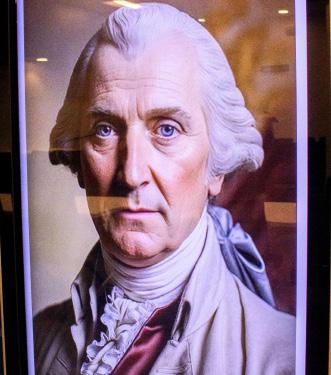
Alongside the heaps of political merchandise, one of the spotlight features of the exhibit is a kiosk through which you hear from “these multilingual, AI-powered agents [which] represent a significant leap forward in how educational institutions can bring history to life for their audiences,” Amee Hennig, Marketing & Communications Manager for the CPF, said.
This is a flowery way of saying that the Museum of Democracy has installed a large tablet screen displaying an AIgenerated moving portrait of George Washington.
When I first saw this via an Instagram post on the University of Arizona’s page, I was taken aback and also reminded of another case of AI mimicry.
In 2024, Switzerland’s oldest church, St. Peter’s Chapel, debuted “Deus in Machina,” developed by a team at the Immersive Realities Research Lab at the Lucerne University of Applied Sciences and Arts. Users entered a confessional booth — which should be noted was explicitly stated not to replace the radiation of confession — and spoke to an AI-generated version of Jesus Christ. I believe the word for this is blasphemy, among other things. While it was made clear that users
weren’t actively talking to Jesus himself, we’ve all seen an older relative repost a dog doing BMX tricks on a three-wheeled motorbike enough times to know that people don’t often see what’s right in front of them.
But what’s the harm?
Obviously, in the case of “Pathway to the Presidency,” the AI is, hopefully, highly vetted to avoid spreading misinformation, but this isn’t always the case. Every day, thousands of artificially generated videos are uploaded to social media, all in varying quality. I’m sure many remember the videos of bunnies and bears jumping on trampolines that people insisted were real. In the same vein, there are many videos of historical figures that are very convincing. While some of the videos are silly, like George Bush singing “Beautiful Girls” by Sean Kingston, others are intentionally created to spread disinformation. For example, in August 2025, TV newscaster Chris Cuomo caught flack for falling for an obvious AI video of Congresswoman Alexandria Ocasio-Cortez talking about Sydney Sweeney’s ad campaign on the floor of the House of Representatives. This did not happen of course, it was clearly labeled AI, but he re-shared it with a snarky quip to his millions of followers all the same. Whether or not it’s just for clicks and views, some of the opinions espoused by these AI mockeries of high profile figures can create real confusion.
Any AI-generated depiction of a historical figure, no matter how well disclosed and vetted, helps desensitize us to AI-generated content in general. It’s teaching those who are coming to learn about American democracy that it’s ok and good to learn from AI-generated photos and videos. Not only is it harming our perception of the world, but it’s also affecting our view of the historical figures we’re imitating. Sure, we know Thomas Jefferson isn’t actually talking to us, but if he were to go rogue and start cursing out a third grader, that would be the first thing they would think about when they hear Jefferson for the rest of their lives. Furthermore, an AI Thomas Jefferson’s accuracy to the real historical figure wouldn’t
be acceptable. Jefferson owned slaves, so if an AI Jefferson responded with his genuine views, it would be socially unacceptable, and if it responded with fake, flowery views, it is not a depiction of the man himself, flaws and all. When we posthumously put words in the mouths of real people, we dilute the power, for good or bad, of the words they’ve stated themselves.
The AI display in the “Pathway to the Presidency” exhibit isn’t a massive issue in
the grand scheme of things; however, it is indicative of the broader normalization of generative AI in our lives. AI has no place in academia at any level, whether used by teachers or students. By spoon-feeding learners historical facts in this way, we undermine their ability to think critically about contemporary issues. Seeing and hearing is not always believing, and in the future, I hope the UA will avoid promoting this type of AI.
WILL SHENOT
The Daily Wildcat
The University of Arizona football program was highly active during the latest transfer portal cycle. After a successful season with nine wins, the Wildcats sought to bolster their roster in preparation for the upcoming year.
During this transition 18 players departed, primarily depth pieces in search of more playing time. To counter these losses, Arizona signed 23 new transfers, aiming to increase both talent and depth at key positions. These new additions are expected to significantly improve the team next season.
Braedyn Locke, a former four-star
quarterback, transferred to Tarleton State University in pursuit of a starting opportunity after backing up Noah Fifita last season. Locke began his college career at Mississippi State University, redshirting in 2022, and then transferred to the University of Wisconsin where he saw intermittent playing time before joining the Wildcats in 2025.
Fifita remains the starting quarterback for Arizona for one more season, while the backup quarterback position is still undecided. Incoming freshman Oscar Rios will be competing for the role.
The Wildcats added three-star recruit Antwan Roberts, their only new running back this cycle. Roberts will compete for playing time with Kedrick Reescano, who accumulated 396 rushing yards and 9 touchdowns last season. With last season’s leading rusher Ismail Mahdi, who collected 978 total yards and 5 touchdowns, out of eligibility, it leaves the backfield open for new contributors.


Roberts, measuring 6-foot-1 and 203 pounds, spent the past two seasons at Marshall University, rushing for 512 yards and 4 touchdowns. He played under current Wildcats offensive coordinator Seth Doege, sitting out last season due to a medical redshirt.
Wide Receivers
Arizona needs to replace outgoing receivers Kris Hutson, Javin Whatley and Luke Wysong, all of whom are out of eligibility. The top returning receivers include Tre Spivey, Chris Hunter and Gio Richardson.
The Wildcats invested heavily in the transfer portal to provide new targets for Fifita, Arizona’s all-time passing touchdown leader.
Former USC receiver DJ Jordan, a highly rated four-star recruit, joins the team with 3 years of eligibility. Jordan appeared in three games last season, totaling 38 yards. According to 247Sports, he is projected to be a solid Power Five starter as he looks for expanded opportunities in Tucson.
Rodney Gallagher III, a former West Virginia receiver and four-star high school prospect, also signed with Arizona. At 5-foot10 and 181 pounds, Gallagher fits well in the Wildcats’ offense due to his versatility as both
a runner and receiver. He recorded 64 catches for 605 yards and 3 touchdowns and added 221 rushing yards with one season of eligibility remaining.
Three receivers have left the program, most notably Devin Hyatt who is the brother of NFL receiver Jalin Hyatt. Rex Haynes transferred to Utah State after appearing in only two games in 2025, while Jeremiah Patterson is still seeking a new team in the portal.
Illinois transfer Cole Rusk, a highly regarded four-star tight end, signed with the Wildcats. Standing at 6-foot-5 and weighing 250 pounds, Rusk has the prototypical Power Five size and is expected to serve as a safety blanket for quarterback Fifita. He was ranked as the fifth-best tight end in the transfer portal.
Southern Mississippi transfer Shane King, a three-star recruit, has committed to Arizona as a prototypical receiving tight end with 4 years of eligibility. Standing at 6-foot-5 and 230 pounds, King has natural
CONTINUED FROM PAGE 8
catching ability but needs to adjust to Power Five competition after limited playing time last season.
San Diego State University transfer Arthur Ban, is an athletic pass-catching tight end with a lean 6-foot-5 frame. He brings growth potential after limited action in a run-heavy system in 2025. Ban’s basketball background may help him box out defenders in the end zone.
Arizona tight end Keyan Burnett leaves for University of Nevada, Las Vegas after a disappointing season for the Wildcats. Burnett had high expectations coming from the University of Kansas as one of the top weapons in the portal, but an injury riddled season only led to two catches for 11 yards.
Tight end Kayden Luke transferred to West Virginia University and is converting to fullback for the Mountaineers.
Offensive Line
Arizona signed three offensive linemen to revamp their trenches.
Previously at the University of Washington, Zachary Henning is expected to start at center. According to Pro Football Focus, Henning graded 66.7 in pass
protection and 65.7 in run blocking, placing him among the top linemen on Arizona’s roster.
Former BYU tackle Jake Griffin joins the Wildcats alongside his brother Jaxon. Jake Griffin’s athleticism is notable, and as a former basketball player, Arizona aims to develop his technique and build his frame to become a powerful run blocker.
San Jose State University transfer Nate Hale provides depth and versatility, able to play both guard and tackle. Hale started 10 games at right tackle last season, and his coach described him as smart, tough and highly coachable.
Arizona guard Michael Wooten transferred to University of South Florida after playing in 12 games and starting two. Offensive tackle Jordan Brown returned to Georgia State University, while interior lineman Siale Uluave entered the portal but has not found a new team yet.
Defense
Defensive Line
Arizona focused less on the defensive line, signing only one edge rusher. Three-star Georgetown transfer Cooper Blomstrom joins the Wildcats after being one of the top defenders at the FCS level, with 56 tackles, 12.5 tackles for loss and 7.5 sacks in 2024. The Wildcats lost one edge rusher and
three interior linemen to the portal. Edge rusher Eduwa Okundaye, the highest graded transfer according to 247 Sports, transferred to Washington State University. Interior lineman Chancellor Owens committed to Texas State University, while defensive tackles Jarra Anderson and Kaleb Bilal-Jones moved on to Sam Houston State University and Iowa State University.
Linebackers
Arizona made significant moves at linebacker, signing former USC four-star recruit Matai Tagoa’i. Tagoa’i is a superb athlete at 6-foot-4 and 205 pounds, with excellent speed and edge rushing abilities. He played limited snaps at USC but was highly ranked coming out of high school. Former Memphis linebacker Everett Roussaw Jr. also joined the Wildcats, having recorded 64 tackles, 6.5 tackles for loss, 2.5 sacks and an interception last season. Former Arizona linebacker Stacy Bey transferred to Sam Houston State in search of more opportunities.
Defensive Backs
Arizona added 10 defensive backs after losing eight, including significant contributors like Dalton Johnson, Treydan Stukes, Genesis Smith and Michael Dansby. These losses were impactful for a defensive unit that was among the best in the country in 2025.
University of Oregon transfer cornerback Daylen Austin headlines the transfer class and projects as a starter. Austin has an ideal frame for a boundary corner, was an elite four-star recruit and ranked as the 11th best corner in his class.
University of Wyoming transfer corner Tyrese Boss joins Austin in the secondary after starting 12 games last season. Both Boss and Austin excel in man coverage, fitting well with Arizona’s defensive scheme.
University of Northern Colorado’s star safety Cam Chapa also signed with Arizona after earning All-Big Sky First Team honors last season, recording 88 tackles and four interceptions. Chapa demonstrates versatility both near the line of scrimmage and in coverage.
Other high-ceiling transfers include Malcolm Hartzog Jr., Lee Molette III and Marquis Groves-Killebrew, all of whom will compete for significant playing time. Depth additions include Dwight Bootle II, Jshawn Frausto-Ramos, Jack Luttrell and Zuri Watson.
Special Teams
Arizona signed former Washington State punter Ryan Harris who will compete for the starting job with Australian punter Chase Ridley.

GRIFFIN SALKOWSKI The Daily Wildcat
The Tucson Village Farm is set to celebrate the grand opening of their new animal education center at this year’s Barnyard Trot on March 7.
“This center has been a dream long time coming. For years and years, people have asked us, ‘Where are your animals? You’re a farm. Why don’t you have animals?’” Sabra Mayer, TVF’s field trip coordinator, said. “We faced some practical challenges in that you need space, you need people, you need staffing, you need programming.”
Climate concerns play a role too, Mayer explained. They needed to create a space that would be comfortable for both the animals and visitors, which becomes especially important during the summer.
As part of the event, they will introduce their herd of five goats and 24 2-week-old chicks to the community. Other nearby farms will shuttle in sheep and miniature cows for the celebration.
Moving forward, TVF will work to integrate the new center into their programming.
“We’re hoping to have after school programs where kids can come out and help with chores, taking care of the animals and building relationships with an animal that they adopt as their own within the time frame of their program,” Mayer said.
According to Mayer, they plan on starting up caretaking programs, wool workshops and a goat obstacle course. Their big farm is already home to an intricate ropes course for team building exercises. Soon enough, though, the teams will feature four-legged furry friends.
“Now, with the goat obstacle course, you’re not just having the communication challenge of human to human,” Mayer said. “You’re
having the communication challenge and skill building experience of communicating with an organism that doesn’t speak human languages.”
In 2014, TVF hosted the Chicken Run event, a prototype to the Barnyard Trot, to raise money for their chicken coop project. In 2024 and 2025, they brought it back to raise money for the large shade structure that made the animal education center possible.
Through the existing chicken coop, they have been able to create an animal caretaking opportunity for their 4-H Health Living Ambassadors.
“There’s a kid in that program who has adopted a chicken, has been building a relationship with this chicken, training this chicken to do all kinds of tricks and things with her,” Mayer said. “And so she’s practicing goal setting and building this relationship and training her chicken to do these different things. And that’s a really good thing for kids to learn—how to set goals and have to stick to them
and work on them and the challenges of making some progress and backtracking and working forward again.”
While research on the mental health benefits of being around animals is fairly new, there is evidence that suggests interacting with and caring for animals can reduce stress and anxiety. Other studies have shown a reduction of feelings of loneliness as well as improved mood. With this new addition, TVF hopes to provide more of the community access to the experience of taking care of animals.
“Some kids have pets at home,” Mayer said. “Some kids don’t, and being here in the city, it’s very rare that a kid who lives in the city can have chickens or goats or something like that. There’s a lot of barriers that kids in the city face to having those animal caretaking experiences, whether it be access to land or transportation or knowledge or the finances to be able to support an animal. So this is a space where kids can have those experiences without that burden
on their family to have to house and care for an animal.”
Down the road, they plan to expand the center to include sheep.
Other events featured at the Barnyard Trot will include a sourdough pancake breakfast, team challenge course, farm market, plant sale and a community fair featuring partner organizations presentations from Watershed Management Group and NOURISH scholars.
“It’s such a great community opportunity to come out and see the whole farm and see really a smorgasbord of all of our program offerings, and it’s just a lot of fun,” Mayer said. “We try to keep the fun things going.”
This year’s event starts at 9 a.m. Entry is free. However, teams competing in the challenge course and those participating in the breakfast must register ahead of time.

I am a daughter of Mexican immigrants. My parents have taken different paths to citizenship and have worked hard to feel secure in their own home here in the United States, even if it meant giving up the comfort of their country. Their upbringing may not be the same as other immigrants’ stories of arrival, but they all share a common goal: to live a safe and prosperous life.
As I do my daily scroll through social media platforms, as anyone else does every day, I am often met with a new law proposal that affects immigrants, the heightened surveillance from Immigration Customs Enforcement and possibly a protest denouncing those actions. A sense of fear washes over me, even though I am a U.S. citizen. I think of my friends and loved ones who are affected by these rules.
My fear doesn’t come from a place of legality, but about the broader atmosphere of exclusion.
It’s not an isolated feeling; it is a documented phenomenon. Research shows that following high-profile immigration raids, the psychological toll radiates far beyond those being detained. About 30% of Latino youth report being so afraid of enforcement that they avoid daily activities like driving or going to the park. For U.S. Latinx citizens like myself, these events aren’t just news stories, but looming reminders that our community is under a microscope. Even as a citizen, seeing others being treated as a threat can be overwhelming.
This feeling is further sharpened by policies that seemed designed to dismantle families directly. For example, the recent U.S. Department of Housing and Urban Development rule changes target mixed families by threatening to evict them from their homes. Unless they separate from their undocumented members, the government wants us to choose between a roof over our heads or the people we love. It can

transform our home, the ones our parents and loved ones worked hard to make secure, into state-sanctioned abandonment.
The atmosphere of exclusion is fueled by a dehumanizing rhetoric that swaps human names for derogatory terms. Even the word “immigrant” is constantly vilified. I often hear words of cleansing or removing immigrants, which is a personal attack on my identity. I worry for my safety when I’m out and about, scanning my surroundings, wondering if the person near me sees a normal human being or a target.
Perhaps one of the most heartbreaking scenarios, one we have encountered recently here in Tucson, is the shadow of enforcement on what should be sacred spaces.
Organizations like the Society for Research in Child Development have issued statements this year warning that enforcement near schools traumatizes children and destroys community cohesion. I think of the recent ICE arrest that took place just steps away from an elementary school, a place meant to enrich and nurture the health and mind of a child. It is horrifying to know that a little kid may have been a witness to a movement that aims to permanently erase an entire race of people; those who came for the safety that was never truly granted.
My parents didn’t cross borders and sacrifice their familiar home just for their daughter to live in a state of perpetual looking over her shoulder. My fear is a rational
response to an irrational climate, but it does not have to be our reality for much longer. We must demand a shift in how we speak about and legislate our neighbors. Move away from the dehumanizing language of immigrants and towards speaking up against those who defy us. We need our identities to be celebrated rather than vilified. It is time for this country to decide: will we continue to govern through the shadow of fear? Or will we finally honor the promise of the American dream? My safety, and the safety of others like me, depends on that choice.
BAILEY EKSTROM
The Daily Wildcat
With the recent death of a Delta Tau Delta pledge at our neighbors to the north, NAU, students and Arizonans of all ages have been reminded of the importance of reporting and prevention efforts. In the wake of this tragedy, attention has turned to how state law, UA policies and student reporting tools work to prevent hazing and protect students.
The human cost of hazing Unfortunately, hazing isn’t always as mild as getting baptized in the fountain by Old Main.
In January, the NAU community experienced a tragic reminder of the importance of the state’s legal and moral commitment to abstain from hazing.
According to NBC News reporting, the president, new member educator and treasurer of the Delta Tau Delta fraternity allegedly instructed four pledges to consume two handles of vodka during a drinking game called Don’t F*ck Your Brother, amounting to approximately 3.5 liters of liquor.
As the night progressed and the victim attempted to sleep, other students reportedly noticed unusual breathing and gagging sounds and tried to reposition him before leaving him to rest. He was later found unresponsive and pronounced dead, and fraternity leaders identified as responsible were arrested and released on bail, with litigation ongoing.
A nationwide pattern of preventable deaths
With over 100 freshman males dying across the United States since 2000 alone, victim’s families and advocates have called for more aggressive legal action against perpetrators of dangerous initiation activities.
In 2022, these advocates gained traction, with HB 2322, known as Jack’s Law, being passed in the Arizona State Legislature.The law is named after Jack Culolias,
an ASU student and Sigma Alpha Epsilon pledge that drowned in Tempe Town Lake after the overconsumption of alcohol at a pledge event.
Jack’s Law strengthened Arizona’s anti-hazing protections by criminalizing hazing, expanding what qualifies as hazing, requiring schools to implement prevention and reporting procedures and protecting students who report incidents. Under Jack’s Law, consent is not a defense, and individuals who organize or participate in hazing can face criminal penalties ranging from misdemeanors to felony charges if a hazing incident results in death.
Beyond the state level, federal hazing laws were strengthened in 2024 when the Stop Campus Hazing Act amended the existing Clery Act, requiring colleges and universities that receive federal funding to include hazing incidents in the campus crime statistics they publish.
Institutional prevention and reporting efforts
In cooperation with federal legislation, the UA makes data, legal information and numerous anti-hazing initiatives available to students through their Hazing Prevention Coalition and a bi-annual Campus Hazing Transparency Report.
In 2022, a survey distributed by the Hazing Prevention Consortium was completed by 759 UA students to identify campus-specific data on hazing on campus. Students who completed the survey represented a wide range of organizations, from Greek life and athletic teams to faith-based groups and everything in between.
Among students who completed the survey, many reported exposure to activities legally classified as hazing. Alcohol-related practices were present, with 8.5% reporting participation in drinking games as part of organizational rituals and 7% reporting consuming large amounts of alcohol. Other reported behaviors included sleep deprivation (4.9%), being required to drink or eat “gross” substances (3.9%), enduring harsh weather without adequate clothing (3.9%) and being yelled at by other members (5.6%).
Hazing exposure varied widely by organization type. The highest rates appeared in ROTC or military organizations (66.7%) and varsity athletic teams (62.5%). Rates were also relatively high in honor societies (40.9%), political organizations (40.0%), student leadership groups (38.5%), fraternities and sororities (37.7%), club sports (35.7%) and intramural or recreation teams (35.3%). Lower levels were reported in culturally based organizations (21.7%), academic clubs (19.5%) and faith-based groups (11.9%), with service organizations reporting the lowest rate (9.6%).
The most recent information on campus hazing comes from the University’s biannual Campus Hazing Transparency Report, posted on its Clery Act compliance page. For the 2025-2026 academic year, the report lists a single incident involving the Kappa Alpha Pi Pre-Law and Government Fraternity.
According to the report, the Dean of Students received allegations of forced alcohol consumption at an initiation activity. Sanctions were issued to the students involved,
including a required hazing prevention workshop, university probation and a monetary penalty.
Beyond Clery Act compliance, the University’s Fraternity and Sorority Programs webpage provides transparency about sanctions and judicial investigations involving Greek organizations. Currently, Kappa Alpha Order and Zeta Beta Tau are under investigation for alleged hazing. The site also archives annual judicial reports dating back to 2007, enabling students to make informed decisions about joining Greek life.
Recent incidents and new legal protections underscore that hazing can have serious, preventable consequences. At the UA, prevention efforts and transparency aim to keep students safe and informed. If something crosses the line, support and guidance are available through the UA hazing hotline at (520) 626-HAZE (4293).
The former UA professor’s haunting, whimsical, violent, sentimental and personal artworks are on display for visitors.
AIDEN WILLIAMS
The Daily Wildcat
The University of Arizona Museum of Art presents the artwork of the late Margaret “Bailey” Doogan in their newest exhibit “Bailey Doogan: Ways of Seeing.” Doogan was an acclaimed artist and professor emerita at the UA School of Art.
According to Violet Rose Arma, assistant curator and executive assistant at the UAMA, it is the first exhibition of Doogan’s artwork in 20 years. The exhibit displays 80
works from the late artist, showcasing her decades long experimentation with different styles and mediums.
The gallery is arranged in a manner to create a narrative of Doogan’s work. An entire wall is dedicated to the series “Self Exam in Nation” which consists of consecutive photorealistic black and white life sized self-portraits done with charcoal.
“Self Exam” is displayed next to multimedia oil painting “The King’s Threshold,” a surrealist political commentary depicting the death of Bobby Sands, a member of the Irish Republican Army during “The Troubles.” Sand’s emaciated
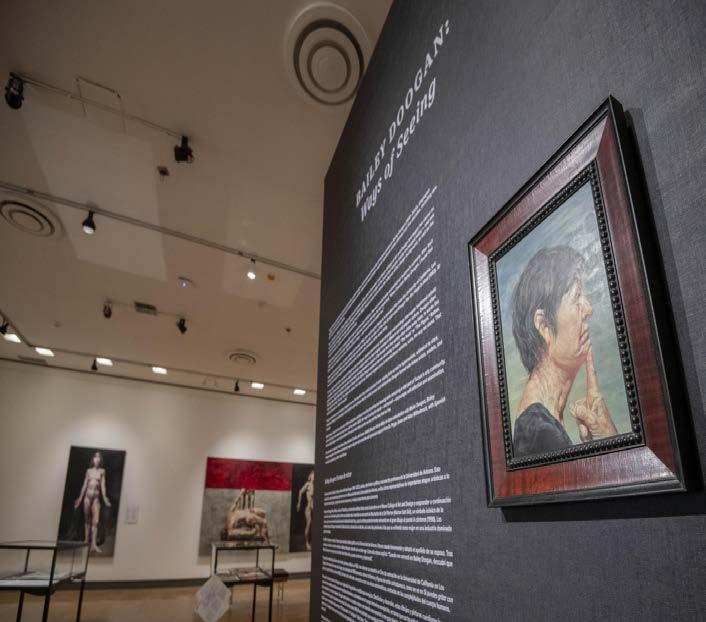
body lies atop an abstract background. Next to Sands is the figure of a crying king, made of physical materials like a t-shirt dipped in plaster to create a 3D effect popping off of the canvas.
The juxtaposition of the photorealistic “Self Exam” and the surreal “King’s Threshold” presents a wider view of Doogan’s artistic capabilities.
Regardless of the form or medium she was working in, Doogan’s art is defined by the prevalence of aging nude bodies.
“We might think back to the Renaissance and these idealized images of the female form or even the male form as well. And [Doogan] is looking at the real and raw and vulnerable that we might not be used to seeing,” Arma said.
A bombastic and meta demonstration of Doogan’s obsession with aging manifests in her piece “Pour It On.” In 1967 Doogan was hired to redesign the Morton Salt Girl logo. According to Doogan’s essay “Logo Girls,” she was forced by Morton’s Board of Directors to go through constant revisions until “Mortie ended up with the requisite cuteness and spunkiness, strutting her stuff in a downpour.”
In 1988 Doogan reimagined the Morton Salt Girl free of corporate oversight in “Pour It On.” The cartoonish Morton Salt Girl is transformed into a realistic grown woman, wrinkled yet still frolicking in the rain.
Standing in front of “Pour It On” were fiancés Robert Lamvik and Megan O’Callahan, who were visiting Tucson from San Francisco. Lamvik, a UA alumni who graduated in 2006, had never heard of Doogan before visiting the exhibit, but after spending time in it described her work as “really powerful.”
“She’s incredible, the range is really interesting,” O’Callahan, an art advisor in San Francisco, said.
The couple’s sentiments were shared
by a group of retirees being ushered out of the building by their care taker. One retiree noted to the desk clerk that they found the museum’s exhibits to be incredible.
Doogan’s time as a UA professor is immortalized in one of her most famous works, “RIB (Angry Aging Bitch)” in which a nude female body’s face is blotted out by the word “B----” boldly scrawled at the top. “RIB” is inspired by an unpleasant encounter with a male student who declared that Doogan was not a talented artist and was just an “angry, aging bitch.” Doogan took the insult and satirically reworked it into a three-part series, the last of which is now displayed at UAMA. The encounter has been memorialized and the name of the aggrieved student has long since been forgotten.
When Doogan passed away in 2022, she had spent 30 years as a professor and was a powerful force in Tucson’s local art scene.
“I hope [the exhibit] allows [visitors] to see the body a little bit differently,” Arma said. “She was a professor at the university who bestowed her knowledge upon so many students who have now gone on to show that knowledge to their students. So I think it really shows the impact that an educator can have and these images can have for years to come, even beyond her lifetime. I hope it inspires self reflection.”
Admission to the museum is free for all visitors. “Bailey Doogan: Ways of Seeing” will be exhibited in the main gallery until April 4. The museum is open from 10 a.m. to 4:30 p.m. Tuesday through Saturday and closed on Mondays, Sundays and holidays.
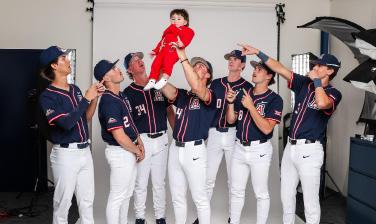
The alarm sounded at 5 a.m., with the sky still pitch black, as Chaz McNelis cautiously got out of bed, trying not to wake his baby boy sleeping beside him. The 20-year-old had weights at sunrise when his 1-yearold son Grayson McNelis was in town.
For Chaz McNelis, a sophomore outfielder who transferred to the University of Arizona from the College of Southern Nevada, fatherhood is not something that runs parallel to baseball; it is the center of it.
McNelis’ path started in Henderson, Nevada, where he played at Green Valley High School. His junior year was the moment things clicked. “I really started to get good my junior year,” McNelis said. “After that year, I was like, okay, this is definitely working out for me.”
As a senior, he made all-state honors, a jump that earned him a spot at CSN, a powerhouse junior college that once produced eight-time MLB All-Star and two-time National League MVP, Bryce Harper.
“I had all the physical ability, but I needed to work on the mental side,” McNelis said. “Visualizing success, self-talk, bouncing back from failure faster. That is honestly how I got where I am.”
During his sophomore season at CSN, life transformed when McNelis became a father. The news shook him, sending shockwaves with a kind of fear he had never felt before. “I expected people to look at me differently,” McNelis, 2025 NJCAA First Team All-American, said.
Instead, his teammates supported him and treated Grayson’s birth as something that brought them closer. “It turned into more of a family than just teammates,” McNelis said.
Support mattered even more when Grayson was born with two holes in his
heart. “We knew about it when she [the mother] was pregnant,” McNelis said. “I had faith that everything would be okay and he was meant to be here.”



That experience changed the way McNelis saw the world, especially the way he handled adversity. “My life perspective would not be what it is now,” McNelis said. “How I respond to failure, adversity, everything changed.”
Arizona recruited the 6-foot-1 outfielder near the end of his Junior college career. He chose the UA because they made him feel welcome.
“I asked the players if it felt like a family,” McNelis said. “They told me everyone is family here.” The coaching staff also made his situation priority one. “They checked on me and Baby G even before I committed.”
“We try to recruit the best families, because everybody needs a good support system. I become their father when they come here and it helps when they come from good houses and parents that love them and support them like we do,” Arizona head coach Chip Hale said.
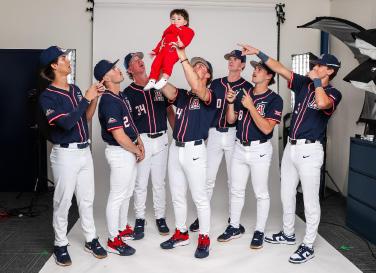
That support continued once he arrived on campus. McNelis’ teammates would hold Baby G during warmups in the batting cages, and coaches would ask how he is doing. When Grayson visits Tucson for a week or two at a time, the program
embraces him like one of its own.
“They love Baby G,” McNelis said. “I’ll bring him to the field, and while I am stretching, they’ll be holding him, feeding him […] they’ll be showing him how to hold a baseball bat and showing how to throw a ball.”
Sleep is scarce, but McNelis gets by. When Baby G visits, McNelis’ mom stays with him to help with childcare. “I am blessed for that,” McNelis said, and when baseball begins each day, he feels the stress fade.
“When I walk through the gates of the field, it is like Disneyland for me,” McNelis said. “I do not worry about the outside world for a couple hours.” His goals are ambitious. He wants to win a College World Series and earn all-conference honors. He also wants to reach the big leagues.
Yet more than anything, he wants his son to never give up, no matter how hard life gets.
“I just want him [Grayson] to know, don’t give up, don’t ever give up and always give your 100% effort,” McNelis said. “Life will definitely not be easy, but that doesn’t mean that it’s not testing you. God would not throw something at you if you could not beat it.”
ADDISON BAHR
The Daily Wildcat
When University of Arizona students talk about mental health resources, most can name Counseling & Psychological Services, but few can describe what it actually offers beyond the image of a quiet office and perhaps a weekly therapy appointment.
For Leslie Ralph, assistant director of CAPS, that narrow perception is something the department is actively working to change.
“Students know about the one-onone, but we offer a lot of comprehensive services,” Ralph said. “ We’re talking always about expanding and evolving our group programming […] just trying to get more attention on the community and peer-based programs. We love to see students attend those because we know they’re effective.”
Ralph emphasizes the peer counseling program as an incredible resource for students that often slips under the radar. Graduate student and lead peer counselor Emiliano Calvo Alcaniz claims this is because unlike licensed clinicians, peer counselors share the same immediate academic and social environment as the students they meet with.
“I think for a lot of people that first step can be really hard or it can feel really overwhelming,” Calvo Alcaniz said. “Peer counselors are mostly here to listen and be very validating and talk to people about what’s going on […]. It feels almost more like a conversation with a friend rather than a proper adult who has a mortgage.”
For senior honors student and the other lead counselor, Natalie Rawlings, her role is about meeting students where they are, even if they don’t feel as if they are in crisis.
“We’re really here as a nice next step,” Rawlings said. “We offer emo -
tional support, active listening, establish rapport and then get them onto the next step in their care.”
Peer counselors are trained in what Calvo Alcaniz describes as psychological first aid and active listening techniques. Their purpose isn’t to diagnose or provide therapy but instead to function as a bridge that connects students to individual counseling, group workshops, care
coordinators or other campus resources.
Calvo Alcaniz found that peer counseling seems to be less intimidating to students approaching their mental health for the first time and Rawlings echoed that sentiment, emphasizing that accessibility often starts with comfort.
“It can be a little bit less intimidating because it’s more of a student-to-student interaction,” Rawlings said. “There’s still
stigma around mental health and people can be nervous to walk into the CAPS waiting room.”
To discover more information on peer counseling at the UA, visit the Friend2Friend page on the CAPS website.
As another way to increase accessibility, CAPS launched their warm line, a phone-based service staffed
CONTINUED ON PAGE 16

by trained peer counselors, just this year. The non-emergency phone line is staffed by trained peer counselors to offer free phone support during evenings and weekends for students seeking a confidential space to talk to a peer about what they may be going through. It eliminates the sometimes overwhelming barriers of scheduling and funding an appointment.
“It can be a lot easier for people to just pick up the phone and call,” Rawlings said. “It’s another layer of support.”
Students can access the warm line by calling 520-621-0216, Monday to Thursday from 6-10 p.m. and Friday to Sunday from 8 p.m. to midnight as often as they need, with no limit on the number of calls. After calling, students may also choose to schedule a follow-up one-on-one session with a peer counselor.
Ralph noted that these services are not intended for crisis situations; students experiencing a mental health crisis should call CAPS 24/7 at 520621-3334 or dial 988 for immediate support.
While individual therapy and conversations remain core services, CAPS has increasingly invested in group-based and preventative programming. Ralph oversees many of the department’s groups and outreach efforts, seeing group spaces as uniquely powerful.
“In a group-based space, you’re both giving and getting support and that give and take is itself very beneficial,” Ralph said.
Workshops and support groups vary by semester and can include emotional regulation groups, ADHDfocused sessions, nutrition-based workshops and graduate student specific spaces. CAPS also hosts lowerpressure events like CAPS After Dark and de-stress programming during midterms and finals such as bringing in kittens and puppies for students to play with.
“It’s important that you have events that aren’t super deep,” Calvo Alcaniz said. “You can just blow off steam with a bunch of cute little animals.”
To find more information on CAPS events and student support groups, visit the event calendar and the student group tabs on the Campus Health website.
Students can also schedule a counseling and consultation appointment, which is a one-time meeting with a licensed counselor to explore options and determine what level of care might be most helpful.
“You can meet with a care coordinator who can help you coordinate your care and get into your next step,” Rawlings said. That might mean connecting with a long-term therapist in the community, joining a campus support group or accessing other wellness resources.
Even with these services and society moving towards a more progressive view on mental health, many students hesitate to seek help due to what Ralph refers to as a sort of “Goldilocks dilemma.”
“Either you’re too complicated to go to CAPS or you’re not in crisis enough; t here’s this misconception that CAPS is not for you if you have too much going on or you don’t have enough going on,” Ralph said. “But really, anyone can come to CAPS.”
That mindset, Ralph argued, causes students to sometimes disregard how important mental health is, keeping students from accessing support early or when they need it. According to Calvo Alcaniz, this is why the approachable nature of the peer counseling program is so significant.
“For a lot of people, the concept of therapy can be really scary and there’s a lot of almost imposter syndrome; [this sense of] ‘it’s not really bad enough for me to require therapy.’ I personally am of the belief that there is no person on earth who is so well adjusted that they would not benefit from talking to someone,” Calvo Alcaniz said.
Rediscover the magic, one independent screen at a time.
It’s unlike anything else in the world, an experience that many of us have had the privilege of transporting ourselves to: going to the movie theater.
This experience is not just about the popcorn or the previews or even the screen, it’s about the transformation. The stillness. The way the lights go down and something ancient and electric begins. You are suddenly somewhere else, feeling things you didn’t expect, surrounded by strangers who, for a brief moment, are your fellow dreamers.
In the 1930s, movie theaters were sacred. People would race to the cinema, dressed to the nines, just to sit in wonder staring at the silver screen. From silent films to talkies to the enchanting beginnings of animation, theaters weren’t just showing movies, they were offering portals to hope, to escape, to something larger than life.
But now, in a world of iPhones, endless apps and algorithm-led content, something is shifting or fading. Streaming platforms have turned the extraordinary into the everyday. We have infinite stories at our fingertips and yet it’s as if the magic is rarely there anymore.
And that’s where independent theaters matter more than ever.
Jeff Yanc, program director at The Loft Cinema in Tucson, puts it beautifully.
“Going to movies in general is important because of streaming, so I always advocate people to go to any theater, but to go to an independent theater in specific is really important because we are a community-based theater,” Yanc said.
Independent theaters aren’t just venues. They’re curators, protectors,
rebels. They’re fighting for the art of cinema in a world that’s become addicted to convenience. When you walk into a space like The Loft, you’re not just watching a film, you’re stepping into a story that was chosen with care. For you. For your city. For your soul.
“To me the big difference is that we choose our own programming,” Yanc said. “We do it in response to our community and our audience. To get a full broad picture of the kind of movies that are available in the world, I think you need to go to independent theaters.”
This matters deeply. When streaming services dominate, they begin to decide what stories get told and which ones disappear. Independent cinemas give space to the small-budget wonders, the risky ideas, the unheard voices. They are the pulse of cinema’s future and its soul.
“It’s important culturally to support local businesses because the money also funds back into the local economy,” Yanc said.
And that’s the truth: choosing to see a film at an indie theater isn’t just entertainment, it’s an act of love. Of
resistance. Of celebration. You’re choosing to be present. To support local artists. To keep the artform alive.
So go. Not just to the movies but to the theaters that care. Let yourself be moved. Be changed. Be reminded that wonder still exists and that when we gather in the dark to watch a story unfold, we’re part of something sacred.
The magic is still there. It’s just waiting for you to show up.

AIDEN WILLIAMS The Daily Wildcat
Amid a plateau in the decline of student alcohol use, Campus Health is working to rework their approach to reach more students.
According to University of Arizona reports, from 2005 through 2015, the average number of alcoholic drinks UA students consumed in a week decreased from 5.4 to 3.8; over 2016 through 2025, the data stayed largely the same, ending with an average of 3.8 in 2025.
“Every couple of years, student dynamics change,” Ryley Tegler, a UA health educator, said. “We’re always kind of playing this game of, ‘What are the student needs? How do we get to them before it’s too late?’ And so we’re always trying to get student feedback so that we can continue to build and do more with our substance use and
safety programming.”
Recognizing the inevitability of student alcohol consumption, Campus Health strives to offer education about the risks of substance use and strategies to make it safer.
“I used to be a high school teacher and we know that even in high school some students are starting to drink,” Tegler said. “We want to give them all the information possible.”
During the summer of 2025, Campus Health launched WellCats, a program striving to make health resources more accessible through student WellCat Ambassadors and the WellCats digital hub.
To help promote harm reduction and safe alcohol use, WellCats Ambassadors host tabling events. As a way to give a visual representation of serving sizes and differing alcohol contents, they offer a game where students can pour what a standard drink is for them.
“Then we actually measure it,” Hiyun Lee, a WellCats lead, said. “And a lot of the time, it’s

a lot over, like I said. And then that’s our opportunity to talk about, ‘Hey, so, by the way, a standard drink that would actually count is this much compared to this much that you poured. Make sure you’re aware of this when you’re engaging in drinking habits.’”
For those who aim to completely abstain from drug and alcohol use, Campus Health resources and student organizations strive to help, too. They hold two weekly AA meetings on campus. Cats After Dark offers drug and alcohol free late night events for UA students.
For students in violation of the university’s alcohol and marajuana policies, they are referred to Student Health Alcohol & Drug Education, a class series teaching about safe use and the impact of substance use on social and academic life.
According to Tegler, even though these resources exist, it is tough to raise awareness and get information about substance use out to students.
“I think the tough thing is it’s hard to get students to do something unless it’s required,” Tegler said, noting the difficulty of mandating those education initiatives. New programs and changes are on the horizon. According to Tegler, Campus Health is working on creating an opportunity for students to discuss their own alcohol use one-one with a health educator and learn more in a way that is practical for them.
“Looking forward to next year, we have some exciting changes coming,” Tegler said. “We’re looking at opening up some different opportunities in addition to the required classes for students who might have had sanction. We’re also looking at what are some ways that we can make it open and easy for students to access us, even if they don’t have to.”
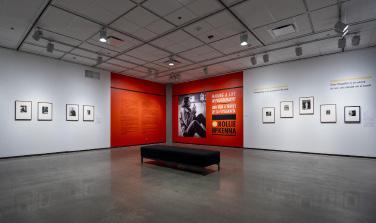
The 20th-century photographer lived an unconventional life both personally and professionally.
BENJAMIN DEPUE
The Daily Wildcat
When a visitor first encounters the “Making a Life in Photography: Rollie McKenna” exhibit which opened at the Center for Creative Photography on Jan. 31, they’re likely to focus on the blownup photographs of modern architecture. If they take a closer look, they might be drawn in by the portraits of famous 20thcentury figures.
But for Rebecca Senf, the CCP’s chief curator, the crux of the exhibit lies in the title.
“I think that she is a great example of how in the 20th century, there were opportunities for photographers, but in many ways, you were a freelancer,” Senf said. “You had to put together those opportunities in order to make a life in photography, in order to create a career. And so what I think is great about her is she is an example of one person and how she did that.”
The traveling exhibit comes courtesy of the Frances Lehman Loeb Art Center out of Vassar College in Poughkeepsie, New York and highlights the work of photographer Rosalie Thorne McKenna from the mid-1940s through the late 1960s. Rollie, as she was known, lived from 1918 to 2003 and was largely self-taught as a photographer.
Her unusual biography reflects a period when even the idea of professional photography was still new. Born to a wealthy family, she graduated from Vassar in the early 1940s. She joined the Navy soon after the United States entered World War II, becoming the first American woman to earn the rank of sharpshooter. After the war, she returned to Vassar for a master’s degree in art history and then traveled around Europe, where she began photographing architecture.
Her portrait work began almost by accident. In the early 1950s, she visited poet Dylan Thomas and his family in his home country of Wales. Only a handful of
photographs were ever taken of the reclusive poet and many of those were by McKenna from 1952 to 1953. Thomas had unfortunately suffered his untimely death that same year.
Her work became the definitive photographs of Thomas and were so popular that they were often reprinted without her permission. As word spread to other writers and artists, they sought her out.
“It was a little bit of luck in getting to meet Dylan Thomas […]. Although I think it’s also a reflection of her skill,” Senf said. “If she hadn’t been a person that could earn his trust and build a relationship with him, she wouldn’t have had portraits of him either.”
According to Senf, McKenna had an incredible ability to put her subjects at ease. Instead of a photography studio, she preferred capturing them wherever they felt comfortable, often in their own homes. She built a reputation as a masterful portraitist, photographing figures as prominent and diverse as American journalist Tom Wolfe, British visual artist Henry Moore and disability rights advocate Helen Keller.
“The variety and the number of famous
artists and writers that she photographed was kind of remarkable,” Robert Briggs said, another tourist who visited the museum with his wife Sharon.
McKenna also photographed street life in Mississippi in the early 1950s. She had been born and raised there and felt a deep connection with the South. Despite being candid, her photos in this period captured the dignity of both white and Black working-class subjects.
“I’ve never heard of this photographer, but I always try to seek out collections of street photography,” Ana Lombardo said, a tourist visiting from New York. “It’s definitely a slice of street life in time, you know?”
Along with her portraits, the exhibit also features McKenna’s architectural photography. These images have a sense of space and scale and can even feel imposing, very unlike her intimate yet relaxed portraits.
Despite this contrast, both reflect her respect for intention. “She’s trying to make photographs that convey the significance of the architectural works in the way that the architect might have thought about it,” Senf said. “And
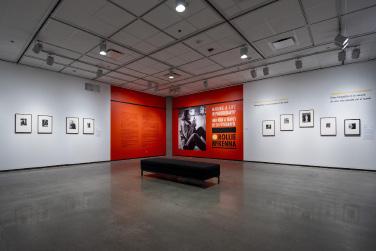
in a similar way, she’s letting the artists and the writers present themselves in a way that feels authentic to them.”
The artistic world was not the only place where she made her own way. In 1965, she moved to a suburb in Stonington, Connecticut, where she quickly entered a romantic relationship with her next-door neighbor, Patricia D. Willson. They tore down the fences between their houses, creating a space called “The Compound”. The relationship lasted until Willson’s death in 1981. McKenna even helped raise many of Willson’s children, who called her O.M. — short for Other Mother.
“Everybody knew that Patricia Willson and Rollie McKenna were a couple and they knew them and liked them and thought they were good people,” Senf said. “So maybe even if they wouldn’t have said that they were open to supporting a gay relationship, in this specific example, they couldn’t object to anything about it.”
Mary-Kay Lombino and Jessica Brier, the curators for the Vassar exhibit, reached out to the CCP in part because they had a large archive of McKenna’s work courtesy of the Rosalie Thorne McKenna Foundation. The Foundation, started by a family friend after her death, chose to donate the archive to the University of Arizona rather than Vassar in the 2000s, hoping that the CCP’s renown among researchers would help a wider audience discover McKenna’s work.
When asked what she hoped visitors would take away from this exhibit, Senf highlighted that she wanted them to learn about a photographer most had likely never heard of. “But I also hope that they learn a little bit about what an archive is and how an archive helps scholars reconstruct a narrative about somebody’s life,” Senf said. “Any time an exhibition helps audiences understand why we’re here, that’s a really exciting opportunity.”
“Making a Life in Photography: Rollie McKenna” will be on display from Jan. 31 to May 16 at the CCP at 1030 N. Olive Road. The museum is open to visitors Tuesday through Saturday from 10 a.m. to 4:30 p.m.
MULTIMEDIA DESK
The Daily Wildcat
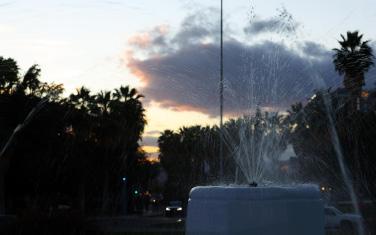
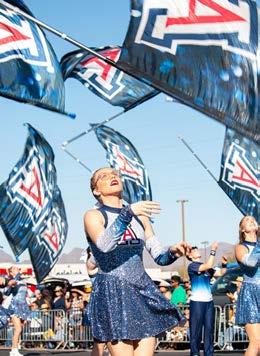
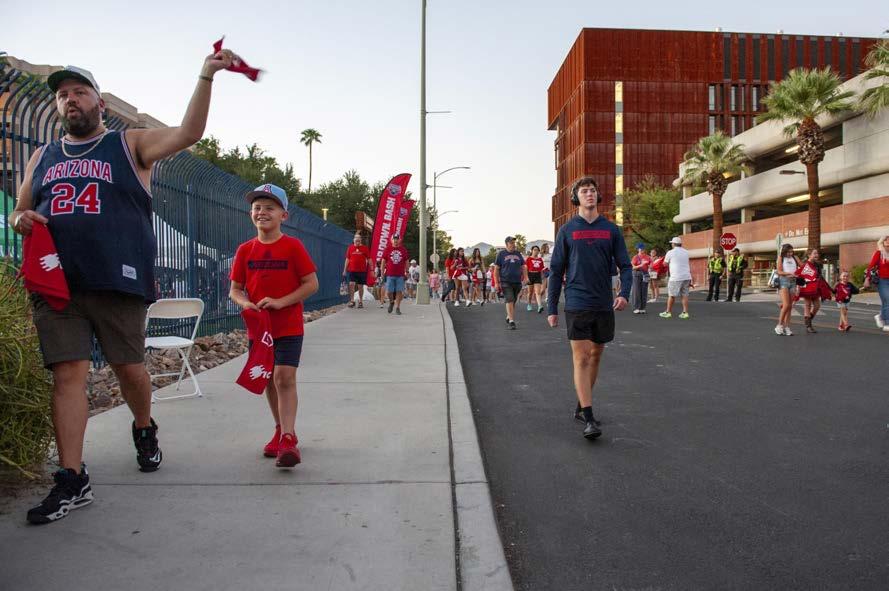
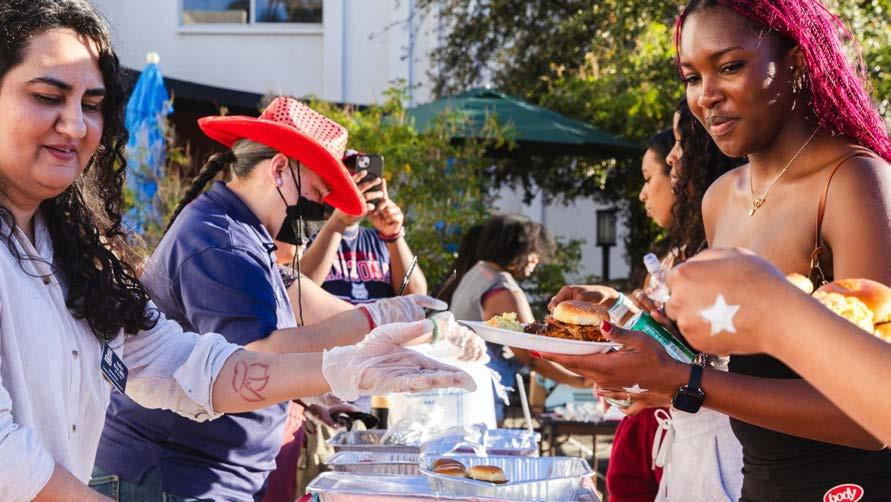
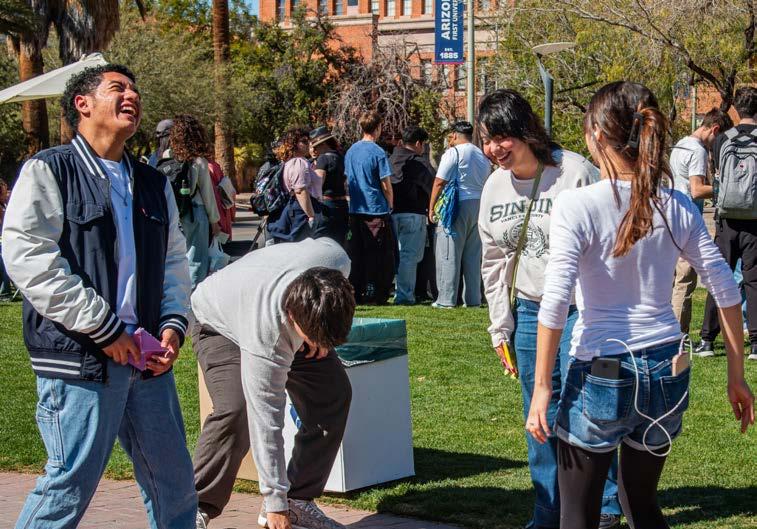
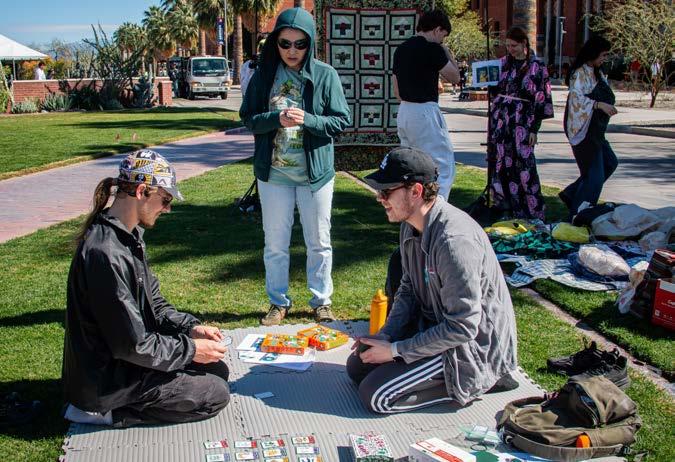
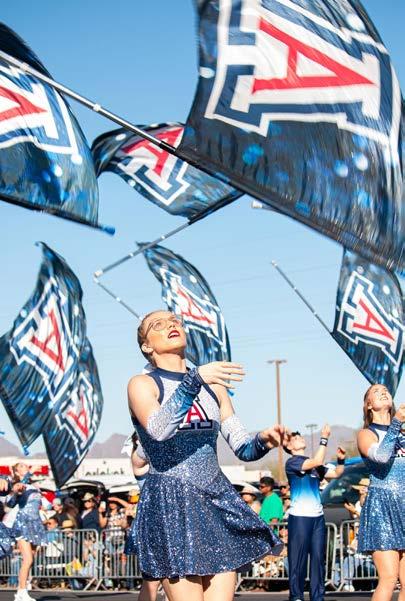
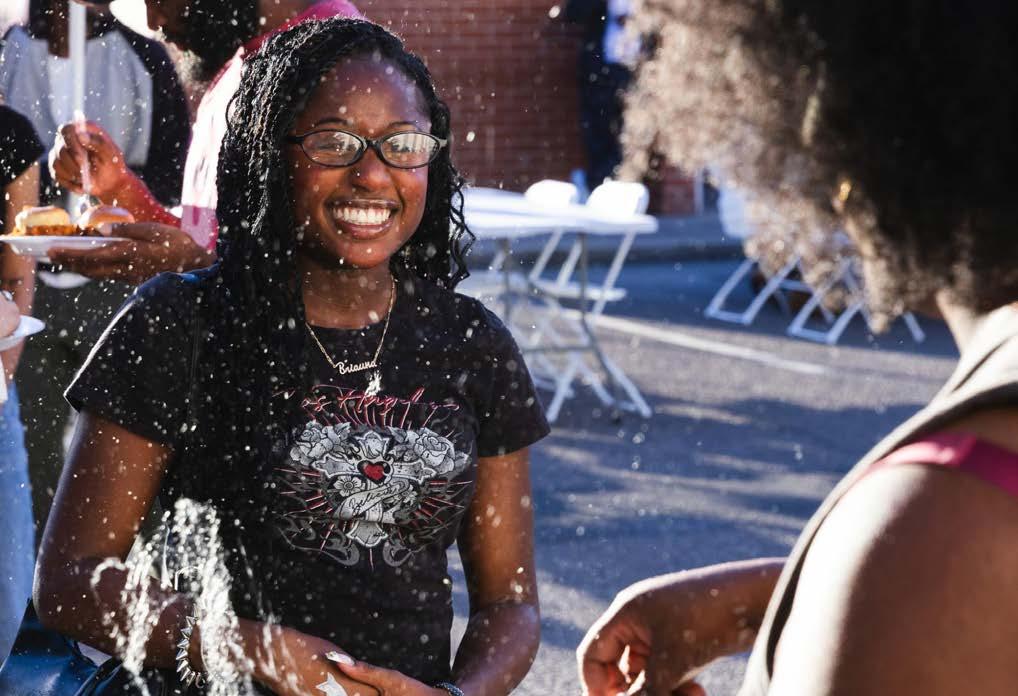
When you think of community on campus, you might think of just late-night outs and sports games. But the University of Arizona isn’t only that. The Wildcats try to spread pride across different cultures, too. In celebration of Black History Month, community members came together for a block party near the Dr. Martin Luther King Jr. Building, where food and games were available to all. The university also held a festival to celebrate the East Asian Language and Culture Festival near the mall. The annual celebration was hosted by the Department of East Asian Studies and the Center for East Asian Studies where students got to experience cultural demonstrations and interactive activities. The university showed its pride as the color guard made its way into the Tucson Rodeo parade.

CONTINUED FROM PAGE 20
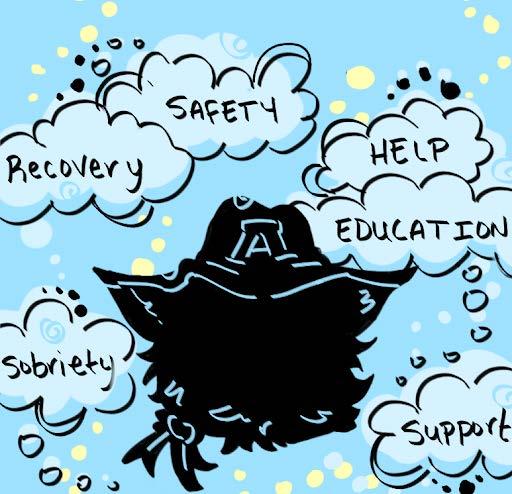
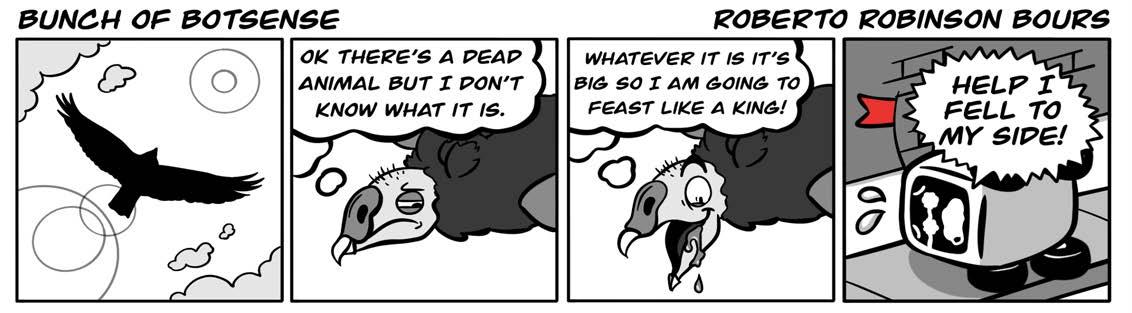
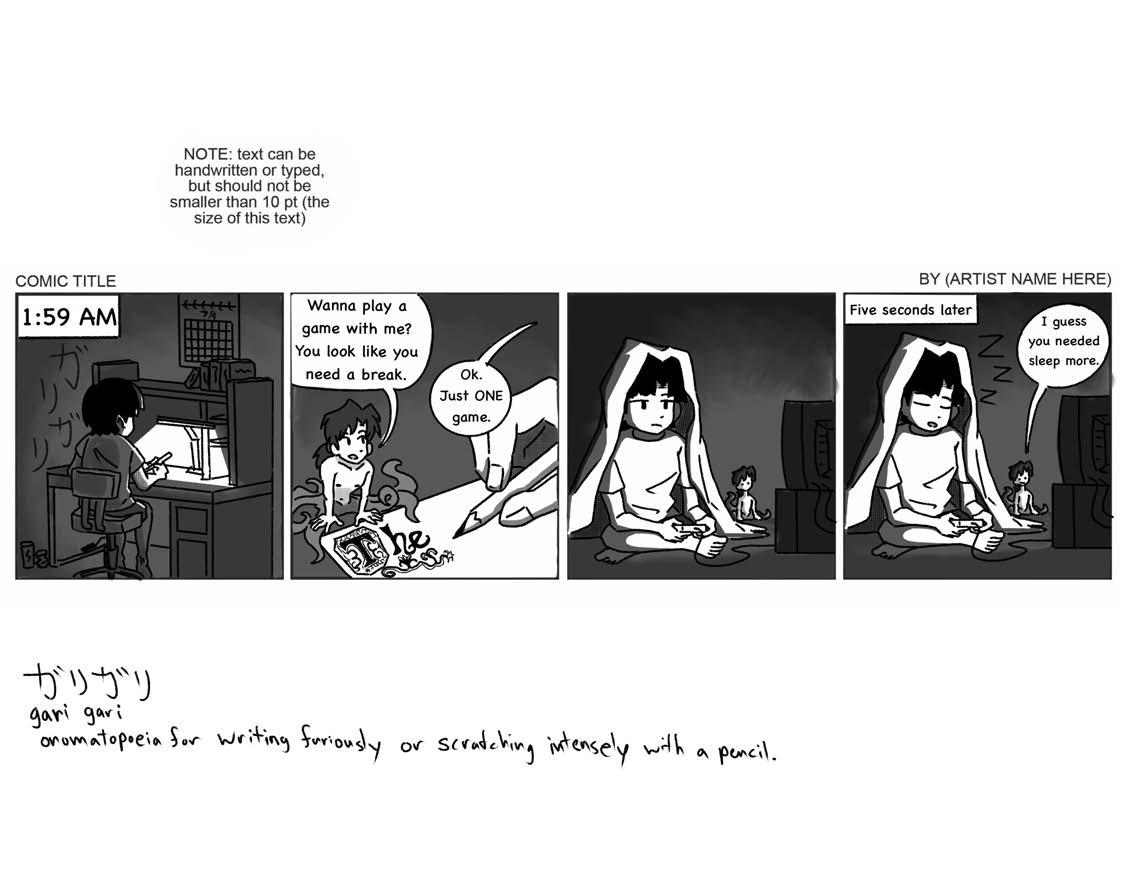
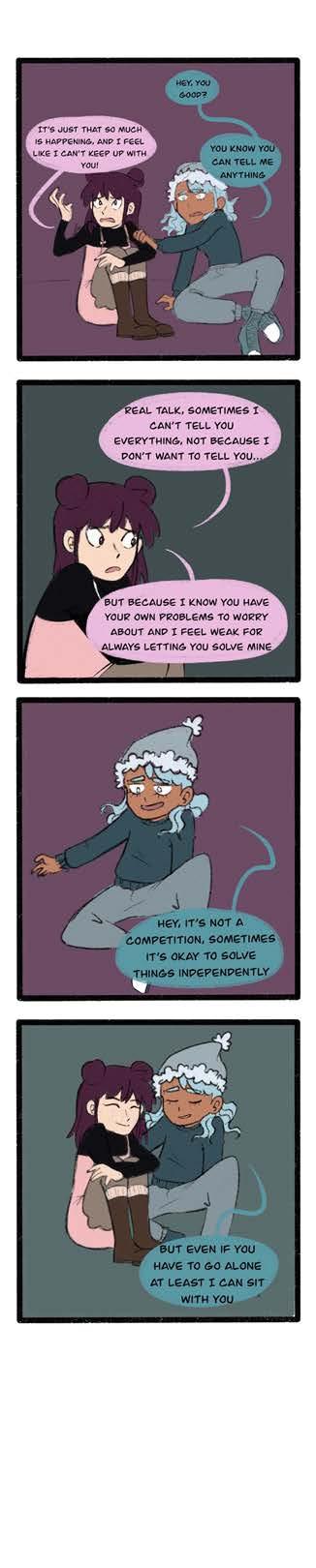
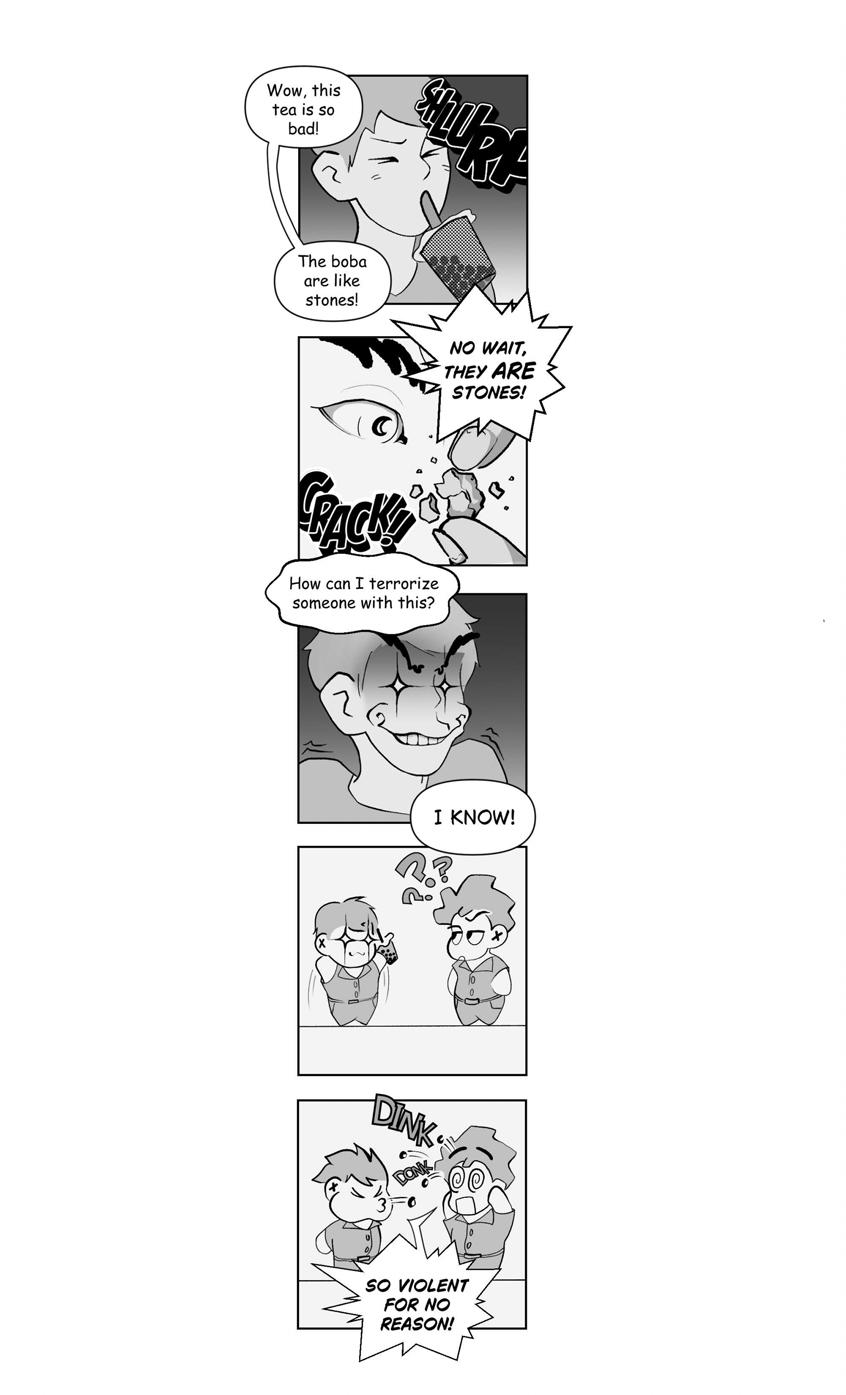
Hey there! Stop, take a break and come look at how some of our iconic Comics Corner characters take care of each other, or have a laugh at some of our newest comics! No matter how you tend to your wellbeing, we hope this print edition of the Daily Wildcat offers some support or solace during this time in the semester.




By Christopher Hagedon