2023-24
2023-24

2023-24
For more information on Arid Recovery visit www.aridrecovery.org.au or call 08 8671 2402.
The stone artefacts scattered everywhere through the sand dunes of the Arid Recovery Reserve are testament to the deep time over which Aboriginal people have lived on and cared for Country here. We recognise their enduring relationship with these extraordinary lands, and express our deep respect for their connection to this Country. With traditional knowledge and conservation science working together, we hope that struggling wildlife can be re-established to thrive again across Aboriginal land Australia-wide. The Arid Recovery Reserve is within the native title area of the Kokatha people, in a landscape where the neighbouring Kuyani and Arabana groups also spent time.
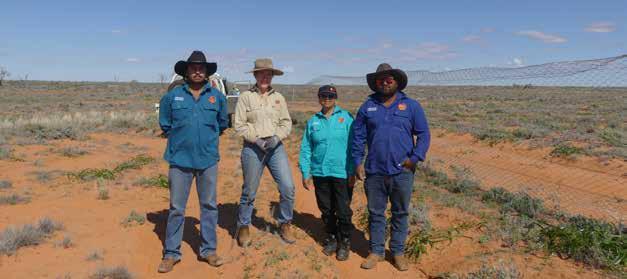
This document is the 27th in a series of annual reports and outlines the activities of Arid Recovery for the period from 1st July 2023 to 30th June 2024.
Arid Recovery is an independent, not-for-profit conservation initiative that has been restoring Australia’s arid lands since 1997. Our success is attributed to many supporters, including the unwavering support of the local community through volunteers and the long term support of our major sponsors BHP, SA Department for Environment and Water, the University of Adelaide, Bush Heritage Australia and Kokatha Aboriginal Corporation.
Copies of this report, supplementary information and previous reports are available on the Arid Recovery website.
Arid Recovery PO Box 147
Roxby Downs South Australia Australia 5725
© Arid Recovery 2024
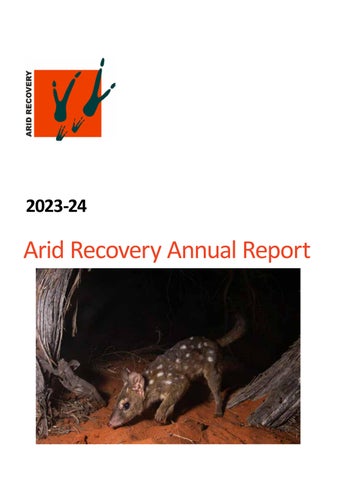
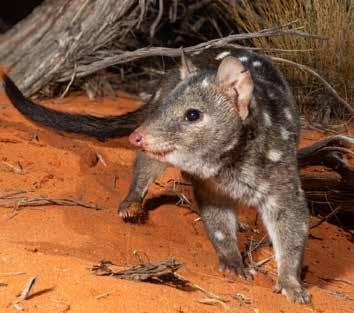
Cover photo: Western quoll caught on a remote camera. Photographer: Jack Bilby
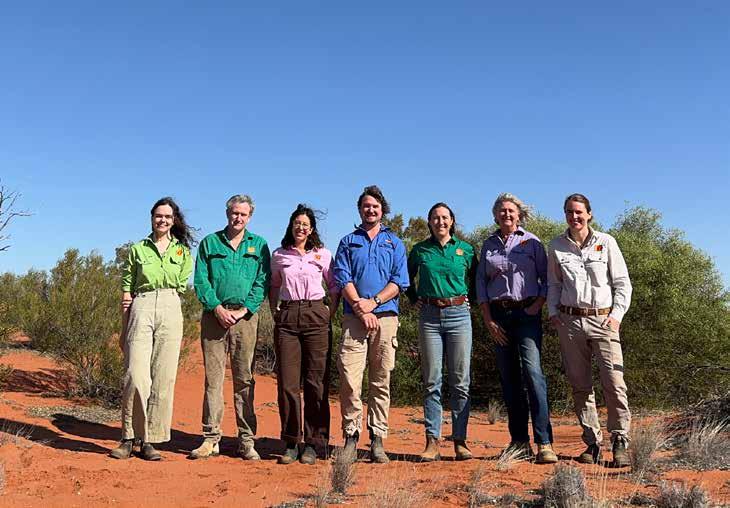
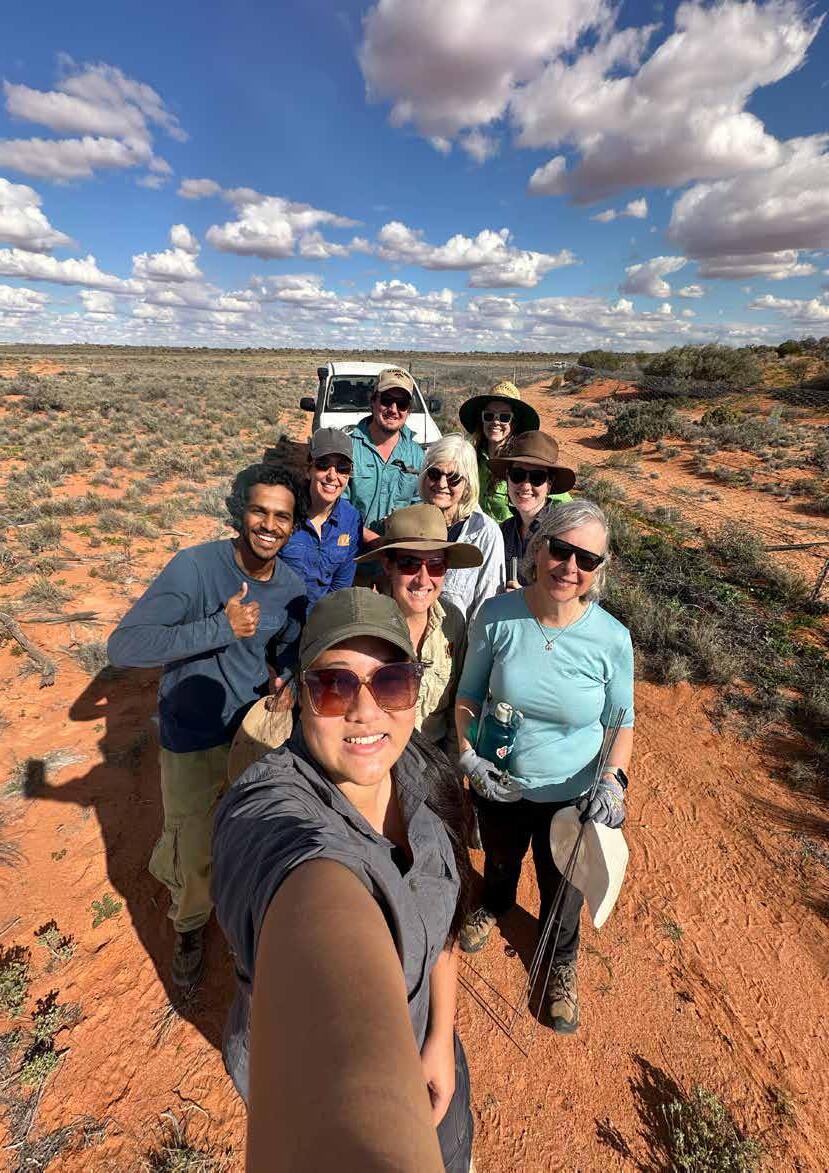
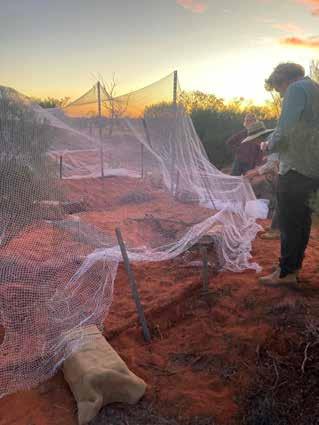
Page 2 photo: The Arid Recovery team and volunteers after a working bee to maintain the floppy top. Photographer: Rylie Pan
ALLAN HOLMES
Arid Recovery is an extraordinary endeavour. As a small not-forprofit, it makes a significant contribution to nature conservation in Australia’s outback. Its scientific research on recovering threatened mammals is ground-breaking, influencing work across Australia and the world. Our alumni are highly valued across the sector.
This past year saw the completion of the initial phase of establishing a Kowari population at Arid Recovery’s reserve at Roxby Downs. Kowaris, beautiful small carnivorous marsupials, are endangered nationally. This marks the first time these animals have been translocated to a large safe reserve for protection and study. The critical feral-proof fencing supporting species recovery research has also been upgraded.
We’ve also strengthened our relationship with the Kokatha people, the traditional owners of the country on which we work. For a long time, Aboriginal culture and conservation were viewed separately, reflecting societal perspectives. Yet, conservation science increasingly acknowledges the cultural significance of country and the obligation to engage with traditional owners. While there is a long way to go, our progress is promising. The Kokatha’s management responsibility for the land adjacent to our reserve offers a unique opportunity for collaboration.
Arid Recovery began as an initiative of the original mining company at Roxby Downs and was embraced by BHP when it took over. Since day one, the South Australian government’s environment department and the University of Adelaide have been vital partners. Bush Heritage more recently joined, bringing support from one of Australia’s pre-eminent conservation bodies. Public support remains essential to our success.
Finally, we are fortunate to have a dedicated staff, led by our respected Chief Executive, Dr Kath Tuft. The team that makes Arid Recovery thrive provides outstanding service. They are supported by a skilled Scientific Advisory Panel and an experienced Board. I thank them all for their dedication.

KATHERINE TUFT
It has been my great pleasure to lead this special organisation through another year. We farewelled some staff on to new opportunities and welcomed two excellent new team members. We made significant investments in fence integrity and field infrastructure this year. The maturity of asset planning and maintenance that we have developed has lessened the load on the team and improved conditions for both staff and visitors.
Our climate change research gathered pace this year, with work on heatwave impacts, mulga woodlands and seed bank dynamics well underway. Much needed research on the Kowari is underway too with an amitious PhD project studying the species at Arid Recovery and in the few remaining wild populations.
A true highlight of the year was formalising our partnership with the Kokatha community. I was honoured to celebrate this with so many friends, partners and Kokatha mob on the beautiful shore of Lake Mary. Arid Recovery's long-held ambition is, in the words of co-founder John Read, "to make the fence redundant". Now we seek to bring our best science together with the people whose land this has been for millenia to push at this ambition for healthier country. Quolls already are making their homes beyond the fence, and it is this iconic species we are rallying behind to expand positive impacts for nature in partnership with Kokatha.
The team and I derive much joy from working in our community and connecting with the many people across the region that care about wildlife and the rangelands. Our home community of Roxby Downs is especially important, and it was wonderful to see families come out in record numbers to the 2023 Open Day.
I am so proud of the strong position Arid Recovery is in and the progress we have made for conservation. We have made a lasting impact for arid zone biodiversity and produced top notch research despite our small size. We have achieved this thanks to the enthusiastic support of our diverse partners, dedicated staff and Board, and our many volunteers and supporters. I am exceedingly grateful to you all.
For more information on the people of Arid Recovery visit our website at www.aridrecovery.org.au
Allan Holmes
Chair of Arid Recovery Board, Independent Former CEO, SA Department for Environment and Water
Sandy Carruthers
Representative for SA Department for Environment and Water Executive Director, Strategy Science and Corporate Services
Andrew Corletto
Independent Partner, Minter Ellison
Emily Jenke
Independent Co CEO, DemocracyCo
Sally Lamb (from April 2024)
Representative for BHP
Manager Asset Environment Approvals and Sustainability, Copper South Australia
Laura Parry
Representative for the University of Adelaide Pro Vice-Chancellor (Research Excellence)
Professor Laura Parry continues as Board representative for the University of Adelaide and was supported by Associate Professor Jeremy Austin in Chairing the Scientific Advisory Panel this year. Laura is the Interim Pro Vice-Chancellor (Research) at the University of Adelaide.
The Panel met four times during 2023-24, including attending the annual on-site meetings and Kokatha Pastoral partnership launch in September 2023. Over the course of the year, it contributed to significant initiatives, including bandicoot research and the management of quolls and bettongs. Additionally, the Panel contributed to Arid Recovery's strategic planning for 2025 and beyond.
Mark Priadko
Independent Financial management, financial and business analysis and business case consultant
Bec Spindler
Representative for Bush Heritage Australia Executive Manager, Science and Conservation
Stephen White (to April 2024)
Representative for BHP Principal, Rehabilitation & Biodiversity
Professor Laura Parry Arid Recovery Board
Assoc. Prof. Jeremy Austin University of Adelaide
Peter Copley Formerly SA DEW
Dr Graeme Finlayson Bush Heritage Australia
Allan Holmes Arid Recovery Board
Dr Heather Neilly Australian Landscape Trust
Dr Reece Pedler UNSW, Wild Deserts
Dr John Read Ecological Horizons
Dr Dan Rogers DCCEEW
Dr Stephanie Williams Ecological consultant
Chief Executive
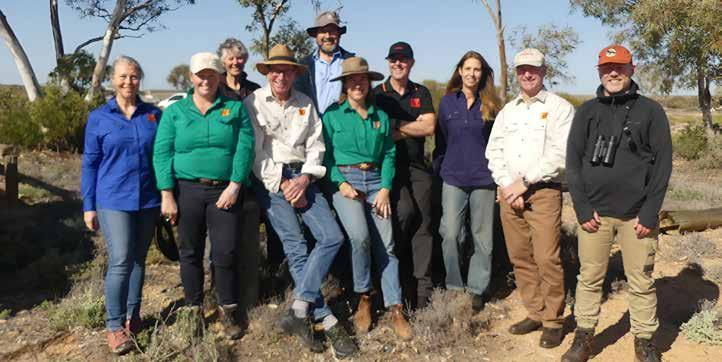
Dr Katherine Tuft
Principal Scientist
Dr Katherine Moseby
Ecologist
Dr Genevieve Hayes
Caitlin Rutherford
Administration Officer
Erica Mayer-Zirn
Conservation Land
Management Officer
Nathan Manders
Field Officer
Jonah Wiltshire
Molly Barlow
Mahalia Booth-Remmers
Community Coordinator
Ines Badman
Community Field Ecologist
Bianca Amato
Fence Maintenance Officer
Isabel Anderson
Wildlife Hotline
Hayley Randall
Feral Predator Researcher
Dr Hugh McGregor
Interns
Ben Reay
Charlotte Hogan
Arvind Srinivasgowda
UNSW Research Officer
Dr Kylie McQualter
Genevieve Hayes and Ines Badman
In 2024 we said goodbye to Ecologist
Genevieve Hayes and Community
Coordinator Ines Badman. While sad to lose these great staff members, we were pleased to see Gen take up a new role with Bush Heritage in WA and for Ines to start her nursing career after studying so intensively during her four years at Arid Recovery. The departures allowed for a slight shuffle in staffing, and we were delighted to increase ecology capacity by 0.5 FTE and welcome Caitlin Rutherford and Bianca Amato to the team.
Emily Almond
Nick Amato
Isabel Anderson
Leon Aynesbury
Molly Barlow
Harry Benn
Tara Burns
Todd Burns
Tyrell Camplin
Isabella Cardelli
Shirley Chia
Finlay Cooper
Emily Costello
Grant Cradock
Hayden Cradock
Shane Crespan
Travis Crompton
Tyrone Demaine
Maisie Duffin
Matt Dune
Louise Falls
Grace Furness
Nicole Galea
Tania Green
Eloise Griffin
Michael Heard
Robert Heathwood
Jarred Helm
Charlotte Hogan
Belinda Howe
Marlee Hurn
Garry Jolley-Rogers
Gillian Kowalick
Tori Love
James Lowe
Tessa Manning
Hugh McGregor
Jordy McKendry
Charlotte Miles
Kiara Poulson
Peter Price
Tyson Qualmann
Andrew Quinn
Ken Rapsey
Ben Reay
Hayley Rees
Greg Reimann
Fiona Rice
Emma Rigney
Scott Rogers
Janet Rosa
Joe Rosa
Ned Ryan-Schofield
Alicia Simpson
Tyler Smith
Jack Spear
Arvind Srinivasgowda
Nathan Stewart
Vicki Stokes
Craig Sumsion
Sandy Sumsion
Pat Taggart
Jason Turl
Mark Young
Rachel Young
Tony Zenca
This year at Arid Recovery has been one of steady progress and key achievements. Our efforts in feral animal control have continued consistently. Significant infrastructure developments, from fencing upgrades to solar system enhancements, have also strengthened our operational capacity. Welcoming Jonah Wiltshire as our new Field Officer has added valuable expertise to the team, enabling us to continue our critical conservation work on a large scale.
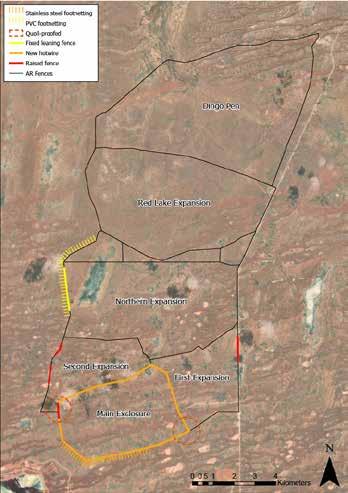
Contractors were engaged through Kokatha Pastoral to complete various fencing works this year. This included the installation of 7 km of new footnetting based on soil corrosion research done by PhD student Andrea Stiglingh. Corrosion resistant PVC coated and stainless steel wire (3.5 km each) was laid on external fencing sections determined by Andrea's research. Contractors also completed the replacement of the aging Main Exclosure hotwires and the repair of several gates around the reserve, including Dingo Pen.
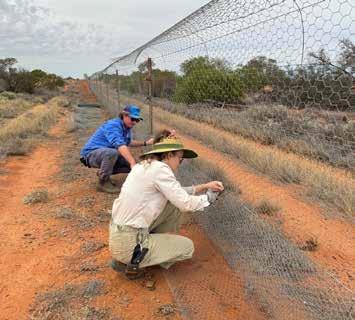
and Nathan Manders adding new footnetting.
This year saw some big things happen on the infrastructure front. A new automated front gate was purchased from Automatic Solutions and installed by local contractors from Monadelphous Engineering. This came at just the right time with the old gate starting to fail and needing numerous repairs. Access is now gained with either a keypad code or with remote clickers for staff.
A new water tank was also installed to replace the old one which had developed a leak. The new tank is now filled with tested potable water, supplied by Red Mulga, which is also now plumbed into the reserve kitchen to a new drinking water tap. The reserve solar system was upgraded with a new 22.4 kWh lithium battery bank making it more reliable and better equipped to accommodate people through the warmer months when air conditioning is essential. The research station has been upgraded with the purchase of a new outdoor kitchen/BBQ. The decking was
replaced at the same time with help from returning volunteer Leon Aynesbury. New tables and chairs for the starlight dinners were purchased thanks to a BHP community donation. A new garden shed was erected at the research station to store these. April 2024 saw the purchase of a 2020 Toyota Hilux. A second-hand vehicle in very good condition, it has been an important addition to the fleet.
We expanded our trap alert system. A new Celium Hub was purchased, along with more nodes for the traps. The new hub was installed in Dingo Pen and has extended our reach to the northeast of the reserve boundary as well as giving us more coverage for trapping within Dingo Pen. This new hub also allows for some redundancy if our other hub was to fail.
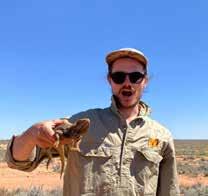
Field Officer, Jonah Wiltshire was a valuable part of the team,assiting with feral animal control, fauna surveys, data collection and reserve maintainance.
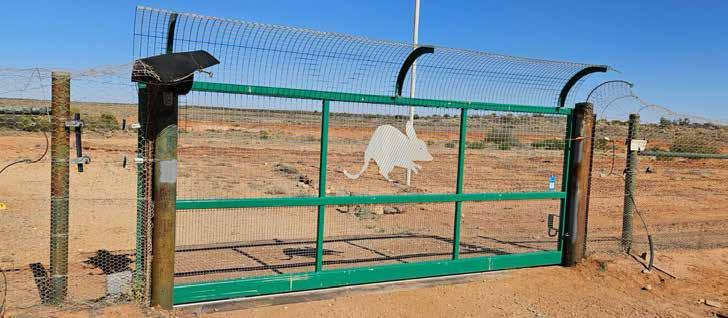
The front gate is now fully automated with the click of a button.
INCURSIONS
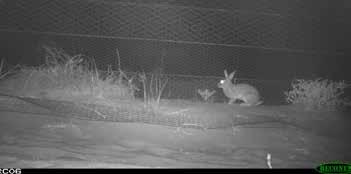
Significant effort has been put into rabbit incursions this year. On the 28th of December, a rabbit was seen in Northern Expansion. Cameras were deployed, along with tracking and numerous spotlighting nights. The rabbit was shot after three months. Immediately after this, a second rabbit was detected on the cameras in the same area. After another three months, this rabbit was removed via a leghold trap. Cameras have been left in place and are checked regularly for further activity. There have been no rabbits detected in the reserve since.
While 2023 was an extraordinary year for cats around the reserve, we saw numbers start to steadily decline midway through the year and to plateau into 2024. The purchase of a new Celium hub and additional nodes means we could add more traps to the network, specifically inside Dingo Pen. Perimeter traps caught 152 cats this year, with 24 of those caught inside Dingo Pen thanks to the added effort. Shooting activity has slowed down along with cat activity, with 40 shooting nights this year. Shooters removed 57 cats.
Injected meat baits to target foxes were again laid around the reserve and out to a distance of 10km on the neighbouring stations. Through a grant subsidy from the Thylation Foundation, we have been able to continue with the hire of an additional two Felixers to complement the one that Arid Recovery owns. This year Felixers have successfully targeted 35 cats and 3 foxes. There have been no cat incursions detected since 12th June 2023. Combining all methods of control (trapping, shooting and Felixers) we have removed a total of 244 cats in the year 23/24.
On the back of a huge year for cats in 2023, we wrote a report outlining the extraordinary numbers of cats removed, comparing control efforts and reflecting on the year. There was a record 630 cats removed in 2023. This report featured as a presentation by Nathan Manders at the 2024 Australasian Vertebrate Pest Conference held in Sydney.
of cats trapped, shot, or targeted by Felixers in 2023.
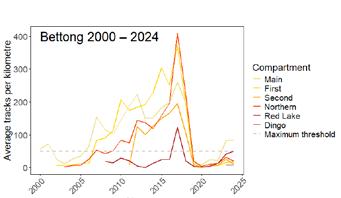
Track count monitoring of reintroduced mammal species was conducted quarterly in each compartment. Track counts in Red Lake Expansion and Dingo Pen are providing insight into how the reintroduced mammals are co-existing with cats (Dingo) and rabbits (Dingo and Red Lake).
Trapping confirmed a continued increase in population size of bettongs inside the Main Exclosure. The population estimate in 2024 was 209 individuals compared to 105 individuals in 2023. Track counts also increased past the viable threshold of 50 tracks/km in Main triggering action, while also increasing in Red Lake. Conversely, bettong activity decreased in other compartments. Over 100 bettongs from Main were relocated within the Reserve and to Wild Deserts to reduce the pressure on resources inside Main, and supplement populations elsewhere in the Reserve. Promisingly, bettongs have continued to persist alongside cats in Dingo Pen since being translocated in May.
Bettongs numbers have responded well post-drought in Main; however, their poor condition was an ongoing concern that prompted a feeding trial in late 2023. The 8-ha soft-release pen was used to house and provide high quality feed to a selection of bettongs of poor and fair condition. We found that bettongs were able to gain weight and that a lag in fat-rich resources post-drought most likely contributed to their poor condition. The 2024 annual trapping in Main found that bettong condition is improving, with a smaller proportion of poor condition bettongs in each subsequent year post-drought. However, there is still a
COUNTS FOR REINTRODUCED SPECIES
greater proportion of fair condition bettongs compared with good condition, possibly indicative of their overabundance and reduced rainfall.
Bilby activity decreased over 2023-24, with fewer individuals captured during annual trapping: 27 individuals from 31 captures compared to 39 individuals from 52 captures in the previous year. A small population of bilbies were still detected in Dingo Pen via track counts and camera trapping.
Shark Bay bandicoot activity remains high across all compartments; however, activity in Main declined following a significant peak in 2022 and 2023. Low rainfall from January to June reduced available resources, leading to a smaller and poorer-condition bandicoot population in the Main compartment. Follow-up trapping by an Honours student found an improvement in condition and an increase in weight after a large rain event in early June. The effect of quolls as predators of bandicoots is now apparent, with bandicoot activity significantly higher in the quoll-free Main Exclosure.
Quoll activity increased in all compartments except Dingo Pen and Main. Quolls were also occasionally caught in perimeter traps and in Dingo Pen, with notably higher activity in June, coinciding with the beginning of breeding season. The increase in quoll activity and captures prompted Arid Recovery staff to move opportunistically trapped quolls from the conservation zone to the Dingo Pen, reducing the predation pressure on prey species. Some quolls were also supplied to Wild Deserts.
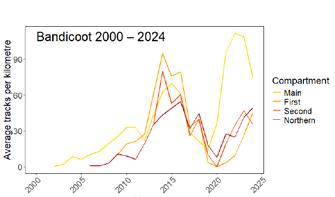

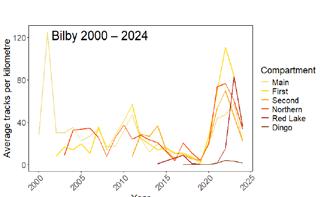
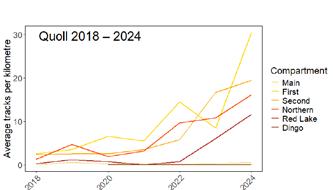

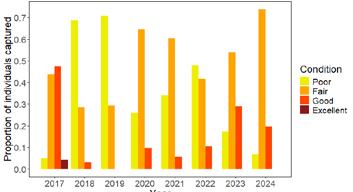
Condition of bettongs as a proportion of individuals captured during annual trapping. Condition is assessed on a four-point scale from poor to excellent.
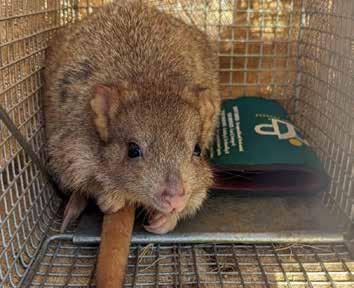
A burrowing bettong in a cage trap waiting to be processed.
Led by Kath Tuft and Katherine Moseby, and Bush Heritage ecologists Pat Taggart and Ned Ryan-Schofield, staff and volunteers surveyed 20 dune sites inside and outside the reserve in early March. The four-night pitfall survey caught nearly 1,000 small mammals and reptiles.
Six mammal species were recorded during the survey, including a sandy inland mouse (Pseudomys hermannsburgensis) and a planigale (Planigale gilesi). Spinifex hopping mice (Notomys alexis) were again the most abundant species, with 190 individuals captured. Mammals were more abundant inside the reserve than outside, and have continued to thrive post-drought. Average abundance was also higher inside the Main Exclosure compared with both outside and within the rest of the reserve, indicating a likely effect of quoll predation.
Thirty-one reptile species were recorded across all sites, including a mulga (Pseudechis australis), strap-snouted brown (Pseudonaja aspidorhyncha) and western brown snakes (Pseudonaja mengdeni). As in previous years, a higher abundance was recorded outside the reserve compared with inside.
Four western quolls were released at Arid Recovery in November 2023 from Taronga Zoo in a genetic supplementation.
In May 2024, we supplied 20 bettongs to establish a population at the Wild Deserts safe haven in Sturt National Park, NSW.
Arid Recovery provided 20 plains mice to Secret Rocks Nature Reserve on the Eyre Peninsula, SA, and 23 plains mice to the Australian Wildlife Conservancy fenced reserve in Pilliga National Park, NSW, to supplement existing populations at both reserves.
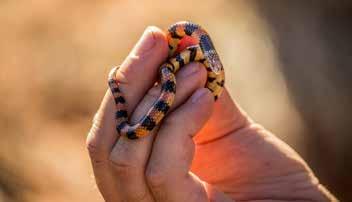
Desert banded snake (Simoselaps bertholdi) caught during pitfall trapping
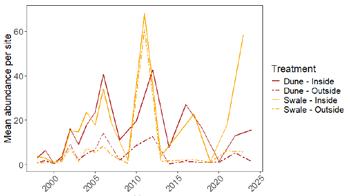
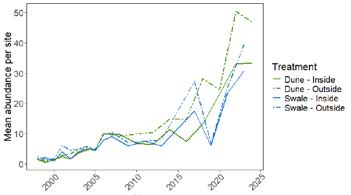
Capture rates of individual small mammals (above) and reptiles (below) captured in pitfall surveys in dune and swale habitats between 1998 and 2022, both inside and outside the Reserve.
The kowari population was established in 2022 and has persisted at Arid Recovery and dispersed north and south from Red Lake. Kowaris were up-listed from Vulnerable to Endangered in 2023, and Arid Recovery has formed a national recovery team for the species.
In June, Arid Recovery staff, volunteers, and University of Adelaide PhD student Molly Barlow completed a survey across four nights. Ten kowari were caught. Half were the first generation born from the adults translocated in 2022. We are monitoring kowari activity with a camera traps in Red Lake and Dingo Pen and more cameras were placed in Northern in June 2024. Monitoring found a lull in activity during winter, suggesting lower activity during the denning period, followed by higher activity as juveniles become independent. Continued camera trap monitoring and regular trapping will provide further insight into the establishing population.
Camera grids with kowari detections since 2022. The size of coloured circles represent quantity of detections.

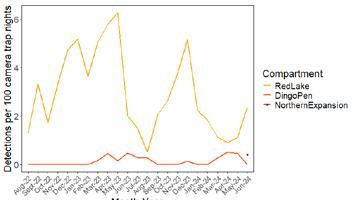
Kowari detections per 100 camera trap nights, 2022 to June 2024. Kowari detected on a camera trap.
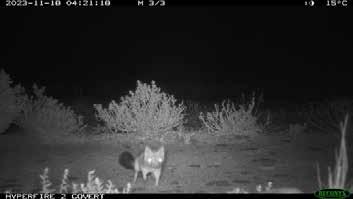
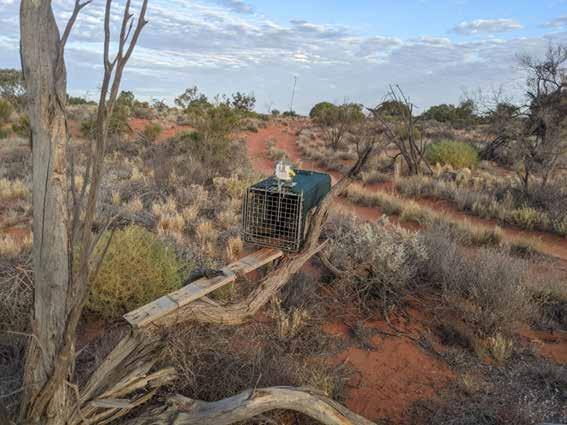
First detected in July 2023, a quoll was finally removed from the quoll-free control Main Exclosure in March 2024. After significant trap ping efforts, the full-grown male was caught in a baited cat trap set in a tree and linked to the trap alert system. Fitted with a GPS and VHF collar, he was released in Northern Expansion to find his entry route into Main. Within two nights, he re-entered via a weak spot in the corner with Second Expansion. After additional efforts, Arid Recovery staff recaptured and relocated him to Ikara-Flinders Ranges National Park. We gained valuable and im portant insight that will help to maintain the important quoll-free control area.
Tree-mounted cage trap linked to alert system. A canopied pen trap to catch the wily quoll after reincurring into the Main Exclosure.
The reserve experienced below-average rainfall in 2023-24, with only 110.2 mm recorded, significantly less than the longterm average of 148.9 mm. This marked a sharp contrast to the previous two years, which saw above-average rainfall after the drought breaking. While January 2024 brought 42.8 mm of rain, the remainder of the first half of 2024 saw little to no rainfall.
Vegetation cover has continued to recover since the drought. There is only a small difference between the inside and outside cover of standing swale species vegetation, but notable differences remain between areas inside and outside the reserve, especially for palatable dune species such as the ruby saltbush (Enchylaena tomentosa). Monitoring since 2013 has revealed significant contrasts in the cover and frequency of ruby saltbush. In 2023, ruby saltbush was found in 40% of the quadrats sampled outside the reserve, while inside the reserve it was present in only 4.4% of quadrats. Additionally, the average cover of ruby saltbush has declined since 2016, particularly inside the reserve. During the drought, almost no ruby saltbush persisted within the reserve, and while it is beginning to recover, the resurgence has been more pronounced outside the reserve.
The cover per cent of bare, litter and standing vegetation outside (left) and inside (right) of the Reserve.
The seed bank study initiated by graduate Jack Bilby is progressing with support from the South Australian Seed Conservation Centre. A total of 750 samples have been transported to Adelaide, where staff are assisting volunteers Tania Green, Hayley Rees and Greg Reimann. Seeds have already been separated from sand and debris collected at all the dune sites, and the volunteers are now preparing to sort and identify them. This study replicates sampling conducted in 2005 and aims to assess changes in the seed bank over time, providing insights into long-term ecological trends.
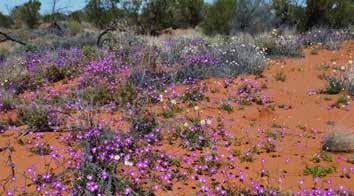
(top) Parakeelyas (Calandrinia spp.) flowered in 2023, creating a sea of pink across the dunes.
A small selection of the seeeds of Arid Recovery sorted by volunteers

Climate change focused research continues apace at Arid Recovery. Through her Future Fellowship with the University of NSW, Katherine Moseby is investigating how native and feral animals respond to heatwaves, along with PhD student Jack Bilby. Animals including bilbies, bandicoots and rabbits are being tracked during heatwaves to measure their microhabitat use to understand how they use burrows and vegetative shelter to manage their exposure to extreme heat. The team are also testing an adaptation measure by comparing stress levels of animals provided with and without access to supplementary water.
Volunteers supported by the South Australian Seed Conservation Centre continue to work through the many samples collected in 2022 to assess the state of the seed bank inside and outside the reserve compared to a study conducted 15 years earlier. We suspect that a lag in replenishment of the seed bank caused the bettong population to display slow recovery post-drought. The results of the seed bank study will be important for climate adaptation planning and in refining thresholds for herbivores.
University of Western Sydney PhD student Aaranya Sekaran completed another round of fieldwork studying mulga tree die-off. She will combine insights from physiological measurements of trees under different conditions with repeated sampling from Nicki Munro and co-authors' 2001-06 study to record survivorship and recruitment patterns. Also collecting data at Bon Bon, Aaranya will ultimately project the outlook for mulga across the rangelands under several climate change scenarios.
Arid Recovery’s advice is being sought by other safe haven managers as they endure hot and dry conditions, thanks to our earlier experience and communication of the 2018-19 severe drought and active climate adaptation research.
Three Honours students were supported in 2024 through the University of Adelaide: Harry Benn, Jemma Manfre and Isabella Cardelli. Harry used the experimental arena in Dingo Pen to study how cats respond to the cues of different types of reptiles by recording behaviour from audio, scent and visual cues. Jemma studied stress responses to supplementary water. Isabella set out to compare survival of two groups of bandicoots translocated from the Main (no quoll exposure) and other areas with quolls into Red Lake (with quolls). Initial survival was poor for both groups, and she shifted her study to comparing the health condition and shelter use of bandicoots exposed or not exposed to quolls during the period that the populations were declining after a boom.
KOWARI RESEARCH
Molly Barlow started her PhD studying causes of decline in the kowari. Molly will assess demographics and survival of kowaris in the cat and fox-free parts of Arid Recovery compared to wild populations in the open landscapes of Clifton Hills station. She will also study what barriers there might be to dispersal of kowaris and the impact of waterpoints on kowari habitat and predation risk to support conservation of kowaris on the primarily pastoral lease
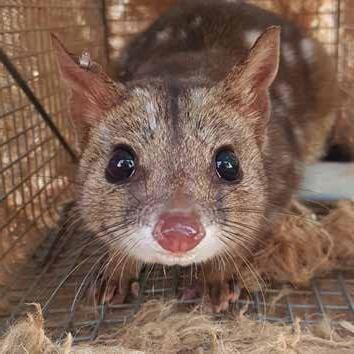
land that remaining wild populations occupy. Molly’s research is supported by grants, including from the Thyne Reid Foundation, Team Kowari and expertise on the national Kowari Recovery Team.
THESES COMPLETED
Masters students Ned Ryan-Schofield (Population Protecting Implants trial) and Rebecca Schaefer (quoll survival and population estimation) submitted their theses. PhD student Brianna Coulter submitted her thesis, including a chapter on the integration of bilbies into the existing population during the 2021 genetic supplementation.
OTHER RESEARCH
A Murdoch University Masters student and former ecologist Genevieve Hayes measured the level of inbreeding in the 2022 bettong population compared to the pre-drought population. Loss of genetic diversity was found to be relatively small despite the scale of the population crash and recommendations made for supplementation. Monash University PhD and Honours students studied responses of reptiles to cat cues.
Since the last accurate population estimate of western quolls in 2022, of approximately 70 individuals, Arid Recovery has launched a project using AI spot-pattern recognition to quantify the quoll population. Led by intern Arvind Srinivasgowda, with assistance from intern Rylie Pan, the team captured images of quolls as they passed by a baited camera in an enclosure. These images are being used to train an AI program to identify individuals based on their unique spot patterns. A camera grid was set up in the Northern area to enable capture-mark-recapture analysis and to compare AI accuracy against manual identification.
Garry Jolly-Rogers volunteered for several weeks to help photograph the large collection of invertebrates sampled during annual pitfall trapping surveys to make them more accessible to taxonomic experts and others who could assist in identifying specimens to then look at trends in the invertebrate community over time with feral animal exclusion and reintroduction of threatened species.
By tracking quolls, analysing their scats, and recording changes in track activity of prey animals, PhD student Ben Stepkovitch measured the impact of quolls as predators in the Arid Recovery ecosystem. Quolls actively selected for bettongs and bandicoots at times. Selection for these reintroduced threatened prey species was reduced however when rodents were abundant, also a highly selected prey item by quolls. This research demonstrated that the impact of quolls on prey populations shifts through the boom and bust cycle with the ups and downs of the prey populations themselves.
The design and testing of devices to improve animal welfare outcomes during pitfall trapping was published in a paper led by Andrea Stiglingh. False floors were conceptualised in response to unacceptably high instances of reptile death and injury by small mammals within the same traps. The devices are wooden boards on small legs with notches cut into the sides that, when placed at the base of a pitfall trap, allow small reptiles to seek refuge in the space beneath, while excluding rodents. In testing over four pitfall surveys, false floors significantly reduced mortality of reptiles by excluding 70-92% of larger rodents (hopping and plains mice). False floors are recommended as a useful welfare tool during times of high mammal abundance.
PUBLICATIONS
Nistelberger et al. (2023) Genetic mixing in conservation translocations increases diversity of a keystone threatened species, Bettongia lesueur. Molecular Ecology.
Stepkovitch et al. (2023) From threatened to threatening: Impacts of a reintroduced predator on reintroduced prey. Animal Conservation
Moseby et al. (2023) Influence of interactive effects on longterm population trajectories in multispecies reintroductions. Conservation Biology.
Stiglingh et al. (2024). Diagnostic soil attributes to predict and manage soil corrosion damage to exclusion fencing used in conservation programs. Geoderma.
Waaleboer et al. (2024). Rapid change in anti-predator behaviour of a threatened marsupial after thousands of years of isolation from predators. Austral Ecology.
Ryan-Schofield et al. (2024) The effect of collar weight and capture frequency on bodyweight in feral cats. Wildlife Research.
Read et al. (2024) Better to bluff than run: conservation implications of feral-cat prey selectivity. Wildlife Research.
Adams (2024) Using bioindicators to inform effective predator management for threatened species protection. Austral Ecology.
Ryan-Schofield et al. (2024) Evasive invasives? Implications of neophobia for feral cat (Felis catus) control. Wildlife Society Bulletin.
Stepkovitch et al. (2024) Reintroducing native predators improves antipredator responses in naïve prey. Animal Behaviour.
Stiglingh, A. D., Moseby, K. E., Neave, G., Beerkens, N., & Tuft, K. (2024). A new device to reduce mammal predation on reptiles in pitfall traps. Wildlife Research, 51(8).
Moseby et al. (2024) In situ predator exposure creates some persistent anti-predator behaviours: insights from a common environment experiment. Behavioral Ecology and Sociobiology.
Legge et al. (2024) The Arid Zone Monitoring Project: combining Indigenous ecological expertise with scientific data analysis to assess the potential of using sign-based surveys to monitor vertebrates in the Australian deserts. Wildlife Research.

False floors - the new devices to reduce mammal predation on reptiles in pitfall traps are these false floors.
In September 2023, Kokatha Pastoral and Arid Recovery formalised a partnership through a Memorandum of Understanding, building on years of collaboration to protect Kokatha Country and create opportunities for sustainable land management and cultural renewal. Arid Recovery operates within the Kokatha native title area, where Kokatha Pastoral manages three surrounding stations: Roxby Downs, Andamooka, and Purple Downs. This partnership is a significant progression in the relationship and the foundation to work together fostering better outcomes for Country and people.
On the 22nd September 2023, we gathered on the shores of Lake Mary to launch the partnership and the Kokatha Ranger program, ending the evening with a dinner at Arid Recovery by the Rotarians.
The launch event was attended by many friends, including Kokatha community members, representatives from Roxby Council, Roxby Downs Area School, Member for Giles Eddie Hughes, BHP, Department for Environment and Water, Bush Heritage Australia, Indigenous Desert Alliance, SA Arid Landscapes Board, University of Adelaide, and the Arid Recovery Board and Scientific Advisory Panel.
Kokatha people were involved in the early construction of Arid Recovery’s feral-proof fences, and in 2013, cultural surveys identified and protected culturally significant sites across the reserve. Over the years, we have collaborated on a number of activities, including Indigenous art and archaeology workshops, Arid Recovery and Kokatha Open Days, feral animal control, working bees, and bird surveys of the Arcoona Lakes.
Both groups care deeply about this land and are passionate about building the knowledge and capacity needed to protect it. One of the first initiatives of the partnership is the Kokatha Indigenous Ranger Program. As this program takes off, we are bringing together the best of traditional and scientific knowledge for conservation. The Kokatha community want to create more opportunities for training and employment of their people in land management, while we are seeking partners to expand conservation science and impact beyond the Arid Recovery fence.
Our hope is that, in 10 years' time, through the dedicated efforts of the Kokatha Rangers and our collaboration, we’ll be able to follow the tracks of Idnya (western quoll) and Wirlda (bilbies) in the sandhills, walk through thriving native vegetation, and count more waterbirds enjoying the beautiful lakes after rains.


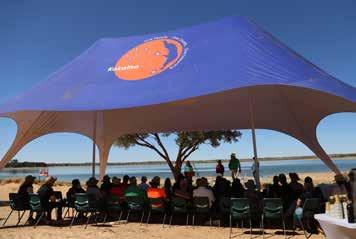
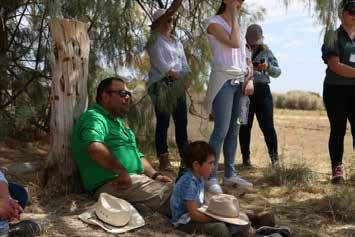
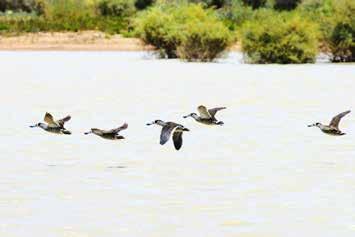
Arid Recovery contributed to the inaugural SA Arid Landscape Board-supported Indigenous Ranger Gathering at Roxby Downs Station in September 2023. Rangers travelled from all over South Australia and the Northern Territory to attend, each group sharing their work and swapping experiences and challenges. The group spent an evening at Arid Recovery, swapping sand track monitoring tips for bilbies and delighting in seeing quoll prints in the dunes.
Nathan Manders attended the 2024 Indigenous Ranger Gathering in Quorn in May 2024, joining both the Kokatha and Arabana groups and sharing approaches to using different technologies to support ranger work on country.
We continued to support the Arabana Rangers throughout the year. While fauna survey work was deferred to September 2024, we provided assistance to the rangers in their conservation planning for Arabana Country, recruitment for the Head Ranger position, in shared media opportunities and letters of support for ranger funding through the National Indigenous Australians Agency (NIAA).
Senior Kokatha man Roger Thomas joined Her Excellency Frances Adamson AC, the Governor of South Australia on her May 2024 visit to Roxby Downs, which included a starlight dinner and tour at Arid Recovery and a day on the Kokatha Pastoral stations. Following the visit, the Governor kindly extended an invitation to host Arid Recovery and Kokatha for a reception at Government House for friends and supporters.
Kath Tuft joined Aaron Thomas in October to guide a delegation from Cattle Australia through the Kokatha Pastoral stations and demonstrate how sustainable production activities can be led by TOs and support conservation actions. In January, Nathan Manders joined senior Kokatha women Barbara Amos and Irene Johnson and families to survey bush tucker resources and sites of cultural interest.
Newly appointed Kokatha Aboriginal Corporation CEO David Whitelaw visited the reserve in early 2024 and will contribute to partnership development and Arid Recovery's strategic planning. Arid Recovery supported KAC's application for NIAA funding for the ranger program. We have worked on two funding proposals for joint activities 'beyond the fence' on Kokatha Country.
Kokatha again held a stall at the Arid Recovery Open Day in August 2023, and we continue to coordinate feral animal control and
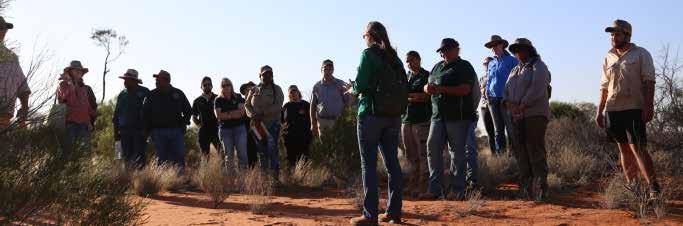
Three Conservation Internships were offered to recent science graduates in 2023-24. Ben Reay worked with Ecologist Genevieve Hayes on annual vegetation monitoring at an important moment for recording recovery from the 2019 drought. Ben went on to work for the SA Department for Environment and Water assisting with a red-tailed phascogale reintroduction. Charlotte Hogan joined the team after completing her Honours on bilby-mediated fungi dispersal at Wild Deserts. She played a crucial role during the annual trapping season, offering essential support amidst a shortage of staff. Charlotte has since relocated to Panama to take up a position at the Smithsonian Tropical Research Institute. Arvind Srinivasgowda initiated a new research project using AI to identify individual quoll spot patterns, which will aid in estimating the quoll population within the reserve. Arvind went on to work on Barrow Island as a field ecologist for Stantec. The Rendere Trust and Upotipotpon Foundation supported the internship program again in 2024-25.
A record 300 people attended the 2023 Arid Recovery Open Day at the Reserve. The day was made possible with our partners Inspiring SA, Bugs N Slugs, Andamooka Observatory, Roxby Community Hub, Roxby Community Library, Kokatha Pastoral, Bush Heritage Australia, BHP and the SA Arid Landscapes Board.
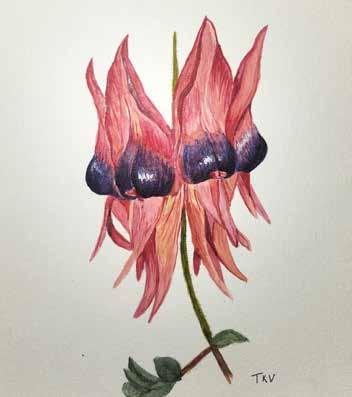
In partnership with the Roxby Community Library, we hosted a Paint ‘n’ Sip event at the Dunes Café. Participants used watercolours to create artwork inspired by the region’s flora while learning about how these species adapt to the harsh desert environment. The beautiful pieces were later displayed at RoxbyLink during the South Australian Governor’s visit.
BILBY BUSH BASH & KOWARI CHALLANGE
Building on the success of last year’s Bilby Bush Bash, the event returned in 2023 and expanded to include the Kowari Christmas Challenge in December. A total of 110 participants took part in the scavenger hunt around Roxby Downs, visiting local businesses and community groups. The event concluded with families having a barbeque at the Reserve.
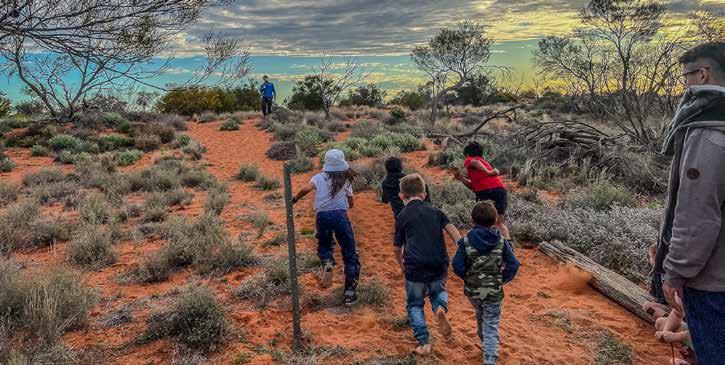
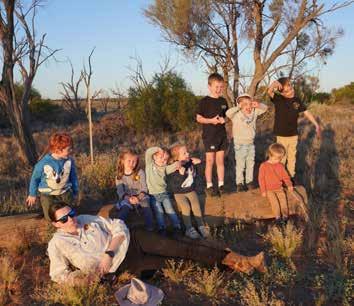
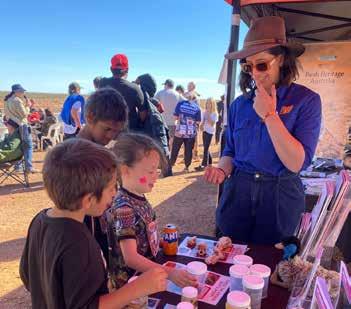
Community Field Ecologist Bianca Amato and intern Arvind Srinivasgowda represented Arid Recovery at Coober Pedy’s Breakaway Marathon in June. Their stall showcased the important work being done at Arid Recovery and promoting responsible cat ownership alongside Bush Heritage. Additionally, Arid Recovery participated in the Adelaide and Olympic Dam BHP family days, where children enjoyed identifying animal poo and skulls. We continued our presence at Roxby Downs Market Days, with our animal ambassador Tirari the woma python often stealing the spotlight.
ROXBY LINK MURAL
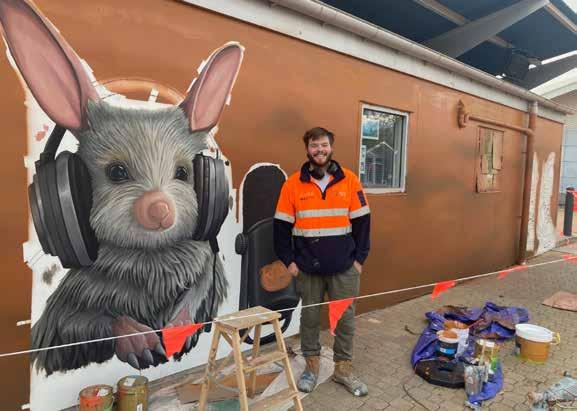
A stunning mural featuring a greater bilby, inspired by Arid Recovery, now adorns the RoxFM radio station wall on Richardson Place. Painted by artist Sam Brooks, the artwork celebrates the multicultural community of Roxby and the unique landscape of the region. Kokatha elder and Arid Recovery friend, Aunty Barb, played an important role in selecting the bush tucker plants that are featured alongside the bilby in the mural.
In 2023, we once again welcomed Year 3 students from St Barbara’s Parish School. The students camped overnight at the reserve, explored animal tracks, and participated in an animal scavenger hunt to learn about our reintroduced species. In May, Year 10 students from the Australian Maths and Science School visited for an evening, where they had the rare opportunity to spot a bilby and a Shark Bay bandicoot. Our Community Coordinator, Ines Bandman, also engaged children at Roxby Downs Nature Play, teaching them how to respect and stay safe around snakes. Masters of Environmental Law students also returned for their annual camp in 2023.
Seventeen tours were conducted at the Reserve, with the majority led by intern Arvind, who thoroughly enjoyed hosting visitors. He shared, “I enjoy meeting new people who have come from all over” Many guests had the chance to observe Arvind’s quoll spot-ID research up close, and some fortunate visitors even participated in releasing quolls. Additionally, several special interest group tours were organised, including visits from Cardwells Coaches, Operation Flinders, an Australian Mammal Society pre-conference tour, and a BBQ for BHP graduates.
The Kingoonya District Plan was updated in June 2024, thanks to valuable input from Nathan Manders. His deep knowledge and insight into the region and its management needs played an important role in shaping the plan.
The Rotary Club of Roxby Downs District continue their exceptional work cooking delicious camp oven meals for starlight dinners this year. With their help, we hosted three groups including the SA Museum’s Waterhouse Club, Eureka Tours, the South Australian Governor and the Arid Recovery Board and Scientific Advisory Panel. We also hosted a number of BHP teams for evenings on the Reserve during the year.
Arid Recovery was featured in 37 external publications throughout the year. Notably, The New York Times highlighted Katherine Moseby and Arid Recovery in an article about the devastating impact of cats on Australian wildlife. The Kowari also gained attention in an article for the Conversation authored by Katherine Moseby and Kath Tuft. Katherine Moseby was further recognized on the front cover of RM Williams Outback Magazine as one of the ‘Great Australians: 20 Living Legends of the Bush.’ Our team also made significant contributions at various conferences. Genevieve Hayes presented at the Mammal Society conference in Adelaide, Kath Tuft delivered the plenary at the Climate Adaptation conference in Adelaide, and Allan Holmes attended the Private Lands Conservation conference in Canberra. Genevieve Hayes and Kath Tuft spoke at and facilitated a workshop at the International Conservation Translocations conference in Fremantle. Kath Tuft also had the opportunity to present to the South Australian Tourism Minister during a regional visit. Arid Recovery maintained a strong media presence with a regular monthly segment on ABC North & West radio’s breakfast program, engaging regional South Australians in discussions about conservation and our work.

campfire before dinner.
This year, Arid Recovery launched a new website designed to better showcase our conservation work, research, and wildlife. The site offers an engaging user experience with easier navigation, updated resources, and a dedicated section for news and events. With this refresh, we're better equipped to connect with supporters and share the impact of our work.
BHP Arid Recovery’s long-running partnership with BHP continues stronger than ever. We hosted several BHP teams at the reserve during the year, and contributed to actions under BHP's Reconciliation Action Plan in partnership with the Kokatha and Arabana communities.
SA Department for Environment & Water The Department continued to support us throughout the year in coordinating conservation and community engagement activities in the region, and through support of the Scientific Advisory Panel.
Bush Heritage Australia The Bush Heritage and Arid Recovery teams interact regularly on fauna surveys, community events and sharing land management expertise between Arid Recovery, Bon Bon and Boolcoomatta. Together we applied for research funding for open landscape conservation and supported a PhD project on climate change impacts to mulga woodland communities.
University of Adelaide Connections with the university during the year included hosting three Honours students, one PhD student and chairing of the Scientific Advisory Panel by Professor Laura Parry and Associate Professor Jeremy Austin.
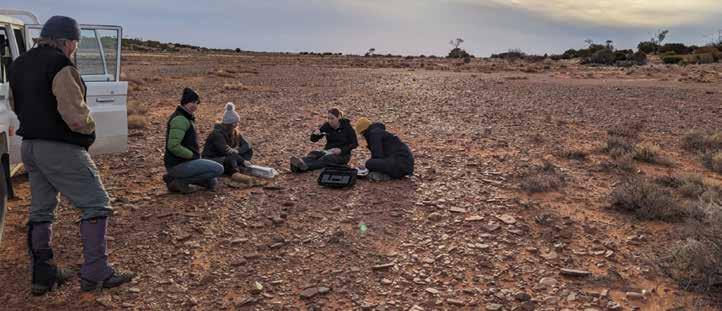
Volunteers are instrumental in helping us achieve so much at Arid Recovery, contributing many hours of hard work. In 202324, volunteers continued to support us in critical areas such as annual pitfall and cage trapping, reserve maintenance, feral animal control, and several PhD and Honours research projects. This year was especially exciting with the introduction of kowari trapping, a rare opportunity that allowed volunteers to meet this elusive species. Whether coming from near or far, the contributions of these volunteers have been invaluable to our ongoing conservation efforts. Thank you to everyone who has given their time and energy!
Local businesses and other organisations are invaluable to Arid Recovery’s success. The expertise and assistance of businesses like Monadelphous, Veolia, and Camplin Computing ensure Arid Recovery runs smoothly. Our thanks also go to the Rendere Trust and Upotipotpon Foundation for their ongoing support of the Internship program. We are grateful to Alliance Airlines for their continued generosity in supporting the annual Board visit.
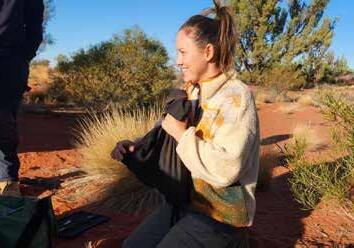
Volunteer Emily Almond volunteered for three weeks, assisting with cage trapping and bandicoot radio-tracking.
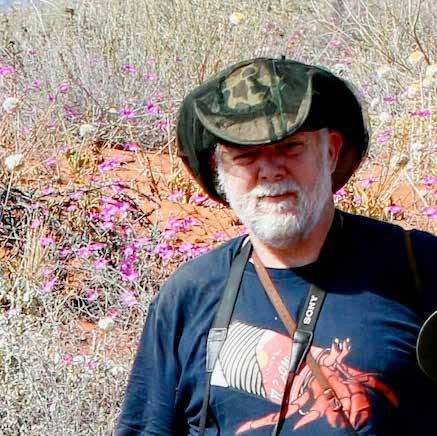
Garry Jolley-Rogers joined Arid Recovery for five weeks to photograph invertebrates captured during the annual pitfall trapping. With a background as a crustacean taxonomist, Garry’s expertise in invertebrates was invaluable to the team. His passion for conservation was truly inspiring, often encouraging us to look beyond vertebrates and consider the role insects play in the broader ecosystem. Garry quickly became a much-loved team member during his time here.
Base income continued to improve in 2024 thanks to commitments from partners to grow support, particularly BHP and Bush Heritage. Total revenue was reduced on 2023 with the conclusion of the Safe Haven grant. Some important investments in infrastructure were made during the year (automated front gate, replacement solar system batteries, water tank and expanded trap alert system), that are reflected in an increase to asset value. The staff house in Roxby Downs was revalued, resulting in a $30,000 book increase. High expenditure on fencing materials in 2024 reflected the use of stockpiled materials purchased using the Safe Haven grant in the prior year.
Other grant projects included kowari research (Thyne Reid Foundation), Felixer hire (Thylation Foundation) and tourism infrastructure (BHP Community Donation). Lower flora and fauna management costs in 2024 reflect the progress made in managing rabbit incursions. Staffing expenses remained stable, with the hiring of a 6-month Field Officer offset by reduced grant-funded contracts.
Arid Recovery is in a strong financial position. The Board approved a drawdown on the healthy cash balance through the year in order to invest in fence integrity and research station facilities. The 2024 year ended with a better than budgeted deficit as a result of savings on some expenses.
Arid Recovery’s accounts were audited by MRL Group auditors. The full audited financial report can be found on Arid Recovery‘s profile on the Australian Charities and Not-for-profits Commission website (www.acnc.gov.au).

Your sponsorship will purchase:
• motion-triggered cameras to keep a close watch on how kowaris are doing.
• Transport crates to bring more kowaris to Arid Recovery.
• Radio-tracking collars to monitor kowari survival in the wild.
• Materials for release pens to settle new kowaris when they arrive .
Donate online or over the phone to assist the work of Arid Recovery.

Adopt a desert animal to support Arid Recovery’s conservation work.

Contact the Arid Recovery office if you or your organisation would like to become a supporter.
Join us for a working bee or assist around the office. There are many opportunities to volunteer with us.


Arid Recovery is a conservation initiative supported by BHP, the SA Department for Environment and Water, the University of Adelaide, Bush Heritage Australia, Kokatha Aboriginal Corporation and the local community.
Thanks to the many businesses and organisations who support the work of Arid Recovery:
ABC
Alliance Airlines
Almost Anything Auto
Andamooka Observatory
Andamooka Waste
Arabana Cultural Rangers
Arid Lands Botanic Garden
Aus Land Conservation Alliance
Automatic Solutions
Billa Kalina Pastoral Company
Biodiversity Council
Bugs n Slugs
Bush Bling
Camplin Computer Services
Channel 10
Cochrane's Transport
Complete Ute & Van Hire
DArTseq Services
D C Embroiderer
Dodoland
Echo Beach
Ecological Horizons
Encounter Solutions
ESS
Fiona Rice
Flinders Ranges Ediacara Foundation
Friends of the Australian Arid
Lands Botanic Garden
HEH Pty Ltd
Hern & Associates
Inspiring South Australia
John West Plumbing
Kanangra Ratings Advisory
Kennards Hire
Kokatha Aboriginal Corporation
Kokatha Pastoral
Leaders Institute of SA
MinterEllison
Monadelphous Engineering
Mossy Electrical
MTC Advisory
NRMjobs
Nutrien Port Augusta
Print Junction
Professional Trapping Supplies
Raine & Horne Roxby Downs
REDARC
Rendere Trust
Rotary Club of Roxby District
Roxby Community Library
Roxby Council
Roxby Downs Discovery Park
Roxby Downs Environment Forum
Roxby Downs Scouts
Roxby Earthmoving
RoxbyLink
RoxFM
Roxby Signs
SA Arid Landscape Board
SA Radiation
Sara Wilson Design
Slingsby Taylor
Spear Motorcycle & ATV Repairs
St Barbara's Parish School
Team Kowari
Thyne Reid Foundation
Threatened Species Commissioner
Thylation Foundation
Tori Hanold
Upotipotpon Foundation
Veolia
Waratah Fencing
Wildlife Hotline
Woolworths