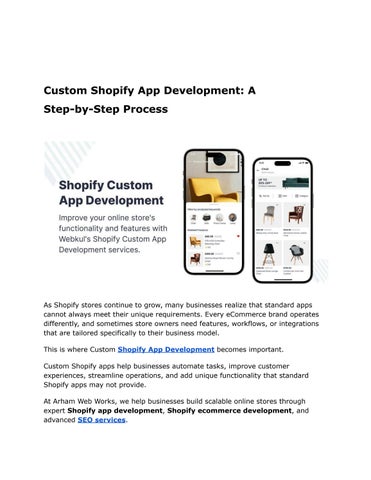
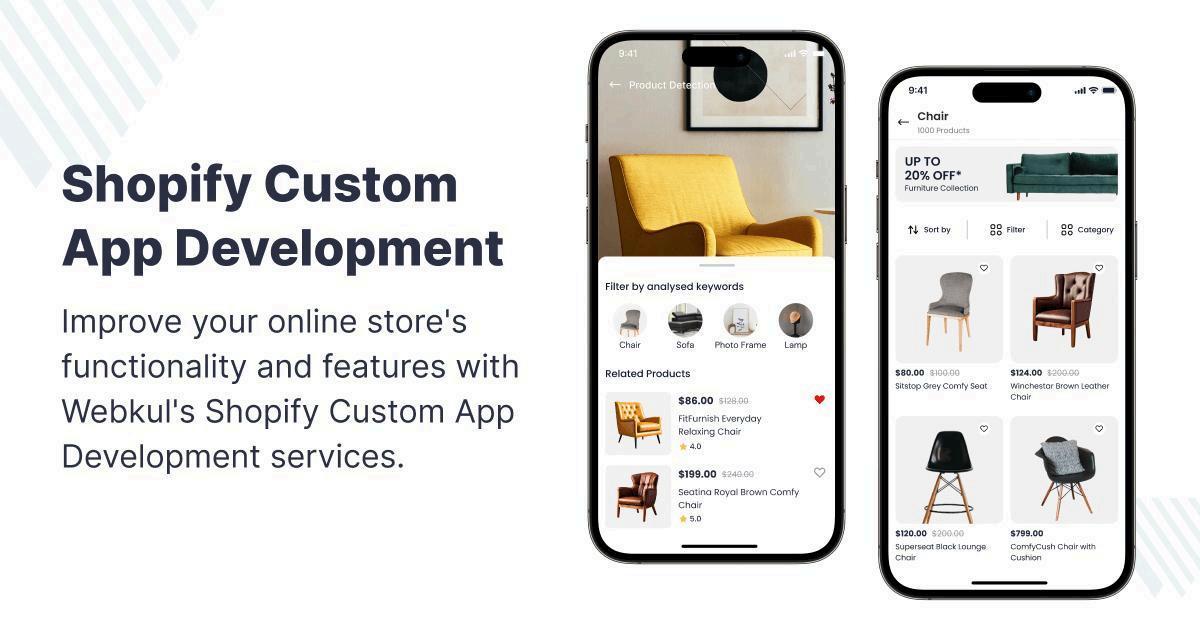
As Shopify stores continue to grow, many businesses realize that standard apps cannot always meet their unique requirements. Every eCommerce brand operates differently, and sometimes store owners need features, workflows, or integrations that are tailored specifically to their business model.
This is where Custom Shopify App Development becomes important.
Custom Shopify apps help businesses automate tasks, improve customer experiences, streamline operations, and add unique functionality that standard Shopify apps may not provide.
At Arham Web Works, we help businesses build scalable online stores through expert Shopify app development, Shopify ecommerce development, and advanced SEO services.
In this blog, we’ll explain the complete step-by-step process of custom Shopify app development and why it can help your business grow faster.
What Is Custom Shopify App Development?
A custom Shopify app is a personalized software solution built specifically for your Shopify store.
Unlike public apps available in the Shopify App Store, custom apps are designed around your business needs.
These apps can help with:
● Inventory management
● Product customization
● Order automation
● Customer loyalty programs
● Third-party integrations
● Advanced reporting
Custom apps give businesses more control and flexibility.
Why Businesses Choose Custom Shopify Apps
Many growing stores outgrow standard Shopify functionality.
Custom apps are useful when businesses need:
● Unique workflows
● Better automation
● Custom checkout features
● Integration with external systems
● Improved customer experiences
Professional Shopify ecommerce development helps businesses build scalable custom solutions for long-term growth.
Step-by-Step Process of Custom Shopify App Development
Step 1: Understanding Business Requirements
Every successful Shopify app starts with clear planning.
Developers first analyze:
● Business goals
● Store challenges
● User requirements
● Existing workflows
This step helps identify exactly what the app should achieve.
Important Questions:
● What problem will the app solve?
● Who will use it?
● Which Shopify features need customization?
Strong planning reduces development issues later.
Step 2: Defining Features and Scope
Once requirements are clear, developers define the app’s features and technical scope.
This includes:
● User interface requirements
● API integrations
● Admin functionality
● Data management
Proper documentation helps keep development organized and efficient.
Step 3: UI/UX Design Planning
User experience is critical for app usability.
A good Shopify app should be:
● Easy to navigate
● Mobile-friendly
● Fast-loading
● Visually clean
Modern UI/UX design improves efficiency and reduces confusion for store owners and customers.
Step 4: Choosing the Right Technology Stack
Custom Shopify apps are built using various technologies depending on project needs.
Common technologies include:
● Node.js
● React
● Laravel
● PHP
● Shopify Polaris
● Shopify APIs
Choosing the right technology helps ensure performance and scalability.
Step 5: Shopify API Integration
Shopify APIs allow apps to communicate with the Shopify platform.
Developers integrate APIs for:
● Products
● Orders
● Customers
● Inventory
● Checkout systems
API integration enables automation and advanced store functionality.
Step 6: App Development and Coding
This is the core development stage where features are built.
Developers create:
● Backend functionality
● Frontend interfaces
● Database structures
● Custom workflows
Professional coding practices improve app security and performance.
Step 7: Testing and Quality Assurance
Testing ensures the app works correctly before launch.
Developers test:
● Functionality
● Mobile responsiveness
● API performance
● Security
● Speed optimization
Thorough testing helps prevent bugs and technical issues.
Step 8: Security Optimization
Security is critical for eCommerce businesses.
Custom Shopify apps should protect:
● Customer information
● Payment data
● Store operations
Developers implement:
● Secure authentication
● Data encryption
● API protection
Strong security builds trust and reliability.
Step 9: App Deployment
Once testing is complete, the app is deployed to the Shopify store
This process includes:
● Server setup
● Shopify installation
● Final configuration
● Performance checks
A smooth deployment ensures minimal disruption to store operations.
Step 10: Ongoing Maintenance and Updates
Custom Shopify apps require ongoing support to remain effective.
Maintenance includes:
● Bug fixes
● API updates
● Feature improvements
● Performance optimization
Regular updates help keep the app secure and scalable.
Benefits of Custom Shopify App Development
Improved Store Functionality
Custom apps allow businesses to add unique features not available in standard apps.
Better Automation
Businesses can automate repetitive tasks and improve operational efficiency.
Enhanced Customer Experience
Custom apps create personalized shopping experiences that improve engagement and conversions.
Better SEO and Performance
Optimized apps improve:
● Website speed
● User experience
● Technical SEO
These improvements support stronger rankings through professional SEO services and ecommerce SEO services.
Scalability for Business Growth
Custom apps can evolve as your business grows and requirements change.
Common Use Cases for Custom Shopify Apps
Businesses use custom apps for:
● Subscription systems
● Product personalization
● ERP integrations
● Shipping automation
● Wholesale pricing systems
● Loyalty and rewards programs
These features help businesses create competitive advantages.
How Arham Web Works Helps Shopify Businesses
At Arham Web Works, we build scalable and performance-focused Shopify solutions for modern businesses.
Our services include:
● Custom Shopify app development
● Shopify ecommerce development
● API integrations
● Website speed optimization
● Technical SEO services
● Advanced e-commerce SEO services
We help businesses create Shopify stores and apps designed for growth, automation, and better customer experiences.
1. What is a custom Shopify app?
A custom Shopify app is a personalized application built specifically for a Shopify store’s unique business needs.
2. Why should businesses use custom Shopify apps?
Custom apps provide advanced functionality, automation, and integrations not available in standard apps.
3. Which technologies are used in Shopify app development?
Common technologies include Node.js, React, Laravel, PHP, and Shopify APIs.
4. Are custom Shopify apps secure?
Yes, when developed properly with secure authentication and API protection.
5. How long does custom Shopify app development take?
Development time depends on app complexity and required features.
6. Can custom Shopify apps improve SEO?
Yes. Optimized apps can improve website speed, user experience, and technical SEO performance.
Conclusion
Custom Shopify app development helps businesses build advanced, scalable, and personalized eCommerce experiences. From automation and API integrations to unique customer features, custom apps allow Shopify stores to operate more efficiently and grow faster.
While development requires proper planning and technical expertise, the long-term benefits can significantly improve business performance and customer satisfaction. With expert support from Arham Web Works, businesses can create custom Shopify apps that are secure, scalable, and optimized for long-term success.
Read More: Shopify Migration Guide: Move From WooCommerce or WordPress Without Losing SEO