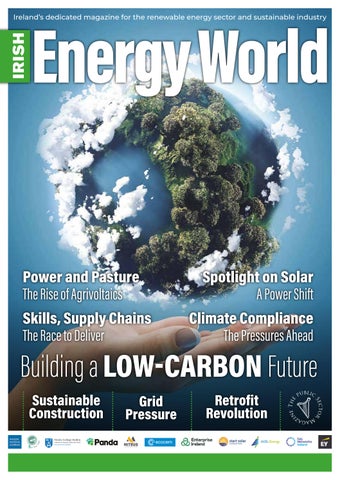
Irish Energy World Magazine

Page 1


Power and Pasture

The Rise of Agrivoltaics

Skills, Supply Chains

The Race to Deliver

Climate Compliance

The Pressures Ahead

Sustainable Construction Spotlight on Solar A Power Shift

Retrofit Revolution

WELCOME NOTE

AS IRELAND ASSUMES THE EU PRESIDENCY, ENERGY AND INNOVATION TAKE CENTRE STAGE.

2026 promises to be a landmark year for Ireland. From July, the country will take the helm of the Council of the European Union, a moment that offers a rare chance to put Ireland’s clean-energy ambition at the heart of the European conversation.

Energy is a key focus in the EU’s 2026 Work Programme, which calls for faster action on renewables, energy efficiency and green innovation. As Ireland steps into the Presidency, we do so with momentum and a real story to tell. From offshore wind farms and solar innovation to smarter grids and energy storage, Ireland is showing what is possible when technology, policy and community align.

Ireland’s journey towards cleaner energy is showing real results. Greenhouse gas emissions dropped by 2 per cent last year, with the energy sector cutting nearly 9 per cent – the lowest in decades and still improving through 2025.

Renewables now make up a growing share of the power mix. In October 2025, more than four in every ten units of electricity came from clean sources thanks to record wind generation and a steady rise in solar and battery storage.

Connections are improving too. The 500-megawatt Greenlink interconnector came into operation in April 2025, linking the grids of Ireland and the UK and helping to balance supply. Work on the Celtic Interconnector to France is also moving forward, promising even greater stability for the years ahead.

Minister Darragh O’Brien acknowledged the progress but added that “we need to move faster to meet our 2030 climate targets.” A new KPMG report agrees, noting that Ireland has “the potential to accelerate growth in its renewable energy

sector and, if managed well, to become a net exporter of green power.”

The Taoiseach has repeatedly linked Ireland’s climate plan with the legally binding target to cut emissions by 51 per cent by 2030 and reach net zero by 2050, underpinned by a major expansion of renewable energy, including offshore wind. When the Climate Act was published, Government described it as “a commitment for net-zero greenhouse gas emissions by 2050” and a national obligation to build “a climate-resilient and climate-neutral economy.”

More recently, speaking at COP30, the Taoiseach warned that “the world is at a decisive moment in how we act on climate change. We have made some progress, but we now need to act with unity and with much more urgency.” That message was reinforced in Budget 2026, which allocated more than €1 billion to clean-energy measures, described as investment “to accelerate Ireland’s energy transition and underpin our journey to a net-zero future.”

As Ireland prepares to take the EU Presidency, it is the perfect time to recognise how far we have come and how important it is to back the innovators and energy leaders who are shaping what comes next.

— The Editors, Irish Energy World

CONTENTS

08 - THE RACE TO NET ZERO

Ireland’s energy system is shifting fast as the country accelerates towards net zero, reshaping how homes, transport, industry and communities are powered.

14 - CLIMATE ACTION TARGETS

The roadmap is set, but delivery is uneven. With 2030 edging closer, Ireland must speed up renewables, emissions cuts and planning reform to stay on track.

20 - THE RISE OF SOLAR ENERGY

Once a niche technology, solar has become central to Ireland’s decarbonisation drive, offering homes, farms and businesses a practical route to generating clean power.

40 - POWER AND PASTURE

Agrivoltaics is gaining ground as farmers pair solar generation with productive land use, showing that clean energy and agriculture can prosper side by side.

51 - PLUGGING IN TO EV

Electric vehicle uptake is rising sharply, but network gaps, infrastructure challenges and urban constraints will determine how quickly Ireland hits its 2030 and 2050 goals.

60 - SUSTAINABLE CONSTRUCTION

From cleaner concrete to precision-built homes, the construction sector is undergoing a low-carbon reset. The question is whether policy, skills and supply chains can keep up.

76 - WAR ON WASTE

New regulation, advanced recycling and circular-economy measures are redefining the sector. Ireland now needs scale, speed and investment to transform waste into a valuable resource.

82 - ASK THE EXPERTS

A low-carbon economy brings complex demands. As reporting rules, compliance pressures and investment expectations intensify, expert guidance from advisors such as Matheson and Mason Hayes Curran is more important than ever.

98 - CLIMATE ACTION ON CAMPUS

From Trinity College Dublin’s Living Labs to innovation at UCD's Energy Institute, Irish universities are turning sustainability ambitions into practical, measurable progress.

A WHOLE NEW WORLD

Ireland’s energy system is undergoing its fastest transformation in living memory, powered by innovation, regeneration and a new national ambition for cleaner, smarter growth.

Welcome to a new era of Irish energy. In this issue, we explore how innovation, collaboration and courage are reshaping the way we power our world. From deep retrofits and solar agrivoltaics to offshore wind, green ports and the rebirth of Ireland’s peatlands, progress is happening everywhere, even in places once written off as industrial relics.

What emerges is a story of reinvention. Yet even with all of this momentum, one challenge towers above the rest: the need for a faster, more flexible electricity grid. Ireland’s renewable pipeline is now growing faster than the network

that must carry it, and both grid reinforcement and planning reform lag dangerously behind ambition. EirGrid has warned repeatedly that “the grid is not ready for the volume of renewable electricity coming”, while Wind Energy Ireland has described planning timelines as “one of the biggest obstacles to delivering the energy transition”. Substations are congested, new connections are slow, and long-awaited upgrades often stall in appeals. Without a stronger, future-proofed grid, the turbines, solar parks and energy hubs now emerging across the country cannot reach their full potential. Unlocking this bottleneck is essential if Ireland is to turn its extraordinary renewable resources into real-world energy security.

Without a stronger, future-proofed grid, the turbines, solar parks and energy hubs now emerging across the country cannot reach their full potential.

Ireland’s energy landscape is no longer about extraction but regeneration, no longer about dependency but design. As the world races towards net zero, Ireland is not standing still; it is setting the pace. What was once about fuel and supply is now about systems, design and joined-up thinking. The focus has shifted from consumption to conservation, from waste to reuse, and from fossil dependence to renewable abundance. Across every sector, from housing to heavy industry, Ireland is finding fresh ways to make energy cleaner, smarter and more sustainable. The challenge is immense, but so is the opportunity.

The International Energy Agency has called energy efficiency the “first fuel” of the clean-energy era because it cuts emissions fastest while strengthening economic resilience. In Ireland, the message has landed. The Government’s National Retrofit Plan aims to bring 500,000 homes up to a B2 energy rating and install 400,000 heat pumps by 2030, a huge shift in how we build and live. Local authorities are already leading the way. Dublin City Council has upgraded more than 9,400 social homes under the Energy Efficiency Retrofitting

Programme, while Cork and South Dublin County Councils are rolling out similar deep-retrofit schemes to reach the same B2 standard. These are not cosmetic upgrades; they are whole-home transformations with insulation, airtightness, high-performance glazing and heat-recovery ventilation, all reducing energy use by up to 80 per cent.

INNOVATION IN SOLAR

Solar energy is following the same trajectory. SEAI’s solar electricity grants, combined with zero VAT on domestic installations and the Clean Export Guarantee, have made rooftop PV one of the most accessible renewable technologies for Irish households and SMEs. As a result, solar installations have surged nationwide, proof that the clean-energy transition is becoming personal.

Innovation in solar is showing up in the places we go every day. Councils are leading the way with smart, practical ideas like solar car-park canopies that produce power and give drivers shelter from the rain. Wicklow County Council’s plan for a 300-kilowatt canopy over 140 parking bays is one of the first, and it is the kind of project that could work just as well at rail stations, business parks or sports grounds across the country. It is a small but visible sign of change, proof that clean energy is quietly becoming part of everyday life in Ireland.

At Dublin Airport, solar now plays a growing role in its long-term energy strategy. Planned expansions to its on-site PV capacity aim to supply over 20 per cent of the airport’s electricity by 2030, combining ground-mounted arrays, rooftop panels and solar carports into a single integrated system. Even along major routes, opportunities are emerging to install solar panels on or beside infrastructure, particularly on noise barriers, park-and-ride facilities and public transport depots, offering a cleaner, more durable way to harvest energy from the nation’s transport corridors.

And one step further lies agrivoltaics, the dual use of land for both solar energy and agriculture. Across Europe, farmers are discovering that crops and solar panels can work together rather than compete. By elevating or spacing out solar panels, they can protect livestock from heat or give delicate crops some shade while still producing clean energy from the same fields. In countries such as France and Germany, this approach is already proving that good harvests and renewable power can go hand in hand.

Now Irish developers are exploring similar models for pastureland and horticulture. With pilot schemes under discussion and interest growing among cooperatives and landowners, Ireland has a chance to integrate solar into its agricultural heartland, not at its expense but to its benefit. It is a practical way to keep land productive, incomes stable and the rural economy at the centre of the renewable transition.

THE POWER OF THE SEA

Out at sea, Ireland’s next great power source is taking shape across two tracks: fixed-bottom wind in the Irish Sea and early floating wind in Atlantic waters. The ESB’s Green Atlantic programme at Moneypoint is the flagship on the west coast, a 1.4-gigawatt floating wind farm off Clare and Kerry, planned in two phases and capable of powering over 1.6 million homes. The project is anchored by the redevelopment of the Moneypoint site as a construction and operations hub, with ESB partnering regionally to turn the Shannon Estuary into a floating-wind supply-chain base. Together, the generation project and the port investment show exactly how this transition can happen: deep-water access, large-scale assembly and grid-ready export from a single west-coast complex.

On the south coast, Simply Blue Group’s Emerald Floating Wind project proposes up to 1.3 gigawatts of floating capacity near the decommissioned Kinsale gas field. Emerald’s concept shows another path forward, repurposing a mature maritime area, using floating substructures to reach deeper, windier waters and phasing build-out so grid connections and supply chains can scale alongside development. Simply Blue has also built floating-wind expertise through international joint ventures, strengthening Ireland’s developer capability for the Atlantic push.

In the Irish Sea, Energia and Norway’s Vårgrønn are advancing two fixed-bottom sites, North Celtic Sea and South Irish Sea, each scoped in the region of 700 to 900 megawatts. Years of aerial wildlife and seabed surveys are complete, with environmental assessments under way. Both projects aim to be operational around 2030, adding as much as 1.8 gigawatts where demand is concentrated. Their progress underlines the practical side of the transition: bankable resource, proven technology and strong environmental evidence.

Ports are key to unlocking that potential. Rosslare Europort is moving ahead with plans for a dedicated offshore renewables base, with heavy-lift quays and staging areas for turbine components serving the Irish and Celtic Seas. On the west coast, Shannon Foynes Port’s Vision 2041 masterplan is transforming the estuary into a deep-water hub for floatingwind assembly, hydrogen production and green industry, dovetailing with ESB’s plans at Moneypoint. Cork Harbour, long associated with ship repair and oil storage, is reinventing itself as a testbed for marine robotics, floating-wind prototypes and clean-fuel logistics. These are real, tangible changes: industrial heritage sites retooled for the blue economy, ready to power the next generation of clean growth.

BROWN TO GREEN

Ireland’s move from brown to green is not limited to wind and solar. Few stories capture the scale of transformation better than Bord na Móna. Once known for cutting peat, today the company stands for something very different. It has shifted its focus towards clean energy and environmental renewal through its Brown to Green programme, which is turning old boglands into sites for wind farms, solar projects and thriving wildlife. At Edenderry, the former peat-fired power station now runs entirely on biomass, while in Mayo, the Oweninny Wind Farm, developed with ESB, produces enough electricity to supply roughly 140,000 homes.

Across the midlands, more than 33,000 hectares of bog are being rewetted and rehabilitated under the Peatlands Climate Action Scheme, locking carbon back into the land and creating

Councils are leading the way with smart, practical ideas like solar car-park canopies that produce power and give drivers shelter from the rain.

green jobs in local communities. New solar farms, including the 160-megawatt Blackwater project in Offaly, are rising where the peat rails once ran, using existing grid corridors and substations to speed delivery.

In the same spirit of regeneration, the Silvermines Hydro project in County Tipperary is breathing new life into a disused mine by transforming it into a 360-megawatt pumpedstorage hydro facility. Using the existing mine workings and surrounding terrain, the scheme will act as a giant natural battery, storing surplus renewable power by pumping water uphill when supply exceeds demand, then releasing it to generate electricity when the grid needs it. Once operational, the project could power up to 200,000 homes; a powerful model for reuse and regeneration, repurposing industrial landscapes to serve a cleaner future. From bog to bay, Ireland is proving that with imagination, yesterday’s infrastructure can power tomorrow’s world.

A SHARED RESPONSIBILITY

The Sustainable Energy Authority of Ireland has called for a “collective national effort” to meet carbon reduction targets, and the European Commission warns that “the cost of inaction will far outweigh the cost of transformation”. Whether it is through solar panels, coastal wind turbines, repurposed bogs or data systems managing waste and energy flows, Ireland is proving that practical innovation can power real change.

THE RACE TO NET ZERO

The push towards net zero is transforming the nation’s energy landscape, demanding rapid change in how homes, transport, industry and communities are powered.

Ireland’s move towards a climate-neutral future is starting to filter into everyday life, whether through changes in how power is produced or in the choices households face about heating and transport. With demand rising and technology developing at pace, the coming years will depend on how well the country can update its energy systems while keeping people and businesses supported through the shift.

Ireland has set itself a considerable task. Under the Climate Action and Low Carbon Development (Amendment) Act 2021, the State is legally required to cut greenhouse gas emissions by 51 per cent by 2030 and to reach climate neutrality by 2050.

These goals are written into law and supported by sectoral ceilings that influence everyday life, from how homes are heated to how transport is powered. The question now is whether Ireland can change fast enough and fairly enough to meet those deadlines.

The most recent Climate Action Plans set out how Ireland intends to transform its energy use across electricity, heat, transport, buildings, agriculture and industry. Independent analyses indicate that delivery must accelerate significantly if Ireland is to close the gap between ambition and outcome. The financial implications are becoming clearer. The Irish

“As Ireland focuses on cutting emissions, it must also prepare for the physical impacts of climate change.”

Fiscal Advisory Council warns that slow progress could expose the State to substantial compliance costs in the years ahead, whereas strong delivery would sharply reduce that liability. Climate action is no longer viewed solely through an environmental lens; it is increasingly tied to the country’s wider economic resilience.

ELECTRICITY: THE BACKBONE OF THE TRANSITION

Electricity will carry a large share of Ireland’s decarbonisation effort. As homes move from fossil-fuel heating to heat pumps and motorists shift to electric vehicles, electricity use is expected to rise sharply in the years ahead. The central challenge will be meeting that increase with clean power.

EirGrid’s long-term vision for the electricity system identifies several priorities. Ireland will need continued growth in onshore wind, a rapid expansion of offshore wind, a significant rise in solar generation and stronger interconnection with neighbouring markets. The national grid will require substantial reinforcement to accommodate new power flows and increased variability.

System flexibility will also become more important. Battery storage, demand-side management and new operational approaches will help manage the intermittency associated with wind and solar energy as fossil-fuel plants are gradually phased out.

For the energy industry, this signals a decade of major infrastructure investment, expanded technical capacity and new skills.

HEATING HOMES AND BUILDINGS

The built environment remains one of Ireland’s most difficult sectors to decarbonise. A large share of homes still rely on oil, gas or solid fuels, and many properties require substantial insulation upgrades before low-carbon heating technologies can be deployed effectively.

Retrofitting is now scaling up, supported by grants, financial products and advisory services. Targeted programmes seek to ensure that lower-income households can access suitable upgrades. As supply chains mature and technology prices fall, heat pumps and district heating networks are expected to play an increasingly central role.

The sector relies heavily on workforce capacity, household awareness and streamlined delivery systems. Ensuring that retrofitting is accessible, consistent and large-scale will be essential if emissions from buildings are to fall meaningfully before 2030.

TRANSPORT: CHANGING HOW IRELAND MOVES

Transport remains one of Ireland’s highest-emitting sectors and one where energy, infrastructure and behaviour converge. Reducing emissions requires a blend of measures: growing electric vehicle uptake, improving access to charging infrastructure and continued investment in public transport and active travel.

EV charging, bus network expansion and rail improvements all carry implications for the electricity system. Charging hubs, electrified fleets and shifts in consumer behaviour will change when and where demand for electricity occurs. Ensuring that the grid can respond to these patterns will be an important part of the transition.

Achieving significant reductions will depend not only on technology but also on the availability of alternatives to private car use and the ability of local authorities to plan for long-term, low-carbon mobility.

AGRICULTURE AND LAND USE

Agriculture plays a central role in Irish life and is one of the most challenging areas in which to cut emissions. The sector must balance national climate targets with food production, rural employment and economic viability.

Research bodies have identified several pathways to progress. These include improved nutrient management, wider use of low-emission technologies, land-use diversification, enhanced advisory support and measures to increase soil and land-based carbon storage. Delivering change will require long-term certainty, support for farm incomes and a clear understanding of how new practices can be integrated sustainably into rural life.

INDUSTRY AND INNOVATION

Ireland’s industrial sectors are beginning to re-evaluate their processes in light of national climate commitments. Largescale manufacturers, food processors and pharmaceutical companies are exploring options such as electrification of heat, improved energy efficiency, digital optimisation and early trials of hydrogen and carbon capture.

The energy transition presents significant economic opportunities as well. Investment in renewable generation, storage technologies, retrofitting and energy services is expected to expand substantially over the decade. Offshore wind stands out as a major opportunity for ports, engineering firms and wider supply chains, provided that supporting infrastructure and workforce capacity can grow quickly enough.

Innovation is expected to play an increasingly important role, with digital technologies, smart systems and advanced materials helping to reduce emissions while maintaining competitiveness.

Public support is also becoming more important to the success of Ireland’s energy transition. Community energy schemes, co-operatives and local partnerships offer ways for citizens to participate directly in projects and share in their benefits. Where communities feel engaged and informed, projects are more likely to progress smoothly.

CLIMATE RESILIENCE AND ADAPTATION

As Ireland focuses on cutting emissions, it must also prepare for the physical impacts of climate change. More frequent storms, heavier rainfall, coastal erosion and heat events pose risks to critical infrastructure, including the electricity grid and transport networks.

Resilience planning is increasingly running alongside mitigation efforts. Reinforcing substations, improving drainage systems, enhancing coastal protection and integrating climate risk into planning and investment decisions are now central considerations.

A DECISIVE DECADE AHEAD

Ireland is not yet on an effortless path to its 2030 emissions goals, but the direction of travel is clear. Policy frameworks are in place, public awareness is rising and the economic case for action continues to strengthen. The challenge now lies in delivery: building the necessary infrastructure, upgrading homes, modernising transport, supporting rural communities and ensuring that industry can innovate at pace.

While the transition is now taking hold across every part of the economy, it is equally clear that much more is required to stay on course. Stepping back to look at Ireland’s progress at national level, and how the country compares within a tightening European climate landscape, provides a sharper sense of the pressures ahead and the urgency surrounding climate commitments.

NET ZERO IRELAND: AT A GLANCE

Ireland has set the bar high, with a legally binding figure of 51% cut in emissions by 2030, together with a commitment to reach climate neutrality by 2050. Carbon budgets now guide every sector, giving a clear national pathway toward net zero.

WHERE EMISSIONS COME FROM Ireland’s emissions picture remains broadly consistent:

• 38% – Agriculture, the largest share

• 21.7% – Transport

• 13.3% – Power generation

• 10.4% – Home heating

• 7.7% – Manufacturing

The sectoral picture in early 2025 remains broadly similar, with agriculture and transport still accounting for the largest share of Ireland’s overall emissions.

ELECTRICITY IN TRANSITION

Ireland’s power system is changing fast. Renewables supplied around 40% of electricity in 2024, driven mainly by wind energy. Q2 2025 data show overall reductions, but full sector shares won’t be available until the next inventory. Gas and imports still play a role, but the target of 80% renewable electricity by 2030 keeps momentum strong.

HOMES & BUILDINGS

The upgrade programme is one of Ireland’s biggest opportunities:

• 500,000 homes targeted for BER B2 or better

• 400,000 heat pumps planned for existing homes by 2030

• Growing focus on district heating and deep retrofits

• Progress has been made year on year, although a sharper uptake will be needed to hit 2030 targets

TRANSPORT

Transport remains a challenge, but the shift has begun:

• Around one in seven new cars sold in 2024 was fully electric; so far in 2025, this has risen to just under one in five, with EV registrations up nearly 40% on the same period last year

• Over 149,000 EVs now on Irish roads

• Significant investment in public transport, rail and active travel

Even with rising EV numbers, the sector needs sustained effort to deliver major emission cuts.

PROGRESS TO DATE

Ireland ended 2024 with emissions about 12% lower than in 2018.

Early 2025 EPA indicators suggest that emissions for the first half of this year are running just under 1% below the same period in 2024.

Electricity emissions continued to fall, supported by renewables and changing fuel use. Agriculture saw a modest reduction, while a colder year pushed homeheating emissions up slightly. Overall, the national trend is downward, though not yet fast enough.

THE GAP TO 2030

Current projections show Ireland may achieve only 9–23% reductions by 2030 without a significant acceleration. Agriculture, transport, and heating remain the sectors with the largest gaps to close. Missing targets could also result in substantial EU compliance costs, adding real financial pressure to act.

THE BIG PICTURE

Ireland’s direction of travel is clear - more renewables, cleaner transport, smarter buildings and a steady shift toward a lower-carbon economy. Progress is real and measurable, but the next few years will determine whether the country can turn strong ambition into on-the-ground delivery.

the POWER’S in your hands

Powering Ireland’s Path to Net Zero

As Ireland takes up the Presidency of the EU in 2026, Go Power is proud to represent the dynamism and ambition of Ireland’s energy sector. With its history of growth, expertise in electricity and gas supply, and commitment to a sustainable future, Go Power is ready to support Ireland’s journey to net zero.

By 2030, Ireland’s energy landscape will be transformed, with offshore wind, solar, storage, and flexibility at its core. Go Power will continue to play a vital role ensuring that businesses and industries across the country have access to the reliable, affordable, and renewable electricity they need.

All-

•All- Island 100% Green energy supplier.

Powering

•Powering commercial and industrial users throughout Ireland.

•Trusted by over 15,000 Commercial Customers.

•Delivering fully certified green energy to power Ireland’s transition.

•Supporting the shift to a cleaner, more resilient energy system.

“By combining heritage and innovation, Go Power ensures it is not only meeting today’s needs but also anticipating tomorrow’s challenges...”

Customer-focused energy solutions

Go Power, the trading name of LCC Power Ltd, was established in 2012 as part of the LCC Group a leading energy company with roots dating back to 1986. Originally a coal supplier in Northern Ireland, LCC Group has grown into a diversified energy provider, known for its reliability and industry expertise. Leveraging this strong foundation, Go Power quickly became a trusted name in Ireland’s electricity market.

Go Power’s growth continued in 2014 with the granting of an electricity supply licence in the Republic of Ireland, allowing it to deliver energy solutions to businesses nationwide. Looking ahead, the company plans to introduce natural gas supply in the Republic by 2026, strengthening its all-island offering.

Supporting Ireland’s Climate Targets

Ireland’s legally binding targets a 51% reduction in greenhouse gas emissions by 2030 and net-zero by 2050 require a fundamental transformation of how energy is generated, supplied, and consumed.

By helping organisations reduce their reliance on fossil fuels and access competitively priced renewable supply, Go Power ensures that Irish businesses remain competitive, sustainable, and aligned with both national policy and EU directives.

Go Power provides third-party authenticated renewable certificates so that your 100% green energy can be traced to the source of generation.

Specialising in energy for large-scale users such as manufacturers, retailers, farmers, and public sector organisations.

the POWER behind Ulster Rugby

Go Power partners with local communities and organisations to build strong connections and deliver meaningful, lasting value across Ireland.

Serving the backbone of the Irish Economy

Go Power supplies electricity and gas to thousands of businesses across Ireland, from SMEs to large industrial operations. Its sectoral reach is broad, including:

Manufacturing and Industry

Providing reliable energy solutions to power production lines while helping companies manage carbon reduction commitments changing energy needs.

Innovation and Energy Trading Expertise

The Irish electricity market is one of the most volatile in Europe, with prices often subject to rapid swings due to weather, supply shocks, and international fuel costs. Go Power has invested heavily in market expertise, forecasting, and trading strategies to help customers navigate this uncertainty. This capability enables the company to deliver not just energy, but stability and predictability helping customers budget effectively.

Commitment to Sustainability

For Go Power, sustainability is more than just a regulatory requirement it is a central part of its strategy. The company is committed to:

1.Expanding its renewable electricity portfolio.

2.Helping businesses reduce carbon footprints.

3.Supporting innovation in energy efficiency and new technologies.

4.Aligning operations with Ireland’s Climate Action Plan and EU decarbonisation targets.

By combining heritage and innovation, Go Power ensures it is not only meeting today’s needs but also anticipating tomorrow’s challenges.

Agriculture and Food

Supporting Ireland’s farming and food processing sectors with tailored tariffs and renewable electricity to reduce emissions from energy use.

Hospitality and Retail

Offering flexible, competitively priced supply contracts to hotels, restaurants, and retailers seeking cost certainty and green credentials.

Public Sector

Assisting schools, local authorities, and state bodies in meeting their climate targets through renewable electricity supply and tailored energy solutions.

Each partnership is built on Go Power’s ethos of customer first service, competitive pricing, and sustainability.

Scan below to visit us at gopower.ie

MEETING TARGETS: THE NEED FOR SPEED

Ireland’s plan for net zero is clear, but progress is patchy. As 2030 nears, faster delivery on renewables, emissions cuts and planning reform is essential to close the widening gap.

Ireland’s commitments as an EU member to significantly reduce emissions by 2030 and a transition to net zero by 2050 are ambitious and, on paper, backed up by the Climate Action Plan (CAP), currently in its 2025 update. But as the adage goes, ‘there’s many a slip ’twixt cup and lip’. Current projections warn that the country is in danger of missing its 2030 targets by a wide margin unless measures are executed to speed up delivery significantly.

Several key regulations and directives drive the targets: Emissions Trading System (ETS): Essentially a marketplace for trading pollution permits, the ETS sets a cap on the amount of greenhouse gas a particular sector can emit, such as heavy industry and airlines. The cap declines year on year. Organisations receive a number of permits that equal the cap. Those that emit less than their allowance can sell their surplus to companies that exceed theirs.

Effort Sharing Regulation (ESR): EU member states set national limits for activities not covered by the ETS, including farming, small industry and domestic transport, to forge a pathway to the 2030 targets.

Land Use, Land Use Change and Forestry (LULUCF): Much like an accounting ledger, LULUCF tracks how land and ecosystems release (carbon sources) or absorb (carbon sinks) greenhouse gases. Promoting initiatives such as forest planting and bog restoration helps offset emissions from human activity.

Renewable Energy Directive III (RED III): This directive sets legally binding targets and promotes the shift away from fossil fuels. It includes an EU-wide target of 42.5 per cent renewable energy consumption by 2030, sets sector-specific sub-targets for hard-to-decarbonise industries, requires member states to nominate acceleration areas where renewable energy projects

benefit from faster permitting, and reinforces sustainability standards for biofuels and biomass.

Energy Efficiency Drive (EED): This is the main EU policy for delivering energy savings. It contains a binding target of an 11.7 per cent reduction in energy consumption by 2030, enshrines an energy efficiency first principle, strengthens the role of the public sector, places obligations on the private sector and empowers consumers.

STATE OF PLAY ON IRELAND’S TARGETS

Ireland has committed to:

• Cutting total greenhouse gas emissions by 51 per cent by 2030.

• Reaching climate neutrality by 2050.

• Obtaining 80 per cent of electricity from renewables by 2030.

Ireland’s carbon budgets are legally binding and set clear limits on emissions for each major sector: energy, transport, agriculture and industry. These ceilings cover two five-year periods, 2021 to 2025 and 2026 to 2030, and are overseen by the Climate Change Advisory Council (CCAC). In its latest report, the CCAC cautioned that emissions, especially from agriculture and transport, remain well above the permitted levels for the first budget period.

Where things stand in 2025:

• Emissions fell by 0.9 per cent in the first half of 2025 compared with the first half of 2024.

• In 2024, emissions from power generation were down significantly as the shift to wind and solar progressed. Agriculture and transport saw slight reductions, but emissions from home heating increased.

• The Sustainable Energy Authority of Ireland (SEAI) noted in its 2025 half-year review that renewable energy sources contributed 40.8 per cent of Ireland’s electricity supply, a decrease from 42 per cent in the same period in 2024. Both figures remain far from the 2030 requirement.

• The Environmental Protection Agency (EPA) projects that Ireland is on course for only a 23 per cent cut in emissions by 2030, which is less than half the target.

• Demand for electricity is rising rapidly, with data centres accounting for around one in five units of Ireland’s metered electricity use.

IRELAND AND THE EU

Across the EU, progress on cutting emissions and scaling cleaner power generation varies, but several countries are significantly ahead of Ireland. Denmark is close to 90 per cent renewable electricity, with Spain and Portugal reaching the high 80s depending on annual weather patterns. Ireland, by contrast, has higher emissions per person than the EU average and a lower share of renewable electricity. The need for accelerated progress is clear.

The shift to a low-carbon economy also brings regional and social challenges. Ireland is drawing on the EU Just Transition Fund to invest around €169 million in communities most affected by the move away from fossil fuels, particularly in the Midlands, where peat extraction once sustained local economies. The programme supports home retrofitting, worker training and the development of renewable energy supply chains to help ensure that the benefits of the transition are shared fairly across regions.

PROGRESS INITIATIVES IN 2025

A long-standing barrier to delivering new energy projects in Ireland has been the planning process. An Bord Pleanála was restructured as An Coimisiún Pleanála in June 2025 under the Planning and Development Act 2024 to modernise the body and improve efficiency.

Alongside this, several faster permitting rules from RED III have been transposed into Irish law. Authorities must now acknowledge receipt of planning applications within 45 days. Decisions on renewable energy projects of 150 kW capacity or more must be made within 52 weeks, those under 150 kW within 30 weeks, and small-scale projects within 4 to 8 weeks.

The government also published a national plan for offshore renewables to help deliver the target of 5 GW of offshore wind by 2030. The National Designated Maritime Area Plan (DMAP) was approved in May 2025, with a formal proposal published in September. New capacity has also been secured through competitive auctions for onshore wind, solar and storage.

SUCCESSES AND SETBACKS

Ireland’s progress towards its 2030 climate action targets is strong in some areas but sluggish in others.

Successes

• More coherent planning rules and improvements to offshore planning support faster project delivery.

• Falling costs for renewables and battery technologies improve project viability.

• A solid legal framework supports long-term climate action.

Setbacks

• Emissions reductions in agriculture remain low. Forest planting and peatland restoration need to accelerate.

• Rapid growth in electricity demand, particularly from data centres, increases pressure on the system.

• Planning and permitting backlogs persist despite recent reforms.

• Wind energy is sometimes curtailed when the grid cannot handle it. Stronger grid networks, greater storage capacity and smarter operation are essential to avoid wasted renewable generation.

• Ireland could face multibillion-euro costs in purchasing

Emissions from transport and heating also present challenges. Electric vehicle numbers are rising, but progress remains short of national targets. The rollout of heat pumps and district heating networks has been slower than planned. Investment in public transport, home retrofitting and renewable heat will be critical if these sectors are to align with wider climate goals.

TAKEAWAYS

Ireland has tackled some of the significant hurdles to meeting its 2025 targets, including permits, planning and offshore mapping, but the overall pace remains too slow. Three areas will determine success in the latter half of the decade:

Demand management: With data centre demand set to rise rapidly as AI evolves, more supply and flexibility will be essential.

Permitting at scale: Planning bodies must achieve and maintain faster throughput, and environmental assessments need to be completed more quickly.

Grid and storage: Curtailment must be addressed and projects connected more swiftly.

The Climate Change Advisory Council has repeatedly warned that while Ireland’s policy framework is sound, delivery remains inconsistent. Greater coordination among government departments, local authorities and regulators will be needed to turn national targets into measurable progress.

If Ireland can deliver in these areas, it can get back on track for its 2030 commitments and sustain a credible path to 2050. Failure to do so risks rising costs and a widening gap with EU peers. Progress now depends less on setting fresh targets and more on delivering those already in place at a pace that meets the scale of the challenge.

Moving Ireland’s energy

We’re working to bring more sustainable energy into our network. Like biomethane, a carbon-neutral renewable gas made from farm and food waste.

Biomethane is produced in anaerobic digestors just like this one. And it’s already flowing through the network, just like natural gas.

By reducing emissions and supporting the decarbonisation of our industries, biomethane can play a major role as we move Ireland towards a cleaner energy future.

Learn more at gasnetworks.ie/biomethane

BUILDING IRELAND’S RENEWABLE GAS FUTURE:

GAS NETWORKS IRELAND LEADS THE BIOMETHANE TRANSITION

A steadily increasing volume of biomethane is being injected into Ireland’s gas network, helping to advance the country’s journey towards a low-carbon energy future.

Derived from agri-food and industrial waste through the anaerobic digestion (AD) process, biomethane is a carbon-neutral renewable gas that can displace fossil fuels in heating, transport and industry. Structurally identical to natural gas, it can be used in all existing appliances and infrastructure, providing a practical and immediate pathway to decarbonisation.

As the operator of Ireland’s gas network, Gas Networks Ireland is at the heart of this transformation. Since enabling the first injection of domestically produced biomethane into the national grid more than four years ago, the company has played a pivotal role in supporting the growth of Ireland’s biomethane industry.

SUPPORTING IRELAND’S CLIMATE TARGETS

Ireland’s National Biomethane Strategy sets a target to produce 5.7 terawatt-hours (TWh) of indigenous biomethane by 2030. Most of the feedstock for this new sector will come from Irish farms, creating new income opportunities while helping to decarbonise agriculture.

Gas Networks Ireland’s Pathway to a Net Zero Carbon Network outlines how the existing gas infrastructure will evolve into a renewable energy system by 2045. The plan includes

repurposing and resizing the network into two dedicated renewable gas systems, one for biomethane and one for hydrogen, with the potential to accommodate approximately 30% biomethane and 70% hydrogen.

SUPPORTING LARGE ENERGY USERS

Decarbonising high-heat industries and other hard-to-abate sectors remains one of Ireland’s greatest challenges on the road to net zero. In 2024, Gas Networks Ireland established a dedicated Customer Solutions team to work directly with large gas users in sectors such as pharmaceuticals, food processing and manufacturing.

The team helps businesses to identify opportunities to replace fossil fuels with renewable biomethane in the short term and green hydrogen in the longer term. It also assists customers in navigating complex regulatory frameworks, including compliance with the EU Emissions Trading System and corporate greenhouse-gas reporting obligations.

RENEWABLE HEAT OBLIGATION TO DRIVE GROWTH

A key policy milestone will be the Government’s introduction of the Renewable Heat Obligation (RHO), with the enabling Bill expected to pass and the scheme due to commence in the first half of 2026.

The RHO will require heating-energy suppliers to incorporate renewable sources, including biomethane, into their energy mix. For the farming community, it provides valuable market certainty and income potential by creating a guaranteed demand for renewable gas. It will also stimulate investment in anaerobic digestion, strengthen rural economies and accelerate decarbonisation of heat across Ireland’s industrial, commercial and residential sectors.

Starting with a 1.5% obligation in year one and rising to 3% in year two, the RHO will directly contribute to Ireland’s target of reducing emissions by 51% by 2030 while lowering dependence on imported fossil fuels.

EXPANDING RENEWABLE GAS INFRASTRUCTURE

Gas Networks Ireland’s €32 million Central Grid Injection (CGI) facility is currently under construction in Mitchelstown, Co. Cork.

Once operational, the Mitchelstown CGI will have the capacity to inject up to 700 gigawatt-hours (GWh) of renewable gas annually, meeting around 12% of Ireland’s 2030 biomethane target and cutting national CO₂ emissions by approximately 130,000 tonnes each year.

CONNECTING DEVELOPERS: BIA ENERGY AND EVERGREEN

In Dublin, Gas Networks Ireland is partnering with Bia Energy on the first direct renewable gas entry point at the company’s €63 million anaerobic digestion facility in Huntstown. The project will convert food and agricultural waste into biomethane for injection directly into the national grid.

In Kildare, the company has signed an agreement with Evergreen Agricultural Enterprises to connect a €50 million biomethane production plant in Monasterevin. Once operational, the facility will process up to 100,000 tonnes of agricultural and distilling by-products annually (with planning for up to 165,000 tonnes), producing up to 100 GWh of renewable gas – enough to heat more than 8,000 homes and reduce emissions by around 18,500 tonnes of CO₂ each year.

STRENGTHENING COLLABORATION AND INNOVATION

To accelerate the growth of Ireland’s biomethane sector, Gas Networks Ireland has signed a series of Memoranda of Understanding (MoUs) with key developers and international partners.

In July, an MoU was signed with CycleØ, a leading European biogas developer, to support the connection of new biomethane facilities to the Irish network. Another agreement with National Gas in the UK will enhance regional cooperation on renewable gases, ensuring secure and interconnected supplies of biomethane and hydrogen across both markets.

Innovation is also being advanced through the €2.7 million Research Ireland–Gas Networks Ireland Innovation Challenge, which supports projects focused on renewable gas, system integration and artificial intelligence to optimise network operations.

ENABLING A CLEANER ENERGY FUTURE

With renewable gas already flowing through the network, policy support in place and major infrastructure underway, Ireland’s biomethane sector is entering a phase of significant growth. Gas Networks Ireland continues to play a leading role by connecting producers, supporting customers and building the infrastructure that will underpin a fully renewable gas network by 2045.

Left to right: Bobby Gleeson, Chief Operating Officer, Gas Networks Ireland and Dr. Ruth Freeman, Director, Research Ireland
Left to right: Patrick Meade, Director, Evergreen, Karen Doyle Head of Business Development, Gas Networks Ireland and Katarzyna Kubizna, Director, Evergreen
Left to right: James Manley, Country Manager, CycleØ, Karen Doyle, Head of Business Development, Gas Networks Ireland and Padraig Fleming, Biomethane Programme Manager, Gas Networks Ireland

POWERING THE FUTURE: THE RISE OF SOLAR ENERGY

Wind power has long done the heavy lifting on Ireland’s renewable journey. The turbines may divide opinion, but their impact is beyond dispute. They have delivered vast amounts of zerocarbon electricity and shown what consistent policy and investment can achieve.

Now, as national climate deadlines draw nearer, solar is coming to the fore. What was once viewed as a novel addition has become a core pillar of Ireland’s decarbonisation strategy, complementing wind and giving homes, farms and businesses a practical way to generate power.

Solar has moved from the fringes of the global energy conversation to the centre of it. Costs have fallen, technology has improved and installation is quicker and far less disruptive. Ireland is now well placed to benefit, and momentum is building.

IRELAND’S GROWING SOLAR BASE

Recent figures from the Sustainable Energy Authority of Ireland (SEAI) show how quickly the landscape is changing. More than 150,000 homes now produce their own electricity, supported by VAT-free installation, grant aid and the Microgeneration Support Scheme that pays households for surplus power exported to the grid. Commercial rooftops, schools, farms and public buildings are following suit as installation prices fall and payback periods shorten.

Ground-mounted solar farms are appearing across the country and feeding clean electricity directly into the grid. Solar capacity has doubled in the past two years, making it

the fastest-growing renewable source in Ireland. With the country preparing for the EU Presidency in 2026, solar has become a clear marker of national ambition.

For many families, farmers and small businesses, the benefits are straightforward: lower bills, cleaner power and a degree of energy independence that felt out of reach only a few years ago.

GRID CONSTRAINTS

The next stage of Ireland’s solar growth depends largely on the capacity and readiness of the national grid. Connection queues have become lengthy, affecting everything from small rooftop installations to large commercial and agricultural projects. EirGrid’s ongoing modernisation programme will help, but developers, installers and local authorities continue to describe connection delays as the single biggest barrier to scaling solar at the speed required. Analysis of this issue highlights several priorities:

Clearer and more reliable connection timelines: Developers often do not know when, or even whether, they will receive a connection offer. Shorter timelines, better communication from network operators and simpler processes for smaller

A solar bench is a simple idea with powerful intent, harnessing clean energy in everyday spaces and proving that sustainability can be woven into the fabric of our everyday lives.

schemes would greatly improve confidence. As EirGrid notes, “clarity and predictability are essential for long-term planning.”

Investment in local grid reinforcements: Much of Ireland’s network was built long before distributed renewables were envisaged. Capacity and voltage limitations, particularly in rural areas, slow or prevent new connections. Upgrading substations, reinforcing local lines and planning ahead for renewable hotspots will be vital.

Community-level microgeneration: Electricity generated and consumed locally reduces pressure on the wider transmission network. Community centres, group water schemes, sports clubs, schools and co-operative energy projects can all help balance local supply and demand while supporting regional resilience.

Storage and smart control systems: Storage is becoming central. Batteries, smart inverters and automated demandmanagement systems allow more renewable power to be absorbed without expensive upgrades. ESB Networks has emphasised “the importance of flexibility in enabling higher levels of renewable integration.”

Aligning planning, grid policy and demand growth: Planning reforms have reduced obstacles for rooftop and commercial installations, but planning progress must be matched by grid readiness. Large commercial roofs and public buildings can generate power at the same time they consume it, easing grid strain.

Skills and workforce capacity: Grid upgrades, new connections and smarter systems require more electrical and engineering expertise. Workforce planning must now be regarded as part of Ireland’s wider energy transition.

Smart meters and consumer readiness: Smart meters underpin flexible demand and microgeneration, yet adoption has been slower than expected. Greater uptake will support time-of-use tariffs, improved self-consumption and more efficient grid use.

Taken together, these factors show that Ireland’s solar potential is considerable, but progress will depend on ensuring new generation aligns with the grid’s ability to manage, move and store it. Treating grid investment, storage, community schemes and planning reform as interconnected will be essential if Ireland is to build a resilient, decarbonised energy system.

ECONOMIC IMPACT AND JOBS

Solar is not only an environmental opportunity but an economic one. The expansion of rooftop, ground-mounted and community-based projects is already creating employment across installation, engineering, surveying, maintenance and grid services. As deployment accelerates, these jobs will extend further into construction, electrical contracting, digital monitoring, agrivoltaics and energy management.

For rural areas, the impact is significant. Farmers adopting solar, whether through rooftop systems, agrivoltaics or community co-operatives, gain access to stable revenue streams and reduced energy costs. SMEs benefit from lower operating expenses, while larger commercial projects provide substantial local contracting opportunities.

As SEAI notes, “renewables support high-quality regional employment and keep more energy spending within the Irish economy.” The expansion of solar strengthens energy security, reduces fuel imports and creates a long-term foundation for clean-tech innovation.

CONSUMER PROTECTION AND QUALITY ASSURANCE

As solar grows at pace, maintaining high installation standards will be essential. Quality assurance protects consumers, safeguards performance and ensures the industry retains public trust. A well-developed sector relies on certified installers, reliable components and clear information for customers considering an investment.

Ireland’s certification schemes and installer standards have made progress, but further emphasis is needed as the market

expands. This includes stronger guidance on system design, more visible consumer support for troubleshooting and clear protections around warranties, performance guarantees and product quality.

SEAI has consistently emphasised that “quality underpins long-term confidence in renewable technologies.” A strong focus on standards will help ensure rapid growth does not lead to inconsistent performance or consumer frustration.

COMMERCIAL ROOFTOPS

Ireland has one of the lowest rates of commercial rooftop solar deployment in Western Europe, despite having thousands of suitable buildings. Warehouses, logistics facilities, data centres, supermarkets and shopping centres offer vast roof spans and high daytime electricity consumption, making them ideal for solar PV. Countries such as the Netherlands and Belgium demonstrate what large-scale rooftop deployment can achieve, relying heavily on these spaces rather than ground-mounted farms. Ireland is beginning to follow this path, but the gap remains wide.

Unlocking this potential will require a few targeted changes. Recent reforms have already made a noticeable difference. Most rooftop systems are now exempt from planning

Solar has moved from the fringes of the global energy conversation to the centre of it.

permission, ground-mounted projects benefit from clearer glint and glare guidelines, and larger systems are permitted on industrial and agricultural buildings. Local authorities also have stronger national guidance to support decision-making. With the right policies in place, commercial rooftops could become one of the most productive elements of Ireland’s clean-energy portfolio.

A GLOBAL SUCCESS STORY

Solar’s rise is happening worldwide. The International Energy Agency expects between 540 and 700 gigawatts of new solar capacity to be installed this year alone. Large-scale desert arrays in China and the Middle East, solar-plus-storage hubs in the United States and Australia, and rapid deployment across Asia all point to a global shift towards distributed, flexible generation.

Solar’s adaptability is one of its greatest strengths. Community microgrids, floating solar installations and public-space systems such as Dubai’s solar “trees” show how clean energy can be integrated into everyday infrastructure.

URBAN INTEGRATION

Cities across Europe are experimenting with creative applications. Photovoltaic glass is appearing in façades, bus shelters and public seating. The Netherlands has trialled solarpowered cycle lanes and roadside noise barriers, generating electricity without using additional land.

Ireland has clear potential in this area. Shopping centres, business parks, public buildings and large car parks offer spacious surfaces suited to solar canopies and integrated PV systems. Wicklow County Council’s solar-covered parking bays are an early example of how public infrastructure can double as power generation.

Further innovation includes agrivoltaics, which elevate panels to allow farming underneath and give farmers a way to diversify income while keeping land productive. Floating solar on reservoirs avoids land-use conflict and can improve efficiency due to cooler water temperatures.

Battery storage continues to grow in importance. When combined with smart meters and digital management systems, storage allows small-scale generation to be used more effectively and reduces pressure on the grid.

LEARNING FROM INTERNATIONAL EXAMPLES

Across Europe, community energy co-operatives have transformed how residents engage with renewable power, allowing neighbourhoods to jointly fund and benefit from shared solar farms. Ireland now has the policy framework for similar projects under the Renewable Energy Communities (REC) scheme, although uptake has been relatively slow. Strengthening this sector would give towns and villages a genuine stake in their own energy supply, create new revenue streams and keep more of the economic benefit local.

International experience also offers practical lessons. France and the Netherlands have embedded solar into walkways, cycle routes and noise barriers, while Germany and Denmark enable residents to co-own solar farms that return profits to the community. In parts of Africa and Asia, solar mini-grids keep clinics, schools, irrigation pumps and small businesses running in areas with limited grid access.

The common thread is simple: solar works best where it meets real community needs. The same thinking could strengthen Ireland’s public buildings, group schemes and rural infrastructure.

Cities across Europe are experimenting with creative applications. Photovoltaic glass is appearing in façades, bus shelters and public seating.

THE ROAD AHEAD

Ireland has made clear progress, but reaching the target of securing 80 per cent renewable electricity by 2030 will require scale, consistency and coordinated effort. Planning reform, SEAI support and improved grid access will all help, but success will ultimately depend on policymakers, engineers, investors, communities and local authorities pulling in the same direction.

As highlighted in KPMG’s Powering Tomorrow report, Ireland has the potential to accelerate its renewable growth and, if managed strategically, become a net energy exporter within the next decade.

Solar has moved firmly into the mainstream. What once looked like a promising technology is now delivering results

OPTIMISING SOLAR EFFICIENCY:

HOW HORNER’S XLT CONTROLLER POWERS SMARTER ENERGY SYSTEMS

A French systems integrator working with institutions such as schools and hospitals sought more than a solar installation.

They needed a complete control and monitoring solution that would integrate seamlessly with existing building automation systems. The key requirements were:

• Seamless data transmission into existing building management systems

• Compact, easy-to-install hardware

• Full visibility and control over panel performance and health

• Remote access and rapid fault response

• Cost-effectiveness and intuitive navigation

• Long-term data logging and reporting for compliance and client transparency

These demands reflect a wider industry trend: renewable energy systems must now be smart, connected and remotely manageable.

CHOOSING THE XLT (“XL SOL”) ALL-IN-ONE CONTROLLER

Horner’s XLT controller stood out because it combines PLC, HMI, I/O and data storage in a single ¼ DIN package, making it ideal for compact panel-room installations.

KEY FEATURES INCLUDE:

• A sunlight-readable 3.5-inch monochrome touchscreen, allowing operators to view metrics and adjust settings even in bright outdoor conditions

• A built-in logic engine (PLC) with 0.8 ms per k scan rates,

micro SD storage of up to 32 GB and a real-time clock for accurate timestamping

• Flexible I/O ports supporting analogue, digital, high-speed counters, PWM and optional PT1000 temperature inputs

• Dual serial ports for Modbus RTU integration and GSM/ GPRS modem support for remote access via Envision

The customer further customised the unit by adding four PT1000 sensors to monitor key panel temperatures, demonstrating the adaptability of Horner’s modular design.

WHAT MAKES THE XLT A GAME CHANGER

1. Compact and Unified Design

Installing the XLT, known as the XL SOL in this application, provided a single panel-mounted unit that replaced multiple hardware components. Its integrated design reduced complexity, saved space and simplified maintenance.

2. Sunlight Readable Touchscreen

Traditional HMIs can struggle in outdoor environments. The XLT’s transflective LCD touchscreen allows technicians to clearly view real-time power output, temperature and system status without glare, enabling accurate and efficient diagnostics.

3. Built-in PT1000 Inputs

Custom PT1000 temperature channels enable precise tracking of both panel and ambient conditions. This early detection capability helps prevent overheating and ensures consistent long-term performance.

Dual serial ports support Modbus RTU, while a GSM/GPRS modem option provides remote connectivity through the Envision platform. Data flows smoothly into existing BMS and cloud systems, enabling both live monitoring and long-term performance analytics.

5. Data Logging and Analytics

The XLT’s micro SD slot and real-time clock facilitate detailed data logging, capturing metrics such as voltage, temperature, energy output and alarms. This enables:

FEATURE

Built-in I/O (analogue, digital, HSC, PWM)

Micro SD + RTC

Dual serial ports + Modbus

GSM/GPRS modem option

All-in-one PLC + HMI

Cscape software

Transflective LCD touchscreen

WHY IT MATTERS IN SOLAR TODAY

• Retrospective fault analysis

• Performance benchmarking across multiple sites

• Transparent, client-ready documentation of energy production

6. Mobile and Remote Access

With GSM/GPRS integration, remote system access via Envision allows engineers to monitor or troubleshoot installations from anywhere. This reduces on-site visits, minimises downtime and ensures maximum uptime for customers.

OUTCOMES AND CLIENT IMPACT

• Award-winning innovation: The project received the “Green Growth” trophy in France’s Process Innovation category

• Operational efficiency: An intuitive user interface and cloudbased monitoring simplify maintenance for operators with limited technical training

• Commercial advantage: Customers gain access to historical energy data and remote controls that meet growing expectations for transparency and analytics

• Scalability: With Modbus and GSM connectivity, the system can easily scale across multiple distributed sites

BENEFIT FOR SOLAR CONTROL

Handles temperature, energy, and control functions with no extra hardware

Reliable data logging with time stamps for diagnostics

Seamless integration with BMS and cloud platforms

Remote programming, troubleshooting, uptime assurance

Reduces cost, complexity, and installation footprint

Simplifies customization of screens, logic, alarms

Effective in brightly lit environments

With tightening budgets and increased demand for transparency in renewable performance, solar systems must now deliver actionable insights rather than just power output.

THE XLT

ENABLES:

• Predictive maintenance through local and historical analytics

• Automated failover or alarm responses when performance dips

• Scalable deployment, as each unit can be replicated using the same code base

• Future upgrades through Modbus or Ethernet for networked integration and WebMI for IP control

The Horner Automation XLT, branded as the XL SOL in this application, is more than a controller. It functions as a smart energy node designed for the realities of solar operations. By combining real-time visualisation, local control, remote monitoring and robust data storage in one compact unit, it addresses key industry challenges:

• Complexity is replaced by simplified architecture

• Visibility gaps are solved through integrated touchscreen and data logging

• Remote inaccessibility is overcome by GSM and cloud connectivity

• Budget constraints are eased by modular design and efficiency

• In short, the XLT empowers solar providers to deliver smarter, more reliable energy systems with future-ready flexibility.

FUTURE-PROOFING

IRISH BUSINESS WITH

INTELLIGENT ENERGY

A Message from Lennon Solar: The Passive Solar Era is Over. The Future Demands Intelligence.

At Lennon Solar, 2026 marks a definitive tipping point for how Irish businesses, commercial premises and public bodies manage their energy. The era of simply placing solar panels on a roof and hoping for the best is over. Ireland is committed to reducing emissions by 51% and generating 80% of its electricity from renewables by 2030. For the commercial, industrial and public sectors, these are not distant targets; they are immediate strategic imperatives that demand innovation, investment and control.

Meeting this national challenge requires more than just generating clean energy; it demands intelligent energy management. The shift to an 80% renewable grid, heavily reliant on variable sources such as wind and solar, introduces inherent complexity and volatility. Without storage and sophisticated control, this energy transition creates instability and cost risk for high-demand users. This is why Lennon Solar’s partnership with Sigenergy and the deployment of their AI-powered SigenStor system is so important. The company is not just installing solar; it is future-proofing Irish enterprise.

SECTION I:

The Commercial Imperative of the Climate Action Plan

Irish businesses and public sector organisations are facing binding sectoral emissions ceilings, requiring reductions of up to 45% by 2030. Compliance is no longer voluntary; it is now central to operational licensing, corporate social responsibility and maintaining competitiveness.

The single most effective action businesses can take today to secure their compliance, and their financial future, is to gain control over their energy consumption and sourcing. This control is enabled by the convergence of solar PV generation, battery storage and artificial intelligence.

In the past, solar installations were seen as simple power generators. Today, they must be viewed as strategic energy assets. The Sigenergy SigenStor, which Lennon Solar proudly integrates, transforms this asset into a dynamic, intelligent system capable of navigating a complex energy market. It is a five-in-one architecture designed to remove the guesswork and inefficiency that often hinder renewable adoption.

SECTION II:

The Hardware Foundation – Five-in-One Efficiency

The SigenStor represents a fundamental departure from traditional, multi-component solar systems. By integrating five critical functions into a single, compact, modular unit, Sigenergy has engineered one of the industry’s most advanced and reliable commercial solutions:

1. PV Inverter: Converts DC power from the panels.

2. Battery PCS (Power Conversion System): Manages the flow of energy to and from the batteries.

3. EMS (Energy Management System): The intelligent brain, enhanced with AI.

4. Battery Packs: The storage medium, designed for safety and longevity.

5. Optional EV DC Charger: Prepared for the electrification of commercial fleets and vehicles.

“The era of simply placing solar panels on a roof and hoping for the best is over.”

This integration delivers exceptional performance. By using high DC-coupling efficiency, the SigenStor can achieve up to 98% round-trip efficiency. This ensures that virtually every unit of clean energy generated by a business’s solar array is stored and made available for use, directly supporting Ireland’s national energy efficiency objectives.

SAFETY AND SCALABILITY FOR THE ENTERPRISE

For public sector buildings, logistics depots and manufacturing facilities, safety and scalability are paramount. The SigenStor meets these requirements directly:

• Human-Safe Voltage and Robust Safety: The system uses low-voltage lithium iron phosphate (LFP) battery chemistry, combined with a five-layer protection system that includes an internal fire extinguishing mechanism. This superior safety profile is essential for installation on occupied commercial and public premises.

• Modular Growth: Business demands are rarely static. The system’s stackable modules allow commercial clients to begin with a minimum required capacity and scale seamlessly up to 48 kWh per tower, with the option to connect multiple towers in parallel. This adaptable architecture ensures capital investment aligns with evolving needs, such as the addition of new machinery or the expansion of an EV fleet.

SECTION III:

The Lennon Solar Advantage – AI and the Prosumer Economy

The true power of the SigenStor, and the reason Lennon Solar endorses it as the future of commercial solar, lies in its embedded artificial intelligence. This system moves a business beyond being a simple consumer of energy, or even a passive generator, and transforms it into an intelligent prosumer – an active participant in the energy economy. The AI performs three critical operational functions for the commercial user:

1. Financial Optimisation and Load Management:

The AI acts as a sophisticated financial controller. It constantly learns the business’s unique energy fingerprint, predicting consumption based on historical data, integrating real-time weather forecasts for solar generation and tracking variable grid tariff pricing. It then executes an optimal energy strategy by:

• Charging the battery using cheap, self-generated solar during the day.

• Discharging the battery to power the premises during peak tariff times to avoid high electricity costs.

• Charging from the grid during off-peak overnight periods, if required, to ensure stored power is always available.

• This intelligent scheduling maximises financial return on investment and can reduce grid reliance by more than 60%.

2. Grid Resilience and VPP Activation:

As Ireland increases its reliance on renewable energy, flexible load management is essential for national stability. The AIassisted Virtual Power Plant (VPP) capability of the SigenStor provides a direct mechanism for Irish businesses to support

grid stability while generating revenue. In this model, the collective of installed SigenStor batteries can be intelligently scheduled to export surplus power back to the grid during periods of high demand. This turns distributed assets into a collective, responsive power source, transforming solar investment into a strategic, revenue-generating resource.

3. Electrification Readiness:

The optional SigenStor EV DC charging module completes the system for commercial and public sector fleet managers. It enables ultra-fast charging directly from solar DC power, maximising efficiency and minimising energy loss. The system is also V2X (Vehicle-to-Everything) ready, allowing businesses to use their fleet vehicles as temporary energy storage once the technology becomes standard.

SECURING YOUR ENERGY FUTURE WITH LENNON SOLAR

At Lennon Solar, the goal is to demystify advanced energy technology and ensure seamless integration with Irish commercial operations. The company combines Sigenergy’s global innovation with certified local expertise, providing tailored design, efficient installation, full post-installation support and aftercare services. Lennon Solar also assists clients with SEAI grant applications and compliance, ensuring a smooth process and maximum return on investment.

The future of energy is not only green but intelligent. By partnering with Lennon Solar and adopting AI-driven platforms such as SigenStor, Irish businesses and public bodies can move beyond compliance targets and embrace a future defined by energy independence, cost control and operational resilience.

START SOLAR: POWERING IRELAND’S ENERGY FUTURE

WITH TRUST, QUALITY AND EXPERTISE

Ireland’s energy landscape is changing faster than ever. As homes, farms and businesses look for cleaner, more affordable ways to power their futures, solar energy has quickly become a cornerstone of the nation’s sustainability ambitions. But as demand grows, one question remains for most homeowners: “Who can you trust to install it right?”

That’s where Start Solar stands apart. With offices across Australia, India, Great Britain, Northern Ireland and the Republic of Ireland, the company has earned its reputation as one of the most trusted and transparent solar providers in the market. Having completed more than 9,500 installations and expanding rapidly, Start Solar’s mission is simple: to make solar straightforward, reliable and built to last.

LOCAL EXPERTISE, GLOBAL EXPERIENCE

While many solar companies operate through subcontractors, Start Solar’s approach is refreshingly different. Every system is designed, installed and supported by its own fully employed and trained engineers - no third-party contractors, no shortcuts. This gives Irish property owners something they truly value: accountability and peace of mind.

The company’s Irish team brings the same standards that made Start Solar a household name across the world. With local offices, Irish-based installation teams and partnerships with trusted suppliers, the ROI operation is perfectly positioned to deliver solar systems tailored to Ireland’s specific climate, regulations and grid conditions.

Start Solar also recognises the importance of supporting local communities. By employing Irish engineers, working with regional suppliers and contributing to the local economy, the company ensures that every installation benefits more than just the homeowner. It’s a commitment to sustainable growth that strengthens Ireland’s renewable energy sector from the ground up.

EVERYTHING IS DESIGNED IN-HOUSE

Start Solar takes pride in offering a truly end-to-end service. From the first consultation and on-site survey to system design, installation and ongoing live monitoring, everything is handled in-house.

Each system is built specifically around the customer’s roof type, orientation, shading and energy habits to ensure maximum generation and return on investment. The result is a tailored system that not only produces power efficiently but also integrates seamlessly with modern smart-home technology.

Customers can track their energy generation and savings in real time through the app, giving them full visibility of how much energy they’re generating, storing and using every day.

RELIABILITY YOU CAN SEE

The company’s growth in Ireland reflects one clear fact: people trust reliability. In an industry where too many “popup” installers come and go, Start Solar has built a long-term foundation on professionalism and honest service.

That reliability shows in the details: fully employed installers, premium-grade Tier-1 solar panels, advanced inverter technology and strong product warranties. Combined with a reputation backed by five-star reviews across Google and Trustpilot, Start Solar continues to set the benchmark for what homeowners should expect from their solar provider.

WHY TRUST MATTERS MORE THAN PRICE

In Ireland’s fast-evolving solar market, there’s no shortage of competition. But as many homeowners are learning, the cheapest quote isn’t always the best investment.

Start Solar often helps customers who initially went with lowerpriced installers, only to discover sub-par workmanship, poor aftercare or companies that vanished months later. “Solar is a 25-year decision,” the team emphasises, “that’s why trust, quality and long-term support are worth far more than saving a few hundred euros upfront.”

EMPOWERING IRELAND’S GREEN TRANSITION

The Republic of Ireland is uniquely positioned to benefit from solar. Despite its reputation for cloudy weather, solar generation here performs remarkably well year-round, especially with today’s advanced panel efficiency and battery storage systems.

Government supports such as the SEAI Solar PV Grant have made adoption easier than ever, allowing homeowners to reduce electricity bills, cut carbon emissions and future-proof their homes. Start Solar’s Irish division is helping customers

navigate these grants and plan systems that maximise both performance and return.

Beyond individual homes, Start Solar is increasingly working with businesses, farms and community projects across Ireland, helping them achieve energy independence while supporting the nation’s renewable energy targets for 2030 and beyond. The company is also exploring innovative storage and hybrid solutions to make renewable power more accessible for rural and commercial properties. These technologies, combined with Ireland’s growing appetite for sustainability, place Start Solar at the forefront of the country’s green transition.

LOOKING AHEAD

For Start Solar, growth in Ireland isn’t about quick expansion – it’s about building trust one roof at a time. The company’s philosophy remains grounded in quality, education and service.

From its global footprint and dedicated Irish team to its hands-on customer care and advanced monitoring systems, every part of Start Solar’s operation reflects a single promise: to deliver solar installations the right way – safely, honestly and built to last.

As more Irish homeowners embrace renewable energy, Start Solar stands ready to guide them with clarity and confidence. Because for this company, solar isn’t just about panels and kilowatts; it’s about people, trust and powering a brighter future for Ireland.

For more information, visit www.startsolar.ie or contact the Start Solar ROI team on +353 (1) 267 8004.

“Having completed more than 9,500 installations and expanding rapidly, Start Solar’s mission is simple: to make solar straightforward, reliable and built to last.”

SOLAR GRANTS AND SUPPORTS

The Irish Government, in association with the SEAI, offers a wide range of incentives to help individuals, businesses, community groups and public-sector bodies install solar PV and cut energy costs.

Homeowners and private landlords can access the SEAI Solar Electricity Grant for homes built and occupied before 31 December 2020. Grant levels for 2025 are €700 per kWp for the first 2 kWp and €200 per additional kWp up to 4 kWp, with a maximum grant of €1,800. (Higher caps applied before 2025 and will reduce further in 2026.)

Solar thermal systems are also supported within the Better Energy Homes scheme, typically receiving grants above €1,200. Through the One Stop Shop service, homeowners upgrading to at least a B2 BER can bundle measures including insulation, heat pumps and solar PV or thermal, with combined grants often reaching five-figure totals.

Households with solar installed can earn between €100 and €300 annually through the Clean Export Guarantee, depending on system size and export levels.

BUSINESSES AND FARMS

The SEAI Non-Domestic Microgen Grant (NDMG) supports commercial solar PV across offices, shops, hotels, factories, farms and community buildings.

NDMG GRANT LEVELS:

1 kWp: €900 / 2 kWp: €1,800 / 3 kWp: €2,100 / 4–6 kWp: €2,400 7–20 kWp: €300 per kWp / 21–200 kWp: €200 per kWp / 201–1000 kWp: €150 per kWp. Maximum grant: €162,600.

Businesses undertaking deeper retrofits can also access the EXEED programme, with potential support of up to €3 million depending on project scope, company size and costeffectiveness.

Tax-paying companies may benefit from the Accelerated Capital Allowance, allowing 100 per cent of qualifying solar equipment costs to be written off in year one. Businesses with solar PV can also earn export payments under the Clean Export Guarantee, with typical tariffs in the mid- to high-teens cent per kWh.

COMMUNITIES AND LOCAL AUTHORITIES

Sports clubs, GAA facilities, parish halls, community centres and charities can access solar funding through the SEAI Community Grant / Community Energy Grant, which supports multi-building upgrade projects. Community initiatives typically receive between 30 and 80 per cent of costs.

Local authorities can install solar PV on offices, depots, community facilities and social housing through the NDMG, and may access EXEED funding for energy-efficient newbuilds or deep retrofits.

PUBLIC-SECTOR BODIES

Solar PV is now central to public-sector decarbonisation. The SEAI’s Public Sector Programme provides advisory support and access to schemes including NDMG, EXEED and Community Grants. The Pathfinder Programme funds major retrofits in key buildings such as schools and universities. Recognised schools also benefit from 0 per cent VAT on solar panel supply and installation and may access the NDMG and other public-sector funding routes.

POLICY DRIVERS

Beyond grants, EU rules are accelerating solar uptake. Under the EU Solar Energy Strategy, rooftop solar will be required on new public and commercial buildings over 250 m² from 2026 and on new residential buildings from 2029, signalling that future homes, businesses and public buildings will be expected to incorporate on-site renewable generation as standard.

ACEL ENERGY

SMARTER RENEWABLE ENERGY FOR BUSINESS

ACEL Energy has grown into one of Ireland’s most trusted providers of renewable energy solutions, working with organisations that want to lower their environmental impact while strengthening energy resilience

Founded in 2022 and based in Monaghan, the company was established by chartered electrical and civil engineers Barry Sherry and Declan McDonald. Their expertise, combined with a skilled team, ensures that every project is delivered with precision, safety and long-term performance in mind.

The company supports businesses in making practical progress towards sustainability goals. Rising energy costs and stricter carbon targets have placed additional pressures on the commercial and industrial sector. For many organisations, the challenge lies not only in generating clean energy but in managing it effectively. ACEL Energy addresses this by specialising in battery storage and demand flexibility, alongside solar PV systems. Together, these technologies give businesses greater control over how and when they use electricity, while reducing exposure to volatile markets.

This approach is reflected in the range of projects ACEL Energy has delivered. At Shannon Airport, the company installed a 1,570 kWp ground-mounted solar farm, the first of its kind on an active Irish airfield. The system generates around 1,497 MWh each year, avoiding 382 tonnes of CO₂ annually and demonstrating how renewables can be integrated in sensitive environments. For Americold, one of the world’s leading cold storage providers, ACEL Energy completed rooftop solar installations across three live operational sites with a combined capacity of 2,000 kWp. Together, these systems generate an estimated 1,715 MWh of electricity annually and save 552 tonnes of CO₂, while supporting the high energy demands of cold chain operations. Another landmark project is the 6,450 kWp solar farm at a repurposed Landfill site in Leinster, which offsets 1,409 tonnes of CO₂ per year and highlights the potential of innovative site use by transforming unused land into a source of clean energy.

Beyond these flagship schemes, ACEL Energy has delivered a wide portfolio of rooftop systems ranging from 50 kWp to 1000 kWp for clients in retail, manufacturing and logistics. Each installation is tailored to operational requirements, ensuring reliable generation and seamless integration into daily business needs.

ACEL Energy’s credibility is reinforced by its certification to ISO 9001, ISO 14001 and ISO 45001 standards, which reflect a commitment to quality management, environmental responsibility and health and safety. The company is also part

of Ireland’s Accelerate Green programme, joining a community of clean-tech businesses driving forward the energy transition. Most recently the company was awarded silver at the inaugural Sir Stelios North South Business Co-operation awards in October 2025. These awards are celebrating collaboration, innovation, and cross-border entrepreneurship bringing together inspiring founders from both North and South who are building impactful businesses.

As Ireland and Northern Ireland scale up renewable generation to meet 2030 and 2050 targets, ACEL Energy is well placed to provide the expertise and technology required. By combining solar PV, storage and flexibility, the company delivers solutions that cut carbon, control costs and strengthen the resilience of the businesses it serves.

IRELAND’S ENERGY FUTURE

TAILORED SOLAR SOLUTIONS FOR EVERY SECTOR

FOR HOMEOWNERS FOR FARMERS FOR BUSINESSES FOR UTILITY PROJECTS

We guide agricultural and commercial clients through energy grant application processes.

Our real-time monitoring app allows you to track your energy consumption.

The Mitros team can proactively manage your system maintenance and alert you if anything is out of the ordinary.

POWER AND PASTURE

As Ireland expands its renewable energy capacity, a new approach is taking root. Agrivoltaics combines clean power generation with active farming, proving that solar energy and agriculture can thrive together on the same land.

As more solar farms appear across the Irish countryside, opinions are divided. For some, they symbolise progress; for others, they represent a loss of farmland. Yet a growing body of evidence suggests they can do both. The answer lies in agrivoltaics, where fields are designed to serve two purposes at once: farming and energy.

A familiar concern arises whenever a new solar farm is proposed: will it take farmland out of production? The answer is, only if you want it to. Farmers and developers across mainland Europe are repeatedly demonstrating that solar farms can be designed and managed to maintain agricultural use and enhance biodiversity. From sheep grazing and commercial crop growing to beekeeping and wildflower meadows, European examples show how Ireland can embrace solar energy through the principles of agrivoltaics (Agri-PV).

At its core, agrivoltaics follows a simple premise: by positioning solar panels at varying heights, orientations or spacings, it is possible to create microclimates, provide headroom for animals and machinery, and allow for accessible alleyways. The site can then function as both farmland and solar farm, with water points, livestock fencing, rotational grazing and soil health monitoring. Farming and clean energy generation can happen side by side.

The European Commission’s Joint Research Centre estimates that if just 1% of Europe’s agricultural land were given over to agrivoltaics, the result would be around 944 GW direct current, far exceeding the EU’s 2030 target of 720 GW.

Community engagement is also crucial to the success of these projects. Early consultation with farmers and residents helps

address concerns, demonstrate shared benefits and build local support for dual-use land development.

AGRIVOLTAICS BASICS

The principles of agrivoltaics directly address community concerns about solar farms and the potential loss of agricultural land or damage to nature.

Layouts that are crop-compatible: Producers in the Dutch fruit sector have found that berry crops thrive beneath elevated solar arrays, which allow machinery access while still letting rain and diffused light reach the plants. The panels also shield crops from harsher weather such as hailstorms and heat spikes. In Spain’s Granada province, the Alhendín solar park has been planted with grasses, wildflowers and fodder species to produce hay, while diverse perimeter planting provides valuable wildlife refuge.

Grazing systems: While cattle are heavy-footed and can damage equipment, sheep are ideal grazing partners for solar sites. They perform natural vegetation control that would otherwise require mechanical mowing, reducing soil compaction, diesel use and maintenance costs. Sheep also benefit from the shade and shelter provided by the solar panels.

With the right policy framework and collaboration between farmers, developers and research institutions, Ireland has the opportunity to become a European leader in agrivoltaics.

Rewilding and pollinator meadows: Research by Lancaster University across 15 solar parks found that well-managed sites help slow the decline of pollinators. Across Europe, solar sites prioritising wildflower swards, chemical-free margins and staggered cutting regimes have become havens for butterflies, bees and hoverflies. The science has been distilled into practical guidance through Solar Energy UK’s Promoting Pollinators and Solar Habitat reports, which set out clear habitat design principles and evidence of ecological gains.

Stacking land uses: Spanish energy company Endesa has shown that developers do not need to choose a single co-use. At its Carmona site, energy production is combined with herb cultivation (oregano, coriander, sage and rosemary) and beekeeping to produce award-winning “sunny honey”.

LESSONS FROM EUROPE

Ireland can look to a range of successful European examples of agrivoltaics.

France: In 2024, the French government set out a formal definition of agrivoltaics and introduced limits on solar coverage to make sure panels support, rather than replace, farming activity. Since then, engineers have been trialling crop-responsive tracking systems that move with the weather, protecting orchard fruit and vines from frost and heat stress while helping to improve both yield and quality.

Netherlands: Developers such as BayWa r.e. and GroenLeven have installed solar arrays above fields of raspberries and other soft fruits. The panels shield crops from heat and hail yet still let in plenty of light. Thanks to careful layout planning, rows remain wide enough for harvesting machinery to pass through easily, proof that solar and farming can work together in practice.

Portugal: Energy company Iberdrola has made sheep grazing a routine part of solar site management. The practice benefits farmers through access to fresh pasture, reduces fire risk for operators, and keeps vegetation neatly trimmed without machinery, a simple circular-economy model that works for everyone involved.

Germany: The Fraunhofer Institute for Solar Energy Systems (ISE) reported that Germany added 16.9 GW of new solar capacity in 2024, bringing its total to 100 GWp. Analysts believe that agrivoltaics could deliver hundreds of additional gigawatts on suitable farmland, enough to meet the country’s ambitious photovoltaic expansion plans. Research projects across Bavaria and Baden-Württemberg are now testing which crop types perform best beneath elevated arrays, helping refine future national policy.

AGRIVOLTAICS IN IRELAND

In 2023, the All-Ireland Pollinator Plan (AIPP) released Pollinator-Friendly Management of Solar Farms. It offers developers practical ways to make room for nature within solar projects. Drawing on solid ecological research, the guide sets out ten simple actions that can be adapted to suit different sites and conditions. It has the backing of the Irish Solar Energy Association (ISEA) and is now widely used as a reference point for developers who want their sites to produce clean power while supporting wildlife at the same time.

Among its key recommendations are:

• Reducing or delaying mowing to allow plants to flower and seed.

• Using seed mixes suited to local soils and conditions.

• Establishing no-spray buffer zones.

• Adding log and stone piles to create small refuges for insects and other wildlife.

• Leaving a few patches of bare ground where mining bees and other pollinators can nest.

• Including a straightforward monitoring plan to track how plant and insect life respond over time.

The AIPP solar farms guidance has been developed in partnership with local authorities and agencies. As a result, developers may find that their planning submissions for solar farms can reduce community concerns if they reference the guidance and demonstrate that a site can have a net benefit to nature rather than being a trade-off of “nature for energy”.

Neoen’s Threecastles Solar Farm in County Wicklow is a good example of best practice, using sheep grazing to manage vegetation, continuing agriculture on the land and enhancing biodiversity through tree and hedge planting, meadow areas, bug hotels and bird nesting boxes.

Several Irish institutions, including Teagasc, UCD and Trinity College Dublin, are now exploring agrivoltaic pilot sites to assess yield impacts, soil health and carbon sequestration potential. Early results from these trials are expected to inform national policy and help tailor best practices to Ireland’s specific climatic and agricultural conditions.

WHY POLICY MATTERS

As with many emerging technologies, agrivoltaics is evolving faster than the regulations that govern it. France’s 2024 decree defining true agrivoltaic projects and limiting their impact on farmland provides a useful legislative model for Ireland as it develops its own framework for dual-use management and monitoring.

Germany has recognised that, although agrivoltaics are being deployed globally at gigawatt scale, domestic examples remain limited. With around 17 million hectares of agricultural land, analysts there have calculated that if one-third were co-used with solar, the technical potential would reach 1.7 TWp. Around 13% of German farmland is currently dedicated to energy crops for biodiesel and biogas, but agrivoltaics would offer far greater land-use efficiency. Achieving such a transition, however, requires clear policy direction.

Across Europe, financial and policy incentives are beginning to encourage dual-use projects. Incorporating agrivoltaics into Ireland’s Common Agricultural Policy (CAP) Strategic

Plan or renewable energy community supports could help farmers invest in these systems without taking on prohibitive costs, unlocking new income streams while contributing to national energy goals.

The conclusion is both powerful and simple: solar energy does not mean losing agricultural land. A field can perform two roles at once, generating clean electricity while producing crops, supporting livestock and improving biodiversity.

With the right policy framework and collaboration between farmers, developers and research institutions, Ireland has the opportunity to become a European leader in agrivoltaics, turning its fields into a model for clean, productive and nature-positive energy.

The engineering capability already exists, the ecological management is teachable, and the benefits are clear: stronger rural economies, secure food production, richer biodiversity and meaningful progress towards a low-carbon future.

FROM MINE TO MEGAWATTS: A GREEN REVIVAL AT SILVERMINES

Ireland’s industrial past is powering its green future. The Silvermines Hydro Project in Tipperary will store renewable energy and breathe new life into a historic mining site.

Physical reminders of Ireland's industrial past linger on the landscape, but what if these sites could be repurposed into sources of green energy? In the hills of County Tipperary, the Silvermines Hydro Project is set to do just that. Irish energy company SIGA-Hydro secured cofunding from the European Union, and later from Foresight Group, whose investment is backed by Ireland’s own sovereign wealth fund, ISIF, and embarked on an ambitious project to transform the old mine into a groundbreaking power station that is sympathetic to its heritage yet produces sustainable, clean power.

The site is close to existing transmission lines, making it well placed to store renewable power and feed it back into the national grid when required. The project also aligns with EirGrid’s Shaping Our Electricity Future roadmap and SEAI’s ambitions for large-scale storage as a cornerstone of Ireland’s 80 per cent renewable electricity target by 2030.

Pumped Storage Hydropower (PSH) utilises reservoirs of water set at different elevations to generate and store electricity. The process works by pumping water uphill from lower reservoirs to upper ones during periods of abundant power from high winds. When demand exceeds power, water is released from the upper reservoir to flow back downhill through powerful turbines, generating electricity on demand.

The Silvermines Hydro Project will be able to store over 2,000 megawatt hours (MWh) of energy and produce 296 megawatts (MW) of electricity. Put into real terms, that’s enough to power 185,000 homes or 21,000 small businesses daily.

SIGA-Hydro’s work in Tipperary will play an important role in supporting the National grid that relies more and more on variable renewable energy. The system is expected to achieve around 80 per cent efficiency, recovering most of the energy it stores and helping to keep the grid balanced when supply and demand fluctuate. Silvermines will complement Ireland’s

existing pumped-storage facility at Turlough Hill, expanding national storage capacity at a time when balancing growing wind generation is essential.

A WINNING TEAM

The project is being developed by SIGA-Hydro Ltd., a joint venture company majority-owned by SIERA Capital Partners and Foresight Group. Together, they bring a balanced mix of development experience and investment backing to an ambitious piece of energy infrastructure.

As the project progresses, SIGA-Hydro is working with leading organisations across Europe, drawing on expertise in engineering, utility operations, power-market analysis, and sustainable-energy investment. Each partnership is selected for capability and alignment with the long-term needs of a major storage project.

With this strong and carefully assembled team, Silvermines is positioned to become one of Europe’s most important new energy-storage assets.

The development is expected to deliver a strong economic boost to the region, with several hundred jobs anticipated during construction and a range of long-term positions in operations, maintenance and environmental management once complete.

“The hills of Tipperary will come alive again with a new kind of industry – one that is clean, sustainable and powered by water.”

The significance of the project has been recognised by the European Union, which has designated it a Project of Common Interest (PCI), emphasising that it is considered essential to the EU’s integrated energy network. The PCI designation gives the Silvermines Hydro Project a significant advantage, including EU funding support of €4.3m from the Connecting Europe Facility for early-stage design and environmental studies, as well as being subject to a fast-tracked planning process. As a designated Project of Common Interest, Silvermines will proceed through a streamlined Environmental Impact Assessment and consenting process under An Coimisiún Pleanála's framework for strategic energy projects, ensuring transparency and efficiency throughout development.

WORKING TO SECURE EUROPE’S ENERGY FUTURE

The global upheaval of recent years has been a wake-up call for Europe. Conflict, disruption and rising fuel costs have shown just how vulnerable our energy systems can be. Across the continent, attention has turned to building reliable, homegrown power. For island nations like Ireland, that need is even greater, with limited grid connections, high costs and a continued dependence on imported energy all adding to the pressure.

The SIGA-Hydro Silvermines project not only supports Ireland’s Climate Action Plan and the EU’s Green Deal targets but also works towards the goal of Irish energy security by stabilising the grid when supply dips, acting as a strategic power back-up and reducing the need for costly fossil fuel imports.

COMMUNITY BUY-IN

One of the project’s key community initiatives is its support for the long-awaited Silvermines village playground, a facility the community has hoped to see developed for more than two decades. SIGA-Hydro has contributed both financial support and technical guidance, helping the local group navigate contractor engagement and the planning application process. The result is a fully prepared €280,000 playground proposal, developed in partnership with the Silvermines community and the local playground committee, who are now seeking public funding to enable construction to begin in the village.

SIGA-Hydro recognises the importance of community involvement in bringing the project to fruition. Siga-Hydro has developed a community benefit policy. This policy will guide the setup of a phased Community Benefit Fund to support local projects and the wider community. It will be available from the start of construction and fully accessible once the Project is operational.

Current initiatives include support for local artist Josephine Geaney, whose abstract paintings capture the Silvermines landscape, and a partnership in the publication of a 220-page book, A Heritage of Mines and Miners.

Engaging with the public in a transparent manner has been central to the project from the outset, with doorto-door outreach in Silvermines village to explain and discuss the project, as well as meetings with local groups to address questions and concerns. As part of its community involvement, in June 2025, SIGA-Hydro hosted an impressive concept exhibition in Silvermines, which will be followed by a detailed design exhibition in early 2026. The feedback from all these community initiatives will inform the planning application expected to be submitted in 2026.

Subject to achieving planning approvals, construction could start as soon as 2028, and operation in 2032. Meanwhile, rigorous studies are also being conducted on biodiversity, air quality, hydrology and cultural heritage, as well as the finetuning of designs in response to the results from all these areas.

A TEMPLATE FOR GREEN REGENERATION

The Silvermines Hydro Project is, at its core, about generating clean power – but it also represents so much more. It is redefining how critical energy infrastructure can serve the power needs of the population. It demonstrates how we can transform our industrial past into vibrant contributors to a sustainable future.

The hills of Tipperary will come alive again with a new kind of industry – one that is clean, sustainable and powered by water.

“The Silvermines Hydro Project will be able to store over 2,000 megawatt hours (MWh) of energy and produce 296 megawatts (MW) of electricity.”

A groundbreaking project to repurpose an old mine site into a major clean energy facility in Ireland.

Pumped Hydro technology is widely recognised as a clean, safe, and reliable method for both storing and generating electricity.

This technology is trusted around the world for its e ectiveness in balancing supply and demand, making it a key component in many national electricity transmission systems.

Find out more about the project: www.silvermineshydro.ie community@silvermineshydro.ie

ØRSTED: POWERING A GREENER FUTURE

As a leading force in renewable energy, Ørsted is shaping Ireland’s transition to sustainable power. TJ Hunter, Vice President Onshore for Ireland and the UK, discusses the company’s growth, challenges, and ambitions for the future.

With Ireland targeting major expansion in wind, solar and storage, Ørsted is positioning itself at the heart of the transition

Can you give us an overview of Ørsted’s work in Ireland?

TJ Hunter: Ørsted is a global renewable energy company headquartered in Denmark. In Ireland, we develop and operate wind and solar energy projects. Our current portfolio comprises 373MW across 21 onshore wind farms, generating enough clean energy to power 250,000 homes. We’ve invested €800 million in Ireland to date, both north and south. We recently began constructing our first solar farm in Garreenleen, County Carlow, with a second development near Cork City. In addition, we’re expanding our energy storage portfolio and have partnered with the ESB to explore offshore wind opportunities.

How has Ørsted grown in recent years?

Since 2020, we’ve expanded from 60 to over 100 employees in Ireland across engineering, life sciences, business development, IT, finance, legal, and trading. Our wind portfolio has grown, with four projects totalling around 100MW, progressing through development, construction, and operation. Our solar energy portfolio has also expanded from zero to a target of over 600MW by 2030, with our first 80MW solar park set to become operational in 2026. Additionally, we’re investing in battery storage, aiming for approximately 800MW in Ireland before the decade's end.

What challenges has Ørsted faced, and how have you navigated them?

The energy sector constantly evolves, and unexpected challenges arise - from COVID-19 and geopolitical instability to supply chain disruptions and shifting policies. What has

been truly inspiring is the resilience of the industry and its ability to adapt. Collaboration across the sector has allowed us to continue delivering projects despite these challenges, ensuring energy security and sustainability.

What sets Ørsted apart from the competition?

Our vision is simple: to create a world that runs entirely on green energy. While many focus on value creation and operational efficiency, our unwavering commitment to sustainability differentiates us. Our three strategic sustainability priorities—decarbonisation, biodiversity, and community impact—are central to our strategy. In 2024, we made strong progress in all three areas, including launching a ‘Biodiversity Measurement Framework’ and achieving a 93% reduction in Scope 1 and 2 emissions since 2018. By 2025, 99% of our energy generation will be renewable.

How do you retain and motivate staff?

A company is only as strong as its people. We have an exceptional team whose commitment, innovation, and problem-solving skills drive us forward. The culture at Ørsted is one of collaboration and shared purpose, making it an inspiring place to work.

What are Ørsted’s future plans in Ireland?

We’re committed to supporting Ireland’s ambitious renewable energy targets. With increasing demand for green energy from domestic users and international investors, we will continue to develop wind, solar, and energy storage projects to help secure a sustainable energy future for Ireland.

TJ Hunter, Vice President Onshore for Ireland and the UK

At Certa, we are working to help our customers transition to a cleaner, low-carbon future.

With this in mind, we are introducing Certa HVO, Ireland’s newest sustainable alternative fuel. HVO delivers an instant reduction of CO2 emissions without changes to engine infrastructure or machinery. It is a 100% drop-in replacement for diesel.

To find out more contact our HVO specialist Laura at: laura.byrne@certaireland.ie

PLUGGING IN TO EV

The Irish public is buying more electric vehicles than ever before, but can challenges with the network and the landscape of our streets be overcome to reach 2030 and 2050 targets?

Ireland’s climate targets for 2030 and net-zero by 2050 make it clear that clean driving is an essential challenge to meet, and this position is reinforced by the EU’s rule that all new cars and vans sold from 2035 must be zero-CO2. From the motorist's viewpoint, national environmental goals are secondary to more personal, practical considerations, such as: Can I afford an EV? Will it work for my lifestyle? Where can I charge it?

EV TARGETS AND STATUS

Government policy has aimed at 945,000 EVs in the Irish vehicle fleet by 2030, with around 845,000 of that number being private cars, which represents 30% of the fleet. The 2035 EU target for all cars sold to have zero CO2 emissions then takes effect.

Current projections by the Environmental Protection Agency suggest that Ireland will reach 641,000 EVs by 2030, thereby exposing a potential gap that will have to be closed.

The picture for 2025, however, looks much rosier than the EPA’s projections imply. The government’s Climate Action Plan target of 195,000 EV sales for 2025 was surpassed by October, with 196,000 EVs (pure electric and hybrid) having been sold.

The Central Statistics Office (CSA) backs up this momentum, showing a 39% increase in new private BEVs being licensed in the first nine months of 2025 compared to the same period last year. They reported a staggering 77% year-on-year increase in BEV licensing during September alone, and the Society of Irish Motoring also echoed a growth in BEV sales, despite overall new car registrations dipping.

All these points indicate a shift in buying preferences towards full-electric cars, bringing us closer to the zero tailpipe

emissions goal. However, can charging infrastructure and consumer support keep pace with this purchasing curve as we head towards 2030?

THE CHARGE IN CHARGING

A common refrain among the public is, “Electric cars are all well and good, but can I charge them conveniently?” The answer to that is currently a mixed picture.

PUBLIC CHARGING

There has been a significant push for recharging points on motorways and national roads, with 131 high-power recharging points across 17 motorway sites funded by the government. An October announcement also indicated that a further 90 recharging hubs, featuring 192 fast chargers, will be installed on primary and secondary roads nationwide. The government’s aim is to achieve a recharging point spacing of around 30km or less.

Local authorities were provided with a blueprint and access to funding to install neighbourhood and destination chargers in towns and villages through Zero Emissions Vehicles Ireland’s (ZEVI) Regional and Local EV Charging Network Plan (2025-2030). The plan estimates that around 169 MW of public charging power will be needed by the end of 2025 for these neighbourhood and destination sites, and that figure is expected to grow to 562 MW by 2030.

HOME CHARGING

Most EVs in the country charge cheaply overnight on home chargers, and take-up has been encouraged by a €300 SEAI Home Charger Grant towards the purchase and installation of them.

Ireland’s climate targets for 2030 and net-zero by 2050 make it clear that clean driving is an essential challenge to meet.

In the case of apartment blocks and developments with shared parking, the SEAI/ZEVI MUD grant funds up to 80% of the shared infrastructure and €600 per socket, providing significant assistance when retrofitting underground and courtyard car parks.

There are, of course, many properties that only have on-street parking available. A pilot launched this year on ‘shared home chargers’ allows homeowners to list their private chargers for use by neighbours. It’s a small step towards a challenge that is really only solved via future planning, with ZEVI’s local plan including neighbourhood charging and Universal Design Guidelines setting out standards for kerbs, cable reach, and bay layout.

RURAL CHALLENGES

Whilst the goal to have 30km spacing between charging points applies across the country, including rural areas, it is the case that rural drivers currently face longer journeys to charging points if they lack a home charger.

A challenge to overcome is that tourism, the lifeblood of many rural economies, creates ‘spiky demand’ on both public charging points and energy needs. Additionally, some rural areas may require upgrading from single-phase to three-phase or higher Maximum Import Capacity (MIC) to facilitate faster charging. The local plan allows for public chargers to be sited in sports clubs, market squares, trailheads, and beaches, but also recognises that big hubs, such as industrial estates, factories, or large housing estates, can require multi-megawatt connections.

AFFORDABILITY AND BUYER RELUCTANCE

In an economic climate where many families are watching every cent and euro, the cost of a new EV is still prohibitive. With average prices ranging between €20,000 and €50,000 for a new EV, it can be a purchase that is simply out of the reach of lower-income families.

The SEAI operates a private-buyer BEV grant for eligible EVs, which ranges from €1,400 for cars at the lower end of the price point to €3,500 for cars costing over €18,000. Lower motor tax also helps with ongoing costs. However, the grants are only

available on fully electric vehicles, and not plug-in hybrids. This year, the Climate Change Advisory Council recommended that means-tested grants of up to €10,000 for lower-income households be made available to increase uptake.

The other cost squeeze is that the charging prices at public charging stations are often higher than overnight tariffs on home chargers, forcing households without the ability to charge overnight to pay higher rates.

EV purchase and ownership must be at price levels accessible to lower-income households to meet the 2050 net-zero targets in personal transport.

It’s not only cost that creates purchase reluctance - drivers worry about arriving at public chargers and discovering that they’re either not working, or there are long queues. And if the drivers have no ability to charge at home, the current complexity of finding somewhere else to charge that doesn’t disrupt daily activities may be off-putting.

For city-centre apartment dwellers, EVs may feel like an unfair and inconvenient transportation solution without a credible way to charge where they live. This means easily accessible neighbourhood and workplace charging, as well as simple and transparent public charging tariffs.

A FIT FOR PURPOSE GRID

The government’s ambitions for public charging point spacing every 30 km, as well as neighbourhood and shared residential points, all point to a significant increase in power demand.

ZEVI estimates that local and destination site chargers alone will require 562 MW by 2030, and other research analyses put total public charging power needs in the hundreds of megawatts; the motorway programme alone will require 24 MW.

This increased power need is something that requires advanced planning, including grid improvements, solar and battery installations at larger charging hubs, and smart charging that promotes shifting demand to off-peak periods.

THE 2026 TO 2030 CHECKLIST

In order to make the targets a reality, whilst bringing drivers on the journey with enthusiasm, Ireland needs to meet some checklist items:

• Deliver the 90 new national road hubs and continue adding high-power capability to motorway sites so that drivers feel that a long trip is routine, and not a risk.

Most EVs in the country charge cheaply overnight on home chargers, and take-up has been encouraged by a €300 SEAI Home Charger Grant towards the purchase and installation of them.

• Address the lack of neighbourhood charging by funding and publishing local authority plans with clear timelines that prioritise residential areas with large numbers of terraced housing and apartment blocks.

• Consider bigger grants and means-tested grants for nonluxury EVs, and grants for communal charging infrastructure, to give financial support where it matters most.

• Plan the power needs like any other major connection, engaging the grid early, staging capacity, and ensuring compliance with AFIR, as well as on-site solar and battery systems, to mitigate peak demand times.

• Make the driver experience seamless and routine everywhere with accessible, well-lit charging bays, clear pricing, contactless payments and visible uptime.

KEEPING UP THE MOMENTUM

Figures show that EV sales are up sharply, and there is an appetite among Irish drivers to make the transition. The charging network is starting to scale in a way that matches driver patterns - neighbourhood chargers for daily life, and highpower hubs for long trips. The frictions that exist - including purchase cost, charging reliability, and fair access for people without driveways - are all solvable, and if the momentum can be maintained, meeting the 2030 and 2050 targets is realistic.

The key to success is that owning and driving an EV has to feel as predictable and routine as owning a petrol car. If that shift can be supported, the 2030 moves from aspirational to certain.

THE FORECOURT OF THE FUTURE

Ireland’s forecourts are shifting to future-focused energy hubs powered by cleaner fuels and smarter technology.

Once simple fuel stops, Ireland’s forecourts are evolving into multi-service energy hubs where cleaner fuels, smarter technology and better facilities meet the needs of modern travellers. As Ireland accelerates towards net zero, the humble service station is undergoing a quiet revolution.

For decades, forecourts were defined by petrol pumps, diesel nozzles and quick stop shops stocked with essentials. As cleaner technologies take centre stage however, a new type of energy hub is emerging. Certa’s “Forecourt of the Future” concept reimagines the service station as a low-carbon convenience stop, offering drivers cleaner choices without disrupting daily life. At its newest sites HVO (Hydrotreated Vegetable Oil) is available alongside traditional fuels. HVO is a renewable diesel substitute that can cut lifecycle emissions by up to 90 per cent and works seamlessly in most modern

diesel vehicles without any mechanical changes. For fleets and commuters who cannot yet switch to EVs, it is a practical, immediate way to reduce emissions.

Applegreen is rolling out ultra-fast EV charging hubs across its network, including major new sites on key motorways, while its dedicated Applegreen Electric division focuses entirely on high-power charging backed by renewable electricity. Applegreen has also reinvented the idea of the service station by developing larger, brighter and more modern sites with expanded food courts, branded cafés, artisan coffee, upgraded washrooms and strong convenience retail. Some flagship locations now incorporate Marks & Spencer Simply Food outlets, offering a more premium experience for travellers. Many sites also include click-and-collect points and parcel lockers, making the forecourt a practical stop for everyday errands as well as energy.

For decades, forecourts were defined by petrol pumps, diesel nozzles and quick stop shops stocked with essentials. As cleaner technologies take centre stage however, a new type of energy hub is emerging.

Maxol is investing in ultra-rapid EV hubs at destination stores such as Newbridge and Ballycoolin, powered by renewable electricity and designed around fast, convenient charging. At the same time, the company has expanded its in-store experience through its Maxol Deli and hero café partnerships, developing mini-supermarkets and seating areas that cater to commuters, families and workers on the move.

Circle K is expanding access to HVO100 across its national road network and fuelling its own delivery fleet with renewable diesel, cutting lifecycle emissions without changing vehicles. Many Circle K sites are also evolving into multi-service hubs, with enhanced food offerings, improved shop layouts, parcelcollection services and EV chargers integrated into forecourt design.

Taken together, these changes show an industry reinventing itself. Cleaner fuels for the vehicles of today, electric charging for the vehicles of tomorrow and modernised customer spaces that turn a service stop into something more comfortable and convenient. The forecourt is becoming a flexible energy and retail hub, built around choice, lower emissions and better experiences. If the roads of the future are greener, the forecourts will be too.

The next wave of innovation is already emerging overseas, and Ireland is well placed to follow. Across Europe, forecourts are adding solar canopies and on-site battery storage to support high-power EV charging, while others are evolving into multienergy hubs offering HVO, electricity, biomethane and, in time, hydrogen for heavy vehicles. In urban areas, forecourts may evolve into mini mobility hubs, especially near parkand-ride sites, combining rapid charging with car-sharing, e-bike docking and integrated transport links. For Irish operators, the forecourt of the future is not only cleaner and more comfortable, it is smarter, more flexible and designed to support a wider range of low-carbon mobility options.

HVO: POWERING A CLEANER

IRELAND

From fleet vehicles to everyday drivers, HVO renewable diesel is giving Ireland a faster path to lower emissions, delivering up to 90 per cent carbon savings with the reliability of traditional fuel.

As Ireland accelerates towards net zero, the familiar forecourt is shedding its traditional role and stepping into a new era, one grounded in cleaner fuels, smarter mobility and everyday convenience.

Certa is at the forefront of this transformation. Its vision is simple but powerful: to turn the service station into a modern energy and convenience hub that meets the demands of a low-carbon future without forcing motorists or businesses to choose between convenience and sustainability. Its “Forecourt of the Future” network is not just an idea; it’s already real and expanding fast.

At the very heart of Certa’s offering is HVO (Hydrotreated Vegetable Oil), a high-quality renewable diesel made from waste and plant-based oils. HVO meets EN 15940 standards and can be used as a replacement for conventional diesel, which means no engine conversions and no disruptions, just a cleaner fuel choice.

HVO brings serious environmental benefits: up to 90% reduction in net CO₂ emissions compared with fossil diesel, lower NOx and particulate output, improved combustive performance, and the same reliability and range motorists expect.

For commercial fleets, construction, haulage, agriculture, marine and other diesel-reliant sectors including vehicles, generators, industrial equipment and heating, HVO provides a real, practical path to lower emissions now.

ROLLING OUT AT SCALE

Certa is rapidly scaling up HVO availability. What began with Ireland’s first fully fledged HVO forecourt at Liffey Valleyopened in late 2023 - has now grown to a network of 25+ HVOready forecourts across the country as of summer 2025.

These forecourts sit alongside Certa’s 23 fuel depots nationwide, giving businesses, communities and road users convenient access to renewable diesel, heating oil, lubricants and more.

Certa has also led by example with its own nationwide delivery fleet now running entirely on HVO, a commitment signalling that this is more than a marketing initiative - it is a strategic pivot for a large fuel operator embracing sustainability.

CONVENIENCE MEETS SUSTAINABILITY

The “Forecourt of the Future” is not just about cleaner fuel. Certa forecourts are evolving into multi-purpose convenience hubs; places where people can refuel, recharge, shop, collect parcels, grab a coffee or snack, and get back on the road. Certa’s depots already offer a wider mix of services beyond fuel, giving local communities a modern refuelling and retail experience.

For many drivers and businesses, this hybrid model makes the transition to lower-carbon fuels seamless. There is no wholesale lifestyle change, just a smarter fill-up.

A BRIDGE TO NET ZERO

Full electrification of transport and heating remains the long-term goal for Ireland, yet the shift takes time, and many vehicles and machines today still run on diesel. Certa’s HVO network provides a real, low-hassle interim solutionsignificant emissions cuts without waiting for new vehicles or infrastructure. It’s a practical way to lower overall emissions while broader structural changes from grid upgrades to expanded renewables to EV and heat-pump rollout catch up.

WHY IT MATTERS

• Scale & accessibility: With a wide depot and forecourt network, Certa makes sustainable fuel reachable for urban and rural Ireland alike.

• Compatibility: No need for engine modifications or hardware investment. HVO works with existing diesel vehicles and equipment.

• Speed: Roll-out is underway now, not years away. That means immediate impact for emissions reduction.

• Real-world proof: Certa’s own fleet switch shows confidence in HVO’s viability and performance.

The energy transition isn’t just about renewables and batteries; it’s also about smart choices today. By offering HVO across Ireland, building an expanding HVO-ready forecourt network and reshaping the forecourt into a modern convenience hub, Certa is helping translate net-zero goals into everyday behaviour.

For motorists, fleet operators and businesses across Ireland, the message is clear: cleaner, more sustainable fuel doesn’t have to wait for tomorrow’s technology. It’s available today, at your local forecourt.

Find out more about Certa at: www.certaireland.ie

What began with Ireland’s first fully fledged HVO forecourt at Liffey Valley - opened in late 2023 - has now grown to a network of 25+ HVO-ready forecourts across the country as of summer 2025.

FARIZON SV SET TO REDEFINE THE ELECTRIC VAN MARKET

Farizon, the commercial vehicle division of Geely Holding Group, is set to transform Ireland’s light commercial vehicle sector with the upcoming launch of its first all-electric van, the Farizon SV.

Distributed in Ireland by the Frank Keane Group, the SV has been designed from the ground up as a purpose-built electric vehicle, combining cuttingedge performance, class-leading efficiency and practical functionality for modern businesses.

Engineered for professional operators, the Farizon SV offers a versatile load space of up to 13m³ and a payload capacity of up to 1,350kg. Its ultra-low 550mm loading height and wideopening side and rear doors simplify loading and unloading, while multiple configuration options allow the SV to meet the diverse needs of urban delivery fleets, trades and logistics operators.

Powered by Geely’s advanced EV platform, the SV is available with a choice of 67kWh, 83kWh or 106kWh battery packs, delivering an all-electric range of up to 551km (WLTP city).

A 170kW (231PS) electric motor produces 336Nm of torque, providing strong, responsive acceleration even when fully loaded. With DC rapid charging from 20% to 80% in just 36 minutes, the SV minimises downtime and maximises productivity for fleet users.

Inside, the SV features a driver-focused, ergonomic cabin with seating for three and premium finishes throughout. Technology highlights include a 12.3-inch floating touchscreen, digital instrument cluster, heated seats, heated multi-function steering wheel and smart connectivity

features. Thoughtful storage, excellent visibility and a quiet, refined drive create a workspace designed for all-day comfort. Safety is another key strength. The Farizon SV has achieved the Euro NCAP Platinum crash test rating, the highest level available, thanks to its rigid structure and comprehensive suite of advanced driver-assistance systems. These include Forward Collision Warning, Driver Monitoring, Intelligent Speed Assist, Lane Departure Warning and real-time payload monitoring, ensuring confidence and control on every journey.

Gerard Rice, Managing Director of the Frank Keane Group Distribution business, commented:

“As demand grows for cleaner, smarter commercial vehicles, the Farizon SV delivers a truly compelling solution, combining class-leading range, advanced technology and benchmark safety with the backing of a globally respected brand. We’re incredibly excited to introduce Farizon to the Irish market as a bold new name in sustainable mobility. With the strength and innovation of Geely behind it, Farizon brings something genuinely fresh to the commercial vehicle sector – a product designed from the ground up as a pure EV, built to help Irish businesses transition confidently to a cleaner future.”

Farizon Ireland will announce its authorised dealer network in the coming months, ahead of the Farizon SV’s Irish launch in 2025. For the latest updates, visit farizon.ie

SUSTAINABLE CONSTRUCTION:

THE MATERIALS, METHODS AND MINDSET SHAPING OUR BUILT FUTURE

From cleaner concrete to factory-built housing, sustainable construction is reshaping how Ireland builds. The question now is whether policy, skills and industry capacity can keep pace.

Ireland’s construction sector is under intense pressure. The country must build at scale to respond to a deep housing shortage, while also rethinking how buildings are designed, sourced and delivered. This is being driven not only by climate considerations but by the realisation that older construction methods and material choices are no longer sustainable or resilient enough for future demands.

Across the industry, attention has shifted from pure energy efficiency, long considered Ireland’s strength, towards whole life carbon, material impact and the environmental footprint of construction itself. The transition is far from straightforward, yet a mix of regulatory change, industry innovation and stronger public-sector leadership is setting a new direction.

FROM ENERGY TO WHOLE LIFE IMPACT

For years, policy concentrated on operational energy. Measures such as Nearly Zero Energy Building standards, improved insulation and the widespread adoption of heat

pumps have helped reduce running costs and lower emissions. Many new homes now achieve A-rated BERs, and some local authorities have gone further. Dún Laoghaire-Rathdown, for example, requires Passive House performance in large residential schemes, with Shanganagh among the best-known examples.

Operational energy, however, is only part of the picture. Most emissions associated with construction arise from the materials themselves, especially cement, concrete, steel and glass. These embodied emissions have become a focal point for the Irish Green Building Council, which estimates that buildings and construction account for roughly 37 per cent of Ireland’s emissions over their full life cycle.

The Energy Performance of Buildings Directive now requires Ireland to develop a national method and database to measure embodied carbon. SEAI is preparing a calculation tool and materials database to help designers understand the full impact of their choices. One of the most significant changes

within the EPBD recast is the requirement for embodiedcarbon limits for new buildings, which will bring construction materials fully into regulatory scope for the first time.

The IGBC is also developing a national whole-life carbon assessment framework to align Irish practice with emerging European rules and prepare the industry for these new expectations.

CLEANER CONCRETE

Few materials shape Ireland’s built environment as comprehensively as concrete, yet cement production remains one of the most carbon-intensive industrial processes. Since cement is the principal source of embodied carbon in most projects, changes to production and specification can deliver substantial gains.

Irish companies are making headway. Ecocem has spent two decades advancing low-carbon alternatives to traditional clinker-based cement, including ground granulated blastfurnace slag. The company reports more than 12 million tonnes of CO₂ avoided since 2003 and has developed ACT, a binder that can cut emissions by over 70 per cent. The ready-mix and precast sector, represented by Irish Concrete, continues to promote recycled aggregates, optimised curing and improved mix designs to reduce concrete’s footprint while maintaining structural performance.

Policy is beginning to support this momentum. Public bodies are now being asked to cut the embodied carbon in the cement and concrete used on state-funded projects. The requirement forms part of Ireland’s Green Public Procurement strategy, which places greater emphasis on using lower-carbon cement mixes and adopting more circular construction practices.

The Energy Performance of Buildings Directive now requires Ireland to develop a national method and database to measure embodied carbon.

Circular 17/2025, published by the Department of Public Expenditure, strengthens these expectations by requiring public tenders to include recycled content, life-cycle assessment and circular-economy measures.

TIMBER RISING

Timber and bio-based materials are gaining attention for their ability to cut embodied carbon and support modern, low-impact construction.

The Timber in Construction Steering Group, established in 2023, was created to increase the use of timber in public and private projects while maintaining safety and supporting the expansion of home-grown timber.

Research commissioned by government suggests that timber use in construction could triple under the right conditions, avoiding significant emissions while also speeding up delivery.

Several European countries have already moved decisively in this direction. In France, RE2020 rules limit embodied carbon in new buildings; in Denmark and parts of the UK, timber is being used for mid-rise developments. Ireland has the potential to follow suit, helped by emerging local supply chains and a growing understanding of how timber performs in modern buildings.

Bio-based insulation, including cellulose and wood fibre, is also attracting interest, particularly among designers with experience in low-energy and Passive House construction.

FACTORY-BUILT HOUSING

Irish construction remains largely site-based, but modular and off-site approaches are attracting renewed interest. At present, only 2 to 3 per cent of Irish homes are built in factories, despite clear advantages in predictability, reduced waste and faster delivery.

A Department of Housing report suggests that standardised designs and modular construction could cut housing costs by more than 12 per cent. John Fleming of Tide Construction has pointed out that Ireland has capable factories, but inconsistent demand makes it difficult for manufacturers to scale with confidence.

Modular construction also complements environmental goals. Homes built in controlled factory conditions typically achieve better airtightness, integrate heat pumps and PV systems more easily and generate less waste. The challenge lies in coordination. Greater uptake will depend on stable public-sector pipelines, standardised design batches and procurement models that allow manufacturers to plan ahead.

CIRCULAR THINKING

Designing for circularity has become a central element of sustainable construction. Ireland’s “Building a Circular Ireland 2025” roadmap highlights the importance of designing for deconstruction, reusing materials and keeping products in circulation for as long as possible. The Limerick Opera Square demolition is often cited, with 98 per cent of materials reused on site rather than sent to landfill.

Circular principles tie closely to embodied-carbon reduction. Contractors are already adopting reused steel, recycled aggregates and low-carbon binders. The difficulty lies in the approval process. New materials can take considerable time to test and certify, and without a clear pathway, promising innovations can struggle to reach commercial scale.

DIGITAL TOOLS

tool to help companies understand the impact of new EU rules. The Royal Institute of the Architects of Ireland has launched its Design for Performance framework to help ensure real-world energy use aligns with design expectations.

Digitalisation is becoming a central driver of sustainable construction. Building Information Modelling and digital twins allow project teams to track energy use, materials and waste from the earliest design stages.

Industry bodies are responding. The Construction Industry Federation has introduced a carbon calculator for contractors,

Performance rating is expected to become more important in the coming years. Ireland is exploring systems similar to NABERS, the Australian model widely adopted in the UK. NABERS measures actual energy use in occupied buildings using metered data rather than design projections. It provides a clear operational rating that investors and tenants can trust and has already begun to influence leasing decisions in markets where it is established. These tools are gradually embedding whole-life thinking into everyday design and construction practice.

RETROFITTING

While new homes draw much of the attention, Ireland’s existing building stock presents an even greater challenge. SEAI figures show that households are upgrading their homes, though uptake is slower than hoped. Only 335 loans had been approved under the Home Energy Upgrade Loan Scheme, with €17 million drawn down. Limited access to onestop shops and cumbersome paperwork remain obstacles. Simplifying the system would help households progress with upgrades more easily.

Commercial buildings face similar pressures. Many large buildings will not meet future performance expectations without significant upgrades, including fabric improvements, improved air tightness, circular fit-outs and expanded renewable capacity. In parallel, investors and occupiers are placing greater emphasis on embodied carbon and environmental certification.

Market expectations are also shifting. Under the Corporate Sustainability Reporting Directive, many commercial landlords must disclose supply-chain emissions, prompting closer scrutiny of materials, contractors and building operations.

This combination of regulatory and market pressure is reshaping expectations across the commercial property sector and driving a more comprehensive approach to building upgrades.

SKILLS, CAPACITY AND COST

Capacity, or lack thereof, remains one of the most significant constraints. Construction costs continue to rise, and the Department of Housing estimates that delivering a twobedroom suburban apartment can cost around €550,000. Standardised designs and modular methods may help steady costs, but skills development is crucial.

Traditional trades cannot be expected to master airtightness, embodied-carbon assessment or bio-based materials without support. Training bodies such as SOLAS, the National Construction Training Centre and TU Dublin are expanding programmes in retrofitting, modular assembly and sustainable construction. A long-term investment in workforce skills will be essential to meet future demand.

A SECTOR IN TRANSITION

The emerging picture is of a sector modernising quickly but still facing significant challenges. Ireland has shown it can deliver high-performing homes and is gradually integrating embodied carbon and circularity into policy. Innovation in materials is accelerating; digital tools are becoming more widely used and timber and modular construction are gaining ground.

The shift to sustainable construction will, however, require consistent regulation, clear approval pathways for new materials, stronger procurement pipelines and a deeper pool of skilled professionals. Lower-carbon construction is achievable. The task now is aligning policy, supply chains and workforce development fast enough to deliver it. If Ireland succeeds, sustainable construction will become a cornerstone of the country’s housing, infrastructure and environmental strategy for decades to come.

Irish construction remains largely site-based, but modular and off-site approaches are attracting renewed interest.

ECOCEM: A LOW-CARBON FUTURE

For 25 years, Ecocem has been developing, manufacturing and supplying low-carbon cement. Established in Ireland, our breakthrough low-carbon cement technology, ACT, can reduce the amount of CO₂ produced from cement by up to 70 per cent.

After water, concrete is the most consumed product on earth. Yet its key ingredient, cement, is extremely polluting and is responsible for more than 90 per cent of the carbon footprint of concrete. Overall, every tonne of cement manufactured emits almost one tonne of CO₂. Cement is more carbon polluting than aviation, shipping and long haul trucking combined.

In Ireland, cement production alone contributes 5 per cent of the State’s total national emissions. These emissions come mostly from clinker, the most carbon intensive component of cement. Globally, cement production accounts for 8 per cent of total CO₂ emissions.

There are two main pathways to reducing process emissions in cement production. One is to produce less CO₂ at source. The other is through Carbon Capture, Utilisation and Storage, known as CCUS. To date, CCUS has been the primary focus within the industry, but it remains costly, disruptive and is not expected to be available at scale before 2035.

A more immediate and effective solution is to produce lowcarbon cements by reducing clinker content, the main source of CO₂ emissions, through a process known as clinker substitution. Preventing CO₂ from being generated in the first place is ultimately the most effective and sustainable solution. By pioneering low-carbon cement alternatives, Ecocem is redefining what is possible for the industry.

ECOCEM’S JOURNEY

Founded in 2000 by Irishman Donal O’Riain, Ecocem was established with a mission to decarbonise the cement industry, one of the world’s largest sources of CO₂ emissions.

After opening its first plant in the Netherlands in 2002, the company launched its second facility in Dublin the following year, marking a major milestone in Ireland’s leadership in low-carbon cement technology.

This was followed by expansion into France through a joint venture with ArcelorMittal, the opening of UK import terminals and the development of a second French plant in Dunkirk.

Today, Ecocem continues to lead innovation in low-carbon cement technology, supported by strategic investments from Saint Gobain and Breakthrough Energy Ventures, and most recently a €50 million investment to scale its ACT technology at Dunkirk.

From Le Grand Paris Express to Dublin’s Aviva Stadium, the 2024 Paris Olympic Games and the UK’s high-speed railway HS2, Ecocem has already achieved a cumulative reduction of 18 million tonnes of CO₂ emissions, equivalent to the amount absorbed annually by more than 800 million trees.

INNOVATION AND TECHNOLOGY

The cement industry is exploring a range of solutions, from alternative fuels and low clinker blends to carbon capture and new supplementary cementitious materials. Each of these innovations plays a role in reducing the industry’s carbon footprint, but scalability, cost and regulatory acceptance remain key challenges.

ACT, Ecocem’s latest technology, has addressed the scalability issue that has traditionally limited low-carbon cement and concrete solutions. Developed over more than a decade of

research, ACT delivers a sustainable, low-carbon and costeffective solution that can be produced at scale using existing infrastructure.

ACT delivers up to a 70 per cent reduction in carbon emissions without requiring major changes to plants or working practices, while maintaining the strength, durability and workability of traditional concrete. If adopted globally, ACT could cut annual CO₂ emissions by an estimated 6.4 per cent. By working together, the cement sector has the potential to become the first major industry to achieve a 1.5°C aligned decarbonisation pathway without a significant green premium.

POLICY AND PURPOSE

Ireland is fast becoming a European leader in public policy for cement decarbonisation. In 2024, a major milestone was reached with the introduction of new public procurement guidelines that prioritise low-carbon concrete in all government and public works projects.

Introduced in September 2024, these guidelines mandate a minimum 30 per cent clinker replacement in all concrete used on publicly funded projects, together with a phased elimination of high clinker cement. This makes Ireland one of the first EU countries to embed low-carbon cement thresholds into public procurement, setting a clear direction for the market.

Ground Granulated Blastfurnace Slag, commonly known as GGBS, has long played an important role in reducing embodied carbon in concrete and will continue to support public authorities, including local authorities, state agencies and government departments, in meeting these new requirements. However, the path to full decarbonisation will require a broader range of low-carbon cement alternatives and supplementary cementitious materials.

As demand for low-carbon concrete grows, so too must research, innovation and investment in novel binders and assessment pathways. Without clear routes to approval and market access, promising new solutions risk being left on the shelf.

With more than two decades of experience in low-carbon cement innovation, Ecocem is well placed to support public sector bodies in achieving these new standards and in building a resilient, low-carbon-built environment.

“Ecocem is ready and able to play an important role in assisting Ireland to reduce our carbon emissions in the construction sector both now and into the future.” Susan McGarry, Director of Public Affairs and Sustainability, Ecocem

PARTNERSHIP IS KEY

Innovation is driving rapid progress in low-carbon cement technologies, but no single organisation can achieve the deep decarbonisation required by the sector alone. The transition to net zero construction depends on collective effort that aligns research, policy and industry practice to accelerate

scalable solutions.

Ecocem continues to place collaboration at the centre of its work. Partnerships involving research institutions, industry groups and policymakers help ensure that technological breakthroughs translate into real world impact. Through shared data, open cooperation and a collective commitment to climate action, the company is helping to create the conditions for widespread adoption of low-carbon cement technologies across the entire value chain.

As a founding member of the Irish Green Building Council, Ecocem continues to champion leadership, education and policy reform in the built environment. Through the IGBC’s BuildingLife campaign, Ecocem is helping to advance Ireland’s goal of decarbonising its built environment across its full life cycle by 2050.

THE FUTURE OF ECOCEM

The cement sector stands at a pivotal moment. Over the next decade, the challenge will be not only to innovate but to implement scalable proven technologies, adapting standards and aligning regulation with low-carbon goals.

Progress will depend on collaboration between innovators, policymakers and industry leaders who are willing to think differently about materials, processes and partnerships.

Ecocem’s focus remains on advancing the most impactful part of this equation. Reducing clinker use through scalable, high-performance technologies enables significant carbon reductions today. By proving what is possible at industrial scale, the company aims to accelerate the shift to a low-carbon future for the entire construction sector.

THE ONGOING DECARBONISATION OF CONCRETE

A puzzle: concrete is a low-carbon material but is responsible for ~8% of global carbon emissions. Concrete has the same or lower whole-life carbon intensity for most applications (per kg or per m 3 or per unit of capacity provided) than steel, aluminium, glass, clay brick or timber and it even reabsorbs carbon dioxide over time.

The reason for this apparent discrepancy is the scale of use of concrete. It is strong, durable, versatile, provides thermal mass, performs well in fire, has excellent acoustic and vibration properties and is suitable for harsh environments. In every part of the country, there is a local supply of high-quality concrete, tailored to specific project needs. It is good value for money. From homes, schools, hospitals and farm infrastructure to bridges, roads, and water systems, concrete forms the backbone of the built environment. There’s no simple substitute: alternative materials generally have a lower technical performance and often carry a higher carbon impact.

This ubiquity of concrete – it is the second most-used material on earth after water – means that there is a special onus on the concrete industry and its suppliers, customers and collaborators to work together to continue to reduce its associated embodied carbon. This challenge is particularly urgent given the need to address Ireland’s housing and infrastructure deficits. Lots of concrete will be required to facilitate Ireland’s net-zero ambitions including public transport, tunnels, wind turbine bases, electrification works. Concrete will also be required for climate adaptation infrastructure.

Properly measuring and transparently reporting carbon will guide concrete producers, designers and specifiers in making the best possible holistic decisions. It is to the advantage of the concrete industry that its customers, policymakers and the public better appreciate the actual carbon numbers involved in projects in comparison to alternative materials and within the overall whole-life carbon context of built environment assets. It is worth noting that 42% of the independently verified Environmental Product Declarations (EPDs) on EPD Ireland’s platform relate to cement or concrete products, with more published on other platforms. This includes a series of EPDs produced by the Irish Concrete Federation (ICF) covering some representative ready-mix concretes. ICF are working with the Sustainable Energy Authority of Ireland (SEAI) in the development of Ireland’s National Embodied Carbon Database of Building Materials and with the National Standards Authority of Ireland (NSAI) in the development of the National Annex for the updated I.S EN 206 which is used for the specification and production of ready-mixed concrete. This will contain a new approach for specifying lower carbon concrete relative to national benchmarks.

Most of the carbon within concrete products comes from the cement binder, followed by steel reinforcing bars or tendons.

Significant decarbonisation improvements have already been made. Since 2005, the carbon intensity of a typical m3 of structural concrete in Ireland has reduced by approximately 2030% due to the switch to CEM II cement, the use of alternative fuels in cement production and the adoption of cement replacements such as slag, a by-product of steel production.

This trend will continue as the cement industry improves thermal efficiency, decarbonises its fuel sources and lowers the cement-to-clinker ratio and as concrete designers optimise for material efficiency and reduced cement contents. The latter will likely include increased use of precast, prestressed concrete and the adoption of more efficient structural forms helped by increasing adoption of digital design and fabrication techniques. We can expect to see alternative lower-carbon binders and additions becoming available in the marketplace.

Concrete suppliers are addressing other aspects of the chain; decarbonising transport emissions, electrifying plant operations, adopting advanced admixtures, installing PV, rewilding land, recycling water within their operations and facilitating biodiversity on their sites. Improved circularity will also benefit all aspects of sustainability. The durable properties of concrete facilitate the future adaption and reuse of existing concrete assets. ICF welcomes the action within the Whole of Government Circular Economy Strategy 2026-2028 to develop a holistic plan to facilitate the use of recycled aggregates.

Carbon sequestration – through natural recarbonation of concrete and through carbon capture, utilisation and storage (CCUS) – will contribute to the solution over a longer term. Recarbonation is increasingly recognised in carbon accounting. Carbon injection technology is already available in Ireland. This involves impregnating fresh concrete with carbon dioxide, storing that carbon dioxide permanently and accelerating early strength gain so that cement contents can be reduced. The world’s first industrial-scale cement-sector CCUS facility is operating in Norway, with similar projects advancing across Europe.

The public sector - through policy, regulation and procurement - has a major role in supporting the concrete industry’s decarbonisation. Large-scale CCUS will need government backing, from clear legislation to investment in national transport and storage infrastructure. ICF welcomed recent

Government’s guidance to public bodies on reducing the embodied carbon in cement and concrete. Further actions could include:

• Ensuring consistent whole-life carbon assessment and lowcarbon specifications across public procurement

• Developing an independent framework & expertise in the assessment, approval and incorporation into standards of new binders and new concrete technologies

• Supporting electrification and/or HVO use in concrete facilities and transport

• Funding R&D into low-carbon binders and technologies

• Funding R&D on performance-based durability criteria

• Backing cement-sector decarbonisation initiatives

The Irish Concrete Federation (ICF) is the national representative organisation for the Irish aggregates and concrete products manufacturing industry. ICF has 70 members operating at approximately 300 locations throughout the country.

Conor Hayes is the Head of Sustainability at the Irish Concrete Federation, embedding sustainability across the activities and procedures of Ireland’s most important construction supply chain and engaging with policymakers and other stakeholders to advance effective sustainability policy. He joined from Arup where he sat on Arup’s Global Net Zero Carbon Buildings Steering Group and was the firm’s Global Structural Sustainability lead.

Main image: Electric concrete truck in operation (© Kilsaran)
Precast concrete used to facilitate lower-carbon transport modes (© Banagher Precast Concrete / BAM)
3D concrete printing, Dundalk

PAINTING A BRIGHTER FUTURE

Striving for decarbonisation is a common goal in Ireland and a challenge that every business in the country must tackle, as Clarke Blair, Commercial Director for Ireland at Crown Paints, explains.

The Irish Government has committed to a path towards net-zero carbon, with ambitious and legally binding pledges to reduce emissions by 51% by 2030 and achieve Net Zero by the end of 2050,” Blair states.

“Achieving these goals will require a united effort, and Crown Paints is committed to leading by example on the road to Net Zero.”

As one of Ireland’s biggest paint suppliers to DIY enthusiasts, tradespeople, and the construction industry, Crown Paints is well-positioned to support its customers’ efforts to become more sustainable and reduce their environmental impact.

From increasingly efficient logistics and sustainable manufacturing practices to eco-friendly product innovations, Crown Paints strives to make every aspect of its business as green as possible, making a meaningful contribution to the industry’s move toward greater sustainability.

“That’s why we have launched Project Possible, an initiative that unites all our environmental sustainability activities under one clear vision that everyone at Crown Paints can get behind,” Blair notes.

CONTINUOUS IMPROVEMENT

Crown Paints has already made good progress in its drive to be a greener business; for example, it now uses only 100% certifiable renewable energy for its operations. It was also proud to be the first paint manufacturer to use 100% recycled packaging. The company is also committed to expanding the number of products that meet environmental regulatory criteria like BREEAM and LEED.

Products like their Clean Extreme Clean Air Scrubbable Matt feature cutting-edge air purifying technology. This technology enhances indoor air quality by eliminating up to 45% of formaldehyde, which can otherwise be present in the air.

The Crown Trade Extramatt is low VOC, meaning it contains fewer Volatile Organic Compounds (VOCs) than traditional paints. VOCs are compounds that can easily become vapours or gases that can be toxic to inhale. The low-VOC Crown Trade Extramatt limits exposure to airborne triggers of asthma and allergies.

Both the Clean Extreme Clean Air Scrubbable Matt and Crown Trade Extramatt products benefit from Crown’s leading breatheasy® formulation, which is not only 99% solvent-free but also certified asthma and allergy-friendly.

The launch of the Crown Paints Project Possible campaign demonstrates the company’s continued commitment to sustainability, community support and Irish provenance. Made up of five key areas - sustainability, charity, community, education, people and culture - Project Possible has already attained considerable achievements. The company can boast that 100% of its business operations are now run on energy from certified renewable sources. It supported 437 community groups and good causes in 2022 and raised over £20,000 for charity in a single day through a corporate golf event. Over 100 training programmes have been delivered to professional decorators, architects and designers. Significant progress has also been made on the company’s journey to better diversity and inclusion, with 37% of the workforce now comprised women.

Blair says: “We are proud to have been awarded Guaranteed Irish accreditation in recognition of the success of Project Possible as an industry-leading environmental and social strategy.” He adds, “We were

also thrilled to be given the Marie Claire Sustainability Award 2024 for Eco-Friendly Decorating Brand of the Year, further cementing our position as a leader in sustainable practices.”

While much has already been achieved, Crown Paints acknowledges that more remains to be done. As a company, it is focused on adapting and innovating to maintain momentum and keep delivering against its goals. These include becoming a carbon-neutral, zero-waste-to-landfill business by 2026.

SUPPORTING GLOBAL CHANGE

The climate crisis isn’t a challenge that any business or organisation can tackle alone; it demands action worldwide.

Crown is part of the Hempel Group, a global coatings company majority owned by the Hempel Foundation. Working for good is in its DNA. A portion of its profits supports the foundation's philanthropic work to protect biodiversity, empower children to learn, and make the paint industry more sustainable.

“Becoming a sustainable business is not a box-ticking exercise. Cutting carbon and reducing waste means making real changes across our operations and supply chain, and that’s what we’re committed to doing. It’s our passion and has been a core part of our purpose for many years,” Blair asserts.

“We’re holding ourselves to account, setting ambitious targets and being totally transparent with regular updates on our progress and sharing our ambitions and achievements with our customers and colleagues so everyone can come on this journey with us,” he adds.

“I’m so proud of the positive difference we are already making, and I can promise that we will continue to be a force for change.”

Lower bills, greater comfort, low maintenance - everything looks better through Senator windows and doors.

A comprehensive range of uPVC and aluminium doors and windows, built to order in the colours of your choice, with uPVC U-values as low as:

0.71 W/m²K, for triple glazing 0.53 W/m²K with quadruple glazed windows.

To find out more, or to locate your nearest Senator dealer: call 0818 774455 or visit senatorwindows.ie

THE BEST CHOICE WHEN RETROFITTING WINDOWS AND DOORS.

Senator Windows, Ireland’s leading window manufacturer

An older building might have been built to the highest specs, and still be in good condition, but standards and practices have improved a great deal in recent years, so any building over a certain age is using - and losing - a great deal more energy than it should, at great cost to the environment, as well as the owner.

The answer is an upgrade, making it more comfortable, more economical, with lower ongoing maintenance for years to come. By retrofitting quality windows and doors, you will be improving the U-value, reducing heat loss and saving on energy costs. In short, windows and doors are an essential part of the retrofitting process, making a building as energy efficient as it possibly can be.

Whatever way you approach your retrofitting project you will need a window and door specialist with the resources, range, experience and expertise to give you the ideal windows and doors. Whatever style, colours and accessories you choose, your home will look exactly as you want it to look, while you enjoy the additional comfort - and lower bills.

Should you install double or triple glazing? Should you have the same throughout your house? Different window manufacturers will offer different specifications and different prices but how do you know which will deliver the best results for your home? With a network of expert dealers and installation teams across Ireland, Senator Windows are well placed to

AD PAGE

answer your questions and help you choose the ideal suite of windows and doors for your home, with energy saving performance among the best – if not THE best – in Ireland.

Since 1985, Wexford based Senator Windows has built a considerable reputation as Ireland’s most trusted and innovative manufacturer of windows and doors. That reputation continues to grow. Senator Windows - a member of the Gowan Group - employs 100 people and supports a dealer network of 120 Senator representatives across the country. Senator Windows is proud to be a trusted national brand, providing energy efficiency, warmth, security and value to customers, in a range of contemporary styles and colours. They are particularly proud of their impressive list of first-to-market innovations, which have earned recognition from prestigious national, EU and global standards bodies along the way.

In 2022, Senator launched its uPVC Passive and High Performance Window Range, crafted using the EnergyPlus90 window system, one of only a handful of window products able to comply with exacting Passive House standards and certified by Germany’s Passive House Institute as suitable for the Irish climate. Independent tests have resulted in EnergPlus90 achieving U-values as low as 0.71 W/m²K, for triple glazing and as low as 0.53 W/m²K with quadruple glazed windows.

Retro-fitting more energy efficient windows and doors in your home, an office or a rental property, is more than an exercise in energy conservation.

It’s an opportunity to re-imagine how the building looks and the experience of living or working within it. The result is a more comfortable environment and significantly reduced energy costs, savings that continue into the future, ensuring that your choice of elegant, efficient windows and doors will pay for themselves over and over again.

For more information about our aluminium and uPVC ranges and the address of your nearest Senator dealer, visit senatorwindows.ie

Senator Windows, state-of-the-art manufacturing facility in Wexford
uPVC High Performance Window showing cross section with triple glazing

THE WAR ON WASTE

Behind Ireland’s climate targets lies an overlooked challenge - waste. As new policies, recycling technologies and circular-economy measures reshape the sector, the country must scale up quickly if it is to turn waste from an environmental burden into a national resource.

Ireland’s climate and energy transition is often discussed in terms of wind farms, grid upgrades and cleaner construction materials, yet another system underpins the country’s ability to meet its targets: waste. How Ireland handles what it throws away has a direct impact on emissions, land use, resource efficiency and the circular economy the Government now sees as essential to a low-carbon future.

Waste may not command the same headlines as electric vehicles or offshore wind, but it sits at the heart of Ireland’s environmental strategy. The Department of the Environment describes it as “a critical component of Ireland’s climate response”, noting that resource use, consumption and waste drive a significant share of national emissions. Progress is being made, but the scale of the challenge is daunting.

LANDFILL RELIANCE TO CIRCULAR AMBITIONS

Ireland’s waste landscape has changed dramatically in two decades. Landfill, once the dominant destination, has fallen sharply, replaced by recycling, recovery and energy-fromwaste. The Government’s Waste Action Plan for a Circular Economy aims to push this transformation further, focusing on prevention, reuse and more efficient capture of valuable materials. The plan states plainly that “transitioning to a circular economy is central to achieving climate neutrality by 2050”.

Household recycling has improved, but Ireland still landfills and exports more material than a circular model can support. The European Commission has warned that Ireland must step up recycling, reduce waste generation and expand domestic treatment capacity if it wants to meet EU targets.

How we handle waste will shape Ireland’s emissions as much as how we heat buildings or power transport.
Every decision on materials and recycling shapes whether Ireland moves steadily forward or continues to fall behind.

CAPTURING AND CUTTING EMISSIONS

The EPA notes that waste accounts for a modest but significant share of national greenhouse gas emissions, particularly from landfill methane. Equally important, however, are the upstream emissions associated with manufacturing the products that become waste. Every tonne of material that is reused or recycled has climate benefits that stretch far beyond the waste sector itself.

Packaging recovery varies sharply by material. Ireland performs well on glass and metals but struggles with plastics, where contamination and limited domestic processing remain persistent barriers. The national Deposit Return Scheme is an attempt to change this, and early data suggests consumers are responding positively.

COMMERCIAL WASTE - THE SLEEPING GIANT

While households attract most public attention, commercial waste is where the largest gains now lie. Offices, retailers, manufacturers and hospitality businesses generate significant volumes of cardboard, plastics, food waste and mixed recyclables. Mandatory segregation requirements introduced in recent years are placing greater responsibility on businesses to separate out recyclable streams, while rising landfill levies have made disposal a far costlier option.

Many businesses now work directly with private waste contractors on recycling audits, waste prevention plans and improved bin systems. Despite this, contamination in commercial recycling remains high, and valuable material is still being lost to general waste. Enforcement however is tightening. Local authorities are carrying out more inspections, and the EPA has emphasised that “robust compliance across commercial and industrial sectors is essential if Ireland is to meet its recycling and climate commitments”.

Food waste is a particular concern in hospitality and retail, where national segregation rules require all businesses to separate organics for composting or anaerobic digestion. As anaerobic digestion facilities expand, commercial food waste is increasingly viewed as a renewable gas resource rather than a disposal problem.

CONSTRUCTION RECYCLING

Construction and demolition waste is the largest waste stream in Ireland by volume. Soil, stones, concrete, timber and metals flow through building sites daily, yet recycling rates remain inconsistent. For an industry now under climate scrutiny, this is becoming unsustainable.

Government policy is shifting. New C&D waste classification systems, stricter reporting requirements and the national Construction and Demolition Waste Strategy are pushing the sector towards more responsible material management. The strategy encourages greater reuse of excavated soils, recycled aggregates and recovered concrete. It also calls for more screening on-site to reduce contamination and improve recycling yields.

Large contractors are beginning to tighten their own practices, setting recycling targets and using digital systems to track materials as they move off site. The Irish Green Building Council (IGBC) has repeatedly pointed to construction waste as an untapped resource, arguing that smarter recovery and reuse could cut a significant portion of the embodied carbon tied up in Ireland’s future building pipeline.

A number of Irish firms are now producing certified recycled aggregates for use in road projects and lower-strength concrete, but the country still lacks enough facilities to handle highervalue recycling. As a result, too much material continues to be exported for processing. Expanding domestic capacity will be crucial if circular construction is to move from aspiration to everyday practice.

TURNING WASTE INTO RESOURCES

Beyond construction and commercial streams, the drive towards circularity is opening opportunities across the sector. Composting and anaerobic digestion facilities are expanding, with segregated food waste increasing year by year. Biogas from organic waste is being viewed as a contributor to Ireland’s renewable energy mix, supporting both decarbonisation and energy security.

Innovation is gathering pace. Irish companies are developing advanced sorting technologies, recycled plastic products, remanufactured building materials and digital platforms that improve traceability. Enterprise Ireland has been funding circular economy projects that turn agricultural by-products, textiles and wastewater solids into marketable materials.

NEW RULES, NEW RESPONSIBILITIES

The regulatory environment is tightening. Measures under the Waste Action Plan range from extended producer responsibility and eco-modulated fees to mandatory segregation for businesses and stronger enforcement against illegal operators. The Circular Economy and Miscellaneous Provisions Act gives Government greater power to introduce levies and restrict wasteful products.

Local authorities are playing a growing role, expanding civic amenities, supporting local repair and reuse schemes, and

delivering public engagement campaigns. As one regional waste manager put it recently, “a circular economy cannot be delivered by industry alone; it depends on changing how people value materials”.

Northern European countries offer useful lessons. Denmark and the Netherlands operate highly advanced recycling and waste-to-resource systems, backed by clear rules and strong public participation. Scotland’s Circular Economy Bill points towards the importance of mandatory data reporting and targeted levies to drive behavioural change.

For Ireland, the message is consistent: clear regulation, strong domestic reprocessing capacity and consistent consumer engagement are what turn circular theory into practice.

LOOKING TO THE FUTURE

Waste management is now a central pillar of Ireland’s climate strategy, shaping how materials circulate, how emissions are cut and how resources are valued. The country has made genuine progress, but moving from incremental change to a truly circular economy will require deeper structural reform, stronger enforcement and more investment in domestic recycling infrastructure.

If Ireland can align policy, innovation and public behaviour, waste will become less a burden to be managed and more a resource to be recovered. In a low-carbon future, that shift will be indispensable.

PANDA: TRANSFORMING WASTE, EMPOWERING PEOPLE

At Panda, people often assume we are simply in the waste business, collecting, transporting, and disposing of unwanted materials. But that’s only part of the story. Every day, we look beyond what most consider waste. To us, nothing should be discarded: another use can always be found, another value recovered.

Our purpose is clear: to optimise the recovery of resources in ways that make life more sustainable for people, businesses, and communities. By doing this, we protect the places that matter most, where people live and work, while shaping a greener tomorrow. For us, waste is not the end of a story; it is the beginning of transformation.

OUR VISION AND MISSION

Our vision is ambitious: to achieve 100% resource recovery for a better, more sustainable world. That bold goal guides every decision we make and every service we deliver.

Our mission is to do this safely and responsibly while empowering people to take part in the journey. Every bin collected, every process refined, and every innovation applied is about more than waste management. It’s about creating opportunities - to reduce impact, recover resources, and prove that sustainable living is practical for everyone.

WHAT WE DO

Panda is Ireland’s leading waste management and recycling company, serving over 440,000 households and businesses nationwide, with operations across Ireland and the UK. Each year, we handle 4.4 million tonnes of discarded resources

through our collection, recovery, and energy facilities.

OUR SERVICES INCLUDE:

• Household waste and recycling collections

• Commercial and industrial solutions

• Recovery of plastics, metals, glass, paper, and cardboard

• Construction & Demolition (C&D) and Incinerator Bottom Ash (IBA) recycling

• Bio-drying of municipal waste to recover plastics

• Composting and brown bin treatment

• Renewable electricity from landfill gas, biomass, and solar PV

• Confidential shredding and specialist services

By combining operational excellence with innovation, we are helping drive Ireland’s transition from waste disposal to resource recovery.

POWERED BY PEOPLE

With over 3,000 colleagues across Ireland and the UK, our people are at the heart of everything we do, including drivers, mechanics, engineers, customer care teams, apprentices, graduates, and experts working together to keep services reliable and community focused.

We invest heavily in our people. Through the Panda Academy, SHEQ Campus, and wellbeing initiatives, we are building a safer, more skilled, and resilient workforce. Our training rests on three pillars:

• Apprenticeships: Growing from 5 to 16 participants, with a target of 25 by year-end.

• Digital Learning: Over 28,500 courses completed, representing 21,000 training hours, available in five languages.

• SHEQ Safety Leadership: Training supported by AI-enabled technology, embedding a culture of prevention and care.

The results speak for themselves: our Lost Time Injury Frequency Rate (LTIFR) has dropped by 72% (from 15.07 to 4.2), employee engagement has grown, and collaboration has strengthened.

Our people aren’t just employees, they are leaders, innovators, and community ambassadors. Together, they bring our purpose to life.

INVESTING IN THE FUTURE

Panda is driving Ireland’s transition to a low-carbon, circular economy through targeted investments in technologies and infrastructure.

• In 2025, we commissioned a €5 million metals and plastics recovery system at Millennium Park, Finglas, the State’s largest recycling depot, capturing resources that would otherwise be lost.

• Through our Bioverda and Tyrone Energy operations we generated 71,000 MWh of renewable electricity in 2024, capturing methane from landfill gas and displacing fossil fuels.

• At Littleton, Co. Tipperary, our bio-drying facility reduces waste moisture, recovers plastics, and boosts national recycling rates.

• Across the group, rooftop solar PV delivered almost 1,000 MWh of renewable power in 2024, with further expansion planned.

Together, these systems keep materials in use, cut emissions, and strengthen Ireland’s recycling market.

Over the past five years, Panda has invested €80 million in infrastructure, with a further €100 million committed to implementing our Circular Economy Strategy, which is aligned with Ireland’s Climate Action Plan and the EU Green Deal.

SHAPING

A GREENER TOMORROW

Panda’s story is built on decades of expertise, but it is also about the connections we create today and the opportunities we build for tomorrow. We are part of a bigger picture, one that includes the circular economy, environmental stewardship, and the shared responsibility of sustaining the places we all care about.

By investing in people, optimising recovery, and innovating with purpose, we are building a cultural shift where sustainability is not the exception but the norm.

This is who we are. We value waste, not because it is easy or convenient, but because it matters. And when we do it together, employees, customers, partners, and communities, the impact is far greater than any one of us could achieve alone.

At Panda, we take pride in the role we play. More importantly, we are excited about the role we can play in the future: a future where 100% resource recovery is possible, where waste is never wasted, and where we all leave a greener footprint, today and tomorrow.

Panda is Ireland’s leading waste management and recycling company,

serving over 440,000 households and businesses nationwide.

ASK THE EXPERTS: GUIDANCE IN A CHANGING LANDSCAPE

The move to a low carbon economy brings new pressures for companies of every size. As policy, reporting and investment demands intensify, the steady guidance of experienced advisors has become a crucial asset.

For many organisations, the pace of regulatory change has become one of the biggest challenges of the decade, and the steady hand of experienced advisors has shifted from helpful to essential. The pressure points are multiplying. New laws, new reporting rules and new investor expectations are emerging together and, in some cases, colliding. Companies of every size are turning to specialist consultants to help them interpret legislation, plan investments and avoid decisions that could prove costly in both financial and reputational terms.

Over the past three years the legislative landscape has thickened considerably. The EU Corporate Sustainability

Reporting Directive is the most obvious example. It will pull thousands of Irish firms into far more detailed climate and ESG reporting than anything required previously. The accompanying European Sustainability Reporting Standards demand complex data, forward-looking climate targets, supply chain analysis and clarity on how environmental risks will be managed. For many businesses this represents a level of complexity they have never had to navigate before.

The Corporate Sustainability Reporting Directive is only one part of a much broader shift. The EU Taxonomy Regulation is beginning to dictate what can be labelled sustainable. It is already influencing investment decisions and banking due

The decade ahead will be defined by transition. The businesses that thrive will be those that prepare early, invest wisely and surround themselves with the right expertise.

diligence. The Fit for 55 package, including changes to the Energy Efficiency Directive, introduces mandatory energy audits and raises expectations for annual reductions in energy use. Under the Energy Performance of Buildings Directive, organisations face a future in which deep building renovation and the phase out of fossil fuel heating systems will be legal requirements rather than voluntary upgrades.

Ireland’s own legislation has added further weight. The Climate Action and Low Carbon Development Act legally binds the country to a 51 per cent cut in greenhouse gas emissions by 2030 and to net zero by 2050. This has driven sectoral ceilings, tighter regulatory controls and annual Climate Action Plans that place obligations directly on the day-to-day operations of Irish industry. Climate policy is no longer peripheral. It now influences board agendas, investment strategies and planning decisions.

Planning and grid access have become defining pressure points in their own right. Developers must navigate a complex set of requirements under the Planning and Development Act, Natura 2000 protections, the Habitats Directive and increasingly detailed environmental impact assessments. Grid access has also become a strategic challenge. EirGrid’s Shaping Our Electricity Future roadmap and revised connection policies have created a system in which technical

precision and a strong understanding of regulation are vital. A single misjudged application can delay a project for years.

THE GROWING LEGAL DIMENSION

One of the clearest shifts in recent years is that the legal landscape around climate and energy has evolved in a way that most smaller firms did not expect. Rules that were once aimed at large industrial players are now shaping the day-today responsibilities of small and medium sized businesses. Ireland’s Climate Act applies across the entire economy and the obligations attached to it are beginning to filter through supply chains. Many SMEs are finding that bigger clients now require hard data on emissions, answers to detailed sustainability questionnaires or climate related clauses written directly into contracts. What was once background policy has become part of routine commercial life and companies are having to adapt quickly.

Other regulations are having a similar effect. The EU Energy Efficiency Directive requires energy audits for larger companies, but smaller firms increasingly need to demonstrate minimum energy standards to landlords, lenders and insurers. The Energy Performance of Buildings Directive places obligations on landlords, tenants and building owners. Requirements for insulation, heat pump readiness and the phase out of fossil fuel systems are steadily tightening.

Waste, packaging and environmental management rules are also expanding. The EU Waste Framework Directive and Ireland’s Circular Economy Act introduce obligations on waste reporting, recycling streams and producer responsibility. The Single Use Plastics Directive has placed new restrictions on materials and packaging, and further rules on mandatory recycled content are on the way. These may look like minor policy adjustments, but the penalties for non-compliance can be significant.

This is where the legal stakes become much clearer. Environmental compliance now has the same weight in boardrooms as data protection or employment law and the consequences of getting it wrong can be severe. The Environmental Protection Agency has wide enforcement powers and breaches can lead to prosecution rather than a

quiet warning. Planning mistakes are just as risky. If a project falls foul of Natura 2000 protections or the requirements of the Habitats Directive, work can be halted and the financial fallout can be substantial. Even well-intentioned companies can find themselves exposed if they misinterpret legislation, miss reporting deadlines or invest in unsuitable technology.

This is precisely why legal counsel and specialist consultants are becoming indispensable. Compliance is not only about avoiding penalties, It is about avoiding costly mistakes. Choosing the wrong heating upgrade, misunderstanding a grid connection pathway, failing to future-proof a building under the Energy Performance of Buildings Directive or misclassifying activities under the EU Taxonomy can lock a business into costs far higher than the price of early advice. Many organisations discover too late that a small compliance error can produce a significant knock-on effect, from rising energy bills to rejected planning submissions or failed grant applications.

Legal firms are increasingly central to protecting organisations from these pitfalls. They interpret statutory obligations, assess liability, review leases and contracts for hidden energy clauses and advise boards on their duties in the context of climate risk. They also help to design governance systems that stand up to scrutiny from auditors, regulators and investors under CSRD, SFDR and the Taxonomy Regulation.

For smaller businesses, early advice can be the difference between a smooth compliance journey and an expensive recovery exercise. Good guidance saves money as well as time. Advisors help companies prioritise investments, secure grant support, avoid stranded assets and make decisions that will hold up as regulations continue to tighten.

A DECADE OF TRANSITION

This is the world in which businesses now operate. It is fast moving, multi-layered and, for many, overwhelming.

Consultants specialising in policy, law, engineering, energy systems and ESG governance are becoming essential partners. Their work is not simply interpretative. It is strategic. They help companies decide what must be done now, what can be phased and what will deliver the most significant long-term value.

Regulators are quick to acknowledge the scale of the transformation. Former CRU Chair Aoife MacEvilly has spoken of the substantial change underway, and EU Energy Commissioner Kadri Simson has highlighted the need for predictability. Government messaging has been equally direct. Leo Varadkar has noted that no sector, business or household will be untouched by what is coming, and Eamon Ryan regularly reminds organisations that every part of society has a role to play.

Investors have shifted their behaviour. Under the Sustainable Finance Disclosure Regulation, asset managers must assess environmental performance. Companies without credible reporting systems or transition strategies are facing tougher questions from lenders, insurers and investors.

In this environment, legal and advisory firms have become indispensable. They provide the regulatory insight, financial logic and technical expertise needed to anticipate change, rather than react to it. Their work spans climate reporting, renewable energy development, planning, grid strategy, governance and risk assessment. They help to turn climate ambition into actions that are credible, deliverable and legally robust.

The decade ahead will be defined by transition. The businesses that thrive will be those that prepare early, invest wisely and surround themselves with the right expertise. Consultancy is no longer a luxury. It is part of the infrastructure that allows companies to move with confidence in an era of accelerating change.

EY: THE SCALE AND BREADTH OF ENERGY POTENTIAL

As Ireland accelerates toward its climate targets, businesses face unprecedented change and unprecedented opportunity. EY explores how organisations can adapt, invest and lead in a fastevolving energy system.

In 2019, the EU set out ambitious commitments to transform European economies and become the first climate-neutral continent. A core part of this ambition has been to drive a clean and efficient energy transition. Historically, Ireland has been predominantly reliant on fossilbased energy sources. Under these EU commitments, Ireland has legally committed to a 51per cent reduction in greenhouse gas emissions by 2030 and achieving net zero by 2050.

Ireland’s recently published Climate Action Plan (CAP25) reports that the greatest reductions are currently being seen in energy. Emissions from the electricity sector in the first half of 2024 were down over 17 per cent, with Irish wind farms generating nearly 40 per cent of total electricity demand during this period. This places Ireland third in the world for installed wind power capacity per capita. Solar is also gaining momentum, with over 100,000 rooftop microgenerators now connected to the national grid.

Ireland’s seabed area is seven times its landmass, offering excellent wind and wave conditions and highlighting the country’s extensive renewable energy potential. If harnessed effectively, this resource could decarbonise the energy sector, strengthen national resilience and drive economic and societal benefits.

However, as emphasised in CAP25, the successful decarbonisation of Ireland’s energy system will require balancing low-carbon development with a safe, accessible and reliable energy supply, while also maintaining a competitive and well-regulated market.

IRISH BUSINESS PERSPECTIVE

EY serves clients across local and global markets who are deeply embedded in the energy sector, and nearly every business now depends on energy security to drive success. Rising energy demand is accelerating the need for transition and decarbonisation.

EY’s Navigating the Energy Transition research outlines the current opportunities and challenges facing Irish businesses in sustainably sourcing their energy needs. Companies are increasingly concerned about issues such as future energy demand, maintaining growth, expertise gaps and the fragmented nature of available energy solutions.

Almost all businesses surveyed (96 per cent) say they are willing to pay more for quicker access to renewables - for example, via Corporate Power Purchase Agreementswhile on-premises renewable generation and storage is becoming a growing priority for business leaders. However,

68 per cent of business customers express concerns about their ability to access the energy required to meet future demand, underscoring the importance of reliable supply as organisations plan for growth and sustainability.

Many businesses are struggling to align energy strategies with growth ambitions. Delays in innovation, the lifespan of existing assets, unclear strategic direction and complex regulatory environments are creating barriers that hinder progress and reduce momentum. Likewise, many organisations highlight gaps in tailored energy solutions and specialist advice, prompting a desire for more customised, inhouse approaches.

As this push for tailored solutions increases, so too does the risk of fragmented approaches. On-site investments such as solar panels, battery storage and smart technologies provide greater autonomy but may lead to siloed efforts that undermine broader sector coordination. Electricity demand is projected to double by 2050, largely driven by business needs. Companies are prioritising energy security to meet decarbonisation objectives, sustain growth and protect their operations amid global pressures. EY’s research highlights that organisational maturity, decarbonisation commitment, market access, energy sensitivity and expansion plans all shape these requirements.

Therein lies the opportunity. Businesses are ready to invest more time and capital into energy initiatives to support their long-term goals.

POTENTIAL SECTOR OPPORTUNITIES:

Transformation: Businesses recognise that energy is critical to future success, driving appetite and investment in transformation across the sector.

Expertise: 99 per cent of businesses plan to grow their energy expertise in the next three years, strengthening resilience and supporting sector-wide advancement.

Technology: Companies want energy providers to offer advanced digital tools. Developing these technologies will give businesses the real-time insights needed for informed decision-making, streamlined decarbonisation and technological progress.

SYSTEMIC THINKING AS THE SOLUTION

A secure, stable and sufficient energy supply is no longer simply a commodity. Increasingly, it is a competitive asset that can enable or inhibit business growth, particularly during periods of global energy price volatility and supply uncertainty.

Companies are prepared to invest due to rising costs and the need for dependable supply. More mature organisations are already adopting advanced on-site and off-site solutions, while sector partners are promoting progress and alignment. Education providers are also developing training and skills programmes to support this transition.

Imagining a unified energy ecosystem highlights how interconnected and interdependent Ireland’s energy landscape has become. Meeting rising expectations presents challenges, but it also offers an opportunity for bold action through collaboration, engagement and innovation between businesses, affiliates and governing bodies. By embracing systemic thinking and co-creation, Ireland can remove barriers, accelerate the transition in infrastructure and skills, and ensure equitable access, ultimately harnessing the country’s energy potential to drive economic growth and deliver lasting impact for all.

Derarca Dennis, EY Ireland Assurance Partner and Sustainability Services Lead
Ciara Sheehan, EY Ireland Climate Change and Sustainability Services Director

Ahead of the Energy Curve

With more than 25 years of experience in Irish energy transactions, we help clients achieve lasting success.

Our expertise has driven the M&A, construction, financing, and route to market for Ireland’s most high-profile energy projects.

Whether it is conventional or renewable energy, we ensure that our clients are always ahead of the energy curve.

Get in touch to see how we can help your business. Visit MHC.ie/Energy25

PRIVATE WIRES IN IRELAND: A STEP FORWARD,

BUT WITH LIMITS

The Department of Climate, Energy and the Environment (DCEE) confirmed that private wires will be permitted in Ireland in limited circumstances, where clear public benefits can be demonstrated.

These benefits include direct generator-to-customer connections, hybrid infrastructure sharing, on-street EV charging, and expanded self-supply. This marks a significant and necessary policy shift, but legislative hurdles remain.

WHAT IS A PRIVATE WIRE?

A “private wire” refers to cables installed and operated by private entities to transport electricity directly between generators and customers, bypassing the public grid.

EU AND IRISH LAW

Under EU law, Article 7 of Directive (EU) 2019/944 requires Member States to permit direct lines, subject to objective, non-discriminatory authorisation procedures and without disproportionate costs. However, Irish law, as it stands under the Electricity Regulation Act 1999, effectively restricts ownership and operation of such lines to ESB Networks. Private wires are only permitted where grid access is refused, or a dispute is referred to the Commission for Regulation of Utilities (CRU). This contrasts with approaches in other EU jurisdictions and the UK, where private wires have been permitted more broadly.

POLICY STATEMENT HIGHLIGHTS

The Private Wires Policy Statement, published in July 2025, outlines four scenarios where private wires may be authorised:

• Generator-to-Customer: Direct connections between a generator (or battery) and a single electricity user, where this is more efficient than grid connection. Developers must secure landowner consent, as no statutory wayleave powers will be granted.

• Hybrid Connections: Shared infrastructure between separate entities (e.g. solar and battery projects), enabling more efficient

use of grid assets and accelerating renewable deployment.

• On-Street EV Charging: Private wires may be used to support EV charging infrastructure in public or shared spaces, addressing gaps in the existing grid.

• Expanded Self-Supply: Electricity may be supplied to a contiguous or adjoining site under the same ownership, subject to safety and technical standards.

NEXT STEPS

To implement the policy, primary legislation amending the Electricity Regulation Act 1999 is required. Supporting regulations will define technical standards and authorisation procedures, with the CRU expected to oversee the permitting regime.

CONCLUSION

While the policy represents a welcome step forward, its scope remains narrow. Projects must demonstrate alignment with public policy objectives, such as climate targets and energy security, and prove that no viable grid-based alternative exists. The CRU’s expanded role will require additional resources and clear guidance to ensure authorisations are granted under fair, transparent, and proportionate criteria.

Private wires should unlock new opportunities for decentralised energy, but their success will depend on how the regulatory framework is designed and implemented.

Co-authored by:

Eoin Cassidy, Partner, Mason Hayes & Curran (top left) ecassidy@mhc.ie | +353 87 784 9353

Keith Newman, Partner, Mason Hayes & Curran (top right) knewman@mhc.ie | +353 86 829 7299

SUSTAINABILITY REPORTING AND DUE DILIGENCE:

THE EU’S SUSTAINABILITY RULES UNDER PRESSURE

The EU’s sustainability rules have come under pressure in recent months, as the EU seeks to make the Union more competitive and the US has labelled them as non-tariff barriers to trade.

In this article, Susanne McMenamin, Garret Farrelly and Michael Sinnott of Matheson LLP outline the latest developments regarding the EU’s sustainability reporting and due diligence laws.

BACKGROUND

Following the launch of the EU Green Deal in 2019, the EU introduced laws seeking to address climate and other sustainability issues, including the Corporate Sustainability Reporting Directive (the “CSRD”) and the Corporate Sustainability Due Diligence Directive (the “CS3D”).

The CSRD introduced a new requirement for many companies to engage in mandatory sustainability reporting by including

extensive sustainability-related disclosures in a dedicated section of their annual reports. While the CSRD focused on reporting, the CS3D will require affected companies to (among other things) integrate due diligence into their policies and risk management systems and to prevent, mitigate and remediate adverse human rights and environmental impacts.

National laws that give effect to the CSRD in Ireland were introduced in 2024, with the result that most Irish companies were due to publish their first report in 2026 based on their 2025 data. National laws for the CS3D were due to be introduced by 2026, with obligations to start for the largest companies in July 2027.

While the CSRD and CS3D were welcomed by many civil society organisations and companies, many businesses were concerned about the potential associated compliance costs and complexity. The CS3D is particularly controversial in light of the fundamental changes that the regime would require for many businesses, and the potential for heavy penalties (calculated by reference to global turnover) and for civil liability for non-compliance.

SIMPLIFICATION FOR COMPETITIVENESS: THE OMNIBUS SIMPLIFICATION PACKAGE

A change in attitudes towards the CSRD and CS3D became apparent in September 2024, when a report on competitiveness by Mario Draghi, former President of the European Central Bank and former Prime Minister of Italy, singled out the EU’s sustainability reporting and due diligence rules as a major regulatory burden for EU businesses.

This report was followed by various policy announcements on competitiveness from the Commission, and then on 26 February 2025, the Commission announced draft laws to amend the EU’s sustainability rules. In this so-called ‘omnibus simplification package’, the Commission proposed significantly scaling back obligations under the CSRD and making major changes to the CS3D.

The Commission proposed significantly reducing the scope of the CSRD by applying the reporting obligations only to

“Many businesses, having spent considerable time and effort preparing for the new legal regimes, believe that proposals to amend them so soon have undermined the credibility of the rules among some stakeholders.”

companies and groups that have more than 1,000 employees on average, which would take the vast majority of EU companies out of scope of the regime. For those companies that would still be in scope, the Commission proposed reducing the extent of the disclosures required. The Commission also proposed delaying the application of the CSRD by two years for most companies (referred to as the ‘stop the clock’ directive).

For the CS3D, the Commission proposed amending the mandatory due diligence obligations to focus on “direct” or “tier 1” suppliers, and to modify obligations on companies regarding having a climate transition plan and to weaken the penalties and liability for breaches. The Commission also proposed to ‘stop the clock’ for the largest companies, delaying the start of CS3D obligations from 2027 to 2028.

The ‘stop the clock’ directive, delaying the CSRD and CS3D, came into law at EU level in April 2025 and in Ireland in July 2025, but the balance of the Commission’s proposals is working its way through the EU legislative process. Following intense negotiations among different political groups in the European Parliament, on 13 November MEPs voted in favour of further restricting the scope of application of the CSRD to only companies and groups with less than 1,750 employees and €450 million of revenue and to remove the requirements for companies subject to the CS3D to have climate transition plans. At the time of writing this article, final negotiations are ongoing between the EU institutions, which are aiming to finalise the new laws by the end of 2025.

GROWING US OPPOSITION TO EU SUSTAINABILITY RULES

While the EU has been considering revising its sustainability laws, there has also been growing political concern in the US, with much of the focus falling on the ‘extraterritorial’ application of EU laws to US companies that do business in the EU.

The EU’s position has been that some level of extraterritorial application is necessary to provide an even playing field between EU businesses that need to comply with the EU’s rules and non-EU businesses that simply do business in the EU from abroad.

In response to the EU’s rules, in March 2025 US Senator Bill Hegerty introduced the “Prevent Regulatory Overreach from Turning Essential Companies into Targets (PROTECT USA) Bill”, which would prohibit certain US companies from complying with foreign sustainability due diligence laws. Senator Hegerty derided the EU’s rules as “ideologically motivated regulatory overreach”, which were “an affront to US sovereignty”.

Concerns from the Trump administration also led to EU sustainability rules being specifically called out in the joint trade statement issued by the US and the EU in August 2025, which identified the CSRD and CS3D as examples of nontariff barriers to trade. In the joint statement, the EU made commitments to ensure that the CSRD and CS3D do not pose undue restrictions on transatlantic trade and to reduce administrative burdens.

However, in parallel commentary released alongside the joint statement, the Commission said that what it has agreed to regarding the CS3D is merely to “exchange views” with the US on CS3D-related issues. The Commission emphasised that the agreement with the US will not lead to changes to EU domestic rules or more favourable treatment for US companies.

KEY TAKEAWAYS FOR IRISH BUSINESSES

While many businesses are grateful for the EU’s commitment to simplify the increasingly complex web of sustainability regulations, others have been frustrated by the uncertainty created by reopening sustainability laws such as the CSRD and CS3D and are concerned about the potential ramifications of failing to achieve the EU’s sustainability goals.

Many businesses, having spent considerable time and effort preparing for the new legal regimes, believe that proposals to amend them so soon have undermined the credibility of the rules among some stakeholders.

We recommend that businesses watch this space carefully as the regulations continue to evolve. If you have any queries, please get in touch with any of the authors (please visit www.matheson.com for contact details) or your usual Matheson contact.

REGULATORY SNAPSHOT 2025

Overview of the key sustainability rules, reporting requirements and due diligence obligations now facing businesses in Ireland and across the EU.

CORPORATE SUSTAINABILITY REPORTING – CSRD

• Large listed groups are already in scope. The first wave applied CSRD for the 2024 financial year, with reports appearing in 2025.

• CSRD is now embedded in Irish law through European Union (Corporate Sustainability Reporting) Regulations from 2024 onwards.

• EU simplification means around 80 per cent of companies originally expected to report now fall outside direct scope, with obligations focused on the largest entities. Many will not report until financial years beginning in 2028.

WHAT MUST BE REPORTED

• In-scope companies must publish an annual sustainability section in their directors’ report following the European Sustainability Reporting Standards, covering environmental, social, human rights and governance topics.

• Reporting is detailed, with around 1,000 data points. Strong data systems and clear ownership are essential.

• Reports require assurance and digital tagging. Over time, sustainability disclosures will sit alongside the financials.

• Companies must also report under Article 8 of the EU Taxonomy Regulation, outlining the share of turnover, CapEx and OpEx linked to environmentally sustainable activities.

VOLUNTARY REPORTING

• Many Irish SMEs sit outside direct CSRD scope but are increasingly asked for sustainability information by banks, insurers and large customers.

• A voluntary SME reporting standard, endorsed by the European Commission in July 2025, offers a lighter framework for responding to these requests without creating a full CSRD-style report.

WHAT THIS MEANS FOR IRISH BUSINESSES

• Know if you are in scope by checking size, listing status and group structure against CSRD and CSDDD thresholds.

• Expect rising expectations even if you are not directly covered. Suppliers to large corporates and financial institutions will be asked about emissions, labour standards, supply chains and climate plans.

SUPPLY CHAIN AND HUMAN RIGHTS

DUE DILIGENCE – CSDDD

• The Corporate Sustainability Due Diligence Directive, in force since July 2024, requires in-scope companies to identify, prevent and address human rights and environmental impacts across their operations and value chains.

• EU Member States, including Ireland, must transpose the directive by July 2026. Application begins in phases from 2027 and 2028, starting with very large companies.

• Businesses will need a due diligence policy, regular risk mapping, prevention and remediation measures, a complaints mechanism and a climate transition plan, with penalties linked to global turnover. Smaller companies will still feel pressure through customer and lender expectations.

• Start with data and governance. Map what sustainability information you already collect, where the gaps are and who owns each data stream. Boards are expected to oversee climate and sustainability risks.

• Engage your value chain. Both CSRD and CSDDD require businesses to look beyond their own operations. Early engagement with suppliers will ease compliance as rules tighten.

OVERALL SNAPSHOT

Large Irish and EU companies will be required to report extensively on sustainability, link disclosures to financials and show credible plans for managing climate and human rights risks. Smaller businesses may not have to file at the same level, but they will increasingly be expected to provide reliable sustainability information when asked.

WHERE INNOVATION MEETS SUSTAINABILITY

HOW ENTERPRISE IRELAND IS ENABLING A SUSTAINABLE FUTURE

Enterprise Ireland is committed to supporting the transformation of Irish business towards a net zero future.

The agency’s sustainability targets aim to drive ambition across all sectors, including:

• 80% of Enterprise Ireland–supported companies to have sustainability plans and to measure emissions (Scope 1 and 2) by 2029.

• A 35% reduction in CO₂ emissions from Enterprise Ireland–supported clients by the end of 2030, based on a 2018 baseline.

Through a targeted suite of supports, Enterprise Ireland is equipping enterprises of all sizes – from large manufacturers and SMEs to high-potential start-ups – with the tools needed to

embed sustainability into their operations and lead on a global scale. This approach is aligned to meeting national climate targets.

STRATEGIC SUSTAINABILITY

Since its launch three years ago, the Green Transition Fund has supported more than 500 projects across a diverse range of sectors. These initiatives span consultancy, training and capital investment, helping companies to develop decarbonisation roadmaps, implement energy metering, invest in equipment and build in-house sustainability expertise.

The impact of introducing sustainable initiatives varies from company to company. For some, it can enhance cost competitiveness, talent retention, energy security and the ability to attract investment. For others, it strengthens

their position as an industry leader. Companies that view sustainability as a strategic advantage are actively leveraging Enterprise Ireland’s Green Transition Fund programmes to future-proof operations and build resilience.

For example, Carbery Group, a leader in food manufacturing, has embraced sustainability to remain cost-competitive and energy-efficient while minimising its carbon footprint. With support from Enterprise Ireland’s GreenStart and GreenPlus programmes, the company developed an actionable roadmap and embedded sustainability skills across its workforce. It also utilised the Energy Monitoring and Tracking (EM&T) Systems grant to install steam meters, enabling precise measurement, reduced steam demand and lower Scope 1 emissions. Further capital support facilitated energy conversion upgrades at its Combined Heat and Power plant, allowing waste heat to be repurposed within the production process, further cutting emissions.

Techrete, Ireland’s largest architectural precast concrete façade specialist, developed a clear sustainability strategy focused on reducing operational emissions and advancing sustainable production innovation. Backed by Enterprise Ireland’s research and development supports, the company created a new line of sustainable concrete products designed to cut embodied carbon by 50%. To meet growing demand, Techrete undertook a major facility upgrade, investing in a state-of-the-art batching plant capable of producing high-

performance concrete blends with strengths up to 100N/mm². This investment ensures scalability of its new product range and secures Techrete’s position as a global exporter of lowcarbon building materials.

Another example is Thormac, which specialises in custom plastic moulding across a range of polymers and silicones. The company’s sustainability strategy prioritises energy reduction and carbon footprint minimisation in line with industry standards. With support from Enterprise Ireland’s GreenStart and EM&T grants, Thormac installed machinelevel meters and monitoring systems, achieving a 40% reduction in electricity usage, uncovering waste sources and identifying new savings opportunities.

CLIMATETECH SOLUTIONS

Innovation and technology are critical to reducing industrial emissions both in Ireland and globally. Thanks to Ireland’s robust research, development and innovation (RD&I) ecosystem, businesses of all sizes can collaborate with research institutions and one another to co-create green value, develop new technologies and deploy innovative solutions to tackle manufacturing challenges.

Ireland’s cement sector is responsible for a significant share of national industrial emissions. To address the challenge, Mannok Cement, a leading manufacturer in the sector, launched a first-of-its-kind initiative to enable carbon

Thormac, manufacturer of custom plastic components, based in Shannon.

separation and sequestration, develop novel technology to concentrate and capture carbon, and assess a circular economy solution by creating value-add products from product waste streams.

Backed by Enterprise Ireland’s Green Transition and RD&I supports, Mannok gained vital capabilities to scope a full Carbon Capture, Utilisation and Storage project and to evaluate solutions aligned with its emission-reduction goals. In late 2024, Mannok was awarded additional Environmental Aid and RD&I funding to scale carbon-capture processes capable of delivering significant CO₂ reductions and unlocking new commercial value streams.

This landmark project exemplifies how deep decarbonisation can simultaneously drive environmental and economic impact, boosting jobs, exports and productivity.

SUPPORTING IRELAND’S CLEAN ENERGY FUTURE

With a dedicated ClimateTech Department, Enterprise Ireland supports a robust pipeline of innovative SMEs offering clean-technology solutions and services, including VIOTAS, CoolPlanet, Climeaction and Lumcloon Energy. These enterprises play a critical role in driving the transformation of both domestic and global manufacturing towards long-term sustainability.

Enterprise Ireland also plays a significant role in supporting solutions that power Ireland’s grid responsibly. The Gael Offshore Network, a consortium of 100 companies established by Enterprise Ireland, is driving Ireland’s expertise in offshore wind and strengthening the country’s presence in the global offshore-wind supply chain. Notable members include XOCEAN, Farra Marine, Subsea Micropiles and TechWorks Marine.

The pioneering work of these companies reflects the innovation that strengthens Ireland’s leadership in the global climate-technology space, creating a more resilient and sustainable energy system for the future.

To learn more about the supports available from Enterprise Ireland to help make your business more sustainable, visit enterprise-ireland.com/en/sustainability.

Techrete unveils sustainable concrete range with 50% reduction in carbon emissions, supported by Enterprise Ireland
Mannok Cement Site

CLIMATE ACTION ON CAMPUS: LEADING BY EXAMPLE

From living labs to ISO-certified energy management, Ireland’s universities are turning sustainability commitments into practical action.

Ireland’s major universities are moving from aspiration to action on sustainability. At the heart of the shift is energy awareness, not only in how buildings are operated, but in how students and staff behave, how campuses are designed and how institutions help drive national targets.

Trinity College Dublin has embedded sustainability into its strategic plan, linking research, teaching and campus operations. The institution’s Strategic Plan 2025–2030 identifies climate action and biodiversity as foundational themes.

TCD’s estate has become a test bed for energy reduction. The university points out that laboratories account for 22 per cent of campus floor area yet consume 46 per cent of campus energy, a statistic that underpins the importance of its Green Labs programme. These labs focus on cutting energy and resource use in some of the most intensive spaces on campus. The college is also expanding its “living lab” approach, where students, researchers and facilities teams trial new systems in real buildings. The aim is to strengthen what the university calls “evidence-based sustainability”, ensuring that research findings feed back into campus operations.

Energy awareness is also embedded in student life. As one Trinity commentary noted, students are involved in sustainability projects “aimed at reducing energy consumption and waste”. The message is that behavioural change matters as much as engineering.

University College Dublin has set equally ambitious goals. The university is committed to cutting energy-related greenhousegas emissions by 51 per cent and improving energy efficiency by 50 per cent by 2030, in line with public-sector targets. UCD also ranks as Ireland’s leading institution for sustainability and sits within the top 50 worldwide, according to the QS Sustainability Rankings.

UCD’s Sustainable Energy Community brings together students, staff and industry partners to promote smarter energy use, renewable systems and more efficient transport choices. On the operational side, the university runs its own awareness campaigns, including Green Week and the Big Switch-Off, which encourage the campus community to reduce unnecessary energy use.

“UCD aims for a 51 per cent cut in energy-related emissions and a 50 per cent efficiency gain by 2030.”

KEY INITIATIVES

• Living Labs and Green Labs (TCD), where teams test practical improvements in energy, water and materials use.

• The Sustainable Energy Community (UCD), engaging the campus in renewable heating, efficiency measures and cleaner transport.

• ISO 50001-certified energy-management systems (University of Galway), tracking performance and driving ongoing improvements.

• Green Flag accreditation (University of Galway) and campus-wide sustainability campaigns across all three universities.

• Research-to-practice programmes linking academic expertise with real building performance.

The University of Galway has placed sustainability at the centre of its ethos. Under its Learn–Live–Lead model, it addresses energy, transport, waste and procurement as interconnected parts of a wider climate strategy.

The university operates an ISO 50001-certified energymanagement system, which requires rigorous monitoring of energy performance and continuous improvement. It has also secured the Green Flag from An Taisce for the third time, recognising strong progress across biodiversity, waste, transport and emissions. This accreditation marks it as one of Ireland’s leading green campuses.

These universities play several key roles in Ireland’s sustainability landscape. First, they are major energy users. Collectively, higher education estates represent a substantial share of public-sector emissions. Cutting their consumption is essential if Ireland is to meet its legally binding climate commitments.

Second, universities act as innovation hubs. UCD researchers, for example, are working on reducing environmental impacts across buildings, transport and urban systems, helping to develop solutions that can be replicated more widely.

Third, they shape culture. As one academic leader observed, “universities have a unique role in shaping how the next generation understands and responds to the climate challenge.” By engaging students and staff in everyday sustainability, these institutions help normalise low-carbon habits.

Finally, they offer exemplar projects. From retrofits and pilot schemes to low-carbon buildings and smart energy systems, campuses provide living demonstrations of what ambitious climate action can look like.

LOOKING AHEAD

While progress is clear, challenges remain. Older buildings across all three institutions will require large-scale retrofit. The shift to low-carbon heating systems, clean electrification and smart transport is far from complete. Sustained investment and strong leadership will be needed to deliver deeper change.

At the same time, these universities are ideally placed to lead regional decarbonisation through partnerships with local authorities, business and community groups. If these collaborations succeed, their influence will extend well beyond their gates.

The transition to net zero depends not only on wind turbines, electric vehicles and grid upgrades, but on how buildings are used and how people behave in them. Ireland’s universities are stepping up to that challenge. Their mix of research, energy management and cultural engagement shows that higher education is becoming a central force in the country’s climate response. The campus experience is no longer defined solely by lectures and laboratories. Increasingly, it is becoming the frontline of Ireland’s eco agenda.

“Universities have a unique role in shaping how the next generation understands and responds to the climate challenge.”

At Trinity Climate Gateway , it is our mission to build a dynamic, resilience-focused climate science and education network that:

• Champions bold policies

• Sparks innovative solutions

• Fosters shared accountability

By connecting Ireland with national and global networks, we empower ourselves to confront climate change head-on and build a thriving, resilient future.

TRINITY COLLEGE DUBLIN

BUILDING RESILIENCE FOR A CHANGING WORLD

Trinity College Dublin is uniting science, policy and community action through its new Climate Gateway, driving collaboration, innovation and education to help Ireland build a resilient, lowcarbon future.

Climate change is one of the defining issues of our time, posing a profound threat to societies and long-term human security. It demands innovative, thoughtful and collaborative responses. Extreme weather, resource pressures, pandemics, sea-level rise and biodiversity loss are destabilising communities worldwide.

For Ireland, a small island in a rapidly warming ocean, the impacts are already clear. Unpredictable weather patterns are becoming the norm. Almost half of the population lives within ten kilometres of the coast, leaving communities vulnerable to some of the highest rates of sea-level rise in Europe. Ports, which handle 99% of Ireland’s trade, are at risk. Meanwhile,

biodiversity and freshwater systems that support health and wellbeing are under severe strain from pollution, overuse and invasive species. At the same time, Ireland remains among the world’s highest per-capita carbon emitters and must act swiftly with mitigation and adaptation strategies to ensure a resilient future.

Yet Ireland is also a nation of problem-solvers. With strong political leadership and the necessary determination, the country can reduce emissions, adapt to unavoidable impacts and support vulnerable communities at home and abroad, from Small Island Developing States facing rising seas to tropical regions suffering climate-induced food insecurity.

©Stephen Bergin
“The stakes are high, but so is the opportunity to create a resilient Ireland that protects its people, ecosystems and economy while contributing to global solutions.”

THE TRINITY CLIMATE GATEWAY

At Trinity College Dublin, the University is determined to play its part. It is bringing together its world-class expertise through the launch of the Trinity Climate Gateway, a resilience-focused science, education and professional network designed to inform policy, develop innovative solutions and build shared accountability. By linking research in science, engineering, health and the humanities with Irish and global partners, Trinity’s Climate Gateway opens new pathways for climate action at scale.

Part of this work is Climate+, a tri-jurisdictional research centre that connects the Republic of Ireland, Northern Ireland and Great Britain. By working across borders and disciplines, Climate+ exemplifies the scale of collaboration needed to deliver meaningful climate solutions.

The Trinity AIB Climate Hub builds on this foundation by identifying and developing practical responses to the climate and biodiversity crises and by strengthening capacity through the Climate Leaders programme.

Trinity also leads several flagship research centres. AMBER, Ireland’s advanced materials centre, creates next-generation materials for energy and low-carbon construction. CONNECT, the national hub for communications and networks, designs smarter grids and infrastructure to reduce energy waste. ADAPT, a leader in artificial intelligence, applies data analytics to improve modelling, forecasting and resource optimisation.

Across Trinity’s laboratories, researchers are advancing renewable energy technologies, including offshore wind, solar and wave energy, as well as energy storage systems and community energy models. The new Sustainable Aviation Fuel (SAF) Research Facility pioneers low-carbon pathways for aviation, supporting Ireland’s transition to clean energy.

INTEGRATING SCIENCE, SOCIETY AND NATURE

Climate science is not only about physics and chemistry but also about living systems and human interaction with the environment. Trinity’s researchers specialise in understanding these socio-ecological relationships. Nature+ explores how wetlands, farmlands and restored ecosystems can absorb carbon and enhance biodiversity, while Refarm partners with farmers and businesses to develop nature financing and restore grasslands, hedgerows, ponds and woodlands, embedding nature-positive practices in both farming and commerce.

The Centre for Global Health investigates how droughts and floods undermine food and water security and increase mental health pressures, reminding us that adaptation must protect both physical and psychological wellbeing. The Trinity Long Room Hub brings the arts and humanities into climate action, highlighting how ethics, history and culture can help shape informed public responses.

Chair of Climate Science, Prof Karen Wiltshire and Prof. Jane Stout, Vice President for Biodiversity and Climate Action at the launch of the Trinity Climate Gateway.

Through the Irish Longitudinal Study on Ageing (TILDA), researchers examine how environmental factors such as extreme weather, air quality and heat stress affect older adults’ health and resilience. These findings inform policies that protect vulnerable populations and ensure that adaptation strategies support both physical and mental wellbeing.

EDUCATION, ENGAGEMENT AND LEADERSHIP FOR CHANGE

Trinity embeds climate action across its teaching, research and civic engagement. Over 90% of the School of Education’s active citizenship programmes focus on climate, empowering communities to engage democratically and practically with sustainability issues.

Research initiatives such as TRIPS, which reimagines lowcarbon transport, Trinity Haus, which advances sustainable building and urban design, and the Water Centre, which investigates ecosystem health and flood management, all contribute to this mission.

The University is also shaping Ireland’s future climate leaders. Trinity’s Sustainability Strategy aims for every student to develop the knowledge, skills and values needed to think, plan and act responsibly for the planet. In the E3 Learning Foundry, students design and test real-world solutions in interdisciplinary teams. The University contributes to IKC3 with a micro-credential in Climate Leadership and offers postgraduate qualifications in Climate Entrepreneurship, preparing innovators to build businesses that drive the lowcarbon transition. The Climate Gateway will amplify these efforts by connecting policymakers, industry, educators and communities with Trinity’s expertise, giving students and professionals opportunities to help shape Ireland’s climate future.

Trinity is also aligning its own operations with national sustainability targets. The Trinity Sustainability Office is leading efforts to cut emissions by 51% by 2030 and achieve net zero by 2040. These initiatives integrate climate, nature and health, linking environmental action with biodiversity and wellbeing. Campus operations are being transformed through sustainable procurement, energy efficiency, naturepositive actions, circular resource use and low-carbon travel and food. Climate leadership training for staff and students is fostering a climate-conscious workforce and changing the way the university operates.

A CALL TO COLLECTIVE ACTION

Addressing climate change is essential for long-term human security, but no single institution can achieve this alone. Through the Climate Gateway, Trinity invites public agencies, industry and communities to collaborate, to test bold ideas, refine them through research and deploy them where they can have the greatest impact.

The stakes are high, but so is the opportunity to create a resilient Ireland that protects its people, ecosystems and economy while contributing to global solutions. The Climate Gateway represents a bridge between disciplines, between Ireland and the wider world, and between research and action. By walking this bridge together, Trinity and its partners aim to confront the climate crisis and build a thriving, resilient future for generations to come.

LEADING IRELAND

TO A SUSTAINABLE ENERGY FUTURE

Decarbonising the energy system is a complex mission. Leaders of UCD Energy Institute speak about innovation and vision for the transition to net zero.

Launched at University College Dublin by then Taoiseach Enda Kenny in 2013, UCD Energy Institute (UCD EI) has emerged as a national strategic hub and centre of excellence where engineers, economists, social scientists, data, science and policy experts work together with State and industry partners to tackle the most pressing energy challenges of our time.

From grid intelligence and renewable integration to hydrogen pathways and climate policy, the Institute has become an innovation engine, driving interdisciplinary research that spans the full spectrum of the energy transition.

From 2015 to 2022, it led the Energy Systems Integration Partnership Programme (ESIPP), the first major national collaboration to build multidisciplinary capacity to address energy systems integration in Ireland. This flagship programme was the precursor to NexSys – Next Generation Energy Systems – which is the nation’s strategic partnership leading the charge towards decarbonising our energy systems and societal transition.

GLOBAL LEADERS

Interim Director of UCD EI and NexSys, Associate Professor Terence O’Donnell says Ireland has proven leadership in the mission to net zero.

“Ireland has been a world leader in the integration of renewables into the energy system to date, mostly onshore wind,” owing, he says, to our need as an island to overcome the challenges of an isolated system with limited external connections.

“Programmes such as DS3 by EirGrid have been at the forefront of how to operate and manage a power system with

very high levels of variable renewable generation. We can now operate the Irish power system at levels of non-synchronous generation of up to 75%, among the highest in the world for an isolated island system.”

The challenge now is to maximise that experience to develop further technologies that will drive Ireland and Europe towards our net zero targets.

“We already know many of the technologies which can have a big impact on reducing emissions but many of them are still relatively immature. Technologies such as floating offshore wind, power to gas and long-duration storage are all potentially important but are still expensive and not used at scale. Progress can be accelerated through research partnerships between the university and the large industry players.

“Getting started now with piloting and demonstrating these new technologies so as to gain experience is vitally important, and this partnership will be increasingly important.” says O’Donnell. “Ireland has a massive offshore wind resource but we need to find ways to harness it.”

MEETING THE CHALLENGE

For Professor Lisa Ryan, Deputy Director of UCD EI and Society theme lead within NexSys, success boils down to strong leadership.

“Moving to an energy system comprising 100% renewable energy requires transformative changes across the system and that means we need significant investment in infrastructure across all sectors – buildings, housing, transport, power generation and of course the electricity grid network – which will be shared across public and private investors,” she says.

“But a huge challenge is implementation, which requires strong leadership and management from Government. It is crucial that there is long-term vision and upfront investment in public infrastructure so that industry is convinced of the value of investing in clean energy in Ireland.

“Citizens must also be persuaded that investing in clean technologies like home retrofitting and electric vehicles is worthwhile, and subsidies are needed to lower costs until these options become affordable.”

“The planning process needs to serve the public good and not hold up projects that benefit society overall.”

Ryan leads an energy economics research group and is an internationally recognised expert who plays a vital role in the development of policy that supports people and businesses to transition to low-carbon energy solutions.

Another important challenge of transition to a sustainable energy future is to ensure citizens are included in the design of this future and to find equitable solutions so that no demographic group is left behind.

“For example, investment in energy efficient housing upgrades represents a win-win strategy for households – carbon emissions are reduced and households are protected against energy price increases, as well as having a more comfortable home and even lower health bills. More flexible consumption of electricity through smart technology enables higher shares of renewable electricity generation and lower overall costs at the same time,” she says.

Solutions should include targeted energy supports to protect the most vulnerable, subsidies for smart clean energy technologies for households to provide an incentive to invest, and resources for communities who want to support the drive towards renewable energy.

Businesses should also be recognised as a key part of the transition. She says: “Many companies lack the resources or capacity to invest in clean energy technology, even if they wish to. Collaborative research with universities can help identify solutions and develop the skills needed."

"State supports can also help, with subsidies, information, and access to audits and expert advice all playing a role."

THE OPPORTUNITY

Fortunately, the clean energy transition presents a great opportunity for Ireland, an island nation in position to lead the way in planning and operation of a power system based on 100% variable renewable generation.

O’Donnell says: “We can look to be leaders in key technologies such as grid forming converters and clean dispatchable generation, perhaps based on green hydrogen. Or finding solutions to make the demand-side more flexible to better match the variable generation using approaches such as vehicle-to-grid or home battery storage.

“Partnerships such as NexSys can help to develop these technologies to deliver at scale, as well as the skills and talent needed to power innovation.”

Ryan echoes the call to invest in our universities and industries. “The industry-academic partnerships being built through programmes like NexSys will help to develop these technologies at scale, while also developing the talent needed to sustain innovation."

Investment will always be the key to achieving national and EU targets and maximising the huge opportunities arising from that mission.

Ryan says: “We must prioritise large-scale investment but most of all we must ensure Irish citizens and businesses are invested in this vision for Ireland, and can see the vast longterm benefits for all.”

"Industry-academic partnerships being built through programmes like NexSys will help to develop these technologies at scale, while also developing the talent needed to sustain innovation."

Photography Credit: University College Dublin; Vincent Hoban, photographer. Licence: CC-AN-SA

Research

Interdisciplinary research with real-world impact: Energy Systems | Power Systems Engineering

Energy in Society | Transport | Energy Policy

Innovation

Partnering with industry towards net zero - closing the research to industrial deployment gap: Grid Integration | Offshore Wind Technology

Education & Training

Developing a talent pipeline and graduate training:

Environmental Policy, Strategy & Leadership

Sustainable Energy and Green Technologies

Electrical Power Networks

Energy Systems Engineering

Energy Economics www.ucd.ie/energy

THE SH2AMROCK GREEN HYDROGEN PROJECT

Ireland and Europe are at a turning point. In one direction lies the status quo of importing fossil fuels in an increasingly fractured world. University of Galway believes that the alternative is increased energy autonomy and a more sustainable future.

The right path towards a new energy future sees Europe rapidly accelerating the buildout of indigenous renewables, energy storage and resilient infrastructure and grids, electrifying as much demand as possible, increasing efficiency and circularity and only using fossil fuels where absolutely necessary.

An energy revolution like this requires sustained long-term vision and commitment, as well as investment in research and innovation, which University of Galway is at the heart of. The benefits for European security, competitiveness and global standing, not to mention our environment, massively outweigh the costs.

In Ireland, when the future of indigenous, secure energy is raised, the focus is often on the abundant wind resource from the Atlantic Ocean.

But there is a huge amount of daily life and economic activity that cannot be decarbonized in this way. We are dependent on road freight, public transport, shipping, airplanes. Heavy industry and high-temperature manufacturing is needed for cement, metals and other materials for infrastructure. Inevitably there will be sustained periods of low wind or solar. The solution being driven through years of research endeavours at University of Galway is hydrogen. It has the characteristics to meet energy demands in hard to decarbonize sectors.

When hydrogen is made using renewable electricity to split water, it is known as green hydrogen. With this technology, Ireland has the opportunity to develop an energy solution which utilises the renewable Atlantic resources. Furthermore, storing green hydrogen at scale, for eventual burning in power plants, gives Europe the capability to grow strategic security of energy supply.

The EU recognizes the importance of Green Hydrogen in its Green Deal, Hydrogen Strategy, REPowerEU, and ReFuelEU Aviation positions. These set specific targets for indigenous production and use of low-carbon hydrogen. It also led to the publication of national hydrogen strategies, including one for Ireland by the Department of Climate, Energy and the Environment in 2023. It is widely regarded as a well-balanced, pragmatic and achievable vision to start the rollout of green hydrogen by 2030, with gradual deployment to 2050, in parallel with large scale development of offshore wind.

The policy learned from mistakes of some earlier hydrogen strategies in Europe and avoids sectors not suitable for hydrogen. It aims to support the growth of localised clusters of hydrogen producers, distributors, dispensers, and users, known as ‘Hydrogen Valleys’.

IRELAND'S FIRST HYDROGEN VALLEY

On the ground, the University of Galway is leading the implementation of this policy with the rollout of SH2AMROCK

Rory Monaghan, Professor of Energy Systems Engineering at University of Galway and Head of the Energy Research Centre at the University’s Ryan Institute.

“Every tonne of wind-generated green hydrogen produced by SH2AMROCK will eliminate three tonnes of imported, polluting fossil diesel.”

- a five-year, €54-million project to build, operate and grow Ireland’s first Hydrogen Valley.

Rory Monaghan, Professor of Energy Systems Engineering at University of Galway and Head of the Energy Research Centre at the University’s Ryan Institute, leads the SH2AMROCK project. He said: “Every tonne of wind-generated green hydrogen produced by SH2AMROCK will eliminate three tonnes of imported, polluting, fossil diesel.”

SH2AMROCK is a consortium of 28 members from 12 countries, with funding of €7.5 million from Europe’s Clean Hydrogen Partnership, as well as €0.5 million from UK Research and Innovation.

It incorporates all elements of the green hydrogen value chain, from production and storage to distribution and dispensing, and on to end-use. Renewable hydrogen will be produced at a wind farm in the Midlands and transported to Galway Port to Ireland’s first purpose-built hydrogen refuelling station, where it will decarbonise Bus Éireann’s regional and intercity coaches as well as local freight, haulage and logistics fleets.

The hydrogen will also be used to decarbonise hightemperature energy demand by the engineering and road maintenance supplier Colas and for zero-emissions flight trials by regional carrier Aer Arran Islands.

Crucially, SH2AMROCK aims to be the seed from which a nationwide hydrogen network can grow.

Professor Monaghan added: “As one of 21 projects across Europe funded by the Clean Hydrogen Partnership, we are creating a blueprint to leverage local renewable resources to tackle local climate and energy security challenges. In effect, we are providing a Galway solution to a global problem.”

A BLUEPRINT FOR NATIONAL IMPACT

Ireland’s 2023 Hydrogen Strategy cites SH2AMROCK (known at the time as the Galway Hydrogen Hub) as a case study for academic-industry collaboration to be followed and Government has committed to an Early Hydrogen Innovation Fund 2024-2027, to support deployment of the required infrastructure.

Professor Monaghan said: “The Department plans to launch the fund in 2027 and disburse it in 2028, which, in project planning terms, is very far away and creates a short-term challenge. It would be a true shame if SH2AMROCK was too early and too ambitious to secure the practical support required.”

In 2025, the University of Galway published its Strategy Plan 2025-2030 - Of Galway, For the World. Embedded in that, and central to its success, are the University’s research pillars of Innovation for health; Creativity, culture & society; Sustainable & resilient environments: earth & ocean; and Transformative data & AI. SH2AMROCK encompasses many of those themes.

Professor David Burn, President of University of Galway, said: “The SH2AMROCK project perfectly embodies University of Galway’s commitment to research with real-world impact — combining innovation, policy relevance and collaboration across borders to accelerate Europe’s green transition.”

SH2AMROCK represents a strategic pivot for the west of Ireland. It shows how the University of Galway can be a fulcrum in the alignment of innovation with global sustainability goals, with the spin-off of an improved quality of life.

The beauty of its ambition and ultimately its success, is that it positions University of Galway and the west of Ireland regional economy not as a passenger in the clean energy transition, but the driver.

Renewable hydrogen will be produced at a wind farm in the Midlands and transported to Galway Port to Ireland’s first purpose-built hydrogen refuelling station.

THE LAST WORD

Ireland’s energy system is at a crossroads. The country has the technology, the expertise and one of the strongest renewable resource bases in Europe. What it needs now is the collective will to accelerate delivery. Every article in this issue points to the same conclusion: the fundamentals are in place, but progress will be determined by the choices made over the next few years.

Across Europe, the direction is unmistakable. European Commission President Ursula von der Leyen has said that “the future of our energy system will be renewable. The only question is how fast we get there.” Ireland has already shown that rapid movement is possible. Offshore wind leasing rounds are advancing, solar deployment has exceeded forecasts, sustainable construction is becoming mainstream, and the first clusters of battery storage are beginning to ease pressure on the grid. The building blocks are appearing, however challenges remain.

Delivery bottlenecks, planning delays and grid constraints are slowing momentum. KPMG recently warned that Ireland “must shift from ambition to execution if it is to unlock its full renewable potential.” The International Energy Agency has delivered similar guidance, noting that the countries that succeed are those that “streamline permitting, strengthen grids and invest early in skills.”

The will to act is strengthening. Government ministers now speak of the energy transition not just in terms of climate targets, but as a matter of national resilience. Minister for the Environment Eamon Ryan has said that “Ireland can become an energy exporter and a leader in clean technology, but only if we make the right choices now.”

Businesses are moving in the same direction. Construction firms are embedding whole life carbon into design. Energy developers are investing in hybrid renewable projects. Local authorities are lifting standards for buildings. Universities and training bodies are expanding the skills needed for a different kind of energy system. All of these efforts point to a sector preparing for what comes next.

Ireland’s progress will depend on delivery capacity, planning reform, grid investment and the ability to turn good intentions into practical outcomes. What is now required is pace.

Ireland is in a stronger position than many realise. Few countries have the same mix of offshore wind, rising solar capacity, growing storage projects and a construction sector willing to shift towards modern, low-carbon methods. The ingredients are all there. What matters now is whether we can push ahead with real purpose.

With the EU Presidency approaching, Ireland has the chance to influence the direction of the wider European energy agenda. It's an opportunity to reinforce the momentum being built at home. The question now is whether we can make the most of it.

more information, visit www.codlingwindpark.ie or contact us at contact@codlingwindpark.ie

Exceptional FM Services Delivered with Passion & Expertise

At Bidvest Noonan, we believe in exceeding expectations. By combining the talents and expertise of our exceptional people with advanced technologies, we transform FM solutions and elevate workplace experiences.

Exceptional Service, Everywhere

We invest in dedicated teams for all our key sectors, ensuring we deliver innovative and sustainable solutions that truly make a difference. Our growing portfolio of industry-leading clients is a testament to our dedication to exceptional service.

Market-Leading Technologies

Our advanced digital platforms streamline operations, improving efficiency, safety, and performance. With continuous innovation, we elevate your experience and help you achieve your goals.

The Industry’s Best People

Handpicked for their talent and passion, comprehensively trained, and expertly managed, our people are dedicated to delivering exceptional results across every sector.

Committed to a Better Tomorrow

Sustainability and inclusivity are core to our vision. We work tirelessly to reduce our carbon footprint, embrace diversity, and uplift local communities.

Turn static files into dynamic content formats.

Create a flipbook
Issuu converts static files into: digital portfolios, online yearbooks, online catalogs, digital photo albums and more. Sign up and create your flipbook.