The official publication of the Asian Real Estate Association of America
SUMMER 2026
July, Issue 1I
EDITOR
Hope Atuel
CREATIVE DIRECTOR
Jazz Miranda
CONTRIBUTORS
Jordan Fan
is a publication of the Asian Real Estate Association of America (AREAA), a national nonprofit trade organization dedicated to increasing sustainable homeownership in the AANHPI community. For more information, visit: areaa.org
Asian Real Estate Association of America 2333 Camino Del Rio South, Suite 210 San Diego, California 92108 contact@areaa.org
Previous issues available online at: issuu.com/areaa
For additional web-based content, please visit: areaa.org
LETTER FROM OUR CEO
Nowadays, when persuaded to play tennis, I dust off my OG tennis racket and try to play. The operative word is try
While learning to play, my instructor would yell before every serve, “Anticipate your opponent’s next move so you can get to the ball early and score!” Forty years later, I never mastered the art of anticipating my opponent’s next move, even though sometimes I got to the ball first.
Today’s housing market often feels similar. It is becoming increasingly difficult to predict the next move. Between brokerage consolidation, landmark legislation, stubborn interest rates, agent compensation changes, and evolving MLS access, affordability remains a challenge and the rules seem to be constantly shifting.
Yet, every so often, the game gives you an opening. Take the recent passage of the 21st Century ROAD to Housing Act on July 11. As one of the most significant federal housing measures in years, it has the potential to expand housing supply and create new pathways to homeownership — goals that align closely with AREAA’s mission.
Legislation like this creates real opportunity, but it’s people who create progress.
As the National Fair Housing Alliance noted, “While the ROAD Act is an important step with its many supply-side directives, its success requires the federal government, especially the U.S. Department of Housing and Urban Development, to provide necessary support and technical assistance to local and state governments, nonprofits, and industry actors to effectively implement the law. The work continues as fair and affordable housing is the top concern of the people of America, and voters demanded comprehensive solutions, including demandside strategies to enable all people to access a home in healthy, resilient, and thriving communities.”
That’s where AREAA members come in.
Whether you’re preparing to buy your first home, helping a family rightsize, investing in your community, guiding clients through one of life’s biggest financial decisions, or advocating for policies that expand access, each of us has a role to play in turning this policy into possibility.
The ROAD Act won’t transform the housing market overnight, but it signals that affordability, supply, and access are national priorities. Combined with improving inventory and renewed attention to housing at every level, there’s reason for cautious optimism.
For more than two decades, AREAA has championed the simple but powerful idea that homeownership strengthens families, communities, and our nation’s future.
Our next move is clear. We’ll continue advocating for policies that expand homeownership and advance fair housing while equipping our members with the education and leadership to navigate an increasingly complex market. We’ll also work alongside industry leaders, policymakers, and community organizations to ensure this legislation translates into real opportunities for AANHPI families across America.
That’s how we’ll help more families build the stability and generational wealth that homeownership provides.
The stories in this issue reflect that commitment. Each one offers insight into what comes next, whether it’s adapting to today’s market, rebuilding communities after disaster, or learning from industry leaders. Together, they remind us that while we can’t always predict what’s next, we can choose how we respond.
I hope this issue leaves you encouraged and empowered to make your next move.
Hope Atuel Chief Executive Officer, AREAA
Letter From the CEO
AREAA CEO Hope Atuel shares her own personal story of resilience, and how it relates to her tireless work on behalf on AANHPI homeownership.
The trends and choices that define the modern housing market.
Rebuilding Los Angeles After the Fires: One Year Later
Over one year later, the road to recovery from wildfires in LA has faced significant challenges.
Stop AAPI Hate Founder Cynthia Choi on
Cynthia Choi’s harrowing personal journey with environmental disaster, and the steps needed to protect those who come after.
Q & A with Sandra Ho
Wells Fargo Head of Home Lending Sales
Sandra Ho shares how her organization develops and fosters a diverse leadership that accurately serves its clients.
More Americans are Ready to Buy. Here's Why that's Great News for Generational Wealth
Learn how the latest data from Bank of America as well as AREAA’s new study with the Urban Institute tell an optimistic story for future generational wealth building.
Housing's Mid-Year Reality
Check: Watch the Tide, Not the Waves
First American Economist Odeta Kushi provides a mid-year economic update to help real estate professionals plan their next move.
STAYING, ADAPTING, AND ADVANCING IN A CONSTRAINED HOUSING MARKET
The housing market entering 2026 is defined more by recalibration than recovery. Prices remain high, borrowing costs remain elevated, and mobility remains limited. But the forces that froze the market over the past several years are beginning to shift, albeit slowly and unevenly. Inventory is rising in some regions, sellers are adjusting expectations, builders are negotiating again, and buyers are re-engaging cautiously. None of this has restored affordability. What it has restored is uncertainty as a permanent condition, and one that varies sharply by region, household profile, and risk exposure.
In this environment, the central question is no longer simply who can buy or sell, but who can navigate constraint. Barriers that once operated in the background, such as insurance availability, total cost of ownership, underwriting fit, climate risk, and household income structure, now shape outcomes as much as interest rates or list prices. At the same time, opportunity has shifted away from movement and toward adaptation. Households are staying put longer, reconfiguring space, supplementing income, and planning multigenerational solutions rather than trading up or out.
For AANHPI families, and for the real estate professionals who serve them, opportunity in uncertainty lies not in predicting a market turn, but in understanding where flexibility still exists, how risks are changing, and how durable housing decisions are being made under constraint.
For decades, mortgage rates and home prices defined the outer limits of who could buy a home. Increasingly, insurance is doing that work instead.
Across the country, homeowners insurance has become more expensive, harder to secure, and less predictable — dramatically changing where people can buy, whether deals can close, and whether existing homeowners can afford to stay. According to the Consumer Federation of America, the average U.S. homeowners insurance premium rose 24% between 2021 and 2024, outpacing inflation by more than 11 percentage points. A national survey by Kin Insurance found that 49% of homeowners now say insurance costs weigh heavily or very heavily on their homebuying decisions, rivaling interest rates as a constraint.
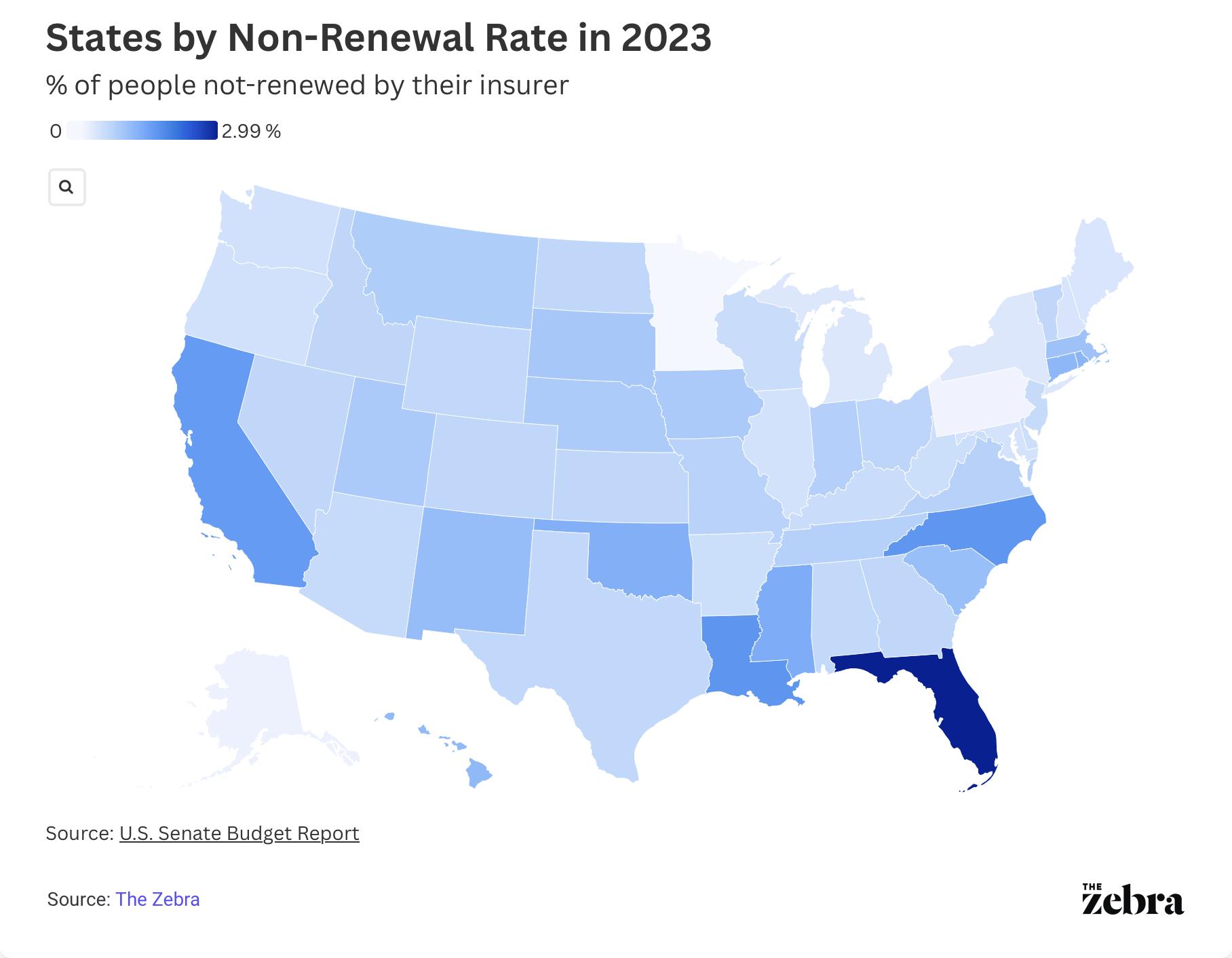
While wildfire- and hurricane-prone states were the first to feel the strain, recent Treasury Department and Senate Budget Committee analyses show rising premiums and nonrenewals
spreading inland, driven by floods, hailstorms, and escalating rebuild costs. Between 2018 and 2023, insurance nonrenewal rates rose sharply across much of the U.S., with particularly steep increases in California, Florida, Hawaii, Washington, Louisiana, and parts of the Midwest — many of the same regions where AANHPI households are concentrated.
Homeownership in AANHPI communities is disproportionately clustered in high-cost, highrisk metros — coastal California, Hawaii, New York, Washington, and Florida — where insurance is increasingly a prerequisite that cannot be assumed. In these markets, coverage gaps are delaying closings, forcing buyers to abandon purchases late in the process, or pushing homeowners into last resort plans with sharply higher premiums and weaker protections.
Hawaii offers a stark example. A 2025 report from the Hawaii Appleseed Center for Law & Economic Justice found that property insurance nonrenewals jumped 216% statewide between 2018 and 2023,
with condominium buildings especially vulnerable. Homeowners premiums rose an average of 12% between 2021 and 2024, while condo associations saw average increases closer to 16%, with some buildings reporting annual fee hikes of more than $2,000 per unit. Because mortgages cannot be issued without adequate insurance, older and more affordable condos, which are often entry points for first-time buyers and immigrant households, are becoming increasingly difficult to sell.
California tells a similar story. Following recent wildfires, a statewide survey found that four in 10 policyholders have experienced insurability problems, including dropped coverage or steep premium increases. Even homeowners whose properties did not burn have seen significant hikes. Seven in 10 Los Angeles fire survivors had not returned home a year later, in part due to insurance delays and disputes, illustrating how coverage instability can freeze housing long after a disaster ends.
Those insurance constraints can play out very differently even within the same disaster zone: The Wall Street Journal recently documented how master insurance policies in neighboring Pacific Palisades condominium communities dictated whether residents could rebuild collectively or were forced to sell and exit homeownership, while NPR reporting from Altadena following the Eaton fire shows single-family homeowners facing prolonged displacement as insurance delays, disputes, and contamination claims stall rebuilding timelines.
National reporting echoes these findings. Homeowners interviewed by The New York Times describe premium increases of 30% to 60% year over year, rising deductibles, shrinking coverage, and a growing fear that filing a claim could trigger cancellation. Some are selling and returning to renting. Others are going uninsured if they own outright. In Florida, researchers have found that a 10% increase in insurance costs can
reduce home values by nearly 5%, signaling that insurance stress is now feeding directly into price corrections.
Climate risk sits beneath all of this. Nearly 93% of homeowners expect climate-related damage to their homes within the next three years, according to Kin’s survey, and 49% say climate concerns are influencing their plans to move or not move at all. Yet most of these moves are local, not interstate, reinforcing what agents already see on the ground: Households want to stay near jobs, schools, and family, even as insurance makes doing so harder.
For AREAA members, this shift changes the nature of real estate work itself. Insurance was once a back-office detail resolved after an offer is accepted. It is now a front-end constraint that shapes affordability, eligibility, and longterm housing stability. This is especially true for multigenerational households, fixed-income seniors, and buyers stretching to enter high-cost markets.
The takeaway is blunt: Families cannot buy or keep homes they cannot insure, regardless of inventory, interest rates, or demand. As insurance becomes a hidden gatekeeper to ownership, agents and brokers who understand hard-market carriers, last-resort plans, resilience retrofits, and early risk assessment are becoming essential navigators in the housing system ahead.
The Stuck Generation
When low-rate mortgages freeze mobility — and staying put becomes the strategy
Americans are moving less than at any point since the federal government began tracking the data in the 1940s. In 2023 and 2024, fewer than 8% of Americans changed residences in a given year, down from roughly 20% in the postwar
decades. Job switching has slowed in parallel: The likelihood that a worker changes employers in a given month has fallen from roughly 2.8% in the late 1990s to about 2.3% in the 2020s. Housing lock-in and labor stagnation are now reinforcing each other, producing what economists increasingly describe as a frozen mobility system.
At the center of that freeze is a once-in-ageneration mortgage divide.
That lock-in is beginning to ease at the margins. According to recent Washington Post reporting citing Redfin chief economist Daryl Fairweather, there are now more U.S. homeowners carrying mortgage rates above 6% than below 3%, as time and life events — not falling rates — gradually erode the stock of ultra-low pandemic-era loans, even though rates under 5% still deter most owners from moving.
That unwinding remains slow. Thirty-year fixed mortgage rates have periodically dipped below 4% before, but the pandemic created an unprecedented concentration of ultra-low, longterm fixed loans. During 2020 and 2021, rates fell below 3% for the first time on record, bottoming out near 2.65% in early 2021. As a result, more than one-quarter of all outstanding U.S. mortgages originated or were refinanced during that narrow window. Today, roughly one-third of homeowners hold rates between 3-4%, and more than 80% carry rates below 6%.
Trading those loans for today’s 6–7% rates is a major reset. Realtor.com estimates that the typical homeowner currently pays about $1,300 per month in principal and interest. Purchasing a comparable home today would raise that payment by more than 70% nationally, and far more in highcost metros. In markets like San Jose and Los Angeles, selling and rebuying a similar home can increase monthly mortgage costs by 170 to 180%. The industry shorthand for this problem is golden handcuffs, as homeowners are now staying put because moving would dramatically raise their monthly costs.
The consequences show up in lived experience.
Across the country, households that bought during the pandemic describe a similar bind: financially stable on paper, but physically stuck. Recent New York Times reporting captured couples who rushed to buy before rates rose, paying over asking and locking in manageable monthly payments, only to find a few years later that life had moved on while their housing could not. Families added children, pets, and work-fromhome jobs, but not square footage. The mortgage stayed cheap, but the house stayed the same.
Others describe the paradox of feeling “lucky” and trapped at the same time. Some homeowners acknowledge that their low-rate loans put them
ahead of peers shut out of today’s market, even as they abandon plans to move, expand, or relocate. What was once intended as a starter home has become a long-term one by necessity.
The lock-in runs in the opposite direction as well. Older homeowners who might otherwise downsize or “right-size” are remaining in larger homes because selling would often replace a paid-off loan or a sub-3% refinance with a materially higher monthly burden, even for a smaller property. For households on fixed or semi-fixed incomes, the math rarely works. In climate-exposed regions, downsizing can also mean trading a familiar risk profile for a new one, while family considerations such as proximity to adult children, caregiving roles, or multigenerational living arrangements further limit viable options. Across age groups, the constraint is repeatedly not a reluctance to move, but the lack of financially viable alternatives.
The result is a housing stock increasingly mismatched to life stage: growing families unable to expand, empty nesters unable to shrink, and first-time buyers unable to enter because the ladder is jammed at every rung.
According to Realtor.com, the lock-in effect is strongest in expensive coastal and gateway metros where AANHPI households are most concentrated — San Jose, Los Angeles, the Bay Area, Seattle, New York, Honolulu, Northern New Jersey, and parts of Southern California — where high home values amplify the impact of higher rates. In the West and Northeast, more than 80% of mortgages remain below 6%, and nearly one in four carries a rate under 3%. In these markets, even modest moves can trigger outsized payment shocks, effectively freezing homeowner mobility.
By contrast, parts of the Midwest and select Sun Belt markets, where price growth has cooled and a higher share of mortgages were originated after 2022, are beginning to see the lock-in effect loosen at the margins. But those areas overlap less with where AANHPI households are concentrated, reinforcing a geographic imbalance in mobility and inventory.
The Golden Handcuffs
The math that's keeping everyone home; what selling and rebuying a comparable home actually costs in today's market.
30-year fixed, 2021 historic low
30-year fixed, 2026 market rate Estimated monthly principal &
2.65% 6-7% $1,300 +70% +170% +180% $2,200+
Many Asian American homeowners entered the market through pooled resources, multigenerational planning, or precise rate timing. That strategy delivered stability and wealth protection, but it also raised the cost of exit. Dual-income households, which are more common among Asian Americans, face added friction at a moment when employers are offering fewer relocation packages and job switching has slowed. Washington Post reporting shows workers increasingly turning down job offers that require moves, because higher housing costs erase wage gains, tying labor immobility directly to housing lock-in.
Younger households feel the squeeze from the other side. With fewer move-up sellers, entry-level inventory remains constrained, even as prices stabilize in some markets. Interviews with first-time buyers describe postponing marriage, children, or relocation, again, not because of lack of desire, but because monthly payments are now the binding constraint.
Climate risk is now compounding that stuckness. According to Kin’s 2026 Homeownership Trends Report, roughly half of homeowners surveyed say climate concerns are influencing whether and where they would consider moving, yet most expect any relocation to remain local. In practice, that means households stay put even as risks rise, layering insurance costs, retrofit expenses, and climate exposure onto already immobile housing decisions. Mortgage lock-in doesn’t just freeze movement — it narrows the range of viable options when people do consider change.
This is a significant reordering of housing behavior where the housing ladder still exists, but fewer households are climbing it.
For many locked-in homeowners, adaptation has become the only viable path forward. Interviews with families across Florida, California, and the Mountain West describe households choosing to renovate incrementally by adding rooms, reworking layouts, or planning long-term retrofits. Builders and contractors report rising demand from homeowners who want to expand in place or create secondary units, even among empty nesters who would otherwise downsize.
Importantly, lower mortgage rates alone are unlikely to restore mobility or affordability. Analysts at Zillow estimate that mortgage rates would need to fall to roughly 4.4% for a typical home to become affordable to an average buyer, a level most forecasters view as unrealistic in the near term.
In several AANHPI-heavy metros, including Los Angeles, San Francisco, San Jose, San Diego, Miami, and New York, Zillow has concluded that even a theoretical 0% mortgage would not make the median home affordable, given today’s prices and incomes. Berkshire Hathaway HomeServices has echoed that assessment as well, noting that homeowners remain reluctant to sell because price gains do not offset the long-term cost of higher monthly payments. The result is a market where both buyers and sellers are constrained simultaneously. Rates fall modestly, but not enough. Prices soften unevenly, but not decisively. As a result, mobility remains stalled.
In this environment, the role of real estate professionals is changing. When transaction volume slows, advisory demand rises. Agents, lenders, and housing advisors are spending less time facilitating moves and more time helping households make complex stay-put decisions, such as how to retrofit for aging parents,
The ladder still exists. Nobody is climbing it.
<8% 80% +170% 0%
Of Americans changed residences in 2024 — lowest rate since the 1940s
Of homeowners carry mortgage rates below 6% — golden handcuffs in place
sequence renovations, manage climate risk, preserve equity, or plan a move years ahead rather than months. For AANHPI households balancing multigenerational needs, employment uncertainty, and long-term wealth preservation, that guidance has become central.
Why Mortgage Approval Can Still Be Hard for AANHPI Households
AANHPI borrowers are often cited as having higher credit scores and lower overall mortgage denial rates than many other groups. Yet those advantages do not eliminate friction. In today’s high-rate, high-documentation market, approval challenges increasingly reflect structural fit rather than borrower risk.
Large loans in high-cost markets tighten margins quickly
According to HMDA data in our AREAA Opportunity Index, AANHPI borrowers consistently take out larger-than-average mortgage loans, largely because they are concentrated in highercost coastal and gateway metros. In a high-rate
Payment increase to buy a comparable home in San José or LA today
Even a zero-rate mortgage wouldn't make median homes affordable in AANHPI-heavy metros
environment, those larger balances push debt-toincome ratios to binding thresholds faster, even for borrowers with strong credit profiles and stable earnings.
Entrepreneurial and mixed-income households face documentation gaps
Urban Institute research shows that AANHPI wealth is disproportionately tied to business ownership and non-W-2 income streams. While these households often demonstrate long-term income stability, underwriting models that prioritize standardized wages and two-year continuity can discount real earnings, delaying approvals or reducing loan amounts even when repayment risk is low.
Lower denial rates do not mean smoother approvals
National HMDA analyses find that Asian borrowers are denied at lower rates than some other groups, but still experience elevated scrutiny compared with white borrowers after controlling for observable characteristics. In practice, this
often appears as extended approval timelines, additional documentation requests, or last-minute conditions that increase the risk of deal fallout rather than outright rejection.
AANHPI households are significantly more likely to live in multigenerational arrangements, according to both Census data and the AREAA Opportunity Index. These structures can materially reduce housing risk through shared expenses and caregiving support, yet pooled resources and informal family contributions often fail to count as qualifying income, creating friction at both purchase and refinancing stages.
High rates magnify every point of misalignment
At mortgage rates near 7%, underwriting thresholds tighten automatically. Borrowers who would have qualified easily in a lowerrate environment now fail by narrow margins, particularly in high-cost metros where AANHPI households are concentrated. The result is not only fewer approvals, but fewer viable paths to restructure housing through refinancing, downsizing, or multigenerational solutions.
Taken together, today’s mortgage friction for AANHPI households often creates a mismatch between how households earn, share, and deploy resources and how underwriting systems are designed to measure them.
Opportunity in Uncertainty
After several years of frozen mobility, elevated borrowing costs, and near-total seller control, housing market conditions are beginning to loosen in 2026. According to Realtor.com’s December 2025 housing market report, active listings were
up 12.1% year over year nationwide, marking the 26th consecutive month of inventory growth. Even so, inventory remains roughly 12.5%t below prepandemic norms, suggesting the market is slowly releasing pressure.
Inventory gains remain concentrated in the South and West, while much of the Midwest and Northeast continue to lag, reinforcing that opportunity is now highly local. In many of the markets that overheated most dramatically during the pandemic, homes are taking longer to sell and sellers are adjusting expectations. Nationally, the median list price slipped 0.6% year over year in December, while price per square foot fell more sharply, a signal that price discovery is underway even as headline prices remain historically high.
Real estate agents are seeing this shift play out in real time. A fourth-quarter survey by CNBC found that more than 92% of agents reported at least one seller cutting their price, and nearly half said most of their sellers had done so. While prices have not reset to affordable levels for most households, negotiation, absent for years, is returning as a normal feature of transactions.
Nowhere is this dynamic more visible than in new construction. According to the National Association of Home Builders, two-thirds of builders were offering sales incentives by the end of 2025, the highest share in the post-Covid period. Some 40% reported cutting prices, with average reductions around 5%, while mortgage rate buydowns, closing-cost credits, and design concessions have become common. Builder confidence remains below historical norms, but expectations for future sales have turned positive for several consecutive months.
For buyers, mortgage rates have stabilized rather than fallen dramatically. Freddie Mac data show the average 30-year fixed rate hovering just above 6% at the start of 2026, the lowest firstweek reading since 2022. Purchase mortgage applications are running more than 20% above
year-earlier levels, suggesting that sidelined buyers are beginning to re-engage, not because homes are suddenly affordable, but because uncertainty has become the new baseline.
This matters for AANHPI households. Many enter the market with strong credit profiles, but face constraints tied to multigenerational obligations, self-employment income, family co-ownership structures, or limited liquidity despite longterm earning potential. In a market that rewards preparation over speed, these households are often better positioned than headline affordability metrics suggest, provided they have access to informed, culturally fluent guidance.
Opportunity in this environment is defined by navigating complexity. Rising inventory in select regions is expanding options for buyers with geographic flexibility. Builder incentives are lowering effective monthly costs without rewriting price histories. First-time buyer “refuge markets,” identified by Realtor.com, are offering paths to
ownership that remain closed in higher-cost metros. At the same time, demand is shifting toward renovation, ADU construction, and multigenerational housing strategies as families adapt rather than move.
The constraints are real. Insurance costs, property taxes, and total cost of ownership continue to weigh heavily on decision-making, often as much as mortgage rates themselves. Political and policy uncertainty, from tariffs to insurance regulation to the midterm elections, adds another layer of unpredictability. Historically, such shifts tend to reshape incentives before they reshape prices. What is emerging, then, is instead of a buyer’s market or a seller’s market, it is a negotiated one. A market where life events such as births, deaths, job changes, and caregiving needs are driving transactions. And a market where the value of real estate professionals is expanding.
For AREAA members, opportunity in uncertainty lies in helping families understand their options, assess risk, structure ownership, and make durable decisions when the margin for error is thin.
REBUILDING LOS ANGELES AFTER THE FIRES: ONE YEAR LATER
In last year’s State of Asia America report, we documented the resilience of AANHPI families in the face of disaster, focusing in part on the devastating Eaton and Palisades fires in Los Angeles. The scale of the crisis was stark: The fires ignited within hours of each other on Jan. 7, 2025, burning nearly 59 square miles across Los Angeles County, destroying more than 16,000 homes, businesses, churches, and other structures, and ultimately claiming 31 lives. More than 100,000 residents were evacuated and displaced. By some estimates, an additional 400 premature deaths may be linked to smoke exposure and disruptions to medical care during the emergency.
AANHPI families faced acute barriers as the fires unfolded. Residents described delayed or missing evacuation alerts, chaotic evacuation routes, and the trauma of sudden displacement. Cynthia Choi, co-founder of Stop AAPI Hate, lost her Altadena home after receiving no evacuation alert and was forced to flee with her family and pets as the fire advanced. For limited-English-proficient residents, the consequences were often fatal.
Zhi Feng Zhao, an 84-year-old Altadena resident, did not receive evacuation notices in time and did not survive the Eaton Fire, illustrating how alert failures endangered residents who depended on timely emergency communications. Others faced impossible tradeoffs: Pasadena fire engineer Chien Yu was actively fighting fires elsewhere when the Eaton Fire overtook his own Altadena home, destroying it along with his son’s school.
Even as these failures unfolded, AANHPI communities mobilized immediately when formal systems fell short. Volunteers from the Tzu Chi Foundation began distributing food, supplies, and translation support within days of the fires. Joan Nguyen, displaced by the Eaton Fire herself, launched an emergency childcare initiative almost immediately, providing free childcare to families who had lost homes and schools and needed support to evacuate, work, or secure temporary housing during the crisis.
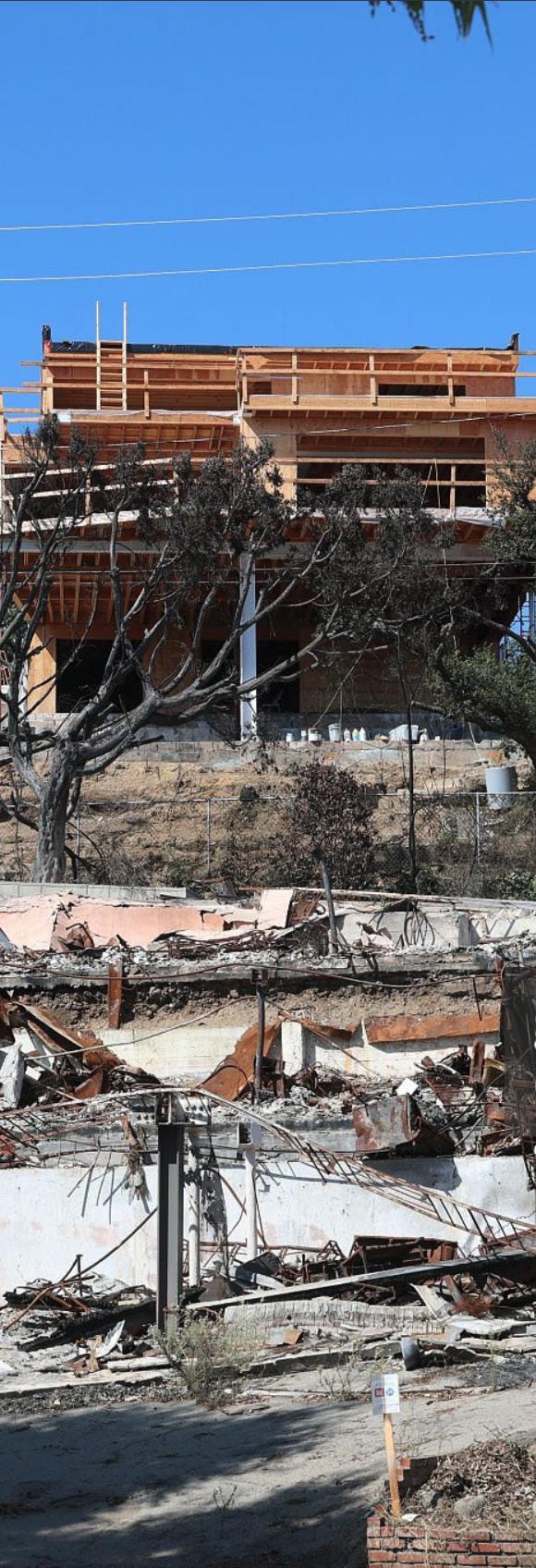
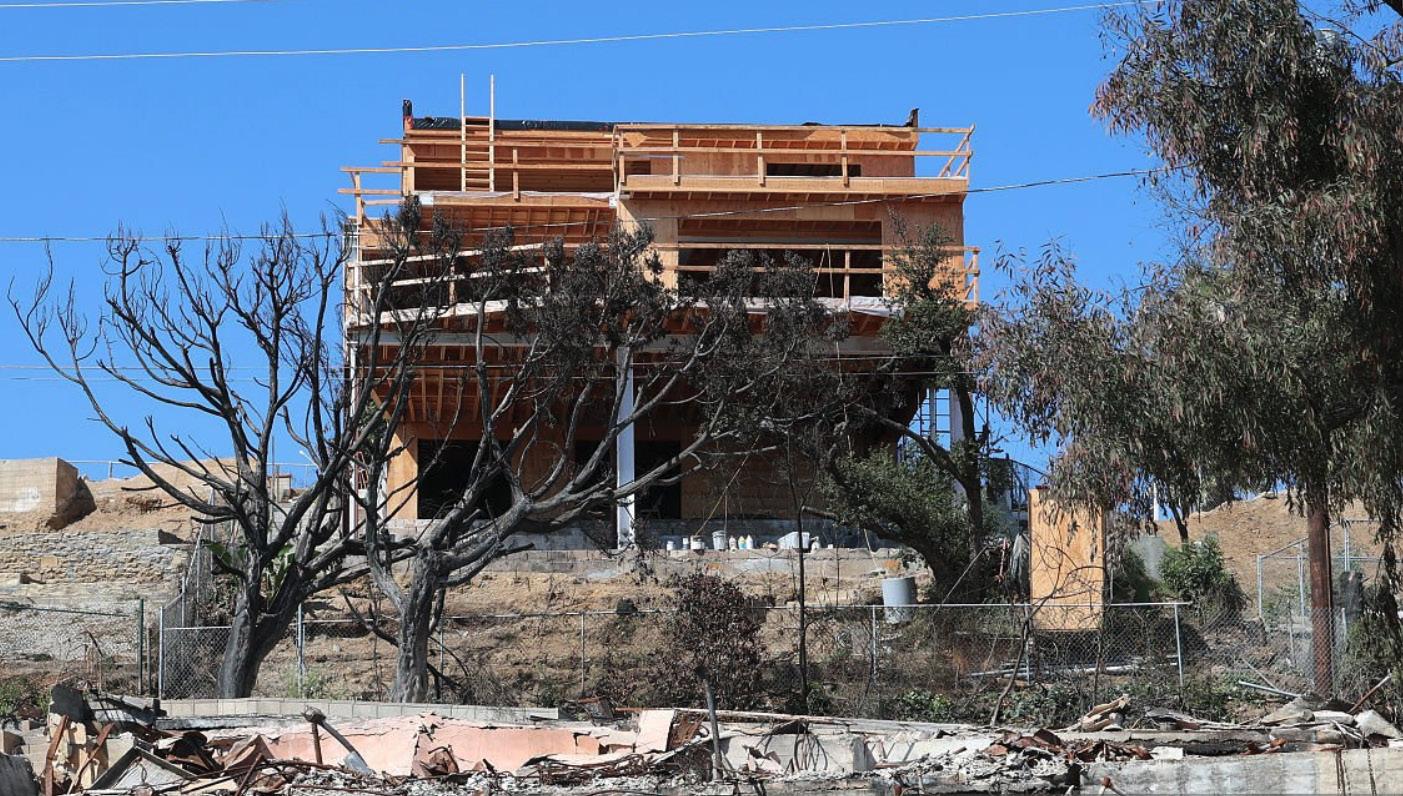
One year later, fewer than a dozen homes have been fully rebuilt. At the state level, Gov. Gavin Newsom has advanced wildfire-related legislation while repeatedly calling on the Trump administration and Congress to release nearly $34 billion in federal disaster aid sought by California nearly a year earlier.
The slow pace of recovery reflects not only the scale of the destruction but a broader national pattern in disaster-stricken housing markets, where insurance gaps, permitting delays, infrastructure constraints, and rising construction costs increasingly determine who can return and who cannot.
A Slow Path Back Home
While much of the debris has been cleared, lots flattened, and winter rains have returned greenery to some once-charred hillsides, rebuilding has lagged far behind cleanup. At a gathering at the Eaton Fire Collaborative community center in Altadena for the one-year anniversary of the fires, survivors gathered to show support, as well as to voice anger and frustration about the bureaucratic and systemic failures and delays, and the swarm of real estate speculators in the area. But they mostly paid tribute to their community and the lives lost.
“This year has been the hardest year of our lives,” Joy Chen, executive director of the Eaton Fire Survivor Network, told the Los Angeles Times. “Unimaginable grief. The 31 people who died that day, and the hundreds who have died prematurely since. Homes lost. Jobs lost. Incomes lost. A sense of safety and identity stripped away.”
As of this writing, Los Angeles County has issued rebuilding permits for only about 16% of homes destroyed in Altadena, while the City of Los Angeles has approved permits for just under 14% of destroyed homes in Pacific Palisades.
These figures matter because permitting is the gateway to everything that follows: construction financing, contractor commitments, and a realistic timeline for return. While county and city officials have introduced expedited permitting centers, fee waivers, and preapproved home designs, progress remains uneven. A small number of homes have been rebuilt. Homes that survived but were contaminated by ash or smoke are still awaiting remediation, delayed by insurance disputes, or have been remediated but continue to face contamination concerns. For most residents, reconstruction is still a future event rather than a present reality.
Displacement remains widespread. The Los Angeles Times found that more than seven in 10 Altadena residents remain displaced a year after the Eaton fire. Nearly half have exhausted their savings, and more than 40% have taken on personal debt to cover housing and living costs while waiting to rebuild.
Insurance and the Cost of Delay
Insurance has emerged as one of the most significant bottlenecks to rebuilding. Many homeowners are still negotiating claims for smoke damage, remediation, or total loss, even as construction costs continue to climb. Disputes involving the California FAIR Plan and investigations into insurers’ handling of wildfire claims have prolonged uncertainty for thousands of households.
The timing of insurance payouts has direct housing consequences. Each month of delay increases the risk that displaced homeowners deplete savings, take on debt, or decide that rebuilding is financially untenable.
In Altadena, where investigators have pointed to Southern California Edison equipment as a likely source of the Eaton Fire, the utility has launched a voluntary compensation program for affected households and businesses. Roughly 18,000 eligible claimants may choose between a faster, standardized payout or a slower, more detailed review that could take months. Accepting compensation requires waiving the right to sue, forcing families to weigh immediate access to funds against the possibility of a larger recovery through litigation that could take years to resolve.
For many households, proposed settlements will likely fall well short of actual rebuilding costs, particularly as labor shortages and material prices continue to push construction estimates higher. Attorneys representing fire victims have warned
that early settlement offers may represent only a fraction of potential legal recoveries, placing homeowners in an untenable position between speed and sufficiency.
Infrastructure and System Strain
Beyond individual households, infrastructure constraints continue to impede recovery. Questions about water supply reliability, power infrastructure, and fire-hardening measures remain unresolved. Reporting has shown that aging electrical transmission lines — including idle lines running through high-risk areas — had not been fully assessed or upgraded before the fires, and some proposed safety changes may take years to implement.
City and county leaders also face competing pressures: speeding up reconstruction while imposing stricter building standards to reduce future fire risk. Undergrounding power lines, upgrading water systems, and reinforcing fireresistant construction all add cost and time, even as displaced residents push for faster approvals.
A Housing Question, Not Just a Recovery Question
Rebuilding after the Eaton and Palisades fires has become a litmus test of whether housing, insurance, and permitting systems can function under climate stress.
For AANHPI households, many of whom experienced devastating loss and demonstrated remarkable resilience in the immediate aftermath, recovery now poses a different risk: prolonged displacement that undermines homeownership, wealth preservation, and multigenerational stability. The longer rebuilding stalls, the greater the chance that temporary housing arrangements become permanent exits from affected communities.
STOP AAPI HATE FOUNDER CYNTHIA CHOI
ON REBUILDING AND RESILIENCE IN ALTADENA AFTER THE EATON FIRE
On the night the Eaton Fire tore through Altadena, Cynthia Choi did not receive an evacuation alert.
“I did not get any alerts — certainly no alerts to evacuate,” Choi told AsAm News in January 2025. Choi packed an overnight bag, not believing her family would be unable to return home. She left with her daughter and pets, urging her husband to follow. He stayed behind late into the night warning neighbors and trying to put out embers, until law enforcement ordered him to leave. That was the last time the family saw their home intact.
“This house had special meaning for him,” Choi said. “He loved that house. His first home. Something that he could call his own, you know, working so hard.”
Choi, the co-founder of Stop AAPI Hate, lost her Altadena home along with thousands of other residents displaced by the Eaton Fire, which claimed 19 lives in the area and destroyed thousands of homes in one of the region’s most established Black and multiracial communities.
A year later, she says the immediate trauma has given way to a longer, more uneven recovery.
Disasters Have a Long Tail
When asked how she and her family are doing now, Choi began not with her own loss, but with gratitude for her community, and for the support she received as an AREAA grant recipient during the wildfire recovery period.
“AREAA’s support was truly unexpected and deeply generous at a moment when my family was navigating trauma and loss,” she says. “The broader outpouring of community has been such a vital part of our recovery and reminding us that healing happens collectively.”
Choi is deliberate about placing her experience within the larger context of Altadena. “There’s incredible resilience that’s showing up every day,” she says. “Altadena’s resilience is real and deeply rooted and shaped by decades of mutual aid and cross-racial solidarity that pre-existed.”
But resilience, she emphasizes, has been tested by gaps in the recovery process.
Only about a half a dozen homes have been built among the 9,000 lots in both Pacific Palisades and Altadena over a year after the fires, according to USA Today. A UCLA analysis found that nearly seven in 10 severely fire-damaged homes in Altadena show no observable progress toward rebuilding. Black and Asian homeowners are the most likely to remain stalled, and twothirds of the homes that have changed hands have been purchased by outside investors, furthering concerns about displacement and long-term affordability. Roughly one in four homeowners has entered the permitting process, but many applications remain stuck, often due to underinsurance, missing technical plans, or financing gaps.
“There has been an absence of resources and uneven recovery as a result of that,” Choi says. “Disasters have a long tail. It doesn’t end once the fires are contained and the debris has been cleared.”
That tail, she says, extends into “housing instability, financial strain, and displacement that is ongoing for the majority of those who lost their homes.”
Many Altadena homeowners, she adds, also ran microbusinesses out of their homes.
“So, imagine losing your home and your source of income,” she says.
Homeownership, Pre-Wealth, and Uneven Recovery
For Choi, the Eaton Fire exposed climate risk but also structural inequality.
“The other point that I want to name is that with wildfires — whether it’s a confluence of climate change as well as other factors, as in the case of the Eaton Canyon fires — barriers to recovery are largely man-made,” she says. “From the insurance and rebuilding systems to policies that advantage those who had pre-wealth prior to the fire — to those who did not — and then also just having institutional access.”
Her family, she says, remains committed to rebuilding in Altadena. But rebuilding, in her view, cannot be reduced to construction alone.
“Rebuilding in Altadena must be about preservation as much as reconstruction,” she says. “We want to see the preservation of affordability. There’s cultural memory. It was one of the most multiracial communities prior to the fire, and I think that’s really important to recognize. So in the midst of recovering and rebuilding, it’s been really important for us to remember what this community has meant to us.”
Although Choi had lived in her Altadena home for about three years before the fire, she had lived along the North Pasadena–Altadena border for many years prior. Her connection to the area runs deeper than a single address, but her Altadena home represented a milestone.
“It was something that was really important to him — to have a home that he was able to purchase,” she says of her husband. “It was going to be our forever home. On a personal level, it was something that was very special to us. But we are going to rebuild, despite all the obstacles.”
Neighbors Remain Tight-Knit
Choi remains in close contact with neighbors across Altadena, many of whom are still displaced nearly a year after the Eaton Fire. “I’m in touch with our neighbors,” she says. “We’re a very tight-knit community.” Where people landed after the fire, she explains, depended largely on what options they had before it. “People went wherever they could,” Choi says, often relying on family or temporary arrangements in an already strained housing market. Renters were also deeply affected, she notes, as demand surged overnight.
The uneven recovery has fueled discussions about the contrast in responses on a socioeconomic level. “There’s been a lot of comparison to the Pacific Palisades and Malibu,” Choi says. “Where you had individuals who had pre-wealth, who had much more options and opportunities. Whereas Eaton Canyon fire victims — really different scenarios there.”
That disparity, she emphasizes, did not emerge by chance. “There’s a reason why there is a high percentage of Black and Asian and Latinx homeowners in Altadena,” she says, pointing to the legacy of racial covenants, redlining, and discrimination in neighboring areas.
“That continues to be a problem, whether it’s being locked out of access to institutional resources,” she continues. “That’s part of the story, part of the history, and part of the ongoing story today. And I think that will very much affect who is going to be able to rebuild, especially for families whose assets were tied to homeownership.”
She adds: “That’s a huge question for many families, and it’s also a huge question for how we systemically address this through policy and affirmative actions that can support families at this time.”
Generational Wealth Lost in a Single Moment
When asked how families are thinking about the loss of homeownership — not just as shelter, but as generational wealth — Choi returns to what she has seen among her neighbors.
“For many of them, they come from a line of homeowners,” she says. “They were able to live in the home that they have because of sacrifices that prior generations have made.”
Some families, she notes, had multiple homes on adjacent lots, supporting several generations.
“And to lose that in a single moment is devastating,” she says. “That’s part of the Altadena story.” The question of who is ultimately able to rebuild, she adds, will determine the community’s future. “That will very much affect who is going to be able to rebuild,” she says, “especially for families whose assets were tied to homeownership.”
Voices Missing From the Recovery Conversation
Choi also stresses that many of the most impacted residents are not being heard.
“There are a lot of people who are not sharing their experiences,” she says. “Whether they’re limited English speaking or they’re just so focused on everyday survival.”
County officials, she fears, are not hearing from people who are simply trying to get by.
“I include renters,” she says. “I include people who lost their homes and all their generational wealth. I include people who had microbusinesses. They lost their housing and their income. I have no idea how they are surviving in this moment.”
She adds that this silence is structural. “That’s always been the case, that the most impacted people are often not given an opportunity to share their experiences,” she says. “And that’s what I worry about.”
Language Access and Systemic Gaps
Choi says the disaster also exposed critical failures in emergency communication and language access.
“This disaster exposed some systemic gaps,” she says. “I want to lift up the fact that there were deaths and injuries, and the issue of alerts not reaching certain parts of Altadena. Our family did not receive alerts.”
Language access, she emphasizes, remains a major barrier. “It’s a massive issue when it comes to information that’s critical for residents to receive, whether it’s accessing information in language during a disaster or afterward,” she says.
She points to residents who never received information at all, including those who are limited English proficient. UCLA research found that some 50,000 Los Angeles residents live in wildfire evacuation areas, and 12,000 of those need language assistance.
“Not just Asian immigrants, but all residents navigating complex systems,” she says. “I am an advocate. I am an English speaker. I am able to do research and advocate for myself, and it has still been very, very difficult. I can only imagine what it’s been like trying to access information and resources people are entitled to.”
“This was a disaster that affected everyone,” she adds. “And it’s the responsibility of our elected officials and public agencies to ensure that everyone gets the information and resources they are entitled to.”
A Community Still Organizing
Despite the obstacles, Choi sees organizing as one of Altadena’s defining strengths.
“Communities are coming together,” she says. “That’s been the heartbeat of Altadena — mutual aid, sharing information, sharing resources.” That includes helping neighbors track hearings, navigate systems, and advocate collectively. “It’s, ‘There’s a hearing happening, we need to show up and talk about what our experiences have been,’” she says. “To demand that no one gets left behind.”
She emphasizes that other wildfire-stricken areas have also had uneven rebuilding timelines. Wildfires over the past eight years have destroyed more homes in California than any comparable period on record. Of the roughly 22,500 houses lost in the state’s five most destructive fires between 2017 and 2020, fewer than 40% have been rebuilt, according to a Los Angeles Times analysis. Rebuilding has proceeded far more quickly in wealthier, suburban areas than in poorer or rural regions, where recovery has often stalled for years.
“If you look at other communities, they’re still rebuilding five or seven years later,” she says. “And the question becomes: who is able to rebuild? Who is able to pull the pieces together, pick up their family, and carry on? That’s very, very difficult.”
She emphasizes the systemic barriers that prevent rebuilding as essential to this conversation.
“Who has access to resources?” she asks. “Who is able to access financial support to recover? Even those who have insurance are underinsured. We also have to come to grips with climate change, and with the need for much more long-term planning.”
Choi adds that wildfires have increasingly become an everyday fear and risk in California, and no longer confined to what was once defined as wildfire season. “There needs to be accountability in terms of prevention and response,” she says. “Because this was not the last disaster. There will be more.”
Preparing for What Comes Next
A year later, Choi says the fire has changed how she thinks about preparation and responsibility.
“As a community, in terms of how we think about preparation, this is inevitable,” she says. “Wildfires are no longer rare or seasonal events. So the question has to be, how are we preparing? Not just as individuals. Not just gathering papers or having a go bag and an emergency kit. How are we doing this collectively?”
For Choi, preparation extends far beyond personal readiness. As Altadena continues to navigate displacement, rebuilding, and uncertainty, Choi’s family remains committed to returning, and to preserving what made the community possible in the first place.
Rebuilding, she says, must also be about protecting the people, relationships, and histories that allowed families to build lives and wealth there across generations.
“A year out, we still have many, many people navigating trauma and loss,” Choi says. “People are trying to figure out their next steps, how they’re going to sustain their families, while continuing to be displaced.”
That responsibility falls to, she says, our elected officials and holding insurance companies accountable, but to the larger community as well.
“There are so many mechanisms that need to be in place, from first responders to mitigation efforts,” she says. “There needs to be preparation — not just mitigation, but ensuring our communities are sustainable. This isn’t something we can do as individuals. It requires collective action.”
Q A WITH SANDRA HO &
Not only will the Next Move in the housing market be contingent on economic factors, but it will be determined by the leaders who shape it. As one of the largest organizations in the financial industry, Wells Fargo is committed to ensuring their leaders accurately reflect the customers and communities they serve.. AREAA had the opportunity to interview Wells Fargo’s Head of Home Lending Sales, Sandra Ho, on her leadership journey.
Can you tell us about your leadership journey?
My leadership journey hasn’t been defined by a single moment. It’s really been shaped by a series of experiences that reinforced the importance of resilience, curiosity, and people.
When I first entered this industry more than a decade ago, there weren’t many leaders who shared my background. Early on, I realized success wasn’t just about technical expertise. It was about navigating complexity, building trust, and bringing others along with you. Over time, I gravitated toward roles where I could have a broader impact, especially in areas tied to access and opportunity. That’s why understanding the range of customer needs isn’t just the right thing to do, it’s core to how we grow.
What continues to drive me is the recognition that homeownership remains one of the most powerful tools for building long-term wealth, and too many families still face barriers. My role is to help remove those barriers.
What strategies does your organization use to support leadership development and advancement?
We believe leadership should reflect the customers and communities we serve.
At Wells Fargo, we’ve been intentional about building a strong pipeline through leadership development programs, sponsorship initiatives, and employee networks that foster mentorship and connection. In the past year alone, more than 200 Home Lending employees participated in our enterprise mentorship program. That’s one way we’re helping develop future leaders.
Sandra Ho, Head of Home Lending Sales, Wells Fargo
In my experience, real progress happens when organizations move beyond awareness and take action. That means investing in people early, creating opportunities for visibility, and holding leaders accountable for outcomes.
How does your organization approach representation across teams and leadership?
We want to see the same depth of experience and perspective at the executive level that we see across the rest of our organization. A big part of that is strengthening the pathways that support growth and advancement.
We have strong talent across the board, and we’re focused on making sure people have access to opportunities such as sponsorship, high-visibility assignments, and the networks where decisions are shaped.
Our partnerships, including with organizations like AREAA, are one part of that broader effort. Ultimately, the goal is to create an environment where people can see themselves as future leaders and have the support to get there.
What are the most persistent barriers to advancement?
One of the biggest gaps comes down to accountability. Organizations talk about development and advocacy, but not all of them hold senior leaders responsible for who they’re actively growing and championing.
Two barriers tend to come up consistently:
Visibility. I’ve worked alongside incredibly capable leaders whose contributions go under-recognized. That’s not a talent issue, it’s a systems issue.
Sponsorship. Mentorship helps guide your path, but sponsorship is what puts your name in the room when decisions are made.
The organizations that make the most progress are the ones that hold leaders accountable for building strong pipelines and actively advocating for others.
How have you navigated barriers to advancement?
Barriers to advancement are real, but they’re often oversimplified. They point to meaningful patterns, but they don’t tell the full story.
My perspective has been shaped by my own experience. I grew up in Singapore, where I was part of the majority, and built my career in the U.S., where I became part of a minority group. That shift gave me a different lens. It made me realize
that what’s often labeled as a limitation can really be a matter of context. Communication styles, decision-making approaches, and ways of building influence can vary, and they aren’t inherently strengths or weaknesses.
That’s pushed me to be thoughtful about how I show up, but also to question assumptions about what leadership should look like. The more important question is how organizations expand their definition of leadership, rather than expecting individuals to conform to one style.
What gives me optimism is how much the conversation has evolved. Progress isn’t just about individual success anymore. It’s about creating a more visible and accessible path for others.
Stereotypes: overly aggressive vs. quiet—where do you fall?
I don’t try to place myself on that spectrum, because I think the spectrum itself is flawed.
What matters to me is whether I’m communicating clearly, delivering results, and bringing people with me. Labels don’t really help with that.
At different points in my career, I’ve probably been perceived in different ways. What I’ve learned is that trying to fit into those labels isn’t productive. Leadership today requires range. You need to listen, collaborate, and be decisive when it counts.
In home lending, that often means balancing urgency with empathy as people navigate one of the most important financial decisions of their lives. That range isn’t a contradiction, it’s the expectation.
How do values like humility or collective accountability sometimes work against individuals?
I don’t see humility or collective accountability as drawbacks. They’re actually meaningful leadership qualities.
The challenge is that many environments have historically rewarded a narrower definition of leadership, often placing more emphasis on visibility than impact.
Organizations that recognize and elevate a broader range of leadership styles will be stronger over time. Consistent execution, customer focus, and team success don’t depend on a single personality type.
Do you have a family history that shaped your leadership journey?
My family’s experience had a strong influence on how I think about opportunity and stability.
There was always an emphasis on education, hard work, and building something for the next generation. Homeownership, in particular, was seen as a symbol of long-term stability.
That perspective has stayed with me. It shapes how I think about expanding access to homeownership today. Every family that becomes a homeowner is building something lasting, and that carries real meaning.
How do companies benefit by aligning with the communities they serve?
It’s not just a value, it’s a business advantage.
When your team brings different perspectives, you’re better equipped to understand customer needs and respond effectively. In home lending, that can directly influence whether a customer starts and completes the process.
That’s why we’ve invested in programs like the Homebuyer Access grant and Dream. Plan. Home. These are designed to meet customers where they are.
Over time, this approach leads to better outcomes, stronger trust, and more sustainable growth.
As more leaders progress, what pathways does that create for mentorship?
Leadership has a multiplier effect.
When people see others advance, it expands what feels possible. But visibility alone isn’t enough. Progress comes from action: opening doors, creating opportunities, and offering honest feedback.
Every leader has a chance to create pathways for others. That’s how you turn individual progress into long-term momentum.
What gives you hope for the next generation of leaders?
What stands out to me is their clarity. They’re thoughtful about the impact they want to have. They collaborate naturally, and they’re more willing to speak up and challenge assumptions.
I’ve seen younger colleagues ask important questions that might not have been raised in the past. That kind of openness helps organizations evolve.
There’s a lot of opportunities ahead across homeownership, financial services, and community impact. I’m confident this generation will step into it.
From Left to Right: Hope Atuel, AREAA CEO and Sandra Ho, Head of Home Lending Sales, Wells Fargo at the 2025 AREAA National Convention
MORE AMERICANS ARE READY TO BUY. HERE'S WHY THAT'S GREAT NEWS FOR GENERATIONAL WEALTH.
Two reports released within months of each other in 2026 tell a story that, read together, shows optimism and opportunity that mainstream headlines are missing.
The first is Bank of America's 2026 Homebuyer Insights Report, an annual survey of 2,000 U.S. homeowners and renters. Its headline finding: for the first time since 2023, more Americans say it's better to buy a home than to rent or live with family, 53% versus 47%. The second is AREAA's own research, conducted with the Urban Institute, on Asian American, Native Hawaiian, and Pacific Islander (AANHPI) households. In addition to research that explores attitudes toward buying a home, AREAA's study tracks what actually happens to a household's wealth over the two decades after buying a home.
Read together, the two reports make a single, hopeful case. Bank of America shows that more Americans than at any point in recent years
are ready to become homeowners. AREAA's research shows exactly why that shift matters: homeownership, sustained over time, is one of the most powerful tools available for building generational wealth.
The mood has shifted, and more buyers are ready to act
Bank of America's survey found that attitudes toward homeownership improved across the board in 2026. Ninety percent of respondents now call homeownership a valuable investment, up from 79% a year earlier, and 94% associate it with stability. Confidence in one's own ability to buy has also risen, from 27% to 32%. Perhaps most notably, the number of buyers willing to wait indefinitely for prices or rates to fall is shrinking: 79% say they plan to move forward regardless of market conditions, and the "lock-in effect" that has kept rate-locked homeowners from selling appears to be loosening.
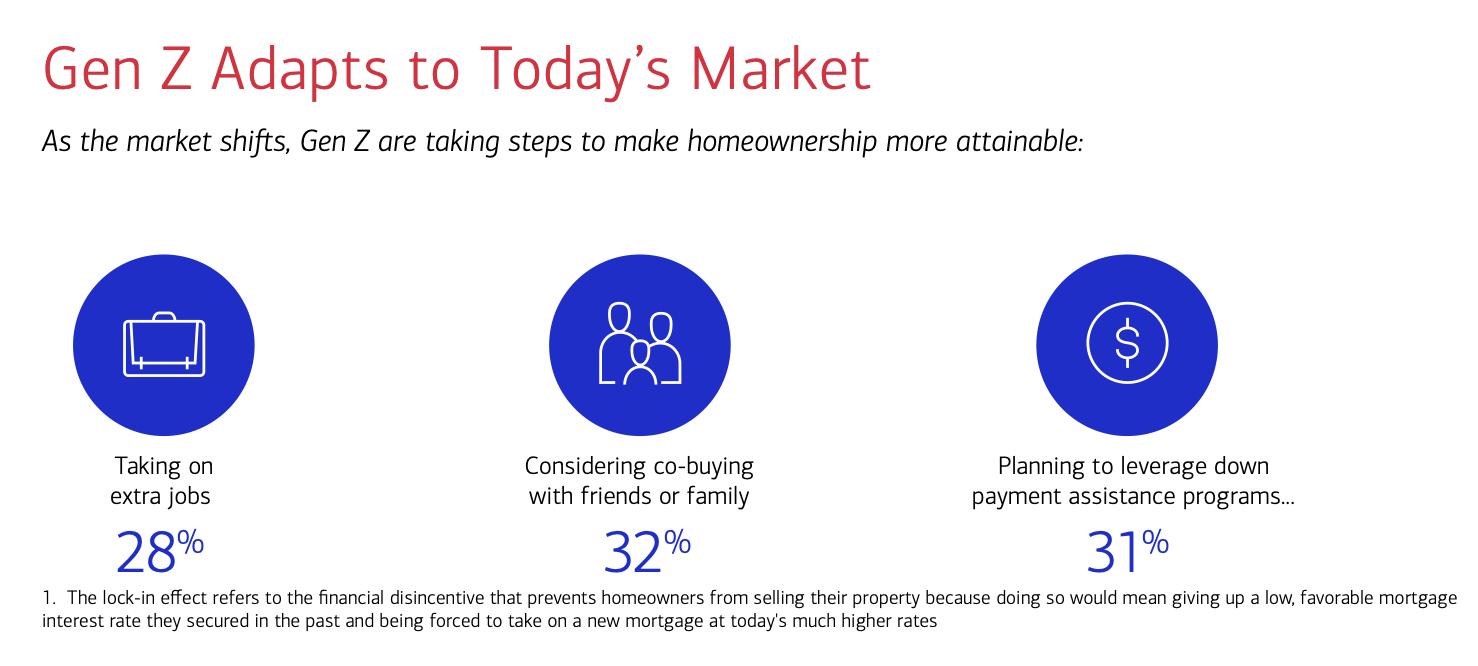
Affordability concerns remain real. Expensive home prices (58%, up from 46% in 2025) and high interest rates (47%, up from 40%) are still the two biggest obstacles cited by prospective buyers, and mortgage rates are hovering near 6.5%. But buyers are increasingly choosing to act despite that math rather than wait for it to improve, and younger generations are finding creative ways to make that happen. Nearly a third of Gen Z respondents are considering buying with friends or family, 28% report taking a second job to improve affordability, and 31% plan to lean on down payment or homebuyer assistance programs. Technology is playing a bigger role too: one in five buyers used an AI tool in the past year to estimate affordability or research neighborhoods, a share that rises to nearly a third among Gen Z, though most still want a human for the home tour or the legal paperwork.
This is the signal worth paying attention to. A growing share of Americans, across generations, are deciding that now is the time to become homeowners.
Why this choice matters: Findings from AREAA’s Study
This is where AREAA's study with the Urban Institute, becomes essential context. The first panel, AANHPI Homeownership and WealthBuilding Trajectories, doesn't ask how people feel about buying. It uses two decades of longitudinal data to show what happens to household wealth once they do, and the results add the empirical evidence that sentiment surveys point toward.
AANHPI households are a powerful lens for this question because they have posted some of the largest homeownership gains of any group in the country: the homeownership rate rose 11 percentage points from 1990 to 2024, one of the biggest increases across major racial and ethnic groups, with much of that growth driven by immigrant households (74% of AANHPI first-
time buyers are foreign-born). In other words, this is a population that has spent thirty years doing exactly what Bank of America's respondents say they now intend to do: getting off the sidelines and buying.
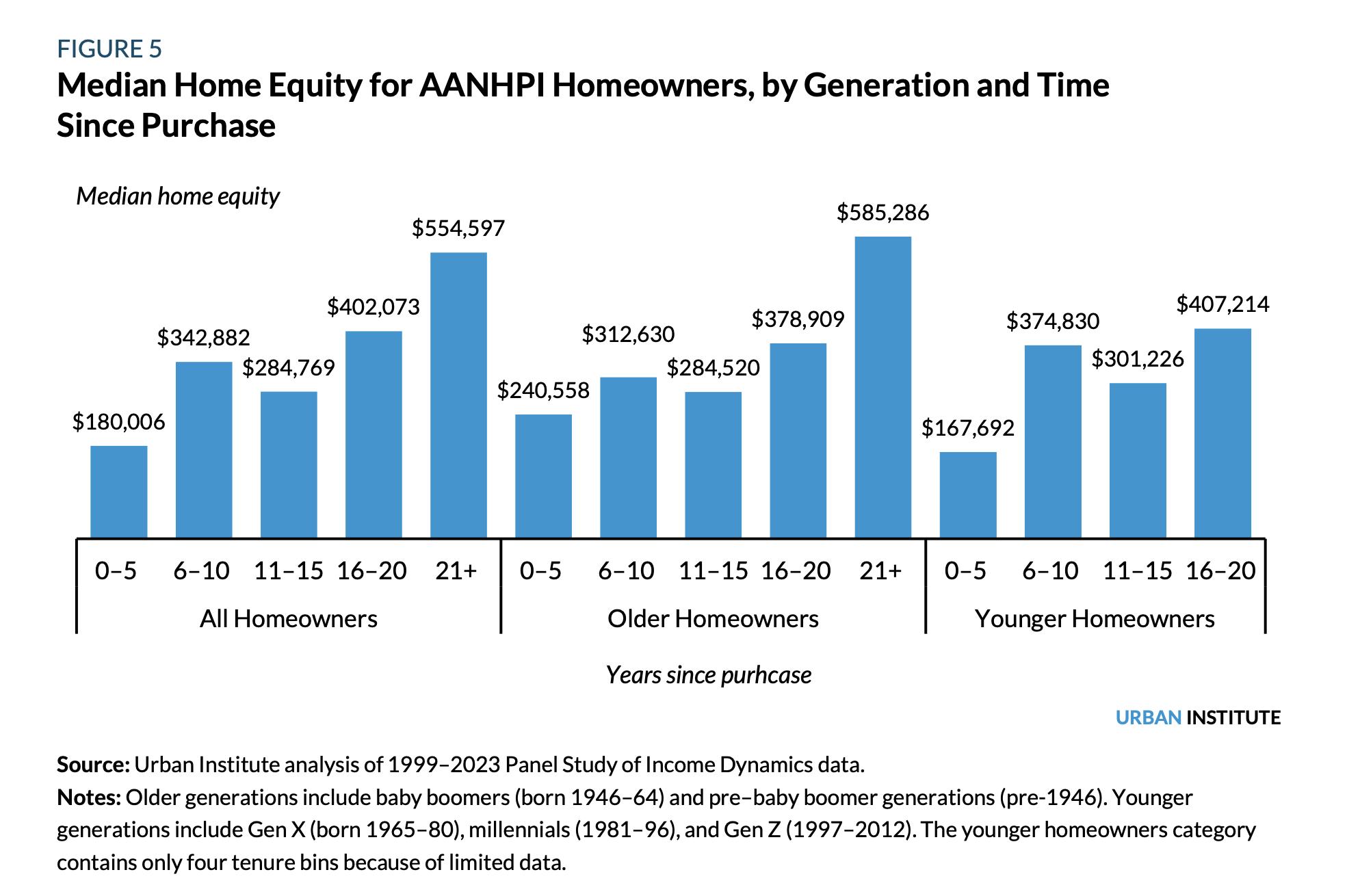
As the figure above shows, the payoff has been substantial. Median total wealth among AANHPI homeowners climbed from about $236,000 in 1999 to more than $516,000 in 2023, a gain of nearly $280,000 in real terms, while median wealth among AANHPI renters stayed flat or slipped slightly over the same period. Home equity itself builds quickly and keeps compounding: roughly $180,000 within the first five years of ownership, more than $340,000 by years six through ten, and continuing to grow with tenure. By retirement age, AANHPI homeowners with more than 20 years in their homes have median nonhousing wealth exceeding $500,000. AANHPI households are, notably, the only group in our study for which reliance on housing wealth actually declines after age 65, because other
assets have grown enough to take its place. That equity also does real work along the way: households draw on it to help fund education, support family members, and cover health care needs, extending the benefits of homeownership well beyond the household that holds the title.
Making sure every new buyer gets the full benefit
AREAA's research also points to where the industry can help more buyers realize these same gains. AANHPI borrowers still face higher mortgage denial rates than white applicants, often tied to debt-to-income constraints, thin credit files, or limited collateral, and Asian firsttime buyers use government or nonprofit down payment assistance at less than half the rate of Black homebuyers, with fewer than 6% of Asian first-time buyers reporting use of such programs at all. These are precisely the tools Bank of America's survey shows younger buyers
of every background are now counting on to close their own affordability gap. Closing that awareness and access gap is one of the clearest opportunities in front of lenders, counselors, and policymakers today.
Reading the two reports together
Bank of America's survey captures a real and encouraging shift: more Americans, across generations, are ready to act on the belief that homeownership builds wealth. AREAA's research, conducted with the Urban Institute, backs that belief up with two decades of evidence: homeownership is a genuine engine of wealth building, capable of turning a single purchase into hundreds of thousands of dollars in household wealth and, ultimately, into opportunity for the next generation.
The takeaway is straightforward and optimistic. More buyers are ready to get in the market than at any point since 2023, and the data shows that doing so, and staying the course, is one of the most reliable paths to long-term financial security available to American families. The work ahead is making sure that path is open to every buyer who is ready to take it.
HOUSING'S MID-YEAR REALITY CHECK: WATCH THE TIDE, NOT THE WAVES
Now that we're halfway through 2026, where is the market currently sitting and where are we headed? It's a question that is integral to planning the Next Move. AREAA got to discuss these questions and more with First American Deputy Chief Economist, Odeta Kushi, who reminds us that when it comes to housing, we watch the tides, not the waves.
A year ago, we argued that the housing market had likely found its floor and begun a slow march toward balance. Looking back, that assessment appears largely correct. The market did not rebound in dramatic fashion, but neither did it break. Existing-home sales remain subdued by historical standards, hovering near a 4 million annualized pace, yet activity has stabilized and is running above year-ago levels. Inventory has improved, affordability has edged higher, and purchase demand has shown signs of life. That progress has unfolded during a year defined by uncertainty. Artificial intelligence has become the
dominant economic storyline, while geopolitical tensions in the Middle East and a new Federal Reserve chair have reshaped expectations for inflation, growth, and interest rates, often with mortgage rates moving in response.
Housing sits at the center of this storm. But, however dramatic the environment, housing ultimately responds to a familiar set of forces: jobs, incomes, demographics, supply, and financing conditions. These fundamentals remain the tide beneath the waves. The question for the second half of 2026 is whether recent shocks are changing those fundamentals. On balance, the answer remains encouraging.
The Tide Is Still Moving in Housing's Favor
If the fundamentals are the tide beneath the waves, the labor market remains an important current. For much of the past two years, concerns about housing extended beyond mortgage rates
themselves to the possibility that a weakening labor market would undermine demand altogether. That deterioration has yet to materialize. Instead, labor market conditions appear to be stabilizing after a period of cooling, with several indicators suggesting labor demand may be firming and hiring broadening beyond its recent narrow base. For housing, a more stable labor market matters not only because it supports incomes, but because it supports confidence.
Household income growth continues to outpace national house-price growth, supporting modest affordability gains. That hardly solves the affordability challenge, but it does provide a foundation beneath housing demand. Recent increases in pending home sales and mortgage purchase applications suggest buyers are becoming more willing to move forward, despite elevated borrowing costs. According to our analysis of Mortgage Bankers Association seasonally adjusted purchase application data, only two of the first 25 weeks of this year recorded activity below year-ago levels.
Yet, that resilience reflects more than modest affordability improvements. The life events that drive housing demand—forming households, growing families, changing jobs, and relocating— never stopped happening. Demand did not disappear when affordability deteriorated over the last several years. It accumulated. Millennials, America's largest generation, remain firmly within their prime home-buying years, while the oldest members of Generation Z are now entering the market as first-time buyers.
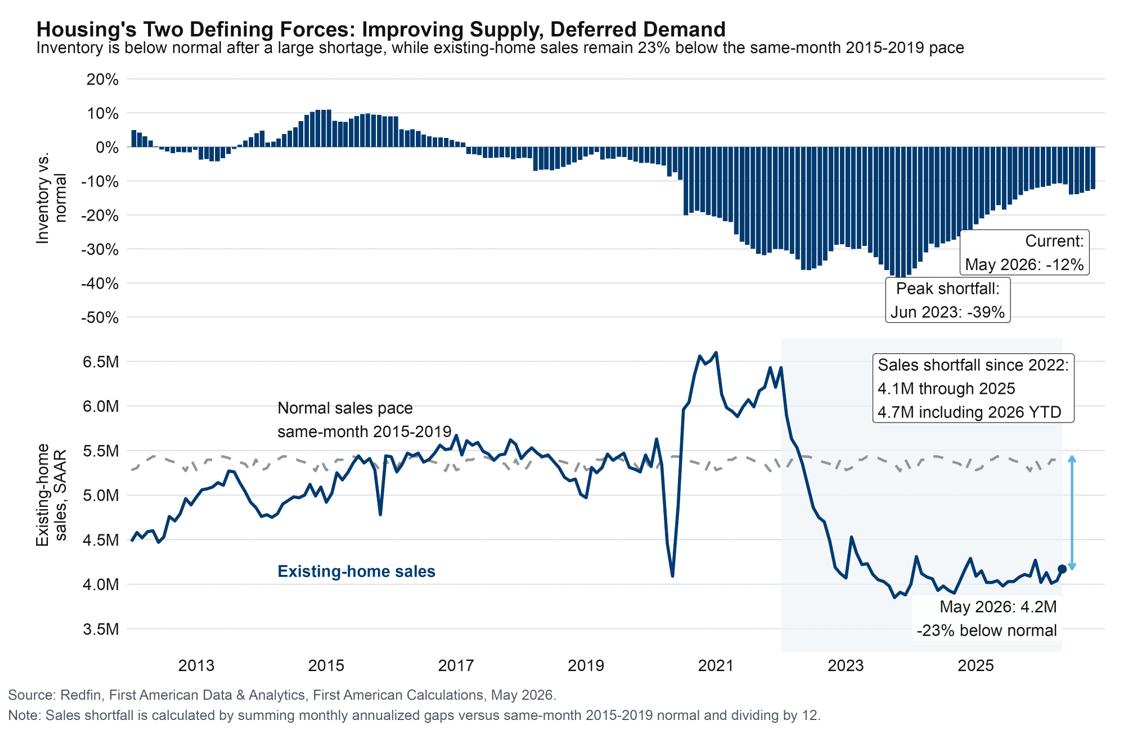
Before the pandemic, existing-home sales averaged roughly 5.4 million annually. Since 2022, activity has consistently run below that pace. Add up the difference, and the market is now short nearly 5 million home sales relative to prepandemic norms. The cumulative shortfall points to a significant reservoir of pent-up demand. Mortgage rates may delay household decisions, but they don't eliminate them.
Crosscurrents Remain
Mortgage rates remain the market's primary constraint. For many homeowners, moving still means exchanging a mortgage rate that begins with a three for one that begins with a six. The past several weeks offer a useful illustration of why the outlook for rates remains so uncertain. Inflation concerns pushed rates higher, only for easing geopolitical tensions to help reverse some of those gains days later. More recently, a somewhat more hawkish Fed outlook pushed long-term Treasury yields higher again. The forces shaping mortgage rates continue to pull in opposite directions. Looking beyond the dayto-day volatility, persistent inflation concerns, elevated federal deficits, increased Treasury issuance, and a more cautious Federal Reserve all suggest the path to meaningfully lower borrowing costs may be narrower than many hoped. The result is a higher-for-longer mortgage-rate environment, with plenty of zigzag along the way.
If mortgage rate uncertainty remains a key obstacle, inventory has become the primary source of relief. Rising supply has cooled competition, slowed house-price growth, and shifted some bargaining power back toward buyers, particularly across many Southern and Western markets. Nationally, inventory remains below pre-pandemic norms, but the gap has narrowed considerably—from nearly 40 percent below normal at the trough in 2023 to roughly 12 percent below normal today. The inventory recovery continues, but more slowly than before—a trend worth watching in a market still constrained by affordability and lock-in effects.
The Tide Ahead
A year ago, we argued that the housing market had begun a slow march toward balance. A year later, the destination looks much the same, even if the journey has been anything but smooth. The housing market remains constrained by elevated mortgage rates, but it is no longer defined solely by them. Demand is proving more resilient than
many expected, supported by a stable labor market, favorable demographics, and years of deferred activity. Inventory has improved, giving buyers more options and helping restore some balance to the market. There will be more inflation reports, more Fed meetings, more geopolitical surprises, and more rate swings before the year is over. The waves are not going away. But housing's direction will continue to be determined by the tide beneath them. For now, that tide is still moving gradually toward balance.
Key Takeaways for AREAA Members
Inventory has improved nationally but can vary regionally. Are AANHPIs seeing relief in their high cost markets?
Over the last several years, the housing market has steadily become more balanced. Annual house price appreciation has cooled enough for household income growth to outpace it for 23 consecutive months, helping improve affordability nationally and across many local markets. We can see that dynamic in the data, even across historically expensive markets. Nationally, Zillow’s for-sale inventory measure increased 4.5 percent from a year ago in April 2026, while affordability, as measured by the First American Data & Analytics Real House Price Index (RHPI), improved by 7 percent.
In Seattle, inventory was up 26 percent year over year and affordability improved by 13 percent, one of the clearer examples of supply recovery translating into affordability relief. Los Angeles also posted improvement, with inventory up 5 percent and affordability improving by 5 percent. Boston shows a more modest version of the same trend: inventory was up 7 percent and affordability improved by 3 percent. The broader point is that affordability is improving in many markets, but the magnitude of relief depends heavily on local supply-demand conditions.
For real estate practitioners within AREAA’s membership, how can they advise clients to make conditions based on the “tides” rather than the “waves?”
The waves are the day-to-day market fluctuations that dominate headlines. The tides are the longerterm forces that move the housing market— employment, demographic trends, inventory, affordability, and financing conditions. Today, those tides include demographic trends that continue to support housing demand, a resilient labor market, and gradually improving inventory, even as affordability remains constrained. Practitioners can add value by helping clients make decisions based on those enduring trends rather than short-term market noise.
What trends should AREAA’s members watch for as we continue through the second half of 2026?
I'd watch three things: whether inventory continues to normalize, whether affordability continues to improve, and whether the labor market remains resilient. Mortgage rates will continue to create short-term volatility, but those underlying fundamentals will determine whether the market continues its gradual move toward balance.
See how it works.
Odeta Kushi First American Deputy Chief Economist
Free Title Monitoring and Alerts
ve your clients more than keys.
tivity tied to property records is happening every day d most homeowners have no idea until much later
t every closing gives clients property alerts. urs can.
en you close with First American Title, eligible buyers eive an invitation to enroll in free title monitoring and perty alerts *