2026
Tapestry
2026
Crisp autumn leaves and wind caress my face. Racing down the dew-covered scarlet oak, they crash upon your shoulder. Their burnt orange shade complements your obsidian hat...
We continue walking along the dusty path, through the woods, past the blazing wisteria. The air smells of earth and fading flowers. I’d ask you questions about life; you’d offer prime advice.
All of this is gone now; death took you. Now, nothing is the same. The path feels longer without you beside me.
I’d bargain my most precious and sacred possessions for those moments back, just to walk with you once more. We aren’t apart forever; I feel your presence in nature. Whether it’s rays of sunshine bursting through storm clouds or wind nipping softly at my face, I know you’re always with me, keeping my head up.
Brianna Cubbler ‘26 Scholastics Gold Key
“I miss being you”
Dear Maddie, Growing up is the slow realization that the truths you were once taught to trust, Were never meant to last forever.
I think about you often. The innocent, young girl, Waiting for her life to begin. I miss how excitement came so easily, Duct tape could make your whole day.
I miss how you cried When Dad left for his work trips, When love felt real, And goodbyes were always temporary.
I miss how your favorite color was blue, Just because Katie said it was blue first. I miss the version of you Who craved to be just one year older, Who believed being a teenager Would feel like a fairy tale. Like everything would suddenly make sense.
But now that you are one, It doesn’t seem magical at all. The worst part is knowing. Knowing that the magic doesn’t exist, And your wishes won’t protect you.
Your dreams aren’t the reality.
I’ll always remember the soft safety of not knowing, the innocence of believing. Before, silence felt safer than confidence.
When the world Wasn’t pounding on your door, Demanding answers.
When you trusted yourself and believed everything would work out. You hadn’t yet experienced failure.
...
I guess growing up isn’t about losing you completely, But carrying you quietly. I don’t miss being you. You still live, breathe, and wonder inside of me. You’re somewhere, I just have to find you.
Madelyn Benson ’26
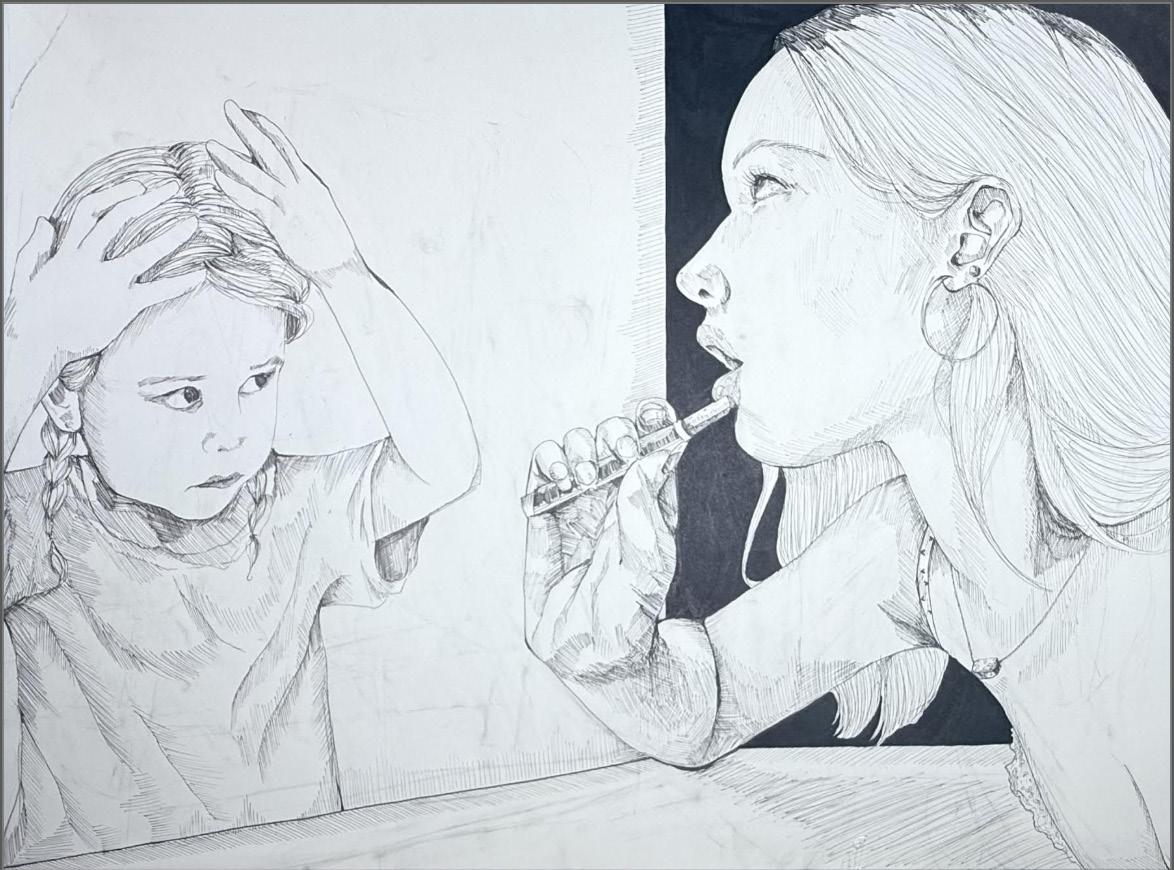
Mirror Mirror
Sophia Silverman, ’28
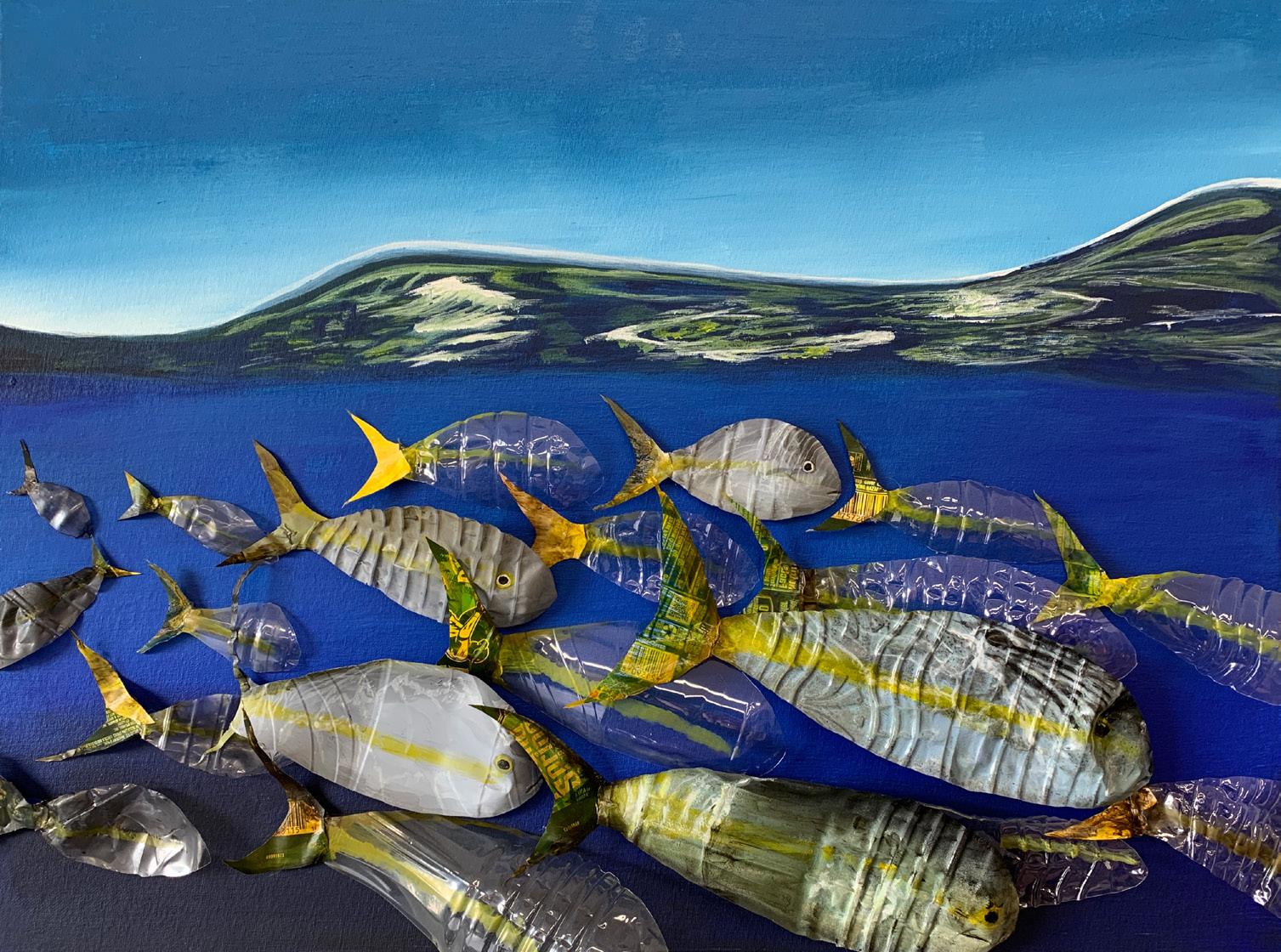
Looking out across the Sea of Galilee seemed remarkable: a biblical body of water, a sea from the story of Jesus, splashing up at me. Was it holy? Should I genuflect? And where exactly did He actually take that walk? I felt as though part of the Catholic story was undulating ten feet from me: a palpable, shimmering truth. This was the first day of my Holy Land Pilgrimage in June of 2019. I was in Israel.
Knowing this journey would likely be my one chance to travel to Jerusalem, Bethlehem, and Nazareth, I accepted an invitation to join a twelve-day trip with twenty-five people (I knew several) two days before its departure. An impulsive vacation. An unexpected adventure. Organized by a priest at my school at the request of two parents to honor their son who had died, I understood the significance of this event. Though I was not an interloper on this pilgrimage, my investment in the trip was less emotional than everyone else’s. Still, participating in these excursions, even on the periphery of others’ devotion, would educate me while I took my expert pix with my phone.
Another stop. Unlike the Sea of Galilee, Nazareth was not beautiful. I was disappointed there were no shepherds on verdant hillsides tending their flocks. Instead, we passed preoccupied people walking down dirty unbiblical streets. We were there to visit the Church of the Annunciation, commemorating the appearance of the Angel Gabriel to tell Mary she would be the Mother of Jesus. I saw more: beneath the church was Mary’s cave dwelling. Wait, what? That’s where she lived? Come on. How do they know. Should I knock? And if they’re saying that this happened here, are they saying this actually happened? So, there it was, another Bible place right in front of me. Story meeting stone.
These true-ish moments accumulated: standing among the ruins of Capharnaum, where Jesus began his ministry; walking the grounds where Jesus delivered his Sermon on the Mount; holding a living branch of thorns used to make Jesus’ terrible crown. I touched the very spot where Jesus was born. That’s what it was, right? If I was seeing these places and doing these things, didn’t that mean the stories were true? How was that possible? How was I supposed to believe?
At Gethsemane, within its church, I found an answer. Before the altar was the Rock of the Agony, the large, nearly flat stone where Jesus prayed, facing the necessity of his own death. After our Mass, people knelt at the rock, pressing their palms to the stone. I, too, placed my hand on the rock...and felt a little...dizzy. Around me, other pilgrims showed no doubt; I saw only their peace: they knew that Jesus had been there, that Jesus had wept there. They believed. It was then, while touching the Rock of the Agony, that I understood that faith is a decision, a yes or a no, a truth of the heart within my reach.
Mr. Timothy Dougherty
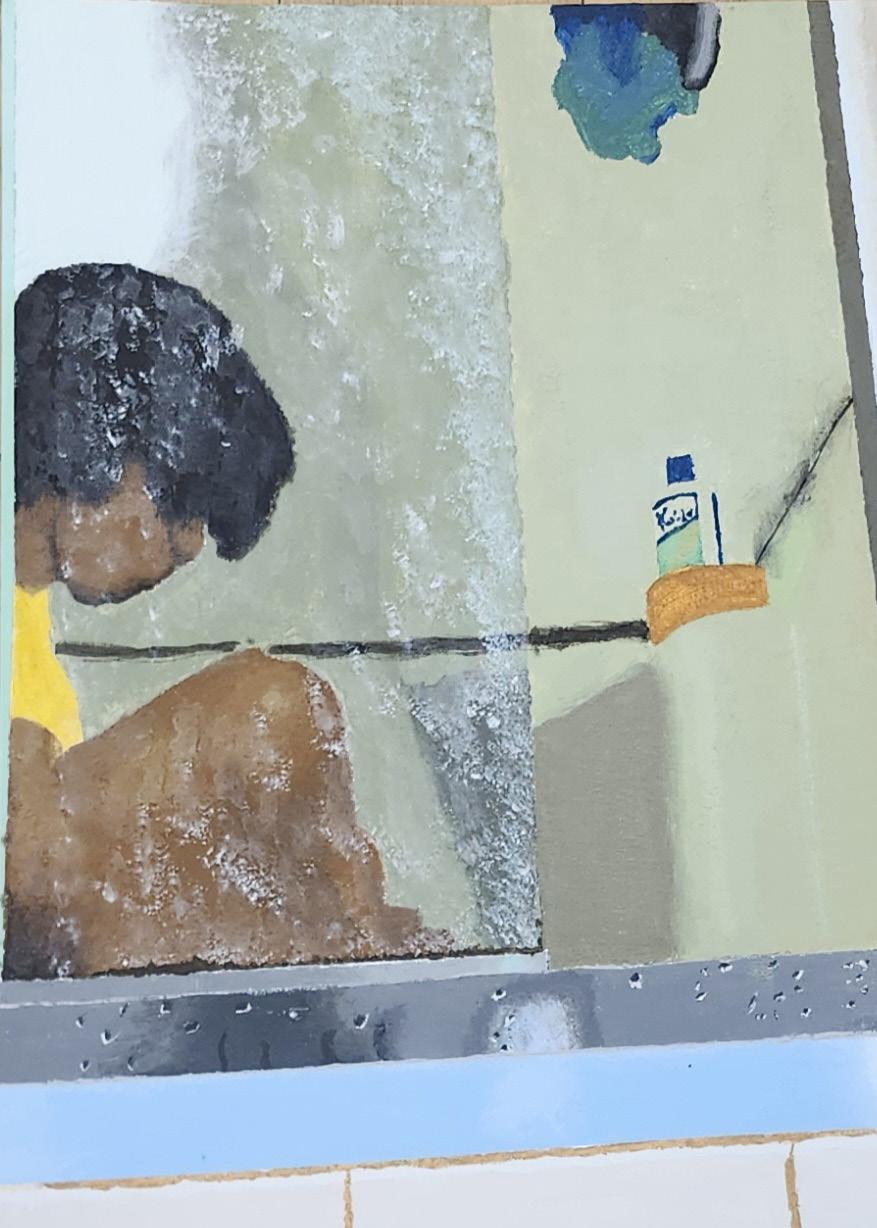
Madison Gates ’27
In middle school
I spent much of my time crying on the school bathroom floor. Ugly tiles, Doors that never fully close, Tears reflected in the mirror, Water droplets on the ground.
Gasps for air While drowning in fluorescent lighting.
Words that hurt like sticks and stones, And bullets from people I thought were friends Put me on that floor
That bathroom floor became a home. A place of protection, And a place of harm. A place to want, And wish, And cry.
Now the floor of the school bathroom isn’t a home.
The ugly tiles And doors that don’t close remain; But the bathroom is no longer a place of pain, No longer a place to worry and cry.
Now it’s just a place to use the bathroom, And check your hair, And talk with friends.
High school will not be like middle school: All of my time will not be spent Crying on the bathroom floor.
Evelyn Goodrick ‘28
Scholastics Silver Key
Beneath the thinning trees, lies a lawn covered in leaves, with white lines in green grass. As winter creeps onto the horizon, and leaves crunch under my feet, months ago the trees were green, then orange and red; now the leaves are brown and dry.
A cold breeze chills my red nose. As I run, my body warms, but the moment I stop moving, the cold clings to my skin again.
Practice is repetitive; it is difficult and boring, yet we continue to train, chasing that one feeling—
the feeling of stepping onto the field and competing against an opponent, maybe even scoring a goal after a long week of practice.
Although both defeated and fallen since the summer, players and leaves remain on the field, possibly training for next year.
When the season fully ends, the lines will fade beneath the frost, but warm memories remain, proving what falls is never truly lost.
Oliver Hohman ‘26 Scholastics Gold Key
(After J.M. W. Turner’s The Burning of the Houses of Lords and Commons)
The fire blazes through the wood, consuming all in its path. Vivid reds and oranges reflect on the water.
A crowd watches, not with fear, but with contempt. The House of Lords and Commons. Fire consumes power.
The dark smoke fills the air, as Parliament burns into ruin, the crowd grows more powerful.
A new feeling of freedom fills the smoky sky. Now the Lords of Parliament, are one with the common man.
Finally equal. The fire, warm and bright, Smells of lumber and change.
Riley Burke ‘26
Scholastics Silver Key
8 years old i stood envious of my classmates’ bright, colorful, lively posters, “culture and heritage” on full display. mine stood bland in comparison: a picture of a fat potato next to a gray landscape and a sad-looking redhead woman. foreign, cold, a million miles away, explaining my entire existence.
what they didn’t know was that i can’t take a picture of my grandma when she wonders about the next yuge rainstorm, then tells us to “grab that jawn on your way out” when referring to her umbrella. i couldn’t show them grandpa’s vow to never leave the house on Sundees when the Iggles play so long as the wooder in the Schuykil is its murky shade of brown...
so i taped down a picture of a potato.
i couldn’t figure out how to explain the way my dad screams at Bryce Harper loud and proud at home, but stays introverted around strangers, often exiting silently with no warning; or how my mom laughs after she drinks wine with our Italian neighbors, because “i could never talk that fast”...
a dreary cliffside had to work instead.
and i couldn’t quite fit in the feeling of seeing everyone i’ve ever known at Christmas Eve mass, or the comfort of the shamrock-covered cross above the door in my bedroom on a trifold poster...
the grouchy lady with flaming hair would have to do.
...
now 16, i stand a little taller.
my life is still the product of an island 3,000 miles away, but i see now that it is shaped with a twist, like something made in our pretzel factory that brims with brotherly love and soul-crushing championship losses.
i learned the right response to “you must be irish, aren’t you?” it is: “go birds.”
Colleen Burke ‘27
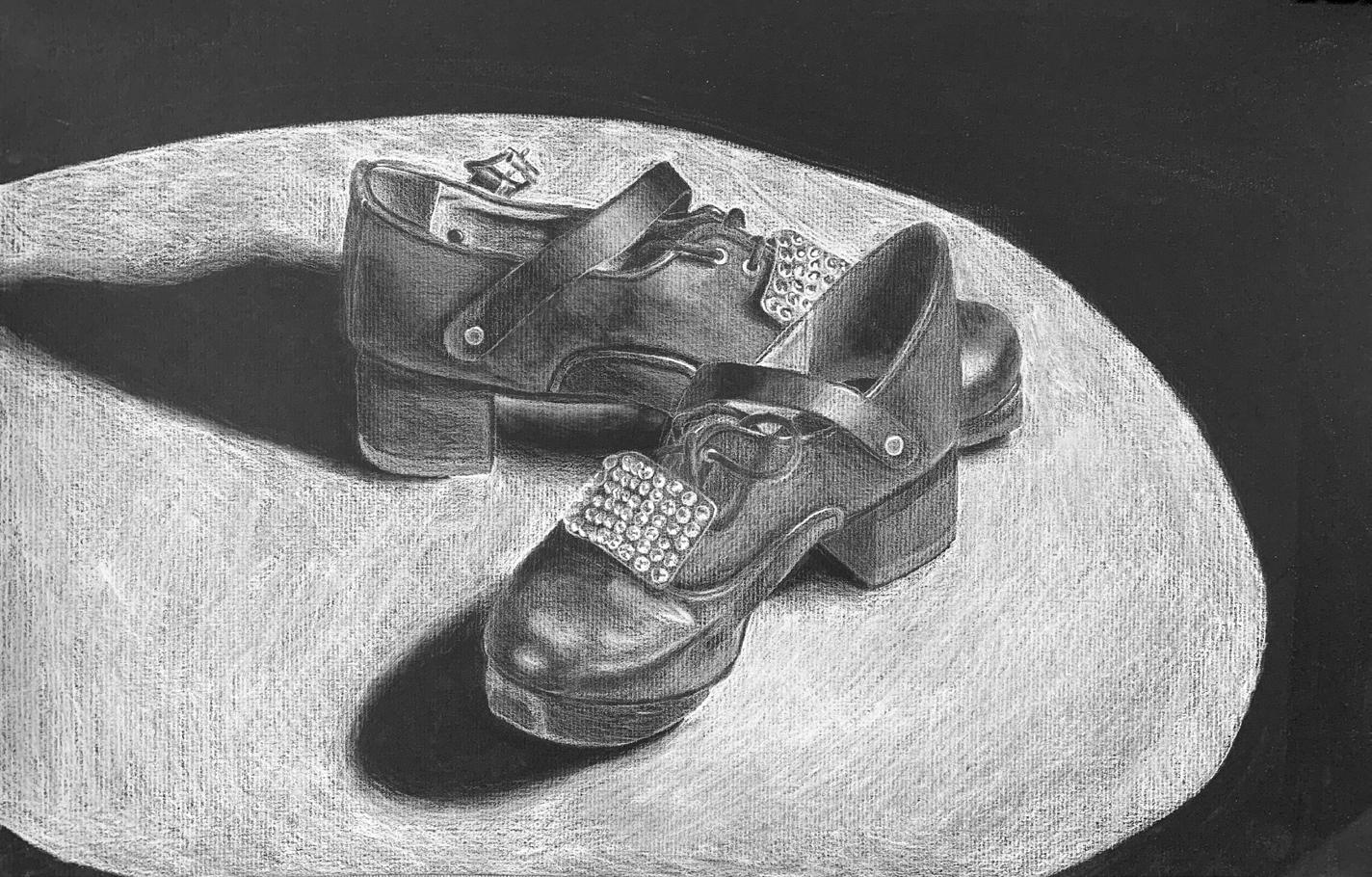
’29
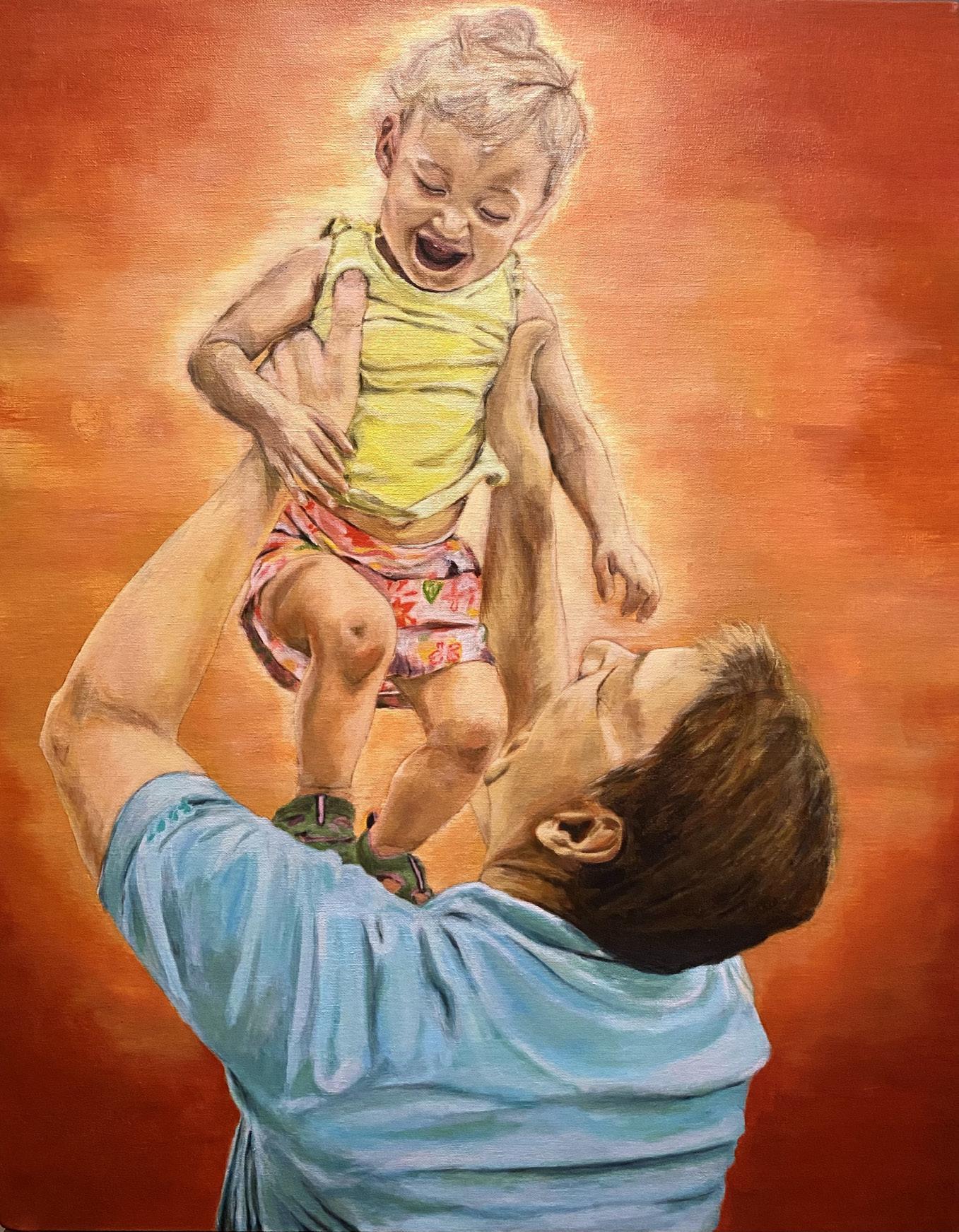
Every night I’d plead, “Just one more time,” For the dragon’s bedtime rhyme. My mom would smile through tired eyes And I’d listen to the dragon’s cries.
The dragon yawned, so did I; His sleepy story, same as mine. Then one day, before my peers, My mom appears.
She read aloud the room all quiet: Tiny ears listen to the dragon’s riot. Dragons danced across the stage, As my mom turned the page.
Laughter and love filled the crowd, A wave of excitement crashing loud. And in that moment I smiled, One drowsy dragon met one happy child.
Kristin Gricco ‘26 Scholastics Gold Key
Museums always fascinated me, so when I heard my local museum had opened a new exhibit for something, I couldn’t wait. The Nightingale Fine Arts Museum was just three blocks down from my house. Most days, I’d walk there; sometimes I’d stop at Tony’s Italian Deli for lunch, or maybe go to Horner Henry Park to watch the buskers with their music boxes and monkeys. Today, I decided to bike so that I could be home in time for the Cubs game. I called my friend Ernest to see if he would want to go with me. Ernest was my best man at my wedding; I wasn’t his best man since he lived alone. We watched baseball together on Friday nights while grilling some dogs in the yard. His visage reminded me of a perfect painting. A gaunt face with perfect symmetry, like that of a chthonic scorpion, deep blue eyes that resembled the poison dart frogs of the Chicago Field Museum, dark sable hair parted to his right side. He didn’t pick up, so I called again. Still no answer. It’s okay, I can still go to the museum by myself. I started down Moonmad Street towards the museum. Maybe I can get a quick bite to eat at Tony’s real quick, as long as I finish before entering the museum, I thought to myself. No food was allowed in the museum. However, Tony’s was closed, the lights were off, and the door was locked; no Tony in sight, which was odd, because they were almost always open on Saturdays—except for when Christmas happened to fall on Saturday.
Slightly hungry, I continued. I passed Horner Henry Park; it seemed quieter than usual: no performers in earshot—but they were surely around, probably just on a lunch break. Before long, I reached my destination. The museum had been standing on the corner of Moonmad Street and West Wilson Avenue for 84 years; however, its newly renovated facade, along with interior improvements, such as the new exhibit that I was there for, made the building seem more nascent than antique.
At the front desk, there was a tall, handsome lady in a dark-grey suit, with big curls of mousse hair, and shiny black boots, topped with a beret of the same darkgrey as the suit. I had been to this exact museum at least three-dozen times; however, this was the first time I had ever seen her, at least that I remembered.
“Good afternoon,” I said, “Which way do I go to see your new exhibit?”
“I will show you the way,” She responded delightfully. “Follow me.”
I tailed behind her as she brought me up the flight of marble stairs on the right wing of the museum, to the second floor.
“I am keen on you seeing our newest addition, sir. It’s my favorite gallery, in fact, I helped choose the pieces for it.” Her voice was lilting, like moths flying off an extinguished lamp in search of a new source of light.
“Did you really?” I sounded a bit too surprised, “I cannot wait to see it. What sort of artwork does it feature?”
“Oh, it’s all sorts of pieces local to Chicago; we want to help promote our city by displaying paintings of people who comprise our wonderful city.”
We continued, past the East-Asian exhibit, the Baroque wing, and the Futurism wing. I would come back to those later; before that, I wanted to see this new Chicago Art exhibit. I noticed that the Surrealism Wing had been closed, taped
off with a floppy paper sign reading, “CLOSED FOR INSPECTION.” That was Ernest’s favorite exhibit. Hopefully, when I saw him again, it would be open. Ernest and I could spend forever in this museum; here and Wrigley Field were the two best spots in all of Chicago.
Finally, we entered the new wing. The walls were painted a bright white; yet, the floor was a mahogany stained in a deep red, not as red as the flames of Tophet, but close. I looked around the gallery, and there was a large painting of baseball legend Sammy Sosa leaning forward in a quarter-zip and tan khaki pants covering almost a sixth of one of the walls. He beamed ear-to-ear; it looked as if his face hurt from smiling so much.
“That is one of my favorites,” proclaimed the attendant. “Sammy Sosa himself actually came to this exhibit last week.”
To the right, there was an image of a busker with a music box and a monkey; they looked almost identical to the buskers and monkeys in Horner Henry Park. I wouldn’t be surprised if the artist had used them as subjects. I looked to see who created the piece, but there was no signature.
“Hey, do you know who made this?” I asked the museum attendant. No answer. Turning around, I discovered that she was gone.
My eyes continued gliding across the paintings. I came across a deli worker, it couldn’t be...it was Tony! Gee, what a lucky guy Tony was. I knew his deli was great, but what an honor for him to be featured in such an exclusive museum, alongside the great Sammy Sosa. Whoever got Tony to sit still for the portrait must have paid banko bucks. I didn’t think even a photograph of Tony existed; that’s how reserved he was. Tony stood tall, despite being one of the shortest people in the city, pictured outside of his deli. His face was coarse with receding black hair upon it. He wore his usual white apron with smudges of grease and char.
The gallery continued to amaze me; it was as if the entire city of Chicago had been taken from the real world and confined to this one exhibit. I had almost reached the end when I arrived at the final image in the gallery.
Its frame was a little over two feet long, a little under two feet wide. On the left, there was a red gate that was not in the painting but rather nailed to the outside of it. A gray woman holding a knife ran towards the gate, towards the frame, towards the exit as if she were trying to flee the painting. But the gate bore a lock; she could never escape. Beside her, there lay another gray figure, who was either asleep, or wounded, or dead. There lived in the painting a feeling of danger. Moving to the right end of the image, there stood a pale red barn that poked slightly out of the image, with a door cracked the slightest bit open, as if it were inviting me inside. Perched atop the barn, a man seemed to float, though he was only tiptoeing, careful not to be heard. His arm was outstretched towards the side of the canvas. He was reaching for a knob, a knob that had been nailed into the frame and was the only way out. He wore a gaunt face with perfect symmetry, his deep blue eyes glanced back at me as I looked into them, and he had dark sable hair parted to his right side. His expression screamed of fear and despair. In that instant, I realized who it was, what this gallery was for, and where everyone had been. Frantically, I
reached for the knob, tugging, pulling, pushing, heaving with all my might. The knob did not budge. Gasping, sweating, panting, I tried again and again, but the knob would not budge. Pulling once more, I was flung back in with great force, landing flat on the ground, my head slamming into the hell-stained floor.
I see my wife. It had been weeks since I had seen her charming face. I wanted nothing more than for her to leave. If she stayed much longer, she would have to live forever with me. She would be frozen in time, trapped in the pigment without form or body. I wanted to scream, but my mouth was sealed shut. I tried ripping the paint from my jaw just for a second, just so I could tell her to run, but it was no use. She glanced in my direction and tilted her head with her eyes fixed. Then the room went very still.
Michael Hagerty ‘26
Scholastics Silver Key
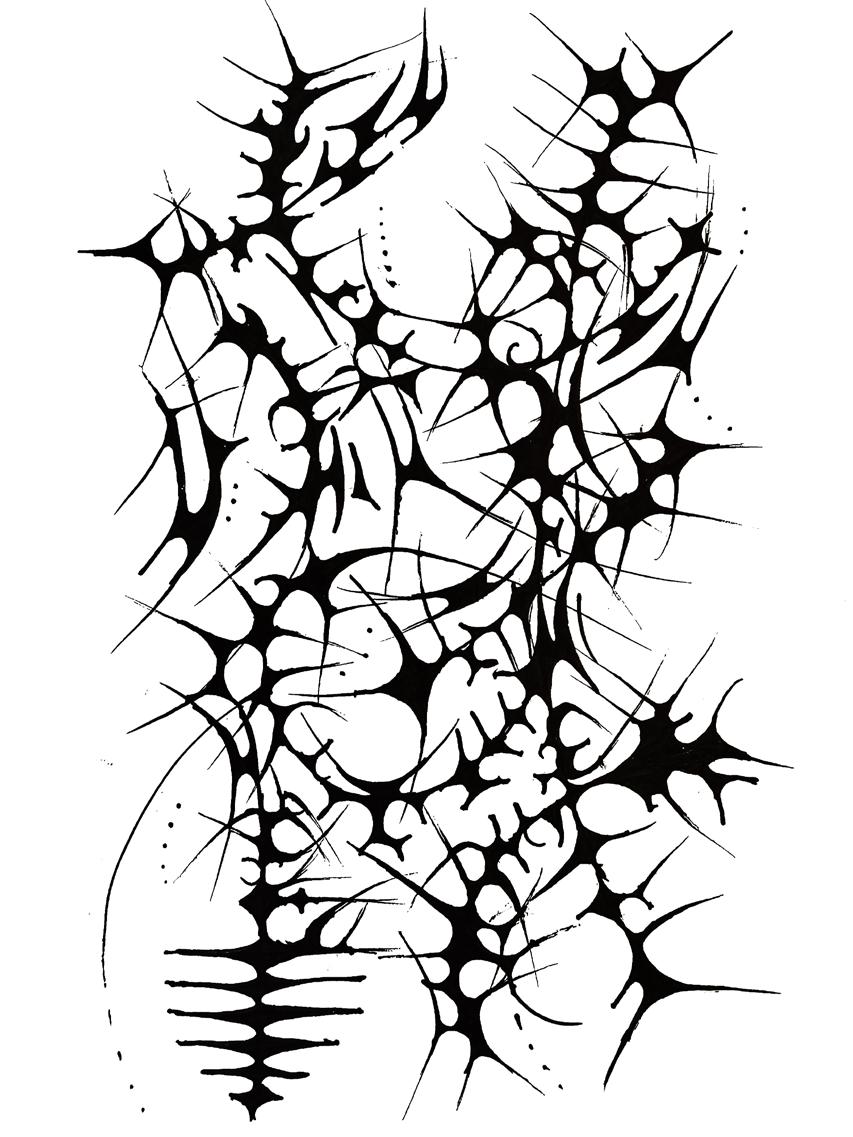
Alice Zhang ’27
Master, we do not know the way
dope doubter impulsive blurter questioning the truth always in front of his face.
dim as a cow chewing cud in a field waiting for the long dimming day to end.
big dumb tongue saying he can’t see nail marks, fingers inside to probe the wounds, holes and hands.
Christ he is obtuse not knowing the way, disbelief his go to, a simple fisherman.
reach your hand to His side my friend touch the truth right there see, feel, believe, then say so.
Mr. John Jordan ‘80
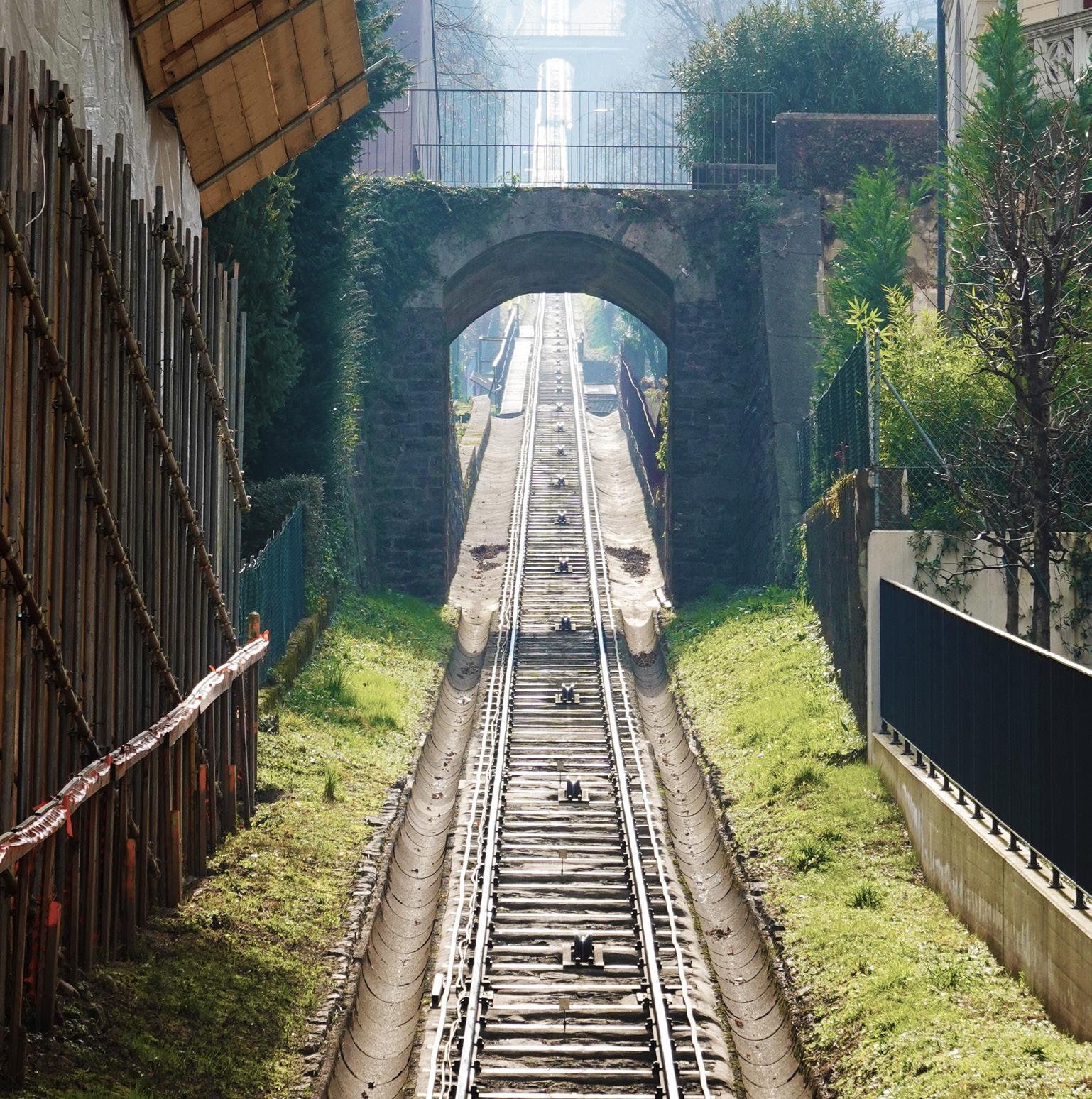
Life is a Journey
Multitudes of fallen red boulders
Like towering beasts
From some bygone era
When they ruled the depths of a watery empire, Unchallenged by time or death.
Then came the hero In a blazing glory, An inferno of light— Cleaving the earth and vaporizing the sea. Raining spears of salt on the once-peaceful sight.
The kings rose in rage Against their fiery challenger And fell.
Turning into rocks, scorched crimson by flame, Now destined to dull with the passing age.
Their domain, razed— Reduced to dunes of sand
Lying where fortresses once towered. Un-dug graves for all who died, Until buried in the bloodied sands of time.
When eons all but erase the scars of strife, Wind uncovers the remnants of life, Exposing these giants. Then people came and conquered them too, Taking trophies and defacing tombs.
In the era of a bygone sea, A devastating lesson from the ancients Mostly forgotten and destroyed Against bloodshed now fed by different desires But all condemned to the same fate.
With eyes so full of gold and fires, No one remembers the smoking pyres.
Rebecca Wang ‘26
There is something about the beach that brings a deep sense of relaxation to me. Maybe it is the notion that when you are at the beach nothing else matters or feels significant. Everything that may make you worry is put on hold for a while. It feels like a moment to catch your breath and smell the roses, a promise that everything will be okay, that is what the beach means to me. The beach is a promise that everything will be okay, even if you can’t stay there forever.
Last summer, I didn’t really hang out with anyone at all, especially compared to the previous summer. The summer was slipping fast, and as the days blended together, I had begun to spiral into feelings of self pity and frustration with myself. Then, unexpectedly, my mom made plans for us to go to the beach on a whim. It was the plan to the beach that my mom made on a whim saved me from these thoughts. Looking back, the trip was nothing special or remarkable at all, but it was exactly where I needed to be.
As soon as I felt the sand under my feet, the salty breeze stinging my face, and the sear of sun on my neck, all my worries washed away. Where I could lounge without a care in the world, and there was nothing urgent I had to do. For the first time in months, I was not bombarded by thoughts of uncertainty and anxiety. I could spend all day in a lawn chair and not feel like I wasted an afternoon. Silence, the silence that once tormented me in my room, had now brought calmness to me with sand underfoot.
When I find myself anxious, I am reminded of a time I was only worried about the sand chafing my feet, the sun turning me red, and if the song was right for the mood of the day. I remember the early mornings where I would actually wake up early to cast my rod to the sea in the hopes that this time you will finally catch something. Even when I caught nothing, the beach offered me that experience to reflect on, and that is enough.
I look back at the afternoons of playing spikeball on the beach, pride on the line, being cooled off by the cool afternoon breeze, or a dash into the ocean for a quick break from the heat. The game, where the only thing that has value is that winning rally and the glory of being the best of your friends. Even now, I still reminisce about the small moments of laughter, competition, and being in the moment. There is truly nothing like the night sky being illuminated by pops of fleeting beauty. I still remember two summers ago, sprawled on a towel being closer than ever to the fireworks with my friends, the loud pops, the heat on our skin, and the awe of the variety of the colors against the silhouette of the sea, an experience shared, a fleeting moment of beauty ingrained in my mind forever. Even when one of the fireworks went off sideways and skirted across the dunes towards us, the memory was worth the small scorch.
To the beach, I extend my gratitude, a thank you, for reminding me that worrying is not worth the effort, and that sometimes the best thing you can do is let yourself take a deep breath, allow yourself to catch that hint of salt and be reminded of better times. So when I find my eyes wandering to the ground, weighed down by accumulated stress and uncertainty, I raise my face to the sun, remember the sound of the waves, and think back to the calmness the beach gives me. I believe in the
beach because it taught me happiness can be found in the stillness and the silence, comfort can be found in nature, and even during the difficult times, there is a place I can return to, and where everything will be okay.
Landon Kuzinski ‘28
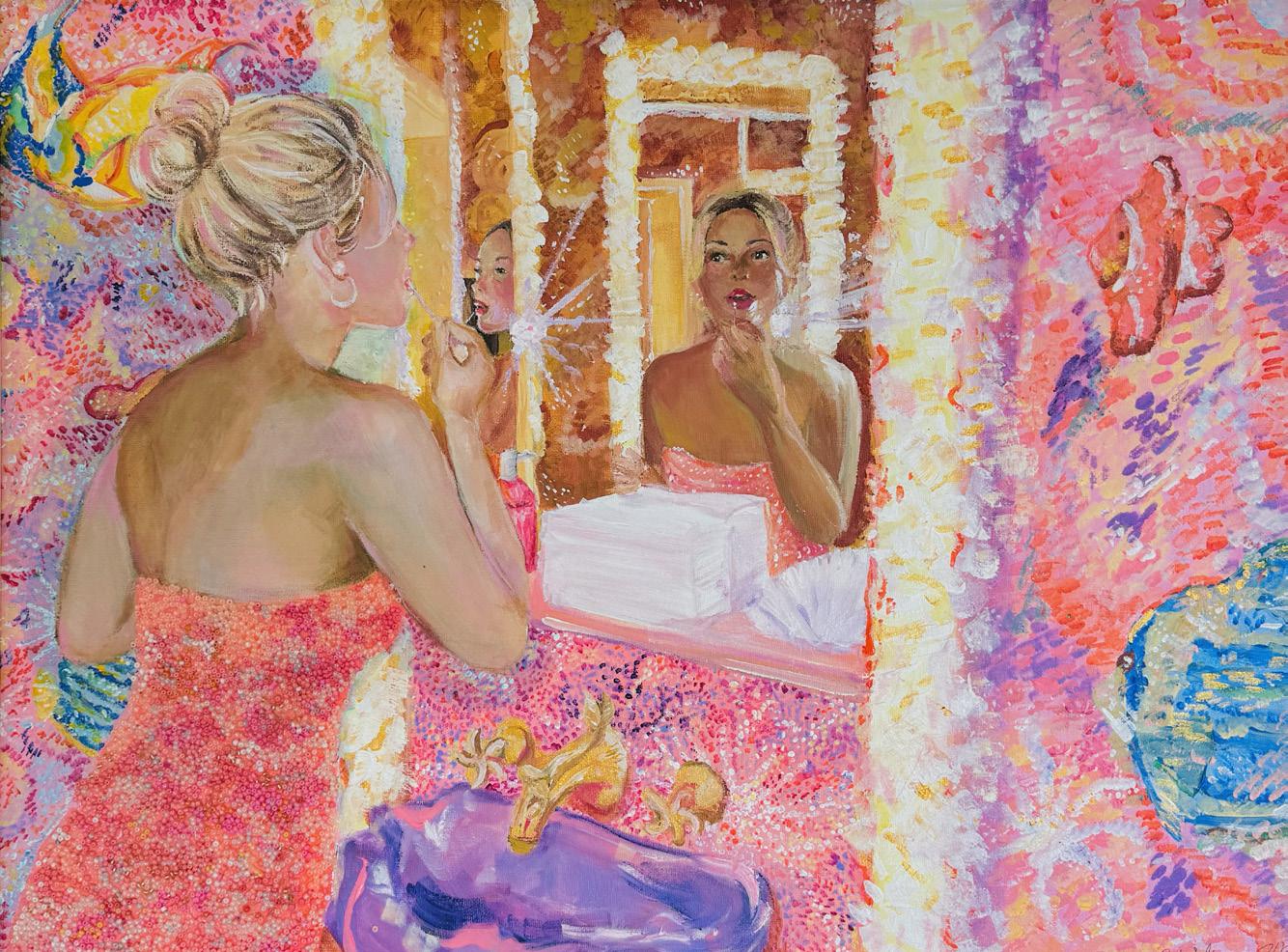
The moths that tear and bolt around in my stomach, They yearn for the light and fulfillment I can’t give. And the maggots that devour my corroding flesh
Don’t find comfort in my bones.
My skin won’t stick on and slides off my body. A wet, sick pile on the floor, I’m exposed. I stand as a spectacle for people to see.
My Pestilence, my Rot
Beyond the naked eye
You can see right through me
Like dirtied, broken glass.
My wet, gross, greasy hair
Sticks and clings to my putrid face.
You can smell the rancid odor of my decomposing; Spores that shoot out of my ears.
I’m no good, I’ve spoiled. The floor takes me in slowly— I am sinking.
Rooted in the ruin of my body, The floor is enmeshed with what I have become.
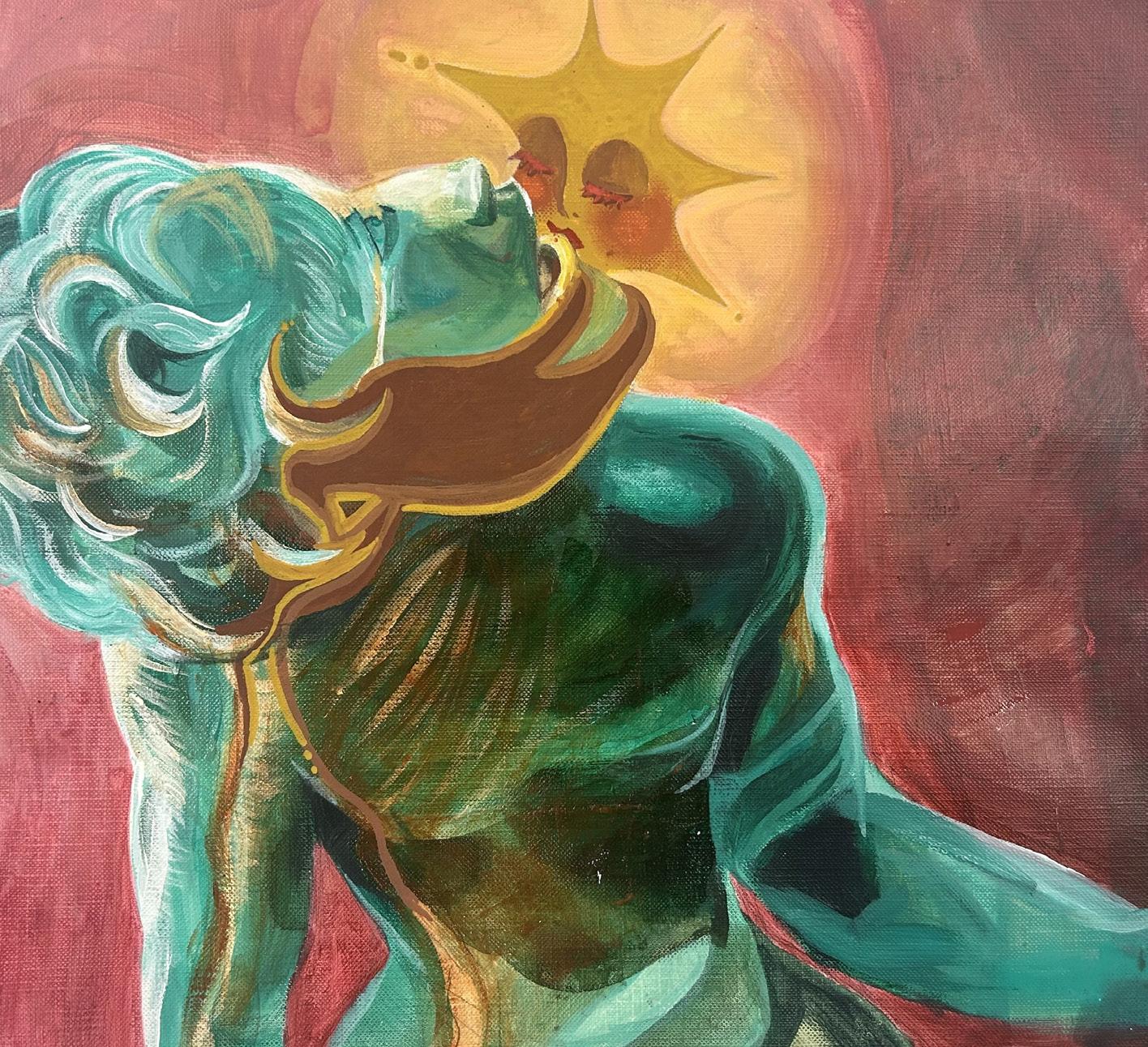
They always tried to tell me that my blood was red
But I never believed them there must be some kind of gold mixed in my plasma flowing along with the hemoglobin in my deep heart
I never believed in wisdom
Never believed that One lost horse brings back a herd
The bitterest elixir is the best
You cannot force what is not meant to be It’s never too late
Warnings lost in my canals
Your legs cannot carry you forever
Your hands cannot play God
There will come a time when the vessel comes apart and begins to drown in a sea of tears
Spluttering
Salt leaks out of my eyes
Each breath flies away as I try to grasp onto the air in my lungs
Suffocating in an ocean of oxygen
The wave of blood washes over They were right but now I can nearly see the gold that is in my deep heart
Chloe Li ’26
Scholastics Silver Key
Best Friends
“Hey! Stop running in the house!” my mom yelled at my brother. He was running, pretending to fly his toy rocket as he does every night, and as usual my parents were worried he was going to break something.
It was the night before Thanksgiving, and my mom was cooking up her famous wedding soup. It was everyone’s favorite part of Thanksgiving, especially mine.
Living out in the countryside meant we didn’t have neighbors popping in or cars rolling past. Nights were quiet in that way where you could actually hear the wind brush through the trees. Mom decided to put the finished pot of soup outside on the back porch to keep cool, since our fridge was already packed full with pies, vegetables, and a ridiculous amount of cranberry sauce. She covered it tightly, tucked it in a shady corner, and reminded us not to touch it until the morning.
Morning came early; it was the kind of pale, cold morning that makes every window look frosted. My brother burst out of bed as always, still carrying his toy rocket like it was glued to his hand. He ran to the back door shouting, “I’m gonna let my friend in!”
Now, when he said “friend,” my parents always assumed he meant the imaginary friend he’d been talking to for the last few months. I figured he’d grown out of that, but I didn’t think much of it since most kids get bored without friends around, and their imagination fills the gaps.
He pulled open the door, and instead of seeing an imaginary friend, we heard a strange rustling. Then, a small, striped blur launched itself off the porch railing.
“WHAT was that?” I yelled, jumping back.
My brother gasped dramatically. “Rocket! You scared him!”
Mom hurried past us toward the porch, already suspicious. When she reached the corner where she’d left the soup, she let out a sound that was somewhere between a scream and a gasp. The lid was knocked off. The ladle was on the ground. And inside the pot...floating meatballs had tiny paw prints in them.
Turns out my brother’s “friend” was a raccoon, and he had helped himself to our Thanksgiving soup.
My dad came out, took one look, and sighed the way only a man who’s lived in the country too long can.
“Well,” he said, “looks like somebody enjoyed dinner early.”
My brother just shrugged, clutching his toy rocket. “I told you he was real.”
Mom groaned, but even she couldn’t help laughing. Thanksgiving in the country doesn’t always go to plan, but at least it’s never boring
Oliver Hohman ’26 Scholastics Honorable Mention
(A response to Andrew Marvell’s “To His Coy Mistress”)
You court me and call me coy, But remember: I am not a toy. Had we the world and time extending, You say your vegetable love would grow unending. In this time you promised me, The worship of my body be Your sole and lone priority.
But in this infinitely lengthy time, You’ll doubtless sing the same rhyme To other mistresses, by and by, And all the girls who catch your eye. So you seek to make bold With all women, your only goal, Lust-filled actions carnal and untold.
Next, my imagined death you sing so long, Lamenting that your honeyed song Will echo—never reach my ear, Too late for me to ever hear. You claim that time would be your slaver, My present beauty something you’ll savor, Because, when dead, only worms can taste my virgin flavor.
But, remember that I’d rather die Than be with someone who makes me cry. For a man who seeks just lust and greed Is one no woman would marry, unless decreed. Beauty should not be the sole trait seen When deciding a person on whom to lean. Such things require perception much more keen.
You loathe the turning of the ages Because they turn your pathetic life’s pages, So you want to cut to the chase And wrap your arms around my waist, Taking me in one swift, rough motion, To make in me love’s somatic potion, Before time swallows us, like an ocean. ...
But I revel in time’s slow pace, And watch the days turn before my face. Time is the greatest trial, Exposing insincerity that is so vile. For true love’s not something to be rushed, Nor can it to the side be brushed, And time will never render it crushed.
Scholastics Silver Key
Scholastics Silver Key
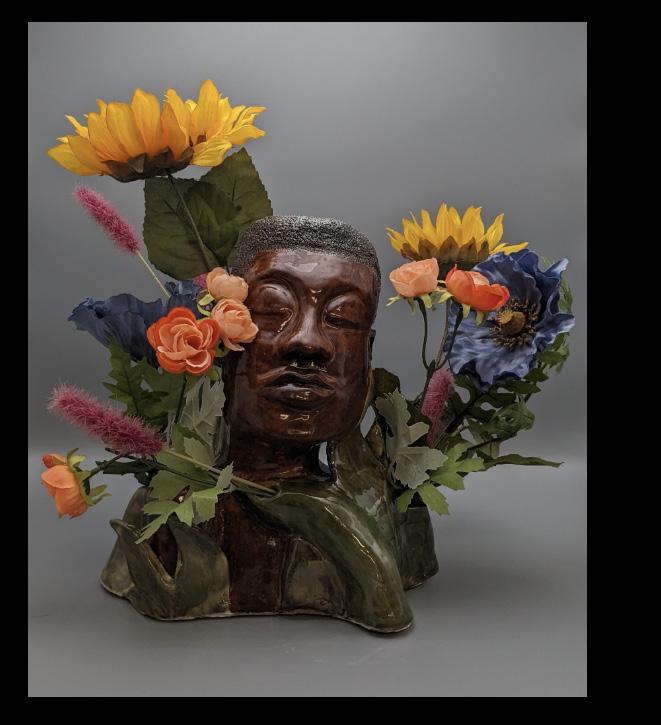

The sun encroached on the hill, Leaking colors of pink and gold over the water and stones,
The man watched alone,
Gazing into the scene that reflected the life he had lived.
The wind whispered through its breeze,
The only voice he had left to hear.
The voice did not comfort him, but rather reminded him of his losses.
He pondered how it would feel to be like Earth, Put into endless motion,
To push through loss and never stop,
Not pausing for any sort of sorrow.
He considered his own life, He was viewed as one speck from the clouds, And even when his time comes,
The sun would rise again,
Encroaching over the same hill he spent his mornings on, Continuously breathing for eternity after he was gone.
Mason Layman ’26
Scholastics Honorable Mention
I believe in Nirvana. Yeah, before anyone says anything, I just wanna clear it up: I’m not Buddhist. There’s nothing wrong with being Buddhist, but my title is referring to Nirvana, like the band.
Anyways, I love Nirvana as a whole. Listening to their music and playing it. Honestly, I think I just love music in general. When I looked back on all my free writes, I realized that they were mostly all about music. I mean, my go to ice breaker is literally “I play three instruments!” I think that’s cliché enough.
But, back to my Nirvana experience, their song from the Bleach album, “About a Girl”, was the first song that my band and I had ever played. The first band t-shirt I wore was a Nirvana one and it’s been a part of my wardrobe ever since. Also, no, I won’t name five songs, and no, I will never stop hearing that every single time I wear that shirt.
Part of the reason I enjoy listening to Nirvana so much is because of Kurt Cobain, the lead singer. Kurt is a musical genius who broke countless standards for his time. I mean, in its beginning Nirvana literally started the explosion of alt rock around the US, and I think that’s a pretty great achievement.
This happened during the time of ‘glam rock’ and Nirvana’s music is absolutely not glamorous. At least to the general public at the time. Nirvana’s music is based off of punk-rock ideology which basically cheers on the underdogs and doesn’t care what mainstream media has to say. Kurt himself has always been a huge activist, even to the point where he was criticized for quote ‘being too radical’. He was always unafraid to speak his opinions on controversial topics, even regarding other bands where he was seen as pretentious and rude because of his...constructive criticism. ‘Constructive’ is putting it lightly, but you get the point.
One thing about Cobain is that he didn’t change anything about himself for anybody. During his time of addiction, he was stereotyped and called uncontrollable and outcast by the media. He was mocked countless times and labeled as countless things for just dressing alternatively and being unafraid to be who he was, even in his darkest moments. And yet, he still didn’t change.
The reason I’m saying all of this is because that’s the part that I find really inspirational. Ever since I was a little kid with my tiny Nirvana shirt, I realized that I was different. But I was comfortable with it. This strategy of looking at life worked! To this point in my life, I’ve never been bullied to my knowledge. Shocking, I know. But all this being said, Nirvana’s core message really resonates with me. Who cares what other people think? Make something new and you’ll find other people like you who like the same stuff and do the same activities. Maybe they’re still different from you. That’s the point! Everyone is so different, we can’t all be criticized by the same standard.
I wanna make people unafraid to be themselves, like how Kurt inspired millions to come out of their shells. Not to brag or anything, but I’ve been told by many people, older and younger than me, that I have inspired them to do so many brave things. Cutting their hair. Having that hard talk with their parents. Say something with no fear. Having no fear of being who they are.
Back to the double meaning of Nirvana, even though I started off joking, I think it’s very relevant. My 9th grade history class taught me that the spiritual meaning of Nirvana is a final goal. Transcendent and removing all suffering and desire. In a way, I think Nirvana the band displays this pretty well. They’ve inspired people, like me, to take risks and be who we truly are. No matter what anyone else thinks about it. That’s Nirvana. Both meanings.
Alexis Hsu ‘28
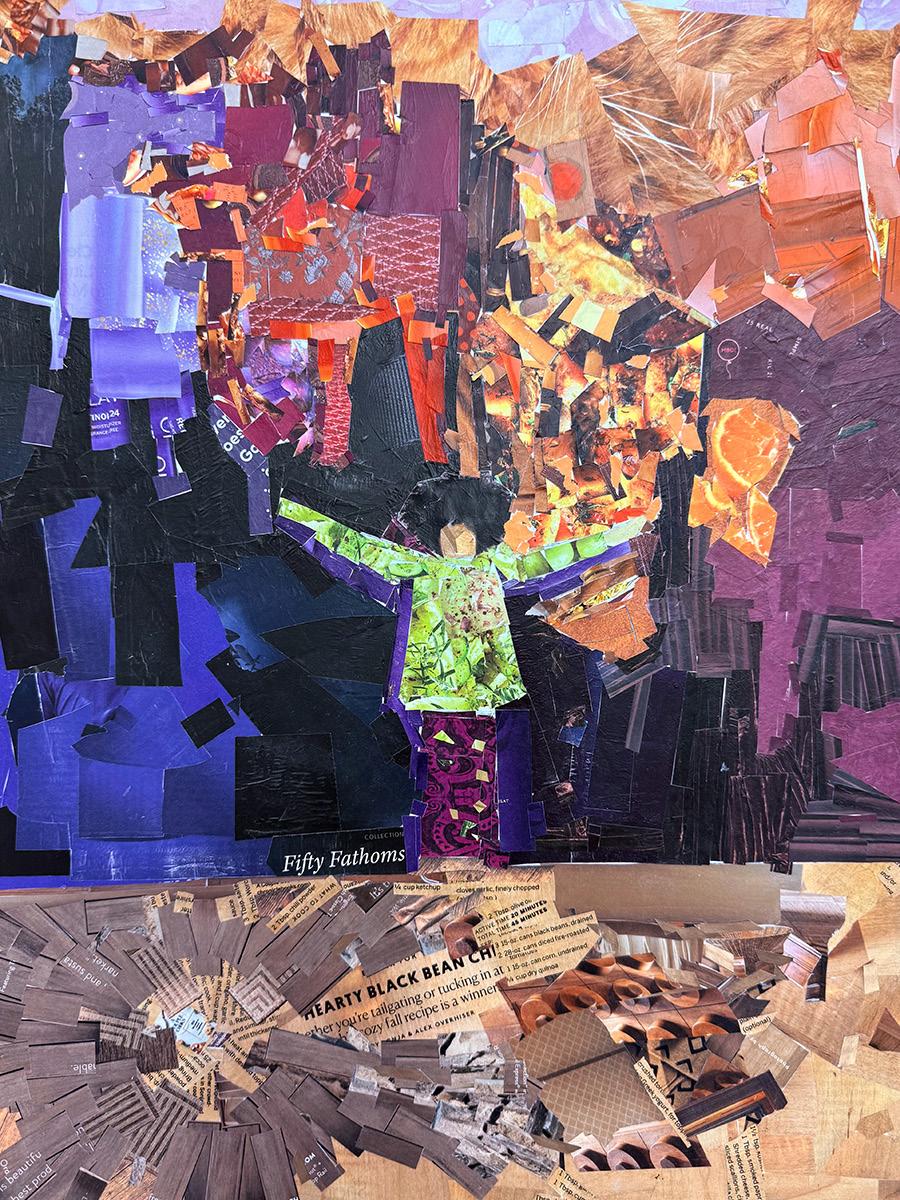
The Young Girl awoke to the soothing voice of her mother. She is reassured, comforted, and looking forward to her long day of school. Her mom had woken her up extra early this morning – it was picture day.
“You need to look your best,” her mother chirped, “pictures are memories that last forever.” The Young Girl did not understand her mother’s concern. If my hair is messy from playing every day, why can’t it look like that in the picture? That’s what I look like, I can’t change that, the Young Girl thought. But she went along with her mother’s plan anyway. She crawled out from under her pink polka-dotted covers. As she stepped out of bed, she noticed her favorite stuffed animal from her collection, the brown bunny, was knocked off of her bed. She frowned worriedly and picked the soft bunny up off of the hardwood floor.
“I’m so sorry. I didn’t mean to,” she said as she carefully placed the bunny back where he belonged, with the rest of the stuffed animals. Her mom walked with her to the bathroom, where the Young Girl stepped up onto her hot pink stool so she could reach the sink. Her Cinderella toothbrush clicked as she yanked it off of the counter and brushed her teeth for a perfect two minutes. She ran downstairs as the smell of warm pancakes and maple syrup wafted through the air. The Young Girl watched as her mom meticulously cut the pancake into mini triangles and drizzled the syrup overtop. Pancakes were her favorite breakfast, and luckily her mom made them for her often. After breakfast, the Young Girl’s mom led her back up to her room to pick out the “perfect Picture Day outfit.” The Young Girl sat on the bed, retelling the story of the intense game of Capture the Flag from the day prior that she had told three times already. But her mom still listened, still laughed when her daughter talked about her best friend, still made her feel seen as she always did. Her mom continued rummaging through the closet until she pulled out the floral, frilly, pink dress that her grandmother bought the Young Girl the last time they visited her. The Young Girl changed from her unicorn pajamas to the dress. She usually didn’t care about what she wore, but this dress made her extra excited. She sat down in front of the mirror for her mother to do her hair. Her mother neatly combed her hair into a perfect side part.
“Also, your teacher had such great things to say about you at our conference. I’m proud of you,” the Young Girl’s mother reassured. The Young Girl smiled.
“One more thing to make your hair perfect,” her mother thought aloud as she tugged open a drawer and pulled out a pink flower hair clip. She gently pulled aside the Young Girl’s hair and clipped the flower in. They walked toward the door, grabbed the Young Girl’s purple unicorn backpack and her lunch, a thoughtfully made sandwich with a little note packed by her mother. They got into the car and headed off for school.
The Teenage Girl jolted awake from her alarm. She had gotten to bed at midnight the night before and was much too tired to wake up to her six A.M. alarm. She slammed the “off” button and grudgingly sat up. She had an important day ahead of her: picture day, a math test second period, and a game after school. Is this really worth it? the Teenage Girl asked herself. But things had to be done regardless. And so, she switched on her lamp and slowly crawled out of bed. She rubbed her sore
eyes when she remembered the events of last night. She sat back onto her bed and spent the next ten minutes scrolling through the messages in her phone, looking back at the argument she had with her best friend. She couldn’t even tell what it was about, but her heart sank at the final text:
“Just don’t talk to me. I can’t be around you anymore. They don’t want to hear from you either.”
The Teenage Girl slammed her phone back down onto her bed and looked up to her bulletin board, to the picture of her and her best friend from the past after a tough game of capture the flag taken by her first grade teacher. Pictures are memories that last forever. A tear rolled down her cheek as she questioned who she would sit with at lunch, who she would laugh with in history, who she would update after every funny interaction. But she had to keep going. She had to get ready so she wouldn’t. be. late. The Teenage Girl untied her braids, hoping her hair curled just right. When it didn’t look how she wanted it to, she slammed her hairbrush down and stared into the mirror. She observed her short eyelashes, her ratty hair, her face that was never perfect. Her heart tried to reassure her. That’s just what I look like. I can’t change that. But in her head, she wished she could change. She walked over to her bathroom, brushed her teeth, and headed to her kitchen to get some coffee. Her mom was already wide awake, sitting on the kitchen table working.
“Good morning Mom!” the Teenage Girl chirped, putting on a happy face so her mother didn’t question her mellowness.
“Good morning, why did you get a B on your test?” her mom replied. She thought back to two days ago, when she neglected to study enough for her biology test.
“I’m so sorry. I didn’t mean to,” the Teenage Girl responded. She walked over to the fridge, got her coffee, and sped straight back to her room angrily. She was so grateful to talk to her mom and loved her dearly, but she did not want to be reminded of that test that disappointed the straight-A student inside of her. The Teenage Girl sat back into her chair in front of her vanity. She did her makeup, which she loved to do. But today, she just did not have the energy for it. She put on her favorite songs, which seemed extra sad that day. When she was young, she hated sad music. She always thought music should be happy and put you in a good mood. But today, she just wanted to wallow with “You’re On Your Own, Kid” by Taylor Swift putting her exact feelings into words. She pulled her math notebook out of her bag, read over her notes one last time, and hoped that it would be enough. She walked past her kitchen, but decided the coffee was enough for her breakfast. The Teenage Girl grabbed her backpack and headed out the door, calling “Bye,” as she stepped out and walked to the bus. On the way to school, the Teenage Girl thought back to when she was young. She never thought she’d care so much about her appearance, be so annoyed to talk to her mom, or struggle so much with getting As on tests. She had changed so much, but within her heart she wished she hadn’t.
Tania Khandelwal ‘29
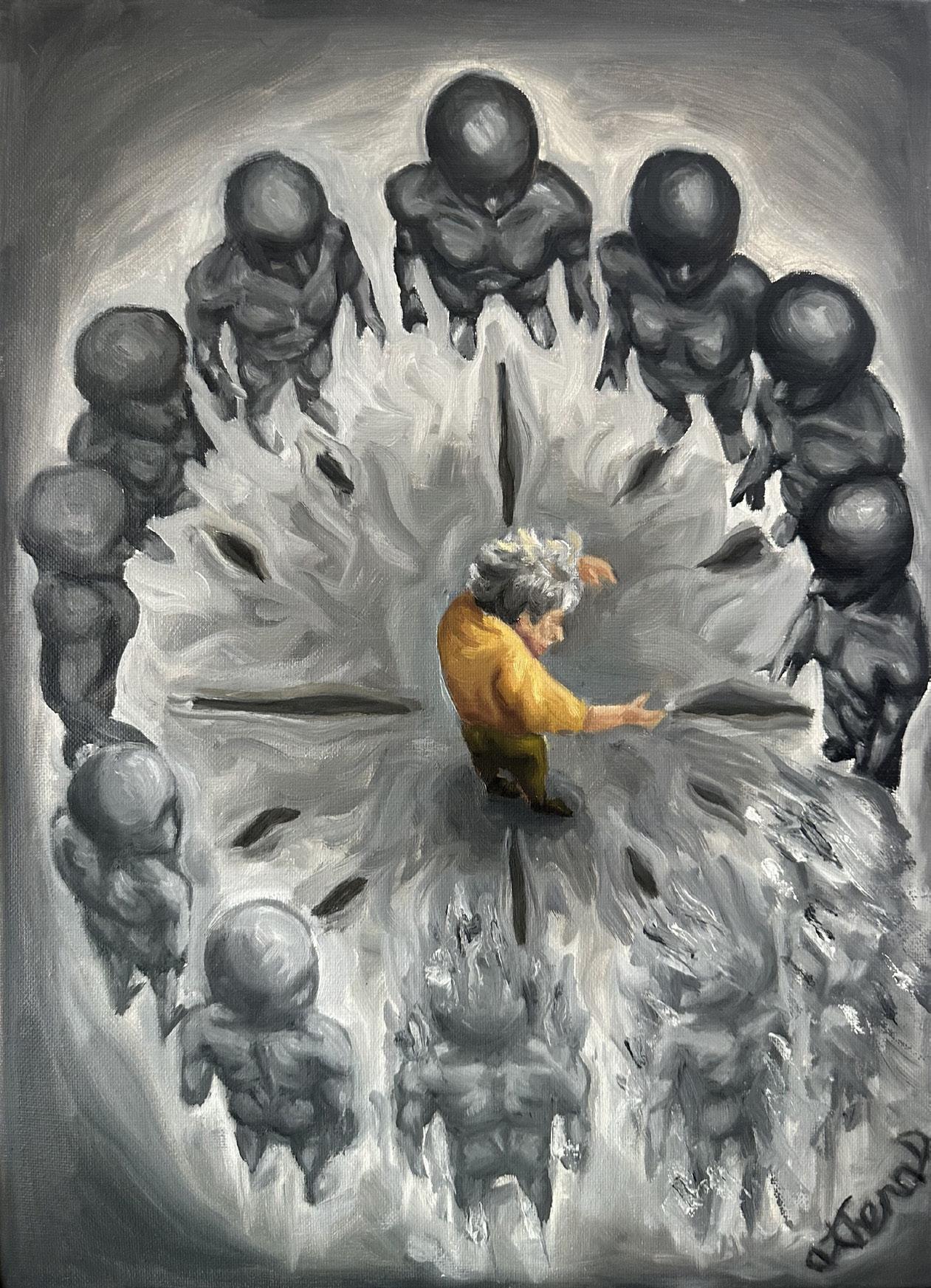
Memories
and the winter storm for the ages is still and my son is leaving for the game and shoveling all day with his gimpy dad and he looks so much like Alex Pretti, his beard and kind face and dopey smile make my heart drop and the hard street is still out there with masked men and a gun holstered and other guns not and the snow piles growing on the curbs and driveways like funeral pyres and his buddies are late as usual picking him up and the snow gathering like anger and ice without salt or harm and I pray for those boys and the wider world iced and freezing protestors gathering still like a quiet raging storm ready to fall
Mr. John Jordan ‘80
It gathers in the corners, things that even time cannot sweep, Arriving in the lists I wrote but didn’t do, A gravity that doesn’t drag the body deep, But pulls at every promise I once claimed as true. I reach for them–something shifts, it moves out of place, The plans I swore would start now have somehow slipped away, A small regret that flickers, sharp and hard to face, Their meaning thins between intention and delay. It settles softly, but when envisioned, brings a quiet sting, While the sky slowly becomes light, my head turns to the promised The things that never happen, to the idea of them I still cling, A weight that grows, as they stay dismissed. Yet still they linger, much beyond what has been done, A presence clearer when the world is hushed and still, Not something lost, but something waiting–not yet begun But one day I can win this battle, uphill.
Ruochen Kong ’29
A bright beam slices through the midnight sky, carving up the cosmos.
The lush, smoky trail it leaves behind, its whirl shaking the foundations of my home; a shooting star, a wish to make? No, it carries death, a missile of hate. A moment of stillness as the comet soars by, thanking God, you aren’t the target this time. Amber light reflects against a wailing woman’s eyes lying in misery on the streets, knowing it’s only a matter of time. Tiny rocks dance atop the dirt as the flame streaks by— the ground trembles, my chills multiply. The shattering fear behind my sibling’s eyes, “When will normal return?” they ask, forcing me to speak in lies.
A villain I am, deceiving them; their innocence keeps them from the truth inside. A strange sort of guilt fills me as I mutter my reply, “Sometime soon,” I say, as their hands lock into mine. It’s too much to bear; normal won’t ever return during their lifetimes. As we shudder in darkness, another shooting star zips by. This time, its magic of wishes illuminates a school for the blind. I quake as the colors of orange seep into the night; I can only pray the star takes them to a place without fright— where no child has to watch the light leave their friend’s eyes, or the wailing in the streets, families broken by fights— to a land where nothing keeps away the glistening sunshine. I wish I may, a wish I might, wish no more shooting stars shine tonight.
Brianna Cubbler ‘26 Scholastics Silver Key
I yearn to climb the enchanting tower constructed by a heavenly power; to achieve consolation in my darkest hours, and to be comforted by sunlight showers.
If I were to climb and fall, it would truly be the end of all. Yet I ascend, with tired arms kept conscious by the tower’s charms.
The outcome I desire most has so far eluded me, like a ghost. Oh! A tower of this wondrous degree, I have only before encountered cruel mimicry.
I continue climbing with bleeding hands destroyed by the world’s harsh demands; Yet, the torture I know I can withstand, for my hungry heart has taken command.
The tallest tower I ever did see; intriguing it would allow a climber such as me... Large and round the stones did be that comprised a tower as beautiful as she.
Its skin of stone, so smooth, so fair, with flowery vines that form its hair. Its stunning beauty, so grand, so rare, no other woman could ever compare.
A tower of grace, of warmth, of light; around her I can’t tell left from right. Her calls rob me of sleep each night— which is why I have to scale her height.
I reach the summit of the enchanting tower; I present my gift, a bouquet of flowers. She consoles me till the midnight hours, and comforts me with praising showers.
Jacob
Rogalsky ‘27
What is life?
My mom judges it by the “sweetness” of a crab. She’ll taste the roe, analyze how succulent the meat is, and mix everything with her delectable vinegar-ginger dipping sauce. She can tell how “alive” the crab was before it met its fate in a huge metal steamer.
“This is so fresh, even more so than the last batch,” she says in Mandarin Chinese.
My sister and I snicker in unison, all of the crabs she buys are alive at first. How can she tell that this batch is more “lively” than the previous one?
She insists, “No, these ones are sweeter. The crabs had more energy. I left the last batch out for too long.”
In one way, life is synonymous with that sweetness, the distinct taste of the sea you get when you simmer fresh seafood with congee, scallions, and ginger. It’s in the delicate pink hue of succulent shrimp meat, or maybe in the tender flesh of a tilapia that was flapping around just twenty minutes ago. This kind of “life” is the final trace of vitality in living things.
As for my dad, he can eat the juiciest lamb skewers or the most heart-warming beef noodle soup, and he won’t bat an eye. He might be eating plain rice porridge or a Michelin meal, and you wouldn’t be able to tell from his face.
In reality, he isn’t a very good cook. He makes a decent vegetable stir-fry, but his cooking is heavy-handed. His braised pork belly is too salty and lacks the traditional sweet stickiness, and his specialty is spicy instant noodles with a poached egg. He is ultimately the only one in our family who really eats his own cooking. When we have no other choice, my sister and I load up on rice and put on forced smiles to appease him.
But each time he eats his own food, he closes his eyes like he’s savoring heaven on earth. He declares, (It’s too delicious)” for the whole family to hear. When we finally see what he’s eating, it’s something simple like a side of shredded potatoes with Sichuan peppercorns or a stir-fry he whipped up in 10 minutes. His dishes have none of the savory flavor that comes from slow simmering or patience. They are fast, fulfilling, and large-portioned.
It was never about the food itself for my dad. It’s about his overwhelming self pride in all that he does, even if it is something small like eggs with scallions or stirfried string beans. Every bite is a reminder of his hard work, even if he only spent a few minutes making the food. His version of “life” lies in himself.
Ever since my little sister was four years old, she had it figured out. According to her, “the meaning of life is happiness.” So, she is never hesitant when it comes to what she wants to eat. Whether it’s the tender center of the bok choy or the most succulent piece of short rib, she does not look back with regret. She will drink the special bottle of sparkling apple cider on an ordinary day, even if nobody else is in the mood.
This might be considered greedy, but she never fails to give back. She makes french toast for herself and the family for breakfast. When she bakes a batch of rich brownies or sumptuous cupcakes with cream cheese frosting, we never fail to share. Life was, and still is, all about happiness to her.
As for myself, life has always been about balance. What good is eating if you’re not hungry? When I’ve lazed around all day, and soy sauce chicken is for dinner, I feel immensely disappointed. For one, I didn’t do anything to really deserve such a delicious meal. Two, such a delicious dish is wasted on someone who isn’t even hungry.
On other days, when I come home late after a long day, everything tastes delicious. Specifically, mom’s beef and carrot stew and red braised pork belly taste especially fresh and savory. My whole family will hear me saying “this is so good!” again and again until it’s too much even for the cook. Most of all, I can eat to my heart’s content, self-assured that I accomplished something to deserve this joy.
In a way, the food is only half of the experience. The rest of the experience is about savoring the “sweetness”, discovering what the food means to oneself, and eating in such a way that brings you happiness. But of course, the most basic step is being famished. What is life without an urge to eat?
Chloe Li ‘26 Scholastics Silver Key
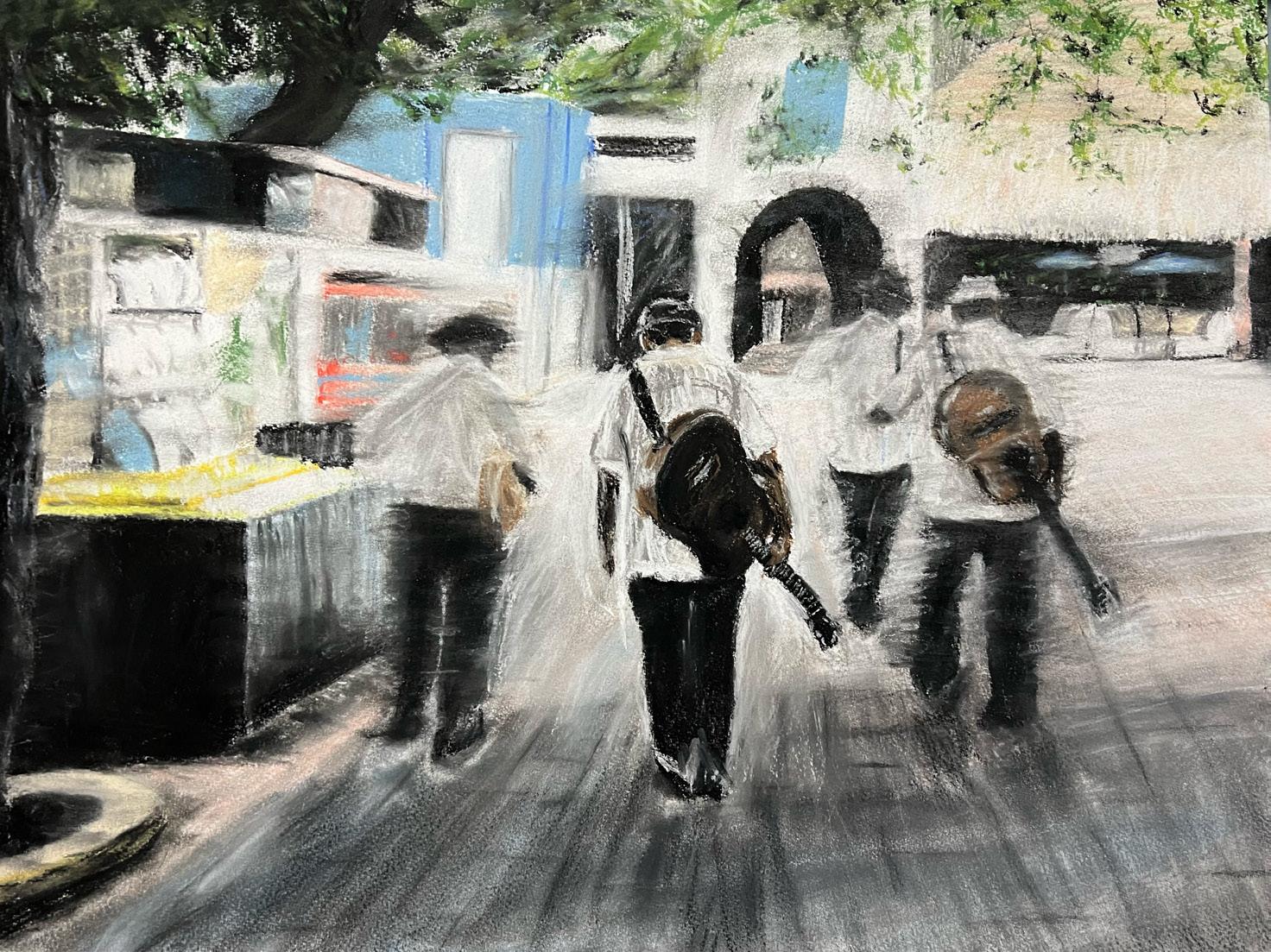
The Soloist
Daniel Qi ’26
Delaware Congressional Art Award
If the beginning is the end, or less, then the middle is half the beginning and the end.
Worlds balanced precariously. Vengeful scales tipped by a spark, damning the hearts beating on both sides.
If I am half the beginning and the end, then I am the middle. The perfect world that never existed.
If I am less than half the beginning and the end, the destiny of the world will rewrite itself. Darkness becomes hope while light poisons. Only cold cement coffins await the living, the fabric of the world warped beyond repair.
Lost somewhere between the beginning and half the beginning and the end, I end up somewhere new. Something new.
If I am greater than half the beginning and the end, the past will be erased from living memory and I lose myself to a glowing, flat void. Fear becomes hate as the world divides. Dead eyes loom over the edge as we wordlessly plummet.
Then, I can be found somewhere between half the beginning and the end and the end, so I start somewhere new. Someone new.
But— if I am nowhere in this life, have I even begun? Or have I already ended? A life that only exists between one heartbeat and the next.
Rebecca Wang ‘26
It is voluminous.
It is stacked beside the door.
(Twenty-two copies,
All save one facing up.)
One best not budge it.
It has four authors, apparently.
It comes in various editions.
Its publishers are Bedford, Freeman & Worth.
Its cover is durable.
Its cover has a heavy gloss.
Inside its cover is a box in which are listed those of whom it is the property.
Its pages are numerous.
Its pages are defaced, edgewise, by the pens of past proprietors.
Its pages, in places, are marked with notes that may well not be seen.
Its pages harbor words that might have moved you.
It is hard to tell from looking whether any word might move.
Mr. Joseph Quinn
Abby Leonardo ’26
Tapestry is a student-run literary and fine arts publication that srives to showcase the creative talents and diverse artistic expression at Archmere Academy. Tapestry solicits writing submissions beginning in the spring via Google Forms, the senior creative writing class, and the faculty. The evaluation process begins in mid-April, when the editorial staff members, with the guidance of the faculty moderator, discuss each piece anonymously based on an evaluation rubric that encompasses creativity of approach, style of writing, and effectiveness of purpose. Submissions close in mid-May and the editorial staff complete the evaluation process in late May. Art pieces are solicited from students via Google forms and paired with accepted writing selections. Tapestry is published digitally and in-print in June.
What an honor it has been to work on this year’s edition of Tapestry! In the current zeitgeist, where passable writing and art can be created with the click of a button, we find ourselves asking, “What is the purpose of the humanities?” Often, that bleak question emerges while we’re counting the fingers of a model on an advertisement to check for AI usage. As such, it was a bit scary when we received a smaller number of submissions than usual. However, working on Tapestry with such dedicated staff (of almost entirely underclassmen!) encouraged us. Throughout the spring, we’ve watched our team members grow their communication and critical thinking skills. It was extremely fulfilling to see productive and civil conversations occur even in the face of disagreement. They saw good in each piece we reviewed, pointing out details us seniors had overlooked. We saw not only artists, but future coders, doctors, politicians, and business-owners that wanted to engage in the arts. Though the future digital landcape will certainly impact our approach to art and writing, this book (and the student voices in between its pages) are proof of a hopeful future. We are made to create.
Your 2026 Tapestry Senior Editors, Anne-Cécile and Chloe
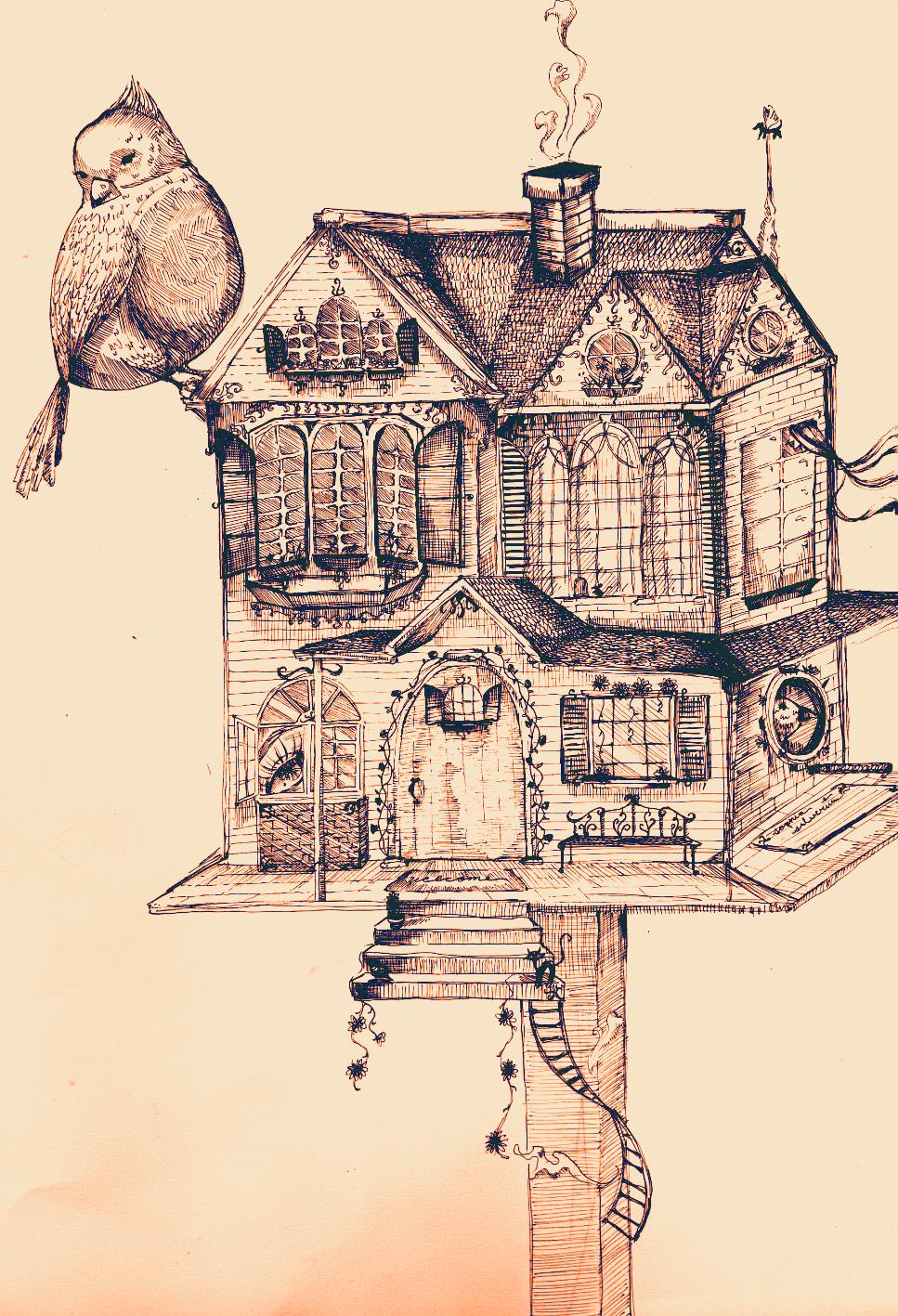
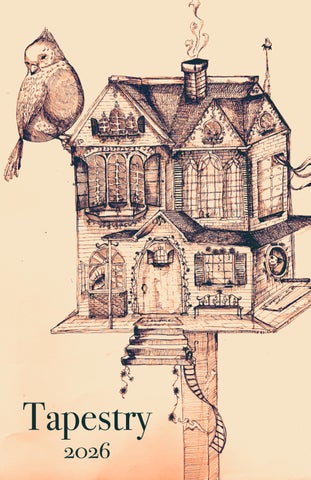
The 2026 issue of Tapestry, Archmere Academy’s literary and arts magazine, is designed and created by students using Adobe InDesign CC. The Cover art, “Sky Perched Cottage,” was created by Sophia Silverman ‘28 using pen on paper. Archmere students created all works within the magazine, aside from a few faculty contributions. The Title is in Bodoni 72 Oldstyle book and the body text for all literary pieces is in Minion Variable Concept in 8.4 font. The printed book’s dimensions are 5.5 inches by 8.5 inches with 0.5-inch side margins and 1-inch top and bottom margins. The magazine is printed by Aztec Printing & Design in Wilmington, DE. Contact faculty moderator Stephen Klinge at sklinge@archmereacademy.com for more information.
Senior Editors
Chloe Li ‘26
Anne-Cécile Kittila ’26
Senior Staff
Daniel Qi ‘26
Rebecca Wang ‘26
Selena Yang ‘26
Editorial Staff
Colleen Burke ‘27
Tallulah Daisey ‘29
Anabelle Demosthene ‘28
Athena Dong ‘29
Lillian Gatti ‘29
Evelyn Goodrick ‘28
Ruochen Kong ‘29
Pratiksha Naithani ‘29
Emma Roberts ‘28
Sophia Silverman ‘28
Benjamin Yi ‘28
Layout Editor
Anne-Cécile Kittila ’26
Anne-Cécile Kittila ’26
Chloe Li ‘26
Mr. Stephen Klinge
Art Editor
Chloe Li ’26
Special thanks to...
the Art Department
Mrs. Linton and the Senior Creative Writing Class and all who submitted work to Tapestry 2026!