REPORT AUSTRALIAN INSTITUTE OF ARCHITECTS ANNUAL REPORT 2020
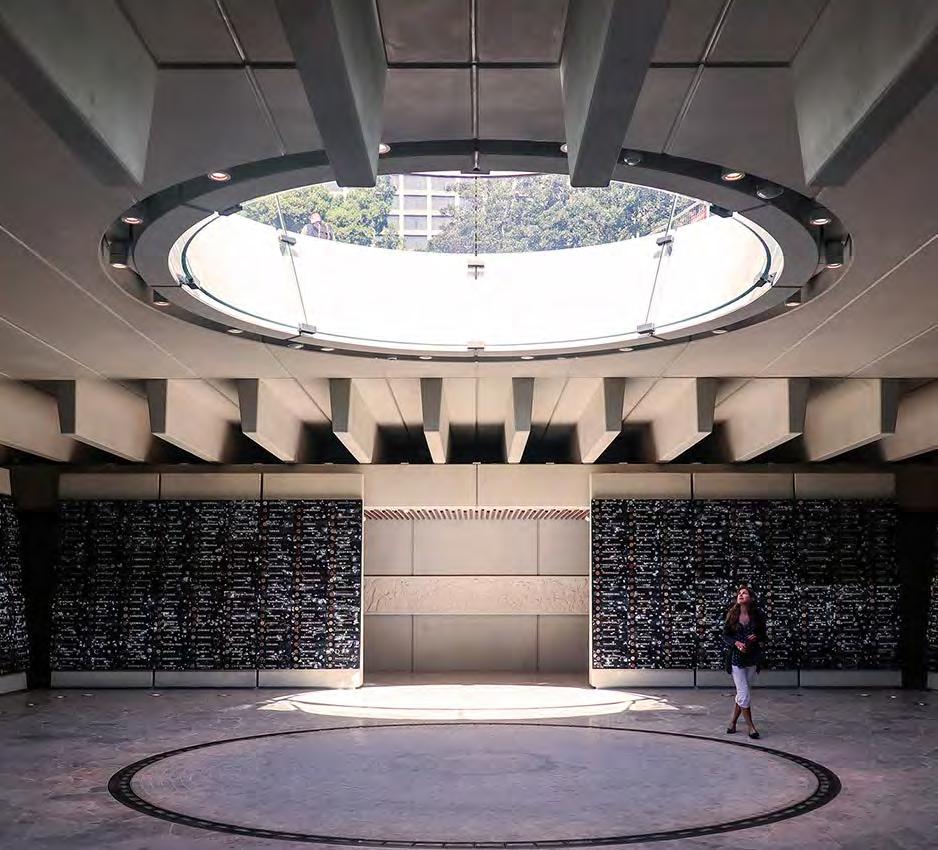

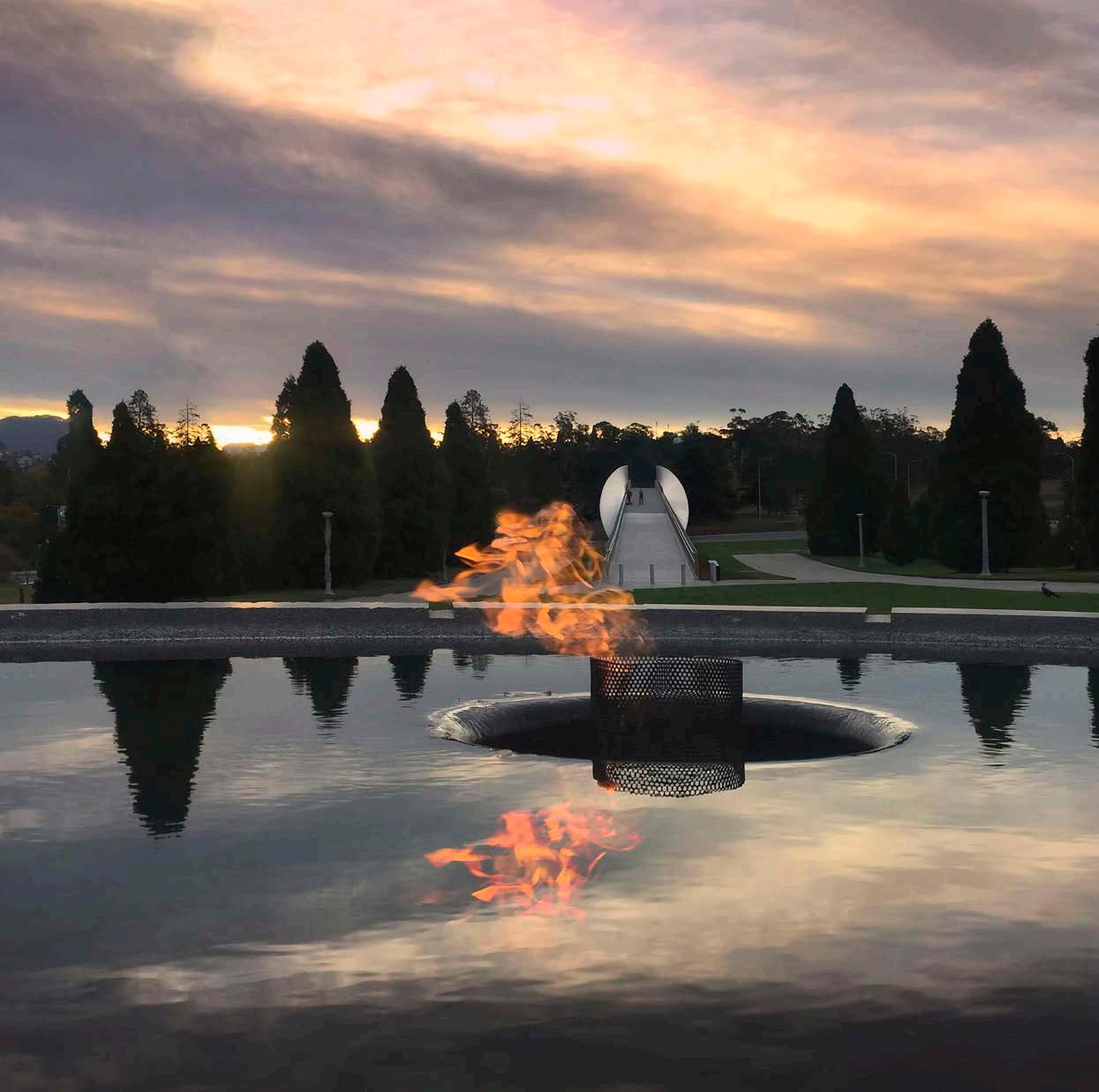
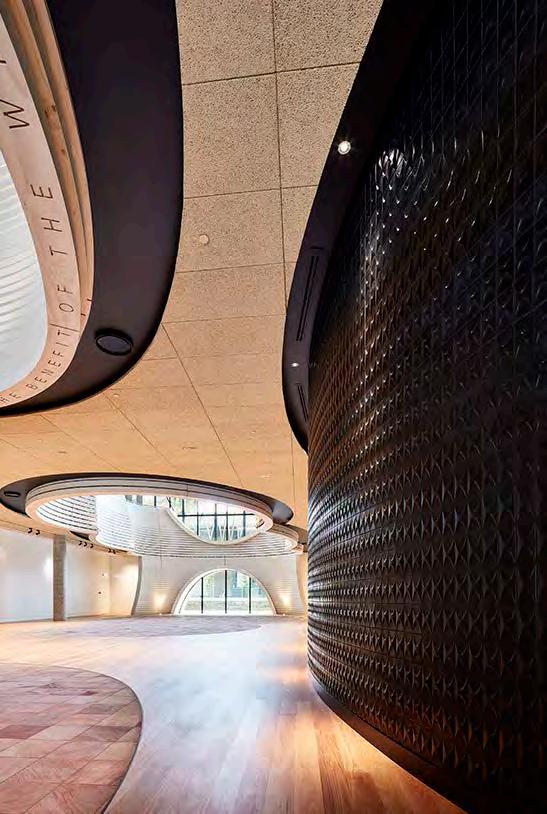
Anzac Memorial Centenary Extension
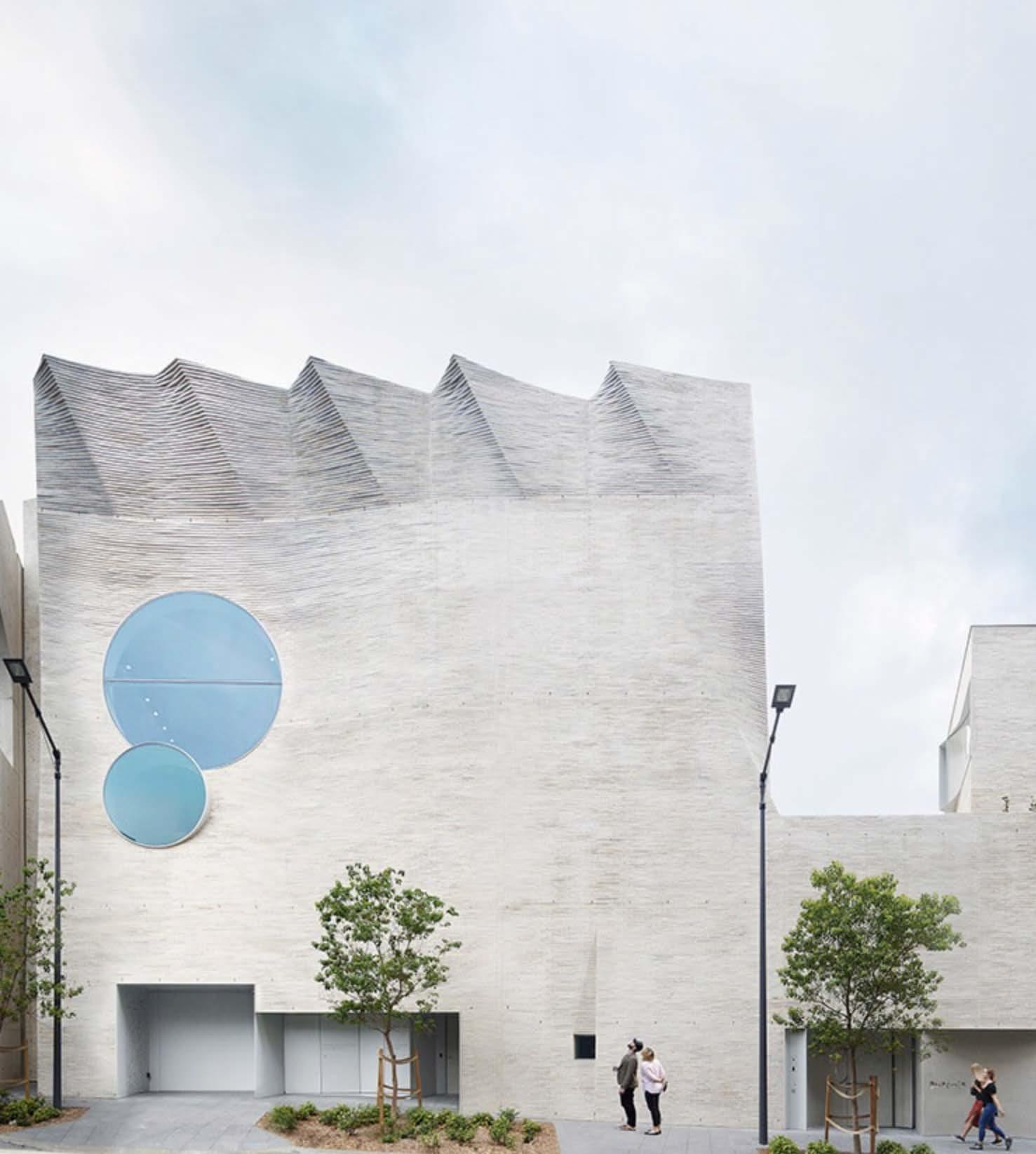
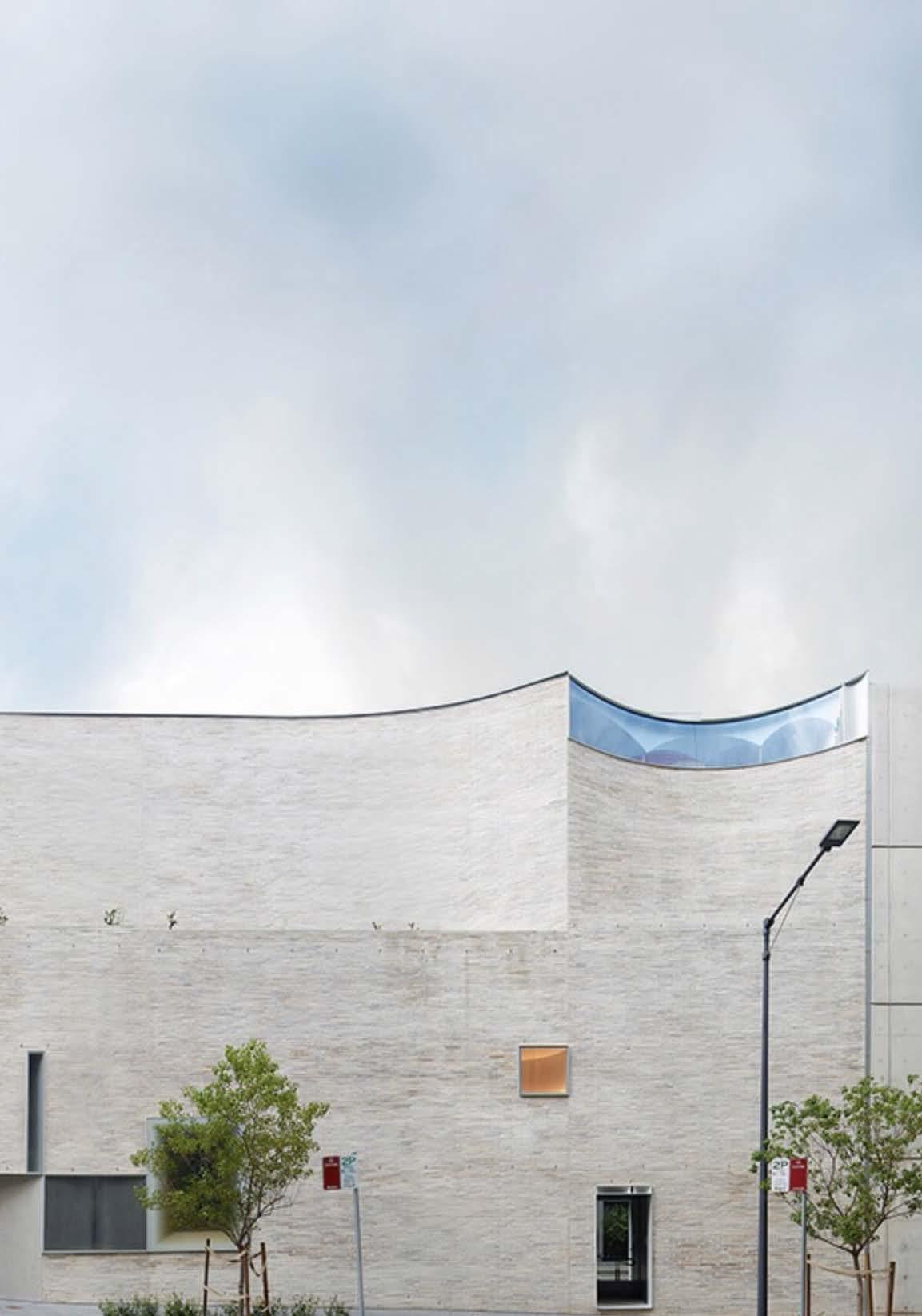
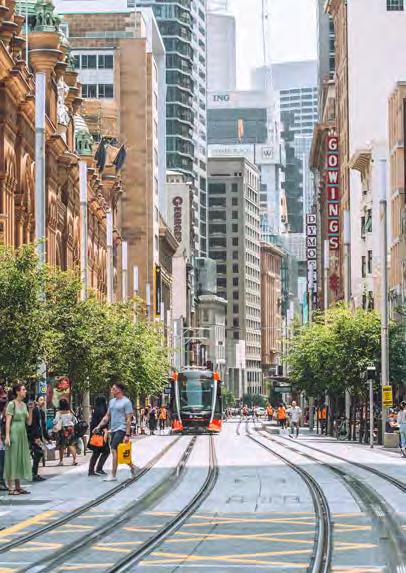
Johnson Pilton Walker with the Government Architect NSW | NSW | Photographer: Matteo Salval
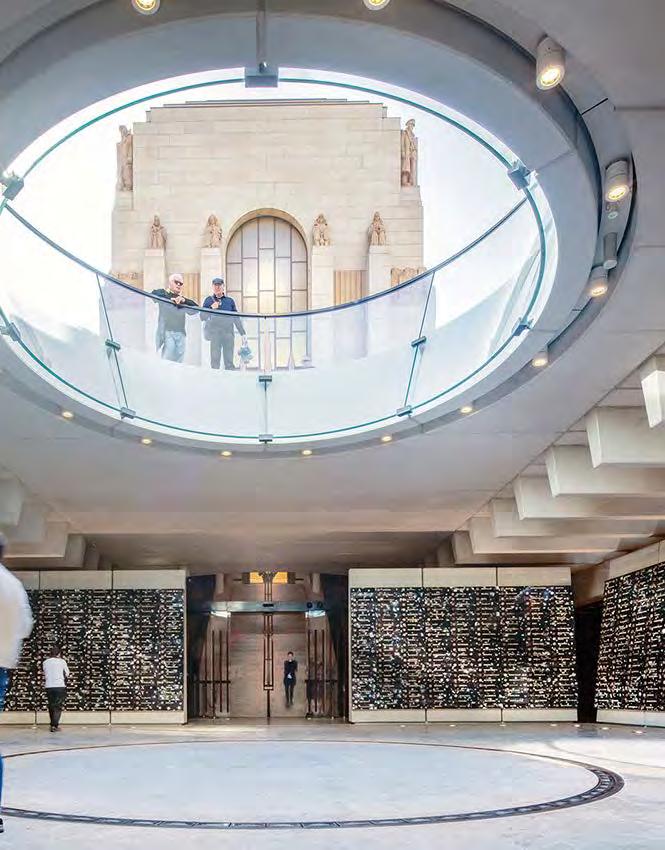
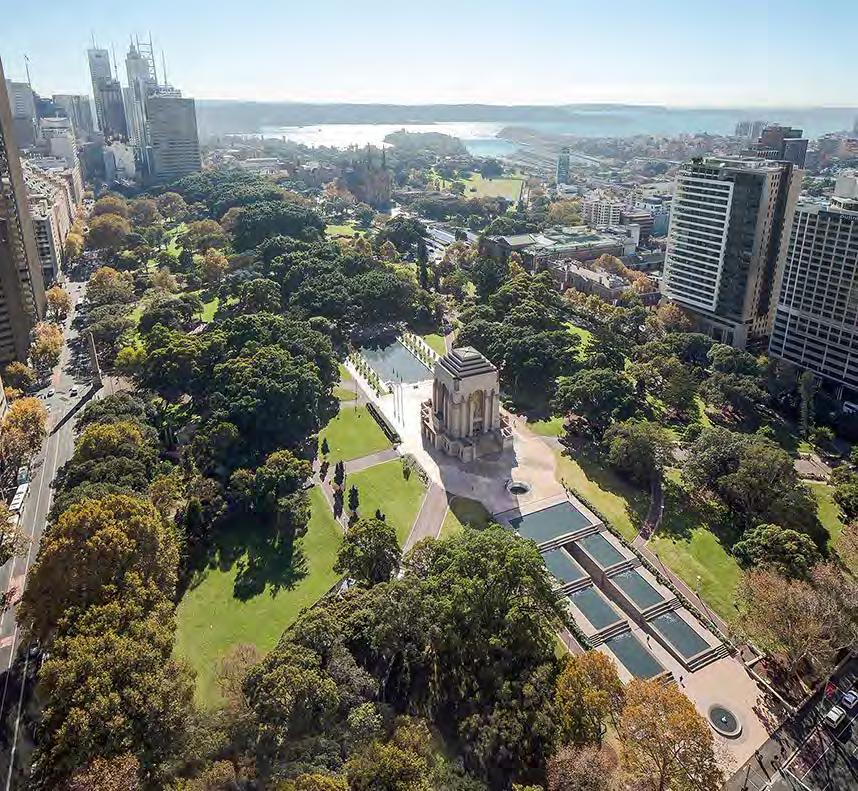
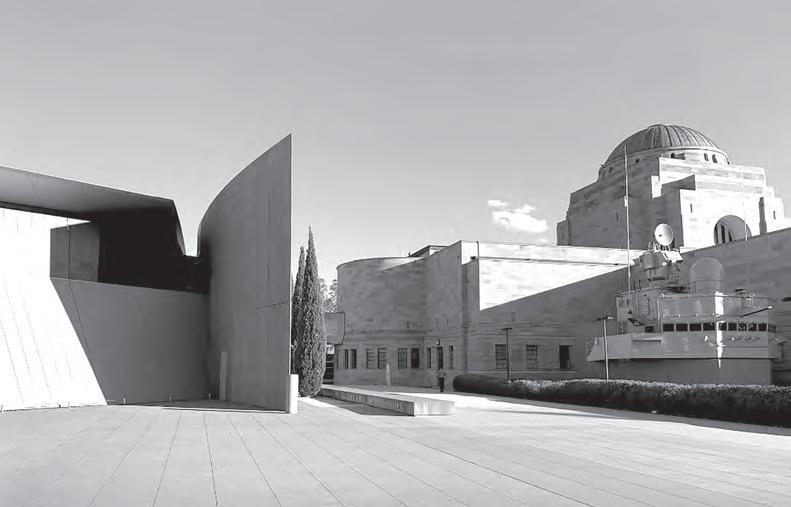
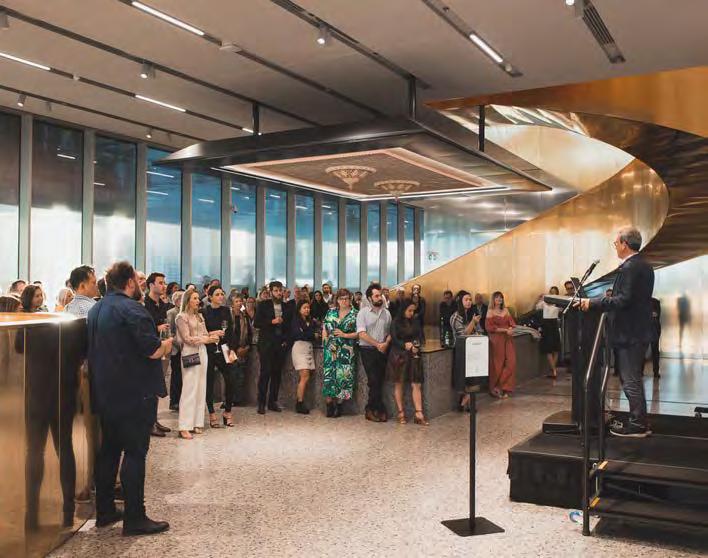
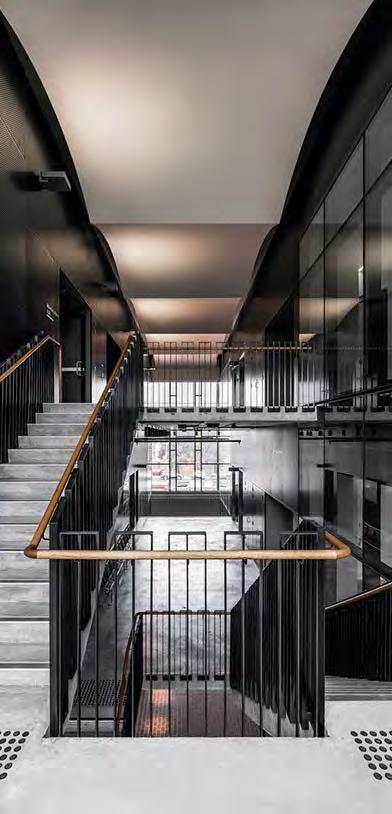
The Anzac Memorial Centenary Extension has provided the memorial with much-needed exhibition and education facilities, and reasserted its prominence in Sydney’s Hyde Park with a new forecourt and water cascade, at the 1930s vision of the memorial’s architect, C. Bruce Dellit. The memorial is an admired landmark but the original vision of cascading fountains to the south of the memorial had remained unrealised, until now.
The centenary extension looks beyond the brief to transform a subterranean extension into an integrated visitor experience. It takes the visitor on a journey from the bustling street down to a new formal court, the Hall of Service, the new facilities, and the original memorial halls beyond.
This is a processional journey of the senses. The water cascade progressively dampens the city noise to focus the visitor on the essential nature of the memorial; the daylight through the courtyard oculus transforms the space throughout the days and seasons of the year; and the textural qualities achieved through the interplay of a refined palette of materials result in a respectful conversation with the original memorial.
In deference to the original pairing of Dellit and artist George Rayner Hoff, a collaboration between artist Fiona Hall and design architect Richard Johnson results in a singular experience of art and architecture. Collaboration between Johnson Pilton Walker and the Government Architect NSW made the project possible, including the adept execution of the enormous community project to gather earth from all corners of New South Wales and battle sites overseas to complete the artist’s vision. The Anzac Memorial Centenary Extension fulfils both traditional and contemporary architectural demands, artfully reinterpreting Dellit’s vision and reconnecting visitors with the Anzac spirit of collaboration and community in a living memorial fit for the twenty-first century community engagement and civic life.

To make the world a better place through architecture
A strong architectural profession that inspires clients and promotes community and public interest through exceptional design and an ethical approach to the built environment
To develop and promote a strong architectural profession and be the public voice for architecture
THE AUSTRALIAN INSTITUTE OF ARCHITECTS is the peak body for the architectural profession in Australia, representing more than 12,000 individual members and almost 2000 practice members around the country and abroad.
Established as a national member-based association in 1930, we support members at all stages of their careers, from students and graduates to registered practitioners, from those working in affiliate industries and academia to those who have retired from practice and remain committed to the profession.
Through the delivery of dedicated and tailored continuing professional development, awards and recognition programs to promote best practice outcomes and targeted advocacy to all levels of government on behalf of the profession and consumers, we strive for better, safer and more sustainable communities for all Australians.
12,000+
INDIVIDUAL MEMBERS
ARCHITECTS, GRADUATES, STUDENTS, ACADEMICS, AFFILIATES, RETIRED PRACTITIONERS
~2000
PRACTICE MEMBERS
SOLE PRACTITIONERS, SMALL, MEDIUM AND LARGE PRACTICES

9 CHAPTERS
1 VISION
1 UNITED VOICE FOR THE PROFESSION

THIS SAME FORCE OF INTERDEPENDENCE CHARACTERISED OUR RESPONSE TO 2020 AND THE MANY DIFFICULTIES IT SENT FORTH. IT HELPED US TURN ADVERSITY INTO OPPORTUNITY, AND POSITIONED US TO BEST SUPPORT ONE ANOTHER AND OUR MEMBERS.
The best architecture is born of collaboration and connection, be that between architects, with other built environment professionals, or with the clients and communities commissioning our work.
This same force of interdependence characterised our response to 2020 and the many difficulties it sent forth. It helped us turn adversity into opportunity, and positioned us to best support one another and our members throughout this time. COVID-19 became the mother of invention for the Institute and the collective of our members.
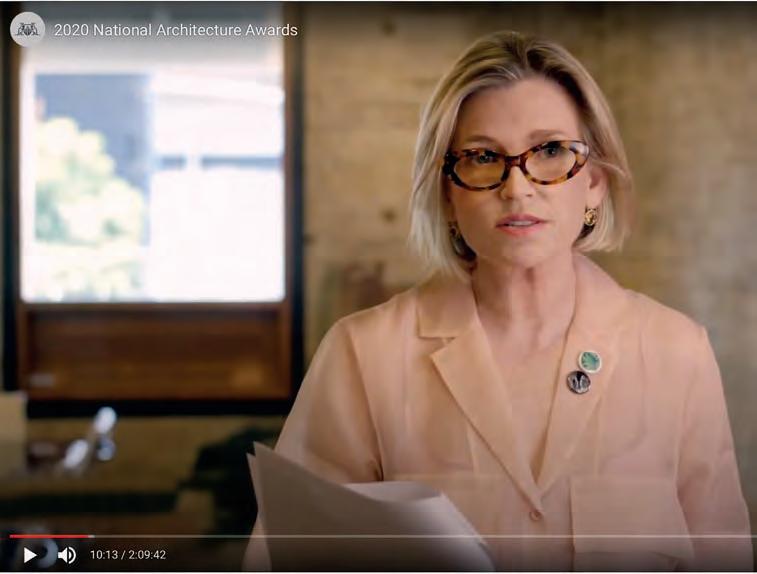
The exceptional effort by staff, jurors, entrants and their clients to pivot our entire awards program from face-to-face inspections to online site visits, and to virtual awards ceremonies, was worth every effort. Not only did it preserve the annual opportunity to highlight and celebrate the extraordinary talent and value of the profession; it also meant we could share this celebration with a wider audience than ever before.
As a result, we created a stronger platform with a far greater reach to showcase our members’ outstanding achievements. Tens of thousands of practitioners and lovers of architecture foregathered in offices, or partied and celebrated from homes across Australia and around the world, viewing the 2020 National Architecture Awards.
We undertook the same feat of digital transformation to deliver our online CPD program, ensuring that members could continue to meet the ongoing professional development requirements which the practice of architecture demands.
The free Lean In webinar series helped keep members both informed and connected, with the Institute creating an event series that was not only logistically robust but also one that has attracted – and continues to attract – an inspiring range of speakers.
Internationally, Angelo Candalepas, Rachel Neeson and Alex Hall represented us at the RIBA’s Global Exchange speakers series.
The launch of Community, our new member-only online networking platform, was the crown jewel in the Institute’s web-enabled journey. It is a tremendous resource that has been embraced by members and a tool whose value will continue to grow over time.
With the National Council’s imprimatur and encouragement in 2020, all Chapters will now have their own medallion or medal for the best of the awards entries, and foster greater public recognition with plaques and medallions displayed at our award–winning structures.
This is an impressive array of achievements, especially considering the difficult circumstances and comparatively short timeframes in which they were developed and delivered. They are testament to the Institute’s deep commitment to our members, to giving members the tools to support their success and enhance the practice of architecture. They are also about magnifying the inherent capacity of architects to positively shape the world around us and create a better future.
These are the themes that guide the Institute’s substantial advocacy agenda, an agenda that has seen us raise our voice in some of the most critical national, and indeed international, debates. From climate change to building safety, our work focusses on safeguarding and supporting the communities in which we live and work.
In 2020, the Institute lodged a prodigious number of submissions to Australian governments at all levels, seeking to influence better policy outcomes with the evidence and expertise of our membership body. We testified before committees of parliament and a Royal Commission. We made the case for economic stimulus measures that serve a triple bottom-line purpose. We held decision-makers to account and argued for better procurement processes to maximise the investment of public funds and ensure local talent is tapped first.
This is an agenda we will take into 2021 with continued force.
Much of the foundational work we commenced in 2020 will mature in the year ahead. Our Climate Action and SustainabilityTaskforce (CAST) has a full program of work as we engage with government and industry on the transformation to net zero emissions.
Similarly, our First Nations Advisory Working Group and Cultural Reference Panel is guiding the profession to better
understanding, recognition and beneficial outcomes for First Nations Peoples in architecture.
And our newly reconvened National Heritage Committee has adopted initiatives for education, preservation and sustainability of our built heritage, championing heritage on a national level alongside the local initiatives undertaken by our Chapters.
At Chapter level, our committees around the country and overseas are contributing to national and international issues while also pursuing local campaigns to protect our heritage, to improve design and planning outcomes, and to service the needs of our profession.
Our regional and specialist committees are yet another way in which we harness the power of collaboration and connection in order to drive change. I thank everyone who generously gives their time, expertise, intellect, good humour and resources to support this work for our collective benefit and the advancement of our profession.
Alice Hampson FRAIA National President
WE HAVE CREATED A STRONGER PLATFORM WITH A FAR GREATER REACH TO SHOWCASE OUR MEMBERS’ OUTSTANDING ACHIEVEMENTS.
Reflecting on a year like no other, what strikes me most is the capacity the Institute demonstrated to step up for our members.

WE MET ADVERSITY WITH STRENGTH...RESPONDING TO CHALLENGES IN A WAY THAT ENHANCED AND HIGHLIGHTED THE ENORMOUS VALUE
BRING TO OUR NATION’S COMMUNITIES.
We met adversity with strength, smarts and by delivering more support, enabling the profession to respond to the many challenges we faced in a way that enhanced and highlighted the enormous value architects bring to our nation’s communities.
As bushfires raged, devastating vast parts of our nation, we put into action plans to provide not just immediate, but medium and longer-term support. We continue to implement those plans today. Our strong advocacy is helping to not only heal communities but to shape a safer future for them.
We are here for the long haul. That means painstakingly detailed engagement with government and regulators, as we work with them to improve the standards and policies that will grow the resilience of our built environment, especially in bushfire-prone regions, and ultimately benefit the people who call them home. It means walking the halls of federal parliament, as I did in February 2020, meeting with Ministers and members of bushfire-affected communities to explain how architects can – and are – helping. It means continually upping our CPD offering, with new practice notes, courses and opportunities to knowledge share through our Lean In series.
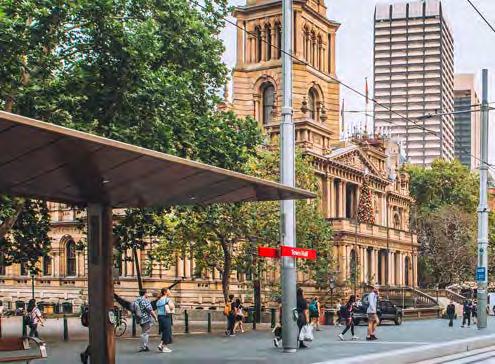
This series was a major feature of our response to the other defining event of last year: COVID-19. As the pandemic pushed us further apart, we launched the Lean In series to bring us back together. We built deeper connections with our members and used digital tools, like our COVID-19 member survey, to build an evidence base for government at all levels for the policies we argued were needed in response to this unprecedented health and economic crisis. The strength of member engagement ensured the results of this work were compelling and helped incite some of the welcome policy responses by government announced over the course of the past 12 months. Things like Victoria’s record investment in social and affordable housing and the NGV Contemporary announcement are but a few among many highlights from my home state and right around the nation of the economic stimulus measures we argued so hard for.
While working collaboratively with government and authorities to effect change has been a feature of our advocacy, so too has our fearlessness to speak out against poor decision-making processes and failures in leadership.
Our long-running campaign to save Anzac Hall, and protect the heritage integrity of one of Australia’s most important commemorative sites, escalated as the project arrived at the first of three key approval gateways.
We gave evidence to the Public Works Committee of Parliament’s inquiry, evidence which led to the first dissenting report being issued by this body in the more than 60 reports it has considered since being established. This was a significant

win for our campaign. As we continue the fight into 2021, our efforts shine a light on the value and importance of protecting our built heritage and respecting due process – principles whose relevance stretches much further across the profession and the work of our members.
In the same way, we have challenged government to show leadership, commitment and take meaningful action on climate change. We will continue to advocate strongly for net zero emissions in the built environment by 2030 while also walking the talk with our new Going Carbon Neutral campaign. Not only are we letting policymakers know that this target is achievable, we are showing them and creating an unstoppable momentum towards a better future for our planet.
This determination to do better is evident also in progress we made in 2020 towards the inclusive involvement of First Nations peoples in both architectural education and the Institute’s services, programs, activities and governance. The vote to amend our Constitution at the last Annual General Meeting to include a Statement of Recognition, developed by our First Nations Advisory Working Group and Cultural Reference Panel was a critical step forward on this path and one we will continue to build on.
The Institute’s members encompass a depth and breadth of talent, expertise and determination that infuses our work on your behalf with tremendous power. It is a power that we will continue to harness for the betterment of the profession and the communities you serve.
Julia Cambage Chief Executive Officer
WE CONTINUE TO ADVOCATE STRONGLY FOR NET ZERO EMISSIONS IN THE BUILT ENVIRONMENT BY 2030, AND ARE CREATING AN UNSTOPPABLE MOMENTUM TOWARDS A BETTER FUTURE FOR OUR PLANET.








Genevieve Overell AM Independent
* Kathlyn Loseby Board Director from 22 July 2020 to 25 February 2021
AS AT 31 MARCH 2021

Shannon Battisson RAIA ACT President

Laura Cockburn FRAIA NSW President

Erin Crowden RAIA EmAGN President

Peter Hobbs FRAIA WA President

Michael Lavery FRAIA QLD President

Craig Rosevear RAIA TAS President

Angelo Candalepas LFRAIA Nationally Elected National Councillor

Samantha Cotterell FRAIA International Chapter Chair

Jenny Culgan RAIA NT President

Brian Hooper FRAIA Nationally Elected National Councillor

Jeremy McLeod RAIA Nationally Elected National Councillor

Jane Williams RAIA Nationally Elected National Councillor

Jocelyn Chiew RAIA Nationally Elected National Councillor

Anthony Coupe FRAIA SA President

Leanne Haidar SONA President

Bill Krotiris RAIA VIC President
BOARD MEMBERS ALSO ON COUNCIL
Alice Hampson FRAIA National President & National Council Chair
Prof Helen Lochhead LFRAIA Immediate Past President
Tony Giannone FRAIA National President Elect
Andrew Broffman FRAIA Nationally Elected National Councillor

Julia Cambage Chief Executive Officer

David Boyes General Manager, Technology and IT

Alexia Lidas General Manager, Strategic Innovation & Enterprise

Mike Adlam General Manager, Communications, Marketing & National Events

Leanne Hardwicke General Manager, Policy, Advocacy & Education

Michael Linke General Manager, Membership Services

Barry Whitmore Chief Financial Officer & Company Secretary
Long-term planning for the launch of online member services culminated in the delivery of an enhanced member portal, revitalised Find an Architect directory, online national mentoring program and the muchanticipated Community platform.
The national mentoring program was launched via Mentorloop. An initiative of the Emerging Architects and Graduates Network, this new program hosted over 700 registered users, creating positive mentoring partnerships (loops) and engaging in over 7000 interactions.
The expanded offering of HR Hub to the entire Institute membership, previously only available to A+ and graduate members, was a welcome initiative.
Upscale and Superstudio were enjoyed as online events by participants, mentors and creative directors alike, once again demonstrating the extraordinary talent of the future generation of Australian architects and designers.
Individual member numbers remained stable during 2020 with the Institute welcoming a total of over 1450 new student, graduate, affiliate and architect members. 81 new A+ practices joined the ranks of those already gaining access to an expanded range of benefits, with the number of individual members included under A+ membership now exceeding 55% of the total membership.
12,258 INDIVIDUAL MEMBERS
1,937 A+ PRACTICES
6% INCREASE IN AFFILIATE MEMBERS
36

129
NEW ARCHITECT MEMBERS
292
NEW GRADUATE MEMBERS
836
NEW STUDENT MEMBERS
6%
MEMBERS

2181
In March 2020, we launched the Lean In series as a way for the Australian architecture community to share experiences and ideas during the COVID-19 pandemic. Our members couldn’t gather in person, so we brought networking and case study events to a screen near you.
The series provided great opportunities for peer-to-peer engagement and sparked discussions on topics from contracts and client communications to colour choices and everything in between.
We held over 80 free sessions throughout the year, which have been accessed more than 20,000 times to date.
Since the beginning of March 2020, the Institute has been engaged with all Australian Governments to ensure that a robust economic recovery strategy was enacted to mitigate, as much as possible, the effects of the COVID-19 pandemic.
With the unprecedented nature of the pandemic triggering government spending on a scale previously unseen in peacetime, it was essential that the Institute work to ensure our leaders seize the opportunities a financial outlay of this magnitude offered.
To this end, we put forward solutions, from an increase in social housing stock to more energy efficient buildings, that would continue to pay dividends well into the future. We also called for enhanced initiatives to support the building and construction sector through the COVID-19 crisis in line with evidence from member surveys on the impact of the pandemic on architectural practice and consolidated in our report: Economic Stimulus 2020.

As the coronavirus pandemic pushed Australia’s economy into recession for the first time in three decades, we surveyed 430 members in June 2020 to determine the effects of COVID-19 on the architectural profession.
The results highlighted a substantial slowdown in projects along with measurable shifts in employment. The report provided early indications of a looming slow-down for the wider construction industry. We used the statistics to help inform our Economic Stimulus Report. We also presented the findings to stakeholders and government representatives when meeting to discuss the initiatives we had called for to support the building and construction sector through the pandemic and beyond.
RESPONDENTS
GENDER
PRACTICE SIZE
Of
Practices which rely on Government-funded architecture projects Have the government initiatives been helpful?
MONTHS OF WORK IN THE PIPELINE SUPPLY CHAIN ISSUES
3-6 months of work in the pipeline
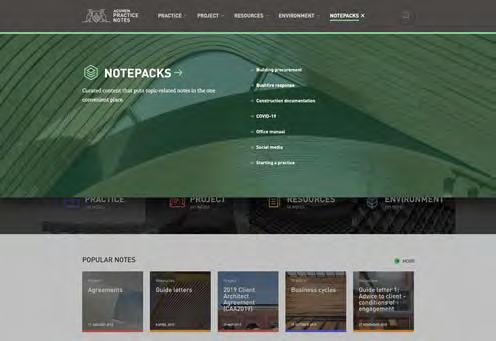
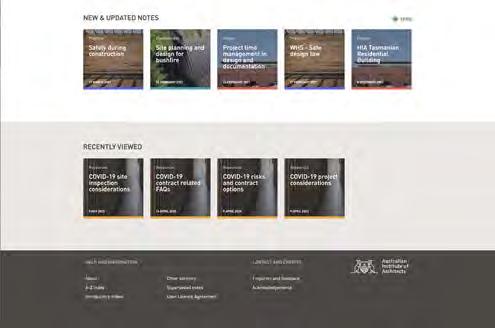

The following notes were made publicly available as guidance material for the architecture profession via the Institute’s Acumen Practice Notes:
• COVID-19 project considerations
• COVID-19 risks and contract options
• COVID-19 contract related FAQs
• COVID-19 site inspection considerations
A dedicated COVID-19 notepack collated the above material, together with relevant content such as Mental health in the profession (also made publicly available to assist the profession during this time).
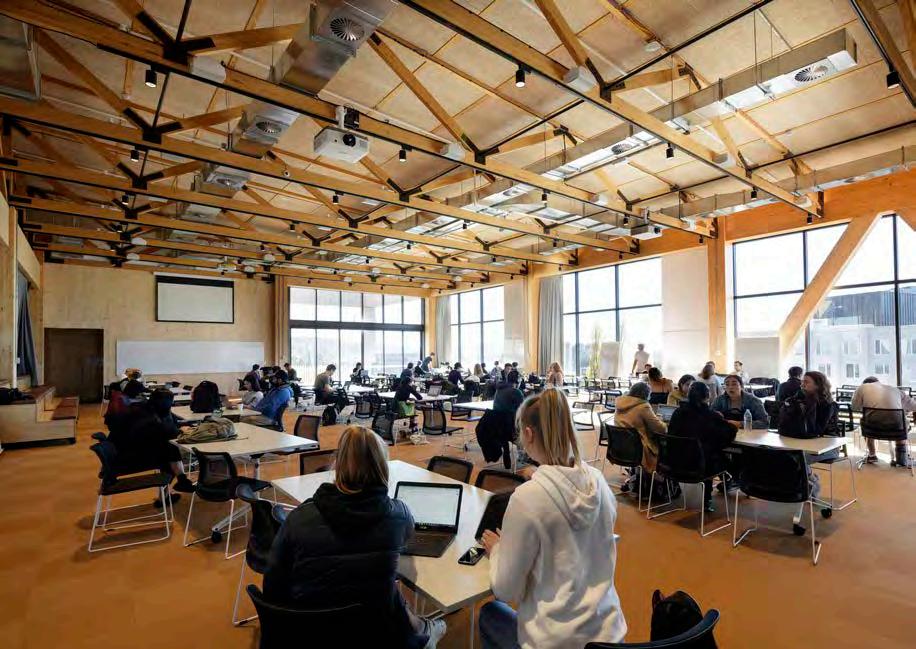

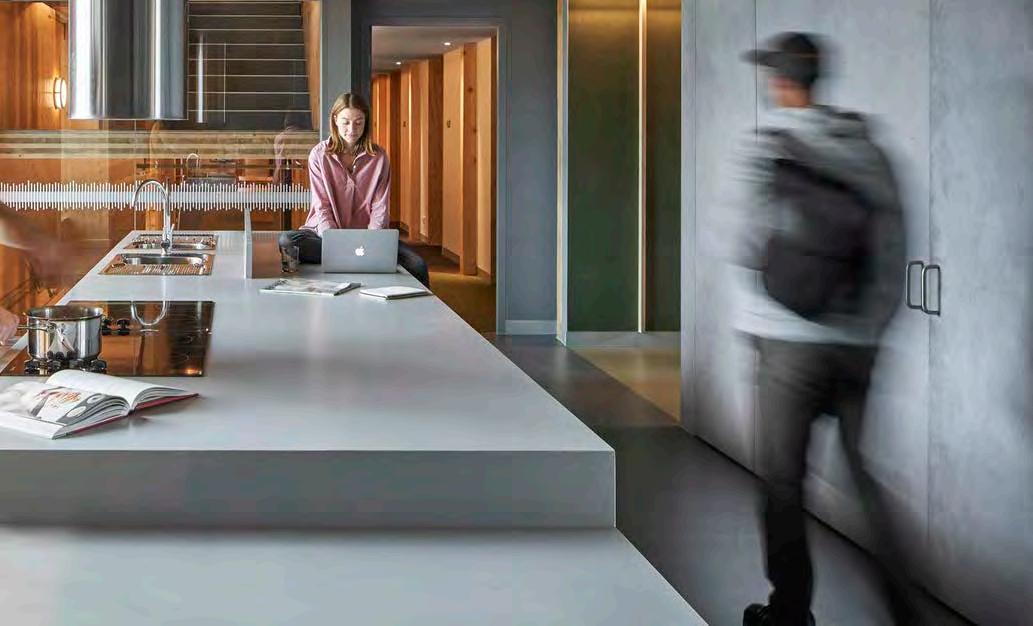
Throughout 2020 we moved to a primarily online delivery mode which had been planned but was fortuitously in place when face-to-face events were not possible due to COVID-19.
As the financial impact of the global pandemic emerged, the Institute acted quickly to offer relief through discounted membership fees. Membership fee relief was accessed by eligible members from April right through to the final quarter of 2020 allowing retention of access to valued member services without a break in membership.
Specialist advice on workplace issues related to the pandemic, working from home guides, JobKeeper guides and microlearning sessions were regularly updated through the HR Hub online resource. A+ practice employers and eligible staff continued to gain exclusive access to the HR Help desk with significantly increased access to the service observed in Q2 of 2020.
The SONA (student) members navigated a difficult year of remote learning, while also successfully transferring their two national design events, Upscale and Superstudio, to virtual delivery.
The Australian Institute of Architects National Architecture Award recipients were announced via a live-streamed event. The 2020 program epitomised the power of design to deliver enduring community value in a year that saw Australians interact with their immediate built environment more than ever before.
Projects that went above and beyond, enlivening their surroundings, received the nation’s top architectural honours. For the first time in the award program’s almost 40-year history, anyone from around Australia, and around the world, was able to tune in to the announcement of the winners. The National Architecture Awards announcement has been streamed over 8,000 times and over 30,000 people tuned in to the Chapter Awards.

While Canberra has been in a bubble with respect to the pandemic, we changed the way we operate as a Chapter and how we engage with members both face to face and virtually. In the early days of the pandemic our President was on a daily teleconference with ACT Government and key industry stakeholders to ensure that the concerns of our members were put forward and that important information was communicated to members. We also conducted video messages to check in with members at the start of COVID-19.
As we pivoted and adapted to see members engaged and programs delivered while we all negotiated dramatically different living, working and playing conditions, we found ourselves not only very busy but also more strongly linked in with the profession, government, partners and industry on an individual as well as organisational basis. In physically distancing us, it was the Chapter’s experience that COVID-19 had the paradoxical effect of brining many of us closer.
2020 saw the first NT virtual awards. Our Jury was Prof Esther Charlesworth (RMIT), Mr Andrew Swenson (In4D) and Ms Keely Quinn (Engineers Australia). Although the awards went ahead in the new online format, we were also able to have dinners at Hanuman in Alice Springs and Darwin concurrently to celebrate. The presentation was watched widely to include the NT Cabinet, people from around Australia and the world.
The Queensland Chapter responded to the events of COVID-19 rapidly adapting the awards program to online delivery and supporting Chapter Council and Committees in a new and shared direction.
We launched a major political campaign, which focused on persuading government and other commissioners such as developers and universities to ‘keep their projects shovel ready and keep architects on the job’.
2020 challenged us all on so many levels; it challenged governments, decision makers, health services and the community alike, as we have all collectively grappled with how to keep ourselves, our families and each other safe in an extraordinary global pandemic. The occurrence of the pandemic required the Chapter to pivot quickly and engage with members and keep them connected, albeit via online tools. The International Chapter supported this by creating consistent and meaningful connections with members through newsletters, social media and the online awards program. The profession and the Institute adapted to the changing situation with a focus on support and connection for our members. Lean In sessions were highly valued by members and Zoom also provided a platform to keep Chapter Council connected.
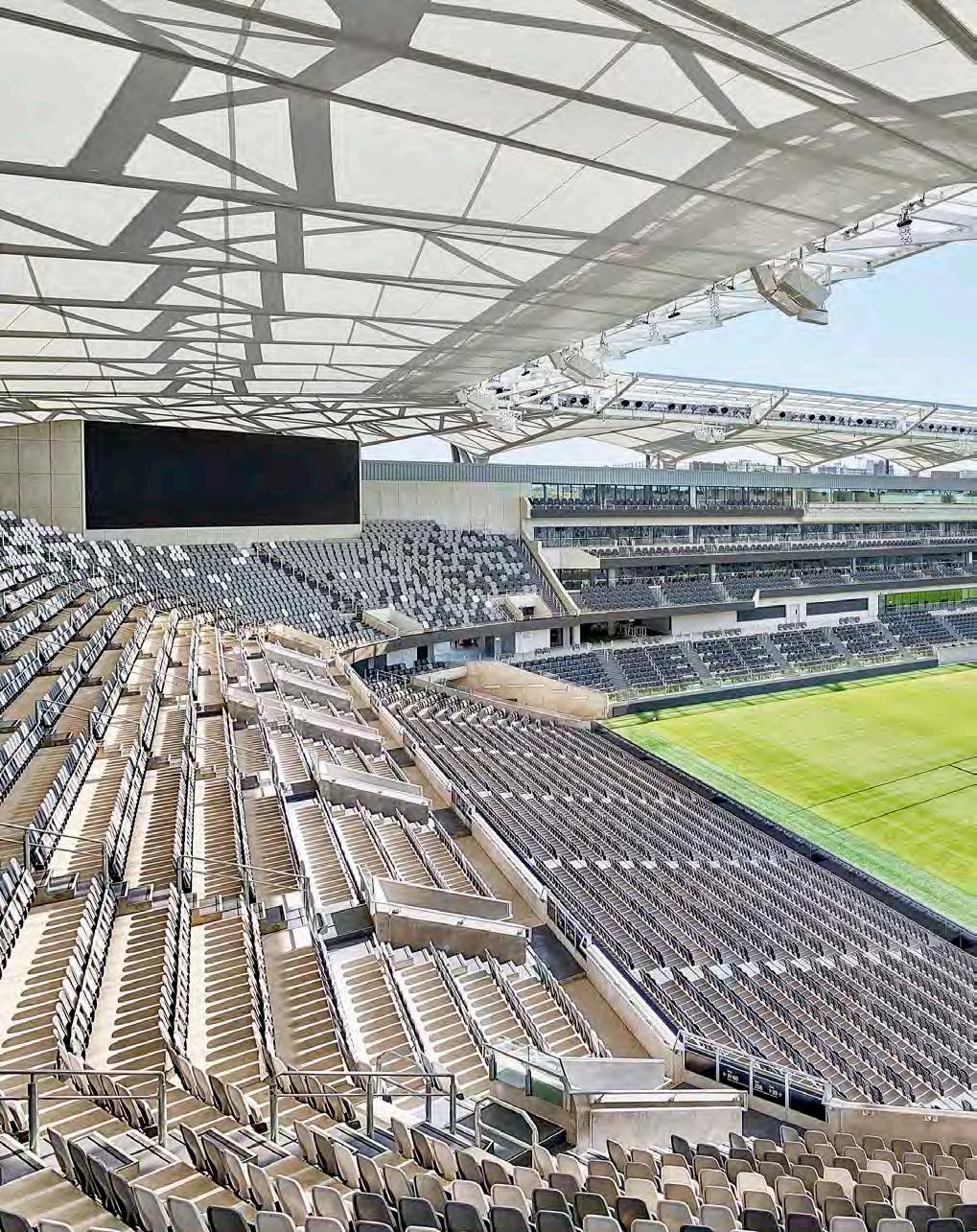
Advocating for the role and appropriate duties of the profession in this new paradigm was a critical and significant endeavour for staff and members. COVID-19 stimulus activity and the immediate and profound impacts on public space brought about by the pandemic also formed a focus of our work to support the profession and the built environment for the whole community.
The experience of working through COVID-19 has taught us much about how we can be more efficient and inclusive in our engagement with stakeholders, most critically our members. Within the NSW Chapter we have embraced the lessons and the silver linings, and we will strive to sustain these as the intensity of restrictions eases.
We used the challenges experienced over the year to explore new delivery methods to connect members and provide valued services and programs. This included the South Australian Architecture Awards, which reached an audience of at least 4000 people due to the livestream presentation. The importance of physical connection was also recognised with the delivery of live events where possible.
Other responses included letters to ministers advocating for economic stimulus and a well-managed and structured pipeline of ongoing built environment projects.
To address member needs, Tony proposed the Lean In sessions to facilitate sharing of information and social connection between architects during work from home/lockdown. Using digital media to address social distancing requirements also enabled us to improve accessibility for members.
Participation in the design and construction sector forums to monitor the impact of and responses to COVID-19 across the state was another initiative. We also developed scenarios for future Adelaide incorporating learnings from the COVID-19 experience with Business SA.
The pandemic required the Chapter to pivot quickly and engage with various levels of government in order to support members and ensure their voices were heard. This involved hosting a member forum via Zoom to connect with members and hear how they were being affected, followed by a series of targeted surveys which were met with a broad and high response. The feedback gained from both quantitative and anecdotal evidence provided a strong base for meetings with the Tasmanian Government, including the Premier’s Economic and Social Recovery Advisory Council (PESRAC), along with submissions to government.
A dedicated Tasmanianspecific COIVD-19 page was created on the Institute’s website, and a number of online CPD sessions were made available in the months following the start of the pandemic to assist members, including a business strategy workshop to which there were 167 registrants.
While 2020 was notable for its sense of community and innovation, Victoria in particular was impacted by a second wave of COVID-19, resulting in a lockdown of 111 days which transformed the state’s approach to work and our personal lives. From a livestreamed Victorian Architecture Awards program to exemplary online CPD offerings, 2020 challenged us all to do things differently and with much greater impact and resonance for our members.
The inclusive awards format saw the event gain over 6,100 views, giving the celebration a tangible wider reach. Live crosses to multiple COVIDsafe gatherings around Victoria showed the true sense of connection and collegiate presence that underpins the profession. While different from the in-person celebration, the digital awards program was well received by partners and members alike. The shift to online CPD webinars saw record numbers of attendees from EmAGN-led events such as ‘Reinvent your working self’ to technically specific webinars by Equitone, Lysaght and Partridge Engineers. These events provided both informal and formal CPD points to our members.
We express our immense gratitude to our community. Our achievements would not have been possible without the valuable contributions of our members. Thank you to our national and Victorian committees, forums, working groups, Victorian Chapter team and generous national and Chapter partners.
2020 was a challenging year both globally and in WA, necessitating rapid change and transformation in how we work and live.
We started the year celebrating architecture at the Presentation to Juries day and the sold-out, International Women’s Day event, only to enter COVID-19 lockdown a week later. We worked hard to support our members and the industry throughout this challenging time, strategically lobbying the state with our Ten Point Plan to stimulate the industry. Many of the points have been reviewed, adapted and/or addressed by various levels of government. We continued to deliver the WA Architecture Awards, as well as many of our other key programs, in a new digital format with unprecedented engagement and viewing.
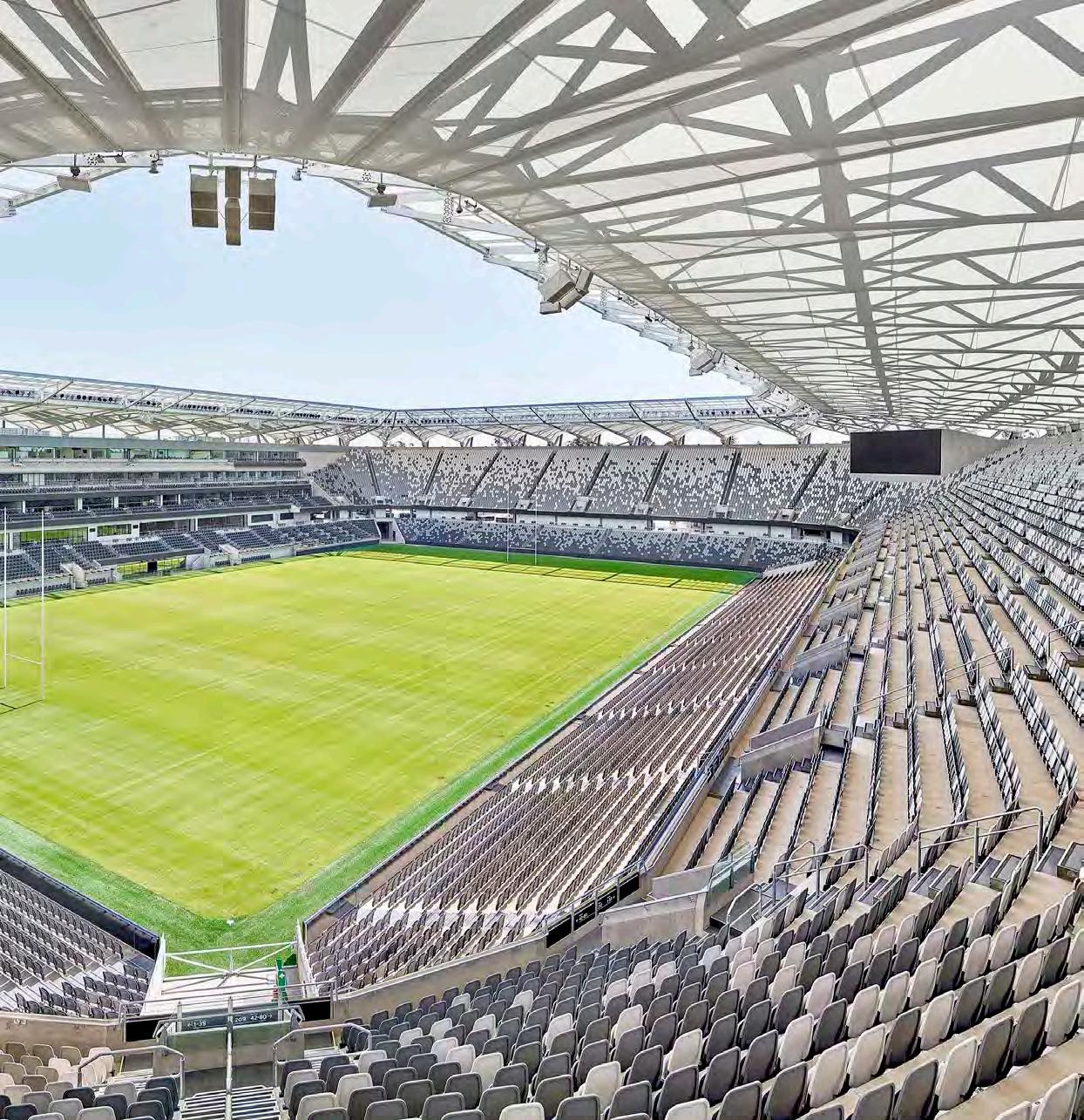
In the Institute’s marketing and communications team, our aim is to keep members up to date on Institute and industry news and demonstrate the value of architecture to the wider community.
In 2020, we grew the Institute’s traditional media and social media from the previous 12-month period by adopting a more agile and targeted strategy. Through regular member communications, social media posts and publicity initiatives, we amplified the achievements of the profession and that of the Institute throughout the year.
We strengthened our presence across key broadcast, print and online media, with over 3,400 media mentions for Institute campaigns and initiatives, including the awards program.
A highlight of the 2020 marketing and communications calendar was transforming the National Architecture Awards into a digital series, where over 38,000 virtual attendees enjoyed the Chapter and National awards celebrations as they streamed live across the country and beyond.
We took part in the worldwide ‘Architects not Architecture’ program and the Royal Institute of British Architects’ Global Exchanges series. These online events were set up to allow architects from around the world to share innovative ideas on key topics, and to engage design enthusiasts and potential clients, so that they could learn more about the benefits of architecture brought to them by our members.
48.5K INSTAGRAM FOLLOWERS
2.8M
IMPRESSIONS
INCREASE YOY
With 2020 requiring a greater reliance on digital communications, traffic to our website increased.
New and returning users increased 14% and 13% respectively, and total website visits increased 13% compared to the same period in 2019, with Awards, Membership, CPD and Chapter landing page sections proving most popular.
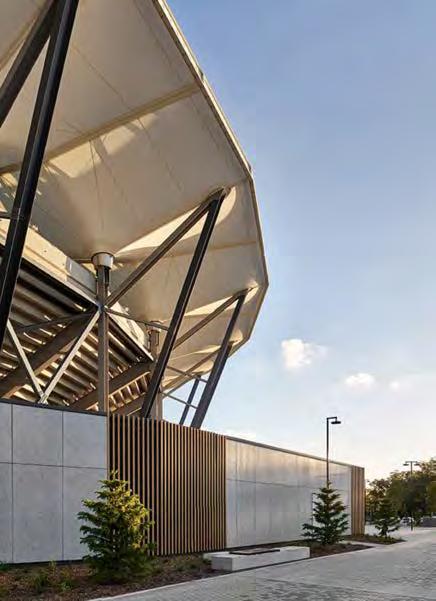
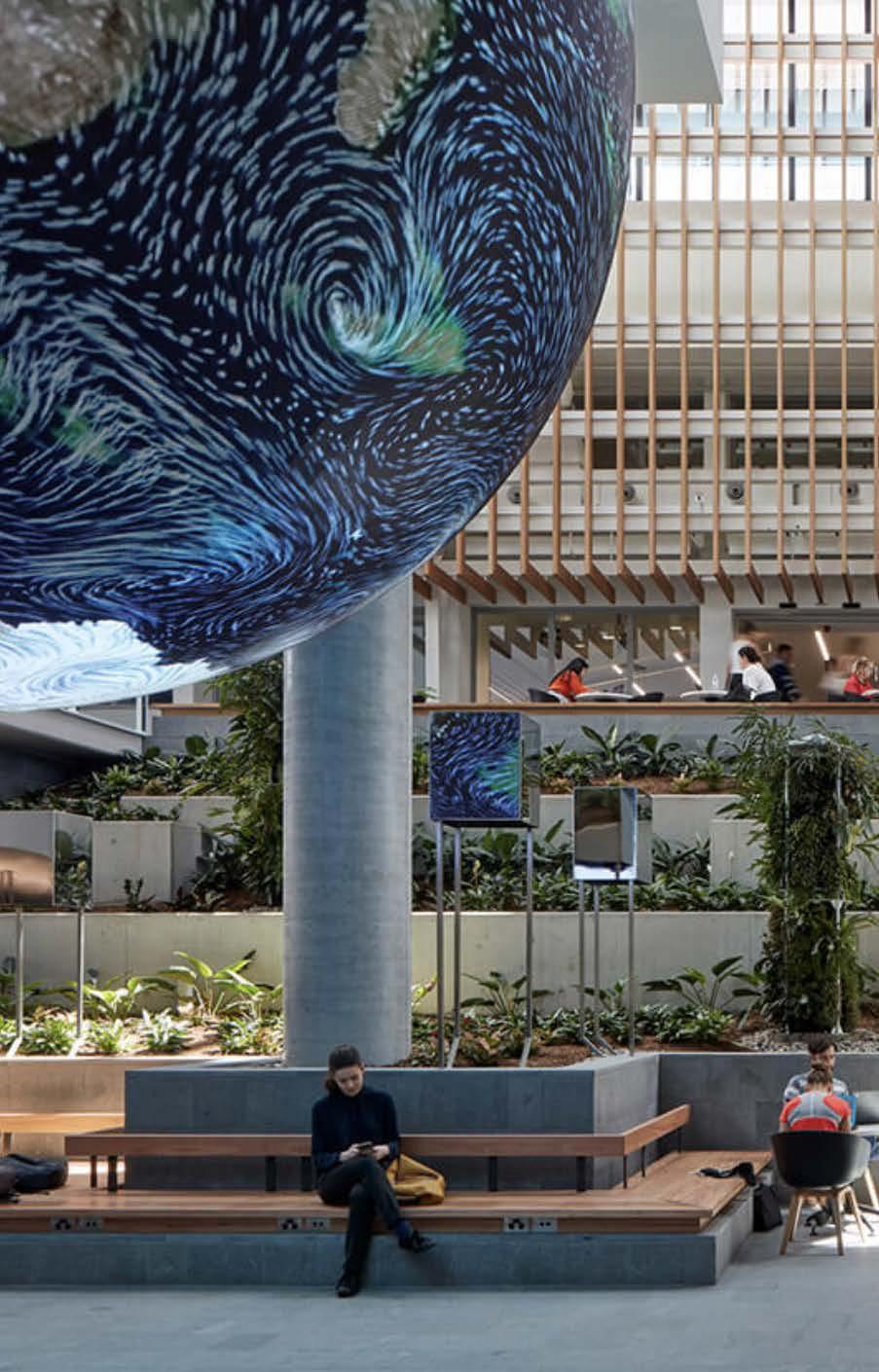
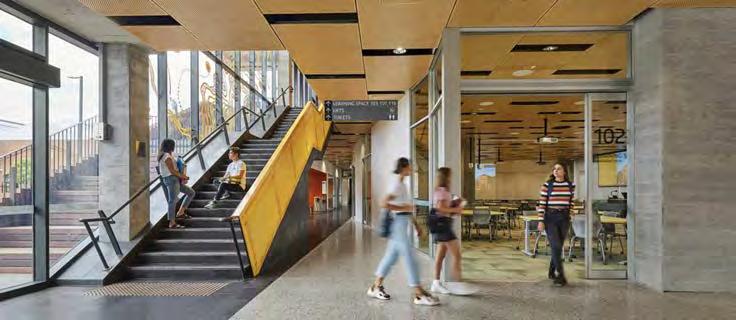
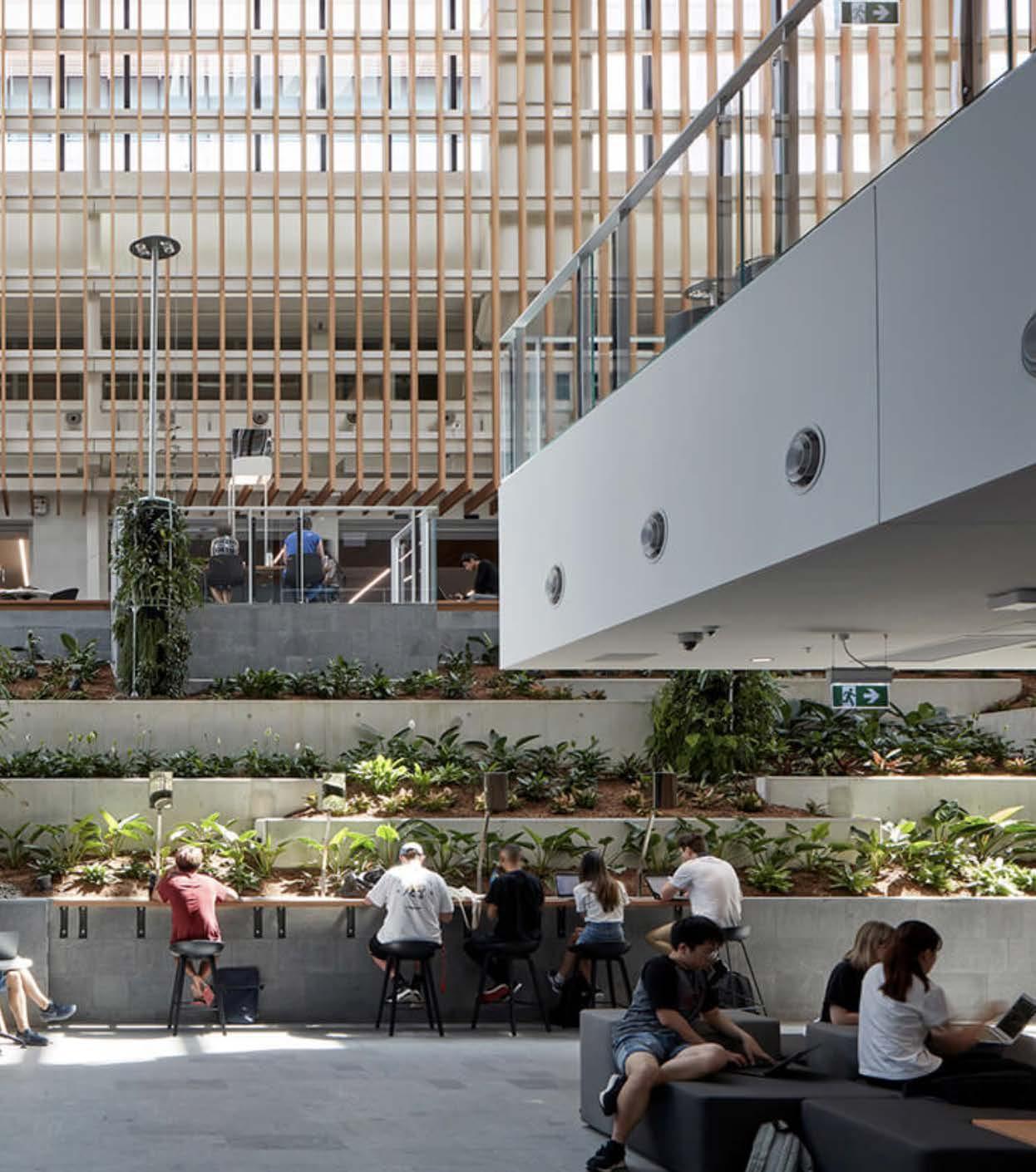
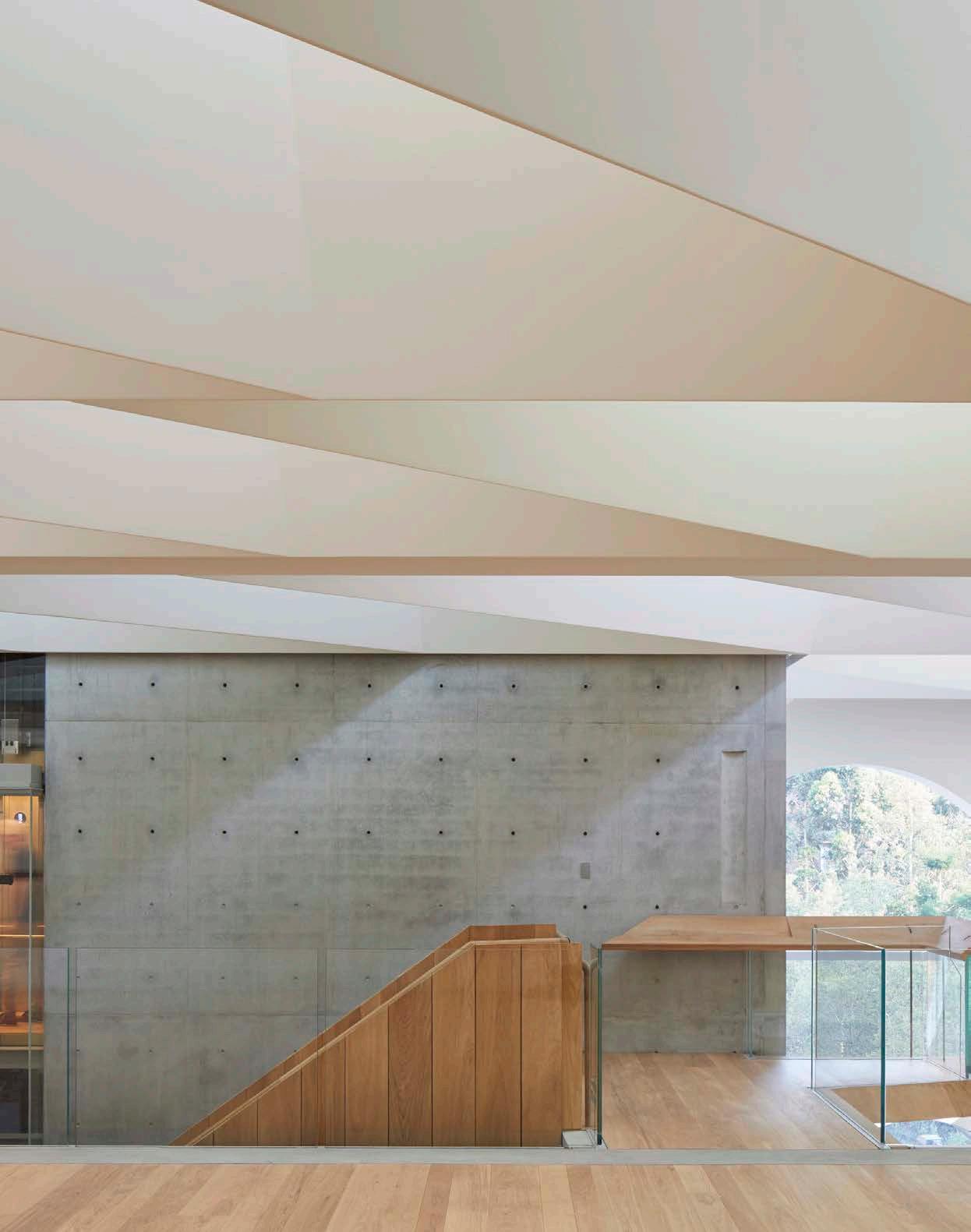
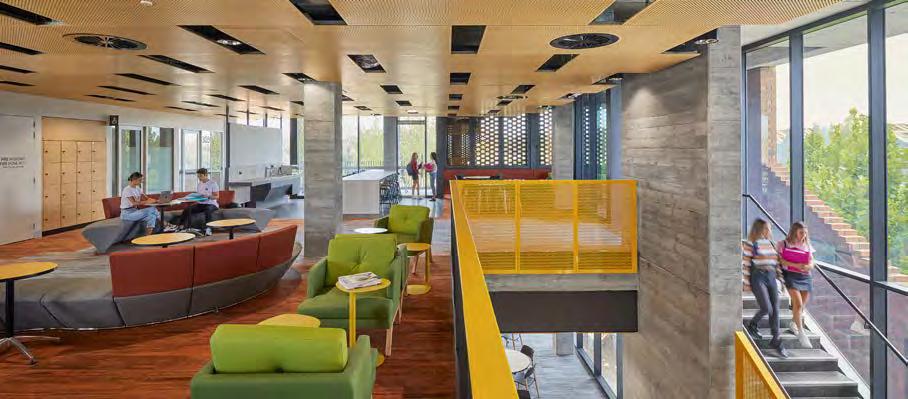
1_ Curtin University Midland Campus | Lyons with Silver Thomas Hanley | WA | Traditional Land Owners: Wadjuk people of the Nyoongar Nation | Photographer: Douglas Mark Black
2_ Queensland University of Technology, Peter Coaldrake Education Precinct | Wilson Architects and Henning Larsen Architects, Architects in Association | QLD | Traditional Land Owners: Turrbal and Yugara people of Mianjin | Photographer: Christopher Frederick Jones 2_


The Digital Transformation Steering Group has been active since 2018 and was formed to provide oversight of the redevelopment of legacy IT systems as well as to identify opportunities for developing new touchpoints for member engagement.
Throughout the year, the Institute redeveloped four of its existing IT systems and platforms to support the delivery of member services: Online CPD, Member Portal, Find an Architect and the back-ofhouse membership database iMIS.
Online CPD was launched on 1 July 2020 replacing Continuum. Based on the Moodle platform designed for interactive learning and flexibility, Online CPD provides users with a modern, easy-to-use interface, personalised dashboard and courses organised by the Architects Accreditation Council of Australia (AACA) competencies of Design, Documentation, Project Delivery and Practice Management.
The Go Live date for three redeveloped and improved systems and platforms was 31 August 2020:
• A new Member Portal which links all member benefits in the one place;
• A new Find an Architect member directory with refined categories to make it easier to search and navigate; and
• A new back-of-house membership database, called iMIS, which provides records of member core data activities and is used for processing membership fees.
These new platforms are already providing numerous benefits to our members:
It is easier for our members to access their benefits as they are all in the one place;
• We are now able to collect detailed data and information about who is accessing our products and services which will allow us to better service our members;
• They are automating a number of tasks that used to be done manually, saving staff time and driving internal efficiencies.
We know that an important part of being a member of the Institute is connecting with fellow professionals, both during and outside of the events and conferences held throughout the year. On 16 November the Institute released a new digital platform for member-to-member engagement.
Community provided an online forum for open and constructive dialogue on issues facing the architecture profession. It also provided new ways for members to engage with the Institute, have their say on issues facing the profession and expand their networks and connect with each other.
At the end of 2020, after less than two months in operation, Community experienced a fantastic uptake within the membership.
12,502 COMMUNITY MEMBERS
222 UNIQUE PUBLIC DISCUSSION POSTS
38 FILES SHARED
342,844 DIGESTS WERE EMAILED
AT AN OPEN RATE OF 27.78% WHICH IS ABOVE MARKET AVERAGE.

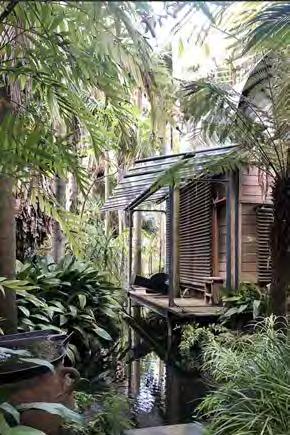
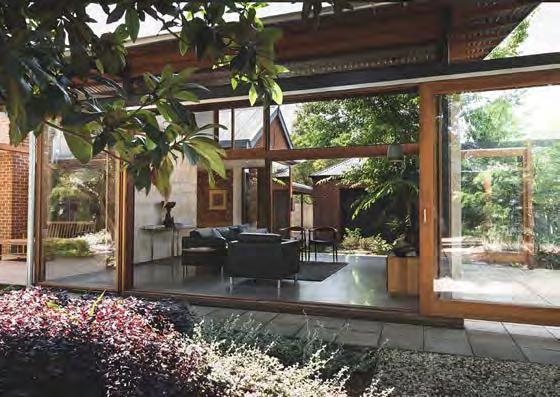
1_ Palm Garden House | Richard Leplastrier NSW | Traditional Land Owners: Guringai people Photographer: Peter Salhani
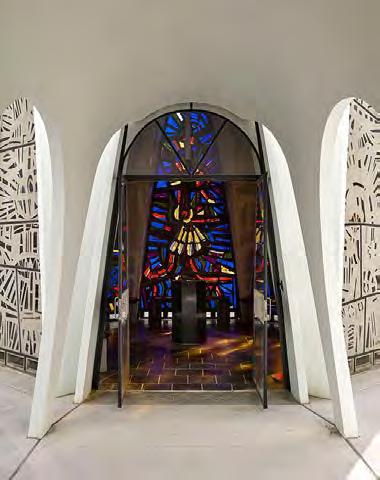
2_ Holy Family Church, Indooroopilly | Douglas and Barnes | QLD | Traditional Land Owners: Jagera and Turrbal Peoples | Photographer: Christopher Frederick Jones
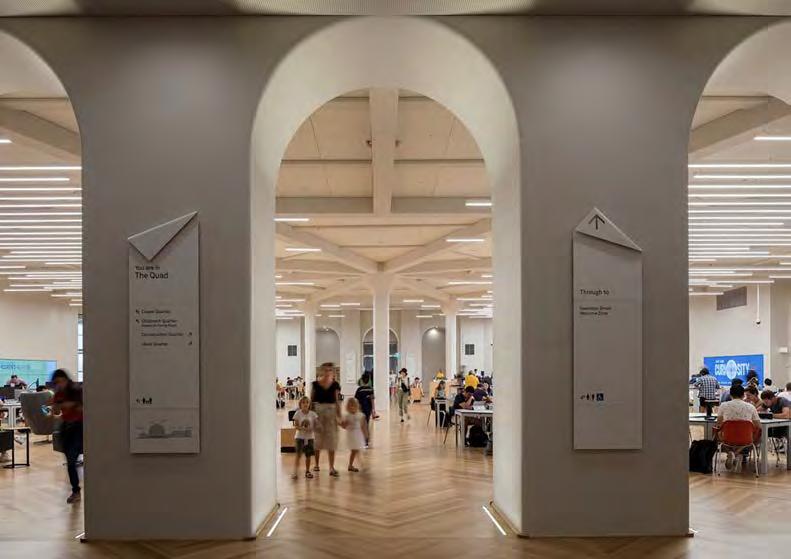
3_ State Library Victoria Redevelopment | Architectus + Schmidt Hammer Lassen Architects | VIC | Traditional Land Owners: Boon Wurrung and Woiwurrung peoples of the Kulin Nation | Photographer: Trevor Mein
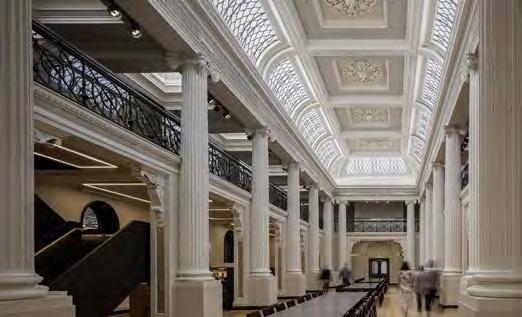
Delivering exceptional programs that recognise and promote members’ achievements is central to the Institute’s role as the profession’s peak body.
The Institute’s peer-reviewed 2020 awards program exemplified best-practice architecture and provided qualitative examples of how architecture can deliver outstanding outcomes. These innovations were shared at national, chapter and regional awards programs.
Projects spanned residential, commercial, public, sustainable architecture and more, a showcase of the best in the field. The subsequent media coverage highlighted these achievements to a broad audience.
National Jury Chair Helen Lochhead said, ‘a number of themes emerged across all categories this year: the creative adaption of existing buildings and places which delivered some transformative outcomes; projects that recalibrated typologies, providing new design paradigms that should shift thinking and practice; and a recurring commitment to social and environmental sustainability. All these qualities make significant contributions to our built environment.’
‘The National Awards represents one of the Institute’s most important advocacy programs, in which we acknowledge and celebrate the creative capacities of our profession and the enduring value that outstanding architecture brings to people’s lives’.
The Institute thanks the national jury for its consideration and efforts. The 2020 national jury members were Helen Lochhead, Tim Greer, Kerry Clare, Jefa Greenaway and Jennie Officer.
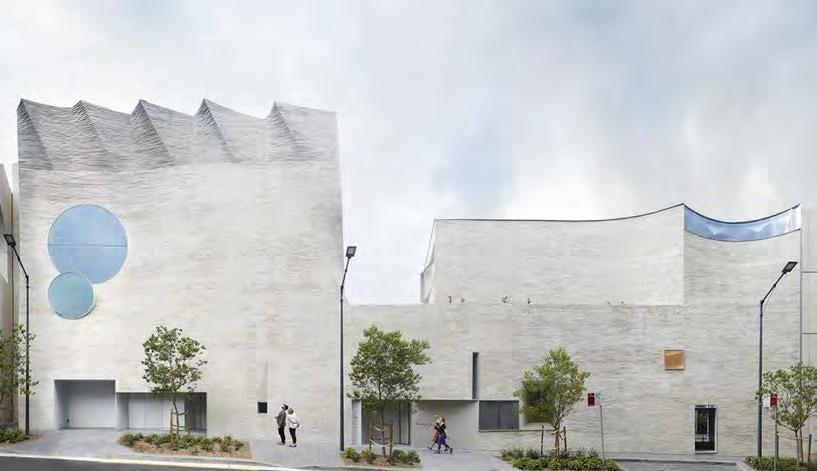

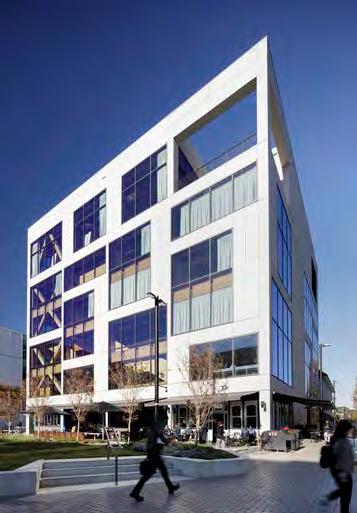
4_ Phoenix Central Park | Durbach Block Jaggers and John Wardle Architects | NSW | Traditional Land Owners: Gadigal people of the Eora Nation | Photographer: Martin Mischkulnig
5_ MuseumLab | Koning Eizenberg Architecture International | Photographer: Eric Staudenmaier
6_ Marie Reay Teaching Centre, ANU | BVN | ACT | Traditional Land Owners: Ngunnawal people of the Ngunnawal Nation | Photographer: John Gollings
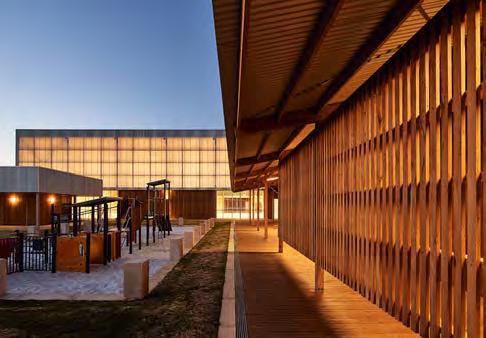
7_ Pingelly Recreation and Cultural Centre | iredale pedersen hook architects with Advanced Timber Concepts Studio | WA | Traditional Land Owners: Noongar people of the Gnaala Karla Boodja Region | Photographer: Peter Bennetts
The National Awards followed on from each Chapter’s state and territory awards, with 180 projects from around the country and overseas progressing to national judging.
In fitting recognition of more than three decades of exemplary architectural practice, the Australian Institute of Architects awarded in 2020 its most prestigious honour, the Gold Medal, to the man known as the ‘architect’s architect’, Mr John Wardle.
The Jury described John as a most worthy candidate for this highest accolade, ‘across the nation he has restored faith in what architects do best – the design of buildings that function well and please hand and eye.’
In addition to the Gold Medal, a range of national prizes were bestowed to leaders within the profession from students to esteemed practitioners, recognising the outstanding contributions of members across all areas of architecture and practice.

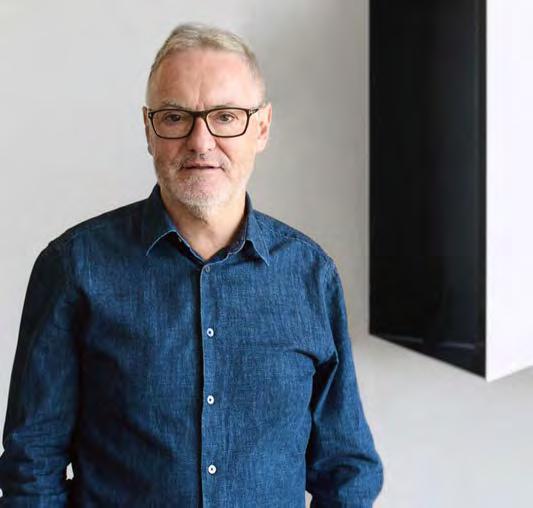
1_ 2020 Australian Institute of Architects Gold Medal winner: John Wardle | Photographer name not supplied
2_ 2020 President's Prize winner | Clover Moore | Photographer: Jacquie Manning
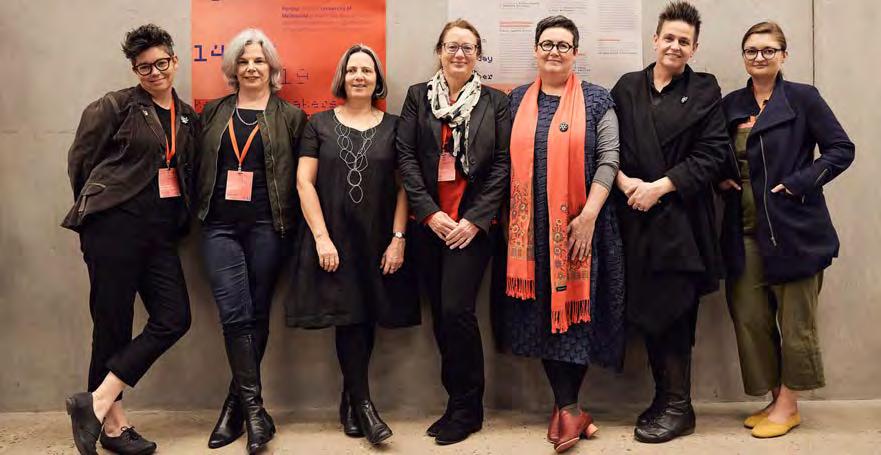
3_ 2020 Paula Whitman Leadership in Gender Equity Prize winner | Parlour | Photographer: Peter Bennetts
GOLD MEDAL
John Wardle LFRAIA - John Wardle Architects
NATIONAL PRESIDENT’S PRIZE
Lord Mayor Clover Moore – City of Sydney
PAULA WHITMAN LEADERSHIP IN GENDER EQUITY PRIZE
Parlour
NEVILLE QUARRY ARCHITECTURAL EDUCATION PRIZE
Professor Vivian Mitsogianni RAIA – RMIT University




NATIONAL EMERGING ARCHITECT PRIZE
Sarah Lebner RAIA – Light House Architecture and Science
STUDENT PRIZE FOR THE ADVANCEMENT OF ARCHITECTURE
Chantelle Fry – University of Adelaide
LEADERSHIP IN SUSTAINABILITY PRIZE
Stephen Choi – Living Future Institute for Australia
AUSTRALIAN INSTITUTE OF ARCHITECTS DULUX STUDY TOUR
Sam McQueeney – Vokes and Peters (Qld)
Tahnee Sullivan – Sullivan Skinner (Qld)
Ksenia Totoeva – Tonkin Zulaikha Greer Architects (NSW)
Bek Verrier – Bence Mulcahy (Tas)
Keith Westbrook – Cumulus Studio (Vic)
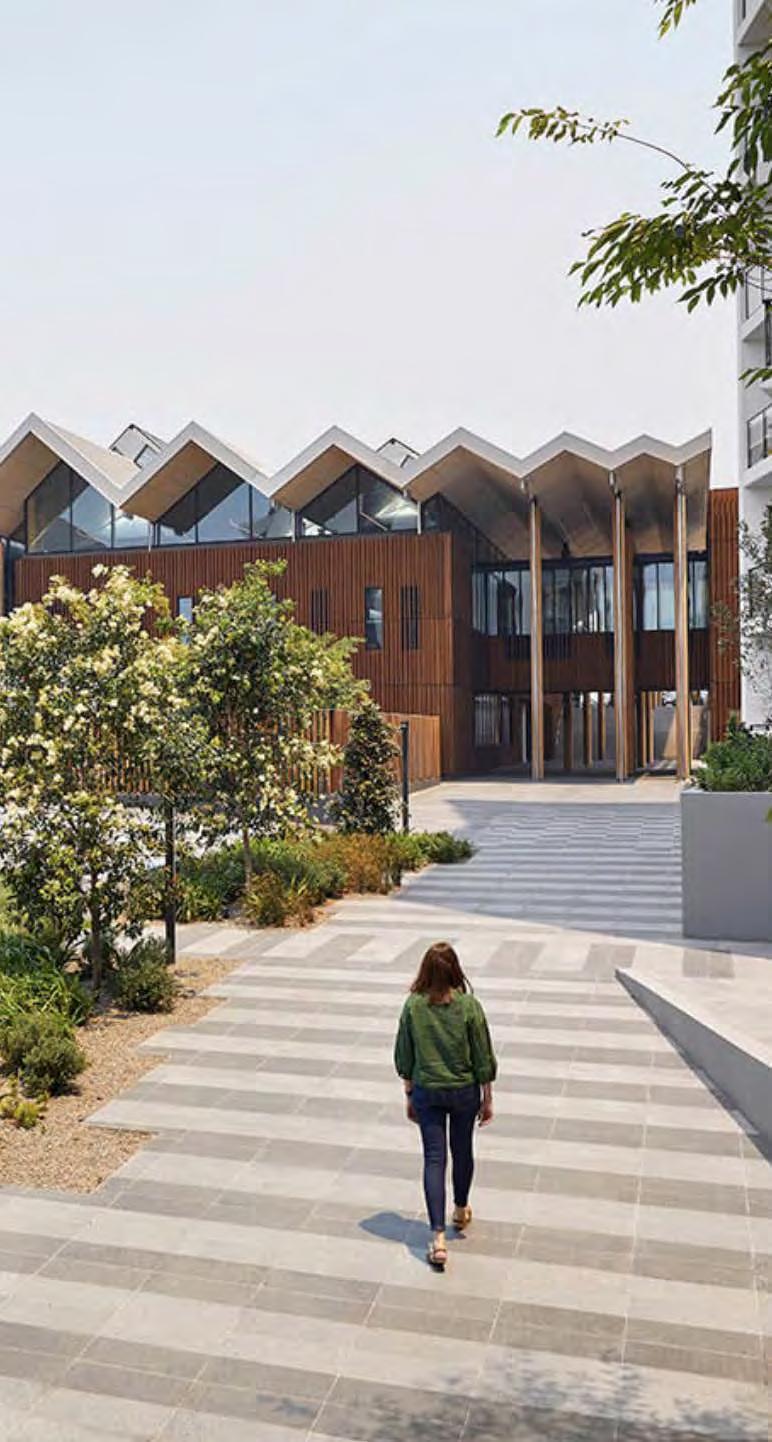
The Institute and its members are dedicated to raising the quality of the built environment for people and to the advancement of architecture. We seek to improve the enduring health and wellbeing of all Australians and our diverse communities. The design of the built environment shapes the places where we live, work and meet. The quality of design affects how spaces and places function and has the potential to stimulate the economy and enhance the environment.
Australian architects have a worldwide reputation for innovative design leadership and our profession is well placed to support all Australian governments with advice on ways to address the key challenges we are facing in our regions, towns and cities.
We are continually strengthening our advocacy efforts to ensure we effectively communicate the value of architecture to the community and governments. We are promoting policies and strategies to raise design standards in our cities and towns, to position Australia as an international design leader and to make Australia a better place for us all.
To be truly effective, we first need to be heard. Only then can we achieve the role we need to play to shape Australia’s future in a positive way. Along with formal submissions and feedback opportunities, we have focused on relationship building to maximise the impact of our advocacy endeavours, and we are working constructively with all levels of government, independent authorities and other industry groups.
The capacity to make our voices heard on issues of critical importance – across the many advocacy issues we prosecute for members from procurement, COVID-19 stimulus measures to climate action and everything in between - and one we will continue to build on your behalf. Key highlights of our policy and advocacy activities throughout 2020 are outlined in the following pages.

The Institute created a national - Climate Action and Sustainability Taskforce (CAST) - to formulate an appropriate affirmative action plan to address the climate crisis with a particular focus on decarbonising the construction industry. CAST was created through a national expression of interest process and an expert reference panel was also created to provide a national pool of members able to assist with various workstreams.
With support from National Council, CAST has begun work on a range of initiatives aimed at supporting the Institute to take a collaborative leadership role in coordinating action across all sectors of the industry to decarbonise the construction industry by 2030.
The first action involved getting our own house in order. We have undertaken a carbon audit and are now investigating ways to reduce our carbon footprint. A key aspect that the group focussed on was input into the review of the national standards of competency for architects to influence graduate outcomes, so that future graduates will know how to design a carbon zero building.
We are also looking into what members need to assist them on their carbon reduction journey, such as tools, targets, benchmarks and future CPD requirements. Continuing work will focus on developing policies and advocating to members, government, and the community.
The Institute continues to call for all state and territory governments to act and urgently improve how the building and construction industry is regulated. We have been calling strongly for reform that delivers fully on the recommendations of the Building Confidence (Shergold Weir) Report: Improving the effectiveness of compliance and enforcement systems for the building and construction industry across Australia (2018).
Throughout 2020 we made public statements and submissions, held meetings with government, developed guidelines, ran CPD and collaborated with other industry stakeholders to build our collective voice. We will continue to push for change through a multifaceted approach targeting key decision makers and stand ready to support state, territory and federal governments as they undertake reform.

The tragic bushfires that have ravaged our country in recent times have caused many Australians to lose their lives, their homes and their livelihoods. This is not a short-term crisis and we have encouraged architects to take the lead in rebuilding communities.
The Institute has also been working with all levels of government to support the structural and regulatory reform needed to accelerate recovery efforts and enable those affected to build back better.
With some 5,900 buildings destroyed in the 2019-20 bushfires and communities anxious to rebuild, governments have a limited window of time to effect reforms that will ensure a higher standard of more resilient construction.
There is no time to waste, both in preparing for the next fire season and ensuring we build back better from the last one.
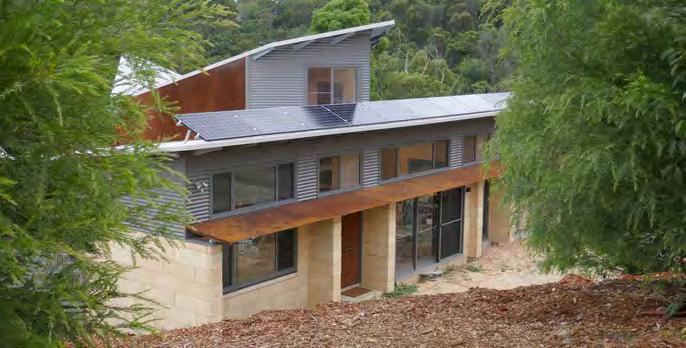
The Australian Government established a Royal Commission into National Natural Disaster Arrangements on 20 February 2020, which examined coordination, preparedness, response, and recovery from fire, as well as ways to improve resilience, adapt to the changing climate and mitigate the impact of natural disasters.
The Royal Commission’s final report delivered on 28 October 2020 foreshadowed natural disasters becoming ‘more frequent and more severe’ and noted key evidence, including from the Institute, that would save lives and deliver a built environment that is better equipped to face future challenges.
The Institute accepts the science on climate change and the need for a proactive response and is actively working
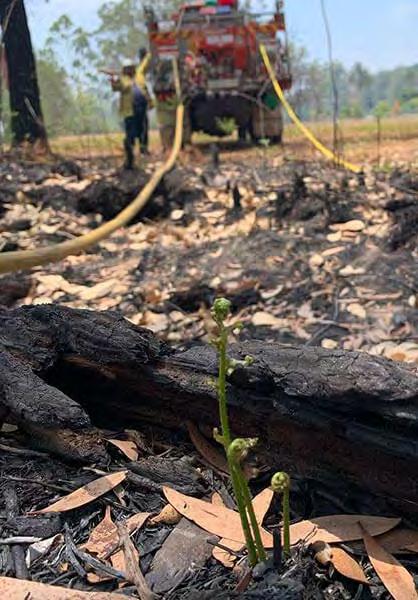
to support built environment professionals who have a critical role to play in improving the resilience and adaptation of Australian society to changing climatic conditions.
We need to holistically and urgently re-examine where and how we build, and how our regulatory environment operates in the context of a rapidly changing climate. A critical part of this is committing to net zero emissions in the built environment by 2030.
We will continue our advocacy for the full implementation of the Royal Commission recommendations and for the Australian Government to lead a reform agenda that will build a safer and more resilient future for our nation.
The human and economic cost of inaction is far too high.
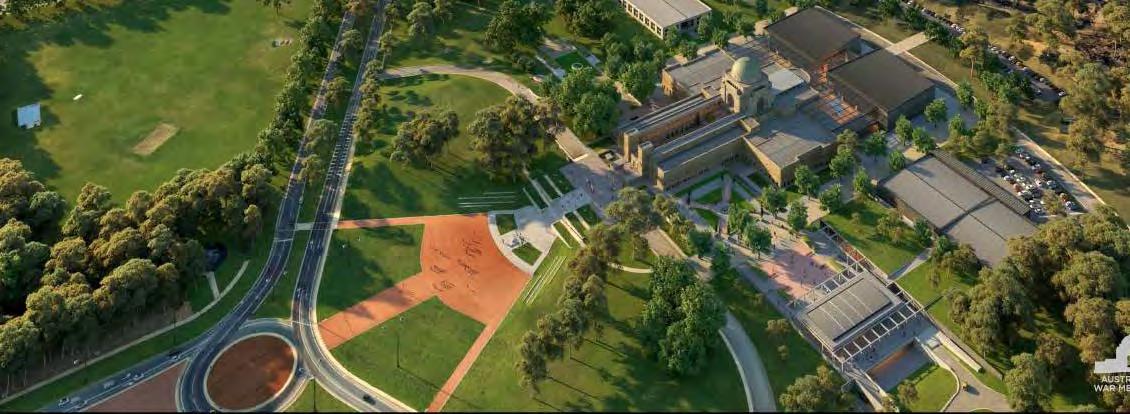
The Institute’s long-running campaign to stop the destruction of Anzac Hall continued throughout 2020.
Since the November 2018 announcement of the Australian War Memorial (AWM) Development Project by the Prime Minister, the Institute has been clear through our public and ongoing campaign #handsoffanzachall, that we do not believe that due process has been undertaken with respect to the development project.
Specifically, we believe that the memorial has widely and very publicly committed itself to a project that includes demolition before any approvals have been given for demolition or new development.
The memorial has legislative obligations for the protection and conservation of the AWM heritage values for all Australians. While the Institute appreciates that there may be a need to increase the memorial’s capacity, including some expansion, we oppose doing this in a way that is wasteful, destructive, and damaging to the heritage value and integrity of the site. Over-development will lead to significant adverse loss of the qualities that make the AWM nationally significant.
The Institute fully supports the memorial's purpose in commemorating “the sacrifice of those Australians who have died in war or on operational service and those who have served our nation in times of conflict.” However, we oppose the planned unnecessary destruction of Anzac Hall, a building that was painstakingly designed and crafted to honour this service to our nation.
Anzac Hall is a building that forms an integral part of the war memorial site itself, whose sacred and special significance is the sum of all its parts. It is now also a building that holds two decades’ worth of precious experiences where countless veterans, families and their visitors have engaged in shared remembrance.
Our concerns mirror the views of a wide cross-section of the community, not just the architectural profession, stemming from veterans and their families, concerned citizens, distinguished and honoured Australians, leading academics, renowned historians, as well as former memorial directors and staff as evidenced by the ongoing engagement of the Australian community in both the Environment Protection and Biodiversity Conservation Act 1999 (EPBC Act 1999) referral process and the inquiry undertaken by the Parliamentary Standing Committee on Public Works.
With more than 12,500 members, including those working on the Australian War Memorial Development Project, the Institute is undeniably a broad church. We fully respect that different members will have different views on this, and many other matters. But we do have a clear duty to act in the interests of the profession as a whole and to uphold commonly accepted principles, including the protection of heritage sites, that form part of our responsibility to the community.
Consistent with our mission and with the full backing of National Council, the Institute will continue to hold decision makers to account and highlight the value of great architecture.
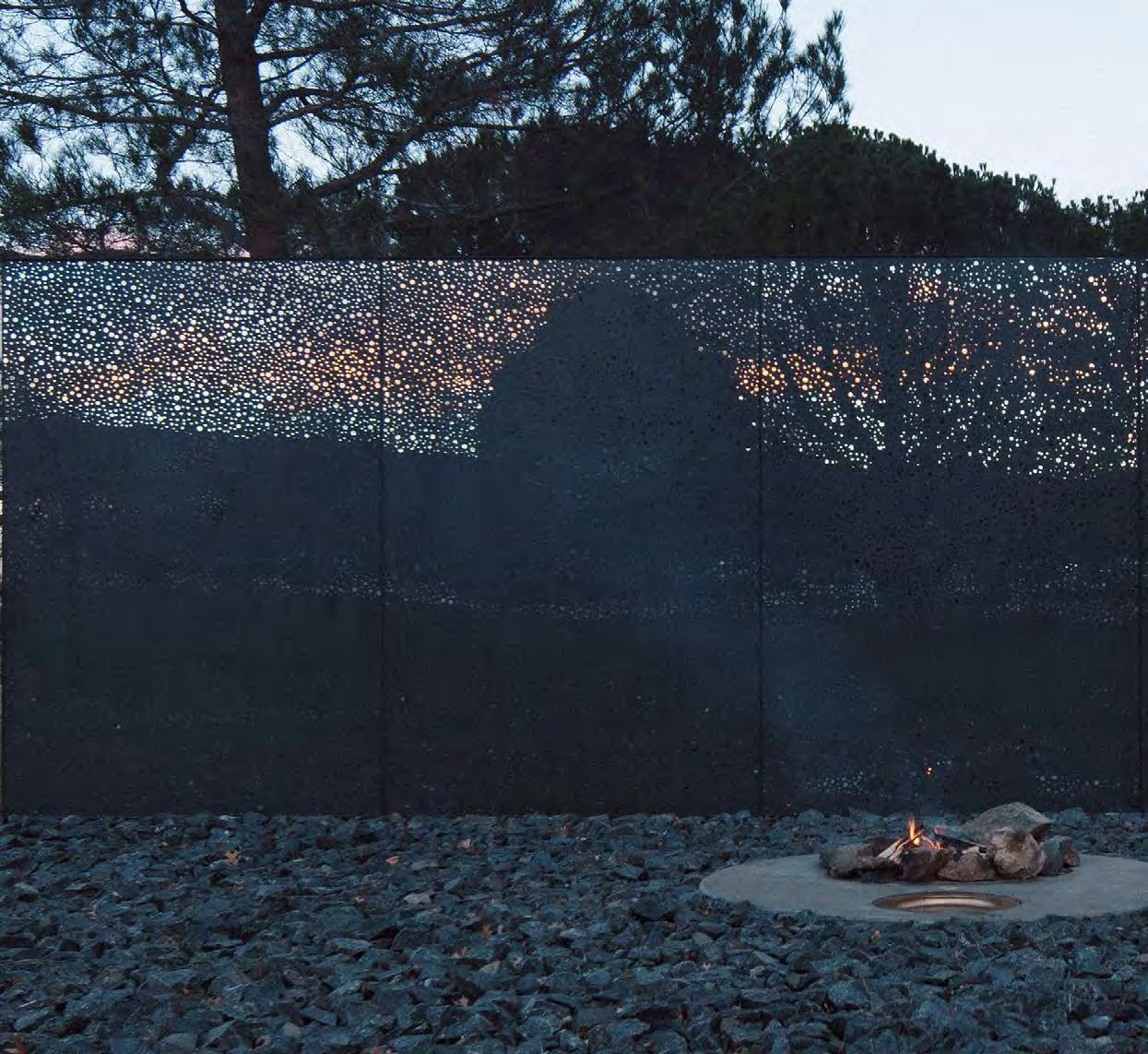
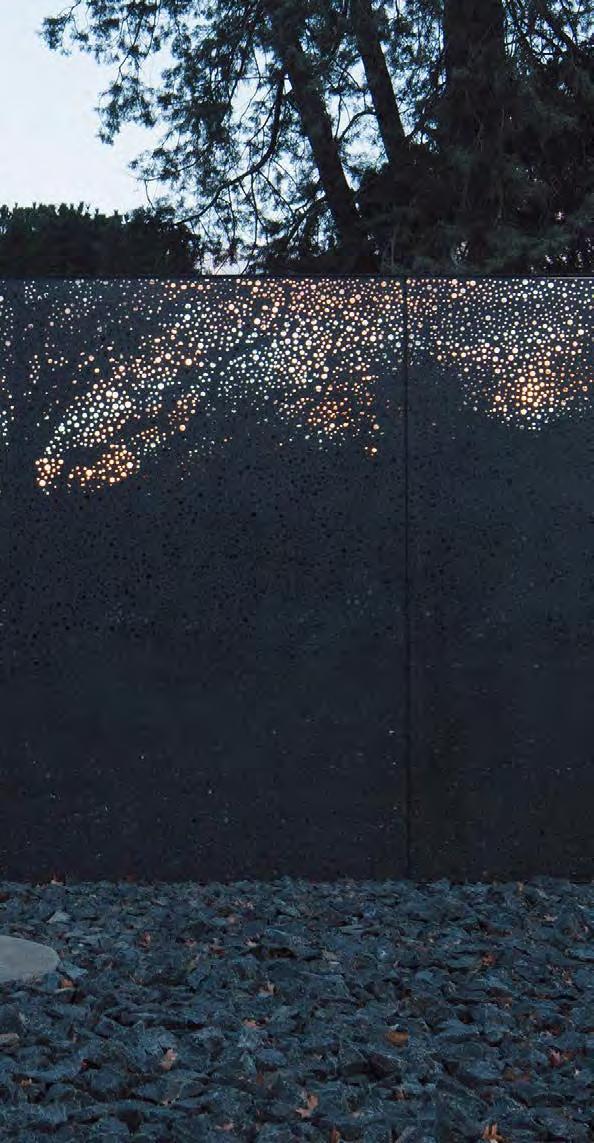
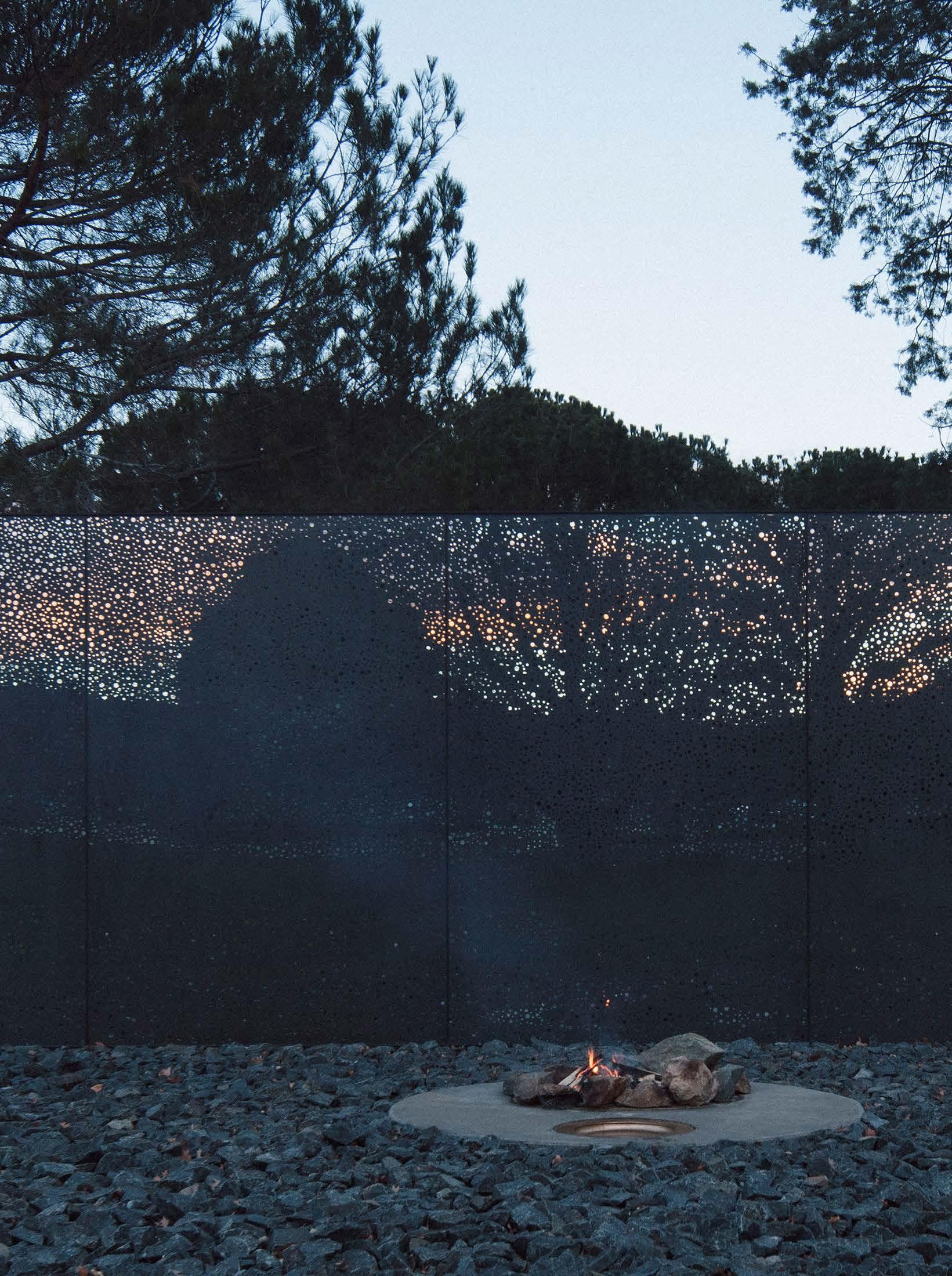
Caring for Country practices, including architecture and place shaping have existed on this continent since time immemorial and at the Institute we recognise a professional commitment to engage and act meaningfully through reciprocal partnership and relationships with Aboriginal and Torres Strait Islander peoples. The Institute is working to advance this professional commitment and a greater shared understanding through our First Nations Advisory Working Group and Cultural Reference Panel.
Established in 2020, the First Nations Advisory Working Group and Cultural Reference Panel developed a ‘Statement of Recognition’ for inclusion in the Constitution of the Institute. The statement was adopted at the Annual General Meeting following the membership vote, with 96% of members supporting the constitutional changes.

THE STATEMENT READS:
The Australian Institute of Architects recognises the unceded sovereign lands and rights of Aboriginal and Torres Strait Islander peoples as the First Peoples of these lands and waters. This recognition generates acknowledgement and respect for Aboriginal and Torres Strait Islander Countries, Cultures and Communities, and their ways of being, knowing and doing.
Caring for Country practices including architecture and place shaping have existed on this continent since time immemorial.
The Institute recognises a professional commitment to engage and act meaningfully through reciprocal partnership and relationships with Aboriginal and Torres Strait Islander peoples.
Together we will support and develop the emergence of new possibilities for our shared future.
Ongoing, the Working Group, with support from the Panel, will provide guidance on the inclusive involvement of First Nations peoples in both architectural education and practice and also across the Institute’s services, programs, activities and governance.
Advice from the Working Group and Panel will be focused on contributing to ongoing changes in architectural practice and education leading to the enhanced understanding of cross-cultural design within architectural work environments and supporting ethical responsibility to Aboriginal and Torres Strait Islander peoples in architectural practice.
The Institute values ongoing professional development and education and encourages architects to engage with their colleagues through learning. In order to fulfil our members’ professional development requirements, we produced and delivered a comprehensive suite of CPD and education opportunities. We offered high quality, practical CPD covering the National Standard of Competency for Architectsdesign, documentation, project delivery and practice management.
The new whole-of-Institute CPD program is based on collaboration across Chapters ensuring consistency and access online 24/7 to more than 150 premium on-demand courses for metropolitan, regional and international members at their convenience.
Institute members were also able to access an extensive range of curated third-party CPD delivered via our Refuel CPD provider network. Our comprehensive Practice of Architecture Learning Series (PALS) was redeveloped and supported 100+ graduates nationally preparing for the registration exam. The PALS modules were also available online individually as PALS refresher courses.
COURSES AVAILABLE 24/7/365
187
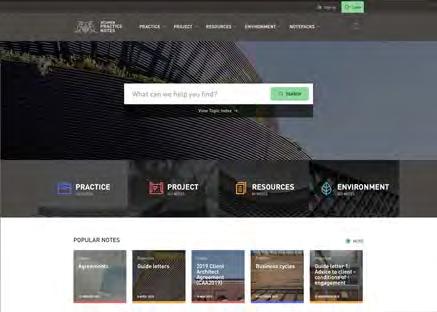
Acumen continued to be a highly valued and accessed resource for our members as demonstrated via insight from surveys, feedback and analytics.
New and updated content covered a wide range of issues relevant to the profession including COVID-19 guidance, Safety in design, Security of payment, Office manual, HIA special conditions for new homes and alterations, additions and renovations, Cutting lifetime residential greenhouse gas emissions, and a 2020 update to NCC 2019 Section J material. Member representatives on the Acumen Content Review Panel, the Environment Advisory Group and specialist committees and working groups supported and advised the Acumen editorial team in the production of new and updated content.
As part of the Institute’s bushfire response, relevant Acumen notes were made publicly available at the beginning of 2020. A Bushfire response notepack was curated on Acumen and a new note on ‘Bushfire or pro bono work – special conditions CAA 2019’ provided for members.
The Environment publication enjoyed a 25-year milestone in 2020, celebrated through a dedicated newsletter piece that shared its history, survey insights, past editor reflections and highlighted content from the collection.
708
ACUMEN PRACTICE NOTES
173 PRACTICE NOTES
246 PROJECT NOTES
86 RESOURCE NOTES
203 ENVIRONMENT NOTES
7NOTEPACKS
6 SIGNIFICANT UPDATES AND 36 NEW NOTES IN 2020
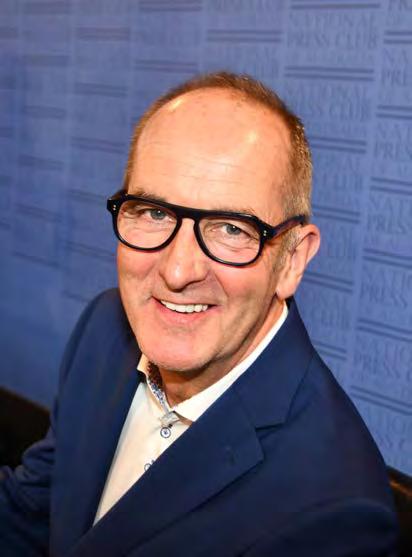
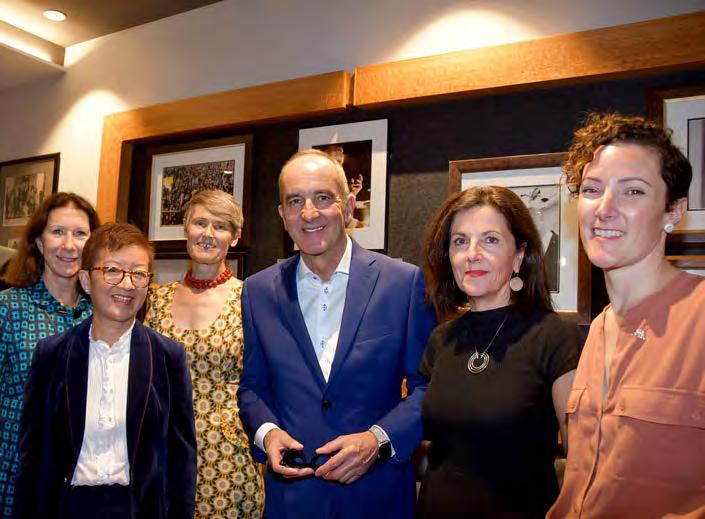
To begin the year, with bushfires on the fringes of the ACT and the worst air quality in the world, we were then delighted in February to welcome Grand Designs host Kevin McCloud MBE to present the Griffin Lecture ‘Touchy, Feely, Tasty Architecture’ at the National Press Club of Australia. With a sold-out event and a live national ABC telecast, it was an absolute pleasure to hear him speak and to also take him on an architecture tour of Canberra. This was an enduring highlight for ACT members, the public and the architecture profession across Australia.
The ACT Architecture Awards saw an impressive 43 entries this year. The Chapter was excited to be the first to kick off the Institute’s virtual awards with close to 3,500 views. We thank our sponsors for their on-going support in the difficult COVID-19 operating environment.
Celebrating our 25-year partnership with the National Gallery of Australia, our Contemporary Australian Architects Speaker series also went virtual for the first time and reached a new audience with attendees from every state in Australia and internationally from the US, UK, Bulgaria, Singapore and Fiji.
In the lead-up to the ACT Election in October 2020, the Chapter in association with AILA and PIA ran the ‘ACT Built Environment meets MLAs’ policy forum with then Planning Minister Mick Gentleman MLA, Member for Brindabella Mark Parton MLA and Minister for Climate Change and Sustainability, Shane Rattenbury MLA with good media coverage.
We continue to support the Institute’s #HandsOffAnzacHall Campaign. Our ACT President Shannon Battisson was part of the Institute delegation that presented to the Federal Parliament’s Public Works Committee Inquiry in July. Shannon has also led the local media effort with respect to the demolition of Anzac Hall.
Our President has also undertaken much public advocacy work regarding the importance of architecture. Her opinion piece in the digital news platform RiotACT regarding the importance of home generated enormous interest and 135 comments which was the highest engagement for an opinion piece at that time.
2020 was also the first year that the ACT saw one of its own, Sarah Lebner, win the National Emerging Architect Prize. Congratulations Sarah!
2020 WAS A YEAR OF SIGNIFICANT CHALLENGES BUT A YEAR OF ACHIEVEMENT FOR THE ACT
CHAPTER IN CLOSE COLLABORATION WITH ITS MEMBERS.
CHAPTER REPORTS
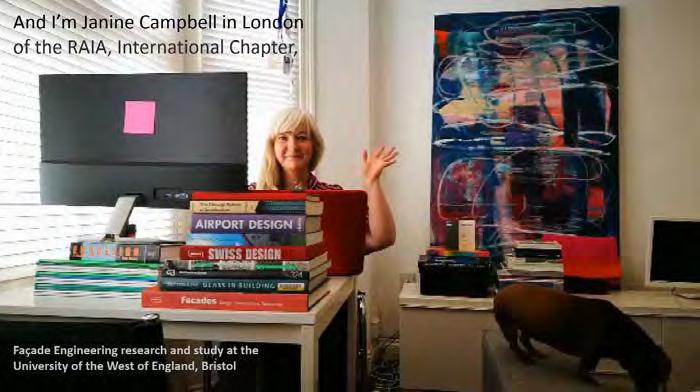
2020 has been an extraordinary year for the International Chapter, from assisting members with complex and sometimes devastating challenges, to trying to maintain a sense of normality by continuing to deliver programs - albeit in new and experimental ways. Samantha Cotterell, International Chapter Chair, championed international membership through her efforts to keep members connected, focused efforts on telling member stories during the pandemic and supporting members working overseas, all while providing a strong connection back to Australia.
There have been numerous highs, including international architecture by Australian architects and International Chapter members being recognised in awards.
CHAPTER ENGAGED WITH ITS MEMBERS WITH AN ONLINE AWARDS EVENT, ENABLING A MORE EQUITABLE CONNECTION FOR ALL AND EXPANDING THE REACH OF THE PROGRAM.
The 2020 International Chapter Architecture Awards were submitted in February, with a strong field of 14 entries presented publicly via the online awards gallery in mid-May, engaging with the public to vote for their favourite project. The jury consisted of Wei Jein (jury chair), Minnie Cade and Razvan Ghilic-Micu. The award recipients were announced in mid-July in an online event that incorporated contributions from many of the International Chapter Councillors. The event had an online
audience peaking at 78 concurrent live viewing sessions. Since then, the awards have been viewed over 850 times. Koning Eizenberg Architecture featured prominently this year, taking out the Jørn Utzon Award at the National Architecture Awards with the Arroyo Affordable Housing project.
In addition, we celebrated Samantha Cotterell, Julie Eizenberg and Janine Campbell being named Fellows of the Institute; and Justin Hill, Hank Koning and Julie Eizenberg being named Life Fellows of the Institute.
The International Chapter welcomed the Community platform at the end of 2020. Relationships with members were further strengthened via a consistent approach to communications, including regular pieces from the Executive Director and Chapter Chair. Stories and achievements from International Chapter members were shared on social media and celebrated through these channels.



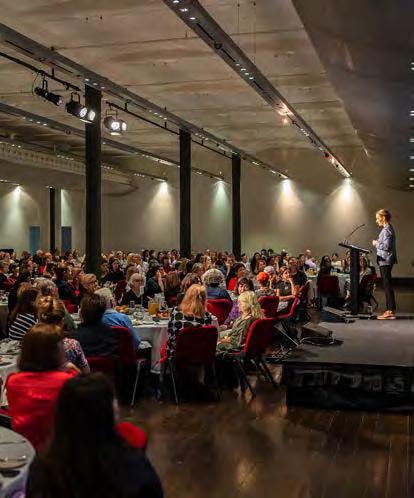
Such an extraordinary year called for continuing responsive adjustments by the NSW Chapter to ensure support to members through information and, vitally, through peer and Institute connection.
One of our key channels of engagement was the [net]work from home online seminar series (later called Lean In sessions), through which we delivered formal and informal CPD, including essential updates on the major legislative and industry reforms being rolled out across the state’s design and construction industry.
Our advocacy efforts throughout the year defended the value – culturally and environmentally – of our built heritage as a number of important buildings came under threat, including the MLC North Sydney building, which we helped to see recommended for heritage listing.
Throughout the year we collaborated closely with the state government to address planning delays being experienced by our members and to present members’ ideas for projects to which funding might be directed for public and environmental benefit.
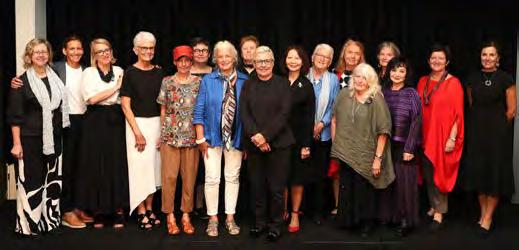
We were able to kick off our Regional Showcase program in March, bringing the Institute, GANSW and the registrar to regional members and engaging local government and community with great success. We leveraged virtual platforms to celebrate design excellence, individual and practice achievement, and 60 years of the NSW Country Division. The livestream broadcast of the NSW Architecture Awards attracted over 6,000 views, many of them representing group and interstate audiences. We were delighted to see entrants’ projects enjoy this extensive exposure and such broad inclusion of members as well as their clients and families in this program.
Lastly, we finished the year with the introduction of a streamlined committee structure designed to maximise the impact and coordination of staff and member volunteers’ expertise and effort and ensure their alignment with key strategic objectives, and to firmly establish regional and emerging practitioners voices in our work. We look forward to seeing this new approach bring greater focus and efficacy to our work to support members as well as the profession and built environment more broadly in 2021 and beyond. OUR ADVOCACY EFFORTS DEFENDED THE
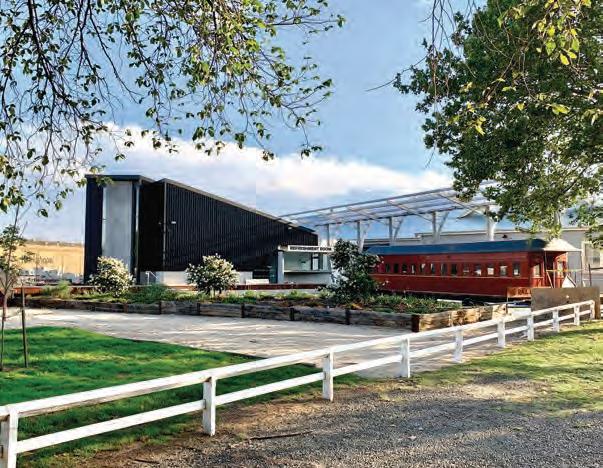
Although It was an unusual year, we were as busy as usual in the NT Chapter. The NT elections were held in August and we worked on our positioning paper specifically highlighting energy efficiency, implementation of the Shergold Weir recommendations, sustainability, introduction of compulsory CPD, Insurance and a code of conduct for architects registered in the NT and housing. We also provided both face-to-face and online CPD and networking events.
We continued to work hard on advocacy, alongside AILA, PIA, Engineers Australia and other industry groups to get the best outcome for the Territory. Below are just a few key policy areas the NT Chapter has worked on.
• the Designing better policy
• NT Planning Reform
• the Creative Industries strategy CDU city development
• Darwin City Deals
• Procurement issues and the buy local policy
• Remote housing issues and current programs concerns
• National Registration Framework and NT ministers lobbying on Institute concerns nationally
• Registration guidelines for reregistering architects
• ABCB complex designs
• Larrakia Cultural Centre
• Section J and ESD
• CBD Heat mitigation
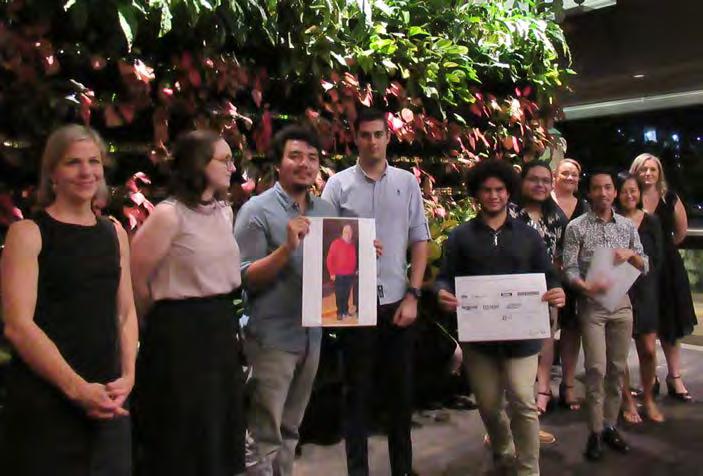
2020 Election Positioning Paper

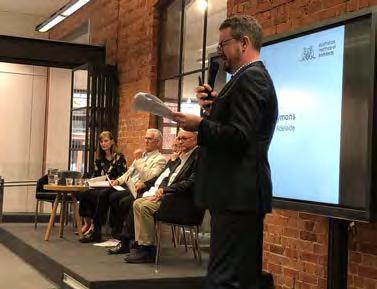
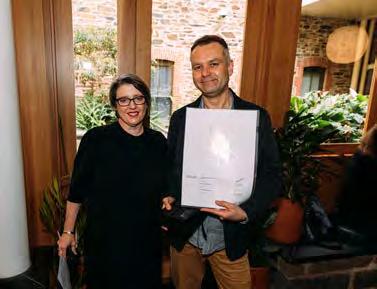
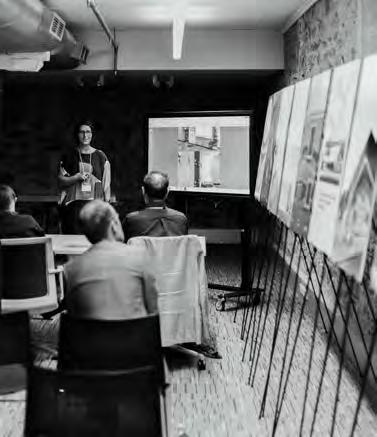
2020 was an active and dynamic year for the South Australian Chapter. Several live events were delivered, including a presentation of SA Awards Certificates, networking events for various member cohorts, formal CPD and the end of year function. Members greatly appreciated the opportunity to meet in person and share their experiences.
On 1 July 2020 mandated CPD was introduced to the SA Architectural Practice Act (2009). The SA Chapter provided information regarding the APBSA’s CPD Rules and delivered formal CPD, including a CPD presentation to assist architects understand the system and their obligations. We also supported allied organisations to better understand how formal CPD should be structured.
Work in relation to the new SA planning system continued throughout 2020. This included submissions to the SA Planning Commission, ODASA and LRC considering Planning Reform as well as media releases on planning issues.
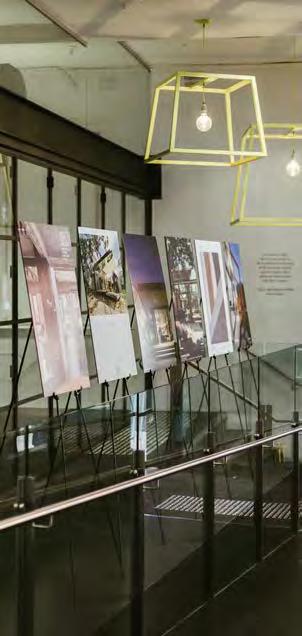
THE SA CHAPTER COMMENCED AN INITIATIVE WITH THE MBASA TO REVIEW CONSTRUCTION SECTOR CULTURE, IDENTIFY ISSUES AND DEVELOP STRATEGIES TO ACHIEVE MEANINGFUL IMPROVEMENTS.
A high degree of commonality was identified, and we look forward to developing this initiative in 2021.
The Creative Industries Think Tank continued to support the SA Growth State initiative. The launch of the government’s Creative Industries Strategy highlighted the contribution made by architecture and showcased the work of key practices.
The final highlight for 2020 was the appointment of Tony Giannone as National President Elect. He joins EmAGN President Erin Crowden and SA Chapter President Anthony Coupe to provide a strong SA presence at National Council.
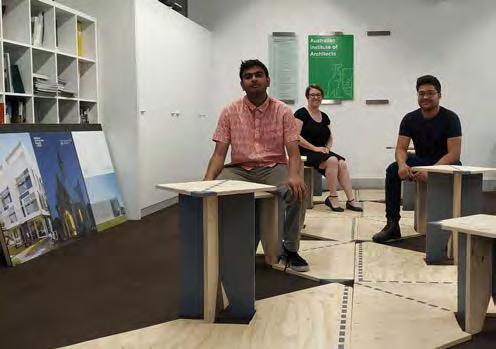
In January 2020 we welcomed a new Chapter President, Michael Lavery FRAIA and five new and re-elected Chapter Councillors: Belinda Allwood FRAIA, Jim Gall FRAIA, Paul Jones RAIA, Lisa Moore RAIA and Paul Worroll FRAIA. Andrew Wilson FRAIA was also appointed to fill a casual vacancy on Council. Genevieve Vella RAIA joined Jess Owen RAIA as our 2020/21 EmAGN Co-Chair.
We received 125 entries in our 2020 Queensland Architecture Awards with 52 state-shortlisted entries. The livestream event attracted 4,300 YouTube views. We thank the 2020 Awards Jury of Richard Coulsen (Chair), Eloise Atkinson, Ellen Buttrose and Angus Munro.
This was the first year that the Lord Mayor’s Brisbane Buildings that Breathe Architecture Awards was given to a multi-residential project, Lucent,
by Plazibat Architects. The jury also awarded the inaugural Queensland Architecture Medallion to Kirk for the Mon Repos Turtle Centre in Bundaberg.
In terms of advocacy, we appeared at a Queensland Parliamentary Enquiry into Building Industry Fairness. We also campaigned to support the role of the Gold Coast City Architect (Queensland’s only local government architect) and the Office of the Queensland Government Architect.
We thank all our partners, national, state and regional for their generosity and support during 2020. A special acknowledgment goes to our major state partner, Hutchinson Builders.
After more than 30 years at 70 Merivale Street, South Brisbane, the Chapter moved to new (temporary) premises in West End, Brisbane.
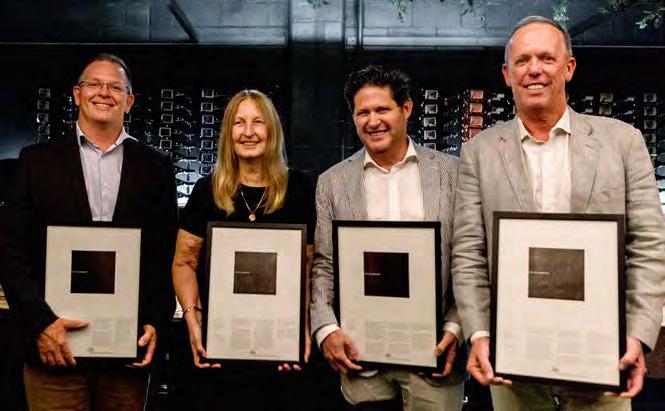
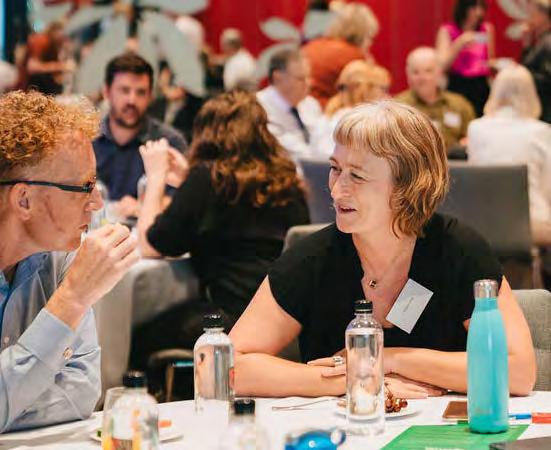
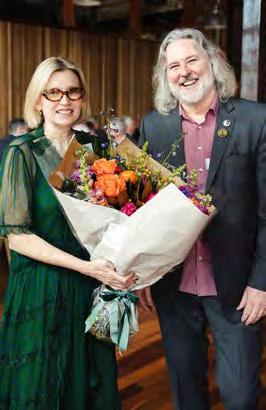
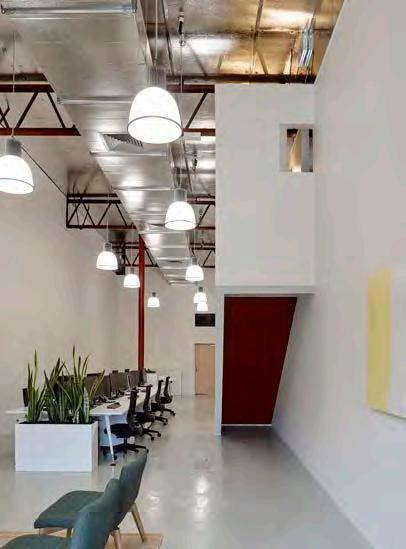
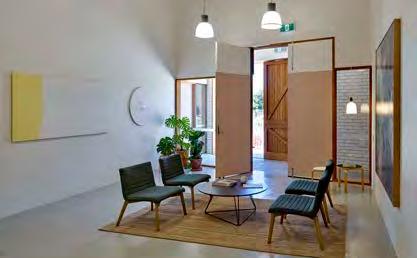
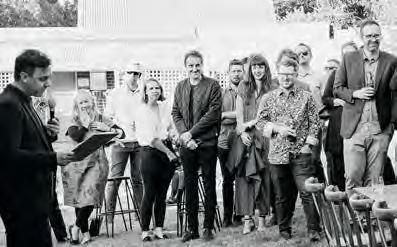


2020 saw the Tasmanian Chapter engage with members in both the north and south of the state, with online events enabling a more equitable connection for all. Both the EmAGN Committee and the Findlay Project (Women in Architecture Committee) now have a strong representation in the north, hosting a number of well-attended events throughout the year – both in person and online.
The 2020 Tasmanian Architecture Awards commenced in February, with a field of 25 entries presented publicly to the jury. These presentations were livestreamed and attracted over 1,100 views both during and after the event, as well as being attended by an inperson audience.
THE AWARD RECIPIENTS WERE ANNOUNCED IN JUNE, WITH AN ONLINE AUDIENCE PEAKING AT 253 CONCURRENT LIVE VIEWING SESSIONS.
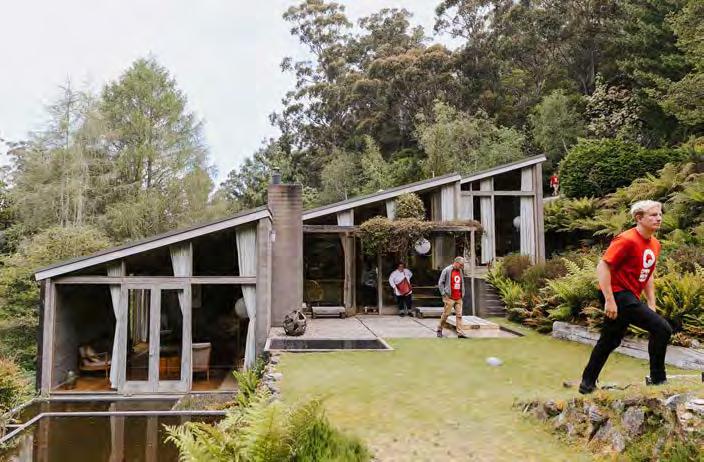
Since then, the awards have been viewed over 2,400 times. Once again, there was a strong field of entries, with five Tasmanian projects included in the National Architecture Awards shortlist, along with three projects by Tasmanian architects located interstate. Six of these projects went on to be recognised, with two Tasmanian projects jointly taking out the top award for heritage architecture.
Open House Hobart, the Tasmanian Chapter’s key public advocacy and education event, went ahead in November for its eighth year and was one of the first festivals in the city to recommence in a physical capacity. The event pivoted to provide a combination of smaller pre-booked tours, along with an online program. This included 39 open buildings, four walking tours and ten face-toface talks and concerts, which saw 2,086 physical visits; along with ten virtual building tours and five virtual events, which received 3,165 views, including the program launch, which alone has had 2,400 views to date. The addition of a dedicated YouTube channel will allow the virtual talks and tours to have a life outside of the main program and promote Tasmanian architecture and architects to a wider audience.
The Tasmanian Chapter continued to advocate on behalf of the industry in relation to issues that affect the quality and sustainability of our built environment, particularly in relation to procurement, development and planning. The Chapter strengthened its relationships with local and state government, and contributed to a number of submissions, notably around the Major Projects Bill and the Tasmanian Planning Commission review. The Chapter was also pleased to see the Architects Amendment Bill pass through parliament.
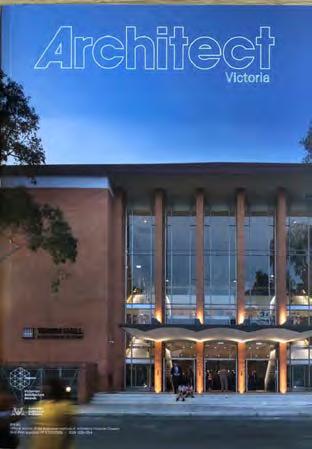
Throughout 2020 the Victorian Chapter continued to advocate for the profession both nationally and within the state.
The national draft Code of Novation continued to gain momentum led by the Victorian Large Practice Forum and started its next phase of engagement towards the end of the year. Main areas of advocacy also covered bushfire recovery, ABIC, Better Apartment Design Standards, sustainability and workplace safety. The chapter continued to raise its profile through numerous informed submissions to government and key stakeholders through our committees.
In parallel, Immediate Past President Amy Muir FRAIA and Interim President Rob Stent LFRAIA, in combination with the national team, set about bolstering the Victorian Chapter with key appointments. In August, Paul Zanatta was hired as Policy and Advocacy Manager operating out of the Victorian Chapter. In September, Tim Leslie FRAIA, former Chair of the Large Practice Forum and a Chapter Councillor for five years was engaged as the new State Manager. Immediately following this, a new Victorian President was appointed, Bill Krotiris RAIA, principal of John Wardle Architects and member of the Large Practice Forum ambassador group whose wealth of experience with advocacy and the profession made him a standout candidate.
We thank the Victorian Chapter team Caitlin Sinclair, Sanja Novakovic and Jason Stanton as well as Amy Muir FRAIA and Rob Stent LFRAIA for their leadership roles during an extended transition phase for the chapter.



2020 was an incredibly productive and rewarding year on the advocacy and education front for the Western Australian Chapter.
Strategic advocacy included a joint submission with the ACA to the Department of Mines, Industry Regulation and Safety in response to Reforms to the approval process for commercial buildings in Western Australia. This included a multistage consultation process with key members, representatives of affiliated organisations and the Building Commission branch of the Department.
Alongside the Australian Institute of Landscape Architects, and Engineers Australia, we successfully lobbied the state to review legislation to allow architects, engineers and landscape architects access to BCITF funds for training.
We liaised with the Department of Planning, Lands and Heritage at various levels of stakeholder engagement and consultation with regards to planning reform. This resulted in a submission made in response to Draft amendments to SPP 7.3 R-Codes. We also wrote to the Premier to alert the WA state government to the Insurance market impacts on Building Surveyors
We engaged our SONA and EMAGN members, alongside Engineers Australia and the Planning Institute of Australia in Youth Infrastructure WA Workshops Participants identified many opportunities and barriers for growth in WA, including the most important investment objectives of addressing climate change and increasing resilience, enhancing infrastructure delivery and developing skills for the future, and embracing technology, data and digital connectivity.
Our key education focus in 2020 was to deliver the ZERO Carbon Design 7 Lecture CPD series, curated by Ross Donaldson. The series was formulated for the new national CPD platform and showcased practical knowledge, case studies, skills and tools to enable a decarbonised built environment future.
We acknowledge the support, engagement and guidance of our valued members, and we thank all those who have volunteered on committees and advisory groups throughout the year. We thank the Architect magazine editorial committee who have worked tirelessly to transform and deliver the WA Homes and WA Community editions, which celebrated its 81st publication anniversary.
The financial statements cover The Royal Australian Institute of Architects Limited as a consolidated entity consisting of The Royal Australian Institute of Architects Limited and the entities it controlled at the end of, or during, the year. The financial statements are presented in Australian dollars, which is The Royal Australian Institute of Architects Limited’s functional and presentation currency.
The Royal Australian Institute of Architects Limited is a not-for-profit unlisted public company limited by guarantee.
The financial statements were authorised for issue, in accordance with a resolution of directors, on 8 April 2021. The directors have the power to amend and reissue the financial statements.
(ACN: 000 023 012) for the year ended 31 December 2020
A BN: 72 000 023 012
F or th e Y ea r E nde d 31 De ce mbe r 20 20
D ir ecto rs ’ R epo rt
The Directors of The Royal Australian Institute of Architects Limited present their report, together with the financial statements , of the consolidated entity, being The Royal Australian Institute of Architects Limited (“the Company”) and its controlled entities (“the Group” or “consolidated entity”) for the year ended 31 December 20 20
Directors
The following persons were Directors of The Royal Australian Institute of Architects Limited during the whole of the financial year and up to the date of this report, unless otherwise stated:
Name: Pro f Helen M Lo chh ead LFRAIA MPIA AILA FAICD Hon AIA
Qualifications: B Sc (Arch) (Hons) B Arch (Hons) (Sydney)
MSAUD Columbia University
Company Directors Course Diploma AICD
Loeb Fellow, Harvard GSD
Experience & other
Appointments:
President from 14 May 2019 to 22 July 2020
President Elect from 15 May 2018 to 14 May 2019
National Council Elected Director from 21 March 2013 to 15 May 2018
Director, IBL Limited
Director, Australian Institute of Architecture Foundation Limited
Pro Vice- Chancellor, Precincts UNSW
Past Dean, Faculty of the Built Environment UNSW
Director, The Anganwandi Project
Council on Tall Buildings and Urban Habitat Australia Board
Special responsibilities: Board Chair from 14 May 2019
Immediate Past President from 22 July 2020
Chair – Venice Biennale Committee
Member – Finance, Audit, Investment and Risk Committee (ex officio)
Member - People & Culture Committee (ex officio)
Member – Key Governance Documents Review Taskforce (ex officio)
Name: Alice L T M Hamp so n FRAIA Hon AIA
Qualifications:
Experience & other Appointments:
BDES, B Arch (Hons) (UQ)
President Elect from 14 May 2019 to 22 July 2020
Board Member Director, Board of Architects Queensland Councillor, Queensland Heritage Council
Official Residences Advisory Committee
Independent Expert Panel for Arts Queensl and and the Queensland Cultural centre (IEP QCC)
Stuartholme Girls School Design Advisory Panel
Special responsibilities: President from 22 July 2020
Member – Finance, Audit, Investment and Risk Committee (ex officio)
Member – People & Culture Committee (ex officio)
Member – Key Governance Documents Review Taskforce (ex officio)
(ACN: 000 023 012) for the year ended 31 December 2020
Directors (co n tin ued )
Name: A An drew V Bro ffman FRAIA – Director during the whole of the financial year and up to the date of this report (Independent Director until 22 July 2020 and appointed as a National
Council Elected Director on 22 July 2020)
Qualifications: M Arch (Illinois) BA Soc (George Mason) MA Soc (Brandeis)
Experience & other
Appointments:
Nationally Elected Councillor from February 2020
Independent Director from 15 May 2018 to 22 July 2020
National Council Elected Director from 16 May 2017 to 15 May 2018
Principal- Sydney, TheFulcrum.Agency
Special responsibilities: Member – People and Culture Committee from 22 July 2020
Chair – People and Culture Committee from 15 May 2018 to 22 July 2020
Name: Ju lian R Craw fo rd FCAANZ MAICD
Qualifications: MA(Oxon)
Experience & other Appointments:
Independent Director from 24 October 2019
Member – Finance, Audit, Investment and Risk Committee from 24 October 2019 until 31 December 2019
Director, Blue Mountains World Heritage Institute, Australia
Director, EcoSTEPS Pty Ltd, Australia
Director, Julian Crawford Pty Ltd, Australia
Director, Gummarus Pty Ltd, Australia
Director, Carole Young & Associates Pty Ltd, Australia
Special responsibilities: Chair – Finance, Audit, Investment and Risk Committee from 1 January 2020
Name: An ton io G ian no ne FRAIA – appointed as a Director 22 July 2020
Qualifications: B Arch (Adel)
Experience & other Appointments:
SA Chapter President from 5 February 2019 to 2 September 2020
Director, Tectvs Pty Ltd
Director, Tectvs Australia Pty Ltd
Politecnico di Milano, Mantova UNESCO Chair Advisory Board
Special responsibilities: President Elect from 22 July 2020
Member – Finance, Audit, Investment and Risk Committee
Member – Key Governance Documents Review Taskforce
Name: K Kath lyn J Lo seb y FRAIA JP GAICD – appointed as a National Council Elected Director 22 July 2020 – resigned as at 25 February 2021
Qualifications: B Sc (Arch), B Arch (Hons) (Sydney) MBA (Exec, AGSM)
Experience & other
Appointments:
Company Directors Course Diploma AICD
NSW Chapter President from 5 February 2019 to 2 February 2021
Past COO, Crone Partners Pty Ltd
Special responsibilities: Chair, Digital Transformation Steering Group from 1 January 2021 to 25 February 2021
Member – Digital Transformation Steering Group from 21 August 2020 to 31 December 2020
Member – Key Governance Documents Review Taskforce from 22 October 2020 to 25 February 2021
(ACN: 000 023 012) for the year ended 31 December 2020
A CN: 000 023 012
F or th e Y ea r E nde d 31 De ce mbe r 20 20
D ir ecto rs ’ R epo rt (c ont inu ed)
Directors (co n tin ued )
Name: Dr Wesley P McClen don – appointed as an Independent Director 22 July 2020
Qualifications: PhD (Pennsylvania), M Sc (Pennsylvania), BA (Columbia)
Experience & other Appointments: Chairman and CEO, The GROW project Foundation (USA) Director, Vortex Innovations Australia
Director, Vertical Farming Australia
Special responsibilities: Chair – People and Culture Committee from 22 July 2020
Member – Key Governance Documents Review Taskforce
Name: G enevieve M Overell AM FAICD FIPAA
Qualifications: BA LLB (Monash)
Grad Dip Fin Mgt (New England)
Company Directors Course Diploma AICD
Associate ASCPA
Experience & other Appointments:
Independent Director from 26 August 2016
Chair – Finance, Audit, Investment and Risk Committee from 14 May 2019 to 31
December 2019
Chair – Investment Committee from 1 December 2016 to 14 May 2019
Member – Finance, Audit and Risk Committee from 3 November 2016 to 14 May 2019
Independent Chair, Audit Committee of the Victorian State Revenue Office
Chairman, Victorian Opera
Non- Execu tive Director, Melbourne Primary Care Network
Co - Chair, Australian British Chamber of Commerce Victoria Council
Special responsibilities: Chair – Key Governance Documents Review Taskforce
Member – Finance, Audit, Investment and Risk Committee from 1 January 2020
Name: V an essa L Bird FRAIA – resigned as a Director as at 22 July 2020
Qualifications: B Arch (Hons) (RMIT)
Experience & other Appointments: Vic Chapter President from 1 February 2016 to 1 February 2018
Director, Architecture Media Pty Ltd
Special responsibilities: National Council Elected Director from 15 May 2018 to 22 July 2020
Chair, Digital Transformation Steering Group from 8 May 2018 to 31 December 2020
Name: Clare Co usin s LFRAIA GAICD Hon AIA – resigned as a Director as at 22 July 2020
Qualifications: B Arch (RMIT)
Experience & other Appointments:
Company Directors Course Diploma AICD
President from 15 May 2018 to 14 May 2019
Acting Chief Executive Officer 7 August 2018 to 17 September 2018
President Elect from 16 May 2017 to 15 May 2018
Chair - People and Culture Committee from 23 March 2018 to 15 May 2018
Member – Finance, Audit and Risk Committee from 15 May 2018 to 14 May 2019
Member – Investment Committee from 15 May 2018 to 14 May 2019
Director, Clare Cousins Archi tects
Director, Nightingale 4.0
Director, Duckett Acquisition Collective Pty Ltd
Special responsibilities: Immediate Past President from 14 May 2019 to 22 July 2020
Member – Finance, Audit, Investment and Risk Committee from 14 May 2019 to 22 July 2020
Member - People & Culture Committee from 15 May 2018 to 22 July 2020
Member – Digital Transformation Steering Group to 22 July 2020
A CN: 000 023 012
INSTITUTE OF ARCHITECTS AND CONTROLLED ENTITIES (ACN: 000 023 012) for the year ended 31 December 2020
F or th e Y ea r E nde d 31 De ce mbe r 20 20
D ir ecto rs ’ R epo rt (c ont inu ed)
Directors (co n tin ued )
Name: Peter A C Ho bb s FRAIA – resign ed as a Director as at 22 July 2020
Qualifications: B Arch (UWA)
Experience & other Appointments:
Special responsibilities: -
National Council Elected Director from 14 May 2019 to 22 July 2020 WA Chapter President from 5 February 2019 Director, Petal Nominees (WA) Pty Ltd
Co mp an y Secretary
Barry Whitmore has held the role of Company Secretary since 19 January 2019. He has been a member of both Chartered Accountants Australia and New Zealand and CPA Australia for more than 30 years and a Graduate member of the Australian Institute of Company Directors since 2009. He previously held the role of Company Secretary of The Australian Psychological Society Limited for more than 20 years.
P Prin cip al Activities
During the year the principal activities of the Group were to operate as the peak provider of membership, professional development and policy advocacy services for the Australian architecture profession and through IBL Limited, to act as an insurance broker, risk advisor , underwriting agent, claims manager and portfolio manager for Australian architects and other professionals.
The Group also owns 50% of Architecture Media Australia Pty Ltd whose principal activities are publishing and events management with a focus on the built environment.
Cor e Activities
The Group’s core activities are grouped into six areas that collectively support the Institute’s mission to develop and promote a strong architectural profession and be the voice for architecture.
Professional Leadership
Education, coordination of specialist groups, gender and diversity, students, mentoring and social justice initiatives.
Advocacy
National and Chapter policy solutions, government engagement, research, campaigns and influence.
Practice Resources
Practice Notes relevant to the profession, Environment Design Guide, access to professional business resources including HR, legal advisors, standards, contracts, benchmarking and calculators.
Continuous Learning
National online and Chapter delivered formal c ontinuing professional development opportunities and the National Architecture Conference.
Networking and Community
Emerging architects, informal continuing professional development, networks and timely, relevant information delivered to members.
Awards, Recognition and Promotion
Awards, prizes, individual recognition and promoting the contribution the profession makes to our built environment and the community.
(ACN: 000 023 012) for the year ended 31 December 2020 THE RO YAL AUSTRALI AN I NSTITUTE
A CN: 000 023 012
F or th e Y ea r E nde d 31 De ce mbe r 20 20
D ir ecto rs ’ R epo rt (c ont inu ed)
Prin cip al Activities (co n tin ued )
S tr ategic G oals
The Group adopted a strategic plan for the three years from 2018 to 2020. With the emergence of COVID - 19 in early 2020 a specific Strategic Plan for 2020 was adopted, within the context of the 2018 – 2020 plan. Whilst consistent with the 2018 – 2020 Plan, the 2020 Plan had a particular focus on managing the impact of the pandemic. A new Strategic Plan commencing from 2021 is currently being developed.
The Group’s three- year goals for 2018 to 2020:
• For architecture to be a well- regarded and highly relevant profession;
• To provide strong governance guiding the profession;
• To be a respected advocate with a clear policy agenda;
• To have strong member engagement and loyalty;
• To provide indispensable member services; and
• To be a vibrant, high capacity Institute
P Pathw ays for Achieving Our T hr ee- Year G oals
To achieve these three - year goals, the Group adopted the following four key outcome areas:
1.0 Respected leadership
1.1 Promote the value of our profession
1.2 Support and uphold education standards
1.3 Lead the profession – facilitate and assist specialised bodies within the profession
1.4 Champion social and environmental justice in the built environment
2.0 Advocacy with impact
2.1 Clear agenda and priorities
2.2 Research capacity that underpins policy and perception campaigns
2.3 Advocacy and campaign capacity
2.4 Strategic political interaction across all three levels of government
3.0 Direct member value
3.1 Revitalise practice toolsets to provide relevant and up - to- date resources
3.2 Revitalise CPD to deliver a relevant best practice curriculum
3.3 Realign membership structure
4.0 Strong and viable Institute
4.1 Positive values - led internal culture
4.2 Strong brand aligned to our mission
4.3 Effective communication capacity
4.4 Modern business performance and measurement
4.5 Strong governance and alignment with the profession
Additional information regarding the Institute’s 2020 Strategy can be found at www.architecture.com.au/about/strategy
THE ROYAL AUSTRALIAN INSTITUTE OF ARCHITECTS AND CONTROLLED ENTITIES (ACN: 000 023 012) for the year ended 31 December 2020
A CN: 000 023 012
F or th e Y ea r E nde d 31 De ce mbe r 20 20
D ir ecto rs ’ R epo rt (c ont inu ed)
Meetin gs o f Directors
The number of meetings of the company’s Board of Directors (‘the Board’) and of each Board committee held during the year ended 31 December 2020, and the number of meetings attended by each director were:
Eligible to attend: represents the number of Board meetings or meetings of relevant Board committees held during the time the director held office or was a member of the relevant committee.
Other members of the Board Committees are: Elisa Clements attends People and Culture Committee meetings as an external consultant. CEO Julia Cambage , continued as a member of both Board Committees throughout 2020.
R Review o f Op eratio ns
The profit attributable to members of the consolidated entity for the year, after income tax expense, was $5,065,365 (2019: $5,849,579).
The impact of the Coronavirus (COVID- 19) pandemic is ongoing, and it is not practicable to estimate the potential impact, positive or negative, after the reporting date. The situation is constantly changing and is dependent on measures imposed by the Australian Government and other countries, such as maintaining social distancing requirements, quarantine, travel restrictions and any economic stimulus that may be provided.
No other matter or circumstance has arisen since 31 December 2020 that has significantly affected, or may significantly affect the company's operations, the results of those operations, or the company's state of affairs in future financial years.
C Co n trib u tio n in Wind in g Up
The Company is incorporated under the Corporations Act 2001 and is a Company limited by guarantee. If the Company is wound up, the constitution states that each member is required to contribute a maximum of $15 each towards meeting any outstanding obligations of the entity. At 31 December 2020, the total amount that members of the company are liable to contribute if the Company is wound up is $186,930 (2019: $187,470), based on 12,462 members (2019: 12,498).
THE RO YAL AUSTRALI AN I NSTITUTE O F ARCHI TECTS LI MI TED and CO NTRO LLED
THE ROYAL AUSTRALIAN INSTITUTE OF ARCHITECTS AND CONTROLLED ENTITIES (ACN: 000 023 012) for the year ended 31 December 2020
A CN: 000 023 012
F or th e Y ea r E nde d 31 De ce mbe r 20 20
D ir ecto rs ’ R epo rt (c ont inu ed)
Au d ito r ’ s Ind epend en ce Declaratio n
A copy of the auditor’s Independence Declaration as required under section 307C of the Corporations Act 2001 is set out immediately after this Report.
This report is made in accordance with a resolution of d irectors, pursuant to section 298(2) (a) of the Corporations Act 2001
On behalf of the Board of Directors:
H M Lochhead
J R Crawford Board Chairperson &
Director
Dated: 8 April 2021
Melbourne
Director
(ACN: 000 023 012) for the year ended 31 December 2020

AUDITOR’S INDEPENDENCE DECLARATION
As lead auditor for the audit of the financial report of The Royal Australian Institute of Architects Limited for the year ended 31 December 2020, I declare that, to the best of my knowledge and belief, there have been no contraventions of:
(i) the auditor independence requirements of the Corporations Act 2001 in relation to the audit; and
(ii) any applicable code of professional conduct in relation to the audit.

J S CROALL Partner
Dated: 8 April 2021
Melbourne, Victoria
J S CROALL Partner
Dated: 8 April 2021
Melbourne, Victoria

(ACN: 000 023 012) for the year ended 31 December 2020
A CN: 000 023 012
F or th e Y ea r E nde d 31 De ce mbe r 20 20
In the opinion of the Directors of The Royal Australian Institute of Architects Limited (the Company):
(a) the financial statements and notes of the Group, comprising the Company and its controlled entities for the year ended 31 December 2020, set out on pages 55 to 87, are in accordance with the Corporations Act 2001, including:
(i) giving a true and fair view of the Company’s and the Group’s financial position as at 31 December 2020 and of their performance for the financial year ended on that date; and
(ii) complying with Australian Accounting Standards (including the Australian Accounting Interpretations) Reduced Disclosure Requirements and the Corporations Regulations 2001;
(b) there are reasonable grounds to believe that the Company and Group will be able to p ay their debts as and when they become due and payable.
Signed in accordance with a resolution of the Board of Directors, made pursuant to section 295(5)(a) of the Corporations Act 2001.
On behalf of the Board of Directors:
H M Lochhead Board Chairperson & Director
J R Crawford Director
Dated: 8 April 2021
Melbourne VIC
ENTITIES (ACN: 000 023 012) for the year ended 31 December 2020 THE RO YAL AUSTRALI AN I NSTITUTE O
A CN: 000 023 012
C o n s o l i d a t e d P a r e n t
(275,312)
t h e y e a r a t t r i b u t a b l e t o t h e m e m b e
O t h e r c o m p r e h e n s i v e i n c o m e
I t e m s t h a t w i l l b e r e c l a s s i f i e d s u b s e q u e n t l y
t o p r o f i t o r l o s s :
I t e m s t h a t w i l l n o t b e r e c l a s s i f i e d
s u b s e q u e n t l y t o p r o f i t o r l o s s :
Revaluation of land and buildings (net of tax) 2 , 6 0 8 , 2 8 3 4,538,374 - 4,538,374 Movements in fair value of financial assets
Movements in asset revaluation reserve
O t h e r c o m p r e h e n s i v e i n c o m e f o r t h e y e a
n e t o f i n c o m e t a x
T o t a l c o m p r e h e n s i v e i n c o m e f o r t h e y e a r a t t r i b u t a b l e t o t h e m e m b e r s o f T h e R o y a l
A u s t r a l i a n I n s t i t u t e o f A r c h i t e c t s L i m i t e d
THE ROYAL AUSTRALIAN INSTITUTE OF ARCHITECTS AND CONTROLLED ENTITIES (ACN: 000 023 012) for the year ended 31 December 2020 THE RO YAL AUSTRALI AN I NS TITUTE O F ARCHI TECTS LI
A CN: 000 023 012
The accompanying notes form part of these financial statements
Impact of adoption of AASB 15 and AASB 1058
Impact of adoption of AASB 16
Profit after income tax expense for the year
4,538,374 4,538,374 -Movements in fair value of financial assets
Other comprehensive income for the year, net of tax -Revaluation of land and buildings, net of tax
Profit after income tax expense for the year 5,065,365
2,608,283 2,608,283 -Movements in fair value of financial assets
Other comprehensive income for the year, net of tax -Revaluation of land and buildings, net of tax
(1,040)(1,040) -Movements in asset revaluation reserve
(2,000,000)
-Tranfers from asset revaluation reserve to retained earnings 2,000,000
7,065,365(1,040) 1,203,913 8,268,238
(ACN: 000 023 012)
for the year ended 31 December 2020
Impact of adoption of AASB 15 and AASB 1058
Profit after income tax expense for the year
Other comprehensive income for the year, net of tax
Profit after income tax expense for the year
Other comprehensive income for the year, net of tax -Movements in fair value of financial assets
4,430,737 (1,040) (1,404,370) 3,025,327
-Movements in asset revaluation reserve
595,630 595,630 -Tranfers from asset revaluation reserve to retained earnings 2,000,000(2,000,000) -
THE ROYAL AUSTRALIAN INSTITUTE OF ARCHITECTS AND CONTROLLED ENTITIES (ACN: 000 023 012) for the year ended 31 December 2020 THE RO YAL AUSTRALI AN I NSTITUTE O F ARCHI TECTS LI MI TED and CO NTRO LLED ENTI
CN: 000 023 012
C a s h a n d c a s h e q u i v a l e n t a t e n d o f f i n a n c i a l y e a r
The accompanying notes form part of these financial statements.
(ACN: 000 023 012)
for the year ended 31 December 2020
ACN: 000 023 012
Notes to the Financial Statements for the Year Ended 31 December 2020
The Royal Australian Institute of Architects Limited (“the Company”) is a not-for-profit public (“NFP”) company limited by guarantee and is domiciled in Australia. The registered office of the Company is 41 Exhibition Street, Melbourne, Victoria 3000. The consolidated financial statements of the Company as at and for the year ended 31 December 20 20 comprise the Company and its subsidiaries (together referred to as “the Group” and individually as “Group Entities”) and the Group's interest in associates. During the year the principal activities of the Company were to operate as the peak provider of membership, professional development and policy advocacy services for the Australian architecture profession and for IBL Limited (100% owned subsidiary), to act as an insurance broker, risk advisor, underwriting agent, claims manager and portfolio manager for Australian architects and other professionals.
The financial statements include separate financial statements of The Royal Australian Institute of Architects Limited and consolidated financial statements of the Group. For the purposes of preparing the financial statements, the Company is a not-for-profit entity.
The financial statements were authorised for issue by the directors on 8 April 2021. The directors have the power to amend and reissue the financial statements.
The Group has adopted all of the new or amended Accounting Standards and Interpretations issued by the Australian Accounting Standards Board ('AASB') that are mandatory for the current reporting period.
Any new or amended Accounting Standards or Interpretations that are not yet mandatory have not been early adopted.
The adoption of these Accounting Standards and Interpretations did not have any significant impact on the financial performance or position of the Group.
The principal accounting policies adopted in the preparation of the financial statements are set out below. These policies have been consistently applied to all the years presented, unless otherwise stated.
These financial statements are general purpose financial statements that have been prepared in accordance with Australian Accounting Standards Reduced Disclosure Requirements and Interpretations issued by the Australian Accounting Standards Board (“AASB”) and the Corporations Act 2001
The consolidated financial statements have been prepared on the historical cost basis except for the following which are measured at fair value:
• Investment properties have been measured at fair value
• Land and buildings used by the Group have been measured at fair value
• Financial instruments where movements in fair value are accounted for as profits or losses are measured at fair value
The methods used to measure fair value are discussed further at Note 3 (n ).
(ACN: 000 023 012) for the year ended 31 December 2020
ACN: 000 023 012 Notes to the Financial Statements for the Year Ended 31 December 2020
The preparation of financial statements requires the use of certain critical accounting estimates. It als o requires management to exercise its judgement in the process of applying the company’s accounting policies. The areas involving a higher degree of judgement or complexity, or areas where assumptions and estimates are significant to the financial statements, are as detailed below.
Estimates and underlying assumptions are reviewed on an ongoing basis. Revisions to accounting estimates are recognised in the period in which the estimates are revised and in any future periods affected.
Key estimates - Profit share on insurance policies and contingent assets
Under agreements with its underwriters, IBL Limited is entitled to receive commission based on the ultimate profitability of the portfolio of insurance policies which it manages. The profitability is contingent upon the value of future claims under those policies. IBL Limited may receive an interim profit commission two years after the close of an underwriting year. Based on external actuarial assessment, the Directors of IBL Limited have determined that profit commission revenue should only be recognised after an acceptable probability of sufficiency has been satisfied, and that the final profit commission calculations will be performed five years after the close of an underwriting year.
In the current year, $1,987,554 has been recognised by IBL Limited as deferred profit commission, representing $1,088,208 received in respect of the 2012/2013 year of account, $651,343 for 2013/2014, $55,281 for 2014/2015, $58,020 for 2015/2016 and finally $134,702 received in respect of the 2016/2017 year of account. The deferral of this commission reflects IBL Limited’s assessment that the probability of sufficiency threshold has not been met. Contingent assets are also recognised per Note 28 in relation to these matters where IBL Limited has not yet satisfied itself that an asset can be recognised as at the date of these consolidated financial statements.
The Directors of the Company have also given consideration to this policy and the basis of estimati on and identification of contingent assets in connection with the preparation of these consolidated financial statements and have noted that, while this approach is arguably conservative, it appears to be compatible with the “constraint” provisions of AASB 15 Revenue from Contracts with Customers.
The lease term is a significant component in the measurement of both the right- of-use asset and lease liability. Judgement is exercised in determining whether there is reasonable certainty that an option to extend the lease or purchase the underlying asset will be exercised, or an option to terminate the lease will not be exercised, when ascertaining the periods to be included in the lease term. In determining the lease term, all facts and circumstances that create an economical incentive to exercise an extension option, or not to exercise a termination option, are considered at the lease commencement date. Factors considered may include the importance of the asset to the company's operations; compar ison of terms and conditions to prevailing market rates; incurrence of significant penalties; existence of significant leasehold improvements; and the costs and disruption to replace the asset. The company reassesses whether it is reasonably certain to exe rcise an extension option, or not exercise a termination option, if there is a significant event or significant change in circumstances.
Where the interest rate implicit in a lease cannot be readily determined, an incremental bo rrowing rate is estimated to discount future lease payments to measure the present value of the lease liability at the lease commencement date. Such a rate is based on what the company estimates it would have to pay a third party to borrow the funds necess ary to obtain an asset of a similar value to the right-of-use asset, with similar terms, security and economic environment.
(ACN: 000 023 012)
for the year ended 31 December 2020
ACN: 000 023 012
Notes to the Financial Statements for the Year Ended 31 December 2020
3 Significant Accounting Policies (continued)
Use of Estimates and Judgements (continued)
Lease make good provision
A provision has been made for the present value of anticipated costs for future restoration of leased premises. The provision includes future cost estimates associated with closure of the premises. The calculation of this provision requires assumption s such as application of closure dates and cost estimates. The provision recognised for each site is periodically reviewed and updated based on the facts and circumstances available at the time. Changes to the estimated future costs for sites are recognised in the statement of financial position by adjusting the asset and the provision. Reductions in the provision that exceed the carrying amount of the asset will be recognised in profit or loss.
Coronavirus (COVID-19) pandemic
Judgement has been exercised in considering the impacts that the Coronavirus (COVID-19) pandemic has had, or may have, on the Group based on known information. This consideration extends to the nature of the products and services offered, customers, supply chain, staffing and geographic regions in which the Group operates. Other than as addressed in specific notes, there does not currently appear to be either any significant impact upon the financial statements or any significant uncertainties with respect to events or conditions which may impact the company unfavourably as at the reporting date or subsequently as a result of the Coronavirus (COVID-19) pandemic.
The consolidated financial statements incorporate the financial statements of the Company and Group. Control is achieved when the Company:
• has power over the investee
• is exposed, or has rights, to variabl e returns from its involvement with the investee, and
• has the ability to use its power to affect its returns.
The Company reassesses whether it controls an investee if facts and circumstances indicate that there are changes to one or more of the three ele ments of control listed above. When the Company has less than a majority of the voting rights of an investee, it has power over the investee when the voting rights are sufficient to give it the practical ability to direct the relevant activities of the investee unilaterally. The Company considers all relevant facts and circumstances in assessing whether the Company's voting rights in an investee are sufficient to give it power, including:
• the size of the Company's holding of voting rights relative to the size and dispersion of holdings of the other vote holders
• potential voting rights held by the Company, other vote holders or other parties
• rights arising from other contractual arrangements, and
• any additional facts and circumstances that indicate that the C ompany has, or does not have, the current ability to direct the relevant activities at the time that decisions need to be made, including voting patterns at previous shareholders' meetings.
Consolidation of a subsidiary begins when the Company obtains control over the subsidiary and ceases when the Company loses control of the subsidiary. Specifically, income and expenses of a subsidiary acquired or disposed of during the year ar e included in the Consolidated Statement of Profit or Loss and Other Comprehen sive Income from the date the Company gains control until the date when the Company ceases to control the subsidiary.
When necessary, adjustments are made to the financial statements of subsidiaries to bring their accounting policies into line with the Gr oup's accounting policies. All intragroup assets and liabilities, equity, income, expenses and cash flows relating to transactions between members of the Group are eliminated in full on consolidation.
(ACN: 000 023 012) for the year ended 31 December 2020
ACN: 000 023 012
Notes to the Financial Statements for the Year Ended 31 December 2020
3 Significant Accounting Policies (continued)
Basis of Consolidation (continued)
Changes in the Group's ownership interests in subsidiaries that do not result in the Group losing control over the subsidiaries are accounted for as equity transactions. The carrying amounts of the Group's interests and the non -controlling interests are adjusted to reflect the changes in their relative interests in the subsidiaries. Any difference between the amount b y which the non-controlling interests are adjusted and the fair value of the consideration paid or received is recognised directly in equity and attributed to members of the Company.
When the Group loses control of a subsidiary, a gain or loss is recognised in profit or loss and is calculated as the difference between (i) the aggregate of the fair value of the consideration received and the fair value of any retained interest and (ii ) the previous carrying amount of the assets (including goodwill), and liab ilities of the subsidiary and any non-controlling interests. All amounts previously recognised in other comprehensive income in relation to that subsidiary are accounted for as if the Group had directly disposed of the related assets or liabilities of the subsidiary (i.e. reclassified to profit or loss or transferred to another category of equity as specified/permitted by applicable AASBs). The fair value of any investment retained in the former subsidiary at the date when control is lost is regarded as th e fair value on initial recognition for subsequent accounting under AASB 139 and, when applicable, the cost on initial recognition of an investment in an associate.
Associates
An associate is an entity over which the Company has significant influence and that is neither a subsidiary nor an interest in a joint venture. Significant influence is the power to participate in the financial and operating policy decisions of the investee but is not control or joint control over those policies. The results of associates are incorporated in these financial statements using the equity method of accounting. Under the equity method, an investment in an associate is initially recognised in the Statement of Financial Position at cost and adjusted thereafter to recognise th e Company’s share of the profit or loss and other comprehensive income of the associate. When the Company’s share of losses of an associate exceeds the Company’s interest in that associate (which includes any long-term interests that, in substance, form pa rt of the Company’s net investment in the associate), the Company discontinues recognising its share of further losses. Additional losses are recognised only to the extent that the Company has incurred legal or constructive obligations or made payments on behalf of the associate.
( (a)
When required by Australian Accounting Standards, comparative figures have been adjusted to conform to changes in presentation for the current financial year.
Where the Group has retrospectively applied an accounting policy, made a retrospective restatement or reclassified items in its financial statements, an additional Statement of Financial Position as at the beginning of the earliest comparative perio d will be disclosed.
(
Cash and cash equivalents includes cash on hand, deposits held at call with financial institutions, other short -term, highly liquid investments that are readily convertible to known amounts of cash (such as term d eposits with original maturities under 3 months) and which are subject to an insignificant risk of changes in value and bank overdrafts.
(ACN: 000 023 012)
for the year ended 31 December 2020
ACN: 000 023 012
3 Significant Accounting Policies (continued)
Trade receivables are initially recognised at fair value and subsequently measured at amortised cost using the effective interest method, less any allowance for expected credit losses. Trade receivables are generally due for settlement within 30 days.
The Group has applied the simplified approach to measuring expected credit losses, which uses a lifetime expected loss allowance. To measure the expected credit losses, trade receivables have been grouped based on days overdue.
Other receivables are recognised at amortised costs, less any allowance for expected credit losses.
( (d) Property, Plant and Equipment
(i) Recognition and measurement
Land and buildings are shown at fair value, based on periodic, but at least triennial, valuations by external independent valuers, less subsequent depreciation for buildings. Any accumulated depreciation at the date of revaluation is eliminated against the gross carrying amount of the asset and the net amount is restated to the revalued amount of the asset. All other property, plant and equipment assets are stated at historical cost less accumulated depreciation and accumulated impairment losses. Historical cost includes expenditure that is directly attributable to the acquisition of the assets.
(ii) Subsequent costs
Subsequent costs are included in the asset’s carrying amount or recognised as a separate asset, as appropriate, only when it is probable that future economic benefits associated with the item will flow to the Group and the cost of the item can be measured reliably. All other repairs and maintenance are charged to the Consolidated Statement of Profit or Loss and Other Comprehensive Income during the financial period in which they are incurred.
(iii) Revaluation
Increases in the carrying amounts arising on revaluation of land and buildings are credited to revaluation reserves in shareholders' equity. To the extent that the increase reverses a decrease previously recognised in the Consolidated Statement of Profit or Loss and Other Comprehensive Income, the increase is first recognised in profit and loss. Decreases that reverse previous increases of the same asset class are first charged against revaluation reserves directly in equity to the extent of the remaining reserve attributable to the asset class; all other decreases are charged to the Consolidated Statemen t of Profit or Loss and Other Comprehensive Income.
Land, including leasehold land, is not depreciated. Depreciation on other assets is calculated using the straight-line method to write off the net cost of each item of property, plant and equipment over their expected useful lives as follows:
• Freehold buildings
• Leasehold buildings
40 - 50 years
50 years
• Plant, equipment, furniture and fittings 3 - 15 years
The residual values, useful lives, and depreciation methods are reviewed, and adjusted if appropriate, at each reporting date.
An item of property, plant and equipment is derecognised upon disposal or when there is no future economic benefit to the company. An asset’s carrying amount is written down immediately to its recoverable amount if the asset’s carrying amount is greater than its estimated recoverable amount (note 3(i)).
(ACN: 000 023 012) for the year ended 31 December 2020
ACN: 000 023 012 Notes to the Financial Statements for the Year Ended 31 December 2020
3 Significant Accounting Policies (continued)
(d)
Gains and losses on disposals are determined by comparing proceeds with the carrying amount. These are included in the Consolidated Statement of Profit or Loss and Other Comprehensive Income. When revalued assets are sold, it is the Group’s policy to transfer the amounts included in the asset revaluation reserve in respect of those assets to retained earnings.
(
A right-of-use asset is recognised at the commencement date of a lease. The right-of-use asset is measured at cost, which comprises the initial amount of the lease liability, adjusted for, as applicable, any lease payments made at or before the commencement date net of any lease incentives received, any initial direct costs incurred, and, except where included in the cost of inventories, an estimate of costs expected to be incurred for dismantling and removing the underlying asset, and restoring the site or asset.
Right-of-use assets are depreciated on a straight-line basis over the unexpired period of the lease or the estimated useful life of the asset, whichever is the shorter. Where the Group expects to obtain ownership of the leased asset at the end of the lease term, the depreciation is over its estimated useful life. Right-of-use assets are subject to impairment or adjusted for any remeasurement of lease liabilities.
The Group has elected not to recognise a right- of-use asset and corresponding lease liability for short-term leases with terms of 12 months or less and leases of low-value assets. Lease payments on these assets are expensed to profit or loss as incurred.
( (f) Intangible
Intangible assets are initially carried at cost. Following the initial recognition, intangible assets are carried at cost less any accumulated amortisation and any accumulated impairment losses.
Intangible assets are amortised over the useful life and assessed for impairment when there is an indication that the intangible asset may be impaired. The amortisation period and the amortisation method for an intangible asset with a finite life are reviewed at least each financial year-end, and the amortisation expense is recognised in the profit and loss. • Software 3 - 5 years
( (g) Investment Property
An investment property, comprising a strata office floor is held by IBL Ltd to generate long term rental yields. The Group also has commercial tenants occupying parts of several properties that are otherwise used by the Company for its own activities. All tenant leases are negotiated and contracted on an arm’s length basis. The investment property is carried at fair value. Fair value approximates market value and is assessed annually by the directors and determined at least triennially by independent property valuers. Changes to fair value are recorded in the Consolidated Statement of Profit or Loss and Other Comprehensive Income.
(h ) Fin an cial In stru men ts
(i) Recognition
Financial instruments are initially measured at cost or fair value on trade date, which includes transaction costs when the related contractual rights or obligations exist. Subsequent to initial recognition these instruments are measured as set out below.
(ii) Amortised cost and effective interest method
The effective interest method is a method of calculating the amortised cost of a debt instrument and of allocating interest income over the relevant period.
(ACN: 000 023 012)
for the year ended 31 December 2020
ACN: 000 023 012
Notes to the Financial Statements for the Year Ended 31 December 2020
3 Significant Accounting Policies (continued)
(h) Financial Instruments (continued)
(iii) Debt instruments at fair value through other comprehensive income (Debt FVTOCI)
Financial assets at fair value through other comprehensive income (FVTOCI) include equity investments which the consolidated entity intends to hold for the foreseeable future and has irrevocably elected to classify them as such upon initial recognition.
(iv) Financial assets at fair value through profit and loss ( “FVTPL ”)
Financial assets at FVTPL are measured at fair value at the end of each reporting period, with any fair value gains or losses recognised in profit or loss to the extent they are not part of a designated hedging relationship. The net gain or loss recog nised in profit or loss includes any dividend or interest earned on t he financial asset and is included in the “Net gain/(loss) arising on financial assets measured at FVTPL” line.
(v) Financial liabilities
Non- derivative financial liabilities are recognised at amortised cost, comprising original debt less principal payments and amortisation.
(vi) Impairment of financial assets
• The Group recognises a provision for expected credit losses on financial assets which are measured at amortised cost. The measurement of the loss allowance depends upon the Group's assessment at the end of each reporting period as to whether the financial instrument's credit risk has increased significantly since initial recognition, based on reasonable and supportable information that is available, without undue cost or effort to obtain.
• Where there has not been a significant increase in exposure to credit risk since initial recognition, a 12 - month expected credit loss allowance is estima ted. This represents a portion of the asset's lifetime expected credit losses that is attributable to a default event that is possible within the next 12 months. Where a financial asset has become credit impaired or where it is determined that credit risk has increased significantly, the loss allowance is based on the asset's lifetime expected credit losses. The amount of expected credit loss recognised is measured on the basis of the probability weighted present value of anticipated cash shortfalls over the life of the instrument discounted at the original effective interest rate.
• In all other cases, the loss allowance is recognised in profit or loss. A financial asset is assessed at each reporting date to determine whether there is any objective evidence that it is impaired. A financial asset is considered to be impaired if objective evidence Indicates that one or more events have had a negative effect on the estimated future cash flows of that asset.
• An impairment loss in respect of a financial asset measured at amortised cost is calculated as the difference between its carrying amount, and the present value of the estimated future cash flow discounted at the original effective interest rate. An impairment loss in respect of an available - for-sale financial asset is calculated by reference to its fair value.
(ACN: 000 023 012) for the year ended 31 December 2020
ACN: 000 023 012
Notes to the Financial Statements for the Year Ended 31 December 2020
3 Significant Accounting Policies (continued)
(i)
All non-financial assets are reviewed for impairment whenever events or changes in circumstances indicate that the carrying amount may not be recoverable.
An impairment loss is recognised for the amount by which the asset's carrying amount exceeds its re coverable amount.
Recoverable amount is the higher of an asset's fair value less costs of disposal and value- in -use. The value- in -use is the present value of the estimated future cash flows relating to the asset using a pre -tax discount rate specific to the asset or cashgenerating unit to which the asset belongs. Assets that do not have independent cash flows are grouped together to form a cash-generating unit.
R Recoverable amount not possible to estimate
Where it is not possible to estimate the recoverable amount of an individual asset, the Group estimates the recoverable amount of the cash-generating unit to which the asset belongs.
( (j)
These amounts represent liabilities for goods and services provided to the Group prior to the end of the financial year and which are unpaid. Due to their short-term nature they are measured at amortised cost and are not discounted. The amounts are unsecured and are usually paid within 30 days of recognition.
Trade payables include broking creditors which are recorded as a liability at the date of inception of a policy. In the even t that the premium charged to clients is not paid, the liability to the corresponding broking creditor is extinguished under the provisions of the Financial Services Reform Act 2002. Broking creditors are settled either within 90 days following the month in which the premium is received or within 90 days of the inception of the policy depending on the terms of the underwriting agreement under which the policy is issued.
( (k)
Contract liabilities represent the Group ’s obligation to transfer goods or services to a customer and are recognised when a customer pays consideration, or when the Group recognises a receivable to reflect its unconditional right to consideration (whichever is earlier) before the company has transferred the goods or services to the customer.
(
A lease liability is recognised at the commencement date of a lease. The lease liability is initially recognised at the prese nt value of the lease payments to be made over the term of the lease, discounted using the interest rate implicit in the lease or, if that rate cannot be readily determined, the Group ’s incremental borrowing rate. Lease payments comprise of fixed payments less any lease incentives receivable, variable lease payments that depend on an index or a rate, amounts expected to be paid under residual value guarantees, exercise price of a purchase option when the exercise of the option is reasonably certain to occur, and any anticipated termination penalties. The variable lease payments that do not depend on an index or a rate are expensed in the period in which they are incurred.
Lease liabilities are measured at amortised cost using the effective interest method. The carrying amounts are remeasured if there is a change in the following: future lease payments arising from a change in an index or a rate used; residual guarantee; lease term; certainty of a purchase option and termination penalties. When a lease liability is remeasured, an adjustment is made to the corresponding right-of use asset, or to profit or loss if the carrying amount of the right-of-use asset is fully written down.
(ACN: 000 023 012)
for the year ended 31 December 2020
ACN: 000 023 012 Notes to the Financial Statements for the Year Ended 31 December 2020
3 Significant Accounting Policies (continued)
Short term employee benefits are defined as employee benefits that are expected to be settled wholly before twelve months after the end of the annual reporting period.
Liabilities for employee benefits for wages, salaries, annual leave, long service leave, and any contracted bonuses represent present obligations resulting from employees’ services provided or achievements accomplished to reporting date and are calculated at discounted amounts (where relevant) based on remuneration wage and salary rates that the Group expects to pay as at reporting date including related on-costs, such as workers compensation insurance and payroll tax.
The Group’s net obligation in respect of long-term employee benefits is the amount of future benefit that employees have earned in return for their service in the current and prior periods plus related on -costs; that benefit is discounted to determine its present value, and the fair value of any related assets is deducted. The discount rate is the yield at the reporting date on Commonwealth Government bonds that have maturity dates approximating the terms of the Group’s obligations.
Where contracted long-term employee benefits exist, a provision equal to the proportional value pertaining to the current year is made in anticipation of the long-term achievement. The value of the benefit is undiscounted in terms of present value since there is no significant difference over the time frame involved.
( (m)
Income tax expense / income comprises current and deferred tax. Income tax e xpense / income is recognised in profit or loss except to the extent that it relates to items recognised directly in equity, in which case it is recognised in equity.
Current tax is the expected tax payable or receivable on the taxable income or loss for the year, using tax rates enacted or substantively enacted at the reporting date, and any adjustment to tax payable in respect of previous years.
Deferred tax assets and liabilities are recognised for temporary differences at the tax rates expected to be applied when the assets are recovered or liabilities are settled, based on those tax rates that are enacted or substantively enacted, except for:
• When the deferred income tax asset or liability arises from the initial recognition of goodwill or an asset or liability in a transaction that is not a business combination and that, at the time of the transaction, affects neither the accounting nor taxable profits; or
• When the taxable temporary difference is associated with interests in subsidiaries, associates or joint ventures, and the timing of the reversal can be controlled and it is probable that the temporary difference will not reverse in the foreseeable future.
A deferred tax asset is recognised to the extent that it is probable that future taxabl e profits will be available against which the temporary difference can be utilised. Deferred tax assets are reviewed at each reporting date and are reduced to the extent that it is no longer probable that the related tax benefit will be realised. Deferred tax assets relating to the future value of tax losses available to the Group have been booked in the current year because their realisation in future years is now virtually certain due to the expected financial performance of the Group.
The income tax liability of the Group is determined by applying the mutuality concept, whereby the Group is not liable to pay tax on otherwise assessable income it has derived from membership fees and other transactions with its own members pursuant to its not for profit objectives in relation to those persons and their interests.
(ACN: 000 023 012) for the year ended 31 December 2020
ACN: 000 023 012
3 Significant Accounting Policies (continued)
The company and its wholly-owned Australian resident entities have formed a tax-consolidated group with effect from 1 January 2004 and are therefore taxed as a single entity from that date. The head entity within the tax -consolidated group is The Royal Australian Institute of Architects Limited. Tax expense/income, deferred tax liabilities and deferred tax assets arising from temporary differences of the members of the tax-consolidated group are recognised in the separate financial statements of the members of the tax-consolidated group using the separate taxpayer within group approach by reference to the carrying amounts in the separate financial statements of each entity and the tax values applying under tax consolidation. Current tax liabilities and assets and deferred tax assets arising from unused tax lo sses and relevant tax credits of the members of the tax-consolidated group are recognised by the Company (as head entity in the tax-consolidated group).
Due to the existence of a tax funding arrangement between the entities in the tax-consolidated group, amounts are recognised as payable to or receivable by the Company and each member of the group in relation to the tax contribution amounts paid or payable between the parent entity and the other members of the tax -consolidated group in accordance with the arrangement.
When an asset or liability, financial or non-financial, is measured at fair value for recognition or disclosure purposes, the fair value is based on the price that would be received to sell an asset or paid to transfer a liability in an orderly transaction between market participants at the measurement date; and assumes that the transaction will take place either: in the principal market; or in the absence of a principal market, in the most advantageous market.
Fair value is measured using the assumptions that market participants would use when pricing the asset or liability, assuming they act in their economic best interests. For non-financial assets, the fair value measurement is based on its highest and best use. Valuation techniques that are appropriate in the circumstances and for which sufficient data are available to measure fair value, are used, maximising the use of relevant observable inputs and minimising the use of unobservable inputs.
Assets and liabilities measured at fair value are classified into three levels, using a fair value hierarchy that reflects th e significance of the inputs used in making the measurements. Classifications are reviewed at each reporting date and transfers between levels are determined based on a reassessment of the lowest level of input that is significant to the fair value measurement.
For recurring and non-recurring fair value measurements, external valuers may be used when internal expertise is either not available or when the valuation is deemed to be significant. External valuers are selected based on market knowledge and reputation. Where there is a significant change in fair value of an asset or liability from one period to another, an analysis is undertaken, which includes a verification of the major inputs applied in the latest valuation and a comparison where applicable, with external sources of data.
(ACN: 000 023 012)
for the year ended 31 December 2020
ACN: 000 023 012
3 Significant Accounting Policies (continued)
(o) Revenue and other income
Revenue is recognised for the major business activities as follows:
(i) Revenue from contracts with customers
Revenue is recognised at an amount that reflects the consideration to which the Group is expected to be entitled in exchange for transferring goods or services to a customer. For each contract with a customer, the Group : identifies the contract with a customer; identifies the performance obligations in the contract; determines the transaction price which takes into account estimates of variable consideration and the time value of money; allocates the transaction price to the separate performance obligations on the basis of the relative stand - alone selling price of each distinct good or service to be delivered; and recognises revenue when or as each performance obligation is satisfied in a manner that depicts the transfer to the customer of the goods or services promised.
Variable consideration within the transaction price, if any, reflects concessions provided to the customer such as discounts, rebates and refunds, any potential bonuses receivable from the customer and any other contingent events. Such estimates are determined using either the 'expected value' or 'most likely amount' method. The measurement of variable consideration is subject to a constraining principle whereby revenue will only be recognised to the extent that it is highly probable tha t a significant reversal in the amount of cumulative revenue recognised will not occur. The measurement constraint continues until the uncertainty associated with the variable consideration is subsequently resolved. Amounts received that are subject to the constraining principle are recognised as a refund liability.
(ii) Provision of insurance & risk management services (IBL Limited)
Commission is recognised in the month of receipt of the premium from the customer. Profit commissions on underwriting agreements are recognised when the right to receive the profit commission is established and when the amounts can be reliably measured. Provisional profit commissions on underwriting agreements are recognised at amounts estimated by independent actuarial assessment.
(iii) Membership subscriptions
Revenue from the membership subscriptions is recognised in profit or loss in proportion to the membership year or period at the reporting date. Subscription fees received prior to the commencement of the period to which they relat e are carried forward in Statement of Financial Position as contract liabilities
(iv) Dividend Income
Dividend revenue is recognised on the date that the right to receive payment is established.
(v) Rental income
Rental income from the investment property and surplus office space is recognised as income on a straight- line basis over the term of the lease.
(vi) Interest income
Interest income is recognised when it is probable that the economic benefits will flow to the Group and the amount of revenue can be measured reliably. Interest income is accrued on a time basis, by reference to the principal outstanding and at the effective interest rate applicable, which is the rate that exactly discounts estimated future cash receipts through th e expected life of the financial asset to that asset’s net carrying amount on initial recognition.
(vii) Other revenue
Other revenue is recognised when the right to receive the revenue has been established.
(ACN: 000 023 012) for the year ended 31 December 2020
ACN: 000 023 012
Notes to the Financial Statements for the Year Ended 31 December 2020
Revenues and expenses are recognised net of the amount of goods and services tax (GST), except where the amount of GST incurred is not recoverable from the taxation authority. In these circumstances, the GST is recognised as part of the costs o f acquisition of the asset or as part of the expense.
Receivables and payables are stated with the amount of GST included. The net amount of GST recoverable from, or payable to, the taxation authority is included as a current asset or liability in the Consolidated Statement of Financial Position.
Cash flows are included in the Consolidated Statement of Cash Flows on a gross basis. The GST components of cash flows arising from investing and financing activities which are recoverable from, or payable to, the taxation authority are classified as operating cash flows.
Commitments and contingencies are disclosed net of the amount of GST recoverable from, or payable to, the tax authority.
( (q) Current and Non-Current Classification
Assets and liabilities are presented in the Consolidated Statement of Financial Position based on current and non-current classification.
An asset is classified as current when: it is either expected to be realised or intended to be sold or consumed in the Group' s normal operating cycle; it is held primarily for the purpose of trading; it is expected to be realised within 12 months after the reporting period; or the asset is cash or cash equivalent unless restricted from being exchanged or used to settle a liabilit y for at least 12 months after the reporting period. All other assets are classified as non-current.
A liability is classified as current when: it is either expected to be settled in the Group's normal operating cycle; it is h eld primarily for the purpose of trading; it is due to be settled within 12 months after the reporting period; or there is no unconditional right to defer the settlement of the liability for at least 12 months after the reporting period. All other liabilities are classified as non-current.
Deferred tax assets and liabilities are always classified as non-current.
( (r) Bequest Funds Held in Trust
The Company holds Bequest Funds in trust for beneficiaries for whom the Company acts as a trustee. These funds are not to be used for the payment of any other debt or for any purpose other than a purpose for which the specific bequest allows.
As at 31 December 2020 the total of such amounts held by the Company was $2,317,809 (2019: $2,295,841); which is not recognised in the Consolidated Statement of Financial Position as the funds are held in trust.
AUSTRALIAN INSTITUTE
CONTROLLED ENTITIES (ACN: 000 023 012) for the year ended 31 December 2020
CN: 000 023 012
As partofitsresponse to COVID-19,theAustralianGovernment, in March 2020, announcedvariousmeasures to easethe burdenexperienced by businesses as aresultoftheeconomicfalloutfromthecoronaviruslockdownandsocialdistancing measures.TheCompanymettheeligibilitycriteria to receivethe'JobKeeper'and'Boostingcashflowforemployers' paymentsfromtheAustralianGovernment,whichhasbeenrecognised as Governmentsubsidies in thecurrentfinancial year.
AUSTRALIAN INSTITUTE
THE RO YAL AUSTRALI AN I NSTITUTE O F ARCHI TECTS LI MI TED and CO NTRO LLED
CN: 000 023 012
CN: 000 023 012
Profit / (loss) for the year
Profit / (loss) before tax for thhe year is derived after the following:
Profit / (loss) for the year Profit / (loss) before taax for the year is derived after the following:
AND CONTROLLED ENTITIES (ACN: 000 023 012) for the year ended 31 December 2020
6 I n c o m e t
ROYAL AUSTRALIAN INSTITUTE OF ARCHITECTS AND CONTROLLED ENTITIES (ACN: 000 023 012) for the year ended 31 December 2020 THE RO YAL AUSTRALI AN I NSTITUTE
CN: 000 023 012
The above figures are reconciled to cash at the end of the financial year as shown in the statement of cash flows as follows:
(a) The effectiveinterest rateonshort-term bankdeposits for the Parent was 0.54%(2019:2.06%) and for the Subsidiary was 1.05%(2019:1.63%). The Parent Company'sdeposits have an average maturity of 90 days (2019: nil) andthe Subsidiary's deposits have an average maturity of 180 days (2019: 180 days).
(b) Insurance broking accounts are restricted funds which are passed to the underwriters.
Less: Provision for expected credit loss
Trade receivablesarenon-interestbearing and are generally on 30 day terms. Carrying value approximates fair value due to the short-term nature of the receivables.A provision for expected credit loss is made whenthere is objective evidencethat atrade receivable is impaired. No expense has been recognised for the current year for specific debtors for which such evidence exists.
O t h e r a s s e t s
(ACN: 000 023 012) for the year ended 31 December 2020
Huatai Insurance Agency and Consultant Service Ltd (a)
(a) Based on AASB 9, the investment in Huatai is measured at fair value. Huatai Insurance Agency andConsultant Service Ltd is an unlisted Company based in China. The Chinese business and regulatory environment differs significantly from the operations of the Australian market making direct comparison difficult.
On 17 January 2020, IBL entered into an equitytransfer to sell its 12.5% shareholding in Huatai Insurance Agency and Consultant Service Ltd with Energy China. It was settled in September 2020.
(b) Non-current other investments are in the ordinary issued capital ofvarious entities. There are no fixed returns or fixed maturity date attached to these investments.Investments in equity instrumentsthat do not have a quoted market price in an active market and whose fair value cannot be reliably measured are measured at cost (and assessed annually for impairment) in the absence of reliable fair value information.
(c) The effectiveinterest rateon term deposits withfinancialinstitutions for the Parent was 0.54%(2019:2.06%). These deposits have an average maturity of greater than 180 days.
(ACN: 000 023 012) for the year ended 31 December 2020
In 2019, the Company’s Directors made a decision to sell the Company’s freeholdproperty located at 70 Merivale Street, South Brisbane, Queensland, as the premises were no longer fit for purpose. Following a rigorous sales process, a contract of sale was signed on 28 February 2020, with a sale price of $5,050,000 (excluding GST) and a settlement date 6 months after the contract date.
During December 2019, all of the Company’s properties were valued byindependent valuer CharterKeckCramer (CKC), to assist the Directors in determiningthe fair value of these assets for financial reporting purposes. The CKC valuation valued the 70 Merivale St property at $3,150,000 after applyingthe direct sales comparison and income capitalisationvaluation approaches. Accordingly, within the Company’s Statement of FinancialPosition asat 31 December 2019, the 70 Merivale Street property has been classified under AASB5 asan ‘asset held for sale’ valued at $3,150,000. The sale was settled in September 2020.
Interests are held in the following associated companies:
Direct interest
Unlisted:
A CN: 000 023 012
(ACN: 000 023 012) for the year ended 31 December 2020
(a) Control of Architecture Media Pty Ltd (AM) was not achieved in the 31 December 2020 year. In the current year, the Companyequityaccounted for their investment in Architecture Media Pty Ltd based on audited resultsfor the 6 month period to 30 June 2020 andunaudited resultsfor the 6 month period to 31 December 2020. The Company does not believe thatthe use of unaudited information has led to a material misstatement in the financial report for either year.
equipment, furniture and fittings & leasehold improvements
works in progress
THE RO YAL AUSTRALI AN I NSTITUTE O F ARCHI TECTS LI MI TED and
(ACN: 000 023 012) for the year ended 31 December 2020
023 012
Reconciliation of the carrying amounts of intangible assets at the beginning and end of the current and previous financial year.
(ACN: 000 023 012) for the year ended 31 December 2020 THE RO YAL AUSTRALI AN
A CN: 000 023 012
Deferred tax assets comprises temporary differences attributable to:
The overall movement in the deferred tax account is as follows:
The movement in deferred tax liabilities for each temporary difference during the year is as follows:
asset
(ACN: 000 023 012) for the year ended 31 December 2020 THE RO YAL AUSTRALI AN I NSTITUTE O F ARCHI
CN: 000 023 012
The movement in deferred tax assets for each temporary difference during the year is as follows:
Fair value gain adjustment
Provisions and accruals
Change in value of investments Opening balance at 1 January
Credited/(charged) to the income statement
Lease liability
ROYAL AUSTRALIAN INSTITUTE OF ARCHITECTS AND CONTROLLED ENTITIES (ACN: 000 023 012) for the year ended 31 December 2020 THE RO YAL AUSTRALI AN I NSTITUTE O F ARCHI TECTS LI
A CN: 000 023 012
The average creditperiodon purchases ofgoods and services is between 30 and 90 days. No interest is charged ontrade payablesoutstanding. The Group has financial risk management policies in place to ensurethatpayables are paidwithin the credit timeframe.
The provision for employee benefits classified as 'current' includes accrued annual leave and long service leave. For long service leave it covers all unconditional entitlements where employees have completed the required periodofservice and also those where employees are entitled to pro-rata payments in certain circumstances, includingtermination of employment. However, based on past experience, the Group does not expect all employees to take the full amount of accrued long service leave or require payment within the next 12 months.
(ACN: 000 023 012)
(a) The Loan Facility, Overdraft Facility, Electronic Payaway Facility and Commercial Card Facility are secured by mortgages over the 41 Exhibition Street, Melbourne,Hughes Street, Potts Point, and Manning Street, Potts Point properties. for the year ended 31 December 2020
(b) Land and buildings includes freehold and leasehold properties.
2
(ACN: 000 023 012)
the year ended 31 December 2020
000 023 012
The amounts and movements in reserves are included in the Consolidated Statement of Changes in Equity.
The general reserve funds are set aside for the future expansion of the IBL Limited business.
The financial assets reserverecorded revaluations of financial assets. Where a revalued financial asset was sold, that portionof the reserve which related to that financial asset and was effectively realised, was recognised in profit or loss. Where a revalued financial asset was impaired, that portionof the reserve which related to that financial asset was recognised in profit or loss.
The Asset Revaluation Reserve is used to record incrementsanddecrements on the revaluation ofnon-current assets, as described in note 3(d). Deferred tax has been provided foron the net increment resultingfrom the revaluation and takes into the consideration the individual tax position of each non-current asset.
The group leases out its investment properties and surplus office space. Lease rentals are receivable as follows:
Payable - minimum lease payments
The Group had no contingent liabilities as at 31 December 2020.
Underagreements withits underwriters, IBL is entitled to receive a profit commission based on the ultimate profitability of the portfolioof insurance policies whichit manages. As such,the amount of profit commission receivable as aresultof policies already written under agreement is contingent upon the amount of future claims under thosepolicies up until the time thatthe finalprofit commission calculation is made and becomes ultimately due andpayable by the underwriter. However IBL Limited will recogniseinterim profit commissions based on achieving an acceptableprobability of sufficiency as calculated with the assistance of a professional actuarial consultant.
CONTROLLED ENTITIES (ACN: 000 023 012) for the year ended 31 December 2020
A CN: 000 023 012
(i) Wholly owned group Information relating to controlled entities is set out in Note 30.
(ii) Directors and management personnel
The consolidated entity has a related partyrelationship withits subsidiaries (refer Note 30), associates (refer Note 13), and remuneration to key management personnel (refer Note 29).
During the financial year, theCompany paid a premium in respect ofa contract insuringcurrent councillors and directors and officersof theCompany against certain liabilities. The Companyhas not includeddetails of thenature of the liabilities covered or the amount of thepremium paid in respect of the Directors and Officers Liability Insurance contract as such disclosuresare prohibited underthe terms of the contract. The insurance policies outlined above do not containdetails of thepremiums paid in respect of individual councillors, directors and officers of the Company.
The followingtransactions betweenrelatedparties areon normalcommercial terms and conditions no more favourable than those available to other parties unless otherwise stated.
( c ) T r a n s a c t i o n w i t h r e l a t e d p a r t i e s
Payment for consulting fees to Terry Ibbotson
Payment for consulting fees to Grant Thornton (Eric W Passaris)
Legal consultation fees to Thynne & Macartney Solicitors & Notaries (John R Moore)
to Architecture Media Pty Ltd for transactions below:
CONTROLLED
(ACN: 000 023 012) for the year ended 31 December 2020 THE RO YAL AUSTRALI AN I NSTITUTE O F ARCHI TECTS LI MI
A CN: 000 023 012
The following werekeymanagement personnelof the Group at any time during the reportingperiod, and unless otherwise indicated were key management personnel for the entire period.
H M Lochhead
A L T M Hampson
A V Broffman
J R Crawford (Independent Director)
A Giannone - appointed 22 July 2020
K J Loseby - appointed 22 July 2020
R Moore
T W Ibbotson
H M Lochhead - appointed 18 December 2020
K J Maher - resigned 28 September 2020
P J R Nash
E W Passaris and resigned 25 February 2021
W P McClendon - (Independent Director) - appointed 22 July 2020
G M Overell (Independent Director)
V L Bird - resigned 22 July 2020
C Cousins - resigned 22 July 2020
P A C Hobbs – resigned 22 July 2020
J Cambage (Chief Executive Officer)
S G Purser (Managing Director and Chief Executive Officer)
B J Whitmore
B J Whitmore (Chief Financial Officer & Company Secretary)
In accordance with the Constitution of The Royal Australian Institute ofArchitects Limited,National Council has resolved to pay Directors’ fees to Independent Directors only.
The aggregate compensation made to Independent Directors and other members of keymanagement personnelof thecompany is set out below:
(ACN: 000 023 012) for the year ended 31 December 2020
3
The impact of the Coronavirus(COVID-19) pandemic is ongoing and itis not practicable to estimate thepotential impact, positive or negative,after the reporting date. The situationis constantlychangingand is dependent on measuresimposed by the Australian Government and other countries, such as maintaining social distancing requirements, quarantine, travel restrictions and any economic stimulus that may be provided.
There is no other matter or circumstancethathas arisen since 31 December 2020 thathas significantly affected, or may significantly affect the Group'soperations, the results of thoseoperations, or the Group's state of affairs in future financial years.
3
The registered office of the Company is: Level 1
41 Exhibition St Melbourne VIC 3000 (
The principal place of business is: Level 1
41 Exhibition St Melbourne VIC 3000
(ACN: 000 023 012)
for the year ended 31 December 2020
To the Members of The Royal Australian Institute of Architects Limited
To the Members of The Royal Australian Institute of Architects Limited
Opinion
Opinion
To the Members of The Royal Australian Institute of Architects Limited
We have audited the financial report of The Royal Australian Institute of Architects Ltd (the Company) and its subsidiaries (the Group), which comprises the consolidated statement of financial position as at 31 December 2020, the consolidated statement of profit or loss and other comprehensive income, the consolidated statement of changes in equity and the consolidated statement of cash flows for the year then ended, and notes to the financial statements, including a summary of significant accounting policies, and the directors' declaration.
Opinion
We have audited the financial report of The Royal Australian Institute of Architects Ltd (the Company) and its subsidiaries (the Group), which comprises the consolidated statement of financial position as at 31 December 2020, the consolidated statement of profit or loss and other comprehensive income, the consolidated statement of changes in equity and the consolidated statement of cash flows for the year then ended, and notes to the financial statements, including a summary of significant accounting policies, and the directors' declaration.
In our opinion, the accompanying financial report o f the Group is in accordance with the Corporations Act 2001, including:
In our opinion, the accompanying financial report of the Group is in accordance with the Corporations Act 2001, including:
We have audited the financial report of The Royal Australian Institute of Architects Ltd (the Company) and its subsidiaries (the Group), which comprises the consolidated statement of financial position as at 31 December 2020, the consolidated statement of profit or loss and other comprehensive income, the consolidated statement of changes in equity and the consolidated statement of cash flows for the year then ended, and notes to the financial statements, including a summary of significant accounting policies, and the directors' declaration.
(i) giving a true and fair view of the Group's financial position as at 31 December 2020 and of its financial performance for the year then ended; and
In our opinion, the accompanying financial report o f the Group is in accordance with the Corporations Act 2001, including:
(i) giving a true and fair view of the Group's financial position as at 31 December 2020 and of its financial performance for the year then ended; and
(ii) complying with Australian Accounting Standards – Reduced Disclosure Requirements and the Corporations Regulations 2001.
(ii) complying with Australian Accounting Standards – Reduced Disclosure Requirements and the Corporations Regulations 2001.
(i) giving a true and fair view of the Group's financial position as at 31 December 2020 and of its financial performance for the year then ended; and
(ii) complying with Australian Accounting Standards – Reduced Disclosure Requirements and the Corporations Regulations 2001.
We conducted our audit in accordance with Aus tralian Auditing Standards. Our responsibilities under those standards are further described in the Auditor's Responsibilities for the Audit of the Financial Report section of our report. We are independent of the Group in accordance with the auditor indep endence requirements of the Corporations Act 2001 and the ethical requirements of the Accounting Professional and Ethical Standards Board's APES 110 Code of Ethics for Professional Accountants (the Code) that are relevant to our audit of the financial report in Australia. We have also fulfilled our other ethical responsibilities in accordance with the Code.
We conducted our audit in accordance with Aus tralian Auditing Standards. Our responsibilities under those standards are further described in the Auditor's Responsibilities for the Audit of the Financial Report section of our report. We are independent of the Group in accordance with the auditor independence requirements of the Corporations Act 2001 and the ethical requirements of the Accounting Professional and Ethical Standards Board's APES 110 Code of Ethics for Professional Accountants (the Code) that are relevant to our audit of the financial report in Australia. We have also fulfilled our other ethical responsibilities in accordance with the Code.
We confirm that the independence declaration required by the Corporations Act 2001 , which has been given to the directors of the Company, would be in the same terms if given to the directors as at the time of this auditor's report.
We confirm that the independence declaration required by the Corporations Act 2001 , which has been given to the directors of the Company, would be in the same terms if given to the directors as at the time of this auditor's report.
We conducted our audit in accordance with Aus tralian Auditing Standards. Our responsibilities under those standards are further described in the Auditor's Responsibilities for the Audit of the Financial Report section of our report. We are independent of the Group in accordance with the auditor indep endence requirements of the Corporations Act 2001 and the ethical requirements of the Accounting Professional and Ethical Standards Board's APES 110 Code of Ethics for Professional Accountants (the Code) that are relevant to our audit of the financial report in Australia. We have also fulfilled our other ethical responsibilities in accordance with the Code.
We believe that the audit evidence we have obtained is sufficient and appropriate to provide a basis for our opinion.
We confirm that the independence declaration required by the Corporations Act 2001 , which has been given to the directors of the Company, would be in the same terms if given to the directors as at the time of this auditor's report.
We believe that the audit evidence we have obtained is sufficient and appropriate to provide a basis for our opinion.
We believe that the audit evidence we have obtained is sufficient and appropriate to provide a basis for our opinion.
We draw attention to Note 31 to the financial statements which describes the effects on the operations of the Company of the COVID-19 virus and the actions taken by governments and others to contain its spread. Our opinion is not modified in respect of this matter.
We draw attention to Note 31 to the financial statements which describes the effects on the operations of the Company of the COVID-19 virus and the actions taken by governments and others to contain its spread. Our opinion is not modified in respect of this matter.
We draw attention to Note 31 to the financial statements which describes the effects on the operations of the Company of the COVID-19 virus and the actions taken by governments and others to contain its spread. Our opinion is not modified in respect of this matter.
The directors are responsible for the other information. The other information comprises the information included in the Group's annual report for the year ended 31 December 2020, but does not include the financial report and the auditor's report thereon.
The directors are responsible for the other information. The other information comprises the information included in the Group's annual report for the year ended 31 December 2020, but does not include the financial report and the auditor's report thereon.
43
The directors are responsible for the other information. The other information comprises the information included in the Group's annual report for the year ended 31 December 2020, but does not include the financial report and the auditor's report thereon.
(ACN: 000 023 012) for the year ended 31 December 2020
Our opinion on the financial report does not cover the other information and accordingly we do not express any form of assurance conclusion thereon.
Our opinion on the financial report does not cover the other information and accordingly we do not express any form of assurance conclusion thereon.
In connection with our audit of the financial report, our responsibility is to read the other information and, in doing so, consider whether the other information is materially inconsistent with the financial report or our knowledge obtained in the audit or otherwise appears to be materially misstated.
In connection with our audit of the financial report, our responsibility is to read the other informati on and, in doing so, consider whether the other information is materially inconsistent with the financial report or our knowledge obtained in the audit or otherwise appears to be materially misstated.
If, based on the work we have performed, we conclude that there is a material misstatement of this other information, we are required to report that fact. We have nothing to report in this regard.
If, based on the work we have performed, we conclude that there is a material misstatement of this other information, we are required to report that fact. We have nothing to report in this regard.
The directors of the Company are responsible for the preparation of the financial report that gives a true and fair view in accordance with Australian Accounting Standards – Reduced Disclosure Requirements and the Corporations Act 2001 and for such internal control as the directors determine is necessary to enable the preparation of the financial report that gives a true and fair view and is free from material misstatement, whether due to fraud or error.
The directors of the Company are responsible for the preparation of the financial report that gives a true and fair view in accordance with Australian Accounting Standards – Reduced Disclosure Requirements and the Corporations Act 2001 and for such internal control as the directors determine is necessary to enable the preparation of the financial report that gives a true and fair view and is free from material misstatement, whether due to fraud or error.
In preparing the financial report, the directors are responsible for assessing the ability of the Group to continue as a going concern, disclosing, as applicable, matters related to going concern and using the going concern basis of accounting unless the directors either intend to liquidate the Grou p or to cease operations, or have no realistic alternative but to do so.
In preparing the financial report, the directors are responsible for assessing the ability of the Group to continue as a going concern, disclosing, as applicable, matters related to going concern and using the going concern basis of accounting unless the directors either intend to liquidate the Grou p or to cease operations, or have no realistic alternative but to do so.
Our objectives are to obtain reasonable assurance about whether the financial report as a whole is free from material misstatement, whether due to fraud or error, and to issue an auditor's report that includes our opinion. Reasonable assurance is a high level of assurance, but is not a guarantee that an audit conducted in accordance with the Australian Auditing Standards will always detect a material misstatement when it exists . Misstatements can arise from fraud or error and are considered material if, individually or in the aggregate, they could reasonably be expected to influence the economic decisions of users taken on the basis of this financial report.
Our objectives are to obtain reasonable assurance about whether the financial report as a whole is free from material misstatement, whether due to fraud or error, and to issue an auditor's report that includes our opinion. Reasonable assurance is a high level of assurance, but is not a guarantee that an audit conducted in accordance with the Australian Auditing Standards will always detect a material misstatement when it exists . Misstatements can arise from fraud or error and are considered material if, individually or in the aggregate, they could reasonably be expected to influence the economic decisions of users taken on the basis of this financial report.
A further description of our responsibilities for the audit of the financial report is located at the Auditing and Assurance Standards Board website at : http://www.auasb.gov.au/auditors_responsibilities/ar3.pdf. This description forms part of our auditor's report.
A further description of our responsibilities for the audit of the financial report is located at the Auditing and Assurance Standards Board website at : http://www.auasb.gov.au/auditors_responsibilities/ar3.pdf. This description forms part of our auditor's report.

RSM AUSTRALIA PARTNERS
RSM AUSTRALIA PARTNERS
J S CROALL Partner
J S CROALL Partner
Dated: 8 April 2021
Dated: 8 April 2021
Melbourne, Victoria
Melbourne, Victoria