QUARTIER VAUBAN
FREIBURG
GERMANY
Spatial Planning and Sustainable Development in Germany


MSc. SPRING
TU Dortmund

BHOCHHIBHOYA 30 Jan 2023
AAKASH

GERMANY
Spatial Planning and Sustainable Development in Germany
MSc. SPRING
TU Dortmund

• Starting year of the project : 1996
• Delivery year of the project : 2006
• In the South of Freiburg, on former area of a French barrack site

• More than 5,000 inhabitants and 600 jobs
• 41 ha & 20,000,000 €
• The project's structure integrates legal, political, social and economical actors from grassroot -level up to the city administration
• Energy
• Traffic/public transport
• Building
• Water
• Participation, social interaction, public spaces

• Estimated to be one of the largest solar districts in Europe
• Compulsory improved low energy standard
• Passive houses: 42 units were built to passive house standard ( 15 kWh/m 2 a) in the first development section

• Plus energy houses: 10 units - (houses which - in the average - produce more energy than they need)
• District heating grid and co-generation plant (CHP) : January 2001implemented 2002

• Reducing the use of cars in the entire district to everybody's benefit
• Vauban is one of the biggest projects of “Parking -free" and “Car -free" living


• No parking at the doorstep
• Car owners have to accept walking a short distance to reach their cars.
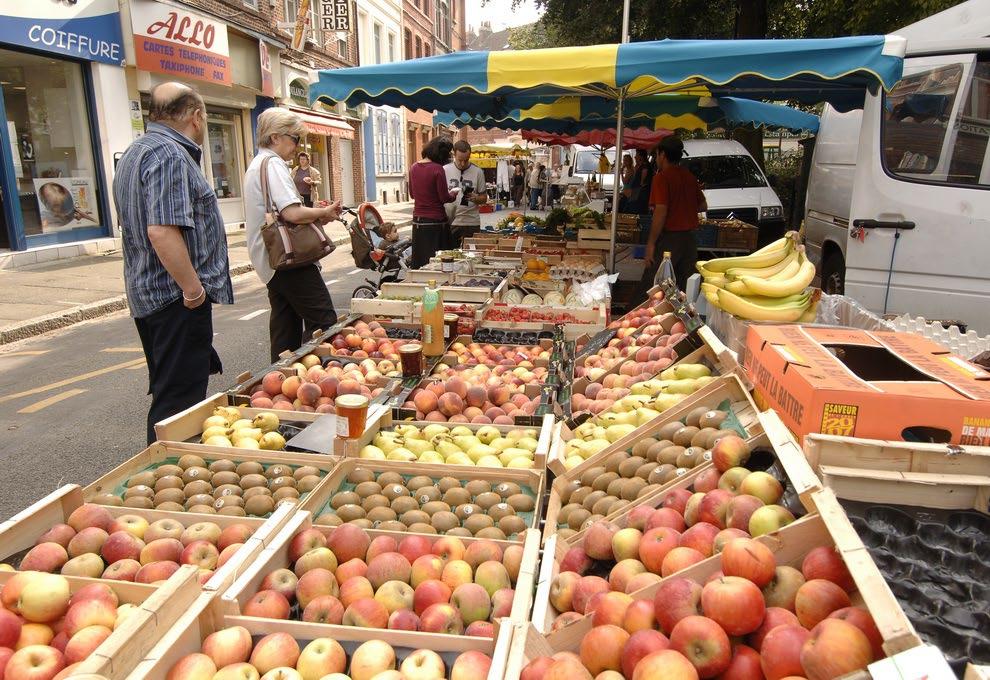
• A school, kindergartens, a farmer's market, businesses, a shopping center, a food coop, recreation areas, and approximately 600 jobs will all be within walking and cycling distance.
• A tram-line and a suburban train line are planned until 2006.
• Car Sharing
• Joint building processes such as Baugruppen and cooperative building
• Building takes place on a larger scale without the engagement of private investors (cost savings up to 25% )
• Ecological building corresponding to the current needs of builders and Baugruppen


• A building that has been made in a way that does not harm the environment
• Using ecological materials such as wood, clay, and other locally produced energyextensive building material
• The low -energy standard and the "parking -free" area
• Greening of roofs, the conservation and planting of trees, rainwater infiltration

Infiltration of rainwater into the ground
New ecological sewage system within one pilot project (Model house of the Baugruppe " Wohnen und Arbeiten ") : Through vacuum pipes feces are transported into a biogas plant . There they ferment anaerobically together with organic household waste, thus generating biogas, which is used for cooking . Remaining waste water (grey-water) is cleaned in biofilm plants and returned to the water cycle.


P - agency set new standards of communication, interaction and integration
S I - the co -operative food store, the farmer's market initiative, the mother's center, and many others
P S - access-galleries, community gardens and rooms, public green spaces, the resident's streets and the neighborhood center
By Baugruppen (groups of building owners) and the Genova co-operative

Öko-Institut (institute for applied ecology) is examining the projects as part of the research project "Sustainable districts in urban conversion areas"
•Energy savings per year: 28

GJ
•Reduction of CO2equivalents per year: 2100 t.
The Wagenburg (Living in Caravan) has to vacate the entrance area to the Freiburg district of Vauban

•Reduction of Sulphurdioxide (SO2 -) equivalents per year: 4 t.
•Saving of mineral resources per year: 1600 t.
• https://www.solaripedia.com/13/95/853/vauban_solar_village.html
• Article by Nick Rosen about Vauban
• Article by Andrew Purvis in The Observer
• Vauban Community Website (Germany)
• https://makinglewes.org/2014/01/26/vauban -freiburg -germany/
• https://www.vauban.de/
• https://www.badische-zeitung.de/wagenburg -im -vauban -kommandorhino-muss-weichen 46705628.html
• https://greencity.freiburg.de/pb/1450158.html
• https://www.construction21.org/city/h/vauban -ecodistrict -freiburg.html

