For our graduating project, our site was/is on Wangal and Gadigal Country - part of the Eora nation. I would like to recognise the continued Wangal and Gadigal connection to the land and waters of the site of my studies, and acknowledge that they never ceded sovereignty. I would also like to acknowledge Wangal and Gadigal Elders and Ancestors, and any First Nations people who might read this submission.
SOMETHING RICH AND STRANGE
Full fathom five thy father lies
Of his bones are coral made
Those are pearls that were his eyes
Nothing of him that doth fade
But doth su er a sea-change Into something rich and strange
Introduction
Throughout my studies at UNSW I focused on the way the landscape informs our culture and identity. I have come to understand the human relationship with the landscape as a dialectical one: we alter the landscape, and simultaneously the landscape alters us. There are multiple modes of reflection and change, and this continues with the movement of time. In urban settings around the world, natural landscapes have been altered beyond recognition. Tidal flats are walled and in-filled; cli s are flattened for freeways and large developments. This de-naturalisation directly e ects the role and philosophy of the landscape architect operating in such places. While studying, a question that kept arising was how should we deal with the concept of the ‘natural’ (a key concern for landscape architects) in the context of a ‘natural’ that has been obliterated? This question brings up issues regarding our cultural relationship to nature, our responsibility to remediate the natural and the complex - and even ethical problems regarding the memorialisation of natural landmarks, particularly within our Australia’s national foundation in colonial invasion.
For our final project at UNSW, we were tasked with studying the Bays Precinct in Sydney. And within the Bays Precinct, I found Glebe Island to be a fitting landscape to explore these ideas.
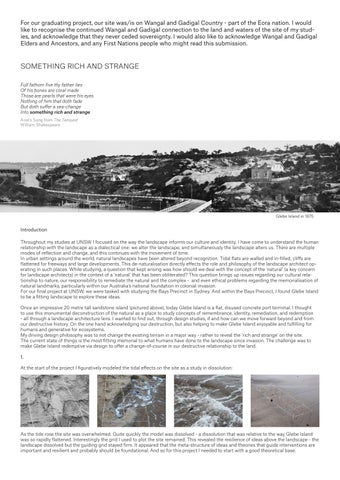
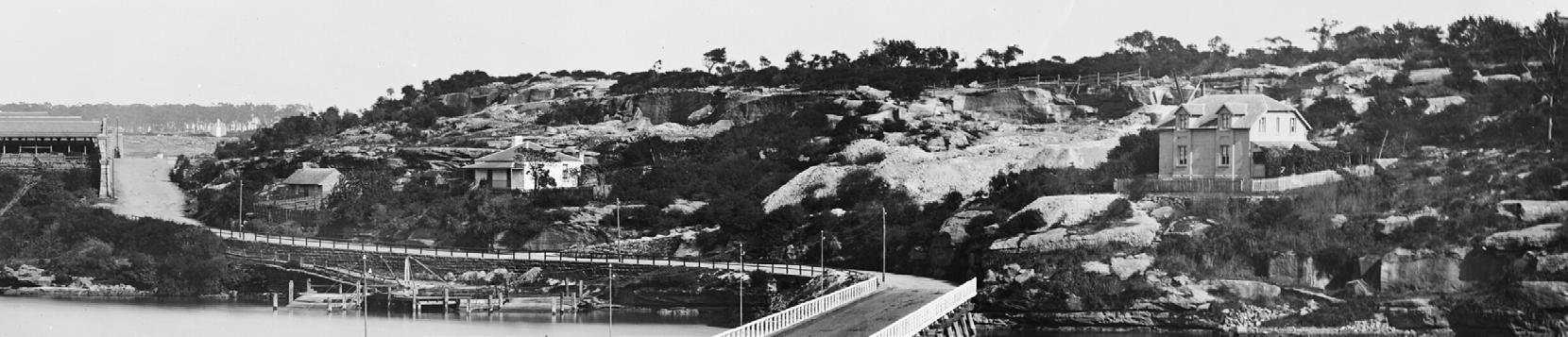
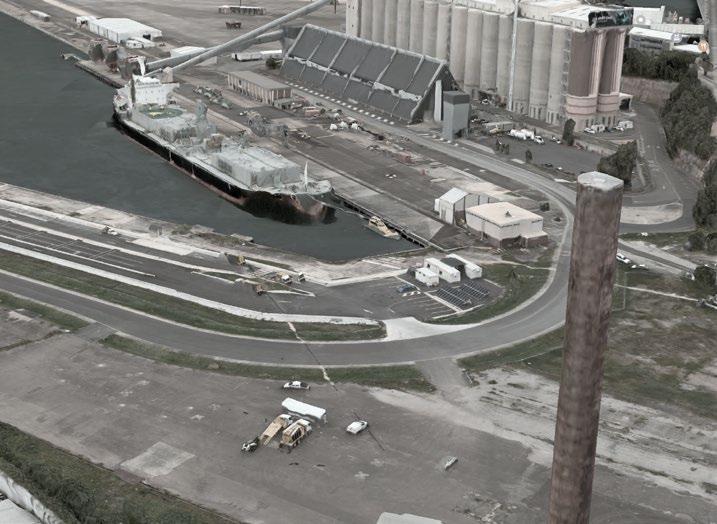
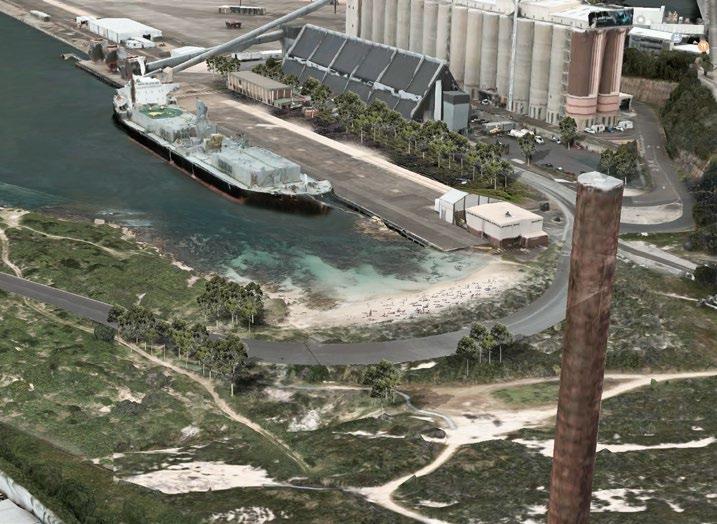
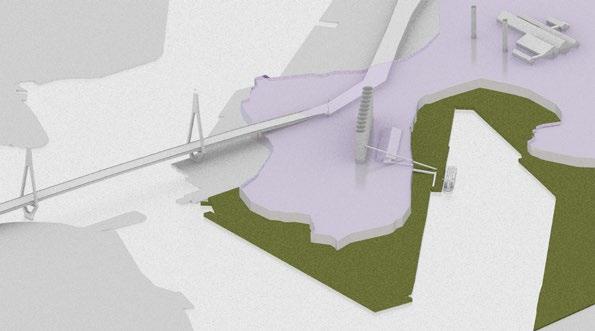
Once an impressive 20 metre tall sandstone island (pictured above), today Glebe Island is a flat, disused concrete port terminal. I thought to use this monumental deconstruction of the natural as a place to study concepts of remembrance, identity, remediation, and redemption - all through a landscape architecture lens. I wanted to find out, through design studies, if and how can we move forward beyond and from our destructive history. On the one hand acknowledging our destruction, but also helping to make Glebe Island enjoyable and fulfilling for humans and generative for ecosystems.
My driving design philosophy was to not change the existing terrain in a major way - rather to reveal the ‘rich and strange’ on the site.
1.
5 (Disintegration and Renewal)
The current state of things is the most fitting memorial to what humans have done to the landscape since invasion. The challenge was to make Glebe Island redemptive via design to o er a change-of-course in our destructive relationship to the land.
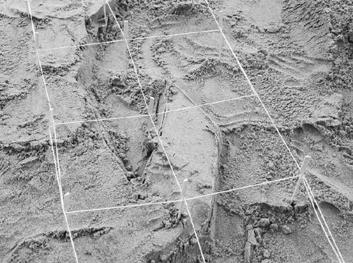
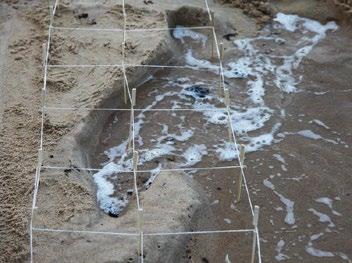
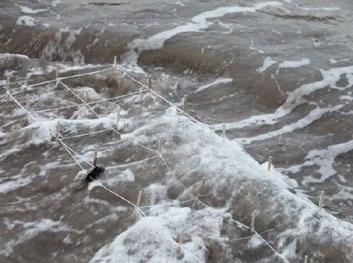
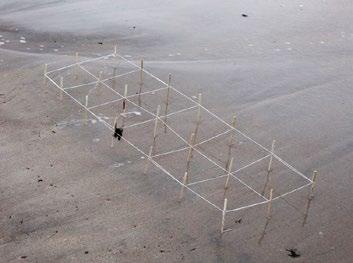
At the start of the project I figuratively modeled the tidal e ects on the site as a study in dissolution:
As the tide rose the site was overwhelmed. Quite quickly the model was dissolved - a dissolution that was relative to the way Glebe Island was so rapidly flattened. Interestingly the grid I used to plot the site remained. This revealed the resilience of ideas above the landscape - the landscape dissolved but the guiding grid stayed firm. It appeared that the meta-structure of ideas and theories that guide interventions are important and resilient and probably should be foundational. And so for this project I needed to start with a good theoretical base.
Glebe Island in 1875
Exploring ways to represent the celestial movements and their
was looking to interrogate the natural forces still existing on site. These forces may take centre stage once again.
Ariel’s Song from The Tempest William Shakespeare
2.
So - enter Svetlana Boym. She was a touchstone for me throughout the graduating year. Her writings respond directly to the problems faced in designing in obliterated landscapes. From the context of the ruins of the USSR, Boym examined the way our past is presented to us. She argued for a sensitive, reflective form of nostalgia to deal with challenging histories. Don’t clear away ruins - leave them there to be examined, to allow us to stay connected with our di icult past and openly talk about what we have done so we can learn and move forward. These ruined spaces and objects reveal significant things about us and our past.
Svetlana Boym
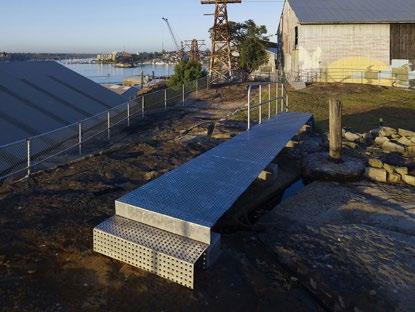
JMD’s cli top walk at Cockatoo island, pictured above right, is a landscape approach emblematic of Boym’s ideas. JMD simply installed a walkway and let the existing historic landscape and its ruins do the talking. I began formulating a similar design philosophy at Glebe Island.
3.
At a wider city-scale, and bringing focus experimentations with potential ecological interventions and responding to issues of social equity that are particular to Glebe Island: If we look at the current state of Sydney Harbour, swimmable places of beauty are restricted to the wealthy eastern parts of our city. Industry was focused to areas west of the bridge, so these western areas and beyond to Parramatta have the most toxic edges and harbour-floor sediments. Also, regarding natural ecologies, the southern edges of the harbour don’t have the same spread of wild, natural edges that exist in the enclaves of the North shore. I asked, could we create such a thing at Glebe Island? A wild sense of nature and even a chance to swim? I believe there is a strong social equity argument here. The new Metro station at Glebe Island will enable people, for example, from Liverpool and Blacktown, to cheaply access the harbour by train. Apart from circular quay perhaps, this is not possible anywhere else in Sydney.
I thought this is an opportunity to bring those beautiful wild and remote places that are found on the eastern beaches and coves to the Bays Precinct.
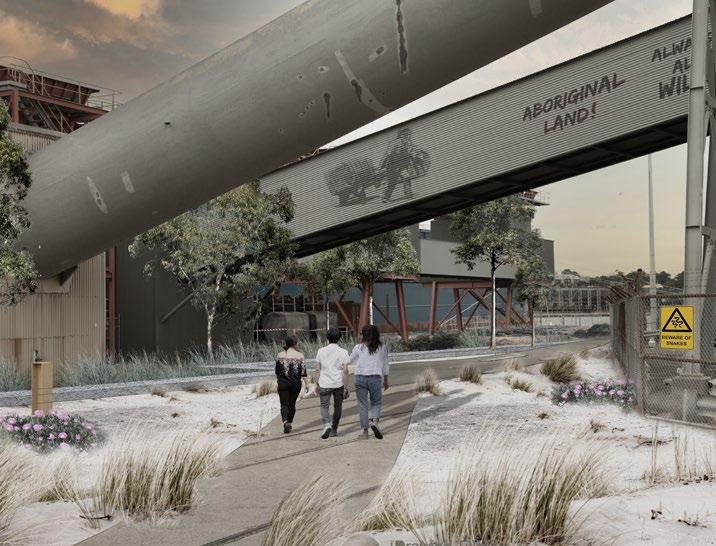
And just for a sketch I visualised this idea:
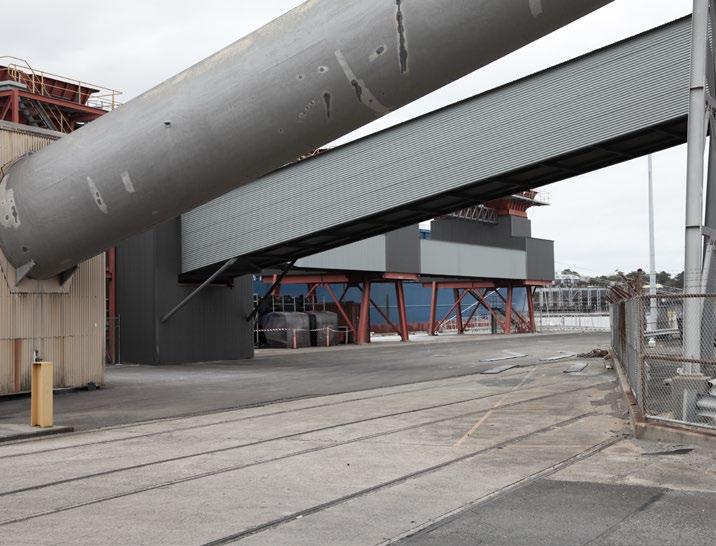
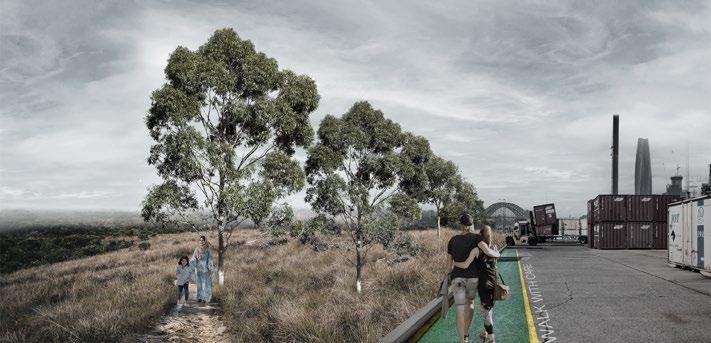
The industrial landscape is maintained. Through the simple use of spoil from the westconnex tunnelling, dunes were created on top of the concrete apron in the foreground. This feasibility montage got me excited in seeing a combination of the sites industrial history and the creation of unique novel and perhaps restored ecologies. This definitely looked like Shakespeare’s concept of the Rich and Strange, a landscape changed but still the same.
And so, from my design experimentation and research, and following the ideas of the architect Caroline Pidcock who presented to our class, these were my 3 design principles:
Culturally Rich Interpretation
History conveyed through form and materiality
Historic Justice
‘Light Touch’
Reflective Nostalgia Landform
Ecologically Restorative
Science
Remediation
Novel Ecologies
Functioning, perpetual living systems
Socially Just
Planning/Social Geography
Accessibility to inspiring natural spaces as right
This is what we have
This is possible
4.
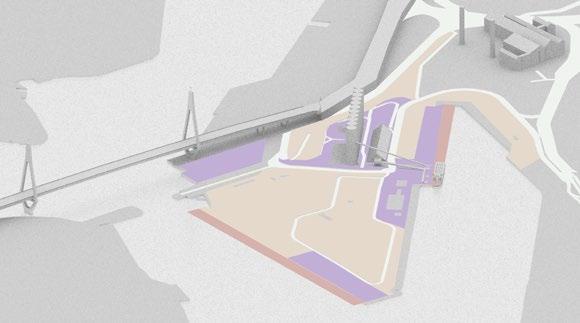
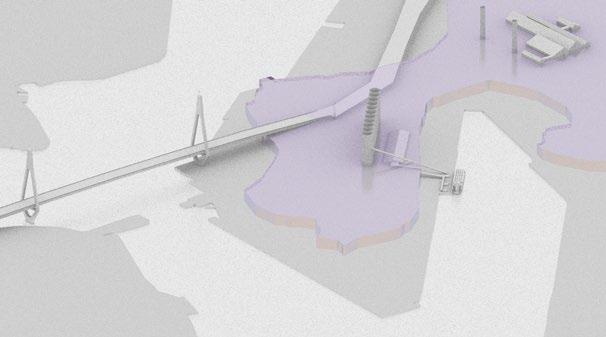
Today at Glebe Island, the most important aspect of the site’s identity is the extreme under utilisation of land. Of the 26 hectares at Glebe Island today, only a small amount is in use. The edge is active, but only portions of it are being used as an active port. A lot of the areas are fenced o , and a lot of the port-side activity is in liminal space that exists between use and disrepair. There are also areas that are fenced o , and hold a number of interesting novel ecologies.
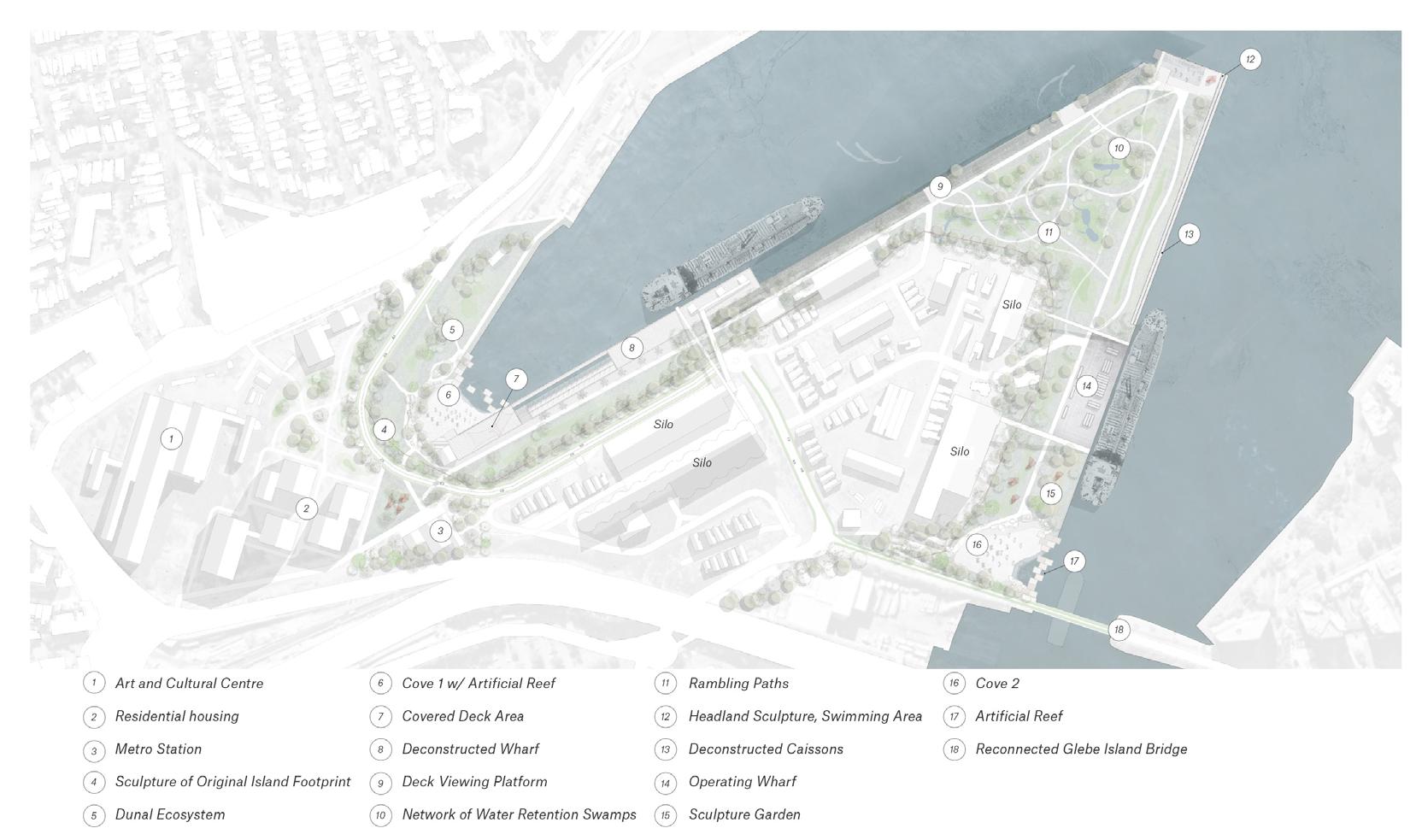
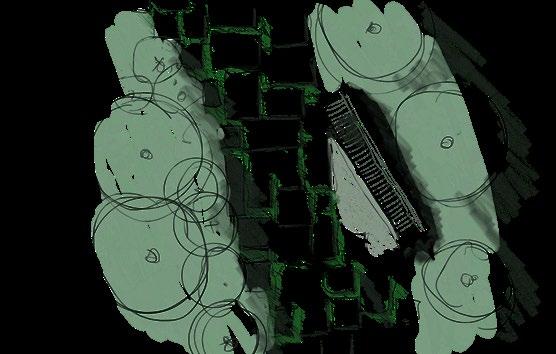
Pictured below, and referencing the island’s indicative original landform. From the previous slides, you can see that most of the underused and liminal spaces exist beyond the border of the original island. This had me thinking, instead of trying to reclaim the island, could we reclaim the negative of the island, the artificial apron, and create a park on the unnatural ground.?
5.
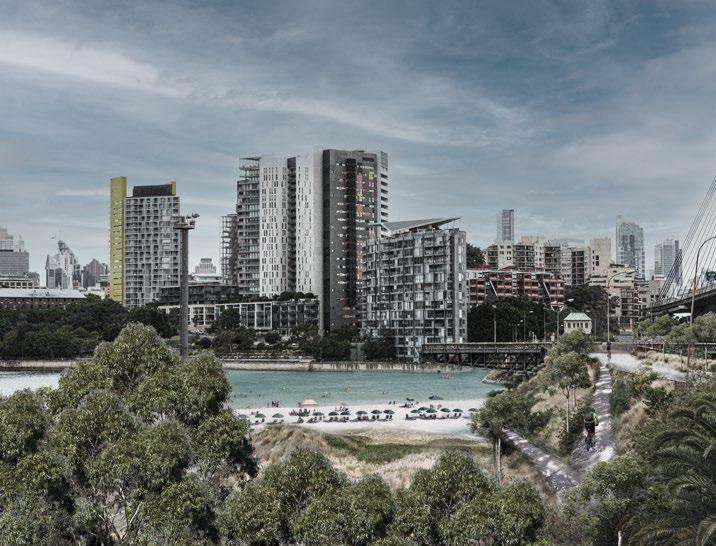
I proposed a new suburban area that maintains its industrial form, incorporates extensive a ordable housing and Glebe Island’s unnatural apron is the site of a new park. Two coves and a headland beach exist at each end of the island. A central active transport highway transects the site and connects to a refurbished Glebe Island Bridge here at number 18. Importantly, shipping is maintained through the use of conveyors. The proposed suburb and park is an uncanny mix of a ordable housing, creative industries, cycleways, deconstructed wharves and rambling paths through reinstituted urban ecologies. Significantly, the original footprint of the island is defined by this string of trees, with a linear sculpture faintly seen here in red, which we will be explained at the end of the submission.
Treatments:
Glebe Island Now
Original Island Projection
Negative of Island as Park
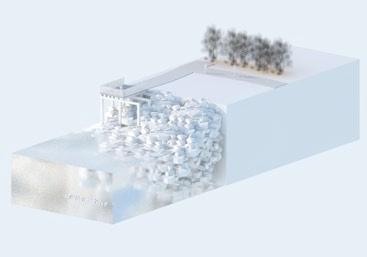
With some planting, some dismantling of the concrete apron, and some spoil from the tunnelling, could this become a strange landscape of functioning industrial use and also deeply complex dune ecologies, with the added risk of snakes?
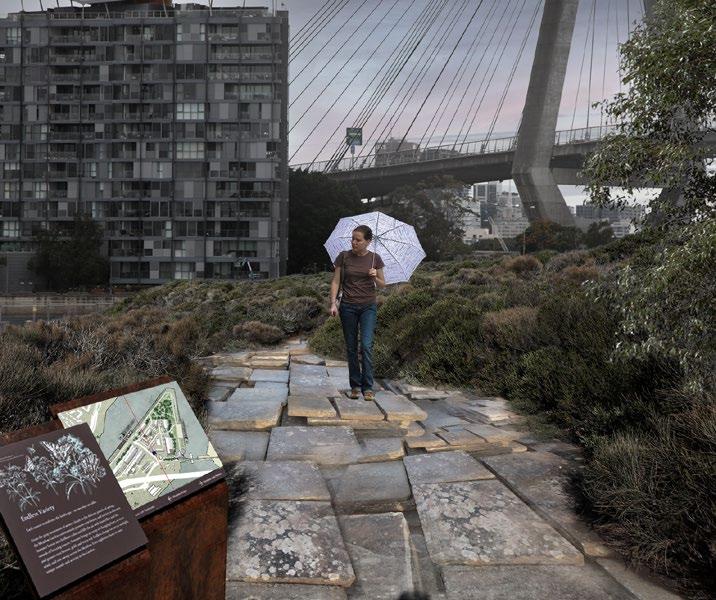
The intention was to recreate a headland coastal heath ecology - one that transitions from dunal edges, to heath, to hind dune and a forested interior. This is all simply placed on top of the concrete, keeping whatever contaminants locked below the cap. And as noted in the remedial concept plan from Urban Growth NSW, physical covering with appropriate control measures is deemed appropriate for our site, and that is proposed here. At the heart of the park at the headland is a necklace of swamps and streams that retain and treat storm water run o from the adjacent new suburb. The reestablishment of these ecologies will attract a range of fauna, adding to the site’s sense of attraction as a place of wild wonder.
Along the Northern Edge of the headland, and pictured at the bottom of the previous page, viewing platforms will be created with materials from the dismantled wharf previously described. These take their design language from Bruce Mackenzie’s designs at Illoura Reserve. Nothing speaks to the spirit of place at Sydney Harbour’s edge like hardwood marine timbers. Also, continuing the theme of ruins and recycling, where the paths depart from the levels of the slab, recycled concrete will form the paths. This will o er a weird mix of the natural and the unnatural. Guides and maps will orient the user around the novel ecologies, o ering a national park-like experience in what was once what was considered an industrial waste land.
Now
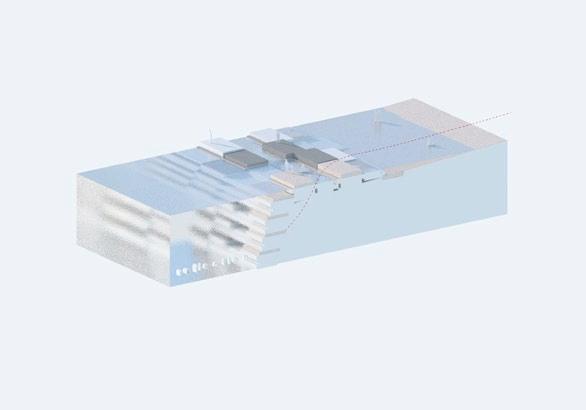
After selected removal of concrete apron and addition of fill from Westconnex tunneling
A national park-like experience
Industry meets nature reserve
A new beach for Pyrmont
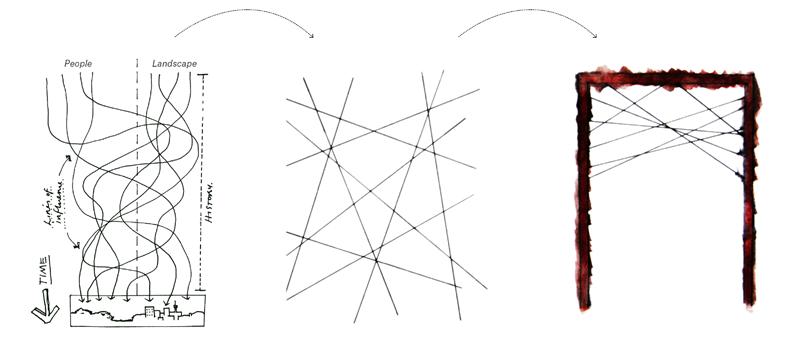
The parks suggested reuse of materials and the maintenance of the industrial form are keen reminders of what has happened to the landscape. But the question remains how we can memorialise this landform - to remind people of what was there. As explained in the introduction, I have been understanding our relationship to landscapes as a dialectical one. People change the landscape and vice versa, creating a complex web of influence that brings us to the landscape we walk on today. This is particularly true in highly modified landscapes like those at Glebe Island.
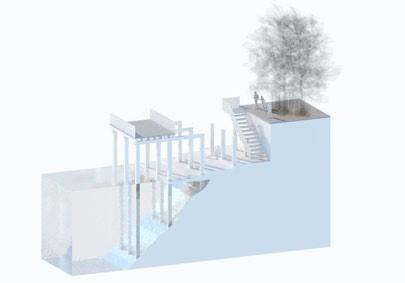
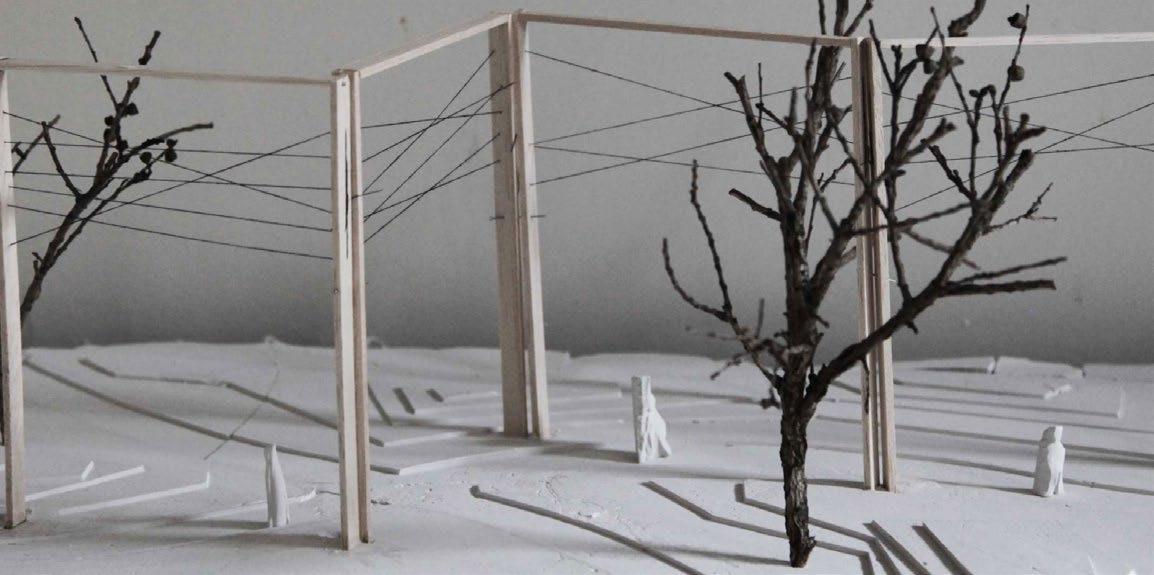
So I thought to simply the notion of the human/landscape dialectic graphically, and create a sculpture that represents this idea.
A breakdown of the dialectic into sculptural form
The trusses would be weathered steel, to get that rusted finish. There would be steel wiring to represent the human/landscape dialectic. The sculpture would follow the outline of the original Island, but be recessive as it will sit amongst the trees. For scale and the interrogation of this idea I created a scale model of the sculpture. Paths would weave in and out of the frames, amongst a forest of Angophoras, Banksias and Eucalypts.
Conclusion
But this doesn’t completely solve the memorialisation of the form of the island.
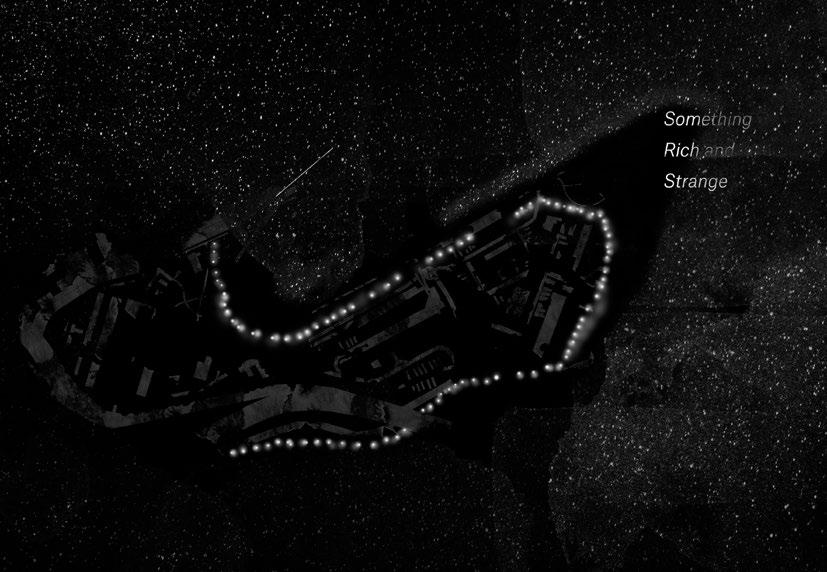
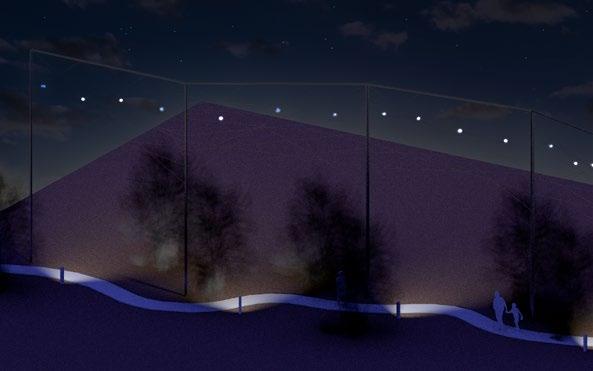
I thought - could a run of lights be the solution?
On the sculpture, install a line of lights at di erent heights outlining the old topography, so at night the Island would haunt the city, a reminder of what we have done to the landscape since invasion. Day time would feature the structure, and at night time the sculpture would become alight with the original topography.
Our site - called a wasteland by many - is in fact a complex ocean of treasures that we can bring to the surface, bringing to light our troubled relationship with the land since invasion, and o er a haunting beacon to help us find a way forward.
Glebe Island presented challenges in landscape design in that it’s history had apparently been washed away through over 200 years of industrial destruction. As Svetlana Boym recommends however, the task is to examine the left over ruins, and keep them there as reminders of what we have done, to hopefully avoid making the same mistake again. I intended to employ Boym’s strategy here, but also incorporate moves to re-establish ecologies to both o er a sense of historical record but also a chance at redemption through the reinstatement of natural systems.