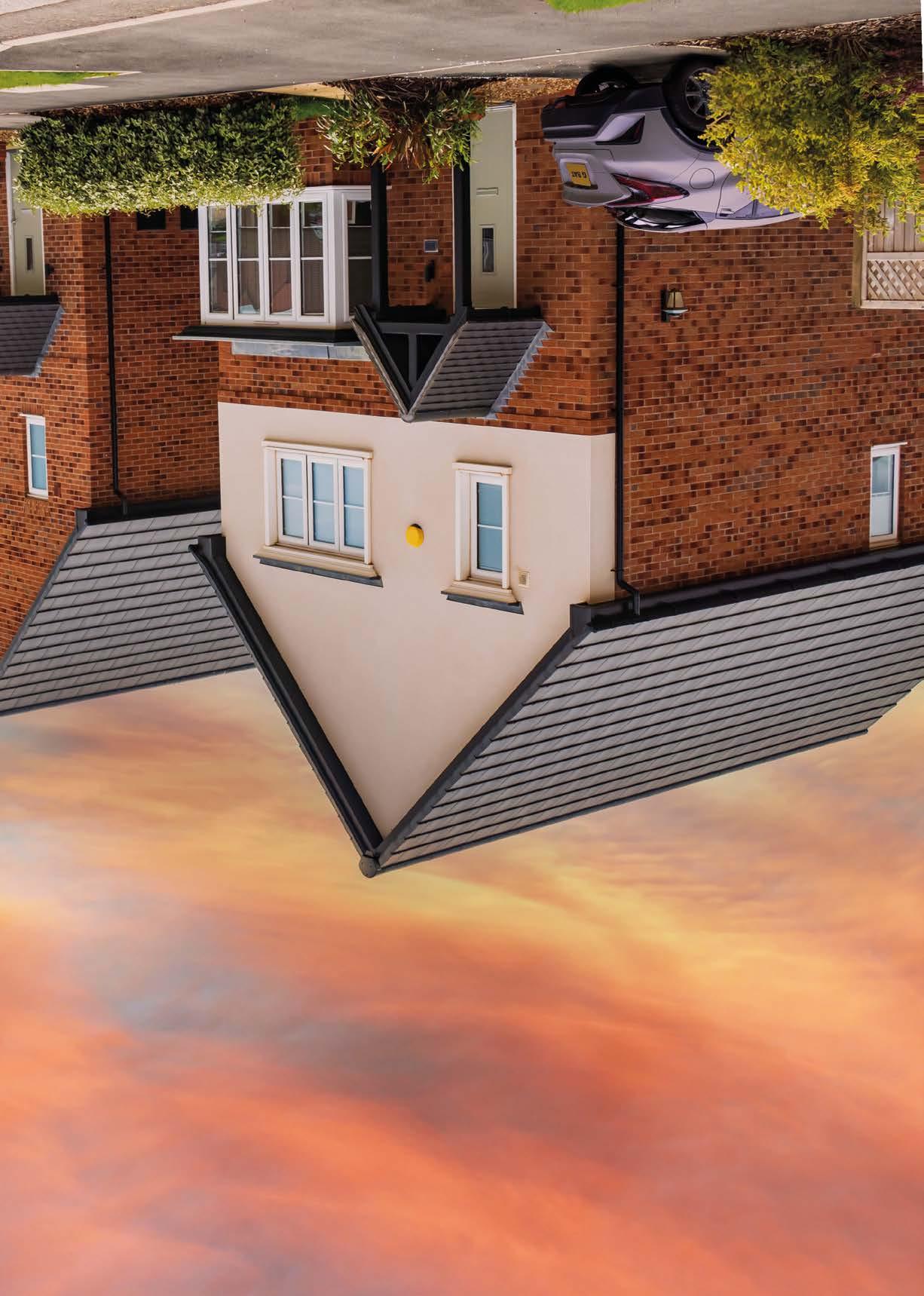




A proven, scalable solution designed for social housing providers - reducing risk, improving compliance, and delivering ROI.
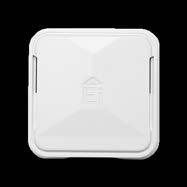
The HomeLINK Connected Home Solution can help to:


Identify Damp & Mould at the source
Strengthen Compliance & Asset Management
Support Net Zero targets
Improve Fire Safety
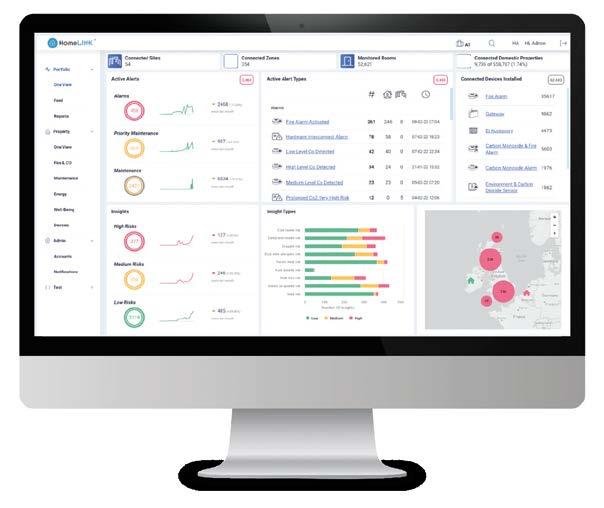
into insights.

Editor’s Choice 9-26
Bathrooms & Kitchens 27
Coatings, Sealants & Paints 30
Doors, Windows & Fittings 32-40
Drainage Systems 41
Education & Healthcare 42-50
Fire Safety & Security 52-59
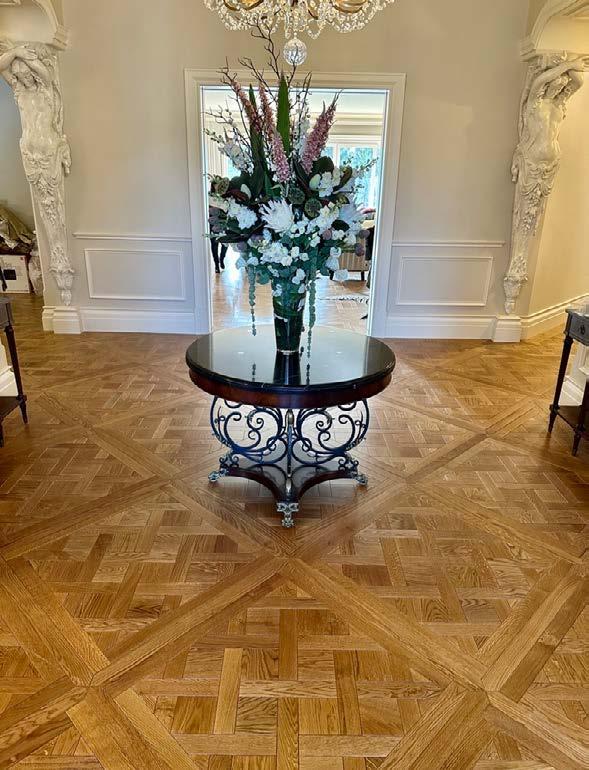
Floors & Flooring 63-67
Heating, Ventilation & Insulation 71-77
Interiors & Interior Design 78-83
Landscaping & External Works 84
Roofing, Cladding & Facades 90-99
BALLISTIC ARCHITECTURE MACHINE - 6-8
Reimagining waste infrastructure as urban parkland
NORRSKEN JOINS NBS SOURCE - 12-13
Precision performance, now fully integrated
COZENTON PARK SPORTS CENTRE - 18-19
B&K Hybrid Solutions deliver sustainable timber and steel hybrid
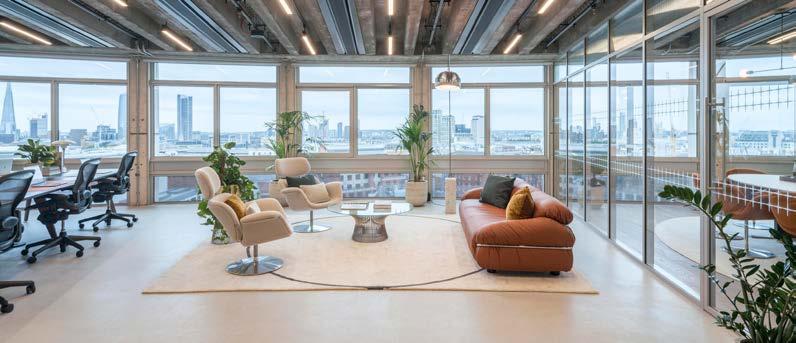
ACCIONA’S INTERNATIONAL HEADQUARTERS IN MADRID - 28-29
A new global benchmark in people-focused workplace design
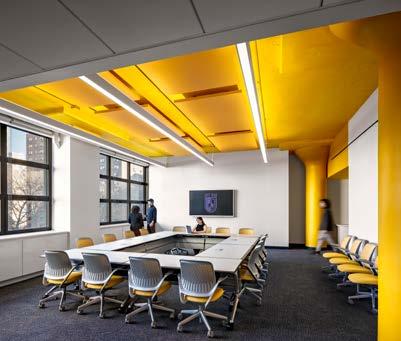
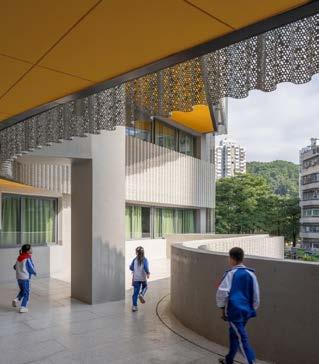
STUDIO LINK-ARC - 48-50
Learning spaces shaped by the city
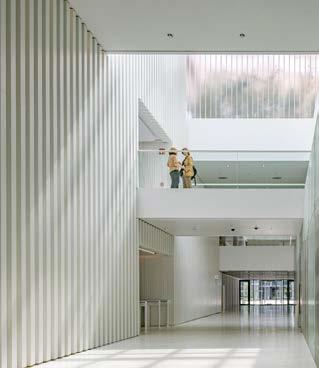
SPACE HOUSE - 60-62
The reimagining of a brutalist icon
THE FLOORING SHOW SOUTH - 66-67
The UK flooring industry is set to welcome an exciting new addition to its trade calendar with the launch of The Flooring Show South, taking place at Sandown Park, Surrey.
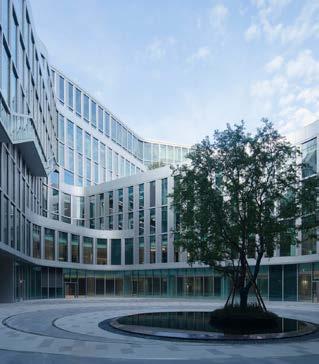
WEICO ARCHITECTS - 68-70
The new headquarters building for XPENG Motors
Working in Collaboration with
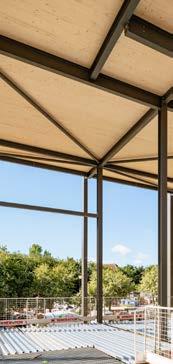
CITY TECH PEARL BUILDING - 78-81
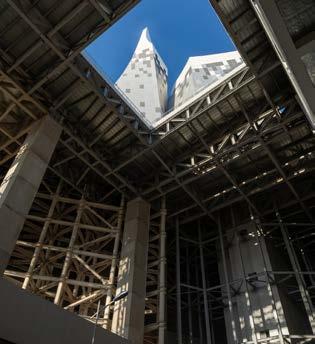
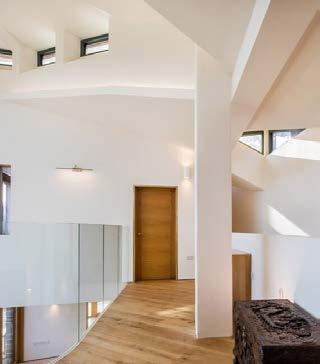
Industrial Roots Renewed
GEBERIT CAMPUS - 86-89
Learning, architecture, and brand conceived as one
COTTO D’ESTE’S FAÇADES -94-95
Where architecture, materials, and excellence converge
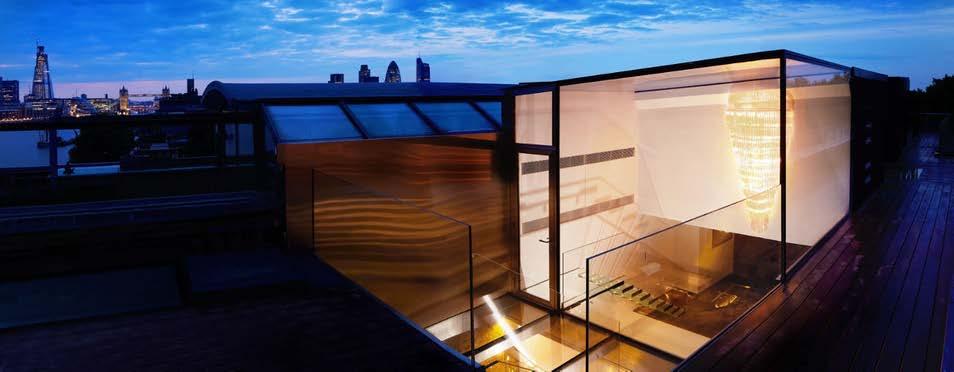
Firman Glass Projects brings an innovative approach to the structural design industry, specialising in project design, manufacturing and installation.
From bespoke one-off items through to larger commercial installations, we work hand-in-hand with clients, architects, engineers and builders to develop aesthetically pleasing solutions to their initial design
From standard mirrors and commercial glazing through to walk-on-glass floors, glass staircases, structural glass boxes and extensions, fire and non-fire rated screens, glass doors, architectural frames and glazing. Firman Glass Projects always deliver ontime and to an extremely high standard, always aiming to exceed your expectations
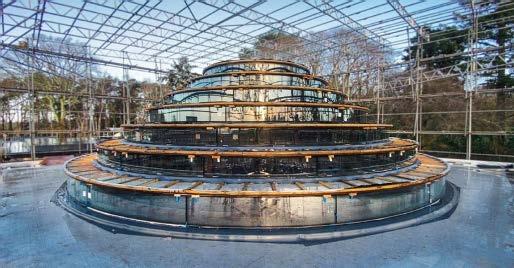
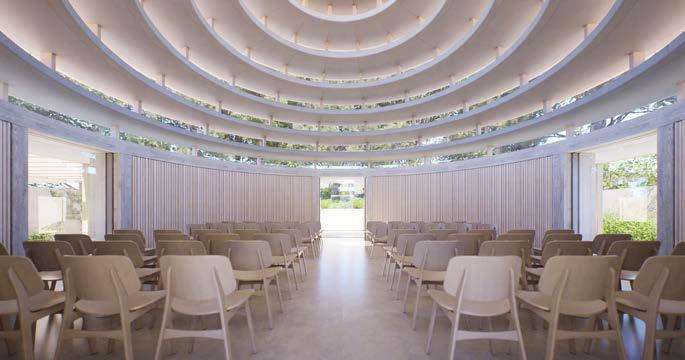
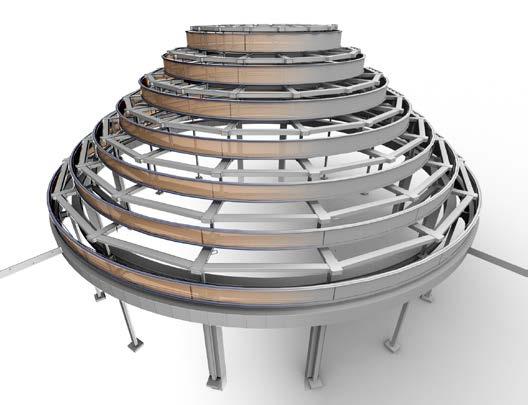
This is one of our latest projects, a columbarium in Poole Dorset, where we designed, manufactured, and installed a tiered, thermally broken curved glazing system comprising multi-layered curved double-glazed units and a bespoke curved framing system
Working rigorously with the architect and engineer, we ensured full integration with surrounding cladding and structural requirements.
The glazing specifications including varied glass colours and performance criteria were developed to meet both aesthetic and technical demands
The completed system fulfils the client ’s expectations and realises the design concept.
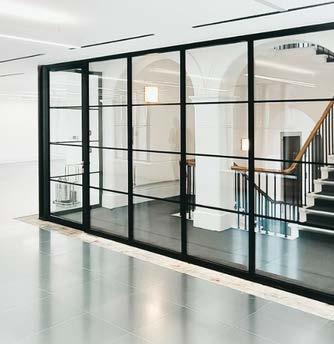
See below a recent fire rated project using Schueco Jansen frames and Schott glass comprised of several screens to meet the design intent. Each system is designed specifically to suit the requirements of the particular application
Sections can be provided in mild steel, finished to any standard RAL colour, as well as our new range of stainless steel sections available in either a satin or bright polished finish Firman Glass Projects offer a full selection of fire rated glass on a supply and install basis providing fire protection From a basic 30 minute integrity only rating through to the highest levels of integrity and insulation
To find out more please visit our website below
Editor in Chief
Antony Holter - 0203 911 4067 antony@archetech-media.co.uk
Editor Isabelle Hart - 0203 911 4067 isabelle@archetechmag.co.uk
Sales Director
Steve Hawkins - 0203 907 9165 steve@archetech-media.co.uk
Digital Manager
Jamie Bullock - 01227 936971 jamie@archetech-media.co.uk
Editorial Assistant
Meg Parker - 0203 907 9161 meg@archetech-media.co.uk
Business Manager
Josh Holmes - 0203 911 4067 josh@archetech-media.co.uk
Publishing Director
Martin Holmes - 0203 911 4067 martin@archetechmag.co.uk
Accounts
Lauren Davis - 0203 911 4067 lauren@archetechmag.co.uk
Studio Designer
Richard Bland richard@archetech-media.co.uk
The Archetech magazine is an insightful information source for Architects, Architectural Technologists and Interior Designers. We feature lead stories on current projects, industry news and case studies so that our readers have the opportunity to keep up to date in the ever changing world of architecture and design.
Archetech offers architectural and design services to all those who are initiating, planning and implementing projects. Whether you’re an interior designer, architect, technologist, developer or builder who is searching for inspiration for the next project, Archetech hosts the latest products, case studies and services to meet those needs.
With sharp editorial content, a cutting-edge design approach and informative written style, our advertisers and readers alike can take confidence in our experience and ability in matching your product to the needs of the marketplace.
Archetech Media Ltd Tel: 020 3911 4067 www.archetech.org.uk info@archetechmag.co.uk
Every effort is made to ensure the accuracy and reliability of material published in Archetech Magazine, however, the publishers accept no responsibility for the claims or opinions made by contributors, manufacturers or advertisers. No part of the publication may be reproduced or transmitted in any form or by any means, mechanical, electronic (including printing), recording or stored in any information retrieval system without the express prior written consent of the publisher.
SUBSCRIBE TO OUR ONLINE ISSUES FREE OF CHARGE
• Accessible anytime and anywhere on most electronic devices
• Receive the magazine by email as soon as each issue is released
• All issues are stored in an archive, so you can look back across every edition
• Now available on 3 major digital platforms: ISSUU, Joomag and Readly
• Free of charge for qualifying trade professionals
• Paid subscriptions are available, for non qualifying trade professionals


If you’ve recently finished a project, conversion or renovation, why not submit it to our Editor in Chief for a chance to be featured in our next issue! Email antony@archetech-media.co.uk with details of your latest project.
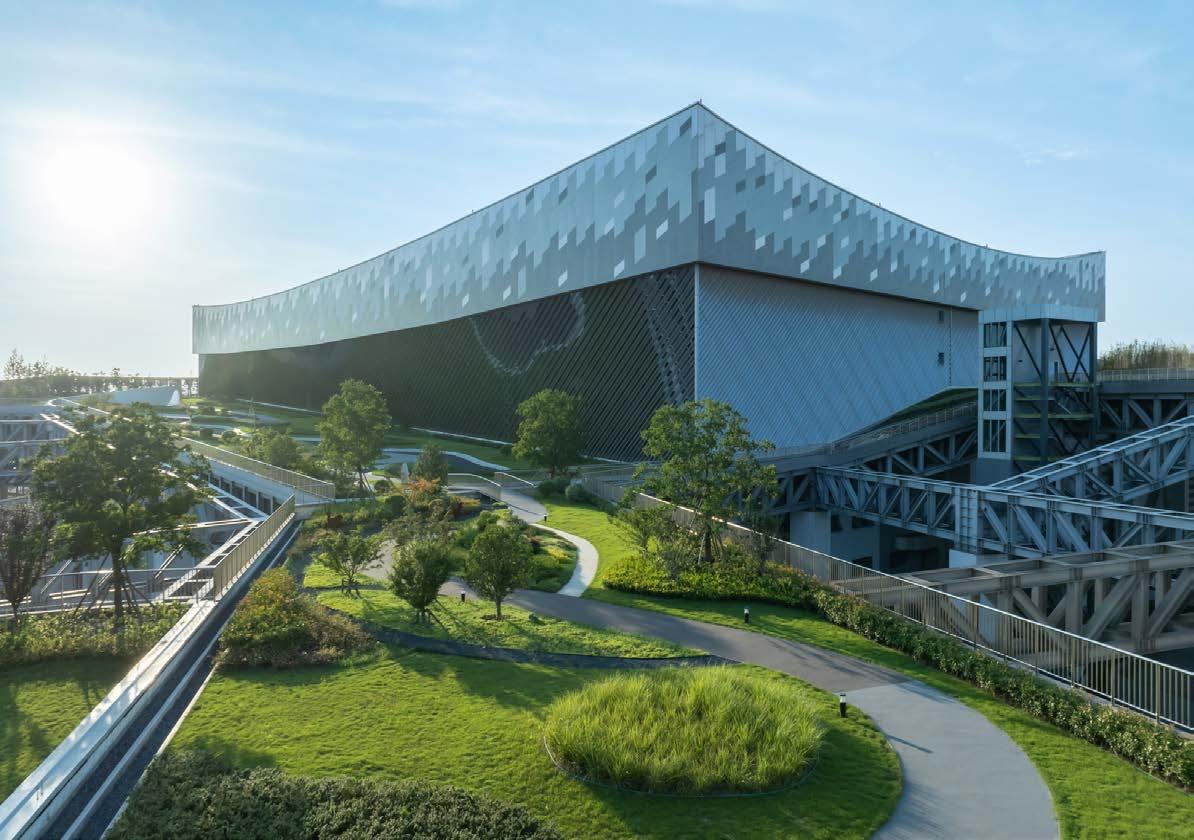
BAM’s design for the Baoshan Waste-to-Energy Center sets a transformative precedent for municipal solid waste (MSW) treatment facilities, reimagining them as multifunctional urban amenities. Through design experimentation, BAM encourages the perception of these facilities as integral components of the urban landscape rather than undesirable infrastructure.
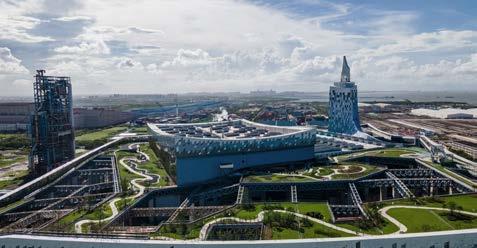
Located on the 35-hectare decommissioned Bao Steel campus, the Baoshan Waste-to-Energy Center is a new-generation integrated waste-processing facility—one of the most ambitious municipal solid waste management projects globally and a pioneering example in China. BAM led the design of every aspect, from the master plan to the facility’s façade

Operating at optimum efficiency, the fourline incinerator handles 3,000 metric tons of waste daily, while the anaerobic digestion unit processes over 8,000 metric tons of wet waste per day.
and landscaping, collaborating closely with local engineering institutes to realize this unique vision.
The Baoshan Waste-to-Energy Center represents an innovative leap in waste management by integrating both waste-to-energy (WTE) incineration and anaerobic digestion facilities. Operating at optimum efficiency, the four-line incinerator handles 3,000 metric tons of waste daily, while the anaerobic digestion unit processes over 8,000 metric tons of wet waste per day.
This combination allows for efficient waste processing, converting organic materials into biogas for diverse applications and incinerating non-organic waste to generate electricity. It maximizes resource utilization, minimizes waste, and recovers energy. In addition to its waste management capabilities, the project features a 10-hectare roof park and a variety of exhibition and entertainment programs known as the ‘mini-city.’
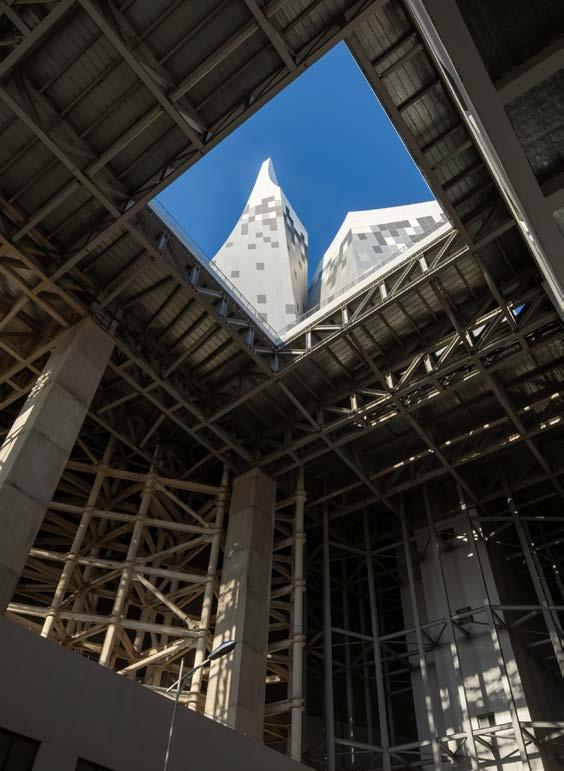



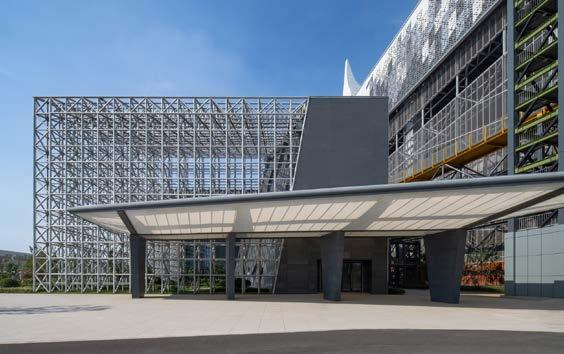
The Baoshan Waste-to-Energy Center embodies the transition toward a circular future, where waste is minimized and reused. BAM’s ‘camouflage’ design strategy consciously departs from the prevalent ‘decorated shed’ paradigm, effectively disguising the monumental waste facility as a park and public amenity. This approach promotes public acceptance of waste management as an integral component of urban life and establishes a model for resilient, future-proof industrial facilities that can adapt to the evolving needs and priorities of our changing relationship with the environment.
• Architects: Ballistic Architecture Machine
• Area: 128000 m²
• Photographs: Derryck Menere
• Lead Architects: Daniel Gass, Jake Walker
www.bam.earth
At bott, we understand that an efficient workspace is about more than just storage - it’s about smart design, long-term durability, and a tailored fit for your business. With decades of experience and a deep understanding of workspace ergonomics, we’re trusted by organisations across the globe as a reliable project partner.
Our workplace storage solutions combine style with performance. Manufactured in the UK and backed by a global support network, bott products are built to withstand demanding environments across various industries.
Every business is different, which is why we start with a free consultation - in person or online - to understand your goals, challenges, and practical needs. From budget and space constraints to functionality and aesthetics, our experts work with you to develop a solution that fits.
Using 3D visuals we bring your layout to life, helping you visualise how to make the most of your workspace. With a wide range of accessories and customisable features, we design around your specific needs.
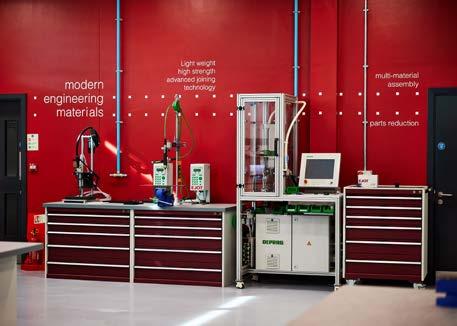
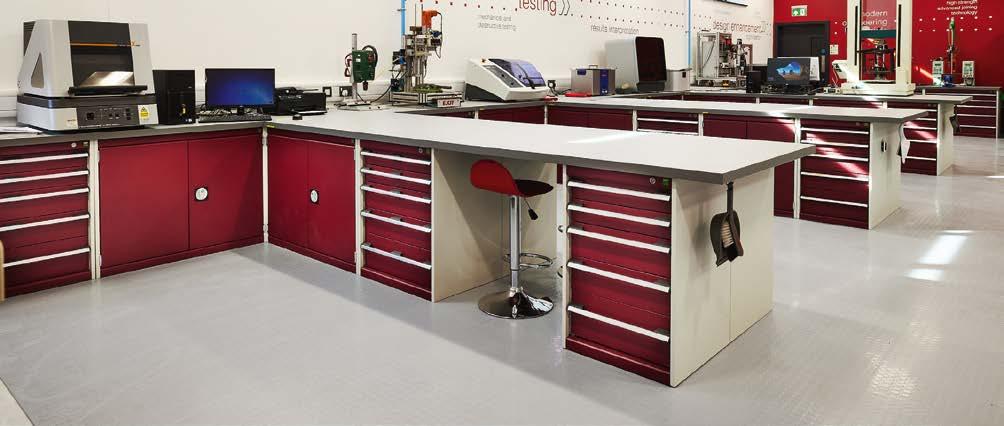
From design to delivery and installation, we manage the entire process in-house to ensure our high standards are met every step of the way. And for extra peace of mind, all UK-manufactured bott products come with a 10-year guarantee.
With bott, you’re not just investing in storage - you’re investing in a workspace designed to perform, built to last.
Contact our team at projects@bott.com or call 01288 357788

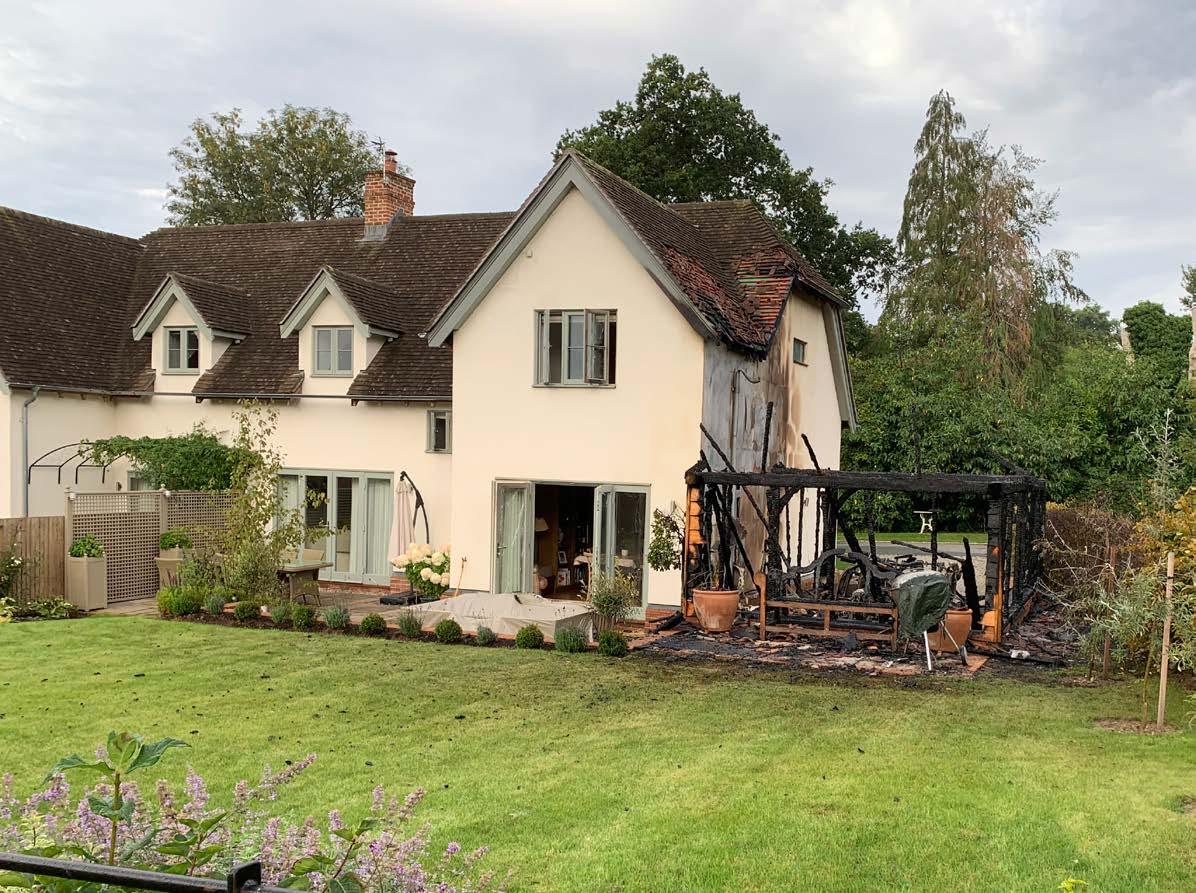
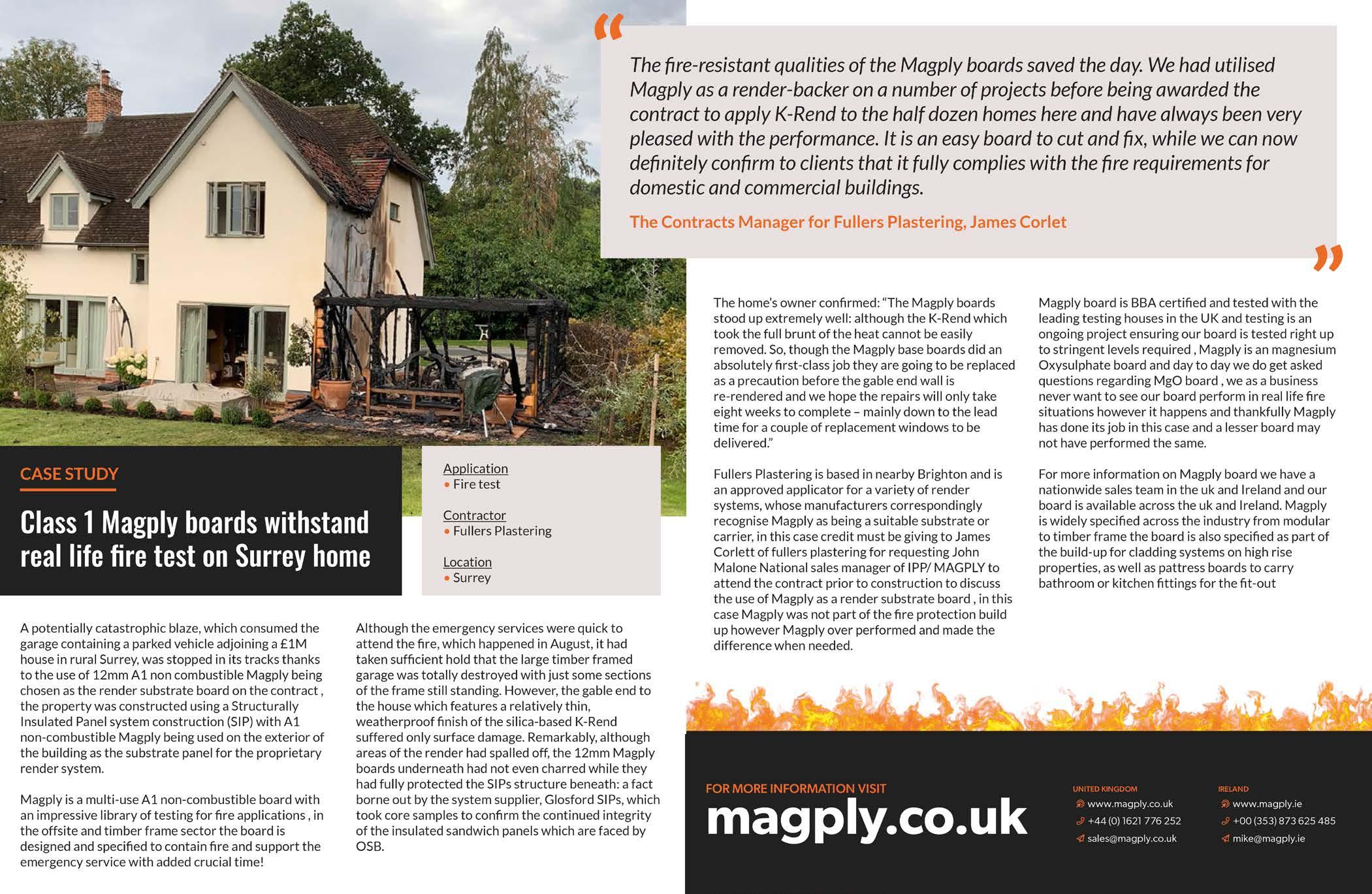
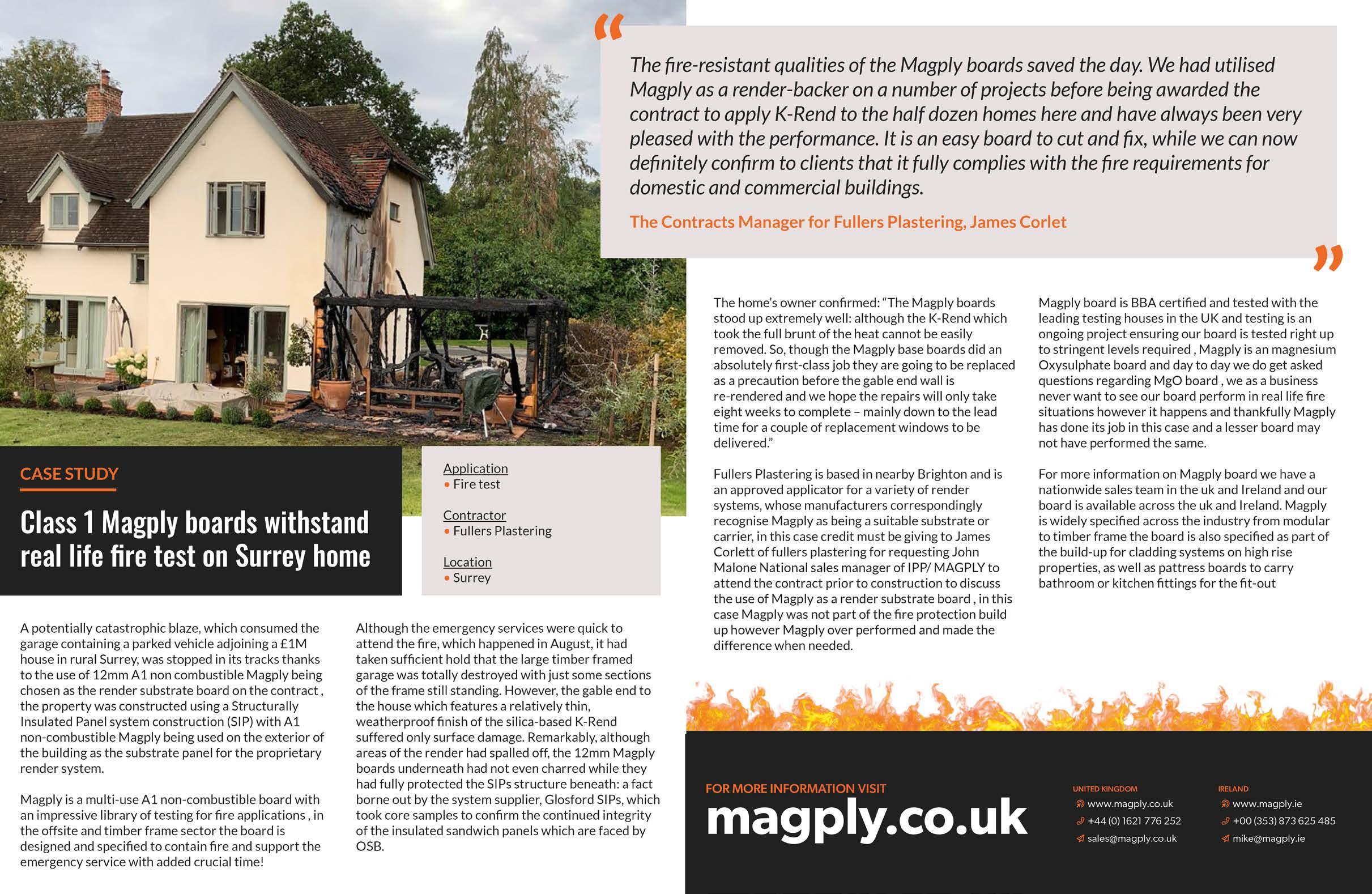
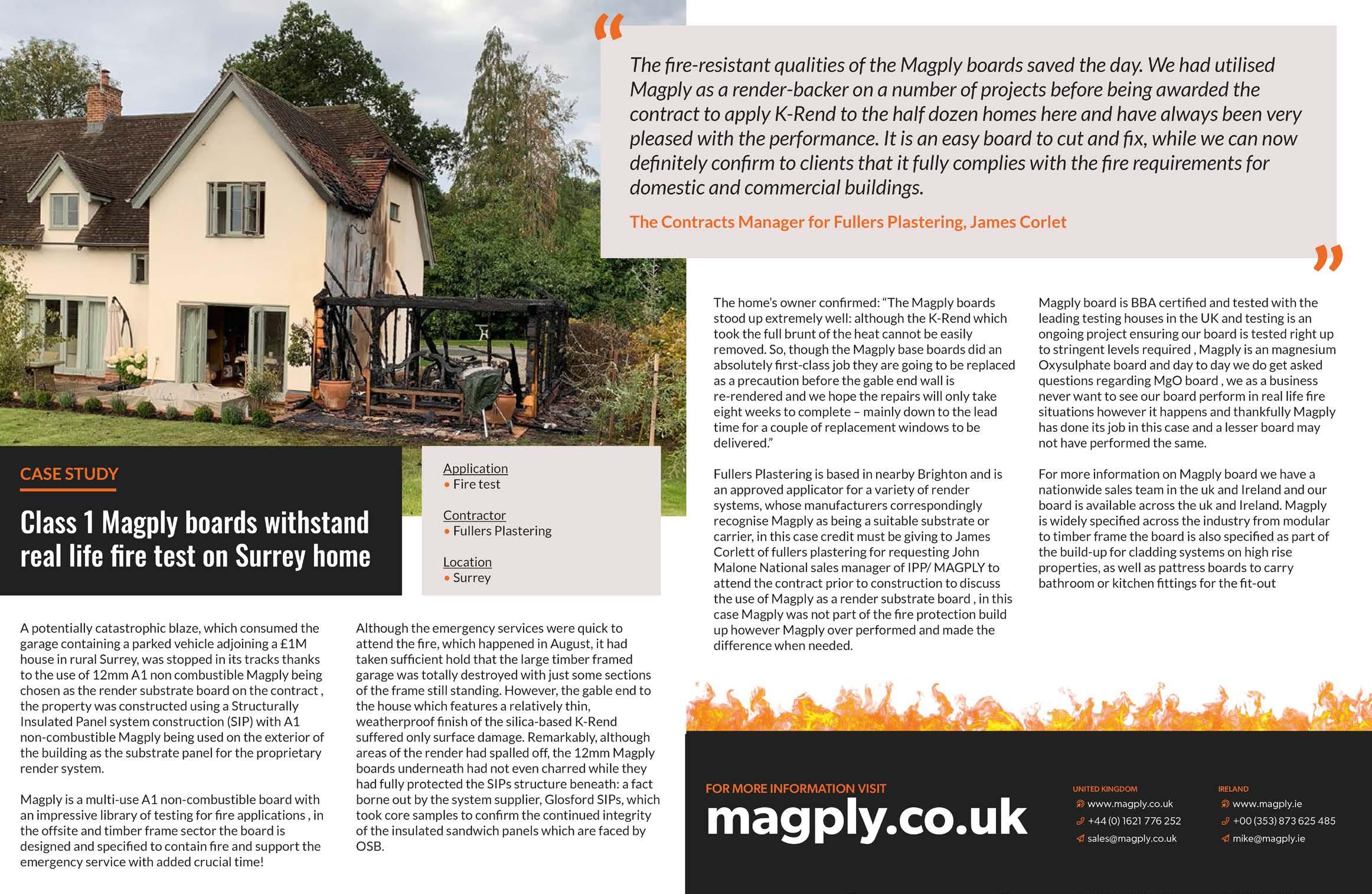
A potentially catastrophic blaze, which consumed the garage containing a parked vehicle adjoining a £1M house in rural Surrey, was stopped in its tracks thanks to the use of 12mm A1 non combustible Magply being chosen as the render substrate board on the contract, the property was constructed using a Structurally Insulated Panel system construction (SIP) with A1 non-combustible Magply being used on the exterior of the building as the substrate panel for the proprietary render system.
Magply is a multi-use A1 non-combustible board with an impressive library of testing for fire applications, in the offsite and timber frame sector the board is designed and specified to contain fire and support the emergency service with added crucial time!
Although the emergency services were quick to attend the fire, which happened in August, it had taken sufficient hold that the large timber framed garage was totally destroyed with just some sections of the frame still standing. However, the gable end to the house which features a relatively thin, weatherproof finish of the silica-based K-Rend suffered only surface damage. Remarkably, although areas of the render had spa I led off, the 12mm Magply boards underneath had not even charred while they had fully protected the SIPs structure beneath: a fact borne out by the system supplier, Glasford SI Ps, which took core samples to confirm the continued integrity of the insulated sandwich panels which are faced by OSB.
The
fire-resistant qualities of the Magply boards saved the day. We had utilised Magply as a render-backer on a number of projects before being awarded the contract to apply K-Rend to the half dozen homes here and have always been very pleased with the performance. It is an easy board to cut and fix, while we can now definitely confirm to clients that it fully complies with the fire requirements for domestic and commercial buildings.
The Contracts Manager for Fullers Plastering, James Corlet
The home’s owner confirmed: “The Magply boards stood up extremely well: although the K-Rend which took the full brunt of the heat cannot be easily removed. So, though the Magply base boards did an absolutely firstclass job they are going to be replaced as a precaution before the gable end wall is rerendered and we hope the repairs will only take eight weeks to complete - mainly down to the lead time for a couple of replacement windows to be delivered:’
Fullers Plastering is based in nearby Brighton and is an approved applicator for a variety of render systems, whose manufacturers correspondingly recognise Magply as being a suitable substrate or carrier, in this case credit must be giving to James Corlett of fullers plastering for requesting John Malone National sales manager of I PP/ MAG PLY to attend the contract prior to construction to discuss the use of Magply as a render substrate board, in this case Magply was not part of the fire protection build up however Magply over performed and made the difference when needed.
“
Magply board is BBA certified and tested with the leading testing houses in the UK and testing is an ongoing project ensuring our board is tested right up to stringent levels required, Magply is an magnesium Oxysulphate board and day to day we do get asked questions regarding MgO board, we as a business never want to see our board perform in real life fire situations however it happens and thankfully Magply has done its job in this case and a lesser board may not have performed the same.
For more information on Magply board we have a nationwide sales team in the uk and Ireland and our board is available across the uk and Ireland. Magply is widely specified across the industry from modular to timber frame the board is also specified as part of the build-up for cladding systems on high rise properties, as well as pattress boards to carry bathroom or kitchen fittings for the fit-out
PRECISION PERFORMANCE, NOW FULLY INTEGRATED
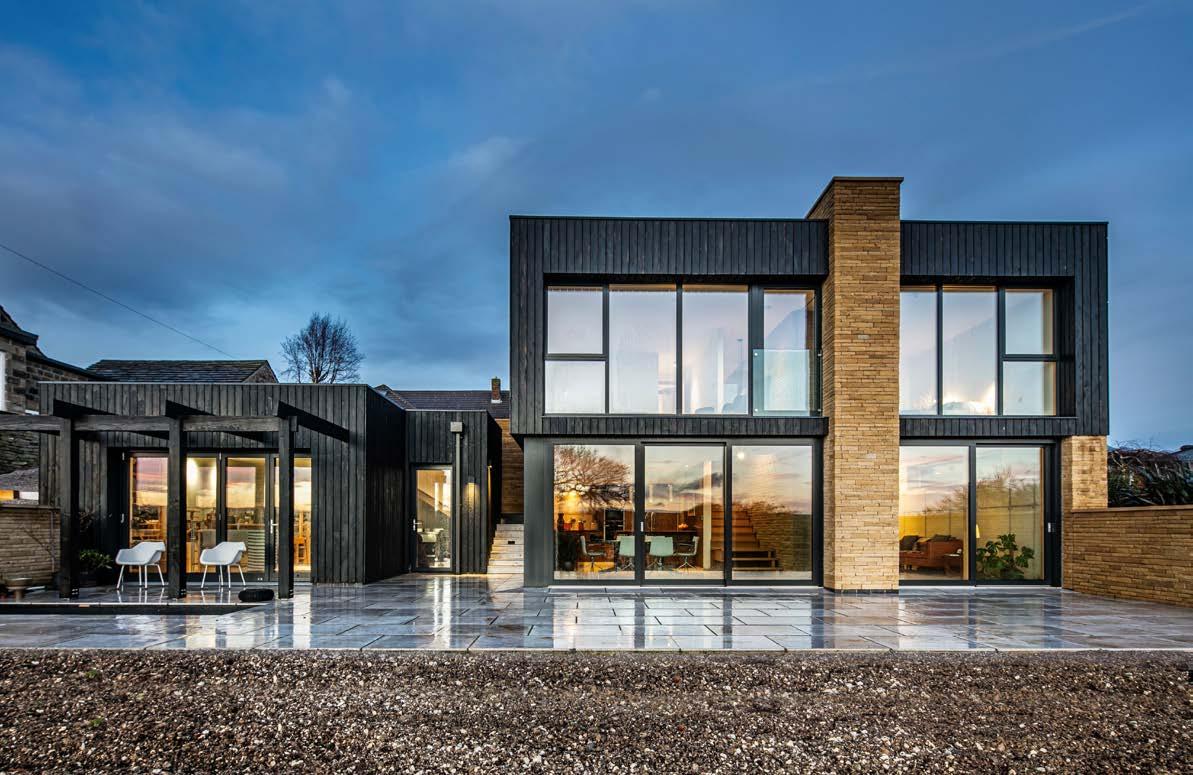
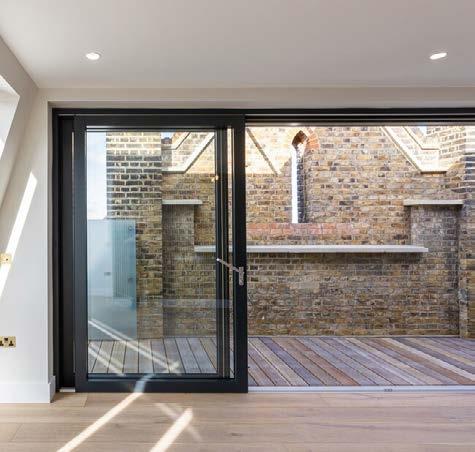
Norrsken, a UK-based manufacturer of highperformance triple-glazed aluminium-clad timber windows and doors, has partnered with NBS to make its passive house certified products available on NBS Source, the UK’s leading construction product specification platform.
The partnership gives architects, specifiers and designers free access to detailed technical specifications, CAD files and product data for nine of Norrsken’s most specified products through the NBS Source platform, which is used by more than 5,000 architecture and engineering practices across the UK.
BIM objects in Revit and IFC formats for all nine products will roll out progressively over the next six weeks, with multiple opening configurations and timber or aluminium-clad variants available for each product type.
This partnership reinforces our commitment to supporting architects with award-winning service from manufacture through to installation and aftercare.
NBS Source allows architects to search, compare and select from more than 26,000 construction products, with direct integration into NBS Chorus specification software and plugins for Revit, ArchiCAD and Vectorworks. Norrsken’s listing includes comprehensive technical data for three passive house certified window ranges and six door ranges, all manufactured to bespoke specifications with U-values as low as 0.64 W/m²K.
“Architects need reliable partners who understand the technical demands of modern, low-energy building design,” said Alex Alsop, sales director at Norrsken.
“By joining NBS Source, we’re streamlining workflows for architect practices of all sizes and making it easier for specifiers to access the detailed product information they need at the earliest stages of a project. This partnership reinforces our commitment to supporting architects with award-winning service from manufacture through to installation and aftercare.”
The BIM objects in development reflect Norrsken’s bespoke manufacturing capabilities, with configurations spanning tilt-and-turn windows, largeformat sliding doors up to 8,500mm, French doors with side and top lights, and entrance doors in multiple styles.
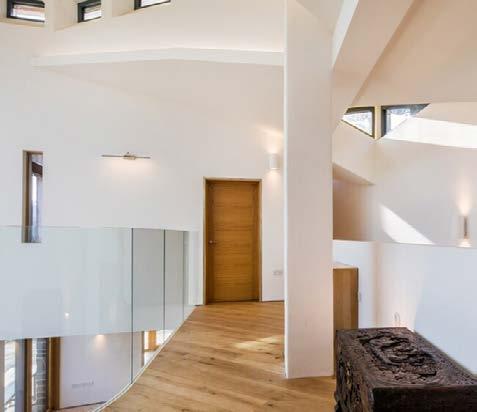
Each product can be specified in timber or aluminium-clad variants, finished in any RAL colour, and customized with project-specific hardware and options. All objects are authored to NBS standards with CAWS and Uniclass 2015 classifications, ensuring compatibility with standard UK specification workflows.
Norrsken manufactures premium aluminiumclad timber windows and doors at its production facility operated by Viking Window AS in Estonia, with technical support and installation services headquartered in Poole. The company specializes in passive house projects and low-energy residential builds, offering complete project management from initial survey through installation with single-point accountability throughout.
www.norrsken.co.uk

Following the dry summer of 2025, the Environment Agency has warned that even with average winter rainfall some areas in Britain will still be in drought next spring and despite the prolonged rainfall of the beginning of 2026, the UK is still recovering.
The recent weather pattern variations can only compound the existing concerns about the anticipated UK water deficit. To offset the predicted daily deficit of 4017 mega litres per day by 2050, major water companies have been developing plans to upgrade the UKs water supply and reduce current usage from 150 litres per person per day to 110.
Whilst smart meters are seen as a significant part of the solution to reducing domestic water usage, Thames Water have recorded post installation savings of 1217% , most major UK water companies have announced their plans for Advanced metering infrastructure, where all new connections or meters will replaced with the latest generation of smart meters.
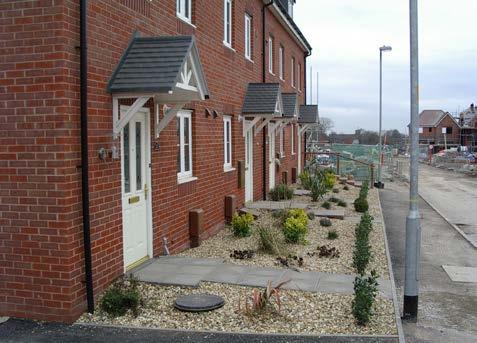
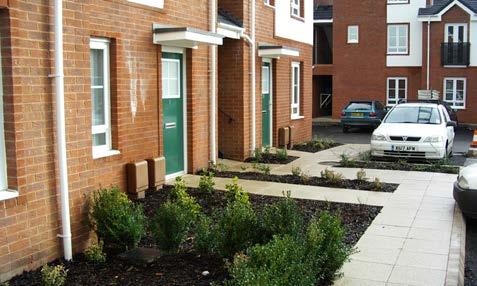
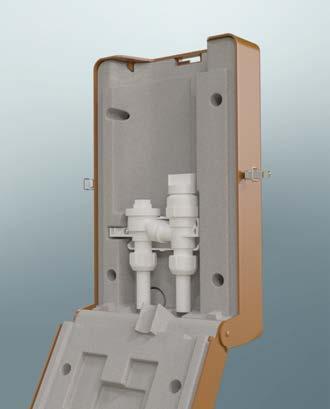
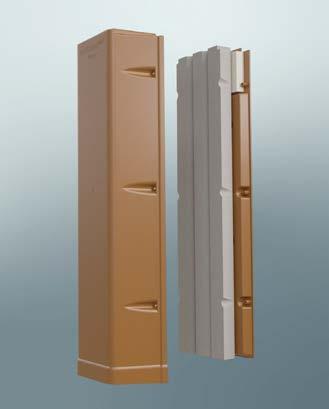
Groundbreaker is an insulated, surface mounted enclosure for a secure water management system and smart water meter. This locates the meter above ground, providing a better environment for smart
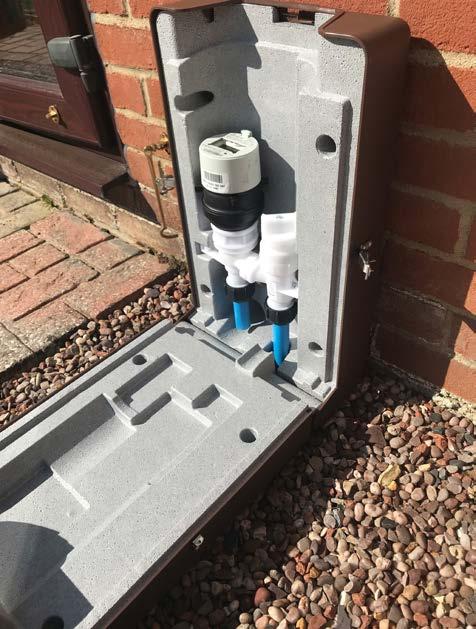
The unique location of the Groundbreaker water management system future proofs the network and minimises the risk of developing future leaks.
technology over traditional underground boundary boxes, extends signal transmission and allows easy meter exchange.
The unique location of the Groundbreaker water management system future proofs the network and minimises the risk of developing future leaks. The position of the meter allows for an unjointed water supply, hence maintaining the integrity of the supply. The use of an uninterrupted supply has been recognised as best practice by Water UK and the Home Builders Federation.
www.groundbreaker.co.uk



IN A CONTEXT OF DEEP
We are living in a time of accelerated transformation, where interiors have become emotional extensions of everyday life. The way we design spaces is now shaped by multiple factors, from technological progress to behavioural change, from regulatory demands to the growing importance of comfort, safety and, above all, wellbeing.
In 2026, aesthetics, sensory authenticity and technical performance are set to converge into a shared language. Architecture, construction and interior design no longer operate as isolated disciplines, but rather as an integrated ecosystem in which every decision has a direct impact on the experience of those who inhabit, move through or work within a space. A clear direction is therefore emerging towards clean, homogeneous and intentional environments, where aesthetics support functionality from first impression through to everyday use.
As one of Europe’s leading players in the design and manufacture of doors, frames, wardrobes, panels and furniture pieces, Vicaima identifies three major décor trends it will be following throughout 2026.
1. Clean design as the new spatial language
Aesthetic coherence is no longer optional. It has become an essential requirement. The most relevant projects of the coming years will be those that prioritise visual continuity, where doors, walls, panels and furniture elements share a common language. This approach creates fluid, balanced and visually calm settings.
This is where the door takes on a central role, becoming the link between architecture and design, and between technical performance and aesthetic expression. It is a defining element that marks entrances, structures circulation, ensures comfort and conveys the identity of a project, whether residential, hospitality or commercial.
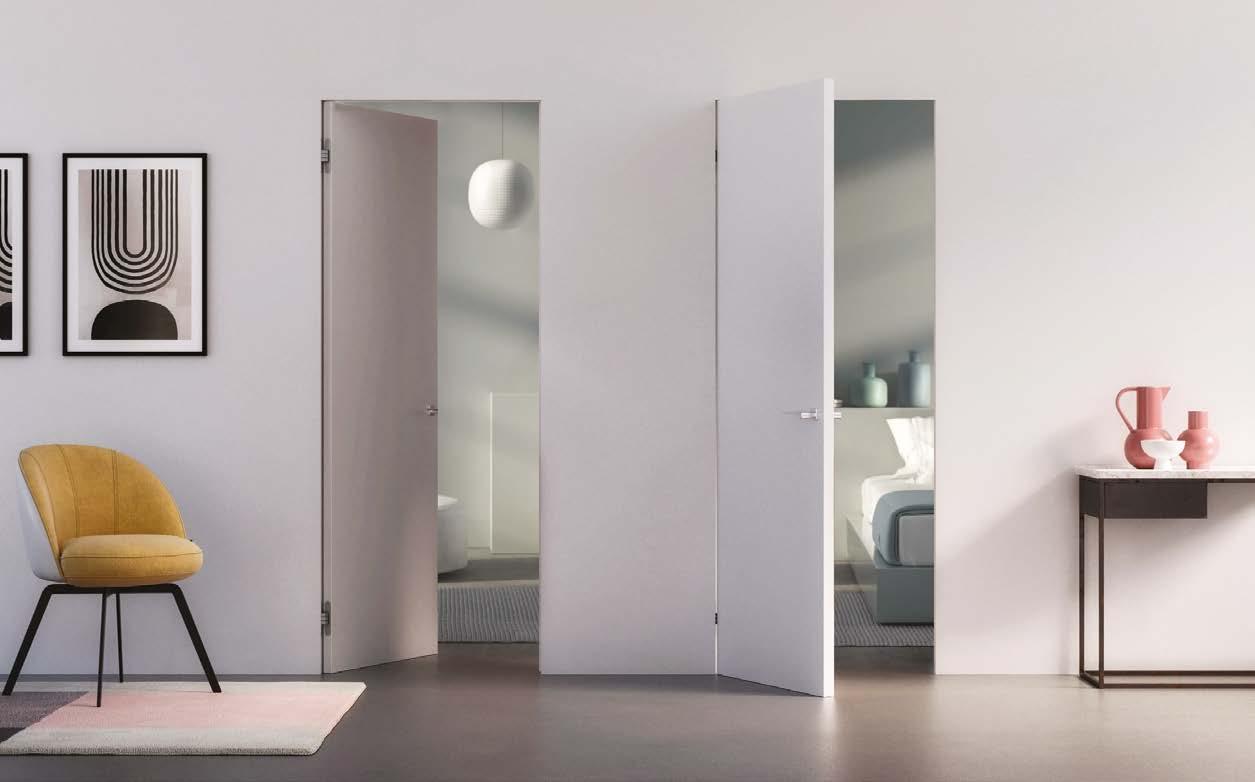
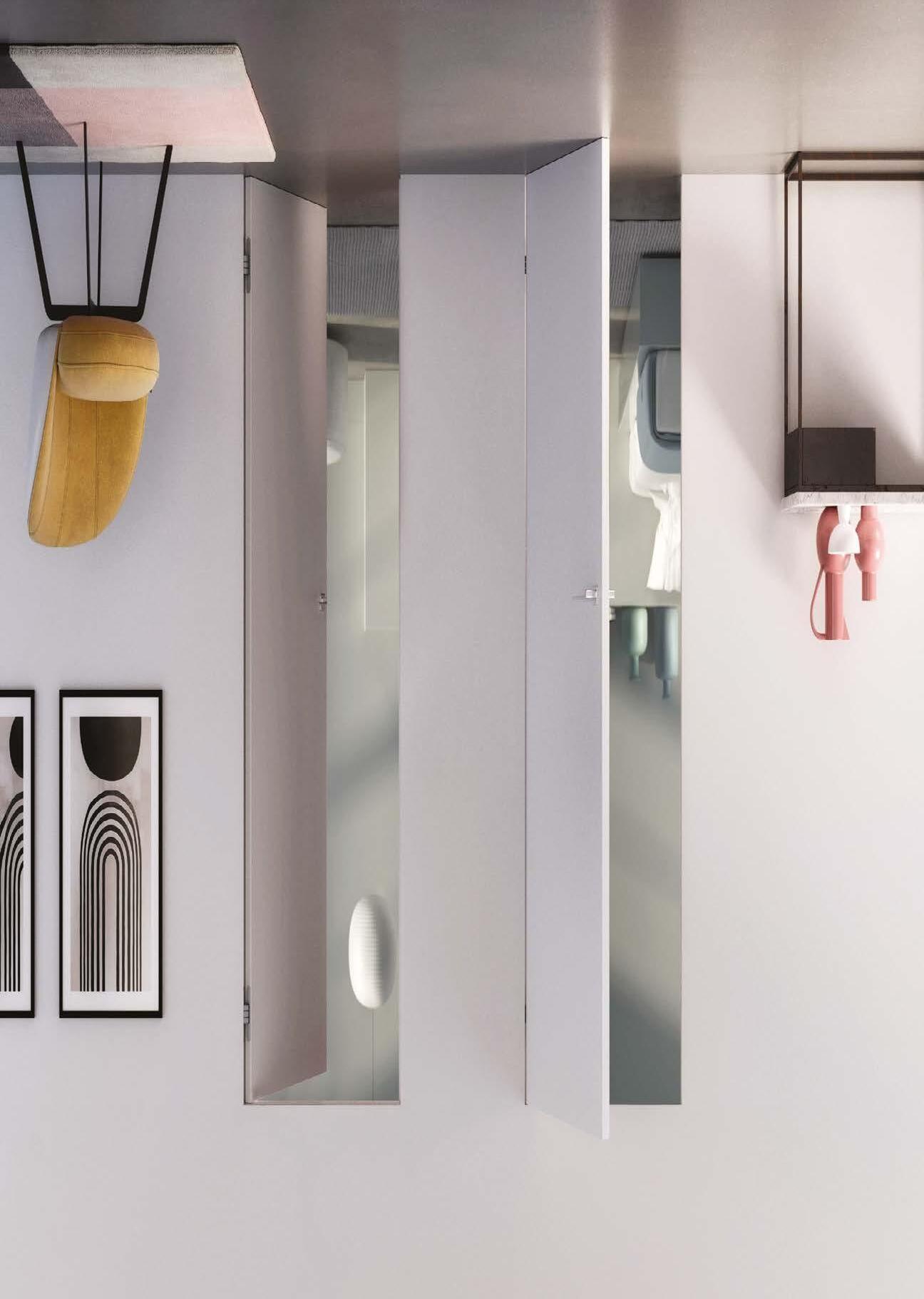
This trend is reflected in the growing demand for solutions that eliminate visual breaks, simplify architectural reading and reinforce a sense of order and wellbeing. Vicaima’s Portaro® Integrated responds directly to this need by allowing doors to be fully integrated into the architectural concept. Over the
In 2026, design will be more authentic, more sensorial and more integrated.
coming year, this range will continue to evolve, further strengthening the creation of homogeneous, elegant interiors aligned with a minimalist and contemporary aesthetic.
2. Natural and organic as an emotional response to excess
In a world defined by acceleration and overstimulation, interiors are returning to essentials. The search for authenticity is expressed through more sensorial spaces, where natural and organic elements become increasingly relevant. This is conveyed through materials capable of creating atmospheres with character and emotional depth.
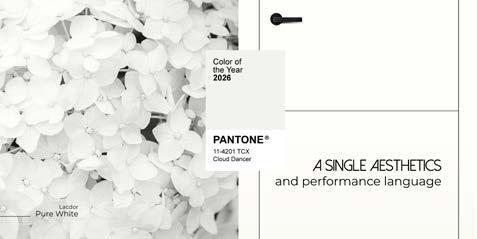
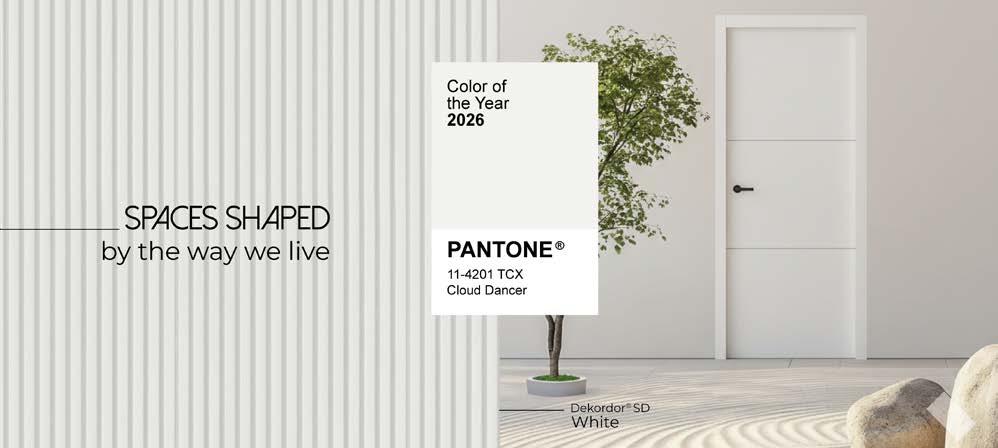
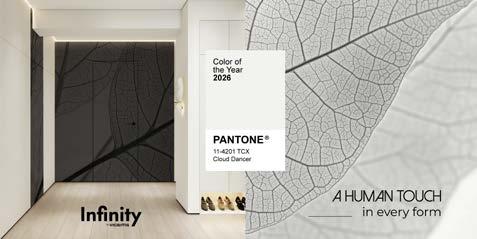
Pantone’s choice of Cloud Dancer as the Colour of the Year for 2026 reinforces this perspective. It is an ethereal, soft and luminous tone that enhances purity of form, visual serenity and an intuitive sense of balance. In dialogue with this palette, natural materials, earthy tones, carefully considered contrasts and an aesthetic that values touch, texture and authenticity take centre stage. The natural and organic coexist with a more expressive and daring dimension, striking a balance between the essential and the extraordinary.
Looking ahead to what the coming months may bring, doors are increasingly conceived as surfaces
for aesthetic expression. They are capable of communicating identity from the very first interaction. Customisation therefore plays a decisive role, allowing finishes, tones and textures to be tailored to each concept.
Within this context, the Vicaima Infinity range reinforces its positioning as a creative platform. In 2026, it will be renewed and expanded to include new textures that enhance the tactile and sensory dimension of projects. In parallel, Vicaima is also preparing updates to other finishing ranges, deepening the dialogue between wood, design and emotion through a contemporary interpretation of sophisticated naturality.
In sectors that are increasingly experience driven, the connection between people, spaces and brands is strengthened through a collaborative mindset that remains open to change.
3. Customisation as the starting point for a complete experience
While aesthetics define first impressions, performance ensures longevity and quality. In 2026, technical requirements are no longer an invisible attribute. They become an integral part of the architectural concept.
This integration of aesthetics and performance reflects a structural shift within the sector. Build quality
becomes just as critical as visual impact, contributing to spaces that are more comfortable, safer and future ready. Solutions that combine fire resistance, acoustic insulation, thermal performance and security, without compromising design, are therefore essential across residential, hospitality, services, healthcare and education projects.
Vicaima reinforces this approach through the ongoing evolution of the Portaro® range. Upcoming developments combine high fire performance with a clean, integrated aesthetic. These solutions respond to the most demanding technical standards while preserving visual coherence throughout the space.
This growing emphasis on performance also brings durability into the centre of the design conversation. In recent years, materials traditionally associated with highly demanding environments, such as High-Pressure Laminates (HPL), have gained renewed relevance within interior architecture. Their resistance, stability and ability to maintain appearance over time support a broader understanding of sustainability, one that values extended life cycles, reduced maintenance and fewer replacements.
At a time when sustainability naturally forms part of the brand’s DNA, and when tools such as AI, BIM and digital solutions, including the expansion of the Vicaima 24/7 chatbot into new languages in 2026, continue to support project design and specification, the focus shifts towards complete, durable and intelligent solutions.
In 2026, design will be more authentic, more sensorial and more integrated. Doors, as elements of transition, identity and performance, take on a leading role in a new way of thinking about space. This is precisely where Vicaima continues to define its path.
www.vicaima.com/en

B&K HYBRID SOLUTIONS DELIVER SUSTAINABLE TIMBER AND STEEL HYBRID
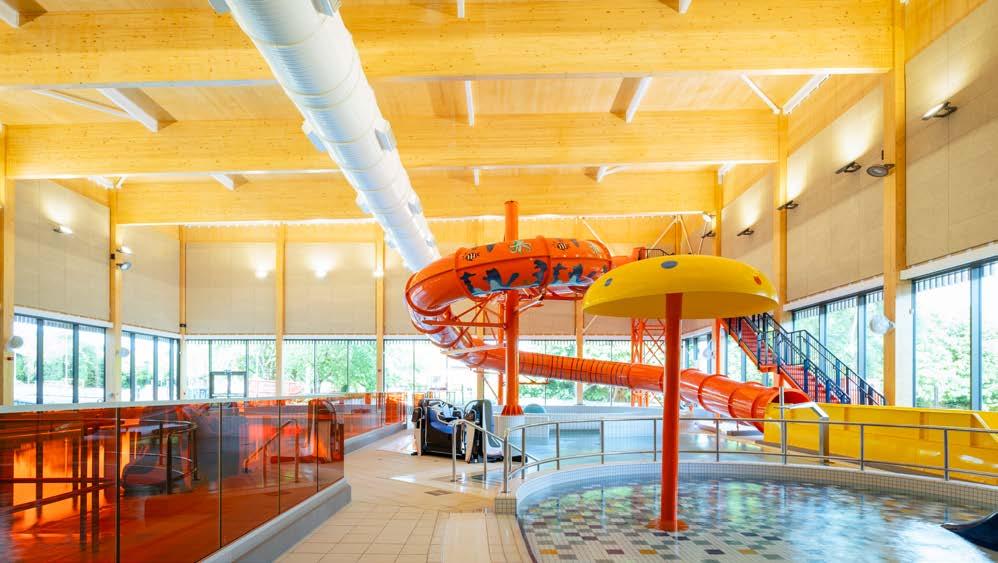
B&K Hybrid Solutions, leading specialists in engineered timber and hybrid construction, have played a pivotal role in the creation of Cozenton Park Sports Centre; a state-of-the-art leisure facility that exemplifies sustainable and innovative design. The project, located in Rainham, Medway, replaced the aging 1990s ‘Splashes’ pool complex with an energy-efficient and aesthetically striking hybrid structure, setting a benchmark for leisure developments in the UK.
Commissioned by Medway Council as part of their commitment to delivering high-quality community facilities, the new £23.6 million Cozenton Park Sports Centre is designed to meet the highest energy efficiency standards. The building includes a modern fitness gym, a multi-purpose exercise studio, a main pool, and a children’s play pool with flume and beach area, meeting both family and fitness needs for the community.
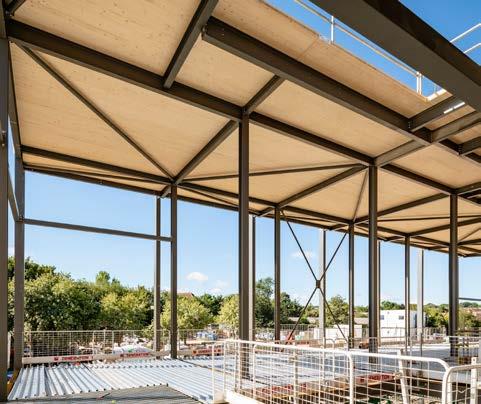
B&K Hybrid Solutions (BKHS) were appointed to manufacture and install the hybrid engineered timber and steelwork elements which underpin the facility’s design, combining the visual appeal and natural warmth of timber with the strength of steel. Working in collaboration with specialist supply chain partners
Stora Enso for the Cross Laminated Timber (CLT) and Rubner for the glulam components, BKHS delivered a precision-engineered solution tailored to the project’s sustainability and performance goals.
The project team, led by architects Space & Place and main contractor Willmott Dixon, prioritised offsite construction methods to optimise build quality, energy performance, and delivery schedules. The pool hall features glulam columns and beams measuring 1700 x 240mm at 5m intervals, creating a clear 26.3m span. Stainless steel flitch plates ensure structural precision, while CLT wall panels and roof decks complete the elegant environment. The adjoining two-storey building incorporates a steel frame with CLT roof panels and profiled metal decking to support the intermediate concrete floor, housing the gym and exercise studio.
BKHS’ contribution to the project was integral to achieving Medway Council’s ambitious sustainability targets. The CLT walls and roof decks provide exceptional airtightness and thermal performance, reducing energy consumption and carbon emissions.
Timber
not only
looks
fantastic in a swimming pool environment but offers exceptional performance in terms of insulation, airtightness, and durability.
Key sustainability highlights of the hybrid approach include:
• 72% lower carbon emissions compared to conventional construction methods.
• CLT’s insulation properties reduces operational energy costs, with projected annual savings of approximately £30,000.
• The timber structure locks in over 314 tonnes of CO2, demonstrating its role in supporting a circular economy.
Leveraging offsite manufacturing techniques was a key part of the project delivery, to ensure millimetre accuracy, minimise waste, and reduce on-site build times. The prefabricated CLT and glulam components were delivered to site ready for rapid assembly, reducing construction traffic by approximately 40% compared to traditional methods.
BKHS’ precise installation processes and advanced logistics on site contributed to a seamless and efficient build phase, ensuring the project remained on schedule and was delivered to an exceptional standard. The use of hybrid timber and steel also ensures minimal maintenance requirements while providing a visually stunning and biophilic environment for visitors.
Nic Bryant, Lead Architect at Space & Place, praised the contribution of engineered timber on Cozenton, stating: “Timber not only looks fantastic in a swimming pool environment but offers exceptional performance in terms of insulation, airtightness, and durability. B&K Hybrid Solutions’ expertise with the structure ensured the project’s success, and the result is a building that will serve the community for decades to come.”
Cozenton Park Sports Centre demonstrates the potential of engineered timber and hybrid structures to deliver sustainable, high-performance buildings. The project sets a benchmark for leisure developments in the UK, matching elegance with optimal performance and a keen focus on sustainability.
For more information, please visit: www.bkhybridsolutions.co.uk
For a long time, the world treated rainforests as an infinite resource. These vast, green frontiers were just waiting to be remade for profit. But the illusion has collapsed, not before more than half of the planet’s original rainforests have already vanished. What remains is under relentless pressure: around 10 million hectares lost every year, an area roughly the size of Iceland. Another third of tropical forests are classified as degraded due to damage, fragmentation, and the stripping of much of the biodiversity that once defined them.
But amidst the loss, there is a pathway to responsible consumption - one that Ryder International has placed at the centre of their sustainability commitments. That solution begins with choosing certified timber.
Borneo:
Few places illustrate the scale and complexity of the crisis more starkly than Borneo. Once home to some of the richest biodiversity on Earth, the island’s forests have been carved into patchworks of industrial agriculture, the most expansive of which are palm oil plantations.
Palm oil finds its way into nearly everything: biscuits, margarine, chocolate, soaps, shampoos, make-up, biofuels, and even animal feed. Its ubiquity makes it one of the most profitable agricultural commodities globally. However, that prosperity comes at a heavy environmental cost.
Across Borneo, vast old-growth forests have been felled to make way for monoculture plantations. The ecological toll is devastating. Orangutans, gibbons, and countless lesser-known species have seen their habitats destroyed or fragmented to the point of being beyond viability. Many have been pushed to the brink of extinction. When forests are burned to clear land, immense quantities of carbon dioxide are released, turning local land-use changes into global climate threats.
The Forest Stewardship Council (FSC), an international non-profit organisation, certifies forests and forest products that meet rigorous environmental, social, and economic standards. When the FSC logo appears on a product, it guarantees that the wood was harvested in a way that preserves forest ecosystems, respects workers’ rights, and ensures long-term viability.
Ryder International has long championed sustainable sourcing, emphasising the importance of FSC-certified


When forests are burned to clear land, immense quantities of carbon dioxide are released, turning local land-use changes into global climate threats.

materials across its product lines. This is an essential part of ensuring that forests are managed responsibly and that the global demand for timber does not drive further destruction.
Protecting what remains of the world’s forests requires collective action from governments, industry, and consumers alike. One of the simplest actions individuals and businesses can take is to choose products that carry credible certifications like FSC. Sustainable sourcing protects forests, supports workers, and ensures that natural resources will be available for future generations.
Choosing certified timber won’t, on its own, halt global deforestation. But it is one of the clearest, most effective steps we can take today.
www.thesolidwoodflooringcompany.com
We

For more than six decades, the Swimming Pool and Allied Trades Association (SPATA) has been the leading authority for quality, professionalism, and best practice in the UK’s swimming pool, spa, and wellness sector. Representing the nation’s most experienced construction, installers, designers, and suppliers, SPATA plays a vital role in driving excellence, safety, and innovation across both domestic and commercial leisure projects.
SPATA’s mission is built on its long-standing commitment to high industry standards. Every SPATA member must comply with rigorous technical requirements and an industry-recognised Code of Ethics. This ensures consistent best practice across all areas of pool and spa construction, from structural integrity and hydraulic design to water treatment, energy efficiency, and on-site safety. For clients, whether leisure operators, architects, facilities management teams, commercial developers, or domestic homeowners, choosing a SPATA member offers reassurance that projects will be delivered correctly, safely, and to an exceptional standard. SPATA also contributes to the development of British and European standards, being directly involved in the European committees focusing on domestic pool and spa standards (and also the UK mirror committee that also contributes to the commercial pool and spa standards).
A major strength of the association lies in its technical leadership. SPATA regularly updates its Standards to reflect evolving legislation, new construction techniques, and the growing demand for sustainable, energy-smart solutions. Whether through advancements in heat pump technology, improvements in filtration efficiency, or responsible chemical management, SPATA ensures members (and their clients) remain aligned with the latest industry developments. This forward-thinking approach supports the wider built environment by promoting robust, energy-efficient, and future-proofed facilities.
Skill development is another important focus for SPATA. The association brings together a wide range of industry training opportunities to ensure those working in the wet leisure sector stay informed, competent, and compliant. Education remains one of the most effective ways to elevate industry standards, and SPATA continues to champion accessible, high-quality learning for both new and experienced professionals, especially with colleagues in the Institute of Swimming Pool Engineers (ISPE).
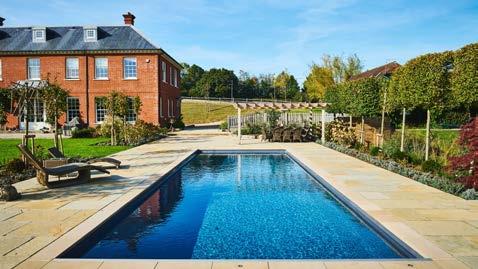
SPATA regularly updates its Standards to reflect evolving legislation, new construction techniques, and the growing demand for sustainable, energy-smart solutions.

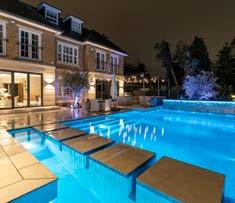
SPATA also celebrates excellence in the wet leisure industry through the nationally recognised British Pool & Hot Tub Awards. These awards highlight outstanding craftsmanship, technical innovation, and inspiring design, providing valuable real-world examples for organisations planning new leisure facilities or refurbishment projects.
From commercial leisure centres and hydrotherapy pools to wellness suites and residential installations, SPATA remains at the forefront of shaping the UK’s wet leisure landscape. With its heritage of quality, safety, and expertise, the association is a trusted partner for anyone involved in the construction, management, or maintenance of wet leisure environments.
Discover SPATA members nationwide, access free guidance, and learn more about how the association can support your next project at www.spata.co.uk.

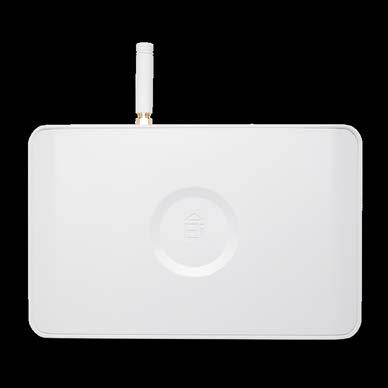
In 2023, Selwood Housing launched a pilot project with Aico, installing HomeLINK Environmental Sensors and Gateways to better understand indoor conditions across its housing stock. The project supported a more evidence-based approach to managing homes and responding to damp and mould. Since then, the partnership has expanded in response to new legislation and Selwood Housing’s commitment to maintaining safe, healthy homes across its 7,000-plus properties.
Aico’s IoT technology is now integrated into Selwood Housing’s property management processes. Sensors and gateways are installed in homes where significant damp or mould has been identified, allowing for consistent monitoring. More than 250 properties are currently monitored through HomeLINK, with a further 100 planned by 2026. Across the wider housing stock, over 2,000 connected devices have been installed, including environmental sensors, fire alarms and carbon monoxide alarms. All installations comply with BS 40101.
Environmental data from HomeLINK is reviewed alongside on-site inspections carried out by Selwood Housing’s surveyors. This combined approach has become increasingly important following the introduction of Awaab’s Law in England, which sets clear timeframes for investigating and resolving hazards such as damp and mould. Continuous monitoring helps teams prioritise


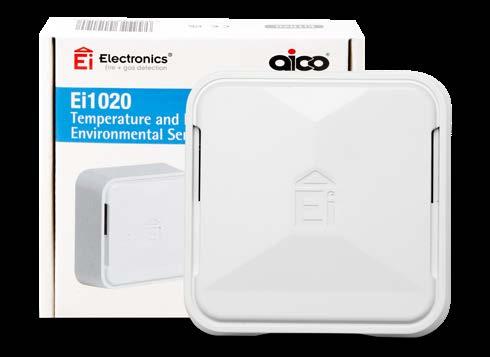
Weekly reports identify homes at higher risk of damp and mould, low temperatures or poor indoor air quality, supporting earlier intervention and ongoing compliance.
cases, meet statutory deadlines and confirm that remedial works have been effective.
Before adopting HomeLINK, properties often required quarterly follow-up visits for up to 12 months after repairs. Real-time data now enables staff to assess conditions remotely and respond quickly if problems return. Weekly reports identify homes at higher risk of damp and mould, low temperatures or poor indoor air quality, supporting earlier intervention and ongoing compliance.
Resident engagement remains a key part of the programme. The HomeLINK Resident App allows customers to view their home’s environmental conditions, receive alerts for damp and mould risks, access safety reminders and share information with trusted contacts. Residents have responded positively, particularly to the app’s clear guidance and practical insights.
What began as a pilot project has developed into a preventative approach to housing management, supporting compliance while giving residents greater visibility and confidence in their homes.
www.aico.co.uk

N E Fasteners and it’s online arm Screwshop.co.uk – the home of own brands Rhino and Turboqwik screws, are proud to be celebrating 40 years in the trade.
A testament to hard work, dedication from our staff, shows loyalty and consistency in a constantly evolving sector. Our family run business provides essential components for the construction, manufacturing and DIY project and has built a strong reputation locally and nationally.
Nigel Elliott set up N E Fasteners in his garage in 1985, and his first customers and suppliers are still with us, his son Matt joined him in 2001, and the company has gone from strength to strength, now employing near 20 people in all departments including a very popular kitting and packaging line with new automated machinery running in early 2025.
Our year of celebrations has been filled with memorabilia recognising the journey N E Fasteners has taken within the crucial industry and the immense commitment from our team. Each team member was presented with a special 40year gift box, personalised cupcakes and a relaxed afternoon off work.
Looking to the future, N E Fasteners aims to continue delivering value and building trusted relationships with its customers and suppliers and constantly having a strong customer led focus in person or with its e-commerce presence (Screwshop) to improve customers’ buying experience on line.
Here’s to fastening the future — together! For further information visit www.screwshop.co.uk


Water based - does not leach Allows wood to breathe naturally
· Internal / External application
· Colourless - Odourless
· EN 13501 – 1
EN 16755 (EXT1)according to EN 927-6
Euroclass B-s1-d0
Non Toxic - No Solvents
BS 476 part 6 & BS 476 part 7
BM TRADA ISO 9001 Certificate Meets the highest EU standards No HR Prof With HR Prof
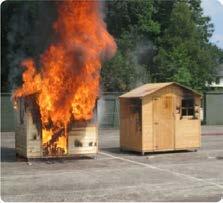
Classification Reports & Certificates: Pine, Spruce, Scots Larch, Siberian Larch, Western Red Cedar, Oak, Thermowood, Birch, Birch Ply, and others, both Internal and External.



www.fireretardantuk.com
0800 7833 228 sales@fireretardantuk.com


Finding suitable roosting spots in urban areas has become increasingly difficult for bats in recent years due to improved building practices and materials that reduce defects. However, the innovative Manthorpe Bat Ridge Roost™ provides a solution by offering these important pollinators a new home among the rooftops.
This product is the result of a partnership between Manthorpe and the bat experts at the Bat Conservation Trust (BCT). By tapping into the BCT’s extensive knowledge of bat behaviours and needs, the Ridge Roost provides an optimised, purpose-built roosting habitat for small crevice-dwelling species right here in the UK.
The field monitoring process includes partnering with Vistry Group to install Ridge Roosts at one of their new development sites through the BCT’s Roost Partnership Scheme, opening up more opportunities for ecologists, researchers, and bat enthusiasts to observe these fascinating nighttime creatures in their urban habitats.
Let’s start with the prime location - situated at the roof’s apex acting as the ridge end cap itself, this elevated spot gives bats that high vantage point they crave, with a secure, self-contained space offering protection from predators and the elements.
But the benefits go beyond just the location. The interior was carefully designed with real bats in mind. Climbing grooves and a rougher recycled polymer surface allow easier manoeuvrability inside the roost whilst thermal testing and an insulated inner chamber create a temperature-stable environment. Multiple prototypes were refined before landing on the final shape and textures to seek the bats approval.
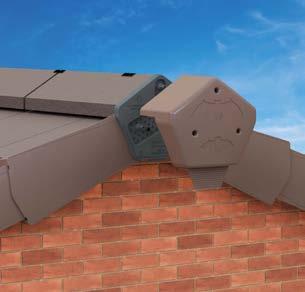
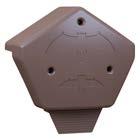
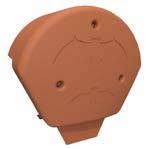

This product is the result of a partnership between Manthorpe and the bat experts at the Bat Conservation Trust (BCT).
With the growing emphasis on environmentallyfriendly building solutions, it’s crucial that new products don’t impede construction schedules. The Ridge Roost meets this need through its ingenious, versatile design, suitable for both new build and refurbishment projects. The two-part installation seamlessly integrates with both dry verge systems and traditional verge details, allowing for easy adoption by housing developers without disrupting timelines. A key advantage is the roost’s exterior mounting location, providing dedicated bat housing while ensuring there are no entry points into the roof space itself.
From thermal design backed by university testing, to construction that meets modern aesthetic standards, to installation that integrates with your current building methods - it’s clear the Ridge Roost was developed with our industry’s needs in mind. But most importantly, it answers the call for sustainable solutions that support biodiversity in the urban environment.
So, whether you’re planning a new residential development or renovating an existing property, keep the Manthorpe Bat Ridge Roost in mind. Your bat neighbours will appreciate you giving them a place in the community.
www.manthorpebp.co.uk
Every year, design, technology and lifestyle shifts transform the way people experience and interact with their kitchens. Leading distributor of kitchen and bedroom components, PWS, highlights its top 3 influences shaping kitchens in 2026.
Last year saw a surge in popularity for natural wooddrenched kitchens. Providing quiet luxury and sophistication, wood pairs with both classic and modern design elements. Crafted from European Oak, PWS was at the forefront of this movement with the launch of its newest door finish – Oak. Available in two door styles, in-frame effect Mornington Vale and Mornington Shaker, the finish has been developed to complement PWS’s paint-to-order palette.
As Pantone’s Colour of the Year ‘Cloud Dancer’ places neutrals back in the spotlight, this timeless colour palette will continue to be popular. PWS recently launched its Taupe Grey colour from stock for its Mornington Vale collection which taps directly into this trend. This is the first stocked colour announced for its door design and builds on the successful launch of Mornington Vale the year before. Its light earthy, brown undertones pair with an array of colour schemes.
As bathrooms evolve into wellbeing-focused spaces, the shower has become a defining design feature rather than a purely functional zone.
According to Maria D Arráez, Director of Tile of Spain UK, selecting the right ceramic surface is key to balancing performance with aesthetics.
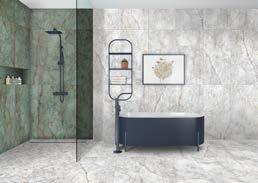
“Ceramic and porcelain tiles remain ideal for shower environments thanks to their water resistance, durability and low maintenance. Advances in manufacturing mean natural stone, marble and concrete effects can be convincingly replicated, delivering a premium look without the upkeep. Unlike real stone, porcelain is non-porous, resistant to staining and does not require sealing - making it particularly suited to high-traffic bathrooms.
Large-format tiles help create seamless, spa-like interiors by minimising grout lines, while textured finishes, mosaics and bold colourways introduce personality and depth. Thoughtful layout, grout selection and detailing further enhance cohesion.
By combining technical performance with design freedom, today’s ceramic tiles allow architects and designers to create shower spaces that are both enduring and expressive.”
www.tileofspain.com/en
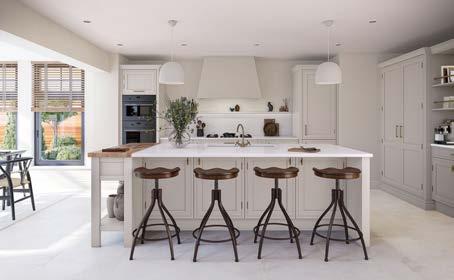
In-frame cabinets will never go out of style thanks to their bespoke and heritage look. Many customers are interested in incorporating this style into their kitchen but often need a design at a more affordable price point. Responding to growing customer demand, PWS launched the Mornington Beaded Vale door style - a new in-frame effect option for kitchens that are ideal for achieving a timeless in-frame look, but at a smaller cost. The design features an elegant and ornate internal bead, combined with in-frame effect detailing and distinctive ash grain texture.
www.pws.co.uk
Inspired by the timeless language and enduring elegance of Neoclassical and Georgian architecture, the new Cavendish range incorporates the renowned circular motifs and rhythms that define New Cavendish Street in London’s Fitzrovia. Showcasing subtle fluidity, tactility and movement with concave, rippling metal forms, the collection’s soft, classical structure and organic curves reflect the light beautifully in an understated fashion adding visual depth to washrooms.
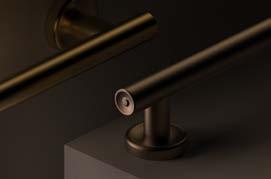
From Satin Bronze to Polished Gold, interior designers, architects and specifiers have a choice of 28 exquisite metal finishes, offering the freedom to seamlessly integrate accessibility into refined interior concepts - without compromising on aesthetics. Each product is engineered to support inclusive bathroom design while complementing high-end interiors.
Curated and designed for accessible bathrooms, the Cavendish collection includes Grab Rails, Hinged Support Rails, Shower Seats and Back Rests - each crafted to meet the practical needs of inclusive bathroom design.
www.fitzroyoflondon.com
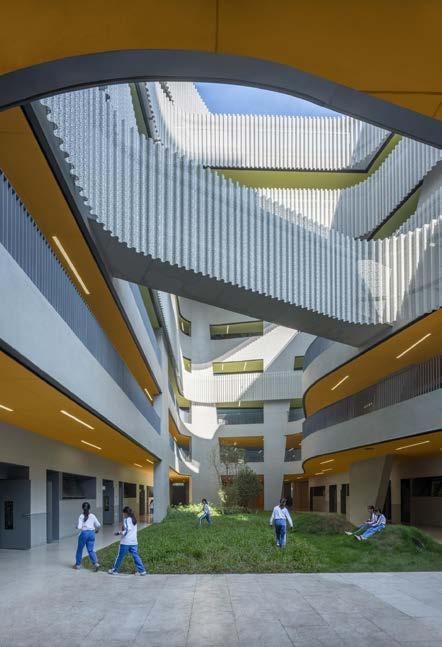
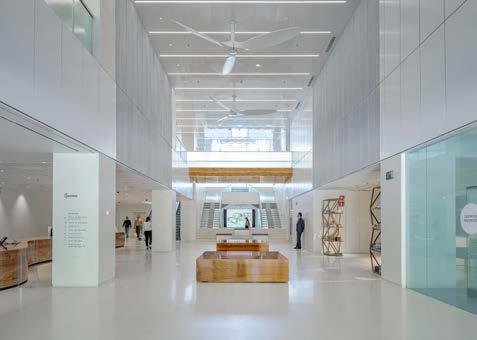
Global infrastructure and renewable energy leader ACCIONA’s new international headquarters in Madrid has set a new standard in sustainable and hyperconnected workplace design. Located on a 10-hectare site in a central Madrid district, the workspace interiors were designed by interdisciplinary architecture and design firm Perkins&Will to reflect ACCIONA’s commitment to sustainability, innovation, and well-being.
The project repurposed the site of a decades-old corporate campus, reviving the location with a verdant landscape and new facilities for 4,000 employees. The campus features three office buildings, including a new one designed by Fenwick Iribarren Architects with interiors by Perkins&Will, along with an auditorium and other amenities. Two of the original buildings underwent deep refurbishment, with Perkins&Will’s interior designs creating light-filled, forward-thinking environments that work with the existing structure and materials.
The ACCIONA Campus reflects the company’s commitment to sustainability, innovation, and people. Designed as a benchmark for the offices of the future, it brings together ACCIONA’s global expertise in renewable energy and infrastructure to create a workplace that fosters collaboration, creativity, and well-being. The Campus integrates advanced technology and sustainable design to inspire employees to reach their full potential while contributing positively to both business and the planet.
“By working with the grain of the existing structures and embracing natural elements, we’ve created a workspace that is both timeless and future-facing,” says Perkin&Will Design Lead Mijail Gutierrez. ACCIONA wanted a workspace that exemplifies their values and mission, and we expressed this through serene and luminous aesthetic that celebrates light, shadow, air, and water and fosters a deep connection between employees, nature, and ACCIONA’s mission to build a sustainable future.”
Designing for well-being and connection
The campus prioritises human experience and crossdisciplinary collaboration, featuring flexible workspaces, coworking zones, and event areas that blend efficiency with hospitality. Interconnecting staircases and communal areas promote movement and spontaneous interaction, while external pavilions and terraces offer

shaded retreats with fresh air and panoramic views. Dedicated zones for quiet reflection, optimised lighting with circadian rhythms, and enhanced acoustic and thermal comfort support mental clarity and physical vitality.
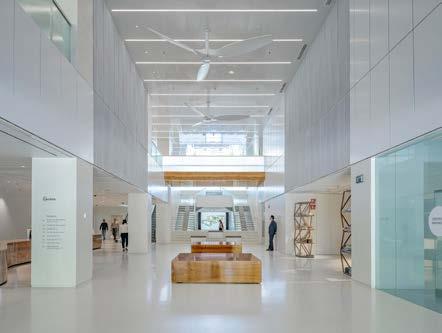
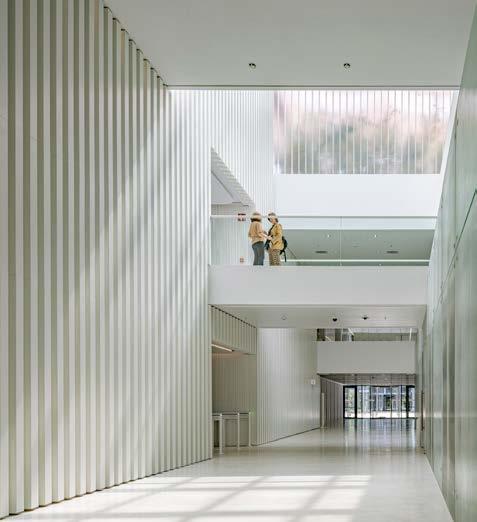
The interior design contrasts raw textures such as concrete, galvanised metals, and masonry with refined materials, harmonising old and new. A restrained palette of white, wood, and reflective surfaces references vernacular Spanish architecture, creating a serene and luminous atmosphere that celebrates the interplay of light and shadow.
Architectural interventions bring daylight deep into the floor plates, minimising reliance on artificial lighting and enhancing visual comfort. Organic, sculptural forms set against the Iberian light create dramatic chiaroscuro moments, infusing the spaces with an ethereal yet warm ambience.
The interior design contrasts raw textures such as concrete, galvanised metals, and masonry with refined materials, harmonising old and new.
Innovation and sustainability at every level
The campus meets the highest environmental standards, achieving LEED Platinum and WELL Platinum certifications while aligning with EU Taxonomy. It operates entirely on renewable electricity, with on-site solar PV, geothermal systems, and heat recovery technologies. Modular design allows for adaptability and waste reduction, locally sourced
timber and antimicrobial metals enhance sustainability, and ACCIONA’s own low-carbon materials are featured prominently. Technological advancements include 3D-printed joinery, bespoke ceiling fans developed with ACCIONA’s innovation lab, and robotics that support security and logistics.
A regenerative landscape rooted in ecology
The landscape design, commissioned by ACCIONA, reflects a commitment to ecological restoration and employee well-being. Historic pine groves have been preserved and expanded, with 1,000 new trees and 20,000 shrubs planted. Native, climate-adapted species were prioritised to require minimal water. Rainwater reuse and greywater recycling systems support sustainable water management, while native meadows replace extensive lawns and improve soil health, reduce erosion, and unify the landscape. The result is a campus that not only enhances the well-being of its people but also regenerates the environment.
Key project information
• Project name: Acciona Headquarters
• Address: Avenida de la Gran Vía de Hortaleza, 3, 28033 Madrid, Spain
• Project size: 400,000 sq ft / 37,162 sq m (Campus)
• Number of buildings: Three
• Building 6: 260,750 sqft
• Building 7: 208,013 sqft
• Building 9: 248,758 sqft
• Credentials: LEED Platinum, WELL Platinum
• Start date: September 2019
• Campus completion: March 2025
• Client/occupier: Acciona
• Architect/interior design: Perkins&Will (common areas, finishes, ceilings, WCs)
• Architect: Fenwick Iribarren Architects (shell and core for buildings 6, 7 & 9)
• Landscape architect & Landscaper: Gregorio Marañón
www.perkinswill.com

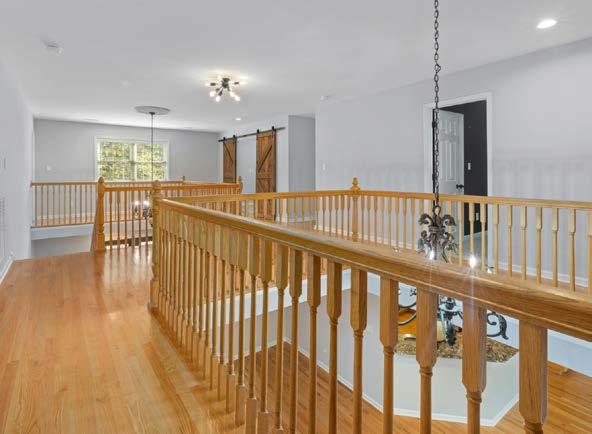

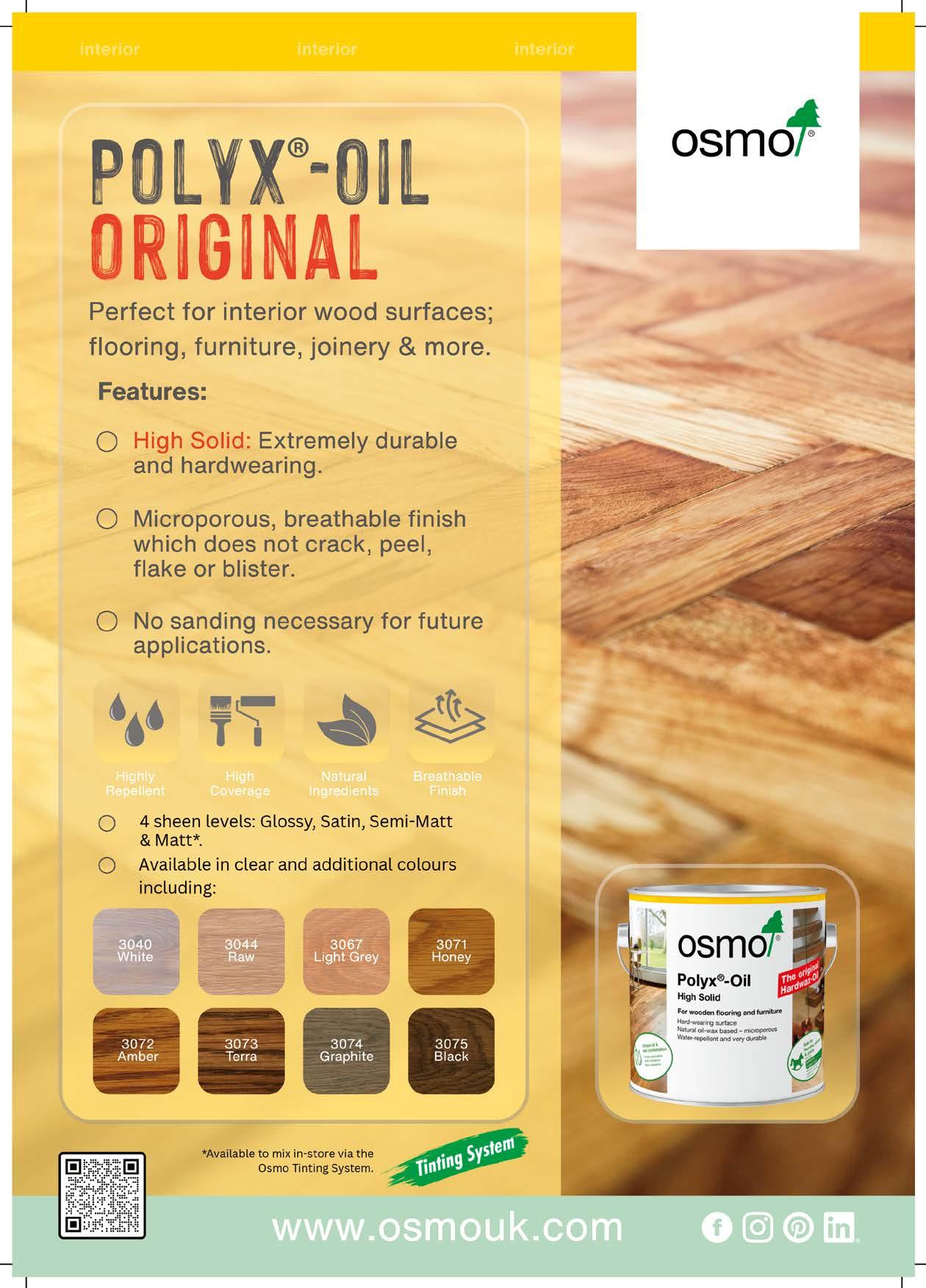
In a world long dominated by high-gloss lacquers and synthetic surface coatings, Osmo Polyx-Oils represent a quieter, more considered approach to wood finishing. Rather than sealing timber beneath a rigid, plastic like film, Polyx-Oils work with the material—penetrating the wood fibres to protect from within while leaving the surface tactile, breathable, and unmistakably natural. The result is a finish that enhances grain and colour without obscuring character, allowing wood to look and feel like wood.
This balance of aesthetics and performance has made Polyx-Oils a staple in contemporary interiors. Durable enough for high-traffic floors yet refined enough for furniture and joinery, they resist wear, spills, and everyday abrasion while ageing gracefully over time. Unlike traditional finishes that demand full sanding and refinishing, Polyx-Oils can be locally repaired or refreshed, extending the life of the surface rather than replacing it. It’s a practical advantage that aligns well with modern expectations of longevity and sustainability.
What truly distinguishes Osmo Polyx-Oils, however, is the philosophy behind them. In an era that values authenticity, material honesty, and understated luxury, these finishes offer a way to protect timber without diminishing its presence. Whether underfoot in a living space or across finely crafted doors and staircases, Polyx-Oils deliver a subtle sheen and warmth that speaks less of coating and more of craftsmanship—a finish designed not to dominate, but to endure.
Osmo offers a versatile range of Polyx-Oil finishes tailored to different aesthetic and functional needs.
Osmo offers a versatile range of Polyx-Oil finishes tailored to different aesthetic and functional needs. From Clear finishes that enhance the wood’s warmth, Raw Effect to retain the lightness of the wood (best used on lighter wood species), to the tinted versions that will offer a range of colours that will still showcase the natural grain of the wood through the finish.
Whether you’re looking to enrich the natural tone of oak with a clear finish or infuse a hint of colour into pine, Osmo Polyx-Oils provide a solution that works in harmony of the wood. This versatility makes them an ideal choice for architects, designers, and homeowners alike who seek to create spaces that are visually striking.
The application process of Osmo Polyx-Oils is also straightforward and user-friendly, enabling even the most novice DIY enthusiasts to achieve professional results.
Osmo – Good for Wood. www.osmo.com
YEARS
Touch Ironmongery Ltd
210 Fulham Road, Chelsea SW10 9PJ
We display and stock over 3,000 products in 28 different finishes.
With a customer base including Architects, Interior Designers, Builders and private Individuals who are interested in the quality end of the Ironmongery market Touch Ironmongery’s owner and founder, Bill Benham, has 44 years’ experience in the Ironmongery trade, as does his colleague Jim Haselup. Saleem Qureshi is the newest member of our team and has 23 years’ experience, meaning their knowledge is unrivalled in this industry.
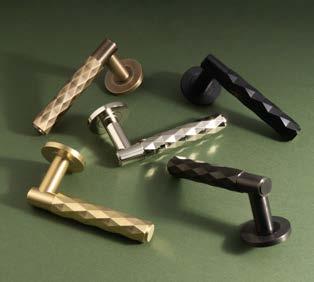
Touch Ironmongery showcases the very best of British manufacturing; The best ranges are still produced in the Midlands by craftsmen in factories dating back 200 years or more. Touch also sell European manufactured quality Ironmongery.
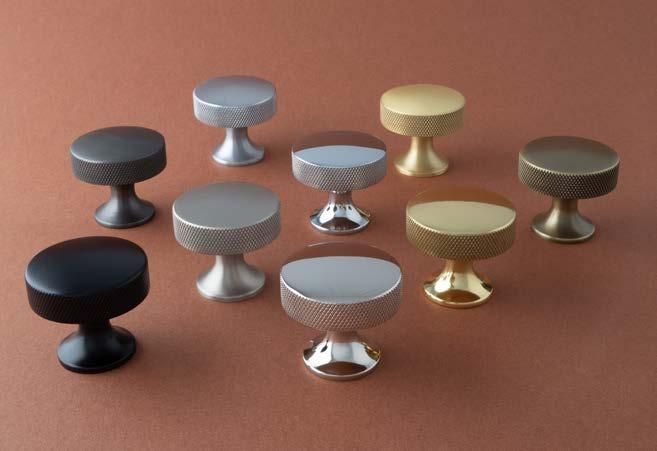
Ironmongery can be a difficult and complicated aspect of a building project, as a result Touch aim to take this awkward aspect and make it user friendly and clear to understand by offering an on-site service where they carry out a detailed door by door, window by window, room by room Ironmongery schedule, highlighting all requirements.
Restoration is a large part of the business Touch will undertake complete Ironmongery refurbishment projects, and can restore old paint covered door
furniture to their former glory, looking as good as new again at a fraction of the cost to replace.
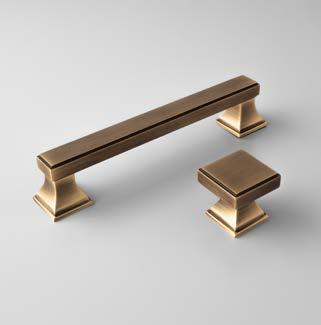
For more information about Touch Ironmongery or to arrange a showroom visit please call 0207 351 2255 or alternatively visit www.atouchofbrass.co.uk
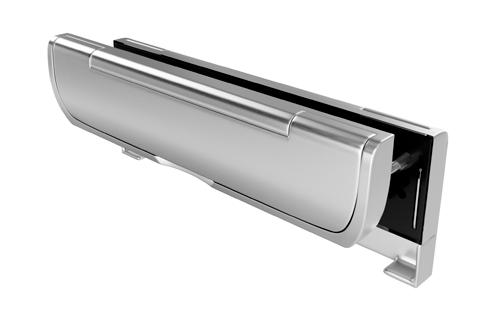
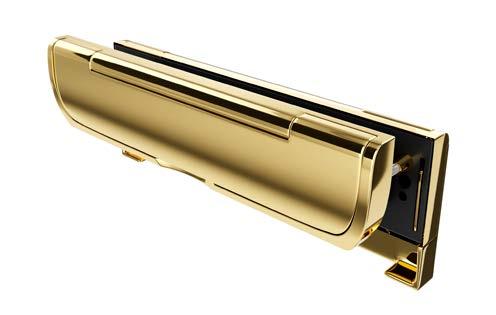
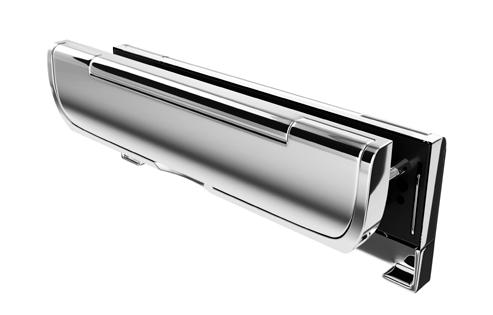
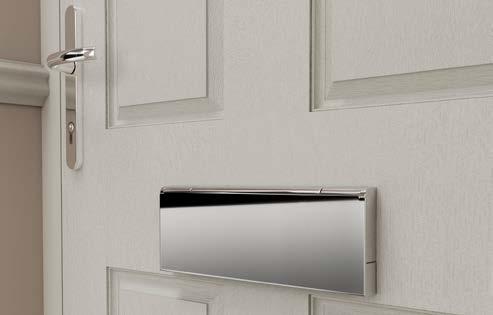
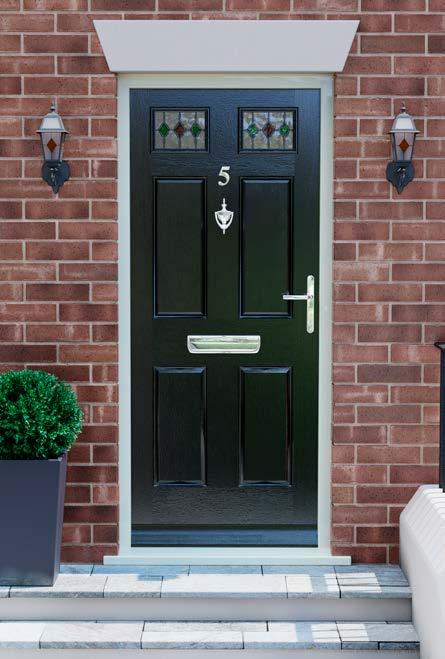
A sleek, high-security letterplate designed to protect against letterbox fishing while maintaining a modern, unobtrusive appearance.
• Tested to TS 008:2022 and meets Approved Document Q
• FD30 & FD60 fire-rated options available
• Anti-theft steel guard for enhanced security
• Slimline design with non-intrusive cover
• Easy installation using just two screws
• 20,000-cycle tested flap
• 480-hour neutral salt spray tested external flap
• Adjustable internal sleeves for 44mm & 54mm door thicknesses
Available in 7 finishes: Anthracite, Black, Chrome, Graphite, Satin Chrome, White & Brass
Matching suited products available

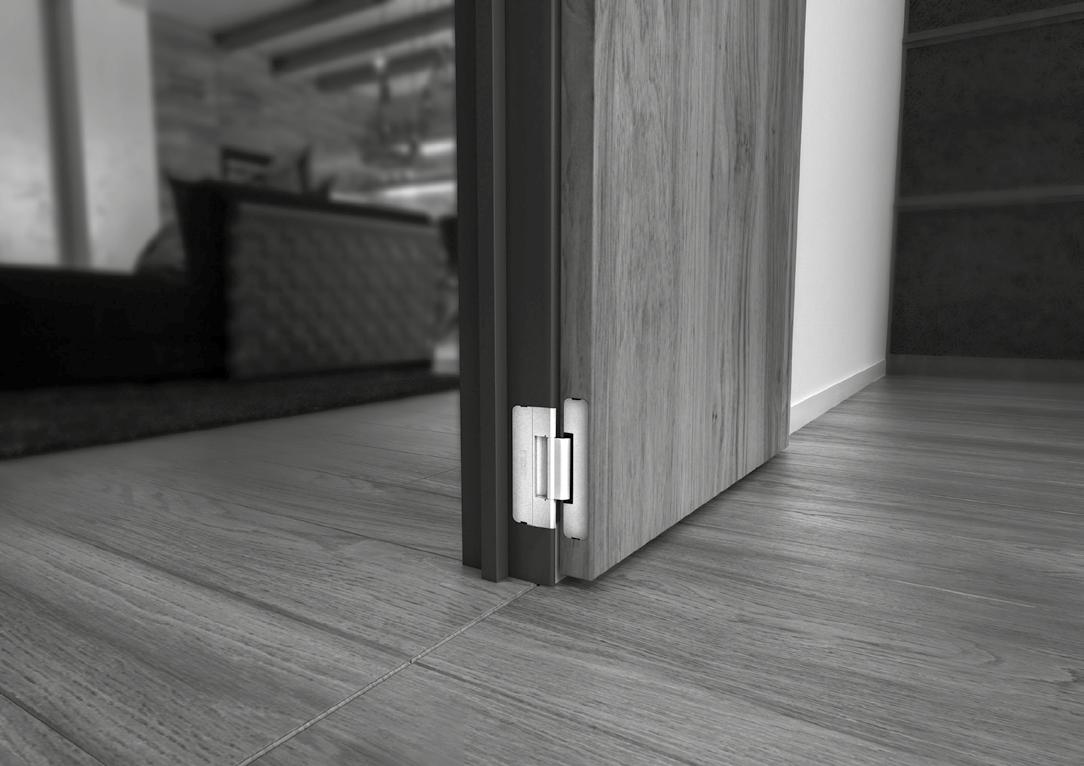
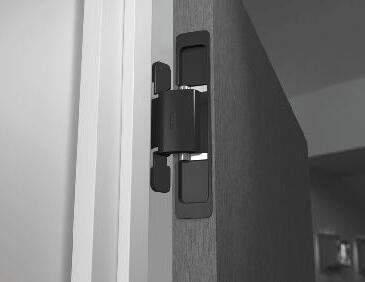
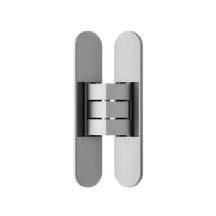
At Sugatsune, we never close the door on innovation. Take our HES concealed hinge range, for example. We could have sat on our laurels when we completely reinvented the concept of a concealed hinge 30 years ago, coming up with a groundbreaking design that allowed hidden hinges to be used on interior doors as well as cabinets.
But we didn’t. And over the past three decades, we have developed the HES into the most comprehensive concealed hinge range on the market, offering a complete solution for dozens of door types and sizes. And still we push forward. In recent years, we have introduced the award-winning HES1 for ultra-thin door frames, with a door gap so small it’s perfect for ‘hidden doors’. Plus the partially surface-mounted HES2 for simpler installation.
There will be more additions to the HES range announced in 2026. But hinges are not all that matters to us when it comes to door hardware. We are equally always looking to innovate with door motion control, with products that pair perfectly with the HES range.
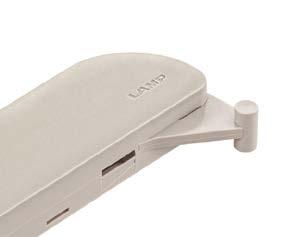
Products like the LDD-K, our latest innovative soft close damper system.
Soft close technology is a speciality of ours. We’ve been manufacturing door dampers for decades. And we’ve drawn on that expertise again with the latest LDD-K model by putting our award-winning damper technology at the heart of it.
Like all of our soft-close products, the LDD-K allows for fine tuning of the closing motion control. This is thanks to the adjustable torque in the rotary mecha-
nism. It matters because there’s no such thing as a standard interior door. Weight, size and hinge friction all affect how a door closes. Soft close adjustment allows you to achieve a smooth, consistent motion that’s just right for every installation - no slamming, no bounce-back, no strain on the hardware. Instead of a onespeed solution, you get control.
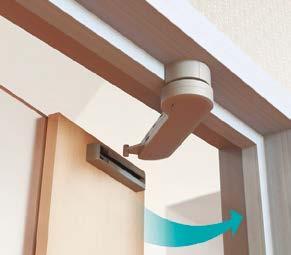
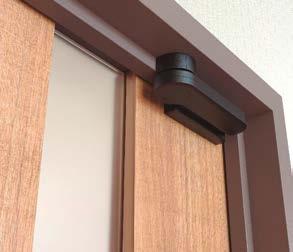
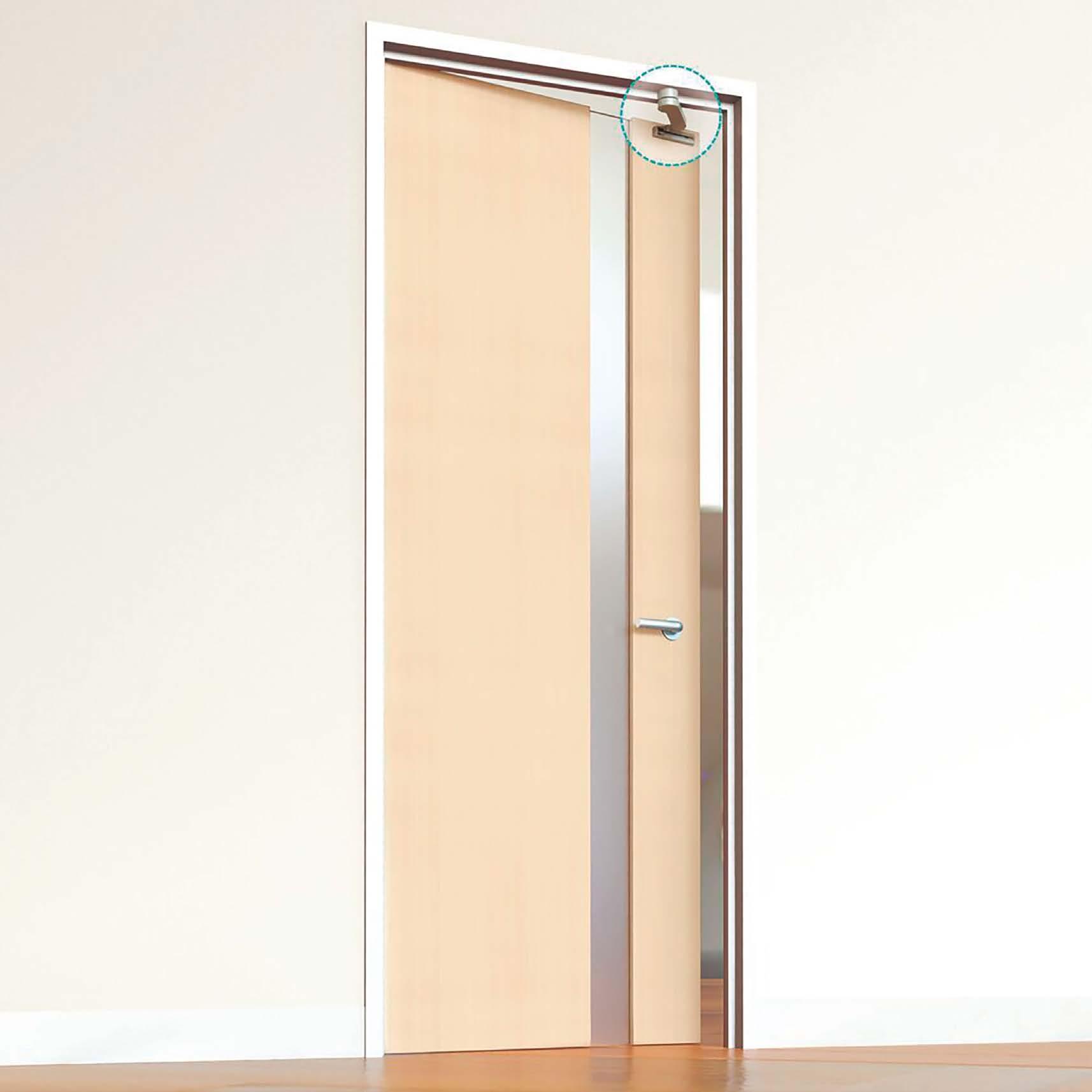
But if this applies across our entire damper range, what does the LDD-K add? In a word, convenience. Many softclose solutions require precise mortising, handed components, and with them, plenty of planning in installation. The LDD-K is different. It’s surface-mounted on frame and door. It’s non-handed, so works whichever way a door opens. And thanks to this flexibility, it’s easy to retrofit to existing doors - ideal for renovation and upgrade projects, where altering the door or frame isn’t always an option.
The LDD-K is as refreshingly straightforward in mechanics as it is in installation. The two go hand-in-hand. The main damper body is surface mounted on the frame side. A slim counterplate is mounted on the door. Three-way adjustment in mounting allows precise but simple alignment.
As the door swings shut, a built-in catch engages with the counterplate, activating the damping action late in the closing cycle. The catch system has benefits when it comes to opening the door. Because the distance of engagement between catch and counterplate is only short, doors fitted with the LDD-K experience less resistance on opening compared to those fitted with traditional door closers. Instead of a constant force, the latch releases early and opens easily. Control is applied where it is most need-
ed, without impacting the entirety of the door’s motion.
The LDD-K broadens the landscape in door damper options. It’s designed to fit seamlessly into any environment. That’s not just a matter of its easy installation. We never ignore aesthetics, and the LDD-K is available in four colour finishes - white, grey, brown, and black - to blend in seamlessly with different designs.
The slimline, sleek appearance of the LDD-K pairs naturally with HES hinges, helping designers add close control to the clean, concealed aesthetic. And the potential component couplings don’t end there.
We also have products built for motion control at the other end of the door’s open-close arc. The SAS-V is a completely concealed, adjustable door constrictor that prevents over-swing on opening. Like the LDD-K, it is non-handed, and it complements the HES when you want a flush, pristine finish. Some SAS-V models will also hold a door open at the desired angle until deactivated via a gentle push.
Adding another layer of control and protection, our DFHT door stoppers come in a range of styles - screw mount for the wall and a choice of screw or anchor mount for the floor. A choice of aluminium alloy and brass bodies combine durability with multiple coloured finishes, plus a natural rubber head to absorb impact and protect the door.
Simple, stylish, discreet and precise, Sugatsune components put you in control of door motion, from open to close.

Japanese manufacturer of branded products and
Reynaers Aluminium UK, a leading manufacturer of sustainable architectural aluminium systems, has unveiled a new CPD to support confident specification of glazing systems and facades under the Building Safety Act (BSA).
In its latest CPD, titled ‘Mastering the Building Safety Act: Architects, Glazing Systems, Safe Passage, and Holding the Golden Thread’ Reynaers explores how the BSA affects both the specification and design of glazing and façade systems.
The third CPD in a series written by an architect for architects, the CPD was developed by Vice President of the Manchester Society of Architects Paul Iddon and provides practical insights into the changing role of architects under the BSA.

This latest CPD from Reynaers explains how to manage the golden thread and highlights the elevated role of the Principal Designer - whose responsibility has an increased focus on compliance and structural integrity as a result of the BSA.
By using real project testimony, it demonstrates how early collaboration with manufacturers, a clear specification strategy, and system-level testing can simplify the Gateway process. In addition, the CPD outlines best practice in supplying full technical submissions.
The CPD also outlines the performance standards of Reynaers’ products, as well as its commitment to testing and compliance, and looks at the ways the company’s expertise supports architects in safe, compliant and responsible building design.
Samantha Hill, Head of Marketing at Reynaers Aluminium UK, said: “At Reynaers Aluminium, we foster a culture of continuous improvement, which includes investment in training, and collaboration with colleagues in the industry. We do this not only to ensure projects comply with regulatory change such as the BSA, but to safeguard lives and property, helping to develop a high-quality built environment that stands the test of time.
At
Reynaers Aluminium, we foster a culture of continuous improvement, which includes investment in training, and collaboration with colleagues in the industry.
“Our CPDs are designed to support the continuous development of high standards within the industry and underline our commitment to our customerssharing specialist insights.
“Following the release of ‘The Best of All Possible Worlds’ towards the end of last year, which focuses on curtain walling, and more recently, “Memories of Green’ builds upon the popular use of glazed systems to deepen the connection between architecture and the natural world, this new CPD tackles the practicalities of high-spec systems for facades, windows and doors in tall buildings.”
For in-person sessions, onsite or at Reynaers’ UK headquarters in Birmingham, enquire online or contact the Reynaers Consult Team.
Find out more at https://www.reynaers.co.uk/cpd
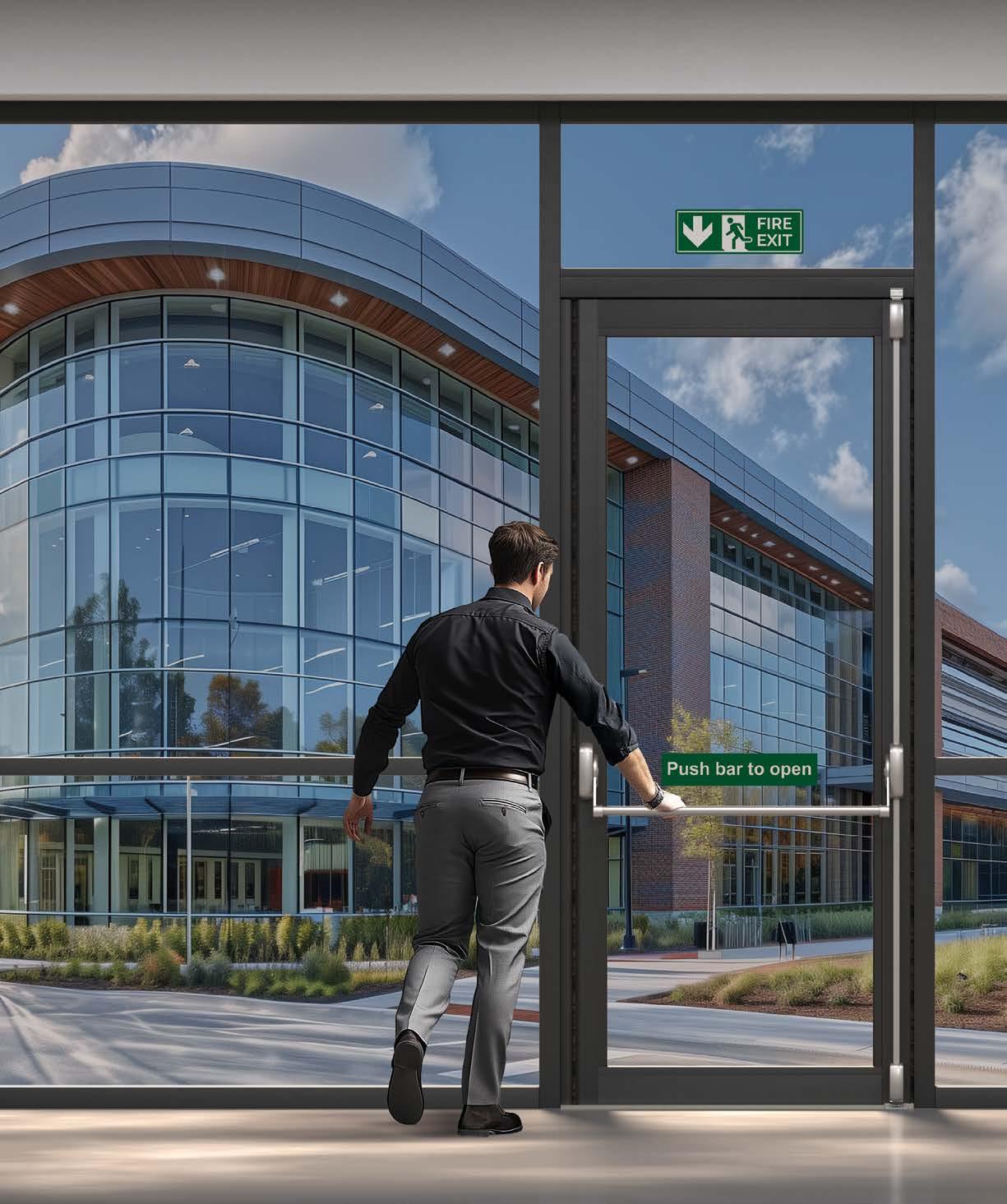
With surface-mounted or concealed panic options to meet EN 1125 and EN 179 standards, the Vision 7 Thermal Commercial Door with panic hardware ensures rapid escape.
Designed for a range of ground-floor applications, Vision 7 features:
• Unique post-installation adjustable bottom pivot
• 1.1W/m2K U-value
• A 40mm bulb radius
• Anti-finger trap safety
Built for performance and durability, Vision 7 is tested to 1 million cycles, achieving Class 8 EN 12400.*
Concealed option is PAS24:2022 certified (single and double doors).
PUSH PAD OPTION AVAILABLE
Available as a single or double door.
*Refer to Reynaers Technical department for further information regarding door configuration and testing.
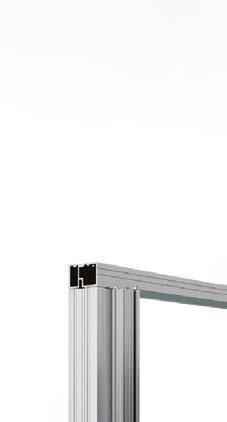
Rocket Door Frames has established itself over the past five years as a leading innovator in space-saving pocket door systems across the UK. Its fully steel pocket door kits have grown in popularity among architects, contractors and high-end residential developers, driven by robust construction, simplified installation and a clean, contemporary finish.
Alongside its pocket systems, Rocket’s ultra flush concealed door solution, designed without architraves, has become a fashionable choice for designers seeking uninterrupted wall lines and minimal visual detailing in both residential and commercial environments. But in today’s regulatory climate, aesthetics and installation efficiency must be matched by proven fire performance.
With fire safety now a critical factor in building design and product selection, Rocket Door Frames has invested in rigorous independent testing to validate the performance of its systems.
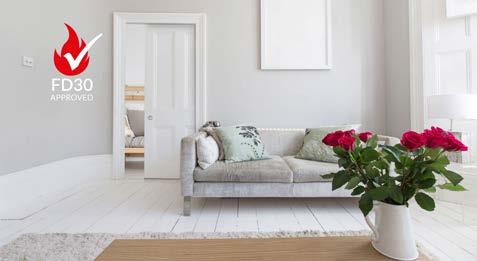
Both the steel pocket door system and the aluminium two-way push-pull ultra flush concealed door system were tested by Warringtonfire, a UKAS-accredited laboratory. Each system achieved full FD30 certification, confirming 30 minutes of fire resistance in accordance with UK standards.
Notably, during testing of the pocket door configuration, Rocket elected to use a flaxboard core door which is widely regarded as one of the most onerous fire door cores. By selecting this door type for assessment, the company aimed to provide specifiers with maximum confidence when ordering.
The result exceeded expectations: the system achieved 48 minutes of fire protection, delivering 60% beyond the minimum requirement for FD30 approval.
Integral to the FD30 system is Rocket’s purposedesigned fire-rated jamb lining. Installed post door fit-out, the timber lining conceals the head
and running gear while lining the internal steel pocket entrance for a refined, architectural finish.
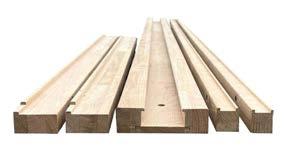
Manufactured from high-density, slow-burning European oak, the fire jamb provides structural stability and enhanced fire resistance. Crucially, the system does not incorporate fixed architraves. This allows architects and developers to maintain consistent architrave detailing across a scheme, rather than being restricted by integrated frame profiles, an important consideration in high-spec residential and multi-unit developments.
The jamb system successfully passed fire testing without the need for applied architraves, reinforcing the integrity of the complete assembly.
Each Rocket FD30 door system is available with a full fire-rated jamb set and all required intumescent strips, simplifying on-site compliance and installation.
Rocket’s door frames are designed for standard British door sizes and are held in stock. With nationwide UK delivery are typically available within days supporting fast-track residential and commercial programmes. Please contact us if you have specific questions about either door system.
www.rocketdoorframes.co.uk






As interiors continue to evolve in 2026, a confident shift is taking place: homeowners and designers are moving away from fast, trend-led updates and towards choices that stand the test of time. According to Paul Clifford, Managing Director of Croft, this renewed focus on longevity is reshaping how finishing touches are specified.
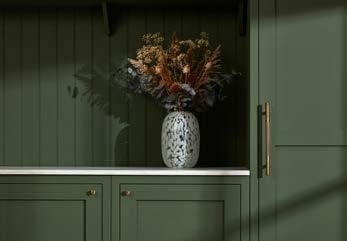
“In recent years, we’ve seen a clear change in mindset. Homeowners are investing more thoughtfully and asking informed questions - not only about aesthetics, but about material integrity and lifespan. Architectural hardware is no longer an afterthought; it’s specified early in the design process as a core decision.”
“As kitchens, utility rooms and boot rooms become increasingly design-led, details are under greater scrutiny. Solid brass door handles, cabinet knobs and pull handles are chosen for their reassuring weight, tactile quality and thoughtful design. Hardware is being used to introduce contrast, warmth and cohesion,
often linking door furniture and cabinetry to create a consistent visual language throughout the home.”
The Beauty of Patina
“Finishes such as Aged Brass and Antique Brass are especially sought after for the way they evolve. There’s a growing appreciation for patina, with clients understanding that solid brass develops character over time. The gentle darkening around a handle or soft burnish on a cabinet pull tells a story, reflecting a desire for homes that feel authentic and layered rather than flat or overly polished.”
Craftsmanship That Endures
“This movement also aligns with sustainability. Investing in high-quality, British-made hardware means pieces can be maintained, refinished and enjoyed for decades. Our handcrafted collections, including the recently introduced Kingsmere range, show how considered detailing can elevate both contemporary schemes and heritage renovations alike.”
https://croft.co.uk/
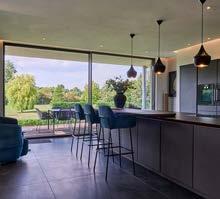
When Martin Shaw began building his dream home in the Bedfordshire countryside, he worked with Solarlux and their partner Spectrum Architectural Glazing to create a highly glazed home that brought the outside indoors. A combination of Cero III sliding patio doors, Highline bifold doors and a bespoke glazed panel was used to create floor-to-ceiling glazing across two storeys.
Sliding doors capable of withstanding heavy winds
The glazing needed to be carefully planned to withstand wind loading without compromising aesthetics. Solarlux’s precision-engineered aluminium-frame systems offered the ideal combination of strength, weather resistance and elegance.
Achieving thermal efficiency with sliding glass doors
The triple-glazed Cero III system can provide Uw values of around 0.8W/m²k and is capable of achieving Class 4 air tightness under EN 12207, indicating minimal air infiltration.
Highline bifold glass doors provide comparable performance, achieving Uw values of around 0.8 W/ m²K, and Class 3 airtightness, contributing to year-round comfort and low energy use.
Combining premium sliding doors, bifold doors and bespoke glazing
The ultra-narrow sightlines of the Cero III system and minimal vertical frame elements create large, uninterrupted areas of glazing. Each sliding element can reach up to 6m in height or 4m wide, with a maximum panel area of 15m².
As a leading manufacturer of premium aluminium glazing systems, including sliding doors and bifold patio doors, Solarlux has over 40 years’ experience and a network of trusted installation partners.
If you’d like to find out more, please contact our team. https://solarlux.com/

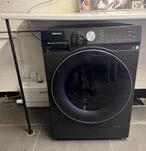
A domestic property in Alton, Staffordshire sits in an elevated position with driveway and compact stone garage beneath the level of the house. The laundry room is housed in the garage which presented a common but problematic drainage issue: no direct access to the drainage system.
Waste water needed to be pumped upwards to the existing soil stack. After a flood caused by an incorrectly specified macerator pump, homeowner Ed Shenton sought a purpose-built solution and turned to Saniflo’s Sanivite+ — a pump designed specifically to handle hot, soapy grey water from domestic appliances.
“The previous unit simply wasn’t designed for washing machine discharge,” says Shenton. “The Sanivite+ has been completely reliable since installation. It runs quietly and efficiently, and I was able to fit it myself with minimal changes to the existing pipework.”
Unlike standard macerator pumps designed for toilet waste, the Sanivite+ is engineered to handle the unique demands of grey water from washing machines, dishwashers, and sinks. The unit automatically detects incoming water and discharges it efficiently and quietly.
“This is exactly the type of situation the Sanivite+ was designed for,” says Amanda Mills, Marketing Manager at SFA Saniflo UK. “Many homeowners and installers don’t realise that using the wrong pump can lead to failures and flooding. The Sanivite+ is purpose-built for grey water applications, which is why it delivers reliable, long-term performance where other solutions fall short.”
With multiple inlets and the ability to pump up to 5 metres vertically or 50 metres horizontally — enough to reach drainage points in most domestic settings — the Sanivite+ also offers flexibility for future additions such as a utility sink or additional appliances.
Manufactured in France, the Sanivite+ is widely specified in utility rooms, kitchens, and garages where gravity drainage is not possible, making it ideal for conversions, extensions, and belowground installations.
www.sfasaniflo.co.uk

Premier Tech Water and Environment has enhanced their range of Rewatec SAF sewage treatment plants to combine energy efficiency with an exceptionally high wastewater treatment performance.
As part of the redesign, the Rewatec SAF now features an internal baffle in the primary chamber to assist with the removal of solids and organics, and to prevent potential blockages downstream. A new pipe arrangement to optimise the level of oxygen induced into the biozone chamber, also improves the operational efficiency of wastewater treatment. Other unique attributes such a simpler manifold design and a new manifold extension kit increase the overall reliability of the plant, whilst also making it easier to install, commission, service and maintain.
All Rewatec SAF plants are supplied with a robust kiosk to house the electronic and mechanical componentry required to operate the system. Innovative features such as temperature and pressure alarms and air filter monitoring are included as standard, with options such as acoustic lining and GSM and/or BMS communication for remote plant monitoring, available upon request.
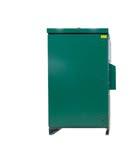
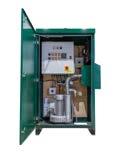
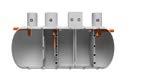
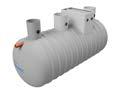
A variable speed three phase blower to increase efficiency, reduce energy usage, reduce costs and lower the overall carbon footprint, can be installed within the kiosk on all plants above 100 PE. An optional probe can also be supplied to regulate the air supply in the biozone chamber, again maximising energy efficiency whilst reducing cost for the end user.
Designed, manufactured and tested in accordance with EN12566-3 for plants below 50PE, EN12255 for plants above 50PE and the British Water Code of Practice for Flows and Loads, the Rewatec SAF is capable of meeting strict effluent standards that exceed UK environmental discharge requirements, for a range of on-site applications that don’t have access to the main sewage network.
To find out more visit: https://www.premiertechaqua. com/en-gb/wastewater-treatment/sewage-treatmentplant-saf
Education and healthcare facilities face a common challenge: deliver essential public services while reducing carbon emissions and controlling spiralling energy costs.
The NHS has committed to ambitious Net Zero targets, with clear expectations to reduce operational emissions and show measurable progress under their Green Plans. Whilst at the same time, schools, colleges and universities are being guided to cut energy demand, lower carbon emissions and conduct energy audits through their Climate Action Plans.
In both sectors, the direction of travel is clear - the constraint is not ambition, it’s time, budget and resource.
The reality of public sector facilities
Hospitals operate 24/7 with energy-intensive medical equipment, ventilation and hot water systems. Whilst education buildings must maintain optimum internal temperatures, balance ventilation and manage ageing infrastructure - all with limited budgets. The Department of Education guidelines imply that understanding energy usage and conducting an energy audit is one of the top actions schools can take.
The same is true for NHS Green Plans: facilities must understand their baseline before acting on interventions. Yet many estates teams still rely on high-level meter data, which rarely reveal where inefficiencies truly lie.
Portable, non-invasive monitoring devices offer a practical first step. Tinytag Energy Loggers enable Building and Facilities Managers to measure single and three-phase power across plant rooms, wards, classrooms or specialist equipment. By capturing voltage, current, power and power factor over time, teams gain detailed insight into:


In a climate of limited public funding, data-led decisions reduce risk.
• Peak demand patterns
• Unoccupied energy consumption
• HVAC performance
• Equipment inefficiencies
This detailed visibility supports evidence-based energy audits and help to identify improvements before projects are commissioned and money is spent.
When combined with the environmental monitoring of temperature, relative humidity and CO2 - critical in both clinical and teaching environments, energy data helps create the balance between comfort, compliance and cost control.
Cost-effective progress
Reducing internal temperatures by just 1°C can save 5–10% of annual heating costs in education settings. Similar gains across large hospital estates can translate into substantial savings.
In a climate of limited public funding, dataled decisions reduce risk. Rather than relying on assumption, facility managers can prioritise interventions based on measured evidence — targeting upgrades, optimisation or replacement where it will deliver the greatest impact.
For over 40 years, Tinytag by Gemini Data Loggers has supported public sector organisations with reliable, British-designed monitoring solutions. In the race to Net Zero, progress starts not with assumption, but with accurate measurement.
www.geminidataloggers.com/energy-efficiency
Gain clear visibility of where, when and how energy is being used, so inefficiencies can be identified and addressed with confidence.

Build a data-driven case for efficiency improvements.
Establish accurate energy baselines to justify investment, validate change and support funding or grant applications.
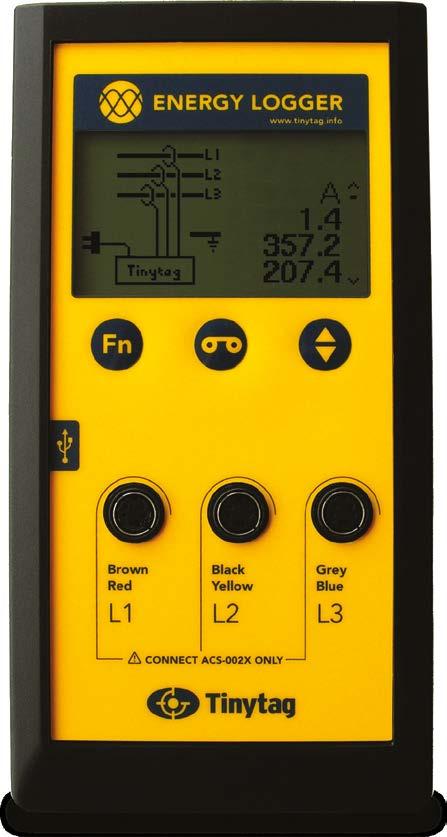

Turn energy costs into actionable insight. www.geminidataloggers.com/energy-efficiency
Reduce waste without disruptions.
Monitor energy consumption non-intrusively across equipment and facilities, without interfering with services or uptime.
Move to evidence-based decisions and control.
Replace guesswork with reliable data that supports smarter operational decisions and longterm efficiency planning.
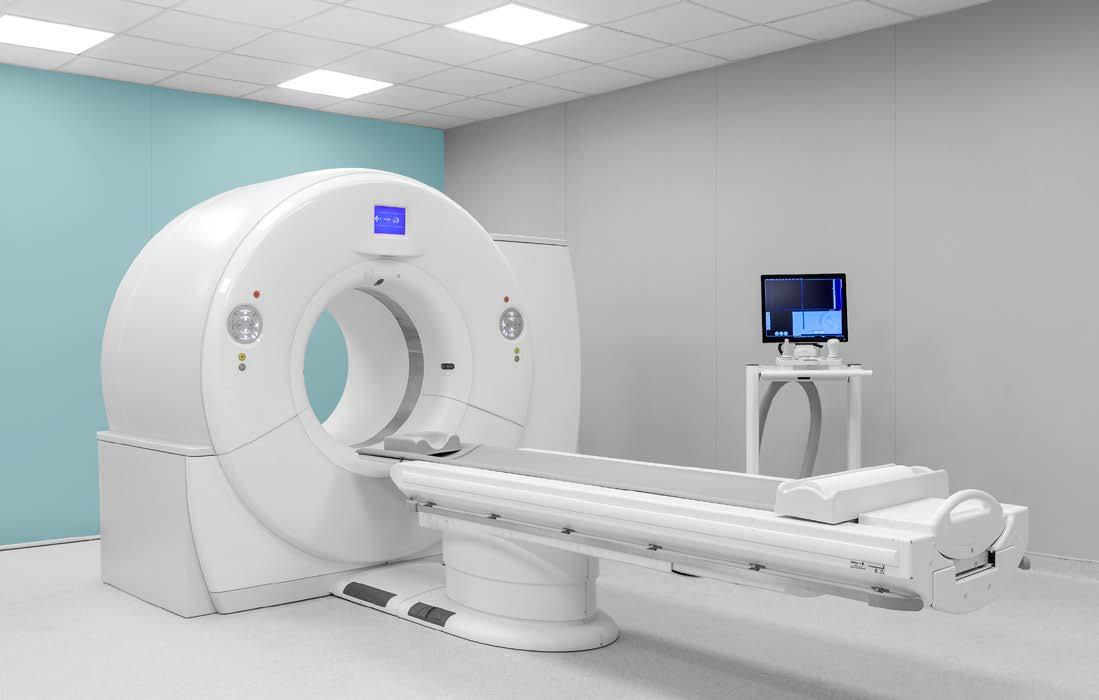
Specifically developed for areas where cleanliness is a priority, SureProtect Pure creates an impermeable barrier to moisture and bacteria, as well as a durable solution that is resistant to impact damage. 35 colours in the range (14 new colours shown below). DSDC accredited.
Image shows Meadow and Rhino SureProtect Pure Hygienic Wall Cladding.
Gradus enquiries
Tel: 01625 428922
E-mail: imail@gradus.com
Website: gradus.com
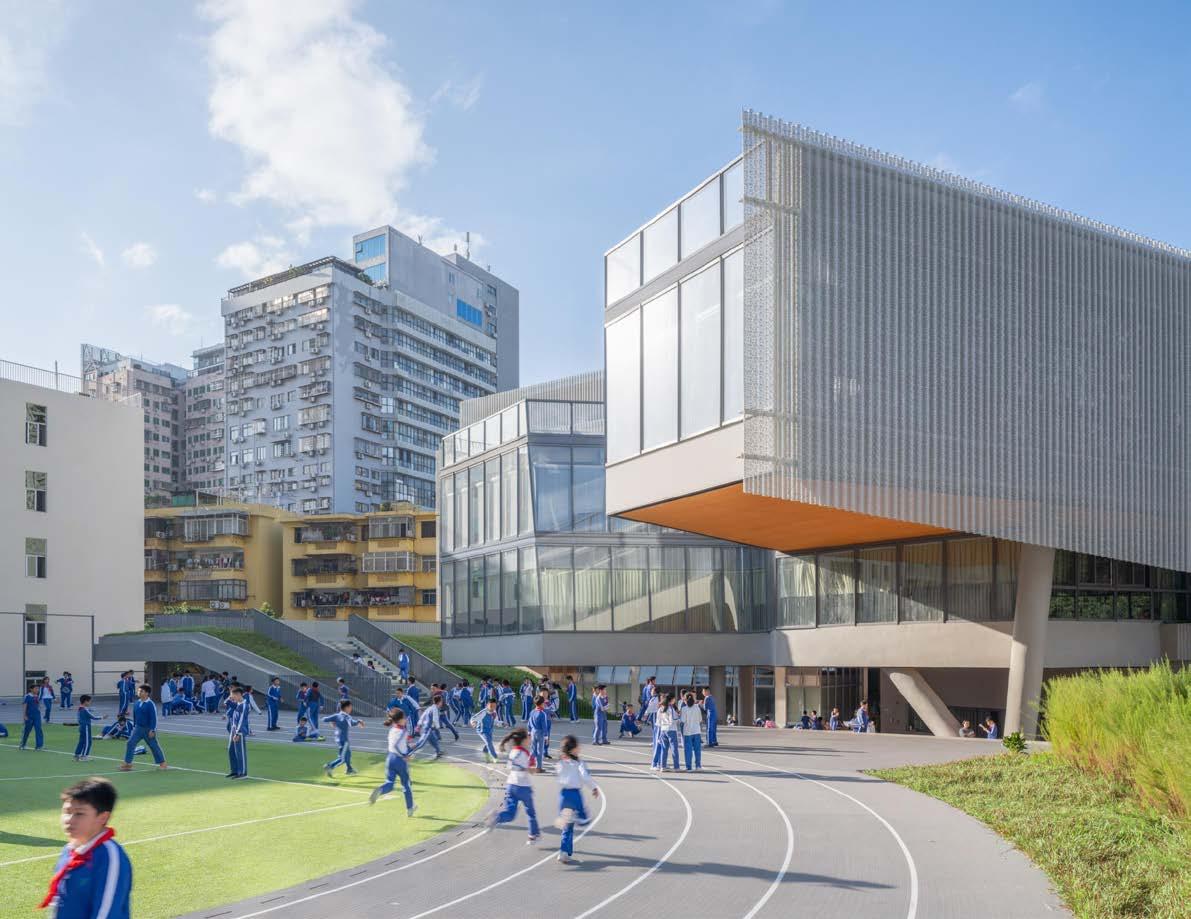
Located in the heart of Shenzhen’s historical district, Cuizhu School establishes a new typology for schools in high-density subtropical urban environments. Based on a terraced massing, classrooms sit loosely on large public platforms, forming a series of shaded outdoor spaces which extend traditional learning space. Six courtyards are carved out of the massing to respond to and extend the surrounding context, and also to bring light and fresh air into every corner of the school. A series of roof terraces populated with lush plantings returns nature to the campus and rewards the city with a beautiful fifth elevation (the roof plane).
The design of the Cuizhu School reveals a deliberate strategy that spatially and compositionally links the landscape design and massing to the site and its environs beyond
The oddly shaped project site exists at the intersection of two major urban thoroughfares. The massing responds to this by creating a strong urban wall on the northwest and northeast sides of the project to create a strong civic presence. Existing historical pathways are conceptually reconfigured on the site as courtyards that bring light and air into the project, creating a porous urban condition that breaks down the strong urban massing. Inspired by images of historic rice paddies, the urban mass terraces to the south create a stepped landscape with a dynamic program layout.
The design of the Cuizhu School reveals a deliberate strategy that spatially and compositionally links the landscape design and massing to the site and its environs beyond. The terraced massing of the school steps down to the south to allow access to light and

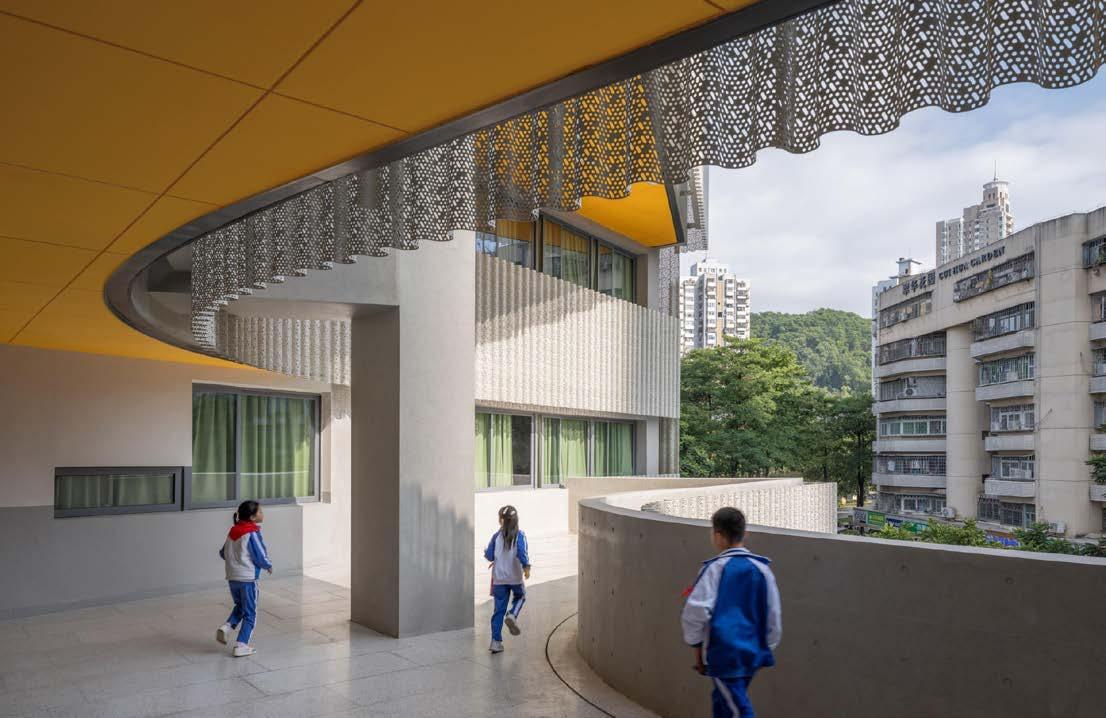
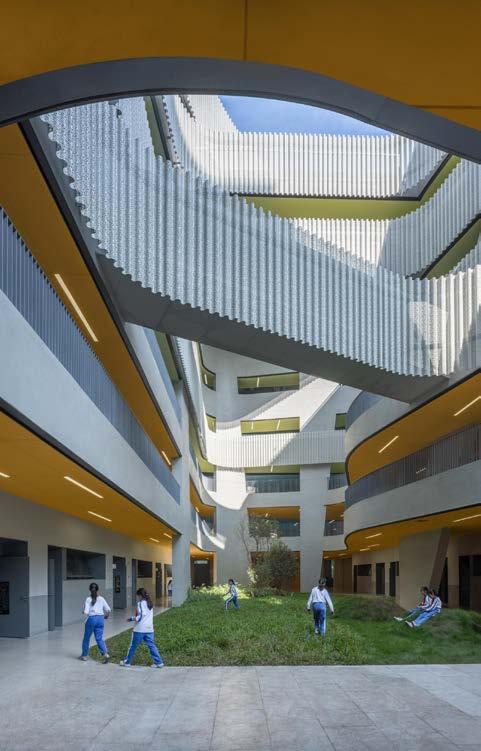
air, and to promote a congenial relationship to the open athletic spaces associated with the school. The voids in the massing create urban entry spaces on the northwest, and conceptually extend exterior open spaces to the south and west. Linking the massing to the angled program layout creates a dynamic terraced form that extends the landscape from the ground level to the roof of the school. A dynamic exterior landscape adds an additional level of nuance for children and visitors, while promoting exterior programmatic differentiation.
The program layout, the massing, and the civic space strategy of the Cuizhu School are all carefully linked to maximize the potential of each in relation to the other. The program bars are arranged from a position of basic clarity. Regular classrooms, Special Classrooms, and Offices are arranged for clarity and adjacency, and are adjusted to match the particulars of the site and desired compositional goals. The hard edges of the adjusted program massing are curved to create figural voids. The floors of these voids are lifted to create raised courtyards that create public amenities for students and faculty. A roof garden on top of the terraced massing creates a fifth facade, visible from nearby high-rises, and a programmed public space for users.

Technical sheet
Project Name: Cuizhu Foreign Language School
Project Location: Shenzhen, China
Project Area: 44030 sqm
Client: Development and Reform Bureau of Luohu
Chief Architects: Yichen Lu
Project Manager: Shiyu Guo
Project Team: Kenneth Namkung, Zeynep Urgr, Simeng Qin, Yu Sun, Qiaoxi Wu, Chuanzhang Li, Furui Sun, Yoko Fujita, Shixuan Sun, Ke Zhao
Architect of Record/Stucture/MEP: Shenzhen Machine
Architectural Design Co.
Structural Consultant: WS Engineering Design & Consultants Co.
Landscape Consultant: Studio Link-Arc + Bange
Landscape & Architecture Planning Design Co.
Interior Consultant: Studio Link-Arc + Ledao Design Co.
Curtain Wall Consultant: Studio Link-Arc + Huahui
Decoration Engineering Co.
Construction Management: Shenzhen Tianjian Shenzhen Tianjian Real Estate Development Company
General Contractor: China Construction Eighth Engineering Division Co.
www.link-arc.com
Photo credit: Tian Fangfang / Bai Yu /


As building design becomes more complex and expectations around resilience continue to rise, fire detection can no longer be treated as a late-stage compliance exercise. It is a strategic element of building performance, influencing life safety, asset protection and long-term operational continuity. In this Q&A interview, we speak with Martin Green, Commercial Training & Support Manager at Hochiki Europe, whose three decades of experience in fire detection and life safety have shaped best practice across the UK and beyond. Drawing on deep technical expertise and real-world insight, Martin explores what architects and design teams need to consider early, where EN 54 compliance can unravel, and how to design systems that remain robust in an increasingly unpredictable environment.
For readers new to Hochiki, where do you add the most value during the design phase, and what are the key inputs you need early?
We add the most value right at the beginning, when the building is still an idea rather than a fixed layout. Too often, fire detection is treated as something that’s overlaid late in the process, but the reality is that early decisions shape everything that follows.
What we really need to understand upfront is how the building will be used. Is there a sleeping risk? Are there vulnerable occupants? Is the priority purely life safety, or is property protection and business continuity equally important? The environmental conditions matter too, ceiling heights, airflow, temperature fluctuations, even dust levels can all influence detector choice.
When we’re brought in early, we can make sure the system supports the architectural vision rather than forcing compromises later. It’s about aligning the fire strategy, the building use and the technology from the outset.
You’re speaking on EN54 compliance, waterdamage risk and fire safety in a “risky world” at the Fire Safety Event. Is there a common thread, and what should architects be doing differently?
The common thread is resilience. Compliance is essential, EN 54 ensures that products meet rigorous
performance standards, but compliance alone doesn’t guarantee long-term performance in real-world conditions.
Buildings today face more stress than ever: environmental extremes, ageing infrastructure, increased occupancy demands and sometimes changing use over time. Water damage, for example, is now one of the biggest drivers of insurance claims in the UK. That tells us something about how exposed buildings can be.
Architects should be thinking beyond minimum compliance. The key question is not just “Will this system pass at handover?” but “Will it still perform reliably in 10 or 15 years?” Designing for resilience means considering maintainability, access, adaptability and environmental protection right from the start.
When you say “design for EN 54 compliance”, what are the top three design decisions that most affect commissioning success and sign-off? Commissioning success is usually decided long before commissioning day.
Firstly, agreeing the correct category of protection early is crucial. If there’s ambiguity around whether a system is L1, L2 or otherwise, it often leads to latestage redesign.
Secondly, zoning and cause-and-effect need to be logical and aligned with the evacuation strategy.
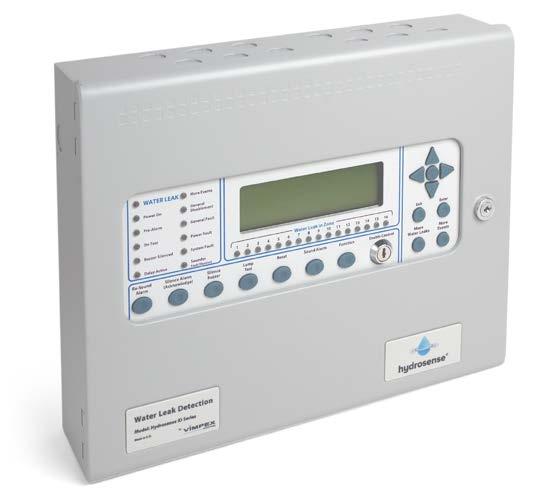


what’s often missing is a clear explanation of how the system supports the building’s fire strategy.
A future-proof system acknowledges that and provides headroom for adaptation without requiring wholesale replacement.
If zones don’t make sense, confusion follows, both during commissioning and in a real incident.
Thirdly, choosing the right detection technology for the environment is vital. A detector that works perfectly in a clean office environment may struggle in a dusty plant room. Getting that right upfront prevents headaches later.
When those three decisions are made carefully, signoff tends to be straightforward.
Where does compliance most commonly unravel later, and what can architects do to close that gap? It usually unravels where design intent meets on-site reality.
Ceiling layouts change. Services are rerouted. Devices are moved slightly to “make things work.” Individually, these adjustments may seem minor, but collectively they can undermine coverage or accessibility.
Architects can help by clearly documenting the agreed protection category and ensuring the fire strategy drawings remain coordinated with ceiling and services layouts. Specifying competent, thirdparty accredited installers also makes a huge difference. Ultimately, protecting the integrity of the original design intent is key.
At handover, what evidence pack should a building owner expect and what’s often missing?
A building owner should receive more than just a box of certificates.
Yes, they need commissioning certificates, asfitted drawings, zone charts, cause-and-effect documentation and maintenance guidance. But
Owners need to understand what they have, not just that it complies, but how it works and what their ongoing responsibilities are. That clarity supports auditability and long-term compliance.
What does “future-proof” look like in detection design, especially for refurb-heavy buildings?
Futureproofing isn’t about overcomplicating a system; it’s about allowing flexibility.
That might mean designing in spare loop capacity, creating logical zoning that can adapt if spaces are subdivided, or allowing for wireless extensions in refurbishment areas where running new cabling would be disruptive.
Most importantly, a futureproof system means that a system can be maintained and updated with stateof-the-art devices that will be fully compatible with the Fire Alarm Panel without the need to replace the entire system.
Buildings change. Tenants change. Uses evolve. A future-proof system acknowledges that and provides headroom for adaptation without requiring wholesale replacement.
Unwanted alarms are a reputational and operational issue. What works best to reduce them while maintaining robust detection?
Unwanted alarms are rarely caused by “bad equipment.” More often, they’re caused by environmental mismatch or poor commissioning.
Design plays a big role. Placing detectors away from air supply grilles, selecting multi-sensor devices where cooking fumes or steam might be present. Selecting the correct sensing technology based on the environment and carefully configuring sensitivity levels all help.
Equally important is commissioning and user training. When the end user understands how the
system works and how to manage it, the likelihood of operational false alarms reduces significantly.
The goal is always the same, strong detection performance without unnecessary disruption.
Early in design, how can teams support both life safety and business continuity?
It starts with a conversation about priorities. Life safety is non-negotiable, but many clients also depend on their building remaining operational after an incident.
If property protection and business continuity are important, that should be agreed and documented early. That may influence detector density, system integration or monitoring arrangements.
When those objectives are aligned from the outset, the system becomes a strategic asset rather than simply a compliance requirement.
False Alarms create complacency and downtime. A competent system design will result in a reliable futureproof system
On water damage, what design vulnerabilities do you see most often, and how can they be mitigated?
We frequently see plant areas without adequate monitoring, concealed pipework in ceiling voids without leak detection, and limited isolation capability in risers.
Water damage often goes unnoticed until it becomes significant. Simple measures, like installing leak detection in high-risk areas or monitoring isolation
Looking ahead, which “risky world” factors will most affect fire safety performance and how can architects design for resilience now?
The risk landscape is undeniably shifting. Climate change is increasing environmental stress on buildings. Many estates are ageing. Buildings are being repurposed more frequently. And in some sectors, we’re seeing growth in hazardous environments where flammable gases, vapours or combustible dusts may be present.
In those hazardous areas, the challenge isn’t just detecting a fire, it’s ensuring the detection equipment itself cannot become an ignition source. That requires appropriately certified devices designed specifically for explosive atmospheres, combined with careful system design and installation.
More broadly, resilience comes down to early engagement, adaptable zoning, accessible design, appropriate certification and clear documentation. In a risky world, the most effective approach isn’t necessarily adding more, it’s making informed decisions early so that the system continues to perform under real-world conditions.
Fire safety design is ultimately about foresight. Compliance with EN 54 provides a vital foundation, but true resilience comes from early engagement, clear strategy and decisions that account for how buildings are used and how they will evolve. From reducing unwanted alarms to mitigating water damage and safeguarding hazardous environments, the thread running through every discussion is the same: align intent, environment and technology from the outset. In a world where risk is shifting and expectations are higher than ever, informed early
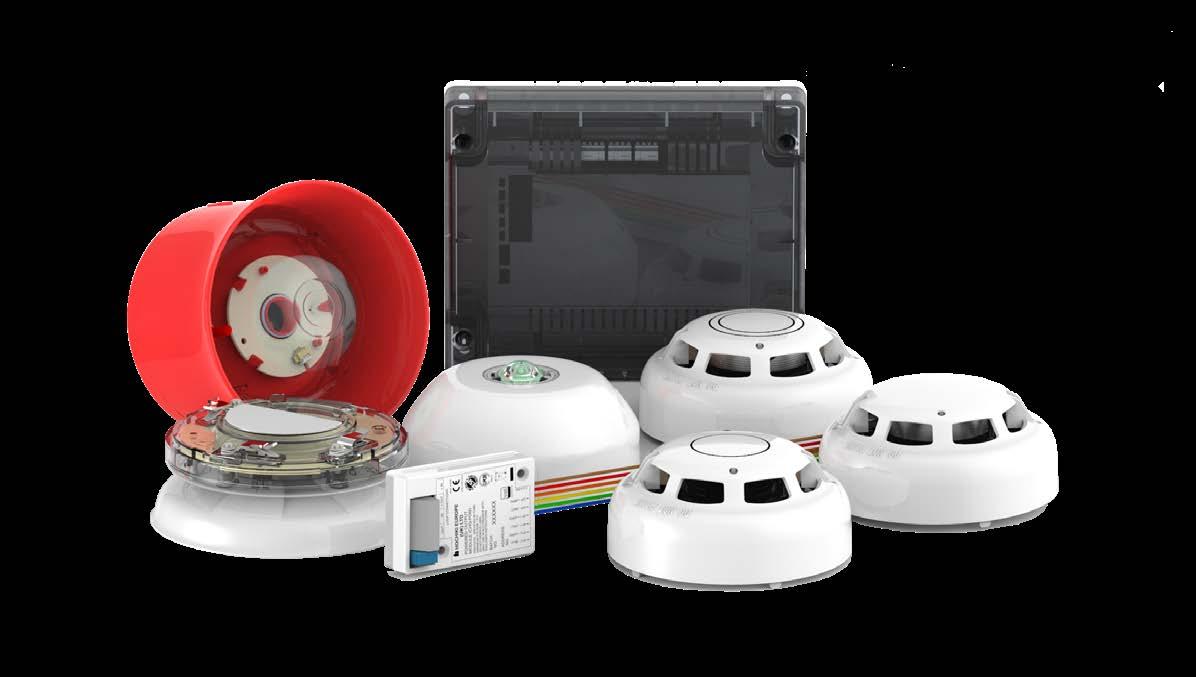

Allegion UK, a leading name in fire safety hardware with a trusted reputation for keeping people safe where they live, learn, work, and connect, discusses the importance of adequate ventilation and combining air movement with fire protection when both are needed. Supplier of the Zero FBLS Fire Block Louvre System, Allegion UK offers an extensive range of innovative fire door hardware designed to improve the effectiveness of fire doors in containing the spread of fire, smoke and heat.
Buildings that don’t breathe properly can become health hazards. Poor indoor air quality, from elevated CO2 to VOCs emitted by everyday materials, contributes to headaches, respiratory irritation and dips in concentration and productivity. Inadequate ventilation is a particular concern in offices, classrooms, plant rooms and other enclosed spaces where people spend long periods of time.
Door louvres are a straightforward, effective way to improve air circulation, helping to reduce moisture, dispersing pollutants and supporting temperature control. But where air can pass, so can smoke and flame. That’s why a conventional louvre is not suitable for fire-rated doors.
Iain Banks, Product Marketing Manager at Allegion UK, commented:
‘When you need airflow and fire protection in the same opening, a fire block louvre is the sensible and compliant option for your steel fire doors. Metal louvres will provide the ventilation you need in offices, classrooms, plant rooms, stores and other areas, but the Zero FBLS Fire Block Louvre System assures that ventilation doesn’t become a route for smoke or fire.’
The ideal solution for both factory-fitting and retrofit applications, the FBLS Fire Block Louvre System accommodates door thicknesses from 29 mm upwards and provides a 40% free area for effective airflow. At the centre of the FBLS is an intumescent fire block, which, under high temperatures, expands to seal the opening, choking off the passage of fire and cold smoke, while the louvre remains unobtrusive in everyday use. The result is a practical, compliant solution for fire-rated doors that also require ventilation.
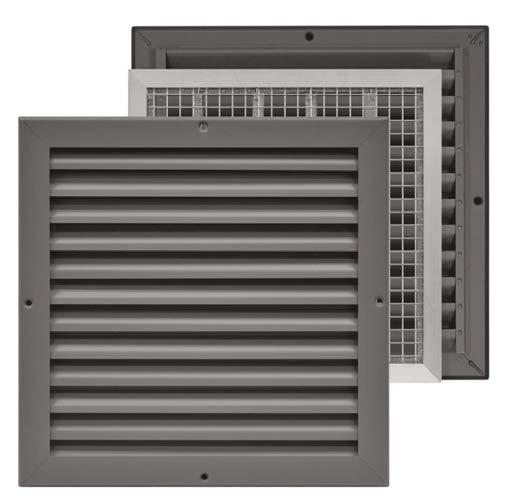
Our fire block louvre systems are expertly manufactured in our workshop and are suitable for steel fire doors, providing up to 240 minutes of fire integrity
Iain continues: ‘Our fire block louvre systems are expertly manufactured in our workshop and are suitable for steel fire doors, providing up to 240 minutes of fire integrity. We have over 20 standard sizes available from stock and any size available to order from a minimum cut-out of 152 x 152mm.’
To learn more about the Zero FBLS Fire Block Louvre System, visit zeroplus.co.uk or call 01785 282 910.
www.zeroplus.co.uk
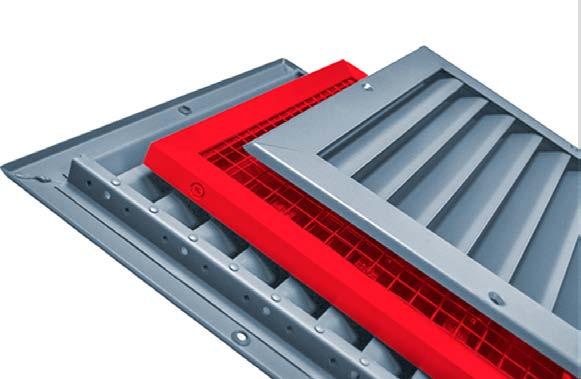
Fire rated to BS EN 1634-1:2014
Steel fire doors – up to 4 hours fire integrity
Timber fire doors – up to 2 hours fire integrity
British made, UKCA marked & UL certified
Available in various profiles & adjuster arm lengths
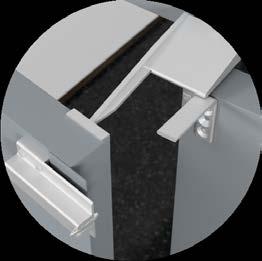


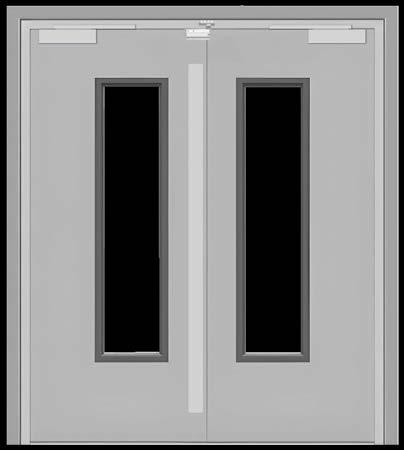
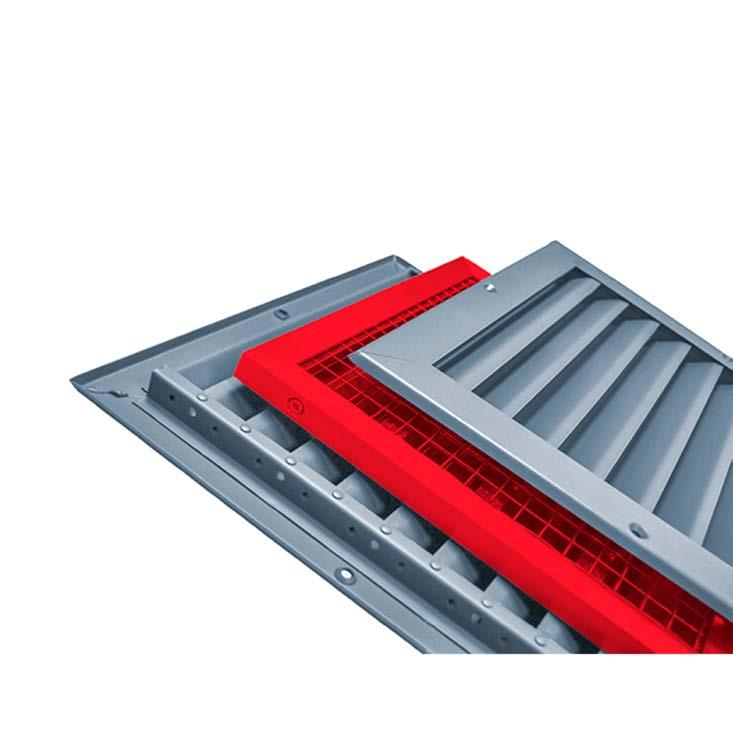



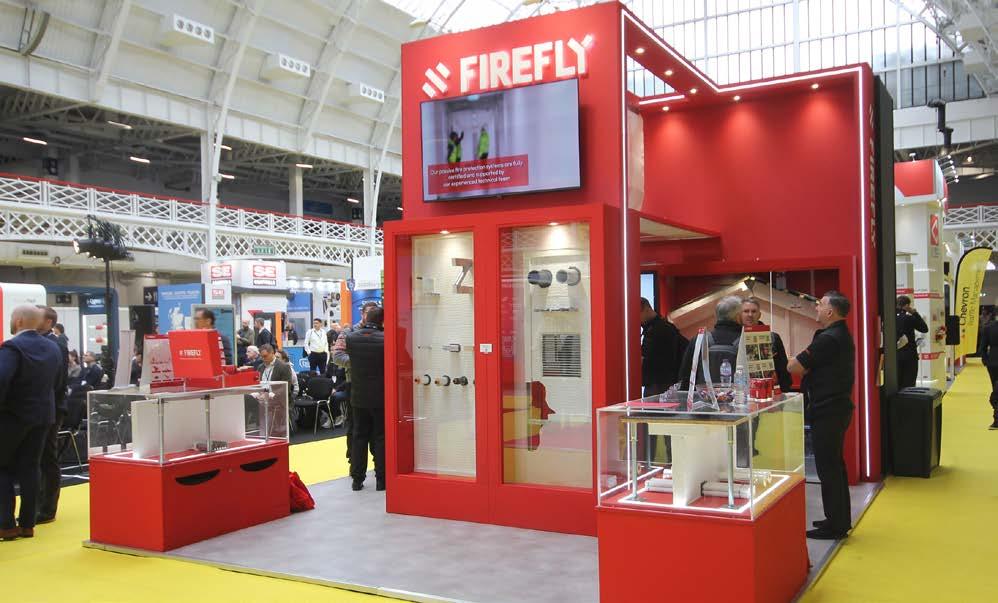
As a major manufacturer of barrier systems and other passive fire protection products, FIREFLY® is expecting to make a big impression at the Fire Safety Event 2026 (NEC Birmingham 28-30th April), with a quartet of important new products on its stand number 4H 103.
Along with well established ranges such as Apollo, Zeus and Titan Lite, the internationally recognised specialist will also be showcasing innovations such as the versatile FIREFLY® Span which has been developed to prevent the spread of fire, smoke and even sound through construction joints in walls and floors for a full 60 minutes. The product has been tested in accordance with BS EN 1366-4, confirming the viability of its open celled polyurethane foam structure – impregnated with fire resistant chemicals and bonded with layers of intumescent graphite.
Then to protect the computer floors which feature in industrial as well as commercial and other buildings, last year saw the launch of the FIREFLY® FB180 Raised Access Floor System, which makes extensive use of the company’s ablative batts to provide up to
240 minutes protection against the spread of flames within the vulnerable voids.
Addressing another secondary structure and able to enhance compartmentation performance, as well as and control smoke across suspended ceiling installations, the manufacturer has neatly repurposed its Apollo Lite 30:30 barrier. This innovative adaptation is fully tested to BS 476 Part 22, while the flexible membrane remains easy to install and will deliver 30 minutes integrity and insulation.
The last of the four new products to be found on the FIREFLY® stand presents a one-sided version of the mineral wool batt which can be cut to shape and deployed where access is difficult. It is ideal for use in property types from hospitals and care homes, to plant rooms and heritage settings.
Whatever the situation or the period of protection sought, the FIREFLY® personnel at the NEC will be able to propose a practical, compliant and cost effective solution.
www.tbafirefly.com



An addressable detection and control solution designed for flexible specification, simpler commissioning and long-term asset management.
Minimise disruption: Planned testing and maintenance cycles.
Simpler install: Less cabling and a cleaner fit-out.
Flexible spec: Open protocol with wider device choice.
Handover ready: Self-test reports for audits and compliance.
Fewer unwanted alarms: Smarter detection and clearer diagnostics.
Scalable: From single sites to multi-building networks.

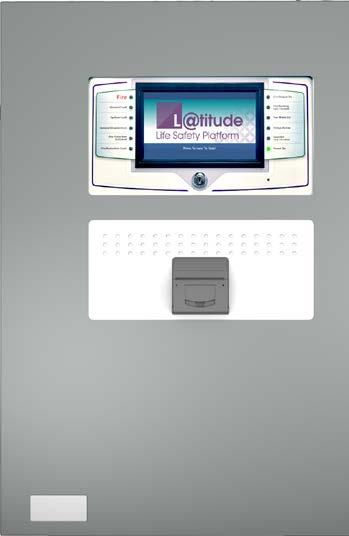
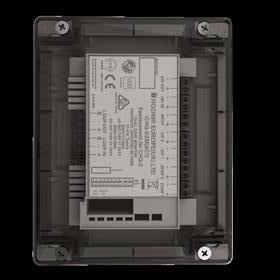
Explore system architecture and compatible devices. Scan the QR code to learn more.
Stopford Park is a landmark residential-led development located on Greek Street and Wellington Road in Stockport. Comprising 442 apartments, the scheme is designed to create a new neighbourhood community with a landscaped public realm in the heart of the town.
The development spans three principal residential buildings, alongside the sensitive redevelopment of the Grade II listed Greek Street Building, formerly the Metropolitan Girls’ School. This historic structure is being transformed into a collaborative co working space for local businesses, named Cheers & Smith, in recognition of the original architects.
The Bosden Building, the first phase to be delivered on the site, will provide 62 homes for sale and is where Damex FR has been successfully installed.
Key Project Participants
• Product Supplier: Euro Accessories Ltd
• Product: Damex FR – A2 Flexible, Non Combustible DPC and Cavity Tray System
• Contractor: Oak Construction Projects
• Location: Stockport, Greater Manchester
The Challenge
As a modern residential development, Stopford Park required materials that met stringent fire performance, durability, and regulatory compliance standards, while also supporting efficient construction programmes and cost control.
The original specification presented both cost and performance considerations, prompting Oak Construction Projects to explore alternative solutions that could deliver compliance, confidence, and commercial advantage.
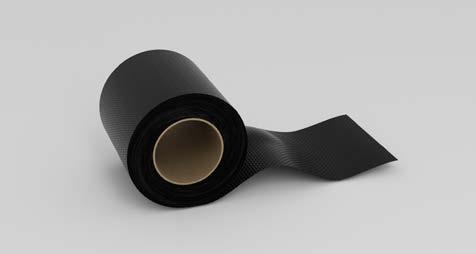

The Solution: Damex FR
Euro Accessories Ltd supplied Damex FR, an A2 rated Flexible, Non combustible DPC and Cavity Tray system. While Damex FR is relatively new to the UK market, they are supported by a team with extensive industry experience, with a product that has been engineered to address modern construction challenges.
Following a series of technical queries raised by the project architect, Damex FR worked closely with Oak Construction Projects to provide clarity on performance, certification, and compliance. Once these queries were addressed, Oak felt confident in switching the specification to Damex FR.
Key Product Features & Benefits
• Design Versatility: Fully reversible design allows installation on either face, with superior cold weather workability for year round use.
• A2 Fire Classification: Achieves A2 s1,d0 to EN 13501 1:2018, supporting compliance with stringent fire safety requirements.
• Kiwa BDA Certified: Independently audited and verified, providing assurance to designers, contractors, and building control.
• Enhanced Impact Resistance: Higher impact resistance when compared to the competition on a like for like basis.
• 25% More Per Roll: Longer rolls reduce installation time and material changeovers on site.
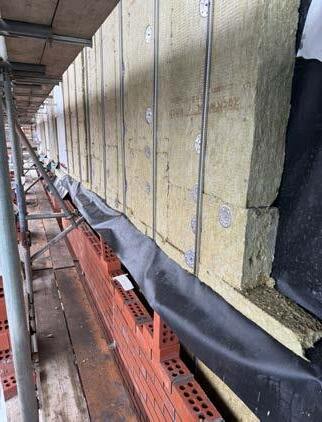
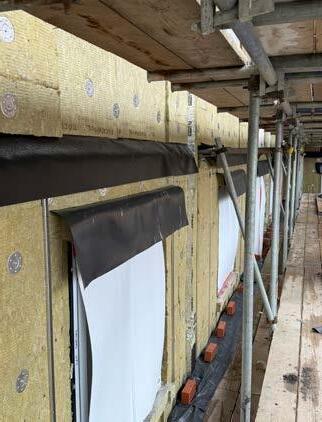
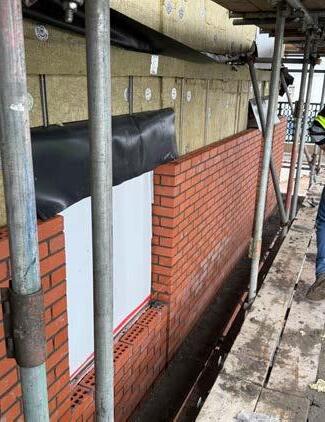
By switching to Damex FR, Oak Construction Projects achieved a 25% cost saving compared to the original specification, without compromising on safety, quality, or performance.
• Waste Reduction: 600ml adhesive foil system cuts packaging waste by up to 90%.
• EN 14909:2012 Compliant: Ensures a fully functional and certified DPC
• Bespoke Sizes Available: Reduces waste and delivers cost efficiency, customers only pay for what they need.
Results
By switching to Damex FR, Oak Construction Projects achieved a 25% cost saving compared to the original specification, without compromising on safety, quality, or performance.
Additional benefits included:
• DPC and Cavity Tray was installed earlier in the build program than the original specified material,
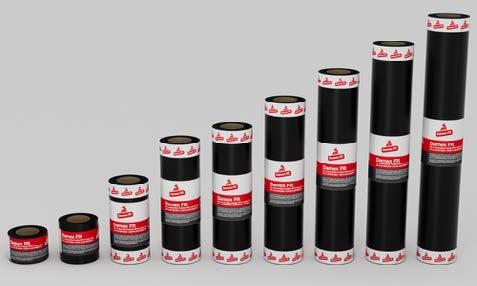
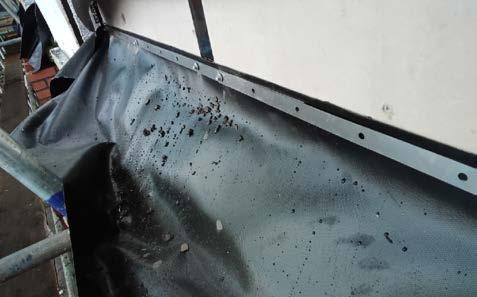
preventing delays and speeding up delivery of the project.
• Next day delivery and improved site support.
• Reduced material waste and disposal costs, with improved site sustainability.
Conclusion
The successful installation of Damex FR on the Bosden Building at Stopford Park demonstrates how innovative, compliant products can deliver both technical assurance and commercial value.
Through early technical engagement and collaborative problem solving, Euro Accessories and Damex FR supported Oak Construction Projects in adopting a modern cavity tray and DPC solution that meets today’s regulatory demands while delivering measurable cost savings. As the first building completed on this major development, the Bosden Building sets a strong benchmark for the phases that follow.
www.damexfr.com www.euroacc.co.uk www.oakconstructionprojects.com


DoorBird, a leading innovator in IP video door communication, is proud to announce the seamless integration of its D11x series intercoms, with support for the D18x series coming soon, with Crestron Home, the premier smart home platform. This collaboration marks a significant milestone in smart home interoperability, offering homeowners and integrators a powerful, unified solution for secure and intelligent entry management.
Developed in partnership with Crestron, this new functionality enables native compatibility with DoorBird D11x and D18x series products to Crestron Home touch screens using Crestron’s RAVA protocol. The integration is hardware-free and allows users to control DoorBird IP video door stations directly from the Crestron Home interface.
Key features of the integration include:
• Group calling using RAVA from DoorBird to Crestron touch panels.
• Relay Control: Manage native and external relay functions for gates and doors.
• Event Triggers: Receive real-time notifications for

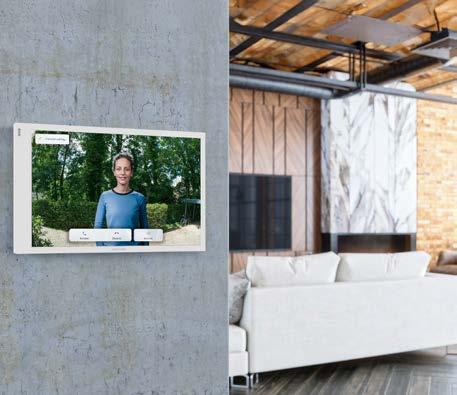
doorbell rings, RFID scans (D18 only), motion detection, and fingerprint authentication.
• Express Configuration: Enable the “Crestron” switch in the DoorBird Connect section during set up and put your DoorBird in “Crestron mode”
This integration empowers homeowners with enhanced security, convenience, and control, while offering integrators a streamlined setup process.
To learn more, visit www.doorbird.com.
Sliding and folding door hardware manufacturer, P C Henderson, have recently relaunched their popular Pocket Door Pro Fire Rated system, expanding the certification to include a range of new features such as self-closing and soft close functionality.
Designed to meet the growing demand for high-performance and space-saving door solutions alongside enhanced fire safety compliance, Pocket Door Pro Fire Rated is certified to BS EN 1634-1, achieving E30 standards and offering 30 minutes of fire protection when installed with an FD30 rated door as part of a compliant door assembly.
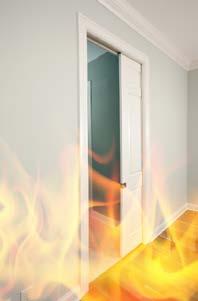
The system is designed for doors weighing up to 120kg and sizes up to 2315mm x 930mm, as well as catering for finished wall thicknesses of 145mm or 150mm after double boarding. The newly certified system incorporates both the pocket door hardware and a certified timber liner kit, complete with intumescent strips to help prevent the spread of fire for up to 30 minutes.
The relaunch further enhances P C Henderson’s fire-rated offering with the addition of a certified self-close and soft close functionality. The self-close ensures the door returns reliably to the closed position, while the soft close mechanism improves user experience by preventing doors from slamming. A range of flush pulls were also used in the fire test to achieve fire certification.
Dave Newton, Sales & Commercial Director at P C Henderson, commented: “Pocket doors continue to grow in popularity in applications such as apartments, hotels, offices and healthcare - driven by their space-saving benefits and design flexibility. With the increase in fire regulations across developments since Grenfell, we are seeing more projects requiring fire rated sliding door hardware with self-closing options to be compliant. Our newly certified self-close allows us to be considered for such projects”.
For full technical specifications on Pocket Door Pro Fire Rated, visit www.pchenderson.com.
With the Fire Safety Event taking place from 28-30 April 2026 at the NEC, Birmingham, Shaun Scott, Applications Engineer at Advanced, details the company’s latest fire safety technologies that will be on show on stand 4/D85.

Shaun Scott
The Fire Safety Event provides an important opportunity to demonstrate how fire systems are evolving to meet the latest industry challenges. At this year’s show, Advanced will be highlighting a range of new and enhanced fire safety solutions, designed to simplify compliance while supporting smarter, more sustainable buildings.
Visitors to stand 4/D85 will see the new SmokeGo, a powerful smoke control panel designed to offer complete and active smoke management through the fire system, without the complexity. Also on show will be AdvancedLive, the company’s secure, real-time fire system management platform, with live demonstrations, and a preview of an innovative new feature designed to enhance safety, save time, and simplify proof of compliance. Attendees will also be able to explore Advanced’s best-selling next-generation MxPro 5 panels and EvacGo evacuation alert systems.
Developed to give specifiers, installers, and end-users a smarter, more intuitive way to achieve smoke control in a wide range of buildings, the SmokeGo is designed to make smoke control simpler, faster and fully compliant. From dedicated to non-dedicated smoke control systems, SmokeGo makes configuration and operation quicker, clearer and easier. Integrating seamlessly with Advanced’s next-generation MxPro 5 fire panels, SmokeGo allows precise control over smoke fans and dampers, both automatically and manually.
Offering real-time monitoring, AdvancedLive provides complete system visibility via desktop, tablet or mobile. With real-time alerts and a clear dashboard, facilities managers and service providers can monitor system health, track device histories, and plan maintenance more efficiently. Robust cybersecurity protections ensure data remains secure at all times.
The next-generation MxPro 5 now includes Ethernet connectivity as standard, making it easy to integrate with AdvancedLive. Trusted across thousands of UK sites, the

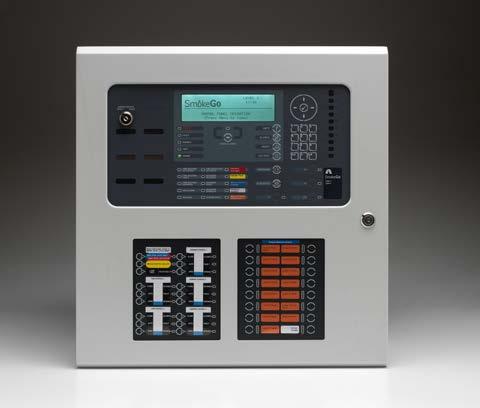
versatile panel supports up to 200 nodes and offers wide open-protocol compatibility. Enhanced configuration features support multiple requirements, including sitewide lockdown notifications using unique tones, voice messages, or integration with pagers and other devices to meet Martyn’s Law requirements.
EvacGo ensures BS 8629 compliance in new-build residential buildings over 18m. Built using EN54approved components, the system provides fire and rescue services with simple controls for partial or full evacuations. ServiceTool simplifies compliance reporting and system maintenance.
Visit stand 4/D85 to discover Advanced’s latest intelligent fire safety equipment.
Tel: 0345 894 7000 or visit: https://www.advancedco.com/
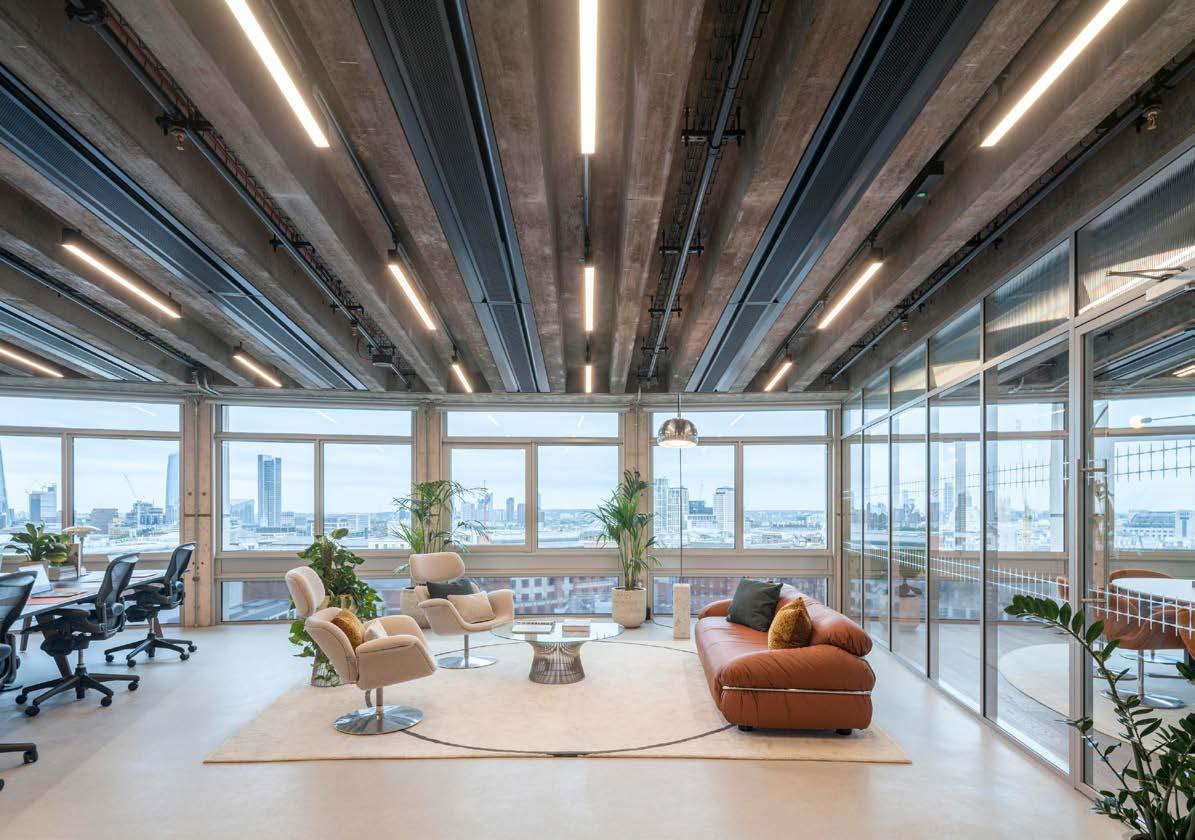
THE REIMAGINING OF A BRUTALIST ICON
Squire & Partners has sensitively refurbished and extended the iconic Grade II-listed Space House in Covent Garden for Seaforth Land and QuadReal. The ambitious retrofit creates 255,000 sq ft of highquality workspace, contemporary and flexible retail space at ground floor, and an improved public realm. The revitalisation of the landmark has preserved and enhanced the building to allow people to work and socialise in and around its outstanding 20th century architecture once more.
A symbol of the 1960s commercial property boom, Space House was designed by Richard Seifert and Partners and is known for its innovative architecture, with a distinctive cylindrical tower with a precast cruciform façade sat on y-shaped columns, a
rectilinear block, and connecting bridge which were designed as a response to the surrounding urban context.
Built in 1968, Space House was inhabited exclusively by the Civil Aviation Authority until 2019. Having been refurbished in 1996 and again in 2003, Squire & Partners’ designs remove the layers of subsequent interventions to retain, expose, and celebrate the original architecture, whilst creating new, complementary additions to accommodate modern working environments.
The existing buildings have been reimagined, with two floors of office accommodation added to the tower and a single-storey extension to the block. The
The sky bridge creates contiguous workspace on the first and second floors, and a garden terrace on the third.
extension of the now 17-storey tower tidies up the existing rooftop plant, reinstating the original design intent for a clean set-back top floor, whilst creating a 3,600 sq ft roof terrace. The new eighth floor of the block provides meeting rooms and a Club House comprised of a bar and 5,000 sq ft terrace accessible to all tenants.
Upon entering the tower, occupants are welcomed by a spacious double-height lobby and reception. The 10,000 sq ft circular, column-free floorplates are flooded with natural light, with the top ten floors offering unobstructed 360-degree views of the city. In the block, an intimate lobby leads to eight levels of 8,000 sq ft workspace floors. The sky bridge creates contiguous workspace on the first and second floors, and a garden terrace on the third.
The egalitarian workspaces feature long sightlines, offering high levels of visual connectivity to support collaborative working. Designed in a loft style, offices feature polished concrete floors, whilst new terrazzo flooring has been installed throughout the common areas, with original mosaic tiling in the stair cores retained.
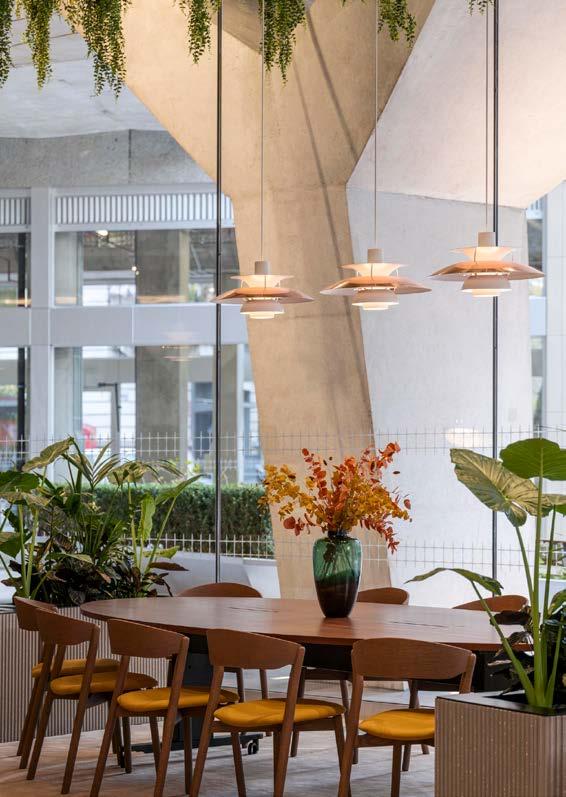
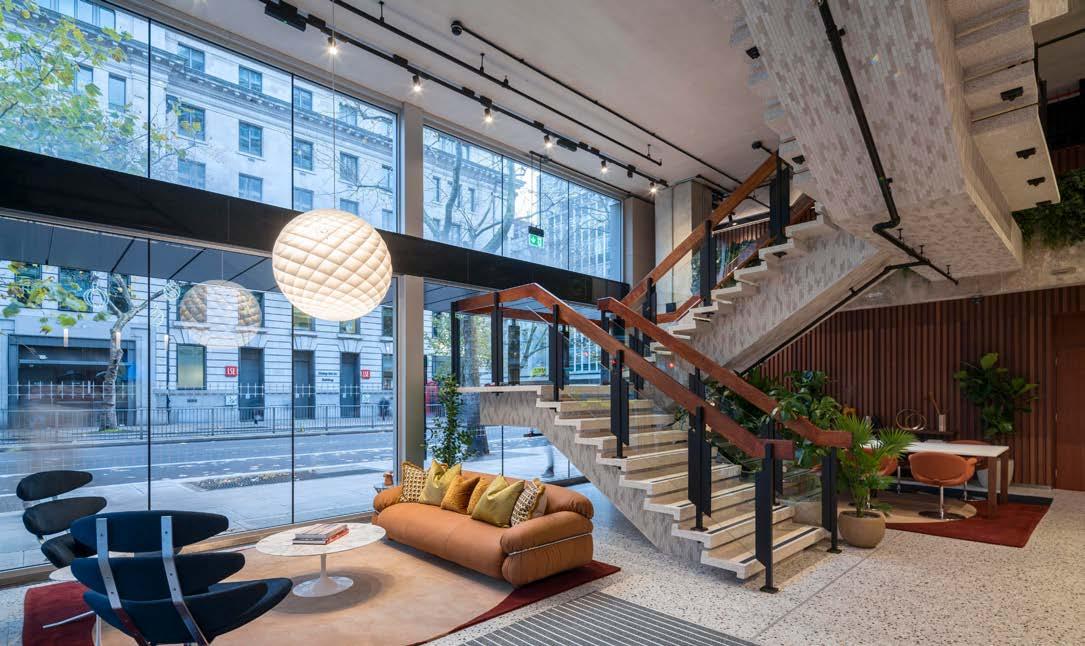
Originally built in an era advanced by the popularity of the automobile, designs reinvent the car-centric elements of the building for the future. One of three ramps to the basement has been retained to create dedicated cycle access to end of journey facilities. The existing car park now provides expansive cycle storage for 600 bikes alongside showers, lockers, drying rooms, and changing facilities. Elsewhere, the two-storey basement is punctured with a void to deliver 16,500 sq ft of flexible double-height event space.
Space House is the largest Grade-II listed building in the UK to achieve BREEAM ‘Outstanding’. The deep articulation of the existing façade provides passive shading measures, and dilapidated parts of the envelope have been replaced to meet modern standards. A new, high-performing services installation utilises air source heat pumps, and heating and cooling is provided by bespoke chilled beams, which are designed to fit seamlessly within the existing radial ceiling coffers. The revitalised building provides a highly connected and diverse digital platform for its occupiers, with Fitwel 2-star and Wired Score Platinum certification.
The existing poor quality public realm, previously used as a private car park, has been enhanced to provide links between the ground floor retail uses in the two buildings. An existing onsite petrol station canopy at the base of the tower has been enclosed to become The Filling Station café, activating the street level and opening it up to public use.

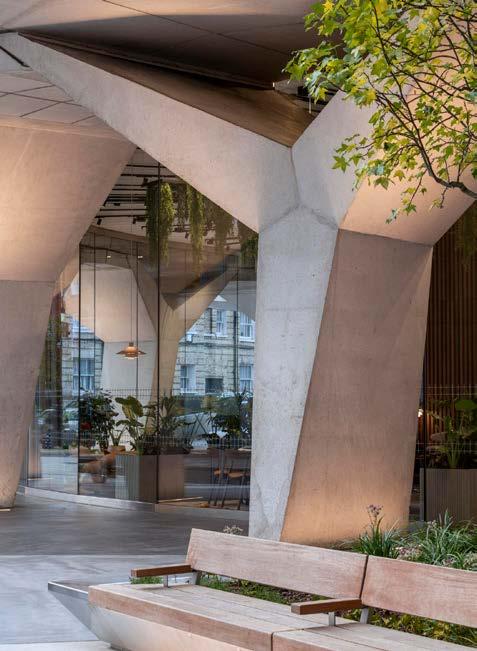
Space House is the largest Grade-II listed building in the UK to achieve BREEAM ‘Outstanding’.
The building’s purposeful massing and strongly articulated façade have stood the test of time and have been sustainably restored to respect its brutalist character, whilst setting the standard for the future of the workplace. The needs of tomorrow’s occupier have inspired the creation of bright, generous, and democratic space, which will prolong the life of the building for many years to come.
Start on site Demolition works: July 2020
Construction works: April 2022
Planning granted: Nov 2019
Completion date: October 2024
No. of storeys: Tower – 16, Block – 7
Form of contract: Design Build
Construction cost: £110M
Construction cost/m2, £2,976.67/m2, (GEA divided by construction cost)
Estimated no. of occupants: Tower = 1,996 office occupants
Block = 680 office occupants
www.squireandpartners.com
Incorporating all the familiar benefits of CaberFloor P5 plus a super resilient protective surface, CaberShield Eco is the new and greenest answer for laying decks in challenging conditions.
As a manufacturer of panel products using responsibly sourced and certified timber, West Fraser has now published a useful fact sheet outlining the product’s highly sustainable credentials: underlining why CaberShield Eco represents the future for weather-decking.
As well as listing the major bullet-points, the A4 publication covers the most important technical aspects to the company’s highest performing flooring panel, using full colour images; while a standout strapline proclaims, “Keep building even with the roof off”. And if the reader is in any doubt about the board being truly weatherproof, West Fraser promises 60 days durability for CaberShield Eco whatever the weather.
The 100 per cent, recyclable panels feature a P5 specification with a solvent-free, singlesided UV-cured resin coating across the top surface. Then for added safety, the durable boards are also made slipresistant, so are an ideal platform to specify when working at height – plus they will withstand heavy site traffic, including the stacking of concrete blocks.
As the concise publication informs us, the boards boast all the inherent practical benefits of CaberFloor P5 when it comes to cutting and fixing while, if installed according to the manufacturer’s instructions using CaberFix D4 adhesive, will carry the confidence of the 60-day BBA certificate.
CaberShield ECO sheets are 22mm thick and supplied in one standard size of 600 x 1200mm, with a TG4 edge profile. As the title on the leaflet states, they are “the greener choice for permanently protected flooring”. Plus, for the eventual building-user, their
The 100 per cent, recyclable panels feature a P5 specification with a solvent-free, singlesided UV-cured resin coating across the top surface.
specification will help reduce Scope 3 emissions in comparison to traditional flooring.
All West Fraser panel products produced in the UK are net carbon negative and manufactured in mills that have obtained the coveted environmental ISO 14001 accreditation. Responsibly sourced, the panels are FSC certified and created from locally grown timber, cutting the embodied carbon associated with transportation.
For further information, call 01786 812 921 or visit Uk.westfraser.com
“Resilient flooring” has long been dominated by plastics and petrochemical compounds, materials that are carbon intensive to manufacture and complex to recover at end of life. Millions of square metres of these products are specified across commercial sectors each year, ever increasing the environmental burden on the planet.
Karta was developed to rewrite the narrative around commercial flooring. Founded within Ted Todd Group, and drawing on the wood flooring family’s three decades of industry-leading material knowledge, the brand applies timber intelligence to modern innovation. Karta delivers a resilient surface engineered from circular materials, designed for contemporary commercial spaces, and built to perform without plastic.
Now entering its second year at Clerkenwell Design Week, Karta returns with strengthened momentum and revolutionary new developments. Following global recognition at the SBID International Design Awards 2025, attention turns firmly to what comes next: advancing circular specification, refining performance standards, and supporting architects and designers seeking credible alternatives to vinyl-led solutions.
Every floor in Karta’s Recycled Leather Series diverts post-industrial leather offcuts from landfill, reengineering them into a stable, durable core. A PEFCcertified wood fibre layer maximises timber yield from sawmill by-products, while a cork backing, harvested without felling a single tree, delivers acoustic comfort and removes the need for separate underlay.
Surface design is informed by a thirty-year archive of real timber. Using patented super-HD print technology, each plank captures authentic tone and grain variation with no recolours and no repeats
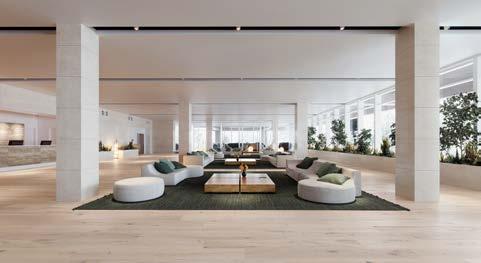
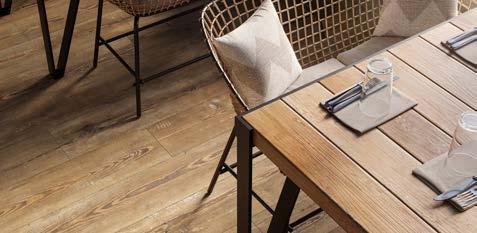
Now entering its second year at Clerkenwell Design Week, Karta returns with strengthened momentum and revolutionary new developments.
within 20 boards. A plastic-free Karta Plated® topcoat achieves AC5 durability, supporting use across hightraffic commercial environments as well as residential settings.
At Clerkenwell Design Week 2026, Karta will once again showcase the union of sustainability, specification confidence, and design intent in their 18-tone Recycled Leather Series – a re-engineered approach to resilient flooring grounded in heritage expertise and built for future standards.
After a showstopping Clerkenwell Design Week debut in 2025, Karta returns for three days of conversation and material exploration. Visitors to Karta at stand CG21 will experience the Recycled Leather Series up close, examining surface detail, tonal depth, and construction integrity firsthand. Positioned within Commercial Interiors on the Green, the stand forms part of a wider discussion around responsible material futures and the evolution of commercial surfaces.
Architects, designers, and specifiers are invited to engage directly with the team, discuss live projects, and discover the next chapter in circular commercial flooring at stand CG21, Commercial Interiors on the Green, May 19th - 21st 2026.
Enquire today for your next project: email info@kartafloors.com, or call 0808 501 7321
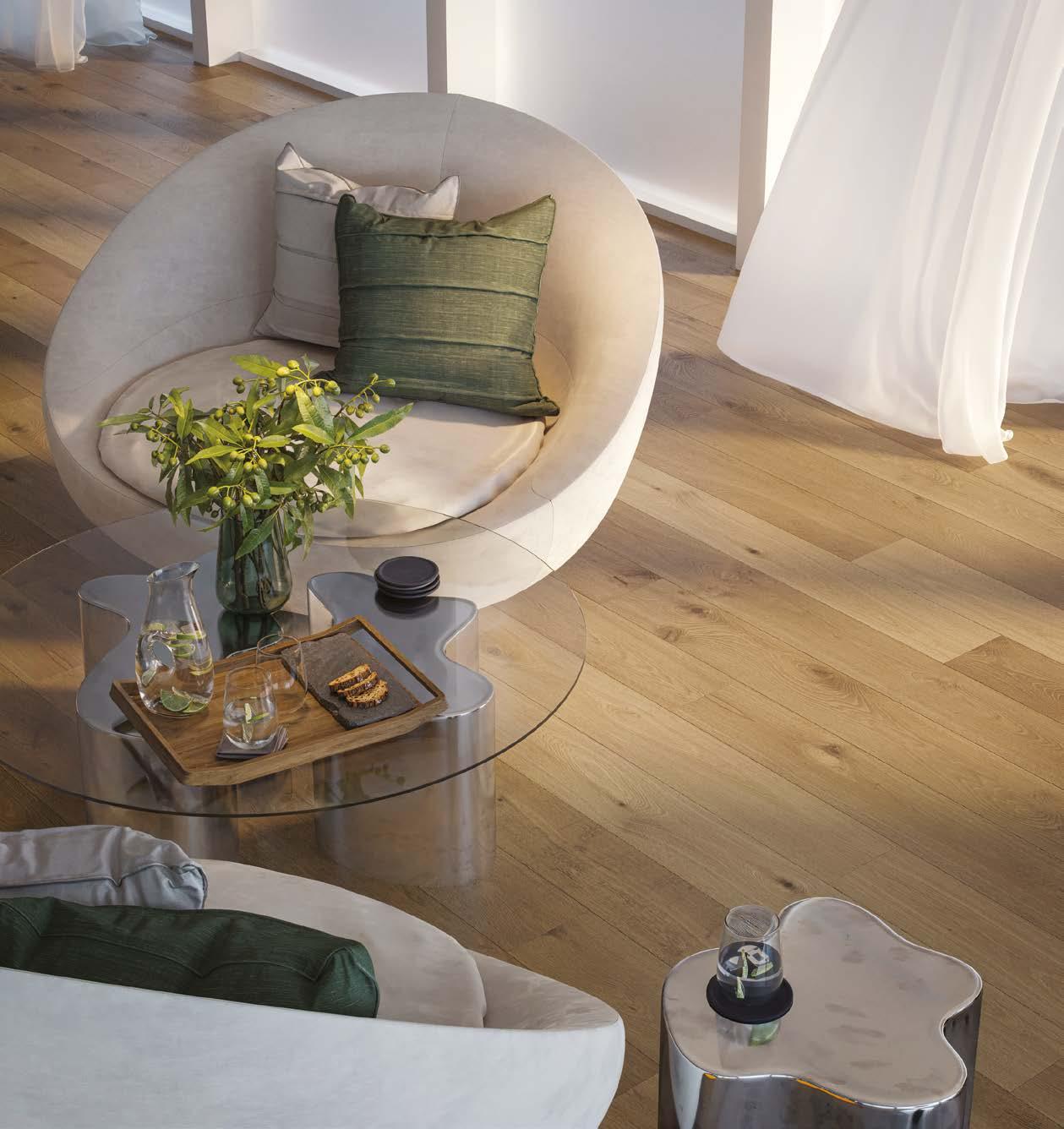

The UK flooring industry is set to welcome an exciting new addition to its trade calendar with the launch of The Flooring Show South, taking place 15–16 April 2026 at Sandown Park, Surrey. Building on more than 60 years of success in Harrogate, this new southern edition has been created to bring the very best of the industry closer to retailers, contractors, and specifiers based in the South of England.
For many southern professionals, travelling north has long been a challenge in terms of time and cost. The Flooring Show South responds directly to that need, offering a focused, two-day event designed to make sourcing products, meeting suppliers, and building relationships easier and more efficient.
The launch is proudly supported by six founding partners — Elements & Textures Inspirations, F. Ball & Co, Furlong Flooring, J2 Flooring, Kellars, and Likewise Floors — alongside an impressive exhibitor line-up including Abingdon, Balta, Brampton Chase, Coretec, Cormar Carpet Company, Headlam Brands, Karndean, Lecol, Tarkett, V4 Floors, Westex Carpets and many more. Collectively, they represent the full breadth of the flooring sector, spanning carpet, wood, LVT, underlay, tools, adhesives, and accessories.
Visitors can expect more than 100 leading brands under one roof, showcasing the latest collections, innovations, and technologies shaping today’s market. From traditional carpets to luxury vinyl tiles and engineered wood, the event offers a comprehensive overview of the products driving growth across residential and commercial sectors.
Beyond the exhibition floor, networking will take centre stage. All visitors are invited to attend a drinks reception at 5pm on Wednesday 15 April at the Parade Ring Networking Bar, located on the upper foyer next to the main exhibition hall. With stunning views over the parade ring, this relaxed and informal gathering provides the perfect opportunity to connect with suppliers, manufacturers, and fellow flooring professionals.
In a market where face-to-face interaction remains key to building trust and securing business, The Flooring Show South offers a valuable opportunity to explore products first-hand, strengthen partnerships, and gain insight into emerging trends — all within an accessible and business-focused setting.
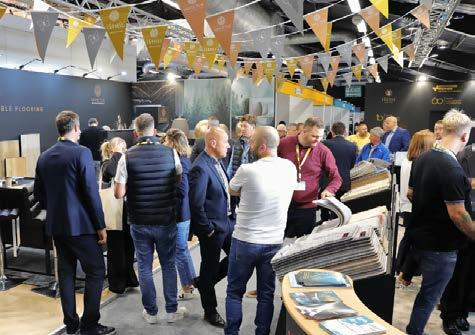
Visitors can expect more than 100 leading brands under one roof, showcasing the latest collections, innovations, and technologies shaping today’s market.
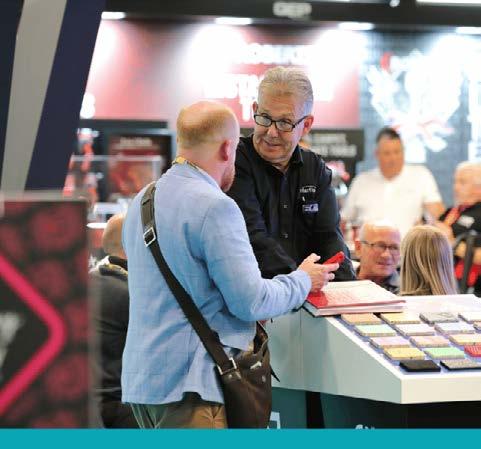
Registration is now open, and southern flooring professionals are encouraged to secure their place at what promises to become a key fixture in the industry calendar.
All readers can claim their free visitor pass using this link: www.flooringshow.com


proudly supported by our launch partners:





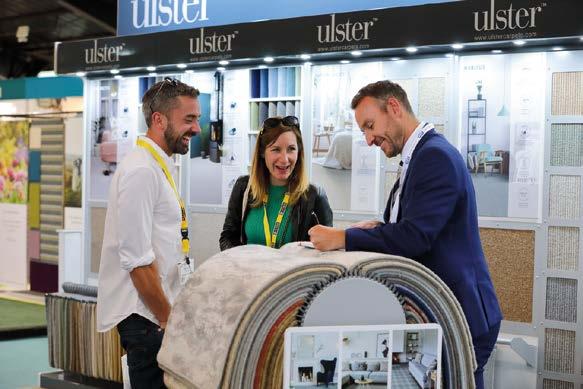

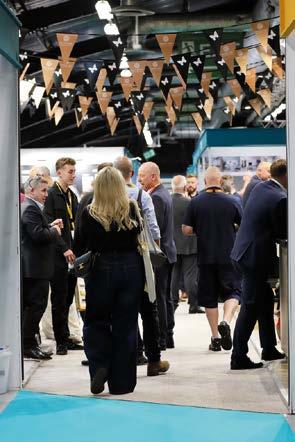
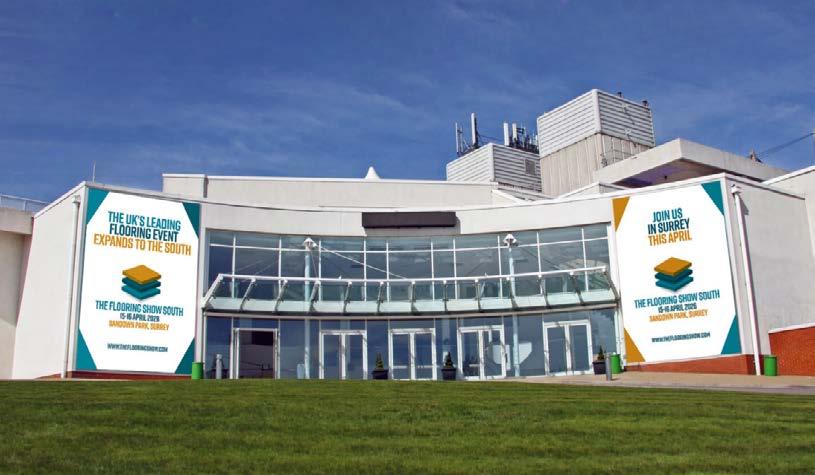
The Flooring Show South is the brand-new launch event bringing the UK’s leading flooring brands, products, and industry networking closer to southern-based professionals. Don’t miss your chance to discover the latest trends and connect with suppliers — all in one convenient location.

See the full spectrum of flooring — carpet, LVT, vinyl, underlay, tools, adhesives and more — all under one roof. Connect with the brands shaping the UK flooring industry.
Meet suppliers, explore new collections, and discuss business face-to-face, all in one convenient Southern location.
Join a trusted industry platform, connect with peers, and stay ahead of trends in the South of England.

The new headquarters building for XPENG Motors, whose architectural design was led by Sun Wei of weico architects, is now fully constructed. It welcomed its first occupants on October 20th of this year, officially entering the commissioning phase.
The automotive industry is one of the most significant drivers of socio-economic development in contemporary society. Major automobile companies invariably invest considerable effort into the design and construction of their headquarters, and these buildings often become microcosms of society in their respective eras. The architecture of XPENG’s new headquarters breaks away from the rigid image associated with the industrial age of the past, using a strongly dynamic design that resonates with the new era of intelligent mobility humanity is about to enter.

The XPENG headquarters campus features a massive building volume, faces strict surrounding environmental constraints, and incorporates complex functions with high technical difficulty
The new XPENG headquarters campus is located in the Cencun area of Tianhe Intelligence City, Tianhe District, Guangzhou. It encompasses the headquarters for both XPENG Motors and AeroHT (XPENG’s flying car division), forming a contemporary technology park that integrates AI intelligent technology, green and low-carbon initiatives, and architectural aesthetics. The entire campus covers a site area of 68,000 square meters, with a total gross floor area of approximately 360,000 square meters, capable of accommodating 13,000 employees. The main structure was topped out in September 2024 and officially began operations in October 2025. Nearly 11,000 employees have already moved in.
The architectural concept design for the project was completed by Sun Wei and his team at weico architects, with the construction document design handled by CAPOL International. The architectural design fully utilizes the surrounding conditions: two fluid, large-scale office courtyards are connected at the center, and the building mass leaps upwards from south to north towards the distant mountains, creating a simple, fluid, and integrated volume.
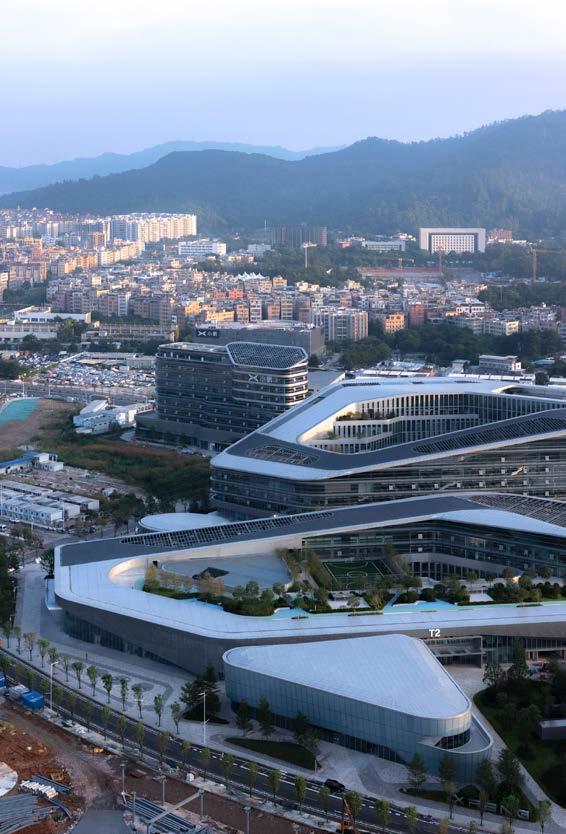
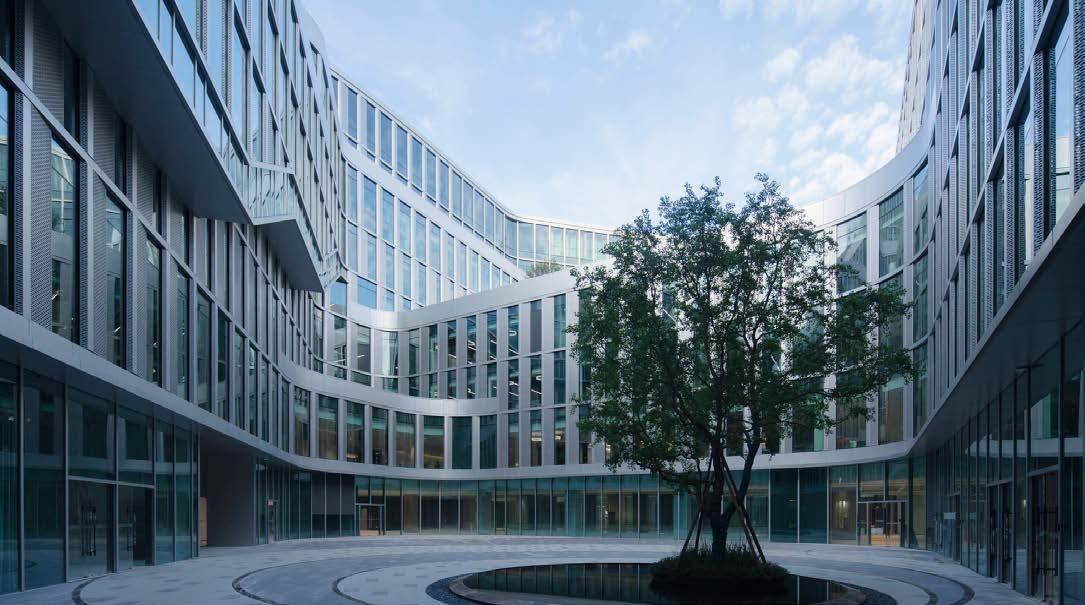
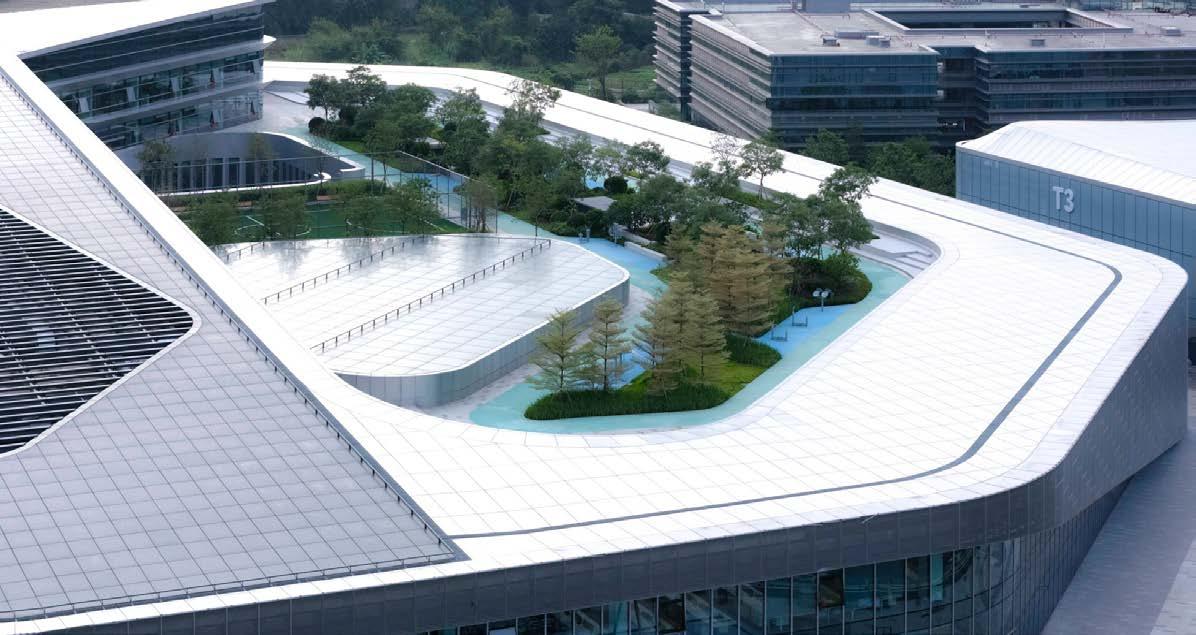
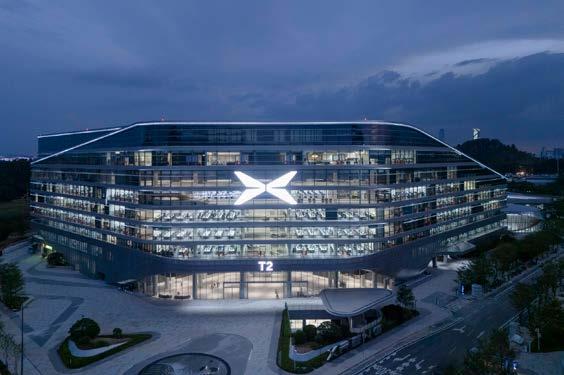
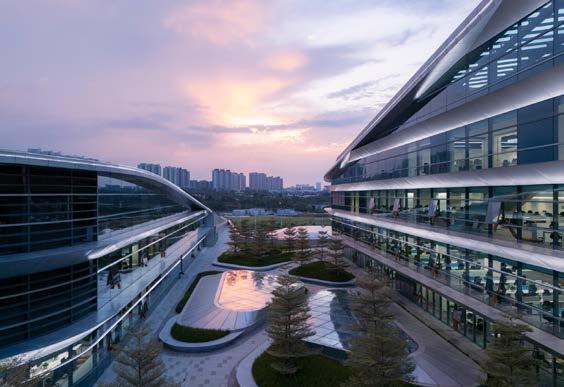
Beyond common functions such as offices, R&D, reception, and exhibition spaces, the entire complex integrates core industrial functions including automotive engineering R&D, interior and exterior automotive styling assessment, and new vehicle testing. Relatively independent facilities located outside the main buildings include an XPENG flagship store, a shared conference center, and a flying car takeoff and landing site, making the overall complex a truly largescale technological hub with a complete industrial ecosystem. The rooftop features green photovoltaics, sports facilities, an outdoor aircraft landing platform, and waterfront landscapes, forming a rich open space integrated with the city.
The XPENG headquarters campus features a massive building volume, faces strict surrounding environmental constraints, and incorporates complex functions with high technical difficulty. The architecture houses not only standard headquarters functions but also highly secure core industrial operations. It simultaneously integrates nearly 20,000 square meters of underground dining facilities, a comprehensive transportation system akin to an airport’s, and display, sales, and launch functions catering to different audiences. From the inside out, it represents a completely new type of super-complex building cluster. A more detailed and in-depth interpretation of this project will follow in the future.
• Architects: weico Architects
• Area: 360000 m²
• Year: 2025
• Photographs: Arch-Exist
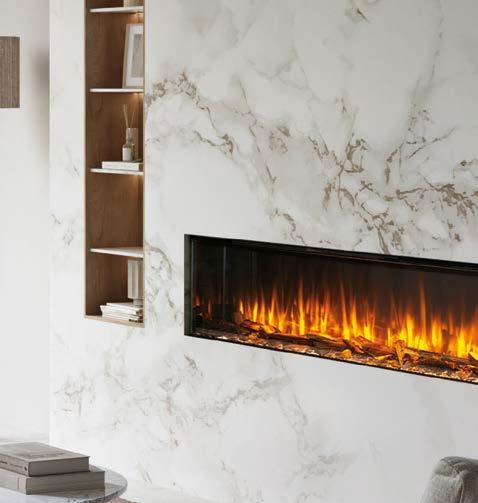


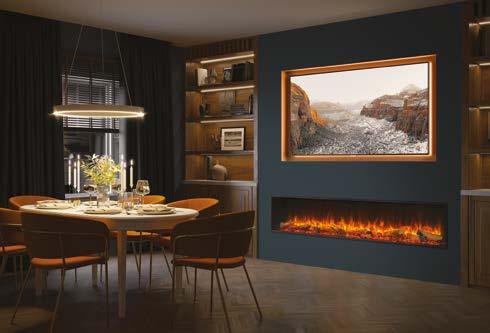
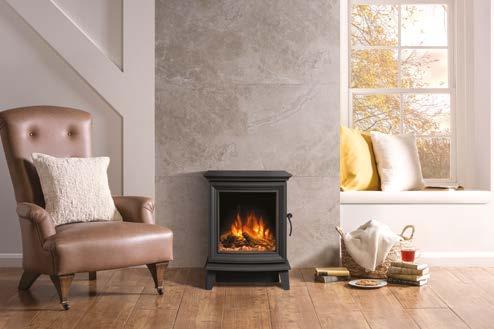
The stove you choose can make a remarkable difference to both the atmosphere and comfort of a home. Whether you prefer a warm, rustic charm or a clean, contemporary finish, Stovax & Gazco offers guidance to help you select a heating solution that complements your lifestyle and meets your practical requirements.
A good starting point is deciding which fuel type suits you best. Woodburning stoves remain a popular, eco conscious option – especially when fuelled with responsibly sourced logs – and they deliver the authentic glow of a real fire. They’re also a strong choice for properties that rely on off grid heating. If ease and convenience are more important to you, gas and electric stoves may be the preferred fit. Gas appliances provide the look and feel of a fire with instant heat, while electric models are exceptionally simple to set up, needing only connection to the mains.
Your choice of design also plays a major role in shaping the overall look of your room. Freestanding stoves offer versatility in placement, whether positioned along a wall or used as a central feature in an open space. Inset fires, meanwhile, create a sleek, integrated appearance by sitting neatly within a wall or existing fireplace. With a wide variety of both contemporary and classic styles available, there’s an option to suit every home’s personality.
Safety should always come first when fitting a woodburning or gas stove. Having the appliance installed by a qualified professional ensures it meets building regulations and that safe distances from combustible materials are observed. Homes without existing chimneys still have options, too: prefabricated
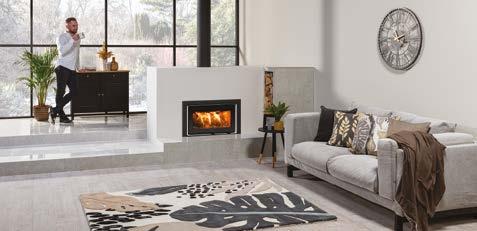
Freestanding stoves offer versatility in placement, whether positioned along a wall or used as a central feature in an open space.
flue systems or balanced flue gas appliances can often be installed to make these models viable. Electric fires are generally simpler and usually don’t require professional installation – unless you are incorporating them into a more elaborate feature, such as a media wall with built in storage or mood lighting.
Ultimately, the best stove for your home will reflect your design preferences, heating needs, and chosen fuel type. Professional advice and proper installation will help you enjoy a safe, efficient, and stylish addition to your living space.
Find your nearest retailer for more information: stovax.com/retailers
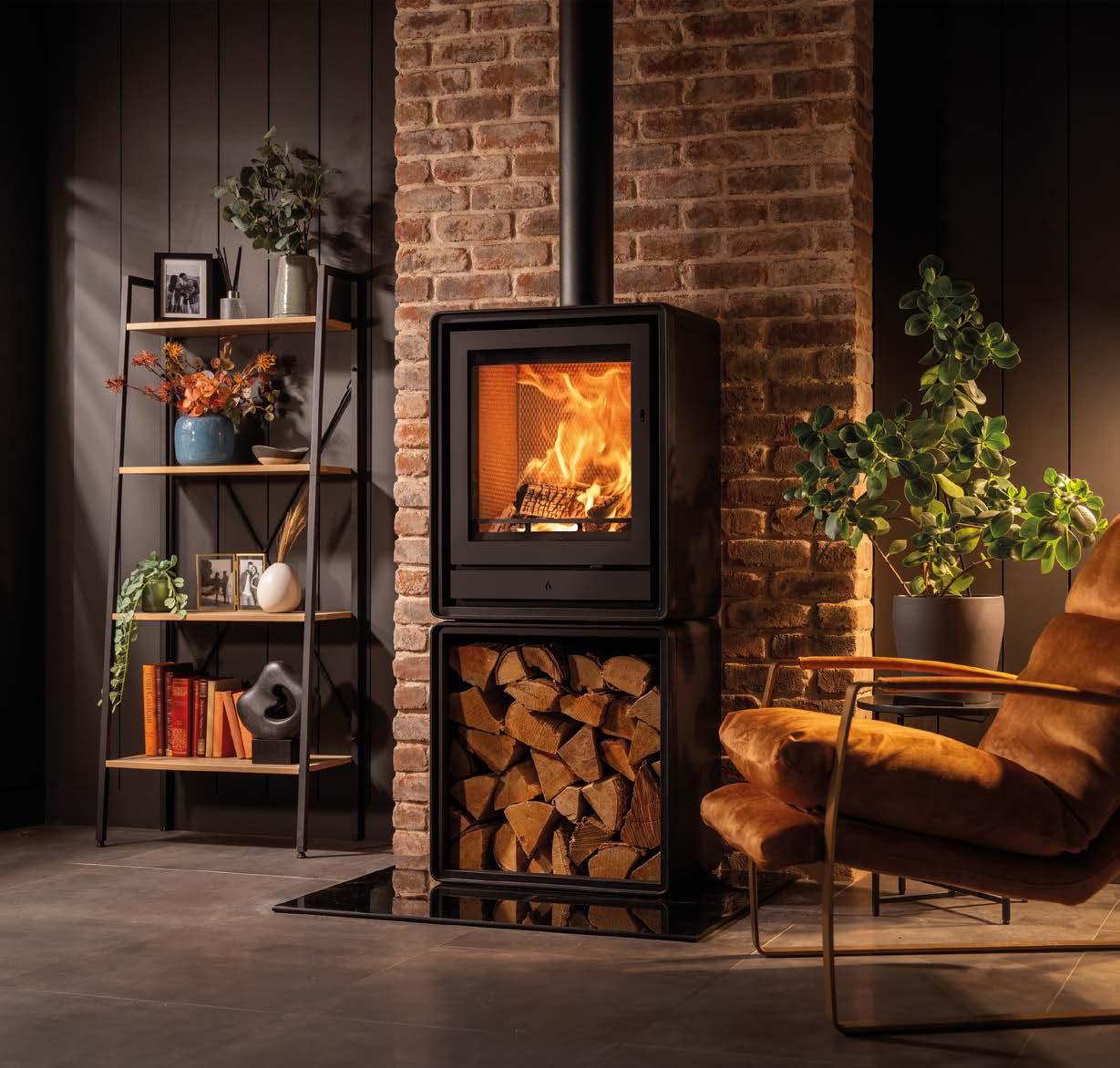



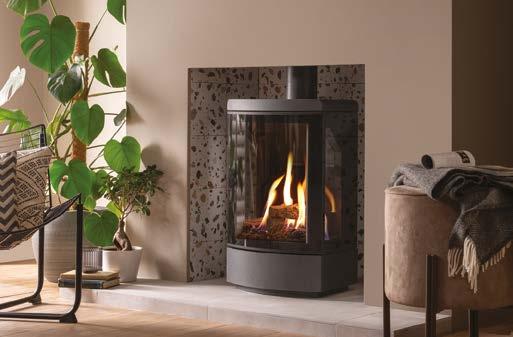
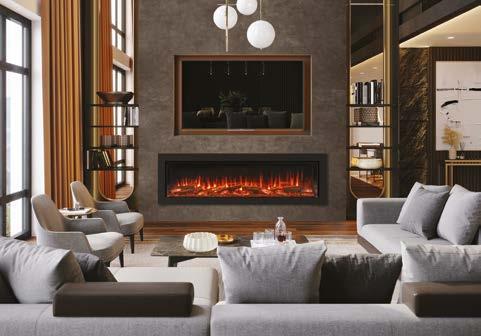

There is something eternal about the simple act of gathering around a fire. Its soft glow, comforting warmth, and calming presence have nurtured homes and human connection for centuries. While its roots may be traditional, the new Onyx Avita electric fire represents a bold reimagining of what modern fireside living can be.
Crafted with precision, the Avita is far more than an electric fire. It is a design-centred statement piece that blends innovation and artistry with zero direct emissions. Now available through the network of approved Onyx retailers, the Avita arrives as one of the most versatile premium electric fires on the market.
The Avita range offers remarkable freedom for designers and homeowners alike, with three sizes. Each can be configured as a single-sided, corner, or three-sided installation, enabling seamless integration into bespoke architectural concepts or existing spaces. An optional Edge XL frame provides an elegant and simplified solution for single-sided installations. Whichever Avita, all sizes make the ideal companion to a media wall setup.
A Multisensory Experience
At its core, the Avita is designed to immerse. The advanced Chromalight® Plus LED System delivers a sophisticated play of colour and light, creating embers, logs, and flames with remarkable depth and realism. This is complemented by an optional fireside crackling sound effect.
Convenience is central to the Avita philosophy. Whether using the remote control, touch panel, or
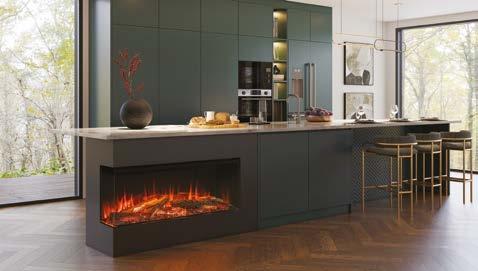
The advanced Chromalight® Plus LED System delivers a sophisticated play of colour and light, creating embers, logs, and flames with remarkable depth and realism.
app, easily adjust and access the heat output, lighting effects and energy-saving features. Its flame effects can be enjoyed with or without heat – ideal for year-round ambience – and a fan-only mode provides gentle air circulation in the height of summer.
Optional mood lighting extends the visual impact beyond the fire itself, shaping the room’s ambience.
Bringing together craftsmanship, technology, and innovation, the Onyx Avita electric fire sets a new standard for contemporary living. Find these exceptional fires at onyxfires.com
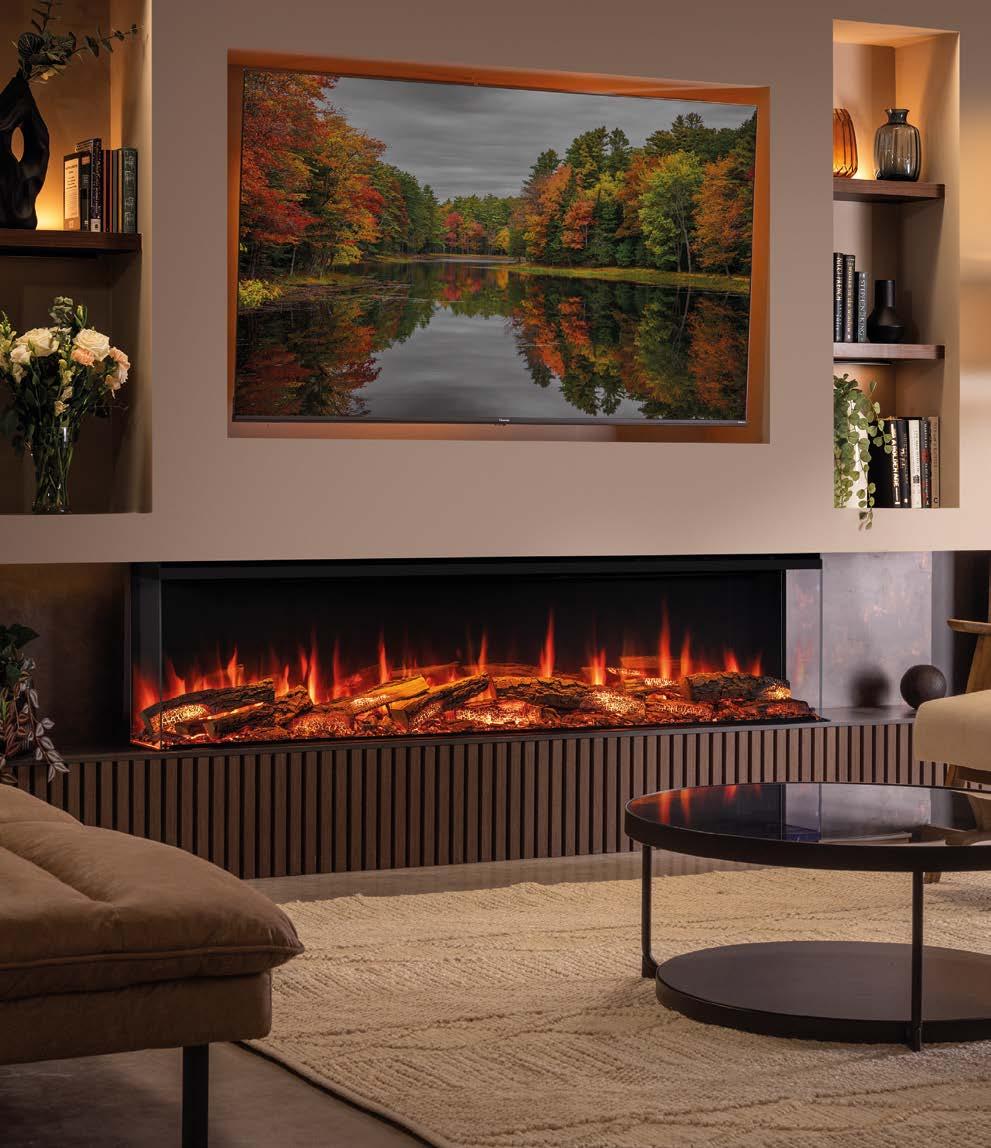
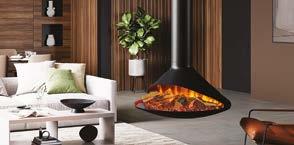
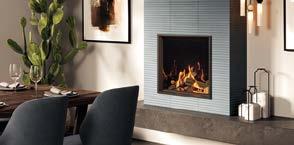
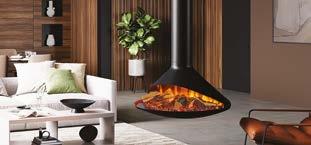
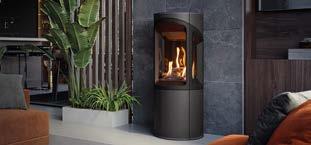
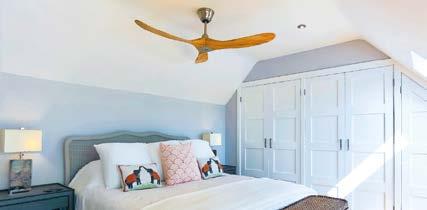

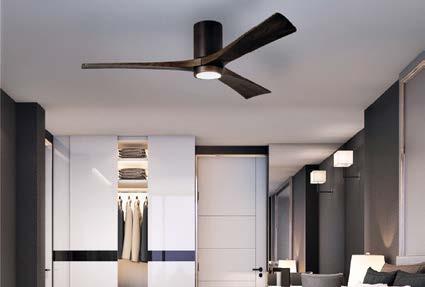




Diffusion has appointed Matthew Cooper as Sales Director as the British heating and cooling specialist enters its next phase of growth. The move follows a landmark year for the manufacturer, marked by the launch of its Modular Highline 275 fan coil range and industry recognition, including ‘Air Conditioning Product of the Year’ at the HVR Awards. The Modular Highline series has now secured multiple accolades, reinforcing Diffusion’s reputation for modular, energy-efficient solutions.
Cooper brings more than 20 years’ experience in building services and construction, with a strong track record of working alongside consultants, contractors and architects. He will lead expansion plans across London and the wider UK market, as well as support the launch of a new fan coil concept this spring.
Diffusion, which has designed and manufactured heating and cooling equipment in the UK for 65 years, continues to respond to challenges including overheating, refurbishment and embodied carbon. Its modular approach supports precise specification, reconfiguration and long-term performance, while ongoing work around TM65 and EPDs underlines its commitment to sustainability and transparency.
For more information on Diffusion, please visit www.diffusion-group.com.
Titon Ventilation Systems has extended its MVHR range with new features and smarter design improvements offering standardised control options and on-site handling configuration for easier installation.
This update standardises its MVHR product range and makes it easier for customers to select products on a shorter lead time, at the same time ensuring Titon’s renowned quality and reliability continue to meet the demands of today’s stringent construction and retrofit markets.
As part of the range extension, Titon has introduced several key improvements designed to make installation, commissioning and operation even easier:
• Onsite Left and Right-Hand Configuration - offering greater flexibility during installation.
• Standard PCB Options (with additional switch live inputs) now available for the HRV1.35 and HRV1.6 models.
• On-Board and Off-Board Control Options for added flexibility.
• New Commissioning Tool featuring a quick connector on top of the unit, allowing for straightforward commissioning and cloning set up during installation. These updates are designed to save installers time onsite, reduce complexity and provide customers with a reliable, high-performance ventilation solution that is easy to configure and maintain.
Spotlight on the HRV4.25 - High Efficiency, Advanced Performance
Among Titon’s refined range, the award winning HRV4.25 Q Plus remains a standout product, offering improved efficiency, advanced controls and enhanced performance. It’s an ideal choice for both new build and replacement projects.
Benefits of the Titon HRV4.25 include:
• Energy Efficiency by design: Exceeding modern energy performance standards.
• Compact Design: Smallest footprint vs leading competitors for flexible installation and only being 600mm wide its performance exceeds others on the market.
• Enhanced Features: Improved air quality management and superior heat recovery capabilities.
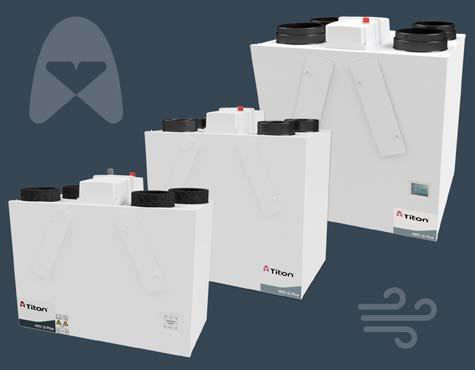
Since we launched our HRV4.25 Q Plus MVHR unit in 2024, its popularity has increased month on month.
• Easy Integration: Fully compatible with existing Titon products accessories allowing ‘full package’ design and systems to be available to support any projects.
• Improved Availability: More efficient product range allows Titon shorter lead times and can be responsive to the market needs.
“Since we launched our HRV4.25 Q Plus MVHR unit in 2024, its popularity has increased month on month. It was clear our customers wanted the additional features our product offered. We have now extended these control options across our entire MVHR range, giving both installers and specifiers a widest choice of options” said James Griffiths, Product & Marketing Manager at Titon. “Our focus is on delivering high performance systems that are simple to configure, efficient to run, and readily available. We want to offer our customers great value when they choose Titon has a suppler. These efficiencies ensure Titon remains at the forefront of ventilation technology and customer support.”

Contact our team today for quotes, specifications and technical support. Visit www.titon.com/ventilation
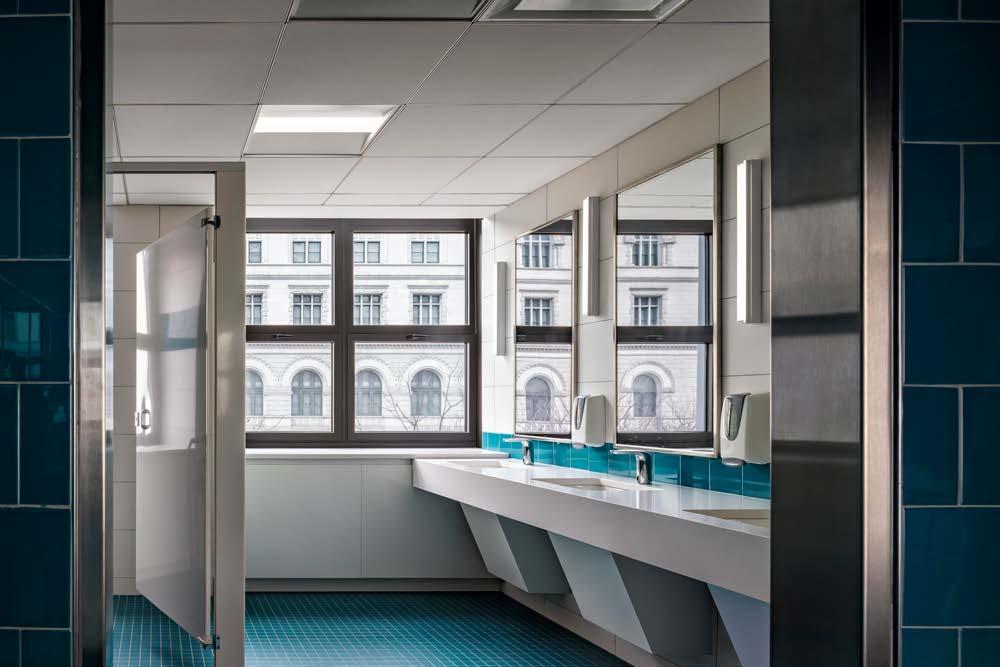
Adaptive reuse projects bring their share of complications, yet as aging systems are stripped away, long-quiet details often emerge with unexpected resonance. As Shakespeare Gordon Studio (SGS) began the design process for a gut renovation at New York City College of Technology (NYCCT), such discoveries began to reveal themselves. NYCCT, commonly referred to as City Tech, is in heart of what has become known as the “Brooklyn Tech Triangle”. This project is an initiative spearheaded by various local economic development organizations that includes over 500 tech companies and 11 universities in and around downtown Brooklyn, comprising the largest innovation cluster outside of Manhattan. At the heart of the campus is the New Academic Complex, a 350,000-sf multipurpose academic building that was completed in 2019. This new building serves as a centerpiece of academic life on City Tech’s campus, and a new landmark in downtown Brooklyn that reinforces its growing role as an economic and cultural contributor to the city.
However, with the New Academic Complex adding much needed space for City Tech’s growing academic
programs, the college’s older facilities, located just across Jay Street, were newly vacant and ready for much needed renovations after years of overuse and crowding. SGS joined the project to focus attention across Jay Street, to reimagine one of City Tech’s oldest spaces, the Pearl building, as a contemporary, dignified space for the College to continue expanding its operations across downtown Brooklyn.
Since 2018, SGS has undertaken several projects in or related to the Pearl Building, a six-story multipurpose academic building. Built in 1922, the Pearl Building served as a munitions factory until it was repurposed by the newly established New York City College of Technology in the 1940s. The building’s previous use as a factory defines its underlying layout and structural typology: the building features an expansive floorplate with high ceilings supported by a sturdy concrete frame, wrapped with large windows, and dotted throughout with thick structural columns clad in concrete. Along with the building’s age also came complications with its dated infrastructure, which was an especially pertinent problem for a college hoping to
Built in 1922, the Pearl Building served as a munitions factory until it was repurposed by the newly established New York City College of Technology in the 1940s.
accommodate advanced scientific and technological education. Each of these characteristics would come to play a central role in SGS’s design.
SGS’s involvement in the Pearl Building began with a master plan that included layout options and test fits, estimated construction costs, and a detailed review of the existing conditions to be addressed. Out of this master plan came a renovation project focused on the building’s 3rd floor, a 17,000-sf space previously used for a mix of purposes, including scientific labs, offices, and ancillary functions. With several department offices, teaching labs, and classrooms relocated from the Pearl Building to the New Academic Complex, the renovated 3rd floor is now home to four administrative office units, each with its own unique design identity, and linked by a common corridor connecting to a shared conference suite and support spaces.
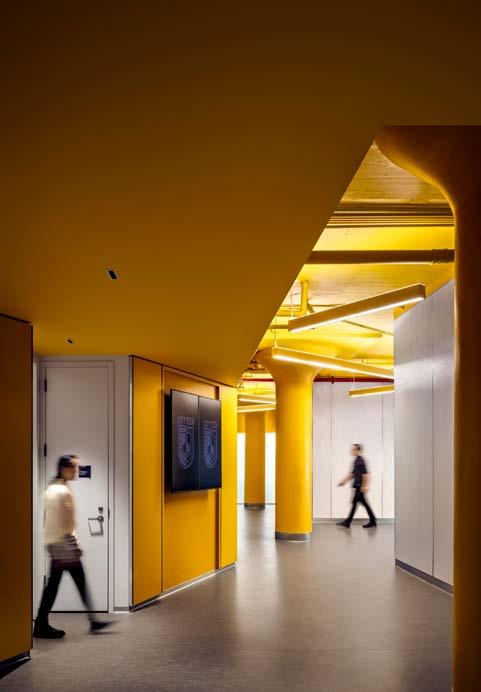
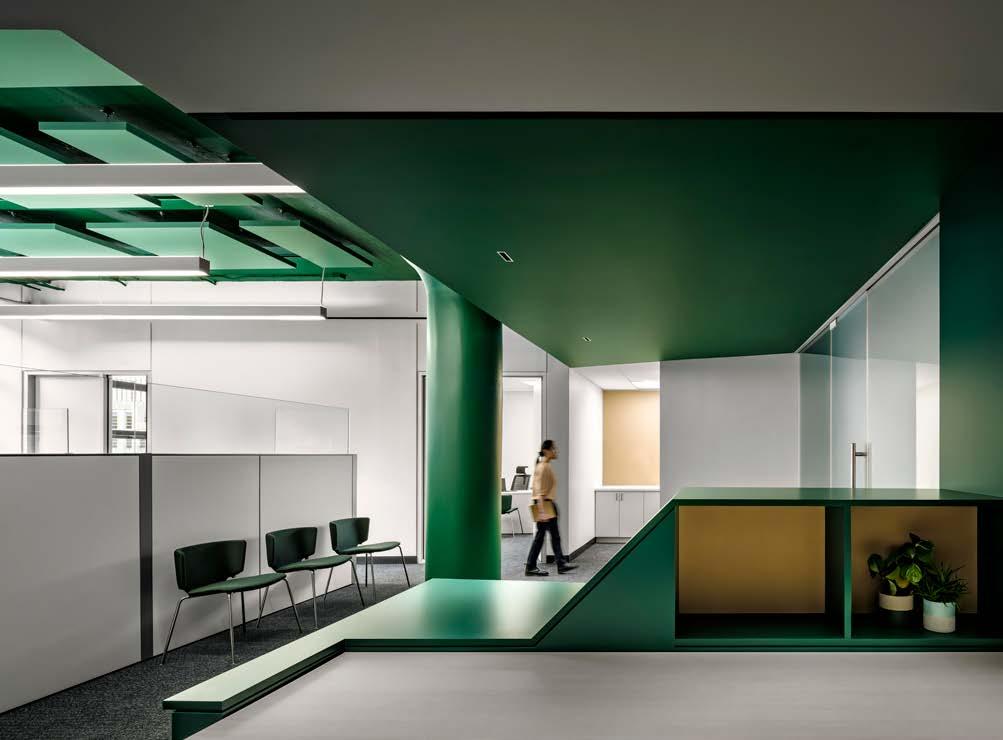
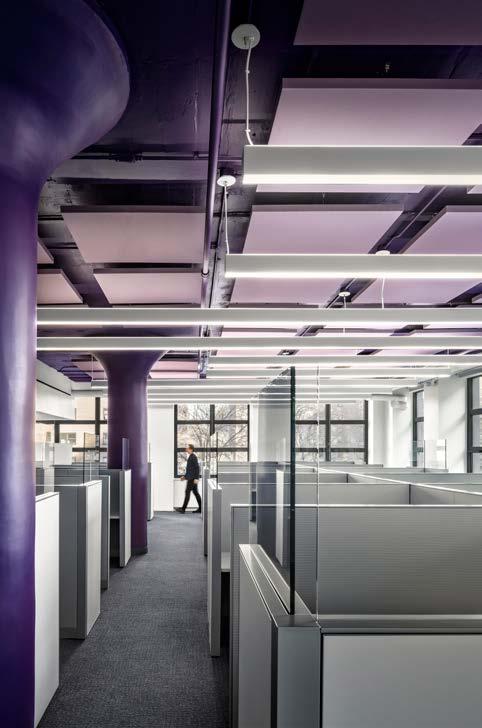
The experience of the 3rd floor begins as users enter the elevator lobby, covered with a comforting and lively shade of yellow paint across the walls, ceilings, and newly exposed structural columns: a relic of the building’s history that showcases its strong, yet elegant structural systems. Playful lighting design mixed with bright colors illuminates this otherwise dark corner of the building, warmly inviting guests into the space and establishing design motifs that continue across the floor.
Beyond the elevator lobby, users are ushered into the central spine of the 3rd floor, a long, wide hallway that extends the length of the building. Looking down the length of the hallway, users see a pleasant palette of bright colors—green, blue, orange, and purple—each representing the assigned visual identity of a different administrative suite. These colors, which predominate the interiors of each suite, extend outward into the hallway’s floor, adding new dimensions and a clever system of wayfinding to an otherwise blank and rectilinear space.
Inside the suites, the plan makes the best use of the building’s expansive floor plate, while ensuring that occupants are never far from views, natural light, and a relationship to the city beyond. The building’s concrete curtain walls, a remnant of its origins as a factory, allow for large, abundant windows along the
Inside the suites, the plan makes the best use of the building’s expansive floor plate, while ensuring that occupants are never far from views, natural light, and a relationship to the city beyond.
exterior of each suite. A mix of private offices and open plan areas delivers a variety of workstations, allowing for flexibility and modularity as uses change and adapt with future College programming. Within each suite, a grid of familiar columns punctuates the open space, serving as more than just structural support for the building, but also as a distinctive aesthetic feature that defines the identity of the third floor. Color-coded acoustic panels line each of the suite’s ceilings, combining with the bright visual aesthetics of each space while simultaneously ensuring the acoustic comfort of each room.
Outside of the third floor’s office suites is a shared conference room at the end of the central spine, as well as newly expanded ADA-accessible bathrooms. Due to the Pearl Building’s previous use as lab spaces, this project also included extensive hazardous material abatement, as well as all new building systems, AV/IT design, and a completely new layout. In addition to being the architect, SGS provided furniture, lighting, and graphic design services.
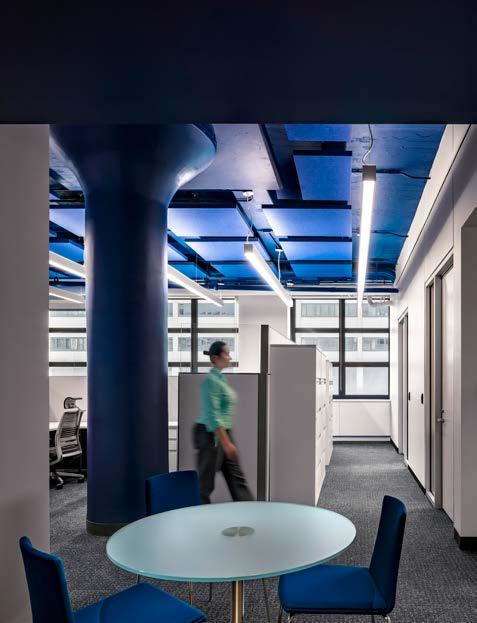
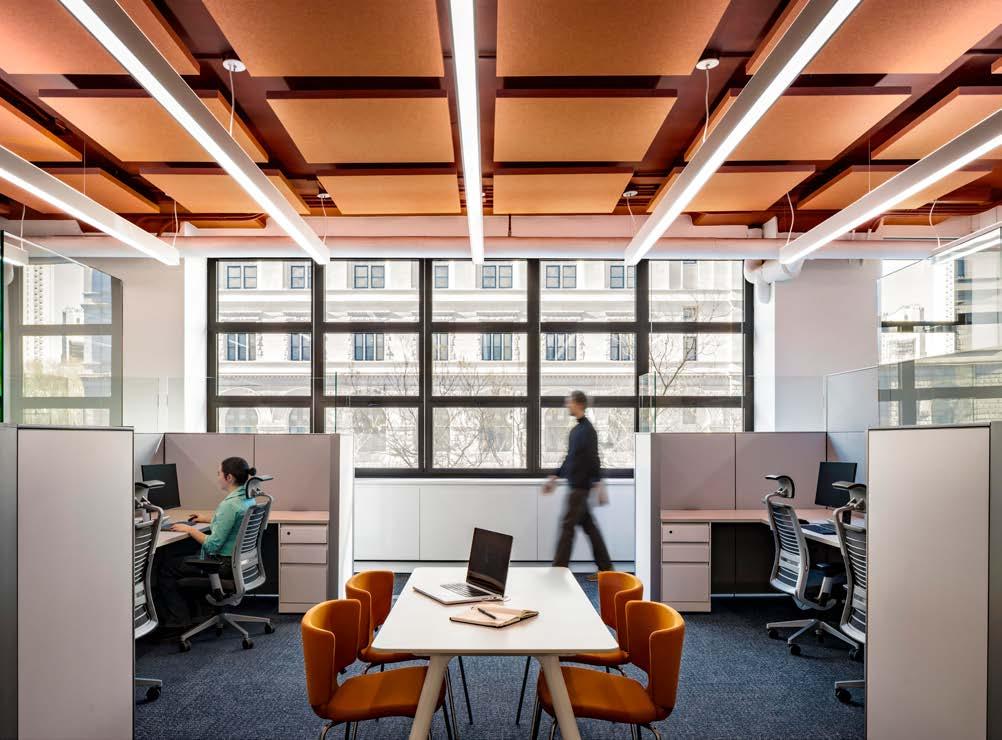
This project showcases the potential that often lies hidden in an old building. Once a maze of disconnected rooms that were dark, crowded, and overused, this elegant renovation reveals the building’s inherent qualities to make bright, colorful, and contemporary spaces, even in a building that is more than century old. The large, open floor plans of this ex-factory lent themselves to expansive layouts, curtain walls allowed large windows to spread light throughout office suites, and hefty structural columns turned from a design constraint into a consistent visual motif.
As the newly coined Tech Triangle continues to expand its influence across downtown Brooklyn’s built environment, architects and developers should turn their attention to adapting the neighborhood’s existing building stock: historic buildings with structural capabilities for bright, expansive, and contemporary spaces.
Technical sheet
Official Project Name: City Tech Pearl Building
Location: Brooklyn, New York
Client: New York City College of Technology, (NYCCT), Dormitory Authority of the State of New York (DASNY)
Architect: Shakespeare Gordon Studio
Consultants:
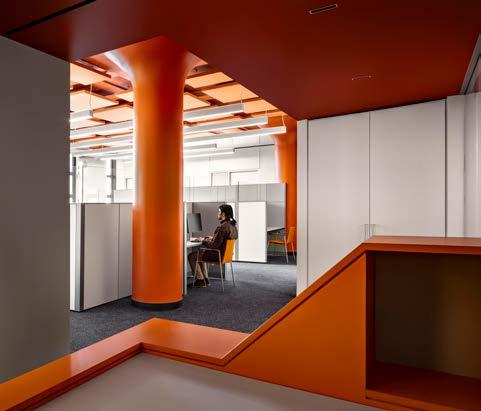
Loring Consulting Engineers
LERA Consulting Structural Engineers
Matrix New World Engineering
VJ Associates
J Callahan Consulting
Square Footage/units: 17,000 sf
Project Completion Date: 2025
Photographer: Alexander Severin Architectural
Photography
www.sg.studio
For over two decades, Style Group has supported the evolution of London ExCeL Exhibition Centre, delivering large-scale movable wall solutions across all three phases of development. Phase 3 continues this long-standing relationship, delivered in partnership with Grimshaw Architects and McLaren Construction, and sees Style install additional Dorma Hüppe Variflex systems to support ExCeL’s demanding exhibition and conference programme.
The manual movable wall provides exceptional flexibility, acoustic performance up to 55dB, and seamless integration with other partitioning systems through the venue, reinforcing ExCeL’s position as one of Europe’s premier large-scale event venues.
Building on previous phases, the current installation includes a further 1.2km of track and 548 individual Variflex elements. Style’s ability to deliver continuity across all three phases of expansion ensures consistent operation, appearance and performance throughout ExCeL’s extensive internal
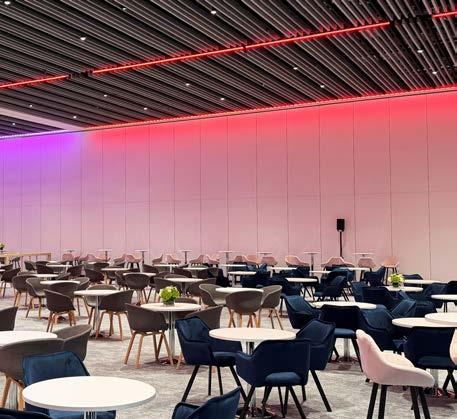
spaces, allowing layouts to be rapidly reconfigured to suit events of varying scale and function.
Style has recently rebranded as Style Group, reflecting an expanded capability that now includes acoustic solutions alongside its established moveable wall systems, providing a more complete and integrated interior offering.
www.style-group.co.uk

Designing for Every User Elevating Every Space
Create spaces that are truly accessible and welcoming. Our inclusive lift designs go beyond compliance, focusing on the human experience. From intuitive controls to spacious interiors, we ensure every user enjoys a seamless and dignified journey. Discover more on our website.
www.ikoniclifts.co.uk

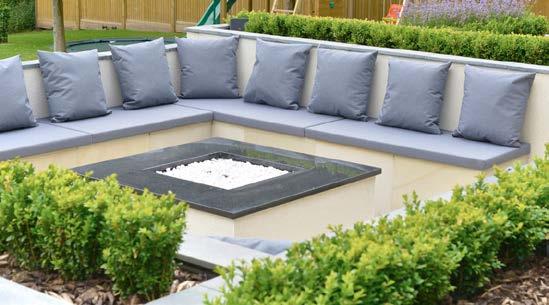
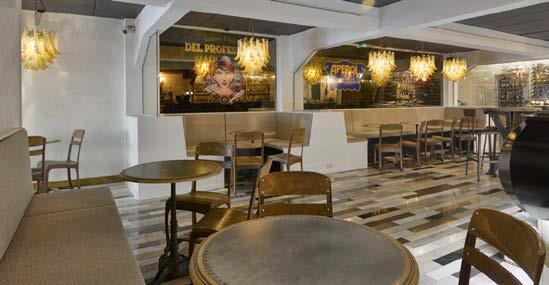
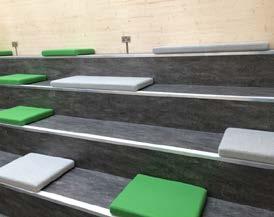
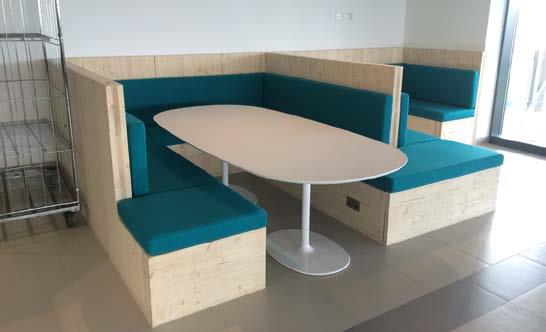
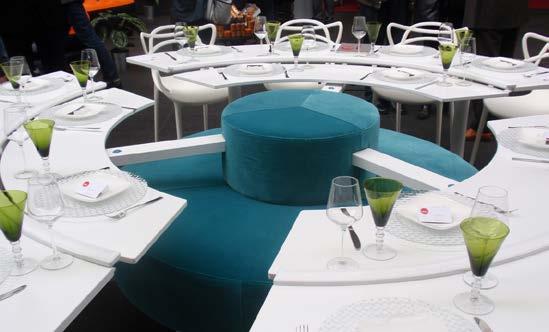
Many times “off-the-shelf” seating simply doesn’t cut it. It’s in situations like this when Foam for Comfort can step in and create beautiful cushions with fitted covers designed specifically for you.
We have an extensive range of fabrics in some truly stunning styles many of which are water resistant making them perfect for use outdoors giving your establishment a unique look and feel.
Get in touch, let’s discuss your next project.
Connect with us...
Discover more at foamforcomfort.co.uk Get straight there!
To learn more about our products call us on 0845 345 8100 or email andrew@foamforcomfort.co.uk

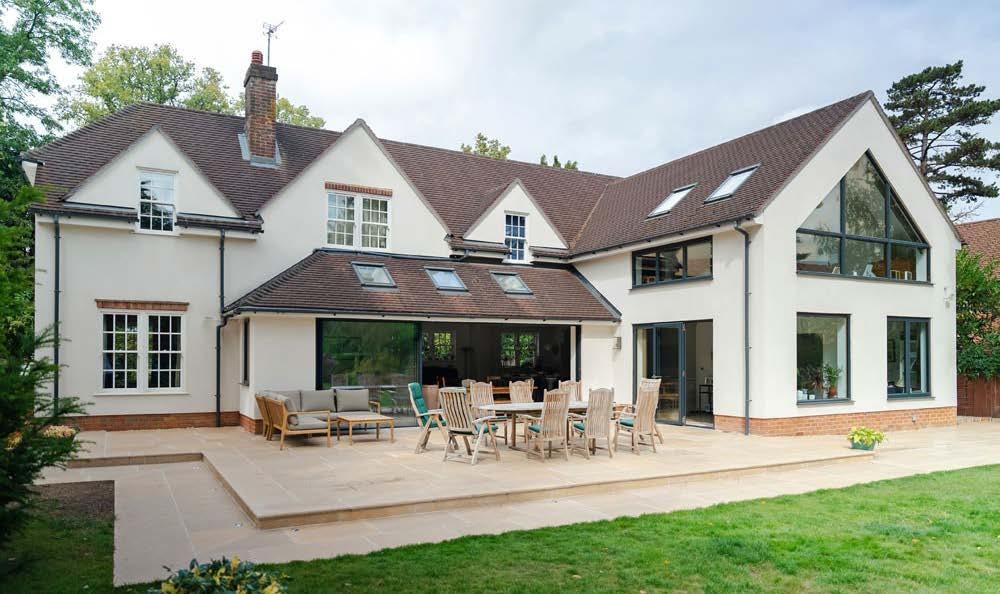
As architects face increasing pressure to deliver compliant, durable and design-led external schemes, early collaboration with specialist contractors is becoming essential. In this Q&A, Darren Field of The New Home Improvement Group discusses the launch of Architect Landscaping Services and how earlier engagement, technical expertise and practical installation knowledge can help practices deliver more robust and considered hard landscaping solutions.
What inspired you to introduce Architect Landscaping Services, and what challenges were you seeing in the market that made this feel like the right time to launch it?
We had previously only worked with architects through client introductions. It quickly became apparent that we could offer a genuine value-added service by working with architects rather than against them. We’ve collaborated successfully on a number of projects, which naturally led us to formalise this offering.
Who did you have in mind when creating this service, and at what stage of a project do you ideally like to get involved with architects or designers? Ideally, we like to get involved at the pre-design stage, bringing ideas to the table early on. We have an extensive back catalogue of projects to draw from, particularly in terms of innovative design and problem-solving solutions.
How does this new architect-focused service differ from the driveway and landscaping work you’ve traditionally been known for?
This is a more professional, structured offering. Traditionally, contractors are brought in after the build to present options to the client, which is common practice. However, schemes look far more considered and cohesive when they are properly designed and budgeted from the outset.
From your experience, where do architects most often run into difficulties when it comes to specifying driveways and external hard landscaping? Often, it’s about providing a range of options rather
The architect leads on all matters. We see ourselves as a hub of technical knowledge that practices can draw upon.
than a single solution. We sometimes see designs driven by what’s fashionable at the time, rather than presenting clients with a suite of ideas across different budgets. In our experience, clients want choice, and many aren’t aware of the full range of products and systems available.
Technical requirements like drainage, SuDS and longterm durability can be complex — how do you help make these aspects simpler and more manageable for design teams?
All of our designs incorporate SuDS compliance. We use a variety of drainage solutions to ensure schemes meet regulations. On more challenging sites, we’re prepared to think outside the box and develop alternative solutions that satisfy both technical and aesthetic requirements.
What does working together typically look like in practice, from that first conversation through to final delivery on site?
For us, collaboration means respecting the architect’s role. The architect leads on all matters. We see ourselves as a hub of technical knowledge that practices can draw upon. We’re there to assist, offering design choices, technical input and, if required, practical support with delivering the scheme on site.
What kind of design and specification support can architects expect from you along the way?
Our support is bespoke, as much or as little as a practice needs to deliver the client brief. We operate behind the scenes, ensuring questions are answered and technical details are resolved. We are not client-
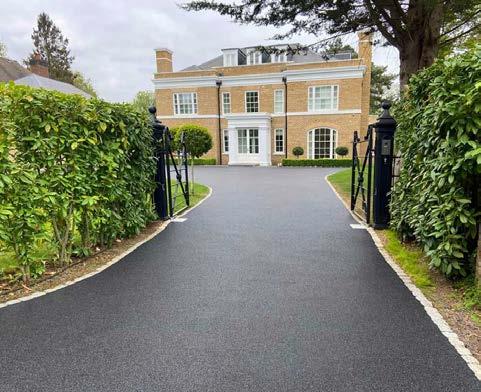
facing unless we are delivering the project on a turnkey basis.
A key part of our service is the warranty on all works. Around 20% of our workload involves rectifying failed installations where contractors have walked away. Reputation is everything when working with professional architects, so we stand by our work and remain accountable if issues arise.
You’ve got years of hands-on installation experience — how does that practical knowledge shape the way you approach design advice and detailing?
With 40 years in the industry, we’ve seen the pitfalls and we aim to help architects avoid repeating them. Our experience supports accurate budgeting, realistic timescales and effective pre-planning. We also have a team of 40 installers who can be mobilised to support projects that may be slipping on programme.
Are you noticing any growing trends in materials or more sustainable solutions that clients and specifiers are increasingly asking for?
Resin systems account for around 60% of our work this year. However, we’re also seeing a number of earlier installations failing, which has led us to upgrade our base specifications. Increased delivery traffic, particularly from online retail — is putting greater load pressure on driveways. In many cases, existing specifications haven’t evolved to reflect this change.
If an architect is interested in collaborating, what’s the best way to start the conversation and what can they expect from that initial consultation?
It always starts with a conversation — ideally over coffee (and possibly a pastry!). We find a 20 minute teams meet can be really fruitful when you are working out whether you can work with someone
For more information, please visit https://newdrivewaycompany.com/commercialdriveway-installation/.

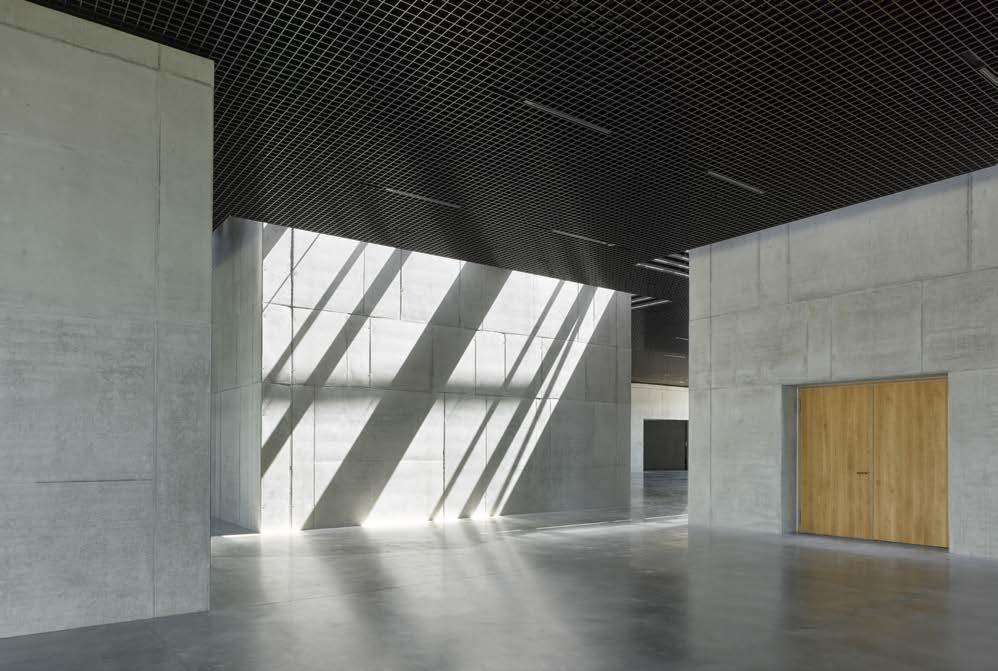
The Geberit Campus in Pfullendorf functions simultaneously as a training center, exhibition venue, and brand space. ATELIER BRÜCKNER was responsible for the overall planning of the building, exhibition, and landscape design. The new campus follows a clear objective: to communicate expertise and functionality in an understandable and tangible way.
The architecture is based on a single, consistently applied fundamental principle: the square, which continues spatially in the form of the cube. Derived from the Geberit logo, the square defines the grid, floor plan, and volume. The campus is conceived as a pavilion, reduced to ground plane, cubes, and a generously cantilevered roof. Three large central cubes penetrate the roof surface and mark the company’s core areas of expertise. Visible from afar, they structure the interior space. Between them unfolds an open spatial framework that creates a continuous circulation: paths intersect, encounters are encouraged, and orientation is intuitive.
Materiality and detailing follow the same logic of reduction. Exposed concrete, glass, and a few precisely placed oak elements create an atmosphere of calm and focus. Light and dark zones alternate, and daylight is carefully controlled. The roof’s wide overhang protects against overheating and lends the column-free building its floating character. The new campus of Europe’s market leader for sanitary products is designed sustainably: it operates CO2neutral, uses solar energy, heat pumps, and rainwater infiltration, and has achieved the DGNB Gold certification by the German Sustainable Building Council. Architecture is understood not only as a statement, but also as a functional, long-lasting infrastructure for learning and exchange.
The Geberit product exhibition is fully integrated into the architecture and forms part of the spatial system. In terms of content, the showroom is divided into two main areas: “Know-how Installed”, focusing on expertise behind the wall, and “Design Meets Function”, showcasing sanitary solutions in front of the wall. This conceptual dualism is reflected in the
The architecture is based on a single, consistently applied fundamental principle: the square, which continues spatially in the form of the cube.
design: raw exposed concrete contrasts with precisely articulated, smooth surfaces. Products are presented in modular units based on the square grid. Product exhibits, digital information surfaces, and hands-on tables can be flexibly combined and expanded.
A central component of the exhibition is the application-oriented construction tasks. Walk-in spatial installations present real bathroom scenarios – from residential construction and hotels to barrierfree use. On the inside, the finished bathroom is shown; on the outside, the installation. Technology is explained and made visible.
This is complemented by three large-scale demonstration installations. In the wastewater cube, more than 25 different scenarios illustrate wastewater hydraulics, made visible through a transparent installation measuring 11 by 11 meters. Flow processes, errors, and correct planning in wastewater
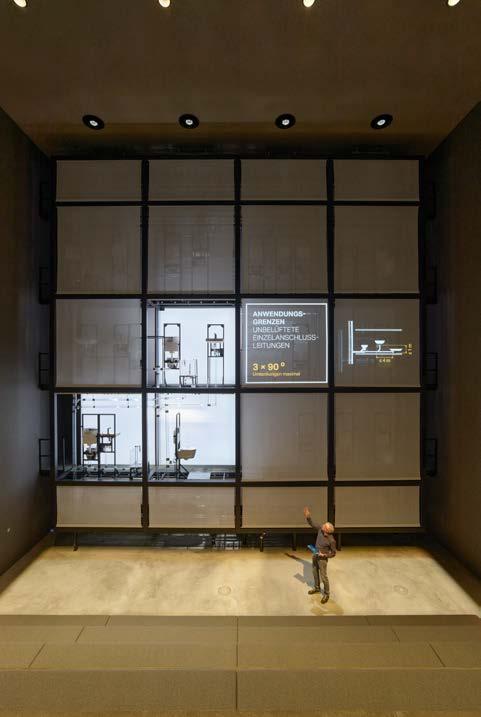

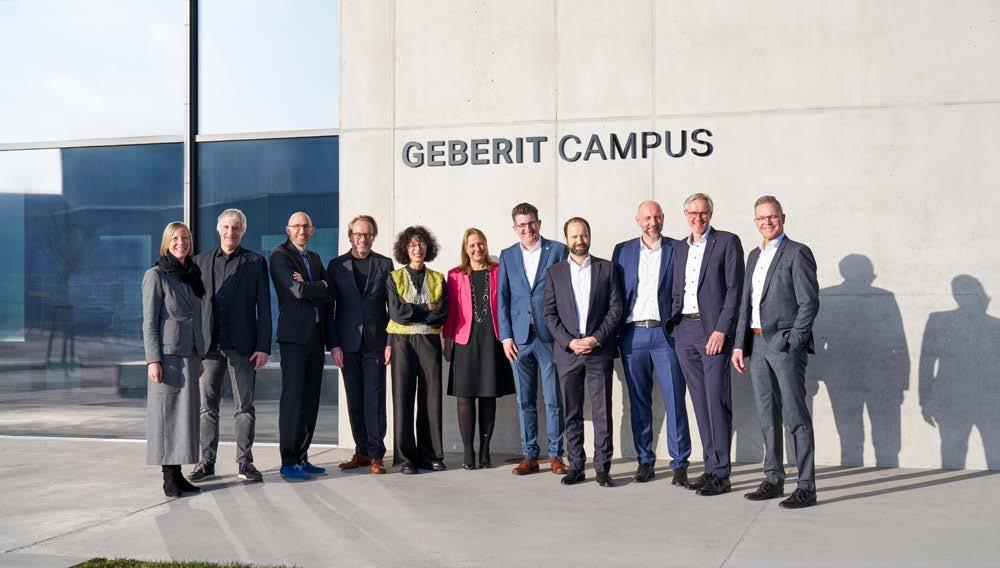
engineering are experienced in a multimedia setting, staged through light, projection, and sound. The competence cube serves as the virtual knowledge space of the Geberit Campus. Within a walk-in 3D environment, it visualizes complex relationships in sanitary planning, from drinking water hygiene and wastewater hydraulics to digital planning with BIM. In the acoustics cube, featuring a fully equipped acoustics laboratory, a two-storey residential building is simulated to make sound measurable and audible. At the new Geberit Campus, learning takes place through observation, comparison, and hands-on experience.
The Geberit Campus is a carefully conceived system comprising architecture, landscape design, exhibition, didactics, and administration. Building and content are equal in value, precisely coordinated, and consistently developed from the brand. The campus demonstrates how knowledge can be spatially organized – clearly, functionally, and sustainably.
Site / outdoor area: approx. 29,300 m²
Gross floor area (GFA): approx. 5,200 m²
Gross building volume: approx. 35,000 m³
Net floor area: approx. 4,900 m²
Building footprint: approx. 4,210 m²
Exhibition area: approx. 1,000 m²
Construction period: 2022–2025
Spatial program: foyer, cafeteria, exhibition, theory rooms, practical training rooms, offices, kitchen, storage and technical rooms
Client: Geberit Produktions GmbH, Pfullendorf
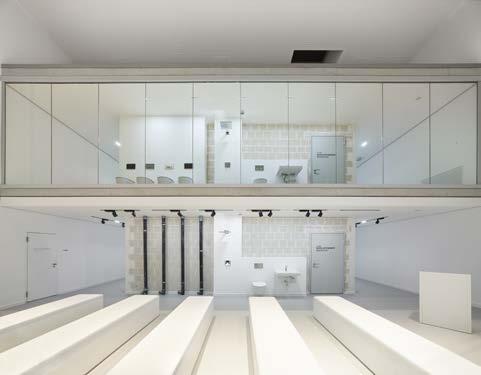
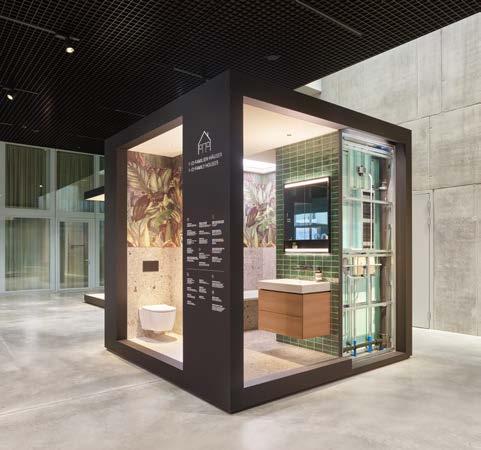
ATELIER BRÜCKNER: General Planning, Architecture, Exhibition Design, Scenography, Graphic Design
Construction Supervision (Architectural Planning): Ernst2 Architekten, Tübingen Landscape Architecture: Koeber Landschaftsarchitektur, Stuttgart
Structural Engineering: knippershelbig, Stuttgart
Building Services Engineering: Fact, Böblingen
Light Planning with: Belzner Holmes Light-Design, Stuttgart
Media Planning (hardware) with: medienprojekt p2, Stuttgart
Building Physics / Acoustics / Thermal and Sound
Insulation: Bauphysik 5, Backnang
Fire Protection: HALFKANN + KIRCHNER, Stuttgart
Surveying: IBV Haas, Überlingen
Soil Investigation: Kempfert + Partner, Konstanz
Geotechnical Engineering: GMP, Würzburg
Hardware Installation: promedia, Hockenheim
Exhibition Construction incl. Lighting Technology: DISPLAY INTERNATIONAL, Würselen
Studio Technology: Wireworx, Stuttgart
Kitchen Planning: Sauer Gastrotechnik, Neu-Ulm
Certification (DGNB): ee concept, Darmstadt
www.atelier-brueckner.com
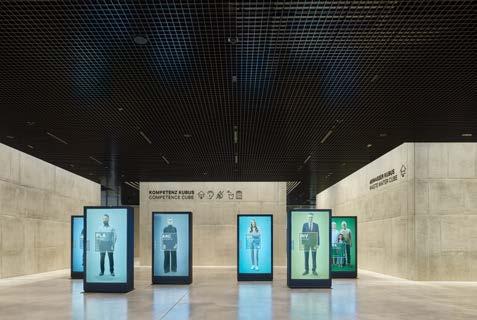
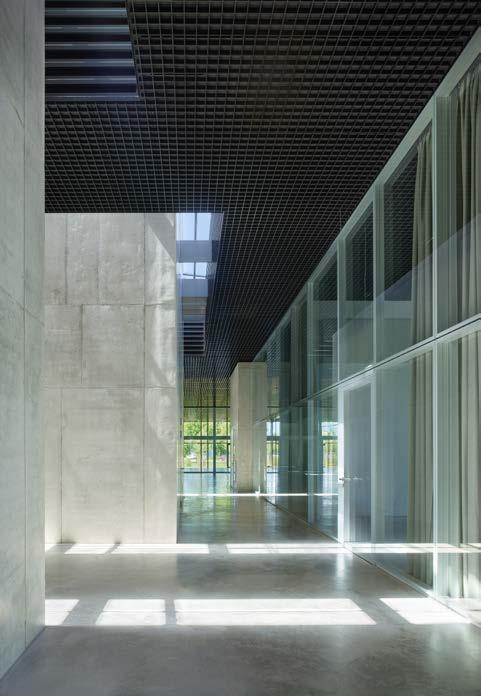
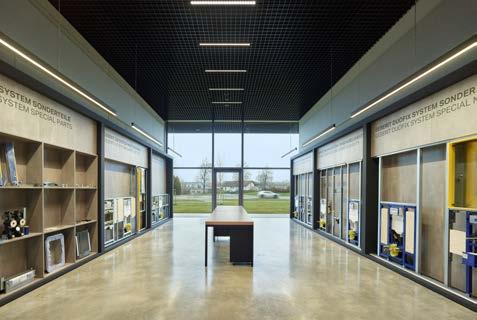
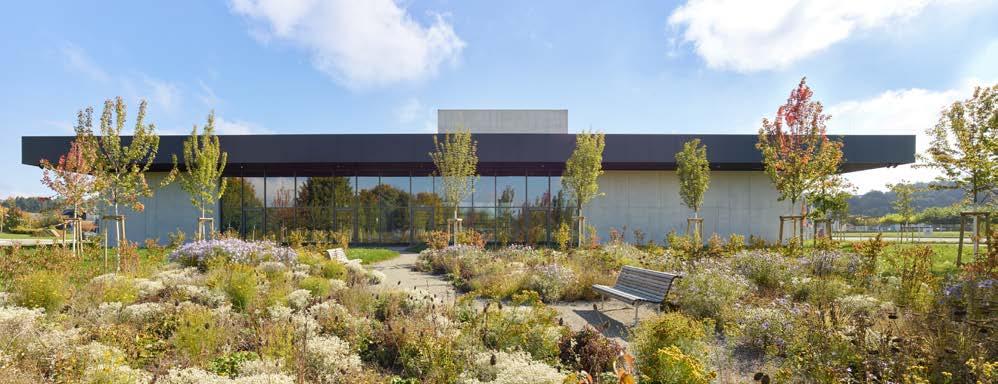
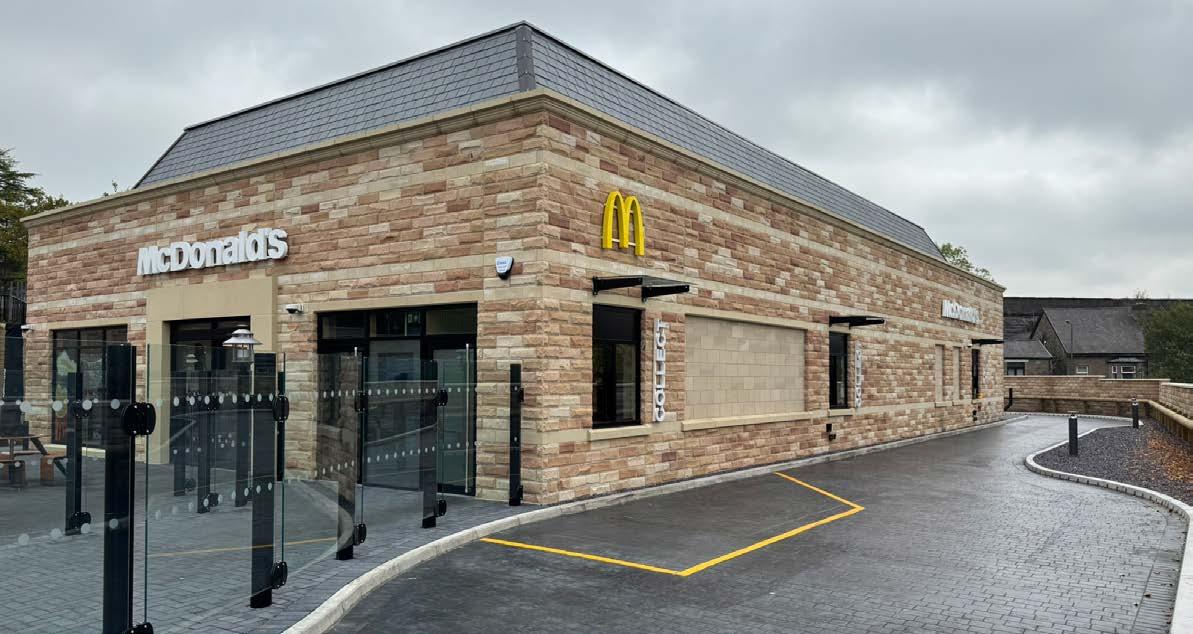
Eurobrick Systems recently supplied its X-Clad cladding system together with specially sourced stone slips for a new McDonald’s restaurant in Buxton, working closely with long-term client A.E.P. (Modular Construction) Limited to achieve a high-quality finish on a complex and technically demanding project.
Although the completed building appears simple at first glance, the design featured multiple stone sizes and detail bands running around the structure, demanding meticulous estimating and layout planning and design input to ensure perfect alignment of the components.
Eurobrick’s 25mm X-Clad system was installed onto sheathing board, providing a robust, insulated backing for the stone finishes. In total, Eurobrick supplied 419m² of cladding, with the stone sourced to complement the local architecture and meet planning conditions.
The finish included two types of stone slips and additional stone features:
• Dunhouse Buff Pitched face stone - this is a natural quarried stone. Eurobrick’s technical team visited the quarry to confirm specifications and around 356m² was supplied.
• Dunhouse Buff Ashlar stone - natural stone used for false window infill panels, totalling 14m².
• Procter Cast Stone Ashlar (Bathstone colour) - a manufactured stone used for perimeter feature bands, totalling approximately 50m².
The project included a number of architectural feature details in Procter Cast Stone Bathstone finish, including lintels and cills for windows and false windows, a cornice detail around the building perimeter, and
Eurobrick’s technical team went above and beyond in estimating, overseeing the production of the stone slips and closely managing delivery schedules to ensure the right materials arrived when needed.
coping to the top of the main structure, corral area and boundary walls. Eurobrick also supplied a large cast surround for the main entrance, which was built in seven sections.
Stone slips were delivered elevation by elevation to co-ordinate with the build schedule. The bespoke production process at the quarry required careful planning to ensure the correct materials were available on site when needed. To achieve precise alignment, the design incorporated five different corner types, helping to avoid small cut pieces around window openings and ensuring a clean, consistent finish.
James Ball from the technical team at Eurobrick said:
“On the face of it, the building looks simple, but it was anything but. It required detailed day to day management liaising regularly with A.E.P., the installers on site and the quarry. Natural, quarried stone is an expensive material and it had to be right!”
Eurobrick has worked with A.E.P. for more than 25 years, providing high-quality brick and stone slip systems for modular construction projects across the UK.
Mark Lawrence, Director at A.E.P. (Modular Construction) commented:
“Eurobrick have been trusted suppliers for many, many years. Their products are good quality and they always provide excellent service. Eurobrick’s technical team went above and beyond in estimating, overseeing the production of the stone slips and closely managing delivery schedules to ensure the right materials arrived when needed. Buxton was a complex project and Eurobrick’s attention to detail contributed in no small part to its successful completion. The new restaurant looks terrific, and we and our clients are delighted.”
Eurobrick has been supplying McDonald’s various contractors for over 30 years and remain at the forefront of the UK’s brick and stone slip cladding industry. Its systems — including X-Clad, A-Clad, P-Clad, and I-Clad — are widely used across modular, retail, education, and residential sectors. Renowned for quality, service, and technical expertise, Eurobrick continues to deliver innovative cladding solutions that combine traditional aesthetics with modern efficiency.
For more information on Eurobrick systems and products please visit their website at www.eurobrick. co.uk, email info@eurobrick.co.uk or call 0117 971 7117
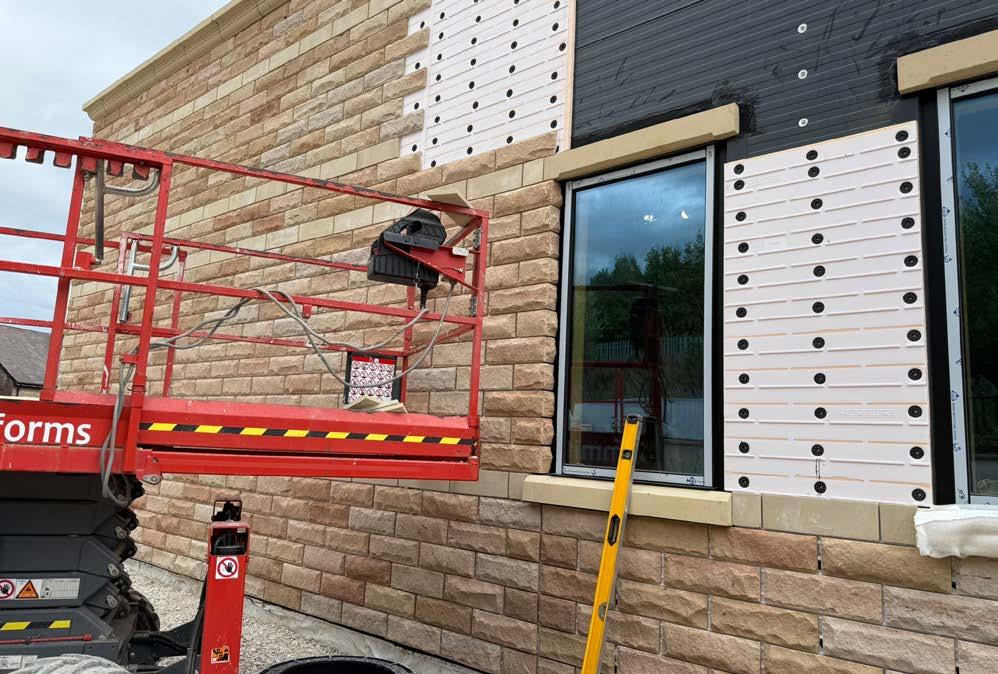
Valcan has successfully completed its reassessment under the Code for Construction Product Information (CCPI), reaffirming its commitment to clarity, accuracy and transparency in the way it develops and communicates product information to the construction sector.

The CCPI sets a rigorous benchmark for how manufacturers present and manage product data, ensuring that performance claims, technical specifications and installation guidance are clear, reliable and verifiable. The objective is to enable specifiers, contractors, clients and building owners to make informed decisions based on information they can trust.
Valcan’s two-year reassessment cycle is a key part of maintaining that trust. The independent verification process confirms the company continues to meet the standards set out by the Code, while ensuring its product information remains aligned with evolving legislation, guidance and best practice across the industry.
Over the past two years, Valcan has invested in strengthening internal governance, documentation procedures and approval processes linked to product information. This includes reviewing technical literature, marketing materials and digital content to ensure they are consistent, accurate and responsibly presented. The reassessment demonstrates not only compliance, but a commitment to continuous improvement and organisational accountability.
For customers and project partners, this provides ongoing reassurance that the information they rely on – from datasheets and certification to website content – is transparent and up to date. It reinforces Valcan’s wider commitment to quality, regulatory compliance and supporting a safer built environment.
Alan Lamming, Founding Director of Valcan, commented: “As a leading supplier of A1 and A2 non-combustible cladding systems, we recognise the importance of accountability and clarity within the construction industry. The CCPI plays a vital role in
Achieving reassessment status demonstrates that Valcan not only meets these expectations but continues to uphold them consistently
raising standards across the sector, and we are proud to be part of that journey.
“We would like to thank all members of the Valcan team involved in the reassessment process for their diligence and dedication. We will continue to ensure that our systems, processes and product information reflect the values of the CCPI and the expectations of our customers.”
The CCPI, administered by Construction Product Information Ltd (CPI Ltd), provides independent verification that product information is clear, accurate, accessible and unambiguous. Its eleven clauses cover responsibility for product information, the accuracy of performance claims, competency and organisational culture. As the Building Safety Regulator and National Regulator for Construction Products become further established, CCPI compliance provides a practical way for manufacturers to demonstrate accountability and respond to increasing regulatory scrutiny.
For further information about Valcan’s products, visit www.valcan.co.uk or email enquiries@valcan.co.uk.
To learn more about the Code for Construction Product Information, visit www.cpicode.org.uk.
Specifying rainscreen cladding doesn’t have to be complicated. Our experts help you choose the right materials and provide full technical support and documentation, so you can specify with confidence.
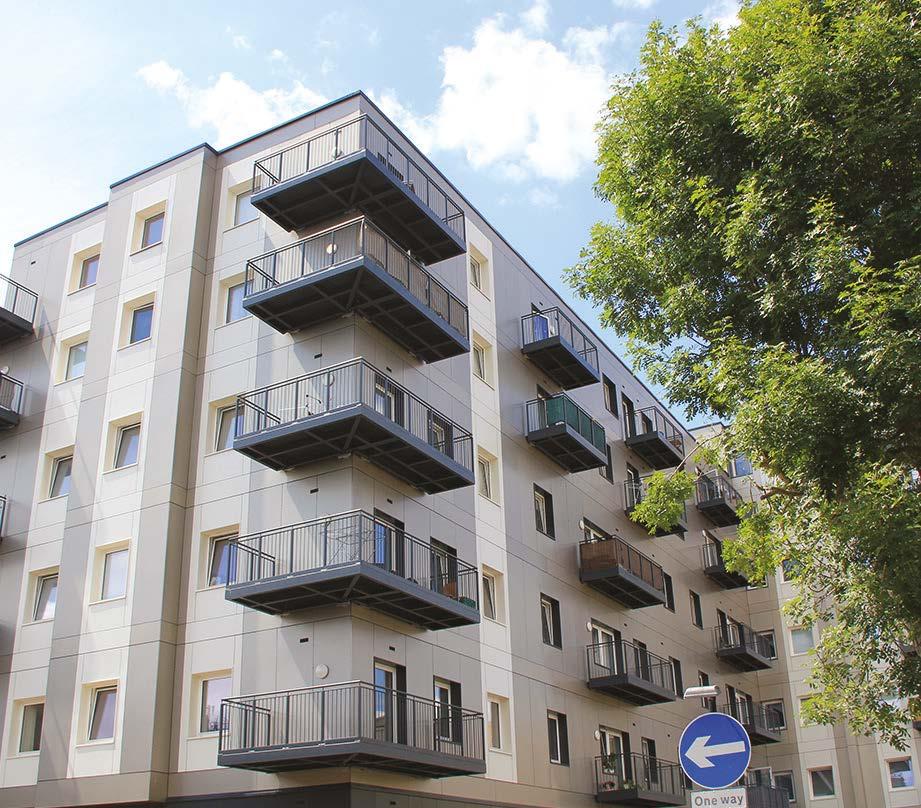

In contemporary architecture, the façade is no longer merely a physical boundary: it is a living surface, capable of expressing identity, technique, and vision. It is the element through which a building introduces itself to the world – the place where aesthetics, light, and material forge a relationship with one another.
Cotto d’Este’s ceramic surfaces embrace the profound connection between form and function, translating this into a universal architectural language. The brand’s manufacturing excellence – from its Kerlite ultra-thin slabs to its 14MM surfaces, icons of strength and aesthetic perfection – gives rise to cladding solutions designed not only to last, but to protect and enhance the structure, making every project a unique and sublime creation.
Projects that celebrate the meeting of architecture, material, and landscape
In the heart of Milan, the Bosco Verticale – an international symbol of a new style of urban living – rises above the neighbourhood like a suspended garden. Its ventilated façades are clad in Cotto d’Este’s 14MM porcelain stoneware, produced using an exclusive manufacturing technology: slabs are pressed three times and fired at 1230°C for over 90 minutes, ensuring outstanding technical performance and superior colour stability. The surfaces, with their anthracite-grey hues, inspired by Northern European stone, were custom-made especially for this project. The honed finish, elegant and soft to the touch, envelops and enhances the vertical nature of the
Villa Affinito represents the purity of architectural volume through a sophisticated and minimalist language.
towers, blending seamlessly with the lush greenery, made up of over one thousand trees and shrubs, and establishing a poetic dialogue between nature and architecture.
From metropolis to Mediterranean scrub: on the Croatian coast, Villa K overlooks the cobalt-blue sea with sculptural elegance. The Limestone collection, in its luminous Clay nuance, clads the façade in an alternating pattern of Blazed and Natural finishes. The combination of 14 mm thick surfaces and Kerlite 5 plus (5.5 mm) ultra-thin slabs creates a dynamic interplay of depth and reflections that come alive in the sunlight.
Back in Italy, in the heart of Campania, in Aversa, Villa Affinito represents the purity of architectural volume through a sophisticated and minimalist language.
Kerlite 3plus slabs from the Elegance collection, in the Via Condotti and Via Tornabuoni hues, clad the entire exterior shell, creating a continuum of materials that convey solidity and lightness, austerity and grace.
Every project characterised by Cotto d’Este’s exclusive surfaces tells a story of material, texture, and proportion. The brand’s collections transform surfaces into experience, cladding into emotion, and material into architecture.

www.cottodeste.com
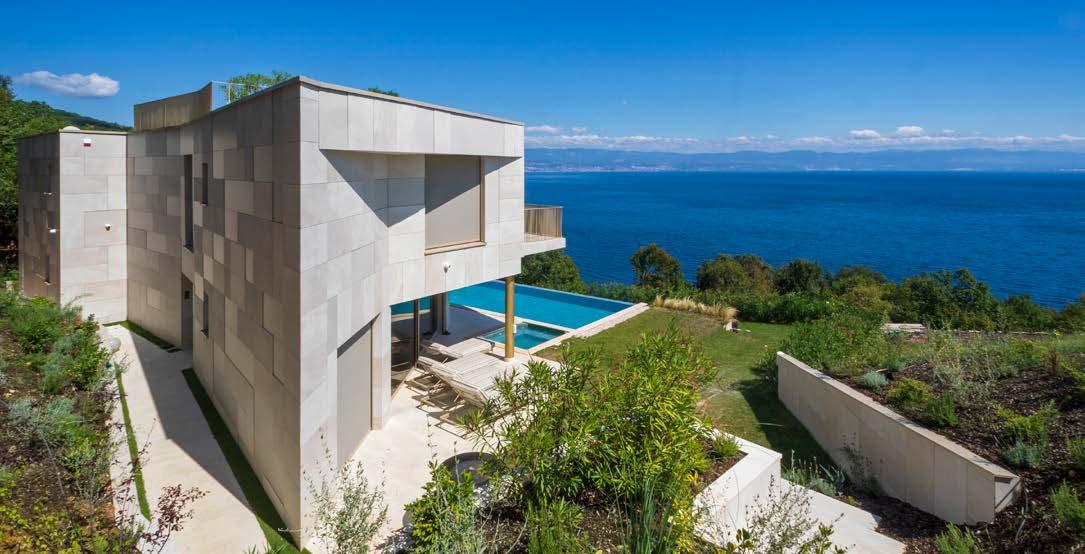











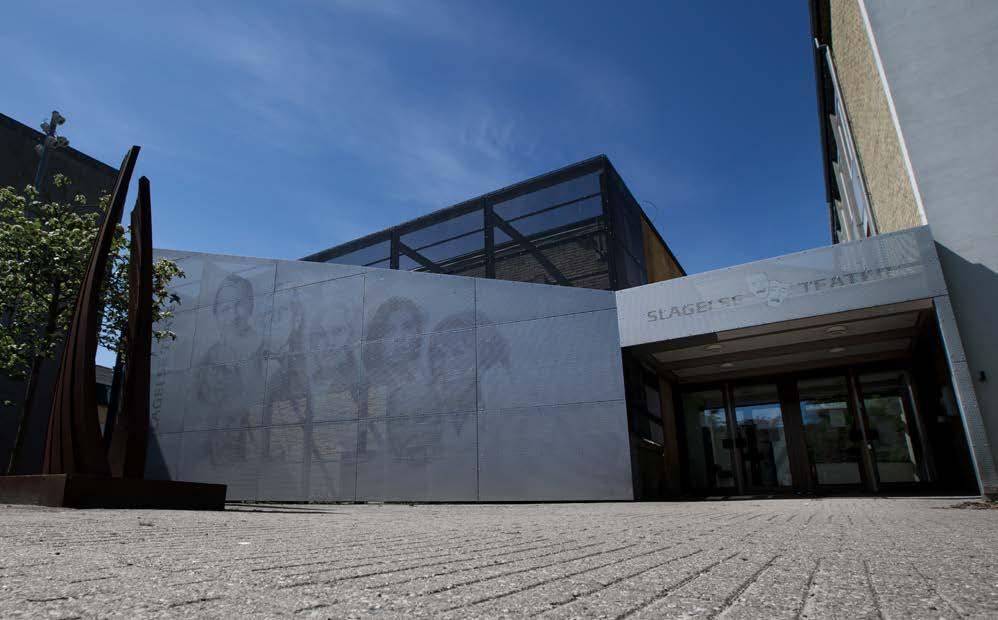
The renovation of Slagelse Theatre revitalised this cultural gem, blending modern design with historical charm. A standout feature of the transformation is the perforated metal facade, which showcases intricate images of famous Danish actors. This artistic element not only enhances the building’s visual appeal but also honours the theatre’s rich legacy. The metal sheets were manufactured and supplied by RMIG Solutions. Using RMIG ImagePerf, depictions of renowned performers were precisely reproduced onto the panels. This thoughtful renovation ensures the theatre remains a vibrant and beloved landmark — seamlessly integrating contemporary aesthetics with a tribute to its storied past.
Technical characteristics
Material type: Aluminium EN 5005 and mild steel
Pattern: RMIG ImagePerf
Hole type: Round holes
Thickness: 3.0 mm
Surface treatment: Anodising and hot dip galva
www.rmigsolutions.com
info.uk@rmig.com
01925 839610
A standout feature of the transformation is the perforated metal facade, which showcases intricate images of famous Danish actors.

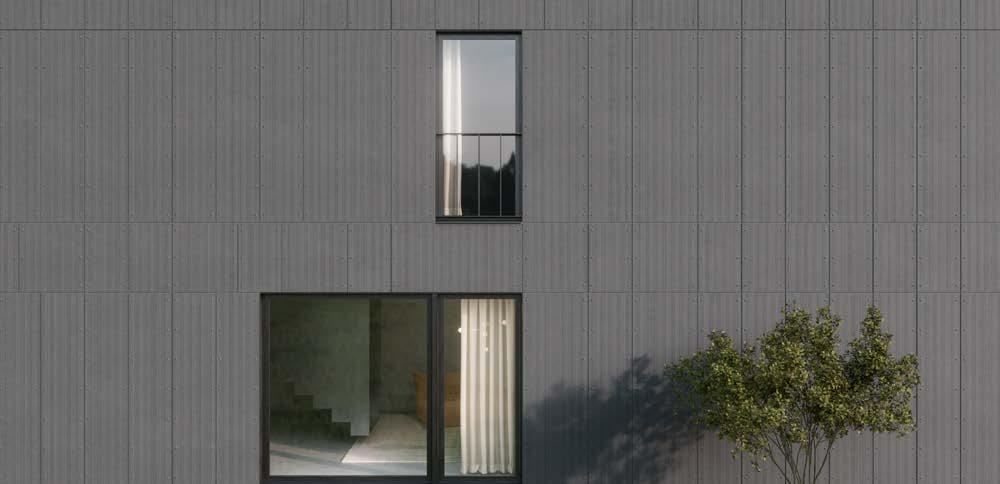
INTRODUCING SWISSPEARL PATINA STRUCTURE NXT, THE LATEST FACADE PRODUCT IN THE PATINA NXT FAMILY
The surface of Patina Structure NXT reveals a refined, natural rhythm created by subtle linear grooves. As light grazes the material, fine and versatile shadows dance across the texture, enhancing the architectural depth of each panel. Each colour variation is enriched by the structured finish, offering perspective and a dynamic interplay of shadows over the course of the day. The material conveys both strength and sophistication, combining a natural look with modern design sensibilities.
Patina Structure NXT transforms fibre cement into a visual and tactile experience, giving architects various aesthetic possibilities within the Patina NXT family.
The facade as a living composition Mix & Match with Swisspearl Patina NXT products.
Whether it’s the NEW Patina Structure NXT in various colours, Patina Rough NXT, Patina Inline NXT or Patina Original NXT, each fibre cement panel imparts an unmistakable character to the facade. The Mix & Match principle allows all panels in the Patina NXT range to be seamlessly combined. The blending of fibre cement panels weaves unique stories that come to life on the facade through varying light and weather conditions. Create your bespoke facade designs in a range of natural colours.
Each colour variation is enriched by the structured finish, offering perspective and a dynamic interplay of shadows over the course of the day.
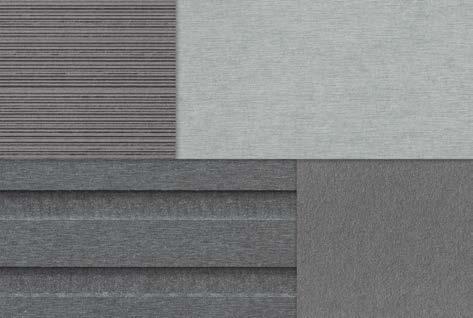
If you would like to find out more about the Swisspearl Patina NXT range or would like a free sample, please visit https://www.swisspearl.com/en-uk.


Patina Structure NXT transforms fibre cement into a visual and tactile experience, giving architects various aesthetic possibilities within the Patina NXT family.
Swisspearl GB Ltd.
Unit 1a, Birchwood One Business Park, Birchwood · WA3 7GB · Warrington, Cheshire +44(0) 203 372 2300 facades@gb.swisspearl.com






Is it time you looked from the bat’s perspective?
The Manthorpe Ridge ™Roost is our innovative solution that effortlessly integrates bat habitats on new builds and refurbishments. The self-contained design is easy to install on any ridge end, eliminating concerns about bats entering roof spaces.
We have a different perspective on construction and conservation. The bat’s.