COUNCILTOBENEFIT"EvenWorldItself"
HisHolinessPopeJohnXXIIIdeclaredin orchywouldbenefitnotonlytheChurchbut
convokingtheSecondVaticanCouncilfor1962 allseekingunity,andeventheworlditself.
ThePope'sbullannouncingthecouncil'sconvocationfor1962lefttheactualopeningdateunspecified.
The2,500-worddocumentinLatinwasreadChristmasDayonthewintryporchofSt.Peter'sbasilicaby ArchbishopPericleFelice,generalsecretaryofthe council'sCentralPreparatoryCommission,whoreceiveditfromthehandsofthePope.
PopeJohn'sbullsaidtheecumenicalcouncilwill benefittheChurchbypromoting"thesanctificationof itsmembers,thediffusionofrevealedtruth,theconsolidationofitsagencies."
ThecouncilwillbenefitseparatedChristiansseekingunitybyproviding"premisesofdoctrinalclarity andmutualcharity"thatwillsmooththewayto unity,hesaid.
"Finally,toaworldlost,confusedandanxiousunder theconstantthreatofnewfrightfulconflicts,the forthcomingcounciliscalledupontoofferanopportunityforallmenofgoodwilltoturntheirthoughts andtheirintentionstowardpeace."
"WeInstitute,AnnounceAnciConvoke"
ThebullwasentitledHumanaeSalutis.While ArchbishopFelicereadit,coldwindsweptacrossthe oorchofthegreatbasilica.Hugemuslincurtainshad beenhungovertheporch'sportalsinaneffortto keepoutdrizzleandprotecttheVaticancanonswho satnearthebasilica'sbronzedoorsthroughoutthe ceremony.
ArchbishopFelicereadinaloudvoicefromarostrumcoveredwithredvelvetandtrimmedwith gold.HeintonedthetraditionalLatinbeginningof papalbulls:"John,Bishop,ServantoftheServantsof God,forPerpetualMemory."
Applausegreetedtheformalannouncementofthe council'sconvocation,whichcamelateinthetext.
TheArchbishopreadthesectionslowly:
"AfterhearingthereforetheopinionofOurbrothers thecardinalsoftheHolyRomanChurch,withthe authorityofOurLordJesusChrist,oftheHoly ApostlesPeterandPaul,andwithOurown,Weinstitute,announceandconvokefortheforthcoming year1962theecumenicalanduniversalcouncilwhich willbeheldintheVaticanbasilicaondaysthatwill beestablishedaccordingtotheopportunitywhich GoodProvidencemaydeigntogiveUs."
ACrisisUnderWayWithinSociety
ThenthePopespecificallyaskedbothCatholics endnon-Catholicstoprayforthecouncil'ssuccess.
ThebullfirstmadethepointthatChrist'sdivine presenceinHisChurchismcstnoticeable"inthe mostgraVeperiodsofhumanity."Thenitbegana considerationof"thecrisisunderwaywithinsociety."
PopcJohnchosetocontrasttheconfusion'and anxietybesettingtoday'sworldwiththevitalityof theCatholicChurch.HesaidtheChurch'srole todayistobring"themodernworldincontactwith thevivifyingandperennialenergiesoftheGospel."
PrivateDevotion HasExtended
Astheresultofadevotionbegun50 yearsagobyamedicalstudent,anestimatedmillionfamiliesinthefreeworld willreceiveHolyCommuniononJanuary7,feastoftheHolyFamily,inan oppealforworldpeace.
ThepracticeofmonthlyfamilyCommunion wasstartedwithinhisfamilybyDr.Richard RendichofBrooklyn,N.Y.Itspreadtorelatives andfriends.In1950,Dr.Rendichwasgranted permissionbytheldteArchbishopThomasE. Molloy.BishopofBrooklyn,tofoundalayorganisationdedicatedtomonthlyfamilyCommuion.ItwascalledtheFamilyCommunionCrusade.
Dr.Rendichdiedin1956.Shortlybeforehis deathhepersuadedtheBlessedSacramentFathers toassistintheworkofthecrusade.TheFathers attheirnovitiateherehavecarriedonmuchof thework,sincethattime.Inpreparationforthe comingfeastoftheHolyFamily,theBlessedSacramentFatherssentouttwomillionleafletsprintedinmorethan40languages,100,000postersin fourlanguagesandothermaterialsinconnection withthecrusade.
Hecharacterisedtoday'sworldasone"which exaltsitselfwithitsconquestsinthetechnicaland scientificfieldsbutwhichbringsalsotheconsequencesofatemporalorderwhichsomehavewished toreorganisetotheexclusionofGod."
"Thisiswhymodernsocietyisearmarkedbygreat materialprogresstowhichthereisnocorresponding advanceinthemoralfield,"hesaid.
thatthismeetingoftheChurch'sentirehier-
Catholicsandthe"livelyinterestoratleastrespectful attentiononthepartofnon-CatholicsandevennonChristians."
Hesaidthisdemonstrated"inthemosteloquent mannerthatthehistoricalimportanceoftheevent hadnotescapedanyone."
PopeJohnindicatedthatthecouncilwillconsider problemsrelatingtoHolyScripture,totradition. thesacraments,prayer,ecclesiasticaldiscipline,charitableandreliefactivities,thelayapostolateandthe missions.Hesaidthecouncilmustalsoconsider problemsofthetemporalorderaswell,suchasthose dealtwithinhissocialencyclicalMateretMagistra.
WhoIsToComeToTheCouncil
Hethenreviewedthepreparationsforthecouncil todate.
"We'finallyhavethejoyofannouncingthatthi' intenseworkofstudytowhichthecardinals,bishops,prelates,theologians,canonistsandexpertsfromall overtheworldhavegiventheirvaluablecontribution nowisnearingitsencl.".
ItwasatthispointthatPopeJohnformallyconvokedtheSecondVaticanEcumenicalCouncil.After ArchbishopFelicireadthewords,crowdsofonlookersintheporchburstoutinapplause,whiletelevisioncamerasrecordedthehistoricmoment.
Thebullthenspecifiedthatcardinals,patriarchs. primates.archbishops.bishops(bothresidentialand titular)andotherdesignatedpersonswereinvited andorderedtoattendthecouncil.
PopeJohninvitedalltheclergyandfaithfulto prayforthecouncil'ssuccess. "ButinaveryspecialwayWeentrustitssuccess totheprayersofchildren,knowingwellhowpowerful withGodisthevoiceofinnocence,andtothesickand !offering,"thePontiiffsaid.
AllInvitedToPrayForSuccess
MoreoverheinvitedallChristiansseparatedfrom Rometojoininprayersforthecouncil.
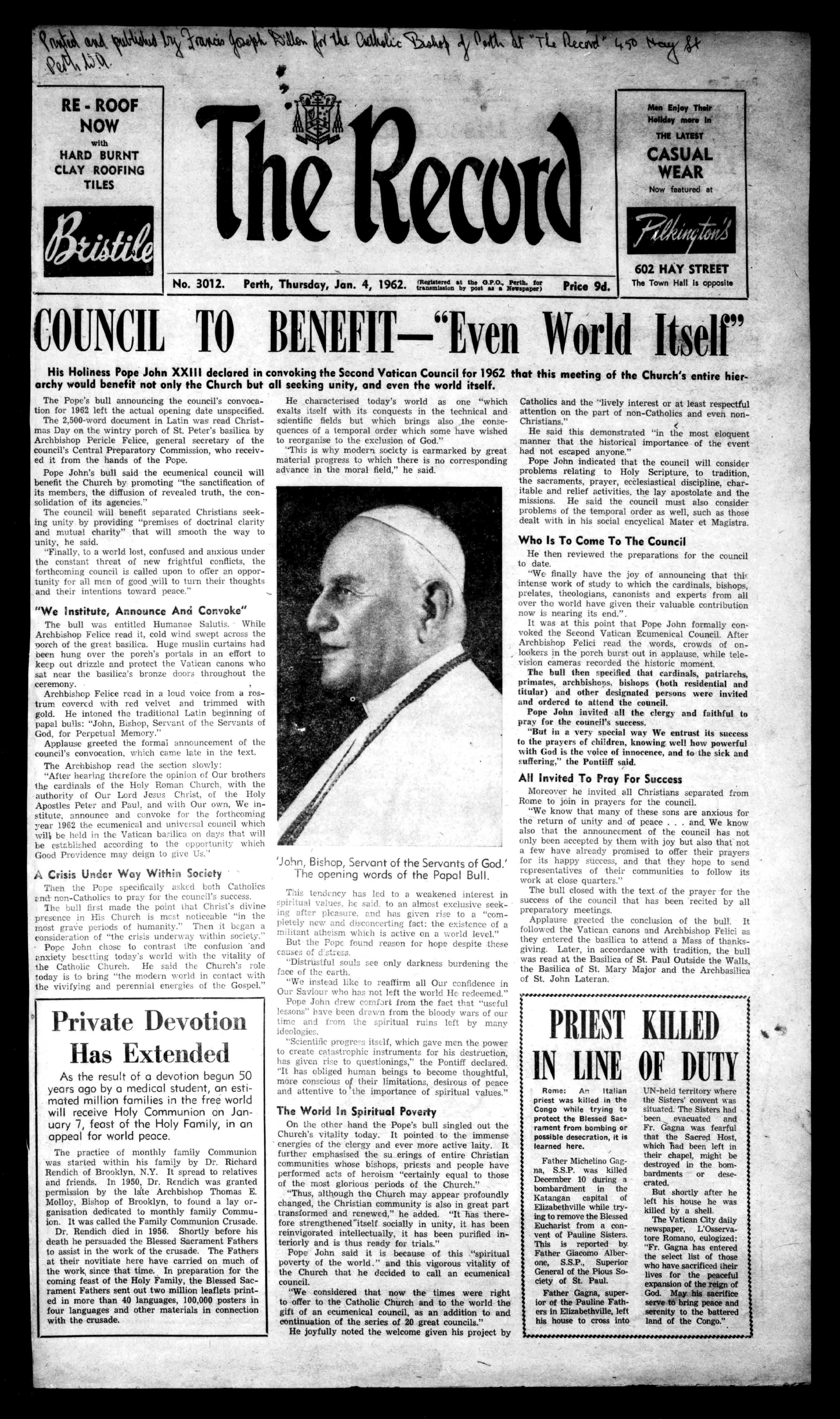
'John,Bishop,ServantoftheServantsofGod.'
TheopeningwordsofthePapalBull.
Thistendencyhasledtoaweakenedinterestin spiritualvalues,hesaid.toanalmostexclusiveseekingafterpleasure,andhasgivenrisetoa"completelynewanddisconcertingfact:theexistenceofa militantatheismwhichisactiveonaworldlevel."
ButthePopefoundreasonforhopedespitethese causesofdistress.
"Distrustfulsoulsseeonlydarknessburdeningthe faceoftheearth.
"WeinsteadliketoreaffirmallOurconfidencein OurSaviourwhohasnotlefttheworldHeredeemed."
PopeJohndrewcomfortfromthefactthat"useful lessons"havebeendrawnfromthebloodywarsofour timeandfromthespiritualruinsleftbymany ideologies.
"Scientificprogressitself,whichgavementhepower tocreatecatastrophicinstrumentsforhisdestruction, hasgivenrisetoquestionings,"thePontiffdeclared. "Ithasobligedhumanbeingstobecomethoughtful, moreconsciousoftheirlimitations,desirousofpeace andattentivetotheimportanceofspiritualvalues."
TheWorldInSpiritualPoverty
OntheotherhandthePope'sbullsingledoutthe Church'svitalitytoday.Itpointedtotheimmense energiesoftheclergyandevermoreactivelaity.It furtheremphasisedthesueringsofentireChristian communitieswhosebishops,priestsandpeoplehave performedactsofheroism"certainlyequaltothose ofthemostgloriousperiodsoftheChurch."
"Thus,althoughtheChurchmayappearprofoundly changed,theChristiancommunityisalsoingreatpart transformedandrenewed,"headded."Ithasthereforestrengthened-itselfsociallyinunity,ithasbeen reinvigoratedintellectually,ithasbeenpurifiedinteriorlyandisthusreadyfortrials."
PopeJohnsaiditisbecauseofthis"spiritual povertyoftheworld."andthisvigorousvitalityof theChurchthathedecidedtocallanecumenical council.
"Weconsideredthatnowthetimeswereright tooffertotheCatholicChurchandtotheworldthe giftofanecumenicalcouncil,asanadditiontoand continuationoftheseriesof20greatcouncils." Hejoyfullynotedthewelcomegivenhisprojectby
"Weknowthatmanyofthesesonsareanxiousfor thereturnofunityandofpeace and.Weknow alsothattheannouncementofthecouncilhasnot onlybeenacceptedbythemwithjoybutalsothatnot afewhavealreadypromisedtooffertheirprayers foritshappysuccess,andthattheyhopetosend representativesof-theircommunitiestofollowits workatclosequarters."
Thebullclosedwiththetextoftheprayerforthe successofthecouncilthathasbeenrecitedbyall preparatorymeetings.
Applausegreetedtheconclusionofthebull.It followedtheVaticancanonsandArchbishopFelicias theyenteredthebasilicatoattendaMassofthanksgiving.Later,inaccordancewithtradition,thebull wasreadattheBasilicaofSt.PaulOutsidetheWalls, theBasilicaofSt.MaryMajorandtheArchbasilica ofSt.JohnLateran.
PRIEST INLINE
Rome:A'-Italian priestwaskilledinthe Congowhiletryingto protecttheBlessedSacramentfrombombingor possibledesecration,itis learnedhere.
FatherMichelin°Gagna,S.S.P.waskilled December10duringa bombardmentinthe Katangancapitalof ElizabethvillewhiletryingtoremovetheBlessed EucharistfromaconventofPaulineSisters. Thisisreportedby FatherGiacomoAlberone,S.S.P.,Superior GeneralofthePiousSocietyofSt.Paul.
FatherGagna,superiorofthePaulineFathersinElizabethville,left hishousetocrossinto
KILLED OFDUTY
UN-heldterritorywhere theSisters'conventwas situated.TheSistershad beenevacuatedand Fr.Gagnawasfearful thattheSacredHost, whichhadbeenleftin theirchapel,mightbe destroyedinthebombardmentsordesecrated.
Butshortlyafterhe lefthishousehewas killedbyashell. TheVaticanCitydaily newspaper,L'OsservatoreRomano,eulogized: "Fr.Gagnahasentered theselectlistofthose whohavesacrificediheir livesforthepeaceful expansionofthereignof God.Mayhissacrifice servetobringpeaceand serenitytothebattered landoftheCongo."
ck44,We,4,41k4 yC..64U%At) Ntik, P(1,51/ RE-ROOF NOW with HARDBURNT CLAYROOFING TILES 111,1?ecot No.3012.Perth, y, ,ThursdaJan.41962.,Reirtsteredatthe P Price9d. O.,Perth,for transmissionbypostasaNewspaper) MenEnjoyTheir HolidaymoreIn THELATEST CASUAL WEAR Nowfeaturedat 602HAYSTREET TheTownHallisopposite
ItalianFilmCentre
ExercisesControl
Italy'sCatholicMotionPictureCentre,the equivalentoftheLegionofDecencyinthe UnitedStates,isalwayscertainthatitwillbe 50percenteffectiveforthesimplereason thatitcontrols50percentofthemovie theatresinItaly.
ThetheatresthattheCatholicMotionPictureCentre(CCC)controlsaretheparishmovietheatres,a popularinstitutioninItalywhichsupplementsnormallylowparishincomes.
TheCCCwasfoundedofficiallyin1934inMilan.Its founders,Mgr.CarloCanzianiandlaymanMario Milano,hadbegunin1928withamagazine,Cinema Review,whichcarriedfilmclassifications.
TheCCCgrewoutofthemagazinein1934.It wasgivenanofficialprogrammetwoyearslaterwhen PopePiusXIpublishedhisencyclical,VigilantiCure, onmotionpictures.
ThepresentfunctionoftheCCCischieflytogive Catholicsguidanceinmovieviewing.Itclassifiesmovies accordingtothefollowingcategories:approvedfor all,approvedforallwithcautionsfortheyoung, approvedforadultsonly,approvedforadultsoffull maturity,inadvisableforall,andforbiddenforall. "Forbiddenforall"istheequivalentoftheLegionof Decency's"condemned."
"Censors"FromVariedWalksOfLife
Filmsarereviewedbya30-memberboard,named bytheItalianBishops'Conference.Theyarepriests, universityprofessors,doctors,lawyersandteachers. Thepossibilityofincludingalsomothersoffamilies ispresentlyunderconsideration.
Everyeveningseveralmembersoftheboardmeet toreviewtwofilms.Theirclassificationsarecarried inallthenewspapers,secularandreligious.Ifthe reviewersareunabletoagree,oriftheextraordinary circumstancesofafilmrequireasecondviewing,a secondcommissioniscalledintoarriveatadecision.
Betweentheyears1934and1960theCCCexamined9,652films.
TheclassificationsmadebytheCCCandthoseof theLegionofDecencyarenotalwaysthesameona particularfilm.Almostalwaysthisisbecausecuts orchangeshavebeenmadeinonecountryandnotin theother.
AfterWorldWarII,theCCCdecidednottolimit itselfmerelytoclassifyingmovies.Itdecidedto producemoviesitself.Butthecentrelackedthe organisationandcapitalneededandtheventurewas afailure.
Thecentrethendecidedtoturnitseffortsfrom productiontothemarketing.Thisledtothecreation ofparishtheatres.Therearenow6,000ofthemin Italy,about50percentofthenation'stheatres.
TheCCChasnowgoneintootherareasinits searchforpositivemeansforimprovingmotionpictures.Itsuppliestechnicaladvicetofilmproducers onrequest,itorganises"filmforums"andmaintains itsownpressservice.
The"filmforum"isapopularculturalprogramme whichaimsattrainingthepublicinabetterappreciationandinterpretationofmotionpictures.The formulaistoviewafilmandthentodiscusit.The forumsareorganisedinthemajorparishes,andin someuniversitiesandseminaries.
EffectivePublicityGiven
Thepressservicesuppliestheclassificationoffilms tonewspapers.Italsopreparesfilmreviewsand featurestories.
TheCCChasnoofficialrelationswiththecivil authorities.Itdoes,however,seektoprotectthe interestsoftheChurchthroughitscontactwith CatholicdeputiesintheItalianParliament.
ThepresentdirectoroftheCCCisMgr.Francesco Angelicchio,apriestoftheOpusDeisecularinstitute. Heis40yearsoldandanativeofItaly.Beforebecomingapriest,hepractisedlawandforatimewas secretarygeneraloftheCatholicAssociationof TheatreManagers.Hewasnameddirectorofthe CCConOctober1,1960.
Mgr.AngelicchiobelievesthattheCCCnotonly canbutshouldmakearenewedattempttoenterthe fieldofmotionpictureproduction.Itistheonly certainway,hebelieves,thatthemotionpicturepublic willbeprotectedfromthesubtleindoctrinationofa "watereddown"morality.
W.A.O.A.
Discouragement ABigDanger
Medellin,Colombia:Thereisnobasisfor thepessimismthatprevailsamongmany CatholicsinLatinAmericainregardtothe Church'sproblemsinthisarea,aColombian prelatedeclaredhere.
Archbishop'JulioBoleroSalazar,C.M.,ofMedellin alsowarnedthatpessimismplaysintothehandsof thecommunists.HecalledonLatinAmericanCatholicstostrivetoputtheChurch'ssocialteachingsinto effect.
TheArchbishopspokeinaninterviewonhisreturn herefromMexico,wherehetookpartinthesixth annualmeetingoftheLatinAmericanBishops'Council (CELAM), ArchbishopBotero,CELAMtreasurer,reportedthat themeetinghadreviewedandanalysedtheyear's "problems,threatsanddangersinourcontinentaswellasitsaccomplishmentsandpositiveaspects -andfranklywereachedtheconclusionthatthere isnobasisforthenegativeandpessimisticattitude whichprevailsamongquiteafewCatholics."
TheconclusionsoftheCELAMmeeting,whichdealt withfamilyproblemsandtheurgentneedforsocial reforminLatinAmerica,areawaitingtheapproval oftheHolySeebeforebeingmadepublic,Archbishop Boterosaid.
TheArchbishopstressedthatLatinAmericanCatholicsmustmakeamajorefforttoputthesocialdoctrine oftheChurchintoeffect.Themeetingagreed,he reported,that"itisurgentforCatholicstostart learningthesocialdoctrineoftheChurchearlyin theirschoolyears.Togetherwiththecatechism, childrenmustlearnCatholicsocialprinciples,commentonthem,understand,experienceandapply them."
"Thissocialtraining,"hecontinued,"mustbemade inaccordancewiththedirectivesoftheadmirable encyclical,MateretMagistra(ofHisHolinessPope JohnXXIII),adocumentthatelucidatesalltheproblemsofourtimeswithrareclarityandopensunexpectedpathsofactiontoCatholics."
Suchaction,theprelatecontinued,willdetera waveofpessimismthatisplayingintocommunist hands.
"Adismalwaveofpessimismisspreadinginour countriesidthefaceofthedangersthatsurroundus," hesaid."Thereisa'veritablepsychosisthatfeelswe havereachedtheend,andthatonlythesolutions advocatedbycommunismwillgiveusawayout.
"Inthiswayweplayintothehandsofcommunism whichcapitalisesonourproblemsandrepeatsthatwe shallbeinexorably withnoothersalvation thanthatoftheMarxistrevolution."
"WeCatholicsmustopposethisatmosphereofdefeat withasereneattitudeoftrustintheChurch.astaunch responsibleandvigorousfaithintheeffectivenessof theGospelandwithfullcertaintythatifweliveour doctrine,ifweapplytheChristianprinciples,wewill solveourevils."
Headded:
"Wecannotpursuethepolicyoftheostrichbyburyingourheadsoasnottoseedangers.Butneither doweneedtoexaggeratethesituationandconsider ourselveslost."
TheColombianprelatepointedoutthat"thereisa vigorousawakeningoftheChristianconscienceamong allofourpeople,showingitselfinadecisiveeffortto findeffectivesolutionstoourevils.
"Therearestimulatingadvancesandaccomplishmentsthroughoutthelengthandbreadthofthecontinent,"ArchbishopBoterosaid."Theworkthatthe Church'spriestsandfaithfulareaccomplishinginthe apostolate,ineducation,motionpictures,thepress andradio,inwelfareandsocialaidisadmirable,"he concluded.
TeachingDemonstrationPlanned
AtInstructors'Seminar
Parentsandlayreligiousinstructorswhohave enrolledfortheSeminarwhichwillbeheldat St.ThomasMoreCollegeattheendofthismonth willhaveanuniqueopportunitytolearnhowto teachchildren.
Thesimplestmethodoflearninghowtoteach istoseecompetentteachersattheirwork.Six demonstrationswillbegivenduringtheSeminar toaclassof40childrenwhowillbebroughtto thecollegetooccupyanimprovisedclassroom.In thiswaytheinstructorswillseeeveryaspect ofgoodclassroomteachingtechniquesillustrated.
ABrigidineSisterwillteachareligionlesson toamixedgroupofboysandgirlsfromgrades onetothree.
APresentationSisterwillgiveanotherlesson toanoldergroupfromgradesfourandfive.A SisteroftheCongregationofOurLadyofthe Missionswillteachagroupofboysandgirlsfrom eleventothirteen.
MissM.MoiroftheClaremontTeachers'.Collegewillgiveadramalessontoagroupagedfrom sixtoten.MissB.MaheroftheGraylandsTrainingSchoolwilldemonstratehowateacherestablishescontactwith,andgainstherespectandaffectionofanewclasswhichshewillmeetfor thefirsttimeattheSeminar.Shewillalsodemonstratehowahymnorsongistaughtto children.
ThedatesandtimesoftheSeminarareJanuary22,24,26,29,31andFebruary1from9.30 to12.30eachday.
*BISHOPFULTONJ.SHEEN DISCUSSES
LoavesandFishes
THIRTYorfortyyearsagomanputhis 1hopesinbiology.Apopularspokesman formanevolvingintoakindofagodwasH. G.Wells.Atthecloseofhislifehesawthat biologywouldnotrealisehisexpectations, andfellintotheabysmalpitofdespair.
Inthisgenerationman'shopeisputinpsychology. Thereisnoenatothemakingofbooksremindingman oftheunreservedsourcesofpowerwithinhim,pleadingtorealisehishigherself,totaphisreserves,to plungeintothedeeperpartofhisunconscious,tomake ofhimselfanewcreature.
Whileitistobeadmittedthatmostmendolivdon thesurfaceoftheirsouls,thereneverthelessisagross exaggerationinthinkingthatman,bynewpsychologicaltricks,canmakehimselfdifferentthanheis. Whenaballisrollingacrossaroominagivendirection itwillnotbedivertedfromthatdirectionexceptby asuperiorforcefromtheoutside.Men,too,willcontinueinthemoralorimmoraldirectioninwhichthey aretravellingunlessahigherandnon-psychological powerintervenes.
Iti9vaintothinkthata100horsepowermotorcan everbetransformedintoa1,000horsepower,oreven intoaformofnuclearenergy.Quickliftsareindeed giventothemindbyanactofthewill,butonesoon runsoutofenthusiasm.
DivineGraceGivesUntoldStrength
Lessfrustrationandgreaterhappinesswouldpossess mindsiftheyrecognisedthattheirunrealisedpossibilitiescamefromDivinity,andnotfromtheirown weakwillsandtoo-oftentriggeredpassions.Whenthe hungrymultitudefollowedtheLordintothedesert, thequestionthatHeaskedwas:"Howmanyloaves haveyou?"Whatnaturalcapacities,whathuman talents,whatpsychologicalforcesdoyoupossess?The answertothequestiongivenbythediscipleswasthat therewerefiveloavesandtwofishes.Theobvious' lessonwas,thathumancapacitiesandreserveswere totallyinadequatetothetaskoffeedingfivethousand. Nomatterhowmuchphysicalorpsychologicaleffectivenesswemayhaveforunselfishservice,oursouls arebaffledatthetrivialityandbewilderingpovertyof ourpowers.Thehonestmanlookingatallhismeagre mentalreservesmustfeeldismayed.Ourresourcesare fiveloavesandtwofishes;ourdemandsareasgreatas thefeedingoffivethousand.
Butat'thispointofhumanhelplessnessthereintervenesaDivinePower,whichlaysholdoftheslender resources.Insteadofmanthinkingthathecangetout ofthemorassandswampofhisowndespairand futility,heshouldrealisethatGodwilldowonders withthislittle,ifitbebutofferedtoHiminconsecrated service.
God'swayistorequiresomebasisuponwhichtorest Hisbounty.GiveHimthedustofthegroundandHe willbreatheintoitalivingsoulmadetoHisimageand likeness.GivqHimtheobedienttrustwhichfeelsits wayalongadustystreetandHewillcauseblindeyes tosee.Notmuchisaskedofanydoubting,uncertain soul,buthewhothinksthathecanmakehimselfwhat heisbyhisownpowerisdestinedtoperishwith,the multitudeinthemidstofthefiveloavesandtwofishes.
Thosefragmentsofaspirationsinthehumanheart andthoseundevelopedcapacities,whenputintoHis handscausethesoultotravelinadifferentdirection, asdoestheballwhendivertedbyastone.Weareonly requiredtobringtheloavesandfishesthatwehave andputthemunreservedlyintoHishand.Ifitbeone talent.apersonisnotcensuredbecausehedoesnot bringfive.Heiscensuredonlybecauseheburiesthe oneinhisownmindvainlythinkingthatimpoverished andinfertilesoilcanbringforththetreeoflife.
Psychologyisrightinsayingthatmanhasmany unrealisedpossibilities,buttherealisationdoesnot comefromthelimpingmindofman,butfromHim Whocartbreathenewlifeintooldbonesandfatigued spirits.
OfficialEngagements
January6: Profession Ceremony, UrsulineConvent,Carilla.
January9: 8a.m.:ProfessionCeremony,PresentationConvent, "Iona,"MosmanPark.
January21: 10a.m.:ReceptionCeremony SehoenstattSistersofMary, Riverton.
February3: 8.30a.m.:FinalProfession CeremonySt.Mary'sConventofMercy,Leederville. 3p.m.:ReceptionCeremonySt.Mary'sConventof Mercy,Leederville.
February5: 9a.m.:ProfessionCeremony,ConventofMercy, VictoriaSquare.
February10: 9.30a.m.:SolemnBlessingofTrinityCollegeChapel.
February19: 8.30a.m.:ProfessionCeremony,St.Mary'sConventof Mercy,Leederville.
February24: 3p.m.:ReceptionCeremony,ConventofMercy, VictoriaSquare.
CARDS
PageTwo THE REC-ORD Thursday,January4,1962
H.J.LILLEYMAN
OPTICIANandOPTOMETRIST 453ALBANYHIGHWAY,VICTORIAPARK.
And156ROKEBYRD.,SUBIACO.8.3983.Res.:67-1685. Loymooncoml.. HSSASSIACKST., usO0[FOlt0ST. LEIEDIERVILLI ALLTYPESOFSHOEREPAIRS
6.1880.
CONFIRMATION
Nowavailableat RECORDPRINT PHONE:21
450HayStreet,Perth
2837
AnglicansPray SeeNeedForVocations
WithSickNuns
Burnham,England:AnglicanBenedictinemonkis promotingamovementto havesickandhandicapped membersoftheChurchof Englanduniteinprayer withacongregation-ofCatholicnuns.
HeIN BrotherAndrew BeardofNashdomAbbey, whoissendingoutcircularletterstoAnglicansconcerningthe"UnionofJesus Crucified."Theletterstates:
"Duringtworecentvisits toFrance,IbecameacquaintedwiththeCongregationoftheSistersof JesusCrucified,acongregationofcloisteredSisters,all ofwhosemembersarc eithersickorhandicapped. TheseSistershaveanassociationcalled'TheUnionof JesusCrucified'bywhich thesickandhandicapped canbeunitedwiththe prayersofthecommunity andreceive,intheirturn. theaidoftheSisters' prayers.Theruleissimple: Itisjusttoreciteeveryday at3o'clocktheantiphon, 'Christbecameobedientuntodeath ,'etc.,inunion withtheSistersandthe othermembers.
"Itseemstomethatthere mightbesickandhandicappedpersonsamongtheAnglicanswhowouldliketo takepartinthisunionof prayerandwho,byuniting themselvesinprayeratthe footoftheCross,wouldthus forgealinkwhichwould helptosmoothawaythe obstacleswhichseparateus.
TheVeryReverendMother Foundresshasassuredme thatifAnglicanswouldlike tojointhisunionofprayer, theywouldbewelcome."
UnionActivity
DutyAndRight
Rheims,France:ArchbishopFrancoisMartyof Rheimshascondemnedany disciplinarymeasuresagainst unionleaderssimplybecauseoftheirunionactivities.
TheArchbishop'alsosaid unionactivityisadutyas wellasaright.
Hespokeinastatement issuedinatenseclimateof labour-managementwranglingoverproductioncutbacks andfirings.
"TheChurchcannotremainmuteinasocialatmospherethatdegradesitselfbyattacksagainstjusticeandcharity,"besaid.
"Insomebusinesses,work scheduleshavebeencut.Recoursetolayoffsoccurs moreoften,whileinother businessesworkgoesahead fullsteam,withovertime andacrushingschedule.
"Theresponsibilitiesof unionactivityareaservice. Forthis;mon,unionleadersareespeciallyworthyof respect.Anypunishmentof oneofthemsimplybecause ofhisunionactivityisan injustice."
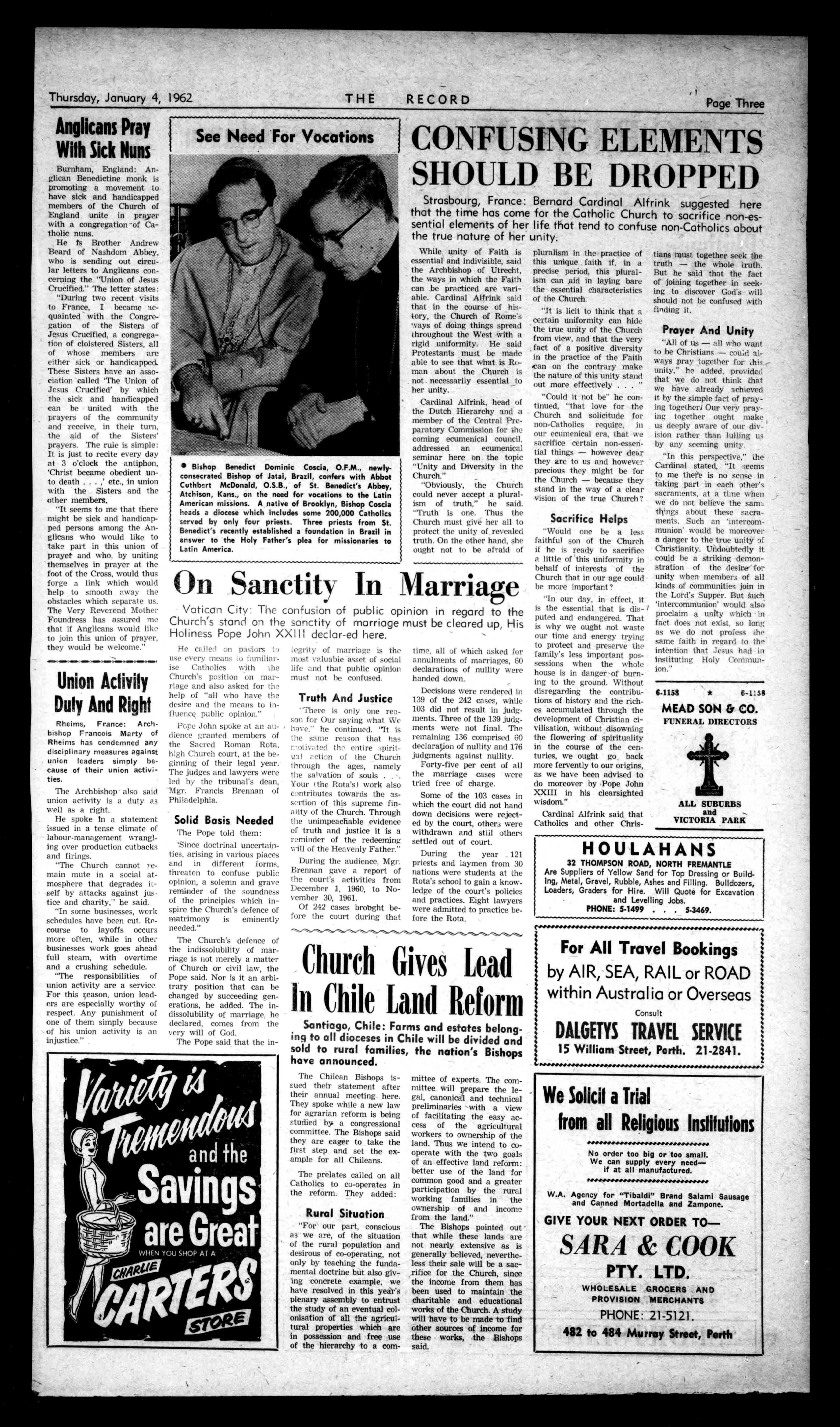
BishopBenedictDominicCoscia,O.F.M.,newlyconsecratedBishopofJatai,Brazil,conferswithAbbot CuthbertMcDonald,O.S.B.,ofSt.Benedict'sAbbey, Atchison,Kans.,ontheneedforvocationstotheLatin Americanmissions.AnativeofBrooklyn,BishopCoscia headsadiocesewhichincludessome200,000Catholics servedbyonlyfourpriests.ThreepriestsfromSt. Benedict'srecentlyestablishedafoundationinBrazilin answertotheHolyFather'spleaformissionariesto LatinAmerica.
CONFUSINGELEMENTS SHOULDBEDROPPED
pluralisminthepracticeof thisuniquefaithif,ina preciseperiod,thispluralismcanaidinlayingbare theessentialcharacteristics oftheChurch.
"Itislicittothinkthata certainuniformitycanhide thetrueunityoftheChurch fromview,andthatthevery factofapositivediversity inthepracticeoftheFaith canonthecontrarymake thenatureofthisunitystand outmoreeffectively "
tiansmusttogetherseekthe truth-thewholeiruth. Buthesaidthatthefact ofjoiningtogetherinseekingtodiscoverGod'swill shouldnotbeconfusedwith findingit.
PrayerAndUnity
Strasbourg,France:BernardCardinalAlfrinksuggestedhere thatthetimehascomefortheCatholicChurchtosacrificenon-es- sentialelementsofherlifethattendtoconfusenon-Catholicsabout thetruenatureofherunity, WhileunityofFaithis essentialandindivisible,said theArchbishopofUtrecht, thewaysinwhichtheFaith canbepracticedarevariable.CardinalAlfrinksaid thatinthecourseofhistory,theChurchofRome's waysofdoingthingsspread throughouttheWestwitha rigiduniformity.Hesaid Protestantsmuttbemade abletoseethatwhatisRomanabouttheChurchis notnecessarilyessentialto herunity.
CardinalAlfrink,headof theDutchHierarchyanda memberoftheCentralPreparatoryCommissionforthe comingecumenicalcouncil, addressedanecumenical seminarhereOnthetopic "UnityandDiversityinthe Church."
"Obviously,theChurch couldneveracceptapluralismoftruth,"hesaid. "Truthisone.Thusthe Churchmustgiveherallto protecttheunityofrevealed truth.Ontheotherhand,she oughtnottobeafraidof
OnSanctityInMarriage
VaticonCity:Theconfusionofpublicopinioninregardtothe Church'sstandonthesanctityofmarriagemustbeclearedup,His HolinessPopeJohnXXIIIdeclar-edhere.
Hecalledonpastorsto useeverymeanstofamiliariseCatholicswithshe Church'spositiononmarriageandalsoaskedforthe helpof"allwhohavethe desireandthemeanstoinfluencepublicopinion."
PopeJohnspokeatanau(hencegrantedmembersof theSacredRomanRota, highChurchcourt,atthebeginningoftheirlegalyear. Thejudgesandlawyerswere ledbythetribunal'sdean, Mgr.FrancisBrennanof Philadelphia.
SolidBasisNeeded
ThePopetoldthem:
'Sincedoctrinaluncertainties,arisinginvariousplaces andindifferentforms, threatentoconfusepublic opinion,asolemnandgrave reminderofthesoundness oftheprincipleswhichinspiretheChurch'sdefenceof matrimonyiseminently needed."
TheChurch'sdefenceof theindissolubilityofmarriageisnotmerelyamatter ofChurchorcivillaw,the Popesaid.Norisitanarbitrarypositionthatcanbe changedbysucceedinggenerations,headded.Theindissolubilityofmarriage,he declared,comesfromthe verywillofGod.
ThePopesaidthatthein-
andthe Savings Earereat
iegrityofmarriageisthe mostvaluableassetofsocial lifeandthatpublicopinion mustnotbeconfused.
TruthAndJustice
"ThereisonlyonereasonforOursayingwhatWe have,"hecontinued."Itis thesamereasonthathas rotivatedtheentirespiritualactionoftheChurch throughtheages,namely thesalvationofsouls YourtheRota's)workalso contributestowardstheassertionofthissupremefinalityoftheChurch.Through theunimpeachableevidence oftruthandjusticeitisa reminderoftheredeeming willoftheHeavenlyFather."
Duringtheaudience,Mgr. Brennangaveareportof thecourt'sactivitiesfrom December1,1960,toNovember30,1961. Of242casesbrobghtbeforethecourtduringthat
time,allofwhichaskedfor annulmentsofmarriages,60 declarationsofnullitywere handeddown.
Decisionswererenderedin 139ofthe242cases,while 103didnotresultinjudgments.Threeofthe139judgmentswerenotfinal.The remaining136comprisedBO declaraponofnullityand176 judgmentsagainstnullity.
Forty-fivepercentofall themarriagecaseswere triedfreeofcharge.
Someofthe103casesin whichthecourtdidnothand downdecisionswererejectedbythecourt,otherswere withdrawnandstillothers settledoutofcourt.
Duringtheyear121 priestsandlaymenfrom30 nationswerestudentsatthe Rota'sschooltogainaknowledgeofthecourt'spolicies andpractices.Eightlawyers wereadmittedtopracticebeforetheRota.
ChurchGivesLead inChileLandReform
Santiago,Chile:Farmsandestatesbelong- ingtoalldiocesesinChilewillbedividedand soldtoruralfamilies,thenation'sBishops haveannounced.
TheChileanBishopsissuedtheirstatementafter theirannualmeetinghere. Theyspokewhileanewlaw foragrarianreformisbeing studiedbyacongressional committee.TheBishopssaid theyareeagertotakethe firststepandsettheexampleforallChileans.
Theprelatestailedonall Catholicstoco-operatesin thereform.Theyadded:
RuralSituation
"Forourpart,conscious asweare,ofthesituation oftheruralpopulationand desirousofco-operating,not onlybyteachingthefundamentaldoctrinebutalsogivingconcreteexample,we haveresolvedinthisyear's plenaryassemblytoentrust thestudyofaneventualcolonisationofalltheagriculturalpropertieswhichare inpossessionandfreeuse ofthehierarchytoacorn-
mitteeofexperts.Thecommitteewillpreparethelegal,canonicalandtechnical preliminaries-withaview offacilitatingtheeasyaccessof workerstheagricultural toownershipofthe land.Thusweintendtocooperatewiththetwogoals ofaneffectivelandreform.
betteruseofthelandfor commongoodandagreater participationbytherural workingfamiliesinthe ownershipofandincon:fromtheland."
TheBishopspointedout thatwhiletheselandsare notnearlyextensiveasis generallybelieved,neverthelesstheirsalewillbeasacrificefortheChurch,since theincomefromthemhas beenusedtomaintainthe charitableandeducational worksoftheChurch.Astudy willhavetobemadetofind othersourcesofincomefor theseworks,theBishops said.
"Coulditnotbe"hecontinued,"thatloveforthe Churchandsolicitudefor non-Catholicsrequire,in ourecumenicalera,thatwe sacrificecertainnon-essentialthings-howeverdear theyaretousandhowever precioustheymightbefor theChurch-becausethey standinthewayofaclear visionofthetrueChurch?
SacrificeHelps
"Wouldonebealess faithfulsonoftheChurch ifheisreadytosacrifice alittleof'thisuniformityin behalfofinterestsofthe Churchthatinouragecould bemoreimportant?
"Inourday,ineffect,it istheessentialthatisdisputedandendangered.That iswhyweoughtnotwaste ourtimeandenergytrying toprotectandpreservethe family'slessimportantpossessionswhenthewhole houseisindangerofburningtotheground.Without disregardingthecontributionsofhistoryandtherichesaccumulatedthroughthe developmentofChristiancivilisation,withoutdisowning thefloweringofspirituality inthecourseofthecenturies,weoughtgo,back moreferventlytoourorigins, aswehavebeenadvisedto domoreoverbyPopeJohn XXIIIinhisclearsighted wisdom."
CardinalAlfrinksaidthat CatholicsandotherChris-
"Allofus-allwhowant toheChristians-couldalwayspraytogetherfor,his unity,"headded,provided thatwedonotthinkthat wehavealreadyachieved itbythesimplefactofprayingtogether)Ourveryprayingtogetheroughtmake usdeeplyawareofourdivisionratherthanlullingus byanyseemingunity.
"Inthisperspective,"ihe Cardinalstated,"It-seems tomethet4eisnosensein takingpartineachather.: sacraments,atatimewhen wedonotbelievethesams thingsaboutthesesacraments.Suchan'intercommunion'wouldbemoreover adangertothetrueunityof Christianity.Undoubtedlyit couldbeastrikingdemonstrationofthedesire'for unitywhenmembersofall kindsofcommunitiesjoinin theLord'sSupper.ButSuch 'intercommunion'wouldalso proclaimaunitywhichin factdoesnotexist,solong aswedonotprofessThe samefaithinregardtothe intentionthatJesushadin institutingHolyContmunion."
6-1158 6-1158
MEAD
Thursday,January4,1962
RECORD PageThree
THE
legigiRS
CO.
DIRECTORS ALLSUBURBS and VICTORIAPARK HOULAHANS 32THOMPSONROAD,NORTHFREMANTLE AreSuppliersofYellowSandforTopDressingorBuilding,Metal,Gravel,Rubble,AshesandFilling.Bulldozers, Loaders,GradersforHire.WillQuoteforExcavation andLevellingJobs. PHONE:5-1499 5-3469. ForAllTravelBookings byAIR,SEA,RAILorROAD withinAustraliaorOverseas DALGETYSTRAVELSERVICE 15WilliamStreet,Perth.21-2841. Consult WeSolicitaTrial fromallReligiousInstitutions IP.0000.04,0.0.014,ANINIANO.O.11.11,...1,141 Noordertoobigortoosmall. Wecansupplyeveryneedifatallmanufactured. W.A.Agencyfor"Tibatdi"BrandSalamiSausage andCannedMortadellaandZampone. GIVEYOURNEXTORDERTOSARA&COOK PTY.LTD. WHOLESALEGROCERSAND PROVISIONMERCHANTS PHONE:21-5121. 482to484MurrayStreet,Perth
SON&
FUNERAL
Philippines
neverhaveworriesabout theMissionarySocietyofSt. JamestheApostlefornow wehaveanintercessor,a representative,notinIreRosaryCrusade landortheUnitedStates, FatherPatrickPeyton,hutintheglorifiedranksof C.S.C.,willconductarallythe'Kingdomofheaven. ofhisFamilyRosaryCru- FatherDugganwasbursadeonJanuary28atSaniedinLima-"hisonereFernando,35milesfromquest."Amongthoseassistingathisfuneralwerehis formerOrdinaryBishopCorTherallywilltakeplaceneliusLuceyofCork;ArchalongtheroadusedforthebishopJuanLandazuri, BataanDeathMarchof0.F.M.,ofLimaandArchWorldWarIIduringwhichbishopRomoloCarboni, manyU.S.and'FilipinoApostolicNunciotoPeru. troopscapturedbytheJapanesedied.
India
Peru
HeroicPriestDies RichardCardinalCushing paidtributetoFather ThomasDuggan,whoresignedaspastorofthelargest parishinIrelandlastAugusttobecomeamissionary attheageof71anddied inLimafourmonthslater.
TheCardinaldeliveredthe eulogyatthesolemnfuneral MassforFatherDugganon December19,twodaysafter hisdeath.
CardinalCushingrecalled thatFatherDugganhad statedonjoiningtheMissionarySocietyofSt.James theApostlethatthebestway hecouldencourageother prieststobecomemissionersinLatinAmericawould be"togomyself."
"Henceforthandforever," theCardinalsaid,"Iwill
B.N.Datar,DeputyMinisterofHomeAffairs,told thelowerhousethattheIndianConstitutionallows everyoneinthecountryto propagatereligioninalegitimateway.Thegovernmentcouldtakeactiononly ifitwereprovedthatforeignmoneywasusedfor forcibleconversion,hesaid. DatarwasreplyingtoVir Shastri,M.P.fromPunjab, whoassertedthatsinceIndianindependencein1947, about£A124millionhad beenreceivedincashor goodsbyforeignmissionestablishmentsinIndia.
"PeopletoPeople"Basis
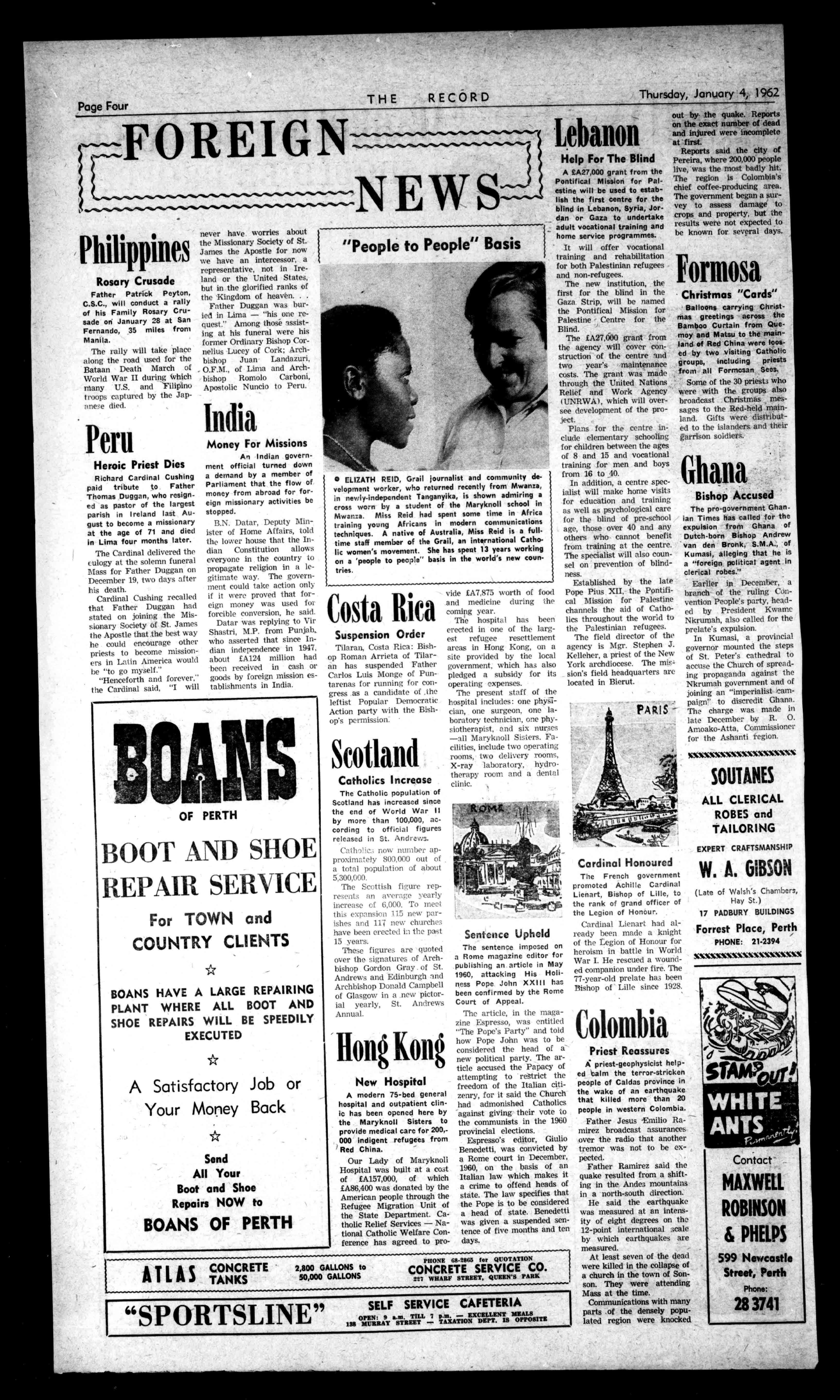
0ELIZATHREID,Grailjournalistandcommunitydevelopmentworker,whoreturnedrecentlyfromMwanza, innewly-independentTanganyika,isshownadmiringa crosswornbyastudentoftheMaryknoll
Mwanza.MissReidhadspentsome
CostaRica
SuspensionOrder
Tilaran,CostaRica:BishopRomanArrietaofTilaranhassuspendedFather CarlosLuisMongeofPuntarenasforrunningforcongressasacandidateof.the leftistPopularDemocratic ActionpartywiththeBishop'spermission.
Scotland
CatholicsIncrease
TheCatholicpopulationof Scotlandhasincreasedsince theendofWorldWarII bymorethan100,000,accordingtoofficialfigures releasedinSt.Andrews.
Catholic;nownumberapproximately800,000outof atotalpopulationofabout 5,300,000.
TheScottishfigurerepresentsanaverageyearly increaseof6,000.Tomeet thisexpansion115newparishesand117newchurches havebeenerectedinthepast 15years.
Thesefiguresarequoted overthesignaturesofArchbishopGordonGrayofSt. AndrewsandEdinburghand ArchbishopDonaldCampbell ofGlasgowina.newpictorialyearly,St.Andrews Annual.
HongKong
NewHospital
Amodern75-bedgeneral hospitalandoutpatientclinichasbeenopenedhereby theMaryknollSistersto providemedicalcarefor200,000indigentrefugeesfrom RedChina.
OurLadyofMaryknoll Hospitalwasbuiltatacost of£A157,000,ofwhich £A86,400wasdonatedbythe Americanpeoplethroughthe RefugeeMigrationUnitof theStateDepartment.CatholicReliefServices-NationalCatholicWelfareConferencehasagreedtopro-
vide£A7,875worthoffood andmedicineduringthe conlifigyear. Thehospitalhasbeen erectedinoneofthelargestrefugeeresettlement areasinHongKong,ona siteprovidedbythelocal government,whichhasalso pledgedasubsidyforits operatingexpenses.
Thepresentstaffofthe hospitalincludes:onephygiclan,onesurgeon,onelaboratorytechnician,onephysiotherapist,andsixnurses -allMaryknollSisters.Facilities,includetwooperating rooms,twodeliveryrooms, X-raylaboratory,hydrotherapyroarandalon1,1 clinic.
Lebanon
HelpForTheBlind A£A27,000grantfromthe PontificalMissionforPalestinewillbeusedtoestablishthefirstcentreforthe blindinLebanon,Syria,JordanorGazatoundertake adultvocationaltrainingand homeserviceprogrammes. Itwilloffervocational trainingandrehabilitation forbothPalestinianrefugees andnon-refugees. Thenewinstitution,the firstfortheblindinthe GazaStrip,willhenamed thePontificalMissionfor PalestineCentreforthe Blind. TheIA27,0-00grantfrom theagencywillcoverconstructionofthecentreand twoyear'smaintenance costs.Thegrantwasmade throughtheUnitedNations ReliefandWorkAgency UNRWA),whichwilloverseedevelopmentoftheproject. Plansforthecentreincludeelementaryschooling forchildrenbetweentheages of8and15andvocational trainingformenandboys from16to10. Inaddition,acentrespecialistwillmakehomevisit.; foreducationandtraining aswellaspsychologicalcare fortheblindofpre-school age,thoseover40andany otherswhocannotbenefit fromtrainingatthecentre. Thespecialistwillalsocounselonpreventionofblindness. Establishedbythelate PopePinsXII,-thePontificalMissionforPalestine channelstheaidofCatholicsthroughouttheworldto thePalestinianrefugees. Thefielddirectorofthe agencyisMgr.StephenJ. Kelleher,apriestoftheNew Yorkarchdiocese.Themisz sion'sfieldheadquartersare locatedinBierut. .rT.
outbythequake.Reports ontheexactnumberofdead andinjuredwereincomplete atfirst.
Reportssaidthecityof Pereira,where200,000people live,wasthemostbadlyhit. TheregionisColombia's chiefcoffee-producingarea. Thegovernmentbeganasurveytoassessdamageto cropsandproperty,butthe resultswerenotexpectedto beknownforseveraldays.
Formosa
Christmas"Cards"
BalloonscarryingChristmasgreetingsacrossthe BambooCurtainfromQuemoyandMatsutothemainlandofRedChinawereloosedbytwovisitingCatholic groups,includingpriests fromallFormosanSees.
Someofthe30priest.;who werewiththegroupsalso broadcastChristmasmessagestotheRed-heldmainland.Giftsweredistributedtotheislandersandtheir garrisonsoldiers.
Ghana
BishopAccused
Thepro-governmentGhanianTimeshascalledforthe expulsionfromGhanaof Dutch-bornBishopAndrew vandenBronk,S.M.A.,of Kumasi,allegingthatheis a"foreignpoliticalagentin clericalrobes."
EarlierinDecember,a branchoftherulingConventionPeople'sparty,headedbyPresidentKwamc Nkrumah,alsocalledforthe prelate'sexpulsion.
InKumasi,aprovincial governormountedthesteps ofSt.Peter'scathedralto accusetheChurchofspreadingpropagandaagainstthe Nkrumahgovernmentandof joiningan"imperialistcampaign"todiscreditGhana. Thechargewasmadeits lateDecemberbyR.0. Arnoako-Atta,Commissioner fortheAshantilegion.
MIOCICWOCIOCIMICIOPAILAC
SentenceUpheld
Thesentenceimpezedon aRomemagazineeditorfor publishinganarticleinMay 1960,attackingHisHolinessPopeJohnXXIIIhas beenconfirmedbytheRome CourtofAppeal.
Thearticle,inthemagazineEspresso,wasentitled "ThePope'sParty"andtold howPopeJohnwastobe consideredtheheadofa newpoliticalparty.ThearticleaccusedthePapacyof attemptingtoreltrictthe freedomoftheItaliancitizenry,foritsaidtheChurch hadadmonishedCatholics againstgivingtheirvoteto thecommunistsinthe1960 provincialelections, Espresso'seditor,Giulio Benedetti,wasconvictedby aRomecourtinDecember, 1960,onthebasisofan Italianlawwhichmakesit acrimetooffendheadsof state.Thelawspecifiesthat thePopeistobeconsidered aheadofstate.Benedetti wasgivenasuspendedsentenceoffivemonthsandten days.
CardinalHonoured
TheFrenchgovernment promotedAchilleCardinal Lienart,BishopofLille,to therankofgrandofficerof theLegionofHonour.
CardinalLienarthadalreadybeenmadeaknight oftheLegionofHonourfor heroisminbattleinWorld WarI.Herescuedawoundedcompanionunderfire.The 77-year-oldprelatehasbeen BishopofLillesince1928.
Colombia
PriestReassures
Apriest-geophysicisthelpedbalmtheterror-stricken peopleofCaldasprovincein thewakeofanearthquake thatkilledmorethan20 peopleinwesternColombia.
FatherJesus-EmilioRamirezbroadcastassurances overtheradiothatanother tremorwasnottobeexpected.
FatherRamirezsaidthe quakeresultedfromashiftingintheAndesmountains inanorth-southdirection.
Hesaidtheearthquake wasmeasuredatanintensityofeightdegreesonthe 12-pointinternationalacale bywhichearthquakesare measured.
Atleastsevenofthedead werekilledinthecollapseof achurchinthetownofSonson.Theywereattending Massatthetime.
Communicationswithmany partsofthedenselypopulatedregionwereknocked
PageFour THE RECORD Thursday,January4,1962
=FOREIGN-
mentofficialturneddown ademandbyamemberof Parliamentthattheflowof moneyfromabroadforforeignmissionaryactivitiesbe stopped.
MoneyForMissions AnIndiangovern-
OFPERTH BOOTANDSHOE REPAIRSERVICE ForTOWNand COUNTRYCLIENTS BOANSHAVEALARGEREPAIRING PLANTWHEREALLBOOTAND SHOEREPAIRSWILLBESPEEDILY EXECUTED ASatisfactoryJobor YourMoneyBack Send AllYour BootandShoe RepairsNOWto BOANSOFPERTH
NEWS
timeinAfrica trainingyoungAfricansinmoderncommunications techniques.
nativeofAustralia,MissReidisafulltimestaffmemberoftheGrail,aninternationalCatholicwomen'smovement.Shehasspent13yearsworking on 'peopletopec,,!e"basisintheworld'snewcountries.
schoolin
A
ATLAS TANKSCONCRETE 2,800GALLONSto 50,000GALLONS PHONE6S-2865forQUOTATION CONCRETESERVICECO. 257WHARFSTREET,QUEEN'SPARK "SPORTSLINEII 138 SELFSERVICECAFETERIA OPEN:9 7Dan.- MEALS STRTTILL T MURRAY a.m. EE-AXATIONEXCELLENTDEPT.ISOPPOSITE
SOUTANES ALLCLERICAL ROBESand TAILORING EXPERTCRAFTSMANSHIP W.A.GIBSON (LateofWalsh'sChambers., HaySt.) 17PADBURYBUILDINGS ForrestPlace,Perth PHONE:21.2394 SILVICWIMAJOIXICIOCILICIS Contact MAXWELL ROBINSON &PHELPS 599Newcastle Street,Perth Phone: 283741
CHRISTIANLAND"ABSORBED"BYINDIA
WhenPortugalenteredIndiainthepersonofVascodoGamain1498,hedeclaredhe hadcomeinsearchof"Christiansandspices."BythetimeIndiaforciblyabsorbedGoa andtheothertinyremnantsofPortugal'sIndianempire463yearslater,theseterritories hadlongsinceceasedtoyieldPortugaltherichessummedupintheword"spices."They hadbecomeaneconomicliabilitytothemothercountry.
ButtheprideofGoawasitsChristiancultureina landwhichwasIndianinvirtuallyeveryaspectsave government.Catholicsnumberaquarter-millionout ofapopulationof650.000.VascodaGamahasfound hisChristians.
AtthetimeofVascodaGama'sarrivalcommunities ofChristiansthrivedalongIndia'ssouth-westcoast, aregionbetweenseaandmountainsknownasMala-
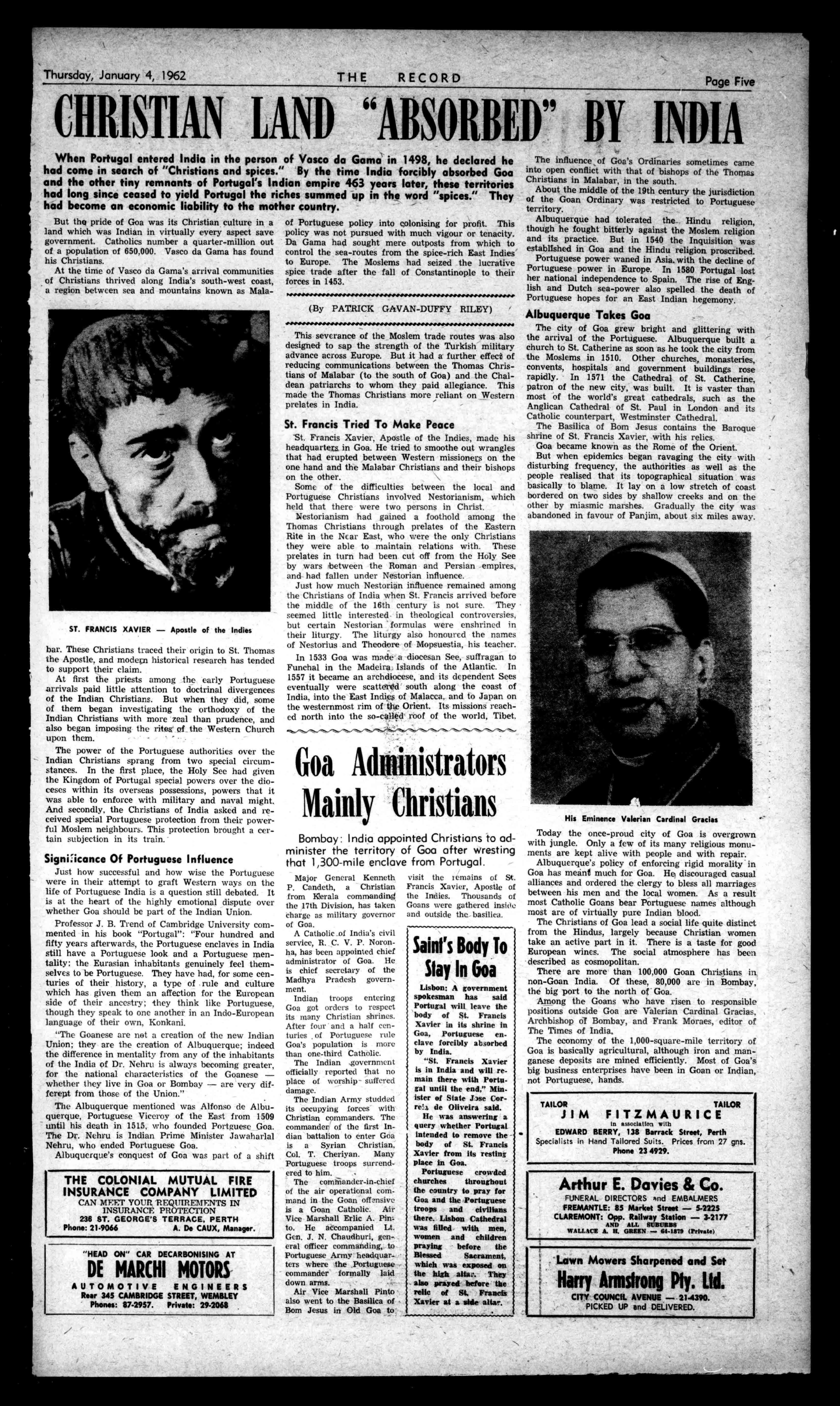
ST.FRANCISXAVIER-ApostleoftheIndies bar.TheseChristianstracedtheirorigintoSt.Thomas theApostle,andmodernhistoricalresearchhastended tosupporttheirclaim.
AtfirstthepriestsamongtheearlyPortuguese arrivalspaidlittleattentiontodoctrinaldivergences oftheIndianChristians.Butwhentheydid,some ofthembeganinvestigatingtheorthodoxyofthe IndianChristianswithmorezealthanprudence,and alsobeganimposingtherites-oftheWesternChurch uponthem.
ThepowerofthePortugueseauthoritiesoverthe IndianChristianssprangfromtwospecialcircumstances.Inthefirstplace,theHolySeehadgiven theKingdomofPortugalspecialpowersoverthedioceseswithinitsoverseaspossessions,powersthatit wasabletoenforcewithmilitaryandnavalmight. Andsecondly,theChristiansofIndiaaskedandreceivedspecialPortugueseprotectionfromtheirpowerfulMoslemneighbours.Thisprotectionbroughtacertainsubjectioninitstrain.
SignricanceOfPortugueseInfluence
JusthowsuccessfulandhowwisethePortuguese wereintheirattempttograftWesternwaysonthe lifeofPortugueseIndiaisaquestionstilldebated.It isattheheartofthehighlyemotionaldisputeover whetherGoashouldbepartoftheIndianUnion.
ProfessorJ.B.TrendofCambridgeUniversitycommentedinhisbook"Portugal":"Fourhundredand fiftyyearsafterwards,thePortugueseenclavesinIndia stillhaveaPortugueselookandaPortuguesementality:theEurasianinhabitantsgenuinelyfeelthemselvestobePortuguese.Theyhavehad,forsomecenturiesoftheirhistory,atypeofruleandculture whichhasgiventhemanaffectionfortheEuropean sideoftheirancestry;theythinklikePortuguese, thoughtheyspeaktooneanotherinanIndo-European languageoftheirown,Konkani.
"TheGoanesearenetacreationofthenewIndian Union;theyarethecreationofAlbuquerque;indeed thedifferenceinmentalityfromanyoftheinhabitants oftheIndiaofDr.Nehruisalwaysbecominggreater, forthenationalcharacteristicsoftheGoanesewhethertheyliveinGoaorBombay-areverydiffereptfromthoseoftheUnion."
TheAlbuquerquementionedwasAlfonsodeAlbuquerque,PortugueseViceroyoftheEastfrom1509 untilhisdeathin1515,whofoundedPortgueseGoa. TheDr.NehruisIndianPrimeMinisterJawaharlal Nehru,whoendedPortugueseGoa. Albuquerque'sconquestofGoawaspartofashift THE
236ST.GEORGE'STERRACE.PERTH
Phone:21.9066 A.DoCAUX,Manager.
"HEAD
Rear345CAMBRIDGESTREET,WEMBLEY Phones:87-2957.Private:29-2068
ofPortuguesepolicyintocolonisingforprofit.This policywasnotpursuedwithmuchvigourortenacity. DaGamahadsoughtmereoutpostsfromwhichto controlthesea-routesfromthespice-richEastIndies toEurope.TheMoslemshadseizedthelucrative spicetradeafterthefallofConstantinopletotheir forcesin1453.
(ByPATRICKGAVAN-DUFFYRILEY)
ThisseveranceoftheMoslemtraderouteswasalso designedtosapthestrengthoftheTurkishmilitary advanceacrossEurope.Butithadafurthereffectof reducingcommunicationsbetweentheThomasChristiansofMalabar(tothesouthofGoa)andtheChaldeanpatriarchstowhomtheypaidallegiance.This madetheThomasChristiansmorereliantonWestern prelatesinIndia.
St.FrancisTriedToMakePeace
St.FrancisXavier.ApostleoftheIndies,madehis headquartersinGoa.Hetriedtosmootheoutwrangles thathaderuptedbetweenWesternmissioner_sonthe onehandandtheMalabarChristiansandtheirbishops ontheother.
Someofthedifficultiesbetweenthelocaland PortugueseChristiansinvolvedNestorianism,which heldthatthereweretwopersonsinChrist.
Nestorianismhadgainedafootholdamongthe ThomasChristiansthroughprelatesoftheEastern RiteintheNearEast,whoweretheonlyChristians theywereabletomaintainrelationswith.These prelatesinturnhadbeencutofffromtheHolySee bywars'betweentheRomanandPersianempires, and-hadfallenunderNestorianinfluence.
JusthowmuchNestorianinfluenceremainedamong theChristiansofIndiawhenSt.Francisarrivedbefore themiddleofthe16thcenturyisnotsure.They seemedlittleinterested-intheologicalcontroversies, butcertainNestorianformulaswereenshrinedin theirliturgy.Theliturgyalsohonouredthenames ofNestoriusandTheodoreofMopsuestia,histeacher.
In1533GoawasmadeadiocesanSee,suffraganto FunchalintheMadeira.IslandsoftheAtlantic.In 1557itbecameanarchdiocese,anditsdependentSees eventuallywerescattc,rddsouthalongthecoastof India,intotheEastIndiesofMalacca.andtoJapanon thewesternmostrimoftheOrient.Itsmissionsreachednorthintotheso-c4lledroofoftheworld,Tibet.
GoaAdministrators
MainlyChristians
Bombay:IndiaappointedChristianstoadministertheterritoryofGoaafterwresting that1,300-mileenclavefromPortugal.
MajorGeneralKenneth P.Candeth,aChristian fromKeralacommiandingl the17thDivision,hastaken chargeasmilitarygovernor ofGoa.
ACatholic_ofIndia'scivil service,R.C.V.P.Noronha,hasbeenappointedchief administratorofGoa.He ischiefsecretaryofthe MadhyaPradeshgovernment.
Indiantroopsentering Goagotorderstorespect itsmanyChristianshrines. Afterfourandahalfcenturies.ofPortugueserule Goa'spopulationismore thanone-thirdCatholic.
TheIndian.government officiallyreportedthatno placeofworship-suffered damage.
TheIndianArmystudded itsoccupyingforceswith Christiancommanders.The commanderofthefirstIndianbattaliontoenterGoa isaSyrianChristian, ColT.Cheriyan.Many Portuguesetroopssurrenderedtohim.
Thecommander-in-chief oftheairoperationalcommandintheGoanoffsnsivc isaGoanCatholic.Air ViceMarshallErlicA.Pin, to.HeaccompaniedLt. Gen.J.N.Chaudhuri,generalofficercommanding,to PortugueseArmyheadquarterswherethePortuguese commanderformallylaid downarms.
AirViceMarshallPinto alsowenttotheBasilicaof BornJesusinOldGoato
TheinfluenceofGoa'sOrdinariessometimescame intoopenconflictwiththatofbishopsoftheThomas ChristiansinMalabar,inthesouth.
Aboutthemiddleofthe19thcenturythejurisdiction oftheGoanOrdinarywasrestrictedtoPortuguese territory.
AlbuquerquehadtoleratedtheHindureligion, thoughhefoughtbitterlyagainsttheMoslemreligion anditspractice.Butin1540theInquisitionwas establishedinGoaandtheHindureligionproscribed.
PortuguesepowerwanedinAsia.withthedeclineof PortuguesepowerinEurope.In1580Portugallost hernationalindependencetoSpain.TheriseofEng- lishandDutchsea-poweralsospelledthedeathof PortuguesehopesforanEastIndianhegemony.
AlbuquerqueTakesGoa
ThecityofGoagrewbrightandglitteringwith thearrivalofthePortuguese.Albuquerquebuilta churchtoSt.Catherineassoonashetookthecityfrom theMoslemsin1510.Otherchurches,monasteries, convents,hospitalsandgovernmentbuildingsrose rapidly.In1571theCathedralofSt.Catherine, patronofthenewcity,wasbuilt.Itisvasterthan mostoftheworld'sgreatcathedrals,suchasthe AnglicanCathedralofSt.PaulinLondonandits Catholiccounterpart.WestminsterCathedral.
TheBasilicaofBornJesuscontainstheBaroque shrineofSt.FrancisXavier,withhisrelics.
GoabecameknownastheRomeoftheOrient.
Butwhenepidemicsbeganravagingthecitywith disturbingfrequency,theauthoritiesaswellasthe peoplerealisedthatitstopographicalsituationwas basicallytoblame.Itlayonalowstretchofcoast borderedontwosidesbyshallowcreeksandonthe otherbymiasmicmarshes.Graduallythecitywas abandonedinfavourofPanjim,aboutsixmilesaway.
visitthetemainsofSt. FrancisXavier,Apostleof theIndies.Thousandsof Goansweregatheredinside andoutsidethebasilica.
Saint'sBodyTo SlayInGoa
Lisbon:Agovernment spokesmanhassaid Portugalwillleavethe bodyofSt.Francis Xavierinitsshrinein Goa,Portugueseenclaveforciblyabsorbed byIndia.
"St.FrancisXavier isinIndiaandwillremaintherewithPortugaluntiltheend,"MinisterofSlate.13seCorWA.deOliveirasaid. liewasansweringa querywhetherPortugal intendedtoremovethe bodyofSt.Francis Xavierfromitsresting placeinGoa.
Portuguesecrowded churches throughout thecountrytoprayfor GoaandthePortuguese troopsandcivilians there.LisbonCathedral wasfinedwithmen, womenandchildren prayingbeforethe Blessed Sacrament, whichwasexposedon thehighaltar.They alsoprayedbeforethe relicofSt.Francis Xavieratasidealta,*.
HisEminenceValerianCardinalOracles
Todaytheonce-proudcityofGoaisovergrown withjungle.Onlyafewofitsmanyreligiousmonumentsarekeptalivewithpeopleandwithrepair. Albuquerque'spolicyofenforcingrigidmoralityin GoahasmeinmuchforGoa.Hediscouragedcasual alliancesandorderedtheclergytoblessallmarriages betweenhismenandthelocalwomen.Asaresult mostCatholicGoansbearPortuguesenamesalthough mostareofvirtuallypureIndianblood.
TheChristiansofGoaleadasociallifequitedistinct fromtheHindus,largelybecauseChristianwomen takeanactivepartinit.Thereisatasteforgood Europeanwines.Thesocialatmospherehasbeen describedascosmopolitan.
Therearemorethan100.000GoanChristiansin non-GoanIndia.Ofthese,80,000arcinBombay, thebigporttothenorthofGoa.
AmongtheGoanswhohaverisentoresponsible positionsoutsideGoaareValerianCardinalGracias. ArchbishopOfBombay,andFrankMoraes,editorof TheTimesofIndia, Theeconomyofthe1,000-square-mileterritoryof Goaisbasicallyagricultural,althoughironandmanganesedepositsareminedefficiently.MostofGoa's bigbusinessenterpriseshavebeeninGoanorIndian, notPortuguese,hands.
Thursday,January4,1962 THE RECORD PageFive
YOURREQITTREMF.NTS
COLONIALMUTUALFIRE INSURANCECOMPANYLIMITED CANMEET
IN INSURANCEPROTECTION
DEMARCH!MOTORS
ON"CARDECARBONISINGAT
AUTOMOTIVEENGINEERS
TAILOR TAILOR JIMFITZMAURICE Inassociationwith EDWARDBERRY,138BarrackStreet,Perth SpecialistsinHandTailoredSuits.Pricesfront27gns. Phone
ArthurE.Davies&Co. FUNERALDIRECTORSAndEMBALMERS FREMANTLE:85MarketStreet-5-2225 CLAREMONT:Opp.RailwayStation-3-2177 ANDALLEDBURS8 WALLACEA.ILGREEN-64-1679(PrIvAtel LawnMowersSharpenedandSet HarryArmstrongPty.Ltd. CITYCOUNCILAVENUE-21.4390. PICKEDUPandDELIVERED.
234929.
BRAZIL:TwoFaced
RioDeJaneiro:JaimeCardinaldeBarros CamarohoscriticisedtheBraziliangovern. mentfordoingnothingtostemcommunist advancesinLatinAmericaandrefusingto takeastandagainsttheRedregimeofCuban PremierFidelCastro.
TheArchbishopofRioDe Janeirosaidinaradio speechthatthenation'sgovernmentisfollowinga"twofaced"foreignpolicy."While thegovernmentiscriticisingPortuguesecolonialism," hesaid,"itisdoingnothing againstSovietColonialismin LatinAmerica."
TheCardinal'referredto therefusalofBrazil'sForeignMinisterSanTiago Dantastosupporteffortsin theOrganisationofAmerican Statestotakeactionagainst theCastroregime.
TheForeignMinisterhas claimedthiswoulddeny Cuba'srightofself-determination. CardinaldeBarrosCamararepliedtotheForeign Minister'sstandbysaying thatthereisnosignofselfdeterminationamongthe
Cubanpeopleandpointing outthatthereisnoreligiousfreedominthatnation.
Inaradiobroadcastin November,theCardinal praisedLatinAmerican countrieswhichhadbroken relatioriswithCubaandcalledfor"moralsanctions" againsttheCastrogovernment.
EarliertheCardinalhad warnedBrazilianPresident JoaoGoulartinthename ofthenation'sBishatothat theChurchwasopposedto therenewalofdiplomaticrelationsbetweenBraziland theSovietUnion.Although hewarnedthataresumption ofrelationswouldenable communistspiestocirculate freelyinBrazilunderthe cloakofdiplomaticimmunity,thegovernmentrenewedrelationslastNovember.
RedsThreatenToSackMiners
LaPaz,Bolivia:Catholictinminershere whofoughtthecommunistsearlierthisyear arenowthreatenedwithlossoftheirjobs.
TheRedsareproclaiming thatwhentheminelabour contractscomeupforrenewalinJanuary,theCatholicworkerswhoopposed themwillbebarredfrom employment.
Clashesbetweenthetwo groupstookplaceinJune andJuly.Communists bombedandstonedaChurchoperatedradiostationat SigloVeinte,about200 mileesouthofhere.There wereinjuriesonbothsides.
Theattackstookplace afterthefailureofaRed uprisintinJuneinthis country.Whentherevolt collapsed.leftistleadersof thetinminerscalledastrike anddemandedthatthestationsupportit.
Thestation.namedafter PopePiusXII;wasbuilt anddirectedbyaCanadian missionary,FatherJoeeiyii Grenier.Hisrefusalto broadcastRedpropaganda ledtotheattackandtosubsequentcommunistdemands thatheandfiveotherCanadianOblatemissionariesbe expelledfromBoliviabe:rusetheyare"anti-labour."
Thedemandsagainstthe Catholicworkersweremade ontheunionstation,the "VoiceoftheMiner."CommunistleaderFedericoEscobardeclaredthat"only
thosewhosignupwiththe CommunistpartyofBolivia andworkforitsvictorywill beabletowork"whenthe newminecontractsareput 'intoeffect.
Ifcarriedout,thecampaigntobarnon-communist minerswouldviolateaconstitutionalarticlethatguaranteestherighttoworkto allBolivians.
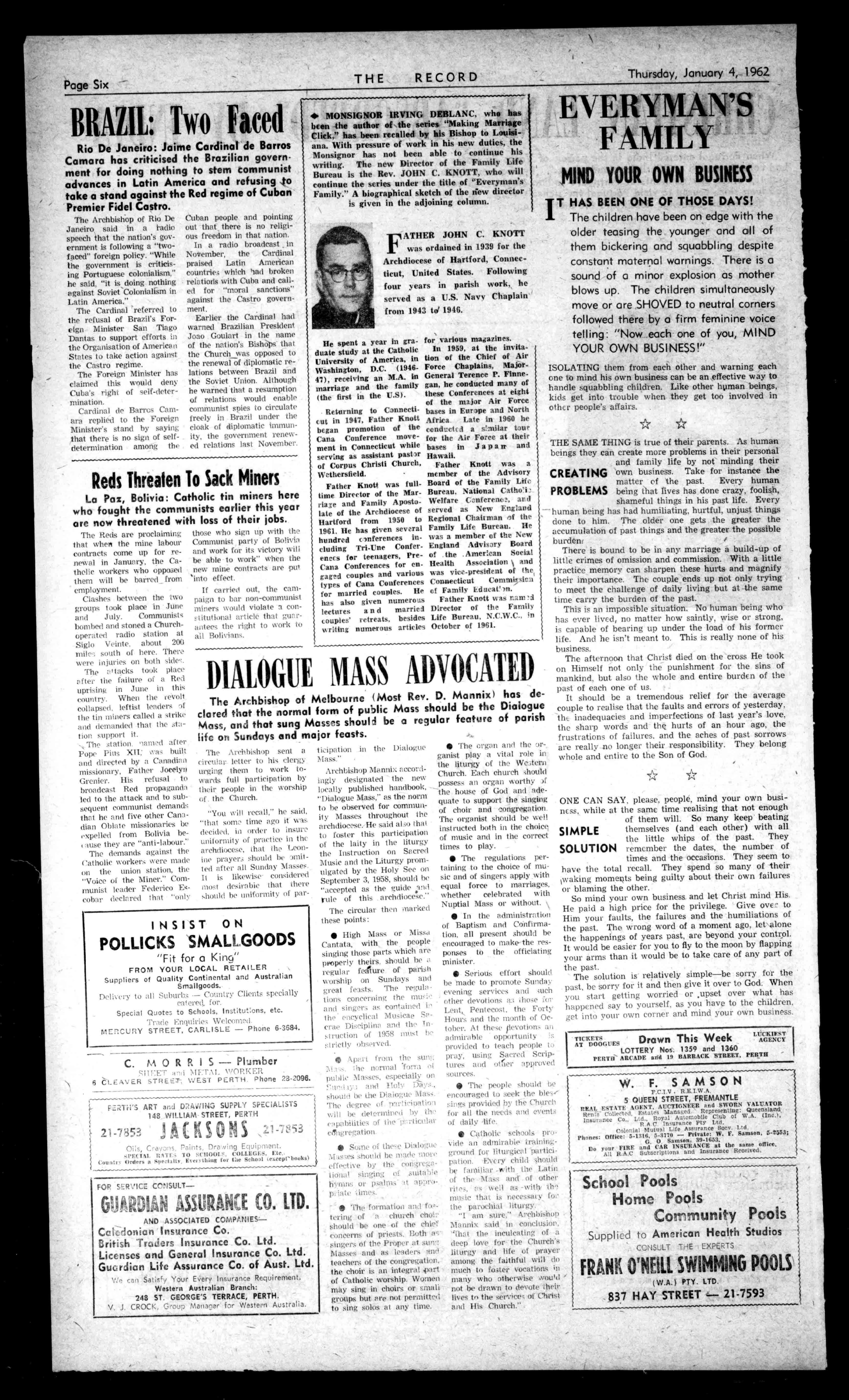
MONSIGNORIRVINGDEBLANC,whohas boontheauthoroftheseries"MakingMarriage Click,"hasbeenrecalledbyhisBishoptoLouisiana.Withpressureofworkinhisnewduties,the Monsignorhasnotbeenabletocontinuehis writing.ThenewDirectoroftheFamilyLife BureauistheRev.JOHNC.KNOTT,whowill continuetheseriesunderthetitleof"Everyman's Family."Abiographicalsketchofthenewdirector isgivenintheadjoiningcolumn.
FATHERJOHNC.KNOTT wasordainedin1939forthe ArchdioceseofHartford,Connecticut,UnitedStates.Following fouryearsinparishwork,he servedasaU.S.NavyChaplain from1943to'1946.
HespentayearhigraduatestudyattheCatholic UniversityofAmerica,in Washington,D.C.(194647),receivinganM.A.in marriageandthefamily (thefirstintheU.S).
ReturningtoCennecticutin1947,FatherKnott beganpromotionofthe CanaConferencemovementinConnecticutwhile servingasassistantpast3r ofCorpusChristiChurch, Wethersfield.
FatherKnottwasfulltimeDirectoroftheMarriageandFamilyApostolateoftheArchdioceseof Hartfordfrom1950to 1961.Hehasgivenseveral hundredconferencesincludingTri-UneConferencesforteenagers.PreCanaConferencesforengagedcouplesandvarious typesofCanaConferences formarriedcouples.He hasalsogivennumerous lecturesandmarried couplesretreats.besides writingnumerousarticles
forvariousmagazines. In1959,attheinvitationoftheChiefofAir ForceChaplains,MajorGeneralTerenceP.Finnegan,heconductedmanyof theseConferencesateight ofthemajorAirForce basesinEuropeandNorth AfricaLatein1960he conduct:aasimilartour fortheAirForceattheir basesinJapanand Hawaii, FatherKnottwasa memberoftheAdvisory BoardoftheFamilyLife Bureau,NationalCathols WelfareCanferenos,and servedasNewEngland RegionalChairmanisfthe FamilyLifeBureau.He wasamemberoftheNew EnglandAdvisoryBoard oftheAmericanSocial HealthAssociationto and wasvice-presidentofthe, ConnecticutCommiasice ofFamilyEducat'sn, FatherKnottwasrant:d DirectoroftheFamily LifeBureau,N.C.W.C.,in Octoberof1961.
DIALOGUEMASSADVOCATED
TheArchbishopofMelbourne(Most D.Mannix)hasdeclaredthatthenormalformofpublicMassshouldbetheDialogue Mass,andthatsungMOSS'Sshou1dbearegularfeatureofparish lifeonSundaysandmajorfeasts.
TheArchbishopsenta circularlettertohisclergy urgingthemtoworktowardsfullparticipationby theirpeopleintheworship of.theChurch.
"Youwillrecall,"hesaid, "thatsometimeagoitwas decided,inordertoinsure uniformityofpracticeinthe archdiocese,thattheLeonineprayersshouldbe.DmitledafterallSundayMasses. It Ls likewiseconsidered mostdesirablethatthere shouldbeuniformityofpar-
INSISTON POLLICKSSMAUGOODS
"FitforaKing" FROMYOURLOCALRETAILER
SuppliersofQualityContinentalandAustralian Smallgoods.
DeliverytoallSuburbs--CountryClientsspecially catered.for.
SpecialQuotestoSchools,Institutions,etc. TradeEnquiriesWelcomed.
mrilCURYSTREET,CARLISLE-Phone6-3684.
C.MORRIS-Plumber stiLET MF.TALwORKER
6CLEAVERsTREET-,WESTPERTH.Phone28-2098.
FERTirSARTandDRAWINGSUPPLYSPECIALISTS 148.WILLIAMSTREET,PERTH
21-7353JACKSOMS-=:1-7853
Oils, Dryving sPE(11.51.RATE,TOSCHOOLS.COLLEGES.Etc.. CountryOrdersaSperiAlly.Erea,lhingfortheSchoolteseeprbouks)
FORSERVICECONSULT-
GUARDIANASSURANCECO.LTD.
ANDASSOCIATEDCOMPANIES--
CaledonianInsuranceCo.
BritishTradersInsuranceCo.Ltd.
LicensesandGeneralInsuranceCo.Ltd. GuardianLifeAssuranceCo.ofAust.Ltd. WecanSat;-',,YourEveryInsuranceRequirement.
WesternAustralianBranch: 248ST.GEORGE'STERRACE,PERTH.
V.J.CROCK,G"oupManagerterWesternAustralia.
licipationintheDialogue Mass."
ArchbishopMannixaccordinglydesignatedthenew locallypublishedhandbook, "DialogueMass,"asthenorm toheobservedforcommunityMassesthroughoutthe archdiocese.Hesaidalsothat tofosterthisparticipation ofthelaityintheliturgy theInstructiononSacred MusicandtheLiturgypromulgatedbytheHolySeeon September3,1958,shouldbe "acceptedastheguide.and ruleofthisarchdiocese."
Thecircularthen-marked thesepoints:
HighMassorMissa Cantata,withthepeople singingthosepartswhichare properlytheirs.shouldbea regularfegiureofparish worshiponSundaysand greatfeasts.Theregule lionsconcerningthemuss" andsingersascontainedie 1heencyclicalMusicaeSacraeDisciplineandtheInstructionof1958musthe alriotlyobserved.
Apartfromthesung Mess.;henormal'format publicMasses,especiallyon !7tti,dtyandItu!y shouldbetheDialogueMass. Thedegreeofnertirioatioe willbedeterminedbythe capabilitiesofthe-reticular citigregation.
SomeoftheseDialogue Massesshouldbemademore effectivebythecongregationalsingingofsuitable hymnsorNelms-itappropriateMmes.
Theformationandfosteringofachurchchat:* shouldbeoneofthechief concernsofpriests.BothassingersOftheProperatsune Massesandasleadersend teachersofthecongregation. thechoirisanintegralpart ofCatholicworship.Women maysinginchoirsorsmali groupsbutarenotpermitted tosingsolosatanytime.
EVERYMAN'S FAMILY
MINDYOUROWNBUSINESS
ITHASBEENONEOFTHOSEDAYS!
Thechildrenhavebeenonedgewiththe olderteasingtheyoungerandallof thembickeringandsquabblingdespite constantmaternalwarnings.Thereisa soundofaminorexplosionasmother blowsup.Thechildrensimultaneously moveorareSHOVEDtoneutralcorners followedtherebyafirmfemininevoice telling:"Noweachoneofyou,MIND YOUROWNBUSINESS!"
ISOLATINGthemfromeachotherandwarningeach onetomindhisownbusinesscanbeaneffectivewayto handlesquabblingchildren.Likeotherhumanbeings, kidsgetintotroublewhentheygettooinvolvedin othcrpeople'saffairs.
*
CREATING PROBLEMS
THESAMETHINGistrueoftheirparents.Ashuman beingstheycancreatemoreproblemsintheirpersonal andfamilylifebynotmindingtheir ownbusiness.Takeforinstancethe matterofthepast.Everyhuman beingthatliveshasdonecrazy,foolish, shamefulthingsinhispastlife.Every humanbeinghashadhumiliating,hurtful,unjustthings donetohim.Theolderonegetsthegreaterthe accumulationofpastthingsandthegreaterthepossible burden(
Thereisboundtobeinanymarriageabuild-upof littlecrimesofomissionandcommission.Withalittle practicememorycansharpenthesehurtsandmagnify theirimportance.Thecoupleendsupnotonlytrying tomeetthechallengeofdailylivingbutat-thesame timecarrytheburdenofthepast.
Thisisanimpossiblesituation.Nohumanbeingwho haseverlived,nomatterhowsaintly,wiseorstrong, iscapableofbearingupundertheloadofhisformer life.Andheisn'tmeantto.Thisisreallynoneofhis business.
TheafternoonthatChristdiedonthecrossHetook onHimselfnotonlythepunishmentforthesinsof mankind,butalsothewholeandentireburdenofthe pastofeachoneofus.
Theorganandtheorganistplayavitalrolein theliturgyoftheWestern Church.Eachchurchshould possessanorganworthy)1 thehouseofGodandadequatetosupportthesinging ofchoirandcongregation. Theorganistshouldbewelt instructedbothinthechoice, ofmusicandinthecorrect timestoplay.
Theregulationspertainingtothechoiceofmusicandofsingersapplywith equalforcetomarriages, whethercelebratedwith NuptialMassorwithout. Intheadministration ofBaptismandConfirmation,allpresentshouldbe encouragedtomaketheresponsestotheofficiating minister.
Seriouseffortshould bemadetopromoteSunday eveningservicesandsuch otherdevotionsasihoeefur Lent,,Pentecost,theForty HoursandthemonthofOctober.Atthesepevotionean admirableopportunity providedtoteachpeopleto pray,usingSacredScripturesandotterapproved sources,
Thepeopleshouldbe encouragedtoseekthebles-o singsprovidedbytheChurch foralltheneedsandevents ofdaily-life.
Catholicschoolsprovideanadmirabletraininggroundforliturgical-participation.Everychildshould hefamiliar-withtheLatin oftheMassand'ofother rites,aswellas-wittythe musicthatisnecessatyfur theparochialliturgy. "Iamsure."Archbishop Mannixsaidinconclusior. "thattheinculcatingofa deeplovefortheChurch's liturgyandlifeofprayer amongthefaithfulwiltdo muchtofostervocationsin manywhootherwise.vou'rl notbedrawntodevotetheir livestotheservicesofChrist andHisChurch."
Itshouldbeatremendousrelieffortheaverage coupletorealisethatthefaultsanderrorsofyesterday, ilkinadequaciesandimperfectionsoflastyear'slove, thesharpwordsandthehurtsofanhourago,the frustrationsoffailures.andtheachesofpastsorrows arereallynolongertheirresponsibility.Theybelong wholeandentiretotheSonofGod.
ONECANSAY,please.people,mindyourownbusiness,whileatthesametimerealisingthatnotenough ofthemwill.Somanykeepbeating themselves(andeachother)withall thelittlewhipsofthepast.They rememberthedates,thenumberof timesandtheoccasions.Theyseemto havethetotalrecall.Theyspendsomanyof'their lwakingmomentsbeingguiltyabouttheirownfailures orblamingtheother.
SomindyourownbusinessandletChristmindHis. Hepaidahighpricefortheprivilege.Giveoverto Himyourfaults,thefailuresandthehumiliationsof thepast.Thewrongwordofamomentago,letalone thehappeningsofyearspast,arebeyondyourcontrol. Itwouldbeeasierforyoutoflytothemoonbyflapping yourarmsthanitwouldbetotakecareofanypartof thepast.
Thesolutionisrelativelysimple-besorryforthe past,besorryforitandthengiveitovertoGod.When youstartgettingworriedor.upsetoverwhathas happenedsaytoyourself,asyouhavetothechildren, getintoyourowncornerandmindyourownbusiness.
PageSix THE RECORD Thursday,January4,1962
SOLUTION DrawnThisWeek ('AGENCY ITACKOZGuEs LOTTERYNos.1359and1360 PERTH'ARCADEadd19BARRACKSTREET.PERTH W.F.SAMSON F.C.1V.REIWA 5QUEENSTREET,FREMANTLE RRAL.ESTATEAGENT.AUCTIONEERandSWORNVALUATOR AmidCnilecled,EstatesManaged.Representing:Queensland InoueanCeCo..Ltd.,RoyalAutomobileClubofW.A.(Inc.), RACIn,ursneePieLtd. ColonialMutualLifeAssuranceSore.Ltd. Phones:Office:5-1316,54115-Private:W.F.Samson,toms; G.0.Samson,39-1653. DoyourFIREandCARINSURANCEatthesameoffice. AllR.A.0SubscriptionsandImamateReceived. SchoolPools HomoPools CommunityPools .SuppliedtoAmericanHealthStudios CONSULTTHEEXPECT FRANKO'NEIL!.SWIMMINGPOOLS (W.A.)PTY.LTD 837HAYSTREET 21-7593
SIMPLE
BRAZIL:Twofaced
RioDeJaneiro:JaimeCardinaldeBarros CamarahascriticisedtheBraziliangovernmentfordoingnothingtostemcommunist advancesinLatinAmericaandrefusing-to takeastandagainsttheRedregimeofCuban PremierFidelCastro.
TheArchbishopofRioDe Janeiro,saidinat'adio speechthatthenation'sgovernmentisfollowinga"twofaced"foreignpolicy."While thegovernmentiscriticisingPortuguesecolonialism," hesaid,"itisdoingnothing againstSovietColonialismin
LatinAmerica."
TheCardinal'referredto therefusalofBrazil'sForeignMinisterSanTiago Dantastosupporteffortsin theOrganisationofAmerican Statestotakeactionagainst theCastroregime.
TheForeignMinisterhas claimedthiswoulddeny Cuba'srightofself-determination. CardinaldeBarrosCamararepliedtotheForeign Minister'sstandbysaying thatthereisnosignofselfdeterminationamongthe
Cubanpeopleandpointing outthatthereisnoreligiousfreedominthatnation. Inaradiobroadcastin November,theCardinal praisedLatinAmerican countrieswhichhadbroken relationswithCubaandcalledfor"moralsanctions" againsttheCastrogovernment. EarliertheCardinalhad warnedBrazilianPresident JoaoGoulartinthename ofthenation'sBishops'that theChurchwasopposedto therenewalofdiplomaticrelationsbetweenBraziland theSovietUnion.Although hewarnedthataresumption ofrelationswouldenable communistspiestocirculate freelyinBrazilunderthe cloakofdiplomaticimmunity,thegovernmentrenewedrelationslastNovember.
RedsThreatenToSackMiners
LaPaz,Bolivia:Catholictinminershere whofoughtthecommunistsearlierthisyear orenowthreatenedwithlossoftheirjobs.
TheRedsareproclaiming thatwhentheminelabour contractscomeupforrenewalinJanuary,theCatholicworkerswhoopposed themwillbebarred_from employment.
Clashesbetweenthetwo groupstookplaceinJune and July. Communists bombedandstonedaChurchoperatedradiostationat SigloVeinte,about200 milessouthofhere.There wereinjuriesonbothsides.
Theattackstookplace afterthefailureofaRed uprisinginJuneinthis country.Whentherevolt collapsed,leftistleadersof thetinminerscalledastrike anddemandedthatthestationsupportit.
Thestation.namedafter PopePiusXII;wasbuilt anddirectedbyaCanadian missionary,FatherJoeelyn Grenier.Hisrefusalto broadcastRedpropaganda ledtotheattackandtosubsequentcommunistdemands thatheandfiveotherCanadianOblatemissionariesbe expelledfromBoliviabe;Meetheyare"anti-labour."
Thedemandsagainstthe Catholicworkersweremade ontheunionstation,the "VoiceoftheMiner."CommunistleaderFedericoEscobardeclaredthat"only
thosewhosignupwiththe CommunistpartyofBohvia andworkforitsvictorywill beabletowork"a-henthe newminecontractsareput 'intoeffect. Ifcarriedout,thecampaigntobarnon-communist minerswouldviolateaconstitutionalarticlethatguaranteestherighttoworkto allBolivians.
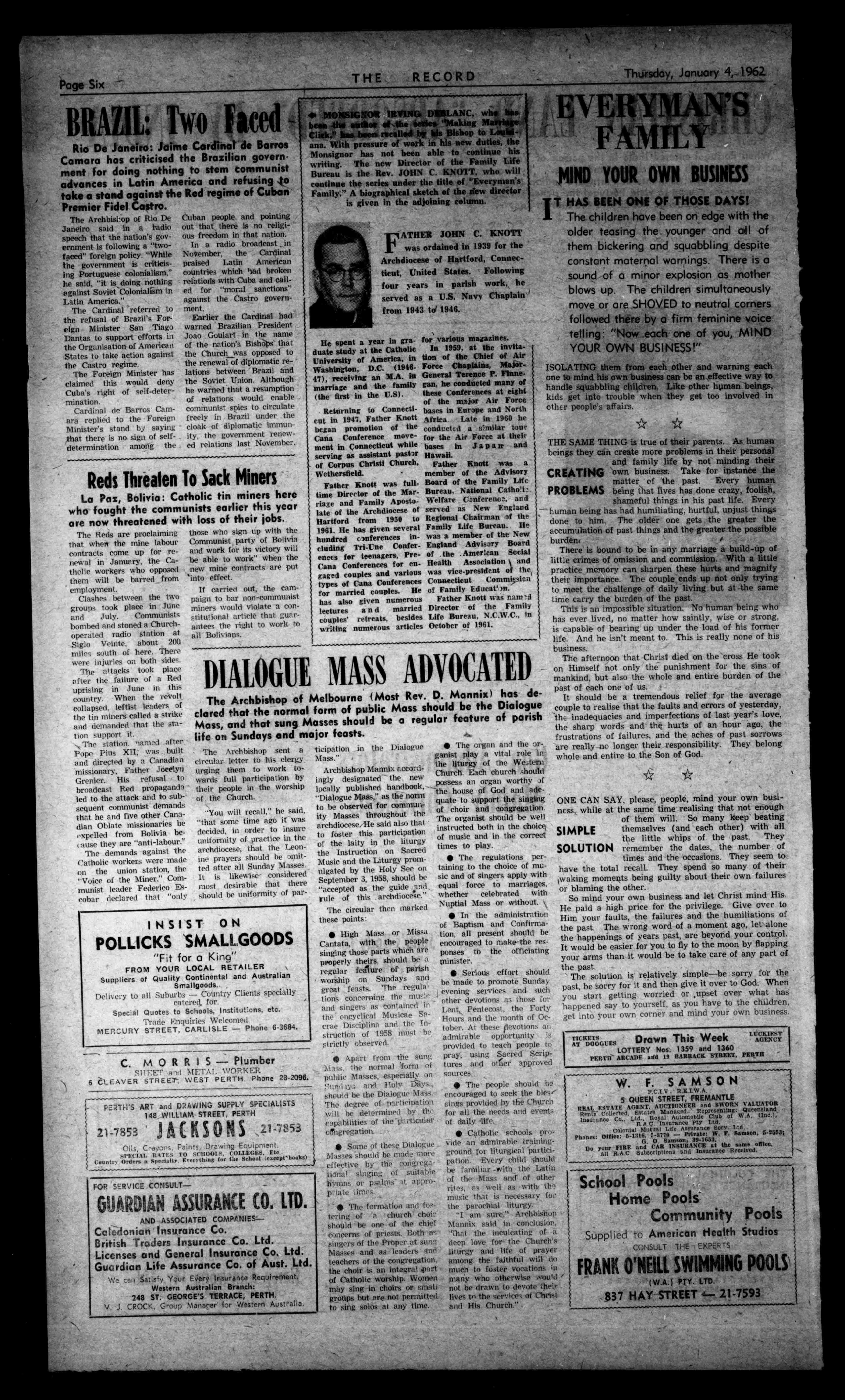
iggMOM5liGel011 DIEBLANC,whrkiss been-thealgttorei,IheStevie""MakingMaar*. Click,"hasbeetsrecalledbyhisBishoptoLegationo.Withpressureofworkinhisnewduties,the Monsignorhasnotbeenabletocontinuehis writing.ThenewDirectoroftheFamilyLife BureauistheRev.JOHNC.KNOTT,whowill continuetheseriesunderthetitleof"Everynran's Family."Abiographicalsketchofthe;fewdirector isgivenintheadjoiningcolumn.
FATHERJOHNC.KNOTT wasordainedin1939forthe ArchdioceseofHartford,Connecticut,UnitedStates.Following fouryearsinparishwork,he servedasaU.S.NaysChaplain from1943td1946.
Hespentayearingra duatestudyattheCatholic UniversityofAmerica,in Washington,D.C.(194647),receivinganM.A.in marriageandthefamily (thefirstintheU.S).
ReturningtoC.onnecticutin1947.FatherKnott beganpromotionofthe CanaConferencemovementinConnecticutwhile servingasassistantpastor ofCorpusChristiChurch, Wethersfield.
FatherKnottwasfulltimeDirectoroftheMarriageandFamilyApostolateoftheArchdioceseof Hartfordfrom1950to 1961.Ilehasgivenseveral hundred cInferencesincludingTri-UneConferencesforteenagers,PreCanaConferencesforengagedcouplesandvarious typesofCanaConferences formarriedcouples.He hasalsogivennumerous lectures andmarried couples'retreats,besides writingnumerousarticles
forvariousmagazines. In1959,attheinvitationoftheChiefofAir ForceChaplains,MajorGeneralTerenceP.Finnegan,heconductedmanyof theseConferencesateight ofthemajorAirForce basesinEuropeandNorth AfricaLatein1960he condocttel asimilartour fortheAirForceattheir basesinJapanand Hawaii. FatherKnottwas a memberoftheAdvisory BoardoftheFamilyLife Bureau.NationalCatho'i' WelfareConference,and servedasNewEngland RegionalChairmanofthe FamilyLifeBureau.He wasamemberoftheNew EnglandAdvisoryBoard ofthe.AmericanSocial HealthAssociationand wasvice-presidentofthe, ConnecticutCommiplea ofFamilyEducat'm. FatherKnottwasnam'd DirectoroftheFamily LifeBureau,N.C.W.C.,in Octoberof1961.
DIALOGUEMASSADVOCATED
TheArchbishop (MostRev.D.Mannix)hasdeclaredthatthenormalformofpublicMassshouldbetheDialogue Mass,andthatsungMassesshouldbearegularfeatureofparish lifeonSundaysandmajorfeasts.
TheArchbishopsenta circularlettertohisclergy urgingthemtoworktowantsfullparticipationby theirpeopleintheworship oftheChurch.
"Youwillrecall,"hesaid, "thatsometimeagoifwas decided,inordertoinsure uniformityofpracticeinthe archdiocese,thattheLeonineprayersshouldbeomittedafterallSundayMasses. Itislikewise-considered mostdesirablethatthere shouldbeuniformityofpar
ticipationintheDialogue Mass." ArchbishopMannixaccordinglydesignated-thenew locallypublishedhandbook.
"DialogueMass,"asthenorm tobeobservedforcommunityMassesthroughoutthe archdiocese.-Hesaidalsothat tofosterthisparticipation ofthelaityintheliturgy theInstructiononSacred MusicandtheLiturgypromulgatedbytheHolySeeon September3,1958,shouldbe "acceptedastheguide.ansi ruleofthisarchdiocese."
Thecircularthenmarked thesepoints:
HighMassorMissa Cantata,withthepeople singingthosepartswhichare properlytheirs,shouldbe regularfealureofparish worshiponSundaysalai greatfeasts.Theregula tionsconcerningthemusic andsingersascontainedit the'encyclicalMusicaeSecraeDisciplineandtheInstructionof1958insistbe strictlyobserved.
Apartfromthesuns Mass.thenormal*formof publicMasses,especiallyon iy-.1andIlulygays., shouldbetheDialogueMass. Thedegreeof.participation willbedeterminedbythe capabilitiesofthe-Particithir cabgregation.
SomeoftheseDialogue Masses*shouldbemademore effectivebythecorigregatichialsingingof.suitable hymnsorpsalms-atappropriate
EVEyitiixs mtvir
MINDYOUROWNBUSINESS
ITHASBEENONEOFTHOSEDAYS!'
Thechildrenhavebeenonedgewiththe olderteasingtheyoungerandoilof thembickeringandsquabblingdespite constantmaternalwarnings.Thereisa soundofaminorexplosionasmother blowsup.Thechildrensimultaneously moveorareSHOVEDtoneutralcorners followedtherebyafirmfemininevoice telling:"Now.eachoneofyou,MIND YOUROWNBUSINESS!"
ISOLATINGthemfromeachotherandwarningeach onetomindhisownbusinesscanbean,effectivewayto handlesquabblingchildren.Likeotherhymenbeings. kidsgetintotroublewhentheygettoninvolvedin otherpeople'saffairs.
THESAMETHINGistrueoftheirparents.Ashuman beingstheycancreatemoreproblemsintheirpersonal andfamilylifebynotmindingtheir 'ownbusiness.Takeforinstancethe matterofthepast. Everyhuman beingthatfiveshasdonecrazy,foolish, shamefulthingsinhispastlife.Every --humanbeinghashadhumiliating,hurtful,unjustthings donetohim.Theolderonegetsthegreaterthe accumulationofpastthingsandthegreaterthepossible burdens Thereisboundtobeinanymarriageabuild-upof littlecrimesofomissionandcommission.Withalittle practicememorycansharpenthesehurtsandmagnify theirimportance.Thecoupleendsupnotonlytrying tomeetthechallengeofdailylivingbutatthesame timecarrytheburdenofthepast.
CREATING PROBLEMS
Theorganandtheorganistplayavitalrolein theliturgyoftheWestern Church.Eachchurchshould possessanorganworthyif -thehouseofGodandadequatetosupportthesinging ofchoirandcongregation. Theorganistshouldbewell instructedbothinthechoice ofmusicandinthecorrect tunestoplay.
Theregulationspertainingtothechoiceofmusicandofsingersapplywith equalforcetomarriages. whethercelebratedwith NuptialMassor'without.
Intheadministration ofBaptismandConfirmation,allpresentshouldbe encouragedtomake-theresponsestotheofficiating minister.
Seriouseffortshould bemadetopromoteSunday eveningservicesandsuch otherdevotionsasthosefor Lent,Pentecost,theForty HoursandthemonthofOctober.Attheseilevotionsan admirableopportunityis providedtoteachpeopleto pray,usingSacredScripturesandotterapproved sources.
Thepeopleshouldbe encouragedtoseekthebleu singsprovidedbytheChurch foralltheneedsandevents ofdaily'life.
Thisisanimpossiblesituation.Nohumanbeingwho haseverlived,nomatterhowsaintly,wiseorstrong, iscapableofbearingupundertheloadofhisformer life.Andheisn'tmeantto.Thisisreallynoneofhis business.
TheafternoonthatChristdiedonthecrossHetook onHimselfnotonlythepunishmentforthesinsof mankind.butalsothewholeandentireburdenofthe pastofeachoneofus.
Itshouldbeatremendousrelieffortheaverage coupletorealisethatthefaultsanderrorsofyesterday. thEinadequaciesandimperfectionsoflastyear'slove. thesharpwordsandthehurtsofanhourago,the frustrationsoffailures,andtheachesofpastsorrows arereally110longertheirresponsibility.Theybelong wholeandentiretotheSonofGod.
ONECANSAY,please,people,mindyourownbusiness,whileatthesametimerealisingthatnotenough ofthemwill.Somanykeepbeating SIMPLE themselves(andeachother)withall thelittlewhipsofthepast.They SOLUTIONrememberthedates,thenumberof timesandtheoccasions.Theyseemto havethetotalrecall.Theyspendsomanyoftheir (wakingmomentsbeingguiltyabouttheirownfailures orblamingtheother.
SomindyourownbusinessandletChristmindHis. Hepaidahighpricefortheprivilege.Giveoverto Himyourfaults,thefailuresandthehumiliationsof thepast.Thewrongwordofamomentago,letsalone thehappeningsofyearspast,arebeyondyourcontrol. Itwouldbeeasierforyoutoflytothemoonbyflapping yourarmsthanitwouldbetotakecareofanypartof thepast. Thesolutionisrelativelysimple-besorryforthe past,besorryforitandthengiveitovertoGod.When youstartgettingworriedor,upsetoverwhathas happenedsaytoyourself,asyouhavetothechildren, getintoyourowncornerandmindyourownbusiness.
TICKETS ATDOOGUES
Theformationandfosteringof a churchcloth: shouldbeoneofthechief concernsofpriests.BothassingersoftheProperatanon Massesandasleadersand teachersofthecongregation, thechoirisanintegralpart ofCatholicworship.Women maysinginchoirsorsmall groupsbutarenotpermitted tosingsolosatanytime.
Catholicschoolsprovideanadmirabletraininggroundforliturgical-participation.Everychildshould befamiliar-withtheLatin oftheMassand'ofother rites,aswellas-wittyth" musicthatisnecessaryfor theparochialliturgy. "Iamsure,"Archbishop Mannixsaidinconclusior, 'Thattheinculcatingofa deeplovefortheChurch's liturgyandlifeofprayer amongthefaithfulwilldo muchtofootervocationsin manywhootherwise-mould notbedrawntodevote'their livestotheservice;ofChrist andHisChurch."
PageSix THE RECORD Thursday,January4,.1962
INSISTON POLLICKSSMALL.GOODS "FitforaKino" FROMYOURLOCALRETAILER SuppliersofQualityContinentalandAustralian Smallgoods. DeliverytoallSuburbs-CountryClientsspecially catered.fat'. SpecialQuotestoSchools,Institutions,etc. TradeEnquiriesWelcomed. MERCURYSTREET,CARLISLE-Phone6-3684. C.MORRIS-Plumber SHEETalaNtErm..woRxER 6elEAVERSTREET`,WESTPERTH.Phone28-2095. PERTH'SARTantIrAiiINGSUPPLYSPECIALISTS 148.WILLIAMSTREET,PERTH 21'7853JACKSONS,21-7853 Oils,Crayons,Paints,OravingEquipment. SPECIALRATESTOSC11001,,COLLEGES.Etc.. CountryOrdersaSpecialty.E,cithingfortheSchoolexcept'books) FOPSERVICECONSULTVARDIANASSURANCECO.LTD. ANDASSOCIATEDCOMPANIESCakdonianInsuranceCo. BritishTradersInsuranceCo.Ltd. LicensesandGeneralInsuranceCo.Ltd. GuardianLifeAssuranceCo.ofAust.Ltd. canSatisfyYourUeeryInsuranceRequirement. WesternAustralianBranch: 248ST.GEORGE'STERRACE,PERTH. V.J.CROCK*DJ!:^sa-i-sorforWesternAustra:ia,
DrawnThisWeek LCAC= LOTTERYNos.1359and1360 PERIM.'ARCADEandIABARRACK-STREET.PERTH W.F.SAMSON FCIV.RE.I.W.A 5QUEENSTREET,-FREMANTLE REALESTATEAGENT,AUCTIONEERandSWORNVALUATOR Retirs-Collected,EstatesManagedRepresentiMiliQueensland InsuranceCO..Ltd.,RoyalAutomobileClubofW.A.(Inc.:, RACInsurancePtiLtd. ColonialMutualLifeAssuranceSoco,Ltd Penne.:Office:5-tile,0-1770-Private:W,P.Samson,5-2553; G.0Samson,19-103. DoyourFIREandCARINSURANCEatthesameoffice, AllR.A.0SubscriptionsandInsuranceReceived. SchoolPools HomePools CorrmunityPools SuppliedtoAmericanHealthStudios CONSULTTOEEXPERTS FRANKO'NEILLSWIMMINGPOOLS W.A.IPTY.LTD. 837HAYSTREET 21-7593
SyrianDiplomat
Reinstated
VaticanCity:HisHolinessPornJohnXXIIIhas receivedthecredentialsof thenewambassadorofthe ArabSyrianRepublictothe HolySee,HatemAnouar.
Syriaresumeddiplomatic relationswiththeHolySee afteritbrokeitstieswith. Egypt,withwhichithad beenunitedintheUnited ArabRepublicfromFebruary,1958,toSeptemberof thisyear.
AmbassadorAnouartold thePopethathewashappy toresumethepostwhichhe hadheldearlierfrom1953 to1958.Heexpressedhis respectforthe"venerated headoftheCatholicChurch" andforIlsePope'sworkfor thegoodofhumanity.
PopeJohntoldtheambassadorheknowsSyria wellfrompersonalvisitsand expressedhisbestwishesfor theprosperityoftheSyrian nation.
Congratulations
SentToUNICEF
TheHolySeeandinternationalCatholicorganisationshavesent congratulationstothe UnitedNationsChildren'sFund(UNICEF) onits15thanniversary.
AmletoCardinalCieognani,PapalSecretary ofState,saidinamessagetoUNICEF:
"Onthisanniversary HisHoliness(PopeJohn XXIII)ispleasedto acknowledgethework donebyUNICEFduring manyyearsonbehalfof underprivilegedchildren andcongratulatesitsexecutivedirector(MauricePate),andasksProvidencetobestowdivine blessingsonthisnoble task."
UNICEFalsoreceived congratulatorymessage, fromtheWorldUnionof CatholicWomen'sOrganisationsandtheCatholicInternationalUnionforSocialService.
PrintedandpublishedbyPrimal JosephDillon."TheRecord"office, 450Hay-st.,Perth.
Japanese"Madonna" I
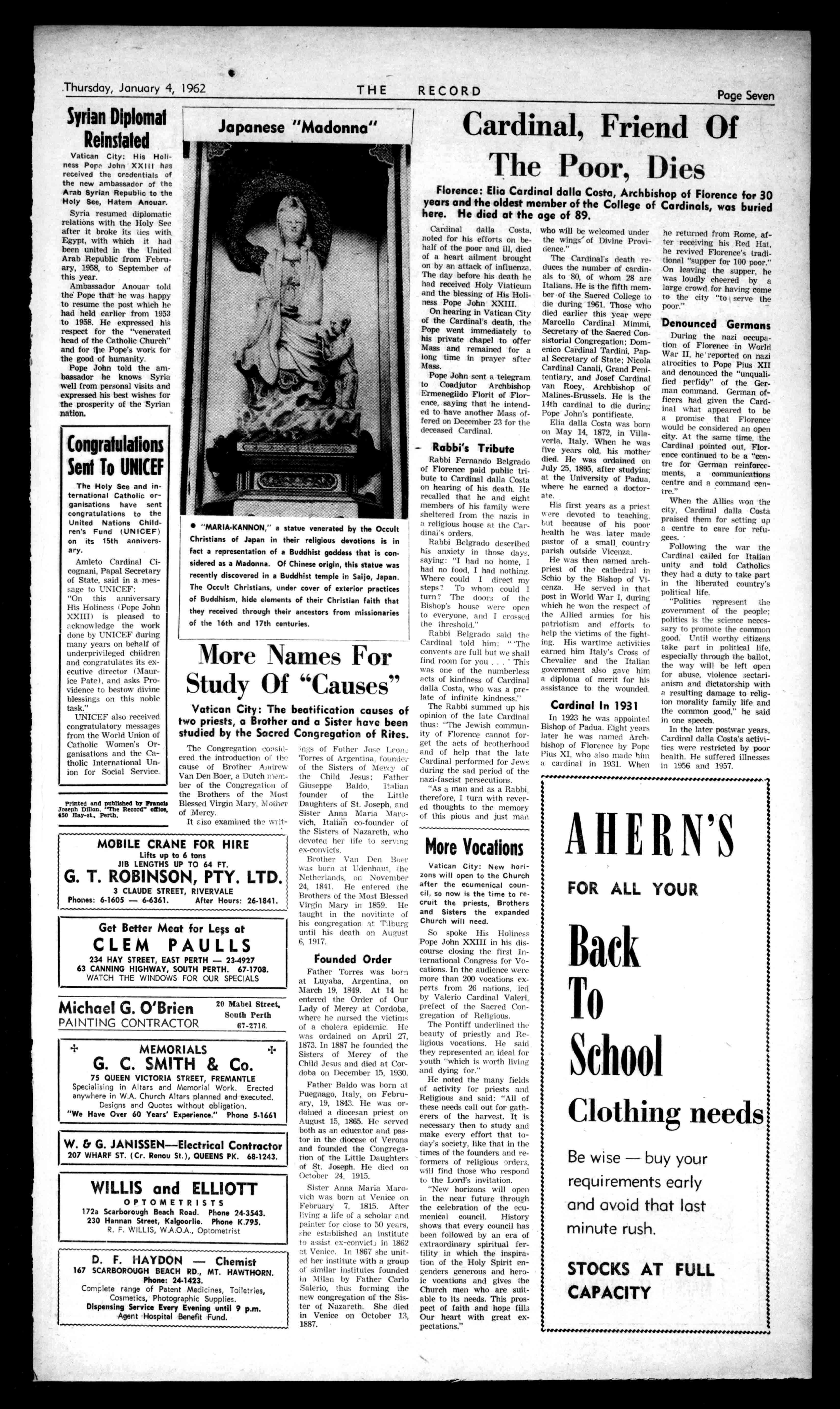
"MARIA-KANNON,"astatueveneratedbytheOccult ChristiansofJapanintheirreligiousdevotionsisin factarepresentationofaBuddhistgoddessthatiscon. sideredasMadonna.OfChineseorigin,thisstatuewas recentlydiscoveredinaBuddhisttempleinSaijo,Japan. TheOccultChristians,undercoverofexteriorpractices ofBuddhism,hideelementsoftheirChristianfaiththat theyreceivedthroughtheirancestorsfrommissionaries ofthe16thand17thcenturies.
MoreNamesFor StudyOf"Causes
VaticanCity:The twopriests,aBrother studiedbytheSacred TheCongregationconsideredtheintroductionofthe causeofBrother.Andrew VanDenBoer,aDutchmemberoftheCongregationof theBrothersoftheMost BlessedVirginMary,Mother ofMercy. Itciao
beatificationcausesof andaSisterhavebeen CongregationofRites.
logsofFotherJoseLeon., TorresofArgentina,founder oftheSistersofMercyof theChildJesus:FatherGiuseppeBaldo,Italian founderoftheLittle DaughtersofSt.Joseph,and SisterAnnaMariaMarovich,Italianco-founderof theSistersofNazareth,who devotedherlifetoserving ex-convicts. BrotherVanDenBoor wasbornatUdenhaut,the Netherlands,onNovember 24,1811.Heenteredthe BrothersoftheMoatBlessed VirginMaryin1859.He taughtinthenovitiateof hiscongregationatTilburg untilhisdeathonAugust 6,1917.
roundedOrder
FatherTorreswasborn atLuyaba,Argentina,on March19,1849.At14he enteredtheOrderofOur LadyofMercyatCordoba, wherehenursedthevictims ofacholeraepidemic.He wasordainedonApril27, 1873.In1887hefoundedthe SistersofMercyofthe ChildJesusanddiedatCordobaonDecember15,1930.
FatherBaldowashornat Puegnago,Italy,onFebruary,19,1843.Hewasordainedadiocesanprieston August15,1865.Heserved bothasaneducatorandpastorinthedioceseofVerona andfoundedtheCongregationoftheLittleDaughters ofSt.Joseph.Hediedon October24,1915.
Cardinal,FriendOf ThePoor,Dies
Florence:ElioCardinaldollaCosta,ArchbishopofFlorencefor30 yearsandtheoldestmemberoftheCollegeofCardinals,wasburied here.Hediedattheageof89.
Cardinaldalla Costa, notedforhiseffortsonbehalfofthepoorandill,died ofaheartailmentbrought onbyanattackofinfluenza. Thedaybeforehisdeathhe hadreceivedHolyViaticum andtheblessingofHisHolinessPopeJohnXXIII.
OnhearinginVaticanCity oftheCardinal'sdeath,the Popewentimmediatelyto hisprivatechapeltooffer Massandremainedfora longtimeinprayerafter Mass.
PopeJohnsentatelegram toCoadjutorArchbishop ErmenegildoFloritofFlorence,sayingthatheintendedtohaveanotherMassofferedonDecember23forthe deceasedCardinal
- Rabbi'sTribute
RabbiFernandoBelgrado ofFlorencepaidpublictributetoCardinaldallaCosta onhearingofhisdeath.He recalledthatheandeight membersofhisfamilywere shelteredfrontthenazisIn areligioushouseattheCardinal'sorders.
RabbiBelgradodescribed hisanxietyinthosedays. saying:"Ihadnohome,I hadnofood,Ihadnothing. WherecouldIdirectmy steps?TowhomcouldI turn?Thedoorsofthe Bishop'shousewereopen toeveryone,andIcrossed thethreshold."
RabbiBelgradosaidthe Cardinaltoldhim:"'The conventsarefullbutweshall findroomforyou This wasoneofthenumberless actsofkindnessofCardinal dallaCosta,whowasaprelateofinfinitekindness."
TheRabbisummeduphis opinionofthelateCardinal thus:"TheJewishcommunityofFlorencecannotforgettheactsofbrotherhood andofhelpthatthelate CardinalperformedforJews duringthesadperiodofthe nazi-fascistpersecutions.
"AsamanandasaRabbi, therefore,Iturnwithreveredthoughtstothememory ofthispiousandjustman
MoreVocations
VaticanCity:NewhorizonswillopentotheChurch aftertheecumenicalcouncil,sonowisthetimetorecruitthepriests,Brothers andSisterstheexpanded Churchwillneed.
SospokeHisHoliness PopeJohnXXIIIinhisdiscourseclosingthefirstInternationalCongressforVocations.Intheaudiencewere morethan200vocationsexpertsfrom26nations,led byValerieCardinalValeri, prefectoftheSacredCongregationofReligious. ThePontiffunderlinedthe beautyofpriestlyandReligiousvocations.Hesaid theyrepresentedanidealfor youth"whichisworthliving anddyingfor."
Henotedthemanyfields ofactivityforpriestsanal Religiousandsaid:"Allof theseneedscalloutforgatherersoftheharvest.Itis necessarythentostudyanti makeeveryeffortthattoday'ssociety,likethatinthe timesofthefoundersandreformersofreligiousarders, willfindthosewhorespond totheLord'sinvitation.
whowillbewelcomedunder thewings"ofDivineProvidence."
TheCardinal'sdeathreducesthenumberofcardinalsto80,ofwhom28are Italians.HeisthefifthmemberoftheSacredCollegeto dieduring1961.Thosewho diedearlierthisyearwere MarcelloCardinalMimmi, SecretaryoftheSacredCon. sistorialCongregation:DomenicoCardinalTardini,PapalSecretaryofState;Nicola CardinalCanali,GrandPenitentiary,andJosefCardinal vanRoey,Archbishopof Malines-Brussels.Heisthe 14thcardinaltodieduring PopeJohn'spontificate.
EliadallaCostawasborn onMay14,1872,inVillaverla,Italy.Whenhewas fiveyearsold,hismother died.Hewasordainedon July25,1895,afterstudying attheUniversityofPadua, whereheearnedadoctorate. Hisfirstyearsasapriest weredevotedtoteaching. butbecauseofhispoor healthhewaslatermade pastorofasmall.country parishoutsideVicenza. Hewasthennamedarchpriestofthecathedralin SchiobytheBishopofVicenza.Heservedinthat postinWorldWarI,during whichhewontherespectof theAlliedarmiesforhis patriotismandeffortsto helpthevictimsofthefighting.Hiswartimeactivities earnedhimItaly'sCrossof ChevalierandtheItalian governmentalsogavehim adiplomaofmeritforhis assistancetothewounded.
CardinalIn1931 In1923hewasappointed BishopofPadua.Eightyears laterhewasnamedArchbishopofFlorencebyPope PiusXI,whoalsomadehim acardinalin1931.When
hereturnedfromRome,afterreceivinghisRedHat, herevivedFlorence'straditional"supperfor100poor." Onleavingthesupper,he wasloudlycheeredbya largecrowdforhavingcome tothecity"toservethe poor."
DenouncedGermans
DuringthenazioccupationofFlorenceinWorld WarII,he'reporteitonnazi atrocitiestoPopePiusXII anddenouncedthe"unqualifiedperfidy"oftheGermancommand.GermanofficershadgiventheCardinalwhatappearedtobe apromisethatFlorence wouldbeconsideredanopen city.Atthesametime,the Cardinalpointedout.Florencecontinuedtobea"centreforGermanreinforcements,a communications centreandacommandcentre."
WhentheAllieswonthe city,CardinaldallaCosta praisedthemforsettingup acentretocareforrefugees. Followingthewarthe CardinalcailedforItalian unityandtoldCatholic, theyhadadutytotakepart intheliberatedcountry's politicallife.
"Politicsrepresentthe governmentofthepeople: politicsisthesciencenecessarytopromotethecommon good.Untilworthycitizens takepartinpoliticallife, especiallythroughtheballot, thewaywillbeleftopen forabuse,violencesectarianismanddictatorshipwith aresultingdamagetoreligionmoralityfamilylifeand thecommongood,"hesaid inonespeech. Inthelaterpostwaryears, CardinaldallaCosta'sactivitieswererestrictedbypoor health.Hesufferedillnesses in1956and1957.
-
D.
SisterAnnaMariaMarovichwasbornatVeniceon February7,1815.After livingalifeofascholarand painterforcloseto50years, eheestablishedaninstitute toassistex-convict.;in1862 atVenice.In1867sheunitedherinstitutewithagroup ofsimilarinstitutesfounded inMilanbyFatherCarlo Salerio,thusformingthe newcongregationoftheSisterofNazareth.Shedied inVeniceonOctober13, 1887.
"Newhorizonswillopen inthenearfuturethrough thecelebrationoftheecumenicalcouncil.History showsthateverycouncilhas beenfollowedbyaneraof extraordinaryspiritualfertilityinwhichtheinspirationoftheHolySpiritengendersgenerousandheroicvocationsandgivesthe Churchmenwhoaresuitabletoitsneeds.Thisprospectoffaithandhopefills Ourheartwithgreatexpectations."
Thursday,January4,1962 THE RECORD PageSeven
MOBILECRANEFORHIRE Liftsupto6tons JIBLENGTHSUPTO64FT. G.T.ROBINSON,PTY.LTD. 3CLAUDESTREET,RIVERVALE Phones:6-1605-6.6361. AfterHours:26-1841. GetBetterMeatforLessat CLEMPAULLS 234HAYSTREET,EASTPERTH-23.4927 63CANNINGHIGHWAY,SOUTHPERTH.67-1708. WATCHTHEWINDOWSFOROURSPECIALS MichaelG.O'Brien 20MabelStreet, SouthPerth PAINTINGCONTRACTOR 01-2716 MEMORIALS G.C.SMITH&Co. 75QUEENVICTORIASTREET,FREMANTLE SpecialisinginAltarsandMemorialWork.Erected anywhereinW.A.ChurchAltarsplannedandexecuted. DesignsandQuoteswithoutobligation. "WeHaveOver60Years'Experience."Phone5.1661 W.&G.JANISSEN-ElectricalContractor 207WHARFST.(Cr.RenouSt.),QUEENSPK.68-1243.
examinedth"writ-
WILLISandELLIOTT OPTOMETRISTS 172aScarboroughBeachRoad.Phone24-3543. 230HannanStreet,Kalgoorlie.PhoneK.795. R.F.WILLIS,W.A.O.A.,Optometrist
167SCARBOROUGHBEACHRD.,MT.HAWTHORN. Phone:24.1423. Cc,r.leterangeofPatentMedicines,To:letrles, Cosmetics,PhotographicSupplies. DispensingServiceEveryEveninguntil9p.m. AgentHospitalBenefitFund.
F.11AYDON
Chemist
0441,04,4,44,04....41,14....4,1,4441,044,0,1,./...4.441., AHERN'S FORALLYOUR Back To School Clothingneeds! Bewise-buyyour requirementsearly andavoidthatlast minuterush. STOCKSATFULL CAPACITY NNMINNINflII
Right
Mr.
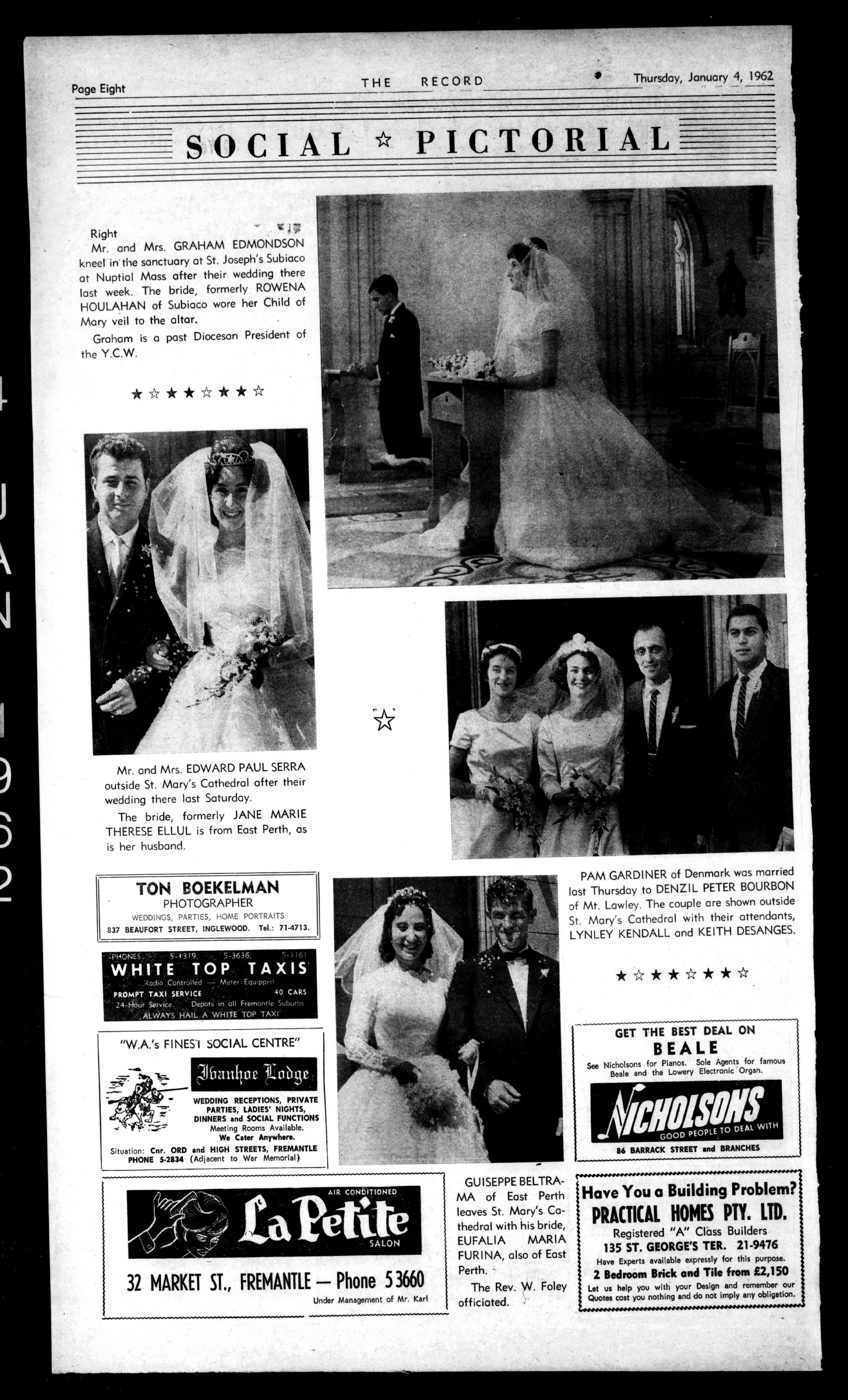
apastDiocesanPresidentof theY.C.W.
Mr.
St.Mary'sCathedralaftertheir weddingtherelastSaturday. Thebride,formerly
THERESEELLULisfromEastPerth,as isherhusband.
PageEight THE RECORD Thursday,January4,1962 SOCIAL*PICTORIAL
andMrs.GRAHAMEDMONDSON kneelinthesanctuaryatSt.Joseph'sSubiaco atNuptialMassaftertheirweddingthere lastweek.Thebride,formerlyROWENA HOULAHANofSubiacoworeherChildof Maryveiltothealtar. Grahamis
andMrs.EDWARDPAUL
JANEMARIE
TONBOEKELMAN PHOTOGRAPHER WEDDINGS,PARTIES,HOMEPORTRAITS 337BEAUFORTSTREET,INGLEWOOD.Tel.:71-4713. .PlIONES. 5-4319, 5-363'6 WHITETOP.TAXIS. ZodioContrOiled--,/t/teterEquipped PROMPTTAXISERVICE 40CARS 4-H Se'icc DepotsinoilFremantleSuburb: ALWAYSHAILAWHITETOPTAXI"W.A.'sFINES!SOCIALCENTRE" `46aniple7Eabge WEDDINGRECEPTIONS,PRIVATE PARTIES,LADIES'NIGHTS, DINNERSandSOCIALFUNCTIONS MeetingRoomsAvailable. WeCaterAnywhere. Situation:Cnr.ORDandHIGHSTREETS,FREMANTLE PHONE5.2834(AdjacenttoWarMemorial) 31MARKETST.,FREMANTLE-Phone53660 UnderManagementofMr.Karl GUISEPPEBELTRAMAofEastPerth leavesSt.Mary'sCathedralwithhisbride, EUFALIA MARIA FURINA,alsoofEast Perth. TheRev.W.Foley officiated. PAMGARDINERofDenmarkwasmarried lastThursdaytoDENZILPETERBOURBON ofMt.Lawley.Thecoupleareshownoutside St.Mary'sCathedralwiththeirattendants, LYNLEYKENDALLandKEITHDESANGES. GETTHEBESTDEALON BEALE SeeNichclsonsforPianos.SoleAgentsforfamous BealeandtheLoweryElectronicOrgan. "MAN GOODPEOPLETODEALWITH 86BARRACKSTREETendBRANCHES HaveYouaBuildingProblem? PRACTICALHOMESPTY.LTD. Registered"A"ClassBuilders 135ST.GEORGE'STER.21-9476 HaveExpertsavailableexpresslyforthispurpose. 2BedroomBrickandTilefrom£2,150 LetushelpyouwithyourDesignandrememberour Quotescostyounothinganddonotimplyanyobligation.
SERRA
outside
TWOOFFICIATINGPRIESTSANDBRIDEGROOMAREBROTHERS
IrishClubCelebrationFor NewYearATerrificSuccess
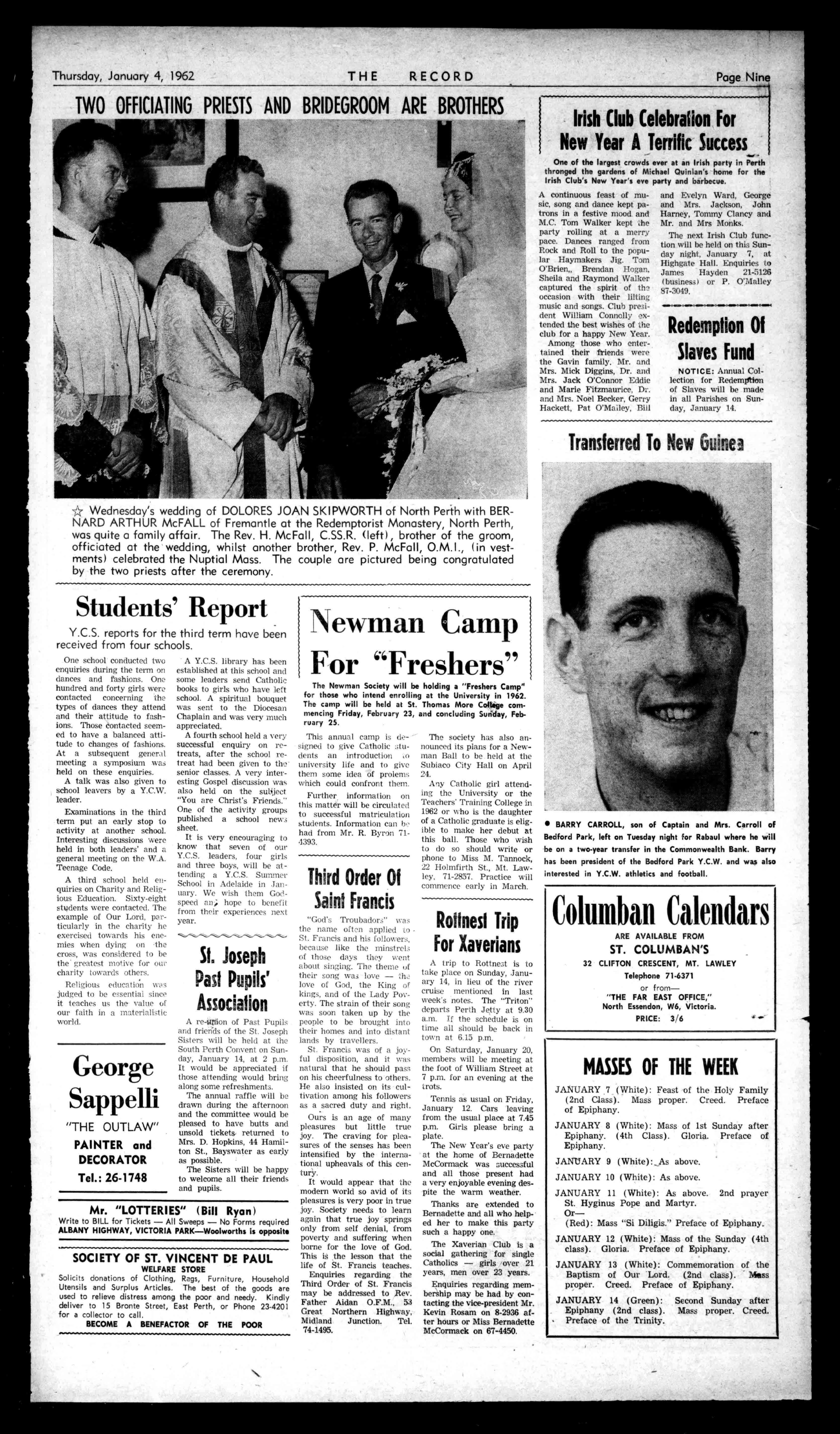
Wednesday'sweddingofDOLORESJOANSKIPWORTHofNorthPerthwithBERNARDARTHURMcFALLofFremantleattheRedemptoristMonastery,NorthPerth, wasquiteafamilyaffair.TheRev.H.McFall,C.SS.R.(left),brotherofthegroom, officiatedatthewedding,whilstanotherbrother,Rev.P.McFall,0.M.I.,linvestments)celebratedtheNuptialMoss.Thecouplearepicturedbeingcongratulated bythetwopriestsaftertheceremony.
Students'Report
Y.C.S.reportsforthethirdtermhavebeen receivedfromfourschools.
Oneschoolconductedtwo enquiriesduringthetermon dancesandfashions.One hundredandfortygirlswere contactedconcerningthe typesofdancestheyattend andtheirattitudetofashions.ThoseContactedseemedtohaveabalancedattitudetochangesoffashions. Atasubsequentgeneral meetingasymposiumwas heldontheseenquiries.
Atalkwasalsogivento schoolleaversbyaY.C.W. leader.
Examinationsinthethird termputanearlystopto activityatanotherschool. Interestingdiscussionswere heldinbothleaders'anda generalmeetingontheW.A.
TeenageCode.
AthirdschoolheldenquiriesonCharityandReligiousEducation.Sixty-eight studentswerecontacted.The exampleofOurLord,particularlyinthecharityhe exercisedtowardshisenemieswhendyingon-the cross,wasconsideredtobe the"greatestmotiveforoutcharitytowardsothers.
Religiouseducationwas judgedtobeessentialsince itteachesusthevalueof ourfaithinamaterialistic world.
George Sappelli
"THE OUTLAW"
PAINTERand DECORATOR
Tel.:26-1748
AY.C.S.libraryhasbeen establishedatthisschooland someleaderssendCatholic bookstogirlswhohaveleft school.Aspiritualbouquet wassenttotheDiocesan Chaplainandwasverymuch appreciated.
Afourthschoolheldavery successfulenquiryonretreats,aftertheschoolretreathadbeengiventothe' seniorclasses.AveryinterestingGospeldiscussionwas alsoheldonthesubject "YouareChrist'sFriends." Oneoftheactivitygroups publishedaschoolnews sheet.
Itisveryencouragingto knowthatsevenofour Y.C.S.leaders,fourgirls andthreeboys,willbeattendingaY.C.S.Summer. SchoolinAdelaideinJanuary.WewishthemGo0speedan;hopetobenefit fromtheirexperiencesnext year.
St.Joseph PastPupils' Association
Are-unionofPastPupils andfriendsoftheSt.Joseph Sisterswillbeheldatthe SouthPerthConventonSunday,January14,at2p.m. Itwouldbeappreciatedif thoseattendingwouldbring alongsomerefreshments.
Theannualrafflewillbe drawnduringtheafternoon andthecommitteewouldbe pleasedtohavebuttsand unsoldticketsreturnedto Mrs.D.Hopkins,44HamiltonSt.,Bayswaterasearly aspossible.
TheSisterswillbehappy towelcomealltheirfriends andpupils.
Mr."LOTTERIES"(BillRyan)
WritetoBILLforTickets-AllSweeps-NoFormsrequired
ALBANYHIGHWAY,VICTORIAPARK-Woolworthsisopposite
SOCIETYOFST.VINCENTDEPAUL WELFARESTORE
SolicitsdonationsofClothing,Rags,Furniture,Household UtensilsandSurplusArticles.Thebestofthegoodsare usedtorelievedistressamongthepoorandneedy.Kindly deliverto15BronteStreet,EastPerth,orPhone23-4201 foracollectortocall.
NewmanCamp For"Freshers"
TheNewmanSocietywillbeholdinga"FreshersCamp" forthosewhointendenrollingattheUniversityin1962. ThecampwillbeheldatSt.ThomasMoreCollegecorn mencingFriday,February23,andconcludingSunday,February25.
ThisannualcampisdesignedtogiveCatholicstudentsanintroduction,o universitylifeandtogive themsomeideaofprolems whichcouldconfrontthem.
Furtherinformationon thismatterwillbecirculated tosuccessfulmatriculation students.Informationcanbe hadfromMr.R.Byron71.1393.
ThirdOrderOf SaintFrancis
"God'sTroubadors"was thenameoftenappliedto St.Francisandhisfollowers, becauseliketheminstrels ofthosedaystheywent aboutsinging.Thethemeof theirsongwasloveloveofGod,theKingof kings,andoftheLadyPoverty.Thestrainoftheirsong wassoontakenupbythe peopletobebroughtinto theirhomesandintodistant landsbytravellers.
St.Franciswasofajoyfuldisposition,anditwas naturalthatheshouldpass onhischeerfulnesstoothers. Healsoinsistedonitscultivationamonghisfollowers asasacreddutyandright.
Oursisanageofmany pleasuresbutlittletrue joy.Thecravingforpleasuresofthesenseshasbeen intensifiedbytheinternationalupheavalsofthiscentury.
Itwouldappearthatthe modernworldsoavidofits pleasuresisverypoorintrue joy.Societyneedstolearn againthattruejoysprings onlyfromselfdenial,from povertyandsufferingwhen bornefortheloveofGod. Thisisthelessonthatthe lifeofSt.Francisteaches. Enquiriesregardingthe ThirdOrderofSt.Francis maybeaddressedtoRev. FatherAidanO.F.M.,53 GreatNorthernHighway, MidlandJunction.Tel. 74-1495.
ThesocietyhasalsoannounceditsplansforaNewmanBalltobeheldatthe SubiacoCityHallonApril 24. AnyCatholicgirlattendingtheUniversityorthe Teachers'TrainingCollegein 1962orwhoisthedaughter ofaCatholicgraduateiseligibletomakeherdebutat thisball.Thosewhowish todososhouldwriteor phonetoMissM.Tannock, 22HolmfirthSt.,Mt.Lawley,71-2857.Practicewill commenceearlyinMarch.
'tonnes!Trip ForXaverians
AtriptoRottnestisto takeplaceonSunday,January14,inlieuoftheriver cruisementionedinlast week'snotes.The"Triton" departsPerthJettyat9.30 a.m.Ifthescheduleison timeallshouldbebackin townat6.15p.m.
OnSaturday,January20, memberswillbemeetingat thefootofWilliamStreetat 7p.m.foraneveningatthe trots.
TennisasusualonFriday, January12.Carsleaving fromtheusualplaceat7.45 p.m.Girlspleasebringa plate. TheNewYear'seveparty atthehomeofBernadette McCormackwassuccessful andallthosepresenthad averyenjoyableeveningdespitethewarmweather.
Thanksareextendedto Bernadetteandallwhohelpedhertomakethisparty suchahappyone.
TheXaverianClubisa socialgatheringforsingle Catholics-girlsover21 years,menover23years.
Enquiriesregardingmembershipmaybehadbycontactingthevice-presidentMr. KevinRosamon8-2936afterhoursorMissBernadette McCormackon67-4450.
andEvelynWard.George andMrs.Jackson,John Harney,TommyClancyand Mr.andMrsMonks.
ThenextIrishClubfunctionwillbeheldonthisSundaynight,January7,at HighgateHall.Enquiriesto JamesHayden21-5126 (business)orP.O'Malley 87-3049.
...m.....mmown.mommeM
RedemptionOf
SlavesFund
NOTICE:AnnualCollectionforRedemption ofSlaveswillbemade inallParishesonSunday,January14.
OneofthelargestcrowdseveratanIrishpartyinPerth throngedthegardensofMichaelQuinlan'shomeforthe IrishClub'sNewYear'sevepartyandbarbecue. Acontinuousfeastofmusic,songanddancekeptpatronsinafestivemoodand M.C.TomWalkerkept,he partyrollingatamerry pace.Dancesrangedfrom RockandRolltothepopularHaymakersJig.Tom O'BrienBrendanHogan. SheilaandRaymondWalker capturedthespiritofthe. occasionwiththeirlilting musicandsongs.ClubpresidentWilliamConnollyextendedthebestwishesofthe clubforahappyNewYear. Amongthosewhoentertainedtheirfriendswere theGavinfamily.Mr.and Mrs.MickDiggins,Dr.and Mrs.JackO'ConnorEddie andMarieFitzmaurice,Dr. andMrs.NoelBecker,Gerry Hackett,PatO'Malley,Bill
TransferredToNewGuinea
MASSESOFTHEWEEK
JANUARY
JANUARY8(White):
of Epiphany.
JANUARY9(White):_Asabove.
JANUARY10(White):Asabove.
JANUARY11(White):Asabove.2ndprayer St.HyginusPopeandMartyr.
Or(Red):Mass"SiDiligis."PrefaceofEpiphany.
JANUARY12(White):MassoftheSunday(4th class).Gloria.PrefaceofEpiphany.
JANUARY13(White):Commemorationofthe BaptismofOurLord.(2ndclass).Mess proper.Creed.PrefaceofEpiphany.
JANUARY14(Green):SecondSundayafter Epiphany(2ndclass).Massproper.Creed. PrefaceoftheTrinity.
Thursday,January4,1962 THE RECORD PageNine
BENEFACTOROFTHEPOOR
BECOMEA
eBARRYCARROLL,sonof BedfordPark,leftonTuesday beonatwo-yeartransferintheCommonwealthBank.Barry hasbeenpresidentoftheBedfordParkY.C.W.andwasalso interestedinY.C.W.athleticsandfootball. CaptainandMrs.Carrollof nightforRabaulwherehewill ColumbanCalendars AREAVAILABLEFROM ST.COLUMBAN'S 32CLIFTONCRESCENT,MT.LAWLEY Telephone71.6371 orfrom"THEFAREASTOFFICE," NorthEssendon,W6,Victoria. PRICE: 3'6
Holy
(2ndClass).Massproper.Creed.
ofEpiphany.
7(White):Feastofthe
Family
Preface
Massof
Sunday
Epiphany.(4thClass).Gloria.Preface
1st
after
PRIMATE'SSTRONGLETTER
TOPOLISHGOVERNMENT
Poland'sPrimatehaspetitionedthatcommun'st-rulednation's Parliamenttoinvestigateillegalgovernmentactionagainstthe Church,accordingtoreportsreachingBerlin.
StefanCardinalWyszynskicalledfortheprobeinto violationsofChurchrights inalettertoCzeslawWycech,speakerofthePolish Sejm(Parliament).TheletterwassentinNovember afterameetingofthePolishBishopsinWarsawand hastheapprovalofallof theBishops,reportssaid.
Todatetherehavebeen noreportsthattheSejmhas repliedtotheCardinal'spetition.
ButinthewakeoftheprotestbytheheadofthePolishHierarchy,thegovernmentitselfmodifiedits standonsomeofthepoints theCardinalcomplained about.TheWarsawMinistry ofEducationinanamendmentofanearlierdecree oncatechismclassesstated thattheregularclergymay teachreligionclassesifthey areassignedtoparochialactivity.Italsoeliminatedthe requirementthatparishes "register"catechismclasses withthegovernment.
CardinalWyszynskigave theSejmadetailedlistof Churchgrievances,reports said.Hecitedrecentinstancesofgovernmentdiscriminationandharassment againsttheChurchandgave thelegalreasonsforcalling themunlawful.Hecharged thatthegovernment'sactionsviolatedthePolishconstitution,theChurch-State agreementof1956andthe UnitedNationsDeclaration onHumanRights.
ReportsspiedtheCardinalincludedthefollowing inhislistofviolationsof legalguaranteesoffreedom ofreligiousbeliefand activity:
Governmenteffortsto controlcatechismclassesin churches.
Discriminationagainst Sistersqualifiedtoserveas nursesingovernmenthospitals.
Governmentrefusallo hirequalifiedpriestsandReligiousasteachersinpublic schools.
hP.P4
FORQUALITYMEAT A.W.TAYLOR
FAMILYBUTCHER
CornerJohnandFitzgerald Streets,Perth
Officialbansontraditionalreligiousprocessions.
Discriminationagainst Churchinstitutionsinregard tofinancialandtaxmatters bytheMinistryofFinance andtheStateOfficefur ChurchAffairs.
RefusalbytheInterior Ministrytoauthorisethe formationofChurch-sponsoredorganisations. Reportsofthepetitioh reachedBerlinlessthana weekafterotherreportssaid thatCardinalWyszynskihad issuedapublicprotest againstthearrestofCatholicstudentsbycommunist policeattheDominican churchinPoznan.ArchbishopAntoniBaraniak, S.D.B.,ofPoznanwasalso reportedtohaveprotested againstthearrestofthestudents,whobelongtoPoland'sCatholicStudent YouthOrganisation.CardinalWyszynskisaidtheRed actionagainstthestudents onNovember23isillegal and"anoutragetoreligious feelings."
Reportssaidthatthearrestwasmadeunderanew Polishlawrestrictingpublisassemblies.Thelawset upstrictlicensingrequirementsforallmeetingsof morethan12persons.Accordingtoreports,thePolishpoliceclaimedtheyhad 40advancenoticeofthestudentmeeting.Laterreports saidthatstudentsagainmet inthePoznanchurchthe followingweekLiNovember 30,butthatthepolicetook noaction.About150studentsattendedthesecond meetingcomparedwith30 whotookpartintheearlier one,itwasreported.Thelaw restrictingmeetingswasanothergovernmentmeasure citedbyCardinalWyszynski inhislettertoParliament.
InNovemberitwasreportedthatPoland'scommunistregime,confrontedby solidCatholicdeterminatiootokeepreligionclassesfree ofgovernmentcontrol,was holdingitsnewlawoncatechismclassesinabeyance:
Thelaw,issuedbydecree lastAugust19,wastohave goneintoeffectNovemberI. Itprovidedthatreligiousinstructioncouldbegiven onlyin"registered"teachingpoints.Itlimitedsuch instructionstotwohoursof classtimeaweek.Italso
BOWRA&O'DEA'S -
IsSituatedat68STIRLINGSTREET-ClosetoCity SERVICEALLHOURS. ALLSUBURBS-21.4308. ani,..04,4,441,..41.00044,041,sdrInIng, PRICE-CUTTINGWARonT.V., FRIDGES,WASHERS
ALLPRICESSLASHED
LowestPricesinW.A.
FURNITUREATREDUCEDPRICES
NoDeposit-NoInterest
WEGIVEtheBiggestTRADE-INPRICES inW.A.
CARLISLESUPERMARKET (BOTHBRANCHES)
Cnr.ARCHER&PLANETSTS.,CARLISLE -AND..'884ALBANYRD.,EASTVIC.PARK RING6.2181or6-2150
Smiling"Suh"isan"Adoptable"Child
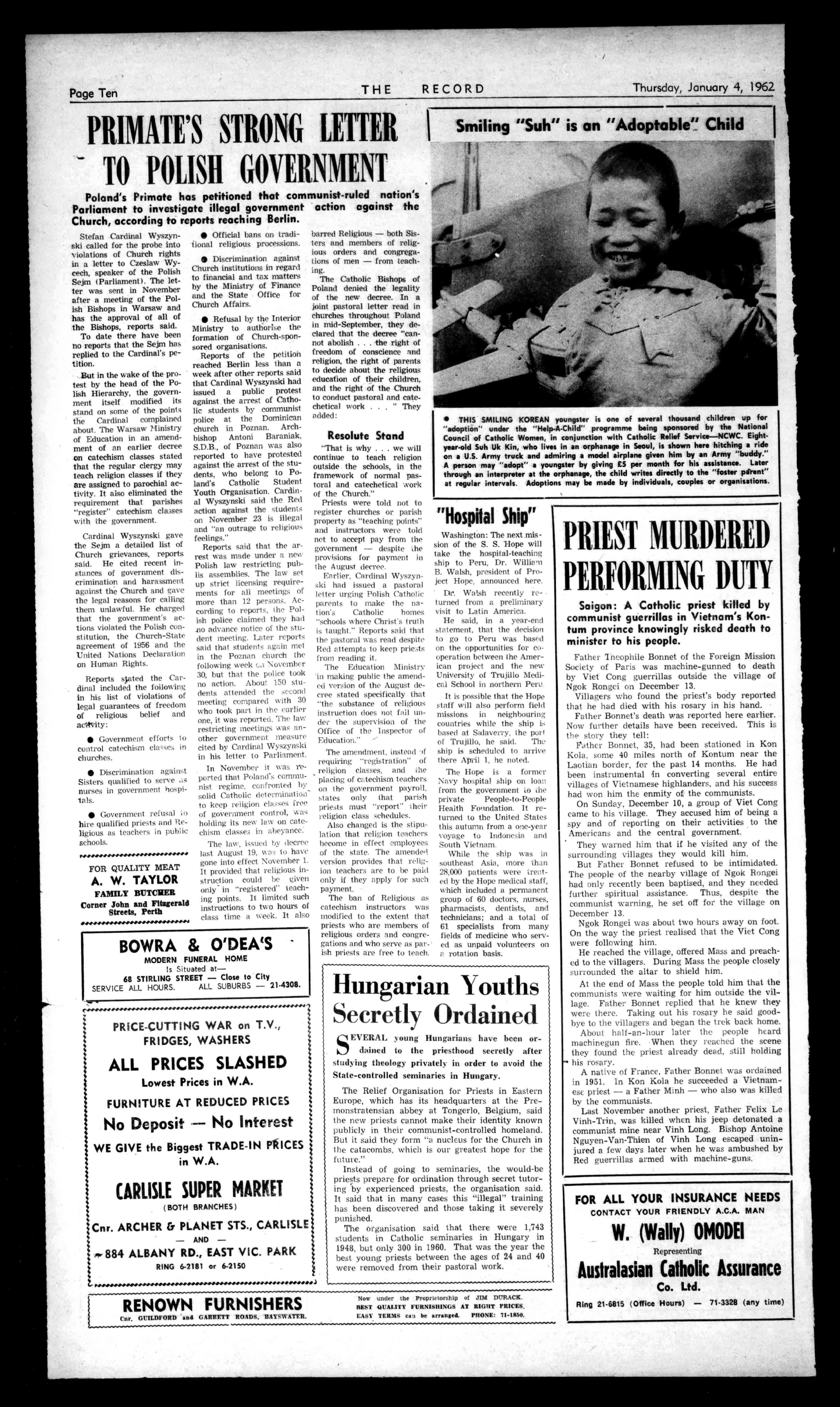
barredReligious-bothSistersandmembersofreligiousordersandcongregationsofmen-fromteaching. TheCatholicBishopsof Polanddeniedthelegality ofthenewdecree.Ina jointpastoralletterreadin churchesthroughoutPoland inmid-September,theydeclaredthatthedecree"cannotabolish therightof freedomofconscienceand religion,therightofparents todecideaboutthereligious educationoftheirchildren, andtherightoftheChurch toconductpastoralandcatecheticalwork "They added:
ResoluteStand
"Thatiswhy wekill continuetoteachreligion outsidetheschools,inthe frameworkofnormalpastoralandcatecheticalwork oftheChurch."
Priestsweretoldnotto registerchurchesorparish propertyas"teachingpoints" andinstructorsweretold nettoacceptpayfromthe government-despitethe provisionsforpaymentin theAugustdecree.
Earlier,CardinalWyszynskihadissuedapastoral letterurgingPolishCatholic parentstomakethenation'sCatholic homes "schoolswhereChrist'struth istaught."Reportssaidthat thepastoralwasreaddespite Redattemptstokeeppriests fromreadingit.
TheEducationMinistry 'inmakingpublictheamendedversionoftheAugustdecreestatedspecificallythat "thesubstanceofreligious instructiondoesnotfailtinderthesupervisionofthe OfficeoftheInspectorof Education.""
Theamendment,instead.rf requiring"registration"of religionclasses,andthe placingofcatechismteachers onthegovernmentpayroll, statesonlythatparish priestsmust"report"their religionclassschedules.
Alsochangedisthestipulationthatreligionteachers becomeineffectemployees ofthestate.Theamended versionprovidesthatreligionteachersaretobepaid onlyiftheyapplyforsuch payment. ThebanofReligiousas catechisminstructorswas modifiedtotheextentthat priestswhoaremembersof religiousordersandcongregationsandwhoserveasparishpriestsarefreetoteach.
"HospitalShip"
Washington:ThenextmissionoftheS.S.Hopewill takethehospital-teaching shiptoPeru,Dr.William B.Walsh,presidentofProjectHope,announcedhere.
Dr.Walshrecentlyreturnedfromapreliminary visittoLatinAmerica. Hesaid,inayear-end statement,thatthedecision togotoPeruwasbased ontheopportunitiesforcooperationbetweentheAmericanprojectandthenew UniversityofTrujilloMedicalSchoolinnorthernPero
ItispossiblethattheHope staffwillalsoperformfield missionsinneighbouring countrieswhiletheshipis basedatSalaverry.theputt ofTrujillo,hesaid.The shipisscheduledtoarrive thereApril1,henoted.
TheHopeisaformer Navyhospitalshipon!owl fromthegovernmentiothe private People-to-People HealthFoundation.ItreturnedtotheUnitedStates thisautumnfromaone-year voyagetoIndonesiaand SouthVietnam.
Whiletheshipwasin southeastAsia,morethan 28,000patientsweretreatedbytheHopemedicalstaff, whichincludedapermanent groupof60doctors,nurses, pharmacists,dentists,and technicians;andatotalof 61specialistsfrommany fieldsofmedicinewhoservedasunpaidvolunteerson arotationbasis.
HungarianYouths
SecretlyOrdained
SEVERALyoungHungarianshavebeenordainedtothepriesthoodsecretlyafter studyingtheologyprivatelyinordertoavoidthe State-controlledseminariesinHungary.
TheReliefOrganisationforPriestsinEastern Europe,whichhasitsheadquartersatthePreinonstratensianabbeyatTongerlo,Belgium,said thenewpriestscannotmaketheiridentityknown publiclyintheircommunist-controlledhomeland. Butitsaidtheyform"anucleusfortheChurchin hecatacombs,whichisourgreatesthopeforthe future."
Insteadofgoingtoseminaries,thewould-be priestsprepareforordinationthroughsecrettutoringbyexperiencedpriests,theorganisationsaid. Itsaidthatinmanycasesthis"illegal"training hasbeendiscoveredandthosetakingitseverely punished.
Theorganisationsaidthattherewere1,743 studentsinCatholicseminariesinHungaryin 1948,butonly300in1960.Thatwastheyearthe bestyoungpriestsbetweentheagesof24and40 wereremovedfromtheirpastoralwork.
PRIESTMURDERED PERFORMINGDUTY
Saigon:ACatholicpriestkilledby communistguerrillasinVietnam'sKonturnprovinceknowinglyriskeddeathto ministertohispeople.
FatherIncopinieBonnetoftheForeignMission SocietyofPariswasmachine-gunnedtodeath byVietCongguerrillasoutsidethevillageof NgokRongeionDecember13. Villagerswhofoundthepriest'sbodyreported thathehaddiedwithhisrosaryinhishand.
FatherBonnet'sdeathwasreportedhereearlier. Nowfurtherdetailshavebeenreceived.Thisis thestorytheytell:
FeatherBonnet,35,hadbeenstationedinKon Kola,some40milesnorthofKontumnearthe Laotianborder,forthepast14months.Hehad beeninstrumental4nconvertingseveralentire villagesofVietnamesehighlanders,andhissuccess hadwonhimtheenmityofthecommunists.
OnSunday,December10,agroupofVietCong cametohisvillage.Theyaccusedhimofbeinga spyandofreportingontheiractivitiestothe Americansandthecentralgovernment.
Theywarnedhimthatifhevisitedanyofthe surroundingvillagestheywouldkillhim.
ButFatherBonnetrefusedtobeintimidated. ThepeopleofthenearbyvillageofNgokRongei hadonlyrecentlybeenbaptised,andtheyneeded furtherspiritualassistance.Thus,despitethe communistwarning,hesetoffforthevillageon December13.
NgokRongeiwasabouttwohoursawayonfoot.
OnthewaythepriestrealisedthattheVietCong werefollowinghim.
Hereachedthevillage,offeredMassandpreachedtothevillagers.DuringMassthepeopleclosely surroundedthealtartoshieldhim.
AttheendofMassthepeopletoldhimthatthe communistswerewaitingforhimoutsidethevillage.FatherBonnetrepliedthatheknewthey werethere.Takingouthisrosaryhesaidgoodbyetothevillagersandbeganthetrekbackhome. Abouthalf-an-hourlaterthepeopleheard machinegunfire.Whentheyreachedthescene theyfoundthepriestalreadydead,stillholding hisrosary.
AnativeofFrance,FatherBonnetwasordained in1951.InKonKolahesucceededaVietnamesepriest-aFatherMinh-whoalsowaskilled bythecommunists.
LastNovemberanotherpriest,FatherFelixLe Vinh-Trin,waskilledwhenhisjeepdetonateda communistminenearVinhLong.BishopAntoine Nguyen-Van-ThienofVinhLongescapeduninjuredafewdayslaterwhenhewasambushedby Redguerrillasarmedwithmachine-guns.
FORALLYOURINSURANCENEEDS
CONTACTYOURFRIENDLYA.C.A.MAN
Ring21.6815
PageTen THE RECORD Thursday,January4,1962
MODERNFUNERALHOME
em.owe....".IWO.*
THISSMILINGKOREANyoungsterisoneofseveralthousandchildrenupfor "adoption"underthe"Help-A-Child-programmebeingsponsoredbytheNational CouncilofCatholicWomen,inconjunctionwithCatholicReliefService-NCWC.Eightyear-oldSuhUkKin,wholivesinanorphanageinSeoul,isshownherehitchingaride onaU.S.ArmytruckandadmiringmodelairplanegivenhimbyanArmy"buddy." Apersonmay"adopt"ayoungsterbygivingE5permonthforhisassistance.Later throughaninterpreterattheorphanage,thechildwritesdirectlytothe"fosterpirent" atregularintervals.Adoptionsmaybemadebyindividuals,couplesororganisations.
RENOWNFURNISHERS nr.GUILD'ORDnatRRETTRODS.13.51,15kTLR. NowundertheProwl,torshipofJIMDrEJ,CFC HESTQUALITYFURNISHINGSATRHOITPRICES. LASETERMSca'.,bearranged.PHONE,71-1ASO.
AustralasianCatholicAssurance Co.Ltd.
W.(Wally)OMODEI Representing
OfficeHours)-71-3328(anytime)
Beethoven:ViolinConcerto. Minivox33/-.
Anewlabelisalwaysinteresting,particularlywhen ithasnovelty.The10inch MinivoxareissuedbyVox. ofwhichwehaveheardvery littleforthelastfewmonths.
Although10inch,theyplay nearlyaslongas12.inch records.Whilethelatter onoccasionexceed30mincitesperside,25minutesor evenlessisusual.TheBeethovenViolinConcertotakes 43minutesorsoandisusuallyona12inchwithno fill-ups.Sothisdiscis slightlymorethanhalfprice,withnocutsinthe music.
ThesoloistisBronislaw Gimpel,ofwhomImustconfessIhaveneverheard,but whoplaysextremelywell, althoughnotinthesuperlativeMenuhinclass.The orchestraistheStuttgart ProMusicaunderDavidson whichisagoodsecond-line orchestra.Therecording, onlyinmono,isverygood. Abargainattheprice.
Schubert:UnfinishedSymphony.'Rosamunde'Overture.AveMaria.Minivox 33/-.
ThisisnotsuchasuccessfulMinivoxalthoughthe BambergSymphonyisa well-kaaaliorchestraand Perleaanevenbetterknownconductor.Theperformanceofthesymphony flags.Whileitisnotoneof Schubert'sbestworks,itis veryfamousandthereare plentyofbetterperformancesthanthis.Consisting asitdoesoftwomovements, itisusuallycompleteon onesideofa12inchdisc. withanothersymphonyon theflipside,sothisisnothinglikethebargainthatthe Beethovenaboveis.
Sullivan:H.M.S.Pinafore H.M.V.115/-.
Oneofthefewblessing' that1961broughtuswasthe liberationoftheGilbertand Sullivanoperasfromcopyright.TheDoyleyCartetraditionsweresomethingofa straitjacket.ThisH.M.V. series.madebySirMalcolm Sargent,haverevealedunsuspectedmusical - beauty. Tothosereaderswhoseexperienceof'H.M.S.Pinafore' 'limitedtolocalproductions.) mayhavesouredthemfor
F.R.BEECROFT BUTCHER
181RokebyRoad,Sublaco OnlyPrimeFreshKilled MeatSold. Phone:8-1373.
life,thisissuemaycomeas apleasantshock.
Mozart:AMusicalJoke.DivertimentoNo. inD.Eine KleineNachtmusik.Decc.a 57/6.
Thisdiscpresumablyreplacesanearlierissuebythe StuttgartChamberOrchestraunderMunchinger.The latterhaSnowgonetothe AceofClublabelandhad Haydn's'Farewell'Symphonyinplaceofthe'MusicalJoke.'Ifyouhaven'tgot thefamous'KleineNatchmusik'inyourcollection, thismaybewellworthconsideringfortheearlyDivertimentoisadelightful littlethingandeventhe 'MusicalJoke'hasitsmoments.Theruleshavebeen sosmashedsinceMozart's daythatallthewrongthings inthisworkspassalmost unnoticed.Hismockeryof hisineptcontemporariesis lostbyourevengreaterineptitude.
LibertypresentsStereo.London.52/6.
Americans presumably havenotyetgotovershowingofftheirstereosetsto theirfrustratedJonses.This isyetanothersuperbrecordingfromanAmerican sourcewhichinvitesusto seethemusicmove.Itis morecommendabletechnicallythanasanart-form.
WiedersehenmitMarlene. Capitol52/6.
ItisnotinmetobeUn kindtoanartistonthe scoreofagebutthereturn ofDietrichtoGermanyis 1960forces.acontrastAtli herBlueAngel'dayssome thirtyyear.;agoandI'm afraidthattheseGerman songsarebutashadowof herformerglory.
Hadyn:DMajorHarpsichordConcerto.EFlatMajorTrumpetConcertoVanguard55,a.
Itissometimeswise1,, reflectonwhatMozartdid fortheconcerto,forwhich wearealmostallquiteoblivious.Itisnotpossibleto judgetheseHaydnworks bypost-Mozartstandards buttheyaretunefulunite hihitedlittleworks. The TrumpetConcertoiswellknown,ofcoursebutthe Harpsichordwasunknown tome.ErnaHeilerjangles throughitverypleasantle whileGeorgeEakdaleisredoubtableintheTrumpet Concerto.Inbothcasesthe ViennaStateOperaOrchestrais-conductedbyFranz Litschauer.Apleasantlyrelaxeddisc. ELLIOTT
4

STORYOFST. PAUL'SJOURNEYS
thestory,recordedintheActsofthe Apostles,ofthespreadofChristianityfrom theUpperRoomatJerusalem,wherethedisciplesofJesusgatheredafterthecrucifixion, untilithadbeenestablishedinthecapitalof EmpireatRome.
Theideaformakingthe advenfuresof"PaulofTarsus"intoatelevisionserial washornin1956whena "JesusofNazareth"playcycleclosedwiththewords ofJesustohisdisciple:, "Youaremywitnesses,go thereforeintoalltheworld andteachallnations:he thingsthatyouhaveseen andheard "ToproduCerJoyHarringtonit seemedimpossibletoleave thestoryofthebeginnings ofChristianityatthepoint whichwasinfactthebeginningofastorythathas noend.Howdidthathandfulofpeasantsandfishermeninasmalloccupied countrysetaboutcarrying outtheirMaster'scommivati? Whitthappenednext?
Theproductionof"Paul ofTarsus"posedbigdiffi cultics,nthleastinthestory itself,inwhichtheclime.; comesatthebeginningwith theblindingrevelationso theroadtoDamascus.Whitt followsistherecordofa man'scomplexjourneyto scatteredcities.Thejout.ney itselfhadtoreconstructed, withallitsclashofclasses, racesandreligions.Th,. costofmovingafilmunit fromplacetoplacedictated thatasinglecentreshouldhe
found,andCretevasrhosen. Thesmall'portofSt.Nicholasandthesurrounding countrysideofferedbackgrounds-forthejourney.;to Lystra,Athens,Philippi,DamascusandRome,andfor Paul'sshipwreckinail "Alexandriangrainship." There,too,werefriendly peoplewhoenteredintothe projectsimplyandwholeheartedly, forming the crowdswhichPaulmeton his.journey,lendingcompetenthandstoconstructand workthe"grairaship"localsailingshipspecially converted-andinahundredwaysmakingthemonth whichtheBBCfilmunit, producerandprincipalactors spentonCreteamemorable experience.
Inapamphletintroducting the"PaulofTarsus'series. CanonRoyMcKay,the HeadofBBCReligious Broadcasting,commentsThat "thereligioussituationof thefirstcenturyhasmany strikinglinnetstothataf ourownday.TheChristian Gospelbrokethroughinto theGraeco-Romanworldbecauseithadtherealanswerstothequestions thoughtfulpeoplewereaskineandwasshowntohave greaterpowerthanthesubstitutereligionsofthatday."
STRANGEBUTTRU
By
Little-KnownFactsforCatholics
populated. Accordingtostatistics drawnupbytheinstigation ofPopeClementVI,the numberofdeathsforthe wholeworldexceeded42 million.Forthenext200 yearsepidemicsandvariants oftheplaguecontinuedto devastateEuropeatmoreor lessregularintervals.
Historiansaregenerally agreedthattheeffectsof suchrecurringplaguesproducedresultswhich,directlyandindirectly,wereamong thecontributingfactorsleadinguptotheProtestantReformation.Theperiodicdecimationofpopulation,the completedisruptionofnormalroutinesandthecatastrophiceffectsonbehaviour patternsresultedinstrains andstressesincommunity lifethatwereincalculable.
Aperusalofthissmall bookmakesfascinatingif macabrereading.Fromcontemporarysourcesanddocumentsanappallingpicture isdrawnofthehavocand tragedyofplague-stricken citiesandtheresultantdevastation.Thegeneralabsenceofhygienetogether withprimitivemedicalservicesmeantthatplague,
oncestarted,spreadwith alarmingrapidity. Thepictureisnotone merelyofsufferinganddyinghumanitywiththeliving, oftenunabletoburyallthe dead,butratheracomplete disintegrationofsociety.A terrifiedandnaivepopulationsuccumbedtomasshysteriaandsuperstition.Jews wereburntinthousandson trumped-upchargesthat theywereresponsibleforthe spreadofdiseasebypoisoningwells.Moralitybecamea victim.Eroticismflourished. Religionsufferedanoqslaughtofweirdaberrations anddistortions.Theseeds ofpopularheresiesscatteredasthoughbeforeawind.sltGroupsofflagellantsmoved fromtowntotownproviding exhibitionsofpublicpennanceandoftenspreading the contagionfurther. Strangesectsmusroomedintoexistence,frequentlywith diabolictendencies,tomock, abuseandopposetheChurch. Asimplerecitalofvariousfeaturesofplagueconditionscannotconveythe realityofhorrorandfear aswellasthedestruction, materialandmoral,tothe wholefabricofsociety.
Thissomewhatunusual paperbackismentionednot forlikelyedificationbutas aconvenientsourceofmore detailedinformationfor readersdesirousofbuilding upthepictureofpm-ReformationEurope.
Atthemomenttheamphastsisdeliberatelyonthe historicalsidebecausein thedevelopingclimateof ecumenicaldialoguethesubjectofhistoricalperspective mustnecessarilyloomlargo andimportant.
Thursday,January4,1962 THE RECORD PageEleven
&ELLIOTT OPTOMETRISTS-OPTICIANS
PICCADILLYARCADE 21-8151 153WILLIAMSTREET 21-5304
04,0PINVPI FORSALE FL ofWealtOsvTEEATMENTS,endingBLINDS, A.. .2-S, PELMETS,FLYSCREE,::,,, DOORS,. SATAN'BOND.. 5fat'AJMMONDSTREET,INGLEWOOD.PHONE71.4313 Obtaaa7_,SuppliesofFr,,bandFrozenFishfrog, ROSSINIERNATIONALHARE HeadOffice:7CLEAVERSTR2ET,WESTPERTH Phones:23-3433,28.4511SPLatAl.QuoT.S sr!Hoot.s, ALS FreshFishandShedFishAvailableDaily
IronCurtain ChristmasgreetingsFromten-me-oldLasloHamosof Englewood,N.J.,tohisauntstillinHungary,arerecordedatRadioFreeEurope'snewYorkstudios.Tibor Florian,editorofRFE's"Messages''programme,looks on.DuringChristmasweekVEcarriedafullschedule ofChristmasprogrammingbehindtheIronCurtain,includingHisHolinessPopeJot,XXIII'sannualChristmasmessage.
30MARKETSTREET,FREMANTLE 5-2602. 19NAPOLEONSTREET,COTTESLOE 3-2655. MO.0.1.441.441,I
Behindthe
newBBCTelevisionserial"PaulofTarsus"startsonABWChannel2at6.3Cp.m.on
tenplays
A
Sunday,January21.Thecycleof
tells
J.
atewawa.toe. Ni&MeeCNNEDNAILc,° Geaszvo,Rx4NAgeN6SA.6411IWNICriRtkiiiago,°MCC/1YEAR, ONOFF41ONVENSNAYOFITS. CAPILRER01474" ii/62f TEILIFIS EIREAIN STATIONSYMBOL. tan%'fit[HEWtaisis TELEVIStoelSERVICE' SAMONmlAHOnST CROSS!OFSTBRIGIDWoo,wWAS IRADITIONALEIAsvisoFROMFlUSSES. 'A/NSINANNAIk44Y"WA5 I'NapoFCR MILKY'445ASiTWAS BELIEVEDto TOW4ADSTheSH9'HiAlVietiLSINGHAMENGLAND. 15,>47-PFFiN,15Alegi(OFAllIANOFVINEAla frerritakiraoPMMCNOAS'i/NM:wee/az/RV. PickOfThe Paperbacks TheBlackDeath AChronicleofthe Plague.Compiledfrom ContemporarySources byJohannesNohl.UnwinBooks.Aust.Price 9/" Theplagueof1348,commonlyknownastheBlack Death,ravagedthethencivilisedworldandisclaimed tohavecarriedofffromonethirdtohalfthepopuiation. InEurope-twohundred thousandmarkettownsand villageswerecompletelyde-
M.
MURRAY Caffelakt
HOTELACCOMMODATION THESHAFTESBURYHOTEL INSTIRLINGSTREET minutesfrontO.PO.. OffersExcellentAccommodation PlentyofParkingSpace. NowunjermentthePersonalManageeltheOwners. NELSONandNELSON. PHONESVI1051BAYSWATERHotel OPP.STATION FrequentTrainService MilesfromCity--Lute ParkingArea. ExcellentAccommodation BedandBreakfast ReasonableTarriff LESBARTLETT,Prop. Tel.:71-1224 SUBIACOHOTEL SUBIACO FirstClassAccommodation andService Phone:8-1028 D.N.YOUNG.Proprietor. WEMBLEYHOTEL ExcellentLoungeand -Accommodation SpaciousParkingPhone87-2418 Cnr.Cambridgeand AlexanderStreets,Wembley WAVERLEYHOTEL 5.Donn,Waverly,Sturns ALBANYHIGHWAY, CANNINGTON ModernandConvenient HomelyAccommodation UseOneHrivc-InBottleService A.R.cpNNEI.I. Phone68-2419 HOTELAUSTRALIA MURRAYST.,PERTH OEMSMOSTCENTRALLY SITUATEDHCTEL ExcellentAccommodation. ServiceSupreme. Phone23-1541 CRITERIONHOTEL CENTRALHAYSTREET. PERTH ^4-HOURSERVICE iPlaid.forCountryReslicnts minutes'*IlkfrontCathedral. THECOUNTRYMAN'SHOTEL PRONE13-11115t5Rnenl EnjoytheBest ACCOMMODATIONand SERVICEat HOTELCOTTESLOE "Rightonlb:,seafreatPhone3-2155 R.M.Dymock,Lieease. WILLAGEEPARK HOTEL TheSty:,'MostModct TOMKENNY.Lterusee. Cr,hStockandFlighRoads. MELVILLE PHONE::19-Mut HOTEL ESPLANADE PERTHSLEAN`:,: HOTELFORaLL VISITORS. Phone:23-1531 COMMERCIAL HOTEL NORTHAM Ph",neNorthtm mtir,PT-TY,Propaiet.., NATIONALHOTEL Cnr.HighandMarketSts.. FREMANTLE Offersexcellentnoir...o.y aceonimadation Phone:5-1786 ft., Lir;:.aiee O'BRIEN'SHOTEL. NOTZTVIOFTHELINE ('larrieO'Brien,Licenser StanO'Brien,Mau:err 21-4261 CITYHOTEL Cnr.KInIandMorin.),S.-, Perth COUNTER1.1".Ne3, p.m, Fri Saturday 11-10pen. G.C.FOLEY Offersyouonly"Then,,., Phone:21-4094 tor14,,,ERIoRacccA1MOHATION IMPERIALHOTEL PERTH tOpposUeRailcarElation/ Tel.2it,:921 :I.,owlColdWater.Telephone Inere,bedroom.BedandBreak1.435 Tourist276..24Hour 10,ti--rice. ReducedTariff forchildren. Plymptoti HOTEL CANNINGHIGHWAY EASTFREMANTLE ErieCampbell.Pre,' Phone:3-1721 race
Beethoven:ViolinConcerto. Minivox33/-.
Anewlabelisalwaysinteresting,particularlywhen ithasnovelty.The10inch MinivoxareissuedbyVox, ofwhichwehaveheardvery littleforthelastfewmonths.
Although10inch,theyplay nearlyaslongas12.inch records.Whilethelatter unoccasionexceed30minutesperside,25minutesor evenlessisusual.TheBeethovenViolinConcertotakes 43minutesorsoandisusuallyona12inchwithno fill-ups.Sothisdiscis slightlymorethanhalfprice,withnocutsinthe music.
ThesoloistisBronislaw Gimpel,ofwhomImustconfessIhaveneverheard,but whoplaysextremelywell, althoughnotinthesuperlativeNIenuhinclass.The orchestraistheStuttgart ProMusicaunderDavidson whichisagoodsecond-line orchestra.Therecording, onlyinmono,isverygood. Abargainattheprice.
Schubert:UnfinishedSymphony.'Rosamund&Overture.AveMaria.Minivox 33/.. Thisisnotsuchasucce'ss'fulMinivoxalthoughthe BambergSymphonyisa well-knownorchestraand Perleaanevenbetterknownconductor.Theperformanceofthesymphony flags.Whileitisnotoneof Schubert'sbestworks,itis -veryfamousandtherearc plentyofbetterperformancesthanthis.Consisting asitdoesoftwomovements, itisusuallycompleteon onesideofa12inchdisc. withanothersymphonyon theflipside,sothisisnothinglikethebargainthatthe Beethovenaboveis.
Sullivan:H.M.S.Pinafore H.M.V.115/-.
Oneofthefewblessings that1961broughtuswasthe liberationoftheGilbertand Sullivanoperas,fromcopyright.TheDoyleyCartetraditionsweresomethingofa straitjacket.ThisH.M.V. series,madebySirMalcolm Sargent,haverevealedunsuspectedmusicalbeauty. Tothosereaderswhoseexperienceof'H.M.S.Pinafore' tlimitedtolocalproductions mayhavesouredthemfor
F.R.BEECROFT BUTCHER
181RokebyRoad,Sublaco OnlyPrimeFreshKilled MeatSold. Phone:8-1373.
life,thisissuemaycomeas apleasantshock.
Mozart:AMusicalJoke.DivertimentoNo.1inD.Eine KleineNachtmusik.Decca 57/6.
Thisdiscpresumablyreplacesanearlierissuebythe StuttgartChamberOrchestraunderMunchinger.The latterhatnowgonetothe AceofClublabelandhad Haydn's'Farewell'Symphonyinplaceofthe'MusicalJoke.'Ifyouhaven'tgot thefamous'KleineNatchmusik'inyourcollection, thismaybewellworthconsideringfortheearlyDivertimentoisadelightful littlethingandeventhe 'MusicalJoke'hasitsmoments.Theruleshavebeen sosmashedsinceMozart's daythatallthewrongthings inthisworkspassalmost unnoticed.Hismockeryof hisineptcontemporariesis lostbyourevengreaterineptitude.
LibertypresentsStereo.London.52/6.
Americans presumably havenotyetgotovershowingofftheirstereosetsto 'theirfrustratedJonses.This isyetanothersuperbrecordingfromanAmerican sourcewhichinvitesusto seethemusic'move.Itis morecommendabletechnicallythanasanart-form.
WiedersehenmitMarlene. Capitol52/6.
Itisnotinmetolx' kindtoanartistonthe scoreofagebutthereturn ofDietrichtoGermanyit 1960forces'acontrastuntil herBlueAngel'dayssome thirtyyearsagoandI'm afraidthattheseGerman songsarebutashadowof herformerglory.
Hadyn: 13 MajorHarpsichordConcerto.EFlatMajorTrumpetConcertoVanguard55/-.
Itissometimeswiseto reflectonwhatMozartdid fortheconcerto,forwhich wearealmostallquiteoblivious.Itisnotpossibleto judgetheseHaydnworks bypost-Mozartstandards buttheyaretunefuluninhibitedlittleworks. The. TrumpetConcertoiswellknown,ofcoursebutthe Harpsichordwasunknown tome.ErnaHeilerjangles throughitverypleaseratly whileGeorgeEskdaleisredoubtableintheTrumpet Concerto.Inbothcasesthe ViennaStateOperaOrchestrais-conductedbyFranz Litschauer.Apleasantlyeelaxeddisc.
STORYOFST. PAUL'SJOURNEYS
AnewBBCTelevisionserial"PaulofTarsus"startsonABWChannel2of6.30p.m.on Sunday,January21.Thecycleoftenplays tellsthestory,recordedintheActsofthe Apostles,ofthespreadofChristianityfrom theUpperRoomatJerusalem,wherethedisciplesofJesusgatheredafterthecrucifixion, untilithadbeenestablishedinthecapitalof EmpireatRome.
Theideaformaking1112 advenfuresof"PaulofTarsus"intoatelevisionserial wasbornin1956whena "JesusofNazareth"playcycleclosedwiththewords ofJesustohisdisciple:, "Youaremywitnesses,go thereforeintoalltheworld andteachallnations.he thingsthatyouhaveseen andheard "ToprodueerJoyHarringtonit seemedimpossibletoleave thestoryofthebeginnings ofChristianityatthepoint whichwasinfactthebeginningofastorythathas noend.Howdidthathandfulofpeasantsandfishermeninasmalloccupied countrysetaboutcarrying outtheirMaster'scommand? Whathappenednext?
Theproductionof"Paul ofTarsus"posedbigdifficulties,no'.leastinthestory itself,inwhichtheclima% comesatthebeginningwith theblindingrevelationon theroadtoDamascus.What followsis-therecordofis man'scomplexjourneyto scatteredcities.Thejourney itselfhadtoreconstructed, withallitsclashofclasses, racesandreligions.The costofmovingafilmunit fromplacetoplacedictated thatasinglecentreshouldbe-
found,andCretewaschosen. ThesmallportofSt.Nicholasandthesurrounding countrysideofferedbackgroun(1s'forthejourneysco Lystra,Athens,Philippi.DamascusandRome,andfor Paul'sshipwreckinan "Alexandriangrainship." There,too,werefriendly peoplewhoenteredintothe projectsimplyandwholeheartedly,formingthe crowdswhichPaulmeton his,journey,lendingcompetenthandstoconstructand workthe"grain-ship"-a localsailingshipspecially converted-andinahundredwaysmakingthemonth whichtheBBCfilmunit, producerandprincipalactors spentonCreteamemorable experience.
Inapamphletintroducting the"PaulofTarsus"series, CanonRoyMcKay,the HeadofBBCReligious Broadcasting,commentsthat "thereligioussituationof thefirstcenturyhasmany striking'walletstothatof ourownday.TheChristian Gospelbrokethroughinto theGraeco-Romanworldbecauseithadtherealanswerstothequestions thoughtfulpeoplewereaskint:andwasshowntohave greaterpowerthanthesubstitutereligionsofthatday."
STRANGEBUTTRU
Little-KnownFacts
Theplagueof1348,commonlyknownastheBlack Death,ravagedthethencivilisedworldandisclaimed tohavecarriedofffromonethirdtohalfthepopuiation.
InEuropetwohundred thousandmarkettownsand villageswerecompletelydepopulated.
Accordingtostatistics drawnupbytheinstigation ofPopeClementVI,the numberofdeathsforthe wholeworldexceeded42 million.Forthenext200 yearsepidemicsandvariants oftheplaguecontinuedto devastateEuropeatmoreor lessregularintervals.
Historiansaregenerally agreedthattheeffectsof suchrecurringplaguesproducedresultswhich,directlyandindirectly,wereamong thecontributingfactorsleadinguptotheProtestantReformation.Theperiodicdecimationofpopulation,the completedisruptionofnormalroutinesandthecatastrophiceffectsonbehaviour patternsresultedinstrains andstressesincommunity lifethatwereincalculable.
Aperusalofthissmall bookmakesfascinatingif macabrereading.Fromcontemporarysourcesanddocumentsanappallingpicture isdrawnofthehavocand tragedyofplague-stricken citiesandtheresultantdevastation.Thegeneralabsenceofhygienetogether withprimitivemedicalservicesmeantthatplague,
oncestarted,spreadWith alarmingrapidity.
Thepictureisnotone merelyofsufferinganddyinghumanitywiththeliving. oftenunabletoburyallthe dead,butratheracomplete disintegrationofsociety.A terrifiedandnaivepopulationsuccumbedtomasshysteriaandsuperstition..Jews wereburntinthousandson trumped-upchargesthat theywereresponsibleforthe spreadofdiseasebypoisoningwells.Moralitybecamea victim.Eroticismflourished. Religionsufferedanopslaughtofweirdaberrations anddistortions.Theseeds ofpopularheresiesscatteredasthoughbeforeawind.a.. Groupsofflagellantsmoved fromtownCotownproviding exhibitionsofpublicpennanceandoftenspreading thecontagionfurther. Strangesectsmusroomedintoexistence,frequentlywith diabolictendencies,tomock, abuseandopposetheChurch.
Asimplerecitalofvariousfeaturesofplagueconditionscannotconveythe realityofhorrorandfear aswellasthedestruction, materialandmoral,tothe wholefabricofsociety.
Thissomewhatunusual paperbackismentionednot forlikelyedificationbutas aconvenientsourceofmore detailedinformationZor readersdesirousofbuilding upthepictureofpre-ReformationEurope.
Atthemomenttheemphasisisdeliberatelyonthe historicalsidebecausein thedevelopingclimateof ecumenicaldialoguethesubjectofhistoricalperspective mustnecessarilyloomlarge andimportant.
Thursday,January4,1962 THE RECORD PageEleven N
intIOTT&ELLIOTT' OPTOMETRISTS-OPTICIANS PICCADILLYARCADE 21-8151 154WILLIAMSTREET 21-5104 30MARKETSTREET,FRI:MAN:7i_ 5-2602. 19NAPOLEONSTREET,COTTESLOE 3-2655. I FORSALE FULLRA1,i,GE
WINDOW.TRIATMEHTS,
Msusured,
Iristailen. STAN'BOND_
DilUMMONDSTREET,INGLEWOOD.
of
inclik,ii,g,BLINDS, ki,';'.'.35,.PELMETS-,FLYSCREEi':.3,r-LiWIRE_...DOOR-S,_
'.:,,ii-.;.,iiwri,
5
?HONE71.4313
Freth
ROSSINIERNATIONALFISHERIES HeadOffice:7CLEAVERSTREET,WESTPERTH Phones:28-3438.28-4511 SPECIAL. IHOLICSCHOOLS, HOSPi:ALSas. ,VSTITtliONS. FreshFist,aidShellFishAvailableDiily
Christmasgreetingsfromten-year-oldLeah,I4amosof Englewood,N.J.,tohisauntstillinHungary,arerecordedatRadioFreeEurope'snewYorkstudios.Tibor Florian',editorofRFE's
carriedafullschedule
programmingbehindtheIronCurtain,includingHisHolinessPopeJohnXXIII'sannualChristmasmessage.
i.!.,Hesof
and from
BehindtheIronCurtain
"Messages"programme,looks on.DuringChristmasweekR7E
ofChristmas
ForCatholics ByM.J.MURRAY lT ti A 047A*;ISO,Ite.VI.c TEIUiIS [MANN 6TATtOsISYMBOL Font'MSruttyIRISH ItLitirpor/SERVicE isBASEDCOVEANCIENT CROSSOrIT941610,woor..4WAS 1RAOcrioNALLYwalt4RtoMRussES, -OW /a,:MrGortriCCAMEAVILac GillizNo,Ax4frip,oimiasA.13(Lt. WroC,4'ICRaw;awyovaAyew*, ONBaAVMVEREARY0,ITS CAPIVREFA,ViIN-',URA'ss1621 Id41)1EAL 'ii/i/C6/$60#444-1kflY'innsrt 14AtatFat ma.xYaMYAs14WAS SWIM,10noir10.44110$MtSOME. AT1104911061618461174111AMO. &sr=novatwatorifr*a}IISSofta arrstilunraivResivediaetslotrm'repay/Y. I PickOfThe Paperbacks TheBlackDeath AChronicleofthe Plague.Compiledfrom ContemporarySources byJohannesNohl.Un winBooks.Aust.Price 9/-.
HOTELACCOMMODATION THESHAFTESBURY HOTEL INSTIRLIN(;STEEL 15minuteslearnO.P.O. OffersExcellentAccommodation PlentyofParkingSpace. Nowdn.',mentthePersonalManagecftheOwners. NELSONandNELSON. PHONESISleafBAYSWATERHotel OPP.STATION FrequentTrainService 4MilesfromCity Lari. ExcellentParkingArea.Accommodation BedandBreakfast ReasonableTarrifi LESBARTLETT.Prop Tel.:71-1224 SUBIACOHOTEL SUBIACO FirstClassAccommodation andService Phone:8-1028 D.N.YOUNG.Proprietor. WEMBLEYHOTEL ExcellentLoungeand -Accommodation SpaciousParking Phone87-2418 Cnr.Cambridgeand AlexanderStreets,Wembley WAVERLEYHOTEL N,Bonn,Waver!,':Storrs ALBANYHIGHWAY, CANNNGTON ModernandConvenient HomelyAccommodation UseOneDTIVC-IIIflottkService A.R.cONNELL Phone68-2419 HOTELAUSTRALIA MURRAYST.,PERTH CITY'SMOSTCENTRALLY artUATEDHCTEL ExcellentAccommodation, SeraleeSupreme. Phone23-1541 CRITERIONHOTEL CENTRALHAYSTREET. PERTH SERVICE FreeParkingforCottateyResidentsmutes'talkfromCathedra:. THECOUNTRYMAN'Snoir.. PHONE13-171IN(5lines) EnjoytheBest ACCOMMODATIONand SERVICEat HOTELCOTTESLOE "Right-ontheseafront" Phone3-2155 H.M.Dymock,Licesee WILLAGEEPARK HOTEL HOTEL ESPLANADE Th.,Modern PERTHSLEADING TOMKENNY.icensee. Cnr.StockandHighRoads, HOTELFORALL MELVILLE VISITORS, PHONE:litt-loste Phone:23-15'11 COMMERCIAL HOTEL NORTHAM Pli-aieNorthamea E.'MURPHY,Prop:bens,.' NATIONALHOTEL Car.-HighandMarketSta., FREMANTLE OfferseYeallentn _sly accommochtion Phane,5-766PhilipP. rims,Licensee O'BRIEN'SHOTEL NORTHOFTHELINE ClarrieO'Brien.Licensea StanO'Brien.MatLiger 21-4261 CITYHOTEL Cnr.KanandMurraySts.. Perth COUNTERLUNCH.It-i.311p.m. Srilay,italnrdtp G.F.POLEY OffersYouonly"The - Phone:21-4094 SUPERIORACCpkIAOLMTION IMPERIALHOTEL PERTH tepitosHe.RailwayStation) Tel.elt=1,r21 HotandColdWater.'relenhuite Inever,bedroom.BedendBreaklast35 Tourist27.1i.,24How R 1'1 Service. ReefOcedTerm forChildren. Plympton HOTEL CANNINGHIGHWAY. EASTFREMANTLE EricCampbell,Proa. Phone:5-1721 ewe
Beethoven:ViolinConcerto. Minivox33/.. AnewlabelLsalwaysinteresting,particularlywhen ithasnovelty.The10inch MinivoxareissuedbyVox, ofwhichwehaveheardvery littleforthelastfewmonths Although10inch.theyplay nearlyaslongas12inch records.Whilethelatter onoccasionexceed30min-. sitesperside,25minutesor evenlessisusual.TheBeethovenViolinConcertotakes 43minutesorsoandisusuallyona12inchwithno fill-ups.Sothisdiscis slightlymorethanhalfprice,withnocutsinthe music.
ThesoloistisBronislaw Gimpel,ofwhom1mustconfessIhaveneverheard,but whoplaysextremelywell, althoughnotinthesuperlativealenuhinclass.The orchestraistheStuttgart ProMusicaunderDevidsoo whichisagoodsecond-line orchestra.,Therecorditte. onlyinmono,isverygo.l. Abargainattheprice.
Schubert:UnfinishedSytTiphony. ROSaMUnde.Overture.AveMaria.Minivox 33/-.
Thisisnotsuchasueresivoxalthoughthe lataitaasaSymphonyis , II01.Cht",1 and Perlis,anovenbettuwknowaearthanoismuperformanoo,ifthe-a:molten, these.Whileitisnottineof Schubert'sbestworks, soryf;tutu=andthere plentyofbetterpetiole, antesthanthis.()instate. asitsloe;oftwomovemetaitisusuallycompleteoe -tineside,ofa12inchif--'' with,noihersynipleaty,ta thetap,idossothisisnothinglikethebarenin'betlb' !Wiltwenaboveis.
Sullivan:H.M.S.Pinafnr, H.M.V.115/-.
Oneof;hefewble,siea thatPsi'broughtnswit,the libenesatoftheGilherttied Sullivanopera,fromcopv right.TheDoyleyCarteVII(IttRBI,WereStalWIlliVofI straitjacket.ThiaHoly. series.oratebySirMaleolta Sargent,haverevealedthe am:pia:listmusicallasuity. Tothosareaderswhoseeaperienceof'H.M.S.Pinafore' limit.1tolocalpr,sittell,),, mayhave:unwedthemfor
F.R.BEECROFT BUTCHER
181RokebyRoad.Sublaeo OnlyPrimeFreshKilled MeatSold. Phone:8-1373.
life,thisissuemaycomeaa apleasantshock.
Mozart:AMusicalJoke.DivertimentoNo.1 inD.Eine KleineNachtmosik.Dicta 57/6. Thisdiscpresumablyreplacesanearlierissuebythe StuttgartChamberOrchestraunderMunchinger.The latterhasnowgonetothe AceofClublabelandhad Haydn's'Farewell'Symphonyinplaceofthe'MusicalJoke.'Ifyouhaven'tgot thefamous'KleineNatchmusik'inyourcollection thismaybewellworthconsideringfortheearlyInvertimentoisadelightful littlethingandeventhe MusicalJoke'hasitsmoments.Theruleshavebeen sosmashedsinceMozart's day!hetal!thewrongIhinga inthisworkspassalmost unnoticed.Hismockeryof hisineptcontemporariesis lostbyourevengreaterineptitude.
LibertypresentsStereo.Londen.52/6.
Americans presumably havenotyetgutovershowingofftheirstereosetsto theirfrustratedJonses.This isyetanothersuperbrecordingfromanAnytime mamaswhichinvitesIts1,, seethemusicmove.Itis morecommendabletechnicallythanasanart-loran.
WiedersehenfritMarlene. Capitol52/6. Iti,eieinmetalieIa. h.InOr/LSI h. W11
;,
Stile, 1,111it 4,1 ,tittrmer.2101'N'
Hadyn:DMajorHarps:chordConcerto.EFlatMajorTrumpetConcertoVan guard55:-.
Itissometimeswise tell11onwhatalozartdisc lin'thecotieurto.furwhich sarealmostallquiteoblivion:.IIianotpossibleoi .italeetheseHaydnam.; bypant-Alimart hilltheyaretunefulunit, hibitedlittlework,. 'fit Trumpet('oncerto Known,ofcourselimitthe Harpalehordwasunknita.1 toits,ErnaHeilerjangli-.. throughitverypleasant!: whileGeorgeI.:skill-eistidoubtableintheTrumpet Concerto.Inbothcasesihe ViennaStateOperaOrcheaIraisconductedhyErie, litachatier..5pleasantly !axeda.,
ELLIOTT&ELLIOTT
1
OPTOMETRISTS-OPTICIANS PICCADILLYARCADE 21.8151
154WILLIAMSTREET at.slot 31'MARKETSTREET,FREMAN, 52F.02. t 19NAPOLEONSTREET.CoTTESLCE 3-26..5. a. SAL'.
S N r3
BehindtheIronCurtain
Christmasgreetingsfromten-year-oldLasloHamosof Englewood,NJ.,tohisauntstillinHungary,arerecordedatRadioFreeEurope'snewYorkstudios.Tibor Florian,editorofRFE's"Messages"programme,looks on.DuringChristmasweekR7Ecarriedafullschedule ofChristmasprogrammingbehindtheIronCurtain,includingHisHolinessPope!ohoXXIII'sannualChristmasmessage.
STORYOFST. PAUL'SJOURNEYS
AnewBBCTelevisionserial"PaulofTarsus"startsonABWChannel2at6.30p.m.on Sunday,January21.Thecycleoftenplays tellsthestory,recordedintheActsofthe Apostles,ofthespreadofChristianityfrom theUpper;ZoomatJerusalem,wherethedisciplesofJesusgatheredafterthecrucifixion, untilithadbeenestablishedinthecapitalof EmpireatRome.
'Ilseideaforneikinadventure.,-4"Paulaf'I`, Hi.
55:1 Irirnat ti t, -Itt,11.,1,1"a.,-:aes,la e:sala(nosed5,1111!).. of.11,-.11,I.,IRS -Y011:iremyaitties titai-afereintoallthessirsi :tad allnation, thineOWsou asel :Hsih,iol "Tomat.1.tyIlarrineseniii leave the oftheI:cabalist,. ofCI,i,tianity thepoi111 55hickaasinfactthe' ::limingofastorytiv.t1 noend.1-losstlidthatle,si, rillofjaatsaat ill illa-.tr vottot,*yset;thaw nittheirMaster,.imatasae Whatleiptemeaseat7
The1:110110 A"'MMES..po,:eahi!! netIen.,tlitIlsearse. lithittilthe coniesatthehie:inningwith theblindingrevelatilln''' theroad10leiniaseueWieo followsiatheriasirdit:t MIMI.,complexjourneyto scatteredcities.Thejourney itselfhadlitreconstructed. withallitsclashofclasses. race:andreligions.'Th., costofmovingafilmunit fromplaceleplacedictated thatasingiecentreshould
seattl.and(a-et,aata'hewn. 'flu,smallportofrtit.Nich,,s,,andthesurroundine countrysideofferedbackarouiuL:finrihajourtioysin Lastra,Alboos,Philippi.Faa.a.Jaye-and s for Pauls shipaaeeklitit, II grain 11,..,1,,too.wereiriendls peopleahaenteredinto projeutsimply'cudithole. heartedly, forming the crowds%shallPaulwitoil hisjennies,lendinacomp,tcathandstoconstrue!and wwkthe"soetin-ship"lacalsailingshipsissialn converted-:endinahull:In-ifnaysnatkinethemotiti: ehithiiiBBCHimunit, producerandmintiestactors spenton('rote:1meatoratrie experience.
Inapamphletintoaliteline the"Paulofl'arati,-series. CationRoyaleKass 1113( Broadcasting,commentsthat -the['elisionsadieuionof thefirstcenturyletsmany strikingIfwalletstothatif our01.%itday.TheChristian Gospelbrokethroughacts, theGraeco-Romanworldbeeloseithadtherealan.st-ers litthequestions thoughtfulpeoplewereaskin,andwasshowntohave ersitespowerthanthesohstitittereligionsofthat
depopulated.
Accordingtostatistic; drawnupbytheinstigation ofPopeClementVI.the numberofdeathsforthe wholeworldexceeded42 million,Forthenext200 yearsepidemicsandvariants oftheplaguecontinuedto devastateEuropeatmoreor leasregularintervals, Historiansaregenerally agreedthattheeffectsof suchrecurringplaguesproiinced which,directlyandindirectly,wereamong thecontributingfactorsleadinguptotheProtestantReformation.Theperiodicdecimationofpopulation,the completedisruptionofnormalroutinesandthecatastrophiceffectsonbehaviour patternsresultedinstrains andstressesincommunity lifethatwereincalculable.
Aperusalofthissmall bookmakesfascinatingif macabrereading.FromeonlemporrySOUrcesanddocumentsanappallingpicture isdrawnof111,,havocand tragedyofplague-stricken citi,andtheresultantdevastation.Thegenea,labsenceofhygieneTogether withprimitivemedicalservicesmeantthatplague.
oncestarted,spread-with alarmingrapidity.
Thepictureisnotone merelyofsufferinganddyinghumanitywiththeliving. oftenunabletoburyallthe dead,butratheracomplete disintegrationofsociety.A terrifiedandnaivepopulationsuccumbedtomasshysteriaandsuperstition.Jews wereburntinthousandson trumped-upchargesthat theywereresponsibleforthe spreadofdiseasebypoisoningwells.Moralitybecamea victim.Eroticismflourished. Religionsufferedanonslaughtofweirdaberration, anddistortions.Theseeds ofpopularheresiesscatteredasthoughbeforeawind.a* Groupsofflagellantsmoved fromtowntotownproviding exhibitionsofpublicpenmaceandoftenspreading the contagion further. Strangesectsmusroomedintoexistence.frequentlywith diabolictendencies,tomock, abuseandopposetheChurch. Asimplerecitalofvariousfeaturesofplagueconditionscannotconveythe realityofhorrorandfear aswellasthedestruction, materialandmoral,tothe wholefabricofsociety.
Thissomewhatunusual paperbackismentionednol forlikelyedificationbutas aconvenientsourceofmore detailedinformationfor readersdesirousofbuilding upthepictureofpro-ReformationEurope.
Atthemomentthe,aphasisisdeliberatelyondi, historicalsidebecausein thedevelopingclimateaf ecumenicaldialoguethesubjectofhistoricalperapecttwe must11Ceits,ill'ilyMinnAIN... andimportant.
HOTELACCOMMODATION
THESHAFTESBURY
HOTEL itt. STILES -S !routCt.Po our ExcellentAccommodationElvin.ofPerkingSpace. 4'-rthePersonal meinetthe0,tic, NELSONandNELSON PRONEsItt11151-
SUBIACOHOTEL
SUBIACO FirstClassacconneo, 111(1Service Phone:8-1028 D.N.YOUNG.Pioprietor
WAVERLEYHOTEL ALBANYHIGHWAY, HIGHWAY, CANNINGTON ModernandConvenient nuelyAccommtalabin UseOurDrive-InRattleSergi, .5.P.ciaNNEI.r. Phone68-2419
BAYSWATERHotel OPP.STATION
EnquelliTralnSem:,Iron,City -Lx.. Parkin.:Area. ExcellentAerommodation BerlandBreakfaa Reasonablerarrif; L.FAllBARTLETT,Pro:, Tel.:71-1224
WEMBLEYHOTEL
ExcellentLounget,,1 accommodation SpaciousParkin_; Phone87-2418 Cnr.Cambridgeand AlexanderStreets,Wembley
HOTELAUSTRALIA
MURRAYST.,PERTH
cu'I
Thursday,January4,1962 THE RECORD PageEleven
STRANGEBUTTRU
FactsforCatholics
M.J.MURRAY Jr V/r:NZtit-/meOuNEDMALca." 3a,.Eef, aea71431.; iivIOSA.0111---- IM4PC,4ReiC.WILYOavaAYEAR,
Little-Known
By
TheBlackDeath AChronicleofthe Plague.Compiledfrom ContemporarySources byJohannesNohl.UnwinBooks.Aust.Price 9/.. 'Theplagueof1318,commonlyknownastheBlack Death,ravagedthethencivilisedworldandisclaimed tohavecarriedofffromonethirdtohalfthepopulation. In1..:tiropetwohundred thousandmarkettownsand villageswerecompletely
PickOfThe Paperbacks
C.PttrisI..,iSis. so-rte TEILIFIS EIREANN STATIC*SYMBOL. FOR'nItNEW1Q1SH ILLEVISIONSERVICE' ISeAstoonTHEAK.Ext CuttsOrSTBRIGID,WS40..01WAS IRAO,nomau.),wit.,4FROMRUSKS. - IONma4.01WIRPORYOFITS CAPAIREFiviAtINCMOOSfri1624 R'j3S [11,0EkitS - 1 Si':. 7CLEAVERSTR-sET,alrEaTPERTH Phones.2:1,3433234511 Fresh kk. &STDERVDscar ofAqmalci. Arratirrio NKAJOIAS1ofMtiyINCOvivgti 1.1MkOtE441."IIME .0011SIIICAtiA4 vmsA MANICFCR MiLKYviArASrrWAS SWEAT)'in?IVOTONViDll1ME'SHAW. AiVALSINGNAMENGLAND.
Y'SMOSTGERIRAII. SIIUATEDHCTEE ExcellentAet-inutindallon SertireSupreme. Phone23-1541 CRITERIONHOTEL CENTRALHAYSTREET. PERTH :,1-iteraeSEEV rsite,.lertitan,.IleId.ill o,A4R.>, ,:tirutty,lY:AAN-fl PUlIst- I, 1.1ii,j,ytheBest ACCOalalana5TION SEF;VICE HOTELCOTTESLOE (1,1' Phone !!11 t., WILLAGEEPARK HOTEL .St, t!--; C,.. !'21.4251 HOTEL F.SI11.4NADE 1'1 int' t'i'.-a Pawl, .; NATIONALHOTEL .T` F'ttrrL'.^1 CITY1-10rEL C:.:. 'itttrt-t,S',.. Perin tr. 'I. i ti.tt, Il The PhOne:'1-4094 I '.. .11111101W 11, Break,, t.1 Tacit! t'Iittren. Pivri,00ti 1-f0TeL CANNINGHIGHWAY. EASTFREMANTLE i.'iie Phone:3-1721
 Bythe Rev.Dr.Rumble M.S.C.
REPLIES...
WAYTOREUNION
H.M.,VICTORIA:Ontheproblemofthe"ReunionofseparatedChristians"Ireallybegan toseearayofhopewhenIheardDr.GeorgeMcLeodinaradiotalkquoteanEnglish -RomanCatholicBishopassaying:"We'vegottoloveoneanotheruntilweseetheTruth."
R.:Iwishyouhadexplainedwhatthehopewas youentertainedonhearing that-if,indeed,youhave correctlydescribedwhatyou sayyouheard.Inprevious sectionsofyourletter,with whichIdealtearlier,you, althoughaprofessingAnglican,obstinatelytriedto maintainthatthe"Truth"is tobefoundinpaganRosicrucial'teachingsabout Christ,denyingHisDivinity, ratherthanthatgiveninthe Gospels!Yourrayofhope wasquiteillusoryifyouimaginedthattheCatholic Churchmightpossiblyarrive atacceptingthat.ACatholicBishopcouldquitewell rejoiceatthegrowingdesire forunityamongChristians manifestedbytheProtestant ChurchesintheirWorldCouncilorganisationisnd meeting$,-Hecouldshare theirlohgingsforunderstandingandtheendofdivisions,separation,bigotry'and hostility.Ontheordinary psychologicalprinciplethat deep-seatedfeelingscolour ourvision,'tb.atweunderstand vfe14tebutpersistinmisundittelasding ,thosewedislike,as riy, couldsayordomothingri hewouldnaturallyencouragem thelove,charityandsympathywhichunderminesuch ahindrancetoprogress.Also,notexemptingCatholics fromthenecessityofdevelopingsimilargooddispositions,sincehatredtweeds hatred,hewouldspeakinclusivelysaying:"Wehave Rottoloveoneanother,"But whenheadded:"Untilwe seetheTruth,"hecouldhave meantthatonlyforthose ofuswhodonotyet,orinso-faraswedonotyetsee theTruth.Hehimselfwould claimthatthebasicdoctrinesoftheCatholicreligionaretheTruth,although Catholicsthemselvescanalwaysgrowintoadeeperinsightintotheirimplications evenasothersgrowintothe realisationthattheyaretrue.
Progresswillnecessarilybe slow,butatleasthewould notdiscourageeffortsto wardsit.
DR.FISHER'S
FRIENDLYMOVE
O.:Dr.Fishersaidrecently thathehad"throwna ropeacross,"anditwas forothers"tobuild bridges."
R.:Hewasreferringto his,epoch-makingvisitto thePopewhichCatholics deeplyappreciatedalthough itmetwithamixedreceptionelsewhere.Hefully realisedthattheactualbuildingofanybridgesacrossthe chasmbetweentheProtestantandCatholicChurches wasstillverymuchinthe future.
FATHERLEVAING'S PLEA
Q.:AsIlistenedtoFather Leeminginthe"Plain Christianity"sessionon July30,feltthathewas reallytryingtobuilda bridge,
R.:Bysaying.tiStft"ritthe present:Ithigre'Wedonot lif-saywhowasrightawho.waswrong,butlet uscomastOgether,"hemade itdearthathewasnoteven offeringablue-printfora bridge,letaloneactually commencingtheworkof buildingone.Hemeantno morethanthattherope thrownacrossbyDr.Fisher waswelcomeswhatevermay ultimatelyresultfromit.
ANGLICANVICAR'S PRAYERS
Q.:OurlocalAnglicanVicar, atWednesdayintercessions,repeatsanumberof prayerstowhichtheresponseis:"GathertogethertheseparatedChristians."
R.:Nothingbutgoodcan comefromsuchsalitanyof petitionsforunity.
Q.:OftenIthoughtourVi-
carwaswastinghisbreath, butafterlisteningtoFr. LeemingI feltabitdif ferentaboutit.
R.:Nosincerely-meant prayersareeverwasted.But ifindeedyouwereimpresedbyFatherLeeming's talk,eventhoughhewasonly pavingthewayforbridgebuildingandnotstartingon thebridgeasyoumistakenlythoughtyoucouldgetone stonecutanddressedand readyforitbyreturningtoa beliefinChristianity,finding outwhat'itreallymeansand recoveringyourdeterminationtobeloyaltoit,instead ofpoisoningyourmindwith Rosicruciannonsenseand evenarguinginfavourofan anti-Christiansystemwhich altogetherrejectsbeliefin
theDivinityof-Christ.Your ownAnglicanVicarwould wholeheartedlyapproveof myadvicetoyouonthis point.
UNFAILINGCHARITY
Q.:However,Ihavelearned tolovea"drespectyou, andthat'salltothegood.
RIcouldonlywishthat yourheadwasassoundas yourheart!Butatleasttry tokeepsuchdispositionsof charityeventhoughyoumay feelthatmytreatmentof yourletterhasgivenyou littlecausetodosoandthat itwillbefulfillingthe Christianpreceptto"love yourenemies"-althoughyou wouldbemistakenifyou reallyrankedmeamong those.
AimOf"World CouncilOfChurches"
"INTERESTED,;',SYDNEY:Accordingtoa "DailyTelegraph"report,July17,Father Leeming,S.4,inanaddresson"Reunion," tracedthehistoricalprocessoftheunity movement,sayingthattheWorldCouncilof Churchestodayisa"meetingplacewherea gooddealofChristiancharityispractised."
R.:Ifwetakeacomplete viewofhistorywefindthat fromtheverybeginningof Christianitytherehavebeen menandgroupsthatseparatedthemselvesfromthe CatholicChurchtocommencesectsoftheirown,and menconsumedwithadesire tobringthembackintothe onefold.Thepresentposition,withthemultiplication oftheProtestantChurches, datesfromtheReformation inthe16thcentury.The WorldCouncilofChurches wasformedin1948.Notall, butabout150differentProtestantChurchesaremembersofit,togetherwitha fewoftheEasternOrthodox Churches.Theaimofthe WorldCouncilofChurches istoseewhatcanbedone towardstherestorationof unity.TheCatholicChurch viewsitseffortswithsympathy,butcannotjoinitbecauseitsfundamentalprincipleisonewhichcannotbe reconciledwithCatholicdoctrine.Foritispartofthe CatholicFaiththatthetrue ChurchestablishedbyChrist hasneverlostitsunity,and thattherecannothedivisions WithintheChurchbutonly fromtheChurch.Butthe' WorldCouncilofChurches arguesthattheChurchhas lostitsunityandisdivided, andthatitmusttrytorecoveritslostunity.Father Leemingisright,however,in sayingthatintheWorld Councilmeetingsrepresentativesofthemanynon-CatholicChurchesdobearpatientlywiththeiroftenprofounddifferencesinaspirit ofChristiancharity,preciselyinthehopeofeliminating thosedifferences.
NOSHORTCUT
Q.:Hesaidtherewasgreater mutualunderstandingat
BIBLEAND IMMORTALITY
W.J.,BANKSTOWN:CouldyoupleaseexplaintomehowyouunderstandtheseScriptureswhichunmistakablyshowthatmanhas notgotanimmortalsoul?
R.:TheScripturesdon'tshowunmistakablythat manhasnotgotanimmortalsoul.Whatyourletter showsisthatindividualreadersoftheBible,illequippedfortheinterpretingofitandlefttotheirown resources,areliabletoarriveatthemosterroneous ideasastowhatitmeans.Aboveall,wheretheOld Testamentisconcerned,onewhohasnotstudiedthe Hebrewidiomaticwaysofthinkingandspeaking accordingtotheculturalstandardsprevailingatthe timewhenthebookswerewritten,iseverlikelyto fallintothetrapofanabsurdandsuperficialliteralism.
ALLSOULSDESTROYED
Q.:Joshua10:28says:"Heutterlydestroyedthem,and allthesoulsthatweretherein."Doesnotthat indicatethatman"is"asoul,not"has"rasoul?
R.:Noramiethananythingcouldbeprovedconcerningthenatureofmanbyquotingthepressreport:
"The`Lusitania,'withoverathousandsoulsonboard, wassunkbyaGermansubmarineonMay7,1915." AllthatthetextyouquotefromJoshuasaysisthat"he destroyedthemandallthosethatweretherein."There isafigureofspeechcalled"synecdoche"bywhicha thingisdescribedbyreferringto,aprincipalpartofit only,aswhenwesayaman"tooksailforNewZealand."Whowouldarguefromthatthataboathasn't "got"asailbut"is"asail?
"MENDIELIKEANIMALS"
Q.:Ecclesiastes,3:19-20,says:"Forthatwhichbefalleththesonsofmenbefallethbeasts even astheonedieth,sodieththeother;yea.theyhave allonebreath,sothatmanhasnopre-eminence aboveabeast."
R.:Themeaningofthatissimplythathumanbeings areequallysubjecttothelawofphysicaldeathasall otherlivingthingsinthisworld.Butadeclarationof thefactthatmendie-thedeath-noticesinthedaily newspaperswillremindyouofthatfact-saysabsolutelynothingconcerningthenatureofthesoulofman andwhathappenstoitwhenthe*bodyceasestolive. ThesamebookofEcclesiastes,12:7,makesaclear distinctionbetweenthesoulandthebodyfromthis pointofview.Referringtothebodyitsays:"Then shallthedustreturntotheearthasitwas;"referring tothesoulitsays:"Andthespiritshall-returntoGod whogaveit."
"MAN'STHOUGHTSPERISH"
Q.:ThisisfurtherbroughtoutinPs.146:4,wherewe aretold:"Hereturnethtotheearth;inthatdayIsis thoughtsperish."
toplevelsoftheseChurchesthanatlowerlevels. IL:Itistherethatthemost formidableproblemarises. Therepresentativesonthe Councilhavestudiedthe matterbutnottherankand fileoftheChurchestheyrepresent.OrdinaryProtestantscontinueintheirpersonalandindividualconviction,. bornoftheirinheritedtraditions.Anexampleofthat isfoundintheeffortatthe CouncilofFlorencein1439 toreunitetheGreekOrthodoxChurchwiththeCatholic Church.Unionwasachieved andproclaimed,butthe GreekOrthodoxdelegates under-estimatedthestrength ofinheritedprejudices amongtherankandfileback home;andtheunionwasrepudiatedassoonasitwas announcedthere.ArrangementsbydelegateswhocannotcarryordinaryChurch memberswiththemarc doomedtofailure.Along processofeducationisnecessarybeforetherecanhe anyhopeofsuccess.
PRAYERSOFCATHOLICS
0.:FatherLeemingurged Catholicstopraythat otherChristiansmaybe enlightened.
R.:Aszealousmembersof theWorldCouncilof churchesareprayingforenlightenmentbytheHoly Spiritthemselves,thatisone activityinwhichCatholicsshouldjoinbyaddingtheirownprayersfor thesameintention.We'll continuefromthere'next time,whenitwillbenecessarytodiscussmorefullythe prospectsoftheecumenical movementtowardsthereunionofallprofessing Christiansinoneandthe saneChurch.
R.:Theideasyouwishtomaintainarcnot"further" broughtoutbythosewords.Theyhavenobearingon thequestionatallastowhetherman'ssoulisimmortal ornot.ThePsalm,speakingfromtheviewpointof thoseofuswhoremaininthisworld,sayssimplythat whenamandiesheisburiedandthat'stheendofall furtherconversationwithusinthislife.Ifyoudoubt this,andthinkthedeadhavenotlostthepowerof manifestingtheirthoughtstoyou,gotoacemeteryand spendadaythereaskingthoseburiedtherewhatthey thinkofthings.You'llgetnothing.Butthatthesoul's powerofconsciousthoughthasnotperishedutterly anddoesstillexistinthenewspheretowhichitgoes afterdeathisclearbothintheOldTestamentandthe New.TheywerethedepartedsoulsofwhomIsaiah spokein14:10,describingthewelcometheygaveto thesouloftheKingofBabylonwhendeathtransferred hisspirittqSheol."Allshallspeakandsayuntothee: Artthoualsobecomeweakaswe?Artthoubecome likeuntous?"IntheNewTestamentwearetoldthat, afterHisdeathontheCross,thespiritofChristwent topreachtothespiritsofthoseinprisonwhohadlived anddiedinOldTestamenttimes(IPet.3:19).That wouldbeimpossibleiftheirsoulswerenotimmortal, didnotstillexist,andwerenotcapableofbeing preachedto:tall.Altherestofyourletterhas"no moretodowiththecasethantheflower*thatbloom inthespring,"Imustaskyoutobecontentwiththe sectionsIhaveagreedtodiscussforyou.
PageTwelve THE RECORD Thursday,January4,1962 11010
P.OorschotBuilders PTY.LTD. (REGISTERED"A"CLASSBUILDERS) 169NORTHLAKERD.,MELVILLE TELEPHONE(DayandNight)-30-2677 WillPlanandBuild:Churches,Schools, Presbyteries Housing Etc. F.LIST&SON PTY.LTD. 91CentralAvenue,Maylands W.A.'sLeadingPavingContractors ForBetterPavingContactUs WespecialiseinGravelandBituminousPavingof Roads,TennisCourts,Playgrounds,etc. WehaveamostmodernplantincludingPowerRollers, GradersandMechanicalLoaders,etc. et EstimatesSubmittedFree. CountryClients,pleasenotethatwehaveaState-wide Service,andwillgladlyquoteonanyrequirements. WealsosupplyatrulingratesGravel,Metal,Sand andLoam.PromptDelivery. PHONE:71-1578.
Boucher&Co. ForFirstClassPlumbingServices SteamandHotWaterInstallations 211NEWCASTLESTREET,PERTH PHONES:21-2204,21-2205. MARTINOBROS. GARAGEandSERVICESTATION AllClassesMotorRepairs.PanelBeatingand Painting. Cnr.JAMESandFITZGERALDSTREETS GIVESPFtnMPT.EFFICIENTSERVICEALWAYS WhenInTroubleRing28-1373. AVONElectricalService (Proprietor:J.WERDLER) 33CALEDONIANAVENUE,MAYLANDS WeareInstallation,RepairandMaintenanceSpecialists. WeareAvailableatAllHours. Telephone:71-3672
Geo.
11010
 Bythe Rev.Dr.Rumble
M.S.C.
REPLIES..
WAYTOREUNION
BIBLEAND IMMORTALITY
W.J.,BANKSTOWN:CouldyoupleaseexplaintomehowyouunderstandtheseScriptureswhichunmistakablyshowthatmonhas notgotanimmortalsoul?
R.:TheScripturesdon'tshowunmistakablythat manhasnotgotanimmortalsoul.Whatyourletter showsisthatindividualreadersoftheBible,illequippedfortheinterpretingofitandlefttotheirown resources,areliabletoarriveatthemosterroneous ideasastowhatitmeans.Aboveall,wheretheOld Testamentisconcerned,onewhohasnotstudiedthe Hebrewidiomaticwaysofthinkingandspeaking accordingtotheculturalstandardsprevailingatthe timewhenthebookswerewritten,iseverlikelyto fallintothetrapofanabsurdandsuperficialliteralism.
ALLSOULSDESTROYED
toseea
RamonCatholic
H.M.,VICTORIA:Ontheproblemofthe"ReunionofseparatedChristians"Ireallybegan rayofhopewhenIheardDr.GeorgeMcLeodinaradiotalkquoteanEnglish Bishopassaying:"We'vegottoloveoneanotheruntilweseetheTruth."
R.:Iwishyouhadexplainedwhatthehopewas youentertainedonhearing that-if,indeed,youhave correctlydescribedwhatyou sayyouheard.Inprevious sectionsofyourletter,with whichIdealtearlier,you, althoughaprofessingAnglican,obstinatelytriedto maintainthatthe"Truth"is tobefoundinpaganRosicrucianteachingsabout Christ,denyingHisDivinity, ratherthanthatgiveninthe Gospels!Yourrayofhope wasquiteillusoryifyouimnginedthattheCatholic Churchmightpossiblyarrive atacceptingthat.ACatholicBishopcouldquitewell rejoiceatthegrowingdesire forunityamongChristians manifestedbytheProtestant ChurchesintheirWorldCouncilorganisationand Meetingl--Hecouldstrare theirlongingsforunderstandingandtheendofdivisions,separation,bigotryand hostility.Ontheordinary psychologicalprinciplethat deep-seatedfeelingscolour Ourvision,thatweunderstandpeopleStelikebutpersistinmisunderitituding ;thosewedislike,as,it3hey couldsayordonothing hewouldnaturallyencourage. thelove,charityandsympathywhichunderminesuch ahindrancetoprogress..X1.so,notexemptingCatholics fromthenecessityofdevelopingsimilarf;ooddispus;lions,sincehatredbreeds hatred,hewouldspeakinclusivelysaying:"Wehave Rottoloveoneanother,"But whenheadded:"Untilwe seetheTruth,"hecouldhave meantthatonlyforthose ofuswhodonotyet,orinso-faraswedonotyetsee theTruth.Hehimselfwould claimthatthebasicdoctrinesoftheCatholicreligionaretheTruth,although Catholicsthemselvescanalwaysgrowintoadeeperinsightintotheirimplications evenasothersgrowintothe lealisalionthattheyaretrue.
Progresswillnecessarilybe slow,butatleasthewould notdiscourageeffortsto wardsit.
DR.FISHER'S FRIENDLYMOVE
Q.:Dr.Fishersaidrecently thathehad"throwna ropeacross,"anditwas forothers"tobuild bridges."
R.:Hewasreferringto hisepoch-makingvisitto thePopewhichCatholics deeplyappreciatedalthough itmetwithamixedreceptionelsewhere.Hefully realisedthattheactualbuildingofanybridgesacrossthe chasmbetweentheProtest antandCatholicChurches wasstillverymuchinthe future.
FATHERLEEMING'S PLEA
Q.:AsIlistenedtoFather Leeminginthe"Plain Christianity"sessionon July30,feltthathewas reallytryingtobuilda bridge.
R.:flysae.in;that'atthe present-stsge"we,donot watttesaywhowasright andwhowaswrong,butlet uscome,together,"hemade itclearthathewasnoteven offeringablue-printfora bridge,letaloneactually commencingtheworkof buildingone.Hemeantno morethanthattherope thrownacrossbyDr.Fisher waswelcome,whatevermay ultimatelyresultfromit.
ANGLICANVICAR'S PRAYERS
Q.:OurlocalAnglicanVicar, atWednesdayintercessions,repeatsanumberof prayerstowhichtheresponseis:"GathertogethertheseparatedChristians."
It.:NothingbutgoodCan comefromsuchalitanyof petitionsforunity.
Q.:OftenIthoughtourVi-
carwaswastinghisbreath, butafterlisteningtoFr.
Leemingfeltabitdifferentaboutit, R.:Nosincerely-meant prayersareeverwasted.But ifindeedyouwereimpresedbyFatherLeeming's talk,eventhoughhewasonly pavingthewayforbridgebuildingandnotstartingon thebridgeasyoumistakenlythoughtyoucouldgetone stonecutanddressedand readyforitbyreturningtoa beliefinChristianity,finding outwhatItreallymeansand recoveringyourdeterminationtobeloyaltoit,instead ofpoisoningyourmindwith Rosicruciannonsenseand evenarguinginfavourofan anti-Christiansystemwhich altogetherrejectsbeliefin
theDivinityof-Christ.Your ownAnglicanVicarwould wholeheartedlyapproveof myadvicetoyouonthis point.
UNFAILINGCHARITY
Q.:However,havelearned tolovea-idrespectyou, andthat'salltothegood. It.:Icouldonlywishthat yourheadwasassoundas yourheart!Butatleasttry tokeepsuchdispositionsof charityeventhoughyoumay feelthatmytreatmentof yourletterhasgivenyou littlecausetodosoandthat itwillbefulfillingthe Christianpreceptto"love yourenemies"-althoughyou wouldbemistakenifyou reallyrankedaieamong those.
AimOf"World CouncilOfChurches"
"INTERESTED,"SYDNEY:Accordingtoa "DailyTelegraph"report,July17,Father Leeming,S.1,inonaddresson"Reunion," tracedthehistoricalprocessoftheunity movement,sayingthattheWorldCouncilof Churchestodayisa"meetingplacewherea gooddealofChristiancharityispractised."
II.:Ifwetakeacomplete viewofhistorywefindthat fromtheverybeginningt.f Christianitytherehavebeen menandgroupsthatseparatedthemselvesfrontthe CatholicChurchtocommencesectsoftheirown,and menconsumedwithadesire tobringthembackintothe onefold.Thepresentposition,withthemultiplication oftheProtestantChurches, datesfromtheReformation inthe16thcentury.The WorldCouncilofChurches wasformedin1948.Notall, butabout150differentProtestantChurchesaremembersofit,togetherwitha fewoftheEasternOrthodox Churches.Theaimofthe WorldCouncilofChurches istoseewhatcanbedone towardstherestorationof unity.TheCatholicChurch viewsitseffortswithsympathy.butcannotjoinitbecauseitsfundamentalprincipleisonewhichcannotbe reconciledwithCatholicdoctrine.Foritispartofthe CatholicFaiththatthetrue ChurchestablishedbyChrist hasneverlostitsunity,and thattherecannotbedivisions withintheChurchbutonly fromtheChurch.Butthe WorldCouncilofChurches arguesthattheChurchhas lostitsunityandisdivided, andthatitmusttrytorecoveritslostunity.Father Leemingisright,how-ever,in sayingthatintheWorld Councilmeetingsrepresentativesofthemanynon-CatholicChurchesdobearpatientlywiththeiroftenprofounddifferencesInaspirit ofChristiancharity,preciselyinthehopeofeliminating thosedifferences.
NOSHORTCUT
Q.:Hesaidtherewasgreater mutualunderstandingat
toplevelsoftheseChurchesthanatlowerlevels. R.:Itistherethatthemust formidableproblemarises. Therepresentative.;anthe Councilhavestudiedthe matterbutnottherankand fileoftheChurchestheyrepresent.OrdinaryProtestantscontinueintheirpersonalandindividualconviction,, hornoftheirinheritedtraditions.Anexampleofthat. isfoundintheeffortatthe CouncilofFlorencein1439 toreunitetheGreekOrthodoxChurchwiththeCatholic Church.Unionwasachieved andproclaimed,butthe GreekOrthodoxdelegates under-estimatedthestrength ofinheritedprejudices amongtherankandfileback home;andtheunionwasrepudiatedassoonasitwas announcedthere.ArrangementsbydelegateswhocannotcarryordinaryChurch memberswiththemare doomedtofailure.Along processofeducationisnecessarybeforetherecanhe anyhopeofsuccess.
PRAYERSOFCATHOLICS
0.:FatherLeemingurged Catholicstopraythat otherChristiansmaybe enlightened.
Q.:Joshua10:28says:"Heutterlydestroyedthem,land allthesoulsthatweretherein."Doesnotthat indicatethatman"is"asoul,not"has"lasoul?
R.:Nomorethananythingcouldbeprovedconcerningthenatureofmanbyquotingthepressreport: "The'Lusitania,'withoverathousandsoulsonboard, wassunkbyaGermansubmarineonMay7,1915." AllthatthetextyouquotefromJoshuasaysisthat"he destroyedthemandallthosethatweretherein."There isafigureofspeechcalled"synecdoche"bywhicha thingisdescribedbyreferringto,aprincipalpartofit only,aswhenwesayaman"tooksailforNewZealand."Whowouldarguefromthatthataboathasn't "got"asailbut"is"asail?
"MENDIELIKEANIMALS"
Q.:Ecclesiastes,3:19-20.says:"Forthatwhichbefalleththesonsofmenbefallethbeasts even astheonedieth,sodieththeother;:ea,the:have allonebreath,sothatmanhasnopre-eminence aboveabeast."
R.:Themeaningofthatissimplythathumanbeings areequallysubjecttothelawofphysicaldeathasall otherlivingthingsinthisworld.Butadeclaration'of thefactthatmendie-thedeath-noticesinthedaily newspaperswillremindyouofthatfact-saysabsolutelynothingconcerningthenatureofthesoulofman andwhathappenstoitwhenthebodyceasestolive. ThesamebookofEcclesiastes,12:7,makesaclear distinctionbetweenthesoulandthebodyfromthis pointofview.Referringtothebodyitsays:"Then shallthedustreturntotheearthasitwas;"referring tothesoulitsays:"AndthespiritshallreturntoGod whogaveit."
"MAN'STHOUGHTSPERISH"
Q.:ThisisfurtherbroughtoutinPs.146:4,wherewe aretold:"Hereturnethtotheearth;inthatdayhis thoughtsperish."
R.:Theideasyouwishtomaintainarenot"further" broughtoutbythosewords.Theyhavenobearingon thequestionatallastowhetherman'ssoulisimmortal ornot.ThePsalm,speakingfromtheviewpointof thoseofuswhoremaininthisworld,sayssimplythat whenamandiesheisburiedandthat'stheendofall furtherconversationwithusinthislife.Ifyoudoubt this,andthinkthedeadhavenotlostthepowerof manifestingtheirthoughtstoyou,gotoacemeteryand spendadaythereaskingthoseburiedtherewhatthey thinkofthings.You'llgetnothing.Butthatthesoul's powerofconsciousthoughthasnotperishedutterly anddoesstillexistinthenewspheretowhichitgoes afterdeathisclearbothintheOldTestamentandthe New.TheywerethedepartedsoulsofwhomIsaiah spokein14:10,describingthewelcometheygaveto thesouloftheKingofBabylonwhendeathtransferred hisspirittqSheol."Allshallspeakandsayuntothee: Artthoualsobecomeweakaswe?Artthoubecome likeuntous?"IntheNewTestamentwearetoldthat, afterHisdeathontheCross,thespiritofChristwent topreachtothespiritsofthoseinprisonwhohadlived anddiedinOldTestamenttimes(IPet.3:19).That wouldbeimpossibleiftheirsoulswerenotimmortal, didnotstillexist,andwerenotcapableofbeing preachedtoatall.Mtherestofyourletterhas"no moretodowiththecasethantheflower*thatbloom inthespring,"Imustaskyoutobecontentwiththe sectionsIhaveagreedtodiscussforyou.
R.:Aszealousmembersof theWorldCouncilof ChurchesareprayingforenlightenmentbytheHoly Spiritthemselves,thatisone activityinwhichCatliolicsshouldjoinbyaddingtheirownprayersfor thesameintention.We'll continuefromthemnext time,whenitwillbenecessarytodiscussmorefullythe prospectsoftheecumenical movementtowardsthereunionofallprofessing Christiansinoneandthe sameChurch.
PageTwelve THE RECORD Thursday,January4,1962
P.OorschotBuilders PTY.LTD. (REGISTERED"A"CLASSBUILDERS) 169NORTHLAKERD.,MELVILLE TELEPHONE(DayandNight)-30-2677 WillPlanandBuild:Churches,Schools, Presbyteries Housing Etc. INV,/....1141.41.0O.Mir141..N...,41.0.1MOW.0,14.1041NIANM11.ern,/ F.LIST&SON PTY.LTD. 91CentralAvenue,Maylands W.A.'sLeadingPavingContractors ForBetterPavingContactUs WespecialiseinGravelandBituminousPavingof Roads,TennisCourts,Playgrounds,etc. WehaveamostmodernplantincludingPowerRollers, GradersandMechanicalLoaders,etc. EstimatesSubmittedFree. CountryClients,pleasenotethatwehaveaState-wide Service,andwillgladlyquoteonanyrequirements. WealsosupplyatrulingratesGravel.Metal,Sand andLoam.PromptDelivery. PHONE:71-1578.
Boucher& ForFirstClassPlumbingServices SteamandHotWaterInstallations 211NEWCASTLESTREET,PERTH PHONES:21-2204,21-2205. MARTINOBROS. GARAGEandSERVICESTATION AllClassesMotorRepairs,PanelBeatingsnd Painting. Cnr.JAMESandFITZGERALDSTREETS GIVESPROMPT.EFFICIENTSERVICEALWAYS WheninTroubleRing28-1373. AVONElectricalService (Proprietor:J.WERDLER) 33CALEDONIANAVENUE,MAYLANDS WeareInstallation,RepairandMaintenanceSpecialists. WeareAvailableatAllHours. Telephone:71-3672
Geo.
ELEGANCEACHIEVEDWITH TASTEFULCOMBINATIONS
ThisattractivesuitfromIrwin Models,London,showshowelegantly acheckedworstedcanbecombined with.pcompanionworstedinoneof thecoloursofthecheck.Inthiscase thejackethasbeenfacedwiththe plaincolourofthedressinaway whichmakesthetwogarmentsa perfectteam.Thedressitselfisvery plain,quiteuntrimmedandhasa self-belt;thefelthatwornwiththe ensembleisinafeltmatchingthe dressexactlywithabandofthe checkedfabric.
WideSphereForCatholicWomen
InFieldsOfTheLayApostolale CATHOLICWOMENhavescarcelybegunto maketheirinfluencefeltinmanyareasof theChurch'sapostolate,accordingtoEileen Schaeffler,actingpresidentoftheGrail MovementintheU.S.
Atameetingheldat GranvilleU.S.headquarters ofthemovementinOhio.
MissSchaefflercalledattentiontothe"challengesof thenewlydevelopingnations:thepressingsocial, medical,educational,and spiritualneedsofLatin America,AfricaandAsia; endtheunprecedentedd.velopmentsandproblemsin familylife,humanrelationships,socialquestionsmass communications,education, andleisure."
Intheseareas,shesaid. the"tremendouscontributionthatcouldbemadeby Catholiclaywomenremains relativelyuntapped."
MissSchaeftierreaffirmed theGrail'sdesiretowork towardthegoalsofinternationaljustice,-peace,and co-operationoutlinedbyHis HolinessPopeJohnXXIII inhisencyclical,"ChristianityandSocietyProgress."
"Youngwomentodayhave manyopportunitiestomake avitalcontributiontothe world'sneeds,"shesaid."It isimportanttopointoutto Catholiccollegeandwork-, inggirlsthatwithsomuch tobedonethereisnoneed tosettleforinadequateor unsatisfyingjobs."
Amongthefieldsrequiring trainedpersonnelimmediately,shecitedcommunity developmentworkinurban areas,interracialrelations, workwithinternationalstudents,youthwork,develop
meatofgoodmusicandart, educationofchildrenand adultstoamaturelevelof Christiandoctrine,andtechnicalassistanceoverseas.
ECUMENICALSPIRITURGED
TEL-na,.iona,boardofSte NationalCaunciicf iicWomenhascal!edupon itsmember,to"redaub:e ourowndailyprayersfor anecumenicalspiritwithin ourselvesaswellasforthe successc:theEcumenical Council."
TheboardurgedCatholic womenioinformthemselves
CollectionofSaints
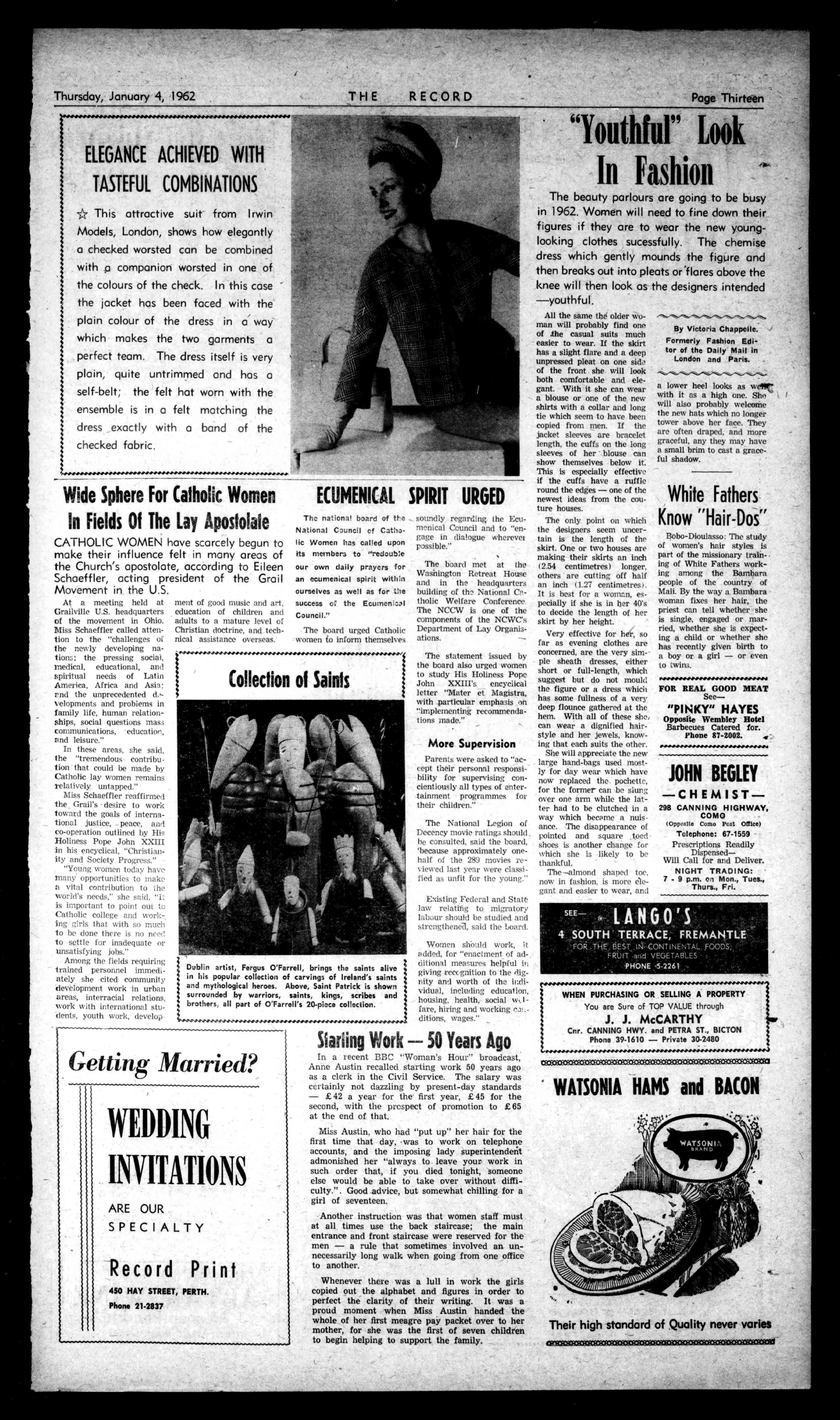
1 t Dublinartist,FergusO'Farrell,bringsthesaintsalive inhispopularcollectionofcarvingsofIreland'ssaints iandmythologicalheroes.Above,SaintPatrickisshownt surroundedbywarriors,saints,kings,scribesand brothersallpartofO'Farrell's20-piececollection.
soundlyregardingtheEcumenicalCouncilandto"engageindialoguewherever possible."
Theboardmetatthe WashingtonRetreatHouse andintheheadquarters buildingoftheNationalCatholicWelfareConference TheNCCWisoneofthe componentsoftheNCWC's DepartmentofLayOrganisations.
Thestatementissuedby theboardalsourgedwomen tostudyHisHolinessPope JohnXXIII'sencyclical letter"MateretMagistra, withparticularemphasison "implementingrecommendationsmade."
MoreSupervision
Parentswereaskedto"accepttheirpersonalresponsibilityforsupervisingconcientiouslyalltypesofentertainmentprogrammesfor theirchildren."
TheNationalLegionof Decencymovieratingsshould heconsulted,saidtheboard, 'becauseapproximatelyonehalfofthe289moviesreviewedlastyearwereclassifiedasunfitfortheyoung."
ExistingFederalandState lawrelatingtomigratory labourshouldbestudiedand strengthened,saidtheboard.
Womenshbuldwork,it added,for"enactment.ofadditionalmeasureshelpfulin givingrecognitiontothedignityandworthoftheindividual,includingeducation, housing,health,socialw51. fare,hiringandworkingesi. ditions,wages."
SiariingWork-50YearsAgo
InarecentBBC"Woman'sHour"broadcast, AnneAustinrecalledstartingwork50yearsago asaclerkintheCivilService.Thesalarywas certainlynotdazzlingbypresent-daystandards -L42ayearforthe'firstyear, 45forthe second,withtheprospectofpromotionto 65 attheendofthat.
MissAustin,whohad"putup"herhairforthe firsttimethatday,wastoworkontelephone accounts,andtheimposingladysuperintendent admonishedher"alwaystoleaveyourworkin suchorderthat,ifyoudiedtonight,someone elsewouldbeabletotakeoverwithoutdifficulty.".Goodadvice,butsomewhatchillingfora girlofseventeen.
Anotherinstructionwasthatwomenstaffmust atalltimesusethebackstaircase;themain entranceandfrontstaircasewerereservedforthe men-arulethatsometimesinvolvedanunnecessarilylongwalkwhengoingfromoneoffice toanother.
Whenevertherewasalullinworkthegirls copiedoutthealphabetandfiguresinorderto perfecttheclarityoftheirwriting.Itwasa proudmomentwhenMissAustinhandedthe wholeofherfirstmeagrepaypacketovertoher mother,forshewasthefirstofsevenchildren tobeginhelpingtosupportthefamily.
"Youthful"Look InFashion
Thebeautyparloursaregoingtobebusy in1962.Womenwillneedtofinedowntheir figuresiftheyaretowearthenewyounglookingclothessucessfully.Thechemise dresswhichgentlymoundsthefigureand thenbreaksoutintopleatsor'flaresabovethe kneewillthenlookasthedesignersintended -youthful.
Allthesametheolderwomanwillprobablyfindone ofThecasualsuitsmuch easiertowear.Iftheskirt hasaslightflareandadeep unpresseclpleatononesid.' ofthefrontshewilllook bothcomfortableandelegant.Withitshecanwear ablouseoroneofthenew shirtswithacollarandlong ticwhichseemtohavebeen copiedfrommen.Ifthe jacketsleevesarebracelet length,thecuffsonthelong sleevesofherblousecan showthemselvesbelowit. Thisisespeciallyeffective ifthecuffshavearuffle roundtheedges-oneofthe newestideasfromthecouturehouses.
Theonlypointonwhich thedesignersseemuncertainisthelengthofthe skirt.Oneortwohousesare makingtheirskirtsaninch (2.54centimetreslonger, othersarecuttingoffhalf aninch(1.27centimetres). Itisbestforawoman,especiallyifsheisinber40's todecidethelengthofher skirtbyherheight.
Veryeffectiveforheel',so faraseveningclothesare concerned.aretheverysimplesheathdresses,either shortorfull-length,which suggestbutdonotmould thefigureoradresswhich hassomefullnessofavery deepflouncegatheredatthe hem.Withalloftheseshe, canwearadignifiedhairstyleandherjewels,knowingthateachsuitstheother. Shewillappreciatethenew largehand-bagsusedmostlyfordaywearwhichhave nowreplacedthepochettr, fortheformercanbeslung overonearmwhilethelatterhadtobeclutchedina waywhichbecameanuis ante.Thedisappearanceof pointedandsquare:toed shoesisanotherchangefor whichsheislikelytobt' thankful.
The-almondshapedtoe. nowinfashion,ismoreelegantandeasiertowear,and
ByVictoriaChappelle.
FormerlyFashionEditoroftheDailyMailin LondonandParis.
alowerheellooksaswell withitasahighone.She willalsoprobablywelcome thenewhatswhichnolonger toweraboveherface.They areoftendraped,andmore graceful,anytheymayhave asmallbrimtocastagracefulshadow.
WhiteFathers
Know"Hair-Dos"
Bobo-Dioulasso:Thestudy ofwomen'shairstylesIs partofthemissionarytrainingofWhiteFathersworkingamongtheBambara peopleofthecountryof Mali.BythewayaBambara womanfixesherhair,the priestcantellwhethershe issingle,engagedormarried,whethersheisexpectingachildorwhethershe hasrecentlygivenbirthto aboyoragirl-oreven to.win,.
FORREALGOODMEAT See-
"PINKY"HAYES
OppositeWembleyHotel BarbecuesCateredfor. Phone87-2002. 11414......004,00.04,114.04.4
JOHNBEGLEY -CHEMIST-
298CANNINGHIGHWAY, COMO (Oppo,IteComoP,4t.Office)
Telephone:67-1559
PrescriptionsReadily DispensedWillCallforandDeliver.
NIGHTTRADING: 7-9p.m.eMon.,Tues., Thurs.,Fri.
SEE LANGO'S 4SOUTHTERRACE,FREMANTLE FOR.THEBESTINCONTINENTALFOODS, FRUITandVEGETABLES -PHONE.,5-2261
WHENPURCHASINGORSELLINGAPROPERTY YouareSureofTOPVALUEthrough J.J.McCARTHY Cnr.CANNINGHWY.andPETRAST.,BICTON Phone39-1610-Private30-2480
::.::a ** :::::::::::
WATSONIAHAMSandBACON
Thursday,January4,1962 THE RECORD PageThirteen 1
GettingMarried? WEDDING INVITATIONS AREOUR SPECIALTY RecordPrint 450HAYSTREET,PERTH. Phone21-2837
:41 TheirhighstandardofQualitynevervaries
Whatmightbecalledthe churchoftheIrishChristmas,inthesensethatSaint PatrickbroughtChristianity toIreland,istobebuiltin Wales,inanareawhichis generallystatedtohavebeen theSaint'sbirthplace.The foundationstoneistobelaid onMarch17,everytenshitljngs.addsabrick,andIrish heartsandpursesarejust nowopeningtohelpmake possiblethis£70,000tribute toSaintPatrick.
TheareaisNewport,Mon., SouthWales,inthenewparishofSaintPatrick,where FatherG.Richardson,the _parishpriest,todayhasthe helpofIrishpriestsand peopleinthatarea,andthe exampleofIrishpeopleof thepast. Thereisalongtradition ofdevotiontoSaintPatrick intheNewportarea;anumberofhistoriansplacehis birthplacesomewherealong thebanksoftheSevern. SaintPatrickcallsit"Bunavon"inhisConfessionsand thismeansthemouthofa river.Traditionplacesthe birthplacesomewherebetweenNewportandChepstow. ThereisaKerrypriest Rev.DanielMoynihanfrom Bumyour RUBBISH theEASYwa OA/U/4ff 0000 11NCINERATOR
) TheGood,,,i "Modern"ensurescompletedestructionofall combustible matter. L18/17/6
Cco.
STATEDISTRIBUTORS
105FITZGERALDST.28-2733.
FromLOCHLINNMacGLYNN
(ByAirMailfromDublin)
Killarney;aDonegalpriest, ministeringintheparish, Rev.OwenR.Sweeney,doingmagnificentworkfor Irishemigrantsinthearea, asamemberoftheIrish EmigrantMissionattachedto abigMcAlpineconstruction schemewhichhasemployed thousandsofworkers;and NewportlooksbackwithaffectiontothefirstParish PriestofSaintPatrick'sanotherIrishman,Father Woodcock.In1927hebuilta temporarychurchdedicated toSaintPatrick,andthis churchstillservestheneeds oftheparish.Later,Father Woodcock,amemberofthe FathersofCharity,wasfor manyyearsRectorofSt. Joseph'sIndustrialSchool, Clonmel.
Afriendofhisrecalls:
"ThememoryofFather Woodcockisstillgreenin Newport.Hewasthere duringtheyearsofthedepressionandhadthereputationofneverrefusinghelp totheneedy. Some,of course,playedonthisgenerosity,andhemusthave helpedsome'frauds'bulhe
alwaysmaintainedthathe neverlostbyitintheend.
"HisIrishpatriotismwas manifestedwhenhewasat Omeath,CountyLouth,in theitemoftheindependencestruggle.HeisstillrememberedatClonmel,where hisnever-failingcharityto alltheneedygainedhimthe samereputationthathehad inNewport."
Afterthewar,FatherTom LenanetookoverSaintPatrick's,whichhadbecomea separateparishin1927,and duringhiselevenyears there,beforegoingtoSaint Mary's,heachievedremark-, ableresultsfortheparish: hebuiltthenewpresbytery-, thebeautifulschoolandthe magnificentParishHall, whichistheresultofthe voluntarylabouroftheparishioners;andhelaidout thetenniscourts.
In1953,FatherGeorge Richardson,aYorkshireman -which,hesays,isthenext bestthingtobeinganIrishman-tookoverthework whichwillhaveitsgreatest achievementinthenew church.FatherFrancis
FormanyoftheIrish,the greatestofthechurcheswill bethenewSaintPatrick's; theefforttoraisefundsfor it-aneffortthatranges fromTombolaIMondaysand Fridays)topostalappealsisanobject-lessoninorganisation.Thepariahhasjust clearedadebtof£30,000on itsschool;andhereitis, pushingforwardtoyet moreachievementsclosely connectedwiththewelfareof theIrishinBritain.
Whatdotheydoon Thursdays?Thursdayhas becomethenightoftheIrish dances,andtherearemany otheractivitiesfortheIrish inthisparishofSaintPatrick.
Dowerealisesufficiently, aswetankofemigrationand hurlstatisticsateachother, howmuchisbeingdonein themeantimebypriestsin Britainontheirdaily rounds?Whoissingingthe song,turningonthelights forthenight'sIrishdancing,whoisthereonthespot inBritaintotalkwith,and sharetheproblemsof,the
TelevisionTimeintheCowshed
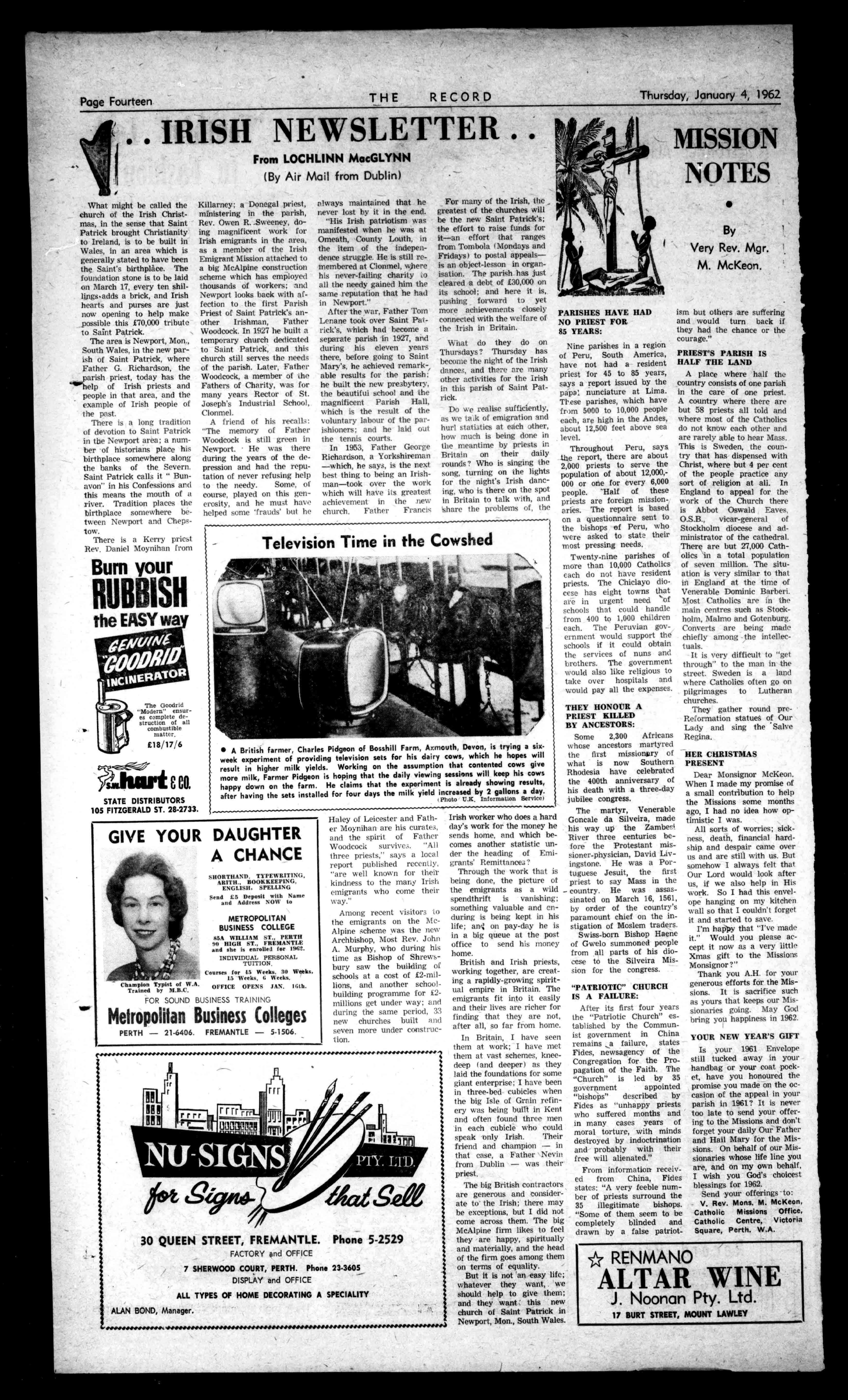
weekexperimentofprovidingtelevisionsetsforhisdairycows,whichhehopeswill resultinhighermilkyields.Workingontheassumptionthatcontentedcowsgive moremilk,FarmerPidgeonishopingthatthedailyviewingsessionswillkeephiscows happydownonthefarm.Heclaimsthattheexperimentisalreadyshowingresults, afterhavingthesetsinstalledforfourdaysthemilk
HaleyofLeicesterandFatherMoynihanarehiscurates, andthespiritofFather Woodcocksurvives."All threepriests,"saysalocal reportpublishedrecently, "arewellknownfortheir kindnesstothemanyIrish emigrantswhocometheir way."
recentvisitorsto theemigrantsontheMcAlpineschemewasthenew Archbishop,MostRev.John A.Murphy,whoduringhis timeasBishopofShrewsburysawthebuildingof schoolsatacostof£2-millions,andanotherschoolbuildingprogrammefor£2millionsgetunderway;and duringthesameperiod,33 newchurchesbuiltand sevenmoreunderconstruet ion. -
#41,00.1.4.4,
Irishworkerwhodoesahard day'sworkforthemoneyhe sendshome,andwhichbecomesanotherstatisticundertheheadingofEmigrants'Remittances?
Throughtheworkthatis beingdone,thepictureof theemigrantsasawild spendthriftisvanishing; somethingvaluableandenduringisbeingkeptinhis life;an;onpay-dayheis inabigqueueatthepost officetosendhismoney home.
BritishandIrishpriests, workingtogether,arecreatingarapidly-growingspiritualempireinBritain.The emigrantsfitintoiteasily andtheirlivesarericherfor findingthattheyarenot, afterall,sofarfromhome.
PARISHESHAVEHAD
NOPRIESTFOR
85YEARS:
Nineparishesinaregion ofPeru,SouthAmerica, havenothadaresident priestfor45to85years, saysareportissuedbythe papalnunciatureatLima. Theseparishes,whichhave from5000to10,000people each,arehighintheAndes, about12,500feetabovesea level.
ThroughoutPeru,says thereport,thereareabout 2,000prieststoservethe populationofabout12,000,000oroneforevery6,000 people.'Halfofthese priestsareforeignmissionaries.Thereportisbased onaquestionnairesentto thebishopsofPeru,who wereaskedtostatetheir mostpressingneeds.
Twenty-nineparishesof morethan10,000Catholics eachdonothaveresident priests.TheChiclayodiocesehaseighttownsthat areinurgentneed'of schoolsthatcouldhandle from400to1,000children each.ThePeruviangovernmentwouldsupportthe schoolsifitcouldobtain theservicesofnunsand brothers.Thegovernment wouldalsolikereligiousto takeoverhospitalsand wouldpayalltheexpenses.
THEYHONOURA PRIESTKILLED BYANCESTORS:
Some 2,300Africans whoseancestorsmartyred thefirstmissionpryof whatisnowSouthern Rhodesiahavecelebrated the400thanniversaryof hisdeathwithathree-day jubileecongress. Themartyr,Venerable GoncaledaSilveira,made hiswayuptheZambesi RiverthreecenturiesbeforetheProtestantmissioner-physician,DavidLivingstone.HewasaPortugueseJesuit,thefirst priesttosayMassinthe -country.HewasassassinatedonMarch16,1561, byorderofthecountry's paramountchiefontheinstigationofMoslemtraders. Swiss-bornBishopHoene ofGwelosummonedpeople fromallpartsofhisdiocesetotheSilveiraMissionforthecongress.
InBritain,Ihaveseen thematwork;Ihavemet thematvastschemes,kneedeep(anddeeper)asthey laidthefoundationsforsome giantenterprise;Ihavebeen inthree-bedcubicleswhen thebigIsleofGrainrefinerywasbeingbuiltinKent andoftenfoundthreemen ineachcubiclewhocould speak'onlyIrish. Their friendandchampion-in thatcase,aFatherNevin fromDublin-wastheir priest.
Phone5-2529
Phone23-3605
ThebigBritishcontractors aregenerousandconsideratetotheIrish;theremay beexceptions,butIdidnot comeacrossthem.Thebig McAlpinefirmlikestofeel theyarehappy,spiritually andmaterially,andthehead ofthefirmgoesamongthem ontermsofequality. Butitisnot'aneasylife; whatevertheywant,we shouldhelptogivethem; andtheywantthisnew church01SaintPatrickin Newport,Mon.,SouthWales.
MISSION NOTES
By VeryRev.Mgr. M.McKeon.
ismbutothersaresuffering andwouldturnbackif theyhadthechanceorthe courage."
PRIEST'SPARISHIS HALFTHELAND
Aplacewherehalfthe countryconsistsofoneparish inthecareofonepriest. Acountrywherethereare but58priestsalltoldand wheremostoftheCatholics donotknoweachotherand arerarelyabletohearMass. ThisisSweden,thecountrythathasdispensedwith Christ,wherebut4percent ofthepeoplepracticeany sortofreligionatall.In Englandtoappealforthe workoftheChurchthere isAbbotOswaldEaves, O.S.B.,vicar-generalof Stockholmdioceseandadministratorofthecathedral. Therearebut27,000Catholicsinatotalpopulation ofsevenmillion.Thesituationisverysimilartothat inEnglandatthetimeof VenerableDominicBarberi.
MostCatholicsareinthe maincentressuchasStockholm,MalmoandGotenburg. Convertsarebeingmade chieflyamong-theintellectuals. Itisverydifficultto"get through"tothemaninthe street.Swedenisaland whereCatholicsoftengoon pilgrimagestoLutheran churches.
TheygatherroundpreReformationstatuesofOur Ladyandsingthe'Salve Regina.
HERCHRISTMAS PRESENT
DearMonsignorMcKeon. WhenImademypromiseof asmallcontributiontohelp theMissionssomemonths ago,IhadnoideahowoptimisticIwas. Allsortsofworries;sickness,death,financialhardshipanddespaircameover ttsandarestillwithus.But somehowIalwaysfeltthat OurLordwouldlookafter us,ifwealsohelpinHis work.SoIhadthisenvelopehangingonmykitchen wallsothatIcouldn'tforget itandstartedtosave.
I'mhaplythat"I'vemade it."Wouldyoupleaseacceptitnowasaverylittle XmasgifttotheMissions Monsignor?"
"PATRIOTIC"CHURCH ISAFAILURE: Afteritsfirstfouryears the"PatrioticChurch"establishedbytheCommunistgovernmentinChina remainsafailure,states Fides,newsagencyofthe CongregationforthePropagationoftheFaith.The "Church"isledby35 government appointed "bishops"describedby Fidesas"unhappypriests whosufferedmonthsand inmanycasesyearsof moraltorture,withminds destroyedbyindoctrination andprobablywiththeir freewillalienated."
FrominformationreceivedfromChina,Fides states:"Averyfeeblenumberofpriestssurroundthe 35illegitimatebishops. "Someofthemseemtobe completelyblindedand drawnbyafalsepatriot-
ThankyouA.H.foryour generouseffortsfortheMissions.Itissacrificesuch asyoursthatkeepsourMissionariesgoing.MayGod bringyouhappinessin1962.
YOURNEWYEAR'SGIFT
Isyour1961Envelope stilltuckedawayinyour handbagoryourcoatpocket,haveyouhonouredthe promiseyoumadeontheoccasionoftheappealinyour parishin1961?Itisnever toolatetosendyourofferingtotheMissionsanddon't forgetyourdailyOurFather andHailMaryfortheMissions.OnbehalfofourMissionarieswhoselifelineyou are,andonmyownbehalf, IwishyouGod'schoicest blessingsfor1962.
Sendyourofferingsto:
- V.Rev.Mons.M.McKeon, CatholicMissionsOffice, CatholicCentre,Victoria Square,Perth.W.A.
PageFourteen THE RECORD Thursday,January4,1962
.IRISHNEWSLETTER
ABritishfarmer,CharlesPidgeonofBosshillFarm,Axmouth,Devon,istryingsix-
yieldincreasedby2gallonsaday.
GIVEYOURDAUGHTER ACHANCE SHORTHAND,TTPEWEITIN,:, !MTH..BOOKKEEPING. ENGLISH.SPELLING SendESDepositwithNanie andAddressNOWto ChampionTvpietofW.A. TrainedbyM.B.C. FORSOUNDBUSINESSTRAINING METROPOLITAN BUSINESSCOLLEGE SSAWILLIAMST.,PERTH 911HIGHST.,FREMANTI.l: andshelaenrolledfor INDIVIDUALPERSONAL TUITION. Cosinesfor4%Weeks.SOWeeks. IAWeeks,tiWeeks. OFFICEOPENSJAN.16th. MetropolitanBusinessColleges PEkTH-21.4D6 FREMANTLE- 55G6 CNN..04,4,4"0.......10
PhotoU.K.InformationService,
Among
/ frtgi414
30QUEENSTREET,FREMANTLE.
FACTORYandOFFICE ALANBOND,Manager. 7SHERWOODCOURT,PERTH.
814dgege
DISPLAYandOFFICE ALLTYPESOFHOMEDECORATINGASPECIALITY
RENMANO ALTARWINE J.NoonanPty.Ltd. 17BURTSTREET,MOUNTLAWLEY
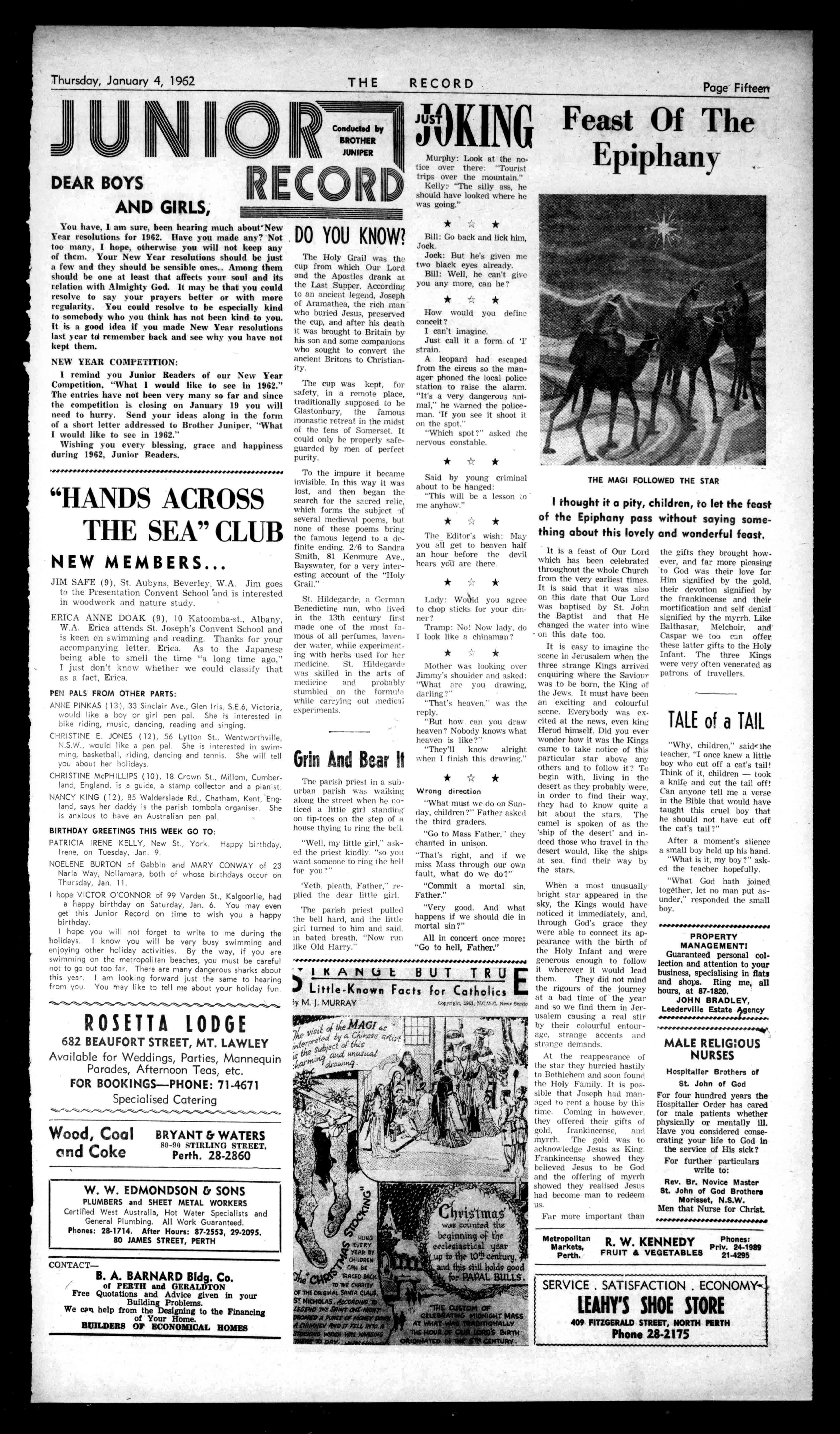 Conductedby BROTHER JUNIPER
DEARBOYS ANDGIRLS,
Youhave,Iamsure,beenhearingmuchabout'New Yearresolutionsfor1962.Haveyoumadeany?Not toomany,Ihope,otherwiseyouwillnotkeepany ofthem.YourNewYearresolutionsshouldhejust afewandtheyshouldbesensibleones..Amongthem shouldheoneatleastthataffectsyoursoulandits relationwithAlmightyGod.itmayhethatyoucould resolvetosayyourprayersbetterorwithmore regularity..Youcouldresolvetobeespeciallykind tosomebodywhoyouthinkhasnotbeenkindtoyou. ItisagoodideaifyoumadeNewYearresolutions lastyeartdrememberbackandseewhyyouhavenot keptthem.
NEWYEARCOMPETITION:
IremindyouJuniorReadersofourNewYear Competition,"WhatIwouldliketoseein1962." Theentrieshavenotbeenverymanysofarandsince thecompetitionisclosingonJanuary19youwill needtohurry.Sendyourideasalongintheform ofashortletteraddressedtoBrotherJuniper,"What Iwouldliketoseein1962."
Wishingyoueveryblessing,graceandhappiness during1962,JuniorReaders.
Y.11041`.....00. 0.0IN
"HANDSACROSS THESEA"CLUB
NEWMEMBERS...
JIMSAFE(9),St.Aubyns,Beverley,W.A.Jimgoes tothePresentationConventSchoolandisinterested inwoodworkandnaturestudy.
ERICAANNEDOAK(9),10Katoomba-st.,Albany, W.A.EricaattendsSt.Joseph'sConventSchooland iskeenonswimmingandreading.Thanksforyour accompanyingletter,Erica.AstotheJapanese beingabletosmellthetime"alongtimeago," Ijustdon'tknowwhetherwecouldclassifythat asafact,Erica.
PE!!PALSFROMOTHERPARTS:
ANNEPINKAS(13),33SinclairAve.,GlenIris,S.E.6,Victoria, wouldlikeaboyorgirlpenpal.Sheisinterestedin bikeriding,music,dancing,readingandsinging.
CHRISTINEE.JONES(12),56LyttonSt.,Wentworthville, N.S.W.,wouldlikeapenpal.Sheisinterestedinswimming,basketball,riding,dancingandtennis.Shewilltell youaboutherholidays.
CHRISTINEMcPHILLIPS(10),18CrownSt.,Millom,Cumberland,England,isaguide,astampcollectorandapianist.
NANCYKING(12),85WaldersladeRd.,Chatham,Kent,England,saysherdaddyistheparishtombolaorganiser.She isanxioustohaveanAustralianpenpal.
BIRTHDAYGREETINGSTHISWEEKGOTO:
PATRICIAIRENEKELLY,NewSt.,York.Happybirthday, Irene,onTuesday,Jan.9.
NOELENEBURTONofGabbinandMARYCONWAYof23 NarlaWay,Nollamara,bothofwhosebirthdaysoccuron Thursday,Jan.11.
hopeVICTORO'CONNORof99VardenSt.,Kalgoorlie,had ahappybirthdayonSaturday,Jan.6.Youmayeven getthisJuniorRecordontimetowishyouahappy birthday. hopeyouwillnotforgettowritetomeduringthe holidays. knowyouwillbeverybusyswimmingand enjoyingotherholidayactivities.Bytheway,ifyouare swimmingonthemetropolitanbeaches,youmustbecareful nottogoouttoofar.Therearemanydangeroussharksabout thisyear. amlookingforwardjustthesametohearing fromyou.Youmayliketotellmeaboutyourholidayfun.
ROSETTALODGE
682BEAUFORTSTREET,MT.LAWLEY
AvailableforWeddings,Parties,Mannequin Parades,AfternoonTeas,etc.
FORBOOKINGS-PHONE:71-4671
SpecialisedCatering
Wood,Coal endCoke BRYANT&WATERS sii-ee,;TIRLINGSTREET. Perth.28-2860
W.W.EDMONDSONCrSONS PLUMBERSandSHEETMETALWORKERS
CertifiedWestAustralia,HotWaterSpecialistsand GeneralPlumbing.AllWorkGuaranteed.
Phones:28.1714.AfterHours:87.2553,29-2095. 80JAMESSTREET,PERTH
CONTACTB.A.BARNARDBldg.Co. ofPERTHandGERALDTON
FreeQuotationsandAdvicegiveninyourBuildingProblems. WecanhelpfromtheDesigningtotheFinancing ofYourHome. BUILDERSOFECONOMICALHOMES
DOYOUKNOW?
TheHolyGrailwasthe cupfromwhichOurLord andtheApostlesdrankat theLastSupper.According toanancientlegend,Joseph ofAramathea,therichman whoburiedJesus,preserved thecup,andafterhisdeath itwasbroughttoBritainby hissonandsomecompanions whosoughttoconvertthe ancientBritonstoChristianity.
Thecupwaskept,for safety,inaremoteplace, traditionallysupposedtobe Glastonbury,thefamous monasticretreatinthemidst ofthefensofSomerset.It couldonlybeproperlysafeguardedbymenofperfect purity.
Totheimpureitbecame invisible.Inthiswayitwas lost,andthenbeganthe searchforthesacredrelic, whichformsthesubjectof severalmedievalpoems,but noneofthesepoemsbring thefamouslegendtoadefiniteending.2/6toSandra Smith,81KenmureAve., Bayswater,foraveryinterestingaccountofthe"Holy Grail."
St.Hildegarde.aGerman Benedictinenun,wholived inthe13thcenturyfirst madeoneofthemostfamousofallperfumes,lavenderwater,whileexperimentingwithherbsusedforher medicine. St.Hildegarda wasskilledintheartsof medicine and probably stumbledontheformula whilecarryingoutatedicai experiments.
GrinAndBearIt
Theparishpriestinasuburbanparishwaswalking alongthestreetwhenhenoticedalittlegirlstanding ontip-toesonthestepofa houseshyingtoringthebell.
"Well,mylittlegirl,"askedthepriestkindly."soyou wantsomeonetoringthebell foryou?"
'Yeth,pleath,Father,"repliedthedearlittlegirl.
Theparishpriestpulled thebellhard,andthelittle girlturnedtohimandsaid. inbatedbreath."Nowran likeOldHarry."
10KINGFeastOfThe Epiphany
Murphy:Lookatthenoticeoverthere:"Tourist tripsoverthemountain."
Kelly:"Thesillyass,he shouldhavelookedwherehe wasgoing."
Bill:Gobackandlickhim, Jock.
Jock:Buthe'sgivenme twoblackeyesalready.
Bill:Well,hecan'tgive youanymore,canhe?
Howwouldyoudefine conceit?
Ican'timagine. Justcallitaformof'1' strain.
Aleopardhadescaped fromthecircussothemanagerphonedthelocalpolice stationtoraisethealarm. "It'saverydangerousanimal,"hewarnedthepoliceman.'Ifyouseeitshootit onthespot."
"Whichspot?"askedthe nervousconstable.
Saidbyyoungcriminal abouttobehanged: "Thiswillbealessonin meanyhow."
TheEditor'swish:May youallgettoheavenhalf anhourbeforethedevil hearsyeaarethere.
* 7:7 *
Lady:WoNidyouagree tochopsticksforyourdinner?
Tramp:No!Nowlady,do Ilooklikeachinaman?
* *
Motherwaslookingover Jimmy'sshoulderandasked: "Whatareyoudrawing, darling?"
"That'sheaven,"wasthe reply. "Buthow.canyoudraw heaven?Nobodyknowswhat heavenislike?"
"They'llknow'alright whenIfinishthisdrawing."
Wrongdirection
"WhatmustwedoonSunday,children?"Fatherasked thethirdgraders. "GotoMassFather,"they chantedinunison. "That'sright,andifwe missMassthroughourown fault,whatdowedo?"
"Commitamortalsin, Father."
"Verygood.Andwhat happensifweshoulddiein mortalsin?"
Allinconcertoncemore: "Gotohell,Father."
THEMAGIFOLLOWEDTHESTAR
Ithoughtitapity,children,toletthefeast oftheEpiphanypasswithoutsayingsomethingaboutthislovelyandwonderfulfeast.
ItisafeastofOurLord whichhasbeencelebrated throughoutthewholeChurch fromtheveryearliesttimes. Itissaidthatitwasalso onthisdatethatOurLord wasbaptisedbySt.John theBaptistandthatHe changedthewaterintowine onthisdatetoo.
Itiseasytoimaginethe sceneinJerusalemwhenthe threestrangeKingsarrived enquiringwheretheSaviour wastobeborn,theKingof theJews.Itmusthavebeen anexcitingandcolourful scene.Everybodywasexcitedatthenews,evenking Herodhimself.Didyouever wonderhowitwastheKings cametotakenoticeofthis particularstaraboveany othersandtofollowit?To beginwith,livinginthe desertastheyprobablywere, inordertofindtheirway. theyhadtoknowquitea hitaboutthestars.The camelisspokenofasthe 'shipofthedesert'andindeedthosewhotravelinthe desertwould,liketheships atsea,findtheirwayby thestars.
Whenamostunusually brightstarappearedinthe sky,theKingswouldhave noticeditimmediately,and, throughGod'sgracethey wereabletoconnectitsappearancewiththebirthof theHolyInfantandwere generousenoughtofollow itwhereveritwouldlead them. Theydidnotmind therigoursofthejourney atabadtimeoftheyear andsowefindtheminJerusalemcausingarealstir bytheircolourfulentourage,strangeaccents:toil strangedemands. Atthereappearanceof thestartheyhurriedhastily toBethlehemandsoonfound theHolyFamily.ItispossiblethatJosephhadmanagedtorentahousebythis time.Cominginhowever. theyofferedtheirgiftsof gold,frankincense, anti myrrh.Thegoldwasto acknowledgeJesusas King. Frankincenseshowedthey honeyedJesustobeGod andtheofferingofmyrrh showedtheyrealisedJesus hadbecomemantoredeem Farmoreimportantthan
thegiftstheybroughthowever,andfarmorepleasing toGodwastheirlovefor Himsignifiedbythegold, theirdevotionsignifiedby thefrankincenseandtheir mortificationandselfdenial signifiedbythemyrrh.Like Balthasar,Melchoir,and Casparwetoocanoffer theselattergiftstotheHoly Infant.ThethreeKings wereveryoftenveneratedas patronsoftravellers.
TALEofaTAIL
"Why,children,"said'the teacher,"Ionceknewalittle boywhocutoffacat'stail! Thinkofit,children-took aknifeandcutthetailoff! Cananyonetellmeaverse intheBiblethatwouldhave taughtthiscruelboythat heshouldnothavecutoff thecat'stail?"
Afteramoment'ssilence asmallbuyhelduphishand.
"Whatisit,myboy?"askedtheteacherhopefully. "WhatGodhathjoined together,letnomanputasunder,"respondedthesmall boy.
PROPERTY MANAGEMENT!
Guaranteedpersonalcollectionandattentiontoyour business,specialisinginflats andshops.Ringme,all hours,at87-1820.
JOHNBRADLEY,
.4-0-4.-4-00-041.4OWYNNINNIINIke
MALERELIGIOUS NURSES
HospitallerBrothersof St.JohnofGod
Forfourhundredyearsthe HospitallerOrderhascared formalepatientswhether physicallyormentallyill. HaveyouconsideredconsecratingyourlifetoGodin theserviceofHissick?
Forfurtherparticulars writeto:
Rev.Br.NoviceMaster St.JohnofGodBrothers Morisset,N.S.W. MenthatNurseforChrist 0004-PPI000440.0.41-4.00.111
Thursday,January4,1962 THE RECORD PageFifteen
EC
*
*
*
*
* *
***
AN(.3 )Little-KnownFacts lyM.J.MURRAY sctalthe.1.711,A,GI pie rnier'b,cttha g4Iayauncau.41 LS r0141:114,,E9- :A 1-1UkIS (4EVERY A'IT YEAPSY CANSE CoLDREN 7i2e.,orsst,-7"(RACEDBACK TO'MEWRIT,' cc7t1I055,555SANTAaria. STNICHOLAS."IeCORIxav LEarvo7NC$.7,wray(ow DROPRVOAPORT!&woo),too. 4eWieeNivAivairFritWVA S!!Olifi!&wwwWASmAAGilla DAY...b.agia04444. BUT TRU forCatholics ,parent, 5.". E wascountedtin beginningofOle ecclesiasticalgear uptoti3etOt!conturij, andthisstillholdsgood forPAPALBULLS. "ThECUSTOMOF Cattenscriii6MIDNIGHTMASS ATWHATWrnaINISOITIONALLY 114£140oROfCuRIDRD'sSexed oStiOiNAnoet'MtSI.CENTuPrif
MetropolitanR.W.KENNEDY Phones:Priv. 24-1989 Markets,Perth. FRUIT&VEGETABLES 21-4295 SERVICESATISFACTIONECONOMYLEAHY'SSHOESTORE
409FITZGERALDSTREET,NORTHPERTH Phone28-2175
Conductedby BROTHER JUNIPER
DEARBOYS ANDGIRLS,
Youhave.Iamsure,beenhearingmuchabout-New Yearresolutionsfor1962.Haveyoumadeany?Not toomany.Ihope,.Jtherwiseyouwillnotkeepany oflimn.YourNewYearresolutionsshouldbejust afewandtheyshouldhesensibleones..Amongthem shouldheoneatleastthataffectsyoursoulandits relationwithAlmightyGod.Itmayhethatyoucould resolvetosayyourprayersbetterorwithmore regularity.Youcouldresolvetobeespeciallykind tosomebodywhoyouthinkhasnotbeenkindtoyou. ItisagoodideaifyoumadeNewYearresolutions lastyeartdrememberbackandseewhyyouhavenot keptthem.
NEWYEARCOMPETITION:
iremindyouJuniorReadersofourNessYear Competition."WhatIwouldliketoseein19622' Theentrieshavenotbeenverymanysofarandsince thecompetitionisclosingonJanuary19NOnwill nerdtohurry.Sendyourideasalonginthefonts ofashortletteraddressedtoBrotherJuniner."What Iwouldliketoseein1962.Wishingyoueveryblessing.graceandhappiness during1962.JuniorReaders.
NOVO 41,414I"
"HANDSACROSS THESEA"CLUB
NEWMEMBERS...
.11ISAFE(Si.St.:111:,ris.11,, :1 r..),(thePresc:1-.IniiiConventScho,1i i.", Sttoilovh''t-:andriatt_tre
ErICAANNEDOAK(0).In1,1_1 i,1. A.Ericaa1turd:-S1.Joseph')CooorSii ,ing ens'.ormingiindtendit`., Iclter.Erica. twit,.atilt. san thetime .1chin', 'i).'\,.{111111.1.%VC -:Act
PS11
-LIPS(10),ISCo.,,rSt., rlds girdeastampcollectorand3plati'01. NA'ICYKING(12)"5NalderslacieRd.,Chatham,KentEngland,sayshe,cle,leyistheparishtombolacrganiserShe isa"..,mst- A_..t-alian 'a'
BIRTHDAYGREETINGSTHISWEEKGOTO:
PATRICIAIRENEKE_. NewSt.,Yea', Irene,onTuesday,an.9.
NOELENEBURTONofGabbinandMARYCONWAYof23 MariaWay,Nollarrara.bothofwhosebirthdaysoccuron Thu-.sciay,Jan. 1.
honeVICTORO'CONNORof99VardenSt.,Kalgoorlie,had ahappybirthdayonSaturday,Jan.G. Youmayeven getthisJuniorRecordontimetowishyouahappy birthday. hopeyouoilnotforgettowritetomeduringthe holidays. knoy.'youwillbeverybusyswimmingand enjoyingotherholidayactivities.Bytheway,ifyouarc swimmingonthemetropolitanbeaches,youmusthecareful noi.togooattoofar.Therearemanydangerousstiai-ksI. thister amiookingforwardjustthesametohear,o fro.,,:'Youna.,like tellmeaboutyourholiday
ROSETTALODGE
682BEAUFORTStREET,MT.LAWLEY
AvailableforWeddings,Parties,Mannequin Parades,AfternoonTeas,etc.
FORBOOKINGS-PHONE:71-4671
SpecialisedCatering
Wood,Con! f-ndCoke
BRYANT&WATERS t4:i-tiSTIRLINGSTREET. Perth.28-2860
W.W.F.DMONDSON&SONS PLUMBERSandSHEETMETALWORKERS
CertifiedV.tAustralil,HotWaterSpecialistsand bing.AllWorkGuaranteed.
Phones:28.1714.AfterHours:87-2553,29.2095. 80JAMESSTREET,PERTH
CONTACTB.A.BARNARDBldg.Co. ofPERTHandGERALDTON
FreeQuotationsandAdvicegiveninyourBuildingProblems. WecanhelpfromtheDesigningtotheFinancingofYourHome.
BUILDERSOFECONOMICALHOMES
DOYOUKNOW?
TheHoly capfrom On,Lord andtheAp-1.o.drankal theI.ast iAccurriinit is 'I.Joseph of,1tainati. fireEtch.11-in pre,erveil thecup.andafterhisdeaili it,a<noughttoBritainby his,onandSono'cumpatui':s whosoughttocom"ertill." ancientlirit.at-to 'litecup,t Lent.r n plat', traditionallysitiqiis.le.' (llostonhary,rhoilameii. rioniistierttrenthithe inNI.)tonsorS,n1.-.n.It CIall(iratify 411.1.1Y 111..dby port, purity.
Ti,theimpureitI, invi,ible.Inthis ,11,i1110,1 ,;i l'
Whichformsthe severalmedie%:41poi none01th,sepoem-. thefamous1.,,eiotoa finiteenditiz..2I: Sand,-. Smith.SI cr,111,"-'u'.ACCII1011let St.Ili1d4.aiitIlenediethierum inh, I tentor, madeone11111 oohsor;ill dertt,1, ..\1, ith 4.41. 1!: ,k111,1it,ill..aIsit 1),..; -.1,,, ne I ;I: esa.
Grin
"Iti. r'. i ,;,!Jiii :dormth,stri.).1\Oen,..tire,,;tliltgir! mlttip-loos ; }moiseIhvet.it,IEinartheI, "\t','5.IntlittleLiirl."-.liedthep)1.).-1 Stan1.,11111..1.Inri1 h,1,11 101' 'Yoh. rh.Father,lilies{ iloar I',girl. 1),sti 1011!'.; theh,.11 L1.1wiled honHidsani. inhalo,'Meath."Nosy oat
1OKINGFeastOfThe Epiphany
Ili'.pity:1.00knItheIrt 1,01'there:"Tourist :tips',orthemountain."
Belly:"Thesillyass,he shouldhavelookedwhet,fie 0.asgoing."
* *
1;i11: andlickhint, Jock. Jock:Buthe'sgivenme twoblackeyesalready. Bill:Well,hecan't .ottanynrtre.canIte7
Ilowworld2.'44del], conceit? Ican'timatdite. Justcallitaform4.1.'I' strain. Aleop:irdIt'41 ese,,pe,1 fromthecircussutheMalingerphonedthelocal!mile' stationtoraj,thealarm. "It'steerydangcroit. mat,-hev.arnedthepoliceman.'Ifyousc..itshootit 1.1 spot "V..11i01 askt.,1this
s ;W111 1,1 "1111-.to in ,1 1 '1..
V, In..414"; Ihen.
1.(1.rli 55'al.i ti:, Tiamo ,t,, A0
* * .,11,,11411... .1;
"11.11 Nobodyknot',,ithit 1iv(.1)islike'?"
"Thty'llkti,A, alright I1,..-11this wrongdirection \hs,trains,1,(.du(ffi children?-Father thethirdgraders. '(;.4U1illassFather:.111:. -lamedinunison.
"That'.:right. :11111 if,t missNlassthrough(air(mil fault,whatdowedo?"
"Commitamortalsin. Father."
"Verygood.And,hat happensitwe'shouldilloin mortalsin?"
MIinconcertoncemore: "Gotohell,Father." eII,I,IVMeMMIPMWNI,,P,1MMMO.IIJht4,I,INNP4sId
)
-IKANULBUTTRU
Little-KnownFactsforCatholics
lyN1.j.MURRAY
THEMAGIFOLLOWEDTHESTAR I(boughtitapity,children,toletthefeast oftheEpiphanypasswithoutsayingsomethingaboutthislovelyandwonderfulfeast.
the_riftstheybroughtho, ever,andfarmorepleasing 1.1G011WaStheirlovefor IIimsignifiedbythegold, theirdevotionsignifiedbythefrankincenseandtheir mortificationandselfdenial signifiedbythemyrrh.Like Balthasar,NIelchoir,and CasparStetoocanoffer the,.!,14,sgiftsto1110Holy In Thethree' "'erever!oftenrellerve,1
TALEofaTAIL
"Vhc,children."sildIhe aiiii-Ionceknewalittle ItulYSlit.'41114111.aCA.,tail' Think it,en11111111-1,/nk aknit,andcutthetailoff! Cananyonetellmeaverse intheBiblethatwouldhave taughtthiscruelboythat ht'shouldnothavecutoft thecat'stail.'" .,teramoment'ssilence asmalltr,yhelduphi,hand. -Whatisit.myboy?"askedthelearherhopefully. "IN'hiiGodbathjoined together,letnomanputasunder.-respondedthesmall boy.
WIP.1
PrP4711.7-; Gi -/ 4
Ea: pi? a
Hi-':,ca,
!:1,1ofOurLmr, ,hietihasbeencelebratod throughouttheSih,i1(f'hurol, fromtheveryearliesttimes saidthatit .to Onthis.1,41..thatOn. Cyanhaptis,,1bySt..1., theBaptistiiiidthatit change,'the',Jaren.linottn outhisChi('tea iIisvas::toirnagiiii ',tooinJeitisidern three,triaigoKings:oil, enquiring,wheretheSavii ivasI',110bore,theKing thi Itmusthaveb"'' un(...rair_:,,Icolour,. ,1s'5 thetan,.\en himsIIDidyoueft ,minderbon'itwnstheKitt..,. ,",metolak,noticeofit particularstaralone otherssnitt it la-tanScith.lo.inginHI111_,(.1.1aNtheyprmbablaWent'. Orderto1111,1theirWily. 1heyh:1(1141knOW(Miteat 1111 Hera}hi' TIV. 1.:1,11.1isspokenorasth'shipofthe(1,ertiandindoor'thoseiihitravelits111 desert%you'd.liketheships atsea,tindtheirSsatby thestars. \t'heriamosttimistialls brightstarzippear.,41inthe sky,theKingswott14.1have noticeditirimiediatel), throughGod'sgracethey \4,4.aid.,14)connectitsappearance'Syitltthebirthof theIfolyInfantandWert consenough ar.liereveritw(itikilea(' ,lent. [ley(lidnotmind Ihcrigoursof111eicairney at hadtimeoftheyen n11,1 ,vpfindthen,in n,:dpincausingareal-air ytheircdourftil((titian accentsnod 1i-hals, .51theroam(' theshe'tlioyhurriedhost to11,1111,11,i.iI foil..,ill, Ihily It ,,hiethat -ptiI,al r-,tor,byIl.1111e ('iiniginlip,,\' 'het11.1'hi
.1,lain doyr1(Jest,tohe tilt!!hi.411 nlyr.1) 11ov..(41 re:ie.-aidJos,. ad1(),(1110eimto1(itiiii 1'.11'rats,'''11111)..11,1111than
Hospitaller
Thursday,January4,1962 THE RECORD PageFifteen
PALSFROM07)1ERPARTS: AveGlom
V',atlas Hoea r,titio:rel.Sheisintc,,ttocl ridirg. readinga-aionging, E.Jot, 56Lyttc,iSt., ci,l
nal.She
i,,ket:',3
',heat ?ISTINE
S.E.6,
,
isiII :,111-
c1111,; la,inc;andeoilt.She':'ii
tAcPha
lbse
HUNG 0/stray YEARBY CAILDRiel CANBE 'TRACEDBACK TO/11ECHInTY CcnitClafontAt.sawrA STNICHOLAS4ccoaewc LEGENDonS4,NYav(MONT °ROAM,4PUArrOFMONEYDOYM 4CiiimNtvANDirrriLweeA STOCKINGWHICHWASHANGING WSWTODAY. counted beginningoF ecclesiasticaltear upto4?Vat'century, andthisshitbolasgood forPAPALBULLS. -744ECUSTOMof CELEORATiNG01101.4014TMASS ATWHATWASTQADMONALLY THEwouROFOURLORD'Scant OAJOINATEOtelTHESTMCANrufri
PROPERTY MANAGEMENT! Guaranteedpersonalcollectionandattentiontoyour business,specialisinginflats andshops.Ringme,all hours,at87-1820. JOHNBRADLEY, Leec....==a:=cy .1.4.,.1-,0011.441,149,0
RELIGIOUS NURSES
OOOOO MALE
Brothersof St.Johnof
malepatients
serviceof
to: Rev.Br.NoviceMaster St.JohnofGodBrothers Morisset,N.S.W. Menthat
forChrist MetropolitanR.W.KENNEDY Phones:Priv. 24-1989 Perth. Markets, FRUITdiVEGETABLES 21-4295 SERVICESATISFACTIONECONOMYLEAHY'SSHOESTORE
STREET,NORTHPERTH Phone28-2175
God Forfourhundredyearsthe Ilc:mitallerOrderhascared [or
whether physicallyormentallyill. Daveyoucon:HerodconsecratingyourlifetoGodIn the
Hissick? Forfurtherparticulars write
Nurse
409FITZGERALD
DOYOUKNOW? (ByL.B.W.)
WHOSCOREDMOSTRUNSINATESTSERIES CHEVIOTAGENCY
TheanswerofcourseisDonBradman,butitcouldeasilyhave beenWalterHammondofEngland.Inthe1928-29SeriesHammond scored905atanaverageof113andnextyearBradmanscored974 withanaverageof139.HadBradmannotmodehishugescore of334duringthatseriesHammondwouldstillholdtherecord.
WallyHammondwasborn atDoverin1903.Awonderfulbatsman,mediumpaced bowlerwhotook83wickets inTests,andanexcellent slipfieldsmanhewasone ofEngland'sfinestbatsmen andalmostcertainlyEngland'slandperhapsthe world's)greatestallrounder.HewasthetypeofbatsmanthathasledNeville Cardus,thewriterandcritic,totalkaboutthe'poetry'ofcricket:hewasthe manatthewicketyoucould watefrAattingevenwhenhe wasnotscoring-which indeedrarelyhappened.At thepresenttimehehashis willow-relationsinplayers likePeterMayandConn CowdreyEngland;Frank WorrellofWestIndies;and inAustralia-no-one.Since thewarIwouldreckononly KeithMillertobeofthe samestampinAustralia.
PROLIFICRUN-GETTER
Hammondplayedin85 Testsmaking7249runs,including22centurion,with anaverageof58.Against Australiahescored9centuriesand1double-centuries, hishighestscorebeing240 in1938.Itisinterestingio comparehisfigureswith thoseofBradman:6996runs, 29centuries,average99.9. AgainstEnglandhemade
DONBRADMAN
19centuriesand6doublecenturiesplus2triple-centuries.Inallfirstclass matcheshepiledup167 hundredscomingthirdin theworldtoHobbswith197 andPatsyHendrenwith170. ThefirstthreeAustralians tobementionedonthatlist areBradmanin10thpositionwith177andthenHassettwith59followedby Harvey54.Hammondholds theworldrecordof7times scoring2separatehundreds -intheonematch.Hobbsdid itGtimesandIlradman4 time;.HammondandBradmanbothachieveditonce onlyinaTestmatch,the. EnglishmanagainstAttstra forapleasantstay bookinatthe
HIGHWAYHOTEL
StirlingHighway
CLAREMONTTelephone:3-1566
EASYPARKING
5MilestoCity-TrolleyorBusatthedoor. WalkingdistancefromChurch. **
YouWillFindUsKeen tomakeyoucomfortable, toserveyouwell, toofferenjoyablemeals.
YouWillBeProud toinviteyourfamilyorfriends, tobehostatpartiesarrangedthrough us-luncheon-dinner-teaorSpecial parties-tobeHomefromHome.
Besureof AFRIENDLYWELCOME
TheStaffandProprietors, M.A.andE.M.McDonnell .4,00
LOOK!
GOINGWINDOWSHOPPINGTHISWEEK-END?
ThenDon'tMissOurDisplayofClean,SoundVehicles SPECIALS 1957HOLDENFESEDAN £545 1957HOLDENFESEDAN £565 THISWEEK: 1,4FORDCONSULSEDAN £385
F.H(PETER)COLLINS,Manager. Phone24-4760allhove.
WALLYHAMMOND
liain1928,andtheAustralianagainstIndiain1947. Hammond'shighestTest scorewas336not-outagainst NewZealandin1933,and onthreeoccasionshereached thethree-hundredmarkin Countycricket.Hefiguredin 7recordpartnershipsfor EnglandinTests,eachpartnershipbeingovertwo-hundred. Hewassecondtononeas aslipfieldsmanandholds somerecordsinthematter oftakingcatches:forthe mostcatchesinaseason,78 in1928(andagain65in 1925);forthemostcatches inamatch,10in1928(and AtonestageWalterHammondhadachanceofbecomingafarmer;buthe preferredcricket,andthere reapedaplentifulharvest indeed.
MENWHOMISSED
BUNBURY
Alovelyhome,5mins. fromseaandtown.7years oldBrick/Tile,6large rooms-Tilingtokitand Bathroom.LargeGarageWorkshop.Gardenpaths. f6,200.
SUBIACO
Veryattractivemodernised3bedroomhome.Latest kit,bathroomstyling,dining room,loungeW-Wcarpets, built-insuites-Minutesconvent,£3,875,
MT.HAWTHORN
Brickfamilyhomewell caredfor£2,990.Painted,renovatedrightthrough.
LEEDERVILLE
CloseSt.Mary's.ModernisedBrick/Tile2bedrooms, 2sleepout,£3,800.
MAYLANDS
3bedroomW.B.closeto river,church,school,bus, Goodcondition.£1,600on terms.
INNALOO
ModernBrick/Tileasnew -latestcolourstyle,H.W.S. etc.£3,850on£900dep.balance£5week.
CheviotAgency
42ST.GEORGE'STERRACE. Phone21-4675. AfterHours:71.6167
Telegrams "WILSONJOHNS."Perth,WILSON&JOHNS PTY.LTD.,74BarrackStreet, Perth.
InMemoriam
NeitherHammondnor Bradmanmadecenturiesin theirfirstTests.Itisstrange thatBradman'sgreatcareer inTestsbeganwithascore ofonlyadozenorsoruns 'afterwhichTesthewas dropped!)andendedwithhis lastTestscoreofaduck. PerhapstheunluckiestplayerinhisfirstTestwasthe Australianall-rounderChipperfield,whomade99in hisfirstTestinEngland in1934.Hewascaughtafter anadjournment.HeTared morehappilythenextyear whenhemade109inhi,: firstTestagainstSouthAfrica. Thegreatleft-handerfrom SouthAustralia,ClemHill 'nudefourcenturiesagainst EnglandinTests,butthe recordbookdoesnotshow thathealsomadefourTest scoresof99,98,97,98, againsttheminadditionto ascoreof93againstthe Geptlemen.Thefirstthree scoreslistedthereweremade insuccessiveTestsinnings in1901.
SomewouldsaythatAlbertTrottwasunlucky, othersthathewasfoolish: hewouldprobablysaythat heenjoyedit-anAustralianwhowenttoEngland andbecameafamousbowlerofspin,Albert,inhis TestimonialMatchatLords performedthe'hat-trick' twiceinoneinningsandso cutshortthematchtime thathereceivedverylittle moneyfromthegameand endedupinthebankruptcy court.
JESUITBROTHER-IFyou areabout20-40yearsofage, ANDdesiretogiveyour lifetoGodinaReligious Order,YETdonotfeelcalled tobeaPriestorTeacher, THENyouwillbeinterested tolearnsomethingofthe lifeoftheJesuitBrother. Aftertwoandahalfyears oftraining,hetakesthe usualthreevowsofpoverty, chastityandobedienceasa Jesuit,andshareswiththe JesuitPriestsinallthe Order'sworksforGodeither inAustraliaorontheIndian Mission.Forbookletson theJesuitPriestorJesuit Brotherwritetothe: INFORMATIONBUREAU, LOYOLACOLLEGE, WATSONIA,VICTORIA. Nimiessimmommaw
DOVE(Mary):PleasePray forthesoulofairdear motherwhoseanniversary occursJanuary9. SacredHeartofJesushave mercyonhersoul.
JOHNSTON:V.Rev.Father
Alan;Treasuredmemories ofourdearsonandbrother, anniversaryoccurredDecember13.
McMURRAY(BruceHenry): WhopassedawayJanuary 1,1959. Alwaysinourthoughts andprayers.Lovingmemories.
O'BRIEN:Inmemoryofour dearmother,whosefirstanniversaryoccursthisSunday,January7. ImmaculateHeartofMary, prayforher.Lovingmother ofJim,Jack,andCarmel.
OFFER(MaryMargaret): Inlovingmemoryofour dearmother,whopassed awayatDenmark,January 12,1951. SacredHeartofJesus, havemercyonhersoul.
BoardAndResidence
ASABOVEavailablefor detailscallorwrite2WilkinsStreet,Bellevue.No phonecalls.Allreplies answered.
WANTED:Fullboardand lodgingforcadetengineer workingChamberlainIndustries,Welshpool.Reply statingtermstoMr.F. Mercer,86DavidStreet, Albany.Phone148.
SituationVacant
AUTHORSinvitedsubmit M.S.S.alltypes(including Poems)forbookpublication. Reasonableterms.StockwellLtd.,Ilfracombe,England(Established1898).
HallForHire
OPENINGsoon,PerthCity Lodge.Booknow,weddings, socials.28-4680.
Thanks
BROWNE:1wishtoexpress mydeepestgratitudetoRt. Rev.MonsignorJ.Hogan forhiskindness,alsoSisters andpriestsfortheirhelptowardsmymother.
ToLet
ONEortwobusinessgirls tosharefurnishedhouse, withother.Telephone219638.
WantedToRent FORreliabletenantsfor yourvacanthouseorflat, contactJ.GeraldSavage andCo.21-9636.
PROFESSIONALmanand smallfamilydesirestorent house,preferablyunfurnished,underleasefourtofive years.Replies9108thisoffice.
GuestHouses
CARR'SScarboroughGuest House,211WestCoastf,y Scarborough.Countrypeople speciallycateredfor.Temporaryorpermanent.Just likehome;T.V.Tel.25-1030.
GERALDTON:St.Fr..leis GuestHouse,telephone1183. Bedandbreakfast:7/6 night;othermealsoptional. MELBOURNEEast,119 GreyStreet,B/B, Modernamenities. Nice Home.Beautiful ity, nearCathedral.
HASSELLSAMAZINGBARGAINS Upto£30trade-in
REQUIREDforboys'boardingcollege,incountry,a teacherforprimaryclasses; andalsoamatronortrained nurse.Applythisoffice,box 9092,givingparticularsof age,qualificationsandexperience.
PageSixteen THE RECORD Thursday,January4,1962
THE
ECONOMICAL
MOTORS 226OXFORDSTREET,LEEDERVILLE
JASPERMOTEL S.A. Latestair-conditionedbedrooms,prhatebathroomand toilet.sunMotelfacilities havebeenaddedto,the hospitalityat JASPERGUESTHOUSE 17JASPERST.,HYDEPARK ADELAIDE.S.A.71-7556. BedandBreakfastTariff: Motel:35/-,20/GuestHouse:23/,12/6, EUROPEAN CLUB NIGHTCIUBAND RESTAURANT 87LAKEST.,PERTH Telephone:53-1589 PARTIESandSOCIALS SPECIALLYCATEREDPOR (AlsoonSundays). MOTORISTSTUCKER.and AURISCH arc RADIATORSPEcitI, AltftrPlacementsand QualifiedTradeumc0. PHONE21.2107 orCall 017HAISr,PERTH JAMES cythefraaRtd0,,,f, PractitionersinAll BranchesofDentistry 790-794HAYSTREET, PERTH Phones:21-7484,el-7837 Emergency:71-2601,86-1659. Principals:JosephL.Rosers; AlfredL.Rogers,Dlp.D.S. C teatCarParkingCanla ArrangedbyPhone THERECORD,450HAYSTREET. BoxR1279,G.P.O.,PERTH. Telephone21-2837. SubscriptionRates: Allcorrespondenceshould £215/6peryear beaddressedtoThe £1/2/9perhalf-year Manager. Engagements,Births,Marriages,Deaths,InMemoriam, Accommodation,Wanted,ForSale,andallclassesof 'ClassifiedAdvertisements:4/-forthefirst10words, then1/6foreveryfivewordsornartthereof. DISPLAYADVERTISING:15/-persinglecolumninch, orbycontractrates.-ApplyAdvertisingDepartment, CLASSIFIEDADVERTISEMENTS Death Miscellaneous BROWNE: Immaculate HeartofMaryandSacred Hearthavemercyonher soul.OurMother. FLORALTRIBUTES ITTAKESFLOWERSTOEXPRESSyourfeelingstoyour bereavedones.Forpersonalattentionandpromptdeliveryphone 23-3048(3lines);afterhours 5-2410.
onwoodor anytypestoveallowed.Besure
forallmakes wood,gas,electricstoves,fridge, washingMachines.lotQuality ColouredAcidResistingLifetime BATHSonly£19.Imported6x6 WallTilesfrom29.-yd.Largest stocksofBaths,Stoves,Sinks, CupboardsInW.A.StainlessNeel Sinks,3ft.to7ft.sines.Stainless WashTroughs,£12115-.Iron grillebronzewireDoorsonly 95-. Stovesrelinedinhalfael.0, or tradedinonMettersEVERHOT andallmakesWood.Gas,Elictric Stoves.BulkingandPlumbing suppliesVsless. HASSELLS 553WellingtonSt..21-6.101. CLAYMOTORS,NEDLANDS AuthorisedHoldenDealers, HOLDENMODELS 60-61FS!IOLDENSpecialStationSedan,12,000citymile,. huedwithsunvisor.Thisstationsedanhasbeencarefully driven.Soldwithourfull"OK"Guarantee(fourtochoose fromi.BestselectiontoPerthProm 60FRHOLDENSpecialStationSedan.Sunvisor,lowcity mile,.Newtyres-spotless.near-newcondition £1045 60FBHOLDENSpecialSedan.Oneowner,standanyinspection.Attractivecar-blue,whiteflash £995 60IrsrlIOLDENSpecialSedan.SunVisor.soundmechanical originalthrou2liout.Attractivelyfinishedyellowandwhite£005 t0-61FBHOLDENSedan.Sunvisor.originaltyres.Genuine lowcitymile..Faultlesscondition 2895 59FCHOLDENSpecialSedan,sunvisor,attractiveWhite andgrey:16.000miles,oneowner 895 StirlingHighway,oppositeCaptainStirling HOLDENMODELS 58FCHOLDENSpecialSedan.sunvisor.radio,29.000 £995 51FEHOLDENSedan.Goodfamilycarthat15economical. Sunvisor,newtyres.Hadoneowner.Goodbuy 57FEHOLDENSpecialSedan.Radio,sunvisor,extraclean car,Oneowner.PricedtosellQuicklyat 56FJHfLtEaarealSedan.flastoabtrim.Extremely toinspectwillbuy 60FRHOLDENUtility,Excellentcondition 59FCHOLDENPanelVan,easilyconvertedtostationsedan. Idealunitforfamilyman. 59FCHOLDENUtility.Popularmodel.Reasonablypriced. 59FCHOLDENUtility,Popularmodel.Reasonablypriced. Seeusforyour"OK"UsedCar-CLAYSforHolden 565 Hotel PHONE866262 OTHERMAKES 55AUSTINA50Sedan.Thiscarismechanicallysound. Pricedtosellat £595 54CONSULSedan.WellkeptInfirst-classcondition 57-58COMMERVan.Goodcleanunit.Thoroughly 695 checkedbyourworkshop 55VAUXHALLVELOXSedan. Soundmechanical condition.Goodbuying £545 .0995 £725 £595 £596 48FORDPREFECT.goodbuyingat £65 60VOLKESWAGENSedan.Lowmilage.Thisvehicle Price 303 393 Dep. 125 125 £393£125 £525£180 £693£175 58MERCEDESBENZ2208.Immaculatecondition,for thediscriminatingbuyer £1595£395 PHONE AfterHours862570714527234210291652 Paul Keith Doug Kevin 866262 Phone JohnsonMcCaughey Neil Ryan 24-2647StanMorgan Brian 865012 NikichSalesManager
tocompareourprices