PresbyteryCompletes MundaringParishPlant
couldbeproudofwhat theyhadachieved.
Tributewaspaidtothe generosityofthelateMrs. Reddyindonatingtheland andhousewhichwasused formanyyearsbythe priests,FatherLinnaneand thenFatherO'Kane,till theyhaddonetherestofthe parishbuildings. Thearchitect,Mr.V. Mucciarone,andthebuilder,Mr.P.Bertola,received awordofcongratulation forthegoodjobtheyhad done.
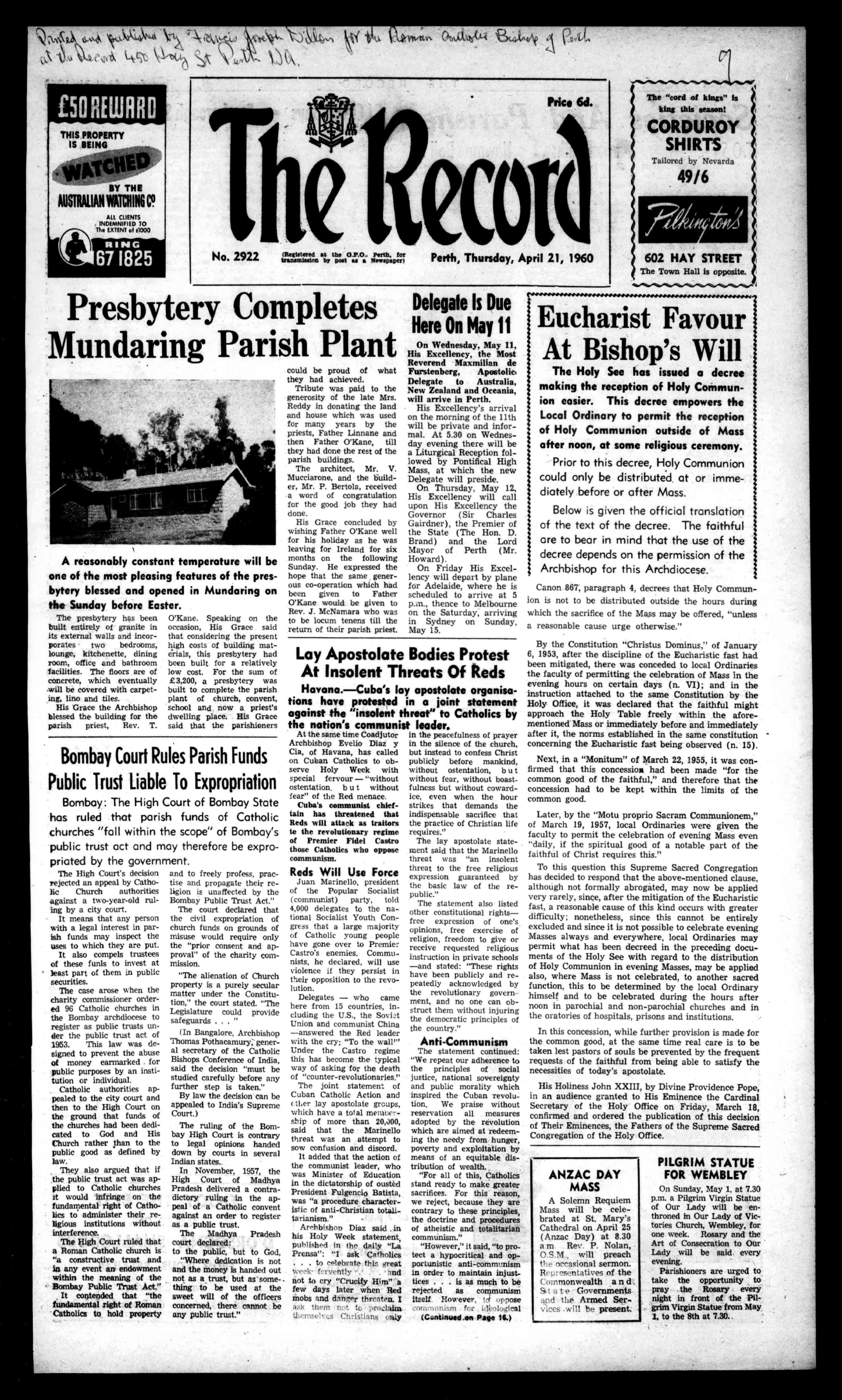
Areasonablyconstanttemperaturewillbe oneofthemostpleasingfeaturesofthepresbyteryblessedandopenedinMundaringon theSundaybeforeEaster.
Thepresbyteryhasbeen builtentirelyofgranitein itsexternalwallsandincorporatestwobedrooms, lounge,kitchenette,dining room,officeandbathroom facilities.Thefloorsareof concrete,whicheventually willbecoveredwithcarpeting,linoandtiles.
HisGracetheArchbishop blessedthebuildingforthe parishpriest,Rev.T.
O'Kane.Speakingonthe occasion,HisGracesaid thatconsideringthepresent highcostsofbuildingmaterials,thispresbyteryhad beenbuiltforarelatively lowcost.Forthesumof £3,200,apresbyterywas builttocompletetheparish plantofchurch,convent, schoolandnowapriest's dwellingplace.HisGrace saidthattheparishioners
BombayCourtRulesParishFunds
PublicTrustliableToExpropriation
Bombay:TheHighCourtofBombayState hasruledthatparishfundsofCatholic churches"fallwithinthescope"ofBombay's publictrustactandmaythereforebeexpropriatedbythegovernment.
TheHighCourt'sdecision rejectedanappealbyCatholicChurchauthorities againstatwo-year-oldrulingbyacitycourt.
Itmeansthatanyperson withalegalinterestinparishfundsmayinspectthe usestowhichtheyareput.
Italsocompelstrustees ofthesefunlstoinvestat leastpartoftheminpublic securities.
Thecasearosewhenthe charitycommissionerordered96Catholicchurchesin theBombayarchdioceseto registeraspublictrustsunderthepublictrustactof 1953. Thislawwasdesignedtopreventtheabuse ofmoneyearmarkedfor publicpurposesbyaninstitutionorindividual.
Catholicauthoritiesappealedtothecitycourtand thentotheHighCourton thegroundthatfundsof thechurcheshadbeendedicatedtoGodandHis Churchratherthantothe publicgoodasdefinedby law.
Theyalsoarguedthatif thepublictrustactwasappliedtoCatholicchurches itwouldinfringeonthe fundamentalrightofCatholicstoadministertheirreligiousinstitutionswithout interference.
TheHighCourtruledthat aRomanCatholicchurchis "aconstructivetrustand inanyeventanendowment withinthemeaningofthe BombayPublicTrustAct."
Itcontendedthat"the fundamentalrightofRoman Catholicstoholdproperty
andtofreelyprofess,practiseandpropagatetheirreligionisunaffectedbythe BombayPublicTrustAct."
Thecourtdeclaredthat thecivilexpropriationof churchfundsongroundsof misusewouldrequireonly the"priorconsentandapproval"ofthecharitycommission.
"ThealienationofChurch propertyisapurelysecular matterundertheConstitution,"thecourtstated."The Legislaturecouldprovide safeguards "
(InBangalore,Archbishop ThomasPothacamury,generalsecretaryoftheCatholic BishopsConferenceofIndia, saidthedecision"mustbe studiedcarefullybeforeany furtherstepistaken."
Bylawthedecisioncanbe appealedtoIndia'sSupreme Court.)
TherulingoftheBombayHighCourtiscontrary tolegalopinionshanded downbycourtsinseveral Indianstates.
InNovember,1957,the HighCourtofMadhya PradeshdeliveredacontradictoryrulingintheappealofaCatholicconvent againstanordertoregister asapublictrust.
TheMadhyaPradesh courtdeclared: tothepublic,buttoGod, "Wherededicationisnot andthemoneyishandedout notasatrust,butassomethingtobeusedatthe sweetwilloftheofficers concerned,therecannotbe anypublictrust."
HisGraceconcludedby wishingFatherO'Kanewell forhisholidayashewas leavingforIrelandforsix monthsonthefollowing Sunday.Heexpressedthe hopethatthesamegenerousco-operationwhichhad beengiventoFather O'Kanewouldbegivento Rev.J.McNamarawhowas tobelocumtenenstillthe returnoftheirparishpriest.
DelegateIsDue
HereOnMay11
OnWednesday,May11, HisExcellency,theMost ReverendMaxmiliande Furstenberg,Apostolic. DelegatetoAustralia, NewZealandandOceania, willarriveinPerth. HisExcellency'sarrival onthemorningofthe11th willbeprivateandinformal.At5.30onWednesdayeveningtherewillbe aLiturgicalReceptionfollowedbyPontificalHigh Mass,atwhichthenew Delegatewillpreside.
OnThursday.May12., HisExcellencywillcall uponHisExcellencythe Governor(SirCharles Gairdner),thePremierof theState(TheHon.D. Brand)andtheLord MayorofPerth(Mr. Howard).
OnFridayHisExcellencywilldepartbyplane forAdelaide,whereheis scheduledtoarriveat5 p.m.,thencetoMelbourne ontheSaturday,arriving inSydneyonSunday, May15.
LoyApostolateBodiesProtest AtInsolentThreatsOfReds
Havana.-Cuba'slayapostolateorganisationshaveprotestedinajointstatement againstthe"insolentthreat"toCatholicsby thenation'scommunistleader.
AtthesametimeCoadjutor
ArchbishopEvelioDiazy Cia,ofHavana,hascalled onCubanCatholicstoobserveHolyWeekwith specialfervour-''without ostentation.butwithout fear"oftheRedmenace.
Cuba'scommunistchieftainhasthreatenedthat Redswillattackastraitors totherevolutionaryregime ofPremierFidelCastro thoseCatholicswhooppose communism.
RedsWillUseForce
JuanMarinello,president ofthePopularSocialist (communist)party,told 4,000delegatestothenationalSocialistYouthCongressthatalargemajority ofCatholicyoungpeople havegoneovertoPremief Castro'senemies.Communists,hedeclared,willuse violenceiftheypersistin theiroppositiontotherevolution.
inthepeacefulnessofprayer inthesilenceofthechurch, butinsteadtoconfessChrist publiclybeforemankind, withoutostentation,but withoutfear,withoutboastfulnessbutwithoutcowardice,evenwhenthehour strikesthatdemandsthe indispensablesacrificethat thepracticeofChristianlife requires."
ThelayapostolatestatementsaidthattheMarinello threatwas"aninsolent threattothefreereligious expressionguaranteedby thebasiclawoftherepublic."
Thestatementalsolisted otherconstitutionalrightsfreeexpressionofone's opinions,freeexerciseof religion,freedomtogiveor receiverequestedreligious instructioninprivateschools -andstated:"Theserights havebeenpubliclyandrepeatedlyacknowledgedby therevolutionarygovern. ment,andnoonecanobstructthemwithoutinjuring thedemocraticprinciplesof thecountry."
Delegates-whocame herefrom15countries,ineludingtheU.S.,theSovi.A UnionandcommunistChina -answeredtheRedleader withthecry:"Tothewall" Anti-Communism UndertheCastroregime Thestatementcontinued: thishasbecomethetypical"Werepeatouradherenceto wayofaskingforthedeaththeprinciplesofsocial of"counter-revolutionaries."justice,nationalsovereignty Thejointstatementofandpublicmoralitywhich CubanCatholicActionandinspiredtheCubanrevolu,therlayapostolategroups,tion.Wepraisewithout whichhaveatotalmemi,, reservationallmeasures shipofmorethan20,J00,adoptedbytherevolution saidthattheMarinellowhichareaimedatredeemthreatwasanattempttoingtheneedyfromhunger, sowconfusionanddiscord.povertyandexploitationby Itaddedthattheactionofmeansofanequitabledisthecommunistleader,whotributionofwealth. wasMinisterofEducation "Forallofthis,Catholics inthedictatorshipofoustedstandreadytomakegreater PresidentFulgencioBatista,sacrifices.Forthisreason, was"aprocedurecharacter-wereject,becausetheyare isticofanti-Christiantotali-contrarytotheseprinciples, tarianism." thedoctrineandprocedures ArehbishonDiazsaidinofatheisticandtotalitarian hisHolyWeekstatementcommunism." publishedinthedaily "However,"itsaid,"toproPrensa":"IaskCatholicstectahypocriticalandoptocelebratethir,reatportunisticanti-commnism we,kf,rvently ndinordertomaintaininjustnottocry"CrucifyHim"atices isasmuchtobe fewdayslaterwhenRedrejectedascommunism mobsfindd'm"erthrrnten.IitselfHowever,!cfoppose Am forideological uly (Contlinted.sesPawIt)
The"cordofkings"Is kingthisseason!
cibytic,acia 49/6
602HAYSTREET
EucharistFavour AtBishop'sWill
TheHolySeehasissuedadecree makingthereceptionofHolyCommunioneasier.Thisdecreeempowersthe LocalOrdinarytopermitthereception ofHolyCommunionoutsideofMass afternoon,atsomereligiousceremony.
Priortothisdecree,HolyCommunion couldonlybedistributedatorimmediatelybeforeorafterMass.
Belowisgiventheofficialtranslation ofthetextofthedecree.Thefaithful aretobearinmindthattheuseofthe decreedependsonthepermissionofthe ArchbishopforthisArchdiocese.
Canon867,paragraph4,decreesthatHolyCommunionisnottobedistributedoutsidethehoursduring whichthesacrificeoftheMassmaybeoffered,"unless areasonablecauseurgeotherwise."
BytheConstitution"ChristusDominus.-ofJanuary 6,1953,afterthedisciplineoftheEucharisticfasthad beenmitigated,therewasconcededtolocalOrdinaries thefacultyofpermittingthecelebrationofMassinthe eveninghoursoncertaindays(n.VI);andinthe instructionattachedtothesameConstitutionbythe HolyOffice,itwasdeclaredthatthefaithfulmight approachtheHolyTablefreelywithintheaforementionedMassorimmediatelybeforeandimmediately afterit,thenormsestablishedinthesameconstitution concerningtheEucharisticfastbeingobserved(n.15).
Next,ina"Monitum"ofMarch22,1955,itwasconfirmedthatthisconcessionhadbeenmade"forthe commongoodofthefaithful,"andthereforethatthe concessionhadtobekeptwithinthelimitsofthe commongood.
Later,bythe"MotuproprioSacramCommunionem," ofMarch19,1957,localOrdinariesweregiventhe facultytopermitthecelebrationofeveningMasseven "daily,ifthespiritualgoodofanotablepartofthe faithfulofChristrequiresthis."
TothisquestionthisSupremeSacredCongregation hasdecidedtorespondthattheabove-mentionedclause, althoughnotformallyabrogated,maynowbeapplied veryrarely,since,afterthemitigationoftheEucharistic fast,areasonablecauseofthiskindoccurswithgreater difficulty;nonetheless,sincethiscannotbeentirely excludedandsinceitisnotpossibletocelebrateevening Massesalwaysandeverywhere,localOrdinariesmay permitwhathasbeendecreedintheprecedingdocumentsoftheHolySeewithregardtothedistribution ofHolyCommunionineveningMasses,maybeapplied also,whereMassisnotcelebrated,toanothersacred function,thistobedeterminedbythelocalOrdinary himselfandtobecelebratedduringthehoursafter nooninparochialandnon-parochialchurchesandin theoratoriesofhospitals,prisonsandinstitutions.
Inthisconcession,whilefurtherprovisionismadefor thecommongood,atthesametimerealcareistobe takenlestpastorsofsoulsbepreventedbythefrequent requestsofthefaithfulfrombeingabletosatisfythe necessitiesoftoday'sapostolate.
HisHolinessJohnXXIII,byDivineProvidencePope, inanaudiencegrantedtoHisEminencetheCardinal SecretaryoftheHolyOfficeonFriday,March18, confirmedandorderedthepublicationofthisdecision ofTheirEminences,theFathersoftheSupreme,Sacred CongregationoftheHolyOffice.
ANZACDAY MASS
ASolemnRequiem MasswillbecelebratedatSt.Mary's CathedralonApril25 (AnzacDay)at8.30 amRevP.Nolan, 0S.Mwillpreach theoccasionalsermon. Representativesofthe Commonwealthand a,toGovernments acidtheArmedServices.willbepresent.
PILGRIMSTATUE FORWEMBLEY
OnSunday,May1,at7.30 p.m.aPilgrimVirginStatue ofOurLadywillbeenthronedinOurLadyofVictoriesChurch,Wembley,for oneweek.Rosaryandthe ArtofConsecrationtoOur Ladywillbesaidevery evening.
Parishionersareurgedto taketheopportunityto praytheRosaryevery nightinfrontofthePilgrimVirginStatuefromMay I.tothe8that7.30.
Vt>,Ar1/44 \)cx, ObJlaxii43,4t4Af Sys THISPROPERTY ISBEING AilCLIENTS INDEMNIFIEDTO TheEXTENTof11000 Price6d. Ther?ecot No.2922 (neatenedatthe0.P.0Perth,for transmisilenabypostasaNewspaper) Perth,Thursday,April21,1960
CORDUROY
SHIRTS
TheTownHallisopposite.
SocietiesAndParishes
T.0SF
TheThirdOrderSecular ofSaintFrancisisanassociationofthefaithfulwho strivetoachieveChristian perfectionintheworld, underthedirectionofthe FranciscanOrderandaccordingtoitsspirit,butin amannersuitedtolifein theworld.Thistheydo accordingtotheRule drawnupforthembythe SeraphicFatherFrancis,as approvedandinterpretedby theApostolicSee.
ThirdOrderFraternities areestablishedatPerth, MidlandJunction,aridVictoriaPark.ThenextmeetingofthePerthfraternity willbeheldattheChildren ofMaryChapel,Victoria Square,inSunday,24th April.1960,at3p.m..at whichprofessionswilltake place.Theinstructionfor 11,1ViCetiwillcommenceat 2.30p.m.
Enquiriesregardingthe ThirdOrdermaybeaddressedtoRev.Fr.Crispin, O.F.M.,ThePresbytery, MidlandJunction.
THERRIES
MembersoftheTherry Societyareadvisedofan urgentmeetingtobeheld attheTheatreGuildrooms onMondaynext,April25, commencingat7.50p.m. Newandurgentbusiness whichhasjustcometohand willbediscussed.Although thedatesetisapublicholiday,membersareaskedto makeanefforttoattend.
Onetopicofimportance willbetheselectionand castingoftwoone-actplays.
Membersofthesociety frompreviousyearsareinvited,particularlythosewho mightbeinterestedinproducingoractinginthe above-mentionedplays.
MarianTalks NewmanBall..
Listedherearethedates, timesandlocationsofthe seriesoftalkstobegiven onOurLady'splacein God'splanofRedemption overthenextfiveweeks.
TheserieshasbeenarrangedbythedeMonfort group. April29(1)God'sPlanof Redemption.Speaker:V. Rev.P.M.Nolan,O.S.M. May6(2)Christ-Our Model. Speaker:Rev.E. McBride. May13(3)ChristianPerfection.Speaker:Rev.C. Stinson. May20(4)Mary'sRole inGod'sPlan. Speaker: Rev.T.G.Maloney,S.M. May27(5)OurRole-TotalConsecration.Speaker: Rev.M.McKeon. Location:C.B.C. St.
George'sTerrace,Perth.
Time:8p.m.-9p.m. Afeeof2,6(payableon firstnight)willcarverthe series.
FILMNIGHT
MembersoftheSt.Louis' SchoolOvall'ammitteehave arrangedforthescreening offilmsattheDalkeith TheatreonThursday,April 28,at7.45p.m. Thepicturestolx'exhibitedare"LavenderHill Mob,"withAlecGuinness andStanleyHolloway,and "WithaSonginMyHeart," featuringSusanHayward.
CROWNING
ThecrowningoftheQueen oftheMay,whichhastaken placeinSt.Brigid'sChurch, WestPerth,since1936,on thelastSundayofthe month,willinfuturebe carriedoutonthefirstSundayofMay,commencing withthisyear. .41411`40,04.....10...441,..Ne#411,.........1.41,IN
REQUIRING ASSURANCE?
E.C.(Ted)NEEDHAM (AssuranceConsultant)
Phones:M.L.C.,21-8961 Private'AllHours:28-2140
THEM.L.C.
HasPlansfor: SuperannuationforFirmsandSpecial ProvisionforSelf-EmployedPersons.
Probatc--Endowment,Children'swhole ofLifeandEndown-ientPolicies.
AilClassesofLife,Fire,Accidentnnd GeneralIns-Li/onceArranged.
TheNewmanBallwillbe heldonthenightofMay11 atthesubiacoCityHall.
SirAlexReid,Chancellor oftheUniversity,willreceivedebutantes.Girlswho aremakingtheirdebutat thisballarestudentsatthe UniversityorTeachers' TrainingCollege. Thecommitteehopesthat allgraduateandundergraduatemembersofthe NewmanSocietywillbe presentattheball.
LatvianMission
TheRev.P.Bees,Si.. chaplaintotheLatviancommunityinAustralia,will makeabriefvisittoPerth
DuringhisvisitFather Beeswillpreachamission atSt.Patrick'sChurch, Havelock-street,WestPerth, commencingonSaturday, April30,at4.30pm,and concludingonSunday,May 8. Atthe10a.m.Masson bothSundaysFatherBees willpreachintheLatvian tongue. DuringhisstayinPerth hemaybecontactedatSt. Louis'Schoo1,S'i.linghighway,Claremont(phone 3-1122).
Reunion 'theannualreunionof ALLDominicanex-students willbeheldthisyearon Sunday,May1,atSt. Dominic'sConvent,Woodstreet.Inglewood,at2.30 p.m.
Menandwomenexstudentsofallschools,both inW.A.andfromothr States,areinvitedtobe pressenttoconsiderand decideonsuggestednew activitiesandinterests, BusesleaveWilliam-street, southofHay-street,at2 p.m.andstopatCrawfordroad.
Xaverians
MembersoftheXaverian Club,whichcatersforgirls over2!andmenover23 years,planasocialround overthenextfewweeks.
OnFriday,April22,an informalsocialwilltake placeattheHighgateparish hallat8p.m.
JohnHegge'sresidenceat 3Bennett-streetwillbethe venueforarecordevening onFriday,April29.
OnFriday,May6,another infomalsocialwillbeheld atlfighgate.
Enquiriesregardingmembenhi.)maybebadfrom Mi 7Galagher,38Boreham CcLi-sloe(Tel. 3-3,`.,,!..Cp.m),orMr. J.( (lel.23-2:16,°Me:: how's).
S.I.C.OldBoys
OnWednesday,April27, theS.I.C.OldBoyscommitteewillbeholdingthefirst sundownpartyfur1950at 41Adelaide-terrace.
AllOldBoysarecordially invitedtoattend.Alsothe membersofthehockeyclub areaskedtomakeevery efforttobepresent. Thehockeyclubhashad aspiritedcommencementto thisseason,andtheteam playedparticularlywellin FremantleCarnival. PlayersshapingwellincludeJohnSymons,Bill Laidman,PeterWillett, LanceHammond,JimRyan andRaySymons,These shouldformthebackboneof asuccessfulyearforS.I.C.
Theannualretreatwill againbeorganisedinconjunctionwiththeHolyName Societyandthedateswill beAugust13-14.
OldBoyswhoaremembersoftheHolyName Societyshouldensurethat theymaketheirannualretreatwiththeassociationon theabovedatesandare askedtocontactthepresident,Mr.Kinshela(25-1671, home)assoonaspossible.
Itispointedoutthatthe retreatistobeheldimmediatelypriortotheFeastof theAssumptionsthisfeast beingthepatronalfeastday ofallMaristoldboysassociationsthroughoutthe world.
Nurses'Guild
TheAnnualGeneralCommunionofmembersofthe CatholicNurses'Guildof W.A.willtakeplaceatthe 9o'clockMassatSt.Mary's CathedralonSundayweek, May1.
Aninvitationsisextended toallCatholicnursesto assembleinuniformatthe Goderich-streetentranceat 8.45a.m.
AJesuitFatherwillpreach theoccasionalsermon. Breakfastwillbeservedat Victoria-squareConvent afterwards.
C.W.L.CardParty
Aremindertoall
EricLunnGarner,theDistrictCub Master,Mr.GordonMunn, DistrictScoutMaster(S.).
Mr.R.Denny,andDistrict ScoutMuter,Mr,N.Chandler.visitedtheSt.Don Bosco2ndScarborough ScoutGrouponFriday, April8,onthe(y,casionof thefarewellceremonyto theirGroupScoutMaster andChaplain,FatherLeo Leunig,whohasbeentransferredtotheParishof Northam.
TheGroupturnedoutin theirfullstrengthof14 Scoutersand85boys,anda largenumberofparentsalso attended.
OtherguestsincludedRev. E.McBride,P.P.,ImmaculateHeartofMaryChurch,Scarborough,Rev.J. Chauncey,SouthPerth,Mr. andMrs.H.Leunig,Snr.
FatherLeunig,inhanding thegroupoverofficiallyto thenewGroupScoutMaster,Mr,StanKent,saidhe didsomostreluctantly,yet witheveryconfidencein Mr.Kent'sabilitytodoa goodjobasGroupScout Master.
Hewentontosaythatit hadbeenagreatprivilege toseetheSt.DonBosco Groupgrowandexpand, andthankedhisScoutersfor helpingsomuchtomakethe Groupasuccess.Tothe Cubshesaid"Goodhunting" andtotheScouts"Rememberalwaystokeepbefore youyourLawandyour Promise,andgivetothe Scoutersyourco-operation andloyalty."
FatherLeunigthenpre-
sentedatrophytotheGroup whichhadbeencarvedin voodbythefounderofthe Group-SkipGradisan,at presentlivinginAlbany. liealsopresentedtheGroup withtheirfirstGroupFlag, underwhich,laterinthe evening,AssistantCubMastersMrs.B.Phillipsand Mr.A.P.Catlinhadthe honourofreceivingtheir WarrantsfromtheArea Commissioner, TheAreaCommissioner, inthankingFatherLeunig forhisfaithfuljobasGroup ScoutMaster,wishedhim allthebestinScoutingand goodluckintheworkhe wasgoingtodoinNortham.
FatherMcBrideexpressed hisdeepgratitudetoFather Leunigforwhathehadaccomplished,bothinScouting andinhisdutiesinthe parish,andwishedhim everyfuturesuccessasa PriestandasaScouter.
Duringthecourseofthu eveningtheAreaCommissionerpresentedtheDistrict Commissioner,Mr,LunnGarner,withhisWoodOrb Badge,andMr.Lunn-Garnet gavetheparentsandboys asummaryoffutureScoutingactivitiesinthedistrict, whichincludedCubHolidayCampatKwinanaon April30andMay1,anda ScoutCamponMay14and. 15,duringwhichcompetitionswouldbeheldforthe Vlatarman'sBayTrophy(at presentheldbytheSt.Don BoscoGroup)andtheMiltonBoyceTrophy, Toroundofftheevening, FatherLeunigledtheCub PackintheGrandHowland received,fromhisScouts,a hearty"Bravo!"
St.Aloysius',ShentonPark:
Mr.McSweeney'stongService
Whatmustsurelybearecordofservice hasbeensetbyMr.JohnMcSweeneyofSt. AloysiusConferenceoftheSocietyofSt.VincentdePaul. Haleandhearty,hecelebratedhis83rdbirthdayon Tuesdaylast.
JohnMcSweeneywasborn :itFermoy,Co.Cork,Ireland,onApril19,1877,and asasmallchildmigrated withhisfamilytoBristol, England,wherethe McSweeneyssettledinthe parishofSt.Nicholas, Pennywell-road.
Attheageof18years, JohnjoinedtheSt.Nicholas ConferenceofthySocietyof St.VincentdePaul,the parishthenbringunderthe careofVeryRev.Father Coxon,P.P.
DuringtheFirstWorld WarMr.McSweeney'served withtheGloucesterRegiment,wastakenprisonerof warandspent2}yearsin prisoner-of-warcampsin Germany.
Asaresultofthewidespreadunemploymentin Bristolfollowingthewar, John,withhisunmarried sister,whohadbeena school-teacherinBristol, migratedtoWesternAustraliaintheearlytwenties.
MissMcSweeney,atthe grandoldageof87years, stillcaresforherbrotherin theirhomeatShentonPark, WhentheSt.Aloysius ConferenceoftheSocietyof St.VincentdePaulwas
establishedatShentonPart, Mr.McSweeneywasoneof thefoundationmembers,and hasbeenanactiveworker eversince,occupyingthe officeofvice-presidentfor anumberofyears. Underthepatronageof theparishpriest,Mgr.Collins,aninformalfunction washeldaftertheweek), meetingofthesocietylast Tuesdayevening,atwhisk Mr.McSweeneywasentertainedbymembers.
Inabriefaddress,Mgr CollinscongratulatedJohn uponhisfinerecordasa discipleofFrederickOzanam,andinwishinghim lengthofyearsandgood health,citedhisgoodwork asachallengetoyounger menoftheparish-as exampletoCatholicmen everywhereandaninspirationtohisfellow-members ofthesociety. TheConferencepresident, Bro,F.Doherty,extendedto theguestofhonourfraternal greetingsofpastandpresent membersandexpressedthe wishofallpresentthatMr. McSweeneywouldbeblessed withgoodhealthtoenable himtocontinuehisactive participationintheworkof theSocietyofSt.Vincentde Paul,aworkhehaslove( allhislonglife.
PageTwo THERECORD Thursday,April21,1960
CatholicCentre
Wednesday,April27that 8p.m. Socialcommitteemembers pleasebringalongsmall supperclothforbridge tablesonthemorningof thb27th,alsotohelpwith arrangingofhallandsupper. 0.4.41,1.1NNINNNINI444.10414NPININONNINI, DEVINE'S PRAMSHOP Specialisingin LIFT-OUTPRAMS from£17110/4113HAYST..SUBIACO "PINK J.1.4.... ,141. JKAIMANNINMNOMO.1.41.1.4.0.. ,...,41,11,0.414,0#0.0 ,...dhoo,.......~...ormw St.Anne'sNursingHome GARDEN FETE IChildren'sDay: ELLESMERERD.,MT.LAWLEY OfficialOpeningby TheHon.RossHutchinson, D.F.C.,M.L.A., MinisterforHealth, on Thursday,April28 at7p.m. ALSO Friday,April29 from7.30p.m.to10.30p.m. SATURDAY,APRIL30,2p.m.to5.30p.m. ("UncleArthur"oftheSundayTimes) WILLBEINATTENDANCE I 11,4,4.1.41,04.4,141NPOM00.041,1141,441.......4.04.4441141,41,04 ScarboroughScootsfotoPriest TheAreaCommissioner, Mr.MiltonBoyce,accompaniedbytheDistrictCommissioner,Mr.
members andfriendsoftheSeminarycardeveningtoheheld atthe
on
LOUMARTINO&CO. SPRAYPAINTERSandMOTORBODYREPAIRERS DuesandEnamelSpecialists AllClassesofRepairsExpertlyHandledincluding SmashRepairsandInsuranceClaims ONOURPREMISES. 7LOFTUSSTREET,LEEDERVILLE-28-2014. (Opp.WestPerthPoliceStation) ENJOYTHEBEST INSISTON D'ORSOGNASMALLGOODS FROMYOURRETAILER TradeEnquiries Phone28-3131. 60StoneSt.,W.P. .41V...M.4.4NNPIsMOMM.....M.I,MIPPOI'4'#00W.41#4.4144M.
PublicReciationOfMary
DuringMassIsInadvisable
Liverpool:TheHolySeehasruledthat thereshouldbenopublicrecitationofthe RosaryduringMass,itwasrevealedhere.
Therulingwasmadebyliturgicalbooksapproved theSacredCongregationofbytheHolySecforthe Ritesinanswertoaquestionrivingofdueworshipto seisedbyArchbishopJohnGod,thesaintsandthe C.HeenanofLiverpool. blessed."
(InRome,anofficialof theSacredCongregationof Ritessaidthatitswordsto theArchbishopofLiverpool shouldbetakenascounsel ratherthanprohibition.It notedthatsincetheliturgicamovementaimsatamore completeparticipationofthe faithfulinthecelebrationof theDivineSacrifice.recitationoftheRosaryduring Massisinadvisable.]
Atthesametime,the 'Vaticanbodyruledthatin DialogueMassesitispermissibleforthecongregation torecitewiththepriestthe Gloria,Credo,Sanctusand AgnusDei,evenittheyhave notrecitedtheConfiteorand theresponsestothefirst prayersoftheMass.
Bothrulingsweremadeto clarifytheSeptember,1958, instructionoftheCongregationofRites,Whichaimed atpromotingmoreactive participationofthepeople atMass.
Inhisinquiry,Archbishop Heenanhadasked''whether theprohibitionexpressedin paragraph12oftheInstructiononSacredMusicandthe SacredLiturgyofSeptember 3,1958,istobeunderstood inthesensethatthepublic recitationoftheRosaryof theBlessedVirginMary whileMassisbeingcelebratedishenceforthforbidden,evenduringthe monthofOctober,"
TheCongregationofRites replied:"TheRosaryisto besaidatatimeotherthan duringMass"(''Marialis coronadieendaestextra Missam").
The1958instruction,followingtheteachingofPope PiusXIIinhis1947encyclical"MediatorDel,"states thattheonly-liturgical functions"are"thosesacred actswhich,havingbeeninstitutedbyJesusChristand the.Church,areperformed bylegitimatelyapointed personsaccordingtothe
Thenitstatesthat"other sacredactsperformedeither insideoroutsidethechurch, evenifperformedbythe priestorinhispresence,are called'piousexercises,'" Thus,whiletheMassisthe primary"liturgicalfunction,"theRosaryisclassed asa"piousexercise."
Paragraph12ofthe1958 instructionaboutwhich ArchbishopHeenanqueried theHolySee,states:"Itis unlawfultomixliturgical functionsandpiousexercises:butifthecasearises, thepiousexercisesmust precedeorfollowtheliturgicalfunctions."
ThereplyoftheCongregationofRiteswasmadein answertothespecificquestionwhether"publicrecitation"isforbiddenduring Mass.Itdoesnotmention theprivaterecitationofthe RosarybyindividualsduringMass.
TherulingontheRosary wasthesecondoftwo repliesgivenArchbishop Heenan.Theprelatefirst asked"whetheritislawful forthefaithfulatLowMass torecitesimultaneously withthepriestinLatinthe Gloria,Credo,theSanctusBenedictusandtheAgnus Deiwithoutalreadyhaving previouslyrespondedtothe PsalmandConfession."His referencewastotheprayers atthefootofthealtar,in whichtheserverhastraditionallygiventheresponses -the42ndpsalm,theConfiteor,andpartofthe84th psalm.
TheCongregationofRites gavethesimpleaffirmative reply:"Itisagreed" ("Acquiescat").
Therulingsbythecongregationweresignedbyits secretary,Mgr.Enrico Dante.Theyweredated February6,1960.Onreceivingthem,Archbishop Heenanimmediatelyinformedtheclergyofthe Liverpoolarchdiocese. mir.e.cece.oecec.ceasese......ase.
WhitesMayFaceExtinction
IntheagonisingsituationofSouthAfricatheworld's sympathyisoverwhelminglyandrightlyonthesideof thedarkrace.Buttomanyitisanineluctableproblem whyDr.Verwoerdandhisassoicateshavechosena courseofactionwhicharguesstupidityandcallousness. Apartheid,however,isnotsosimplyexplainedand disposedof.Itisfarlessapolicystemmingfroma conceptofracialsuperioritythananhistoricaldilemma. Macmillan's"windsofchange"(whichmayinaninstant becomeanation-widehurricane)representtothewhite SouthAfricananAfricanchallengetoalltheyhave builtandinheritedinacountrywhichtheyregardas home.
Hithertotheyhaveregardedthenegroesastheir naturalsubjectsandinferiors.Theyseethe"windsof change"asadeadlydraughtwhichwillblowaway whateverdesignsforpartnershiptheymayhavewith thedarkraces.Theyviewitasatornadowhichwill inevitablyoverturntheorderofthings,bringingthe whitemanunderthesubjugationofanAfricanmajority rule.Itisnoteasytoacceptsucharevolutionary conception.ItwouldnotbeeasyfortheAmericansto contemplatetheirnegroesintheascendancynorfor theAustralianstowitnesstheiraboriginesassuming themastery.ButwithequalforcetheSouthAfricans cannothopetocontinuetheruleoffear,tofendoff everyconceivablechallengewhileexpectingthedark mentolivetheirlivesonthewhitemen'sterms.
ThatsortofdominanceatwhichHitleraimedmight havebeenpossiblehadSouthAfricabeenanisolated island.Asitis,theUnionofSouthAfricacannotbe insulatedfromtheinfluenceoftheirfellow-Africansin theEastandWestandfromtheaversiontocolonialism andracismthroughoutthefreeworld.Ofparticular significanceinthelatterregardistherevulsionofthe emergingAsiannationswhichhavefoundsolidarity withthesurgingnationalismofAfrica.Twoother forcesmustbereckonedwith.OneisCommunism, whichseizesreadilyonsuchdangeroussituationsforitsownpurposes.TheotheristheChristianmissionary effort,whichworksuponthemindsbothofthewhite mastersandofthe"underdog."
ByindirecteffecttheChristianFaithfostersthe notionofliberty.Ifallmenareindeedbrothersin Christ,plainlytheset-upinSouthAfricaisatonce anti-Christianandanti-human.SoChristianityfans theaspirationsoffreedomandinducesguiltatthe degradationoftheblackman.Whatisnowbeing attemptedtherebypolicebrutality,suppressionandfear cannotlast.Isthereanalternative?Thereis.butitis toohorribletocontemplateforitwouldinvolvea practicalapartheidbasedonmassmigrationsofpopulationsuchastheAssyrianscarriedoutinancienttimes andtheRussianshaveattemptedinourday.
Anactualterritorialseparationwhichenabledblacks andwhitestolivesidebysidewithoutminglingwould
JulianaScoresMusicSuccess
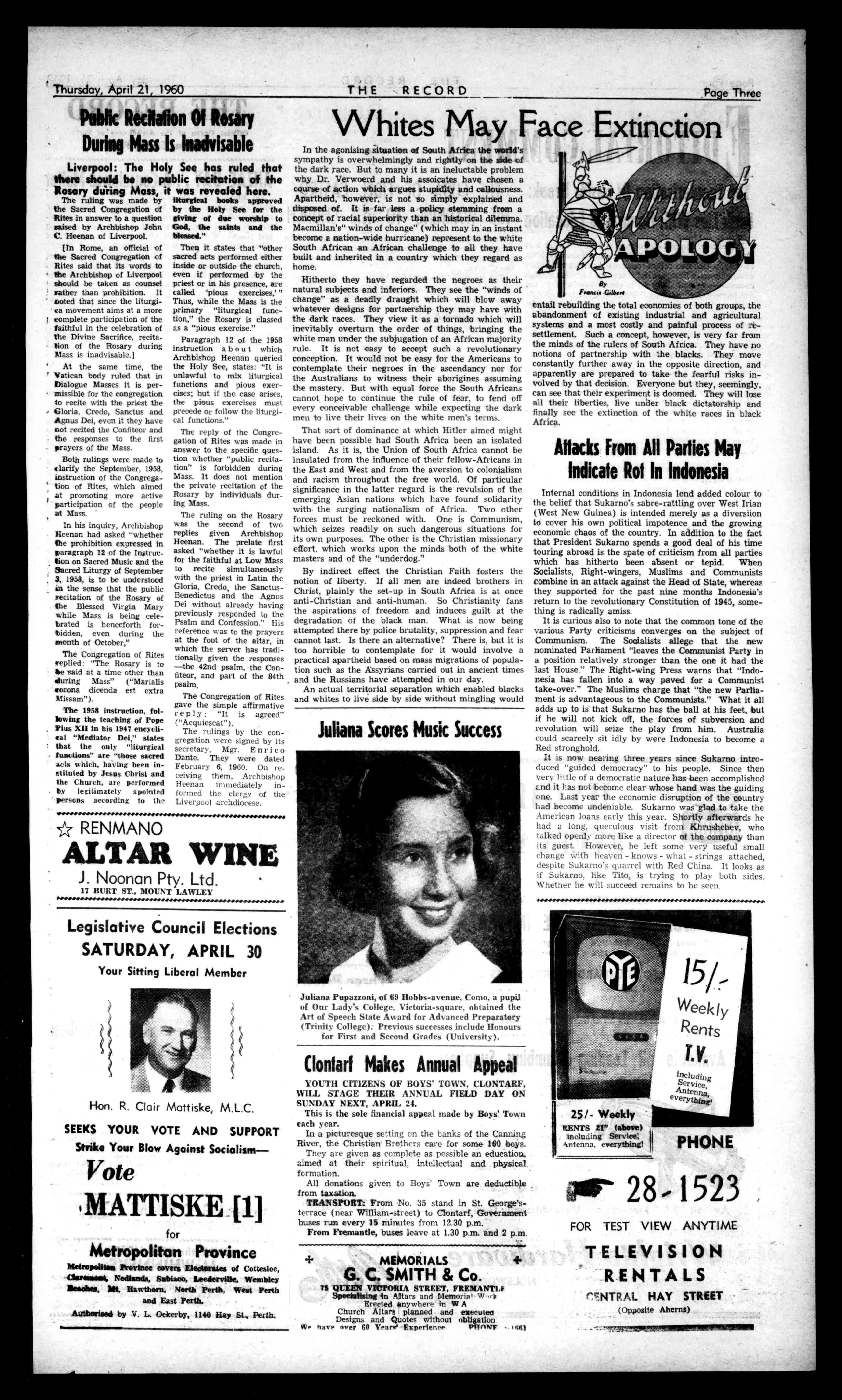
JulianaPupazzoni,of69Hobbs-avenue,Como,apupil ofOurLady'sCollege,Victoria-square,obtainedthe ArtofSpeechStateAwardforAdvancedPreparatory (TrinityCollege).PrevioussuccessesincludeHonours forFirstandSecondGrades(University).
ClontarlMakesAnnualAppeal
YOUTHCITIZENSOFBOYS'TOWN,CLONTARF, WILLSTAGETHEIRANNUALFIELDDAYON SUNDAYNEXT,APRIL24,
ThisisthesolefinancialappealmadebyBoys'Town eachyear.
InapicturesquesettingonthebanksoftheCanning River,theChristianBrotherscareforsome160boys. Theyaregivenascompleteaspossibleaneducation, aimedattheirspiritual,intellectualandphysical formation.
AlldonationsgiventoBoys'Townaredeductible fromtaxation.
TRANSPORT:FromNo.35standinSt.George'sterrace(nearWilliam-street)toClontarf,Government busesrunevery15minutesfrom1230p.m.
FromFremantle,busesleaveat1.30p.m.and2p.m.
MEMORIALS
By C1644
entailrebuildingthetotaleconomiesofbothgroups,the abandonmentofexistingindustrialandagricultural systemsandamostcostlyandpainfulprocessofresettlement.Suchaconcept,however,isveryfarfrom themindsoftherulersofSouthAfrica.Theyhaveno notionsofpartnershipwiththeblacks.Theymove constantlyfurtherawayintheoppositedirection,and apparentlyarepreparedtotakethefearfulrisksinvolvedbythatdecision.Everyonebutthey,seemingly, canseethattheirexperimentisdoomed.Theywilllose alltheirliberties,liveunderblackdictatorshipand finallyseetheextinctionofthewhiteracesinblack Africa.
AffacksFromAllPartiesMay IndicateRotInIndonesia
InternalconditionsinIndonesialendaddedcolourto thebeliefthatSukarno'ssabre-rattlingoverWestIrian (WestNewGuinea)isintendedmerelyasadiversiion tocoverhisownpoliticalimpotenceandthegrowing economicchaosofthecountry.Inadditiontothefact thatPresidentSukarnospendsagooddealofhistime touringabroadisthespateofcriticismfromallparties whichhashithertobeenabsentortepid.When Socialists,Right-wingers,MuslimsandCommunists combineinanattackagainsttheHeadofState,whereas theysupportedforthepastninemonthsIndonesia's returntotherevolutionaryConstitutionof1945,somethingisradicallyamiss. Itiscuriousalsotonotethatthecommontoneofthe variousPartycriticismsconvergesonthesubjectof Communism.TheSocialistsallegethatthenew nominatedParliament"leavestheCommunistPartyin apositionrelativelystrongerthantheoneithadthe lastHouse."TheRight-wingPresswarnsthat"IndonesiahasfallenintoawaypavedforaCommunist take-over."TheMuslimschargethat"thenewParliamentisadvantageoustotheCommunists."Whatitall addsuptoisthatSukarnohastheballathisfeet,but ifhewillnotkickoff,theforcesofsubversionand revolutionwillseizetheplayfromhim.Australia couldscarcelysitidlybywereIndonesiatobecomea Redstronghold. ItisnownearingthreeyearssinceSukarnointroduced''guideddemocracy"tohispeople.Sincethen verylittleofademocraticnaturehasbeenaccomplished andithasnotbecomeclearwhosehandwastheguiding one.Lastyeartheeconomicdisruptionofthecountry hadbecomeundeniable.Sukarnowasgladtotakethe Americanloansearlythisyear.Shortlyafterwardshe hadalong,querulousvisitfromKhrushchev,who talkedopenlymorelikeadirectorofthecompanythan itsguest.However,heleftsomeveryusefulsmall changewithheaven-knows-what-stringsattached, despiteSukarno'squarrelwithRedChina.Itlooksas ifSukarno.likeTito,istryingtoplaybothsides. Whetherhewillsucceedremainstobeseen.
Thursday,April21,1960
RECORD PageThree
THE
*RENMANO ALTARWINE J.NoonanPty.Ltd. 17BURTST,MOUNTLAWLEY
Elections SATURDAY,APRIL30 YourSittingLiberalMember Hon.R.ClairMattiske,M.L.C. SEEKSYOURVOTEANDSUPPORT StrikeYourBlowAgainstSocialismVote MATTISKE[1] for MetropolitanProvince MetropolitanProvincecoversElectoratesofcottesioc, Claranaist.Nediands,Subiaoo,ILeettcrville,Wembley Ilenebes,Mt.Hawthorn,NorthPerth,WestPerth andEastPerth. AuthorisedbyV.L.Oekerby,1140HaySt.,Perth.
LegislativeCouncil
G.C.SMITH&Co. QUEENVICTORIASTREET.FREMANTLii Specialising4nAltarsandMemoria, .k ErectedanywhereinWA ChurchAltarsplannedandexecute° DesignsandQuoteswithoutobligation Wehaveover60Year.'Experler."e P1110VF
25/-Weekly RENTSsr,(above) includingService, Antenna,everything! Weekly Rents PHONE as'28-1523 FORTESTVIEWANYTIME TELEVISION RENTALS r7NTPAlHAYSTREET )pdositeAherns) --1-7,01119.t."1181111WelliMMIMOINII
DITORIALCOMMENT
TheSecularisationOfEasterBreak:
FaultLiesWithHomeAndEducation
Evidenceofthefast-fadingatmosphereofEasterwas giveninPerthlastweekend.Peoplehurriedawayfrom thecity,whichwasfullofthecommercialismwhichhas sprungupwithEaster.Firstitwastheharmlessenough chocolateeggandfluffylittlechicken-nowitisthe mysterious"Easterbunny.-Wherehecamefromnobody seemstoknow.Theideaofthe"bunny"seemstobe associatedwiththegivingofgifts.Ithasallthe appearancesoftheunfortunatecommercialismofthe feastofChristmaswhichhasdevelopedalloveragain. Storesthroughoutthecitywerejubilantattherushof buyingandextraspending.
Tocapeverything,however,wastheofficialactof puttingonacricketmatchonGoodFriday.Thereisa publicoutcryagainstsuch"desecrations"ofAnzacDay.
YetonthedayonwhichChristdiedfortheredemption ofthehumanrace,thereisbarelyavoiceraisedin protest.Itlooksasifourcivic-mindedpeoplewillhave tohaveasub-committeeforreligiousaffairstoremind themoftheirobligationstorespectdayswhichmake ourcountryatleastnominallyChristian.
Intheoverallpictureitwouldappearthatweare fastbecomingasecularistnation.Evidenceofthis comesfromtheFederalGovernmentandnowappears tobealsoevidentfromourlocalleaders.
Theprohibitiononsportingfixturesissimplytoleave peoplefreefromotherattractionssothattheywill rememberwhatdayitis-literally.Whenorganised sportisputon,orpermittedtohappen,onofficial grounds,thenthereoughttobeareshufflingofthought andperhapsmeninthepositionsthatmatter.
Whilethereisalwaysatendencytoputalltheblame forsucheventsontothe.few,thegeneralpublicareto blameaswell.TheattitudethatEasterisjustanother longweekendissoprevalentnowthatitbespeaksvery poorlyforouraveragecommunityreligioussense.This lackofsenseofthingsreligiousandtheobservanceof themcomesprimarilyfromthehomeandtheeducation systemforthechildrenofourState.Itisthusreflected inallsectionsofoursociety.
Alotofchurcheshadgoodcrowds,somewereoverflowing.TheyshouldALLhavebeenoverflowingfirsttocommemoratethedeathofChristforthe Redemptionofmankindandthentocelebratethe fundamentaltruthandproofofChristianity-that Christisrisenandthatwe,too,canrisewithHim.
THECUBAOFFIDELCASTRO: HISWARNINGTOTHECHURCH
ThebubbleseemstobeabouttoburstinCuba.The stronglyentrenchedcommunistelementintheCuban governmentofone-timeidealistFidelCastrohaswarned theChurch.
Thethemeofthewarninghasbeenthatanyinterferenceinanygovernmentactivitybywayofcriticism oftheregimeandwarningsagainstcommunismisan anti-revolutionaryactivity.Assuchitcannotbetolerated.Itseemsthatnotafewchurchmen,bothclerical andlay,willbejoiningthegreatnumberofpolitical prisoners(usuallyreliablesourcesquoteuptothree timesthenumberofthepreviousdictator).
The26thofJulyMovementgavepointersofbeinga goodthingforallconcerned.Withthepassageoftime andtheinfiltrationofcommunistorganisers,themovementhasbecomeafloodwithitsoriginatorseemingly floatingorwhirlingatitshead.
Reportswhichhaveappearedinthispaperfromtime totimehaveshownasteadydeclineintheanticommunistlineofthevolatileandverbosePremierof Cuba.Itiswithoutadoubtthathisagrarianreforms wereexcellentonpaper,buttheirimplementation seemstohaveleftalottobedesired,evenonthe groundsofordinaryjustice.
Therearemovementswithinthe26thofJulyMovementtosavetherevolutionfromCastro.Theyare comprisedofmenwhowithhimbeganthefightfor freedom,butaredefinitelyanti-communist.Theyare nowtalkingandorganisingbothinsideCubaandfrom variousplacesofexile,thesameplacesfromwhence Castroorganisedhismovement.Therewillbea tougheningoppositiontothepoliciesfavouringthe extremeleftandliningthecountryupwiththepolicies ofMarxism.ErnestoGuevara,themanwhoholdsthe pursestrings,isthepowerbehindthecommunisttrend. Thewayinwhichhehasbroughtinmeasureafter measurewhichhavehadtheeffectofintroducingmore communistsintotheadministrationhascausedCuba tobeisolatedfromhergeographicpositionaspartof theAmericas.Therehasalsobeenthetiradeofabuse againsttheU.S.,which,tosaytheleast,hasbeenpretty tolerant.AllofwhichindicatesthattheCubanpeople willsufferfurtherwithstrifeandbloodshedbeforethe issueissolved.Indicationsarethatmostofthepeasant peoplearestillpinningtheirhopestoCastrothe revolutionary.Themiddleclasses,whoalsofoughtfor Castro,areafraidofCastrothepolitician. IfheisgoingtofighttheChurchaswell,thenthe predictionisthatheismakingthingstougherfor himself.IfhischargethatCatholicsarebeingwonover bytheenemiesoftherevolutionistrue,thenhecanonly blamehisownadherencetocommunism.
ArchbishopTo BlessPodChurch
OnSunday,April24,at3 p.m.,HisGracetheArchbishopwillblessandopen thenewsanctuaryandpresideatHighMassinSt. Patrick'sChurch,Fremantle. Thepreacheroftheoccasionalsermononthisday willbeRev.T.Haugh, O.M.I.,whoiscomingfrom theEasternStates. Thoseintendingtogoto Fremantleareassuredof ampleparkingspaceinthe streetssurroundingthe church.
ThreePriests AreConvicted
Berlin:Reportsreaching heresaythatthreeCatholic priestshavebeenconvicted inWarsawofallegedillegal currencyactivities.
Onepriestwasfined200 dollarsandsentencedtotwo yearsinprison.Theother twopriestswerealsofined andgivensuspendedtwoyearprisonsentences.
SPORTING Equipment
SEE-
THERECORD
OfficialOrganoftheArchdioceseofPerth. 450HayStreet,Perth
ANZACDAYAConscienceMailer
OnMondaynextallofAustraliawillrememberthe menwhogavetheirlivestothedefenceofthiscountry inparticularandthetraditionoffreedomingeneral. Notallwouldhaveformulatedtheintentionofdoing justthat;inthesenseless,oftenblunderingactionsof masswarfare,wheremenarehurledagainstterrific odds,thereisnochanceofformulatingtheopinionof whatyouarefightingforbutthewilltolive.
TheactwasdoneforthegoodofAustralia,forthe familieswhomakeuptheState,andtheremembrance ofthefallenisthereforenationalandjustlyso.Everyoneowesadebttothosemenandwomenwhohave foughtfortheircountry.
Thisdebtcanbestberepaidorhonouredbythe avoidanceoffurtheruselessbloodlibationsthroughthe recognitionbyallofthetruedignityandtheessential rightsofallmankind.
Itisthereforewithsorrowthatthispaperhasto recordagainaprotestonthewilfuldiscrimination againstmembersofaChurchwhobytheirlawsarenot permittedtojoinincommonreligiousserviceswhen conductedassuchbyaministerofanotherbelief.
Theword"wilful"isusedadvisedlybecausethe subjecthasbeenairedoftenenoughandclearlyenough overtheyears.Ithasbeenairedonanationalscale, asontheoccasionoftheconsecratingoftheColoursat theRoyalMilitaryCollege,Duntroon.Thesituation wassolvedtothehappinessofallconcerned,and Catholic'sandJewsdonothaveto"fallout"nowfor theseoccasionswhichareofcommoninterest.Notso AnzacDay.
AlloverAustraliathousandsofmenwhosoldiered onwiththeirfellow-countrymenaretobefacedwith thefactthattheycannotjoinwiththemintheunified commemorationofAnzacDay.
InthisStatetheR.S.L.hasneverconsideredthefact thatbyhavingaministerofanyreligiononthe Esplanadetheyareoffendingthememoryofagood manyofthemenwhomtheyarecommemorating,plus thegreatnumberswhowanttobepresentandcannot.
TheArmyusedtohaveabreak-offpointforthose whocouldnot-ordidnotwantto-attendthereligious service.Theyhavenothadabreak-offpointsince1958. Ithasledtoquiteabitofconfusionandtroubleof conscience.
Forthosewhoaresoparticularaboutthesacredness ofAnzacDayinvariousotherfields,suchassport, hotels,etc.,thereisseriousreasonforthemtodosome straightthinkingonthemoresacredand,infact,the onlywayofrememberingourwarfallen-theprayerful hopethattheirsacrificehasnotbeeninvainandprayer forthereposeoftheireternalsouls.
Thesolutionisquitesimple.LetalltheChurches begintheirCommemorativeServicesatthesametime. Allotareasonabletimefortheseandthenalljoin togetherforthefinalmarchandmeetingofoldunit comrades.
OfficialEn
April24: 9.30a.m.:Confirmation andCanonicalVisitation, Inglewood. 3p.m.:Blessextensions toSt.Patrick'sChurch,FremantleandpresideatHigh Mass. 7.30p.m.:Confirmation andCanonicalVisitation, Maylands.
April25: 8.30a.m.:AnzacDay.RequiemMassatSt.Mary's Cathedral.
April26: Reception Ceremony, IonaConvent,Mosman Park.
April30: ReceptionCeremony,St. Joseph'sConvent,Fremantle.
May1: 3p.m.:AssistattheMay Procession,St.Columba's Church,SouthPerth. 7.30p.m.:Confirmation andCanonicalVisitation, Guildford.
May8: 11.30:PresideatMass forPolishcommunity,St. Brigid'sChurch,WestPerth. 7.30p.m.:AnnualHoly NameRally,St.Mary's Cathedral.
May11: 5.30p.m.:LiturgicalreceptiontoHisExcellency theApostolicDelegate,St. Mary'sCathedral.
gagements
May13: 7.15a.m.Finalprofession, temporaryvowsandreception,St.JohnofGodConvent,Subiaco.
May15: 4p.m.:Blessandopen newChurch-Hall,presideat Mass,Mt.Claremont. ConfirmationandCanonicalVisitation,Pinjarra.
May17: Receivedebutantesatthe annualCatholicBall.
May21: CeremonyoffinalprofessionConventofMercy,Victoria-sq.
CeremonyofProfession, IonaConvent,MosmanPk.
May24: 9.30a.m.:PresideatAnniversaryRequiemMassfoL' ArchbishopClune.
AndrewPubben Specialistin CLERICAL TAILORING withfittingsatyour ownhome convenience.atyour
toorder. Choi,andAltarServers' fittedout.
Businessaddress:
71-5320
852BEAUFORTST;e.FET,INGLEWOOD
71-2028
GeoffO'Neill (LateofTambellup) at iSPOIrs DIPOT
PageFour THERECORD Thursday,April21,1960
1511111ISSSTEELSINKS HYGIENIC EVERLASTING ASNEWALWAYS GUARANTEED50YEARS FORTHEFIRSTTIMEINW.A. 4ft.DoubleBowl £24,117/6 5ft.DoubleBowl Oft.6in.DoubleBowl £25/12/6 6ft.DoubleBowl 4ft. 4ft.Gin..... £27/6/3 £29/7/6 ALSOSTANDARDBACKEDSINKS £18/2/6 5ft. £20/6/3 £19/2/6 6ft. £23,114/6 STAINLESSSTEELWASHTROUGHS 12gal.Single £16/12/6 DoubleBowl £31/0/0 AvailableallLeadingPlumbingSuppliers *ThespringloadedFlangeDomeallows closeradjustmenttothebodyeliminatingUnderFlushRings. *Nothreadstoclogwithcementor plaster. *Iftilingorwallboardarenotparallel withfaceofstopFlangedDomewill remainflush. *WithsoapyhandscompareNu-Style Grip. *FullrangeisobtainableinNu-Style. Andall"F.S."ProductsoreUnconditionallyGuaranteed DistributedbyWrightsHardware
Soutanes:Slip-Soutanes
Phone21-8108
Rd..BrentW004 (OppositeChurch) MichaelG.O'Brien "SouthPerth, PAINTINGCONTRACTOR 67-2716. ONLYtheBESTMEATat McWHINNEYS 182GUILDFORDROAD,MAYLANDS.Phone71-211911. CALEDONIANMEATSUPPLY-CALEDONIANAVE. MAYLANDS.Phone71-4e77. FrozenFishaSpeciality
40KINGST.,PERTI
HomeAddress: 209Bateman
BritishMoveForNationalLiturgyCentre
London:Traditionalconservatism,apathyofsome2,000enthusiastsbackingthemovementaresplitintoseveralindependentsocieties withoutanationalbishops'commissiontoandlackofmoneyarepreventingBritaintodayfromtakingitsfullpartintheliturgicalrevival sponsoredbytheHolySee.Thesmallgroupco-ordinatetheirwork.
Asthemovementgrows,withtheyounger generationsmoreeasilyacceptingitsinnovations,expertsseetheincreasingneedfora nationalliturgicalcentreintheLondonarea withaqualifiedfull-timestaffincluding clergyandmusicians.
Buthere,asinevery Catholicdevelopmentin Britain,theproblemis largelyoneoffinances, sinceessentialneeds-the schoolsinparticular-absorballavailablefunds.
Somethinkthewhole movementmightbetaken overbyoneofthemajor religiousorders,suchasthe Dominicanshavepioneered enFranceortheBenedictinesintheUnitedStates.
Theordercouldco-ordinatetheworkofthevarious laysocieties,centralisefinance,organiseconferences, lectures, demonstrations andtrainingandpublicise thewholemovementinan attractivenationalmagaginecoveringallitsaspects.
Considerablylessthan50 percentofthe3,200parishesofEnglandandWales, accordingtoreliableestim; ates,havesofaradopted thepracticeofhavingeven onedialogueMassonSundays,thoughthepracticeis spreadingfrommonthto month.
Thenumberofliturgical enthusiastsamongtheapproximately3,000,000adult CatholicsinBritainis small.
Four-fifthsoftheCatholicsofthiscountrystill nevergotoaMassatwhich 'thereismusic,andrarely hearmusicinchurch.
SolemnHighMassisunknowntothem,andthe onlysungMasstheyattend isanoccasionalonethatis thefinalparishMassona Sundaymorning.
Sevenoutof10Catholics heredonotunderstandor likeGregorianChant,and twooftheremainingthree knowverylittleaboutit.It isoftendesperatelydifficult foraparishtofillitschoir. ThisispartlyduetodiffidenceregardingGregorian Chant,whichmost.recruits faceforthefirsttime.One authoritativeliturgistsaid liturgicalmusictrainingin theschoolsoverthepast25 yearshasbeen'appallingly bad."
"Thevastmajorityofthe youngergenerationhave neverhearddecentliturgicalsingingintheirlives," headded.
Thepositionisimproving butonlyaradicalnewapproachtotheteachingof musicinmanyschoolswill makeanyappreciabledifference.
Britainisoneofthefew countriesintheEnglishspeakingworld,andindeed inthewholeChurch,that havenotyetintroducedthe mothertongueintotheadministrationoftheSacraments.
BritainhasbeenbedevilledtoolongbytheProtestantReformation-some 400yearsofthemostskillful "brainwashing"evercarriedoutbeforecommunism-andtheAnglican monopolyofBibleEnglish hastendedtomakeLatin atouchstoneoforthodoxy.
ManyEnglishclergyand
laityhaveforalongtime hopedthattheadoptionof someofthevernacularin theadministrationofthe Sacramentswouldbring thiscountryintolinewith amovementwhichhasbeen goingonalloverthe Churchforthepastquarterofacenturyandwhich hasyieldedbeneficialresults.
Themovementhereat presentlargelydependson asmallnucleusofpriests, nunsandlaymenwhoarc membersofthesmallbut veryactiveCatholicsocietieswhollydevotedtothe liturgy.Theyarethe SocietyofSt.Gregory,the ChurchMusicAssociation andtheVernacularSociety ofGreatBritain.TheGrail, secularinstituteforwomen withsome11,000members andassociates,alsoplaces theliturgyintheforefront ofitsmanyactivities.
BehindOthers
Othersocietiesemphasise themovementintheirwork -theLegionofMaryand theYoungChristianWorkersinparticular-orspecialiseinoneaspectofit, suchasthealtarservers, theartists,themusicians.
TheSocietyofSt.Gregory,oldestandmostcomprehensiveoftheliturgical groups,seeksthroughconferences,lectures,practical demonstrations,books,pamphletsanditsownquarterly,"Liturgy,"tomake theSundayMassamoving actoftheparishcommunity, thesupremeinstrumentof congregationalworship.
Itseeksbymutualhelp tosolvethepracticalproblemsofits800members, peoplewhoarespecially concernedinthesubject, suchaspriests,nuns,teachers,choirleadersandmastersofceremonies.Itconcentratesonmakingthe Massthelifeforce,thevital centreofeveryparishand thefocalpointofallits activities,amovinginstructiveexperiencetowhichthe ordinarylaypersoncanlook forward,andnotsome40 minutesofsilentprayerand perhapsboredom.ItspresidentisHisEminenceWil ham CardinalGodfrey, ArchbishopofWestminster.
Thesociety,whichpioneeredtheDialogueMass heresome30yearsago, holdsnationalconferences withlectures,debatesand generalinstructioninliturgicaltheory,musicand ceremony.
"Wearebehindmany countriessuchasFrance, Belgium,Holland,Germany, theUnitedStatesandeven Austria,"FatherAlbanBurtett,itssecretary,said."In publicationswearemiles behind."
Complainingofthe'"terribleconservatism"ofthe English,FatherBurrett comparedtheattitudehere tothatintheUnitedStates where,hesaid,thepeople alwaysappearveryinter-
(ByJohnA.Greaves)
estedinanynewdevelopmentintheChurch.In Britain,thoseteachingnew practicesareoftenlooked onascranks.Evennew hymnsaredifficulttointroduce,becausemanyparishionersprefertheoldunliturgicalones.
TheChurchMusicAssociationco-operateswiththe SocietyofSt.Gregory,but ismoredirectlyconcerned withliturgicalmusic.It seekstoimprovethestandardsofgoodtastegenerallybyhelpingclergyand choirswiththeirdifficultiesandbyofferingexpert advicefromprofessional musicians.Thisincludesthe installation,repairand maintenanceofchurchorgans,churchacoustics,the arrangementandsituation ofchoirsandcongregational singing.
MassCards
Theassociationarranges coursesofstudyandchoir festivals,givestrainingto choirmasters,organistsand choirsandholdsoccasional one-dayconferencesconsistingoflecturesanddemonstrations.
Theassociationhasabout 200members,mostlychoirmastersandorganists,and publishesitsownjournal, "ChurchMusic."Perhaps itsgreatestworkisthepublicationofthousandsofMass cardsusedinchurches throughoutthecountryfor activecongregationalparticipationintheDialogueMass andtheaccompanying hymns.Thecardsandthe association'spublicationsof newchurchmusicfind theirwayintotheBritish Commonwealth,themissions andalsoseektheUnited States-withwhichtheassociationistryingtoseek closercontacts.
Theassociation,withArchbishopFrancisJ.Grimshaw ofBirminghamasitschairman,ishelpedbyacommit. teeofexperts.TheseincludeFatherAgnellusAndrew,O.F.M.,CatholicadvisertotheBritishBroadcastingCorporationwhohas donemuchtobringtheliturgyoftheChurchtomillionsofnon-Catholicshere throughtelevision.Others areFrancisCameron,musicaldirectoratWestminster CathedralinLondon-the
onlycathedralinthecountry withaschoolofmusic-and HenryWashington,director ofmusicatBromptonOratory,oneofLondon'sbest knowncentresofsacred music.
Theassociationbelieves thatmusichelpsdevotion bybringingunderstanding andappreciationtotheliturgyandbyattractingnonCatholics,towhomasilent LowMasswouldmeanlittle.
J.PatrickMorison,the secretary,saidtheassociation'sfirstaimistosetup aCatholicmusiccentrefor thecountrywithafulltime qualifiedmusicianatits headtoorganiselocalconferencesandcoursesandto travelaroundthecountry lecturing,demonstratingand advising. Ultimately,it visualisesanationalCatholicschoolofmusicforchoirmasters,organistsandchoristers.
TheVernacularSocietyof GreatBritishcampaignsfor moreEnglishintheliturgicalworshipoftheChurch hereinthebeliefthatthis encouragesdevotionthrough understanding.Itdoesnot trytodeterminetheextenttowhichthisshouldbe allowed,hutencouragesthe generalprinciplebyprayer, studyanddiscussion.
WorkOfGrail
Ithasabout370members, includingsome120priests. TheyincludeFatherJohn O'Connell.liturgicalauthorityandeditorofEnglishLatinmissalsandprayerbooks.Itiswellsupported bytheCatholicHerald,nationalweeklynewspaper.
TheSocietyencouragesthe useofvernacularbreviaries forthe'laity,suchasthe "DayHours"-available fromtheUnitedStatesat present-andthe"Little Breviary,"nowpublished herewiththeapprovalofthe HolySee.
ThemostinfluentialliturgyconsciousgroupisperhapstheGrail,oneofwhose aimsis:"GivethePsalms tothepeople."Itdoesso bypublications,bignational choralfestivalsinLondon andothercitiesandbythe saleoflong-playingrecords. ThesePsalms,intendedto besungduringchurchservicesinsteadofexisting
Eastertide N.INNN
WhenEastercomesinspringtime
Incountriesfaraway, Theearthbringsforthherflowers
Tobloomingladarray.
Eachfromitstinysepulchre
Rollsbacksomelittlestone, Forallthefaultsofyesterday
Determinedtoatone.
Theheartsofmeninspringtime
Seethenwithoneaccord, Innature'sresurrection Christ,theirrisenLord.
Inthisourowndearcountry, OneveryEasterDay, Theearth'sfairflowershavefaded Andalmostdiedaway.
Ineverybruisedordroopinghead
Orripefruitspiercedside,
Weseenoresurrection
ButaSaviourcrucified.
YetEasterneedsnospringtime, Withblueskiesoverhead, Norneedstorediscover Thelivingwiththedead.
ForJesuswalksinquietways
AteveryEastertideRisenindeedtohimwhoprays, "Lord,withmeabide."
-DavidEllis, INIVI,I,ININN4NNINNN.SYNN.N.NNNINANN.N.P.INNNNNIN4NAPANN.P.O.P.
hymns,areproducedinthe rhythmicmelodiesofFather JosephGelineau,aFrench composer,andtranslateddirectfromtheHebrewbya teamofscholarsandmusicians. SofartheGrail,operatingfromitstrainingcentre andheadquartersatPinner ontheoutskirtsofLondon, hassoldsome9,000longplayingrecordsoftheGelineauPsalms-mostlyto parishes,schools,seminaries andconvents-andover80,000psalmbooks.
Televisionisalsomaking animpact,notonlyamong indifferentCatholics,but alsoinhomeswhereno priestorCatholicinfluence ofanysorthaseverentered. Itbringstoallalikethe beautyoftheChurch'sliturgy,suchasaChristmas MassfromoneofEurope's greatcathedrals,or,perhaps, fromamoreprosaicchurch inanEnglishindustrial town.ThisyeartheGood FridayliturgywillbetelevisedfromWestminster cathedralinLondon.
LiturgyTrends
Therearetoo,thecentres ofthereligiousorders,abbeyswhichbecome"tourist showpieces"forsummerholidaymakerswholiketosee themonksandtheirceremonies.
Otherworkfortheliturgicalmovementisbeing doneatafewcentressuch asSpodeHouseinStaffordshire,onceoneofEngland's statelyhomeswhich,bya curiousreversalofhistory, hasinitsturnbeentaken overbytheDominicans,an orderoncedrivenfromits monasteriesbythenewaristocracyoftheReformation.
Ithasbecomeacultural centreattractingCatholics andnon-Catholicsaliketo itsweekendconferences, someofwhicharedevoted tomusicandtheChurch liturgy.
Inarttheliturgicalmovementisbenefitingfromthe generaltrendforsimple20th centurybuildinginthe churchesnowbeingbuilt. Theoccasionalnewchurches arenolongerbeingbuilt inwhatonepriestexpert called"19thcenturyWoolworthGothic"withitsgrills, chancels,hiddenchoirs,and badlyplacedpulpits,in whichfewofthecongregationactuallyseethealtar.
Thetendencyisnowto makethemainaltarvisible fromeverypointinthe church,withnoaltarrails andwiththemassofthe congregationasneartoit aspossible. ACatholic architecthassaidthatthe altar,agenuine"tableof sacrifice,"shouldbedesignedfirstandtherestofthe churchafterwards.Altars inthenewchurchesaregenerallysimple,unattachedto awallandfreeofallornamentssuchaspotsand candlebrackets.
Theproblemofpreventing suchchurchesfrombecoming"barns"or"auditoriums forsermons"isbeingovercomewithexpertcolouring ofthewalls,simpleimpressiveStationsoftheCross, theoccasionalmodernstatueandoneortwosidealtarsorchapelsforprivate devotion.
Choirsaregoingintothe sanctuaryitself.Insome caseswomenchoristersare placedatstrategicpointsin thecongregationtoleadthe communalsinging.
Thursday,April21,1960 THERECORD PageFive
'floturaErtri)eis Modernfuneralhome issmommimme Situatedat68StirlingSL\ CLOSETOCITY -SERVICEALLHOURSALLSURBURBS-1:IA4308
INTERNATIONALFISHERIES 7CLEAVERST..WESTPERTH(HeadOffice).29-2249. 131BARRACKST.,PERTH.23-4974. FRESHFISHDAILY,-DELIVERIESANYWHERE. SupplierstoHospitals,Educational,ReligiousInstitutions. OldestandLargestFishDistributorsinWA.
S. sloaple, so silent. specially treated to resist the corrosive action of local water. Available from Hardware Stores Plumbers. MADE IN W.A. LW. 105FitzgeraldSt., Perth. WHYGOELSEWHERE? Ifyouwantreasonablypriced QualityPrintingforyourBrochures, Folders,OfficeStationery,Business Cards,Invitationsandalltypesof CommercialPrintingwedosuggest youletusprintyournextorder. WithGoodPrinting,backedby CourteousService,PromptDelivery andPersonalAttentiontoyour RequirementsweGuaranteeCompleteSatisfaction RecordPrint 450HAYSTREET,PERTH Phone21-2837. ..e.s... ...6.1..11.-.. es lee
SouthAfricanPrelatePredicts
DisorganisedButFatalRetell
London:ASouthAfricanArchbishophas warnedthat"thewhiteman'sunbearable arrogance"willlashSouthAfrica'sNegroes intodisorganisedbutdisastrousrevolt.
ArchbishopDenisHurley,0.M.I.,ofDurban,called SouthAfrica'sracialsegregationlawsan"intolerable burden."
Hepredictedthat"withinafewyearstheUnited Nationsmaybelandinganinternationalpoliceforcein SouthAfrica."
ArchbishopHurley,whobecameDurban'sfirst CatholicArchbishopnineyearsagoattheageof36,was writinginaBritishweekly,theCatholicHerald.
"Atthemomentthereseemsnohumanhopeofmollifyingthesharpedgesoftheclashbetweenwhite dominationandblackaspiration,"hesaid.
HerepeatedanearlieraccusationthatSouthAfricans ofDutchextraction-theAfrikaners-thethe"citadel" ofwhitesupremacyinSouthAfrica.
Andhedescribedthewhitenationalismofthe Afrikanersas"hardsteel,temperedintheflameofwar, thedespairofdefeat,theexaltationofnationalresurrection,thepassionofraceandlanguageandreligion.
"Itwillyieldonlytoacrushing,annihilatingforce. Thatforceisrisingintheblackmassesthatsurround andoutnumberSouthAfrica's3,000,000whites,"he said.
ThereareabouttenmillionNegroesinSouthAfrica.
ArchbishopHurleysaidthatafewSouthAfrican Negroescan"formulatetheirpoliticalaspirations."
"Butthegreatmassseesonlydimlythroughthehaze offrustrationandhumiliationthestarkfactsofthe whiteman'sunbearablearroganceandtheintolerable burdenofhisapartheidlaws,"hedeclared.
"DonottalktotheseAfricansofthemodelmassproducedhousesintheteemingtownshipsnearthebig cities,"theprelatecontinued."TheseAfricansare underpaidandunderfed.Eveniftheywerenot,all thepayandallthefoodintheworldwouldnotassuage theirelementalhungerforhumanrecognition.
"SouthAfrica'sfutureseemstopromiseachain reactionoferuptions-nothingcarefullyplannedor expertlyexecuted;onlythesuddenviolentconsequences ofinflammatorycontactsbetweenthewhiplashofpolice actionandtherawresentmentofAfrica.
"WithinafewyearstheUnitedNationsmaybelandinganinternationalpoliceforceinSouthAfrica."
TheArchbishopsaidthattheAfricanNationalCongressparty,oneoftheNegroes'politicalgroups,is broadandtolerantbuthas"thatsmellofMarxism." Hesaidtheothermainnativegroup,thePan-African Congress.rejectsallMarxistassociationsandpreaches non-violence,butcouldbecomefanaticallyracial.
ChineseRedCrossOfficials
AcceptParcelforJailedBishop
HongKong:TheRedCrossofcommunist-ruledChinaacceptedwithout commentamonthlyRedCrossparcelfor BishopJamesE.Walsh,M.M.,even thoughtheMaryland-bornmissioner wassentencedtoa20-yearjailtermin mid-March.
TheChineseRedCrossalsoacceptedasecond parcelfortheBishop,onesentbyhisbrother, FatherJohnWalsh,M.M.,ofMaryknoll.America.
TheRedCrossparcelacceptedwasthe15thsent totheMaryknollBishopsincehewasimprisoned bythecommunistsinOctober,1958.BishopWalsh, whohasspentthreedecadesinChina,wassentencedtoprisononMarch18for"plottingtooverthrowthenewChina."
ArepresentativeoftheAmericanRedCross,Mr. JosephCarniglia,passedthepackagesforBishop WalshovertheRedChineseborderwithHong Kong,alongwithparcelsforthefourAmerican civiliansstillheldincommunistChina.
AccordingtoMr.Carniglia,deliveryoftheRed Crossparcelsfollowedanestablishedroutine.He firstidentifiedhimselftotheChineserepresentative andtoldhimthathehadtwopackagesforeachof thefiveAmericansonthemainlandofChinaBishopWalsh.JohnT.Downey,RichardG.Fecteau, RobertE.McCannandHughF.Redmond.
Mr.Carniglianextinquiredwhetherthecommunistofficialwouldaccepttheparcelsfor delivery.Whentheofficialagreedtothis,several cooliesfromRedChinapickedupthepackages, whichhadbeenplacedattheborderbarrier.
TheAmericanRedCrossofficialthenasked:"Is thereanythingfurtheryouwishtodiscussatthis time?"Thereplywasnegative.
Mr.Carnigliaconcludedtheencounterbyasking whetheranofficialoftheChineseRedCrosswould meethimattheborderonthesamedayofthe followingmonth.TheChineseofficialnoddedin affirmation.
TheRedCrossparcelcontainedcandy,cheese, chewinggum,cigarettes,twocansofmeat,instant coffee,cookies,crackers,jam,peanutbutter,sugar, soap,plasticspoonsandacanopener.
ThepackageFatherWalshsenthisbrothercontainedcoffee,powderedmilkandcigarettes,and cansoffish,meatandfruit.
Mr.CarnigliasaidthattheChineseRedCross acceptsonlyan11-poundpackageofeitherfoodor clothingfromthenextofkineachmonthinaddition totheregularRedCrossparcel.Itdoesnotaccept books,magazines,orotherprintedmatter,hesaid.
SchismaticChurchLeadersParrot ApprovalOfBishops'Sentences
HongKong:CommunistChinohosmarshalleditsschismaticCatholicandProtestant clergyintopublicacclaimfortheRedsentenceontwoCatholicbishops.
Communist-supportedclericsmadespeechesatthe NationalPeople'sCongressinPeking,voicingsupport fortheregime'sconvictionofBishopIgnatiusKung,of Shanghai,andBishopJamesE.Walsh.M.M.,AmericanbornformerheadoftheCatholicCentralBureauin Shanghai.
Immediatelyafterthesentenceswereannounced,the regimebegantosummonCatholicstomassmeetingsat whichthetwobishopsweredenouncedinvariousparts ofthecountry.Whatappearstohavebeentheclimax tookplaceatthe"People'sCongress"inthecapital, Peking.
TWOSTYLES
Bookscontaining25sheetswith 30perforatednumbers-books containing25sheetswith48 perforatednumbers. Eachsheethasadifferent serialnumber.
Wecansupplythesebooksat theamazinglylowfigureof 5/-&7/6 ORDER
MainspeakerswereArchbishopIgnatiusP'i,of Mukden.chairmanofthecommunist-sponsoredschismaticgroup,the"PatrioticAssociationofChinese Catholics,"andWuYao-tsung,headofitsProtestant counterpart,the"NationalCommitteeofProtestant ChurchesinChina."
RadioPekingquotedArchbishopP'iasstatingthat thecasesofBishopsWalshandKung"madethe CatholicsofChinaunderstandmoreclearlythatthe U.S.imperialistsandtheVaticanweredeadlyenemies oftheChinesepeople."
The"Protestant"leaderwasquotedassayingthat "wereligiousleadersfeelboundlesswrathatthe crimescommittedbythisimperialistspy."
FrenchFilmsCauseAnxiety
Paris:France'sHierarchyhasexpressed "deepanxiety"overthegrowingimmorality ofsomeFrenchmovies.
TheAssemblyofFrench CardinalsandArchbishops spokeinajointstatementissuedattheendoftheir springmeetinghere.
Theprelatessaidthatimmoralityisdisplayednot onlyinthethemesofmovies butalsointhescenesthey show. Butanewandmoreseriousdanger,theyadded,is that"certainfilmwriters seemtoshowthecleardesiretofreemanfromall morality,evennaturalmorality."Theprelatescontinued:
"Theinfluenceofthese filmspermeatesthegeneral atmosphereofsocietyand thusguidesthethinkingand actionsofalargenumber ofourcontemporariesin Franceandabroad.Asa result,thespiritualbehaviourofourcountryandeven themodernworldisunder directattack." Theprelatessaidthey couldnolongerkeepsilent aboutsograveaproblem. Theirsilence,theystated, mightbeinterpretedasa signofweaknessorguilty indifferencetoseriousdanger,Theycontinued:
"Weknowthatthemovies,thepopularartform aboveallothers,absorba man'swholeattentionand exerciseaveritablefascinationandtotalinfluence overtheviewerifheabandonshimselftothemagic spectacle.withoutretaining hiscriticalfaculty.This isanevenmoreseriousdangerinviewofthefactthat youngpeoplearethescreen's mostfaithfulcustomers."
Itwouldbeuselessto hopetoraisethecountry's morallevelthestatement said,"ifwecontinuetotoleratethetriumphonthe screenofthemockeryof familyvirtuesandhuman values,oftheexcessivedesireformoney,ofthecomplacentdisplayofallsensual excessesandofthedisrespectforallauthority."
Therefore,theprelatesdeclared,"wearcaddressing avigorousappealtothe consciencesofallwhobear someresponsibilityinthis sphere,particularlytopublicauthoritieswhohavethe rightandthedutytointervenetosafeguardthecorn-
mongood. Wealsoare appealingtoprofessional men,especiallytoChristians whohaveinfluenceinthe motionpictureindustry,and finallytojournalists,wha byvirtueoftheircalling, aretheeducatorsofthepublic
"Experienceshowsthata wholesomefilmmaybea workofartandalsoearn aprofit.Cannotwhatis earnedforevilbeearned moreoftenforgood?
"Weappealtoallhonest peopleofallbeliefstodemandrespectfortheirown 'dignityandthemoralfuture oftheirchildren.Wewant toremindourownfaithful firmlythattheyhaveaduty inconsciencenottoattend thepresentationofafilm whichisdisapprovedofby theCatholicorganisations regularlyestablishedforthe studyandjudgmentofnew films.
"Ontheotherhand,we willinglyurgethemtoattendsomeofthenumerous filmsproducedinournationwhichwillmakethem, accordingtothehopeexpressedbyPopePiusXII, freerandbetter."
6-1158
Inearliermeetingselsewhere,anumberofillicitly consecratedbishopsalsovoicedsupportoftheRed regime'sconvictions.SomeofthesebishopswereconsecratedbyArchbishopP'i,ofMukden,despitethe explicitwarningbytheHolySeethatifabishopis elevatedwithoutitsapproval,boththeconsecrating bishopsandthoseconsecratedareautomaticallyexcommunicated.
InChengtu,BishopMatthewTuan,ofWanhsien,was quotedassupporting"thejusticeofthesentences"and assertingthat"theVaticanisatoolofU.S.imperialism." Hesaidthat"weCatholicsmustpersistinourstruggles againstthem."BishopTuanwasco-consecratorinan illicitconsecrationofaschismaticbishopforChengtuin July,1958.
TheNewChinaNewsAgencyquotedChenI-hsin, pretendertothebishopricofCanton,assayingthatthe sentencingofBishopsWalshandKung"wasavery goodthingforCatholiccircles."
SimilarstatementsweremadeinNanking,Wuhan, Hanyang,LoshanandIping.
PageSix THERECORD Thursday,April21,1960
TOLLEYS BRANDY AboutThatFete!
oneofthefewfirms whichsupply
Weare
ChocolateWheel Tickets IN
YOURSUPPLYNOW "THERECORD"
STREET,PERTH
450HAY
Phone21-2837
-
LotteryNos.1212and1213 TicketsatDOOGUES-THEcursLUCKIEST PerthArcadeand19BarrackStreet
DRAWNTHISWEEK
8-1158 MEADSON&CO. FUNERALDIRECTORS ALLSUBURBS and VICTORL(PARK WilsonGray &CO.PTY.LTD. 215NEWCASTLEST., PERTH. 21-4335 23-1008 MarbleandGraniteAltars andFonts,Sand,Marble Figures,Memorials. HEATH&MACKAYPTY.LTD. ACLASSREGISTEREDBUILDERS 196ADELAIDETERRACE,PERTH CommercialandIndustrialBuilders. QuotationswithPleasure. PHONE:21-9776. SOUTHPROVINCE CouncilElection BILL ROBINSON COUNTRYPARTY CANDIDATE Ex-R.A.A.F.-Farmingexperience. ProvenabilityinPublicAdministration SEEKSYOURSUPPORT and PROMISESIFELECTED TocontinuetoliveintheProvince. Togiveyouundividedandconscientiousservice. Givehimtheopportunitytoserveyou byVotingonSATURDAY,30thAPRIL ROBINSON1 (AuthorisedbyG.E.Furness,Narrogin)
nWhenThePopeSpeaks
DM=
CreationOfAfro-AsianCardinalsAideForRome
ProclaimsChrist'sBrotherhoodOfAllVicarGeneral
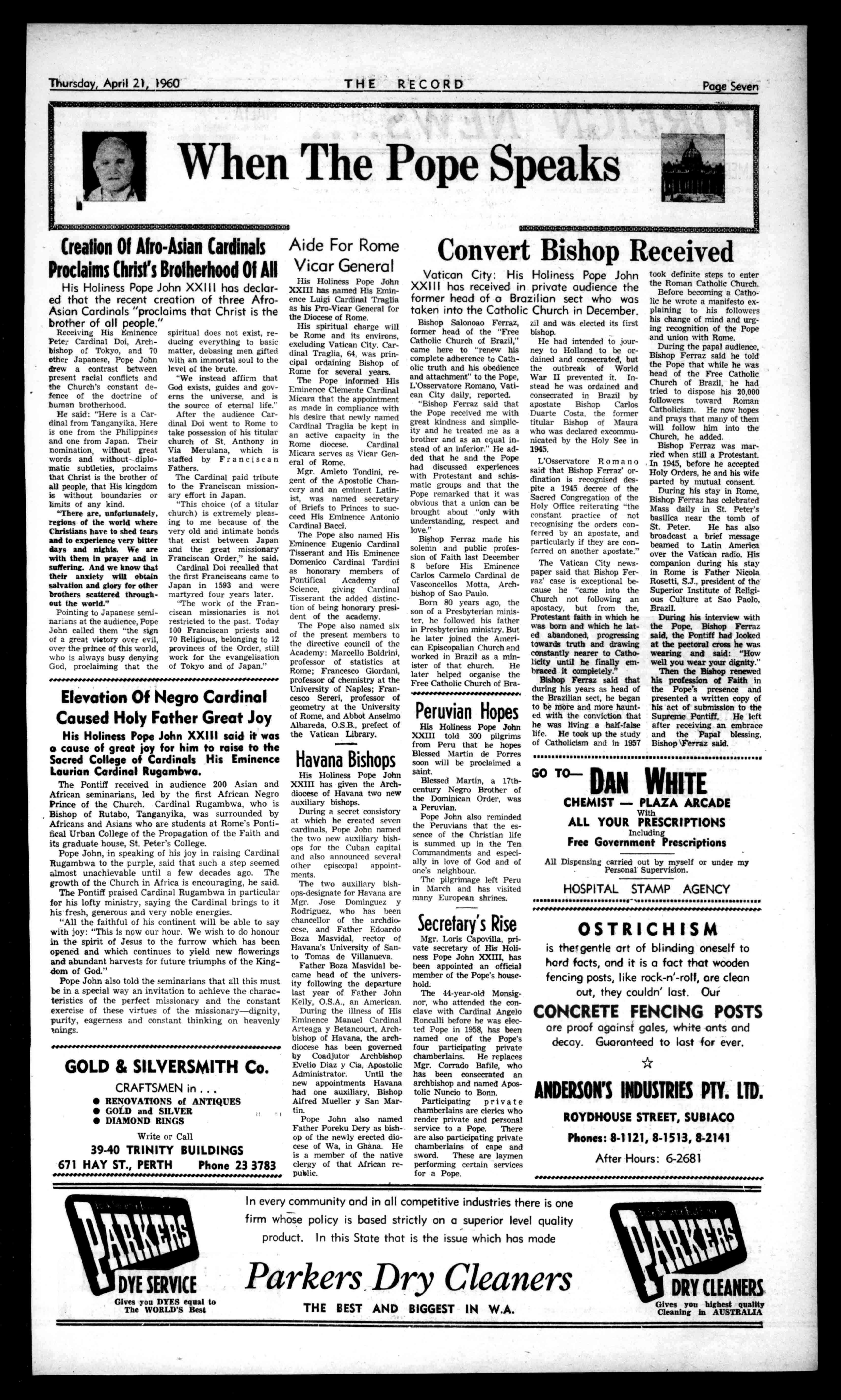
HisHolinessPopeJohnXXIIIhasdeclaredthattherecentcreationofthreeAfroAsianCardinals"proclaimsthatChrististhe brotherofallpeople."
ReceivingHisEminence
PeterCardinalDoi,ArchbishopofTokyo,and70 otherJapanese,PopeJohn drewacontrastbetween presentracialconflictsand theChurch'sconstantdefenceofthedoctrineof humanbrotherhood.
Hesaid:"HereisaCardinalfromTanganyika.Here isonefromthePhilippines andonefromJapan.Their nomination,withoutgreat wordsandwithoutdiplomaticsubtleties,proclaims thatChrististhebrotherof allpeople,thatHiskingdom iswithoutboundariesor limitsofanykind.
"Thereare,unfortunately, regionsoftheworldwhere Christianshavetoshedtears andtoexperienceverybitter daysandnights.Weare withtheminprayerandin suffering.Andweknowthat theiranxietywillobtain salvationandgloryforother brothersscatteredthroughouttheworld."
PointingtoJapaneseseminariansattheaudience,Pope Johncalledthem"thesign ofagreatvictoryoverevil, overtheprinceofthisworld, whoisalwaysbusydenying God,proclaimingthatthe
spiritualdoesnotexist,reducingeverythingtobasic matter,debasingmengifted withanimmortalsoultothe levelofthebrute.
"Weinsteadaffirmthat Godexists,guidesandgovernstheuniverse,andis thesourceofeternallife."
AftertheaudienceCardinalDoiwenttoRometo takepossessionofhistitular churchofSt.Anthonyin ViaMerulana,whichis staffedbyFranciscan Fathers.
TheCardinalpaidtribute totheFranciscanmissionaryeffortinJapan.
"Thischoice(ofatitular church)isextremelypleasingtomebecauseofthe veryoldandintimatebonds thatexistbetweenJapan andthegreatmissionary FranciscanOrder,"hesaid, CardinalDoirecalledthat thefirstFranciscanscameto Japanin1593andwere martyredfouryearslater.
"TheworkoftheFranciscanmissionariesisnot restrictedtothepast.Today 100Franciscanpriestsand 70Religious,belongingto12 provincesoftheOrder,still workfortheevangelisation ofTokyoandofJapan."
ElevationOfNegroCardinal CausedHolyFatherGreatJoy
HisHolinessPopeJohnXXIIIsaiditwas acauseofgreatjoyforhimtoraisetothe SacredCollegeofCardinalsHisEminence LaurianCardinalRugambwa.
ThePontiffreceivedinaudience200Asianand Africanseminarians,ledbythefirstAfricanNegro PrinceoftheChurch.CardinalRugambwa,whois BishopofRutabo,Tanganyika,wassurroundedby AfricansandAsianswhoarestudentsatRome'sPontificalUrbanCollegeofthePropagationoftheFaithand itsgraduatehouse,St.Peter'sCollege.
PopeJohn,inspeakingofhisjoyinraisingCardinal Rugambwatothepurple,saidthatsuchastepseemed almostunachievableuntilafewdecadesago.The growthoftheChurchinAfricaisencouraging,hesaid.
ThePontiffpraisedCardinalRugambwainparticular forhisloftyministry,sayingtheCardinalbringstoit hisfresh,generousandverynobleenergies.
"Allthefaithfulofhiscontinentwillbeabletosay withjoy:"Thisisnowourhour.Wewishtodohonour inthespiritofJesustothefurrowwhichhasbeen openedandwhichcontinuestoyieldnewflowerings andabundantharvestsforfuturetriumphsoftheKingdomofGod."
PopeJohnalsotoldtheseminariansthatallthismust beinaspecialwayaninvitationtoachievethecharacteristicsoftheperfectmissionaryandtheconstant exerciseofthesevirtuesofthemissionary-dignity, purity,eagernessandconstantthinkingonheavenly
GOLD&SILVERSMITHCo.
CRAFTSMENin RENOVATIONSofANTIQUES GOLDandSILVER DIAMONDRINGS
WriteorCall
39-40TRINITYBUILDINGS
671HAYST.,PERTH Phone233783
HisHolinessPopeJohn XXIIIhasnamedHisEminenceLuigiCardinalTraglia ashisPro-VicarGeneralfor theDioceseofRome. Hisspiritualchargewill beRomeanditsenvirons, excludingVaticanCity.CardinalTraglia,64,wasprincipalordainingBishopof Romeforseveralyears.
ThePopeinformedHis EminenceClementeCardinal Micarathattheappointment asmadeincompliancewith hisdesirethatnewlynamed CardinalTragliabekeptin anactivecapacityinthe Romediocese. Cardinal MicaraservesasVicarGeneralofRome.
Mgr.AmletoTondini,regentoftheApostolicChanceryandaneminentLatinist,wasnamedsecretary ofBriefstoPrincestosucceedHisEminenceAntonio CardinalBacci.
ThePopealsonamedHis EminenceEugenioCardinal TisserantandHisEminence DomenicoCardinalTardini ashonorarymembersof PontificalAcademy of Science,givingCardinal Tisseranttheaddeddistinctionofbeinghonorarypresidentoftheacademy.
ThePopealsonamedsix ofthepresentmembersto thedirectivecouncilofthe Academy:MarcelloBoldrini, professorofstatisticsat Rome;FrancescoGiordani, professorofchemistryatthe UniversityofNaples;FrancescoSereri,professorof geometryattheUniversity ofRome,andAbbotAnselmo Albareda,O.S.B.,prefectof theVaticanLibrary.
HavanaBishops
HisHolinessPopeJohn XXIIIhasgiventheArchdioceseofHavanatwonew auxiliarybishops. Duringasecretconsistory atwhichhecreatedseven cardinals,PopeJohnnamed thetwonewauxiliarybishopsfortheCubancapital andalsoannouncedseveral otherepiscopalappointments.
Thetwoauxiliarybishops-designateforHavanaare Mgr.JoseDominguezy Rodriguez,whohasbeen chancellorofthearchdiocese,andFatherEdoardo BozaMasvidal,rectorof Havana'sUniversityofSantoTomasdeVillanueva.
FatherBozaMasvidalbecameheadoftheuniversityfollowingthedeparture lastyearofFatherJohn Kelly,O.S.A.,anAmerican.
DuringtheillnessofHis EminenceManuelCardinal ArteagayBetancourt,ArchbishopofHavana,thearchdiocesehasbeengoverned byCoadjutorArchbishop EvelioDiazyCia,Apostolic Administrator. Untilthe newappointmentsHavana hadoneauxiliary,Bishop AlfredMuellerySanMartin.
PopeJohnalsonamed FatherPorekuDeryasbishopofthenewlyerecteddioceseofWa,inGhana.He isamemberofthenative clergyofthatAfricanrepublic.
ConvertBishopReceived
VaticanCity:HisHolinessPopeJohn XXIIIhasreceivedinprivateaudiencethe formerheadofaBraziliansectwhowas tokenintotheCatholicChurchinDecember.
BishopSalonoaoFerraz, formerheadofthe"Free CatholicChurchofBrazil," camehereto"renewhis completeadherencetoCatholictruthandhisobedience andattachment"tothePope, L'OsservatoreRomano,VaticanCitydaily,reported.
"BishopFerrazsaidthat thePopereceivedmewith greatkindnessandsimplicityandhetreatedmeasa brotherandasanequalinsteadofaninferior."HeaddedthatheandthePope haddiscussedexperiences withProtestantandschismaticgroupsandthatthe Poperemarkedthatitwas obviousthataunioncanbe broughtabout"onlywith understanding,respectand love."
BishopFerrazmadehis solemnandpublicprofessionofFaithlastDecember beforeHisEminence CarlosCarmeloCardinalde VasconcellosMotta,ArchbishopofSaoPaulo.
Born80yearsago,the sonofaPresbyterianminister,hefollowedhisfather inPresbyterianministry.But helaterjoinedtheAmericanEpiscopalianchurchand workedinBrazilasaministerofthatchurch.He laterhelpedorganisethe FreeCatholicChurchofBra-
PeruvianHopes
HisHolinessPopeJohn XXIIItold300pilgrims fromPeruthathehopes BlessedMartindePorres soonwillbeproclaimeda saint.
BlessedMartin,a17thcenturyNegroBrotherof theDominicanOrder,was aPeruvian. PopeJohnalsoreminded thePeruviansthattheessenceoftheChristianlife issummedupintheTen CommandmentsandespeciallyinloveofGodandof one'sneighbour.
ThepilgrimageleftPeru inMarchandhasvisited manyEuropeanshrines.
SecretarysRise
Mgr.LorisCapovilla,privatesecretaryofHisHolinessPopeJohnXXIII,has beenappointedanofficial memberofthePope'shousehold.
The44-year-oldMonsignor,whoattendedtheconclavewithCardinalAngelo RoncallibeforehewaselectedPopein1958,hasbeen namedoneofthePope's fourparticipatingprivate chamberlains.Hereplaces Mgr.CorradoBafile,who hasbeenconsecratedan archbishopandnamedApostolicNunciotoBonn.
Participatingprivatechamberlainsareclericswho renderprivateandpersonal servicetoaPope.There arealsoparticipatingprivate chamberlainsofcapeand sword.Thesearelaymen performingcertainservices foraPope.
ailandwaselecteditsfirst bishop. HehadintendedtojourneytoHollandtobeordainedandconsecrated,but theoutbreakofWorld WarIIpreventedit.Insteadhewasordainedand consecratedinBrazilby apostateBishopCarlos DuarteCosta,theformer titularBishopofMaura whowasdeclaredexcommunicatedbytheHolySeein 1945.
L'OsservatoreRomano saidthatBishopFerraz'ordinationisrecogniseddespitea1945decreeofthe SacredCongregationofthe HolyOfficereiterating"the constantpracticeofnot recognisingtheordersconferredbyanapostate,and particularlyiftheyareconferredonanotherapostate."
TheVaticanCitynewspapersaidthatBishopFerri?!caseisexceptionalbecausehe"cameintothe Churchnotfollowingan apostacy.butfromthe, Protestantfaithinwhichhe wasbornandwhichhefatedabandoned,progressing towardstruthanddrawing constantlynearertoCatholicityuntilhefinallyembraceditcompletely."
BishopFerrazsaidthat duringhisyearsasheadof theBraziliansect,hebegan tobemoreandmorehauntedwiththeconvictionthat hewaslivingahalf-false life.Hetookupthestudy ofCatholicismandin1957
tookdefinitestepstoenter theRomanCatholicChurch.
BeforebecomingaCatholichewroteamanifestoexplainingtohisfollowers hischangeofmindandurgingrecognitionofthePope andunionwithRome.
Duringthepapalaudience, BishopFerrazsaidhetold thePopethatwhilehewas headoftheFreeCatholic ChurchofBrazil,hehad triedtodisposehis20,000 followerstowardRoman Catholicism.Henowhopes andpraysthatmanyofthem willfollow'himintothe Church,headded.
BishopFerrazwasmarriedwhenstillaProtestant. In1945,beforeheaccepted HolyOrders,heandhiswife partedbymutualconsent.
DuringhisstayinRome, BishopFerrazhascelebrated MassdailyinSt.Peter's basilicanearthetombof St.Peter. Hehasalso broadcastabriefmessage beamedtoLatinAmerica overtheVaticanradio.His companionduringhisstay inRomeisFatherNicola Rosetti,S.J.,presidentofthe SuperiorInstituteofReligiousCultureatSaoPaolo, Brazil.
Duringhisinterviewwith thePope,BishopFermi said,thePontiffhadlooked atthepectoralcrosshewas wearingandsaid:"How wellyouwearyourdignity."
ThentheBishoprenewed hisprofessionofFaithin thePope'spresenceand presentedawrittencopyof hisactofsubmissiontothe SupremePontiff.Heleft afterreceivinganembrace andthePapalblessing, Bishop'Ferrazsaid.
Thursday,April21,1960 THERECORD PageSeven
1.11111f..g.v,r./"ot I, ,1P.I
DANWHITE CHEMIST-PLAZAARCADE With ALLYOURPRESCRIPTIONS Including FreeGovernmentPrescriptions AllDispensingcarriedoutbymyselforundermy PersonalSupervision. HOSPITALSTAMPAGENCY OSTRICHISM isthe,gentleartofblindingoneselfto hardfacts,anditisafactthatwooden fencingposts,likerock-n'-roll,areclean out,theycouldn'last.Our CONCRETEFENCINGPOSTS oreproofagainstgales,whiteantsand decay.Guaranteedtolostforever. ANDERSON'SINDUSTRIESPTY.LTD. ROYDHOUSESTREET,SUBIACO Phones:8-1121,8-1513,8-2141 AfterHours:6-2681 \Silt" DYESERVICE Packers.DryCleaners GivesyouDYESequalto TheWORLD'SBest Ineverycommunityandinallcompetitiveindustriesthereisone firmwho-sepolicyisbusedstrictlyonasuperiorlevelquality product.InthisStatethatistheissuewhichhasmade THEBESTANDBIGGESTINW.A. 11114 DRYCLEANERS Givesyouhighestquality CleaninginAUSTRALIA ..111111111
FOREIGNNEWS....
AMERICA
ACatholicbishophasdeclaredthatMoralRe-Armament,contrarytoitsown statements,"isareligious movement,ifnotareligion."
BishopThomasL.Noaof Marquette,Michigan,made thestatementinanarticle explainingwhytwoyears agoheforbadeCatholicsin hisdiocesetotakepartin MRAactivities.
(OneofMoralRe-Armament'stwomaininternationaltrainingcentresislocated onMackinacIsland,Mich., intheMarquettediocese).
BishopNosyexplaination isthefirstofaseriesof fourarticleshehaswritten onMRAforOurSunday Visitor,anationalCatholic newspaper.Theserieshas beenpublishedinpamphlet formunderthetitle"CatholicsandMoralRe-Armament."
Inhisarticle,Bishop Noastatesthat"onecannot helpbutcometotheconclusionthatMRAisamodifiedandborrowedformof Christianity."
Hepointsoutthatin1951 theVatican'sSacredCongregationoftheHolyOffice issuedadirectiveinstructing priestsandReligiousnotto takepartinMRAmeetings, andlaymennottoaccept postsofresponsibilityinthe movement.
Inthe20yearspriorto 1951,headds,CatholicparticipationinMRAhadbeen bannedbybishopsinGreat Britain,Ireland,Belgium,
GermanyandItaly. BishopNoadeclaresitto behisopinionthat"MRA isareligiousmovement,if notareligion.Assuchit constitutesadangertothe FaithofCatholicswhoparticipate."
WhileMoralRe-Armamentleaderssaythemovementisnotareligion, neverthelessitsstatements stress"theconceptofGod andtheguidanceofGod," theBishopsays.
"Religionisdefinedand expressedbythesewordsor theword'religion'haslost itsmeaning."hewrites.
AUSTRIA..
HisEminenceFranziskus CardinalKoenig,whowas injuredinanautomobile accidentwhileenrouteto thefuneralofAlozije CardinalStepinar,isback homeafterbeinghospitalisedfor47days.
Althoughthe54-year-old ArchbishopofViennawas releasedMarch311fromthe hospital,hehastowear light,invisiblejawsupports becauseofmultiplejaw fractureshesustainedinthe accident.
CardinalKoenigwasheadedfortheCroatiancapital atZagreb,wherehewasto officiateatCardinalStepinac'sRequiem(Feb.13), whenhiscarandatruck collidedatVarazdin,Yugoslavia. TheCardinal'schauffeur waskilled.TheCardinal
3(6,
WHITETOPTAXIS
Rod.)Lon, MeterEqopp,i PROMPTTAXISERVICE 40CARS r4,t, allFremont', WA'f AWHITETOPTao( CASTLEHOTEL
Phone:26-2151
Hewasabletogivea radioaddressseveraldays beforehisreleasefromthe hospitalhere.
ArchbishopAndreasRohracherofSalzburghasstatedthatiftheUnitedNationscanurgeSouthAfrica toabandonracialdiscriminationitcanrequestcommunistcountriestoabandonreligiouspersecution.
Hewascommentingin theweeklynationalnewspaperVolksbote(People's Messenger)onaU.N.SecurityCouncilresolution againstSouthAfrica'sapartheid(segregation)laws.
ArchbishopRohrachersaid theU.N.hadeveryrightto meetupontherequestof Afro-Asiannationstodeal withbloodyquarrelsin SouthAfrica.Hesaidthe U.N.alsohastherightto turnitsattentiontocommunistnationssuchasChina, where"Chinesecommunists arewadinginthebloodof Christians."
CHINA
MedicalMissionariesof Marywillsetuptheirfirst AsianfoundationonForinosa.
MotherMaryMartin, Dublin-bornSuperior-Generalandfoundressofthe 23-year-oldcongregation, saidonMarch26thatthe Formosahousewillbethe Sisters'firstmissionoutside Africa.
MotherMartinandSister MaryAndrew,M.D.,amemberofthecongregation's council,havediscussedwith ArchbishopPaulYuPin, rectoroftheCatholicUniversityplannedforFormosa, thepossibilityofaffiliating aMedicalMissionarynursingschoolwiththeuniversity'smedicalcollege.
TheFormosamissionwill bethe16thmissionhouse establishedbythecongregationsince1937,whenit wasfoundedinIreland. Fifteenmissionhouseshave beenestablishedinNigeria andAngola,WestAfrica, andinUgandaandTanganyika,EastAfrica.These includehospitalswithtrainingschoolsforAfrican nurses,maternityclinics, marriagetraining'centres andfoursettlementsfor victimsofHansen'sdisease (leprosy).
ENGLAND
TwoCatholicmembersof thecitycouncilinNewcastle-On-Tynecalledfora fullinquiryintoreportsthat birthcontrolagentshave officialsupportforadoorto-doorcampaigninanindustrialsuburb.
MembersoftheFamily PlanningAssociationwere saidtohaveapprovalofthe localhealthofficerfortheir programme.
livingbycleaningoffices diedrecently. Atotalof£A75,000is neededtorebuildtheshrine overlookingTyburn,where 100beatifiedmartyrsand manyotherCatholicsdied onthegallowsascommon criminals.
Tyburnwasthepublic executionplaceoftheTudor andStuartroyaltyofEngland. Itssiteismarked todaybyMarbleArch,at thenortheastcornerof HydePark.
ThelastCatholicmartyr todietherewasBlessed OliverPlunket,Archbishop ofArmaghinIreland,who wasexecutedJuly11,1681.
GERMANY..
PoliceofcommunistEast Germanyhavearresteda Catholicpriestforstiffeningtheresistanceoffarmersagainstcollectivisation, accordingtoreportsreceived inBerlin.
HeisFatherEugenEussner,acountryparishpriest nearSchwerininMecklenburg.
Policeblamedhimforthe refusaloflocalfarmersto puttheirfarmsatthedispositionofthestatecollectivisationauthorities.The farmershadinsteaddemandedthattheybereturnto WestGermany,fromwhere mostofthemhadmigrated inthe1920's.
INDONESIA
PresidentSukarno!lasappointedIgnatiusJ.Kasimo, veteranleaderofIndonesia's CatholicParty,tothenew NationalFrontPreparatory Committee.
Mr.Sukarno,whoestablishedthe27-membercommitteeonMarch23,saidhe hadchosenitsmembersfrom 'politicalandoccupational groups,andthatitismade upofpersons"whoare trustedbythepeople."He chargedthecommitteewith layingthegroundworkby thisMayfora"National Front"toserveas"the rnobiliserofalltheenergy whichwehaveinour societyandpeopletocontinueourstraggleforthe creationofajustandprosperoussociety."
Mr.Kasimoisoneofnine politicalleadersnamedto thecommittee.
ThePresident'sactionis tiedtohisappointmentof 261personstoanewParliamentunderhis"guideddemocracy"programme.Five membersoftheCatholic Partywerenamedtothe Parliament,alongwithsix membersoftheProtestant Party,41membersofMoslemparties,30communists, 44nationalistsandfour minorpartymembers.Representativesof"functional groups"wereassigned131 seats.
MALTA
FirethatguidedSt.Paul andhisshipwreckedcompanionstosafetyonMalta's shores1,900yearsagowas relitonthesamespotduringanightofprayerand penance, AtSt.Paul'sBayadescriptionoftheshipwreck was'readfromtheActsof theApostles.Then,asthe firewaslit,thebellsofall thechurchesonthisMediterraneanislandrangout. Torcheswerelitfromthe fireandcarriedinprocessiontotheparadeground atFloriana,where70,000 islandershadgathered.StationsoftheCrosswereled by14priests.Masswas thencelebratedbyAuxiliaryBishopEmmanualeGaleaofMalta.
TheintentionofMalta's nightofprayerandpenance wasthepreservationofthe FaithinheritedfromSt. Paul.Othercelebrations tomarkthe1,900thanniversaryofthesaint'sarrival herewilltakeplacethroughouttheyear.
Accordingtotradition,St. Paulwasshipwreckedhere in60A.D.whilebeingtaken toRomeasaprisoner,The island,nowaBritishcolony, wasconvertedtoChristianityduringthesaint'sthreemonthstay.Today311,000 ofMalta'speopleareCatholics. Climaxofthisyear'scelebrationswillcomeinJuly whenHisEminenceAloisius CardinalMuenchofthe Vaticanheadquartersstaff, whowasformerlyBishop ofFargo,N.D.,andApostolic NunciotoGermany,will attendasPapalLegatealong with50bishopsfromvariouscountries. Whilethenightofprayer andpenancewasbeingobservedhere,asimilarvigil tookplaceinLourdes.TakingpartintheLourdesobservanceweremembersof Britain'sAllNightVigil Group,whoprayedforthe successofMalta'sanniversarycelebrationhonouring St.Paul.
MEXICO
HisEminenceJoseCardinalGaribiyRivera,ArchbishopofGuadalajara,has urgedCatholicparentswith childreninpublicschools toorganisethemselvesto defendtherightsoftheir children. Hecalledonthem"tobe watchfulthatteachersdo notdepartfromthatsecular neutralitywhichthelaw requires,andbecomesectarian."
Healsodeclared:"Thereis needtolaunchacrusade aimedatmakingthefamily moresoundmorally."But heexpressedsatisfactionat thelargenumberofhomes that"arelikethehouseof Nazareth."
CardinalGaribiyRivera referredtoincreasingpropagandaforbirthcontrol.He said:"TheChurch,however, doesnotceasetocondemn asarealcrimeeverything directlyaimedatfrustrating thepurposesofnature."
lationofmorethan21million.Thatmeantthateach priesthadtocarefor619 persons.Todaythecountriespeoplenumbercloseto 30million,butthetotal numberofpriestshasdeclinedto23,372.Thusthere arenow1,264Catholicsfor eachpriest.
Inhisowndiocese,the Bishopstated,thereare 2,116prieststoserve, 2,325,000Catholics. The numberofvocations,hesaid hasrisensincetheSpanish CivilWar,duringwhich 4,266priestswerekilled,including331fromMadrid. Butthenumberofpriests intheMadriddiocesehas notyetreturnedtothelevel of1936,theyearthewar started. Meanwhile,the Madridpopulationhasincreasedby30percent.
Theyearlyaverageof40 priestsgraduatingfromthe seminariesscarcelyfillsthe vacanciescausedbythe deathsorillnessesof olderpriests,theBishop stated.Youngpriestswho aresenttoruralareasin thediocese,headded,usuallyhavetocarefortwo parishes.
S.AFRICA
AprominentAnglican clergymanhasresignedhis ministryandhiscommission asaseniorchaplaininthe SouthAfricanDefenceFarce lobecomeaCatholic.
TheRev.Mr,RoyRandolph,whowasAnglican DeanofJohannesburgfrom 1952to1958,saidheplans tostudyfortheCatholic priesthood.Hehasresigned hiscommissionassenior Anglicanchaplainofthe NorthernCommandofthe SouthAfricanDefence Force, Pendingdeterminationof wherehewillstudyforthe priesthood,heisstayingat St.JohnVjanneySeminary inPretoria.
TURKEY
ArchbishopFrancescoLardonehasmovedtoAnkara fromIstanbulandpresented toPresidentCelalBayar hiscredentialsasfirst ApostolicInternuncioto Turkey. TheItalian-borndiplomat, whowasamemberofthe facultyoftheCatholicUniversityofAmericainWashington,D.C.,for25years, hasservedasApostolic DelegatetoTurkeysince lastJune.
TheHolySeeandthe Turkishgovernmentannouncedtheestablishmentof formaldiplomaticrelations lastJanuary.Turkeyagreed toestablishanembassyat theVatican,andtheHoly Seesetupananinternunciature-theequivalentof alegation-inTurkey.
VATICANCITY
TheStateofVaticanCity hasissuedaseriesofstamps callingattentiontothe plightofrefugees.
Mrs.I.McCambridge,a councilman,expressedindignationoverthecampaign. Sheandaconfrere,AldermanPercyEdwards,said thattheirfellowCatholics objecttosuchprocedures, andthatthecitycouncil shouldsteerclearof"familyplanning."
AnIrishcharwomanhas leftherlifesavingstoassistrebuildingofabombedoutshrinetotheEnglish MartyrsinLondon.
Achequefor£3,150,representingtheentiresavings ofthelateMrs.Catherine Keogh,waspresentedtoHis EminenceWilliamCardinalGodfrey,Archbishopof Wesminster,asasymbolic firstcontributiontoanationwidefundforreconstructionoftheshrine.Cardinal Godfreyimmediatelydepositedasecondcheque,his personalcontributionof fA1,890.
Mrs.Keogh,achildless widowwhoearnedameagre
IRELAND
"ThecallofGodis strongerthanthecallof Ireland."That'swhyso manyIrishpriestsbecome missionaries,accordingto BishopMichaelBrowneof Galway. TheBishop,said400 priestswereordainedin Irelandlastyear,andthere isnoebbinthetitleof Irishvocations. Infact, saidBishopBrowne,"the remarkablethingisthatvocationsarealwaysincreasing." Almosthalfthenew priestsordainedlastyear wenttoothercountries,he said.
"Somepeoplecallour priestsIreland'sgreatestexparts,"BishopBrowneadded,"butwedon'tliketo thinkofthemasexports. Theydon'twanttoleave Ireland."
TheyjustloveGodmore thantheyloveIreland,the Bishopstated.
Healsocondemnedabortionasthetaking"ofinnocenthumanlife."
SPAIN
EachSpanishpriesttoday mustcareformorethan twiceasmanyCatholicsas hispredecessordid40years ago,BishopLeopoldoEijo GarayofMadridhaspointedout.
InapastoralletteronvocationstheBishopnoted thatin1920Spainhad34,420prieststoserveapopu-
VaticanCitypublishedits series(April7)simultaneouslywith69othercountries inajointefforttopromote thecurrentWorldRefugee Year.
TheHolySeesent100,000setsofitsnewseriesand 35,000specialfirst-dayenvelopestotheofficeofthe UnitedNationsHighCommissionerforrefugeesand totheU.N.organisationfor Palestinianrefugees.
Thedaythestampseries waspublished,HisHoliness PopeJohnXXIIIcelebrated Massforthesuccessof WorldRefugeeYear.
PageEight THERECORD Thursday,April21,1960
NORTHBEACH GoodAccommodation BeerGarden AmpleParking.
PHONE25-7101 MORRISHOTEL BARNESRD.,INNALOO
Superior
AmpleParking. 2milesfrompopular beaches. SUBIACOHOTEL SUBIACO FirstClassAccommodation andService. Phone:8-1028. D.N.YOUNG,Proprietor. WEMBLEYHOTEL ExcellentLoungeand Accommodation SpaciousParking Phone:87-2418. Cnr.Cambridgeand AlexanderStreets,Wembley WAVERLEYHOTEL ALBANYHIGHWAY. CANNINGTON (Only6milesfromPerth) ModernandConvenient HomelyAccommodation A.R.CONNELL Phone68-2419 Youcanbesureofa FriendlyWelcomeatthe PLYMPTONHOTEL inEASTFREMANTLE CANNINGHIGHWAY Imo.toFremantleTraffic, Bridge, EricCampbell,Prop. Phone5-1721. "CAMBRAY" RESIDENTIAL-PERTH 1stClassBedandBreakfast Accommodation,HotandCold WaterInBedrooms 199ST.GEORGE'STER. (OppositeTivoliG ) ModerateTariff. Phones:21-6365,21-8681 ATTHE CITYHOTEL Cnr.KingandMurraySta., Perth G.F.FOLEY Offersyouonly"TheBest" Phone:21-4094 EnjoytheBest ACCOMMODATIONand SERVICEat HOTELCOTTESLOE "Rightontheseafront" Phone3-2155. R.M.Dymock,Licensee WILLAGEEPARK HOTEL TheState'sMostModern TOMKENNY,Licensee Cnr,StockandHighRoark, MELVILLE Phone::1,1518. HOTEL ESPLANADE PERTH'SLEADING HOTELFORALL VISITORS Phone:23-1531 COMMERCIAL HOTEL NORTHAM PhoneNortham49 T.E.MURPHY,Proprietor NATIONALHOTEL Car.HighandMarketSts., FREMANTLE Offersexcellenthomely accommodation Phone:5-1786 T.W.IIYNES,Licensee METROPOLEHOTEL NowunderpersonalsupervisionMr.andMrs.Ted Taylor,lateDarlingRange Hotel. FirstClassBedand Breakfast. HighClassCuisine. PHONE:21-6165. HOTELIMPERIAL WELLINGTONSTREET, PERTH (OppRallwavStalinn, AllRoomshaveTelephone, HotandColdWater. BedandBreakfastorFallTariff. 24-HOURROOMSERVICE. ReducedTariffferChildren. BruceSmith,Licensee, TEL.:534921. PALACEHOTEL PERTH "HOMESUPPLY" BOTTLEDEPT. "FreeDelivery"-simply Phone23-2244 W.H.Jacques,Manager,
takentoahospitalin Varazdinandwasremoved toViennabyhelicopter10 dayslater.
Accommodation.
was
tit X" . aoaaaaaiasa.....aa.sta s Wall BESUREOFSATISFACTION-PURCHASETOURSPECTACLES (ReadingandDistance)from JOHNVANN&CO. 29PIERSTREET,PERTH FROM501--NOWAITING-NOTESTING OcculistsPrescriptionsDispensed WatchandJewelleryRepairs-LowestCharges NIZEMEXKXYii)tSCAMWAXiMg.ltitai)OMSIVIgliaMtiffiSIXXXICS1f.M4 WOOD&COAL BRYANT&WATERS 8090SlidingStPerth213938
NewSouthWales
InternStatesRoundAlp
Victoria
EducationAPublicMatter
ThePrimeMinister'srecentstatementthat itwassignificantthatsomanypeoplewere makingfinancialsacrificestousereligious schoolswasreferredtobytheV.Rev.L.P. Moran,Adm.,afterhehadblessedandopenedthenewCorpusChristiSchoolatGlenroy lastSundayweek.
ThePrimeMinisterhad giventheanswertothose whomaintainedthatreligiousschoolsweremerelya matterofprivatechoice, FatherMoransaid.
Intheidealorderaparishunitconsistedofa church.presbytery,school andconvent.Buttheschool wasnottheleastinimportance.
Theschoolwasaliving monumenttothefaithof thepeople;moreitwasthe sourceandfoundationof theirfaith.Thatwasthe reasonforthesacrificeand generousityforwhichthe Catholicpeoplewerenoted.
Thetaskofteachingand preachingtheGospelwas entrustedtotheChurchby OurLord,andfromthat pointofviewwehadno choiceinthematter.We realisethegreatsacrificesthatwererequiredand andwerealisedthatthey wereessential.
"YesterdaythePrimeMinisterreferredtothesignificantcontributionmadeby religiousschoolstothelife ofthecommunity."Father Moransaid."Thisindeed isverysignificant.Apoor parrallelhasbeendrawnbetweenprivatetransportand publiceducation.
Schoolisnotaprivate matter;aschoolispublic byitsverynature.
Ineveryschoolthereis beinggivenasubstantial contributiontothegoodof thecommunity.EveryCatholicschoolisdoingsomethingtowardsthatsubstantialcontribution."
edinsometangibleway andthatweshouldobtain ameasureofjustice.We hope,withthehelpofGod, onedayweshallobtainit.
Inthemeantimewecannotfalter,becauseweare doinganimportantpartof theChurch'swork.While thatisourburden,itisalso ourprivilege.
"Wehaveanotherprivilegeoflivinginademocratic community.Whilewefeel thatourdemocraticway oflifeisbest,weknowthat allhumaninstitutionsare imperfect,andthatevenin ademocracytherecanbea certainamountoftyranny.
Democracymeansthatthe majorityrulesbuttheremay beinjusticeiftherightsof theminorityortheindividualarenotrecognisedand respected.Underthisprinciplewefeelthatwehavetherighttosomereturn forthecontributionweare makingtothecommunityat large."
Layman'sParl
Theliturgicalrevivalnow takingplacewithinthe Churchwasthesubjectof theaddressoftheRev. PaulGardiner,S.J.,atthe annualCommunionbreakfastofSt.KildaChristian Brothers'OldCollegianAssociationlastmonth.
FatherGardinerexplained thatthesechangesweredesignedtoprovidethelaity withmoreopportunitiesto sharewiththeclergyinthe externalritesoftheChurch.
ThePriesthoodofChrist Developingtheparallel,shouldnotheregardedas FatherMoransaidthatsomerestrictedonlytotheortimeagoitwasfoundthatdainedmembersofthe therewerecertainbuild-Church.
ings-hospitals,charitablein- Certainly,theordained stitutionsandschools-onpriesthadaspecialplace whichmunicipalrateshadatthealtarofGod,butthe formerlybeenlevied,butlaitywerenowrequiredto whichwerefoundtoquali-participatetoamuchgreatfyforexemption. erextentintheliturgical AfterlegalexaminationofritesoftheChurch;infact thepositionitwasruledtoshareinandliveasa thattheseplacesshouldbememberofChrist'spriestexemptbecauseofthecon-hood.
tributiontheyweremaking TherelaxationoftheEutothelifeofthecommunity;charisticfastandtheintroitwasruledthattheywereductionoftheeveningand charitablebecausetheyweredialogueMasseswereexamconferringbenefitsonthepiesoftheopportunities communityaswellasonin-thatweregiventothelaity dividuals. tosharemorefullyinthe
"ThePrimeMinisterhasSacrificeoftheMass. giventheanswertothose Whereverpossible,Hosts whomaintainthatthisisactuallyconsecratedduring merelyamatterofprivatethatMassweredistributed choice,whenheemphasisedatCommunionand,where thesignificantcontributionthenumbersinattendance beingmadebyreligiousdidnotrenderitimpracticschoolstothecommunityatable,thelaitywerenowenlarge,"Fr.Moransaid. couragedtoplacetheun-
.4,44,44.04.11,114.0004,NINNOOMOVON.
"Weallhopethatthiscon-consecratedhostsinthe tributionshouldberecognis-CiboriumduringaprocessionattheOffertory. Ofcourse,thesechanges couldonlybeintroduced gradually,andunderthe guidanceofeachlocalauthority,butseecouldanticipatethembyagreater understandingoftheceremoniesandbythedevelopmentofasenseofmys-
SCRIBBLING PADS
ThreeSizes 6d.each
RECORDPRINT teryforwhichtheserites 450HayStreet,Perth. wereonlyavisiblesign.
PIANOS SpecialAttention CONVENTSandINSTITUTIONS
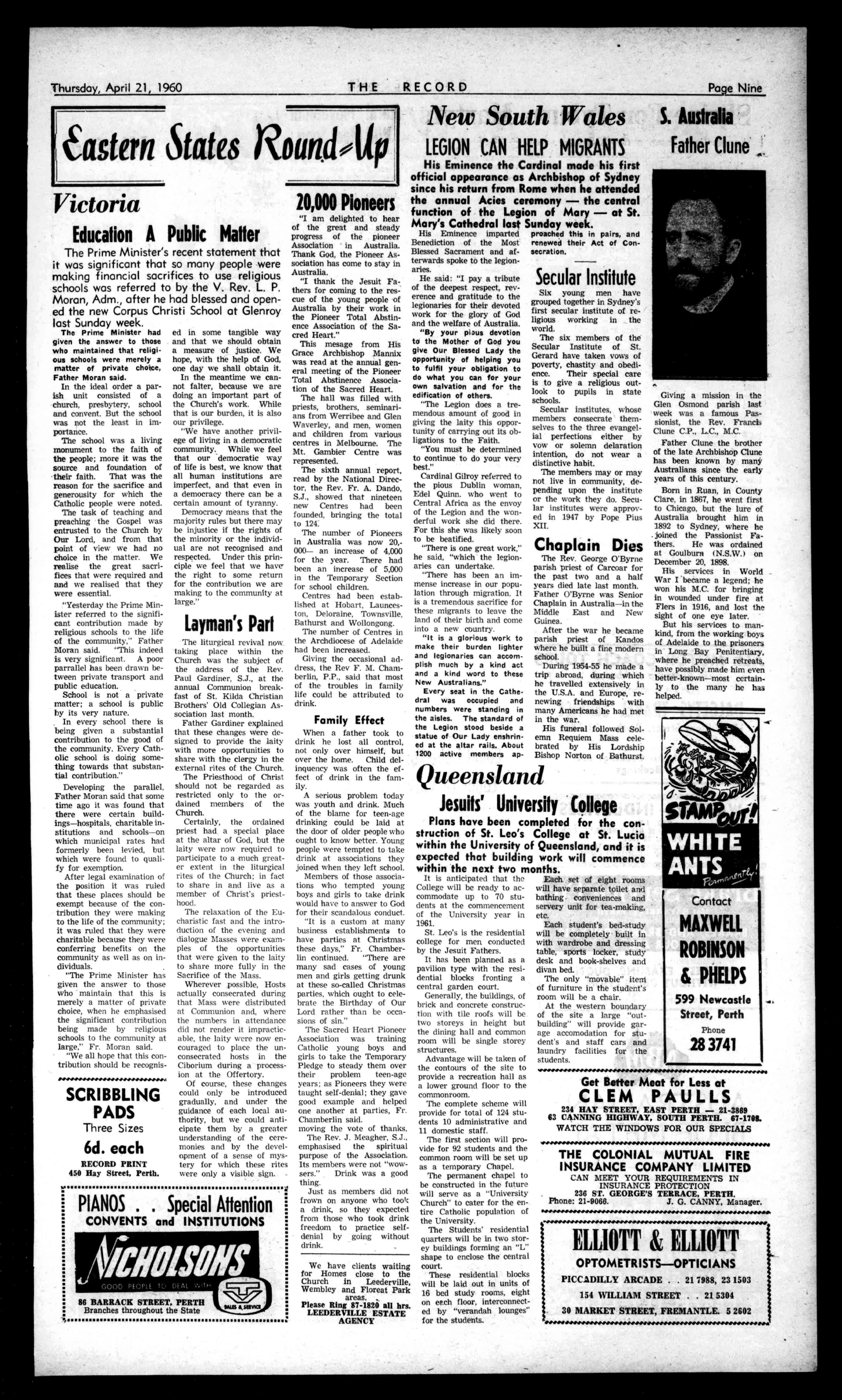
susssay. 86
20,000Pioneers
"Iamdelightedtohear ofthegreatandsteady progressofthepioneer AssociationinAustralia. ThankGod,thePioneerAssociationhascometostayin Australia.
"IthanktheJesuitFathersforcomingtotherescueoftheyoungpeopleof Australiabytheirworkin thePioneerTotalAbstinenceAssociationoftheSacredHeart."
ThismesagefromHis GraceArchbishopMannix wasreadattheannualgeneralmeetingofthePioneer TotalAbstinenceAssociationoftheSacredHeart.
Thehallwasfilledwith priests,brothers,seminariansfromWerribeeandGlen Waverley,andmen,women andchildrenfromvarious centresinMelbourne.The Mt.GambierCentrewas represented.
Thesixthannualreport, readbytheNationalDirector,theRev.Fr.A.Dando, S.J.,showedthatnineteen newCentreshadbeen founded,bringingthetotal to124.
ThenumberofPioneers inAustraliawasnosy20,000-anincreaseof4.000 fortheyear.Therehad beenanincreaseof5,000 intheTemporarySection forschoolchildren.
CentreshadbeenestablishedatHobart,Launceston,Deloraine,Townsville, BathurstandWollongong.
ThenumberofCentresin theArchdioceseofAdelaide hadbeenincreased.
Givingtheoccasionaladdress,theRevF.M.Chamberlin,P.P.,saidthatmost ofthetroublesinfamily lifecouldbeattributedto drink.
FamilyEffect
Whenafathertookto drinkhelostallcontrol, notonlyoverhimself,but overthehome.Childdelinquencywasoftentheeffectofdrinkinthefamily.
Aseriousproblemtoday wasyouthanddrink.Much oftheblameforteen-age drinkingcouldbelaidat thedoorofolderpeoplewho oughttoknowbetter.Young peopleweretemptedtotake drinkatassociationsthey joinedwhentheyleftschool. Membersofthoseassociationswhotemptedyoung boysandgirlstotakedrink wouldhavetoanswertoGod fortheirscandalousconduct.
"Itisacustomatmany businessestablishmentsto havepartiesatChristmas thesedays,"Fr.Chamberlincontinued."Thereare manysadcasesofyoung menandgirlsgettingdrunk attheseso-calledChristmas parties,whichoughttocelebratetheBirthdayofOur Lordratherthanbeoccasionsofsin."
TheSacredHeartPioneer Associationwastraining Catholicyoungboysand girlstotaketheTemporary Pledgetosteadythemover theirproblem teen-age years;asPioneerstheywere taughtself-denial;theygave goodexampleandhelped oneanotheratparties,Fr. Chamberlinsaid. movingthevoteofthanks,
TheRev.J.Meagher,S.J.. emphasisedthespiritual purposeoftheAssociation. Itsmemberswerenot"wowsers." Drinkwasagood thing.
Justasmembersdidnot frownonanyonewhotoo,: adrink,sotheyexpected fromthosewhotookdrink freedomtopracticeselfdenialbygoingwithout drink.
LEGIONCANHELPMIGRANTS
HisEminencetheCardinalmadehisfirst officialappearanceasArchbishopofSydney sincehisreturnfromRomewhenheattended theannualAciesceremony-thecentral functionoftheLegionofMary-atSt. Mary'sCathedrallastSundayweek.
HisEminenceimpartedproachedthisinpairs,and BenedictionoftheMostrenewedtheirActofConBlessedSacramentandafterwardsspoketothelegionaries.
Hesaid:"Ipayatribute ofthedeepestrespect,reverenceandgratitudetothe legionariesfortheirdevoted workforthegloryofGod andthewelfareofAustralia.
"Byyourpiousdevotion totheMotherofGodyou giveOurBlessedLadythe opportunityofhelpingyou tofulfilyourobligationto dowhatyoucanforyour ownsalvationandforthe edificationofothers.
"TheLegiondoesatremendousamountofgoodin givingthelaitythisopportunityofcarryingoutitsobligationstotheFaith.
"Youmustbedetermined tocontinuetodoyourvery best."
CardinalGilroyreferredto thepiousDublinwoman. EdelQuinn.whowentto CentralAfricaastheenvoy oftheLegionandthewonderfulworkshedidthere. Forthisshewaslikelysoon tobebeatified.
"Thereisonegreatwork," hesaid,"whichthelegionariescanundertake.
"Therehasbeenanimmenseincreaseinourpopulationthroughmigration.It isatremendoussacrificefor thesemigrantstoleavethe landoftheirbirthandcome intoanewcountry.
"Itisagloriousworkto maketheirburdenlighter andlegionariescanaccomplishmuchbyakindact andakindwordtothese NewAustralians."
EveryseatintheCathedralwasoccupiedand numberswerestandingin theaisles.Thestandardof theLegionstoodbesidea statueofOurLadyenshrinedatthealtarrails.About 1200activemembersap-
secration.
SecularInstitute
Sixyoungmenhave groupedtogetherinSydney's firstsecularinstituteofreligiousworkinginthe world.
Thesixmembersofthe SecularInstituteofSt. Gerardhavetakenvowsof poverty,chastityandobedience. Theirspecialcare istogiveareligiousoutlooktopupilsinstate schools.
Secularinstitutes,whose membersconsecratethemselvestothethreeevangelialperfectionseitherby voworsolemndelaration intention,donotweara distinctivehabit.
Themembersmayormay notliveincommunity,dependingupontheinstitute ortheworktheydo.Secularinstituteswereapprovedin1947byPopePius XII.
ChaplainDies
TheRev.GeorgeO'Byrne parishpriestofCarcoarfor thepasttwoandahalf yearsdiedlatelastmonth.
FatherO'ByrnewasSenior ChaplaininAustralia--inthe MiddleEastandNew Guinea.
Afterthewarhebecame parishpriestofKandos wherehebuiltafinemodern school.
During1954-55hemadea tripabroad,duringwhich hetravelledextensivelyin theU.S.A.andEurope,renewingfriendshipswith manyAmericanshehadmet inthewar.
HisfuneralfollowedSolemnRequiemMasscelebratedbyHisLordship BishopNortonofBathurst.
Queensland
Jesuits'UniversityCollege
PlanshavebeencompletedfortheconstructionofSt.Leo'sCollegeatSt.Lucia withintheUniversityofQueensland,anditis expectedthatbuildingworkwillcommence withinthenexttwomonths.
Itisanticipatedthatthe Collegewillbereadytoaccommodateupto70studentsatthecommencement oftheUniversityyearin 196L
St.Leo'sistheresidential collegeformenconducted bytheJesuitFathers.
Ithasbeenplannedasa paviliontypewiththeresidentialblocksfrontinga centralgardencourt.
Generally,thebuildings,of brickandconcreteconstructionwithtileroofswillhe twostoreysinheightbut thedininghallandcommon roomwillbesinglestorey structures.
Advantagewillbetakenof thecontoursofthesiteto providearecreationhallas alowergroundfloortothe commonroom.
Thecompleteschemewill providefortotalof124students10administrativeand 11domesticstaff.
Thefirstsectionwillprovidefor92studentsandthe commonroomwillbesetup asatemporaryChapel.
Thepermanentchapelto beconstructedinthefuture willserveasa"University Church"tocaterfortheentireCatholicpopulationof theUniversity.
TheStudents'residential quarterswillheintwostoreybuildingsformingan"L" shapetoenclosethecentral court.
Theseresidentialblocks willbelaidoutinunitsof 16bedstudyrooms,eight onee.chfloor,interconnectedby"verandahlounges" forthestudents.
S.Australia
FatherClune
Eachsetofeightrooms willhaveseparatetoiletand bathingconveniencesand serveryunitfortea-making, etc.
Eachstudent'sbed-study willbecompletelybuiltin withwardrobeanddressing table,sportslocker,study deskandbook-shelvesand divanbed.
Theonly"movable"item offurnitureinthestudent's roomwillbeachair.
Atthewesternboundary ofthesitealarge"outbuilding"willprovidegarageaccomodationforstudent'sandstaffcarsand laundryfacilitiesforthe students.
Givingamissioninthe
GlenOsmondparishlast weekwasafamousPassionist,theRev.Francis CluneC.P., M.C.
FatherClunethebrother ofthelateArchbishopClune hasbeenknownbymany Australianssincetheearly yearsofthiscentury.
BorninRuan,inCounty
Clare,in1867,hewentfirst toChicago,butthelureof Australiabroughthimin 1892toSydney,wherehe joinedthePassionistFathers. Hewasordained atGoulburniN.S.W.)on December20,1898. HisservicesinWorld WarIbecamealegend;he wonhisM.C.forbringing inwoundedunderfireat Flersin1916,andlostthe sightofoneeyelater.
Buthisservicestomankind,fromtheworkingboys ofAdelaidetotheprisoners inLongBayPenitentiary. wherehepreachedretreats, havepossiblymadehimeven better-known-mostcertainlytothemanyhehas helped.
Thursday,April21,1960 THERECORD PageNine
is
BARRACKSTREET,PERTH BranchesthroughouttheState
Wehaveclientswaiting forHomesclosetothe ChurchinLeederville, WembleyandFlorcatPark areas. PleaseRing87-1820allhrs. LEEDERVILLEESTATE AGENCY
Contact MAXWELL ROBINSON &PHELPS 599Newcastle Street,Perth Phone 283741 GetBetterMeatforLessat CLEMPAULLS 234HAYSTREET,EASTPERTH-21-3889 63CANNINGHIGHWAY,SOUTHPERTH.67-1708. WATCHTHEWINDOWSFOROURSPECIALS THECOLONIALMUTUALFIRE INSURANCECOMPANYLIMITED CANMEETYOURREQUIREMENTSIN INSURANCEPROTECTION 236ST.GEORGE'STERRACE,PERTH. Phone:21-9066. J.G.CANNY,Manager. ELLIOTT&ELLIOTT OPTOMETRISTS-OPTICIANS PICCADILLYARCADE 217988,231503 154WILLIAMSTREET 215304 30MARKETSTREET,FREMANTLE.52602 NJN.1.4~.11,.............41,04144S141.1.0~00.0000.04.1.0.0.00.APO.
ShrineForTyburnMartyrs
LondonistohaveanewCatholicland'mark,andonethatwillpromoteacausedear totheheartsofEnglishCatholics.Plans hovejustbeenannouncedforashrinededicatedtothemartyrswhosufferedatTyburn, wheretheMarbleArch,justoutsideLondon's HydePork,nowstands.
torationoftheirformerconventbuildingsisnowinprogress,thecostbeingmetby wardamagecompensation.
RuralMovement
WillMeetSoon
TheMoatRev.PaulYu
InthemiddleoftheroadJohnLarke,"readsatransthere,ifyouturnbackto theMarbleArchandlook towardsBayswater,youwill seeasmalltriangleofbrass, letintothetarmacsurface overwhichthetrafficpours ceaselessly.
ThiscommemoratesTyburn Tree,thegallowsthatstood atwhatwasaplaceofpublicexecutionfursomething like500yearsuntilthe18th century. AtTyburndied manycommonfelons,but alsomanylatergenerations revered.
assForahundredyearsinthe 16thand17thcenturies manyCatholics-mostof thempriests-suffereddeath atTyburnratherthanabjuretheirfaith.
NEWCALENDAR Theirnamesarelistedin aCalendaroftheCatholic martyrsofEnglandand Waleswhichappearsforthe firsttime,inthe1960CatholicDirectory.Thesenames includethecelebratedBlessedEdmundCampion,after whomCampionHall,the modernJesuitHouseof StudiesatOxford,isnamed; BlessedJohnSouthworth, whosebodymaybeseen todayenshrinedinWestminsterCatheral,London;and BlessedJohnLarke,to whomtheAnglicanshave erectedamemorialinthe CitychurchofSt.Ethelburga's,Bishopsgate,where hewasoncerector. "inhonourofBlessed
lotionoftheLatininscriptiononthistableterected bymembersoftheChurch ofEngland,"rectorofthis church,1501-42,whoforthe faithofChristsuffered deathatTyburninMarch 1544."
Fifty-fourmartyrs-includingsomewhosuffered elsewherethanatTyburnwerebeatifiedbyPopeLeo XIIIin1886,andninemore in1895. Ahundredand thirty-sevenmorewerebeatifiedbyPopePiusXIin 1929,andthecollective feastofthemallisobserved onMay4.
Thehopenowisthatmore willbesimilarlybeatified, andthatsomeofthosealreadybeatifiedwillbecanonised,ordeclaredsaints. Thatisthecausewhichthe newTyburnshrinenow.to beerectedwillpromote.
BUILDINGTOBEGIN
HisEminenceWilliam CardinalGodfrey,ArchbishopofWestminster,presidedatarecentmeeting inLondonatwhichtheprojectwasofficiallylaunched, andbuildingistobeginalmostimmediately. Thenewshrineistobe builtonpartofthesiteof thenearbyTyburnConvent whichwasalmostentirely destroyedbybombsduring WorldWarH.Thenuns noneofwhomsufferedfaly seriousinjury,movedtoan adjacenthouse,andtheres-
ALLMOTORCOACHTOURS
TheTyburnnunsbeing anEnclosedCongregation, thepubliccouldnotbefreelyadmittedtotheirchapel, whichwas,inanycase,very small. Thenewshrine, therefore,istakingtheform ofalargechapelforpublic use.Atthewestend,facingthealtartherewillbe agallery;behindwhich foldingdoorswillgiveaccess toalargeroominwhichit willheabletoaccommodatestillmorepeopleon specialoccasions.Thenuns willhaveaspecialgallery oftheirown,onthenorth sideofthesanctuary.
Belowthemainchapelin acrypt,willbeanaltar surmountedbyarepresentationofTyburnTree.There willalsobearelinquary chapel,containingrelicsof someofthemartyrs.
YEARLYPROCESSION
Itwasnearly60years ago,attheinvitationof CardinalVaughan,then ArchbishopofWestminster, thatthisCongregationof contemplativeBenedictine nunsopenedtheirconvent asnearaspossibletothe siteofTyburnTree.
Fromthatdaytothisthey havemaintainedperpetual adorationoftheBlessed Sacramentinhonourofthe TyburnMartyrs.
EveryyearinMay,too, thereisasilentprocession ofmeninhonourofthe martyrs,throughthestreets ofLondonfrontthesiteof theoldNewgatePrison wheresomanyofthem awaitedexecution.following theroutethatledtoTyburn.TheretheCardinal ArchbishopofWestminster givesBenedictionofthe BlessedSacramentfromIlie conventbalcony.Theroad hereisclosedtotraffic,for thousandstakepartinthe marchandmanymoreassertiblefortheBenediction.
Pin,refugeeArchbishopof Nanking,andRectorMagnificus,FuJenCatholicUniversity,Taiwan,willtisit Australia.in.May.asthe guestoftheNationalCatholicRuralMovement,andwill addressapublicmeetingin theWarrnambooltownhall onThursdayevening,May 12.
Theoccasionwillbethe 20thAnnualNationalConventionoftheNational CatholicRuralMovement, thethemeofwhichwillbe "WorldRefugeeYear-and After!"
Theconventionwillbe heldinWarrnamboolfrom May12to15,1960,andwill culminatewithanopen-air functionontheWarrnamboolracecourseonSunday afternoonatwhich3,000 peopleareexpectedtobe present.
Theprincipalspeakerwill heMr.B.A.Santamaria, M.A.,LL.B.,NationalSecretary.Hissubjectwillbe "FreedomandtheRefugee."
TheNationalCatholic RuralMovementisanofficiallayorganisationofthe CatholicChurch,having beencreatedbytheAustralianHierarchyin1939to socialapostolateofthe engageintheworkofthe countryside.
Ithassome4,000members throughoutAustralia,organisedinsome170groupsand 15RegionalCouncils. ConventionwillbepresidedoverbytheEpiscopal ChairmanoftheNational CatholicRuralMovement, MrstRev.F.A.Henschke, D.D..BishopofWagga Wagga. Reservationsforhotel accommodationwillclose withtheNationalCatholic RuralMovementheadquarters,16Gertrude-street, Fitzroy,onApril21,1960. Conventionteesar.t3/3/ perdelegate(orallfamily members) thoseattendingparticularsessions onlyf'..1perdayor10/per half-day.
0.1.0.144144.14141414,10...46.1141NP.44,440,14.444.44.44,
CountDallaTorreResignsAs
EditorOfVaticanCityDaily
CountGiuseppeDallaTorrehasretiredas editorofL'OsservatoreRomano,aposthehas heldfor40years,andhasbeennamededitor emeritusoftheVaticanCitydoily.
HissuccessorisRaimondo Manzini,editorofL'Avvenired'Italia,Catholic-oriented newspaperinBologna,Italy.
Atthesametime,His HolinessPopeJohnXXIII appointedtwoassistanteditorsofL'OsservatoreRomano:CesidioLolli,who willbeinchargeofofficial Vaticanandreligiousnews, andFedericoAlessandrini, whowillbeinchargeof generalnewsreporting.
Mr.Manzini,59,isanativeofLodi,nearMilan, Italy. Hewaseditorof severalmagazinesbefore becomingeditorofL'Avvenired'Italiain1935. The BolognadailyisnowanorganoftheChristianDemo(Tittleparty.
Widelyrecognisedasa competentnewspaperman, slowtoreachdecisionsbut determinedandenergeticin carryingthemout,Mr.Manzinihasalsohadacareer inwillies.Hewaselected severaltimestoItaly'sParliament,servedasacabinetofficialinthegovernmentofPremierMario Scelbain1954andhasbeen amemberoftheNational DirectiveCouncilofthe ChristianDemocraticparty.
CountDallaTorrejoined thestaffofL'Osservatore Romanoattheinvitationof PopeBenedictXVin1918. HehadearlierbeenaleaderinthereturnofCatholicstoItaly'spoliticallife. Catholicshadstayedaloof fromItalianpoliticsfollowing1870,whenthefirstgovernmentofaunifiedItaly tookoverthePapalSlates.
Afterservingonthe
paper'sadministrativecouncilforonlytwoyears,he becameitseditorin1920, succeedingGuiseppeAngelini.
CountDallaTorre'svigorouseditorialstyle,for whichhelaterbecamefamous,wasfirstshownduringtheMexicangovernment'spersecutionofthe Churchinthe1920s.From thattimeon,hiscareerwas markedbyaseriesofpublicdebates.Hewonspecial famewhenheopposedthe fascistregimeofBenito Mussolini,whichcameto powerinItalyin1922. Hisretirementcamelittle morethanaweekafterhis 75thbirthday.Hehadremainedactiveformany yearsdespiteseriousillness.
InalettertoCountDal laTorreontheoccasionof hisretirementHisEminenceDomenicoCardinalTardini,SecrtaryofStatetothe HolySee,remindedhimof PopeJohn's"paternalesteemandaffectionforyour personandyouractivities."
CardinalTardinirecalled thattheeditorhadbeen"in thefrontlinefromtheferventyearsofyouth." Hedeclared:"Therewas neveragloriousorpainful eventoftheChurchinthose persecutionandofideologitormentedyearsofwar,of caldisputes'.thatdidnot findyouazealoussupporterofthegoodcause."
Inadditiontothepostof editoremeritus,PopeJohn conferreduponCountDallaTorretheGrandCross oftheOrderofPiusIX, andhisApostolicBlessing.
Mission Notes
ByTheRev,M. McKeon,Director oftheMissions
AFRICA.
Population:InAfricatodaythereare:8,500,000 blacks,300,000 Indians, 1,000.000half-castes,2,500,000whites.
Thewhites,descendantsof Dutchsettlers,Frenchor Englishemingrantspossess 83percentoftheland,the wholepoliticalpower.Five percentoftheblackscan readandwritethoughconsiderableeffortandmoney hasbeenspentonthem.
Separationofblackand whiteismaintainedbylaws rigorouslyappliedasifit wereacrimetobeblack ratherthanwhite. Such separationcastsasidethe mostelementaryprinciples ofChristianitynottospeak ofdemocracy.
AlanPatoninhisbook "CryOurBelovedCountry" givesadishearteningpicture oftheAfricansituationwith itsshantytownsandnative reservesbreedinghateand fear,
Thewhitepeopleare afraidbecauseoftheever increasingnumberofthefts, assaults,violentcrimesthat thepoliceareunableto copewith,aboveallbecause theyfeelmoreandmore thattheyarebecominga minoritysurroundedbymillionsofnativeswhohate thembecausetheyknowthat theyhavebeenexploited.
Theblackpeopleareafraid becausethemisdeedsand crimesofsomecauseharsh measurestobeinflictedon allandtheyareweighed downbycruelrepression.
The"ChurchInAfrica":
Inhisencyclical"Fidel Donum"latePopePiusXII saidofAfrica"TheexpansionoftheChurchinAfrica overthelastdecadesisa reasonforjoyandpride amongallChristians."At thesametimehepointed outtothemagnitudeofthe taskthatlayaheadandalso toitsurgency.
Outofatotalpopulation of223million8.2percent oftheworldpopulation)the totalCatholicpopulation is221million.
InSouthAfricathescene ofthepresentdisturbances thetotalCatholicpopulationis1,140,000.
Whitemissionarieshave broughttheGospelofpeace tothepeopleofAfrica,let ushopeandpraythatthey donotgetconfusedasaresultoftheirunchristian treatmentatthehandof peoplewhoarewhite.
JAPAN.
SickCallOnTheMissions. FatherKevinMuldoonhad justgotintobed. Itwas
Saturdaynightandhemust haveagoodsleepbeforehis heavyday,Sunday.
Thencomesasick-calltoamandyingeightmiles away.Soonthepriestis onhisway,alongwalk, sixteenmilesreturn.
Hearrivesjustintime toadministerthelastSacramentsandtheoldman diesinhisarms.
BackattheMissiontired andwearybutfullofconsolationashehopsintobed buthehasnotfallenasleep beforeasecondsick-call comesinthistimesixmiles intheoppositedirection.
Itisinkyblack2a.m.in themorning.Heloseshis way,seesamanpicking persimonsfromatree,calls outtohim,noanswer, thinkingheisdeafhecomes upandtapshimonthe shoulderandfindshimself face-to-facewithamountain bearwholandshimanunmercifulcloutwhichsendg' himreeling.
Whenherecovershepicks himselfupandproceedson hisway.Crossingacreek hesteppedonamosscoveredrockandallhecould grabwasanothermoss-coveredrock.Sodownhewent intothecreek.
TheBaptismalWater bottlewassmashed,Stole andRitualwereasoggy massbuthestruggledon throughbambooandundergrowth.
Whenheappearedatthe hospitalfromwhichthe sick-callhadcomenoone recognisedhimandbefore hecouldexplainhewas usheredintotheoperation theatreforanemergency examination. Eventuallyheexplained, attendedaverysickmother andbaptisedhernew-born babe. Hearrivedbackatthe missionat7.30a.m.Sunday Masswasat8a.m.Ile wouldswayonhisfeetas heworkedthroughabusy Sundaybuthewastruly followinginthefootstepsof theMasterwhowentbefore him,ifhefell,theMaster hadfallenbeforehim-he wouldbreathetheprayer "AllforThee0Lord,0my JesusallforThee." WhenYouPray. Whenyouprayandwhen youmakesacrificesforthe missionsyouaremakingan offeringonbehalfofthose forwhomJesusdied,you toocansay"AllforThee OLord0myJesusallfor Thee."
Sendyoursacrificesto Rev.NI.McKeon,Catholic Missions,CatholicCentre Victoria-square,Perth. 34RESERVESTREET.CLAREMONT Phone32002
MOVING! 5-1777
TheState'sLeading
PageTen THERECORD Thursday,April21,1960
inAustraliaor
can
arrangedat DALGETYSTRAVELSERVICE 15WilliamStreet,Perth.21-2841 ORANYBRANCHORAGENCY InquirealsoaboutSeaTravel,AirBookingsand RailBookings;;;;;;;.WATTERSINDUSTRIES PTY.LTD. SCARBOROUGHBEACHRD..OSBORNEPARK Phone:24-1061 Plumbers,HotWaterEngineers,SheetMetalWorker, ALLBUILDERS'REQUIREMENTS ; ;;;;ea, ; BrakeServiceCo. toota'1/45,TREEF,l'1LIII an BRAKES,ANDBRAKESONLY,IS OURJOB REMEMBER!IT'SYOURNECK! WETEST,EXAMINE,QUOTE WITHOUTOBLIGATION Ring21-3284 ALLWORKGUARANTEED *11111111111MMIllt1 11111111111111111111111111111111111.1111111111111111111111111 11111111 AUSTRALIAN BLUEMETAL LIMITED PHONE68-2531-69-1251 FOR BLUEMETAL 1-Guctranteed DOUBLESCREENED &PERFECTLYCLEAN
Abroad
be
FITZSIMMONS&SINES LANDSCAPEGARDENERS LAWNANDGARDENCONSTRUCTION ROTARYHOEING,LEVELLING,EXCAVATING 0BITUMENPLYING 0 QUOTATIONSGIVENFLEEOFCOST 0
FURNITUREREMOVERSandPACKERS GILLSTRANSPORTSERVICE Ply.
PERTHandFREMANTLE
Ltd.
Bythe-IT, Rev.Dr. RUMBLE,
ChurchDoesNotCondemnIN MarriageNorEatingOfMeat
S.N.,Balgowlah:AsakeenBiblereader,findinITim.4:1-3thatinlater timessomeshallfallawayfromthetruth andpreachthedoctrineofdemons,forbiddingtomarry,andcommandingto abstainfrommeats.
lt.:Historyshowsthatpredictioncametrueas earlyastheThirdCentury.
FortheManichaeansthenarose,teachingthat marriageisevilandthatitissinfultomarryatall; alsothatitissinfultoeatmeatatanytimeandthat everyonemustbeavegetarian.
TheCatholicChurchcondemnedtheseManichaeansasheretics.
ThattheCatholicChurchdoesnotregardall marriageasevilisevidentfromthefactthatshe holdsmarriagetobeaChristianSacramentand thatsheblessesthemarriagesofCatholics;and thatshedoesnotcondemnmeat-eatingasevilis clearfromthefactthatCatholicseatmeatjustas otherpeopledo,andthatthereisnolawofthe CatholicChurchthatpeoplemustbevegetarians!
Q.:Myquestionis:Whydon'tpriestsandnuns marry?
R.:Itiscertainlynotbecausetheythinkmarriageevilandforbidden.
ButtheyacceptedtheteachingofScripturethat, whilstmarriageisgood,toabstainfrommarriage forahigherreligiousidealisbetter.Thatisthe teachingofChristHimselfinMatt.19:11-12.
St.Paul,whowrotetheveryepistletoTimothy whichyouquote,refrainedfrommarriage,andtold theCorinthians:"Isaytotheunmarried itis goodforthemiftheycontinue,evenasI"(1Cor. 7:8).
TheteachingoftheNewTestamentisthatmarriageislawful,butnotofobligation;andthat voluntaryrenunciationofmarriageforspiritual reasonsistobecommended.
Q.:Alsowhydoyousayitisgoodtorefrainfrom meats?
R.:ThetextyouquotefromSt.Pauldenounces thosewhosaythatalleatingofmeatiseviland sinful.
TheCatholicChurchdoesnotsaythat.Any butcherwilltellyouthathehasCatholicsamong hiscustomers.
ItistruethatCatholicsdonoteatmeaton Fridays.Butsincetheyeatmeatonotherdays, thiscannotbebecausetheythinkitwronginitself toeatmeat.
Toabstainfromthepleasureofeatingmeatisan actofself-denialandaformoflastingfromthat particularkindoffood.
Now,OurLorddemandedthatwepractiseselfdenial(Matt.16:24),andsaidthat,afterHisdeparturefromthisworld,Hisdiscipleswouldfast (Matt.9:15).
OnFriday,thedayHegaveupHislifeforthem 2insuchsuffering,therefore,Catholicsgiveupthe 4pleasureofhavingmeat.Itisanactofself-denial tandfasting,andofgratefulremembranceofwhat OurLorddidforthemonthatday.
AnditisfullyinaccordancewithNewTestament teaching.Difficultiesinthismattercanariseonly fromnothavingrightlyunderstoodwhatthe teachingofScripturereallyis.
M.EZEKIEL
&SONS
OptometristsandOpticians
HeadOffice: 72BARRACKSTREET,PERTH Phone:23-1896.
LawnMowersSharpenedandSet HarryArmstrongPly.Ltd. CITYCOUNCILAVENUE-21-4390. PICKEDUPandDELIVERED
ChristIsPresentInEither
TabletReader,N.Z.:Arenotbothbread celebrationofMass?
R.:Yes.ItwouldnotbepossibletocelebrateavalidMasswithouttheconsecration ofbothbreadandwine Q.:DoesnotthewinerepresentthePreciousBlood ofOurLord?
R.:Forthepurposesof theSacrificeoftheMass, yes;butnotnecessarilyfor purposesofHolyCommunion. InthesacrificeofChrist onCalvarytherewasanactualseparationofHisblood fromHisbody. IntheMass,thetwofold consecration,firstunderthe solidformofbreadand thenundertheliquidform ofwineisanapparentbut notarealseparationofthe
EachDiocese HasBoardOf Examiners
B.A.C.NeutralBay:Wha isaSynodalExaminer?
R.:CanonLawrequires thatineverydiocesea "BoardofExaminers" shouldbeconstituted,consistingoflearnedandexperiencedPriests. AppointmentstothisBoard aretobemadeduringthe GeneralSynodofallthe clergyofthediocese,the Bishopnominatingthose whomhethinkssuitable, andsubmittingtheirnames fortheapprovaloftheSynod.Thoseappointedare thereforecalled"Synodal" examiners.
Therearemanyexaminationsfortheconductingof whichtheseexaminersmay becalledupontorender theirservices.
Forexample,aftertheir ordination,allpriestsmust sitforanexaminationeach yearforatleastthreeyears inScripture,Dogmaticand MoralTheology,CanonLaw, Liturgyandothersubjects.
Again,iftheparishfalls vacantthroughthedeathor resignationofaparishpriest, appointmentofanother priesttoitmaybebyexamination,andthe"Synodal Examiners"arecalledonto decidethemeritsofthose nominatedaspossibleappointees.
Thereareseveralother caseswhichitwouldtake toolongtoexplain;butit canbesaidingeneralthat whenevertheBishopwishes toassurehimselfofthefitnessofanypriestsforparticulardutieshemaycall uponthe"SynodalExaminers"totesttheproficiency ofthosenominatedandsubmitreportstohimaccordingly.
9:03.131010rECCOMBIC8:13:8=Z03)
GUNNELL'S SAMEDAY
DryCleaners
1224HAYSTREET(near ColinSt.),WESTPERTH AlsoatKALGOORLIE
FORREALGOODMEAT
See"PINKY"HAYES
OppositeWembleyHotel
Barbecuescateredfor. Phone87-2002
bodyandbloodofChrist. Therecanneveragainbe arealdeathofChrist,with arealseparationofHis bodyandblood,forChrist beingrisen,diesnomore (Rom.6:91.
TheMass,therefore,isa symbolicrepresentationof ofthedeathofChrist,and thetwofoldconsecrationis necessary,asPopePiusXII expressedit,toprovide'the imageofthebodydrained ofbloodatthemomentof Christ'sdeath."
Butthistwofoldrepresentationisnotnecessaryfor theEucharistconsidered,not asaSacrifice,butasaSacramentinwhichChristis receivedforpurposesof HolyCommunion. Q.:Woulditnotbeagood ideaifthealtarbreads weremadewithwineinsteadofwater.
R:No.YouwronglyimaginethatinHolyConununiononedoesnotreceivethe PreciousBloodofChristunlesshereceivesthewinein someformorother.
ButChristiswhollyand completelypresent,body, blood,soul,anddivinity,un-
and
wineusedforthe sentineveryconsecrated Host. AstheC3techismsays: "Christ,trueGodandtrue man,iswholeandentire undertheappearanceof eitherbreadorwine." OurLordHimself,whcn speakingoftheEucharistas aSacrament,saidsimply: "Ifanymaneatofthis bread,heshallliveforever," (Jn.6:52), St.Paulmadeitclearthat itdoesnotmatterwhether onereceivesCommunionunderoneformortheother. "Whosoevershalleatthis breadORdrinkthechalice,"hewrote,"shallbe guiltyofthebodyANDof
Species
thebloodoftheLord."(I Cor,11:27.1
WhereverChristis,there isthecompleteChrist. ChristispresentintheconsecratedHost;thereforethe completeChrististhere. body,blood,souland divinity..
AndallCatholicsknow thattheyreceivethepreciousbloodofChristtogether withhisbody,whenthey receiveHolyCommunionin thenormalCatholicway. Absolutelynothingwoutd begainedbymakingthealJarbreadswithwineinstead ofwater;nor
dereithertheformofbread ortheformofwine.
ToreceiveHolyCommunionundertheformofbread only,orundertheformof wineonly,istoreceivethe wholeChrist;andonecannotreceivemorethanthe wholeChrist.
IfapriestdoesnotcelebrateMassbutreceives HolyCommunion,hereceivesundertheformofbread onlyjustasanyothercommunicants,andisquitecontent. Nothingwhateverwould begainedbythesuggestion youmake.
Q.:Thepeoplewouldthen knowandunderstandthat sincetheSacredHostwas madewithwinethey wouldbereceivingthe PreciousBloodalso.
R.:EveryCatholicknows fromhisCatechismthatthe body,blood,soulanddivinityofChristarefullypre-
Thursday,April21,1960 THERECORD PageEleven Radio *
eo.Boucher
FirstClassPlumbingServices SteamandHotWaterInstallations 211NEWCASTLESTREET,PERTH PHONES:21-2204,21-2205,
For
10107. F.List&Son PTY.LTD. 91CentralAvenue,Maylands W.A.'sLeadingPavingContractors ForBetterPavingContactUs WespecialiseinGravelandBituminousPavingof Roads,TennisCourts,Playgrolandsietc. WehaveamostmodernplantincludingPowerRollers, GradersandMechanicalLoaders,etc. EstimatesSubmittedFree. CountryClients,pleasenotethatwehaveaState-wide Service,andwillgladlyquoteonanyrequirements. WealsosupplyatrulingratesGravel,Metal,Sandand Loam.PromptDelivery, PHONE:71-1578. DaDOXIADOKEIXICialliatibatECKECHaDD310,03:103a00.0aCkat73:8:9a1:93 SUPPORTOURADVERTISERS :'' :.a,... NS OFPERTH BOOTANDSHOE REPAIRSERVICE ForTownand CountryClientsBOANSHAVEALARGEREPAIRING PLANTWHEREALLBOOTANDSHOE REPAIRSWILLBESPEEDILYEXECUTED ASatisfactoryJobor YourMoneyBack Send AllYour BootandShoe RepairsNOWto ROANSOFPERTH 404 11.,,,,:1410,,:C,,,,, OM.
couldthere beanyjustificationforsuch adeparturefromtheway inwhichordinarybreadis made.
FEASTDAYSOFTHECOMINGWEEK
DearGirlsandBoys,-
ThegreatdaysofEaster havepassed.Youwillall havebeenimpressedwith thewonderfulceremoniesin whichthesufferings,death andresurrectionofOur PoLordwererecalledsovividly.
April24isLowSunday andendsthesolemnOctave ofFaster.Thegospelgives theproofsthatOurLord didindeedrisefromthe dead.
April23isthefeastof St.MarktheEvangelist whowentwithSt.Paulon hisfirstmissions. He learnedofOurLord'slife fromSt.Peter. SaintCletusandMarcellinushavetheirfeaston April26.BothwerePopes. St.Cletuswasprobably martyredatthecloseofthe firstcenturywhileSt.Marcellinusgavehislifefor thefaithinA.D.304.
AgreatJesuitpreacher andwriterwasSt.Peter Canisiuswhosefeastfalls onApril27. HerebuilttheChurchin theHolyRomanEmpireaftertheReformation. He wascanonisedandmadea doctoroftheChurchin1925.
St.PeterChaneliApril 25)wasapeasant'ssonin France.Hewenttothe Pacificislandswithaband ofMaristmissionarieslast centuryandwas asavagechiefontheis-
landofFutunawhichistodaytotallyCatholic.
AmartyrcalledPeterhas hisfeastonApril29.He preachedagainstevil-living Catholicsandheretics.He wasmurderedbythelatter in1252.
ThegreatSt.Catherineof SienaishonouredonApril 30.Fromtendingthepoor endsick,sheasdrawninto politics.Shepersuadedthe PopetoreturnfromFrance toRome.Shediedin1380.
RESURRECTION SCENE
Itwasadark,coldnight, themoonhiddenbehind clouds,andthetreeswavinginthewildwind.Two guardspacedbackwards andforwardsguardingthe sepulchreofOurLord,who hadbeencrucifiedthree dayspreviously.Theystoppedforawhileandtalked, thenresumedtheirpacing.
Suddenlyaterrifyingclap ofthunderrenttheair,and therock,barringtheentrancetothetombrolled away.Theguardscollapsed tremblingwithfear,while OurLord,gloriousandimmortalrosefromthedead. Scarcelydaringtomoveone guardraisedhishead! Horror!--thetombwasempty.
Jesushadkepthispromise.
RaveyourRacquetRosiningor MARYTYLER
RepairedbyNORMREAM',upon 113years.)
Witmer,lbSobMamba/reads, OurLady'sCollege. Perth.
GARDENFETE'
ST.ANNE'SNURSINGHOME ELLESMEREROAD,MT.LAWLEY
CHILDREN'SDAY
Saturday,April30,2p.m.to5.30p.m.
BuyYourMotF'ter'sDayGift RareStampsforBeginners
Meet"UNCLEARTHUR"ofthe"SundayTimes" andhavefun.Competitionsgalore.
HOULAHANS
32THOMPSONROAD,NORTHFREMANTLE
AreSuppliersofYellowSandforTopDressingorBuilding.Metal,Gravel,Rubble,AshesandFilling.Bulldozers, Leaders,GradersforHire.WillQuoteforExcavation andLevellingJobs. PHONE5-1499 5-3469.
Phone28-1888
1'!1
SmileAWhile
AnIrishmanhadbeen thrownoverafencebyan enragedbull.Hehadjust recoveredwhenhenoticed thebullpawingthegenuou andfuriouslytossingits head.
"Ifitwasn'tforyourbowingandscraping,"saidMike, "I'dthinkyerthrewmeover onpurpose."
Diner:"Waiter,whatsort ofbirdisthis?" Waiter."It'sawood'Adgeon,sir." Diner:"Ithoughtso. Bringmeasaw!"
Ayoungsurgeonwasinvitedbyacolleagueto makeafourthatbridge.
"Goingoutdear?"asked hiswifesympathetically.
"I'mafraidso,"wasthe gravereply."It'savery importantcase.Thereare threedoctorstherealready."
Alaboureremployedby theCityCouncilcomplainedthathehadnospade.
"Whyworry?"theforemanreplied."You'vehad yourwages."
-"That'sallverywell," saidthelabourer,"butthe othershavesomethingto reston."
Teacher:"Atyrantisa rulerthatishatedandfeared.Nowgivemeasentencewiththewordinit."
Smallboy:"Theteacher strucktheboywithhertyrant."
Awomanwasseeking freeadvicefromadoctor stayingatthesamehotel.
"Doctor,whatwouldyou doifyouwererundown?" sheasked.
"Madam,"hereplied,"I shouldtakethenumberof thecarandinformthe police."
SaidRobinson:"Good heavens!ThosesharesI boughtareonlyworthfourpenceapiecetoday."
"Isn'titablessingyou havesomanyofthem,"said hiswifehelpfully.
"Howdoyoulikemycompositions,professor?"asked theyoungmusicaneagerly.
"Ithinktheymaybe playedafterChopin,Liszt, Brahmsandtheothersare forgotten."
"Really?" "Yes,butnottillthen!"
Professions
INTERESTEDIN
PersonalInstructionby
TeacherinDrafting,
wills
CONFUSINGPALMSUNDAYWITH
DAY,MR.ANDMRS.AVERY
WITH
Pope'sTendernessToDyingGirl
VaticanCity:AlittlegirlfromOklahoma Citywhomaynotseehereighthbirthday walkedtimidlyintotheprivatestudyofHis HolinessPopeJohnXXIII. SheworeherFirstCom-Katherineandreplied,"Here muniondress,whitelikethe soutaneofthekindlyold manwhoreceivedher.
KatherineHudsonwas havingherwish-perhaps herlastwish.Herwidowed mother,aconvert,hadsold hercarandfurnitureto bringtheleukemia-stricken childtoRome.AndthePontiffhadwavedasideall ceremony,rulesandprotocoltogiveherprivilegesnot granted princes.
"Howoldareyou,my child,"thePopeaskedwhen hehadbroughthertoa chairbesidehisown.
"Seven,YourHoliness."
"Abeautifulage!"the Popemurmured.Thenhe toldherthatheavenloves toheartheprayersofchildren,
Thechild'stimiditymelted underthePope'swarm smile.Shespokeinshort, simplesentenceslike,"I thankYourHolinessfor lettingmecometovisit you."HerwordsweretranslatedforthePopebyMgr. ThomasRyan,oftheSecretariatofState.
Katherinesatnexttothe Pope,behindhisdesk.A shysmilebrightenedher chubbyface,andherdark hairshonefreshlythrough herCommunionveil.She hadwornthedressandveil atherFirstCommuniona fewmonthsbefore,
WhyJesusCame
ListeninginontheconversationbetweenthePope andthelittlegirlwasa smallgroup;themother,the Italiandoctorwhowascaringforthechildduringher shortstayinRome,and someprelates.Theystruggledtoholdbarktears.The audiencelasted40minutes.
PopeJohnglancedupat themandbeckonedtoDr. GinoFrontali."Comehere, doctor,"hesaid."Thisisa trulyevangelicpicture."
Thedoctor,fumblingfor words,said:"Thefaithof thislittlegirlhasbrought usalltogether.Wearewitnessingabeautifulevent."
PopeJohnlookedat
isthevictorythatconquers theworld:ourfaith."
Theprelatewhoarranged theaudiencedescribedthe scenelater.Hesaid;"I haveneverseensuchadisplayoffatherlyaffection anywhereinmylife,andI neverexpecttoseeitagain."
PolkJohnputtheaudienceadayaheadwhenhe learnedthechildhadcollapseduponherarrivalin Romeandhadbeenrushed toahospital.Doctorsatthe hospitalsaidKatherine's conditionwassocriticalthat shemighthaveanotherrelapseifshewaitedinRome, ThePopesweptallother businessasideandreceived Katherineatsixinthe eveninginhisprivatestudy. Itwasanhourandaplace inwhichhealmostnever receivesvisitors. Attheendoftheaudience PopeJohngaveKatherine asilvermedaldepictingthe
BlessedVirginMaryonone sideandhimselfonthe other. Healsogaveherarosary andaskedhertoprayfor him. "Iprayforyoualways," shesaid.
AfterthePopehadgiven herhisfinalblessing,Katherinesprangasurpriseupon herhost.ItwasanItalian phraseshehadcarefully rehearsedbeforetheaudience;"Grazie,grazie,Santo Padre"(Thankyou,thank you,HolyFather),
OnVergeOfTears AdamandEveatetheforbiddenfruitintheGarden ofEden.
Sincethen,everyoneexceptOurBlessedLadyis bornwithOriginalSin. Wecouldnotgotoheaven withanysinonoursoul. SoJesusChristcamedown onthisearthtohelpusto gettoheaven. Helovedussomuchthat HeevendiedontheCross forus.
GEORGEMETCALF 18years.)
10Winmarley-st., FloreatPark.
ESSAYCOMPETITION
TostimulateinterestintheCorner,I amofferingprizesof5/-forthebest essayssentineachweek.
Thesewillbeintwodivisions:
(a)forchildrenupto11years(50 words);
(b)forchildren11yearsandupto14 years(100words).
INTHEFIRSTDIVISION(UPTO11YEARS)
THESUBJECTWILL.BE"WHATILIKEBEST ATSCHOOL."
INTHESECONDDIVISION(11-14YEARS)
THESUBJECTWILLBE"HOWTOCAREFOR PETS."
Essaysinbothdivisionsmustbewritteninink, mustbelimitedtothenumberofwords,give name,age,addressandschoolofentrant.
Entriesmustreachthisofficenotlaterthan May3,andwinnerswillbeannouncedinour issueofMay5.
411, W.H.BRANCH&SON
STONEHAMSTREET,OSBORNEPARK
Phones:8-2406;24-1157
AllTypesofElectricalWork Undertaken
PageTwelve THERECORD Thursday,April21,1960
pe.,0000(
hildongs it:.::,....:;rait;:::.-::::::.::::::.::::.::::.:::.
1111,011I -1:11.ITR114 ForallYourElectricalRepairs Prompt,EfficientService QuotationsforNew.Installations ColouredLightsforallOtca,ioo,forHire eels lem..: e.g.*: 18:1444. ALLTYPESOFSHOEREPAIRS
DRESSMAKING
Expert
Designing,
Making
Various Garments.
Schoolgirls' Classes,4p.mto5.30p.m. Phone
arrangeinterview
MISSJAGGARD
SANDRASCHOOL OFDRESSMAKING LONDONCOURT,PERTH (HaySt.end) .41.4.4.41,141.441+04,11MIN441.04,4.414,1,1,
Cuttingand
of
MarriedLadieswelcomein DayClasses;
21-2612or21-7662to
at
ARBOR
STRUGGLEHOME
THEIRPRIZE
ANNEMARIEHOSPITAL (MODERNCCLASS) 44-46WHATLEYCRESCENT, MT.LAWLEY NOTE::*EARLYAPPLICATIONSADVISABLE*ASONLYALIMITEDNUMBER ofPatientswillbeadmitted. -TrainedStaffService24HoursperDay PHONE:71-5232.
....
OPTOMETRIST SYDNEYH.FROST WA.O.A.(Dip.)
LONDONCOURT(TerraceEnd) Tel,:23-3589. Oetes.. es le.e..e 8.0 elm:. :.
4
WorldOfSport
HockeySeasonCommences
Thefirstroundoffixturesbeingplayedthisweek-endwillseebig changesinC.B.C.OldBoyhockeyclubteamswiththeAlsideseriouslyaffected.
Thereturntotheclubof JohnMetcalfeandGene Mappandtheretirementof JohnOsborneandPaul Tanhamwillmeanchanges. RayDavern,theAlgoalkeeperisadoubtfulstarter.
Lastyear'sA3sidehas beenpromotedtotheA2 gradeandplayerswillbe facingmuchgreatercompetition,Thepacewillbe onfromtheoutsetandplayerswillbestrivingtoconsolidatetheirpositioninthe highergrade.
Promisingyoungerplayers willbeendeavouringtowin aplaceintheA2teamasa REMEMBER! YOUR CREDIT IS GOOD AT
°Walsh's THE
MEN AND BOYS' STORES
Branches:
PERTH
707-11HAYSTREET
Telephones: 23-2707
23-2708
23-2709
FREMANTLE 75HIGHSTREET
Phone:5-2260
VICTORIAPARK
852ALBANYH'WAY.
Phone:6-1720
COTTESLOE
32NAPOLEONSTREET
Phone:3-1373
MIDLAND JUNCTION
29G.N.HIGHWAY
Phone:74-1841
LEEDERVILLE 117OXFORDSTREET
Phone:8-3128.
steppingstonetothetop grade.Theyhavebeen playingwellintrialmatches.
TheR1sidewillprobably bestrongerthisyearwith playersapplyingtheexperiencegainedlastseason.
BrianO'Connorhasshown goodformearlyandcould beplayinginthetopside beforetheendoftheseason.FrankandRonWalser
HockeyLeader
DiesSuddenly
Ontheeveofthe 1960hockeyseason,one whichcouldputWest Australianplayerson theinternationalmap, theStateassociationhas lostitslongtimeleader, Mr.GuthArdagh.
Mr.Ardaghcollapsed anddiedatRottneston Sundaymorning. He wasaged48years.
Guth,ashewasknown tothousandsofhockey playersandsupporters fromalloverAustralia, waspresidentofthe WestAustralianHockey Association,hadalong associationwiththe game.
Hehadbeenmanager ofW.A.hockeyteams since1948andwasan internationalumpire.
In1956hewasmanageroftheAustralian OlympicHockeyteam andforfouryearswas anAustralianselector.
ZucalFamily
TakeTennis
Honours
St.Joseph'sTennisClub Queen'sParkannualtournament,heldrecently,resulted insomethingofafamily affair.
TheZucalfamilycaptured sevenofthepossible10 trophies.
Themen'ssingleschampionshipwaswonbyBrian ZucalwhilehissisterHazel wontheladiessinglesand thejuniorgirlssingles.
H.ZucalandM.Zucal combinedtotaketheladies doubles.
M.Crapptheonlyother trophywinnerscoredinthe juniorboys'singles.He alsopartneredB.Zucalin themen'sdoublesandH. Zucalinthemixeddoubles towintrophies.
Thechampionshiptrophies werepresentedatamedal tournamentheldrecentlyby theRev.Fr.O'Farrell. Membersoftherecently formedSt.Dominic'sclub wereguestsfortheday.
Themedaltournament winnerswereMrs.L.MessarandMr.T.Hanton.
Clubmembershipissteadilyincreasing. SinceDecemberlastyear18new membershavejoinedthe club.
Duetotheincreasein membershipplansarein progressfortheadditionof afourthcourt.
F.R.
BEECROFT BUTCHER
181RokebdyRoad,Subiaco
OnlyPrimeFreshKilled MeatSold. Phone:8-1373.
haveshownimprovement thisyearandwillbeusefulplayers.
Forty-fiveto50players havebeenattendingtrial matchesinrecentweekends andtrainingnightshavealso beenwellatended. Ms. GerryHogan,thephysical traininginstructor,hasbeen onthejobandplayers shouldstartthe1960season onafit,note.
HolyCrossTeam
WinPennant
TheHolyCrossTennis Clubinitsthirdyearof competitivetennisinthe SouthernSuburbsTennis Associationwassuccessfulin winningthe"C"GradePennant. Thisyear,theclub'sfourth inexistence,threeteams competed,a"B"andtwo "C"grades. Thesuccessful"C"team wentthroughtheseasonbeingbeatenonlythreetimes. The"B"gradeteamdid notgainaplaceinthe finalfourbutwiththeimprovedstandardofplay shownbysomeofthemore juniormemberstherecould besomebetterresultsnext year.
Over90Y.C.W.LeadersAttend
TrainingWeek-endAtKalamunda
Recentlythefinalgroup ofY.C.W.leaderspassed throughMarianLodgefor theirfirstroundoftrainingfortheyear. Over fourweekendsabout90 Y.C.W.leadersfrom20 branches,includingnewones suchasTuartHill,NedlandsandCottesloe,gave uptheirtimetotrainthemselvesforvitalworkin thelayapostolate.
Eachofthefourgroups ofleadersstartedonthe Saturdaynightwithatalk on"WhytheY.C.W."given byKenParker,followed withadiscussionledbythe Rev.Fr.J.O'Brienon CompanyKeeping.Father clearedupmanyproblems fortheboys.
TheSundaysweredevoted totalkson"Prayer"given byGrahamEdmonsonand "TheEnquiry"givenby ColinClune. Finallythe boysweredividedinto threegroupsfordiscussions onvariousphasesofthe Y.C.W.
Theimportantpartabout theseriesofweekendsis that90boyshavebeen awakenedtothefactthat theyhavearoletoplay intheChurch;theyhave beenshownthatagood CatholicisanactiveCatholic.
Theboyswishtoexpress theirgratitudetoFr.O'Brien whomadehimselfavailable atmuchinconveniencefor allfourweekendsandto thegirlswhosogenerously gaveuptheirtimetocook themeals.
Girls-whatdoyouknow abouttheworkofthe Y.C.W.inAsia?Margaret Moore(NationalSecretary) andBettyKing,willtell oftheconditionstheyencounteredwhileonatour oftheSouth-EastAsian countries,duringwhichthey attendedvariousconferences relatingtotheAsianposition.Thesetalkswillbe givenduringthetwoLeader'sTrainingNightstobe heldattheCatholicCentre onFriday,April29,and Sunday,May1,commencing at7.45p.m.EveryY.C.W. Leader(girl)isexpectedto beinattendanceonboth thesenights.
CommonwealthYouth
Sunday
Asthereisnoceremony aftertheYouthMarchin theafternoon,allBranches areaskedtoconductageneralCommunionforalltheir membersonCommonwealth YouthSunday,May1.Also, allbranchesarereminded tomakesurethatasmany oftheirmembersaspossible areexpectedtoattendthe ceremonyonthePerthEsplanadeonSundayafternoon.GroupsmustassembleattheEsplanade,under theY.C.W.flag,at2p.m.
VictoriaPark
Allareremindedofthe picnictobeheldatNational ParkonSundaynext,April
24.Thebuswillleavethe VictoriaParkPostOfficeat 10a.m.Allareinvited!We wouldliketoexpressour thankstothoseparishioner,, whomadedonationstowards theFootballClubFund.We areverygratefultothem.
PrizeNight
Postponed
Atthelastmeetingofthe Y.C.W.AthleticClubcommittee,itwasdecidedto postponetheprize-giving night.
Originally,ithadbeendecidedtoholdthesocialon Sundayevening,May1. Committeemembersfelt thatsometimetowardsthe endoftheyearwouldhe moresuitable.
GerryLambe,whohas donesuchasterlingjob holdingtheclubtogether overthelastfewyears,has beentransferredtoBusseltonandislikelytoremain thereforsometime.
Clubmembersaresorryto losesuchavaluableorganiser.
PopeReads
SportsPapers
HisHolinessPopeJohn XXIIItoldagroupof sportswritersthathesome timesreadsthesportspages andhesaidthatSunday sportsareinaccordwith theDivineLaw.
Speakingtodelegatesof theSeventhCongressofthe InternationalAssociationof SportsWritersthePopediscussedthe"increasedimportanceassumedbysports inthepresentclayworld."
PopeJohnoutlinedthe responsibilitiesofsports writers,urgingthemto giveproperemphasistotheir articlesandtowritethe truth"whatevermaybethe differencesofthecountries youcomefrom,"particularly duringtheupcomingOlympicgamestobeheldin Romethissummer.
ThePopesaidthat"We ourselvesglancesometimes oversportpagesofthepress andnotice,sometimeswith surpriseand'sometimeswith completesatisfaction,fhe developmentreachedbythis branchofthepress."
Hesaidthat"everySundayinnumerablecrowdsderiveasounddiversionfrom sports.Andwenotewith pleasurethatmanymore succeedinallowingthisdiversiononthedayconsecratedtotheLordwithout failing,however,intheirreligiousduties."
ThePopedeclaredthat"it isinaccordwithDivineLaw thatafterhavingrendered toGodthatwhichisGod's, manyshouldgivetothe bodyandmindonthatday alegitimatediversion"
TOALLELECTORS
MetropolitanProvince
LegislativeCouncilElections
Saturday,April30
PERCYMUNDAY,theendorsedLABORcandidate, seeksyoursupportincarryingoutgenuineLABOR principles.
MR.MUNDAYconsiderstheMet.Reg.LandTaxis unfair,unjustandunnecessary.Thisispurelya sectionaltax,leviedontheMETROPOLITANareaonly -tocreateaStateCapitalasset.Thisassetshould beprovidedfromConsolidatedrevenue.
MR.MUNDAYwillmovetohavethisTAXrepealed, andhasthesupportofallLABORmembersinthis regard.
MATTISKE,thepresentLIBERALmember,who afterwardstwistedonthesefinewords,"spokethusly" inconnectionwiththistax(quotingHansardNo.19--. 10/11/59):-
Inmentioningfinance,Idonotagreewitht) proposaltotaxratepayersinthemetropolitanarea.The principleiswrong ThismeansthatiftheBill,asprinted,isagreedto,In effectwewillbesigningablankcheque.Althoughthe limitofthetaxisfixedatone-halfpennyinthe£byanotherBill,whichistofollowthisone,underthismeasure, thereisnolimit.Itwouldbequitecompetent,therefore, forParliamentnextyear,oratsomeothertimeinthe future,toamendthetaxingmeasure,andsothetax couldcreepupandup.
Thepatternhasbeenthatonceataxisintroduced itcontinuestobeincreased,sothatitbecomesaconsiderableburdenontheindividualswhohavetoshoulderit. Therefore,ifwepermittoremaininthislegislationa provisionthattheschemebefundedfromataxtobe leviedontheratepayersofthemetropolitanarea,wewill, ineffect,beaskingthemtosignablankchequeforthe impositionofincreasedamountsinthefuture,because,as theMinisterhassaid,thecostoftheschemecannotbe determined.
Otherresumptionsnecessarytoimplementtheplan couldalsorunintoaconsiderableamountofmoney. Despitethis,theywillbetaxedformanyyearsto come,andIventuretosaythattherateoftaxwill increaseastheyearsgoby.
InCommitteeadded:-
"IthinkIhavegiven,insufficientandfulldetail,my' reasonsforopposingthismeasure.Ifeelitisquiteunjust toburdentheratepayersofthemetropolitanareainthe mannerproposed.I,therefore,amgoingtoopposethe secondreadingoftheBill."
Later,onNovember20th,1959-quoting"WEST AUSTRALIAN"21/11/59-thisiswhatyouread:"MATTISKESWITCHESBACKTOGOVERNMENT!'
Ina13-12vote,theLegislativeCouncilyesterday reversedanearlierdecisionandreinstatedprovisions foraspecialmetropolitanlandtaxofid.inthe£1in, theGovernment'stown-planninglegislation. R.C.Mattiske(Lib.)inhelpingtheOppositionto defeatthetaxingprovisionearlierthisweek,
CHANGEDHISVOTEYESTERDAY.
Mr.WatsonagainvotedwiththeOpposition.
Itis,therefore,crystalclearthatMATTISKEwasinthefinalanalysis-responsiblefortheimpositionof thisTAX.
"IFYOUPROTESTAGAINSTTHISTAX"
"IFYOUWANTTHISTAXREMOVED"
"IFYOUSCORNANUNRELIABLEMEMBER"
VOTEforMUNDAY
Furthermore,thePREMIER-MRBRAND-recently publishedareportofhisGovernment'sworkduring itsfirstyearofoffice. Verysignificantly,Mr.Brand'sreportcontainedno referenceatalltomanyofthethingsdonebyhis Government,suchas:-
Thesackingofhundredsofskilledandsemi-skilled workers.
Theraisingofmotorvehicleanddrivers'licencefees.
Theincreasingoftaxationincludingwaterrates.
Theimpositionofnewmetropolitanregionalplantax.
TherefusaltograntaholidayinlieuofBoxingDay.
ThecontinualeffortstounderminetheState'sasset. andtohandtheStateandthetaxpayersoverle combinesandmonopolies.
Theabolitionofcontrolofbreadprices.
TheincreasingoftheirParliamentaryallowancesand thenputtingforwardargumentsagainstanyincreaseintheFederalBasicWage.
Analmostcertainlargeincreaseinhospitalfeesfoe patientsinGovernmenthospitals.
Aprobableincreaseinrailwayfreightsandelectricity charges.
TheseactionsALONEshouldbesufficienttopersuade everyfair-mindedelectortovoteforPERCYMUNDAY andagainsttheBrand-MattiskeGovernmentonApril 30th.
Thursday,April21,1960 THE RECORD PageThirteen
SERVICEPRINTINGCO.PTY.LTD. MODERNPACKAGING - CARTONS LABELS-LETTERPRESS-OFFSET 219931 (1414-til A.DSCOTT ADVT.
VOTEMunday[1] ACTION BROADCASTS(6KY)-10.40p.m.,21stto28thAPRIL" HOURSOFVOTING:8a.m.to8p.m. ForSICKandPOSTALVOTESPhone,21-4935,5-2451 ForaCARonPOLLINGDAY 28-2768,3-2629 ST (AuthorisedbyRHartley,510fletenthMe.,Inglewood)
OfInterestToWomen
CarmelHasSilverJubilee
WiwiGelsWomenToHelp
HisEminenceJosephCardinalFrings, ArchbishopofCologne,hasstruckona schemewherebywomenconassistinanorganisedmannerintheworkofhisArchdiocese. Thepredominantage groupwasbetween18and 25.
TheideawhichtheCardinalputforthinanappeal earlythismonthwasthat theyoung,women,inpar-CatholicSister-in-law ticular,intheArchdiocese PrincessMargaretwillacofColognegiveayearofquireaCatholicsister-inservicetotheChurch'slawonthedayshemarries charitableworks. AnthonyArmstrong-Jones.
ThemotivebehindtheMay6. workwastoservethepoor Thesister-in-lawtobeis ofChrist.Onewayinpar-LadydeVesciwhowasreticularwasvoluntaryworkceivedintotheChurchprior inhospitals.AlreadytheretohermarriagetoMajor hadbeenalargenumberofJohnVeseyin1950.Major womendoingworkasre-VeseyisthesixthViscount lievinghospitalstaffsondeVesciofAbbeyleix,CounSundays. tyLeix(formerlyQueen's
Of31youngwomenatCounty)Ireland. presentcompletingayearof workinrefugeecamps, morethanhalfhavede-MotherBecomesNun daredthattheywouldcon- Bologna,Italy:Mrs.Ines tinuethework. Dossettihasfollowedher
BlessedSkeleton
"TheexamplesofSt.TeresaofSpain,andmorerecentlyofSt.TeresaofLisieux,both shiningluminariesoftheCarmeliteOrder,hadbeen,andstillare,powerfulinfluencesin theworldandIamconfidentthatthenunswillbeablessingandatowerofstrengthto CatholicsinWesternAustralia."
ThesewordswerespokenbytheV.Rev.J.Neville,0.M.1.,some25yearsogo.
FatherNevillewasaddressingthelargecrowd gatheredtowitnessthe ceremonyofcanonicalenclosureofsixCarmelite nuns,thefirstoftheirorder tomakeafoundationinthe West. ThatwasonJune16, 1935.Onthe28thofnext
monththeCarmelitecommunity,nownumbering14, willcommemoratethesilverjubileeoftheirarrival inWesternAustralia.
Thelittlebandofsix Sisterscamefromtheir MonasteryinDulwichHill attherequestofthelate ArchbishopClone.Thisin-
China,Crystal,Pottery, Repairs t Marble,Gloss,Ivory,Pyrex. SILVERPLATINGEXPERTS WATCH CLOCKREPAIRS
O.. C.TROTTER'" mummyandBARRACKSTREETS
Phone23-2835SpecialistsinRepairstoReligiousOrnaments

ati<ovrt\Alt14i&ra
Nosweltering,tiring,exasperatingconditions, longingfortheordealtobeover.
AtKarlWiggersyoucertainlyenjoyevery momentofyourBeautyTreatmentcomplete4y relaxinginadelightful.atmosphereofconstant coolfreshair.
Karl\ViggersSalonClasseisALLAIR CONDITIONEDtopro,Ade,restfulexhilarating comfort.
Discriminating,oftenfastidiousladiesnaturally chooseKarlWiggers-representingHaute Coiffure,Franc:AmhiPerth:
SALON 674HAYST.
CLASSE -Entrance COUNCILLANE
cidentlywasthelastofficialactoftheAchbishop.
Forthreeweeksafter theirarrival,thenunsresidedattheHomeofthe GoodShepherd,untilthe completionoftheirMona"teryatNedlands.
Duringthisperiodthe Monasterywasopenforinspectiontothepublic,and thenunswerepermittedto mixandconversewith them.
Aftertheenclosure,however,therulesoftheOrder werestrictlyobserved,and theprimitivemonasticrule. prohibitinganycontactwith theoutsideworld,wasenforced.
Thefoundationofthe Orderofwomenasitexists todaydatesbacktoAugust, 1562,whenSt.Teresaof Jesusestablishedaconvent for13nunsatAvilain Spain. TheOrderaimedatthe contemplativelife,andprescribedsevereausterities.It spreadrapidlyandduring herlifetimeshereceived moreapplicationsforfoundationsthanshecouldsatisfy.In15yearsshefounded16moreconventsfor nuns.
In1604amonasterywas foundedinParis,and'from thereithasspreadallover theworld.Aconventwas establishedatWells,in Somerset,England,in1870, andanotheratChichester, Sussex,inthesameyear.
In1877theOrderspread toAmerica,withafoundationinNewOrleans,and anotherwasestablishedin Bostonin1890. ThemonasteryinSydney wasestablishedduringthe timeofCardinalMoran,and therearenowinAustralasia housesintheDiocesesof Melbourne.Brisbane,Adelaide,Hobart,WilcanniaFr:rites,Christchurchand Auckland. ThelifeofaCarrnelite nunissomewhatdifferent fromthatofaCarmelite friar.Activework,suchas The
nursingthesickandteaching,areoutofthequestion inacloisteredconvent. TheSistersleadacontemplativelife,aconsiderableamountoftheirtime beingdevotedtodivineservices,meditationandpious exercises;theremainder withhouseholdworkand similaroccupations.
Thelifeisnecessarily strict.Therulesdemand abstinencefrommeatatall times,thetakingofonly twomealsaday,oneat10 inthemorningandthe otherat5intheafternoon.
FromthetimetheSisters areenclosedtheyseenothingoftheoutsideworld,all theirexternalbusiness beingattendedtobya TouriereSister,wholives inquartersoutsidetheenclosureitself.
TheonlymeansofsupportoftheSistersatNedlandsisthesupplyingof liturgicalrequirementsto theChurch.Thisisonly enoughtoprovidetheir meagrenecessities. After25yearstheirbuildingsneedattention.The chapelisinneedofrepair andtheMonasterythatwas builtforsixnunsbutnow houses14,needsextending.
Anydonationsgivenin honouroftheSisters'silver jubilee,willbegratefully receivedbyMotherPrioress,CarmeliteMonastery, Adelma-rd.,Nedlands.
SpaghettiDish
Llb.spaghetti(boiledand drained),1mediumsized onion(sliced),2tomatoes (chopped),2or3cloves garlic(sliced),1cup choppedpork,hamor chicken,3tablespoons oliveoilandsalttotaste. Heatoliveoilandlightly browntheslicedonionsand garlic,addtomatoesand cooktilljuicesdry,then addthepork,hamor chickenandfryslightly. Addthespaghettiandturn withafortetillwellmixed andsprinklewithsaltto taste.Pepperorchilli° powdermaybeaddedfor anextraspicyflavour.
ROWSHAWTHORN MEATSTORE "PleasedtoMeat
Allwhohaddoneanyofsonintoreligiouslife. thistypeofworkadmitted, Earlyin1959Giuseppe inameeting,thattheworkDossetti,a,ChristianDemobenefitedthemspiritually. craticmemberofItaly's 4411.4PParliament,wasordainedto thepriesthoodbyHisEminenceGiacomoCardinalLercaro,ArchbishopofBologNancy,France:Askeletonna.NowFatherDossetti's discovered10yearsagobymotherhastakentheveil workersconvertingawineofanun,andagainitwas cellarhereintoajazzclubatthehandsofCardinal hasbeenidentifiedastheLercaro. remainsofBlessedAlixLe Shewasoneof11women Clerc. whotooktheveilasfoundFinalwordontheresultseraofthenewlyformed ofa10-yearmedicalandSocietyoftheLittleFamily historicalexaminationintoofOurLadyoftheAnnuntheskeletonhasarrivedelation.SheisnowMother herifromRome. Agnes,afterelectionasthe BlessedAlix,foundressofsociety'sfirstsuperior. thelocalCongregationof TheLittleFamilyofOur SistersofNotreDame,wasLadyoftheAnnunciation bornin1576anddiedherehasrulessimilartothoseof in1622.DuringtheFrenchtheBenedictines.Forthe RevolutionherremainspresenttheSistersaredewerehiddentoescapepro-votingthemselvestowork fanation.Shewasdeclaredinthefieldofpublishing. venerablein1899andwas MotherAgnes,70,became beatifiedin1947. awidoweightyearsago.
Readers'Leifer
NowthatEasterisbehindus,wecansettledownto normalroutine.Uptillnow,onaccountoftheEaster holidays,everythinghasbeengearedtomakinguptime sothatearlypublicationdatescouldbemetandthat thisparticularissuewouldgetoutontime.
Iwastalkingrecentlytooneoftheorganisersofthe CatholicBallandthestoryisnotveryhearteningto thosewhohavetoorganisetheball.
InpastyearstheAnnualCatholicBallhasbeenone ofthehighlightsofthesocialseason.Itoughttobe THEBalloftheYearstill.
Onereasonforbeingjustanotherballintheseason isthattherearenowsomanyCatholicsbelongingtoall sortsoforganisations-cultural,thesocialcluboftheir placeofwork,sportsorganisations,etc.Allthesenow havetheirannualballs,whicharepracticallyamust, besidesthattheyareveryenjoyable.
Idothink,however,thattheyoung-andnotso young-couldstillreservethisoneparticularballasa must,simplybecauseitistheCatholicBall.
Thisyearthereareaboutthirtydebutanteswhowill bereceivedbyHisGracetheArchbishop,orhisrepresentativeifHisGracecannotbetherepersonally.
ThedebsarebeingtrainedbyMr.Paranthoine.
However,itisnotjustadebsball,itisforall Catholics,andaneffortoughttobemadetoattend.In pastyears'theballhasbeenasuccessandwithouta doubteverybodywhoattendedenjoyedthemselves.I knowIhave.
Theballthisyear,asforsomeyearspast,is beingorganisedbythegirls'sectionoftheY.C.W. Thereisplentyoforganisingtodoandthosetowhom Ispokesaidthatthesupperisgoingtobeasgood,if notbetter,thanever.
BookingscanbemadeforlogueSandtablesatthe
Embassy.TicketsareavailableattheCatholicBookshop,PellegriniandCo.,Nicholsons,theEmbassyand attheCatholicCentre.
Sincerely.FRANCES.
PageFourteen THERECORD Thursday,April21,1960
ELSIEKELLY CORSETSALON FashionCorsets. Ladies'Surgicaland ExclusiveLingerie andHosiery.:Salon,"
First Floor,SheffieldHome
(OverLevinson's
Room109.
713HATSTREET
Youwith MosttoPleaseYou." SCA141011161114*BEACH RD..MT.HAWTHORN Opp.CommonwealthBank PHONE::24-3477
.111111111111111111, LOUISEFRANCAISE COIFFEURS IVYPROVESIS LOUISETRUTWIN 712aBEAUFORTST.. 256ST.GEORGE'STER. MT.LAWLEY. Opp.MountHospital Phones71-1466 Phase:21-11607. iiiiiiiM0111111iiiii iiiiiiiIIIiiiiiiiiiiiiii iiiiii1111111111111141111..11iiiii1111. CARILLONCAMERACENTRE *Photographers WeddingAlbumsaSpecialty,Sorials,Partiesandall CandidPbotrigraphyCateredfor-MakeYour BookingsNaar, Films,Cameras,projectors-DevelopingandPrinting. ProofsmaybeinspectedatH.J.Lilleyman SWEATSTURM8111111A00rsoilat 453ALBANYHIGHWAY.ricranukPARK Attarhewsrieg8-M71,6-111811.M-11185 IL3.LTLLTYMAN,Proprietor. 204HayStreet,Sublaco.Phone8-3471. 1.441,MOMMe.444P-M4,441M41.004,1.4414PINININNVINFO.M.I.N4
111111111111111j11.111111111111111111111111111IN
SUBURBANMASSTIME-TABLE
TimesofMassesforsuburbanandouter suburbanparishesarelistedbelow. (ParishPriestsareaskedtopleasenotifythe "Record"Officeofanyvariationinthetimesbelow.)
Applecross:7,8,9,and10.
Armadale:7.30a.m.
Ashfield:8.15a.m.
Attadale:7.30,9.15a.m.
Bassendean:7,9.30a.m.
Bayswater:7.30,9.30a.m.
Beaconsfield:7,8,9,10a.m.
BedfordPark:7.30,9.30a.m.
Beeloo:7.30,9a.m.
Belmay:8a.m.
Belmont:8,10a.m.
Bellevue:7.30everySunday except4th,9a.m.
BentleyPark:7.30,9.30a.m.
Brentwood:7.30and9a.m.
CanningVale:1stSunday, 10a.m.
Carilla:4thSunday,8a.m.
Carlisle:7,9.30a.m.
CarmelMonastery:8a.m.
Castledare(seeBeeloo).
Claremont:7,8,9.30a.m.
Cloverdale:Belgraviaand Wright:9a.m.
Como:7,9a.m.
Cottesloe:7,8.30,10a.m.
Dalkeith:8.15a.m.except 1stSunday,7a.m.
Darlington:1st,2nd:9.30 a.m.;3rd,5th:8a.m.
Doubleview:8.15a.m.
EastCannington:7.30a.m.
EastFremantle:7,9.30a.m.
EastPerth:7.30,9.30a.m.
EastVictoriaPark:6,7.30, 9.30a.m.
FloreatPark:7,8,9,10 a.m,
(Cambridge-st.): 7.8,9,10a.m.
Fremantle:7,8,9,10.30a.m.
Glendalough:7,8.30,9.30 a.m. GlenForrest:4thSunday, 8a.m.
Hill:7.30a.m.
Gosnells:Winter:7.30,10 a.m.;Summer:7,9.30 a.m.
Graylands:9a.m.
Gwelup:8.30a.m.
Hampton
Inglewood:7.30,9.30a.m.
Jarrandale:1st,10a.m.; 3rd,10a.m.
Kalamunda:9a.m.
Karragullen:8.45a.m.every
Kelmscott:8.30a.m.
Kensington:7,8.15,9.30 a.m.
Kenwick:9a.m.
Kewdale:8.15a.m.
Koongamia:9a.m.every Sundayexcept4th,7.30 a.m.
Lancelinisland:2ndSunday,8a.m.,7p.m.
Leederville:7,9,10.30a.m. TowerStreet:8.30a.m.
Lesmurclie:7.30,9a.m.
MaidaVale:8a.m.
Mandurah:7,8a.m.
Manning:7,9a.m.
Maylam,s: 7.i5.8.70,10 a.m.
Medina:8.9.30a,m,7.30 p.m.
MidlandJuncton:7.30,9.0, 11a.m.:7a.m.(sum!,t.
Monastery:7,9,10.30a.m.
MorleyPark,7.30,9.30a.m.
MosmanPare:7.30,9.30a.m
Mt.
8a.m. Mt.
9.30o.m.
Munclaring:1stand2nd: 8a.ni.;3rd,4th,5th: 9.30a.m.
Mundijong:4th:10a.m.
NavalBase:1st,3rd,5th:8 a.m.;2nd,4th:9.30a.m.
Nedlands:7,8,9.30a.m.
NewNorcia:5.15,6.15,7, 9a.m.
Nollamara:7,8.15,9.15a.m.
NorthBeach:7,10.30a.m.
NorthDoubleview:7,8.15, 9.30a.m.
NorthFremantle:7.30,9.30
OrangeGrove:Winter,9 a.m.;Summer:8.30a.m.
OsbornePark:6.30,7.30,9, 10a.m.
Palmyra:7,9,10am.
PickeringBrook:10a.m.
everySunday.
Pinjarra:1st,8a.m.;2nd, 4thand5th:8.30am.; 3rd:10a.m.
Perth:(St.Mary's dral):7,8,9,10,11 a.m.and5p4a.
Queen'sPark:7.30,9.30 a.m.
Redcliffe:8,9.30a.m.
Riverton:7a.m.except1st Sundayofthemonth.
RivertonChurchHall:8
Rivervale:7.30,9,10a.m.
Rockingham*Easterto Xmas,1st,3rd:7.30 a.m.;2nd,4th,5th:9 a.m.;XmastoEaster: 7and9a.m.
Roleystone:7.30a.m.at StateSchoolexceptlast Sundayofmonth. SafetyBay:EastertoXmas, 1st,3rd:9a.m.;2nd,4th, 5th:7.30a.m.;Xmasto Easter:8a.m.
Scarborough:Summer-'/, 8.30,10a.m. Winter-7.30,9,10a.m.
St.CatherineLabore,BedfordAve.:7and8.30a.m.
Serpentine:2nd:10a.m.
ShentonPark:7,9,10.30 a.m.
SouthPerth:7.30,9.30a.m.
St.Mary'sCathedral:(See Perth).
Subiaco:7,8,9.15,10.30
SunsetHome:8.15a.m.except1stSunday,7a.m.
Swanbournel8,9.30a.m.
TuartHill Laurence): 8a.m.
TuartHill(St.Denis):6.30, 8,9,10a.m.
VictoriaPark:7,8.30,10 a.m.
Wanneroo:Summer,8a.m.;
Winter:9a.m.
WestPerth:6,7,8,9.30 a.m.;10.30a.m.(Italian);11.30a.m.(Polish).
WillageePark:8a.m.
Yanchep:7.30p.m.
CurrentFilms
AreGraded
ClassA(Section1)Morally
Unobjectionablefor GeneralPatronage. (Section2)Morally
Unobjectionablefor AdultsandAdolescents. (Section31Morally
Unobjectionablefor Adults.
ClassBMorallyObjectionableinPartforAll.
ClassCCondemned.
CITYTHEATRES
ItStartedwithaKiss-B(Metro) AStreetCarNamedDesire -B-(Plaza)
Indiscreet-A3-(Am. bassadors)
EdgeofEternity-Al-(Royal)
TheWindCannotRead -A3-(Grandy SUBURBAN
AngryHills-A3
AnnaLucasta-A3
AskAnyGirl-A3
BeatGeneration-B
BellBookandCandle--A3
CampbellsKingdom-Al
Gldget-A3
GirlsTown-B
HandleWithCare-Al
HorsesMouth-Al
HouseoftheSevenHawks -A2
HusbandforAnna-C
IWanttoIsive-A3
ImitationofLife-A3
InLoveandWar-A3
KingandFourQueens-B
KingsGoForth-A2
KissThemforMe-B
Liane,JungleGoddess-C
MademoiselleStriptease-C
ManInside-A3
MatingUrge-C MeandtheColonel-A3
MerryAndrew-Al
NakedandtheDead-A2
NakedMaja-A3
NightHeavenFell,The-C
NorthbyNorthWest-A3
PartyGirl-B
PillowTalk-A3
SomeCameRunning-B
SomeLikeItHot-B
SoundandtheFury,The A3
StreetofSinners-B
Cathe-TunnelofLove-B
Verboten-A2
World,FleshandtheDevil
CriticFoundYouthConcert
VeryMixedKettleOfFish
Pity,gentlereader,yourearnestreviewer ataYouthConcertstartingat6.30p.m.ina snacklessLent.Havinghighmindedlychosen starvationratherthanindigestion;Iwasimmediatelyrewardedbytherichcreamysoupinessofthehornsopeningthe"Hanseland Gretel"overture,whichintroducedaprogrammetakenentirelyfromoperaandballet.
Iwaspleasantlysurprised bytherefusaloftheA.B.C. toplaydowntothelowest commonfactorofalargely teen-agedaudiencewhich applaudedeverythingwildly.Whilethenatureofthe programmeprecludedabsolutemusic,themajorworks wereHandelandStravinsky,bothofwhomneeda dealofintelligencetoappreciate.
Beecham'sarrangementof Handelfortheballetsuite "TheGodsGoA'Begging" wasasheerdelightfrom starttofinish.Fromthere wesliddownhillquitea waytothePreludetoAct IIIof"MadamButterfly," whichalsowasapreludeto thetenor,VictorFranklin.
Hebeganbadlybysinging theintroductoryrecitative to"CelesteAida"asthough itwereoratorio.Hesang thisandTurridu'sFarewell inEnglishandconvertedme atoncetotheopera-inItalianschoolofthought;if youdon't.understandthe wordsof"CavaliereRusticana,"youcanhavesome shredsofrespectleftforthe music.VictorFranklin's renderingofthisbanalrubbishwasaperfectmatch.
Thenheswitchedto
Italiantosing"Nessun Dorma"from"Turandot" andsprangasurpriseby singingitverywelt.Then, toshowhiscompleteversatility,hegaveusanencore "LaDonnaeMobile,"also inItalian,butsungasbadly ashisariasinEnglish.
ThehighlightoftheconcertwasundoubtedlyStravinsky's"Firebird"ballet suite,whichwasplayedto perfectionalthoughitgot thelightestapplause.Had JosephPostbeenwisehe wouldhavefinishedthere insteadoftheanti-climax ofsomepoorplayingand worsebalanceinWein. berger'sPolkaandFugue from"Schwanda."
Inoticedthatthesecond violinslookedconsiderably harassedduringtheevening andputitdowntotheir piqueatmerelyfillingin theharmonyforthefirsts. But,ifyouremember,they startedthefugue,allontheir own,andtheyfluffedhorribly.Aeleastonewasoffkeyandtwoorthreelagged badly.Thiswastheonly flawinaneveningofvery goodorchestralplaying.But perhapsthesecondviolinists werealsoobservingthe Lentenfast.-Amadeus.
ReligiousSignificanceInStamps
ByFRANKO'BOYLE
Inanautobiographical articlebyawriterwhose namehasescapedmy memoryIreadsometime agoabitofadviceintended foryoungpeople.
Itran,moreorless,on theselines:Asyougo throughlifemanymisfortuneswillcomeyour way;toenableyoutocope withthem,gathertoyou nowasmanyhobbiesasyou cansothatwhendisaster strikes,thewholeedificeof yourlifewillnotcome tumblingdown;onlyanoutofficewillfall,whichcan easilyberunupagain,if needsbe.
Interestingadvice,asfar asitgoes,butitgoeslamely andnotdeeply.Whatguidancedoesitgiveone?
Whereisthereanyguaranteethatit'snotthemain buildingitselfthatwillfirst besenttoppling?Ifyour jobistodriveatruckand yougetintoserioustrouble ontheedgeofacliffand startturningcartwheels,so tospeak,whatcomfortwill hobbiesbetoyou,hereand now,inthishourofcrisis?
Byputtingitascrudely asthatImayseemtobe decryingallhobbies.Farbe itfromme!Fewnowadays needtobeconvincedthat cherishedhobbiesarepowerfulandfascinatingaidsto calm,happy,soundliving.
Take,forinstance,stampcollecting.Howfascinating itcanbe!Especiallyisthis thecasewhenyourhobbyis thematicortopicalcollecting,orcollectingbysubject asitisalsocalled.Specialisinginonetopicorsubject orinonecountry,tomy mindanyway,isfarmore interestingandrewarding thanthe"blind"collecting ofallsortsofstamps.
NotthatIamunawarethat philatelistsofthestrictob servancelookdowntheir nosesatthematiccollecting, SicknessisAlwaysanEmergency-AnEmergencyServiceisAlwaysAvailableat
PHONE: O'Hara'sDay&NightPharmacy
28-2071 Cnr.FITZGERALDandFORRESTSTS.,NORTHPERTH.
OPENFGRDISPENSINGFROM7P.M.UNTILMIDNIGHTEVERYNIGHT.
SingersExcelInBach'sPassion
Bach:St,Matthew'sPassion (Complete,inEnglish).
Milligan,Marshall,MendeLssoluiChoir,Toronto Syinphony/McMillan. WorldRecordClub.Three discswithlibretto,119/6. Thisambitiousrecording isnotquitecomplete,some
Thisworksuffersfrom comparisonwithBach. Datingfromthenadirvi Britishmusic,itissincere anduninspired.Whilethee isnothingthataCatholic wouldnotapplaudinthe text.theworkiscomfortablyAnglicanandpee
fortheyseemtoseeinit lackofinterestinthestamps themselves!
ForCatholics,"religious" stampsareanobvious choice.Therearesomany subjectstochoosefrom!Our DivineLord,HisSacred Heart,HolyMass,EucharisticCongresses,Australian Christmasstamps,Angels, Apostles,Saints,Popes Cardinals,Archbishops, Bishops,Priests,Brothers, Sisters,Cathedrals,Churches,Abbeys,Shrines and soon.ThenthereisOur BlessedLady.Almostfour hundreddifferentstamps havebeenissuedinher honourbymorethanforty differentcountriesand States:VaticanCity,Spain, Ireland,Portugal,Italy, Monaco,Malta,Angola, Lichtenstein,Paraguayand (isn'tthisastonishing)one bycommunistEastGermany in1955,onebyTurkeyin 1953,onebyPolandin1956, Hungary,beforethecommunistcataclysm,issued severalstampsofOurLady, asdidPoland,too.
TheCardinal-Archbishop ofNewYorkhasthefinest collectionintheworldof religiousstamps(notconfinedtoCatholicsubjects only).HisEminenceis creditedwithhavingsaidon oneoccasion:"Mystamps havetaughtmenotonly historyandgeographybut alsocultureandreligion."
Ifyouareinterestedin religiousstamps,inVatican Citystamps,instampsdepictingOurLady,instamps ingeneral,inearlyWestern Australiastamps-thenmike suretoinspectthestamp stallofSisterMaryAmbrose inthegroundsofSt.Anae's Hospital,Mt.Lawley,during thedaysoftheSistersof MercyGardenFeteonApril 28,29and30. Youwilltherehavean opportunityofacquiring reallybeautiful,andbeautsfullypresented,stampsand. atthesametints,behelping theSisterstoreducetheir he' -
smallcutshavingbeenmade togettheworkontosix sides;thismakestheset extraordinarilygoodvalue formoney,fortheeight-side setscostalmostdouble.
Themeritsherelayalmost entirelywiththesingers. MilliganandLoisMarshall, goodenoughtheyare,are lessgoodthanthechoir, whichisincrediblyclearand acredittotherecording engineers.
Theorchestraisnotso fortunate;someofBach's beautifuldetailisobscured andthereisanedgeonthe recordingwhichcallsfor treblecut.
Thelibrettoisbeautifully donewithreproductionsof Durerwoodcuts.Itisapity, Ithought,withsuchagood librettothattheworkhad notbeenrecordedinthe originalGerman.TheawkwardnessoftheEnglishtext marstheprofoundspiritualityofthisgloriouswork. Nevertheless,withdue allowancesfortheimperfectionsnotedabove,thisisa setverywellworthconsidering.
alongwithplushhassocks andred-brickGothic,not withthemorevitalAnglicanismoftodaywhose bishopshavetofleefrog° police-statesforasserting humanrights.
Forthosewhosemusical tasterunsthatway,this Americanperformanceis quitewelldoneandithas thevirtueofbeingtheonly recordingonthemarket.
Twine:CantoaSevilla.Da losAngeles/RoyalPhilharmonic/Fistoulari.
WorldRecordClub,351-.
ThethirdofourHoly Weekdiscs(alittlelateis theday)isCatholicanti SpanishandtheoneIliked bestofall.Itisnotentirely religious,foritisdevoted rathertopraiseofSeville. Theworkconsistsofpoems setbyTurinaforsoprano andorchestra;thepoems mirrorthesoulofthatwonderfulSpanishcityandincludeadelightfulmusical portraitofthefamousHoly Weekprocessions.Very stronglyrecommenced.
Stainers:TheCrucifixion. Oratorio(inEnglish). PrintedandpublishedbyPrancta JulianaChorale,M.G.M.,Josephritlion,"TheRecord"orrice, 57!6. sacsay-et.,Perth.
Thursday,April21,1960
PageFifteen
THERECORD
Wembley
Gooseberry
Park:
HighgateHill:
8.30a.m. HavelockStreet:7.30,9.30 a.m.
7,8,9, 10a.m.
HiltonPark:7,9.30a.m.
HungarianSisters'Chapel: 8a.m.
Sunday.
Claremont:
La..v!..,y:7.30,
ArthurE.Davies&Co. FUNERALDIRECTORSANDEMBALMERS FREMANTLE:85MarketStreet-5-2225 CLAREMONT:Opp.RailwayStation-8-2177. ANDALLAMMER WALLACEA.a.GERM-64-1819(Private) 03:13aiacaoockei- .04 eeeee.0. AHERN'S SOUTANES withcape,cape,as shownorwithout Tailoredfromhiss gradeblackpurewool worstedhopsac. from E23/15/. *** HATS BLACK 50/-,79/6 SLACKTERYLENEMIES £21f11/BLACKSERGEstYTTS11 L 222,481SLACKALPACACHAIRS E51-1BLACKGABERDINE.OWINICOALTs £18f181.ac-3(aratioca3111111finnenelnrin0c,0000e,....003.1.
Portugal'sDearthOfPriests
(BySusanLowndesMarques)
Portugal'schurchesarefullandthereisa keenliturgicalrevival,buttheshortageof. priestsissocriticalthatinonedioceseathird oftheparishesorewithoutpriests.
Statistically,thereisnow onepriesttoevery1,600 Catholicsinthe17Seesof continentalPortugalandthe islandsofMedeiraandthe Azores,wheremorethan 943percentofthenine millionpeopleareCatholics.
Someparishpriestsinthe north,particularlyinthe DioceseofBraganza,administertoasfewas750 people.Theotherextreme existsinthesouth.Inthe PortalegreDiocese,forexample,thereare217priests tostafftheSee's598 churches.
Thegreatmigrationfrom thecountrysideintoLisbon Thalgiventhecapitalan averageof5,560peoplein eachparish, Though15 newparisheshavebeenestablishedhererecently,some Lisbonparisheshaveas manyas20.000members.
Portugalhasoneofthe highestbirthratesinEurope,and,inspiteofasmall increaseintheactualnumber;ofthoseordained,the proportionofprieststoinhabitantsgoesdownyearby-year.
ThepresentPatriarchpf Lisbon,HisEminenceManuelCardinalGoncalvesCerejeira,decidedwhenhewas appointedin1929thatefficientseminarieswerethe keytotherevivalofthe Churchinhisarchdiocese.
Atthattimetherewas oneseminaryatSantarem forthewholecourseof studies.Thishasnowbecomeaminorseminary.It hasnearly300students. CardinalGoncalvesCerejeirabuiltamajorseminaryatOlivais,nearLisbon,whichhasalittleover 150students. Thenheadaptedandenlargedanoldconventon theriverTagus,opposite Lisbon,toserveasanintermediateestablishmentfor 120to130pupils. Butonlyabout15percent oftheseseminariansinthe ArchdioceseofLisbonreach ordination.Sothecostof maintainingthesethree seminariesisenormousin proportiontotheresults. Fewstudentscanaffordto paymuchfortheireducation.
HOTWATER atouottaecimk
Ufaeinat°°""e"e
HASSELLS,WellingtonSt.,foroll BRAEMARHotWaterSystems.
WeInstallalsoTrade-In.1stqualityBaths,£25,all colours.AllmakesofStoves,Sinks,Cupboards,BuildingSuppliesC.'slessatHassells.Phone:21-3047.
PUTYOURCHOIRONRECORD
WeSpecialiseinmakingGramophoneRecordsof ChoirsandMusicalGroups.Weddingsand ReceptionsalsoRecorded.
BALESOUNDSTUDIOS
CremorneArcade(nearDavidJones) HAYSTREET,PERTH.23-3547.
GARDENFETE
ST.ANNE'SNURSINGHOME INAIDOF BUILDING
FUND
ONSALE:BeautifulCollectionofRareStampsfor ExperiencedCollectorsandSuitableStamps forBeginners.
OfficialOpeningbyTheHon.Mr.RossHutchinson, D.F.C.,M.L.A.,MinisterforHealth, THURSDAY,APRIL28,at7p.m.
SeePage3formainparticulars-Turnto Children'sPagealso.
Itisheldthatiftheminor seminaries-whichreceive boysfrom10yearsoldweregivenup,therewould beevenfewerfinalcandidatesforHolyOrders,since thegreaternumberofpriests begintheirstudiesatthis earlyage.
Moreover,thestresson priestlytrainingbydioceses seemstodiscourageanyinterchangeofpriestsfrom onediocesetoanother.
Itisrareforapriestfrom oneofthenortherndioceses; whereclergyarenumerous, togoandworkintheAlentejoorAlgarveareasin thesouth,wherewhole tractsofthecountrysideare withoutpastors.
Incertaindiocesespriests seemtobebadlydistributed.Someevendosecretarialworkintheepiscopal chanceryandstaffnewspapersandperiodicals-work whichcouldbedoneby laymen. Therearestill manyprivatechaplains,and theparishprieststhemselves areoftenoverburdenedwith paperwork.
Thelastofficialfigures showthatthemainreligious ordersofmeninPortugal aretheJesuits,withsome 400professedmembers;the HolyGhostFathers,with 342;theSalesians,with292; theBenedictines,with131; andtheBrothersofSt.John ofGodandthePortuguese SocietyofOverseasMissions, withjustover100each.
ThesefiguresincludeprofessedBrothers,andstudents whoarenotyetordained. AlloftheseordersstaffmissioncentresinthePortugueseoverseasprovinces.
VocationstotheReligious priesthood,particularlythe missionarycongregations, areincreasingmorerapidly inproportiontothoseofthe diocesanclergy.Vocations tothebrotherhoodsarenot decreasingasinmanyother countries,formenialwork isnodeterrent,andthere arestilllargenumbersof semi-educatedyoungmen andwomenwhowishtolead thelifeofaReligious.
ThechiefordersandcongregationsofSistersare thePortugueseFranciscan NursingSisters,foundedin 1876,whonownumber 1,906professed;theSisters ofSt.Dorothy,devotedto education,whonumber883, theSistersofSt.Joseph ofCluny,339;theSistersof CharityofSt.Vincentde Paul,250;theServantsof OurLadyofFatima,adiocesancongregationworking chieflyinLisbon.178;and theGoodShepherdnuns,162. TheGoodShepherdnuns conductthemainwomen's prisonforlongtermoffendersatTires,nearLisbon.
Thereisstillinsufficient co-operationandunderstandingbetweenthebishopsand themajorityofthelaity. Thisistheresultofover acenturyofantagonismbetweenChurchandState, andapaternalisticattitude inecclesiasticalandgovernmentalcircles.
Thisincreaseoflayactivitymayhelptosolve manyoftheChurch'sproblemsinPortugal.
SUBURBANPROVINCE
LegislativeCouncil ELECTIONS
SAT.,APRIL30,1960
ReturnYourSitting LaborMember
THEHON.RUBYF.HUTCHISON,M.L.C.
(TheonlyWainealambarinthe FORDUTYWELLDONE
Vote: HUTCHISON
b Sa aiai
UnialaityofW.A.
ProvinceincludesMt.Lawtcy,Victoria Park.Maylands,Beete.MiddleSwan, Midland-nnlIcifordandSouthPerth.
WICVOTER:PHOVr21-434,4.
AithortscdbyR.A.mart:,y,Trades
RealEstaleNews Thru'
Andersons
HIGHGATE
Solidbrickhouseinexcellentcondition,4rooms, kitchenandconveniences. MarySt.,closechurch,convent.£2,750.
COTTESLOE
BrickflatsinMarmion St.for£3,100.Eachwith kitchen,bathroom,2bedrooms.Valuableproperty needingsomerenovations; goingcheapforcash.
BEDFORDPARK
NewBrick/Tilehome with2bedrooms,lounge, kitchen,,largebackveran dahfor20ft.sleepout.Good positioncloseC.B.C.school, BeaufortSt.,shops,etc. £3,050.Goodfinance.
RIVERVALE
Riverviews-nicebrick home,largekitchen,wood, elect.stoves,built-incupboards,2goodbedrooms, largelounge.Price£2,250. Deposit£750and50/week.
BELMONT
Closetochurch-neat littletiledhomewith3 largerooms.Kitchenis verynicelyfitted-home veryattractive.£2,250. Idealforcouple.
TOLET
HouseMosmanPark,£5: ShentonPark,£5/10/-;N. Perth,£5/5/-;Inglewood, £71101-;fiats,S.Perth,8 gns.;Maylands,£4;North Beach,35/aa50/-and70/-.
HOUSESWANTED
Smallhouseand2acres onriverMandurahtoAlbany-cashbuyer.Also goodtypeBiT,handy church,£4,000cash.
BUILDING
Economy Brick/Tile houseserectedfrom£2,390 onsmalldep.Renovations, alterations.
ANDERSONS
42ST.GEORGE'STER. 21-4675. HomeNumberforEaster 71-6167.
NoMeddling
InConscience
(ContinuedfromPageOne.) andmoralreasonsinthe defenceofdemocracy,freedom,dignity,justiceand otherhumanrights,cannot bequalified,asthecommunistsattempttodo,as counter-revolutionary."
"Therevolutionandcommunismarenotsynonymous,"thestatementsaid, andadded:"Wewillnot tolerateanyone'smeddling inourconsciences,beliefs orlegitimateactivities,as ctizens,asMarinellotriesto do."
Somedaysearlierthe Havanaarchbishopricdenied reportsthattheBishopsof Cubawerepreparingapastorallettercondemning communism.
Thedenialsaidthatthe bishopshadnotgatheredin Havanatodraftapastoral letter,butfortheconsecrationofthenewOrdinaryof PinardeRio,BishopManuel RodriguezRozas, Inatelevisionbroadcast shortlybeforehisconsecration,thethenBishop-elect denouncedbothcommunism andafalseanti-communism.
Hesaid;"Ofcoursea Catholicmaynotbeacommunistorholdcommunist ideas.TheCatholicmustbe opposedtothisideology. "Thisisnotarecentdevelopment,buthasalways beenso,entirelyapartfrom talay'ssituationinCuba."
Hedeclaredthatgenuine anti-commanismisfounded apanharedfor"adoctrine thatupholdshistoricalmateaialism,thattransgresses humandimityandtheidea rGod."
Buthedenouncedafalse nnti-communiqin,"suchas 'hatusedbyc,inepnh:iions .vhodobasethemselvesnot ansupernaturalprinciples, butonlyonselfishInterests."
PractitionersinAll BranchesofDentistry 790-794HAYSTREET, PERTH
Phones:21-7454,11-78117
THEHON.RUBYHUTCHISON,M.L.C.
Inwordsthatcontradicted hurledagainst 'vJuan.Marinello, .RpdtiguezRoses "Iknowrevolutionaries ofthefirstrankwhoIre inti-communIsts."
Accommodation WANTED
LADYREQUIRESfurnishedroomandcookingfacilities,nearchurch;moderate. ApplyBox7654thisoffice.
Knitting
WANTEDMACHINEknitting,11-skein,willcollect anddeliveratreasonable distance.Box7649this office.
PositionsVacant
EARN£12weeklyasa sparetimeSalesRepresentativeofInternationalCatholicMagazine.Fullparticularsfrombox7546this office.
ToLet
FURN.ROOMandkitchen, nearMonastery,N.Perth; £1weeklyandgas,half electricity;boardandlook afterowner.Ring28-1894 after6p.m. SINGLEROOM,upstairs, suitlady,reasonablerental; ringorcall188Goderich St.after6p.m.Tel.23-4226.
HolidayResorts
COOGEE(Sydney), 34 BreamSt.,nearbeach,wellfurn.d.b.s.rms.,ownk'ettes, mod.cons.2-4wks.Mrs.
A.Wall.
MELBOURNE(East),119 GreySt.Goodbreakfast,15/-,refinedprivatehome. Beautifullocality,city
ThanksNotice
CARROLL:Jimandfamily, JackandNance(Mrs.Karczub)andfamily,wishto sincerelyTHANKallfriends andrelationsfortheirkind expressionsofsympathyin thelossoftheirdearMother andGrandmother.They wouldespeciallyliketo thankDrs.P.W.andM. ShanahanandtheSistersof St.JohnofGodandnursingstaffforthecareand attentionshowntowards theirlateMotherand Grandmother. Willallpleaseacceptthis asapersonalexpressionof sinceregratitude.
InMemoriam
TURNER:Ofyourcharity prayforthesoulofArthur, whoseanniversaryoccurs onApril20, Eternaltestgrantunto himandletperpetuallight shineuponhim.Mayhe restinpeace.
FLORALTRIBUTES
ITTARESFLOWERSTOEXFREWyourfeelingstoyour bereavedones.Forpersonalattentionandpromptdeliveryphone 23-3048(3lines);afterhours68-2748or5-2410.Telegram. "WILSONJORNS,"Perth.WILSON &CORNSPTT,LTD.,74Barred. Street,Perth.
Educational YOUNGLADYwantsprivatetuitionEnglish,ArithmetictoJunior.Particulars Box7656.
SituationWanted WORKWANTEDurgently bymarriedman.Outside jobpreferred.ApplyBcx 7655thisoffice.
Professional PIANOS
NewandReconditioned. TuningandRefelting Specialists. Phone:21-4588. STANSP/ERSPIANOS
1255HayAt..WestPerth uuuunnnmar WM.U.RUH11.110. WantedToBuy BedroomandKit.Suites, W/Robes, Kitchenettes, ChestDrawers,Lowboys, Crockery,GardenTools, Sundries. PHONE:23-4333.
AfterHours:25-1396.
GuestHouses
PageSixteen THERECORD Thursday,April21,1960
Emergency:
CouvenlentRogers,Dip.D.S. CarParkingCan
71-2601,86-1639,Principals:JosephL.Rogers: AlfredL.
Be by Pb..,
ADELAIDEvisitorsstayat "JasperHouse,"17Jasper St.,HydePark,S.A.Two milesfromG.P.O.andClose tobusstop.Carparkon premises.Childrenwelcome. Adults£1151-,children 12/6,forbedandbreakfast. T.V.available. GERALDTON:St.Francis GuestHouse.Telephone 683.Bedandbreakfast, 15,1-night;othermeals optional. W.W.EDMONDSON&SONS PLUMBERSandSHEETMETALWORKERS CertificatedWestAustralia,CityandGuildLondon, WorshipfulCompanyofPlumbers,London. Phones28-1714.AfterHours:87-2553,8-1065. 78-80JAMESSTREET,PERTH ALLWORKGUARANTEED. W.F.SAMSON F.C.I.V.,REI.W.A. SQUEENSTREET,FREMANTLE REALESTATE.AGENT,AUCTIONEERandSWORNVALUATOR RentsCollected,EstatesManaged.Representing:Queensland InsuranceCo.Ltd.,RoyalAutomobileClubofW.A.(Inc.), R.A.C.InsurancePty.Ltd. Telephones-Office:5-1316.8-2770-Private::WF.Samos,8-18338 0.0.Samson,39-1683. DoyourTIREandCARINSURANCEatthesameoffice. R.A.C.SubscriptionsandInsuranceReceived. CONTACTB.A.BARNARDBldg.Co. ofPERTHandGERALDTON FreeQuotationsandAdvicegiveninyour BuildingProblems. WecanhelpfromtheDesigningtotheFinancing ofYourHome. BUILDERSOFECONOMICALHOMES 11. ee 0. YourDreamHome For£150Deposit or£150DEPOSITFULLYFURNISHED(incl.allfees) Homesavailableimmediatelyin: Belmont,MaldaVale,MorleyPark,Melville, Thornile,Dianella,Scarborough,WembleyDowns. NODEPOSIT onyourblock(ifyourequityismorethan£250). Callandseeour1960rangeofModernHomePlans. Phone23-3021now! THEGENERALAGENCYCO. 23-3021-Aft.,Hours:67-2883
Portugal'sDearthOfPriests
(BySusanLowndesMarques)
Portugal'schurchesarefullandthereisa 'teenliturgicalrevival,buttheshortageof priestsissocriticalthatinonedioceseathird oftheparishesarewithoutpriests.
Statistically,thereisnow onepriesttoevery1,600 Catholicsinthe17Seesof continentalPortugalandthe islandsofMedeireandthe Azores,wheremorethan 90percentofthenine millionpeopleareCatholics.
Someparishpriestsinthe north,particularlyinthe DioceseofBraganza,administertoasfewas750 people.Theotherextreme existsinthesouth.Inthe PortalegreDiocese,forexample,thereare217priests tostafftheSee's598 churches.
Thegreatmigrationfrom dtcountrysideintoLisbon giventhecapitalan averageof5,560peoplein eachparish, Though15 newparisheshavebeenestablishedhererecently,some Lisbonparisheshaveas manyas20,000members.
Portugalhasoneofthe highestbirthratesinEurope,and,inspiteofasmall increaseintheactualnumbersofthoseordained,the proportionofprieststoinhabitantsgoesdownyearby-year.
HOT
ThepresentPatriarchof Lisbon,HisEminenceManuelCardinalGoncalvesCerejeira,decidedwhenhewas appointedin1929thatefficientseminarieswerethe keytotherevivalofthe Churchinhisarchdiocese.
Atthattimetherewas oneseminaryatSantarem forthewholecourseof studies.Thishasnowbecomeaminorseminary.It hasnearly300students.
CardinalGoncalvesCerejeirabuiltamajorseminaryatOlivais,nearLisbon,whichhasalittleover 150students.
Thenheadaptedandenlargedanoldconventon theriverTagus,opposite Lisbon,toserveasanintermediateestablishmentfor 120to130pupils.
Butonlyabout15percent oftheseseminariansinthe ArchdioceseofLisbonreach ordination.Sothecostof maintainingthesethree seminariesisenormousin proportiontotheresults. Fewstudentscanaffordto paymuchfortheireducation.
WATER atouftemeckat atoww44.0q,
HASSELLS,WellingtonSt.,forall BRAEMARHotWaterSystems.
WeInstallalsoTrade-In.1stqualityBaths,£25,all colours.AllmakesofStoves,Sinks,Cupboards,BuildingSuppliesf.'slessatHassells.Phone:21-3047.
PUTYOURCHOIRONRECORD
WeSpecialiseinmakingGramophoneRecordsof ChoirsandMusicalGroups.Weddingsand ReceptionsalsoRecorded.
BALESOUNDSTUDIOS CremorneArcade(nearDavidJones) HAYSTREET,PERTH.23-3547.
GARDENFETE
ST.ANNE'SNURSINGHOME INAIDOF BUILDINGFUND
ONSALE:BeautifulCollectionofRareStampsfor ExperiencedCollectorsandSuitableStamps forBeginners.
OfficialOpeningbyTheHon.Mr.RossHutchinson, D.F.C.,M.L.A.,MinisterforHealth, THURSDAY,APRIL28,at7p.m.
so- SeePage3formainparticulars-Turnto Children'sPagealso.
Itisheldthatiftheminor seminaries-whichreceive boysfrom10yearsoldweregivenup,therewould beevenfewerfinalcandidatesforHolyOrders,since thegreaternumberofpriests begintheirstudiesatthis earlyage.
Moreover,thestresson priestlytrainingbydioceses seemstodiscourageanyinterchangeofpriestsfrom onediocesetoanother.
Itisrareforapriestfrom oneofthenortherndioceses: whereclergyarenumerous, togoandworkintheAlentejoorAlgarveareasin thesouth,wherewhole tractsofthecountrysideare withoutpastors.
Incertaindiocesespriests seemtobebadlydistributed.Someevendosecretarialworkintheepiscopal chanceryandstaffnewspapersandperiodicals-work whichcouldbedoneby laymen. Therearestill manyprivatechaplains,and theparishprieststhemselves areoftenoverburdenedwith paperwork.
Thelastofficialfigures showthatthemainreligious ordersofmeninPortugal aretheJesuits,withsome 400professedmembers;the HolyGhostFathers,with 342;theSalesians,with292; theBenedictines,with131: andtheBrothersofSt.John ofGodandthePortuguese SocietyofOverseasMissions, withjustover100each.
ThesefiguresincludeprofessedBrothers,andstudents whoarenotyetordained. AlloftheseordersstaffmissioncentresinthePortugueseoverseasprovinces.
VocationstotheReligious priesthood,particularlythe missionarycongregations, areincreasingmorerapidly inproportiontothoseofthe diocesanclergy.Vocations tothebrotherhoodsarenot decreasingasinmanyother countries,formenialwork isnodeterrent,andthere arestilllargenumbersof semi-educatedyoungmen andwomenwhowishtolead thelifeofaReligious.
ThechiefordersandcongregationsofSistersare thePortugueseFranciscan NursingSisters,foundedin 1876,whonownumber 1,906professed;theSisters ofSt.Dorothy,devotedto education,whonumber883, theSistersofSt.Joseph ofCluny,339;theSistersof CharityofSt.Vincentde Paul,250;theServantsof OurLadyof"Fatima,adiocesancongregationworking chieflyinLisbon.178;and theGoodShepherdnuns,162. TheGoodShepherdnuns conductthemainwomen's prisonforlongtermoffendersatTires,nearLisbon. Thereisstillinsufficient co-operationandunderstandingbetweenthebishopsand themajorityofthelaity. Thisistheresultofover acenturyofantagonismbetweenChurchandState, andapaternalisticattitude inecclesiasticalandgovernmentalcircles. Thisincreaseoflayactivitymayhelptosolve manyoftheChurch'sproblemsinPortugal.
(ContinuedfromPageOne.) andmoralreasonsinthe defenceofdemocracy,freedom,dignity,justiceand otherhumanrights,cannot bequalified,asthecommunistsattempttodo,as counter-revolutionary."
"Therevolutionandcommunismarenotsynonymous,"thestatementsaid, andadded:"Wewillnot tolerateanyone'smeddling inourconsciences,beliefs orlegitimateactivities,as ctizens,asMarinellotriesto do."
Somedaysearlierthe Havanaarchbishopricdenied reportsthattheBishopsof Cubawerepreparingapastorallettercondemning communism.
Thedenialsaidthatthe bishopshadnotgatheredin Havanatodraftapastoral letter,butfortheconsecrationofthenewOrdinaryof PinardeRio,BishopManuel RodriguezRozas, Inatelevisionbroadcast shortlybeforehisconsecration,thethenBishop-elect denouncedbothcommunism andafalseanti-communism.
Hesaid;"Ofcoursea Catholicmaynotbeacommunistorholdcommunist ideas.TheCatholicmustbe Opposedtothisideology.
"Thisisnotarecentdevelopment,buthasalways beenso,entirelyapartfrom 1,0sY'ssituationinCuba."
Hedeclaredthatgenuine anti-communismisfounded uponhstredfor"adoctrine thatupholdshistoricalmatezialism,thattransgresses humandignityandtheidea GrCod."
Buthedenouncedat'else anti-communism."suchas thatusedbysDinc,politisians whodobasethemselvesnot onsupernaturalprinciples, butcnlyOnselfishinterests."
Inwordsthatcontradicted thechargeshurledagainit CatholicsbyRica.Marinello, AiltzRoam
d:"Orpoycreyolutionariesofthefirst'Tankwhoare anti-eommtiNsts."
PositionsVacant
EARN£12weeklyasa sparetimeSalesRepresentativeofInternationalCatholicMagazine.Fullparticu- larsfrombox7546this office.
ToLet
FURN.ROOMandkitchen, nearMonastery,N.Perth; £1weeklyandgas,half electricity;boardandlook afterowner.Ring28-1894 after6p.m. SINGLEROOM,upstairs, suitlady,reasonablerental; ringorcall188Goderich St.after6p.m.Tel.23-4226.
HolidayResorts
COOGEE(Sydney), 34 BreamSt.,nearbeach,wellfurn.d.b.s.rms.,ownk'ettes, mod.cons.2-4wks.Mrs. A.Wall.
MELBOURNE(East),119 GreySt.Goodbreakfast,15/-,refinedprivatehome. Beautifullocality,cityarea.
ThanksNotice
CARROLL:Jimandfamily, JackandNance(Mrs.Karczub)andfamily,wishto sincerelyTHANKallfriends andrelationsfortheirkind expressionsofsympathyin thelossoftheirdearMother andGrandmother.They wouldespeciallyliketo thankDrs.P.W.andM. ShanahanandtheSistersof St.JohnofGodandnursingstaffforthecareand attentionshowntowards theirlateMotherand Grandmother. Willallpleaseacceptthis asapersonalexpressionof sinceregratitude.
InMemoriam
TURNER:Ofyourcharity prayforthesoulofArthur, whoseanniversaryoccurs onApril20. Eternaltestgrantunto himandletperpetuallight shineuponhim.Mayhe restinpeace,
FLORALTRIBUTES
TTTAMEFLOWERSTOIN pRE813yourfeelingstoloaf bereavedones.ForpersonalMON. Donandpromptdelivery= 23-3048(3linesI:after 68-2748or5-2410.Telegrams "WIIRONJOILNIS."Perth.WILSON &JOHNSPTT.LTD.,74Burst& Streel,Perth.
Educational YOUNGLADYwantsprivatetuitionEnglish,ArithmetictoJunior.Particulars Box7656.
SituationWanted WORKWANTED
PageSixteen THERECORD Thursday,April21,1960
THEHON.RUBYHVTOIMION.M.L.C. SUBURBANPROVINCE LegislativeCouncil ELECTIONS SAT.,APRIL30,1960 ReturnYourSitting LaborMember THEHON.RUBYF.HUTCHISON,M.L.C. (TheonlyWomenMemberinthe "Howe) FORDUTYWELLDONE Vote: HUTCHISON EducatedbyDominicanSistersand UniversityofW.A. ProvinceincludesMt.'Lawley,Victoria Park.Maylands,Beeloo,MiddleSwan, Midland-CiaditlfordandSouthPerth. mosVOTES,PHONE24-4349. AithorisedbyR.A.liart,y,TradesHail,Perth. RealEstateNews Thru' Anderson HIGHGATE Solidbrickhouseinexcellentcondition,4rooms, kitchenandconveniences. MarySt.,closechurch,convent.£2,750. COTTESLOE BrickflatsinMarmion St.for£3,100.Eachwith kitchen,bathroom,2bedrooms.Valuableproperty needingsomerenovations; goingcheapforcash. BEDFORDPARK NewBrick/Tilehome with2bedrooms,lounge, kitchen,,largebackveran dahfor20ft.sleepout.Good positioncloseC.B.C.school, BeaufortSt.,shops,etc. £3,050.Goodfinance. RIVERVALE Riverviews-nicebrick home,largekitchen,wood, elect.stoves,built-incupboards,2goodbedrooms, largelounge.Price£2,250. Deposit£750and50/week. BELMONT Closetochurch-neat littletiledhomewith3 largerooms.Kitchenis verynicelyfitted-home veryattractive.£2,250. Idealforcouple. TOLET HouseMosmanPark,£5; ShentonPark,£5/10/-;N. Perth,£5/5/-;Inglewood, £7/10/-;flats,S.Perth,8 gns.;Maylands,£4;North Beach,35/c50/-and70/-. HOUSESWANTED Smallhouseand2acres onriverMandurahtoAlbany-cashbuyer.Also goodtypeB/T,handy church,£4,000cash. BUILDING Economy Brick/Tile houseserectedfrom£2,390 onsmalldep.Renovations, alterations. ANDERSONS
ST.GEORGE'STER. 21-4675. HomeNumberforEaster 71-6167. NoMeddling InConscience PractitionerstoAll BranchesofDentistry 790-794HAYSTREET. PERTH !beau21-7481,fl-7867 Emerges.,71-4601,1111,14111. Principals:JosephI..Rogers, AlfredILRosen.DIp.D-15. OenveshialCarTarkIngOaftis ...rangedbyFloss Accommodation WANTED LADYREQUIRESfurnishedroomandcookingfacilities,nearchurch;moderate. ApplyBox7654thisoffice. Knitting WANTEDMACHINEknitting,1/-skein,willcollect anddeliveratreasonable. distance.Box7649this office.
42
urgently bymarriedman.Outside jobpreferred.ApplyBox 7655thisoffice, Professional PIANOS NewandReemeditissed. TuningandWeltingSpecialists.Phase:11/-11.111L 11 STANr 1255HadISIPTILI"111 llllll WantedToBuy BedroomandKit.Suites, W/Robes, Kitchenettes, ChestDrawers,Lowboys, Crockery,GardenTools, Sundries. PHONE:23-4333. AfterHours:25-1398. GuestHouses ADELAIDEvisitorsstayat "JasperHouse,"17Jasper St.,HydePark,S.A.Two milesfromG.P.O.andclose tobusstop.Carparkon premises.Childrenwelcome. AdultsE1/5/-,children 12/6,forbedandbreakfast. T.V.available. GERALDTON:St.Francis GuestHouse.Telephone 683.Bedandbreakfast, 15/-night;othermeals optional. W.W.EDMONDSON&SONS PLUMBERSandSHEETMETALWORKERS CertificatedWestAustralia,CityandGuildLondon, WorshipfulCompanyofPlumbers,London. Phones28-1714.AfterHours:87-2353,8-1085. 78-80JAMESSTREET.PERTH ALLWORKGUARANTEZD. sh0000verea00000.1.000)(Neoweveer#44)0&iess W.F.SAMSON r R.E.I.W.A. 5QUEENSTREET,FREMANTLE Ern.ESTATE*AGENT,AUCTIONEERandSWORNVALUATOR RentsCollected,EstatesMenaced.Representing:Queensland lnauranuCo.Ltd,RoyalAutomobileClubofW.A.(Inc.), R.A.C.Ineuraaoept.,Ltd. Tskykeass-Office:5-1111,5-5170-Private::WF.guises,s-rasso O.0.Samson,103-1158. DoyourFIREandCARINSURANCEattheeagleoffIce. AllR.A.C.SubecripUonsandInsuranceReceived. CONTACTB.A.BARNARDBldg.Co. ofPERTHandGERALDTON FreeQuotationsandAdvicegiveninyour BuildingProblems. WecanhelpfromtheDesigningtotheFinancing ofYourHome. BUILDERSOFECONOMICALHOMES ,::::::;;:;;:::e. YourDreamHome For£150Deposit or£150DEPOSITFULLYFURNISHED(incl.allfees) Homesavailableimmediatelyin: Belmont,MaidsVale,MorleyPark,Melville, Morale,Dianella,Scarborough,WembleyDowns. NODEPOSIT onyourblock(ifyourequityismorethan£250). Callandseeour1960rangeofModernHomePlans. Phone23-3021now! THEGENERALAGENCYCO. 23-3021-AfterHours:67-2883