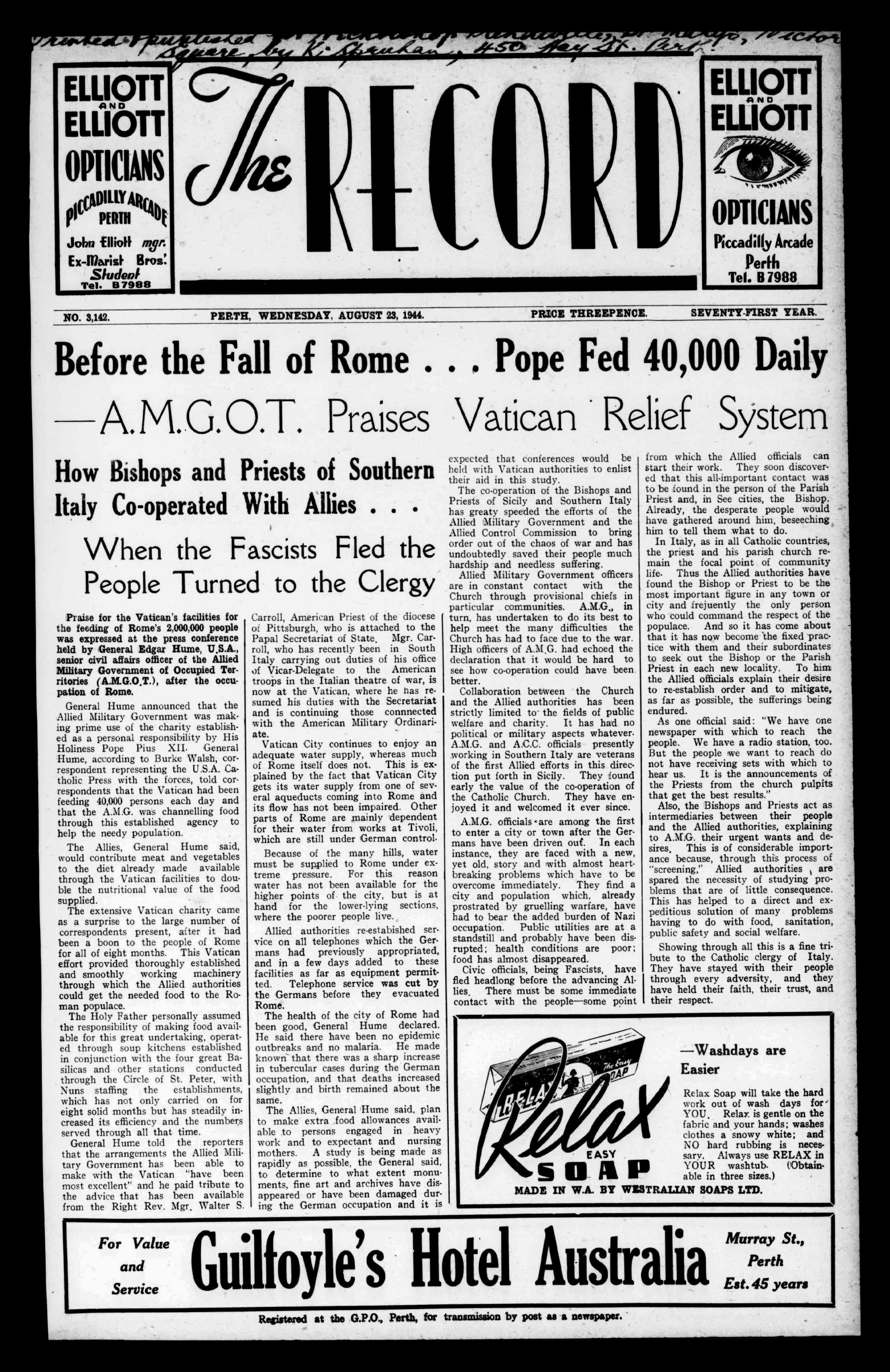
HowBishopsandPriestsofSouthern ItalyCo-operatedWithAllies
WhentheFascistsFledthe PeopleTurnedtotheClergy
PiaisefortheVatican'sfacilitiesfor thefeedingofRome's2,000,000people wasexpressedatthepressconference heldbyGeneralEdgarHume,U.S.A., seniorcivilaffairsofficeroftheAllied MilitaryGovernmentofOccupiedTerritories(A.M.G.O.T.),aftertheoccupationofRome.
GeneralHumeannouncedthatthe AlliedMilitaryGovernmentwasmakingprimeuseofthecharityestablishedasapersonalresponsibilitybyHis HolinessPopePiusXII.General Hume,accordingtoBurkeWalsh,correspondentrepresentingtheU.S.A.CatholicPresswiththeforces,toldcorrespondentsthattheVaticanhadbeen feeding40,000personseachdayand thattheA.M.G.waschannellingfood throughthisestablishedagencyto helptheneedypopulation.
TheAllies,GeneralHumesaid, wouldcontributemeatandvegetables tothedietalreadymadeavailable throughtheVaticanfacilitiestodoublethenutritionalvalueofthefood supplied.
TheextensiveVaticancharitycame asasurprisetothelargenumberof correspondentspresent,afterithad beenaboontothepeopleofRome forallofeightmonths.ThisVatican effortprovidedthoroughlyestablished andsmoothlyworkingmachinery throughwhichtheAlliedauthorities couldgettheneededfoodtotheRomanpopulace.
TheHolyFatherpersonallyassumed theresponsibilityofmakingfoodavailableforthisgreatundertaking,operatedthroughsoupkitchensestablished inconjunctionwiththefourgreatBasilicasandotherstationsconducted throughtheCircleofSt.Peter,with Nunsstaffingtheestablishments, whichhasnotonlycarriedonfor eightsolidmonthsbuthassteadilyincreaseditsefficiencyandthenumbers servedthroughallthattime.
GeneralHumetoldthereporters thatthearrangementstheAlliedMilitaryGovernmenthasbeenableto makewiththeVatican"havebeen mostexcellent"andhepaidtributeto theadvicethathasbeenavailable fromtheRightRev.Mgr.WalterS.
Carroll,AmericanPriestofthediocese ofPittsburgh,whoisattachedtothe PapalSecretariatofState.Mgr.Carroll,whohasrecentlybeeninSouth Italycarryingoutdutiesofhisoffice ofVicar-DelegatetotheAmerican troopsintheItaliantheatreofwar,is nowattheVatican,wherehehasresumedhisdutieswiththeSecretariat andiscontinuingthoseconnnected withtheAmericanMilitaryOrdinariate.
VaticanCitycontinuestoenjoyan adequatewatersupply,whereasmuch ofRomeitselfdoesnot.Thisisex plainedbythefactthatVaticanCity getsitswatersupplyfromoneofseveralaqueductscomingintoRomeand itsflowhasnotbeenimpaired.Other partsofRomearemainlydependent fortheirwaterfromworksatTivoli, whicharestillunderGermancontrol-
Becauseofthemanyhills,water mustbesuppliedtoRomeunderextremepressure.Forthisreason waterhasnotbeenavailableforthe higherpointsofthecity,butisat handforthelower-lyingsections, wherethepoorerpeoplelive.
Alliedauthoritiesre-estabishedserviceonalltelephoneswhichtheGermanshadpreviouslyappropriated, andinafewdaysaddedtothese facilitiesasfarasequipmentpermitted.Telephoneservicewascutby theGermansbeforetheyevacuated Rome.
ThehealthofthecityofRomehad beengood,GeneralHumedeclared. Hesaidtherehavebeennoepidemic outbreaksandnomalaria.Hemade known-thattherewasasharpincrease intubercularcasesduringtheGerman occupation,andthatdeathsincreased slightlyandbirthremainedaboutthe same.
TheAllies,GeneralHumesaid,plan tomakeextrafoodallowancesavailabletopersonsengagedinheavy workandtoexpectantandnursing mothers.Astudyisbeingmadeas rapidlyaspossible,theGeneralsaid, todeterminetowhatextentmonuments,fineartandarchiveshavedisappearedorhavebeendamagedduringtheGermanoccupationanditis
expectedthatconferenceswouldbe heldwithVaticanauthoritiestoenlist theiraidinthisstudy.
Theco-operationoftheBishopsand PriestsofSicilyandSouthernItaly hasgreatyspeededtheeffortsofthe Allied'MilitaryGovernmentandthe AlliedControlCommissiontobring orderoutofthechaosofwarandhas undoubtedlysavedtheirpeoplemuch hardshipandneedlesssuffering.
AlliedMilitaryGovernmentofficers areinconstantcontactwiththe Churchthroughprovisionalchiefsin particularcommunities.A.M.G.,in turn,hasundertakentodoitsbestto helpmeetthemanydifficultiesthe Churchhashadtofaceduetothewar. HighofficersofA.M.G.hadechoedthe declarationthatitwouldbehardto seehowco-operationcouldhavebeen better.
CollaborationbetweentheChurch andtheAlliedauthoritieshasbeen strictlylimitedto-thefieldsofpublic welfareandcharity.Ithashadno politicalormilitaryaspectswhatever. A.M.G.andA.C.C.officialspresently workinginSouthernItalyareveterans ofthefirstAlliedeffortsinthisdirectionputforthinSicily.Theyfound earlythevalueoftheco-operationof theCatholicChurch.Theyhaveenjoyeditandwelcomediteversince.
A.M.G.officialsareamongthefirst toenteracityortownaftertheGermanshavebeendrivenouf.Ineach instance,theyarefacedwithanew, yetold,storyandwithalmostheartbreakingproblemswhichhavetobe overcomeimmediately.Theyfinda cityandpopulationwhich,already prostratedbygruellingwarfare,have hadtobeartheaddedburdenofNazi occupation.Publicutilitiesareata standstillandprobablyhavebeendisrupted;healthconditionsarepoor; foodhasalmostdisappeared. Civicofficials,beingFascists,have fledheadlongbeforetheadvancingAllies,Theremustbesomeimmediate contactwiththepeople-somepoint
fromwhichtheAlliedofficialscan starttheirwork.Theysoondiscoveredthatthisall-importantcontactwas tobefoundinthepersonoftheParish Priestand,inSeecities,theBishop. Already,thedesperatepeoplewould havegatheredaroundhim,beseeching himtotellthemwhattodo.
InItaly,asinallCatholiccountries, thepriestandhisparishchurchremainthefocalpointofcommunity life.ThustheAlliedauthoritieshave foundtheBishoporPriesttobethe mostimportantfigureinanytownor cityandfrejuentlytheonlyperson whocouldcommandtherespectofthe populace.Andsoithascomeabout thatithasnowbecomethefixed-practicewiththemandtheirsubordinates toseekouttheBishoportheParish Priestineachnewlocality.Tohim theAlliedofficialsexplaintheirdesire tore-establishorderandtomitigate, asfaraspossible,thesufferingsbeing endured.
Asoneofficialsaid:"Wehaveone newspaperwithwhichtoreachthe people.Wehavearadiostation,too. Butthepeoplewewanttoreachdo nothavereceivingsetswithwhichto hearus.Itistheannouncementsof thePriestsfromthechurchpulpits thatgetthebestresults."
Also,theBishopsandPriestsactas intermediariesbetweentheirpeople andtheAlliedauthorities,explaining toA.M.G.theirurgentwantsanddesires.Thisisofconsiderableimportancebecause,throughthisprocessof "screening,"Alliedauthoritiesare sparedthenecessityofstudyingproblemsthatareoflittleconsequence. Thishashelpedtoadirectandexpeditioussolutionofmanyproblems havingtodowithfood,sanitation, publicsafetyandsocialwelfare.
ShowingthroughallthisisafinetributetotheCatholicclergyofItaly. Theyhavestayedwiththeirpeople througheveryadversity,andthey haveheldtheirfaith,theirtrust,and theirrespect.
-Washdaysare Easier
RelaxSoapwilltakethehard workoutofwashdaysfor' YOU,Relaxisgentleonthe fabricandyourhands;washes clothesasnowywhite;and NOhardrubbingisnecesEASY sary.AlwaysuseRELAXin YOURwashtub-(Obtainableinthreesizes.)
)1)77.111" 7 sOlfalkip)00.0.4111eatzlef4. dr 7
ELLIOTT OPTICIANS rcIWILLYAR,.. OL tgpt Johnfllioilman Ex-Maris!.Bros: Sludevi Tat.87988 NO.3,142. PERTH,WEDNESDAY,AUGUST23,1944. ELLIOTT ELLIOTT OPTICIANS PiccadillyArcade Perth Tel.81988 PRICETHREEPENCE. SEVENTY-FIRSTYEAR.
. PopeFed40,000Daily
ELLIOTT
BeforetheFallofRome
A.M.G.0.T.PraisesVaticanReliefSystem
.
ForValue and Service Guiltoyle'sHotelAustralia, MurprearythSt., RegisteredattheG.P.O.,Perth,fortransmissionbypostasanewspaper.
MADE
INW.A.BYWIATRALIANSOAPSLTD.
*TheCatholicAnswer
OurLadyWasHonouredby GodFromAllEternityandbytheChurchFromtheBeginning
EarlyEvidenceofVenerationfortheBlessedVirgin
HistorySupportstheTraditions oftheChurch
ObviousNeedforSure InterpretationoftheBible
Learner,Irvine-street,Cottesloe:
ThankyouverymuchforthehelpfulexplanationoftheCommunionof Saintswhichyougaveinanswertomy enquiry.MayIaskthatyouwould givesomeinstructionastohowand whenthecultoftheBlessedVirgin MaryfirstappearsinCatholicTradition?Tousnon-Catholicsitisall verypuzzling.
A.:Itiswithparticularpleasure thatIundertaketoanswerthiscourteousquestion-oneoftherosesamidst quiteanumberofthorns-sincethe dayafterto-morrowisoneofthegreat feastdaysoftheBlessedVirgin,andI begthatshemayacceptthisbriefdissertationinherhonourforthebenefit ofallearnestenquirers.
DevotiontotheVirginMaryisonly aparticularapplicationofthedoctrine oftheCommunionofSaints.The MostHolyVirginis,ofcourse,the greatestofthesaints,andshealsoenjoystheuniqueprivelegeofbeingthe MotherofOurSaviour.Shealone canadoreherOWNSonasGod.Ifit islawfulforustohonourthesaintsas God'smasterpiecesandheroes,andif theycanprayforusandactasour friendsattheCourtofGod,soto speak,howmuchmoremaywehonourMary,thegreatestofthesaints andGod'sownMother?AV.C.winner doesnotconsiderhimselfslighted whenhismotherishonouredbecause ofhisacknowledgedbravery-rather isheeagertosharehishonourwith her.
Mary'spositionisunique,andsowe payherspecialhonour,whichtechnicallyiscalled"hyperdulia"-anhonourwhichishigherthanthatpaidto thesaints,butfarbelowthatdueto AlmightyGod.
DevotiontoOurLA,reallyantedatesChristandtheCatholicChurch for,whenweshowherhonour,wedo nomorethanGod'Himselfdidwhen frometernityHechoseMaryfromall creaturestobetheMotherofHisSon mademan,andpreservedherfreefrom originalsin.Godgaveutteranceto HisDivinewillwhen,inthebooksof Genesis,afterthefallofourfirstparents,Heforetoldthecomingofthe Redeemer,andthatassinhadentered theworldthroughawoman,soitsredemptionwouldcomethrougha woman.AndHesaidtoSatan,"I willputenmitiesbetweentheeand theWoman,"WhenwehonourOur Ladywedonomorethandidthe prophets,especiallyIsaiah,whopraisedtheVirginofwhomtheMessiah wouldbeborn,"Behold,"hesaid,"a Virginshallconceiveandshallbeara son,andheshallbecalledEmmanuel, Godwithus."When'wehonourOur Lady,wedonomorethandidthe AngelGabrielwhenheappearedand saidtoher,"Hail,fullofGrace,the
Lordiswiththee.Blessedartthou amongstwomen,andblessedisthe fruitofthywomb."WhenwehonourOurLadywearebutimitating hercousinElizabeth,whocriedoutat herapproach,"Blessedartthouamongstwomen,andblessedisthefruit ofthywomb.Whenceisthistome thattheMotherofmyLordshould cometome."Wearealsomerely takingatitsfacevaluewhatOurLady saidofherselfinherwonderfulpoem ofpraise,theMagnificat,"Beholdfrom henceforthallgenerationsshallcallme blessed."Finally,wearedoingno morethandidChristOurLordHimselfeverytimeHeshowedrespectfor HisMother,everytimeHeobeyedher, especiallyonsuchoccasionsaswhen HeworkedHisfirstmiracleatherrequest,eventhoughHistimehadnot yetcome.
InApostolictimesthereislittle writtenevidenceofdevotiontoMary, butthisisnotsurprising.ThereAvas noneedtowriteaboutit,whileMary wasyetaliveitwastakenforgranted thatrespectbepaidtoher,andthat herprayerswouldberequestedjust astheyaskedfortheprayersofeach other.ThuswereadintheActsof theApostles,"Allthesewereperseveringinonemindinprayerwiththe womenandMary,theMotherof Jesus. ."
WhiletheApostleslivedtherewas nodoubtabouttherespecttheyhad forMaryandthelovetheytaught otherstohavefortheMotherofthe Saviour.ItremainedforSt.Irenaeus,thefriendofSt.Polycarp,a discipleofJohntheApostleandEvangelist,towriteofthegloriesofMary andtodefendhervirginity,Helivedearlyinthe2nd.century,andwas successivelyinAsiaMinor,inLyons, acityofGaul,andatRomeitself, wherehesufferedmartyrdom.LikewiseaboutthesametimeAristides andJustinMartyrwroteofMary.In apocryphalwritingsalsowefind abundantevidenceofthevenerationin whichMarywasheld.Theseapocrypha,admittedly;arebutstories,but theyreflectthedevotionofthepeople ofthetime.InthenextcenturySt. Epiphaniuswrites,"LetMarybehonoured,lettheFather,SonandHoly Ghostbeadored,butletnooneadore Mary."Intheyear431theGeneral CouncilofallChristianBishopsheld atEphesus,tothegreatjoyofthe Ephesiansandindeedofallthefaithful,solemnlydeclaredagainstallhereticsthatMarywasthe'MotherofGod, TheotokosandPanagia.
SincethenCatholicandOriental writersandTheologianshavevied withoneanotherinexplainingand procaimingtheprivilegesofMary, Cathedralshavebeendedicatedtoher andsomeofthebestworksofartand
poetryhadher"ourfallennature's solitaryboast"fortheirinspiration.I thinkthequestionisnot,"Whydo CatholicsvenerateOurLady?"but rather,"Whydonon-Catholicsrefuse todoherhonourindefianceofDivine exampleandtheexampleofallthe centuries?"
Inconclusion,Iwouldliketosay thatinyourtrialofindecisionyoucan donobetterthantobeseechtheintercessionoftheBlessedVirgin, whoseprayersarenolessefficacious to-daythantheywereatCanaorat thefootoftheCrossonCalvary.
OneWhoListens,Thomson's Brook
Lastnightyoumadeastatement thatthethiefonthecrossisnowin chargeofadepartmentofPurgatory. Thisisaneweytome.
A.:Itisa"newey"tomealso. 1 certainlydidnotsaythatinmybroadcast.Ifthereisonemancertainly notinPurgatoryitisthepenitent thief,Dismasbyname,accordingto tradition,becauseOurLordsaidto him,"Thisdaythoushaltbewithme inParadise"-apromisewhichisunlikelytobemadeonthedeathbedof themajorityofus.Consequently mostofyourquestionsareirrelevant.
Youdo,however,bringupanother ratherinterestingpoint,Yousay thatIquotedtestimoniesofthefourth centurytobackuptheCatholicbelief inPurgatory,andthatpresumablyI wouldhavequotedearlierones,if therehadbeenany.So,youask, whatgroundshastheChurchforher beliefinPurgatory,
ThereasonwhyIsatisfiedmyself withquotingtestimonyofthethird, fourthandfifthcenturieswasbecause Iwasansweringastatementthatthe Churchhadinventedthedoctrinein thefifteenthcentury,Ishowedthat persontobeinaccuratetotheextent ofonethousandyearsatleast,andleft itatthat.Someofhisotherstatementsmayhavebeencorrect,Idon't remember-Ididnottakemuchnotice afterthatappallinglyinaccuratestatement.
Thereisanothermatterwhichyou yourself'donotbringup,butwhich maybeworthwhilementioning.We holdtheCatholicChurchtohaveinfallibleteachingauthority,consequentlyifitcanbeprovedthattheChurch asawhole,atanygivenperiod,was universallyteachingandbelievinga certaindoctrine,itfollowsthatthat doctrinemustbetheteachingof Christ.Itdoesnotmatterwhether itwasthefifthorthefifteenthcentury,itisstilltruethatOurLord said:"Hewhohearsyouhearsme, andwhodespisesyoudespisesme." Andagain:"BeholdIamwithyouall dayseventotheconsummationofthe world."
Iwilladmitreadilyenough,bythe way,thatitismucheasiertofindevidencefortheteachingoftheChurchin thefifteenthcenturythanthefifth.It ismuchhardertofindhistoricaldocumentsofthethirdcenturythanofthe thirteenth.Butthisisonlynatural, don'tyouthink?Documentsdogrow oldandtheydogetlostinthe.course ofacoupleofthousandyears.Exceptforthehistorian,whoseworkisa usefulandimportantone,itdoesnot
matterverymuch,becausetheChurch isjustasmuchlivingto-dayasshe wasinanypastcentury,andsheis justasmuchthepreserverandinterpreteroftheteachingofChristnow asshewasatanyperiodofherexistence.Herdoctrinesarejustas authorativein1944astheywereinthe timeoftheApostlesinA.D.44.
Yourlastquestion:
DoestheCatholicChurchrecognise thattheBibleismeantbyGodto betheChristian'sguideinallthings pertainingtofaithandtheruleof suchfaithandauthorityonallquestionsofdoubtandtradition?
A.:TheCatholicChurchrecognises andreverencestheHolyScripturesas theinspiredWordofGod,andasa ruleoffaith,andalsoasasupremeauthorityonallmattersmentionedin them.TheChurchdoesnotholdthat theBibleistheSOLEruleoffaith, northatitcontainsallofChrist's teachings-(St,Johnhimselftellsus thatanyhow)-northatitissufficient tosolvealldoubtsconcerningChristiandoctrine.Thiswouldsurelyseem obvious,Howcouldtherepossibly besuchadivergenceofopinionandso manyopposingsectsiftheProtestant viewoftheBibleasthesoleruleof faithwereatrueone,TheCatholic Churchveryreasonablyholdsthatthe Scripturesneedinterpreting,andthat thatinterpretationneedstobereliableandcertainifitistobeofany useatall.TheChurchclaimsthat Sheisthatauthoritywhichiscompetenttogivedefiniterulingsastothe meaningofdisputedpassagesofHoly Scripture.
FriendoftheDeanofCanterbury, NorthPerth:
Whobeginsherletter:"Idon'tthink thatyouwillbe"game"toanswer THISletter."
A.:Astheuseofslangseemstobe permitted,Iwouldliketoanswer,"Oh, Yeah,"butIshallnot.Youruseof thisprovocativeintroductioneither wasintendedasameansofhaving yourletteransweredoutofturn,in whichcaseyouhavenotbeensuccessfulorelseyouhavemorethanapoor opinionofthedefensibilityofFather Lalor'sopinions.InthislatterI'm afraidIdonotagreewithyou.
Q.:Insteadofnamingyoursession "TheCatholicAnswer,"whydon't youcallitCatholicPropaganda,it wouldbemuchmoreappropriate?
AYouwriteasifweshouldbe ashamedofconsideringourSessionCatholicpropaganda.Propagationof theCatholicChurchandthepresentationoftheCatholicviewpointondisputedquestionsispreciselytheobjectofthissession.Itisopenlyand franklylongoverdueCatholicpropaganda,andwearenotintheleast ashamedofit.
The'restofyourletter,thethree pagesofwhicharetoolongtoquote, verbatim,areapointedreproofof FatherLalorforhatingtheRussians andaspiriteddefenceoftheRight Rev.'HewlettJohnson,DeanofCanterbury,whomyouhavethehonour tobeabletocallyourfriend,ashe STOVES-Wood,Gas;newandDeed. Goodstockspaints,enamels,sprin/ders, andtape.Ilaasers,659Wellingtonet
TWO THERECORD Wednesday,August23,1944.
EVERYSUNDAYEVENINGFROM9P.M.
ByV.Rev.Dr.L.J.Goody, D.D.,D.Ph. STATIONS 6PR-6TZ * HISTORY- TOPICALQUESTIONS PHILOSOPHY SOCIALJUSTICE APOLOGETICS THECHURCHINTHEMODERNWORLD-THEOLOIN
InterestedListener,NorthFreman-
Howthe"RedDean"SquaresCommunism WithHisBrandofChristianity
Weareanon-Catholicfamily,and tle: wethinkyoushouldbeapplaudedfor thecourteouswaywithwhichyou
stingBolshevism& sevists
FreeWillandGod'sPermission
LovingBois
of
recee.Youwouldhavebeenmore treatsomethedisgustinglettersyou
thebrace
justifiedinconsigningthemto thewastepaperbasket.
A.:Wedogetafew"snorters,"
EvilNutrulyChristianenemyofHitler couldwishhimtheawfulfateofdyingdon'twe?Wetryhard,however,to suddenlywithoutthetimeforrepentconsiderthemasbonafidequestions passovertheinsultsasmeredisance.
AttemptedAssassinationofHitlerand
Pope'sReportedCongratulations
baptisedsomeofyourfamilyandconfirmedallofyou.
Iamnotsufficientlyconversantwith thepracticesoftheChurchofEnglandtobeabletostatewhetherany ministerofthatChurch,whoisnota Bishop,everadministerstheriteof Confirmation,andconsequentlyaccept yourstatementandrespectyoufor yourdefenceofyourfriend.Youare notaCommtinist,yousay;theDean ofCanterburyis,andadmitsitandis proudofit.Ilealsoclaimsthathe cansquaretheRussiantypeofCommunismwithhistypeofChristian faith.Thatishisbusiness.Wedon; agreewithhim,butwecanleaveitat that.Itisasregardsyourattackon FatherLalorthatImustbeatodds withyou.HatingCommunism,as WEalldo,hasnothingtodowithhatingRussians,whichnoneofusdoes. WehateCommunismbecauseweknow thatitisaheresyandaself-confessed anddeadlyopponentoftheCatholic Church.Wedon'thateRussiansor anyothersortofCommunists.We wishthemandalltheirhereticsthe greatestgoodthatwecanwishthem, namely,thatbeforetheydietheymay begiventhegracetoseetheerrors whichtheyhavebeenpropagatingand returntothetruthwhichJesusChrist taughtandwhichcontainsalotmore than"loveyourenemies,"incidentally,althoughadmittedlythatinjunctionshouldnotbeneglected.We,no doubt,withanaverageamountofhumanfrailty,trytokeepthatinjunctiontogetherwiththeothercommandsofChrist.Wecanalsohope thatotherswilldolikewise.
YouconcludebyaskingFather Lalortosticktoreligiousquestions, forifheisconductinga"politicalcampaign"heshouldbeputofftheair.
A.:Firstly,CommunismISareligi..usquestion,asIhavepointedout above,and,secondly,evenifFather Lalorwereconductingapoliticalsession,ashemostcertainlyisnot,why shouldhebeputofftheair?Isonly theclap-trapofPeople'sFrontand classwarfaretobeallowedtobroadcastitsviews?Isfreedomofspeech alreadysomuchofadeadletterinthe mindsofmanythattheydon'twant eventoheartheothersidegeta chance?
courtesies.
Ifthesemessagesaresentmerelyas havebeenwaitingforsomeone amatterofroutine,IwouldconsidertoaskabouttheRitualandCeremonWe that,theywerebetterleftunsaid,un-iesofyourChurchandtheprocedure
lesstheeweresincere.
A.:Theoutwardformsofdipomacy tobeadoptedwhenonewishestoem-
yourfaith. aremerelygoodmannersontheinter- A.:Ishallbearinmindthematter nationalplane,andsincetheChurchofRitualandCeremoniesforsome
Perhapsitis,butthesameargumenthasneverapprovedofassassinationasfuturedate,butIcananswer couldbeusedinfavourofNazism your politicaloranyothersortvofwea-lastquestionnow.Apersonwishing coulditnot?Wehavenotfoundpon,afailuretocongratulatewouldtobecomeaCatholicwouldfirsthave themeasyopponents. beacontradictionofherownprin-totakeacourseofinstructionsfroma
Whatwouldhavehappened,if,likeciples.Itistobenoted,too,thatpriestorsomeotherqualifiedperson, Ireland,Russiahadremainedneutral?whereastheabovementionednews-andwhentheywereconcludedhe A,:Ihatetoimaginewhatwouldpaperpublishedthepar.whichyouwouldhavetodecidewhetherhewas havebeentheresultifRussianswereencloseinaprominentplaceandunderpreparedtoacceptsincerelyallthe notfightingonoursideandtothink astrikingheadline,adayortwolaterteachingsoftheCatholicChurch.If thatiftheNazishadnotattackeditpublishedinaveryobscureposi-hewerepreparedtodothisthecon- Russia,shewouldprobablystillbetionareporteddenialthattheVaticanvertwouldthenmakeasolemnpro- neutral. tits toohorribleto i magine.hadeversentatelegramatall.Whichfessionoffaith,whichwouldimply AsIsee yourChurchisagainstofthereportsistrueIaminnoposi-perjuryifhewerenottellingthetruth. CommunismbecauseCommunismistiontojudge,butIdoubtwhethertheNextwouldfollowbaptismandthere- againstCapitalism. greatmajorityofpeoplewhosawtheceptionofHolyCommunion.Ifthe
A.:TheCatholicChurchcondemnedCapitalismlongbeforeshecondemn-firstparagrapheversawthesecond.converthadbeenvalidlybaptisedoutedCommunism,backintheninety'sof sidetheChurchalready,thenhewould thelastcentury.Bothsystemsare, * bereconciledfromtheheresytowhich orcanbe,extremeandareconsequent- hehadsubscribedandmakehisconlyboth-wrong.Themiddlecourseis NotaHypocrite,VictoriaPark: fessionandCommunion.Ifthecontherightone, Afterhearingyourrecentvitriolicverthadbeenbaptisedwithdoubtful validityinoneofthesectswhichtake outburstagainstCommunism,itwas Q.:Whynotanequalshareofthe theimportanceofthisSacramentless mostremarkabletoreadthatCorn- world'swealthforeveryone,instead seriouslythan'doestheCatholic radeMannixintendedtovote"Yes" of,asatpresent,starvationand
pov-Church,thenfirstofalltherewould ertyamidstplenty?
atthereferendum,andwasgladthat beconditionalbaptism,thenthepro- theCommunistswerealsosupporting A.:Giveahundredmenanabso-theGovernment,but-fearedthatsuchfessionoffaith,thentheabsolution lutelyequalstartto-daywithexactlysupportwouldeventuallyprovemorefromheresy,thenConfessionandHoly thesameresourcesandopportunities,embarrassmentthanhelp.SuchanCommunion.Theseceremoniesmight andwithintenyears,throughthriftannouncementfromthesaidComradeseemalittleterrifyingtoanoutsider, andhardworkononesideandroundsratherlikeacamouflagedwaybuttheyareneithersoprotractednor negligenceandlazinessontheother. somewouldhavelostallandothers ofinstructingRomanCatholicstovote "." sofearsomeastheywouldappear.In Yes factthosewhohavebeenthrough wouldhavethreetimeswhatthey A.:Ithinkthatyouwillfindthatthemconsiderthemtohaveconstitutstarted'with.Andwithnodishon-HisGraceofMelbournehascamou-edthehappiestdayoftheirlives.The estdealings,too. fiagedhisinstructionsowellthatatfirststep,therefore,foroneinterested leastasmanyWestAustralianCatho-intheCatholicChurchwouldbeto lics,priestsincluded,willvote"No"contactapriest.Thiscouldeasilybe as"Yes,"Bytheway,didyourea-donethroughsomeCatholicfriend
AScotchListener,VictoriaPark:lisethatpriestshavevotesjustlikeWhowouldbeonlytoopleasedto breaktheiceandintroducetheen- ordinarypeople?Infact,strangeto Iamveryinterested.Youknowsay,priestsandCatholicsunderthequivertohisparishpriest. mostoftheScotsonlyareinchurchAustralianConstitution,aretreated twiceinalifetime,sowedon'tknowjustasordinarycitizens,andarenot muchaboutreligion.Weliketohearlegallypresumedtofosteranysubthetruth.
JoeWatson,Hondinin: versiveinclinationwhatever.They
A.:Thankyouforyourletter.Ihavetheirrightstotheiropinions,poli-Q,:WhydoestheNationalCatholic wasnotawarethattheaverageScotticalopinionsincluded,theyhavethe RuralMovement,whichissucha wassosporadicinhischurch-going,butrightofcomparativelyfreespeech, virileorganisationinVictoriamake Ihopethatifyoudonotgotochurchandtherighttoexpresstheseopinions solittleheadwayinWestern,Ausmuchyouwillatleattlistentothis luaus. session. iftheywish.
Youhaveseveraltimessaidthat A.:AsfarasIknowtheCatholic
Q.:IhavebeenintheoratoryofSt,yourreligionhasnointerestinpoll-RuralMovementhasbeenestablished MargaretinEdinburgh,andIwanttics, inthisStateforonlyfiveorsixweeks. toask,wassheaCatholic?
A.:TheCatholic'AnswerhasneverIunderstandfromitscommitteethat A.:Yes,St.MargaretofScotlandsaidthattheChurchhasnointerestquitealotofthenecessaryspade wasaCatholic.Shewasbornininpolitics.SheisvitallyinterestedworkisbeingaccomplishedsuccessHungaryandwasdescendedfrombothinherownfreedomtopursuehermis-fully.Lateron,nodoubt,andindue
thereigninghouseofEnglandandsionofinstructionandsanctification;course,moreextensivetillagewillbe fromtheHolyRomanEmperors,Shethisfreedomis-deniedherundersomeundertaken.TheMovementiscerA.K.,Subiaco: marriedMalcolmIII.,KingofScot-formsofgovernment.Ithasnevertainlyworthyofallthesupportitcan Q.:InyourbroadcastonSundayyouland.ShewassogoodtothepoorbeendeniedherinAustralia,andso,getinthefarmer-starvedandcitymentionedthatGodhasareasonforandsoattachedtoreligionduringlifethankGod,shehasnotyethadtotakebloatedcountry. thatalmostimmediatelyafterher everything.Explain,ifyoucan, anygreatinterestinAustralianpolithereasonwhyinnocentwomenanddeaththeScottishpeoplebegantotics.TheChurchknowsthatsheis venerateherasasaint.Shewasoffi- childrenarebeingwipedoutinair betteroffifpossiblewelloutofthe dallydeclaredsaintandpatronof rant;onWarsaw,Rotterdam,Lon- politicalwhirl.Shefollowsthispoldon,etc.Don'ttellusethatitisScotlandbyPopeClementX. icyandiseminentlyconciliatorywhere 29MABELST.,NORTHPERTH. becauseofthesinsoftheirparents. possible.Suchconciliation,sofarat TUNESANDREPAIRSPIANOS Thatargumentisagainstallcorn- * anyrate,hasbeenimpossiblewith ANDORGANS. monsense. Communism,which,asIhavesaidbeA,:GodhasapurposeinallHis Groper,Donnybrook: fore,hasalwaysbeenopenlyandvie- Phone115824. acts,andagoodone,butGoddid
notlentlyanti-Catholic. bombWarsaw,RotterdamandLon- (Imustapologisetopreviouscordon, respondents-foransweringthenext orHamburg,CologneandBerlin. *
F.HUFNER
DEAF? coupleoflettersoutoftheirturn. Godhasgivenfreewilltomen,and havingdoneso,HehasboundHimselfTheyaresoentirelytopical,however, C.Chapman,Noggerup
HEARCLEARLY totheeffectsofit.Man'swickednessthattheywouldcompletelylosetheir willcausethemnotonly,onoccasions,pointatalaterdate,)
Q.:CouldyoutellmetheCatholic -Withtobescourged,'butalsotoscourge Groperenclosesacuttingfromthe Answerastowhetherweshould others.Man'sinhumanitytomanis"WestAustralian"whichreportsthat vote"Yes"or"No"duringthecom- WesternElectric ing theeverlastingtragedy,andisinsuchthePopesentatelegramtoHitlercon- Referendum?
AUDIPHONE terriblecontrasttothegoodnessofgratulatinghimonhisescapefromas-
A.:IamafraidthatthereisnoCaGodtowardsus. assination,andheaskswhetheritistholicAnswertoyourquestion.Itis ConsultWithoutObligation.
Thenextpartofyourletterhumanlypossibletohavesuchfeel-purelyapoliticalquestion,which againreferstoFatherLalor'sspiritedingstowardssuchamurderouscrea-wouldseemtoeffecttheChurchvital- SAINKEN&SAINKEN, attackonCommunism.YouquotetoreasHitler. lyneitheronewayoranother.There HAYSTREET, themagnificentheroismandmilitary A.:Ishouldthinkthatitwere.Ourareargumentsforandagainstthepro- NextAmbassadorsTheatre. ,,killoftheRussiansasanargumentLordprayedforHisveryexecutioners,posals,andIthinkthateveryvoter infavouroftheirtypeofGovernment.andcommandedustodosimilarly.shouldtrytomakeuphisownmind,
Wednesday,August23,1914. THERECORD THREE
-
*
Sir,-.'ReturfiedA.I.F"certainlyhit thenailontheheadwhenhewroteregardingtheneedforaCatholicServicemen'sHostelinPerth.Servicemenwhosehomesareinthecountry andtheEasternStates,havenotthe opportunityofmeetingintherightatmosphereandconsequentlyseekentertainmentatcabaretsanddancesof doubtfulrepute.Membersofthe C.W.L.andC.G41.nowassistatvari ouspatrioticdepotsinthecity,and wouldnodoubtbewillingtooffer theirservicesifaC.W.O.Depotwas openedinPerth.Itrustthepresent C.W.O.appealwillbesufficientlysuccessfultoenablethecontrollingbody ofthatorganisationtoestablishacentreinPerthsimilartoFremantleDepot.-Yours,etc., J.JOHNSTON.

Sir,-NostrayvisitortoSt.Mary's CathedralonaFridaymorningcan failbuttobeimpressedbythechildren'sdialogueMass.Itisan.effectiveillustrationoftheparticipation ofthelaityinthesacredliturgyofthe Church,anditistobehopedthatthe dialogueMasswillgraduallybecome thecustomattheSundayMassesin alltheparishesofthediocese.By thesametoken,itistobehopedthat thepeoplewillintimecometo.participatefullyintheceremoniesofasung Mass.
IunderstandthatalreadyaGregorianMassislearnteachyearbythe schoolchildren,andthatthereisannuallyaPlainChantFestival,withan occasionalplainsongMassbythechildreninsomeoftheparishes.This, whilegood,isonlypartlyeffectiveas
ameasurefortherestorationofplain chanttothepeople,asthechildren after,andindeedbefore,leaving schoolnormallybecomepartofthe detachedandsilentthrongattheparishMasses,untilintimeitisprobable thatthemusicofplainchantwillbecomeasunfamiliartothemasthe mysteriesofmultiplication.
Thisisthegravedangerwhichcomes fromunaccustomingtheearofadult membersofthecongregationtothe melodicbeautyofplainchantasa formofliturgicalprayerand,inthe Cathedralparishanyhow,fromlaying toomuchstressontheteachingofthe choirtosingthelesssimplepolyphonic Masses.Achoirathomeinsacred polyphonyisundoubtedlyamuchto belookedforconsummationinthe moreimportantchurchesatleast,but inthemeantimethepublicstands mainlyinneedofeducation,andthis Iamafraidtheywillnotobtainfrom listeningtosomeformsofpolyphonic music.Thenaturalexpressionof popularmusicinallcountriesisthe simplemelody,andmankindismore susceptibletoitthantothemoreintricatemusicalforms.Perhapsthis isoneofthereasonswhytheChurch
ImmediateDeliveryOFTHESEFAVOURITE
LUSTRALProducts!!
INSECTICIDESPRAY.
BIGGUNSSPRAY:Flyandinsectspray.
Abovestandardforknock-downandkillpotency-Doesnotloseitspower.Non-staining.Powerfulyetpleasant. Spellsdeathtoallinsects,flies,mosquitos,silverfish.Ascientificinsecticide.Nooilyfilmisleftbehindtocollectdirtandgerms.KILLINGPOWER-THAT'STHETHING. Packedin1gal.,4gal.,5gal.,and45gal.containers.
DISINFECTANTS.
OurdisinfectantsbringMOUNTAINFRAGRANCEtoyou.
PYNOLWHITEPINE:AfterusetheseproductsleavethecleanfreshodouroftheEucalyptusforest. Non-poisonoustohumanbeings,non-injurious,havenoharmfuleffectonbodytissues;willnotharmfloorsurfaces.
SAFEDISINFECTANTStokillgermsandcounteractunpleasantodours.
PHENYLE:Goodcleanemulsion;freeofoilyfloat.
LIQUIDSOAPCLEANSERSANDFLOORWASHES.
DisinfectantandDeodorant.
CAMOPYNEDeodoraitLiquidCleanserforfloors,lavatories,etc.
LYPTA-SOAP:DisinfectantLiquidCleanser,forfloors,lavatories,etc.
AMON:,AmmoniaLiquidSoapCleanser,forButchers,Dairies,Cafes,etc.
Ourliquidcleansersaredisinfectants,deodorants,andsoapcleansersallinone.Pleasanttouse-havenoharmfuleffectonbodytissues;non-injurioustofloorsurfaces. Pleasantandpowerful,effective,andhygienic. Packed(sold)in1gal..4gal.,5gal..and45galloncontainers.
FLOORPOLISHES.
ForFloors,Rubber,Lino,WoodandallCounters.
SELF-POLISHINGWAX:Liquidwaxappliedwithlambs'woolspreaders,norubbingorpolishingisnecessary. Givesaveryhard,logwearingsurfacewithmaximumresistancetoheavytraffic.Givesabrightnewlifeto allfloors.
LUSTRALPASTEWAX:Rubbingtype,ahigh-classpolishingwax,hasahighwax-content,easilyapplied; long-lastingpolish.
PORCELAINCLEANERS,FORBATHS,WALLS,Etc.
KLEAN-KWICKDELUXECleansanything-Porcelain,Baths,Sinks,Walls,Tiles,Marble,SoiledHands,etc. WhitePumiceCleanser,forbaths,sinks,walls,hands,etc.Willnotscratchorinanywayeffectporcelain.R. movesgreaseandstainsinaflash.Cleanssurfacesbrighterthananewpenny.
All4gallonlots,withtheexceptionofLustralPasteWaxandKlean-KwickDeLux,arepackedinhandy4gallon drumsfittedwithtaps.
FreeDeliveryinMetropolitan
ranksplainchantasthesupreme modelforsacredmusic.
Butemphasisonplainchantis,I shouldimagine,evenmoreimportant whenoneistryingtorestoretothe Catholiclaityafeelingofdevotionto theliturgy.Peopleinnormalhealth donotusuallycarewhattheyeatand, infact,themorecomplicatedfoodsap- pealtothem.Butpeoplewhoare recoveringfromalongillnessneed simpleandsubstantialfareifthey areevergoingtoeatatall.Similarly,theaveragepersonwhoseunderstandingofmusicisconfinedtowhat hemaylearninhissparetimeisnot likelyinalife-timetounderstand polyphonywhenheneverhappensto hearplainchant.
Iwouldsuggest,then,that,asthe ambitiontodoallthingswell,though important,issecondarytothepurposeofassistingthegeneralcongrega tion,polyphonicmusicshouldbeheard lessfrequentlyintheCathedral.Nor wouldthisdetractfromtheendeavour tomakeuseofonlythemostworthy musicforgreatceremonialfunction's, because,asthePopehassaid,anecclesiasticalfunctionlosesnothingof itssolemnitywhenitisaccompanied bynoothermusicbutplainchant.
Themorefrequentuseofplain chantintheCathedral,andsofaras ispossibleintheotherparishes would,think,notonlybringtothe laityagreaterappreciationofthe prayerfulnessofChurchmusic,but shouldalsoresultingreatlyaugment. edchoirs.AtthesametimeIam awareoftheneedforthebuildingup ofachoirtrainedintheartofsinging polyphonicmusic.
Inconclusion,Imaysaybywayof analogy,thattoputanewboyon thealtaramongstagroupofskilled serversatSolemnHighMassisnot thebestwayofteachinghimtoserve LowMass.-Yours,etc., H.G.
CATHOLICTEACHERS'GUILD
Theusualfortnightlymeetingwas heldatBactonHouseonSaturday, August12,andwaswellattended.
Thefollowingisasummaryofa shorttalkgiventomembersbyRev, J.Doyle,S.J.: "In'ChristianityintheMarketPlace.' MichaeldelaBedoyereaskswhythe Churchhassolittleseffectonmodern society.Theexplanationhegivesis fundamentallythis:EvenCatholics tendtoacceptthedivisionoflifeinto 'secular'affairsand'religious';and 'religious'isnarrowlyusedtocover onlyspecifically'ecclesiastical,'instead ofembracingbothsecularandecclesiastial.
"TheeffectofthisisthatCatholics -andnon-Catholics-tendtolookat secularthingsthroughmaterialistic eyes,sothatnon-believersreallycannotseewhattheymeanwhenthey claim,forexample,thatreligionisessentialfortheproperfunctioningof theState.YouwillfindCatholicsas dividedasnon-Christiansonmanysocialquestions:theirFaithdoesnot seemtoinfluencetheirjudgment.
"Whatistheremedy?Howarewe toshowthattheFaith'doesinfluence ourjudgmentofsecularaffairs,even whenCatholicsreachdifferentconclusionsaboutthem?Simplybytrying alwaystoseethingsasGodseesthem: andtorealisewithT.S.Eliotthatto berightforthewrongreasonissometimes,atanyrate,thegreatesttreason."
"Come,0HolySpirit,Lordof Light."
HolidayMeeting.
Bothmetropolitanandcountry membersoftheC.T.G.areeagerlylookingforwardtotheforthcomingholiday meeting(Wednesday,August30,at 2.30p.m.).Asusualthemeetingwill beheldintheCatholicTennisAssociationRoom,onthesecondboorofBactonHouse(overCorot"s.nearLevinson's).Afternoonteawillbeprovidedand,frmpreviousexperience,we canpromiseanenjoyabletimeforall, C.T.G.meetingsarealwayshappy affairs,butwhenthecountrymembersarrivetheconversationseems brighterandthelaughterevengayer. Shouldyouhavemissedreceivinga circularaboutthemeeting,youmay besurethatthesecretarydoesnot knowyouraddress,socomealong.Any Catholicteacherwillbemostwelcome, andyouarejustascertaintofindsome oldfriendsasyouaretomakenew ones.
- TOUR THERECORD Wednesday,August23,1%4.
Area. GORDONMATHESONLTD. WHOLESALEANDRETAILDISTRIBUTORS. BEADOFFICECORNEROXFORDANDTENNYSONSTREETS,LEEDERVILLE. 'PHONE:B9001
Over50YearsAgotheChristianBrotherswereIntroducedtotheWest FoundationandGrowth AquinasColleges
SoundReligiousandSecularEducation inSuburbsandCountrySchools
C.B.C.Ex-StudentstoHonourMemory ofReveredReligiousFounder
Overfittyyearsagonegotiations werecompletedfortheintroductionof theChristianBrothersintoPerth,betweentheMostRev.Dr.Gibney,the thenBishopofPerth,andtheRev. BrotherTracey,theFounderandfirst ProvincialoftheChristianBrothersin Australia.TheCollegewasblessed andofficiallyopenedonJanuary31, 1894.TheCollegehadaverymodestbeginning.Theresidenceconsistedofasmalltwo-storeybuilding, whichwaserectedonthesitenowoccupiedbythefrontportionfacingSt. George'sTerraceofthepresentimposingandcommodiouspileofbuildings, andtheclassroomswereevenmore modest,consistingofonlyafewweatherboardrooms.
ThefirstSuperiorwasRev.Brother T,A.°Brien(R.I.P.),who,itmaybe statedwasoneoffivebrotherswho hadalljoinedtheChristianBrothers inIreland.andafterwardsheldresponsiblepositionsintheCongregationin Ireland,India,andAustralia.
OntheFeastofSt.Malachy,November3,1895,thefoundationstoneofthe westernwingwaslaidbytheMost Rev.Dr,Gibney,whogenerouslydonated£1,000towardsitserection.The wingwascompletedinTune,1896,and boarderswerethenadmittedforthe firsttime.HencetheCollegenowbeganitsactivitiesinadualcapacity:to caterforthereligiousandeducational needsofdayboysfromthecityand suburbs,andofboardersdrawnfrom allpartsofthisvastState.
In1897,BrotherM.P.NunanreplacedBrotherO'BrienasSuperior.
TheresultsobtainedbytheCollegeatthevariousPublicandCompetitiveExaminationswereoutstandinginmerit,yearbyyear.While,in addition,theCollegehastheprouddistinctionofhavingfourofitsstudents, whilestillattachedtotheschool,selectedasRhodesScholars,allofwhom arewellandfavourablyknownin Perthto-dayDr.Juett,.13r.J.Horan, Dr.J.J.SavageandMr.A,P.Boor.
ThecontinuedsuccessoftheCollege attractedanever-increasingnumberof students,withtheresultthattheaccommodationagainbecameinadequate andadditionalbuidingsbecameanurgentneed.Thiswassuppliedin1910 bytheerectionoftheeasternwing, consistingofalargechapel,sixclass rooms,twodormitoriesandbath rooms,togetherwithaBrothers'libraryandalibraryfortheboys.
Inthecourseoftimethisaccommodationprovedinadequateandinstead ofaddingtothepresentbuildingsit wasthoughtadvisable,formanyreasons,toremovetheboardersfromthe citytoalocality,convenientlysituat-
t:\11158 Telephones-L1460
edwithregardtoPerth,andhaving asuitablewaterfrontageandsufficientlandfortheconstructionofsuitableplayingareas.
In1917BrotherNunanpurchased PointHeathcote,neartheCanning Bridge,consistingofabout20acresof land,forthepurposeoferectinga boardingschoolthere.Frommany pointsofviewthiswasaverysuitable site,butitwascorrectlythoughtthat therewasnotsufficientlandattached totheproperty,hencethelatterwas soldandaneffortmadeto'securesomethingmoresuitable.
In1928and1929theaccommodation attheCollegeprovedentirelyinadequateforbothdayboysandboarders. andanothereffortwasmadetosecure agoodsitewithasufficiencyofsuitablelandattached.Atthisparticular timelandwasexpensive,anditwas verydifficulttosecurelargeandsuitableareas."ClunePark,"ontheCanning,wasselected,asitcontained270 acres,over200ofwhichwassuitable forplayingareas,and,moreover,ithad ariverfrontageofaquarterofamile.
Therewasoneseriousdrawbackto thissite,viz.,thatthebuildingsitewas toofarfromtheriverwhich,attimes overfloweditsbanks,butitwasthe bestthatcouldbesecuredatthetime andthenewCollegewasurgently needed.
Inthemeantime,thedepression madeitsappearance,thenumberof boardersandevendayboys,became lessandtheimmediateurgencyfor accommodationnolongerexisted.The depressionloweredthepriceofland andcompelledsomeholdersoflarge areastoselltheirproperties.
Itwasthenfoundpossibletopurchase"Mt.Henry"andsurrounding areas,atareasonableprice."Mt. Henry"isidealforitspurpose,and hasasufficiencyofsuitablelandfor playingareas,andthebuildingsiteis convenienttothewater'sedge, HalftheCollegehasnowbeenerectedonthisexcellentsite,andallthe boardersfromtheCityCollegewere transferredto"Mt.Henry,""Aquinas" atthecommencementof1938.The "AquinasCollege"isedeservedlyvery popularonaccountofitscomfortable buildings,itsidealsurroundings,and wonderfulsuccessinthepublicexaminations,contestsinsports,andreligiousandculturaltraining.
TheTerraceC.B.C,stillcontinuesto caterforallthePrimaryandSecondaryEducationalneedsofthedayboys fromthecityandsuburbs.
Thatit-isdoingthisefficientlyand satisfactorilyisevidentfromtheeverincreasingnumbers,thehighlysuccessfulresultssecuredatthePublicExaminations,andthecomplimentaryreferencesmadebyHisGracetheArchbishopandhispriestsconcerningthereligiousandculturaltrainingimparted totheTerraceboys.
ItmaybetrulysaidthattheC.B.C., Perth,duringthefiftyyearsofitsexistence,hasbeenapowerfulfactorin thereligiousandNationalwell-being ofthisfast-developingState,sofull,of manysourcesofundevelopedwealth.
Ithasgivenmanyoutstanding priestsandreligionsBrotherstothe Church,manyprofessionalmenofoutstandingabilityandefficiencytothe State,manyleadingpoliticians,includingMinistersoftheCrown,todirect Statepolicy,nottomentionthestill
ofSt.Malachy'sand
thecomingoftheBrothersthisschool, estabishedintheearlydaysofW.A. Churchhistory,hadbeenconductedat varioustimesbynunsandlayteachers,andevenhadbeenunderthecare ofthegentleMonsignorBourke,whose memoryisstillfreshtomanyofthe oldergenerationsofPerth, Itwasnotlongafterthecomingof theBrothersthatwefindstudentsof St.Patrick'sfiguringinpublicexaminations.Atfirsttheschoolsprepared fortheMelbourneUniversityexaminations,butlateronadoptedthesyllabus oftheAdelaideUuivertity.Inthe firstexaminationunderthissystem St,Patrick'ssecuredjusthalfofthe W.A.passes.
EDMUNDIGNATIUSRICE.
morenumeroussuccessfulbusiness men,leadingfarmersandmechanics whoareproudtoclaimtheC.B.C.as theirAlmaMater.
ST.PATRICK'SBOYS'SCHOOL,
Thiseminentlysuccessfuldayschool wastakenoverbytheChristianBrothers,inSeptemberof1914.Before
Achangeinlocationbecamenecessary,astheoldIrwin-streetsitewas nowneededfortheFireBrigadeheadquarters.Anewbuildingwaserected inWellington-street,andin1904the schoolwastransferred.Theinterveningyearshavebeennotable-always St.Patrick'shasbeentotheforefront inprovidingtheboyswhothrongits hallswiththebesttheBrotherscould provide,asoundChristianeducation up,toandincludingthejuniorUniversity.Yearbyyearwellprepared boyshavegoneoutfromtheschool, sometostudyfurtheratoneofthe colleges,otherstoentertrades,others totakeupsomeclericalvocation,but allbearingtheimpressofcharacter andgoodwillinstilledintothemduringtheperiodspentatSt.Patrick's.
ThesuccessoftheSt.Patrick'sBoys' Choirofafewyearsagoisstillremembered,andthefameoftheschool'sath-
(ContinuedonPage12.)
AnnualCatholicBall,MidlandJunction
FRIDAY,SEPTEMBER8th.
FRIDAY,SEPTEMBER8th.
D'Arcy'sFivePieceOrchestra. D'Arcy'sFive-PieceOrchestra. SplendidSit-DownSupper. SplendidSit-DownSupper.
IrishNationalForestersBenefitSociety
FULLBENEFIT,HONORARYMEDICAL,HONORARYORLIFE HONORARYMEMBERSHIPOPENTOALLMENANDWOMENOF IRISHBIRTHORDESCENT.
WRITEFORPARTICULARS.JAS.DWYER,GeneralSecretary, 17rarnarvonSt.,VictoriaPark.
Wednesday,August23,1944. TBE RECORD FIVE CENTENARY OF DEATH OF EDMUND IGNATIUS RICE, SUNDAY NEXT, ST. MARY'S CATHEDRAL
ALBANYROAD, VICTORIAPARK.
CANNINGHIGHWAY, EASTFREMANTLE.
MEAD,SON&CO. FUNERALDIRECTORS. 190
33
1711.111111111
ELLIOTT ELLIOTT OpticiansandOptometrists PiccadillyArcade,Perth JOHNELLIOTT,Manager. EX-MARISTBROTHERS'STUDENT. TELEPHONE:B7988.
PERTH,WEDNESDAY,AUGUST23,1944.
ChristianBrothers'Centenary
InAustraliaandNewZealandthespiritualsonsofEdmund IgnatiusRicehavebeenlabouringforthree-quartersofacentury inthecauseofCatholiceducation.The\yolkbegunherebyBrotherPatrickAmbroseTreacyandhispioneercompanionshasso expandedthatto-daytherearesixhundredandfiftyBrothersin chargeoftwenty-fivethousandpupilsinninety-twoschools.Their activitiesincludeOrphanageandDeafMuteeducation,Primary DaySchools,SecondaryDaySchools,ResidentialColleges,TechnicalandRuralSchools.InrecentyearstheyhavebeenhonouredbyinvitationsfromtheHierarchytoassistinthestaffingof JuniorSeminariesinBrisbane,AdelaideandPerth.TheChristian Brothersandtheirpupilsthroughouttheworldwillcelebratethe centenaryofthedeathoftheFounder,BrotherEdmundIgnatius Rice,onSundaynext.Theoccasionwillbefittinglymarked wherevertheBrothersareestablished,andearlythisyearprepara- tionswerecommencedfurwhatwillbethedominantfeatureof thecelebrations,thereligiousceremoniesinCathedralandparish church.InIrelandagreatnationalmemorialisprojectedinthe citythatknewMr.Riceasasuccessfulbusinessman,thecitythat latersawthehumblebeginningsofhisgreatteachingOrder.The peopleofWaterfordaredeterminedthatthemonumentraisedto hismemoryshallbeineverywayworthyofhim.
Man'snecessityisGod'sopportunity.Henceitwasinthe darknessofthepenaltimesinIrelandthatthespiritofGodinspiredamanandquickenedhimandstrengthened-himforamighty work-theApostolateofTeaching.HisnamewasIgnatiusRice. Hegatheredroundhim-afewzealousmenwhowerefilledwith thefearlesscharitythatfloodedhisownsoul.Theylabouredin povertyandsuffering,butGodblessedtheworktowhichtheyhad settheirhandsandhearts.anditgrewandprospered.Itreceived theapprovaloftheVicarofChrist.ItspreadoverIreland,EnglandandScotland.ItcrossedtheseasandflourishedintheNew World.Itwentnorthwardsandsouthwards,totheEastandto theWest,toAfricaandIndia.andChinaandJapan.Thatwork begunbyIgnatiusRiceisknowntousinourownland,forthe IrishChristianBrothershavetaughttheboysofAustraliafor morethansixtyyears.
TheCatholiceducationalsystemofAustraliadependsentirely uponthegenerosityoftheCatholicpeople,andtheself-sacrificeof theReligiousteachers.Pastgenerationsmaintainit,futuregen- erationswilldevelopit.Atthepresentdayitisstrongerthan everbefore,becauseitissupported,notbypeoplewhoonceresolvedtoopposeagovernmentpolicy,butbypeoplewhohave grownupinthoseschools,whosefaithintheirteachingandin theirworthhasgrownstrongerbecausetheyowetheirpersonal successtothetrainingtheyhavereceivedinCatholicschools.
Theyhavestoodthetwogreattests,thecrucialtestoftime andtheacidtestofStatecompetition.Hadtheybeenunworthy, theywouldnothavelasted.Buttheyarestrong,fulloflife,equal toanythingintheland,givingmorethananyoftheirkind.Their strengthlies,notintradition,butinefficiency,notinemotional appeal,butinconcreteachievement,notinStateendowment,but intheinspirationofreligion.TheschoolswonCatholicsupport becausethereisnotaCatholicfamilythatisnotinterestedinthe workoftheteachingOrders.ThereishardlyaCatholicfamily thathasnotanearordistantrelativewhohasgivenupfamilyprospects.businessandsocialambitionstocarryontheworkofCatholiceducation.Theirappealispersonalaswellasreligious. Theseschoolsmustcommandwhole-heartedsupportwhenthenuns andBrotherswhodirectthemliveforthemanddieforthem.
LivingWiththe Church
MASSCALENDARFORTHE WEEK.
August27-ThirteenthSundayafter Pentecost: MassProper.2nd.prayerofSt. JosephCalasantius.3rd.prayerfor peace.Creed.Prefaceofthe Trinity.
August28-St.'Augustine,Bishop,Con lessorandDoctor MassProper.2nd.prayerofSt. Hermes.3rd.prayerforpeace. Creed.CommonPreface.
August29-TheBeheadingofSt.John theBaptist: MassProper.2nd.prayerofSt. Sabina.3rd.prayerforpeace.No Creed.CommonPreface.
August30-St.RoseofLima,Virgin: Mass"Dilexisti,"1st.prayerofthe Proper.2nd.prayerofSS.Felix andAdauctus.3rd.prayerfor peace.
August31-St.RaymundNonnatus, Confessor Mass"Osjusti."2nd.prayerfor peace.
September1--St.Aegidius,Abbot Mass"Osjusti."2nd.prayerof theTwelveHolyBrothers.3rd. prayer"Acunctis."4th.-prayerfor peace.
September2-St.Stephen,Xingand Confessor MassProper,2nd.prayer"Acunctis."3rd.prayerforpeace.
ChurchBroadcasts
ST.MARY'SCATHEDRAL, SUNDAY,SEPTEMBER3rd.
SolemnHighMassandsermonwill bebroadcastfromSt.Mary'sCathedral at11a.m.onSunday,September3rd. St.Mary'sCathedralChoir,underthe directionofRev.A.E.Lynch,willrenderthe"MissaPatriarchalis"ofPerosi,andattheOffertory"Exultate usti"byViadana.Dr.C.EdgarFord willpresideattheorgan.Rev.M, McEncroe,M.S.C.,Chaplaintothe Forces,willbethepreacher.
PLAINCHANTFESTIVAL
1944.
ALTERATIONINDATES. Owingtounforeseencircumstances, ithasbeenfoundnecessarytoalter thedatesofthe1944PlainChantFestival.
TheSolemnHighMassinSt.Mary's CathedralwillbeonOctober2at10 a.m.,andinSt.Patrick's,Fremantle, onOctober4,at10a.m.
HisGracetheArchbishopwillpresideonbothoccasions.
Thedetailsofthedistributionof schoolswillbepublishedlater.
TheMasswillbeNo.9,"CumJul> ilo,"CredoNo.3,and"EccePanisAngelorum"attheOffertory.TheProperoftheMasswillbesungbythe St.Mary'sCathedralBoys'Choir,who willalsoformthe.schola.
APPEALFORFATHERSOF THEDIVINEWORD
s.d.
Alreadyacknowledged 8580
Mrs.Hayes,Perth 110
Mrs.Kean,Perth 100
Mrs.Anderson,Bicton 100
100
100
Anonymous.HighgateHill 100
Mrs.Laird,Perth 50
QUARANT'ORE
AUGUST.
4th.-ST.nuarasBAP/ERIS, WINDSORSTREET:OneDay ofExposition.
SEPTEMBER.
lst.-BALGOORLIE:FortyHours' Prayer(lst.-3rd.).
2nd.-OOTI'ESLOE:FortyHours' Prayer(8th.-10th.)
4th.-GOODSHEPHERD00NVENT:FortyHours'Prayer andProcessionoftheBlessedSacrament(22nd.-24th.).
tOe
citrcObioceoe
ARCHBISHOP'SENGAGEMENTS.
August25: p.m.:OpenParochialFeteatMidlandJunction.
August27: 11a.m.:St.Mary'sCathedral:PresideatSolemnHighMass,occasion publiccelebrationofCentenaryof thedeathofEdmundIgnatiusRice.
August29: 7.30p.m.:AdministerSacramentof Confirmationtochildrenattending ReligiousHolidaySchoolatMerredin.
September10:
ConfirmationandCanonicalVisitationatSt.Augustine's,Pinjarra.
September17: 3p.m.:PresideatFestivalMeeting oftheSotietyofSt.VincentdePaul atSt.Mary'sCathedral,
September22: 10a.m.:PresideatQuarterlyConferenceofthepriestsofthemetropolitanareaattheChapterHall,VictoriaSquare.
7p.m.:AdministertheSacramentof ConfirmationtoadultsinSt.Mary's Cathedral.
September24: PresideatSolemnHighMassatSt. Jerome's,Spearwood,onoccasionof thecelebrationoftheTitular Feast.
September25-28: AttendSeniorPriests'Retreatat theRedemptoristMonastery,North Perth.
NATIONALDAYOFPRAYER
SUNDAY,SEPTEMBER3rd.
Sunday,September3rd.,willbe observedthroughoutAustraliaas aNationalDayofPrayer.His GracetheArchbishopdirectsthat aEucharisticHourbeconducted inallparishchurchesintheArchdioceseonthatday.InSt. Mary'sCathedralSolemnHigh Masswillbecelebratedat11am. ThepreacherwillbeRev.Father McEncroe,M.S.C.,Chaplainto theForces.TheMassandsermonwillbebroadcastoverStation6WF.TheEucharisticHour willcommenceat7.30p.m.
Retreats
Ex-StudentsofLoretoConvent, Swanbourne,areinvitedtoanEnclosedRetreat,commencingat6o-clockon August26.ThoseintendingtoparticipateareaskedtoringtheConvent (F2135)asearlyaspossible. Theannualladies'HibernianRetreat willbeheldatHighgateConventon week-end,September2and3.Intendingretreatants,pleasenotifytheir branchsecretary,Convent,orring 137804assoonaspossible.
AnannualRetreatforSacredHeart Ex-StudentswillbeheldattheConventonSeptember2and3.Thoseintendingtoparticipate,pleaseringConventasearlyaspossible.TheRetreat isopentonon-members.
CENTRALCATHOLICLIBRARY
POSTPONEMENT, ..TheTalkingPictureLecturewhich isannouncedonPage13tobegiven attheCentralCatholicLibraryon August31,has,unfortunately,been cancelled.Aneffortisbeingmade foranewarrangementinSeptember. Dateanddetailswillbepublished later.
LECTUREONMUSIC.
Rev.FatherA.Lynchwillbeunable togivehisusualweeklylecturecm "ListeningtoMusic"attheLibrary nextWednesdayevening.
SIX THE ;7. RECORD Wednesday,August23,1944. Established1874. OfficialOrganoftheArchdioceseofPerth. AddressallcommunicationstotheEditor,BoxA35,G.P.O.,Perth. 450HAYSTREET,PERTH. TELEPHONE:B6950.
"TheBaker"
"Subiaco"
ConfirmationandFirstHoly CommunionatCastledare
HisGraceAddressesYouthfulOrphans
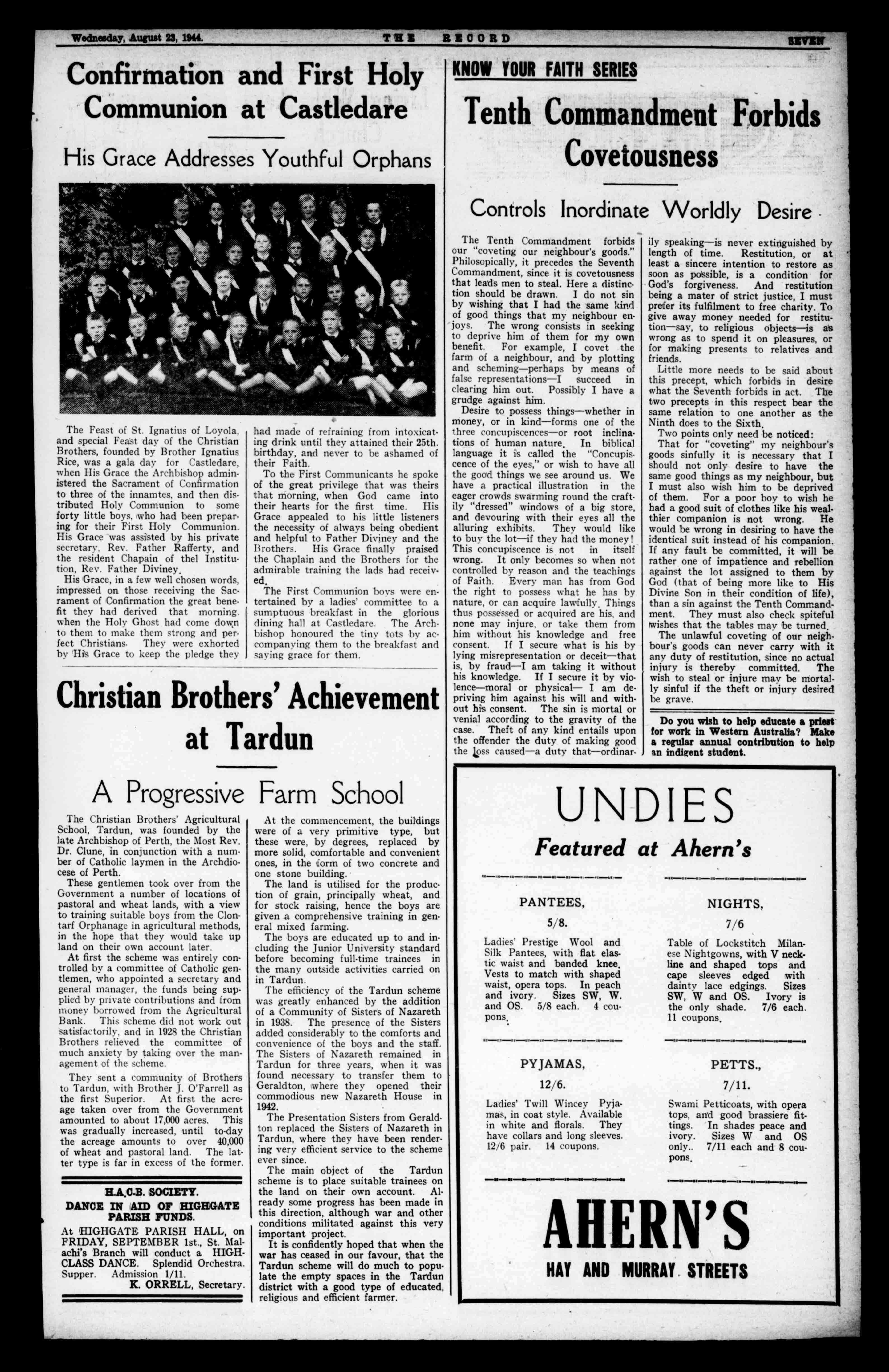
TheFeastofSt.IgnatiusofLoyola, andspecialFeastdayoftheChristian Brothers,foundedbyBrotherIgnatius Rice,wasagaladayforCastledare, whenHisGracetheArchbishopadministeredtheSacramentofConfirmation tothreeoftheinnamtes,andthendistributedHolyCommuniontosome fortylittleboys,whohadbeenpreparingfortheirFirstHolyCommunion. HisGracewasassistedbyhisprivate secretary,Rev.FatherRafferty,and theresidentChapainofthelInstitution,Rev.FatherDiviney, HisGrace,inafewwellchosenwords, impressedonthosereceivingtheSacramentofConfirmationthegreatbenefittheyhadderivedthatmorning. whentheHolyGhosthadcomedown tothemtomakethemstrongandperfectChristians.Theywereexhorted by'HisGracetokeepthepledgethey
hadmadeofrefrainingfromintoxicatingdrinkuntiltheyattainedtheir25th. birthday,andnevertobeashamedof theirFaith.
TotheFirstCommunicantshespoke ofthegreatprivilegethatwastheirs thatmorning,whenGodcameinto theirheartsforthefirsttime.His Graceappealedtohislittlelisteners thenecessityofalwaysbeingobedient andhelpfultoFatherDivineyandthe Brothers.HisGracefinallypraised theChaplainandtheBrothersforthe admirabletrainingtheladshadreceived. TheFirstCommunionbowswereentertainedbyaladies'committeetoa sumptuousbreakfastintheglorious dininghallatCastledare.TheArchbishophonouredthetinytotsbyaccompanyingthemtothebreakfastand savinggraceforthem.
ChristianBrothers'Achievement atTardun
AProgressiveFarm
TheChristianBrothers'Agricultural School,Tardun,wasfoundedbythe lateArchbishopofPerth,theMostRev. Dr.Clune,inconjunctionwithanumberofCatholiclaymenintheArchdioceseofPerth.
Thesegentlementookoverfromthe Governmentanumberoflocationsof pastoralandwheatlands,withaview totrainingsuitableboysfromtheClontartOrphanageinagriculturalmethods, inthehopethattheywouldtakeup landontheirownaccountlater.
AtfirsttheschemewasentirelycontrolledbyacommitteeofCatholicgentlemen,whoappointedasecretaryand generalmanager,thefundsbeingsuppliedbyprivatecontributionsandfrom moneyborrowedfromtheAgricultural Bank.Thisschemedidnotworkout satisfactorily,andin1928theChristian Brothersrelievedthecommitteeof muchanxietybytakingoverthemanagementofthescheme.
TheysentacommunityofBrothers toTardun,withBrotherJ.O'Farrellas thefirstSuperior.AtfirsttheacreagetakenoverfromtheGovernment amountedtoabout17,000acres.This wasgraduallyincreased,untilto-day theacreageamountstoover40,000 ofwheatandpastoralland.Thelattertypeisfarinexcessoftheformer.
H.A.C.B.SOCIETY.
DANCEINAIDOFHIGHGATE PARISHFUNDS.
AtHIGHGATEPARISHHALL,on FRIDAY,SEPTEMBER1st.,St.Malachi'sBranchwillconductaHIGHCLASSDANCE.SplendidOrchestra. Supper.Admission1/11. K.ORRELL,Secretary.
KNOWYOURFAITHSERIES
TenthCommandmentForbids Covetousness
ControlsInordinateWorldlyDesire
TheTenthCommandmentforbids our"covetingourneighbour'sgoods." Philosopically,itprecedestheSeventh Commandment,sinceitiscovetousness thatleadsmentosteal.Hereadistinctionshouldbedrawn.Idonotsin bywishingthatIhadthesamekind ofgoodthingsthatmyneighbourenjoys.Thewrongconsistsinseeking todeprivehimofthemformyown benefit,Forexample,Icovetthe farmofaneighbour,andbyplotting andscheming-perhapsbymeansof falserepresentations-Isucceedin clearinghimout.PossiblyIhavea grudgeagainsthim.
Desiretopossessthings-whetherin money,orinkind-formsoneofthe threeconcupiscences-orrootinclina tionsofhumannature,Inbiblical languageitiscalledthe"Concupiscenceoftheeyes,"orwishtohaveall thegoodthingsweseearoundus.We haveapracticalillustrationinthe eagercrowdsswarmingroundthecraftily"dressed"windowsofabigstore, anddevouringwiththeireyesallthe alluringexhibits.Theywouldlike tobuythelot-iftheyhadthemoney! Thisconcupiscenceisnotinitself wrong.Itonlybecomessowhennot controlledbyreasonandtheteachings ofFaith.EverymanhasfromGod therighttopossesswhathehasby nature,orcanacquirelawfully,Things thuspossessedoracquiredarehis,and nonemayinjure,ortakethemfrom himwithouthisknowledgeandfree consent.IfIsecurewhatishisby lyingmisrepresentationordeceit-that is,byfraud-Iamtakingitwithout hisknowledge.IfIsecureitbyviolence-moralorphysical-Iamdeprivinghimagainsthiswillandwithouthisconsent.Thesinismortalor venialaccordingtothegravityofthe case.Theftofanykindentailsupon theoffenderthedutyofmakinggood theLosscaused-adutythat-ordinar
School
Atthecommencement,thebuildings wereofaveryprimitivetype,but thesewere,bydegrees,replacedby moresolid,comfortableandconvenient ones,intheformoftwoconcreteand onestonebuilding.
Thelandisutilisedfortheproductionofgrain,principallywheat,and forstockraising,hencetheboysare givenacomprehensivetrainingingeneralmixedfarming.
TheboysareeducateduptoandincludingtheJuniorUniversitystandard beforebecomingfull-timetraineesin themanyoutsideactivitiescarriedon inTardun.
TheefficiencyoftheTardunscheme wasgreatlyenhancedbytheaddition ofaCommunityofSistersofNazareth in1938.ThepresenceoftheSisters addedconsiderablytothecomfortsand convenienceoftheboysandthestaff. TheSistersofNazarethremainedin Tardunforthreeyears,whenitwas foundnecessarytotransferthemto Geraldton,wheretheyopenedtheir commodiousnewNazarethHousein 1942.
ThePresentationSistersfromGeraldtonreplacedtheSistersofNazarethin Tardun,wheretheyhavebeenrenderingveryefficientservicetothescheme eversince.
ThemainobjectoftheTardun schemeistoplacesuitabletraineeson thelandontheirownaccount.Alreadysomeprogresshasbeenmadein thisdirection,althoughwarandother conditionsmilitatedagainstthisvery importantproject.
Itisconfidentlyhopedthatwhenthe warhasceasedinourfavour,thatthe TardunschemewilldomuchtopopulatetheemptyspacesintheTardun districtwithagoodtypeofeducated, religiousandefficientfarmer.
ilyspeaking-isneverextinguishedby lengthoftime.Restitution,orat leastasincereintentiontorestoreas soonaspolssible,isaconditionfor God'sforgiveness.Andrestitution beingamaterofstrictjustice,Imust preferitsfulfilmenttofreecharity.To giveawaymoneyneededforrestitu-tion-say,toreligiousobjects-isas wrongastospenditonpleasures,or formakingpresentstorelativesand friends.
Littlemoreneedstobesaidabout thisprecept,whichforbidsindesire whattheSeventhforbidsinact.The twopreceptsinthisrespectbearthe samerelationtooneanotherasthe NinthdoestotheSixth,
Twopointsonlyneedbenoticed:
Thatfor"coveting"myneighbour's goodssinfullyitisnecessarythatI shouldnotonlydesiretohavethe samegoodthingsasmyneighbour,but Imustalsowishhimtobedeprived ofthem.Forapoorboytowishhe hadagoodsuitofclotheslikehiswealthiercompanionisnotwrong.He wouldbewrongindesiringtohavethe identicalsuitinsteadofhiscompanion. Ifanyfaultbecommitted,itwillbe ratheroneofimpatienceandrebellion againstthelotassignedtothemby God(thatofbeingmoreliketoHis DivineSonintheirconditionoflife), thanasinagainsttheTenthCommandment.Theymustalsocheckspiteful wishesthatthetablesmaybeturned.
Theunlawfulcovetingofourneighbour'sgoodscannevercarrywithit anydutyofrestitution,sincenoactual injuryistherebycommitted.The wishtostealorinjuremaybemortallysinfulifthetheftorinjurydesired hegrave.
Doyouwishtohelpeducateapriest forworkinWesternAustralia?Make aregularannualcontributiontohelp snindigentstudent.
UNDIES
FeaturedatAhern's PANTEES, 5/8.
Ladies'PrestigeWooland SilkPantees,withfiatelasticwaistandbandedknee, Veststomatchwithshaped waist,operatops.Inpeach andivory.SizesSW,W. andOS.5/8each.4coupons,.
PYJAMAS, 12/6.
Ladies'TwillWinceyPyjarnas,incoatstyle.Available inwhiteandflorals.They havecollarsandlongsleeves. 12/6pair.14coupons.
NIGHTS, 7/6
TableofLockstitchMilaneseNightgowns,withVnecklineandshapedtopsand capesleevesedgedwith daintylaceedgings.Sizes SW,WandOS.Ivoryis theonlyshade.7/6each. 11coupons.
PETTS., 7/11.
SwamiPetticoats,withopera tops,andgoodbrassierefittings.Inshadespeaceand ivory.SizesWandOS only..7/11eachand8coupons,
Wednesday,August23,194. RZOORD 131VIN
AHERN'S HAYANDMURRAYSTREETS
1944SocialJusticeStatementonVitalNationalProblems
FamilyLife&Population
BigDemandforProgressiveCatholicProposals
ApplyingSocialPrinciplesto ActualConditions
TheofficialSocialJusticeStatement for1944,tobepublishedbytheAustralianNationalSecretariatofCatholic Action,willbeconcernedthisyear withthevitalnationalproblemsof FamilyLifeandPopulation.Much hasbeenspokenandwrittenonthis topicinrecentmonths,andvarious proposalsandideashavebeenputforwardanddebated;butthereisstill lackingawell-balancedandcoordinatedplan-basedonsolidChristianprinciples-,fortacklingthistremendous issueinathoroughfashion.TheStatementverybrieflysetsoutsuchaseries ofclear,definitemeasurestobetaken toprotectfamilylifeandtopreserve thenationfromtheappallingeffectsof thetrendtorace-suicide.
SocialjusticeSundaywasfirstestablishedbytheBishopsofAustraliain 1940,andthishistoriceventwassignalisedbytheappearnceofaformal Bishops'StatementonSocialJustice, ofwhich60,000copiesweresold.Then followed,in1941,"JusticeNow"(sales of100,000',"ForFreedom"(120,000), and"PatternforPeace"(150,000). Theseremarkablesalesarearesultof theinspiringleadoftheBishops,the energeticactionofthepriests,andthe readyco-operationofCatholicmen andwomenineverydiocese,
SocialJusticeSunday.wasoriginally setdownforthefirstSundayfollowing
theFeastofthePatronageof Joseph.Ithasnowbeendecided,however,bytheEpiscopalCommitteeon CatholicActionthatanalterationis necessary,andinfuturetheFirstSundayinSeptemberwillbeobservedas SocialJusticeSunday.
Arrangementsarealreadywellin handforthedistributionineachparishoftheStatement,andspecialradio andpresspublicityisplanned.Furtherdetailswillbeannouncedlater.
Followingtheannouncementofthe forthcomingSocialJusticeStatement on"TheFamily,"theNationalSecretariatofCatholicActionisreceivinga tremendousrushofordersfromevery StateinAustralia.Thedemandfor thispamphletthreatenstoexceedeven thatfor"PatternforPeace"lastyear. Practicallyeveryparishinthecountry seemstohavesentinasubstantial order.
Thisenthusiasmisfurtherevidence oftheremarkableincreaseininterest intheSocialQuestiononthepartof thecommunityasawhole.Catholics -beinggenerallythepoorersectionof theAustralianpeople-werealways thoroughlyawareoftheexistenceof aSocialQuestion.Itwassomething thataffectedtheirhomeandpockets. CatholicBishopsandCatholicpriestsin Australia,solargelysprungfromthe peoplethemselves,andintouchwith
PrintingHousesofA.D.SCOTT
FORFINEPRINTING
ServicePrintingCo.
CITYANDSURBURBANPKINTINi;CO. LINOCRAFTPOSTERSTUDIOS.
RAINBOWHOUSE.hb4,-7HAYST.(EAST,Mall
ServingAllColleges'PrintingRequirements
TelephoneB9901(3lines) Res.U2389
MartinP.Ryan
OPTOMETRISTJOINS
Laubman&Pank(W.A.)Ltd.
FollowinghisreleasefromtheA.I.F.(servingasan Optometrist),MARTINP.RYANhasjoinedthe DirectorateofLAUBMANANDPANK(W.A.), LTD.,64BARRACKSTREET.
Mr.RyanwillberememberedasanOpticianand OptometristpractisingonhisownaccountinOrient Buildings,Perth.
'PhoneB3511forSight-TestingAppointments.
ForthedurationoftheWarwehavetakenover Fov'sOpticalDepartment.
theirdailylives,werealsokeenly awareofthegreatneedforreconstruction,Butforverymanyindividual Catholicstherewasnot,untilrecent years,aproperattempttointegrate thesocialteachingsoftheChurchwith theactualproblemswhichconfronted theminthiscountry.
Since1930,however,thebankruptcy oftheoldLiberalCapitalismhasbecomepainfullyapparent,andthesufferingsofthelast'depressionmadeit clearthataChristianreformisimperative.Catholicslookedaroundtosee whatthevarioussocialphilosophies hadtooffer.Communismwasclearly hostileandmaterialist-andevenin Russiawasnotworkingwell.Fascism, whichinsomecountriespretendeda warmfriendship,usuallyprovedanticlericalandtotalitarianinpractice. Obviously,then,noneoftheexisting politicaloreconomicorganisations couldsolvetheSocialQuestionina waysuitabletoCatholics.
From1931on,then,beginningwith theformationoftheCampionSociety, onecanseethenewchangeinAustralianCatholicoutlook.Thisbecame mostapparentwiththestartingofthe "CatholicWorker,"whichcausedsome astonishmentbybeingclearlyopposed bothtoCapitalismandCommunism. Thenthefoundationofthevarious officialmovementsofCatholicAction showedadefinitedemandamongthe leadersofthesemovementsforathoroughunderstandingofanintegralplan basedonCatholicphilosophyand adaptedtoAustralianconditions.
Apresentationanddevelopmentof thatplanhasfollowedasystematic patterninthelastfiveyears.The Variousdocumentsisst.edfromtheNationalSecretariathaveworkedsteadilyfromtheorytopractice.ThefoundationofallwastheformalpresentationofprinciplesbytheBishopsin 1940stressingjusticeandfreedomas thefundamentals,Thequestionof justice,particularlyinregardtorelationsbetweentheemployerandworkers,andtheLivingWage,werepresentedingreaterdetailin.'JusticeNow.' Theneedforprotectingtheordered freedomontheindividual,thefamily, theoccupationandthelocalareawere explainedandpositivemeasureswere suggestedin"ForFreedom."Finally, adetailedschemeassumingtheprinciplesalreadyelaboratedandapplied toAustraliain1943in"Patternfor Peace."
TheStatementon"TheFamily"followsasthenextlogicalstep.Hereis thefirstandgreatestofourpost-war problems,Atthemoment,too,publicopinionisfocussedmoreintensely thaneverbeforeonpopulation.The futureofAustraliadependsonthe mostpromptaction.Atthesame timeitmustbeemphasisedthatthe familyandhealthyfamilylifearethe firstessentialsforahealthynation. Theremustbebroughttogetherinto oneschemethemostimportantand mosturgentproposalswhichCatholics cansupportandurgeontheirfellow citizens.
ThisiswhattheStatementhastried todo.Itaimstogiveageneralsummingupoveraverybroadfield.It dealswiththerightsanddutiesof fathers,ofmothers,ofchildren,ofthe familyasawhole.Themainfacts andthemain-proposalsdc;notpretend tonovelty,butforthefirsttimethey arecollectedinashortandsimpleprogramme.Foritisnecessarynowto gobeyondpioussentimentsandabstractideastoprovideaguideforpublicmenandameansofeducationfor Catholicsgenerally.
Perhapsofmaininterestformany willbeintheemphasisonthedutyof parentstotakeanactivepartintheir children'seducationandtoimparta healthyunderstandingofsex-aduty oftenneglectedto-day.Fromthesocialangletheproblemmostemphasisedarethoseofaproperfamilywage andofanadequateschemeforhelpfor motherswithyoungchildren.Onthe wholetheStatementaimsatsetting outconstructiveprojectsratherthan denouncingmoralandsocialevils.It ishopedbyitssponsorsthatitwillin effectbethebeginningofenergetic campaignsofactionbybothindividualsandorganisations. Aboveallwemustdrivehometo youngpeopletheneedforathorough
preparationformarriage.Already theyouthmovementsofCatholicActionhavetakenupthisproblem.
Theproblemhasbeenwellstatedby thepresentHolyFatherinadiscourse tomothersinItaly:
"Itisacuriouscircumstanceand,as PopePiusXIremarkedinhisEncyclical,alamentableone,thatwhereas noonewoulddreamofsuddenlybe comingamechanicoranengirfeer,a doctororalawyerwithoutanyapprenticeshiporpreparation,yet,every daytherearenumbersofyoungmen andwomenwhomarrywithouthaving givenaninstant'sthoughttopreparingthemselvesforthearduousworkof educatingchildrenwhichawaitsthem. Andyet surelynoartismoredifficultandstrenuousthanthatoffashioningthesoulsofchildren,forthose soulsaresoverytender,soeasilydisfiguredthroughsomethoughtlessinfluenceorwrongadvice,sodifficultto guidearightandsoeasilyledastray."
FOOTBALL
CHRISTIANBROTHERS'SECONDARYSCHOOLS'ASSOCIATION.
TheAssociationhaslustconcludeda veryinterestingseason.Inthejunior sectiontheoutstandingteamswereFremantle,Leederville,andPerth.Each ofthesethreeteamsplayedveryclever football,butFremantle,withonemore winthantheothers,provedthemselvesthebestteam,andarethusjunior Premiersfor1944.
Intheseniordivisionthreeteams werelevelattheconclusionofthefirst roudofhomeandhomematches:Highgate,Fremantle,andPerth.Inthe final,FremantltedefeatedPerthafter aclosestruggle.Thegrandfinal, HighgateversusFremantle,wasplayed atLeedervilleOvallastSaturday.It wasaterrificstrugglebetweentwowellbalancedandwell-trainedteams.Highgatescoredthewinninggoalrighton thefinalbell,thusrepeatingtheirsuccessof1943.Thefinalscoreswere: 1Iighgate,6.8;Fremantle,6.4.
TheBrothersaregratefultothevariousumpireswhoofficiated'duringthe season.alsototheCityCouncilsof PerthandFremantleforthegratuitous useofenclosedovals.
ThenextfixtureoftheAssociation willbethecombinedsportsonOctober 14,attheW.A.C.A.
FEELINGGOOD.
Tofeelgoodistheessenceoflife, andwhowouldn'tfeelgoodwith£2,000 inthebank.Buyaticketto-dayin theNo.218bCharitiesConsultation, anditmightbeyourlucktowinfirst prize,£2,000.
NewStocksPaintsandVarnish. Kettles,2,9.Cupswithhandles.Lawn Rakes.Hassell's,559WellingtonStreet.
DOMINICANEX-STUDENTS' ASSOCIATION.
THEANNUALRE-UNION oftheaboveAssociationwillbeheld attheDOMINICANCONVENT, WOODSTREET,BEDFORDPARK, SUNDAY,AUGUST27. AllDominicanEx-Studentsarecordiallvinvitedtoattend.
Transport:18TramtoWoodSt.Bus fromStirlingStreet,220and3p.m.
16DuncanStreet,Victoria
EIGHT TIRZ RECORD Wednesday,August23,1944.
PIANOTUNING G.Z.Dines,
Park. .1104.1HI.WIWOHIO1111.101111HOHOMIWIlliolniuld. T.VIVIAN, 149Rokeby-road,Subiaco. WHO. FORSEWERAGECONNECTIONS, W1539. BadWaterPressure,BrokenPedestal Pans,BlockedSewerDrains,Cistern andRoofRepairs,T.V.Headlight MaskstoAppiovedDesign. OUIHIMIIIIHIIIIHINCIIH1119,10.11.111111114H11.01,1.4 II
LeagueofCatholic Youth,Subiaco
Sixtymembersattendedtheweekly meetinglastMondaynight.Themain topicdiscussedwastheforthcomingsocial,whichistotakeplaceonWednesday,August30.
DebatingGroup,
Thecommitteeorganisingthedebat ingsectionmustbedelightedwiththe resultsachievedtodate.ThethirddebatewasheldlastMondaynightand onceagainitprovedveryinteresting aswellasinstructive.Thespeakers includedPaulTaylor,BrianDarcey, Greg.BarryandAshleyBull.They receivedaveryattentivehearingfrom thelargeaudienceofboyspresent.
Footbal,
PlayingatBeattyParklastSaturdaywehadtolowerourcolourstothe SubiacoPoliceBoys.Thegamewas keenlyfoughtthroughout,butwith superiorityintheair,theS.P.boysestablishedaleadearlyandranoutwinnersbythreegoals.Bothsidesfieldedsomefineplayers.Ouropponents, however,providedtheplayerofthe dayinjohnRhodes.TheL.C.Y.was bestrepresentedbyRayGreen,who workedhardall'daytoavoiddefeat, RonBirchwasanothertodowell. JohnMcMahondidanothergoodjob atcentrehalf-forward.RonJeffreys, althoughnotaseffectiveasusual,did manynicethings.BrianKeayplayedaverycoolgameatfullback,and kickedoutsplendidly.Otherstodo wellwereJohnWoulfe,HillCochrane, JohnFarmerandJimDaly.
Social.
Theannualsocialandpresentation ofprizeswillbeheldonWednesday, August30,atSt.Joseph'sHall,Subiaco,commencingat8p.m.Remember thedate,boys,andcomealonginfull force.Aspecialinvitationisextendedtoparentsandallboysinterested intheYouthMovement.TheLord Mayorhaskindlyconsentedtobepresentandmakethepresentations.
HIGHGATEHILL
DEBUTANTES'RETURNDANCE.
Wewishtodrawyourattentionto theAnnualDebs'Dance,tobeheldat Highgate,onFriday,SeptemberS.
Anyofthosewhoattendedlastyear willheabletotellyouwhatanexceldenttimetheyhad.Socomealong andenjoyyourselves.
Thosedesiringticketscanobtain themfromthesecretarrv,25Marystreet,Highgate,Forfurtherparticularswatchtheannouncementsin"The Record."
CATHOLIC WOMEN'SLEAGUE
Canteen.
Buffet:August31.
PhyllisDeane:September9.
DunleavyHouse:Saturday,Septem'her2.
Infuturememberswillbeaskedto stafftheTownHallonSundays.Our datewillbeadvertisedlater.
WANTEDTOBUY:Stoves,Wood Gas;PlainandOldRoofIron,Coppers, Heaters.BestPrices.RingB6307.
S.BEECROFT-Butcher
181RokebyRoad,Subiaco, DnlyPrimeFreshKilledMeatSold 'PhoneW13711
J.NEILSON,Optician
S.DANNELL,F.S.M.C.(London), W.A.O.A.
OPTOMETRIST.Tel.:B2014. 16PLAZAARCADE,PERTH.
J.F.CAIN
17STIRLINGHIGHWAY, COTTESLOE.
'PhoneF2121,DayorNight.
LICENSEDSANITARYPLUMBER IRONWORKER,SHEETMETAL WORKER.
St,Joachim'sBranch.
Thepresident.Sr.Daly,presided overagoodattendanceatthemeeting heldonAugust7.Onenewmember wasadmitted.Weareverypleasedto reportthatSr.RonnieCarroll,whohas beenillinhospital,iswellenoughto returnhome.Wetrustshewillsoon beheroldselfagain.WewerepleasedtoseeBro,JimTondut(R.A.A.F.), whowashomeonleave,lookingso well.MemberswhoattendedthesocialatHelpofChristiansBranchhad amostenjoyabletime.Weextendto themoursincerecongratulationson suchasplendidfunction.
ThelecturebyMr.B.Woodon "Vitamins".wasveryinterestingand instructive.Byaspecialrequesthe haskindlyconsentedtorepeatthisat alaterdate.Weareverygratefulto Mr.Woodforhiskindness, Thequizzcompetitionisproving verypopularandmanyinteresting questionsareputbythequizzmasters. WeextendoursincerethankstoBros. Reidy,Flood.JonesandDwyerfor givingsomuchoftheirtimetothepreparationofthesequestions. AnnualRetreats.
Membersareagainremindedofthe AnnuaRetreats,whichwilltakeplace onSeptember2and3;theRetreatfor womenattheSacredHeartConvent, Highgate,andthatformenattheRedemptoristMonastery.Intendingretreatantsshouldgivetheirnamesinto theirbranchsecretaryorthegrandsecretaryassoonaspossible.
St.Malachi'sBranch,Highgate. Atthemeetingheldon9th.inst., MissL.EckersleyandMessrs.Johnand RichardEckersleywereadmittedand welcomed.Themeetingsarebeing wellattended,andithasnowbeendecidedtomakebadmintonavailableto themembersonthealternateWednes day.Thedanceheldon11th.inst. wasmostsuccessfulandenjoyable,and resolveditselfintoaSt.Malachi-St. Mary'sfunction.Thenextdancewill beheldonFriday,September1,and thiswill,ofcourse,beadvertisedinthe meantime.Severalmembershave beenparticipatinginthetennisatthe Society'sCourts,andthushelpingto makethatprojectsuccessful.
St.Mary'sBranch,Leederville, Atthemeetingheldon16th.inst., Messrs.PatKissaneandRonFelton wereinitiatedandwelcomed.On 13th.inst.,St.Anthony'sBranchmembersweretheguestsofthetennisclub, 18membersofthatbranchparticipating.Altogethertherewereabout50 membersonthecourts,andtheday wasamostsuccessfulandenjoyable one.
Inthemen'sdoublesofthebidmintontournament,thefirstsemi-finalwas playedbetweenBros.JoeCasey-Roy FergusonandW,Slyth-AngusWillett. Theformerpairwonafterasplendid match,3.6,7-5,9-7. Theloserswill playBros.DonFeltonandRonRobertsonatSt.Brigid'sonSeptember4, andthewinnersofthatmatchwill playBros.CaseyandFergusoninthe finalonthesamenight.
ThequarterlyCommunionwilltake placeatthe7o'clockMasson27th. inst.,andever"memberisexpectedto participate.
St.Brigid's,Branch,WestPerth.
Afterthemeetingon7th.inst.,the badmintontournamentwascontinued, somesplendidmixeddoublesmatches beingplayed.AtthemeetingonSeptember4,thesecondsemi-finaland finalofthemen'sdoubleswillbe played,andtheywillcertainlybe worthseeing.
FluePipeforStovesBathHeaters. StocksofPaints,Varnish,Calcomine. Hassell'sStores,Perth,B6307.
WEREYOUONEOFTHELUCKYONESTHISTIME IFNOT,GETYOURTICKETFROMCHARLESWATSON&CO.
76BARRACKSTREET(NextWilsonandJohn's). £1,000FOR2/6.OtherPrizesbytheThousand.
INTERNATIONALFISHERIES
FRESHFISHTWICEDAILY. 191BARRACKSTREET. DELIVERIESANYWHERE. PHONEB2974 SupplierstoHospitals,EducationalandReligionsIr.;Aitutions. WEARETHEOLDESTANDLARGESTFISHDISTRIBUTORSIN WESTERNAUSTRALIA.
FRESHROASTEDPOULTRY.
SAY"ISAWYOURAD.IN'THERECORD."'
TheColonialMutualFireInsurance COMPANYLIMITED.
FORALLCLASSESOFINSURANCE,INCLUDINGFIRE,HOUSEOWNER,andHOUSEHOLDER'SCOMPREHENSIVE,BURGLARY, PLATEGLASS,MOTORVEHICLE,CROPS,FIDELITY,GUARANTEE,WORKMEN'SCOMPENSATION,THIRDPARTY. NO.33BARRACKSTREET,PERTH.
W.L.CARTER,Manager.
DRAFFEN'S BUTCHERS
SUCCESSORSTOBEHN'S. 'PHONE:B7708. QUALITYMEATSANDSMALLGOODS. TWOBIGBARRACKSTREETSTORES. COUNTRYCLIENTSSPECIALLYCATEREDFOR.
OurCatholicSchoolsandColleges
CHRISTIANBROTHERS,MT.HENRY. ONEOFTHEASSOCIATEDPUBLICSCHOOLSOFW.A.
AQUINASCOLLEGE
TELEPHONE:M111520.
FOkBOARDERSANDDAYSTUDENTS. BOYSADMITTEDFROM7UPWARDS. BeautifullySituated,overlookingtheriver,nearthenewCanningBridge. ForParticularsapplyto-ThePrincipal,AquinasCollege,CanningParade,Mt.Henry
SACREDHEARTHIGH
SCHOOL HIGHGATE-PERTH.
(CONDUCTEDBYTHESISTERSNOTREDAMEDESMISSIONS). BOARDINGANDDAYSCHOOLFORGIRLS. PUPILSPREPAREDALLEXAMINATIONS. MONTESSORISCHOOLFORYOUNGCHILDREN. ForProspectusapply'Phone:B3810. REV.MOTHERPRIORESS.
LoretoConvent"Osborne"-Claremont BOARDING
ANDDAYCOLLEGE.
TheSchoolprovidesasoundeducationonmodernlinesinallbranches ofstudy.Thepupilsarepreparedforallexaminations.TheSchoolis beautifullytiti:atedbetweenOceanand.River,inextensivegrounds, withfineplayingfieldsandprivateSwimmingPoolinRiver. Telephone:F2135. Apply- MOTHERSUPERIOR.
ST.ILDEPHONSUS'COLLEGE
NEWNORCIA
CONDUCTEDBYTHEMARISTBROTHERS.
CatholicboysrecommendedonthescoreofcharacterbytheirParish Priest,andreadytocommenceatleastSixthStandardorarrival,can benowenrolledforcommencementinFebruary,1946.Application shouldbemadeatonce.Acceptanceduring1944or1965isnolong* possible.
ForParticularsApplyto-THEBROTHERDIRECTOR.
Wednesday,August23,1944. THE2ECORD )NINE
BenefitSociety BESTBENEFITSFORLOWESTCONTRIBUTIONS. DEATHBENEAT.-150,age16andunder20,4/10quarterly;4100,7/2quarterly.20yearsandunder23, 5/3qr.;£100,8/-qi.23yearsandunder25,5/5qr.:1100,8/4qr.25yearsandunder30,5/10qr.;£100, 9/2qr.Membersupto51accepted.AlsoSickness,MedicalandHospitalBenefits. J.EDWARDS,Greid3,tcretary,WestAustralianChambers,St.George'sTerrace,Perth. Tel.:B7804.
Hibernian-AustralasianCatholic
DEATHS ÷
JAMES.-Inlovingmemoryofour darlingsonandbrother,Austin Francis,diedAugust31,1943;aged 15years.
Eternalrestgrantuntohim,0Lord, andletThyperpetuallightshine uponhim. -Insertedbyhissorrowingparents andSisters,Collie.
JAMES.-Infondmemoryofdear Austin,whodiedAugust31,1943. Restinpeace. AlwaysrememberedbyAuntyKitty.
WIGGINS.-OnAugust16,atSt. JohnofGodHospital,Bunbury, HubertHenry,onlysonofthelate HenryandMaryWiggins,andloved brotherofIsabellaFlorance(Mrs. Wilson),Ethel(Mrs.Sutherland), Elsie(Mrs,Scott),brotherin-lawof GeorgeSutherland,ofFremantle. SacredHeartofJesus,havemercy onhissoul.
WIGGINS,HubertHenry.-OnAugust16,atSt.JohnofGodHospital, Bunbury,belovedhusbandofKatherinaMary,andlovedfatherof Katie,Mavis,BertandToe. Maytheperpetuallightshineon him,
÷ INMEMORIAM 014
OnService.
McGRADE,ErnestLeo(A.I.F.).Treasuredmemoriesalwaysofour lovingsonandbrother,Leo,who waskilledwhileprisonerofwar,August17,1942, Deeplymournedbyhisloving mother,andfather,brotherandsisters, Eternalrestgrantuntohim,0Lord.
WALSH.-InlovingmemoryofSergt. BernardWilliam,killedNewGuinea, belovedsonandbrotherofMr.and Mrs.M,Walsh,Greg.,Bonnie,Carmel,JoanandTerence.
WALSH.-InlovingmemoryofSergt. BernardWilliam.killedinNew Guinea,August28,1942,lovedhusbandofGrace.
GOLLINS.-Inlovingandaffectionate memoryofourdearmother,Brigid Gollins,whodepartedthislifeon August15,1935. SacredHeartofJesus.havemercy onhersoul.
LEITCH.-Ofyourcharity,prayfor thereposeofthesoulofEllenMary Leitch,whodiedAugust23,1936. ImmaculateHeartofMary,your prayersforherextol. MostSacredHeartofJesus,have mercyonhersoul.
-Insertedbyherdaughters.
McCARTHY.-Insacredremembrance ofourbelovedone,TustinFrancis, whopassedawayonWednesday, August24,1938, 0MercifulJesus,havemercyonhis dearsoul.
-Insertedbyhiswife,Margaret,and littleson,JustinAnthony.
McGRADE,ErnestPatrick.-Inloving memoryofourdearhusbandand father,whopassedawayonAugust 27,1938.
Eternalrestgrantuntohim,0Lord.
-Insertedbyhislovingwifeand family.
McKAY,William.-Insadandloving memoryofmydarlinghusband,who diedatNorthamonAugust13,1943. Nooneknowsthesilentlonging AswithgriefIpentheselines, Forahusband'sloveandfriendship, Thatarenolongermine. MostSacredHeartofJesus,have mercyonhissoul.
-Insertedbyhissorrowingwife. McKAY,William-Insadbuthappy memoriesfromchildhooddaysofour deargodfather,whopassedawayat NorthamonAugust13,1943.
-InsertedbyMin,Bill(R.A.A.F.), Paul(A.I.F.),andMary(SisterM. Olivera).
O'MEARA.-FondmemoriesofourlittleKath,,whoseanniversaryoccurs onAugust27.R.I.P.
-Insertedbyherparents,brothers andsister.
YOUNG,-Treasuredmemoryofour dearhusbandandfather,Horace Young,whopassedawayAugust23, 1938. SacredHeartofJesus,havemercy onhissoul.
-Insertedbyhislovingwifeand son,Kevin(RAA.F1.
FortyHours'Prayer.
FortyHours'Prayerwillbeheldin St.Mary's,commencingonFriday, September1,withaMissaCantataat 6.30a.m.MissaCantatawillalsobe celebratedonSaturdayat6.30a.m., andonSundayat10a.m.
OnSundaylastparishionerswereexhortedtoavailthemselvesoftheopportunityofvisitingthechurchduring thehoursofExposition.
VisitofRev.FatherAlbertLynch.
Rev.FatherLynchisvisitingthe parochialschoolsatthepresenttime,
Alargegatheringofmembersmeton thelastmeetingnightwhenasocial washeldinhonourofSisterDaly(our popularsecretary)andBrotherStinson,whoaretobemarriedwithNuptialMassonMondaymorning.This isthefirstoccasionthattwoactive membershavemarriedfromthis branch,andMollyandFrankwerethe recipientsofmucheulogistic-praise andincidentallyaverynicepresent.
Thenextmeetingwillbeheldon Sunday,August27,after10o'clock Mass,andmembersarerequestedto notethealteredtime.
C.B.C.ParentsandFriends.
Thecommitteeheldameetingatthe Collegeduringtheweekanddecided that,owingtootherparishactivities makingthedateinconvenient,noentertainmentwouldbeheldinAugust. However,ahousepartywillbeheld onFriday,September8,andplansare inhandtomakeitmostenjoyable.
Personal.
VisitorstoKalgoorlieatthemomentincludeMrs.Ryan.accompanied byMissLilyandMr.OwenRyan,Also Mr.Patersonisvisitingthedistricton business.
INMEMORIAM.
RYAN,BridgetJosephine,-Inloving memoryofourdearmother,who leftusAugust25,1938.R.I.P. Alwaysremembered.
-InsertedbyGladys,Leak,Gerald, Kathleenandgrandchildren.
ENGAGEMENT.
TheengagementisannouncedbetweenTeresaWinifred,eldestdaughterofMr.andMrs.G.G.Trefry,5 Keane-street,MidlandJunction,and JamesWilliam(Jimmie),A.I,F., youngestsonofMr.andMrs.J.S. Rourke,Balwyn,Victoria.
THERECORD Wednesday,August2S,1944. CHURCHMETALFURNISHINGS MADEORREPAIRED. Flynn&FlynnGENERALENGINEERS. TEL.:B7098. 440MURRAYSTREET,PERTH. WEAVER&LOCK HIGHCLASSAERATEDWATERS WESPECIALISEINCORDIALS. Tel.:MU149. SUBURBANROAD,SOUTHPERTH. PHONE1,2396-ONEQUALITY-THEBEST JAS.K1ELY&SONS BEACHBAKERY FAIRLIGHTSTREET,MOSMANPARK MaltandWholemealBreadaSpeciality. WholesaleBUTCHER andRetail FORREALPRIME,TENDERMEAT,TRY E.J.MARCH Established25'Teen. 110GROSVENORROAD,MT.LAWLEY. GOODSERVICEANDDAILYDELIVERY. 'Phone:B7453. The for WALSH'S CENTRALHAYSTREET.
Funerals .BY
Funeral
ComplystrictlywitheveryrequirementofCatholicRitual. Thequietdignityandreverenceofservicesundercompet- entCatholicsupervisionaffordconsolationinthehourofsorrow. NightandDayService. ModerateFees. 379HaySt.,Perth(nearSt.Mary'sCathedral). Phones:Business,B8616;Private,B8623,B5496.
Catholic
Perth
DirectorsLtd.
WANTEDTOBUY BOOKSANDMAGAZINES. MAGAZINESHOP, 506HAYSTREET(nearIrwinStreet). LENDINGLIBRARY, LOTTERYAGENCY. PATRONISEOURADVERTISERS. WeeklySweeps NOWOPEN 218b CHARMES Consultation £20001st PIZI7. Tickets2/6onsale everywhereordirect fromtheLotteriesCommissions,BoaC106. G.P.O.,Perth.
TheMorning Star
ADRAMAOFPRESENT-DAY LONDON.
TheRepertoryClub'slatestproduction,"MorningStar,'whichopenedon Fridayevening,issetinChelsea,London,intheheartoftheblitz.The play,byEmlynWiliams,tellsofevery dayLondonfolkandtheirdailylife intheraids.
WemeettheParrilowfamily.Mrs. Parrilow,theeventempered,tootolerantmotherofCliffandBunny.Cliff, theelderson,adoctor,and-Bunny,an RA.F.pilot.WealsomeetCliff's wife,Alison.Dr.Datcher,asepta. genariandoctor,Brimbohisbatman fromthelast-war,SirLeoAlvers,a bureaucraticcivilservant,Wanda,his "overdressedladyfriend,"andlast, butnotleast,Mrs.Lanethechar. woman.Thelattercharacterwas drawnbytheauthordirectlyfromhis ownhousehold.Theplotconcerns Cliffmainly.Wefindhimatthebeginningoftheplayprecludedfrom hisresearchworkandcarryingout, muchtohisdisgust,therestricteddu tiesofahousedoctorinabighospital. Heisbitteranddisillusioned,andthe praiseofhisresearchworkbytheelderlyDr.Datcherdoeslittletoamelioratehisfeelings;infacthissuccess,as theauthorofthepopularbookofthe hour,decideshimtoturnfromthe medicalprofessionandtakeupscript writinginHollywood.Events,however,takethedecisionoutofhis hands.Insteadhehastomakethe decisionastowhetherhewillcarry outahithertountriedoperation.The resultofthismateriallyaffectthe livesofallthecharacters.
EmlynWilliams,apastmasterat bothcharacterdrawingandcreating tensesituations,hasdonesomeofhis finestwritinginthisplay.Theplot iscloselyknitandinterwovenwith homelycomedy,and'whileherisesto greatdramaticheightsatnostage doesthesituationbecomeunreal.
Mrs.Lane,theepitomeofthespirit oftheLondoners.wasplayedbyElsie Cox,withwarmthandinsight.Mrs. Parrilowwasgraciouslyportrayedby BeatriceBlount:possiblyshelookeda littleyoungforthemotheroftwo grown-up,sons.IsabelleMoulsdale, asAileen,showeddistinctpromise,her finalerenepossiblybeingherstrongest.AllanTrevor,intheroleofCliff,
SAINTSFORGIRLS
flyaServitvNun.Whodoesnotlove aheroorheroine?Allgirlswill surelyfindhereinamodel-tocopy. 10/-,post1/-.
THESPIRITOFMARGARETSIN. CLAIR,compiledbyaSisterofCharityofSt.VincentdePaul,witha prefacebyHisGracetheArchbishop ofSt.Andrew'sandEdinburgh.5/9, post4d.
THEMASS FromShadowstothe Truth.ByArthurJ.Clarke,C.SS.R. 12/6,post4d.
OURPARTINTHEMYSTICAL BODY,byDanielA.Lord,S.J.Es. peciallypreparedforprivatestudyor forclassesandstudyclubs.4/6, post3d.
THEGUARDIANOFMAN'SDESTINY.ByRev.F.J.Bryant,M.S.C. 2/-,post3d.
THINGSINMETHATMAKEME ABELIEVER.ByW.V.McEvoy, O.P.,with30illustrations.1/6,post 3d.
FROMDEATHTOLIFE AConvict'sDiary,translatedbyRev.LawrenceL.McReavy,M.A.,D.C.L. 5/3,post5d.
CHRIST'SHOMELAND.ByRev.D. Riordan,P.P.Vividpen-picturesof thescenesofOurLord'sLabours, Miracles,andSufferingsintheHoly Land.5/-,post4d.
DESIGNFORDEMOCRATS.By25 men.TheAutobiographyofaFree journal.2/-,post3d.
PellegrinialCo.PMLtd. 776HAYSTREET,PERTH (OppositeFoyandGibson).
A.C.F.MeetsthePope
NewClubinRome
FromLieut.Col.H.E.Hovendene, HonoraryCommissioneroftheAustralianComfortsFundinRome.)
OnJuly4,afterPopePiusXII.had addressedalargegatheringofService people,someAustralianclericalstu dentsinRomeintroducedmetoHis Holiness.
1foundthePopeveryinterestedin 'whatsupportersoftheA.C.F.aredoing foroursailors,soldiers,andairmen, andhelistenedintentlywhileItold himoftheclubwehaveestablishedin RomeforAustraliansservinginItaly.
Thelocationoftheclubisthearse) VittoriaEmmanuel*,just200yards fromtheVenetianPalace,withthe famousDuce'sbalconywhichisinthe greatsquarePiazzaVenezia,fronting thetoweringmonumentofwhitemarblededicatedtoVittoriaEmmanuele, thekingdomofItaly,andtheUnknownSoldierofthe1914-18war.
Fromherecanbeseenthegigantic' columnColoseum.TheForum,where MarkAntonyborrowedtheearsofthe populace,iswithinafewsteps.The roadtoSt.Peter'spassesourdoor,and thePantheonlies150yards-downthe smallviaopposite.
Ourclub,whichhadbeentherich homeofanaristrocraticofpatrician blood,hadpassedintothehandsofthe FascistPartyandwasservingthemas a''dopolavoro"or"afterworkclub."
Ceilingsandwallindicatethatatleast thefirstassistantsofRaphaeland Michelangeloputgoodtimeandpaint intothejob.Inadditiontoelectric candelabraindirectandconcealedlight ingbringsoutthefrescoesandceiling designinfullandattractivepropor tions.Apartfromthefearthatan angelonthewingmightdropoutof theformationsandspringintoone's cupoftea,theladsfindnoendofinterestinleaninghackandworking outthestoryandsymbolism.
Thebroadstonestairwayisflanked byfemalestatueswhichwouldcreate interestsandadmirationinanyAustra. Tiangallery.Facilitiesarecomplete withballroom,orchestradial,piano andamplifiedgramophonewithwireless.Billiardroomswithtablesas trueasaspiritlevel,cardandreading roomsopenintoalongloungeand downtothesunandcoffeesalon,which isrepleteevenwithahugeautomatic percolator,asusedbythefamourGrop. pisofCairo.Director'soffice,hot showers,withtoiletroomscomplete withtherichestarrangementsthe A.C.F.couldpossiblyhopefor.The Hunhasinterferedwithgas,electric andsimilarservices,butweare"teed" upwithkeroseneuntilourengineersdo theirjob.Extraroomsareavailable overhead,butasdayleaveonlyisallowedinRomeatpresent,weareonly calledupontoaccommodateourstaff attheclubfor'thetimebeing.All
deservesgreatcommendationforthe sincerityhebroughttoanexacting part.Thisisprobablythebestwork hehasyetdone.WandaBaringplayedRoma.JoyWilliamswasagood pieceofwork,thoughtherewereoccasionswhentheaccentwasnotfully sustained.Dr.Datcher,asplayedby JohnLuke,wasadelightfulpieceof work.HaroldEdel,inhisbriefappearance,wasadequateinthepartof SirLeo,acharacterwhichmighteasilyhavebeenoverdrawn.Poole Johnson'splayingofthecomparative. lysmallpartofBrimbo,stoodoutas afinepieceofcharacterwork,nearly marredbyhismake-up.Theteam workthroughouttheshowwasexcellent,andtheproducer,Mrs.B.M. Hearder,istobecommended.One ofthemostexactingpartsoftheproductionmusthavebeentheeffects, whichmighteasilyhavemarredthe wholepresentationthroughlackofrestraint.Awellknitandthorough productionwasbroughttoathrilling finalewiththestirringchordsofthe "Victory"Symphony.
ForSaucepans,Dishes,Babies'Baths, FluePipesforStoves,BathHeaters, tryHassell's,559WellingtonStreet.
servicesarefreetotheboysandwe aremanagingwiththeloanofalador vwofromthesquadronsandsomeAustralianladiesresidentinRome.My staff,storesandvehiclehavenotyet arrived,butwehaveimprovisedallrequirements.TheA.C.F.battlefor Romewouldmakeinterestingreading, butitcanbedeferreduntilthetumult andtheshoutingdies.
Theladsandtheirofficersarethrilled toknowwehavebeenabletofollow sofar,andtheyvotethegoodA.C.F. supportersinAussie,withoutwhomwe coulddonothing,asbeingjustwizard. Withthelocalladiesinterested,Iplan tokeeptheRomeClubgoingwithout fulltimesupervision,andtomoveon toFlorencerightafteritsfall.Our claimsforasmallhotelhavebeenregisteredandwillbeconsidered.Both centreswillbewellusedbyourlads untiltheItalyshowcracksup.RentalsforRomeandFlorencewillbe littlemorethanpeppercorn.
ImmediatelyIcompleteallRomeaffairsIhopetomakeaquickflipback totheMiddleEastandcheckoverour distributionofcomfortsthere,alsoto lookoverthehostelatAlexandriaand ourotherinterests.Iamwatching theContinent,andamreadytoopen upclubsandhostelswhereeveropportunity'ocurs.
IhavehadtwolongtalkswithGen eralFreyburg,V.C.,Commanderofthe NewZealandtroops,whowasv2.-yimpressedwithourgestureinmaking availabletobaccoforg:ft..,sietohis men.Hewasmostsincereinoffering meanyhelpneces'sary,andassuredme thatAustralianswillbewelcomein NewZealandClubswhenthereisroom. WhenthefullNewZealandDivisionis onleave.ofcourse,everyinchofspace isoccupied.TheNewZealandCan. teenServicehasbeen-particularlyusefultoourlads.
YesterdayIsucceededingettinga boxattheRomeOpera'Houseforsome Australianstoheartheworld'sgreatest
"Boys'Town" StreetAppeal Over£700Raised
TotheCollectorsandHelpersofBoys' TownStrutAppeal:
Thankstothezeal,charityanddevotednessofyoureffortsforthesuccessoftheappealforBoysTown,Clon-, tarf,onFriday,August11,theresult wasverysatisfactory.Onbehalfof the350orphansanddestituteboys underourcareatCastledare,Clontarf, andBindoon,Iwishtoexpressthesinceregratitudeofthechildrenandof theCommitteeofBoys'TownAppeal.
Fromtheinnocentsoulsofthose youngsters,thedailyprayershall henceforthbe:"MayGodblessand abundantlyrewardyourcharitytowardstheLittleOnesofBoys'Town."
Theappealresultedasfollows:Perth andsuburbs,£588lOs6d;Fremantle andsuburbs,£170.Totalamountsubscribed,£758lOs6d. Aheartywelcomeawaitsyouatany ofthethreelitletownships,Castledare (Cannington),Clontarf(Tardun),and Bindoon(NewNorciaRoad).
P.D.ALLEN,'Organiser.
violinist,JaschaHeifetz.Atthebest officers'hotelinRome,bullybeefis servedintwenty-eightdifferentways. Neverhasbullybeenflatteredsowith somuchsplendiddinnerwareandnapery.Thewaiterswearfulltailsand whitebpi/eelshirts,evenatbreakfast.Thespamlooksquitesnootyon thesilversalvers.Whatwardoesto oneandthings!Iquiteagreewith theR.A.A.F.ladsthattheA.C.F.HostelatRomeservesthebestfoodinthe Mediterraneanarea.
NOTICE.
Matterforinclusioninparochial notesandreportsofCatholicorganisationsmustbeinhandbyeachThursdaytoensurepublicationinthecurrentissuesof"TheRecord."
"THESTOREOFQUALITY."
STIRLINGHIGHWAY,MOSMANPARK.
RHODESitSONS
GROCERS,IM2ORTERS,WINEANDSPIRITME Goodsdeliveredtoanypartofthedistrict.
'Phone:F2198.
RCHANT.
OfficeGirls!Prepare fortheCommonwealth Typistes'Examination withtheC.C.C.!
ThisExam.willbeheldonDecember9th.,1944.Entriesclose October6th,Agelimit151-.25 years.
Specialclassesarebeingarrangedtocoveralltherequirements ofthishighlycompetitiveExamination.Ourresultsarealways excellent.
In19421st.PLACEINTHE COMMONWEALTHand 1st. PLACEINW.A.wasobtainedby astudentofourCollege.In1943 aC.C.C.studentobtained1st. PLACEINW.A.,andinboth years3outofthefirst5placeswere awardedtoourstudents. Weinviteyoutoenquireforfull detailsofourCourse,Thefeeis veryreasonable.
CityCommercialCollege
WA.'s
Wednesday,August23,1944. TIHE RECORD ELEVEN
stineummummemonsamonosomommumommous
University
House,713-21HayStreet,Perth
Business
Sheffield
BRYANT&WATERS,
80to90STIRLINGST.,PERTH. WOOD&COALMERCHANTS.
OrdersPromptlyAttendedTo. 'Phone:B3938.
BUNBURY.
LANDandESTATEAGI'INT, G.H.TEEDE.
'Phone31 Private267 SMITH'SBUILDINGS, WELLINGTONST.,BUNBURY. Businesses,Farms,Hoses,Land ForSale.
KALGOORLIE.
J.W.SHEEHAN, PRIMEBEEFBUTCHER.
HANNANST.,KALGOORLIa MARITANASTREET.
Tel.438. Tel.438
THE
PatroniseOurAdvertisers.
ALEXRODOREDA
TurfCommissionAgent 802HAYSTREET.
AGENTFORW.A.CHARITIES. RingB5841andB5236.
RandolphKnapp (WA.0A.).
SIGHT-TESTINGOPTICIAN. 12ATWELLARCADE, FREMANTLEL1582.
ALBANY.
H.C.PriorFuneralDirector
ALBANY(Establianed1921).
PrivateMortuary.MotorVehicles. ChargesModerate. 'Phone215. lbariy,Mt.Barker,Denmarkand Districts.
ROSENSTAMMPTY.LID.
61,63and65KINGST.,PERTH
TheLeadingLeatherMerchant
WESUPPLYANYTHINGINLEATHER SaddleryandHarness,SuitCases,Etc.SuedeSkinsforFancyWork
SOLEAGENTSFORDr.Scholl'sFootAppliances."Salvitis"StockRemedies,forHorses,Cattle Sheep,Pigs,Poultry,Dogs.FreeBookletonApplication WERESTRINGTENNISRACQUETS
AustralasianCatholicAssurance Co.Ltd. THE"A.C.A."
A.C.A.BUILDINGS,KINGST.,SYDNEY. ASSETSEXCEED£1,750,000.
ALLCLASSESOFLIFEANDENDOWMENT ASSURANCEPOLICIESTRANSACTED.
SAFEGUARDTHEFUTURE
BRANCHOFFICESINALLSTATES.
W.A.Office:
"WARWICKHOUSE,"ST.GEGRGE'STERRACE,PERTH P.ENGELBRECHT,ResidentSecretary.
P.J.McCABE
M.P.S. (MayhewGoldMedalist)
PharmaceuticalChemist
PrescriptionsCarefullyandAccurately DispensedandDelivered.
CompleteStocksofPatentMedicines alwaysonhand.
'Phone:B5442.
SEETHISMODERNPHARMACY FORYOURSELF.
CORNEROFHAYAND IRWINSTS.,PERTH
RECORD
Wednesday,August23,1944:
CentenaryofDeathofEdmundIgnatiusRice
(ContinuedfromPage5.) leticteamsinthevariousyearsisa causeofgreatjoyandrejoicingtopast andpresentstudents.
Thewishnowisthatthesuccessof thepastmaybeanincentivetoeven greatersuccessinthefuture.Floreat, St.Patrick's!
ALBANY.
Atthebeginningof1898ahouseof theChristianBrotherswasopenedin Albany.Atthetimetheprospectsof thisadmirableseaport-oneofthebest naturalharboursinAustralia-were particularlybright.Inadditionto extensivetradeactivityinconnection withoverseasshipping,therewererailwayworkshopsandothercommercial activities.ItwasfeltthatAlbanywas destinedtobetheleadingportinWesternAustralia.Butchangescame.The newlyconstructedFremantleHarbour wasslowlybutsurelycapturingthe Abanytrade,therailwayworkshops weretransferredtoMidlandJunction. Inthefaceofthedecline,HisLordshipBishopGibneyadvisedtheBrotherstoleaveAlbanyandestablish themselvesintherisingGoldfields townofKalgoorlie.ItwaswithregretthattheBrothersclosedtheirmissionandevennow.whentheoldresidenceinSerpentine-road,Albany,is viewedbyBrothersonvacationatAlbanyathoughtcomestothemindthat maybethefuturewillrecognisethe greatnessof.Albanyandthenecessity willarisetore-openthisfieldofactiv ityagain.
CHRISTIANBROTHERS'
COLLEGE,FREMANTLE.
ThecomingoftheChristianBrothers toFremantleisaneventthatdates backtothebeginningofthepresent century.Itwasin1901thattheSuperioroftheOblateFathersinthe Port,Rev,FatherT.Ryan,O.M.I.,first negotiatedforthetransferoftheexistingparishschool,St.Patrick's,tothe careoftheBrothers,Theattendance attheschoolatthetimewasonly aboutfifty,whilemanyCatholicbays ofthedistrictwereattendingState schoolsortravellingtoPerthfortheir education.TheoriginalbuildingfacingHigh-street,waserectedin1882, undertheepiscopateofDr.Griver.It isrecordedthattheplansforthe buildingweremadeoutbyaFenian, thenaprisonerintheFremantlegaol. ItwillberememberedthatmanyIrish politicalprisonersweresenttoWesternAustraliaduringtheFeniantrouble.JohnBoyleO'Reilly'sname, scratchedintothewallofacellbyhis ownhand,isstilltobeseenintheold gaolinFremantle.
Itteastobeunderthepatronageof Dr.Gibney,however,thattheBrothers actuallycametoFremantle.Inadditiontotheexistingbuilding,anew groupoftwobuildings,thosefacing Ellen-street,viz.,theHighSchooland theBrothers'residence,wereerected andwerereadyforoccupationwhen thefirstcomunityarrivedtotakeover theschoolwhichwasopenedunderthe newmanagementonJanuary27,1901. BrotherMorganwasthefirstPrincipal ofC.B.C.,andhehadwithhiminthe HighSchool,BrotherM.B.Hanrahan, laterAustralasianProvincialofthe ChristianBrothers,.whohadcharge oftheadvancedclasses.
Itisworthyofnote,thattwoformer PrincipalsofChristianBrothers'College,Fremantle,havebeenhonoured withtheresponsibilityoftheposition ofProvincialtotheAustralasianProvince,
Thesuccessoftheex-studentsof Fremantleisnoteworthy.Thereare nowsixoldboysPriests,anumberof professedChristianBrothers,someten studentsinSeminariesorJuniorates preparingtogivetheirlivestoGod eitheraspriestsorteachingreligious,a representativenumberofprofessional menwithUniversityqualifications.It ispleasingtonotethatthelessonsof activeCatholicityinstilledinschool
haveblossomedoutandhaveproduced suchfinetypesofCatholiclaymen.
Thefinebuildingerectedsomefew yearsagoiseminentlysuitedforits purposeandyearbyyearFremantle shouldsendoutitquotaofwell-trained Catholiclaymen.
KALGOORLIE.
In1906theChristianBrothersopenedaschoolfortheboysoftheGoldfieldsatKalgoorlie.Thebuilding standsatthecornerofWilsonand Macdonald-streets,andcomprisesa schoolcontainingsixclassroomsanda residencefortheBrothers.Theschool isalong,singlestoreyedbuilding,the class-roomsarewellventilatedand openoutontobroadverandahs.The schoolfurnishingsareuptodateand adequate.TheBrothers'residenceis twostoreyed,andcontainslargeand commodiousrooms.Theschoolyard ismacadamised-agreatconvenience inadustylocality.
ThefameoftheschoolatKalgoorlie iswellknown.Alreadyitclaimsseven oldboyPriestsandanequalnumber ofChristianBrothers,andhasnumerousex-studentsinthevariousprofessions,medicine,law,engineering;adistinguishednumberof"Degree-"edand -ftplorna'edteachersintheEducation Department;highofficialsintheminingprofession,andleadersintheother branchesofcivillife.Itsex-students arenotedfortheirloyatytoGodand devotion-toHisHolyChurch.Truly theblessingofGodhasbeenonthis foundation.
GERALDTON.
WiththeappointmentofHisLordshipBishopRyantotheSeeofGeraldtoncametherequestforaChristian Brothers'Schoolforthatrisingtown, ABoardingSchoolwasopenedand commandedsufficientsupporttowarranttheerectionofalargertwo-storevedbuildingfacingtheStrand.The charmingposition,theexcellentinitial. resultsandthesupportofHisExcellency,theLordBishop,andhisclergy havecombinedtofilltheschoolto overflowingwithexcellentboysfrom thehinterlandofGeraldton,andthis fineCollegebidsfairtorivalthe prowess-oftheolderestablishmentsin theArchdioceseofPerth.
HIGHGATE.
Withtheexpanseoftheparishesin Perth,andwiththefillingupandovercrowdingoftheexistingschools,itwas felttherewasanecessitytoestablish schoolsinsomeofthelargerparishes. HisGraceArchbishopPrendiville heartilyapprovedoftheestablishingof aboys'schoolintheflourishingparish ofHighgate.
Planswereprepared,andunderthe supervisionofRev.FatherCrowley themagnificentblockofbuildings standingatthecornerofHarroldand Stirling-streetswaserected.'The schoolroomsaremodernandarefurnishedsuitably.ThesuccessofHighgateasan"educationalcentrehasalreadybeenestablished,anditsexstudentsarenowfiguringprominently intheCatholiclifeoftheState.
LEEDERVILLE.
FollowingtheplanofHisGrace ArchbishopPrendivilletoprovide schoolsinthelargerparishes,thereveredpastorofLeederville,theRt,Rev. onsignorMoloney,decidedtoestablish aCollegeintheflourishingparishof Leederville.Thecommodiousbrick buildinginFranklin-streetwillstand asamonumentofthedesigningskill andbuildingprowessofagreatChurchman.
TheChristianBrothers'Collegeat Leedervillehasonlybeeninexistence forthreeyears.Alreadyitsstudents havefiguredhonourablyintheexaminationlistsofPublicexaminations.
Fromtheexcellenttypeofboyattendingthisschool,thefutureshould seeasplendidarmyofCatholiclaymen comeforwardtoextendthebannerof Catholicityandallthatitstandsfor.
,CWELVE
ForYourGroceries 3StoresForService M.JACKSON BURTSTREETBOULDER COLLINSANDCHEETHAMSTREETS,KALGOORLIE
CENTRALCATHOLICLIBRARY-36PIERSTREET,PERTH
By"LAURI --
"Thetruewaytorenderagevigorous istoprolongtheyouthofthemind."
TALKINGPICTURELECTURETHURSDAY,AUGUST31.
Sometimeagowehadtheprivilege ofhavingaveryunusualentertainmentattheLibrary,intheformofa presentationofTalkingPictureShorts, byMr.McPhee.Theyweresopopularthatwehaverepeatedlybeenasked foranothersuchnight.
Well it'sTHURSDAY,AUGUST 31. Ithappenstobetheschoolholidays, too,andasitisnotoftenthatthe youngerfolkareabletoattendsuch lectures,weheartilyinvitethemto come.Picturesmakeadeepimpressionandtheseshortsareentertaining andinstructive.Wehavenohesitationinpredictingthatyoungandold willbecharmedwiththeprogramme. Unfortunately,wecannotpublishit, hutthestandardisineverywayequal tothatpresentedatthecitytheatres.
WeareextremelyindebtedtoMr. McPheeforhiskindnessinofferingto comeagain.Heisingreatdemand withhismachineandspecialpictures, sowehopethatourpatronswillmake anextraefforttofilltheLibraryto capacityonthatnight.Aswemust commencenolaterthan8.10p.m..we wouldaskpatronstobeseatedasthe roomwillbedarkenedandthismakes thingsdifficultforthelatecomer,
FATHERPURCELL'SLECTURE ON"NEWGUINEAFIELDHOSPITALS."
Thesecondlecturetobegivenby FatherT.W.Purcell,O.M.I..on"The FieldHospitalsofNewGuinea,"was greatlyappreciatedbyarepresentative audienceonMonday.August14.A verygraphicdescriptionofaChaplain'sexperienceswiththemenofthe fightingServiceswasgiven,withall theinterestingandilluminatingfeaturesofmilitarylife.Inavividwordpicturewesawmen,manyunusedto hardwork,settingabouttheclearing ofthejunglegrass,fightingthemalaria mosquito,andspeedilybringingtoa realitythesettlementandhospital whichbecamecentresofcivilisationin thatwilderness.Weweremadeaware ofourignoranceoftherealhardships whichconfrontourmenandWomen, whovolunteeredtonursethesickin thetropics.But,thankstoscience andthetirelesseffortsofsuchorganisationsastheRedCrossandCamp Comforts,manycomfortsarepossible andwhenartistslikeStrellaWilson andGladysMoncrieffarrivewiththeir concertparties,themusicalnightsare memorableoccasionsthattimewillnot effacefromthemindsofmen.
Weregretthatthenewspaperspace shortagethesedayspreventsourgivingafulleraccountofFatherPurcell's excellentlecture,whichwasoneofthe finestwehavehad.
GOODNEWS.-LatestEnamelGas andWoodStoves,newandsecond-hand. W.A.StoveCo.,WellingtonSt.B6307.
ONFELLOWS'HOTEL SOUTHTERRACE,FREMANTLE.
BESTBRANDSSTOCKED. NewlyFurnishedThroughout. ALLWELCOME.
J.G.MULCAHY,Proprietor.
NATIONALGEOGRAPHICAL MAGAZINES.
Thewarhasmadenodifferenceto thequalityandmatterforwhichthese delightfulmagazinesarefamed.We arepleasedtoletyouhaveoneon application.Noextracharge.
REVIEWOFTHEWEEK.
"FaiththeRoot"(BarbaraFrances Fleury).
Acharmingstoryofaparishpriest whomadehimselfbelovedbyallthe peoplewholivedonaMichiganwaterfront.ProtestantsandCatholicscome tohimforadvice,andheisfriendto thebutcher,fisherman,sailors,the newspapereditorandtheboyswho swimintheriverbythedock.To Father"Jerry"theyallturnforsanityandcourage. Thebookisreminiscentof"Goodbye,Mr.Chips"and"TheKeysofthe Kingdom."Youwillenioyitimmensely.
ThirdOrderof St.Francis
OnSunday,August6,at3p.m.,the usualfirstSundaymeetingofFranciscanTertiariestookplaceandwaswell attended.Aneloquentsermonette. givenbytheDirector,Rev.FatherE. McBride,wasfollowedbyBenediction oftheBlessedSacrament.
Prayerswereofferedforthegood andhelpfulDirector,ontheoccasionof theanniversaryofhisholyordination, withregardto!whichhehadsaidsome veryearnestwordsinhisprevioustalk.
Atthebusinesspartofthemeeting, Bro.Prefectspokeontheforthcoming streetcollectionforClontarf"Boys' Town."andurgedmemberstohelp asmuchaspossible.Healsoasked thosewhocoulddosotoaidSister Teresa(Green)attheThursdayluncheons.Arosterwouldbekept,and threememberswouldberequiredeach Thursday.If12couldvolunteereach oneneedonlygiveserviceonedaya month.Therewasagoodresponse tohisappealinbothcases,
Acouncilmeetingwillbeheldeach WednesdayprecedingthefirstSunday meetingat8p.m.,intheClubpremises,Tertiariesareaskedtokeep thisinmind.Willallmembersof councilandpromoterspleaseattendre gularly?
FranciscanSocialClub.
TheFranciscanSocialClubwasthe sceneofagaylittlegatheringonAugust16,togreet,afterNuptialMassin St.Mary'sCathedral,Mr.andMrs. FrancisRyan,atabrightandfestive board,amplyprovidedwithgoodcheer bythegenialcaterermemberofthe Club,Mrs.Green.Thepretty,winsomebride,formerlyMissDecima Gomer,isthedaughterofMrs.A. Gomer,whowelcomedoldfriendsvery heartily,whiledeploringtheenforced absenceoftherelativesandfriendsof thebridegroom.Mr.Ryan,ofthe A.I.F.,whoisonlyonashortvisitto Perth,sothattheweddinghadtobe ahurriedone.Themembersofthe FranciscanSocialCluboffertheyoung coupletheirveryheartiestcongratulations.Mrs.Gomer(SisterTeresa)is averydevotedmemberoftheThird OrderofSt.Francis,andallhersister Tertiarieswillrememberherandher daughterintheirprayers. "DeusMeusetOmnia."
PEERLESSBREADMANUFACTURERS
145FITZGERALDSTREET,PERTH. OurMotto:"QUALITYandSERVICE."
Specialties-VIENNABREADandROLLS.
'Phone:B1041.
FRANKJ.BOSWELL
SPECIALISTSINHospitalEquipmentandSteamInstallations,HotWaterHeating, Ventilating,SewerageWork,andGeneralPlumbing.
CornerRUTH&WILLIAMSTREETS,PERTH. Tel.B2777. SuppliersofHospitalEquipmentandStainlessHespitalUtensils.
WhiteRockQuarries
FOR ALLGRADESOFMETALFORROADCONSTRUCTIONANDCONCRETEWORK.
'PHONES:B8866,B8989. AfterHours:MW24 3rd.FLOOR,-COLONIALMUTUALBUILDINGS,PERTH.
HotelandAccommodationGuide
OntheRoad
FirstClass to CityBeach.
'Phone:B3418.
WembleyHotelAccommodation.
M.CRANLEY,Proprietor.
COUNTRY.
DUKEOFYORKHOTEL, NARROGIN. ReconditionedandRefurnished. NewLounge,DiningRooms, andCommercialRooms. ARTHURBOYLAN,Proprietor. (LateGeorgeHotel,Perth).
GOLDFIELDS.
RodBeaton's HANNAN'SHOTEL, HANNANSTREET, KALGOORLIE.
STAR&GARTERHOTEL, Cnr.HANN,N&NETHERCOTTSTS.,KALGOORLIE. BERTSTARR Proprietor.
'Phone13. Box124. AUSTRALIAHOTEL, KALGOORLIE.
C.T.A.andR.A.C.HOUSE. OneMinutefromSt.Mary's Church.
HotandColdWaterinHotel Bathrooms. RefrigerationThroughout. OnlyLock-UpGaragesinthe CentreofTown. M.J.DILLON,licensee.
KEOUGH'SforCATERING AnyNumber,Place,orTime. ThreeReceptionRoomsforHire.
Hire:Crockery,Cutleryand
'PhoneB1724.
KEOUGH.
ST.,PERTH.
FREEMASONSHOTEL, TOODYAY. ExcellentCuisine. AmaticeRefrigeratorInstalled,. OldandNewFriendsare CordiallyWelcomed. MRS.E.WING,Proprietress.
HOTEL PERTH. JACKEDDINGTON, Proprietor.
EXCELLENT ACCOMMODATION.
STAN.O'BRIEN, COURTHOTEL PERTH.
'Phone:B4261.
HOTELBEACONSFIELD, FREMANTLE. OverlookingtheOcean. SuperiorAccommodation. ModerateCharges.
M.BYRNE (LateofGrandandShamrock Hotels,Boulder).
SUBIACOHOTEL.
FIRST-CLASS ACCOMMODATION.
'Phone:W1028. A.J.McHENRY,Proprietor.
VICTORIAHOTEL, HAYSTREET,SUBIACO. RenovatedThroughout. EssenceofComfort. W.F.ARTIS,Proprietor. (LateofBalmoralHotel,Vic.Park)
WednesdayAugust23,1944 THERECORD THIRTEEN
On
GLAD
Glassware,etc.
NEWCASTLE
I'MeetyouattheSavoy'
PatroniseOurAdvertisers ANew Homecraft at
Makeyourownaccessories frommaterialsofferinginFoy's newHomecraftSection.Here youmaypurchasespeciallyselectedskinsinsuitablelengthsfor bags,belts,dresstrimmings,cushions,tablecentres,etc.,atvery reasonableprices.Youwillfind thesematerialsdelightfullyeasy tomakeupandtheresultswill thrillyou.
Feltisanotherexcitingmedium thatoffersunlimitedscopefor youringenuity.Itisonsalein Foy'sHomecraftSectioninmany lovelycolours.Hereisagrand opportunityforyoutosave moneybymakingyourown Christmasgiftsthisyear.
LaItwasatalargesocialgathering givenataluxuriousmansion.A guestapproachedthehost,hisfriend, andsaid:"1say,excusemeasking, butwhat'sinthatbottleinthecorner overthere?Isitink?"
"Ink!"wasthereply."No-whisky! Whydoyouask?"
"Oh,nothingmuch,"saidtheother. "OnlythatScotsmanwentthereand filledhisfountain-penbeforeheleft!"
* *
Astronomyisn'taneasysubjectto teach,asthemasterwasfinding;but hewaskeenonit.
"Justfancy,boys,"heexclaimed presently,"thelightthatcomestous fromthesuntravelsatthousandsof milesasecond!Isn'titwonderful?"
"Notvery,"saidoneboredlad;"it's downhillalltheway."
* * Throwingopenhisfur-linedcoat,the successfulmanproducedafive-pound note,whichhehandedtothewaiter.
"Bringmeawhisky,"heordered, "andgetsomethingforyourself."
Presentlythewaiterreturnedwitha tray,onwhichwasaglassofwhisky andapoundnote.
"What'stheidea?"askedthecustomer."I'vehadonedrinkandyou onlybringmeapoundchangefroma fiver."
"Butyoutoldmetogetsomething formyselfsir,"explainedthewaiter, meekly.
"Well,whatonearthdidyouget?"
"Anewovercoat,sir."
* *
Asshestartedoffonherdailyshoppingtour,Mrs.JonesmetMrs.Green, andtheychattedpleasantlyasthey walkedon.
"Thatneighbourofyours,"shesaid presently,"she'sabitofagossip,isn't she?"
"Iwouldn'tliketosay,"wasMrs. Green'scarefulretort;"butIknow thatwhenshecamehomefromher holidaylastsummerhertonguewas sunburned."
* * *
Keenonhisjob,theoffice-boyfaced thecaller,whowantedtoseehisboss.
"Areyouasalesman,abill-collector, orjustafriendofhis?"askedthelad, rememberinghisinstructions.
"Allthree,"wastheamusedreply.
"Well,then,he'sataconference; he'soutoftown;hepinandseehim."
Arecruit,fedupwithArmylife, thoughthewouldtrytoworkhisticket."
Hesketchedaduckonthebarrackroomwall,andbegantothrowcrumbs ofbreadtoit.
Whenthesergeantsawhim,hegave himalargeshovel,
"What'sthisfor?"askedtherecruit, continuinghishalf-witpretence.
"Yougointothefieldattheback," answeedthesergeant,"anddiganddig untilyoucometowaterforapond Thenyourduckcanswiminrealwater andnotonabrain-wave."
* *
Mabelcamehomewith mentringonherfinger.
* anengage-
"Whatkindoffellowisthemanto whomyouareengaged?"herfather asked.
"Well,hesayshehasalwayswanted ahome,"Mabelexplained.
"Thatsoundsgood."
"Andhelikesoursverymuch!" * * *
"Isay,oldman,whathappenedto thatparrotofyours?"
"Oh,Imarried,youknow,andit diedofabrokenheart!"
"Jealousy,Isuppose!"
"Well,notexactly.Itcouldn'tstand thecompetition," * *
"Hesaidhewouldlaytheearthat myfeet,"saidthesentimentalgirl.
"Yes,"answeredherpracticalsister, "itsoundsgood,butitisn'tpractical. Youalreadyhavetheearthatyour feet.Whatyouwantisathreeor fourstoreyhouseoveryourhead!"
Asailorhomeonshortleaveconsultedadoctoraboutasorethroat. Afteraninspection,thedoctorsaid: "Youhadbettertrygarglingwithsalt andwater," "What,again."saidthesailor."I've beentorpedoedthreetimes."
EThespeakerhadthunderedthrough animpassionedaddress.
"And,"heshouted,"ifaliehaspass- edmylipsthiseveningmayathun-derboltfromtheskiesfallonmy head!"
Ashespoketheplatformcollapsedin acloudofdust,andtheoratordisappearedfromview.
Theaudiencesatspellbound.After afewtensemomentsthespeakeremergedfromthewreckage.
"Gosh."exclaimedavoicefromthe rearofthehall,"it'smissedhim."
* * * *
Theteacherwantedtoimpresson hisclassthattherewasnothingaman couldnotdoifheputhismindtoit.
JohnnyJonesbeggedtodiffer.
"Well,"saidtheteacher,"tellme andtheclasswhatitis."
"Youtrytolightamatchonapiece ofsoap,"wastheanswer.
* * *
AShakespeariantheatricalcompanyfoundthemselvesstrandedonemorninginasmalltownintheUnited StatesMiddle-West,Thesmallsum ofmoneytheypossessedhadonlyjust coveredtheirhotelbill.Thereseemedonlyonethingtodo,sotheydecidedtoriskaperformanceinthe localtownhall.
Billsweredisplayedadvertising"A MidsummerNight'sDream-byWilliamShakespeare,"andintheevening thewoodenhallwaspackedtocapacitywithhard-bittengum-chewing cowboys.
Theaudiencebehavedverywellduringtheplay,andwhenthecurtaindescendedonthelastscene,membersof thecompanywereinthewings,ner- vouslywaitingtohearhowthecowboyswouldacknowledgetheperformance.Totheiramazement,theaudienceroseasoneman,cheering,clap- ping,stampingandyelling:"Author! Author!Author!"
TheWesternersbecamenoisierand noisier,andtheproblemofhowtopro- ducetheauthorbecamemoreacute. Atlast,thecompanytoldthemanagerthathewouldhavetoappear.He refusedatfirst,maintainingthatto pretendtobeWilliamShakespeare- evenbeforesucharoughaudiencewouldbeshameful.Butatlasthe relented,andslowlyandsolemlywalkedontothestage.
Thecowboysshothim.
-Wehavebeenfortunateenoughto securetheservicesofMr.Pifiah,the novelist,"announcedthechairman, "whowillusehisundoubtedtalentto increasethesaleofthisfirm'sgoods."
"Whathaswritingtodowithsalesmanship?"askedBord.
Thechairmansmiled. "Anyone whohasreadMr.Piflah'sworks,"he said,"willss.irelyagreethatheisa manwhocouldsellanything."
Therewerespecialgueststhatnight, andthehostesswasalittledubious aboutthenewmaid.
"Mary,whenyouareinthediningroomto-nightIwantyoutobecarefulthatyoudon'tspillanything."
Marylookedathermistressknowinglyandsmiled,
"Youcanrelyonme,ma'am.I don'ttalkmuch."
Awell-to-doNegrohadbeenillfor sometimeandshowednosignsofimprovementundertreatmentbyadoctorofhisownrace.Sopresentlyhe dismissedhimandsummonedawhite man.Thenewdoctorexaminedthe patient,andthenasked:"Didthe otherdoctortakeyourtemperature?"
Thesickmanshookhisheaddoubtfully.
"Idunno,suh,"hedeclared,"Isartinlydunno.AllI'vemissedsofaris mywatch."
"Oh,dear!ohclear!"moanedthe wife,"IwishI'dtakenmother'sadvice andnevermarriedyou!"
Thehusbandswungroundquickly andatlastfoundvoice: "Didyourmothertrytostopyou frommarryingme,"hedemanded. Thewifenoddedviolently.
Alookofdeepremorsecrossedthe man'slace.
"Heavens!"hecried,"howIwrongedthatwoman!"
YOtIRTIZI T RECORD Wednesday,August23,1944W.H.BRANCH STONEHAMSTREET, OSBORNEPARK. ESTIMATESGIVENFORALLKINDSOFELECTRICALWORKBREAKDOWNSPROMPTLYATTENDED10. Tel.B9681 1 1
Shoes InHalfSizes. cit Ge,01 667HayStreet,Perth 'PHONE:B3981.
SAVEFREIGHT! ImprovetheValueofYourWoolbyhavingitSCJURED TheSWANWOOLSCOURINGCO. ofW.A.Ltd.Fremantle theoldestbusinessofitskindinthisState,withitsmostefficientmodernplant,employstheverylatestmethodstosecureforclientsbetter returnsfortheirwool. ConsigntoNORTHFREMANTLEandobtainrebatesof40percent. ofthefreightforallquantitiesoveroneton. Address:BGX2,POSTOFFICE,FREMANTLE. 'PHONES:L1031-2.
FootComfortGuaranteed Bootsand
SAVECHARGES!
S
DearCornerites,-Youmustbevery patientwithyourpoorAunt,ifshe cannotanswersyourlettersfortwoor threeweeks,butyouknowsheisdoing herbest.
Ihopeyouarealldoingyourbest fortheBushiesthismonth,butfrom thenumberofnicelettersanddonationsIamreceiving,Ifeelsurethat thisisso.Keepitup,children. AUNTBESSY.
* * * *
32Silas-street,EastFremantle.
DearAuntBessy,-Thisisthefirst timeIhavewrittentoyou.Igoto St.Joseph'sCollege,Fremantle.I aminSixthStandardandlikeschool verymuch.AfewweeksagoIwrote aletterto"BlueBell"inthe"CatholicWeekly,'andsentapoemwhichI composed.Whentheresultscame outIwasdelightedtofindthatIhad wontheprize,whichwas2/6.Some oftheothergirlsofSixthStandard havewrittentoher,soweareanxiouslywaitingfortheresultstofindout iftheyhavewon-aprizealso.Ina fewweeks'time,wewillbebreaking upforour.Augustholidays,whichare twoweeks.Iamlooking'forwardto them,asmymotheristakingmeto KalamundaandIhopetohavea veryenjoyabletime.I'willhave plentyofsparetimetospendonmy favouritehobby,whichisknitting. Wouldyoupleaseforwardmeaprick card,andIwillfillitforyou,asIam veryanxioustohelpthelitleBushies whoarenotasfortunateaswetown children.Well,AuntBessy,Iwill closenow,WishingyourCorner everysuccessandtrustingtoreceive aprickcardverysoon.-Yourloving niece, DOROTHYWILLLIAMS.
DearDorothy-Yetanothernew niece,andIamverypleasedtohave youintheCorner.Congratulations onwinningtheprizeforthepoem. Youmustsendmeacopyofit,and alsoletmeknowwhetheranyofyour friendshavebeenluckyenoughto wmaprizealso.Iexpectyouwill havealovelytimeatKalamunda.I wishIcouldbeluckyenoughtogo tothehillsatthistimeoftheyear. Itisreallybeautifuluptherenow.I havesentyourprickcard,Dorothy, andhopeyouwillwriteagainsoon. AUNTBESSY.
* Highgate.
DearAuntBessy,-Youdonotknow inyname.Ihavenotwrittentoyou before,butSistersaidyoulovegettinglettersfromlittlegirls,soIhope youwilllikemyfirstletter.Weare sendingyousomepenniesforthe prickcardsfortheBushies.....,..Myfirst letterisonlyashortone.-Iam'in StandardI.Good-bye,AuntBetsy. UNICETOMLINSON, DearUnice,-Yes,Idolikeyour firstletter.andIhopeyouwillsend meanothersoon.ThankyouforsayingyourpenniesfortheBusbies.They willbeverypleasedtoknowthatyou aredoingso, AUNTBESSY.
Highgate.
DearAuntBessy,-Mynameis Teddy,andSistersaysyoulovegettinglettersfromlittleboys,soIwant. edtowritetoyou.Ihavesixbrothers,andthreeofthemarefighting overseasforus.IsavealotofpenniesfortheBushieboysandgirls.I liketohelpthem.Goo-bye.With love.From TEDDYANDERSON.
DearTeddy,-Sisterisquiteright whenshesaysIlovereceivingletters fromlittleboys,andIdohopeyouwill writetomeagainsoon.Youarevery lucky,Teddy,tohavesixbrothers. Haveyougotanysisters?Thankyou
LemonadeBottle
ACKNOWLEDGEDWITHTHANES s.d.
Hopeful 32
WinnieMorris 26
LeonieKenny 10
Gretchen 40
Mother 50
forsavingyourpenniesfor'theBushy children, AUNTBESSY.
*
Highgate.
DearAuntBessy,-Ihopeyouare well,andIhopetheBushiesare happytoo.Sisterissendingsome penniestoyoutogivetotheBushies. Wearegettingaconcertreadybefore webreakupfortheholidays.Iamin thefirstHolyCommunionclass,and IhopetomakemyfirstCommunion ontheFeastofChristtheKing.Goodbye,AuntBessy.From JOHNURQUHART.
DearJohn,-SistersentmethepenniesandIamsopleasedthatallthe SacredHeartinfantshavebeenso kindtotheBushies.Ihopeyou knowallyourprayers;youareavery luckyboytobemakingyourfirstHoly Communion. AUNTBESSY.
51FourthAvenue,Mt.Lawley.
DearAuntBessy,-Wearepractising forourconcert.IamintheIrish Reel.MissEslerteachesus.Ilike dancingverymuch.Ihavetwosistersandonebrother.Mybirthdayis onMarch31nextyear,when.Iwillbe nineyearsold.Iamknittinga doll'sdress.Good-bye,AuntBessy, Fondestlovefrom, NELLIEGREEN.
DearNellie.-Iwouldhavelikedto havebeenabletoseetheIrishReel, andalsotheotheritemsattheconcert.ItissuchapityIcouldn't come.Ihopeyouaremanagingyour doll'sdressalright.Theyarerather hardtodo,unlessvouaregoodat knitting,aren'tthey? AUNTBESSY.
90Redfern-street.NorthPerth.
DearAuntBessy,-Wearepractis. ingforourconcert.Ihaveasister, Judith;shewillheeleveninSeptem. ber,andabrother,Peter,Heisa verygoodboy.Mybirthdayisinthe lastmonthoftheyear,December20, whenIwillhe8.Iamknittinga doll'sdress.Imustclose.From JILLLANGLEY.
DearJill,-Iampleasedtohear thatPeterisaverygoodboy.I hopeyouarebeingaverygoodgirl tomatchhim,butIexpectyouare. Youhavequitealongtimetowaittill ,,ourbirthday,haven'tyou?Whs: lovelyChristmaspresentyoumust havebeenforyourmummyand daddy. AUNTBESSY.
* 70Norfolk-street,NorthPerth.
DearAuntBessy,-Nodoubtvoo haveforgottenme,asitisalongtime sinceIhavewrittentoyou.Ihope youhaveplentyofmoneyforthe Bushies.Sisterhasquitealot.Please, willyousayaprayer.formybrother, Charlie,whowaskilledinEnglandon June4? Ihaveanotherbrother somewhereonthesea;heisinthe Navy.Ihavebeeninhospitalfor overaweek.Ihadmytonsilsout andthebleedingwouldnotstop,soI hadtohavesomestitchesinmy throat.Iamquitewellnowandback atschool.Areyoukeepingwell,Aunt Bessy?Imustsaygood-byenow.Yourlovingniece, MARGARETNALLEN.
DearMargaret,-OfcourseIhaven't forgottenyou,eventhoughyouhave negectedmeforsolong.I'mglad youarequitebetterafterhavingyour tonsilsout.Itissuchlovelyweather nowthateverybodyshouldbefeeling brightandhappy,don'tyouthink?I willsayaprayerforyourbrother, Charlie,Margaret,andalsoforyour sailor.brother,andyoumustsaylots yourself. AUNTBESSY.
20Wittenoom-street,Bunbury.
DearAuntBessy,-Ihaveatlast gottheopportunitytowrite.Ihave beenlongingtobeoneofyournieces. Iamelevenyearsofage,andIamin SixthStandard.IsitnexttoThelma Frayne,whoisalsooneofyournieces. IlearnmusicandIamdoingIntermediateandGradeIV.Ihavetwo brothers,andtheyareagedsevenand eight.Willyoupleasesendmetwo prickcardsandIwillfillthemassoon asIcan?Theweatherdownhere
israthernice,butitcouldbebetter. Well,AuntBessy,newsisveryscarce, soIwillclose.-Yoursincereniece, ANGELATRAVIA.
DearAngela,-Iamverygladtobe abletowelcomeanotherniecetothe Corner.Thelmaisan.exemplaryCornerite.andhelpstheBushiessucha lot,soperhapsyouwillbeasgood.I havealreadypostedtwoprickcards toyou,andIdon't-thinkyoushould haveanydifficultyinfillingthem.You mustwritetomeagainsoonandtell meallaboutyourselfandyourlittle brothers. AUNTBESSY. * * Merredin.
DearAuntBessy,-PleasefindenclosedP.N.for7/6,inhonourofour BlessedMotherandSt.Joseph,forfavoursreceived.SorryIcan'twritea longerletter;willtrynexttime.Best oflucktotheBusbies. HOPEFUL.
DearHopeful,-Thankseverso muchfortheP.N.I'msorry,too, thatyoucouldn'twritealongerletter, butthere'salwaysnexttimetolook forwardto,isn'tthere? AUNTBESSY.
PostOffice,NewNorcia.
DearAuntBessy,-Iamreturning mylastprickcardtoyou,andwillyou pleasesendanother?Ihopeyouare havingniceweatherdownthere.We hadafootballmatchyesterdayand theCollegewonbyabout7goals.I hopeyouandtheBushiesarewell.We startaRetreatto-morrownight,and thinkweareverylucky,don'tyou? Well,asIhavetohurrybacktoschool Iwillsaycheerio.-Yourlovingniece, MARYLANIGAN.
DearMary,-Ican'tremember whetherI'vealreadypostedyoua cardornot,sowillpostanotherone, andifyoualreadyhaveone,itwill dofornexttime,won'tit?Yes,I certainlythinkyouareluckytobe makingaRetreat,Mary. AUNTBESSY.
169CanningHighway,EastFremantle.
DearAuntBessy.-Thisismyfirst lettertoyou,soIhopeyouwillenjoy it.Wouldyoupleasesendmeaprick card,asIwishtofilloneforyou?I alwaysreadyourpagein"TheRecord,"andfinditveryinteresting.I
gotoSt.Joseph'sCollege,Fremantle. Ilikeschoolverymuch,andIwork veryhardsoIwillpassmyexaminationattheendoftheyear.Weare havingourholidaysnextmonth;we breakuponthe18th.fortwoweeks.I amgoingtomyAunty'sfarmfora weekandIamveryexcited.Ihave beenuptherebeforewhenIwasabout nineyearsold,butthatwasnotto stay;itwasonlyavisit,Myhobby isstampcollecting. Ihavecollected over200stampsduringlastyear. ThemostIhaveareAmericanand English,andIhaveseveralpeople keepingthemforme.Mygirlfriend hasalsoaveryvaluablecollectionof stampsthatherunclesenther;He isstudyingtobeadoctor.ThesubjectsIlikebestatschoolareHistory, Geography,andSpelling.MyreportI gotattheendofthemonthofJune wasverygood,andIpassedinall thosesubjects.Ilearnmusicatthe Convent,andIamveryinterestedin it.Iamgettingonverywell,andI ampleasedtoknowthat.Thegirls ofSt.Joseph'saregoingforaVerse SpeakingChoirExamination.Dr.Ford. theexaminer,iscomingdowntoexamineus.,Therearethreechoirs.We hadalittleafternoononFriday,and WeinvitedtheSistersovertohear ourchoirandalsoonefromBeaconsfield.ItwasaveryenjoyableafternoonandtheSistersenjoyedittoo. Well,AuntBessy,Iwillclosenow,as Ihaverunoutofnews.Ihopetobe writingtoyouagainsoon.-Yourlovingniece,PATRICIANICHOLSON.
DearPatricia,-Ihavealreadysent youtheprickcard,andIamvery sorryIcouldn'tansweryourletterbefore,but,Patricia,ifyousawthestate ofmymail,you'dforgiveyourpoor oldAuntstraightaway.Ihopeyou havealovelytimeonthefarm,This istheverynicesttimeoftheyearto holidayinthecountry.
Wednesday,August23,1344. THE RECORD FIFTEEN.
AUNTBESSY.
14.44141P1141P PERTHFISHERIES 489WELLINGTONST.,PERTH FISHANDPOULTRYSUPPLIED. WholesaleandRetail. Phone:B5992. CityDeliveries. CountryOrdersCateredFar. J.C.HAMILTON,M.P.S.,PH.C. CONSULTINGCHEMIST. 197BRISBANESTREET PERTH. PrescriptionsCarefullyandAccuratelyDispensed.CompleteStocksof PatentMedicines.CountryOrdersatCityPrices. 'PhoneB7923. BASSENDEANBAKERY 'TEL.,U1.1?8. N.LOVELOCK BAKERANDPASTRYCOOK,ETC. WESTROAD,BASSENDEAN. Requiescat114inFacg W.STROTHER FUNERALDIRECTOR. 18HANNANST.,KALGOORLIE;COOLGARDIE; MENZIES. AtYourCommandatanytime,DayandNight.Telephone:K327. O DressedPoultry READYFORTHEOVEN,ALWAYSAVAILABLEATMACFARLANE&CO.LTD. 48MURRAYSTREET. 'PHONES:B3777;B1438. HOTELS-CAFES-TEAROOMSSUPPLIEDBY SPECIALSERVICE. -MILK-HONEY-BUTTER-BACONALLDAIRYPRODUCESUPPLIED.
(ContinuedonBackCover.)
(ContinuedfromPage15.)
54Lincoln-street,HighgateHill. August18,1944.
DearAuntBessy,-Iamhopingto posttoyouto-morrow,orpossibly leaveforyouat"TheRecord"office,if Iamabletowalkthere,aparcelcontainingmystampcollection,comprisingtwoalbumsandagreatmanyloose stamps. IamsorrythatIhaveto sendthelatterintherough,butitis yearssinceIhavebeenabletoattend toanythingwhichisonlyofinterest tomyself.WiththestampsIamenclosingtwocutting-outscrapbooks. Thesearenotprocurableinthestores now,andmaybeusefulforkeeping stampsin.Iam82yearsofage,and forthepast20yearshavelivedatthe aboveaddresswithafriendwhois89.
Althoughshedoesnotleavethehouse (bythedoctor'sadvice),sheisactive andwellnourished,butcannotdoany work.ThereforeIamgreatlyovertaxed,andinadditiontoeverything elseamcompelledtobuy,carryand cookforusboth.Ifeelcompletely
exhausted. Iamalmostcompletely deaf,andnowmysightinfailingrapidly,butawar-tornworldhasnotime orplaceforoldpeople,noreven,as theenclosedcuttingsays,forpoor, sickmothersofyoungchildren.I have,literally,hundredsofmore stampsonletterswhichIhavefoolishlyhoardedforthepast50years, andnowImustdestroythem;butI willsavethestampsandIwill(ay.) laterpassthemontoyou,hopingthat theymayhelpthewonderfulandinspiredworkfortheBushies.Iwould appreciatealettertellingmethatyou havereceivedtheparcel.Prayfor me,dear,andifyouareintouchwith anynuns,askthemtoprayforme.Iam,sincerelyyours, ALICEM.O'LEARY.
DearMrs,O'Leary,-Itwasindeeda beautifulgestureingivingyourvaluablestampsandalbumstotheBusbies' Scheme.Icanrealisejusthowmuch itmusthavemeanttoyoutopart withthem,andIamextremelygrateful.Iantsorrytohearthatyouare unabletoprocureanyhelp,butthe
GoldfieldsSection
YOUCANDOALLYOURSHOPPINGAT
warwillsoonbeover,pleaseGod,and -thenthesituationwillbemucheased. Butyoumustnotthinkthatthereis noplaceforoldpeopleinthenormal world.Theshockingstateofaffairs nowcannotlast,andwemustallpray thatitwillsoonbeover.Iwillpray thatyoumightreceivesomerelief soon.
AUNTBESSY.
Highgate.
DearAuntBessy,-Wearehaving aconcertonthe18th.and19th.of AugustintheSchoolHall.Iamin theband,Iamsevenyearsold.This ismysecondlettertoyou.Idohope youandtheBusbiesarewell.Imust closenow.
MARGARETO'BRIEN.
DearMargaret,-I'mafraidI'vebeen suchalongtimeansweringyourletter thattheconcertisoverbynow.Iexpectthebandplayednicely.Youmust writemeanotherlettersoon.
AUNTBESSY.
TheQuestofthe InvisibleOrchid
PartIV.
WallyandDanwereawakenednext morningbythesoundofalienvoices beneaththeirwindow.
Thesafarihadarrived,andfromthe soundoftheirconversationthereseemedtobesomethingtroublingthem.
Wallysprangquicklyoutofbedand toreouttothem.Hewasgreeted byachorusofupraisedvoices.
Mawnin',Boss,youcomeandsee Tchali.He'sbad,Boss!"
"Bwana,Tchaliprettycrook,"and otherstatementstothesameeffect.
"What?"gaspedWallyinathunder. struckvoice.
Thentheyexplained(allofthemat once),thattheyhadlookedinat Tchali'shutwhenhehadnotappeared forbreakfast,andfoundhimbeing violentlyill.Hewassobadthatthey didn'tdaredisturbhint,butrushed straightdownforWallyandDan.
Itdidnottaketheworriedpair(accompaniedbythechatteringniggers) morethanafewsecondstoreach Tchali'splaceofabode.Theyentered thehuttofindthepoorfellowstretchedoutonhisbed,lookingextremely paleandsick.
ThenDannoticedthattherewasa peculiarsmellinthehut.
"By'rove!"heexclaimed,excitedly, "Ibelievethere'sbeendirtywork afoot.Someonehasplantedaleafof theFloraWhiffadorainthishut. Quick,boys,takehimintothefresh air."
ThenheandWallysearchedthe hutandfound,beneaththebed,a smallbrownleaf,liberallyspottedwith pucemarkings,andexudinganunlovelyodour.
"Thisisthecauseofthetrouble,"explainedDan,"Afewhoursofthis, andIdon'twonderhe'sill.We'll havetowaituntilto-morrowbefore wecanstartnow."
"Whatanuisance,"remarkedWally, astheywalkedslowlybacktothe hotel."Isay,let'stakethisleafand showittoProfessorDeal.RememberhowfrightfullykeenheisonBotany.Iexpecthe'dbeinterested."
"Well,let'shurrythen,"saidDan. "I'mfeelingreadyformybreakfast, andIcertainlydon'twanttoeatitin thecompanyofthatthing.Let'sget ridofitstraightaway."
Well,theywalkedintothehotel endmetthemanageronthestairway.
"TheProfessorupyet,oldboy?" queriedDan,asthemannoddedto them.
"Certainly,"rejoinedthemandryly. "He'sbeenupforages.Asamatter offacthemusthavegotupatmidnight.'Hisfriendsgotupatthe sametime,Ireckon.Anyway,the
wholegangofthemhaveleft,and withoutpayingtheirbills,too.IsuspectedthatlotwerecrookstheminuteIseteyesonthem."
Hepausedforbreath,thenresumed histirade."They'vesouveniredthe ash-traysinthebedrooms,too.I shouldhaveguessedtheywerelike that."
WallygazedatDaninconsternation,andDangazedbackatWallyin muchthesameway.
"Gone!"theygasped,"butwhere?"
Adreadfulthoughthadsuddenly occurredtothembdth,andthemanager'snextwordsconfirmedit.
"IheardthemdiscussingtheInvisibleOrchid,"hesaid,"andIthink theyweresentbysomesocietytorediscoveritforthem.Buttheyhaven't gotachance.Thatjungle'sgotahoodooonit.They'llneverreturnalive. Andserve'emrightforcheatingme, too."
DanandWallystoodinblank amazement.ThenDangaveawrathfulyell.
"Abandonedcolouredinfants,was it?They'retheoneswhotriedtopoisonTchali.They'llbeadayahead ofusnow,too.Ow,whatasockin theeye!"
Themanagerlookedstartled.
"Notyou,too,gentlemen?"he queried,Danstaredathimwildly.
"Yes,us,too,"herepliedungram- matically,"andwedon'twanttohear aboutyouroldhoodoos,either."
"Oh,no,notatall,"rejoinedthe man,inaconciliatorytone."Of course,thereisn'tmuchchancefor youeither,butifyouintendtocatch upwiththemIcanhelpyou.I'd liketosee beatthatawfullittle Professortotheprize."
"Yes,yes,"urgedWally(andinan asidetoDan,"Youpipedown,Dan, unlessyoucanbepolite").
"Well,I'vegottheantidotetothat poisonousleaf,ifyouwantit.I heardyourniggerssayingthatTchali wasill,andTchali'safriendofmine. Here,waitandI'llgetit,andhe'llbe rightinnotime."
Themanrushedofftofindthesavingantidote,andthetwoadventurers feltthatperhapstherewassomehope afterall.
Truetohisremarks,themanager's liquidimmediatelyrestoredTchalito hisformerhealth,andanhourlater thelongcolumnofdarkies(complete withtheirbundles),accompaniedbythetwo,whitemen,movedoffintothe jungle..0'
Themanagerhadcheerfullyassured WallyandDanthat11,AIwritetotheir peoplewithinthreemonthsifthey didn'tturnupagain(hecertainly didn'texpectthemto,anyway),and asapartinggifthehadpressedon themthreebottlesoflemonadeand hisgoodwishes.
Atfirstthegoingwasveryeasy,but asthedayworeon,thejunglebecame moreandmoredenseanddark.
Creeperstwinedfromtreetotree andbarredtheway,andthethick undergrowthimpededtheirprogress. Howtheywishedtheycouldhave travelledlikethenumerousmonkeys theysaw,byswingingfromtreeto tree.
OnlythefactthatRoughDealand Co.wouldbeexperiencingsimilardifficultiesreconciledthepartytotheirlot. Tchalialonewascheerful.Thiswas justchild'splaytohim,andheconsideredthattwomoredays'journey wouldbringthemtohisownvillage, wheretheycouldborrowcanoesand travelforsomedistanceuptheCongo itself.HeassuredDanandWally thattheywouldbehomeonthebacon oncetheyreachedthispoint,andWas stillenthusingoverit,whenthey struckcampforthenight.
(TobeContinued)
(WillDanandWallysucceedin reachingtheorchidbeforethecrooks? Andifso,willtheybeabletofindit?Whoknows?)
Telephones:B168;E676. CONSULT withour ADVERTISERS forallyour REQUIREMENTS theRecord OfficialOrganoftheArchdioceseofPerth ESTABLISHED1874 CHINA.GLASSandPLATED WAREIMPORTERS. OTLEYPLACE,OffMURRAY STREET(RearSavoyHotel) Convents,Colleges,Institutions andSchoolsSpeciallyCateredfor. PriceListsandCatalogueon Application. PhoneB9651. Kelly&Rodoreda Lot.ofJOHNDYNON6CO.
-THE Busbies'Corner ,.-4.40044ii-.4e+
the GOLDFIELDS'S LEADING EMPORIUM whereyoualwaysget THEBESTOFSERVICE MAKEW.GlassonYOURTAILOR KALGOORLIE RUSSELL'SKalgoorlie THESHOPFORMEN'SWEAR TORTHEBZSTMIATatREASONABLEPRICES,DealfromJas.GrayandCo.Ltd. WHOLESAL's,ANDRETAILBUTCHERS. UBURTST.,BOMB,R,ARMAGHAVINUI,diHANNANIT., L1LLGOOBLIZ. - Telephones:B158;I675. GENERAL "TheHouseofQuality." 95 00111/ MEN'S OUTFITTERS.
PrintedandPublishedbyKeithFrancisSpruhan,at"TheRecord"Office,450HayStreet,Perth.