"Taste Tells"
CharlemagneRevivestheRomanEmpire WiththeFaithastheBondofUnion
TheChurch'sRoleintheSubsequentDisintegration . ImportanceofKnightlyChivalryandGuilds
HowtheHolyRomanEmpire SurvivedUntilOurOwnTime
Mohammedanism.
In622ahalf-crazedArabscampered acrossthedesertfromMeccatoMedina.Therewasnothingtosuggest thatanyimportanceshouldeverbe attachedtothisjourney;buttheman wasMohammed,andhisjourneywas the"FlightofProphet,"andfromit theMohammedansstilldatetheirera. Mohammedreturnedtohisnativecity attheheadofanarmedbandofhis followers,andtheyconquered.Many centuriesweretopassbeforehisfollowerswouldbehaltedintheirwhirlwindcareerofconquest.By711they hadconqueredthewholenorthern coastofAfricaandinvadedSpain, wheretheChristianGothsfledtothe mountains.OnandoverthePyrenees swarmedthehostsofIslam,andthey seemedtobeabouttooverrunthe ChristianWest,whentheywereconfrontedwiththeFranks,mustered underCharlesMartel,theMayorof thepalaceandall-butkingofthe Franks.Thismanhurledthemback overthePyrenees,andhisgrandson, CharlemagnegavetotheWestanew inspiration;forwiththesanctionof thePope,Martel'ssonassumedthe Frankishcrown,andinturn,atthe biddingofthePope,Martel'sgrandsonaddedtotheFrankishcrown,the imperialcrownofanewRomanEmpireoftheWest.
Charlemagne.
Europehasknownmanywarlords, andmostofthemhavebeenagentsof destruction;butCharlemagne,who spentmostofhislifeinthesaddleat theheadofarmedmen,realisedthat truemightdoesnotlieinthesword alone.Farfrombeingguiltyofwantonaggression,hestroveinhisvarious campaignstoestablishorderinthe placeofbarbarianconfusion;hisaim wasnotonlytosubduehisenemiesbut tocontroltheilliterateprincelingsthat governedhisdominionsashissubordinates.Tothisend,hesetupasys-
ternofroyaloverseerswhowereto actasjudgesandadministratorsin eachdistrictunderhisauthority. Charlemagne'sempirewasnotdestined tosurvivehimformanyyears,andit wouldhavehadbutlittleinfluence onhistory,hadhenotformedaclose alliancewiththeHolySee.Called intodefendthePopeagainsttheLombards,CharlemagnereceivedtheimperialcrownfromthePopeonChristmasDayintheyear800.Thememoryofthegreatpastwasstillstrong, andtherevivalatthehandsofthe PopeoftheRomanEmpiregaveto theChristianworldanewideal-that ofanempireinwhichtheChristian faithwastobethebondofunion.
UnderthedirectionofhisEnglish Benedictinefriend,Alcuin,Charlemagnestruggledtoprovidehisilliterateempirewithmonasticschools.
ThesecentresoflearningweretosufferinthecollapseoftheCarolingian empire,butstillitwasthroughthem thatCharlemagne'sinfluenceforgood provedlasting.Andtheideaofthe Christianempirewastosurvivehim. However,theempirediddisintegrate, andtheconfusionandturmoilofthe ninthcenturycanbestbesummedup bythestatementthatcivilianlifeceasedtoexist.Ontheonehand,there werethefightingmenwhodivided theirtimebetweenhunting,war,and harassingpeasants;ontheotherwas theChurch.Townsinsofarasthey existedwereecclesiasticalsettlements --groupsofartisanssettledround themonasteryorepiscopalseewhich theyserved.Buteachseeandeach monasteryhaditsschool.Andsowe cometothetenthcentury,andifwe omitItaly,wheresomeremnantsof theancientcivilliferemained,wesee theChurchbeginningherworkofplantingcivilisationinasoilthathadfallen backintoitsvirginstate.
Itwouldtakemetoolongtogive anyadequateaccountofhowthetask
ofcivilisingEuropewaseffected;I shallcontentmyselfwithpointingto afewheadsunderwhichthematter mightbegrouped.
TheTenth.CenturyMonasticSchools.
Apartfromtheteachingofthe Faith,themonasticcurriculumwas verylargelyinspiredbytheCompendiumofCassiodorus.Thiswork,which hadsurvivedfromitscompositionas amonastictextbookinthesixthcentury,comprised:grammarbasedon Donatus,rhetoricfromCicero,anddialecticsfromBoethius.Thesesubjects wereknownasthe"Arts,"andthe modernuniversitywhichconfersdegreesinartsstillbearswitnesstoits descentfromthemonasticschools. FromtheArts-laterknownasthe "Trivium,"theCompendiumledthe studentontothefourdisciplines, whichinturnweretobeknownas the"Quadrivium"-arithmetic,geometry,astronomy,andmusic.The twelfthcenturysawagreatincrease intheattendanceatthemonasticand episcopalschools,andthatsamecentury-largelyasaresultoftheCrusades-foundthemindsofChristian menbeingdisturbedbyaprofounder discipline-thephilosophyofthe ancientGreeks,reintroducedfrom Arabsources,whereithadundergone somechangesfortheworse.Inorder tomeetthemenacetotheFaith,the ecclesiasticalschools,now,attheend ofthetwelfthcentury,takingonthe proportionsofuniversities,badtoturn tothestudyofphilosophy.ButIam goingbeyondmyperiod:bythetime theschoolstooktophilosophy,the civilisingoftheWestwasnolongera processoftillingthevirginsoil,butof reapingarichharvest.Tosayso littleoftheChurch'sworkforthe schoolsandforlearningistoleavea noblestoryuntold,butImustsay awordoftheChurch'sworkforthe warriorsofEurope.
Chivalry.
Tospeakoftheknightlycodeas thoughitweresomethingwhollydevisedbyecclesiasticalreformerswould betocommitagrossblunder.Much ofitwasduetothewarrior'sproudrefusaltotakeadvantageoftheweaknessofhisopponent;stillmorewas
duetothewarrior'seagernesstowin thefavourofthefairsex,andnota littleofitsetiquettewasborrowed, throughSpain,fromtheMoslem courts.WhattheChurchdidwasto baptisethewarrior'sheart.Fighthe must,thenlethimvownevertodraw hisswordexceptinthecauseofjusticeandoftenindefenceoftheweak. Again,lethisregardforwomanbe governedbytheChristianconceptof womanhood,exaltedinthepersonof Mary,tothedignityofGod'simmaculateMother.Sotheconferringof knighthoodbecameareligiousceremonyprecededbyConfessionanda vigilinthechurch,andthenewknight sanctifiedhisvowswiththereception ofHolyCommunion.Itwasinevitable thatthefightingshouldgoon;the cattleofEuropewerealldescended fromherdsstolenandstolenbackat thepointofthesword,norcouldany tribunaldecidetheownershipofland; sotheChurchtriedtolimitfeudalwarfaretosomanyhoursaweek.The "TruceofGod"wasestablishedto sanctifySundayandtheweek-end. Sometimesthebanonwarfarecovered thepenitentialseasons,too.Finally, thecalltotheCrusadesgavethewarriorsofEuropeacauseforwhichthey couldfightwithoutqualmofconscience,andincidentallytheybrought Europeintocontactwiththesplendour andcultureoftheEast.Fortwo wholecenturiestheknightsoftheWest streamedacrossEuropeinaneffortto haveChristendomfromtheadvance ofIslam,andiftheCrusadershad butintermittentsuccessinattaining theirimmediateobjectofwinningback theHolyPlacesfromtheInfidel,it mustberememberedthattheydid succeedinholdingbacktheadvance oftheSaracen.TheysavedtheWest.
IhavespokenoftheChurch'swork forthescholarandtheknight.Now, awordaboutthemerchantandthe craftsman.
TheTowns.
Itwouldbeanexaggerationtosay thatthemedievaltownswerethecreationoftheChurch;indeedwehave manyinstancesoftownsstruggling towintheirindependenceofmonastic control;butthefactremainsthat
(ContinuedonBackCover.)
711/01Jry ilFPRIP;J'e0717rIr7"'
Johnston's SAUSAGES
FRANKFURTS Consult Elliott&illiott Opticians FOR Your Eyes! PiccadillyArcade, Perth Tel.B7988 NO.LOW PERTH,WEDNESDAY,JULY28,1943. PRICETHREEPENCE. SEVENTIETHYEAR. (CONTINUEDFROMLASTWEEK)LIBRARYLECTUREV
and
ForValue and Service MurraySt., GuilfoylesHotelAustraliaEst. P.O.Pert'fortr-nsmissionb..,tasanew,
*ByFatherLalor
*TheCatholicAnswer
HasaCelibate AnyRighttoGiveAdviceonMarriage?
ThreeoutofeveryfourMarriagesendindivorce!!
WhatistheChurch'sAttitudetoLongEngagements?
*Church'sStandonDivorce
ourbodyatdeath,butweareswept Buthumanlifewithitstremendous
isatoceintanerworld. urdestinyniseteronal,ontheverending.OHuman dant,estinyand i isjmportant. ustastremendouslysignific beingsarenotmereanimals,forwhomQ."Inaradioaddressaphysicianon
BasedonNaturalLawandShe
WillNeverModifyit
destinedtoshareafterdeathinthe allisoveratdeath;theyarepersons, thestaffofabighospitaloncesaid kindoflifethatGodlives,withbodies thatmarriageisafailure,thatthree outoffourmarriagesendindivorce, asradiantaswasChrist'sasHestood andthattheonethatenduresdoesso
A.:Ithinkit'snonsense.AndI knowthatstatisticscanprovehiscontentiontobeabsolutelyincorrect.
Thereis,however,ontheotherhand, onlyonereligionwhosedoctrinescan makeforpermanentandsuccessful marriage,andtheCatholicChurchis theonlyorganisationintheworldthat stillbelievesinthesanctityandthe beautyandthepossibilityoftheSACRAMENTofMatrimony.
transfiguredonMountThabor. riage,thechannelthroughwhichhuAndthatisthereasonwhymaronlybecauseofreligiousreasonsor becausetherearechildreninthefamily.Whatdoyouthinkofthis?' manlifecomesintotheworld,isinthe eyesoftheChurchenormouslyimport- Q.:"Whatrighthasanunmarriedoftenofthesolutionswhichtheyant.Marriageisnotthechancemat- priest,boundbythevowsofcell-themselveshaveworkedout.Innurn-ingofbeasts.Itistheunionof bacy,togiveadviceandcounselonerablepeoplecometohimtotalktorational,immortalchildrenofGod.It marriage?" him,toconsulthim,toworkoutwithmakespossibletheproductionof A.:Maybeyourememberthestoryhisadvicetheirlife'svocation. humanlifethroughanactthatiswonoftheliterarycriticwhowastaunted 4.Thepriesthasanotherdecidedad-derfulandbeautifulco-operationwith becausehewhohadneverwrittenavantage:Hecandrawontherichex-thecreator.Andwhenhumanlifeis novel,hadthepresumptiontocriticiseperienceoftheChurch,whofortwentybeautifullyandsafelybroughtinto novelsandnovelists?Thecritic'scenturieshasbeendeeplyconcernedtheworld,andwhenthatlifeistrainanswerwasbriefbuttothepoint:"Iwithhumanhappinessandwiththeedandeducatedforitseternaldestiny, don'tknowhowtolayanegg,butIdopromotionofallthatmakeslifelessalliswell.Butwhenwedonotco- knowhowtotellagoodomeletfromdifficultandmoresatisfying.EveryoperatefullywithGod,theconseabadone." resourseoftheChurchisatthepriest'squencestothehumanracemaybeap-
Apriestisremarkablywellequippedcommand,andthosewhoseekhisad-palling. todiscussmarriageproblems,for: viceandcounselaretherebybenefited.
TheChurchknowsthatChristcon- Whenapriestgivesadviceorcounsel
1.Thefactthathehimselfisunmar- sideredthishumanrelationship-mar- onloveormarriage,heisnotoffering riedpermitshimtoviewmarriage riage,sufficientlyimportanttoraiseit hisprivatejudgmentonthesematters: withoutprejudiceorbias. tothedignityofasacrament. heisspeakingwiththeage-old,world-
2.Inhisownfieldthepriestisina
Iwouldbeafooltoinsistthatthere issuchathingasamarriagewithout difficulties.Butthenthereisnocareerofanykindthatdoesnotpresent difficulties.Ibelievethatallmarriagessufferfromtrialandstrain.But thesameistrueofanycareerthata manorawomanundertakes.
ButIbelieve,too,thatpeoplecan anddomakeasuccessofmarriage.I knowthatpeopledocomethrough theirdifficultiesandattainpeaceand calmandasenseofachievementin theirhomeandtheirchildren.Ibelievethatbecauseofmarriagethese peoplehavefounddeephappinessand strength.
Marriageistheonlymeansbywhich
TheChurchknowsthatGodpunishes ly-wiseexperienceoftheCatholic positionsomewhatanalogoustothatofChurch. anyabuseofmarriageasHepunishes aphysicianoralawyer.Thesuccess noothersin.Wehearalotto-day ofaphysiciandoesnotdependonhis Q."Isn'ttheChurchrathermedievalaboutcertainsocialdiseases,andthe havinghadthediseasethatheistry- inherwholeattitudetowardsmar-ravagestheyaremakingamongstour ingtocureinhispatient.Thesac- riage?IreallyfeelthatShesur-youngpeople.Wellthesesocialdiscessofalawyerdoesnotdependon roundsitwithtoomanyunnecessaryeasesareamongtheterriblepunishhishavingbeeninadifficultysimilar things,likebanns,promises,engage-mentsthatGodplacesuponthosewho totheonefromwhichheistryingto molts,andeventheritualofthesinagainstloveandmarriage. extricatehisclient. marriageitself?"
Quitethecontrary.Boththephy- A.:Medieval?Yes-ifitismedievalhumanlifecansafelyentertheworld, sicianandthelawyerareexperts.toregardmarriageasaverysacredtheonlywayinwhichchildrenshould. Eachhasbeentrainedinhisprofes-andaverysolemnthing;ifitismedic-begiventoGod,theonlyGod-approvsion.Thehealthierthephysician,thevalfortheChurchtoregardhumanedwayofreplenishingtheearth. betterfittedheistocareforhislifeasveryimportantandverybeau- SotheChurchrightlyinvestsmarpatient;themorelaw-abidingthelaw-tiful. riagewithdignity.Shewishesher yer,themoreableheistosatisfyhis Wesometimesforgetthatmarriagechildrentobemarriedatthealtarof clients.Andthepriest,whoistrain-wasinstitutedbyGodprimarilytoin-God,withChrist,intheEucharistas edtohandletheproblemsthatarisesurethebringingofhumanlifeintothefirstguestoftheirweddingfeast. fromhumanrelationships,hasthetheworld.Ifyou,likemanymoderns, Sheaskstheyoungcoupletopermit righttogiveadviceandcounselonconsiderthatthehumanbeingisnothebannstobeproclaimedthreetimes marriage,because: morethanananimal,thenyoumust,duringatleastthreesuccessiveweeks
(a)Hisknowledgeofmoraltheologyofcourse,considertheChurchold-beforethemarriage.Threeweeksare showshimallanglesofloveandmar-fashioned.Thorthen,fromyourview-ashortenoughspaceoftimeforthe riageastheyhavepresentedthemsel-point,theunionofhumanbeingscouldconsiderationofastepasimportantas vesinallagesandastheyhavebeenbenomoreimportantthanwouldbetheonetheyaregoingtotake. interpretedbytheChurch. theunionofanyotheranimals,and TheChurchblessesthebridewith
(b)Hisstudiesinpastoraltheologythenew-bornchildonlyatriflemoreveryspecialblessings.Forthebride havetrainedhiminthesympatheticsignificantthananew-bornape;theisveryimportant.Shewillbethe approachtoandunderstandingofhu-associationandsexrelationsofani-bearerofhumanlife.Shewillmother manrelationships, maleandthebirthofoneanimalmorechildrenofGod.
(c)Hisreadingofprofessionalpriest-orless,couldnotbevastlyimportant. Themodernslipshodcontemptfor lyjournalskeepshimcurrentlyinform- Lifegivesmanthatonegreatoppor-marriageisjustanotherindicationthat edonthenewestthoughtanddevelop-tunityofearningtheintense,dyna-themodernworldhasgrowncontempmentsinthisfield. miclifewiththetrinitythatawaitstuousofhumanbeingsandofhuman 3.Hispriestlyexperiencegiveshimusafterdeath,Youknow,oncewelife.Thatcontemptispartofthe averydecidedadvantage.Manypeo-beginourlifeashumanbeingsweignobleattitudethatregardsmanasa ple,marriedandsingle,tellhimofneverceasetoexist,notevenforthemereanimal.Andanimallife,even theirproblemsanddifficultiesandfractionofamomentaswepartfromnewanimallife,isnotvastlyimportant.
Hibernian-AustralasianCatholicBenefitSociety
DEATHBENEFIT.-£50,age16andunder20,4/10quarterly;£100.7/2quarterly.20yearsandunder23, 5/3qr.;£100,8/-qr.23yearsandunder25,5/5qr.;£100,8/4qr,25yearsandunder30,5/10qr.;£100, 9/2qr.Membersupto51accepted.AlsoSickness,MedicalandHospitalBenefits. J.EDWARDS,Gr:idSecretary,WestAustralianChambers,St.George'sTerrace,Perth. Tel.:B7804.
Iamwillingtoadmit,however,that thekindofmarriagethatthedoctor probablyhadinmindislikelytobea failure:amarriagebasedonpassion; enteredintowithouttheblessingof God'ssacrament;lived,notinahome, butinanefficiencyflat;shotthrough withrefusalstoaccepttheresponsibilityofchildrenandwiththoughtsofa possible"out"throughdivorce;completelylackinginthosesmallbutessentialsacrificesthataredemandedof husbandandwife;andperhapspunctuatedwithalittlewinkingatinfidelity. Thatkindofmarriageisverylikely tobeafailure.
ButthenwearethinkingofChristianmarriages.
Q.:"Howlongdoyouthinka()Duple shouldkeepcompany?"
A.:Longenoughtoknoweachother thoroughly,tohaveseeneachother undervariousandvariedcircumstances,tohavelearnedhowmanyintereststheyhaveincommon,andtohave testedthedurabilityoftheiraffection, or,ifyoulike,thedepthoftheirlove. Butthecompany-keepingshouldbe shortenoughsothattheywillnotgrow tiredofeachotherorbecometheocca-
S.BEECROFT-Butcher
181RokebyRoad,Subiaco.
DnlyPrimeFreshKilledMeatSold 'PhoneW1373.
TWO THERECORD. Wednesday,July28,1943. CEVERYSUNDAYEVENINGAT7.15P.M.
STATIONS 6PR-6TZ HISTORY TOPICALQUESTIONS -PHILOSOPHY SOCIALJUSTICE APOLOGETICS-THECHURCHINTHEMODERNWORLD-THEOLOGY
BESTBENEFITSFOR
LOWESTCONTRIBUTIONS.
sionofdangeroustemptationforeach other.
Hawlongisthat?Thatdepends entirelyonthecouple.
Q.:"WhatistheChurch'sattitudetowardslongengagements?"
A.TheChurchhasthesameattitude thatanypersonoranyorganisation withasenseofmoralityandhonour wouldhavewithrespecttohumanhappiness.
Sometimeslongengagementscan't beavoided.Unforeseendifficulties mightcropup,marriagebecomesim. possible;it'sjustunfortunate;everybodyissorryforthecouple--theymay evenhesorryforthemselvesiftheir marriageislongdelayed.
Butthereisquiteadifferencebetweenadeliberatelylongengagement andanengagementthatislongbecause ofunavoidabledifficulties.Adeliberatelylongengagementisgenerallya greatmistake.
Firstofall,suchanengagementis likelytobethecauseofmoraldanger toboththemanandthewoman.If theyareengaged,theyevidentlyar.. inlove;theyhaveagreedtomarry; theyintendtomarry.Stilltheydonot marry.Well,theyhavethenatural passionsanddesiresthatarecommon tomostmenandwomen.Thesethey cannotlegitimatelysatisfyoutsideof marriage.Sotheirsituationbecomes difficultanddangerous,andoftennervouslyirritating.
Then,too,alongengagementisusuallyveryunfairtothewoman.Often longengagementsdonotendinmarriage.Unsoughtandunwantedspinsterhoodisasadandquitetoocommonconsequenceoflongengagements.
Q.:"IsitsinfulforaCatholicgirlto gowithamanwhoregardsthe Churchasutterlyinsaneandher moralstandardsasridiculous?"
A.:Thereisjustoneinsanefactor inallthis,andthatisthegirl'sgoing withamanwhothinksthatway.
Imaginetrustingyourlifetoachap whothinksthatthemoralstandards bywhichyouliveandwillcontinueto liveareridiculous!Howcouldsucha unionultimatelyleadtoanything otherthanunhappiness?
Infact,aunionlikethatjustdoesn't makesense.
But,then,manymarriagesthese daysseemnottomakesense.
Q."Howlongafterbecominginterestedinanon-CatholicshouldtheCatholicbroachthequestionofthe Church'sattitudetowardsmarriage?"
A.:ThesensibleCatholicwouldsubstitutetheword"before"forthe word"after"inthatquestion:"How longbeforebecominginterested.. " AwiseCatholicwouldascertainthe non-Catholic'sreactiontotheChurch's attitudeonmarriagebeforehebecomes seriouslyinterestedinorinvolvedwith anon-Catholic.
Iknowofanumberofpossiblemarriagesthatwentupinsmokethemin. utetheCatholicmentioned-evencasually-whattheChurchteachesabout birthcontrolordivorceorfidelityin marriageorCatholiceducation.
WhentheCatholicdidmentionthe Church'sstandonanyofthesesubjects, thenon-Catholiceitherlaughedorlook. edsurprise,ordumbfounded,orbegan toargueviolentlythattheChurchis outofdateorimpossible,orhideously cruel.
Manynon-Catholicsareinclinedtobe resentfulofCatholicprinciples,even thoughtheseprinciples,whilereinforcedandclarifiedbyChrist'slawandrevelationandbackedbytheexperience ofhistory,proceedreallyfromthe naturallaw.
Soitisbettertohaveashow-down beforetheheartbecomesinvolved;bettertolearnthesethingsearlythan tohavetoendureconsiderableagony ofsoullateron.
DEAF?
HEARCLEARLY -With-WesternElectric AUDIPHONE
ConsultWithoutObligation. SAINKEN&SAINKEN. HAYSTREET, NextAmbassadorsTheatre.
Q.:"IsitwrongforaCatholicgirlto gotoutwithadivorcedman?"
A.:Itisdecidedlywrong;itisunutterablystupid;itisfrightfullydishonest.
Itiswrongbecausethegirlisplacingherselfintheoccasionofsin-in thiscasethesinofadultery.Itis wrungbecauseaCatholicgirlwhogoes withadivorcedman,evenifshedoes
questionfully,butImightperhaps bringthesepointstoyournotice:
1.Thelawagainstdivorceisasold asismankind;itispartofthegreat naturalmoralcode.Thatcodewas relaxedfortheJews"byreasonofthe hardnessof(their) hearts,"as Christsaid.Butdivorcehasalways beenintrinsicallywrong,becauseithas alwaysmilitatedagainstlove,against
ancientlawinallitsvigour.Inthis, asinallHislaws,Hewasactingfor thehappinessofmankind.
3.Divorcemakesiteasyformento castwomenaside,forwomanissae weakerandlessprotectedpartytothe marriagecontract;divorcedeprives childrenofahomeandthejointprotectionandtrainingthatamother andafathertogethershouldgive.
TheChurch'sstandondivorceis outofdate?Evenatthetimeof Christdivorcewasuniversal.Only theuninformedpersonthinksofdivorce asaninstitutionpeculiartoourtimes. WhentheRomanshadlostrespectfor marriage,andhadgrowncontemptuousofhumanlife,theybegantopracticedivorce.WhentheJewslosttheir ancientrespectformarriage,theywere permittedexceptionandtheypracticeddivorce.
EvenifChristhadbeenmerelya humanlegislator(andHecertainly wasmorethanthat),Hewouldhave beenjustified,infaceoftheterrible effectsofdivorcethatHesawall aroundHim,inpromulgatingalaw againstdivorce.HeknewthatHe wasacting,notcruelly,butforthe goodofmankind,whenHerestated theancientnaturallawandthelawof God.
TheChurchwillnevermodify Christ'slawondivorce.Fortheindissolubilityofmarriageis:
AlawofGod;
Alawofnature;
TheclearlyexpressedlawofChrist.
Divorce,toputthecaseverybriefly, iswrong,because:
1.Itisforbiddenbynature,byGod, andexplicitlybyChrist.
2.Itisdestructiveoftheessential unityofmarriage.Divorcecorrupts marriage-theonlymeansbywhich childrencansafely,honourably,and legitimatelybebroughtintotheworld.
3.Itdestroysthehome,inwhich childrenshouldbesafelyandhappily rearedandeducated.
4.Itabetsandisassociatedwith,as historyclearlyshows,widespreadnationalimmorality.
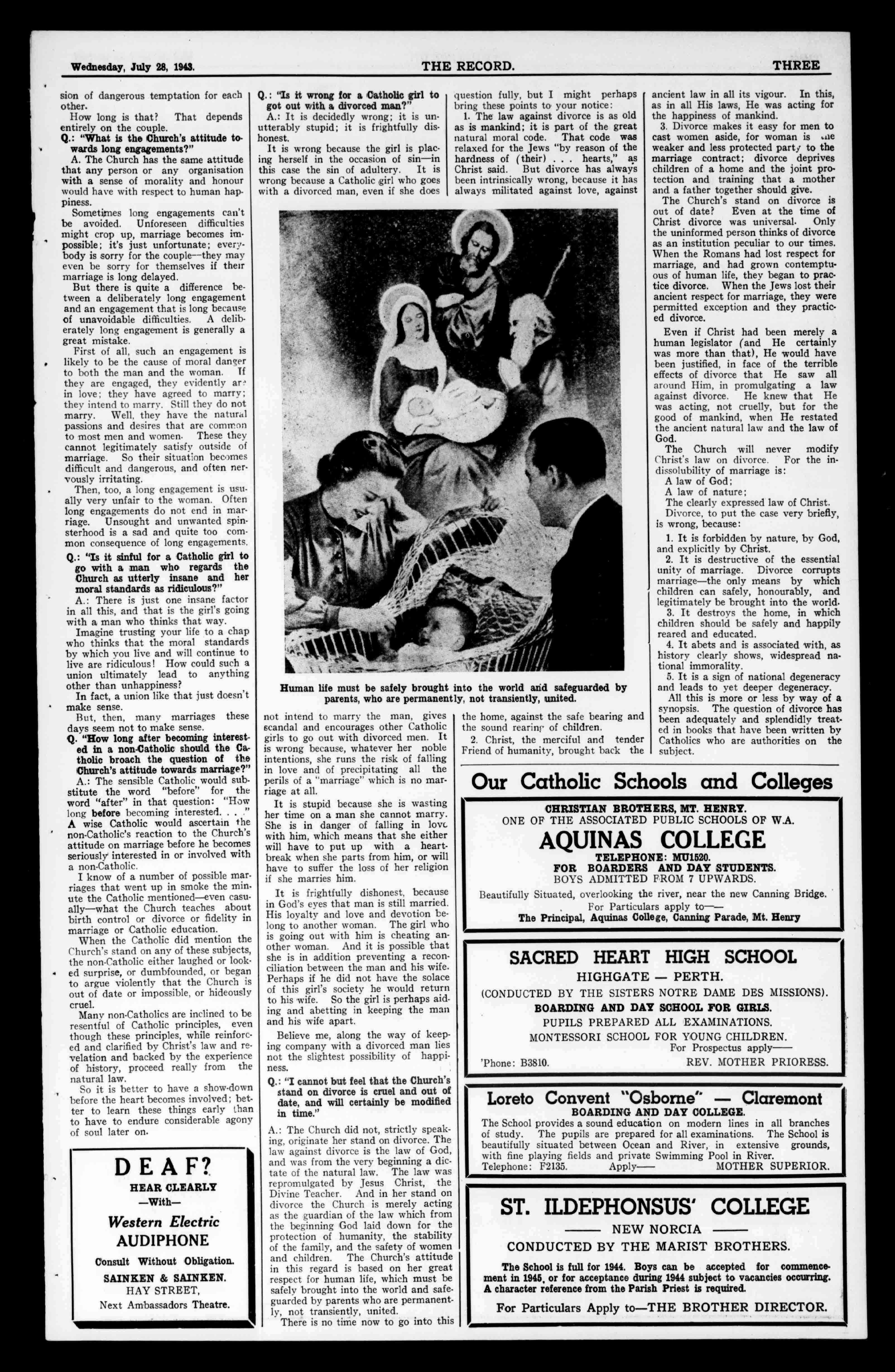
Humanlifemustbesafelybroughtintotheworldandsafeguardedby parents,whoarepermanently,nottransiently,united. notintendtomarrytheman,gives scandalandencouragesotherCatholic girlstogooutwithdivorcedmen.It iswrongbecause,whateverhernoble intentions,sherunstheriskoffalling inloveandofprecipitatingallthe perilsofa"marriage"whichisnomarriageatall.
Itisstupidbecausesheiswasting hertimeonamanshecannotmarry. Sheisindangeroffallinginlove withhim,whichmeansthatsheeither willhavetoputupwithaheartbreakwhenshepartsfromhim,orwill havetosufferthelossofherreligion ifshemarrieshim.
Itisfrightfullydishonest,because inGod'seyesthatmanisstillmarried. Hisloyaltyandloveanddevotionbelongtoanotherwoman.Thegirlwho isgoingoutwithhimischeatinganotherwoman.Anditispossiblethat sheisinadditionpreventingareconciliationbetweenthemanandhiswife. Perhapsifhedidnothavethesolace ofthisgirl'ssocietyhewouldreturn tohis-wife.Sothegirlisperhapsaidingandabettinginkeepingtheman andhiswifeapart.
Believeme,alongthewayofkeepingcompanywithadivorcedmanlies nottheslightestpossibilityofhappiness.
Q.:"IcannotbutfeelthattheChurch's standondivorceiscruelandoutof date,andwillcertainlybemodified intime."
A.:TheChurchdidnot,strictlyspeaking,originateherstandondivorce.The lawagainstdivorceisthelawofGod, andwasfromtheverybeginningadictateofthenaturallaw.Thelawwas repromulgatedbyJesusChrist,the DivineTeacher.Andinherstandon divorcetheChurchismerelyacting astheguardianofthelawwhichfrom thebeginningGodlaiddownforthe protectionofhumanity,thestability ofthefamily,andthesafetyofwomen andchildren.TheChurch'sattitude inthisregardisbasedonhergreat respectforhumanlife,whichmustbe safelybroughtintotheworldandsafeguardedbyparentswhoarepermanently,nottransiently,united.
Thereisnotimenowtogointothis
thehome,againstthesafebearingand thesoundrearingofchildren.
2.Christ,themercifulandtender Friendofhumanity,broughtbackthe
5.Itisasignofnationaldegeneracy andleadstoyetdeeperdegeneracy.
Allthisismoreorlessbywayofa synopsis.Thequestionofdivorcehas beenadequatelyandsplendidlytreatedinbooksthathavebeenwrittenby Catholicswhoareauthoritiesonthe subject.
OurCatholicSchoolsandColleges
CHRISTIANBROTHERS,MT.HENRY.
ONEOFTHEASSOCIATEDPUBLICSCHOOLSOFW.A.
AQUINASCOLLEGE
TELEPHONE:MU1520. FORBOARDERSANDDAYSTUDENTS. BOYSADMITTEDFROM7UPWARDS.
BeautifullySituated,overlookingtheriver,nearthenewCanningBridge. ForParticularsapplyto-ThePrincipal,AquinasCollege,CanningParade,Mt.Henry
SACREDHEARTHIGHSCHOOL
HIGHGATE-PERTH.
(CONDUCTEDBYTHESISTERSNOTREDAMEDESMISSIONS). BOARDINGANDDAYSCHOOLFORGIRLS.
PUPILSPREPAREDALLEXAMINATIONS. MONTESSORISCHOOLFORYOUNGCHILDREN. ForProspectusapply'Phone:B3810. REV.MOTHERPRIORESS.
LoretoConvent"Osborne"-Claremont BOARDINGANDDAYCOLLEGE.
TheSchoolprovidesasoundeducationonmodernlinesinallbranches ofstudy.Thepupilsarepreparedforallexaminations.TheSchoolis beautifullysituatedbetweenOceanandRiver,inextensivegrounds, withfineplayingfieldsandprivateSwimmingPoolinRiver. Telephone:F2135. Apply- MOTHERSUPERIOR.
ST.ILDEPHONSUS'COLLEGE
NEWNORCIA
CONDUCTEDBYTHEMARISTBROTHERS.
TheSchoolisfullfor1944.Boyscanbeacceptedforcommence. mentin1945,orforacceptanceduring1944subjecttovacanciesoccurring. AcharacterreferencefromtheParishPriestisrequired.
ForParticularsApplyto-THEBROTHERDIRECTOR.
Wednesday,July28,1943.
THERECORD.
THREE
'WhentheJewishSacrificesBeauneaHollow Pretence. 'WalachiaProphesiedtheVass
"Acleanoblation auniversal NeedofInteriorSelf-Offering
(ARecentSermonPreachedinSt.Mary'sCathedral byRev.Dr.J.T.McMahon,M.A.)
TheOldLawwentbeforeandpointedthewaytotheNewLaw.The Jewishfaithinitsdoctrine,inits moralcode,andinitssacrificeswasa shadow,afigure,asymbol,atypeof whatwastosucceedandreplaceitin theCatholicChurchfoundedbyChrist.
TheJewishsacrificeswereacceptabletoGodwhenman'sselfsacrifice wasjoinedtothevictim'sdeathand thevisiblegiftrepresentedtheinvisible offering.TheJewishsacrificeswere effectivewhentheywereofferedinthe nameandinthehopeoftheRedeemer tocome.Atlength,sacrificeamong theJewsdeterioratedintoanempty ceremony,anexternalparadeaccordingtotheletteroftheLaw.All therequirementsoftheLaw,aspresentedintheBookofLeviticus,were fulfilled;theanimalswerecarefully chosen,theywereslainandtheirblood pouredbesidethealtar,buttherewas nodevotionintheheartsoftheofferers.Priestsandpeoplecaredonly fortheexternalact,itsprocession, ritual,andvestments.Thehearts oftheoffererswereunturnedtowardsGod,andtheirwillswereheedlessofHislaw.Apureintention,a cleanheart,andanuprightlifewere notexpressedbythevictim'sblood. Theywerephysicallypresentatthe altarofsacrifice,andnothingmore.
ThenGodspokethroughHisprophet wordsthatrejectedforevertheSacrificesoftheOldLaw,wordsthatclosed itsTemple,andextinguishedthefires onitsaltars.Malachias,whosename signifies"theAngeloftheLord,"the lastoftheprophets,spokethesewords somefourhundredyearsbeforethe comingofChrist:-
"Ihavenopleasureinyou,saiththe Lordofhosts; AndIwillnotreceiveagiftfromyour hand.
Forfromtherisingofthesunevento thegoingdown, MynameisgreatamongtheGentiles: Andineveryplacethereissacrifice Andthereisofferedtomynamea cleanoblation.
FormynameisgreatamongtheGentiles, SaiththeLordofhosts.
(Malachias,1,10-11.)
Thesewords,visiblyaflamewiththe authenticfireofprophecy,arefulfilled to-day,andwemustask:Where?
"Ihavenopleasureinyou,"rings thedeathknellofJewishworship.The Jewishsacrificeswererejected,notso muchbecausetheywereinferior,just figuresandtypes,butbecauseman hadmadethemahollowpretence,a coldofficialceremonyinwhichthere wasnoself-offeringtoGod.
"AndIwillnotreceiveagiftofyour hand,"forposturingcanneverdeceive God,andHewillnotbesatisfiedwith thebarrenceremonialofanexternal worship.
"Forfromtherisingofthesuneven tothegoingdown."Theprophet piercestheveilofthefutureandhe seesasacrificewhich lastaslo.lg astimelasts,adaily rificewhich goesroundtheearthwiththedawn,
offeredineveryaleani.:everyland, "andineveryplacethereissacrifice."
"Andthereisofferedtomyname acleanoblation."Gonearetheholocaustswhichdailywereofferedbefore theAltarofHolocaustsfacingtheentranceoftheCourtoftheTabernacle. Gonearetheblood-sheddingsacrifices sofavouredintheOldLaw.Andin theirplacewillcomea"cleanoblation,"moreacceptabletoGodthanall thesacrificesoftheOldLaw.
"Formynameisgreatamongthe Gentiles."Whatwordsarethese fromaJewishprophet?AreGod's "chosenpeople"tobecastasidefor theheathenGentiles?Daringwords, surely!WordsthatwillnotbewelcometotheJews,whosenationwasa holyone,andwhosereligionwasanationalone.ThataJewishprophet shouldariseanddeclarethecomingrejectionbyGodofthosesacrifices whichdatebacktoCainandAbel, whichthePatriarchsoffered,and whichhadbeenunceasinglyoffered fromthetimeofMosestotheday oftheprophet,wasanunnationalanri unpatrioticsentiment.But,thatthe samevoiceshouldprophecythatthe ancientriteoftheirfatherswastobe replacedby"acleanoblation,"which wouldnolongerbetheprerogativeof theirrace,butwastobeoffered everywhere,auniversalsacrifice,was ascandalintheirears,andabsolutely abhorrenttothem.Thisbreakwith thetraditionsofhisracewassensational,butitmakesofMalachiasthe greaterprophetifhiswordsaretrue.
WhereisThisProphecyFulfilled?
ThissacrificespokenofbyMalachias isnottheSacrificeoftheCross,which wasofferedonlyonceonGoodFriday, atoneplace,nearJerusalem,andina bloodymanner,sheddingthelastdrop ofHisBlood.Itcannotbeasacrificeofthesoul,forthatisnothing new,andwasneverrejectedbyGod. Asacrificeexiststo-day,foritisessentialtotheworshipofGod.Consequently,wemustconcludethatMalachias'prophecyisfulfilledintheSacrificeoftheMass,whichisabloodless sacrifice("acleanoblation"),which hasbeenunceasinglyofferedsinceits institution("fromtherisingofthe suntothegoingdown"),andisauniversalsacrifice("ineveryplacethere issacrifice").
Godliftedtheveilofthefuture,so thatMalachias,wholivedfourhundred yearsbeforeChristcameonearth, couldlookintotheupperroomatthe LastSupper,andhearChrist'scommand:"Dothisforacemmemoration ofMe,"andseemanobeyingitfrom risingtosettingsun,whenthepriceof ourransomishandedovertoGod anewoneveryaltar.
Christperformedasolemnactof worshipbeforetheattentiveeyesof theApostles.Takingbreadandwine Hespokeextraordinarywords,which fellupontheireagerears,nevertobe forgotten.Swiftlyflewtheirthoughts tothatsceneatCapharnaum,theday followingthemultiplicationofthe
YellowCabs RepairsAllMakes ofCars
sacrifice unceasinglyoffered"
allduetothat"cleanoblation"which isoffereddailyfromouraltars.Itis theMassthatmatters.Ineverynationwherethealtarsofsacrificeare multipliedandwellserved,therethe faithflourishes.Andwhatistrue ofapeopleisequallytrueofindividuals.RecallthosewordsofrejectionofMalachias:"Ihavenopleasure inyouandIwillnotreceiveagift fromyourhand."Thepeopleofold deservedthembecausetherewasno self-offeringintheirsacrifices.They theyremainedcoldandindifferent. HaveyouandInocauseforheartsearching?Eachoneofusmayask ourselves:arethesewordsofwarning addressedtome?DoIalsofulfil theletterofthelawbyamerephysical presenceatMassonSundays?Today,asintheOldLaw,theLordexpectsthatinsacrificetheofferercomes withthegift.IntheOldLawthe JewsbroughttheanimalstotheTempletobesacrificed,butmanyofthem lefttheirheartsathome.Whatgift dowebringwithustoMassonSundays?Dowebringthegiftsthe Lordwantsfromus,thegiftofourselves,thegiftofadisciplinedand chastebody,thegiftofalovingand trustingheart,thegiftofsorrowand reparationforoursins,thegiftofresignationandsubmissiontoHisHoly Will,nomatterhowheavilythehand ofsufferingmayleanuponus,andthe giftofanunselfishlife?
Sacrificeisasign.Ofolditbecameanempty,hollowsign,andwas, conseqently,rejected.TheSacrifice oftheMassmayalsobecomeapretence,unlesswestirourselvesand joinwiththeexternalactofworship ourinteriorself-offering.
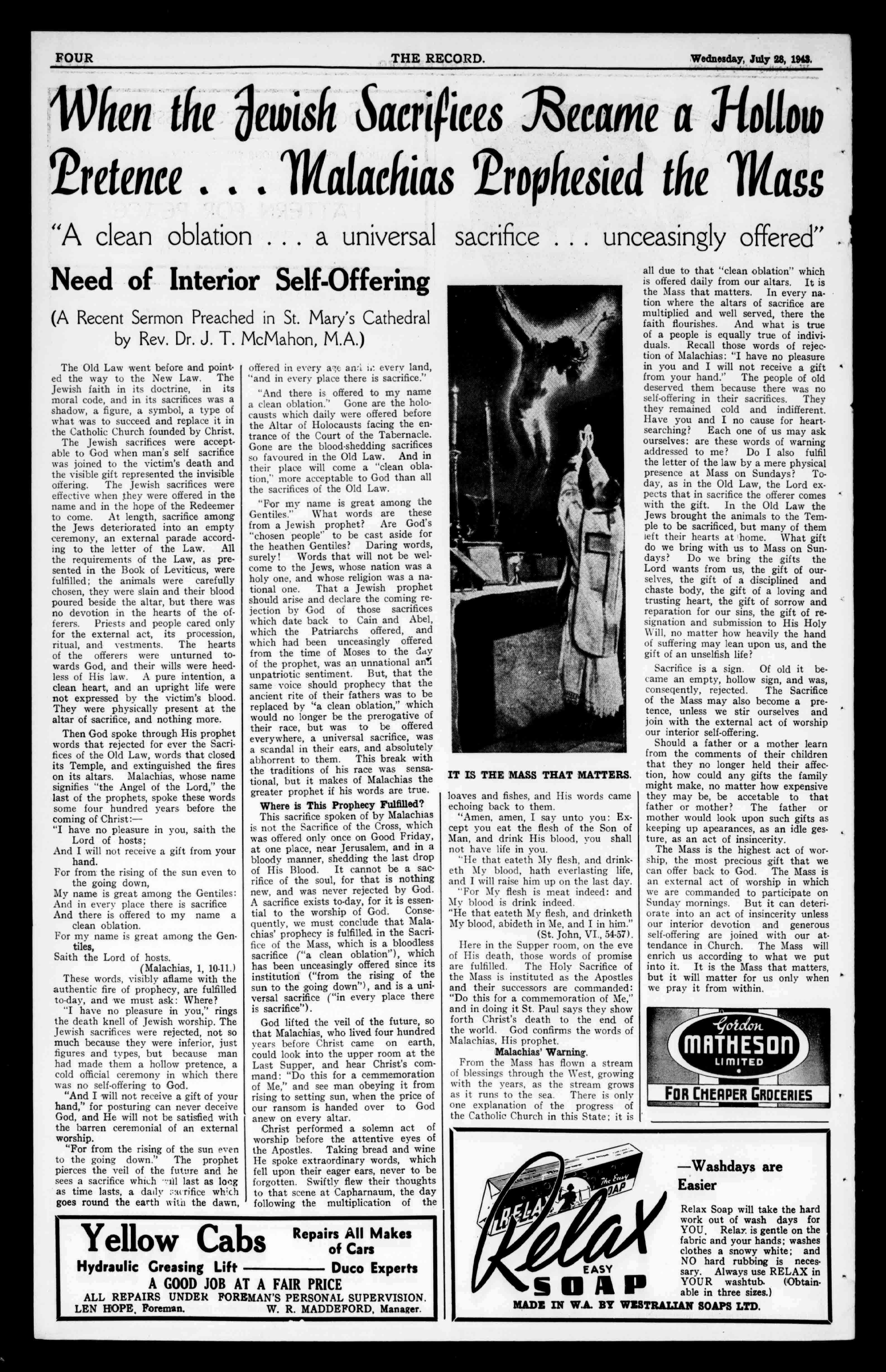
ITISTHEMASSTHATMATTERS.
loavesandfishes,andHiswordscame echoingbacktothem.
"Amen,amen,Isayuntoyou:ExceptyoueatthefleshoftheSonof Man,anddrinkHisblood,youshall nothavelifeinyou.
"HethateatethMyflesh,anddrinkethMyblood,hatheverlastinglife, andIwillraisehimuponthelastday.
"ForMyfleshismeatindeed:and Mybloodisdrinkindeed.
"HethateatethMyflesh,anddrinketh Myblood,abidethinMe,andIinhim."
(St.John,VI.,54-57).
HereintheSupperroom,ontheeve ofHisdeath,thosewordsofpromise arefulfilled.TheHolySacrificeof theMassisinstitutedastheApostles andtheirsuccessorsarecommanded: "DothisforacommemorationofMe," andindoingitSt.Paulsaystheyshow forthChrist'sdeathtotheendof theworld.Godconfirmsthewordsof Malachias,Hisprophet.
Malachias'Warning.
FromtheMasshasflownastream ofblessingsthroughtheWest,growing withtheyears,asthestreamgrows asitrunstothesea.Thereisonly oneexplanationoftheprogressof theCatholicChurchinthisState:itis
Shouldafatheroramotherlearn fromthecommentsoftheirchildren thattheynolongerheldtheiraffection,howcouldanygiftsthefamily mightmake,nomatterhowexpensive theymaybe,beaccetabletothat fatherormother?Thefatheror motherwouldlookuponsuchgiftsas keepingupapearances,asanidlegesture,asanactofinsincerity.
TheMassisthehighestactofworship,themostpreciousgiftthatwe canofferbacktoGod.TheMassis anexternalactofworshipinwhich wearecommandedtoparticipateon Sundaymornings.Butitcandeteriorateintoanactofinsincerityunless ourinteriordevotionandgenerous self-offeringarejoinedwithourattendanceinChurch.TheMasswill enrichusaccordingtowhatweput intoit.ItistheMassthatmatters, butitwillmatterforusonlywhen weprayitfromwithin.
-Washdaysare Easier
RelaxSoapwilltakethehard workoutofwashdaysfor YOU,Relay.isgentleonthe fabricandyourhands;washes clothesasnowywhite;and NOhardrubbingisnecesEASY sary.AlwaysuseRELAXin YOURwashtub(Obtainableinthreesizes.)
MADEINW.A.BYWEBTRALIANSOAPSLTD.
FOUR THERECORD. Wednesday,July28,1943.
HydraulicGreasingLift DucoExperts AGOODJOBATAFAIRPRICE ALLREPAIRSUNDERFOREMAN'SPERSONALSUPERVISION. LENHOPE,Foreman. W.R.MADDEFORD,Manager.
SEVERALpointsofinterestwere containedinanaddressbyProfessorG.E.Nichollsduringtheweek toaninformalgatheringofmembers oftheUniversitySenateandteaching staff.TheProfessorwasadvocating theteachingofbiologyasthemostsatisfaetoryintroductionfortheadolescenttothefactsoflife.Therewasin biologyplaceneitherforpruderynor prurience;therewasnothingcommon orunclean,theProfessorcontended. "Inthis,asinitsinsistenceontruth, itshouldformanessentialpartofthe studiesinschools-themoresothat inmodernStateeducationreligiousinstructionisnotprovided."
Thisisaverygracefultributeto thereligiousschools.FortheProfessorwasobviouslyawareoftheperils attendingtheimpartingofsexknowmonsueminenininonsosnemmuummiemensoommeheus
AUSTRALIANJOURNEY
AnewandrevisededitionofPaul McGuire'sentertainingbook,which coversthewholeAustralianScene. Writtenwithallthestrongfeelingof anAustralianforhisnativeplace,it isoneofthemostsuccessfulofrecent Australianworks.Ithas33finehalftoneplates,andanewmap.
Price,13/6;postage51d.
IIIsorrGARMENTS.
AcollectionofOxfordConferences, bytheRightReverendMgr.Ronald Knox.Afinerefreshercourseinthe fundamentalsoftheFaith.
Price,10/-;postage,31d.
LOUISEDEMARILLAC.
ByM.V.Woodgate.Thisdelightfulbiographyofagreatlady,whowith St.VincentdePaul,foundedtheOrder oftheFrenchSistersofCharity,is trulyafinebook.
Price,10/-;postage,31d.
THEEUCHARISTIC RENAISSANCE.
AstudyofInternationalEucharistic Movement.ByT.M.Schwertner,O.P. Formerly,10/-;now5/-;postage,5/d.
ANEWARRIVALOFBOOKSBY REVERENDFATHEROWEN FRANCISDUDLEY.
WillMenBeLikeGodsPapercover,4/6;postage21d.extra.
WillMenBeLikeGods?Clothcover,6/9;postage21extra.
ShadowontheEarthPapercover,5/6;postage,2/d.extra.
ShadowontheEarthClothcover,6/9;postage,31d.extra.
TheMasterfulMonkPapercover,5/6;postage,31d.extra.
TheMasterfulMonkClothcover,7/9;postage,41d.extra.
ThePageantofLifePapercover,6/9;postage,31d.extra.
ThePageantofLifeClothcover,8/3;postage,31d.extra.
ComingoftheMonsterPapercover,5/6;postage,41d.extra.
ComingoftheMonsterClothcover,7/9;postage,4/d.extra.
TheTremaynesandtheMasterful MonkPapercover,6/9;postage,3/d.extra.
TheTremaynesandtheMasterful MonkClothcover,8/3;postage,41.extra.
PellegriniifCo.Pty.Ltd.
776HAYSTREET,PERTH
AndatBrisbane,Adelaide,Sydney,Melbourne
111111111111111111HOUOUB11101.8.1NOMIIIIIIIHIHOUI,101111111a
ledge,unorientatedbyreligiousprinciples.ButtheStateschoolsarein thatinvidiousposition.Howeverclean asubjectbiologyis,initself(andI grantitfreely),andhoweversaneand balancedaviewofsexrelationsmay beobtainedthroughitsstudy,theultimateoutlookofthestudentisnaturalistic.Hehasstudiedmanconsideredsheerlyasananimal,andthatis onlyhalfofthetruthandbynomeans thebetterhalf.Indeeditcannotbe regardedinthisfractionalmannerat all.Itisratherasifthestudenthad consideredacorpse-thebodyofman, uniformedandunmotivatedbythe soul.
(-)y FRANCIS GILBERT
Thequestionofsexeducationcannotbesolvedbybiologyalone.For itisfarmorethanastudyofprocesses. TheChristianFaithviewsitinthe highsupernaturallightofthecreature co-operatingwiththeCreatorinthe productionofnewlife,notonlyfor timebutforeternity.Marriageisliftedoutoftherutofanimalism,which isallitcanmeantothematerialist, andplacedonthehighestpeakof humandignityandprivilege.Religionalsogiveshumanlifeanewvalue andavastsignificancewhichnomere naturalismcando.
ButtheProfessorhadotherinterestingthingstosay.Forinstance,heis reportedassayingthat"theideathat thereisafundamentalantagonismbetweenbiologyandChristianityseems tomeunsound."Ithasalwaysseemedunsound,nottosayridiculous,to theCatholicChurch,HowGod,Who istheAuthoralikeofnatureandof Revelation,couldbeatoddswithHimselfwasadilemmawhichonlythe 19th.centurymaterialistscouldbe foundtoassert.TheChurchhasonly quarrelledwiththescientistswhen theywerenothonest.Thatis,when theyconfusedtheoryandhypothesis withfact,whentheymadeunwarrantableintrusionsintophilosophyonthe strengthofassumptionsandwhenthey triedtoemploypseudo-scienceasa stickwithwhichtobeatChristianity. Andeventhenthequarrelwasnotof theChurch'schoosing.TheProfessor claimsthatChristianityandscience shouldbeallies.Weheartilyagree. Andboththelateandthepresent Popeshavegivenagreatleadinthe PontificalAcademyofScience.
Inparticularwasthetheoryofevolutionsoused.Initselfitargues nothingagainstChristiantruth-quite thereverse.Itaddsnewsplendour andprofunditytotheOmniscience andOmnipotenceofGod.Catholics areperfectlyfreetoacceptthetheory iftheywish.
ButwhenmenlikeHuxleylettheir imaginationgetthebetteroftheirintelligenceandbeganannouncingthey haddiscoveredtheoriginoflife,itwas timeforeverypersonofcommonsensetobesceptical.Professor Nichollsrightlysaidthatthealliance ofreligionandsciencewouldsetus freefromthelastgreattyranny-superstition.Weonlyhopethatherealisesthatthathasmoreapplication totheextravaganceofscientifictheorisingthantothespeculationsoftheologians.
SocialJusticeSessions
BROADCASTFROMSTATIONS6PR--TZ,JULY23,AT6.30p.m.,AND FOLLOWINGWEEKS.
ANEXPLANATIONOF"PATTERN
FORPEACE"
ByMR.K.F.SPRUHAN,Editorof"TheRecord." (SPONSOREDBYTHECATHOLICSOCIALGUILD).
BASSENDEANBAKERY N.LOVELOCK
'TEL.:U1.128.
BAKERANDPASTRYCOOK,ETC. WESTROAD,BASSENDEAN.
WEAVER&LOCK HIGHCLASSAERATEDWATERS
Tel.:MU149.
WESPECIALISEINCORDIALS.
SUBURBANROAD,SOUTHPERTH.
PEERLESSBREADMANUFACTURERS
145FITZGERALDSTREET,PERTH.
OurMotto:"QUALITYandSERVICE."
Specialties-VIENNABREADandROLLS. 'Phone:B1041.
A.E.HANSENFamilyButcher
654ALBANYROAD,VICTORIAPARK.
OrdersCalledforandDeliveredDaily ATrialSolicited.
Terms:CashWeekly.
PHONEM1184ANDLETYOURPAYENVELOPELIVELONGER.
D.HILL
WHOLESALEANDRETAILBUTCHER. NEWCASTLEROAD,MIDLANDJUNCTION. Tel.118Midland.
Wednesday,July28,1943.
FIVE
THERECORD.
TRUSSEDPOULTRY. "THESTOREOFQUALITY." 'Phone:F2198. STIRLINGHIGHWAY,MOSMANPARK. RHODESId,SONS GROCERS.IMPORTERS,WINEANDSPIRITMERCHANT. Goodsdeliveredtoanypartofthedistrict. PAINTINGFORPERROTT PERROTTFORPAINTING. D.C.PERROTT 'PHONE65548 10CAMELIABT.,NORTHPERTH. PAINTINGCONTRACTOR CONTRACTORTOTHELEADINGCONVENTS,COLLEGES,AND SCHOOLS. P.H.JAMES QUALITYBUTCHER,50HamptonRoad,Beaconsfield 'PHONEL2492. FORPRIMESTQUALITYMEAT.. YOURRECOMMENDATIONAPPRECIATED. J.C.HAMILTON,M.P.S.,PH.C. CONSULTINGCHEMIST. 197BRISBANESTREET PERTH. PrescriptionsCarefullyandAccuratelyDispensed.CompleteStocksof PatentMedic:Ines.CountryOrdersatCityPrices. 'PhoneB7923. PHONEF2396-ONEQUALITY-THEBEST JAS.KIELY&SONS BEACHBAKERY FAIRLIGHTSTREET,MOSMANPARK MaltandWholemealBreadaSpeciality. PatroniceOurAdvertisers
SubiacoYoung Men'sClub
By"Ace."
TheClubdancesheldinSt.Joseph's Hall,Subiaco,willbecontinuedon August14. Agrandevening'sentertainmentisassuredtoourpatrons. Therewillbeluckyspotsandother novelties. Tournaments.
Thetournamentsbeingconducted bytheClubarerunningwell.The pointsattheendofthefirstroundare asfollows:St.Gerard's,44;St.Roger's, 43;St.Thomas',30;St.John's,26. Thereisstillroominthecompetitionsformoremembers,socomealong toourClubmeetingsonMonday nightsandenjoyyourselvesinagood Catholicatmosphere.
Personal.
Wearepleasedtoseetwoofourmost ardentClubmembers,inKevinHodge andJohnHayes,excellingthemselves nilthefootballfield.
AnotheritemofnewsisthatKevin HodgeistakingaholidayinKalgoorlie.Wehopeyouenjoyyoursojourn inthecountry,Kevin.
Wearesorrytoannouncetheloss ofourpresident,B.Moxham,whohas joinedthemilitaryforces.Barney hasservedtheClubwellforthepast sixmonths,andwearesurehewill dowellinhisnewsphere.
Anotheritemofgoodnewsisthe announcementofournewpresident, CharlieCooper.AlthoughCharliehas onlybeenamemberoftheClubfora shortwhile,hehasalreadyestablished hispopularitywiththeboys.Weare suretheClubwillcontinuetoprosper underhisguidance.
CENTRALCATHOLICLIBRARY
36PIERSTREET,PERTH. SUBSCRIPTIONRATES. Metropolitan.
12Months:Onebook,10s;twobooks, 12s6d;threebooks,fl;fourbooks,£1 7s.6d. Country.
12Months:Threebooks,£115s.;foilbooks,£25s.;fivebooks,£210s.
Wepayfreightonbookstothesub. scriber.
Dressmaker q/IppealforJeacher
TheCatholicGirls'Movementarein needofaqualifiedteacherfortheir DressmakingClasses,heldeveryWednesdayeveningfrom7p.m.onwards intheClubRooms.Therearesome 40girlsattendingtheclassandthe presentteacherswouldappreciatethe assistanceofanotherqualifiedhelper tocopewithincreasingnumbers. Shouldanyreaderknowofanyone 'whowouldbewillingtohelpwiththe classes,eithervoluntarilyorforsome remuneration,wouldtheybekind enoughtogetintouchwiththeSecretary,65St.George'sTerrace,orring B2546.
DEATHS
OnService.
DALY.-Inlovingmemoryofmynephew,ReginaldDaly(Reg),A.I.F. (DepartmentAgricultureandStock, Brisbane),killedinactionrecently, NewGuinea;aged26years.Anold "Riverview"boy.
Greaterlovehathnoman,andthis dayyouwillbewithmeinParadise. -Insertedbyhissorrowingaunt, EllenorO'Leary.
WHITE.-OnJuly23,1943,atSt.John ofGodHospital,Subiaco,Margaret Mary,widowofthelateThomas EarlandlovingmotherofVera, Cyril,Connie(SisterMaryEymard, oftheSacredHeartConvent,HighgateHill),andTom. RequiescatinPace.
014 INMEMORIAM 44
OnService.
ELLYARD.-Ofyourcharity,prayfor thereposeofthesoulofP/0Ronald Victor,killedatDarwin,August2, 1942. SacredHeartofJesus,havemercy onhissoul.
-Insertedbyhismotherandbrothers.
BOGUE.-Ofyourcharity,prayfor thesoulofMauriceJosephBogue, belovedsonofDouglasandAgnes Bogue,andlovingbrotherofBrian, Patricia,andKevin.
OLord,theGodofpardon,giveto thesoulofThyservant,Maurice Joseph,whoseanniversaryofdeparturewecommemorateonJuly29,a placeofrefreshment,happinessof rest,andthebrightnessofeternal light.Onwhosesoulandallthe soulsofthefaithfuldeparted,Sweet Jesus,havemercy.
ROGUE-Ofyourcharity,prayfor thereposeofthesoulofMaurice Joseph,accidentallykilledonJuly 29,1940,belovednephewofLew (R.A.A.F.)andNora,lovingcousin ofPauline,Maurice,andVeronica (deceased),andRamsay.
SacredHeartofJesus,havemercy onhissoul.
McGURK.-Inlovingmemoryofour dearmother,MaryMcGurk,whodepartedthislifeonJuly22,1942. R.I.P. -Insertedbyherlovingfamily, Neal,Jack,Lilly,Annie,andBrian.
RAMSAY.-InlovingmemoryofVeronicaAnn,whopassedawaysuddenlyonJuly23,1942,darlinglittle daughterofLew(R.A.A.F.)and Nora,lovingsisterofPaulineand Maurice;aged4years.
BEREAVEMENTNOTICE.
Thesonsanddaghtersofthelate Mrs.HannahElizabethOutridgewish tosincerelyTHANKallkindfriends andrelativesforletters,telegrams, cards,floraltributesandpersonalexpressionsofsympathyintheirrecent sadbereavement.Willallpleaseacceptthisasapersonalexpressionof theirdeepgratitude.
WANTEDTOBUY:Stoves,Wood andGas;OldRoofIron,Coppers, Heaters,etc.BestPricesPaid.B6307.
SIX THERECORD. Wednesday,July28,1943. FRANKJ.BOSWELL SPECIALISTSINHospitalEquipmentandSteamInstallations,HotWaterHeating, Ventilating,SewerageWork,andGeneralPlumbing. CornerRUTH&WILLIAMSTREETS,PERTH. Tel.B2777. W.A.AgentforK.G.LUKEPTY.,LTD.,MELBOURNE. SuppliersofHospitalEquipmentandStainlessHospitalUtensils. PrintingHousesofA.D.SCOTT FORFINEPRINTING ServicePrintingCo. CITYANDSURBURBANPRINTINGCO. LI'NOCRAFTPOSTERSTUDIOS. RAINBOWHOUSE.383-7HAYST.(EAST,PERTH. ServingAllColleges'PrintingRequirements. TelephoneB9901(3lines) Res.U2389 TheChoiceofExpertCooks CHARLIECARTER'S SELFRAISING FLOUR 1/6 71b.Bag FamousforChocolates andConfectionery,the nameofPlaistowewill, afterthewar,attaina newsignificanceina newfield,whenPlaistowe'sCannedFoods Sectionreleasedfrom Warobligationswill contributemanydeliciousediblestoevery home.
BROWNS---Fruiterers 127BARRAk,KSTREET,PERTH. 'PhoneB3517. 'PhoneB3517. ALLTHEBESTFRUITSOFTHESEASON. BESTCOOLDRINKSANDMILKBARTNTOWN. WhiteRockQuarries FOR ALLGRADESOFMETALFORROADCONSTRUCTIONANDCONCRETEWORK. PatroniseOurAdvertisers 'PHONES:B8866,B8989. AfterHours:MW24 3rd.FLOOR,COLONIALMUTUALBUILDINGS,PERTH.
OFqeneralInterest
CATHOLICSERVICES'GUILD North-WestArea
OFFICIALOPENING.
OnSunday,July4,theCatholicServicesClub,North-WestArea,wasofficiallyopenedbySeniorChaplainH. J.Reid,M.S.C.,inthepresenceofa distinguishedgatheringofofficersand menfromthevariousAlliedServices.
OnthedaiswithFatherReidwere theCommanderoftheAreaandrepresentativesfromtheNavyandAir Force,andHisHonourJudgeWells.
ChaplainJ.Dwyerwelcomedthe officialguestsandsaidthatthearea hadlonghopedforaclubsuchasthis andnowhappilythosehopeswere beingrealised.
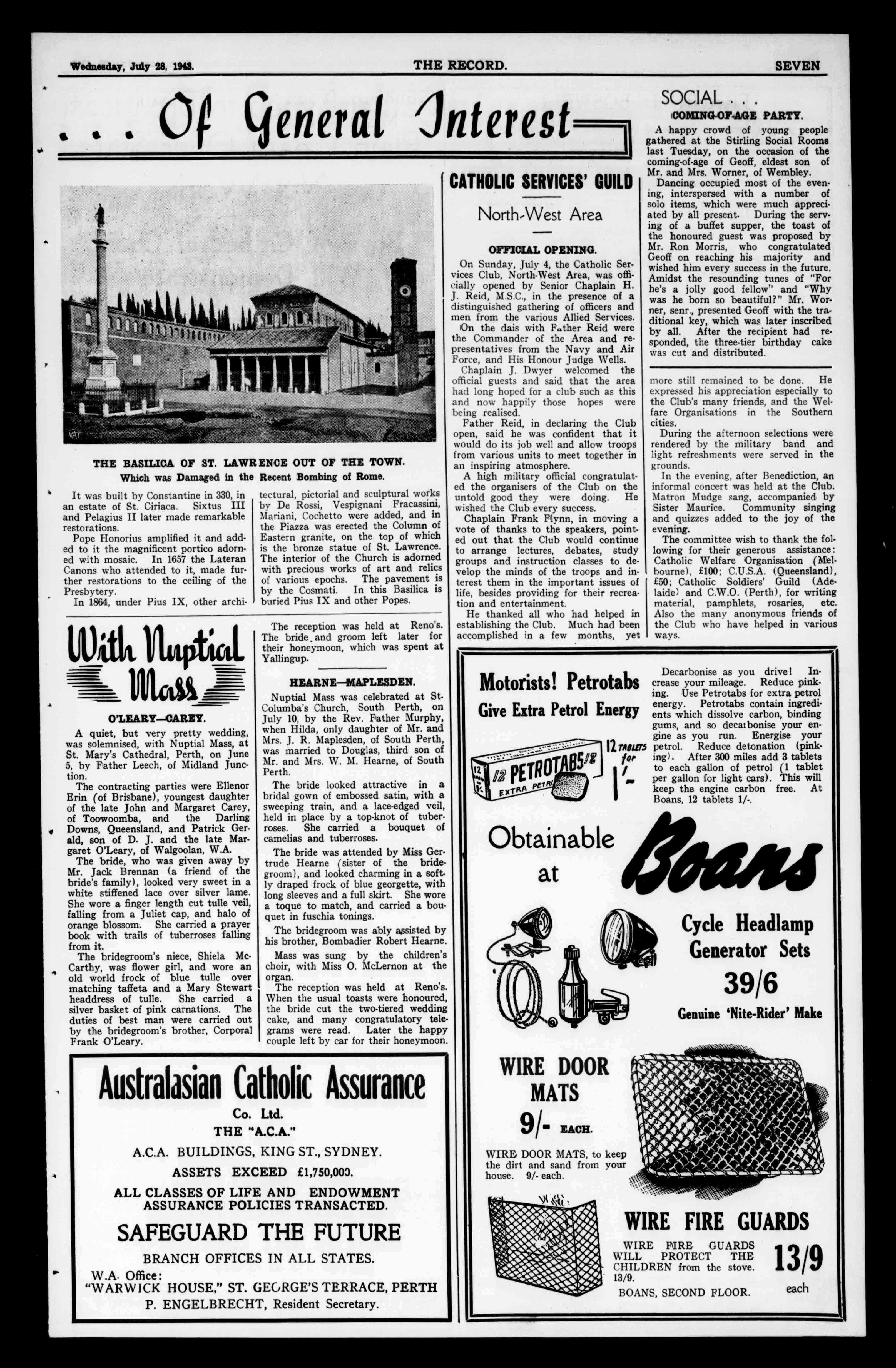
THEBASILICAOFST.LAWRENCEOUTOFTHETOWN.
WhichwasDamagedintheRecentBombingofRome.
ItwasbuiltbyConstantinein330,in anestateofSt.Ciriaca.SixtusIII andPelagiusIIlatermaderemarkable restorations.
PopeHonoriusamplifieditandaddedtoitthemagnificentporticoadornedwithmosaic.In1657theLateran Canonswhoattendedtoit,madefurtherrestorationstotheceilingofthe Presbytery.
In1864,underPiusIX,otherarchi-
WA.
O'LEARY-CAREY.
Aquiet,butveryprettywedding, wassolemnised,withNuptialMass,at St.Mary'sCathedral,Perth,onJune 5,byFatherLeech,ofMidlandJunction.
ThecontractingpartieswereEllenor Erin(ofBrisbane),youngestdaughter ofthelateJohnandMargaretCarey, ofToowoomba,andtheDarling Downs,Queensland,andPatrickGerald,sonofD.J.andthelateMargaretO'Leary,ofWalgoolan,W.A.
Thebride,whowasgivenawayby Mr.JackBrennan(afriendofthe bride'sfamily),lookedverysweetina whitestiffenedlaceoversilverlame. Sheworeafingerlengthcuttulleveil, fallingfromaJulietcap,andhaloof orangeblossom.Shecarriedaprayer bookwithtrailsoftuberrosesfalling fromit.
Thebridegroom'sniece,ShielaMcCarthy,wasflowergirl,andworean oldworldfrockofbluetulleover matchingtaffetaandaMaryStewart headdressoftulle.Shecarrieda silverbasketofpinkcarnations.The dutiesofbestmanwerecarriedout bythebridegroom'sbrother,Corporal FrankO'Leary.
tectural,pictorialandsculpturalworks byDeRossi,VespignaniFracassini, Mariani,Cochettowereadded,andin thePiazzawaserectedtheColumnof Easterngranite,onthetopofwhich isthebronzestatueofSt.Lawrence. TheinterioroftheChurchisadorned withpreciousworksofartandrelics ofvariousepochs.Thepavementis bytheCosmati.InthisBasilicais buriedPiusIXandotherPopes.
ThereceptionwasheldatReno's. Thebride.andgroomleftlaterfor theirhoneymoon,whichwasspentat Yallingup.
HEARNE-MA.PLESDEN.
NuptialMasswascelebratedatSt. Columba'sChurch,SouthPerth,on July10,bytheRev.FatherMurphy, whenHilda,onlydaughterofMr.and Mrs.J.R.Maplesden,ofSouthPerth, wasmarriedtoDouglas,thirdsonof Mr.andMrs.W.M.Hearne,ofSouth Perth.
Thebridelookedattractiveina bridalgownofembossedsatin,witha sweepingtrain,andalace-edgedveil, heldinplacebyatop-knotoftuberroses.Shecarriedabouquetof cameliasandtuberroses.
ThebridewasattendedbyMissGertrudeHearne(sisterofthebridegroom),andlookedcharminginasoftlydrapedfrockofbluegeorgette,with longsleevesandafullskirt.She'wore atoquetomatch,andcarriedabouquetinfuschiatonings.
Thebridegroomwasablyassistedby hisbrother,BombadierRobertHearne.
Masswassungbythechildren's choir,withMiss0.McLernonatthe organ. ThereceptionwasheldatReno's. Whentheusualtoastswerehonoured, thebridecutthetwo-tieredwedding cake,andmanycongratulatorytelegramswereread.Laterthehappy coupleleftbycarfortheirhoneymoon.
AustralasianCatholicAssurance
Co.Ltd.
THE"A.C.A."
A.C.A.BUILDINGS,KINGST.,SYDNEY. ASSETSEXCEED£1,750,003.
ALLCLASSESOFLIFEANDENDOWMENT ASSURANCEPOLICIESTRANSACTED.
SAFEGUARDTHEFUTURE
BRANCHOFFICESINALLSTATES.
W.A.Office: "WARWICKHOUSE,"ST.GEGRGE'STERRACE,PERTH P.ENGELBRECHT,ResidentSecretary.
FatherReid,indeclaringtheClub open,saidhewasconfidentthatit woulddoitsjobwellandallowtroops fromvariousunitstomeettogetherin aninspiringatmosphere.
AhighmilitaryofficialcongratulatedtheorganisersoftheClubonthe untoldgoodtheyweredoing.He wishedtheClubeverysuccess.
ChaplainFrankFlynn,inmovinga voteofthankstothespeakers,pointedoutthattheClubwouldcontinue toarrangelectures,debates,study groupsandinstructionclassestodevelopthemindsofthetroopsandinterestthemintheimportantissuesof life,besidesprovidingfortheirrecreationandentertainment.
Hethankedallwhohadhelpedin establishingtheClub.Muchhadbeen accomplishedinafewmonths,yet
SOCIAL COMING-OF,AGEPARTY.
Ahappycrowdofyoungpeople gatheredattheStirlingSocialRooms lastTuesday,ontheoccasionofthe coming-of-ageofGeoff,eldestsonof Mr.andMrs.Worner,ofWembley.
Dancingoccupiedmostoftheevening,interspersedwithanumberof soloitems,whichweremuchappreciatedbyallpresent.Duringtheservingofabuffetsupper,thetoastof thehonouredguestwasproposedby Mr.RonMorris,whocongratulated Geoffonreachinghismajorityand wishedhimeverysuccessinthefuture. Amidsttheresoundingtunesof"For he'sajollygoodfellow"and"Why washebornsobeautiful?"Mr.Worner,senr.,presentedGeoffwiththetraditionalkey,whichwaslaterinscribed byall.Aftertherecipienthadresponded,thethree-tierbirthdaycake wascutanddistributed.
morestillremainedtobedone.He expressedhisappreciationespeciallyto theClub'smanyfriends,andtheWelfareOrganisationsintheSouthern cities.
Duringtheafternoonselectionswere renderedbythemilitarybandand lightrefreshmentswereservedinthe grounds.
Intheevening,afterBenediction,an informalconcertwasheldattheClub. MatronMudgesang,accompaniedby SisterMaurice.Communitysinging andquizzesaddedtothejoyofthe evening.
Thecommitteewishtothankthefollowingfortheirgenerousassistance: CatholicWelfareOrganisation(Melbourne),£100;C.U.S.A.(Queensland), £50;CatholicSoldiers'Guild(Adelaide)andC.W.O.(Perth),forwriting material,pamphlets,rosaries,etc. Alsothemanyanonymousfriendsof theClubwhohavehelpedinvarious ways.
Decarboniseasyoudrive!Increaseyourmileage.Reducepinking.UsePetrotabsforextrapetrol energy.Petrotabscontainingredientswhichdissolvecarbon,binding gums,andsodecarboniseyourengineasyourun.Energiseyour
12TASLITSpetrol.Reducedetonation(pinkfeeing).After300milesadd3tablets
/ toeachgallonofpetrol(1tablet jpergallonforlightcars).Thiswill keeptheenginecarbonfree.At Boans,12tablets1/.. 13/9 each
Wednesday,July28,1943. THERECORD. SEVEN
Motorists!Petrotabs GiveExtraPetrolEnergy
1 Obtainable at CycleHeadlamp GeneratorSets 39/6 Genuine`Hite-Rider'Make WIREDOOR MATS 9/-EACH. WIREDOORMATS,tokeep thedirtandsandfromyour house.9/-each. WIREFIREGUARDS WIREFIREGUARDS WILL PROTECTTHE CHILDRENfromthestove. 13/9. BOANS,SECONDFLOOR.
FatherLynchtoBroadcast PlainChantOverState Net-Work
Fools'Paradise
Communism,atleastinitsorigins,haditseconomicdoctrines laidinatheoryofhistory.Marxreadallhistoryastherecordof astrugglebetweensocialclasses,betweenoppressorsandoppressed.andthisstruggle,heclaimed,wasthekeytosocialevolutiontheforcewhichimpelledmenalongthepathofprogress.Yet,by astrangeanomaly,theinevitabilityofthisconflictis,intheconsummationofCommunism,tobeinexplicablydisplacedtogive waytoaclasslessandStatelesssociety.UnhappilyfortheCommunistcontention,however,allthatCommunismhasbeenableto achievetodatehasbeenadictatorshipoftheproletariatandthe totalsubordinationandsacrificeofhumanitytotheStatemachine Sofarfromwitheringaway,theStateinRussiaisfromdayto daygrowingstrongerandmorecentralised.AsfarasMarx's theoryofclasswarfareisconcerned,itisenoughtosaythat,from theearliestdaysofwhichwehaveanyrecord,menhavefeltthe needoflivingincivilsocietiestoattaintheirmaximumtemporal welfarebytheirco-operativeefforts.Itisincrediblethatinternal conflictshouldbeanessentiallawofanassociationbasedupona naturalneedforco-operation;conflictandco-operationareoftheir essencecontradictory.
Thoughitisplainthatneitherinclass-organisedcivilsociety, norintheeconomicprocess,isclass-struggleinevitable,stillithas existedinthepastandwillexistinthefuture.Theseunfortunatemanifestationsofclasshostilityhadtheirrootsinmoral causes,mainlyinselfishness.Thisarisesfromtheselfishnessof thememberofaclassandfromamisconceptionoftheirtrue interests.Sincetheevilisamoralone,so,insiststhePope,isthe remedy.Theonlylastingcureistheadoptionandpracticeofthe anti-selfishprincipleofjusticeandcharity.Animportantpoint torealiseisthatthepracticeofthesevirtuesinindustrylieswith individuals.Therehasbeenagreatdealoflooseandvaguetalkingof"classes."Aclassassuchhasneithervicenorvirtue. Thesearethemoralqualitiesoftheindividualswhocomposethe class.Socialreformdependstoaverylargeextentonmoralreformanditisindividualswhomusttaketheinitiativeinresisting anyactionbyothersoftheirclasswhichtheirconsciencedisapproves.Themoralisationofsocialrelationsdemandsaspiritual revolution.
WehavesaidlittleofacriticalnatureinregardtoCommunism,becauseitwouldseemmoreprofitabletooffertheconstructiveteachingofthePapalEncyclicals.ItisnotenoughforCatholicstobeabletodiscernthefallacieswhichunderlieCommunisminitsmoral,socialandeconomicaspects.Theymusthavea positivesetofprinciplestooffer,andthesearetobefoundinthe clearsocialteachingsofthePopes.Wehavealreadyspokenof theCommunismtenetofclasswar.Therearetwootherinstitutionswhichareattackedwhicharefundamentaltohuman nature.Oneistherighttoprivateownershipandtheotheris thefamily.Astothefirst,thedestructionofprivateownership isagainstjustice,because"topossessprivatepropertyasone'sown isarightgiventomanbynature"-itisthelawofnature.And thefamily,aswellastheindividual,hasitsrights.Asasociety itispriortotheState,itsatisfiesmorefundamentalneedsand fulfilsamoreessentialfunction.Thehumanracecouldcontinue toexistanddevelopwithouttheState,butnotwithoutthefamily. Thebond,moreover,whichloinsthemembersofafamilyismore deeplyrootedinnaturethanthatwhichunitescitizensinaState. Themanwhowouldtamperwiththesethingsisofferingtheworld atypeofparadisethatcouldappealonlytothefool.
BoysofCathedralChoir WillDemonstrate
TheRev.FatherLynchwillbroadcasttotheschoolsoftheArchdiocese onFriday,July30,andFriday,August 6,from2.30p.m.to3p.m.Theboys oftheCathedralChoirwilldemonstrate.MassNo.XI,"OrbisFactor," CredoNo.3,theAdoroTe,AveVerum, TantumErgoNo.1,andAdoremusNo. 1willbedealtwith.
Thisboadcastshouldreachallthe schoolsoftheArchdiocese.Themetropolitanschoolscanalleasilyhear either6PRor6P111;theWheatArea 6AM,andtheSouth6TZ.
TheGoldfieldsbroadcastfrom61EG willberelayedonAugt.st4and11,at 11am.
ThoseschoolsnotpossessingaRadio shouldmakearrangementsfortheir scholarstohearthesebroadcasts,and thechildrenshouldhavetheirtext
books,e.g.,"PlainChantforSchools," orthemanualissuedbyRev.DomS. Moreno,O.S.B.
Themetropolitanexaminationswill takeplaceinAugust,andinthecountryduringSeptember,Octoberand November.ThecombinedChildren's Mass,atwhichHisGracetheArchbishopwillpreside,istobecelebratedon September15,inSt.Mary'sCathedral; onSeptember14,inFremantle,andin Kalgoorlieatadatetobeannounced later.
AttheHighMasstobebroadcast fromSt.Mary'sCathedralonSunday, August1,over6WF,thechoirwill singtheMass"OrbisFactor"(No. XI).ThiswillgiveteacherstheoprortunityofhearingtheMassprescribedforthe1943PlainiChantcourse sunginfull.
SocialJusticeSessions
InauguratedonFridayLast AWeeklyTalkover6PR-6TZ on"PatternforPeace"
CatholicSocialGuild'sLatestVenture
TheinauguralSessionoftheSocialJusticeSessionswaspresentedbyMr.K.SpruhanonFridayeveninglastat6.30p.m.over Stations6PR-TZ.TheSessionsaresponsoredbytheCatholic SocialGuild.
Mr.Spruhangaveanoutlineofthemajorpointsofpost-war reconstructioncontainedinthe"PatternforPeace."Reportsreceivedtodateindicatethatthereceptionwasclearthroughallthe areacoveredbythetwostations.
OnFridaynext,Mr.Spruhanwilldiscussthecausesofthe populationdeclineinAustralia,andoftheneedofcheckingthe trend.Hisaddressesarebeingrecordedandwillberelayed from6KG,commencingonAugust8,atatimetobeannounced later.
TheCatholicSocialGuildisanxiouseventuallytohavea State-wideradiohook-up,sothatitsSessionsmayheheardinall partsoftheState.Theonlybartotheextensionofthisactivity isthequestionoffinance,andanyassistanceinthisdirection willbemostwelcome.
ThenexttalkintheSocialJusticeSessionswillbegivenon Stations6PR-TZonFriday,30th.inst.,at6.30p.m.
Convent,Highgate,onSeptember4, commencingat2.30p.m.,andconcludingonMondaymorning.Intending participantsnotifybranchsecretaryor ringB2857(MissJoyce).
Enclosed etreats
("TheRecord"willbepleasedto publishinthiscolumnnoticesofRetreatstobeconductedformembersof ourvariousCatholicorganisations throughoutthecomingyear.Wesuggestthatadvicebesenttousassoon asarrangementshavebeencompleted ineachcase.)
Ex-studentsofSacredHeartConvent,Highgate,areinvitedtoenclosed week-endRetreat,commencingSaturday,September4,at2.30p.m.Those intendingtoparticipateringConvent asearlyaspossible.
TheH.A.C.B.S.annualRetreatfor ladieswillbeheldatSacredHeart
C
BOOKREVIEW
TheFlyingTigers.ByRussellWhelan.
AninterestingstoryoftheAmerican VolunteerAirGroup,whichfoughtthe JapanesefromChungkingandlater fromBurma.Toldinaverypersonal way,ittakesthereaderintotheconfidence,asitwere,ofthebraveparticipantsinalltheirepisodes.Ifwe musthavewarbookstheyshouldbe likethisone.Hasoneortwodigsat BritishpolicyinBurmathatcould warrantareplyfromtheproperquarter.
Doyouwishtohelpeducateapriest forworkinWesternAustralia?Make aregularannualcontributiontohelp anindigentstudent.
EIGHT THERECORD. Wednesday,July20,1953.
PERTH,WEDNESDAY,JULY28,1943.
* * *
tOe
ciircObioceot
ARCHBISHOP'SENGAGEMENTS.
Augustl-9.30a.m.:Ordinationtothe SacredPriesthoodattheChurchof theHolyRosary,Nedlands.
Afternoon:CanonicalVisitationand ConfirmationatSt.Joachim'sChurch. VictoriaPark.
August2-4p.m.:PresideatReception CeremonyatSt.Mary'sConvent, Leederville.
August6-8.30a.m.:PresideatCeremonyofReceptionattheNovitiate oftheSistersofMercy,Victoria Square.
August8-10.30a.m.:PresideatSolemnHighMassattheRedemptorist Monastery,NorthPerth,ontheoccasionofthecelebrationoftheFeast ofSt.Alphonsus.
August8-3p.m.:OpeningofnewSocialRoomsoftheThirdOrderofSt. Francis.
August15:CanonicalVisitationand ConfirmationatSt.Mary's,Kal goorlie.
August22:CanonicalVisitationand Confirmation,atAllHallows',Boulder,andSt.Mary's,Coolgardie.
CHANGEOFPUBLISHING DAY.
Asfromthisweek,"TheRecord"willbepublishedonWednesdaysinsteadofThursdaysas inthepast.Thischangehasbeen decideduponinorderthatsubscribersmayreceivetheircopies bySunday,whichsomewerefailingtodoowingtothewartime dislocationofpostalservices. Advertisementsandcopymust henceforthreach"TheRecord" OfficebymiddayonTuesdayof eachweek.
CatholicTeachers' Guild
ThenextmeetingoftheGuildwill beheldat11a.m.onSaturdaymorning,August14,atBactonHouse.Membersmaybringuptheirideasfordiscussion.
BeIMMIIMOMPOMWM.0.11M.I.
ANNUALBOXINGTOURNAMENT
CHRISTIANBROTHERS'HIGH SCHOOL,HIGHGATE. HOLLYWOODSTADIUM, AUGUST7-
AfternoonandNight.
Instructors:F.Robins,R.McCaulay. Referee:MajorKenny.
StreetAppeal,..for "Boys'Town"
Castledare,Clontarf BindoonandTardun toBenefit
TherewillbeaStreetAppealforthis greatworkonAugust13,bypermissionoftheChiefSecretary,andHis Gracewishessuccesstothisappeal,the firstofitskind.Allmembersofall thevariousbranchesoftheCatholic Women'sLeagueareearnestlycalled upontohelp.Willalldelegatesbe suretoattendexecutivemeetingon August2at2p.m.,inordertobeable toinformmemberswhatwillberequiredofthemonAugust13.Allsuccessto"Boys'Town,"WAMembersofotherCatholicsocieties orindividualswhowouldbewillingto actasstreetcollectorsonAugust13 areaskedtosendintheirnamesto thisoffice.
LibraryLectures
FRIDAYNIGHT,AUGUST6,AT THECENTRALCATHOLICLIBRARY,36PIERSTREET,PERTH. "SPREADINGTHECHURCHIN THENEWWORLD."
TheprincipalspeakerattheLibrary lecturenextFridayeveningwillbe VeryRev.FatherHaugh,0.M.I.,of Fremantle.FatherHaughwillspeak ofthegreatexpansionoftheChurch intotheNewWorlddiscoveredby Columbus,whichinnumbersmore thanmakesupforwhatwaslostin theoldworldthroughtheReformation.Moreparticularlythelecturer willdealwithsomeaspectsoftheOblatemissionsinCanada,whichto-day areamongthemostspectacularinthe Church.
Thistheme,"theexpansionofthe Church,"isimportanttoallofus,for PiusXIhascalledusalltoanew crusade-theexpansionoftheChurch toourneighboursandworkfellows throughCatholicAction.
Thesupplementaryspeakerwillbe Rev.FatherBreslin, whowill talkaboutbeatificationandcanonisationprocesses.
Fixthisdate,Friday,August6,at 8p.m.,inCentralCatholicLibrary.
FORREMAINDEROFSEASON.
August6:Rev.FatherHaugh,O.M.I.-
"TheExpansionoftheChurchinthe NewWorld."
August20:Mr.K.Summers"TheGreatHeresies."
September3:Mr,K.F.Spruhan"TheRootCausesoftheReformationinEngland."
September17:Rev.FatherKelly,S.J.
"TheReformationandCounterReformationontheContinent."
October1:Lieut.Batten,R.A.N."CatholicisminEnglandSincethe Reformation."
Tickets,3s.(Ringside,atGleeson's, Barrack-street),2s.andls.
TeaandCakesAvailableAfternoonand Night.
,IM141411011114
CATHOLICPATRIOTICBALL
EmbassyCabaret
MONDAY,SEPTEMBER6,1943
8.30to1.30.
TICKETS,8/6SINGLE (ObtainableatDoor).
BookingsopenatEmbassyfor Logues,Tables,etc.,onMONDAY, AUGUST16,1943.
PROCEEDSINAIDOFC.W.O.
October15:Tobearranged"TheCatholicRevivaloftheNine teenthCentury."
October29:Rev.NoelRyan,S.J."TheCatholicLiteraryRevival."
November5:Mr.H.Goerke"CatholicSocialTeaching."
November19:Rev.FatherLalor"TheFightTo-day-Everyone'sDuty -CatholicAction."
QUARANT'ORE
JULY:
Sunday. AUGUST. lst.-BUSSELTON:OneDayofExposition. 2nd.--MOSNIANPARK:OneDayof Exposition.
3rd.-ST.FRANCISXAVIER'S, WINDSORSTREETand DONNYBROOK:Onedayof Exposition.
SEWANDSAVEFABRICS AT Ahern's
1111.11I
GRAFTON ANTI-SHRINKSILKS, 9/9
TheseAnti-ShrinkGraftonSilksarein floralsandfancydesignsinthewell knownLavenelleandGrafainestyles. Theycannotshrink,stretchorfade. 36in.9/9and7/10yard. 3Coupons.
BRITISHSPUN DOMINOSPOTSILKS, 3/11
ThisBritishSpunSilkfeatures groundswithsmallandmedium dominospots.36in. 3/11 3Coupons.
navy white yard. Mal
HAYANDMURRAYSTREETS
PatroniseOurAdvertisers
Parents'Wedonotemployordinaryclassmethodswithourstudents. TheTutors-allspecialistsintheworktheyundertake-movefrom onestudenttoanother,checkingworkcompletedandexplainingnew work.Brightstudentsthereforearenotheldbackbydullones,while slowstudentsdonothavetorushinanendeavourtokeepupwiththe restoftheclass.
AllgraduatesofourJUNIORSECRETARIALCOURSEgetGold EfficiencyBadges,practicalexperienceinourownoffices,afirstappointmentandaguaranteeofFREEEMPLOYMENTSERVICEFORLIFE.
Wehavenosetterms-studentsmaycommenceanyday.Ifyou havesonsordaughtersover14enrolthemNOW'P. Call,writeor'phoneB6010,B6561,fordetails.Noobligation.
Wednesday,JulyX,DO. THERECORD. INS I
AHERN'S
-PrivateIndividualTuitionby QualifiedInstructorsisGivento AllC.C.C.
Semi
Students
CityCommercialCollege WA.'sBusinessUniversity SheffieldHouse,713-21HayStreet,Perth
Catholic qirls'Vovement
*HEADQUARTERSAND
CLUB-ROOMS
: BankofN.S.W.Chambers,65St.George'sTerrace (nearSherwoodCourt)-Rooms:7-10FirstFloor
CALENDARofACTIVITIES
SHORTHAND-5-6.30p.m.,Monday,Tuesday,Friday.
DRAMATICS-8p.m.,TuesdayandFriday.
HOMECRAFTS-Monday,8p.m.
E.S.C.-Monday,8p.m.
DANCE-CecilBuildings,8p.m.,Tuesday.
NURSES'PRAESIDIUM,8p.m.,Tuesday.
DRESSMAKING-7-9.30p.m.,Wednesday.
MASS,8a.m.Exposition,Benediction,5.45p.m.,Thursdly.
ORCHESTRAANDSWINGBAND,8p.m.,Friday.
Sunday,August1:Debutantes'
YouthSpeohe
JOINOURNEWACTIVITY.
Girls,thisisjustwhatwehavebeen waitingfor-adebatingclub.Itmight soundabitoutofyourdepthatfirst, butifyougetdowntotin-tacks,debatingiswithinthereachofall,and besidesbeinginterestingitprovidesa neverendingstreamofhumourat times.
Thetopicswhichweproposetodiscussrangefromcosmetics,inwhich youareallinterested,topost-warreconstruction,andevenifyoudonot wishtovoiceyouropinion,comealong andlisten-in.Believemeyouwill haveathrillingnight.
Anygirlwhoisinterestedmaycall inattheClubRoomsandhandinher name,andshewillbenotifiedfurther.
Picnic
InplaceoftheusualmonthlySocialintheClubRooms,thegirlsare goingtoorganiseapicniconSunday, August15. Thisisrathershort notice,butwatchthispagenextweek forfurtherdetails.
Rehearsal.
CanteenService
Thefollowingdateshavebeenarranged:C.G.M.Group.
August14:PhyllisDean.
September10:PhyllisDean. L.B.A.Group.
August11:PhyllisDean.
September7:PhyllisDean.
Dressmaking
TheDressmakingClassisinneedof anotherteacher,andanyonewhocould fillthepositionisinvitedtoapplyto theSecretary(B4836).Forfurther particularsseeadvertisementelsewhereinthisissue.
Debutantes
KindlynotethattheFIRSTREHEARSALfortheCatholicPatriotic BalltakesplaceonSunday,August1, at11o'clocksharp,attheCathedral Hall,Murray-street,Perth.
Girlsseekinginformationaboutthe CatholicGirls'Movementshouldring B4836,orcallattheClubRoomsduringlunch-hourorofanevening.
WEREYOUONEOFTHELUCKYONESTHISTIME IFNOT,GETYOURTICKETFROMCHARLESWATSON&CO. 76BARRACKSTREET(NextWilsonandJohn's). £1,000FOR2/6.OtherPrizesbytheThousand.
SAVECHARGES! SAVEFREIGHT!
ImprovetheValueofYourWoolbyhavingitSCOURED TheSWANWOOLSCOURINGCO. ofW.A.Ltd.Fremantle theoldestbusinessofitskindinthisState,withitsmostefficientmodernplant,employstheverylatestmethodstosecureforclientsbetter returnsfortheirwool.
ConsigntoNORTHFREMANTLE,andobtainrebatesof40percent. ofthefreightforallquantitiesoveroneton. Address:BOX2,POSTOFFICE,FREMANTLE. 'PHONES:L1031-2.
By"Ron"
RevivalorCombinedAnnualGeneral Communion.
Atameetingoftheexecutiveheld lastweek,itwasdecidedthataneffort shouldbemadetorevivetheAssociation'scombinedannualgeneralCommunionatSt.Mary'sCathedral.It ismanyyearssincethisgreateventhas beenheldattheCathedral,andthe executivefeelssurethat,despitethe smallermembership,theAssociation canworthilyorganisesuchagathering inthesetimes.However,tomakeit successful,wemustobtainthefullest supportofallmemberswhowillbe willingtomakesacrificesinorderto achievethegreatestresult.
TheSundayselectedforthisevent isSunday,September26,andtheCommunionwilltakeplaceatthe9o'clock Mass.Arrangementsconcerningthe breakfastandthetransportareunder considerationbytheexecutive,andwill be thesemadeknowntomembersthrough columnsintheverynearfuture.
Clubsecretariesarenowurgedto commenceorganisingtheirclubsto rallytothisspecialattraction.There aremanyclubmembersintheForces; itisthesewewanttosee,so,secretaries,letthemknowthedateanddo yourbesttoarrangetransportfor them.
ThisannualgeneralCommunionwill bethegreatestdayinthehistoryofthe Association,andwithsupportfrom eachandeverymember,pastandpresent,theexecutiveisconfidentthat thegatheringwillrankhighamongst similareventsheldbyCatholicorganisationsinthemetropolitanarea.
AnotherSuccessfulGathering.
RobertsonParkwasagainthevenue formanylastSunday,whenanotherof theAssociation'smonthlytennisdays tookplace.Asinpreviousgatherings,itwasencouragingtoseethe numberofnewcomerspresent,particu- larlythosefromotherStateswhoare atpresentservingintheForces.The occasionwasalsohonouredwiththe presenceofRev.DeanReidy,whoexpresseddelightatthesuccessofthe afternoon.Thenextmonthlydaywill beheldonSunday,August22.
Amongstthosewhotookpartwere: Rev.FathersDunneandO'Farrell; MesdamesK.Graham,H.Wigmore, V.Armstrong,G.Knox,J.Toone,T. Piecey,M.Slyth,H.NevinandP. Somers;MissesM.Pyke,I.Cogan,E. O'Connor,M.Corry,B.Austin,N.McGuire,P.Fletcher,M.Longstaffe,M.
Watts,K.McCaul,N.Dunn,D. Schuts,Z.Keogh,C.Arnold,C.Slattery,M.Reilly,K.Quinn,S.O'Neill, I.McGrade,M.Wynham,P.McGrade, S.DalyandM.Daly;Messrs.L.McGovern,A.E.Heagney,J.Eastcott,J. Elliott,J.Costello,H.Nevin,J.O'Connor,G.Edwards,A.Hinds,G.Somers, F.Collopy,L.White,M.Medley,J. McEncroe,R.Bovell,A.McGuire,W. Hughes,F.Anderson,B.Burns.J. McNamara,T.Steeks,G.Dwyer,J. Quigley,V.Medley,J.Knox,0.Hanlon,T.Toone,K.Hales,H.Woodings, L.Pusey,W.McFadden,W.Bennett, W.Slyth,P.Ryan,P.Ladyman,K. Somers,J.Tully,P.Reilly,J.Wall,R. Morris.
DeathofProminentMember.
Itwaswithdeepregretthatthe manyfriendsofNeildFarrarheardof hissuddenanduntimelydeath,which occurred"SomewhereinAustralia" lastweek.Neildwasaprominentandmostenthusiasticmemberofthe HighgateClub,andwasoneofthe leadingyoungplayersoftheAssociation.HislosshasbroughtmuchsorrowtotheHighgateclub,whohave nowlostthreeoftheirmalemembers inthepastsixmonths.
TheW.A.C.L.T.A.offersitssincerestsympathytohissorrowingrelatives intheirtragicloss.R.I.P.
PersonalPoints.
ManyofKalgoorlie'sprominentCatholicwomentennisidentitieshave driftedtothecityrecently.Zella Kehoewaspresentatthelasttennis day,whilstMargaretDawsonand BethClarkehavebeenseenaroundin theirA.W.A.S.uniforms.
WhenJackEdwardsleftforthe EasternStatesrecently,avacancyoccurredontheexecutive,thatofvicepresident.Atthelastcouncilmeetinganelectionwasheld,andRonMorriswas
Theelectedtotheposition. kindredinterestsoftwoStates wereunitedlastSaturday,whenMiss JoyceWood(Victoria)andMaxMcDermott(W.A.)weremarriedat theHolyCrossChurch,SouthCaulfield.Botharerespectivechampions oftheirownStateAssociations,and havedonemuchtoupholdCatholic tennis.Heartiestcongratulationsgo tobothfromtheW.A.C.L.T.A.,and wearelookingforwardtothedaywhenbothwillbeseeninactionagain inourowninter-clubcompetitions.
AllmembersoftheHighgateClub areremindedthatonSunday,August1,theyaretovisitSt.Mary's,Leederville,totakepartinasocial match.Thisisthefirstoccasionthat thesetwoclubshavearrangedsucha function,anda100percent.attendanceisdesired.
Itwaspleasingtotheexecutiveto seeJackO'Connor(BrightonClub, Victoria),BillMcFadden(Parramatta,N.S.W.),andBillBennett(Sydney),takingpartinthetennisday.
"Whyisit,"askedtheirritablecustomer,"InevergetwhatIaskforin yourshop?"
"Perhaps,madam,"saidtheassistant,smilingcoldly,"wearetoopolite."
TheColonialMutualFireInsurance COMPANYLIMITED.
FORALLCLASSESOFINSURANCE,INCLUDINGFIRE,HOUSEOWNER,andHOUSEHOLDER'SCOMPREHENSIVE,BURGLARY, PLATEGLASS,MOTORVEHICLE,CROPS,FIDELITY,GUARANTEE,WORKMEN'SCOMPENSATION,THIRDPARTY. NO.33BARRACKSTREET,PERTH.
W.L.CARTER,Manager.
W.H.BRANCH STONEHAMSTREET, OSBORNEPARK.
ESTIMATESGIVENFORALLKINDSOFEL1,CTRICALWORK BREAKDOWNSPROMPTLYATTENDEDTO.
Tel.B9681
DELIVERIESANYWHERE.
B2974
SupplierstoHospitals,EducationalandReligiousInstitutions. WEARETHEOLDESTANDLARGESTFISHDISTRIBUTORSIN WESTERNAUSTRALIA.
TEN THERECORD. Wednesday,July28,1943.
-StateSawmillsSPECIAJ.ISEIN LOCALTIMBERS STATEPRESSEDBRICKS AND OtherBuilders'Requisites 306MURRAYST.,PERTH AlsoatCountryandMetropolitanYards.
CATHOLIC T E N N I S ASSOCIATION
INTERNATIONALFISHERIES FRESHFISHTWICEDAILY.
BARRACK
131
STREET.
PHONE
FRESH
ROASTEDPOULTRY.
Wednesday,July28,1943.
HolyHour.
ThemonthlycelebrationoftheHoly HourtookplaceonSundayevening last.Rev.FatherMcCarthyconductedthedevotionsand"ThePreciousBlood"wasthesubjectofmeditationandspiritualreadingduringthe ExpositionoftheBlessedSacrament.
Thereisroomforgreatimprovement intheattendanceofparishionersat thisbeautifuldevotioneveryfourth Sundayevening.
C.W.O.AnnualAppeal.
MenoftheparishwereinattendancebeforeandafterallMasseson Sundaylast,makingtheannualappeal forsubscriberstothisworthycause. Asknowledgeoftheworkofthe C.W.O.isnowwidespread,thisyear's resultsshouldbearecord.
Teachers'Guild.
ThevisitingDiocesanInspectorof Schools,Rev.FatherJohnMurphy, addressedtheGuildatthefortnightly meetingheldonWednesday,July21.
CatholicWomen'sLeagueSocial.
August2isthedateofthenext monthlymeetingandsocial.Bythe way,themoneyraisedatthissocial willbedonatedtothecauseofthe PropagationoftheFaith.Agood attendanceofmembersisexpected. AltarSociety.
Themonthlymeetingtookplaceat thePresbyteryonSundayeveninglast.
Owingtoseveralyoungladiesjoining upintheServices,therearevacancies inthecollectorsranksatthemoment. C.B.C.Parents'andFriends'Association.
Membersoftheabovemetatthe CollegeonThursdayafternoonanddecidedtofollowthepracticeofformer yearsandholdahousepartyatthe CollegeduringAugust.TheBoulder representativeswillconductastallas usual,andfromthevariousattractionsdiscussedthepartyshouldbe welluptostandard.Friendsofthe College,pleasewatchoutforthedate, whichwillbeannouncedshortly,and givethefullestsupporttotheboys' school.
MAJORS.
ThenextmeetingofSt.Mary's BranchwillbeheldonMonday,August2,at7.45p.m.Atthelastmeetingthevice-president,SisterDaly, tookthechairintheabsenceofBro. Ilenneker,whowasabsentthroughillness.AmongthosepresentwasBro. L.McDonald,alwaysafaithfulmember.Hewasenjoyingshortleave.
Wagin
MASSTIMETABLE.
August1,Wagin,8a.m.:Wedgecarrup,10a.m.
August8,Wagin,8a.m.;Dumbleyung,10a.m.
August15,LakeGrace,9a.m.;Kukerin,11a.m.
August22,Dumbleyung,9a.m.; Wagin,10a.m.
August29,Wagin,8a.m.;Dumblevunc.10a.m.
STOVESWood,Gas,newandused, SoldBought,Repaired.HASSELL'S 559WellingtonStrett.B6307.
J.NEILSON,Optician
S.DANNELL,F.S.M.C.(London), W.A.O.A. OPTOMETRIST,Tel,:B2014. 16PLAZAARCADE,PERTH.
F.HUFNER
29MABELST.,NORTHPERTH. TUNESANDREPAIRSPIANOS ANDORGANS. 'PhoneB5824.
Third Order ofSaint Francis
Aftermanymonthsofillness,the deathoccurredrecentlyofMissMargaretFitzgerald(SisterGertrude>.ReceivedintotheThirdOrderofSt. Franciseightyearsago,SisterGertrudewasafaithfultertiaryanda willinghelperinFranciscanworksof charity.
Mrs.CatherineCasey(SisterTheresa),ofCarr-street,WestPerth,died onJune15,afterthreeyearsasaferventtertiary.
Mrs.(Nurse)Morton(SisterMagdalene)diedinSydneyrecently.
Thepassingofthesesistersisa greatlosstotheThirdOrderofSt. Francis,andtheprayersofalltertiariesareofferedforthehappyreposeoftheirsouls.R.I.P. SocialClubNotes.
ThenewSocialClubRooms,34Bon MarcheBuildings(2nd.floor),willbe officiallyopenedbyHisGracethe ArchbishoponSunday,August8,at 3p.m.Interestedvisitorsarecordiallyinvitedtoattend,alongwith tertiariesandtheirfriends.Musicand afternoonteawillbeprovided.
SIIBIA00BRANCH.
AtitsJunemeeting,thebranchdiscussedplanstoobtainfundsinconnectionwiththeLeague'sbursaryfor St.Charles'Seminary.Ithasbeen decidedtoholdaseriesofbridgeafternoons,detailsofwhichwillbeannouncedlater.TheSubiacobranchhasat presentanumberofwelfarecases underitscare.
Thenextmeetingofthisbranch willbeheldat3.30p.m.onSunday, August8,inSt.Joseph'sHall.
OATHEDRALBRANCH.
Theusualmonthlymeetingofthe CathedralBranchwillbeheldinthe ChurchOfficesonMonday,August2, at8p.m.
St.Joachim'sBranch.
Thepresident,Sr.N.Daly,presidedatthemeetingheldonJuly19. MemberswillbesorrytohearthatSr. Flanaganisnothavingthebestof healthatpresentandareaskedtorememberherintheirprayers.Weare pleasedtosaySr.J.O'Connor,whohas beenillforthepastfewweeks,has nowreturnedtowork.Memberswill regrettoknowthatSr.Symondshas toputherbabyinhospital.Sr.Ellvard'ssmallsonhasalsobeeninhospitalforsomeweeks.Wetrustboth childrenwillsoonbewellenoughto returnhome.Wearesorrytosaythat Bro.P.Reidyhasfallenavictimto the'flu,andwishhimaspeedyrecovery.Sr.D.Priestisspendingafew weeksinthecountry,andwehope thechangewillbebeneficialtoher. Bro.H.Flanagan(A.I.F.)ishomeon afewweeks'leave.Bro.T.P.MurphyisnowatNarroginandsendshis regardstoallmembers.Thenext meetingisonAugust2,andwehope toseeanimprovementintheattendance.
THERECORD. ELEVEN
GOODNEWS,.-ShipmentofGas FiresandBerger'sPaintsjustarrived. W.A.StoveCo,WellingtonSt.,Perth. CurtinforConfidence or MenziesForMuddle 'VoteforLaborsteam Fremantle-JohnCurtin PrimeMinister Forrest-NelsonLemmon Kal.-VictorJohnson M.H.R. Perth- TomBurke Swan
DonMountjoy AndfortheSenate Senator
M.Fraser (MinisterforExternal
SenatorR.E.Clothier R.H.Nash MissDorothyTangney (B.A.,Dip.Ed.) VoteLaborSolidly forSafety&Social Security (AuthorisedbyT.G.Davies,TradesHall,Perth.)
-
J.
Territories)
OLDROSARIES
EASTPERTHBY-ELECTION
11 E.CALLAGHAN.
INDEPENDENTCANDIDATE.
Ihavehadconsiderableexperience intheTradeUnionMovement,and Executiveofficeinotherpublicassociations.Isawserviceduringthe lateWarintheRoyalAustralian Navy,whichIjoinedattheageof141 years.Iamatpresentservinginthe RoyalAustralianNavy,andmyson, Harold,isalsoservingwiththeR.A.N.
Followingdemobilisationin1920,IbecameamemberoftheTimberWorkers' Union,inwhichItookanactiveinterest,butin1922transferredtothePerth ElectricTramwayUnion,andhave beenanactivemembereversince. Afterservingasamotormen'srepresentativeandvice-presidentatthelast electionofofficers,Iwasonlydefeated fortheofficeofpresidentonthecastingvoteofthereturningofficer.I wasamemberofthisUnion'ssub-committeecontrollingthestrikeduringthe regulationdisputeseveralyearsago;a memberofthesuperannuationsubcommitteein1930;andthemining committee,whichwasresponsiblefor thefinancingofanumberofunemployedtramwaymeninminingpursuits,whichschemeisstilloperating.
WhentheStateSectionoftheexNavalMen'sAssociationwasformedin 1926,Iwaselectedtothefirstcommittee,haveheldcontinuousofficeever since-includingtwotermsashonorary secretary,threetimesasseniorvicepresident,twiceStatedelegatetoFederalConference-andamnowinmy secondtermofofficeasFederalVicePresident.ForservicestothisAssociation,FederalConference,ontherecommendationoftheWesternAustraliansection,bestowedonmethehonouroflifemembership;thusbecoming theonlyrecipientofthishonourin WesternAustralia.
Asakeenstudentofpublicaffairs andpoliticaleconomy,Ihope,ifelected,topursuemyinquiriestherein,thus improvingmyefficiency;and,bydevotingmyactivitiesexclusivelytomy Parliamentaryduties,tofaithfully servetheinterestsoftheindustrial workersofEastPerthandtheother partsoftheCommonwealth.
Yoursfaithfully, H.E.CALLAGHAN.
Wehavebeenaskedtoappealfoi oldorbrokenRosaries,forwhichthe ownershavenofurtheruse.Owing tothelackofsuppliesofreligiousobjects,themenintheForcesareoften obligedtogowithoutRosaries,Mis sals,etc.TheSistersoftheCarmel iteMonastery,Nedlands,haveoffered tomendoldorbrokenRosaries,which willbethendistributedtothetroops Rosariesandotherpiousobjects maybeleftcloCatholicWelfareOrganisation, ChurchOffice, VictoriaSquare,Perth WHOSAIDTHAT?
Thiscanbequotedascomingfrom theLotteriesCommission:"Thefirst prizeintheNo.167aCharitiesConsultationis£1,000,andeverytickethas anequalchance.Towinyoumust bein." Weekly
167a
£1000
toyouwishtohelpeducateapriest forworkinWesternAustralia?Re. memberSt.Charles'SeminaryEducationFundinyourwill.
OBITUARY
OnJuly19,attheresidenceofher sister,Mrs.MunroMcDermott,ofSubiaco,thesuddendeathoccurredof MissMayMorgan,daughterofthelate Mr.andMrs.W.J.Morgan,of"Bardun,"Northam.
ThelateMissMorganwasofakindly,retiringdisposition,andinpast yearswasafaithfulChurchworker. Shewillbesadlymissedbyherlarge circleoffriends.
Thefuneral,whichtookplaceat Northam,waslargelyattended.The pall-bearerswere:Messrs.C.Throssell,C.Mills,F.Chidlow,J.French,W. PavyandHerb.Withnell.
DEATH.
BUCKLEY.-Ofyourcharity,pray forthesoulofmydearlylovedhusband,John,whodiedsuddenlyon July19,1943.R.I.P. -Insertedbyhislovingwifeand family.
INMEMORIAM.
OnService.
RODDA.-Inproudandloving memoryofourdearsonandbrother, BernardRay,whodiedofwounds receivedatRuinRidge,July28, 1942.
Everrememberedbyhissorrowing mother,sisters,IvyandLulu,brothers,Harold,Patrick(A.I.F.),and Bill.
BOGUE.-Ineverfondandloving memoryofourdarlinggrandsonand nephew,Maurice,whodepartedthis lifeonJuly29,1940. ImmaculateHeartofMary,your prayersforhimextol. 0,SacredHeartofJesus,havemercy onhissoul. -InsertedbyhisgrandmaBogue, unclesandaunties.
PLEASENOTE!
TheTelephoneNumberof"The Record"hasbeenalteredfrom B9141toB6950.
AuthorisedbyHerbertGrimbley,
Party,underno obligationtoFinancialDomination,Iwillfightagainstallsecret andoutsiderule.
[1]
[2]
[3]
[4]
TWELVE THERECORD. Wednesday,July28,1988. 11111184111111115111111111111=111111111111111111111111111111111110151n
VOTE
FOREASTPERTH.
Callaghan,n.f.[1]
239Thomas-street,Subiaco.) 2.1111111111111111111011110111111111111111111111111101M1.1111M1111 PERTHFISHERIES 489WELLINGTONST.,PERTH. FISHANDPOULTRYSUPPLIED. WholesaleandRetail. Phone:B5992. CityDeliveries. CountryOrdersCateredFar. 441.4.4.4.41.041.04.4.04+04.04.4.4.0.4,0440.4.
NOWOPEN
Sweeps
CHARITIES Consultation
let PRIZE rickets2/6onsale everywhere
direct fromtheLotteriesCommission,
or
Box C106, G.P.O.,Perth.
T.1. HUGHES A.C.I.A.,LL.B. Independent Candidate PERTH DIVISION FORTY YEARS OF PARTY POLITICS HAVE GIVENYOU: THREE WARS, FIVE YEARSOF ACUTE DEPRESSIONAND FINANCIAL AUTOCRACY. ThewelfareoftheElectorsofPerthisdependentontheProgressofWesternAustralia.OurPotentialitiesareEnormousand mustbedeveloped.BeingfreeofCaucusand
LV 111111!11111111111111111111111111111111111111!
won'thave WARDISM, CURTINISM,or COMMUNISM. REJECT
FEDERALELECTION,
InSHI.I.H1111.1.111oluinlild1HIminlilln1.1101.111u11, FEDERALELECTIONS. JOINTSENATETEAM oftheNational-CountryParties.
FORTHE FARMERS VOTE:
FremantleElectors! ShowthatW.A.
THEMAn! ListentoMr.Lee'sBroadcasts From6PR. VOTE F.R.LEE[1]
AUGUST21,1943. (AuthorisedbyJ.Morrison,Marketstreet,Fremantle.)
THEFOUR
T.S.Louch
J.S.Teasdale
J.L.Paton
C.G.Latham (AuthorisedbyC.L.HarvelandH.J. Prater,JointCampaignDirectors, A.M.P.Chambers,Perth.) ALEXRODOREDA TurfCommissionAgent 802HAYSTREET. AGENTFORW.A.CHARITIES. RingB5841andB5238. DERBY'S MURRAYSTREET,PERTH. 'Phone:B7777 REGISTEREDW.A.T.A. Doyouwishtohelpeducateapriest forworkinWesternAustralia?Make aregularannualcontributiontohelp anindigentstudent. (AuthorisedbyHerbertGrimbley,239ThomasStreet,Subiaco.) Booksandmagazinesforthetroops maybeleftat"TheRecord"Office, 450Hay-street,Perth,fordistribution bytheC.W.O.
WeLiveinanAgeof Novel-Reading IsitaGoodHabit?
SomeHardWordsAboutaHighly-Developed Art
ByJ.J.McGOVERN.
Alltheworldlovesagoodstory. Fromtimeimmemorial,mankindhas soughtoutthecompanionshipofthe goodstory-teller.Inthedaysgone by,theJesterandtheMinstrelheld positionsofeminenceandwerethe honouredofmen.Inoldentimes,the menofAsiawerewonttogatherround tolistentothewondroustalesthat wefindinthe"ArabianNights."
Inthisdayandage,westillhave ourtime-honouredRaconteurs,more numerousandwithlargeraudiences thaneverbefore.Theirstoriesare givenusinthemodernformofthe Novel.
WehavereadoftheGoldenAge andtheIronAgeandtheothervarious Agesintheworld'sgrowth.Truly, thereseemssmalldoubtthatweare nowlivingintheageoftheNovel.The worldisfloodedwithastreamof books,pouringoffthepressesofall countries,andthevastmajorityof thesebooksareNovels.Lendinglibrarieshaveincreasedwithalmostthe samerapidityaspetrolpumpsafew yearsago.Thereisalibrary,perhapstwo,inalmosteverycitydistrict.TheliteraryworldhasdevelopedahighlyefficientmethodofProductionandDistribution-twoproblems thatarepresentlyharrassingourCaptainsofCommerceandIndustry.
Highly-DevelopedArt.
Theconsiderationofthesethings causesonetowonderwhat,whence, andwhyisthenovel.Novel-reading issuchanimmenselypopularpastime thatitseemsitsimplymustbeabad habit.Itdoesnotseempossiblethat areallygoodhabitshouldbeacquired soenthusiasticallybysomanypeople.
Inearliertimes,whentheworldwas yetyoungandcivilisation'wasasimplething,notatallthecomplicated affair(wealmostsaidmess)itistoday,thestory-tellertoldsimpletales toasimplepeople.Notsimple-mindedpeople-butratherpeopleofsimplehabits,andhealthy,happywaysof living.Thesuccessfulstory-teller, justasthesuccessfuljournalistto-day, reflectedthelifearoundandabout him.Consequentlyaslifebecame morecomplex,thestoriesthatwere toldbecamemorecomplextoo.The plotsofstoriesbecamemoreelaborate andmethodsofnarrationmoresubtle.
Inthiswaythenovelwasevolved.It isthemosthighlydevelopedwayof
Wm.A.YOUNG FAMILYBUTCHER.
CornerJOHN&FITZGERALD STREETS,PERTH. FORQUALITYMEATYOU'LLLOVETOEAT. 'PhoneB1416.
ONFELLOWS'HOTEL SOUTHTERRACE,FREMANTLE. BESTBRANDSSTOCKED. NewlyFurnishedThroughout. ALLWELCOME. J.G.MULCAHY,Proprietor.
truthormoralofpurestgoldbepresentbeneaththesurfaceofthestory, itisnotalwaysfound,andstillless frequentlyisitsoughtafter.
Infact,westillleelthat,despitethe goodthathasbeenachievedbythe novel,thejudgmentpronouncedon thenovelbyacertaindistinguished novelist,issubstantiallycorrect.We (moteverbatim:
"Itmaybesafelyassumedthatmost ofthenovel-readingwhichpeoplefancy isanintellectualpastime,istheemptiestdissipation,hardlymorerelatedto
tellingastory.Itisaformofnarrationbywhichsuspensemaybebuilt upandinterestsustaineduntiltheend -eventothebitterend.
DafoeandScott.
ThefirstnovelintheEnglishlanguagewasouroldfriend,"RobinsonCrusoe."Itwaswritteninthe18th.centurybyDanielDafoeandattained widespreadandlastingpopularity.Sir WalterScottinthenextcentury broughttothisnewfieldofliterature thetouchofgeniusthatsettheworld afire,sotospeak.Scottdisplayed aninventivepoweralmostwithout parallel,andthevolumeofstoriesto whichhisfacilepengavebirthis ratherbreath-taking.Heitwaswho laidthegroundworkforthemodern novel.
ItissurprisingtoreflectontheextentandimmensityofScott'sinfluence.Hechangedthecharacterof story-telling,notonlyinEnglandbut almostinmostofEurope.Hesponsoredaromanticoutlookonlife.From anethicalpointofview,hepopularised certainstandardsofconduct,justas hehelpedtoawakeninterestinthe lifeandreligionoftheMiddleAges. Incidentally,theinterestthatwas arousedinthingsmedieval,pavedthe wayfortheOxfordMovement.
Thelater19th.centurynovelistsattemptedtocometogripswithlifeand bringaboutreformsthroughlegislation.Greatindustrialchangeswete takingplaceinEnglandwhichcreated manyproblemsofhumanwelfare. Dickens,bymeansofhistremendouslypopularnovelsaccomplishedmarvellousreformsinthesocialsystemof England.
Post-Victorian.
ThepostVictorianerarepresentsa verymarkedperiodofchangeinthe literarylifeofEngland.Previousto thattimethemovementsofthought andfeelingontheContinenthadnot greatlypenetratedEngland.Englishmenasawholedidnotpayagreat dealofattentiontowhatotherpeople thoughtandsaid.
From1890on,however,Englishliteraturehasbeeninfluencedbycontact withforeignbookswhoseauthorsregard"Sentimentalism"asthegreatest ofevilsandwhosecardinalprinciples areirony,clevernessandrealism.The FrenchnovelsofBaudelaireandZola; theplaysoftheNorwegian,Ibsen;the philosophyoftheGerman,Neitzche, andtheRussiannovelist,Tolstoiand Dostoevski,setinmotioncurrentsof thoughtandemotionalattitudeswhich hadpreviouslybeenentirelyforeign toEngland.TheEnglishoutlookbecameCosmopolitan.
ThisPost-VictorianeraofEnglish lettershasproducedabrightgalaxy ofshiningliterarylights,outstanding amongwhomwemightmentionthe CatholicnamesofChesterton,Belloc, andBenson.
OpiumoftheMind?
Whydopeoplereadnovels?Simply andalmostsolelybecausetheyliketo doit.Authorswithalessontoteach, amessagetogivetheworld,havefrequentlyclothedtheirdoctrineinthe outwardtrappingsofanovelsoasto reachthegreatestnumberofreaders. Asarule,however,peoplereadnovels forentertainment,andthoughthe
thoughtorthewholesomeexercise ofthementalfacultiesthanopium-eating,ineithercase,thebrainisdrugged,andleftweakerandcrazierbythe debauch.
"Ifthismaybecalledthenegative resultofthefictionhabit,thepositive injurythatmostnovelsworkisbyno meanssoeasilytobemeasuredinthe caseofyoungmenwhosecharacter theyhelpsomuchtoformordeform, andthewomenofallageswhomthey keepsomuchinignoranceofthe worldtheymisrepresent."
HotelandAccommodationGuide
OntheRoad
FirstClass to AccommoCityBeach. dation.
'Phone:B3418. M.CRANLEY,Proprietor.
GAYNOR'SHISMAJESTY'SHOTEL HAYSTREET EXCELLENTCUISINE PERTH. MODERATETARIFF.
HOTEL PERTH. JACKEDDINGTON, Proprietor.
EXCELLENT ACCOMMODATION.
STAN.O'BRIEN, COURTHOTEL PERTH.
'Phone:B4261.
HOTELBEACONSFIELD, FREMANTLE. OverlookingtheOcean. SuperiorAccommodation. ModerateCharges. M.BYRNE (LateofGrandandShamrock Hotels,Boulder).
SUBIACOHOTEL.
FIRST-CLASS ACCOMMODATION. 'Phone:W1028. A.J.McHENRY,Proprietor.
VICTORIAHOTEL, ITAYSTREET,SUBIACO. RenovatedThroughout. EssenceofComfort. W.F.ARTIS,Proprietor. (LateofBalmoralHotel,Vic.Park)
COUNTRY.
DUKEOFYORKHOTEL, NARROGIN. ReconditionedandRefurnished. NewLounge,DiningRooms, andCommercialRooms. ARTHURBOYLAN,Proprietor. (LateGeorgeHotel,Perth).
FREEMASONSHOTEL, TOODYAY. ExcellentCuisine. AmaticeRefrigeratorInstalled. OldandNewFriendsare CordiallyWelcomed. MRS.E.WING,Proprietress.
GOLDFIELDS.
RodBeaton's HANNAN'SHOTEL, HANNANSTREET, KALGOORLIE.
STAR&GARTERHOTEL, Cnr.HANNAN&NETHERCOTTSTS.,KALGOORLIE. BERTSTARR Proprietor.
'Phone13. Box124. AUSTRALIAHOTEL, KALGOORLIE.
C.T.A.andR.A.C.HOUSE. OneMinutefromSt.Mary's Church.
HotandColdWaterinHotel Bathrooms.
RefrigerationThroughout.
OnlyLock-UpGaragesinthe CentreofTown. MjDILLON,Iicensee.
KEOUGH'SforCATERING
AnyNumber,Place,orTime.
ThreeReceptionRoomsforHire.
OnHire:Crockery,Cutleryand Glassware,etc.'PhoneB1724.
GLADKEOUGH.
NEWCASTLEST.,PERTH.
BRYANT&WATERS, SOto90STIRLINGST.,PERTH. WOOD&COALMERCHANTS.
OrdersPromptlyAttendedTo. 'Phone:B3938.
T.VIVIAN, 143Rokeby-road,Subiaco. W1539. FORSEWERAGECONNECTIONS, W1539. BadWaterPressure,BrokenPedestal Pans,BlockedSewerDrains,Cistern andRoofRepairs,T.V.Headlight MaskstoApprovedDesign.
.111H1.811111111.1111.1H1111.11111110.1111111111111111401111111111111
Wednesday,July28,1943. THERECORD. THIRTEEN
I`MeetyouattheSavoy'
He:"You'regoodatconundrums; trythisone."
She:"Sure,goahead."
He:"Takeawaymyfirstletter,take awaymysecondletter,takeawayall myletters,andIamstillthesame. WhatamI?"
She:"That'seasy.You'reapostman."
* * *
Adisputeaboutprecedenceonce arosebetweenaBishopandaJudge, and,aftersomealtercation,thelatter thoughthewouldquiteconfoundhis opponentbyquotingthepassage,"For onthesetwohangalltheLawandthe Prophets."
"Doyounotsee,"saidthelawyerin triumph,"thateveninthispassageof Scripture,wearementionedfirst?"
"Igrantyou,"saidtheBishop,"you hangfirst."
"But,mydear,"bleatedthepoor littlehen-peckedhusband,"you'vebeen talkingforhalfanhour,andIhaven't saidaword."
"No,"snappedhiswife,"youhaven't saidanything,butyou'vebeenlisteninginamostaggravatingmanner,and I'mnotgoingtostandforit."
*
"Don'tgivemesuchwordlyreports whenyoumakethemoutinfuture," saidtherailwayinspectortotheline overseer."Justputdowntheconditionofthetrackasyoufindit.Leave outeverythingthatisn'ttothepoint. Iwantabusinessletter,notanovel."
Theoverseerrepliedthathegrasped theidea.Afewdayslatertheline wasbadlyflooded,andtheoverseer wrotehisreporttotheinspectorinthe newstyle.Itread:
"Wheretherailwaywastheriveris.* * *
Doctor:"Imustwriteyouaprescription-now,whereismyfountain pen?"
Patient:"Youputitundermyanti sometimeago."
Native:"Whatdoyouthinkofour town?"
CollegiateYouth:"Well,itcertainly isunique."
Native:"Whatdoyoumeanby unique?"
CollegiateYouth:"Well,itcomes fromtwoLatinwords-'unus"meaning 'one,'and"equs,'meaning'horse.'''
Thecharwomanwasaskedbyher mistresstoviewthenewwallpaper andfrieze.
"Whatdoyouthinkofthefrieze?" saidthemistress.
"Oh,Ithinkit'slovely,"repliedthe char."IthinkI'llhaveminefrozen justlikethat."
* * *
"I'lltakethispair,"saidtheyoung athlete,whohadbeenlookingattrack shoes.
"Theotherpairwillgiveyoumuch betterserviceinthelongrun,"suggestedthesalesman.
"Oh,butI'mnotinanyofthelong runs.I'monlyinthefifty-yarddash."
"IheartheGadabouts'homewas sweptbyfirelastnight,"saidthe neighbour.
"Well,thatisthefirsttimethat woman'shousehasbeensweptbyanything,"snappedtheother.
* *
"Thatwomanhasyettobeborn," observedthemanwhooccasionally thinksaloud.
"Whatwomanhasyettobeborn?" askedaninquisitivepersonwhooverheardtheremark.
"Theonethatcanlookataholein anewspaperwithoutwonderingwhat wascutout,"repliedheofthenoisy thoughts.
ForLongWear Use
"Gibsonia" Wools...
Writer'sWife:"Whydoyoukeep thelightburningforsomanyhours, John?"
Writer:"Todomywriting."
Wife:"Whydoyouwritesomuch then?"
Writer:"Topaythelightbills."
* * *
Thebarber,havingsoldabottleof hairrestorertoacustomer,said:"Excuseme,sir,butdoyouhappentoplay billiards?"
"Yes,why?"
"ThenImustwarnyou,sir,after usingthislotion,tobesuretowash yourhandsbeforesomuchastouchingabilliardball."
* *
"Theyalsohaveahatattendantat thenewhotel."
"Whatkindofacreatureisthat?"
"Oh,that'sthefellowyougiveyour hattowhenyougoinandbuyitback fromwhenyoucomeout!"
* * *
Thefarmer'swifewasfamousfor milesaroundforhersharptongue,but onedayshehadtostopnagging.A farmhorsekickedhersobadlythat shehadtogotohospital.
Duringherabsencetherewasaceaselessstreamofcallersatthefarm.
Thefarmerwastouched.
"It'sveryniceoftheneighbours,especiallythemen,tocallandaskafter themissus,"heremarkedtothemaidof-all-work.
"Aye,sir!"repliedthegirl,"but mostofthemwanttoknowifyou'll sellthehorse."
* *
"Isay,didyousayIstolethatsixpence?"
"No.Ionlysaidthatifyouhadn't helpedmetolookforitImighthave foundit!"
RandolphKnapp (W.A.O.A.)
SIGHT-TESTINGOPTICIAN. 12ATWELLARCADE, 'PHONE:L1582-Fremantle.
ALBANY.
H.C.PriorFuneralDirector
ALBANY(Established1921), PrivateMortuary.MotorVehicles, ChargesModerate. 'Phone215. Albany,Mt.Barker,Denmarkand Districts.
"Well,mylittleman,"theladyaskedtheBoyScout,"whatwasyourgood deedforto-day?"
"Therewasonlyonedoseofmedicineleftinthebottle,"theScoutanswered,"soIletmylittlebrother haveit."
Twolittleboyswereinswimming. Onethrashedaboutwildly,butmade littleprogress.
"Hey,Jimmie,"shoutedtheother, "keepyerfingerstogetherwhenyer swimmin'.Yewouldn'teatsoupwith afork,wouldyer?"
"IpayasIgo,"declaredthepompouscitizen.
"NotwhileIhavechargeofthese houses,"saidtheagent."You'llpay asyoumovein."
* *
Abusinessmantellsofafriend whosaidtohimoneday:"Life-well, it'sjustnotworthliving;it'sjustone troubleafteranother.ButI'mgoing totryoutanewscheme....I'vejust engagedaman,andwheneverIhave aworry,I'mgoingtopassitonto him,andhe'llhavetotakecareofit."
"That'sagoodidea,"saidtheother. "Whatareyougoingtopayhim?"
"Athousandayear."
"What'sthat?Youcomplainofbad trade,andpayamanathousanda yeartotakecareofyourworries. Whereareyougoingtogetthe money?"
"Well,"saidthefriend."Ireckon that'sgoingtobehisfirstworry."
* * *
"Say,doctor,"growledJoe,inhospitalwith'flu,"Iaskedthenurseto putahotwaterbottleatmyfeet,but shestuckuphernoseandwalked away."
"Well,whatelsecouldyouexpect?" retortedthedoctor."She'sthehead nurse."
"Oh,"queriedJoe,"dotheyspecialisethatmuch?Thengetmeafoot nurse."
FOURTEEN
THE
RECORD. Wednesday,July28,1943.
Only
Obtainable onlyat
THEBESTVALUEFORYOUR MONEYAT F.J.DUFF'S WINESALOON. CornerARUNDELSTREETand SOUTHTERRACE,FREMANTLE. 'Phone:L1902. PATRONISEOURADVERTLSZEIL J.F.CAIN 17STIRLINGHIGHWAY, COTTESLOE. 'PhoneP2121,DayorNight. LICENSEDSANITARYPLUMBER, IRONWORKER,SHEETMETAL WORKER. PATRONISEOURADVERTISERS. SIGHTTESTING BYREGISTERED Opticians Laubman&Pank (WA),LIMITED. FORTHEDURATIONOFTHE WARWEHAVETAKENOVER FOY'SOPTICALDEPARTMENT. 64BARRACKSTREET,PERTH 'Phone:B3511. BUNBURY. LANDandESTATEAGENT, G.H.TEEDE. 'Phone31 Private267 SMITH'SBUILDINGS, WELLINGTONST.,BUNBURY. Businesses,Farms,Houses,Land ForSale. KALGOORLIE. J.W.SHEEHAN, PRIMEBEEFBUTCHER. HANNANST.,KALGOORLIE. MARITANASTREET. Tel.438. Tel.438 B RENNANS OULDER LIMITED FORQUALITYDRAPERY, LADIES'ANDGENTS' CLOTHING, MANCHESTERAND FURNISHING.
timesaweek.OntheFeastofthe SacredHeartIandanumberoflittle girlsfromourschoolwereHolyAngels. Well,dearAuntBessy,Iwillclose now.Hopingyouarewell.
KATHLEENTOWNING.
DearKathleen,-Iwasdelighted withyourlittleletter.Itmustbefun listening-intothewireless.Didyou knowthatthereisalotofCatholic broadcastingonSundaysandFridays? Youwouldbetoolittletounderseand ityet,butthereisplentyofgood musicyouwouldlike.Youareareal angeltohelptheBushies. AUNTBESSY.
youthatweshallhaveagreatrally ofoldfriendsbeforetheyearends.
AUNTBESSY.
Bridgetown.
DearAuntBessy,-Pleasefindsmall chequeenclosedandobligemebyacceptingsame.£5istogotowards theBusbies'Corner,andother£5to behandedtoRectorofSt.Charles' Seminary,tohelpeducatesomestudent.Sameisinthanksgivingfor manyblessingsreceivedfromthedear SacredHeart.
AFRIEND.
THE Bushies'Corner
DearCornerites,-Mondayisthe FeastofSt.AlphonsusLigouri.We shouldallrememberhimwithgratitudeastheFounderoftheCongregationoftheMostHolyRedeemer,or theRedemptoristFathers.Weall knowthegoodworktheydo,wehave allbeentotheirmissionsandretreats, andweshouldprayonMondayespeciallyforthesuccessoftheirwork,especiallyfortheconversionofsinners.
OnTuesdayistheFeastofSt.Stephen,whowasthefirstmartyr.He ,givesusanexampleofhowwemust giveopenprofessionofourreligion whenthegloryofGodorourneigh-
bour'sgoodrequiresit.Atallevents weshouldneverbeashamedofour Faith,butfeelprivilegedandbeable todefenditinpublicwhenrequired todoso.
OnFridayistheFeastoftheTransfiguration,bywhichOurLordtriedto cheertheApostlesbyshowingthem that,althoughHemustdieonthe Cross,itwasbydoingsoHewould enterintoHisglory.Ourdestinyis thesame-tosuffercheerfullythetrials ofthislifeforHissake,andsoone dayshareHisgloryinHeaven. AUNTBESSY.
DearAuntBessy,-We,thechildren oftheJuniorHighSchool,Highgate, havesavedupourpenniestofillina fewprickcardsfortheBusbies.We hadransomedsevenblackbabies,so SistersaidforthemonthoftheSacred Heartwewouldgiveourpenniesto helptheBusbies.Wearesopleased tobeabletofillinsixcards.Weall loveschoolandareworkingveryhard aswehaveamedalforeachclass.In ourroomareclassesI,II,andIII. Well,dearAuntBessy,wewillclose now.Hopingyouareverywell.We
LemonadeBottle
ACKNOWLEDGEDWITHTHANKS. £s.d.
AFriend 500
AnOldFriend 10
A.O'R. 40
DoraMaguire 29
willnotforgettoprayforyouandthe Bushies.
THECHILDRENOFTHEJUNIOR HIGHSCHOOL.
DearChildrenoftheJuniorHigh School,-Thankyouallsomuchfor yourgoodnesstotheBushies.You areallgreatapostlesatHighgate.It wasgreatworkransomingthoseseven blackbabies,butIamsogladyoudid notforgetthewhitebabiesofourown country.For,sadtorelate,somelittlechildreninAustraliagrowupjust aspaganasnegroesintheheartof Africa.Ihopeyoualldowellat schoolandthatGodwillblessyou.
AUNTBESSY.
* * * *
DearAuntBessy,-Iamwritingyou alittleletter.Wesavedsomepennies fortheBushies,andSisterissending themtoyou.Iamaboarderatthe SacredHeartHighSchool,Highgate. LastWednesdaywasmybirthday.I wassevenandIspentthedaywith Mummy.Igotaprettypicturebook, andIcannearlyreaditall.Ihave alittlebrother;hisnameisTerry,and heisaboarderattheConventinCoolgardie.Well,dearAuntBessy,I thinkIwillsaygood-byeforthistime. HopingyouandtheBusbiesarewell.
PATBROOKS.
DearPat,-Yourletterwaslovely andacredittoyourselfandthegood Sisterswhoteachyou.I'llbetyou enjoyedyourbirthdaywithmother. WhatapityTerrycouldnothave beenhome.Still,you'reluckytobe atexcellentschools.TheBushiesand Ithankyouforthepennies.
AUNTBESSY.
* * * *
DearAuntBessy,-Ifeelverypleasedtobeabletowriteyouthislittle letter.Wesavedsomepenniesto helptheBusbiesandaskedSisterto sendthemtoyou.IgototheJunior HighSchool,Highgate.IaminStandardIII.Ilovegoingtoschool.We workveryhardeachdaytogetmarks. Thelittlegirlwhogetsthehighest wearsthemedal,sowealltryhard. To-dayIbroughtmylittlesisterPam toschool.Iamsureshewilllike school,too.Wehavegoodfunat playtimewithourlittleplaymates. Well,dearAuntBessy,Iwillclose now.Hopingyouarewell.
LORRAINEVENTRIS.
DearLorraine,-ThankyouforhelpingtheBusbieswithyourpennies.I'm gladyoulikeschoolandworkhardto winthemedal.Bytheway,whata prettynameyouhave.Didyou knowthatitisthenameofapartof Francefromwhichcameoneofthe leadersoftheGreatCrusadeagainst theMohammedans?YouareaCrusader,too,andIexpectPamwillturn outlikewise. AUNTBESSY.
DearAuntBessy,-Iampleasedto writeyouthislittleletter.Igoto theJuniorHighSchool,Highgate.I willbesevento-morrow.Iamin StandardI.Mylittleplaymatesare writingtoyoualso.Ilovecomingto school.Wehaveawirelesssetand listen-inatschool.Welisteninthree
DearAuntBessy,-Iamwritingyou alittleletter.IgototheJuniorHigh School,Highgate.IaminStandard I.WeallhelpedtosavesomepenniesfortheBushies.Myuncle,Rev. FatherCunningham,isinQueensland, andwhenhecomeshomeheisgoing tobringmea'possumandabandicoot.Ilovegoingtoschool.Iplay withallmylittleplaymates.Well, AuntBessy,Imustsaygood-bye.Hopingyouarewell.
PAULINEO'CONNOR.
DearPauline,-YoLrletterwas doublywelcome,becauseIknowyour uncle,FatherCunningham,verywell indeed.Idohopehebringsmehome abandicoot,too.Ihavealwayswantedoneandabunyip,also.Thanks foryourpennies;theywillhelpransomaBushie. AUNTBESSY.
DearAuntBessy,-Itisalongtime sinceIsentyoualittleletter,butI havenotforgottenyou.Wehave beensavingupsomepenniesforthe Busbies,soIwantedtowriteyoua letterandsendthemin.IhelpSistersuchalot.Shecallsmeherrighthandman.IaminStandardI.My bigbrotherStaniscominghomefrom NewNorciatojointheAirForce.My Dadcamebackfromthewarandwe weregladtoseehim.Good-bye,Aunt Bessy.
ALLANMURPHY.
DearAllan,-Itdoesn'tmatterhow longsinceyourlastletter.Itwas goodtohearfromyouagain,andalso toreceivethepennies.TheBushies willbedelighted.Youmustbea greathelptoSister.Whatagreat dayitmusthavebeenwhenDadcame homefromthewarandStanjoining theAirForce,too. AUNTBESSY.
DearAuntBessy,-Youknowalittle girl;hernameisAnnePatriciaTracey. Sheisnearlytwo,soshecan'twrite yetandSisterissendingyou'theprick cardherMummyandNannyfilledin forher.HerNannylivesinClifton Crescent,Mt.Lawlev.Sheisalways kindtotheBushies.WhenAnncomes toschoolshewillbeabletowriteher lettersbyherself.Good-bye.
ANNPATRICIATRACEY(perK.M.)
DearK.M.andAnn,-Itwasgood tohearfromyouboth.Itseemsthat kindnesstotheBusbiesrunsinthe family.Iamlookingforwardtothe daywhenAnncanwriteherself.In themeantime,givehermyloveandacceptsameyourself.Manythanks. AUNTBESSY. * * Pinjarra.
* *
DearAuntBessy,-AmenclosingIs. instamps(justamite),andaparcel ofusedstamps.Hopingsomekind peoplewillhelpyouwiththeBusbies' fund.
ANOLDFRIEND.
DearOldFriend,-Yourmitewas veryacceptable.Andit'sagreatpleasuretohearfromoldfriends,evenif they're"stonybroke."Ihopewith
DearFriend,-Yoursmallcheque wasagreatsurpriseandagreatpleasure.I'msuretheRectorofSt. Charleswillbeequallydelighted.You knowthereisaconnectionbetween theworkoftheSeminaryandthe workoftheBushies.Becausewetry tosupplyinalittlewayforthosepeopleandplacestowhichthepriestcan't getatallorveryseldom.Thanksindeed. AUNTBESSY.
Highgate.
DearAuntBessy,-Enclosedis2s. fortheL.B.,inthanksgivingtoSt.Anthonyinsendingmyumbrellaback, and2s.inhonourofSt.Vincentde Paul,whosefeastdayitisto-day;also somestamps.Pleasesendthename andaddressofsomechildreninthe bushandIwillsendthembooks,etc. Lotsofluckandbestwishes.
A.O'R.
DearA.O'R.,-Whataluckydayfor uswhenyoulostyourumbrella. Thanksindeedtoyou,toSt.Anthony, andtoSt.Vincent.Ihavesentyou thenameofabushfamilywhomyou havenow"adopted."I'msureyou willsendthemCatholicliteratureregularly.Youcouldn'tengageina worthierworkofCatholicAction.
AUNTBESSY.
* * * *
125Hanbury-street,Kalgoorlie.
DearAuntBessy,-Iamsorrythat Ididnotwritebefore,butIremember atschoolbutathomeIforget.The dayIgottheprickcardyousentme Ihadthemoneyforit.Iwasgoing tosenditbackstraightaway,butI didnothavetime.Iamgoingtobe ConfirmednextmonthatSt.Mary's Church,Kalgoorlie.Mylittlesister, Frances,canwalknow;shehastwelve teethandisfourteenmonthsold. Pleasesendmeanotherprickcard.I havetogotobednow.Cheerio!
DORAMAGUIRE.
DearDora,-We'reallabitforgetful, butifwerememberintimeall'swell. NextmonthyouwilljoinOurLord's specialarmythroughtheSacramentof Confirmation,andwe'llexpecteven biggerthingsofyouthen.Isuppose thelittlesisterkeepsyoubusy.Prick cardhasbeenforwarded.Thanksfor yourhelp. AUNTBESSY.
* * * *
St.Joseph'sCollege,Fremantle.
DearAuntBessy,-Iamwriting onceagaintoaskyouforsixBushie familiestowhomwecansendCatholic literature.SincethelasttimeIwrote manyofushavehadveryniceletters thankingusforthepapers.Iamvery pleasedtosaythatwewerethefirst totakeonBusbiesasLegionofMary work,butmanyothersarenowdoing so,whichnodoubtpleasesyouvery much.Iwillclosenow,andsaygoodbyeuntilnexttime.
MARYO'CONNOR.
DearMary,-Myword,youarea Trojan!Nofewerthansixfamilies youwanttoadopt!Icanwellimaginehowgratefulthoselonelycountry familieswouldbe.TheLegionislendingusabighandandwe'reverythankfulindeed.Thankyouathousand times. AUNTBESSY.
Wednesday,July28,1949. THERECORD. FIFTEEN
ST.ALPHONSUSLIGOURI.
*
FootComfortGuaranteedseSO° BootsandShoes InHalfSizes. elSee 667HayStreet,Perth 'Phone:B1381. Ifnecessarywe maketoorder.
theRecord
ADVERTISERS
HowtheHolyRomanEmpire SurvivedUntilOurOwnTimes
(ContinuedfromFrontCover.)
town-lifegrewupaboutthemonasteriesandepiscopalsees.Thecraftswere keptaliveinthemonasteries,andbesidesanecclesiasticalsettlementa towncouldgrowincomparativeimmunityfromfeudalwar.Moreover, theguildsweretheoutcomeof,and kepttheformof,religioussocieties. Eachgroupofmerchantsandeach craftwasorganisedasareligiousconfraternity,whichregulatedworking conditions,prices,andstandardsof quality,andsoughttosecurejustice tobothproducerandconsumer.The guildkeptthefeastdayofitspatron saintwithasolemnMassandprovidedsuffragesforitsdeceasedmembers, notforgettingtomakecharitableprovisionfortheirsurvivingdependents.
'Christendom."
Itwouldtaketoolongtomakeeven summarymentionofthetriumphsof medievalartandculture,butImust concludebysayingsomethingofthe structureofthemedievalworld.Somewhattothedetrimentofchronological perspectiveIhaveleftthismatterto theend.Togoback,then:wesaw thatthenotionoftheRomanEmpire hadbeenrevivedinthetimeofCharlemagne.Hiscoronation,fallingexactlyintheyear800,isadatethatis easilyremembered.Isaidthatthat empiredidnotlongsurviveitsfounder;buttheideaoftheChristianempiresurvived.Intheyear962Otto. kingoftheSaxonsandleaderofall eastFrankland,wascrownedEmperor oftheWest.Hisdominionsstretched eastwardfromtheRhine,coveringthe GermanlandsbutexcludingPrussia. Ottoandhissuccessorsrelied,almost exclusively,ontheepiscopateforthe consolidationandsecurityofthenew empire;infacttheeasternboundary washeldbyalineoffortifiedepiscopalsees,towhichwascommittedthe taskofconvertingandcurbingthebarbarians.Inbct,sonecessarywere thebishopstotheimperialsystem, thatthequestionoftheirappointment ledtoadisputeofmorethanacentury'sdurationbetweentheemperors andthePopes.Butwearenotconcernedwiththedetailsofmedieval history.Theimportantthingisto
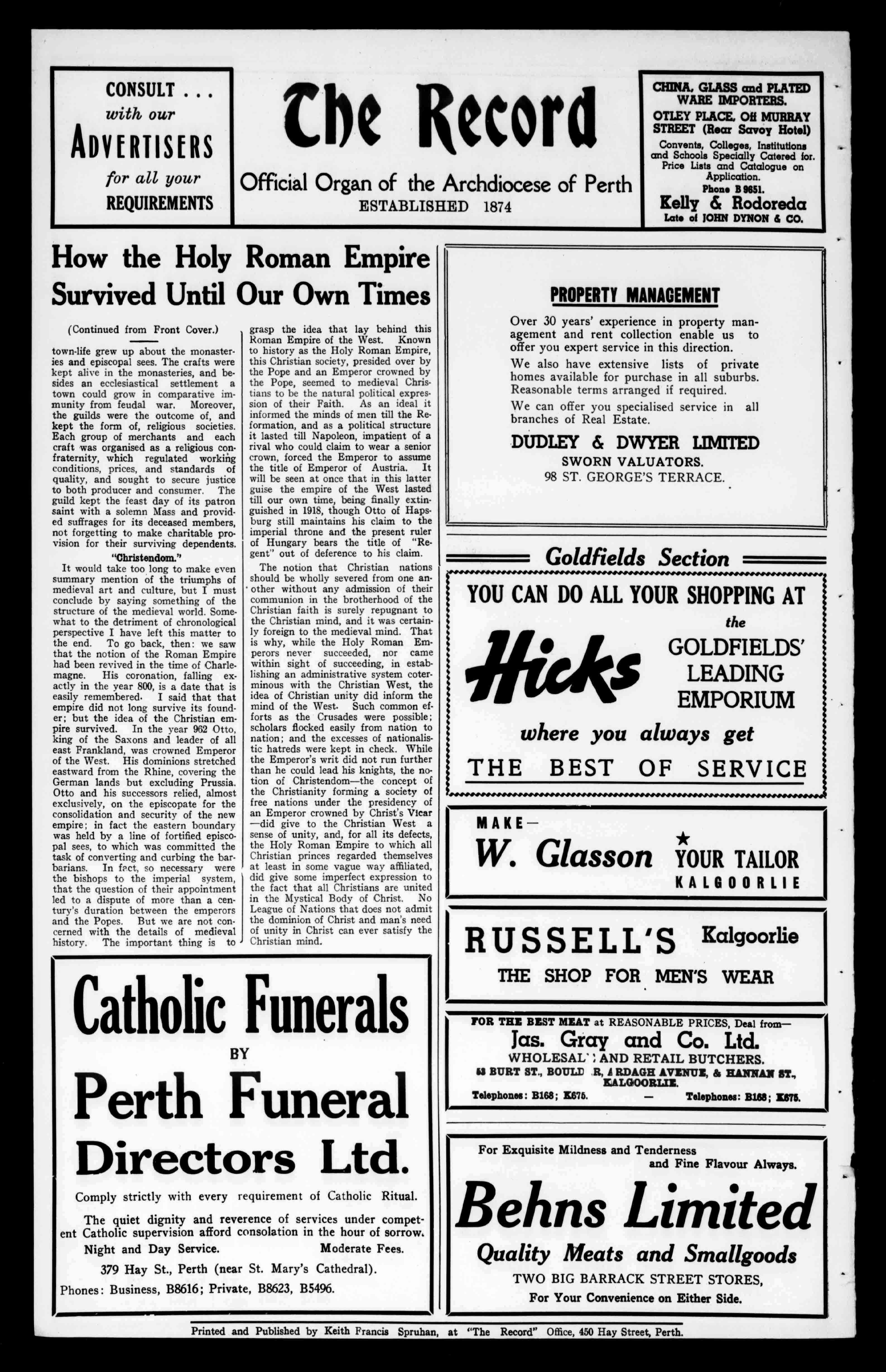
grasptheideathatlaybehindthis RomanEmpireoftheWest.Known tohistoryastheHolyRomanEmpire, thisChristiansociety,presidedoverby thePopeandanEmperorcrownedby thePope,seemedtomedievalChristianstobethenaturalpoliticalexpressionoftheirFaith.Asanidealit informedthemindsofmentilltheReformation,andasapoliticalstructure itlastedtillNapoleon,impatientofa rivalwhocouldclaimtowearasenior crown,forcedtheEmperortoassume thetitleofEmperorofAustria.It willbeseenatoncethatinthislatter guisetheempireoftheWestlasted tillourowntime,beingfinallyextinguishedin1918,thoughOttoofHapsburgstillmaintainshisclaimtothe imperialthroneandthepresentruler ofHungarybearsthetitleof"Regent"outofdeferencetohisclaim.
ThenotionthatChristiannations shouldbewhollyseveredfromonean. otherwithoutanyadmissionoftheir communioninthebrotherhoodofthe Christianfaithissurelyrepugnantto theChristianmind,anditwascertainlyforeigntothemedievalmind.That iswhy,whiletheHolyRomanEmperorsneversucceeded,norcame withinsightofsucceeding,inestablishinganadministrativesystemcoterminouswiththeChristianWest,the ideaofChristianunitydidinformthe mindoftheWest.SuchcommoneffortsastheCrusadeswerepossible; scholarsflockedeasilyfromnationto nation;andtheexcessesofnationalistichatredswerekeptincheck.While theEmperor'swritdidnotrunfurther thanhecouldleadhisknights,thenotionofChristendom-theconceptof theChristianityformingasocietyof freenationsunderthepresidencyof anEmperorcrownedbyChrist'sVicar -didgivetotheChristianWesta senseofunity,and,forallitsdefects, theHolyRomanEmpiretowhichall Christianprincesregardedthemselves atleastinsomevaguewayaffiliated, didgivesomeimperfectexpressionto thefactthatallChristiansareunited intheMysticalBodyofChrist.No LeagueofNationsthatdoesnotadmit thedominionofChristandman'sneed ofunityinChristcaneversatisfythe Christianmind.
CatholicFunerals
BY
PerthFuneral DirectorsLtd.
Comply
ofCatholicRitual. ThequietdignityandreverenceofservicesundercompetentCatholicsupervisionaffordconsolationinthehourofsorrow. NightandDayService. ModerateFees.
379HaySt.,Perth(nearSt.Mary'sCathedral). Phones:Business,
CONSULT
ESTABLISHED
cIUNA,GLASSandPLATED WAREIMPORTERS. OTLEYPLACE,OffMURRAY STREET(RearSavoyHotel) Convents,Colleges,Institutions andSchoolsSpeciallyCateredfor. PriceListsandCatalogueon Application. PhoneB9651. Kelly&Rodoreda LateofJOHNDYNON&CO.
withour
forallyour REQUIREMENTS
OfficialOrganoftheArchdioceseofPerth
1874
strictlywithevery
requirement
B8616;Private,B8623,B5496. PROPERTYMANAGEMENT
30years'experienceinpropertymanagementandrentcollectionenableusto offeryouexpertserviceinthisdirection. Wealsohaveextensivelistsofprivate homesavailableforpurchaseinallsuburbs. Reasonabletermsarrangedifrequired. Wecanofferyouspecialisedserviceinall branchesofRealEstate. DUDLEY&DWYERLIMITED SWORNVALUATORS. 98ST.GEORGE'STERRACE. GoldfieldsSection YOUCANDOALLYOURSHOPPINGAT the GOLDFIELDS' LEADING EMPORIUM whereyoualwaysget THEBESTOFSERVICE MAKEW.GlassonYOURTAILOR KALGOORLIE RUSSELL'SKalgoorlie THESHOPFORMEN'SWEAR FORTHEBESTMEATatREASONABLEPRICES,DealfromJas.GrayandCo.Ltd. WHOLESAL':ANDRETAILBUTCHERS. UBURTST.,BOULD RDAGHAITZNIII,&HANTIAITST., KALGOORLIE. Telephones:B168;1675. Telephones:B168;1675. ForExquisiteMildnessandTenderness andFineFlavourAlways. BehnsLimited QualityMeatsandSmallgoods TWOBIGBARRACKSTREETSTORES, ForYourConvenienceonEitherSide. PrintedandPublishedbyKeithFrancisSpruhan,at"TheRecord"Office,450HayStreet,Perth.
Over