"Taste Tells"
Johnston's SAUSAGES and FRANKFURTS
NO.3,022.
PERTH,THURSDAY,MAY7,1942.
PRICETHREEPENCE
qHisAnswerwasbrief,"hcanbesummedupintwowords FatimaandSaiazar.AndSalazarwasthefruitofFatima"
NO.3,022.
PERTH,THURSDAY,MAY7,1942.
PRICETHREEPENCE
qHisAnswerwasbrief,"hcanbesummedupintwowords FatimaandSaiazar.AndSalazarwasthefruitofFatima"
Themanwho,underProvidence,has re-madePortugal.
Hetoldushowin1917Catholicism waseverywhereonthedefensive,if notinfullretreat.Nineoutoften Portuguesewriterswereinthecamp oftheenemy.ToacknowledgeoneselfapracticalCatholicmeantbeing brandedasanunenlightenedreactionary.Eventhosewhowerenotpositivelyhostileregardedreligionasa relicofthepastandtheChurchasa dyinginstitution,whichcouldnever againexertaninfluenceonhumansociety.ManyoftheChurch'sloyal childrenwereinexile.Thosewhoremainedfeltthemselvespowerlessto stemthetideofinfidelity.Thenin 1917cametheapparitionsofFatima, andthoughfewpeoplerealiseditat thetime,fromthatmomentthe Church'scounter-attackbegan.After FatimacameSalazar.
Thoughwehadonlyafewdaysto spendinLisbon,myfriendandI wantedtoseethemanwho,under Providence,hadre-madePortugal. Throughthegoodofficesoftheeditor of"AVoz"andaJesuitfriend,aninterviewwasarranged.Itwasthe thrillofalifetimetomeetandspeak withthisstatesman,whohasshown theworldthewayoutofthemorassof materialism.(Theeditorof"TheFar East"hastoldmethisarticlemustnot exceed1,500words.Itwouldrequire morethan15,000totellthestoryof Salazarandthe"EstadoNovo.")
Mostofthetwentyminutesallotted touswerespentinansweringSala-
SIXTY-NINTHYEAR.
Inthesummerof1999IwasinLisbon.Thedayafterourarrivalinthat city,FatherRalphHunt,ofSanFrancisco,whowasmytravellingcompanion,andIhadalengthyinterview withtheeditorofoneofLisbon'sdaily papers,"AVoz."Inthecourseof ourconversation,Iaskedthisveteran newspaperman,whohadlivedthrough thedarkdaysoftheLiberalanti-Catholicregime,whatheconsideredthe chiefcauseofPortugal'sresurgence. (Duringourshortstayinthecountry v-esawevidenceoneverysideofa vigorousCatholicism.Itwasclear, eventoacasualobserver.thatPortugalwasoncemorebecoming"the landofMariaSantissima.")
carsquestionsaboutthePortuguese inAmerica."Havetheykeptthe faith?Aretheytruetotheirtraditions?"Weweregladtobeable, fromourlimitedexperience,togive himanswerswhichmadehiseyeslight u"withjoy.Wehadheardofhis "tiredeyes,"butonthatdayatleast therewasnoevidenceoftirednessin them.Therewaslittletobelearned insuchashortinterview,butwewere perfectlysatisfied.Wehadseenand spokentothestatesmanwhodidnot wanttobeapolitician,andwhowould gladlyrelinquishhisofficeifthenationnolongerneededhim.Wehad seenthemanwhohadfashionedthe newPortugueseConstitutionalongthe linesofthePapalEncyclicals,and hadtherebygivennewlifeandhope tohisnation.
WhereOurLadySpoke.
Thedayafterourinterviewwith Salazar,wearrivedinFatima.Itwas rainingaswejourneyedbyautomobilefromtheepiscopalcityofLeiria, andthehillcountryinwhichthevillageofFatimastandsseemeddulland gloomyincontrastwiththebeauty spotsofLisbon,whichwehadseenin thebrightsunshine.Asweclimbed thegradesleadingtotheplateauwe passedthehugeStationsoftheCross strungoutalongthreemilesofthe road.Itwasnotadayofpilgrimage. Withtheexceptionoftwopriests,four Sisters,andthepermanentstaffofthe
Shrinetherewerefewpeopleinevidence.
Thelittlemountainvillagewhich,accordingtolegend,tookitsnamefrom anArabmaidenwhobecameaconverttothefaithduringtheMoorish wars,wasunknowntotheoutside worlduntil1917.Itwasnoteven consideredworthyofmentiononthe large-scalemapsofPortugal.On May13,1917,threepeasantchildren, whohadspentthedaycaringfora flockofsheepataplacecalledCova daIria,returnedhomeintheevening withastrangestory.Theyhadseen abeautifullady,whohadtoldthem shewouldmeetthematthesamespot onthethirteenthofthemonthforsix consecutivemonths.Shesaidshe camefromheaven,andinOctobershe wouldtellthemhername.SheadvisedthemtosaytheRosaryfrequentlyandwithdevotion.
Thechildren'sparentsregardedthe storyasafabrication,andthemother oftheoldestofthethree,Luciade Jesus,tookvigorousmeasurestocure herchildoflying.(Luciawasten yearsoldatthetime.Theother childrenwerecousinsofhers,named FranciscoandJacintaMarta,agednine andseven,respectively.)Whenthe storybecameknowninthevillage,no onebelievedthechildrenandmany mockedthem.However,whenJune 13came,noattemptwasmadetopreventthemfromgoingtoCovadaIria, andaboutsixtypeople,chieflyoutof
curiosity,accompaniedthemthere. Againthechildrenclaimedtheysaw thebeautifullady,andthatshespoke tothemforabouttenminutes.The otherswhowerepresentsawnothing unusual.TheyheardLucia'svoice butnoother.OnJuly13about3,000 peoplefromFatimaandtheneighbouringparishesgatheredattheCova. Again,itwasthesameastheprevious month.Thechildrensaidthelady informedthemthatinOctobershe wouldtellthemwhoshewasand whattheywanted,andwouldperform agreatmiraclesothatallthepeople mightbelieve. Soitcontinuedwithslightvariationsduringtheremainingmonths. Eachtimethecrowdincreased-15,000 inAugust,25,000inSeptember.The ecclesiasticalauthoritiesandtheCatholicpresstreatedthewholematter withreserve,nottosayscepticism. TheLiberaljournals,ontheother hand,gaveitextensivespaceandput forwardvarioustheoriestoexplainthe visions.Themostcharitableexplan ationwasthattheywereduetoautosuggestion,butsomehintedatapriestlyplottoestablishaPortuguese Lourdes,anationalfactoryforthe productionofmiracles-andmoney. Asaresultofthispublicity,unfavourableasitwas,thewholenationwas talkingaboutFatimabythetimeOctober13camearound.Atleast50,000 peoplegatheredatthelittlemountain
(ContinuedonPage11.)
"Disgusted,"Sydney:
Q.:Willyou,please,commentonthe enclosedreportfromthe"Daily Telegraph'.ofApril5?
R.:ItisareportofwhatFather Coughlin'senemiessayabouthim.And hisenemiesarenotlikelytobetruthfulorimpartial.Iholdnobrieffor FatherCoughlin.Idisagreewith nearlyallhisviewssavethoseconcerningtheCatholicreligion.Andif Iansweryourquestions,itisonlyin ordertoclearupsomepossiblemisconceptions.
Q.:Thereportsaysthatex-JudgeGoldstein,ofBrooklyn,haspetitionedthe U.S.PostalDepartmenttoban FatherCoughlin'smagazine,"Social Justice,"fromthemails.
R.:Anycitizenwouldbetreeto lodgesuchapetitionagainstanypaper hedisliked.Whethertheauthorities willaccedetotherequestisanother matter.Iwouldnotbeintheleast surprisediftheydo.Thereisone thinghere,however,tobenoted.It istruethatFatherCoughlinfounded thepaper"SocialJustice."Butafter someyearshedisagreedwiththepolicyoftheboardofmanagement,objectingtosomeoftheviewstheypublished:andhewithdrewfromanyofficialconnectionwiththepaper,declaringthathenceforthhewasnotpersonallyresponsibleforallthatitcontained.However,thefactthathe foundeditinthefirstplacehasleft thepermanentimpressionthatitis "FatherCoughlin's"paper.Thatmuch publishedinitstillrepresentshis views,ofcourse,couldscarcelybedenied.Buttheyareviewswhicharr notinaccordancewiththoseofthe Bishopsandofthevastmajorityo: CatholicsinAmerica.Iamspeaking ofFatherCoughlin'soutlookonthe world-situation,andAmerica'spartin thewar,notofhisoutlookonreligious matters.Onstrictlyreligiousmatters noCatholiccouldcriticisehim.He isperfectlyorthodoxfromthatpoint ofview.
Q.:Thepetitionsaysthatthemagazineistreasonable,seditious,anincitementtoriot,andimpedesthe wareffort.
R.:AsIhavesaid,thatisanindictmentofthemagazine,notnecessarily ofBatherCoughlin.forheisnotresponsibleforalltheviewsexpressedin themagazine.Hehasnotacontrollinginterestinit,andhasexpresslydisownedsomeofitsutterances.
Again,thepetitionexpressesonlyexJudgeGoldstein'spersonalopinionof themagazine.Itwillbefortheauthoritiestodecidewhetherthatopinionisjustified.Icanquitebelieve thatthepaperwillberegardedashinderingthewareffortinAmerica,and forthatreasonIwouldliketoseeit suppressed.ButIdoubtwhetherit canberegardedjustlyastreasonable. seditious,andincitingtoriot.Itmay be,ofcourse,thatrecentissueshave takenanewturnandmanifestedan extremismnotapparentinpreviousis-
sues.Butrememberthat"SocialJustice"isnotaCatholicpaper,andnever fromthebeginninghasiteverhadofficialCatholicrecognition.AndIam certainlynotcalledupontodefendit inthenameoftheCatholicChurch.
* * *
SIFTINGTHECHARGES.
Q.:FatherCoughlin,headoftheSocial JusticeMovement,becameknownin thedepressionyearsasthe"Radio Priest."
RInthoseyearsnoonecoulddeny thathedidverygoodwork.Theywere thelaterdevelopmentsofhisattitude towardspoliticalquestionsthathave becomethesourceofdissension.
Q.:DisownedofficiallybytheCatholic Church,heisstillanti-Semitic,antiRoosevelt,anti-British,andantiLabour.
R.:FatherCoughlinlivesatRoyal Oak,asuburbofDetroit.WhenI wasinDetroitin1940,Ispoketo manyprieststhereabouthim,andvisitedhimpersonallyatRoyalOak.And Imustpointoutafewthingsofwhich Ihavefirst-handknowledge.Noone hadawordtosayagainstFather Coughlin'spersonalcharacter,orhis standingasapriest.Andfromthat pointofviewtheCatholicChurchhas certainlynotofficiallydisownedhim. Inhispoliticalviews,however,hedoes notspeakonbehalfoftheChurch,and theBishopsneithersupportnoragree withhisutterances.Asregardsthe chargethatFatherCoughlinisantiSemitic,hehimselfdeclaresthatheis notfromaracialpointofview.He isnotopposedtoJewsinsofarasthey areJews.Heisopposedtowhathe believestobeJewishcontrolofinternationalfinance.Thechargesthathe isanti-Rooseveltandanti-Britishinhis politicalviewsarejustified.The chargethatheisanti-Labourisnot justified.Hehasalwayspleaded, andalmostviolently,thecauseofthe workers.
FATHERCOUGHLIN'SINCOME.
Q.:Thesourceofhisimmenseincome haspuzzledofficialWashingtonfor manyyears.
R.:Washingtonisnotintheleast puzzledastothesourceofhisincome. Washingtonknowsthatitcametohim fromradiolistenersandsympathisers fromalloverthenation.Hisincome isnotnowwhatitwassomeyearsago.
DuringthedepressionFatherCoughlin appealedfordonationstowardshis workofsocialrelief.Theresponse wasexceedinglygenerous,andBather Coughlinwasabletofeedandclothe thousandsofpoorpeople,whichhedid irrespectivelyofthereligiousbeliefs ofthepeopleheassisted.Andthousandstothisdayblessthenameof FatherCoughlinforhisgreatcharity. Heappealedalsoforfundstobuilda churchinhispoverty-strickenparish, anddonationsweresogenerousfor thatpurposealsothathewasableto erectamagnificentchurch,whichis to-dayanationalshrine.Whenhe launchedhispaper,"SocialJustice," moremoneycamein,andhewasable tofinance,notonlythepaper,butthe
if"Inhispoliticalviewshe doesnotspeakonbehalfofthe Church andtheBishops neithersupportnoragreewith hisutterances"
distributionofanimmensefloodof pamphletsandleafletsadvocatinghis views.Unfortunatelyhisviewstook uponthemselvesmoreandmoreapoliticalcharacter,makingforhimselfa hostofpoliticalenemiesaswellaswinningpoliticalfriends.Manyofhis friendsprovedhisworstenemies,and intheendhehadtorenouncehisofficialconnectionwiththeverypaperhe hadfounded-"SocialJustice."One thingiscertain.Howeverimmense hisincome,FatherCoughlinhasnot enrichedhimself.Heuseditforthe purposesintendedandspecifiedby thosewhosuppliedit.Insayingthat Washingtonispuzzledastothesource ofhisincome,the"Telegraph's"news correspondentwouldliketosuggest thathehasbeensubsidisedbyenemy countries.Butthatisquiteunjustified.
"AXISPROPAGANDA."
Q.:TheNewYorknewspaper,"P.M.," allegedthatthemagazine,"Social Justice,"endangeredthewareffort bydisseminatingAxispropaganda.
R.:TheNewYorknewspaper, "PM.,"isnotareliablesourceofinformationonsuchasubjectasthis. ItregularlyindulgedinCommunist propaganda,fellintodisfavourwhen RussiamadethepactwithHitlerto invadeanddestroyPolandandletthe
presentwarlooseonEurope,andincidentallythrewRussiaontotheside01 thedemocracies."SocialJustice'has consistentlyattackedCommunism,and itisbutnaturalthat"P.M."wouldretortwiththechargeofAxispropaganda.Butevenwere"SocialJustice" pro-Axis,itwouldnotnecessarilyreflectFatherCoughlin'sviews,sincehe hasdissociatedhimselffromthatmagazine.Asamatteroffact,Father CoughlinrepudiatesHitlerism,asevery Catholicisboundtodo,insofaras theNationalSocialismofGermanyis blasphemouslyanti-Catholic.
Sonow,Ithink,astheAmericans say,wehave"gottherecordstraight." Andyoucantakemyexplanationas utterlyunbiased.Iwouldliketosee themagazine,"SocialJustice,"suppressed.Idislikeitintensely.Idon't, andneverwillagree,withFather Coughlin'santi-Britishprejudices.But theyhavenothingtodowiththeCatholicreligionheprofessesandexemplifiesinapriestlyandpersonallife abovereproach.AndevenwerecomplaintsabouttheconductofFather Coughlinjustified,theywouldhaveno bearingonthetruthorotherwiseof theCatholicreligion.Togetatthe truth,wemuststudythereligionpeopleprofess,notthepeoplewhoprofess thereligion.Toplaythegame,one mustbowlatthewicket,notatthe man.
E.P.,Epping
Q.:IencloseanarticleaboutFather Coughlin,publishedinthe"Sunday Telegraph"ofApril5R.:Itis,asyouyourselfhavedescribedit,justanotherpieceof"YellowJournalism."Thereisacase againstFatherCoughlin,butexaggerationandpersonalinsultsonlyspoil thatcase.
Q.:Idonotwanttotakeupyourtime byaskingyoutocommentonthe article,butIwouldlikeyouto answertwoquestions.
R.:Thearticleitselfiscarefulto drawclear-cutdistinctionbetween FatherCoughlinandtheCatholic Church,sothatCatholicswillnotinterprettheattackontheirreligionitself.Then,havinggotFatherCoughlinoutsidethesanctuary,itproceeds toflayhimalive,andinlanguageits victimathisworstcouldnotsurpass. Butletusturntoyourtwobriefquestions.
STANDINGASAPRIEST.
Q.:HasFatherCoughlinbeendisownedbytheCatholicChurch?
R.:Notpersonally,andinhiscapacityasapriest.Hisviews,apartfrom religion,havenoofficialsanctionon thepartoftheCatholicauthorities, andarerejectedbymoreofthoseauthorities,aswellasbythemajorityof Catholiclay-people.IftheAmerican publicfailedtodistinguishbetween FatherCoughlin'spoliticalviewsand theCatholicreligionherepresentsasa priest,withconsequentinjurytothe Churchinpublicesteem,Archbishop
Mooney,ofDetroit,couldinsistupon hisrestrictinghimselftohispriestly andspiritualdutiesonly.IfFather Coughlinrefusedobedience,thenthe Archbishopcouldremovehimfromhis parish,andforbidhimtoexercisehis priestlydutieswithintheArchdiocese ofDetroit.Butthereisnoevidence thattheArchbishophastakensuchan extremestep.
* * * CRIMINALCHARGES.
Q.:IsFatherCoughlinademagogic crook,andaswindler,asthearticle says?
R.:Youcanbequitesurethatno Archbishopwouldallowapriestwho hasbeenprovedtobeacrookanda swindlertocontinueasaparishpriest entrustedwiththespiritualcareof souls.WhatFatherCoughlin'sprofessedenemiesthinkofhimisevidenceonlyoftheirbitterdispositions towardshim,andoftheirreadinessto blackenhischaracterwithoutregard forthetruthatall.Iwouldsaythat FatherCoughlinisademagogueinthe dictionarysenseofthatterm,i.e.,heis apopularandfactiousorator.Buthe isamanofstrongconvictions,howevererraticothersmaythinkthose convictionstobe.Hisimagination anddeepfeelinghaveofteninspiredintemperatespeeches,inwhichhehas oftenbeenmistakenastohisfacts; butheisnotacrook.Andwhilsthe hassolicitedfinancialsupportforhis workfromfollowerswhothinkwith himself,heisnotaswindler.People maythinkhimmad;buttheyhaveno righttodeclarehimbad.
A.M.,Newtown: Q.:Themilitarycliquesinallthe rationshavebeenacursetothe v'orld,andthereseemstobenoway ofgettingridofthem.
R.:Youareputtingtheblamein thewrongplace.Onceyougrant
thatnationshavetherighttodefend themselvesagainstunjustattack,you granttherighttobereadytodoso, ifsuchanattackislikely.Andthat meanstherighttohavemilitaryofficials.Therealproblemis:Why shouldanynationfearanunjustat-
tack?Theanswertothatwillindicatetherealcurseofthisworld.The nationsarefearfulofoneanother,becausemenaremorallyevil.They haveabandonedGod,andthelawso. God.Theyrejecttheirrealdestiny beyondthisworld,andregardthemselvesmerelyasanimalsrestrictedto thisearthonly.Sotheyfightforall theycanget,filledwithselfishgreed andcovetousness.Aminority,only, seekintheirheartsfirsttheKingdom ofGodandHisjustice.But,so longastheyareinthisworld,they cannotescapetheturmoilaround them.Theycanbutpurifytheirmotives,fulfiltheirdutyastheyseeit, andenduretheirtrialspatientlyfor theloveofGod.ButthepointIam makingisthat,notmilitaryorganisationisthecurseoftheworld,butthe conditionsofmankindwhichmake militaryorganisationnecessary. * * *
WARTOENDWAR.
Q.:Itseemsthatthishorribleslaughtermustgoontillitisphysically impossibletocarryon. R.:Iamafraiditwillcontinueuntil eithertheAxisPowersortheAllied nationsfinditpracticallyimpossible tocarryon.Theonlyroadtopeace amongstmenwouldbetherecognition byallnationsoftheonetrueGod,a suddendesiretoobserveHisDivine lawofjusticeandcharityinitsintegrity,andawillingnesstodiscusstheir differencesandadjusttheminaccordancewiththatlaw.Tohopeforthat istohopeforamiraclewecannotreasonablyexpect.Aslifeitselfteaches individuals,andimpelsthemtoturnto Godwhenallelsehasfailedthem;so thenationswillprobablybebrought toasenseoftheirowncollectiveneed ofGod,onlywhenreducedtoutter despairofthemselvesbynationaland internationaldisasters. * * * *
OPPORTUNITYFORVIRTUE.
Q.:TheGermans,ItaliansandJapaneseareallmadebyGodintheimage ofHimself,andwedarenotdishonourthatimageinanyone. R.:Ifallindividualsinallnations recognisedthatprinciple,andallbehavedinaccordancewiththeirtrue dignity,therewouldbenowar.But thevastmajorityofhumanbeingsdo notacknowledgethatprinciple.And, therefore,asIsaidtoyourecently,we mustworkoutourownsalvationand sanctificationintheworldasitis,not inaworldasitoughttobe.Meantime,thesufferingsthatareunavoidablegiveustheopportunitytopractiseChristianpatience,courageinadversity,andcharitytowardsothersin theiraffliction.Thosewhodesireto dosohaveseldomhadagreateropportunitytoexerciseChristianvirtue
thanintheseverydaysoftrialand difficulty.Andoneofthegreatest actsofChristiancharityischeerfulnessandencouragementdispensedall around,refusingtoletself-pityaddto theanxietiesofothers.
DOESIGNORANCEEXCUSE?
Q.:AllareviolatingGod'slaw,butI thinkitmainlythroughignorance.
R.:Thatthoughtshouldfillyou withcompassionratherthanindignation.
Q.:HowfardoesGodholdusresponhibleforourignorance?
RInthedegreeinwhichHeknows ustoberesponsibleforit.Weare guiltybeforeGodif,throughourown fault,weareignorantofthingswe couldknow,andoughttoknow.Very manypeoplewhopleadignoranceasan excusewillfindthattheirveryignoranceistheirguilt,eitherthroughsheer neglecttofindoutwhattheyshould haveknown,ordeliberateandmaliciousrefusaltomakeinquiriesforfear lesttheinformationmightproveawkward.ThousandsofprofessingChristiansarethusguiltyintheirignorance oftheChristianreligion.
Q.:Ifmenandwomenhavenodesire todoGod'sWill,aretheytoblame?
R..Mostdecidedly.
Q.:Wherewilltheyend?
R.:IftheyrejectGod'swillinseriousmatters,anddiewithoutrepenting,theywillendineternaldisaster. AnobdurateandfinalrejectionofGod canonlyresultinperpetualbanishmentfromGod.Onecannotreject God'smercy,andhaveit.Howmany humanbeingsdieinsuchdispositions nooneexceptGodcouldsay.
PRAYFORPEACE.
Q.:IwishthePopewouldpleadcontinuallyforpeace.
R.:Hehasdoneso,isdoingso,and willcontinuetodoso.Buthisinfluenceisentirelydependentuponthe willofmentolistentohisappeals,and torespondtothegraceofGod.Itis thedutyofeveryChristiantopray thatGodwillgiveHisgracetoindividualsandtonationswhoneitherdeserveitforthemselves,noraskforit, Theprayersofa:ferventminoritycan atleasehastenthedaywhenpeace willberestoredtohumanity.We shouldprayalsofortheinnumerable soulsgoingtoGoddaily,towhatever nationtheymaybelong.Andabove allwemustpraythatthefruitoftheir sacrificewillbeanewfreedomunder God-thelibertyofpeoplewhohave realisedthattheyarechildrenofGod, andthattheymustbefreefromignorance,selfishness,hatred,sin,and allthoseformsofunbeliefandmoral depravitywhichhavenevermeant anythingbutdisastertohumanity.
"Puzzled,"Clovelly:
Q.:IfChristianitycondemnstheworld, itcanhardlyhopetowintheworld. Noonelikesbeingconstantlycondemned.
R.:Christianitydoesn'twanttowin theworld,leavingitasitis.Iknow thatpeopledon'tlikebeingtoldthat theyarenogood.Noraretheywillingtoadmitthattheyarenogood. Thatiswhyrationalistsandunbelieversdenythattheyaresinners.They keeptellingusthatwehavenothing tobeashamedof;thatwedon'tdeserveanycondemnation;thatthereis reallynofreewillormoralresponsibility;thatwhatwedodependson ourinstinctsandpassions,andon heredityandenvironment.Andthey saythatitisabsurdtoblameusfor actionsforwhichwearenotresponsible. Unfortunatelymanyso-calledChristianshaveadoptedthiswretchedphilosophysothattheycangoonwith theirsinsandfeelrespectableatthe sametime. * * * *
Q.:JesusHimselfdidnotwantpeople tobeafraidofHim.
R.:Youaremistaken.Hedeclared thatHeHimselfwouldbethefinal Judgeofmankind;andthatHewillbe theOnetosaytotheunrepentant wicked,"DepartfromMe,yecursed, intoeverlastingfirepreparedforthe devilandhisangels."MoreoverHe said,"Fearnothimwhocankillthe body,andafterthathathnomore thathecando.ButIwilltellyou whomtofear;fearyeHimwho,after Hehathkilled,hathpowertocastinto hell.Yea,Isaytoyou,fearHim." Butthatmeansthatwemustfear ChristHimself.Onlythesinnerwho isafraidofChristashisJudgeislikelytoappealtoHimformercyand findHimaSaviour.Butthemajority ofpeoplearenotintheleastafraid ofChrist.Theyjustdon'tthinkof
Godshaltthouadore,andHimalone shaltthouserve."Butmenmakea godofanythingandeverythingexceptGod.Theymakeagodofmoney, ofdrink,ofsensuality,oftheirown self-love,andofeverythingelsethat theyprefertotheGodwhohasfirst claimupontheirsouls.AndSt.John tellsusthatthereisnoonewhohas
Him.Or,ifvaguefearscomeattimes insteadofrepentingoftheirsins,they denythattheyaresins,andkeeptellingthemselvesthattheyarequite goodpeopleafterall. *
THEREALINSULT.
Q.:Hedidnotinsultpeople.
R.:ThePharisees,whomHecalled hypocrites,andwhitedsepulchresfair ontheoutsideandrottenwithin,would scarcelyagreewithyouChristtold thetruth,howeverpainfulitmightbe. Asamatteroffactthetruthisnot reallyinsulting.Whatisinsultingis tobetoldthatsinisoutofdate;that wearenotmorallyresponsible;and thatweareinthesamelevelasthat ofbrutebeastswhofollowblindinstinctsonly.Christianityatleastpays usthecomplimentoftreatingusasintelligentandfreepersonswhoare morallyresponsibleforwhatthey thinkandsay,anddo.Itcreditsus withthepowertocontrolourinstincts andpassions,andblamesuswhenwe failtodoso.Itisonlydoingjustice toaman'srealdignitytotellhimthat heisasinner,andmorallyresponsible forhissins.Totellhimanything elseistheinsult. * * * *
THESHOCKINGCONTRAST.
Q.:Wholesalecondemnationsgetus nowhere.
R.:St.Johnsaysthatifanyman saythathehasnosin,heisaliar. Thatisawholesaleandsweeping enoughstatement.Letso-called Christiansreallystudytheteachings ofChristaboutself-denial,seeking firsttheKingdomofGod,theevilof sinandworldlyambitions,thevirtues tobepractisedbyonetryingtobe perfectasourheavenlyFatherisperfect;andthenletthemaskthemselvesinthelightofthatstandardof valueswhattheyreallyvaluedmost. Materialprogress,money,agoodtime, success,popularity,comfort,amusement,lust,revenge,selfishnessinall itsforms.Christsaid,"TheLordthy
notdonethisinonewayoranother. Thosewhoarehonestperceivethe shockingcontrastbetweenthemselves andChrist,andknowthattheydeserveonlyHiscondemnation.And thehonestadmissionofthisisabsolutelynecessaryifwearetohaveany hopeofGod'smercy.ForGodis truth.
CHRISTIANBROTHERS,MT.HENRY
OneoftheAssociatedPublic SchoolsofW.A.
TELEPHONE:MU1520
ForBoardersandDayStudents Boysadmittedfrom7upwards
BeautifullySituated,overlookingtheriver,warthenewCanningBridge. ForParticularsapplytoThePrincipal,AquinasCollege,CanningParade,Mt.Henry.
SACREDHEARTHIGHSCHOOL HIGHGATE-PERTH (ConductedbySistersNotreDameDesMis-ions). BOARDINGANDDAYSCHOOLFORGIRLS. PUPILSPREPAREDALLEXAMINATIONS. MONTESSORISCHOOLFORYOUNGCHILDREN ForProspectusapplyREV.MOTHERPRIORESS
'Phone:B3810.
LoretoConvent"Osborne"-Claremont BOARDINGANDDAYCOLLEGE.
TheSchoolprovidesasoundeducationonmodernlinesinallbranches ofstudy.Thepupilsarepreparedforallexaminations.TheSchoolis beautifullysituatedbetweenOceanandRiver,inextensivegrounds, withfineplayingfieldsandprivateSwimmingPoolinRiver. Telephone:F2135. Apply- MOTHERSUPERIOR.
NEWNORCIA CONDUCTEDBYTHEMARISTBROTHERS.
UtheCatholicstudent,atleast, thesocialproblemtendsto degenerateintoaviciouscircle.Hiseconomicsareinextricablyboundupwithhis religionanditsphilosophy.Yethe mustpropagatehisbeliefsinthematerialisticworldwhichdenieshisfirst postulatesaboutthenatureanddestinyofman.Hethereforefeelsthat thespreadofCatholicteachingiswellnighfutileuntiltheworldisconvertedtoChristianity,oratleasttosome formofnaturalreligionHebegins toneglecteconomicsandhistoryin favourofapologetics.Oftenheis confirmedinthisoutlookbytheconsiderationthatallshadesofpresentdaysocialreformersuniteatone point-thecondemnationofCapitalismasitnowexists.Heisfearfulof compromisewithhisstrangebedfellows,andperhapsofbecominga pawninthehandsofthosewhodesire merelytoperpetuateclasshatred.
Heseesfurther,thatthepractical resultsofhistheorieswouldbepalatable,uptoapoint,eventomaterialists,wnileontheotherhand,many whoshouldbehisalliesbecomediehardreactionariesinthefaceofthe simplicityandausterityoftheChristiansocialprogramme.Often,too, thereformerisoppressedwiththedangersthatlieahead-ifsupposingthose palliativemeasuresweareforcedto acceptfortheimmediatereliefofthe poorshouldbecomepermanentfeaturesofnationallife,ortheState, whoseaidweinvoketosuppresscapitalisticgreed,shouldcometoownus bodyandsoul.Thenagain,whenthe Catholicreformerhasdecidedthatthe worldmustbeChristianinordertoreceiveandapplyasanesocialorder,he isdismayedtofindhowdifficultitis forpeopletoleadChristianlivesin theirpresentsocialandeconomicenvironment.Soheseemseternally caughtuponthehornsoftheold dilemma.
Thesolution,ofcourse,liesintke factthatoursocialtheoriesareCatholic,i.e.,theyembracephilosophyand religion.Thereisnostrictcategorisationofeconomicsononesideand Christianityontheother.Religionis themotive,thespiritandtheguaranteeofsuccessforourwholeprogramme.Allournotionsarerootedin moralphilosophy,whichconcernsitselfwiththenatureandguaranteeof man,hiscivilrightsanddutiesand thoseoftheState,therelationsbetweenhisindividualandsociallife, etc.Perhapswelaytoolittleemphasisonthisaspectofoursocial teaching,andhencefindourselvestalk 411111111111111111111111111181111111111111111111111I111111111111111111113111111111
ingatcrosspurposes.And,above all,wemustavoidexaggerationwhich invitesdiscouragementandfinallydespair.Itispossible,nomatterhow difficult,toleadtheChristianlifein anysocialorder.And,moreover, oursisnottheonlysystemwhichcan givestabilitytosociety.Slaverydid sofromtimeimmemorial.Itwilldo soagain,ifwearepreventedbysloth ordiscouragementfromgettinginfirst.
Imustconfesstosharingtheconcernanddisappointmentoftheemployees'representativeontheArbitrationCourtBenchatthesecondrefusal oftheCourttoincreasethebasic wage.Thelegalactionconsequent uponthefirstrefusalseemedtosettle theissueoftheCourt'spowertotake suchaction,but,astheemployees'representativepointedout,itispossib!e
tobelegallyrightbutmorallywrong. ThereasonsputforwardbythePresidentfortheCourt'srefusalwere:1. That,althoughthecostoflivinghas increasedby2/5orso,theworkerssuffernoinjusticefromthe"pegging"of wages.Thattheamountof£4lOs5d isadequatefortheneedsoftheaverageworkerandhisdependants. 2.
That"certainconditionsbrought)bout bythewar"areleadingunmistakeably towardsinflation,andtheCourthas feltthenecessityofdoingsomething towardscheckingthismadrush.
TheargumentsusedbythePr2sidenttobolsteruphisextraordinary viewthati4lOs5d.issufficient"to enabletheaverageworkertolivein reasonablecomfort,havingregardto
hisdomesticobligations,"weresxtremelyingenuous.InAdelaide,where thecostoflivingispracticallythe sameashere,thesumofLi7sisconsideredsufficienttomaintainman,wife andthreechildren.(Hereisistwo children)Similarconditionsprevail inQueensland,whereheprincHeof thecapacityofindustrytopayprevails.But,obviously,thecurrent practicesoftheArbitrationCourtsof theCommonwealtharzuenothingfor thecauseofjustice.Onerecallsthe astonishingadmissionoftheFederal ArbitrationCourtinFebruary,1941.It becameobviousthatsuchCourts,in decidingthebasicwage,werenot primarilyconcernedwiththeneedsof familiessomuchaswiththealleged "capacitytopay"ofindustry.The basicwage,initsoriginalconception andinitsactualoperation,wasthe lowestwagewhichcouldbepaidto anunskilledlabourerontheba'isof "thenormalneedsofanaverageemployeeregardedasahumanbeing livinginacivilisedcommunity."It wasnotuntiltheHarvesterjudgment thatweheartheamountofthebasic wageisconsideredreasonablefora familyofaboutfive. Thewholebusinesshasproveda legalfiction.Nobodyofgoodsense
reallybelievesthatthebasicwageis "adequate"or"sufficient"forevena familyoffour.Andoneindicationof thetruthofthisisthatsincethebasic wagewouldnotreachuptofamily requirements,thefamilyhasstopped downtobasicwagelevels.Inaword, thefamilyhasdwindled.Thereisa greatchasmyawningbetweenthe basicwageenvisagedbytheLawand the"justfamilywage"demandedbytheChurch.Itisobviousthathuman lifeisnotfinallyprovidedforbyreferenceonlytofood,groceries,rent,clothing,fuel,light,fares,etc.Thisisall veryscientific,butitisnotvery humanandcertainlynotveryjust. TheCatholiccannotrecognisethat theseitemscoverthewholeoflife,even itsmerelynaturalaspects.Thefamilywagemustcovervoluntaryinsuranceagainstsickness,unemployment, anddeath:mustprovideforthepropereducationofchildren:mustpermittheworkerreasonablerelaxation, and,aboveall,mustenablehimtosave andultimately"toacquireacert.-1;n moderateownership."
ThePresident'sfearofinflationis,I fearabogey.Inanycaseithardly seemswithinthejurisdictionofthe Courttodecideadifficulteconomic questionofthatsort.
TheLateRev.Dr.J.A.Nieuwland,C.S.C.
TherevelationsconcerningthenegotiationsbetweentheStandardOil CompanyandtheU.S.Navyregartlingtheuseoftheprocessofmakingsyntheticrubber,nowrendereddoublyimportantbecauseoftheJapanesecontroloftheEastIndies,recallsthefactthatitwasthelateRev.Dr.Julius ArthurNieuwland,C.S.C.,ProfessorofChemistryatNotreDameUniversity, NewYork,who,afternearly90years'research,madepossiblethedevelopmentofthefirstcommerciallysuccessfulartificialrubberproducedinthe UnitedStates.
1111111111111111111111.111111111111111.11111111.1111111111.
ThedemandforC.C.C.trainedemployeesissogreatthatformonths pastourEmploymentSecretaryhasbeenunabletofillabout75percent. ofthepositionsofferedtohim.Assoonasastudentreachestheemploymentstandardheorsheisplacedinagoodposition.Thefact thatourstudentsaresatisfiedwiththepositionstheysecureisproved bythefactthatweareunabletofillvacanciesforexperiencedworkersBECAUSEWEHAVENONEREGISTERED.
Parents!Ifyouhavedaughtersover14,enrolthemnow.Continuanceatordinaryschoolsmeanswastedtimeandwastedopportunities. OurcoursecoversinstrutioninShorthand,Typewriting,Bookkeeping,BusinessPrinciples,BusinessEnglishandLetterWriting,Business Arithmetic,andtheoperationoftheComptometerandLedgerMachines. Graduatesgetpracticalexperienceinourownoffices,aguaranteedfirst appointment,andfreeemploymentserviceforlife Call,writeor'phone112024orB2063forfullparticulars.
W.A.'sBusinessUniversity
SheffieldHouse,713-21HayStreet,Perth
TheprocessdevelopedfromFather Nieuwland'sresearchesanddiscoveries inthefieldofacetylenechemistrywill bethechiefoneusedinproducing 400,000tonsofsyntheticrubberannually,ForyearsbeforeFather Nieuwland'sdiscovery,chemistsand rubbermanufacturerssoughtinvain forarubberprocessthatwouldbecommerciallysound.
FatherNieuwland,anativeofBelgium,whowenttotheUnitedStates asachild,graduatedfromNotreDame Universityin1899,andordaineda priestintheCongregationoftheHoly Crossin1903.AftercompletinggraduateworkattheCatholicUniversityof America,hereturnedtoNotreDame, wherehetaughtuntilhisdeathin1936.
Earlyinhisscientificcareerhechose thefieldofacteylenechemistryforhis lifework,afieldshunnedbymostinvestigatorsbecauseofthedangerof explosion.FatherNieuwlandworked untilhesocontrolledacetylenereactionsthattheycouldbestudiedin generallaboratoryworkwithcomparativesafety.
Hemadesyntheticrubberproductionpossiblethroughareaction-discoveredbyhimanddevelopedwithhis helpbyindustrialchemistswhoheard himdescribeitatascientificmeeting -whichproduced"monovinylacetylene,"anacetylenederivativethatcan bepolymerized"ntolong"chain" molecules.
Thisprocessofpolymerization,graphicallydescribedbyayounglaboratory assistantofthepriestas"makingone moleculeturnaroundandbitethetail ofitsneighbour,"hadprovedthestumblingblocktopreviouseffortsinthe syntheticrubberfield.
In1935,fouryearsafterthefirst syntheticrubberhadbeencommerciallyproducedfromFatherNieuwland's monovinylacetylene,thepriest-chemist wasawardedtheNicholasMedal,the highesthonouroftheAmericanChemicalSociety.Whilemorecostlythan naturalrubberandsomewhatinferior toitindurability,syntheticrubberis moreresistentthannaturalrubberto oils,heat,oxidationandozone,and sunlightdeterioration.Forthisreasontherearemanyindustrialandart usesforwhichitservesmuchbetter thanthenaturalproduct.
FatherNieuwlandwasresponsible foranotherchemicaldiscoverythat waslatertoachievefame.Inhis doctoratethesisattheCatholicUniversityhedescribedareactioninwhich ahighlytoxicgas,latertobeknownas Lewisite,wasproduced.Evidently notdesiringtodevelopasubstance thatmightbeusedindestroyinghuman life,FatherNieuwlanddidnotattempt toidentifyit.DuringtheWorldWar hementionedthesubstancetoW.Lee Lewis,wholateridentifiedthegasas divinylchloroarsine,andperfectedits production,butfortunatelythewar wasoverbeforeitreachedthefrontlinetrenches.
Lewisite,likemustardgas,isahighlypersistentblistergas,morerapidin itsaction,and,becauseitsarseniccontentsgetintotheblistersformed,it canbemuchmorelastingandserious initseffect.Itissolubleinwater, andcanheusedtocontaminatereservoirs,streams,etc.Ithasbeengiven thename"thedewofdeath."
AIRRAIDTABLES,speciallyconstructedforsafetyandcomfort.72/6, plusdelivery.HASSELL'SSTORES, 669WellingtonStreet,Perth.
MULTIPLEACTIVITIESPERFORMEDBYVOLUNTARYSERVICE
HISTORYOFREDCROSS.TheRedCross,asweknowit,came intobeingin1864,atanInternational ConferenceatGeneva,towhich26 Governmentssentrepresentatives.The outcomeofthatConferencewasthe GenevaConvention,whichestablished theprinciplesofInternationalRed Crossnowadoptedby64nations.
Thefundamentalideasenumerated atthatconferencewerethedirectresultofthethoughts,suggestions,and demandsofHenriDunant,aSwiss banker.TheRedCrossasasymbol ofmercyandhealingwas,however, firstemployedtowardstheendofthe 16th.centurybySaintCamillusde Lellis.
Itshouldbeofinteresttoallwho arecarryingontheirworkofmercy undertheRedCrossinthesedaysof sufferingtoknowthatitwasSt.Camillusandhisspiritualsonswhofirst tendedthewoundedinbattleunder thatsacredsign.Itwasthedistinctivemarkoftheirreligiousdress.More thanoneofthethenChristianrulers andgovernmentsofEuropeofficially thankedthesebearersoftheRedCross fortheirself-sacrificingworkamongthe woundedsoldiers.Infact,wehave theauthoritativestatementofMrs. ErnestOldfieldinherbookcalledthe "FirstRedCross,"thatHenriDunant gothisideaofaninternationalRed CrossAssociation,asweknowittoday,fromtheheroicworkwhichhe sawcarriedonbytheCamilliansamid thehorrorsofthebattleofSolferino. Hisbook,called"ASouvenirofSolferino,"publishedin1862,awakened governmentstotheneedofsucha work.
Definition.
RedCrossisaninternationalhumar.itariansociety,theaimandobjectof whichistheameliorationofhuman suffering. TheSocietyexiststocareforthose indistress,regardlessofcolour,creed ornationality.
RedCrossisthelargestvoluntary organisationtheworldhaseverknown. InternationalCharacter. RedCrossdemandsinternationalas wellasnationalresponsibilityforservice. Theinternationalcharacterofthe movement,itscentralisationinGeneva, anditsfreedomofconductfrompartisanshiporreligiouscontroversy,are thethreefundamentalswhichgovern theorganisation.
TheLeagueofRedCrossSocieties isalsoanintegralpartoftheworldwideorganisationdesignedtogiveinternationalservicetothoseindistre-s.
Thespecialspheresofactivityof theLeaguecanbesaidtobe:
1.Thedevelopmentandintensificationofthehumanitarianactivitiesof RedCrossintimesofpeace.
2.TheencouragementandpromotionoftheestablishmentofNational RedCrossSocieties.
3.Promotionoftheactivitiesofthe JuniorRedCross.
4.Promotingcollaborationonthe partofNationalSocietiesintheimprovementofhealth,thepreventionof disease,andthemitigationofsuffering.
5.Theplacingwithinthereachof allpeoplethebenefitstobederived frompresentknownfactsandnewcontributionstoscienceandmedicalknowledge,andtheirapplication.
TheexpensesoftheLeagueofRed CrossSocietiesaremetbyvoluntary contributionsfromNationalRedCross Societies,thegreaterpartofthefinancialburdenhavingbeenborne,todate, bytheAmericanRedCross. Emblem.
TheemblemofRedCrossisared cross,offiveequalsquares,onawhite ground.
Thisemblem,whichisthenational emblemofSwitzerlandwithcolours
reversed,isrecognisedthroughthe worldasthesignofcompassion,of neutrality,ofimpartiality,ofcharity, ofsuccourforthewounded,ofcare forthehelpless,andofkindnesstoindividualsandtocollectivehumanity.
Membership.
MembershipofRedCrossisopento all.
To-daymembershipofRedCross throughouttheworldisestimatedto beintheregionof20millions-excludingJuniorRedCrossmembership, whichis10millions.
ScopeofWork.
RedCrossworksforPeace.
Tuservehumanity.
Tobuildupandnottodestroy.
Inpeace,RedCrossworkincludes--
Thepreventionofdisease.
Theimprovementofhealth.
Themitigationofsuffering.
Assistancetomedicalestablishments.
Benevolentintermediaryactionbetweenpartiesofdifferentnations.
Preparationtocombatandavert catastrophe.
Thepromotionofadequateorganisationstoperformserviceincaseof disaster,epidemics,floods,fires,etc.
Preparationforthecareofthe woundedintimeofwar.
Theencouragementofinternational aswellasnationalresponsibilitytowardshumansuffering.
Actiontoensureprotectionincase ofwarforcivilianpopulations.
Intimesofwar-
RedCrossisnotconcernedwith-well troops.
RedCrossworkincludes:
Careforthewounded,thesick,and forprisonersofwar.
Serviceasanauxiliarybodytothe medicalservicesofthearmedforces.
Theensuranceofneutralityforthe wounded,forprisoners,andformedicalpersonnel.
Intermediaryactionbetweenbelligerentnations.
Careforsufferersasaresultofwarfare.
TheSpiritandtheIdealsofRedCross.
ThetraditionsofRedCrossarerootedinthefundamentalvirtues-faith, hopeandlove.
TheidealofRedCrossispeace;v"t apracticalfundamentaloftheSociety isreadinessforaction.
RedCrosshasfewrightsbutmany dutiesandresponsibilities.
Confidence,bornofan80-year-old integrityofservice,determinesthe moralauthorityoftheSociety,which isseldomcontested.Thatmoralpower isfurtherstrengthenedbecauseofa disinterestedness,agoodfaith,animpartiality,andanintegritybeyondsuspicion.
VoluntaryCharacter.
InwarasinpeaceRedCrossisavoluntaryorganisation.
Oneofthefundamentalslaiddown bythefounderoftheSocietywas thatofvoluntaryservicetohumanity.
Thatspiritofunselfishvolunteerserviceremainsto-dayasoneoftheimportantinherentcharacteristicsofthe movement.
99percent.ofRedCrossworkers throughouttheworldarevoluntary workers. PermanentNature.
RedCrossisapermanentorganisation. Itsservicetomankindisasvaluable -ifnotsoextensive-inpeaceasin war.
RedCrossisnotanorganisation whichspringsintobeingwhenanemergencyarisesorawarisdeclared. ItisaSocietywhichhasthepotentialorganisation todealwithcatastrophe;
OnSaturday,April25,areligious ceremonytookplaceatSt.Johnof GodConvent,Subiaco,when,before the7o'clockMass,celebratedbyHis GracetheArchbishop,MissMonica Emery,daughterofMr.I.Emery,Ballarat,andMissMargaretArundell, daughterofMr.M.Arundel],Noorat. Victoria,wereclothedinthereligious habitoftheInstitute.
HisGracewasassistedbyVery Rev.FatherHaugh,0.M.I.,who preachedtheoccasionalsermon;and theConventChoirrenderedthesacred music.Theceremonywasbroughtto aclosebythesingingoftheTeDeum.
Takingashistext:"Lookandmake itaccordingtothepatternthatwas showntheeonthemount."(Exod. XXV.),thereverendpreacheraddressedtheSistersasfollows:
WereadintheOldTestamentthat, onamemorableoccasion,whenthe Israeliteswerejourneyingthroughthe desert,ontheirwaytotheLandoi Promise,theirleader,Moses,wasmysteriouslycalleduptoMountSinaito meetandconversewithGod.
Aloneheclimbedthesteepandnarrowpathtowardsthesacredcloud whichenvelopedtheDivinePresence. Andlo!avoicecameoutofthecloud -thevoiceofGod-sayingtohim: "SpeaktothechildrenofIsrael,that theymakemeasanctuaryaccordingto thepatternofthetabernaclewhichI willshowthee:andthusshaltthou makeit."
Backwardrolledthewondrouscloud thathidthedwelling-placeoftheLord inthebrightrealmsabove.Andbeforetheinspiredeyesofthegreat prophetofIsrael,therewasunfolded asceneofblissfulbeauty-avisionof theHeavenlyTemple,andofthesanctuaryoftheMostHigh.Lookingup, Mosessawwhatmortalmanhadnever seenbefore-"thattruerandgreater tabernaclenotmadewithhands,not ofthiscreation"-thattabernacle whichwastobethemodelandpattern oftheearthlyoneabouttobefashionedbyhumanhandstoth-,honour ofOneTrueGod.
Havingrevealedthepatternand giventheplanofthesacredstructure. theDivineLawgiverchargedMosesin wordsonwhichHelaidthegreatest emphasis,tocontemplatetheDivine Modelandtocopyit."Look,"said GodtoMoses,"andmakeitaccording tothepatternwhichwasshownthee onthemount."
MydearSisters,we,too,arelikethe Israelitesofold,arepilgrimsandwanderersonthisearth,makingourjourneytowardsourtruehomebeyondthe stars.AndifGodwishedtheIsraelites,evenintheirwanderings,tobuild atabernacleforHim,sothatHewould dwellamongstthem,doesHenotdesireandcommandthateachandallof whichworksintimeofpeaceand prosperitytoavertdisasterand war; whichpreparesintimesofpeaceand prosperitytodealwiththeresults ofdisasterandwarfare; whichcontinuestoworkandtocare forsufferersfromdisasterandfrom warfare.
Present-DayActivitiesofAustralian RedCrossSociety. TheAustralianRedCrossto-dayincludeswithinthescopeofitsworkand itsresponsibilitiesthefollowingactivitiesandcontributions: RedCrossStoresServicetoallcampsandmilitaryhospitals inAustraliaanditsterritories: introopshipsandinhospitalships; tothesickandwoundedoftheDefenceForces: intheMiddleEast, inMayalaandtheFarEast, inEngland, inCanada, inRhodesia, inIndiaandCeylon.
ABureauofEnquriesforWounded, Missing,andforPrisonersofWar.
usbuilda"home"forHiminthetempleofoursouls-inthesanctuaryof ourhearts.Thiswishandcommand isespeciallydirectedthismorningto theyoungSisterswhoareaboutto begintheirnovitiate-whoarepassing fromawildandwickedworldintothe apprenticeshipoftheReligiousLife. Andwhatmorenaturalandmorenecessarythanthatsomepatternshould beputbeforethem-somemodeltobe studiedandcopied.Yes,dearSisters, yourvocationis,bythegraceofGod, tobecomeholy."Thisisthewillof God,yoursanctification-thatyoube perfectasyourheavenlyFatherisperfect."Butthecommandisnot enough,eventhoughitbeGod'scommand,tobecomeholy.No,inadditiontothehelpswhichtheReligious Lifeaffords,thereisrequiredsomeexample-somepersonalillustrationsomemodelortype,bywhichyou mayknowwhatisprescribed,andhow youaretoperformyourduties.In oneword,youwanttoseehowthelaw isputintopractice.AndGodhas donethis:Hehasgivenyouamodel. WhatamagnificentmodelitisHow splendid;howsublime,andyetwithal howsimpleisthepatterntowhichHe points!-aLivingexampleofevery virtue-amirrorofHisownholinesstheveryidealofsanctityandChristianperfection.Andwhatisit?Who isit?OurBlessedLordhaspointed toyourtruepatternontheMountof Calvary-HisownLoving,Spotlessand HeroicMother,who,althoughMother ofGod,isstillonlyawoman,witha woman'sinstinctsandawoman'sheart. "BeholdthyMother,"i.e.,"lookand makeitaccordingtothepattern showntheeonthemount."
Nodoubt,dearSisters,youbring tothismorning'sceremonythehighestmotives-finequalitiesandthegenerosityofyounghearts.Butyour motiveswillonedaybeputtothetest -andyourfinequalities,however praiseworthy,areonlytherawmaterial,whichwillhavetobemouldedand fashionedaccordingtotheRuleand SpiritoftheSisterhoodofSt.Johnof God.Apersonmaybeexcellentin theworld-devoutandvirtuous,and yetmakeapoorreligious,forthesimplereasonthatone'sownwillcanbe followedeveninpiouspracticesoutside,buthereallwillbedoneinsubmissiontoauthority.Youtherefore startto-dayalifeofsacrifice.You willhavetofacelightandshadowsorrowandjoy-trials,dangers,and evensin.Throughallvicissitudes, turnwithconfidencetoMaryyour Model.Thereisnojoyshecannot share-nosorrowshehasnotfelt-no fearwithwhichshehasnotbeen pierced-nohopeshecannotappreciate-nohumanemotionwithwhich shehasnotbeenstirred.Sinless thoughshewas,sheunderstandsbetter thananymortal,thenatureofsin.It Isonlythetrainedeyeoftheartist whichcandetectalltheflawsinapicture-onlythetrainedearofamusicianthatisshockedatthesemblance ofdiscord.AndsoitisthatMarytheperfectcreature,aloneofmortals, canfullyrealisethediscordthatsinis inoursouls Yet,beinghuman, withhumaninstincts,shecanunderstandhoweasyitistosin-andisever readytohelpuswhenthroughhuman frailtywefall.Sheisthedoorwayto Heavenindeath-andifwelooktoher withconfidenceduringlife,shewillbe asapillarofsmokebydaytoguide us-andacolumnoffirebynightto showtheway.Mayyourgenerousofferingthismorningbeacceptablein hereyes.Maythenovitiatewhich yousoauspiciouslybeginbecrowned withsuccess.Thatisassured,ifyou makeitaccordingtothepatternthat wasshownyouontheMount-i.e.,Calvary,ofsilentsorrow-butalsoofunutterableLove. TheSistersprivilegedtohearthese inspiringwordsofguidanceandencouragementattheoutsetoftheirnovitiatearecalledinreligionSister MaryConsuelaandSisterMaryStanislaw.
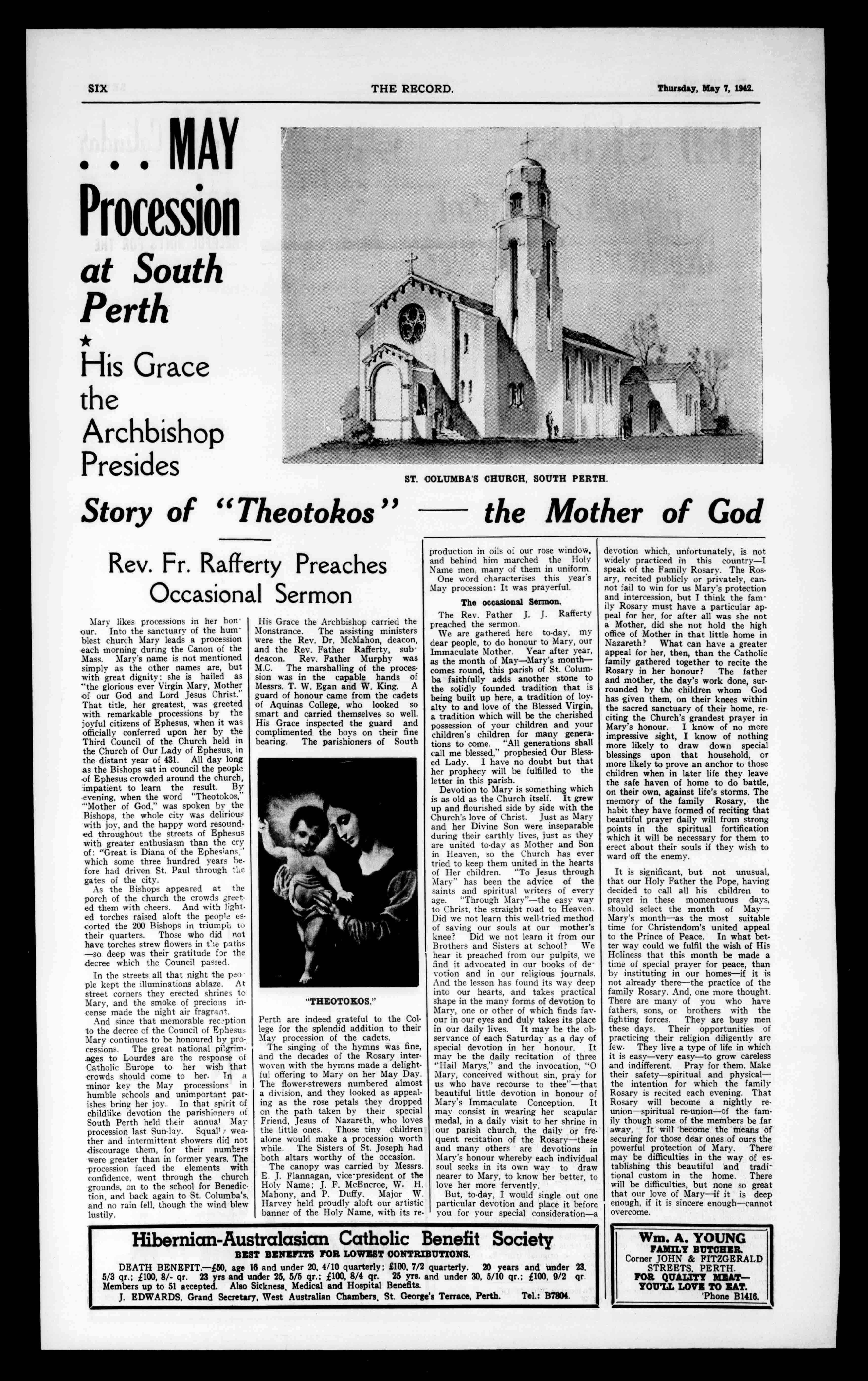
Marylikesprocessionsinherhon our.IntothesanctuaryofthehumblestchurchMaryleadsaprocession eachmorningduringtheCanonofthe Mass.Mary'snameisnotmentioned simplyastheothernamesare,but withgreatdignity:sheishailedas "thegloriouseverVirginMary,Mother ofourGodandLordJesusChrist." Thattitle,hergreatest,wasgreeted withremarkableprocessionsbythe joyfulcitizensofEphesus,whenitwas officiallyconferreduponherbythe ThirdCounciloftheChurchheldin theChurchofOurLadyofEphesus,in thedistantyearof431.Alldaylong astheBishopssatincouncilthepeople -ofEphesuscrowdedaroundthechurch, -impatienttolearntheresult.By -evening,whentheword"Theotokos," "'MotherofGod,"wasspokenbythe Bishops,thewholecitywasdelirious withjoy,andthehappywordresoundedthroughoutthestreetsofEphesus withgreaterenthusiasmthanthecry of:"GreatisDianaoftheEpheslans.' whichsomethreehundredyearsbeforehaddrivenSt.Paulthroughthe gatesofthecity.
AstheBishopsappearedatthe porchofthechurchthecrowdsgreetedthemwithcheers.Andwithlightedtorchesraisedaloftthepeopleescortedthe200Bishopsintriumpl,s, theirquarters.Thosewhodidnot havetorchesstrewflowersinflepath, -sodeepwastheirgratitudefarthe decreewhichtheCouncilpassed.
Inthestreetsallthatnightthepen plekepttheilluminationsablaze.At streetcornerstheyerectedshrinesto Mary,andthesmokeofpreciousincensemadethenightairfragrant.
Andsincethatmemorablerec7ption tothedecreeoftheCouncilofEphesu, Marycontinuestobehonouredbyprocessions.ThegreatnationalpilgrimAgestoLourdesaretheresponseof CatholicEuropetoherwishthat crowdsshouldcometoher.Ina minorkeytheMayprocessionsin humbleschoolsandunimportantparishesbringherjoy.Inthatspiritof childlikedevotiontheparishionersof SouthPerthheldtheirannualMay processionlastSun-lay.Squallweatherandintermittentshowersdidnot discouragethem,fortheirnumbers weregreaterthaninformeryears.The processionfacedtheelementswith confidence,wentthroughthechurch grounds,ontotheschoolforBenediction,andbackagaintoSt.Columba's, andnorainfell,thoughthewindblew lustily.
HisGracetheArchbishopcarriedthe Monstrance.Theassistingministers weretheRev.Dr.McMahon,deacon, andtheRev.FatherRafferty,subdeacon.Rev.FatherMurphywas M.C.Themarshallingoftheprocessionwasinthecapablehandsof Messrs.T.W.EganandW.King.A guardofhonourcamefromthecadets ofAquinasCollege,wholookedso smartandcarriedthemselvessowell. HisGraceinspectedtheguardand complimentedtheboysontheirfine bearing.TheparishionersofSouth
PerthareindeedgratefultotheCollegeforthesplendidadditiontotheir Mayprocessionofthecadets.
Thesingingofthehymnswasfine, andthedecadesoftheRosaryinterwovenwiththehymnsmadeadelightfulofferingtoMaryonherMayDay. Theflower-strewersnumberedalmost adivision,andtheylookedasappealingastherosepetalstheydropped onthepathtakenbytheirspecial Friend,JesusofNazareth,wholoves thelittleones.Thosetinychildren alonewouldmakeaprocessionworth while.TheSistersofSt.Josephhad bothaltarsworthyoftheoccasion.
ThecanopywascarriedbyMessrs. E.J.Flannagan,vice-presidentofthe HolyName;J.F.McEncroe,W.H. Mahony,andP.Duffy.MajorW. Harveyheldproudlyaloftourartistic banneroftheHolyName,withitsre-
productioninoilsofourrosewindow, andbehindhimmarchedtheHoly Namemen,manyoftheminuniform Onewordcharacterisesthisyear's Mayprocession:Itwasprayerful.
TheoccasionalSermon.
TheRev.FatherJ.J.Rafferty preachedthesermon.
Wearegatheredhereto-day,my dearpeople,todohonourtoMary,our ImmaculateMother.Yearafteryear, asthemonthofMay-Mary'smonthcomesround,thisparishofSt.Columbafaithfullyaddsanotherstoneto thesolidlyfoundedtraditionthatis beingbuiltuphere,atraditionofloyaltytoandloveoftheBlessedVirgin, atraditionwhichwillbethecherished possessionofyourchildrenandyour children'schildrenformanygenerationstocome."Allgenerationsshall callmeblessed,"prophesiedOurBlessedLady.Ihavenodoubtbutthat herprophecywillbefulfilledtothe letterinthisparish.
DevotiontoMaryissomethingwhich isasoldastheChurchitself.Itgrew upandflourishedsidebysidewiththe Church'sloveofChrist.JustasMary andherDivineSonwereinseparable duringtheirearthlylives,justasthey areunitedto-dayasMotherandSon inHeaven,sotheChurchhasever triedtokeepthemunitedinthehearts ofHerchildren."ToJesusthrough Mary"hasbeentheadviceofthe saintsandspiritualwritersofevery age."ThroughMary"-theeasyway toChrist,thestraightroadtoHeaven. Didwenotlearnthiswell-triedmethod ofsavingoursoulsatourmother's knee?Didwenotlearnitfromour BrothersandSistersatschool?We hearitpreachedfromourpulpits,we finditadvocatedinourbooksofdevotionandinourreligiousjournals. Andthelessonhasfounditswaydeep intoourhearts,andtakespractical shapeinthemanyformsofdevotionto Mary,oneorotherofwhichfindsfavourinoureyesanddulytakesitsplace inourdailylives.ItmaybetheobservanceofeachSaturdayasadayof specialdevotioninherhonour.It maybethedailyrecitationofthree "HailMarys,"andtheinvocation,"0 Mary,conceivedwithoutsin,prayfor uswhohaverecoursetothee"-that beautifullittledevotioninhonourof Mary'sImmaculateConception.It mayconsistinwearingherscapular medal,inadailyvisittohershrinein ourparishchurch,thedailyorfrequentrecitationoftheRosary-these andmanyothersaredevotionsin Mary'shonourwherebyeachindividual soulseeksinitsownwaytodraw nearertoMary,toknowherbetter,to lovehermorefervently.
But,to-day,Iwouldsingleoutone particulardevotionandplaceitbefore youforyourspecialconsideration-a
devotionwhich,unfortunately,isnot widelypracticedinthiscountry-I speakoftheFamilyRosary.TheRosary,recitedpubliclyorprivately,cannotfailtowinforusMary'sprotection andintercession,butIthinkthefamilyRosarymusthaveaparticularappealforher,forafterallwasshenot aMother,didshenotholdthehigh officeofMotherinthatlittlehomein Nazareth?Whatcanhaveagreater appealforher,then,thantheCatholic familygatheredtogethertorecitethe Rosaryinherhonour?Thefather andmother,theday'sworkdone,surroundedbythechildrenwhomGod has-giventhem,ontheirkneeswithin thesacredsanctuaryoftheirhome,recitingtheChurch'sgrandestprayerin Mary'shonour.Iknowofnomore impressivesight,Iknowofnothing morelikelytodrawdownspecial blessingsuponthathousehold,or morelikelytoproveananchortothose childrenwheninlaterlifetheyleave thesafehavenofhometodobattle, ontheirown,againstlife'sstorms.The memoryofthefamilyRosary,the habittheyhaveformedofrecitingthat beautifulprayerdailywillfromstrong pointsinthespiritualfortification whichitwillbenecessaryforthemto erectabouttheirsoulsiftheywishto wardofftheenemy.
Itissignificant,butnotunusual, thatourHolyFatherthePope,having decidedtocallallhischildrento prayerinthesemomentuousdays, shouldselectthemonthofMayMary'smonth-asthemostsuitable timeforChristendom'sunitedappeal tothePrinceofPeace.InwhatbetterwaycouldwefulfilthewishofHis Holinessthatthismonthbemadea timeofspecialprayerforpeace,than byinstitutinginourhomes-ifitis notalreadythere-thepracticeofthe familyRosary.And,onemorethought. Therearemanyofyouwhohave fathers,sons,orbrotherswiththe fightingforces.Theyarebusymen thesedays.Theiropportunitiesof practicingtheirreligiondiligentlyare few.Theyliveatypeoflifeinwhich itiseasy-veryeasy-togrowcareless andindifferent.Prayforthem.Make theirsafety-spiritualandphysicaltheintentionforwhichthefamily Rosaryisrecitedeachevening.That Rosarywillbecomeanightlyreunion-spiritualre-union-ofthefamilythoughsomeofthemembersbefar away.Itwillbecomethemeansof securingforthosedearonesofoursthe powerfulprotectionofMary.There maybedifficultiesinthewayofestablishingthisbeautifulandtraditionalcustominthehome.There willbedifficulties,butnonesogreat thatourloveofMary-ifitisdeep enough,ifitissincereenough-cannot overcome.
Wm.A.YOUNG FAMILYBUTCHZE.
CornerJOHN&FITZGERALD STREETS,PERTH. FORQUALITYMEATYOU'LLLOVETOEAT. 'PhoneB1418.
Meetings.
Theannualmeetingwillbeheldat CathedralHallonMonday,May26, at2.30p.m.HisGracetheArchbishopwillbepresent,anditishoped thatasmanymembersaspossiblewill attend.
Canteen.
Workinthecanteensisincreasingas newcentresarebeingopened,and membersareaskedtonotethattheir serviceswillberequiredatthetimes andplacesstatedbelow:
May22andJune16:BarrackStreet Buffet.
May5and29andJune23:Town Hall.
May19andJune13:Y.A.L.Hall. StreetAppeal.
OnFriday,May15,therewillbea streetappeal,forwhichhelpersareurgentlyneeded,andaskedtoreportto theLeague'susualstand,Ahern'sArcade,Murray-street. Knitters.
Knittersareurgentlyneededforthe makingofcomfortsfortheNavyand fortheMercantileMarine.
ThenextmeetingoftheCatholic Teachers'Guildwillbeheldatthe CentralCatholicLibraryonWednesday,May20,at8p.m.,whenalecture on"Canada"willbegivenbyMissA. Neal,B.A.(Mt.AllisonUniversity, Canada).Thislectureisopentoall Catholicteachersandtheirfriends, andasMissNeal,whoisattachedto theAdultEducationLibraryofthe University,isaninterestinglecturer,it ishopedthattherewillbeagoodattendance.
Overtwohundredyoungpeoplemet attheHighgateParishHallonWednesdaynight,April29,theoccasion beingthefirstL.C.Y.danceoftheseason.Itwasanoutstandingsocialand financialsuccess.Thehallwasdecoratedwithasparagusfernandcolouredstreamers,andthestagewas adornedwithgailycolouredpapersunshades,fernandstreamers.Itwas pleasingtonotesomanyofour L.C.Y.membersinuniform,whocame fromfarandnear,tobepresentat theirowndance.Theyoungpeople ofSubiaco,Leederville,andClaremont werewellrepresented.Wealsohad amongstussomeofourAmerican friends,whokindlyacceptedourinvitation.Duringtheevening,Miss MarjorieHastiesang,byspecialrequest,"APairofSilverWings,"and "It'saGreatDayfortheIrish,"for whichshereceivedgreatapplause.Miss PatMulcahyalsosangvocalitems withtheorchestra.Thestaritemof theeveningwastheboys'ballet-quiteanoriginal sketchwhich causedmuch laughter. Theboys,dressedascave-men,danced andfoughtintheirowninimitable way,whilstNeilFogarty,dressedasa blondetoe-dancer,gaveagracefulexhibition.Thoseresponsibleforthe uniqueactwereGeoff.Smith,Kevin Ryan,PatMcCaul,CharlieNalan,and NeilFogarty.
ThedancewillberepeatedonWednesday,May13,whenwehopetomeet allourfriendsoncemore.Therewill beanotherspecialsupper,andtheadmissionisoneandsixpence.Theproceedsofthesedancesareinaidofthe ParishHalldebt.Thecommitteeresponsibleforthesearrangementsare MesdamesSlattery,ThomasandMulcahy.
Itisregrettedthatspacedoesnot permitustopublishthenamesof thosepresent,astheyaretoonumerous tomention.
Averyprettyweddingwassolemn.
isedwithNuptialMassatSacred HeartChurch HighgateHill,on EasterMonday,April6,whentheRev. FatherHusseyjoinedinHolyMatrimonyNormanJohnEastcott,ofMintstreet,VictoriaPark,andCatherine Therese,eldestdaughterofMr.and Mrs.H.J.Easton,ofGrosvenor-road, Mt.Lawley.Thebridelookedmost attractiveassheenteredthechurch onthearmofherfather.Herlovely three-tierveil,drapingfromatopknotoffrangipanni,fellsoftlyoverher whitefrockofmoiretaffeta,theneck andhemofwhichweretrimmedwith appliquemarquisetteflowerscentred withpearls.Frangipanni,tuberoses andsatinribbonformedthetrailerson themotherofpearlprayerbook,which shecarried.
MargaretEastonandPeggyKnox attendedthebride,dressedalikeinoldworldstyleofgreenfiguredorganza. TheirScarlettO'Harahatsweretrimmedwithgreenvelvetandpinkrose clusters.Pinkrosesalsodrapedthe daintybasketscarriedbythebridesmaids.Mr.M.Properjohnablycarriedoutthedutiesofbestman,and Mr.H.Eastonthoseofgroomsman. MissO'Dwyerpresidedattheorgan, andduringMassplayedmusiccomposedbythebride'sgrandmother. Aftertheceremony,thereceptionwas heldintheParishHall,Highgate,the guestsbeingreceivedbythebride's mother,whochoseafrockofloyal blue,withfawnaccessories.Afterthe
RECIPES.
AppleApricotButter.
Ingredients: 1pintoftartapplepulp, 1pintofdriedapricotpulp, 3cupsofsugar.
Method: Cookthefruitinwateruntilitis tender,thenpressitthroughasieveor strainertogiveasmoothevenproduct. Boilthefruitforfiveminutes,stirring itconstantlytopreventburning;then addthesugar,andcontinuetoboilit rapidlyuntilthemixtureisclear. Long,slowcookingshouldbeavoided, asittendstodarkenthebutteranddestroytheoriginalfruitflavour.This makesadeliciouscakeorsandwich filling.
To-morrowWON'TDO-startsaving NOW.
May15:DoctorMcCannwillgiveaninformaltalkupontheexperiencesof amedicalmanintheoddestplacesof AustraliaandinAustralianmissions, attheCentralCatholicLibrary,36 Pier-street,at8p.m.
Ifyouwishtokeepacupoftea hotforsometime,pourboilingwater intothecupbeforepouringoutthe tea.
Alwayspressfancyworkundera dampcloth,andwhentheclothisremoved,ironfacedownwardsonathick towel.Thiswillgiveagoodfinish.
Whenmakingeyeletholes,work fromlefttoright.Thestitchesthus pressagainstoneanotherastheyare workedandafirmeredgewillresult.
Toremoverustfromtheiron,try scouringitwithdrysaltandbeeswax.
Whenbakingparsnips,trypouring boilingwateroverthemfirst.This improvestheflavour,andtheycook muchquicker.
Topreventacrackedeggfrom breakingwhencooking,addafew dropsofvinegartothewaterinwhich itisboiled.
Whencookingpeasandpotatoes, trysteamingpeasoverthepotatoes.Besidessavinggas,whichisabig item,itkeepsthegoodnessinthe peas.Useacollander,ifyouhave notgotasteamer,andcoverthem over.
PotatoandOheesePie.
Theingredientsrequiredforthisrecipeare:4to6cookedpotatoes,3ozs. gratedcheese,pintmilk,loz.butter ormargarine,1tablespoonfulbreadcrumbs.
Cutthecookedpotatoesintoslices. Meltthebutterinasaucepan,add themilk,bringslowlytotheboil,add 2ozs.cheese,andsimmerforafew minutes.
Arrangetheslicedpotatoesinapiedish,pouroverthesauce,mixatablespoonfulofbreadcrumbswiththeremainingloz.cheeseandsprinkleover thetopandbrownintheoven. HotAppleCake.
breakfast,thebrideandbridegroom leftontheirhoneymoon,thebride travellinginapinkandbrowneyelet frock,brownboxcoat,andaccessories. Mr.andMrs.Eastcottreceivedmany beautifulpresentsandanumberof congratulatorytelegrams.
Whatgoodwillyourmoneybeifwe lose?Every£10NationalSavings Bondbringsvictorynearer.
Ingredients:4ozs.flour,2ozs.butter, 2ozs.sugar,2ozs,currants,2eggs,2or 3choppedapples.
Rubthebutterintotheflour,add thechoppedapple,sugarandcurrants, andlastlythebeateneggswitha pinchofgratednutmegor3cloves.Mix well. Placeinabutteredbakingtin,and bakeinamoderateovenforfromto ofanhour.
Oneofthecentraldifficultiesaboutdiscussingthepost-war worldandthetaskofreconstructionistheobfuscationofideas broughtaboutbymeaninglessorill-definedtermsofexpression. Practicallyeveryutterancebyourpoliticalleaderslendspointto thisobservation.Thereisavastout-pouringofwordswhich pass,leavingnodistinct,well-definedideainthemind.TherecentspeechbySirStaffordCrippswillserveaswellasanother bywayasillustration.ThethemeoftheLordPrivySeal'sbroadcastwas"freedom."Heinterpretedthisconceptinitseconomic conceptas"freedomfromtheconstantanxietyofinsecurityand want."ThetermwasusedfirstinthisidenticalsensebyPresidentRoosevelt,butthemeanstothisfreedomanditsfinalpolitical expression,isneversomuchashintedat.Ifitisjusttopresupposesincerityandconsistencyofpurposeinmen,andifitis reasonabletoassessthepresentbythepast,itatoncebecomes obviousthatthePresidentandthePrivySealhaveinmindthings asdifferentandascontradictoryaschalkandcheese.Inthe earlyyearsofhisoffice,atleast,thePresidentstoodforsmall businessasagainstlargebusiness,monopolyandtrusts,inaword, forprivateproperty.ButtheLordPrivySealwassoenthusiasticforaSocialist,ifnotaBolshevist,Englandthatheout-strippedhisLabourcolleagues,andwasforcedtoleavetheParty. Thereisnoreasontodoubtthesincerityofeithermanortheir enthusiasmfor"freedom."Butwhetherthisinvolvestheaccept: anceofathorough-goingSocialismorofareturntoasystemof widelydistributedprivateownershipisobviouslygoingtobean issueoffirst-classstrife.
Eithersystemwillremove"thosegrossinequalitiesthat AVeretheaftermathofthelastwar-thatdisgracefulcontrastof greatpovertyandgreatwealth-andthevastbandsofheroicdefendersofourcountrywalkingthestreetsinvainsearchfor livelihood."Butifitistrue,asSirStaffordseemsalsotothink. thatweareprimarilyfightingagainstaphilosophyoflife,then surelytheprimarypositiveaimofreconstructionmustbeto securefreedominaspiritualsense.Howthiscanbedoneby compellingeveryonetobecomeaCivilServanthasneverbeen rleartotheCatholicmind.Alleffortstotwistmentofitintoa preconceivedstateofsociety,howeveridealintheory,isbound tofail.Therealtaskisobviouslytososhapesocietythatitwlil conformtothenatureofman.InthisbothCapitalismandCommunismhavegonesadlyastray.Eachhasbutsucceededintorturingandtwistingthespiritofman.therebyrenderingtheirs' ternsinsecurebyreasonofathousandandonemoralcontradictions. ThesocialconceptsofCatholicsproposetooffermentheopportunitytoliveasmen,exercisingtheirintelligenceandfreewillintheirworkintheonlywaypossible,i.e.,byowingthe meansofproduction.Corporatelytherewillbenaturalvocational groupingsonabasisofcommonresponsibility,whichwilleliminatetheartificialdivisionsbetweenLabourandCapital.Inthis schemeofthings,"theinterestsoftheindividualineachcountry willhavetoyieldtotheinterestsofthecommunityasawhole."as SirStaffordCrippsindicates.Buthereagain,althoughtheterms ofourrespectiveaimsareidentical.whataworldofdifference dividestheservantofabureaucracyfromtheresponsibleand proudowner.
Butthedomesticproblemsofindividualnationsareas nothingtothedifficultiesoftheinternationalarrangements proposedforall.Again,SirStaffordwillhaveitthat"theinterestsofindividualnationsmustgivewayinsomematters,atleast tothoseofthewidercommunity-whetheraEuropeanoraworld communityofnations."Thismaymeananything-fromanew Versailles,asMr.H.G.Wellshopes,toaCommunistInternationalismortoFederalUnion(thatlunatic'proposalofthedie-hardsof theOldOrder).Whatistothepointis,arewe,whoarethe "Have"nations,preparedto"giveway"territorialgainsandeconomicadvantagestothe"Have-not"nationsintheinterestsofa worldcommunity?TheAtlanticCharterwasveryguardedin thismatter,forobviouslyitinvolvesthecontinuedexistenceofImperialconcepts.ThewholeissueisalsoboundupwiththequestiGnofnationalism,i.e.,whetherthenewgroupingsinEuropewill beconsideredintermsofraceorculture.Itismostearnestlyto behopedthatnoonewillproposetoforcedemocraticformson peoplewhohaveceasedtobelieveintheirefficacy,oronnations whichdesiretoreturntotraditionalways.Theharmonyofany newarrangementwillobviouslydependtoalargeextentoneconomicconsiderations,suchasaccesstorawmaterials,livingspace. .etc.,butthepermanency.ofthenewrelationswilldependentirely .onspiritualthings,suchasrespectfornationalrights,andregard fortreaties.Itisforthisreasonthatweregardthepointsset forthbythePopeasmorefundamentaltotheworld'sfuturepeace thantheAtlanticCharter.
PrintedbelowarethenamesandaddressesofthoseCatholicfamilieswhich havegenerouslyofferedthehospitality oftheirhomesforAmericansailorson leave.ThePortChaplain,Rev.Father Breslin,011-1.,willpersonallyselect themen.Theywill,ineachcase,have hisrecommendation.TheExecutive oftheC.W.O.andFatherBreslinwish toexpresstheirgratitudetothoseCatholicfamilieswhichrespondedso readilytotheirappeal,andhopethat yetotherswillbeforthcoming.
FatherBreslinhasnowsucceededin settingupaDepotatFremantleforthe useofCatholicseamen.Thefurnishingis,however,causingsomeconcern, andassistanceisbeingsoughtforthe acquisitionofthefollowingarticles:
Billiardcues, Completekitchenequipment, Atypewriter, Ping-pongtables, Abilliarrdtable(possiblyonloan), Agascooker, Arefrigerator(alsoonloan).
Theundermentionedhavekindly consentedtobilletUnitedStatesservicemenwhilstonleave:
Mrs.D.C.Perrott,10Camelia-street, NorthPerth.
Mrs.J.O'Brien,241Barker-road,Subiaco.
Mrs.R.Walsh,361Roberts-road,Subiaco.
Mr.L.J.McDowell,65Fourth-avenue,MountLawley.
Mrs.J.Sullivan,26Temple-street, VictoriaPark.
MissB.Schocker,95Hill-street,Perth
Mrs.M.E.Worner,''Belka,"37Barrett-street,Wembley.
Mrs.M.J.Shusen,21Second-avenue, Mt.Lawley.
Mrs.M.Lepoigneur,16Prowse-street, WestPerth.
Mrs.M.O'Loughlin,65Dundas-road, Inglewood.
Mr.M.J.Stone,20Gordowstreet, WestPerth.
Mrs.Doyle,93Florence-road,Nedlands.
Mrs.Megaw,59Labouchere-road, SouthPerth.
Mrs.Woodhouse,60Goldsmith-road, Claremont.
Mr.A.Pownall,113 Northwoodstreet,WestLeederville.
Mrs.E.Gannon,4Loftus-street, Claremont.
Mr.L.P.Park,197Roberts-road,Subiaco.
Mrs.W.Welby,19Glendower-street, Perth.
Mr.R.Longergan,7Renwick-street, SouthPerth.
Mr.T.M.Clune,64Helena-street, MidlandJunction.
Mrs.C.Guilfoyle,39Joseph-street, WestLeederville.
Mrs.A.W.Russell,15Franklinstreet,Leederville.
Mr.Keating,326Oxford-street,Leederville.
Mrs.K.Cherrington,80Grosvenor' road,Mt.Lawley.
Mrs.E.T.Russell,59Chelmsfordroad,Mt.Lawley.
Mr.G.Fennessy,Moreing-road,Palmyra.
Mr.Anderson,Perth.
MissHerlihy,Perth.
Mrs.Hoare,BridgeHotel,Fremantle.
Mrs.Thorne,Ellen-street,Subiaco.
Mr.J.McCarthy,26Barker-road,Subiaco.
Mr.S.R.Haris,80McCourt-street, WestLeederville.
Mrs.V.Craig.26Kent-street,VictoriaPark.
Mrs.K.Beeson,26Kalgoorlie-street, Mt.Hawthorn.
Mrs.Scott,59Thomas-street.West Perth.
Mrs.Casey,1016Beaufort-street,Inglewood.
Mrs.J.F.Walsh,24Queen'sCrescent,Mt.Lawley.
Mr.M.Coughlin,792Beaufort-street, Mt.Lawley.
Mrs.D.Goerke,16Farr-avenue, NorthPerth.
Mrs.C.S.Bailey,40Longroyd-street, Mt.Lawley.
Mrs.M.N.Sullivan,50Geddes-street. VictoriaPark.
Mrs.Davis,41Lawley-crescent,Mt. Lawlev.
ARCHBISHOP'SENGAGEMA.[ITS-
May10:CanonicalVisitationandConfirmationatSt.Joseph'sChurch, Busselton.
May22-9.30a.m.:PresideatSolemn OfficeandcelebratePontificalRequiemMassontheoccasionofthe seventhanniversaryofthelateArchbishopClune.
May24(PentecostSunday).-1,ain PontificateinSt.Mary'sCathFri...1 3p.m.:AdministertheSacratN,ntof Confirmationtoadults.
May25.-3p.m.:AttendAt.-.0GeneralMeetingoftheCatlio.cWomen'sLeague.
May29.-10a.m.:PresideQuarter. lyConferenceofthePriestsofthe MetropolitanArea.
May31:CanonicalVisitationandConfirmationatStJerome'sChurch, Spearwood. May31.-3p.m.:AttendW.A.CatholicLawnTennisAssociation'sAnnualPresentationofTrophies,at St.Joachim'sClub,VictoriaPark.
ASCENSIONTHURSDAY.
HOLYDAYOFOBLIGATION. TIMESOFMASSES.
Thursday,May14,theFeastofthe Ascension,willbeaHolyDayofObligation. MasseswillbecelebratedintheCathedralat6,7,8.15,9,10a.m.,anda speciallunchhourMassat12.10p.m. Confessionsinpreparationforthe FeastwillbeheardintheCathedral onWednesdayfrom12noonto1.30 p.m.,andfrom4p.m.to6.30p.m.
OONITRIKATIONOFADULTS. HisGracetheArchbishopwilladministertheSacramentofConfirma tiontoadultsinSt.Mary'sCathedral onPentecostSunday,May24,at3 p.m.IntendingcandidatesarerequestedtonotifytheAdministrator, VeryRev.E.Kennedy,D.D.,notlater thanFriday,May22.
liffnifauffmniffilo 41111110111111111111C71
5 g FORAMERICANSAILORSON LEAVE. 2
...3. g i m a aTheexecutiveoftheCatholic E.:WelfareOrganisation,co-operatingwithRev.FatherBreslin,E CP.M.I.,PortChaplain,areanxious 1tosecuresuitableaccommodationi inCatholichomesforAmericana 5sailorsontheironenightofleave. ItisproposedtosecurealistofE 2homeswhichwouldbewillingto cliofferthissmallmeasureofhospitality.AnyCatholicdesirousofF'=Wronginthismatterisrequest-il gedtosendnameandaddressi .2.to-
Mr.P.R.Jackson, a Hon.Secretary,C.W.O., .2 St.Mary'sChurchOffice, VictoriaSquare,Perth.a i 1-§. Thesailorswillbepersonally recommendedbyFatherBreslin.I2 Niauffififraftfamairimanamommillifitialfunininimumwrig: SOCIALJUSTICESUNDAY,MAY31
TheEpiscopalCommitteeonCatholicActionwishesthatSocialJustice -undaybeobservedthroughoutthe AustraliandiocesesthisyearonSunday,May31. Inconformitywiththesuggestionof theCommittee,SocialJusticeSunday willbeobservedintheArchdioceseon thatday,insteadofontheSundayimmediatelyprecedingLabourDay.
Afurtherstatementisbeingissued thisyear,entitled"ForFreedom,"and dealingwithmanyquestionsofreal publicinterestin1942. Ithasbeen feltnecessarytomakeaneffective protestagainstcertaintotalitariantendencieswhichareclearlyevidentinrecentlegislation.Itdoesnot,of course,questionthewisdomofsuch legislationinwar-time,orthedutyof citizenstoobeyloyally:butitdoes showthethreattoChristianfreedom impliedincertaindirections.
INtheyearsthatimmediatelyprecededtheoutbreakofwar,alongdelayedliturgicalrevivalhadbeguntoSweepthroughCatholicEurope andAmerica.Menspokeofa"secondPentecost,"theHolySpiritthis timedescendinguponthelaityandenergisinginthem.Thetwoshortdecadesofuneasypeacethatfollowedthe Armisticeof1918sawtheriseofthe massmovementsofCatholicAction, andparticularlyinspiringwerethe greatYouthmovements,withthenew outlookonlifeandonCatholicism theydevelopedintheirhundredsof thousandsofmembers.
Thesemagnificent,growingorganisationshadsucceededin"puttingover'. CatholicismtotheYouthofto-day. TheyincorporatedallthattheliturgicalrevivalhadtoofferintotheirpresentationoftheCatholicsynthesis.It wasfroman"activeparticipationinthe liturgy,"advocatedbyPiusX,thatthe individualmembersdrewtheirinexhaustibleenthusiasmforCatholicism. Graspingatlastwhatlaybeneaththe surfaceoftheirfaith,understandingso muchmorefullywhatlaybetweenthe linesofthecatechismtheyhadlearnt atschool,theybegantorealisethat theirfaithwasadynamicthing,that itmeanttoanddidpermeatethe wholeoftheirlives,everythingthey didandeverythingtheydreamedabout.
Marriagebecamesomethingtheyhad neverevenimaginedbefore;theysaw abeauty,depthandsacrednessintheir lovethatjustrevolutionisedtheir lives;theirvocation,theirworktook onanewsignificance,evenifitwere oxyweldingorshovellingcoalallday long;"grace"meantsomethingnewbut veryrealtothem;theSacramentsand, aboveall,theMassbecameapartof theirlives,andtheybegantorealise thattryingtogrowlikeChristdidNOT meanbecomingfrowsilypious,didnot meanfrustratingone'sselfinanyway. Rathertheopposite:itmeantthedevelopmentoftheirpersonality,ofevery oneofthetentalentsGodhadgiven them,whetherphysical,intellectualor spiritual.Theirmorningofferingwas nowtheirdailyMassandCommunion.
TheItemissaeatsentthematearlymorningoutintothefieldoflabour, beitthefactory,office,theroadwayor thehome,sentthemoutasmilitant Catholicstoradiateaboutthemthe !'hest-lifetheyhadreceivedanewat Massastheirdaybegan.Theyleft theirparishchurcheachmorningfor workas-co-redeemers"ofthehuman race,consciousthateventhemonotony oftheirdailyworkwasbeingsweptup intothesymphonyofsacrificethatrose fromaltarandworkbench"inHim, withHim,andthroughHim,"tothe Fatherabove.Theirdaybecamethe jy PYi
prolongationoftheirmorningMasstheirdaybecametheirMass,theirlife onelongMass.Theybegantounderstandtheirlives,asaloneweshould, inthelightoftheMass;theybeganto seetheirlivesassacrificialthings,as partoftheperennialoblationofthe MysticalBodyofwhichtheywere members.Allthisandeversomuch morehadbeguntodawnonCatholic Europe,andespeciallyonitsYouth, keentounderstandandliveTHISCatholicism,whensuddenlyhellitself seemedtobeletlooseandNaziarmies begantheirmarchemacabrethrough theContinent.
Butthefoundationsofthismodern Catholicrenaissancehavebeendeeply laid,andnoteventhehorrorsofwar willsucceedinquenchingthispentecostal"fireontheearth."
HereinAustraliatheliturgicalmovementhasmadedifficultbutmagnificent progress.Noone,perhaps,hasdone morethantheRev.Dr.McMahonto :arouseaninterestin.andunderstand-
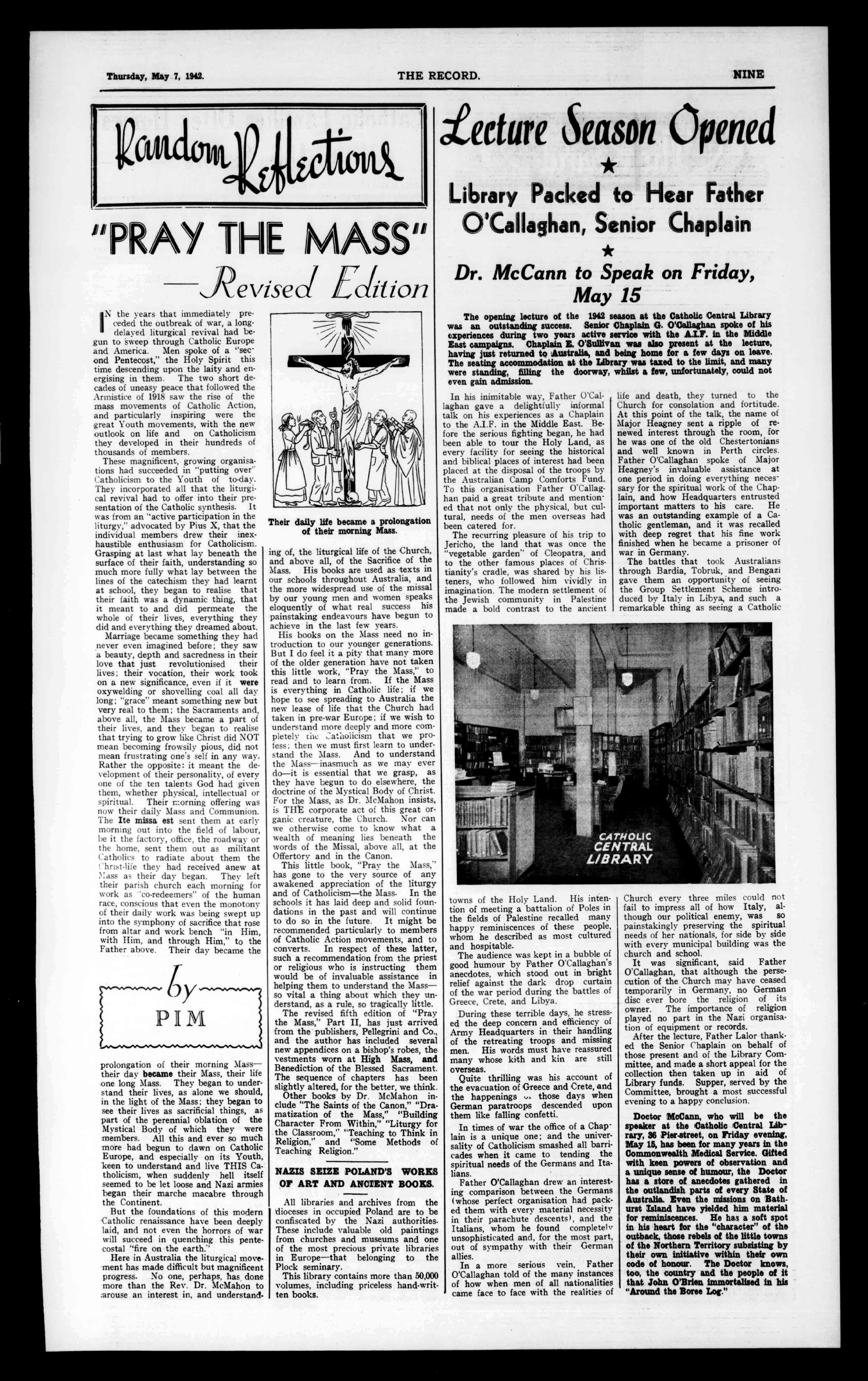
Theirdailylifebecameaprolongation oftheirmorningMass. ingof,theliturgicallifeoftheChurch, andaboveall,oftheSacrificeofthe Mass.Hisbooksareusedastextsin ourschoolsthroughoutAustralia,and themorewidespreaduseofthemissal byouryoungmenandwomenspeaks eloquentlyofwhatrealsuccesshis painstakingendeavourshavebegunto achieveinthelastfewyears.
HisbooksontheMassneednointroductiontoouryoungergenerations. ButIdofeelitapitythatmanymore oftheoldergenerationhavenottaken thislittlework,"PraytheMass,"to readandtolearnfrom.IftheMass iseverythinginCatholiclife;ifwe hopetoseespreadingtoAustraliathe newleaseoflifethattheChurchhad takeninpre-warEurope;ifwewishto understandmoredeeplyandmorecompletelythe.2atiiolicismthatweprofess;thenwemustfirstlearntounderstandtheMass.Andtounderstand theMass-inasmuchaswemayever do-itisessentialthatwegrasp,as theyhavebeguntodoelsewhere,the doctrineoftheMysticalBodyofChrist. FortheMass,asDr.McMahoninsists, isTHtcorporateactofthisgreatorganiccreature,theChurch.Norcan weotherwisecometoknowwhata wealthofmeaningliesbeneaththe wordsoftheMissal,aboveall,atthe OffertoryandintheCanon.
Thislittlebook,"PraytheMass," hasgonetotheverysourceofany awakenedappreciationoftheliturgy andofCatholicism-theMass.Inthe schoolsithaslaiddeepandsolidfoundationsinthepastandwillcontinue todosointhefuture.Itmightbe recommendedparticularlytomembers ofCatholicActionmovements,andto converts.Inrespectoftheselatter, sucharecommendationfromthepriest orreligiouswhoisinstructingthem wouldbeofinvaluableassistancein helpingthemtounderstandtheMasssovitalathingaboutwhichtheyunderstand,asarule,sotragicallylittle.
Therevisedfiftheditionof"Pray theMass,"PartII,hasjustarrived fromthepublishers,PellegriniandCo., andtheauthorhasincludedseveral newappendicesonabishop'srobes,the vestmentswornatHighMass,and BenedictionoftheBlessedSacrament. Thesequenceofchaptershasbeen slightlyaltered,forthebetter,wethink.
OtherbooksbyDr.McMahoninclude"TheSaintsoftheCanon,""DramatizationoftheMass,""Building CharacterFromWithin,""Liturgyfor theClassroom,""TeachingtoThinkin Religion,"and"SomeMethodsof TeachingReligion."
NAZISSEIZEPOLAND'SWORKS OFARTANDANCIENTBOOKS.
Alllibrariesandarchivesfromthe diocesesinoccupiedPolandaretobe confiscatedbytheNaziauthorities. Theseincludevaluableoldpaintings fromchurchesandmuseumsandone ofthemostpreciousprivatelibraries inEurope-thatbelongingtothe Plockseminary.
Thislibrarycontainsmorethan50,000 volumes,includingpricelesshand-writtenbooks.
Theopeninglectureofthe1942seasonattheCatholicCentralLibrary wasanoutstandingsuccess.SeniorChaplainG.O'Callaghanspokeofhis experiencesduringtwoyearsactiveservicewiththeA.I.F.intheMiddle Eastcampaigns.ChaplainE.O'Sullivanwasalsopresentatthelecture, havingjustreturnedtoAustralia,andbeinghomeforafewdaysonleave. TheseatingaccommodationattheLibrarywastaxedtothelimit,andmany werestanding,fillingthedoorway,whilstafew,unfortunately,couldnot evengainadmission.
Inhisinimitableway,FatherO'Callaghangaveadelightfullyinformal talkonhisexperiencesasaChaplain totheA.I.F.intheMiddleEast.Beforetheseriousfightingbegan,hehad beenabletotourtheHolyLand,as everyfacilityforseeingthehistorical andbiblicalplacesofinteresthadbeen placedatthedisposalofthetroopsbytheAustralianCampComfortsFund.
TothisorganisationFatherO'Callaghanpaidagreattributeandmentionedthatnotonlythephysical,butcultural,needsofthemenoverseashad beencateredfor.
Therecurringpleasureofhistripto Jericho,thelandthatwasoncethe "vegetablegarden"ofCleopatra,and totheotherfamousplacesofChristianity'scradle,wassharedbyhislisteners,whofollowedhimvividlyin imagination.Themodernsettlementof theJewishcommunityinPalestine madeaboldcontrasttotheancient
hieanddeath,theyturnedtothe Churchforconsolationandfortitude. Atthispointofthetalk,thenameof MajorHeagneysentarippleofrenewedinterestthroughtheroom,for hewasoneoftheoldChestertonians andwellknowninPerthcircles. FatherO'CallaghanspokeofMajor Heagney'sinvaluableassistanceat oneperiodindoingeverythingnecessaryforthespiritualworkoftheChaplain,andhowHeadquartersentrusted importantmatterstohiscare.He wasanoutstandingexampleofaCatholicgentleman,anditwasrecalled withdeepregretthathisfinework finishedwhenhebecameaprisonerof warinGermany. ThebattlesthattookAustralians throughBardia,Tobruk,andBengazi gavethemanopportunityofseeing theGroupSettlementSchemeintroducedbyItalyinLibya,andsucha remarkablethingasseeingaCatholic
townsoftheHolyLand.HisintentionofmeetingabattalionofPolesin thefieldsofPalestinerecalledmany happyreminiscencesofthesepeople, whomhedescribedasmostcultured andhospitable.
Theaudiencewaskeptinabubbleof goodhumourbyFatherO'Callaghan's anecdotes,whichstoodoutinbright reliefagainstthedarkdropcurtain ofthewarperiodduringthebattlesof Greece,Crete,andLibya.
Duringtheseterribledays,hestressedthedeepconcernandefficiencyof ArmyHeadquartersintheirhandling oftheretreatingtroopsandmissing men.Hiswordsmusthavereassured manywhosekithandkinarestill overseas.
Quitethrillingwashisaccountof theevacuationofGreeceandCrete,and thehappeningsv.thosedayswhen Germanparatroopsdescendedupon themlikefallingconfetti.
IntimesofwartheofficeofaChaplainisauniqueone;andtheuniversalityofCatholicismsmashedallbarricadeswhenitcametotendingthe spiritualneedsoftheGermansandItalians. FatherO'CallaghandrewaninterestingcomparisonbetweentheGermans (whoseperfectorganisationhadpackedthemwitheverymaterialnecessity intheirparachutedescents),andthe Italians,whomhefoundcompletely unsophisticatedand,forthemostpart, outofsympathywiththeirGerman allies.
Inamoreseriousvein.Father O'Callaghantoldofthemanyinstances ofhowwhenmenofallnationalities camefacetofacewiththerealitiesof
Churcheverythreemilescouldnot failtoimpressallofhowItaly,althoughourpoliticalenemy,wasso painstakinglypreservingthespiritual needsofhernationals,forsidebyside witheverymunicipalbuildingwasthe churchandschool.
Itwassignificant,saidFather O'Callaghan,thatalthoughthepersecutionoftheChurchmayhaveceased temporarilyinGermany,noGerman disceverborethereligionofits owner.Theimportanceofreligion playednopartintheNaziorganisationofequipmentorrecords.
Afterthelecture,FatherLalorthankedtheSeniorChaplainonbehalfof thosepresentandoftheLibraryCommittee,andmadeashortappealforthe collectionthentakenupinaidof Libraryfunds.Supper,servedbythe Committee,broughtamostsuccessful eveningtoahappyconclusion.
DoctorMcCann,whowillbethe speakerattheCatholicCentralLibrary,36Pier-street,onFridayevening, May15,hasbeenformanyyearsinthe CommonwealthMedicalService.Gifted withkeenpowersofobservationand auniquesenseofhumour,theDoctor hasastoreofanecdotesgatheredin theoutlandishpartsofeveryStateof Australia.EventhemissionsonBathurstIslandhaveyieldedhimmaterial forreminiscences.Hehasasoftspot inhisheartforthe"character"ofthe outback,thoserebelsofthelittletowns oftheNorthernTerritorysubsistingby theirowninitiativewithintheirown codeofhonour.TheDoctorknows, too,thecountryandthepeopleofit thatJohnO'Brienimmortalisedinhis "AroundtheBoreeLog."
By"RON.-
OrganisedSocialMatches.
Aswasannouncedlastweek,the Associationhavesuspendedtheshield competition,andareinstitutingaseries oforganisedsocialmatchesinstead. Thesewilltakeplaceatleastevery threeweeks,andareexpectedtobe mostsuccessful.Someclubsduring theseasonwillbeaskedtoentertain twoothers,whilethesmallerclubswill
,allyhaverepresentativesfromone body.
ThemannerofentertainingtheNISItcTSwillbeleftinthehandsoftherespectiveclubcommittees,whomayarrangeamerry-chaintournament,an inter-clubmatch,orwhateverthey thinkwillbemostsuitable.
Followingisthelistforthetwo openingrounds(hometeamtosupply balls): Sunday,May24:St.Thomas'sand StaroftheSeatomeetSt.Kevin's,at Subiaco;St.Joachim'stomeetSt. Columba,atVictoriaPark;Nedlands
A.E.HANSENFamilyButcher
6MALBANYROAD,VICTORIAPARK.
OrdersCalledforandDeliveredDaily. TrialSolicited.
Terms:CashWeekly. 'PHONEM1184ANDLETYOURPAYENVELOPELIVELONGER. .1111111.
*1. 11 LEWISandSONSBakers PROCERA,VIENNA,CREMALT,HEALTH,CURRANT.
tomeetSt.Patrick's,atFremantle.; St.Anthony'sandTheresian'stomeet Highgate,atHighgate;St.Brigid'eto
St.Mary's,atLeederville. Sunday,June14:St.Thomas'sand St.Brigid'stomeetNedlands,atNed
lands;St.Kevin'stomeetHighgate,at Highgate;St.Joachim'stomeetSt. Mary's,atLeederville;St.Columbato meetSt.Patrick's,atFremantle;Star oftheSeaandSt.Anthony'stomeet Theresian's,atInglewood.
AnnualPresentationofPrises.
Oneofthemainfeaturesoftheseason,theannualpresentationofprizes, willthisyeartakeplaceatSt. Joachim'sClub,VictoriaPark,onSunday,May31.Owingtothepresent wartimeconditons,theexecutive founditinadvisabletoholdasocial functioninthecity,sonecessaryarrangementshavebeenmadetohold thepresentationatSt.Joachim'sClub. Iftheweatherisunfavourable,itwill takeplaceintheKindergartenHall, VictoriaPark.HisGracetheArchbishopwillattendandmakethevariouspresentationsoftheshieldsand prizeswonduringthepastyear.
HIGHGATECLUB.
AllmembersareaskedtobepresentonSundaynext,May10,asthere areseveralmattersofvitalinterestto bediscussed,andarrangementsmade fortheinter-clubvisitswhichareto commenceshortly.
Itispleasingtonotethekeenness andenthusiasmofthenewmembers, whoturnupregularlyeachweek, therebysettinganexamplewhichmay wellbefollowedbyallothermembers.
Westillhavevacanciesformore membersandanyyoungpeopleinthe parishwhoareinterestedintennisare invitedtojoinup.
Montreal,Feb.16(NC)
-IremarkinEnglandaverystrong tendencytowardCatholicismanda sympathyeachdaymorelivelywithregardtotheChurchofRome,"theRev. WilliamE.Orchard,ofLondon,told reportersof"LaPresse,"localdaily Frenchlanguagenewspaper.
"AthirdofthefaithfuloftheChurch ofEnglandarereadytoadheretoall thedogmasoftheCatholicChurch,and thegreatmajorityoftheothersadmire theCatholicChurch.Theywish,however,thatthePopewouldacceptthem enblocandthattheunitywouldbe accomplishedatonestroke."
FatherOrchardwasaconverttoCatholicismafterhavingspentnearly30 yearsintheministryofthePresbyterianChurch.HehadaverygreatinfluenceamongtheProtestantsduring the18yearshewaspastoroftheKing's WeighHouseofLondon,"LaPresse" says.FatherOrchardwasconverted toCatholicismwith150ofhisparishioners,in1932,andhehasrelatedthe storyofhisconversioninabookentitled"FromFaithtoFaith."
"TheChurchismakingprogressin England.Itcountsabout10,000conversionsayear,andtheseconversions areforthemostpartamongtheintellectuals,"FatherOrchardsaid."FurthermoreIknowthatthemajorityof sincereProtestantsadmitthattheCatholicdoctrineisthemostfirm,and thattheChurchliturgyandherSacramentsalonecansustainthepietyof thefaithful."
LEPERSINTHEWAR.
VaticanRadiorecentlyannounced thatthelepersinaCatholicsettlementatthemouthoftheWestern RivernearHongKongwerenotworryingaboutthewarlikeJapanese.
Thewar,thelepersweresaying, wouldpassthemby,becauseonlymissionariesinvadesuchplaces.
True-buttheIrish-Americanmissionarieshavetoleavethesettlement nowandagaintogetsupplies.And newshasjustcomethatononeofthese tripsFatherJosephSweeneyranright intoaprivatewarbetweenaChinese blockade-runnerandJapanesegunboats.
ItisjustaswellthatFatherSweeneyisastrongswimmer.AfterjumpingoverthesideoftheChineseship, whichwasbeingshelledandmachinegunned,hehadtoswimforsixhours beforehereachedadesolateisland.
Hestayedinhidingontheisland forthreedays.ThentheChinesetook himbacktothelepersettlementina sampan.
Allhismedicineswerelostinthe battle.
FatherSweeneyisdirectorofthe MaryknollLeperAsyluminSouth ChinaandwasreturningfromHong Kongwithsupplies.
By"Marie."TheSpiritualDirectoroftheSac-, HeartSodality,Rev.FatherNolan, tookuphisdutiesthismonth,after anabsenceofseveralmonthsthrough illness.Infuturethemeetingswillbe heldasformerly,intheParishHall, afterdevotionsonthefirstSundayof everymonth,whenafullattendance ofmembersisexpected.
TheChildrenofMaryheldasocial onThursday,April30.Music,games, etc.,followedbysupper,wereenjoyed bythosepresent.Thesesocialsare tobeamonthlyfeatureandshould provepopularwiththegirls.Membersareaskedtoattendatseven o'clockMass(inregalia)oneachSundayduringMay.
Thefirstmeetingfor1942ofthe Parents'andCitizens'Association,of St.Mary'sConventSchool,tookplace onMay1. Thefollowingladieswere present:MesdamesWhiteside,Ryalls, Sheehan,Morris,Green,Duggan,Henneker,andRogers.Thebusinessof handinginthemonthlycollection havingbeendealtwith,therewasa discussiononthelearners'dance.It wasdecidedtoreopenthispopularentertainmentonTuesday,May12,and fortnightlythereafter.
AstheproceedsofthisdancearedevotedsolelytotheeducationalrequirementsofthechildrenofSt.Mary's School,itishopedthatourCatholic youthwillpatroniseitfreely.
TheCatholicWomen'sLeague's monthlymeetingandsocialtookplace intheParishHallafterdevotionson Monday,May4.Itwasalsotheannualmeetingandarepresentative gathering.Rev.FatherCarolanattended.Asocial,hostessedbyMesdamesClay,RayandLivy,followed. Mrs.Salasorganisedaeuchrepartyfor thosepreferringcards.Mrs.Dunne wonacakeandMrs.Raythejam.
SergeantJimMcDonaldreturnedto Perththisweek,afterrelievingfor sometimeintheseparts.
MissB.O'Deaisbackagainand busyasusualinvariousactivities.
MissS.McMullenhastakenupduty attheDistrictHospitalafteraholidayatthecoast.
CongratulationstoMissMarieQuinlan,onbeingchosenas"Belleofthe Ball"lastweek.Forseveralyears thishonourhasbeencarriedoffby oneofourjuniorparishioners.
Quiteagloomwascastoverthe townwhenitbecameknownthatMr. G.Yurichhadsuddenlytakenseriouslyill.Manyprayersarebeing offeredforhisspeedyrecovery.
AfarewellpartywastenderedMr. TomDoogueduringtheweek,priorto hisdepartureforWyalkatchemon transfer.Thispopularladwillbe missedbyalargecircleoffriends.
Rev.FatherMcCarthyleftbySunday'strainforPerthandmedicalattention.Weallwishhimgoodhealth andaspeedyreturn.
HolyNameSocietymembersareremindedofnextSunday'smonthly Communionandeveningdevotions.A popularlecturewillFollow.
Thursday,May7,1942.
STOVES,WoodorGas,newand used,sold,bought,repaired.WA. StoveCoy..559WellingtonStreet. B6307.
MURRAYSTREET.PERTH.
PhonesB9731(threelines)
B7777 B3588 B9101(twolines) REGISTEREDW.A.T.A
ALEXRODOREDA
TurfCommissionAgent 802HAYSTREET.
AGENTFORW.A.CHARITIES. RingB5841andB5236.
NORTHAM.
E.0.TRESISE, M.P.S.,S.A.andW.A MANUFACTURINGAND DISPENSINGCHEMIST. ForServiceandQuality. Tel.:61Northam.
ALBANY.
H.C.PriorFuneralDirector ALBANY(Established1921). PrivateMortuary.MotorVehicles. ChargesModerate. 'Phone215. Albany,Mt.Barker,Denmarkand Districts.
D'ARCY'SSELECTDANCES EVERYTHURSDAYEVENING. NOWATCATHEDRALHALL.
ModernandOldTime. D'Arcy'sEver-PopularOrchestra, withMissBettyFry,Vocalist. Admission1/6.
..1144mIkeo=PIMMOIIMOOMIHMOMINIPIMMOIIMMMONIMOli T.VIVIAN, 143Rokeby-road,Subiaco.W1539
FORSEWERAGECONNECTIONS, W1539. BadWaterPressure,BrokenPedes talPans,BlockedSewerDrains,Cis ternandRoofRepairs,T.V.Headlight lished:andhewithdrewfromanyoffiMaskstoApprovedDesigns.
41-p-I\YOUR\'.14EYES DESERVETHEBEST.It youconsultS.andS.your eyeswillreceivequalifiedattention.Glasseswillbeadvisedonlyifnecessary.Theywill beglazedwithhighestquality lensinattractiveframes,Visit SA1NKEN6-SA1NKEN QUkt11110OPTICIANS marit.Nixrmsaili011.IM.... )4.
HomeofGoodShepherd Laundry,Leederville
UnderDirectionoftheSistersof theGoodShepherd. DRYCLEANINGANDART
NEEDLEWORKASPECIALTY, VESTMENTS,HANDLACE, FANCYGOODSSUPPLIED.
BRIDALVEILSCANBEHAD ONHIRE.
CountryOrdersPromptly Despatched.
'Phone:B1185.
TelephoneB4757.
MARTINP.RYAN (M.W.A.O.A.)
Optometristand Optician
Sonc.fLateM.P.Ryan,lateof Fremantle.
ORIENTLINEBUILDINGS, WILLIAMSTREET,PERTH
THERECORD.
TheLivingPyxofJesus.Compiled byaReligious.Authorof"ShelteringtheDivineOutcast,"etc.Pp.
535.Price,9/6.
Readersofspiritualbooksarefamiliarwiththeseriesofmeditationsand readings"CompiledbyaReligious" andpublishedbyMessrs.Pellegrini andCo."TheLivingPyxofJesus" isthelatestoftheseries.Asthe titlesuggests,astrongnoteofthedoctrineofincorporationinChristwith itskindredtruthsanddeductionspervadesthebook.Perhapsitsgreatest appealwillbetoreligious,especially teachingSisters,whoselifeseemsto havebeenkeptinmindbytheauthor inherexamplesandadmonitions.
(Copyfromthepublishers,Messrs. PellegriniandCo.)
TheImitationofChrist.Whollyset upandprintedinAustraliabyPellegriniandCo.Price,5/6.
Thedifficultyinimportingmany kindsofreligiouspublicationsrenders anyattempttoprocureAustralian editionspraiseworthy.The"Imitation"nowmakesitsappearanceinan all-Australianformat,onwhichthe publishershavedonegoodworkwith necessarilylimitedmaterials.Aftereach chapterofthetexttheyhaveadded practicalreflectionsandaprayer:also prayersforMass,ConfessionandCommunion,completingtheentirework withafineindexforalloccasions.
(Copyfromthepublishers,Messrs. PellegriniandCo.)
CatholicPrayerBook.Speciallycompiledforsoldiers,sailorsandairmen.
ByRey.G.Butler,M.S.C.Price9d.
Asmall,vest-pocketmanualofprayersformembersofthefightingforces. Residesaselectionofusefulprayers, FatherButlerfurnishesthefighting manwithafewpagesofinspiringand practicaladvice,togetherwithsimple answerstoquestionsonreligionwhich maybeputtohim.
(Copyfromthepublishers,Messrs. PellegriniandCo.)
TheAltarServer. AHandbookfor Boys.ByRev,Bernard O'Connor.WithaPrefacebyMost Rev.D.Mannix,D.D.SecondEdition(revised).Price,1/9.
ThatFatherO'Connor's"AltarServer"shouldbepublishedinasecond editionwouldseemtoprovethatitis aswidelyusedasitdeserves.Noaspectofthealtarserver'sdutiesisomittedfromthisexcellentguide.The large-type,accentedpresentationof theLatinshouldkeepthedullestservertoatrueandreverentpace.
(Copyfromthepublishers,Messrs. PellegriniandCo.)
PRESENTPROBLEMSERIES.
THEHERESYOFNATIONAL SOCIALISM.
ByIreneMarinoff.Wrapper 5/-
WHYDOESGODPERMITEVIL?
ByDomBrunoWebb,O.S.B. Wrapper 3/3
MAN'SSUFFERINGANDGOD'S LOVE.
ByVeryRev.Mgr.J.Messner. Wrapper 3/3
GREENMOUNTAINS.
ByBernardO'Reilly, OneofthemostthrillingSagasinthe
HistoryoftheUation-Prolifically illustrated.
HeavyBoards 3/9
FullClothBoards 6!6 Postage3d.extrapercopy.
RADIOREPLIESNewImpressions,1941,NowReady. Paper 3/.(post3d.)
FullRexine 7/6(post4d.)
CATHOLICPOCKETCALENDAR FOR1942.
AnewseriesofPocketCalendars withbeautifulpicturesindelicatecoloursonfront,CompleteCalendar showingFeastDaysoftheyear,Fast Days,HolyDays,andpagesfor memos. Size,21x 5d.each;4/7dozen.
pig.CO.
776HAYSTREET,PERTH (Opp.FoyandGibson).
ELEVEN
(ContinuedfromFrontCover.'
villagethatday.1Somenewspaper correspondentsestimatedthecrowdat 70,000.)
TheMessage.
Thethreechildrenweretherewith theirparents.Luciacommandedthe crowdtoclosetheirumbrellas-ithad beenrainingsinceearlymorning-and begintherecitationoftheRosary.ExactlyatmiddayLuciacriedout: "Thereshecomes."Hermother,kneelingbyherside,warnsher:"Lookwell, daughter,andseethatyouarenot mistaken."Luciahasnodoubtof whatshesees.Thebeautifulladyis there.Luciaasksher:"Whoareyou andwhatdoyouwishofme'"The Ladyanswers:"IamtheLadyofthe RosaryandIhavecomeheretoexhort thepeopletoamendtheirlives,notto afflictOurLordanymorebysin,to recitetheRosarydailyandtodopenancefortheirsins."Sheaddedthat shewishedachurchbuiltinherhonouronthatspot,andpromisedthatif menwouldamendtheirlivesthewar wouldsooncometoanend.Asshe turnedtodepartintheusualmanner, sheraisedherhandandpointedtothe sun.Luciaautomaticallytranslated thegesturetothecrowdbecrying out:"Lookatthesun."
TheMiracle.
Thenthepromisedmiracletook place.Ithadbeenrainingheavilyall day.Suddenly,asifbymagic,the rainceasedandthesunappeared.The multitudeof50,000lookedupandsaw amostextraordinarysight.Thesun waslikeawheeloffirewhirlingfuriouslyonitsaxis,throwingoutinall directionsshaftsoflightofvarious colours-yellow,red,blue,andgreen- whichwerereflectedontheclouds,the trees,therocks,andthepeople.Suddenlythesuncametorest,remained motionlessforafewmoments,then begantowhirlagain.Thiswasrepeatedathirdtime.Atacertainmomenteachmemberofthatimmense thronghadthesensationthatthesu:i hadtornitselfloosefromtheheavens andwas criedhurlingitselfuponthem.They outinterror,andmostofthem threwthemselvesontheirkneesand madetheactofContritionaloud. Assuddenlyasithadbegun,the strangephenomenonended.Ithad lastedabouttenminutes,andwaswitnessedbyeveryonepresent.Inthe crowdthereweremanyunbelievers, andpracticallyeverynewspaperin Portugalwasrepresented.Theywere unanimousindescribingwhattheyhadseen.Thecommonpeoplewere convincedofthesupernaturalcharacteroftheapparitionsandbeganat oncetocarryouttheinstructionsof OurLadyoftheRosary.Theybuilt arudechapelonthespotwherethe apparitionshadtakenplaceandmade itaplaceofpilgrimage.TheGovernmentandtheanti.Catholi'press firsttriedridiculetokillthepopular enthusiasm.Whenthisfaile-1,they hadresorttoforce.Thelittlechapel wasdynamitedontwooccasionsand cordonsofsoldierswereplacedonthe roadsleadingtoFatimatobackthe pathofthepilgrims.Butthesoldiers wereCatholics,too,andmadeonlya half-heartedattempttf,cam.-outthe ordersoftheirsuperiors.Manyof themjoinedinthelevoConsatthe shrine.Thenumberofpilgrimsincreasedfrommonthtomonth.
OurLadyofFatima.
TheChurch,asusual,movedslowly, makingalengthyandthoroughinvesti-
gationofthefacts.In1929,twelve yearsaftertheapparitionstookplace, theBishopofLeiriapublishedapastoralletterdeclaringthevisionsauthenticandapprovingofdevotionto ourBlessedMotherunderthetitleof "OurLadyofFatima."Sincethen alargechurchhasbeenbuiltabouts hundredyardsfromtheshrineanda splendidbasilicaisbeingerectedbesidethechurch.Itistheintention oftheecclesiasticalauthoritiestobuild anotherchurchontheothersideofthe basilica.Whenthebuildingsarecompleted,onechurchwillbeusedon daysofpilgrimagefortheconfessions ofthemen,theotherfortheconfes. sionsofthewomen.
Ofthethreechildren,LuciadeJesus istheonlysurvivor.Franciscoand Jacintawerevictimsoftheinfluenza epidemicwhichsweptoverEurope shortlyaftertheWorldWar.Lucia deJesusin1921enteredthenovitiate oftheInstituteofSt.Dorothy,andis nowaprofessedreligiousofthatOrder, residinginthelittleSpanishtownof Tui,closetothePortuguesefrontier.
WemetLucia'smotherthemorning afterourarrivalinFatima.Itwas Sunday,andshehadjustheardMass intheChapeloftheApparitions.She isabout60yearsoldandherfacebears themarksoflife'sbattles,butthereis peaceandserenityinhereyes.The familyhasasmallfarmofmountain landwhichprovidesascantyliving atthecostofmuchlabour.WeaskedherifshehadheardfromLuciarecently.Yes,shehadreceivedaletterashorttimepreviously,andLucia wasveryhappyinthereligiouslife.In replytoaquestionwhethershehad otherchildrentosupportherinher oldage,shesaid:"Oh,yes,Ihaveother childrenandgrandchildren,too.One ofmygrandchildrenisgoingtobea priest.HeisnowintheJesuitnovitiateatBraga."Shewasentirelyat hereaseandperfectlywillingtoanswerourquestions,thesamequestions shehadbeenaskedtensofthousands oftimesbypilgrimsandsightseers. Shetolduslaughinglyhowshehad beenagreatscepticatfirst,andhad punishedLucia"fortellinglies."
Fatimaisnowahouseholdwordin everycornerofPortugal,inBrazil, andamongstthePortuguesewhohave madetheirhomeinvariouspartsof America.Untilthebeginningofthe presentwarthenumberofpilgrims visitingtheshrineonthethirteenth dayofthemonthsfromMaytoOctobercontinuedtoincreaseuntilinMay. 1939,itreachednearlyhalfamillion. (ThetwochiefpilgrimagesareinMay andOctober.Intheintervening monthsthecrowdsaresmaller)On thatdayHolyCommunionwasdistributedtomorethan70,000people.
OurLady'sGift.
Manymiraclesofbodilyhealinghave beenwroughtattheshrine,andhave beendulyauthenticatedbythehighestmedicalauthoritiesinPortugal. Butthegreatestmiraclethathascome outofFatimaisaspiritualone,the renewaloftheCatholiclifeofthePortuguesepeople.Gonearethedays whenamanofeducationwasashamed toadmithimselfaCatholic.The spiritoffaithbreathesthroughthe landoncemore.OurLadyofFatima hasblessedPortugal,notwithmaterial wealth,butwithpeace,contentment andatrulyCatholicgovernment
STOVES,allenamel,newandused; lowestprices;promptrepairs...W.A. StoveCo.,559WellingtonSt.(B6307.)
IRISHNATIONAL FORESTERS'BENEFIT SOCIETYThefirstofthe1942-1943seriesof IrishStepDancingCompetitions,interspersedbyitems,bywayofentertainmentofmembersofAustralianand AmericanForces,heldonSundaylast atSt.Patrick'sHall,Fremantle,wasa highlysuccessfulfunction.Fullreportwillbepublishedinthesecolumns nextweek.
ImportantMeetings,
ThecommitteeincontroloftheIrish StepDancingCompetitioniscallinga meetingofjudgesandotherofficialson Sunday,May24.Theobjectofthis meetingwillbetointroduceabetter observanceoftraditionalIrishsteps, andtheintroductionofattirewhich, whilebeingmoreappropriate,willlend charmandaddtotheattractivenessof Irishstepdancingcorrectlyexecuted. Shortlyafterthismeetingameetingof allteacherswillbeheld.
ForthcomingBranchMeetings.
BrianBoruBranch,Mondaynext, May11,FriendlySocieties'Hall,Fremantle,8p.m.
HughO'NeillBranch,Wednesday, May20,Keough'sHall,Perth,8p.m.
29MABELST.,NORTHPERTH.
TUNESANDREPAIRSPIANOS ANDORGANS. 'PhoneB5824.
POIsdP4,414.04,41.41.41...0.41.41,ININNPIWO.114. PERTHFISHERIES
489WELLINGTONST.,PERTH.
FISHANDPOULTRYSUPPLIED, WholesaleandRetail. l'Imrie135992. CityDeilyeries. CountryOrdersCateredFor.
4. ATTADALEDAIRY, FRENIANTLEROAD,MELVILLE. EDWINH.MITCHELL
MILKFROMATTADALEDAIRY.
MilkDeliveredtoanypartof FremantleandSuburbsDaily. TEL.LI44,3
.041,11,1,1,1.....,
LastSunday-FeastoftheFinding oftheHolyCross-markedanimportantphaseinthehistoryoftheparish. Thebuilding,hithertousedasaschoolchurch,wassolemnlyblessedbythe Archbishopandreservedexclusively astheparochialchurch.
Speakingtoalargecongregationat theendofMass,HisGraceexpressed hissurpriseatthetransformationeffectedinwhatwasoncetheparochial hall.Hesaiditgavehimgenuine pleasuretobewiththepeopleonan occasionthatmeantsomuchtothem, andhevoicedhishopethatthefaith andgenerosityofthepeoplewouldbe amplyrewardedbyGod.
Duringthecourseofhisaddress,coveringmanyparochialactivities,the Archbishopemphasisedthefollowing points:Cultivationofgreaterdevotion todailyMass;largerenrolmentsinthe varioussodalitiesandthefaithfulobservanceoftheirrules:apleatothe youngmenandwomenoftheparish totaketheirrightfulplaceinparochialconcerns,andshouldertheirresponsibilitiesasCatholics.Finally, Hisgracecalledforagreaterspiritof loyaltyamongparishionerstowards theirownparish.Ontheindividual andwholeheartedco-operationofparishionersdependedthespiritualand materialprogressoftheparish.
DuringtheMassthechildrenofthe parochialschoolrenderedappropriate liturgicalhymns.Thoughgreatlydepletedinnumbers,thischoirhaslost nothingofitstraditionalprecisionand devotion.
Toallparishionersweoweadebtof gratitudefortheircontributions-to manyitmeantarealsacrifice.
Tofriendsoutsideourdistrictweare indeedgrateful.Thefactthatwe madenoappealmakestheirdonations allthemoreappreciated.
Aboveall,wemustbeeverthankful toGodwhocrownedourpoorefforts withsuchrapidandsignalsuccess.
Tryself-denialforawhile;laterwill betimetosmile.
toyou-whyletlackofready cashbeanobstacle-solvetheproblemwithaCashOrder.Remember,also,everycashordertransactionatFoy'sistreated asstrictlyconfidential,andreceivestheutmostcourtesyandattention.CashOrdersmaybesecuredfromtheTraders' MutualCashOrderCo.,91St.George'sTerrace('PhoneB4418) forgreatestsatisfaction-bringyourstoFoy's!
FoiValueandFriendlyService
INPREPARATIONFOR
allparishchurches,commencingon May15th.Thefollowingprayerwill befoundsuitableforrecitationduring theNovena:Prayer. HolySpirit,Paraclete,Advocate, Comforter,hearkentoour prayersasweprepareourselves fortheFeastofThyComing. Thouartthelifeandthestrengthof theChurch.RememberThyguidance ofold,whenThoudidstenableher toconquerJudaismandPaganism, falseteaching,theoppositionofprinces andpeoples,andthedeceitofcunning combinationsagainsther.LetThy helpandinspirationbewithherinher presentfearfuldifficultiesinevery land.Givelightandcouragetoall thosewhomThouhastentrustedwith particularduties-theHolyFather, Bishops,PriestsandReligious.Do notabandonherchildrentothemercilessmachinationsofherenemies.Give hervictorywhereheraltarsareerected andhervoiceisheard.Letourown landbetherecipientofThychoice favours.Blessourdiocese,ourparish,ourhomes.
0HolySpirit,thelifeandstrength ofsouls,bewithusinourdaily struggles.WithoutTheewecando nothing;withTheewearepowerful. QuickenusinourserviceofThee;put fromusslothandindifferenceand everyobstacletoprayerandfidelityto ourduties.GiveusaloveofMassand theSacraments,andwillingearsto Thyinspirations.Convinceusthat sinisthegreatestevil.Maywedare tohopefromTheeforthegracesand thefireofthefirstPentecostwhen loveofGodmademenandwomenface ahostileandunsympatheticworld withconfidenceandjoy.Weask Theealsofortemporalfavours. ThroughTheetheearthwasbrought intoitspresentstateandmadeahabi tationforman.Renewit.Leta salutaryrainfallgivelifeandvigourto its-sarchedhillsandvalleys,andcause themtoadornthemselveswithacarpetofluxuriantvegetationofevery kind.MayitallbeforThygloryand thatoftheFatherandtheSon,One GodinThreeDivinePersons!Amen.
INMEMORIAM.
NIALONE.-InlovingmemoryofEdmondMalone,whodiedMay14,1936. RequiescatinPace. -Insertedbyhislovingwifeand daughters.
SITUATIONVACANT.
WantedIlousekeeper,forwidower withchild,12years.Oneabletotake chargeofhome.Fullparticularsto M.W.,thisoffice.
ANEWDEAL.
AnotherCharitiesConsultation,No. 103aisopen;thatmeansanewdeal foreverybody.Everytickethasan equalchance.Thefirstprizeisf1,000. Towinyoumustbein.
BY"THEHAWK"
GLOUCESTERPARK.
Saturday,May9,1942. W.A.Breeders'HandicapGlenRobert,1;Kafeela,2;Moulyinning,3. MundaringHandicap:DavidDixie, 1;RareDerby,
DearCornerites,-LastTuesday,the fourthofMay,wasthefeastdayofSt. Monica,themotherofSt.Augustine. Shelivedaverylongtimeago,dear children,intheyear332A.D.Asa child,theloveofJesuswasstrongin her,andeveryactionwasaprayerto God.Youknow,thatyoucouldbe likeSt.Monicainthatrespect.God knowsthatwecan'tbeprayingto Himallthetime,butwecanofferall ouractionsupasprayerstoHim,and then,why,we'llfindthatwehardly evercommitasin-St.Monicawas giveninmarriagetoPatritius,apagan, andsheatoncedevotedherselftohis conversion,andherprayersandgood examplewereatlastrewardedwhen shesawhimbaptisedayearbefore herdeath.Herson,Augustine,however,causedheragreatdealofsadness,becauseofhiscarelessnesswith regardtoFaith,andthewildlife thatheled.ButSt.Monicaknewthat Godwouldanswer,andthroughher long,wearyyearsofwaitingshedid notdespair.Shefollowedhersonto byhismarvellousconversion,hersorrowwasturnedinto joy.Hermissioninlifewasnowfinished,andhersonwastobecomeone ofthegreatestSaintsandDoctorsof theChurch.Afewday:;after,she hadanattackoffever,anddied,in theyear387.NowdearCornerite.. youcanseethatprayer ac..,mplishallthings,ifcurconfidencein Goddoesnotwaver.Jesuslovesus toaskHimforfavours,andtotell Himthatwehaveperfecttrustanc: confidenceinHim. AVNI
ters.Iamgladthatyoureceived yourfavour,andIhopethatyouwill alwaysbefortunateinthisrespect. AUNTBESSY.
DearAuntBetsy,-Enclosedplease findMarchandAprilsubscriptionsto theLemonadeBottle. MONTHLYSUBSCRIBER.
DearMonthlySubscriber,-You neverfailme,doyou?Yourgenes. ouscontributionsareasregularand unfailingastherisingofthesun,more so,infact,asthesunrefusestosh;r1s onsomemornings.Iamgladtohave yoursupportfortheBusbies,and thereisonequestionthatIwould liketoaskyou:Youhaven'tany friendslikeyourself,haveyou? AUNTBESSY.
DearAuntBetsy,-Enclosedplease findpostalnotefortheBusbies' School.
YOURSFAITHFULL
DearYoursFaithfuly,-Youbring thewordsofapopularsongtomy mind.The is"FaithfulFor Ever,"andIthinkthatitsuitsyouto perfection.TheBushies'Schoolis themeansofbringingtheLightof Faithtomanysouls,andthosewho helpitbytheirprayersanddonations aredoingwonderfulwork,whichwill beblessedahundredfold.
AUNTBESSY.
* *
DearAuntBessy,-PleasefindenclosedapostalnotefortheBushies. IcannotwriteasIhavesentmy glassesawaytoberepaired. LILYDALE.
DearLilyDale,-Whetheryoucould writeornot,itwasverypleasantto hearfromyou,andmorepleasantstill toreceiveyourpostalnoteforthe Bushies.Pleaseacceptmygrateful thanks,andIhopethatyouwillsoon haveyourglassesback,andthatyou willwritemeareallynice,longletter. AUNTBESSY.
*
DearAuntBessy,-Pleaseaccept tenshillingsforyourBusbies'Scheme, inhonouroftheSacredHeart,Our LadyandSt.Joseph. PARISHIONER,Queen'sPark.
DearParishioner,-Yourgenerous donation,giveninthenameofOur Lord,OurLady,andSt.Joseph,will berewardedbythem,Iamsureof that.Ithinkthatyoumusthavea softspotinyourheartfortheBusbies, asIoftenhearfromyou,andyou neverseemtoforgetthem.
AUNTBESSY.
THEBESTWAY.
IfImakeafaceatBilly, Hewillmakeafaceatme, Thatmakestwouglyfaces, Andaquarrel,don'tyousee? AndthenIdoubleupmyfist, Andhithim,andhe'llpay Mebackbygivingmeakick, UnlessIrunaway.
OURGUARDIANANGEL.
May8th.istheFeastofSt.Michael theArchangel.Weshouldprayto himtogiveusadevotiontoourown particularGuardianAngel,whoisalwaysatourside,toshieldandguard usfromharm. ionemiolui.anivini.iviumuiniutauiHesininisium
DearAuntBetsy,-Enclosedplease findpostalnotefortwoandsixfor favourreceived. AFRIEND.
DearFriend,-Ifindyournamevery frequentlyamongmymail,andyou showyourselfatruefriendtothe Busbiesbyyourgenerosity.Iwould feelquiteneglectedifIdidnotsee yournamenowandagaininmylet-
ButifIsmileatBilly, 'Tissuretomakehimlaugh, You'dsayifyoucouldseehim, 'Twasjollierbyhalf, Thankicksanduglyfaces. Itellyouallthewhile It'spleasanterforanyboy (Orgirl)tolaughandsmile.
TELBESTVALUEFORYOUR MONEYAT F.J.DUFF'S WINESALOON.
CornerARUNDELSTREETand SOUTHTERRACE,FREMANTLE.
'Phone:L1902.
J.F.CAIN
17STIRLINGHIGHWAY, COTTESLOE.
'PhoneF2121,DayorNight. LICENSEDSANITARYPLUMBER, IRONWORKER,SHEETMETAL WORKER.
I Dip.D.S. DENTALSURGEON.
CLAREMONT-17BROWNST. Tel.F1717.
SUBIACO-133ROKEBYROAD Tel.W1191.
LCHARLESWORTH, BUNBURY.
LANDandESTATEAGENT G.H.TEEDE
'Phone31-Private267. SMITH'SBUILDINGS, WELLINGTONST.,BUNBURY. Businesses,Farms,Houses,Land ForSale.
S.BEECROFT-Butcher
181RokebyRoad,Subiaco. OnlyPrimeFreshKilledMeatSold 'PhoneW1373.
J.NEILSON,Optician
S.DANNELL,F.S.M.C.(London), W.A.O.A.
OPTOMETRIST. Tel.:B1616
16PLAZAARCADE,PERTH.
INTERNATIONALFISHERIES
FRESHFISHTWICEDAILY. 131BARRACKSTREET.
DELIVERIESANYWHERE. PHONEB2974
SupplierstoHospitals,EducationalandReligiousInstitutions. WEARETHEOLDESTANDLARGESTFISHDISTRIBUTORSIN WESTERNAUSTRALIA.
OLIVEOILINLARGEORSMALLQUANTITIES.
NewHospitalofSt.JohnofGod,Subiaco SPLENDIDUP-TO-DATEACCOMMODATION.
ConvenienttoSubiacoandLeedervilleRailwayStationsandTrains. RecentAdditionsconsistofaFully-EquippedX-RAYDEPARTMENT andCHILDREN'SWARD. PatientsMaySelectTheirOwnMedicalAdvisers.
UnfinancialPatientsmaybeadmittedonDoctor'sRecommendation. OPENTOALLDENOMINATIONS.
FRUIT,VEGETABLESWHOLESALE, 'PHONE T.R.NICHOLASCOY.LTD. METROPOLITANMARKETS,PERTH. Shops,Hotels,InstitutionsSuppliedinTownorCountry. 5/.BAGSVEGS.RAILEDANYWHERE.
B1651.
GoodsCarefullyPackedforShipmenttoNorthWest. 1
WEREYOUONEOFTHELUCKYONESTHISTIME IFNOT,GETYOURTICKETFROMCHARLESWATSON&CO.
76BARRACKSTREET(NextWilsonandJohn's). £6,000FOR2/6.OtherPrizesbytheThousand.
SAVECHARGES! SAVEFREIGHT! ImprovetheValue
AFortyHours tributetoChristintheSacramentwas acustomaryactofpietybeforethe year1537. Varioushistorianshave proposedothermenante-datingFather Piantanida,anyofwhommighthave beenfounderofthedevotion.However,thedualpurposeoftheForty Hoursisclear topetitionGodto avertpersecutionfromwithoutandto regarderringChristianswithtender mercy. Therecent400th.anniversaryofthe devotionoccursatatimesingularly unitedtothatpurposewhenirreligion fromwithoutandinsidiousrebellion fromwithinhassaddenedalltrue Christiians.
Thedesignationofthe"FortyHours" goesbacktothegallantdaysofthe (_;rusade,whenthepiousambitionof fightingmenwastorescuetheHolySepulchrefromtheTurks.Thehours betweenGoodFridayandEasterSunday,whenthebodyofChristinthe tombwastransformedintotheshining Bodyarisingradiant,werecommemoratedduringtheMiddleAgesbyreservingtheBlessedSacramentina "sepulchre"-inearlycenturybuilding arecesssimilartothatinaburial vault.Insomelocalities,asinthe DalmatiantownofZara,thisentombingoftheSacrament,withattendant prayers,wasknownasthe"Prayerof theFortyHours."SaintCharlesBorromeointerpretstheFortyHourpracticeamongearlyChristiansnotonly asatimesymbolicofthereposeof Christinthetomb,butcommemorativealsoofthelongvigilofthedisciplesaftertheCrucifixion,huddledin prayer,waitingfortheMaster.In Crusadingdaysanyspecialhomageto thesacramentalbodyofChristwas cherished;theDevotionoftheForty Hours,thereforeenjoysdeep-rooted fame.
Aroundtheanniversarydate,1537, theestablishednameofthemendicant friar,theCapuchinFatherJosephPiantanida,gathersaflurryofcontesting claimants.In1527acertainpiousorganiser,AntonioBellotto,introduced theideaofexpositionoftheSacramenttothemembersofacertainConfraternityattheHolySepulchre Church.AccordingtoBergamaschi, theItalianchronicler,BrotherBuono, theHermitofCremona,originatedthe Quarant'Oreinthatsingingcityof violinsin1527.TheDominicanspresentoneoftheirOrder,Father ThomasNieto,andtheBarnabitesone oftheirCommunity,SaintAntonia MariaZaccharia,asfoundersofthe devotion.Despitetheserivals,Father Piantanidato-dayholdsthehonourof havingstartedtheprogressiveForty Hours'DevotioninMilanwhenthe citywasthreatenedwithwarbetween GermanyandFrance.Hemadeita spirituallinkingofchurchwithchurch alloverthecity.Asthefortiethhour ofexpositionandprayerburned inonechurch,itkindledthefirsthour ofanotherfortyinanotherchurch. andsoinsuccession,everyaltarin Milancontributedtothecycleofthe hourshonouringtheSacrament.Burigozzo,aMilanesechronicler,andacontemporaryofFatherPiantanida,omits thenameoftheCapuchinbutdescribesthisbandingtogetherofall Milanchurches,mentionstheanniversaryday,May,1537,andthenameof thefirstchurchtoopentheseries.In 1539citizensofMilan,wishingtobenefitbyanyindulgencethatmightaccruefromassistingataFortyHours' Devotion,petitionedPopePaulIIIfor
spiritualconcessions.Hisreply,grantingindulgences,outlinesthescopeof thenewdevotionpractisedbythe faithfulofMilan,presumablyarranged byFatherPiantanida.Thereply,on creamyparchmentandaVaticantreasure,reads:
"Ourbelovedson,theVicarGeneral oftheArchbishopofMilan,atthe prayeroftheinhabitantsofthesaid city,inordertoappeasetheangerof GodprovokedbytheoffencesofChristiansandinordertobringtonought theeffortsandmachinationsofthe Turkswhoarepressingforwardtothe destructionofChristendom,among otherpiouspracticeshasestablisheda roundofprayerandsupplicationstobe offeredbothbydayandbynightby allthefaithfulofChrist,beforeOur Lord'smostsacredBody,insucha mannerthattheseprayersandsupplicationsaremadebythefaithfulthem-
ByMARTINBURKE.selves,relievingeachotherinrelays forFortyHourscontinuouslyineach churchinsuccessionaccordingtothe orderdeterminedbytheVicar."
OtherreligiousleadershaverecommendedaFortyHouractofhomage beforetheSacrament;SaintPhilip NeriurgeditupontheConfraternity oftheTrinitadeiPellegriniinRome.
AnOratorianFather,BlessedJuvenal Ancina,BishopofSaluzzo,alsoencouragedhisflocktohaverecourseto thedevotion:thezealousIgnatius Loyola,alwayskeentocounteract neglectandinsulttotheSacrament, urgedthatItbeexposedforaveneratingfortyhoursinexpiationduringcarnivaltimes;JesuitsunderLoyola broughtthenewformintoGermany; theItalianJesuit,FatherManare, soughttooffsetthecarnivalribaldry atMaceratabycommandinganhonouringperiodfortheSacramenttothe people;andSaintCharlesBorromeo notonlypromotedthedevotion,but issuedasetofinstructionsforits practicecalled"Oratiosineintermissione"(uninterruptedprayer).
InNovember,1592,PopeClement VIII.,oppressedbythethreatenings ofanti-Christianforces,summonedall heartstouniteinceaselessexpiatory prayer.Thedocumentadoptingthe devotionisasgracefullywordedasit isforceful.
"Wehavedeterminedtoestablish publicly,inthisMotherCityofRome, anuninterruptedcourseofprayer,the piousandsalutarydevotionofthe FortyHourswithsuchanarrangementofchurchesandtimesthatthe incenseofprayershallascendwithout intermissionbeforethefaceofthe Lord." Thestandarddocumentregulating theFortyHours'Devotionisknown astheClementineInstructions,writ. tenbyPopeClementXIIin1705. Amongthemanyitemsofobservance ofthedevotioncontainedintheInstructions,afewimportaflavourof theceremoniouseighteenthcentury; allstatues,pictures,andcandlesnear thealtarandtheexposedHostwere tobecoveredinreverencetoChrist, thesolelyreigningKing:atnight,the greatportalsofthechurchweretobe closedandwomenexcludedfromthe groupsofwatchersbeforetheSacrament;neitherthetinkleofanaltar bell,northecharityofanalmsgiver clinkingacoininamendicant'spalm, mustdisturbthesilenceinthechurch ofexposition;asentinellineoftwenty candleswastokeepthealtargolden withsoftlightdayandnight.The familiarregulationswhichconstitute aFortyHours'Devotionto-dayare thesimplermodificationsofPope Clement'soriginaldirections.
ThekirkwasinurgentneedofrepairandSandyMcNab,averypopular member,hadbeeninvitedtocollect subscriptionsforthispurpose.
OnedaytheministermetSandy walkingirresolutelyalongtheroad. Thegoodmanatonceguessedthe cause.
"Sandy,"hesaidearnestly,"I'msorry toseeyeinthisstate."
"Aweel,it'sforthegoodo'the cause,"repliedthedelinquenthappily. "Yesee,Meenister,it'sa'throughthese subscriptions.I'vebeendownthe glencollectin'fun's,an'ateveryhouse theymademetakeaweedrappie."
"Everyhouse!Butsurely,Sandy, therearesomeofthekirkmembers whoareteetotallers?"
"Ay,thereare,butIwrotetothem.",
LadyMotorist(toPoliceman): "Please,officer,don'ttakemyname.I hadamostexcellentreasonforspeeding."
"Whatwasit?"
"Iwantedtoovertakethatwoman toseehowherhatistrimmed."
* *
"Ah,mother,howI'dliketobeoneof thosegreatactressesorsingersonthe stage."
"Wouldyou?"saidthemother,un easily."Idon'tknow.It'sanunhealthybusiness,isn'tit?"
"Whyisit?"askedthedaughter.
"Itmustbe,"saidthemother. "Don'tyoualwaysseetheirnamesin thepapers,tellinghowthey'vebeen takingtonicsandpatentmedicines andsoon?" * * * *
"Thebestthingforyou,"saidthe doctor,"istogiveupdrinkingand smoking,gotobedearlyeverynight, andgetuearlyinthemorning."
"Doctor,"saidthepatientearnestly, "Idon'tfeelIdeservethebest.What's thesecondbest?"
* * *
AnIrishmanoncebroughtavery dilapidatedwatchtoawatchmakerto berepaired.Therewasnodoubtthat itwasinaverybadway.Itwas coveredwithgreenslime,andlooked asifithadbeenfishedupfromthe depthsofthesea."Goodheavens! Whateverhaveyoubeendoingtoyour watch?"saidthewatchmaker.
"Well,"saidPat,"aboutsixmonths agoIletitfallintothepig'strough whenIwasfeedingthepig."
"Whydidn'tyoubringitalongbefore?"askedthewatchmaker.
"Ah!"saidPat,"weonlykilledthe pigyesterday!" * * *
Mrs.Niblick:"Youthinksomuch ofyouroldgolfyoudon'tevenrememberwhenweweremarried."
Niblick:"SureIdo.Itwastheday afterIsankthethirty-footputt."
* * * *
Alittlegirlwasgreatlyinterestedin watchingthemeninhergrandfather's orchardputtingbandsoftararound thefruittrees,andaskedagreatmany questions.Someweekslater,whenin thecitywithhermother,shenoticed agentlemanwithamourningband aroundhisleftsleeve.
"Mummy,"sheasked,"what'sto keepthemfromcrawlinguphisother arm?" * * * *
"Soourengagementisbrokenfor ever,"sighedtheprettygirl.
"Oh,no,darling.Yourfatheronly said'postponed,'" "Yes,postponeduntilyouhad sense." * * * *
"Isyourdaughtergoingtopractice nthepianothisafternoon?"
"Yes."
"Well,then,willyoupleaseloanme yourlawnmower?Ihavetodothe lawnsometime,anyway."
"Henry,"saidtheanxiouswife,"I'm surethereisaburglardownstairs.I heardhimknockagainkmypiano."
"I'llgodown,"saidHenrypromptly.
"Oh,Henry,"shebegged,"don'tdo anythingrash!" "Rash?"saidHenryinsurprise."I'm goingtohelphim.Hecan'tgetthat pianooutofthehousealone."
Afterahopelessroundofdubbing, onediscouragedgolfersaidtoanother: "Doyouknow,oldboy,Ibelievemy wholetroubleisthatIstandtooclose totheballwhenIdrive."
"Oh,no!"repliedhisfriend."Your troubleisthatyoustandtoocloseto itafteryoudrive."
*
ConceitedYouth:"Iwonderwhy thatyounggirlovertherelooksatme somuch?"
YoungLady:"Shehasweakeyes, andthedoctortoldhertorelievethem bylookingatsomethinggreen."
"GeorgeandIhadaterriblequarrellastnightovertheobservanceof ourGoldenWeddinganniversary."
"That'stoobad.Howlonghave youbeenmarriednow?"
"Threedays."
*
Awomanenteredatheatrerecently, andhappenedtotakeaseatinfrontof anewlymarriedcouple.Shewas scarcelyseatedbeforetheybeganmakingremarksabouther.Herlastyear's hatandcloakwerecriticisedwithmore orlessgigglingonthebride'spart,and thereisnotellingwhatmighthave comenextifthewomanhadnotputa stoptotheconversationbyabitof cleverstrategy.
Sheturnedherhead,noticedthatthe bridewasconsiderablyolderthanthe bridegroom,andinsmoothtonessaid: "Madam,willvoupleaseaskyourson toremovehisfeetfromthebackofmy chair?"
Billwasonceinalunaticasylum, andhisplayfulcolleague,Harry,has neverlethimforgetit.
Eversincehisrecoverymanyyears agoBillhasappearedtobesearching insilencefortheeffectiveanswerto Harry'staunts.
Thecompleteanswer-thefruitsof yearsofpondering-cameatlastthe otherday.
"Well,Harry,"hesaid,"I'vegota certificatetosayI'msane,andthat's morethanyoucansay."
* * * *
Afteralongtalkonthevalueof peace,good=willanddisarmament,a teacheraskedherclassiftheyobjected towar.
"Yes,sir,Ido,"saidonesmallboy.
"Good!Nowtelluswhy."
"Because,"addedtheboy,"wars makehistory-andIdon'tlikehistory."
* * * *
AScotsclergymantellshowhewas calledtothebedsideofamanwho wasdangerouslyill.Talkingtothe wifeafterwards,helearnedthatthey attendedanotherman'schurch.
"Whydidn'tyousendforhim?"he asked.
"Aweel,"thewomanexplained,"the doctorsaysit'sinfectious,andwe couldnariskoorainminister."
* * * *
Jimmie'sschoolreporthadjustcome andhisparentswerenotvery pleased.
"I'mlosingpatiencewithyou,Jim,' exclaimedhisfather."Howisitthat youngSmith,whoisyounger,isalways atthetopoftheclass,whileyouare alwaysatthebottom?"
Jimmyglancedfromhisfathertohis motherandthenbackagain.
"Youforget,dad,"herepliedinnocently,"thatSmithhasawfullyclever parents."
ANegrowasofferedajobfeeding sharks.
"Naw,sah,boss,meandsharksain't friends."
"Why,boy,sharksdon'teatblack meat."
"Ahknow,butit'sjustmahluck tomeetwidonedat'sblind."
* *
Theonlynephewwasarduouslyengagedinshowinghisruralbutwealthy aunt"thesights."Acomicoperawas ontheprogrammeforoneoftheeveningsandtheyoungmantookhisaunt.
Nosoonerhadthecurtaingoneup thantheladygraspedhernephew's armandhurriedhimoutintothe street.
"Whatbadmanagement,"shesaidindignantly,"toletthecurtainberaised beforethosepoorgirlsaredresed!" * * *
Therewasaterrificcrashinthehall, andmotherranoutofthediningroom,hereyeswidewithfear.
"Whatever'sthat?"shegasped.
Herson,ashininglightintheAir TrainingCorps,reassuredher.
"It'sallright!"hereplied."Itwas onlyfathercomingdownstairs.He nose-dived,flattenedout,andmadea crashlanding."
OntaeRoad
CityBona
'Phone:B3418.
GAYNOR'SHIS
FirstClass Accommodation.
M.CRANLEY,Proprietor.
HOTEL HAYSTREET
EXCELLENTCUISINE PERTH. MODERATETARIFF.
RepresentativeofInsuranceCompany(toartistwhohashadaserious fire):"Yousaythesecanvasescost abouttenshillingseach?"
Artist:"Yes.ButI'dpaintedon mostofthem."
RepresentativeofInsuranceCompany:"Ah!Thensupposewesayfive shillingsapiece."
STAN.O'BRIEN COURTHOTEL PERTH.
Phone:B4261.
HOTELBEACONSFIELD FREMANTLE. OverlookingtheOcean. SuperiorAocommodation. ModerateCharges. M.BYRNE (LateofGrandandShamrock Hotels,Boulder).
SUBIACOHOTEL
FIRST-CLASSACCOMODATION
'Phone:W1028, A.J.McHENRY,Proprietor.
VICTORIAHOTEL
HAYSTREET,SUBIACO. RenovatedThroughout. EssenceofComfort. W.F.ARTIS,Proprietor. (LateofBalmoralHotel,Vic.Park)
COUNTRY.
DukeofYorkHotel NARROGIN. ReconditionedandRefurnished. NewLounge,DiningRoom,and CommercialRooms. ARTHURBOYLAN,Proprietor. (LateGeorgeHotel,Perth.)
FREEMASON'SHotel TOODYAY. ExcellentCuisine. kmaticeRefrigeratorInstalled. OldandNewFriendsare CordiallyWelcomed. MRS.E.WING,Proprietress
HOTELPERTH
JACKEDDINGTON, Proprietor.
ExcellentAccommodation
GOLDFIELDS.
RodBecton's HANNAN'SHOTEL HANNANSTREET, KALGOORLIE.
STAR&GARTERHOTEL
Cnr.HANNANandNETHERCOTT STREETS.KALGOORLIE.
BERTSTARS Proprietor.
'Phone13. Box124.
AUSTRALIAHOTEL
KALGOORLIE
C.T.A.andR.A.C.
MADAMECHIANGKALSHEK'S HISTORICTRIBUTE.
CatholicEyes,"bytheRev.ThomasF. Ryan,S.J.
"Tothe400,000,000Catholicsscatteredthroughouttheworld,"writes China'sFirstLady,"itmustbeavital concernhowyourmissionariesin Chinaaremeetingthischallengeunder theroughfrownofwar.
TributetoSelf-SacrificeandDevotion.
"NoaccountofChina'sresistance, however,iscompleteunlessitrecords theworthypartyourmissionarieshave played. Theyhavehurledthemselvesunsparinglyandwithconsecratedzealintothetaskofalleviating painandmisery,bothphysicaland spiritual.
"Forexample,thesaintlyFather Lebbe,untilhisdeath,ledhisgroup ofworkersintotheveryjawsofcannon-firetosuccourthewoundedinthe battlefield,andeventuallysacrificed hislifeforthepeopleheloved.
riskingtheirlivesfor,istheCatholic ChurchinGermany.Theyloathethe Gestapo,becausetheyknowitatfirst hand.TheydespisetheNaziParty, becausetheyarebitterlyawarethat NazismisouttodestroytheChristian tradition.
"Germanyisnotbeatenbyavery longchalk.Shehasenoughtoeat, withthebest-fedandbest-equipped armyinEurope.Atthismomentshe isplanningbigoffensiveblows.
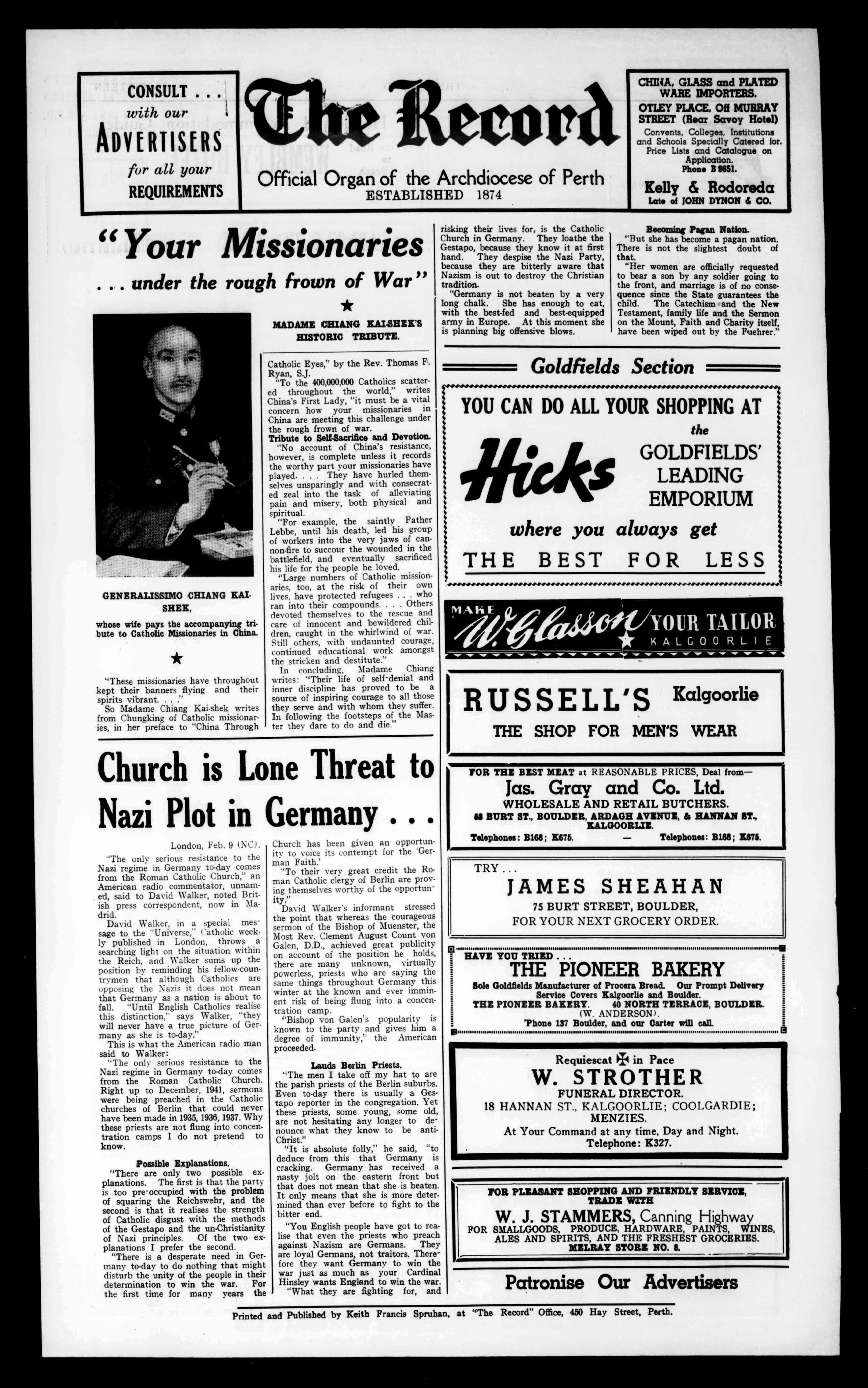
GENERALISSIMOCHIANGKAISHEK, whosewifepaystheaccompanyingtributetoCatholicMissionariesinChina.
"Thesemissionarieshavethroughout kepttheirbannersflyingandtheir spiritsvibrant. ."
SoMadameChiangKai-shekwrites fromChungkingofCatholicmissionaries,inherprefaceto"ChinaThrough
"LargenumbersofCatholicmissionaries,too,attheriskoftheirown lives,haveprotectedrefugees who ranintotheircompounds. Others devotedthemselvestotherescueand careofinnocentandbewilderedchildren,caughtinthewhirlwindofwar. Stillothers,withundauntedcourage, continuededucationalworkamongst thestrickenanddestitute."
Inconcluding,MadameChiang writes:"Theirlifeofself-denialand innerdisciplinehasprovedtohea sourceofinspiringcouragetoallthose theyserveandwithwhomtheysuffer. InfollowingthefootstepsoftheMastertheydaretodoanddie."
London,Feb.9INC.).
"Theonlyseriousresistancetothe NaziregimeinGermanyto-daycomes fromtheRomanCatholicChurch,"an Americanradiocommentator,unnamed,saidtoDavidWalker,notedBritishpresscorrespondent,nowinMadrid.
DavidWalker,inaspecialmessagetothe"Universe,"CatholicweeklypublishedinLondon,throwsa searchinglightonthesituationwithin theReich,andWalkersumsupthe positionbyremindinghisfellow-countrymenthatalthoughCatholicsare opposingtheNazisitdoesnotmean thatGermanyasanationisaboutto fall."UntilEnglishCatholicsrealise thisdistinction,"saysWalker,"they willneverhaveatruepictureofGermanyassheisto-day."
ThisiswhattheAmericanradioman saidtoWalker:
"Theonlyseriousresistancetothe NaziregimeinGermanyto-daycomes fromtheRomanCatholicChurch.
RightuptoDecember,1941,sermons werebeingpreachedintheCatholic churchesofBerlinthatcouldnever havebeenmadein1935,1936,1937.Why thesepriestsarenotflungintoconcentrationcampsIdonotpretendto know.
PossibleExplanations.
"Thereareonlytwopossibleexplanations.Thefirsti,thattheparty istoopre-occupiedwiththeproblem ofsquaringtheReichswehr,andthe secondisthatitrealisesthestrength ofCatholicdisgustwiththemethods oftheGestapoandtheun-Christianity ofNaziprinciples.OfthetwoexplanationsIpreferthesecond.
"ThereisadesperateneedinGermanyto-daytodonothingthatmight disturbtheunityofthepeopleintheir determinationtowinthewar.For thefirsttimeformanyyearsthe
Churchhasbeengivenanopportunitytovoiceitscontemptforthe'GermanFaith.'
"TotheirverygreatcredittheRomanCatholicclergyofBerlinareprovingthemselvesworthyoftheopportunity."
DavidWalker'sinformantstressed thepointthatwhereasthecourageous sermonoftheBishopofMuenster,the MostRev.ClementAugustCountvon Galen,D.D.,achievedgreatpublicity onaccountofthepositionheholds, therearemanyunknown,virtually powerless,priestswhoaresayingthe samethingsthroughoutGermanythis winterattheknownandeverimminentriskofbeingflungintoaconcentrationcamp.
"BishopvonGalen'spopularityis knowntothepartyandgiveshima degreeofimmunity,"theAmerican proceeded.
LaudsBerlinPriests.
"ThemenItakeoffmyhattoare theparishpriestsoftheBerlinsuburbs. Evento-daythereisusuallyaGestaporeporterinthecongregation.Yet thesepriests,someyoung,someold, arenothesitatinganylongertodenouncewhattheyknowtobeantiChrist." "Itisabsolutefolly,"hesaid,"to deducefromthisthatGermanyis cracking.Germanyhasreceiveda nastyjoltontheeasternfrontbut thatdoesnotmeanthatsheisbeaten. Itonlymeansthatsheismoredeterminedthaneverbeforetofighttothe bitterend.
"YouEnglishpeoplehavegottorealisethateventhepriestswhopreach againstNazismareGermans.They areloyalGermans,nottraitors.ThereforetheywantGermans-towinthe warjustasmuchasyourCardinal HinsleywantsEnglandtowinthewar.
"Whattheyarefightingfor,and
BecomingPaganNation. "Butshehasbecomeapagannation. Thereisnottheslightestdoubtof that. "Herwomenareofficiallyrequested tobearasonbyanysoldiergoingto thefront,andmarriageisofnoconsequencesincetheStateguaranteesthe child.TheCatechismandtheNew Testament,familylifeandtheSermon ontheMount,FaithandCharityitself, havebeenwipedoutbytheFuehrer."