
TheBlackMadonnaofParis
ByJohnHannon.IthasbeenacomfortuntilalmostsubmittedtheinfantcommunitytoaintercessionforwomenwithchildandButhemakeshastetosay,inawon acommonplaceoftheFrenchcorres-mitigatedruleofhisownOrder.Howprisoners.Somewhatlater,in1578,St.d,erfulpassageofdescriptiveandim- pondenceofourCatholicjournalsevertrue,bytheby,istheclaimoftheFrancisdeSales,thenastudentinaginativewriting,thatthepietyofthe sincethewarbeganthatParisisnowBretonsingerBottreaux(nowserving,Paris,obtainedfromOurLadyoffaithfularoundtheshrinemakesone displayingquitefreelythatbetterselftheysay,inthetrenches),inhispat-GoodDeliverancehisgreatdeliveranceblindtothedefectsofitspresenthome. ofherswhichmanyofusknewwasrioticandprovincialsong,"Chezfromthetemptationofdespair.Here 'OurLady'sblessingmakesofthis alwaysthere.EventhesecularpapersNous!"thatcharitablewomen,isAlbanIlutler'sspiritedstory,inunlovelyplaceacharmingvillage -thebestofthem-havepublished"Samaritanesses"hecallsthem,arewhichheperhapscallsthestatueachapel.Thosewhoaretheredopray consolingcablegramsofthereligiousespeciallyabundantinBrittany: "picture"asbeingsmallandcoloured: lifeof"laVille-Lumiere"thatwould 'Hischiefresortduringhisstayin withsuchgoodheart!Andthevery OntrouveradesSamaritaines, Pariswastosomechurches,thatespecicostumeofthenuns,sofullofrural neverhavecrossedtheAtlanticfloor Cheznous" memoriesofthefirseBretonoftheir atafairlyhighfeeperwordifthevul- allyofSt.StephendesGrez,asbeingOrder,addsmuchtotheillusionthat garlylime-litmythofaperennially ThenineteenthcenturyLittleSistersoneofthemostretired.HerehemadeoneisfarfromParis,insomehomely "gayParee"werenotwholesomelyob-ofthePoorspringatonce,ofcourse,avowofperpetualchastity,puttingcountrychurch,attendedchieflyby scuredbythesterntruthsofwar.Butintothememory,buttheseventeenthhimsel:underthespecialpatronageofkindlypeasantwomenandtheirmen- therehavealwaysbeengoodpeopleincenturyenclosedBretonnunsofOurtheBlessedVirgin.God,topurifyhisfolk" Paris,andverylargenumbersindeedLadyofGoodDeliverancearenottoheart,permittedathickdarknessin- Hespeaksofthe,sotosay,domestic ofthem.Onlyitwasjustaswelltobeforgotten.FromLamballe,inSt.sensiblytooverspreadhismind,andatendernesswhichtheholyoldstatue haveeyesforthemwhenonewasthere,Anne's"delectableduchy"theyspreadspiritualdrynessandmelancholytoappearsvisiblytoradiateandwhich andfortidingsofthemwhenone'sholi-alloverFrance,wheretheyservehos-overwhelmhim.Heseemed,froma pitals,dispensaries,orphanages,andperfecttranquilityandpeaceofmind,makesOurLadyofGoodDeliverance daywasover.
asisteroftheBlackMadonnasof OfFrenchwritersofgreat,and,asinalsoconductelementaryday-schools.tobealmostbroughttothebrinkofMoulin,Dijon,Bourg,Liesse,Rocama- Coppee'scase,ofconsummateability,Onlinesparallelwiththoseofthedespair.Seizedwiththegreatestter-dour,andChartres. whosebooksborewitnessbeforethelatterPetitesSoeurstheyareservantsrors,hepassednightsanddaysin "Besides,whenyouarekneelingbe- wartotheexistenceandactivitiesofofthepoor.Theirruleisexpressontearsandlamentations,andsufferedforeOurLadyofGoodDeliverance, thenoblerofthetwoParises,therehasthepoint,infact.Itistherelaiddown,morethancanbeconceivedbythoseyoufeeltheutterneedoftryingtobe- beennolacksincethecenturybegan.inthesecondchapter,article6ana4:whohavenotfelttheseverityofsuchcomealittlechildagain,andofpray- Eventhatsombregenius,JorisKarl "Charityforthepooristheendand,interiorconflicts.Thebitternessofhisingtohermorewithyourbeadsthan Huysmans,althoughhehadtoliveasitwere,thesoulofourinstitution.griefthrewhimintoadeepjaundice;withaprayer-book.Lookingwhollya awayfromtheindubitablymodern Ourgreatstudymustbetoover-hecouldneithereat,drink,norsleep.dwellerinGod'sopencountryside,she capitalintheend,learnttoseethecomerepugnancesanddelicacy:letus "AtlastFrancis,beingatprayerinissomuchbesoughtbygoodwomenof twocitiessidebyaide,todiscernreal-nevermanifest,sofarasispossible,thethesamechurchofSt.Stephen,castcandidspeechthatsheisbestusedto isticallytheir"darknessandlight,leastsignofanyhorrorofthemosthiseyesonapictureofOurLady:thisartlessprayers-tothesimplestofsup- ebonandgoldinlaid."Thusinapaperrevoltingsores. Theremustbeawakinghisconfidenceinherinterces-plications. whichhepublishedtheyearofhisamongstusasweetandholyrivalry,sion,heprostratedhimselfonthe "Suchpetitionscreatearoundher,in .death,andwhichmakesverytimelyvyingwithoneanotherinservingground,and,unworthytoaddresstheanycase,asoothing,snug,homelike readingthisyear,hejuxtaposes,withthosesickpersonsfromwhomthereisFatherofallconsolation,beggedthatatmospherewhichmakesthischapel hiswontedpower,thegreatdepart-mosttoendure,whetheronthescoreshewouldbehisadvocate,andprocureexquisite.Inthemorningitiscram- mentstore,theBonMarcheofParis,ofilltemper,orofthenatureofthehimthegracetoloveGodwithhismedwithpeople,andthedeepsilence and-theshrineofthehistoricBlackdisease." wholeheart.ThatverymomentheoftheMassesatthehighandside MadonnaofParis,withpebble-castin Theseinjunctionsaresummedupinfoundhimselfeasedofhisgrief,asofaltarsisbrokenonlybythetinkling theself-sameRuedeSevres! asymbolicceremony,whichleavesnoaheavyweighttakenoffhisheart,andofthebells,andthecrowingofcocks Hefindsthattheconventofthemistakeuponthematterwhatever.hisformerpeaceandtranquilityre-inthepoultry-yardswithout.The DamesofSt.ThomasofVillanova,Whennovicesareadmittedtoprofes-stored,whichheeverafterenjoyed." sanctuaryitselfisnearlyempty,but protectingthesacredimage(socriti-sion,adestitutewomanfromamong Anotherillustriouscanonisedclientthewholechoirofnuns,separatedby calinthestudent-lifeofSt.FrancisthedispensarypatientsembracesthemofOurLadyofGoodDeliveranceinagrillefromtheseatsleftavailable whenCountdeSales)"givesallthisandplacestheespousal-ringonthetheChurchofSt.Stephenwastheforthepublic,isfullyattended.One andoftheRuedeSevresaphysiogfingerofeach,saying,"Remember,greatSt.VincentofPaul,whoismen-seesonlytheirbacks,andaswaying nomyofitsown,likeapiousnookindearsister,thatthouarenowaser-tinnedinhislifeas"spendinglongfieldofwhitecornetteswhichrippleup somegoodandfaithfulpartofthewant-maidenofthepoor." hourr'atherfeet." anddownattheDoxology.Theregu- provinces.""Andyet,"hecontinues, TheConventintheRuedeSevresis "InDaysofOld." larityofthesespotlessflowersis thisquarter,ofoldsoplacidand,asthemother-houseoftheCongregation. OnthefirstofMay(andalsoonthebrokenhereandtherebyduskycabitweredeserted,hasbecomeathrong-"Ifyoupush,"writesHuysmans,'at24thofAugust)asolemnprocessionbage-likegrowths-thebonnetsworn edandbustlingmart!Inmeasureasthefronthalf-gate,whichisalwaysleftusedtostartfromSt.Stephensandbythenovices,whileintherowswhere theBonMarche,whichIfirstknewasajar,youfindyourselfinapavedcoy-wendtosomeparochialchurchinthethelay-sistershavetheirplacesonesees atinystore,hasgrown,ithasattractederedcourt,and,torightoftheglazedcity.Theydidsuchthingswellinthoseenormouslinenhelmets,shapedvery hordesofcustomers,andnowyoulodgetenantedbythetourieres-thedays,andthedetailsarehappilyverylikethecorkbeltsusedatsea,cover- haveajumbledroarofcarriagesandlayportressesanderrand-women-youfullandpleasant. ingthewholeoftheface,andtailing tramways,abreathlessdispatchingofenteracorridorflankingthestreet, Bannersandlightedtorcheswereintolongfichusbehindwhichfallina parcelsandofladies,butifyoucrosswnichleadstothevestibuleofachapel,carriedinabundance;therewas"apointtothewaist. thethresholdofeitherofthesetwoadornedwithstatuesofSt.Michael,St.fineimageofNotre-Dame,surrounded "Thedaygoeson,untilatnightfall, monasteries,allthehurly-burlyvan-Genevieve,and--St.Expedit!Serriedbysunbeamsandangels,"atallcrossaftertheStationsoftheCross,the ishes.Paristhefrivolousisnomore;linesofvotivecandlesburnbefore"with ashaftofwell-workedsilver;"doorsareclosed,andtheBlessedVirgin youareoutinthecountry,milesaway,theseimages,andthewallsareinlaidimagesof"MonsieurSaintPeter,ofofGoodDeliverancerestsfromtoil,to and,whatisstillmoreremarkable,wishex-vcnoinscriptionsandofferingsSaintSebastian,fastenedtoatree,beginagainfirstthingnextmorning, thereareperiodsinthedaywhenthistothemightyArchangel,whichishavingoverhisheadanangelcrown-untiringly-theimportunate,eternal specialaspectandaromaofthepro-natural,andtoSt.Expedit,whichisloghim,"andthesehallowedthingsdearBeggar-Mother!-(l'eternelle vinceandthecloisterbrimsovertolessso.AstothepatronessofParis,in wereborne"eachoneuponalitterQuemandeuse)toasknewblessingsfor thepavementandalongthestreet,thisparticularquarterthereisnotdrapedwithhangingsofwhite,red,newsouls.'Tisanendlesschainwe fromtheinsideofthebuilding." evenoneinscriptiontoher. green,andyellowdamask,onthecompelhertodraw;'tisashamewhen ThustheSisterswhoguardthe Althoughwriting,inthemain,aboutshouldersoftwoyoungmen,garbedwethinkwhatatroublewearetoher! statueof'OurLadyofGoodDeliver-OurLadyofGoodDeliverance,M.inalbsoffinecloth,wellpleated,andWiththeexceptionofthenuns,who ance"conductadispensarywhereIIuysmanscannotmissanopportun-walkingbarefoot." morereadilysucceedinforgetting breadaswellasmedicineisdistribut-ityofsayingawordintheroleof "Andinthefrontofthesewentthethemselves,howmanyofusentreating ed.andthisnaturallyattractsacandidfriend."Thenewdevotiontobeadles,onewearingafull,fineviolethercomeforHersake,andtakeno lamentablequeueoftheblind,theSt.Expedit,"hesays,trulyenough,gown,theotheroneofwhiteandbluethoughtfortheir2ersonalinterests? haltandthemaimed,amongtramps"isbaseduponapun,forheisinvokedcloth,whilethethirdworeoneofblueButlifehasbecomesohard,sodragaswellasthelabouringpoor.Attheonaccountofhisname,thathemayandbuff,andallworefreshflowersinginglyslowofendurance,thatallseem endofthewriter'saccountofdevo-obtainpeoplefavoursexpeditiously."theirhats." attheverylastounceofstrengthand, tiontothestatueitwillbeseenthatThatwasbeforetheHolySeetook OnefeelssurethatCharlesDickens,beforeevengreetingher,plungeheadhedescribesthisadmirableworkofseveremeasuresinNaplesagainsttheinthebenigneryearsoffriendshipwithlongintotheirentreaties,themoment benevolencesasOurBlessedLady'sunauthoriseddevotion,andhadatheCatholicpainter,CharlesonStan-theydrawnigh,tobehealedofill- activityinanintenselycommercialc,,,;ivnewstatuethereremovedfromfield,wouldhaveenjoyedknowinghealth,tobefurnishedwithneeded thoroughfare.Here,however,ishistheCathedral.But,adozenyearsago,thatthedignified"Mounseers"whofol-money,tobeprotectedinadversity. interestingthumbnailsketchofthethecorridorandvestibuleintheRuelowedMr.Bumble'sdignifiedproles-Itisalamentablelitanyofyearnings blessedroutineoftheSistersthem-deSevresweretheParisheadquarterssioninStuarttimes,woreflowersinthatispouredforthwiththeRosary- selves:- ofthisfreakofpietism,adevotionoftheirhatsonMayDay!Buttherever-beads;itisawayoftheindividual derivation,conductednotmanypaces "Samaritanesses."endclergy,morepowertothem,worecrossthateachkneelerpresentsto antfromahistoricalshrineofOur "TheConventoftheLadiesofbt. flowersintheirstoo,andevenwenther;andinthepresenceofallthisun-
ThomasLady,importantinthebiographyofa ofVillanovainvadesParis onebetter,fortheyroundeduptheconsciousegoism,sheendsbysmiling tt imporanSaint. everymorningataboutteno'clock.mostprocession"ingoodlynumbers,wear-sweetly,andvouchsafingtoenact Totheworksofvanityofthemighty AStrangeChapelandaStatue. ingcopesofvelvetandclothofgold"Veronica'spart,andtowipethe mercantilestores,itsneighbours,it Thechapelitse:fhaslittle,ifany,andnotonlywaseachgarlandedstreamingfacesofthosechildrenwhom opposestheWorksofMercy.Aswarmarchitecturalbeauty,havingbeenaroundhisheadgear,but"carriedasheacceptedsogladlyonCalvary." ofsickly,raggedfolkflowsuptobebuiltbyenobscurearchitectatannosegayinhishand"aswell! Inhisfinalsentencestheauthorgives engulfedwithinitsgates,andthet.,..,.sanguishedperiod(18291. Thatwasthebeatifulhey-dayofthealastvividglimpseofthenotablytwo- Sistersdresscuts,reduceswellings "ThesanctuaryisofinconceivableBlackMadonnaofParis.AttheRevolu.foldlifeofthe"gayestofallcapitals withoutoperation,bandagesoreswithugliness,madeworsebytheuseoftion,whentheChurchofSt.Stephenwhichisworkingmoreandmoreon abundantfreshlinen,etc.,thentheirg.assprisms,suchasarenowadayswaslooted,thestatuew'sboughtthesideoftheangels"sincethepre- lucklesspatients,moreattheircase,employedonlyintheadornmentofprivilyfromthemunicipalofficialsbysentwarbegan: allfilepastanofficewindowresemb-provincialconcertandassemblyhalls;apiouslady,theCountessdeCarignan "Atsuchworkasthis(impetration), lingapay-box,wherethecashierisaithasalsoanignoblegaschandelier,Saint-Maurice,andbyherhiddeninissheoccupied,theBlackMadonnaof nun,yetpalerthenthealtar-breadssetswayinglikeaflower-potonthesafety.ArrestedasasuspectafewParis,anditneedsverylittlereflec- sheistrimmingandthebleachedwaxendofanironstem.Itwouldbebe-dayslater,Mme.deCarignanwastiontounderstandwhyshehaschosen candlesstoredaroundher.She,in-neathnotice,architecturallyorother-confinedintheConventoftheOiseauasherabodetheConventofthe steadofreceivinganoffering,giveswise,diditnotpossess,abovetheintheRuedeSevres.whichhadbeenLadiesofSt.ThomasofVillanova.It one.anddistributestoeachadoleofhighaltar,inacrescent-shapedbalda-convertedintoalock-up.Theresheisbecause,whenhonouredunderthe bread." chino,oneofthemostveneratedMa-formedaclosefriendshipwiththenunsinvocation'OurLadyofGoodDeliver- TheSisters,infact,haveforpatrondonnasinParis,OurLadyofGoodofSt.ThomasofVillanova,who,withance,'theBlessedVirginfindsthese anAugustinianmonkofthefifteenthDeliverance,theBlackVirgin." theirSuperior-General,MotherWalshservantsofthepoorahelptoher. centurywhobecameArchbishopof Thehistoryofthisstatue-whichisdeValois,wereherfellow-prisoners.Whatshecannotwelldoherself,quite Valence,andwassurnamed"theAl-notblack,butofdarkcolouredstone,TheymadenovenastogethertoOurliterallyandactually,theydo;she moner"onaccountofthelovehemainlyblueandcheeringlydevotionalLadyofGoodDeliverance,andthedelegatestothemthematerialtasks -i-t,edforbeggarsandtheailing-iscurious.ItsoriginandearliestCommitteeofPublicSafetyforgotallthatarenotforherheavenlyhands. amongthehardworkingpoor.Byde-da'esarenowunknown,butitisfreelyaboutthem.TheyweresetatlargeonThusbytheirintermediarysheis vo,ingtheirlives,accordingly,tothementionedasalreadyfamousquiteOctober4th,1794,andMme.deCarig-enabledtorelievewayfarerswho casualsickpoorandneverfailingearlyinthesixteenthcenturybynanmadeapresentofthestatuetoherknockatherdoorwithoutaskingto mendicantsofthestreetsofamodernchroniclersoftheChurchofS.Stephenprisonfriends.Someveal,rolledby.seeheratall,sickpeopleofthetoiling capitaltheyarefollowinghisexample.deGres(or"desGrez"or"desGrecs"MotherWalshofValoisdied,anditmasses,withoutfaithandwithouta Theircongregationw,sfoundedin-"oftheGreeks,"thatis),thensitu-wasanotherSuperior,MotherSebire,penny,androamingutterlydestitute 16130atLambal:einBrittanybyPeresateinthebanlieue,whitherthepopu-whodemolishedtheancientconventvaerants." ChamoiseauandAngeLeproux,thelac,:ofvariswaswonttobetakeitselfchapelanderectedthepresentbnfld. OurLadyofGoodDeliverancepray latterapriorofAugustinians,whoinpilgrimage,andinvokeOurLady'sing,whichM.Huysmansdoesnotlike.forrrattce,andsueuursetves.
SATURDAY,JANUARY19,1918. L-_ THEW.IL.RECORD. 3
America'sPleaforIrishfreedom
TheHon.JosephMcLaughlin,Congressman-at-Large,fromPennsylvania, defendingtherightoftheUnitedStates tosecurefreedomfortheoldestofthe smallnations,submittedthefollowing jointresolution:-
"JointresolutiondirectingthePresidentandtheSecretaryofSlateto snakesuchrepresentationstoGreat BritainasshallresultintheestablishmentofagovernmentforIrelandsimilartothatinCanada.
"ResolvedbytheSenateandHouse ofRepresentativesoftheUnitedStates ofAmericainCongressassembled, ThatthePresidentandtheSecretary ofStatebe,andarehereby,directedto makesuchrepresentationstoGreat BritainasshallresultintheestablishmentofagovernmentinIrelandsimilartothegovernmentthatnowexists inCanada,withfullrighttoenactsuch legislationaswillpromotetheprosperityofthecountryadequatelydevelop itsresources,andsafeguardtherights, theliberties,andtheinterestsofits people."
TheaddresswasdeliveredonJuly 30th.Itwasthefirstspeechofthe day,Mr.McLaughlinsecuringthefloor byunanimousconsentwhenthesession opened.Theclearandpowerfulvoice ofthespeakerwasheardwithremarkabledistinctnessthroughoutthesplendidhall,penetratingeventothecrowds inthecorridors.ThemembersofCongresswerepresentinunusualnumbers, andtheapplausewasatestimonyof sympathynotonlywiththetenorof thespeech-notonlyatributetothe formofexpressionandthevigourof thethought-butthereweremanywho wereimpressedwiththeextraordinary factthattherepresentativeofagreat AmericancommonwealthwasoutliningapolicyofAmericanstatesmanshipandpleadingforthefreedomof hisownnativeland.Theaddresswas inpartasfollows:"Noobservingmancanbeblindto theeventsinIreland;totheunrest amongtheIrishracethroughoutthe world;tothedishearteningeffectof therefusaloftheBritishGovernment toputintoimmediateoperationthat limitedHomeRuleActnowonthe StatuteBook;andtothealienationof millionsofmenwhoareloyaltothe causeoffreedombyheritageandeducation,butwhoremainmoreorless inactivebecausefreedomisdeniedto thelandoftheirfathers.
"Inaworldwarsuchaswehaveenteredthesmallestfactormaydecide forvictoryordefeat.Itisaphenomenonofthiswarthattherulersofevery countryinthecombativealliancesare evervigilantregardingtheconditions existingintherealmsoftheirallies. Wearenowasmuchconcernedinthe internalaffairsofGreatBritainaswe areintheoperationoftheprocessof lawandorderinCaliforniaorinthe Philippines.Ithasbeenstatedwith vehementlogicthatthefatesofGreat BritainandAmericainthepresent warareboundtogetherinacommon peril.Anyweaknesswhichdevelops amongtheinhabitantsofonecountry isamenacetothesafetyoftheother.
Irishmen.BeforetheCongressofthe UnitedStatesdeclaredforthefreedom ofsmallnationscountlessmillionsof theIrishracehadregisteredavowto liveanddieforthefreedomoftheir ownsmallnation.WhenthisGovernnientchosethepathofwarandannouncedtotheworldthatthesword wouldnotbesheatheduntilBelgium, Serbia,Roumania,andPolandwere free,canyounotunderstandhowthe millionsoftheIrishraceonthiscontinentwerestruckwithanunexpected wonder?Canyounotimagine-at leastvaguely-thechillattheheart,the shatteringofahope,whenyearingeyes failedtofindthenameofIreland amongthesmallnationsthatwereto beredeemed?
"Itisnolightthingforapowerful racetosurrenderitsdream.Yetthe Irishracewillgladlyandtrustingly surrenderthedreamofeightcenturies inordertoinsurethesafetyofAmerica. Butthespiritthatwonindependence inalongandbloodyrevolution,the sympathythathasunitedthepeople ofIrelandandthepeopleofAmerica formorethanahundredandfifty years,cannotbeignoredeveninthe faceofacrisisthatdividesandallbut paralysestheworld.
"TheprinciplesoftheIrishraceare notwrittenona'scrapofpaper.'They cannotbetornfromtheheartofthe race.Theracecannotbeaskedto perish,toconsumeitssoul,topileits treasuresonthealtarofexpediency, andtolightthesacrificialpyreofits libertytowinfreedomofothernations endentirelydisregarditsown.
"Thereisunswervingloyaltyatthis momentineverymanandwomanof Jrishbloodwhoowesallegiancetothis Governmentandtoitsflag.Butthere isalsoalongingthatthisGovernment shallwielditsmightyinfluence-speak itsfatefulwords-forIrishliberties. Thosewhosefathershavebeensooften betrayedaresearchingtheirsoulsand askingifonceagaintheraceistolose itscherisheddreamoffreedom.They lookbackoverthepastandreflectwith bitternessthatonthefieldsofFlenders,ontheplainsofFrance,onthe hillsofAustria,theyoungmenofIrelandhavelaiddowntheirlives-but notforIreland.Theyaskinthesilence oftheirownhearts,'Arewealwaysto dieandnevertogaintheobjectofour devotion?(Applause.)
"LetthisCongressaskthatIreland, too,shallbefreeasBelgium,asMontenegro,asSerbia,asRoumania,as Poland,asGreece.Thenwillachange comeoverthefaceofthewar.Acheer willrisethatwillbeheardaroundthe world,becauseitwillcomefromthe lipsoftheIrishraceineveryland whereconstitutionaljusticeholdsits place,andfromthelipsofeverypeople whowishtobefree.

"ThequestionofIreland,therefore, isnotmerelyanEnglishquestion.Itis aninternationalquestion.TheUnited Stateshasasmuchrighttoshareinthe settlementofthisquestionasEngland hasTheworldapparentlyisinprocess ofreorganisation,andtheIrishpeople formapowerfulpartofthisworld.The fateofIrelandcanbefixedinthis House,andthecauseofAmericarenderedaservicefargreaterthancanbe measuredbythewiseststatesmanof ourtime. "IthasbeensaidthatAmericawill besavedonthefieldsofFrance,just asPitt,theEarlofChatham,said,after Braddock'sdefeat,thathewouldwin AmericaonthesandsofGermany.The axiomthat'historyrepeatsitself'is presentedoncemoretothemindina mostpowerfulmanner,fornowthe causeoffreedomcanbesavedonthe hillsofIreland.ThisHouse,whichhas declaredthatthefreedomofsmall nationswasathingworthgoingtowar for,canthrilltheworldwithanewdeclarationofindependence.Andjustas thecreditofhistoryhasdeclaredthat theliberationoftheAmericanColonies inspiredtheworldtoestablishthemagnificentsystemofrepublicangovernment,soalsowilltheliberationofIrelandfortifythefaithofallfreepeople intheeternaljusticeoftherightofa peopletogovernthemselves.
"Thewinningofthewarisamighty dutythatarousesAmerica.TheIrish racehasprepareditselfforthisduty, andgraspstheweaponsforthecombat. Butcannotthatracerightlyesk,beforeitssonsgoforthtodie,'Maynot thisbloodbeshedalsoforIrleand?'
For800yearstheIrishracehas
cherishedthedreamoffreedom.Before thePresidentoftheUnitedStates utteredthosefatefulwordsonthe seconddayoflastApril.theyhadbeen uttered nearlyailtygenerationsof
"Itis,however,notaquestionofconciliatingtheIrishrace.Thelives,the fortunes,thehonourofthatraceere pledgedtoAmerica.Butthereare morepowerfulbondsoffealtythan pledges.Therearemorebindingties thanthoseofbirth,thanoathsofallegiance,thanconvictionsofthejustice ofacause.Touchthedeepemotionsof arace,andthatracewillfeeladeathlessprideinhavingbeengiventheopportunityofshowingitsdevotionto thecausetowhichthecountryis pledged.(Applause.)
"Notonlyinthemartsofcommerce, inthegreatcities,overthewide plainsofAmericawithsuchadeclarationbehailedwithdelight,butacross theborderintoCanada,overthebush c.fAustralia,theveldtsofSouth Africa,onthehillsandvalesofIreland,andinthemillsandminesof GreatBritainherself,willthegladtidingsgothattheAmericanCongress,towardwhichtheyearninggazeofthe Irishraceisnowturned,hasspoken thewordsofdestiny,andthatIreland shallbeaself-governingnation.(Applause.)
"TheactionthatthisHouseisasked totakehasbeentakenbyothergovernmentsinothercrises.Itwouldbe possibletoenumerateinstancesfrom therecordsofothernations.Butitis worthwhilerecallingatthistimethe actionofthisGovernmentinthecase ofTexasin1847,andoftheBritish GovernmentinthecaseofGreecein 1822Inbothofthesecasesthehandof apowerfulnationwasextendedtoa smallnationstrugglingforitsfreedom."
Telephone,£3373.
S.
4 THEW.A.RECORD. SATURDAY,JANUARY19,1918.
BEECROFT
ROIEBBYROAD,IMAM) ONLYPRIMEFRESHKrum,
gr11.11
oftheLoftiest Heights, JNIONBEER. Pt.M11YR1-10FEReo. PICTUREFRAMERSANDMOUNTCUTTEPS,PRINTSELLERS, ANDARTISTS'COLOURMEN. ImportersofWinsorandNewton'sArtate'Materials,PictureMouldings. Pictures,Cardboard,Glass,Etc.TradeSupplied. 659HAYSTREET,PERTH. Phone1011 .111111MNIMMIW 1111n111111114Pkt-triir WCARTITY'S'HOTEL BARRACKST.,PERTH Airs.S.E.McCXRT1-111,Proprietress CENTRALHOTELI PERTH RIGHTOPPOSITERAILWAYSTATION. DANIELMULCAHY, CHASE.GOSDEN, Proprietor. Manager. THOMASJOYCE (LateofFoyandGibson's) Isnowfullyestablishedinthe GroceryandProvisionBusiness latelycarriedonbyMessrsPRESSBROS.,CORNERHAYLID PIERSTREETS,PERTH,andhasmade ExtensiveAlterations WhichbringsitintoLinewiththeMostUp-to-DateintheCity. Customersmayrelyonfinding Joyce'sGroceryandProvisionBusiness AnUp-to-DateCityEstablishmentinEquipmentandPrices. SPECIALATTENTIONANDPROMPTDELIVERYWILLBEGIVEN TOORDERS. gZALlinfiA2 BYDRINKING SEDNA THE11/NCOFTONICS:1 Refreshing, 4if Nourishing, Si/MU/a/inc& i L invigoratng. buildsupmuscle&Nerve. SVeAgents 0NST. BsE-p.FREMANTLE. AdvanceAustralia LANDOFTHEGOLDENWATTLE. BUY"MADEINAUSTRALIA"GOODS. SEPPELTS AUSTRALIANWINES,BRANDIES,GINS,LIQUEURS,BITTERS, CORDIALS,andVINEGARS. KEEPYOURMONEYCIRCULATINGINYOUROWNLAND,
RUTC}181R. 181
MPAT
Thetopmostpinnic

People,PlacesandThings
THEVOICEOFTHEFLAG.
ComposedbyChasD.South,of SantaClara,California,andreadby theHon.J.J.Kelley,atArroyo Grande,whentheKnightsofColumbus celebratedthe423thanniversaryofthe discoveryofAmerica.
VoiceoftheFlag,inmyheartIhear theeHeartheepleadforthislandofmine!
VoiceoftheFlag,letmyownvoice echoEchoandthrillwiththyspeech divine!
"IamthesouloftheregnantPeople! Iamtheirdreamoftheyearstobe!
IamtheirguerdonofIndepentlence amtheirrightontheneutralsea
"Iamthesymbolofhumanjustice!
IamthesignofthePeople'swill!
IamtheflameoftheLampofFreedom, Beaconinglandsintheshadowstill!
"Borninthegloryofstainlesshonour, IamtheStandardthatmakesyou free!
Allthatourland,initslavishbounty, Gaveye,itgaveasaloanfromme!
"Yewhohavepledgedmelifeandfortune, Never,Iween,shallIfindyouslack!
Yewhohavegottenmynoblesttreasures, Say,inmyneed,willyougivethem back?
"Aye,yewillgiveasyourfathersgave meGiveasyourmothers,whogave theirall1
Giveofyourbest,insublimedevotion, Give,thatyourbannermaynever fall!
amthedoomofthesceptredtyrant!
Iamthespreadofthewingsofmorn HeraldingDayoftheSunofJustice
Overaworldtopeacere-born-
"Peaceofanall-pervadingconscience, Peacethatmelteththesavage swordPeaceonearth,astheFatherwilleth, PeacetriumphantinChrist,the Lord!"
What(asksanEnglishcontemporary)havetheLloydGeorgeMinistry doneinIreland?TheyfoundthecountryshowingthefruitsoftheMaxwell regime.Thesentimentsofthepeople hadbeenaltered.Angeranddistrust hadtakentheplaceofgoodwill.But theproceedingswhichhavetaken placeundertheruleofMr.Dukeand SirBryanMahonhaveproducedanotherchange.Theangeranddistrust havebeendeepenedandextended.Not withinlivingmemoryhasIrelandbem intheconditiontowhichithasnow beenbrought.Thearrestsandcourtmartialtrials,thesentencesofimprisonment,theordersgivenforhard labour,theattemptstodegrademen ofhighideals,culminatinginthetreatmentwhichThomasAsheandother prisonershavehadtoendure-allthis hasfilledtheheartsofIrishmenwith indignation,andthedemonstrationsin connectionwiththedeathandfuneral ofThomasAsheattesthowprofoundly themassesofthepopulationare moved.TheagentsoftheGovernment havenocommissiontog9adandirritatetheIrishanddrivethemalong theroadtorebellion.Thepeopleof thiscountry(England)havenospapathvwithapolicyofthatkind, whichisnotonlyadangerousfailure, butexposesthemtothechargeof hypocrisy.Theydetestitasbeingutterlyopposedtothebestinterestsof GreatBritainandIreland.
Germanevangelicalparsons,ofthe MartinLuthertype,aredoingmoreto keepthefiresofbitternessburningin theheartsofGermanirreconciIames, endgenerallyintheheartsoftheGer-
manpeople,thanallthevagariesof speechandpostureemployedbythe Kaisersincethetramplingdownof BelgiumandtheadvanceofPrussianismonthefairfieldsofFrance.Possiblytheyread"thewritingonthe wall,"andcanseefinis"inbigcapitals makingadeadendtotheirLutheran dreamsofworld-widedominion.
InaletterpublishedinanOctober issueoftheLondon"DailyNews,"Mr. ClementShorterwrites:"Ifyourreaderswereawareoftheinnumerablesentences,not,beingpromulgatedby courts-martialinIreland they wouldknowthatIrelandisto-daybeinggovernedunderthemostviolent formofPrussianismandeveryattempt isbeingmadebyacertainascendancy gangtofomentrebellion,therebydestroyingtheeffectsoftheConvention." Mr.Shorterhasevidentlybeenreading intheIrishpapersthereportsofthe inquestonThomasAsheandsuch detailsofthecourt-martialtrialsas areallowedtoappear.Heaskswhythe "DailyNews"doesnotfranklydeclare thatitwillhavenopartinthistyranny,andcallfortheimmediateresignationofMr.Duke,who,whateverelse hemaybe,is"obviouslyamostincompetentChiefSecretaryatthis crisis."Andhesuggeststhatifthere mustbeaToryChiefSecretaryit shouldbeSirMarkSykes,whohasat leastshownasympatheticspirittowardsIreland.Resignationisnotthe wordthatsuitsthecase.Mr.Dukeand theothermenwhotaketheleading partsinworkingthepresentsystemof GovernmentinIrelanddeserveseverer punishmentthandismissalfromtheir posts.ThataGovernmentwhichis engagedinanarmedstruggleforliberty shouldcarryoutthepolicytheyare enforcinginIrelandisaninconsistency whichbringsworld-wideridiculeand contemptonthenameofGreatBritain.
Adolfvo._Harnackhaslatelybeen writingontheReformation,andinhis remarkshesaysthatLutheristhe "father"oftheGermans,forinhim they"recognisetheprimalstampaccordingtowhichGodhasmadethem."
LutherwasagenuineProtestantleader, inasmuchashedivestedreligionof everythingtendingtobindittodogmaticrules.Theheresiarch,according towordswrittenbyDollingerin1872, whenhewasunderexcommunication, andquotedbyHarnach,"leftuponthe Germanstheimperishableimpression ofhissoul."Wecanwellbelieveso.His foulabuseofthePope,thethreats whichheusedagainsthimandallthe incidentsofhisconflictwiththeHoly Seewereofatypeofwhichthedeeds ofmodernGermansremindus.These deeds,however,donotindicatethat theChristianityoftheGermanfollow,ersofLutherisinaccordwiththe teachingofChrist.Ratherarethey evidencethatProtestantism,"madein Germany,"isnotacreedthattendsto theelevationofthehumanmind.The GermanLutheransinthewarhave donehonourneithertoreligionnor civilisation.Theirspiritualfatherappearstohaveallowedfreeplayforthe gratificationoftheiroldbarbarian instincts.
TheRev.GeorgeNigelGresley,who latelyresignedthelivingofShenfield, Essex,wasreceivedintotheCatholic ChurchatDownsideonSt.Bartholimew'sDay,byDomEthelbertHorne. MrGresleywaseducatedatClifton andatSelwynCollege,Cambridge,and aftergoingtotheTheologicalCollege atWells,servedascuratefirstatDarlastonandthenatTamworth.Thenhe becamevicarofHorsleyWoodhouse, Derbyshire,andafterthatrectorof Shenfield,Essex.MrGresleycomesof averyoldfamilywhichhasownedland atDrakelowinDerbyshiresincethe Conquest.
SergeantG.Dodd,SouthStaffordshireregiment,hasjustbeenawarded theBelgianGoldCross(militaire)by
theKingoftheBelgians.Sergeant DoddwasanoldboyofSt.Patrick's, Wolverhampton,andjoinedontheoutbreakofthewarin1914.Hispromotion hasbeenveryrapid;heisthepossessor ofthreedistincthonourswonbydistinguishedvalouronthefieldsofFlanders-theD.C.M.,theMilitaryMedal, and,hislatestacquisition,theGold Cross.Informationhasbeensentto thesergeant'swifethattheBelgian Crosshasbeensenttothedepot,Lichfield,toawaitherhusband'sreturn. Nearlyahundredoftheyoungmen ofSt.Mary'sparish,Sunderland,England,havemadethesupremesacrifice inthepr,:sentwar.Itisafinerecord ofloyaltytotheflagforthatCatholic parish.
Awar-shrineerectedintheprecincts ofSt.Alban'sChurch,NorthFinchiey, wasrecentlyunveiledbytheLord MayorofLondon,andblessedand dedicatedbytheBishopofLydda. TheLordMayor,whocameinstate, wasreceivedbytheRector,Father Sellon,andinspectedadetachmentof theMiddlesexVolunteers,whowere drawnupinfrontofthechurch.
AprivatereturnedfromWittenberg Camphasgivenapressrepresentative thefollowingdescriptionofthehorribletreatmentoftheprisoners:"The camplifewasterrible.TheRussians werebeingtiedupalmostdailyfornothingatall.Theywerestrappedtoa postwiththeirhandstiedabovetheir heads.Abrickwasplacedforthemto standon,andthenkickedawaywhen theywerefastened,andsotheywere hangingbythewrists.Therewasalso barbedwireonthepost,sothatif theywriggledtheycutthemselves. TheydidnotdothiswiththeEnglish, buttheyusedtosetwolfdogsonus, verysavagebeasts,andweusedto jumponourbedstoescapethem.The Germansseemedtotakegreatpleasure inthesebarbarities.Ourmendidnot alwaystakethesethingslyingdown, buttheyhadtosufferforanyeffortat retaliation.OnChristmasDay,1915, PrivateHolt,oftheLoyalNorthLancashires,receivedfifteenbayonet woundsandaswordwound,becausehe threwtwoGermansonthebarbedwire forsettingdogsonhim.Hesuffered shamefully,anditwasnotexpected thathewouldlive,buthewasstill aliveatWittenbergwhenIleft.CaptainVidalandCaptainPriestleysaved hislifebytheirtreatment."
AmanwoundedintheBattleof MeninRoadtoldarepresentativeof the"WestminsterGazetts"thefollowingincident:"Therewasoneparticular funnyincident.Oneofourbombers,a manwhobeforethewarmadealiving byrunningacocoanutshy,hada grandtime.Almostweighteddown withbombs,hestoodupatveryclose rangetoapill-boxwhichwasholding out,andinashowman'svoiceyelled: 'Now,then,who'llhaveago?Three ballsapenny,andeverynutfullo' ini'k!'Hemadeaprettymessofthat pillbox,foroneofhisbombsfoundits markdirectlyonthemachine-gunslit."
AddressingaUnitariangatheringat Montreal,Mr.Taft,ex-Presidentofthe UnitedStates,spokestronglyagainst presentpeaceproposals:"Theoperationofapeaceagreementmustdepend ontreatystipulationswhichwillbe uselessifthepresentmilitarycasteremainsincontrolinGermany.Theaim oftheAlliesistoendamilitaryand foreignpolicyinGermanywhichmaintainsnavalandmilitarymachineswith hair-triggerpreparationforuseagainst herneighbours.ThiscanonlybeeffectedbyconqueringGermany,andopeningtheeyesoftheGermanpeopleto thehideousfutilityofthecoursepursuedbyStheirTilitary.dynasti."
AtameetingoftheNewYorkMerchants'Association,Mr.OttoH.Kahn said:"Thisappallingconflictwhichhas beendrenchingtheworldwithbloodis notamerefightofoneormorepeoples againstoneormoreotherpeoples.It goesfardeeper.Itsharplydividesthe
soulandconscienceoftheworld.It transcends-vastlytheboundsofracial allegiance.Itisethicallyfundamental. Indeterminingone'sattitudetowardit, thetimehasgoneby-ifiteverwaswhenraceandbloodandinherited affiliationswerepermittedtocount.
1knowthatneitherGermany,northis country,northerestoftheworld,can returntohappinessandpeaceand fruitfullabouruntilitshallhavebeen mademanifest,totherulerswhobear theblood-guiltforthiswantonwar, andtothemisinformedandmisguided peoples,thatthespiritwhichunchaineditcannotprevail,thatthehateful doctrinesandmethodsinpursuanceof which,andincompliancewithwhichit isconducted,arerejectedwithabhorrencebythecivilisedworld,andthat theoverweeningambitionswhichit wasmeanttoservecanneverbe achieved."
Thebiggestconstructivejobsince thebuildingofthePanamaCanal,the taskoffittingtogetherafleetofmerchantmenthatistosaveEuropefrom hunger,andpossiblystarvation,has .beenturnedovertoaChicagomanEdwardN.Hurley.EdwardN.Hurley waspicked,probably,becauseofhis recordofachievement.Heisnota politician.Heisabusinessman.Itis notsomanyyearsagothathewassittingonthethrottlesideofanengine cabfortheChicago,Burlington,and Quincyrailroad.Fromthispositionhe steppedintoasalesman'sjobforthe UnitedStatesMetallicPackingCompany,ofwhichconcernhesoonbecame manager.Forthisenterpriseheoriginatedanddevelopedthepneumatictool industryoftheUnitedStatesand Europe.Heistheexecutiveheadand principalstockholderofseveralmanufacturingandindustrialconcernsthat have'sprungfromthedevelopmentof thisindustry.Hisinterests,however, aresodiversifiedthattheyinclude bankingandrailroadingaswell,and havesobroadenedhisoutlookthathis reportsonhisdifferentstudiesoftrade conditionsandcreditsareregardedas someofthemostauthoritativecontributionstotheliteratureofAmerican commerce.Mr.Hurleyhaslongbeen anadvocateofanenormousmerchant marinefortheUnitedStatestoopen upneglectedtradechannels.Andnow hehasbeenassignedtobuildit.
Anotheradditiontothebusinessexecutivesenlistedintheserviceofthe RedCrossduringthewarwasmade whenJohnD.Ryan,presidentofthe AnacondaCopperCompany,wasappointedasdirectorgeneralofmilitary relief.Mr.Ryanwillhavesupervision ofthebureauofmedicalservice,the bureauofnursingservice,andthe bureauofsupplies.Themaintenanceof 50ormorebasehospitalswillbeone ofthelargetaskswhichwillbelaid immediatelybeforehim.Hehasthe positionofdirectorgeneralofmilitary relief,andwillbeinchargeofallrelief workforthefightingforces.Mr.Ryan succeedsCol.JeffersonR.Kean,who hasbeenorderedtotakecommandof the160UnitedStatesarmyambulance sectionsinthewartheatre.Themilitaryrelief.departmentwasorganised byColonelKeanin1916,andinthe pastfewmonthshehasbuiltup throughitagreatmachineforrelief workatthefront.Itwasbecauseof hisintimateknowledgeofthiswork thatthewardepartmentmadehim commanderofthearmyambulance sections,whichwerefirsttocarrythe Americanflagtothefightinglines.
SHINE'S
TheCatholicArtandBookDepot, CornerPierandMurraystreets,Par* AgoodassortmentofCatholicr* quirementsinstock.SuperiorAltai Candles,purebee:wax,inthreeqtuili ties.SuperiorPureIncense.Charcoal andallAltarrequisites.Allleading Catholicpapersstocked.
CriterionHotel,Perth,Reg.Harrison,proprietor.SwanBeeronly. That'sall
HibernianAustralasianCatholicBenefitSociety.
(ApprovedbytheHierarchyoftheChurchandRegisteredundertheFriendlySocieties'ActsofAustralasia).
ItsWatchwordsare:RELIGION,NATIONALITY,CATHOLICITY,BENEVOLENCE.
ItisessentiallyIrishandCatholic,anditSpeciallyAppealstoCatholics(malesandfemales),demandingtheir SUPPORTandALLEGIANCE.Brancheswillbeestablishedinsal-LOCALITYonreceiptbytheDISTRICTSECRETARYofarequisitionSIGNEDbyTENPERSONS,aanetienedbythePRIESTofthe DISTRICT,thenamesandagesofintendingmembersbeingfullysetoutintherequisition. 550BRANCHESthroughouttheCommonwealthandNewZealand;50.000memberssad£300483inl'unds. FinancialhelpandMedicalAssistanceineasesofSicknessGuaranteed. NOENTRANCEFEESFORBENEFITMEMBERS. MODERATECONTRIBUTIONS
LOANSADVANCEDINLARGEORSMALLAMOUNTSONAPPROVEDCITYANDSUBURBANFill. HOLDPROPERTIES. FullparticularsonapplicationtoJ.J.O'FARRELL,DistrictSecretary,HibernianHall,Murraystreet,Perth.
SATURDAY,JANUARY19,1918. THEW.A.RECORD. 5

TheChristmasCandle
ByR.Lane-Poole.ItwasmyfirstvisittoIreland,and IfeltIwasinastrangeland,among strangepeople.Averypleasant strangepeopleImustadmit,butvery differenttotheEnglishIhadjustleft. ThesoftIrishvoicesandtheirpleasant easymannersandlackofhurrydelightedme.Iwasgoingtospend ChristmasintheWest,andaswegot nearthetownofGalwaylittlelights appearedinthecottagewindows,and snowbegantofall. Thetrainstopped,andIgotoutand stoodontheplatformlookingabout formyaunt,whowastomeetme.just asIwasbeginningtofeelanxious,a littleoldcountryman,wearingabig friezecoatandcarryingawhipinhis hand,cametowardsme,andtouching hishat,said,"AreyouMissAlice?"I saidIwas."I'mMikeO'Flanery;'tis welcomeyouare.Themistressisthat putaboutthatshecouldn'tgetinto meetyouherself,butsomethingor othercroppedup,andshegaveme thisbitofnotefortobidyouwelcome totheoldplace.I'mtowastenotime: them'smeorders,andtobringyouout atworst.Where'syourtraps,girleen?" Andoffwenttheoldfellowtofindmy luggage.Hetreatedtheporterwithno respect,andorderedhimaboutina mostmasterfulway,andinavery shorttimehehat;collectedallmy luggage,andhadwrappedmeupina bigovercoat,andIfollowedhimout tothecar.Itdidstrikeusethathe wasthemostcurious-lookingchauffeurIhadeverseen-car-Inearly fainted-motorcar-notatall-an Irishjauntingcar-Iwouldnotown tipthatIhadnotthevaguestideaof howtositonone,muchlessgetupon toit.However,Igotup,orratherwas pushedup.andwithbothhandsholdingtightlyon,andmyfeetalmost tiedupinrugs,Iprayedhardthatit wouldnotlastlong.Itwasbitterly cold,andthelightsnowblewonto ourfaces.ItwasrealChristmasweather,andafterwehadgallopedround manycornerswithouteitherofus beingflungoff.Igotmoreconfidence,andlookedaboutme.Inoticed thateverywindowwepassedhada lightedcandlesetrightinthewindow, andIhadneverinmylifeseensuch bigcandles.AfterawhileIaskedMike whattheywere."Christmascandles, tobesure,"hereplied."Someofthem wouldbetwoandtwoandahalffeet high,andcostacoupleofshillings maybe.Sure,they'refortheBlessed Virgin.Aye,nowyoudon'ttellme theyneverlighttheminEngland. Well,well.It'saqueerplaceisEnglandbyallaccounts.It'slikethiswith usinIreland.Well-you'dhaveheard oftheBlessedVirginoverthere,I suppose?"IsaidthatIhad."Well, you'drememberthewayshewas trampingtheroadsinallweathers, beggingfoodandlodgingfromstrangers,sometimesgettingitandmore timesnot.Herfeetworetoblisters, andshethattiredwiththechildthat wascomingonherthatshewasfitto dropbytheroadside-Godhelpher. "Well,youmindthewayshecame toavillageforalltheworldlikethis, justuponChristmastime,andnota soulinitthatwouldshowabitofpity orkindnesstoher,andhowshesether eyesonatreepackedwithcherries. Aye,theyhadChristmasinthoselands inthesummertime,andhowsheasked themaninthegardentogiveherbut ahandfulofthem.Itwaslikealongingthatcameoverher,andheseeing thewayshewas,oughttohavethat muchdecencyinhimtogiveherwhat sheasked.Butherefusedher,andtold hertogetonwithher.Andfaith, didn'tabigbranchofthetreebend downofitselfandletherpickwhat shehadamindto.Soonshewent,and St.Josephtrudgingalongsideofher, anditwasdark,andnotalighttobe seenanywhere,andshefeelingfaintlike,knockedatonedoorafteranother,andaskedthemtoletherin. Butnotaoneofthemwouldlether restornightheplace,andintheend didn'ttheycometoasortofweeshy hotellike,buttheysaidtheyhadnot room,andthattheywerefullupwith people.Soinshewenttoabarnthat washandy,andlaydownonanold pileofstrawbesidethecows,andthere thelittlebabywasborn.Andtheones thatrefusedherthefoodandroom musthavebeenwildwithrageandfit totearthemselveswhentheysawthe KingsandtheWiseMenandeveryone comingtoworshipthebaby,andgold andsilverandthelikeofpresentsas wasneverseenbefore. "Well-whenthatstorywastold here,everyonesaidthelikeofthat wouldneverhappeninIreland.and notaChristmasEvewouldpacebut ineverycottageacandlewouldbe lightedandpu':inthewindowtoshine awelcomelike,shouldtheBlessed Virginevercomeagaincoatduskit Lt,/lights,tilatthe babbyofthehousedoesbeliftedup withthematchinitshand,anditdoes
lightthecandle,andinthemorning everyfireandlightinthehousedoes belitfromit;andnoonedoesblow itout;itdoesjustdieoutofitself like.Aye,many'sthetimeIseethem lastfourdays. "Hereweare,"hecried,aswedrove uptoabighousewithacandleburninginawindow."Godblessthemistress!Shehasn'tforgottolighther candleeither,Isee."
IfIrelandWhereSetfree
SOMEYANKEEOPINIONS.
InitsissueofOctober29,the"DetroitFreePress"statedthatsomeof theLondonnewspapersindisgustwith Irelandsuggestthattheis.andbe abandonedtoitsfateandallowedto goitsownway.Theimaginativeeditor ofthe"FreePress"says:-
"Supposetheiradviceweretaken. Erinwouldbecomeanindependent country.Itnolongerwouldbeapart oftheBritishEmpire,subjecttothe restrictionsofsuchaconnectionandin enjoymentoftheadvantagesandprotectionresultingfromit.Itwouldrate asaneutral,withdistinctlypernicious pro-Germanleanings."
Now,whataretheadvantagesand protectionresultingtoIrelandfromthe 13ritiehconnection?Martiallawand overtaxation?Irelandwouldgladly foregosuch"advantages"and"protection."Andwhysupposethatfreeand independentIrelandwouldhave"distinctivelyperniciouspro-Germanleanings,"oranyproGermanleanings whatever?Exceptintheanti-Irish Englishpress,andintheNorthcliffecontrolledAmericanpress,theIrish arenotaccusedofbeingpro-German. TheSinnFeinsloganis"Irelandfor theIrish!WewantneitherKingnor Kaiser!"
"Underthecircumstances,"continuesthe"FreePress"editorial,"the Allieswouldbeobligedtotreatthe newsovereignStateastheywould treatanyothercountryindangerous commercewiththeenemy.Thecountrywouldbesubjectedtoembargoand blockade.Greatcarewouldbetaken toisolateitfromitspatron,Berlin. NorcouldtheEntentebeexpectedto giveIrelandandfavouredcommercial treatmentotherwise.TheEntente wouldofnecessitytakecareofitsown peoplefirstandofitsfriendsamong theneutralsnext,andthenifany foodstuffswereleftoverIrelandmight getashare.Butitislikelytherewould belittleleftover.""Underthecircumstances."Whatcircumstances?Purely imaginarycircumstances.Nosuchcircumstanceswouldarise;fortheIrish aredependinguponthemselvesalone. SinnFeissmeans"Ourselves."They desireneitheraLondonnoraBerlin patron.
WhydoestheDetroiteditorsuppose thatIrelandwouldbeinneedoffoodstuff?SheishelpingtofeedEngland now,besidesfeedingalargeEnglish standingarmywithinhergates-an armyquartereduponherforsuppression.Isitlikely,then,thatwithonly herselftomaintainshewouldneedassistancefromoutside?Economiststell usthatIrelandiscapableofsupportingapopulationof20,000,000.Her presentpopulationisonlyaboutonefifthofthat.Inthegreatfamine period-'46-'47-thepopulationofIrelandwastwicewhatitisto-day,and yet,historianstellus,sheshipped (compulsoritly,ofcourse),morefood toEnglandduringthatterribletime thanwouldhavebeennecessaryforthe maintenanceofherfamishingpeople. "Theirbusinesswouldberuined," contendstheMichiganwiseacre.Their business!Englandruinedthebusiness oftheIrishpeoplelongago.Isthatnot oneoftheirmostcogentreasonsfor desiringtoseverconnectionswith England?Theirmostnourishing tradeswerekilled,onebyone,by EnglishParliamentaryenactments,and theircommercewasruinedinthesame way."AndtheGermanywhichthey hadchosenastheirfriendinplaceof GreatBritainwouldbequiteunable tohelpthem."NocountrycouldreplaceGreatBritainasIreland'sfriend, forGreatBritainhasneverbeena friendtoIreland,butforsevenlong centuriesherrelentlessandimplacable enemy.
"Possiblythequickestwaytobring thedupesofSinnFeintotheirsenses wouldbetoallowIreland'sfreedom." Maybe"thedupesofSinnFein"would prefertobestoodupagainstawalland shot,ortobeputintoadungeonand torturedtodeath.TheIrishmanwho wouldpreferfreedomtothebeneficent EnglishDora(DefenceoftheRealm Act),whichdoesnotallowhimthe libertyofaslave,mustbeeasilyduped. NowondertheDublinCastleauthoritie.:aredealingsoruthlesslywiththe SinnFeiners-themiscreantswhoare leadingthethoughtless,credulous irishpeopleawayfromthegreen ofbondagetothehighbarehillsof freedom.
A THEW.A.RECORD. SATURDAY,JANUARY19,1918.
MOANACAFE HAYSTREETPERTH, forAfternoonTeaand`'..:;ipere, 3eentifullyAppointedannTaete!o,: Served. .101011¢111171117111110. RINGUP TEL.CENTRAL265(DayorNight), PerallkindsofPLUNIfiiNG,GAO FITTINGS,andGALVAN1Slitli IRONWORK. MarkDurm 1aa-334WELLINOYJNST.,PERTH, Lik:ensettPlumberandDrainer TotheMetropolitanWaterSupply, sewerageandDrainageDepartment. DairyingUtensils,Baths,BathHeaters, Tanks,andWindmillsMade, andRepaired. WebbWebb -1=40///1414114.04.1=11114104/ PHOTOGRAPHERS, ART DEAL ERS andPICTUREFRAMERS. EnlargementsfromOldandFadedPhotographs.Out-doorWorkseri BridalGroupsaSpecialty. 616HAYST.,PERTH(NearBarrackSt.) -14.1,441010:1000,041011101(440 11,011111, RemingtonT.)pewriters THEMACHINEFORTHEOFFICEANDSCHOOL. WritetousforCataloguesandsamplesofthefamous"Remtico" TypewriterSupplies. CarefullynoteourOnlyLocalAddressE.C.STOTT&Company 45 ST. GEORGE'S TERRACE, PERTH. 115/.1)O?CICC 1150NET Itr.L1GeneralBankingBusiness .he p.n..., Int Cal.andTimmsofAustralia..London,Thdararth(SalisburyPlain"an.,Rabaul. eskiemath...evetoadstoanddraft.drnaoa,foreignWats*dlro.t. r latilsasfrot,attdsad,ollevtael.Lettereofcredit-manedtoan,partalthe nasktussodElam:ireB11610(1letever,du....r1rtioutransactedwythietheGaritass, wealth,UnitedSthgdemsadPros4Neves.si,ovotsopened.Literateyard duddepoelLsAdvance.,wadeWC..approvedrectniura SavingsBankDepartment 111111wInnurn Atall@ranches.andover Interestat20, "'"2600t. P*II:PC:rat*:rap.ten;"500 IIIITEASTATItadnrraatiAlionsa.!Atlas'DankFinials' SW,.row,01.44.104r Aim.MX ,YMitO LLB.. .40.4.0(0smisommaa....ramoomunese04.4110 Telephone,41.2384. MissKyle CorsetSpecialist BairdsArcade AfewSpeciallyReducedLineaareas follow:ReducingModels 15/6 Warner'sCorsets,from 7/11 GreyBeltedCorsets 8/11 P.D.Corsets 11/6,12/6,15/6 Nautilas,from 3/11 Brassieres(allsizes)instockandmade toOrder. I'ja ABDOMINALBELTSMADETO ORDER. TheChoice01Men WhoKnowIlls GOODDRESSERSknowCOGAN BROS.'HATS-Buythemseasonafter Season. THEYNEVERHADABETTER CHOICETHANWEOFFERTO-DAY INOURUNBROKENSTOCKS. MENWHOFOLLOWSTYLEWILL NOTWAITFORASECOND ANNOUNCEMENT. Cogantiros YSl?f,FT. 1
MRS.KEOUG11 CATERER, 152Stirlingstreet,Perth. CateringPlantalwaysonHire. PicnicsandBallscateredfor shortestnoi,.
LocalandGeneral.
Ameetingofrepresentativesofthe variousCatholicsocieties,topromote theholdingofSt.Patrick'sDaycelebrations,willbeheldintheParochial Hall,Archbishop'sPalace,onWednesdayeveningnext,at8p.m.Every parishshouldbewellrepresentedon theoccasion.
a
Mr.A.F.Cuddihy,ex-MayorofAlbany,whorecentlyunderwentan operationforappendicitisatSt.John bfGodHospital,Subiaco,hisfriends willbepleasedtohear,isprogressing veryfavourably,andhopestobe amongstthemagaininafortnight.
Mr.andMrs.JamesSheehan,of BoulderarespendingaholidayatCottesloe,andarestayingattheCottesloe Hotel.Othervisitorsweobservedin thatlocalityareMr.JamesMaxwell,of Perth,andMr.Carlyle,ofCometVale.
Mrs.MichaelO'Donnell,ofBurt street,Boulder,widowofthelateCaptainO'Donnell,theheroofthefamous militaryinquiry,hasreceivedthefollowingmessagefromtheirMajestiesthe KingandQueen:"TheKingand Queenhaveheardwithdeepregret thatthedeathofyourhusbandinthe serviceofhiscountryisnowpresumed tohavetakenplaceonoraboutApril 11,1917.TheirMajestiessympathise withyouinyoursorrow,andassure youthatduringthelongmonthsofuncertaintytheirthoughtshavebeencon. stantlywithyouandthosewhohave beencalledupontoenduretheexceptionalburdenofanxiety."
Thereisnomoredeservedlypopular coupleinbreezyCottesloethanMr. ndMrs.Lennox,proprietorsofthe MunicipalBaths.Theyarealwaysready toobligeandtocontributeasfaras possibletomakeyourdipinthebriny thoroughlyenjoyable.
Agoodbattlerforthe"Record"in theHighgateparishisMasterJack Dullard.Couldn'tthe-Record"find otherswithalikedisinterestedspirit intheotherparishestodo"hisbit"for theCatholicpaper?Themanagement willgladlywelcomesuchhelp.
Duringlastweektwoprominent VictoriaParkparishioners,inthepersonsofMrs.andMissMurray,leftfor theEasternStatesonholidaybent. Previoustoherdeparture,MissMurray wastherecipientofavaledictorygatheringintheLibraryHallbyhernumerousfriends,whenexpressionsfora pleasantsojourninVictoriaweremade forbothtrippers. -
TheRev.BrotherMcTeagueleaves bytheDimboolato-dayforthedistant cityofBrisbane.BrotherMcTeaguefor thepastsevenyearshaslaboured strenuouslyandsuccessfullyinthe ChristianBrothers'CollegesatKalgoorlieandFremantle,andalsospent sometimeatSt.Patrick'sSchoolin Perth.ManyyearsagoQueenslandwas thesceneofhislabours,andofall'his oldpupilsinthatgreatdemocratic State,themostillustriousistheMost Rev.Dr.Duhig,ArchbishopofBrisbane.WewishtheRev.Brothermany goldenyearsoflabourunderthejurisdictionofthemetropolitantowhomit mustbeapeculiarsatisfactionforhim topayhisfealty.
HibernianSociety
StaroftheSeaBranch,No.136, Fremantle.

a ApromisingyoungCelt-Mr.Paddy O'Keeffe-veryfavourablyknown amongstthe"boys"onthecoast,has takenoverthecontroloftheGreat WesternHotelinWilliamstreet,and hasmadeextensiverearrangements whichshouldcommandthepatronage ofvisitorstothecitywhoneedup-todateaccommodationatareasonable figure.''Paddy"ispracticallyanewarri:alfromthe"olddart,"andwillbe gladtogivea"Caedmillefailthe"toall whoretainthebiasandamemoryof theoldsod.Hisbrother,Mr.Martin O'Keeffe,isaprominentfactorinthe NewIrelandrevival,andhasmore thanoncereceivedtheattentionsof D.O.R.A.,thefriendofMr.Duke,the IrishChiefSecretary.Paddywillmake anidealhost,andwithhisup-to-date knowledgeofwhattherequirementsof awell-equippedandconductedhotel shouldbe,patronsmaybeassuredof goodvaluefortheirmoney.Readhis advertisementonanotherpage,and givehimalook-inatyourearliest.
Mr.JamesWalsh,ofMeekatharra, andformerlyofVictoriaPark,isdown fromtheMurchisonforaspellonthe coast.Duringhisholidayherenewed acquaintancewithmanyoldPark friends.
OnThursdayevening,January9th, theChildrenofMarygaveamusical eveninginthebigschoolroom,theoccasionbeingthefeastdayofRev. MotherVeronica.Theschoolhadbeen prettilyarrangedasadrawing-room, andpresentedaverygayappearance. Musicalitemsweregivenbymembers ofthesodality,andwereverymuch enjoyed,oneofthemostpleasing itemsbeingarecitationinFrenchby oneofthevisitors.Amusicalromance competition,arrangedbythepresident, wascompetedfor,andwasthecause ofmuchfun,MotherVeronicaproving herselfthewinner,havingguessedthe correctanswersto23questionsoutof 25.FatherO'Donnell,whokindlyattended,madeawell-deservedpresents. tion,andinashortbuthumourous speech,askedRev.Mothertoaccept fromthemembersofthesodalitya beautifulsilkumbrellawithsilver mountings,asasmalltokenoftheir loveandesteem,andinrecognitionof hermanykindactsanddevotedattentiontotheirspiritualwelfareduring thepastyear.Daintyrefreshmentsand cooldrinkswerethenhandedround, andaverypleasanteveningbrought toaclose.
HILDACORBETT,B.A.(SisterMary Bertrand,oftheConventofMercy, VictoriaSquare.
Rev.BrotherBrennan,ofC.B.C., Kalgoorlie,hasbeentransferredtoSt. Patrick'sSchool,Fremantle,andisto besucceededbytheRev.Brother White,whoisalreadyonthestaffof theKalgoorlieCollege.Wordhasbeen receivedinKalgoorliethatthestaffof thecollegeistobestrengthenedby theadditionofRev.BrotherMolloy, oneofthefoundersoftheChristian Brothers'CommunityinNewYork. ThereverendgentlemanalsohadexperienceoftheBrothers'schoolson theEnglishMission,andhastaughtin twoStatesoftheCommonwealth.His comingtoKalgoorliesynchroniseswith thearrangementsofthePrincipal,Rev. BrotherDaly,foracompletescience courseforstudentswhodesireit.
Onthe14thinst.,intheParochial Hall,theabovebranchmetforits usualfortnightlymeeting,whenBro.T. J.Alfordpresided.Allofficerswere present.SickpaywaspassedforpaymenttoBro.Lance-CorporalJ.P. Kenny,whohasbeenwoundedonthe Ypresfront.Bro.J.Doyledeclaredon thesickfund.Theminuteswereconfirmedasread.AtthisstagetheDistrictOfficersarrivedandwerecordially welcomedbythepresident.Numerous smallamountswerepassedforpayment.'Correspondenceincludedaletter fromtheFremantlebranchofthe U.I.L.askingthebranch'sco-operation atapreliminarymeetingconvenedfor Tuesday,the15th,toconsidertheadvisabilityofholdingFremantlecelebrationsonSt.Patrick'sDay.The executiveofficerswereappointedto representthebranch.ItwasunanimouslydecidedtopresenttoMrs.McCloskey,thesecretary'swife,thesetof fursrecentlywonbythebranchinthe FoundlingHomeartunion.Themeetingclosedat8.20andasocialwasthen heldtomakeanumberofpresentations.Bro.T.J.Alfordtookthechair, andthetoastof"ThePopeandKing" wasformallyhonoured.Bro.Jas.S. Dowling,P.N.S.,insubmittingthe toastof"TheDistrictBoard,"paida goldentributetotheenergyandsincerityoftheBoard,andconcludedin theseterms:Hecongratulatedtheexecutiveofficersonretainingabsolute controlovertheirhall,whichthrough thepatronageacordeditbytheLabour PartyandtheIrishandCatholicsocietieshadbecomethehallofdemocrcay, theIrishParliamentHouseofWestern Australia.HewasproudthattheDistrictBoardrefusedtopartwiththeir heritageinfavouroftheC.Y.M.Sof Perth,aCatholicsocietywhich,while decliningasuggestiontowithdrawa certainmotionofappreciation,yetby amajorityor12votesdeclinedtoassociateitselfwiththegreatestprelate oftheage,HisGraceArchbishop Mannix.Atleastoneopponentofthis patriotmessageisthesamewhosome 12yearsagoendeavouredtodisassociatetheCatholicyoungmenofFremantlefromcelebratingSt.Patrick's Day.Wasitanywonder;then,before itwastoolate,thattheU.I.L.,Fremantle,hadcalledameetingforthe followingeveninginthehallsoasto rousethesoulofNationalIrelandat leastatthegatewayofWesternAustraliainconnectionwithSt.Patrick's Day-Bros.A.A.Moffat,D.P.,J.J. O'Farrell,D.S.,T.J.Maher,D.T.,J. Nugent,R.T.,andB.McCloskey,D.G., responded.Bro.JohnHealy,P.P.,was thenpresentedwithapast-president's certificate;Bro.L.Brady,onactive service,withthesocietyemblem medal,andMrs.McCloskeywithaset offurs,theD.P.,Bro.Moffat,making thepresentations.Bros.Healy,J.Brady andB.McCloskysuitablyresponded. Bro.J.Bradyproposedthetoastof "TheVisitors,"whichwasrespondedto byMessrsD.P.Fitzgerald(F.C.I.and CB.O.B.A.),JoeMonaghanandJ.W. O'Brien(U.I.L.),andSisterK.Brady (Ladies).Bro.J.J.O'Farrell,D.S.,in proposingthetoastof"TheStarofthe Sea,H.A.C.B.S.,"deliveredaspirited andhighlycomplimentaryoration,reviewingthecareerofthebranchright downtothepresentday.Hetookadvantageoftheoccasiontoalsocomplimentthejuvenilebranch,whichhe consideredthebestintheState,and alsotheladies'branch.Bro.T.J. AlfordandB.McCloskeyresponded. Mr.JoeMonaghanproposedthetoast of"TheChairman,"whichwasenthusiasticallyhonoured.Theproceedings terminatedsometimeafter11o'clock withthesingingof"GodSaveIreland."
Theattentionofmembersofthe VictoriaParkHibernianSocietyis calledtoanannouncementinthis issuerequestingthemtobeinattendanceataspecialmeetingonTuesday eveningnext,whenanelectionofofficers willtakeplaceandthefinalarrangementsfortheannualpicniconSunday, February3rd,willalsobedecided upon.
Saysan"UncleSam"exchange:Some menaregettingoutofarmyservicefor defectivevisionwhocanseeabeer signwiththenakedeyeatadistance oftwomiles.
St.Patrick'sBranch,No.142. Theusualfortnightlymeetingofthe abovebranchtookplaceintheHibernianHallonThursday,10thJanuary, thepresident(Bro.T.J.Hynes)peesidingoverafairattendanceofmembers,includingthevice-president, treasurer,secretary,warden,and guardian.Thesickvisitorsreported thatBros.CurtisandMurphywere stillonthesicklist,whilethesecretary reportedthathehadreceivedcertificatesfrouBros.McPheeandHastie. Correspondencewasreceivedfrom ClontarfOrphanage,GlendaloughOrphanage,St.Vincent'sFoundlingHome andtheHomeoftheGoodShepherd, thankingthebranchforitsdonationto theirChristmasCheerFund.Itwas decidedtocallaspecialmeetingofthe ;vetodiscussthejuvenilequestion.Thesecretaryproducedabalancesheetoftheeuchreparties
SATURDAY,JANUARY19,1918. TILE Z.RECORD. 7 p
heldtowardstheendoflastyear.Thebalance. sheetshowedanetprofitof£45s.The receiptsfortheeveningamountedto £133s3d.Thenextmeetingwillbe heldonThursday,January24th,inthe HibernianHallat8pm. BEDFORDHOTEL MURRAYSTREET. ThoroughlyRenovatedThroughout. SplendidAccommodationforCountry Visitors. TARIFFMODERATE. GEORGEAUBURN, Proprietor. OATES&Co. CoalMerchants 40DYERSTREET,WESTPERTH. AgentsforHowardSmith'sAlNewcastleCoal,ColliCoal,Charcoal,etc SpecialquotesfortruckIota.Dry JarrahBlocks,12s6dperload. Telephone1101. HARRYDEMOULIN (LateGovernmentRailways), MOTOROARPROPRIETOR. Car209,AvailableDayorNight. 192ST.GEORGE'STERRACE. WeddingPartiesandPicnicsa Specialty. Phone:MotorGarage,A3490. Telephone395. HOLDWAY&Co. LICENSEDSEWERAGEPLUMBERS(CERTIFICATED). GASFITTERSandSHEETMETAL WORKERS. ATrialSolicited. 40-44PIERST.,PERTH. IyyouwantaComfortableMotorCu, Ringup BILLHOUSE CarP.777,RailwayMotorRank. 'Phone,1910. M.J.O'KEEFE BUTOHEE, 246Carrstreet,Leedscrille. PrimeBeef,Mutton,Pork,Lamb alwaysonhand.CornedBeefand SmallGoodsaSpecialty.AllMeat keptinCoolStorageonthePremises. Phone,A3297. Phone1244. WestandGarrett WINDMILLEXPERTS,PLUMBERS, ETC. OurSpecialties:PumpingEngines, Windmills,HydraulicRams,Tanks, BoresandPumps. NotetheAddress: ICLAKESTREET,PERTH. GRANDTheatre Direction T.Coombe Saturday,19thJanuary, EnidBennettin "They'reOff." Wednesday,23rdJanuary, AliceJoycein "TheFetteredWoman." SpecialOrchestrelleMusicatall Sessions. MAJESTIC MONDAY, ThePhantomSecret THURSDAY, God'sCrucible SUNDAY, ThePiper'sPrice BrandNewtoPerth.
ConventofMercy,VictoriaSquare ResultsoftheSchools,1917
UniversityofWesternAustralia.
HildaCorbett(Universitystudent) completedhercourseforB.A.degree: EnglishI.,II.,III.,LatinI.,FrenchI., II.,GreekI.,II.,mathematicsI.,logic andphychologyI.,educationI
GeorginaCooper(Universitystud- ent):EnglishI.,II.,FrenchI.,II.,mathematicsI.,LatinI.,towardsB.A. degree.
JuniorCertificate. KathleenChine:Englishliterature, French,Latin,Greek,mathematics, Englishhistory.
Grade,III.:EvelynYoung,Kathleen Young,RomaMoseley,NonnaMcMaster.
GradeII.:ThelmaScott,Doreen Morris.
TrainingCollegeExamination.
EvelynYoung,JuliaHenry,Jessie Johnson,NancyWalsh. ShorthandExamination.
Elementary:PearlPerry,firstplace; EllaRyan,ClareMcNamara,.Eileen Trehey,BeatriceFletcher.
Intermediate:MayCullen,firstplace.
Young,GracieSmith,EinmieHerrington.
SeniorPianoforte:ThelmaScott (honours),GracieSmith(honoursI. KathleenO'Connor,DoreenD'Arcy.
SeniorHarmony:NellieBarrett (honours,winneroflocalgoldmedal).
HigherDivisionPianoforte:Doreen Morris,WinnieMooney,Kathleen Byrne(violin). IntermediateViolin:MugiKayser (honours,winneroflocalgoldmedal), LuluMoylan,ThomasHolmes. IntermediatePianoforte:Maggie
UrsulaPerry,AileenO'Callaghan;sing- ing:IvyLaughton,AnnaBelis. ElementaryPianoforte:Kathleen O'Brien(distinction),EileenFarrell "(distinction),FredaTraine,MaryDe- vine,KathleenO'Callaghan.
PreparatoryPianoforte:Maggie
Young ours),(honours),BryceJelly(honDorothyThomson(honours), MaryJohnstone(honours),IreneStancliff(honours),BerwinRees

ThelmaScott:Englishliterature, French,Latin,Greek,mathematics, Englishhistory.
DoreenMorris:Englishliterature,French,Latin.mathematics,English history.
NonnaMcMaster:Englishliterature,French,Latin,mathematics.
RomaMoseley:Englishliterature,French,Latin,mathematics.
EvelynYoung:Englishliterature. French,mathematics,Englishhistory.
KathleenYoung:Mathematics. AllianceFrancaiseExamination.
GradeIV.:OliveWebster,firstplace, winneroffirstprize;MaryJohnstone, honours.thirdplace;DorisFitzgerald, honours;SheilaMcKeown,honours; KittyMcBride,honours;EllaMosely, honours;MaggieNickoll,honours: AliceCowley,honours
MusicResults.
LicentiatePianoforte,L.T.C.L.:Lulu Moylan,EvelynHoare.
AssociatePianoforte,A.T.C.L.:Effie McDonald,MugiKayser,DosieCarrington.
ArtofTeachingandHigherRudi-ments:LuluMoylan,EffieMcDonald. MugiKayser,EvelynHoare,rudiments.
AdvancedViolin:EmmieHerrington.
HigherLocalPianoforte:AliceJohnson(honours),DorothyCleal,Kathleen Clune,MarjorieCottrell,BerylPlummer. rington,Higher'LocalHarmony:EmmieHerDosieCarrington.
IntermediateLocalCentre:Gracie Smith(singing),KathleenDunn(vio- lin).
LocalCentreRudiments:Kathleen
Niehkoll,BerthaSanders.Josephine Cunningham,RoseWilliams,Doris Gosnells,MaggieLeahy,ElvieEvans, GladysLeggett.
IntermediateHarmony:Winnie Davis(honours),MollieO'Dea(honours),JosephineCunningham(honours),HopeBregenzer.
LowerDivisionPianoforte:Sheila :McKeown,WinnieDavis,DorisBoIle, MaggieTreen.
AdvancedJuniorTheory:Doreen D'Arcy(honours),UrsulaPerry.
JuniorTheory:MaggieNicholl(honours),KathleenO'Callaghan(honours), AileenO'Callaghan(honours),Nora. D'Arcy(honours),PearlHeany.
JuniorPianoforte:MollieMoylan (honours),EileenO'Dea(honours),Nora D'Arcy(honours),TineKayser,Dorris O'Connell,GertyMoss,KathleenHill,
MIKEW.A.RECORD. SATURDAY,JANUARY19,1918.
(honours), WinnieDarlington(honours),Hebe Wallace(honours),ValmaiBrewer. PrimaryPianoforte:MaryHehir (distinction),NinaGorman,Daisy ResultsoftheAugusttheoryexam-inationnotyettohand. ClassesreassembleTuesday,February 5th,1918. DAVIES-FRANKLINCYCLEAND MOTORAGENCY, 178-180Williamstreet,Perth. WholesaleandRetailDirectImporters. CyclesBuilttoOrder.MotorandCycle RepairsaSpecialty.LargeStocksof MotorAccessories.Go-cartsTyred, etc.TelephoneA3281. 0.S.BURTON,Proprietor. CriterionHotel,Perth,Reg.Harrison.proprietor.SwanBeeronly. That'sall. Padbury'sStores,Limited GUILDFORD,MIDLANDJUNCTIONandMOORA Merchants,GeneralImportersandUniversalProviders THERESIDENTSOFGUILDFORD,MIDLAND,ANDSURROUNDINGDISTRICTSAREOFFEREDTHEBESTGOODSATTHELOWEST PRICES. NowDisplaying NewSeason'sfloods. generalDrapery. BootsandShoes
SATURDAY,JANUARY19,1918.
SportsandPastimes
(By"Wattle.")
CRICKET. Saturday'sResults.
WestPerth,218andtwofor100(declared).defeatedSubiaco-Leederville, 134andsixfor133,by84onfirstinnings.
NorthPerth,130andninefor155 (declared),defeatedClaremont,67and 68,outrightby150runs. w . PerformancesofNote.
Batting:Thompson(N.P.),54;Edmondson(W.P.)47notout;T.Howard (S.L.),47;Healy(S.L.),27and44not out.
Bowling:Hodge(C1.),fivefor31; Shuttleworth(N.P.),fourfor18.
Batv.BaIL
OnSaturdaylast29wicketsfellfor 504runs-anaverageofalittleover17 perwicket.
securedbyEdmondson,threefor53, Hogue,onefor30,Strickland,one-for 23,Peake,onefor8.
NorthPerthv.Claremont. Fromonefor25,Northsprogressed toninefor155,whentheinningswas closed,Thompson,54,wasscorer-inchief.Thisisthebestscoreputupby thisplayer.Heplayedcarefulcricket throughout.Johnson16,Menkins13, Randell13,Christian10,and"Mr.Sundries"22,allreacheddoublefigures. Hodge,fivefor31,didwellwiththe ball.Banks,twofor38,andRemington, twofor47,securedtheremainingwmkets.Claremontwasset218towin,a taskthatprovedaltogethertoomuch forthem,asthelastwicketfellwith theboardshowingthepoortotalof68. Rowe,19,headedthepoll.Hill,10,was theonlyotherplayeronthesideto securedoublefigures.Shuttlewotth, fourfor18,andChristian,fourfor47, bowledunchanged.Claremontwonby 150runs.
To-day'sGames. NorthPerthvWestPerth,at Loton's. EastPerthv.Claremont,atSubiaco.
WestPerthv.Subiaco-Leederville. Whenplaywasresumedontime, Howardwasconspicuousbyhisab sence,andsoforfeitedhisrightto carryonhisinnings.Heputinanappearanceafterthegamehadcommenced,andtheSubiacoskipperaskedpermissionforhimtocompletehisinnings,arequestthatwasrightlyrefused.Thetallyfromtheprevious Saturdaywasfourfor61,andthiswas increasedto134beforethelastwicket fell.Healytop-scoredwith27.Hewas somewhatlucky,givingacoupleofunacceptedchances.Heisamostconsistentrun-getterthisseasonforaplayer whohaslittlechanceofpractice.He hitonesixandonefour.Inessayinga lustydriveoftEdmondson,hemistimedtheball,andwascaughtoutby Brennan.Carrahitup20inquicktime, andhisefforthelpedthetotaltoassumerespectableproportions.Hegot twofoursandremainednotout.Edmondsonagaindidwellwiththeball, securingtheaverageoffivefor58off 104balls.Gameaftergamethisplayer comesoutwithgoodfigures.Hisslow legbreaks,mixedwithanoccasional fastone,anda"slow"thatcomes straightthrough,troublesthebestof them.Strickland,twofor15,alsoperformedwell.Veryard,onefor12,and Hogue,onefor24accountedforthe otherwickets. WestPerthopenedwithEdmondson andDiamond.Withthescoreat3,DiamondtouchedoneofReardon'sfast ones,andBryant,fieldingdeepslip, tookasplendidcatch.Clarkefilledthe vacantcrease,andplayedthebowling confidently.HeandEdmondsoncarriedthetotalto40,whenClarkemissed aneasyonefromLehman,andwas cleanbowled.Hehadbattedsoundly for24,includingtwofoursandonesix, astraightdriveoffLehman.SawjoinedEdmondson.,andthispaircarried thetotalto100,andwerestilltogether whentheclosurewasapplied.Edmondson,51.gaveoneofhisold-timedisplays.Hescoredmostofhisrunson thelegside;indeed,thereisnoplayer inthegamethatcultivatesthelegplay ashedoes.Anythingatallhavingthe semblanceofalegballreceivedscant courtesyfromhisbat.Hekepttheball alongthegrass,andhitfourfours.Saw, 19,playedausefulinnings.Heisa youngplayerwhohitsveryhard,and inadditionhasagoodvarietyof strokesathiscommand.Reardontook onefor19andLehmanonefor26. Requiring184towinendeighty minutesinwhichtoaccomplishthe taskthevisitorswerecontenttoplay thegameandnotattempttogetthe runssetthem.BryantandHoward openedtothebowlingofHogueand Strickland.Bryantopenedwithafour, playedthenextball,andthenhitthe nextforasix,playedthenextbackto thebowler,andhitthefinalballfor one,bringinghimoppositeStrickland, whogotinasplendidballandclean bowledhim,thuscuttingshortwhat promisedtobeafineinnings,onefor 13.HowardwasjoinedbyWalker,and thispartnershiprealised36runs. Walker,when14,waswellcaughtby StricklandoffEdmondson.Theoutgoingbatsmanhadplayedsteady cricket,butopenedoutonacoupleof looseones,gettingonefourandone six.Healyfollowed,andwithHoward added42runsbeforeHowardskied oneoffEdmondsonandDiamondacceptedthechance.Hehadmade47by forcefulcricket,hittingsixfoursand twosixes.Atpresentheisbattingat thetopofhisform,anditisagreat pityhearrivedtoolatetocontinuehis firstinningseffort.Carra,0,andMcKenzie1,bothretiredstumped,the resultoffineworkbyEvers,whokept wicketsexceptionallywell.Atcallof tjmethescorewassixfor133,with Tharnard2andHealy44,bothnotout. fIe:lybattedashedidinthefirstinnings-atrifleuppishthroughout,but itwasaninningsinterspersedwith manyfineshots.Thewicketswere
CatholicCathedral,Kilkenny,andProfessorofMusicatSt.Kieran'sCollege, Kilkenny,wasarrestedrecentlyashe wasleavinghishousetogotoMass.No definitechargewasmade,thepolice actingunderadirectionreceivedfrom themilitaryauthorities.HewassubsequentlytakentoOldcastleInternment Camp,CountyMeath,byapoliceescort.
TwoDublinboyswerefined20seach forconveyingcarrierpigeonsina basketcontrarytotheRealmActalong apublicroad.
MuchsatisfactionisfeltinGalway thatCaptainGeorgeLindsey,R.A.M.C., hasbeenawardedtheM.C.TheM.C. hasalsobeenobtainedbyCapt.Ivoe O'Sullivan,Killarney,brotherofMr. JohnO'Sullivan,managerLabourExchange,Limerick,whosebrother,Rev. FatherO'Sullivan,waskilledwhileattendingtohisdutiesasArmyChaplain.
NewsfromIreland
TwomembersoftheIrishParty,Mr. WilliamFiled,M.P.,andMr.J.T. Donovan,M.P.,havebeeninstrumental insavinganimportantDublinindustryfromshipwreck.Thefirmof MichaelHeld,proprietorsofthesheet metalandgalvanisingworks,Upper Kevinstreet,hadbeensentencedto compulsorywinding-upbytheBoard ofTrade.TheControllerhadalready goneintopossession,andavaluable localindustrywasinperil.Thematter was-takeninhandbyMr.Fieldand Mr.Donovan,whofoughtthequestion toothandnail,untilfinallytheBoard ofTradewereinducedtoreversetheir decision,andthebusinessofthefirm, theonlyoneofitskindinIreland,is toproceed.Mr.Held,itappears,was internedasaGerman,buthisinterest intheconcernwastakenoverbyIrishmen,whosuddenlyfoundthmselves facedwiththeruinofalltheirhopes. TheyappealedtoMr.FieldandMr. Donovantousetheirinfluencetosave theconcern,andtheresultisasstated.
Thoughintheheartofoneofthe besttillagedistrictsofIrelandthe GuardiansoftheBorrisokaneUnion failedforthesecondoccasiontogeta contractortosupplysixgallonsofmilk daily.Asalastresortitwasdecidedto splitthecontractamonganumberof personsiftheywouldagreetosupply twogallonsdaily.
C.Y.M.Society
Ameetingofthesocietywasheldin St.Patrick'sSchoolonThursday, January9th,whenthepresident(Mr. J.Tully)wasinthechairandafair attendanceofmembers. Thearrangementsforthepicnic, whichistobeheldonSundaynext, January20th,arewellinhand,andit ishopedthatthemembersofthe societywillavailthemselvesofthe opportunityofaday'souting.Aspreviouslyannouncedinthispaper,boats willleaveBarrackstreetjettyat11 o'clockand11.15.Ticketsarenow availablefromthesecretaryofthe socialcommittee. Atthenextgeneralmeetingmembersarerequestedtoattendingood numbers,asthebusinessoftheeveningwillbeveryimportant,viz.,the considerationofthefollowingrules: Subscriptions,liabilitiesofmembers, andoffice-bearers.
SpeakingtoaSinnFeinmeetingat Swinford,Mr.EoinMacNeillaskedthe peopletoputtotheleadersoftheIrish Partythequestion:"Isittherightof Irelandtobeasfreeasanyothernationintheworld?"Mr.Dillondarenot answer"No,"buttoldthemthatwas notpractical,whichwasaslaveattitude.liewasnottheretodenythe IrishParty'sservicesinthepast.If thePartywantedgratitude,givethem gratitude."Putupstatuestothem," saidthespeaker,"butdon'tletthem standinthewayofIreland'sliberty." Oneofthereasonswhysomepeople wereanxiousforageneralelectionwas thattheydidnotwanttowaituntil therewasuniversalsuffrageinIreland, whentheIrishPartywouldnothave theghostofashadowofachanceof returningonemember. Hedeclaredthathestoodthereasan IrishRepublican.Theywerenotaskingthepeopletosetthemupasbosses orplacetheminpositionandpower. Hehadnoloveforit-hewouldrather beworkinginDublinamonghisstudentsthanspeakingonpublicplatforms. Itwasnotforloveofnotorietythat menlikedeValeraandArthurGriffith hadcomeforward.WhenIrishfreedom wa,sestablishedtheycouldputMr. Devlinbackinpower.Hehadbeenfor yearsacompanionofThomasAshe, whosedeath,cruelandinhumanasit was,stillwasworthyofaChristianand anIrishman. HavingreadAshe'slastpoemforthe meeting,Mr.MacNeillsaidthosepeople withthesoulsandvoicesofslaveschallengedhim.WherewasheinEaster week?Hewasnotafraidofthechallenge.Itwasnosecretthathedidhis besttopreventtherisingofEaster week.Itwassaidthathavingdonehis besttopreventithehadnorightto comeforwardtoclaimcreditforit. Theywereperfectlyrightinthat.But hedidclaimthecreditofitforIreland. Hestooduptopayhistributetothe menwhodiedinEasterweek,andthe menwhofought.Heknewtheywent out,knowingtheywenttothesacrifice,asThomasAshewentothissacrificeknowing"therageandhate,"the humiliatiolithathewastoundergo.
A.f.farmerBenefit
FamilyGrocerandProvision Merchant, 398ROKEBYROAD.alifilL1100. (NearNicholsonRoad), Goodsearefullypeeked.Fasaillill
Joseph's
YORKST.,SOUTHPERTH. ConductedbytheSistersofAL
ThisBoardingSchoolissituatedle oneofthemostattractiveandhealthy suburbsofPerth,andcommandsa delightfulviewoftheSwanRiverand City.Theviewfromtheupperportion ofthebuildingisoneofthefinestand mustpicturesque.Thegroundsare ample,andwelllaidout.
Fordelightfulsituation,beautiful scenery,andhealthyclimate,Mt.St. Joseph'sstandsunrivalled. Thecourseofstudyembracesallthe branchesofathoroughEnglisheducetion,Mathematics,Elocution,Physical Culture,Drawing,Painting,Music,and Needlework.
Specialfacilitiesareofferedtopupils desirousoffollowingacommercial courseinStenography,Typewriting. andBookkeeping.
PupilsarepreparedfortheUniversity.CommercialandMusicalExaminations.
ThehealthandcomfortofthechildTenconfidedtothemarecarefullyattendedtobytheSisters. Forfurtherparticularsapplytothe SISTERSUPERIOR, Mt.St.Joseph'sConvent, SouthPerth.
Tel.
"SocietyotSt.VincentdePaul,Western Australia"(3acorporated)
SubscriptionsreceivedfromtheundermentionedbranchesoftheH.A.C.B. SocietyfortestimonialtoBro.A.E. Farmer:-St.Patrick'sbranch,Perth, £22s;MirrorofJustice,Bunbury,lOs 6d;St.Mary's,Kalgoorlie,£22s;All Hallows,Boulder,£2lOs6d;St. Joseph's,Northam,£1;St.Kevin's, Subiaco,£2;St.Brigid's,WestPerth, £1018s;St.Malachi's,Highgate,£2; St.FrancisXavier's,Geraldton,£22s; St.Joachim's,VictoriaPark,£3;St. LawrenceO'Toole's,Maylands,£213s 3d;St.Brendan's,Katanning,£1;St. Anne's,NorthFremantle,£210s;CathedralLadies,Perth,£1110s;OurLady's, Fremantle,lOs6d;-total,£468s9d. September5,1917,bycheque,£35; January9,1918,bycheque,£1189d;total,£468s9d.
Glanville'sLemonHeadachePowders, TheGreatAustralianRemedyfor InstantReliefandSpeedyCureofall Headaches,Neuralgia,Toothache,and Influenza,Rheumatism,Sciatica,Lumbago,etc,etc.Price,is9dperbox,or 3deachpowder.
H.C.GLANVILLE,M.P.S.,Tel197, Marketstreet,Fremantle,TwoDoors fromPostOffice.
MUNICIPALBATHS,COTTESLOE.
SpendyourHolidaysintheBrinyat
ParticularCouncilMeetsSome/ Monday Chambers,Rao street,Perth.
CONFERENCES:
ImmaculateConception ParochialHall,ArchbiF3 Palace,Tuesdayevenings,pm. SacredHeart,Highgate,Parochial Hall,Sunday,11am.
St.Ittigid's,WestPerth,Cony's. Schoolroom,Tuesday,3pm. St.Joseph's,Subiaco,Vestry,attic lastMacs. StarofSea,Cottesloe,Vestry,after lastMaas. St.Joachim's,VictoriaPark,Vie try,afterlastMau.
St.Patrick's,Fremantle,Proobytery,Monday.8p.m. St.Anne's,NorthFremantle,Preebytery,Sunday,afterlastMasa St.Mary's,Guildford,Vestry. afterMass. St.Mary's,Kalgoorlie,SobooL ronrn.1015am.,afterMasa. ILPatrick's,York,School,altar eveningdevotions. St.Patrick's,Maylands,Tueeday, 8p.m. St.Joseph's,Albany,Sunday,after Mass. St.Patrick'sMeckering,Sunday. afterMass. Societyappealsforclothingforthe needy,suchasclothes,bootsandoboes. whichwillbegiventodeservingcases only.ParcelsmaybeleftatShine's CatholicBookDepot,ornoteseat Secretary,ParticularCouncilof Society.

InaDublincourtacar-drivernamed AndrewMooneywaschargedwithbeingdrunkinchargeofahorse.The defendingsolicitorputforwardinhis favourthestatementthat"Hehas driventheKing.andIthinkheisthe onlymaninDublinwhodid."Andrew wasfined40s.
Mr.J.H.Koss,aGerman,whofor manyyearspasthasbeenengagedas organistandchoirmasteratSt.Mary's
THEW.S.RECORD.
andBestBeachin WesternAustralia,whereyoucanget allComfort,alsohireallBathing RequisitesattheMunicipalBaths. MOTORCAR(Studebaker)forPrivate Hire. Week-endTripsSpeciallyCateredfor. -RYAN'S
A1927. SHAMROCK TeoandGrillRooms Wellingtonstreet,Perth. M.SHERIDAN,Proprietress. MissM.McMAHON HasREMOVEDto32PIERSTREET (nearHaystreet),whereshewillbe pleasedtomeethernumerousfriends, andcatertotheirwants. ChoicestPastry,Fruits,andCostesuonery.DeliciousLuncheons. SP1C44, TobacconistandStationery,
Cottesloe,theSafest
MT.LAWLEYGARAGE. Phone,
Shaving,Haircutting. ModeratePrices. Haystreet,opp.Foy's,andWellington street. T.P.HERBERT
waitedondaily.
attendedto. J.M.J. Mount
Conntryordose
St.
BOARDINGANDDAYSCHOOL,
Joseph.
J.B.GEORGE PHARMACIST
hayStreet, PERTH PRESCRIPTIONSPECIALIST
CHEMIST.
Imported, SomeareasgoodasImported, "UNIONIMPERIAL"STOUT IsBetterthanImported.
542
and VETERINARY
Othersarenearlyequalto
receivedthrough"LittleFlower."
."11.E."sends5singratitudeto theSacredHeartofJesusforfavours receivedthroughOurLadyofthe SacredHeart.
waskindtotheArchdeacon:itreportedhiswurdathoughtheywerenot wordsofgoodreport,anditgaveto allthechanceinthesefirstdaysofthe NewYearofreviewingtheirposition inregardtothegaiteredvicardown south.Inthesedaysofmuchborrowing,letusborrowsomeideasfromDr. Mannix'smasterlyandmercilessphillipiconahopelessbigotinMelbourne_ andapplythemincharitytoBunbury'sArchdeacon."Ihavegreatrespectforhisage,"-Ihavesomerespect forthelearningwhichhisofficesupposes,butnobodycouldhaveanyrespectfortheinanedenialofsuchan alpinefactasthatthereisno"grievance"inIreland.Agrievance!there are"amanyofthem."Anditisthe Archdeacon'sfaultifhefinds,likethe maninMurraystreetwhodeniedthe existenceoftablesandchairs,thatin spiteofhisdenial,hestumbledover theminthedark.
monorgardensense,inlieuofwindy flap-doodleandsugarypap,andthen-a greatpeaceshallcomeandmenwill gotochurch.

Home,Subiaco. THES.S.KATOOMBACONCERT PARTY, THURSDAY,JANUARY31st.1918. Doorsopen7p.m..Commence8p.m. sharp.Reservedseats,ad extraatNicholson's. E.R.BANKS. ConcertOrganiser. T.B.CAIN,Hon.Sec, FoundlingHomeCommittee.
VICTORIAPARKHIBERNIAN SOCIETY.
Membersareherebysummonedtoa SpecialMeetingonTuesday,January 22nd. Business:ElectionofTrusteeand otherofficers.
MembersandfriendsarealsoinformedthattheAnnualPicnicwilltake placeonSunday,February3rd.See furtheradvertisementsforfullparticulars. JAS.TULLY,Hon.Sec.
ANSWERSTOCORRESPONDENTS.
"Kerry":"FaithofOurFathers,"by CardinalGibbons,or"CatholicBelief."
DEATHS.
McMAHON.-Ofyourcharityprayfor thereposeofthesoulofthelate MichaelMcMahon,fatherofMichael Peter,JohnPatrick,ThomasJoseph, andMargaretMaryMcMahon,who diedonJanuary2nd,1918,atMoore. Aged57years.R.I.P.
tohiscongregation: "Irelandisactinganungratefulpart. Irelandforthepast50yearshasbeen mostgenerouslytreatedbytheEnglishParliament,andthereisabsolutelynogrievanceinIrelandAndtheway Irelandisactingisabominable,and quiteasbadaretheIrishmen
Theeditorofthe"Record,"happen. ingtobeverybusyatthetimeofreceivingtheluminouscolumnsofthe "AlbanyAdvertiser,"deputedtheoffice boytodealwiththeArchdeaconofthe dioceseofBunbury.WhatAblessingit isforthesaidArchdeaconthathis bleatabouttheabominationofIreland didnotcomeoffinBunbury.Itmakes onetrembleathisescape,forthereis anotherArchdeaconinBunbury,who isofPerth,andhehasawayofsaying things.WefeelimpelledtocongratulateArchdeaconLouchonhismarvellousescapebeforehandinghimover toourmericfulsubordinate
"Thereisabsolutelynogrievancein Ireland,"wordstakenfromthegallimaufryofhotch-potchedideas,dealt outtothecongregationofSt.John's Church,Albany,atarecentpeaceful intercessionservice.Thesewordsare intendedtopromotepeace,andthey arewellcalculatedtodoso,forifthe peoplewho"situnder"theVenerable Louchweresobadlyinformedastheir pastor,nodoubttheywouldallrise up,utterapiercingcry,and"run violentlydownasteepplaceintothe sea."Apeacetoodeepforwords wouldfollow.SinnFeinerswouldcease totrouble,andArchdeaconswouldbe atrest.
* a ItisinordertolifttheArchdeacon fromhisundignifiedposition,below thatofthelittlechildreninourState schools,thepositionofshuttinghis eyestothe"scrapofpaper"thatpromisedHomeRule,fromtheposition ofwailingforCaptainFryattandforgettingThomasAshe,fromthepositionofbleatingabout"smallnations" --"Polandthigginthu"-andhelping tojumponprostrateErinwithallthe forceoftwogaiteredlegs,thatwehave suggestedthesefewthoughts,andifit isnottruethateveryschoolboyknows them,thentheholidaysshouldbe ''mar-precautioned,"andtheschoolmasterwhois"abroad"shouldbe broughthomeinwhatiscalled"double quicktime,"andcommissionedtoget mostvehementlybusyindispellingthe depthanddensityofignoranceonthe "grievances"ofIreland,whichwehope doesnotfindacounterpartoutsidethe pulpitofSt.John'sChurch,Albany. a Intheepoch-markingdiscoursewhich ArchdeaconLouch"gotoffhischest" on"Intercession"Sunday,hestopped intercedingforawhile,andthanked God"fortheenduranceofourbrothers atthefrontinfaceoftheshameful treatmentmetedouttothemby QueenslandandNewSouth\Vales." "Doyouget.thFArchdeacon?"He meansthe"No"vote.Howintolerant minoritiesalwaysare!
r p "Irelandisactinganungrateful part,"wailedArchdeaconLouchinhis intercessionaddress.Theungrateful partisshowninthelifeanddeathof thegreatIrishman,Kitchener,inthe fairlydecentcareerofAdmiralBeatty, theWexfordman(Wexfordisin Ireland,memoforVen.A.Louch),in thecrusadingexploitsofGeneral StanleyMaude,fromDublin,County Dublin,Ireland.TheArchdeacon shouldknowallthatandmore,ofIreland'spartinthewar.Heshouldalso knowthatthefollowingIrishmen,who have"cometoAustralia,"weredecoratedatthefront,andsurelynot justforthefunofthething:Martin O'Meara,anIrishman,wonthefirst V.C.forWA..FatherFahey,lateof Yarloop,W.A.,andFatherGilbert,of Leonora,W.A.,bothbringback militarydecorationstoW.A.FathersMine.O'Sullivan,Kennedy, McAuliffe,Hearne,Ward,McMenamin,Bergin,allIrishmenwhohave "cometoAustralia,"havealso gaineddistinctions,notbybleatingguffinsafepulpits,whichany geeser,gaiteredorotherwise,mightdo, withalltheconfidenceofDonQuixote slayingcaptivecircuslions,butwhen "stormedatbyshotandshell,""Back fromthemouthofhell"-andallthat. Now,forthefuture,Mr.Archdeacon, dobecareful.
PeacePrattle
INMEMOBJAM. ANDERSON.-Infondandloving memoryofJamesPatrick,dearly lovedhusbandofMargaret,and fatherofMolly,whodepartedthis lifeJanuary24th,1917.SacredHeart ofJesus,havemercyonhispoor soul.
CAVANAGH.-Ofyourcharitypray forthereposeofthesoulofPrivate PhilCavanagh,44thBattalion,killed inactionsomewhereinFrance,on January21st,1917,youngestsonof thelateDanielandMargaretCavanagh,andbrotherofMrs.Darby,Mrs. McDonald,Mrs.Smith,Kathleenand IsobelCavanagh,andthelateArthur Cavanagh,Daniel,Thomas,and Joseph.SweetJesushavemercyon hissoul.
COGVIN.-Ofyourcharityprayforthe reposeofthesoulofBernardCogvin, whodiedsuddenlyatOnslow,January18th,1917.Mayhissoulrestin peace.-Insertedbyhissorrowing sister,Mrs.A.Baldwin:nephews, Tohn,Daniel,andPatrick,andniece, Kitty.
Butthistoohighpriceforpeacehas not,luckily,beenpaid,andsoletus beashethatrefutethinrefuting.If thelateHon.W.E.Gladstonehad onlyknownasmuchabouttheenviablestateofIrelandasthevenerable incumbentfAlbany,hemighthave savedhimselfmanywearyyearsof "beatingtheair"inavainendeavour toredressIreland'simaginedgrievances.IfMr.Asquithhadbutthe knowledgewhichthe"onesmallhead" ofBunbury'sdignitarycarriesheneed nothaveblindlyblunderedintothe sameerrorasthebenightedGladstone, andneednothaveconfessedthat "CastlegovernmenthasfailedinIreland."IfLordNorthcliffecouldhave butknowninhisday,heneednot haveledAmericaastrayashedidon theIrishquestion,which,accordingto ArchdeaconLouch,doesnotexist.
*
EveryschoolboyoutsideofAlbany knowsthatKingGeorgeV.invitedthe SinnFeiners(ShinFainers,forthe benefitoftheArchdeacon)tosendrepresentativestoaconvention,inorder todevisesomemeansofsettlementfnr thegrievancesofIreland,whichArchdeaconLouch,loyaltotheKing,hut moreenlightenedthanHisMajesty,(IIdaresdonotexist.
"Whereshallweraythemanwhom wedeplore?"Well,Isuppose,backin theruralobscurityfromwhichheleapt Sc'lightthroughthecolu-nrr.,ofthe "AlbanyAdvertiser."The"Advertiser"
« "Andstilltheygazed,andstillthe wondergrew Thatonesmallheadcouldcarryall heknew."
ThelateMr.Goldsmithsaidthat aboutavillagepreacherandhisadmiringflock.ItisherebysaidofArchdeaconLouchandhisfellow-intercessors.Inadditiontotheverboseunwisdomofthereverendblunderer'sdodderingreferencestoIreland,isthe "nearerhome"remarkabout"IrishmenwhocometoAustraliaandstir upbitternessbyrakingupquarrelsof 50yearsago."Thisobscure-reference tonothinginparticularthateveroccurredonlandorsea,setsoneguessing.Myguessisthatinsomeillogical wayheismakingaveiledreferenceto Dr.Mannix.Icangivenoreasonfor sayingso,butastheArchdeaconprobablymeantsomething-well,perhaps that'swhathemeant.
NoIrishmanofmyacquaintance(I knowdozensofthem)hasbeenraking upoldquarrelsof50yearsago,andif thevenerablegaiteredelderofthe churchinAlbanyknowsofone,he should"admonishsuchanone;"in fact,heshould"talktohimlikean uncle."Irishmenwhohavecometo Australiahavebeenverybusyinfluencingpublicopiniontothrowinits weightforHomeRuleforIreland.In doingthistheyhavesoughttosalve theoldwoundswithwhichIreland hasbeenscarredandscarifiedand scoredbyBritishmis-rule.Indoing thistheyhavesoughttoremovethe present-day,downright,gallinggrievanceswhichtheAustralianCommonwealthGovernmentadmitstoexist, whichtheCanadianParliamentadmits toexist,whichKingGeorgeV.admits toexist,whichAmericaadmitsthe existenceof,andtheredressingof whichwasthepriceitaskedasthe conditionofitsentranceinto"this war."ArchdeaconofBunbury,lookup yourmagazines;goforthintothe streetsofyourruralpastorate,talk withintelligentmen,andtrytodeal outtoyourcongregation,notbread insteadofstones,norfishinsteadof serpents,butjustplain,ordinarycorn-
Therecanbelittledoubtbutthat thewarisdrawingnearitsend.For weekspastthepresshasbeengiving muchspacetothediscussionofpeace terms.NolongerdoflamboyanteditorsorPrimeMinistersimagineoreven trytoleadotherstoimaginethatsuch termswillbedictatedintheheartof Berlin.Thetimehascomewhenthe worldiswar-weary,andwhenpeople arebeginningtoaskwhatthiscruel warisreallyfor.Timetherewaswhen peopledelightedintheunfortunatedelusionthattheAllieswerefightingfor therightsofsmallnations.Butthe cruel,callous,andperiistenttyrannyexercisedbytheBritishGovernment againstIrelanddispelledthatidle dream.Irelandhadjustconstitutionallywonasmallinstalmentofself-government.OnthestrengthoftheHome RuleBillbeingontheStatuteBook, andbecauseofthepleathattheHuns weredoingreallywickedthingsin CatholicBelgium,andthattheHuns hadviolatedtreatiesas"scrapsof paper,"thecredulousIrishrushedlike onemantostandbyEngland.But quicklythechaliceofhopewasdashed fromIreland'slips.Sherealisedthat hertitle-deedstonationalityweredishonoured,andthatthebadprivilege oftearinguptreatiesdidnotrestexclusivelywiththeKaiser.Butshehad furtherstilltolearn.Asaprotest againsthypocrisy,theeducatedmanhoodofIrelandstoodinantagonism tothecauseofEngland.Theywerenot goingtostandandbeholdtheIrish madeacatspawinafightwhichlogicallycouldhavenorealinterestforthe fightingrace.Theyhadlearnedthat therightsofsmallnationalitiesaffair wasacatchwordandasham.For theirnewattitudetheyweredriven toarmedresistanceandlikeheroesin acleanfight,theydiedinthestreets ofDublin.Butchivalrycandonothing-againstartillery--especiallyan artillerywhichmightservethecause itwassupposedtoespouse-muchmore efficientlyontheWesternfront.The Irishhonourablysurrendered.The worldknowswhatfollowed.Someof thefoulestatrocitiesinhistorywere perpetratedinDublinbarrack-yards. Andthentheworldlearnedanother lesson.TheHunwasnotaloneasa murderer,oranunculturedsavage.The Colthurstcase,themurderofSkeffington,andinadditiontomanyother cruelties,thekillingofThomasAshe fewweeksagobroughthomeaconvictionwhichhasitslesson.Ireland,a smallnation,aculturedandChristian people,whowereChristianandculturedwhentheirpresentpersecutorshad dyesforaraiment,wasexcludedfrom theprivilegesofsmallnationalities, andthustheidoloftherights,etc.,of smallnationsfelltopieces.
Anotherpleawhichwasputforth wasthatwewerefightingforhumanity. Buthumanityisanabstraction.It
10
W.A.RECORD. SATURDAY,
0,1*19 Plane,
G.
Carey
THE
JANUARY
A1474.
E.DINES PianoandOrganTuner, 956HAYSTREET. Telephone:B467.
&O'Hara PRODUCEMERCHANTS, PREMANTLE, CountryOrderspromptlyattendedto. WHYPAYRENT? HousesErectedinanypartofthe MountLawleyEstate.SmallDeposit, balanceweeklypayments. L.DWYER,Builder, Alfonsostreet,NorthPerth. MISST.LO'CONNOR,A.T.O.L., 45Cleaverstreet,WestPerth, TeacherofPianoforte,Violin,and PipeOrgan. TERMSONAPPLICATION. MissO'Connorispreparedtotake PupilsforthePipeOrgan. CONVENT01MERCY, TOODYAY. First-classDayandBoardingSchool forYoungLadies,conductedbytl,ie SistersofMercy. TheSistersalsoconductanother School,whereBoysarereceivedas Boardersfromsixyearsupwards. ProspectusesofeitherSchool,with fullinformation,maybehadfrom THESISTERINCHARGE. IllsMajesty'sTheatre Perth. InAidofSt.Vincent'sFoundling
FAVOURSRECEIVED. "Mrs.S."
5s forlittlefoundlings,ingratitudefor favour
(perDorothyTangney),
aperpetualmission." -LEOXIII. REV.T.R.O'GRADY, EditorandManager. SATURDAY,JANUARY19,1918. TheEditor'sNote-Book Anechooftheintercessionservices heldrecentlyreachesusperthe "AlbanyAdvertiser."Itseemsthatthe VenerableArchdeaconLouch,ofthe dioceseofBunbury,stoodupingaiteredstateinthepulpitofSt.John's Church.Albany,andladeledoutthe followingguff
Telephone£1060. ag11:A.1*cent "ACatholicnewspaperinaparishis
who cometoAustraliaandstirupbitternessbyrakingupquarrelsof50years ago."

soundswellinatext-bookof'philosophy,orfromthelipsofapoliticiait, butwhileinitsnamethegrossestinhumanitiesarebeingperpetrated,and whenthosewhoaremostlong-winded intheprofessionofhumanitarianprinciplesaretheperpetrators,itisextremelydifficulttoattachanyextre significancetosuchahollowandunaccomplishedpretension.Europeis beingbledwhiteintheinterestsof humanity.Profiteersarereapingagolden harvestinthenameofhumanity.Civilisationisbeingsetbackacenturyin thesamegrand-soundingname.Widows andorphansareincreasing.Allinthe interestsofhumanity!Educationis arrestedinitsadvance,thepriestis draggedfromhissacredoffice,thebest brainsofthecenturyarebeing takenandmixedwiththeslime andmudofthebloodytrench.Cathedrals,heirloomsoftheworld,arebeing blastedtobits.Thesinew,thebeauty, thegrandeurofcivilisationisallbeing destroyed.Homesaremadedesolate, hopesaredestroyed,virtueswrecked, soulseternallylost-allinthenameof thisemptyhumanity.Ifanybodyever didsaythatthiswas"asordidtrade war,"hewasnotfarfromthetruth. Itis,moreover,awarinwhichallthat isworstinhumannatureisrelieved bypatchesofgloriousheroism. Theonlyvoicewhichhasfromtheoutsetcalledforpeacehasnotbeenattentivelyheeded.ThevoiceofthePapacy haspleadedforpeace.Thetimefor peaceisnowover-ripe.Theworldis sickofthewar.NotevenaLloyd Georgecandefinitelystatewhatweare t fightingfor.Acomparisonofhis periodicalHughes-likeutterancesbrings hometousthisconviction.Inhumility shouldthenationsmeet,andbymutual co-operation'arrangeforanhonourable andlastingpeace.Theworldisheartily sickofthisholocaust,whichinthe lightoffactisthesacrificeofthemany andtheusefulfortheadvantageofthe unprolificandgreedyfew.
VerseandBetter
TotheFellowWhoisStillConvinced theAntisareDisloyal.
Bynumerousheroesbold
Inthedailypresswe'retold ThatthefreemenofAustraliaaredisloyaltotheFlag: Butthesemuftiwarriorsfat Harboursomeabnormalrat, Andtheircustomisaneverlastingnag.
They'reconvincedaplacecalled Perth Isthecentreoftheearth, Wherethebrainsofallhumanityare onshow; True,theirbumpsarejustasnarrow AstheforeheadofasparrowAndsure,that'sthereasonwhythey flouted'No."
Whenalaymengetsakink, Andhaswastedallhisink Tryingtoshowtheworldthathe'sthe risingstar, Charitysurelywoulddemand Thatthecrankbeta'eninhand, Andencystedwherehisfellow"loonies" are.
Ourattentionhasbeendrawntothe factthatthebathingshedsatsomeof ourwateringplacesaretrysting-places ofabandofyounghooliganswhoseam tobeconductingafoullanguagecompetition.IfourownStatepolicecannot, ordonot,strivetoquellthisnuisance, wewouldrecommendthataFederal policemanbeimportedfromWarwick tokeepthingsinorder.Anyhow,the affairisacryingscandal.
Hereisajournalisticgemfromthe poorold"SundayTimes":"TheArchbishopofCanterburywillpreachat WestminsterAbbey,andCardinal BournetakesHighMassatWestminsterCathedral,"andtheeditorofthe "SundayTimes"takesasiestaat Stirlingstreet.
THECRIMSONSHAMROCK.
(Thered-tingedshamrockthatgrows enVinegarHill,Ireland.isstillknown as"the'98shamrock.")
WhenIreland'sbestandtruestfriends InIreland'scausearose Andproudlymarchedwithfearless hearts Tobattlewithherfoes; Thenfierceanddiretheconflictgrew, Thebloodtheirbravestshed Streamedoutupontheverdantsward Anddyedtheshamrockred.
Theclashof'armswithintheland Hadceased-thestrifewasdone, AndRightlayproneupontheearth, ForMightagainhadwon. Theshamrockraiseditsdroopinghead, Renewedjtsnativesheen, Andbloomedassweetlyasbefore, Allfreshlyfairandgreen.
Butwheretheslaughtergreatestwas, WhereIreland'sbravestfell, Andmanyayeomanbitthedust, Astrange,sadthingbefell. Theshamrockwassodeeplydyed, Norautumn'steemingrain, Norwinter'ssnow,norsummershower Couldwashitgreenagain.
Sincethenuponthecroppies'graves
AtTaraandKildare"Theplaceofslaughter,"calledbecause OfruthlesscarnagethereAndwherethelateststandwasmade
Uponthatfatefulhill, Theshamrockgrows,butallitsleaves Aredeeplycrimsonstill.
Andnowasreverentlylow
Thepeasantbowshishead, Whenkneelingatthosesacredmounds, Whereresttheworthydead, Ilemarkstheshamrockonthesward, Whoseblood-stainedleavesrelate
Thethrillingstoryoftheirlives WhodiedinNinety-Eight.
GiveWilliamMorrisHugheslackof responsibilityandhecanaccomplish anything-buttherightthing.
There'saterribleslumpinpatriotismsincethe"weeWelshman"shuffled thecardsafterhisgreatconscription parade;theevilsmellingvehiclewhich issaidtofollowtheLordMayor'sshow isevidentlyfinishingupthespree.
NooneontheW.M.II.sidewantsto chataboutthereconstructionepisode. EvenTruthfulJoeandtheperfervid Holmanareatvariancewiththe"wee man,"whomightfindittohisadvantagetoacceptthenebulousPlenipotentaryjoballegedlydangledbeforehim bythebosstalkingmanofEngland, but"There'salong,longtrailawaiting Untilhisdreamsallcometrue." Andheavenonlyknowswhatwillhappeninthemeantime.
"ITISRUMOUREDTHATW.M. HUGHESISGOING
Doyouhearthevoicescalling,Billy Hughes? Forthey'recallingyoutoBlighty,Billy Hughes; Sure,theytakeyouforahero, Ifyoucould,you'dbeaNero; You'reacaterwaulingpierrot,Billy Hughes.
Yourcareerhasbeenablueone,Billy Hughes, Withyourarmiesandyourbigships, BillyHughes, Youcreatedmanypanics TryingtopaceitwiththeCanucks. ButyourpitchwascrooledbyMannix, BillyHughes.
Whenyoureachtheshell-shocked homeland,BillyHughes, Oh,theduchesseswillgreetyou,Billy Hughes, Thoughyou'reknowntobeamesser, Royalladieswillcaressyer, Asthegreatalmighty"Yesser,"Billy Hughes.
Oh,howgladlywe'llfarewellyou,Billy Hughes, WhenyoucleartheHeadsofSydney, BillyHughes, Whenfromthisourlandyou'resailing Ne'erabodywillbewailing Foryourstar'salreadypaling,Billy Hughes.
Gohome,littleBilly,gohome, Wearesickofyourimbecilecapers: FallinwithLloydGeorge Andhisthick-headedcrew OfblunderingBritishred-tapers.
Ithasbeenunofficiallyamsounsed thattheeditoroftheW.A.Record" oughttobeshotfordisloyalty.Come on,friend.Nametheplace,andchoose yourpistol.Ammunition!Raspberry jamortherealthing?Wearenotparticular.Perhaps,seeingthatyouare notatthewar,raspberryjammight bethemoreacceptabletoyou.Ifyou choosethejam,youwillhavetheconsolationofimaginingyourbrainsare blownout-butperhapsyouhavenot gotany.Noharmdonethen.Regards.
NewsoftheArchdiocese CALENDARFORJANUARY.
Sunday20(Green)-SecondSunday aftertheEpiphany. Monday21(Red)-St.Agnes,V.M.
Tuesday,22(Red)-Sts.Vincentand Anastasia,Martyrs.
Wednesday,23(White)-St.Raymond dePennafort,C. Thursday,24(Red)-St.Timothy, B.M. Friday,25(White)-ConversionofSt. Paul,Ap.
Saturday,26(Green)-OftheDay.
MassinMaylands8a.m.andBayswater9am.to-morrow(Sunday).
FatherPrendergast,oftheGeraldton diocese,wasavisitortoPerthlast week.Duringhisvisithewastheguest ofFatherKearinatthepresbytery,VictoriaPark.
VeryRev.E.Gleeson,C.SS.R.,returnedtotheEastlastweekaftera shortstayattheMonastery,North Perth.
*
TheSistersofMercy,Victoria Square,gratefullyacknowledgethereceiptofthefollowingdonationstothe FoundlingHome:Yarloopparish(per FatherDaddy),£50;Guildford(St. VincentdePaulcollection,.£1210s.
ATMIOATIEDRAL.
AcongregationwhichcompletelyfilledtheCathedrallistenedwithrapt attentiontoHisGracetheArchbishop, whocontinuedhiseloquentandmost interestingdiscoursesonFaith.The presentdiscoursewasremarkablefor itswealthofaptillustration,and gaveHisGraceanopportunityof drawingforthfromhistreasure-house ofidiomaticandbeautifullanguage. "MyjustonelivesbyFaith."Each onelivesatwofoldlife.Thelifeofthe bodythatbeginsatourconceptionand whichendsatourdeath,andthelife ofthesoul,whichbeginsatBaptism andwillcontinuethroughallEternity. Asthephysicallifeofthebodyisnurturedbyfood,sothesupernaturallife ofthesoulisnourished.byFaith,and hencethewordsofHolyWrit,"My justmanlivesbyFaith."Tolivebya thing.Whatismeantbythisexpression?Certainpeople,forinstance,are saidtolivebymusic.Traceananalogyandendeavourtounderstandwhatis meantby"tolivebyFaith."Toliveby musicpresupposesaknowledgeof music.TolivebyFaithpresupposesa knowledgeofFaith.Therearecertain fundamentaltruthswhichwemust grasp."If,"saysSt.Paul,"wewishto cometoGodwemustbelievethereis aGodandaRewarder."Besidesthese fundamentaltruths,thereareothers whichwemustknowbyexplicitFaith. WeareboundtoknowtheOur Father,theCreed,theCommandments, andtheSacraments,atleastthoseof BaptismandPenance.Yetknowingis notenough.Tolivebymusicimplies aproficiencyalsoinmusic.Toliveby Faithwemustbeproficient-thatis, wemusthaveagoodgraspofthe truthsofFaith.Theproficiencyweacquirefromourmother'slips,butmore particularlybyourCatholiceducation, inwhichtheyoungarebroughtupin anatmosphereofFaith.SaystheprophetOssee:"Cursing,andlying,and killing,andtheft,andadulteryhave overflowed,andbloodhavetouched blood,forthereisnoknowledgeofGod intheland."Lookingroundtheworld to-day,weshallfindthatthereisa vastamountofthosecrimesmentioned bytheprophet.Aye,eveninthissew landofoursthereismuchthatisevil. Why?BecausethereisnorightknowledgeofGodintheland.Why?Becausethechildhasbeendeprivedof theopportunitytolivebyFaith,ofthe teachingandpracticeofFaith.Inthe secondplace.continuingtheanalogy: Tolivebymusicmeansalsotopracticemusic.Sotolivebyfaithmeans topracticeFaith.Allvirtueisincreasedbypractice.Faithisintensifiedby practice,asismusic.Itisthereforea dutytomakeinterioractsofFaith,to strengthenandcultivatethelifeof Faith.Thegreatprayerofallthesaints ofGodwasthis:"Lord,increasemy Faith."Again:"Noteveryonewho saysLord,Lord,shallentertheKingdomofHeaven,buthewhodoesthe willofMyFatherWhoisinHeaven." WemustkeeptheCommandments,we mustpray,wemustattendMassand
receiveHolyCommunion.Suchisthe lifeofFaith.Inthethirdplace,those wholivebymusiclovemusic.Soto livebyFaithwemustlovetheFaith. Musiciansloveandhavezealforthe spreadandknowledgeofmusic;so similarlywithFaith.Everythingconnectedwithitmustbelovedand cherished.Faithmustbelovedwitha lovebeyondallotherloves.Alove strongerthanthatofcountry,ofhome, ofparents.Openthepagesofhistory, andyouwillreadtheretheglorious recordoftheloveofthosewhodied joyfullyfortheirholyFaith.Aye, eveninourowndaymenhave givenupwhatwasdearertothem thanlife-theirhomes,theirassociations,aswaswitnessedinthecaseof thoseconvertswhofollowedDr.NewmanintotheFoldoftheTrueFaith. WemustthenknowourFaith,practiceourFaith,loveourFaith,andthe prayerofourlivesmustbe:"Lord, increasemyFaith."
a TwoRequiemMasseswerecelebrated onWednesdaymorning.ARequiem Masswasofferedat7o'clockbyFather McBrideforthereposeofthesoulof Mr.Murphy,ofTullamore,Ireland, brothertoMrs.Finlay,anduncleto CaptainFinlay,ofParrystreet,East Perth.
a At9o'clockHisGraceofferedupthe HolySacrificeforthereposeofthe soulofPrivateClemO'Connor,sonof Dr.DanD'Connor,ofStirlingstreet. Therewasalargecongregationpresent, amongwhichwerethenumerousrelativesandfriendsofthedeceasedyoung soldier.AfterMass,HisGraceaddressedafewtouchingwordsbearingupon thelifeand-thesacrificeofthedeceased,andtenderinghissympathyto thosewhowerelefttomournhisearly death.R.I.P.
IrishNationalForesters
BrianBoruBrazeh.
Theannualmeetingoftheabove branchwasheldattheFriendlySocietiesInstitute,Adelaidestreet,Fremantle,onthe28thofDecember.Bro. Morris,H.C.R.,presidedoveragood attendanceofthe"boys."Afteraconsiderableamountofcorrespondence andotherbranchbusinesswasdisposed of,thebalance-sheetandauditors'reportwassubmitted.Theformershowed that,notwithstandingthenumberof membersawayatwar,thebranchcontinuestomakegoodprogress.Its financialpositionissound,anditranks asoneofthemostprogressiveofour friendlysocieties.Theelectionofofficers fortheensuingtermresultedinthefollowingbeingelected:-C.R.,Bro. Morris(unopposed):S.C.R.,BroMcAP-den;secretary,Bro.W.Keating; treasurer,Bro.T.Guidera;woodwards, Bros.('allanandO'Brien;beadles, Bros.ClarkeandGaynor;A.C.delegates,Bros.R.Shannon,MorrisKeating,andGuidera.TheD.C.R.,Bro.P. Heagney,installedthenewlyelected officersintheirpositions.Afterthenew officershadthankedthebrothersfor theirselectiontoconductthebusiness ofthebranch,theC.R.extendeda heartywelcometotheexecutiveofficers whowerepresent,andseveraltoasts weregivenandrespondedto."The ExecutiveCouncil"wasrespondedto byBros.Smith,H.C.R.,B.T.Daly,T. Slattery,T.Davidson,J.Heagney,and theD.C.R.,Bro.P.Heagney."The Visitors"wasrespondedtobyMr. White,presidentoftheC.B.OldBoys' Association,BrosR.E.WalshandH. Inglefinger.Onbehalfofthejuvenile branch,Bro.W.KeatingaskedBro.T. Davidsontoaccept,onbehalfofMrs. Davidson,ahandsomesilver-mounted biscuitbarrellasanacknowledgment ofherkindnessinmakingthescarves forthejuveniles.Bro.R.E.Walsh, withmuchspiritandfeeling,recited "MichaelDwyer,"andBro.D.Power "dreamtthatIrishmenhadIrelandfree again."BroJackCallangavehisfavourite"NavianontheBoyne,"andBro. T.McDermotttoldthestoryofabrave IrishDragooninasongthatwasvery wellreceived.Bro.Morrismadeevery pulseinthemeetingbeatmuch fasterwithhissingingof"Ireland,I LoveYou."Theeveningweecharacter. isticoftheFremantleCelts,andwas averypleasantone.Bro.R.Shannon's toast,"AbsentOnes"closedtheprogramme,and"GodSaveIreland"rang thecurtaindownatalatehour.
MrJamesFalls,ofTurnerstreet, Kalgoorlie,andtheirdaughter,Florence,travelledlastweekbytrainto Sydney,wheretheywillspenda coupleofmonths'holidaywiththeir sonandbrother,Harry.
SATURDAY,JANUARY
11
19,1918. THES.RECORD.
AuntBessy'sCorner
MyDearChildren,-Wecommencein earnestourworkfor1918,andIhope allmylittlefriends,nowthattheholidaysarenearlyover,willmakea specialpromisetotheDivineChildto dotheirbestduringtheyearforthe "weeones."Letusenteruponourenterpriseofsustainingthecotsbearing ourname,andalsodoingthebestin ourpowertocontributetothecomfort andcareofthe70ormorelittlesouls underthepatronageofSt.Vincent,and inthelovingcareoftheSistersof MercyofSubiaco.Ihopetohavea goodstockofcardsnextweek,and thenwemustsettoworkandbegin anewthework'ofcollecting.Theextendedlistofcollectionsfor1917shows thattheenergiesofmylittlefriends coveredawidefieldinthisState,and Iamhopefulthatwewillevenfind otherplacestocastournetsand gatherinageneroushaul.Iwantmy littlefriendstobeginwithinthenext fewweeksbywritingtomeforcards. This.weekIpublishthefulllistof NativityOfferingsandastatementof thedisbursements.AsIamtoldspace isnottooplentifulinthe"Record" thisweek,Ishallnowaskyouto getonagoodreadyaftertheholidays, andseethatIhaveplentylettersto readandcardstosendyou.Lovetoall ofyoufromyourloving AUNTBESSY.
AUNTBESSY'SPRIZEWINNERS.
Prizeshavebeenforwardedtothe following:DorothyTangney,£810s-Silverchain andpendant.
TerryMcCann,£86s3d-Boy-proof watch.
PaulTomney,£318s8d-Handsome book,"ArmiesoftheAllies." VincentMcMullen,£3as-Book,"WondersoftheEmpire."
JackO'Mara,£35s-Book,"Knight0; theGreenShield."
OFFERINGSTATEMENT.
EileenDore,VictoriaPark
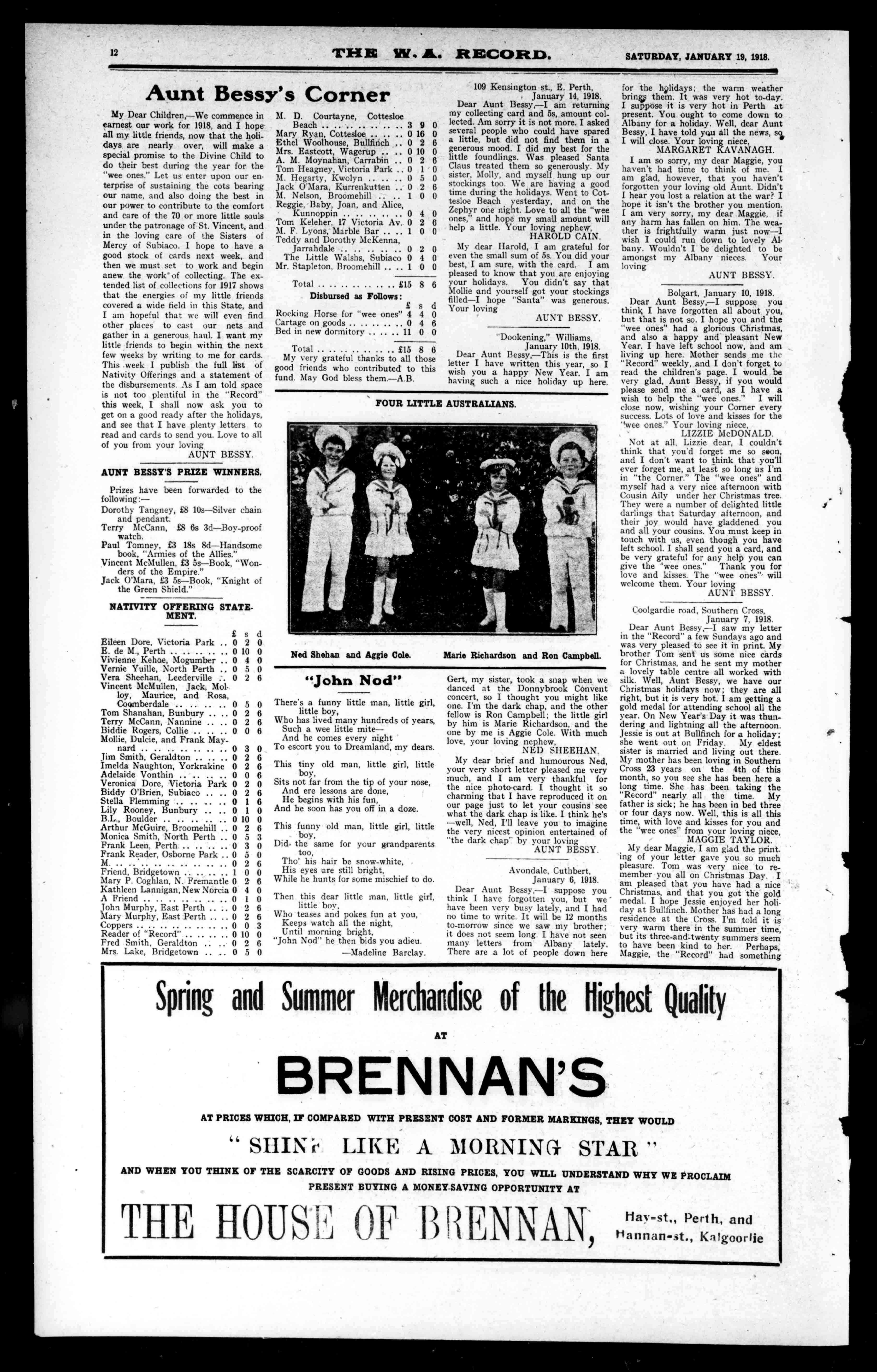
JackO'Mara,Kurrenkutten 02
Reggie,Baby,Joan,andAlice, Kunnoppin
TomKeleher,17VictoriaAv.0
M.F.Lyons,MarbleBar 100
TeddyandDorothyMcKenna, Jarrandale 020
TheLittleWalshs,Subiaco040
Mr.Stapleton,Broomehill 100
Total £1586
DisbursedasFollows: sd
RockingHorse
109Kensingtonst.,E.Perth, January14,1918. DearAuntBessy,-Iamreturning mycollectingcardand5s,amountcollected.Amsorryitisnotmore.Iasked severalpeoplewhocouldhavespared alittle,butdidnotfindthemina generousmood.Ididmybestforthe littlefoundlings.WaspleasedSanta Claustreatedthemsogenerously.My sister,Molly,andmyselfhungupour stockingstoo.Wearehavingagood timeduringtheholidays.WenttoCottesloeBeachyesterday,andonthe Zephyronenight.Lovetoallthe"wee ones,"andhopemysmallamountwill helpalittle.Yourlovingnephew, HAROLDCAIN.
MydearHarold,Iamgratefulfor eventhesmallsumof5s.Youdidyour best,Iamsure,withthecard.Iam pleasedtoknowthatyouareenjoying yourholidays.Youdidn'tsaythat Mollieandyourselfgotyourstockingsfilled-Ihope"Santa"wasgenerous. Yourloving AUNTBESSY.
"Dookening,"Williams, January10th,1918. DearAuntBessy,-Thisisthefirst letterIhavewrittenthisyear,soI wishyouahappyNewYear.Iam havingsuchaniceholidayuphere. FOURLITTLEAUSTRALIANS.
0
E.deM.,Perth 0 VivienneKehoe,Mogumber 0 2 10 4 0 0 0 NedShehanandAggieCole. VernieYuille,NorthPerth 050 VeraSheehan,Leederville 0 VincentMcMullen,Jack,Mot boy,Maurice,and.Rosa, Coamberdale 0 2 5 6 0 "JohnNod"
There'safunnylittleman,littlegirl, TomShanahan,Bunbury 026 littleboy.
TerryMcCann,Nannine 026Whohaslivedmanyhundredsofyears, BiddieRogers,Collie 0 Mollie,Dulcie,andFrankMay0 3 6 0 SuchaweelittlemiteAndhecomeseverynight ToescortyoutoDreamland,mydears.
JimSmith,Geraldton 026
ImeldaNaughton,Yorkrakine026Thistinyoldman,littlegirl,little AdelaideVonthin 006 boy, VeronicaDore,VictoriaPark020Sitsnotfarfromthetipofyournose, BiddyO'Brien,Subiaco 026 Anderelessonsaredone, StellaFlemming 016 Hebeginswithhisfun, LilyRooney,Bunbury 010Andhesoonhasyouoffinadoze.
B.L.,Boulder 0100
ArthurMcGuire,Broomehill 026Thisfunnyoldman,littlegirl,little
MonicaSmith,NorthPerth 053 boy, FrankLeen,Perth... 03oDid.thesameforyourgrandparents
FrankReader,OsbornePark050 too, 26 Tho'hishairbesnow-white, Friend,Bridgetown 10o Hiseyesarestillbright,
MaryP.Coghlan,N.Fremantle026Whilehehuntsforsomemischieftodo.
KathleenLannigan,NewNorcia0 AFriend 0 JohnMurphy,EastPerth 0 4 1 2 0 0 6 Thenthisdearlittleman,littlegirl, littleboy, MaryMurphy,EastPerth 026Whoteasesandpokesfunatyou, Coppers. 003 Keepswatchallthenight, Readerof"Record" 0100 Untilmorningbright, FredSmith,Geraldton 026"JohnNod"hethenbidsyouadieu. Mrs.Lake,Bridgetown 05o -MadelineBarclay.
MarieRichardsonandRonCampbell.
Gert,mysister,tookasnapwhenwe dancedattheDonnybrookCOnvent concert,soIthoughtyoumightlike one.I'mthedarkchap,andtheother fellowisRonCampbell;thelittlegirl byhimisMarieRichardson,andthe onebymeisAggieCole.Withmuch love,yourlovingnephew, NEDSHEEHAN.
MydearbriefandhumourousNed, yourveryshortletterpleasedmevery much,andIamverythankfulfor thenicephoto-card.Ithoughtitso charmingthatIhavereproducediton ourpagejusttoletyourcousinssee whatthedarkchapislike.Ithinkhe's -well,Ned,I'llleaveyoutoimaginetheverynicestopinionentertainedof "thedarkchap"byyourloving AUNTBESSY.
Iamsosorry,mydearMaggie,you haven'thadtimetothinkofme.I amglad,however,thatyouhaven't forgottenyourlovingoldAunt.Didn't Ihearyoulostarelationatthewar?I hopeitisn'tthebrotheryoumention. Iamverysorry,mydearMaggie,if anyharmhasfallenonhim.Theweatherisfrightfullywarmjustnow-I wishIcouldrundowntolovelyAlbany.Wouldn'tIbedelightedtobe amongstmyAlbanynieces.Your loving AUNTBESSY.
Bolgart,January10,1918. DearAuntBessy,-Isupposeyou thinkIhaveforgottenallaboutyou. butthatisnotso.Ihopeyouandthe "weeones"hadagloriousChristmas, andalsoahappyandpleasantNew Year.Ihaveleftschoolnow,andam livinguphere.Mothersendsmethe "Record"weekly,andIdon'tforgetto readthechildren'spage.Iwouldbe veryglad,AuntBessy,ifyouwould pleasesendmeacard,asIhavea wishtohelpthe"weeones."Iwill closenow,wishingyourCornerevery success.Lotsofloveandkissesforthe "weeones."Yourlovingniece, LIZZIEMcDONALD. Notatall,Lizziedear,Icouldn't thinkthatyou'dforgetmesosoon, andIdon'twanttothinkthatyou'll everforgetme,atleastsolongasI'm in"theCorner."The"weeones"and myselfhadaveryniceafternoonwith CousinAilyunderherChristmastree. Theywereanumberofdelightedlittle darlingsthatSaturdayafternoon,and theirjoywouldhavegladdenedyou andallyourcousins.Youmustkeepin touchwithus,eventhoughyouhave leftschool.Ishallsendyouacard,and beverygratefulforanyhelpyoucan givethe'weeones."Thankyoufor loveandkisses.The"weeones"-will welcomethem.Yourloving
AUNTBESSY.
Coolgardieroad,SouthernCross, January7,1918.
DearAuntBessy,-Isawmyletter inthe"Record"afewSundaysagoand wasverypleasedtoseeitinprint.My brotherTomsentussomenicecards forChristmas,andhesentmymother alovelytablecentreallworkedwith silk.Well,AuntBessy,wehaveour Christmasholidaysnow;theyareall right,butitisveryhot.Iamgettinga goldmedalforattendingschoolallthe year.OnNewYear'sDayitwasthunderingandlightningalltheafternoon. JessieisoutatBullfinchforaholiday; shewentoutonFriday.Myeldest sisterismarriedandlivingoutthere. MymotherhasbeenlovinginSouthern Cross23yearsonthe4thofthis month,soyouseeshehasbeenherea longtime.Shehasbeentakingthe "Record"nearlyallthetime.My fatherissick;hehasbeeninbedthree orfourdaysnow.Well,thisisallthis time,withloveandkissesforyouand the"weeones"fromyourlovingniece, MAGGIETAYLOR. MydearMaggie,Iamgladtheprint. ingofyourlettergaveyousomuch pleasure.TomwasverynicetorememberyouallonChristmasDay.I ampleasedthatyouhavehadanice Christmas,andthatyougotthegold medal.IhopeJessieenjoyedherholidayatBullfinch.Motherhashadalong residenceattheCross.I'mtolditis verywarmthereinthesummertime, butitsthree-and-twentysummersseem tohavebeenkindtoher.Perhaps, Maggie,the"Record"hadsomething
Avondale,Cuthbert, January6,1918. DearAuntBessy,-Isupposeyou thinkIhaveforgottenyou,butwe havebeenverybusylately,andIhad notimetowrite.Itwillbe12months to-morrowsincewesawmybrother: itdoesnotseemlong.Ihavenotseen manylettersfromAlbanylately. Therearealotofpeopledownhere forthehfilidays;thewarmweather bringsthem.Itwasveryhotto-day. IsupposeitisveryhotinPerthat present.Yououghttocomedownto Albanyforaholiday.Well,dearAunt Bessy,Ihavetoldyuuallthenews, Iwillclose.Yourlovingniece, MARGARETKAVANAGH.
12 THE A.RECORD. SATURDAY,JANUARY19,1918.
NATIVITY
d M.D.Courtayne,Cottesloe Beach 390 MaryRyan,Cottesloe 0160 EthelWoolhouse,Bullfinch 026 Mrs.Eastcott,Wagerup 0100 A.M.Moynahan,Carrabin 026 TomIleagney,VictoriaPark 0 1 0 M.Hegarty,
Kwolyn 0a0
6
M.Nelson,Broomehill 100
040
26
for"weeones"440 Cartageongoods 046 Bedinnewdormitory 1100 Total £1586
verygrateful
toallthose
My
thanks
goodfriendswhocontributedtothis fund.MayGodblessthem.-A.B.
SpringandSummerMerchandiseoftheHighestQuality AT BRENNAN'S ATPRICESWHICH,IFCOMPAREDWITHPRESENTCOSTANDFORMERMARKINGS,THEYWOULD SHINLIKEAMORNINGSTAR ANDWHENYOUTHINKOFTHESCARCITYOFGOODSANDRISINGPRICES,YOUWILLUNDERSTANDWHYWEPROCLAIM PRESENTBUYINGAMONEYSAVINGOPPORTUNITYAT THEHOUSEOFRI-WAND' Nay'-st.,Perth,and Nannan-at.,Kalgoorlie 1
SATURDAY,JANUARY19,1918.
todowithmakingthesummerstolerable.Ihopefatherisquitewellagain. Thankyouforloveandkisses-they areappreciated.Yourloving AUNTIIESSY.
Scotsdale,Denmark, January8,1918.
DearAuntBessy,--Justafewlines, hopingyouhadahappyNewYear.I shouldverymuchlikeyoutoaccept measoneofyournephews.Iamstayingatafriend'splaceformyholidays. Wouldyoupleasesendmeacard?I willtrytocollectsomethingforthe littleones.Idon'tgotoaCatholic school,becausethereisnoneuphere atDenmark.FatherBriodyiscoming upsoontosayMass,andthatwill benice.Naw,Iwillclosemyshort letter.Yourwould-benephew, xxxxx JERRYHAIRE. Youareverywelcometo"our Corner,"Jerrydear,and1amgladthat youcommencewiththepromiseof beinganactiveandusetulnephewby askingforoneofmycards.You'llget one,Jerry,andI'msureyou'llnotlet thegrassgrowunderyourfeetuntil itisfilled.Ihopeyouenjoyedyour holidays,andthegoodwishesyousend tomeIalsosendtoyou.Thanksfor thekisses.YourlovingAUNTBESSY.
56Georgestreet,Perth, January14,1918. DearAuntBessy,-Iwishtobecome oneofyournieces,andwillyouplease sendmeacollectingcard,becauseI wanttocollectforthefoundlings.1 readyourCornereveryweek,andI likeitverymuch.Well,AuntBessy,I mustendnow.Yourwouldbeniece, FRANCESHANNAY.
MydearFrances,youareverywelcometoourCorner.Iamgladyouare interestedinourwork,andthatyou wantacard.Ishallsendittoyou shortly.AtpresentIhavenoneonhand, but1ampromisedsomefornextweek. Ihopetohearfromyouveryoften. Yourloving AUNTBESSY.
andthathedidthegenerousoldman partsowell.Iamsureyouwereglad also.Crawleyisverynice,don'tyou think,onahotday.Ihopethepony willbeverynicetoyou,andnottry tobreakyourbones.Thankyoufor theloveyousend,andacceptaparcel ofitfromyourlovingAUNTBESSY.
OurPastimeCircle
ConductedbyCousinAlly.
CousinAily'scousinswillregretto hearthatthroughindispositionIhave notreceivedherweeklycontribution. Ihopetohavehertalkingtoyouall againnextweek.-A.B.
COMPETITIONFORSATURDAY, JANUARY26.
Twoprizeswillbegivenforthecorrectsolutionofthefollowingpuzzle: Forsakeninsomedesertvast, Wherenevermanhasdwelt; Oronsomelonelyislandcast. Unseen,Istillamfelt; Brimfuloftalent,senseandwit, Inothingunderstand: I'moutofsightinchurch,butfit Fortemples;madebyhand.
Repliesmustreachmenotlaterthan
Tuesday,January22nd.
COMPETITIONFORSATURDAY, FEBRUARY2:
Twoprizeswillbegivenforthecorrectsolutionofthepuzzlegivenbelow: ThenamesofeightBritishpoetsare buriedintheseeightlines: Thesunisdartingraysofgold Uponthemoor,enchantingspot, WhosepurpleheightsbyRonaldloved, Upopentohisshepherdcot, Andsundrydenizensofair Areflying,aye,eachtohisnest, Andeagerwakeatsuchanhour, Allhastetoreachthemansionsblest.
Repliesmustreachmenotlaterthan
Tuesday,29thJanuary
Harvey,January14,1918. DearAuntBessy,-1wasverypleasedtoseeinyesterday's"Record"that Ihadcollectedthemost.Iwasvery sorrythatitwasnotmore.Asyouwill seebymyaddress,IaminHarvey.I amstayingdownhereforaholiday. WhenIgohomeIwilltakeacard,but Ihavesentawayforabookoftickets inCousinAily'sartunion.LastSaturday,asIwascomingdown,wehadto waitatPinjarrahfortheothertrain, whichwassupposedtopassourtrain there,didnotarrive,asithadabreakdownatYarloop.Thiswaitmadeit verylatewhenIgottollarvey,forit wasquartertonine,insteadofseven o'clock.TherewasnoMasshereyesterday,asitisonlyonceamonth.Last nightweallwentforadrivetoWokahip,anddidnotgetbacktilllate.Next SundayIthinkweareallgoingto Australindforapicnic.1amstaying withMrs.O'Dwyer.OnNewYears Day,motherandfatherandallofus wentforapicnictoPointWalter,and enjoyedourselvesimmensely.Inearly meltedlastWednesday,asitwas108.8 degreesintheshade,andthenabout5 o'clockitrained,andwehadathunder. storm,accompaniedbylightning.Altogethertherewere38pointsofrain. Well,dearAuntBessy,Iwillnowclose, withbestwishes.Yourlittleniece, DOROTHYTANGNEY. xxxxforthe"weeones."
Iamverypleased,mydearDorothy, thatyouareenjoyingaholidayinthe country.IamtoldHarveyisanice place,andthatitisagoodfruitgrowingdistrict.Youshouldthereforehave aglorioustimeinthedistrict.Ihave anicelittlepresentreadyforyouwhen youreturn,andIhopeyouwilllikeit. WehavehadveryhotdaysinPerth, andIfelttheheatverymuch.Thank youforthekissesyousentthe"wee ones."YourlovingAUNTBESSY.
RulestobeFollowed.
First,eachcompetitormustsenda pennystamp,otherwisetheiranswer willnotcount.
Second,alllettersforthecompetitionsmustbeaddressedto CousinAlly, c/o"W.A.Record"Office.. asthecompetitionlettersmustbe separatefromAuntBessy's. Third,ashortlettermustaccompany eachcompetitor'seffort,givingfull nameandaddress,andstating,age lastbirthday.
TheRetnrn'oftheKing
710Georgestreet,Kalgoorlie, January15,1918. DearAuntBessy,-Willyouhavea niecefromKalgoorlie?Iwanttosurprisemymotherandfather;willyou sendmeacollectingcard?Iwillsee what1candoforthebabies.Ihear suchalotaboutthem;Iamgladto knowtheyhadsuchajollytime.I havetwosisters,Ednaan.!Maggie.We hadChristmasonthes.s.Zealandia comingfromMelbourne,andweenjoyedit,becauseSantaClauswassogood tous.Wearespendingaholidaywith mygrandmainWestPerth.Weget lotsofseabathingatCrawley.Itwas goodlastweekwhentheweatherwas sohot.IwishtheSwanRiverwasin Kalgoorlie.Daddyboughtmeapony forChristmas.Ihopeyouarewell, AuntBessy.Sendmycardto960Hay street,please.Logy'.,toallthebabies andyourself.Yourlovingniece. FRANCESGAYNOR.
Yes,certainlyIwill,naydearFrances,and1hopeyouwilllikeourCorner. IamgladtohearthatSantaClauswas apassengerwithyouontheZealandia,
changinganddissolving;theaspectof theworldaltersdaily,nay,fromhour tohour,likeadream.Thedrumsand tramplingsofunnumberedconquests thundercontinuouslytheairisthick withblowsandcries;theearthis drenchedinblood;andmillionsupon millionsofthesorelystrickenpeoples cry,"Howlong,oh,howlong!"Would thatitmightbesaidofthemthatthey cryout,"Howlong,0Lord,how long!"Butthattimeisnotyet.But whenitcomestheendwillbenear. Yeteveninsuchatimeasthis, surelythehappeninginCarmel'smissionchurchwasmemorable,andwonderfulandconsoling.Foundedin1771 bythefoundedofCalifornia'scivilisation,FatherJuniperoSerra,that mightyhunterofsouls,andduringhis lifetheheadquartersofthevastmissionaryworkofSpaininCalifornia, themissionatCarmelowasoneofthe firsttofeelthedestructiveeffectsof theiniquitoussecularisation.Itwas oneofthefirsttofallintocomplete ruinandabandonment;forthereason thatatCarmelotherewasnocivil town,nopresidiooftroops,nothing butahappyandpeacefulandprosperingsettlementofChristianIndians, rescuedfromsavageryandSatanby consecratedmenwholovedthemas theylovedthemselves,forthesakeof Christ.SowhenafterSerra'sdeaththe blowfell,Carmeloquicklyandutterly decayedanddied.Formorethanfifty yearsitwasdesolate;thefrequent sea-fogbecameitsshroud,andnota veilofthesanctuary;itsadobewalls werecartedofftobemadeintoroads:, itsbaptismalfount,itstabernacle,its booksandothersacredobjectswere seizedastourists'souvenirs,ormade intogardenornaments.TheKingwas gone.Hisenemiesrejoiced.They thoughtthatGodwasdead.Which waswhattheythoughtwhen.Hewas carried-toHistombfromCalvary. ButHisfriendswerefaithful.Somewhere,ifnotinCarmelo,theykeptup HiSwork;theyrememberedHim; theyknewHewouldcomeback.His devotedministers,theparishpriests ofMonterey,thetwoSpanish-born priests,ReverendFathersCasanova andMestres,bothofthemloversof HisruinedpalaceatCarmelo,laboured on,inthefaceofhostility,intheface ofwhatisworsethanhostility,indifference.Andonceagainaroofkept theweatherfromthesanctuarywhere SerrahadministeredtotheKing.' OnceagainthemightySacrificethat isthesupremeeventofhumanaffairs, theHolyMass,wasofferedupinCarmelo;infrequentlyatfirst,itistrue, butnoweveryweekatleast.Andon thisblessedSundayafternoonofwhich IspeaktheKingcameinHisbeauty, inroyalprocessional,ingoldengarments,amidtheincensea,adthelights, andthemusicofadoration,tobless Hispeopleonceagain,asintheolden days. ThemonstranceinwhichHewas upliftedtodrawourheartstoHim wasonesavedfromthespoilers.It hadbeengiventoFatherSerraby ViceroyBucareli,ofMexico,asthe inscriptionsetsforth.Thecopethat FatherMestres,thecelebrant,wore, hadalsobelongedtoFatherSerra.And theold-churchwaspackedtothedoors. TheCatholics,theservantsoftheKing, hadofcoursegatheredfromnearand far;yet,evenso,probablythegreater numberofthatthrongwerenotyetof
EightyyearsagotheKingwasdethroned,despoiled,andwithhisfaithfulministerssentintoexile.Theroyal palacefellintoruins;itslootedtreasureswerescatteredfarandwide,save forafewpreciousobjectswhichwere hiddenawayandguardedbythose whoeventhenknewthattheKing wouldcomeagain.Afewloyalsubjectslingeredonnearthepalace;but onebyonetheydied,orwentlike theirMasterintoexile.Theirhouses andtheirlands,cattleandsheepand horseswereseizedbytheirenemies. Melancholyowlsbroodedandhooted intheshatteredtowers.Amongthe fallenwallsthegrassgrewgently,as iftryingtocovertheirnakednessand healtheirwoundswithgreencompassion.Andunderneaththeruins,lost andforgotten,laytheunmarked gravesofthosewhohadbuiltthe palacefortheirKing,andtherehad servedHim. WhereforeIaccountitagreatand wonderfulthing,asoneofthechief adventuresofanadventurouslife,that onlyafewdaysagoIwasprivilegedto beoneofthethrongwhichinthepartiallyrestoredroyalpalacewelcomed theKingonHisreturn.Thronedupon goldandsilvercarvedinthefairestof formsbyancientart,surroundedby reverentministersclothedinpurple andfinelinen,borneamidlightsand thefragrantsmokeoffrankincense,the Kingcameback,andwasliftedup aboveourheadsbowedinloving homageaWdrewusalltowardHim. AllmydayshaveIsought,andsometimeshaveIfound,thetrailsofhigh romance,butneveruntilthisglad, goldendaydidIseemtocomesonear untotheKingofalltrueromance,the KinginallHisbeauty,andneverhave IknownasthenIknewthatthereis nopowerthatcankeepHimexiled fromHisown.
ItwasintheoldFranciscanMission ofSanCarlosdeBorromeo,inCarmelby-the-Sea,inCalifornia.Hereforthe firsttimeineightyyearsBenediction oftheBlessedSacramentwasgiven, onSundayafternoon,July29,1917,by theReverendRaymondM.Mestres, theparishpriestofMonterey.Ithink thedateshouldberecorded,andheld inmemory.\Veliveinatimeofgreat events.Kingdomsandempiresare
theroyalhousehold,ofthetrueallegiance.Wistfulseekers,manyofthem; soul-hungryandsoul-thirsty,likeso manysadmillionsto-day.Andsurely theKing,returningoutofeightyyears ofexile,pouredforthHisgraceabundantly. Evenso,itseemstome,isthereturn oftheKingtotheworld,farfromCarmelothefair.Thereisasymbol,a figure,tobediscernedinmostthings, Ibelieve.Surely,Hecannotmuchlongerbekeptinexile.Foreightyyears, itistrue,Hewaspreventedfromgiving HisBenedictioninoneofHispalaces; butwhatareeightyyearsinHis sight?AndnowHehasreturned.How happywerewethatday!Heavensave mefromprideasIrememberthatmy littlesoncarriedtheincensevesseland kneltwiththeconsecratedministers beforetheThrone-apageinthecourt oftheKingofKings.Asforme,I offerupthesefewpoorwords.Come, ohKing,cometoalloursouls;come backtothetornandbleedinghearts ofthedesolatechildrenofmen.We droveTheeintoexile,anddeniedThy Kingship,butnow,Oh,surelynowwe willturntoTheeagain!-Mi,haelWil limns,in"America."
Writefor ILLUSTRATED CATALOGUEof STATUARY AndCHURCH REQUISITES, vis., BRASSWARE, VESTMENTS, CHALICES, CIBORIUMS, REMONSTRANCES. STATIONofCROI INRELIEF CANVAS, Etc.,Etc.
PELLEGRINI&Co.
MANUFACTURERSofRELIGIOUS
THEW.A..RECORD. 13
STATUARYandOBURCU METALWARE, 244Elisabethstreet,Melbourne,and 489Georgestreet,Sydney. 'Phone1341. M.HANNAY WinsandSpiritMerchant, OornerMURRAYAGEORGEITRe WESTPERTH. QualityGrocer,TeaandProvision MerchantandImporter.OarMotto' Smallprofitsandquickretina. Orderscalledforanddelivereddaily SUBIACOHOTEL ROEZBYROAD,SUBIACO. EmuBeeralwaysonTap. GoodAccommodationforCountry Visitors. WALTERWING,Proprietor. D.P.SULLIVAN (IATEFREEDMANAND00.), 133High-st.,Fremantle KEN'SMERCERS,HATTERSANDOUTFITTERS. JUVENILECLOTHINGSPECIALIST. HIGHSTREET,FREMANTLE. TheMachinethatweattackedBig Priceswith. SOMETHINGOFINTERESTTO BUYERSOFSEWINGMACHINES. 1.Thosewhoemploycanvassersmust charge25percent.moreforthemachinetocovercostofthisuseless system. 2.Alargepercentageofmachines soldbycanvassersaretakenback, doneup,andsoldagain. 3.Ifyoubuythroughacanvasser youwillbepayingahighpricefora machinethatmayhavebeeninusefor years,andoughttobeclassedas secondhand. Weemploynocanvassers,andpay nocommissions.thatishowweare abletosellTheJones,England'sbest, atpricessomuchbelowwhatothers chargeforhigh-grademachines. J.ATHOM:ON,Ltd 209Murraystreet,Perth,
HonourBoard
ALLHALLOWSCHURCH, BOULDER. LISTOFNAMES.

DivisionIII.:K.Hearn,L.Davidson,P.Walsh,N.Lonergan.
Division11.:P.O'Sullivan,C.Hill, K.Brown.
Division1.:B.Birmingham,M.McLeod,M.Breckler,D.Stenberg,H. Philip,K.O'Connor. PracticalResults.
Urgent.-Pleasenotifythesecretaries ofanyomissions,alterations,mis-spelt names,orincorrectinitials. xAtkinson,J.P. xBook,T. Batten,E. Bannon,L. Bradshaw,G.(M Byrne,D. Byrne,E. Byrne,J. Butler,M. Ballantyne,J. Barry,N. xBrady,C. Carroll,C. Craig,F. xCraig,W.R. xClune,T. Critchley,P. ?Critchley,J. xCunningham,P. Dolan,M.J. Dalton,J. Dillon,M. Donnes,M. Dobreigh,J. Egan,W. English,W. xGurry,R. Goddard,H. xGorman,F. ?xGallagher,A. xHenson,M. Herlihy,J.E. xHickey,B.P. Hickey,E. Hackett,P. xlleston,Jack Head,S. xJohnston,C. Johnston,H. xKemp,W.C. Keegan,0. xKirwan,E.J. Kirwan,H. xKilmartin,T.G. T.Lynch. Lockton,J. Luttrell,R. xLuttrell,W. xLyons,N. Lanigan,J. Lawless,R. Moore,G.S. xMoore,H. Moore,J.J. xMoore,T.V. Moore,J.R. xMoore,W. Monaghan,T. xMonaghan,W ?Mow,R.H. Morgan,J. Murphy,M. ?Merells,xMiller,G. Mahe:,J. Maher,P.W. McCourt,H. xN1cNamara,R. xMcPeak,W.J. xMclnerney,J. McManus,B. McNally,C. McKiernan,W. ?McGee,North,H. Newby,T.W. O'Neill,P.J. ?O'Dea,O'Neill,C. O'Neill,L. O'Dea,T. O'Driscoll,H. O'Driscoll,H. O'Grady,D. O'Grady,V. O'Gorman,S. O'Rourke,J.P. ?O'Connor,J. Podger,W.G. Purcell,J. ?Porter,G. ?Robertson,J. ?Robertson,T. ?xReid,,illourke,C. Rourke,J. Rutherford,J.J. Rodgers,F. Scullin,D. xScullin,J. xScullin,P. Sharkey,B. Smyth,Jim ?Smyth,F. xSly,J. Sly,W. Scott,R. Smith,H. xSmith,G. ?Smith,?Smith,-Wittst. xShields,M.J. ?xSeymour,M. ..Tierney,G. ?Wilson,F. ?Walsh,Gavan Boyle,W. Boyle,S. McKiernan,B. McDade,E. Ross,D. Dunnet,J. Ryan,Phil Praed,W. Cunningham,Casey,J. Clarke,N. Robinson,H. Hooks,R. O'Connor,P. Snowdon,Heston,W. Therollistocontainthenamesof allCatholicsoldiersfromthedistrict whohaveleftAustraliaforactive service.
Advanced:MurielBall.
Intermediate:GuidaWeir,Nellie
Barrett.
Higher:P.O'Sullivan,M.Jacobs,K. Ball.
HigherViolin:P.O'Sullivan.
Lower:C.Hill,H.Stuart,M.Lonergan,L.Davidson.
LowerViolin:P.Walsh,K.Ball.
Elementary:E.Slattery(D.),D. Stenberg(D.),K.O'Connor.
Primary:M.Breckler(D.),K.Brown (D.),A.Graham,M.Carrol. MelbourneUniversity. Theory.
GradeIII.:V.Donovan(honours), G.Kenny,L.Brown.
GradeIV.:L.Earle(honours),B. O'Dea,E.Bolger. Practical.
GradeII.Violin:G.Kenny(honours).
GradeIII.Piano:B.O'Dea(honours),L.Earle(honoursL.
GradeIII.Violin:E.Bolger(honours).
Grade Piano:A.Buchanan(hon. ours).
GradeIV.Violin:L.Brown.
GradeV.Piano:E.Goossens(honours),M.Lonergan.
GradeVI.Piano:M.Breckler,T. Benda,K.Lonergan. ElevencandidatesenteredtheexaminationoftheMelbourneInstituteof PlainNeedleworkindifferentgrades. Allweresuccessful.
Amusements
GRANDTHEATRE.
Note.-Acompletelistisdesiredas soonaspossible.xDenotesdiedon service.?Indicatesparticularsuncertain.
LoretoConvent,Osborne
UniversityofW.A.Examinations,1917. LeavingCertificate.
G.Kenny:English,French,history, music(honours). Matriculation.
G.KennyaddedL.English,history, Frenchto_previousjuniorpass,includingLatinandmathematics.
D.O'BrienaddedL.English,history, andjuniorLatintopreviousjunior .pass,includingmathematicsand physics.
M.HockingaddedL.English(D.),L. history,juniorLatintopreviousjunior pass,includingFrenchandmathematics.
E.O'BrienaddedL.English,history, andjuniorLatintopreviousjunior pass,includingFrenchandmathematics. JuniorCertificate.
M.Weir:LeavingEnglish,J.French, mathematics,Latin.
B.Cooling:LeavingEnglish,J. French,Latin,history,mathematics.
B.O'Dea:English,French,Latin, history,mathematics,music(D.).
L.Earle:English,French,Latin,history,mathematics,music(D.).
E.Bolger:English,French,Latin, history,mathematics,music(D.).
W.Storman:English,French,history,mathematics.
PharmacyEntranceExamination.
L.Colenutt:English,Latin,arithmetic,algebra,geometry,geography. RoyalAcademyofMusic,1917. TheoryResults.
HigherDivision:V.Donovan,N. Barrett,S.Goossens,K.Shiel.
LowerDivision:M.Bannon(D.),M. Jacobs,E.Goossens,G.Weir,D.Hallion.
PRIVATEARTHURJOSEPHLEE,
LateoftheA.M.C.,Fremantle,young. estsonofMrs.M.Lee,24Church street,NorthPerth,whohasbeen awardedtheMilitaryMedalforbravery onthebattlefield.
financingthe"Yes"Campaign
Saythe"SouthernCross"ontherecentReferendum:-'Thereisnodoubt thatmoneywasagainpouredoutlike waterbythe"Yes"organisationsin connectionwiththissecondreferenduth campaign.Thatwasprobablythechief reasonwhynearlyallthepaperssupported"Yes."Theyknewonwhich side'themoneywas;theywerelooking foradvertisements,andtheygotthem.
Wepointedoutinthelastreferendum thattheElectoralActrequiresreturns tobemadebypartyorganisations,candidates,newspapers,andothersofthe amountspentinconnectionwithelectionsandreferendums,andthatit qughttobethebusinessofsomemembersofParliamenttoseethatnotonly arethesereturnsmade,butthatthey arepublishedprominentlyinthepress fortheinformationoftheelectors.It mightbeforththeLabourParty's while,too,toinquireintothesubject,andfurnishtheunionswithalistofthe firmswhichsupported"Yes"andsubscribedlargelytothefunds.Manyof thesefirmsmaketheirmoneyoutof theworkers.Butwedonotsuppose thattheinformationwillbeobtainable iftheNationalistsremaininpower. Oneofthechiefreasonsforpreventing aLabourGovernmentfromtaking officeevenforafewdaysisthefearof revelationsofthiskind.Inthisconnectionwemaypointoutthatitwould onlybejustifthepoliticalorganisationswhoclamouredforandforcedthis secondreferendumwerecompelledto paythecostbyActofParliament. Theyshouldcertainlynevergetanotherreferendumonthesubjectwithoutfirstputtingupthemoneytopay forit.Thewasteofmoneyoverthese tworeferendumsisoneofthosebad blunders,amountingalmosttocrimes, whichourpoliticiansandpapershave toanswerfor,andwhenonethinksof thegoodwhichmighthavebeeneffectedbythejudiciousexpenditureofthe moneyonwoundedsoldiersandother deservingobjects,onefindsithardto forgivethepeopleresponsible.
Oneandallliketohearofsuccess attendinglocaltalent,andnaturally everyoneisparticularlydelightedthat WesternAustralia'sownlittlegirl, EnidBennett,hasachievedsuchfame inthepictureworld.Perthpeoplehave achancetoshowtheirappreciationof theW.A.girl'sprowessbygivinga splendidreceptiontoherlatestfilm, "They'reOff,"whichappearsatthe Grandto-day.MissBennettisagood horsewoman,andinthisTrianglepicturewefindhertakingajockey'splace inabigrace,whichisthrillinginthe extreme.Herfatherisabighorseowner,andduringthecourseofhis travelsisconstrainedtobuyanold mansionforhisbeautifulyoungdaughter.Hedoesnotbuyit,however,by fairmeans,asheforcestheyoung ownertosellbystockmanipulation. Hisdaughter,onlearningofthetrickery,sellstheyoungmanoneofthe mostfamousofherfather'shorses,and ridesittovictory,thuswinningasmall fortunefortheyoungSoutherner.Announcedtofollowthisdramaisa VitagraphBlue-Ribbonfeature,tobe screenednextWednesday,andentitled "TheFetteredWoman."Itisfrom RobertW.Chambers'novel,andfeaturesbeautifulAliceJoyce.
PERTHMAJESTIC.
OnMonday"ThePhantomSecret,"a greatphotoplayofintenseinterest,will bescreened.Thestoryisonethatwill enthrallyoufromfirsthandle-turn,as itpulseswithlifeandincident,and theclimaxissensationalintheextreme.OnThursdayanotherbigfeatureheadsafinebill,entitled"God's Crucible,"afive-reelerthatcauseda tremendoussensationinSydney,where ithasjustterminateda season.Infact,thequalityofthefeaturesbeingsubmittedthiscomingweek arcalmostbeyondpraise,andwhen seenatsuchacool,comfortabletheatre astheMajestic,theenjoymentofpatronsisassured.OnSunday"The Piper'sPrice,"afive-reelerbrandnew toPerth,willbepresented.
CARDINALMORANMEMORIAL ARTUNION. DrawnintheTownHall,Sydney,31st December,1917. Thedrawing,whichwaspostponed fromthe25thOctober,wasconducted underthesupervisionoftheRight Rev.Mgr.O'Haran,D.D.,P.S.,Cleary, Esq.,J.P.,PresidentoftheCatholic Federation,J.T.Gurr,Esq.,WardenGeneralA.H.C.Guild,Ald,R.King, PresidentHibernianSociety,T.E. Avery,Esq.,GeneralSecretaryIrish NationalForesters'Society,J.L.Mullen,Esq.,Hon.SecretarySt.Vincent dePaulSociety,AustinMcKay,Esq., SergeantWm.J.Harris,representing thePoliceDepartment,andrepresentativesofthePress. Prizes,orordersforsame,maybe obtainedatSt.Mary'sCathedralPresbyteryonandafter9thJanuary,1918. JOHNO'GORMAN, L.COTTER,Hon,Secs. ResultsofCardinalMoranMemorial ArtUnionDrawing.
1,701315,K.McCoy,Nicholsonstreet, Essendon,Victoria;2,634721,Miss VeraShumack,DarkCorner;3,941955, F.W.Sluman,"Bracklyn,"ChallisAv., Sydney;4,257324,MargaretI. O'Rourke,Clarkesville,Kidston,N.Q.; 5,394663,P.J.McCaul,Ramsay, Queensland;6,849836,J.Flinn,Painter, Carcoar;7,1038387,Mrs.W.P.Carey, Havelockstreet,Kapunda;8,382299, J.C.Holz,Mitchell'sFlat,viaSingleton;9,1096933,I.McClosky,Aloomba, viaCairns;10,599185,CorporalClinch, "Wyoming,"Phillipstreet,Sydney;11, 448422,Mrs.
14 THEW.A.RECORD. SATURDAY,JANUARY19,1918.
M.Shields,DouglasPark; 12,77598,Mrs.RitaPickett,161Graftonstreet,Woollohra;13,1184339,F. St.C.Harry,Alberton,P.O.;14,579476, Mrs.Nicklin,MainRd.,Bulli;15, 117842,T.E.Avery,197Castlereagh street,Sydney;16,72679,Mrs.McNeil, Burwood;17,330554,W.Peckman, Chesterstreet,Moree;18,1115110, VioletMurray,MayRose,Stonehenge, viaLongreach,Q.;19,402984,Mr. Haughoy,191,Annandalestreet,Annandale;20,730099,Mrs.T.Long, Nelson-street,Nhill;WorkofArt,No. 642660,EileenGilmore,St.Vincent's College,Sydney;AnHistoricalHeirloom,No.383265,MissHanratty,209 Rosestreet,Sydney. GREATWESTERNHOTEL Williamstreet,Perth. Reorganisedthroughout.Visitorswill finditamostUp-to-dateCityHotel. OnlytheBestofLiquorsStocked. FullBoardandResidence,25sper week.Meals,is6d.Beds,2s. PATRICKO'KEEFE,Licensee, PhoneA1794. THOS.ANDERSON FAMILYGROCERandPROVISION MERCHANT, CornerFitzgeraldst.,andRaglanroad, NORTHPERTH. Familieswaitedondaily. Countryordersattendedto. thclorlaParkhotel VictoriaPark P..1.CONDREN,Proprietor. TheJ.J.BENDON SHOESTORES 130HIGHSTREET, FREMANTLE. PhoneB425, BRYANT&WATERS 80to90Stirlingstreet,Perth WOODANDGOALMERCHANT. OrdersPromptlyAtteadeeso. Tel.A3938. WHENINPERTHCALLOVERTO TOWERHOTEL Charles-st.,WestPerth andyouroldfriendErniehandsouta welcometoyouall. First-classResidentialHome. OnceaCustomer,Alwaysone. CleanlinessandAttention, EMoGRADE,Proprietor Irishnationalforester's SOCIETYFORIRISHMEN. Noinitiationfee.Cheapestcoctribsi tions. Branches:HughO'Neill,Perth,every alternateThursday,TradesHall,Beaufortstreet.BrianBoniBranch,Fr* mantle,everyalternateTuesday, FriendlySocieties'Hall,Highstreet. Secretary'saddress,W.Keating,II Burtstreet,Fremantle.CharlesStuart Parnell,Boulder,Secretary'saddress, ShamrockHotel,Boulder;meetsalter, nateFridays.JohnDillon,Midland Junction,J.F.O'Malley,Quebecstreet, MidlandJunction. Moneytolendonapplicationtothe SocietysSolicitors,MessrsJ.andR. Maxwell,Barrackstreet,Perth,orthe GeneralSecretary,careofJ.J.Snigg, Barrackstreet. WINDSOR HOTEL SOUTHPERTH MRS.A.O'CONNOR, Proprietress. Tel.A4381. TheW.A.Dairy Wanerooroad,OsbornePart. D.KEAN'F, PureMilkdeliveredtwice)niiyto anypartofthecity,directfrr.0oar owncowstocustomers. SupplyingtheConventsand0..iisiss. -A.rine-Forfe:st inEveryliwni: ,P Sununer toutlis&Colds
IrishJailScandals
Thestronzostevidenceoftheexistenceoftoeconvictionthatthepeople ofGreati.ritainwouldnottolerate manyoftheincidentswhichtakeplace limierthepresentsystemofadminittraaoniniselandisthefactthatso fewdetailsregardingthecoercionthat ispractisedMidtheirwayintohte columnsoftheBritishpressinthese daysofcensorship.butdespiteallits experienceofcoercion,LubunCastle iseverblundering,andthecircumstancesoftheMuuntjoyGaoltragedy aresuchthatfullknowledgeofthem cannotbewithheldfromthepublicin GreatBritain. ThetestimonygivenduringtheinquestonthebodyofMr.ThomasAshe hassentthroughoutIrelandathrillof indignation,theeffectsofwhichwill beteltformanyaday.Itwasinvain thatwarningvoiceswereraised.DublinCastleisdeaftoremonstrance. You,sir,andotherswhowishtosee anendputtobitterrelationsbetween GreatBritainandIreland,mayprotestagainstproceedingsthatneedlessly woundandirritate,butDublinCastle coollycontinuesthecampaignby whicnithassucceededinkeepingup aperpetualstateofantagonismwhere, wereitnotforitsaction,goodwilland friendlinesswouldprevail.
Ifatanytimemoderationandtact wereneededindealingwiththe Irishpeoplethepresentisthe period.'Laespiritarousedbythe greatconflictagainstPrussianism hasledmensubjecttobadgovernmenttobursttheirbondsasunder.Ithasfilledthemindsofsuffering nationswithhope.Theeaglesofthe Germanstandardsmaysoarforthe momentoverlandswheretheinhabitantsareardentloversoffreedom,but BelgiumandRoumania,Serbiaand Montenegroareconfidentthatsoonthe poweroftheoppressorwillbebroken forever.Theroseswholongforthe restorationoffreedomtotheirbeloved countryfeelsurethattheiraspirations willberealised.InIrelandthesame spirithasgivenastrongimpulseto tnedemocraticmovementandthe Governmentprofessingadesiretomeet thedemandtortherecognitionofthe peoplesrights,convokedtheConvention.
Mr.Duke,theChiefSecretary,andhe wassympathetic.HesentforMr.Max Green,ChairmanofthePrisonsBoard Mr.Greensaidtheprisonershadbeen handedovertohim'ascriminals,and hehadnoalternativebuttotreat themassuch.TheLordMayortold themthattheresponsibilitywhich restedonthemwasmostgrave.SirJ. IrwinalsosawSirBryanMahon,and hetoowassympathetic,butdebilitatedthoughhemusthavebeenbyfourteenmonths'penalservitudeatDartmoorandLewesandbythistreatment atMountjoyPrison,andthoughhe had,asadoctorhadassuredhim,a delicatethroat,Mr.Ashewassubjected toforciblefeeding. Obviously,forciblefeedingisatrying processevenforpersonswhosephysical conditionissatisfactory.Foronewho hadbornewhatMr.Ashehadundergoneitcouldnotbeotherthanmost periloustolife.Asamatteroffact,it provedfatal.Mr.Ashewastakenina dyingstatetotheMaterMisericordiae Hospital,andpassedawaythereabout fivehoursafterhisadmission.The systemthatisresponsibleforthis cold-bloodedinhumanitystandscondemnedrootnadbranch.Itsunfitness asaninstrumentofadministrationis patenttotheworld,andthecrimeof theill-treatmentofMr.Ashecannot beallowedtopasswithoutduepun.shment.-AnAnti-PrussianintheEnglish"CatholicTimes."
AnApotheosisofCoffee
Letmemakemyhusband'scoffeeandIcarenotwhomakeseyesathiml
Givemetwomatchesaday-
Onetostartthecoffeewithatbreakfastandoneforhiscigarafterdinner.
AndIdefyallthehouri'sinChristendomtolightanewflameinhis heart!
Oh,sweet,supernalcoffeepot!
Gentlepanaceaofdomestictroubles. Faithfulauthorofthatsweetnepen, thewhichdeadensalltheillsthatmarriedfolksareheirto.
Cheery,glittering,soul-soothing, warm-hearted,inanimatefriend.
Whatwifecanfailtoadmitthepeace andserenitysheowestoyou?
J.W.SHEEHAN
Tel.111895. BAIRDS'ARCADE HIGH-CLASSPHOTOGRAPHERS. OurSpecialties:Soldiers,Wedding Groups,ChildrenandPresentation Groups. Enlargementsfinishedinanystyle, coloursorplain. I
BT.GEORGE'STELEA.:T.':, PERTH;W.A.
ThePALACEissitnataiinaal.)t iharmingposition,closetoBanksFat. .:ommereialHousesandTheatres .adislargelypatronisedbythepsis. !ipalFarmersandGraziersinego hate.
±(..11)TRA.T.i:TARIFF.
T.J.GLOWEET,Pro'criete.r.
TheExcellenciesofallPurities Embodiedin UNIONIMPERIALSTOUT, TheSupperDish.
Lverysymptomofpopularfeeling athomeandabroadcounselledrestraintandpatienceonthepartofthe Irishauthorities.ButDublinCastleignoredallthesuggestionsrecommending prudence,sothatafairchancemight begivenfortheelaborationofa schemeofsettlementbytheConvert. tion.Itseemedasifitweredetermined toredoubleitscoerciveactivity. Courts-martialhavebeenbusy.Men havebeenarrestedandbroughtbefore thesemilitarytribunalsonthecharges ofwearinguniforms,ofdrilling,of makingspeechesendangeringthedefenceoftherealm,ofcarryinghurling sticks.Somewhowereliberatedby theGovernmentfromgaolsinwhich theyhadbeenservingtermsofimprisonmentforparticipationinthe insurrectionhavebeenmadeprisoners again. Thepublichavereadthatprisoners, onaccusationsofthekindmentioned, havebeensenttogaolfortwoyears, orayear,orsixmonths,withorwithouthardlabour,buttheyhavenot beenabletolearnfromthepressanythinglikecompletedetailsoftheproceeningsinthecourts.Theinqueston ThomasAshehas,however,through reportsintheIrishpapers,brought manyparticularstolight,andthey constituteaformidableindictmentof theDublinCastlesystem.
Whatistheuseinourdenouncing thePrussiansforcrueltyifDublin Castleactsasithasdoneinthecase oftheseIrishprisoners?Theyrepudiatedthechargethattheywerecriminals,andas.aprotestgaainstbeing treatedassuchtheyenteredona hunger-strike.Theymaintainedthat theywereonlypromotingtheircountryscauseaccordingtotheirconceptionofhowitcouldbestbeservedand thathavingbeenarrestedmerelyfor doingso,tneyshouldhavebeentreatedasprisonersofwar.Buttheywere nottreatedwiththeregardfor humanitythatshouldbeextendedto thecommonestcriminal.
sheLordMayorofDublinandSir J.Irwin,dischargingwhatwasanimperativeduty,madecreditableefforts tosavethelivesoftheprisoners,but inMr.Ashe'scasetheyfailed.They foundthathehadbeenlefttolieon thebareprisonfloorinhisownclothes fortwonights."Whenhiscelldoor wasopened,'saidtheLordMayor, "apparentlylyinginthecornerofthe celllyingonthebareboards,nobeddingorfurnitureofanydescription, wasMr.Ashe."Theprisonerinformed himthatnotonlyhadhebeenleft withoutbeddingurfurniture,buthis bootshadbeentakenoffhisfeet. BoththeLordMayorandSirJ. Irwinfeltkeenlythatthiswasa methodoftreatingprisonerswhichendangeredtheirlive.;.Theywenttosee
Toyou,whostandbetweenherand alltheearlymorningtroublesBetweenherandthemorning-after headacheBetweenherandthecoldgraydawn scrutiny?
Toyou,whosupplythegoldennectarthatstimulatesthejadedmasculine soul. Soothestheshakymasculinenerves, stirsthefaggedmasculinemind,inspires theslowmasculinesentiment.
Andstartsthesluggishblooda-flow. ingandthewholedayright!
Givemeamanwhodrinksgood,hot, dark,strongcoffeeforbreakfast!
Amanwhosmokesagood,dark,fat cigarafterdinner!
Youmaymarryyourmilkfaddist,or youranti.coffeecrank,asyouwill!
ButIknowthemagicofthecoffee pot!-HelenRowlandinthe"AmericanGrocer."
ZAIVI-BUKCONQUERS
SevereOutbreakofEczemaonFather andChild.
Mrs.M.Rice,of137Bulwerstreet. Perth,WA.,says:"Zam-Buk'swonderfuleffectivenessin overcomingobstinateskindiseasehas beenwellillustratedinthecaseofmy littlenephew.Hewassufferingfroma severeoutbreakofeczemaonthelegs, arms,andbody,andhisskinwasso torturedbyirritationandsurenessthat hecouldgetnoresteitherdayor night.
"WhenIappliedZam-Bukitspeedilydrewouttheinflammation,allayed theswelling,andsoothedandcooled theraw,angrysurfaces.Ipersevered withZam-Bukuntilthechild'sskin wasthoroughlypurifiedofeverytrace ofdiseaseandperfectlyhealed.
"Oncewhenmyhusbandwasaway inthecountry,lackofvegetables causedhisskintobreakoutintothose terriblesoresknownas'barcoorot.'I gothimtotryZam-Buk,andthough thediseasehaddevelopedintoanobstinatecondition,reniarperseverance withthebalmcuret: completely.
"WehavealsoLundZain-Buka splendi,lremedyforcoldsinthehead andcatarrhofthenose."
Herbalingredientsscientificallycombined,absolutepurityandrefinement, completefreedomfromlardorother rancidanimalfats.Thesearefeatures thatplaceZann-Bukonapedestalfar abovemereointments.Zam-Bukisunequalledforeczema,pimples,sore hands,burns,ulcers,scalds,piles,poisonedandfesteringsores,ringworm, scalpdiseases,cuts,sprain,rheumatism, etc.1/6and3/6perpotofallchemists andstores.
SATURDAY,JANUARY19,1918. TIHEEW.A.Ft-0001113. 15 t GoldfieldsAdvertisements Wesikk,rrRe-ierswhenontheGoldenhfl-,alwaystogivepreferenceto ourAdvertisers. PAULEYBROS. PRODUCEMERCHANTS. FORRESTSTREET,BOULDER, IFRIMESTWHEAT,CHAFF,BRAN, OATS,Etc. LargestStockontheYields. Ringup'Phone51. AUSTRALIA HOTEL KALGOORLIE. P.LYNCH,Proprietor ModAccommodationforTravellers. MANNION&'RUSE TheGoldfieldsUndertakersand FuneralFurnishers, No.18HANNANST,KALGOORLIE, andNo.9BURTST.,BOULDER. Funeralsconductedinanypartof theStateatshortestnotice.Charges moderate.Aconsignmentofartificial wreathsjustlanded(thefirstsince tieoutbreakofthewar). KalgoorlieTel,337.BoulderTel,196. TOWNHALL,BOULDER. PALACE PICTURES AlwaystheBestfromPerth, Spencer'sNo.1. J.P.BUTLER,Proprietor
KALGOORLIE. EverythingoftheBest. GoodAccommodation. ChargesModerate. J.RILEY,Proprietor 'Phone141. JAMESSHEAHAN GENERALSTOREKEEPER, WINEANPSPIRITMERCHANT. PiesseSt.,Boulder ForChoicestQualityOnly.Calland InspectourUndergroundDairy ProduceDepartment. HORANBROS. BUTCHERS, WILSONSTREET,KALGOORLIE. QUEALY'S IIOTEL NextTownHall,KALGOORLIE. ExcellentAccommodation. UNIONBEERonDraught. Mrs.QUEALY,Proprietress THEHOUSEFORMEN'SWEAR. P.J.RUSSELL TheLatestinGent'sHats,Shirts, Ties,Underwear,Etc. HannanSt.,Kalgoorlie Opp.PostOffice. ORIENTAL'TOTEI, HANNANSTREET,KALGOORLIE.'Phone481. ONEOFTHEBESTHOTELSONTHEFIELDS. SplendidAccommodation. BestofEverythingKept. DiningRoomundersupervisionofMrs.Taylor.Meals,I/6:Weekly,27/6. JIMFRAWLEY,Proprietor.
Chambers,Hannanit PupilspreparedforallExaminations,ir-',.1,11:4thoseif::.elh.,arias, Adelaid,,andV.-tot rya:, vucitiee.
PRIMEBEEFBUTCHER, HannanandMaritanastreets, KALGOORLIE. 'Phone488,and'Phone474. C01IMERCIAL HOTEL HANNANSTREET,
KALGOORLIECOLLEGEOF MUSIC. Prinetc&l:MissMetaMPickering Ssulapliore
the RuskinStudios
HEPALACEHOTEL
AnIrish-AmericanPoet
ByThomasKelly.Allofushavemetthesuper-critic. Hedoesnotconfinehimselftoliterature-heconfineshimselftonothing atall.Hisgreatandunanswerable accusationis:"Yes,Iknowthat,but itisn't ."Whenonehasdrivenoff fromthefirsttee,andsentabeautiful, straightballflyinggracefullyoverthe clumpofformidablebunkers,and landingrightinthecentreofthefairway,hestandstherewithalookof supremeuninterestednessonhisface. "Yes,"hedrawls,"yougottheball awayallrightthattime,butitwasn't agolfshot,youknow.Justoneof yourhurleyswipesthatactuallyhappenedtocomeoff."Andwhenhe driveshisownballplumpintothe bunker,heisfullofexplanationsas tohowitoccurred.Thatisanotherof hisgreatpoints--heknowshisown errors-afterwards.lieswungbackthe clubtooquickly;hisrighthandwas ratherashadetight;hedidn'tpivot correctly;hepausedatthetopof theswing-andsoon.Thoughwhywithallhisknowledge-hehimself makesmistakesnowandagain,one findsitalittledifficulttounderstand. Whenhispartneratauctionbridgehas gonetwonotrumps,"andgotthree heisnotsatisfied."Ifyouhadfinessed theKnavefromyourownhand,insteadoftheQueenfromdummy,you'd havegotanothertrick,youknow." Butwhenhehasgone"threeclubs,"is doubled,andbroughtdown,whoseis thefault?Hispartner's,ofcourse. "Youshouldneverhaveputmeupto twowithahandlikeyours,you know."Atbilliardshisopponent's scoresare,withhardlyanexception, merely"flukes,"whilehehimselfisperpetuallyoffhisgame,andeternally doggedbythemostabominableillluck.
Butitisasajudgeofliterature,and pre-eminentlyasasamplerofpoetry, thatthesuper-criticshines.Therehe cantrotouthispetformula:"Yes,it's allthattobesure,butitisn'tpoetry? Hehasoneortwoofthemostbeautifullyvagueofthedefinitionsuphis sleeve,whileheanxiouslywaitsforan opportunityofairingthem.Hetalks withmuchglibnessabout"Art."He tellsonethatunlessArtcansupply whatZoroastercalls"apparentpictures ofunapparentrealities,"itmaterially failsinitsonlysoul-satisfyingfunctions.Hewillallowthatnothingis poetryunlessitfulfilsthisdefinitionof theanonymouscommentator:"Poetry istheexquisiteexpressionofexquisite impressions."Heisnotquitesatisfied withtheprovisothatpoetryisjustifiablysocalledwheneveritexpresses somethingwhichcouldnothavebeen equallywellexpressedinprose-forhe contendsthatanythingwhichcannot bebeautifullyrenderedinproseisunworthyofrecordatall!Andhekeeps onandon,partlybecausefewtake himseriously,andmanyarefully awarethat"amanmustservehistime toeverytrade,savecensure,"andperhapscontentthatitshouldbeso.Also, tomanypeople,whethertheyadmitit tothemselvesortoanybodyelse,there isavaguelysoothingsensationinthe prickingofholesinthecarefullywoven andgaudywebsofauthorswithreputations.Theyliketofeelthattheyare justasgoodas,ifnotbetterthan,most otherfolk,andcouldwriteleagues aheadofmanypretentiousscribes,were theyonlysominded.Thesuper-critic makeshisgreatappealtowhatArnold Bennettcalls'theuniversalsnobbery ofcivilisedmankind."
someothersofourIrishpoetsmay comeintotheirown. DenisA.McCarthyisapoetofIrishAmerica,whoinhisloveforthenew landhasnotforgottentheold.And frequentlydoesheturntothetwo themeswhich,aboveallothersarenear tohisheart-religionandtheIreland ofmemoriesandofdreams:
"Andeventhosewhoseeyeshavenever seen Theshineandshadowontheirfather'shills, Havene'erbeengladdenedbythe livinggreen ReflectedinathousandIrishrills, To-daytheirheartsatenderfeeling fills, Upontheirearsto-dayavoiceis falling, Avoicethattouchesthem,avoice thatthrillsThevoiceofErintoherchildren calling."
Thosewhoknowhowmany"Irish" thereareintheUnitedStateswho haveneverseenthiscountrysavein fancywillunderstandwhataclear perceptionthepoethasoftheirviewpoint-theextractbeingfromtheopeningpieceinMcCarthy's,"Voicesfrom Erin":
"CriesfromErin'smother-heartareon thewingsofeverybreeze, Andtheyfillthemindwithpictures, andtheheartwithmemories."
Inonesense,thesepoemshavea keenerappealforIrishmenthanfor theirkindredontheothersideofthe Atlantic,fortheyarewrittenwithall theintensefervouroftheloverofthe oldland-onefindsithardtofancy themaswritteninthematerialatmosphereofanAmericancity.They breatheofthehillsideandthevenerableoldvillagechurch,andthesly humouroftheCeltstrikesoneonthe pagefollowingthemostsincereof lamentationsonthepassingoftheold days.
Thepoetisavisionary,albeitinthis casesomewhatofapracticalone.He hasdelvedinthechaptersofIrishhistory,buteventhesaddestofthem doesnotfindhimrankedintheglum companyofthepessimists:
"This,thisisErin'scomfortinher grief, Andthisherconsolationinhercare; Sheholdsunshakenstillheroldbelief ThatGodshighjudgmentsarenot falsebutfair; Whenotherpeoplesperishindespair, Orbendthekneebeforeunholy altars, WhatevercrosspoorIreland'sshouldersbear, HerChristiancourageneverfaints norfalters!"
Onecanbuthopethatweareworthyofthetributeherepaid,forthese lineswerewrittensomeyearsago,and itisnotalwayseasytoconvinceoneselfthatthestrivingafteraworthy idealhasalwaysbeenourchiefinspiration.Couldwetakeasacatchword:"Belienotyourpoets?"
tionofthematterwhichwillappealto thecosmopolitanmultitude-aye,even ifheisbaseenoughtodescendtothe slanderingandthemisportrayalofhis homelandtherewillnotbewanting willingpaymastersforhispictures.On theotherhand,ifhecanbutpreserve hisspiritofmanhood,therecomesto himavisionclearerbyreasonofthe oceanwhichcutshimofffromtheland ofmemories,thoughhemayhaveonly afaithfulfewtowhomhispagesare asthecoolingshadesofthepalmto theweary,desertwanderer.But,the guerdonofthetrueauthorisnotcamprisedofroyaltiesalone.
Ourpoethaskepthismuseunsullied,hasfedhismindonthepleasant, ifplaintive,pagesofanextremelyvivid knowledgeandrecollectionoftheland ofhisbirth.Andthereisnostraining afterthepeculiaritiesofdialectwhich seemstobethefashionamongstmany writerssinceSynge'sdialoguehasbeen classedas"literary"bytheEnglish weeklypress.
"Thehillso'Carrickbeg,agradh,'tis Ithatknow'ernwell, 'TisoftenIcouldsee'emandIwalkingtoClonmel, IwalkingtoCionmel,agradh,from Carrickdownbelow, Thesightof'emwouldcheermeevery stepIhadtogo."
Thepoetwhohaspreservedhis earlyvisionandhisessentialinnocence ofoutlookisalmosttobeenvied.To singofthesimplejoysofthecountrysideisapoeticpleasure,"thatonly poetsknow."Andhowenthusiastic McCarthygrowswhenheisbackagain infancywiththefolkofhisbeloved Ballinderry:
"Ballinderry,Ballinderry,whenthe corn-crakehadcalled, Whenthereaper'sworkhadendedand theharvesthomewashauled, Onthelastloadridinggaylylaughed thechildreninarow! Inthefieldso'Ballinderry,Ballinderry, longago."
Hadourpoetbutsungto-day,he wouldhaveaddedevenamoretouchingappealastothedepartureofthe simplepleasures,theharmlessenjoymentsofthemaidsofBallinderry.For hisvisioncarriedhimnottoanepoch whenourwomanhoodwouldwalkright intothedangerswhichlurkedabroad, whentheeffortsofVigilanceCommitteeswouldbeturnedintosomedirectionsmoresadandmoreclamantthan thecombatingoftheperniciousrefuse oftheimportedpress.
Thepatronsofthepoetsnowadays want"livestuff,"letitbesatireornonsense,pun-infestedorsuggestive,but letitbe'live!"Andaboveall,our "smart"readersfearanyreferenceto religiousmatters-thatisallverywell forthe"goody-goody"folk,saythey! Yet,thereisalargepublicinIrishAmericawhocanappreciateversewith areligioustrend,andtheyareprobablyasliteraryasthesuperiorpeople towhomanysuggestionofasacred themeisadraugntoftreacletoa thirstyhorse.1quotefromalittle poementitled"AtNight":
"InCarricktownonChristmasDay (Ahme,thesimplefaithofthem!)
Theybuildalowlyhut,andlay ThereintheBabeofBethlehem; Comerichandpoorandoldandyoung ToseetheCrib,andhearthesweet 'VeniteAdoremus'sung.
Yea,soitisonChristmasDay, InCarricktownsofaraway!"
Ononepoint,Iamcertain,thesupercriticwouldfallfouloftheauthorof thesepoems.Hewouldpointoutthat nousefulpurposecanbeservedbythe dwellinguponhistoricwrong,bythe nursingoflong-standingwounds.But thosewhowishforaworthyprecedent todealwithsuchaview-pointwillfind itinCardinalMoran'sIntroductionto his"HistoryofthePersecutionsofIrish CatholicsundertheCromwellianRegime."Therehestartswiththestatementthataknowledgeofthefactsof thepersecutionsisessentialtotheunderstandingofthegrievanceswhich theyhavebredandnurtured,andhow, heasks,canthatknowledgebeobtainedifallrecordsofthedeedsthemselvesarehiddenaway?Ifthereisto beforgetfulnessandforgiveness,itcan onlybewithafullknowledgeofwhat hastobeforgotten,whathastobe forgiven,andwhathasbeenredressed.
Howsadlytheselinesreadtoday:
"Soldier-spiritshastthougiven Nationsallthewideworldo'er, Menwhosevalourmighthavedriven Kingsandtyrantsfromthyshore.
Foreignfieldshaveknownthedaring Oftheircheering,chargingline, Buttheirswords,oh,motherErin, Flashforeverycausebutthine!"
Someoftheshortpiecesamongst thepoemsareexquisite.Oneisgiven foodforthoughtandimaginingon strikingsuchlinesasthese,from"A MoonlitNight":
"Likeincenseistheperfumeofthe valleys, Thewindslikevoicessingalongthe coast, Whilehighabovetheocean'sbrimming chalice ThemoonhangslikeaHost." Orthese,addressedtothelittlelamp 0411111111111M111111111.1mimml
I'utthepoetwhotakesforhis themessubjectsnearanddeartothe beansofhisreaderscanusuallyafford toremaininblandignoranceofthe existenceofthesupercritic.Atone sageofhisexistenceKiplingwasbeing hailedasamarvel-nowheisregaraen merelyasamakerofthejinglewhich ticklesthegroundings.Andthesupercriiscomesalongandtalksof "nameswhichhavebeenelevatedby therhetoricofdemagoguesfromthe obscuritytowhichtheyhadbeenwiselyconsignedbythejudgmentof scholars'--orwordstothateffect.But whenthepoethandlessubjectsworthy ofpoetictreatmentinamannerbefittinghissubjects,thenheneedhardly worryastohisreception.Hemaynot gosofarasdidBrowninginreplyto hiscriiics:"WhatIhavewritten,I havewritten,"buthewillreadilybe forgivenifheelectssilentlytodisdain thonsleughtsoftheminorfry,orind-(1ofthelargerspeciesinwhomprefiooftenturnsthescalestothe sidwhereon"balancedjudgmentis nowritten.PrettywelleveryIrish poethashadhissuperiorcritics.Mangehrdhisbut,onincludinghimin a'ictof"BestBooks,"onecompilerhas r-ezn'lywritten:"JamesClarence Mneanistheauthorof'MyDark Ponleen;anacknowledgedmaster. p;-whicheverylibrarymustcont-in."Perhapsinthecourseoftime
Timeaftertime,inreadingthe poemsofMcCarthy,Ihavefelt,asit were,acadenceofpoorBulfin's"RamblesinEirinn."trillinginthebackground.Bothhavethisincommon, thattheirloveofthelandtheyhad bothleftforthesternerbattlesofthe newworldisagood,welldefinedand inspiritinglove.Theydonottalkairily oftheircountryasifitweresomesort ofmysticterritorytobebutwhispered about,buttheyportrayareal,live landwherepulsesbeat,sometimeswith indignationbutmoreoftenwithacool, measuredthrob,andwhereeventhe gloomofwhathasbeencannotdispel thebrighterpatchesofrealisedandunrealisedhopes.
McCarthyisathomeinsingingof thesimplethemesofthecountryside, of:
"ThegraciouswindfromSlieve-namon,howkindlywoulditcroon Acrossthesilentmeadowsinthesummer-strickennoon."
Andanoncomesthelongingofthe exileforthescenesoncefamiliar,but nonethelessunforgotten,thoughthey haveshrunkbehindthewallsof memory:
"Iknowthatthebellsareringing Frommanyabelfryquaint, Inmanyachapelthesagarttells ThegloryofIreland'ssaint."
IthasbeenassertedthatanIrish writerwhohasb"encutofffromhis countrycanonlydooneoftwothings. Hemayforgetallaboutthelandhe hasforsaken,and,ifhehastherequisiteabilities,settledowntotheproduc-
"OftenatnightI,too,fromdreaming start, Shakenuyfears,alas,thatarenot dreams, Butwhenthoulay'stThyhandupon myheart, 0Christ,theComforter,howsweet itseems!"
Evermingledwiththereligioushope ofthepoetishisloveoftheoldland, hisbeliefintheultimatedestinyofthe homeland:
"Mary,0MotherofGrief!WhenI gazeontheypicturedface, Risesanotherpicturethatnothingcan evererase, Irelandtroubledandtried,herspirit tormentedandtornSurely,yetwainarealikeinthesorrowsthateachhasborne!"
SuchasoulwaspresenttotheimaginationofCanonSheehanwhenhe wroteoftheexileswhopaledatthe toast:"GodprosperOWIre:and!" "Thethoughtofthemotherlandhas paralysedthem.Theyrememberall hermountains,herlakes,hervalleys, herseas!Theyrecallherlongnightof suffering,redressedonlybyherindomitableconstancy."Ofthosesame exilesdidDavispenthefinestlinein allballadliterature:
"You'dthinkthemafraid, SopalegrewthechiefsoftheIrish Brigade!"
Oneisconstantlyforcedtohope thatthepoetisnotundulyoptimistic, thatthehillsdonotseemtohim greenerthantheyareinreality.Thus heseeshisbelovedCarrickbythe Suir:
16 THEW.A.JRJECcoEt1). SATURDAY,JANUARY19,1918.
PERTH, OntheCorner WILLIAMandMURRAYSTS. 'Phone,A1964. No.7CENTRALARCADE, (RailwayStationOpposite). 'Phone,A2422, Samuel's THE131G TAILORS FREMANTLE, OntheCorner HIGHANDWILLIAMSTS. (TownHallOpposite.) 'Phone,207. Patterns, f SeltAeasure FormandTti:( SENTANYWHERE, POSTFREE.
RIGHTGOODS RIGHTPRICES
AT BOANS'EVIPOI-ZIUM.PER THEGREATRALLYINGCENTREOFPRACTICALECONOMY.
AtBoans'People'sGrandEmporium,Perth,thereisnowonshowaMarvellousAssortmentofjusttheGoods Required.
AsusualwehaveaWonderfulAssortmentoftheNewestGoodsinalltheLatestDesigns,thusmakingastrong appealtowomenfolk,wholiketobesmartlyandeconomicallyattired.
BOANS'areshowingaHostofSuperbMoney-savingBargainsforLadies,Gentlemen,andChildren.Infact,every DepartmentattheBigStoreispackedfullofTemptingGoods,thatcrowdthecounterswithShoppers,andkeep thePostOfficebusywithourEnormousMailOrderBusiness.
BOANBROS,,UniversalProviders WELLINGTONandMURRAYSTREETS,PERTH
whichkeepsitsconstantglowbefore theshrine:
"0littlelamp!yoursteadfastworship shames Myhoursofdeepdiscouragement anddoubt, Whenfitfullywithlovemyheartupflames, Andthenindarkforgetfulnessgoes, out."
AtthecommemorationofthetwentiethanniversaryofthedeathofJohn Boyle0Reilly,theodefortheoccasionwasreadbyDenisA.McCarthy. Ireproduceoneofitsstanzas:
"Becausewhilehebowedtothecross onthesteeple, Truejusticeherenderedregardless ofcreed; Becausehekeptclosetotheheartof thepeople, Andgrievedwiththeirgrievingand 4 feltfortheirneed; Becausehehadcourage-thecourage thatfaces
Themenaceofprivilegedclassesat bay, Becausehestoodforthforthedowntroddenraces, WehonourthenameofO'Reilly to-day!"
AsIhavesaid,heusuallychooses themesdeartohisownheart.Hesoars notinthecloudyheightsofvagueand mysticimaginings,andhisaimisnot toleavetheperuserbreathlessina mazeoftortuousword-twistings.In "TheGratitude"hepaintsapictureof theproductoftheslum:
editionofthepoemsofDenisA.McCarthy-theUnitedKingdomeditionbeingproducedbythehouseofSampson Low,MarstonandCo.,ofLondon.For though,asIhavesaid,thepoetmay notinmanythingspleasethesupercritic,hewillrepayperusalbythe manywhocanacegoodinsimplesubjectsandhomelyphilosophy.But thosewhoseekforportrayalsofwhat theycall"thefulllite'-meaningthere. bytheseamysidesofit,aswellasthe franklyunpleasant-maybetrustedto leavetheworkofDenisA.McCarthy severelyalone.
Correspondence
TotheEditor.
tramp."Thewordisinadequate.Iam superiortoit."
Andamomentlaterthesunshine playedonthedoor-jambwherehis figurehadsolatelyleant,anddownin the&addriftedacloudofdustraised byhisploddingfeet.a
"MydearSusan,whathaveyou brokennow?"criedthemistressofthe housedistractedly. "Allright,ma'am,'saidSusan,reassuringly-"it'sthebreakfastthings. WhatagoodthingIhadn'tthem washedup!"
SomeoneaskedJohnD.Rockefeller whyhewassoseldomseenatpublic dinners."Well,"repliedthemillionaire, "inthefirstplace,Idon'teatmuch, andwhileyoudon'thavetoeatyou havetositthroughthespeeches.And, tomymind,theaverageafter-dinner speechislikeabicyclewheel-the longerthespokethegreaterthetyre."
CARFORHIREDAYORNIGHT, TelepLones: Residence,A3076;Rank,A4720. A.CARSON
(CarNo.1197). Rank:St.George'sTerrace. Residence,21Harleystreet,Perth.
WANTEDATONCE
APEACEOFFERING.
50,000SIIIIIINGS
"Thestreetwashisschool,andthe cornerhiscollegeWhatwonderhepickedupagreatdeal ofknowledge? Thefacesofwomenandmenwerehis booksWhatwonderhetrustedsolittleto looks?"
Sir,-Kindlypermitmeasmallspace toaskthekindlydisposedofthelarge townstoassistinagoodandrather unknowncause.Inthistownandsurroundingdistrictstherearemanyhalfcasteaborigineswhoseparentsor grandparentshadbeenforsometime intheNewNorciaMission.Thereare othersofnoreligion,butarewilling tobeinstructedintheTrueFaith. Someofthemdriveadistanceof16 milestoMass.Astheyareilliterate, theirinstructionmustbeofthesimplest nature,soIwillaskanybodywho happenstohaveanyoldcolouredpictures,largeorsmall,oldpictureprayer books,fadedscapulars,oranythingin thewayofleft-offclothing,astheyare sensitiveandclothingissuchalarge item;mostofthemhaveverylarge families.Anyoldhouselinenwouldbe thankfullyreceivedbymefordressings forthem,astheycometomeinall theiraccidentsorsickness.Iwillgladly payfreightonanyparcelsenttome.Yours,etc, NURSEMULVALE. "Castlemaine,"Quairading, January9,1918.
CATHOLICSANDEDUCATION.
TotheEditor.
child(there'sthatlimitationagain)at schoolsoonerthanlethimgotowork inefficientlyequipped,evenifyouhave tosendhim(orher)totheModern SchooloroneoftheTechnicalSchools, which,althoughfreetotheusers,had tobeplaced-wheretheyare-partly atyourexpense.IfCatholicparents followthatadvice1canassurethem onthebestauthority,nopriestwill refusethemabsolution,forafterthe ageIhavementionedtheproperlyinstructedchildwhohasproperlyinstructedparents,isassafeinregardto hisFaithintheschoolasintheworkshoporfactory.Inaparishwhere thereisaCatholicprimaryschoolI wouldliketoseeascholarshipestablishedforthatschooltoenablethe parentsofthewinnertomeettheexpenseofcontinuationataCatholic secondaryschool;andIshallbeglad ofthefurthercourtesyoftherev. editortopromotethisso-called"antiCatholic"object.Mypurposeisnotto underminetheChurch,ortoaskpeople topromotetheeducationofCatholics throughtheCatholicschool,theState secondaryschoolwhennecessary,and theUniversity.-Yours,etc., BENEDICT.
Bitso'Humour
TwooldScotchladiesweretalking abouttherecentBritishsuccesses. Saidone:"Isitnowonderfu'thatthe BritishareayevictoriousovertheGermans?" 'Notabit,"saidtheotheroldlady. ',DinnayekentheBreetishayesay theirprayersbefore-gain'intobattle?" "ButcannatheGermanssaytheir prayersasweel?" "Hoot!"wasthereply;"jabbering bodies,whacouldunderstan'them?"
FORTHESACREDHEART CHURCH,ROSS,TASMANIA. Theworkisbegun,butisdelayed forwantoffunds.Sofar(withvery fewexceptions)onlythereallyp)or havehelped,andmayGodreward themfortheirfaithandgenerosity.
Iasknowforimmediatehelp,and thosewhogivequicklywillremember thattheygivetwice.
YourreaderswilltakenoticethatI shalloffertheHolySacrifice,henceforth,everyfirstSundayofthemonth formybenefactorsandtheirfriends, bothlivinganddead.
PleasesendyourofferingstomeFATTIERGRAHAM, TINGAL,TASMANIA.
Someoftheaccusationsinthispiece shouldfindabilletmuchnearerhome. ItisnotonlytheAmericanauthorities who"muddletheirmindsovermethods andrules" Ishouldliketogivetwomorequotationsbeforeclosing.Oneisfroma poemdealingwith'TheLostOnesof Erin"-thefolkwho,unfortunately,are oftenlosttomorethantoErin.After dwellingonthesadpartingscenes hithertoassociatedwiththesailingof theemigrantship,theauthorgoeson: "Butlo,thechange:whenashipfrom Ireland, ThesameclearIreland,to-claydeparts, Shesails,theysay,withacrowdelated, Sheisnotfreightedwithbreaking hearts. Itiswithjoynowtheyouthareleaving, Noheartsareheavingwithsobor sigh, Butohtheirmirthhasasaddermeaning Thenallt},keeningofyearsgone by!"
ItseemsapifythatsomeIrishpublisherhasnotseenhiswaytoissuean
Sir,-Ihavetothankyourcorrespondent,"DeliaDooley,M.A.,"formany needfulcorrectionsinmyblundering style,andinfuture,whetherIwrite fromDoodlekineorMenzies,Iintend tosaytheStatesecondaryschoolsare "here,"not"there."Ishallalsoendeavourtousethepluralontheprinciple thatthegreaterincludesthelesser; andIbelieveinallthechildrenhaving theiropportunity,andnotonechild only.Apartfromthoseblunders,which havebeendelicatelypointedoutwith suchgraceandcharm,Icanseenothing"astounding"inmyproposal thatCatholicparents,whohavehad theirchildrentaught,atsomeexpense, attheCatholicprimaryschools,and whoareunabletomeetthecostofthe Catholicsecondaryschools,shouldtake advantageoftheStatesecondary schools.InyourissueofDecemberlet thismatterwasmorefullydiscussed. MyadvicetoCatholicparents,briefly summarised,wasthis:(1)Sendyour childrentoaCatholicprimaryschool; (2)whentheyreach19or15years, sendthemtotheCatholicsecondary schoolifvoncanaffordit;(3)ifyou areaworkingman(asIam)andyou havealargefamilytoprovidefor(asI have),makeasacrificetokeepyour
AladyasproudasoldLucifer Istiredofherhusband'sabucifer; Shesaysshewillsee Ifsheevergetsfree Lovedoesn'tagainmakeagucifer.
TheothermorningMrs.Joneswent toseeherneighbour,Mrs.Smith.It wasobviousthatshewasgreatlyupset aboutsomething."I'llhavetogetrid ofFido,"sheburstout."Hebrokeinto thelarderyesterday." "Dearme,"saidMrs.Smith,sympathetically."Didheeatmuch?" Mrs.Jonestriedhardtospeakcalmly, whilehereyesblazedwithrighteous wrathandburningindignation,asshe replied: "Everysinglethingexceptthedog biscuits!" a a
FirstBootblack:"Wot'sthematter, Jim?Yerlooksplayedout!"
SecondBootblack:"Playedout!I shouldthinkIam.Justbeengiving twopolicemenashine!"
Thetrampleanedagainstthedoorjamb,whiletheladypeeredathim throughthescreen,andhegazedpast heratthekitchentable. Youlookstrong,"saidshe."Areyou equaltothetaskofsawingandsplittinghalfaloadofwood?" "Equaltoit,madam?"saidthe
SATURDAY,JANUARY19,1918.
W.As.RECOFtD. 17
TIME
GLENORAN NO.10 SCOTLAND'SBEST PureMaltWhisky AssuppliedundercontracttoWM W.A.HospitalsandGovernment MedicalDepartment.AlsoRailway bluingOarsandtheLas:lingRot& andClubsthroughoutthert,to. SOLEAGENT: Phil.Coyle MOIR'SOHAJOE.P.9. Mr.B. THEOPTICIAN,Means BUCKERIDGE F.S.M.C.,D.B.O.A., FreedomofCityofLondon. THE 11111111111111111111111111MININIII HIGHESTQUALIFICATIONS. INTHESTATE. Exam.,L,Acn, AskForMr.B. inthe ROYALARCADE. OppositeTownHall. CriterionHotel,Perth,Reg.Harrison,proprietor.SwanBeeronly. That'sall.
Knoclintagow
OR,THEHOMESOFTIPI'ERART.
ByCtarlesJ.liteltaa.m.CHAPTERLV.(continud.)
PoorMrs.Kearneywassonervousand depressedthatdaythatsheleftthe dinnertoMary'ssolesuperintendance
ButMrs.Kearneyalwayswishedto haveanaturalandrationalreasontor hersighsandtears,whenevershefelt disposedorconstrainedtoindulgein them.Andonthisoccasionthecause ofhertroublewasherfavouriteson, whowasa"verysoftboy,"and,like herpooruncleDan,requiredegg-flip veryoftentosethimrightofamorning;andtothinkthathehadn'tasoul tolookafterhimin'thatDublin," wasenoughtobreakherheart.Honest Maurice,who,liketheVicarofWakefield,foundpleasureinhappyhuman faces,rushedindesperationintothe pantryandcuttingseveralsubstantial slicesfromtheremainsofthatglorious legofmuttonwhichDr.Kielypraised sohighly,placedtheminasmall basketwithasmuchbreadastherewas roomfor,andwalkingofftothekilnfield,peremptorilyorderedMatDonovantoletthehorsesrestand"sitdown andeatthat"-derivingmuchcomfort andpeaceofmindfromMat'sperformanceashedutifullyobeyedtheinjunction,andsettoworkinaverybusinesslikemanner. Marytookhersister'sletterand read,forthetwentiethtime:"GretaH-hasjustreturnedfromParis. ArthurO'Connorisordained.Shesaw himinhisvestments,andsaysheis thehandsomestpriestsheeversaw." "Thankgoodness,"thoughtMary, "notonguecaneverwoundmeagain onthatscore." "Whatisthematterwithyou, Mary?"Ellieasked. "Whyso?" "Ifyousawyourself!Ithoughtyou wereAuntHanna."
"Oh,mygoodness,"exclaimedMary, inaffectedalarm."AmIafadedold maidalready?""Well,youhadherlook,"returned Ellie.'AndAuntHannawascrossedin love?" "AnddoyousupposethatI,too, havebeencrossedinlove?"
"Well,IwasthinkinghowGrace usedtobeatyouaboutMr.Lowe." "IamverysorryafterMr.Lowe," returnedMary."Arenotyou?" "Notmuch.ItisGraceIamsorry after."
theendjusttouchedtheringonthe topoftherod.Sothat,whileHugh Kearneywasscrewinghisrodtogether andpassingthelinethroughtherings, oldPhil'sflieswouldbedroppingas naturalaslife,onthecurrentsand eddiesofthelittlestream,andashout fromhimwouldsometimescallHugh awaytosecureagood-sizedtroutwith hislandingatet.ButHughKearney's rodandlanding-netovertheoldweaver'sloomnevergaveMatDonovanthe slightesttrouble.Wecannotsayas much,however,concerningthehorse whichhenowseesstandingatPhil Morris'sdoor.Andwhentheyoung manfromthemountaincameoutof thehouseandrodeaway,MatDonovan feltasinkingoftheheartinspiteof allhecoulddo.Andwhenhewalked inwithhis"Godsavealthere!"there wasBessywiththatkillingwhitejacket,whichhehadnotseensincethe nightofNedBrophy'swedding,sitting inhergrandfather'sarmchair,andlookingverygrandindeed,asshesaid withoutrising,andalmostwithout turningherhead,"Howareyouthis evening?"Thewhitejacket,asPeg Bradyafterwardstoldhim,hadbeen takenfromtheboxwhereithadlain `.formonths,andhastilyputon,when Bessycaughtsightoftheyoungman fromthemountainturninginatthe gate;inproofofwhichPegproduced alittlebunchoflavenderwhichfell fromthefoldsofthewhitejacketon thefloor.
"Ithink,"saysPegBrady,withthat slylookofhers,"youmaytakeoff yourjacketnow."
"Areyougoingtobeejected?"Bessy asked,lookingalarmed.
"Theycan'ttouchthehousean' haggart,"returnedMat,'idbein'a freehold.Butthey'retakin'thegarden frommetojoinidtothebigfarm that'stobemedoutofTomHogan's an'theotherthree.Amanhasno chanceinIreland,an'IsupposeImust crossthesaltwathermyse'faswellas another."
"Whathurryareyouin?"said Bessy,asherosetogo."Sitdownan' tellusallthenews."
"Iwasoverlookin'atahorseuv TomCuddehy'sthatgotahurt,"he replied,"an'justwalkedinonmyway back."
"AndhowisMrs.Cuddehygoing on?"
"Verywell,"Matreplied."An'her fatherisgivin'everypennyofher fortunetoTom,whenheseenhimact somanly,an'getmarried,an'paythe priest,an'all,wudoutsayin'aword aboutmoney.An'ouldPaddyisin wud'emeverynightintheyear, they'realwayssopleasant.An'sois NedBrophy.An'faith,Nedcango wherehelikes,thewifeissowellable tolooktoeverything.An'sohewalks overtoTom'stohaveatalkwudthe neighbours."

"You'llhaveGracewithyouinthe convent," "ButwillIbeletbringmygoldfinch?" "Oh,Ifearthatwouldnotbeallowed." "Well,I'llgivehimbacktoTommy LahytokeepformetillIcomehome. I'dbeafraidyouwouldnottakecare ofhim."
'Oh,yes,I'lltakecareofhim.And don'tyouknowTommywillbesoon goingtoAmerica?Hisuncleisvery rich,andhismothersaysTommywill beagreatmanyet."
"Oh,I'msorryTommyLahyisgoing toAmerica,"saidEllie."Andwhatwill hispoormotherandNorahdo?" "That'strue,"returnedMary."Itwill beasoretrialtothem;butitwillbe forhisgood,andtheywillmakethe sacrifice."
ButMarycouldnothelpsmiling, whensherememberedthatthevery climaxofHonorLahy'stroubleseemed tobethethoughtthatTommywould surelytaketoclimbingtothetopof "themmasts,"which,sheunderstood, werestandinginthemiddleoftheship, andwouldofcoursebeaperpetual temptationtohim."Thebestchance he'dhave,"Honoradded,"wouldbeto stayatthetopofitalways,an'keep quiet,an'nottobepeltin'himself down,theLordsaveus!likeabag fromthetoploftofthemill,takin'the sightuvyoureyesfromyou,an' bringin'yourheattintoyourmouth."
Bessyreddenedandbitherlips;but said,carelessly,"Well,Ibelieveso," andwalkedintoherroom-looking handsomerthanever,Matthought, whenshecamebackinherbrownstuff dress.ThenoldPhilstumpedin,and Bessytookhisfishing-rodandleaped uponachairtohangitinitsusual place.Andhowgracefulshelooked withherarmsraisedasfarasthey couldreach,forthehooksuponwhich therodrestedwereupneartheloft. '1houghthehousewasaonestorey thatchedhouse,therewasalofttoit, uponwhich,indaysgoneby,yarn,and piecesofflannelandfrieze,andblankets,toafabulousamount,usedtobe stowedaway.ThenBessyjumpeddown again,and,lookingintotheang.ers basket,saidthatMatshouldbringthe trouttoMissKearney.
"Youhavetwogoodredtroutthere," saidoldPhil,''buttherestarenogreat things.Theriverisnotwhatidused tobe,anymorethanthepeople. Everythingisgoin'tothebad.Hugh lostthefinesttroutIseethismanya day,thelastdayhewasover,an'all onaccountofnottakin'histime. Youdthink'twasanelephanthehad, hegavehimsuchadhrag-whinhe hadarighttogivehimline,an'take him'asy.Theresnofearatalluv Hugh,on'ythatwhendedon'tbe mindin'himself,an'istooksudden, he'sapttopulltoohardan'breakhis line.An'hedepindstoomuchonthe furflies.Hethinksahare's-ear-an'yellowupkillthedivil." Bessylaidthespeckledtroutinto herownbasket,havingfirstputin someofthefreshgreenglasstheold anglerhadwrappedaboutthem.
"Iknow,"saysshe"shedliketosend acoupleofthemtoNorahLahy.And howisshegettingon,Mat?"
Andasthecomparativelyreassuring picturepresenteditselfofTommy keepingquietonthetopofthemainmastwhilecrossingtheAtlantic, Honorbrightenedupandsaid"she'd trustalltothemercyofGod."Mary smiledasshethoughtofthis.Thenshe begantothinkofNorah;andEllie wouldlookinherfaceinvainforthe slightestresemblancetoAuntHannah, whowascrossedinlove.
CHAPTERLVI, TheWhiteJacket. TheSundayafternoonsweregrowing longerandlonger,andMatDonovan's visitstothelittlehouseunderthehill weremorefrequentthantheyhadbeen foralongtimebefore.HesawHugh Kearney'sfishing.rod,whichhehadrepairedforhimin'first-ratestyle,"on thewallwithPhilMorris'sownoldrod, whichwasnevertakentopieces,and stretcheditstaperinglengthnearlythe wholecrossofthekitchen,%vimtne wheellinewounduptilltheknoton
"I'mafeardshe'sstalin'awayunknownsttotheworld,"Matreplied. "Shewasneversolateintheyearbeforewudoutsittin'outsidetheuoore. An'thoughfinean'softthisweekwas, shewasnotsthrongenoughtoventure out,Honortellsme."
"Isidthrueforcertain,"oldPhil Morrisasked,"thatTomHoganisto beputout?"
"Nomistake,"Matanswered,"an' 'tisaftherknuckin'thegoodoutuv everytenantontheproperLy.Ilerent isrizagainoneverywanuv'emexcept MistherKearney,an'hislaiseisnot upyet.An'theyallsay,wastenauce havetheywhenTomHoganisserved."
"Didthemfellowsnearyoupurl downtheirownhousesforapounaapiece,as'tissaidtheydid?"
"Theydidthen-excepan'BillyHeffernan;an'hetow.dPenderhe wouldn'tknockthecabinwaerehis motherrockedhimintnecrecheifa fiftypoundnotewaslaidinhishand. Billyhasgreatsperit,thoughhehabilt muchtalk. 'IneysayloinHogan wouldgetathrifieuvmoney,too,if hedgiveup;butIdontthinkhed takeMauriceKearneysfarmsitumineforhisownlittlespot;foe.eshe sayshimself,hisheartisstuckinid. An'hesgout'andnrainin'Juanasifhe wasashemastheltuCKuv ia id.Theymustringthesneriffanyway. An'1won'tplase'emeithertogiveup mygarden,tillImust."
"Begor,Bessy,"hereplied,"I'dwalk fromwanenduvAmericatotheother ifIthoughtIcouldfindyourfather foryou.""Goodevening,"saidshe,withhee eyesstillfixeduponhisface. Heopenedthegate,and,bendingdownherhead,withasmileanda slightblush,shepassedin,andreturnedtothehousewithoutlooking back. PegBradywasstrollingalongthe roadwithherhandsclaspedbehind herback,lookingupattheclouds.
"Areyoucomin'down?"Matasked.
"No,"shereplied."Ion'ytookawalk outthinkin'Imightmeetsomeuvthe girlsgoin'theshortcuttothedance."
"Isthereanytruthinthereport aboutMissKearneyandyoungMr. Kiely?""Idon'tsaythereis.Thesametalk wasaboutherandMr.Lowe,an'there wasnothin'in;d.Mr.Edmundisa finepleasantyoungfellow,an'aright goodboy,"addedMat,emphatically. "Idon'tknowasmarterfellow,totake himatgeneralexercise.Themasther mademeputtwobigrocksinthekilnfieldtomarkthethrowagainCaptain French,an'Edmundhasthepueta stalksallthrampledthryin'toputthe sledgeuptothecaptain'smark.An' faithhe'snotfaratallfromid.But asforMissMary,Idon'tsaytheyhave anynotionuvwananother.An'sofar asgoin'ongoes,I'dsay'tisMissAnne an'himse'fthat'spullin'thecoard." "AndhowisNancyHogan?"Bessy asked. "Ineverseeherinbettherspirits," heanswered,readily."On'yforfrettin' aftherJimmyan'thewayherfather is,she'dbeaspleasantasevershe was.Ib'lieveherouldsweetheart,Tom Cary,isaftherheragain." "He'samanedog,"PhilMorrisexclaimed,"aftherherfathertellin'him atradesmanwasnomatchforhis daughter.Badlucktohisimpudence, thebeggar!thecrawler,asPhilLahy calledhim.I'matradesman,though 'tislittleIdoatmytradenow,an' sorryI'mforid.An'IsupposeIcould callmyselfafarmerbecauseIhavea spotuvland.ButIcallmyselfa tradesman,becauseI'mprouduvmy trade.Igaveherfather,"turningtohis granddaughter,"threehundredpounds thatImadeatmytrade.An'ifTom Carywantsawifelethimcomefor her,an'he'llgetherbeforeafarmer anyday."
"Peg,"saidMat,afterapause,"is thereanythingthematterwudBessy?
Shelookspalerandthinnerthanever Iseeherlookin'before."
"Maybeshehasraison,"returned Peg."Raison!"herepeated."ForGod's sake,whatdoyoumane?"
"Oyeh!Youneedn'tbesofrightened. Maybeshe'sthinkin'uvchangin'her condition."
"Oh,isthatall?"heasked,witha sighofrelief. (Tobecontinued).
"An'would,yougivehertoalabourin'man?"inquiredPegBrady,who wassittingonthesettle,smellingthe bunchoflavenderthatfellfromthe foldsofthewhitejacket. ''No,Iwouldn't,"repliedtheold weaver,turningsharplyround,and scowlingather."Whatbusinesswould alabourin'manhavewudher?" PegBradybentherheadandlaughed. "Yououghtnottobesohard againstTomHoganforhisprejudices," Bessyremarked,"foryouhaveyour prejudicestoo." "Butatradesmanisasgoodasany man,"returnedoldPhil. Andwhyshouldnotalabouring manbeasgood,ifheisequallyhonest andintelligent?"Bessyasked. 'Faith,'saidMatDonovangoodhumouredly,"'tislikethe'Townin danger'inthespellin'book.There's nothin'likeleatherwudthewholeuv em." "I'llgohometheshortcut,an'give thosetoMissMary,"saidMatDonovan,whenheandBessyMorrishad reachedthegatewithoutexchanging aword. "TellherI'llcallforthebasketmyself."saidBessy. Matlookedupattheoldwhitethorns,whichwerenowallintheir glory,fillingtheairwithperfume,and, afteranotherintervalofsilence,held outhishandwithasmile. "Goodevenin',"saidhe.Whydon't youevertakeawalkdowntosee mymother?Theyallsay'tistooproud you'reafthergettin'." "Mat,"returnedBessy,holdinghis handandfixingthatsad,inquiring lookuponhim,''areyoureallythinkingofAmerica?" "Well.Iam,"hereplied."There's manyraisonsforid.ButIhavenothin' decidedonyet." "Youwon'tgowithouttellingmeat allevents?" "Well,ifIgoatall,Ib'lieveI'llslip awaywudouttakin'mylaveuvanyone'Twouldbreakmyheart."
"Ifyoudogo,youwon'tforgetto writetome,ifyouhearanythingabout myfather?"
THEW.A.RECORD. SATURDAY,JANUARY19,1918.
OURSTORY.
Swan Brewery Aleand Stout.
FORQUALITY ANDCONDITION. CriterionHotel, rison,proprietor. That'sall. Perth,Reg.Hat. SwanBeeronly. C :DEBILITY MRS.J.RICHARDS,AVERYOLD RESIDENT,SAYS:473HayStreet, subiaco,W.A.,21/7/14 ClementsTonicLtd. TwcIvemonthsagoIwelllaidOP withpleurisyinbedforthreeweeks, whichlettmeverylowwithdebility. Iwasweakandcouldntrecovermy strengthAtrendwithwhomIdo businesssaidIstiou1.1takeClemena Tonic.Itookthreebottlesofit.I wassoonab.etoattendtomyhouse. holddutiesClementsTonicisa splendidmedicine. (Signed)J.S.RICHARDS MR.S.A.BABB,CONFECTIONER, SENDSINHISOPINION 85RokehyFt-ad, Subtsco,W.A.,28/7/16 ClementsTonicLtd. -Ihovegivenyourmedicinetomy daugherwithverygratifyingiesults forneuralgiafromwhichshesuffered forthelasteighteennianis.ClementsTonicistheonlythingthathas luneheranygoel.shealsotat.,sit wbenshegetsrundown,afew pillsLerrightagon.sheIscsAapletelyfieorneuralgianowandingood health,thankstoClementsTonic." (Signed)S.A.BABB PROPRIETRESSOFAHAMAND BEEFSHOPWRITESs427HayStreet, Sobiaco,W.A.,TS/7/16 ClementsTonicLtd. "BeforecomingtoAustraliaIwas engageindres.-making,andthe closeconfinementcausedmetohave nearIgia.Ihavebenamartyrto it.LastMarchIwasverybadindeed, haditor,ixweeksatatime.Ibad suficofmyteethextractedinthe hopeofgiRingrend.Thepainwas allthroughmyheadanddownray arms.AfriendrecommenddClementsTonic.amthankftohave boundacureatlast. havetaken twobottlesofClementsTonicand amfreeofneuralgia... (Signed)yI,HARRLS THIS :MOINEISRECA:DEDBYSOMEA3 THETAIN-LMJTHEROFHEALTH nitrueAig.4awnATOolADFLI. (1.MIESIONIt I.011.c r°acne.ts.s.s, PrintedandPublishedfortheArcb. bishopandClergyoftheArchdiocese ofPerth,byThomasSlattery,at theiroffice,23Murraystreet,Per*. ,144,wAtA t Yoztt. fg
UNRIVALLED