PERTH,SATURDAY,OCTOBER25,1913
TheLawsofDivorceandtheirHistory
MarriageContractIndissoluble,ExceptbyDeath-henryVIIIEdward,MaryandElizabeth HOWTIIF,ANGLICAN BISHOPS BETRAYED THE CAUSE IN THE HOUSE OFLORDS. GLADSTONE'SMANLY OPPOSITION TODIVORCE, LORDGORRELL "KNOWS A THING ORTWO ABOUT SHIPS."
(Continuedfromlastweek.)
(SPECIALFOR"RECORD"BYJ. I. NEWCOMB, M.A., B.L.,NORTHMELBOURNE.)
Theveryexcellentbookentitled "TheIlistoryofDivorce"hasbeen writtenbyS.B.Kitchen,Esq.,B.A., L.L.B., aBarristerofLawinSouth Africa,andhetellsusinthatbook thatdivorcewasinstitutedbythe Romanlaw,andthattheRomanlaw waspracticallyacontinuationofthe Jewishlaw.OurDivineLordsaidto thepeoplewhoaskedhimaquestion uponthisverysubject,"Musesbecausethehardnessofyourheart gaveyouaBillofDivorce."But thereandthenlleplacedtheirremovablesealoftheChurchupontheHolySacramentofMatrimony,whenhe said,"Whosoeverputtethawayhis ,ifeandmarryanothercommiteth adultery,andwhosoeverinarriethher whoisputawaycommitethadultery."Thusinafewwordsthe GreatFounderoftheCatholic Church,theIiivineLordofheaven andearthcondemnedandputoutof existenceforeversuet:athingas divorceinthe('atholicChurch.In theearlyagesoftheworldwomen werenotuponthehighlevelupon whirl:theyfindthemselvesnow.Mr. kitchensays"Intheearlydaysof Romethewifewasregardedbythe lawasthepropertyofherhusband, eventakingaplacebelowachildin ..tatus.Ilehadthepoweroflifeand deathoverher.Itmadenomatter ofdifferenceastowhathedid,sbe could her !ordandmastergivingherpermissionfirst."Thiswaspracticallythe sameasinthetimewhenOurLord wasuponearth.TheBillwhichOur DivineLordreferstodefinescertain groundsuponwtichadivorcecould hegrantedunderthe.JewishlawAt thetimeofChrist"marriagewasa privatepartnership,bothparties wereequal.anditwasarguedthen thatasmarriageisorshouldhe foundeduponloveandaffection,and thegreatertheloveandaffectionthe greaterthehappiness,"soitwasarguedbypeoplewhowisLwdtobe divorcedthat"whentheirlovecool: ed,or,inotherwords,theygottiredofeachother,theyhadaperfect righttoseparateanditwasnot consideredatthattimetobedishonorable."Theprocessthenaas verymuchmoresimplethanitis now.Thepersonsdesiringtohe divorcedwouldpresentahillofdivorcedeliveredbyamessengerinthe presenceofseveralwitnesses,butafterthatbillwasoncewhatwecall "served,"theonenowcalledthepetitionerwasnotcompelledtoprosecutethesuitpublicly.TheFathers oftheearlyChristianChurchexercisedagreatinfluenceamongstthe peopleagainstthislawofdivorce but,unfortunately,forEnglandas wellasfortheotherpartsofthe world,thelawofdivorceinsteadof beingentirelythrownoneside,has becomethemeanswherebyeither partytothesolemnsacrament,or whattheProtestantscallcivilcontract,canhaveitputanendto. AtthispresentstageofourarticleI donotknowthatweneedconcern ourselvesverymuchaboutthelaw ofothercountries,butwewilljust confineourselvestothoseofEngland andafterwardsthoseofherDoilinionsbeyondtheseas.Thereisno gettingawayfromfacts(muchas An,beanswouldliketodenyanddo d?nyit)thatitisowingtotheinfluenceofthe1nzlicanChurch,orin otherwordstheReformedChurchof England,thatdivorceproceedings havetakensuchafirn^footingin EnIlandandeverypartoftheBritshDominic-ins.UntilHenryVIII.in-
slateduponbeingdivorcedfromhis lawfulQueen,CatherineofAragon, DivorceinEnglandwasAlmost Unknown
Ofcourse,therewerecasesofdivorce,asIsupposetherealwayswill beevenuntiltheendoftheworld, butwhensomeofthepeopleofEnglandfoundthattheirRoyalmaster hadestablishedanewchurchwhich wouldgrantdivorce,theywerenot slowinfollowinghisevil,evenif royal,example.Whenthe Holy Fatherrefusedtograntthatlustful monarchfreedomfromthebondsof matriiiionywithQueenCatherine,Ilenrydecidedtotakethelawinhisown handsandcalledthatapostateCranmer,whoby!henry'sroyalfav:pir Ladbeenmade"ArchbishopofCanterbury,"andotherworldlyminded Bishopstogether.TheywentthroughaformoftrialandwithoutgivingQueenCatherineafair1431'0-
enoughtokeephimatarespectable distanceuntilsuchtimeasthemarriageringhadbeenputuponher fingerandshewaspubliclyacknowledgedasQueenofEngland.Trueis itthatverywickedpeoplearecunning,andparticularlysoinmatters whichconcerntheirownbenefit. Henrywithallhisacuteness,wasnot abletoupsettheCanonLaw,and soheappointed"ARoyalCommission"todealwiththematterandto "roughhewit."Thecommission wascomposedofcrannierandLatimer(who,itwillberemembered,was thefriendandcompanionofRidley, hebeingthepersonafterwhomthe newcollegeattheMelbourneUniversityisnamed).Thesemensetto work,andverysoondregupanew setof"ecclesiasticallaws,"or,in LordHalsbury'swords,"theyformedanewChurchofEngland."The firstactofthispseudochurchcourt
andwhatisnow"theProtestant ChurchofEngland."lieratified whathisfatherhaddoneingiving thesedivorcelawstothepeople,but Parliamentbadsenseenoughtosee thatthewholethingwassimplya dodgetogivemen(especiallymembersoftheCourt)asortofafree licensetomarrywhomandwhen theylikedItotreattheirwivessimplyasgoodsandchattels),andrefusedtosanctionthenewdivorcelaws. Itwillseemthen,asthoughthere wassonichopeatthattimeofEnglandbeingsparedthecurseofadivorcelaw.Thedeathoftheyoung Kingcausedthewholeschemetofall totheground,andoncemoreand forthelasttimeEnglandwasfree fromthedivorcelea,astherewas nodivorceallowedatall.Mary,the nextSovereignwhofollowedEdward, remainedtruetotheCatholicfaith, notthe"reformedfaith,"andbeing
perchanceofdefence,"tr.e.Itae cause"andgrantedtheKingadivorce.Thatjudgmentwasafterwards confirmedbyaConvocationofIlenry'sBishopsandsomeoftheclergy.Tomakeitmorebinding,accordingtotheirviews,:Indperhaps totryandsmoothdownany.,ualies ofsuchconscienceasHenrymay havebadleft,bothHousesofParliamentconfirmedthesentence.immediatelythe Holy Fatherwasinformedofthis,heexcommunicated Henry,andsomeofthepeopleof EnglandsecededfromRome,orin otherwords,lefttheCatholic Church.Thereisthismuchcomfort tohegleanedoutofthisdreadful circumstanceintheknowledgethat allEnglishpeopledidnotconcurin theseproceedings,andthatthereare names,illustriousontherollsof LothUniversities,andinthecountry,ofmenwhowillinglyandvoluntarilygaveuptheirpositions,decliningtobeboundbysuchheretical doctrine.TheCanonlawofthetrue ChurchupheldthePope;itcouldnot doanythingelse,andthatisexactly whereHenry,hadhenotbeenso thiet-skinned,wouldhavefeltthe pinch,buthewassomadlywhathe called"inlovewiththisAnnBoleyn"thathewasreadytosacrifice anythingandeverytLingsothathe couldgetherforhiswife.Because, beitnoted,thatthisNlistressAnne, fondas.he,.-asofherroyallover, andanxiousasshewasnevertodispleasehim,wasacuteandcunning
wastopronounceadecreeofdivorce againstQueenCatherineinfavourof KinglenryVIII..LittledidthepeopleofEnglandseethenwhatdreadfulconsequencesweretocomefrcaii thisdiabolicalactofthewilfulviolationofthatsacredlawofmarriagemadebyAlmightyGodHimself.Fromthatdayuptillnow, EnglandhasKnownNoReligious Peace
ThetruepastorsoftheChurchhad togothroughpersecutionsmoreterriblethanwordscanutter.Those whohaveseeninEngland,insome oftheoldfamilymansions,"the priestholes"inwhichthepoorhuntedCatholicpriestsweregivenshelterbygoodfaithfulCatholicpeople, andwhohavereadeventhemost mildlywrittenaccountsoftheir sufferings,privations,andallthat theyhadtogothroughin'rderto gettoChrist'sflockandbuildthem upwiththe"HolySacrificeofthe \lass,"canaloneformsomeopinion astothedevastationahichfelluponthecountryandherpeoplethroughthisarrogantmonarch'sdiabolicaldeeds.So:neofthestatutes whichwereframedunderthatnew "Commission"wereneverproperly broughttoafinishbecauseinthe midstofallthenegotiationsthe wretchedauthorofthemdied.EdwardVI..who"-as.hissuccessor.wail unitealadwhenhecametothe throne,buthefollowedhisfather's footstepsonlytoacertainextent, maintainingwhatwasthencalled.
agoodCatholic,wouldnothearof anystatutebein-4onthehookwhich wouldallowpersonstohedivorced. Itisnopartofinydutytomake anyremarksaboutMary'scharacter asQueenitissuilicientforourpurposeforthepresenttohethankful thatshehadthecourageandpresenceofmindgiventoperbyAlmightyGodtostrikethosedivorce lawsofftheStatuteBookofEngland.Itisoneoftheinscrutable mysteriesofDivineProvidencewhy theywereputonagain,andwhyher sisterElizabeth,whowasthenext Sovereign,stucktothenewfaith, andveryspeedilyrestoreddivorce proceedingsontheStatuteBooksof theRealm.Itwouldneedalmosta recapitulationofEnglishL'istoryto gothroughsomeofElizabeth'sreasonsfordoingwhatshedid.Itis, therefore,ratheroutofplaceinthis article,andIhardlythinknecessary, becausenodoubtmanyofthe"Record"readersarebetteracquainted withEnglishhistoryandhavebettermemoriesthanIhave,socanrecollectthechiefeventsofthathaughtyProtestantQueen'sreign.Suffice ittosaythatthoselawshaveremainedontheStatuteBookever since,and,ifIamnotmistaken. bothpartiestothesuitwereupon equallegalfooting,andIsaythis becauseMr.Kitchentellsusinhis hook"thattheBishopsdidallthey couldtogleethehusbandgreater advantagesthanthewife."Itseems thatBachopinionshavegoadground.
EMPIRESELF-RAISINGFLOURRisesAboveallOthers.
TheWest AUSTRALIAN RECORD
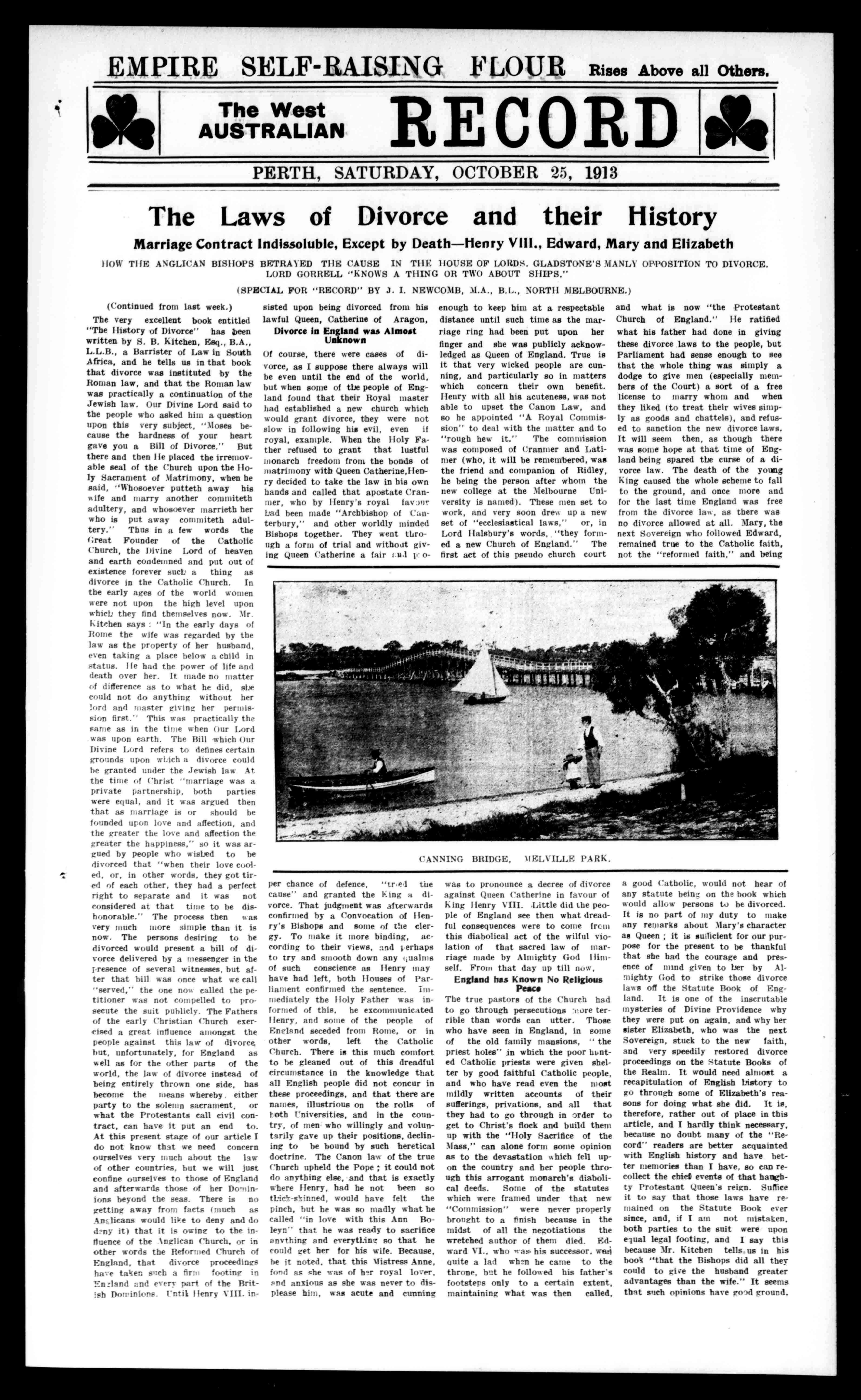
CANNINGBRIDGE, 11ELVILLEPARK.
becausein1857theDivorceBill whichwasintroducedintotheImperialParliamentwastheoutcomeof verywidediscontentwiththetreatmentofsuitorsintheEcclesiastical Courts.Bythatitisunderstood thatuntilthattimetheseoivorces wereonlygrantedbytheProtestant ChurchCourtsthroughParliament. NetbyLaw,butbyMutualConsent In1853aRoyalCommissionwasappointedtoinquireintothewhole question,andtheydecided,after hearingevidence,thatthe"marriage betweentwopersonscouldnotbe dissolvedbytheCourts,"orInother words,thatthesecularpowershad norightwhatevertointerferewith anythingecclesiastical,butbya strangecontradictiontheysaidthat they"couldhedissolvedbymutual consentoftheparties."Inallcases whereeitheroneofthepartyhad beenguiltyofmisconduct,theyhad toapproachParliamentandget"a privateActofParliament"foreach particularcasebeforetheycouldobtainthedesiredrelief.Atthattime anewofficerwasappointedtointervene,andwascalled"TheI;ing's Proctor."WestillhavesuchanofficerinourDivorceCourts,toarevent asfaraspossibleanycollusionbetweenthepartiesseekingadivorce foranyreasonexceptalegalone. WhentheBillwasbeforetheHouse ofLogsin1867theBishopofOxford,Dr.Wilberforce,wasroostanionstoputtheburdenmoreheavily uponthewifethanithadthenexist ed.Iamrathersurprisedatthis, havingknownHisLordshipinmy veryearlymanhood,andalways foundhimsuchakind-heartedfellowandabloodrelationofthegreat Wilberforcewholiberatedther.egro slaves,thatImustconfesstogreat sur,:risewhenIreadthesewordsin Mr.kitchen'shook,butIcertainly amnotpreparedtosaythatMr. Kitchenisnotcorrect.Stillitonly showshowmistakenyoungpeople canbeintheirestimateof theirelderswhomtheylookupto gridin- 7-)tos tt thewholeofthitdebate notoneChurchofEnglandBishop intheHouseofLordstriedtoprove, orevenii.adeasimpleassertion, thatmarriagewasindissoluble.CertainlytheBishopofExeterdidtry togetanopinionfromtheIlouseby sayingthat''theEmperorconstantinerefusedtogiveadecreeofdivorcetoanywifeunlessadultery wasprovedagainstoneoftheparties,andaddedwhathisLordship evidentlythoughtwasacon:incing argumentagainstdivorce,'Beesese itwasaCatholicinstitutionarolnot al'rotestantone."TheNish.'!,of St.Davidsaidthathewouldinject totheBillbecauseChristIli:nself hadnotmadeanylawsatall."But ifthatleshohidrememberedthat Christdidgivetwogreat"tei.laand[Lents,hewouldhardlyhave1..ade suchanonsemdcalremark.Thefirst coe.:eandeenv.asweallknow.isto loveGod,andthesecond7,)love oerneigh'oT.Probably,:1thesaid Bishophadanyconscienceatallour DivineLord'swordswouldhaveappealedtohiii.Itwillthuseseen thattheAnzlicanchurcLfellowed strictlytheruleofherselfishfounder.Henry allowingperfectfreedoeiinthedissolvingofthe .erriaget'e.e,,notherdeflees thithi-eeweeo-ertheAnglican ('herhofrecentyear=,isitsattitad,.towardsthisgreatquestionof divorce.votoneofherBish.rpsor Clerzyhasyetdaredtopublicly statethatheloo'sII'on,7r",);ii' oneoftheSacramentsinstitutedby Christ.Todosowouldnecessarily abonehdivorce.Somehavezoneso farastosayupontheirowninitiativethattheywillnotallowany cleryreanintheirdiocesetoremarryaglilty-partytoadivorce. TheyhavenotthelawoftheChurchtosupportthereinthose views,hutoneBishopwithwhomI waspersonallyacanainted.Dr.liarmer.thepresentAnglicanBishopof Rochester,saidatameetingofhis clergythathe"fullyintendedtoinhibitanyclergymanunderhis.lurisdictionwhocelebratedamarriage betweenpersonswhohadbeendivorced."and'nordertoemphasisethat decision.theBishopopenedhisGlad-
stonebagandproducedanumberof blankinhibitionformsreadytohe filledupwheneveroccaloonrequired.
HelplessandHumiliatingPusities AndweknowinAustraliathatsome oftheAnglicanBishopsarejustas anxioustostopthemarriageofguiltydivorcedpersons,yettheyare owerlessunlesstheygetauthority fromIllsMajestythepingandthe convocationsofCanterburyandYork i.ingthemthelawfulauthorityto carrythosethreatsintoeffect.InregardtotheEnglishdivorcelawat presentinforce,Ihavepreviously pointedoutthatuntiltheyear1857 itwasonlypossibletogetadivorce inEnglandthroughParliament,but itwasfoundtoactsoseriouslyagainstpersonswhowerehonestenough,but,likeagoodmanymore honestpeople,verypoor,thatrepeatedpetitionsandothermeansofapproachingParliamentwereresorted tointhehopethattheLegislature wouldhewillingtogivesomerelief tothosewhowereunabletospend hundredsofpoundsingettingaBill throughbothHousesofParliament. Butwithallthesepetitionsandagitations,nothingpracticalwasdone untilthelateMr.JusticeMarge,one ofherlateMajesty'sjudges,who wasoncircuitinoneofthecountry'sassizetowns,hadbrought beforehimamanwhowascharged andfoundguiltyofbigamy.InpassingsentencethelearnedJudgesaid totheprisoneratthebar:-
"Youhavecommittedacrime againstthelawsofyourcountry.Youshouldhavegonetothe ecclesiasticalcourts,obtaineda decreeamewl'etthoro,then havebroughtanactionatCommonI.awandrecovereddamages againstyourwife'sparamour. Armedwiththese,youshould haveapproachedtheLegislature andhaveobtainedanActofParliament.Thatwouldhavecost youmanyhundredsofpounds. Youprobablyhavenotasmany pence,butthelawknowsnodistinctionbetweenrichandpoor, thereforeyoumustsufferfor yourcrime.Youwillbeimprisonedforoneday,butasyou havealreadyexceededthattime, youwillbereleasednowbecause youhavebeenincustodyfromthe commencementoftheassizes." Thatcasecausedagreatstir,and thedrysarcasmofthelearnedJedge leftaverydee')impressionuponthe mindsofiiiei.,bersofbothdousesof Parliament,particularlyuponSir RichardBethell,whowasin1857 Attorney-GeneredintheImperial'Parliament.Ileatonceintroduceda Billforthe(nooseofesta'iliehing divorcecourtswithatriple tion--ecelesiasticeleiore" eItiiiralty.
GladstoneenteredaViolentProtest totheBill,andhekeot consistentoppositionagainsttheBill rightthroughallitsstares,butthe Attorney-GeneralhavingLeconte LordChancellor,usedothermeans todrivetheBillthroughboth!toupee.Whn u-on"h-sutiectofhraa'cingthesixthcommind!tient,thertrincellorsaidthat"the breakingofthatcimmailmentin womanwasanaberrationofthe heart-Inmanitwasasrrpriseof thesenses."Gladstonereeli-dinthe eoerseofhisvery_violentspeechagainsttheBillthat"thesolidarity andhealthofthesocialbodydepends uponthesoundnessoftheunit.The unitisthefamilyandthehingeof thefamilyistobefoundinthegreat anderofoendinstitution.ofmarriage.
werenoprecedentsforhimtofollow.Ileconsequentlyhadtobuild upthedivorcelaws.Ileissaidto li.oeruledthecourtwitharodof iron,butforallthathewaspersonallyverymuchlikedandsought afterinprivatelife.Arathercuriousremarkwasmadeabouthimby aladyofhisacquaintance,curiously enoughafterhisLordshiphad'oarried.Shesaid"Iwouldliketobe LadyHammen,becauseSirJames musthavesomegreatscandalsto tellhiswileabout."Thatladydid notknowthatjudgesandlawyers donottalkprofessionalbusinessand especiallyprofessionalsecrets,with theirwIves.Oncetheyleavetheprecinctsofthecourtortheirchambers allprofessionalbusinessisforgotten.Anotherjudgeverypopularwith everybodywhoknewhim,SirCharlesButt,followedSirRobertPhillamore,who,aswillberemembered, haswrittenseveralworksuponEcclesiasticalLaw.SirCharlesnever likedtotakedivorcecases,andhe alwayswentthroughtheminaspleasantandjovialamanneraswaspossibletodo.Anothergreatmanwas SirFrancisJeune,whowasPresident,in1891.LordCorrellwasanotherremarkable.ludge,butheshone mostbrightlyintheAdmiraltyDivisionofthecourt.Itisrelated thatasailorgoingbacktoPortsmouthafterhavinggivenevidencein anAdmiraltycasebeforeLordCorrell,remarkedtosomeofhiisfriends intherailwaycarriage"Nouse telling'ninolies-'eknowsathin ortwoaboutshins,'edo."
(Tobecontinued.)
OBITUARY.
onn'll,oflolyoake,receivedrecentlythesodnewsofthedeath ofhissister,SisterMaryAgnes, whichtookplaceatthePresentation Convent,Hobart,aftermonthsof cheerful,patientsuffering.ThedeceasedSisterwasanativeofVictoria,havingbeenhornatBacchus Marsh,1882,theyoungestofalarge family,fiveofethoniconsecrated themselvestothserviceofGodin religion,threeinthePresentation Order,Tasmania,oneaBrigidinein Victoria,andoneaLittleSisterof thePoorinSpain.SisterM.Agnes enteredreligioninthePresentation Convent,Launceston,onMarch25, 1903,afterteachingforsomeyears inthevariousconventschoolsinand aroundLaunceston,thedeceasedwas senttoLongford,wheresheremained forfouryears.Duringthoseyearsshe wasennteedinscholasticwor',.,she ammimmr1SIMEMMIN11...-
wontheaffectionandesteemofall withwhomshecameincontactby heruniformserenityandcheerful fidelitytoduty(saystheTasmanian "Monitor").FatherMonaghanwas presentattheendandgavethelast absolutionasshewanbreathingher lastsign.TheSisterswerealsopresentunitinginprayerforthedepartingsoul.Thefuneralobsequiestook placeatSt.Mary'sCathedral.SolemnRequiemMasswassung,the celebrantbeingFatherMonaghan, sub-deaconanddeacon,FatherCullenandtheVenerableArchpriestHennebry.HisGracetheArchbishop,assistedbyMgr.iloyne,presidedin copeandmitre,andgavethefinal absolution.Thefuneraltookplace immediatelyafterMass,theSisters walkinginprocessionbeforetheremainstothedooroftheCathedral, whiletheorganpealedforththesad strainsofthe"DeadMarchinSaul."
OnthearrivalattheCornelianBay Cemeterytheremainswerelaidto restinthatpartofGod'sacrereservedforthemembersofthePresentationOrder.Atthegraveside werepresenttheChildrenofMary, theboardersofSt.Mary'sCollege, whilehisGracetheArchbishop,attendedbyArchpriestilennehryand FatherMonaghan,readthefuneral rites.-R.I.P.
Religious Art Galen
244ELIZABETHST.MELBOURNE. 489GEORGEST.,SYDNEY.
PELLEGRINI&Co.
ManufacturersofReligiousStatuaryandallChurchMetalware.DirectImportersofChurchVestments andallkindsofDevotionalArticles. WholesaleandRetail.Ordersby postpromptlyexecuted.
J.SCALLY.Carrier
OALLSWILLBEPROMPTLYAllTENDEDTO.
PrivateAddress163EdwardStreet, Perth.
'PHONEtan.
Professional
NURSEBREHENEY(Certificated).
careofMrs.Hart,Fruiterer,Gtilde fordRoad,Maylands.OutdaorFracticeattendedinMaternity:.ndCeneralNursing.
NURSESKENE'SMATERNITY
HOME,157ClaisebrookRoad,East Perth.Sunerioraccommodationduringaccouchement.Moderate.
BRISBANE
WholesaleandRetail WineandSpiritStore
CornerBeaufortandBrisbaneStreets,Perth CHEAPESTSTORE
Percase.
SirJohnPowersThreeSAallowWlisky
..ameson6 Whisky
MitchellsImperialqrts.Whisky
i;en.eaImperialqrts.Whisky
BurkesBottlesWhisky
Powersl'otStill(ownbottling),Imp.arts
IowersPotStill(ownbottling),bottles
Power'sPotStill,bulk
ExtraSpecialMalt(10yearsinwood)
F.neOldScotch,imperialqrts.
FineuldScotch,bottles
FineOldScotch,Bulk
HennaingorMartell'sBrandy, HennessyorMartell'sBrandy, AustralianBrandy,alllines
OldFrenchCognac,ownbottling
Wolfe'sSchnapps,(frt.& --
Gladstonealsoclaimedthatthere shouldbeequalprivilegestoboth menandwomen.TheBillfinallybecamelaw,butdidnotgiveequal privilegestoboth.Sothatdivorce lawinFreelandsofaresitrefersto thecourt,canonlydatebackto 1857.rnderthenewActtheChief JudgewascalledtheJudgeOrdinary,butin1873underthenew"JudicatureAct,"theJudzeOrdinary wasstyledthePresident.Anumber ofmostablemenhavesuccessfully filledthepositionof'Presidentofthe DivorceCourt,butSirJamesHammen.in1872,wasthefirstJudgeto presideinthecourtsimplyasa JudgeinDivorce.liehaddifficult workinfrontofhimbecausethere
LemonHartRum,overproof
LemonHartRum,ordinary
FinestImportedPort
FinestImportedSherry
Penfold'sInvalidPort
Seppelt'sSherry
Houghton'sPort
IIoughton8Sherry
Iloriehton'sClaret
EnglishAle,StoutandLager
EnglidhAle,StoatandLager
Carlton,Vie.,Ale ......-
SwanAleorStout,EmuAleorStout
CastlemaineAleorStout
AllotherLinesatequallyreducedrates.
Deliverycity,Suburbs,oronrailsPerth. weightofcaseendcostofdeliverytoany
6/
6/9
6
6/ £8/L5/
6/9perdoz.
AssortedCasesmerleup. WriteforPriesLint,andsee nartoftheState.
PHONER67 AL5 C
4 73.tit."A..R41cord SATURDAY,OOTOBER35,1913.
5/9
INTHEWEST. Perbottle.
£3/3/
£3/6/
f3/15
£3/10/ 5/ £21181
£31101
£t/15/ 26/to30/pergall. 4/9 £21151
6/6
6/6
4/9
£3/5/ 4:6 £8/10/ 26/to30/
7/9
6/9
6/3
perPam-
L4/5/
£8/16/
22/17/6
5/6
5/6
5/
5/to7/6bottle.
£1/13/ 3/6 £11141 2/3 £1141 2/6 £1/6/ 1/9 12/9to13/6perdoz. £2/10/6to22/12/Per
7/
£8/3/6
4/ £2/5
to7/6bottle.
3/
rase. 8/6
perdoz.
M.O'DONOHOE,Licensee.
P.
a
1-1/: itecard.
HibernianAuttralasianCatholicBenefitSociety.
(ApprovedbytheHierarchyoftee andRegisteredundertheFriendlyaoeisties'Actsit1Auatzslair.a. ItsWatchwordsarea-RELiGiDN,NitTiONALIT.'.11THOLIOITY,LIENEVOLESNOS.
ItisESSENTIALLYIRISHandCATHOLICanditSPECIALLYAPPEALSTOCATHOLICYouthsdiscoid-
ingtheirSUPPORTandALLEGIANCE.BrancheswillbeestablishedisnayLOCALITYonmeinby theDISTRICTSECRETARYofarequisitionSIGNEDbyTENPERSONS,BasetiosedbythePRISEIT oftheDISTRICT,thenamesaidagesofintendingmembersbeingfullywtoutisthereqdittos.
s5oBRANCHESUllrougleouttheCommonwealthandNewZealand50,00omembennagk300,000fJ
Funds.FinancialHaltandMedicalAsitstaneeIseasesofSicknessGuaranteed.
NI(tmN ENTRANCIFEES.
MODERATECONTRIBUTIONS.
LoansAdvancedinLargeorSmallAmountsonApprovedCityandSuburbe
FreeholdProperties.
pratParkieuisirsocapplicatiotoA.E.FARMNIR,DistrictSecretary. No.HEagleChambers,Hay-Street,Perth.
Trees
InandAroundtheHome
MidPleasuresandPalacesthoughwemayroam, Beiteversohumble,there'snoplacelikehome
MyRosary
.Companionofmysorrowsandmy joys!
Ateveryeveyou'veheardmyvariedtale, Amidlife'ssternerduties,orits toys Sweet('hapletoftheQueenof Heaven!hail
Ilovethemysticcircleofthyway ItschainofsilverAves-likethe starsBedewedwithtearsatcloseofevery day, ThatImaysafelycrossth'eternal bars.
Ilearnedtotellthynotes,whileyet achild, Atmother'skneeinErin'crossthe seas Andnowthro'lonelyhushandmountainswild PealsforththemusicofthyMyste- ries.
Still,SacredAve,lingeronmytins Whenlife'slongdayisdrawingto aclose; Stilllinger,whileitssunyetlower dips; Stilllinger,whilearayoftwilight glows.
ENVOI.
Life'sdayisdone taBightsfail; ThenQueen.oftheMost flail T3ombala.
theflick'ring
IFolyRos'ry,
BlindComposer hones anewly-discover- edItaliancomposer,whoseworkis saidtoberemarkable,hasbeenblind frombirth.Heisaprofessorina schoolfortNeblindinRome,and hasarousedthepersonalinterestof QueenDowagerMargherita.Probably hishest'workisaMasswhichwas heardrecentlyfor.thefirsttimein Ilehasalsowrittenseveral symphonieswhichwillbeexecuted duringthenextconcertseason.
Can'tbeHidden
Goodnesscannotbehiddenvery long.Ifamanissincerelydoing God'swork,lovinghisneighbour, andattendingfaithfullytotheduties ofhisstateoflife,nomatterhow quietaadhumblehislifemaybe, somehoworother,likethefragrance fromahiddenflower,theperfumeof hisholinessria'lesitselfknownin theworld.Andweak,discouragedsoulsarestrengthened,and-evilmen arerebukedandputtoshame,bythe goodlifeoftheleastofGod'sservants.Letusnotfeel,therefore, thatagoodlifeiswithoutinfluence inthisworldthatseemssogivenovertothoughtlessnessandfrivolousness,andeventoworsethingsthan these.LetusnotimaginethatGod willallowtobelostthestrivings towardholiness,thequiet,faithful, earnest,dailylivingofthosewho love1111.1. TheprayeroftheCarmeliteinhercloister,theaspiration ofthehonestservantinthekitchen, theferventejectiletionoftheman inthestreetfacedbysomealluring temptation,-theseareunknownto theworld.hotthewarerecordedin theBookofTife.Theyarenotlost. -'SacredHeartReview."
TheShiedNeed
ThechiefneedoftheCatholicpress iscirculation.Thefriendshipand nelpthattheCatholicpressrequires isSystematizedAidinBehalfof Pirculation.AllCatholicpapersare meritorious.Eventhemostinsigni-ficantisdoingsomegood.Widercirculationwillgivethemmorepower, andatthesametimeimprovetheir service."-"CatholicCitizen."
PIJesuitontheSlavesof Fashion
PreachingatSt.FrancisXavier's, Liverpool,recently,FatherLucas, S..J.,M.A.,denouncedthepresent crazeforfashion,whichwasdetrimental,hesaid,tothe.realaimof life,thesalvationofsouls.Whether theyworethebeehivehat,orthe cartwheelhat,orwhetheritwas trimmedwithrosesorcauliflowers, itexcitedthepityoftheangels. WhethertheylivedanddressedaccordingtothefashionsofBondstreet,London,orBold-street,Liverpool,itmatteredlittleiftheyneg- lectedtheonegreatthingwhich alonedidmatter.Howtheydressed orhowtheyeatwasoflittleconser:uence.Itwasforthemtodressin accordancewithChristianprinciples, andtolivesoberly,and,sofarfrom beingslavestothefashionsofthe worldtolivethelifewhichGod purposedthemtolive.
AnapostleofCharity
FatherConrardy,whofor37years hasdevotedhislifetoworkamong lepers,hasbeengrantedasubstanGelsumbytheCantonGovernment, china,towardthecostoftheerectionoffifteenlargehousesonthe islandofSheklun7toaccommodatea growinglepercolonywhichwillexceed1000persons.Hisattentionwas firstdrawntotheconditionoflepersin1871,whenhewasinIndia, andfrom1876hehasdevotedhislife tothealleviationoftheirsufferings. IlelabouredinHonolulufrom1887 to1896,thenforayearinCanton beforetakinguphisresidenceatShe-
AnIrishTune
Willyoulistentothelaughofit, Gushingfromthefiddle; More'sthefaninhalfofit
Thane'enanIrishriddle.
Sure,it'snotafiddler'sbow
That'smakingsportsomerry
It'sjustthefairieslaughingsoIheardthemoftinKerry.
Willyoulistentothestepofit, Faith,thattune'sadaisy; Justtheveryleapofit
Wouldmakethefeetunaisy; Itoldyourtongues,yenoisyrogues, Andstopyourgiddyprancing; It'smecanhearthewesheebrogues OfIrishfairiesdancing.
Willyoulistentothetuneofit, Sweeterthanthehoney. I'dratherhearthecroonofit
Thangetamiser'smoney.
Sec-,myson.itmakesmecry-
Butdon'tplayanyother 11-yGodITwiththedaysconeby Idanceditwithyourmother. F.BLUNT.
IthinkthatIshallneversee
Apoemlovelyasatree.
Atreewhosehungrymouth.isprest
Againsttheearth'ssweetflowing breast
AtreethatlooksatGodallday,
Andliftsherleafyarmstojray
Atreethatmayinsummerwear
Anestofrobinsinherhair
Uponwhosebosomsnowhas
Whointimatelyliveswithrain.
Poemsaremadebyfoolslikeme, ButonlyGodcanmakeatree. -JoyceKilmerin"Poetry."
MustPlayManyFarts
"Theaveragecitypriestinthe courseofasingledayisfrequentlycalleduponinvariouscapacities," saystheBrooklyn"Tablet.""Ile mustbeawiseconfessor,acompe- tentmedicaladviseratthesickbed, aprudentlawyertothepoor,aju- diciousdispenserofalms,aproba- tionofficerfortheunfortunate,a highfinancierfortheparish,apolice- manfortheobstreperousinebriates, aschool-teacherandapulpitorator, aprominentcitizenwithareadyspeechforthepublicgood,acensor ofpublicmoralsandanexpertonthe moderndancesandthevulgardressesoftheday,an-employmentagent fortheindigentandareadyletter writer.Hehastoknowthe'phone numbersofthenearbyhospitalsand asylumsandbeinconstanttouch withthecharityollicialsofthediocese.Adramaticcoachhemustbe andthepossessorofamusicalear forprospectivechoirsingersawriterreadytodefendtheChurchfrom attacks,andareaderofthebest literaturetobecomeacquaintedwith thebestthought;astudentofthe latesttheologicalanddoctrinaldecisionsoftheChurchandajudgeof devotionalpractises; apassable judgeofarchitecturetoavoidbuildingmonstrosities,andapromoterof publicrecreation.Recitinghisdivineofficedaily,hemustreeard himselfasanollicialvoiceinthe Churcl.'schantofpraisetoGod,and asthecelebrantoftheHolySacrificeasanintercessorbetweenGod andmanforthelivingandthe dead."
CallingforReligiousinstruction
The"Congregationalist,"anonCatholicpaper,inarecentnumber, thussoundsatruththathasbeen andisinsistentlyemphasisedbythe CatholicChurch:-
"Newspapers,socialworkers,teachersarecomingbackwithrenewed forcetotheconvictionthat'religion liesatthefoundationofsoundand cleanlife.'Thereisnothinginalgebratoshowayoungmanhowto facethemightymoralproblems whichhemustsolvelongbeforehe leavesschool.Geometrymayshow himthatastraightlineistheshortestdistancebetweentwoplaces,but itfailstohelptodrawastraight lineinconductandcharacter.There aretemptationstohemet,choices tobemade,burdenstobeborne. difficultiestoheovercomewhichneed moralstamina.HereisachallengeendachancefortheChurch.Byits SundaySchools,youngpeople'ssocieties,boys'clubs,KnightsofKing ArthurandQueensofAvalonitis meetingtheneedinpart,butnever didourvonthrequiremoralandreligions morethanto.day. Theconditionswhichconfrontusare trumpetcallstothechurchtogive
theyoungpeoplewithinandwithout herwallstrainingincharacterand Christianlife.Whatarewegoingto doaboutit7"
Aye,that'sthequestion! When thespiritofselfishnessiseliminated fromthecounselsofournon-Catholicbrethren,theywillprobablyimbibethewisdomoftheCatholio Churchinregardtotheupbringing oftheiryoung.
PiThoughtfortheDay
ThecureforSocialistictheoryis moreprivateowners.Thecurefor race-suicideisachanceofadecent cottageandapatchofland.Relig- ionwillalwaystakecareofitself; forman,heheeversohumbleand unlettered,willneverceasetolift hiseyesfromthefurrowandlook withaweandwonderfulrestuponthe heavenabovehimwherehefeelshis Fatherabidesandwhitherhewillone day,hehopes,gotolookuponHis Face.-"NewWorld."
CuresatLourdes
AtthethanksgivingheldatParis onthereturnfrontLourdes,Father Baillymentionedseveralofthecures effectedthisyearatLourdes,which hecarefullyabstainedfromqualifyingasmiraclesuntiltheChurchhas proclaimedthemsuch.Ilesaidthat therehadbeenmorecasesofcure thisyearthanduringanyprevious nationalpilgrimage,andcitedsome ofthemostnotableachildoften withspinaldiseaseandaparalytic oywhotelegraphedtohismother, "Noneedtosendcarriagetostation.I.canrunlikearabbit."There werealsocasesoftuberculosisand purulentsoresamongstthechildren. Oftheadults,oneofthemostextraordinarycaseswasthatofMlle. Paquignon,whohadbathedinvain, butwassuddenlyhealedduringthe processionoftheSacramentthrough theranksofbedriddensick.Before thishappenedherconditionwasso alarmingthatDr.Lesage,hermedicalmaninParis,wastelegraphed for,andcamedownbythenexttrain. Whenhearrivedandfoundhercompletelycured,withouttitteringa wordthedoctor,withtears,wentto theGrottotoprayandgivethanks.
Besidescasesofwomen,Father Baillycitedthoseofseveralmen, amongstwhomareLouis'I'huneland JosephBaudier.Beforethepilgrimageleft26cureshadbeencertifiedby doctorsandmanyothersoccurred.It wasremarkablethatmostofthe curestookplacenotinthepool,but duringtheprocession.
Amongstcuriousmanifestations, FatherBaillygavethecaseof"pro- videntialsubstitution"whereawomanprayedthatshealightloseher sightifitcouldberestoredtoa friend,andthishappenedunderconditionswhichseemtoallowofno physiologicalexplanation.-London "Standard."
CalendarfortheWeek OCTOBER.
Newmoon,Oct.29,10.29
rises.
Firstquarter,Nov.6,2.34a.m.;full moon,Nov.14,7.11a.m.Lastquar- ter,Nov.21,3.56a.m.;newmoon, Nov.28,9.41a.m. Sunrises.Sunsits. 1-setarder 5.21 6.40
SATURDAY,OCTOBER25,1913.
a
7
27-Monday 28--truesday 5.24 29-Wednesday 5.23 30-Thursday 5.22 31-Friday 5.21 NOVEMBER.
26-Sunday
4
Sun
5.26 5.25
(.35 6.36 6.36 6.37 6.38 6.39
.111. Eunsets.
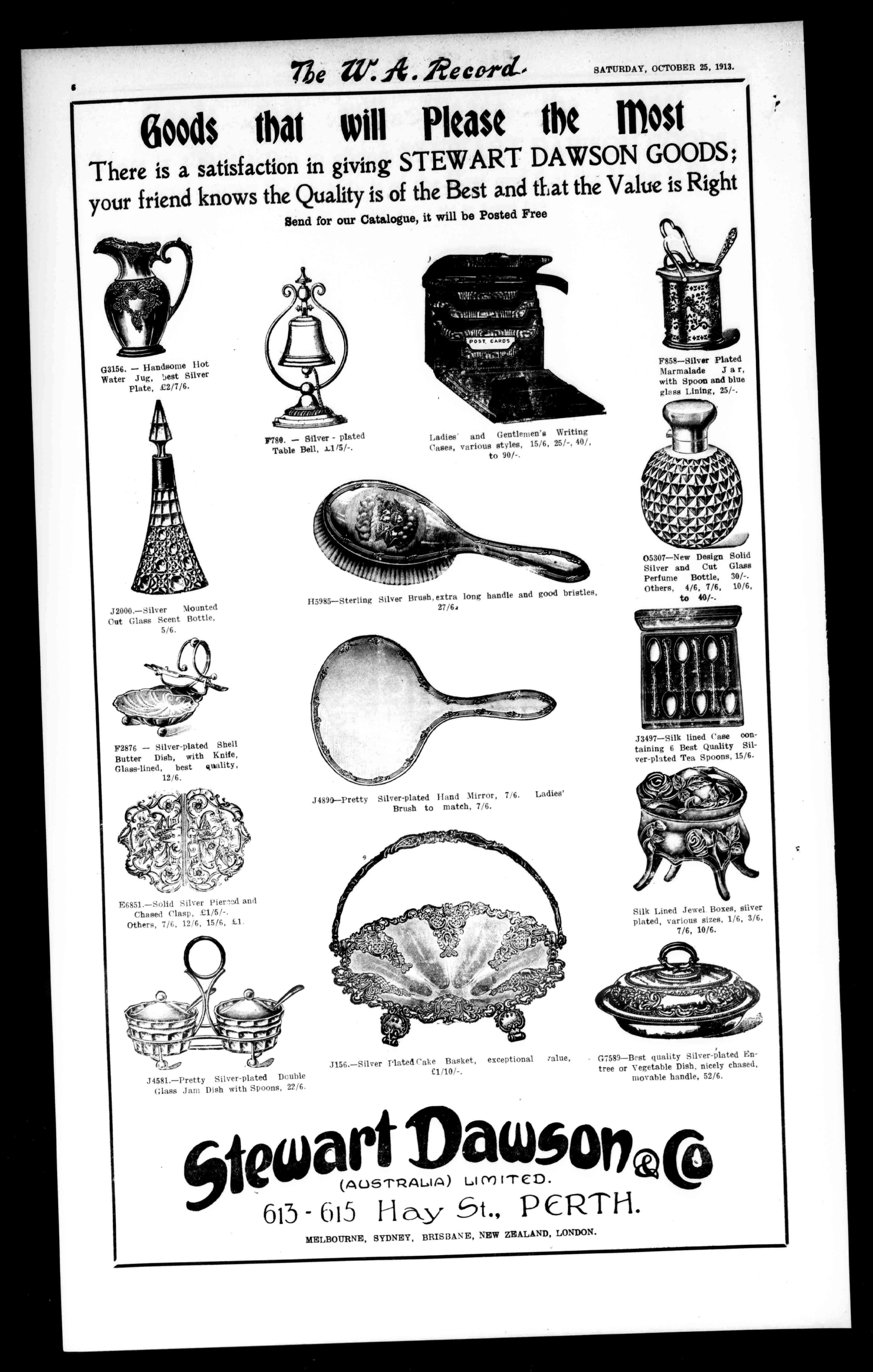
neARecord, SATURDAY,OCTOBER25,1913. GoodsthatwillPleasethemost ThereisasatisfactioningivingSTEWARTDAWSONGOODS; yourfriendknowstheQualityisoftheBestandtLattheValueisRight SendforourCatalogue,itwillbePostedFree G3156.-Handsome!lot WaterJug,'jestSilver Plate,£21716. F780.-Silver-plated TableBell,.t..1 J2000.-SilverMounted OutGlassScentBottle, 5/6. F2876-Silver-platedShell ButterDish,withKnife, Glass-lined,bestquality, 12/6. E6851.-SolidSilverPierleAand ChasedClasp,L1/51-. Others,7/6,12/6,15/6,1.1. J4581.-PrettySilver-platedDouble GlassJamDishwithSpoons,22/6. Ladies'andGentlemen'sWriting Cases,variousstyles,15/6,25/-,40/, to90/-. H5985-SterlingSilverBrush,extralonghandleandgoodbristles, 27/6, .14899-PrettySilver-platedHandMirror,7/6. Brushtomatch,7/6. Ladies' J156.-SilverPlatedCakeBasket,exceptionalialue, C1/10/, F858-SilverPlated MarmaladeJar, withSpoonandblue
glassLining,25/-.
05307-NewDesignSolid SilverandCutGlass PerfumeBottle,30/-. Others,4/6,7/6,10/6, to 40/-.
.J3497-SilklinedCasecontaining6BestQualitySilver-platedTeaSpoons,15/6.
SilkLinedJewelBoxes,silver plated,varioussizes,1/6,3/6. 7/6,10/6.
91e(1)(AUSTRALIA)Lim "C 6i3-6i51-lySt.,PRTH. MELBOURNE, SYDNEY, BRISBANE,NEW ZEALAND,LONDON.
G7589-BestqualitySilver-platedEntreeorVegetableDish,nicelychased, movablehandle,52/6.
QUEENSLAND
Sixty-fivelittlechildren,underthe supervisionoftheSistersofMercy, madetheirfirstHolyCommunionat St.Brigid'schurch,RedHill.Fa- ther siveMcCarthypreachedanimpressermonontheHolyEucharist ontheoccasion.TheFirstCommu- nicantswereprovidedwithbreakfast attheConventbytheSistersafter theMass.FatherMcCarthywaspre- sent. 11.411.
AgardenfeteinaidofIinswich RoadChurchwasopenedintheState School,.1unctionPark,recentlyby hisGraceDr.Duhig.Theweather conditionswereexcellent,andalarge crowdofvisitorsfromallpartsof thedistrictandsuburbs,manyof whomweremembersofotherdenom- inations,werepresent. IIisGrace wasmet,onarrival,byFathersJ. O'Leary,M.Jordan,andW.Lee.The variousstallswerewellpatronised, andabriskbusinesswasdonethroughout.Thebazaarwasagreat success..
HisGracethe('o-adjutorArchbis- hoppaidhisfirstollicialvisitto Toowongrecentlyandadministered theSacramentofConfirmationtoa largenumberofcandidates.Holy \lasswascelebratedbyhisGrace, assistedbyFatherLee.Afterthe MassMr.T.O'Sullivan(theAttorney-General)readanaddressofwelcomeonbehalfoftheclergyand eari-hioners,andpresentedhisGrace ithapurseofsovereigns.Thegath- eringembracedmenprominentinthe rofessionalandcommerciallifeof thedistrict.HisGracegreatlyap- preciatedthewarmthofthewelcome extendedtohim.
FatherM.O'Flynnwasentertained bythechildrenofSt.Patrick's SchoolonthefeastofSt.Michael, hispatronsaint,andpresentedwith atokenoftheirfriendship.Therev. ratherthantedthechildrenfortheir compliment,andtreatedtienttore- freshnentg.
FatherNI.Wolfe,.P.P.,of('hilders, was,recently,seriouslyillinthe Materhospital.
Anoldandhighlyrespectedresid-entofGlamorganValewaslaidto restrecentlyinthepersonofMrs. D.De-yer.Thedeceasedwas72years ofage,andwasoneoftheearliest settlersinthelocality,havingresid- edthereformorethan46years.She leavestwosonsandfivedaughters, twoofwhom,SisterMkBarbaraand SisterNI.Cosines,areSistersof Mercy.R.I.P.
FatherWireByrnehasbeenap- rointedassistanttoFatherO'Brien, ParishpriestofBoonah.Thework oftheparishhasgrownconsiderablywithinrecentmonths.
Alargenumberofpeoplevisited NudeeeCollegerecentlytowitness thelayingoftheFoundationStone ofthenewchapel.Theplatform where-ntheCoadjutorArchbishop, clergy,Brothers,andseveralold Brothers'boysassembledwasgaily decoratedwithflags,andsurrounded byabodyguardofliherniansinfull regalia.Thosepresentbesidesthe Archbishopincluded;tev.FathersMc- Goldriee,Lee,Goaen,Dorrigan, Walsh,Rev.BrothersMcGee(Princi- palNudgeeCollege),Barrett,O'Brien andCulligan,lion.F.McDonnell, Messrs..II.MacrossanandJ. Fihelly,NI's.L.A.,T.J.O'Shea,P. W.Shannon,W.C.Ilorstmann,J. T.Fahey,J.F.Donovan,Dr.Brooke Kelly,J.Bergin,andP.A.O'Sul- livan,.1.W.O'Mara,P.J.McDermott,I.S.O.,N.Nlacrossan.W.H. Clarke,D.C.Macgroarty,Captain latworthyandDr.Crowe.Rev.Bro. McGee,onbehalfoftheBrothersand studentsoftheColleze.tendereda hearty-,velcometohisGrace.Inmak- ingananpealforfundstocarrycut thenecessaryadditionsundertaken betheBrothers,hisGracesaid:The hristianBrothershadn.verbefore madeadirectappealtothepeo- rleofQueenslandforassistvoceand theyweremakingitnowforamost
AustralianeatholicNews
worthyobject.Intheirownunos- tentatiousmanner,theyhadunder- takenagreatandnoblework-not onlyfortheChurchinQueensland, butfortheStateatlarge.In Queenslandduringthelast40years theyhadbeenbuildingupasplendid systemofeducation,andtheyhad shownresultsthathadentirelysur- passedthebrightestexpectationsof theirsupporters.NudgesCollege alonewas Brothers.acredittotheChristian TheBrothersschoolshad beencalled,andverydeservedlyso, bytheverydistinguishedGovernorof Queensland,SirWilliamMcGregor,anationalasset.EveryChristianBro- thers'schoolwasanationalasset. OutofNudgeeCollegealone,3,000 studentshadpassedduringthelast 20years.Those3000studentscame fromallpartsofQueensland.Many werefillinghonourableandimport- antpositionsinParliament,inthe learnedprofessionsandinthecom- mercialcirclesineverycityand townin Christi-theland.Therefore,the nBrothershadeveryright tomakeanappeal-anappealnot onlytoarestrictedareasuchas Brisbane,buttheyhadaclaimon alQue,nsland."
IntheLordMeathEmpireDay (h'illengeCupandLeagueoftheEm- pireeergonalprize,forallschoolsof theEmpire,EileenRyan,ofAllItat- lowsconventSchool,daughterof 11r.D.G.Ryan,postalinspector, wasthirdonthelistofthefivecom- petitorswhoreceivedhonourable mentionfortheessayon"TheDeveloerirentofRailwaysThroughouttheBritishEmpire."Essayswere rec=itedfromQueensland,NewSouth Wales,Victoria,Transvaal,Rhodesia, Canada,India,NewZealand,Barba- does, Grenada,Bahamas,FalklandIslands, andmanyotherpartsof theBritishEmpire.Thejudgeswere: ProfessorGardner,NI.A.(University ofLondon),Rev.J.0.Bevan,M.A. welleeeofPreceptors),an1SirPhil- lipHutchins,K.G.S.I.,Chairmanof theLeagueoftheEmpire.Thisyoung lady(saysthe"CatholicAdvocate")asalsothewinnerofthegoldme- dalrecentlypresentedbytheSocie- tyforthePreventionofCrueltyfor theiressay,andsheandhergoodteachers(theSistersofMercy)are tobecongratulatedonhersuccess.
Mr.andMrs.LuigiBenvenuiti,of Brisbane,whohavebeentravelling ontheContinentduringtheirstay inRonie,withothers,receivedthe Papalblessing.HisHolinessexpres- sedhisdelightinahappyseeechat geeingthevisitors,manyofwhom werefromAmericaandtheyfrom Australia.Everywordhespo't.ewas distinctlyheard.
010410
FatherPotter,ofWarwic'e,ispro- secutingapersonalanddirectap- pealtohisparishionersforfundsto wipeoutthedebtontheChristian Brothers'schoolandtiePresbytery. liehasbeenthroughthecountrydis- tricts,andmetwithsuchencourag- ingresponsesthathefeelsassured ifthetownspeoplecontributeonthe samescaleasthecanntrypeople,his hopetostriveofftheaholeofthe debtof£1,100bytheendoftheyear willherealised.
NEWSOUTHWALES
Thefoundationstoneofthenew presbyteryatPortlandwasblessed byhisLordshipDr.Dunne,ofBathurst,recently.Thepresbyterywl.'en completedwillcostabout£1,200. flisLordshipcomplimentedFather O'Brien,thepriestinchargeofthe parish,onthegoodworkaccomplish- edbyhimsincehisappointment,18 monthsago.InthattimeFather (iBrienhadpracticallyclearedoffa heavychurchdebtanddidmany worksofaprogressivecharacter. FatherO'Brien,inhisreply,spoke ingreatpraiseofthegenerosityof thepoorerpeople,whoseself-secriecebuilttheirchurchesandschools. ee
TheMaristBrotl.ers'highSchool ex-Students'Associationheldtheir secondannualdinnerinSargent's rooms,George-street,Sydney,re-
cently.Mr.W.A.Oonroy(presid- ent)presidedoveragoodgathering amongstwhomwereRevs.Brothers BorgiaandEdwin(St.Joseph'scol- lege)andDionysius.BrotherBorgia, replyingtothetoastof"Our Guests,"said,speakingfromarelig- iouspointofview,theprinciplewas stilltruethatasCatholicstheywere notintheworldtoworkoutonly theirownsalvation,buttohelpfel- low-Catholicsandfellow-mentowork outtheirs.Itwastheirdutytojoin inandidentifythemselveswitheveryrec.ementthattendedtowardsthe extensionanddevelopmentofCatho- licidealsandoftheCatholicChurch, Averyenjoyableeveningwasspent.
er ThenewChurchoftheSacred Ileart,Surnmerhill(Gresford)was openedrecentlybyhisLordshipDr. Dwyer,ofAlaitland,inveryinclem- entweather.Notwithstandingthe heavyrainalargegatheringofthe parishionerswerepresent.HisLord- shippresidedattheMass,whichwas celebratedbytheRev.FatherKiernan.FatherNouyoux,Superiorof theSacredHeartFathers,delivered theoccasionalsermon.Thetotalcost ofthebuildingwas£62216s3d.On theoccasionofthelayingofthe foundationstone£35514swastaken incash.Attheopeningthecollec- tionrealised£229Os6d.Thedebt onthechurchnowstandsat4,38is ed.FatherKiernanandhisparish- ionerswerecongratulatedbyhis Lordshiponwhattheyhaddonefor religioninthespaceoftenmonths.
ThebazaarheldinaidoftheSac- redIleartChurchandSchoolsat Ternora,andwhichwasopenedby thePremier,Mr.W.A.Holman,dur- ingshowweek,wasagreatsuccess. Theparishpriest,FatherDwyer,was exceedinglypleasedwithtieresult. Thenettprofitwillheabout£540.
TheII.A.C.B.Societyannualpicnic washeldatOlympicGrounds,Botany,recently,andwasattendedby over3,000persons.Theeventwas the[Twatsuccessfulyetheld.
Therecentchurchparadeofsailors fromtheR.A.N.fleetatSt.Alery's Cathedralattractedalargecongre- gation.About170menunderLieut. Walsh,R.A.N.,marchedfrontFort Macquarie,viaMacquarie-street,to St.Mary'sCathedral,Theywereaccommodatedwithseatsinthecentre ofthenave,beforetheHighAltar. HisExcellencytheStateGovernor, SirGeraldStrickland,waspresent inWindsoruniform,andwasatten- dedathisseatinthesanctuaryby CantainTalbot,A:D.C.,andthe lion.J.L.Trefle,M.L.A.(Minister forLands).Alsointhesanctuary :rethelion.JohnMeagher,k.C.- 5.0.,M.L.C.,CharlesRegan,K.('.- S.C.,J.LaneMullins(l'apalChaniberlainl,andMessrs.TigheRyan,W. J.Spruson,andM.Meagher,ofthe OrderoftheCrossProEcclesiaet Pontifice. TLmeMissesStrickland, whohadonlyreturnedtoSydney fromGilgandrathatmorning,were presentinthecongregation,accornpaniedbyColonelCampbell,A.D.C., alsohisHonourJudgeHeydonand Mr.JusticeEdmunds.
HighMasswascelebratedbythe Rev.P.J.Murphy(secretarytohis GracetheArchbishop),withtheRevs J.NI.KellyandT.J.Kingasdeaconandsub-deaconrespectively.Rev. E.Brauer(DeanofSt..Patrick'sCollege,Manly)wagmasterofceremonies,andtheRightRev.Monsignor P.L.Coonan,P.P.,V.G.(Forest Lodge),presided.TheRightRev. insienorO'Tlaran,P.D.,p.ADar-
lingburst),RightRev.Monsignor O'Brien,D.D.(RectorofSt.John's College),VeryRevT.O'Reilly,11.P., V.F.(Parramatta),andtheRev.J. O'Gorman(AdministratorofSt. Mary'sCathedral)werealsopresent. Theprocessionfromthesanctuary wasledbythePapalKnightsand thestudentsofSt.Patrick'sCollege, Manly.Theoccasionalsermonwas preachedbyMonsignorO'Brien, U.D.Duringthecourseofhisre- marksthespeakerremindedhiscon- gregationthat,likethemenofEze- chias,theywerebandedtogetherfor agreatcause,andtheirwatchword shouldbe"GodandCountry."God aboveall,forallmanlyvirtueswere foundedupontheprinciplesofHis teaching.Allshouldseekfirstright- eousness,justice,andtruth,and thereaftershouldstandfirmtode- fendthecountrygiventothemby God,andshouldbepreparedtoshed theirbloodinthecauseifnecessary. "Farwoulditbefrommyinten- tion,"saidMonsignorO'Brien,"that byanywordsofmineIshouldstir upbitterfeelingbetweenlimnand man;butwehaveagreatmission giventous.Itisthedutyofmen andoftruepatriot,todefendtheir country,and,ifnecessary,todiefor it.Thatisnotunjustwarfare,and theyoungAustralianfleet,whichwill growyearbyyear,willnotbeused foroffenceorforwarsofconquest. Itwillformthefirstlineofdefence tokeepinsafetythetemplesyou haveraisedtoGod,andtoprotect thehearthsofthepeople.Therefore,gofortharmedwiththearmourof justiceandtruth.Farawaymay thedayhewhenyoumaybecalled upontodefendyourcountry.Culti- vateinyourselvesthatspiritofloy- alty,thatstrongdevotiontoduty, andthatundyinglovetothegreat countryGodhasgivenyou.Itisdestined,Ibelieve,toactagreatpart inthehistoryoftheworldinthe future,andyoursbeittoseethat, sofarasinyoulies,nothingshall interferewiththecompletefulfilment ofthatgreatdestiny."
FatherBazin,whohasbeendoing missionaryworkatWallisIsland,is onavisittoSydney.
de.ee
Whilstattemptingtostopapair ofponiesfrontbolting,whenopening agate,onhisreturnfromBendemur,FatherO'Connor.ofArmidale, hadhisarmbrokenthroughcoming incontactwithoneofthewheelsof thebuggy.
OP. MissStasiaO'Dwyer,apupilofthe MonteSantAngeloCollege,North Sydney,wasverysuccessfulatthe recentLisinoreMusicalFestival.In thepianofortesolocompetition,for rerformersunder15years,Professor Ives,ofMelbourne,said:"Shewas welltrainedandfluent.AlisoO'Dwyer isalittlemusicianinherfingertips andniind,withafinetouchandwith naturalmusicalfeeling."Intheviolinsolo,MissDwyergainedsecond Ilace.
BranchesoftheCatholicFederationhavebeeninauguratedatAriiiidalT,Parramatta,Kensington,O'Con- nell,Portland,Annondale,Goulburn, andGulgong.Atanearlydateseve- ralotherswillbeopened.
TheBazaarinaidofSt.Mary's churcle,Alurrumbarrsh,rentised0600. .s. Anewpresbyterywasopenedre- centlyatIleleneburzbyMonsignor O'Brien,RectorofSt.John'sCol- lege.SinceFatherAI.O'Kelly'sad- venttotheparishinaveryshort
SATURDAY,OCTOBER25,1913. ne11:A.AecoPyla
W.A.REGISTRYOFFICE BOOKANDARTDEPOT. BAIRD'SARCADE.HAY-STREITIINT'eANC11 T111.11PRosienee, MissA.Taylor,Proprietress. CatholicChurchandConventRequisites. RegistryOffice. Specialattentiongivestoseleettos ofservants.Hotelandprivate.Rise IAi-.
ofthelateSir.JohnRobertson. withMissWinifredo'Connor,sedeet daughteroftheluteMr.Justice ("Connor,tookplacequietly-atSt. Mary'scathedralrecently.Father Sberinperformedtheceremony. asTomeetthechaplainoftheAustralianfleet,theRev.FatherP.J. Gibbons,theoqicialsofSt.Mary's cathedralwereentertainedatluncheonatet.Mary'safterhighMass recently.Thehealthofthechaplain v.-esproposedbytheRightRev.MonsignorO'Brien,andsupportedbyhis HonourJedeeEdmunds.Amongst thosewhoattendedwerethediocesanconsultors,theknightsandchamberlains,andthetreasurersandtrustees,oftheCathedral.
VICTORIA
TheconcertorganisedbyMissM. Salts,oneoftheladiesrfthe('atbolicWomereeclub.wasthemostsuccessfulofanyyetheldbytheclub.
Theglut,tootialcrowdedinevery part,andsemucheethat_V.'s.MarionMillarknowlisadeapology fortheunexpectedcrowding,andat thesametimevoicedanappealfor thebuildingofaWoman'sClubthat wouldmeetthegrowingneedsand prezressoftheirinstitution.onlya shortwhilearotheclubwasstarted. UnderthedirectionofitscleverpresidentandtheC07%:f.ittee,ithasbeen wonderfullysuccessfal.andis!zealhiewithgreatenceeiraeereent. es.
whopresentedthenasamemorialof herdeceasedrelativesandfriends. Themostrev.prelatewaswelcomed bytheRev.D.B.\elan,i'.P.,the VeryRev.Dean%elan,P.P.(Colach Rev.G.Bartley,Rev.J.Ellis,Rev. K.Walsh,Rev.P.O'Brien,andrepresentativemembersofthelaity. The11.A.C.B.S.andtheI.N.F. formedaguardofhonour..talum, matedaddressrichlyboundinmoroccowaspresentedtohisGracefrom theclergyandparishioners.Theoccasionalsomarkedthefirstanniver naryofhisGrace'sconsecrationas coadititorArchbishop.
ministeredthelastsacraments. A RequiemMasswassaidforthereposeofthedecea.iedssoul.P..I.P.
TheBallaratLadies'Branchofthe II.A.c.B.S.isoneofthemosttheirishingsocietiesinthatcity.The presentnumericalstrengthofthe branchis167members,anditsfunds areinaveryhealthycondition. oror
ofeeryhundredofhisharvestfor theChurchofOurLadyofVictories. 4p.
TheRev.Father(*Wiley,eel.,conductedtheRetreatfortheclergyof thedioceseofSale.
SOUTHAUSSRALIA
AllenDoone,thepopularyoung Irishactoreeanaeerwhohasworked himselfintotheaffectionso7theIrieh inMelbourne,addedanothersuccess tohismanyothereecco...sse-einthe winningoftherecentwellingrace forthechampionshipofthetheatricalprofession.Itwasaneventwitneseeelby3.000or4.tesepeople,and agorAperformance.Allensported thecoloureoftheGaelontheoccasion,andwonwiththemthreelength,'aheadefhisnearestopponent.
--
Thereweealarfeconererationat St.Monica'schurch.Estmndon.on theoccasionostherecentvisitof hisGracethe intor-Archbishop (Dr.Mennixetoblessandunveiltso teantlulstainedglass::mows.the jeiaforee.erladyirush.ner
Attheopeningofabazaarat SurryIlillsrecentlyinaidofthe parochialdebt,Dr.Mannix,speahine onCatholiceducationandtheefforts madebyFatherGleesonandhis parishionersforthemaintenanceof theirschools,humorouslyreferredto "theminoritiesoftwohemispheres.InMelbourne,saidhisGrace.there werepersonswheweregreatlyconcernedabouttheallegedgrievances that!eightpossiblysomedaypress uponaminorityattheotheret:et theworld-flaiightere-whatwigcalledtheloyalminorityinIrelanJ-a verymeekandgentlesectionofthe community. iLaughter.,ifcourse. theirpropernamewasthedisloyal minorityinIreland.Ileeondered thattheMelbournechampionsof minorities,couldnotextendtheir rathytoanoepreseedenda erongede.inoritv'epeenearerhome tothe:.deanI'lster.Aoeiause. Thatcatholicminoritythattheyhad in'theirowneidst,asnotadisloyalminority.ForCatholicsloved ATIMraliawereproudofeestrala andmaybereliedontolefendAustraliaifevereheneededdefence.IeePlarse..But,ontheotherhand, theyclaimedequalrightswiththeir felherent,zeneandtheywouldnever restcontentIntl'thepresentunjust educationelloadwasliftedfrom theirshoulders.Applause.People wonderhowwecantalksooften, andsomuch,ofourerievances.They forgetthatwearealwaysbending underonrburden.andthatwefeel itthee.orewhenweareforced,by bazaarsandotherdevices,topurchasefreedomofconscienceinaland thatclaimstobefree. es.
Mr.PatrickO'Connor.atonetime prominentlyassociatedwiththeCatholicYountAVM'sSocietyatBallarat,andaleadingmemberofSt. Patrick'scathedralchoir,diedina privatehospitalatHeidelberg.re ciently.InhislastillnesshewasattendedbyFatherParker,whoad-
Themission-gi:EnbyFathersCassimirandCharlesatHamiltonwas markedatitsclosebyamagnificent demonstrationoffaith.Over GOO adultsmadetheGrandCommunion ofThanksgiving,thetotalnumberof Communicantsduringthefortnight ofthemissionbeingover1,909.At coleraineFatherCharlesconducteda week'smission.Thechurchthroughoutwascrowdedtothedoors. A specialsermonontheImmaculate conceptionwespreachedbythemissinner.Alargenumberofnon-catholicsattendedandlistenedtothe instructions.AsatHamilton,a largeadultconeregationmadethe GrandcommunionofThanksgiving andReearation.
HisLordshipDr.Reville, t., paidaneeiscrealvisittoNlaron,. andconfirmedanumberofcandidates.HisLordshipwasassistedby FatherO'carroll(rector).andVery Rev.FatherHunt,c.SS.R.
Atameetingofthepriestsofthe DioceseofSale,atthecloseoftheir recentretreat,aproposalwasput forwardtoestablishaProvident fenlforsic.-andinirepriests.detailsofwhichwillbeavailable shortly. IT.Phelanisassuredof thesupportofhispeorleinplacing thisLislatestandverynecessary undertakingonasatisfactoryfinancialbasis.
HisGracetheArchbishoplaidthe foundationstoneoftienewCatholic Schoolandconventatkorumburra recently.Onlyafewmonthsagothe pro!ecttoolshape.FatherRafferty andhisparishionerslostnotime debatingmatters,butsettowork withdeterminationandenthusiast,+ tocommencebuildingoperatons. Evennon-catholicassistancea-as notwanting.andthefirstdonation oftenguineascamefromanon-Catholic.DeanIlegartypreachedan eloquentandrigoroussermononthe occasion. Asubscriptionlist -'--as opened-ndaeoet(Annvia:stree-thpd.
AnotherVictorianfarmerhasofferedFatherRobinsononebarout
ThedeathofDr.ReginaldMorton Brady,ofRedhill,occurredatthe NursingSisters'Privatehospital, NorthAdelaide,recently.Thedeceasedgentlemanwasthesecondsot ofMrs.G.Holland,formerlyof Petersburg,hutnowofPortPixie. Ilereceivedhisearlyeducationat theCatholicSchool,Petersburg,and laterattheChristianBrothers'College,Adelaide,wherehehadasuccessfulcar.:er.Ilewasexceedingly toeularamm;his!aloeCollegians andageneralfavourite.Forsome timehewasstationedintheUnion BaneatkadinaandAdelaide.After afewyearsheretiredandtookup thestn'dyofmedicineattheJeereonMedicalCollegeofPhiladelphia.
Oncompletinghiscoursehevisited IrelandandEngland.andreturnedto Australialastyear.whenhewas marriedtoMissBrowning.Untila shortwhilebeforehisdeathhepractisedhisprofessionatRedhill.Duringthelaststatesofhisillnesshe reeereeiHolycommunionseveral times,andwasanointedandreceivedthelastblessingfromthebands oftheVeryRev.PriorSpence,O.P. Thelastprayersatthegravewere recitedbyFatherDenny.R.I.P.
[Jeer7000personswitnessedthe processionoftheBlessedSacrament inthegroundsofthePassienist MonasteryatGlenOsmondonthe secondSundayofthismonth.FatherLee,M.S.11.,preachedtheoccasionalsermon.Thecanopy-bearers weretheSpeaker(lion.L.O'Loughlin,.Senatorlion.J.V.O'Longlin.llr.J.Travers,M.P.,Dr.Gunson,CouncillorP.A.KileyandMr. AustinHewitt.
AbeautifulstatueofOurLadyof theImmaculateConceptionhasbeen presentedtotheChurchofSta.PeterandPaul,Gawler.bythemembersoftheGawlerBranchofthe II.A.C.B.S.inmemoryoftheirlate reedicalc!cer,Dr.J.P.Maher.
GRAINING. KALSOMINING.
JW.EDMONDSON
FAINTER.PAPERH1NGER.are DECORATOR.
BetimatesGiven. WorkmanshipGuaranteed. laTATEST.WESTIF.F.DPIRVILLE
I e ARecol-ci SATURDAY,'OCTOBER25,1913. BOANBROS.' WestAustralia'smammothnewStores! GRANDSPRING-SUMMERSHOWISNOWON! THISISi7NDOUBTEDLe"ellEMOSTNOTEWORTHYANDATTRACTIVESHOWOFTHENEWSEASON'SGOODSF.. HELD1" PERTH.OURBEAUTIFULWINDOWDISPLAYSAREANOUTSIDEEVIDENCEOFINSIDEQUALITY. eeedforBooms'mew GeneralIllustratedCatalogue Postedfreeonapplicition. Withtheaidefonrcatalogs*,(*wintryReesidenteemeticallyhaveDiens'elAMNI0T11STOREANDIIUGESTOCKplacedattheirown doors.Thecatalogieisreallyamoatusefulreferencebookandbyconsultingitfrequentlyyo-iwillsaveMANYPOUNDSdurtnetheyear. EVERYTHINGFOREVERYONEAT BonBros. TheUniversalProviders WellingtonandMurrayStreets,Perth whilehehasraisedL.1,279towards thebuildingandfurnishingofthe presbytery.Thedebtonitatthe openingwas1.:300.Acollectionwas taken':aandC3525swashandedin. .4. Themarrisieeof%Ir..elex.MiklouhoMaclay,eldestsonofthelate BaronMiklouhoMaclay,andgrand, son
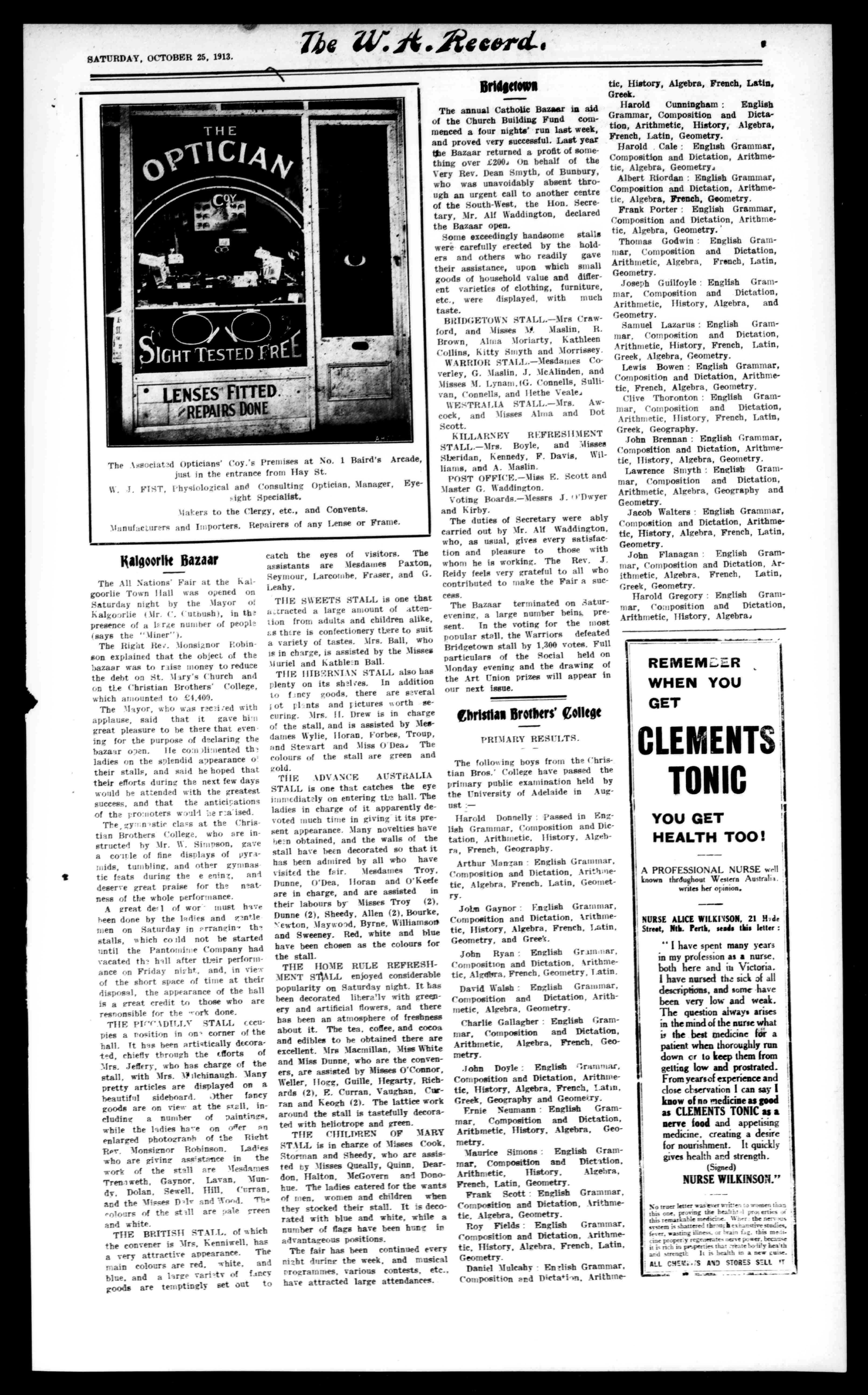
W.J.FIeT,
TheigA.Aceord.
Bridgeton
TheannualCatholicBazaarinaid oftheChurchBuildingFundcommencedafournights'runlastweek, andprovedverysuccessful.Lastyear theBazaarreturnedaprofitofsomethingover200,onbehalfofthe VeryRev.DeanSmyth,ofBunbury, whowasunavoidablyabsentthroughanurgentcalltoanothercentre oftheSouth-West,thelion,Secretary,Mr.AIfWaddington,declared theBazaaropen.
Someexceedinglyhandsomestalls werecarefullyerectedbytheholdersandotherswhoreadilygave theirassistance,uponwhichsmall goodsofhouseholdvalueanddifferentvarietiesofclothing,furniture, etc.,weredisplayed,withmuch taste.
BRIDGETOWNSTALL-MrsCrawford,andMisses Mf. Maslen,H. Brown,AlmaMoriarty,Kathleen Collins,KittySmythandMorrissey.
WARRIORSTALL.-MesdamesCoeerley,G.Muslin,J.ilcAlinden,and MissesII.Lynam,(G.Connells,Sullivan,Connells,andletheNeale,
11ESTRALIASTALL.-Mrs.Awcock,andMissesAlmaandDot Scott.
KILLARNEl' REFRES1111ENT STALL-Mrs.Boyle,andMisses Sheridan,Kennedy,F.Davis,Williams,andA.Maslin.
POSTOFFICE.-MissfeeScottand MasterG.Waddington.
tic,history,Algebra,French,Latin, Greek.
laroldCunningham English Grammar,CompositionandDictation,Arithmetic,Ilistory,Algebra, French,Latin,Geometry.
HaroldCaleEnglishGrammar, CompositionandDictation,Arithmetic,Algebra,Geometry, AlbertRiordanEnglishGrammar, CompositionandDictation,Arithmetic,Algebra,French,Geometry.
FrankPorterEnglishGrammar, CompositionandDictation,Arithmetic,Algebra,Geometry.
ThomasGodwinEnglishGrain'ornpositionandDictation, Arithmetic,Algebra,French,Latin, Geometry.
JosephGuilfoyleEnglishGrammar,CompositionandDictation, Arithmetic,History,Algebra,and Geometry.
SamuelLazarusEnglishGrammar.CompositionandDictation, Arithmetic,History,French,Latin, Greek,Algebra,Geometry.
LewisBowenEnglishGrammar, CompositionandDictation,Arithmetic,French,Algebra,Geometry.
('liveThorontonEnglishGrammar,CompositionandDictation, Arithmetic,History,French,Latin, Greek,Geography.
JohnBrennanEnglishGrammar, CompositionandDictation,Arithmetic,Ilistory,Algebra,Geometry.
-ightSpecialist.
%takerstotheClergy,etc.,andConvents.
IlanufaceurereandImporters.RepairersofanyLenseorFrame.
KalgoorlieBazaar
TheAllNations'FairattheKalgoorlieTownhallwasopenedon SaturdaynightbytheMayorof Kalgoerlie %Ir.('.lowishr,inthe presenceofalereenumberofpeople saysthe"Miner"r.
TheRightRe:.MonsignorP.obinsonexplainedthattheobjectofthe bazaarwastorlistmoneytoreduce thedebtonSt.%Itry'shurchand ontheChristianBrothers'College, whichamountedto121.401.
TheMeyer,whowasroce:et!with applause,saidthatitgavehie, greatpleasuretohetherethateven insforthepurposeofdeclaringthe bazaaroxen.Ilecumdielentedth ladiesontheselendidappearance theirstalls,andsaidhehopedthat theireffortsduringthenextfewdays wouldheattendedwiththegreatest success,andthattheantici!.atione ofthepromotersw ::ereaeised.
The,eyen'stirclaesattheChristianBrothersCollege,whoareinstructedbyfir.W.Sieleson,gave acoilleoftinedisplaysofpyr1mids,tumbling,andothergymnais ticfeatsduringtheeerring,ani deservegreatpraisefortheneatnessofthewholeperformance.
Agreatde1 ofwormeethave beendonebytheladiesandemote seenonSaturdayinerranginethe stalls,ahighcoildnotbestarted untilthePantomimeCompanyhad vacatedthe.hellaftertheirperformanceonFridaynilht,and,invie-. oftheshortspaceoftineattheir disposal,theappearanceofthehall isagreatcredittothosewhoare resnonsibleforthe"arkdone,
THEPIew%DILLSSTALLrccie Piesaroeitieninon,cornerofthe hall.fthesbeenartisticallydocorated,chieflythroughtheeffortsof Mrs.Jeffery,whohaschargeofthe stall,withMrs.IPilchinanzh.Many prettyarticlesaredisplayedona beautifulsideboard..etherfancy goodsareonvie"attheseen,includinganumberofaaintioes, whiletheladieshaeeonogeren enlargedphotoeranhoftheRight MonsignorRobinson.lades whoaregivingareestanceinthe workofthestallareMesdames Trete,weth,Gaynor.Levan,Mundy.Dolan.Sewell.inn.Cerran andtheAfieeeeD'lvandWood.'Tele ',ewersofthestillare:.aletereen andwhite.
catchtheeyesofvisitors.The assistantsareMesdamesPaxton, Seymour,Larcombe,Fraser,andG. Leahy.
THESI%EETSSTALLisonethat iomractedalargeamountofettenlionfromadultsandchildrenalike, thereisconfectionerytheretosuit avarietyoftastes..1Irs.Ball,who Isincharge,isassistedbytheMisses %luridandKathleenBall.
THE1111VeRNI1NSTALLalsohas plentyonitsshelves.Inaddition tolimygoods,thereareioveral ofJlntsandiicturesorthsecuring.Mrs.II.Drewisincharge ofthestall,andisassistedbyMesdamesWylie,Horan,Forties,Troup, andStewartandMiss0Dea.The coloursofthestallaregreenand gold.
THE%DVANCE AUSTRALIA
STALLisonethatcatchestheeye immediatelyonenteringthehall.The ladiesinchargeofitapparentlydevotedmuchtimeingivingititspresentappearance.Manynoveltieshave lie:nobtained,andthewallsofthe stallhavebeendecoratedsothatit hasbeenadmiredbyallwhohave visitedthefeir. %IesdameeTroy. Dunne,O'Dea,!loranandO'Keefe areincharge,andareassistedin theirlaboursbyMissesTroy(2), Dunne(21,Sheedy,Allen(2),Bourke. %-ewton,Alaywoed.Byrne.Willianisoo andSweeney.Red.whiteandblue havebeenchosenasthecoloursfor thestall.
TIIEIIONIERULEREFRESIIAIENTSTALLenjoyedconsiderable PopularityonSaturdaynight.Ithas beendecoratedliterailywithgreeneryandartificialflowers,andthere hasbeenanatmosphereoffreshness aboutit.Thetea,coffee,andcocoa andediblestobeobtainedthereare excellent.AirsMacmillan,MissWhite andMissDunne,whoaretheconveners,areassistedbyMissesO'Connor, Weller,Hoer,Guille,Ilegarty,Richards12t,E.Curran.Vaughan,CarranandKeogh(2eThelatticework aroundthestallistastefullydecoratedwithheliotropeandgreen.
THECHILDRENOFMARY
VotingBeards.-Messrs.1.i'Dwyer andKirby.
ThedutiesofSecretarywereably carriedoutbyMr.AlfWaddington. who,asusual,giveseverysatisfactionandpleasuretothosewith whomheisworking.TheRev.J. Reidyfeelsverygratefultoallwho contributedtomaketheFairasuccess. TheBazaarterminatedonSaturevening,alargenumberbeing,present.Inthevotingforthemost pormlarstall,theWarriorsdefeated Bridgetownstallby1,300votes.Full ParticularsoftheSocialheldon Mondayeveningandthedrawingof theArtUnionprizeswillappearin ournextissue.
fhrlstlaiBrothers'College
PRIMARYRESULTS.
Thefollowingboysfromthe('brietianBros.'Collegehavepassedthe primarypublicexaminationheldby theUniversityofAdelaideinAugust:-
HaroldDonnellyPassedinEnglishGrammar,CompositionandDictation,Arithmetic.History.Algebra,French,Geography.
ArthurAlaneanEnglishGrammar, compositionandDictation,Aritheietic,Algebra,French.Latin,Geometry, JohnGaynorEnglishGrammar, cempoaitionandDictation,%rithinetic,History,Algebra.French.Latin. Geometry,and(.reel.
JohnRyanEnglishGrimear, compositionandDictation.%rithnietic,Alesehra,French.Geometry,Latin.
DavidWalshEnglishGrammar, CompositionandDictation,Arithmetic,Algebra,Geometry.
CharlieGallagherEnglishGrammar,CompositionandDictation, Arithmetic,Algebra,French,Geometry.
JohnDoyleEnglishGramniar, CompositionandDictation,Arithmetic,History,Algebra,French,!Atm. Greek,GeographyandGeometry. ErnieNeumannEnglishGrammar,compositionandDictation. Arithmetic,History.Algebra,Geometry.
LawrenceSmythEnglishGrammar,compositionandDictation, Arithmetic,Algebra,Geographyand Geometry.
.JacobWalters- EnglishGrammar, compositionandDictation,Arithmetic,History,Algebra,French,Latin, Geometry.
.JohnFlanaganEnglishGrammar,compositionandDictation,Arithmetic,Algebra,French,Latin, Greek,Geometry.
HaroldGregoryEnglishGrammar,CompositionandDictation, Arithmetic,History.Algebra,
THEBRITISHSTALL.ofwhich theconvenerisMrs.Renniwell,has averyattractiveappearance.The raincoloursarered.-vhite,and blue,andalargerari=ty fence. goodsaretemptinglysetoutto
STALLisinchargeofMissesCook, StormanandSheelly,whoareassistedtyMissesQueally,Quinn.Deardon,Halton.McGovernan-1Donohue.Theladiescateredforthewants ofteen,womenandchildrenwhen theystockedtheirstall.Itisdecoratedwithblueandwhite,whilea numberofflagshavebeenhungit vantazeoustaitions.
Thefairhasbeencontinuedevery night+trinetheweek,andmusical eroerammes,variouscontests.etc.. haveattractedlargeattendancee.
MauriceSimonsEnglishGrammar,CompositionandDictation. Arithc.etic.History. Algebra, French,Latin,Geometry.
FrankScottEnglishGrammar. CompositionandDictation,%rithmetic.Algebra,Geometry.
RoyFieldsEnglishGrammar, compositionandDictation.Arithmetic.History,Algebra.French.Latin. Geometry.
DanielMuleabv- EnelishGrammar. CompositionendDictaeirem,Arithine-
SATURDAY,OCTOBER25,1913.
TheIssociatedOpticians't'oy.'sPremisesatNo. 1Baird'sArcade, justintheentrancefromHaySt. IhveiologicalandconsultineOptician.Manager,Eye-
REMEM-.:R WHENYOU GET CLEMENTS TONIC YOUGET HEALTHTOO! APROFESSIONALNURSEwe'l knownthrdughoutWesternAustral,, writesheropinion, NURSEALICEWILKIISON,21H Street,Nib.Peril,serfsthisletter "lhavespentmanyyears inmyprotectionasanurse. bothhereandinVictoria. Ihavenursedthesickofall descriptions,andsomehave beenverylowandweak. Thequestionalwaysarises inthemindofthenursewhat ifthebestmedicinefora patientwhenthoroughlyrun downcrtokeepthemfrom gellingtowandprostrated. Fromyearsefexperienceand closeckervationIcansayI knowofnomedicineugeed asCLEMENTSTONICasa nervefoodandappetising medicine,creatingadesire fornourishment.Itquickly giveshealthandstrength. (Signed) NURSEWILKINSON." NoMACSletterLi wrktenaworsenthan tbaox,Fir.;eingthehea!tiotpr,guru thisTemarkaILle W.,.thener,Lcs sera..i*halteredthrw4111etit:in.:tirewadies. fe,er.wastinggine...Librain(..g.thisLar.i. peopeeitregeateate.nervepower.beca,-., itisrviiinFewer:it,that ii'vSeahi, arrisirencit IL SeahhinanewoiLLe. ALL AIMSTORESS:LL'T 1
Deblidestrialtroubles
AFOLLOWEROFTIMHEALY.
London,Oct.13.
TheDublinTramwayCompanyand otheremployersareissuingnotices fortheevictionofmanyoftheir tenantswhoareamongthestrikers. ThetradeunionsinvariousBritish townsaresendingfoodandmoneyto thedistressedpeople.
Thegrainmerchantshaveobtainedsufficientlabourtoenablethemto resumedeliveriesofwheatandmaize. onSaturdaythestrikerssmashed thewindowsofatramcar.Subsequentlyagangofmenvisitedthe tenementsoccupiedbynon-strikers eindterrorisedthefamiliesofthe latter.
Mr.Murphy,oneoftheleadersof theemployersopposedtothestrikers,statedtoanintervieweryesterday:-"Ineverhadastrikeinany ofinymanybusinessesuntilLarkin appearedonthescene.Weemployers willnotrecogniseanyunionledby Lar'en,whohasbrcetenmanyagreements.Syndicalismandsympathetic strikeswillspelldisastertothe orkriten.''
Mr.Larkin,theDublinstrikeleader,speakingintheMemorialHall, inLondon,yesterday,attackedthe officialLabourparty."Mr.Snowden,"hesaid,"hasneverdonea day'smanuallabourinhislife.The Labourpartyiskeepingtheproletariatdownandthisabominablehypocritetellsyounottohaveasympatheticstrikebecauseyouwoulddiscommodethepublic."
TheCountessofWarwick,whoeas introducedtothemeetingas"our co.'radeandfellow-rebel."promised toactastreasurerofafundtobring thechildrenoftheliublinstrikersto Englandandtoboardthem.
patronisedtheBazaarealiberally. IlealsofeelsdeeplygratefultoFatherCrowleyandthemembersof theIrishWarPipeBand,whosepresencewashighlyappreciated.
Thestallsweremosttastefullyarranged,andaveryprettydisplayof fancyworkandornamentswasmade ateach.
W.A.G.R.STALL.-Stallholder.Mrs Leonard.AssistantsMrs.Leslie, Mrs.Quilty,Mrs.Bates,Mrs.heaps, Mrs.Ison,Mrs.Clohessy,MissLoughridge,MissDawson,MissHughes, Miss;raceandMissAllen.
JENN.AiPULLINANDIRISIITOWN
STALL.-StallholdersTheMisses
.Morris(2),assistedbyMissesYates (2),MissKelly,MissKenneally,and Alias/lannagan.
ST.JOBEI'1l'8STALL.i-EltallholderMrs.Cody.AssistantsMrs. McInerney,VI:s.Rielly,Mrs.Ruediger,Mrs.Melvin,Mrs.Purser,Miss Kean,MissMcDonald,MissRoss, .MissConnell,MissMabelMartin, MissMaryAtkinson,MissCissie Daly,MissConnieMcCorry,Miss MadgeMcInerney,MissJ.II.Connell,andMrs.Donovan.
(11ILDRENOFMARYSTALLAND REFRESHMENTS.-Stallholler MissN.Walsh.AssistantsMrsRoy Forward,Mrs.Morrison,MissM. Walsh.MissM.Lee,MissA.Foley, MissMohr,MissV.Allbeury,Misses Barry(2),MissMelvin,MissesDoherty(2),MissWilcox,MissMcInerney,MissVeraDaily,MissHollingsworth,MissDowney,andMissLynch.
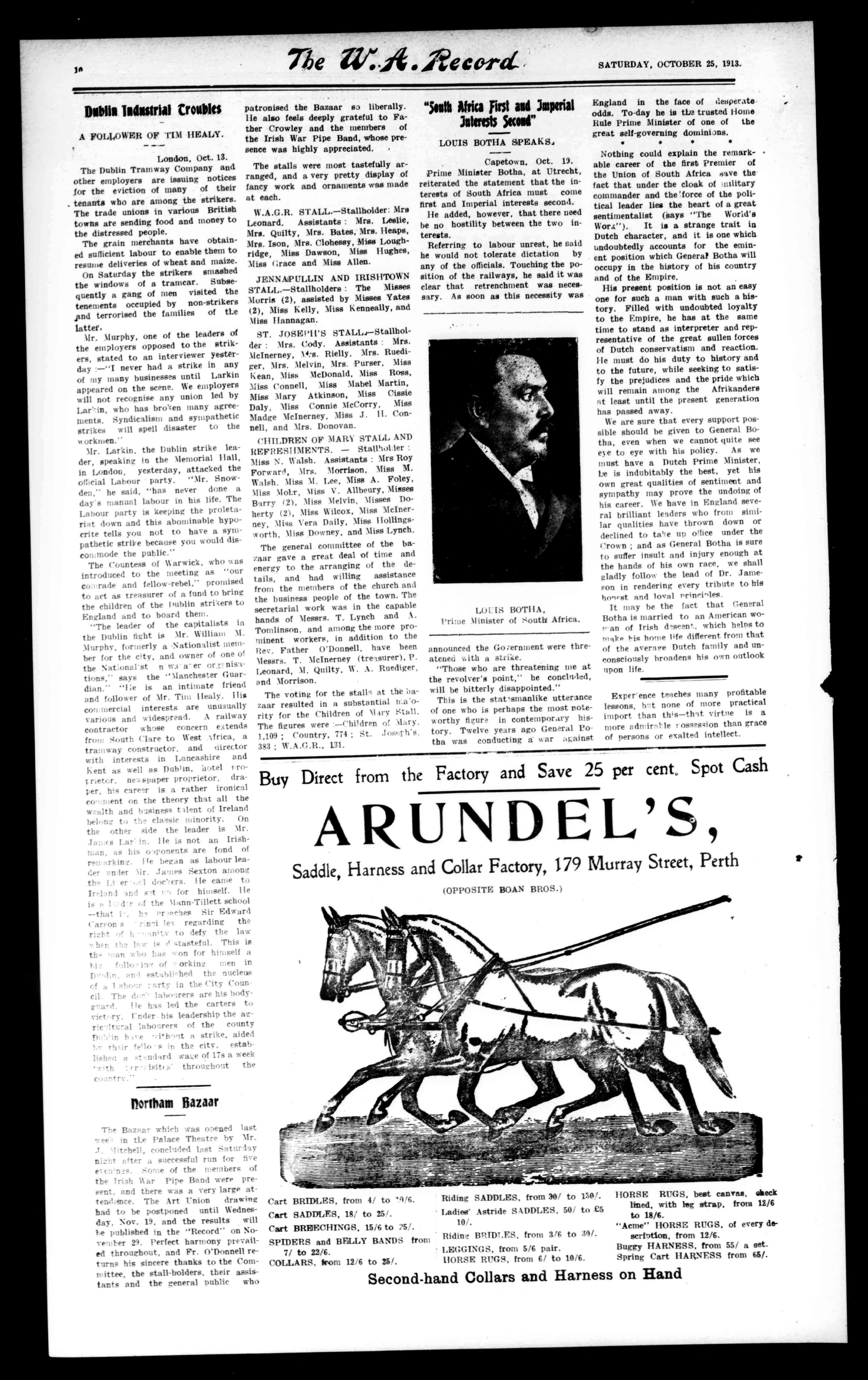
"SoulbAfricafirstaidJawing MewlsScar
LOUISBOTIIASPEAKS.
Capetown,Oct.19.
PrimeMinisterBotha,atUtrecht, reiteratedthestatementthattheinterestsofSouthAfricamustcome firstandIniperialinterestssecond. Headded,however,thatthereneed benohostilitybetweenthetwointerests.
Referringtolabourunrest,hesaid hewouldnottoleratedictationby anyoftheofficials.Touchingthepositionoftherailways,hesaiditwas clearthatretrenchmentwasnecessary.Assoonasthisnecessitywas
Englandinthefaceofiletiperate odds.To-dayheistintrusted!lows RulePrimeMinisterofoneofthe greatself-governingdoiuini.rns.
NothingcouldexplaintheremarkablecareerofthefirstPremierof theUnionofSouthAfricasavethe factthatunderthecloakofeilitary commanderandthe'forceofthepoliticalleaderliestheheartofagreat sentimentalist(gays"TheWorld's Wore").Itisastrangetraitin Dutchcharacter,anditisonewhich undoubtedlyaccountsfortheeminentpositionwhichGenera?Bothawill occupyinthehistoryofhiscountry andoftheEmpire.
"Theleaderofthecapitalistsin theDublinfightisMr.WilliamM. Murphy,formerlyaNationalistmemberforthecity,andownerofoneof theNat:onalertn a-erore,nisetions,"saysthe"ManchesterGuardian.""Leisanintimatefriend andfollowerofMr.TileHealy.His niercialinterestsareunusually variousandwidespread. Arailway contractorwhoseconcerneetends frierSouthClaretoWestNfrica,a traniwayconstructor,and(erector withinterestsinLancashireand KentaswellasDublin.Hotel(Totrieter.neespaperproprietor,draper,hiscareerisaratherironical eceementonthetheorythatallthe wealthandbusinesstalentofIreland belenetetheclaesieminority.On theothersidetheleaderisMr. JaeesLa!'in.IleisnotanIrishman.ashisoeronentsarefondof ref:erkine.liebeganaslabourleaderimierMr.JamesSextonamong theLier 1doceers.Ilecameto Iritleniandset forhimself.Ile isaIed-roftheTenn-Tillettschool -thati h.>eepeeesSirEdward carFon reriileeregardingthe rieht enitvtodefythelaw henteelaiFe'etasteful.Thisis the'Hanwin)haswonforhimselfa 11:felloineof -orkinemenin Deel.n.an'!estebliehedthenucleus efe1eeeerartyintheCityCouncil.Thedi''la!u arehisbodygea-e.liehasledthecartersto vier,ry.lender_hisleadershiptheaerieetural:aboerersofthecounty D-ernhtee-,Pereitastrike,aided theirfellerainthecite.estab1iFeeeaste,nrierdwiteeof17saweek efthirfeet(ethroughoutthe co-.'r;
BonhamBazaar
Thegeneralcommitteeofthebazaargaveagreatdealoftimeand energytothearrangingofthedetails,andhadwillingassistance fromthemembersofthechurchand thebusinesspeopleofthetown.The secretarialworkwasinthecapable handsofMessrs.T.LynchandA. Tomlinson,andamongthemoreprominentworkers,inadditiontothe Rev.FatherO'Donnell,havebeen Messrs.T.McInerney(treasurer),P. Leonard,M.Quilty,W.A.Ruediger, andMorrison.
Thevotingforthestall"attheitazaarresultedinasubstantialreaetrityfortheChildrenofMaryStall. Thefigureswere:-childrenofMary. 1,109; Country,774;St.Joeerh's, 383;W.A.G.R..131.
LOCISBOTIIA, PrieleMinisterofSouthAfrica.
announcedtheGo:erninentwerethreatenedwithastriae.
"ThosewhoarethreateningIncat therevolver'spoint,"heconcluded, willbebitterlydisappointed." Thisisthestatesmanlikeutterance ofonewhoisperhapsthemostnoteworthyfigureincontemporaryhistory.TwelveyearsagoGeneralPothawasconductingawaragainst
Hispresentpositionisnotaneasy oneforsucharoanwithsuchahistory.Filledwithundoubtedloyalty totheEmpire,hehasatthesame timetostandasinterpreterandrepresentativeofthegreatsullenforces ofDutchconservatismandreaction. Ilemustdohisdutytohistoryand tothefuture,whileseekingtosatisfytheprejudicesandthepridewhich willremainamongtheAfrikanders atleastuntilthepresentgeneration haspassedaway. WearesurethateverysupportpossibleshouldbegiventoGeneralBotha,evenwhenwecannotquitesee esetoeyewithhispolicy.Aswe musthaveaDutchPrimeMinister, Lieisindubitablythebest,yethis owngreatqualitiesofsentimentand sympathymayprovetheundoingof hiscareer.WehaveinEnglandseveralbrilliantleaderswhofromsimilarqualitieshavethrowndownor declinedtotheeupofficeunderthe Crown;andasGeneralBotbaissure tosufferinsultandinjuryenoughat thehandsofhisownrace,weshall gladlyfollowtheleadofDr.Jameconinrenderingeverytributetohis heeledandloyalerineieles.
ItmayhethefactthatGeneral BothaismarriedtoanAmericanwoaanofIrishcilseent.whichhelm;to makehishomelifedifferentfromthat oftheaverareDutchfamilyandunconsciouslybroadenshisownoutlook uponlife.
Exper'enceteachesmanyprofitable lessons,hatnoneofmorepractical importthanthis-thatvirtueisa moreadmiretlerosseseionthangrace ofpersonsorexaltedintellect.
TheBazaarwhichwasorienedlast ate- intLePalaceTheatrebyMr. t.eitehell,concludedlastSaturday nizetafterasuccessfulrunforfive ecrenes.Someofthemembersof theTrishWarPipeBandwerepreFent,andtherewasaverylargeatteneence.TheArtUniondrawing badtobepostponeduntilWednesday,Nov_19,andtheresultswill hepublishedinthe"Record"onNove-eher29.Perfectharmonyprevailedthroughout,andFr.O'DonnellreturnshissincerethankstotheComteittee,thestall-holders,theirassistantsandthegeneralpublicwho
10 ne SATURDAY,OCTOBER25,1913.
BuyDirectfromtheFactoryandSave25percentSpotCash ARUNDEL'S, Saddle,HarnessandCollarFactory,179MurrayStreet,Perth CartBRIDLES,from4/to"1/6. CartSADDLES,18/to25(. Cart BREECHING'S. 15/6to?5/. SPIDERSandBELLYBANDS from 7/ to 22/6. COLLARS.from 12/6 to26(.
BOATBROS.) RidingSADDLES,from30/toleer'. Ladies'AstrideSADDLES.50/to£5 10/. RidingBRIDLES,fromV6to30/. LEGGINGS,from5/6pair. HORSERUGS,from6/to10/6. HORSERUGS,bestcanvas,shack lined,withlegstrap,front12/6 to18/6. "Acme"HORSERUGS, of everydseriDtlon,from12/6. BuggyHARNESS, from 55/ aset. SpringCartHARNESSfrom65/. Second-handCollarsandHarnessonHand
(OPPOSITE
51. Cutest1161pert EXAMINATIONINMUSICREBUT/1'S,1913.
ASSOCIATEDBOARDOFTHE R.A.M.ANDR.C.M.
AdvancedGrade.-PianoforteVioletBond;Singing,EileenMcMullin, FlorenceMcMillan.Intermediate Grade-Pianoforte,VeraPotter.Singing,KathleenMaryShine.Higher Division.-Pianoforte,EdithPass, IreneOhlenschloger;Singing,Josie Gettaz. f,owerDivision.-Pianoforte ErnieLuscombe,Jessie 1lamely, IreneSlyth,RosieHardie,Beatrice Guthrie,MyrtleHollis,ThelmaSpeiran;Violin,KildaHedges.ElementaryGrade-Pianoforte,SadieAbbott,genieMcGuinness,Kathleen McMullin,NellieWoodthorpe,Irene Robertson,StellaHolden,LilyFoley;Singing,MarionCooper,Doris Ashby.PrimaryGrade.-,Pianoforte, IvyKing.DorothyAbbott,Norman Richardson,CeciliaWilliams,Katie Clarke,AggieO'Connor,Thelma Woods,MaidaPalmer,DorisTomlinson,EileenGrennan;Violin,May Burton,LilyPeterson,RitaMcGerr, LennieBondSinging,Dorislied ges, 1tildehedges,Maggieilernan, BeatriceAlexander,BessieO'Connor.
TRINITYCOLLEGE.
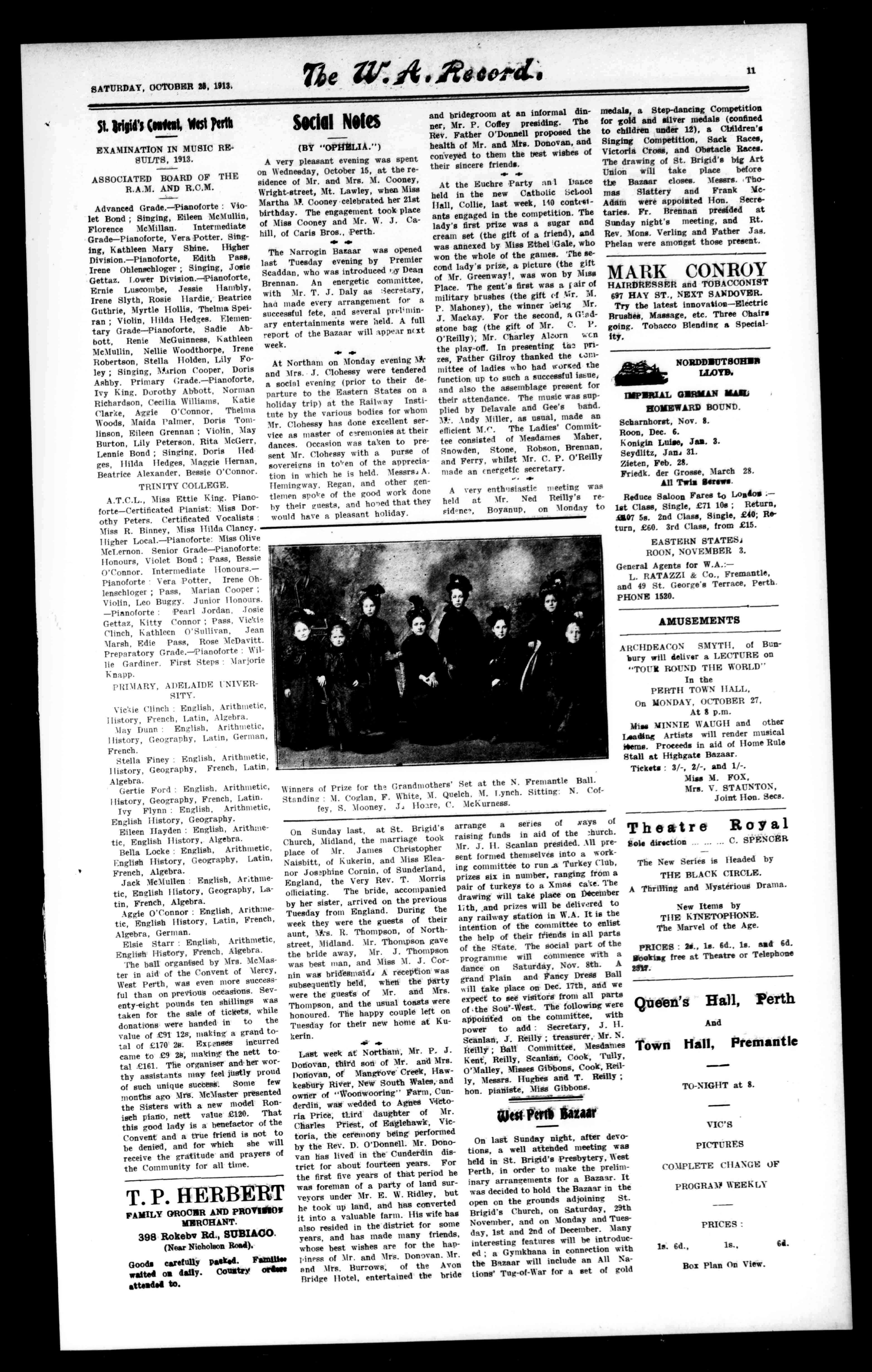
SKIMNotes
(BY"OPE-ELIA.")
Averypleasanteveningwasspent on11edneeday,October15,attheresidenceofMr.andMrs.M.Cooney, Wright-street,Mt.Lawley,whenMiss Martha\P.Cooneycelebratedher21st birthday.Theengagementtookplace ofMissCooneyandMr.W.J.Cahill,ofCatesBros.,Perth. ase.e.
TheNarroginBazaarwasopened lastTuesdayeveningbyPremier Scaddan,whowasintroduced,,fyDean Brennan.Anenergeticcommittee, withMr.T.J.Dalyas:secretary, hasmadeeveryarrangementfora successfulfete,andseveralpreliminaryentertainmentswereheld.Afull reportoftheBazaarwillappearmgt week. 4410
andbridegroomataninformaldinner,Mr.P.Coffeypresiding.The Rev.FatherO'Donnellproposedthe healthofMr.andMrs.Donovan,and conveyedtothemthehestwishesof theirsincerefriends.
A.T.C.L.,MissEttieKing.Pianoforte-CertificatedPianist:MissDorothyPeters.CertificatedVocalists: MissR.Binney,MissIIildaClancy. IhigherLocal.-Pianoforte:MissOlive McLernon.SeniorGrade-Pianoforte. Honours,VioletBondPass,Bessie O'Connor.Intermediate I(onours.PianoforteVeraPotter,IreneOhlenschloger;Pass,MarianCooper Violin,LeoBuggy.JuniorHonours. -PianofortePearlJordan,.Josie Gettaz,KittyConnorPass,Vickie Clinch,KathleenO'Sullivan,Jean Marsh,EdiePass,RoseMcDevitt. PreparatoryGrade.-'PianoforteWillieGardiner.FirstStepsMarjorie Knapp.
PRIMARY,ADELAIDEUNIVERSITY.
Vickie('finchEnglish,Arithmetic, History,French,Latin,Algebra. slayDunn English,Arithmetic, History,Geography,Latin,German. French.
StellaFineyEnglish,Arithmetic, History,Geography,French,Latin Algebra. GertieFordEnglish,Arithmetic, History,Geography,French,Latin. IvyFlynnEnglish,Arithmetic, EnglishIlistory,Geography.
AtNorthamonMondayeveningMir andMrs.J.Clohessyweretendered asocialevening(priortotheirdeparturetotheEasternStatesona holidaytrip)attheRailwayInstitutebythevariousbodiesforwhom Mr.Clohessyhasdoneexcellentserviceaswarderofceremoniesattheir dances.OccasionwastakentopresentMr.('lohessywithapurseof sovereignsinto'renoftheappreciationinwhichheisheld.Messrs..A. TIetningway.Regan,andothergentlemenspoveofthegoodworkdone bytheirenests,andhonedthatthey wouldhaveapleasantholiday.
AttheEuchreParty:m1Niece heldinthenewCatholic Hall,Collie,lastweek,110contestantsengagedinthecompetition.The lady'sfirstprizewasasugarand creamset(thegiftofafriend),and wasannexedbyMissEthelGale,who wonthewholeofthegames.Thesecondlady'sprize,apicture(thegift ofMr.Greenway!,waswonbyMiss Place.Thegent'sfirstwasaiairof militarybrushes(thegiftoftier.M. P.Mahoney),thewinnerheiegMr. J.Mackay.Forthesecond,aWadstonebag(thegiftofMr.C.1'. O'Reilly),Mr.CharleyAlzornecn theplay-off.Inpresentingtaxprizes,FatherGilroythankedthecommitteeofladieswhohadwontedthe functionuptosuchasuccessfulimam, andalsotheassemblagepresentfor theirattendance.ThemusicwassuppliedbyDelavaleandGee'sband. I!:.IndyMiller,asusual,madean efficientM.P.TheLadies'CommitteeconsistedofMesdames'Maher, Snowden,Stone,Robson,Brennan, andFerry,whilstMr.C.P.O'Reilly madeanenergeticsecretary, Averyenthesiestieieeetingwas heldatMr.NedReilly'sreBoyanup,onMondayto
medal',aStep-dancingCompetition forgoldandsilvermedals(confined tochildrenunder12),aChildren's SingingCompetition,SackRaces, VictoriaCross,andObstacleRaces. ThedrawingofSt.Brigid'sbigArt Unionwilltakeplacebefore theBazaarcloses.Messrs.ThomasSlatteryandFrank'dcAdamwereappointedHon.Secretaries.Fr.Brennanpresidedat Sundaynight'smeeting,andRt. Rev.Mons.VerlingandFatherJas. Phelanwereamongstthosepresent.
MARKCONROY
HAIRDRESSERandTOBACCONIST
697HAYST.,NEXTSANDOVER.
Trythelatestinnovation-Electric Brushes,Massage,etc.ThreeChairs going.TobaccoBlendingaSpeciality.
NO1IDDIUTSOHIR LLOYD.
lEIPMAIALGERMANMAIL HOMEWARDBOUND. Scharnhoret,Nov.8. Roon,Dec.6. koniginLuise,Jas.3. Seydlitz,-Jana31. Zieten,Feb.28. Friedk.derGrosse,March28. AllTwiaScrews.
ReduceSaloonFarestoLondos 1st('lass,Single,£7110e Return, eill075s.2ndClass,Single,£40;Return,£60.3rdClass,from£15.
EASTERNSTATESi ROON,NOVEMBER3.
GeneralAgentsforW.A.:L.RATAZZI&Co.,Fremantle, and49St.George'sTerrace,Perth, PHONE1520.
AMUSEMENTS
R('1!DEACONSMYTH,ofBunburywilldeliveraLECTUREon "TOURROUNDTHEWORLD" Inthe PERTHTOWNIIALL, OnMONDAY,OCTOBER27, AtItp.m.
MewMINNIE%WWIandother LoadingArtistswillrendermusical ieems.ProceedsinaidofHomeRule StallatHighgateBazaar.
Tickets:3/-,2/-.and1/-.
MissM.FOX, Mrs.V.STAUNTON, Jointlion.Secs.
EileenHaydenEnglish,Arithmetic,EnglishHistory,Algebra. BellaLockeEnglish,Arithmetic, EnglishHistory,Geography,Latin, French,Algebra.
JackMcMullenEnglish,Arithmetic,EnglishIlistory,Geography,Latin,French,Algebra.
AggieO'ConnorEnglish,Arithmetic,English1IistoryLatin,French, Algebra,German.
ElsieStarrEnglish,Arithmetic, EnglishHistory,French,Algebra. TheballorganisedbyMrs.McMasterinaidoftheConventofMercy, WestPerth,wasevenmoresuccessfulthanonpreviousoccasions.Seventy-eightpoundstenshillingswas takenforthesaleoftickets,while donationswerehandedintothe valueof£9112s,makingagrandtotalof£1702s.Expensesincurred cameto£925;making'thenetttotal£161.Theorganiserandherworthyassistantsmayfeeljustlyproud ofsuchuniquesuccess.Somefew monthsagoMrs.McMasterpresented theSisterswithanewmodelRonisehpiano,nettvalue£120.That thisgoodladyisabenefactorofthe Conventandatruefriendisnotto bedenied,andforwhichshewill receivethegratitudeandprayersof theCommunityforalltime.
T.P.HERBERT
FAMILY(31100NRANDPROVIIII0lif MERCHANT.
398RokebvRd.,SUBIACO. (NearNicholsonRoad), Goodscarefullypeeked.Famine. waitedoadaily.Collegeaims attendedto.
OnSundaylast,atSt.Brigid's Church,Midland,themarriagetook placeofMr.JamesChristopher Naisbitt,ofKukerin,andMissEleanorJosephineCornin,ofSunderland, England,theVeryRev.T.Morris olliciating.Thebride,accompanied byhersister,arrivedontheprevious TuesdayfromEngland.Duringthe weektheyweretheguestsoftheir aunt,NitaR.Thompson,ofNorthstreet,Midland.11r.Thompsongave thebrideaway,Mr.J.Thompson wasbestman,andMissM.J.Corwinwasbridesmaid.Areceptionwas subsequentlyheld,whettheparty weretheguestsofMr.andSirs. Thompson,andtheusualtoastswere honoured.Thehappycouplelefton TuesdayfortheirnewhomeatKukerin.
LastweekatNorthatn,Mr.P.J. Dotiovan,thirdsonofMr.andMrs. Donovan,ofMangeove'Creek,HawkesburyRiver,NewSouthWales,and ownerof"Woonwooring"Parm,Cunderdin,wasweddedtoAgnesVittoriaPrice,thirddaughterofMr. CharlesPriest,ofEaglehawle,Victoria,theceremonybeingperformed bytheRev.D.O'Donnell.Mr.DonovanhaslivedintheCunderdindistrictforaboutfourteenyears.For thefirstfiveyearsofthatperiodhe wasforemanofapartyoflandsurveyorsunderMr.E.W.Ridley,but hetookupland,andhasconverted itintoavaluablefarm.Hiswifehas alsoresidedinthedistrictforsome years,andhasmademanyfriends, whosebestwishesareforthehappinessofMr.andMrs.Donovan.Mr. endMrs.Burrows,oftheAvon BridgeHotel,entertainedthebride
arrangeaseriesofsaysof raisingfundsinaidofthe:lurch. Mr.J.11.Scanlanpresided.Allpresentformedthemselvesintoaworkingcommitteetorun_aTurkeyClub, prizessixinnumber,rangingfroma pairofturkeystoaXniascake.The drawingwilltakeplaceonDecember lith,andprizeswillbedeliveredto anyrailwaystationinW.A.Itisthe intentionofthecommitteetoenlist thehelpoftheirMendsinallparts oftheState.Thesocialpartofthe programmewillcommencewitha danceonSaturday,Nov.8th.A grandPlainandFancyDressBall «illtakeplaceonDec.17th,andwe expecttoseevisitorsfromallparts of-theSou'-West.Thefollowingwere aPpoiritedonthecommittee.with PowertoaddSecretary,J.11. Scanlan,J.Reillytreasurer,Mr.N. ReillyBallCommittee,Mesdames Kent,Reilly,Scanlan,Cook,Tully, O'Malley,MissesGibbons,Cook,Reilly,Messrs.HughesandT.Reilly; hon.pianiste,MissGibbons.
WestPer*Bazaar
Theatre
Soledirection
Royal
C.SPENCER
TheNewseriesisHeadedby THEBLACKCIRCLE.
AThrillingandMysteriousDrama.
NewItemsby THEKTNETOPHONE.
TheMarveloftheAge.
PRICES2s.,le.6d.,is.and6d. BookingfreeatTheatreorTelephone
Queen'sHall,Perth
And TownHall,Premantle
TO-NIGHTat8.
OnlastSundaynight,afterdevotions,awellattendedmeetingwas heldinSt.Brigid'sPresbytery,West Perth,inordertomakethepreliminaryarrangementsforaBazaar.It wasdecidedtoholdtheBazaarinthe openonthegroundsadjoiningSt. Brigid'sChurch,onSaturday,29th November,andonMondayandTuesday,1stand2ndofDecember.Many interestingfeatureswillbeintroduced;aGymkhanainconnectionwith theBazaarwillincludeanAllNations'Tug-of-Warforasetofgold
VIC'S PICTURES
COMPLETECHANGEOF
PROGRAM'WEEKLY
PRICES: ls.6d., ls., BoxPlanOnView.
neAAl'edord 11 C
SATURDAY,OCTOBER31,1913.
WinnersofPrizefortheGrandmothers'SetattheN.FremantleBall. StandingNI.Coglan,F.White,M.Quelch,M.Lynch.Sitting:N.Coffey,S.Mooney,JaHoare,C.Nickurness.
if SuyyourMusicalInstruments, Rooks,Music,Magazines,Papers, fromALBERTASON,LTO.,BOOKAMUSIC STORES,180MURRAYSTRUT(near Sean's),PERTH.NoteAddams&Oats, MausiPre-ask
STOPWORKING FORWAGES Buyour PoultryBookforAustraliaandbeindependentforLife,for1/3postfree.Only fromALBERTASOWLTD.,Reeks,Music, etc.,180MURRAYSTRUT,MIRTH.
LoretoAssociation
AllformerPupilsofanyLoreto ConventarewelcometotheAnnual MeetingoftheAssociation,which willtakeplaceatLoreto.Convent, "Osberne,.25thOctober,at3.30 p.n:.
Thosewishingtoattendwillkindlynotifyatonce THESECRETARY, C/o.LoretoConvent, "Osborne."
MISSINGFRIENDS
MALONE,EDItARD,leftYewTree, Kildare,about12yearsagoforAustralia.Soughtforbyhisson,9 WoodvilleRd.,Drumcondra, Ireland.
IfMrs.JULIAHORNE,formerly ofGalwayCity,butnowbelievedto beresidentinCumrockorPerth, willcommunicatewithMessrs.McDonnellandFahy,Solicitors,Galway,Ireland,givingparticularsof herparentage,birth,etc.,shemay hearofsomethingtoheradvantage.
INMEMORIAM
(Ifyourchattyprayforthesoul ofDanielO'!,eary,whodiedonOctober25th,1103.
TELEPHONE1060.
YourreferencetotheCommission thatsatsome20yearsago,which reportedthatIrelandwasovertaxed totheextentofthreemillions,is amusing.Iwellrememberthatthe findingsofthatCommissionwerea subjectofridiculeatthetime,and nooneeverattachedanyimportance tothem..flayIask,isitnotafact thatduringthelast30yearsatleast riotshavetakenplaceintheNorth ofIrelandsometimesprovokedby Orangemen,andsometimesbythe Catholics,ashasbeenprovedbythe enquiriessubsequentlyheld?Well,if suchisthecase,whoistoseefair playandrestoreorderwithaHome RuleGovernment?Youquotea cablefrontLondonthattheLondonderryleagistratescommittedtwo "Unionists"fortrialinconnection with!homeRuleriots.Itadds:"One oftheseUnionistsstonedtheNationalistsandfiredoverahundredshots andbrokefifty-sevenwindows."In replyIwouldsaythatNationalists havebeenfoundguiltyofstoning Unionistsbeforethis,andthefact thatover100shotswerefiredand fifty-seveneindowsbroken,tendsto showthattheUNIONISTSWERE SHOOTINGATTHEWINDOWSANI:1, NOTATTHENATIONALISTS.In fine,itisacaseofsixofopeand halfadozenoftheother,andwhile Ideprecatesectarianstrifeofany sort,onemustrealisetLefactthat IrishmenwillbeIrishmen,andwhile sectarianbigotryreignssupreme thesedeplorablethingsareboundto happen.Asregardsmystatement that"1antafraidtherewillheno rulingpowertomakeitselffelt," youassumethatIamunawarethat onpaperatalleventstheIrishParliim,entistobesubservienttothe British,andthattheArmyandNavy areundertheexclusivecontrolof Westminster.TheBritishGovernment,however,scentsalreadytohave arrivedattheconclusionthatneither theBritishParlamentnortheArmy orNavycanbeusedtocoercel intoacceptingtheconsequences of HomeRule.Inowcometothelast ofyourheading,"ShootingofLandlordsandCuttingoffCows'Tails."
7e111:4..Recerd
"ACatholicNewspaper,inaparish,isaperpetualmission."-LEO
SATURDAY,OCTOBER25,1913.
MR.PARKERONTHEWAR-PAIDAGAIN
Sir,-Ihavesincereadyourissue OfSaturdaylast,andafterreading itIaminconsiderabledoubtasto whetheritisworthwhiletakingany furthernoticeofyourslanderous statementsagainsttLeDukeofNorfolkandtheEnglishCatholics,becausethemoreIpleadfortolerance andfairplaythemoreyouplungeintotheabyssofbigotryandintolerance.however,Ihavedecidedto carryoutthepromisecontainedin mylastletter,anddealwiththeremainderofyourcomments,andthen, unlessIantverymuchprovoked,I shallremainsilent.WhenIbrokeoff myletterlastweekIhadgottoyour headinginreplytomypreviousletter"EnglishGenerositytoIreland." Inexpressingyourviewsonthissubjectyoumakesomeextraordinary .assertons,andcreditmewithstatementswhichInevermade.Inever suggzstalthatthe£30,000,000which wasspenton-enablingtheIrishtenantstopurchasethiirholdingswas "extractedfromthepocketsofthe Engl!shtaxpayers."Itwas.however,borrowedonthesecurityofthe Englishtaxpayer,and,if,asisnot improbable,thecomingIrishParliamentrepudiatestheobligationofthe Irishtenantstorepaytheanioun',,, theEnglishtaxnayerwillhethe loser.Inthisconnectionitmaybe interestingtorecordthefactthat theActsfortheraisingofthis £30,000,000werebroughthiand passedbyaToryGovernment,andI canassertwithout,Ithink,anydangerofbeingcontradicted,thatno ActshavebeenpassedbyanyGoverne.entwhichhavedonemoretoimprovetheconditionoftheIrishpeasantrythanthese.
inst.,Iwishtoaddafewfacts whichtendtoprovethateventhe supportersofhomeRulenowrealise thatmostgraveconsequenceswould resultbyallowingthepresentBillto becomeanAct.LordLoreburn,who wasuntilquiterecentlytheLord ChancellorofthepresentGovernment@ andoneofthestrongestsupporters oftheHomeRuleBill,haswrittena letterpleadingforaconferencebetweentheleadersofbothpartieson thequestion,andinithepoints out,inhisbelief,thatasapermanentsolutiontheIrishpolicyofthe presentBritishGovernmentis"indefensible."lestatesthatitthepresentHomeRuleBillbecomeslawit willhefollowedbyriotinganddisorderintheNorthofIreland"more widespreadandmoreviolentthanon anyformeroccasionduringour times,"andthatifbyanymeansit doesnotpass,thepositionwillhe equallyhad. lethereforepleads foraconferencebetweentheleaders ofbothpartieswithaviewtoarrivingatalastingandpermanentsettlett.ent.Again,EarlGrey,aRadicalPeerandanex-governor-General ofCanada,expresseshimselfasfollows-"Thepresentschemediffers widelyfromCanadasschemebecause itisbasedupontheASSUMPTION THATIRELANDISASFJPARATE NATIONALITY.IfthepeopleofIrelandheriLtinrefusingtobegovernedfromLondon,thenthepeople ofUlsterareentitledtorefusetobe governedfrontDublin.Thepopulationofthenorth-eastcornerofUlsterexceedsthatofsevenoutofthe nine('anadianprovinces,andthatof thewholeofNewZealand.Italso exceedsthatof21outofthe49 StatesofAmerica."
e
trail*tieIsms
Fromtheaboveincoherentstring oflousestatements,itwillbeseen, thatMr.Parkerhascarefullyevaaed themainissuesofthequestiin.In fact,hehasdodgedthesalientpoints withtheagilityofacontr3;ersial acrobat.Beyondtheinformation thatheisacquaintedwiththeDuke ofNorfolk,andthat,likehisnoble patron,heinheritsasupremecontemptforIreland,hiscontributions shednolightwhateveronaproblemthatisatthepresenttimeoccupyingtheattentionofthecivilised world.Itisimpossible,inthecourse ofashortreply,tofollowourcorrespondentintoallthewinding'razes anddeviousbypaths.Itwouldbe worsethanfutiletowastetimeor spaceonrefutingthefrothyutterancesandhystericalmeanderingsof ('arsonandWilliamO'Brien-apreciouspairofrivalsnowcompeting forthe"MadMullah"championship ofIrishpolitics.TheToryapplause atpresentshoweredonO'Brien shouldremindhimofMoore'slines"Unprizedarehersons'tillthey've learnedtobetray.
Unheededtheyli.'eiftheyshamenot theirsires!''
Mr.WilliamO'Brien,theChief LieutenantofMr.Parnell,whohas beenimprisonedforthecause,speakingatSkibbereenonthe31stofAugust,pleadedfor"aspiritoffraternityandtoleration."
Ourmaincontentionisthatthelast apjeilagainstIreland'smoderatedemandtohavehernameenrolledonce againonthecatalogueofself-governingnations,istobitteranddegradedsectariananimosityagainst there.igiontowhichthatCatholic nationhasclungduringyearsof famineandagesofreligiousperkecution.11achallengeMr.Parkerto denythispr000sition.Wenowdefy hinttodoso,andweinvitehimto offer(ifhecan)somesolutionofthe sordidmysterysurroundingtheunholyallianceoftheOrangefaction andtheToryCatholicsofEngland. Thisproblemhehasd!!iItzratelysidestepped.Infact,iftheproblemwere loadedwithadoubledoseofsmallpoxhecouldnothavemorestrenuouslyevadedit.Untilthispointis clearedup,Mr.Pariterismerely wastinghissweetnessonthedesert airofemptycontroversy.
Youadmitthatthesethings11AVi;.1 happened,andyoudefendthetaon twogrounds.Yousayfirstthat "everyconcessionwonfromEngland hasresultedfromastrenuousagitationinIreland,"whichIpresume meansthatwhenIrelandwantsa concessionfrontEnglandshewon't getitunlessshepursuesthesemethods.TtissaidthatMr.GladstonewasconvertedtoHomeRuh bythemurderofhisrelative,Lord FrederickCavendish,andtheCatholicUnder-Secretary,Mr.Boufte,who siti,plydidhisdutybycarryingout thepolicyoftheGovernmentof whichMr.GladstonewastheLeader.Youraythatcows'tailswere cutoff"principallybySergeantSheridanandother'Amesintheemploy oflialfour'sToryMinistry,'andby youthsandirresponsiblepeople."
SpeakingonSeptember13th,Sir Edgard('arsonslid"Ifitwerea questionofconsideringthebetter wovernmentofIreland-ifitwerea ntustionoftheexoansionoflocal governmentorofdoingsomething whichmightunitethepeopleinone commoncausefortheprogressof Ireland,Iwouldbethefirsttosay 'AboveallthingsletushaveaConference.'Imyselfwouldmakemany sacrificestocometoanagreentent.'
Well,in1880whenaRadicalGovernmentunderMr.Gladstonewasin power,areliablereportsetsdown thenumberofAGRARIANcrimesin Irelandas2,589.Thereportadds,
"Thecrimesthusscheduledwere chieflythoseofSENDINGTHREATENINGLETTERS,killingormaimingcattle,arson,firingintohouses orattheperson,andmurder."Assumingthisreportiscorrect,"'Sheridanandhispimps"and"theyouths andirresponsiblepeople"musthave teen rctiveIImostdistinctly denythatthelastgeneralelection "asfoughtonthequestionofHome Rule.Itwasfoughtonpurelyparty issues,suchasthereformofthe Lords,WelshDisestablishment,NationalInsurance,andotherthings, andHomeRulewashardlymentionedbyanycandidate.
Inconclusion,Iantquitewilling toadoptyourquotationfromCardinalNewman-I"seeaPeoplethat hashadalongnight,andwillhave aninevitableday,"butIventureto thinkthatthe"inevitableday"will notdaenwhen,ifever,thepresent HomeRuleBillbecomesanAct,and thatifCardinalNewmanwasalive nowhewouldheofthesameopinion.Havingthusdealtwithallthe statementsinyourIssueofthe11th
HasNorfolkbeenSlandered
InreplytoMr.Parker'schargeof "slanderousstatementsagainstthe
Ineedhardlysaythatmyviews coincidewiththoseofLordLoreburn,LordGreyandMr.William O'Brien,andinrevopinionwhen theyarecarriedintoeffectandan a-recut-titarriveda'.then,andonly then,willthe"inevitableday"dawn forIrelandandtheIrish.Thatthe "inevitableday"Maydawnsoonand giverlaceto"thelone7nightof Ireland'smoronsandsufferings"is mymostearnestwish,huttheadvocatesoftherresentBillwhoresort totheslanderoftheirco-religionists andannealtosectarianbigotryto sunporttheircausearenot,inmy judgment,adoptingthebestmethod ofbrineingaboutthishappyresult. Ibadintendedtofinishupbytraversingsomeofyour"facts"inlast Saturday'sissue,butafterwriting thelastsentenceIFEELSOCHARITABLYDISPOSEDthatIwillrefrainfromdoingso.Ifeelconstraint1,however,to.pointouttoycu',hat theDukeofNorfolkIsHereditary EarlMarshallofEngland,andin thatcapacityheisboundtoattend theswearing-inandtheCoronation ofeverySovereign,and,infact,he personallycontrolstheceremonies. Thisbeingso,hisattendancewas purelyamatterofconscience.and havenottheleastdoubtthathe tookthebestadvicebeforeattending.Vonhave,therefore,noright tocallhisconductintoauestion.In thisconnectionitisinterestingto notethatthecablespublishedinthe dailyjournalsduringlastweekannouncethatfailingtheDukeofConnaught,thepositionoffirstViceroy orGovernor-GeneralofIrelandisto heofferedtotheDukeofNorfolkby thePresentGovernment.Fancy,the "1rch-Triestofhide-boundToryism" inthisposition! BERNARDPARKER. Cottesloe,Oct.20,1913.
DukeofNorfolk,"wedefyhimto pointoutonethatiseitheruntrue orexaggerated.InMr.Parker'sestimationitmustbesomethingakin tosacrilegetocriticisethe"Premier CatholiclaymanofEngland."But theexaltedpositionoccupiedbythe Duke,sofarfrombeingascreento protecthimfromwellmeritedhostilecriticism,onlyaggravatesthe cruelinsultshehashurledat hisco-religionistsinIreland.Ills contemptibleassociationwithCarson,Londonderry,andothersectarianstrifemongersiscausinga gravescandalinEnglandandIreland.SaystheEnglish"Catholic Times"ofSept.12:-
"Whatastonishes-cannotfail toastonish-allCatholicsisthe Duke'sactioningivinghissupporttoacampaignthebasisof whichishatredoftheHolyFatherandtheCatholicreligion, Whichhasbeensetonfootby politicianswhoconstantlyappeal toanti-Catholicbigotryandopenlyprofessdisloyalty,andwhich issustainedbyProtestantministerswhopreachviolenceagainst CatholicsandbyOrangetnen whosedelightitistocursethe SovereignPontiffandthreatento kickhimoverDolly'sBrae."
AsaPoliticianhebelongstothereactionaryschoolwhichbatesdemocracyasSatandetestsholywater.
Asan"exemplary"(!)Catholiclayman,hedraggedthereligionofhis ancestorsintothemudwhenonFebruary14,1901,hestoodbyth'side oftheLordChancellorintheHowie ofLordsasthedeclarationwasread byKingEdwardagainsttime most sacredarticleofCatholicFaithTransubstantiation.Mr.Parker's feebleattempttojustifyhispresence attheCoronationisweakandvacillating.Itdidnotmatterthathe wasdubbedan"idolater"byhis Sovereignsolongashewaspermit-
12 The
SATURDAY,OCTOBER25,1913.
ord.
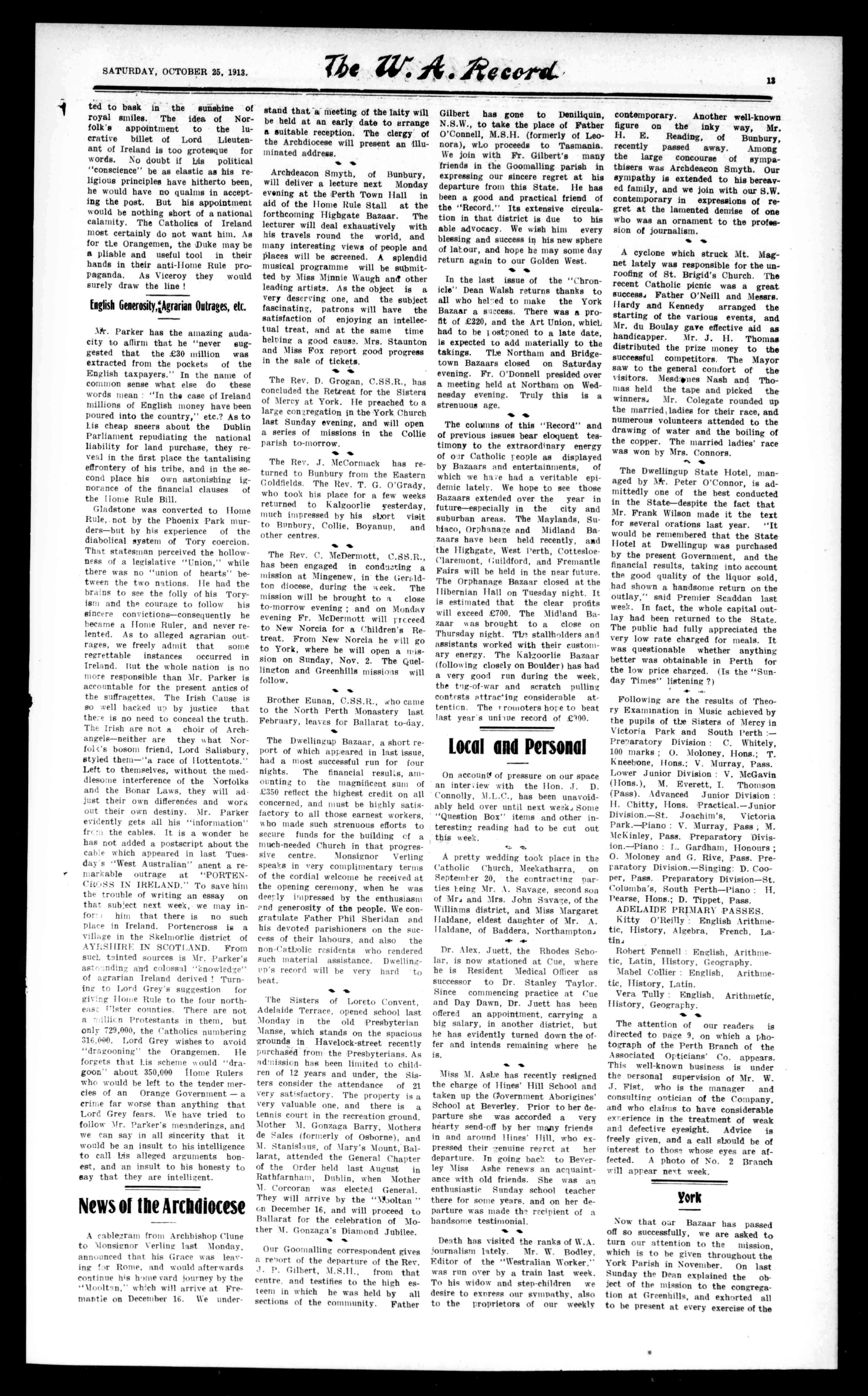
tedtobaskinthesunshineof royalsmiles.TheideaofNorfolk'sappointmenttothelucrativebilletofLordLieutenantofIrelandistoogrotesquefor words.NodoubtifLispolitical "conscience"beaselasticashisreligiousprincipleshavehithertobeen, hewouldhavenoqualmsinacceptingthepost.Buthisappointment wouldbenothingshortofanational calamity,TheCatholicsofIreland mostcertainlydonotwanthim.As fortheOrangemen,theDukemaybe apliableandusefultoolintheir handsintheiranti-HomeRulepropaganda,AsViceroytheywould surelydrawtheline togliskGeserosity,tAgrarianOutrages,etc.
AA..Parkerhastheamazingaudacitytoaffirmthathe"neversuggestedthatthe£30millionwas extractedfrontthepocketsofthe Englishtaxpayers."Inthenameof cottimonsensewhatelsedothese wordsmean"InthecaseofIreland millionsofEnglishmoneyhavebeen pouredintothecountry,"etc.?Asto LischeapsneersabouttheDublin Parliamentrepudiatingthenational liabilityforlandpurchase,theyrevealinthefirstplacethetantalising effronteryofhistribe,andinthesecondplacehisownastonishingignoranceofthefinancialclausesof theHorneRuleBill.
GladstonewasconvertedtoHoule Rule,notbythePhoenixParkmurders-butbyhisexperienceofthe diabolicalsystemofTorycoercion. Thatstatesmanperceivedthehollownessofalegislative"Union,"while therewasno"unionofhearts"betweenthetwonations.Ilehadthe brainstoseethefollyofhisToryismandthecouragetofollowhis sincereconvictions-consequentlyhe becamea[TomeRuler,andneverrelented..Astoallegedagrarianoutrages,wefreelyadmitthatsortie regrettableinstancesoccurredin Ireland.Butthewholenationisno moreresponsiblethanMr.Parkeris accountableforthepresentanticsof thesuffragettes.TheIrishCauseis so-.yellbackedIrabyjusticethat theseisnoneedtoconcealthetruth. TheIrisharenotachoirofArchangels-neitherarethey,,hatNortolesbosomfriend,LordSalisbury, styledtheta-"araceoflottentots." Lefttothemselves,withoutthemeddlesomeinterferenceoftheNorfolks andtheBonerLaws,theywillad justtheirowndifferendesandword outtheirowndestiny.Mr.Parker evidentlygetsallhis"information" fra!.,thecables.Itisawonderhe hasnotaddedapostscriptaboutthe cab:ewhichappearedinlastTuesday's"WestAustralian"anentareinarkableoutrageat"PORTENiSSINIRELAND."Tosavehim thetroubleofwritinganessayon thatsub!ectnextweek,we'nayinfor himthatthereisnosuch PlaceinIreland.Portencrossisa villageintheSkelniorliedistrictof AYLSIIIREINSCOTLAND.From suet.taintedsourcesisMr.Parker's as:r.Indingandcolossal"knowledge" ofagrarianIrelandderived!TurningtoLordGrey'ssuggestionfor givingHomeRuletothefournorthefts::Ulstercounties.Therearenot a nProtestantsinthem,but only729,000,theCatholicsnumbering 316,000,LordGreywishestoavoid "dragooning"theOrangemen.lIe forgetsthatLisschemeWould"dragoon"about350,000HomeRulers whowouldhelefttothetendermerciesofanOrangeGovernment-a crimefarworsethananythingthat LordGreyfears.Wehavetriedto follow\1r.Parker'smeanderings,and wecansayinallsinceritythatit wouldheaninsulttohisintelligence tocallLisallegedargumentshonest,andaninsulttohishonestyto saythattheyareintelligent.
NewsoftheArchdiocese
AcablegramfromArchbishop('lone to\IonsicnorVerlinzlastMonday, anwmncedthathisGracewasleavingfa.Rome,andwouldafterwards continuehisflamecardjourneybythe .Nloolt-in."whichwillarriveatFremantleonDecember16.Weunder-
standthat-ameetingofthelaitywill beheldatanearlydatetoarrange asuitablereception.Theclergyof theArchdiocesewillpresentanilluminatedaddress.
ArchdeaconSmyth,ofSunbury, willdeliveralecturenextMonday eveningatthePerthTownhallin aidoftheHomeRuleStallatthe forthcomingHighgateBazaar.The lecturerwilldealexhaustivelywith histravelsroundtheworld,and manyinterestingviewsofpeopleand Placeswillbescreened.Asplendid musicalprogrammewillbesubmittedbyMissMinnieWaughandother leadingartists.Astheobjectisa verydeservingone,andthesubject fascinating,patronswillhavethe satisfactionofenjoyinganintellectualtreat,andatthesametime beltingagoodcause..Mrs.Staunton andMissFoxreportgoodprogress inthesaleoftickets.
TheRev.D.Grogan,C.SS.R.,has concludedtheRetreatfortheSisters ofMercyatYork.Hepreachedtoa largecon2,regationintheYorkChurch lastSundayevening,andwillopen aseriesofmissionsintheCollie parishto-morrow.
TheRev.J.McCormackhasreturnedtoBanburyfromtheEastern Goldfields.TheRev.T.G.O'Grady, whotookhisplaceforafewweeks returnedtoKalgoorlieyesterday, muchimpressedbyhisshortvisit toBanbury,Collie,Boyanup,andothercentres.
TheRev.C.McDermott,C.SS.R., hasbeenengagedincondurtinga missionatMingenew,intheGerildtondiocese,duringthe'seek.The missionwillbebroughttoaclose to-morroweveningandonMonday eveningFr.McDermottwillpre-reed toNewNorciaforachildren'sRetreat.FrontNewNorciahewillgo toYork,wherehewillopenanossiononSunday,Nov.2.TheQuellingtonandGreenhillsmissionswill follow.
BrotherEunan,C.SS.R.,whocame totheNorthPerthMonasterylast February,leavesforBallaratto-day.
TheDwellingupBazaar,ashortreportofwhichappearedinlastissue, hadamostsuccessfulrunforfour nights.ThefinancialresuL,s,amountingtothemagnificentsumof £350reflectthehighestcreditonall concerned,andmusthehighlysatisfactorytoallthoseearnestworkers, whomadesuchstrenuouseffortsto securefundsforthebuildingofa much-neededChurchinthatprogres- sivecentre. MonsignorVerling speaksinverycomplimentaryterms ofthecordialwelcomehereceivedat theopeningceremony,whenhewas deeplyimpressedbytheenthusiasm andgenerosityofthepeople.WecongratulateFatherPhilSheridanand hisdevotedparishionersonthesuccessoftheirlabours,andalsothe non-catholicresidentswhorendered suchmaterialassistance.Dwellingtip'srecordwillheveryhardto beat.
TheSistersofLoretoConvent, AdelaideTerrace,openedschoollast MondayintheoldPresbyterian Manse,whichstandsonthespacious groundsinHavelock-streetrecently purchasedfromthePresbyterians.As adinissicnhasbeenlimitedtochildrenof12yearsandunder,theSistersconsidertheattendanceof21 verysatisfactory.Thepropertyisa veryvaluableone,andthereisa tenniscourtintherecreationground. Mother11.GonzagaBarry,Mothers deSales(formerlyofOsborne),and M.Stanisbitis,ofMary'sMount,Ballarat,attendedtheGeneralChapter oftheOrderheldlastAugustin Rathfarnham,Dublin,whenMother M.CorcoranwaselectedGeneral. Theywillarrivebythe"Mlaoltan" (,nDecember16,andwillproceedto BallaratforthecelebrationofMotherM.Gonzaga*sDiamondJubilee.
OurGoornallingcorrespondentgives a reaortofthedepartureoftheRev. .1.P.Gilbert,11.S.11.,fromthat centre,andtestifiestothehighesteeminwhichhewasheldbyall sectionsofthecommunity.Father
GilberthasgonetolDeniliquin, N.S.W.,totaketheplaceofFather O'Connell,M.S.H.(formerlyofLeonora),whoproceedstoTasmania. WejoinwithFr.Gilbert'smany friendsintheGoomallingparishin expressingoursincereregretathis departurefrontthisState.Ilehas beenagoodandpracticalfriendof the"Record."Itsextensivecirculationinthatdistrictisduetohis ableadvocacy.Wewishhintevery blessingandsuccessinhisnewsphere oflatour,andhopehemaysomeday returnagaintoourGoldenWest.
111, Inthelastissueofthe"Chronicle"DeanWalshreturnsthanksto allwhohel-edtomaketheYork Bazaarafulness.Therewasaprofitof£220,andtheArtUnion,which hadtoheIostponedtoalatedate, isexpectedtoaddmateriallytothe takings.TheNorthamandBridgetownBazaarsclosedonSaturday evening.Fr.O'Donnellpresidedover ameetingheldatNorthamonWednesdayevening.Trulythisisa strenuousage.
Thecolumnsofthis"Record"and ofpreviousissuesbeareloquenttestimonytotheextraordinaryenergy ofoirCatholicpeopleasdisplayed byBazaarsandentertainments,of whichweharehadaveritableepidemiclately.Wehopetoseethose Bazaarsextendedovertheyearin future-especiallyinthecityand suburbanareas.TheMaylands,Suhiaco,OrphanageandMidlandBazaarshavebeenheldrecently,and theHighgate,Westl'erth,CottesloeClaremont,Guildford,andFremantle Fairswillheheldinthenearfuture. TheOrphanageBazaarclosedatthe HibernianHallonTuesdaynight.It isestimatedthattheclearprofits willexceed£700.TheMidlandBazaarensbroughttoacloseon Thursdaynight.TIPstall'holdersand assistantsworkedwiththeircustomaryenergy.TheKalgoorlieBazaar (folloaingcloselyonBoulder)hashad averygoodrunduringtheweek, thetag-of-warandscratchpulling contestsagreeingconsiderableattention.TheTroniotershopetobeat lastyear'sminiwerecordofVe0.
LocalandPersonal
Onaccount!ofpressureonourspace aninter.iewwiththeHon..1.D. Connolly,11.L.C.,hasbeenunavoidablyheldoveruntilnextweek,Some "QuestionBox"itemsandotherinterestingreadinghadtobecutout thisweek.
Aprettyweddingtookplaceinthe CatholicChurch.Meekatharra,on Septeint-er20,thecontractingpar- tiesleingMr.A.Savage,secondson ofMr,andMrs.JohnSavage,ofthe Williamsdistrict,andMissMargaret laldane,eldestdaughterofMr.A. Haldane,ofBaddera,Northampton, Dr.Alex.Juett,theRhodesScholar,isnowstationedatCue,where heisResidentMedicalOfficeras successortoDr.StanleyTaylor. Sincecommencingpracticeatrue andDayDawn,Dr.Juetthasbeen offeredanappointment,carryinga bigsalary,inanotherdistrict,but hehasevidentlyturneddowntheofferandintendsremainingwherehe is.
lb
MissAl.AsL'ehasrecentlyresigned thechargeofHines'HillSchooland takenuptheOovernmentAborigines'SchoolatBeverley.Priortoherdepartureshewasaccordedavery heartysend-offbyhermanyfriends inandaroundHines'Hill.whoexpressedtheir.7enuinereeretather departure.IngoingbacktoBeverleyMissAsherenewsanacquaintancewitholdfriends.Shewasan enthusiasticSundayschoolteacher thereforsomeyears.andonherdeparturewasmadetherecipientofa handsometestimonial.
et.
DeathhasvisitedtheranksofW.A. journalismlately.Mr.W.Bodley, Editorofthe"WestralianWorker," wasrunoverbyatrainlastweek. Tohiswidowandstep-childrenwe desiretoexeressoursympathy,also totheproprietorsofourweekly
contemporary.Anotherwell-known figureontheinkyway,Mr.H.E.Reading,ofBunbury, recentlypassedaway. Among thelargeconcourseofsympa- thiserswasArchdeaconSmyth.Our sympathyisextendedtohisbereavedfamily,andwejoinwithourS.W. contemporaryinexpressionsofregretatthelamenteddemiseofone whowasanornamenttotheprofes- sionofjournalism.
AcyclonewhichstruckMt.MagnetlatelywasresponsiblefortheunroofingofSt.Brigid'sChurch.The recentCatholicpicnicwasagreat success,FatherO'NeillandMessrs. lardyandKennedyarrangedthe startingofthevariousevents,and Mr.duBoulaygaveeffectiveaidas handicapper.Mr.J.II.Thomas distributedtheprizemoneytothe successfulcompetitors.TheMayor sawtothegeneralcomfortofthe isitors.MeadvitesNashandThomasheldthetapeandpickedthe winners,Mr.Colegateroundedup themarried,ladiesfortheirrace,and numerousvolunteersattendedtothe drawingofwaterandtheboilingof thecopper.Themarriedladies'race waswonbyMrs.Connors.
TheDwellingupStateHotel,managedbyVeer.PeterO'Connor,isadmittedlyoneofthebestconducted intheState-despitethefactthat Mr.FrankWilsonmadeitthetext forseveralorationslastyear."It wouldberememberedthattheState HotelatDwellingupwaspurchased bythepresentGovernment,andthe financialresults,takingintoaccount thegoodqualityoftheliquorsold, hadshownahandsomereturnonthe outlay,"saidPremierScaddanlast week.Infact,thewholecapitaloutlayhadbeenreturnedtotheState. Thepublichadfullyappreciatedthe verylowratechargedformeals.It wasquestionablewhetheranything betterwasobtainableinPerthfor thelowpricecharged.(Isthe"SundayTimes"listening?)
FollowingaretheresultsofTheoryExaminationinMusicachievedby thepupilsoftheSistersofMercyin
VictoriaParkandSouthI'erth:PreaaratoryDivisionC.Whitely, 100marks0.Moloney,Hons.;T. Kneehone,Hons.;V.Murray,Pass. LowerJuniorDivisionV.McGavin (1ions.),M.Everett,I.Thomson (Pass).AdvancedJuniorDivision 11.Chitty,lions.Practical.-Junior Division.-St.Joachim's,Victoria Park.-PianoV.Murray,PassM. McKinley,Pass.PreparatoryDivision.-Piano Gardhain,Honours; 0.MoloneyandG.Rive,Pass.PreparatoryDivision.-Singing:D.Cooper,Pass.PreparatoryDivision-St. columba's,SouthPerth-l'ianoH. Pearse,lions.;D.Tippet,Pass.
ADELAIDEPRIMARYPASSES.
KittyO'ReillyEnglishArithme- tic,History,Algebra,French,La- tin, RobertFennellEnglish,Arithmetic,Latin,History,Geography. MabelCollierEnglish,Arithmetic,History,Latin.
VeraTullyEnglish,Arithmetic, Ihistory,Geography.
Theattentionofourreadersis directedtoPage9,onwhichapho- tographofthePerthBranchofthe AssociatedOpticians'Co.appears. Thiswell-knownbusinessisunder theoersonalsupervisionofMr.W. .J.Fist,whoisthemanagerand consultingooticianoftheCompany, andwhoclaimstohaveconsiderable exr.erienceinthetreatmentofweak anddefectiveeyesight.Adviceis freelygiven,andacallshouldbeof interesttothosewhoseeyesareaffected. AphotoofNo.2Branch willappearnewtweek.
York
NowthatoarBazaarhaspassed offsosuccessfully,weareaskedto turnourattentiontothemission, whichistohegiventhroughoutthe YorkParishinNovember.Onlast SundaytheDeanexplainedtheob- jectoftheminiontothecongrega- tionatGreenhills,andexhortedall tohepresentateveryexerciseofthe
SATURDAY,OCTOBER25,1918. Thea:A cerg4 13
mission.Ilehopedthatall,without exception,nomatterhowlongsome mighthavebeenaway,wouldgoto theirduties,IntheYorkChurch greatpreparationsarebeingmade tohaveeverythinginsplendidorder forthemission.Thealtarhasundergoneacompleterenovation,and lookssowellthatonewouldscarcelyrecogniseitastheoldonemade new.Thesanctuaryhasbeencarpeted,andpresentsabrightandpleasingappearance.Thewholework,for which31r,CarlBredhallisresponsible,showsthatthatgentlemanpossesameinnosmalldegree'atastethat istrulyartistic.
Lastyearthemission,whichwasa grandsuccess,aseconductedbyFatherGrogan,('.55.11.Thisyear's missionwillbeconductedbyRev. FatherMcDermott,C.55.1t.,andwe feelquitesureitwillbeequallysuccessful.FatherMcDermotthasconductedmissionsallovertheAustralianCommonwealth,andeverywhere hismissionshavebeenattendedwith thegreatestsuccess.Asourharvest willbenearlyamonthlaterthisyear thanlastyear,themissionwillcome inamostopportunetimejustbefore harvestingoperationsbegin,sothe farmersandtheirworkerscandevote areasonabletimetothegreatwork forwhichtheyhavebeencreated, viz.,thesalvationoftheirimmortal souls.Themissionwillopenin GreenhillsonSunday,Novemberthe 9t).,atthe10.30Mass;inQuellingtononThursday,Novemberthe6th, at7.30p.m.;andinYorkonSunday,Novemberthe2nd,atthe10 Wel(ek\lass.
TheRecord"willhepostedfree foroneyeartoanysubscriberinthe CommonwealthwhopaysIllsedin advance.Ifhookedtherateis3a3d perquarter.
AuntBessy'sCorner
MyDearNiecesandNephews,Ifearyouaregettingthetired feelingattheapproachofthewarm weather.Ihaveonlyoneletterin maymailhagthisweekfromMaster FredRanting,whosentmeacomplimentaryticketfortheChildren's PlainandFancyDressBallheldat liunburylastTuesdayeveninginaid ofthechurchBuildingFund.Iwas sorryIcouldnotpayavisittothe "Birthplace,"buthopetogodown therewhenItakimyXmasholidays. Judgingbythespiritofmeekness andhumilityinFred'sletter,say Runburynephewsmustbeafflicted withanextraordinarydegreeofbashfulness-notlikeusladieswholike toseeourphotosinprint.hereis Fred'sletter
DearAuntBesay,-Manythanks foryournicebook,whichIreceived safely.Iwasquitesurprisedand delightedatthesametimewhenI beardthatIwontheprize.Ialso sendmybestthanksforyourkindnessinaskingmeformyphoto.I feelentirelytooshytosendit,asit wouldlooktoomuchlikewhatagirl woulddobesides,AuntBessy,I amnotabitgood-looking,andI fearyouwouldheratherdisappointedattheappearanceofyourungainlylookingnelhew,11mostevery AuntyinW.A.willbepresentatour Ball.Allyourniecesandnephews downhereareverywell.
ATTII-11FairyTale (BY"EUNICE,"SOUTHPERT11.)
(Concluded.)
Attarambledeverywhereaboutthe garden,shehuntedinithegrottosand gauzytents,butManuelowasnowheretobefound.
Ah!Wherewasthedearlittlebrother?Wherewasthelittlechildshe hadsocruellystruck?Tearsofgrief andremorsefloweddownhercheeks, andwhentheytouchedtheground, whitebutterfliesarose,andonevery largeone,quiteaslargeasasparrow,flewtowardsher.
Onitsbacksatalovelylittle Fairycladinarobeofsnowygauze, borderedwithsilvertears.ShegazedsteadfastlyintoAtta'seyes,and wavingasilverwandgentlytoand fro,saidinasoftandgentlevoice, "Atta,mychild,IamtheFairyof
The A.Aceerd
theChristmasBush,andsawthe blowyougavetheinnocentManuelo, andwasshockedtoseeyousograsp- ing,selfish,andcruelbutasyou arepenitentnow,andwouldgladly undothepast,Imusthaveonemore proofofyoursorrowbeforeIallow youtohavethechildagain.The taskIsetyoutoperformisthis Rowbornetoyourr,arentswithout delay,tellthemeverything,conceal nothing,hearallhardwords,reproaches,evenblows,insilence,and ifyoudothis,andreturntomein threedays'time,youshall-haveyour littlebrotherrestoredtolife.But ifnot,Itisuselesstocomebackat all,andlestthetaskshouldhetoo hard,IwillgiveyouthisMagicGarlandofChristmasFlowers.Theyare fromFairyLand,andwillneverfade, butwillkeeptheirbeautyforever. Whentemptedtoanswerangrilyor denythetruth,lookattheGarland. Seethepink-tippedflowersarewide open,butoneangryword,onefalsehood,onemortals'nwouldclose themforever,andthoughangry thoughtsorevilthoughtsofany kindwouldmakethepetalscurl,
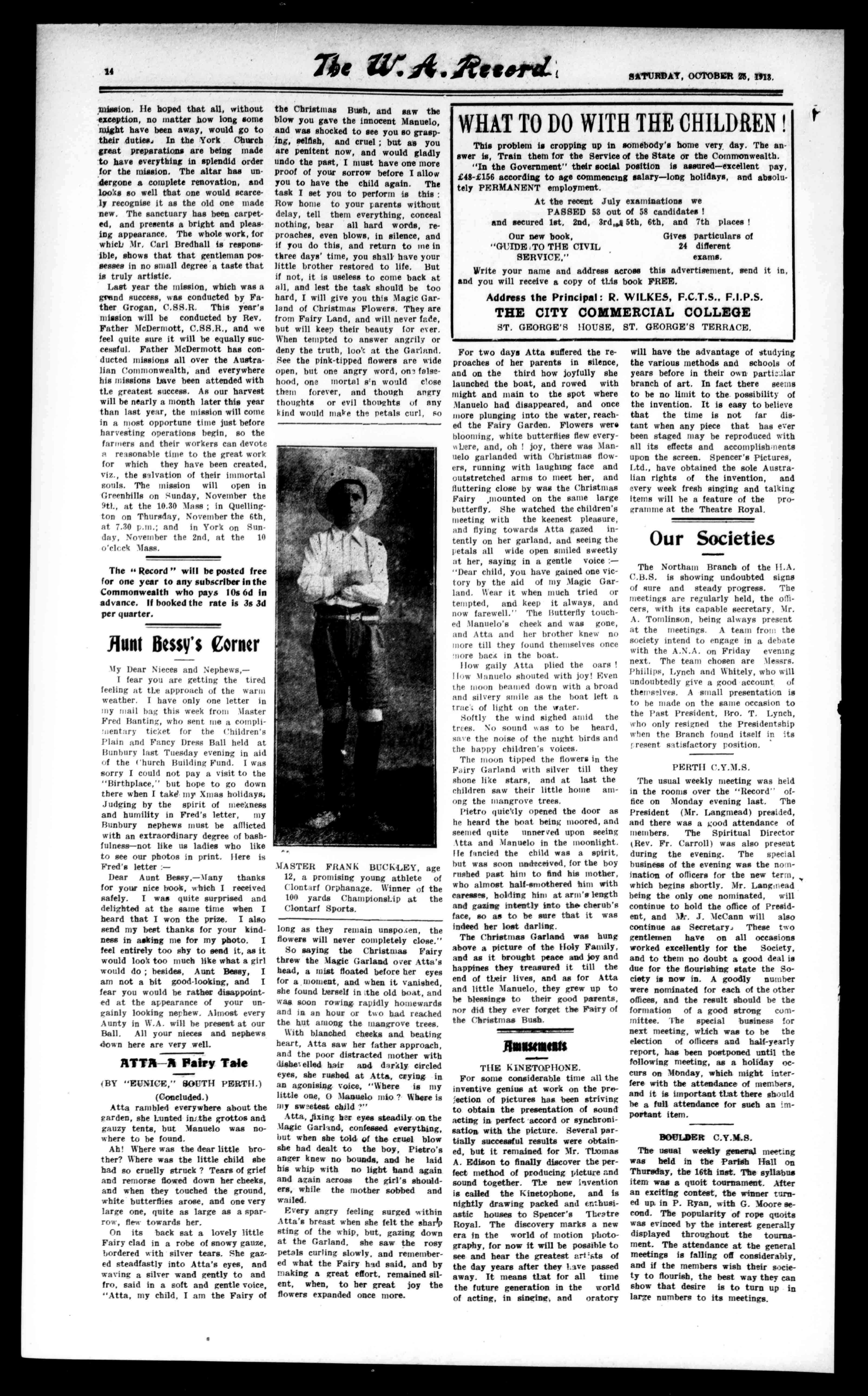
MASTERFRANKBUCKLEY,age
12,apromisingyoungathleteof ClontarfOrphanage.Winnerofthe 100yardsChamplonsLipatthe ClontarfSports. longastheyremainunspo.cen,the flowerswillnevercompletelyclose."
SosayingtheChristmasFairy threwtheMagicGarlandoverAtta's head,amistfloatedbeforehereyes foramoment,andwhenit.vanished, shefoundherselfin.theoldboat,and wassoonrowingrapidlyhomewards andinanhourort,,ohadreached thehutamongthemangrovetrees. Withblanchedcheeksandbeating heart,Attasawherfatherapproach, andthepoordistractedmotherwith disheselledhairanddarklycircled eyes,sherushedatAtta,cryingin anagonisingvoice."Whereismy littleone,oManueloado?Whereis mysweetestchild""
Atta,fixinghereyessteadilyonthe MagicGarland,confessedeverything, butwhenshetoldofthecruelblow shehaddealttotheboy,Pietro's angerknewnobounds,andhelaid hiswhipwithnolightbandagain andagainacrossthegirl'sshoulders,whilethemothersobbedand wailed.
Everyangryfeelingsurgedaithin Atta'sbreastwhenshefeltthesharp stingofthewhip,hut,gazingdown attheGarland.shesawtherosy petalscurlingslowly.andrememberedwhattheFairyhadsaid,andby makingagreateffort,remainedsilent,when,tohergreatjoythe flowersexpandedoncemore.
WHATTODOWITHTHECHILDREN
Thisproblemiscroppingupinsomebody'shomeveryday.Thean sweris,TrainthemfortheServiceoftheStateortheCommonwealth.
"IntheGovernment"theirsocialpositionisassured-excellentpay, A:484156accordingtoagecommencingsalary-longholidays,andabsolutelyPERMANENTemployment.
AttherecentJulyexaminationswe PASSED53outof58candidates andsecured1st,2nd,3rd,,a5th,6th,and7thplaces' Ournewbook, Givesparticularsof "GUIDE,TOTHECIVIL 24different SERVICE." exams.
Writeyournameandaddressacrossthisadvertisement,senditin andyouwillreceiveacopyofti-isbookFREE.
AddressthePrincipal:R.WILKES,F.C.T.S.,F.I.P.S.
THECITYCOMMERCIALCOLLEGE
ST.GEORGE'SHOUSE,ST.GEORGE'STERRACE.
FortwodaysAttasufferedthereproachesofherparentsinsilence, andonthethirdhowjoyfullyshe launchedtheboat,androwedwith mightandmaintothespotwhere Manuelohaddisappeared,andonce moreplungingintothewater,reachedtheFairyGarden.Flowerswere blooming,whitebutterfliesfleweveryi%here,and,ohjoy,therewasManuel'garlandedwithChristmasflowers,runningwithlaughingfaceand outstretchedarmstomeether,and flutteringclosebywastheChristmas Fairy,inountedonthesamelarge butterfly.Shewatchedthechildren's meetingwiththekeenestpleasure, andflyingtowardsAttagazedintentlyonhergarland,andseeingthe petalsallwideopensmiledsweetly ather,sayinginagentlevoice:"Dearchild,youhavegainedonevictorybytheaidofmy.MagicGarland.Wearitwhenmuchtriedor tempted,andkeepitalways,and nowfarewell."TheButterflytouchedManuelo'scheekandwasgone, andAttaandherbrotherknewno moretilltheyfoundthemselvesonce morebackintheboat.
HowgailyAttapliedtheoars HowManuel()shoutedwithjoy!Even themoonbeameddownwithabroad andsilverymileastheboatlefta trac':oflightonthewater. Softlythewindsighedamidthe trees.Nosoundsastoheheard, savethenoiseofthenightbirdsand thehappychildren'svoices.
Themoontippedtheflowersinthe FairyGarlandwithsilvertillthey shonelikestars,andatlastthe childrensawtheirlittlehomeamongthemangrovetrees.
Pietroquicklyopenedthedooras heheardtheboatbeingmoored,and seemedquiteunnerveduponseeing lttaandManuel()inthemoonlight. Ilefanciedthechildwasaspirit, butwassoonundeceived,fortheboy rushedpasthimtofindhismother, whoalmosthalf-smotheredhimwith caresses,holdinghimatarm'slength andgazingintentlyintothecherub's face,soastohesurethatitwas indeedherlostdarling,
TheChristmasGarlandwashung aboveapictureoftheholyFamily, andasitbroughtpeaceandjoyand happinestheytreasuredittillthe endoftheirlives,andasforAtta andlittleManuelo,theygrewupto heblessingstotheirgoodparents, nordidtheyeverforgettheFairyof theChristmasBush.
R1111111111111$
TI(EKINETOPHONE.
Forsomeconsiderabletimeallthe inventivegeniusatworkontheprotectionofpictureshasbeenstriving toobtainthepresentationofsound actinginperfectaccordorsynchronisationwiththepicture,Severalpartiallysuccessfulresultswereobtained,butitremainedforMr.Thomas A.Edisontofinallydiscovertheperfectmethodofproducingpictureand soundtogether.Thenewinvention iscalledtheKinetophone,andis nightlydrawingpackedandcrilhusiastichousestoSpencer'sIllentre Royal.Thediscoverymarksanew eraintheworldofmotionphotography,fornowitwillbepossibleto seeandhearthegreatestart'ilsof thedayyearsaftertheyLivepassed away.Itmeansthatforalltime thefuturegenerationintheworld ofacting,insinging,andoratory
willhavetheadvantageofstudying thevariousmethodsandschoolsof yearsbeforeintheirownpartiz_ilar branchofart.Infactthereseems tobenolimittothepossibilityof theinvention.Itiseasytobelieve thatthetimeisnotfardistantwhenanypiecethathasever beenstagedmaybereproducedwith allitseffectsandaccomplishilents uponthescreen.Spencer'sPictures, Ltd.,haveobtainedthesoleAustralianrightsoftheinvention,and everyweekfreshsingingandtalking itemswillheafeatureoftheprogrammeattheTheatreRoyal,
OurSocieties
TheNorthamBranchoftheII.A. C.B.S.isshowingundoubtedsigns ofmireandsteadyprogress.The meetingsareregularlyheld,theofficers,withitscapablesecretary,Mr. A.Tomlinson,beingalwayspresent atthemeetings.Ateamfromthe societyintendtoengageinadebate withtheA.N.A.onFridayevening next.TheteamchosenareMessrs. Phillips,LynchandWhitely,whowill undoubtedlygiveagoodaccountof themselves.Asmallpresentationis tohemadeonthesameoccasionto theI'astPresident,Rro.T.Lynch, whoonlyresignedthePresidentship whentheBranchfounditselfinits !.resentsatisfactoryposition.
PERTH('.Y.M.S.
Theusualweeklynieetingwasheld intheroomsoverthe"Record"officeonMondayeveninglast,The President(Mr.Langmead)presided, andtherewasagoodattendanceof members.TheSpiritualDirector (Rev.Fr.Carroll)wasalsopresent duringtheevening.Thespecial businessoftheeveningwasthenominationofofficersforthenewterm, whichbeginsshortly.Mr.Langinead beingtheonlyonenominated,will continuetoboldtheofficeofPresident,andNk.J.McCannwillalso continueasSecretary,Thesetwo gentlemenhaveonalloccasions workedexcellentlyfortheSociety, andtothemnodoubtagooddealis duefortheflourishingstatetheSocietyisnowin.Agoodlynuitiner werenominatedforeachoftheother offices,andtheresultshouldhethe formationofagoodstrongcominittee.Thespecialbusinessfor nextmeeting,whichwastohethe electionofofficersandhalf-yearly report,hasbeenpostponeduntilthe followingmeeting,asaholidayoccursonMonday,whichmightinterferewiththeattendanceofmembers, anditisimportantthatthereshould beafullattendanceforsuchan:mportantitem.
BOULDERCYM.R
Theusualweeklygeneraliiiee..ng washeldintheParist11811on Thursday,the16thinst.Thesyllabus itemwasaquoittournament.After anexcitingcontest,thewinnerturnedup.inP.Ryan,aithG.Mooresecond.Thepopularityofropequoits wasevincedbytheinterestgenerally displayedthroughoutthetournament.Theattendanceatthegeneral meetingsisfallingoffconsiderably, andifthememberswishtheira-,cietytoflourish,thebestwaytheycan showthatdesireistoturnupin lamenumberstoitsmeetings.
14
SATURDAY,OCTOBERzt,
WAZimpel'furniture
Lastweekthedeathtookplaceof BridgetShanahanatSouthBunbury, andanotherSouth-Westlinkwith thepastwassevered.%Ira.Shanahan washorninLimerick,Ireland,67 yearsago,andin1867MissBridget Ryan-asshe,aasthen-cametoWesternAustralia,andbeingshortlyafterwardsmarriedtoOwenShanahan atBusselton,afterwhichthenewlymarriedcouplewenttoresideat Dardanup,wheretheyresidedat theirfarmuntilMr.Shanahan's deathin1903.ThenMrs.Shanahan ea'i.etolivewithhermarrieddaugh- ter.Mrs.Tangney,atBunbury.Three yearsagothedeceasedwasafflicted wthdropsy,whicheventuallycaused herdeath.Therewerethreesons an'ourdaughtersofthemarriage: -fir.Michaelrahinahan (Wellington I,11r..JohnShanahan(ofJarra.hdalei,and11r.Thos.Shanahan Mrs.ArthurNorthBanbury),Mrs. Ceo.King(Bunburyt,Mrs.E.Tangney(Banbury),andMrs.Ilernecker (NeaZealand,.Thereare28grand- children.ArchdeaconSmythper- fori.edthelastrites.Thepall-hearerswereTheMayorofBuntotry11Ir C'.Fraenkel,,W..J.Norrie(Town Clerk .1.Doherty.F.Caporn. 1. P.fie.dy,andT.IliadicR.I.P.
';s'.B.11.DifoLEY,11.L.A. V..-regrettoannouncethedeath oft,ememberfixGeraldton,which placeonSundayevening.The deceasedhadforso:ieconsiderable t_Oa-sufferedfromtifflerculosieofthe tht,boaitwasnotuntilacallpieofmonthsagothatseriousconseriwerefeared.Foracouple ofcellsitwasrecognisedthat11r. ywouldnotrecover,andhe wasfreriuentlyvisitedi,ytheRev..1. E.'-arroll,oftheCathedral,front who:..hereceivedthelastSacraJ;eftsbeforehisdeath,whichhe swattedwithresignation.Ofaquiet, uirisfaitring(Usposition,endowedwith armrecapacityforperseveringwork, Mr.Dooleydevotedhisbestenergies to --(fareofhisconstituents.On therFi,.nofMr.W.A.RedtoGeraldtenlastyear, Mr.Dooleywasoneoftheparty. fie',his eeeeetttohiscon- stit.entsinsuavortoftheIlonte -eri.entw'-sgrAefullerecog- ntsedbytheTrishEn:0y.liewas horninSydneyonJuly4,1868,and vie:entice:,atIGyearsofage,to thecoaehbuildingtrade.Havingservedhisindenturesforfiveyears,he spentacorrespondinglylengthyper- iodingainingbushexperience.When theLabourmovementinNewSouth Waleswasinitsinfancyheclosely identifiedhimselfwithitsinaugural phases,andjoinedtheSydneyCoachbuilders'Societyattheconclusiono'
hisapprenticeshipin1888.Ileassistedatthefirstcretin:fadLabourelectionsinAustrilit,whichtook'placeinSydneyin18.1.'.1cerroughingit indifferentpartsoftheComnionwerlthand wZealand,hacameto WesternAustraliain1897,andresumedhistradeasacoachhuilder,enteringtheserviceoftheRailwayDepartment.IlejoinedtheAmalgama- tedSocietyofRailwayEmployeesshortlyafteritsformationin1898, andtookaleadingpartinobtainingofficialrecognitionforthatbody.In1903hetookuphisresidence intheGeraldtondistrict,andshowed,
Usti%eofthe Geraldton Lodge,andAleF.W.Burrows,pre- sidentoftheStateexecutiveofthe A.L.F.ThePremier(11r.Scaddan), theMinisterforLands(Mr.bath), theMinisterforWorks(Mr,Jelinson),theMinisterforMinesrMrCollier),the IlonoraryMinister(Mr. Angwin),andthefollowingmembers ofParliamentwerepresent:-Messrs. R.G.ArdaghandJ.Cornell, s.L.C.,C.McDowell,W.II.Carpenter,W.Price,C.A.Hudson,J. P.Gardiner,J.J.McDonald,W. Dwyer,T.Lander,P.L.o'boghlen, E.B.Johnston,J.F.Mullany,II. G.Swan,G..1.Foley,S.W.Aunsie, R.II.Underwood,H.E.Bolton,C, .1.Lewis,E.Allen,M's.L.A.,andrepreventativesofthevariousLabour organisations.Asamarkofrespect theAssemblyadjournedonTuesday afternoon.Tothewidowandtwo youngdaughtersweextendoursinceresympathy.R.I.P.
gailithcCrabPyblicatioes
TheA.C.T.S.sendsatrinityof welcomepublicationsinnumbers179, 114(1and1141.
hasdoneinhisFatherland.Itisone oftheverybestoftheaa'.r.S.pub- lications 11, Thereisachallengeinthevery titleofFatherIi,E.Cock'slecture whichtheA.C.T.S.sendsinpain- pbletformthrough"alltheends"of AustraliaandTasmania-
"TalesProphetsheSocialQuestless"
Weopenitexpectingtofindthe namesof'manywhoare"writtenat thehead"oftheSocialisticbook "scored"byFatherCock,andweare notdisappointed.Wehavelittleto sayofthecontentsofthisbooklet, asthiscolumnof"reviews"isintendedmoretocallattentiontothe factthatthingsarepublishedrather thantositinjudgmentonwhatIs published,butifourreaderswillpossessthcrmielvesoftheseriesofthe recentlecturesinAdelaideonsocial questionsandLeoXIII's."Condition ofLabour,"theyneedreadnothing elseonthisever-livesubjectforthe nextquarterofacentury.Wemight vocationthattoFatherCock'sDarn. shouldheaddedS.J.Perhaps"everyschoolboyknows"whatMacaulaysaidofthe.Jesuits'hall-mark.
LATEP.11.DooLEY.ALL-s.
anactiveinterestinlocalaffairs.tie organisedtheGeraldtonbranchofthe PoliticalLabourParty,theFight loursDemonstration,theCeraidton co-operativeSociety,andthelocal branchoftheItAilwayArnleftince lles.iccestifullycontesteda seatfortheEastWardintheCeraldtonAi:Mei:ellCouncil,andrstas refTesentativeofthatportinthe Leii4itheAssieniLlyduringtie .11"retn,ofthe;.re,.entl'arli The fun-raltookplaceonMondayafternoon,theRev.T.O'Gorman.ofCottesloe,officiatirn.t.Therewas%Uy largeattendance.Mrs.B.W.:; (widowtandtheMissesW.E.and S.C.DooleyIdaughters) erethe chiefmourners.The; rsare theColonialSecretaryMr.r.11. Drew,11.1..('.).theLeader.-fthetpposition(Mr.Fran:Wilson,M.L.A.1, Mr.B.I'.O'Brien.Al.!, fleitnanr.11.1..A..gr.T.L.Brown. ea-memberforGeraldt oftheShearers'I'nion,andrtpresen-
CatholicSocialActioninBelgium" isthefirstofthese,andithascome toussailingunderfalsecolours,for beingfromthepenoftheeminent PassionisaFatherEdward,ofGlen cistitond,theO.P.oftheDominican orderisaffixedtohisname.Inlater editionsthismistakeshouldberectified,forthel'assionistFathers 'nightwellbejealousofthecredit ofFatherEdeardssalendidlecture beinggiventoanotherOrder.Pub.isliersinti.eVastoftenmakesuch mistakessomehow,andwehavelatelyseena ascribingleadingVictorianpaper toFatherVintiatMcNabb, o.P.,thecreditofFrancisThomp- son's"FrontInfant'sLips."flowever,that'sbytheway.FatherEdwardspeaksfirst-handaboutBelgium,foritishisnativecountry, andhesnokeasaprophetinthis country-"Thereforeasweliftthe veilthatliesoverthenear`stare, wecansee,thoughitbebythedim lightof -ht.inanproahecy,Catholicsocialactionin ,Tiainthefull gloryoftrifnschantsuccess.11ecan hearCatholicgenerationstocome blessthehallowedmemoriesofthose whohavegonebeforethemasnoble pioneers,br:..n-in.;downthebarrier' ofCatholicdisabilities,clearingthe thornypathofCatholicgrievances, tillingthesoilofpublicopinion,Ied sowingthehappyseedsofthatpeacefulsocialconditionwhichtheyshall enjoy."Thosewordsfolloweda"Go thouanddolikewise"callfromthe rev.lecturertoanAdelaideaudience whichhadlistenedtohissplendid tellingofwhatCatholicorganization
"BernadetteAPlayforChildres" byT.S.Cornish,isthethirdofthe presentA,C,T.S.hooks,andper- haps,astheconventscanberelied onto"knowagoodthingwhenthey seeit,"itiswellthatweshouldrecommendittoMothersSuperiorsin townandcountry,foritisjustin timetobe"gotup"forChrietinas displays,ThestoryofBernadetteis perharswellkw/an,hutthisshould tea",thepresentationofthestory erarnatisedthebetterappreciated. Wehopetoseeitintheprogrammes ofseveralbreak-upconcertsmaDecember.
41.
ChristianityandtheLeadersof ModernScience A.v001.Wol:TII':."ToBEOPENED.
(ByFatherKneller, "BywhatauthoritydoestThou thesethings?"theScribesaskedOur Lord,whenafter1fehaddrivenout thebuyersandsellers,theysawHim `walkingin 4istboritytheTemple.""Bywhat doyousay.thesethings?" -veareoftenasked,whenweassert thatph-sisalscienceisnotopposed toreligion,andthatgreatscientists donotine'-ita'dyforfeittheirhold ontositivereligionasaresultof theirincursionsintothemysteriesof being.FatherKnellergiveusin"ChristianityandtheLeadersofMo- dernScience"areadyanswer-four hundredanswers-sketchesofthelives ofmenwhosenai.i.esScienceconjures with,andwhoserreatestwisdomis, thattheirfaithfarfrombeingun-
SATURDAY,OCTOBER25,1913. neWe"A.record 1$
TheCheapestandMostReliableHouse4,orFurnitureofSuperior QualityandFinish BedroomSuites,Dining-roomSuites,Sideboards,ExtrnsionTablesinOak,Walnut,andotherSeasonedTimbersatsuchLovPrices thatcannotbeequalledwhenQualityandDurabilityareteenintoconfederation. OfficeFurnitureaSpecialty.BedsteadsandCotsinLatestDesigns,andLargestStoetstoselectfrom. CarpetsandLinoleums.-W.ZIMPELisshowingaveryfinsteilectioninallShatl.sandColorstopleasethemostfastidious. Alsocurtains,TableNotes,Sheets,Quilts,Blankets,etc.,atprisesthatmustcommandareadysale.VenetianBlindsinallsizes andpaintedinanycolor. AVisit
WILLCOW/INCH!YOUTHATITWILLBETOYOURADVANTAGITOPUBCHASIIIATMSFACTORYANDSAVEMONEY.
Manufacturer
toW.ZIMPEL'SWarehouseandFactory,Hay-st.,Perth
OBITUARY.
&minedbytheirresearches,wasbut madefasterwhentheyfoundthat "Allwebeholdismiracle," andthattheprodigiesofPowerDivinemadeclearer,astheirresearches wentdeeperintothe"infinitelylittle,"forcedthemtotheirkneeswith IsaacNewtonandLinnaees.Of coursetherearescientistsandeeientists,butnotonewhomFatherKriellersummonsasawitnesstothe truth,butisanundoubtedauthority,whosename"proclaimedabout thefield"issuretocommandthe hearingandrespectwhichthename ofBrutuswonereCaesarDelmet himatPhilippi.Wearegleecfthe opportunitywhichhascomeourway ofrecommendingFatherKneller's booktopriests,teachersen'sleading Catholicsgenerally,fortsI.;ereablepowdermagazinewelle'ecked withmaterialfordynamitingthebad oldcalumnyabouttheoppositionbetweenreligionandscience.Proofsre whatwealreadyknow-thatscience isthehandmaidofreligion-areLere athandinreadyabundance,andto thesmugscepticsandshallowcriticseh('reeloffscience-withatoOkandareoftenheardwithawonder whichwouldmakeoneimaginethat theSphinxhailopeneditsmouthand wasutteringwisdombychunks,and dealingout"counselinEgypt"by taneful,wecanopposetheauthoritativeutterancesofmenlikeLord Kelvin,SirHumphreyDavy,Pasteur andthe397otherswhombyFathet Kneller'sendeavoursweareenabled to"ringup"atamoment'snotice fromthe"exchange"ofhishook. wheretheyareinreadinesstodo ourbidding.Thereisagreattemptationtoquotefrom_manyofthe menofrenownwhosewordscarry conviction,andwho,afterbecomine "searchersofieaPeity"inasense, havebutbeeomethemoreconvinced oftheideaoftheInfinitefeelilea isaboveandbeyondthefarthest spaceandtime,andbeneathdeeper depthsthanthe"ultimateabyssesof beingwherelifeishorn."Perhaee fromtimetotimeweshallgivethe readersofthe"Record"extracts fromFatherKneller'shook,but hereandnowtheimmortalono, tationfromPasteurwhicheveryCatholicshouldhavebyheartmust Fleece"ItisjustbecauseIhave thoughtand'meatsomuchthatI believeeiththefaithofaBreton peasant.IfIhadthoughtmoreand studiedmorefwouldhavecomete believewiththefaithofaBreton peasant'swife."Simplefaithdoes notneedhumantestimonyforits eonerreing,butwhenitisasserted thatscientistshavesaid"thusand thus,"letitsbereadytomake"fire castoutfire"byopposinggreater cientiststothescientistswhohave gonewrongandseek"tocorrode withtheacidoftheirmindstheanchorofhumanhope."Afterallteen's enlightenmenthasflashedsearchlightstothelimitwhereDivine Powersays"Thusfar;"afterithas weighedtheearthintesttubesand goneasdeepasnaybeintothe seasofmysterywhichsurroundlife andbeing,theresultontruescientistswillbutbetodeepeninthem thetruthoftheBibleteaching,that ifweascendintoHeavenGodisthere andifwetakethewingsofthemorninganddwellintheuttermostparts ofthesea,eventhereHisRight Handshallholdus.Inconclusion, letusoncemorehidthosewho wouldgiveananswertothe"glib littlewhiffets"whoinearown timesandinourowncitycroakso all-sufficientlyofadamagedGenesis, togive"christianityandtheLeadersofModernScience"theplace whichitsexcellencedemandsintheir libraries.
"ST.IVES"
21IRWINSTREET.
SirOliverLodgeontileafterDeath
M3sterlyAddressbyaGreatScientist
'INSIGIITOlePROPHETSANDSAINTS,OPSUPREMEVALUE." "ISEEAWAYTORETAINTHEOLDANDEMBRACETHE.NEL"
Toanaudienceofnearly3,000men andwomenscientistssirOliver 'Jodie-aeagerlyawaitedaddresswis deliveredatBirminghamonSeptemher10attheinauguralgatheringof theeightythirdannualmeetingof theBritishAssociation.Hissubject as".'ontinuity."
LordRayleighintroducedthenew PresidentintheplaceofSirEdward Schafer,whoisinSanFraneieco,andaratherpiquantcontrast wasthusavoided,forwhileSirEdwardisoneoftheavowedleadersof theultra-materialisticschool,Sir (diveristhechiefhopein.Englandof thescientificgripelwelchlooksbeyondehysiceandchemistrytoanultimatecauseandalargerhope.
Personality.BeyondDeath"
SiroliverLodge'saddressislikely toprovokeatleastaskeenadiscussionasSirE,A.Schafer'sverydif-
"Khatinthemain,"heaskedat theoutset,"isthecharacteristicof thepromisingthoughdisturbingperiodinwhichwelive?"Hisanswer was-"Rapidprogress,comeinedwith fundamentalscepticism." Thisscepticismwasnuttheological,butscientificorphilosophic.In physiologytheconflictrangedround ; inchemistry,roundatomicstructureinbiology,roundthe leesofinheritance.Ineconomicand politicalscience,whatwastherenot enderdiscussion? Notproperty alone,notlandalone,buteverything -bac%totheGardenofEdenand theinter-relationsofmenandwomen.Inthemathematicalandphysicalsciences,present-dayscepticism concernedthemainsubjectofhisad(frees,"continuity," Aboveandbeyondthesesectional debates,however,acriticalexamine-
theairandothermediaandsoetaphasisecontinuityandflowingquantities.Thenwedetectatomsand numericalpropertiesanddiscontinuityoncemoremakesitsappearance.
Thenweinventtheetherandaretinpressedwithcontinuityagain.But thisisnotlikelytobetheend;and whattheultimateendwillbe.or 'whetherthereisanultimateend,is aquestiondifficulttoanswer,SteeplechaseofNature
Themoderntendencywastoemphasisethediscontinuousoratomit characterofeverything.Sofarfrom Naturenotmakingjumps,itwasbecomingdoubtfulifshedidanything else.Herhithertoplacidcourse, morecloselyexamined,seemedto looklikeakindofsteeplechase.Ile confessedhimself,however,forwhat itwasworth,anupholderof:aimatecontinuityandafervent1,eliever intheEtherofSpace, Ifwhetwasknownasteeprinciple ofRelativity-springingfromthedoctrineofdiscontinuity-inanextreme senseestablisheditself,itseemedas ifeventinewouldbecomediscmitinawlsandbesuppliedinatoms,as moneywasdoledoutinpenceorcentimesinsteadofcontinuously; in whichcaseourcustomaryexistence wouldturnouttobenomorereally continuousthantheeventsonainematographscreen,whilethatgreat agentofcontinuity,theetherof space,wouldherelegatedtothe seemofhistoricalcuriosities.
'Towardssuchdevelopments,"said SirOliverLodge."Iaanttourrea conservativeattitude.Iseeaway toretaintheoldandembracethe new,andIurgemoderationinthe uprootingandremovaloflandmarks."
TheEtherofSpace
What,then,wastLis"etherof space?"
"Matteritisnot,butmaterialit isitbelongstothematerialuniverseandistoheinvestigatedbyordinarymethods.Buttosaythisis bynomeanstodenythatitmay havementalandspiritualfunctions togaserveinsceneotherorderof existence,as!patterhasinthis.
:AnteriorBoardandLodging.
TermsModerate.
Airs.DOITERTY.Proprietrese.
MRS.KEOUGH CATERER.
17oNsweastle-Strset.Perth, CateringplantalwayscmUlm PleirlesandBallscateredMirIP shortestnotice.
"ill;of,leER.10Wep1leire;E,PresidentoftheBritishAssociation, whoses-etchatthe83rdannualmeetinginBirminghamonSept,10, 1913,vindicatedtheSupernatural.
ferentpronouncementontheorigin oflifemadeattheDundeemeeting lastyear.Itmaybedescribedas anindictmentofthescientificspirit ofdenial,andachallengetothematerialiststoprove,onceandforall. thatnothingcanconceivablyexist whichisnotperceptibletothehumansenses.
"Giveusafairfield,"wasSir Oliver'splea."Letthosewhopreferthematerialistichypothesisby allmeansdeveloptheirthesisasfar astheycan;butletustry,hatwe candointhepsychicalregion,and seewhichwins.Ourmethodsare reallythegameastheirs-thesubject mattersdiffers.Neithershouldabuse theotherformakinztheattempt."
Thusheleduptotheconfessionof hisfaith"Thatoccurrencesnowreeardedasoccultcanbeexaminedand reducedtoorderbythemethodsof sciencecarefullyandpersistentlyap'lied,asaresultofwhichprocess ireisconvinced"thatmemoryand affectionarenotlimitedtothatasseeietienwithmatterbywhichalone theycanmanifestthemselveshere andnow,andthatPersonalitypersistseevonddeath."
ProgressandScepticism
The%rg:1entby,hichSir(-sliver Lodgereachedthisgoalwashighly elaborated,butvery sin inout:ine.
Lionofscientificfoundationswasgoingon.Notbyphilosophersonly, butbyscientificmenalso,ancient postulateswerebeingpulledupby theroots.Philosopherswerenoting thateniotionandintuitionareimnieneelyolderthanscience,andina coniprehensivesurveyofexistence cannotheignoredscientistswere questioningwhethersuchgreatprinciplesastheconservationofenergy, oreventheconservationofmatter, arealwaysandeverywherevalid.
ResultsofCloserKnowledge "Onething,"thespeakerremarked. "isverynotable,thatitiscloser endmoreexactknowledgethathas ledtothekindofscientific!scepticismnowreferredto;andthatthe simplelawsonwhichweusedtobe workingwerethustempleanddiscoverablebecausethefullcomplexityof existencewastemperedtoourkenby theroeghnessofourmeansofobservation. Henceitisallin thedirectionofprogress."
"Theetherofspaceisatleastthe treateneineofcontinuity.It!,:ay hemuchmore,forwithoutitthere couldhardlybeamaterialuniverse atall.Certainly,however,itisessentialtocontinuity;itistheone ell-permeatingsubstancethatbinds thewholeoftheparticlesofmatter together.Itistheunitingandbindingmediumwithoutwhich,ifmatter couldexistatall,itcouldexistonlyaschaoticandisolatedfragments; anditistheuniversaltuedimi,of communicationbetweenworldsand Particles.Andyetitispossiblefor Ieopletodenyitsexistence,because itisunrelatedtoanyofoursenses, exceptsight-andtothatonlyinan indirectandnoteasilyrecognised fashion."
Suchadenial,inhisopinion,sciencewasquiteincompetenttomake. Silenceshouldnotdealinnegations, CheapsodEasyDogoostissit
"Denialisnomoreinfalliblethan assertion.Therearecheat,andeasy kindsofscepticism,justasthereare cheapandeasykindsofdogmatism; infact,scepticismcanbecomeviciouslydogmatic,andsciencehasto beasmuchonitsguardagainstpersonalpredilectioninthenegativeas inthepositivedirection.Anattitude ofuniversaldenialmaybeverysouerficial."
siroliverwascareful,asbepreceededtodevelopthislineofteefight,toguardhimselfagainstthe chargeofbeingasupporterofsuperstition.Scientificmen,beadmitted, werehostiletosuperstition,and rightlyso,foragreatmany'p,..,pAar superstitionswerebothannoyingand contemptible;yetoccasionallythe termmightbewronglyappliedto practicesofwhichthetheorywas !rnknown.
Comingdowntohisownparticulardomain,thatofphysics.SirOliverobservedthatthemaincontroversylargelyturnedonthequestion astowhichwayultimatevictory liesinthefightbetweencontinuity anddiscontinuity.
-'OntheerrfaceofnatureatErst weseediscontinuity,oteectsdetachedandcointable.Thenwe:cense
Toasuperficialobserversoe.eof thepracticesofbiologiststhen:seires mustappeargrosslysuperstitions.To combatmalariaSirRonaldRoee:Ile notindeederectanaltar;no.he oiledapond-makinglibationtoits presidingzenii.Whatcouldbecore ludicroeethanthecuriousandevidentlysavageritualinsistedonby FnitedStatesolicers.atthathygi-
16 Tiea:.Aesorvii SATURDAY:OM:1BM26.1613
NoconflictbetweenReligionand Science.
SATURDAY,OCTOBER26,1911.
enicallysplendidachievement,tie Panama('anal-theritualofpunchingaboleineverydiscardedtinwith theobfectofkeepingoffdisease Whatmoreabsurdagain-insuperficialappearances-thanthepractice ofeerningorpoisoningasoilto e;textrafertile' MatterandLite
Thestudyofmatterandthestudy oflifemustbecarriedonbydiffer entmethods.Toexplainthephysicalintermsofphysicsandchemistry wassiealyInGossible; hencethere wesatendencytodenyitsexistence. Butallsuchphiloeophisingwasenjustifiedandwasreallybadmetaphysics,
"Thelawsofchemistryandphysics aresupreme(saytheextremeschool ofbioloristseandtheyaresufficient toaccountforeverything.
"Well,theyaccountforthingsup toapointtheyaccountinpartfor thecolourofasunset,forthemajestyofamountainpeak,fortheglory ofanimateexistence,flitdothey accountforeverythingcompletely7 Dotheyaccountforourownfeeling ofjoyandexaltation,foroursense ofbeauty,forthemanifestbeauty exitetanethroughoutnature?Donot ttvaethinagsureestsohietbinghigher andnoblerandmoreinYoun.%owethie2farthesakeofwhichallthe staireleforexistencegoeson NarrowPedantry
"I'ismyfunctiontoremindyou and'ayselfthatourstudiesdonot esh-esttheIrniverse,andthatifwe dogmatiseinanegativedirection, andgarthat canreduceeverythinetophysicsandchemistry,we gibbetourselvesasludicrouslynarro.reedants,andarefallingfar shortoftherichnessandfulnessof o'irhei..anbirthright.
"Iamoneofthosewhothinkthat ethel:ofsciencearenotsolimited.ntheirscopeashasbeentho*ditChattheycanheappliedmuch morewidely,andthatthepsythicregioncanbestudiedandbroughtunderlawton.Allowusanyhowtei maketheattempt.Giveusafair tick!.Letthosewhopreferthematerialisticbytothesinbyallmeans develeetheirthesisasfarasthey caneetletustrywhatwecando in thepsychicalregion,andseewhich wine.airiicthodsarereallythe sa.eastheirs-thesubject-matter differs.Neithershouldabusethe other!ormakingtheattempt."
IntercourseAcrosstheChasm
niseinthewovenfabricofexistence, flowingsteadilyfromthe-loominan infiniteprogresstowardsperfection, theever-growinggarmentsofatranscendentGod."
lepartanItfalbaGilbertins Gusalling
AsIadvisedinapreviousissue, FattierGilbertbadsteamweeksago receivednoticeofhistransferto Deniliquin,inNewSouthWales,whitherbetookhisdepartureonthe4th inst.Whenitwasfirstknownthat achangebadbeenmade,theleading parishionersconferredwithaviewto petitionforhisretention,anditis understoes1thatrepresentationswere madefromanecclesiasticalquarter tothateffect,butwithoutavail.A confirmatorywirewasreceivedonly afewdaysbeforehisdeparture,but immediatelyacommitteewaitedon himwithaviewtopresentinghim withsometangibletokenofrespect.
ButFatherGilbertdeclinedtoacceptanypresentation.AsamissionaryoftheSacredHeartbeevidentlydidnoteantanydisplay,and preferredleavingquietly.IliadePartmeislookeduponasasevere losseenasatownsman,forhewas veryrepularwithallilenoiiiinitions. liewaswellbelovedbyhisownpeople,andtheaffectionatefamiliarity withwhichthelittlechildreng"eetedhiminthestreetwasthebestevidence-ofhowbehadwontheirhearts Thei,rishwhichhesurrenderedto hissuccessorisindeedadifficultone toaiminaster.Itisnearlyallnewlysettledcountry,wherethecomb tioneoflifeareilleolaetedtothe comfortsofamissionarypriestin hiseffortstoreachthemfortheadministrationofthesacredriteswhich aresodeartoeveryCatholicheart.
Inhisuntiringrealhehagvisited themostremotecorners,onepottier'being80mileseastfromGoomalline,withtheconsolation::ofreligion, Ilehadthepleasurenotonlyof teetinethefoundationstoneofthe conventlaidaiiiidatmuchreligious enthueiastu,butale',tolootonthe wallsrearingtheirbeadsasaper petualmemorialofthegoadwork hehadsowellbegun,andwhich will,nodoubt,ere:ongtakeits placeamongtieersndecclesiastical edificesoflearning.
Alreadytheevidencewenttoprove thatdiscarnateintelligence,under certair.conditions,mightinteract withusonthematerialside,thus indirectlyceieinzwithinourscientific ken andthaterotism:1ywe!idea !weetoattain0-,rueiinderstand'ne ofteenatureofalarger,perhaps ethereal.exixtence,andoftheconditionsreeeletingintercourseacross theet.aan...1bodyofresponsibleinvestigatorsbadevenncerlandedon thetreacherousbutpromisingshores ofanewcontinent.
InhisclosingsentencesSirOliver Lodgemadeanotableappealfora tolerantattitudetowardsreligionen the'ertofmenofscience.
"Wecannot,"heurged,"reallyand seriouslysupposethattruthbeganto arra-,onthisplanetafewcenturies sr'Thepre-scientificinsightofgenine- poetsandprophetsand mainte-wasofsupremevalue,and theaccessofthoseinspiredseersto theheartoftheuniversewasprrr found.Butthecampfollowers.the eerie.,andpharisees,bywhatever nareotheymayhecalled,badno such:night,onlyaviciousora foefistobstinacyandtheprophetic oeeass atr.nol, Transcendentfiod c atlaste -a-newera havebeenvictorious; weinheritthe tuft=oftheage-longconflict,and thes-tanestareinourbands.Letus DOt!a":1intotheold'mistakeof thineinsethatoursistheenlywayof explor.nzthemultifariousdepthsof thetateerse.andthaallothersare werthiessandmistaken.Theuniverse isaIarer.-thine'thanwehaveany concettienof.andnoonemethodof aeserctwillexhaustitstreasures. 'Wearedeafandblind,"hecried. "totheimminentgrandeuraround meeiderswehaveinsightenourbto aptrec:atethewhole.andtorecoc-
ceptabletoourBlessedLord.liethankedthemfortheniceentertainment theyhadgivenhim,anddistributed prayerbooksandRosarybeadsamong themasamementooftheirassociations.
FatherGilbertwasseenoffbya goodlynumberofcitizensofdifferent churches,andasthetrainmoved awaybeturnedawayhishead,evidentlymovedatleavingapeople whoweresodeservedlydevotedto bun.TheCatholicpopulationhere issparse,andwordhadtohesent somedistancetoleadingCatholics ofhisintendeddeparture.
Turningtothecommercialaspect ofChurchmatters,aEuchreParty andDancewasheldinthelocalhall onthe1st'net.,inaidoftheConvent.Thisisthefourtheventofits kindfortheseason,andwasanother success.Tl.ecommitteeofladies gaveattentiontothehall,andit wasinterestingtowatchtheirexpressionsasMr.andMrs.-Jonesand Mr,andSire.Brown,andtheyoung brownsand-,oneswereannouncedItseemedesifallthatfamilyhad takenlibertieswiththeirhousehold fortheeaeninesogreatwasthe gathering.Thevaluableprizesfor theEuchreTournamentweresecured byMr.Remnant,firstprize,pairof operaglasses;AndyBrown,second prize,valii9blesilver-mountedpipe; Mrs,R.M.Eaton,firstprize,setof
silverspoonsMissllenessy,second prize,handkerchiefsadglovesatchel. Acaseofwinepresentedtotinecommitteewasdisposedofinapopular manner,andfelltothelotofMr. Slater.Itrealisedthebendsomevalueof£1213s,TheEuebre Partynetted£1012s6d,makinga totalfortheeveningof£23as6d. Atabout11 o'clockdancingwas commenced,excellentmusicbeing suppliedbyMiesV.Allbeury,while Mr..J.Faulknerkindlyassistedwith extras.Atmidnightdaintyrefreshmentswerehandedround,provided byMesdamesMcAuliffe,O'Connor, Cooper,andtheMissesRamplinand Ward,withMissO'Brienassecretary.Thegrandtotalofthisand threepreviousentertainmentsis£66 lls6d.AnotherEuchrePartyisarrangedforthe5thNovemberunder theguidinghandofMr.hockyer, positivelythelastoftheseason.I havemydoots. ThewallsoftheConventarenow showingwellup.Theprospectsof thecomingharvestarebright.
PATRONISE MONSTROUCHET
THE
SRRAcV'
PTIREeT
ThelittlechildrenoftheConvent tirhoolcravedforandobtaineda eeed-byetohim.Onthemorningof hisdeparturehewasaskedtovisit theCrmventSchool,wherethechildrengavebieraware,ereeting,and presentedhimwiththefollowingad-
"DearReverendFather,-
"Withfeelingsofthedeepestsorrowwegatherarounayoutowish ouafondgood-byeandapleasant voyage.Weregretyouhavetoleave tn.Wefainwouldkeepyoualways inourmidst,butsinceProvidence hasordainedthatyoumustgo,we prayGodtoblessyou,andwehumblyrequestyoutorememberusin yourprayersandHolyMasses.Itis apleasuretoustocalltomindthe timeyouspentamongus,thegreat interestyouhavealwaystakeninus. andeecanneverforgettheimpresmienofyourconstantandpiousin struction.Allthishaswarmlyendeareeyouto':s,dearFather,and eaoeesourdeepestfeelingsoflee.' andgratitude.Nowordscanexpress oursorrowatlosingyou.tatwe!ball lourforthprayersfromouryounz hearts"ThatGodmayshowerdown nyoehischoicestgracesandbliss Ors,andthatHisProvidencewhich hassosingularlyeuidedyourholy lifeinthepast,maystillcontinue toilluminateyourfuturepathand guideyouhalttotheWestagainto advise.instructandcareforthose wholoveyou,"YourGrateful('Lildren."
FatherGilbert!Tidiedveryfeelinglytothisaddressliepromisedto remembertheminhisMasses,andin anhtirebleandtellingaddresshe askedtheetolookuptothegood Xnno.theirteachers,andinthe nearby-and-byehehonedtohearo' to.f t,inc,thefuture\unsan PriestsofW.A.lieaskedthemtprayforhim,asthePrayersof childrenwerealwaysthemostac-
The Redrord 1Y
CHEMIST, I1
STREET,PERTH.
wrr,r,KNOWNlertint0H
DRUGSATLOWEST RATE! ray 7 rib e".... .1,'A IDRS$wit4INAT04 ti:Lit...,i....,;1,7;:, IMP//1//////film,,,.... A misEpti.LOSE si,..tL61ROYAILARCADE, CORNEROF 11,/,41#6r44KA.C45.r?..FiERTFEL RegalPatronage. DeSpecialAppointmenttoHisExcellencytheGovernor. Cockram's StockBazaar 202PierStreet,Perth AuctioneersattheRoyalAgriculturalSociety'sHorseParade andRoyalShowSales StockofeverydescriptioninsFoctedbyourAgentsinanypartofthe worldandpurchasedforcaste SALES.-Stock,LandandClearingSalesconducted throughoutW,A. SWORNVALUATORS.-OurSwornValuationsare AcceptedbyBanksandLeadingFinancialinstituticns Mr.Cochrane,whoisnowresidentinMelbeurne,personallyeieerintenis ourQueensland,SydneyandSouthAustralianShipments.whichweare nowreceivingregularlyeveryfortnight,comprising-BloodStock,Stallions,Trotters,BroodMares,iltacyDray!forget:.FarmFilliesand f;eldinzF.andTredeseteresDeiveryHorses AllstockguaranteedtruetodescriptionHorsesbrokeninandthoroughlyeducatedbyexperiencedmen Intendingbuyersarealwayscordiallyinvitedto:ngpert etecks. Cockram'sStockBazaar 202Pie-Street,Perth. Telepl:ones460and1111
enicallysplendidachievement,tbe Panama('anal-theritualofpunchingaboleineverydiscardedtinwith the°beetofkeepingoffdisease?. Whatmoreabsurdagain-insuPerlidalappearances-thanthepractice ofburningorpoisoninga,mil mimeitextrafertile?
MatteramidLige
Thestudyof'natterandthestudy oflifemustbecarriedonbydiffer eatmethods.Toexplainthephysicalintermsofphysicsandchemistry wassimelyirmossible;hencethere wasatendencytodenyitsexistence. Butallsuchphilosophisingwasunjustifiedandwasreallyhadmetaphysics.
"Thelawsofchemistryandphysics aresupreme(saytheextremeschool ofbiologists),andtheyaresufficient toaccountforeverything.
"Well,theyaccountforthingsup toapoint;theyaccountinpartfor thecolourofasunset,forthemajestyofamountainpeak,fortheglory ofanimateexistence.ifitdothey accountforeverythingcompletely?
Dotheyaccountforourownfeeling ofjoyandexaltation.foroursense ofbeauty,forthemanifestbeauty existingthroughoutnature"frDonot therethingssueeestsomethinghigher andnoblerandmorejoyous,sousethineforthesakeofwhichallthe atruvrleforexistencegoeson7
NarrowPedantry
It-ismyfunctiontoremindyou andeyselfthatourstudiesdonot exh.stthel'niveree,andthatifwe dogmatiseinanegativedirection, aresaythat'-scanreduceeverythingtophysicsandchemistry,we gibbetourselvesasludicrouslynarroemelants,endarefallingfar shortoftherichnessandfulnessof ourre.anbirthright.
armeneofthesewhothinkthat eth ofsciencearenotsolimited theirscopeashasbeentheimhtThattheycanbeappliedmuch morevMdely.andthatthepsychicregioncanbestudiedandbroughtunderlawten.Allowisanyhowto maketheattempt.Giveusafair field.Metthosewhopreferthe;eaterielmtiehimot.hesaibyallmean. develeetheirthesisasfarasthey carsetletfigtrywhatwecando Inthepsychicalregion,andseewhich wino,iurmethodsarereallythe sa'..tastheirs-thessibjectei!atter differs.%eithershouldabusethe otherformakingtheattempt.'"
IntercourseAcrosstheChasm
Maeintitswovenfabricofexistence, flowingsteadilyfromtheloominan infinite-progresstowardsperfection, theever-growinggarmentsofatranscendentGod."
Wonetfanartfro 6ossalisp
AsIadvisedinapreviousissue, Fattier(Alberthadsomeweeesago receivednoticeofhistransferto Deniliquin,inNewSouthWales,whitherbetookhisdepartureonthe4tb inst.Whenitwasfirstknownthat. achangebadbeenmade,theleading parishionersconferredwithaviewto Petitionforhisretention,anditis understoodthatrepresentationswere madefromanecclesiasticalquarter tothateffect,butwithoutavail.A confirmatorywirewasreceivedonly afewdaysbeforehisdeparture,but immediatelyacommitteewaitedon himwithaviewtopresentinghim withsometangibletokenofrespect. ButleatherGilbertdeclinedtoacceptanypresentation.AsamissionaryoftheSacredHeartheevidentlydidnotcantanydisplay,and preferredleavingquietly.illsdepartureislookeduponasa*ever. losse-enasatownsman,forhewas veryr withalldenomin&toms. Ilewaswellbelovedbyhisownpeople,andtheaffectionatefamiliarity withwhichthelittlechildrenreed.edhiminthestreetwasthebestevidenceofhowhehad,wontheirhearts The rmeshwhichhesurrenderedto hiemirecesseorisindeedadifficultone toeimirestem.Itisnearlyallnewlysettledceuntry,wheretheconditionsoflifeareill-ester/telltothe eomforte amissionarypriestin hisefforts;toreachthemfortheadministrationofthesacredritesthigh aresodeartoeverycatholicheart. Inhisuntiringrealbehasvisited thefltOldremotecorners,oneportionbeingenmileseastfrontGoomalline,withthecanaolatieneofrelleien.
Ilehadthepleasurenotonlyof seeingthefoundationstem.ofthe conventlaidamidstmuchreligions enthouriaern,butalsoto,fool*onthe wallsrearingtheirheadsasaper petealmemorialofthecoedcork hehad NO menbegun,andwhich will,nodoubt,ere:onetakeits placeamongtieersndecelesiasticel edificesoflearning.
Alreenytheevidencewenttoprove thatdiscarnateintelligence,under eerteM.conditions.mightinteract wit!:usonthematerialsi'le,thus indiremily in?withinourscientific ken andthateraduallywemizht besettoattainsameiinderstand'ne of'-fnatureofalarger,perhaes etherseM.existence.andofthecond.tionerereletineintercours-acres4 the("tali% bodyofreseensibleinvestigatorsbadevennr.twlandedon thetreacherousbutpromisingshores ofa continent.
InhiscloningsentencesSirOliver Leeleemadeanotableappealfora tolerantattitudetowardsreligionon the-artofmenofscience.
"Wecannot."heurged,-'reallyand seriouslysupposethattruthbeganto arriveonthisplanetafewcenturies se,- Thepresecientifieinsightofeenit:f--soetsandprophetsand asofenpreeevalue,and theamerceofthoseinspiredseersto theheartoftheuniversewasprofeureMButthecampfollowers.the ocrMesandpharisees.bywhatever me.*theymaybecalled,hadno suchinsight,onlyaviciousora foelletobstineeeandtheprophets tl....reraeseeMemel.
ATranscendentGod r ;Aft. ro,"-JP'WV'erg riettiVietnrirrISweinheritthe freit-off.P conflict,and the"oneareinourhands.Letus net!a:.1jiff,theoldmietakeof thisminathatoursisthe'onlywayof ez;,lortnztherealtifariausdepths,of theere-mese.andthmallothersare 11-,,rti....iefonandff.istakfm,Theuniverse isa!menthinethanwehaveany come-lionof,analnoeeemethodof eiserctwillexhaestitstreasures. Wearedeafandblind."hemed. "totheimminenterandeuraround usmeleeswehaveinsighteisonreto 1V,ret.r.tethe-whole.andtorecor-
ceptstfietoourBlessedLord.liethankedthen,fortheniceentertainment theybadgivenhim,anddistributed prayerbooksandRosarybeadsamong themasamementooftheirassociations, FatherGilbertwasseenoffbya goodlynumberofcitizensofdifferent Churches,andasthetrainmoved awayheturnedawayhisbead,evidentlymovedatleavingapeople who-weresodeservedlydevotedto him,TheCatholicpopulationhere issparse,andwordhadtobesent somedistancetoleadingCatholics ofhisintendeddeparture.
Turningtothecommercialaspect ofCburcbmatters,aEuchreParty andDancewasheldinthelocalball onthe1stinst.,inaidoftheconvent.Thisisthefourtheventofits kindfortheseason,andwasanother abeam.Tiecommitteeofladies gaveattentontothehall,andit wasinterestingtowatchtheirexpressionsasMr.andMrs.Jonesand Mr.andMrs.Brown,andtheyoung Brownsand-foneswereannounced. Itseemed;.sifallthatfamilyhad takenlibertieswiththeirhousehold tertheeminesogreatwasthe gathering.Thevaluableprizesfor theEuchreTournamentweresecured byMr.Remnant,firstprize,pairof operaglassesAndyBrown,second prize,ealnehlesilver-mountedpipe Mfrs.R.M.Eaton,firstprize,setof
silverspoonsMisslienessy,second prize,handkerchiefandglovesatchel. Acaseofwinepresentedtotbecommitteewasdisposedofinapopular manner,andfelltotheiotofMr. WilliamSlater.Itrealisedthebendsomevalueof£12Its.TheFeeihre Partynetted£1012s6d,makinga totalfortheeveningof£23:is6d. Atabout11 o'clockdancingwas commenced,excellentmusicbeing suppliedbyMissV.Allbeury,while Mr.J.Faulknerkindlyassistedwith extras,Atmidnightdaintyrefreshmentswerehandedround,provided byMesdamesMcAuliffe,O'Connor, Cooper,andtheMissesRamplinand Ward,withMissO'Brienassecretary.Thegrandtotalofthisand threepreviousentertainmentsis£66 ils6d.AnotherEuchrePartyisarrangedforthe5thNovemberunder theguidinghandofMr.LockYer, positivelythelastoftheseason.I havemydoots. ThewallsoftheConventarenow showingwellup.Theprospectsof thecorningharvestarebright.
ThelittlechildrenoftheConvent SchoolcravedMTandobtaineda wood-byetohim.Onthemorningof hisdeparturehewasaskedtovisit theConventSchool,wherethechildrenravehie.awarmrreeting,and presentedhimwiththefollowing;Mitres,-
"DearP.everendFather,-Withfeelinssofthedeepestson rowwegatherarounnyoetowish youafondgood-byeandapleasant voyage.Weregretyouhavetoleave i,s.Wefainwouldkeepyoualways inourmidet,hutsinceProvidence hasordainedthatyoumustgo,we prayGodtoblessyou,andwebun. blyrequestyoutoremerrite.resin yourprayersandHolyMesses.Itis apleasuretoustocalltomindthe timeyouspentamongus,thegreat interestyouhavealwaystakenintm. andetcanneeerforgettheimprem menofyourconstantandpionsit. etruction.Allthishaswarmlyendearedyoutr,vs,dearFather.and evokesourdeepestfeelingsofloee anderatitude.NoventscanospreysoursorrowatLasingyou.MitweiThse. fourfortherayersfromouryoenz hearts"rhatrowsmayshowerdews, n hiechoicestZrail",5andMeg:. nes,andthatIlisProvidencewhich hassosingularlyguidedyourholy lifeintheeast,maystillcontinue toilluminateyourfuturelatharid guideyoubac':totheWestmainto advise,instructandcareforthose "holoveyou,'YourGratefulCleldren_"
FatherGilbertrepliedveryfeelinglytothisaddress.liepromisedto remembertheminbyMamma.andin anhumbleandtellingaddresshe askedthe"tolooksiptothereed Nene,theirteachers,andinthe nearhr-and-byehebooedtobeerof so'-ofthemtensethefemurNunsan PriestsofW.A.Ileaskedthemt prayforhim,astheprayersoflittlechildrenerrealwaysthecastam
SATURDAY,OCTOBER2S,1911,
Resord 11
TheIP:A.
PATRoviSR MONSTROTJCHET TNP,W11;1,T,KNOWN!rRIRNOTT CHFINTST. ri1111Arr(STREET,PERTH. PrRgqTDRUGSATMOWEST RATMe II To... A,,,%,,. OSEPH CORAIEROF4 CSI.ROYALYIRCAD:, Ark05-1(ST -PER,T1+: UnderVlse- ReealPatronage, Spoofs&AppelnerweattoHisExeelleseytheGovernor. Cockram's StockBazaar 202PierStreet,Perth AuctionursattieRoyalAgriculturalSociety'sHorseParade andRoyalShowSales StockofeverydescriptioninspectedbyourAgentsinanypartofthe worldandpurchasedOwcash. SALES.-Stock,LandandClearingSalesconducted throughoutW.A. SWORNVALUATORS.-OurSwornValuationsare AcceptedbyBanksandLeadingFinancialinstituticns Mr_r-0,71ra-sheisnowresidentinMelbourne,personallysuperintend. ouremetuidand,SydneyandSouthAustralianShipments,whichweare nowreceivingregularlyeveryfortnight,comprising-BloodStock,Stallions,Trotters,Brood)(Ares,HeavyDrayHorses.FarmFilliesand Geldings.andTradeemen'eDeliveryHormel. AnstockrearanteedtreetodescriptionHorsesbrokeninandthoroughlyeet-mated'nyexperiencedmen. !intendingbuyersarealwayscordiallyinvitedtoinspectourStocks. Cockram'sStockBazaar 202Pie-Street,Perth. Telephones400and1111
WINlin'sLetter
Perth,Oct.21st,1913.
DearMarian,TheRoyalShowhasdispersedagainfromClaremont,andhasleftmemoriesofrainbowsandradiance-the "gorgeousvests"-ofthehighlydressedrivalsofParts,itsfashions, whosepurpleandpearlsIwould gladlydescribetoyouhutamat lossforwordstofitintoastory whichwouldhesoliketoadescribingofFairyland.Wehadonewet dayfortheShow,andIcoulddescribesortieofthemodesandrobes andglories,nothinglikeSoloinon's, inwhichmanywerearrayedafter thestyhadweptonthemfora whileandworkeditswilllikeadelugeoraMundaringWeir,outit wouldbeungeneroustodoso.There werecoloursthatranandmade"injudiciousblends,"astheteamerchantsaid.Therewerematerials thatinthemorningdefiedthebeautyofsunsets,thatchallengedthe coloursofroses,andthatrivalled thehueandtheblueofamorning skyinSouthAustralia,butinthe eveningwhentheirwearerscastaboutfordryplacestoplanttheir steps,lookedassoulfulasadishclothoranyoldrag.Didyousee thatLadyEdelineStricklandisPresidentofthenewly-formedCatholic Women'sAssociationinSydney,We didnotelecthertoanysuchpose tienhereinfact,weareratherbehindthetimesinthatbranchof Catholicerzanisatien.Articlesand lettersinthe"Record"latelyseem toforeshadowthecomingofCatholicFeeleration,andperhapsinthose daysthewomenoftheWestwill conetothefrontmoresothanat present.Nodoubtthosearewise whohavelearnedthelessontaught front.thehouseinBethaniaandof whichwearetoldinthewords,"but Marysatathome,"but,Marian,Iam convinced,andItoldFatherRyan so,too,andheagreedwithme,that thereisagreatomissionofactive socialworkwaitingtothehandsof Catholicwomen,buttheymustgo outto and"showup"likethose ofotherfaiths.Awomaninour streetwasthemeansofhavingfive childrenbaetisedlately.Itmakes rueshuddertothinkofthepossibilitiesofotherstreetswherethere isnovaliantwomantodiscardthe badoldideaofmindingyourown business,andsavecoolsbyherinterference. Iwassogladtohear thatyouhavetakenoverthechoir. ThechoiratourChurchsang"I RiseFromDreamsofTime"last Sunday.Marian,whatisadreamof time?ItoldFatherRyanthathe shouldforbidanyhymnthatcannot passananalysistestbyacommitteeofhimselfandRev.Motherand SisterRosario.Ofcourse,heonly smiled,andweshalloftenhearthat hymnagain.DidyouhearthatFatherBernardVaughanhasbeeninvitedtocometoAustralianextyear? ftmaybethatwhatIsaidtoyou abouttheAnimalBallwillturnout tobeaproehecy.Speakingofprophecies,therewasanotherretiiarkablecoincidenceofthatnatureconnectedwithtie"Record."Sometime agosomebodyaskedintheQuestion BoxwhethertheEucharisticConcrete,wouldeverbeheldinAustralia.Thoughtheanswerheldout nohoneforsuchanhonour,ithas beendecidedsincethatSydneyshall besofavouredin191.5.Imustclose nowforfearofwearyingyou,but freto,allwhatdoyouthinkof this?Mrs.Dunphywasreadyto say"NumDimittas"theotherday; shefoundoutthatTomhashis heartsetonthePriesthood.Shewas tal:ineitoverwithFatherRyan, andhesaidatparting."Ta"egreat careofhimnow.""Andwhatshall Ido,Father?"shesaid."Well,just luxeonbeingagoodCatholicmother."Marian,isnotthatadvice siznificant?ItisbecauseitisfollowedsowellinQueenslandandNew ZealandthatalltheNovitiatesof theRens:foesOrdersarefullinthose Ogees,andthatthenativePriesthood,..hickthechurchsomuchdesires.isfastbecomingareality. Meetthingswillberuledrightand everythingit'llendwellifthe streamisIureatthesource.An
AmericanBishopsaysthattheholiestthingonearthaftertheSanctuaryistheCatholichome.Pray thattheRosarymaytakeandkeep itsrightfulplaceintheCatholic twinesofAustraliathattheymay hesoinrealityandnotmerelyin name. Iam,dearMarian, Yoursforever, HILDAMARIA.
usfacilitiesforinspectingsomenot unineritatleseeciniensofhorseflesh butthiswhitehorseoftheSouthWesthaspeculiaritiesundreamtof inthephilosophyofpoetsoragriculturalists.Ilehas,forinstance,a dignifiedknee(ofcoolingtoan abruptstandstillwhenatfullgallop, thusgivinghisunfortunateridera precipitousandinoetunbecomingopportunityofbreakinghisprecious
NewStunAustralianGovernor
Lieutenant-ColonelSirHenry;one!Galway,saysaLondoncablegramoflastweek,hasbeenappointedGovernorofSouthtustriliain successiontoAdmiralSirDayEosanquet.SirhenryGalwaywasborn in1859,andenteredthearmyin 1878,having,receivedhiseducation atCheltenhamCollege,Sandhurst. Ilesawagooddealofserviceinthe HestIndies,andtheninNigeria andthe%%estofAfricain1895and wasattachedtoSirHarryRawson's staffduringoperationsintheBenin countryin1897.In1902hewasappointedGovernorofSt.Helena,a positionheheldtill1911,whenhe wasmadeGovernoroftheGambia,a BritishColonycomprisingterritory
hisbravery,hewastherecipientof severalmedalsandclasps,having beerymentionedindespatches.Ilewas presentinseveralminoroperations againstthenativesintheProtectorsitefrom1891to1902.The"very nicestpeople"inandaroundAdelaidewillhepleasedtolearnthat HisExcellencyisaddictedtogolf findlawntennis.
ThenewGovernorwasmarriedin ondononAugust26lasttoBaronessMarieCarole.d'ltrlanger,widow ofBaronRaphaeld'Erlanger,and daughterofthelateSirRowland BlennerhassettandofCharlotteLadyBlennerhassett,attheBavarian (ha-el,Warwick-street,inthepresenceofafee'nleti-esandintimate
gnarled,toweringforesttrees,blackenedbythebushfires,aretheonly marksofcivilisation,hecomesmajesticallytoadeliberatehalt.You trybygentle,lovingwords-suchas aloverpoursintotheearofhisbeloved-towoohimfromhishesitatingposition;,butgentleandloving speechavailethnot.Thenyourlips moveinperturbedunholyejaculation andwith"deliberatespeed,""majesticinstancy,"youplaythewhiphandletohisribs,whichonlytends tomakethelastconditionofthat steedworsethanthefirst.Coining downfromyourunenviableeminence youtestuponhiscarcasethesolidityofyourboots.WereyoutoendeavourtokicktherockofSt, Helenaintolocomotion,youmight havealmostequalreasontohopefor success.lieleavesyounootheralternativebuttowaitandhopethat somegood.Samaritanwillcomeyour wayandprofferyoutheoilandwine ofhisassistance.Hisconductona recentoccasiongivesstrongcolour tothetheorythatthoughhe maydisclaim relationtothe whitesteedofKillarneyandthe phooka,hemaynotdenyiliaalenity tothePrinceofdarkness. Thereisbutonegentlemanwho Trofessescompetencetocontrolthe notorioussteed.Weunderstandhe alsoprofessedlywieldsconsiderable controlovertheabovementionedpotentatefromthenetherregions.This remarkablegentlemaneresnrlyenjoysashortrecessinaclimate moresultrythanthatofourr"uthWestPort,anditsancients(evilonmentsoforreasonsverype"sonal, indeed,wemostpiouslydraythat hisreturntotheCoastwillbespeedyaspossible.Someofushereare unafraidtonutonafeestiffrounds with"thedistinguishedPrince..ith thedarkeves."butintheinterests ofself-preservation,wehaveirreeocablyabandonedallfurther;Lettings withthenotorioussteedwiththe snowycoat.
"JOHNGILPIN."
SIRHENRYAND intheleftbentatthemouthofthe RiverGambia,inWesternAfrica, Elephant'sIsland,about100miles fromthesea,andNle-arthy'sIsland stillfurtherinland,IlewasA.D.C. toCommanderinChiefandGovernorofBermudafrom1882to1889. In1891hewasappointedDeputy commissionerandVice-Consulofthe OilRiversProtectorate.ActingConsulGeneralfrom1896to1898,hesecuredthepositionofActingIligh CommissionerofSouthernNigeriain 1909.
ruderourlateGovernor,Sir cleric'.Bedford,incommandofthe Ilaussaforce'atthecaptureofNine be,andduringfurtheroperations againsttheBrasschiefsin1895.For
IkeWhitegorseistheSetitiWest
LADYGALWAY.
friends.FatherPownallperformed theceremony,andViscountCarlton, 2ndLifeGuards,nephewofthebridegroom,wasbestman.Therewasno reception.Thehoneymoonwasspent atBernharn,QuarryWoods,Marlowon-Thames,andlaterinYorkshire. "Who'sWho"givesthenameas 'f;811wey,"butaccordingtothe Ladies'Field,"towhichweareindebtedfornet'illustrations,thename has,forsomereasonnotdisclosed, beenchangedto"Galway."
TheGoarnordesignateeillreturn foracoupleofmonth.;totheGanibia,ofwhichheis,atpresentGovernor.lewillthenreturntoLondon, andwillleaveforSouthAustralia onMarch13.
ByErin'shearths,whenwintry blastshowled,andturffiresblazed bright,itwereanoncustomaryto beguilethelonghoursofthewinter eveningswithweirdtalesthatwould unnerveEdgarAllenPoehimself.Old buriedlegends,hoarywiththedust ofyears,wouldbeexhumedfromthe cranniedvaultsofmemory-dimtraditionsofghostsandfairies,phookasandbansheeswouldbeunearthed -amongtherest,whitehorses,such asthewhitehorseofthePeppers, andthePhantomsteedthatissupfamedtobeartheO'Donohoeinhis spectral,septennialvisittoKillarney'sLakes:-
"ForwhenlastApril'ssungrew dine
TheXeiadspreparedhissteedfor hime
Whodwellsbrightlakeinthee."
OuthereintheSouth-WesterncornerofW.A.,therehasappearedduringthelastfewmonthsawhite steed,veryrealindeed,butendowed withnotafewoftheattributespeculiartotheghosthorseofIrish Folklore.Wehavereidofwonderful steedsintheimmortalpagesofVirgilandMilton.GrantAllenandLindFayGordon,BobbieBurnsand SteeleRudd.Onrannualtripto ClaremontShowGroundshasriven
neck.Oritmayhethatheisyoked tothatnefariouscontrivancecalled asulky.leparadesthemainstreet ofourtownwithaconsciousairof equinesuperioritythatwoulddoamplejusticeto"HectorMac."Proudlyhehearsyouacrosswoodenbridgesandripplingbrooks,pastcornfieldspregnantwithpromiseofprolificharvest,andgrovesgoldenwith theripeningorange;throughwoodlandsfragrantwiththemoistureof Spring,andmelodiouswiththe songsofbirds,butellenhegetsyou toabumpypartofyourjourney, wheretheroadisnarrow,anddeep gorgesyawnbythewayside.end
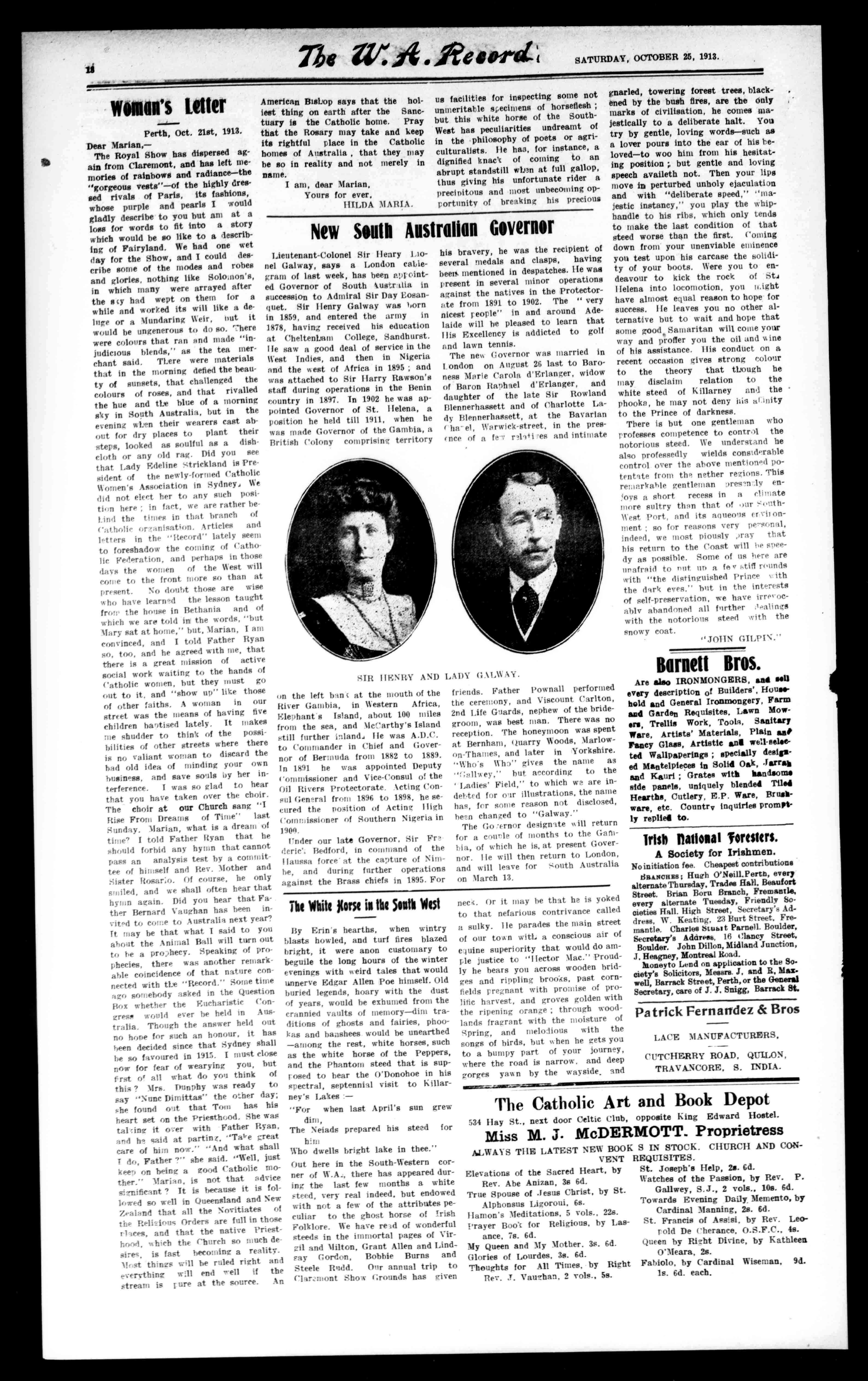
BarnettBros. alsoIRONMONGERS,andsell
everydescriptionofBuilders'.HouseheldandGeneralIronmongery,Farm andGardenRequisites.LawnMowers,TrellisWork,Tools,Sanitary Ware,Artists'Materials,PlainSat FancyGlass,Artisticandwell-seleetedWallpaperings;speciallydesignedMantelpiecesinSolidOak,Jarrab andKauriGrateswithhandsome sidepanels,uniquelyblendedTiled Hearths,Cutlery,E.P.Ware,Brushware,etc.Countryinquiriespromptlyrepliedto.
Irishnationalforesters, ASocietyforIrishmen. Noinitiationfee.Cheapestcontributions
liFIAMCIFIES;HughO'Neill.Perte,every alternateThursday,TradesHall.Beaufort Street.BrianBoruBranch,Fremantle, everyalternateTuesday,FriendlySocietiesHall.HighStreet,Secretary'-Address.IV.Keating.23BurtStreet.Fremantle.CharlestetutatParnell.Boulder, Secretary'sAddress,leClancyStreet, Boulder.JohnDillon,MidlandJunction, J.Heagney,MontrealRoad. koneytoLendonapplicationtotheSociety'sSolicitors,Messrs.J,andIi,Maxwell,BarrackStreet,Perth,ortheGeneral Secretary,careofJ.J.Snigg,BarrackSt.
PatrickFernandez&Bros
LACEMANUFACTURERS, CUTCHERRYROAD,QUILON, TRAVANCORE,S.INDIA.
TheCatholicArtandBookDepot
534HaySt.,nextdoorCelticclub,oppositeKingEdwardHostel.
MISSM.J.McDERMOTT.Proprietress
ElevationsoftheSacredHeart,by Rev.AbeAnizan,3s6d.
TrueSpouseofJesusChrist,bySt. AlphonsusLigoroui.6s.
!lemon'sMeditations,5vols..22s.
PrayerB00%forReligions.byLasance,7s,6d.
MyQueenandMyMother,3s.6d.
GloriesofLourdes,3s.6d.
ThoughtsforAllTimes,byRight Bev.T.Vaughan,2vols..Ss.
ALWAYSTHELATESTNEWBOOKSINSTOCK.CHURCHANDCONVENTREQUISITES. St.Joseph'sHelp,2s.ed. WatchesofthePassion,byRev.P. Gallwey,S.J.,2vols.,10s.6d. TowardsEveningDailyMemento,by CardinalManning,2s.6d. St.FrancisofAssisi,byRev.LaoroldDet'herance.O.S.F.C.,4s. QueenbyRightDivine,byKathleen O'Meara,2s. Fabiolo,byCardinalWiseman,9d. ls.6d.each.
ne erd'i SATURDAY,OCTOBER25,1913.
THEUNITEDSTORESLTD
Grocery,Tea,Coffee,WineandSpirit Merchants,andImporters.
WEIMPORTDIRECTALLJrueines,DA/melee,Tea,Oodee,Wines, MEdEPirits.
00TFEEROASTEDDAILYSOthatCustomerseonrail Wise siggIleilwit&thePUREANDFRESHARTICLE.
MADirestIrmaHILLESTATMSisCEYLONfromN.Se4s.E.
FARMER'S&HUTTONsCelebratedHAMSandBACON,andadmit braidso1EUTT`ERalwaysisStsek.
WesupplytheBEST,andistraportingallourGeydsareable,emil SIP*ArgotheLOWESTPRICEforoverythilse
TheUnitedStoresLimited
4079HayStreet,Perth
Noarienoiesorbranches
CRITERIONLIVERY&BAITSTABLES
(BACKOFCRITERIONHOTEL), 101-103MURRAYSTREET,
SEAGA,SINGLEANDDOUBLEBUGGIES,SULLIES, OARS. NAGGONITTIS,ALLVEHICLESRUBBERTYRED.
SADISM'ANDGENT'SHAMS.WEDDINGPARTIESSPECIALWI
HorsesonHirebyDayorWeek. IN,SMYTH,Proprietor, TELEPHONE,776.
JOHNDYNON&CO. THECHINAHALL
236and238MurrayStreet,Perth
CELINA,GLASS,EARTHENWARE,FANCYGOODS,N.P.WARE.N.
XmasNoveltiesandPresents
MEATVARIETYINTEASETSDINNER-SETS,TOILET-SITS.ANB FRUIT-SETS.
WRITEFORCATALOGUEANDIRICELIST.
TELEPHONE270Centre
RINGUP TEL.CENTRAL265(DayandNight). ForallkindsofPLUMBING,GAS FITTINGS,andGALVANISED IRONWORK.
MarkDunn
532-334WELLINGTONST.,PERTH. LicensedPlumberandDrainer TotheMetropolitanWaterSupply. SewerageandDrainageDepartment DairyingUtensils,Baths,BathHea term,Tanks,andWindmillsMad, Fixed.andRepaired.
It.K.OATES&Co. OFF746WELLINGTONSTREET.
WoodandCoalMerchants
AgentsforHowardSmith'sA.1.. NewcastleCoal,CollieCoal,Charcoal,etc.Specialquotesfortrsea lots.DryJarrahBlocks.128.bit., perload.
TELEPHONErioa.
conventofSt.Joseph
AdelaideStreet,Fremantle
FORYOUNGLADIES(BOARDERSANDDAYPUPILS),CONDUCTED BYTHESISTERSOFBT.JOSEPHOFTHEAPPARITION.
TheBuildingiswellventilatedandcomfortable,andtheDormitories,etc.,arewellfittedtosecurecomfortandhealth.
ThechildrenareconstantlysuperyisedbytheNuns,especiallywith regardLureligiousandmuraltraining.
AllbranchesofathoroughEngBahEducationaretaught; also French,Drawing,German,Painting,Singing,Pianoforte,Organ,Violin, Mandoline,Book-keeping,Elocution,ShorthandandTypewriting,Needlework(PlainandFancy),andKindergartenClassesforJuniorPupils.
AreductionwillbemadeinfavourofSisters.
PaymentinADVANCEisrequiredforBoardersandDayPupils.
PriortotheremovalofanyBoarder,onequarter'snoticemustle given. Boarderswillbeadmittedatanytimeoftheyear.
PupilsarepreparedforUniversitiesandMusicalExaminations.
Tbeyhavealsotheadvantageofseabathing.
Forfurtherparticularsapplytothe Rev.Mother
ConventofSt.Joseph,Fremantle
"SURFACE'QUALITY
THEREALTHING
Youcan'ttellfromthesurfaceofa lakewhat'sAttheBottomofit.
HI NationalMutualLife AssociationofAustralasiaLtd. Australia'sMostProgressiveLifeOffice BranchOffices-St.George'sTerrace,Perth DirectorsRightlion.SirJOHNFORREST,P.C., AI.H.R., WILLIAMMACMURTRIE,Esq. HENRYWRIGHT,ManagerforW.A.
ili*****04(.....-eir...04,0
00.6.04.4110.00#*++., -RAILWAY- -RECHABITE- *
Neithercanyoudeterminethe qualityofclothesbyiheirsurface appearance.Youhavegottogo deeperthanthat.
Onthequa,ityofthingsthatyou don'tseeontheturtace,depends thePermanencyofthevisiblesigns ofquality.
AndinCogan'sClothesyouget theutmostinboth,theseenand theunseeninquality.Permanent andlastingsatsfactionbeingthe guaranteedresult.
Mrs.CEIAMBERLAIN,Proprietress. t * *
ICoffeePalace coffeePalace t . i
ThemostsuitableforvisitorstoPerth.Theyarerightopposite ti 3thePerthRailwayStation.BestattentionandModeratePrices 1qi411`414.4V't444/r............0.0.4044400411100...00..ovio
SHINE'ScatholicArtand Depot Book
CR.PIERANDMURRAYSTREETS,PERTH;andat11ADELAIDESTREET,FREMANTLE(oppositeTownHall). PRAYERBOOKS,id.to12/6 ROSARIES,3d.to50,'. SCAPULARS,2d.to1/3. MEDALS,Id.to5/-. ,'APERS,Etc.-W.A.Record,CatholicPress,Advocate,MessengerS..1-1 AustralLight,Madonna. "MOSSES,Id.to5/. CRUCIFIXES,t/to30/. FONTS,istoio/6. PICTURES,id.to21/(unframed) STATUES,Ad.andupwards. BOOKSonvarioussubjects.
Ayes-4theSaints,CatholicTrutt)SocietyPublications,MountCarmel Habit,WaxCandles,CandlesticIraAltarCruets.Charcoal.blesses Tatars.WicksandFloats.FaiTyLamps.AltarVases,Medallions WRITETOCS.lettingusknowwhatonwant.andwswile CAREFULLYSELECT.PACK,andPOSTYOURORDERS
readynow,allthenewsummer zutings.
SATURDAY,OCTOBER25,1913. new:let.Aecord4 11
L'ERSU
Where 1 CoganBros., ExpertTailors HAYSTREET,PERTFl theGoodHatsare BRIGGS&ROWLAND 603WellingtonSt.,Perth OPPOSITERAILWAYGOODS YARD THEPREMIERLIMEANDSTONEMERCHANTSOFW.A. AbsolutelytheHighestPercentageLimeintheState. WriteforpricesandparticularsbeforePurchasingelsewhere,asws defyCompetition.TheonlyBRIGGSintheTRADE.Noconnection withanyonetradingunderasimilarname.LimeforManureatavan. .uwrate.
SWEdwardCarsonAsPope Carsonas"King"weknow,but nowwehavegottoconsiderCarson asPope!Itisnotjest,butgrim, dour,determinedfact.WhenCarson wasatHomburg,inGermany,be wrotetothesecretaryoftheUlster UnionistCouncilasfollows:-
"The28thSeptemberfallsona Sundaythisyear.Ihopetheclergy ofalldenominationswillthinkit propertoholdservicesspeciallyfittingtocommemoratethedayon whichweenteredintoourSolemn Covenant.IamconfidentallCovenanterswillbeanxiousinthismost solemnwaytoemphasisetheseriousnessoftheiraction."
The"UlsterGuardian,"theablyconductedweeklywhichvoicesthe sentimentofenlightenedandpatrioticUlsterProtestantisiii,denounces this"ProtestantPapalEdict"of ('arson'sinthestrongestterms.It says:-
"Onthe28thSeptembertheEpiscopal,Presbyterian,lk.thodist,Congregational,andBaptistChurchesare toaltertheirusualservicesandintroduceaspecialformofworship atthebidding,notofSynod,orAssembly,orConference,or('ongress, butof^politicallawyer,whohas aboutasmuchrighttointerferein thingsecclesiasticasPrimateor Moderatorhastointerfereinthings legal.Itisapiluiintsituation,this would-heconversionoftheentire ProtestantreligiousorganisationsintoPOmanypawnsupontheCarson politicalchess-hoard.HomeRule maymeanRomeRule,butthereis nomistakethatParsonRulemeans ('arsonRule.Itistobe,.ablished throughouttheChristian...oddthat UlsterclergymentaketheirmarchingordersfromaNisii'riuslawyer?
Wecannottell.Frankly,-.vearepreparedforanythingfromasectiono' everyProtestantChurchin:lster. Fromanothersection,sacshallhe bitterlydisappointedifwedonot findresistancetothedeathagainst thisarrogantattempttoorderthe affairsofChrist'sChurchfrontthe HomburgbranchoftheOldTown !all.Andsimilarlyweshallhivea renewalofthestrifeandbitterness whichhaverenteveryProtestant ChurchinUlsterintwainand..iade lifeamiseryforthoseministersand hearerswhosettheirfacesagainst thefaithoftheirfathersbeingprostitutedtotheserviceofapolitical caucus."
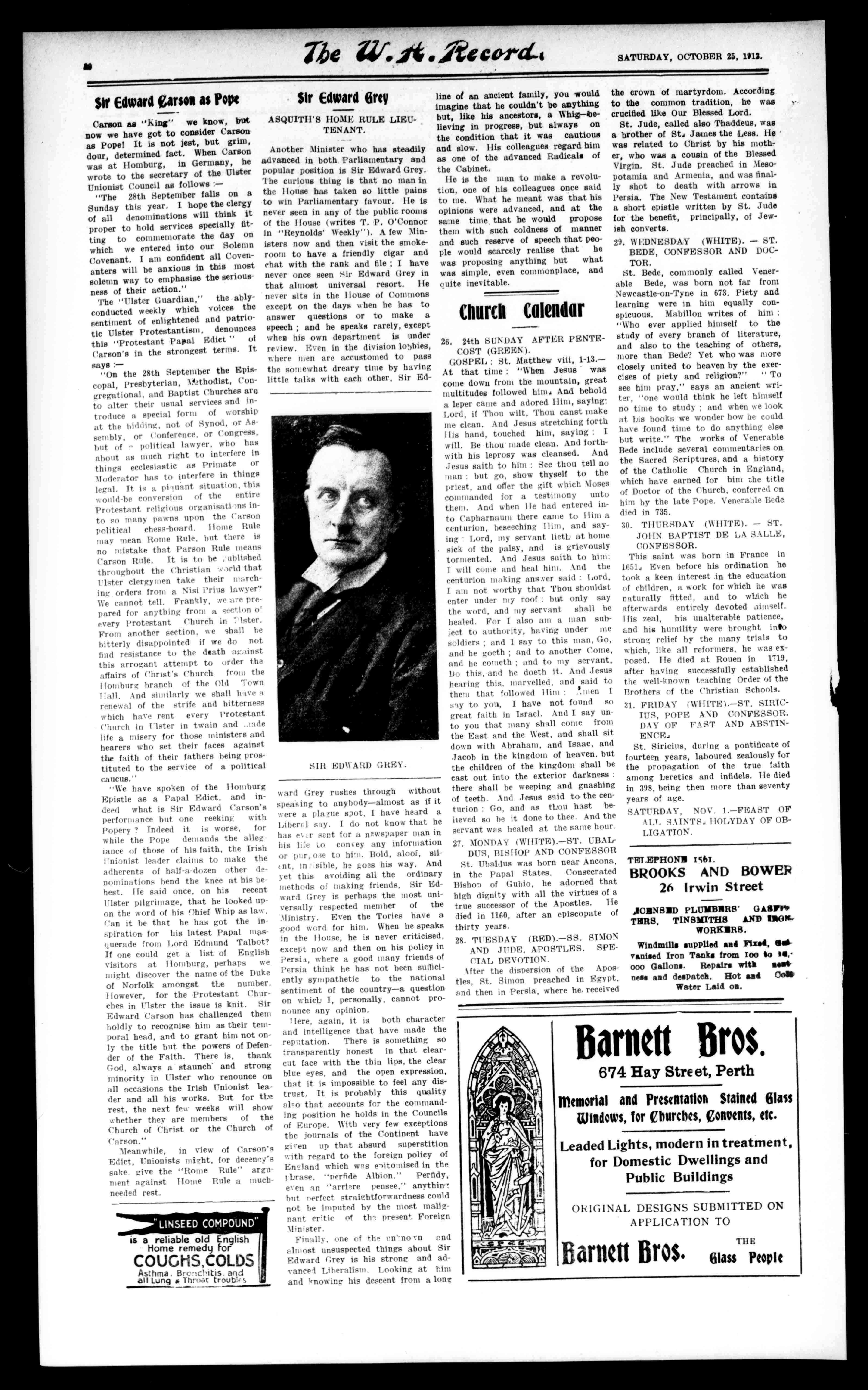
Sir
EdwardGrey
ASQUITII'SHOMERULELIEUTENANT.
AnotherMinisterwhohassteadily advancedinbothParliamentaryand popularpositionisSirEdwardGrey. 'Ihecuriousthingisthatnomanin theHousehastakensolittlepains towinParliamentaryfavour.Ileis neverseeninanyofthepublicrooms ofthe!lousewritesT.P.O'Connor in"Reynolds'Weekly").AfewMinistersnowandthenvisitthesmokeroomtohaveafriendlycigarand chatwiththerankandfileIhave neveronceseensirEdwardGreyin thatalmostuniversalresort.IIe neversitsintheHouseofCommons exceptonthedaysshenhehasto answerquestionsortomakea speechandhespeaksrarely,except whenhisowndepartmentisunder review.Eveninthedivisionlobbies, wheremenareaccustomedtopass thesomewhatdrearytimebyhaving littletalkswitheachother,SirEd-
lineofanancientfamily,youwould imaginethathecouldn'tbeanything but,likehisancestors,aWhig-believinginprogress,butalwayson theconditionthatitwascautious andslow.Hiscolleaguesregardhim asoneoftheadvancedRadicalsof theCabinet.
Ileistheiiiantomakearevolution,oneofhiscolleaguesoncesaid tome.Whathemeantwasthathis opinionswereadvanced,andatthe sametimethathewouldpropose themwithsuchcoldnessofmanner andsuchreserveofspeechthatpeoplewouldscarcelyrealisethathe wasproposinganythingbutwhat wassimple,evencommonplace,and quiteine%itaide
ChurchCOlendfir
26.24thSUNDAYAFTERPENTECOST(GREEN).
thecrownofmartyrdom.According tothecommontradition,hewas crucifiedlikeOurBlessedLord. St.Jude,calledalsoThaddeus,was abrotherofSt,JamestheLess.lie wasrelatedtoChristbyhismother,whowasacousinoftheBlessed Virgin.St.JudepreachedinMesopotamiaandArmenia,andwasfinallyshottodeathwitharrowsin l'ersia.TheNewTestamentcontains ashortepistlewrittenbySt.Jude forthebenefit,principally,ofJewishconverts.
"WehavespokenoftheHomburg EpistleasaPapalEdict,andindeedwhatisSirEdward('arson's performancehutonereekingwith Popery?Indeeditisworse,for whilethePopedemandstheallegianceofthoseofhisfaith,theIrish Unionistleaderclaimstomakethe adherentsofhalf-a-dozenotherdenominationsbendthekneeathisbehest.Ilesaidonce,onhisrecent listerpilgrimage,thathelookeduponthewordofhisChiefWhipaslaw. canithethathehasgottheinspirationforhislatestPapalmasqueradefromLordEdmundTalbot?
IfonecouldgetalistofEnglish visitorsathomburg,perhapswe mightdiscoverthenameoftheDuke ofNorfolkamongstthenumber.
Ihowever,fortheProtestantChurchesinUlstertheissueisknit.Sir EdwardCarsonhaschallengedthem boldlytorecognisehimastheirtemporalhead,andtogranthimnotonlythetitlehutthepowersofDefenderoftheFaith.Thereis,thank God,alwaysastaunch'andstrong minorityinUlsterwhorenounceon alloccasionstheIrishUnionistleaderandallhisworks.Butforthe rest,thenextfewweekswillshow whethertheyaremembersofthe ChurchofChristortheChurchof Carson."
Meanwhile,inviewofCarson's Edict,Unionistsmight,fordecency's sake.givethe"RomeRule"argumentagainstHomeRuleamuchneededrest.
wardGreyrushesthroughwithout speakingtoanybody-almostasifit wereapla.zuespot,Ihavehearda Liberalsay.Idonotknowthathe hasei.zrsentforanewspapermanin hislifeioconveyanyinformation orimr,oietohim.Bold,aloof,silent,in'Bible,hagoeshisway.And yetthisavoidingalltheordinary methodsofmakingfriends,SirEdwardGreyisperhapsthemostuniversallyrespectedmemberofthe Ministry.EventheTorieshavea goodwordforhim.Whenhespeaks intheHouse,heisnevercriticised, exceptnowandthenonhispolicyin Persia,whereagoodmanyfriendsof Persiathinkhehasnotbeensufficientlysympathetictothenational sentimentofthecountry-aquestion onwhichI,personally,cannotpronounceanyopinion.
GOSPELSt.Matthewviii,1-13.Atthattime"WhenJesuswas comedownfromthemountain,great multitudesfollowedhim,Andbehold alepercameandadoredHim,saying: Lord,ifThouwilt,Thoucanstmake !tieclean.AndJesusstretchingforth liehand,touchedhim,sayingI will.Bethoumadeclean.Andforthwithhisleprosywascleansed.And .JesussaithtohimSeethoutellno titanbutgo,showthyselftothe priest,andofferthegiftwhichMoses commandedforatestimonyunto them.AndwhenliehadenteredintoCapharnaunitherecametoIliuma centurion,beseechingHim,andsayingLord,myservantliethathome sickofthepalsy,andisgrievously tormented.AndJesussaithtohim: Iwillcomeandhealhim.Andthe centurionmakinganaversaidLord, IsinnotworthythatThoushouldst enterundermyroofhutonlysay theword,andmyservantshallbe healed.ForIalsoantamansub;ecttoauthority,havingunderine soldiers;andIsaytothisman,Go, andhegoethandtoanotherCome, andhecometh;andtomyservant, Dothis,andhedoethit.AndJesus hearingthis,marvelled,andsaidto themthatfollowedI !menI saytoyou,Ihavenotfoundso greatfaithinIsrael.AndIsayuntoyouthatmanyshallcomefrom theEastandtheWest,andshallsit downwithAbraham,andIsaac,and Jacobinthekingdomofheaven.hut thechildrenofthekingdomshallbe castoutintotheexteriordarkness thereshallheweepingandgnashing ofteeth.And.JesussaidtothecenturionGo,andasthouhaatbelievedsoheitdonetothee.Andthe servantWeshealedatthesamehour.
27.MONDAY(WIIITE).-ST.UBALDUS,BISHOPANDCONFESSOR
St.UbalduswashornnearAncona, inthePapalStates.Consecrated BishonofGubio,headornedthat highdignitywithallthevirtuesofa truesuccessoroftheApostles.lie diedin1160,afteranepiscopateof thirtyyears.
28.TUESDAY(RED).-SS.SIMON ANDJUDE,APOSTLES.SPECIALDEVOTION.
29.WEDNESDAY(WHITE).-ST. BEDE,CONFESSORANDDOCTOR. St.Bede,commonlycalledVenerableBede,wasbornnotfarfrom Newcastle-on-Tynein673.Pietyand learningwereinhimequallyconspicuous.Mabillonwritesofhim "Whoeverappliedhimselftothe studyofeverybranchofliterature, andalsototheteachingofothers, morethanBede?Yetwhowasmore closelyunitedtoheavenbytheexercisesofpietyandreligion?""To seehimpray,"saysanancientwriter,"onewouldthinkhelefthimself notimetostudyandwhenwelook athishookswewonderhowhecould havefoundtimetodoanythingelse butwrite."TheworksofVenerable Bedeincludeseveralcommentarieson theSacredScriptures,andahistory oftheCatholicChurchinEngland, whichhaveearnedforhimthetitle ofDoctoroftheChurch,conferredon himbythelatePope.VenerableBede diedin735.
30.THURSDAY(WHITE).-ST. JOHNBAPTISTDELASALLE, CONFESSOR.
ThissaintwashorninFrancein 1651,Evenbeforehisordinationhe tookakeeninterestintheeducation ofchildren,aworkforwhichhewas naturallyfitted,andtowhichhe afterwardsentirelydevotedaimaelf. hiszeal,hisunalterablepatience, andhishumilitywerebroughtinto strongreliefbythemanytrialsto which,likeallreformers,hewasexposed.liediedatRouenin1719, afterhavingsuccessfullyestablished thewell-knownteachingOrderofthe Brothersofthe('hristianSchools.
31.FRIDAY(WHITE).-ST.SIRTCTITS,POPEANDCONFESSOR. DAYOFFASTANDABSTINENCE, St.Siricius,duringapontificateof fourteenyears,labouredzealouslyfor thepropagationofthetruefaith amonghereticsandinfidels.liedied in398,beingthenmorethanseventy yearsofage.
SATURDAY,NOV.1.-FEASTOF ALT,SAINTS,II0I,YDAYOFOBLIGATION.
TElEPTIONE1561.
BROOKSANDBOWER 26IrwinStreet
,ICIINSMDPLUMBIIRS'Galin% TARS,TINSMITHSANDMOW. WORKERS.
AfterthedispersionoftheApostles,St.SimonpreachedinEgypt. andtheninPersia,wherehe.received
!fere,again,itisbothcharacter andintelligencethathavemadethe reputation.Thereissomethingso transparentlyhonestinthatclearcutfacewiththethinlips,theclear blueeyes,andtheopenexpression, thatitisimpossibletofeelanydistrust.Itisprobablythisquality al=othataccountsforthecommandingpositionheholdsintheCouncils ofEurope.Withveryfewexceptions thejournalsoftheContinenthave givenupthatabsurdsuperstition withregardtotheforeignpolicyof Englandwhichwase'itomisedinthe L'rase."nerfideAlbion."Perfidy, evenan"arrisrepensee,"anythiw butperfectstraightforwardnesscould notheimputedbythemostmalignantcriticofthlpresentForeign Minister.
Finally,oneofthern'-noAnand almostunsuspectedthingsaboutSir EdwardGreyishisstrongandadranceiLiberalism.LookingatMm andknowinghisdescentfromalong
WindmillssuppliedandFixed,Ar vanisedIronTanksfromTooto141, 000Gallons.Repair.withsew( neseanddespatch.HotsadOoll. WaterLaidoil.
BarnettBros.
674HayStreet,Perth
memorialandPresentationStainedglass Windows,forChurches,Convents,etc.
LeadedLights,modernintreatment, forDomesticDwellingsand PublicBuildings
oitIGINALDESIGNSSUBMITTEDON APPLICATIONTO
BarnettBros. glassTHEPeople
Tielir.it.Litecordi SATURDAY,OCTOBER25,1113.
isareliableoldEnglish Homeremedyfor COUGHS,COLDS
eThroattr
As:nmaBrcaciatisate
SIREDWARDGREY.
PHILIPCOYLE
WholesaleWineandSviritMerchant
Moir'sChambers,Perth SoleAgentsfor
W.&A.Gilbey'sWinesandSpirits
HansIrvine'sWinesandBrandies
AyalaChampagne
ApollinarisTableWaters
Gordon'sSpanishSherry
GlenoranNo.10Whisky
t.ormontb,Tait&Co,l'ort
JamesWatsoti'sXXXWhisky
E.J.Burke'sAleandstout
M.Marceau&Co.,
GonzalezByass&Co.'sPort
MarieBrizardandRoger'sBrandies andLiqueurs
KitzSparklingAppleCider
Kupper'sLagerBeer
Cawsey'sSquashandCordials
Ind,CoupeCo.'sEnglikkAle
CalixtoLopez&Co.'sLlavanaCigars
SirJohnPower&SonPotStillWhisky
FrenchWines.Bordeaux
Hanstrviue'sChablis,anExcellentAltarwine StocksofAssortedLiqueursalwaysonhand
$umourou)Bits
Park-keeper(givingafriendlywarning)-Youniusn'tsitthere,nia'ni.
OldLady(sittingonaseatwhich hasjustbeenvarnished)-'EreIam, and'ereI'mgoingtostick.
Schoolmaster Whydidyoustay aptayfromschool,Frankie?"Boy "Meinutherbrawke'erarm."
Schoolmaster"Butwhydidyou staytwodays?"Boy"Shehrawke itI'twopia-aces!"
AnIrishmanandaYankeemetat atavern,andtherewasbutone roomforthem.
OnenteringtheYankeesaidhedid notcarewhichsideoftheroomhe toot."Then,"saidPat,"youmay taketheoutside.,"
Pattoretiredmilkman,whowas famousforhiswell-wateredmilk, "You'relikethewhalethatswallowedJonah."
Nlii-uruan-"IlowamIlikethe whale?"
Pat-"Becauseyoutookagreat pro''toutofthewater."
1nIrishi,anatafairgotpokedin theeyewithastick,andtookp"oceedingsagainsttheoffender.
Saidthemaeistrate-."Come,now, youdon'treallybelievehemeantto putoutyoureye"
"Faithyou'rerightthistir:e." saidPat,"forIbelievehetriedto putitfartherin."
OldBiddywasonherdailyrounds lookingforwhatshecouldpickup, andseeingtwogentlemencoining along,wentuptothemforabitof coal.Gettingwhatshewanted,her thankswereprofuse,andsheconcludedsuggestively"Bless,ye,sirs, an'mayyeneverwantforfiringyerselvesinthisworldorthenext."
ABulgarianofficerwhohadlosta legintherecentcampaignwascomplainingofhishardcasetoacivilian."Atallevents."thelattersaid consolingly,"youhavetheh.ippimessofthinkingthatbyyourefforts
yourcountrymenwereenabledto plantafootinTurkishteiritery." "Perhaps,"repliedtheentlei%T,"Hit Istillregretitwasmine."
Afatuoussculptorwasseatedata dinnernexttoafairbutfrivolous younglady,anditwassoonevident thathewasnotveryfavourablyimpressedbyheridlechatter.
"Whatkindofafiguredoyou utmostadmireinawoman?"sheinquired,withtheairofoneangling foracompliment,
"Almostanykind,aslongasshe isnotafigureofspeech,"hereplied, briefly.
ABelfastman,fromthe('arson quarter,waschargedinthepolice courtsofhisnativecitywithenteringtheshopofanItalianimagesellerandsmashingtipallherstockof statuary-BlessedVirgins,saintsand all."Why,"askedthemagistratereproachfully,"didyoudestroyallthis poorwornan'sgoods?""Well,"answeredtheimage-breaker,"yesee, thewayitiswi'me.Acan'tstan' bigotry."
Itwasafterthewedding,andthe ministerwasgivingtheyoungcouplealittlefriendlyadvice.Oneportionofthisseemedtotroublethe brideverymuch.
"AndImustfollowmyhusband everywherehegoes?"shequeried
"Ves,yes,ofcourse."
"TwishI'dknownthatbefore!" criedthepoorgirl,inadistressed to"e."T'dneverhavemarriedalettercarrier."
Inabarber'sshopamanwhowantedtocatchatrainwasbeingshaved. Theboywaslatheringhimveryslowly,goingbackwardsandforwards withtheshavingbrush,andthe man'sangerwasfastbreaking bounds.
"Burryun,Tommy,"heexclaimed.Butstilltheboywentnoquicker.Atlastthemancouldstandit nolonger."Keenyourbrushstill. 'I1Vboy.-heshouted."andI'llwag n'yhead."
Doriswasradiantoverarecentadditiontothefamily,andrushed outofthehousetotellthenewsto apassingneigLbour."Oh,youdon't knowwhatwe'vegotupstairs!"she cried."Whatisit?""It'sanew babybrother!"Andexpectantly shewatchedtheeffectofLeerannouncement."Youdon'tsayso?Is hegoingtostay?""Ithinkso"verythoughtfully."lie'sgothis thingsoff!"
Anoldfarmerhadbeentothemetropolisandwasdescribingtohis friendsthesplendourofthehotelat whichhestayed."Everythingwas perfect,"hesaid,"allbutonething, Theykeptthelightburningallnight inmybedroom,athingIain'tused to."
"Well,"saidonewag,"whydidn't youblowitout?"
"Blowitout!"saidthefanner. "IlowcouldI?Thepeskythingwas insideabottle!"
Therehadbeenahadexplosionina powdermill,andtheproprietor,who wasawayonapleasuretrip,hurried hometomakeaninvestigatimimsto thecause.
"Howintheworlddidithappen?" heaskedtheforemanofthemill.as heviewedthewreck."Whowasto blame?"
"Well,yousee,sir,"repliedthe forelian,"itwasthisway.billwent intothe' thinkingofsomethingelse,and struckamatchinmistake.Tie-'Struckamatch!"exclaimedthe proprietorinamanaient."IsLoili havethoughtthatwouldhavebeen thelastthingonearthhe'd.io!"
"Ttwas,sir,"wasthecalmre-oinderoftheforeman.
"Theboyisallright."saidt"doctor,"hutyouwanttotalk*o himandarousehisambitions.Psoinisehimthatyouwilltakehim somewherewhenherecoverssufficientlytogoout.Talktohimaboutplayingfootballwiththeboys. Therearelotsofwaysinwhichyou caninterestblni."
Thenthedoctoraldressdthelit-
tiechap,whowasjustrecovering fromthefever,saying "Come,Billy,cheerup.Wouldn't youliketogooutandkicktheball withtheotherkids?"
Afaintsmilestoleovertheboy's face,butthatwasall.
"Waitaminute,doctor,I'llrouse him,"interruptedtheboy'sfather. "Lookhere,Bill,howwouldyou liketogooutandstealthemilkjugs offtheneighbours'porches,drinkall themilk,andthensmashthejugsin thestreetsothatthemotortyres willexplode?"
Thechildsatupatonceandaskedforhistrousers.
J.B.GEORGE
PharmaceuticalandDispensing
CHEMIST
330HAYST.PERTH (OornerofHaymadPimaStmesto).
HaveYouTriedFloramac
THEDISPINSINGOrPRESCRIPTIONSHASBEENMADE SPECIALSTUDY.
MissMcMahon
OORNERPIERANDEURRAISTREETSPERTH. ?raftandCoafsdiosary.IgletEsbsslasamfts
CELTICCAFE
(Hay-Street,oppositefoodsOWN CONDUCTEDBY PissMake THISfTPTnDATEANDWEIL-,T"'PnrtFF.OFFERS001111MDTN'DTUEBF.STRERVTOI TOCUSTOMERS.CLEANLINIISS ANDANEXCELLENTWIND IPARANTF.EB THREECOURSE'MEALS'. EARLYLITNCHFnNnvALLFurr. OATS.OPENAU,ncynwarq. BAY
SATURDAY,OOTOBERIS,1913. TheWA.Reco-rei. ft v. Telephone285,Office.1558BondedStores,RailwayStreet,WestPerth
-OURSTORYCarrollO'Donoghue
ATaleoftheIrishStrugglesof1866,andofRecentTimes
ByCHRISTINEFABER
(Continued.)
CHAPTERV.-MRS.CARMODY.
Amiledistantfromthecottagein whichdweltNoraMcCarthyand ClareO'Donoghue,therestoodoneof thebetterclassofIrishcountrycottages;whiletherewaslittleevidenceofcareinthepatchofground 7surroundingit,thereseemedtobe unusualthriftandneatnesswithin.
Abrightturffireemitteditscheerfulblaze,andtheearthenfloorwas tidilyswept.Anattemptatadresserhadbeenmadeinonecornerof theroom,anduponaportionofit shonenumerousbrightly-scouredtins, whiletheremainderwaswellstocked withware,manyofthepieces,however,beingbroken,butsoplaced thatonlythegoodsideofeachwas visible.Intheoppositecornerrestedasettlenowarrangedasabed, withcoarse,butcleancoverletand pillowanopendoorrevealeda smallerapartment,evidentlyasleepingroom.Atidy,floridIrishwoman,withherblackdresspinnedabouther,andhergrayhaircovered byaspotlesslycleancaphavinghuge frilledborders,stoodbesideatable, peelingpotatoes.Sheseemedtobe absorbedindeepandnotverypleasantthought,forsometimesshe shookherheadominously,andafter intervalsshemutteredsuchstray sentencesasthefollowing
him.Shedidso,flingingherarms abouthim.
'Tonicback,Tighe,myson!Iwill listen.Shuremyheartwasbrakin' whileyouwasgone,an'iverydayI fixedyermomthesameasifyou sleptinitthenightafore.Lookat it!"
Shedrewhinttotheinnerapartmentthoughpooralmosttobareness,,itwascleanandneat,andthere hadbeenevensomeattemptattaste inthedispositionofbowsofbrighthuedcalicoonakindofdressingstandthatoccupiedonecorner.Tighe encircledherwithLisarm."Youwor alwaysagoodmother,an'youdesarveabetthersonthanIalit;but comenowtillItellyou,forI'll havetohemovin'soon."
Shewouldhavebusiedherselfin preparingamealforhint,butheinsisteduponhavingherundividedattention;sotakingaseatwhereshe couldlookfondlyintohisface,she smoothedtherumpledfrillsofher cap,andpreparedtolisten.
"Youknow,mother,howheavyme heartwasforthemastherafther theythransportedhim."
"Ido,alypoorboy,Ido."
wayacrossthecounthrytillIkern atlasttothejailwheretheyoung mastherwas.Ittuklongdaysan' nightso'watchinaforeIcould makehimknowitwasmewasnear him,butIdidatlast,an'somehow aftherthatgoodluckwasonour side.Igottobeonserviceatthe jail,an'Imutedfunforthemtill1 kerntoheasoortoffavouriteamong them,officersan'all.Likethepeopleontheship,theythoughtrilea harrumlessouradhaun,an'theydidn't muchmoindwhatIwasabout.But allthetimeIwasthinkin'an'plannin'an'prayin'-yes,soother,on manyanightwhinI'dlookup.to thestarsan'awaytothesaythat partedmefromouldIreland,an' whinatthesantetimeI'dthinkof thebroken-heartedyoungweatherso farfromallheloved,Iusedtodhrop onmekneesan'axGodtodeliver hint.
"Well,therekernanightatlast whenwestoodtogetheroutsidethe prisonwalls,an'aforemornin'we woroutontheocean.Therewasn't wantin'friendstohelpus,an',thoughthehueendcry,atiraised,we landedsafeinIreland,an'we'rehere forthelastthreedays,downat Iurley's,wheretheboysmeets, watchin'thesignsn'thetimes,an' waitin'toknowwhattodo.
FactsWorthKnowing aboutSmallpox
ANDWITHWHICHTHEMEDICAL FACULTYENTIRELYCOINCIDES,
Itisawell-knownandmedicallyacknowledgedfastthatduringperiodsin whichepidetnicelikethatwhichis nowmakingwaxagainstthepopulieMonofSydneyandsuburbs,itisalwaysthepersonwhoisinaweak stateofhealth,anaemic,weakin nervousforce,whosebloodisinpoor condition,andareadybreedinggroundforthegermsofcontagious disease,whofirstfallsareadilyinfestedvictim.Themaninrobust health,whosepurebloodandperfect nerveforceisinitselfthesystem's safeguardagainstinfection,ismore immunefromtheravagesofsmallpoxthanthemanweakandpoorin health.Thus,thosepeoplewhohave madeitahealthcustomtotake Clenient'sTonicwillfindnotoily willtheyhelesslikelytocontagion, buttheywillalsoprovethatthroughthebloodbeingrichandpure vaccinationwillhavebutfewterrors forHien).
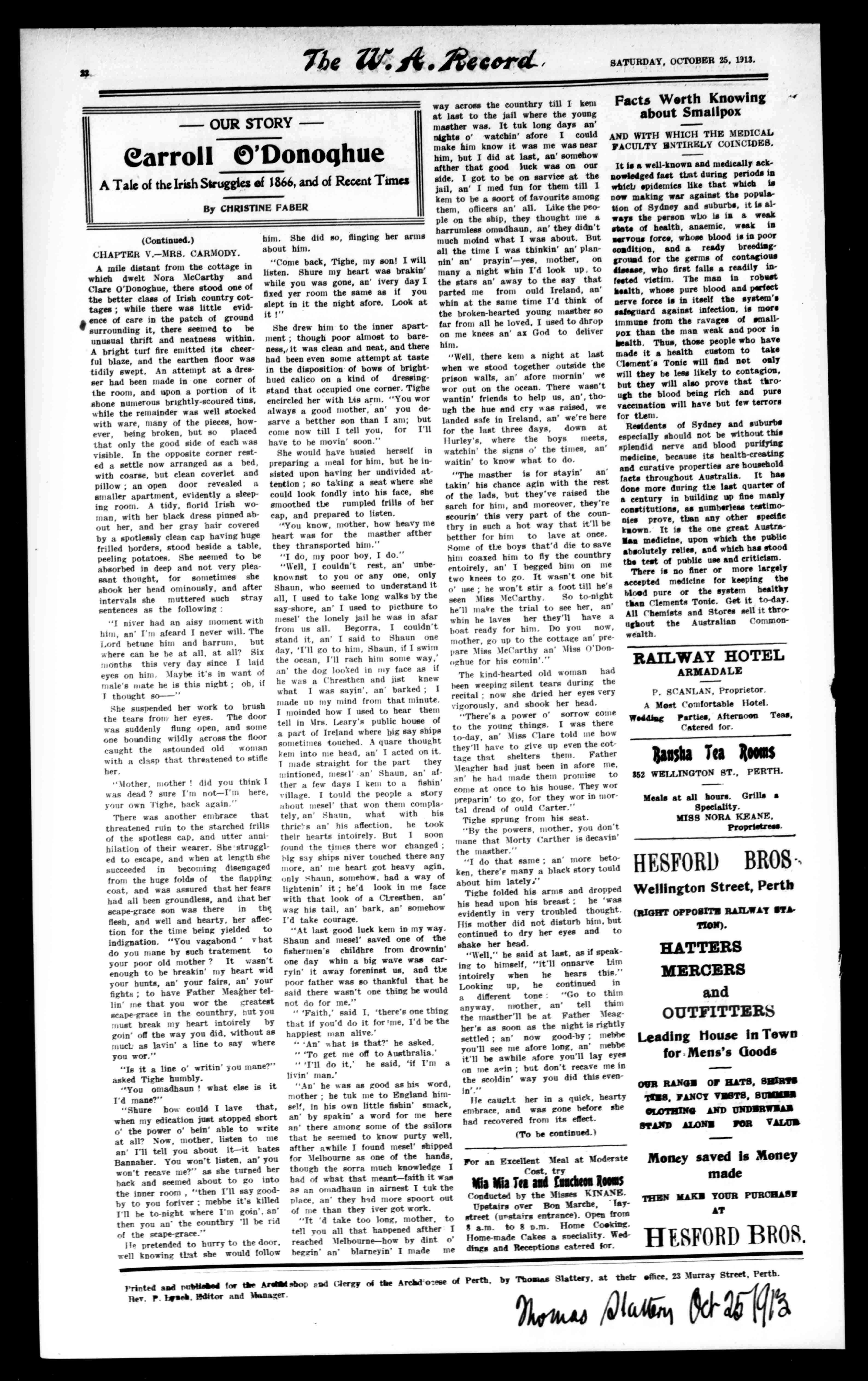
"Iniverhadanaleymomentwith him,an' afeardIneverwill.The Lordbettinehimandharrum,hut wherecanhebeatall,atall?Six monthsthisverydaysinceIlaid eyesonhim.Maybeit'sinwantof mateheisthisnight; oh,if Ithoughtso-" Shesuspendedherworktobrush thetearsfromhereyes.Thedoor wassuddenlyflungopen,andsome oneboundingwildlyacrossthefloor caughttheastoundedoldwoman withaclaspthatthreatenedtostifle tier.
Mother,mother!didyouthinkI was(lead?surel'renot-I'mhere, yourownTighe,backagain."
Therewasanotherembracethat threatenedruintothestarchedfrills ofthespotlesscap,andutterannihilationoftheirwearer.Shestruggledtoescape,andwhenatlengthshe succeededinbecomingdisengaged fromthehugefoldsoftheflapping coat,andwasassuredthatherfears hadallbeengroundless,andchather scape-gracesonwasthereinthe flesh,andwellandhearty,heraffectionforthetimebeingyieldedto indignation."Youvagabond vbat doyoumanebysuchtratementto yourpooroldmother'Itwasn't enoughtohebreakin'toyheartwid yourhunts,an'yourfairs,an'your fights;tohaveFatherMeakhertellin'methatyouworthecreatest scape-graceinthecounthry,butyou :oustbreakmyheartintoirelyby gain'offthewayyoudid,withoutas !nue!.asLavin'alinetosaywhere youwor."
"Isitalineo'writin'youmane?" askedTighehumbly.
"Youomadhaun!whatelseisit I'dmane?"
"Well,Icouldn'trest,an'untieknoenettoyouoranyone,only Shaun,whoseemedtounderstandit all,Iusedtotakelongwalksbythe say-shore,an'Iusedtopicthure to mese!'thelonelyjailhewasinafar frontusall.Begorra.Icouldn't standit,an'IsaidtoShaunone day,'I'llgotohim,Shaun,ifIswim theocean,I'llrachhimsomeway,' an'thedoglookedinmyfaceasif hewasachresthenandjistknew whatIwassayin',an'harked I madeupinymindfromthatminute. I!windedhowIusedtohearthem tellinMrs.Leary'spublichouseof apartofIrelandwherebigsayships sometimestouched.Aquarethought kemintomehead,an'Iactedonit. Tmadestraightforthepartthey wintioned,mewl'an'Shaun,an'altiterafewdaysIken'toafishin' village,itwilitthepeopleastory aboutmese!'thatwonthemcomplately,an'Shaun,whatwithhis thric'san'hisaffection,hetook theirheartsintoirely.ButIsoon foundthetimesthereworchanged; bigsayshipsnivertouchedthereany more,an'meheartgotheavyagin, onlyShaun,somehow,badawayof lightenin'it;he'dlookinmeface withthatlookofaChresthen,an' waghistail,an'hark,an'somehow I'dtakecourage.
"Atlastgoodluckkerninmyway. Shaunandmesesavedoneofthe fishermen'scbildhrefromdrownin' onedaywhinabigwavewascarryin'itawayforeninstus,andthe poorfatherwassothankfulthathe saidtherewasn'tonethinghewould notdoforme."
"'Faith,'saidI,'there'sonething thatifyou'ddoitforOne,I'dbethe happiestloanalive.'
"'An'chatisthat?'heasked.
"'TogetmeofftoAustbralia.'
"'I'lldoit,'hesaid,'ifI'ma livin'man.'
"The['motherisforstayin'an' takin'hischanceaginwiththerest ofthelads,hutthey'veraisedthe sarchforhim,andmoreover,they're scourin'thisverypartofthecounthryinsuchahotwaythatit'llhe bettherforhimtolaveatonce. Someoftheboysthat'ddietosave himcoaxedhinttoflythecounthry entoirely,an'Ibeggedhimonrue twokneestogo.Itwasn'tonehit o'use;hewon'tstirafoottillhe's seenMissMcCarthy.Soto-night he'llmakethetrialtoseeher,an' whinhelavesherthey'llhavea boatreadyforhim.Doyounow, mother,gouptothecottagean'prepareMissMcCarthyan'Miss(rDon()gimeforhiscornin'."
Thekind-heartedoldwomanhad beenweepingsilenttearsduringthe recitalnowshedriedhereyesvery vigorously,andshookherhead.
"There'sapowero'sorrowconic totheyoungthings.Iwasthere to-day,an'MissClaretoldmehow they'llhavetogiveupeventhecottagethatsheltersthem.Father Meagherhadjustbeeninaforerue, an'heha.1madethempromiseto comeatoncetohishouse,Theywor preparin'togo,fortheyworinmortaldreadofouldCarter."
Tighesprungfromhisseat.
"Bythepowers,mother,youdon't manethatMorty('artherisdecavin' thetoasther."
"Idothatsamean'morebetoken,there'smanyablackstorytould abouthimlately."
Tighefoldedhisarmsanddropped hisheaduponhisbreast he'was evidentlyinverytroubledthought. Iliamotherdidnotdisturbhim,but continuedtodryhereyesandto shakeherbead.
"Well,"hesaidatlast.asifspeakingtohimself,"it'llonnarveLim intoirelywhenhehearsthis."
ResidentsofSydneyandsuburbs especiallyshouldnotbewithoutthis splendidnerveandbloodpurifying medicine,becauseitshealth-creating andcurativepropertiesarehousehold factsthroughoutAustralia.Ithas donemoreduringtielastquarterof acenturyinbuildingupfinemanly constitutions,asnumberlesstmtimoniesprove,thananyotherspecific known.ItistheonegreatAustralianmedicine,uponwhichthepublic absolutelyrelies,andwhichhasstood thetestofpublicuseandcriticism. Thereisnofinerormorelargely acceptedmedicineforkeepingthe Roadpureorthesystemhealthy thanClementeTonic.Getitto-day. AllChemistsandStoreseellitthroughouttheAustralianConanonwealth.
RAILWAYHOTEL
ARMADALE
P.ScANLAN,Proprietor. AMostComfortableHotel. WaddingParties,AfternoonTeas, Cateredfor.
Ian*TeaNes
252WELLINGTONST.,PERTH.
Mealsatallhours.Grillsa Speciality. KISSNORAKEANE, Proprietress.
HESFORDBROS
WellingtonStreet,Perth (RIGHTOPPOSITERAILWAYSTATION).
"ShureboacouldIlavethat, whenmyeducationjuststoppedshort 6.thepowero'hein'abletowrite atall?Now,mother,listentome an'I'lltellyouaboutit-itbates Bannaber.Youwon'tlisten,an'you won'trecaverue?"assheturnedher backandseemedabouttogointo theinnerroom"thenI'llsayroodbytoyouforiver;mebbeit'skilled I'llbeto-nightwhereI'mgoin',an' thenyouan'thecounthry'IIberid ofthescape-grace."
Ilepretendedtohurrytothedoor, wellknowingthatshewouldfollow
"An'hewasasgoodashisword, motherhetukmetoEnglandhimeel',inhisownlittlefishin'smack, an'byspakin'awordformehere an'thereamongsomeofthesailors thatheseemedtoknowpurtywell, aftherawhileIfoundmesel'shipped forMelbourneasoneofthehands, thoughthesorramuchknowledgeI hadofwhatthatmeant-faithitwas asanomaAhauninairnestItukthe place,an'theyhadmorespoortout ofmethantheyivergotwork.
"It'dtaketoolong,mother,to tellyouallthathappenedafther reachedMelbourne-howbydint0' herein'an'hlarneyin'Imademe
Lookingup,hecontinued in adifferenttone"Gotothin anyway,neither,an'tellthirn therilasther'llheatFatherMeaeher'sassoonasthenightisrightly settled;an'nowgood-by;mebbe you'llseemeaforelong,an'mebbe it'llheawhileaforeyou'lllayeyes onTima"inbutdon'trecavemein thescoldin'wayyoudidthisevenin'."
Ilecaughtherinaquick,hearty embrace,andwasgonebeforeshe hadrecoveredfromitseffect.
(Tobecontinued.i
ForanExcellentMealatIoderate cost.try
IliaIliaTeaadEmdenloess ConductedbytheMissesKINANE. UpstairsoverBonMarche,laystreet(uestairsentrance),Openfrom 01a.m.toIIp.m.HomeCookineHome-maderakesaspeciality.WeddingsandReceptionscateredfor.
HATTERS MERCERS and OUTFITTERS
LeadingHouseinTown forMens'sGoods
OURRANGEOFRATS,SHIRTS
TrE8,FANCYVESTS,SUMMER OLOTHINGANDUNDERWEAR STANDALONE FORVALUS
MoneysavedisMoney made /SRNMAKIYOURPURCHASE AT HESFORDBROS.
neZile:A.Accord SATURDAY,OCTOBER25,1313.
PrintedandpublishedfortawArehlbtshop;.zaiGlereeoftheerchdo-eseof Bev.P.brace.EditorandManager. Perth,by112osiasSlattery.attheiroffice.23MurrayStreet,Perth. 9ieutA4/di(ai;ti
