
EMPIRESELF-RAISING
TheWest AUSTRALIAN RECORD
PERTH,SATURDAY,OCTOBERI.1913
RUINSOFMELROSEABBEY-ARelicoftheDayswhenScotlandwasCatholic WheretheHeartofRobertBruce.founditsFinalRestingPlace
"If0,1 aright, Cos-ieititbythe
Fort lie ofIIbi!t,to tat.,
Whenlee!Aiken.arches.re ni'hi
Andeachslrifted.014e1 white
Whenthecoldlight'suncertain shmver
Streamsontheruinedcentral tower
Whenbuttressandhettress,alenv,tely Seemframedofebonandivory
Whensilveredgestheimagery,
Andthescrollsthatteachtheeto liveanddie;
WhendistantTweedisheardtorave,
Andtheowlettohooto'erthedead man'sgrave,
Thengo,-hutgoalonethewhile-
Thanviewit.David'sruinedpile
Andhomereturning,soothlyswear. Wasneverscenesosadandfair." -SirWalterScott('LayoftheLast Minstrel,"('anto2,VerseII.
'isT IIIIEV %VEltie EVOLENTIAEXPENDED.
(Owdirtth it `, :' I'', .1 lIti (5! 1. ri, i,r;.,1 rii 1,
IT: halt .1,11:401',$v,!1.. .'ire,in thoseslaysofmisrule teeleiletice Leeseherereo,' 1.1dasa(pilotaieltiii'bitsrefuge fur infneyowl(4'1a-e;rr sh'lterofrestieetfq.1aritiathyfortha orpla.nmaidenandVI^d^stlrtewidowascentralpointswhenceagriculturewastos-reidoverbleak hillsandbarrendoensandmarshy plains,anddealitsbreadtomillions perishingwithhungeranditspestilentialtrainasrepositoriesofthe learningthatthenWAS,andwellstiringsoftl.elearningthatWASTO BE. Themonasterieswere centresoflearning,ofcivilisation, andofcharity."
ALANDAVITHOUTRUINSISA LANDWITHOUTMEMORIES. A Inlnntleitholitmemoriesisaland
ofthe,,i.rio(1.Thenobleedifice,the rOtei0!hiehareshovninourilti !,nthispare,wasaltered ?tertheILeform,itiontosuitthe ofpr,,.1)yterilinworship to1,'11,rndplunderedby ,ild.esto ,i.leornamentsfor Th:.westendandagood Pact thenorths;ilehavedisapreared,buttheelevationofthesouth sideisnearlyentire.Boththetramsert:a,f1theeastendareexternallyinveryfiirpreservation,partof thecentraltowerisstanding,and thesculpturedroofcoverstheeast endofthechancel.
oftheindividualfeaturesofthe building,thegreateasternwindow le'sbeengenerallymostadmiredsince SirWalterScottcelebratedthe moonlitaspectofits "Slendershaftsofshapelystone." Ithasfivelights,andtheupperportionisfilledwithdelicatetraceryof ageometricaldesign,Enoughremainsofthedecorativedetailtoprovoketheadmirationanddespairof

RUINSOFMELROSE.\BBEY,SCOTLAND.
"Whatevermakesthepast,thedistantorthefuturepredominateover tl.epresentadvancesusinthedignityofthinkingbeings.Farfrom meandfrommyfriendshesuer) frigidphilosophyasmayconductus indifferentandunmovedoverany groundwhichhasbeendignifiedby wisdom,braveryorvirtue.Thatman islittletobeenviedwhosepatriotismwouldnotgainforceuponthe plainofMarathon,orwhosepiety wouldnotgrowwarmeramongthe ruinsofIona."Thesewordsofthe celebratedDr.SamuelJohnsonanent theruinsofIona,thesceneofthe missionarylaboursofthegreatIrish Apostle,St.Columba,maybefittinglyappliedtotheruinsofMelroseAbbey,whosestatelythoughdecayingruinscalltomindaneraof Scotland'sCatholicgreatness-the periodbeforethedesecratingLandof thespoilertouchedthosevenerable monasticinstitutions,thecentresof learningandtrueChristianbenevolence, "Itisquiteimpossible,"saysProfessorMaitland,"totouchthesubjectofmonasticismwithoutrubbing
withouthistory.Alandthatwears alaurelcrownmaybefairtosee; buttwineafewsadcypressleaves aroundthebrowofanyland andhethatlandbgirren,beautiless, andbleak,itbecomeslovelyinits consecratedcoronetofsorrow,and itwinsthesympathyoftheheart andofhistory.FatterAbraham Ryanhasbeautifullyembodiedthis ideainverse-
"Givemethelandofthewreckand thetomb, Thereisgrandeuringraves-thereis gloryingloom.
Andeachsinglewreckinthewarpathofmight Shallyethearockinthetempleof right!"
HistoricAssociations
Besidesthe"Chronicle"(opening withtheyear735andendingabruptlyin1270),Melroseehashandeddown hundredsofchartersandroyalwrits datingfromthereignofDavidI.to thatofBruce,andformingamost valuablecollectionrichinillustrationsofthesociallifeandeconomy
themodernartistinstone.The facile,andatthesametimeelaboraterenderingofvegetablecorms, suchastheScotch"kali,"isparticularlystriking.
ItwasintheAbbeyChurchofMelrosewhereAlexanderII.hadlong beforebeenburiednearthehighaltarthattheheartofBrucefoundits finalrestingplaceandamongthe manytombswhichafterwardsgatheredunderthesameroofwerethose ofhisfaithfulJamesLordDouglas, SirWilliam,thedarkknightofLiddesdaleandtheheroofChevyChase.
BenevolentExpenditure-Annual Revenue£100,000
Inthe'CatholicEncyclopedia"the Rev.MichaelBarrett,O.S.B.,ofSt. Michael'sAbbey,Farnborough,England,givesthefollowinginteresting particularsofthatmonument-great eveninitsfall-ofthefaithnobly professedbytheScotchpeople,when thosebraveCaledonianswho,before thevoiceofJohnKnoxwasheardin theland,maintainedtheirallegiance tothe('hairofPeter:MelroseAbbey,inRoxburgshire, foundedin1136byKingDavidI.,
wasthecurliestCistercianMonastery establishedinScotland.itsfirst CommunitycamefromItielvaux,the Yorishin,housecolonized1,0151Citeaux.Inlessthantenyears Mary'sAbbey,Melrose,hailbeen completelybuilt.Itstoodinabroad glensouthoftheTweed,twomiles distantfromthecelticMonasteryof oldMelrose,whereSt.Cuthberthad livedlivecenturiesbefore.:Melrose Abbeysufferedgreatlyfromhostile incursionsofmorethanoneEnglish monarchthesoldiersofEdwardII. desecrated,pillagedandbernedthe churchRichardII.,in1386,laid wastethesurroundingcountryand settiretotheAbbey.Mainly throughthe,generosityofRobertthe Bruce,amorestatelychurchwas begunin1326,andscarcelycompletedbythesixteenthcentury.Cruciforminshape,builtinEnglishPerpendicular,Decorated,andFlamboyantstyles,250feetinlength,Melrose wasdistinguishedforthefairy-like lightnessofitscarvingsandwindowtracery,finishedwithexquisitecare. NotonlytheRoyalfounder,butsucceedingSovereigns,andcountless benefactors,noblesandcommoners, sorichlyendowedMelrosewithlands andpossessionsthatitsannualrevenueiscomputedat£100,000ofpresentmoneyvalue.Oneexampleof theapplicationofsuchrevenuesis toldin12thcenturyrecords.During atimeoffamine4,000starvingpeoplewerefedbythemonasteryfor threemonths.Many-oftheabbots weremenofdistinctionAbbotWaltheof(1148),stepsonofDavidI.,and honouredasasaintAbbotJoseelin, afterwardsBishopofGlasgow(1175), tookaprominentpartintheerectionofthefinecathedralofthatcity asashrineforthebodyofSt.MungoAbbotRobert(1268)hadbeen formerlyChancellorofScotland;AbbotAndrew(1440)becameLord lighTreasurer;litanyotherswere raisedtotheepiscopate.TheEnglishtroopsofHenryVIII.burned Melrosein1544.Althoughthemonks oncenumbered200,andtherewere 130asIntoastwentyyearsbeforethe Reformation,elevenonlyreceived tensionsatthedissolution,soquicklymusttheyhavebeendispersed. Aftermanyviscissitudes,thepossessionsoftheAbbeycamefinallyto theBuccleuchfamily.Theruinswere furtherdevastatedbyafanaticalmob in1569,whenstatuesandcarvings wereruthless*destroyed; butmore wantonstillwasthesubsequentcartingawayofthesacredstonesin greatnumberstoserveasbuilding materials.Theresultisseeninthe carvedreligiousemblemsstillappearinginanduponsurroundinghouses. Theruinsoftheoncenobleabbey formastrikinglybeautifulpicture fromtheNorthBritishRailway,about37milessouthofEdinburgh.
MARKCONROY
HAIRDRESSERandTOBACCONIST
697HAYST.,NEXTSANDOVER. Trythelatestinnovation-Electric Brushes,Massage,etc.ThreeChairs going.TobaccoBlendingaSpeciality.
ReligiousArtGallery
244ELIZABETHST.MELBOURNE. 489GEORGEST.,SYDNEY.
PELLEGRINI&Co.
ManufacturersofReligiousStat.*. aryandallChurchMetalware.DirectImportersofChurchVestments andallkindsofDevotionalArticles. WholesaleandRetail.Ordersb7 postpromptlyexecuted.
Others.
FLOURRisesAboveall
MostBd.Dr.puceatEmiis YOUTHFULMEMORIESRECALLED.
TheMostRev.Dr.Clune,whohas beenfifeguestoftheBishopofEillaloeattendedtheweeklymeetingoftheEnnisConfraternityof theholyFamily,whichwasforthe oceasionopenedtotheparishioners ingeneral,anddeliveredaneloquent sermon.HisLordship'sreputationas apulpitoratorofthehighestorder hadlongprecededhim,andthere was,naturally,animmensecongregation.
Rev.DenisO'Dea,theSpiritual DirectoroftheConfraternity,when theordinarydevotionshadterminated,introducedDr.ChineasadistinguishedClareman,whosecareer badbeenfollonednotmerelybyhis oldclass-matesintheoldCollegeat Ennis,butbyhiscountrymenin generalwiththegreatestinterest. llesaidhisLordshiphad,sotosay, risenfromtheranks,bythesheer forceofhiswonderfulabilitiesand worth.Theythankedhimforcoiningamongstthemthatnightandextendedtohimawarmwelcome.
HisLordshipthenascendedthe pulpit,andafterthankingFather O'Deaforhiswarmwelcome,said thatthirty-fiveyearsagohewasa memberoftheEnnisConfraternity oftheHolyFamily,andhehadthe privilegeofbeingconsecrateda memberbyonewhosenamewasinextricablyunitedwiththenameof theEnnis('onfraternity,andenshrinedintheheartsofoldergenerations inEnnis.Thatwasitsfounder,the lateFr.DanFogarty.
Hereadeepmurmurandprayer, maytheLordhavemercyonLim, wentupfromtheimmensecongregation.ThisbelovedpriestwasabrotherofthepresentBishopofNinaloe.
TheW:A..Reco-reti
BrotherXuglies---PoetandElautiosist
TomostpeopleintheGoldeoWest -andindeedinAustralasia-thesubjectofthisparagraphiswellknown as"PoorOldBrotherIlughes."Why theveteranandinvinciblecollector shouldstylehimself"poor"or "old"weknownot.Poorhecertainlyisinthematerialgoodsof thisworld,butsurpassingrichinresourceandfertilityofgenius.Men likeBrotherHughesnevergrowold. LikeByron'sOcean, "Timewritesnowrinklesonhis azurebrow."
Advancedinyearshemustbe-heis oneofthepioneersoftheOrderin Australiahehasverily"bornethe burdenofthedayandtheheats."
Butthereisaperennialfreshness aboutthemanandhisnobleselfsacrificingworkthatscornsthevandalhandoftime.Manyatimeand ofthasbeliterally"climbedtowalls andbattlements"intheexecutionof hisbynomeansenviabletask.Away inthebushandthefar-offmining camp,hehas"blazedthetrack"in searchofthestrayshilling,andthe sovereignthatmightotherwisego thewayofperdition.ThiscommissionoflovewhichheloyallyacceptedfromthehandsofhisSuperiors, wasundertaken,notforhisown personalbenefit,butfortheStrathfield(N,S.W.)Novitiateandother institutesunderthecontrolofhis world-famedteachingBrotherhood.
WhenBrotherHughestakesawellmeritedrespitefromhisarduouslaliours-ashedoesatrareintervals-hisfacilepenfindsscopeinprow andverseundertheunassumingtitle of"Marianas,"orsomeotherpenname.Inthefieldofliteraturehe modestlydispenseswiththefamiliar titleofpooroldBrotherHughes.
HisLordshipwentontosaythat heleadconicbackwithallthejoy ofachildtoseetheCone-I....rutty towhichhehadbelonged,'Jotleadinc.amerelingeringexistence,but strongerandgreaterandmorepotentforgoodeventhanit.,asin thesedaystowhichhereferred.lle hadcomehackwithallthe..oyof anoldmembertoseetheincriiiiein numberandinthespiritoffi0:11, notonlyamongtheConfraternity members,hutthroughEnnis,and throughthecountyClare.!leaskedhimselfwhatwasthedaeretof thatstrengthandthatpermanence OfaConfraternity.liketheirs?They hailwitnessofotherAssociations, otherclubs,otherUnions,bring foended,andforatimegivingpromiseofpermanence,too,andyetin afewyearstheywerewipedcutof existence.HowwasitthattheConfraternitywastheexception What wasthelatentpowerthatweldedit together?Whatwasthesecretof itsstrengthandpermanence?Itwas theunderlyingspiritofFaith.That spiritofFaithwastheelementof cohesionandpermanence.HisLordshipthendeliveredanexceedingly eloquentsermononFaith,itslower and:tseffects,andinconclusionhe expressedthepleasureitgivehim tocomebackagainafterloieryears .ofexiletorevisithisfriendseidistantdays.IlethankedFr.elute forthekindlywayinwhichiiehad intraduceilbins,andDr.Fogartyfor thewonderfulkindnessand:helavishhospitalityhehadshownbin. sine:,hehadcometoEnnis.liewas deliehtedtohaveanopportentyof addressinghisoldConfrater.vitv,and toseesuchalargeconerlearianto welenteehiltthere.Ilewast'-lighted,too,beyondmeasure,to it stilltiourisningsostrongly.m1to seethespiritofFaithwhichit,;itedtheteopli",andheexhart,?.1thew todingtotheirConfraternity,ant betruetotheFaithwhichai.Hiated them.-"SaturdayRecord"(('o. Clare).
isareliableoldEnglish Homeremedyfor COUGHS,COLDS t.:.:1(T.,3.Pr,e.!it.szeol tillLunge
thecateringdepartment,anexcellent repastbeingprovided.Everything fromfirsttolast,passedoffwell, andthecommitteedeservecongratulationuponthesuccessachieved.The Judgingwasconductedbypopular ballot,andresultedasfollows:-Best fancyset,"FireBrigade:"mostoriginalcostume,MissWalker,"Granny;"bestpostercostume(ladies), Miss0.Jenkins,"BlackandWhite Whisky;"bestpostercostume (gents.),Mr.G.Lawson,"Winifred Cigarettes;"beetfancycostume(ladies),MissHouston,"QuakerGirl;" bestfancycostume(gents.),Mr.Gilbert,"Acrobat."
Inadditiontotheabovethefollowingappearedinfancycostume:MissSimpson,"Carnival;"Miss Austin,"Cingalese;"MissCahill, "Weldon'sFashions;"MissGreen, "CrimsonRambler;"MissMcMurdo, "Billiards;"Mrs.Toomey,"Lanibert'sElectricLight."
FireBrigadeSet-Ilisses('lohessy, Blech/nden,Wilson,andSleighter, Messrs.Anderson,Ryan,Blechyinden, andMclnerheney.
SunshineSet-MissesNewby,Paynter,KirkwoodandEdyards,Messrs. Townsend,Burgoyne,Paynter,and Carr.
GraceDarlingSet.-Mrs.Brody, MissesMcDonnell(2),andS.Cahill, Messrs.Tnkley,Ilarris.Kirkwoodand Draper.
OurflewSerialStory
"CARHOLI,TDONOGIEVE."
AVictoriancorrespondentsendsus (fromW.P.Linehan,Melbourne)a veryartisticengravingofthe"MotherofSorrows,"whichweshould liketoseeineveryCatholichome. Thisworkofart(weunderstand)has beenissuedunderthesupervisionof theVenerableReligiouswhosememoryistreasuredbysomanypast studentsoftheChristianBros.'College,Perth.Theotherenclosureisa littlebookletof10pagesentitled "VocalExercisesfoeYoungElocsMonists,"whichshouldbeinthe handsofallthosewhoaspiretouse correctlytheGod-givenfacultyof speech.('anonSheehan,theauthor of"MyNewCurate,"hagwritten that"thevoiceisthemostflexible organofmelody,andlanguageinits merephysicalutteranceisthehighestofarts."Themottoofthis miniaturegentofcorrectenunciation seemstohesummedupinthe crispsentence-"Eversospeakor readthateverypartofeveryword beheardclearlybyeveryoneyouaddress."HisGracetheMosthey.Dr. Manilla,CoadjutorArchbishopof Melbourne,thuswritestotheauthor,whois,weareassuredbyour Victoriancorrespondent,identical withBro.Ilughes-"Ithinkyour bookletisadmirableforitsl.urpose. Anyonewhopractisesyourexeirises anttakesthevaluablei,intsyou givecannotfailtobecomeagood reader. Youhaveoutagreat dealintoaverysmallconei_iss."In additiontryhighcomplimentsfrom theformerdistinguishedPresidentof Maynooth,theboolilethas:teenmust favourablyreviewedbythe"Advocate,"the"Tribune,"and"rheSydneyFreeman'sJournal."Itissold byLinehanforthemodestsumof t;,Wence,andv.e11.0., ry,'.1.holic sellf;n1inW willsecureasupply ofthisadmirableandveil-arranged guidetoreadingandec)rroetspeaking.
Beverley
WearenowontheeveofHome Rule.Ireland'sstruggleforliberty willbecrownedinherownParliaurentinlessthanayear.England's Governmentiswithus.Hersoldiers willsee,ifneedshe,tothemandate
oftheBritishHouseherpolies willbeinreadinesstoministerto IrishrepresentativesinCo'leieGreen. Itwasnotalwaysso;Irishhistorybearswitnesstotyranny,coercion,imprisontnent,anddeath-dealt outwithliberalitytoeverysonof Erinwhobattledtomakefatherland hisown.Weowetothemenofold aneternaldebtofgratitude.Their livesanddeathsweighedinthe scalesofjustice.Theypioneeredthe campaignforfreedom.Roughwork itwas,anddangerous,too.Life, landandlibertyweretheforfeitin therisk.Thenthepatriotoftheday mightbethemartyrofthemorrow.
Areweinthefullnessofcoming emancipationtoforgetthepast?I hopenot; I'msurenot.Emmet's epitaphwillbewritteningoldenletters.TheaspirationsofThomas Daviswillbeenshrined.Teerise andfallofeverysonofIrelandagainstoppressionwillheatreasured menvory.Nonewillfeartospeakof themenof'66and'98.Thesewere thethoughtsthatledareaderofthe "W.A.Record-topleadforaserial inourcolumnsononeofthegreat Irishstrugglesinthelastcentury.
Inlastweek'sissueweprintedthe firstinstalmentofthatthrillingIrish novelbyChristinaFaber,'untitled "CarrollO'Donoghue." Ileleading incidentsinthisinterestingstory havebeendramatisedin"Conthe Shaughraun,"latelyscreenedby Spencer'sCo.Toenterintodetail mightlessenthecharmforourreaders.Wefeelsuretheabsorbingand romanticnarrative(foundedonthe Fenianrising)willheasourceof pleasure,andatthesametimea fountainofinformationforthosewho areinterestedintheheroicthough bonelessstruggleofthemenof'66 and'67forNationalIndependence. Beginto-day,anddon'tmissany issueuntilthestoryiscomplete.
TheCatholicArtandBookDepot
534HaySt.,nextdoorCeltic.Club,oppositeNineEdwardIlostel. MissM.3.McDERMOTT.
Proprietress
APleinendFancyDreesandPosterBallwasheldintheMechanics' InstituteinaidoftheCatlailis Churchfunds.Therewasalargeattendance,agoodlyproportionof whomappearedinfancycostume. First-classmusicwassuppliedbythe BeverleyOrdrstra,thefloorwasin goodorderfordancing,andMr.R. W.BradfordmadeacapableM.C. Theladiesexcelledthemielvesin
ElevationsoftheSacredHeart,by Rev.AbeAnizan,3s6d.
ALWAYSTHELATESTNEWBOOKSINSTOCK.CHURCHANDCONVENTREQUISITES. St.Joseph'sHelp,2s.6d. WatchesofthePassion,byRev,P. Gallwey,S.J.,2vols.,10s.6d.
TrueSpouseof.lesusChrist,bySt. AlphonsusLigoroui,65. Ranion'sMeditations,5vols.,22s. PrayerBoo;forReligious,byLasance.7s.6d.
MyQueenandMyMother,3s.6d. GloriesofLourdes,3s.6d.
ThoughtsforAll'Pitnes,byRight Nev.J.Vaughan,2vols.,5s.
TowardsEveningDailyMemento.by CardinalManning,2s.6d.
St.FrancisofAssisi,byRev.LeopoldDe('herance,O.S.F.C.,45.
QueenbyRightDivine,byKathleen O'Meara,2s. Fabiolo,byCardinalWiseman,9d. Is.6d.each.
BRISBANE,
WholesaleandRetail WineandSpiritStore
CornerBeaufortandBrisbaneStreets,Perth CHEAPESTSTOREINTHEWEST.
SirJohnPower'sThreeSwallowWbsky
Jameson's Whisky
Mitchell'sImperialgrts.Whisky flocks'sImperialtees.Whisky
Burke'sBottlesWhisky
Power'sPotStill(ownbottling),Imp,qrts
Power'sPotStill(ownbottling),bottles
l'ower'sPotStill,bulk
ExtraSpecialMalt(10yearsinwood)
FineOldScotch,Imperialrots.
i"ineOldScotch,bottles
FineOldScoteh,Bulk
HennessyorMartell'sBrandy, HennessyorMartell'sBrandy, AustralianBrandy,alllines
OldFrenchCognac,ownbottling
Wolfe'sSchnapps,(rte.
¶,er"onHartRum,overproof
FinestImportedSherry
Penfold'sInvalid
Seppelt'sSherry
I
FnelishAle,StoutandLager
to13/6.perdoz. lenelietiAle,StoutandLager £2/10/6to£2112/percase. Tarlton,Vic.,Ale 8/6 SwanAleortout,EmuAleorStout 7/perdoz. CastlemaineAleorStout 6/9perdoz.
AllotherLinesatequallyreducedrates. AssortedCasesmadeup. naijoaryCity,Suburbs,oronrailsPerth.
CENTRAL
4
SATURDAY,OCTOBER4,1918.
HartRum,ordinary
importedPort
Lemon
Finest
Port
loughton'sPort
Sherry Ifoitehton'sClaret Perbottle. 5/9 6/ 6/9 6/6 5/ 6/6 4/9 26/to 4/9 6/ 4/6 2e/to 7/9 6/9 5/3 5/ 5/6 5/6 4/ 3/ 3/6 2/3 2/6 1/9 Percase. £3/3/ £3/6/ i3/15 £3/10/ £2/18/ £31101 £2/15/ 30/pergall. £21151 £3/5/ £21101 30/pergallon. C4/5/ £3/15/ £2117/6 £2/15/ £3/3/6 £3 £2/5 5/
7/6
5/
7/6
£1/13/
£1
Houghton's
to
bottle.
to
bottle.
21/14/ £1141 £1161
12/9
weight
case
cost
deliveryto
WriteforPriceList,andsee
of
and
of
anypartoftheStaptter.oNE
P.M.O'DONOHOE,Licensee.
HibernianAustralasianCatholicBenefitSociety. (ApprovedbytheHierarchyoftheChurchandRegisteredundertheFriendlySoetisties'AstaofAustralasia. ItsWatchwordsares-RELIGION,NATIONALITY,eATHOLleITY,BI3NEVOLI3Nee.
ItisESSENTIALLYIRISHsadCATHOLICanditSPECIALLYAPPEALSTOCATHOLICYouthsdassaailingtheirSUPPORTsadALLIDGIANCM.BrouhahaswillbeastabliakadVsayLOCALITYosresell),by theDISTRICTSEOFtaTARYofarequisitionSIGNEDbyTENPERSONS,ElaaetionedbythePRISM1 oftheDISTRICT.thenamesandWIofintendingmembersbeingfullysetoutINtherequisition.
eeoBRANCHESThroughouttheCommonwealthandNewZealandeo,000membersnag£300,000
Funds.FinaasialHelpsadMedicalAssistanceincasesofSiameseGuaranteed.
e0MINALENTRANCEFEES. MODERATECONTRIBUTIONS.
LoansAdvancedinLargeorSmallAmountsonApprovedCityandSuburban FreeholdProperties.
Fulli'articularsonappliea.tioatoA.Z.FARMER,DistrictSecretary. ,;(1
InandAroundtheHome
'MidPleasuresandPalacesthoughwemayroam, Beiteversohumble,there'snoplacelikehome
TiDeadAstronomer
Starryamorist,starwardgone,
Thouart-whatthoudeistgaze upon! Passedthroughthygoldengarden bars, ThouseesttheGardeneroftheStars.
She,abovewhosemoonedbrows
Sevenstarsmakesevenglows,-
Sevenlightsforsevenwoos
She,likethineownGalaxy, Alllustresinonepurity:-
Whatsaid'stthou,Astronomer, Whenthoudidstdiscoverher?
Whenthyhanditstubeletfall, Thoufound'stthefaireststarofall! -FrancisThompson.
"ThyWillbeDome!"
Asimplephrasebut,coiningfrom theheartinthehourwhenadversity'sstorm-cloudsaregathered thickandblackaboveus,itis worthathousandprotestationsof gratitudeaddressedto'Heavenwhen wearebaskingintheradiantsunlightofprosperityandpeace.-Father Hudson,C.S.C.
CatholicCentreatPanama Exposition
TheCatholiccentreintheSan FranciscoExpositiongroundswillhe knownasthe"Vatican,"andwillbe areplicaoftheworld-famedstructureinRome,andwhatismore,the oldadagewillbeliterallytrue,and everymainwalk,roadorboulevard willleaduptoorpastthe"Vatican."
Thelocation,whenpointedouton themap,showsthatonehastopass the"Vatican"whengoingtothe fee.Exhibits,whichwillhecontainedinthefinestbuildingofallto theAviationgrounds,andtothe Stadium,etc.,whileoneofthemost charmingvisitsinthewholeExpositiongroundswillhefoundinthe intervening-piazzabetweenthe'"Vatican"andthebeautifulstructureto heknownastheFineArtsBuilding. The"Vatican"illrearitsdome 183feetabovetheground,andwill hepurroundedbyacross20feethigh, which,duringthehoursofdarkness, willheilluminedandthrowitsluster overthewatersofthePacificfor manymiles.
Theimmediatesurroundingsofthe "Vatican"willheentirelyCatholic intheircharacter,withBrazilonone sideandHondurasontheother, whileBolivia,Portugal,andthe PhilippineIslandswillfaceit.-San Francisco"Monitor."
eardinale'eonnelltoehildren ofMary Catholicstandardsarethemost refinedandbeautiful;ineverysense thehest.Bearthisinmind.Notonlyisourreligionthebest-youhave neveradoubtofthat-butoursocial idealsarethebest.OnCatholic womenofmeansandpositiontheresponsibilityrestsofacceptingthis truthandlivinguptoit.Every oneofyouexercisesastronginfluenceoveratleastadozenotherwomenofyourfaith.Thentaketheinfluenceonyourimmediatefamily. YouarefaithfulCatholicsbecauseof thelongtraditionhandeddownfor
themostpartthroughIrishancestors,faithfuluntopersecutionand death.Yourgoodmothers'faithis stillaforceinyourlives.Areyou asprayerfulasthosemothers,who, withlessleisure,gavesomuchtime toGod? Areyouinotherways equaltothemintheirsterlingCatholicity?Ifnot,whatisthespiri- tualoutlookforyourdaughters? Impressivequestionsthatmaywell heaskedofCatholicwomengeneral- ly,-andaskedwithmostinsistence ofthosewhosesocialpositionis higherthanthatoftheaverageChild ofMary.
TheGreatChurchesofthe World
ARomanjournalgivesalistofthe greatchurchesoftheworld.TheestimateallowsfourpersonstoEvery squareyardofspaceavailable.Milan Cathedralstandatthehead,with capacityfor37,000St.Peter'sholds 32,000;St.Paul's25,000.,ThecapacityofSanPetronio,Bologna,the Florence andtheAntwerp Cathedralisabout24,000each;that ofSt.Sophia,Constantinople,is 23,000;thatofSt..JohnLateran, Rome,aboutthesame(22,000);that ofNotreDame,.Paris.21,000.These aretheninegreatchurchesofthe world.ThePisaCathedralcomes tenthwithacapacityof13,000.The CathedraloftheCityofMexicoand thatofNotreDameinMontrealare thelargesttwochurchesinNorth America,thoughtheytelongtothe secondclass,withSt.Stephen's, Vienna(12,000),andSt.Dominic's, BAceena(12,300).
TheSerpentofSin
Totinyonewhohaslearnedtolive andtowalkbythelightoffaith,it seemsalmostincrediblethataninstructedCatholicwhoknowswhatsin isshouldbeabletoliedowntorest withtheguiltofagrievousoffence uponhissoul.Itislikegoingto sleepwithapoisonotieserpentcoiled uponthepillowbesideus,orwiththe swordofDamoclessuspended 1ya threadoverourheads'--HerbertLucas,S.J. -
Wishing
Doyouwishtheworldwerebetter?
Letnietellyouwhattodo
Setawatchonallyouractions Keepthemalwaysstraightandtrue. Ridyourmindofselfishmotives; Letyourthoughtshekeenand high, YoucanmakealittleEden
Ofthesphereyouoccupy.
Doyouwishtheworldwerewiser?
Well,supposeyoumakeastart
Byaccumulatingwisdom
IntheScrapbookofyourheart.
Donotwasteonepageonfolly; Livetolearnandlearntolive, Ifyouwanttogivemenknowledge, Youmustgetitereyougive.
Doyouwishtheworldwerehappy?
Thenrememberdaybyday
Justtoscatterseedsofkindness
Asyoupassalonetheway Forthepleasuresofthemany
Maybeofttimestracedtoone
As

TheScoldingWife'sCure
St.Liguorioncepresentedascoldingwifewithabottle,thecontents tobetakenbythemouthfuland heldforfifteenminuteseachtimeher lordandmasterreturnedhomeinhis cups,ashewaswonttodo.She useditwithsurprisingresults,and wenthackformore.Thesainttold hertoeotothewellanddrawinexhaustiblytillperfectlycured.
TheCauseofBernadette
RecentlytheHolyFatherratified thedecisionoftheCongregationof Bitesfavourabletotheintroduction ofthecauseofBernadetteSoubirous,whosawthevisionofOurLady inthegrottoatLourdes.HenceforwardBernadettehastherightto hestyledVenerable.Thenewswas sentonatoncefromRometothe MotherHouseoftheCongregationof theSistersofCharityandChristian InstructionatNevers,France,in whichConventBernadettewasa Non,andwhereherremainsrest.
II(ANAShrine
Intheheartofthethickestjungle oftheislandofCeylonisoneofthe mostuniqueshrinesoftheBlessed Virgin.Asiniplestatueofthe MotherofGodstandingonthegnarledtrunkofatreecoveredoverwith apretenceofashedattractsthousandsthroughouttheisland.The FeastoftheVisitationistheday chosenforpilgrimage,andduring theeightdaysofthefestivalitis estimatedthatfiftythousandpersonssurroundthealmostinaccessableholyplace.Thereasonforthe devotionofthepeopleistheearth, whichisblessedatthistime.This earthmixedwithwaterhasamiraculouspower,andthoseafflicted withsnakebitesuseitplentifully.It isestimatedthattwentythousand peoeleayeardiefrompoisonous snakebites,hencethedevotionof thepeopletotheBlessedVirgin, whomtheybelieveprotectsthem.A curioustraditionobtainsto-day.No Catholicpriesthaseverbeenknown todiecfasnakebite.St.Francis Xavierguardsthemissionaries,itis said.WhenhewaslabouringinIndiaandJaian,hepromisedthatno missionarywouldeverdieofthebite ofaserpent.Themissionariesofthe islandassertthatthereisnorecord tothecontrary,andSt.Francis Xavierto-dayisprotectingthemand faithfullykeepinghispledge.
Backtotheehurch
Thefollowingtouchingincidentis recordedoftheclosingdaysofthe MayorofTheil,Orne,France.M.EgbertAhadie,whodiedrecently,made adeclarationbeforeseveralwitnesses thathewascontriteforhisinfidelitytothelawsofHolyChurchduringhispastlife,andthathedesiredtodieaholydeathandrepentant forallhiserrors.liealsoexpressed thewishthatifinspiteofhisdesiretorepairthepastthereshould beanydifficultyinhavinghisbody carriedtothechurchforafuneral servicethathisbrotherwould,at least,arrangeforacrosstobeplacedonhiscoffin,andalsohavethe funeralpassbytheentranceofthe CatholicChurch.Needlesstosay, MonsieurAbadie'swisheswerefollowed,andthefuneraltookplace fromachurch.liealsoleftaspecialmessagetohisfriendsasking themtoprayforhim.
Itisaneasymatterwithsonic peopletocastofftheirallegianceto theChurchinthedaysoftheir
strengthandpride,butwhenthe shadowsofDeathareclosinginuponthem,whenstrengthiswasted endprideisofnoavail.Whatthen?
Toeveryoneisnotvouchsafedthe happinessofareturnascontriteas thiswaywardsoul's.Many,indeed, cryoutinthedarkwhenitistoo late.Thepityofit.
TheHeart
"Pray,comeandinterpretthisGaelicforme, AndtellwhatanIrishmanmeansby machree?., "'Tiethewhiteofthedayandthe warmthofthesun
Therippleofwatersthatlaughingly run
Thesweetbloomofyouth,theharvestofyears
Thegoldofallsmilesandthesalt ofalltears 'Tiethethrillofthehandandthe lightoftheeye.
Theglowofthecheekandthelips' partingcry 'Tiefather,'tismother,'tiebrother orwife
Themusicofwoman's,thewineof man'slife; 'Tieallthathelivesforandhopes forabove 'TieanIrishman'sHEARTmaking vocalhislove; Thewholeofcreationandoneisle inthesea Andthat'swhatanIrishmanmean; bytnachree."
-FrancisP.Donnelly,S.J.
HonouringaNun
SisterCatherine,oftheOrderof St..JosephoftheApparition,who hasbeenInfirmarianintheLeper HospitalatRangoon.India,has beenrecentlypresentedwithasilver medalas'arecognitionofherservices bytheEnglishGovernmentinRangoon.Itwouldseemthatthisnun haswelldeservedthiskindcomplimentfromKingGeorge.Forten yearsSisterCatherinehasnursed thelittleboysandgirlAintheRefugeatRangoonwithamarvellously devotedcare.Nocuseofleprosyis tooadvancedortoorepugnantfor h*rattention,andthemostmalignantwoundistendedwithmaternal loveandkindness.Nodutyistoo hardortootryingforthisbrave religious,whoisalsoeverreadyto bethebright,cheerfulcompanionof herstrickenpatients.Sheisalways smilingand!oyful;gaietyisherconstantcompanion.SisterCatherine worksinthegardenwithherlittle chargesandwakesandmendstheir clothes.Thegoodnuncontracted leprosyherself,buthermiraculous curehasbeenverifiedbyseveral doctors.TheOrdertowhichSister CatherinebelongshaseducationalestablishmentsinotherpartsofIndia, andhas,atleast,oneconventin England.TheseSistersalsonurse thesickanddisplayed'muchdevotednessintheircareofthewoundedin thehospitalsinTripoliandBulgaria. eaiendarfortheWeek
OCTOBER.
Firstquarter,Oct.7,9.46asn.
Fullmoon,Oct.15,2.6p.m.
Lastquarter,Oct.23,6.53a.m.
Newmoon,Oct.29,10.29p.m.
Sunrises.Sunsets. 5-Sunday 5.50 6.20
SATURDAY,004rOBER4,1913. 74e
IN6
ford
SEagleChambers,Hay-Street,Perth.
-
thehandthatplantsanacorn Sheltersarmiesfromthesun.
7-Tuesday
R-Wednesday
6.22 9-Thursday 5.46 6.22 10-Friday 5.44 6.23 11-Saturday 5.43 6.24
6-'Monday 5.49 6.20
5.48 6.21
5.47
.14496-ElegantSilver-Plated
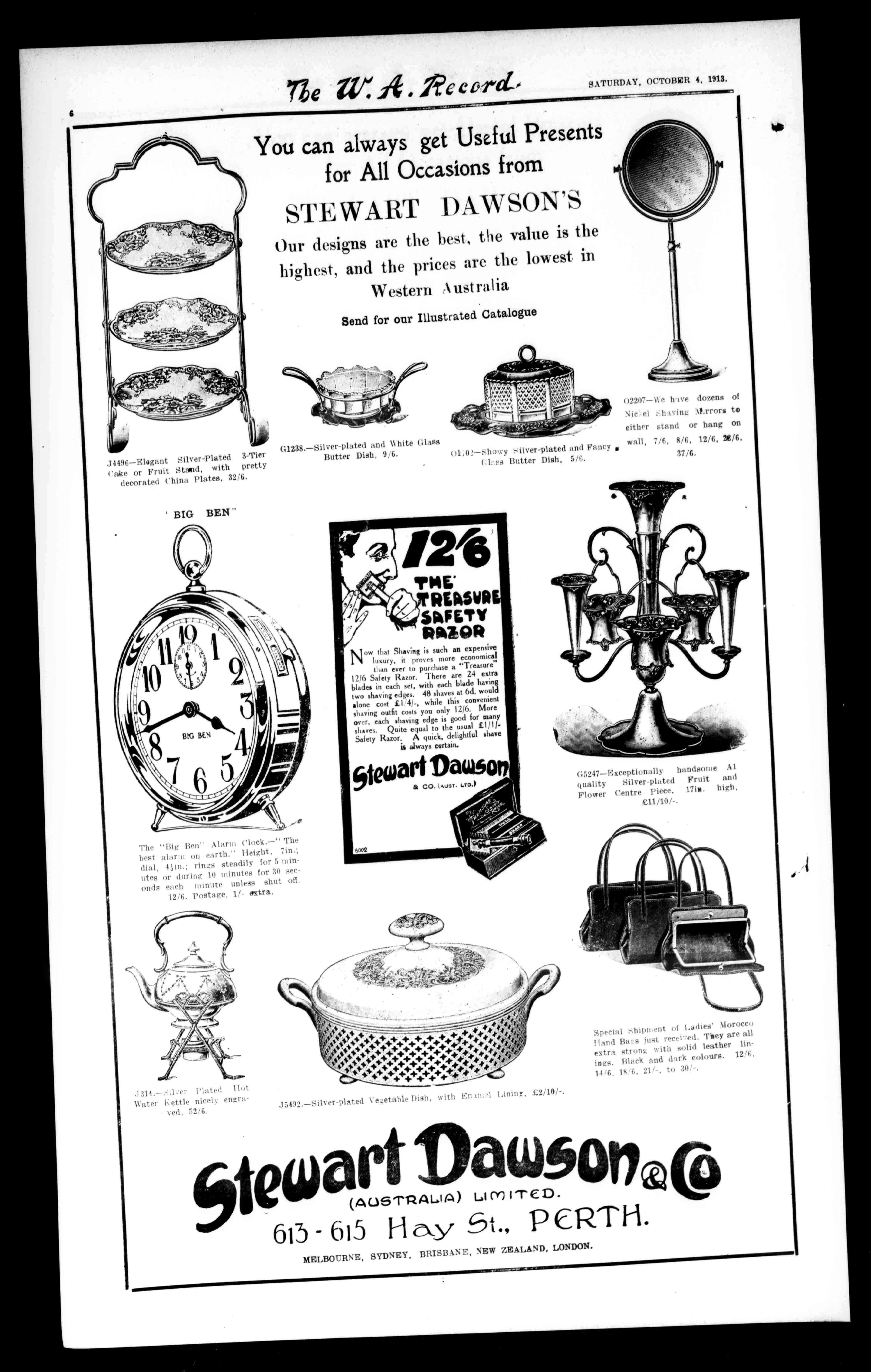
.1314.--.-',1..er
YoucanalwaysgetUsefulPresents forAllOccasionsfrom STE
Ourdesignsarethebest,thevalueisthe highest,andthepricesarethelowestin Western.ustralia
SendforourIllustratedCatalogue
G1238.-Silver-platedand
J5492.-Silver-plated
215
02207-We
(;5247-Exceptionally
6 A.Rccord-
3-Tier cakeorFruitStand,withpretty decoratedChinaPlates,32/6. BIGBEN" SATURDAY,OUT0ItieR4,1913.
WARTDAWSON'S
WhiteGlass ButterDish,9/6.
Ben"AlarmClock.-"The bestalarmonearth."Height,7in.; dial,41in.;
for5minutesorduring10
30secondseachminuteunless
off. 12/6.
extra.
The"Big
ringssteadily
minutesfor
shut
Postage,1/-
Kettlenicelyengraved,52/6. 7,7,1'1,1113.7
PlatedIlot Water
hivedozensof Nic:el;AieyingStrrorsto eitherstandorhangon i11,02-showySilver-platedandFancywall,7/6,8/6,12/6,25/6, (11r.FaButterDish,5/C. 37/6.
thatShavingissuchanexpensive luxury,itprovesmoreeconomical thanevertopurchasea"Treasure" 12/6SafetyRazor.Thereare24extra bladesineachset,witheachbladehaving twoshavingedges.48shavesat6d.would alonecost£141.,whilethisconvenient shavingoutfitcostsyouonly12/6.More over,eachshavingedgeisgoodformany shaves.Quiteequaltotheusual£1/1/. SafetyRazor.Aquick,delightfulshave isalwayscertain. to'art11114111017 &CO.kausr.i.ro.)
RIMWI 'SAFETY RAZOR Now
eetit`ileIn3h,withi.:r L2/10/-.
qualitySilver-platedFruitand
Piece.171s.high. t11/10/-. SpecialShipaentofLadies'Morocco ViandBatslustrecei:ed.Theyareall extrastrormwithsolidleatherlinings.Blackanddarkcolours.12/6, 14/6.1816.21/-.to30/-. 9tew i-reo. " 6i5-615HaySt.,PCRTH. MELBOURNE,SYDNEY,BRISBANE,NEWZEALAND,LONDON.
handsomeAl
FlowerCentre
QUEENSLAND
During'Dr.Duhig'srecentvisitto Goondiwindibewasentertainedby theresidents,andamongstthosepresentattheconcertwastheAnglicanclergyman,whocontributeda vocalitem.HisGrace,inreturning thank's,expressedhisappreciationof thekindlyfeelingprevalentinthe community. ***
Thefoundationblockofthenew IpswichRoadChurch,toheerected inthelocalityknownastheJunction,waslaidbyhisGraceArchbishopDuhigonSundaylast. 010
AustralianeatholicNews
ThefirstMeetingoftheHibernian Society,ontheauthorityofDr.Duhig,washeldinArchbishopDunne's house,andtheArchbishopboastsof beingitsfirstsecretary.
NEWSOUTHWALES

AtToowoomba,duringlir.Duhig's episcopalvisit,400candidateswere presentedforconfirtnation.Allpassedwith100percent.totheircredit. ArchbishopDuhigconductedashort missionforthecandidates.Over 100childrenmadetheirfirstIloly Communion.Intheceremonyof ConfirmationHsGracewasassisted byFathersFoahy, O'Connell,Kelleher,andMurphy. or40 Mrs.TimothyMurphy,andoldand respectedresidentofSwan('reek, diedatherresidencerecently,atthe advancedageof.72years.Thedeceased raisedafamilyofsevensonsandthree daughters.Twoofthesonsare ParishpriestsintheArchdioceseof Brisbane.FatherPatrickMurphy isstationedinGympie,andFather Garrett.MurphyinTortemilitia,Two youngersonsarestudyingforthe priesthoodatSt.Patrick's,Manly, Sydney,andareexpectedtoheordainedattheendofthepresentyear.
TwoofthedaughtersareSistersof Mercy,SisterSI.AnslemisatNanango,andSister11.AustinatIpswich.Thehomeof11r.andMrs. Alurphywashospitabletoadegree. Amongstthedistinguishedvisitors whomadeMr.andSirs. irphy's homearendezvousonspecialoccasionswereMessrs.JohnE.Redmond andWilliamRedmond,JohnDillon, MichaelDevitt,.JosephDevlin,and Messrs.DevlinandDonovanrecently. Anotherdistinguishedvisitorwhoacceptedhospitalityatthehomewas thelateCardinalMoran.ThefuneralobsequieswereperformedbytL'e Rev.FatherPotter,P.P.,assistedby theRevs.T.Lee,A..1.Wheelie,W. Camhinan,P.P.(charle1,111e),andthe Revs.P.andG.Murphy(sonsofthe deceased).AtthegravesideFather Potterdeliveredatouchingaddress. R.I.P. 4.
solutionswerepronouncedbyVery Rev.FatherNouyoux,WAILR.I.P.
FathersBarry,Mangan,andO'Sullivan,C.1414.R.,havejustconcludeda threeweeks'missionatMaitland, -.
About100membersofSt.Patrick'sOldBoys'Union.ChurchHill, Sydney,approachedHolyCommunionattheMaristFathers'Church, onarecentSunday.TheMasswas celebratedbyFatherMonaghan, S.M.,servedbyMessrs.P..1.Smyth and.1.Dillon,threeoldboys ofSt.Patrick's.TheCommunionbreakfastwasheldinthe FederationHall,atwhich1dr,IV.N, Hull(president)occupiedthechair, hatingonhisrighttheRev.Father Monaghan,S.II.(chaplainoftheUnion),andonhisleftVeryAev.FatherPiquet,S.M..andRev.Brother Lin (Director,St.Petri School).Amongotherspresentat themaintablewereMessrs..1.P. c,,chrant,11.14.A.,T.Keegan,11.14.A., I'..1.Minahan, bier:IlanW. I'.Fitzgerald(vice-president),Ald. W.Q'('onnor,BrothersBorgia(St. Joseph'sCollege),LinusDirector, St.Patrick'sSchool),Austin,Augustine,andAlphonsua,V.",;urphy, andJ.ftyman(secretaryandtreasureroftheOldBoys'Union),P.11. Louis,11.A.(president,St,.Joseph's collegeOldBoys'Union1,Ilarricks (CityArisessor) K..J.Dwyer,A. BurkeandC..1.Brawn(chairman andsecretary,CatholicYoungMen's ('rieketAssociation),.1.Denlay,A. McGuire(secretary.CatholicClub), .1.Dillon,P..1.Smith,F.Bang,1 Be,s1.el,V.Gibson,SI.Savage,C. Everett,II.Olsen,J.Murphy,M. Matinsell(committeeoftheUnion), D.F.F.McClafferty,E.Williams, I'.Bonfield,Illeurrs.E.Williams,Bonfield,.1.Williams,.1.Scannell,Si. Scannell,P.Scannell,.1.Ellis,B. Petersen..1.Maunsell,('.Friel,P. Matinsen,J.Ferry,Duggan,McGinley,B.McGee,W.Bowker,Wilson, Muggivan,andothers.
4.4.
Anideaoftheattendanceatthe variouschurchesinBathurstonarecentSundaywasgiveninacensus takenbyalocalpaper.Thefigures giveatotalof1885attheCatholic aburchesasagainst1645forthe wholeoftheProtestantchurehes combined,thusshowingamajority of240infavourofCatholics.Thefiguresofthevariousdenominations areasfollowRomanCatholic,1885; Anglican,657Methodist,439Presbyterians,158;SalvationArmy,132; Baptist,126;Congregational,95; OndenominationalMission,38,The figures,ofcourse,includepersonswl.o attendedmorethanoneservice.The populationofBathurstisabout8500. 4.0.
AcontractLasbeenletforextensiveadditionsandalterationstothe premisesusedbytheLittleSisters ofthePooratRandwick,ashomes fortheaxed.Twowingsaretohe added,andeachwillhefourstoreys inheight,140feetinlengthand35 feetinwidth.
Cooper),andMasterFrankMelling, firstprizeforaboy'ssolo.Thepiano duetwaswonbyMissRosieWalker (UrsulineConvent,Armidale),and MissPeggyCasey(St.Mary's(Sollege,Lismore).Asight-readingtest forclassesofchildrenunder16was wonbyfit.Mary'sCollege;and*4t. Carthage'sSchoolcarriedofdprizes forphysicalcultureandamaypole dance.Altogetherthepupilsofthe PresentationNunswon16firstprizes and13secondprizes.
TheLaymen'sRetreatsatLoyola, havebeenmorethansuccessfulsince theirinceptionbytheJesuitFathers.ThepresentRetreatmadeseveredemandsupontheaccommodationoftheHouseofRetreats.The Rev.FatherSuperiorhashadtorefuseapplications,Fortheretreat nextmonthbookingsarealreadyacingmade.
VICTORIA
BishopO'Connor,ofArtnidale,laid thefoundationstoneofthenew ConventofTenterfield,recently.The contractpricewillheabout03,000, halfthemoneywasinhandbefore theceremony,andatitscloseover C650wassubscribed.
Mr.John senr.,averyold Waggaresident,diedrecentlyatthe advancedageof72years.Deceased WasanativeofGoulburn,N.S.W. MonsignorBuckleyofficiatedatthe .graveside,
HisGracetheArchbishopofMelbourne(theMostRev.Dr.Carr)has madethefollowingclericalchanges; -Rev.NI.D.Finan,fromKilmore,as assistantpriesttoRev.D.Brazil, 1'.P.,Williamstown;Rev.II.N.Goldspink,(coinWilliamstown,aswadstantpriesttoRev.L.Martin,1'.I'., Kilmore.
AtAscotValeonarecentSunday afternoonhisGracetheArchbishop administeredtheSacramentofConfirmationtoanumberofcandidates. TheArchbishoppaidawarmtribute tothepastor,FatherMay,andcomplimentedtheparishionersontheprogressoftheparish.
Mr.JohnMcCormack.thefamous Irishtenor,arrivedinBrisbanerecentlybytheSydneyexpress.Ile wasIsletattheCentralrailwaystationbyMr.PeterMcDermott(presidentoftheQueenslandIrishAssociation),andescortedtotheassociation'sroomsinQueenStreet,where therewasalargeandrepresentative gatheringoftheSonsofErinto extendIin,aheartyeelcometothe State
TheCatholicsofWarwickanddistrictrecentlyshowedtheirappreciationofFatherLee'smis4i,narywork amongstthembypresentinghim withahorseandfruityaccompanied withapurseofso:ereigns. 4.4.
Spea'eingattheSt.Patrick's()v. Boys'CommunionBreakfastheldrecentlyinSydney,Sir.P..1.Slinahan,reviewingthedisabilitiesof Catholics,declaredtheStatehadno righttoclaimamonopolyofeducation.t'atholiestrainedtheirchildrenaccordingtotheirreligiousprinelides,andindoingsowereheavily taxed.Ilecontendedthatifthe prelimlefttheeducation.iuestion alone,publicopinionwouldinthe endseethatjusticewasdonetocatholici.AfterreferringtotheanticatholiclegislationofSirHenry ['rakesinthematterofeducation,he saidthatinspiteoftheboastof thatpoliticianthatitsoundedthe death-knellofthepriesthood,Catholic4ledthewayineducation,and, apartfromthegloriousworkofthe BrothireandSiet-r-r,catholiessun:pliedthebestteachersinthepublic schools.
The.11erormackConcertCompany wenttoBrisbanewithoutMr.VincentO'Brien.Byanunfortunateaccident,whenalightingfromatrain, i.eeminentmusicianwaslaidwide atLewishamHospital.Underthe careofthegoodSisters,it ishopedhewillsoonbein hisoldformagain.Thelastconcert inSydneywasabrilliantfinishof theseason;overathousandwere turnedawayunabletogainndriiisatom 4.
ThedeathoccurredatLilydale ('onventofMercy,recently,ofthe Rev,MotherSuperiorMargaretMary ('anipbell.Thedeceasedreligiouswas anativeofDublin,andinher44th year.MotherMarywasofalovable nature,andherlosswillbesorely feltbytheCommunity.'atefollowingpriestswerepresentattheRequiemMasscelebratedforlersoul's repose:-ThepastorofLilydale,Rev. AR,HennessyRev..1.P.O'Connell (StPatrick'sCathedral),lev, F.Baker(Ilealesville),Rev.David Gleeson(SurreyHills),Rev.F.S. Connell,14.J,(St.Patrick'sCollege), TheRev.Mother-GeneraloftheSistersofMercy(AscotVale)wasalso present.FathersHennessyandGleesonofficiatedatthegrave. 40
TheIlihernianSocietyinQueenslandisaliveorganisation.ArchbishopDuhig,tieringhisvisitto Goondiwindi,paidafinetributeto itsworthasaCatholicSociety, andincidentlytoldagoodstoryin connectionwithitsstrengthofnumbers,Twomenwerealwaysarguing nstothestrengthoftheirrespective eocieties,eachmaintainingthatthey hadthegreatestnumber.Oneday theIliberniansweregatheredforprocession,andtheman'santagonistic friendwasinvitedtoseethem,Ile wasastoundedatthenumber,and said"AllthosebelongtoyouI" "Yee,"repliedtheHibernian."Everyonebelongtoyou?""Yes,every one.""Well,then,"saidtheother man,"I'llgiveway.Thatbeats es.""Rut,"saidtheIlibernian, "that'snotall;that'sonlythem thatdon'tswear;youshouldseeall therest."
rei F.ther.1.M.Guile,M.H.11.,azeal.,imaII,i4sionary,passedtohiseternal r'ward,afteraseriousillness,at St.Vincent'shospitalrecently.The deceasedpriesthadexceptionalmusicalandliterabygifts,Ile-vasa nativeofFrance,andrre:ionstohis ordinationwasalieutenantinthe FrenchArmy,IleenteredtheNovitiateatMarsielles,hisnativecity, andaftersomeyearsonthemission therehecametoSydney,andwas appointedProcuratorofMissions.
ThelastritesoftheChurchwereadministeredbytheRev.Father Treand,11.5.11.FatherColgan,S.J., wasalsopresentwithMtnduringthe lasthours.Theremainsweretaken tothechapeloftheLittleSistersof thePoor,Randwick,whereaSolemn OfficeandReplier!)Masswascelebrated.ThestudentsoftheSacred Hearti'oilegeactedaschanters, VeryRev.FatherNouyous,M.8.11., wascelebrant,VeryRev.P.B.Kennedy,0.FM.,deacon,andFather Laurent,S.M.,sub-deacon.Father Graham,AI.S.11.,wasmasterofcere. monies.Includedinthecongregation wereanumberofpriestsand!nemhersoftheSisterhood.Thelastab-
AttheLismoreMusicalFestival, heldtheotherday,intheconcerted testpieces,theCatholicSch and theCathedralChoircarriedoffthe hisbesthonours.Thegirlstudentsof St.Mary'sCollegecamefirstinthe ladies'chorus.The'coeinetlorswere: LismorePhilharmosicSociety,under Mr,Massey;MacleanChoralUnion, finderMr.Delley-Scarlett;endSt. .hare'sCollege,withoneofthestudents,MissJosieDean,ascrnductor.ProfessorIves,inavardinethe firstprizeof(10totheconvent girls,saidhewasnotpreparedto hearsuchfinishedwork;liecould notwreakintoocomplimnitary termsoftheperformance.Itwasa pieceofword-painting,amusicianly conceation,artisticinterpretation, andmostmeritoriousperformance.Onthesameeveningaoakof conventpupils,MissNellaFranmscbi andMissEdnaScotchmer,wongreat praiseandfirstplacefortheirperformanceoftheduetfromVerdi's opera"Aida."Anotherfineperformancewastheboys'chorus(under16) bythepupilsofthe,MaristBrothers' School.Theadiudicatorawarded themfindnrize,MissMurielGumbleton.St.Mary'sCollege,gotfirst jrizeforan"AveMaria"(Parton
ACathplicfarmerhaspromisedto givetheRev.G.Robinson,B.A.,for theChurchofOurLadyofVictories, thevalueofonelamboutofevery hundredlambedthisseason. s.
Aself-denialWeekinaidofthe AssociationforthePropagationof theFaithandtheSocietyoftheIlolyChildhood,wasinauguratedin Geelongrecently, Father11.Conlon,whohasrecentlybeenstationedatWarracknaheal, hasbeentransferredtoSt.Patrick's Cathedral,Ballarat. .40
TheannualRetreatfortheclergy ofthedioceseofSalewillcommence onTuesdaynext,Theretreatwill beconductedbyoneofthe.Jesuit Fathers. ..0
HisLordshipDr.Phelan,recently, duringepiscopalvisitation,accompaniedbyFatherGarrandidathirty-fourmiledrivefromOmeoto GlenWillis.Theentirecommunityof thatminingdistrict.Catholicand
SATURDAY,OCTOBER4,1918. 7fieWA.Aceepii 7
W.A.REGISTRYOFFICE BOOKANDATITDEPOT. BAIRD'SARCADS,11Alf-STRI17TEN-FIANCE. T1111,1111YRww a, MissA.Taylor,Proprietress CatholicChurchandConventRequisites. RegistryOffice. swot*attentiongivestoselect:. ofservants.Hotelandprivate.R' al17.
TietP.1Record
AustralianembolicNews
QUIRNSLAND
DuringDr.Duhig'srecentvisitto Goosdivrindihewasentertainedby theresidents,andamongstthosepresentattheconcertwastheAnglicanclergyman,whocontributeda vocalitem.IllsGrece,inreturning thanks,expressedhisappreciationof thekindlyfeelingprevalentinthe com=unity.
Thefoundationblockofthenew IpswichRoadChurch,toheerected inthelocalityknownasthe.Junction,waslaidbyhisGraceArcbbishopDuhigonSundaylast.
AtToowoomba,duringi'r.Duhig's episcopalvisit,400candidateswere presentedforconfirmation.Allpassedwith100percent.totheircredit.
ArchbishopDuhigconductedashort missionforthecandidates.Over 100childrenmadetheirfirstHoly Communion.Intheceremonyof ConfirmationlesGracewasassisted byFathersFoahy,P.P.,O'Connell,Kelleher,andMurphy.
ThefirstmeetingoftheInbar/sten Society,ontheasthorityofDr.Dub*,washeldinArchbishopDunne's house,andtheArchbishopboastsof beingitsfirstsecretary.
NEWSOUTHWALES

Mrs.Timothyhirphy,andoldand respectedresidentofSean('reek, diedatherresidencerecestly,atthe advancedageof72years.Thedeceased raised:ifamilyofsevensonsandthree daughters.Twoofthesonsare ParishpriestsintheArchdioceseof Brisbane.FatherPatrickMurphy isstationedinGympie.andFather GarrettMurphyinTooeoortiba.Two youngersonsarestudyingforthe priesthoodatSt.Patrick's,Manly, Sydney,andareexpectedtoheordainedattheendofthepresentyear.
TwoofthedaughtersareSistersof Mercy,Sister%I.Angler,'isatSanativeandSister%I.AustinatIpswich.Thehomeoflir.andMrs. Murphywashospitabletoadegree. Amongstthedistinguishedvisitors whomade%lr.andlire.VeirphY's homearendezvousonspecialoccasionswereMessrs.JohnE.Redmond andWilliamRedmond,JohnDillon, MichaelDevitt,JosephDevlin,and meagre.DevlinandDonovanrecently. Anotherdistinguishedvisitorwhoacceptedhospitalityatthehomewas thelateCardinalMoran.Thefuneralobsequieswereperformedbythe Rev.FatherPotter,P.P.,assistedby theRevs.T.Lee,A..1.O'Keeife,W. Cashman,P.P.lcharleville),andthe Revs.P.andG.Murphy(sonsofthe deceased).AtthegravesideFather Potterdeliveredatolichingaddress. R.I.P.
solutionswerepronouncedbyVery Rev.FatherNouyoux,M.S.II,R.I.P.
FathersBarry,Mangan,andO'Sullivan,C.i4S.R.,havejustconcludeda threeweel's'missionatMaitland.
About100membersofSt.Patrick'sOldBoys'Union,Church11111, Sydney,approachedHolyCommunionattheMaristFathers'Church, onarecentSunday,TheMasswas celebratedbyFatherMonaghan, S,M.,servedbyMessrs.P.JSmyth and.1,Dillon,threeoldboys ofSt.Patrick's,TheCommunionbreakfastwasheldinthe Federationflail,atwhichMr,W.N. Hull(president)occupiedthechair, hasingonhisrighttheRev.Father Monaghan,S.11.(chaplainoftheUnion),andonhisleftVery.ten,FatherPiquet,S.Cl.,andfloeBrother Lines(Director,St.Patrick's School,.Amongotherspresentat the',raintablewereMessrs..1.P. Cochran',11.1..A.,T.Keegan, Alinahan,11.!.. %Her',anW. P.Fitzgerald(vice-president),Ald. W,O'Connor,BrothersBorgia(St. .losenh*sColleger,LinusDirector, St.Patrick'sSchool),Austin,Augustine,andAlphonsteeV."eurphy. and.1.Ityman(secretaryandtreasureroftheOldBoys'l'nioneP.II. Louis,%1.A.(president,St.Joeeph'e rollegeOldBoys'Union),Ilarrieks ((pityAssessors,R.J.Dwyer,A. BurkeandC..1.Brawn(chairman andsecretary,CatholicYoungMen's !'ricketAssociation),.J,Denlay,A. McGuire(secretary.Catholicclub). J.D:Ilon,P..1.Smith,F.Bang.J Taetd.el,V.Gibson,NI.Savage,C. Kverett,II.Olsen,.1,Murphy,M. Maimed!(committeeoftheUnion), i/.F.F.eleelafferty.E.Williams, P.Bonfield.%hears.R.Williams,Bonfield,.1,%Vallee's,.J.Scannell,M. Scannell,P.Scannell,.1.Ellis,B. Petersen,J.Maunsell,('.Friel,I'. Alaunself,J.Ferry,Duggan,McGinley,B,McGee,W.Bowker, elugeivan,andothers. ee
Anideaoftheattendanceatthe variouschurchesinBathurstonarecentSundaywasgiveninacensus takenbyalocalpaper.Thefigures giveatotalof1885attheCatholic daurchesasagainst1645forthe wholeoftheProtestantchurebes eon/blued,thusshowingamajority of240infavourofCatholics.Thefiguresofthevariousdenominations areasfollowRomanCatholic,1885; Anglican,657;Methodist,439Presbyterians,158;SalvationArmy,132; Baptist,126;Congregational,95; radenominationalMission,38,The figures,ofcourse,includepersonswt.o attendedmorethanoneservice.The populationofBathurstisabout8500. asas
AcontractLasbeenletforeetenFiveadditionsandalterationstothe premisesusedbytheLittleSisters ofthePooratRandwick,ashomes fortheneed.Twowingsaretobe added,andeachwillbefourstoreys inheight.140feetinlengthand35 feetinwidth. aa
Cooper),andMasterFrankMelling, firstprizeforaboy'ssolo.Thepiano duetwaswonbyMissRosieWalker (UrsulineConvent,Armidale),and MissPeggyCasey(St,Mary's()college,Lisinore).Asight-readingtest forclassesofchildrenunder16was wonbySt.Mary'sCollege;and Carthage'sSchoolcardedoffprizes forphysicalculturemidamaypole dance.Altogetherthepupilsofthe PresentationNunswon,16firstprizes and13secondprizes.
as.
TheLaymen'sRetreatsatLoyola, havebeenmorethansuccessfulsince theirinceptionbytheJesuitFathers.ThepresentRetreatmadeseveredemandsupontheaccommodationoftheHouseofRetreats.The Rev.FatherSuperiorhashadtorefuseapplications.Fortheretreat nextmonthbookingsarealreadyacingmade.
VICTORIA
BishopO'Connor,ofArmidale,laid thefoundationstoneofthenew conventofTenterdeld,recently.The contractpricewillheaboutfe3,000. HalftLemoneywasinhandbefore theceremony,andatitscloseover t650wassubscribed.
Mr,jobnPurcell,sent.,averyold Waggaresident,diedrecentlyatthe 'advancedageof72years.Deceased wasanativeof(;oulburn,N.S.W. MonsignorBuckleyofficiatedatthe eravestde.
IliaGracetheArchbishopofMelbourne(theMostRev.Dr.Carr,has madethefollowingclericalchanges: -Rev.M.D.Finan,fromKilmore,as assistantpriesttoRev.D.Brazil, 1.P.,Williamstown;Rev.Ir.N.Goldspink,fromWilliamstown,asassistantpriesttoRev.L.Martin,P.P., kilmore.
AtAscotValeonarecentSunday afternoonhisGracetheArchbishop administeredtheSacramentofConfirmationtoanumberofcandidates. TheArchbishoppaidaWarmtribate tothepastor,FatherMay,andcomplimentedtheparishionersontheprogressoftheparish.
'8
gr.JohnMcCormack,thefamous Irishtenor,arrivedinBrisbanerecentlybytheSydneyPeeress.Ile xasrietattheCentralrailwaystationbyMr.PeterMcDermott(presidentoftheQueenslandIrishAssociation),andescortedtotheassociation'sroomsinQueenStreet,where therewasalargeandrepresentative gatheringoftheSonsofErinto extendliraaheartyeelcometothe State a.a.
TheCatholicsofWarwickanddistrictrecentlyshowedtheirappreciationofFatherLee'smiseienerywork amongetthembyPresentingbin, withahorseandsill,eeaccompanied %kithapurseofsoareigns. 411.
SpeaeinrattheSt.Patrick'soll. Boys'communionBreakfastheldrecentlyinSydney,Mr.P..1,Minahas,reviewingthedisabilitiesof Catholics,declaredtheStatehadno righttoclaimamonopolyofeducation.Catholicstrainedtheirchildrenaccordingtotheirreligiousprinciples,andindoingsowereheavily taxed.Ilecontendedthatifthe presslefttheeducationquestion ;Ilene,publicopinionwouldtothe endseethatjusticevasdonetocatholics.Afterreferringtotheanti,'atholiclegislationofSir Ilenry Parkesinthematterofeducation,he saidthatinspiteoftheroastof thatpoliticianthatitsoundedthe death-knellofthepriesthood,Catboliraledthewayineducation,and, apartfromthegloriousworkofthe firotte'sandWaters.cetholiessuppliedthebestteachersinthepublic schools.
4.4,
TheMcCormackConcertCompany wenttoBrisbanewithoutMr.Vincento'Brien.Byanunfortunateaccident,ahenalightingfromatram, 'i,eeminentmusicianwaslaidaside atLewishamhospital.Underthe careofthegoodSisters,it ishopedhewillsoonbein hisoldformagain.Thelastconeert inSydneywasabrilliantfinishof theseason;overathousandwere turnedawayunabletogaineeleils-
'eon, 11
TheHibernianSocietyinQueenslandisaliveorzenieetion,ArchbishopDnhie,daringhisvisitto Goondiwindi,paidafinetributeto itsworthasaCatholicSociety. andincidentlytoldagoodstoryin connectionwithitsstrengthofnumbers.Twomenwerealwaysarguing astothestrengthoftheirrespective societies,eachmaintainingthatthey hadthegreatestnumber.Oneday theIliberniansweregatheredforprocession,andti.eman'santagonistic friendwasinvitedtofleethem,Ile wasastoundedatthenumber,and weld- "Allthosebelongtoyene" "Yes,"repliedtheHibernian."Ereryenebelongtoyou?"Yes,every one,""Well,then,"saidtheother man,"I'llriveway,Thatbeats -:s."11,4,"saidtheHibernian, "that'snotall;that'sonlythem thatd.,n'tswear;youshouldseeall tlsrest."
FtherJ.M.Gums.11.14.11.,azeallesionary,passedtohiseternal reward,afteraseriousillness,at St.Vincent'sIleeeitalrecently.The deceasedpriesthadexceptionalmusicalandliterarygifts,Ile-vasa netieeofFrance,andireeioustohis ordinationwasalieutenantinthe FrenchArmy,IleenteredtheNovitiateatMardelles,hisnativecity, andaftersomeyearsonthemission therehecametoSydney,andwas appointedProcuratorofMiseions.
ThelastritesoftheChurchwereadministeredbytheRev.Father Treand,)I.S.11.FatherColgan,S.J., wasalsopresentwithLimduringthe lasthours.Theremainsweretaken tothechapeloftheLittleSistersof thePoor,Randwick,whereaSolemn OfficeandReeniemMaaswascelebrated.Thestudents'4theSacred IleartI'o,legeactedaschanters.
AttheLismoreMusicalFtetival, heldtheotherday,intheconcerted testpieces,theCatholicScb and theCathedralChoircarriedetYthe highesthonours.Thegirletiliffntsof St.Mary'sCollegecamefirstinthe ladies'chorus.Thecmnet'torswere: Lit/morePhilherniosicSociety,under Me,Massey;MacleanChoralUnion, underMr.Dalley-Scarlett;endSt. Alan'scollege,withoneofthestudents.MissJosieDean.asr,nductor.ProfeecorType,inacardingthe firstprizeof(10tothereinvent girls,saidhewasnotpreparedto hearsuchfinishedwork; hecould notsneakintoocompliwnitary termsoftheperformance.Itwasa pieceofword-painting',amusietenly conceetion,artisticinterpretetton. andees,tmeritoriousperformance.Onthesameeveninganairof conventpupils,MissNellaFraneesehi andMissEdnaScotchmer,wongreat praiseandfirstplacefortheirperformanceoftheduetfromVerdi's opera"Aida,"Anotherfineperformancewastheboys'chorus(under16) bythepupilsoftheMaristBrothers' School.Theadjudicatorawarded therefirstprize.MissMurielGumbleton.St.Mary'sCollege,gotfirst Irizeforan"AveMaria"(Paxton
Thedeathoccurredat1.ilydale ('onventofMercy,recently,ofthe Rev.MotherSuperiorMargaretMary Caniabell.Thedeceasedreligiouswas anativeofDublin.andinher44th year.MaterMarywasofalovable nature,andherlosswillbesorely feltbytheCommunity.'AufollowingpriestswerepresentattheRequiemMaascelebratedforLersoul's repose:-ThepastorofLilydale,Rev. AR.HennessyRev.J.P.O'Connell (St.Patrick'sCathedral),Rev,IL F.Baker(Ilealesville),Rev.David Gleesion(Surrey(Tills),Rev.F.A. Connell,S.J.(St..Patrick'sCollege). TheRev.Mother-GeneraloftheSistersofMercy(AscotVale)wasalso present.FathersilennessyandGleesonofficiatedatthegrave.
ACatholicfarmerhaspromisedto givetheRev.G.Robinson,B.A.,for theChurchofOurLadyofVictories, thevalueofonelamboutofevery hundredlambedthisseason.
Aself-denialWeekinaidofthe AssociationforthePropagationof theFaithandtheSocietyoftheIlolyChildhood,wasinauguratedin Geelongrecently.
FatherM.('onion,whohasrecentlybeenstationedatWarracknaheal, hasbeentransferredtoSt.Patrick's Cathedral,Ballarat. as.
TheannualRetreatfortheclergy ofthedioceseofSalewillcommence onTuesdaynext.Theretreatwill heconductedbyoneoftheJesuit Fathers.
IliaLordshipDr.Phelan.recently, duringepiscopalvisitation,accompaniedbyFatherGarvan,didathirty-fourmiledrivefromOmeoto GlenWillis.Theentirecommunityof thatminingdistrict.Catholicand
VeryRev.FatherNonyoue, wascelebrant,VeryRev,P.B.Kennedy,O.F. dream,andFather Laurent,S.M..sub-deacon.Father Graham,M.S.II.,wasmasterofeere, onies.Includedinthecongregation wereanumberofpriestsandmetaiitrsoftheSisterhood.Thelastab-
SATURDAY,OCTOBER4,1913.
7
W.A.REGISTRYOFFICE BOOKANDARTDEPOT. BAIRD'SARCADR.HAY-STREWfroilruNcli. TIBLUPRONW MissA.Taylor,Proprietress CatholicChurchandConventRequisites. RegistryOffice. Specialattentiongivestoseleetua ofservants.Hotelandprivate.Rive t3A7.
non-Catholic,aesenibledatthechurch at7p.m.tomeethim.HisLordshipcontinuedanumberofcandidatesandheardconfessions.liereceivedaparticularlyearmwelcome fromthepeople.HisLordshipspent afortnightintheomenparish, eewe, Thegold-mountedblackthornused byAllenBooneastheagedFather Whalen,waspresentedtohill,bythe HibernianSocietyofSydney. if.4.
AttheAnglicanCongressinBrisbane(saysthe"Tribune"the%nee licanBishopofRockhamptonreada paperon"separatedlife."Hedisagreedwiththestatementofaformerspeakerconcerningvocationsfor thereligionslifeamongsttheAustralians,andinstancedtheeaseofa sisterchurch(presumablythe('ath- olic)wl.,ereinafeeyearstherehad beeneoneeciated27priests,12brothersand250nuns,allnativesof Queensland.WhiletheCatholicpeo- pleof'Queenslandareofanexcep- tionallytinestamp,thesamewealth ofvacationlimybeseenin\let° ria,Neweseith1ialleand,infact, inalltheAustralianStates.New Zealand,however,inthenumberof prieeteordainedforthesecular?Ms sionandforthe%bidetFathersfar exeelean%eftheeeetralienStates inproperteeitoitsCatholieDopula- tP.h. 4. withthee,11,:iede beere eeeoe,n"aestionwhich ;ewee. Col ere.e;( th; f ..........Irt..11ott,i1t, th,,i:..ti,e, '1,_aoo' pee t aeet leght.Ti:'fol lou1i-eterreeeee.te aereedto bythe'. e ittee-Theprep,' site.i,s, eeedt,vtheRel.. Joeh a+,!son-.ThattheRoeen b.r.! Ffor''ran":ii -err!.. Tier erer,.t. lust, at. e, eof.0,,ate
*I eeting,when th, attendedto cor,fer eretereedoficheliee. tie.-Tribune"good bee.eeredliere'irkedthatDr.Lee peratelifteateaseundertheshadowofthepictureofthelateCard 110r;gn,andvariousother etrengScriptureLeaguer'ssatunder th'-genialcounteneneeofhis11,,IinesetheP.-,t+ .%larges,eilingpor- trei hc(;rareth,Archbisho:, bcq. if nenthegatheringfrom e f'; ',an14 49,1 edt,,eneeretheco;plot'harmony

oftheproceedings.Weretheseand othermilitantProtestants,itcoa'bentstodrawnearertheoriginde andendeavourtosecureabetterutderstandingofthemandthefaith theyrepresent,therewouldhean endtothebitternessofsectarian animosity.
4.
TheannualreportofSt.Vincent dePaul'sGirls'Orphanage,South efelhourne,fortheyearending30th June,1913,hasjustbeenissued. Therewere114girlsintheorphanageon1stJuly,1912;admissions duringtheyear,43handedoverto friendsorsenttosituations,45 dailyaveragefortheyear,113;numberremainingintheinstitution,30th June,1913,112 numberinsituations,31totalnumberunderthe guardianshipoftheorphanage,143. Thehealthofthechildrenhasbeen exceptionallygoodduringthepast year.Theirapplicationtoschool workandrapidbutrovementhave givensatisfactiontoallinterested intheirwelfare.Thereportsofth girlsaeurenticedaregeaerallyofa !feedsatisfactorycharacter,andthe dee.andfortheirserviceshasbeen suchthattheSistersfindno(BMnayinphcingthen,withpeoele whohavetheirfellconfidencein treatine.themasiiieieeereortheir ownfateilies.TheSistersofMercy ee,,nesthe'-indelit-dresstotheit,e, 11.Coll,ne.P.P.,andhisassistant priestsfortheirzealinministerine tothewant,.ofthechildren;to'Dr. oSnlbehn,Soutt.Melhoerne, fee is ice.,t yivcn: andto',DeII.D. tletriet,fee erateitoilesere-eie (1.asocialeveningvitroby theNorteMelte/earn'IrishN.tional Foretersrecently.Pro.11.Collins+, recite 11%,4:1!!,..: th fieceedeneipfobey)fraphe asaeeeoenitionofhisvaluable.er ;lee,:totheSociety,Pro.Guinan.. .1. assistantere retard;,end Dynotiwere et. asrear-sentatieeeofthe;:,.ro' Iiirectors Collins1.,;:t, tie club. .11,1,4iron',anypr;;;;-, itre. th,erir'et'Al
Atarecentmeetingofit.'grin- ties'Branchofthe11.A.-.11.S., Pieei,ond,sympathetic.referencewee madetothedeathofBro.F..1. Sheedy,var.Mr.Sheedywasone ofthe12foundationmemberswho forteedtheBrenchin1k70.tfiePr, sidetitreferredtother:oriellifeof thedeceasedasoneworthyofe!ttnlatiOn,
Dr.II..1.Cahillwasmarriedto MissEileenO'BrieninSt.Patrick's .aithedralrecently.Theceremony teasperformedbytheRev,G.A. Robinson,B.A.,aSsietedby M. CarrollandRev.tl.Alangan,e;.A.
SOUTHAUATEALIA
Theannualdinnerofthe.Marist Brothers'OldScholars'Association washeldatPortAdelaiderecently. Thepresident IMr..1as.McGuire, jun.foccupiedthechair,andthere werealsopresentVeryRev.Prior Power,().C.C.,Rev.F.Gatzemeyer, Rev.Bro.Placid(DirectoroftheSacredIDartCollege,LargeBay),Rev. Bros.Gabriel(\oreood),Bernahas (PortAdel-iidei,andGihertus(LargeBay),andMessrs.Jas.McGuire,sen., M.T.Quirke,J.P.,J.(;rahaiii,and Geo.(large(vice-(:residentsofthe Association).ApologieswerereceivedtronaMr.W..1.Denny,M.P.,Rev. Fatherlanrahan,Mr.F.)'arks(viceresident),andMr..1.T.OAlare them.secretaryChristianBrothers' OldCollegians'Association).Mr.E. 1.Parks,assecretary,lookedafter thearrangements.
'dr.JohnIlarthaspresentedstatuesofOurLadyandSt.Joseph, ithaltarstoPortElliott('atholic Churchinmemoryofhislatewife. Tie,stt.eswereunveiledrecentlyby ;ithr ry,whoeptieeoftiekindne-a( -.:enerosityofthelateMrs. 11,rt.andherhusbend heChurch.
Sist'-rMartina,oftheOrderofthe SistersofSt.Joseph,atBrompton t!iy1recently,ShewashornatLisdoonearna.Co.(Tire,Ireland.She hd',e--n yearsintheorder,in1teof18yearsatBrotiipton,and hadteenat oandothercountryeleeps.AtSt.Saviour's('h'ir,:h, flro,.iiton.011:coendRequiemMass se?leiratr,0forthedeceesednun', Frail.Th.Rev,Fr.Candlerolbciaterl.Therewasalargeattendance, inelr.!in',theRev.PriorPower, r,.,.theleryRev.PriorSpence. 1,es.Fathere 0.1'.,Feneeh, 010lin'', S.J.G-:nn' Y.,Lee,11.4.iI. I, DelehentyandS!iiit1-.,anal Victor(ProvineilloftheorderfromKensington1.PJ.P.
TheSistersofMercyhavesuffered agreatlossinthedeathofSister seehineatthecrtivenof14.rcy. Angas-street.whichsadeventoccurredth,otherday.Thedeceasedhad stentover20veersinreligion. soletenofficeandRe-lige:1iMasswas celebratedattheCathedral.The
Rev.FatherAlur7:11,11.5.11.,wasthe celebrant,andthefollowingclergy werealsopresentinthesanctuary:- RightRev.Mgrs.ByrneandNevin, VeryRev.FatherEdward,C.P.,Rev. FathersO'ByrneandCandler,0.P.; i'Dowling,S.J.,Fenech,0.C.C.; VeryRev.Fatherlurley,andRev. FathersDenny,Delahunty,Hourigan, Smyth,andMcNamara.Theremains wereafterwardsinterredintheCatholiccemetery,WestTerrace.R.I.P. 4.4. TheannualgeneralCommunionof themetropolitanbranchesofthe II.A.C.B.SocietytookplaceatSt. FrancisXavier'sCathedralrecently. Agoodnumberofmembersavailed themselvesoftheopportunityofap- proachingthealtarrails,Rev.FatherMorrell,M.S.II.,celebrated Mass.Afterwardsbreakfastwasheld inSt.FrancisXavier'sHall,the RightRev.Mgr.Byrne,V.G.,repre- sentinghisGracetheArchbishop, presided,andtherewerealsopresent RightRev.Mgr.Nevin,Rev.Father Morrell,AP.S.II.,lion.P.McM. Glynn(MinisterforExternalAffairs), senatorthelion.J.V.O'Loghlin, theSpeaker(lion.L.O'Loughlin), Messrs.W.J.DennyandJ.Travers,ACe.P.,andtheDistrictOfficers -Bros.T.Kennedy(president),T. E.Malone(vice-):resident),E.McCarron(pastpresident),andP.F. Kiley(secretary).AfterthebreakfastFatherMorrelldeliveredaneloquentandinstructiveaddresstothe mei'.herson"TheChurchtheGuar.IianofSociety.
TAF,MANIA
ThefoundationsofaCatholic ChurchonKingIslandhaveatlong lastbe,nbibdi.y aisienorGaleran,V.G.SinceFatherkubrey(;ooda-,an,11.S.11.,visitedthateotaewhat isnlat,dyortionoftheArchdiocese ofHobart,hehasuntiringlyworked toeardsthenuepliehii.entofthat treatevent. A'ittlewhileago, readersofthe"Record"willretneteIer,v.her,hecoeiteencedhisieiesionaryworkonkingIslandtherewas noavailableplaceforhimtooffer 'if,theHolySacrificeofthe)lass. Withaverycommendablespiritof toleranceandcbristiancharity,the Methodistscartetohisassistance andplacedtheirnewchurchathis disposal.Tocommemoratethelayingofthefoundationstoneofthe newchurchandtowelco;neMonsignor ahanalietwasheldin Parer'sHotel,atwhichover70of therepresentativeresidentswerepresent.FatherGoodmanpresided,and
netir:A.Record-4 SATURDAY,OCTOBER4,1913. ROANBROS.' WestAustralia'smammothnewStores GRAND
-SUMMERSHOWIS
ON! THISISUNDOUBTEDLYTHEMOSTNOTEWORTHYANDATTRACTIVESHOWOFTHENEWSEASON'SGOODSEVERHELDIN PERTH.OURBEAUTIFULWINDOWDISPLAYSAREANOUTSIDEEVIDENCEOFINSIDEQUALITY. Sendforloans'mew GeneralIllustratedCatalogue Postedfreeonapplication. Withtheaidofourcatalogue,CountryResidentspracticallyhaveBonus'MAMMOTHSTOREANDHUGESTOCKplacedattheirown doors.TheCatalogueisreallyamostusefulreferencehookandbyConsultingitfrequentlyyouwillsaveMANYPOUNDsdurngtheyear.
TheUniversalProviders WellingtonandMurrayStreets,Perth
SPRING
NOW
EVERYTHINGFOREVERYONEAT DoanBros
hadonhisrightMonsignorGilleran, CanonShoobridge,andWardenRobinson,onhisleftwereWithers O'Flynn,Devenish,andHiggs.The 11111 gatheringwasrepresentativeofall denominationsontheIsland.Speakingatthebanquet,MonsignorGilleranreferredtothekindlyfeeling prevalentupontheIsland.Thepresenceofsomanyofeveryshadeof beliefatthebanquetwasandwould betohimapleasantandlastingexperience.ReferringtoFatherGoodman'sfirstvisittotheIsland,heremarked:-Aneventoccurredsome timeago,anuniqueevent,which hadmadeadeepimpressionupon theArchbishopFatherGoodman whenvisitingtheIslandsome monthsagocouldfindnoplace ithereintoperformtheollicesofhis ministry;the.\lethodistshaderectedanewbuildinginthetownof Currie,andtheywillinglygaveup theirchurchtoFatherGoodmanfor theSundayservices;wewereastonishedfirstattheboldnessofFather Goodman-(laughter)-inmakingsuch are:iuest,alsoatthegenerousChristianspiritexistingamongtheother denominationsafterthathewas notsurprisedatanydisplayofgenerositymanifestedbytheIslanders, noratthekindandbrotherlyspirit evidenttherethatnight.WeCatholicsarenotaMtungrateful-say whatyoulikeaboutus,hutdon't f.,137weareungrateful.Theincident hehadmentionedhadsunkdeeply intotheheartsofCatholics,andwe shallnoteasilyforgetit.Hewas gladtosee.knglicans,Methodists, andothers,present'thatevening. andhopedallwouldpulltogether. Therewasnoneedtoquarrel;there waseveryreasonwhytheyshouldall liveinharmony.Ilewouldpray withhiswholeheartandsoulthat God'sblessingmayrestin,onthe Presbyterians,theAnglicans,the Methodists,HSwellasanonhisoon catholicpeonle,andthattheprinciplesofChristiancharitywould hindthemtogetherandmakethem aunitedpeople. FatherGoodman,inproposinr,th, toastof"TheVisitors,"extendedki cordialwelcometotheministers representingotherdenominations.Ile hadalwaysfoundaLireitsairitof genuinecharityexistingamongall creeds,andthishadbeenfosteredin somemeasurebytheresidentMinistersoftheAnglicanandMethodist churches.Hecoulda:felt'stythat thecharacteristicvirtueoftheislanderswascharity. II.-noticed manyvisitorsaroundtheirfestive boardwithwhomhecoulddal', someshortkiequaintanee.Therewere guestspresentwhohadtravelled longdistancestowelcomeMonsignor Gilleran,whichalonewasindicative ofthegoodfeelin: amongallclassesofthecommunity. The hesail,hadbeenblessed inmanyways-itwaswealthyin itsproductsanditsresources,but therewasarichveinofmoral wealthruiningthroughitskindand rentlepeemle,whichwasinfinitely morepreciousthanitsmaterialprosperity.
RosarySunday-==ItsMeaningandOrigin howCivilisationwasSavedtoEurope
"DignaremelaudaretoVirosacrata tuos."
OfthefestivalsofIlolyChurchit maybesaidtheirnameislegion,for theyaremany.Many,too,arethe Marianfestivalswithwhichwith lavishhandtheChurchofGodLas strewnandglorifiedtheecclesiastical year,recallingtothemindsofits childrenthebenefitswhichGodhas bestowedontheworld,throughher theblessedamongwomen,fairestof thedaughtersofEve,manyofwhom sayslolyWrit,"havegathered riches,"butshe"hassurpassedthem all."Thefeastsvhichwekeepto thehonourofOurLadyarebyno meansfancifulorextravagant,and itiswellforustoinformourselves ofwhatwasintl.emindofthe Churchintheirinstitution,andwhat isinthemindofthe('hurchinregardtotheircelebration.Ofeach festivalweshallthenfinditPweibh tosay, "Itsfoundationsare
intheHelyMountains"
NotonetitlewhichtheChurchhas bestowedonOurLady,andnotoil feastwhichitkeenstoherhonour, buthasforitsbasissomegreat
damihivirtutemcontrabootee
theCatholicChurchinthisdevotion whichrepeatstheprayermostvenerableinalltradition-theApostles' Creed-andtheprayeraboveallprayers,whichweprayinthewordsof God'sOwnSon-theOurFather.But nextfollowstheprayerwhichisalmosttoberegardedasafifthmark oftheChurch,andwhichmanywill takeexceptionto,anddotakeexceptionto,andchallengeusto "showcausefor"-theflailMary.
InSt.Luke'sGospel tiecanshowthemwhattheyrequire; thereistheScripturewarrantyfor theoft-repeatedpraisetoMary,almostsolelyours,fortous,thechildrenoftheChurch,hasitbeengiven, tolearnfromthelipsofGod's Archangelthewordsfittopraise "whomtheKingwishestohonour," whileothershavemissedthelesson taughtby"Gabriel,oneoftheseven whostandbeforeGod.""Andthe angelbeingcomein,saidtoher Hailfullofgrace,theLordiswith theeBlessedartthouamongwonen."Curelyahosowillquarrel withthisprayerfindshimselfinlike
forhowshallwe"approachtothe throneofGrace,"ifnotafterthe manneroftheangelicchoirs?
ThisFormofPrayer then,withitsfoundationfirminthe Gospels,commendeditselfbyaCatholicinstincttothefaithfulever sinceitsinstitution.Sogreatwas thefaithofthesixteenthcentury CatholicsintheRosaryofholy Mary,andsoesteemedwasitinthe heartofthegreatPontiffPiusV., that,whenthefateofEuropetrembledinthebalancebeforetheconqueringTurks,whomadetoleave theruinsofChristianityinblood andashes,bothPopeandpeople turnedtothespiritualarmsofthe prayersoftheRosary,togainand deservethehelpofthe"Godof battles,"throughMary,OurLadyof Victories.WhileDon.JohnofAustriasethisfleetinorderofbattle, throughtheRosarythevicarof Christcalledonher"whoconieth forth terribleasanarmyset inbattlearray,"andthehelpof heavenandheaven'sQueenwassecuredtothevaliantchampionseven nowengagedinthatawfulcindictthebattleofLepanto. TheStoryedLepanto isonewhichfirestheCatholicbreast, becauseitisonefilledwiththevalourandchivalryanddaringwhich theloveofOurLadyinspiredinthe MiddleAges,andwhichdidmostto changewarfareintosomethingother thanslaughteranddestrtictiin.The almostcountlesshostsofthe\lusulman hatefiereandf.lnatical liotintheirhearts,graduallyduringtheterribledayoftheseventh ofOctober,1571,acreboweddoon andhumbledtothedust,until35,amoftheirdesperatesoldiersand 250oftheirshipshadbeenslainor takenthroughthehelpofthe"valiantwoman"ofChristendoin-MarYi theQueenoftheRosary.Don.1',.hn reliedonherhelp,andwasnotdisaopointed;hissoldiersexpectedher hell.,andwerenotrefusedinthe asking.TheholyPontiffi'iusV. feltanassurancefromheaventhat EuropewassavedatLepaatobythe Rosary,andinstantlygaveorders forprayersofthanksgiving.Fora perpetualmemorialheinstitutedlateranannualcommemorationof "St.MarydeVictoria."changed lateronbyGregoryXIII.to"110s-:Tinday."

Accordingtothelatest"Monitor" totroll,Rev.Pr.0-Mahoney'shealth isfarfromsatisfactory.liewas ed-anelledtorointoSt.Margaret's Hospital,whereheunderwenta slightoperation.AsaresultaconsiderableimprovementhasbeenreportedAlthoughclosed,generous amountsarestillcoiningintohis TestimonialFund.
T.P.HERBERT
FAMILYGROCERANDPROVIIII0ir
MEECHANT.
398RokebvRd.,SUBIACO (NaarNicholsonRoad). GoodscarefullyNOW.Familia. waitedondaily.Countryorder, attendedto.
ForasExcellentMealatModerate cost,try
MiaMiaTeaandLuncheonRooms
ConductedbytheMissesKINANE. rpstairsoverBonMarche,laystreet(upstairsentrance).Openfrom Ia.m.to1p.m.HomeCooking. Home-madeCakesaspeciality.Weddisro;andRece9tionscateredfor.
St.DominicandSt.TeresareceivingtheRosaryfromOurLady. privilegeGod-givenandblessedof men,orsonicmysteryofPowerDivine,"greatlytoheesteemedandby roodmenheldinremembrance."A solidfoundationinScripture,orin TraditionguardedbyCodsRight Hand,underlieseachtitleofMary, andgivesorigintoeachfeast,in whichtheChurchandMary'sChildrenfulfilherownsweetprophecy"Beholdfromhenceforth,allgenerationsshallcallmiteblessed."Justa wordortootore-statewhatwealreadyknowoftheworldwidedevo tionwhichgivestothefirstSunday ofOctoa:ertl.eradiant,fragranttitle of
RosarySunday
Goodguaranteewecangivetoand with"severalreasonsanswer,"those whowouldcallinroiestiontheScripturalfoundationofthedevotionof theRosary.TheRosarybeginswith theAnoe'les'("reed,andsowecan reasonablyexnectthat christendriaAmid'oinwith"sattheoutset.TheIiord'sPrayer,alsocommontoallChristendom,follows,so wehavenotyetcometo"thepartingoftheways."Perhapsmany wouldhesurprisedtoknowthat. afterall,theycansofarjoinwith
casewithJacob-wrestlingowithan angel.Theviolencetohmanwhich gtinstheKngdotii,isnotcomprised ofundertheimpiouswarfarewhich suchwrestlingimplies,foritisa IlaircontradictionofGabriel,andis 1P--etotrovealsoastormingof "\lichael'sIlold,"forhewhoraised thecry"WhoisliketoGod?"can surelyhethoughttodrawswordalsowithabattle-cryof"Whoislike toGod'sMother,"for"themother wasmosttobeesteemedandby goodminheldinremembrance."
WithstandingAngels alsoishewhoobjectstothefre(mentrepetitionofthesameprayer, tohonnurtheseveralmysteriesof theLife,Death,andTriumphof OurSaviour,asisthemannerof thisdevotion.Tosuchanonewe wouldrecallthenordsofRevelation whichsettheformofangelicpraise toGod,Whomtheangels"seeaslie is,"as"Holy,lloly,holy!"We arereproachedfor"vainrepetition," buttherepetitionisnotvain,before theunveiledFaceofGodrepetition istheformofprayertogivellim glory,herebelow,catchingthe manneroftheangels,werepeat, andourrepetitionisgrace-bringing,
QueenoftheMostHolyRosary pntyforus,isapetitionofLoreto's Litany,alsoaddedtokeepinremembrancethemightyhelpofMary tothevaliantarmywl.ichdidbattleforGodandtheChristianname ,,nthatterribledayofstrifeandof ictory.Inourowndaysabattle ragesroundus,anditiswellif, girdedforfight,ourarmsarethe Rosary.TheRosarywillkee,,faith ardent,andenlivenhopeandcharity., ,:e,in,theirystTins Christ's Lifebeforeus,itwillshowwhereis strengthintemptation.everremindingitsofHisPassionitwillsweeten allsorrow,andpointingtoIllsResurrectionandAscensionandto Mary'sCrowning"beyondthefurtheststar,"itwillindicate"the glorytocomewhichshallherevealedinus,"for"ifwehavesuffered withllitntieshallalsobeglorified withHim,andifwehavebeen Mary'schildrenherewemayexpect tohesoforeverinthe"Cityof God,"ofwhich."gloriousthings"are said.Itremainsforus,then,to renewourdevotionandstirupour faithbyagreaterappreciationof allthatRosarySundaycommemorates,byagreaterappreciationof allthattheRosaryis,enteringinto thespiritoftheChurchduringthe Rosarymonth-October-soastoreceiveinoursoulsthebenefitswhich itwishesforusandhasinmindin thecelebrationofthefeastwhich, commemoratingabattleagainstflesh andblood,wouldyetpointonfar pastsuchconflictstothe"frilly whenceconiesourhelp,"forthe strivingwhichisnotagainsteesh andblood,butagainst"spiritsofiniquityinthehighplaces."
S.M.ROSARIO.4,1913. TetgA.Accord. 9
SATURDAY,OCTOBER
W.A. ADVERTISEIN TheW.A.Record
St.Dominic'sOrangeTree
AFragrantLinkBetweenAustraliaandRome
Theairwasfilledwithseedstheyseemedlikeone,big,ofautiful, goldencloud,stretchedbetweenheavenandearth.Butnoonesawthem: nooneheardtherustlingoftheir winesorthesweetangelicmeicdy theysang.Downthroughthecloud ofworshippingangelsshecaneMar;thequeenoftheAngels. Butnoonesawherbluemantlesoftlyfloatingthroughtheairnoone heardthesweetwordsshesnoketo eachreverent,worshippingsiirit, andnoonesawthestringcfbeads shebroughtfromheaven,anditwas yearsandyearsandhundredsof yearsago,whenthegoodht.Dominiclivedonthisearth.
She,theGreatQueenofHeaven, wascomingtoseeherfaithfulservant,Dominic,Perhapsheeawthe wonderfulangel-cloudstretchingbetweenearthandheaven,butperhapsbecauseshewassobeautiful,he couldseenothingelse.Shegavehim theheads-herRosary-taughthim howtoreciteit,badehimteachit tothepeople,andtoldhim,too, thatthroughthepowerofthis prayertheheresyhefoughtagainst wouldbevanquished.Then,back araintoheavenshewent,through thecloudofworshippingangels,and leftherfaithfulServantDominic bowedinprayer,wit):thewonderful heaven-headsinhishands.
onedaySt.Dominicsetanorange treeinaConventgardeninRome. Tiresunsmileduponitandhelpedit tocrowtallandstrong.Therain fellventlyneonit.thebreezeblew caressinglyoverit.St.Doiiiinic tendedit.Itgrewitflourished.
forGodandOurLadybeneaththe Southernskies.
CatholicChurchinthepositionof "runner-up."Ilereisthequotation "Ponsiblythepresentwayofsaying itisarelicoftheRomantimes, whenitwassaidinalanguagethe peopledidnotknow."R.O.asksus:
OnedayatravellerIronstheGreat SouthLandvisitedtheoldconvent inRome,whereSt.Dominic'sorange treegrew.Thetreewasaged,and itsbranchessupportedbystakes,but itstillflourished,Thetravellerbeggedforacuttingfromthisancient tree,totakebackacrosstheseas toaconvent,undertheSouthern skies. Thecuttingwasplantedandcarefullytendedonthejourney,butdespiteallcare,itsica.ves,viteered away,onebyone,tillnothingbut theshrivelledstalkremained.The shipsteamedonitsway,andwhen theGreatSouthLandwasleached, behold,theshrivelledstalkhad sprouted-atender,greenshootwas visible Theplantwascarefully conveyedtoaDominicanConventin theGreatSouthLand,andtended tillitgrewstrongandsturdyinits newhome.Itwasthenplantedin tLegarden,whereitgrewandflourished,asitsparent-treehaddonein oldSantaSabinainRomewhenSt. Dominicfirstplantedit.Thelittle cuttingfromSt.Dorndnic'streeseems tosymbolisetheOrderofSt.DominicintheNewLandAs'.i.ecuttingtookrootandflourished,sodid theOrder,anditseemstobringcur GreatSouthLandnearertothegood St.Dominictoknowthat,litrein AustraliansoilinanewSantaSabinainStrathfield,Seelney,an orangetree,grownfrom1:i3oldtree infar-awayRome.livesandhiessonisandbearsfruit.St.Dominic, prayforus,andforAustralia. MIRIAMAGATIIA. Darlinehurst,Sydney.
Away,awayfromancientRome, thesunsmiledpityinglyonabig beautiful(antwherethereweren Conventgardens,andnosaintly monks.Sometimesthewindsobbed acrossthegreat,aide,emptyplains, andthroughthethick,sweet-scented hush,andtherainfelllikeshowers oftears.ItwasawondrouslybeautifulLand.Thesunsawnofairer inallthewade,wideworld.But,no "Ares"roseupfromtheheartsand lipsofitspeople,foralas thedarkchildrenofthebig, beautifulLanddidnotknow herwhoisblessedaitionnatwomen-MarytheMotherofGod-and theehadneverLeldherRosaryin theirdarkfingers.

4aushaTeaRooms
352WELLINGTONST.,PERTH.
'WhatchanceistherefortheChurch ofEnglandtosustainaclaimto haveexistedsincetheRomantimes?"
REPLY.-LookitupatthePublicLibrary,R.O.Wedonotfeelin themoodforresearchworkjustnow. SomehazyideaoftheRomansgoingtoBritainin55B.C.floatsis ourmindliketheheleelessfabricof avisionandallthat,butIthink Sir()livermeantCatholictimes whenhesaidRoman.Ofcourse,ifhe meantCatholictimes,hiswordswere imeeracloustotheChurchtowhichhe oweswhateverofChristianityisleft inwhatheconsidershis"branch."
lam'. says:"('anyoutellmeexactlyhowtLe('hurchstandsinregardtoSocialism?"
REPLY.-Yes.ItisagreatadvantageintheCatho'icChurchthatits exactpositioncanheeiven,eienon thequestionofSocialism,whichis hydra-headed.Withoutfollowingeveryphaseandpronouncingonevery phase,hersisthe"exact"position inregardtotheground-planofthe greatworld-fad:-"TheChurchreiectsSocialismasfaras(markthe words)itteachesthatIndividual Ownershipisforbiddentoall; or thattheonlyrightconditionof Chinesisathoroughsubjeetionof alltotheStatesystemwhichSocidiemrrotioses."
"Whet youthin'."ate's d 11."oftheaope.'ranceofOurLade inthegr'liftingof(lelearyasinter)roteI iethefamous'Mangerto Cross'film?"
Mealsatallhours.Grillsa Speciality. MISSNORAKEANE, Proprietress.
Professional
NURSEBREHENEY(Certificated), careofMrs.Hart,Fruiterer,1:eildfordRoad,Maylends.Outd PracticeattendedinMaternity (eneralNursing.
NURSESEENE'SMATERNITY HOME,157ClaieehrookRead,East Perth.Superioraccommodationduringaccoucheinent.Moderate.
HESFORDBROS.
WellingtonStreet,Perth
(RIGHTOPPOSITERAILWAYSTATION).
HATTERS MERCERS and OUTFITTERS
LeadinghouseinTown forMens'sGoods
RolandOlivercallsattentiontoa quotationttheRev.C.II.D. Grimes.11.A.,ofSirOliverLodge, regardingsomeAnglicanservice whichisnot"said"tohisliking, andforwhichR.O.considerske claimsanantiquitywhichleavesthe
REPLY.-Itisnotcorrect,E.de Ii.theGoseelsaysthatshe "stood.""Nowtherestoodbythe CrossofdesueInsmother."Weare sogladthatsuchpicturescanhe showninsafetythatwearenotimpatientoveradetaillikethat.Time was,andnotsolongagoeither, E.deM.,whenno"appearanceof OurLady,"saveunderCatholicauspices,eweldha-ebeenreceived otherwisethaneith"NoPonery" exclamationsto"takeawaythiswe man."ThankGoiforthechange, E.deV.
OURRANGEOFHATS,SHIRTS TIES,FANCYVESTS, CLOTHINGANDUNDERWEAR STANDALONE FORVALMI.
MoneysavedisMoney made
THENMAKEYOURPURI:MARE AT
Theyearspassedon,many,many years-hundredsofyears.Awayin theGreatSouthLand,asaintlyloan laboured',nesttheeoorunhappy people,whofoundourbeautifulnew landnothinebutaprison.Hisbeautifii!words.hisholyexaeple,made theireleaineseen(liehter,andtheir loneinefor eeeleientry.aIAelePes tirea'!nen Poorladlespyr;sonere.hendretle ofthm.«a°.ice-,iii .e,fitnot erart,tig-theinnocenteietiesof cei.-itel.-*eon'lin: ' n rot. r - thr r ,,,r,F1 t% as oil:sferteeeel. a'o".0: ,rti.near he t "ieeoraith(eel.ietbeiit ..,fhiseheeriesecell. to the.andAeoier.retinteustie,era! rey.:an', Rn=ary%cite e,ereil-r, en_-e he i tee:.L -e!e, fie e-r -r (lei-l' e 1r/IH'i .1 h
y I toneee oreerlizeetreenil:i.e.,: andhInseeneedandborefriit.:jest aetheer:inilOrderwhiehthesaint icedplantedalsolivedandblowier, edandborefruitinallthosehundredsofyears.AndintheGreat noeth nerai.theNewLand,wonderteleneeshadtakenplace.There ee- rani-cherchesandconvents,jest asjetheoldLanis.andsonsand de:nettersofSt.Dominiclaboured
(OPPOSITEBOANBROS.)
la ne ..ifecord SATURDAY,OCTOBER4,1913.
HESFORDBROS. BuyDirectfromtheFactoryandSave25percent.SpotCash ARUNDEUS, Saddle,HarnessandCollarFactory,179MurrayStreet,Perth CartBRIDLES,from4/to"i/e. ('artSADDLES,18/to25/. CartBREECIIINGS,15/6to5/. SPIDERSandBELLYBANDSfroni 7!to22/6. COLLARS,from12/6to25/.
RidingSADDLES,from30/to110.1. Ladies'AstrideSADDLES,50/to£5 10/. RidineBRIDLES,from3/6to30/. LEGGINGS,from5/6nair. HORSERI-GS,from6/to10/e. HORSERUGS,bestcanvas,check lined,withlegstrap,from11/6 to18/6. "Acme"HORSERUGS,ofeverydescription,from12/6. BuggyHARNESS,from55/anet. SrrineCartHARNESSfrom65/. Second-handCollarsandHarnessonHand
OurSocieties
ST.tiaNdOWSBRANCHPLA.C.B.S.
The.membersoftheaboveBranch heldsirquarterlymeetingatthe FrienellySocieties'Hall,Hose-street, Cot4esloe,onThursday,25thult.The followingofficersoftheDistrict Boardwerepresent Bros.Young (,Preaklent),'Saylor(Vise-President), ParkereTreasurer),Farmer(General Secretary),andParker(Guardian).
ThePresident(Bro.W.II.Reid)extendedaheart.welcometothevisitors.Thepeliellkipalbusinessofthe meetingwasthepresentationofthe quartierlybalanee-sheetandreturns tothemeetingbytheSecretary, showingonthequarter'sworkthat theSickFundhadbeenabsorbed andaloanof£25s9dhadtobe borrowedfromtheManagementFund tomeettheliabilitiesforthequarter,whilsttheManagementFund, notwithstandingthisencreachinent onitsfunds,hadabalanceof£257s 10dtoitscredit,andtheBenevolent Fundalsoshowedabalanceof£81014 toitscredit.Onenewmemberwas initiatedbythePresident,Bro.Reid, duringtheevening.
Afterthebusinesshadbeendisposedof,themembersoftheBoard wereentertainedbythemembersto lightrefreshments.
TheSecretary,inproposingthe healthoftheDistrictBoard,said thatitgavehimgreatpleasureto seethemtherethatevening,and whilstheknewthattheirtimewale fullyoccupied,hefeltthatthetlrancl.i wouldderivegreatbenefitsifthe visitsofthecontrollingbodywould bemadeworefrequently.Ilealso thankedthemonbehalfofhimself, especiallytheGeneralSecretary, Bro.A.E.Farmer,fortheassistancehehadgivenhiminconducting theaffairsoftheBranch.Thetoast wasdrunkwithmusicalhonours.
ThePresident,Bro.Young,inreplying,commentedonthesplendid PositionhefoundtheBranchoccupyingfinancially.Itreflectedgreat creditonthemanagementtohave thefundsinsuchahealthystate.
Ilealsogavethememberssome soundadvice,whichwasgreatlyappreciated,andstatedthatthemembersoftheBoardwerekeptgoing regularly,buthepromisedthatone ortwoofthemshoiddvisitthe Branchandhelpthemallintheir power.
Bro.Tayloralsospokeandgave thedifferentollicersoftheBranch somegoodadvicerelearningtheir duties,andalsocomplimentsdthem onhavingsuchanenergeticSecretaryasBro.Bridgeaood.
TheothermembersoftheBoard alsospokeineulogistictermsofthe ablenayinwhichtheodicwswere carryingouttheirduties.
Bro.Young(President)thenproposedthehealthofthememb..rsof St.Canise'sBranch,andto:ainreferredtotheablewayinv.nichthe managementwasconducted,andadvisedmemberstotrytheeffectof makingthemeetingsmoreFopular byhavingdifferentgames,etc.,in whichmemberscouldpart.v.eafter thebusinesswasover.Ilealsotimakedthemembersonbehalfofthe Boardforthekindreception 1even themthatevening,andfeltcerta,ri fromthewayinwhichtheb:i.,iness wasconductedthatitwouldnothe longbeforeSt.Canice's...asrepresentedontheBoard.
Thetoast,whichwasdrunkwith musicalhonours,wasrespondedto bythePresident,Bro.Reid,andBro. Brody.
TUeremainderoftheeveningwas spentinfriendlyintercourse,andthe membersoftheHoardlefttacatch theirtrainatalatehour.
sT.BRIGID'SNo.1WOM0EN'S BRANCHII.A.C.B.S.
PUBLICSERVICEEXAMINATIONS,JULY,1913

THIS
PICTUREREPRESENTSTHEPASSESOBTAINED
CITYCOMMERCIALCOLLEGE
attherecentStateGovernmentexaminations,when53outof58CandidatessentupbytheCollegepassed Theplacesincludedlet,2nd,3rd,5th,6t12,and7thItshouldbenotedthataPASShererepresentsEMPLOYMENTFORLIFEatsalariesranginguptoef.:500and£600peranalum.ParticularsofallStateand CommonwealthexaminationsmaybeobtainedfreefronttheSecretaryoftheCollege,St.George'sHouse,St. (;60rge'sTerrace.
turnsfromtherecentEuchreParty arenotyetcomplete,butsofarthe resultappearstobesatisfactoryccnsideringtheverywetnightonwhich itwasheld.Thearrangementsin connectionwiththellibernianStall attheforthcomingOrphanageFair werefullydiscussed,anditwasdecidedtoholdthenextmeetingon Tuesday,Oct.7th,insteadofThursday,9th,toallowthemembersto attendforafinaldiscussioninreferencetothestall,astheFairopens intheHibernian!Intlthefollowing evening,Wednesday,Oct.8th,at8 p.m.Afullattendanceofmembers, alsoanyfriendsofsamewhoare assistingthisstallisearnestlyrequested.Muchsympathyisfeltfor ourSecretary(Sr.Coffey),whohad toleavehurriedlyfortheEaston receiptofawireannouncingherfather'sseriousillness.
KA1/3001t.LIEC.Y.M.S.
Theusualmeetingoftheabove tookplaceonMondaylast.Mr.J. Quealyoccupiedthechair.Thenew syllabuswasadopted,andotherroutinebusinessdisposedof.ThemembersarelookingforwardtothereturnoftheSpiritualDirector,who, nodoubt,aftertheRetreat,will livenupsomeofourquietmembers, whoseemtohavegonetosleep. ThesyllabusitemfornextMonday nightshouldproveofinteresttoall members,beingalectureontheDefenceAct.Manyoftheyoungmullherswillhaveanopportunityofexpressingtheirviewsonthe',tatter.
Afullhouseisexpected.Menisiers, pleasenotethatthequarterlyCommunionwilltakeplaceonSunday, Oct.12th.Thisisoneofthemost ortantmattersinconnectionwith oursociety.Vianymembersappear toneglectthis.Remember,oarsocietycanonlyhavetruesuccessby strictattentiontorelighus
(Wentof5t.johnofGod,Kalgoorlie
ResultsofTrinityCollegeTheoreticalExamination,1913:HigherLocalLucyByrne,Nellie Saligari.
SeniorMaryO'Donoghue.
AdvancedIntermediate:MarySeymour. LowerIntermediateLilianBartlett(honours),AugustaBock(honours),WinnieO'Leary,Nellie.Tay.
AdvancedJuniorAgnes0Dea (honours),MaryAnderson.Cecil.tMcMahon., JuniorDivisionEvelynCombe, KittyBrown,EllenBeard,Kathleen Walsh.
Theusualfortnightlymeetingof theabovewasheldinthe IlibernianHallonThursday,Sept.25th. Therewasafairattendanceofmemberspresent.Theprincipalbusiness ofthemeetingwasthereadirfgof thequarterlybalance-sheets,which sheredaverydecidedimprovement onpreviousquarters,andisvery encouragingtoofficersandmembers alike.Onebenefitmemberwasduly initiatedbythePresident.There-
PreparatoryEileenIfeston,Mary Hanley,KathleenITulqueeney,Gladys Ashley,FlorenceFalls,VeronicaKennfwell,LilyEarle,CatherineBaldwin.
00111141N
OurannualBazaaris'obefield thisyearinthePalaceTheatre,and willbeofficiallyopenednnTuesday,Oct.14,at8p.m.,bythe memberforthedistrict,theHon.
Jas.Mitchell.TheBazaarwillclose onthefollowingSaturdaynight,and theintervalbetweenthesetwodates willbeabusyoneindeed.Itisnot necessarytosaythatthiseventis goingtobeasuccess.liasaarsalwaysareinNortham,butthisyear everythingpointstoarecordharvestamongstthestalls,andunlike thefarmers,wedonotrequirerain tobringthatresultabout.TheeoinmitteehasarrangedfortheattendanceoftheIrishPipers'Bandfor theopeningnight.Thataloneshould besufficienttomakeagoodstart,as theyaregreatfavouriteshere,anda warmreceptionisassuredthem,The orchestraonthetwofollowingnighrtil willbethemainattraction.Onthe Fridaynightasplendidseriesof Picturesaretobescreened.Thesideshowswillbevariedandnumerous, andatug-of-warwilltakeplaeeduringbazaarweek.Thatitemalready isexcitinginterest.Fromthecountrythreeteamsareinpreparation, andthelocalmenWillalsobewell represented.Sixgoldmedalsand£5 cashisthefirstprize.Themedals areonviewlocally,andareattractingalotofattention.Theteams willbecomposedof5mena-side, witha85stonelimit.ACountry Stallisanothernewfeatureofthis year'sBazaar,andfromaccounts thathavefilteredinfromtheoutdistricts,thisstallwillnotallowitself toheoverlooked,asthoseresponsibleforitsappearanceareworking hardtoplaceitwellinfrontalien resultsareknownattheMain.The otherstallsarecontrolledlocally, andaremostlyheadedbyladies whointhepasthavealwaysI!ought successintheirtrain.Tothesemust headdedafewnewworkerswhoare justifyingtheirselection.TheFast sixmonthshavebeenfullofplanning forthefinalweek.EuchreParties, dances,andhallshavebeen1eldregularlyinbothtownandcountry, thesefunctionsculminatinglastweek inaplainandfancydressballfor adultsonShownight,andforthe childrenonRacenight.Theywere bothgreatsuccesses,andgaveimmensepleasuretoadultsandchildren.Itwouldheagreatpityitit wereotherwise,fortheauccessof bothwasonlyattainedbyasmall bandofladiesgivingupthetwo leadingholidaysoftheyeartomake thearrangementsthatcontributedto suchenjoyableevenings.Thefcllowingarethenamesoftheladieswho wereresponsibleforthedirectionand successofthetwofunctionsmentioned:-MesdaniesW.TT.Melvin,.1.T. Reilly,W.A.Ruediger,Connell,T. McInerney,andtheMissesFoley, Lee,Walsh.Keen,Johnson,Moore, Connell,McCorry,nthMfrs.Cody andMissN.Walshasjointsecretaries.Themusicwassuppliedby MissV.Daily,whileMr.W.RuedigerandMr.J.('lohessyactedas Theprize-winnersatthe Children'sBallwere:-Mostoriginal set,Buttercupset;bestcarriedout set,ColleenPawnset;specialprizes wereawardedtotheGrannyand NursesandStudentssetsoat
originalgirl,IndianGirl(Fanny Krachler);specialprizes,Duchessof MarlboroughandJohnBrillwest originalbey,Sundowner(C.Johns). Thegrandmarchwasarrangedby Niro.F.West,andtheonerousduties ofjudgingwerecarriedoutbyMesdamesleslieand('olehatchandMr. Kidson.
WeareholdingabigArtUnion inconnectionwiththeBazaar,but itisdoubtfulifwewillbeableto drawitduringthatweek,asbooks haveyettocomeinfromagreat manyholders.Theproceedswillgo towardsreducingthedebtonthe newschool,andiftheBazaaronly receivesthepatronageitdeserves fromourownpeople,itshould,of itself,goalongwayinthatdirection.
SATURDAY,OCTOBER4,1913. ili.iieeecerd,
BYvim
A WESTRALIAN TESTIMONY TO CLEMENTS TONIC MR.CHAS.PATTISON,late ConsultingEngineertoIndianGovernment,alsoLecturerisSteamand Engineering,writes James&FitzgeraldStreets, Perth,May24th,1912. CLEMENTSTONICLTD. "IpraiseClementsTonic afterallithasdoneforme. AlittleovertwoyearsagoI hadabadattackofbronchitis andinfluenzaoftheworst type. IWASTEDAWAY ALMOSTTOASHADOW. Igotsoweakandlowitwas withtheutmostdifficultyI couldcrawlalongthestreet, restingfrequently,exhausted. Icouldnotgetridofmythroat affection.Itookplentyof medicineandthenstartedon CLEMENTSTONIC,improving everyday.Althoughillfor fourmonthsIwassoonaswell aseverIcouldwishtobe. (Signed)CHAS.PATTISON." Oneofthemostremarkablefeaturesofthe testimonialswereprodnceisthevarietyof classesofpeoplewhoarewillingtolettheir casesbeknown-richandpoor,oldandyoung, menandwomen,labourersandgentlefolk. Theaboveletterprovesit.Youcannotgeta medicinethatwillsoquickly,howyouthe RoyalRoadtoHealthusCLEMENTSTONIC. IthascuredrapidlychroniccasesofNervous Breakdown,Insomnia,ConstipationandKidneyandLiveraffections.SENDFOR11* AllChemistsandStoresinAustraliasellit. 4
BuyyourMashie!Instruments,etelegal Books,Musk',Magazines,Papers,ele., fromALBERTASON,LTD.,800XAIMMO STORES,ISOMURRAYSTREET(near Bean's),PERMNoteAddseeuSeta. loguesFree-eelsto-day.
STOPWORKINGFORMACES
Buyour BsultryBookforAustraliaandbeindependentforLife,!or1j3postfree.Only fromALBERT&SONLTD.,Books,Music, etc180MURRAYSTREET,MTN.
IrishNationalForesters
MEMBERSoftheaboveSociety arerequestedtomuster,inRegalia, attheCatholicGirls'O'ephanage, Subiaco,at3o'clockTO-MORROW, ROSARYSUNDA\totakepartin theProcessionoftheBlessedSacrament. The."leatherFlynn"Juvenile Brancharespeciallyrequestedtohe present.
T.DAVIDSON,Secretary. INMEMORIAM
OfyourcharityprayforthereposeofthesoulofAlecMcllasters, lateoftheVictoriaIfotel,West Perth,theanniversaryofwhose deathoccursonSunday,flctober5.
TELEPHONE1060.
74e ..Record
"ACatholicNewspaper,inaWWI.isaperpetualmission." -LEOXIII.
SATURDAY,OCTOBER4,1913.
AMAFORCATHOLICSOCIALORGANISATION INW.A.
sanctityandperpetuityofChristian marriage;forthesafe-guardingof theChristianhome."Wherever,then, theexistingstateofthesematters isundesirable,thetimeforCatholic organisationislongsinceripe.ItIs imperativeinW.A.,somuchsothat wemayframenoreasonableexcuse fordispensingourselvesfromwhat maybethetryingdutyofgirding shieldandbucklerforacampaign whichcanendonlywiththesatisfactionofthosehonestclaimswhichascitizensofalandwhichlosesno opportunityofairingitspretentlons tofreedomanddemocracy,andchildrenofachurchwhosechieffault (accordingtoitsenemies)isthatit stickstoprinciple,wemustfeelkeenlyalivetoourresponsibilitiestoadvance.
AHealthyPublicOpinion
(1)TheCatholicFederationaims atthecreationofahealthypublic opiniononallimportanttopicsof theday.
thereisnotaweekthatthefilthy carrion-crowsofthegutterdonot dragsomebefouledscandalintothe sensationalragwhichmelblushingly employsthem.TurnintoMostof ourcitybook-stores,andonall sidesyouareconfrontedwiththe mostshamefultravestyofliterature thepervertedgeniusofincarnatedeviltrycouldconceive.WithaCatholicFederation,bristlingwithpracticalenergy,suchastateofthings mustinevitablydecay.
OurTreatmentbytheState
(3)Afewweeksagowedealtextensivelywithsomephasesofour so-called"free,compulsoryState education."Apartfrontthesubstantialfailureofthissystemadequatelytocopewiththesocialdemands itstreatmentofCatholicsinpurely secondarypointsclamoursforthe attentionofaCatholicFederation.
fore,lagbehindourfellow-Catholics intheEast,whenthereisaquestionofadvancingthestandardof theCrossinthisLeagen-blessedislandcontinentofthe*southernseas.
NewsoftheArchdiocese

"WehaveFederationofthiskind verymuchatheart,becauseofthe abundantblessingsthataccruefrom themtocivilsociety.,"-.PiusX. Weekbyweekintelligencereaches usofthehoundingprogressofthe ('atholicFederationintheEastern States.Thethrobbingenergyofthis touch-neededcrusadeisnolongercircumscribedbytheconfinesofthe metropolitanareas.Itspracticalenthusiasmostensiblypermeatesthe socialatmosphereofanappreciable numberofthelargertownsofVictoriaandNewSouthWales,andeven thescatteredelementsofCatholicism thatpeopletheback-blocksseemto havecaughtthefeverofco-operation toanalarmingdegree.Ifweare tojudgefromthedefensivetacticsof abitterlyhostilePress;fromthe renewsoratoryofOrtingeisin,and thehalt!neItaologeticsofFreemasonry,ouravowedenemiesareobviouslyconsciousthat:thefortress ofascendancyit:-tosaytheleastof it-onthe.eveofacrisis.Herein theallegedsoeioreli.2ionslacidity oftheWest.,remoteasfalselyweare slitiosedtbefromthevitriolicbitternessofsectiirianisin,whilewe witnesswithpardonablevanitythe gloriousactionofourEasternfellow-catholics,wearelulledintoa drowsyindifferencetothewarping evilswhichhereinourmidstclamourforsimilarmeasuresofredress. Thehoneofcontentioninthepurple EasthasitsfellowintheGolden West;andthesoonertheCatholic ChurchinW..e.takesarmsagainst theseaofdisabilitiesthatlashes itselfagainstit,thebetterforthe progressiveinterestsofournew-horn Archdiocese. Apureciating,then,to thefullestextentthescopeandaint ofCatholicjournalism,wetakethis opportunityofconveyingtoournumerousreadersafewofthegrounds onwhichweventuretoerectour contention.
Accordingtoapamphletjustto bend,theCatholicFederation"aims atacreationofsoundpublicopinion inallimportanttonicsoftheday; itstandsfortheChristianlifeof thenetionitselffortheDronerobservanceofSunday;fortheChristianeducationofyouth; forthe
Theworldofourdaysistoodeeplyimmersedinthecommon-place pursuitsoflifetoconcentrateits mentalequipmentinaseriousand systematicstudyoftheelemental canonsaccordingtowhichsociety shouldhegoverned.Itsopinions, generallyunreasoned,oftenerroneous,sometimesabsurd,arespun frontthepurelyincidentalsentiivemtalityandenthusiasmtl.iteverebb andflowaroundtheisletsofitsexistence.1Vorsestill,therearetohe foundinourmidstindividualspresumedlyintelligent,whoin"suiteof theirbrazen,impudentignorance,are popularlyconsideredinfalible.Nor doestheevilendhere.Whilethe world'searisstrainedtocatchthe mostfeeblewhisperoffalsehood,it iscoldlyimpervioustothefearless voiceofTruth.Tolaybeforeour fellow-citizensaclearandcomplete statementofeveryclauseofourcase isthefirststepinthecreationofa soundpublicopinion.Notwithout reasonisittobesuspectedthatwe, Catholics,aretootardyinpressing ourclaimsforfairplay.Weseemto glidealongthelinesofleastresistancewithasuperbeasewhichtothe eyeoftheoutsiderspellsweakness. Ourattituderemindsoneofthebashfulyoungmanwhotriestopreserve anairofdignitywhilewalking acrossthetreacherouslywaxedfloor ofthehall-roomattheperilof settinghisstudiedequilibrium.We arescrupulouslycarefullestwetread uponourneighbours'cornsevenin ascramblefordistributivejustice. Tostandconsistentlyforour rightsappearsfromourneighbours' sideofthefencenothingmoreor lessthanundilutedbigotrydistilled Inthealembicofpoperynilignorance.ToourcostweareaNal,:that. ourgreatGovernment-heitLabour orLiberal-regardsusasaninferior castesingularlyinsistentinourarrogantgrowlforprivileges.Itis, then,ourdutytostandshoulderto shoulderpersistentlypressingour grievancesbeforetheeyesof;Jib Deityuntilnecessitycompelstour oponentstodevoteduec. tiontoourdemands.
TheSecularPressincludingtheflutterOrgans (2).Iftherelieoneevil:curethan anotheragainstwhichitbehovesus towagewar,itisthesecularpress, andthee'.11literaturewhichplays suchaleadingpartinshapingthe destinyofournation.Ourcatholic painirlargelyowesitsexistenceto thefactthatweweredeniedafair andfaithfulhearingintheinaildies W.%.denies.Evento-day,though solveofourcontemporaries,cognisantofourcrowinginfluence,(leeiait goodpolicyaeonto"damnuswith faint=raise,"wereanewspaperdiscussiontoariseto-morrowwswtuld fairlypresagethatthemistsofprejudicewouldfilmtheeyesofeditorialjustice,andnotimprobablyclose downagainstCatholiccopy.Evenas itis,someofourcontemporaries areatnotimeunpreparedtohurl anuncalled-forcalumnyintheteeth oftheCatholicsubscriber.Nowand then,somemercenaryscribblerfens thedyingembersofbigotrybycastingasluronsomemostmeritable phaseoftheCatholicorginism;and
Ourstatesmenandeducationists informusthatweareindebtedto theirfar-seeingeconomicandpoliticalgeniusforalmosttheveryair webreathe.Theyhaveprocured schools-primaryandsecondary-so adaptedtotheneedsofthistwentiethcenturythattheyneednot yieldthepalmofsuperioritytoany intheworld.If,then,responsiveto thedictatesofanarrowcreed,we waivetheseeducationalblessings, ourselvesalonearetoblame.Wepay taxes,andtherefore,layclaimtoa proportionateshareofthegood thingswhichtheTreasurydisburses totheadvantageofthecommunity; but,theGovernmentclaimsforitselftheexclusiverighttoparcelout thesegoodthingswrappedupin whatsoeverconditionsitmaydeem fit,hetheyevenantagonistictothe naturalandprimitiverightsofthe individual.Andtosuchlegislation wemeeklyandthankfullyacquiesce. No's,whatshouldhetheCatholic attitudetowardsthesequestions?Is itjustorcommendablethatwestand idlybywhiletheState,undertaking toeducateourchildrenforitsown welfare,eubstitutavague,vapourousindifferentismforthegenuine teachingsofChristianity? Ifthe Stateappropriatesthehelmofparentalauthoritybythatveryfactit implicitlyundertakestoequipthe childnotsomuchforlife'sburdens asfortheKingdomofitsIleavenly Father.Thefirstdutyofaparent istoinstilintothemindandheart ofitslittlechildaknowledgeand loveofits('rector.LettheState introducethebestsystemofsecular educationimaginableandoverlook themoraltrainingofthechild,and forthwith,thecontractisbroken. TheMatecantamperonlywithintimnitywiththeparentalrights.Its sphereofactionislimitedtothefulfilmentoftheresponsibilitieswhich suchrightsentail.Toquotethe wordsofsuchadistinguishedauthorityastheCardinalArchbishop ofWestminster:"inarranginganysystemofnationalandcompulsoryeducation,the conscientiousconvictionsofparents mustneverheoverlooked;andany systemwhichviolatesthemisfundamentallyunjust."
Now',becausewerefusetosendour catholicchildrentothegodlessState schools,thepaltriestprivilegesofferedtothosewhodosoaredenied tois,ThetrailsandtrainconcessionswhichStateschoolchildren eniovarebarredagainstthechild attendingtheCatholic.school.We ivehadnotafewexamulesofthis sortofthingontheEasterngoldfields;andwecannoteasilyforget theshabbyreplyofacertainmilkandwaterCatholicGovernmentofficialtoanindividualseekingthissocalledprivilegeforhischild.Now, withaCatholicFederationlivingand activeinourmidst,weshouldhein apositioncontinuouslytopressour
Toconcludeourremarks,weare ofopinionthatthereisawidefield for('atholicorganisationinW.A. Ourinfluenceasafactorofthecommunitywillheproportionatetoour strengthandwithoutunityand combinationofeffort,ourstrength willhefeebleindeed.Fromtheprogressiveview-point,ourStateisbut astripling;butitisastriplingof greatpromise.Weshouldnot,there-
ThelatestnewsfromArchbishop CluneistotheeflOctthatHisGrace expectedtoattendtheConsistoryin Rome,whichwillprobablytakeplace inthemonthofDecember,whenhe willreceivethePalliumfromOur IlolyFatherthePope.Intheevent oftheConsistorybeingheldatthat timetheArchbishopcannotreach PerthbeforetheendofJanuaryor thebeginningofFebruary. ShouldtheConsistorybepostponed,however,HisGracewillreturn beforeXmas,andtheceremonyof conferringthePalliutnwilltakeplace atthePerthCathedrallateron.We understandthatFathersLavin,Doddy,andMastersonleaveforPerth onthe23rdofthismonthbythe WhiteStar,asithesbeenfoundimpossibletosecureplacesonanyof theotherboats. eree.
TheVeryRev.1,....Gleeson,('.SS.R., commencedtheAnnualRetreatat theRedemptoristMonasterylast Mondayevening.Allthesecular clergyoftheArchdiocese,nowin W.A.,werepresentexcepttheVery Rev.DeanA.II.Walsh,V.F.,who wasunavoidablydetainedinYorkon accountoftheBazaarwhichwas heldtheredurinetheweek.Those whoattendedweretheRt.,Rev.MonsignoriP.Verling,V.G.,A.Bourke, T.Robinson,DeansL.J.Smyth,E. O'Reilly,L.Nlartelli,D.A.Brennan,VeryRevs.P...1.Gibney,T. Morris,P.layes,Adm..,Revs.P. Briody(Albany),M.MoreIlallinan (Beverley),D.O'Donnell(Northam), P.Lynch(Maylands),T.Crowley (Iliehgate),P.Brennanand.1.Phelan(W.Perth),M.Reidy(Katanning),J.Reidy(Bridgetown),T.Gilroy(Collie),P.J.DonogherandP. Sheridan(Boulder),T.Masterson andT.O'Gorman(Cottesloe),G,.1. Griffin(Clontarf),J.Moloney(Wagin),II.O'Reilly(kellerberrin),Dr. 0,11tirley(Coolgardie),J.Masterson (Toodyay),J.O'Reilly(Busselton), J.Fahey(Yarloop),T.O'Brienand B.McCabe(Suhiaco),PhilSheridan (.Jarrandale),J.BrosnanandT.G. O'Grady(Kalgoorlie),J.McCormack(Bunbury),D..1.Moloneyand J.E.Carroll(Cathedral),J.J. BradyandP.Finnegan(Cuildford).
TheRetreatwillhebroughttoa closethis(Saturday)morning,and someofthepriests,includingFrs. D.O'Donnell,.LFahey,II.-O'Reilly, andPhilSheridan,returntotheir parishesforto-morrow,andcome hac'ttothecityfortheRequiem Massforthedeceasedpriestsofthe Archdiocese,whichwillhecelebrated byFatherP.J.GibneyonTuesday morningattbeCathedral.TheOfficewillcommenceat9.30,andwe hopetoseeasmanyofthelaitypresentaspossible,toshowthatthey arenotunmindfulofthedeadwho labouredfortheirspiritualwelfare duringlife.Immediatelyafterthe BassonTuesdaymornineameeting ofthesecularandregularclergy willtakeplace,andastatementof receiptsandexpenditureinconnectionwiththe"Record"willhepresented.Otherimportantmatters willhediscussed. eie
To-morrow(Sunday)morningat11 aHighMasswillbecelebratedat theCathedralbyFatherJ.Carroll, withFr.GilroyasDeacon,Fr.D. J.MoloneyasSub-Deacon,andFr. fiaYesasMasterofCeremonies.
IntheeveningArchdeaconSmyth, ofBunhury,willbethepreacher. ee
OnlastSundayRev.Fr.Hunt, (7.SS.R.,preachedashortsermon duringthe11o'clockMassinthe MonasteryChurch,NorthPerth.HavingreadtheEpistleandGospel,Fr. Huntexpressedthegreatpleasurehe experiencedinbeingableoncemore toaddressthepeoeleforwhomhe workedinpastyears.Thoughitis onlysixyearssinceheleftPerth, yethenoticedtheabsenceofmany oldfriends,whileatthesametime
12 The SATURDAY,OCTOBEIR4,1913.

hewaspleasedtomeetagain manyofhisfriends'amongtheclergy andlaityofW.A.Noticingprogrefee everywjiere,thepreacherexhortedhis hearerstoadvanceinvirtueandto avoidthelessersins,andthusto secureameetinginGod'shomewhere partingisnomore.
To-morrowafternoonat3theAnnualProcessioninhonourofthe MostholySacramentwilltake PlaceatSubiacoOrphanage.All Catholicswithinthecityandsuburbanareasarerequestedtoattend. Followingis'theorder:-
1.CrossBearer.
2.IrishPipers'Band.
3. 1lighgateHillChoir.
4.ChildrenofvariousSchools.
5.SubiacoChoir.
6.IrishNationalForesters(variousbranches).
7.FremantleChoir.
8.i Society(variousbranches).
9.FremantleCatholicInstitute, membersofvariousC.Y.M.S., andSt.VincentdePaulSociety.
10.SacredHeartSociety(men's).
11.WestPerthChoir.
12.SacredHeartSociety(women's).
13.ChildrenofMary.
14.SistersofthevariousCommunities.
15.CathedralChoir.
16.PriestsinSurplices.
17.SocietyofHolyAngels.
18.Thurifers.
19.THEVICAR-GENERALCARRYINGBLESSEDSACRA\IENTWITHDEACONAND SUB-DEACON.
Attheeleveno'clockMassatSt. Brieid's,WestPerth,thetreacher to-morrowmorningwillheMonsignorRobinson.ofKalgoorlie.The visitingclergywillpreachinthesuburbanChurchesinthemorning.In thoseChurchesbetweenCottesloe andMidlandtherewillbenoeveningdevotionsonaccountoftheProcessionatSubiaco. .a.
(inlastSundaynightVeryRev. E.Gleeson,SuperioroftheRedemptoristsinAustralasia,preachedin theMonasteryChurch,takingforhis text"Andnow,0Israel,whatdoth theLordthyGodrequireoftheehut thatthouloveHimwithallthy heart"(Deuteronomyx.).Inthe courseofaneloquentsermon,he saidGodrequestsourlovefromCrib andCrossandTabernacle.Father Gleesonwillagainpreachduringthe 11o'clockMassattheMonastery nextSunday.
TheRev.D.Grogan.('.55.11.,and theRev.I%McDermott,C.55.11., havebeenstationedat.Boulderand Kalgoorlieduringtheweek,attendingtothesniritualaantsofthe EasternGoldfields.whiletheclergy areonRetreat.FatherII,O'Donnell,'.SS.R.,lookedafterthecity andsuburbs,andratherMayes, ofNorthFremantle,Banbury andtheS.W.districts.
TherenovationstotheJarrandale Charcharenowalmostcomplete, thankstotheenergeticCoavoittee, who,underthesupervisionofMr.T. Wright,havecarriedo.itthework free,4charge.
TheoldJarrandalePresbyteryhas gotageneralbrushingup,andis nowlookingveryneat.Withthevery necessaryadditionofanenclosure, whichisnowincourseoferection,it willhe'oneofthemostcomfortable homesonthemill.
Ameetingoftheladiesinterested intheDwellingapBazaarwasheld onSundaymorningafterMass.Very fav:oirablereportswerereceived,and itisexpectedthatverysatisfactory resultswillaccruefromthelabours ofsuchanenergeticCommittee.All patronsshouldrememberthatthe Bazaaropens15thOctober.
TheMotherDeSalesDiamondJubilee('ominitteewetinSt.Joseph's SchoolroomonFridaynightlast, andafterformalbusinessthemeeting,.vasadjournedtothe23rdOctober,whenthepreciseformofthe proposedpresentationwillbedecid-
ed. Alloldfriend,andpupilsof MotherDeSaleswhohavenotyet receivedcirculankareInvitedtosend theirnamesandaddressestothe ConventofMercy,'VictoriaSquare, ortothelion.Secretary,Mr.W.T. Bryan,RoyalMint.
FatherSheridanwillcelebratethe 10o'clockMassto-morrowmorning atJarrandale,andFr.PatSheridan,ofBoulder,willofficiateatArmadaleatthe7.30Mass.
TheFatherO'Neill'sJubileeCommitteemetagainatMr.Mitchell's residenceonMondaynightlast,when itwasdecidedthatinviewofthe presentationnottakingplaceuntil Sunday,12thOctober,thesubscrip- tionlistbekeptopenuntilthatdate. Allsubscribersarecordiallyinvitedtoattendatthepresentation,which willtakeplaceafterthe11o'clock MassonSunday,12thOctober.
'
THEORPHANFAIR.
OnnextWednesdayevening,iuthe HibernianHall,at8o'clock,theOrphanFairwillbedeclaredopenty theColonialSecretary,Hon.J,M. Drew,M.L.C.,whoisthealinister controllingOrphanagesandlikeinstitutions.HisExcellencytheGovernorwouldgladlyhonourtheoccasion byhispresence,buthisonerousdutiesattheannualShowatClaremontonthesamedate,willtaxhis strengthtotheutmost.TheFair hasbeenwellorganised,andagenerousshareofpreparatoryeffort givesthestallholdersapleasant guaranteeofthepopularityofthe cause.Finalsuccess,however,will notbeachievedunlessthepari0in allitspartsandthesuburbscooperateanddoindividuallytheir shareintheworkduringtheBazaar.Thevoicescallingtousforassistancearegentle,young,helpless, andirresistiliale.Theycomeupfromthe veryfoundationsofChristianity. Theyhavebeenaprecioustreasurein theChurchineveryageandplace.A kindnesstotheorphanisliterallya kindnesstoChrist.Theattention whichtheChurchgivestochildren evenwhenblessedwithgoodparents,isnoteworthywhendeprived ofparentsshetakesthemtoherself, andismorethanfatherandmother tothem.Weappealtothepeople, then,inthenameoftheorphans, andwecanconfidentlypromisethat whateveryoudofortheorphanand theschoolchildyoudountoChrist. Specialattractionsaillheprovided eachevening.TheFairwilllastprobablyfortwoweeks,andwehope theneonlethroughoutWestAustralia willco-operateinthisgoodcause.
Fathergot,(15.R.,attheCathedral
TheVeryRev.Fr.Hunt,C.S5..11., formerlySuperioroftheRedemptoristMonastery,NorthPerth,preached toanover-crowdedcongregationon SundayeveninglastintheCathedral oftheImmaculateConception.The preachertookhistextfromtheCospelreadintheMassoftheday-The careoftheruler'sson-"Unlessyou seesignsandwondersyoubelieve not."ThesewordssuggestedtoLim averyimportantandpracticalsubject.Inacountrywhereallarenot ofthesautefaith,itisnecessaryto knowwhywebelieveandthereason ofthefaiththatisinus.Faithis asupernaturalgiftofGod,bywhich wefirmlybelievewhateverGodhas revealed.Withoutsuchfaiththereis nosalvation;-.yithoutfaithitisimpossibletopleaseGod,slysSt.Paul. Marktheword,nothardordifficult,butimpossible,topleaseGod. OnlythosewhopleaseCodshallhe saved.Thatfaithisnecessaryfor salvationisdeclaredinclearerand moreemphaticterms,andtheyhappentobethewordsofOurLord Himself-"Hethathelievethand isbaptizedsl.'all hesaved, buthe thathelievethnot shallfiecondemned,"orastheProtestantversionofHolyWrithasit: "Ilethathelievethnotshallbedamned."
Faithiscalledatheologicalvirtue becauseithasGodforitsprimary object.InGodwebelieve,inGod wehope,inGodwelove.Ofthe threetheologicalvirtuesfaithisthe
mostimportant.,Aswecannot trustinanyoneorloveanyoneunlessweknowthem,sowecannot loveGodortrustinHimunlesswe knowHim.Itisbyfaithweknow Him.Faithisaspirituallight thatilluminatestheintellect.Itis God'sgratuitousgift-notareward, Howarewetoknowwhattobelieve?Everyonewantstobesaved. Christdiedforall,butallarenot saved"OthersheepIhavethat arenotofthisfold."Theyare!Halleclaimsthem-"ThemalsoImust bring,andtheyshallhearMyvoice, andthereshallbeonefoldandone Shepherd."Hedoesnotsatletthem gotheirownway.liedidnotcommandthemtoreadtheBible.He commandedthemtoheartheChurch whichwasthepillarandgroundof Truth-"ThfyshallhearMyvoice""Goyeandpreachthe(impel,"
Acommandto"SearchtheScripture"didoccurintheNewTestament,butwemustconsiderthecircumstancesenderwhichthosewords werespoken.Asignoraproofhad beenaskedofOurLordthatIlewas theMessiah.ThereplyofChrist wasanobviousreferencetotheOld Testamentonly,particularlythe PsalmsofDavidandtheProphecyof Isaiah,whereHiscomingwasannounced.TheNewTestamentwas notatthetimewritten,hencethe commandtosearchtheScriptures wasnotequivalenttoacommandof readingtheBible.
IfmenweretoheartheChurchsbe mustspeak.Whenshespokeshewas tofulfiltheinjunctionofChrist"TeachthemALLthingswhatsoever Ihavecommandedyou."Theremust henopickingorchosing-allornone. Itwasbythetestimony,teaching, andauthorityoftheCatholicChurch thatweweretoknowwhatGodhas revealed,forshealonecan,andshe alonedoes,claimtohetheonefold ofChrist.
ThepreacherconcludedbycomplimentinghisaudienceontheprogressofPerth-sr.Iritualandmaterial-sincehisdeparturefromamong themsixyearsago,andalsoonthe PrivilegeaccordedtotheirBishopby hiselevationtotheArchieniscoa.,cy. FatherHuntleftforBallaratby themailboatonTuesday.
localandPersonal
Mr.M.o'Reilly,ofKalgoorlie,and hissonJohnreturnedbytheRunic thisweekfromasixmonths'tour, andlookmuchimprovedasaresult oftheirtrip.Mr.O'Reilly'smany goldfieldsfriendswillbepleasedto seehimhackagain.
Theattentionofvisitorstothe cityduringshowweekisdirectedto theMiaMiaTeaandLuncheon Rooms,whichareconductedbythe MissesKinane,wheretheymaybe assuredoftheverybestattention.
TheNlia-MiaBoomsareoverthe BonMarche,Ilay-street,oppositethe GovernmentSavingsBank.
Amongstthesuccessfulatthe TrinityCollegeofMusicExaminationheldrecentlyinPerth,the nameofAssMarieJ.Lynchfigures prominently.Thisyoungstudent(a pupiloftheSacredhearti'onvent, (lighgate)achievedhonoursinSeniorViolin,andalsowonthegold medalfortheStateofW.A.forsinging(Intertnediatel..MissLynchis thefortunatepossessorofarich contraltovoice,andherfuturecareer willbewatchedwithinterestbyher manyfriendsinKalgoorlie.
TheVeryRev.J.O'Donohue,Adm. ofIlamilton,N.S.W.,receivedby cablethesadnewsofthedeathof Lissister,SisterM.Patrick,which tookplacerecentlyatClonmel,Co. Tipperary.Thedeceased,religious, whowasanativeoftheparishof Muntercoanaught,nearVirginia,Co. Cavan,wasoneofaremarkablefamilyof10.Thesixdaughtersbecamenuns,twooftheeonswereordainedpriests,andtwofollowedthe teachingprofession.Father.Toe's youngerbrother,Father'Francis,was ordainedatMaynoothforhisnative dioceseofKilmore,butsoonv.fter hisordinationcametoAustraliafor thegoodofhishealth.Hedidnot
livelong,however.FatherJoe's youngestsister,SisterM.Concepta, isamemberoftheDominicanConvent,Strathfield,N.S.W.Weextend oursinceresynipathytothebereavedmotherandfamily.R.I.P.
TheBazaarinaidofthebuilding ofanewandap-to-dateCatholic SchoolatGreenbushes,whichwas openedbyDeanSmyth,ofBunbury, recently,hasbeenagreatsuccess. Itisstatedthatabout£150profit wasmadeduringthreedays.Onlast Mondayeveningasocialanddance wasgiventotheworkersandhelpers andaveryenjoyableeveningwas spent.The*ladiesasusualprovided averynicesupper.Mr.,G.Nilliams actedasM.C.,andMr.C.II.liarPerprovidedexcellentmusic.
Mr.D.F.McSweeney,awellknownIrish-American,fromNew York,isinAustraliaaspersonalrep- resentativeofMr.JohnMcCormack, andwillpayavisittotheWest, probablythismonth.BorninCastleieland,Co.Kerry,Mr,McSweeney hasbeenaresidentoftheRepublic for13years,isaprominentmember oftheKnightsofColumbus,having beenhonouredwiththehighestofficesintheOrderinNewYork.Mr. McSweeneyissuretoreceiveaverj enthusiasticreceptionwhenhemakes hisappearanceinourGoldenWest. 1
Aswillbeseenfromanadvertisementinanothercolumn,themembersoftheIrishNationalForesters' Societyareparticularlyrequestedto takepartintheprocessionofthe BlessedSacrament,whichtakesplace intheOrphanagegrounds,Subiaco, to-morrowafternoon(RosarySunday),at3o'clock.The"Father Flynn"JuvenileBranchareespecial- lyinvitedtotaketheirplacewith theadultmembersintheprocession. TheGeneralSecretary(Mr.T.Davidson)hopesthateverymemberwill endeavourtobepresentontheoccasioninregalia, ea.
Mr.B.C.O'Brien,M.L.C.,who hasjustreturnedfromahealthtrip toJavaandSingapore,deliveredan interestingandinstructiveaddress onhisobservationsinthosecentres ofvariedcustomsandactivitiestoa largegatheringatthelast'meting oftheHughO'NeillBranchofthe TrishNationalForesters,inthe TradesHall,Beaufort-street.The lecturerwaslistenedtowithgreat attention,andhandledhissubjectin awaythatmadeitofeducationalinteresttohisaudience.Ahearty voteofthankswasaccorded10Mr. O'Brienatthecloseofhisaddress.
TheCoinmitteecontrollingAll Hallows'Bazaarcommenceto-day, atthePalaceGardens,Boulder,a courseofcompetitionsashichwillhe continuedfortendays.Theypro- misetoheveryinteresting,and shouldheagreatattraction.The scratchpullingandtug-of-waron wheelseventshaveattractedanumber,ofentriesandexcitingcontests areassured.Knightsoftheaxein thelog-choppingcontestsshould makeagoodlyshow,as,weunderstand,therewillbeasolidnumber ofcompetitorsforthecashprizes, whichtotal£15.Mr. Cawleyand Mr.Mannion,thejointsecretaries, the"Star"says,areworkinglike Trojansatdinner,tomaketheissue asuccess.
TheRecord"willbepostedfree foroneyeartoanysubscriberinthe CommonwealthwhopayslOs6din advance.Ifhookedtherateis3s3d perquarter. 11.
Lastweekthemarriagetookplace attit.FrancisXavier'sChurch,Geraldton,ofMr.J.J.Brophy,Cue, toMissHelenL.Stone,second daughterofMr.andMrs.P.Stone, Geraldton.Thebride,whowasriven awaybyherfather,wasattendedby hersister,MissJosephineStone, andtwolittlenieces,Emilyand LilyStone,asbridesmaids,whilst Mr.W.Brophy,thebridegroom's brother,actedasbestman.TheceremonywasperformedbytheVery Rev.DeanGraber,andastheweddingpartyleftthechurchthe"WeddingMarch"wasplayed.Subsequmt-
SATURDAY,OCTOBOR4,1813. if. 'eec'4 13 d
lytheweddingbreakfaimaYoesesssd attheresidenceofthebride'sparents,andlaterinthedaythenewlymarriedcoupleleftforFier*.
JimuseaeNts
VIC'SPICTURES.
AttheQueen'sHall,Perth, duringSLowWeek,Vie'sPictures willscreentheofficialfUtnofDr. Mawson'sAritagctieExpedition.It.is reasonablycleanedforthisAimthat itisthemostsensationalandtrue picturestoryevgirtoldofthefierce,incessant,deeper strifebetweenman andnatureinthetronafastnessesof theSouthPolarRegions.ItwillfeaturethestartofDr.lialesonandhis twocompanionsonthe111-CifeedexpeditiontotheSouth:.Thedeathof LieutenantNinnis,andtieshardships oftheforcedmarchesonshortrations,pitifulendingofDr.Mertzand Mawson'sdesperatefighthomewards alonearegraphicallyportrayed.The cinematographviewstakenduringthe expeditionareexceptionally'interestin-4,andtheprogrammegenerally shouldbeanattractiveone.AtFremantle,"TheMangerand.the(`rose" isrunningitslastnights.Thosewho havenotalreadywitnessedthisreallyexcellentandingpiringpicturestery,shouldavailthemselvesofthe opportunityofdoingso.
SPENCER'SPICTURES.
Inkeepingwiththeirusuallyexcellentprogrammes,themanagement ofSpencer'shavethepopularattractionof"TheSteelKing'sLast Wish"screenedduringthisweekat the'1'heatreRoyal.ItwillhecontinueduntilWednesdaynext(Show Night),whenanotherinterestingand entertainingfilm,PaulJ.Rainey's AfricanHunt(TheAmericanMillionaire),inconjunctionwithMr.ForreditDoolittle,theEminent.1timericanLecturer,willbescreened.
____..-emeeeeneenee

othereveningsduringthemonthof October,therewillbetheusual Oeteberdevotions-Rosary,Litany, andprayertoSt.JosephinPresents, oftheBlessedSacrament,exposed, fhllowedbyBenedictionoftheMost IlolySacrament. ThegeneralmeetingoftheConfraternitywillbeheldonThursday night.Sunday,12th,willbethe generalCommuniondayforthemen's branchoftheConfraternity. TheentertainmentorganisedbyMrs E.O'LoughlininaidoftheSacred HeartStallfortheHighgateBazaar,whichwasheldinMoLeod's HallonThursdaynightlent,wasa greatsuccess.AlectureedithedeliveredintheTownHallonthenight ofOct.27thbytheVen.Archdeacon Smyth,ofBunt$iry,inaidofito HomeRuleStall.
Amongtheclericalvisitorstothe HighgatePresbyteryonMondaylast ennoticedRev.J.O'Reilty,ofBusninon,ourone-timeparespriest. 11eislookingrealwell.
ThemembersoftheIrrelePipes Bandhadtheirusualpracticeinthe Parisi.HallgroundonMondaynight. TheywillrendersacredmusicduringtheprocessionoftheBlessedSacramentonSunday.OnWednesday nighttheywillplayattheopening eftheOrphanageBazaarintheHibernian[Fall.Ontheeveningco Tuesday,14th,theyleaveforNortham,wheretheyhavebeenengaged toplayattheopeningoftheannual
Irma&
BoyanupareinhopesofArchbishop Clune,onhisreturn,appointinga priestatDardanup*gainsothat weseahaveMaasmoreoften.
6N1141ord-illidland
DaringlastweekthedeathofMr. MichaelRoach,ofGuildford,took placeatthePerthPublicHospibal. Mr.Roachwas,comparativelyspeaking,ayoungman,butthestrainof alaboriouslifemadehimprematurelyold,andbroughtaboutcomplicationsoftheheart,forwhichthere wasnocure.Hisillnesswasoflong duration,andhlssufferingexcenrciating,butheboreitwithgreatChristhinfortitudeandresignntion,and preparedhimself%%ellforhislast journey.Wehopethejaypromised tothepatientChristiansuffereris alreadyhie.IlehasleftbeLtnda wifeandtwoehildredtomournhis loss.Tothemthesympattlyofour Catholiccommunityhasbeentendereelwiththeutmostsincerity,for theyhavegainedtherespectandesteemofeveryresidentofGuildford whohashadanopportunityofwitnessingthetrulyChristianliaisethey live.
agitationinfavourofholdingthe BallintheMidlandTownilall,but gloryingintheirloyaltytothecaiase ofHomeRuleandanxioustoshow thatBellevuecouldmanageherowntip affairsathomeandwithsuccess,the majoritydecidedtoholdtheBallis Bellevue.Theywerelogicalintheir arguments,andwearepleasedtheir predictionswerefullyrealised.The Ballwascertainlyasplendidomens,andreflectsgreatcreditupon itsorganisersandupontheCatholics ofBellevuegenerally.
RIOnation''foresters.
ASocietyforIrishmen.
Noinitiationfee.Cheapestcontributions
SammieIHurhO'Neill.Perte,every alternateThursday,TradesHail,Beaufort Street.BrianBornBranch,Fremantle. everyalternateTuesday,FriendlySocietiesHall,HighStreet,Secretary'sAddress,W.Keating,23BurtStreet,Fremantle.CharlesStuartParnell.Boulder, Senetary'sAddress,16clancyStreet, Boulder.JohnDillon,MidlandJunction, J,Ifeagney,MontrealRoad. koneytoLendonapplicationtotheSociety'sSolicitors,Messrs.J,andR.Maxwell,BarrackStreet,Perth,ortheGeneral Secretary,careofJ.J.anigg,BarrackBt.
AMUSEMENTS
HELDOVER.-Wearereluctantly compelledtoholdoverourGoomallingnotesandotherinterestingrewhichcametohandonThursdaytoolateforinsertioninthis week'sissue.Theywillappearnext week.
'MEW
Thenewjuvenilechoirunderthe tutorshipofMrs.F.Ayresisinakingverysatisfactoryprogress,and itisdelightfultohearthesweet voicesoftheyoungsterstothe strainsoftheneworgan.
TheBallheldrecentlyinaidofthe Churchwasfairlysuccessfulconsideringthenumberofcounterattractions.Thecommittee,consistingof AlesdamesO'Connor,Davies,Crony, Mooney,Meehan,lalvorson,Gardiner,Bell,Flannigan.MissesBryan, McDonald,O'Connor,andMessrs.P. O'Connor,Kenny,T.McDonald,1Ianrahan,Sage,Bryan,P.J.Mooney (Hon.Sec.),andL.HalvorsonM.('., dideverythingpossibletomakethe eventasuccess.Anexcellentsupper wasprovidedbytheladies,andMr. J.O'Donnell,ofWestGuildford,and Mr.T.McNair,ofWestMidland, suppliedthemusic.
AmongstthosepresentwereWiesen Merritt,Morley,Downes,Butler(8), Hanrahan,Bishop,Ahearn.Garland, 1fornblow,Whitton(2),Gibson,Martin,Whittaker,Braithwaite,and Pell,MesdamesAyres,Menmuir,cooper,etc,
bighgattbill
AhighlysuccessfulEuchreParty andDanceinterspersedwithsongs, washeldintheJandakotHallon Saturdayeveninglast,inaidofthe SouthFremantleStall.Notevenin theViroesofelectiontimehasthere beenwitnessedsuchagatheringas emodestsettlementpresented.No 'solitaryhamleteven,butge,nerceisly contributeditsquotaoflaughter awlgaietytothehappyscene.Quite acrowdjourneyedfromFremantle, too,for"clothnotameetinglike thismakeamends."Thatthefunctionfareclipsedallrecordsforthe veritable"gardenofFremantle" standsunquestioned,andthefunds oftheforthcomingBazaarwillmateriallybenefitinconsequence.For suchahappystateofthingsthe Committeeremainsdeeplyindebted toMrs..1.0'('onnell,anoldandrespectedresidentoftheplace.Herenergyandenthusiasminorganising theentertainmentareworthyofhigh praise.Thesingingontheoccasion wonroundsofaaelaus^.Mr.Hall.of Jandakot,carriedouthisdutiesefficientlyas11.('.
boomiNp
Mr.Willoughby,ofBellevue,has beenveryunwellforthepastfew weeks.Asevereattackofrheumatismhasquiteincapacitatedhim.We hopeitisonlyofatemporarynature,andthatwiththearrivalof thehotweatherhewillbecompletelyrescuedfromtheclutchesofthat utmostpainfulandinsidiousmalady. Manyaretheprayersofferedupfor hisspeedyrecovery.Insomecasesa selfishmotivehas,Ifear,inspired them,forif'4r.Willoughby'shealth henotimproveditwillbeimpossible forMrs.Willoughbytodevotemud: timeorlabourtoourBazaar,and weallknowwhatacalamityit wouldheifweweredeprivedofthe fullforceofherenergyandpopularity.
PreparationsforourMidlandand GuildfordBazaarsarenowinfull swing.Wehavehadmanyentertais'tientsduringthewintermonths;in fact,somanythatitweieffearedour churchworkerswouldheexhausted bythetimethesupremeeffortscalled forduringaBazaarwouldbeinrequisition.However,theyarestillgoingstrong,andseeminglygathering upfreshenergyandenthusiasmas theweeksrollon.InMidlandwereservedourbestforcesforthefinal entertainmentoftheseason.Onnext Thursdaynight,the9thinst.,a grandsocialanddancewillhegiven bytheChildrenofMary.TheSocialityhasinitsrankslitanyofMidland'sbestworkersandmostpopularyoungwomen,andiftheirefforts onthisoccasionareatallproportionatetotheirabilityandpopularity,Ifeelconfidenttheirsocialand dancewillreflectgreatcreditupon theSodality,andMUbeafitting climaxtothemanysuccessfulsocial gatheringsheldthisyearinaidof theBazaar, MissWinnieNiland,Midland'spopularyoungdressmaker,hasjustreturnedfromKalgoorlie,whereshe spenttwoweekswithhenformer partnerandverydearfriend,Miss AdaHalton.Shehasbenelittedvery muchbyhertrip,andspeaksin glowingtermsofthehospitalityof herKalgoorliefriends,andoftheinvigoratinginfluenceofthecrispair oftheFieldsduringthewinter months.
TheOrpanFair
Tobeopenedin HIBERNIANHALL,PERTH. OCT.8th.
TheCamelMustAppealtoEveryone.
TheFairwillContinueDuringShow Week.
TheGrandandArduousWorkalreadydonebyStall-holdersdeserves towinUniversalPatronageandfinal SUCCESS. S.KELLY. J.GORDON, JointHon,Sew.
MiCIIDEACONSMYTI1,ofBunburywilldeliveraLECTUREon "TOURROUNDTHEWORLD" Inthe PERTHTOWNHALL, OnMONDAY,OCTOBER27, AtBp.m.
MissMINNIEWAUGHandother LeadingArtistswillresidermusical items.ProceedsinaidofILouieAule StallatHighgateBazaar.
Tickets3/-,2/-,and1/-.
MissM.FOX, Mrs.V.STAUNTON, Jointlion.Secs.
TheatreRoyal
sowdirestion C.SPENCER
ThisWeek'sPopularAttractionis THESTEELKING'SLASTWISH.
ComingNextWednesday(Show Night)
PAULJ.RAINEY'SAFRICAN HUNT.
Onto-morrow(RosarySunday) themembersofthewomen'sbranch oftheSacredHeartConfraternity willapproachHolyCommunionat theRo'clockMass.
Theteno'clockMasswillhehigh Mass,whichwillhecelebratedbythe lh M.Hallinan,ofBeverley.
Therewillbenodevotionsinthe SacredHeartChurchonSunday evening,asallthemembersofthe congregationareexpectedtoattend thedevotionsandprocessionatSuhiatvoonSundayafternoon.
OnMondayeveningandonthe
TheCatholicsofBoyanuphave madeamoveinthewayofgetting fundstoerectafenceroundtheir ('hurch,alsoaporch.AverysuccessfulEuchrePartyandDancewas heldintheballonFriday,cSept. 26th.Theladies'prize,kindlydonatedbyMrs.Simmons,waswonby MissTulley,andthegent.'sprizeby Mr.D.Hurst.Theboobies,which weredonatedbyMr.A.Perkins,fell toMissFowlerandMr.Kilpatrick. Thefloorwasspeciallypreparedfor theoccasion,andwithMr,Jack HurstasM.C.,dancingwasindulged inuntiltheearlyhoursofthe morning.Everyonevotedtheeveningagreatsuccess.Thecommittee wishtothankalltheladieswho kindlydonatedrefreshments,prizes, andcrockery,alsoMr.JackIlurst foractingasM.('.,andMissGibbons,pianiste,whoactedinanhonorarycapacity.ThedutiesofTreasurerfelltoMr.NedReilly,andthe secretaryshiptoMessrs.J.Reilly andJ.f.Scanlan.Astartwillhe madetoerectthefenceimmediately, withNedReillyaschiefengineer.It eillbeputupinanafternoonbyvoluntaryworkers.ThepopularNed saysweonlywantanotheroneor twoentertainments,andwewillbe abletoaddaporchtothechurch, sothetwosecretariesarearranging anotherentertainmentforthenear future.Massisonlyheldhereevery twomonths,andtheCatholicsof
OnlastTuesday.Mr.andMrs.II.
D.Gibbsleftbythemailsteamerfor theEasternStates.Beforetheirdeparturetheyweretherecipientsof manypresentsandtestimonials.Mr. Gibbshasendearedhimselftoall classesofourconutmunity,andrichly deservesallthenicethingssaid abouthimandallthenicethings doneforhimbeforebeleftonhis well-earnedholiday.Wehopethe tripwillhavethedesiredeffectupon thetoalthofhimselfandMrsGibbs, andthattheywillreturnagainto -vlidlandJunction,wheretheyhave leftsomanypleasantmemories.Duringtheirabsencetheirchildrenare boardingattheMidlandConvent.
Onthe1stinst.aPlainandFancy DressBallwasheldintheBellevue Mechanics'Instituteinaidofthe BellevueStall.Therewasastrong
(TheAmericanMillionaire.)
Inconjunctionwith Mr.FORREDTDOOLITTLE.
TheEminentAmericanLecturer. PRICES2s.,Is.6d.,le.and6d. BookingfreeatTheatreorTelephone 3119.
Queen'sHall,Perth
Direction Vie's.Pictures
SHOWWEEK. SHOWWEEK.
TheOfficialFilmcf DR.IlAWSON'S DR.MAWSON'S DR.MAWSON'S ANTARCTICEXPEDITION. ANTARCTICEXPEDITION. ANTARCTIC'EXPEDITION.
TheMostWonderfulAntarcticPicturesEverSecured.
TOWNHALL,FREMANTLE.
LASTNIGHTS, LASTNIGHTS, Of "FROMMANGERTO('ROSS." "FROMMANGERTOCROSS." "FROMMANGERTOCROSS." TheWorld'sGreatestPicture.
14 744ar:A.A'ecord'i SATURDAY,OCTOBER4,1918.
W.Zimpelfurnituremanufacturer
TheCheapestandMostReliableHouseforFurnitureofSuperior QualityandFinish
BedroomSuites,Dining-roomSuites,Sideboards,ExtensionTablesinOak,Walnut,andotherSeasonedTimbersatsuchLoyPrices thatcannotbeequalledwhenQualityandDurabilityaretakenintoconsideration.
OfficeFurnitureaSpecialty.BedsteadsandCotsIn',stelaDesigns,andLargestStockstoselectfrom.
('arpetsandLinoleums.-W.ZIMPELisshowingaveryMr!selectioninallShadesandColorstopleasethemostfastidious. Alsocurtains,TableCloths,Sheets,quilts,rffeekets,etc.,atpricesthatmustcommandareadysale.VenetianBlindsinallsizesmade andpaintedinanycolor.
AVisittoW.ZIMPEUSWarehouseandFactory,Hay-st.,Perth
CONVIN('EYOCTHATITWILLBETOYOURADVANTAGE'lPURCHASEATHISFACTORYANDRAVI'SMON/BY.
TheMcAroniBallads
Poetic.MusingsofanItalianPhilosopher "PATCLANCY,MAXl#CLLER
JamesWhitcombRiley,theHoosierpoetofU.S.A.,iswell-knownto Auirtraliahreaders,butthedelightful versesofDr.PowerintheFrench Oanadiandialectareknowntoa thuchsmallersireleinourcountry, anditwasnotuntilarecent"Record"reproduced"DaAngeloSazona Race"fromthe"catholicStandard andTimes"ofPhiladelphiathatpeopleanPerthbegantoaskwhoisT. A.fatly?Weallwanttoknowmore aboWr.Daly,andasearchthroughyears'issuesofthepaperfrom "Philadelphiainthemorninz,"shows himtobeacleverwriterwhohas cre;,tedacertainTonyMcAroni, philosophicalfruitvendor,whogives hisviewsofmenandthingsinthe dialect,whichisjustas takingandcoversasmuchsenseas theopinionsofMr.Dooley,which sire withanover-donsbrogue, theideasofsaneAmericaonmost queaionsthatcropup.(furappreciation6itheclevertiltatthechilesohthreaeldelusionofthosewhose fatherthethonettinthematteroftherelationshipofEngland AndA*,;erica,makesuswishformore 'he0:,inionofTonyMcAroni. itiswiseorotherwiseto thatEnglandmadeAmerica at atthereisnotanIrishman in.A,whowillnotlambvieefully at dedvl:onsofthewonderingeye ,,f L:h',looksvainly for of"le,%nee!'-axons: Pn-,Tonytells heland in - ?tit/:-..stideasofthei'rp.r ng!..-:axonLace"Ifet froweanasIIin boas:ofde,e Iron.di, B;:ttaeaoesonandthenllos; Lr.t(rossbuspath,nd en-.7:r.eeheinlathat Fror.,leeferan,-,laees'at aw
Ma; !!!,r a.' 07.ZI-0, roalra,w'taTor wher:.'IF: I :?, *5a 21e. t Ton nelmles '' seeraato .;ortTaque,r EefAngelo-Saxonea.here, Ibeenaroun'moreIanayear An'steelgotdafirstwantosee." 7nGentleaireisiiiattheirCOSSpitilOngabsence,hesupposesthatperha?atheyhavevileout.went `MbereEendianruesuse'to andadds
ANDME."
"But,0!whatagreatsdeesgrace EefAngelo-SaxonsRase ('om'backherean'findindeirplace PatClancy,MaxMullerandme."
Thereisnodoubtthat"PatClancy, MaxMullerandme"areleavingmore thanamarkonAmerica,andfrom hisfruitbarrowTonyMcAronihas toldusatruthwhichthecrimsonthread',artyenaeavourtohideby allmeans,thoughthetruthisvery evidenttotheworldthatEurope, andnotItnalandonly,ormostly, hasmadetheStates.Tothepride ofthenativeAmericanwholooks downontheforeignerwhointhe firstinfiliancemadehispositionwhat itis.1Ir.Daly,throughmeans ofTony,administersarebukein ChristofColomb."Goingback intohistorytimehearlierthanthe "Bostontea-party'orthefirstflight oftheflagswiththeirsilverstars andcrimsonbars,heremindsthe jroudboasterofAmericancitizenshipthatthegreatestserviceever donetoamerica-itsdiscovery-was theworkof"Mr.('oloi7ib."a"Deer,man."ButtheMcAroniballads arenotallsunginthesamestrain; herearesomeofa"therecameto thebelcha.poorexileofErinstyle." TheexilefrontNaplestellshow lut.sefecesan'lei.:onsutak'aie week; aoIje7tat<iltlfw don'tsrareeelnowan liaye,iuse(1,reees Woildratherdodunii41dem. Itsee'r'sthatthefigsandle:w,ns areIron;Italy,andtoTony"(ley talatoo:aooch.-Thefriahexile whoKifiSeSasodofturfastholidi 't'Adi,arelic,or'whow-litswithf..-erlevetationforthe,!,ailinearly arraaliich'ain'F. the whosedeadle,ces -a:thTi,rniorieAsfromtheI)inks"Ithe '.rtheSuir. readilyreeoraise:nthatvergeth,"onetouch hathreallehma'esthewhole Iin,"andint'-as,wherethe rl`7,41. telk:showthton;!,iean'tease.6e, I:aye-AnseIusetoknowdeia, F.nedayfiatleesacrossdasea, %therenowIwishdatIcouldhetinottosalbutvrov Thewhite-thornhedgesofViet/Rio havebeenknowntocallupthesame feelimaiinthebreastsofexilesfront alandfarawayinthewestern ocean,andmostofushaveheard grandmothersgroweloluent hedgesandditches.atthesightofa
primrose. Morepatheticarethe verses"DaRosta-CardFromNapoli,"whereTonybegsofareturningexilenottosenda"peecturecardfromNapoli,"andtellshow once "Daletter-man Breengsoochacardtodeem'tan', Pietshoweddatown,dabay-but,0! IdeednotneedsowalIknow Ah!no,pleasedon'tssandtome Nopeecture-cardfrom!'Napoli."
MemoriesofHome---JohnMcCormack
AnEnglishladyfledfromacoast townof(oeenslandbecauseachime ofhellsfromtheAnglicanChurch uplonelyfeelings, ingsfortheWest:Midlandtownfar aaay,whereallherlifeshehadlistenedindifferentlyenoughtojust suchachime.Forfearofareminderofhisexile,Tonyputsabaron thepost-cardfromNaples,which wouldmakesomanydeadmemories liveagain.TonyMcAroniunderstandsmenandthingsverywell,and inhisverseson"GiovanniCormacco?"hetellsushowthefamous singer,feelingthepulseofU.S.A. evenasTonyMinitel(haddone, makeshisnameIrishtosecuresuccess "LasnightIgotoopera-shosDaplayees'Don(:lovan'An'litre'snewtenordereyouknow; FinebeegItalian! !leseesgajuntalikabird, Soverrasweetan'clearPutsoup'timesWenhespeaksword getsoundsverraqueer. getPeaaseefhenocouldspeak walenough Pitsoon.bayranseTantsoqueeck. Iseeeetsesabluff. Ilesneakbeeswords-leessmarta rogue, Weeth-hoa-you-call-eet"-Irish brogue.
1,1=:eto;,unrnd,heat! "Ahai"theink,"so,likeInc N",,aplayIsIrishgame!., atarograi!,dentosee heressi,;dbeesname. I '"JohnNIct'orioack!'dereeet ees. An'-s'so Ianasday' lothe'n s neve ll'-esirr ;.tees ..0"::SV o! wa,anIfiStilLan Coal('s-envsoYtronzan'sweet De'sfallowe'.:4It'lion Youbatmy e'e'!"
ifitistruethatthisprocedureis theorderofthedayinAmerica, thispoemisthecounplementof"Da Anzelo-SittonaRace."Weknowof thefashiontoputO'sandMac'sto namesthatareregisteredintheun9atteringpagesofthepolicerecords butifitistruethatyoumustbe IrishtogetonintheStates,then
wecommendTonyandGiovanfor asmuchastheyhavedonewiselk. Therewasnothingnewunderthesun inthedaysofSolomon,andthesame oldthingscomeupbeforeusindifferentguiseonintothedaysofthe twentiethcentury,andshalldountilthelastphilsosopherswritelike thefirst,ofthe"unhappinessofearthlychoosers,"andtellanoft-warned worldthetaleofthe"fiyinthe ointment,"andofthe"ounceofhitterinthepoundofsweet."What wonder,then,thatfromhisstand byhisfruitbarrowinfaroffPhiladelphiaTonyMcAronishouldphilosophiseabout"thethornsandroses oflife,"andtellusthat,
"Forevratheengdatmakeyouglad Breengsonithingelsedatmak'you sad."
Inharpilywehavealllongsince learnedthistruththroughexperience, andcanconcurwithTonyinthese sentiments
"Deseroses,too,eeslikedarest, Forwenyoulovadentdahest An'leeftwaneenyourhandtosmal, set'sgottathorndatsteenglike hal!"
Morsestillistheexperiencethat cometstoooftenandtoolate,in mostcountriesbesidesItaly,and whichmanymenwillagreewithas expressedbyoarfruit-sellingsinger ofhometruths
"Soeveneefyoutakawife
Formak'youhappyeenyourlife, Youfinddatdouv.hhrmouthees sweet, here'ssharpstongueeensideofeet."
Verythoughtfularetheverseson "TooMoocha.Pleasure,"inwhich Tonyshowsthatbeinginnowisea Sybarite,themoderateloveofpleasurewhichhefranklyconfessesto"Ilike-so,toodoesevrainanSoai*leetlashareof;'lesure," ha;:almostprovedhisundoing.When theversesexplainthathistwopleaarehispipeandhisfeather bed,wearewillingtoacquithimof beingluxurious.Butheshowsthat, v.-hrnheunitedthemononeoccasion, titer!halnearlybeenanendtohis sr,ligs 'Liemypipe,IlikemyLed aD-twn'thsoft,feathra.
1' edayh:rn,,enArlydead toode'.othtog,,thra eefT.,.eexeddoe.:then.edat most IliketodoSignori. IsoonwouldheaDagoghost Dat'sdeadan'gon'toglory!"
Howdrivinghisbusinessbluntshis betterfeelings,hetellsusin "Wishes."
"IweeshdatIcouldwrite,"he exclaimswhenhereadsfromDante,
SATURDAY,OCTOBER4,1913. 'ne Record,. 15
andsomethingstirswithinhim, whichhesays"Got'semesoexcite." Againattheoperahissoulisin hisear
"F:vratheengeensideme
Eesstandssteelltohear."
Ileissocarriedawaythathecan donothingbut"WeeshdatIcould sing."Alas!Alas!fortheMonday morningfeelingthatcanbluntthese finerfeelings
"Butw'enI'matillybeez'ness
Eet'sdeeferantforden
Iamnoworsenorbetter Danothrabeez'nessmen.
Igotnotimeformusic, Forsongorprettaspeech, Forw'enI'matmybeez'ness
Iweeshatobereech."
Manyotherthingsaretoldusby Tony,andthegoodoldstoryofa happymarriageofcoursecomesin foraballadalltoitself.Guiseppe, thebarber,isthehappytitan,and whilealltheworld-Tony'sworldislaughingathimandhischoice, becauseoftheobviousbargainin avoirdupoiswhichGuiseppegotfor richerorpoorer,forbetter,for worse,inMrs.Guiseppe,whosehands Tonycomparesto "Aboonchdabanan," andsaysofherfingers, "Youthinkadeybust
11'enyougoforshak'han'."
AdayconieslateronwhenGuiseppe comesveryearlytohisshopwhen "Steeleet'sdarkasnight."
Ilecleanstheshop,scrubsthefloor, sitsdown,standsupagain,anddoes manyotherthingsaltogetherunaccountable,Atlastwhen
"Guiseppestartforclosebeesshop
An'goawayagen," Tonythinksittimetointerfereand says
'Youretain'crazy?yes?
W'atforyoudon'tagonastay An'tendtobeezaness? '0!beeeanesshedata,'hesay 'Igonahomaqueeck.
Inocanshavemanto-day, Mywifasheeesseeds!"
WesympathisewithGuiseppe,and Tonywouldhavedoneso,too,but sorrowttMSturnedintojoy denseacola'aneighbour-man HatGuisene'sleevinnear; lie'sgrabGiuseppebydahan' An'wheeaprapenhee'sear.
-oho!'Giuseppecry,'(1!joy!*
An'looksatpiean'greens 'Eateesagirl!setseeaboy! lla!Tony,eet'satweens!'"
Muchmorethatisdelightfulinthe talesthatTonytellsus,wemust omitthistime.Wehaveseenhow hekepthisloveofItalyandthe BayofNapleswarminhisbreast, butthekindlyColumbia,thelandof thefree,claims,too,andhasreceived,bindevotionandloyalty, andhencewenaturallyexpectthat withPatClancyandMaxMollerbe isreadyandwillingtocheerforthe StarsandStripe?,anddoessothroughseveralversesofathrillingballad,inwhichletusalljoinhimin hischeersfor"Daredda,white,blue, booray L.L.B.,VictoriaPark,
NORDDIBUTWHIM LLOYD.
a1PIRIALGERMANMAIL HOMEWARDBOUND.
Goeben,Oct.11. Scharnhorst,Nov.IL Roon,Dec.6.
KoniginLuise.Jan.3. Seydlitz,Jan,31.
Zieten,Feb.28.
Friedk.derGrosse,Nlarch28. AllTwisgerms.
ReduceSaloonFarestoImild's 1stClass,Single,£71les; Return, 0107Se.2nd('lass,Single,£40;Rsturn,VA.3rd('lass,from£15.
EASTERNSTATES, SellARNITORST,OCT.6.
GeneralAgentsforW.A.:L.RATAZZI&Co.,Fremantle, and49St.George'sTerrace,Perth PHONE1520.
ReligiousReception,(orient,Ruubury
Averyimpressiveceremonytook placeintheConventChanelonWednesday,24thSept,,whenMissIrene Collier(inreligionSr.M.Philo'liens),daughterofNit'.EdmondCollier,Beechworth,Victoria,wasclothedintheholyrobeofReligion.
TheVenerableArchdeaconSmyth, assistedbyReidFr.Mc-orreac.:,performedtheceremony.Althoughthe functionwasprivate,agoodmany oftheyounglady'sfriendsand well-wisherswereonthesceneto witnessherrenotneementofthe worldandaelitsro-tios.TheArchdeaconfavouredhisaudiencewithan elo;tientsermon,fromwhichwetake thefollowing:-
"OurBlessedLordseemstotake specialcareofallthosewhoareheavilyladenorwhoareintrouble,for liesays'CometoMeallyethatlabourandareheavilyburdened,andI willrefreshyou,andlearnofMebecauseIammeetandhumbleofheart, andyouwillrindrestforyoursouls,
graduallyincreasesinintensity,and shinesbrilliantlyandgloriouslyduringafewhours.Theshadesofeveningcome,andhewithallhispower sinkslowerandlowerinthesky, untilatlastwithalittleflushhe vanishesfrontsight.Againtaethe rose-thatbeautifullittleflower. Thbixofthelitanychanges,evolutit.nsandeffortsitmanifestsbefore itbloomsforthinallitsglory,and yetafterthebriefretexistence,duringwhichitturnsitslittleheadto thesun,thatgildedit,itbeginsto fade.Thefoldsanipetalsshr:n':, andafteradayorsoitisgone.So isitwitheverythingInthisworld, nomatterhowbeautifulandfascinatingitmaybe,theShadowofDeath hangsoverit,andgraduallyovertakesit.,Themoralworldisgreatly dishearteninganddisappointing.Supposepeoplecouldgetwealthinthe world,inpreferencetotheirimmortalsouls,whatwoulditprofit?What wealthcaneversoothetheawful cravingintheheartandsoulthatis notinthefriendshipofGod?Then
perhaps,voicesoffriends,withwiiapersofworldlinesshaveappealedto her,butonlyliketheidlewind whichsheregardsnot.Likeshadows chasedbythesun,thesunlightof graceandloveofGodstrikesthem, andtheydisappearfromamidstall thatfascinatestheheart.Shehas heardthewhisperofJesus,'My Spouse,comeandthoushaltbecrowned.'ThetistheVoicethatdirected.Shelistenedagainandagain, andthen,lifeMary,sheanswered: 'Icome!Icome!'Shemighthave waitedandmadeherselfuseful,and busiedherselfinathousandwaysin theworld,butsherecallsthewords ofJesusChristtoMartha-'Martha, Martha,thouartcarefulandtroubledo;ermanythings,butonething isnecessary.Maryhaschosenthe etterpartwhichshallnothetaken fromher.Shedeservestohecongratulatedonheraoparentsacrifice; butcouldabetterpartbechosen thanthatoffollowingherLordand SaviourJesusChristinordertoimplantinthelittleonesintheireAly

ehristianBrothers'(St.Patrick's-,Fremantle:::SuccessfulinFootball
ThematchesbetweentheariwlsschoolsillGrade,oftheFretintledi:isionoftheV.A.!,arenow completed.St.Patrick's,Fremantle,isthePremierteam.Thisteamsufferedbuttwodefeats,goingunder toNorthFremantleinthefirstmatchoftheseason,andtoFremantleCentralSchoolinthesecondround, whiletheywerevictoriousontenoccasions.ThelastmatchontheovalonSaturdayweekagainstFreometleCentralSchoolprovedastrenuousstruggle.Itwasagoodexhibitionofschoolfootball, andSt.Patrick'steamistobecongratulatedontheformshown.Thefinalscoresofthismatchwere Patrick's,4goals7behinds;FremantleCentralSchool,1goal1behind.ThisisthefirstyearSt.Patrick'sattheporthaveenteredthiscompetition.Theirsuccesswilldoubtlessencouragethemtotrytohold premiershiphonoursinfutureyears.
forMyyokeissweetandSlyburden light.'Manypeopletrytofindinthe serviceofanothermasterthanOur Lordthesolacewhichcannotbe found,saveinJesusOhristalone. Thosearetchedonesareheavilyladenandwearywhotrytofindinthe -corldthatwhichitcannotgive. Thereisnothingsnoreterriblein languagethanthemannerinwhich OurBlessedLorddenouncesthe world-thatis,thosepeoplewhoare norldlyminded,andthinkonlyof theworld,totheneglectoftheir ownsouls.Ilehascursedtheworld becauseitbidsagainstHimforthe soulswhoseredemptioncostIlia Life'sBlood.Yetmanyseekhappinessinit,andcentralisetheiraffection/onit.Iftheylookattheworld evenwithanartisticeyetheymay notethatalthoughtherearemany thingswhicharebeautifulandpicturesque,yettheshadowofDeathis overall.Take,forinstenee,thesun whichrasesfaintlyinthemorning,
whatdoeswealthbring?Nightsof sleeplessness,andperhapscontinual ill-healthfromoverindulgence.The aorldalsooffershonoursandileasures,butbowfeweversucceedin gettingthen'?Themultitudestrives afterthem. Afewmaygetthem, andwhentheytrytogetbappiness outofthem,theyfindthemturned togallontheirpalates,crasheson theirlips. Wecaneasilyobserve theheavyappearance,theswollen eyelids,thelustrelesseyesofthevotariesofhonoursandpleasures.Ile I.ndbeenledintothesereflectionsby thechoiceofthepostulantwhosereceptionintoReligionhadgathered themtogetherthatevening.Earlyin life,enlightenedbyDivineFaithand Grace,shehaddeliberatelymadeher choice.Shemusthavelookedatthe world,hutherheartandsoulabhorredit.Life,pleasuresandhoueshe renouncesinorderthatshe'naycons.cratethevirginfreshnessoflet soultoMinWhomadeit.nft-ti..K.F,
yeirstheknowledgeoftheirGod, andafterpatientlyconqueringthe trialsandtroublesofthislife,to livewithIldsn,endfollowIJimwheregoeserIlegoeth."
Aftertheceremonytheguestswere entertainedintheConventParlour, wheretheyoungnovicereceivedthe congratulationsofhermanyfriends. -"Clo?."
Marra
ThefirstCatholicBazaarhellin thistownwasopenedbyMrGeorge, M.L.A.,onFriday,26th.FatherFaheyintroducedthememberforthe district,andindoingsoaskedhim togivethepeoplealittlehomilyon generosity,whichhedidbyexample. TheBazaarwasopenSaturdayafternoonandevening.Peoplefrom Mandurah,Jarrandaleandllolyoake ranieandwillinglypartedwiththeir shillingsandsixpences.Afterthe lastgoodsweredisposedofbyauc-
15 TaeZY.A.Reesrd. SATURDAY,OCTOBER4,1813.

f4,1913.
tion,FatherFaheythankedallwho hadhelpedinanywaytomaxethe Bazaarasuccess,andannounced that£105hadbeencleared,which wasworethanthemostsanguine expected.Thestalls,fourinnumberwereprettilydraped,andwere inchargeofthefollowingladies:FancyStall(purpleandheliotrope). -MissLynam,Mesdames 11atee,Cassidy,FoleyandMissP. Greenacre,JumbleStall(paleand darkgre_n)-AlesdaniesSuttonand Laselet,theMissesKerr(2),reutton (2),andAliasLindaBarber.ProduceStall(pinkandgreen)--7Iesdaraes Ilowison,CooperandO'Brien. RefreshmentStall(red,white,and bluei-AlesdamesLynesandMcLernon andMissGreenacre.FishPond.MissesM.Kerr,.1.lowison,andL. Barber.GreatcreditisduetoMiss Lynam(secretary)andherablecmMittee.Messrs.Butterworth,McLernonand.1.Greggtookchargeftile raffling.Averynoticeablefeature OftheBazaarwasthecompleteabsenceoftroubleorfrictionofany kind..111workedharmonioaslytogether,afactwhichlargelycontributedtoitssuccess.
TheRev.II.O'Reillyarrisedin PerthonMonday,andreports..try faveerablyoftheprostects.Atheen/mineharvestthroughouttheEast ernDistrictseheatbelt.l'hecriers everyaherefroreMeckerine P.arracoptin,andnorthandsouthdthe goldfaIdsline,arelookingwell,and elven,say,anotherfiftypointsof raina;thinthenextfewweeks,the outleokisverybrightindeed.In manydaces,asforinstanceKellerberrinandNanreenan,farmersare countingonatwo-toncropofhay totheacre,andeverywherecanbe seen-riflesofcountry,which,three yearsago,wasprimevalforest,now coveredwithluxuriantverdure,and rivingpromiseofarichharvest. Chardmatter%tooareprorregeins fairly.Ineverycentreatidysum hasbeencollectedforchurchbuildIna;eaposes,andeffortsarebent!: iiia,!,riincreasethosefunds.
Inleskerineagrandballiscominge:October22nd.whichpromises totragreatsuccess.TheChurch Con.itteeinCunderdinhavedecided torrathreedays'IlezaarinFee ruary,andalreadyhavestartedoperations.Kellertierrinandalerredin areaddingtotheirpilebyrunning enterteiementsoneverya-ailableoe eaprion,andthereisproiceofa Bazaarinearlso7thosecentres, so,.ewh,reaboutKa-ter.Although ther,re"sofVlsHatensedistrict has-enveryraid.the atholie ch,",hispride:co:ringtakeeapace its 4- nIwithtl.e end viPtcthecathelieperrilein e sntrsareesrainineeveryeffort to treetaehe'enoftheirown. sae-t!!eyma,ereetanderact.se ter:';. n :nerdandenh-,' ed.
gomourousfits
-1-ar.Anda-benhe off4. did tellhi'te flaushter-",. andhesaidhe'd ,:P..;,1hewantedtosr-% ati.e.-- se" ert,0'. v'el :.elIr'.rn1...totin! -y of nthwith,et.acalendar." eta..ri''eres-nt.andthsie, -trs eP.aeiwere''Findwitthe tiedayt.rrr,revest'rdev,end sars,t,:e nt '- s asea 'e,rdt: ,fto.i tlengthehs -sere;onshe eoodnes,,ihavehearda vownEnglishatlast!"
s-etebeentle,aenhadtodismiss hiszsrdenerfordishonesty.Forthe ea.-.oftheunn'ewifeandfamily, hoaae:r,hegavehie_a"character" andfrsreeditinthisway"1herebycertifythatA.B.hasbeenme gardeterforovertwoyears,and
thatduringthattimebegotmore outofthegardenthananytitan I everemployed."
AScotchgame!reeperwhotadbeen leftinchargeofanestatewasbeing questionedbyanEnglishvisitor.
"Aretheremany'deerontheplace?"
"Ilundreds,sir.""Manyhares?"
"Thousands,sir.""Well,now,are theremanygorillas?"askedtheEnglishman,satirically.Foramoment thegame:eeperhesitated,thenhereplied,"Meel,sir,they-theycome likeyersel,justnooandthen."
The'sweetyoungthingwasbeing shownthroughtheBaldwinlocomotiveworks.
"Whatisthatthing?"sheasked, pointingwithherdaintyparasol.
"That,"answeredtheguide,"isan engineboiler."
Shewasanup-to-dateyounglady, andatoncebecateeinterested."And whydotheyboilensines?"shein quiredagain.
"Tomaketheenginetender,"politelyrepliedtheresourcefulguide.
"Thereain'tnohaminthishere sandwich,"amangrowled,seatedon ahighstoolbeforethemarblebar ofanold-fashionedrailwayrestaurant.
"Oh,youain'tcometotheham yet,"theattendantansweredeasily.
"Themanateonawhilelonger. Thenhegrowledagain
"Thereain'tnohamyet:' "oh,"saidtheattendant,"foil Iitn.eritnow."
Theministerclearedhisthroatas thesmallchildwasbroughtforward tohebaptized."Belovedbearers," hesaid,*Innonecanfortellthefutureofthistinymortal.Ilemay risetothehighestpointoffame. lie!naybecomeagreatscientist,a greatastoronmer,orevenbecome thePrimeMinister.Therewasa loudsniggerfromoneofhishearers atthisjuncture."Ah,friend,"said theminister,"youdowrongto scoff.AgainIsay,thischild_may becomethePrimeminister.Now, whatistobethenereeofthis child?""MaryAnn."anss:eredthe mother,meekly.
TheNewlywedshadreceivedapresentofaturkeyfromtheiruncle, andMr.Newlywedwasveryanxious thatnothingshoald'gowrongwith thel,irdinthee,o7ine."You'requite sureyoucanmanageit,darling?' hesaid,anxiously,forthethirtieth time."Ofcourse,.lack,"retorted hisyoungwife."Allright,then. Rutn'tforgetthestuffing.That's '.eryPiaortant,youknaw.'When, ho+ever.afewhourslater,bemade hisfirstattke%uponthebird.alook o'blankhorrorcameoverhisface. "Whatever'sthis?"hegasped.
"That,dear."saidhiswife."Why, thit'stheetiehng,tobesure'""But -er-but-why,it'srhubarb!""Of coarse!itis,youfillything.Ihadan a;deltrellstoyetit,1,etI-wee esteem's;etoshoeyouicouldcook itseerly.Surelyveildidn'tinelan, yourlittlewifehsdneverheardo! terteerhubarb!"
Theywerewalkinghoneafterthe dey'stoil,andonecarriedalarge BiceinhisLand.
"Whathavepotgotthere,Joe'" as'.edhaswortmate,venially. wififhasalways:wanted !emit.andIhavebeeishtonefor !is!. th,re1y
Theothermensigheddeeply. fee1-.'hesaid,eloemily,"thatit'll ebetterInc';thantheoneIrave ywifesoeleyearsaro."
Thepessessoreftheragelookedii.terested.
-Why,whatharipenedtoit?''hj fsed.
Theotherroansighedoncemore. dee7.er '1(P.n'tknowNI),wife,doyou?" besaidandhisfriendrepliedinGone:retire.
Neitherdidtheparrot,"wentor, gloomyone;"anditwantedt., talkdernsthed:iytinie,butcouldn't vetachancewhileshewasabout.Sr' itstaved-weiks niehttodo talking,andthepoorcreaturedied of!newtniaintwoweeks!"
MissMcMahon CORNERPIERANDMURRAI STREETS,PERTH.
fruitandConfeetioner.LAO,NW trishenesta
J.SCALLY,Carrier CALLSWILLBEPROMPTLYLW l'ENDED
PrivateAddress10EdwardStreet, Perth.
PHONE1352.
"ST.IVES"
21IRWINSTREET.
SuperiorBoardandlodging TrrnsModerate.
Mrs.DnIIEHTY.Proprietress.
RAILWAYHOTEL
ARMADALE
P.SCANLAN,Proprietor.
AMostr-ceefortahlehotel.
WeddingP"r'irs,AffernoonTeas Cateredfor. mm.
BarmenBros.
ArealsoIRONMONGERS,andsell
everydescriptionofBuilders',HouseholdandGeneralIronmongery,Farm andGardenRequisites,LawnMowers,TrellisWork,Tools.Sanitary Ware,Artists'Materials,Plainsal FancyGlass,Artisticandwell-seieetedWallPaPeringsspeciallydesiffsedMantelpiecesieSolidOak,Jarrah andKauriGrateswithhandsome sidepanels,uniquelyblendedTiled Hearths,Cutlery,E.P.Ware,Pruskware,etc.CountryinquiriesPromPtlyrepliedto.
GRAINING.
KALSOMINING.
JW.EDMONDSON
PAINTER,PAPERHANGER,and DECORATOR. EstimatesGtven.
WorkmanshipGuaranteed.
3aTATEST.,WESTLEEDERVILLE
YearlySubscriptionto"W.A. Record"IOs.6d.,paidin advance
UnderVtoe !1.4' RegalPMsesage BySpeciala
Cockram's StockBazaar
202PierStreet,Perth
AuctioneersateRoyalAgriculturalSociety'sHorseParade andRoyalShowSales
Stock
inep3etedby
in
pertofthe ;sort('andpurchasedforcash.
SALES,-Stock,LandandClearingSalesconducted throughoutW.A.
SWORNVALUATORS,-OurSwornValuationsare AcceptedbyBanksandLeadingFinancialinstitutions
Mr.Cochran),whoisnowresidentinMelbourne,personallysuperintends ourQueensland,SydneyandSouthAustralianShipments,whichweare nowreceivingregularlyeveryfortnight,comprising-BloodStock,Stallions,Trotters,BroodMares,HeavyDrayhorses,FarmFilliesand Geldings,andTradepmen'sDeliveryHorses.
Allstockguaranteedtruetodescription.Horsesbrokeninandthoroughlyeducatedbyexperiencedroes.
IntendingbuyersarealwayscordiallyinvitedtoinspectourStocks.
Cockram'sStockBazaar
202PierStreet,Perth. Telephones400and1111
BarnettBros.
674HayStreet,Perth
memorialaidPresentationStainedGlass Windows,forClinrches,Convents,etc.
LeadedLights,modernintreatment. forDomesticDwellingsand PublicBuildings
ORIGINALDESIGNSSUBMITTEDON APPLICATIONTO
BarnettBros. 1HE WassPeople
SATURDAY,OCTOBER
The A.Accord, 17
poointineettoIlesExcellencytheGovernor.
everydescription
of
ourAgents
say
AuntBessy's
MyDearNiecesandNephews,Ihopeyouhavenotdespairedof bearingfrom ThefaultisNOT theprinter'sthistime.Iknowyou willexcuseme,whenyouhearthatI havehetakingashortholiday. Thisaccountsforlnysilence,also forthedelayinforwardingtheprizes wonintherecentElephantCompetition.
youwanttoknowahereIspent myholidays?Verywell.ButImust notkeepyoutoolong,especiallyas Ihaveanicelittlestorytotellyou aboutbirdsintheNorthernHemisphere.Someofvonwhohavesever
The A.Aecord'i
Corner
thyloxsentme.Itcameinvery handyamidthecoldbreezesofthe DarlingRanges.
YoungFrankO'Leary,thejuvenile IrishPiper,sendsmehisphoto,whict: Ilikeverymuch,asIdoalsothe photosofDoraBallandGladys Mooney.IhopeVasterFredBanting,ofBnnbury,willsendmehis photoalso. .111.
FrankO'Leary(NorthPerth) writes:-IsupposeyouthinkIhave forgottenyou,butIreallyhavehad nothingtowriteahaut.Imusttell youabouttheFancyDressBallwe hadatHighgateHillinMcLeod's lall.Iwent,asanIrishPiper,and mysisterMollieasaFairy.Igot theprizeforthebestdressedboy. IVeenjoyedourselvesverymuch.I amsendingyoumyphoto,Aunt li,say,whichIhopeyouwilllike. siaa.
helpingawoodchopper,aidhetold mehejusthatedtocutdowntrees. Itwasn'tsomuchonthetrees'accountasbecausethereweresomany birdsabout,andtheyseemedtoneed thetreessomuch.Thechickadees particularly,hesaid,hadawayof sittingrightoveryourheadand scolding"dee,dee,dee."Oneof thetahadanestinthetreehewas chopping,andassoonasduskbegan thechickadeewouldhopinandtuck hisheadunderhiswing,asifbe weresurethewoodchopperwouldn't touchhishomestead,anyway. Thisboygotonsuchintimate termswiththischickadeethatit wouldhoponhisfingerlike'acanary r.ndeatthehitsofsuetheheldout.
tocultivatetheacquaintanceofthe representativesofthefamilyinyour neiabourhood.Iamsureyouwill Andsomeofthemintheoldoroharii acrossthefield,orinthoseoldappletreeshackofthehouse.Youwill enjoywatchingtheni,theyhavesuch business-likeways.Theygoclimbingupthetree,tapping,tapping, hereandtherestoppingtolisten.Perhapstheknockinghaswakedupa sleepyworn,snugandwarmunder thebark.Sharp-earedMr.Woodpecker,listening,hearshimturnover inbed,andgoesstraighttowork withhischiselbeak.InafewminuteshehascutaholestraightthroughtoMr.Worm'sbedroom.His tonguedartsdown,likethebarbed fishhookitis,anddragsthepoor wormtip,-adaintymorselfor Woodpecker's(lunch,Itsoundsrathercruel,doesn'tit?Butyou'll find,asyougoalong,thatlife livesuponlifeinanever-ending chain.Thisyouwillfinditharder tounderstandtheolderandwiser yougrow.

Joseph'sConvent,Fremantle. DearAuntBessy,-ThelasttimeI wrotetoyouwaswl.anIaskedyou toacceptmeasoneofyournieces, hiltnowiamwritingtotellyou howpleasedIwaswhenIheardI :vontheprizefortheEssay.Idid notknowthatIwasthewinnerun tillastSaturday,becausewehave hadafortnight'sholiday,andIwent toWhiteGumValley,andthefirst wordsthatgreetedmeonlilyreturn wasthatIwontheprize.Well,you ,nayguesswhatagrandsurpisethat was! NotonlywasIpleasedwith myself,butalsowiththenicecomplimentyoupaidtoycompanionsof St.Joseph'sConventSchool,Fremantle.Whendoingmycomposition prayedtothelittleTeresaofthe tt.ildJesustohelpme,andIshall acca)tlilyprizeasoneofthe"Rosesshepromisedtoshoweronher clients.Iamwonderingifmyattemptatthedrawingwasveryfar belowthestandardoftheprize drawing.Ididnotdrawthemen with"hindlegs."Perhapsthatwas howyouknewIdidnotmeanthey hadsuchmembers.-Yourwell-satisfiedniece, DORABALL.
Iampleasedyouarewellsatisfied, Dora,andhopeyouwilllikeyour prize.-AUNTBESSY.
seenfrostorsnowmaynotrelish thisstory,butlateronIwilltell yousomethingaboutyourownAustralianbirds.Butwhataboutmy holidays?W:41,Ispentastarttime overin.SouthPerth,andhadagood lookattheZoo,andallitsfineanimals,includingthemonkeys.WasI afraidIwouldbekeatthere?Well, etalleventsIsucceededingetting away,andto6catripupthehills toseethosewildflowersthatbloom insuchgrandluxuriance-andto haveapeepattherandMundaring Weir. .111. WhenIgotbackIfoundawhole pileoflettersawaitingme.Thefirst oneIopenedwasfromGladysMooney,of'NorthFremantle,invitingme tothegrandball.But,alas!iwas toolatetoattendthatfunction.I hope,however,thatmyniecesdown atSt.Anne'swilltellmeallabout it.
Tt.enextonewasfromanew niece,MaryWalsh,ofFremantle, whoisquitewelcometomyfamily circle.
RaymondWalsh,of Subiaco (Frank'sbrother),isanotherwelcomerecruittolnycorner.
AgnesCullen,ofCottesloeBeach, whoisapupilofSt.Joseph'sConventSchool,Fremantle,verygenerouslyconaratulatesherschoolmate, DoraBall,onwinningthefirstprize. aa
EttieDhu,ofSouthFremantle,renewsheracquaintancewithmeafter alongsilence,andMollieGarry,of theSacredheartSchool,Beaconsfield,seesadmiesionintomycosy corner.Needlesstosay,Ireceive olliewithopenarms.
aliveEdwards,ofNorthFremantle,whoalsosentmeakindinvitationtothegrandBall,hopedI wouldweartheDutchbonnetDoro-
WinterBirdsintheBathers hemisphere
(BY
MARYKELLYDUNNE.)FRANKO'LEARY.
Winterbirdsareallparticularlyfond ofsuet,buttherearen'tmanyof themastameasthechickadees.Fat isheat,andfoodfuel,youknow;and allanimalsneedagooddealofit duringthecoldweather.Ifyoulike toseebirdsaboutthehousein winter,youhaveonlytohang4)ieces ofsuetorotherfatonthepostsor trellises,outofreachofthecats. Woodpeckers,nuthatches,bluejays, juncos,browncreepers,willallcome toyouryardfortheirmeals. Wheredothebirdsgettheirfood inJanuaryandFebruary,whenthe groundiscoveredwithsleetand snow,alltheinsectsarefrozentight, endtl.elastyear'sseedsandberriesalleatenorblownoffthebushes?
Woodpeckersareveryusefulbirds. Theyworkhardforalivingfor themselvesandtheirfamilies.They :ziveanhonestreturninwarfareon thetrees'enemiesforallthefruits andseedstheytake.Ifyouwantto showyourappreciationoftheirenergyandindustry,youmightgive then,acomplimentarybanquet. That'sthewaythebigcapitalistsdo sometimes,youknow.Theygivea bigdinnerandinvitealotofguests, toshowtheirappreciationandtodlo honourtosomebodywhohasdonea valuablepieceofworkforthem.Fortunately,acomplimentarybanquet toourbirdfriendsneednotcostten ortwentydollarsaplate,oreven tencents.Youcangetabigpiece ofsuetfromthebutcherforfive cents.Hangitoutofreachofthe cats,andseeifthebirdsdon'tappreciatetheircomplimentarybanquet.Perhapsinthebirdchronicles theywilltellbowMr.LittleBoy andMissLittleGirltenderedatestimonialfeasttotheWoodpeckerfamily,theBrownCreepers,theJuncos,andtheChickadees,inappreciationoftheirservices; andtheywill resolvethatnextyeartheywill buildtwiceasmanyhousesInthe oldorchard,andkilloffallthosehad wormathatareinjuringthetrees.
PatrickFernandez&Bros
LACEMANUFACTURERS, CUTCHERRYROAD,QUILON, TRAVANCORE,S.INDIA.
TELEPHON11 BROOKSANDBOWER 26IrwinStreet.4
AORNSIDPLUMBERSwaisros TEES,TINSMITHSANDMOM, WORKIRS.
Birdsknowagreatmanytricksthat merehumanswouldneverthinkof, andsomethathumanfolksimitate. Foronething,somebirdslayaway stocksoffoodinthefallforjust eachemergencies.LateinOctober, ifyouhadkeptyoureyesopen,you mighthaveseenMr.andMrsWoodpeckerbusilyengagedinpickingand storingacorns,Ifyouhadwatched verycarefully,youmighthavefound someoftherlittlestorehouses.A crackoranoldknot-holeinatree orafencepostanswersthatpurpose, althoughIhavenodoubtthatMr. Woodpeckercarvesoutfancyclosets inthesnotshandiestforMrs.Woodpecker.Woodneckersarequitewonderfulcarpenters.'Theycarryawhole kitoftoolsintheirshinywhite hills,andcancarveouttheneatest sortofaholeinatreetrunk.1fter fillingtheselittlefoodbins,they fetchbitsofbarkfromothertrees, andmatchthemsocarefullyitis verydifficulttodistinguishthecover oftheholefromthesurrounding bark.Soyoucanseethatinlate January,whenotherfoodishardto find,theWoodpec'erfamilyarequite inflecendentofsleetandsnow.Isupposetheyarethewealthycapitalists ofthebirdworld. Therearehalfadozenor'110revarietiesofwoodpeckers,andyouought
Nobirdstobeseeninwinter,did yousay?Youcan'tbeginnaturestudywhenthetreesarenothingbut plainfirewoodandthere'safootof snowonthelevel.Dear,0dear,but youdoneedtohaveyoureyesfitted without-doorglasses!'Tknowa boywhospenthisholidayvacation
Windmillssuppliedand'Fixed, vanisedIronTanksfromlootoIS,000Gallons.Repairswithsanenessanddespatch.HotandColl WaterLaidon.
somany perilslurk behindacutthat keepinghandyapotofthat greatantiseptichealer,lamBuk,isawiseandnecessaryprecaution.ThereIsnothinglike Zam-Bukforsoothing,purifying,andhealingawound.The uniquecompositionandherbaloriginofZam-Buk,and itsgreatreliabilityhave wonforItaplaceinmost households.HasZam-Buk aplaceinyours?
18
SATURDAY,OCTOBER4,1913.
MISSDORABALL,St.Joseph's Convent,Fremantle,winnerofthe firstprizeforEssayontheElephant.
MISSGLADYSNIOONEY,St.Anne's School,NorthFremantle.winnerof secondprizeforEssayontheElephant.
uk
TheiVA.Aecordo
IHEUNITEDSTORESLTD
Grocery,Tea,Coffee,WineandSpirit Merchants,andImporters.
WIIMPORTDIRECTALLGroeerie.,Delicacies,Tea,Loses,Wises, andSpirits.
(OFFENWASTEDDAILYSOthatCustomerscanrelyeposbetel suppliedwiththePUREANDFRESHARTICLE.
TEADirestfromHILLESTATBSinCEYLONfromM.to4s.W.
FARMER'SetHUTTONscolebr*teeHAM'andliACi4,andsliest 1111breadsofBLIT'iliTIalwaysisSteak.
WesupplytheBEST,midI.AraportingallourOsodsareable,sat Sssharp,theLOWESTPRICEforavorytbing
TheUnitedStoresLimited
4079HayStreet,Perth Noagenciesorbranches
CRITERIONLIVERY&BAITSTABLES (RAMCOFCRITERIONHOTEL), 101-103MURRAYSTREET,
IMAGE,SINGLEANDDOUBLEBUGGIES,SULKIES, IIISSIGONITTES,ALLVEHICLESRUBBERTYRED.

RINGUP TEL.CENTRAL265(PayandNight). ForallkindsofPLUMBING,GAS FITTINGS,andGALVANISED IRONWORK.
MarkDunn
332-334WELLINGTONST.,PERTH.
LicensedPlumberandDrainer TotheMetropolitanWaterSupply. SewerageandDrainageDepartment. DairyingUtensils,Baths,BathHeaters,Tants,andWindmillsMade. Fixed,endRepaired.
R.K.OATES&Co.
OFF746WELLINGTONSTREET.
WoodandCoalMerchants
<14getttoforHowardSmith'sA.I., NieweaatleCoal,CollieOoal,Ckaroola,ebo.Specialquotesfortrash lots.DryJarrettBlocks,125.(A.. Perload.
TET,MPHoNEpi02.
eonventofSt.Josenh
AdelaideStreet,Fremantle
FORYOUNGLADIES(BOARDERSANDDAYPUPILS),CONDUCTED BYTHESISTERSOFST.JOSEPHOFTHEAPPARITION.
TheBu.,,i,ugiswellventilatedandcomfortable,andtheDormitories,etc.,arewellfittedtosecurecomfortandhealth.
Thechildren:ireconstantlysupervisedbytheNuns,especiallywith regardtoreligiousandmoraltraining.
AllbranchesofathoroughEnglishEducationaretaught also French,Drawing,German,Painting,Singing,Pianoforte,Organ,Violin, Mandoline,Book-keeping,Elocution,shorthandandTypewriting,Needlework(PlainandFancy),andKindergartenClassesforJuniorPupils.
6A1111, AreductionwillbemadeinfavouratSisters.
ELEM.ANDGENT'SHACKS.WEDDINGPARTIESASPISCIALW, HorsesonHirebyDayorWeek.
W.SMYTH,Proprietor, TELEPHONE,776.
JOHNDYNON&CO. THECHINAHALL
236and238MurrayStreet,Perth.
ONINA,GLASS, FANCYGOODS,B.P.WIRE,Se. XmasNoveltiesandPresents
!BEATVARIETYINTEASETSDINNEE-SETS,TOILET-SITS,AND FRUIT-SETS.
WRITEFORCATALOGUEANDPRICELIST.
TELEPHONE270Centre,
NationalMutualLife
AssociationofAustralasiaLtd.
Australia'sMostProgressiveLifeOffice BranchOf -St.George'sTerrace,Perth DirectorsRightlion.SirJOHNFORREST,P.C., WMI,TNIRiA('MITRTRIEv,l4sq. HENRYWRIGHT.ManagerforW.A. ifit.+0*ittlot****6i.**.**10,001.0ola.00.4600,0#
PaymentinADVANCElerequiredforBoardersandDayPupils.
PriortotheremovalofanyBoarder,.onequarter'snoticemustbe given. Boarderswillbeadmittedatanytimeoftheyear.
PupilsarepreparedforErniversitiesandMusicalExaminations.
Theyhavealsotheadvantageofseabathing.
Forfurtherparticularsapplytothe Rev.Mother
ConventofSt.Joseph,Fremantle
"SURFACE'QUALITY
VERSUS
THEREALTHING
Youcan'ttellfromthesurfaceofa lakewhat'sAtTheButtomofit.
Neithercanyoudeterminethe qualityofclothesbyIheirsurface appearance.Youhavegottogo deeperthanthat.
Onthequalityofthingsthatyou don'tseeonthesurface,depends thePermanencyofthevisiblesigns ofquality.
Noce coffeePalace
RAILWAY -RECHABITECoffee
Mrs.CHAMBERLAIN,Proprietress.
ThemostsuitableforvisitorstoPerth.Theyarerightopposite thePerthRailwayStation.BestattentionandModeratePrices
SHINE'S
catholicArtandBook Depot
CR.PIERANDMURRAYSTREETS,PERTH;andat11ADELAIDE STREET,FREMANTLE(oppositeTown(fall). PRAYERBOOKS,id.to12/6 ROSARIES,3d.to50/. SCAPULARS,2d.to1/3. MEDALS,Id.to5/-.
eLPERS,Etc.-W.A.Record,CatholicPress,Advocate,MessengerS.Ii AustralLight,Madonna. CROSSES,id.to5/. CRUCIFIXES,1/to3o/. FONTS,Isto1o/6. PICTURES,id.to21/(unframed) STATUES,3d.andupwards. BOOKSonvarioussubjects. 'AresoftheSaints,CatholicTruthSocietyPublications,MountCarnet Habit,WaxCandles,Candleeticks,AltarCruets,Charcoal,Incas.. Tapers,WicksandFloats,FairyLamps,AltarVases,Medallion. WRITETOUS,lettingusknowwhat want,andwewilr CAREFULLYSELECT,PACK,andPOSTYOURORDERS.
AndinCogan'sClothesyouget theutmostinboth,theseenand theunseeninquality,Permanent andlastingsatsfactionbeingthe guaranteedresult.
Readynow,allthenewsummer suitings.
SATURDAY,OCTOBER4,1913.
19
0.64.0.0.0.0.
11 *
Where
LoganBros ExpertTailors FIFOSTREET, I'EIZTti theGoodHatsare 9 BRIGGS&ROWLAND 603WellingtonSt.,Perth OPPOSITERAILWAYGOODS THEPREMIERLIMEANDSTONEMERCHANTSOFW.A. AbsolutelytheHighestPercentageLimeintheState. WriteforpricesandparticularsbeforePurchasingelsewhere,as defyCompetition.TheonlyBRIGGSintheTRADE.Noconnection withanyonetradingunderasimilarname.LimeforManureatavors lowrate. 1111
themenofOrattait'sParliament
"IRELANDISADISTINCTKINGDOMWITH OWN."
Inthesedaysof"revolution,"when thecableskeepusfullyinformedos thelatestanticsofSirEdward Carson,itshouldbeofinterestto ourreaderstorecallamemorable chapterinthehistoryofIreland, whenthegreatProtestantpatriot,henryGrattan,rejoicedintherelaxationofthecruelpenallawsag- ainsthisCatholicfellowcountrymen. O'Connellsaid"Whowillnowprat' ofreligiousintolerance?TosuchI willpointtothehonouredtombof GrattanandIwillsay-Thereliesa Protestantwhodiedinthecauseof hisCatholiccountrymen.Hislifeto theperoidofhislatestbreathwas spentintheserviceofIreland,and hedied,Iloftysay,amartyrimher cause!"
HenryGrattanwashorninthepa- rishofSt.,John,Dublin,onJuly 3rd,1746,hisfatherheldthe°dice ofRecorderofDublin('ity,andhis motherwasthedaughterofThomas Marlay,sometimeckiefJusticeof Irelam:.Oftheearlyboyhoodof Grattanwehavehutlittlerecord.Ilewaseducatedfirstata schoolkeptbyoneThomasBallin Ship-street,andafterwardsatMr. Young'sschoolinAbbey-street,where HusseyBurg':andEdmondMalone, thefamousShakesperianscholar,receivedtheirearlytraining.In1762 heenteredTrinityCollege,wherehe distinguighedhimselfasacompetitoroftwobrilliantyouths,who wereafterwardsdestinedtotakeopposingsidesinIrishpolitics-John Foster,thelastSpeakeroftheIrish IlouseofCommons,andJohnFitzgibbon,afterwardsEarlofClare.In 1767,onbecomingamemberofthe InnerTemple,hejourneyedtoLondon,andsettleddowntotileserious businessofreadingfortheBar.Itis recordedthatatthistimeGrattan developedapeculiarhabitofdeclaimingaloudduringhiscountryrambles, andinthis:connectionthefollowing anecdoteisrelated:-"Inoneofhis
APARLIAMENTOFIIER
andtherenoo2enedtohimafield inwhichhisabilitiescouldtiedfull scope.Itshouldhementionedthat Grattan,inconjunctionwithFlood, soatributedaseriesofpoliticallet- terstothe"Freeman's.lournal" whichwereafterwardscollectedand Puhliqhedunderthetitleof"Boratariana."
Ireland'sRighttoSelf-Oovernmeint
OnApril19th,1780,h'madethe memorablemotionon'thedeclare-
 JOHNPIIILPOTCURRAN.
walksthroughWindsorForesthe stoppedatagibbet,whosechainshe apostrophisedinhisusualanimated strain.liewassuddenlytappedupontheshoulderbyaveryprosaic personage,wLoinquired,'Howthe devildidyougetdown'?'Afteramoment'spausetheyoungoratoranswered,'Sir,Isupposeyouhave someinterestinthatquestion?'"In 1772GrattanwascalledtotheIrish Bar,andforsomeHinehedevoted himselftothedrudgeryofhieprofession.Dublinwasatthatperiod oneofthegayestcitiesinEurope, and,asprivatetheatricalswerethen therage,Grattan,whowasveryfond ofthetheatre,usedtotakepartin them.Itwasthenthathebecame acquaintedwithHenryFlood-the firstroantoraisearegularpartyin oppositiontotheEnglishGovernmentintheIrishHouseofCommons.InDecember,1775,Grattan enteredtheIrishParliamentasmemberfortheBoroughof('harlemont,
men;theyhadfullcredentialstodeliberateandtodecideforagreat army;theirvoicewouldhavecalled anationtowarandthrowstwo greatcountriesintodesperatecollision.Hadtheychosethatmodeof action,whichmanyofthemmight havesecretlythoughtthepathof wisdom,asthepatLofhonour,the resultonthedestiniesofEngland wouldhavebeenperilousindeed."
ProtestantsandEmansipation Thecelebratedresolutiondrawnup byGrattanwaspassedunanimously:
HENRYGRATTAN.
tionofIreland'srighttoself-legislation.Hisspeechonthatoccasion was,perhaps,thefinestpieceftoratoryeverheardinthiscountry,and istheequalifnotsuperiortoany l.rono.ancenientintheannalsofthe WestminsterParliament.Ireland's righttomakeherownlawswasfirst affectedduringthereignofthes enthHenry,whentheEnglishPrivy Councilobtainedtherighttosuppressoralteranystatutepassedby anIrishParliament,andafarther enactmentinthesixthyearof (;surgetheFirstconfirmedthatiniquitousmeasurebydeclaringthat Irelandwasasubordinatekingdom, thatthek Lords,andCommons ofFnglr.ndhadfovertohindher; thatallprovedi-igs,ieforc:thtIrish coartswerenullandvoid.TheimmediateeffectofGrattan's'notion wastointroducealoftyspiritof patriotismintothepoliticall'feo' thecountry,andtoweldthescatteredforcesofthenationintoaconcreteHass,insfiredwithenthusiasm furtheTrishcoise.Thesian'ficance ofth-tday'sproceedingsareeasilyr-cogn's-dthroughaletterfromthe LordLierit.nanttoLordHillshoroa,,h,'nwhichhesays--"Itiswith theutmostconcernImustacquaint yourLordshipthatthesenseofthe Houseagainsttheobligationofany statutesoftheParliamentofGreat Britainwithinthiskingdomisrepre- sentedtometohavebeenalmost unanimous."BarryYelvertonnext attackedPoyning'sLawwithgreat abilityandlegalacumen.TheconditionoftheTrishCatholicsunderthe penalcodewasforciblydenouncedby GardinerandSirHerculesLancrishe, theadministrationofLordNorth wastotallyineffective,andtheAmericancolonieswerethrowingoffthe yokeofGreatBritain.Suchwere theconditionswhichexistedtowards thecloseof1780.TheVolunteers' organisation,hichhadoriginally snrungonin1777,Proceededrapidly (Wringtheyear1780,andinFebruary,1785.theyannointed200renresmtativestodiscussthepolitical situation.Thesedelegatesmetinthe ChurchofDungannon."Thereisno similarassemblyrecordedinhis- tory,"saysMcNevin,"whetherwe considertheimportanceofthesub- jectoftheirdeliberation,thepower theypossessed,orthemoderation withwhichtheyusedit.Theywere there'-r-sentativesof30,000armed
-"ResolvedThataclaimofany bodyofmen,otherthantheKing, LordsandCommonsofIreland,to makelawstobindthisKingdomis uncosetitutioulal,illegal,andagrievance."Anotherresolutionmovedby thegreatpatriotwas"Thatwe holdtherightofprivatejudgmentin mattersofreligiontoheeauallysacredinothersaswellasinourselves;tl.atwerejoiceintherelaxationofthePenalLawsagainstour RomanCatholicfellow-subjects,and thatweconceivethemeasuretobe fraughtwith.thehappiestconsequencesofthelnionandprosperityof theinhabitantsofIreland.r"Itis scarcelypossible,"saysLecky,"to exaggeratetheimportanceofthis lastresolution.ItmarkedthesolemnunionbetweentwogreatsectionsofIrishmenforthepurposeof obtainingtherecognitionoftheir country'srights."OnMarch14,1782, GrattangavenoticetotheHouse ofCommonsthatItswouldagain bringforwardthequestionofLegislativeIndependenceonthe16thof April.TheEnglishMinistryattemptedtoparrywiththeissuebysoft speechesandglozingaords,andused alltheirinfluencetodelaythe1110-. tion.Grattanwasconfinedtobed fromphysicaldebility,andonthe 13thofAprilafinaleffortwasmade toshakehisresolutionbyasking himtogivetheGovernmentalittle timetoconsidertheposition."No time!Notime!"wastheanswer."We cannotpostponethequestion.Itis publicproperty."Thedayatlast arrived,andGrattan,despitehis
neuxyourgeniushasprevailed:It:elandisnowanation.Inthatnew chanterIhailher;andbowingin heraugustpresence,Isay,esto perpetua!"lietbesmovedtherepealoftheSixthofGeorgetheFirst whichwaspassedunanimously.The LordsconcurredwiththeCommons IntheAddresstotheThrone,stating"ThattheCrownofanglandis anImperialCrown,butthatIreland isadistinctKingdom,withapar- liamentofherown,thesoleLegieketurethereof."TheEnglishGovernmentplacedtheResolutionsbefore theKing,whoreferredthemtothe considerationoftheEnglishParliament.OnMay27ththeIrishParliamentre-asseinbled,andenteredupon itsindependentexistence.Thuswas theIrishDevolutionof1782accomplished,andthepartplayedby HenryGrattanshouldperpetuatehis nameinthehistoryofhiscountry. Inreturnforhisservicesavoteof 1:100,000wasproposedinParliament,andGrattan'sfirstimpulse wastorefusethegrant.Tieconsultedwithhisfriendandrelation,ColonelMarley,whopersuadedhieto acceptatleasthalfthesum."By this,"saysGrattan'sson,"hebecameeverafterwardspledgedtothe Irishpeopleandalthoughhehad previouslyrefusedtotakeoffice,it isprobablethattheacceptanceof thisgrantoperatedonhismind,and inducedhimtoconsiderhisexertions andabilitiesexclusivelymortgaged tohiscountry'sservice,andwasthe causeofhissofrequentlyrefusing toholdanysituationunderthevarioussucceedingadministrations.
FactsWorthKnowing aboutSmallpox
ANDWITHWHICHTHEMEDICAL FACULTYENTIRELYCOINCIDES.
Itisawell-knownandmedicallyacknowledgedfactantduringperiodsin whicLepidemicsWiethatwhichis nowmakingwaragainstthepopula- tionofSydneyandsuburbs,itisalwaysthepersonwL'oisinaweak stateofhealth,anaemic,weakin nervousforce,whosebloodisinpoor eondition,andareadybreedinggroundforthegermsofcontagious disease,whofirstfallsareadilyinfectedvictim.Themaninrobust health,whosepurebloodandperfect nerveforceisinitselfthesystem's safeguardagainstinfection,ismore immunefromtheravagesofsmalll'oxthanthemanweakandpoorin L'ealth.Thus,thosepeoplewhohave madeitahealthcustomtotake e'lement'sTonicwillfindnotonly willtheyhelesslikelytocontagion, buttheywillalsoprovethatthroughthebloodbeingrichandpure vaccinationwillhavebutfewterrors fortLein.
JONATIIONSWIFT.
physicalweakness,appearedinplace intheHouse.After.ashort((.lay theSecretaryofState,RelyHutchinson,readacommunicationfrom tl.eLordLieutenanttotheeffect that"HisMajesty,beingconeerned tofindthatdiscontentsandjealou- sieswere subjectsprevailingamonghisloyal inIrelanduponmattersof greatweightandimportance,recommendedtheHousetotakethesame intotheirmostseriousconsideration,inordertoeffectsuchafinal adjustmentasmiebtgivemutual satisfactiontohisKingdomsofGreat BritainandIreland.GeorgePonsonbymovedaformalreplyofthanks, thenGrattanrosetomoveasan amendmentadeclarationofrights andgrievances,andinthecourseof aremarkableorationhedescribed how-"IfoundIrelandonherknees, Iwatchedoverherwithaneternal solicitude;Ihavetracedherinju- riestoarmsandfromarmstoliberty.SpiritofSwift!SpiritofMaly-
ResidentsofSydneyandsuburbs especiallyshouldnotbewithoutthis, splendidnerveandbloodpurifying medicine,becauseitshealth-creating andcurativepropertiesarehousehold factsthroughoutAustralia.Ithas donemoreduringthelastquarterof acenturyinbuildingupfinemanly constitutions,asnumberlesstestimoniestrove,thananyotherspecific known.ItistheonegreatAustraflanmedicine,uponwhichthepublic absolutelyrelies,andwhichhasstood thetestofpublicuseandcriticism.
Thereisnofinerormorelargely acceptedmedicineforkeepingthe bloodpureorthesystemhealthy thanClementsTonic.Getitto-day. AllChemistsandStoressellitthroughouttheAustralianCommonwealth.
MRS.KEOUGH
OATIMER.
119Newcastle-Street,Perth. Cateringplantalwayson We PicnicsandBallscateredforea mhortestnotkao
PATRONTSE
MONS.TROUCHET
THEWELLKNOWNFRENCH CHEMIST. BARRACKSTREET,PERTH. PURESTDRUGSATLOWEST RATES.
20 The A.,Receiret. SATURDAY,OCTOBER4,1912.
4
CarrollO'Donoqhue
ATaleoftheIrishStrugglesof1866,andofRecentTimes
ByCHRISTINEFABER(Continued.)
CHAPTERII.-ASINGULAR MEETING.
InoneoftheloveliestspotsofIreland,whereloftymountainslooked protectinglydownonagreenvalley thatwoundaboutthem,and,inthe distance,thewhitelineofabroken androck-girdedcoastgleamedin thesun,stoodoneofthebetterclass ofcountrycottages.Itswhite-washedexterior,andthecareandtaste showninthegardensurroundingit, bespokeforitsinteriorunusualneatnessandthrift.
AnEnglishollicer,saunteringwith careledigait,thoughhisfacewould seemtobetraytheexistenceofanxiousandperplexingthought,paused ashenearedthecottage,andlooked admiringlyonthetastefhlsurroundings.Thencehiseyeswanderedto thepicturesquescenebeyond-the mountains,theshore.Ashortdistanceaway,ontheothersideofa narrowstream,stoodalargedark stonebuildingitlookedstrangeand isolated,anditsapparentmassive strength,togetherwithitsshape, wouldgivesomethingoftheimpressionofadesertedcastle.
Withhiscuriosityaroused,theofficerwalkedmorebriskly,and,arrivingatthecottage,hefoundthedoor broadlyopen.Within,anattractivelookingIrishgirlwasspinning,her hacktotheentranceatwhichstood theinterestedspectator,andshewas singingassheworked.Itwasasimpleditty,hutonesoplaintive,and trilledoutinsuchanexquisitely sweetvoice,thatthesoldierfeared toHakeamotionlestheshouldinterr:mptthestrain. IIhenitceasedheknocked,hutso tin.idlythatthegirldidnothear
him.Ileventuredtorepeatthe sound;sheturnedshortly,without, however,pausinginherwork,and badehimenter.
"Pardonmyintrusion,"hebegan, "butIwishedsomuchtoknowthe nameofthischarmingspot,thatI haveventuredtoenter."
"Thenameofthischarmingspot," withanamusingmimicryofhisown Nords,"isDhrominacohol."
Shestillcontinuedherwork,not evenglancingathim,andsomewhat embarrassedbyherindifference,he hesitatedamomentbeforehesaid
"IwanttogotoCahirciveen,but 1confesstosomecuriositytolearn alittleofthisromantic-lookingplace beforeIamdirectedthence."
"Ifyouwilltakemyplaceatthe spinning-wheel,Iwillbringsomeone toyouwhowillansweryourquestions.'"
Shestoppedherworkandlooked athimnow,butinaprovokinglydefiantmanner,herdarkeyesbrimful ofsuppressedmischief,andhermouth curvingintoahalfsarcasticsmile.
Theollicerwascompletelynonplussed;heglancedathishandsforan instant,withoutknowingwhyhedid so;theywerewhiteanddaintycomparedwithherred,butsmalland shapelyones.
TheIrishlasswasgrowingevery instantmoretantalizing.
"Don't,"shesaid,observinghis hastyglanceathishands"itmight putthemoutofshape."
Insheerdesperationheattempted toworkthespinning-wheelashehad seenherdo,butpealafterpealof merrylaughtergreetedhisawkward attempts. neverinsuchatryingposition-bettercouldhehavebornethefireofa
dozenmulletsthanthetaunting mirthofthisprovokinggirl,haltmenialthoughhesuspectedhertobe. hisfaceflushed,andtheperspiration rolledfromhisforehead,yetfearof moresevereridiculepreventedhim fromresigningthehumiliatingtask.
"Goandtellyourmistress,"he said,"thatIwouldliketoseeher."
"Mymistressumph!"sherepeated"andwhatnameshallIgiveto mymistress?"withprovokingemphasisonthelastword.
"CaptainDennier,ofherMajesty's --Regiment."
"Captain ?"withanairof amusingstupidity,asifthename wastoodifficultforhertopronounce.Almostirritated,bewas abouttorepeatit,butsireinterrupted "Don'ttroubleyourselftosayit again-Ishalldescribeyoutomy mistress,andthatwilldo."
Whatthatdescriptionofhimwould be,andespeciallywhatitwouldbe ofhimasheappearedinhispresent position,thearistocraticcaptaintoo wellknewandasMsvividimaginationpicturedthemirthwhichperhapsanotherprovokingIrishgirl wouldhaveathisexpense,hewas temptedtocursethefatethathad ledhimtoDhrommacohol,andhis ownfollythathadplacedhimin suchaposition.
"Ilemistakesmefortheservant," mutteredthegirl,laughingtoherself,assloehastilyrepairedtoan upperchamber.
There,engagedingracefulneedlework,satayoungwomansomeyears theseniorofherwhosohurriedly entered,butsofairinfaceandform thatsheseemedoutofplaceamid herneatthoughhomelysurroundings.
"Oh,Nora!"burstoutthene,coiner,"Ihavethefunniestsightin theworldtoshowyou-oneofQueen Victoria'sofficersspinningourlinen."
"What!"wasthealmostaffrighted exclamationandtheyoungladyaddressedasNoradronnedherwork andstaredalmostaghast.
"Ilemistookmefortheservant, andhewantedtobedirectedsomewhere,andtolearnsomethingof thisbeautifulspotandhewasso
elegant-looking,andsocoustly,that thethoughtjustpoppedintomy headtoputhimatthespinningwheel,forabitofrevenge,you know;soItoldhimI'dbringmy mistresstohint,andshewouldanswerallhisquestions.legaveme hisname,CaptainDennier,ofher Majesty's-Regiment.Oh,Noral hemakesthedrollestsightatthe wheel!"
"Now,Clare!bowcouldyoudo suchathingitwaspositivelyunkind!"andthelovelyspeakerlooked reprovinglyatthelaughinggirl.
"flowcouldIdosuchathing?" wasthereply,inatonethatincreasedinspiritwitheveryword,"I couldheapconfusionandshameupon everyoneofthemwholeftusaswe are,whotookfromusthehopeand comfortofourlivesbuttheEnglish,Ihatethem,andIcouldcrush them."
Shelookedthepersonificationof herardentandbitterfeelingher slight,smallformdrawntoitsfull height,hercheeksflaming,andher darkeyesalightwithallthefireof Passionateemotion.
Norarose,andputtingherarm abouttheangrygirldrewherto her.
"Hush,ClaredidnotyoupromiseFatherO'Connor,onlytheother day,thatyouwouldstrivetoquiet thesebursts,thatyouwouldbemore Christian,moreforgiving?"
"Iknowit,"halfsobbedClare, "butIcannothelpit;theverysight ofthatmanashestoodinthedoorwayseemedtorousemymostbitterfeelings."
"Thenweshallgodownimmediately,andapologisetohimforthe indignitytowhichhehasbeensubjected,"saidNora,quietly.
"Never!"vehementlyanswered Clare,withdrawingfromthearm whichstillclaspedher"ifyouwill havesolittlespirit,ClareO'Donoghueshallnotforgetthatsheisone ofthetrampledandoutragedIrish." Asighwastheonlyresponsefrom Nora,andflingingaboutherawhite shawlwhichhaddroppedfromher shouldersonrisingfromherseat, shepreparedtodescendtoCaptain Dennier.Claredriedhereyes,shook
PHILIPCOYL.E
WholesaleWineandSpiritMerchant
Moir'sChambers,Perth
SoleAgentsfor
S:A.Gilbey'sWinesandSpirits
HansIrvine'sWinesandBrandies
AyalaChampagne
A.polliiiarisTableWaters
Gordon'sSpanishSherry
GlenoranNo10Whisky
Stormonth,Tait&Co,Port
JamesWatson'sXXXWhisky
E.& Burke'sAleandStout
M.Marceau&

GonzalezByass&Co.'sPort
MarieBrizardandRoger'sBrandies andLiqueurs
KitzSparklingAppleCider
Kupper'sLagerBeer
Cawsey'sSquashandCordials
Ind.CoupeAL, Co.'sEnglishAle
CalixtoLopez&Co.'sHavanaCigars
SirJohnPower&SonPotStillWhisky
FrenchWines.Bordeaux
!tansIrvine'sChablis.anExcellentAltarwine
StocksofAssortedLiqueursalwaysonhand
SATURDAY,OCTOBER4,1913. TieWA.Aecoret 21 f
-OURSTORY
RailwayStreet,WestPerth
Telephone285,Office.1558BondedStores,

downhercurlswhichhadbeenfastenedinamassivetwistatthebeck ofherhead,unpinnedherdress,that hadbeengatheredaboutherforgreaterconvenienceinherwork,andfollowed.
Thecaptainhadceasedhisawkwardattempttospin,butheremainedstandingbythewheel,with onehandrestinguponthelatter.The absenceofhismessengerpremedunarcountablylone,andinranch iophewatchedthedoorby blebtIncebadgoneforhermistress. Aru,tirofactirrnent,andthe ,HieNtvoi.,:oihethoughtbehad s',1'1,11011!"1"(1'1(1beforebirn;awon, fr,1fragilelookingthat foroneins,:00;(JarmichtdeemIv'r e vkitant.The ; rrierfullyabout, !, biterthanlr.rface, tl; netb;.,w-,gnotthat ,f r, o,10:iionthat h"' ,1byaforeign Perletbla';hairtwistedin heavybands!aboutlira,head,andher lare, iiensiveevesratherincre;,sedIkeethereallookofhercountenance.
Theofficer,inhissurpriseatthis unexpectedvision,remainedstanding bythespinning-wheel,andhedid notrecoverhisself-possessiontill thelovelynew-comer,advancingto hint,saidinasweet,lowvoice
"CaptainDennier,Ipresume,one ofherMajesty'sofficerspermitme toapologisefortheprankwhichmy mirthfulcompanionhasplayedupon youinrequestingyoutospin."
Clarehadarrivedintimetohearthe apology,andMendingontiptoebehindNora,whowasconsiderablytaller,sothatherface,charmingin itssettingofshort,clusteringbrown curls,lookedoverthelatter'sshoulder,sheinterposed
"ndpermitme,CaptainDennier, tointroducetoyoumymistress, MissMcCarthy,andtosaythatit isagainstmywillthatanyapology hasbeenmadetyouP
Nera'shandwasoverClare's mouth,andNoraherselfwattblushingtillherforeheadandneckwere scarlet.
('aptainDennier,withaneffort,recoveredhisself-possession.Bowing low,hesaidwithpersuasivegraceof manner
"Pardon,ladies,myapparentintrusion,hutthebeautyofthis charmingspottemptedmetoenter, inordertoinquireabouttheinterestingobjectsIsaw,aswellasto AOmywaytoCahirciveen.Ishould particularlyliketoknowaboutthat buildingwhichstandsoutsopicturesquelybeforeus."Ilepointed throughtheopenwindowtothedark, solitaryedificewhichhadattracted hisattentionbeforeenteringthecottage.
"That,"answeredNora,sadly, "wasonceourhome,huttheestate becomingencumberedbydebthas Passedfromourpossession; itis nowinthemarkettohesold."
"Yes,"spokeupClare,atthesame timewithdrawingfromNorasothat thelatter'shandmightnotrestrain againherinep'Jleivespeech,"and tenantless,itstandsamementoof thatoppressionwhichwouldtake fromtheIrisheventheshelterofthe pooresthome.We,towhomeach spotoftheoldhouseissodear,cannotnowpassitsthreshold."
Ashadeofsadnesscrossedtheofficer'sface,aeifsomechordhad beenstruckinhisownheartwhich respondedtothewoundedandhitterfeelingshehadrousedinClare. Ileadvancedtoher,sayinggently
"Letnotthewrongsmycountry mayhavedonepairlandbeareasonforenmitybetweenusasindividuals.Weatleastmaynethate eachother,andIassureyouonmy wordofhonourasanofficerthatI admireandreverethevirtuesof manyofpetircountrypeople."
Clareretortedquickly"Andyet youaredoenhereonherMajesty's commission,tocaptureandtobound todeathmanyofthosewhosevirtuesyousayyouadmireandrevere; howconsistentareyourremarks!"
"Pardonme,"hebrokein,now
warmlydesirousofestablishinghimselfinhergoodopinion,"andlisten tome.Icannotdisapprovethepubtingdownofrebellionbymyeountry,howevermuchImaydeplorethe sufferingitentailsonthepoorvic- timoffoolhardypatriotism."
"Enough,sir!"answeredClare, hereyesflashing,andherlipcurling witheporn;"youhavesufferedcontaminationbycoininghere;plybrotherimoneofthevictimsoffoolhardypatriotism,andforitheis nowapenalconvictinAustralia."
Sheturnedaway,herangergiving!lacetoai.aaeionateburstof !r,irs,andtheycouldhearhersobing she ndedtoherown rtment.
'.goodheit,ensl,whathaveIdone?" tealtheeapt,in'aunfeigneddistress "Pleadforme,"he s,,Ito^:ora;''tellliarIdidnot to-worm(lintfe;nags;tellher tIcraveathonsandpardons."
"1'raydonottroubleyourselfaboutIt,"answeredNura,gently. "'ourClarehashadsomuchtosufferinthelossofherhomeandthe arrestandsentenceofherbrother thatherfeelingseasilyoverpowerher. Forgiveher,andthinkkindlyof her."
"ForgiveheritisIwhoshould craveforgiveness;itiscertainlyenoughtohuntyourcountrymenaswe aredoing,withoutenteringyour homestoforceyoutobelieveinthe righteousnessofourwork."
Aformdarkenedthedoorway-a tall,spareforminclericaldress,and wit!:theattentuatedfacewhich speaksoflungself-denialandmortificationbuttherewasaaindneas andsweetnessinthepale,thincountenance,andalookof!leaveninthe soft,deepbroeneyes,thatwonhigh andlowaliketogentle,saintlyFatherO'Connor.
Noranewtohim.
"Oh,father!Heavenmusthave sentyouin;ourpoorClareisin oneofherunhappymoods,innocentlycausedbythisgentleman;"and thenwithtemplegracesheintroducedCaptainDennier,andinafew wordsgavethesubstanceofthedifficulty.
Thegentlemenclaspedhandsonthe introductionwithmoremutualcordialitythanperhapswouldhave pleasedeasily-excitedClare,hadshe witnessedit.Onthepartofthe priest,thekindlinesswasprompted bythetruestcharity,combinedwith artinvoluntaryadmirationforthe officer'sfrank,manlyhearing;onthe partofCaptainDennierthecordial graspwaspromptedbyasudden andirresistibleattractionforthe priest,asifsomethingstrangely apartfromhimselfhadrousedwithinandimpelledhimtoseizetheextendedhandwithavise-likepressure,andlookintothepale.thin facewithalltheeagerandmysteriouslongingofarestlessandunhappysoul.Thestrangegazewasnot unobservedbyNorashenotedIt evenwhileshewasexplainingtherecentsingularevents,andshenoted alsointhatexchangeoflooks,how likeincolorandshapeweretheeyes ofbothyoungmentheexpression differed,thepriest'seyeswearinga lookofHeavenintheirintensesoftnessandkindliness,whilethoseof CaptainDennierflashedouthold, keenglances.
"HaveClarehastentoseeme, then,forIamonmywaytoRossheigh,andcannotdelay.Ihavejust seenFatherMeagher,andhetoldme therehadbeentroubletherebetween someofthepeopleandthesoldiers; thatoneortwopoorfellowshad beenwounded,notdangerously,however,andashecouldnotseethem forsomehoursyet,heaskedmeto takehisplace."
AtthatmomentClareappeared, herfacestillhotlysuffused,andher eyesshowingtracesofherrecent violentweeping.
"Theardyourvoice,"shesaid, advancingtothepriest,"andfearing youwouldheinyourusualhurry,I hastenedtoseeyou."
"Andoneresultofyourseeing him:"evokeCaptainDennier,gently, andwithsomeembarrassment,"will
be,Itrust,toforgiveonewhohas beensounhappyastooffendyou." Hiswholebearing,atoncesonoble andsorespectful,forthemoment wonClare'simpulsiveheart;thenext instant,however,shescornedherself foreventhisinvoluntaryyieldingto thedetestedfoeofhercountry.FatherO'Connor'seyeswereuponher, withtheirtender,reproachfulglance, whichshehadneveryetbeenable,to withstand,antisherepressedthe sharpwordsalmostuponherlips, apedansweredinstead;
"Iknownot,whyyoucravemy poorforgiveness,butsinceitisso, thoughTshallstillregardyouusthe enemyofmycountry,Igrantwhat youask-1--"inafalteringvoice, andv,MIadrdrawn "I--forgiveyou."
',And1thkri 1.respondedthe captain,withanotherofhisIn.-and gracefulbows.
"Icannotremainlonger,"saidthe priest,;fendifyou,sir,desiretogo toeithirciveen,Icanguideyoupart oftheway;myjourneywillliesomewl.atinthatdirection."
Theofficer,thoughreluctantto leavetheladies,inwhomhehadbecomestrangelyinterested,stillgladlyacceptedtheclergyman'soffer. Wittt,akindadieufromNora,and anamusinglyformalonefrom('tare, whichhecourteouslyreturned,be tookhisdeparturewiththepriest. (Tobecontinued.)
ChurchCalendar
SUN.5.-ROSARYSUNDAY.PROCESSIONATSUBIACOORPHANAGEAT8P.M.
GOSPEL:Matt.xviii.23-35.-At tinttime,JesusspoketoHiedisciplesthisparable,Thekingdomof heavenislikenedtoaking,who wouldtakeanaccountofhisservants.Andwhenhehadbegunto taketheaccount,onewasbroughtto himthatowedhimtenthoussndtalents;andashehadnotwherewith topayit,hislordcommandedthat heshouldbesold,andhiswifeand children,andallthathehad,and paymenttohemade.Butthatservantfallingdown,besoughthim,sayinn,Havepatiencewithme,andI willpaytheeall.Andthelordof thatservant,beingmovedwithpity, lethimgorindforgavehimthedebt. Butwhenthatservantwasgoneout, hefoundoneofhisfellow-servants thatowedhimanhundredpence;and layingholdofhint,hethrottledhim, saying,Paywhatthouowest.And Lisfellow-servantfallingdown,besoughthim,saying,Havepatience withme,andIwillpaytheeall. Andhewouldnot:butwentand casthimintoprisontillhepaidthe dept.Nowhisfellow-servants,seeing whatwasdone,wereverymuch grieved;andtheycameandtold theirlordallthatwasdone.Then hislordcalledhim,andsaidtohim, Thouwickedservant.Iforgavethee allthedebt,becausethoubesoughtestmeshouldstnotthouthenhave badcompassionalsoonthyfellowservant,evenasIhailcompassionon thee?Andhislordbeingangry,deliveredMtntothetorturesuntilhe paidallthedebt.Soalsoshallmy heavenlyFatherdotoyou,ifyou forgivenoteveryonehisbrother fromyourhearts.
6.MON.(WHITE).-ST.BRUNO, CONFESSOR, founderoftheaustereCarthusian Order,wasbornatCologneabout 1030.Ilewasoneofthemoatlearnedmenofhisare,andwroteseveral valuablecommentariesontheSacred Scriptures.Ilediedin1101,ina monasterywhichhehadestablished inthemountainsofCalabria,in SouthernItaly.
7.WES.(WHITE)-ST.MARK, POPEANDCONFESSOR. St.Mark'syouthwaspassedin Romeintheclosingyearsofthenaranpersecutions.in336hewaselectedPone.butheldthisofficeonlya fewmonths.
S.VIT,D.-ST.BRIGIDOFSWEDEN (WHITE). bornofaSwedishRoyalfamilyA.D.
1304.Attenyearsofageshewas mosttenderlyaffectedbyasermon onthePassion,andthefollowing nightsawOurLordinavision coveredwithblood.Fromthistime theimageofChristcrucifiedwan everpresenttohersoul;andwhile workingwithherneedleshew'aid shedmanytearsatthesirhtofHis stillbleedingwounds.Inobedience toherfathershewasmarriedto Prince'irlphoofS'veden,andbecame themotherofeightchildren,oneof wl.oni,'atherine,ishonoure,lasa saint.Aftersmileyearssheandher loishan4sepo.r i,yconsent.IleCateredthel'istucianOrder,anIBrid-etfoundedtheord,rofSt.Saviour. to shebec.,mer10'ho and t'a,a:forthrrci,q1aseriesofthe a()A; 3H1,111,er,al,tons,allof Lief)sb,rr,, !vgubmittedto h., ;,1),,rconfessor,These re:el'itions e;:aadnedandappro..edbythe'oincilofBasle.By thecommandofOurLord.Bridget wentona!Al-dunnagetothe Land.Shewasmosthumble,gentle, charitable,awlwouldnotlifther eyeswithoutleaveofherconfessor. Sheconfessedveryfrequently,and weptforherleastfaults,andGod gavehersospecialahorrorofstn thatonecarelesswordofhersInstantlyproducedanacridtastein themouth,whilethehadlanguageof otherswasassulphurinhernostrils.
9.THURS.(RED).-ST.DBMSAND COMPANIONS,MARTYRS, thefirstBishopofParis,andorseof themostillustriouswritersofthe earlyChurch,isbelievedtohavebeen identicalwithDenis,theAreopagite, convertedbySt.Paul.Ilewasmartyred,withseveralcompanions,on thehillofMontmartre,inParis,abouttheyear119.
10.FRI.(WHITE)-ST.FRANCIS
BORGIA,CONFESSOR.
DukeofGandhi,wasborninSpain in1510.Forsonictimeheresided atthecourtoftheEmperorCharlesV.,whowasmuchattachedto him,andbywhomhewasemployed inmanyaffairsofimportance.On thedeathofhiswife.St.Francis hastenedtocarryintoeffectthedesirewhichhehadlongentertainedof consecratinghislifeentirelytoGod inthereligiousstate.HavingenteredtheSocietyofJesus,andbeen ordainedpriest,telahouredformany yearswithextraordinaryzealand successforthesalvationofsouls. AppointedGeneralofhisOrder,he proceededtoRome,wherehediedin 1572.
10.SAT.(WHITE)-ST.C.NICE, ABBOTT, washorninIrelandin527.Iliszeal andlaboursinpropagatingthepracticeofChristianperfectionhavecausedhimtoberankedamongstthe mostglorioussaintsofthatisland. Ilediedin599.
12 74eiii:A.Record, SATURDAY,OCTOBER4,1913.
J.B.GEORGE PharmaceuticalandDispensing CHEMIST 330HAYST.PERTH (CornerofHayandPierStresta).
Tried
IREDISPENSINGOrPRISCRIPTIONSHASBEENMADE ASPECIALSTUDY. CELTICCAFE 'Has-Street,oppositeMason'sObille CONDUCTEDBY KmNMI THISUP-TO-DATEANDWELL,EQUIPPEDCAFEOFFERS00MFORTANDTHEBESTSERVIO1 TOCUSTOMERS.CLEANLINESS ANDANEXCELLENTMEND GrARANifirRti, THREECOURSEMEALS. TO EARLYLTTNCHEONONALLROLL DAYS.OPENALLPAYONtare/ DAY. PrintedandpublishedfortheArchhishopandClergyoftheArchdioceseofPerth,byThomasSlattery,attheiroffice,23MurrayStreet.Perth. Rev.P.Lymph,EditorandManager. OLri//.3
HaveYou
Floramac