PERTH,SATURDAY,AUGUST23,1913
ARemarkableChapterfromHaroldBegbie'sBook,"TheLadgNextDoor"---BishopKellyofRoss (Concluded.)
"Thestrengthofournationallife isthechastityofourwomen.Allthe beautyoffamilylifeinIrelandflows fromthepurityofIrishmothers. Youhaveseensomeofthecabinsin whichourpeoplelivenotverylong agoalmostthewholepeasantryof Irelandwashousedinthatway-one wretchedroomfortheexistenceofa family-foreating,sleeping,everything.Well,inspiteofsuchadreadfulenvironment,thepurityofthe peoplehaspersisted.Ourwomenare chaste,ourmenarechivalrous,our childrenarevirtuous.Nothingseems abletobrutalizethem.Ilereand there,ofcourse,evilmanifestsitself; wearenotperfect;butrarearethe casesofseduction,almostunknown arethecasesofadultery,andWhen suchthingsoccurtheyaremetby thecensureandtheoppositionofa virtuouspublicopinion.Wecanjustlyboastthatourpeoplearechaste. Now,withanationsominded,and lefttodevelopitsownwayoflife, isitnotcertainthatIrelandmight becomethesanctuary,theholyplace, ofmyambition?Whatistoprevent it? Ourwomenbreatheintothe soulsoftheirchildrenaloveforfamilylife,ourmenteachtheirsons tocultivatethelandandtoturnthe temperoftheselniestsoilonth sideofabillandfather.mother, andchildrenbelievein(;od.Isthen nothereeverythingthatmakesfor thebeeutyoflifeandthesanctityof Fulda'existence?
"Idonotmeanthattherewillhe noprogress,thatweshallremain cultivatorsandnothingbutcultivators.Wehopetoraiseourpopulationtoatleasttenmillions,and agriculturemustthereforebefortifiedbyindustries.Batweshallseek todevelopvillageindustries.Instead offactorytowns,withtheirhorrible slums,theirpoverty,andspiritual degradation,weshalladdlittle workshopsandlittlefactoriestoour villages.Weshallalwaysheinthe firstplace,cultivators.Weshallhe themarket-gardenofEngland,perhaisoneofitswheat-fields,andthis willbeourchiefemployment.Butwe shallseektosupplyourownneeds inthewayofmanufactures;sofar aswecan,weshallendeavourto makelocallysomeatleastofour chiefnecessities.Itwillneverbeour objectivetoexportthesemanufactures,neverourambitiontocome intocommercialconflictwithtine greatmanufacturingnationslike EnglandandGermanyno,weshall becontenttomakewhatwecanfor ourselves.andtosupportourselves firstlyandchieflybythefruitofour fields.
"Whycannotwedoallthisunder theUnion?Becausewehavenoincentiveofenthusiasmbecausewe arespoon-fedanddebilitatedwith oneofEngland'shands,let,hindered,andobstructedwiththeother because.ourintellectisabsorbedby politicsbecausewehaveapassion forfreedombecausewecannotrest v.bilewearegovernedbyanother; becausetheformofgovernmentunderwhichwelivehasimproveriehed ourindustrieeanddrainedourpopulation.Itwilltakeyearsbeforewe canrecoverthelostground,butwith thefirstheatingofenthusiasmin thebloodofIreland'sfreedomthat ricceerywillbegin.
"haveImadeyoufeel,haveIconvincedyou,thattheIrishquestion isaspiritualquestion,areligious eitestinn?Ourmovementinitssoul isthat,ncthinebutthat.Wedonot believeinthestrifeofindustrialism. Wedonotbelieveinthestrugglefor existence.Weseektodisengageourselvesfromallthatstrifeandstruggle,intowhichtheUnionhasdraggedus,inorderthatwemayfollow ourownwayoflife,whichisquiet,
simple,andmodest.Wearequite certainthatmaterialismiswrong. What,ismoreimportant,wearequite certainthatidealismisright.We maketheconsciouschoiceofbeget), andpeace,ratherthanuglinessand contention.Wedeliberatelyelectfor God,andasdeliberatelywereject Mammon.
"YouhearpeoplesaythatHome Rulewillhethe,death-blowofRome inIreland.Thatisnottrue.Ireland isreligious,andIrelandisCatholic. Atfirst,perhaps,thestrongwineof freedommaytempttheyoungergenerationtoresentthepaternalinterferenceofthepriestatfirstthere maybeanunreckoningenthusiasm forseculareducation,leadingtoagnosticismbutthehabitofreligion willassertitselfagain.Iwelcome !ionicRuleforonethinginthisrespect,thatitwilldelivertheparish
enceismorepowerfulforbeauty, kindness,andchastityAgain,do youknowofanyclergyintheworld withfewerblacksheepamongthem thantheclergyofIreland?
"Iamnotafraid.Timewillbring changes,lifewilladvance,knowledge willmodifyeventhoseopinionswhich seemtousnowofprimaryimportance;buttheessentialcharacteristicoftheIrishnaturewillendure, andthatcharacteristicisthereligioussense.Irelandwillneverheinfidel.
"Soitallcomestothisunder theUnionwearedraggedagainst ourwill,weapoorandsimpleagriculture' 1-ere1eintotheroaringmachineryandtheextravagantorganizationofarich,complex,andindustrialcivilization.Themoreyoubear ourburdens,themoreyouparalyse oursenseofresponsibility.Themore
cannotyoutreatIrelandinthesame way?Forbowmanycenturieshave youtriedinvaintogovernherfrom London,todestroyhernationality, andtosuppressthespirit.ofherindependence?Whymakeofthislittle islandthesingledarkexceptionto thebrilliantsuccessofyourgenius forempire?
"Believeme,Irelandwillneverbe at'restuntilsheisfree.Untilyou setherfreeshewillbeathornin yourside,TherewillalwaysbeIrishmen-evenifthedwindlingmass shouldbecomeslothfulandapathetic -who,forthesakeofIrishcharacter,willpreachtheancientgospelof freedom,willrousetheundyingspirit ofherindependence.YouwouldsurelydothesameinEngland,ifsome owerwereatworkwhichthreatenedyourEnglishcharacter,whichsappedandruinedthefoundationsof Englishmanhood.Youwouldfight, then,notforempire,butforcharacter,forlife.Itisthesamewithus. AgainandagainItellyouthatwe areatwarwithyouforthespiritof Irishnationality.Wedonotcriticizeyourcivilization,weadmire manyofyoursplendidqualities,we envyyoumuchofyourenergy,your grit,yoursterlingcommonsense;but wethinkthatyourcivilizationisnot suitabletoIreland,webelievethat wehavequalitiesthatareofvalue tomankind,andwebelievethatonlybyexercisingthefunctionsofselfgovernmentcanwedevelopourkind ofenergy,ourkindofgrit,andour kindofcommonsaise.Youmustgo forwardontheroadofindustrial f.rogress,creatingnewproblemsas fastasyousolveold,treadingdown andobliteratinglandmarksasfast esyousetupnewones; butwe mustliveourownlifeofrastnral simplicity,movingmoreslowly,contenttoseefreshhorizonswhenGod revealsthem,attemptingtosolve onlythoseancientproblemswhich frustratethegrowthandnearthe beautyofman'ssoul.Leaveusto that.Weshallbethennohindrance toyourprogress.Andperhapssome ofthestatesmenofyourneedemocracymayoccasionallypayusavisit toseehowanold-fashionedpeople, followinginthefootstepsofitsancestors,managesthebusinessofhumanlife.
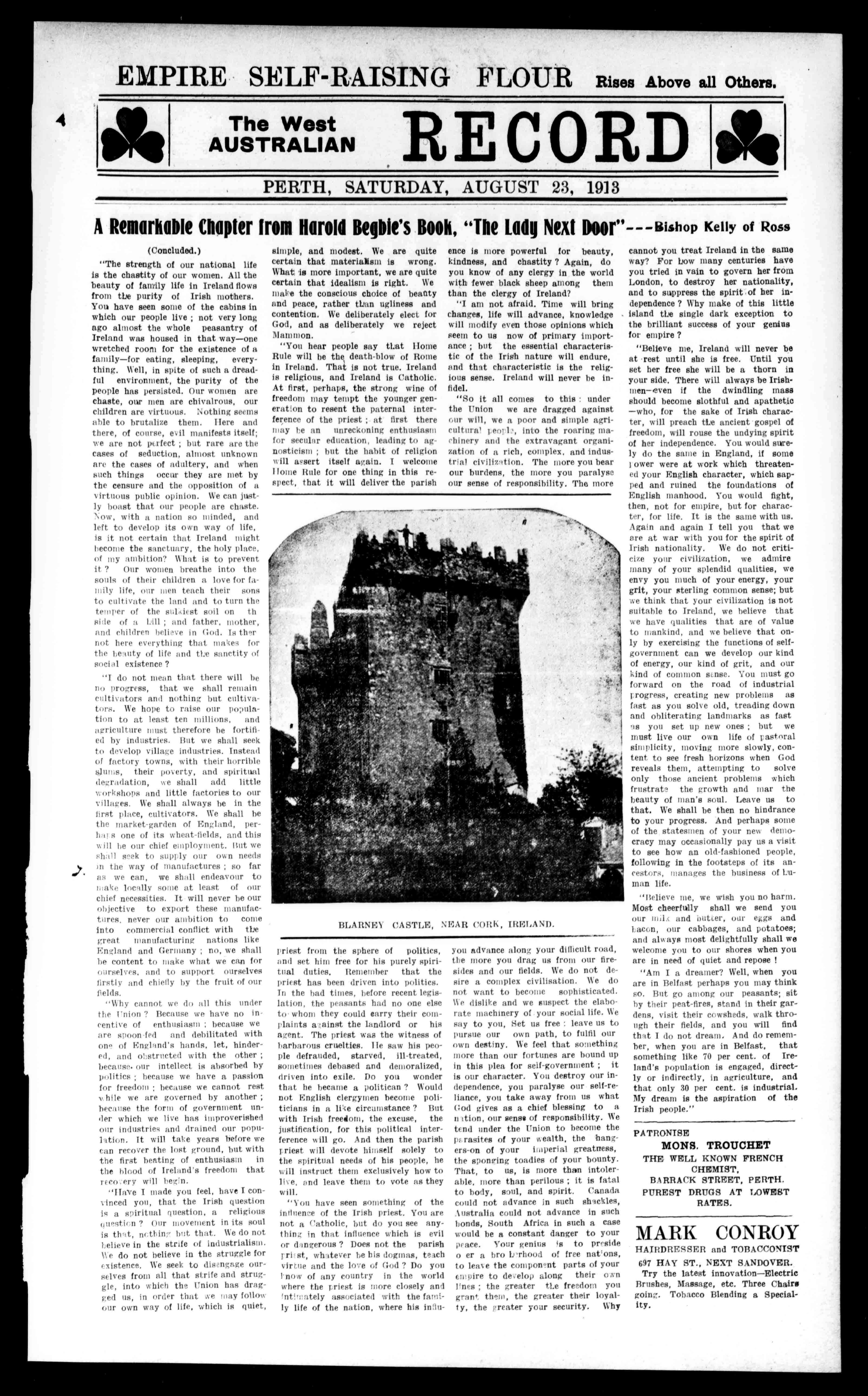
BLARNEYCASTLE,NEARCORK,IRELAND.
priestfromthesphereofpolitics, andsethimfreeforhispurelyspiritualduties.Rememberthatthe priesthasbeendrivenintopolitics. Inthebadtimes,beforerecentlegislation,thepeasantshadnooneelse to,whomtheycouldtarrytheircolaplaintsagainstthelandlordorhis agent.Thepriestwasthewitnessof barbarouscruelties.Ilesawhispeopledefrauded,starved,ill-treated, soinetiineedebasedanddemoralized, drivenintoexile.Doyouwonder thathebecameapolitican?Would notEnglishclergymenbecomepoliticiansinalikecircumstance?But withIrishfreedom,theexcuse,the justification,forthispoliticalinterferenceell'go.Andthentheparish j,riestwilldevotehimselfsolelyto thespiritualneedsofhispeople,he willinstructthemexclusivelyhowto live,andleavethemtovoteasthey will.
"Youhaveseensomethingofthe influenceoftheIrishpriest.Youare notacatholic,butdoyouseeanythinginthatinfluencewhichisevil ordangerous?Doesnottheparish rrest,whateverhehisdogmas,teach virtueandtheloveofGod?Doyou -nowofanycountryintheworld wheretheTriestismorecloselyand inteeatelyassociatedwiththefaintlylifeofthenation,wherehis
Youadvancealongyourdifficultroad, themoreyoudragusfromourfiresidesandourfields.Wedonotdesireacomplexcivilisation.Wedo notwanttobecomesophisticated. Wedislikeandwesuspecttheelaboratemachineryofyoursociallife.We maytoyou,Setusfreeleaveusto pursueourownpath,tofulfilour owndestiny.Wefeelthatsomething morethanourfortunesarehoundup inthispleaforself-government; it isourcharacter.Youdestroyourindependence,youparalyseourself-reliance,youtakeawayfromuswhat Godgivesasachiefblessingtoa nition,oursenseofresponsibility.We tendundertheUniontobecomethe re.rasitesofyourwealth,thehangers-onofyourimperialgreatness, thespongingtoadiesofyourbounty. That,tous,ismorethanintolerable,morethanperilous;itisfatal tobody,soul,andspirit.Canada couldnotadvanceinsuchshackles, Australiacouldnotadvanceinsuch bonds,SouthAfricainsuchacase wouldheaconstantdangertoyour peace.Yourgeniusistopreside oerabroIrrhoodoffreenations, toleavethecomponentpartsofyour empiretodevelopalongtheir()en l'nes;thegreaterthefreedomyou grantthem,thegreatertheirloyalty,thegreateryoursecurity.Why
"Believeme,wewishyounoharm. Mostcheerfullyshallwesendyou ourtiel.{andoutLer,oureggsand bacon,ourcabbages,andpotatoes; andaleayemostdelightfullyshallwe welcomeyoutoourshoreswhenyou areinneedofquietandrepose
"AmIadreamer?Well,whenyou areinBelfastperhapsyoumaythink so.Butgoamongourpeasants;sit bytheirpeat-fires,standintheirgardens,visittheircowsheds,walkthroughtheirfields,andyouwillfind thatI(10notdream.Anddoremember,whenyouareinBelfast,that somethinglike70percent.ofIreland'spopulationisengaged,directlyorindirectly,inagriculture,and thatonly30percent.isindustrial. Mydreamistheaspirationofthe Irishpeople."
PATRONISE
MONS.TROUCHET
THEWELLKNOWNFRENCH CHEMIST, BARRACKSTREET,PERTH. PURESTDRUGSATLOWEST RATES.
MARKCONROY
HAIHDRESSERandTOBACCONIST
697HAYST.,NEXTSANDOVER. Trythelatestinnovation-Electric Brushes,Massage,etc.ThreeChairs going.TobaccoBlendingaSpeciality.
EMPIRESELF-RAISINGFLOURRisesAboveallOthers. )
of. TheWest AUSTRALIAN RECORD
AttheTombofSr.TheresaoftheChildJesus
TranslatedfromaFrenchpaperbyMissALICIAO'CONNELL,Wandering.
(Concluded.)
OnlythatmorningIhadheardthe nameoftheBuissonnets.AnIrish womanhadtoldnieitwasajourney ofabouttwenty-fiveminutes.Itwas thethirdhaltingplaceinthepilgrimage.IhadpassedthroughLisieuxincapableofseeingorhearing anything,insensibletothemudof thestreetsandtheincessantrainin ordertoreachmySaint.
Inthecentreofaboulevardalittlewornfootpathconductsoneina fewminutestotheBuissonnets.This isthehomewhereSr.Theresaof theChildJesuslivedfromhertenderyearstillherentranceintoCarmelunderthecareofherfather,M. Martin,andhersisters,thepredestinedonesofthecloister.
Abrassplateannouncesthe visitinghours-from2to5o'clock. Alas!itisonlyeleven.Iexperience amomentofanguish.Confidence prevails,however,andIringonce; twice.GoodMadamRoaletheguardianwithin,reassuresme."Since youhavecome,enterandsee!"
Fornearlyanhour,guidedbythis goodwoman,whohasknownSr. Theresa,andwhospeaksofherasof alivingperson,Ivisitthemuseum ofsouvenirs. Ilerearesomeapartmentsandsomeordinaryarticles whichhavebeenconsecratedforever bythevirtuesoftheirusers.Itis ahomeofquiet,independentcitizens, theenemiesofpomp,ostentation anddisplayanoasisinthemidst oftheworld,anestofsaintspiouslymaintninedbyDr.Laneelle,cousinbymarriageofthesweetCarmelite.Somelogsheapedupinthe kitchenfireplaceremindusthatthe piouschildplacedhereherlittle shoeonChristmasnights.
Thedininz-roomwithitswaxed floorandoakfurnitureseemswaitingforitsinhabitants.Herethat inatehlrsikithr,Al.Martin, !Ledasunknownas5'. di,presidedoverthefamilymeals,gave Pionsreadings,kepthischildrenin theloveofrodandpreparedthevocationsofhisblessedvirgins.
WeentertheroomofSr.Theresa onthefirstfloor.Analtariserectedatthefootofthealcoveinthe roomwheresheusedtosleep.On thepedestalinlettersofgoldwith abackgroundofros,sshinesthehilressiveinscription
"IhaveseentheBlessedVirgin advancetowardsmeandsmile onme!"
usedinherinfancy,anivorycrucifix,andawork-tablefurnishedwith inkstand,penandpaste-board.The diocesancatechismisopenthegeographyletsushaveaglimpse of hermapsandsomeclassics,stillin useintheestablishmentsofChristianteaching,arerangedonthe desk.
Therearehertoys,herdollsand herdolls'bedsandonasmalltable arethecupswhichheldthetisanes whichshelabouredtomake.Then thereleherpersonalaltarwithits smallmonstrance,chalice,ciborium, cruets,ceneersandsmallwax-candles inleadencandlesticks.
Thedraught-boardonwhichTheresausedtoplaywithherfatheris theretoo.Theyseemtosaythat thelittlegirlisaway,andwillput theminuseagainonherreturn.
Alastjoyisstillreservedforme. Inarecessinthegarden-wallofthis home,whichissurroundedbygardens,theypreserveastatueofthe Child.lesusonthestrawsurround-
brightenthemosthiddenandmost mysteriouscornersofmyconscience.
Oh! howshallIthanktheBlessed VirginMary,whomIlovewitha filialtenderness,forhavingsenther littleservanttomeinorderthat shemightbetheprotectressofmy last(lays.
GeneralCouncilsoftheChurch
Wouldyoukindlytellmethrough yourcolumns:-
(1).ThenamesofthemostimportantoftheChurchCouncils.
(2).Theirdates.
(3).Themostimportantdogmas whicharetheiroutcome.
Itmakesone'sargumentsdecisive andfinalwhenhecanquotehisauthorityaccurately.-"Enquirer,"Subiaco.
ByaGeneralorEcumenicalCouncilisunderstoodaCounciltowhich theBishopsofthewholeworldare lawfullysummonedforthesettling ofsomeimportantmatter,thoughit isnotnecessaryforthevalidityof theCouncilthatallshouldattend.
ACouncil,inordertobeEcumenical,(oustbecorr:o:;edbythePope,
inthePalaceoftheEmperor.There werepresent318Bishops,theEmperorConstantinetheGreatalsoassistlag.ThePopewasrepresentedby IfoetusofCordova,hisLegate,who PresidedinunionwiththetwoRomanpriestsVitusandVincentius (Heinle,"IlistoryoftheChristian Councils,"bk.ii.e.ii.,sec.28.).
Arius,ofAlexandria,wascondemnedfordenyingthedivinityofthe Word,orSonofGod,andHisconsubstantialitywiththeFatherat thisCouncilthegreaterpartofwhat iscommonlycalledtheNiceneCreed waspublished.
2.TheFirstCouncilofConstantinople,theancientByzantium,was heldin381,intheEmperor'sPalace; 150BishopsandtheFlinprorTheodosiustheI4lderattendee.
ThefollowersofMfteedontuawere condemnedfordenyingthedivinity oftheIlolyGhostandHiseonsubstantialitywiththeFatherandSon. TheNicene('reedwassubstantially completed.TheDecreeswereconfirmedbyDamasunI.
3.TheCouncilofEphesus,Asia Minor,washeldin.theChurchofSt. Maryin431,underPopeCelestineI. About200BishopsandtheEmperor Th:odosiustheYoungerwerepresent. NestoriuswasdeposedfromhisSee ofConstantinople,andcondemnedfor maintainingthatinJesusChrist thereweretwodistinctpersons:ahumanperson,hornoftheVirginMary, andtheDivineperson,thatis,the EternalWord.Inconseluenceofthis errorhedeniedtotheBlessedVirgin thetitleof"Theotokos"(orMother ofGod),contrarytotheCatholic doctrine,whichconfessesMarytobe theMotherofthatDivinePersonin whomareintimatelyandindissolublyunited,bywhatiscalledhypostaticunion,thedivineandthehumannature.
4.TheCouncilofChalcedon(now calledScutari,facinConstantinople, inAsiaMinor),enderPopeLeothe Great,washeldin951,intheChurch ofSt.EuphemiatheMartyr,near theBosphorusinBithynia.PaschasinusandLucentius,Bishops,and I3oniface,Priest,presidedatthis (",uncilasLegatesofPopeLeothe Great.Sixhundredandthirty1310hotaandtheBomanEmperorMartianwerepresent.PapalSupremacy wasacknowledged.
Eutyches,Abbotofconstantinople, andDioscorus,ArchbishopofAlexandria,werecondemnedforteaching thatinJesusChristtherewasonly onenature.
ThestatueofMaryImmaculateis thereenthronedinthesameplace, butitisafac-simile; the'arinelitesjealouslypreserveinthepuns' choirthestatueoftheVirginthat smiled.Wefallonourknees,and looktothealcove,tothestatueof theVirginMary,whoseamiableand life-Mesmileravishesthesoulof littleTheresa.
Overthemarlemantlepieceisa largemirror.Thisglass,whichso oftenrerectedthecharmingfeatures oftheireinalchild,isveiledinbli.e velvet."Itisanart'cletooworldly forasanctuary,"saysMadam Rolite.Wouldonenotratherbelieve thattheyfearthatthepeoplewho dailyassthroughmighttarnishits brightnessbyanactofcoquetry?
ThegPardi-nshowstheretreat preferredbyTheresa,atthehackof theprospecttower.Herethechild usedtodohersch,m1exercises,and heresherer.arednthe'ittlefireplacethetisanesofherchildish games.IIPreespeciallyshelovedto pr,yandmeditate.itwas.fromthis indowthatsh'hadthatvisionof herfatherwhilehewasabsent frontLisieux.Shesawhimdistinctlyf..a.sthelengthofthelaundry, o'dandbentwithage,suchashp wouldheintenyearstocome,and benttothegroundbyamaladyof whichuptillthattimenosymptom haddeclareditself.
Thereisnotafatherormother whoworldnothedeeelvp:ovedby thelargeglasscasewherethearticleswhichSr.Theresausedatthe Buissonnetsareshown.Itisatrue bazaarn'a°ionsandfortunatelittlegirl.Neartheworkedprie-Dieu, thereisthehigh-chair,whichshe
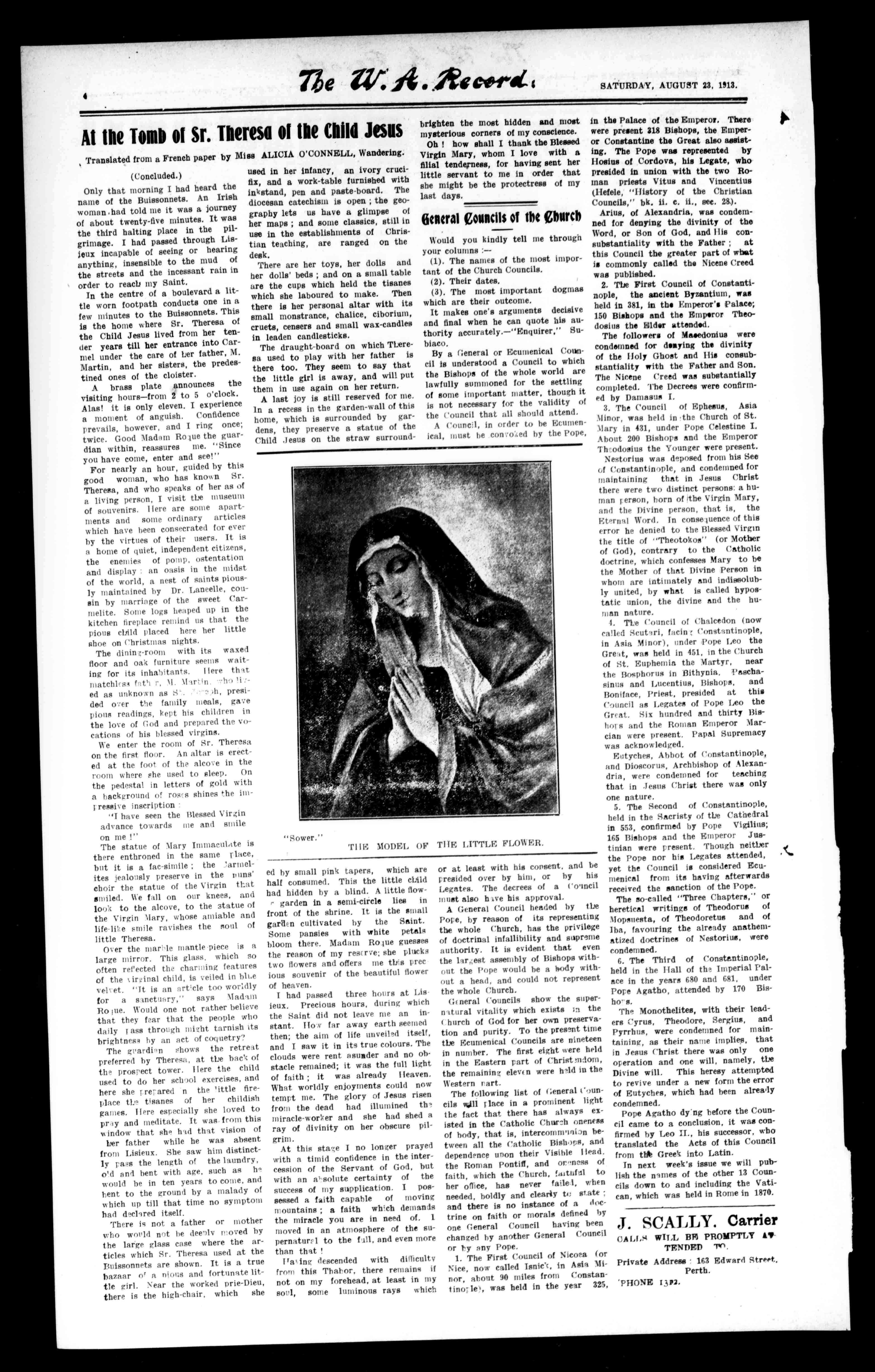
"Sower." THEMODELOFTHELITTLEFLOWER.
edbysmallpinktapers,whichare halfconsumed.Thisthelittlechild hadhiddenbyablind.Alittleflowgardeninasemi-circleliesin frontoftheshrine.Itisthesmall garflencultivatedbytheSaint. Somepansieswithwhitepetals bloomthere.MadamRoiueguesses thereasonofmyreserve;sheplucks twoflowersandoffersmethisprec ioussouvenirofthebeautifulflower ofheaven.
IhadpassedthreehoursatLisieux.Precioushours,duringwhich theSaintdidnotleavenieaninstant.Hoefarawayearthseemed then;theaimoflifeunveileditself, andIsawitinitstruecolours.The cloudswererentasunderandnoobstacleremained;itwasthefulllight offaith; itwasalreadyHeaven. Whatworldlyenjoymentscouldnow temptme.ThegloryofJesusrisen fromthedeadhadilluminedthe miracle-workerandshehadsheda rayofdivinityonherobscurepilgrim. AtthisstageInolongerprayed withatimidconfidenceintheintercessionoftheServantofGod,but withana'-solutecertaintyofthe successoflilysupplication.Ipossessedafaithcapableofmoving mountains;afaithwhichdemanis themiracleyouareinneedof.1 movedinanatmosphereofthesupernaturrltothefall,andevenmore thanthat!
!qvinsdescendedwithdifficulty fromthisThahor,thereremain.;if notonmyforehead,atleastinmy soil,sonicluminousrayswhich
oratleastwithhisconsent,andbe presidedoverbyhim,orbyhis Legates.ThedecreesofaCoeneil mustalsohevehisapproval.
AGeneralCouncilheadedbythe Pope,byreasonofitsrepresenting thewholeChurch,hastheprivilege ofdoctrinalinfallibilityandsuprenie authority.Itisevidentthateven thelar4estassemblyofBishopswithoutthePopewouldheabodywithoutahead,andcouldnotrepresent thewholeChurch. GeneralCouncilsshowthesupernaturalvitalitywhichexistsinthe IburchofGodforherownpreservationandpurity.Tothepresenttime theEcumenicalCouncilsarenineteen innumber.Thefirsteightwereheld intheEasternpartofChristmdom, theremainingelevenwereheldinthe Westernrart. ThefollowinglistofGeneralCouncils%ill!laceinaprominentlight thefactthattherehasalwaysexistedintheCatholicChierehoneness ofbody,thatis,intereotnnemianbetweenalltheCatholicBishops,and dependenceunontheirVisibleHead. theRomanPontiff,andor,messof faith,whichtheChurch.lettere!to heroffice,hasneverfailed,when needed,boldlyandclearlytistate andthereisnoinstanceofadoctrineonfaithormoralsdefinedby oneGeneralCouncilhavingbeen changedbyanotherGeneralCouncil orbyanyPope.
1.TheFirstCouncilofNicoea(or Nice,nowcalledIsniec,inAsiaMinor,shout90milesfromConstantino;le,,washeldintheyear325,
5.TheSecondofConstantinople, heldintheSacristyoftheCathedral in553,confirmedbyPopeVigilins; 165BishopsandtheEmperorJustinianwerepresent.Thoughneither thePopenorhisLegatesattended, yettheCouncilisconsideredEcumenicalfromitshavingafterwards receivedthesanctionoftheI'ope.
Theso-called"ThreeChapters,"or hereticalwritingsofTheodorusof Momenta,ofTheodoretusandof lba,favouringthealreadyanathematizeddoctrinesofNestorius,were condemned.
6.TheThirdofConstantinople, heldintheHalloftheImperialPalaceintheyears680and681,under PoreAgatho,attendedby170Bishos. TheMonothelites,withtheirleadersCyrus,Theodore,Sergius,and Pyrrhus,werecondemnedformaintaining,astheirnameimplies,that in.JesusChristtherewasonlyone operationandonewill,namely,the Divinewill.Thisheresyattempted toreviveunderanewformtheerror ofEutyches,whichhadbeenalready condemned.
PopeAgathody'ngbeforetheCouncilcametoaconclusion,itwasconfirmedbyLeoII.,hissuccessor,who translatedtheActsofthisCouncil fromtlkGreekintoLatin.
Innextweek'sissuewewillpublishthenamesoftheother13CouncilsdowntoandincludingtheVatican,whichwasheldinRomein1870.
4 ne7YA.1'4001-4 SATURDAY,AUGUST23,1913.
J.SCALLY,Carrier OALLsWILLBMPROMPTLYAV TENDEDTO PrivateAddress163EdwardStreet. Perth. 'PHONICfen.

TieIV:A.)1E4,60rd.
HibernianAustralasianCatholicBenefitSociety.
(ApprovedbytheHierarchyofthechurchandRegisteredundertheFriendlySocieties'ActsofAustralaste. ItsWatchwordsares-RELIGION,NATIONALITY,eATHOLleITY,BENEVOLENSH
ItisESSENTIALLYIRISHandCATHOLICanditSPECIALLYAPPEALSTOCATHOLICYouthsdeseasdingtheirSUPPORTandALLEGIANCE.BrancheswillbeestablishedisanyLOCALITY01!Minby theDISTRICTSECRETARY of a requisitionSIGNEDbyTENPERSONS, SaaetioaedbythePRIEle oftheDISTRICT,thenamesandagesofintendingmembersbeingfullysetouttotherequisition.
550BRANCHESIllirougliouttheCommonwealthandNewZealand;50,00omemberssad42loo,000
Funds.Mania'HelPandMedicalAssistanceincasesofSishaiseGuaranteed.
NOMINALENTRANCEFEES. MODERATECONTRIBUTIONS.
LoansAdvancedInLargeor'SmallAmountsonApprovedCityandSubuibes FreeholdProperties.
FullParticularsonapplicationtoA.E.FARMER,DistrictSecretary. VtsEagleChambers,Hay-Street,ipri..
InandAroundtheHome
'MidPleasuresandPalacesthoughwemayroam, Beiteversohumble,there'snoplacelikehome
TheHolyHour
OnehourfeithTheeInsilentadoration,
TotastethesweetnessofThyholy, place
Tohowniysoul,inpeaceordesolation, BeforethepityofThySacredFace; Theworldshutout,fromsinand turmoilfreeOnlyonelittlehour,lilyGod,with Thee!
OnehourwithThee-oneshortand lrecionshour, tinitchedfromtherushandclamor oftheday; 0graciousgiftoflove,0welcome shower Oftranquiljoy,thatmeltsmy soulaway MakingallthingsonsideofTheeto seem
Avainillusion,anunhappydream! "SacredheartReview." "TheLittleFlowerofJesus" (Fr'intheCeylon"CatholicMessenger.")
Awell-knownCeylonfamily,long inJaffna,Mr.PriceTodd,hiswifedaughterof('olonelR.ii.Morgan, thewell-knownadvocateofColombo -.togetherwiththeirfourchildren, threeboysandonegirl,werereceivedintotheChurchatKaluaggala, intheIlewaganiKarate,lastmonth. Theconversionistheresultofan extraordinaryrecoveryofthesecond youngestboyoffiveyearsoldthroughtheintercessionoftheLittle FlowerofJesus.Thechildwasdyingfromconvulsionsandpneumonia, whentheparishprietoftheplaceresidingatNiripolawascalledat9.30 'ap.m.toblessit.Theparentsmadea avowinthepresenceofthepriestto becomeCatholic()incaseofrecovery ofthechild.Theparts!.priesthimselfandtheparentsonhisadvice hadrecoursetotheLittleFlower.
Thefollowingdaythechildwas quitewell,andtwodayslater,to thegreatastonishmentofthedoctor, thelittlefellowwasafoot.
ATerriblePunishment
"InthevillageofAlbujon(Murcia),intheSouthofSpain,afarmerwhosecropsweredestroyedby thestormwentouttoviewthe damage,and,infuriatedbywhathe saw,forwhichheblamedLeaven,begantoblasphemeinafrightfulManner,andatlast,draeingarevolver,hebegantofiretowardsthe heavens.Allatoncehebecameill andhadtohetakentohishouse, wherehehasremainedsince.Ileis speechless,hiseyesstaringowards heavenandhisarmsextended.The doctorshavebeenunabletodoanythingforhim,buttheyand:illthe inhalitantsarewitnessesofthehorriblellaseheitlyandits1,1rible punish/nunt."
HeartheSermon
Whatdoesasermondoforyou?It elevatesyou,. Youcoaiplinthat youhuetosho-eleurter.--ash dishes,dri,eah'rseear,eountmoneyallday,andthatsuchthin4a keepthesouldowninenearthly level.Well,then,cometochurch
andbeelevated.ListentotheWord ofGod,whichraisesyouupabove thecommon-placethingsofyour life,or,ratber,whichsanctifiesthem endmakesyouseeinthemstepping stonestoheaven.Thereisnodoubt thatamanneedsagreatdealof couragetofacethedifficultiesoflife. Thereisnousedenyingthatfor nearlyallofuslifeisahardroad totravel.Thenwhydoyousaythat halfanhouronceaweekistoo muchtogivetoasermon?Forin thesermonyoulearnhowtofight yourbattles.Therethecomforting truthsofreligionarebroughthome toyouthereyoulearnhowtohope; thereyouarecleansedandstrengthenedandequippedforthebattleof lifethereyouaretaughtthehighest'oynowntoman-theloveof God.
ThisisMyFriend
LetmetellyouhowImadeHis (tellimintitnce. IhaulheardnotchofHint,buttook noheed.
liesentdailygiftsandpresents, butIneverthanked!Rm.
Ileoftenseemedtowantray friendship,butIremainedcold.
Iwashomelessandwretched,and starvingandinperileveryhour;and leofferedmeshelterandcomfort andfoodandsafetybutIwasungratefulstill.
AtlastIlecrossedmypathand withtearsinHiseyes.
Ilebesoughtme,saying,Comeand abidewithMe.
LetthetellyouhowIletreatsme now.
liesuppliesallmywants. fiegivesmemorethanIdare as'i.
Ileanticipatesmyeveryneed. liebegstuetoaskformore.
11eneverremindsoneofmypast ingratitude.
Ileneverrebukesmeformypast follies.
LetmetellyoufurtherwhatI thinkofHim.
IleisasgoodasIleisgreat. hisloveisasardentasitistrue. lieisaslevishofHispromises asIleisfaithfulinkeepingthem.
Ileisasjealousofmyloveaslie isdeservingofit.
IaminallthingsIllsdebtor,but Ilebidsarecall!BinFriend.-From anOldEnglishAlantufeript.
Woman
Sheworksharderbefore1.reakfast thanlimawor'mallday. Shehasmorehumourinanoffhand ordthanmanhasinvisfunniest story, Sheshowsmore'Hallosinbeegentlestsighthanmanshowsivhis mostlugubrious Shecandressherselfneatlyand attractivelyforlessthanitcowlsa rianforshoesandhats. Shehaveworepatienceinopening adrawerthanamanhasinlung thefoundationofhi.tortme. theuPeeleysmore-raceinMin': oiltofhammockthanamandisilayeinhisfavouritedance.Shehas or;dignityinanodofherhead thnamanhasinahowthatembraceshisentireanatomy.
Sheshowsmoreingenuityinthe thingsshedoeswiththeleft-over boiledpotatoesthanthegreatestinventorwhoeversignedapatentspecification.-"TheMonitor."
TheMaldenandtheBee
Saidalittle,wonderingmaiden
Toabee,withhoneyladen "Bee,insilltheflowersyouwork, Yetinsomedothpoisonlurk."
"ThatIknow,mylittlemaiden," Saidthebee,withLoneyladen; "ButthepoisonIforsake, Andthehoney,only,take."
"Cunningbee,withhoneyladen, Thatisright,"repliedthemaiden; "SowillI,fromallImeet, Onlytakethegoodandsweet."
SizedUp
TheCatholicgraduatewhodoes notidentifyhimselfwiththeCatholicbody,whokeepsalooffromCatholicsocieties,takesnopersonal interestinthewelfareoutheChurch, andiiiiniiiiiseatheprinciplesofhis religion,isrecreanttotheeducation thathasequippedhimtohe"aleaderinthestrife."
Alanisareligiousbeing.Therelieiouselementinhintisasrealas helo,eeleentortheintellectual ehment,an.!,huethese,itmayhe neglected dieout. greatestpi.ilosophersandorators thateverlivedwerereligiousmen, andthatmanisimperfectwhoignoresit.
gentleness
Inthisdaymuchemphasisisput onthestrong,masculinetraitsof character.Teachersofyouthsare spea'.ingofahattheymgrobustnessofcharacter,bywhichthey meantheembodimentofthoserecognisedmanlyormasculineelements whichareregardedasessentialto success.Noonequestionsthevalue ofsuchtraits,butthefeetth.ttgentlenessisnecessarytoawell-rounded charactershouldnotheoverlooked. Byeentleneesisnotmeanteffeelin acy,orweakness,butthatreal, genuine,sterlingqualityinonewhich hasevermarkedthetrulygreatmen oftheworld.Someonesays,"The trulygreatarethemostgentle."
Thegraceofgentlenessisworth cultivating,forbothitsornamental andutilityvalue.Theabsenceofit makesonecrude,rough,boorishand unfitforrespectable,culturedsociety.Perhapsonefeelsthatheisnot alwaysasgentleasheshouldhe. Thatisahopefulsign.Itisone's rivilegetocultivatethisvirtuein dailylifeuntilitincreases.Thefact thatoneknowsbeisnotgentlepreareahimtobecomegentle.
TheTrueTestofTriumph
"Whatthetimescallforismensturdy,Christianmen-endowedwith thecourageoftheirconvictions.We needmenwhoarecontrolledbyconscienceratherthanbypopularity menwhoareinfluencedbyasenseof dutyandnotbyself-interestwho areswayedbyasniritofpatriotism rathertitanbyadesireofpolitical preferment.Aboveall.weneedmen ofstrongChristianfaith,whoare preparedtounholdtheirreligious convictionsinthefaceofoblienyand popularprejudice.Inaword,we needmenandwomenofupright Christiancharacter.
"Ifyoudisclosetomeyourcharacter,Iwillrevealtoyouyourdes-
tiny.Ifyourcharacterisabovereroach,youwillwininthebattleof life.Youmaynotattaindistinction inthecivilorpolitical,themilitary orecclesiasticalwalksoflife,butthe acquisitionofthesehonoursisnota criterionofgenuinesuccess.Thetrue testofultimatetriumphliesinthe fulfilmentofduty. "Ifyouarefaithfulatthepostto whichProvidencewillassignyou,no matterwhatthatpostmaybe,you willbesuccessfulinlife,Youwill enjoythetestimonyofagoodconscience.Youwillmerittheesteem ofyourfellow-citizens,and,above all,youwillhavetheapprovalof heaven.Yournamemaybeemblazonedonthefadingpagesofearthly history,hut,whatisinfinitelybetter,itwillbeinscribedintheimperishablerecordsoftheBookof Llfe."-.''ardinalGibbons.
Life'sLittleWorries
Someofushavehadtroublesall ourlives,andeachdayhasbrought alltheevilthatwewishedtoendure. Butifwewereaskedtorecountthe sorrowsofourlives,howmanycould weremember?howmanythatare sixnionithsoldshouldwethink worthytoberememberedormentioned?To-day'stroubleslootlarge, butaweekhencetheywillbeforgottenandburiedoutofsight.
Ifyouwouldkeepabook,and everydayputdownthethingsthat worryyou,andseewhatbecomesof them,itwouldbeabenefittoyou. Youalloyathingtoannoyyou,just asyouallowaflytosettleonyou andplagueyouandyouloseyour temper,or,rather,getitforwhen womenaresurchargedwithtemper theyaresaidtohavelostit;andyou justifyyourselvesbybeingthrown offyourbalancebycauseswhichyou donottraceout.Butifyouwould seewhatitwasthatthrewyouoff yourbalancebeforebreakfast,and putitdowninalittlebo6i,andfollowitout,andascertainwhatbecomesofit,youwouldseewhata toolyouwereinthematter.
Theartofforgettingisablessed art,buttheartofoverloouingis quiteasimportant.Andifweshould taketimetowritedowntheorigin, progressandoutcomeofafewof ourtroubles,itwouldmakeusso ashamedofthefusswemakeover thetathatweshouldhegladtodrop suchthingsandburythematonce ineternalforgetfulness.Lifeistoo shqrttohewornoutinpettyworries,frettings,hatredsandvexations.Letusbanishallofthem,and thinkonwhatsoeverthingsarepure, andlovely,andgentle,andof-good report.
CalendarfortheWeek AUGUST.
Newmoon,Aug.2,at8.58p.m.
Firstquarter,Aug.9,12.3p.m.
Fullmoon,Aug.17,4.27a.m.
Lastquarter,Aug.25,8.17a.m. Sunrises.gunsets.
24-Sunday 6.45 5.53
25-Monday 6.44 5.54
26-Tuesday 6,42 5.55
27-Wednesday 6.41 5.55
28-Thursday 6,40 5.56
29-Friday 6.3R 5.56
20-Saturday 6.37 5.57
MissMcMahon
CORNER.PIERANDPURRAY' STREETS,PERTH.
Fruitanticonfectionery.Lightlietreatments
SATURDAY,AUGUST23,1913.
4
J5245-9ct.
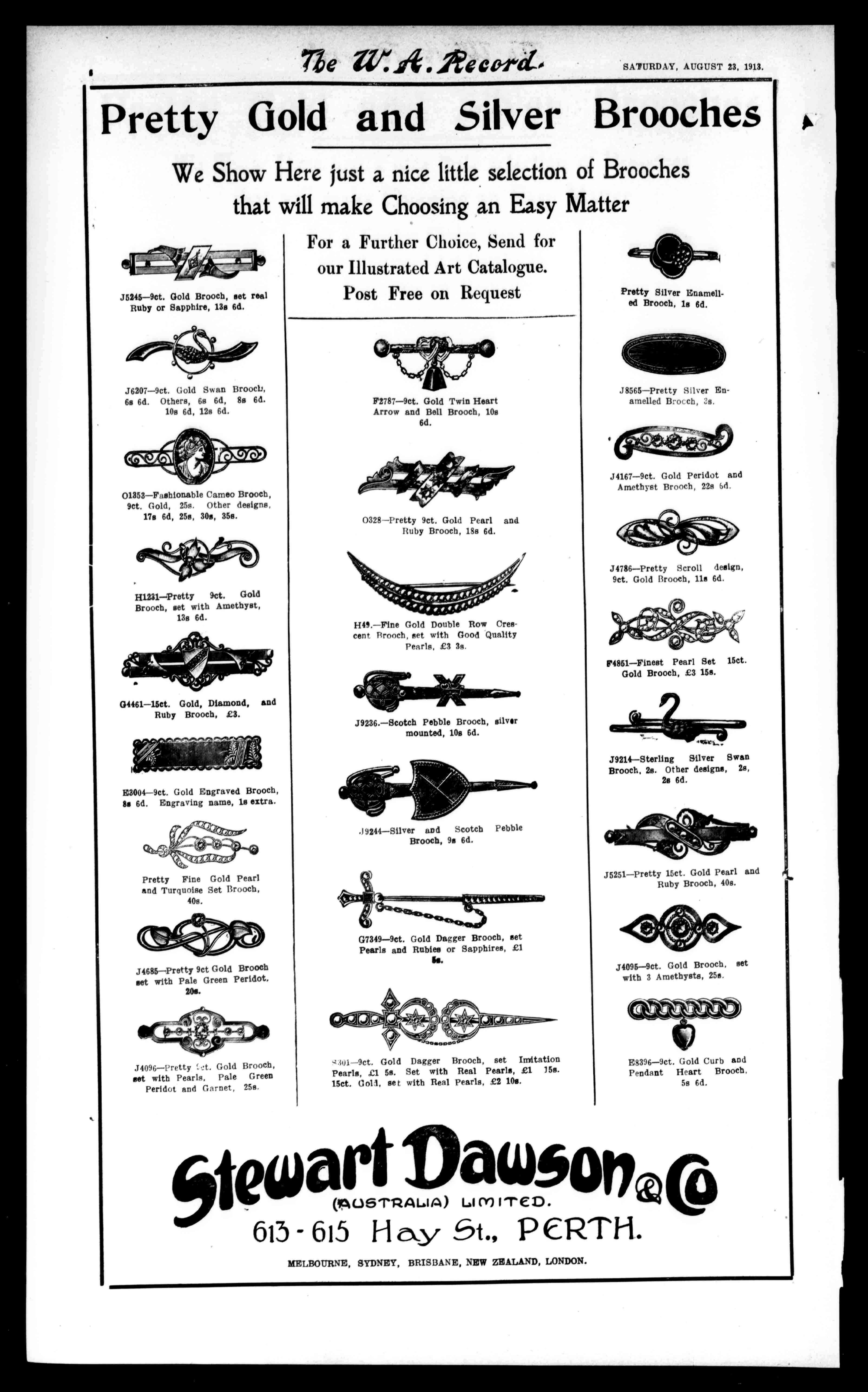
J6207-9ct,
01353
F2787-9ct.
0328
H1231
G4461-15ct.Gold,Diamond,and RubyBrooch,£3.
J9236.
E3004-9ct.
.19244
J4685
G7349-9ct.
44o1-9ct.
J4096
Thetii:A.Aecordo SATURDAY,AUGUST23,1913.
real
GoldBrooch,set
RubyorSapphire,13s6d.
GoldSwanBroocb, 6s6d.Others,6s6d,8s6d. 1086d,12s6d.
-Fashionable('ameoBrooch, 9ct.Gold,25s otherdesigns 17e6d,25s,30e,35s.
-Pretty9ct.Gold Brooch,setwithAmethyst, 13s6d.
GoldEngravedBrooch, Sc6d.Engravingname,isextra.
PrettyFineGoldPearl andTurquoiseSetBrooch, 40s.
-Pretty9ctGoldBrooch setwithPaleGreenPeridot, 20s.
Garnet,25s
GoldandSilverBrooches WeShowHerejustanicelittleselectionofBrooches thatwillmakeChoosinganEasyMatter ForaFurtherChoice,Sendfor ourIllustratedArtCatalogue. PostFreeonRequest
-Pretty GoldBrooch, setwithPearls.PaleGreen Peridotand
Pretty
10e
GoldTwinHeart ArrowandBellBrooch,
6d.
-Pretty9ct.GoldPearland RubyBrooch,1.8s6d.
H49.-FineGoldDoubleRowCrescentBrooch,setwithGoodQuality Pearls,£338
-ScotchPebbleBrooch,silver mounted,10s6d.
-SilverandScotchPebble Brooch,9s6d.
GoldDaggerBrooch,set PearlsandRabiesorSapphires,£1 N.
.C15s.SetwithRealPearls,£115s. 15ct.Goli,setwithRealPearls,£210s. PrettySilverEnamelledBrooch,is6d. J8565-PrettySilverEnamelledBrocch, .14167-let.GoldPeridotand AmethystBrooch,22s(.)d J4786-PrettyScrolldesign, 9ct.GoldBrooch,lie6d. F4851-FinestPearlSet15ct GoldBrooch,£315s. iMor J9214-SterlingSilverSwan Brooch,2s.Otherdesigns,2s, 2s6d. J5251-Pretty15ct.GoldPearland RubyBrooch,40s. J4095-9ct.GoldBrooch,set with3Amethysts,25e. E8396-9ct.GoldCurband PendantHeartBrooch. 5s6d. 91004DaW§Ot70Craus-raALIA) !TED. 615"615NaySt.,PRTH. MELBOURNE,SYDNEY,BRIS13AE,NEWZEALAND,LONDON.
GoldDaggerBrooch,setImitation Pearls,
QUEENSLAND
ThedeathofDavidTomDillon, barrister-at-law,occurredinBrisbane recently.Itisonlyafewmonths ago,thedeceasedremovedtoBrisbanetopractisehisprofession.Hisuntimelydeathcameasagreatshock tohisnianyfriends. 4.4
AccompaniedbyFathersO'Leary andByrne,Dr.Duhigaddresseda meetingoftheCatholicsof Ilantiltonandtheneighbouringsuburbsrecently.Newchurches aretobeestablishedineachof thesettledsuburbsofBrisbane,and hisGraceisappealingforfundsto carryoutthework.Thecollection inrevonsetohisappealtotalled £700.Inthirtyseconds0430was raised.Itisaremarkableevidence ofCatholicFaithandgenerosity. NM 40
ThedeathofMr.DmisO'Connell, aprominentCatholicandbusiness manofMountMorgan,isrecorded attheearlyageof44years.Ile wasanativeofCountyCork,Ireland,andwasadescendantofthe IrishLiberator.Ilewitsadevout Catholic,charitableandgenerous; thewidowandtheorphanhadin Minatruefriend.IlewasafullbenefitmemberofSt.Michael's BranchoftheI.A.C.B.S.Awidow andsevenchildrensurvivehill!.Tha lastriteswereperformedbyFathersRowan,MountMorgan,and0'Neeffe,Iteeihaiiipton11.I.11.
BishopShielvisitedTownsvillerecently,andwasgivenaheartyrece)tionbythepeople.Addremlesfrom thearishionersandtheNorth toeenslandHibernianSocietywere 1res"ntedtohimbyDeanBourke, FatherSIcl.aughl'n,andBro.lawney,Districtl'res'dentII.A.c.B.S. Theparishioners'addresswasautisticillydesignIdbyHissNorah theaddiveisfromtheChildren of1Iarywasthewor'AoftheSisters ofMercy.itis12yearssincehis ,,rdshipvisitedTownsvilleasa Priest,and11:,waspleasedtonotice thattheo,terialrogrEFIRoftheCatholiccoboounityhadkeptpacewith thero:ressaroundthern.Ills1.0:a!shipconlrued450candidates. NM 40
'Attie MINI Moodie,the13-year-old Mountlor4anviol'nistl,whowent toBel,:iamafewyearsagotocontinueherstudies,hasmadegreat progressinherart.TheBerlinmusicalReviewsaysofher"Australia hasatlistagreatviolinist,and thisgreatnessisnolessimpressive becaeseitisembodiedinahitofa girl.AlmaMoodieisaveritableviolingenius."4
FatherM.McKenna,recentlyordainedatAllHallowsbyDr.Clone, ofPerth,forthearchdioceseofBrisbane,wasoneoftl.e('hristianBrothers'BoysatNudgeeandafterwardsastudentatthe.JesuitCollezeofSt.Ignatius,Riverview,Sydney.IleisacousinofFatherJames Byrne,AdministratorofSt.Stephen'scathedral,Brisbane.Ilewas underthecanonicalageatthetime ofhisordination,andaspecialdierensationhailtoheobtainedprior tohisbeingraisedtothepriest- hood.lieIsnowinhis23rdyear.
FatherE.Barry,ordainedatthe sametime,isalsoaNudgeeBoy. 'TheRe.'.F.O'Connell,alsoforthe Archdiocese,whowasraisedtothe orderofDeaconbyDr.Clone,isa nativeofDublin,andbrotherofFatherJohno'connell,ofToovoomba.
HerrR.i:iliani,ImperialGerman Consul-GeneraloftheAustralian commonwealth,accompaniedbyDr. Hirschfeld,fiaterialGermanConsul inBrisbane,recentlyvisitedhisGrace ArchbishopDunneandhisCoadjutor, Dr.Dinne,atDamHerrKiliani Nui,evedtohisGracehisgreatapireel,lionofthekindlin-st;andforeth.aightdisalayedbytheCatholic. clergyinBrisbaneinprovidingfacilMrsfor Catholicportionofthe crewsoftheGermanwarshipsvisitingthisport,toattendMassand takeiartintheotherreligiousobreevi.tree:oftheChurch.Theoppor-
AustralianeatholicNews
tunitieethusaffordedthe.Catholicofficersandmenofcomplyingwiththeirreligiousdutieswere,heassuredtheArchbishop,highlyappreciatedbytheGermannavalauthorities. hellKilinniwaseducatedbytheJes- tilts,andis,itisunderstood,the firstCatholicappointedtotheImperialGermanConsulateasConsulGeneraloftheCommonwealth.
Fatheri'agney,C.SS.R.,recently concludedaverysuccessfulweek's missionatCooktown.Theattendances,allthrough,werelarge,many non-CatholicsavailingthemselvesOf thereligiousinstructions.
'I,as
TheCatholicpeopleofIlelidon,on arecentSundayafterMass,present- edtheirdevotedpastor,FatherCasey,withapurseofsovereignsto enablehimtopurchaseahorse,sad- dleandbridleforhisuse.Members ofotherdenominationsalsogener- ouslycontributed.
NEWSOUTHWALES
FatherO'l)e.i,whohasbeenattachedtotheCathedralstaffatBathurstforsmile'menthe,hasbeen transferredtoBubb°.,FatherParker, ofDubbo,hastakenchargeofthe Gilgandraparish.
a.
Inordertoaccommodatethelarge numberwhowereanxioustoassist attheRequiemMassrecentlyforthe refoseofthesoulofFatherBarry, theAustralianlullinGilgandrawas secured.FatherO'Donnell,ofGulgong,eairateyedtoGilgandrathe previousday,andmadetheneceasaryarrangements.HisLordshipDr. Dunne(BishopofBathurst)celebratedtheMass.MonsignorLong,V.G., witsassistantpriestVeryRev.FatherO'Kennedymasterofceremonies andRev.leathersFlanaganand O'ReillychantersoftheOfficeand lolyMarrs.Iniongotherspresent wereMonsignorBrophy(Dubbo),FatirrsRyan(Orange),O'Reilly(Gulgengl,Eviston(Wellington!,Parker (Dubl.oI,ie.o'llonnell(Gulgong), andMr.BarryIbrotherofthedeceased).IllsLordshipwasdelighted withthelargeattendanceofthe clergyandlaitypresent.
Mr.Michaelcitqttrick,formany ye!rea1-edingfigareinathletics, diedatSt.Vincent'sHospitalrecently.liewasforatimechampion hammerthrowerofN.S.W.Ilewas well-)noenintheboxingworldand witsregardedasasoundauthority. HisfuneraltookplaceatWaverley Cemetery.
4. 4.
Dr.Gallagher,BishopofGoulburn, blessedthenewchurchatMarrarrecently,Thedonationsamountedto £300.
44
MissEdelineStricklandopenedthe gardenfeteatSt.Martha'sHouse, Leichhardt,whichwasheldtocommemoratethesilverjubileeofthein- stitution.MissCeciliaStricklandaccompaniedhersister.HisGracethe Archbishopprickledatthefunction.
IllsGracetheArchbishopopened thenewConventoftheGoodShep- herdatAshfieldrecently.Delightful weatherprevailed,andalargega- theringwitnessedtheopeningceremony.IllsGracewasaccompanied byRev.E.McAuliffe,ofSt.Mary's Cathedral,andwasmetattheconventbyalargenumberoftheclergy andlaity,amongwhomwerethe VenerableArchpriestJ.Collins,P.P. (MountCarmel),VeryRev.Francis (lune,C.P.;VeryRev.P.Treand, M.S.H.;VeryRev.J.P.Moynagh, P.P.,V.F.Revs.E.Nouyoux, M.S.H.;NI.Gannon,('.\I.;P.Dowling,P.Walsh,II.McGuire,R.Lonergan,.1.McDonald,.1.Peoples,J. .1.O'Driscoll,.1.Whyte,W.Hayden, Rev.BrotherGalsin(Principal, (.hr;stienBrothers'highSchool, Lewisham),Ion.Thomas Iluahes, M.L.C.,lion..1.1,.Trefie(Minister forLandsandAgriculture),lion.T. W.Waddell,M.L.A.,Alderman.1. Service,andLieutenant-ColonelFallon.Thepropertyisnicelysituated, andhisbeensecuredfor£13,000,
butafurthersumofatleast£3,000 isnecessarytoequipitforactive work.Alaundryistobebuiltand machineryinstalledoutofthissum, whichwillleaveatotaldebtof £16,000tobesupportedbytheSisters.Asubscriptionlistwasopened, onthemotionofthelion.J.L. Trefle,and£638wasrealised.
TheannualmeetingoftheHospi- talSaturdayFundofNewSouth Waleswasheldin.theSydneyTown Hallrecently,SirGeraldStrickland presiding.Thesumof08,800was distributedamongthevarioushospi- tals.MissStrickland,whowaspre- sentontheplatform,handedcheques totherepresentativesoftheinstitutions.Catholichospitalsreceivedthe followingamountsSt.Vincent's, 3.:800St.Joseph'slovital,1.140; LewishamhospitalforWomenand Children,1.315MaterMisericordiae IlospitalforWomenandChildren, C75SacredIleanthospiceforthe Dying;0105.
OnhislinesermonrecentlydeliveredatSt.Mary'son"TheChurchas ViewedfromtheInside,"Archbishop Kellysaid"Outsidersdonotknow theCatholic('hurcb.Worsestill, theyareinerroraboutit,andsome ofthem,1amafraid,inwilfulerror.Catholicsknowthetruth,experiencethetruth,andthereisno delusioninit.11hateverheourage, stageorstationinlife,whetherit heinfancy,manhood,declineor death,wefindreligionofsufficiencyby thegraceofGod.Bythegraceof Godmanyofthemoddistinguished outsidetheCatholicChurchhave beenledbytheHolyGhosttoeat- triceCatholicfaith-theXewmans, theMannings,theBrownsons,and thousandsofothers-andtheysaid thatbeforetheywereinobscurity, theyhidnathingcertain,therewar avoidtheycouldnotfill,andthey weretossedaboutbyeverywind,and carried:don-byeverycurrent.But thdyfeltatthenoinentof11Intim, whntheysubmittedwiththeirwitole heart,and!nettleanartoffaithin thedivineauthorityofthecatholic hureh,thatallwaveringceased,and perfectpeacecameintotheirsouls." "Catholics,"headded,"shouldgive glorytoGodthattheysawtheCatholicChurchfromtheinside,and accordingtotruth.Blessedarethe eyesthatseewhatyouCatholics see."
NewsistohandthatRev.Father WilfredRyan,S.J.,hasbeenelected afellowoftheGeologicalSocietyof England,fororiginalrese3rchwork ingeology.FatherRyanwasfor manyyearsmathematicalmasterat Alovsius'College,NorthSydney. Ileisatpresent,engagedinscientific workinVienna,andwill,duringthe next12months,visitthemostder portantseismologicalobservatories inifuroi-e.Ilewill,nextyear,returntoAustralia,andwilljoinFa. therPigotattheRiverviewCollege Observatory.Ilewasordainedonly thisyear.
44
'Touchingonsocial"evils"recently atSt.Mary'sCathedral, IlisGrace thearchbishopasked"Whatshall wesayofwhatajudgeinanother cityoftheCommonwealthstyled,a fewdaysago,'AdenofMurder?'Is therenone(ifthisinSydney?There is,andtherewillhewhileparents donotkeeptheirchildrenundercontrol,andwL'ilechildrenintheirteens throwofftheyokeofparentalcontrol.Istherenodivorce?Arethere nooccasionsamongstusthatlead
todivorce7Well,letthelistsofpe- titionsthatcomebeforethejudges.indivorceeverydayanswermyques- tion.Yetweholdourheadshigh, andwearenotjustifiedindoingit. Weshouldbegrievedatheartbecause ofthesecryingevilsthataresodevelopedamongstus.Then,arewe strictlyjust,watchfulandcareful, lestinanywayweinjureourneigh- bomrinhisproperty?IamsureI makemyselfhatefulindwellingon thethingsthatarewrong,butsomeoneinahighpositionsaidonecould notcarryonbusinesshonestlyand thrive.Isitnotasadconditionto havearrivedat,andisitnotunedifyingtoseeresponsiblepersonstry- ingtoexcusedishonesty,whateverbe itsguise?"
4. 40 AttheinstanceofMonsignor1111aag- her,aninquirywasheldintothe causeoftheattemptedburningofSt. Xavier'sConventschoolatSingleton. Theevidencetakendisclosedthat kerosenehadbeenusedtosaturate thepartthathadbeenfired.The oronerfound"thatthefireatthe schoolwaswilfullyandmaliciously causedbysomepersonorpersonsunknown."Itwillherememberedthat thebuildingwassavedfrothdestructionbythepromptassistanceof Chinesegardenersnearby,whogave thealarm.MonsignorMeagherhas offeredC50netsardforinformation thatwillleadtotheconvictionof theoffender.
VICTORIA
HisGracetheArchbishopblessed andlaidthefoundationstoneofthe ChurchoftheHoly.fugels,atBalaclava,recently.
4040
An-:wschowasblessedandopenedbyDr.Mannix,at.Carlton,last Stnday.
40
Mr.J.T.Kerley,aleading'memberoftheGeelongHibernianClub, hasbeenappointedvice-presidentof theGeelongEastFreeLibrary.
404, VentralleArchurirstMcKennacontemplatesbuildinganewchurchon thesiteadjoiningtheschoolatBelmont.
TheFeastofSt.Alphonsuswas celebratedattheRedemptoristMonastery,Ballarat,onthe2ndinst. high'Vasswascelebratedbeforea largeconnegationat11o'clockin thepresenceofhisLordshiptheillsI:ap.FatherSherman,C.SS.R.,was celebrant; FatherHogan,C.SS.R., deacon;FatherNIcAlullan,C.SS.R., sub-deacon;andFatherClosemaster ofCeremonies.VeryRev.Father Hunt,C.145.11.,andFather'Mulcahy, assistedattheBishop'sthrone.The Revs.P.Kennedy,B.Roper,J.Gallaghan,and.1.Duffywerepresentin theSanctuary.Thechoirwasunder theleadershipofFatherCampbell, C.:4;4.R.Fatherloganpreachedthe Paneyeric. 4. NM
AttheMechanics'hallrecently,a complimentaryconcertwastendered toliliesGertrudeHealy,thepromis- ingyoungBallaratvioliniste,whois shortlygoingtoEuropetocontinue herstudies.
MissM.Bergeshashenelectedpre- sidentoftheCatholicLadies'Club. Bendigo,insuccessiontoMrs.J. Denton.Theappointmentisapopu- larone.Theclubhasjustconcluded ayear'ssuccessfulwork.Thefollowingladieswillconstitutethenew boardofmanagement:MesdamesJ.
SATURDAY,AUGUST23,1913. notk:A.,fietorti. 4
W.A.REGISTRYOFFICE BOOKANDARTDEPOT. BAIRD'SARCADE, MissA. Catholic HAY-STRIIT',WM:ANC& THILIPHONII Taylor,Proprietress ChurchandConventRequisites RegistryOffice. Specialattentiongivestoseleetioe ofservants.Hotelandprivate.Rise 1837.
Denton,F.Hill,andJ.T.Keane, andtheMissesBarges,Coffey,Gorman,Grelis,McCarthy,McMahon, Mitchell,Ryan,Stapleton,andThomas.OfficersPresident,MissBergenvice-president,MissThomas; hon.sec.,MiesL.Coffey;assistant sec.,MissRyanLon.treasurer,Miss Stapleton.
Specialservicestomarkthe50th anniversaryofthefoundationofthe BoroughofSale.wereheldatSt. Mary'sCathedral,Sale,onSunday, the10thinst.A"MissaCantata" wassungbyFatherP.Curran.ills LordshipDr.Phelan,preached,and inthecourseofhissermonmade particularreferencetotheneedsof Gippslandinregardtolandsettlement,andothermatters,whichhave retardedtheprogressoftheprovince inpastyears.
Afarmer,writingtoFatherRobinsonfromKununoppin,WestAustralia,says"Iseebythe'Freeman thatafarmerinVictoriaisofferingonebagofwheatforevery100 bagsofharvest,forthebuildingof OurLadyofVictoriesgreatmemorial church.Itakethisopportunityof doingthesame.Ihaveabout600 acresundercrop,andmyfervent hopewillberealisedwhenIcanset asidethismuchforOurLady.You weremyconfessorabout17years ago,andItakeallthegreaterinterestinyouandthenoblemonumentyouareraisinginhonourof theQueenofAngels.Trustingyou willacceptmypromiseandsometimesprayformeandmyfamily." Needlesstosay,FatherRobinsonacceptedverygratefullythistouching proofofdevotion.
St.Paul'sBranchoftheII.A.C.B. Society,Brunswick,hascontributed 1:2forfourstonesinOurLadyof Victories'Church,Camberwell,tothe memoryofthedeceasedmembersof theBranch.
AuntBessy'sCorner
MyDearNiecesandNephews,Justafewlinestoremindyouthat aniceprizewillbegivenforthe bestDRAWINGoftheelephantson thefirstpageofthe"Record"of August2-providedthepictureiscut outfromthe"Record"andsent alongwiththedrawing.Another prizewillbegivenforthebest ESSAYonElephants(nottoexceed 900words),writtenbyanyofmy niecesornephewsUNDERTHEAGE OF15.Sofar,MasterTomPurtell, ofAlbany,istheonlycompetitorin thedrawing.Alldrawingsandessaysmustreachthe"Record"office onorbeforeSeptember1st.
Ayoungnephewofminewhowas finedtheotherdayfornotattendingmilitarydrill,writestosaythat agirlmustAIMatsomethingelse thantheobjectsheintendstobit, andwindsuphislibelonthedevout femalesexwiththisscrapofpoetry: "Agirlwillsingandagirlwill dance,
Andagirlwillworkcrochet Butshecan'tthrowastoneandhit ahouse, Becausesheain'tbuiltthatway!" Now,ifthatweretrue,mynieces wouldhavetoAIMatdrawinga cameloratigersoastodrawthe elephantscorrectly!Ifeltsocross withhim,thatonbehalfofallmy niecesIsenthimthefollowingreply: "Aboywilleatandaboywilldrink, Andaboywillplayallday; Butaboywon'tDRILLandaboy won'tthink, Becauseheain'tbuiltthatway!" Withnextweek's"Record"Iwill presentabeautifulpicture,"The ShepherdBoy'sOffering,"whichI feelsureyouwillframe.Withthe printer'spermissionIwillalso'tell youanicestory,sodon'tmissnext week'sissueIhopeyouareallrecoveringquicklyfromtheeffectsof vaccination.Fortunately,Ididnot getmyrightemu"punctured"otherwisetherewouldbenoletter thisweekfrom Youraffectionate LUNTBESSY.
entertainmentandafish-pond,boldinSt.Joseit'sInfantSchool,Parry Street,inaidoftheChildrenof Mary'sStallfortheforthcomingBazaar.IamaChildofMary,and wouldliketoseeourstallsometop ofthelist.Haveyoueverhada dipinaFish-pond,AuntHwy?We paid6dadip,andwhenourhook cameupitheldalittleparcel.Then wewereeagertoseewhatwasin thisparcel-itwouldbeadollor sonicprettytoy. Ihopetohaveyourdrawingand compositionbeforetheendofthis month,Dora,andIfeelsureyouwill giveagoodaccountofyourselfjudgingbyyourhandwriting.The elephantslookahardlottodraw, andIhavereceivedonlyonedrawingsofar-andthatfromAlbany. Ioftenhadadipinafishpond,but Iamsobusydippinginthepostman'smailbagthatIhavenotmuch timeforamusementsthesedays.AUNTBESSY.
LAWRENCEWILDY(Ongerup.)
Mr.DavidTomDillon,whoseuntimelydeathisrecordedinour Queenslandnews,wasoneoftheold pupilsofSt.Patrick'sCollege,1Pelbourne,beingassociatedwithDr. McInerney,WardenoftheUniversity, MichaelMornane,etc.Thedeceased wasengagedinbrewingatToowoomba,but,studyingforthebar,he succeededinpassingthevariouseaseinations,andwasadmittedat BrisbaneinJuly,1900.Ilesubsequentlypractisedasabarristerat DaileyandItundaberg,andlatterly behadresidedandfollowedhisprofessionatBrisbane.Ilewasalways keenlyinterestedinjournalisticmatters,andinNewSouthWalesoccupiedpositionsonvariousnewspapers. Hefoundedthe"DaileyLeader,"and wasastrongsupporteroftheLiberal party.WhrnatDaileyheononeoccasioncontestedtheseatwithHon. J.T.Bell,ex-Speaker,whowasmemberforDaileyatthetime,andout ofabout4000voteshewasdefeated byonly8v-envotes.Hewasamuch respectedandpopularcitizen.The lateMr.DillonwasasonofCr.EdwardDillon,ofCamberwell,andbrotherofE.E.DillonandGeraldDillon(Melbourne)andKevinDillon (Greyniouth,NewZealand).R.I.P.
SOUTHAUSTRALIA
bringhimouttoAustralia,landed atAdelaiderecently.Mr.O'Loughlin waspreventedpersonallyfromgoing totheOuterHarbourtomeetthe littlefellow. ILisson(Mr.C. O'Loughlin),however,wentdown. Patsywaspreviouslywelcomedby thehoardingofficeroftheImmigrationDepartment(Mr.D.R.Davidson),whostationedhimonthevessel'sbridge,anddirectedhimtoremainthereuntilfriendswerereedy toescorthimtoAdelaide.Mr.E. J.Field(ImmigrationOfficer)promisedMr.O'Loughlin,intheeventof thevesselgettingalongsidebefore friendscouldmeetPatsy,thathe wouldpersonallylookafterhen. PatsyhadplacedhimselfinMr. Field'scarejustbeforeMr.C. O'Loughlincameonthescene.The ladaccompaniedthelattertothe city.Apressmanhadachatwith theboybeforehewentashore."I'm sorry,"heremarked,withadistinctlyIrishbrogue,"thatI'vecome toAustralia.MothercriedwhenI lefthome,butIknowIshalllike herebetterthansellingnewspapers athome.I'mgoingtoMr.O'Loughlin'sranch,whereI'llhavesomeridingonhorsebacktodo.Icanridea little.Iwasgivenagreatsend-off onleavingbytheotherboys.Some ofthemtoldinetheywouldhave likedtohavecometoo.MotherI don'tthinkwouldcaretocometo Australia.Sheisafraidofsteamers, andwouldfancythatthevessel wouldsinkwithher."Patsyisa fine,manlylittlefellowof15andhas thehappyknackofmakingfriends. Ileshouldgiveagoodaccountof himselflateron.
TASMANIA
FatherGoodman,NI.S.II.,recently commencedaweek'sretreatforthe ChildrenofMaryofSt.Mary'sParish,atSt.Mary'sCathedral. eie
"DMJackNow"
HISTRUEHISTORY.
TheRev.FatherCleary,S.J.,who hasbeenstationedatNorwoodfor someyears,hasbeentransferredto SevenHills.Rev.Fr.Gwynne,S.J., whohasbeenatSevenHillsforthe pastcoupleofyears,fillshisplaceat Norwoodforthepresent. eti
Mrs.W.(Pritchard,anativeofDublin,whocametoSouthAustralia60 yearsago,diedrecentlyatberresidence,Carrington-street,Adelaide,in her76thyear,fortifiedwiththerites ofHolyChurch.LastyearMr.and Mrs.Pritchardcelebratedtheirgoldenwedding.FatherDenny,assisted byVeryRev.T.F.O'Neill,Gawler, officiatedatthegrave.Sheleavesa husband,fivesons,fourdaughters, and23grandchildrentomournher death.R.I.P.
PatsyKane,thelittleDublinnewsboywhoseeloquenceprevailedonthe Speaker,Hon.L.O'Llautehlin,to
Thefoundationstoneofthenew ChurchofOurLadyStarofthe Seawillbeformallyblessedand laidatCurrie,KingIsland,onthe 31stofthismonthbytheRight Rev.:MonsignorGilleran,V.G.FatherGoodmanandhisenergeticcommitteehaveallthearrangementsfor thebuildingoftheChurchwellin hand,andthecontractorhopesto havethebuildingcompletedwithall PossibledespatchKindfriendshave promiseddonationsforthefamishingoftheChurch,sothatitishopedthebuildingwillhefoundonthe opgningdayoutofdebt,andcone detelyfurnished.
Howmanychildren(orparents) knowtheorigin ofthenursery rhyme,whicheveryboyandgirlhas byheart'?HowlittleJackHorner satinacorner,eatingsomeChristmaspie;heputinhisthumband pulledoutaplum,saying,"Whata goodboyaniI."Itismorethan doubtfulwhetherJac:deservedthe titleof"GoodBoy"bestowedupon hillinthenurseryditty.Hereishis history:-WhenHenryVII.suppressedtheMonasteries,anddroveout theoldmonksfromtheirnest,the titledeedsofWellsAbbey,including thesumptuousj.range,builtbyAbbotBellwood,weredemandedby,the Commissioners.TheAbbotofGladstonhurydeterminedthathewould geniithemtoLondon,andasthe documentswereveryvaluable,and theroadsinfestedwiththieves,it wasdifficulttogetthemtothemetroiolisinsafety.Toaccomplishthis end,however,hedevisedthefollowingplan:-Ileorderedapietohe madeasfineaseverseenonarefectoryttitleintedeheputthedocuments,asrichafillingaspiee%er had heentrustedthistoalad namedJackHorner,tocarryupto London,anddelikers.felyintothe handsforvrhoinitwasintended.The journeywaslongandtheday wascold,andtheboywas hungry,andthepielooked tempting,andthechanceofdetectionsmall,sotheboybrokeoffa pieceofie.Tohissurprisehebeheldtheparchment.Pullingitforth innocentlyenough,hewonderedhow itgotthere.Fixingupthenastry, hejourneyedon.andwhenhetarrived intowntheparcelwasdelivered,but thetitledeedsweremissing.Jack hadtheminhispocket-thefinest plumsthathadeverbeenmadeinto apie.Greatwastherageofthe Commissioners,heavythevengeance theydealtouttothemonks.Jack kepthissecret,andwhenpeacable timeswererestored,heclaimedthe estates,andreceivedthem.
Iwasvery.pleasedtoseemyletter inthe"Record,"andthankyoufor acceptingmeasyournephew.FatherReidy,ofKatanning,isourparishpriest.Wehadtheopeningof therailwaylately.About200people werethere.Ihopethisletterisnot tooloaf. Yourletterinsteadofbeingtoo long,Lawrence,isamodelofbrevity-whichisthesoulofletterwritlagaswellasofwitandoratory. Whatdidyouthinkofthespeechesat theopeningoftherailway?-AUNT BESET.
DENISMcGOWAN(S.Fremantle).
Iamnineyearsold,Igotothe ChristianBrothers'School,Fremantle,andIamintheSecond("tendard.IliketheChristianf!rothers verymuch.Wegetthe"Record" everySunday,andIlikereadingthe Children'sCorner.
Anicelittleletter,Denis.Write noonagain.-AUNTBESSY.
--
JAMESJ.NO.:GUINESS(Bootenal).
Iwouldlikeverymuchtobeone ofyournephews.IamintheSixth Standard.IgotoSt.John'sConventSchool.Ihavefoursistersand fourbrothers.Wedriveabouttwo andahalfmilestoschool.Weget the"Record,"andIlikereading AuntBessy'sCornerverymuch.I haveaponycalledTommy,andmy littlesistershaveapetlamb.We haveaniceflowergardenwithroses andotherflowersinbloom.Weall likedtheInspector(Mr.Ilughes) verymuch,anddidverywellatthe exam.Thedayhecamewewereto haveapicnic,sowehadtopostpone ituntilthefollowingweek.
Gladtohearthatyoualldidso wellatyourexam.,James.Itwas agoodideatoputoffthepicnicuntilaftertheinspector'svisitbecause youenjoyedtheoutingallthemoreapartfromtheprincipleofbusiness firstandpleasureafterwards.Ihope youputsomeofthoseniceroseson theAltar.-AUNTBESSY.
KATHLEENEDDY(('oolgardie).
Aladies'branchoftheII.A.C.B. SocietyhasbeenstartedatDevonport,underveryfavourableauspices. Thebranchisunderthepatronageof St.Rose.ThepresidentisSisterM. A.Roper,andthesecretarySister IlannahMurray.
er TheCatholicTemperanceAssociation,theLeagueoftheCross,has beencanonicallyestablishedatthe cathedralbyhisGracetheArchbishop.Severalhundrednamesofadultsandchildrenhavebeenenrolled.
DORABALL(Fremantle). IhavebeenreadingtheChildren's Pageinthe"Record"withgreatinterestforsonictime,andIwould liketobeoneofyourmanynieces; allniyschoolmatesnavebeenwritingtoyouandareyournieces.I reallyfeltquiteleftoutinthecold, andIdonotlikethat.Iama boarderinSt.Joseph'sConvent, Freniantle.Iintendtobeacompetitorforthedrawingandcompositionprizes.Iamgoingtorequest Sistertoletmeoffhome-work,so astohaveallmyhometimefor drawingtheelephantsandwriting thecomposition.Thoseelephants lookhardtodraw,andthepeople lookharder,butatanyrateIamgoingtotryanddrawthem,andhope togaintheprize.EvenifIdonotI willgainbyhavingmadetheeffort. OnSaturdayafternoon,therewasan
SincelasttimeIwrotetoyouour ConventBallhascomeoff,andwas adecidedsuccess.Wearelooking forwardtonextSunday,whenweexpecttoseeMonsignorVerling,who willo'enandblessournewschool. IlikereadingtheChildren'sPage verymuch,andlookforwardtoit everywee':.Iwandisappointednot toseetheChildren'sPageinlast week's"Record."
Well.itisnotmyfault.Kathleen, thattherearenotchildren'sletters ineveryweek.Tellmeallabout theopeningofyournewschoolin nextletter.-AUNTBESSY.
HAZELBARRETT(BoulderCity.)
Iwouldlikeverymuchtobeone ofyournieces.Ilikereadingthe "Record,"andespeciallytheChildren'sClorner.Iamtwelveyearsold, andIamintheFourthStandard. Ihavefoursistersandtwobrothel'.Myeldestsisterandbrotherare bothworking,andthebabyisalwayshomewithmother,whilethe restofusareatschool.Onlast WednesdayIwenttothefuneralof oneoftheChildrenofMarywho wenttoschoolwithmyeldestsister,
netil:AAecortei SATURDAY,AlIGVST23,1913.
DoanBrossTheUniversalProviders
andwasanoldschool-mateofhers. AlltheChildrenofMarywerethere, andtheysangtwobeautifulhymns. Iampleased,toacceptyou,Hazel. Youdidnotsayifyoubelongedto theChildrenofMaryyourself.It musthavebeenveryimpressiveto
allthemembersoftheSodality aroundthegraveoftheirdeceased sister.-AUNTBESSY.
GEORGEPARRY(Georgina).
Iwouldbepleasedifyouwould accepttheasoneofyourmanynephews.Iantthirteenyearsold,and havethreebrothersandonesister. MybrothersandIgotoSt.John's Convent,Bootenal,whichisabouta mileandahalffromourplace.We walkeveryday.Wehadavisit fromtheSchoolInspector (Mr. Hughes).Weallgotonverywell, andgotagoodreportforourschool workandexcellentforthegarden. Wedonotgetthe"Record."but Sisterreadstheletterstousat school.WehaveaPetlamb,two goats,twokids,andsomefowls.I hopetoseemyletterinthe"Record."
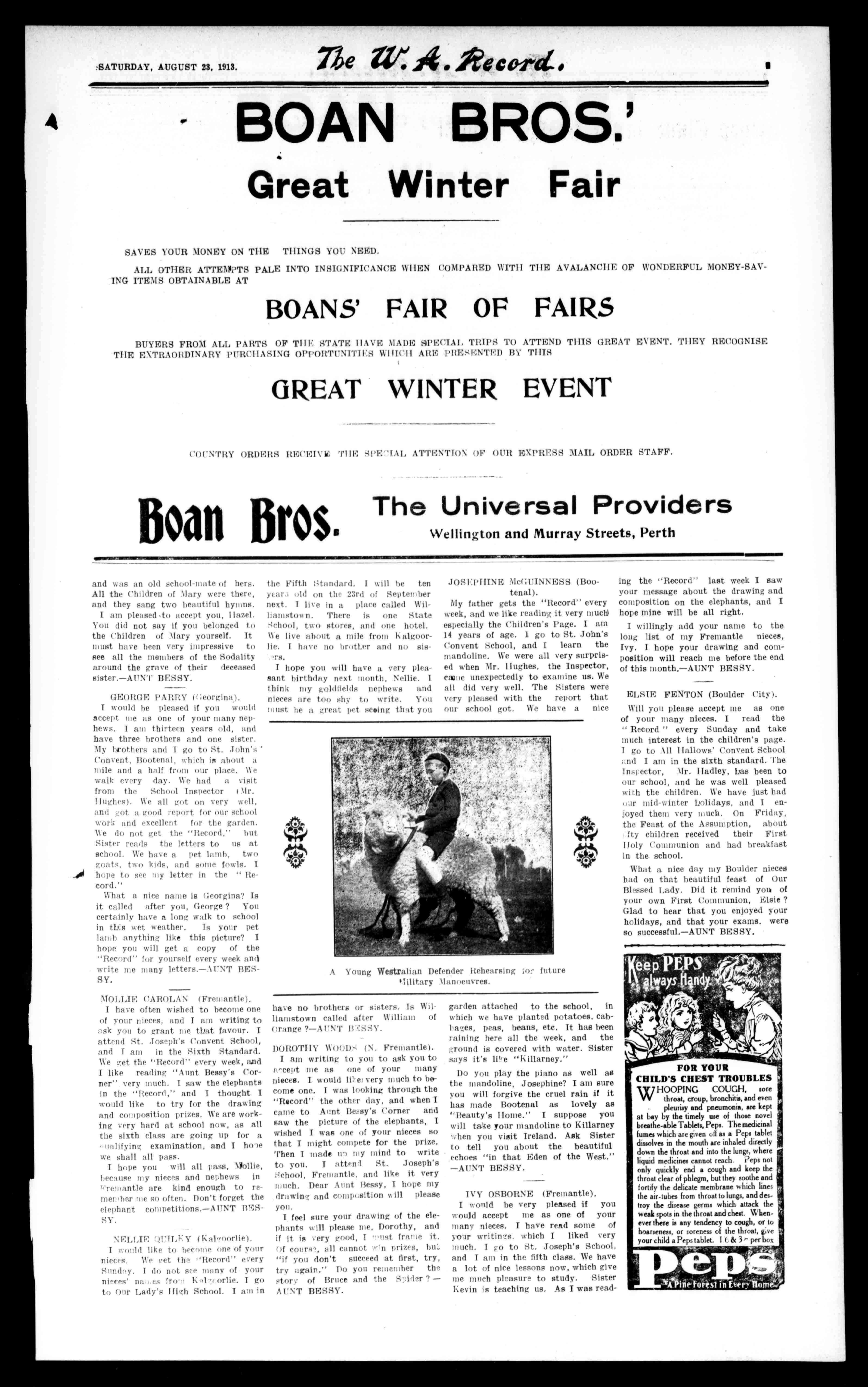
WhatanicenameisGeorgina?Is itcalledafteryon,George?You certainlyhavealongwalktoschool inHiswetweather.Isyourpet lambanythinglikethispicture?I hopeyouwillgetacopyofthe "Record"foryourselfeveryweekand writememanyletters.-1I'NTBESSY.
NTOLLIE('AROLAN(Fremantle).
Ihaveofbenwishedtobecomeone ofyournieces,andIamwritingto askyoutograntmethatfavour.I attendSt..Joseph'sConventSchool, and TamintheSixthStandard. Wegetthe"Record"everyweek,cud Ilikereading"AuntBessy'sCorner"verymuch.Isawtheelephants inthe"Record,"andIthoughtI wouldliketotryforthedrawing andcompositionprizes.Weareworkingveryhardatschoolnow,asall thesixthclassaregoingupfora nualifyingexamination,andIhole weshallallpass. Ihopeyouwillallyam.Mollie, becausemyniecesandnephewsin vremantlearekindenoughtoremembermesooften.Don'tforgetthe elephantcompetitions.-AITNTTIMSSY.
NELLIE(.0-TT.KY(Kaleoorlie).
Iwouldliketobec,atieoneofyour nieces.Wegetthe"Record"every Sunday.Idonotseemanyofyour nieces'nai..esfro!., :,17(orlie.Igo toOurLady'sHighSchool.Iamin
theFifthStandard. Iwillheten you.;oldonthe23rdofSeptember next.iliveinaplacecalledWillianistoan.ThereisoneState School,twostores,andonehotel. WeliveaboutamilefromKalgoorlie.Ihavenobrotherandnosicjrs. Ihopeyouwillhaveaverypleasantbirthdaynexttttonth,Nellie.I thinkmygoldfieldsnephewsand niecesaretooshytowrite.You mustbeagreatpetseeingthltyou
JOSEPHINEMcGUINNESS(Bootenet).
Myfathergetsthe"Record"every week,andwelikereadingitveryinucit especiallytheChildren'sPage.Iam 14yearsofage.1gotoSt.John's ConventSchool,andI learnthe mandoline.WewereallverysurprisedwhenMr.Hughes,theInspector, cameunexpectedlytoexamineus.We alldidverywell.TheSisterswere verypleasedwiththereportthat ourschoolgot.Wehaveanice
ingthe"Record"lastweekIsaw yourmessageaboutthedrawingand compositionontheelephants,andI hopeminewillbeallright.
Iwillinglyaddyournametothe longlistofmyFremantlenieces, Ivy.Ihopeyourdrawingandcompositionwillreachmebeforetheend ofthismonth,-AUNTBESSY.
ELSIEFENTON(BoulderCity).
Willyoupleaseacceptmeasone ofyourmanynieces.Ireadthe "Record"everySundayandtake muchinterestinthechildren'spage. IgotoAllHallows'ConventSchool andIaminthesixthstandard.The Inspector,Mr.Hadley,basbeento ourschool,andhewaswellpleased withthechildren.Wehavejusthad oarmid-winterholidays,andIenjoyedthemverytouch.OnFriday, theFeastoftheAssumption,about ftychildrenreceivedtheirFirst HolyCommunionandhadbreakfast intheschool.
WhatanicedaylilyBouldernieces hadonthatbeautifulfeastofOur BlessedLady.Diditremindyouof yourownFirstCommunion,Elsie? Gladtohearthatyouenjoyedyour holidays,andthatyourexams.were sosuccessful.-AUNTBESSY.
AYoungWeStralianDefenderRehearsing;orfuture !IllitaryManoeuvres.
havenobrothersorsisters.IsWilliamstowncalledafterWilliamof orange?-AVNTBle.SSY.
DOROTHYWOODS(N.Fremantle).
Iamwritingtoyoutoaskyouto p."ceptmeasoneofyourmany nieces.Iwouldliherverymuchtobecomeone.Iwaslookingthroughthe "Record"theotherday,andwhenI cametoAuntBessy'sCornerand sawthepictureoftheelephants,I wishedIwasoneofyourniecesso thatImightcompetefortheprize. '('henImadennrilymindtowrite toyou.IattendSt.Joseph's School,Fremantle,andlikeitvery much.DearAuntBessy,Ihopemy drawingandcompositionaillplease you. Ifeelsureyourdrawingoftheelephantswillpleaseme,Dorothy,and ifitisverygood,1-matframeit. (ifcouriv,allcannot prizes,bus, "ifyoudon'tsucceedatfirst,try, tryagain."Doyourememberthe storyofBruceandtheS;:ider?AUNTBESSY.
gardenattachedtotheschool,in whichwehaveplantedpotatoes,cabImges,peas,beans,etc.Ithasbeen rainingherealltheweek,andthe groundiscoveredwithwater.Sister saysit'sli!'e"Killarney."
Doyouplaythepianoaswellas themandoline,Josephine?Iamsure youwillforgivethecruelrainifit hasmadeBootenalaslovelyas "Beauty'sHome."Isupposeyou willtakeyourmandolinetoKillarney whenyouvisitIreland.AskSister totellyouaboutthebeautiful echoes"inthatEdenoftheWest." -AUNTBESSY.
IVYOSBORNE(Fremantle). Iwouldheverypleasedifyou wouldacceptmeasoneofyour manynieces.Ihavereadsomeof yourwritinvi.whichIlikedvery much.IgotoSt..Joseph'sSchool, andIaminthefifthclass.Wehave alotofnicelessonsnow,whichgive memuchpleasuretostudy.Sister Kevinisteachingus.AsIwasread-
-SATURDAY,AUGUST23,1918. ne ii'ecord I 4 BOANBROS.'
SAVESYOURMONEYONTHETHINGSYOUNEED. ALLOTHERATTEMPTSPALEINTOINSIGNIFICANCEWHENCOMPAREDWITHTHEAVALANCHEOFWONDERFULMONEY-SAVINGITEMSOBTAINABLEAT BOANS'FAIROFFAIRS BUYERSFROMALLPARTSOFTHI.:STATEHAVENIADESPECIALTRIPSToATTENDTHISGREATEVENT.THEYRECOGNISE THEEXTRAORDINARYPURCHASINGOPPORTITNITICSWHICHAREPPP,sENTEDRVTUTS GREATWINTEREVENT COUNTRYORDERSRECEIVETHESPE"IALATTENTIONOFOUREXPRESSMAILORDERSTAFF.
GreatWinterFair
WellingtonandMurrayStreets,Perth
see
FORYOUR CHILD'SCHESTTROUBLES WHOOPINGCOUGH, sore throat,croup,bronchitis,andeven pleurisyandpneumonia,arekept atbaybythetimelyuseofthosenovel breathe-ableTablets,Peps.Themedicinal fumeswhicharegiven asaPepstablet dissolvesinthemouthareinhaleddirectly downthethroatandintothelungs,where liquidmedicinescannotreach t'epsnot onlyquicklyendacoughandkeepthe throatclearofphlegm,buttheysootheand fortifythedelicatemembranewhichlines theair-tubesfromthroattolungs,anddestroythediseasegermswhichattackthe weakspotsinthethroatandchest.Wheneverthereisanytendencytocough,orto hoarseness,orsorenessofthethroat,g.ve yourchildaPepstablet. &3'perbox
eepps'p
ThetV:A.ifecordi
BishopClimeintheOrangeCapital
FeastoftheMostHolyRedeemer
Sunday,July20,theFeastofthe Redeemer,wasobservedwithspecial solemnitybytheCommunityofRedemptoristsat('lonard,Belfast.At theearlyMassesinthemorningextremelylargenumbersapproached theAltarandreceivedthe BlessedEucharist.HighMass (('oramPontifice)wascelebratedat 12o'clock,thebeautifulchurchbeing crowdedineverypartbyadevout. congregation.Thealtarwastastefullydecoratedwithflowers.The YostRev.Dr.('lone,BishopofPerth WesternAustralia,presidedo,;:i6ie sacredceremonies.Thecelebrantwas theRev.J.Curran; deacon,Rev. FatherAugustine;sub-deacon,Rev. FatherO'Twoineymasterofceremonies,Rev.FatherKelly.Theassistantpriestatthethronewasthe Rev.FatherLaverty,thedeaconsat thethronebeingRev.FatherIlegartyandRev.FatherMagner.Avery elo.iuentandimpressivesermonwas preachedbytheRector,VeryRev. FatherTurner,whotookhistext fromtheApocalypseofSt.John,ci. v.5-6:-"ButJesusChrist,the PrinceoftheKingsoftheEarth, bathlovedus,andwashedusinHis Blood,andmadeforusaKingdom withHisGodandHisFather,to Whombeempireandgloryforever."
Thesermonwasdeliveredfromthe newpulpit,thegiftoftheMisses Hamill,TrenchHouse,whichwasunveiledandusedforthefirst time.Itisanexquisitework ofart,andindesignisquiteinharmonywiththeinteriorofthesacred editce.
HisLordshh;BishoaCluncaalsoaddressedthecongregation.Ilesaid thatwasanoccasiononwhichit 'couldhardlyberightforhimmerelytopresideatthatmagnificent functionatwhichtheyhadassisted. Ilefelt1.eoughtnottoIctth,occasionpasswiehoi.'., igafewremarks,andfirstofallhashouldlike togiveexpressiontoasen'eofthe sorrowthlt,hewassure,filledthe heartsofallofthemonaccountof thecausethroughwhichtheirgood Bishopwasabsentfromthatruneton.Ileneedhardlyas'ithemto continuetheirferventprayersthatin theverynearfuturehemightherest,,redtoerfecthealthtocontinue forGodandforsoulsthatglorious workwhichbadmarkedhisEpiscopateevenduringitsshortspan.In thesecondplaceheneedhardlyremindthemthatthat,fromaRedeniptoristpointofview,wasafamilygathering.Itwasafamilyfeast. TheirOrderwentbythenameof Redemptoriststheybelongedtothe OrderoftheMostholyRedeemer. AnIhenceitwasfittingatthat faintlyfeastthathe.fromafar, shouldstrivetoLepresentwithhis brethreninBelfasttocelebratettn Feastwith ALLTIIEPOMP,SPLENDOURAND SOLEMNITY
httheyandtheRedemptorists couldcommand.Ilehadhadtheprivilegeofthingundersomeofthose sittingintheSanctuary.Onewashis Rectorformanyyears; another washisconfrereonmissions.Ile caneLae(alsotomeetthosewho werehisfellownovices,nowinpositionsoftrustandresponsibility. Anditwasatimeofgreatjoyand ofgreatgladnessforhimtocome thereto(lonardtowitn!sswhat hesawthatmorning-thefruitsofthe laboursoftheRedemptoristsintheir midstandthefruitsoftheirown practicalwarmfaith,sadoftheir warmpiety.Ilewaspleasedalsoto seethenewchurchthathehadnever laideyesonbefore.For,although hehadwcrkedinIrelandforsome yearsasamissionary,hewasnever attachedtotheHouseat('lonard. HethoughtheonlycamethereMee onamessingvisit,andtheonlymissionthathegaveinBelfastwasin St.Malechy'smanyyearsago.For allthesereasonsitwasapeculiar pleasuretohetherethatdaytorreside,intheabsenceoftheirBishop, andtoavailhimselfoftheopportunityofcongratulatingtheFathers onthemagnificentresultsoftheir
laboursthereinBelfast;tocongratulatethemandthecongregation onthatbeautifulchurch,which wouldbeaneverlastingmonument totheworkoftheRedemptorists amongthepeopleofBelfast,andof thegenerosityandfaithofthepeople.OnTuesdayeveninghe wouldhavetheopportunityofspeakingtothemembersoftheIlolyFamily.Whenhehadtheprivilegeof anaudiencewiththeHolyFather thePorehetoldHisHolinessamongotherthingsthatthemembers oftheHolyFamilyofClonardand Limerickhadbeenofferingupferventprayersforhisrecovery.The lolyFatherseemedverypleased thathewasrememberedinHolyIreland,andasamarkofhisgraciouscondescension,andofhisrecognitionofthehelpthattheprayer ofthepeoplegavehim,i.eauthorisedhim(theBishop)whenhewentto BelfastandLimericktogive
THEAPOSTOLICBLESSING attachedtowhichwasaPlenaryIndulgencetothemembersofthe Family,whcihhewouldhavethe pleasureofconveyingonTuesday night.Ileworethatdayalmostfor thefirstpublicfunctionthebeautiful pectoralcrosswhichIlls Iloliness gavehimafewweeksago.Ilehad seenthatmorningaveryremarkable exhibitionofFaith-thewholechurch fullcomingtothealtarrails.That wasanexhibitionofFaithwhichone doesnotseeeveryahere.Onehadto cometoBelfasttoseethatmarvellousintensityofburningFaithhat characterisedthepeoplethere.Let themrememberthatFaithwas God'shestgiftthatitwasofmore valuethananythingelsetheycould haveorhold,morevaluablethenthe possessionofbroadacres,morevaluablethanevenlifeitself.Andthere werethousandsinthehistoryof God'sChurchwhohadgivenevenlife ratherthanpartwiththisgift.This gifttheybad,and,hewassure,they wouldhold.Itwasthatwonderful exhibitionthatdaywhichthrilledhis heartcomingfromafar-offland; andthatwasanillustrationofa practicalnatureofthewarmthand intensityoftheFaiththatburnedin theirCatholicheartsandsouls.In conclusionhisLordshipsaidMay thatFaithofyearsintensifyandincreaseasyearsgoby.Mayyouall clingtoituntildeath.Mayyoulive accordingtoitsteaching.This,dear brethren,istheprayerandtheblessingthatIwishyouall.IamsureI needhardlysaythatwhileIamin BelfastIwillrememberyouinthe HolyMass,andIanisureyouwill alsorememberthewantsofthepoor BushBishon,whoisdoinguphill workto-dayamongyourkith.and yourkindred.-"BelfastNews."
OurSocieties
PERTHC.Y.M.S.
Theusualweeklymeetingtook placeintheroomsoverthe"Record" officeon\londayevening,whenMr. Woolcottpresidedoverarecordattendanceofmembers.TheSpiritual Director(Rev.Fr.Carroll)wasalso present.Threegentlemenwerenominatedformembership,andone waselectedamemberoftheSociety. Thesociety'sharriersaregoing aheadwiththeirtraining,andare leavingnostoneunturnedtogivea goodaccountofthemselvesinthe10mileraceoneighthoursday.The secretaryofthecricketclubhascalledameetingforSundaynextinthe clubroomsat 3 andallthe membersofthesocietyinterestedare cordiallyinvitedtoattend.ThespecialbusinessfornextMondayeveningistoheasmokesocial,andthe membersofthesocietyareurgedto attendandmaceitasuccess.Any gentlemanwhodesirestobecomea memberofthesocietyhasonlyto attendonany\londayevening,and theMarden(Mr.(Geo.Brown)willbe onlytoo;leasedtohavehimnominated,andwilldoallinhispower tomakehimfeelathome.
ST.BRIGID'S(WOMEN'S)BRANCH II.A.C.B.S.,PERTH.
Thequarterlymeetingwasheldon the14thAugust,andtherewasa goodattendanceofmembers.Sr. O'Keeffehadthepleasureofinitiatingateneftmember.Sr.Leonard, ofNortham,whoisonavisitto Perth,waswarmlywelcomedtothe meeting,andexpressedherpleasure atbeingpresent.Themembersare deli.htedatthehonourconferreduponourVicar-Generallit.Rev.MonsignorVerling)byHisholinessPope PiusX.,andthesecretarywasinstructedtoconveytohimtheheartiestcongratulationsoftheBranch. GoodprogresswasreportedinconnectionwiththeHibernianStallat theforthcominglawmanSr.Coffey hadwrittentothesecretariesofthe othermetropolitanBranches,and verysatisfactoryreplieshadbeenreceivedfrommostofthem.AEuchre PartyandDanceinconnectionwith sameistobeheldintheHibernian Hallon16thSeptember.Goodprizes arepromised,and,asusual,themusicandrefreshmentswillbeofthe verybest.TheBranchnowpossesses afullsetofcrockery,glassware,etc., forsocials,andthemembersintend tomakethemeetingsmuchmoreenjoyableandattractivethantheyhave beeninthepast.Itispleasingto notethatthemembersofSt.Patrick'sBrancharealwaysreadyand willingtoassisttheLadies'Branch inanymovementthattendstopromotetheinterestsofthesociety.
TheDistrictSecretary,Bro.A.E. Farmer,has,onbehalfoftheDistrictOfficersandtiemetulhersofthe
Societygenerally,sentaletterof congratulationtoMr.R.D.Lane,of Boulder,whowasrecentlyadmitted totheBar,andwhohasalwaysbeen averyenthusiasticandprominent memberoftheSociety.
AtthelastfleetingoftheSt.Patrick'sBranch,Perth,itwasdecided tomakeadonationof£2towards thefundsoftheHibernianStallat theapproachingBazaarinaidofthe OrphanageandSt.Patrick'sSchool.
TheSt.Patrick'sBranch,Perth, havepresentedtheJuvenileBranch withasetofboxinggloves.Thejuvenilesaredelightedwiththegift, andspeakinglowingtermsofthe generosityoftheadultBranchsince theformationoftheJuvenileBranch.
FactsWorthKnowing aboutSmallpox ANDWITHWHICHTILEMEDICAL FACULTYEsiTIRELYCOINCIDES.
Itisawell-knownandmedicallyacknowledgedh.ctthatduringperiodsin which,epidemicsli,ethatwhichis nowmakingwaragainstthepopulationofSydneyandsuburbs,itisalwaysthe'monwhoisinaweak stateofhealth,anaemic,weakin nervousforce,whosebloodisinpoor condition,andareadybreedinggroundforthegermsofcontagious disease,whofirstfallsareadilyinfectedvictim.-themaninrobust health,whosepurebloodandperfect nervef8rceisinitselfthesystem's safeguardagainstinfection,ismore immunefromtheravagesofsmallpoxthanthemanweakandpoorin Health.Thus,thosepeoplewhohave madeitahealthcustomtotake e'lement'sTonicwillfindnotonly willtheybelesslikelytocontagion, buttheywillalsoprovethatthroughthebloodbeingrichandpure vaccinationwillhavehutfewterrors forthem.
ResidentsofSydneyandsuburbs especiallyshouldnotbewithoutthis splendidnerveandbloodpurifying medicine,becauseitshealth-creating andcurativepropertiesarehousehold factsthroughoutAustralia.Ithas donemoreduringtielastquarterof acenturyinbuildingupfinemanly constitutions,asnumberlesstestimoniesprove,thananyotherspecific known.ItistheonegreatAustralianmedicine,uponwhichthepublic a''Mutelyrelies,andwhichhasstood thetestofpublicuseandcriticism. Thereisnofinerormorelargely acceptedmedicineforkeepingthe bloodpureorthesystemhealthy thanClementsTonic.Getitto-day. AllChemists.andStoressellitthroughouttheAustralianCommonwealth.
Stillgoing.15,q61emigrantshave gonefromIrelandtootherlandsduringthefirstfiveti,onthsofthisyear. Comparedwiththecorrespondingperiodoflastyearthenumbersshow anincreaseof1891.
r le
SATURDAY,AUGUST23,1913.
BuyDirectfromFactoryandSave Middleman'sProfit. ARUNDEL'S Saddle.Harness,&CollarFactory 179Murray-st.,opp.BoanBros. SALEPRICESFOR14DAYSONLY RidingSaddles DoubleReinBridles BuggyHarness(CollarandHames) BuggyHarness(BreastCollar) CabHarnessI',Traces 25s 7s6d 55s 47s6d 90s SecondhandHarness.DollarsandSaddlesonHand
 Al Mavinnds
Amostenjoyableandsuccessful Children'sBallwasheldatSt.Luke's HallonSaturdayevening,thebuildingbeingmuchtoosmallforthe largenumberpresent.Therewere eightjuvenileandtwoadultsets, andthecostumesreflectedereatcreditontheartistictastesoftheorganisers.Mr.FrancMcDonaldwas Al.c.Themusicwassuppliedby !leaf'sBand,andconsideringthat thecrowdinattendancewasfarin excessofanticipations,thecatering wasassatisfactoryaspossibleunderthecircumstances.Mrs.Gaynor, Mrs.Dr.O'Connor,andMrs.W. Dwyerfoundthetaskofjudging fairlydifficult,butawardedtheguineaprizeforthemostoriginalset to"THESQUAWS,"organisedby MissE.McDonald,andconsitingof MissesA.McDonald,I.Casey,M. Franklin,E.Whelan,andMastersE. McDonald,P,Whelan,M.Ryanand B.Moschetti,wholookedpicturesque intheirIndiancostumes.
TIIEFIVEO'CLOCKTEASET, organisedbyblissM.Eller,secured theprizeasthebestdancingset. MasterG.FlynnandMissKathleen Symonswereawardedtheprizefor thebestdressedcouple,andreflected thebeautiesoftheEmeraldIslein theirHouleRulecostumes.
MissK.McEvoyas"Japanese," carriedofftheprizeforthemost originalcostume,andMasterC. Tubbsforthemostoriginalboyas "JohnBull."Thejudgesdonateda specialprizetoMrs. McEvoy's "GRANDMAANDGRANDPASET," consistingofMissesWeaver,Buekenare,Millard,Carr,andMastersWeaver,MillardandDalton.
"THEBUTTERFLYSET,"organisedbyMrs.If.J.Collins,included MissesM.Collins,V.Woods,J.McEvoy,R.Edwards,MastersB.Dalton,W.Woods,C.andE.Collins.
"TIIESLIMMERSET,"organised byMrs.P.A.Bryan,includedMastersG.Ziegler,A.Pretty,A.Ellard, M.cooper,MissesE.Parry,N.and A.Ziegler, "TIIFREDBIDING1100DSET," organisedbyAssN.heheny,includedMissesD.Clarke,N.Lainb,F. andE.Guilfoyle,MastersE.Elliott, P.andB.Ryan,andA.Parry. MissK.Gordonhadchargeofthe "ARRAII-NA-POGUESET,"includingMissesI.Gordon,L.Gordon,W. Lamb,M.KelleherMastersV.Roes, G.Lamb,E.McDonald,andE.Lawford.
%fief;Gordonalsoorganisedthe "QUAKERSET"(adult),including MissesL.Lindsay,0.Bremner,A. llogae,T.Gordon,E.Boothhy,F.. McDonald, Mallon,andMessrs..1. _AndL.Gordon.A.Bremner,('.Kirkbride,B.Boothby,J.Craig,II.Newman,andF.Gugeri.
"THESCOUTSSET,"organised byMist;M.Guilfoyle,includedMissesD.Guilfoyle,G.Winibridge,M. Chishdm,N.Lebeny,MastersD.Coney,c..lost,L.Mc('aullay,andF. Guilfoyle.
TheGuildford-MidlandSetof SPANISIIDANCERS(adult),includedMissesL.andE.Day,F.Barker, Camibell,S.O'GradyandG.Watts, andMessrs.J.Moran,S.Watts,W. Laidlaw,ii.Evett,T.RossandC. Deane.
Othersinfancycostumeincluded R.IcGuigan,"Maylands;"M.Baker, "Rorer;"E.SmithandJ.!leap, "Will-o'-the-Wisp;"II.('olbourne, "LordRoberts;"E.('olbourne,"Soldier;"A.Douglas,"CauseofMany Troubles;"L.Osborn,"DollyVarden;"L.Smith,"PoppySeedGirl;" A.Ait"en."EasternLady:"C.MarshallandL.Jost,"SpanishDancers:"D.('olbourne,"Gipsy;"A. Smith,"TambourineGirl:"M.Pengel."Moonbeatii."
TheBazaarandBallCommittees workedveryhardtomaketheBall asuccess,andinconsequenceofthe largeamountofsupportassured, havedecidedtorepeattheBallin theIlibernianhall,Perth,afterthe Bazaar.AttheinvitationofFr. Lynch,Mr.W.Dwyer,M.L.A.,distributedtheprizes,complimentedthe organisersandallthosewhotook partonthebrilliantsuccessofthe fimelion,andmadeaneloquentappealtoalltoattendtheopeningof
theBazaarinMaylandsonnextSaturdayevening(Aug.30).
Goianallind
AmeetingofUseChurchCommitteeweeheldhereonSunday,the 17th,aftertheeleveno'clockMass. Therewasagoodattendance,Mr.J. McAuliffeoccupiedthechairandeon ductedtheaffairsofthemeetingin hisusualbusinesslikemanner.Resides theordinarycommittee-menpresent, therewerealsoinattendanceseveralothergentlemen,takinga praiseworthyinterestinendeavouringtofurthertheworthyobjectof buildingaConventandBoarding SchoolinGoonialling.Thisisanenterprisethatwasfirstmootedabout twelvemonthsago.Sincethenits accomplishmenthasbeendelayed somewhatbyaseriesofunfavourablecircumstances.Neverthelessit hascontinuedtomakesteadyprogress,andafewweeksagotenders wereinvitedforthework.Eight tenderswerereceived.Theobjectof thepresentmeetingwastochoose onefromamongstthese.OnthenotionofMr.J.Williams,secondedby Mr.II.Eatonandcarriedunanimously,thelowest,thatofMrCoombe ofPerth,for£2,160,wasaccepted. Intheordinarycourseofevents,the Conventshouldnowbeanestablishedfactbeforetheendofthepresent year.Whataboontothetownand districtsuchaninstitutioninour midstwillhe,thoseparentscanbest realisewhonowhavetosendtheir ehildrento'Perth,orsomedistance elsewhere,inordertoprocurefor themtheChristiantrainingandeducationwhiehsomehowonlythenuns sanimpart,andnonebetterthanthe SistersoftheOrder(Presentation), weareprivilegedtohaveamongst us.Thisisevidentfromtheproems/thechildrenhavemadeduring thecomparativelyshorttintsthey havebeenundertheSisters'charge, aprogressthatundoubtedlywillbe evenmoresatisfactorywhenworkis carriedonundertheimprovedconditionsthenewbuildingwillafford.
SomeofourCatholicsshowan admirableenthusiasminpromoting andhelpingonthisnoldework.Some others,however,willneedtobestir themselves.Wearenotnumerically verystrongyet,andthehadoldcustom,soprevalentinmanyplaces, ofleavingeverythingtothefew, willneverdohere.Weneednotonlythecordialapproval,butmuch more,thesubstantialsupportofeverycatholicinthedistrict.Wealreadyhavethehornier,andwetrust thatitisapledgethatthelatteralso willheforthcomingwhenre1uired.
Theladiesaredeterminedtoshow thattheyarenotgoingtoheoutdonebytheBieninthismatter.They havealreadyonhandanotherEuchre PartyandDance,tobeheldonWednesday,27th.Thepersonnelofthe committee,whichincludesMrs.and MissMcAuliffe,Mrs.O'Connor(ban. sec.),Mrs.A.Lockeyer,MissRamplin,MissO'Brien,andothers,isa sufficientguaranteeforitssuccess.
NottobebeatenbytheirGoomailingfriends,theCatholicsofDowerinhaveresolvedtotakeonhand theraisingoffundsforthepurpose ofbuildingachurchinthattown.A strongcommitteehasbeenformed, andaballistobeheldinthe DowerinHallonSeptember4th,Mr. E.Fox,theenergeticsecretary,is provinghimselftherightmaninthe rightplace,andwiththeassistance oftheothermembersofthecommittee,isdeterminedtoleaveno stoneunturnedtomakethefunction agrandsuccess.
Inoticedalsoinlastweek's"Gazette"thatablockoflandhasbeen setapartat,WonganIIillsfortheuse ofCatholicChurchpurposes.With theassistanceofthemenemployed ontherailwayworkstheretheCatholicfarmersandbusinesspeoplein thatdistrictshouldnotfinditvery difficultmattertoprovidethemselves withalittleChurchinasL'orttime.
canbestdescribetheweather thathasprevailedhereduringthese lasttwomonthsasidealfarmer's weithsr.Scarcelyaweekpasses withoutagooddownpourofrain, andsometimesitrainsforseveral days.Theresultisplainlyvisible,
notonlyinthesmilingcrops,butalsointhefarmers'smilingfaces;aye, eveninthematrimonialworld, whieh,dormantforalongtimepast, onaccount,Isuppose,ofthebad seasons,begins,withtheincreasing prospectsofagoodharvest,tobestiritselfeversolittle.Rumour bathitthatafarmeratUcartyand anotheratBadgerin,have,aftermetersconsideration,cometotheconclusionthatitisreallynotgoodfor amantobealone,and,withthe consentoftwootherinterestedparties,oneatGoomallingandoneat Dowerin,intendshortlytotrywhethermatrimonywillnotdissipate theirloneliness.Itistobehoped thatsomeoftheotheryoungpeople intheparishwillfollowthegoodexamplethussetthem.
Children'sEallatWestEnder/ilk
AChildren'sPlainandFancyDress Ball,organisedbyMrs.PaulBarrett inaidoftheRefreshmentStallat theforthcomingSuhiacoBazaar,was heldintheMasonicHall,WestLeederville,onTuesdayeveninglast. Thehallwascrowdedwithchildren, parents,andfriends,whocamefrom allthesurroundingsuburbs.'Hie generalopinionwasthattheBall wasthemostsuccessfulevergeldin WestLeederville.Over200children, nearlyallinfancydress,tookpart intheGrandMarchledbyMiss Whelan-Taylor.Thescenewasaparticularlygorgeousone,thearmyof RedIndians,Fairies,.Jockeys,Nurses,Cupids,Soldiers,Butterees,etc., makingabrilliantarrayofcolours. Severalprizesweregiven,thejudges beingMrs.T.G.Molloy,Mrs.Walter Dwyer,andMrs.R.Connell.They awardedtheprizeforthebestFancy SettothePowderandPuffSet,arrangedbyMissPeters.MissBessie McCannobtainedtheprizeforthe mostoriginalgirl'scostume-"Mother'sStockingBag"-whichwasvery cleverlydesigned.Forthemostoriginalboy'scostume,littleCharlie Tubbswasawardedtheprize.His impersonationof".JohnBull"securedforhimmuchadmiration.Aspecialprizeforthemostpopularcharacterintheroom,tobedecidedby thevotesoftheaudience,wasthe causeofmuchexcitement.Eachadult badonevote,andMessrs.Kennedy andMcCarthywere"PollingClerks." At0.30theiPtyor,Mr.P.Barrett, as"ReturningOfficer,"announced thatMissEileenPorterwasatthe headofthe"Poll."Thislittledot wasdressedasaNursingSisterof St.JohnofGodHospital,andthere wascertainlynodoubtastoher popularity.Whensupperwasannouncedtheenergeticcommitteewere keptbusyinattendingtothewants ofthemanyrelaysofchildrenand adults.Mrs.O'KeefeandMissN. Joneskindlysuppliedthemusicfor theevening,andMr.'McVeighwasan efficientM.C.Mrs.Barrettandher committeearetobecongratulated ontheverysuccessfulresultsofthe Ball.
todfav
AverysuccessfulEuchrePartyand DanceinaidoftheCatholicChurch washeldintheTownHallonlast Wednesdaynight.TL'isyearhasbeen arecordoneinToodyayinthenumberofentertainmentsheld,butlately,owingdoubtlesstotheentailpopulation,theeventsrecentlywerethe reverseofafinancialsuccess.Cathol'mhavegenerallyawell-deserved reputationforgoodorganisationand unselfishenergyformakingtheir eventssuccessful.Andthisevent provednoexception.TheCatholic ladieseorl-edhard'ndsucceededin makingtheirentertainmenthighly successfulineverysense.Theprizes, whichwerekindlydonated,wereindeedvaluable,andnodoubtthisin itselfmustalwaysmakeanyenter tainmentattractive. Thereiseveryprospectthisyearof abountifulharvest.Thoughthefarmersareproverbiallyhardtoplease inweatherconditions,noonecanbe anythingbutsanguine.Providedsufficientraincomesduringthenext fourweekstokeepthegroundconvenientlymoistforthecrops,the mostpessimisticcanonlyhopefor anabundantharvest.
T.P.HERBERT
FAMILYGROCERANDpRovisaaa MERCHANT.
393RokebvRd.,SUBIA00. (NearNicholsonRoad).
floodscarefullybasked. amines waftedondaily.Country°reels attendedto.
Irishnationalforesters.
ASocietyforIrishmen.
Noinitiationfee.Cheapestoontributioae elsAiscess;HughO'Neill.Pertti,every alternateThursday,TradesHail.Beaufort Street.BrianBoruBranch,Fremaade, everyalternateTuesday,FriendlySocietiesHall,HighStreet,Secretary'sAddress,WKeating,23Burttitrest.Fremantle.CharlesStuartParnell.Boulder, Secretary'sAdorses, (newlyStreet, Boulder.JohnDilion,MidlandJunction, J,Heagney,MontrealRoad. MoneytoLendonapplicationtotheSociety'sSolipitors,Messrs.J.and13,Max. well,BarwickStreet,Perth,(JrtheGem* 8eeretacy,careofJ.J.tinigg,Barra**.
'PhoneNo.3319. TTAYLOR
515BEAUFORTSTREET,HIGHGATEHILL, ELECTRICALAND:MECHANICAL ENGINEER.
RepairsatModerateCharges.
EstimatesGivenforElectricLighting.
TRLEPHONS155i.
BROOKSANDBOWER 26IrwinStreet
jc?Ism)PTXII* e.owir.). VWIta ANAIMO* vronKints
WindmillssuppliedsalFired,0111 remisedIn,aTanksfromtooW 000Gallons.Repairswithsea* nessanddespateh.Hotand(Jobe WaterLaidon.
NoRDDIBUTSOPIIIE LLCM.
IMPERIALGERMANMAIL HOMEWARDPOUND.
Zieten,Sept.20. Goeben,Oct.11. Scharnhorgt,Nuv.8. AllTwinSwims
ReduceSaloonFarestoLoados;1stclass,Single,27110s Return, £107Is.2ndClaes,Single,£40;Return,£60.3rdClass,from.£15. EASTERNSTATES., GOEBEN,SEPTEMBER8. SCHARNHORST,OCT.6.
GeneralAgentsforW.A.:L.RATAZZI&Ce.,Fremantle, and49St.George'sTerrace,Perth. PHONE1520.
HESFORDBROS
WellingtonStreet,Perth (RIGHTOPPOSITERAILWAYSTA. TION).
HATTERS IKERCERS and OUTFITTERS
LeadinghouseinTown forMens'sGoods
OURRANGEOFHATS,SHIRTS, TIES,FANCYVESTS,SOMME CLOTHINGANDUNDERWEAR STANDALONE FORVALUE.
MoneysavedisMoney made
THENMAKEYOURPURCHASE AT
HESFORDBROS.
SA'PURDAY,
tv:A.Accord.
AEGINT13,1913. 'fie
TolessenDebtonSt,Brigid'sChurch,WestPerth nextChursday11101,28thAugust,1913
QUEEN'SHALL,WILLIAMSTREET SpeoialMusicalItems
HIGHGATEIIILLSOCIALCLUB. CinderellaDance Mci,E0D'SHALL,HIGHGATE, THURSDAY,AUG.28th.
Tickets-oLadies,1/.Gentlemen,1/6. E.J.A.HOGAN, lion.Sec.
CHILDRENANDADULTS'
PlainandFancyDressBall (InaidofRosalieStall), Willbeheldin KING'SHALL,SUBIACO, WEDNESDAY,AUGUST27.
missionforthebeginningofnext month,buttheRedemptoristFathers willbeunabletocomplywithhisrequestuntilOctober,asFathers O'DonnellandGroganareatpresent engagedingivingmissionsinthe GeraldtonDiocese,andFrs..Nolan andKellyleaveforBallaratinthe nearfuture.
FatherKellyconcludedaverysuccessfulweek'sRetreatfortheSacred heartSodality,Highgate,lastSundayevening.Fr.McDermottopened theRetreatatSt.Joseph'sConvent, Northam,lastSaturday,andFr. Treacyisatpresentconductingthe RetreatforthegirlsattheSubiaco Orphanage,
Hollis,wholooksaftertheyounger classes.
DEATH
ARDAGH,DANIEL.-Attheresid-
ofhisson(Eugene),Ballarat East,DanielArdagh,belovedhusbandofMargaretArdagh,fatherof Mrs.JohnShea,MissAnnie.Ardagh,Messrs.James,Thomas,and FrancisArdagh,ofBoulder,Daniel Ardagh,ofPerth,Mrs.George Smith,:MissBridgetandMr.EugeneArdagh,Ballarat.R.I.P.
Phone 1060 PetrA
PrizesforBestFancySetandMost OriginalBoyandGirl.Alsoa SpecialPrize. Dancing-Children,8to10.Adults, 10to12. Silvester'sBand. SingleTicket,1/6.DoubleTicket,2/6. Mrs.B.J.STUBBS, Hon.Sec.
INMF.HORIAM
Ofyourcharityprayfortherepose oftheSoulofEdwardMcCarthy, whodiedAugust21st,1911.Rest inPeace.-Insertedbyhisloving wifeanddaughters.
l*e4aCrrd Estalb8174ished
"Invainyouwillbuildchurches,givemissions,foundschools-all yourworks,allyoureffortswillbedestroyed-ifyouarenotableto wieldthedefensiveandoffensiveweaponofaloyalandsincereCatholic Press."-PopePiusX.
Office23MurrayStreet,Perth
SATURDAY,AUGUST23,1913.
tirmationonSunday,September14.
Awelcomevisitortothe"Record" officethisweekwasFatherJohnFahey,ofYarloop,whobroughtthe namesof40newsubscribersamong theparishionersofhisextensive South-WesternDistrict.Fr.Fahey recognisesthataCatholicpaperis animmensepowerforgoodinevery parish,anditistheambitionofthe directorsofthispapertoextendthe circulationtoeveryCatholichome. Duringsixmonthsofthepresent year,fromthe1stofFebruarytothe 1stofAugust,themagnificentsum of£2588s5dwasreceivedatthe Churchdoorsalone-exclusiveofthe amounts.receivedfromsubscribers whohavethe"Record"postedto theiraddress,andthereceiptsfrom nemagentaInthisamountisincludedthemoneyforwardedbyourgood friendFatherO'Malley,ofSouthern Cross.IntheDioceseofNewNorcia, towhichSouthernCrossbelongs, andalsointheDioceseofGeraldton, wearepleasedtosaythispaper hasaveryfaircirculation-consideringthatthenortherndiocesehasits 0,%nadmirablemonthlyproduction, "TheGeraldtonSower."Tothe priestsofthethreediocesesinWest Australia,whoareendeavouringto promotethecirculationofthe"Record"bothbywordandexample, wetenderourmostsincerethanks. Thecostofproducingthispapercostofliving-hasgoneup considerablyduringthepasttwelve month',and(incommonwithother metropolitanjournals)wearecited beforetheArbitrationCourt-aproceedingwhichmayaddfurthertothe (ostofprintingandpublishing.
Diocesannews.
TheRecord"willbepostedfree foroneyeartoanysubscriberinthe CommonwealthwhopayslOs6din advance.Ifbookedtherateis3s3d perquarter.
Lettershavebeenreceivedduring theweekbyMonsignorVerling,V.G., andMonsignorRobinson,fromBishopCluneconfirmingthe.newsof theirappointmentasDomesticPrelatestoOurHolyFatherthePope. Onpage10willhefoundafullreportofHisLordship'saddressat ClonardMonastery,Belfast,onthe FeastoftheMostholyRedeemer. Ourreaderswillnoticethatoneof theDeaconsattheThroneonthat occasionwastheveteranRedemptoristFatherJameslegarty,whospent someyearsattheNorthPerthMonastery,andwhoiswell-knownthroughoutAustralasiaasazealousand vigorousmissionary.FatherKiely, ofBoulder,wasMasterofCereinonies.
TheRt.Rev.MonsignorVerling, V.G.,leftbythegoldfieldsexpress onThursdayafternoon,andwill openthenewConventSchoolat Coolgardie to-morrow.Monsignor Robinson,ofKalgoorlie,willalsohe present.
TheMaylandsBazaarwillopenat theoldFireBrigadeHall,8thAvenue,nextSaturdayevening,30th inst.
TheRt.Rev.Dr.Torreswillvisit Southern('roesforthepurposeof administeringtheSacramentofCon-
OnthefollowingSundayIllsLordshipwillordainthreedeaconstothe OrderofPriesthoodatNewNorcia.
OntheFeastoftheAssumption, theSilverJubileeofSt.Brigid's SchoolswascelebratedbythechildrenofWesti'erthParish.Atthe7 o'clockMass115childrenmadetheir FirstholyCommunion.Itwasa grandandinspiringsighttoseethe littleonesattheAltarrails;scale ofthemwhohadrisenlongbefore dawn,bravedtheinclemencyofthe weather,fearingneitherwindnor rain.TheolderchildrenmadeaGeneralCommunion,andalargenumberofadultshelpedtomake15th August,1913,arecordCommunion dayinSt.Brigid'sChurch.Thechildrenweretreatedtoawellprepared breakfastdaintilylaidoutinthe largeschoolroombytheSistersof MercyofSt.Brigid'sConvent.
Atteno'clockHighMasswascelebratedbyRt.Rev.Mons.Bourke, withFr.BrennanasDeacon,Fr. I'helanasSub-deacon,andRt.Rev. Mons.Verling,V.G.,asMasterof Ceremonies.TheentireSanctuary wascoveredwithamagnificentcarpetgenerouslydonatedby11*s.MacMastersinhonouroftheChildren's CommunionandtheSilverJubilee.
OnSunday,17thinst.,40Children ofMarywereconsecratedmembersof thatexcellentSodality.Mons. Bourke,whoofficiated,wasassisted byFr.BrennanandFr.Phelan.
FatherGilroy,of('ollie,hasbeen onavisittothecityduringthe weektomakethefinalarrangements fortheopeningofhisnewConvent School.liehadhopedtoarrangea
Plansareincourseofpreparation forthenecessaryalterationstothe Ilay-streetWestChurch,recently purchasedfromthePresbyterians, andtheworkofrenovationwillcownienceassoonaspossible.Whencompletedthebuildingwillbefully e4uipped,andanornamenttothat partofthecity.
To-morrowafternoontheCathedral ParishionerswillcommencetheJubileeat3.30,whentwooftherequiredvisitswillbemade,followedby Benediction.
AboxhasbeenplacedintheCathedralforthealmswhichthe faithfulareboundtocontributeaccordingtotheirmeans.Thevisits willbecontinuedatthesamehour onthetwofollowingSundays.
Theattentionofourreadersis drawntotheadvertisementinthis issueinconnectionwiththeGrand PictureNighttobeheldatVie's. Pictures(Queen'sHall),onThursdaynightnext.Theprogrammefor theweekisofahighlyinteresting andentertainingnature,andasthe causeforwhichthepicturesarebeingshownonthatnightismost worthy,namely,toassistinthereductionoftheveryheavydebton thebeautifulchurchinWestPerth dedicatedtoIreland'sPatroness(9t. Brigid),itismostsincerelyhoped thatallwhocherishtheFaithof ourFatherswillmakeaveryspecial efforttoattendVic's.Pictureson thatnight,andthusbytheirpresence assistagoodcause,whileenjoying anexcellententertainment.
TheRev.D.Grogan,C.SS.R.,openedashortmissionatMullewalast Tuesdayevening.Amissionwillbe openedatSt.FrancisXavier'sProCathedral,Geraldton,to-morrow morning,andwillcontinueduringthe week,
TheRev.J.Roggero,ofGreenough,leftforasixmonths'holiday bytheniailboatlastMondayevening.FatherRugger()hasbeenorderedarestbyhismedicaladvisers, anditishopedthatthechangeto thegenialItalianclimateofhisnativePiedmontwillsoonrestorehim tohisformervigour.TheRev.M. Sheban,wholatelyarrivedfrom Adelaide,succeedsFr.Roggeroat Greenough. .
Thefirstoftheseriesofmissions nowbeingconductedintheDwellingupdistrictopenedonFridaynight atthenewStateMill.Fr.Nolan, C.SS.R.,andFr.Sheridanarrived bythemaid-daytrain,andgotto workatoncetofishoutandhunt uptheCatholicpeopleinthelocality,which,indeed,wasnosmalltask owingtothefactthatthepriestin chargeofthedistricthasnotbeen abletovisittheplacebutrarely. Notaithstandingthistheresponse wasgeneral,whole-heartedandenthusiastic;notonlythemembersof ourownChurchavailingthemselves oftheopportunityofhavingthe WordofGodexplainedinplainand simplelanguageandofapproaching theSacraments,butmanynon-Catholicsattendedthesermons,andindeedwithverysatisfactoryresults sincenolessthanthreearenowunderinstructions,andwillbereceived intotheChurchinduecourse-afact whichmustgivegreatpleasureto Fr.Nolanonhisfirsthushmission. Mr.andMrs.Gosgriffentertained Frs.NolanandSheridanduringthN.,, stay.Themissionclosedhereon Sundaynight,andonMondaymorningtheFathersleftforHolyoake, whereamissionwasopenedonMondayevening,andduringtheirstay thepriestsweretheguestsofMr. andMrs.Hetherington.
LocalandPersonal
TheRevs.FathersKellyandNolan, C.SS.R.,oftheRedemptoristMonastery,NorthPerth,havereceivednoticeoftheirtransfertoWendouree Monastery,Ballarat,andwillleave bytheOrvietoonTuesdayweek. BothFathersarrivedfromIreland threAmonthsago,andinthatshort tinehavehadexperiencesofmissionarylifebothonthegoldfields andinthetimberareas.
FatherJohnMoloneyhasbeenin townduringtheweekinconnection withthebuildingofthenewConventatWagin.Thecontracthas beenlet,andtheworkoferection willbeproceededwithimmediately underthesupervisionofMcNeece andSons,architects,ofFremantle. TheConvfntwillhecompletedbefore theendoftheyear.
OntheFeastoftheAssumptionfive littleboyshadtheprivilegeofreceivingFirstCommunionettheBOys' Orphanage,('lontarf,afteralong courseofinstructionsfromFather GeraldGriffin,theBrothersandMiss
TheQuestionBox,severalletters fromAuntBessy'sniecesandnephews,andmanyinterestingartigles havebeenunavoidablyheldoveron accountofthelatearrivalofparish news.
TheHon.J.D.Connolly,M.L.C., andhistwodaughters,Cassieand Vera,leftLondonlastmonthwith theCatholicpilgrimagetoLourdes. Afteramonth'ssojourninIreland, theyleaveforthehomewardjourney toWestAustraliabytheOtranto, whichreachesFremantleonOctober 14.
Mrs.Shine,oftheCatholicArtand BookDepot(cornerofPierandMurraystreets,Perth),hasopeneda newbranchofthebusinessat11 Adelaide-street,sixdoorsfromHighstreet,oppositeFremantleTown Hall,wherepatronscaninspecta imlendidassortmentofnewgoods. Mr.ShineisatpresentwithFather Nolan,('.SS.R.,onhisDwellingup anddistrictsmissionarytour.
111 The1t:A.Aecer4 SATURDAY,AlISYST23,1918.
Look!Vic'sPictures SPECIALNIGHT
UsualPrices. T.SLATTERY. 11011. F.Moilu t m, se.. BuyyourMusicalInstruments,Strings, Books,Music,Magazines,Papers,etc., fromALBERT&Soli,LTD.,BOON&MUSIC STORES,180MURRAYSTREET(near Bean's),PERTH.NoteAddles&Cats. loguesFree-askto-day.
WANES Buyour PoultryBookforAustraliaandbeicicle. pendentforLife,for1)3postfree.Only fromALBERT&80NLTD.,Books,Music, etc.,180MURRAYSTREET,PERM
STOPWORKINGFOR
ence
AmannamedThomasEvans,employedasalaboilee.rattheClontart Orphanagetiptoveryrecently,died rathersuddenlyatthePublicHospitalonTuesday.Ilewasanativeof CountyDublin,Ireland,andafaithfulCatholic.Althoughhisendwas unexpected,itishopedthathehas foundafavourablejudgment.May hissoulrestinpeace. -
Mr.FrankMahonyarrivedinMeekatharraearlylastweekfromThe Horseshoe,16milesfromPeakHill, with207ouncesofgold.Duringthe lasttwomonthshehasbeenworkingasaprospectingareaanold showknownastheBrilliant,andin thatperioddnlliedabout280oz.of gold.Mr.Mahonysecuredthissplendidreturnfromthreebucketsof dirtfoundintheoldworkingsofthe mine.Ilereturnstothe'horseshoe contideintoffurthersuccessinhis chaseaftertheelusiveweight.
Theannualeeaminationsininstrumentalandvocaltousle,heldinconnectionwithTrinityCollege,London,tookplaceatSt.Dominick's College,Donearra,onFriday,8th inst.,andeelsconductedbyDr.WilliamCresser.Thefollowingisthe listofsuccessfulcandidates:-PreparatoryGrade(Singing):-MissesGladysCarter,MaryIlealey,DcirisShepherd,MayRoseandGladysGill. JuniorGradeMissesDoreenFowler,andRubyDowden,pianoforte; MissLizzieParsons,singing.AdvanceSeniorGradeMissWinifred Thomas,pianoforte.
Spencer'sTh?atreRoyalis.packed everyeveningwithlargecrowds,who thoroughlyappreciatethephenomenalpicture,"QuoVadis,"onescene ofwhichisreproducedinthisweek's issue.Theproductionisatriumph ofpictorialart,whichbrinesvividly tomindthepersecutionsofthe ChristiansundertheRomanEmperor Nero.Thedetailsofthehookare faithfullypourtrayed,andtheeducetionelvalueoftheentertainmentcan hardlyheover-estimated.Inadditiontothismarvellousfilm,the "WeeklyGazette"isfullofinterest -'speciallythelayingofthefoundationstoneofthenewCommonwealthBuildinginLondon.George ReidandNewtonMooreareeasily discerflible.
AverysuccessfulSocialandDance tookplaceattheVaudevilleTheatre onWednesdayeveninginaidofMiss Mannix'sGuildfordStallattheforthcomingBazaar.Thepopularityof MissMannixasanenergeticworker foreverygoodcausewasevidenced bythelargeaudience,whichincludedvisitorsfromMidland.Interspersedwiththedancingweremusical itemsbyMissCorbett,Mr.J.Woodthorpeandotherartists.Mr.1.Limanwas'P.C.,andthemusicwas suppliedbyCogden'sBand.Avery pleasanteveningwasspent,andMiss Mannixthoroughlyappreciatesthe practicalsupportaccordedbyher manyfriends.Thebalance-sheetof therecentMidlandBallwillbesubmittedtoameetingto-morrowevening.
AverysuccessfulPlainandFancy DressBall(childrenandadults)was heldrecentlyatMeheod'sHall,Mt. Lawleyinaidofthefundsofthe forthcomingHighgateBazaar.The functionwaswellorganisedbythe headsofthevariousstalls,Mesdames, o'Loughlin,TroyandBogue,the ChildrenofMary,MissesConnaughtonandFox,whoalsosuppliedthe refreshments.MasterTubbsas.John Bullwonthefirstprizeforthehestdressedboy,and"Butterfly"the best-dressedgirl.The"blackpair" gottheprizeforthemostoriginal costumes.OnThursdayeveninga movingpictureentertainmentwas heldattheParish!fail,laroldstreet,whenasplendidprogramme wassubmitted,andsongsillustratingthepicturesweresung.Afull reportwillappearnextissue.
DuringtheweekMissClaraCunningham,ofChidlow'sWell,passed awayafteraratherlongillnessin fact,(luringthe17yearsofhermortalcareerinthisvale(S'.tears,she couldneverboastofamomentof
robusthealth.Deathinthecaseof theyoungappearstoleaveagap itisimpossibletofill.MissCunninghamwastheeldestdaughterof alargefamily,andthisnodoubt makesdeath'lorebittertoherlovingparents,MsandMrs.Patrick Cunningham.Butasshebadbeen everaveryexemplarylittleCatholic andalwaysgavethehighestsatisrationintheChristianDoctrineClass wemaybesureshehasmeretygose tothe"BetterLand"wherethereis neithersinnorsorrow.Thefuneral, whichtookplaceatGuildfordcemeteryonThursdayafternoon,was verylargelyattended,theRev.P.P. Finneganofficiating.
.16
ThequarterlymeetingoftheFremantleJuvenileBranchoftheILA. C.B.S.washeldattheParochial hailonMonday,August11th.The President,Bro.Brady,presided.All officerswerepresent,alsoSupt.Bro. MeAloon,andPresidentandSecretaryoftheAdultBranch,Bros.Ken-
(Bro.P.O'Connor),wboisconfined ohisroomwithasomewhatsevere attackofillness.ThePresident(Bro. GeorgeHawaiian)cordiallywelcomedtheNationalPresident,Bro.M. o'Dea,theNationalTreasurer(Bro. J.S.Dowling),whowasDistrict PresidentwhentheBranchwasform edthreeyearsago,andtheDistrict Secretary,Bro.A.E.Farmer. AhandsomelyframedPalePresident'sCertificatewaspresentedto Bro.P.A.BryanbytheNational President,whoreferredinverycolt. plinientarytermstotherecipient's deceasedfather,whomhehadknown inPerthforsomanyyears.liehop edthePastPresidentandhiswife wouldfindanhonouredplacefurit inhienewhome,andthatitwould stimulatebothofthemtocontinue theirgoodworkonbehalfofthe society.
Bro.Bryansuitablyresponded,and thankedthemembersoftheBranch fortheirveryartisticmemento, whichhewouldalwayscherish.
Dr.Henchley(lateoftheChelsea HospitalforWomenandtheRoyal WestminsterOpthalmicHospital), hascommencedpracticeatSouth BritishChambers,Barrack-street, Perth,wherehemaybeconsulted from10to12inthemorningand from2to4intheafternoon,andOn MondayandWednesday7to8p.m.
Goldfieldsitems
LastyearMr.PaddyWhelan, ofKalgoorlie,receivedfromMies RoseSmith,daughterofthelate CaptainSmith,of Kilrush,Co. Clare,averyhandsomepresentin theshapeofasodofrealIrishturf ononesideofwhichisapainting oftheTreatyStoneofLimerick.Mr. Whelan,withcharacteristicgenerosity,hasdonatedthisvaluablecurio asaprizefortheArtUnioninaid ofSt.Mary'sChurchandC.B.CollegeAllNations'Fair,whichisto openintheKalgoorlieTownHallon October16.Wehopetheenterprise ofthepromotersandtheliberalityof thedonorswillreaparichharvest asaresultofthemunificentgift. s.
Judgingbythereporttohandthe No-Confidencedebatenowbeforethe FederalParliamentmusthaveacontagiouseffectontheKalgoorlie C.Y.M.S.AtlastMeindaynight's meetingthe"Financial"Secretary wasinthebestofmoodswiththe successfulworkofthehalf-year.this colleague,the"Social"Secretary, wasalsoinhighspiritsandfullof zealandcourageforthenewterm. Somemembersofthecommitteewho areusuallyofaquietturnofmind, seemedtocatchtheinfection,and "wantofconfidencemotions"arenow intheair.Thesorelytriedofficial inchargewithsomelittledilliculty securedthepositionoftheGovernment,muchtothesatisfactionof allconcerned,theHouseadjourned tillnextMondaynight,whenthenominationsandelectionsforthenew termwilltakeplace,togetherWith thehalf-yearlyreportandbalancesheet.AfullattendanceoftheGovernmentsupportersandmembersof theOppositionisexpected.
esme.
TheEuchrePartyandDanceheld thisweekinaidofthefundsoftheSt VincentdePaulSocietyprovedvery successful.
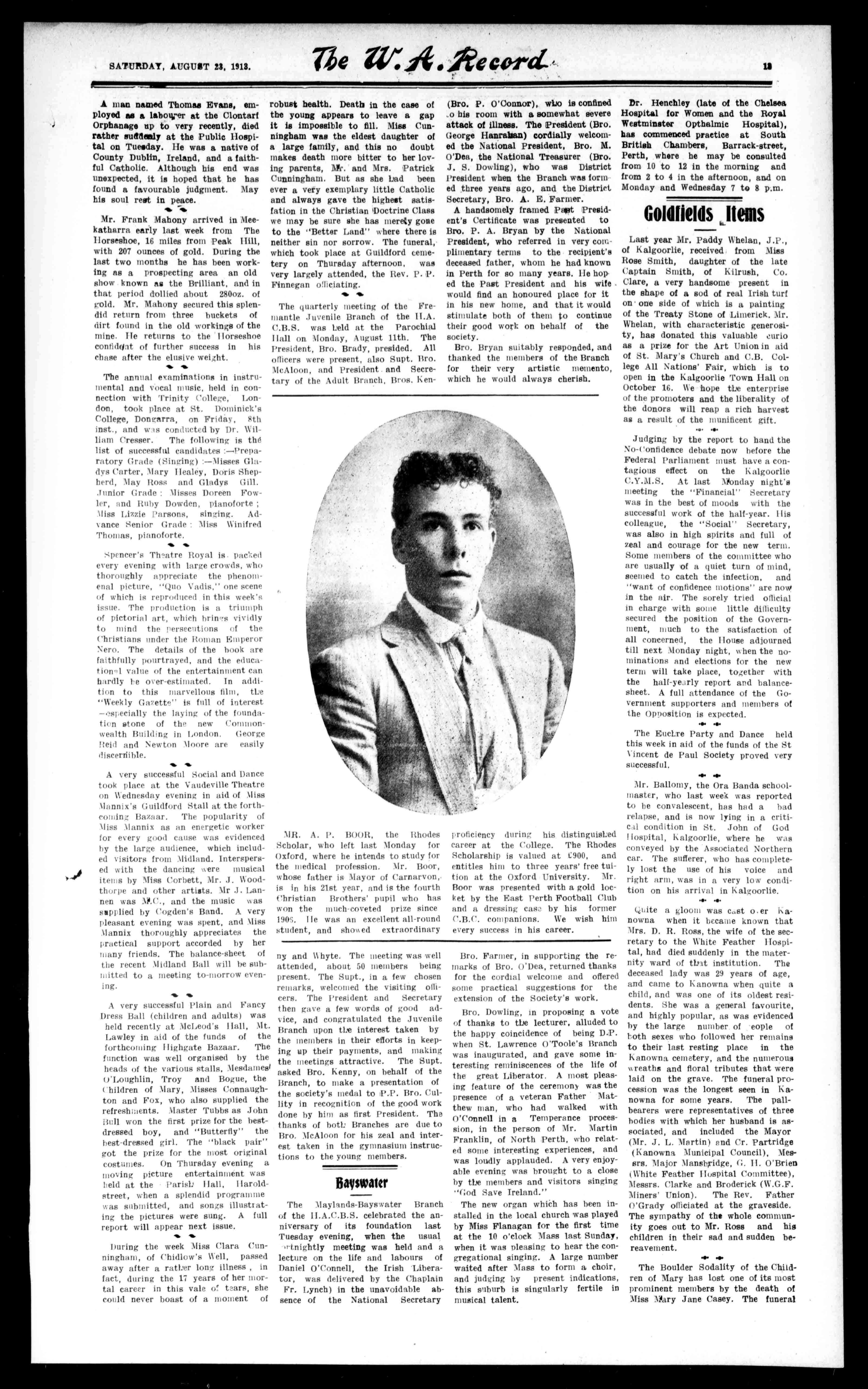
MR.A.P.BOOR,theRhodes Scholar,wholeftlastMondayfor Oxford,whereheintendstostudyfor themedicalprofession.Mr.Boor, whosefatherisMayorofCarnarvon, isinhis21styear,andisthefourth ChristianBrothers'pupilwhohas wonthemuch-covetedprizesince 1905.Ilewasanexcellentall-round student,andshowedextraordinary
eeoficiencyduringhisdistinguished careerattheCollege.TheRhodes Scholarshipisvaluedat0900,and entitleshimtothreeyears'freetuitionattheOxfordUniversity.Mr. BoorwaspresentedwithagoldlocketbytheEastPerthFootballClub andadressingcaso,byhisformer C.B.('.companions.Wewishhim everysuccessinhiscareer. nyand%%byte.Themeetingwaswell attended,about50membersbeing present.TheSupt.,inafewchosen remarks,welcomedthevisitingofficers.ThePresidentandSecretary thengaveafewwordsofgoodadvice,andcongratulatedtheJuvenile Branchupontheinteresttakenby themembersintheireffortsinkeepingsptheirpayments,andmaking themeetingsattractive.TheSupt. askedBro.Kenny,onbehalfofthe Branch,tomakeapresentationof thesociety'smedaltoIP.P.Bro.Cullityinrecognitionofthegoodwork donebyhimasfirstPresident.The thanksofbothBranchesaredueto Bro.McAloonforhiszealandinteresttakeninthegymnasiuminstructionstotheyoungmembers.
114$0,4tif
TheMaylands-BayswaterBranch oftheII.A.C.B.S.celebratedtheanniversaryofitsfoundationlast Tuesdayevening,whentheusual ainightlymeetingwasheldanda lectureonthelifeandlaboursof DanielO'Connell,theIrish'Liberator,wasdeliveredbytheChaplain Fr.Lynch)intheunavoidableabsenceoftheNationalSecretary
Bro.Farmer,insupportingtheremarksofBro.O'Dea,returnedthanks forthecordialwelcomeandoffered somepracticalsuggestionsforthe extensionoftheSociety'swork.
Bro.Dowling,inproposingavote ofthankstothelecturer,alludedto thehappycoincidenceofbeingD.P. whenSt.LawrenceO'Toole'sBranch wasinaugurated,andgavesomeinterestingreminiscencesofthelifeof thegreatLiberator.Amostpleasingfeatureoftheceremonywasthe presenceofaveteranFatherMatthewman,whohadwalkedwith O'ConnellinaTemperanceprocession,inthepersonofMr.Martin Franklin,ofNorthPerth,whorelatedsomeinterestingexperiences,and wasloudlyapplauded.Averyenjoyableeveningwasbroughttoaclose bythemembersandvisitorssinging "GodSaveIreland."
TheneworganwhiChhasbeeninstalledinthelocalchurchwasplayed byMissFlanaganforthefirsttime atthe10o'clockMasslastSunday, whenitwasnleasingtohearthecongregationalsinging.Alargenumber waitedafterMasstoformachoir, andjudgingbypresentindications, thissuburbissingularlyfertilein niusicaltalent.
illr.Ballotny,theOraBandaschoolmaster,wholastweekwasreported tobeconvalescent,hashadahad relapse,andisnowlyinginacriticalconditioninSt.JohnofGod Hospital,Kalgoorlie,wherehewas conveyedbytheAssociatedNorthern car.Thesufferer,whohascompletelylosttheuseofhisvoiceand rightartn,wasinaverylowconditiononhisarrivalinKalgoorlie.
Quiteagloomwascseto.erKanownawhenitbecameknownthat Mrs.D.R.Ross,thewifeofthesecretarytotheWhiteFeatherHospital,haddiedsuddenlyinthematernitywardofthatinstitution.The deceasedladywas29yearsofage, andcametoKanownawhenquitea child,andwasoneofitsoldestresidents.Shewasageneralfavourite, andhighlypopular,aswasevidenced bythelargenumberofeopleof bothsexeswhofollowedherremains totheirlastrestingplaceinthe Kanownacemetery,andthenumerous wreathsandfloraltributesthatwere laidonthegrave.Thefuneralprocessionwasthelongestseeninleanownaforsomeyears.Thepallbearerswererepresentativesofthree bodieswithwhichherhusbandisassociated,andincludedtheMayor (Mr.J.L.Martin)andCr.Partridge (KanownaMunicipalCouncil),Messrs.MajorManshgidge,G.II.O'Brien (WhiteFeatherHospitalCommittee), Messrs.ClarkeandBroderick(W.G.F. Miners'Union).TheRev.Father O'Gradyofficiatedatthegraveside. ThesympathyofthewholecommunitygoesouttoMr.Rossandhis childrenintheirsadandsuddenbereavement.
410
TheBoulderSodalityoftheChildrenofMaryhaslostoneofitsmost prominentmembersbythedeathof MissMaryJaneCasey.Thefuneral
SATURDAY,AUGUST
The Ae
111
28,1913.
cord
cortegewasheadedtoAllHallows ChurchbyagreatnumberofConventSchoolchildrenandtheChildren ofMary,numberingabout30,and followedbythesistersoftheDawn ofHopeRebekahLodge,No.3,of whichthedeceasedwasamember. FatherDonogherconductedthelast saidrites,thefirstportionofwhich as readatthechurch.Anumber oftheChildrenofMarysangatthe gravesidefavouritehymnsofthedeceasedyounglady.Thechiefmournersconsistedofthemotherandbrotherandbrother-In-law,Mr.J. O'Malley,Mrs.McNamara,ofKookynie,MissHildaMarshall.andMr. Robertilarshall.Thecortegecontainedagreatnumberofvehicles. WreathsweresentbythefollowingMr.andMrs.Teesdale,Mrs.Helson (Albany),Mir.andMrs.Dupuy,Dawn ofloinRebekah,1.0.0.F.,No.3, Mr.andMrs.Hancock,Mr.andMrs. Downing,Mr.andMrs.II.Shaw,Mr andMrs.Rigoll,Mr.S.Strother,Mr W.A.Schroder,Mr.andMrs.O'Malley,Mr.aridMrs.(lives,MrandMrs Armstrong,Mrs.Murphy,MrandMrs Neville,Mr.andMrs.B.Short,Mr. andMrs.A.Calder.
Lastweeknewswasreceivedin BoulderCitybyMrs.Ardagh,sen., ofthedeathofherhusband,Mk. DanielArdagh,fatherofMrs.John Shea,andMissAnnieArdagh,Messrs James,Thomas,DanielandFrank Ardagh,ofBoulder,Mrs.George Smith,MissBridget(1.4ottia)Ardagh, andMr.rugeneArdagh,ofBallarat, whichtookplaceinBallaratatthe ageof73.Deceased,whohadresided InBoulderfor12years,wasavery oldcolonist,havingemigratedfrom Tipperary,Ireland,nearlyhalfacenturyago.IlewasmarriedinBallarat43yearsago.Muchsympathyis extendedtothebereavedwidowand fai.ily.
mem
Apleasantceremonytoo';,laceat theConvent,Bunbury,onlastTuesday,wheneightgoldmedalswere uresentedbyArchdeaconSmythto thesuccessfulmusicpupilsofTrinity College.AnewlocalTrinityCollege Committeehasbeenformedwitha newsecretary,theDeanalsobeing oneofthemembers.Allthemedals aregold,andofveryartisticdesign, anditwasfreelycirculatedthatthe newcommitteemustheveryfinancial,astheygavegoldmedalsofthe valueofabout35seachtothePreparatorywinners.TheDeancomplimentedthemedalists,whointurn heartilyrejoicedatreceivingmedals whichtheyhadlongdespairedof everreceiving.
OnlastTuesdaymorningthechildrenofSt.Joseph'sSchoolhadMass offeredforthereposeofthesoulof VeraRodgers,theirlateschoolmate.Theyattendedandsangall throughtheMass.
ArchdeaconSmythsaidthatthe spiritofunanimitythathadprevailedbothbetweentheorganisers,and alsobetweenLisChurchandthe membersofothersconcerningtheBall wascertainlyagreatsteptowards themutualunderstandingsooften desired.Thoughtherehadbeensuch excellentprizesoffered,theywould notcosttheCommitteeasinglepenny.Theywerenotaskedfor,but weregiven,andtheladiesandgentlemenwhohadsospontaneously comeforwardtotheCommittee'sassistancedeservedallthanks.Both theingeniousarrangementanddressingofthesets,andindividualcostumesreflectedcreditupontheirdesigners,andthegeneralcommunity. ifthesplendidspiritofunanimity referredtobytheMayorhadnot prevailed,theeveningcouldnotpossiblyhaveattaineditssplendidsuccess.Manyoftheprizedonorsdid notbelongtotheChurch,andperhapswerenotinsympathywithitin manyways,buttheyfelt,ashedid, thattherewasnoroomfordienen siontoariseintheirmidst.
Ladies'CommitteeMesdamesW. L.Marsh,C.Hatton,F.Yardley, Ganfleld,J.Veale,King,Parkinson, W.J.Norrie,andW.White,and theMissesDoherty,RoseNorbhand Ililda!lough.
Gentlemen'sCommittee:Messrs.J. Doherty,.1.Salter,R.Ganfleld,J. Ready,DenisMc('ran,W.J.Norris, FrankBlythe,andFeesRanting.
.JointSecretariesMessrs.Michael EustaceandMervynMandl.
THEPRIZES.
BestFancyDrees.-"Ireland,'Mies Fennell(prizedonatedbyMr.('. W.Snowden).
MostOriginalCostume".roanof Arc," Miss RitaklcDowall(prisedo satedbyMr..1.J.Viclc).
BestSnetainedCharacter"Mepis tophles,"Mr.Louisjilskell(Clisdo natedbyDr.Joel),
MostOriginalCostume"An'Aie ticExplorer,"Mr.W.II.Barnett (prizedonatedbyMr.Geo.Milling). ThiscostumewascomposedofArctic furswornbyamemberofthelifsiwsonexpedition.
BestFancyDress:"NapoleonBuon *parte,"Mr.S.B.Jago(prizedons+ tedbyDr.Flynn).
BestFancySet"TheSquawSet," (prizedonatedbyMrs.C.Ilatton, Messrs.J.'IoniaandJ.!lands,consistingofasetofsilvervases.Galleryvoting.
Thejudgesabovereferredtojudged the"DresdenChina"setworthyofa prize,butnotrophywasgiven.
Thegalleryprizewasawarded No.212,heldbyMrs.Cunningham."Clog."
SocialNotes
(BY"OPHMLIA.")
TheBallheldonthe12thwasOne ofthegrandestsacceysesBunlmry hasvetknown.Alargenuinberof setswerepresent,besidesagreat manyfancycostumesandevening dresses.Themusicwasverygood, andwassuppliedbyaspeciallypreparedorchestra,consistingofMiss Li'laMarshendMr.BrettClarke (violins),Mr.W.M.Bath(flute), Mr.G.II.Teede(cornet),andMr. O.Watson(drums,etc.),whilst thepianofortehonoursweredivided betweenMrs.BooseyandMrPower. Mr.ArthurBensonmadeanideal M.C.Thejudgingwasbygallery vote,thou--,htheCommitteehadalso askedMiss'Makes,Mrs.W.J.Ford, andAir.C.W.Snowdentoadjudicateinthematterofthebest fancyset,aswellassupervisingthe resultofthegalleryvote.During theeveningMr..3.Slattery,sen.,of Dardanup,treatedthosepresentfroa well-executedIrishjig.
TheMayorofBanbury,duringthe evening,congratulatedtheCommitteeneontheundoubtedandalmost unparalleledsuccessofthefunction. Thesegatheringsfosteredthesocial spirittoaremarkabledegree,and thepresenceofrepresentativesofalmosteverydenominationshowedthat Millburywasnothoundbythesame sectarianspiritthatsooftenprevailedelsewhere.
drenandAdults'PlainandFancy DreesBallwillbeheldinKing's Hall,RokebyRoad,Subiaco,onWednesdayeveningnext,the27thofAugust.Priamwillbegivenforthe bestfancysetandthemostoriginal costume(boyandgirl).Silvester's Orchestrawillsupplythemusic.As theobjectisacommendableone,it ishopedthatthehon.secretary, Mrs.B..J.Stubbs,willhaveevery reasontobesatisfiedwiththeattendance.
TheCotteeloeBranchofthefI.A. C.B.S.aremakinggreatpreparations forthesocialanddancetoheheld inWell'sHall,Cottesloe,onthe27th inst.inaidoftheHibernianStallof theforthcomingBazaar.Inaddition todancing,theprogrammewillincludevocalandinstrumentalitems byertlutesofnomeantalent.Arrangementsarebeingmadeforthe accommodationofalargecrowd,and HP theticketsaresellingrapidlythe eveningshouldisasuccessbothfin anciallyandsocially.
*Averyen'oyahleSocialandDance washeldatWalkawayHallonAugust15,whenasplendidprogramme ofmusicalandelocutionaryitems wassubmittedtoalargeandappreciativeAudience.Songswerecontributedl-yMissesMayKemp,Dorcas Ryan,andMrs.Moll.MissEileen Jonesflayedtheoverture,Messrs. D.VecchiaandFran%Clinchsang, Mr.P.Millsrecited,endMissMinnie Leverman(postmistress)dancedan Irishfig.MiesIvyLevernienhasreturnedtoGreenoughafterasix mouths'holidayinGeraldton.
410 AM Soeinlsaid*orielshe'sbeenheld
inthecityandsuburbsrecently,and allhavebeenpleaArableevents,but SouthPerthwillgoowbetterwith itsBreadandButterDancetobe heldintheYoungMen'sHall,South Perth,onTuesday,2ndSeptember. Theproceedsaretohedevotedto theliquidationofthelocalschool debt,andthelion.Secs.,MrsEverettandMissTondut,aredeterminedthatSouthPerthwillnotbebehindothercentresinitseffortsfor Catholiceducation.Theticketsare outatisandis6d,andIsincerely hopetheywillhaveareadysaleor,inotherwords,goofflikehot cakes..
Thefirstpublicgatheringinthe newCatholicSchoolHall,Collie, washeldlastweek.Thelargehell, whichiscompletedinamostfinished style,wasmuchadmiredbythelarge numberinattendance.Thepictures werefirst-class,andwerescreened withoutahitch.Theyweregener°ladysuppliedbythemanagementof theMiners'UnionPictures,whose operatormanipulatedthemachine. Thecontrnetorsshowedtheirliberalitybydefrayingthecostoftheshow. ThemusicsuppliedbyMissesSadie Stone(piano),StellaHendersonand VeraReeves(violins),threeConvent Schoolpupils,wasiiinchenjoyed,and asuccessfulfinancialresultisanticipated.
AgrandBallwillheheldonnext Wednesdayeveninginaidofthe buildingfund.severalpromieent citizensofPerthsadefiburbs, Mre.andMiesMolloy,Mr..and MissO'Dea.andMr.andMrs.Boxall,kneesignifiedtheiritipenisiesof beingpresent.
MissToobey,whohasbeenspendingaholidaywithhersisteronthe goldfields,hasreturnedtoPerth, andismakingashortstaywithher sister,Mrs.D.Edwards,atMaylands beforereturningtoBendigo.
AM AM
OnlastTuesdaymorningaquiet weddingtookplaceattheCathedral oftheImmaculateConception,the contractingpartiesbeingMissViolet MaryRuthConwayandMr.John RyanKilgariff,LothofAdelaide.The Rev.D..1.Moloneyofficiated.
Anotherquietweddingwhichtook placerecentlyattheCathedralwas thatofMissMaryAgnesShine,of Limerick,Ireland,andMr.TrevorL. o'Sh-a,ofMary-street,Highgate. Mr.A.B.O'Sheawasbestmanand MissMaggieGaynorbridesmaid.The VeryRev.P.Hayes,Adm..officiated. 40
TheboysandgirlsoftheYoung IrishSocialClubhadahappyand en'oyableeveningattheCremorne HallonMondayeveninglast.The Clubisasyetinitsbabyclothes, hutpromisestobeadelightfulfactorinthesocialspherewhenit grows.Messrs.TimMurphyandP. Brackenareenergeticandattentive secretaries,andhavethecharming wayaboutthemofmakingeveryone sociableandathome.
Lestanyoneshouldforget!AChil-
Power'sPotStill,bulk
bottles
lixtraSpecialMalt(10yearsinwood)
FineOldScotch,ImperialKits.
FineOldScotch,bottles,..
FineOldScotch,Bulk
HennessyorMartell'sBrandy, HennessyorMartell'sBrandy, AustralianBrandy,alllines
OldFrenchCognac,ownbottling
Wolfe'sSchnapps,(ins.
LemonHartRum,overproof
LemonHartRum,ordinary
FinestImportedPort
FinestImportedSherry
Penfold'sInvalidF'ort
Seppelt'sSherry
Houghton'sPort
Houghton'sSherry
Houghton'sClaret
EnglishAle,StoutandLager
EnglishAle,StoutandLager
Carlton,Vic.,Ale
SwanAleorStout,EmuAleorStout
5/9 £3/3i
6/ £3/6/
6/9 £3/15
6/6 £31101
5/ 22/18/
6/6 .C3/10/
4/9 ,C2/151
26/to30/pergall.
4/9 £21151
6/ 23/5/
4/6 22/10/
26/to30/pergallon.
7/9 £4/5/
6/9 £3/15/
5/3 £2/17/6
5/ £21151
5/6 .E3/3/6
5/6 £3
4/ 22/5
5/to7/6bottle.
5/to7/6bottle.
3/ £1/13/
3/6 21/14/
2/3 21/41
2/6 £116/
1/9 £1 12/9to13/6perdoz.
22/10/6to22/12/percase. 8/6 7/perdoz.
('astlemaineAleorStout 6/9perdoz.
Allotherlanesatequallyreducedrates. AssortedCasesmadeup.
DeliveryCity,Suburbs,oronrailsPerth.WriteforPriceList,andsee weightofcaseandcostofdeliverytoanynartoftheState.
P.M.O'DONOHOE,Licensee.
PRONE6754.1
CENTRAL
14 Theto1/.1AAlecord SATURDAY,AUGUST23,1913. I
SPENCER'SPICTURES. P/PlINCER'SPICTURIA THEATREROYAL TheCrowningTriumphoftheBiegraph QUOVADIS (WitherGuestThou?) BoxPlanfortheSecondWeek,LsNewOpen PRICES.-DRESSCIRCLE,2/6and3/.CHILDREN,1,6and1 STALLS,1/.EARLYDOORS,6d.extra. GALLERY,6d.EARLYi)OORS,6d.extra. BOOKINGFREE.EARLYDOORSPROM6.3e BRISBANE,WholesaleandRetail WineandSpiritstore kAu-. CornerBeaufortandBrisbaneStreets,Perth CHEA.PESTSTOREINTHEWEST. Perbottle. Percase. SirJohnPower'sThreeSwallowWheky Jameson's*Whisky Mitchell'sImperialcots.Whisky Burke'sImperialqrts.Whisky Burke'sBottlesWhisky Power'sPotStill(ownbottling),Imp.qrts Power'sPotStill(ownbottling),
EVOLUTION---FromaCatholicStandpoint
Nineteencenturieshavepassed away;greateventshavebapiened Empireshaverisenandfallenintodecay,buttheCatholicChurchalcne remainstolinkthepresentwiththe past,andiftheScripr.uresaretobe fulfilled,theChurchwithherunchangingdoctrines-thoughcapable ofdevelopment-istolastuntilthe endofalltime.Intheopinion,however,ofthewisemenofourfleeher doomisalreadyathand.icience, theytellus,with'ouchassuranae, hasdoneawaywithreligionand dogma.TothinkingCatholicsall thissoundsverystrangeandunreal. ForwhyshouldtheWordofGodbe atvariancewithIlieworks?orcould Ithepossiblethattheascertained trutLsofSciencewouldbereallyantagonistictoHolyScripturerightly interpreted?Whomoredogmatic thanthematerialisticphilosophers andscientistsofto-day?orwho morechangeable?Ascertainedscientifictruthsofonegenerationare oftenconsideredoutofdateorunreliablebythenext.Andnotinfre,,tientlythosewhocallthemselves
(Speciallywrittenforthe"W.A.Record"byVivianEdwards,Manjinup.) regardtotheevolutionofspecieswe mustheguidedbycircumstantial evidence,andaftertestingvarious theoriesorhypotheses,choosethe onethatgivesthemostprobableexplanationofthesuccessionoforganic forms.
TheTheistictLeoryofEvolution necessarilypre-supposestheexistence ofaself-evidentSufremeandEternalBeing.Forunlesswepre-supposa thatsuchaBeinghasdesignedand isguidingtheuniverse,certainpiohlemswouldremaininexplicable.
Firsttheexistenceoftheprimaeval nebulahastoheaccountedfor,then theoriginofmotion.Forifmatter wereoriginallyinastateofinertia, whenceitsmotion?If,ontheother hand,matterwasofitselfinceaselessmotion,ebyhastherebeenn' lossofenergy?Themorelogical courseistoassumethatbehindthe lawsofnaturetheremustbeaLawgiver,foradenialofthisfactwould leadtoendlessconfusion.Weare forced,therefore,toconcludethat theinterventionofaSupremeBeingwasnecessary:-
sortimpossible.Althoughthefirst sinaleorganismswereformedoutof inorganicmatter,yetweinaynot concludethattheyformedthemselves.Liquidcrystalsforinstance, growandreproducethemselvesby addingonmolecubsfromwithout, butthesimplestlivingorganisms frowfromatithin,ilndincreaseoutnardlybynayofassimilation,and thereinliestheessentialdifference betweenorganicandinorganiclife.
AccordingtoHolyScripture,"God formedmanoftheslimeofthe earth,andbreathedintohisfaceth, breathofIife;"hencewemaycon eludethatalthoughChemistsmayat somefutureperiodbeabletocombinetheelementstosuchanextent AEItoproduceperfectalbumen,yet thatsubtlethngcalledlifewould stillbeabsent.Againbecauseevery speckofbloodteemswithlife,it wouldnotbecorrecttoassume thatorganicandinorganicareone andthesame.Inallprobabilitythe minutebacteriathatliveInthehumanbloodhaveintheirturnbacterialivingonthem,thereby!nal:-
ann,WokenandDeiner,thepalaeontologists.TLeyallconcurinthe oiinionthat,itisimpossibletotrace backthechieftypesoftheanimal Lingdomtooneprimitiveform.While dealingwiththeoriginofspecies,a fewwordson DarwinTheoryofNaturelSelection ouldnotbeoutofplace.Natural Selection,thoughanimportantfactor,isnottheonlyfactorthatgo%erns'theevolutionof'species,forbeforeanorganismcouldchangeordevelop,owingtoexteriorcauses,it mustfirstpossessthenecessaryinteriorabilitytoeffectachange.The teleologicalaspectofevolution shouldnotbelostsightof.
(3).TheCreationoftheSoulof \Ianalsonecessitatedaspecialact ofGod.Withregardtohisbody alone,nianmightpossiblyhavedescendedfromsomeanimalancestor, butnotsowherehisrationalsoulis concerned.Theverylowestofthe racesofmenare,whentheirintellectiledfacultiesareanalysed,farsuperiortothemostintelligentanimal,andaltholmenwasmadeout
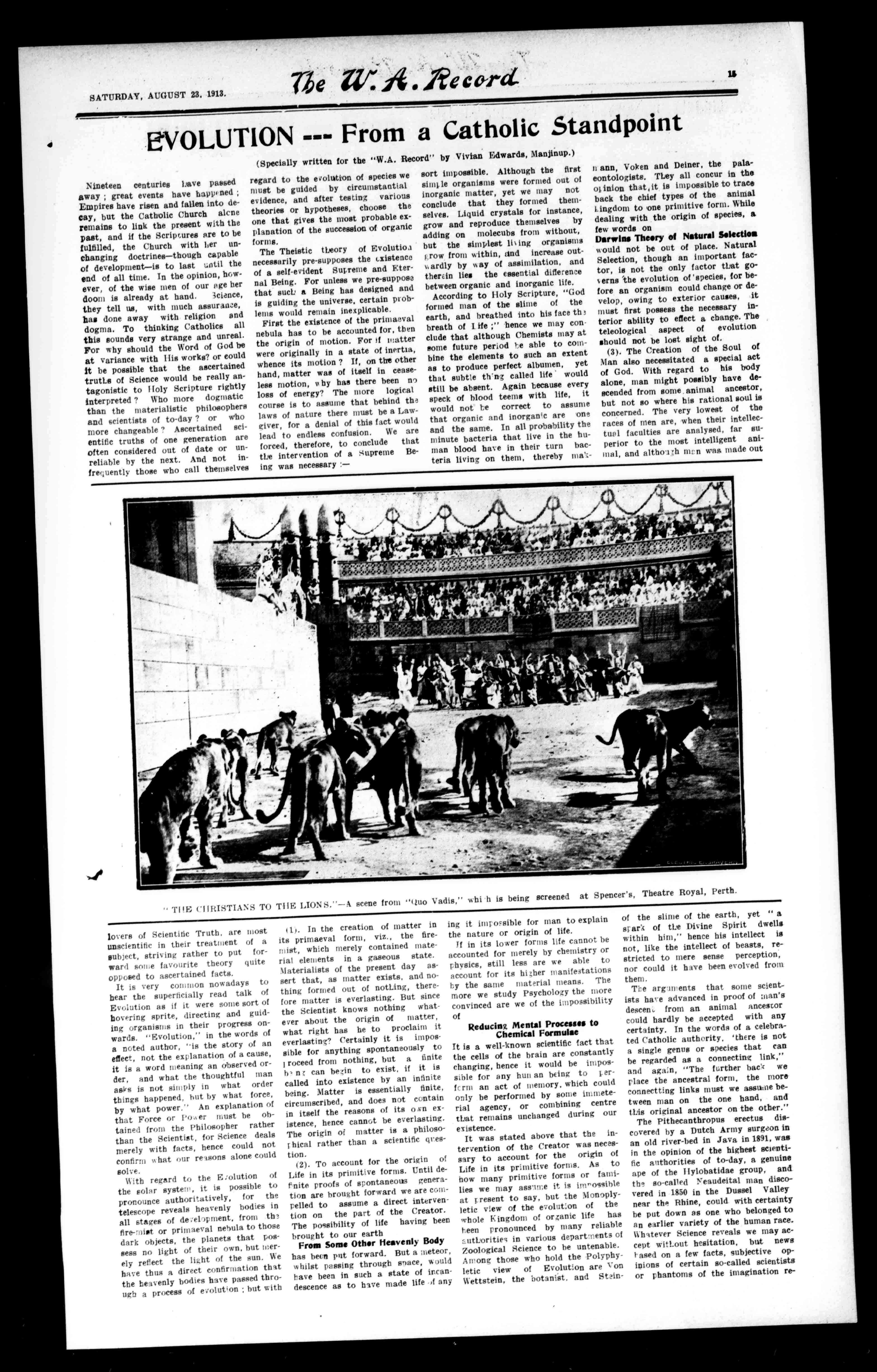
loversofScientificTruth,aremost unscientificintheirtreatmentofa Subject,strivingrathertoputforwardsamefavouritetheoryquite opposedtoascertainedfacts.
Itisverycommonnowadaysto hearthesuperficiallyreadtalkof Evolutionasifitweresomesortof hoveringsprite,directingandguidingorganismsintheirprogressonwards."Evolution,"inthewordsof anotedauthor,"isthestoryofan effect,nottheexplanationofacause, itisawordmeaninganobservedorder,andwhatthethoughtfulman asksisnotsimplyinwhatorder thingshappened,butbywhatforce, bywhatpower."Anexplanationof thatForceorPoaermustbeobtainedfrontthePhilosopherrather thantheScientist,forSciencedeals merelywithfacts,hencecouldnot confirmishatourreasonsalonecould solve. WithregardtotheEvolutionof thesolarsystem,itispossibleto pronounceauthoritatively,forthe telescoperevealsheavenlybodiesin allstagesofde:ehpruent,fronttha fire-'aistorprimaevalnebulatothose darkobjects,theplanetsthatpossessnolightoftheirown,butmerelyreflectthelightofthesun.We havethusadirectconfirmationthat theheavenlybodieshavepassedthroughaprocessofevolutionbutwith
1,Inthecreationofmatterin itsprimaevalform,viz.,thefiremist,whichmerelycontainedmaterialelementsinagaseousstate. Nlaterialistsofthepresentdayassertthat,asmatterexists,andnothingformedoutofnotLing,thereforematteriseverlasting.Butsince theScientistknowsnothingwhateverabouttheoriginofmatter, whatrighthashetoproclaimit everlasting?Certainlyitisimpossibleforanythingspontaneouslyto roceedfromnothing,butafinite ncanbegintoexist,ifitis calledintoexistencebyaninfinite being.Matterisessentiallyfinite, circumscribed,anddoesnotcontain initselfthereasonsofitsoxnexistence,hencecannotbeeverlasting. Theoriginofmatterisaphilosofhicalratherthanascientific(frestion.
12).Toaccountfortheorieinof Lifeinitsprimitiveforms.UntildeniteproofsofspontaneousgenerationarebroughtforwardwearecoinFelledtoassumeadirectinterventiononthepartoftheCreator.
Thepossibilityoflifehavingbeen brouehttoourearth FrostSorosOtherHeavenlyBody hasbetaputforward.Butameteor, whilstpassingthroughsnace,aould havebeeninsuchastateofincandescenceastohavemadelifeany
ingitinir()Foibleformantoexplain thenatureororiginoflife. Ifinitslowerformslifecannothe accountedformerelybychemistryor physics,stilllessareweableto accountforitshighermanifestations bythesamematerialmeans.The morewestudyPsychologythemore convincedareweoftheimpossibility of
ReducingMentalProcessesto ChemicalFormulae
Itisawell-knownscientificfactthat thecellsofthebrainareconstantly changing,henceitwouldbeimpossibleforanybunanbeingto1.erfrrinanactofmemory.whichcould onlyheperformedbysomeitianeterialagency,orcombiningcentre thatremainsunchangedduringour esistence.
ItwasstatedabovethattheinterventionoftheCreatorwasnecessarytoaccountfortheoriginof Lifeinitsprimitiveforms.Asto howmanyprimitiveformsorfamilieswemayassimeitisimnossible atI.resenttosay,buttheMonoplyleticviewoftheevolutionofthe wholeKingdomoforganiclifehas beenpronouncedbymanyreliable Liithoritielinvariousdepartnentsof ZoologicalSciencetoheuntenable. AmongthosewhoholdthePolyphyleticviewofEvolutionareVon Wettstein,thebotanist.andStain-
oftheslimeoftheearth,yet"a sparkoftheDivineSpiritdwells withinhim,"hencehisintellectis not,liketheintellectofbeasts,restrictedtomeresenseperception, norcouldithavebeenevolvedfrom then).
Theargumentsthatsomescientistshaveadvancedinproofofman's desceni.fromananimalancestor couldhardlyheacceptedwithany certainty.InthewordsofacelebratedCatholicauthority,'thereisnot asinglegenusorspeciesthatcan beregardedasaconnectinglink," andagain,"Thefurtherbac'cwe placetheancestralform,themore connecttinglinksmustweassumebetweenmanontheoneband,and thisoriginalancestorontheother."
ThePithecanthropuserectusdiscoveredbyaDutchArmysurgeonin anoldriver-bedinJavain1891,was intheopinionofthehighestscientificauthoritiesofto-day,agenuine apeoftheIlylobatidaegroup,and thnso-calledYeaudeitalmandiscoveredin1850intheDusselValley neartheRhine,couldwithcertainty beputdownasonewhobelongedto anearliervarietyofthehumanrace. WhateverSciencerevealswemayacceptwitIouthesitation,butnews Lasedonafewfacts,subjectiveopinionsofcertainso-calledscientists orphantomsoftheimaginationre-
SATURDAY,AUGUST23,1913. e1.1/7,AAt,cord 4
to-f.....,-, ,AIPP' ,010 .".14 c4;:!;:c64,..,da,I.:!!:.!.!.:...::
"TIIECIftISTIANSToTIIELIONS."-Ascenefront"quoVadis,"whihisbeingscreenedatSpencer's,TheatreRoyal,Perth.
ABudgetofNewsfrom,theiEmeroldisle
TheGreatUlsterRebellion (MoryahI) --
(WithapologiestoItudyardKipling.)
a4Wot'sallthenoiseandbluster for,"saysTommyonparade.
"Theblootnin'Ulsterscallawags," theColour-Sergeantsaid.
"They'rerisin'inrebellion,soI heardtheColonelsay, Sdwithbands,anddrums,andrifles, andwithallourcoloursgay,
We'reorderedfortoUlster,atthe breakingoftheday, FortocrushandconquerUlsterin theniornin'."
''blot'sallthebloomin'rowabout?" saysTommyonparade.
"Meselfdon'tknowtherightsofit," theColour-Sergeantsaid.
"ButtheysayasKingGeorgemust nolongerweartheCrown
BecausebegavethemIrishrightsto ruleinDublinTown
An'sowe'remarchin'northwardfor toPeepthepeopledown, An'totightandmintierUlsterin themornin'."
"Who'sgoin'toleadthemrebels on?"saysTommyonparade.
"Iheardachapcalled('arson,"the Cokur-Sergeantsaid
"An'tishardaginsuchloyalmento strikeacrushingblow,
ButthoughRobertsdoesnotcarefor it,youknowhe'shoundtogo,
An'nomatterwhomaylead'emwe mustshoot'emhighandlow, Whenwemarchtoconquer!listerin themornin'."
"Nowwot'sthenewsthecourier brought?"saysTommyonparade,
"Thefunnyfolk,therummyfolk," theColour-Sergeantsaid.
"Forthembloomin'rebelstookthe fieldjusttwentythousandstrong. ThetunetheycallBoyneWaterheir' theburdenoftheirsong.
Oh!butlisten-theys'cidaddledwhen FO1'RPOLIScamealong! Soourmarchiscountermandedin theInornin'." "PAUDEEN."
Kalgoorlie.
gardedasdefinitelyobtainedscientificresults,couldnotclaimourseriousattention.
Accordingtoliteckel,maninhis embryonicgrowthpassesthrough22 -lateronthenumberwasraisedto 30-stagesofdevelopmentcorrespondingwiththesamenumberofstages ofancestors.Growthinanycase Heistproceedfromthesimpletothe complex,hutthatdoesnotprove thatthehumanracehaspassedthreughallthesestagesofevolution. Amongthehigherapestheyoungresemblemanintl.eformationofthe craniumandintheshapeoftheface morecloselythantheoldapesdo, hence;leesaredescendedfrontman, netroanfromapes-whichisevidentlyabsurd.Theresemblancebetween humanbloodandthatofthehigher apeshasbeenstatedinproofof Man'sDescentfromaSimian Ancestor, Similarityofblooddoesnotnecessarilyimplybloodrelationship.Itmay enableustosaythatoneanimalis morecloselyrelatedtoanotherthan toathird,hutitdoesnotshowhow closelyrelatedanytwoanimalsare. Duringsomeresearchesintothe Causesofsleepingsickness,itwas foundthatwhenothermammalswere inoculatedwiththebloodofsufferersthediseasewascontractedbyall exceptafewapesandpigs.Arewe toinferthatthehumanblooddiffers entirelyfrontthebloodofsome apesandpigs?Thereislittledoubt thatintimescientistswillceaseto laymachstressonsimilarityof bloodasconstitutingabloodrelationship.
TheTheistmaywithouthesitation pursuehisstudiesofnature,seeking explanationsofvariousphenomena,andrestingassuredthatSciencecanrevealnothingthatislikely toshakethefoundationsofaChristtian'sfaith;nay,rather,itshould tendtostrengthenit,provingto himmostconclusivelythatbehindthe lawsofnaturetheremustbeaLawgiver,thefirstandnecessarycause ofallthings,possessinginfinitepowerandwisdom.
Dublin,July26.
The"Freeman"hasthefollowing conrplimentarynoticeofthecelebratedIrishcomposer,Mr.Joseph Crofts,µLaisafirstcousinofMr. Chris.Crofts,oftheCentralHotel, Perth:-Mr.Croftshasbeendoing patrioticandself-sacrificingworkfor Gaelicsonsforlitanyyearsinour city.Ccmingofafamilywhichfrom thefirstdedicateditselftoIreland andIrishneeds,hehasinherited theirn.tlonalandartisticcharacteristicsinhighmeasure,andabasis ofsoundmusicalscholarshipmakes everythinghedoesofvalueandinterest.Asorganist,teacher,lecturer, andPianisthehastePitthisyouth amongusandperhapsjustbecause heiswithIN,wet'reinclinedtoover-
distinguishedservicesrenderedtothe Papacy,andreceivedthePapalblessingfromLeoXIIIbeforehisdeath. Thecomposerisstillayoung man,andisadevotedstudentofthe literatureandmusicofIreland.
PROGRESSOFHOMERULE.
OnAiril2ith,1834,O'Connell broughtthequestionofIrishselfGorcrninentbeforetheHouseofCommonsforthefirsttime.Fivehundredandsixty-ensmembersvoted. OftheseoneEnglishmanandthirtysemenIrishmenwereinfavourof O'Connell'sresolution,Fortyyears elapsedbeforeButtcelledtheattentionofParliamenttothequestion onceagain.Fivelaindreclindseventeenmere`erevotedeightmembers fromGreatBritainandfifty-three fromIrelandwentintothelobby withButt.Twelveyearsafter,on
proceedforthwithtomutilatethe Billastheythinkfit,afterputting the!louse4CetTrinonstothetroubleofre-passingit.Inaword,the LordspresumetoactevenmorecontemptuouslytowareepopularlegislationthanbeforetheParliamentAct waspassed.ThisactionoftheLords isarousingastormofindignation inEnglandwhichbodesillforthe hereditaryChamberandwhichmakes thetriumphofHomeRuleassured.
ATRUMPETCALL.
AsMr.Redmondpointedoutafter thefirstrejectionoftheHomeRule andtheotherParliamentActBills, therealobjectoftheHouseofLords andtheToryPartyistodestroythe ParliamentAct,andtorenderineffectualthelongandarduousstruggleofthepeopletoabolishtheveto oftheHouseofLordsoverpopular legislation.ThewholeoftheLiberal anddemocraticPressofGreatBritainnowtakesthisview,andonthis mainissuethefightwillgoforward. Theendisnotforamomentin doubt.Mr.T.P.O'Connor,M.P., notforthefirsttime,struck-anote whichwillreverberatethroughoutthe country.ReferringtotheLansdowne-CurzonincidentinthePeers' debateonHomeRule,andthewithdrawalbyLordCurzononTuesday ofLordLansdowne'spledgeofMondayastoacceptingtheverdictofa GeneralElection,"T.P."saysthe protestationsandpledgesoftheToriesare"falseasdicers'oaths,''and that,iftheBritishmassessubmitted tosuchdestructionoftheirliberties asthePeerscontemplate,theyare notworthfightingfor."T.P's." speechatDevizesonSaturdaywasa trumpet-calltobattle.
HOMERULENEXTYEAR.
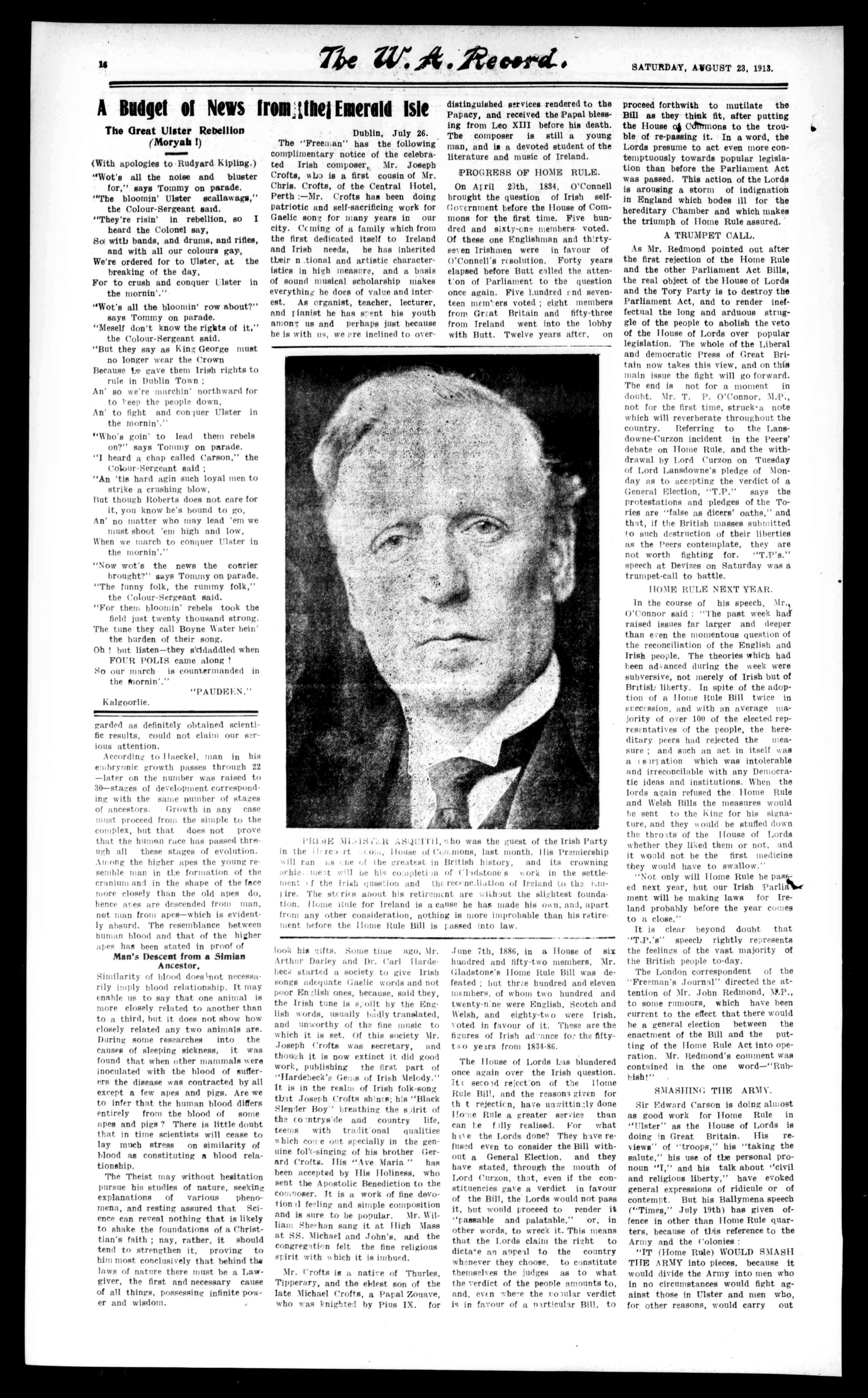
PRIelE\1L-ISteeltetWeI1leI,'.howastheguestoftheIrishParty inthe Irrc,rtom,HowieofC,iettions,lastmonth.BsPremiership illranLsrne,,fthegreatestinBritishhistory,anditscrowning ethicchic.tileitwillhehiscoripletienofCledstonesorkinthesettlementftheIrishqueseionandthereeencleitionofIrelandtotheGmire.Themteriesabouthisretirementareieheuttheslightestfoundation.MinetildeforIrelandisacausehehasmadehis(ten,and,apart (remanyotherconsideration,nothingismoreimprobablethanhisretirementbeforetheHomeRuleBillisiiseedintolaw.
lookhis2ifts.Sometimeago,Mr. ArthurBarleyandDr.Carllardeheel(startedasocietytogiveIrish songsadequateGaelicwordsandnot poorEndishones,because,saidthey, theIrishtuneiss,oiltbytheEnglishwords,usuallykindlytranslated, andunworthyofthefinemusicto whichitisset.OfthissocietyMr. JosephCroftswassecretary,and thoteehitisnowextinctitdidgood work,publishingthefirstpartof "Hardeheck'eGemsofIrishMelody." Itisintherealms,ofIrishfolk-song that.JosephCroftsshins;his"Black Slen'lerBoy"breathingtheseiritof thecoeitryskieandcountrylife, teemswithtraditionalqualities whichconaoutspeciallyinthegenuinefolk-singingofhisbrotherGerardCrofts.His"Avetiaria"has beenacceptedbyHisHoliness,who senttheApostolicBenedictiontothe comeoser.Itisaworkoffinedevotion11feelingandsimplecomposition andissuretohepopular.Mr.WilliamSheehansangitatHighMass atSS.MichaelandJohn's,andthe congregationfeltthefinereligious Feickwithwhichitisimbued.
Mr.'croftsisanativeofThurles, Tipperary,andtheeldestsonofthe lateMichaelCrofts,aPapalZouave, whowasknightedbyPiusIX.for
June7th,1886,inaHouseofsix hundredandfifty-twomembers,Mr. Gladstone'sHomeRuleBillwasdefeatedbutthreehundredandeleven members,ofwhomtwohundredand twenty-finewereEnglish,Scotchand Welsh,andeighty-twowereIrish, votedinfavourofit.Thesearethe figuresofIrishadeancefoethefiftyttoyeasfrom1834-86.
TheHouseofLordsLasblundered onceagainovertheIrishquestion. It;secondrejectionoftheHome RuleBill,andthereasonsgivenfor thtrejection,haveun-,vittinelydone lloneRuleagreaterservicethan canbefillyrealised.Forwhat hiNetheLordsdone?TheyhiverefusedeventoconsidertheBillwithoutaGeneralElection,andthey havestated,throughthemouthof LordCurzon,thet,eveniftheconstituenciesgaveaverdictinfavour oftheBill,theLordswouldnotpass it,butwouldproceedtorenderit "Gassableandpalatable,"or,in otherwords,towreckit.Thismeans thattheI.ordsclaimtherightto dietteeanarmeeltothecountry whenevertheychoose,toconstitute themselvesthejudgesastowhat theverdictofthepeopleamountsto, and,evenwhe-etheroeularverdict isinfavourofanerticularBill,to
Inthecourseofhisspeech,Mr., ()'Connorsaid"Thepastweekhad raisedissuesfarlargeranddeeper thaneventhemomentousquestionof thereconciliationoftheEnglishand Irishpeople.Thetheorieswhichhad teenad.ancedduringtheweekwere subversive,notmerelyofIrishbutof British'liberty.InspiteoftheadoptionofaHomeRuleBilltwicein succession,andwithanaveragemajorityofover100oftheelectedrepresentativesofthepeople,thehereditarypeershadrejectedthemeasureandsuchanactinitselfwas asationwhichwasintolerable andirreconcilablewithanyDemocraticideasandinstitutions.Whenthe lordsagainrefusedtheHomeRule andWelshBillsthemeasureswould hesenttotheKingforhissignature,andtheywouldbestuffeddown thethroitsoftheHouseofLords whethertheylikedthemornot,and itwouldnothethefirstmedicine theywouldhavetoswallow."
"NotonlywillHomeRulebepast ednextyear,butourIrishParlinre mentwillhemakinglawsforIrelandprobablybeforetheyearcomes toaclose."
Itisclearbeyonddoubtthat "T.P.'s"speed.,rightlyrepresents thefeelingsofthevastmajorityof theBritishpeopleto-day.
TheLondoncorrespondentofthe "Freeman's.Journal"directedtheattentionofMr.JohnRedmond,\P.P., tosomerumours,whichhavebeen currenttotheeffectthattherewould heageneralelectionbetweenthe enactmentoftheBillandtheputtingoftheIonicRuleActintooperation.Mr.Redmond'scommentwas containedintheoneword-"Rubbish!"
SMASHINGTIlEARMY.
SirEdwardCarsonisdoingalmost asgoodworkforHomeRulein "Ulster"astheHouseofLordsis doinginGreatBritain.Hisreviews"of"troops,"his"takingthe salute,"hisuseofthepersonalpronoun"I,"andhistalkabout"civil andreligiousliberty,"haveevoked generalexpressionsofridiculeorof contempt.ButhisBallymenaspeech ("Times,"July19th)hasgivenoffenceinotherthanHomeRulequarters,becauseoftbisreferencetothe Armyandthecolonies
"IT(HomeRule)WOULDSMASH THEARMYintopieces,becauseit woulddividetheArmyintomenwho innocircumstanceswouldfightagainstthoseinUlsterandmenwho, forotherreasons,wouldcarryout
The A.eevi SATURDAY,AIGUST23,1913.
w.Zimpelfurnituremanufacturer
Havingbeenestablishedinlay-street,Perth,forover29years,wishestoreturnthanksforthegeneroussupporthehasreceivedfromthePublic,andbegstoannouncethatheLAnowcommencedhis
GreatStockReducingFurnitureSale
AllwhorequireHOUSEHOLDFURNITURE,OFFICEFURNITURE,andHOUSEHOLDREaUISITES,willsavemoneybypayingavisitto W.ZIMPEL'SGREATSTOCKREDUCINGBALE,andcomparenotonlyprices,butalsoQualityandValuebeforepurchasingelsewhere.
TheStockofover£28,000worth,comprisingBedroomSuttee,DiningRoomSuites,Perambulators,Go-carts,Caneware,Carpets,'Carpet Squares,Linoleums,DinnerSets,TeaSets,ToiletSets,Crockery,Cutlery,Electre-PlateWare,Lamps,Clocls,Curtains,TableCloths,Blankets, Quilts,PillowSlips,Towels,etc.,etc.,musthereducedtomaceroomforothergoodscontinuallyarrivingbyeveryincomingsteamer.There- fore,itistoyourintereststotakethisopportunityofmakingyourpurchasesat
W.ZIMPEL'SGREATSTOCKREDUCINGSALE
CountryOrdersbyPostwillreceivefullbenefitofallreductionsasw(.11ascarefulandpromptattention.
suchworkaswassetbeforethemif anattemptwasmadetouseforce towardsthepeopleofthiscommunity.Ilethoughtitwoulddoworse thanthatforthewholeEmpire,becauseitwouldgivematerialfor writingachapterofbetrayalbya BritishGovernmentwhichcouldnot buthavefar-reachingeffects,notonlyintheUnitedKingdom,butinthe greatself-governingColoniesandDominionsoftheSovereign."ThisinsulttotheArmyandtotheselfgoverningDominionscombined,has naturallyarousedfeelingsofindignationandresentmentinEngland.It willrangetheColoniesmorestronglythaneveronthesideofHome RuleforIreland.
11HATTHEARMYWILLDO.
IfSirEdwardCarsonhadreadthe speechmadebyhisEnglishTorycolleague,ColonelHickman,M.P.,at Belfastonth912thofJuly,hewould havebeenmorecarefulabouthiv ownreferencestotheArmy.Colonel Rickman,ALP.,toldtheOrangemen -"Iledidnotwantanyofthemin Ulstertobeundertheimpression thatifaBritishregimentwereorderedtocomeheretheywouldnot vitirey.TheregimentsoftheBritish rmywerestrictlyunderdiscipline, andthepeopleofUlstercouldnot Countontheirfeelingsasmendominatingtheirfeelingsassoldiersin regardtodiscipline.Therefore,Loyalists:oustnotgoawaywiththeimpression,becauseisolatedmembers expressedtheopinionthattheywould notfight,thattheregimentasa bddywouldnotfightwhenitwas orderedtodoso.Letthemnotbe underanymisapprehensiononthat point.Itwasamostsolemnthing tosaytothem,buthethoughtit ellshisdutyasasoldiertosay it."
Onthissubject,('ol.lickmastpresumablyknowsastouchasSirEdwardcarson.
caNADAANDIloV#ERULE.
Alltheself-governingdominions, withrmtexception,areoverwhelminglyinfavourofHomeRuleforIreland. Arepresentative ('anadian newr..a;er,"TheSaturdayPress," publishedinSaskatoon,saysthat,if aplebisciteweretakesanoverwhel.,ingma'orityofCanadians wouldbac%Ireland'sclaimand,referringtothedrillingin"Ulster," thesamenewspapersays:-"Itlooks asthoughtheywerepreparingthere forthesamethingasthatforwhich LouisReilwashanged andtheir leader.;havenottheexcuseofbeing insane,asFatherMoriceandother co,,.peteistauthoritiesassertReil was."
INDEPENDENTORANGEMEN.
The"Ulster"Orangemenarenot
allattheheckandcallofSirEdward('arson.ThereisanIndependentOrangeOrderin"Ulster,"andit heldtwodemonstrationsonthe12th ofJuly,oneatBelfastandoneat Ballymoney,Co.Antrim.Brother JamesTaggart,CountyGrandMaster,presidedatBallymoney,where resolutionswerepasseddeclaring "attachmenttotheprinciplesofreligiouslibertyforall,"absolutely opposing"anyproposaltoform.asocalledprovisionalGovernmentfor Ulsteroranysectionofit,"and declaring"unalterabledetermination tostandbytheProtestantsinother partsofIreland."Twenty-fiveLodgeswererepresented.Wereadthat"BrotherJamesKnoxaskedthe OrangemenofUlsterif IlomeRule wasaProtestantquestion,whathad theDukeofNorfolk,Mr.DenisHenry,K.('.,MajorArcher-Shee,and LordEdmundTalbottodowithit?"
AttheBalmoral(Belfast)meeting, Mr.JamesMateer,J.P.,Imperial GrandMaster,said:-"Theycould iiio%ethatresolutionofloyaltybecauseTHEYIIADSUFFEREDPERSECLT10\forstandingoutforthe irindlesrfcivilandreligiousliberty,andtovoteaccordingtotheir consciences.Formonthsandmonths theirProtestantbrethrenwhoclaimedthemonopolyofallthecongregationsaroundBelfastandtheNorth ofIreland,wouldnotletaclergymanassistthem.Itwastheywho knewwhatcivilandreligiousliberty meant,becauseTHEYHADSUFFEREDFOTITINTHEIRBUSINESSANDEMPLOYMENT.They didnotwantseparationfromGreat Britain,whosebattlestheyhad foughtinthepast;butiftheywantedtobuildabridgeinBelfastor layatramwaylinehedidnotthink itshouldbenecessarytospendtheir moneyinEnglandtogetitdone, Theyshouldhegivenpowerstoleislaterelatingtotheirowncountry affairs-afurtherextension,ifthey would,oflocalgovernment."
Mr.ThomasII.Sloan,ex-M.P.for SouthBelfast,said"lie(MrSloan) wasagreatopponentofboycotting always.Buthewasastrongeropponentofitto-day,havinghadhis shareofit.Ifanyonewhohadbeen intimidatedwantedasympathiser, lethimcometohimandhewould shedwithhimtearfortear.Never. Godhelpingthem,wouldtheybeled, dragooned,bought,bribed,orbulliedtofollowSirEdward('arsonin suchadiabolicalprocession.Butthey wouldliveandworkfortheday whenIrelandwouldhefree,grand, glorious,redeemed,andsavedand thentheycouldsaytheyhaddone theirpartasIrishmen."
General
ForthefirsttimesincetheReformation,MasswassaidatFencham, inthedioceseofNorthampton,Eng., recently.Throughthekindnessof AdmiralandLadyNoel,FatherVendi wasenabledtocelebrateMassat theirhousefortheCatholicsofthe neighbourhood.
AnAnglicanprocessioninhonour ofSt.AlbantookplaceinBirminghamrecently.Initwalkedclergy wearingcopesandbirettas,acolytes, thurifers,and"ChildrenofMary," withbanners.BlessedFatherCampionsurelydidsotdieinvain. NearerandnearerAnglicanismis comingtotheonefoldandtheone Shepherd.
7,000Frenchmen,fromallpartsof France,recentlyassembledinParayle-MonialtohonourtheSacredheart ofJesus.CardinalAmette,several ecclesiasticaldignitaries,andfive bishopswerepresentattheceremonies.Thepilgrimsspentonenight inadorationinthechapel,andthere wasamagnificentprocessionofthe BlessedSacramentthroughthe streetsofthetown.Theheartof FranceisCatholicyet.
('arsonrecentlyinspectedaforce of3,000"drilled"menatPortrush. Theysangthehymn"0GodOurHelp inAgesPast."Theoldsnuffling spiritofCromwellstillhangsround theshadyplaceswhereOrangebigotrygathersinIreland.
Protestingthatreligiousbigotryis atthebottomofthetroubleinUlster,AugustineBirrelldeclares -"I havebadcuriousexperiencesduringmyofficiallife, firstattheBoardofEducationand theninIreland.Ihavebeenbrought intoclosepersonalcontactwith CardinalsoftheChurchofRomeand theArchbishopofCanterbury,and," heconcluded,withpiousfervour,"1 co':mendthemalltoGod!"
OntheToryHouseofLords,Lloyd Georgeconcludedoneofhisspeeches tohisconstituentsinthesewords:"Itisessentialtoclearthepathof monopoliesandprivilegethatProvidencemayhaveafreeroadonwhich tocarryitstreasuresoflight,air, sustenance,andhopetoeverycottageintheland."
LloydGeorgeisgettingbackhis oldform.Ilesays"ThevitriolthrowingoftheHouseofLordsand theirhangers-onandflunkeysinthe 'Tees,hadfailedtomaim,kill,or defacehim."
SurnindngupthesituationofHome Ruleinthe"LondonBudget,"John Redmondsays"Noman,ofcourse, crnforetellthefuturewithabsolute
certaintybut,barringthechance ofapoliticalearthquake,itis,in myjudgment,ascertainastherisingofto-morrow'ssunthatHome RulewillhavepassedontotheStatuteBookbeforethisdatenextyear. Andonceitislaw,Iamconvincedit willbeloyallyacceptedbyallclasses ofIrishmen."
AsaresultofhisresearchesamOngoysters,M.Dantonhasdiscoveredthatthesexofanoysteroften variesinthesamesubject,andthat, whenbadlynourished,afemaleoysterwill"degenerate"intoamale. Perhaps(saystheQueensland"Age") thiswillactasanawfulwarningto thosesuffragetteswhogoinforhungerstrikes.
Londonderryhasbeennaughtythe lastfewdays,asectionofthecitizenshavebeenpeltingeachother withstonesandtappingtheir neighbours'headswithsticksandsundrymissiles,Somebodywasrusting fortroubleandsomebodyfoundit. Somebodyisnowwhiningoverits soreshins,bruisedscalp,wounded eyesandtornclothesandaccusesthe Governmentofaderelictionofduty.
TheCommonwealthwarshipsAustraliaandSydneyarrivedatCapetownonMondaylastfromSt.Helena.Shortlyafterleavingthelatter placeaderrickfellandkilledPettyofficeriTolmes.
Small-poxstilla"currenttopic" lbSydney.Themedicalprofession activelyengaged.Businessbrisk.
TurkeygrippingAdrianoplewitha tightdespairinggrip.ThePorte, childlikeandbland,defieseverything andeverybody.AmbassadorsofPeace arethinkinghardandwonderinghow theyshallmovenext.
Bulgarianspluckedtheirevergreens anddeckedthemselneswithleavesin amerry-making"day-off"tocelebratethedeclarationofPeace.Ferdinandandthemilitarymenwore wreathsofleavesandjoinedinthe popularrejoicings.Thetroopswere delighted,andwelltheymightbe. lilheyhadastrenuoustimeandall theywantedinthefieldofwar.
ElevendeansinMichigan,U.S.A., throughheat.
HerrBehel,theleaderoftheGermanSocialists,whodiedinSwitzerlandrecntly,leftestatevaluedat £30,000.Thereseeingtobemoneyin thebusinessofSocialismnotwithstandingitspeculiarandoft-repeatedpreachingsagainstWealth,UnequalDistribution,etc.Socialism andwealth,tomostpeople,seemincongruous.OnewondershowaSocialistcanbeabloatedCapitalist. There'sascrewlooseintheism somewhere.
SATURDAY,AUGUST23,1913. The Record. 11 4
SouthAmerica
SomeObservationsontheChurchandthePeople
SOMESPECIMENSOFSOUTIIAMERICANORATORY.
(Speciallywrittenforthe"W.A.Record"ty.1.M.MILLER,Perth.)
(Continued.)
ThePeru'.lanehavethereputation ofbeingthemostreligiousoftheLatinAmericannationalities.Thisits probatlydeetotheircomparative isolationfromtheEuropeancentres ofradicalismandanarchy,thusfar escapingtheattentionsoftheselfstyledapostlesof"progress,"wLosc so-calleddoctr.nesoflibertyand equalityare,inotherpartsofthe SouthAmericanContinent,underminingthefaithandmoralsofa goodlynumberofalreadyfreeand eIualcitizens.
fnLenatherelig'oesfeastsare very (extantceremonies,andthe President,halCalenet,staff,andthe armyattendthew.Picturesleeand intcrestintheyareastheyd!playio theplayaandfilltheCathedral.It isattheCathedralinLima,bytit. way,wheretheIatekeson.-;en daysissaidatoneodoe,.Even withMaas,itthis onewillse. latecoersandstragglerserr[.in loneaftertLefirstGospel.
InthissameCathedralrestthe.re mainsofFranciscoPizarro.soldier explorer,andconlierorofPeru.In iteofhiscrueltyendrapacity,the title"Great"maywith;illjusticehr appliedtothisintretidSpaniard.
ThebodyofSt.Roseof(Awnir preservedinoneofthesmallerchurchesofthecity,whichChurchalso isinthefroadpossessionofasupposedlygenuineMadonnabyMurillo.
ThedescriptionoftheLatinApt ricansgiveninthefirstofth,4, chronicles,a,plieswithhutHIP, modificationstothePeruvians.They likealltheSpanishrace,areexc inglyelo!tienttheyhaveagr-at facilityofextreasionand andare,oar'rable
FlowofSuperlativeAdjectives
Iright'teroffelicity,perfumedby thedlicoutambientoftbapureand irginloewhichdealsintheinn-:centheartoftheSpiritualSpouse. Maythesunofhappinessradiate alayeintheblueheavenofthis marriage,isthegreatestand C,os: echzinent(Loireofthisewho,fullof re.oicing,withthisfelicity,sign themselves-theirfriends."These marriagesnoticesarereally,inmost cases,insertedbytheinterested.partiesthemselves, Andhereispartofanoration
formedintoafaggotofwhitelight, resplendentsothedetailswhichin hisworkhecomeiled,unitedand syn'haled,emergedafterwardsfrom histrainintheetexutifulproduction whew.meritissufficienttoplacehis sarcophagusinthetempleofimmortality.Ifaninituortalseiritsurci;es,transmigratingorascendingin infinitespiralstothebosomofthe Creator,thenthydeathisnot death,buttransformation. Thechrysalis,itistrue,hasbroken itsenvelope,andthemysteriousbutterfly-theadorablereveilleentity, hal°yintohappierregions,to IItreeitwlfintothePrime('ause.. Theseirit,Rereadingliketheundulationsoftheocean,orengrossing acmeheirarchicalelverintheserene regionofsails ."andsoon; wordsofexcellentmeaningifembodielasanrawly,butrathervrandilo-
GrandDoubleCure TORTURINGME:3ANDTERRIBLEBADLEG. HUSBANDANDWIFEGRATEFUL ToZANI-BUK.'
Mrs.JamesJones,of41I!erringtonStreet,Miller'sPoint,Sydney, says "Fortwentyyearsnayhusbandwas amartyrtoallthepainsandtorturesofblindandbleedingpiles. Themiseriescausedbythisterrible collifleintarehardlydescribable.The inflammationanditchingweresomethingawful,andLecould,getneither sleepnorrestdayornight.During theselongyearshetriedagreat numberofremediesandso-called cures,butnothiaggavehitsany easecommencingtouseZane-Buk, hewassoondelightedtofindthat thisbalmwashavingthedesired effe2t.Thepainandinflammation werefreedilyhanisl.ed,andbyperseveringwithZeiler:Mk,hewassoon Iredfromthisawfulcomplaint.His curehasbeenpermanent,foritis oerthreeyearssinceZane-Bilkendedthefsaes,andtherehasbeenno returnsince.
"Myhusbandalsosufferedfroma terriilehadleg,whichwascausedby irritationsetlipbythedyeofblue Hann+ForeightmonthshewasConfinedinthehospital,wherethedoctorscantedtoamputatetheleg,it wesinsuchadiseasedcondition.An awf1nicer'nthethighhadeaten riAtthroughthefleshtothehone, andthepainwasterrible.Allkinds oftreatmentsweretried,butnothinggateanyease.ThenIdecided toaptlyZatii-Buk,shied.Ididwith excellentvaults.Inashorttimeall putridmatterwaswithdrawnfrom thewound,whichbegantohealup inahealthymanner.Afteronlya fewwee''s'treatmentwithZam-Buk, hisle:wascompletelycured."
Sold Iyallsoresandchemistsat yeandee,er
BurnellBros.
ArealsoIRONMONGERS,andsell
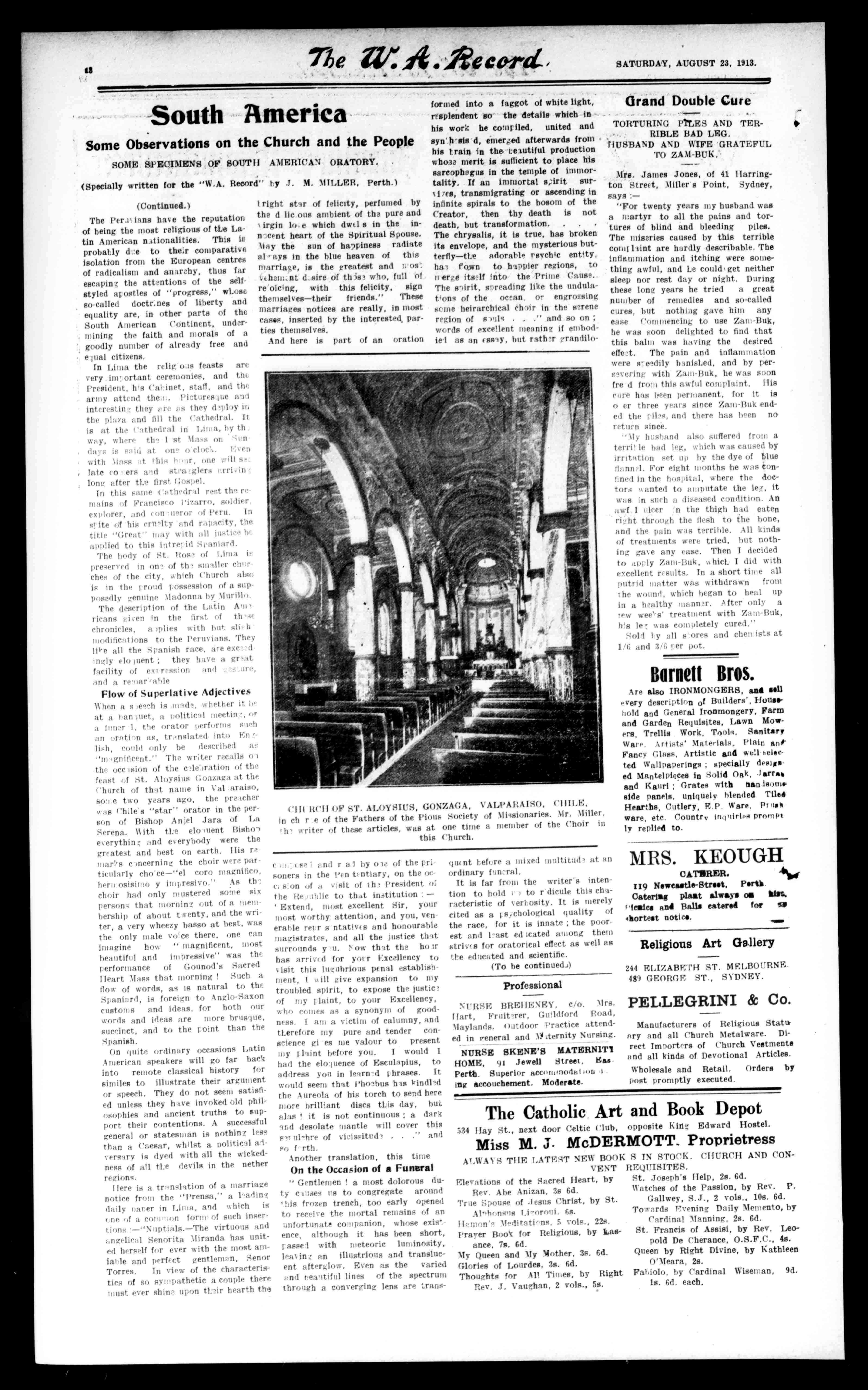
11bunaa:erechisa,.1«batherit atabanmet,aladiticalineetin,r,or afaun1,theoratorperformssuch anorationas,tr,.nslated,intoEn 11A,couldonlybedescribedar 111)..gniticent."Thewriterrecallso theoccisionoftheceleimationofthe feastofSt.Aloysius(;oazagaatthe ChurchofthatnameinVal.araiso, soretwoyearsago,thepreLeber waschile's"star"oratorinthepersonofBishopAnjelJaraofLa Serena.Miththeelo'tientBinh°, everythin;andeverybodywerethe greatestandhestonearth.Iliare c',teemingthechoirwereparticularlycho'ce-"elCoromagnitico, hemosisimoyimpresivo."Asth^ choirhadonlymusteredsomesix PersonsthatmorninifoutofaMIMIbershipofabouttwenty,andthewriter,averywheezybassoatbest,was theonlymalevocethere,onecan imaginehow"magnificent,moat beautifulandimpressive"wasthe performanceofGounod'sSacred HeartMassthatmorning! Sucha flowofwords,asIsnaturaltothe Spaniard,isforeigntoAnglo-Saxon customsandideas,forbothour wordsandideasaremorebrusque, succinct,andtothepointthanthe Spanish.
OnquiteordinaryoccasionsLatin Americanspeakerswillgofarhack intoremoteclassicalhistoryfor similestoillustratetheirargument orspeech.Theydonotseemsatisfiedunlesstheyhaveinvokedoldphilosophiesandancienttruthstosupporttheircontentions.Asuccessful generalorstatesmanisnothingless thanaCaesar,whilstapoliticaladversaryisdyedwithallthewickednessofalltiedevilsinthenether regions.
hereisatranslationofamarriage noticefrontthe"I'rensa,"alading dailynarerinLima,andwhichis cneofacopi'.onformofsuchinsertions:-"Nuptials.-Thevirtuousand angeliealSenoritaMirandahasunitedherselfforeverwiththeroostamiableandperfectgentlemen.Senor Torres.Inviewofthecharacteristicsofsosympatheticacouplethere mustevershimupontheirhearththe
CIIIUCHOFST.ALOYSIUS,GONZAGA,VALPARAISO,CHILE, inchreoftheFathersofthePiousSocietyofMissionaries.Mr.Miller. Thewriterofthesearticles,wasatonetimeamemberoftheChoirin thisChurch.
c andra1byoteoftheprisonersinthePententiary,onthe()cc;sionofavisitofthePresidentol theIfs;.thlictothatinstitution'Extend,mostexcellentSir,your mostworthy.attention,andyou,venerablerearsntativesandhonourable niazistrates,andalltheJusticethat surroundsyu.eowthatthehotr hasarrivedforyourExcellencyto isitthislugubriouspenalestablishment,sillgiveexpansiontomy troubledspirit,toexposethejustice ofmyIlaint,toyourExcellency, whocomesasasynonymofgoodness.Iamavictimofcalumny,and tlereforemypureandtenderconsciencegiesmevalourtopresent lily!hintbeforeyou. Iwould1 haultheelo:iuenceofEsculapius,to addressyouinlearnedi.hrases.It wouldseemthatPhoebushiskindled theAureolaofhistorchtosendhere morebrilliantdiscsthisday,bui alas!itisnotcontinuous;adark anddesolatemantlewillcoverthis soul-hreofvicissitude ."and so frth.
Anothertranslation,thistime
OntheOccasionofaFuneral "Gentlemen!amostdolorousdutyc-visesustocongregatearound 'hisfrozentrench,tooearlyopened toreceivethemortalremainsofan unfortunatecompanion,whoseexistence,althoughithasbeenshort, assetwithmeteoriclureinoaity, leaeineanillustriousandtranslucentafterglow.Evenasthevaried endtewitifilllinesofthespectrum throughaconverginglensaretrans-
quintbeforeamixedmultitudeatan ordinaryfiineral.
Itisfarfromthewriter'sintentiontohold tor'diculethischaracteristicofverl,osity.Itismerely citedasaesechologicalqualityof therace,foritisinnate;the poorestandVastedseatedamongthem etrivsfororatoricaleffectaswellas theeducatedandscientific.
(Tohecontinued)
Professional
NeatSieBREI!PINEY,c/o.Mrs. Hart,Fruiterer,Guildford[load, Maylands.ttutdoorPracticeattendedinreneralandMIeternityNursing.
NURSEWEENIE'SMATERN1T1 HOME,9fJewellStreet.Sas Perth,Superioracconanotietaw.1 lagaccouchement.Moderate.
TheCatholic.Art
134flaySt.,nextdoorCelticclub, MissM.J.McDER
ALWAYSTHELATESTNEWBOOK VENT
ElevationsoftheSacredHeart,by Rev.AbeAnizan,3s6d.
TrueSpouseofJesusChrist,bySt. AlehonwisLi-erred.6s.
Ilemon'rMeditatieng.5vols..22s.
PrayerBootforReligious,byhasance.7s.6d.
MyQueenandMyMother,3s.6d.
GloriesofLourdes,3s.6d.
ThoughtsforAl!Times.byRight
Rev.J.Vaughan,2vols.,5s.
everydescriptionofBuilders',HouseholdandGeneralIronmongery,Farm andGardenRequisites,LawnMowers,TrellisWork,Toole,Sanitary ware.Artists'Materials,Plainam FancyGlass,Artisticandwe'.1belsetedWallPaPeringsspeciallydemo. edMantelpieeeeinSolidOak,Janata andKam.'GrateswithImoIsom« sidepanels,uniquelyblendedTiled Hearths,Cutlery,PI.PWare,Prass ware,etc.Countryinquiriesprompt lyrepliedto.
MRS.KEOUGH
CATERER.
Nor
119Newcastle-Street,Porte Cateringplaitalwaysonhille. ;leaksendBallsenteredforse 4kortestnotice.
ReligiousArtGallery
244ELIZABETHST.MELBOURNE.
489GEORGEST.,SYDNEY.
PELLEGRINI&Co.
ManufacturersofReligiousStator cryandallChurchMetalware.DirectImeortersof('hutchVestments andallkindsofDevotionalArticles. WholesaleandRetail.Ordersby Postpromptlyexecuted.
andBookDepot
oppositeKing'EdwardIlostel.
MOTT..Proprietress
SINSTOCK.CHURCHANDCONREQUISITES.
St.Joseph'sHelp,2e.6d.
WatchesofthePassion,byRev.P. Gallwey,S.J.,2vols.,10s.6d. TowardsEveningDailyMemento,by CardinalManning,2s.6ii.
St.FrancisofAssisi,byRev.LeopoldDeCherance,O.S.F.C.,4s. QueenbyRightDivine,byKathleen O'Meara,2s. Fabiolo,byCardinalWiseman,9d. ls.6d.each.
Is 7Ze SATURDAY,AUGUST23,1913.
THEUNITEDSTORESLTD
Grocery,Tea,Coffee,WineandSpirit Merchants,andImporters.
IIIIMPORTDIRECTAIALCanseries,Delicacies,Tess,Colas,Mess, aslSpirits.
coring'ROASTEDDAILY80thatCustomersewerelyallowbeing sepsMedwiththePUREANDFR!SEIARTICLE.
TEADirestfromHILL.ESTATISlaCEYLONfrancNI.tos.O.
FARMER'S&ElUrrONSCelebrate!HAM'madEACt1.4,andseised. dSenateofBT1TTERalwaysisStock.
WesupplytheBEST,andistinportingalloarGoodsarsebbs,mil II'bargetheLOWESTPRICEforsyarytIOng,
TheUnitedStoresLimited 4079HayStreet,Perth
Noagenciesorbranches
CRITERIONLIVERY&BAITSTABLES (BACKOTOR/TERIONHOTEL), 101-103MURRAYSTREET,
BRAGS,SINGLEANDDOUBLEBUGGIES,SULIZIWII, GIRL WAGGONETTES,ALLVEHICLESRUBBERTYEED.
BABIES'ANDGENT'SHACKS.WEDDINGPARTIES11SPIECIAIMI
HorsesonHirebyDayorWeek.
W.SMYTH,Proprietor, TELEPHONE,776.
JOHNDYNON(V,CO. THECHINAHALL 236and238MurrayStreet,Perth.
CEINA,GLASS,EARTHENWARE,FANCYGOODS,B.P.WARE.As.
XmasNoveltiesandPresents
GREATVARIETYINTEASETSDINNER-SETS,TOILET-SETS,ANS FRUIT-SETS.
WRITEFORCATALOGUEANDPRICELIST.
TELEPHONE270Central
RINGUP TEL.CENTRAL266(DayandNight). ForallkindsofPLUMBING,GAS FITTINGS,andGALVANISED IRONWORK.
MarkDunn
332-334WELLINGTONST.,PERTH. LicensedPlumberandDrainer
TotheMetropolitanWaterSupply, SewerageandDrainageDepartment. DairyingUtensils,Baths,BathHea tern,Tanks,andWindmillsmad, Fixed,andRepaired.
R.
K.OATES&Cu. OFF746WELLINGTONSTREET.
WoodandCoalMerchants
AgentsforHowardSmith'sA.1.. NeweastleCoal,CollieOoal,Charcoal,etc.Specialquotesfortrash lots.DryJarratiBlocks,124.6U., Perload.
TELEPHONEeiO4.
ConventofSt.Josevh
AdelaideIltreot,Fremantle
FORYOUNGLADIES(BOARDERSANDDAYPUPILS),CONDUOTBD
BYTHESISTERSOFST.JOSEPH,OFTHEAPPARITION.
TheBuildingiswellventilatedandcomfortable,andtheDormitories,etc.,arewellfittedtosecurecomfortandhealth. ThechildrenareconstantlysupervisedbytheNuns,especiallywith regardtoreligiousandmoraltraining.
AllbranchesofathoroughEngLimbEducationaretaught also French,Drawing,German,Painting,Singing,Pianoforte,Organ,Violin, Mandoline,Book-keeping,Elocution,ShorthandandTypewriting,Needlework(PlainandFancy),andKindergartenClassesforJuniorPupils.
AreductionwillbemadeinfavourofSisters.
PaymentInADVANCEisrequiredforBowlersandDayPupils.
PriortotheremovalofanyBoarder,onequarter'snoticemustbe given.
Boarderswillbeadmittedatanytimeoftheyear.
PupilsarepreparedforUniversitiesandMusicalExaminations.
Theyhavealsotheadvantageofseabathing.
Forfurtherparticularsapplytothe
Rev.Mother
ConventofSt.Joseph,Fremantle
WINNINGQUALITIES INLADIESCOSTUMES!
SLAVONIANVINEYARD
WestAustralianWines
ALLOURWINESPUREJUICEOFTHEGRAPE. CLARET,HOCQUE,ANDPORT,GUARANTEEDWITHOUTADULTERATIONS.PRICESMODERATE.
Apply:-A.andJ.MARIAN SlavonianVineyard,Armadale,W.A.
itt **iititilk********AbIlk****************41 a -RAILWAY- -RECHABITECoffeePalace j coffeePalace
Mrs.CHAMBERLAIN,Proprietress.
1hemostsuitableforvisitorstol'erth..1beyarerightopposite thePerthRailwayStation.BestattentionandModeratePrices 44.4140.11114*44.40.40# 444.40V+44.41.0414.
SHINE'ScatholicArtandBook Depot
CM.PIERANDMURRAYSTREETS,PERTH;andatNo.10,MARKET BUILDINGS,SOUTHTERRACE,FREMANTLE. PRAYERBOOK,id.to12/6 ROSARIES,3d.to50/. SCAPULARS,2d.to1/3. MEDALS,Id.to5/-.
i'APERS,Etc.-W.A.Record,CatholicPress,Advocate,MessengerS.H., AustralLight,Madonna.
:'BOSSES,Id.to5/ CRUCIFIXES,1/to30/. FONTS,Istoto/6. PICTURES,id.to21/(unframed) STATUES,3d.andupwards. BOOKSonvarioussubjects.
'AresoftheSaints,CatholicTruthSocietyPublications,MountCarmel Habit,WaxCandles,Candlesticks,AltarCruets,Charcoal,Incense, Tapers,WicksandFloats,FairyLamps,AltarVases,Medallions. WRITETOUS,lettingusknowwhatyouwant,andwewill CAREFULLYSELECT,PACK,andPOSTYOURORDERS.
Allthegraceandbeautythatwomen mostadmireintailoredcostumes,will befoundineverysuitwemake.
Theperfectnessofourworkforladies isamatterofpridewithus-justas itisthecauseofuniversaladmiration withallwhohaveseenexamples.
Ourmostskilledcuttersandtailors attendtotl-,eladiesdemands-their knowledgeandskillcombinedmake perfection.
Youwilldelightinviewingthenewestmaterials -ourWinterdisplay.Everyfabricorworkwill befoundhere.
Itisthetimetoorderyourcostume.Weare ready-Areyou? CoganBros.,
FashionableLadiesandGentlemen'sTailors
IL\YSTREET,PERTH
WheretheGoodHatsare
603
THEPREMIERLIME
SATURDAY,AUGUST23,1913. Theti/:A.Aecerd4 4
BRIGGS&ROWLAND
Wellington
Perth PPOSITERAILWAY
St.,
GOODS YARD
ANDSTONEMERCHANTSOFW.A.
similar
c
rate.
AbsolutelytheHighestPercentageLimeintheState. WriteforpricesandparticularsbeforePurchasingelsewhere,aswe defyCompetition.TheonlyBRIGGSintheTRADE.Noconneetios withanyonetradingundera
name.LimeforManureata
ors low
TheIrishLanguageRevival
TheGaelicLeague,LiteratureandTraditions
AMORAL,LITERARY,NATIONALANDECONOMICMOVEMEN11.
(BYR.D.LANE,B.L.,BOULDER.)
Midtheshudderingofsocialeruption,whetherbroughtaboutbyeconomicormoral,internalorexternalcauses,verymuchissometimes lostthatcostagesofthebestintellectandingenuityofourfathersto acquire.TheillustriousLeckyin his"HistoryofRationalism,"says thatwhenweconsiderthecheerful alacritywithwhichpersonsofwealth anddistinctioninformertimesgave upalltheypossessedinlifetobecomehumblemonksandnunsinordertoserveGodandfellow-manin amoreperfectmanner,thereisnodenyingthefactthatwehavelost something.Thematerialisticwhirlwindofthepresentday,theblasts andviledustandhowlingsofwhich arebeingfeltineveryland,and whichissweepingwithitsomeofour bestmenofgenius,hassowarped andbrokentheidealsandbeliefsof ourfathers,thatthebestartswith thecelestialideasthatlaybehind themarefastdecaying.Thepainter nolongerliftshismindtoHeaven, seekingforhissubjectsomeperson whosefacebeamswithpurityand peacebutcontentshimselfwiththe every-daythis-worldbeautythattoo oftenhears
ALewdandLustfulCountenance.'
Thewriterlikewiseapplieshimself towhatwillmostpleasehisreaders,sacrificingtruthtopanderto thepeople'spassions,andasaconsequencetheliteratureoftheworld istrulydecadent.Everycountry andpeopleexperiencethechange;and ifprecautionsarenottaken,Irishmenwillhenoexceptiontotherule.
Tocopewiththescourgeofevil literatureandpreservethemorality ofthepeople;tofosteratruespirit ofnationalityamongthemandto havethemdevelopthemselvesand IrelandaccordingtoIrishandnotto EnglishorContinentalideas,are amongtheobjectsoftheGaelicLeague,andnoobjectscouldhemore praiseworthy..1sameanstothis end,theLeagueisstrivingforthe preservationoftheirlanguage,literatureandtraditionsandthecultivationofamodernliteratureinIrish. Sinceitsfoundationin1893themembershavepersistentlylahouredfor theseideals,and,sacrificingmuch, haveovercomethegreatestdifficulties.
Themovementis,indeed,amoral movement,a('hristianmovement,a literaryandintellectualmovement,a nationalmovement,endalsoaneconomicmovement.
Thepresent-dayfilthyliteratureof England,overflowingwith DiabolicalBlasphemyandImmorality isdailyfloodingIrelandtoberead bybothculturedandignorantand tobeabsorbedbythetender,innocentmindsoftheIrishyouth.The youthofto-daywillhethemenand womenofto-morrow,andthereisno denyingthetruthofthemaxim "Asthetwigisbentthetreeisinclined."Notwithstandingcenturies ofmisgovernment,penallaws,brutallandlordism,andthesavagewars thatragedfromtimetotimeasa consequence,theIrishpeoplehave fromthetimeofSt.Patrickdown tothepresentday,soclungtothe teachingsofChristianitythatthe honestyoftheirimmenandthemodestyoftheirmaidenshavelongsince becomerroverbial.Asthedark cloudwhichfedthedelugeanddestroyedallhetNoahintheArk, therehangsoverIrelandacloudof evilliteretereblackwiththeevil thonehtandimmoralityofEngland andtinContinent.Havingbeengatheringanddrippingforageneration ortwopast,ithasnowcommenced topourforthandfloodthecountry w!thitsdestr.leti7econtents. Thesurestchecktosuchinvasions offoreignthoughtisapeople'suse oftherownlenteiage.Thisisat leasttheviewoftheereatmajority ofGaelicLettemmers,andoneoftheir justandsull,cientreasonsforworkpgtorevivethelanguage.
Thereis,moreover,theanti-ChristianmovementoftheContinent threateningIreland.Thisassumes manyformsandaspects,buthasits principalformin
Seclalisni"-AsDistinguishedfrom SocialReformAllSocialistleaderswhoarecandid enough,openlydeclaretheirhostility toChristianity.Blatchford,ofEngland,amongnumerouslikeutterances,says"IamworkingforSocialismwhenIattackareligion thatishinderingSocialism."Again: -"Thereisnosuchthingassin mancouldnotandcannotsin."It issomuchapartoftheprofession ofGeorgeBernardShawtosham thatwemaytakehisadherenceto
language."ProfessorHolgerPederson,ofCopenhagen"Thelanguage ofsweetestsoundandaccentofall thelanguagesoftheworld."ProfessorStom,ofBerlin:"Itstreasury ofwordsIsextraordinarilyrich,its syntaxisgraceful,andcharacteristic."AndProfessorH.Himmer,of Berlin"Icanthinkofnolanguage whichforaboywhoknowsEnglish wouldtomorebeneficialthanIrish."
LikeGerman,Irishpossessesthe powerofmaking AnUnlimitedNumberofNewWords frompre-existingroots.Ithasavocabularyof70,000nativewords,and tieordinaryuneducatedIrish-speakingpeasanthasathiscommanda greaternumberofwordsthanmany Englishwritersofrepute.Wherein manycaseswehaveinEnglishone ortwowordsexpressingacertain idea,thereareinIrishasmanyas sevenwordsexpressingsubtleshades ofdistinctionwhichlendcolourto thatidea.TheIrishlanguageis grammaticallycompleteandhasall thegenders,alltheinflections,all themoods,utmostofwhichhavebeen lostinFrench,Englishandother modernlanguages.Ithas,moreover,moresoundsthananyother Euro;canlanguageexceptRussian, °seemingnolessthanninety-fiveas comparedwithforty-fivesoundsin English.Itnecessarilyfollowsfront thisthattheIrishspeakermustbe apersonofsuperiorintelligenceand capableofmasteringwithoutmuch difficultyanyotherlanguagehemight wishtolearn.
inganinterestintheland,werenot inclinedtoleaveher.Buteversince EnglishhasbeentherecognisedlanguageofthecoudetryandpredominancegiventoEnglishthought,these Peopleastheygrewwealthyhave beenleavingIrelandandtakingup theirdeabodeinEngland.Thatwhich
LandlordismINIreland
sotyrannicalwasnotsomuchthe systemasthewantofsympathyin thelandlordsforthepeople.Lostin thereverieofEnglishlife,theIrish lordsrefusedtoaccepttheirtenants astheirfellow-countrymen,paidno heedtotheirwantsandmadenoeffortfortheirimprovement.
SirHoracePlunket,perhapsthe greatestauthorityofto-dayonIrish economics,hasinhishook"Ireland intheTwentiethCentury,"dweltat lengthonthebeneficialbearingthe languagerevivalhashadonIrish economics,andspeaksofallithp capableofdoinginthefuture.Paul Dubois,also,inhis"Contemporary Ireland,"laysstressontheeconomicbenefitderivedfromthemovement.Thusitisrecognisedthatthe revivaloftheIrishlanguage,inculcatingasitdoesatruenational Writinthepeople,isnecessaryfor thewelfareandprosperityofIreland andthere-buildingoftheIrishnation.
DR.DOUGLASHYDE, THEAPOSTLEOFTHEGAELIC REVIVAL.
"Oh,Irishmen,beIrishandrally forthetongue, Which,likeisytoaruin,tothedear oldlandhasclung-. Oh,snatchthisrelicfromthewreck -theonlyandthelastThesolestronglinkthatbindsyou tothegloriesofthepast."
Socialismasshamalso.Butwhat weknowforcertainisthathisopen attacksonreligionarenotpretended.Continentalwritersarefarmore pronouncedinthisrespect.Manyof themadvocatetheburningofreligioushouses,thedestructionofthe churchesandthepersecutionofall ministersofreligion.
Thethoughtofanynationoriginatesandissustainedbythefew;and itisthebirth-rightofapeopletohe ledbytheirowncountrymen.LeadersofpublicopinioninIreland maintainthattheirpeoplearenot tohemisledbytheGodlessphilosophyofwould-bephilosophers.They declarethatmorality,comingfrom God,isstereotyped,andnotasthose writersadvocatetobechangedat themutablegood-pleasureofthe multitude.Theyclaimthatourfatherswererightinthis-however backwardtheymighthavebeenin otherrespects.
ThattheIrishLanguagerevivalis ALiteraryandIntellectualMovement is(elitebeyondquestion.Bothasa spokenandawrittentongueIrishis oneofthafinest,ifnotthefinest, languageknowntoman.Itsvariety ofsoands,richnessofvocabularyand idiomaticconstructionsrenderit ca-a'leofthesweetestharmonyand itestudymostbeneficialasanintellectual;Tainin*.Tomaintainthisa rersonnerdnotheachauvinistor afanatic.Theyarestatementsbasedonthebestauthority.
Profees-rKunoMeyersays"Gaelicaffordsanexcellentmeansof thrziiistictr,inintyMr.AlfredNutt -"Arich,exere,eiiveandcomrlete
inhermanycontinuousandfruitlessattemptstoeradicatefromthe breastsofIrishmentheirloveof country,ithaseverbeentheobject ofEnelandtodestroytheirlanguage, literatureandtraditions."Tearout theirIrishtongues,"saidthegreat ;ereneertoQueenBess,"andthey willsoonhaveEnglishhearts."The :evastationofhercities,homesand churches,themurderofherpriests, theviolationofherwomenhoodand themassacreofthehardyandofthe helplesswroughtinIrelandbythe brut-,1soldieryofCromwell,werenot sodestructivetoIrishnationality ofto-dayasthe BodineKindledwithtime TreasuredBooks oftheIrishpeople.Withouther ownlanguageitisimpossiblefora ellercountrysituatedgeographicallyandotherwiseasIrelandisto England,tomaintainherselfasa separatenation.Thusmanyforces thattendtotheabsorptionofIrish nationalityintothatofEngland, has,eversincetheEnglishbecame tiespokenlanguageofIreland, drawnfromIrelandverymuchof herwealthandnumbersofhermen ofgenius.Fedwiththethoughtof thegreaternation,numbersofthe Irishpeople,notwithstandingtheactivityoftheirpatriots,havegotto lookuponthegreatercountryas "Thecountry;"and,indeed,sonicof theTrishleadersthemselvesarethus affected.Hencetheeconomicquestion.Ineconomicsanythingthat takesmoneyfromthecountryishad, whileallthatkeepsmoneyinthe countryisrood.Whenthegreat An;lo-Irishearlsandwealthymen ofIrelandspokeIrishtheyrecoenisedthemselvesasIrishmen,andtak-
Cbenationalmutual tileassociation ofAustralasiaLtd. Australia'sMostProgressiveLifeOffice.NotedforLIBERALCONDITIONS,LOWESTPREMIUMS, LARGEBONUSES,BESTNET RESULTS.
PioneerofNon-Forfeiture Head(Ace,Melbourne.Branches throughoutAustralasia,SouthAfrica,GreatBritainandIreland,and elsewhere.
W.A.BranchOfficeST.GEORGE'STERRACE,PERTH./ LocalDirectors-TheRt.Hon.Sir JohnForrest,P.C.,G.C.M.G.,M.P., Wm.Maemurtrie,Esq. liy.Wright ManagerforW.Australia.
bashTeaRooms
352WELLINGTONST.,PERTH.
Mealsatallbourn.Grills Speciality. MISSNORAKEANE, Proprietress.
CELTICCAFE
(Hay-Street,oppositeMasonicChin CONDUCTEDBY PissVailact
THISUP-TO-DATEANDWELLEQUIPPEDCAFEOFFERSCOMFORTANDTHEBESTSERVICE TOCUSTOMERS.CLEANLINESS ANDANEXCELLENTWENT' GUARANTEED THREECOURSEMEALS,Ts EARLYLUNCHEONONALLHot! DAYS.OPENAILDAYOWsry nv
BarnettBros.
674HayStreet,Perth
memorialandPresentationStained61ms Windows,forChurches,DIMS,etc.
LeadedLights,modernintreatment, forDomesticDwellingsand PublicBuildings
ORIGINALDESIGNSSUBMITTEDON APPLICATIONTO BarnettBros.elassleople
20 gr.A.Ale. SATURDAY,AUGUST23.1913,
PHILIPCOYLE
WholesaleWineandSpiritMerchant
Moir'sChambers,Perth SoleAgentsfor
W,&A.Gilbey'sWinesandSpirits
HansIrvine'sWinesandBrandies
AyalaChampagne
ApollinarisTableWaters
Gordon'sSpanishSherry
GlenoranNo.10Whisky
Stormonth,Tait&Co,Port
JamesWatson'sXXXWhisky
E.&J.Burke'sAleandStout
GonzalezByass&Cio.'sPort
MarieBrizardandRoger'sBrandies andLiqueurs
KitzSparklingAppleCider
Kupper'sLagerBeer
Cawsey'sSquashandCordials
Ind,CoopeCo.'sEnglishAle
CalixtoLopez&Co.'sHavanaCigars
SirJohnPower&SonPotStillWhisky
M.Marceau&Co.,FrenchWines,Bordeaux
HansIrvine'sChablis,auExcellentAltarwine
StocksofAssortedLiqueursalwaysonhand
jiumourousBits
ABITFROMULSTER.
Grocer(whohaslatelyjoinedthe DollyBraeBrigade,practisingin shop)"Right,left,right,left,four pacestotherear,march (Falls downtrap-doorintothecellar).
Grocer'sWife(anxiously)"Oh, .11m,areyouhurt?"
Grocer(savagely,hutwithdig- nity):"Go'way,woman.Whatdo youknowaboutwar?"
NOTREQUIRED.
111101Architect"Now,wherewouldyou preferthedrawing-room,sir?"
Mr.Parvenu"Lookhere,young man,I'veletyouputupasmokin'room,whenIdon'tsmokeamusicroom,whenIcouldn'tplayamouthorgan;anursery,whenIain'tgot nonurse;andapantry,whenIdon't pant.ButI'mgoin'todrawthe lineatadrawing-room.whenI couldn'tevendrawastraightline."
WEIGHTED.
TwoIrishmenwerecrossingthe ocenonthewaytoAmerica.On thevoyagePatdied.Preparations weremadefortheburialatsea,but theleadweightscustomarilyusedin suchcaseswerelost,andchunksof coalweresubstituted.Everything wasfinallyreadyforthelastrites, andlongandearnestlydidMichael lookathisfriend.Finallyheblurtedout,sorrowfully:-
"Well,Pat,Ialwaysknewyewere goin' butI'mhangedifI thoughtthey'dmakeyecarryyer owncoal."
WHYSMITHFAINTED.
Smithhadjustbeenonerateduponforaupendicitis.Duringhisperiodofconvalescencehebecamequite chummywiththetwootherpatients whosharedthewardwithhim."ilow areyoufeeling,boys?"saidSmith onemorningtothem."Oh,weareall right,"theybothansweredtogeth'r, "consideringthatwehadtoundergo twooperations.""Why,howwas that?"questionedSmith,inanagitatedvoice."Becausethedoctorassignedtothiswardisanidiot.In
collectinghisinstrumentsafterthe operationhemissedaneedleand scissors.Theformerhefoundinme, andthelatterinmyfriendhereon theright.Youseenowthereason forthetwooperations."Justthen thesurgeonputhisheadinthedoor andasked"Ilasanyoneseenmy silkhat?"Smithfainted.
VERYSHORTOFBREATH.
Aman,drivenhomeonaverywet night,wishedtogivethecab-driver, aboyfromClonmel,somethingto keepthecoldout.Findingnothing athandbutaliqueur-standwithits tinyglasses,hefilledupone,and handedIttoPat,remarking:"You'll thinknonetheworseofthisbecause itwasmadebytheholymonks."
"Blesstheholymonks!"exclaimed Patashedrainedhisglass."It's themselvesthatcanmakegoodliquor,butthemanthatblewthatglass wasveryshortofbreath!"
NEVERHADTHEM.
Ateacherhadbeentellingherclass ofboysthatrecentlywormsbadbecomesonumerousthattheydestroyedthecrops,anditwasnecessary toimporttheEnglishsparrowsto exterminatethem.Thesparrons multipliedveryfastandwereg7rici'rallydrivingawayournativebirds.
Johnnywasapparentlyveryinattentiveandtheteacher,thinkingto catchhimnapping,said "Johnny,whichisworsetohave, wormsorsaarrows?"
Johnnyhesitatedamoment,and thenreolied"PleaseIneverhadthe sparrows."
PUTTINGUPARECORD.
.1second-classstokerwaslaought beforethecommandingofficerofthe Devonportnavalbarracksona chargeofinsubordination.Hisinsubordinationtooktheforno'resistancetobeingintroducedtathe swimming-bath.Askedwhathehad tosayforhimself,theyouthreplied "Sir,I'veonlybinintheNavy threedays.Thefirstdaythedoctordrawedsixofmyteeth.TheseconddayIwasvacrenttid.Andthe thirddaythepettyorficerhesays,
'Comealong,we'rea-goin'todrown yer'!"
HESWALLOWEDIT.
Object-drawinghasbroughtanew anxietyintoAmericanschools.In certaindistrictsofNewYorkyoungstersmaybeseengoingtoschool withhatchets,carvers,hammers, chisels,etc.,asmaterialfortheir drawinglessons.Theotherday,just asoneofthelessonswasaboutto begin,aboywasfoundstanding tearfullyattheheadmaster'sdesk.
"I'veswallowedmyobject,"heexplained.
"Whatwasit?"askedthmaster, anxiously.
"Abanana,"repliedtheyouthful artstedent.
MOREWATER.
Therewasahushofsilenceasthe proudyoungpeopleboretheirfirstborndowntheaisletothebaptismal font. Aftertheusualpreliminary service,theministerturnedtothe father,inwhosearmstheinfant nestled,andsaid-
"Namethischild."
Slowly,calmly,quiteevidentlyrecitingalongpiecefaithfullybyrote, theyoungfatherreplied-
"JohnHenryWitherspoonBurling- tonMiggleshyParmalieSpuggletonSmattertopSmith." Withequalcalmnessyetwithhiddentrepidation,theclergymanbeckonedtothesexton.
"John,"besaid,"you'dbetter fetchsomemorewater."
110WTOCvrriiTHEFISH.
Ononeoccasiontherewasobservedamanwhohadneverfishedbefore.Hisrodwasnewandshiny. Ilewaswhippingatroutstream, when,bysomechance,hegotabite. Hedidnot;laythefishatall.With rodstraightahead,hes'owlyaid steadilyreeledinhiscatch.Howhe managedtoboldthefishwasamys- tery.Prettysoonthefishwasdirectlybelowtheendoftherod,butthe amateurdidnotstop.Ilecontinued toreelandreel,and,justasthe observerreachedthewater'sedge, thefish'sheadtouchedthetip.Then thefishermanactuallytriedtopull
hiscatchthroughthering.Iledid not,ofcourse,succeed.
"WhatshallIdonow?"heasked oftheamusedobserveronthebank.
"Abouttheonlythingyoucando now,"saidthelatter,"istoclimb upthepoleafterthefish."
ANSWEREDTHEPURPOSE.
Asitwashisbirthday,Snooks tookafriendhometodinner,but hiswilegavestrictordersthathe mustnotofferhisguestsherry,as theyhadnoneinthehouse.Snooks forgotwhathadbeentoldhim,and said "Haveadropofsherry,oldchap?"
Thaguestturnedred,andsaidhe severdrankit.
"Rubbish!"saidSnooks."Iknow thatisnottrue.Dotryit."
"No,no,Iwouldmuchrather not,"hesaidimploringly,andturnedredderthanever.
AfterdinnerMrs.Snookssaidto herhusband "Whyonearthdidyoupressthe sherrywhenIkeptkickingyouunderthetable,too,toremindyou thattherewasn'tany?"
snookslookedatherandsaid "Itwasn'tmeyoukicked,my dear."
RAILWAYHOTEL ARMADALE
P.SCANLAN,Proprietor.
AMostComfortableHotel.
WeddingParties,AfternoonTeas, Cateredfor.
"ST.IVES"
21IRWINSTREET.
SuleriorBoardandLodging.
TermsModerate.
Mrs.DOHERTY,Proprietress.
SATURDAY,AUGUST23,1913. The 1{'ecord IIt Telephone285,Office.1558BondedStores,RailwayStreet,WestPerth
isareliableoldEnglishHomeremedyfor COUGMS,COLDS AsthmaBronchitiS.and alLungaThroattroubles
TheBreakingo'theDawn
SpeciallyWrittenforthe".W.A.Record"byT.O.M.
Itwasableak,wretchedFebruary dayonthecoastofClare.Theangel ofdeathhadspreadhisbrooding wingsoverthelittlefisher-villageof Murbhach,andtheawfulcryoffever andfaminehauntedtheveryair.
 Kalgoorlie
Paudheen'11becalm,too-calmand cold-coldan'pale-paleasthe Christmassnow,forhe'llbedead. Oh,heaven,ain'tthistoohard?But, sure,GreatGodo'heaven,youknow what'sbest,andwelcomebeyour BlessedWill!"
Withinthetottering,salt-bespattered,wind-sweptcabin,MaureenMcBridehadmadealastvaineffort atkindlingthefewmoistturf-sods thatlayclampedtogetheronthe damp,cheerlesshearth.Forabrief momenttheywantonlyflickered,and then,asifinbitterirony,diedout. Whatwasshetodo?Heryounger brotherPaudheen,faintandstarving, hiscrusty,splinteredlipsfrothy withburningfever,hisgreatblue eyesdimmedandsunkenintheirhollowsockets,layintheroughstraw palletinthelastthroesofdissolution.Atthebreakofdawnherfather,andShawn,theelderlad,had crossedtothefisher-villageoverthe baytofetchsomenourishmentfor thedyingladbutthesuddenfury ofthestorm,thedevastatingsweep ofthefiercewesterngale;the!nountaliousup-liftingsofthesullensea protractedtheirinvoluntarydelay. !MeanwhilePaudheenmightdie.There isnotamorseloffoodinthehome, andnotanothercabinvisiblealong thecoast.Asfatewouldhaveit, Maureenhasupsetandgainedthe pigginofwhey,theonlyremnantof foodinthehouse.Nownothingremains.Eventhefireisquenched. Andallthewhile,thedyingfisher ladmoansandrestlesslytwistson thecheerlesspallet;andthefamished,shiveringsisterkeepspatient,untiringvigil.Asshegazesonhispale, pureface,andainrsIncdry,curdlingexcrementfromhislips,herlovingsisterlyhopebeginstoTeelbeforetheonslaughtsofdespair,ar.d sheferventlyprays thorncrownedbleedin'Saviouro'the aarid,sparememodraherino'mo ehroide,don'ttakePaudheenfromme an'father.Shawn'11soonbesailin' inthebigshiptoAmerica,an'then we'llheallloneandlonesome-fatheran'hisgirleeri-widnostrong bandtohelpathaulin'inthenets, oratdraggin'upthekelpfromthe beach.Oh!wirra,wirra,Maura dheelish,askyerDivineBabe,Jesus, tospareourownPaudheen! Sure, howcouldwedowithouthim?An' I'veroamedwithhimfaruponthe hillsheyant,an'downthepebbly leach;an'inthegrandsummertime we'vepluckedthewhottleberriesin thebraesafaroff,an'isthisgoin' tohetheendofall?"
Thefaint,labouredmoaningof Paudheen,mingledwiththepitiless caonieofthewind,andthedullpatteroftherain,andtheeternalwail ofthesurgeupontherockyshore alonerespondtoherpiteouspleading.Risingfromherwretchedstool, shewrapshergreen,fadedGalway cloakabouther,andglidesintothe gatheringstorm.
thatgoldendreamissnappedin twain.Maureenstartsup.Thewateryglintofthebreakingdawnhas arousedher.Shestartsfromthe roughstool,and,gazingonthestark, motionlessformonthepallet,she screamsoutinanagonyofdespair "Ishedead?"Fondlybendingover him,shelaysLerhanduponhis cheek.Ugh! itisicycold.Then shebreaksintoawildcry
"PaudheenPaudheen!!Acushla 1110chroide! Whatailsyou?Why doyoustarelikethat?Areyou sleepin'ordead?Lookup,'flavourneen,asyoudidyesterday!"
26.TUESIDAY(RED).-ST.ZEPHYRINUS,POPECNDMARTYR, becamePopein202,theyearinwhich theEmperorSeptimusSeverusbeganageneralpersecutionofthe ChurchthroughouttheRomanEmpire.Hispontificate,extendingover seventeenyears,wastroubledby manyheresies,whichtheholyPontiffresolutelycombated.Whetherhis deathwasthatofamartyr,Orthis titlewasgivenhintonaccountofhis previoussufferingsfortheFaith,cannotbeaccuratelydetermined.
Ilerpatheticutterancewasalltoo true.Noteventhebigshipfrom Galwaytowncouldliveinthatterriblestorm.How,then,coulda frailcraftresistthelashingfuryof thesepitilesselements,andsafely crossthebayonsuchanightas this.No,theycannotembarkuntil theseaiscalm,andthenitmaybe toolate.Shepeersoutoverthe darkbreakers.Thewhite,fleecy headsofthetossingwavesalone meethergaze.Shehearsonlythe shrillcriesofthewantonsea-birds, astheyrideonthecrestofthe storm.Withheavyheart,andlimbs totteringandshivering,sheretraces herstepsdowntheroughfaceofthe cliff,andupthedesolatespray-tossedstrand.Follomingthesinuous goat-path,shequicklyreachesthe cheerlesshoveltorenewhervigilby thebed-sideofherbrother.There inthegatheringgloom,asthedarkeningshadowsflitaround,andthe Pitilessrain-dropsbeatagainstthe wretchedcasement,sheprays,and tendstotheneedsofPaudheen-noe wipingbeadsofperspirationfromhis clammybrow-nowsoothinghis ceaselessmoaning;now,re-arranging theraggedcoverletthathisrestless armshavetossedfromoffhisheavingbosom.Nightcolliesonapace. Saveanintermittentflashoflightning,cimineriandarknessenvelopes thelonelyroom.Paudheenmoans piteously.MaureentellstheRosary. Midnightapproaches.The fearfulstormdissipates.Througha tinychinkinthewind°v-shuttera littlevagrantmoonbeamstrays.Lo, thereisAsuddenruptureinthecloudeds',y!Thegreatsilverchariotof themoonwheelsupfrombehinda bluffofclouds.Itenfoldsintresses ofbeautythelonelyroom.Italights onthesilkenfringesofthesleeping girl'seyes.Ittoucheswithaseraphiclovelinessthepalefeaturesof thedyinglad.Asiftheywould fainarticulate,thefeveredlipstremulouslytwitch.ThefrailfingersconvulsiVelygraspatthemeagrecoverlet.Alaboured,deep-drawnsigh !ravesthesufferer'sbreast.Thepallidlipsarewetwithagreyfoam. Thegauntformstiffensbeneaththe bed-clothes,andPaudheenMcBrideis dead.
Onlytheechoofherpiteouspleadingmockinglyresponds.Inpent-up frenzysherushesfromthecabin, anddownthewindingpaththat leadstothesea,andupthebigcliff thatlooksoutontherollingwaves. Itisearlymorning,andthegrey mistsstillhangtheirsoftdrapery overthesleepingsea.Itisthesea ofherdream.Yes,screamingseabirdsarepoisingonitscurtained bosomthewaterysunriseisburstingupbeyondtheneighbouringhill; thelappingwavescreepsoftlyup theshore;butnotraceofhuman liferemains-nothingbutthevast lonelinessofNature
"Thewatersattheirpriestliketask Ofcoldablutionroundearth'shumansL'ores."
Shelooksoutoverthehay.No sit:nofcoracleorskiffis-tobe seen.But-but,what'sthatclerk, tangledmassoverthereintheshallows?Descendingfrontthecliff,she staggersdownthesandytrack,and thereonthewater'sverymarginshe observestheremnantsofsomesorry wreck-afewsoddensparsmatted withlanksea-weed.Promptedby curiosityandexcitement,shepries far.her.Asshepaddlesnearerthe wreckage,oh,yeheavenswhatdoes shebehold?Apairofroughcowhideshoesprotrudingfrombeneath thetangledmass! Withafeebleeffortshedislodgestheseaweed,and asitdriftsonthetide,twopairs ofglassy,blueeyesstareintohers. Awilddespairingcryringsalong seaandcrag,frighteningtheseafowlfromtheirmatinplay."Father! Shawn!"Shefallshelplessly onthestarkformsofherfatherand nrother.Alittlelater,thereceding titlecarriesthreelifelessformsout tosea. s
Suchwerethequiettragediesof thefamineyears,whenIreland's starvingchildrengluttedEngland's marketswiththeproductsofa "landfruitfulasGod'slove."
Churchcalendar
AUGUST.
24.15TH DAYAFTERPENTECOST(GREEN).
27.WEDNESDAY(WHITE).-ST. JOSEPHCALASANCTIUS,CONFESSOR, wasborninthekingdomofArragon, inSpain.Fronthisyouth,andespeciallyafterbecomingapriest,he feltagreatattractionfortheinstructionofchildren.Havinggone toRome,hedevotedhimselfalmost entirelytohiswork.Ilediedin1648, inhisninety-secondyear,afterhavingfoundedareligiouscongregation, whichhadforitsspecialobjectthe educationoftheyoung,butparticularlyofthepoorerclasses.
28.THURSDAY(WHITE).-ST. AUGUSTINE,BISHOP,CONFESSOR,ANDDOCTOR, wasborninAlgeriain354.Inspite ofthewatchfulcareofhismother, St.Monica,hegavehimselfupin hisyouthtomanyexcesses.Whenhe wasthirty-threeyearsofage,the prayersofhispiousmotheratlengthobtainedforhimthegraceofa completeconversion.Duringtheremainderofhislifeheendeavouredto undotheevilwhichhisteachingand examplehadwrought.Ilecomposed, indefenceoftheFaith,alongseriesoftreatises,whichhaverendered Lisnameillustriousthroughoutthe worldasoneofthemostprofound, ingenious,andprolificwritersthat haveadornedtheChurchofGod. Duringthirty-fiveyearshegoverned theSeeofHippo,inAfrica,and showedhimselfendowedwithallthe virtueswhichformthecharacterofa perfectChristianBishop.liediedin 430,attheageof76.
21.RaIDAY(RED).-BEHEADING OFST.JOHNTHEBAPTIST, havingaccomplishedthemissionof preparingthe.1ewefortheadventof Christ,wasseizedandcastintoprisonbyorderofHerodAntipas, whosecriniinaflifehehadboldlyreproved.Afterlanguishingfornearly ayearinprison,hewasbeheaded. Thecircumstancesofhisdeathare narratedbySt.Markinthesixth chapterofhisGospel.
Itisjusttwilight,greatheaving rain-cloudshangtheirtenebrousand tatteredfringeoverthedark,scowlingfaceofthetossingsea.Asifto accentuatethegloom,storm-tossed sea-birds,flitwildlyscreamingabove thejaggedicycliffs.ShehastensonwardsAsherhareredfeettouchthe baseoftherocks,andthesalt, wind-lashedspray,andthesharp, tearingsleetisdrivenagainsther ralegauntcheeks,shestrivesto reachthebigcliffbeforethelast faintstreaksofdaylightdipbelow thesea.Andasshegazesoutfrom thebleakpinnacle,andthecruel crawlingwavescomeleapinglike lionstoherfeet,notatraceof coracleorfisher-boatmeetshereye, andAhesadlysoliloquises:"Ochone, they'renotcomingto-night,and whenthegreydawnhreatrs,an'this awfulseaiscalmagain,ohChrist,
UtterlyunconsciousofDeath'ssilentvisitation,Maureensleepson. Shedreams,too.Andherdreamis onelongspellofuncloudedhappiness.Yesinthatdreamshebeholdstheboatridesteadilyacross thedividingwaters.Itisnolonger arough,turbulentbay,butrippling andcalm,andshimmeringasonsummereves.Rythtnicallyherfather pliestheoars,whileShawncroons softlyaGaelicmelody.AndPaudheenislipandwell.Thefeverhas longsincevanished,andtheywalk handinhandasofolddownthepebblybeach.Andasthecoraclenears theshore,theybothloininthe sweetrefrainthatShawnissinging. 'Phebirdsflitwildlynolonger,but gracefullypoiseonthecalmbosom ofthesunlitsea.Oh!itisallso ple'sant;allsotranscendentlybeautiful.Notatraceofsorrow,nota markofpainisthere.Life,henceforward,willbeonelastingrayof blessedsunshinejustlikethegenial glorythettrensliguresthepurple hillsatthebreakofthedawn.
ThankGod!ThankstoHim!! feverandfamine,hurricaneandthunder-clapareforevermoresped. But,ahthesilvernthreadof
GOSPELLukevii.11-16.-Atthat time,Jesuswentintoacitythatis calledNairnandtherewentwith llimHisdisciples,andagreatMultitude.Andwhenllecamenighto thegateofthecity,behold,adead manwascarriedout,theonlysonof hismother,andshewasawidow, andagreatmultitudeofthecity waswithher.WhomwhentheLord badseen,beingmovedwithmercy towardsher,llesaidtoher,Weep not.Andhecamenear,andtouched thebier.Andtheythatcarriedit stoodstill.AndIlesaid,Young manIsaytothee,Arise; andhe thatwasdeadsatup,andbeganto speak.AndHegavehimtohiemother.Andtherecameafearonthen) all;andtheyglorifiedGod,saying, Agreatprophethasrisenupamong us,andGodbathvisitedHispeople.
25.MONDAY(RED).-ST.BARTHOLOMEW,APOSTLE. AftertheAscensionofOurBlessed Lord,St.Bartholomewcarriedthe GospeltothemostremoteandbarburinscountriesoftheEast.lie afterwardspreachedinAsiaMinor, andcrownedhislaboursbyagloriousmartyrdominArmenia.The wannero'hisdeathisnotabsolutelycertain,butthecommontradition isthathewasflayedalive.
30.SATURDAY(WHITE).-ST. FIACRE,CONFESSOR, wasanIrishman,who,havingcrossedoverintoFrance,livedformany yearsinasolitudenotfarf !Meaux.Hielifetherewasmosta tere-acontinuedexerciseofprayt andheavenlycontemplation,whichhe interruptedonlytoaffordreliefto thepoor,ortoattendtothosewho, ledbythefameofhissanctity, cametoseekhisadvice.Afterhis death,in670,histombbecamefamousfornumerousmiracles,andwas resortedtobypilgrimsfrontall partsofFrance.
GRAINING. KALSOMINING.
J.W.EDMONDSON PAINTER,PAPERHANGER,and DECORATOR.
EstimatesGiven. WorkmanshipGuaranteed.
3aTATEST.,WESTLEEDERVILLE
J.
PharmaceuticalandDispensing
330FITLYST.PERTH (CornerofHayandPierStreets).
HaveYouTriedFlorarnac
THEDISPENSINGOFPRESCRIP-
13 Theill:A.licercti SATURDAY,AUGUST23,1913.
-OURSTORY
B.GEORGE
CHEMIST
PrintedandpublishedfortheBishopandClergyoftheDioceseofPerthbyThemesSlattery,attheiroffice,23MurrayStreet,Perth.Bev.P. Lynch,EditorandManager. igoidms.14i34-0
TIONSHASBEENMADE ASPECIAL'STUDY.
