e

e
CIESARI.S.111ANDULTRAMONTANISM.
(Continued.)
Fromtheseprinciplesweseethedifference bettosenthePaganCsesarismandwhatIwill calltheCIkriseemQesarism1.Thefirst regardsthesta.&asitsowncreation,the secondasthecreationofGod.2.Thefirst i.e.,PontiffandKingoverbodyandsoul absoluteandexclusivethesecondirssubject inallthatbelongstothesoultotheDivine lawandtotheChurchofJesusChirst.3. Thefirstmakesreligionaninstrumentor departmentofthestate;thesecondmakes itthelimitationofcivilpower,andtheprotectionofhumanliberty.4Thefirsttreats theChurchassubjecttoitselfthesecond treatsallcivilpowerassubjecttoGodand Hislaw,ofwhichtheChurchistheguardian andinterpreter.5.Thefirstregardsall power,civilandreligious,asderivedfrom thepeoplethesecondregardscivilpower asformallyfromGod,andthespiritual powerasexclusivelyfromGod,andthereforedependentonGodalone.
ThisisUltramontanism,theessenceof whichisthattheChurch,beingaDivine institution,andbyDivineassistance infallible,is,withinitsownsphere,independentofallcivilpowersand,astheguardian andinterpreteroftheDivinelaw,isthe properjudgeofmenandofnationsinall thingstouchingthatlawinfaithormorals. Inasmuchasatthismomenttheterm "Ultrattiontane"iscitedasanicknameto kindlepersecutionagainsttheChurchby falseaccusationsandmisleadingthepublic opinionofthiscountry,Iwilldrawouta proofthatUltramontanismandCatholicism areidentical,asarealsoCatholicismand perfectChristianity.Christianity,orthe saithandlawofJesusChrist,has,Ihave said,introducedtwoprinciplesofdivine authorityintohumansocietytheonethe absoluteserarationofthetwopowers, spiritualandcivil,timeotherthesupremacy ofthespiritualuserthecivilinallmatters withinitscompetenceordivinejurisdiction. IdonotknowhowanymanwithoutrenouncinghisChristiannameorthecoherence ofhisreason,candenyeitherofthese principles. 1canindeedunderstandthat, admittingboth,hemaydisputeastothe rangeorreachofthatjurisdiction.liemay contendthatitiswiderornarrower,thatit doesordoesnotextendtothisorthatparticularmannesdButonthis,also,Iwill speakhereafeeeForthepresentitisenough tosaythatthesetwoprinciplesareheldby allChristians,exceptErastians,whodeny thespiritualofficeoftheChurch,ifnotalso itsexistance.ButIhopetoshowthatthese twoprinciplesareUltramontanism;that theBull"UnamSanctam"containsnomore, thattheVaticanCouncilcoulddefineno less,thatinitsdefinitionitenunciated nothingnew,thatitstwoconstitutionswere, asParliamentwouldsay,notenactingbut declaratoryActs,thattheyhavechanged nothingandaddednothingeithertothe constitutionoftheChurchortotherelations oftheChurchwiththecivilPowersofthe world. Tomakethisclearletusshortlyexamine thesetwoprinciples.Firstastotheseparathespiritoalandcivilpowersthe WholehistoryofChristendomissufficient cevidence.TheCivilSovereigntyiscoeval withman,Societyisnotofman'smaking. Therelationsofauthority,submission,and equalitylieinthehumanfamily,andfromit areextendedtocommonwealths,kingdoms, andempires.TheCivilSovereigntyresides materiallyinsocietyatlarge,formallyinthe personorpersonstowhomsocietymay commititsexercise.Immediately,thereforeSovereigntyisgivenbyGodto'Society; mediately,throughsociety,tothe,person whowieldsit.Bothmateriallyand'formally,mediatelyandimmediately,SovereigntyisfromGod,andwithinitscompetenceis supremeandsacred.CivilallNianceto Sovereignsis,therefore,apartofChristianity.andtreasonisbothacrimeaganista lawfulauthorityandalsoasinagainstGod, whohasordainedthatauthority.Ultramontanismteachesthatwithinthesphereof itscompetencethecivilpoweristobe obeyed,listonly'forwrathbutforconscience sake.'Itisapartofthe'Christianreligion toobey"thepowersthatare."Astothe independenceoftheSpiritualpowerweneed wastenowords.Theexistenceofthe P.eChurchandtheprimacyofitsheadinthese 1,800yearsareproofenough.Further,no -' Christianofsoundmindwilldenythatthese twodistinctandseparatepowershave distinctandseparatespheres,andthatwithin thesespheresrespectivelytheyholdtheir powerfromGod.Wherethelimitsof thesespheresaretobetraceditiseasy enoughtodecideinallmatterspurelycivil orinallmatterspurelyspiritual.The
THURSDAY,AUGUST6,1874.
conflictarisesoverthemixedquestions. Andyetherethereoughttobenoreal difficulty.Nobodycandecidewhatquestions arepureorwhatquestionsaremixedexcept ajudgewhocandefinethelimitsofthetwo elementsrespectively,andtberefoseeefthe respectivejurisdictions.Inanyfetiestien notwithinthecompetenceofthetwopowers eithertheremustbesomejudgetodecide whatdoesandwhatdoesnotfallwithin theirrespectivespheres,ortheyaredelivered overtoperpetualdoubtandtoperpetual conflict.Bntwhocandefinewhatisoris notwithinthejurisdictionoftheChurchin faithandmorals,exceptajudgewhoknows whatthesphereoffaithandmoralscontains andhowfaritextends?Andsurelyitis notenoughthatsuchajudgeshouldguess, oropine,orpronounceupondoubtful evidence,orwithanuneertainknowledge. Suchissentencewouldbe,notanendofcontention,butabeginningandrenewalof strife. Itisclearthatthecivilpowercannot definehowfarthecircumferenceoffaith andmoralsextends.Ifitcould,itwouldbe investedwithoneoftheendowmentsofthe Church.Itmustknowthewholedepositof explicitandimplicitfaithor,inother words,itmustbetheguardianofthe ChristianRevelation.Now,noChristian noranymanofsoundmind,claimsthisfor thecivilpower;andifnot,theneitherthere isnojudgetoendstrifeorthatjudgemust betheChurch,towhichalonetherevelation ofChristianityinfaithandmoralswas divinelyintrusted.Andifthisbesostill, unlesstheChurchbedivinelycertainasto thelimitsofitscommissionandofits message,nodoubtorcontroversybetween thetwoPowerscaneverbebroughttoan end.ButiftheChurchbecertainwitha divinecertaintyastothelimitsofits jurisdiction,itsvoiceinsuchmatters;isfinal. Butanauthoritythatcanalonedefinethe limitsofitsownofficeisabsolutebecause itdependsonnone,andinfalliblebecausei; knowswithadiduecertaintythefaith whichithasreceivedCharge. tile civilpowerbenotcompetenttodecidethe limitsofthespiritualpower,andifthe spiritualpowercandefinewithadivine certaintyitsownlimits,itisevidently supreme.(Jr,inotherwords,thespiritual powerknowswithdivinecertaintythelimits ofitsownjurisdiction;anditknows,therefore,thelimitsandthecompetenceofthe civilpower.Itis,thereby,inmattersof religionandconsciencesupreme.Idonot seehowthiscanbedeniedwithoutdenying Christianity.Andifthisbeso,thisisthe doctrineoftheBull"UnainSanctum,"and oftheSyllabus,andoftheVaticanCouncil. Itis,infact,Ultramontanism,forthisterm meansneitherlessnormore.
TheChurch,therefore,isseparate,and supreme.Letus,then,ascertainsomewhat furtherwhatisthemeaningofsupreme. Anypowerwhichisindependentandcan alonefixthelimitofitsownjurisdiction, andcantherebyfixthelimitsofallother jurisdictions,is,ipsofacto,supreme.But theChurchofJesusChrist,withinthe sphereofrevelation,offaithandmorals,is allthis,orisnothing,orworsethannothing, animpostureandusurpation-thatis,itis ChristorAnticht'tst.IfitbeAntichrist, everyCaesarfromNerotothisdayisjustified.IfitbeChrist,itistheSupreme Poweramongmen;thatistosay(1),it holdsitscommissionandauthorityfrom God;(2),itholdsincustodythefaithand thelawofJesusChrist;(3),itisthesole interpreterofthatfaithandthesole expositorofthatlaw;ithaswithinthe sphereofthatcommissionapowertolegislatewithauthority;tobindtheconsciences ofallmenbornagaininthebaptismof JesusChrist;italonecanfixthelimitsof thefaithandlawentrustedtoit,andthereforethesphereofitsownjurisdictionit alonecandecideinquestionswhereitspower isincontactwiththecivilpower-thatis, inmixedquestions;foritalonecandeterminehowfaritsownDivineoffice,orits ownDivinetrust,enterintoandareimplicatediusuchquestions;anditisprecisely thatelementinanymixedquestionsof disputedjurisdictionwhichbelongstoa higherorderandtoahighertribunal.For instance,aCatholicProfessorofTheology-in aStateUniversity,salariedbytheState, refusesthedefinitionsoftheVatican Council.TheBishopexcommunicates.him, theStatesupportsandpayshiminspiteof theexcommunicationoftheChurchasa ProfessorofCatholicTheology.Hereisa mixedquestionmadeupofstipendand orthodoxy.Surelyorthodoxyisahigher elementthanstipend;faithisofahigher orderthanthalersandtojudgeoforthodoxyandfaithbelongsnottotheCivilbut theSpiritualTribunal,whichis(inthat sphere)superior,absolute,andfinal?The sameistrueofeverymixedquestionof benefice,orcollationtobenefice,orprivation
ofbenefice-inaword,toeveryquestionof contractbetweentheChurchwiththeState, sofarasfaithandmoralsenter;andit belongsto-theChurchtodeterminewhether theyenterorno,andhowfartheyenterand areimpeicatedintheconflict. 'eitevretitbeclearlyunderstoodthatink theseassertionsIamvindicatingtothe ChurchherDivinerights.Iamnotdenying totheStateitspowertoviolateevery Divinerightuponearth.Itmayabus"its poweratthelicenceofitswill-Imperial, Royal,Bureaucratic,Democratic.Ideny onlyitsright."Idpotestquodjurepotest." Itmayre-enactandenforcetheLesRegia againsttheChurch.Butitspoweris violenceanditsactsaretyranny.Ihave affirmed,then,thattheCtesarismofthe Paganworld,whichwastheenemyofGod andthedestroyerofallthelibertiesofman, wasbyoneDivineactreducedtoitlawful sphere.Theseparationofthespiritua! powerfromthecivilandthesupremacyof thespiritualoverthecivilorderofthe ChristianworldhasredeemedPrincesfrom degredationoftyrants,andmankindfrom aninhumanslavery. Qesarism,whetherinoneperson,orina Senate,orinapopulace,alwayshasbeen,is, alwaysmustbe,tyrannyintheciviland persecutioninthespiritualorder.The directantagonistofthisworstofhumanills istheDivinelawrevealedbyJesusChrist andtheDivineauthoritycommittedtoIlls Church.Ithasbeen,andeverwillbe,the sourceofallhumanliberty.TheChurch wasmotherofallfreenations.Allfreedom ofsoulandconscienceinmen,infamilies,in States,comesfrontthelimitationofthecivil power;butthelimitationofthecivilpower canonlycomefromasuperiorauthority; thatsuperiorauthorityisnotintheorder ofmaterialpower,butofDivineright.The limitationwhichhaschangedCtesarisininto ChristianMonarchyislaw,andthatlawthe lawofGot,represented,expounded,applied uponearthbyanauthorityofhisown creationandbyjudicialpowersofHisowu delegation, laturesandsuperiortoallprerogativesof Kings. Now,whatIhavehereassertedisUltramontanism,butitisnotUltramontanism alone;itisChristianityasithasbeenheld byailmen,inallages,byCatholicsandby Protestantsalike,byUltramontanesandby Gallicans,byAnglicansandbyPresbyterians, bytheFreeChurchesofEngland,whose nobleandpathetichistoryhasjustbeen written,ontheeve,asIfear,oftheir apostasyfromthehighandheroicspiritof theirFoundersandFathersinpatienceand fidelitytothegreatlawofChristianLiberty inJesusChrist. Thesumthen,ofourargumentisthis Casarismconsists(1)intheunionofthetwo powersinoneperson(2)intheclaimof supremacyoverallcausesandpersons;(3) intheexerciseofcoercioninspiritualmatters; (4)intheisolationofthenationalreligion onthepleathatnoforeignjurisdictioncan entertheState;(6)intheisolationofnational Churches,andtherebytherejectionofthe universalauthorityofthechurch. Ultramontanismconsists(1)intheseparationofthetwopowers,andthevestingthem indifferentpersons;(2)inclaimingforthe Churchthesolerighttodefinedoctrinesof faithandmorals;and(3)tofixthelimitsof itsownjurisdictioninthatsphere;(4)in theindissolubleanionwithandsubmission totheuniversaljurisdictionoftheHolySee. Such,then,was,theQesarismofthe Heathenworld,thedominionofmanover man,bothInmattersofcivilobedienceand inmattersofreligiousworshipandsuch wastherestraintofthisabsoluteandintolerableswayofmanovermanbytheseparation ofthetwopowers,temporalandspiritual,into distinctauthoritiesandspheresofjurisdictionvestedindistinctpersons.Tothiswe owetheorder,progress,andcivilization,and sofarastherehasbeenpeaceonearth,the peaceoftheChristianworld. Buteltesarismisinhumannature.Itis thegovernmentoffleshandblood,orof "bloodandiron,"andthoughrestrainedfor atimebyChristianityithasneverbeen extinct.Throughthewholehistoryof Christendomfromthefourthtothesixteenthcenturyithasbeenalwaysstrivingto reassertitself.TheRomanempirewasno soonertranslatedtotheEastthanCwsarism begantore-appear.TheByzantinedespotismovercivilfreedomandecclesiastical libertyisabye-word.Byzantineanddespoticareconvertibleterms.TheRoman empirewasnosoonerrevivedintheWest thanthesametendencybegantore-appear. EvenCharlemagnestretchedhisprotectorate, orepiscopate,ofoutwardthingsintomany violationsofecclesiasticalliberty.Butthe CiesarismoftheSaxon,Suavian,andBavarianEmperors,asseenintheconflictsofSt. GregoryVII.,AlexanderDI,InnocentIV., makesthereignofCharlemagnetoappear
normalandChristian,likethereignof Constantine. Thetwochiefcausesoftherevivalof CtesarisminChristendomare-first,the schoolofjuristscreatedbythePandectsof JustinianandtheUniversityofBologna, fromwhichspleenthewholetheoryand organisationoftheGhibellineClesarism; and,secondly,theinfluxintoItalyofGreeks andGreekliterature,andByzantinitenafter thefallofConstantinople.Itwasthisthat renderedpossibleinChristianEuropethe RoyalsupremaciesoftheiGthcentury.The theoryofinvestingthePrincewithsupreme legislativeandjudicialpoweroverallpersonsandinallcauses,ecclesiasticaland civil,isnotonlyByzantinebutPagan.Itis there-unioninonepersonofthetwopowers whichChristianityhasputasunder.Andit hasbeenfollowedineverycountrywhereit hastakenrootbycivildespotismandby religiouspersecution.Themostample exhibitionistobefoundintheTudorlegislation,andintheenforcementofalegal religioninEnglandandIrelandbypenal statutes,ThereligioushistoryofEngland, Scotland,Denmark,Sweeden,andtheNorth ofGermanyinthe16thand17thcenturiesis thehistoryoftherevivalofCmsarism,and ofare-actionagainstthelibertyofreligion andofconsciencewithwhich('hristhas madeusfree.Whatischieflytobenotedis, thatthisoppressionofChristianfreedomhas beenaccomplishedtothecryoflibertyof religionandofconscience.
Forproofofthisitisenoughtorefertoa bookentitled"AHistoryofthehreeChurches ofEngland,"inwhichthesufferingsof CatholicsandNonconformistsunderthe CasarismoftheEnglishCrownarepatiently andfullydescribed.Theeffectofthis mixedcivilandreligiousdespotismhasbeen toobtainforone-halfoftheEnglishpeople andthewholepopulationofIrelandacompletereligiousliberty.Scotlandhasalways rejectedtheinterferenceofKingsin mattersofreligionandinourdayonchalfoftheScottishpopulationhasrejected evenVatremnantsofcivilinterference lingeringinthelawofpatronage.The politicaltendencyofthewholeworldis towards"freeChurches;"thatis,tothe desecrationofthecivilpowerbytherejectionoftheChurch.
ThetemporalsovereigntyoftheSupreme Pontiffhasbeenviolatedonthepleathatthe civilandspiritualpowersmaybeoncemore separated,notasProvidencehasordained hitherto,butontheimpossibletheoryofa freeChurchinafreeState.TheItalian Revolutionhasputthisforwardasits solutionofthereligiousconflictsofthe19th century.Itwillendureuntiltheeh quarrel,andthefirstquarrelwillariseupon thefirstPontificalActincondemnationof theusurpationsofthefreeState.The supremacyofthecivilpowerwillthenbe declaredtobevitaltoitsfreedom.Itmust, however,beacknowledgedthatviolentand sacrilegiousastheactsofthefreeStatehave beenandstillareinpractice,Italyhas hithertorefrainedfromcommittingitself (inthedomainsofprincipleandoflaw) todoctrinessuchasareembodiedinPrussian Ecclesiasticallegislation.Fromthisthe CatholiefaithandInstinctofItalyhas savedit.Throughtwentyyearsofrevolutioaithasneverentangleditselfintyrannous andpedanticabsurdityoftheFeickLaws. Ithashadtwothingsprofoundlyimpressed uponitsintellectanditsconscience-theone theimpiousmonstrosityofthe `Divus Cesar;"theother,aninextinguishable consciousnessthattheCatholicChurchisa Divinecreation.Exceptingahandfulof PetruccellidellaGattinas,nopeoplein Europecanlookonwithlesssympathy,or moresecretcontemptuponthePrussian persecution,thantheItalians.Butthe pretentionsoftheBerlinGovernmentare onlythefirstindicationsofanImperial omnipotence,whichwillhereafterbemore explicitlyandviolentlyputforth. ThisImperiallegislationmayberegarded asthelinkbetweentheoldRoyalsupremaciesoftheSixteenthcentury,andthe revivedLesRegiawhichtheanti-Christian revolutionispreparingforthefutureof Europe.Thefollowingquotationwillbest exhibitwhatImean.Inowgivethepassage fromaleadingjournalrepresentingaschool ofpoliticaldoctrinewhich,thoughnotyet numerous,hasalreadyobtainedaplace amongus:"Aftersayingthatthereisaconviction widelyspread(hostiletotheCatholic Church),"thewritergoesontosay,"side bysidewiththisnegativeconvictiona positiveconviction,vagueindeedand.indistinct,butexceedinglypowerful,hasbeen andstillisgrowingupthatsnationassuch isessentiallyabetterthingthanaChurch; thatitis,infact,ofallpositivehuman institutionsatpresentknowntousthemost sacred,themostdeeplyrootedinhuman nature,andthebestfittedtoengagethe
'2
affectionsofarationalman.Contrastfora momenttheEnglishnationandtheCatholic Church,andseetowhichofthetwoitisbest worthanEnglishman'swhiletobeloyal.
Allthis,wesay,putsnations-forthe samesortofstatementsaretrueofmost othernationsbesidesEngland-above Churchesas Weobjectsofaffectionandloyalty. shouldregardnooneasreally loyaltohisnationwhodidnotregarditas beingtohimahigherandmoresacredobject thananyChurchwhatever." (Tobecontinued.)
CHURCHPERSECUTIONIN GERMANY.
Mr.Newdegatehadbettergoto Austria.IntheLowerHouseofthe Reichsrath,in"Catholic"Vienna,the secondreadingoftheConventsBillwas triumphantlypassedonWednesday last,evenwiththeaddittionofaclause proposedbyHerrKopp,institutingthe periodicalvisitationofallconventsby theauthorities.Thehon.Memberfor NorthWarwickshiremustlooksomewhatenviouslyuponthesuccessso readilyachievedbyhisAustriansympathisers,andhewillperhapsenquire withsomeamazementhowitisthat suchmeasuresofStateinterference withthepersonallibertiesofRoman Catholicsaresodifficultofattainment inProtestantEngland,ascompared withCatholiccountriesoftheContinent. Theanswerisverysimple.Itisjust becausetheonecountryisEngland,and inthisinstancetheotherisAustria. Thelibertyofthesubjectissoclearly recognisedtenongourselvesthatthefact ofeveryEnglishman'shousebeinghis castleisoneofwhichweare,asa nation,proverbiallyproud.Stronger thanany"bulwarksortowersalongthesteep"havehithertobeenthe sacredportalsofthedomesticdwellingplacewhetherinhabitedbyafamilyor byacommunity.Againstthathitherto invulnerableprecinct,defendedbythe mightofright,eventhevindictive assaultsofinexorablebigotryhaveas yetbeenpowerless.Howlongthey maycontinuetobesoremainstobe seen,andwedoubtnotthattherecent exampleandsuccessoftheinnovations oftheReichsrathofViennawillafford freshencouragementandnewzealto theProtestantreformersofWestminster. IfpoorItir.Whalleyhastolamentthe failureandincarcerationofhispious protégé,hisfellowlabourer,Mr.Newdegate,iscertainlytobecongratulatedfor thissidewind(momacrosstheChannel nowcominginhisbehalf.While Churchpersecutionisproceedingthus inAustriathestruggleofChurchand StatestillragesvigorouslyatBerlin. There,inthatstrongholdofBismark's despotism,theBanishmentBillhasjust becomethelaw,withtheslightmodification,nevertheless,effectedagainst thewilloftheCabinet,ofstrikingout thearticlewhichgavetheExecutive powerto"intern"ecclesiastics,the powerof"externing"thembeing, apparently,deemedsufficient.The issxtstepwillbetopasstheBillfor "administeringvacantbishoprics." Whenthis,also,becomeslaw,asthere isatpresenteveryreasontoanticipate thatitwill,theStatewillhavethe managementofspiritualaffairsvirtually initsownbands.Anypriestswho incurpunishmentundertheprovisions ofthenewlawwillbesummarilyset aside,andtheirsuccessorswillbe appointed,itissaid,bythechoiceof thecongregationsthemselves,whowill befreetoselectamonganumberof priestsdulyqualified(?)bythefactof theirhavingtakenanactofobedience tothelaws,andhavingcompliedwith allThethenecessaryStateregulations. Bishops,meanwhilebeingin durancewillbeunable,itispresumed, tointerferewiththeseappointments. Suchistheprogrammenowseriously laiddownforthesecularconductof spiritualaffairsatBerlin.Itremains tobeseenhowfarandhoweffectually itcanbecarriedout.Itmaybethat eventheorganiserofvictorymayfind thathehasherenoeasytask.The readytriumphofSadowa,theutter collapseofSedan,havenotbeenagood schoolinwhichtolearnmoderation. Evennowhehas,asonemighthave imagined,hadampletimeformeditation and occasionedremorseinthecompulsoryrepose byhisrecentseveresuffering.Whatevermayhavebeenthe
reflectionsofthatperiodofprobation, theresultsareanythingbutsatisfactory. Again,goadedonbyBismarck,Prussia ispreparedforanewfight,butthis timewithsecularweaponsagainsta spiritualfoe.Itwasremarkedbysome generalafterahardwonbattle, "AnothersuchvictoryandIam undone." Inthepresentcrisis victoryfortheStateinGermany willbeimmeasurablymoredisastrous inthelongrunthandefeat.A correspondentofaProtestantcontemporary,writingfromBerlin,speaksof theprobabilityof"thePapacysufferingascrushingareverseinthe "GermanEmpireasthemostrigid "ScotchPresbyteriancoulddesire." But,headdsemphatically,"thatthe "seculararmwillconquer-vithout m"findingitselfcompelledtoaddiuister "sometremendouslyhardknocks,I "causotbelieve.Thequarrelisa "fierceone-reconciliationbetween "thetwoadversariesimpossible;blood "hasalreadybeenshedinit,and "althoughtimeforceatthedisposalof "theGovernmentistoooverwhelming "topermitofadoubtustotheultimate "resultofanyattemptatphysical "resistancetotheState'sdecrees, "thosewhowatchGermany'sfortunes "withfriendlyinterestcannotbutlook "forwardwithalarmtotimefuture "thatisawaitingher."-Weals, Register.
TheArchbishopof'Cologne,the BishopofTrevesandtwootherGerman prelateshavingbeenarrested,andare nowinprisonforrefusingtosubmitto thenewEcclesiasticallaw.Beyondthis, thearrestoftwootherBishopsis iinmediatlyanticipated."TheGerman Government,"saystheTimesofWednesday,"iscommittedtoastruggleof whichitisimpossibletoseetimeend," ourcontemporaryadding,emphatically, that"thenecessittyfbrembarkingon suchanenterpriseisnotapparentto Englisheyes."Assuredlyasomewhat mildcondemnation,this,ofsostupen- dousanatrocity.TheswordofCausarismisnownotonlyfullydrawnand brandished,butthescabbardhurled awaywithamalediction.Inregard tothearrestoftheArchbishopofCologne; individually,wearenowfurnishedwith fullparticulars.OntheTuesdayof HolyWeek,inthesaintlycityofthe ThreeKings,thevenerableArchbishop wasformallyarrestedbytheInspector ofPolice,andforciblycarriedawayto theHouseofDetention,intime Klingelnutz;inotherwords,thecommon prisonofthecity.Noaccessoryof timeorplacewaswantingtofillupthe measureofthispoliticaloutrage.Calm anddignifiedthroughoutthepainful scene,theArchbishopprotestedagainst thearrest,refusingtoyieldexceptto absoluteforce.TheInspectorturned paleonfindinghimselfcompelled,iu obediencetounwarrantableorders,to layhandsupon"theLord'sanointed." ButtheArchbishophireselfremained unmoved."Deogratias"wasillsinstant responsetothesacrilegioustouch,and "Deogratias"musthavebeenthe heartfeltaspirationofeveryCatholic ofCologneonbeholdingtheirPrelate thusresoluteinmantaiuingtimeprinciples ofhisfaith,andthusreadytoendure sufferingsandpersecutionintheir defence.Catholicsingeneral,nothing dauntedbythis,asouradversaries arepleasedtocallit"stunningblow," mayalsowithunanimousvoicere-echo thegreatfulexclamationoftheArchbishopofColognewhentheysurveythe aspect^ftheChurchwithinandwithout atthisEasterof1874.Persecutionin Germany,withanew"Reformation" upheldbythestringentdisciplineof imprisonmentsandfines.Legislative interferenceandthreatenedState usurpationoftherightsandprero- gativesoftheChurchinAustria-in CatholicAustriaWarar.danarchyin Spain.CummunismandInfidelity "scotched,"butnotexterminated,in France.InItalythebuccaneer-King holdinghighfestivaloverhistwenty-five yearsofspoliation.WhileatRome thesaintlyweareroftheTripleCrown, thricevenerableinyears,inmisfortunes,
AUGUST6,1874.
andinholinessofcharacter,remains immuredinthesolemnsplendoursofthe Vaticandespoiledandimprisoned,"havingnothing,andyetpossessingall things."Suchistheaspectofthe worldandoftheChurchthisEaster-tide asviewedfromwithout;butthe strengthofmenandofnationsisfrom within,andtherethepowerofthe Churchisparamount."TheKing's daughter'sallgloriouswithin."How manythousandseveninRepublican Parisapproachedthesacredaltarson EasterSunday!Howmanymillions througtoutChristendomhaveatthis holyseasonpartakenanewofthebread oflifeHowmanyfreshunsulliedhearts havebeenadmittedtotheprivilegeof firstCommunionHowmanyconverts haveintheselaterdaysturnedwith humbleheartandresolutesteptothe truelightandthenarrowway?Yes, thanksbetoGod,thestrengthofthe Churchisalivingfact.Thevital poweroftheCatholicChurchwasnever morevigorousinitperennialyouth, morewidespreadinitsdominion,more effulgentinitssanctity,ormore triumphantinitsdoctrine,thanitisat thisEasteroftheyearofgrace1874, whatthoughArchbishopsmaybehauled toprison,likecommonfelons,at Cologne;thoughtheStatemaytrample upontherightsoftheChurchat Vienna;andeventhoughtheterrors ofanewpersecutionmaybefulminated bythenotaltogetheromnipotenthandofBismark.Maywenot,therefore, re-echointruththewordsofArchbishopMelcherswhendeemedworthy tosufferfortimefaith.Inreferringto thearrestofhisGrace,ithasbeen remarkedbysomeofourcontemporaries thatitwouldhavebeentimemore expedientanddignifiedcoursehadthat prelatedefrayedhimself,orsuffered otherstodefray,theexpenseoftime fine,whichwastheactualcauseofthe arrest,andthen,aftergivingwayupon thefirstandlessimportantissue,have madeastandlateruponthegreat questionoftheCivilMarriage,which threatenserelongtoengagetheattentionandarousetheantagonismof ChurchandState.Why,itisasked, hastheArchbishop"gonetoprisonas theenemyofadisciplinaryrulerather thanasachampionofthesacramental characterofmarriage?"Timequestion appearsplausible,buttheansweris mostobvious.TheArchbishophas gonetoprisonforadisciplinaryrule, simplybecausethatrulewasthe questionbeforehimatthemomentand theCivilMarriagewasnot.Inmatters ofrightorwrong,ititnotaquestionof degree,butofprinciple,thatisatissue; andArchbishopMelchershasgoneto prisoninsupportofaprinciplebyhis refusaltosubmittothedisciplinary rule,onthesamegrounds,andwithas muchreason,ashewouldhavehadin resistingthelegalityoftheCivil Marriagehadthatquestionbeentheone indiscussiononthisoccasion.When thelawsofmarriageareactuallyunder consideration,thoselaWswhichareat therootofallsocialmorality,and whichsonearlyaffectthewell-beingof society,thenitwillbeseenthatthe exampleofMelchershasnotbeen thrownaway,andotherBishopsand Archbishopswillbefoundasresoluteto defendthesacramentallawsofthe Church,andasreadytosacrificelife andlibertytomaintainthem.-Weekly Register.
HIGHEREDUCATION. Averyfavouritecryagainstthe CatholicChurchhasbeentimeaccusationoffosteringignoranceamongsther children.Amysteriousvenerationfor "darkages"hasbeenpersistently imputedtoher,evenalthoughitisa matterofnotoriety,that,duringthe periodssodescribed,timeonlylightby whichliteratureandsciencewere renderedvisiblewaskindledinthe sanctuary.Ifthemarvelsofthe printing-pressnowdiffusethetreasures ofclassicliteraturethroughoutthe world,howwouldthatvaluedinheritancehavebeenpreservedtousbadit notbeenfortheyetmoremarvellous penmanshipofthemonastrey?Or, again,letusenquireoftheEnglishman, justlyproudofhisgreatUniversities, towhomisheindebtedforOxfordand
Cambridge? Theverynamesofthe individualcollegesofwhichthosegreat seatsoflearningarecomposed,while theyshockuswithasenseofirreverence when,now-a-days,shoutedoutina boat-race,bearevidenceinevery syllableoftheCatholicpietyoftheir originalfounders.Suchmisrepresenta- tions,however,arehardlyworthalluding toatthepresentday.Consciousof theirutterfalsity,theCatholiccan listentothemwithindifference.He knowswellbytheexperienceofallhis lifethattheCatholicChurchisthe tendermotherofallherchildren,that outofheraboundinglovesheisever readytoprovideforthem,accordingto theirvariousrequirements,the"strong meat"ofmenandthe"milkforbabes." Atoneandthesamemoment,evennow, inthiscountry,theChurchissot glingwithstrenuousk,a,nd-Ttimearied effortstowrestfromthehandsofthe prosletyzersthelittlechildreninthe work-houses,andtoguidewithalovinghandtheirinfantstepsinthewayof truth,while,withasimultaneous impulse,theunerringinstinctofher greatCatholichearthasbeenswiftto recognisethepressingneedforayet highercultureamongthemoreeducated classesofhercommunity.Thespirit ofthepresentage,which,movingall toofast,hurriesmenonwardswith resistlessforcetheyknownotwhither, hasplacedintellectualscienceintime van.Thevenerabletraditionsofthe pastarethrownaside,religiousforms areneglectedasmatterofnoaccount, andevenreligiousfaithitselfistoo oftenutterlyabandoned.Itmaybe trulysaidtothedisorderedintellectof timenineteenthcentury,asitwas wronglysaidbyFestmistothegreat Apostleofthegentiles,"Muchlearning hasmadetheetoad."SaulofTarsus haulbeencelebratedinthosedaysfur hisgreatintelligence.Whenhesatat thefeetofliamalielhebecameteamed inalltimewisdomofhisage;butwhat availwasthatknowledgetohim-did itbringhimtoareeogaitionofthe truth?ItwasonlyIAhellhumbledin thedustherenognise.1hisblindness, and,puttinghimselfundertheteachings oftheministersoftheChurch,time learningofthephilosopherbecame sanctifiedbythelimitimoftimeChristian. Then,indeed,theformerlaboursofhis intellectwerebroughttogoodaccount, andyieldedahummultiatfruitundertime influenceofgrace.litlikemanner,it shouldbenow.Butwhatmiracle couldsubduetimeintolerantspiritof thisageofintellectualpride,everthe lasttoadmititsowndeficiencies. Blind,butignorantofitsblindness. Rushingonwardstodestruction,but obduratetorefuseaguide.Atleast, itwillbeotherwisewiththetrue childrenoftheChurch.Furthemthe deepestresearchesofmentalscienceand thehighestaspirationsofthehuman intellectonlyfurnishadditionalevidences ofthetruthfulnessoftheirreligion. TheCatholicChurchdoesnotfearthe developmentoftheintellect;shedoes notshrinkfromtheanalysisofscience. Truthisone,andcannotbeatwarwith itself.Everyfreshunfoldingofthe bookofnature,everynewrevelationof theworksofGod,canonlyaffordadded corroborationsofthemysteriesoffaith. Itisnowproposed,therefore,underthe shadowoftheChurch,withthe supremeBenedictionandcordialgood wishesoftheHolyFatherhimself, underthedirectionoftheBishopsand Prelatesoftheland,toinaugurate collegesforourCatholicyouth,wherein theymaybecomewisewiththemuchvauntedlearningoftheage,familiarised withthetreasurederuditionofthepast, andenabledtokeeppacewiththe scientificacquisitionsofthefuture withoutimperillingtheirfaithorselling theirspiritualbirth-rightforwhatmust proveincomparisonbutasorrymessof pottage.Theparentalwisdomofthe Churchisplainlyvisibleinthismovement,andwecannotdoubtthatitwill meetwithaverygratefulandunanimous response.Nolongershallwelook regretfullyuponthosestatelyabodesof learningbequeathedtousinvain,by ourCatholicfathers.Othercolleges shallariseinthecourseoftimethrough- outthelandinwhichoursonsmay acquiretheso-calledHigherEducation
Gerard,SirRobertTolver,Eug.1611
Vincent,SirFrancis,Eng. 1620
Doughty-Tichborne,SirAlfred Joseph,Eng. 1620-21
CATHOLICRECORD,THURSDAY,AUGUSTC,1874. 3 ofthetime,togetherwiththatHighest Educationwhichshallendureunto Eternity.-WeeklyRegister. ,=1111 R0E
Amongtheinterestingeventsoflast weekatRomewasthepresentation,by LadyHerbertofLea,ofacasketcontaining£3,000subscribedbypoor EnglishandIrishgirls.LadyHerbert madeaverytouchingaddress,andthe Popeacceptedthelittleofferingandmade asuitablereplywiththatkiudnessand benignityofmannerforwhichhis Holinessissoremarkable.NoPiotestant,howeverbigotedinhisantiCatholicism,everreturnsfromnvisit toRomewithoutbeingnotonly avourabiyimpressed,butovencaptia vthetendersuavityofmanner andt._repalm 11sympathysovisitlein everywentantMeanieofthelit Father.&ecorrespondentoftheEcho hasgivenaverychatnting,glimpseof theceremoniesofHolyWeekatRome. "Notsince1670,"hewrites,"haveI foundHolyWeekteohike TherewerebeautifidTentboroilleesin thegreatIlasilivitsandparishchurches, accompaniedbyfullercloth'sthanIhave remarkedseveralyears.(hiremore theplaintiveLamentationshavefilled thelistener'sheartwithsympathyfor thatmysterious,unegtialleilsorrow, 1;orneeighteencenturiesago,and foreshadowedegospreviolisly.After describing appear:inceof thechurchesonMaundyThursily,the correspondentrise:ontooteerse "TheoldTemp;,ofFortunenearfleece. dellaAverit,whichles1tobethe ArmeninnChureleiscurieasfroma itcontain:,ofthe ILily SopuchreatJertn,ilem,ItNen::01,,n foronce,ill111t111.1'1.wasrconirit,ilil111111115,1ofcarriage'il..votoesintin:, lowlyspot,',rob:Oilyiiiiemr-eit run.oinvilthatallthe tempi!.s adaptedtoChrlstian tiretoiv disnimitled sand ret,air,'totlicir1'e._'lid:11'ellilll'ltllal
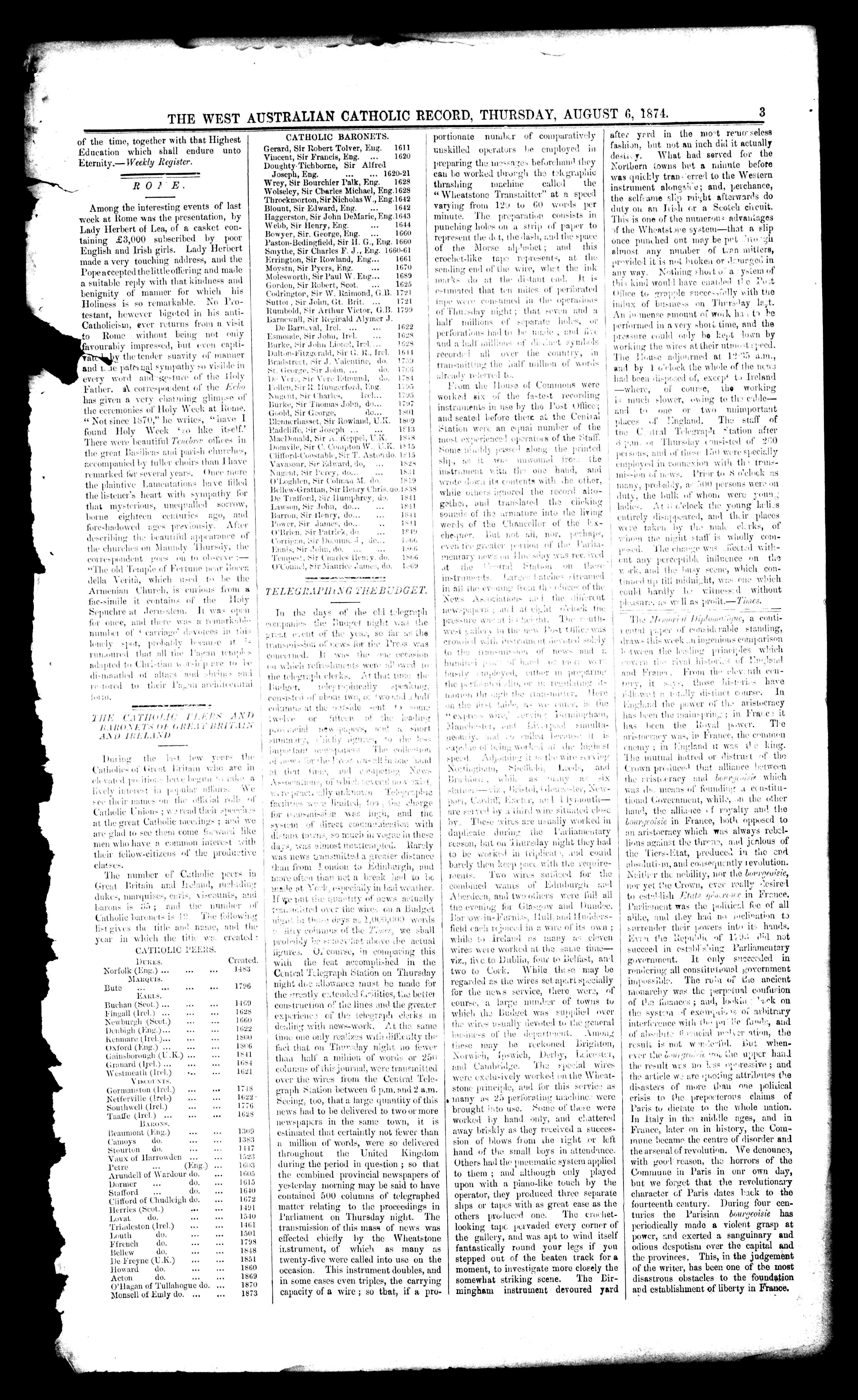
111E('.1T//(1!,/(, N1) 1;.11io).\1,7s (,1;E.1 11:1J-IND
Duiingthe114iewyiiersthe (':itholicsof iitliritiiiiiNvItoarcin vit 14,III4.;.-11.)hvgilii'.; a livelyinterest \Ve seetheir onthe ;alred,of CatholicUnions;w atthegreatCatholicmueiings;ten;we aregladtoseethemconicfii,ibizirdhike menwhohaveacommoninterest',int, theirfellow-citizensoftheinodui,+th-e chases. ThenumberofCatliohcpeersin GreatBritainandLeland, dukes,marquises,cords,viscounts,and baronsis ;andthenumberof Catholicbaronetsis!'thefollowing listgivesthttitleandpanic,andthe yearinwhichthetitlewe.created: CATHOLICPEERS. DUKES. Created. Norfolk(Eng.) 1483 11.4.1144:4s. Bute 1796 "' EARLS. Buchan(Scot.) 1469
Fingall(Lel.) 1628
Newburgh(Scot.) 1660
Denbigh(Eng.)... 1622
'Xenia:ire(Ire(.)... 18(101si, Oxford(Eng.)
Gainsborough(U.K.) 1811 (;ranard(lye].) 1684
1VestineatliOrel.)" 1621 Vis.oh-Xi4. Gorinamton Neffcr011e Southwell(Ire(.) Taalle . BxmiNs.
Beaumont(Eng.)
('annoysdo. Stourtundo. VauxofIlarrowden
Fetre (Eng.)
Arundellof\\*ardourdo.
Dormer do. Stafford do.
CliffordofChudleighdo.
hurries(Scot.)
Loyal, do.
Tri.oleston(Irel.)
Louth do. Ffrench do. Bellew do.
1)ePreyne(U.K.)
Howarddo.
Acton do.
O'llaganofTullahoguedo
MonsenofEallydo. 1748 1622
Wrey,SirBourchierPalk,Eng. 1628
Wolseley,SirCharlesMichael,Eng.1628
Throckmorton,SirNicholasNVEng.1642
Blount,SirEdward,Eng. 1642
IIaggerston,SirJohnDeMarie,Eng.1643
Webb,SirHenry,Eng. 1644
Bowyer,Sir.George,Eng. 1660
Paston-BedinglIeld,SirH.G.,Eng.1660
Smythe,SirCharlesF.J.,Eng.1660-61
Errington,SirRowland,Eng... 1661
Moystn,SirPyers,Eng. 1670
MoleswOrth,SirPaulW.Eng... 1689
Gordon,SirRobert,Scot. 1625
Codrington,SirW.11nitnoml,G.B.1721 Stith)],tiirJohn,Gt.Brit. 2 Rumbold,SirArthurVictor,G.B.11779111 liarncwall,SirReginaldAlymerJ.
DeBarnteal,Ire(. 1622
Estuoilde,SirJohn,!rel. 1628
Blake,SirJohnEhsiet,Irel.... I628 Dalton-Fitzgerald,Sirtt.R.,Ircl.1611
Bradstreet,Sir.1.Valentine,do. 17.-,A
St.George,SirJohn, do.171:6 ltVer..,sirVcreEdmund,do.17s1
I',lien,Sir1:.IItingerfor.1,Eng. 1','.t.;
Ntigint,sirCharles, Ire(.,, 1725
Burke,SirThomasJohn,do... 1797
Gorda,SirGeorge, do...lsof
Bleinierhasset,SirRowland,U.K.181,9 P.adeliffe,SirJoseph MacDonald,SirKeppel,U.K.lsiit Doinvile,SirC.ComptonW.,U.K.iS15 Clitioril-('unstable,SirT.Astondo.l15 Vavasour, 1i;dward,do, 152s SirPercy,do... l8.:1 (1'1,oglilen,SirColnianNI.do. Is:9 Bellew-Grattan,SirIlebryChris.uo.ls:t8 DeTrafford,SirHumphrey,do.1641 Lawson,SirJohn,do... 1S11 Barron,SirHenry,do... 11:1 Power,Sir do... 1.01 O'Brien,SirPatrick,do. c'ti Cortieioi, yCf°. s"i O'Coniiel,SirMauriceTione.1,do.1,69 TELEGRAPIhNGInk:BUDGET.
InthedaysofthiscliLiegropIt etiirtitiii,sthe;1114.q!efnightv..a.-3the .entoftheyea..,sofara!,idle transoissiiir. 101. 110 '11II;CI!1.011.1,111111.11(.5Wert'Itr the VICYkS.20thattur.,+_i I;(1.151:11, twzi, +0;1) colemeeatther.osideent.t ,11112 ...WI.''CI' Orfilfh:,,T. 10,t:1,1:11!ion', sirmin die tan+ Tho hiiisr ;Jae :it(lilt '!. 'X:t. rt' limited;lee yhorge ii.iusansi-si endtiie ,N-I ofdirecteamene.lieetieewith ta'.;11:,,somuchiiivogayinthese del waz+itimostiteattenyted.Rarely wasnewseeansmittedaoreaierdi:-:mice thanfrom1.onelontoEdinburgh,and hiore timenetabreak'it!'ltolie, (o.lieciaiiyinbadweather. Ifvienuttheenaotity(ifW.)WSth'thally ()V(.,:tilesir(!,onaBudget i(toyse.;_, columnsofthe weshall 1.a-+ ilititabovedieactual iigtires.v.couisc,;IIcomparingthis withthefeatacaimplishedinthe Central'1%,.legrapliStationonThursday nightdi;eellooeceeemusthemadefor theiTreittlycitelidedfl,^liities,thebetter constructionorthelinesandthegreater experience)oftheteiegrephclerksin dealingsvithnews-work.Atthesame timeoneonly difficultythe diedthatonThltridaynightaofewer thaahalfaIndian!.ofwordsor251; columnsofthinjournal,weretransmitted overthewiresfronttheCentralTelegraphSLationbetweenf,p.m.and2a.m. Seeing,too,thatalargequantityofthis newshadtobedeliveredtotwoormore newspapersinthesametown,itis escheatedthatcertaintlynotfewerthan amillionofwords,weresodelivered throughouttill)UnitedKingdom duringtheperiodinquestion;sothat thecombinedprovincialnewspapersof yesterdaymorningmaybesaidtohave contained500columnsoftelegraphed matterrelatingtotheproceedingsin ParliamentonThursdayeight.The transmissionofthismassofnewswas effectedchieflybytheWheatstone instrument,ofwhichasmanyas twenty-fivewerecalledintouseonthe occasion.Thisinstrumentdoubles,and insomecaseseventriples,thecarrying capacityofawire;sothat,ifapro-
afteryrrelinthereo-treenrseless fashion,butnotauinchdiditactually desti,y.Whathadservedforthe Northerntownsbetaminutebefore wasquicklytrane'erredtotheWestern instrumentalongsh"e;and,perchance, theselframe reih;htafterwardsdo dutyOhanhishoraScotchcircuit. Thisisoneofthenumeral=advantages iftheWheatstemesystem-thataslip oncepunchedoutmaybepet'11(iegh almostanyninaberofteenmittere, prevideditisnethtokeiior,1:-.31rgetlin allyway.Nothing,hostayetemof thiskindwouldhaveenabledV :it Owetoserepplesuece-si-idlywiththe inilnxofle:sine'sonThersJay Alliiiinensemountorwailshastobe performedinaveryshort,time,andthe proiee.irecouldonlyhekepthevnby workingthewiresattheirlitheL-pecd. l'heHouseniljoianeilat1.115a.m., andby1ohlockthewheleoftheBova hailbeeniihvieedof,excepthiIreland -where,ofcourse,theworking islunchslower,('wingtotherlldcand oneortwounimportant 11laces.fI:ngland. steffof tiwC_oralTelegraph''aationafter Thursiley(insistedofIA petsells,andoftlies1 wcri.specklly
1",5(11.'Sheclueneewe,li'ecteilwithcut perceptildeinfluenceillthe v.irk,andthelinsyscene,whichcontineedtiptillmidniett,weeonowhich couldhardlybewitness:(Iwithout pkninr;,., w(11asprede-Tieics. /h./deem:eine,acolitis cies',epeecon:rani°,standing,
portionatenumberofcomparatively unskilledoperatorsheemployediu preparingtheh12,SnrC,herOrthaffillthey canhoworkedthrorglithetelegraphic thrashing elachinecalledthe "WheatstoneTransraitter"ataspeed varyingfront12etoGOwindsper minute.Thepreparationconsistsin punchingholesonastripofpaperto representthedis,the!lash,end(liespace oftheloosetilpliabetandthis crochet-liketalerepresent,,atthe sendingendofthewire,wlirttheink dotitthediAmitcad,itis ostinigtedthattenmilesofperf:wated 1:111' C111,11111(41in1111'ITenti ofIlimisdaynightthatsevonanda halfmillionscifseparateholes,or perforationshadlelieiieJle andabelliaillioesofili, nibels reeoritealloverthecolliery,in transmittingthe;tall'millionofwords i.lradyre!erreilte. theHouseofCommonswere workedsixofthefi.t,te-trecording instrumentsinusebytheI'ostkMice; andseatedbeforethereattheCentral 'Stationwereaneqnainumberofthe mostex:ierienceloperatorsofthetitair. Some:I;'eh!)passedalongtheprinted slid, it151:-.unsuni,dlire!.:theimphiyeil 201111:,'Y1011 th vitnth"oia..band,andini inofnews.PriertitSo'clockas wrote,1,,w)itteententswith'lieother,tufty,Probahly, "tut(personswen-on whileoelere'.gnoredtherecordalto- thebulkof were"gun`; gethes,andtranelateilth3 eoesh,roftheArmatureintothelivingIn! ;;c'clocktheyounglielia u entirely(li,.11pp,.,are,l,andflairplaces wordsofrho(iliancellorofthehischequer.PAILnotelf,nor, wt takeebytie.malerks,of heelttonightstaffiswhollycoineveiiteegreater ofthelearne_ "IentarY !!!, red, atthe Stationontlieso instromeits. ,ireamed illall 1.11:11 efiices :SewsAs.of..iintions ithe at o'eloekfile iires,tire',Via- 1111. inIii:'11,1,'LotI)11iC,'IVils :I ,o1.,1, Ill':lw',tills to of.7..,1101 vvekii",-fehinuscolniarismi sveea,the eiineikleswhich 'n'TI(iy1)
!mono'tilt 11.e. 1101'0'10 11:e;tahle,it isfoe \01,';L'1".1) ;nnulla-
!Aeon:,y, ''21.1,11,'II !(i:111',..;Nit ,i;1111';l1"..111St 51,01,'11. itIIItleWire0,1') mai 1;1'i1hole as -ix stilt','.': 1I.1:imoutharcsetveilby,L wiresituatedcliee Thesewiresclee workedin duplicateduring,tilel'ailiamentary ecesun,butoil'ihuretlaynighttheyheel tobeworiceilinteiplieats, could barelythenhe,,,ppeccvrillttheecquireTvei\virus fluxthe e011111.111CIIV.i111.5 :roil Aherdeyn,andtautotherswerefullall tfieeveniligforGlasgiovrandMiidee. Pariow. midIlnild,irsfieldcaehrljeiccelinawireofitsOW ilreial!111,5manya':eleven wiresweteworkedatthesahletimeviz.,1iNctoHAIM,theetoiklfiist,and twotoCork.Whiletlesemaybe regardedasthewiressetalertspecially forthenewsservice,therewere,of course,alargeniiml_ieroftownsto whichtiroBudgetwass.,upplieilover thywiresusuallydevotedtieCiegeneral oftheihipartnient..lent, thesemayl)oreckonedBrighton, Norwieh,Ipswich, Lcieiseser, andCainbridge.fleeret'i'ehilwires wereexylusivelyworkedontheWheatstoneprinciple,andforthisservici.ias manyas25perforatingthaellineewere broughtintouse.Someofthesewere workedbyhandonly,andchattered awaybrisklyastheyreceivedasuccessionofblowsfromtherightorleft handofthesmallbuysinattendance. Othershadthepneumaticsystemapplied tothem;andalthoughonlyplayed uponwithapiano-liketouchbythe operator,theyproducedthreeseparate slipsortapeswithasgreateaseasthe othersproducedone.Theenielietlookingtapepervadedeverycornerof thegallery,andwasapttowinditself fantasticallyroundyourlegsifyou steppedoutofthebeatentrackfora moment,toinvestigatemorecloselythe somewhatstrikingscene.The.Dirminghaminstrumentdevouredyard
terv,Ite.s, thoselihoerieshave ihlheve eselly ostree.In 1.:iig1:,1,1thepoweroftit.'aristocracy hasbeenthenitiiiispriti,:;inFraLci;it lotshcntheIt,iyelliewer.The aristocracywas,inFrance,thecommon 1110141yillriiglraillitwns0oking. '1110mutualhatredordistrust the trial!preiluceilthatalliance thetirist,Airaeyandbo1+r:/c.,..5i,which was meansorfoundi0 ecnstittitionalC.overnment, theother hand,thealliaacefroyaltyawlthe boar:jeoisicinFrance,bothopposedto anaristocracywhichwasalwaysrebelliensage:lustthethrrn_aatljcnlousof theTiers-Etat,producedinthecad alslauti-111,andcoesequently'evolution. Neitherthenobility,lairthebovrgew'sie, noryettheCrown,evertrial,desire'! toestehlishEtcD inFr:nee. Paeliernentwasthepolieivelfoeofall alike,andtheyhadnoiodinationto surrendertheirpowersint.it:hands. Es':'ttheIfepii'ilieof1,9.;d;i1net succeedinestebl.shingParliamentary per/errr-lent.Itonlysliceeededin renderingallconstitetionelgovernment imposeiliksTheruhtoftheancient monarchywastheperpetualconfueion ofti,, ;anti, ''telkon thesysteia.ifexenetiekocarbitrary interferencewiththeye'1;efon(1;:,and ofalisolut,-i ',Gin,the resultisnotw Butwheneverthei',,segre,,-.16 Liteul)perhand theresultwrsnn1,:ssoperessive;and thearticleNY,'arequotingattrib'itssthe disastersofmorethanonepolitical crisistothepreporternesclaimsof Paristodictatetothewholenation. InItalyinthamiddleages,andin France,lateroninhistory,theCommunebecamethecentreofdisorderand thearsenalofrevolution.Wedenounce, withgoo+reason,thehorrorsofthe CommuneinParisinourownday, butweforgetthattherevolutionary characterGfParisdateshacktothe fourteenthcentury.DuringfourcenturiestheParisianbourgeoisiehas periodicallymadeaviolentgraspat power,endexertedasanguinaryand odiousdespotism-overthecapitaland theprovinces.This,inthejudgement ofthewriter,hasbeenoneofthemost disastrousobstaclestothefotesdation andestablishmentoflibertyinFrance.
4
THEWESTAUSTRALIANCATHOLICRECORD,THURSDAY,AUGUST6,1874.
HibernianAustralasianCatholic BenefitSociety.
AMEETINGofRomanCatholicsisherebyconvenedforFRIDAY,sthinst., at8.15p.m.,intheBoys'OldSchoolroom, forthepurposeofformingabranchofthe HibernianAustralasianCatholicBenefit SocietyinPerth.TheobjectsoftheSociety willbeexplained. FRAS.J.TOWNSEND, Hon.Secretary,protern. Perth,August3,1874.
SUBSCRIPTIONSinaidofthe BuildingFundofST.PATRICK'S Church,Fremantle:-
Printingofeverydescriptioncanbe executedattheOrphanagePress,and ordersforPrintingareearnestly solicited. Correspondenceonanytopicoflocalor generalinterestwillbeinsertedinthe columnsofthe"RECORD,"andcontributionsfrompersonsresidentinthe CountryDistrictsareinvited.
AllCorrespondenceforpublicationinthe "RECORD"mustbeaddressedtothe VeryRev.M.Gibney,Episcopal ResidencePerth.
1874.
PersonsdesirousofbecomingSubscriberstothe"CATHOLIC RECORD"candosoonapplica- tiontoMR.C.O'MAHONY,Perth.PersonsintheCountry DistrictscanbecomeSubscribers bygivingtheirnamesandpaying theamount:ofSubscriptionto theResidentClergymanofthe District:inwhichtheyreside. Perth,July2nd,1874.
(11111oilcaccord. "Beindefatigableinyourpurpose,andwith undauntedspiritresistiniquityandtryto conquerevilwithgood,havingbefloreyoureyes therewardpreparedfin-thosewhocombatfur thenameofChrist."-PiusJX.
THURSDAY,AUGUSTg,1874.
BoardinreferencetotheseSchools? Hesays:-"Mygeneralobservationson "theseveralsubjectsalludedtointhis "Report,applyequallytotheAssisted "andGovernmentSchools.Thesame "amountofsecularknowledgeisrequired "inbothcases."Suchbeingthefact, isitnotmanifestlyunfairandremark-ablyone-sided-togiveforthesame amountofSecularknowledgerequiredintheAssisted,aswellasintheGovernmentSchools,ONLYONE-HALFthe amounttotheformerwhichisgranted tothelatter?
Wefeelconvincedthateveryimpar- tialreaderwillunhesitatinglyconcur withusinopinion,that,astheState onlypaysfortheSecularknowledge impartedineitherGovernmentor AssistedSchools,thepaymentforsuch knowledgeshouldbeequalineither Schools;andwethereforeconfidently lookforward,atnodistantdate,to anemendation-inthisparticular point-intheEducationAct.
Ithas,however,beenspeciously arguedGovernmentSchoolsshouldhave privilegesoverAssistedSchools;and thatGovernmentSchoolsbeingmore immediatelyunderthenigofGovernment,shouldreceiveparticularmarks offavorandpatronage.
purelyGovernmentSchools,shouldbe paidforinanequalmanner.Having, aswehavedone,pointedoutclearlyandfranklythedefectsoftheAct,it mustnotbeconcludedthatweareb. anymeansunfriendlytotheElemen- taryEducationActasawhole;onthe contrary;theEducationActhasnow been viewinginworkaboutthreeyears,and, itsoperations,asshownbythe Inspector'sReport,itisincontestable theresultismostsatisfactory.We cordiallyendorsetheopinionofthe CentralBoardofEducation,andassert "thattheElementaryEducationAct "affordstotheinhabitantsofthiscolony, "iftheychoosetotakeadvantageofit, "andwillendeavourtocarryitout,a "reasonablemeansofinstruction,woes.- "Bibletonearlyall,ontermswithinthe "reachofallclasses."
aumnimilmomInpraimpern= AO" HALF-YEARLY.÷"XAMINATION" OFTHEPER/HBOYS'ASSIST- EDSCHOOL.
6MartinLahey...006
TIIEOrphanageCommitteethank- fullyacknowledgereceiptofa donationof£10from"R.N.,"perRev. P.McCabe,ManagerCatholicBoys' Orphanage,Subiaco. July,22,1874.
AUGUST.
9.-SUNDAY.XIafterPentecost.Ep.,Cor.zv. 1Mart. -10Gosp.,MarkNil.31-37.St.Emygdius,B. 10.-MONDAY.St.Lawrence,Mart.DayofDevotion. 14.-FRIDAY.St,Hormisdas,P.C.VigilofAs- sumption.FastandAbstinence. 15.-Sartioner.Assumptionofav.nary,Feast ofObligation. 18-sniper.XIIafterPentecost.Ep.,2COr. 4-9;Gosp.,Lukez.23.37. 19.-WCDNISDAY.St.Philumena,Virg.Mart. 20.-411138.13DAI.St.Bernard,Conf.Doct. 22,-SATURDAY.OctavedayofAssumption. 20.-SUNDAY.XIIIafterPentecost.Bp.,Gal 16-22;Gosp.,Lukexvii.11.19.St.Philip Benitius.Conf. 24.-MONDAY,St.AlphonsusdeLigouri,Conf.Die, M.-TUESDAY.St.Bartholomew,Ap.DayofDevot. 28.-FRIDAY.St.Augustine,B.Conf. 29.-SATURDAY.DecollationofStJohnth 1tapti.t
30.--SUNDAY.XIVafterPentecostEp.,GalV.16- 24Gov.,Matt.vi.24-83.St.RosedeLima,V. SEPTEMBER.
6.-SUNDAY.XVafterPentecost.Ep.,Gal.v.25, 26.-vi.1-10,(Soap.Lukevii.11-16.
8.--TuesDAY.Nativityof13.V.Mary.Dayof Devotion.0MARTINGRIVER.
ITisintendedtopublishthe"WEST AUSTRALIANCATHOLICRECORD" onthe6thofeachmonth,andasit willhavealargecirculationitwill proveanexcellentmediumforadvertising.
OURreaderswillbegladtolearnthat theGovernment,actinguponthesug-gestioncontainedintheReportofthe CentralBoardofEducation,have introducedandpassedintheLegislative Council,ameasure,bywhich,infuture, AssistedSchoolswillreceiveasagrant illaid,thesumofthirty-liveshillings percaput,andpurelyGovernment Schools,thesumofseventyshilling7. TothemanagersofAssistedSchools throughoutthecolony,theintelligence oftheincreasetothegrantinaidwill, wehavenodoubt,givepeculiarsatisfac- tionandwill,moreover,beyondquestion, actasastimulustoincreasedexertion ontheirparts,torendertheSchools undertheirimmediate'management,in everywaystillmoredeservingofcontidenceandpublicsupport. Havingsaidthusmuch,andwhile werecognizethesanctionofthe increasedgrantinaid,bytheLegisla- tiveCouncil,asanearnest.oftheir desiretotreattheAssistedSchools equitably,wewouldbewantinginour duty,werewenottopointout,thatthe fullmeasureofjusticehasnotyetbeen donetotheSchoolswhosecausewenow advocate.Toanyreallyimpartial person,itmustbeevident,thatthe paymentforthe"results"oftheEducationimpartedineitherpurelyGovernmentorAssistedSchools,asisshown bythe shouldInspectorofSchools'Report, beequal.Whyshouldthe TeacherofaGovernmentSchoolreceive FifteenShillingsforallpupilswho passtheprescribedstandardsinReading,Writing,andArithmetic,andthe TeacherinanassistedSchoolonly receiveone-halfoftheseamounts,viz.,SevenShillingsandSix-penceforeach subjectnamed?HavenottheTeachers inAssistedSchoolstoundergothe samepatientlaborandmanifestthe sameuntiringindustryastheTeachers inGovernmentSchools-andwhich,by theway,theymusthaveandbestow, too,uponthechildrenundertheir charge-toenablethemtopassthe severalStandardsoftheEducation Act?Why,then,incommonfairness,shouldtheynotreceivethesamereward fortheiranxiouslabors,asTeachers inGovernmentSchools? IsnottheSecularEducationimpartedin AssistedSchoolsequallygood,andofequalimportancetotheState,asthe Secularknowledgeimpartedtopupilsin GovernmentSchools?Whocandoubt it? WhatdoestheInspectorofSchools sayinhisAnnualReporttotheCentral
WewillconcedethatpurelyGovern- mentSchoolsshouldreceivepeculiar privilegeswhichshouldstamp.themas Governmental.And,isitnotafact, thattheydoatthepresenttime,andhaveenjoyed,sincetheintroductionof theEducationAct,privilegesdeniedto theAssistedSchools?Wewillname one,andthatoneisthemostimportant.PurelyGovernmentSchoolshavebeen, and,accordingtotheEducationAct, maybeerectedinanypartofthecolony outofPublicmonies;butwhatdoes thesameActsayinreferenceto AssistedSchools?Itsays,section3 "Nograntinaidforbuildingpurposes "shallbemadetoanyAssistedSchools." Surelysuchaclauseshouldsatisfythe greateststicklerforadistinctionbetwem aGovernmentandanAssistedSchool? ThepromotersofAssistedSchoolshave topayfortheerectionoftheirSchool Houses,while:GovernmentSchoolsare erectedatpubliccost.Isnotthata sufficientdistinction?TotheNlanagers ofAssistedSchools,thedistinction,in manyinstances,isbuttooappar,mtand real.
Again,GovernmentSchoolsenjoy anotherprivilege,notsharedLyAssisted Schools,andwhich,ofitself,makesthe distinctionbetweenthetwoSchools sufficientlyobvious.
Accordingtothetwenty-firstsection oftheEducationAct,Government Schoolsshall"receiveaproportionof "thepublicgrantforBooks,Maps,and "otherschoolappliances,notexceeding "onthewholethesumofFiveShillings "perheadontheaverageattendanceof "childrenabovetheageofFouryears "andundertheageofSixteen."The AssistedSchools,beitremembered, receivenosuchsumannually,farthe purchaseofwhatissoabsolutely necessarytothewell-workingofa School,viz.,apropersupplyofBooks andMaps.Isnotthissecondpeculiar privilegesufficienttomarkthedistinctionbetweenaGovernmentandan AssistedSchool? Thereisyetstillanotherprivilegeenjoy- edbyGovernmentSchoolsoverAssisted Schools,andthatis,thatacertainsum ofpublicmoneyisannuallyspentfor thepurchaseanddistributionofPrizes topupilsattendingpurelyGovernment Schools.Prizesforpupilsattending AssistedSchoolshavetobepurchased bytheManagersthereof.
Wehavesaidenough,wefeelconvinced,toprovethatthedifference betweenaGovernmentandanAssisted Schoolissufficientlywellmarked;and, indoingso,wefeelwehavealsoclearly showntherealinjusticeofonlyallowing AssistedSchoolsone-halfthesumfor thesecularknowledgeimpartedtherein which,ashasalreadybeenstated,must beequaltothatgiveninGovernment Schools-toenablethemtoobtaineven theirpresentportionofGovernmentaid.
Allweaskorcontendforisthatthe"secularknowledge"withwhichalone theStatecaninterfere,andforwhich alonetheStateprofessestopay,being equallygoodintheAssistedasinthe
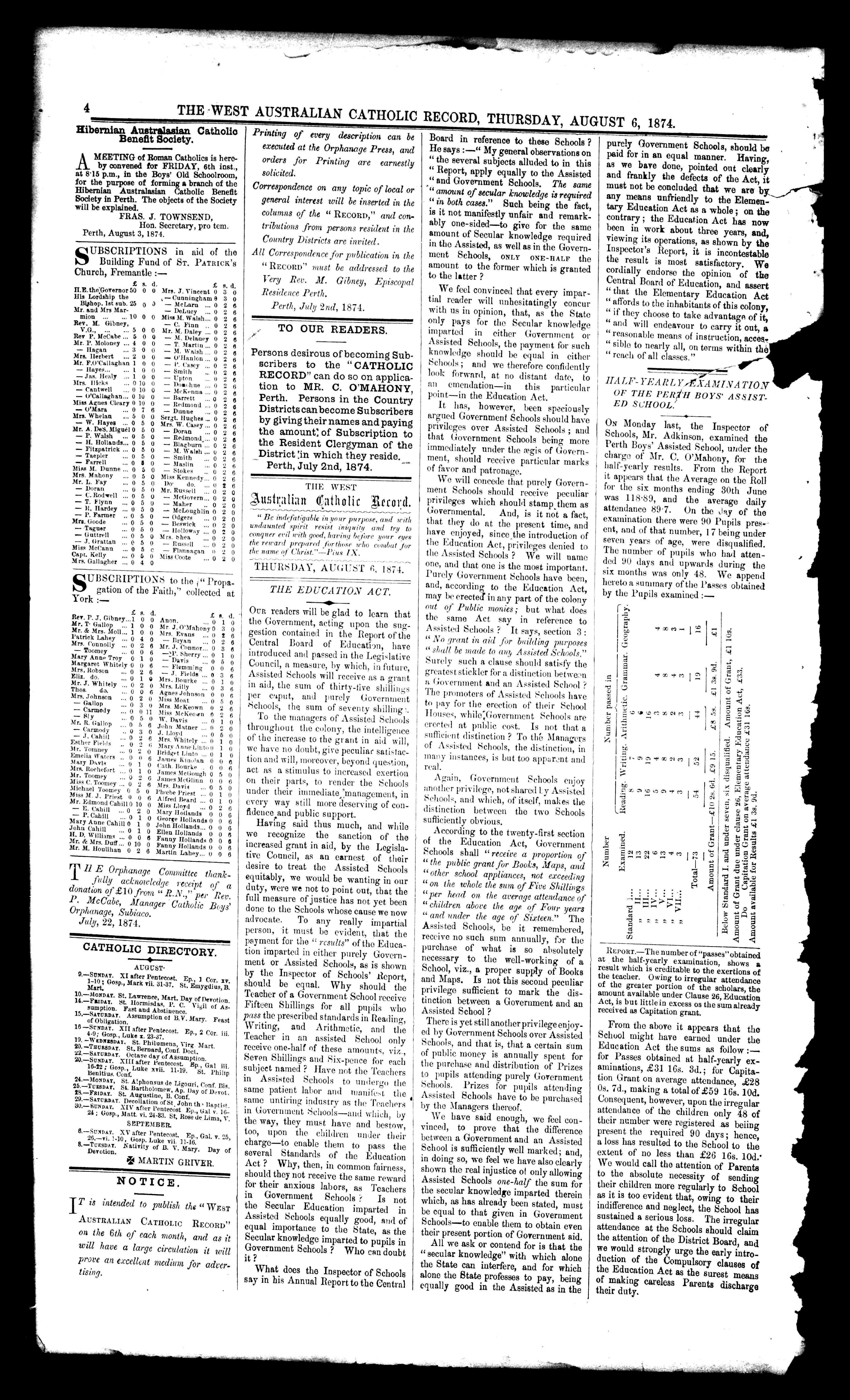
ONMondaylast,theInspectorof Schools,Mr.Adkinson,examinedthe PerthBoys'AssistedSchool,underthe chargeofMr.C.O'Mahony,forthe half-yearlyresults.FromtheReport itappearsthattheAverageontheRoll forthesixmonthsending30thJuno was118.89,andtheaveragedailyattendance89.7.OntheJayofthe examinationtherewere90Pupilspres-- ent,andofthatnumber,I7beingunder sevenyearsofage,weredisqualified.Thenumberofpupilswhohadattended90daysandupwardsduringthesixmonthswasonly48.Weappend heretoasummaryofthePassesobtained bythePupilsexamined:-
0
REroar.-Thenumberof"passes"obtained atthehalf-yearlyexamination,showsa resultwhichiscreditabletotheexertionsof theteacher.Owingtoirregularattendance ofthegreaterportionofthescholars,the amountavailableunderClause26,Education Act,isbutlittleinexcessosthesumalready receivedasCapitationgrant.
Fromtheaboveitappearsthatthe Schoolmighthaveearnedunderthe EducationActthesumsasfollow:- forPassesobtainedathalf-yearlyexaminations,£3116s.3d.;forCapita- tionGrantonaverageattendance,£28 Os.7d.,makingatotalof£5916s.10d. Consequent,however,upontheirregularattendanceofthechildrenonly48of theirnumberwereregisteredasbeiing presenttherequired90days;hence, alosshasresultedtotheSchooltothe extentofnolessthan£2616s.10d. WewouldcalltheattentionofParents to theirtheabsolutenecessityofsending childrenmoreregularlytoSchool asitistooevidentthat,owingtotheir indifferenceandneglect,theSchoolhas sustainedaseriousloss.Theirregular attendanceattheSchoolsshouldclaim theattentionoftheDistrictBoard,and wewouldstronglyurgetheearlyintro- ductionoftheCompulsoryclausesof theEducationActasthesurestmeans ofmakingcarelessParentsdischarge theirduty.
WESTAUSTRALIAN
THEGOVERNMENTANDTHE ORPHANAGES.
WErejoicetoannounce-andour eaderswillshareinourjoy-thatthe kivernmenthaverescindedtheHon. '.vileColonialSecretary'sletterofthe 1stJulyintimatingthatonandafter the1stinst.theratetobeallowedfor themaintenanceoftheOrphanchildren, wouldliereducedfromEIGHT-PENCE toSIX-FENCEperdiem.TheGovernment,welearn,findingthereportwhich hadinducedthemtopurposereducing theallowanceforthemaintenanceofthe Orphanchildren,containedseveral inaccuracies,promptlyrescindedthe lettertowhichwehavereferred,and which,ascanbeeasilyunderstood, /causedatthetimesuchchagrintothe ___Mt_nagersoftheOrphanages.
GOVERNORWELD.
WEgivecurrencytotherumour thatHisExcellency_hasbeenappointed GovernorofTasmania.Atthepresent junctureinourpoliticalaffairsHis Excellency'sdeparturewillberegretted byeverywell-wisherofWestern Australia.
fRontbinjottutgo.
CHARITABLEINSTITUTI0N8.-Duringthe presentSessionoftheLegislativeCouncil, theGovernmenthavebroughtforward ameasureinreferencetoCharitableInstitutionswhichisofthehighestimportanceto theirsuccessandfuturewell-being.Bythis measure,certifiedManagersorDirectorsof anySchool,Orphanage,orotherInstitution formedforthepurposeofprovidingfor andeducatingnecessitouschildren"havethe completecontrolandmanagementofchildren entrustedtotheircare,andhavenow,bylaw, fullpowertoapprenticechildrentotradesor toplacethemasdomesticoragricultural servants.Thereisanotherusefulprovision givingpowertoMagistratestosendtoany SchoolorOrphanagethechildrenofwomen who,fromintemperateorbadhabits,have becomeunwillingorareunabletomaintain them.Theusefulnessofthismeasurehas beenstillfurtherenhancedbyalsogiving Magistratespowertocommitjuvenile offenderstoeitheroftheOrphanagesnow established.WethinkthatourGovernment aredeservingofthanksfortheintroduction ofameasuresocalculatedtobenefit CharitableInstitutionsandtostrengthenthe hads,asitdoes,oftheManagersthereofin thedirectionofsuchInstitutions.
RECORD,THURSDAY,AUGUST6,1874. 5
havingconsultedthemembersofhisCommittee,theDeanarrangedthataunited deputationoftheOrphanageCommittees shouldwaituponHis'Excellency.Justat themomenttheDeputationwerestarting upontheirbenevolentmission,anotewas receivedfromHisExcellencytotheeffect that,findingthattheReportwhichhad inducedtheGovernmenttocometothe conclusiontheyhadhadinreferencetothe Orphanagescontainedseveralinaccuracies,it wasHisExcellency'sintentiontorescindthe letterofthelotJulyandcontinuethegrant inaidasheretofore.
CATHOLICYOUNGMEN'SSOCIETY.-At thehalf-yearlymeetingofthisSocietywhich washeldonthe17thJulythefollowing personswereelectedoffice-bearersforthe currenthalf-year.President,Mr.J.T. Reilly;Vice-President,P.A.Gugeri,Esq. Secretary,Mr.M.Mannix;Treasurer,Mr. T.Cunningham.Committee,Messrs.F. Townsend,W.Flanagan,J.Cunningham,M. Regan,C.Glasson,andH.Kingston.
\CHURCHEXTENSION.-Fromthesubscriptionlistwhichwepublishinanothercolumn ourreaderswillperceivethatitiscontemplatedtoenlargeSt.Patrick'sChurch, Fremantle.Tendersforcarryingoutthe proposedworkhavebeeninvited,andasa considerablesumwillberequiredtocomplete theplanadopted,subscriptionsareearnestly solicited.
THECEMETERY.-Wewouldcallthe attentionofourfriendsandreaderstothe necessityofdoingsomethingtowardsclearing andalsodoingevenalittleinthewayof ornamentingthePerthcemetery.There arefewwhovouldbeunwillingtocontribute towardssuchanobject,andastheneatness ofthecemeteryis,inameasure,indicative ofouresteemandrespectforourfriends whoarerestingthere,wetrusttheworkwe suggestwillnolongerbedelayed.
II.A.CATHOLICBENEFITSOCIETY.-We woulddrawtheattentionofourreadersto theadvertisementconveningameetinginthe BoysSchoolHouseonFridayevening,next, at8.15p.m.,toconsiderthedesirabiliiyof formingaBranchoftheaboveSocietyin thiscolony.
sroxinaixGOVERNMENT.-TheGovernmenthaveintroducedaBilltoestablisha ConstitutionforWesternAustraliaandto grantaCivilListtoHerMajesty.TheBill isnowunderdiscussionintheLegislative Council.
..)c,RAILWAYTOTHEEASTERNDISTRICTS.FromthereportofthesurveyoroftheproposedlineofRailwayfromtheMetropolis totheEasternDistricts,itappearsthatthe costofconstructionwouldamountto£500, 000,andtheinterestthereonto£35,000per annum.DesirableasaRailwaytothe EasternDistrictsundoubtedlyis,itisquite obviousthatthecolonyisnotinaposition toborrowsolargeasum;indeed,we questionwhethercapitalistscouldbefound whowouldbewillingtoadvanceWestern Australia,flourishingassheundoubtedlyis, solargeanamount.Ourfriendsinthe EasternDistrictswill,underthesecircumstances,havetopatientlywaitforthe constructionofaRailwayuntilsuchtimeas ourRevenuehasstillfurtherincreased,and theColonygenerallyhasattainedsucha positionofimportanceaswillenablethe Governmenttoenterthemoneymarket withconfidenceandadvantage.
CROWNLVNDSANDSURVEYS.-Froma ReportonCrownLandsandSurveys,presentedtotheLegislativeCouncil,welearn thatthevalueofthelandsetapartforthe useofthevariousdenominationsduringthe year1873wasasfollows:-Churchof England,£1,823;CatholicChurch,£764los.; WesleyanMethodists,£168I5s.Presbyterians,£21.
mayberenderedtothembysendingatImperialcost asupplyofthatlaborwhichissourgentlyneeded. TheCouncilconfidentlyasksthisbooninthefaith that,hadtheybeenableduringthecontinuanceof theconvictsystemtoabsorbthelabornowrequired. itwouldhavebeensuppliedatImperialandnot Colonialcost,andthatthepresentwill,inallprobability,bethelastrequestforassistancethatwillbe preferred-bythisCouncilforsuchapurpose.
6.-ThisCouncilrecommendsthattheclauseinthe Reportrelatingtotheencouragementtobeofferedto European.toproceedtothiscolonyfromtheEastern coloniesbeconfinedtoemigrantsIntroducedby privatepersonsinthiscolony,andbenotintendedto applytoanysystemofimmigrationtobetarriedout bytheGovernment.
7.-ThattherefundoftenshillingsamonthproposedtoberecoveredfromEuropeanemigrants shouldnotbemade,assuchacourse,intheopinion oftheCouncil,wouldhaveadeterrenteffectonpersonspurposingtoemigratetoWesternAustralia. 8.-Thatnogrerteramountoflandthan150acres beallottedtoanyonefamily.
MEETINGOFTHEORPHANAGECOMMITTEE.
-AmeetingoftheOrphanageCommittee washeldattheEpiscopalResidenceon Sundaythe5thJuly,toconsideraletter whichhadbeenreceivedfromthelion.the ColonialSecretary,intimatingtheintention oftheGovernment,onandafterthe1stof Augustnext,toreducetheamountinaidof theOrphansfrom8d.to6d.perdiem.There werepresentHisLordshiptheBishop, Messrs.J.T.Reilly,J.Scollard,J.A.Lucas, J.Corbett,J.Farrelly,J.Nunan,andW. Barron.HisLordshiptheBishophaving readtheletterreferredtofromtheColonial SecretaryinvitedtheopinionsoftheCommitteeastothestepsthatshouldbetaken todissuade,ifpossible,theGovernment fromcarryingthispurposeintoeffect.The Committeewereunanimousincondemning theintendedactionoftheGovernment,and afterconsiderabledeliberationthefollowing Resolutionswereagreedtonemcon:-
1.-"ThattheOrphanageCcmmitteehavingread withregrettheHon.theColonialSecretary'sletterof thelotinst.,conveyingtotheVeryRevSI.Gibney theintentionoftheGovernment,fromandafterthe 1stofAugustnext,toreducetheamountgivenin supportoftheOrphanChildrenfrom11011T-PINCIIto six-PINBEperdiem,wouldrespectfullyrequesttobe furnishedwiththeparticularsofthecalculation uponwhichitisassumedthatthecostofmaintainingOrphanChildrenintheGovernmentPoorHouse wouldnotexceedthesumofSIX-Pisesperdiem."
2.-"ThattheCommitteestronglyurgethecontinuanceofthepresentGovernmentallowance, becausedependingastheydiduponthepermanency ofthatsupport,theyhaveundertakenworks,and enteredintocontractsforsuppliesduringthecurrentyear,andhence,iftheGovernmentstipendis reduced,itwillseriouslyembarrasstheCommittee, andoperatemostinjuriouslyonbothOrphanages undertheirmanagement."
3.-"ThattheCommitteerespectfullyrequestHis ExcellencytoreconsidertheintentionoftheGovernmentasexpressedintheHon.theColonialSecretary's letterofthe1stinst.,andtocontinuethesnpportto Orphanchildrenasheretofore,viz.,8,1perdiem.
4.-0ThataDeputationconsistingoftheRev.P. McCabeandMessrs.J.T.ReillyandLucasbe appointedtowaituponIllsExcellencytheGovernor andrequestHisExcellencytobepleasedtofavorablyconsidertheforegoingResolutionswhichthe Committeehaveunanimouslyadopted."
AstheproposedmeasureoftheGovernmentinreferencetotheOrphanageswould equallyaffecttheManagersoftheProtestantOrphanages,itwasfurtherresolved thatMr.J.T.Reillyshouldberequestedto callupontheVeryRev.DeanGegg,and requesttheManagersoftheProtestant Orphanagestojoinanumberofdelegates fromtheCatholicManagers,andforma uniteddeputationtowaituponHisExcellencyandprotestagainsttheproposed reductionintheamountheretoforegivenin aidoftheinmatesoftheOrphanages.Mr. ReillyaccordinglywaitedupontheDean who,wearegladtosay,atonceexpressed hiswillingnesstojoinourCommitteeforthe purposeinview,andaccordinglyafter
DISCOVERYOFGoi.n.-TheHog.the olenialSecretarynotifiedtotheLegislative Councilthat,bythelastColonialmail,the 3overnmenthadreceivedacommunication fromMr.Eloms,oftheRoyalMint,Sydney, statingthatthepieceofquartz,weighing17 lbs.,receivedfromCapt.Stirling,R.N.,and forwardedforanalysisbytheGovernmentof WesternAustralia,wasfoundtocontain 255-1000ofanounceofstandardgold,being attherateofthirty-three(33)andsixtenthsofanounceperton.
-
THEWESTERNAUSTRALIANBANK.-Tile
WesternAustralianBankisoneofthemost flourishingInstitutionsofwhichthecolony canboast.Fromthehalf-yearlyReportof theDirectors,recentlypublished,itappears thattheoperationsoftheBankharebeen verysuececsfulandaDividendattherate oftwenty-fivepercent,perannum,onthe capitalinvestedhasbeendeclared.
POSTOFFICESAVINGSBANK.-Amongthe manypracticalmeasureswhichhaverecently beenintroducedbytheGovernment,the Billwhichpermitstheaccumulatedcapital ofthePostOfficeSavingsBankbeinglent onMortgagetoMunicipalCouncils,isnot theleastdeservingofnotice.Thereare manyusefulandprofitableworkswhich Municipalitieswouldundoubtedlyhave undertakenweretheyempoweredtoborrow andcouldtheyalsohaveobtainedthe requiredcapitalonmoderateterms.We lookuponthisconcessiontoMunicipalities asonewhichwillresultingoodtothe Colonygenerally.
HARBORIMPROVEMENTSATFREMANTLE.-
THEFINANCIAL.STATEMENT.-Thelion. theColonialSecretaryinhisFinancialStatementwhichheplacedbeforetheLegislative Councilafeweveningssince,gaveamost satisfactoryaccountofthepresentposition andfutureprospectsofthecolony.Every industry,theColonialSecretaryproved,was inamostflourishingcondition,anditwas owingsolelytothewantoflaborthatothers, whichwerenamed,werenotprosecutedwith moreenergy.TheRevenueatthedisposal oftheGovernmentexceeds£50,000,andis farbeyondanysuchsumheretoforeatthe commandoftheGovernment.'Iherecanbe nodoubtthattheColonyduringthepast fewyearshasmadeconsiderableprogress, andthereiseveryreasontohopeforabright futureforWesternAustralia.TheGovernmentverynaturallyfeelpleasedatthe successfulresultoftheadministrative measureswhichtheyhaveintroduced,andof theundoubtedprosperitytheColonyhas reachedundertheirregime.ThesurplusRevenueitisproposedtoexpendas follows:-Immigration,£10,000;Telegraph Extension,£15,000PublicWorks,£10,000; InterestonPublicLoan,£10,000;Miscellaneous,£7,500;-Total,£52,500.
THELEGISLATIVECOUNCIL:Weextract thefollowingfromtheHerald:TheColonialSecretary(July27)laidonthetable aletterreceivedfronkair.Joubert,lionSecretaryto theNewSouthWalesAgriculturalSociety,seeking theco-operationofthiscolonyinorderthatafairrepresentationofAustralianproductsbemadeatthe World'sExhibitiontobeheldatl'hiladelphiain1878. TheColonialSecretaryalsoplacedonthetable.for theinformationofhon.members,aletterfromSirJ. IV.PloosVanAinstel,theNetherlandsConsul-General,atMelbourne,andtheagentthereoftheNetherlands-IndiaSteamNavigationCompany,expressing ahopethattheCompanywouldbeabletoacceptthe oilermadebythisGovernmenttopromotedirectcommunicationwiththeNetherlandsbygrantingthe CompanyremittanceofharborandlightduesconditionallyupontheirsteamerscallingatFremantle. TheColonialSecretaryreadandlaidonthetable,a letterreceivedbytheGovernmentfromMessrs. SiemensBrothersofLondon,askingfortheexclusive righttolaudasubmarinetelegraphcableorcables, ontheWesternorNorth-Westernseaboardofthis colony,forthepurposeofestablishingtelegraphic communicationwithEuropeandIndiaandallother placeswhichcanbereachedbycablefromtho WesternorNorth-Westerncoastsofthecolony. Messrs.Siemensrequestthatthisrightbegranted foratermof,say,15yearsfromthedateofestablishmentoftelegraphiccommunicationwithIndia,the firmtocommenceactiveoperationswithinthreeyears fromthrdateoftheconcession,indefaultofwhich theconcessiontoberevoked.
SixTHOUSANDPOUNDSPERANNUMSAVED
Thereisaremarkableunanimityofpublic opinioninreferencetothenecessityof makingtheportofFremantleasafeonefor vesselsatallperiodsoftheyear;butthere isanequallynoticeabledifferenceofopinion astowhatthenatureorcharacterofthese improvementsshouldbeandoftheultimate costthereof.Whileeveryoneisagreedthat improvementsareabsolutelynecessary,no twoareagreedastowhat,when,orwhere theloudlycalled-forimprovementsshouldbe undertaken.Thisdivergenceofopinionis toberegrettedas,beyonddoubt,thecomparativeinsecurityofourportdoesmaterially affectthetradeofthecolonyand,untila perfectlysafeportisconstructed,itwillmar inagreatmeasurethegoodresultstobe anticipatedfromhavingdirecttelegraphic communicationwithEurope,India,and China.Thereisnoquestionthatwhenthat much-desiredworkisaccomplished,Fremantlewouldbemadetheportofcallfor "instructions"bymastersofvesselstrading withAustralia,India,andChina.Weare gladtosaythattheLegislativeCouncilhave votedasumof£5,000forHarborImprovemeats,andwesincerelytrustthattheplan whichtheLegislaturehaveadoptedwill renderFremantlewhateverycolonistdesires toseeit-aperfectlysafePortforvesselsat allseasonsoftheyear.
TELEGRAPHEXTENSIONTOEUCLA.-The *estimatedcostofconstructingtheTelegraph linefromAlbanytoEuclahasbeensetdown at£28,500,andiftheworkisundertakenat once,itisconsideredthatthelinewillbe openbytheendof1876.Theadvantagesto theColonyoftiirectTelegraphiccommunicationwiththeworldatlargeisincalculable.
ComteLABOR.-Theverygreatdearth ofservants-bothdomesticandagricultural -forsometimepast,andtheapparent difficultyofinducingaflowofsuitable Immigrationfromthemothercountryhas causedmanypersonstoturntheirattention tosupplyingthewantsogenerallyfeltby theintroductionofanumberofCooliesfront India.Oneortwomeetingshavebeenheld togivethepropositionpracticaleffect,and morethanonememberoftheLegislative CouncilhasexpressedIsiswillingnessto supportaschemeofCoolieImmigrationin theCouncilChamber.Theseexpressionsof publicopinioninducedMr.WallaceBickley, who,formanyyears,heldhighofficial positioninIndia,toforwardtoHisExcellencytheGovernor,aMemorandaonCoolies andCoolielabor. Whateverfavorable opinionmayhaveheretoforebeenentertained anentCoolieImmigration,wehavenohesitationinssyingMr.Bickley'sableMemoranda musthaveentirelydissipated.Mr.Bickler irrefragablyprovesthatCoolieImmigration wouldbemostexpensive,and,further,that Coolieswouldnotbecomepermanentsettlers. Wearegladtohavetheopinionofsucha competentauthority,sowellputforth,on themuchtalked-ofquestionofCoolielabor. Onsocialgrounds,alone,weconsiderthe adventofanyverylargenumberofCoolies mostundesirable.
IMMIGRATION.-ThefollowingResolutions inreferencetoImmigrationtothisColony havebeenadoptedbytheLegislativeCouncil, andastheyareoftheUtmostimportanceto everycolonist,wehavemuchpleasurein placingthembeforeourheaders:-
1.-Thatwithaviewtosecureasupplyofemigrants fromEnglandwithaslittledelayaspossibleHis ExcellencytheGovernorberequestedtotakeimmeuiatemeasurestosendforasupplyofnominated emigrants,notexceedinginallfourhundredstatute adults.
2.-ThatHisExcellencybefurtherrequestedto clusesuchinformationonthissubjecttobecireulatedthroughoutthecolonyasmayensurenominationsbeingreceivedinPerthpriortothedepartureof themailfurEnglandonthe13thproximo.
3.-Thatnonominationsbereceivedexcepton printedformstobeobtainedineachdistrictofthe c°41o-nyltbeingevidentthatlaborfromEnglandcannotarriveinthiscolonyintimetobemadeavailable forsecuringtheensuingharvest,thisCouncil recognisestheadvisabilityofassistingthecolonists inprocuringChineseorJavanesecoolies,andprays HisExeollencytheGovernortosanctiontheexpenditureofasumofmoneyforthispurposenotexceeding 11000.Thissummay,intheopinionoftheCouncil, beproperlyexpendedbyacommitteeofcolonists, whoshouldactasabodyofprivategentlemen,whose proceedingsshould,however,besubjecttothe approvalofHisExcellencytheGovernor.
TOTHECOLONY.-011Treaderswilllearn withpleasurethat,thankstohisExcellency theGovernor,theColonyhasbeensavedthe expenditureofanannualsumforthe maintenanceofre-convictedConvicts,which couldnotbesetdownatlessthanSix ThousandPounds.Howthisexpenditure wouldbeincurred,andhowHisExcellency hassucceededinrelievingthecolonytherefrom,issuccinctlystatedbytheHon.the ColonialSecretaryinhislate"Budget Speech,"asfollows Itmaybeintherecollectionofhon.membersthat oneofthelastthingsdoneinthegeneralsessionof thisCouncillastyearwastoaffirmaresolution relatingtothetransferoftheConvictDepartment, withtheviewofstrengtheningiliaExcellency'shands inthenegotiationspendingbetweentheImperialand theColonialGovernmentsinthematter,regarding thetransferofthatdepartmentintoourhands.in accordancewiththatresolutionHisEcellencysubmitte1aschemefurtheconeideratonoftheHome Government,whichpresentedgreatadvantagestothe HomeGovernmentandtothiscolony,andananswer wasonlyreceisedbythemailthatcameinafew daysago.Imaysayingeneraltermsthatthe ImperialGovernmenthasnotthoughtrighttogive uptheentirecontroloftheConvictDepartment,but thatsomeveryimportantchangesarecontemplated. Itmayalsobeborneinmind,-Iknowsomehon. membersareawareofit,ai.d1thinkIhintedatthe matteratthetime-thatveryheavydemandshad beenmadeonthisColonyforthemaintenanceofa largenumberofprisonerswhohadhithertobeen maintainedoutofImperialfunds-theru posed tobeenforcedherebeingthesameadiseenin operationinTasmaniaunderasimilar,stem, thatallconvictswhohadreceived-conditional pardons,orbecomefree,byservitudeifre-convicted aftertheexpirationofoneyearfromsuchdate, becamechargeabletocolonialfunds.Ineednotsay thatthereareagreatnumberofmenwhohave beenre-oonvictedwithinaperiodverylittlebeyond twelvemonthsaftertheirliberation,andthatthe maintenanceoftheminvolvesaverylargeexpenditureofmoney-amuchlargersumthanthiscolony couldaffordtopay.Theannualcostofmaintenance andsupervisionalonewouldbeaboutMOOor £8,000.Thequestionofthemaintenanceofthisclass hasbeenpersistently-Iwillnotsayfought,thatis perhapsanimproperterm,butarguedoverandover againbyHisExcellencytheGovernor,andIam gladtobeabletosayhereto-nightthatIllsExcellencyhasatlastsucceededinrelievingthecolony fromthatcharge.Itiscontemplatednowbythe ImperialGovernmenttoconfinetheConvictDepartmenttotheConvictPrisonatFremantle,and arrangementsarepenningwiththeviewoftransferringtothecolonytheotherportionsofthe department.Propositionswillbesubmittedtothe SecretaryofStatewithaviewtoonegeneralpayment beingmadetothecolonyinrespectofallservices outsideFremantlePrison,connectedwiththedepartmentbythisImeanthepolice,magistracy,clergy, andthemedicaldepartmentsothat,infact,the convictdepartmentitselfshallbeconfinedentirelyto theprisonatFremantle.Havingbeenrelievedfrom theclaimforthepaymentofthementowhomIhave justalluded,1thinkhon.memberswillagreewith melaacknowledgingtheliberalspiritinwhich LordCaruarvonispeeparedtodealwiththiscolony inrespectofthesameclassofpersonsforthefuture, whenIstatethathislordshiphasrelaxedtherule whichobtainedinTasmania,andwhichhasbeenin forcehere.Withreferencetomaintenancebythe colonialGovernmentofallprisonersre-convicted subsequenttotwelvemonthsaftertheirliberationno chargewillbemadetillafterthe1stApril,1875. Fromthatdatethetermistobeextendedtothree years.Theeffectofthisliberalconeession,-andI amsuretheHousewillagreewithmeinthepropriety ofthatterm,-willbethataconvictwhosesentence expiresin1875,willnot,evenifreconvicted,become chargeabletocolonialPandauntiltheyear1878.By thatyearitmaybepresumedthenumberwillhave sodwindleddownastobeofverylittleburdento thecolony,andIlookuponthisarrangementonthe partoftheImperialGovernmentasalmostavirtual abandonmentoftheirclaim.IrepeatIamsureall willacknowledgetheliberalityofthenoblelordat theheadoftheColonialOffice,EarlCarnarvon,and IalsothinkyouwillagreewithmewhenIsaythat muchisduetoGovernorWeldforhispersistent effortsonbehalfofthecolonywithregardtothis convictquestion,effortswhichatlasthaveresulted intheabandonmentofaveryheavyclaimuponthe colony.Imayalsosaythataportionofthecostut thefamiliesofconvictswhomaybecomeburdenson publicfundswillbepaidbytheImperialGovernment."
5.-ThatintheopinionoftheCouncilanhumble addressbepresentedtoHisExcellencytheGovernor prayingthathewillbringunderthenoticeofHer Majesty'sSecretaryofStatefortheColoniesthegreat wantoflaboratthepresenttime;thathewillpoint outthatthecolonistsarewillingtomakegreatsacrificestoprocuresuchlabor;thattheyarenowina positiontoabsorbalargernumberofimmigrants thanatanyformerperiodinthehistoryofthe colony;andthattheyhumblypraythatassistance
MAILNOTICE.-ThenextmailsforGreat Britain,theEasternColonies,&c.,willbe closedesfollows:-GeneralPostOffice, Perth,onThursday,August13th,atl1a.m.; atGeraldton,ChampionBay,onMonday, August10th,at2p.m.atFremantle,on Thursday,Augustlath,at2p.m.;atBunbury,onFriday,August14th,at9a.m.;*at Buaselton,onFriday,August14th,at2p.m.
h1tO-h.DUPANLOUPONTEL PROPHECIES.
Thefollowingisatranslationofthe openingpassagesoftheremarkable letterrecentlyaddressedbytheArchbishopofOrleanstotheclergyofhis Dioceseoncertainpropheciespublished intheselatertimes:-
i1.;111
CATHOLICRECORD,THURSDAY,AUGUST6,1874.
nolongerwitnessstrikingAttestations ofDivinepowerandgoodness?On thecontrary,whenundertheinfluence ofgreatmisfortunes,andunderthe inspirationsofgrace,areligionsmovement,umnifestsitself'inanyageor country,whensoulsturnthemselves towtulisGod,and,lookinginurethan everupwards,addresstoHeavenwith fervent,anxioushearttheirsupplicationsandtheirrepentance,isitnot thatCodwillbedisposedto respondtothemwithmoreespecial favours? Ste.11 questlenspresent tleenselvestous,gentlemen; and beforethismultitudeofsupernatural menifestations,whichitaphears ditlirulttorejectortoacceptwithout dieeerninont,:sinceresouls,whodesire toheneitherrebelliousnordeceived, themselvestroubledandanxious, andtheyseekfursomedirectionto glidethem.TheChurchwillnot refusesuchitdenn,11,1,andI,li,rmy part,eiatioforwardto(Milittoyou, gentletocii,antiti.thefaitiii,11ofiny inAlldoingIhavenoother desirethantofurnishyouwithgood amttoinspireyouwith predence.Thisgreatvirtue,sooften anddisdained,althoughit istheiirstofthecardinalvirtu(and i,1.,,on.led,besides,uponthe sense of(1111-flails,andtheformaipri-ecip_ tawsoftheChurch,can 111,1;,,le surf'readhefeteet,the
becausetheyarepiousinappearance? Andisitnotlikelythatreligionmay havetosuffer,especiallyinanagelike ourown,fromtheseexcessesof credulity,whicharethemselvesthe reactionsofanexcessofincredulity andscepticism? "'Thus,then,weseethatifinsuper- naturalthingsitissenselessandimpious torejecteverythingonprinciple,so,on theotherhand,tobelieveeverything wouldherashandsuperstitious.In fact,therearepersons,soweak-inifided, orsubadlyinstructed,thattheytake forasignofpietyorzealthedisposition tocredulousbelief.\Veil,gentlemen, agreatsaint,who,assuredly,wasnot amai.oflittlefaith,butwhoItIICIV wellthedangerandliabilityofillnsien,St.li'rancisofL'utics,willSayto How roomthereisfordoubtin theseextraordinarythin:_rs.'liecite:, stenewlereinhis'series,auneteideiting exampleinregardtoaWilluithe whopietendeltohavehail special.eielaiion.s,111111,Wit1unitIhrONViligany11011111.,uponthegoodfaithof thereligious,butthewisehtiehuti,hot recognizieginthetitlitir seriousorworthyoflaud,wrotetothe Superior,Astothe:cvisiees,and revelations,:01.1propiteeies,theyareto meverydoubtful,asleleeitelees, notweetityof ;tor, ontheoat,hand,theyaresoireipient thatweirveryfaldencymakesme legeelthemwithsuspicion;and,ou tile:eller'hand,theygivemanirestations with,,,gaidtothinioofwhich veryseidiimtreats,midwhichleadto nod,hig.
Afterpremisingthathis;,lijectiu thisletteristoguardthefauhfelof hisdiocesel'romlallil,gTutue;ilier eNCi'sSUtctedniityor.tir
"Gentlemen,anddearFellow-laborers," sayshisGruen,"1purposeherediscussingwithyouforafewmomentsa subjectthat,initself,isnotwantingin impertalice,atthistimeespe,hilly,and recalliftetoyourreccollectioninafew words,less,certainly,thryourown guidance,thanfurthatofthosewho mightlooktoyouinthismatterfee instructs,n,the\Viseruleswhichthe Churchhaslaiddownfirusupon these'hied5,andvvbichseemtobe 50wholly 110W-a-(111v-,. wishtoeifed:tovita(111110,01,1.01-11,1le and(iftheseprodigies, ince,ant publication,it'liceteostptat. cfflIr.ly unauthorized,putintocirculationdaily amongthefaithful.Idesireiiinuway tuexpresslilyopinionwithdelinitive certitudeepouthisorthatitruple..ey, uponthisorthatparticularprod4r.y, butsillageneralway,siii.plyt,,lay beforeyousomerillet_tinsleulated toenlightenpietyandto:11.1,1you rerainstthe;Wiese,:hidtheexecs-esme, which,inthishistaece,it,telesee,eor mddier,areli.,;ien.billy0:frettedis tweexceeses,forI,11.111,1tellyouat FILIAL.tofall. oncethatthereareheretvo e-scs..to "IWillC"iit'''.1" nfinerfeltilitytealam withreezilling topiertereleNt'esSeFeklillitV,Letlieenterupon 1,aloetheceunelsortheIlelyeheietheft,iiiitlatieitet'thetiliestit111." the ohI 011111 (1,A1.1hie.trtit. kil'el:11%110,ilst,lIlic, Mgr.1)111),,111,1111, 1he h'evereihnl'entie,and, 1.slit'the owlofiht" whichwe foriaalleereesofthe a...1 iiv.-Yetoavoidisthis.Allthatassumes.. "..:".1.!,istheehieeterthis1. to superillitiii'al;gentlemen, e'xe'c,-. Duiatilloup a i-oi.1. Lit nots... are csen,!,,flee11teejeteetei,,-,t, pethe,idsendtrtiopr,iieeett,sotiele "'1iieteilternetuvetdee, genth..- tion,lilaccircton-pe, )., a,, oil,-,:toilfait:. 1., 'reititistheveryiistridete,eiti;i.rile illallelic,et-eel,eery:Icy. cies,fit' lhisit;whyin luith. IstianityisaInc.riot].is "11: difection,, ri, t.1.0 imlyinif findSi, itiStie Fit (1:1y,.,rof 1, .s iii 44'God men,o,wide :mil a;,.1 !c .r.coalas wleov.el',soul it, w, 1..1I,,I., feud,'.said l'aul,liis 1.o.c--ed L.1.1,,I:,ti Vii 11.,C i1ts Le -I, thy11'11('11 ,,ti. I'SMalty of ey eteIeddeeee',fee " f,roghcs it.):,,rd, 1'.1 later Shi ,t,011 Art1,i'hi lei,;11111 le, Order to""'", r i;' .11;, l'evelehihueheuldeetitseitLeet
liedthe I.,it iit1.11.., chi cutt-"Leuhe
luteind I.ill1,,.eel ,,,,.e.e ,e'et e,pee,.meet leev.fiejiiegeneitelee.hould es:v.'t 114 1,111111.1Ua111.
thetuoidsfall euhnitiet;haveii,llcinlit.onape.,;,1e; When Le thenati,,atoItveeyihniriatmet.,111,-11 itis!hetex. irretehietieesereat, work toFier,.theettefdityof LVelltS3;IntlinllisenVcrtheihyttee'ii.tshitheown,whichthefuttiretem,eeleeekingto1,eruinfact, c'sbillhi' th,lvhtliou:Hid ;Thyppii thatallCap it:isthatthel'1:1;1 illwhichNye n.iliit,;.;1,, isgiveatiptiffthe WeCoil11101ever:id:Mg.feeleepeeially whatwehopefor.l'rephetsariseanti uet.roineeeersale;yr.aril-,or..,lee,:aid prodisiesLeceine oiltothe numberI't'illtiSCOfgoodfaith reallyhelievetiltlust:leestoheinspired areto,lilt.,1 iter,i, Legerlicelighthishwithpie.ii,itetieu whereverthe)heir,retoy disceeer it.'pinylistsnwhitt.,iceclychi's ulat\ellui:recitals,tin Swi,itih pl'nfe,Sto fit,111_ 1he andevenfeeinteedulteis also,byreesunthatitetifielluneing topenetratethetinkleexitwhichis iuborniu,lelefbeinheartmelead away,andthewit,de(gentileeelistzseen -uptochimeras.:NOWStiZedwithit Uhlfear,theytremblehilt-resome predictedcalamityto.theywouldatthe approachofthemilked:rueandat anothertimetheyaleinflontheeteelves toexultation,ofgivewayto'otiose, yieldingtothenuttinesswhichatthe momentdomiuntesthem,inspiredby hopesIvhichhavenofoundation.Are wetosay,then,gentlemen,thatthe supernaturalisimpossible,thatthe timeofmiraclesendofprophecieshas passedaway,andthattheworldwill
tt 1Vit:ch tictil.th' myfherieeoftlo,1 ti and.socidl iire,0151were i/j' g...11Cral 1.)It.11..itiiiflatteling ilberoits, eouittfetiethe thatwillpleaseus,even they1,e tll'Ors cilihltrihs:hitswesee, gentlemenallas, cutsoot,oneence iiitluiwest,SeCiet!l1111 ofouri:atui0,,viihit ),im die oioh oh:spirit cow1,01(1Ili111,.1 itt'o-, Ivz..1ri,1ti proplier,, theyivillinaLe to(1.1l'1Vt..,ititWere1.0s.sil)10,1,,ch. IL.elect,' r Av;,;-1,theywilltattleryouto,i("CL`lVe you.;andwillsayChrististhere,inthe de.-crt,orinthefield,orintheimuse, donutlelievethem.'t\'uluecreqtre it,isbeeiisethatherefaidtis notonlytoillusions,butal-o to'MA'', aitilicc-s,thatthesante al(-II:,wholadsaid.i'repiati.asnu/de pi 00111-, ulitt,wpi(dude, "Ii'lr1C1111bung.;" bomih,cst hucir," that\\inchisu.00il. AndSi.John,inthesamesitrit,laid ii,o,vitthatgreatrule01'Christian pi1...1,11(e,"l'utnutiitithinevery aliris,latlirovethew,wi.tlseeit'the Asheof " gentlemen,letmesily thecollude',senseofthedirectionof seiseheitireltifiairs.Belemallthings, inordertohavefaithinanyprophecy urwileele,itmustbeclearlyproved thatsifcliaprophecyisrealand authentic,andsuchan-tiradeestablished. If'theyarenotso,youaregoingby chance.Youareputtingyourselves voluntarilyinthewayofillusionand error,i'robutesjiilitus8iexJJcoshit, Furit'theyare(lotfromGod,from whomarethey?'Audareillusions anderrorslessofillusionsanderrors
main,niailei,J.1,1elorallhumankind, ..istit..tedIL.up..eineand t ity ustedjiltthechi.:gc it,withabseh.:tepower,this wasIiisHoly ofbuttIle hassaid,Whohearsyouhear..;me,' to-,flied)he,.!otilioecl.nbchighmiesiuttof ineteuetingtheworld. (..A0culd.
llattWetoVi1Giiihehasgiven to:;file,tieetors,iu ,etylsthe Apeh.le,'thatweshouldnet,beearried eweylikechildeci,byeverywiles4,!". ..1')t.tritIC:'filedulyt_luichitis CounthehosfoutidAupon.thatintrock; theL!,..;_c:;of hell 1,;:verprevail.liedILL autolioonthisruck1arilIna! mychurch.'
h..Notunfy,then,isChristianitya great event,but,beeund this,itseetultlisinnentinthesvueldis ifs2lfagreetnneacle!hatisthis finished,gentlemen,andistheepochof ruitaciesandsupernaturaleventsover' 1w:ccrI'Itwouldbeastrangeexec:s ofincredulitythatshouldaverlt.S 1^,a;thearil'ofhiedisnotshortened, northegiltofmiracleswithdraw'',nor istheerne,ofprophecyextinctiuthe Church.Thehistoriesofthesaints whichareutustauthenticandmust certainpreset'',tousiuthisrespectthe most,ineuutestableandthemust adorabletendenciesofthepowerand thegoodnessofCod.'lidsisthetruth whichChristianreasonandtheentails oftheChurchloudlyproclaim,and whichproudanduisctainlulspirits shouldnotforget.Thoseextraordinary giftsofthelustmutates,ofwhich st.Paulspeaks,werenevertoceaseiu theChurch.thetunesmighttiemore orlessworthyoftheirwunifestutiun, butthesourcefromwhichtheyflowis notdriedup.'lheretoreitisthat St.Paulhassaid,Trupheausnolite spernere.'
"Listen,gentlemen,totheeloquent wordsofFenelonuponthetheme. Godforbid,'saidheinhisadmirable panegyriconSt.Theresa,thatIshould authoriseavainbelief.inimagina7 visions! ButGodforbidalsothv shouldhesitatetobelievewhe-ii-Orarem, willsthatHispowershouldbefelt.He whopouredfourth,asitwere,intorrents,fromonhigh,Hismiraculous giftstitxmtheearlyChristians,hasHe notpromisedtobestowHisspiritupon all?Althoughtheselatertimesare notsuworthyasweretheearlyonesof thesecelestialcommunications,must wethenbelievethemtobeimpossible? Istheirsourcedriedup? IsHeaven shutagalustus? hoesnot,inreality, theunworthineesoftheselaterdines renderthesegracesmorenecessaryto reanimatefaithandcharitywhich altnestextinguished.Isit after theseagesofdarlinessilr'whichthere has visibleni/itifestation,that Gel,notleleaveIfiiineelfwithouta wuotee,islikelytueeetiewthewonders ofaiicamt.clays.' then,indignantwiththevanity ofLitmanrespect,andwiththosewho aretooweal:todareevertospeakof thesupernaturalillthefac3ofincredulity;h'enelonexclaims,Ali, whereacewe,(lien,if'wedonotdiiuein theassemblyof115'childrenofCodto speakofthegiftsofourFather?Why thatdisdaintullaughter,menoflittle faith,whenwerecouuttoyouwhat thehandofGodhasdone? Woeto thatearthlywisdomwhichpreventsus boo.ut,preeiatihgthatwhichisinspired byteeliolyChest! ALAatlast,indemonstratingthat thispretendedstrengthofmindisin realityonlyweakiies.s,headdsthese ci.e.;,,tieendproroundwords,"But wimtdoIsay? Ourreasonisus feeoleasourfaith.Isit,then,only slieiefittoreinctobelieveill01.(1.1'to proclaimoneselfofastrongmind? Aroweliot.:e-weakandasblindiunot abletobelievewhatisasin Jigithatisnot? themere mo.,e01iiiirncleorrevelationshoel.s oh;fc,.1.1clipid-,whodonotyet order-kindhowgreattoil,reallyis,and howmuchhelovestocommunicate h thesimple-inhaled." \Vetee:here,gentlemen,with\Vila sou',,l'ettelon totheincredulous. Ina,t,alsohearinmillithatIleis hereoftherevelationsofa ItLitauoutwhichtheCiitireltbad al;eailypronounced,awlthat,ifhe resaitelyborewitkcsstothewonders wiiidiCoiloperatesinhissaints,lie didnotattemptbythatmeansto titorisethosewhoaretooreadyto imaginewhatisnot,'andwhotakefur theinspiratiouofaveritablefaiththe vaincredulityofemptyvisions.
CAEW1SALCULLENoxJ.S.MILL.Ontheoccasionoftheestablishmentof aparochialbranchoftheCatholicUnion of'IrelandinDublinlately,His EtnifiencetheCardinalArelthieliopexpressedthestrongestapprovalofthe schemefortheestablishment,inconnectionwitlttheUnion,ofalending libraryforthepoor.Hethoughtthat itwouldatthesametimepreservethem fromdangerandaffordthemameansof overcomingitshouldtheyencounterit. liethoughtthatnevertillthepresent dutyhadsuchpersistentanddetermined attemptsbeenmadetodestroyreason, moralityandreligion.Therewasthe lite,writtenbyhimself;ofagreatphilosopher,whosebooksarereadandstudied, admiredandpraised-JohnStuartMill -andhetellsushimselfthatlienever hadtochaugebecauselhswastrained upaninfidelbyhislather,andinhis workslietellstheworldthatthereisno religion,noCud,andnofutureafter death;andhisworksarereadand admiredastheworksofagreatman, but,examinedaccordingtothesound principleofreasonandtheology,they mustbecondemned.Yettheseworks werebyinfidelsabsolutelyforcedinto thehandsofCatholicyouth.When suet,efihrtsweremadetoundermine religionandmorality,itwasnecessary thattheFaithfulshoulduniteintheir defence,andhetrustedthatthelittle seedtheywerenowsowingwouldhe theparentofagreattree.'
DIGNITYANDRIGHTSOFLABOR.
Themoralandpoliticalstationofthe workingmaninthecomplexfabricof ourmodernsocialsystemisoneofthe oatinteresting,andtosome,oneof initt-Frislexing,questionsofthe day.Itwasaconsciousnessofthis thatlentapeculiarmeaningtothe greatpictureofMr.HolmanHunt whichhasduringtheselastfewmonths attractedsomanythousandstotheArt GalleryofBondStreet.Thepainting isindeedinitselfastrikingexemplificationofthetriumphoflaboraswell asofskill.Forsomeyearspast theartistresidedintheHolyland, workingassiduouslyathistask,and havingdiligentrecoursetoevery xtraneousassitanceofnatureandart, ingtheactuallandscapeofJudtea, andtakthisstudiesforeveryaccessory ofhispictutessfrommodelsasnearly aspossibleakinto-\therealoriginals. Atthesametime,evemustconfess, whileaccordingwithnoniggardvoice the"approbationdue"tothethought thatsuggestedandtotheindustry thataccomplishedsuchawork,tous thepainting,masterpiece,assomemay deemit,iswantinginthe"onething needful." Itlacks,inaddition totheinspirationofthegenius,the inspirationofgrace.Inthisitdiffers essentiallyfromthepicturesofour Catholicartistsinformerdayswhenwe readofFraAngelicokneelingashe painted,andthedivineRaphael,not seekinglikeothermento"raisemortals totheskies,"butreallyandactually "callingangelsdown"fromtheheaven ofheavenstoliveforeveronhiscanvas. Mr.Hunt,however,willnotbeoffended atanysuchcomparison.Heis,we believeoneofthosewho-makinga virtueofnecessity,shallwesay?-do riotaspiretobeRaphaels,butarecontent toemulateanearlierandinferiorschool. liethisasitmay,theseremarksare naturallysuggestedtousbyany allusiontothispicture,the"Shadowof Death"-inwhichthedignityoflabour issowonderfullymanifestedbythe rive-serirationoftheDivineSaviouras "theCarpenter'sSon."Inthe mercifuldispensationsofProvidence, thecurseinflicteduponourfirstparents, iInthesweatofthybrowthoushalt catbread,"hasbecomeablessing. Labourhasnotonlybeensanctioned, butsanctifiedbytheDivinecommand, and,likeallothersuchdispensations,it carriesitsrewardalongwithit.The workofourownhands,fromchildhood upwards,hasasweetnessandavalue beyondthatofallotherpossessions.It isourveryown.
Inalecturerecentlydeliveredatthe Mechanics'InstituteatLeeds,theArchbishopofWestminster'tookforhis themethisfruitfulsubject,"The dignityandrightsoflabour."Speaking withthesimpleeloquencebestsuitedto hisaudience,theArchbishop,enquiring astothecauseofourenormousdevelopmentofwealth,emphaticallyreplied, "Somemaysayitiscapital.Isay "thereissomethingbeforecapital"itisskill.Somemaysayitisskill. "Isaythereissomethingbeforeskill"thereislabour;andwetraceitupto "labourstrictly.Thefirstagencyand "factorofthisgreatcommercialwealth, "andthereforeofthegreatnessofour "countryinthisrespect,isinlabour." Quotingafterwttrdsthesingularly appositeassertionfromtheUseful KnowledgeLibrary,that"inthedim morningofsocietyLabourwasupand stirringbeforeCapitalwasawake,"the Archbishopdidnothesitatetoaffirm, inthepresenceofhearersofvarious classandcharacter,that"inthemere "labourofthebodythereisatrue "dignity.Themanwhoputsforththe "powersofthebody,andthathonestly, "forhisowngoodandthegoodofhis "neighbour,islivingahighandworthy "life,andthatbecauseitishisstatein "theworld.Itisthelotinwhichwe "areplaced,andanymanwhofulfils "thelotofhisexistenceisinastateof "dignity."Suchistheteachingofan eminentprelateofourownday,andit isquiteinaccordancewiththefamiliar adageofthemonksofold,who,when toilingsocontinuouslywiththeirhands tillthelandsaroundeveryreligious institutionwereconspicuousfortheir fertility,wouldsolacethemselveswith
theconsolatoryreflection,Laborareeat orare."MyFatherworketh,"said ourDivineLord,"andIwork."Itis inthemouthoftheunjuststewardofthe parablethatwefindtheassertion,"I cannotbeg;todigIamashamed."
Thesentiment,there,isworthyofthe speaker,andistypicalofthatfalse shamewhichshrinksfromhonesttoil, butdoesnotblushtoconniveatfraud. Thedescendantsofthe"grandold gardener"shouldbebettertaught.It istheidlewhohavecausetobeashamed, thedronesinthisbusyworkinghive, nottherealworkmenworthyoftheir calling,whethertheytoilwiththe handsorwiththeheadfor,asthe Archbishopremindedthehearersofthe discourse,"thosewhoexertthepowers "ofthemindandofthebrainaretrue "labourers.Theymayhavenever "wieldedanaxe;theymayneverhave "guidedalocomotive;andtheymay "neverhavedrivenaspadeintothe "ground;butIwillmaintaintheyare "truelabourers,worthyofthename." Theseconsiderationsareofpractical benefitnow-a-days,whensomanyfaLse speculationsareabroad.Theybringus backtotheprimarytruthsofoursocial condition;and,whileencouragingour ideasofindividualusefulnessandindependence,shouldtendalsotomakeus recognisemoreforciblyourcapabilities formutualhelpfulnessandco-operation. -WeeklyRegister.
THEARCHBISHOPOFCINCINNATIONTEMPERANCE.
TheBostonPilot,publishesthefollowingletterfromtheArchbishopof CincinnatiinanswertomanlyintemperateadvocatesoftheTemperance movement,whomheregardsaslikely tospoilagoodcausebytheirinr moderatezeal:-
"St.Paul,inhisinstructionstothe Romans,andthroughthemtoall Christians,advisesthemnottobe morewisethanitbehoved]tobewise, buttobewiseuntosobriety.'-Romans, xii.,30.Theundersignedtal-.this occasiontoanswerthenumerousapplicationsmadetohimforsympathyand co-operationinthecrusadeagainst intemperance.Hedoesnotnowfor thefirsttimeexpresspubliclyirissympathywiththeobject,ifnotwiththe meansadoptedbytherest4elers,orIris readinesstocooperatewithevery legitimateandwiseetiOrtfie.thesuppressionofintemperance.Scarcelyhas heeverhadthespiritualcareofa congregation,whetheraspriestor Bishop,withoutwarningthosewho heardhintofthetemporalandeternal evilsresultingfromexcess,insermons andpastoralletters.Hehasinsisted onthenecessityandexhortedtothe observanceofholytemperance,goingso farinoneoftheseletters,manyyears ago,astoexpressthewishthatnotone ofhisflockwerealow,disreputable saloon-keeper. Fortenyearshe practisedtotalabstinence,hopingby exampletoinducethosewhomhis wordsdidnotreachtoshunthevice thatleadstoeveryothervice.Heis evennowtotallyabstinent.Thishe considersprettygood;buthecannot gototheexcesssuggestedbysomeof theladyleague.Hecannotinstructor preachthatitisasinforadaylaborer', whohastocarrythehodonaboiling hotdayinJulyorAugust,upasteep laddertothethirdorfourthstoryofa building,torestorehisexhausted strengthbyaglassortwoofbeer. Thishewouldconsidercruel.Ifthe toilerhasthephysicalenduranceand thewilltodowithoutthebeverage,in thenameofGodlethimdoit,andifhe can'ttakethisrefreshmentwithout drinkingtoexcess,lethimabstain altogether,orquitthehardwork,or die;foritisbettersothantobea drunkard.Again,theArchbishop can'taskaclergymantoblasphemethe DivineAuthorofourreligionbyasking HimwhyhemadewineatCana,in Galilee,torecreateguestsatawedding; whyheinstitutedtheEucharist,the Lord'sSupper,partlyinwine,ofwhich HecommandedtheApostlestodrink; whyJehovah'sHolySpiritteachesus intheBiblethatGodmade'wineto cheertheheartofman'(Psalmsciii., 13),andthevinetoaskwhyitshould
anymanandanysociety;now,"said he,"theyareallmarried,andwhat haveIforallmypains? Why,I haveforsous-in-lawsimplyaPoor, Little,Brown,Choate!"Thesebeing thenamesofthepersonstowhomhis daughtersweremarried.Audwe recollecttohaveonceseenanannouncementofthemarriageofMr.George VirtuetoMissSusanVise,andofMr. JohnDaytoMissMaryKnight. Agentlemantoldusthatinhisnative cityachurchwasservedbyfourministersinsuccessionwhosenameswere Furniss,Bellews,Biases,andBurnup. Wesupposethatwiththeservicesof thelastnamedministerthechurch ended.Notlongsincewereadina paperofaMr.Makepeacewhowas arrestedandimprisonedforariot,and ofaMr.Playfairwhogotintodifficulty forcheatingatcardplaying.
Soontotheendofthechapter. What'sinaname?Mr.Goodisoften verybad,Mr.Brightisexceediegly dull,Mr.Whiteisasblackascoal, whileMr.Blackisveryfair.Mr. Greenisoftenyellow,sallow,andsere; Mr.Bluefair-skinned,cheerful,and
exceptionoftheCreatEastren,hasjust arrivedintheThames,totakeonboard theshoreendofanewAtlanticcable abouttoconnectIrelandwithNew Yorkbyad'setline.TheDirect
desertits'winethatcheered'Godand man'(Judgesix.,13)?Whydidthe dyingpatriarch,undertheinfluenceof Divineinspiration,wishhisson'abundanceofwine?'Why,againdoesthe HolyGhosttellusthatitishurtful alwaystodrinkwaterorwine,hutthat tomixthemispleasant,orsometimes todrinkoneandsometimestheother, inthelastverseoftheOldTestament? ButGod,theyobject,didnotmakethe wine.Wehaveshownthathedid makeit.NeitherdidHemakethe bread,exceptinthemiracleofthe loavesinthedesertbuthemadethe grapeandthewheat,fromwhichwine andbreadaremade-theonebyaprocessnotmuchsimplerthantheother. "Catholics,then,gototheBibleand theyunderstandit,and,withthe blessedbookbeforethem,wecannot, withbell,book,andcandle,withprayingandpsalm-singinginthemud, excommunicatethosewhodrinkor thosewhodispensetheliquidwhich Godhasmadetobeusedwithmoderationandthanksgiving.This,then,is theedictoftheWordofGod,Use, butdonotabuse;andifyoucan'tuse withoutabusing,usenotatall. bright;Mr.Brownisyellow; Mr. "SomefewyearspastthreeorfourReddisoftenveryblueMr.WheelProtestantclergymencalledontherightisamerchant,Mr.Merchantisa Archbishoptoaskhiscooperationinanmiller,Mr.Millerisacooper,Mr. attempttoabatethenuisanceoftheCooperisafarmer,Mr.Farmerisa grog-shops;iretoldthemthatwhenblacksmith,andMr.Smithisgivento therewasthequestionofthelicensingallmanneroftradesandprofessions; orabsoluteprohibitionofthesaleofMr.Richisverypoor,andMr.Pooris inebriatingliquors,lieearnestlyreconi-veryrich,Mr.Workmanisexceedingly mendedtheimposingofasheavyit lazyMr.StoutisverythinMr. fineorlisenseonthevendorsofsuchHunterneverhunts,andMr.Stillman liquidsastheycouldbear,andinexos-isalwaysonthemove.Again,werisk, ablytoclose,byallthepenaltiesknownWhat'sinaname?-St.LouisChristian tothelaw,thosevilebar-swum-,where - twote. badliquorissoldtomillers,drunkards, menorwomen,whoarenowthepests ofthecommunity,adisgracetotheir ANEWATLANTICTELEORAPII.-The families,aridteachingbywordandlargestshipintheworld,withthe examplethebroadwaytoperdition. This,heconceived,wouldbethemost Afectuelchecktotheevilwedeplore. Itwould.:lisn;tuish,perhaps,by2,000 the3,0o0spiraeuladitis,thosecratersof hellbywhichourcityisinperilof combustion,anditwouldpaythecity much,ifnotalltheexpensesofthe
lTnitedStates'CableCompanyhave workhousesaridotherinstitutions,orderedan-improvedcableofMessrs. whichhonest,sobercitizensarenow shamefullytaxedtosupport.Allwhich isrespectfullysubmittedesallwhomit mayr-stern.
BPURCELL, "ArchbishopofCincinnati."
Thereisgreatpracticalwisdomin manypartsoftheArchbishop'sargument,andthePilotspeaksofitas altogetherverysignificant.-Ii:eekly Register.
"WHAT'SINANAHE?"
Isaquestionthathasbeenasked manytimessincethedaysofShakespeare.Mostpersonshaveheardofthe lawfirminNewYorkwhosesignwas, "U.Ketchem&I.Cheatem,"andthey mayalsohaveheardofthecommercial houseintheearlyhistoryofCincinnati, whosesignwas,"Neal&Pray"'though themembersmaynothavebeen religiouslyinclined.Andwerecollect anotherfirm,inanotherpartofthe country,whosesignwas,"Robb& Steel,"thoughthememberswere reputedveryhonorablemen.Then sometimeagowenoticedthepublicaL:onofthemarriageofMr.Benjamin Bird,agedGO,toMisrjoliaChaff, aged20,thusprovingthatanoldbird canbecaughtwithchaff.Andbutthe otherweekwepublishedinthispaper themarriageofMr.BacontoaMiss Bird,acaseinwhichabirdwasmade baconbyaverysummaryprocess. SomeyearsagowepublishedthemarriageofaMr.LittletoaMissBest,in whichcaseMr.Littlerejoicedinhaving receivedthebest,whileMissBests' share'wasbutlittle.Intheearly historyofIowa,agentlemanwasblessed withfourinterestingdaughters,whom herearedandeducatedwithgreat expense.Atthemarriageofthe youngest,theotherthreewiththeir husbandswerepresent.Whenthe ceremonywasoverthefatherremarked tosomeofIrisfriendsthat"hehad expendedagreatdealinthaedueetion ofhisdaughters,andendeavoredto trainthemsotheywouldbeworthyof
SiemensBrothers,whichistobelaid acrossfromIrelandtoNovaScotia, andthencealongshoretoNewHampshireforNewYork.Thenewvessel whichistobeemployedinthisservice iscalledtheFaraday.Sheis360feet lungby52feetbeam,andsheis36 feetdeep.Herregisteredmeasurementisupwardsof5,000tons,butshe iscapableofcarryingconsiderablyover 6,000tensburden.Thebuildofthis vesselisinmanyrespectsnoveland peculiar.Toinsurestrength,thecable tankshavebeencoveredwithdouble archesofironplatessupportingthe sidesofthevessel,andthetanksthemselvesareunitedtoeachotherandto thegeneralfabricbyfineirondecks. Byaningeniousarrangementofcocks rindvalves,thecabletanks,ballast tanks,andwater-tightcompartments canbefloodedwithwateroremptied fromtheengine-room,&c.Steamis usedtodoalltheheavyworkonboard. TheFaradayisunlikeotherscrew steamersinhavingstemandstern alike,witharudderateachend,and sheisworkedbytwinscrews,eachof thept:pellorshavingaseparatesetof engines.Shehastwofunnelsabreast, buttheyoccupyverylittleperceptible spaceonherpaciousdecks.Shewill takeout1,500milesofthecable,and willbeassistedintheworkbythe steam-shipAmbassador,anotherlarge vesselbelongingtothesamefirm,now onherwayhomefromtheBrazils.
t'the STATER.-Thegreatcities THECOMMERCEOFTHE"U UnitedStatesstandrelativ4inthe ortsd followingorderregarding regarding-expYork,3 an 13, imports;-Exports 000,000dols.; isfs.Orleans,104,000, dole.;pt;Isdelphia,34,000,000dell.; arrancisco,39,000,000 000dols. ; Havae-an,32,000,000dols.;andBoston,68,000,000,Imports-NewYork, 426,000,000dole.;Boston,68,000,000 dols;SanFeanoisco,39,000,000dole.; Baltimore,29,000,000dole.;andPhiladelphia,25,000,000dols.
LETTERFROMHISGRACE THEARCHBISHOPOFWESTMINSTER*TOHISGRACETHE ARCHBISHOPOFARMAGH,PRIMATEOFALLIRELAND,ic.,¢tc.
(Continued.)
III.
Iamatalosstounderstandtheblindness whichhasfallenuponamultitudeofmenat thisday.Theywouldindignantlyclaimto beChristians.ButtheydealwithChristian educationastheywoulddealwiththecastingofironandthecombingofwool;asa necessarybutexpensivework,inwhichthere isnomotiveforenthusiasm.Notsothose whodesiretoridtheworldoftheCatholic faith,ofdoctrinalChristianity,andofreligion inanyform.Theyknowperfectlywellthat theschoolismorefataltotheirpolicythan thechurch.Ourchurcheswouldsoonstand emptyifourschoolswerenotfull.Theysee whatweareeitherblindenoughnottosee, or,astheymaywellthink,stupidenoughnot tounderstand,thattheshape,andmould andform,andcharacterofthenextgenerationistobedecidedinourschools.Bring upthechildrenwithoutreligion,andthe nextgenerationwillpulldownthechurches. We,inEngland,wereuponthebrinkofbeing terrifiedbyagitationandjuggledbyLeagues intosomecompromise,whichisthebeginningofinterminableconcessions.This dangeris,Ihope,past,becausethemomentaryscareisover,andtheweaknessof theagitationisfoundout.Wehaveneed, however,ofahundredeyes,andofkeeping themallopentowatchthedangerswhich besettheCatholicandChristianeducation ofthesecountries.Thepopulareducation ofIrelandisindeedsafenotthroughany favouroflegislatures,hutthroughthefidelity andindustryoftheCatholicChurchandits people.Yourdangerwillbeinthehigher education.Andyouronlysafetywillbein thesameCatholicfidelityandindustry whichwillrenderallexperimentsatmixed educationinIrelanduseless,becausethe CatholiclaityinIrelandrefusethem,andthe CatholicChurchisresolvedtoprovidecollegesandahighereducationforitspeople. WhenthelateproposalforuniversityeducationinIrelandwasfirstmadeknown,Iwas, foratime,inducedtobelieve,lookingatit asforusinEngland,thatitcouldbeaccepted withsafetyandworkedforultimategood. Butthisimpression,-forIwillnotcallita judgmentorevenanopinion,-Icarefully guardedbytheconsciousnessthatthoseonly whoareuponthespotandfamiliarwithall localandpersonalcmditionscouldforman adequatejudgment.Iwasfullyawarethat w1iatcouldhtoleratedinEnglandmighthe intolerableinIrelandandthatwhat,wouldbe ngaintoahandfulofCatle inavastnonCatholicpopulation,mightheagreatloss, andevenawrong,toaCatholicpeopleof whichthereligiousunityandCatholictraditionsareunbroken.When,thtii,theCatholicEpiscopateofIrelandrefusedtheproposal onthehighChristianprinciplethatitinvolved,vothingswhichtheCatholicChurch inflexililyrefuses,theone,mixededucation, theother,educationwithoutfaith,Irecoguiel higherandnoblerattitudeofits refit-it.Isawinitthebroadassertionthat aCatholicpeoplehavearighttoCatholic educationthateducationisimpossiblewithoutfaiththatalreadyenoughhadbeen enduredbyIrelandandhadbeendone byParliamentintheestablishmentof primaryschoolsinwhichtheCatholicreligion couldnotbetaught,andinthefoundingof collegeswhereeducationismixed;thatboth thesethingsarcwrong,againstaCatholic people;andthatitwasthereforeimpossible toconsenttoameasurewhichwouldconsolidate,perpetuate,andextendthissystem ..ofamixedandgodlesseducationintheheart ofapeopleprofoundlyreligiousandprofoundlyCa.holic.When1sawthis,Iat oncerecognisednotonlythetruthandthe justice,butalsothehigherelevationofyour reply.SuchmixedandGodlessschemesof universityeducationhavebecomeinevitable inEnglandbyreasonofourendlessreligious contention.Englandhaslostitsreligious unityandispayingthegrievouspenalty. ButIrelandmaywellremindtheImperial Parliamentthatithiesnotforfeiteditsreligiousunity,andthatsuchpenallegislationis neithernecessarynortolerable.EvenScotlandhasmadethispleagood,inbarof schemesofeducationatvariancewithitsselieiousconvictions.TheScotchEducation Billisessentiallyreligiousanddenominational.ParliamenthaslegislatedforScotlandwiselyandjustly,accordingtothedesire,ladtheconscienceoftheScotchpeople; itailla,sitroilytakeitsmeasureofanyeducuti.inchessfirEnglandfromtheideas andchoiresof:heEnglishpeople.Totheir :1,:lacbeitsit.ken,thereareEnglishmen 11711 11110willclaimthisforthem,ael andwilldenyittoIrshmen.We "'%velateyearsfullyunmaskedthisinjust.r Foralugtimeyourclaimwasnot ''..booauseitwasnotdistinctlymin- cis!eavlandhadbornewithlongcourse `)-1L'ggar"dungenerouslegirlationin whichthelease.toossiblereconitionwasad- mittedthatTreat. cudtheIrishaCat% isaCatholiccountry, people.Butwhen certianpoliticiansbeg,toclaimPresby- terianeducationforPreststerianScotland, thewholetruthwastoldantieclaimof Irelandwasunintentionallyca'ablished. 1hePresbyteriansinScotlandareasaanie... whatmorethanfourtooneofthepopusa tion.TheCatholicofIrelandareaboutthe sametotheirnon-Catholicfellowcountrymen.ThelateIrishUniversitydebates haveliftedthewholequestion,andplacedit
RECORD,THURSDAY,AUGUST6,1874.
uponthislevel:CatholicIrelandjustly claimsthatitshighereducationshallbe Catholic.And.fromthisdemandItrust, underCuditwillnevergoback.TheBishops andpeopleofIrelandwho,inresistance ofGodlesscollegesfiveandtwentyyears ago,foundedaCatholicUniversity,willnot failnowinresistingtheschemeofamixed university,togivepermanenceanddevelopmenttotheuniversitywhichalreadyexists. Therigorousunityofthepastorsandpeople ofIrelandwillnothesitatetoCakeupand toconsolidatetheworkwhichwassowellbegunwithsomuchforesightandteithso muchself-denial.Itsveryexistenceon Stephen'sGreenisawitnessthatCatholic IrelandclaimsapureCatholicUniversity. Itrustthatnolinenoletterofthisnoble andexplicitinscription,willbeeffaced.It wastheworkoftheIrishChurchandnatio. Ithasstoodformorethantwentyyears, bearingwitnesstotheclaimsofthelaityof Ireland,andtothedutyoftheImperial ParliamenttowardstheIrishpeople.Ifit servednootherpurposeinourday-andit doesserveamultitudeofotherandexecellent uses,thisonealonewouldsufficetobindthe faithfultomaintainitinitsintegrity,andto makeitthecentreofthehighernational educationofIreland IV.
Ifthisbedonebythespontaneousefforts oftheIrishpeople,thedayumatcome whenajusterspiritwillprevailintheLegislature.Itwillnotforeverobeythenarrow bigotryofCoveniulters,northejealousfears ofSectarians,northeimperialhaughtiness oftyrannicalLiberals,northesupercilious contemptofinfidels.TheParliamentofthe futurewillbebroader,andmoreinsympathy withtheconstituenciesofthethreekingdoms. EnglandandScotlandwillnutclaimtolegis lateforIrelandaccordingtoEnglishand ScotchinterestsandprejudicesandIreland, whenitisjustlytreated,willhavenomore willthenthanithasDOWtomakeor:noddlein thelocalaffairsofEnglandorScotland. Thethreepeoplesaredistinctinblood,in religion,incharacter,andinlocalinterests. Theywillsoonlearntoliveandletlive," whenthevanishingreliqla.oftheTudor tyrrannyshallhasediedout,unlesstheinsaneexampleofGermanyshall,foratime, inflametheheadsofcertainviolent politicianstotrytheirhandatwhatthey callanImperialpolicy.Ihavewatchedwith amixtureofsorrowandindignationthe writingsandtfiespeechesofahandfulof boisterousandblusteritt.adoctrinaire,who attryingtoturnmenassaytrotndoing whatisjusttowardsIrelandbygrandiloquent phrasesabouttheImperialraceandanImperialpolicy.AnImperialpolicy,inthe mouthsofdoctrinaires,meansaloaislation whichignoresthespecialchar:icierand legitimatedemandsofracesandlocalities, andsubjectsthemtothecoercionoflawsat variancewiththeirmostsiteredinstincts. NotsotheImperialpolicyofancientRome, whichwiselyconsolidateditsworld-wide powerbythemostdelicateregardtothereligionofeveryraceandnation.Butour doctrinaireseitherhavenoriigion,ora ScotchorEnglishcreed.Theywilltake goodcaretomakeprovisionforthemselves. Imperialpolicymeans, mayhedefined as,legislationtohamperandharassthe CatholicChurchinIreland.Suchimperial legislationwouldheintenselyEnglishfor England,andScotchfurScotland;butImperial,thatis,atti-Irishandanti-Cathulio, forIreland.Imperiallegislationmeans, usingImperialpowertoforceIrelandinto subjectiontothereligiousideasofEngland. Thesesamegentlemenlamentopenlythat thepolicyoftheTudorsstoppedshortof exterminatingtheIrishCatholicrace.They aresaying:-"Ifwehadlivedinthedaysof ourfathersnotaCatholicsoulshouldhave beenleftinIreland,andthenweshouldnow havehadnotroublewithquestionsof Church,orland,oruniversityeducation."
Theappearanceofsuchpubliccounsellorsis aportentofevil.Theydistortthevision andheatthebloodofmentheyreviveanimositiesandkindleoldhates.Theymaybe theforerunnersofconvulsionswhichwould laywasteourpublicpeace,iftherebenot calmerheadsandjusterheartstorepress theirinflammatorydeclamation. Theriseofanempireisnocantoofjoyto menwholovetheircountry.It'isthesign ofthelossoftruelibertyWhenlocalgovernment,springingfrommaturenational self-control,growsweakandimpotent,then, andthenonly,itisthatImperialcentralisationbecomespossibleandnecessary.France hastriedit,andisexpiatingthefaultby halfacenturyofsuccessiverevolutionsanda chronicinstability.Germanyisbeginning toinflictuponitselfavengeanceworsethan Francecouldwreak,byanImperialdespotism whichlegislatesinviolationofthereligion andconscienceofitssubjects.Itspresent ecclesiasticallawshavebeenhailedand heraldedbyournewspapersasthepolicyof henryVIII.'filltheotherdaynoEnglishmanwasfoundtoglorifyHenryVIII.Now hehasreceivedIsisapotheosisasagreatEnglishmanandawiseking.GermanyisapplaudedbecauseitispersecutingtheCatholic Church.TheImperialPowerissettingto usthemagnanimousexampleofdefyingthe Pope.Articleswithoutendappearevery week,allalivewithsympathyforthisignoble tyranny,whichviolateslibertyofconscience, ofreligion,ofspeech,andofaction,inits mostsacredsphere.AndEnglishmenwho havepratedfor300yearsofthedutyofprivatejudgement,oftherightsofconscience,of civilandreligiousliberty,arepraisingthe Germanpenallawswithallthefervourwith whichtheyusedtodenouncethefablesof the,Qpanishinquisition.
V. IcannotsaythatIhavemuchfearofan
ImperialpolicyinGreatBritainandIreland. Thedayispastandtheworkwouldbefound tootoughforourdoctrinaires.Mychief reasonforthisconfidenceisthatthepeople ofthesethreekingdomswillnothaveitso. Theymeantomanagetheirownaffairswith agreatextension,ratherthanahairsbreadth ofdiminution,inthefreedomoflocalselfgovernment.Theyarewilling,asIsaid,to liveandtoletlive;nottomeddlewith others,nortoallowanybodytomeddlewith themaboveall,inmattersofconscience andofreligiontheywillnotbeinterfered withbyanyauthority.Theyhavenodesire tointerferewiththeconscienceorreligion oftheirneighbours;andtheydonotmean tobeusedagainasthetoolsortheweapons ofanyparty,politicalorreligious. Suchiscertainlythemindandwillofthe Englishpeople,asIbelieveIcanundertake tosayandIthinkYourGracewouldbe abletoaddyourtestimonyastothepeople ofIreland.Theyhaveleastofallanydesire tomeddlewiththepoliticalorreligious affairsoftheirneighboursandtheyhave nointentionthatanyneighbourswhatsoever shouhc'meddlewiththeirs.Inthistemper ofmindIseethesurestguaranteeofour futurepeace,andofthehealthfuldevelopmentofalocalself-governmentoverthe threekingdoms,suitedtothecharacter, faith,conscience,traditions,andinterestsof each.Weshallbetherebyremovedevery dayfurtherandfurtherfromthedangersof "Imperial"centralisation,whichiseverywhere,asithasbeeninFrance,theparalysis ofalllocalaudindividualenergyandlife. Inthisexpansionofourdistinctandvarious natiouallifeandenergy,Iseealsothebonds ofmutualgoodwillandjustice,whichroust assuredlydrawusmorecloselytogetherand holdusindissolublyunited.
Ishall,therefore,hopethatourLegislature willhereafterrepresentmoreadequatelythe legitimatewill,conscience,andmindofGreat BritainandIrelandandthatwhencertain politicians,whowouldvotefordenominationaleducationinEnglandandmixed educationinIreland,becausetheyexistby favouroftheOrangemenofIrelandandthe AnglicansinEngland,shallhaveputoff theirtraditionalnarrownessandtleirantiCatholicenmity;andwhentheso-called Liberalsshallhaverepentedoftheirsympathy withtheGermanpenallaws,andtheNonconformistsshallhaverememberedthatitis notforFreeChurchestoforcetheconscience ofthosewlsobelieveeducationwithout religiontoheanti-Christian;whenthese rootmentalaberrationsshallhavebeets rectifiedbycertainofourLegislators,and theywillberectifiedwhentheHouseof t'ominoustrulyrepresentsthepeopleofthe threekingdoms-then,Ibelieve,theuniver sit.),educationofferedtothepeopleofIreland willbesuchasaCatholicnationhasaright topossess.UntilthenIhopeboththe BishopsandthelaityofIrelandstillwaitin patience.Thepolicyofpatiencewonfor themunconditionalCatholicemancipation fiftyyearsagoanditwillv,iuterthem hereafteratrueandpureCatholicUniversity. vI.
InthecourseofthelatedebatesIhoard strangeutterancesaboutthedutyofGovernmenttointerferetosavethelaityofIreland fromanCltraniontanepriesthood.There areyetmenalive,andinParliamenttoo, wlmcanharboranduttersuchwildtalk. itsthedreamofthosewhosetupthe NationalEducationof1835.Theyfought ".withtheirrighthandtiedbehind thtin."Toeresultwasnotencouraging. Andnowratherthanconfesstheirmistake theymusttryitagain.Ithasfailedwith thepoor,butitmayprosperwiththeupper class,especiallyiftherecanbefoundanywherethefearofbeingthoughttobepriestriddentoworkupon.IwillconfessthatI hadmaliciouslymadeupmymind,whenI shouldbeenjoyingyourhospitality,tosee whatthelaymenofIrelandwouldsayto thisbenevolentpurposeoftheirEnglishprotectors.AsIhavenotseldomtoconverse withmenwhoprofesstoknowonthebest evidencethatthelaityinIrelandaresighing forredemptionfromanUltromontaneand domineeringpriesthood,Ithoughtitwould notbeamissifIcouldgiveinthismatter theresultofmyownexperience.Butin truthIhavenoneedtogotoArmagh,to knowwhatthelaityofIrelandwouldsayto thosewhoscatterimputationsontheirfidelity andwouldtrytoseducethemfromtheir pastors;nordoIneedanyevidencetoassure thethatthehandfulofmenwhoinLondon orinDublinmutterandwhisperunderthe eavesofGovernmentsagainsttheHierarchy ofIreland,donotrepresentorknowthe Irishpeople.
VII.
Iamwellawarehowmanyquestionsthere arebearingonthewelfareofIrelandwhich demandattention;butImusttakeleaveto saythatinmyjudgmentthereisnonethat bearsanycomparisoninvitalimportanceto thatofeducation.Itisnothinglessthan thisShalltheposterityofIrelandbethe childrenofSt.Patrickorthechildrenofthis world?HereisanissueinwhichIbelieve allIrishmenwillbeunited.Eventhe ProtestantsandthePresbyteriansofIreland desirethateducationshallbereligiousand Christian.ThewholeIrishpeople,Catholic andProtestant,thereforealikedemandthat toetraditiorsofChristianeducation,unbroken hitherto,maybepreservedinviolate,and handeddownastheyhavereceiveditto theirchildren'schildren.
Irejoicetoknowthatonthe12thofJuly noCatholicinUlsterraisedhishandorhis voicetohinderthefreedomwhichhisProtestantneighboursenjoyedandthatonthe 15thofAugustnoProtestantmovedto disturbhisCatholicneighbours.Whenthese thingscanbedoneinUlster,whatmaynot
bedoneinIreland?Ilearnedyesterday thatonSunday,whiletheCatholicCathedral ofArmaghwasdedicated,thebellsof Armaghrangafriendlygreeting.Godgrant thattheirmingledharmonymaybeaprophecyofafutureperfeFtunityof It mademedoublysorrythatIwasn tohearthem.Whatever wasalmostgoingtosaytricks-themise politicalandreligiorscontentionsofEngland mayforcementopractiseinthiscountry, Scotlandwillhavenoneofthem.JohnKnox hasjustputhisfootdown,andwhilehegives freedomtoothers,hewillhavehisown BibleandCatechism.Irelandwillnotfail todowhatScotlandhasdone.St.Patrick willclaimthattheChristianfaithofthe wholepeopleshallbeguardedinallitspurity andfreedom;andIrishmenwillknowhow tomakethisnationalrightknownandfelt atthenextgeneralelection.Ihopetosee thehundredandfiveIrishmembersvoteas onenianagainsteveryattempttomeddle withthefullfreedomandpurityofreligio educationinIreland. Andnow,mydearLordPrimate, detainedyoutoolongandifIw'not6) putsomeforceonmyselfIouldrunon outofbounds.Ihope'faybrethren,the BishopsofIreland,istiacceptwhatIhave writtenasanexpressionofmyheartfeltregretatfindingmyselfherealonewhilethey wereofferinguptheHolySacrificeinthanksgivinginthenewCathedralofArmagh.The CatholicChurchinIrelandandinEngland hasatthisdayasolidunityofmutual cooperationsuchasitneverhadsince ArmaghandCanterburywerefounded.In theVaticanCouncilnoSainthadsomany mitredsonsasSt.Patrick;and,wonderful arethewaysofGod,nopoweronearthhad thereaHierarchysonumerousgathered fromtheendsoftheearthasourown.These thingsarenotwithoutafutureandthat futurebergsingreatmeasureonourclose unionandmutualhelp.Inyourbrotherly invitationtoArmaghIreadthesame meaningandinthisanswer,inthenameof theCatholicBishopsandChurchinEngland, Iacceptandreciprocatetheassuranceofour alliance, Believeme,mydearLordPrimate, YourGrace'saffectionateBrotherand Servant, HENRYEDWARD, ArchbishopofWestminster. London,August31,1873.
TILEFRENCHBISHOPSOF ALSACE-LORRAINE.
Therehasbeancoindieussioninthe Frenchnewspapersrespectlegtiencoltatitit betweentheFrenchiiverninetandGermany withrefereucetothediocesanboui..`,sics. Itnowappearsthatthematterisin courseofantameablesettlement.The ErichGovernmentisexecutingwitproinpitudeandfidelitytheobligationsundertaken bytheTreatyof1871.Ithassolicitedand obtainedfronttheHolySeeallnecessary facilitiesinthematter.Germanyis,onthe otherhanddoingnothingtoembarrassthe stateofaffairsbutasthatpowerisnot representedatthe-Vatican,ithasnotbeen ableasyettoapplytotheholySeeforthe consentwithoutwhichitisimpossibleto bringsuchanegotiationtoaclose.Such isthepresentstateofaffairs.Letterswhich havebeenreceivedfromRomestalethatthe HolySeeshowsadesiretohastenthe negotiationandbringittoaconclusionas soonasthenecessaryformalitieshavebeen attendedto.
THELATEDR.LIVINGSTONE.
InhislettertoMr.J.G.Bennettrecently published,Dr.Livingstonedrawsacontrast betweenProtestantandCatholicmissionaries,rathertothedisadvantageofthe former."Itisasadpity,"hesays,"that ourgoodBishopofCentralAfrica,'albeit ordainedinWestminsterAbbey,preferred theadviceofacolonelinthearmytoremain atZanzibarratherthantoproceedintohis diocese,andtakeadvantgeofthefriendliness ofthestillunspoiltinteriortribestospread ourfaith.TheCatholicmissionarieslately sentfromEnglandtoMarylandtoconvertthe negroesmighthaveobtainedtheadviceof half-a-dozenarmycolonelstoremainatNew York,orevenatLondon.Buttheanswer,if theyhaveanyIrishbleiodinthem,might havebeen,"fakeyouradviceandyourselvesofftotheBattleofDorking.We willfightourownfight.'fhevenerableArchbishopofBaltimoretoldthese brethrenthattheywouldgetchillsandfever, buthedidnotadd,Whenyoudogetthe "shivers"thentaketoyourheelsmy hearties.'Whenanyofthemissionariesof Zanzibarget'chillsandfever'theyhavea nicepleasuretripinaman-of-wartothe SeychellesIslands.Thegoodmendeserveit, ofcoures,andnoonewouldgrudgetosave theirpreciouslives."Wemayobservethat someoftheMarylandCatholicmissionaries had"Irishbloodinthem"FatherDowling wasoneofthem.Hewasnotdeterredbythe dangerofcatching"chillsandfever,"for,in fact,hedidcatchthem,anddied.Wemay add,thataccordingtothetestimonyofSir BartleFreretheCatholicmissionsatZanzibar aredoingimmensegood.Butthemenwho workthosemissionsdidnotgooutthere forthesakeof"pleasuretripstothe SeychellesIslands."
PrintedandpublishedattheCatholic Boys'Orphanage,Subiaco,nearPerth, WestAustralia.